


Abstract
Controlled Environment Agriculture (CEA), including hydroponics, aquaponics, aeroponics, and greenhouse cultivation, is rapidly expanding as a strategy to enhance food security under increasing pressures from climate change, urbanization, and growing global food demand. Water is fundamental to ecosystem services, agricultural productivity, economic resilience and human health, yet it is a finite resource that is becoming increasingly scarce and vulnerable to degradation from anthropogenic pollution. Although CEA substantially reduces freshwater consumption and enables year-round crop production, its dependence on recirculating water systems creates distinct food safety challenges that are not adequately addressed within existing public health and regulatory frameworks. Unlike conventional soil-based agriculture, water in CEA serves simultaneously as the medium for nutrient delivery, microbial transport, and pathogen dissemination, allowing contaminants introduced at a single point to spread rapidly throughout an entire production system. Despite epidemiological evidence identifying leafy greens as major vehicles of foodborne illness, outbreak surveillance rarely distinguishes between conventionally and CEA-produced crops, limiting attribution of waterborne risks. Here, we synthesize evidence from environmental microbiology, food safety, epidemiology, and agricultural sciences to evaluate water quality as a central determinant of food safety in CEA. We identify critical gaps in surveillance, microbial risk assessment, monitoring technologies, and regulatory oversight, and propose an integrated framework for water quality management that aligns food safety with sustainable water stewardship. As CEA becomes an increasingly important component of global food production, strengthening water governance and surveillance will be essential to safeguarding public health while realizing the sustainability benefits of water-efficient agriculture.
1. Introduction
Water is a foundational resource in global food production, and its availability and quality directly influence access to safe and nutritious food worldwide. Agriculture accounts for approximately 70 percent of water usage globally, and this is expected to increase as the world population possibly approaches 9.7 billion by 2050 [1]. Climate change is a contributing factor to this pressure as rising temperatures shorten growing seasons, accelerate evapotranspiration, and consistently change precipitation patterns in a manner that reduces the reliability of traditional water sources for irrigation [2]. Rapid urban development has shifted food production systems towards longer, more complex processes that heavily depend on large-scale irrigated agriculture [3]. The quality of water ensures the freshness and safety of the irrigated produce. Contaminated irrigation water may cause the transfer of bacteria, viruses, and chemical hazards directly to plants such as leafy greens and root vegetables, which are consumed with low-level processing [4]. CEA has spread widely over the past years as technology is being intensively used for food production outside the constraints of soil and season. CEA involves the use of hydroponics, aquaponics, aeroponics, and greenhouse cultivation, all of which make use of water solutions enriched with nutrients instead of traditional soil to deliver nutrients directly to plants’ roots [5]. The global vertical farming market, a well-known CEA modality, was valued at approximately 4.8 billion USD in 2022 and is expected to exceed 33 billion USD by 2030, with the fastest growth concentrated in the United States, Japan, China, and the Netherlands [6]. CEA offers a pathway to local, year-round food production with significantly reduced transportation distances. As CEA adoption is encouraged across diverse locations, the question of how to govern water quality within these systems has become critical for public health. The absence of soil-borne contamination does not eliminate water-borne contamination; in some cases, it may amplify it. Consequently, the relevant question is not simply whether CEA creates risk, but how it changes the overall risk profile relative to conventional production. The absence of soil-borne contamination does not eliminate water-borne contamination; in some cases, recirculation and greater water connectivity may amplify the spread of localized contamination. However, CEA may simultaneously reduce other exposure pathways common to open-field agriculture, including wildlife intrusion, manure runoff, uncontrolled rainfall, and certain soil-associated exposures. Thus, the presence of distinctive CEA hazards should not be interpreted as evidence that CEA is inherently more hazardous. This distinction also resolves the apparent tension between evidence that pathogen-contamination risk in CEA may be similar to that of open-field agriculture and the identification of CEA-specific amplification pathways. Similar overall risk does not imply identical contamination mechanisms. CEA may redistribute rather than necessarily increase risk by reducing some pathways while amplifying others. Comparative studies are therefore needed to determine whether CEA ultimately increases, decreases, or maintains overall pathogen risk relative to conventional production.
In CEA systems, water is not simply an input; it also serves as the primary medium through which nutrients, oxygen, and microorganisms circulate continuously throughout the agricultural environment. Hydroponic and aquaponic systems deliver dissolved nutrients to plant roots through recirculating nutrient solutions, so a change in water quality at any point in the system will affect the entire operation [7]. Closed-loop and semi-closed irrigation designs, which are standard in commercial deep-water culture and nutrient film technique (NFT) systems, achieve high water reuse by returning drainage to the main reservoir after each pass through the root zone [8]. These high reuse rates are economically and environmentally advantageous; however, they create conditions for cumulative pathogen buildup within the circulation pathways if disinfection protocols are nonexistent or insufficient. Well-established research on hydroponic and aquaponic microbiomes has identified Proteobacteria, Firmicutes, Actinobacteria, and Cyanobacteria as dominant phyla in commercial systems, with Pseudomonas species, spoilage Clostridium, and potential human pathogens detected at the subspecies level in both the nutrient solution and on fresh produce surfaces [9]. The presence of foodborne pathogens such as Shiga toxin-producing Escherichia coli (E. coli) has been confirmed in aquaponic systems, and the internalization of pathogens into plant vascular tissue via the nutrient solution represents an exposure pathway that post-harvest washing cannot completely eliminate [10]. Crops produced in CEA systems are predominantly leafy greens, herbs, and microgreens, which are typically consumed raw, removing the thermal kill step. The sensitivity of these crops to water quality means that even minor contamination in the nutrient solution can result in illness from consuming the produce. The water in CEA operations is therefore the most essential control point for food safety, yet it has received little attention in relation to its importance to public health.
Water in CEA systems is highly susceptible to contamination from microbial, chemical, and physical sources. As shown in Figure 1, the recirculating nature of water in CEA creates conditions in which hazardous situations are more likely to occur [11]. Microbiological hazards may include enteric bacteria such as E. coli O157:H7 and Salmonella spp., viruses including norovirus and hepatitis A virus, and protozoan parasites such as Cryptosporidium parvum, all of which have been associated with fresh produce outbreaks in controlled environment contexts [12]. Additional chemical hazards in CEA water include nitrates from nutrient solution formulations, heavy metals from irrigation infrastructure and source water, disinfectants such as chlorine and hydrogen peroxide introduced during sanitation, and pesticide residues in facilities using integrated pest management [13]. Both nitrate accumulation and disinfection by-products pose risks in water systems as water recirculates rather than being replaced. Biofilm formation is another underexplored hazard pathway. Bacteria embedded in biofilms on pipe walls, pump housing, and channel surfaces are more resistant to chemical disinfection and can serve as reservoirs rather than reseed the nutrient solution [14]. Cross-contamination is more common in CEA because, unlike in open-field systems where contamination is partially constrained, all growing zones in a closed facility share the same water. The risk is therefore higher because implementing food safety measures becomes extremely challenging due to recirculation [15]. This is evident in two cases: a 2022 E. coli outbreak linked to packaged salad and a 2021 Listeria monocytogenes (L. monocytogenes) outbreak linked to packaged leafy greens prompted FDA investigations into the production and traceback of leafy greens, including environmental sampling and assessment of growing and processing conditions [16]. Despite these documented risks, standardized monitoring of chemical and microbial water quality remains nonexistent in most national food safety regulatory frameworks.
Figure 1.
Closed-loop recirculation and system-wide redistribution of contamination. Created by the authors based on [17].
Epidemiological evidence consistently identifies fresh produce, particularly leafy greens, as an important vehicle for foodborne illness [18]. According to the Interagency Food Safety Analytics Collaboration (IFSAC), vegetable row crops accounted for 27.4% of L. monocytogenes illnesses [19]. Vegetable row crops, dairy, and chicken were identified as the source of the most solved foodborne outbreaks (4 each) during 2024. Leafy greens were the product identified in all 4 outbreaks attributed to vegetable row crops, accounting for 127 illnesses, 53 hospitalizations, and 1 death [20]. However, these estimates describe the burden associated with leafy greens or vegetable row crops as food categories and should not be interpreted as estimates of the burden attributable specifically to controlled-environment agriculture (CEA). Current epidemiological surveillance does not provide sufficient resolution to partition this burden according to production system, making it unclear what proportion, if any, of leafy-green-associated illnesses originates from CEA production. Contaminated irrigation water can deposit pathogens directly onto leaf surfaces, and in hydroponic systems, contaminated nutrient solutions may allow pathogens to be internalized into plant tissues, reducing the effectiveness of surface decontamination methods [21]. These mechanisms demonstrate plausible routes by which contamination could occur in CEA systems, but they do not establish that CEA contributes to the observed population-level burden of foodborne illness. Moreover, current outbreak surveillance is limited by traceback systems that rarely distinguish between open-field and controlled-environment production because supply-chain records do not consistently capture production methods and CEA is not routinely recognized as a distinct epidemiological category [22]. Consequently, the well-documented burden associated with leafy greens provides an important food-safety context for CEA but cannot be used as a proxy for CEA-attributable disease burden. As CEA’s contribution to fresh produce supply grows, the absence of production-system-specific epidemiological data represents a substantial gap in public health surveillance. Closing this gap requires improved outbreak attribution and traceback methods capable of distinguishing production systems, together with more in-depth characterization of water-quality hazards that are specific or particularly relevant to controlled-environment production.
2. Water Quality and Aquaculture
Aquaculture is relevant to CEA primarily through aquaponics, which integrates aquatic animal production with soilless plant cultivation through shared water and nutrient management [7]. Accordingly, aquaculture evidence is considered here only where it informs water-quality management in aquaponic systems. Water quality is a critical determinant of fish and shrimp health, growth, survival, and welfare, making the monitoring and management of key physicochemical variables fundamental to system performance [23,24]. Dissolved oxygen, temperature, pH, salinity, ammonia, nitrate, and nitrite are among the principal parameters requiring attention; however, their relative importance and acceptable ranges are not universal and depend on species, life stage, stocking density, system configuration, and the interactions among parameters [25,26]. This distinction is particularly important in aquaponics, where water-quality conditions must simultaneously satisfy the requirements of cultured animals, nitrifying microorganisms, and plants. For example, maintaining conditions that favor nitrification and plant nutrient availability may not always correspond to the optimum conditions for the cultured species, making aquaponic water-quality management inherently more integrative than monitoring for animal health alone. In conventional aquaculture, nitrogenous waste and organic loading associated with feed inputs can contribute to ammonia and nitrite accumulation, microbial proliferation, eutrophication, and deterioration of receiving-water quality when effluents are inadequately managed [27,28]. In recirculating and aquaponic systems, however, these wastes can instead be partially transformed and assimilated within the system, meaning that the effectiveness of biological filtration, plant uptake, and water recirculation becomes an important determinant of water quality. Monitoring practices have consequently evolved from periodic manual measurements toward automated and sensor-based systems capable of higher-frequency measurements and real-time alerts when parameters move beyond predefined thresholds [29]. Although such systems can improve responsiveness and reduce the limitations of intermittent sampling, their effectiveness remains dependent on sensor accuracy, calibration, fouling, maintenance, and the appropriateness of the selected thresholds. Moreover, existing water-quality recommendations are not consistently transferable across species or farming configurations, reflecting differences in biological requirements and system design. Thus, rather than developing a single set of universal monitoring thresholds, future research should focus on validated, species- and system-specific monitoring frameworks that account for interactions among water-quality variables and integrate real-time sensing with automated decision support. Such an approach would provide a more robust basis for translating aquaculture water-quality knowledge into the distinct requirements of aquaponic CEA systems.
CEA encompasses diverse production configurations that differ substantially in water use, recirculation, growing media, biological inputs, and opportunities for microbial contamination. Consequently, CEA should not be considered a homogeneous exposure category when evaluating water-related public-health risks. Hydroponic systems may use open or recirculating nutrient solutions, aquaponics additionally incorporates aquatic animals and associated microbial and organic inputs, aeroponics exposes roots to nutrient-containing aerosols or mist, and greenhouse production may involve either soil-based or soilless cultivation with open or recirculating irrigation. These differences influence both the potential sources and persistence of microbial hazards and therefore determine the appropriate monitoring priorities (Table 1).
Table 1.
Typology of controlled-environment agriculture production systems and their distinct water-related food-safety risk profiles.
3. Water Quality Monitoring and Management in Controlled Environment Agriculture
Maintaining effective water quality in agriculture requires systematic monitoring of physical, chemical, and biological parameters using detection methods that are not only sensitive but also practical, robust, and feasible under operational conditions. Recent research has increasingly emphasized real-time, in situ sensor-based monitoring as a complement to conventional laboratory analysis, offering substantially greater temporal resolution and enabling more rapid responses to changes in water quality [30]. However, this shift should not be interpreted as a replacement for laboratory analysis. Laboratory methods generally provide greater analytical specificity, broader analyte coverage, and established quality-control procedures, whereas in situ sensors offer continuous measurements and earlier detection of dynamic changes but may be more vulnerable to environmental interference, fouling, and calibration drift. Thus, the relative advantage of each approach depends on whether the primary requirement is analytical confirmation or continuous process control. Among emerging sensing technologies, optical and spectroscopic methods offer rapid and potentially non-invasive measurement of parameters such as nitrate, dissolved organic carbon, turbidity, and microbial indicators, but their performance can be affected by water-matrix characteristics and the need for site-specific calibration [31]. Electrochemical sensors provide a comparatively compact and potentially low-cost alternative, particularly for ionic species such as nitrite, phosphorus, and heavy metals, with electrode design influencing sensitivity and selectivity toward target and emerging contaminants [32]. Biosensors, in contrast, incorporate biological recognition elements with transducers to achieve greater target specificity for selected contaminants and pathogens [33]. Electrochemical biosensors combine some of these advantages and have demonstrated potential for rapid, real-time detection of nutrients, inorganic chemicals, organic pollutants, and microorganisms [34]. Nevertheless, their broader deployment should be considered in light of trade-offs among sensitivity, selectivity, response time, durability, cost, and resistance to interference; consequently, no single sensing platform is likely to provide comprehensive water-quality monitoring across the diverse conditions encountered in CEA. Integration of these technologies with wireless Internet of Things (IoT) sensor networks and cyber-physical systems can extend their value beyond measurement by enabling continuous data transmission, automated alerts, and data-driven management decisions [35]. However, connectivity and automation do not inherently improve measurement accuracy; rather, they increase the speed at which sensor-derived information is incorporated into management decisions, making sensor reliability and data quality particularly important. Similarly, treatment processes such as filtration, reverse osmosis, and adsorption can be incorporated into a monitoring–decision–treatment framework to reduce contaminants once detected [36], but the effectiveness of such responses depends on the ability of the monitoring system to quickly identify the contaminant accurately and sufficiently. Artificial intelligence may further address some limitations through virtual sensors that infer difficult-to-measure water-quality indicators from more readily available measurements [37]. For example, virtual sensing approaches have been used to estimate indicators such as E. coli when direct testing equipment is unavailable [38]. Although this can reduce dependence on costly or difficult-to-maintain analytical hardware, virtual sensing represents model-based estimation rather than direct detection, and its reliability is therefore dependent on the quality, representativeness, and transferability of training and validation data. These limitations are particularly significant under actual farming conditions, where sensors may experience biofouling, calibration drift, signal interference, and reduced sensitivity, while complex agricultural water matrices may contain multiple constituents that interfere with simultaneous detection [39]. Consequently, the key research challenge is not simply to develop sensors with higher sensitivity, but to establish whether sensing technologies can maintain sufficient accuracy, selectivity, and stability over extended periods under realistic CEA conditions. Future research should therefore move beyond evaluating individual sensors under controlled laboratory conditions toward integrated, multi-parameter monitoring frameworks that combine complementary sensing technologies with periodic laboratory validation, automated data-quality assessment, and robust decision-support systems. Such an approach would recognize the complementary strengths of laboratory, in situ, and virtual sensing while reducing the risk of relying on any single measurement technology for comprehensive water-quality management.
4. Wastewater Use in Other Farming Activities
Wastewater has been utilized as an agricultural resource across livestock production, aquaculture, aquaponics, and hydroponics systems. Wastewater is usually reused in plant and animal crop production to reduce reliance on fresh water and artificial fertilizers by providing important nutrients such as nitrogen and phosphorus [40]. Treated wastewater is similarly used in the process of fertigation, where water and fertilizers are combined to recover nutrients and support agricultural production [41]. In livestock farming, manure and wastewater are valued; they are great sources of biofertilizers, bioenergy, and biopolymers, thereby converting waste into productive inputs [42]. Aquaculture wastewater contains dissolved nutrients that are reused in aquaponics and hydroponic systems, combining fish production and crop cultivation while also achieving 95% nutrient recovery rates [43]. Despite all its benefits, the integration of wastewater in farming introduces high risks, including the transfer of pathogens, heavy metals, micro-pollutants, and antimicrobial resistance into food production [44]. Poorly treated wastewater has been associated with health outcomes such as diarrhea and helminthic infections, as well as environmental effects such as soil salinization [45]. Although wastewater reuse has been researched extensively in different farming contexts, few studies compare its use across multiple non-irrigation systems. Collectively, these studies demonstrate that wastewater reuse can contribute to a circular agricultural system by simultaneously conserving freshwater resources, recovering nutrients, and converting agricultural waste into productive inputs. However, the benefits of wastewater-derived resources are closely coupled with risks, as inadequate treatment and management can facilitate the transfer of biological and chemical contaminants into agricultural systems and ultimately the food chain. Importantly, existing research has largely examined wastewater reuse within individual production systems, limiting understanding of how resource recovery, contaminant exposure, and food-safety risks compare across diverse agricultural platforms. A cross-system assessment is therefore needed to identify the conditions under which wastewater can be safely and efficiently integrated into livestock, aquaculture, aquaponic, and hydroponic production systems while maximizing resource recovery and minimizing risks to environmental and public health. Comparative studies are needed to evaluate the human-health risks, environmental effects, and economic feasibility of wastewater reuse across livestock, aquaculture, aquaponic, and hydroponic systems.
5. Effects of Various Irrigation Water Sources on the Accumulation of Toxic Metals in Vegetables
The type of irrigation water used on crops is the major determinant of toxic metal accumulation in consumable vegetable tissues, with untreated wastewater being the focal source of contaminants across diverse agricultural settings [46]. The strength of evidence for this association is relatively strong, as multiple studies have reported elevated concentrations of toxic metals in soils and vegetables irrigated with contaminated wastewater. However, treatment of wastewater does not eliminate the risk. A synthesis of 95 studies concluded that lead, cadmium, chromium, nickel, and arsenic continued to exceed recommended limits in soil and vegetables even when the wastewater met the safety requirement [47]. This finding highlights an important limitation in relying solely on wastewater treatment standards to predict food safety, because residual metals may persist in treated water or accumulate in agricultural soils over time. Consequently, the treatment of wastewater applied to irrigation cannot be considered as reassurance that the produced food is entirely safe for consumption. The type of vegetable also determines the level of metal absorption; for example, leafy vegetables such as spinach and red amaranth tend to absorb more toxic metals compared to vegetables that are not edible [48,49]. Evidence for species-specific differences is generally consistent, although the magnitude of accumulation varies among studies, likely because of differences in plant physiology, root characteristics, growth rate, and the ability of different species to translocate metals from roots to edible tissues. Seasonal variation may further influence metal accumulation. During the wet season, rainfall can dilute contaminants in irrigation water and alter metal availability in soils, potentially resulting in lower concentrations in vegetables than during the dry season [50]. Although seasonal differences in metal accumulation have been reported, findings are inconsistent because rainfall can alter soil properties and metal mobility. Overall, evidence supports an association between irrigation-water quality, vegetable characteristics, season, and toxic metal accumulation, but differences in soil properties, metal bioavailability, treatment methods, and plant characteristics contribute to variation among studies [51,52]. Thus, wastewater irrigation is an important contributor to metal accumulation, but the relative influence of environmental and plant factors remains unclear, warranting further controlled and longitudinal studies.
6. Water Quality Impact on Farming
Water quality is a foundation for high levels of agricultural productivity, especially in irrigated farming systems. Poor quality irrigation water can reduce the amount of crop growth, lower crop yield, and damage soil over time. A study found that using salty water for irrigation reduces crop yields by about 17% and decreases water efficiency by approximately 10% compared with freshwater [53]. The study further showed that the negative effects become worse as the salt content increased in the irrigated water. Another study further showed that using water with high salt concentrations to irrigate wheat reduced crop yield and progressively worsened the physical and chemical properties of the soil over three years [54]. Similarly, maize irrigated with polluted river water produced 25% lower yield than maize irrigated with water of superior quality [55]. The evidence is relatively strong and consistent regarding the detrimental effects of poor-quality irrigation water; however, differences in crop species, water quality, soil conditions, and study duration limit direct comparisons and generalizability. Poor-quality irrigated water causes damage to the soil as it increases salt levels, causes sodium buildup, reduces the movement of water through the soil, and affects drainage. These changes reduce soil fertility and its ability to support crop production over extended periods of time [56]. Studies have also shown that long-term use of saline water changes soil microbial communities and disrupts the nitrogen cycle, making it harder for plants to obtain essential nutrients [57]. Despite the available body of knowledge, long-term studies should evaluate how reclaimed-water contaminants affect soil health, crop safety, and human exposure under different farming conditions.
7. Water Quality Guidelines in Agricultural Water Use
Water quality guidelines help determine whether water is safe to use for farming purposes. Previously, these guidelines only focused on salt levels, sodium content, pH, and electrical conductivity because these have a great impact on soil health and crop growth [58]. Over time, the guidelines have expanded to involve microorganisms and harmful chemicals that can affect human health and the environment. Organizations such as the World Health Organization (WHO) and the United States Environmental Protection Agency (EPA) recommend testing irrigation water for E. coli, which is used as an indicator of fecal contamination and the possible presence of microorganisms that cause diseases [4]. However, different countries have different water quality standards, especially for treated wastewater. Some regulations also do not include newly found contaminants such as pharmaceuticals, antibiotics, and other harmful chemicals [59]. Since farming conditions vary from one place to another, researchers recommend using water quality guidelines that take into consideration local conditions such as the type of crop, soil, irrigation methods, and climate instead of relying on global standards [60]. Although these guidelines have improved, they still rely on E. coli as a main indicator of water safety as shown in Table 2. However, E. coli does not always provide an accurate reflection of all the harmful pathogens that are present or whether crops are contaminated [61,62]. In many low- and middle-income countries, another challenge is the lack of strong laws or proper enforcement for agricultural water use [63]. Future studies should identify measurable chemical, microbial, and emerging-contaminant criteria that can support clear and enforceable standards for different agricultural water sources and farming systems.
Table 2.
Comparison of water-quality regulations and guidelines relevant to food safety in controlled environment agriculture.
8. Ecological Risks and Risk Mitigation Measures Related to Water Quality and Agriculture
Agricultural activities can negatively impact water quality by releasing excess nutrients, pesticides, harmful microorganisms, and other pollutants into rivers, lakes, and other water reservoirs. Excessive amounts of fertilizers can cause eutrophication, where excess nutrients lead to rapid algae growth in rivers and reservoirs. This reduces oxygen levels in the water, hindering the survival of fish and other aquatic species [68]. Poor water quality can introduce and facilitate the spread of pathogenic microorganisms within controlled-environment production systems, potentially contaminating fresh produce and increasing the risk of foodborne illness [69]. Treated wastewater used in the irrigation process may contain pharmaceuticals and other pollutants that can develop in the soil and enter cultivated food [70]. Multiple practices can assist in these circumstances. Farmers can plant vegetative buffer strips along waterways, grow cover crops, and apply fertilizers more carefully to reduce nutrient and pesticide runoff [71]. However, the success of these practices highly depends on local environmental conditions and how they are managed. Although these measures can improve water quality, not all farmers use them. They are usually restricted by high costs, farming practices, and the availability of financial support or incentives [72]. Studies should evaluate whether current water-quality standards adequately protect aquatic ecosystems from combined exposure to nutrients, pesticides, pathogens, and emerging contaminants.
9. Water Quality Parameters and Contamination Pathways
Water quality in CEA is determined by a combination of chemical and microbial factors, which both help to signal whether the water found in an irrigation source is safe for crop production [73]. The main water quality measurements include pH, electrical conductivity, temperature, dissolved oxygen, oxidation-reduction potential, turbidity, and nutrient concentrations such as nitrate and phosphate [74]. Each has a specific function in plant growth and system health. For example, pH and EC affect how easily plants can absorb nutrients and how much stress they experience, while dissolved oxygen and oxidation-reduction potential influence the survival of harmful pathogens around plant roots and help maintain the overall health of the recirculating water system [64,75]. Biofilms within pipes, tanks and irrigation channels can act as persistent microbial reservoirs, enabling pathogens to survive, evade routine water-quality monitoring and be intermittently released into recirculating water. This hidden contamination pathway may therefore contribute to pathogen persistence and dissemination within CEA systems even when water at the point of sampling appears microbiologically acceptable [76,77]. The contamination process in CEA systems is multifactorial. Firstly, recirculating nutrient solutions enable quick distribution of any introduced pathogen, while floor surfaces, workers’ footwear, and used equipment function as secondary ways in which it can be transferred across different zones in the crop production process [7,78]. There are additional external contamination routes which present more risk, as manure-impacted agricultural runoff and pathogens found in these waters may subsequently be used as CEA source water, while recycled water, though treated, may still introduce antibiotic resistance genes and persistent organic micro-contaminants into the crop production systems [79,80,81]. Consequently, water quality at the point of crop application is different from the original water source, especially in recirculating systems where biofilm can form and harbor bacteria and other microbes, allowing them to survive in the system for a prolonged period of time and potentially contaminate the water. However, despite growing evidence on contamination of water, a knowledge gap still exists in linking the relationship between changes in water quality and pathogen detection across different CEA production systems. This limits the development of strategies that can predict risks in real time and effectively implement protocols especially designed to prevent contamination in controlled environment agriculture.
10. Epidemiology of Waterborne and Foodborne Pathogens in Controlled Environment Agriculture
Well-established studies show that contaminated water is a major route for spreading harmful microorganisms in food production systems, and CEA systems are also affected. Bacteria such as Salmonella, E. coli, L. monocytogenes, and Campylobacter are usually associated with foodborne disease outbreaks. These pathogens often access crops through irrigation water or processing water [17,82]. According to the U.S. EPA drinking water standards, when total coliforms are detected in a water sample, additional testing is required to determine whether E. coli is present [83]. However, these organisms should not be interpreted as direct evidence of the absence of specific foodborne pathogens. Generic E. coli is useful primarily as an indicator of fecal contamination, but recent evidence from CEA systems demonstrates that its presence or absence does not necessarily predict Salmonella contamination [84]. This concern is further supported by a U.S. outbreak investigation in which Salmonella Typhimurium infections were linked to leafy greens produced in an indoor hydroponic CEA operation, despite routine weekly testing of hydroponic pond water for generic E. coli [85]. The outbreak demonstrates that CEA operations are not inherently protected from foodborne pathogen contamination and highlights water-related pathways as plausible contributors requiring further investigation. Consistent with these concerns, environmental monitoring of a commercial soil-based CEA facility identified L. monocytogenes in the production environment and demonstrated the persistence of related Listeria species on reusable harvesting crates and structural surfaces [86]. Conversely a study by Dhulappanavar et al. [87] concluded that the facility had a low risk of L. monocytogenes contamination, but emphasized targeted sanitation of harvesting equipment and comprehensive environmental monitoring to prevent Listeria harborage and spread. Longitudinal studies in commercial CEA facilities should combine source-water, nutrient-solution, biofilm, environmental, and crop sampling to determine how pathogens spread and which monitoring points provide the earliest indication of contamination.
11. Public Health Implications and Outbreak Linkages
Contaminated water in controlled environment agriculture systems can create serious risks to public health. Studies have shown that using untreated or inadequately treated water for irrigation increases the risk of diarrheal and other infectious diseases among produce consumers, particularly children and immunocompromised individuals [88]. In addition to harmful microorganisms such as Salmonella, E. coli, Listeria, and Cryptosporidium, reclaimed water may contain antibiotic residues, antibiotic-resistant genes, heavy metals, and toxins produced by certain algae. These contaminants can accumulate in plants and enter the food chain, potentially resulting in long-term health problems [89,90]. The risk is not only limited to outdoor farming. As summarized in Table 3, the first reported multistate Salmonella Typhimurium outbreak associated with leafy greens produced in a CEA hydroponic operation was investigated in 2021. The outbreak strain was recovered from a stormwater drainage basin adjacent to the production facility, suggesting contaminated water as a potential source, although the definitive route of contamination could not be established [85]. The outbreak demonstrates that controlled environment agriculture operations are not inherently protected from foodborne pathogen contamination and highlights water-related pathways as plausible contributors requiring further investigation. Research has also shown that E. coli can survive on crops such as romaine lettuce and strawberries for up to seven days after they have been washed with contaminated water, highlighting the importance of using clean water during post-harvest handling [91]. Although awareness of these risks is increasing, there is still no standard water quality monitoring system specifically designed for CEA operations. Longitudinal CEA studies should measure rainfall-related source-water changes, temperature, turbidity, pathogen occurrence, and treatment performance to determine which factors predict contamination in recirculating systems.
Table 3.
Reported pathogens and contamination pathways in controlled-environment agriculture.
12. Risk Assessment Frameworks and Monitoring Technologies
Risk assessment and monitoring technologies are essential to maintaining safety in CEA systems. Risk assessment tools help identify potential hazards and evaluate the likelihood of contamination. For example, studies have shown that advanced computer-based risk models and automated control systems can reduce water-related risks by improving how water quality is managed throughout agricultural systems [92]. In hydroponic and aquaponics systems, researchers have identified several possible sources of contamination, including nutrient solutions, crops, equipment, and workers. Regulations governing water reuse and safety in CEA systems are still developing. Although some studies have found that the overall risk associated with water reuse in hydroponics is low, challenges remain in meeting regulatory requirements and implementing best practices [93]. Modern monitoring technologies have improved the ability to track water quality in real time. Many CEA systems now use sensors to continuously measure important parameters such as pH, temperature, dissolved oxygen, electrical conductivity, and oxidation-reduction potential. These sensors can be connected to IoT systems and combined with machine learning tools to predict changes in water quality and support better decision-making [29,94]. Despite these advances, many farmers still rely on handheld testing devices, and there is currently no universal agreement on which water quality parameters should be monitored or what acceptable limits should be used [23]. As a result, there is still a necessity for CEA–specific guidelines that combine risk assessment methods with continuous monitoring technologies, particularly for detecting pathogens and determining when corrective actions should be taken in hydroponic nutrient solutions.
13. Regulatory Framework and Policy Gaps Governing Agricultural Water Quality in Controlled Environment Agriculture
Regulations currently in place for agricultural water quality are not entirely suitable for the unique nature of CEA. This causes gaps in the monitoring and management that can affect the safety of food and the environment overall. Many guidelines used in the reuse of water were developed by organizations such as the EPA, WHO, and the European Union, which concentrate mainly on protecting human health from microbial contamination. However, conventional water quality guidelines often do not adequately address other important concerns, including heavy metals, excessive salinity, and emerging contaminants such as pharmaceutical residues and persistent pollutants [95]. In the United States, pollution from farms that enters rivers, lakes, and streams is not always controlled by strict government regulations. Instead, farmers are encouraged to use recommended voluntary best management practices to help reduce pollution and protect water quality [96]. Similarly, greenhouse and indoor farming systems are typically controlled through general agricultural and wastewater policies rather than regulations specifically designed for CEA systems. For instance, soilless farming systems in the Netherlands are required to meet European Union water quality goals, including a target of zero nutrient emission by 2027, but it is unclear whether this target will be achieved under current farming practices [97]. Most studies comparing greenhouse farming policies in different countries such as China and Denmark have discovered that most regulations emphasize reducing the use of agricultural inputs such as fertilizers. However, less attention is given to monitoring water quality and measuring nutrient losses within greenhouse operations [98]. Furthermore, the presence of regulations at different levels of government can lead to inconsistencies in implementation. This can result in the reduction in the effectiveness of efforts aimed at protecting water resources and preventing environmental pollution [99,100]. Regardless of the fast growth of CEA, there is still no comprehensive water quality monitoring protocols specifically designed for these systems. There are limited guidelines related to reusing water and the disposal of wastewater in large indoor farms and vertical farming operations. As a result, it makes it difficult to accurately evaluate related risks and develop effective monitoring and compliance programs in CEA operations [101,102]. As shown in Table 4, the synthesis links key water-quality hazards, monitoring approaches, regulatory gaps, and risk-based recommendations across the CEA water cycle. By integrating fragmented evidence across disciplines, this framework provides a testable water-to-health pathway for CEA and establishes a foundation for future empirical validation, risk-based monitoring, and targeted regulatory development.
Table 4.
Synthesis Table Linking Regulatory Gaps to Water-Quality Risks and Risk-Based Recommendations in Controlled Environment Agriculture.
14. Future Directions and Research Priorities
Although major progress has been made in improving water quality in CEA, several under-explored areas still need to be examined. One major area of concern is the recent development of contaminants such as microplastics, pharmaceutical residues, hormones, and harmful microorganisms [103]. These contaminants have been found in water sources used for agriculture, but there is still limited understanding of how they build up in CEA systems. In particular, little is known about their impact on crop safety and food quality in closed-loop systems where water is continuously recirculated [104]. The increase in use of alternative water sources, especially reclaimed wastewater, creates additional challenges for agriculture. Although reusing water can improve sustainability, it may also introduce chemical and biological contaminants that are not fully addressed by existing regulations [105]. Therefore, to address these challenges, researchers have emphasized the need for smart monitoring systems that can track water quality in real time. At the same time, more investigation is required to understand how contaminants spread in CEA systems. Factors such as recirculating nutrient solutions, artificial growing media, and controlled root environments may affect contaminant behavior differently than in traditional soil-based farming [75]. Understanding these is crucial for developing effective water management strategies.
15. Integrated Risk Framework and Knowledge Gaps in CEA Water Quality and Public Health
Although water quality is increasingly recognized as important for public health in CEA, the existing evidence remains fragmented and does not yet establish a comprehensive pathway from water-quality failure to human illness. Engineering research has primarily addressed hydroponic system design and nutrient management, food safety research has examined pathogen behavior and control in hydroponic production, and epidemiological investigations have documented foodborne outbreaks associated with hydroponically grown produce. However, these bodies of evidence have rarely been integrated, limiting the development of comprehensive, evidence-based risk assessment and disease prevention strategies [106]. Consequently, the potential causal pathway from water-quality failure to human illness remains largely theoretical, with limited real-world evidence directly linking specific water-quality events in CEA to measurable health outcomes.
This evidence gap is compounded by the absence of standardized water-quality monitoring protocols specifically designed for CEA systems at the national or international level. The FDA’s Food Safety Modernization Act Produce Safety Rule treats hydroponic systems as agricultural water contexts, but its assessment criteria were not designed for closed-loop recirculating environments and leave significant monitoring discretion to individual operators [64]. Small farms, including some small-scale CEA operations, may also fall outside the full requirements of the FSMA Produce Safety Rule through size-based exclusions or qualified exemptions, resulting in differences in regulatory oversight among operations [107].
The central novelty of this review is therefore the integration of evidence from agricultural science, environmental microbiology, food safety, epidemiology, and risk assessment into a unified water-to-health framework for CEA. Evidence linking water quality in controlled-environment agriculture to public-health risk is given in Table 5. Rather than evaluating microbial hazards, chemical contaminants, water-management practices, monitoring technologies, and regulatory controls as separate issues, we connect five critical stages: hazard introduction and persistence, contaminant dissemination through recirculating water, crop exposure and contaminant transfer, human exposure through consumption, and potential population-level health outcomes. This framework identifies critical monitoring and intervention points across the CEA water cycle and provides a basis for linking water-quality measurements with exposure pathways and epidemiological surveillance. By integrating these previously disconnected domains, this review identifies the evidence, monitoring practices, regulatory instruments, and research priorities needed to move CEA water management from predominantly production-focused control toward risk-based prevention of produce-associated illness while preserving the water-efficiency benefits of CEA.
Table 5.
Evidence linking water quality in controlled-environment agriculture to public-health risk.
16. Conclusions
Controlled Environment Agriculture (CEA) has the potential to transform sustainable food production by improving water efficiency and strengthening food security in an increasingly urbanized and resource-constrained world. However, reliance on recirculating water systems creates distinct potential pathways for microbial and chemical contamination that warrant greater attention from public health and food safety communities. Importantly, although the causal pathway from water-quality failure to human illness in CEA is biologically plausible, much of the current evidence remains theoretical or based on experimental and indirect observations, while direct real-world evidence linking CEA water-quality failures to human illness is still limited. This evidence gap makes it difficult to quantify the actual magnitude of risk and to establish clear causal relationships between water contamination, produce contamination, and subsequent human disease. Current surveillance and regulatory frameworks may therefore not adequately capture the unique or emerging risks associated with CEA, potentially limiting effective prevention and outbreak attribution. Strengthening water-quality monitoring, harmonizing regulatory standards, and integrating epidemiological surveillance with advances in environmental microbiology will be essential for improving risk assessment and supporting the safe expansion of CEA. Addressing these evidence gaps through a One Health approach can help distinguish theoretical hazards from demonstrated public health risks, while providing a stronger evidence base for maximizing the benefits of CEA without compromising food safety and public health.
Literature Search Strategy
This narrative review was conducted using a structured literature search strategy. Electronic databases, including PubMed, Scopus, and Web of Science, were searched for studies published up to August 2026 using combinations of the following keywords: “Controlled Environment Agriculture,” “Water Quality,” “Food Safety,” “Foodborne Disease,” “Hydroponics,” “Aquaponics,” and “Epidemiology.” Additional relevant articles were identified through screening the reference lists of key reviews and primary studies. Studies were considered eligible if they addressed water quality, food safety, microbial hazards, or epidemiological aspects relevant to controlled environment agriculture, hydroponic, or aquaponic production systems. Experimental studies, including in vitro and animal studies, as well as human observational and interventional studies, were considered where they provided evidence relevant to the review questions. Studies not published in English, those lacking primary data, and those considered insufficiently relevant to the scope of the review were excluded.
Following identification and eligibility screening, evidence was selected for narrative synthesis based primarily on its direct relevance to CEA, methodological clarity, and the strength and applicability of the reported findings. Greater weight was given to peer-reviewed primary studies with clearly defined experimental or clinical endpoints, appropriate study designs, and findings that could be directly related to water quality, food safety, or microbial risk in CEA systems. Where direct evidence from CEA systems was limited, relevant evidence from conventional agriculture, aquaculture, food microbiology, and related production systems was considered to provide contextual or mechanistic support, with the transferability of such evidence critically assessed. Evidence from reviews was used primarily to identify relevant primary studies and to provide broader context rather than as a substitute for primary evidence. Given the narrative nature of the review and the heterogeneity of the included evidence, formal meta-analysis was not performed.
Author Contributions
Conceptualization, T.N. and H.H.M.; Methodology, H.H.M.; writing—original draft preparation, H.H.M., L.A.B., and O.E.A.; writing—review and editing, H.H.M., T.N., and L.A.B.; supervision, T.N.; funding acquisition, T.N. All authors have read and agreed to the published version of the manuscript.
Funding
This research was funded by the Evans Allen Program Grant. 220902-206002-3100.
Data Availability Statement
No new data were created or analyzed in this study. Data sharing is not applicable to this article.
Acknowledgments
The authors gratefully acknowledge the support provided by the Agricultural Department at KYSU, for facilitating this review.
Conflicts of Interest
The authors declare no conflict of interest.
Abbreviations
The following abbreviations are used
| CEA | Controlled Environment Agriculture |
| EC | Electric Conductivity |
| E. coli | Escherichia coli |
| EPA | United States Environmental Protection Agency |
| FDA | United States Food and Drug Administration |
| FSMA | Food Safety Modernization Act |
| IFSAC | Interagency Food Safety Analytics Collaboration |
| NFT | Nutrient Film Technique |
| IoT | Internet of Things |
| WHO | World Health Organization |
References
- Mekonnen, M.M.; Gerbens-Leenes, W. The Water Footprint of Global Food Production. Water 2020, 12, 2696. [Google Scholar] [CrossRef] [Scilit]
- Springmann, M.; Clark, M.; Mason-D’Croz, D.; Wiebe, K.; Bodirsky, B.L.; Lassaletta, L.; De Vries, W.; Vermeulen, S.J.; Herrero, M.; Carlson, K.M.; et al. Options for keeping the food system within environmental limits. Nature 2018, 562, 519–525. [Google Scholar] [CrossRef] [Scilit] [PubMed]
- UNEP World Water Quality Alliance. Food Security and Water Quality. United Nations Environment Programme. 2023. Available online: https://www.unep.org/interactives/wwqa/technical-highlights/food-security-and-water-quality (accessed on 14 June 2026).
- Alegbeleye, O.; Sant’Ana, A.S. Microbiological quality of irrigation water for cultivation of fruits and vegetables: An overview of available guidelines, water testing strategies and some factors that influence compliance. Environ. Res. 2023, 220, 114771. [Google Scholar] [CrossRef] [Scilit] [PubMed]
- Panotra, N.; Belagalla, N.; Mohanty, L.K.; Ramesha, N.M.; Tiwari, A.K.; Abhishek, G.; Gulaiya, S.; Yadav, K.; Pandey, S.K. Vertical farming: Addressing the challenges of 21st century agriculture through innovation. Int. J. Environ. Clim. Change 2024, 14, 664–691. [Google Scholar] [CrossRef] [Scilit]
- Malabadi, R.B.; Kolkar, K.P.; Chalannavar, R.K.; Coronado, K.V.C.; Mammadova, S.S.; Baijnath, H.; Munhoz, A.N.R.; Abdi, G. Greenhouse farming: Hydroponic vertical farming-Internet of Things (IOT) Technologies: An updated review. World J. Adv. Res. Rev. 2024, 23, 2634–2686. [Google Scholar] [CrossRef] [Scilit]
- Dong, M.; Feng, H. Microbial community analysis and food safety practice survey-based hazard identification and risk assessment for controlled environment hydroponic/aquaponic farming systems. Front. Microbiol. 2022, 13, 879260. [Google Scholar] [CrossRef] [Scilit] [PubMed]
- Vox, G.; Teitel, M.; Pardossi, A.; Minuto, A.; Tinivella, F.; Schettini, E. Sustainable greenhouse systems. Sustain. Agric. Technol. Plan. Manag. 2010, 14, 1–79. [Google Scholar]
- Thomas, B.O.; Lechner, S.L.; Ross, H.C.; Joris, B.R.; Glick, B.R.; Stegelmeier, A.A. Friends and foes: Bacteria of the hydroponic plant microbiome. Plants 2024, 13, 3069. [Google Scholar] [CrossRef] [Scilit] [PubMed]
- Darabă, A. Pathogenic Escherichia coli: An Overview on Pre-Harvest Factors That Impact the Microbial Safety of Leafy Greens; IntechOpen: London, UK, 2021. [Google Scholar] [CrossRef] [Scilit]
- Fernandes, L.S.; Galvão, A.; Santos, R.; Monteiro, S. Impact of water reuse on agricultural practices and human health. Environ. Res. 2023, 216, 114762. [Google Scholar] [CrossRef] [Scilit] [PubMed]
- Bhusal, N.; Schneider, K.R.; Gu, T.; Gao, Z.; Goodrich Schneider, R.; Zhang, B. Biofilms and Their Impact on the Food Industry: FSHN26-2/FS473, 3/2026. EDIS 2026, 2026. [Google Scholar] [CrossRef] [Scilit]
- Theron, J.; Walker, J.A.; Cloete, T.E. Nanotechnology and water treatment: Applications and emerging opportunities. Crit. Rev. Microbiol. 2008, 34, 43–69. [Google Scholar] [CrossRef] [Scilit] [PubMed]
- Sharma, D.; Mishra, S.; Aarti. Environmental Biofilms Drive Antimicrobial Resistance Amplification: A One Health Perspective. Environ. Eng. Sci. 2026, 43, 241–256. [Google Scholar] [CrossRef] [Scilit]
- Uyttendaele, M.; Jaykus, L.A.; Amoah, P.; Chiodini, A.; Cunliffe, D.; Jacxsens, L.; Holvoet, K.; Korsten, L.; Lau, M.; McClure, P.; et al. Microbial hazards in irrigation water: Standards, norms, and testing to manage use of water in fresh produce primary production. Compr. Rev. Food Sci. Food Saf. 2015, 14, 336–356. [Google Scholar] [CrossRef] [Scilit]
- U.S. Food and Drug Administration. Outbreak Investigation of E. coli O157:H7: Power Greens Packaged Salad (January 2022). 2022. Available online: https://www.fda.gov/food/outbreaks-foodborne-illness/outbreak-investigation-e-coli-o157h7-power-greens-packaged-salad-january-2022 (accessed on 8 July 2026).
- Dandie, C.E.; Ogunniyi, A.D.; Ferro, S.; Hall, B.; Drigo, B.; Chow, C.W.; Venter, H.; Myers, B.; Deo, P.; Donner, E.; et al. Disinfection options for irrigation water: Reducing the risk of fresh produce contamination with human pathogens. Crit. Rev. Environ. Sci. Technol. 2020, 50, 2144–2174. [Google Scholar] [CrossRef] [Scilit]
- Yang, X.; Scharff, R. Foodborne illnesses from leafy greens in the United States: Attribution, burden, and cost. J. Food Prot. 2024, 87, 100275. [Google Scholar] [CrossRef] [Scilit] [PubMed]
- Interagency Food Safety Analytics Collaboration (IFSAC). IFSAC 2023 Annual Report; Centers for Disease Control and Prevention: Atlanta, GA, USA, 2025. Available online: https://www.cdc.gov/ifsac/php/data-research/annual-report-2023.html (accessed on 9 July 2026).
- Centers for Disease Control and Prevention. Summary of Possible Multistate Enteric (Intestinal) Disease Outbreaks in 2024. 2026. Available online: https://www.cdc.gov/foodborne-outbreaks/php/data-research/summary-2024.html (accessed on 9 July 2026).
- Brandl, M.T. Fitness of human enteric pathogens on plants and implications for food safety. Annu. Rev. Phytopathol. 2006, 44, 367–392. [Google Scholar] [CrossRef] [Scilit] [PubMed]
- U.S. Food and Drug Administration. FDA Issues Report Highlighting Salmonella Outbreak Linked to Packaged Leafy Greens Produced by Controlled Environment Agriculture Operation; U.S. Food and Drug Administration: Washington, DC, USA, 2022.
- Lindholm-Lehto, P. Water quality monitoring in recirculating aquaculture systems. Aquac. Fish. Fish. 2023, 3, 113–131. [Google Scholar] [CrossRef] [Scilit]
- Su, X.; Sutarlie, L.; Loh, X.J. Sensors, biosensors, and analytical technologies for aquaculture water quality. Research 2020, 2020, 8272705. [Google Scholar] [CrossRef] [Scilit] [PubMed]
- Khanjani, M.; Mohammadi, A.; Emerenciano, M. Water quality in biofloc technology (BFT): An applied review for an evolving aquaculture. Aquac. Int. 2024, 32, 9321–9374. [Google Scholar] [CrossRef] [Scilit]
- Zhang, K.; Ye, Z.; Qi, M.; Cai, W.; Saraiva, J.L.; Wen, Y.; Liu, G.; Zhu, Z.; Zhu, S.; Zhao, J. Water Quality Impact on Fish Behavior: A Review From an Aquaculture Perspective. Rev. Aquac. 2025, 17, e12985. [Google Scholar] [CrossRef] [Scilit]
- Hlordzi, V.; Kuebutornye, F.K.; Afriyie, G.; Abarike, E.D.; Lu, Y.; Chi, S.; Anokyewaa, M.A. The use of Bacillus species in maintenance of water quality in aquaculture: A review. Aquac. Rep. 2020, 18, 100503. [Google Scholar] [CrossRef] [Scilit]
- Mandal, A.; Ghosh, A.R. Role of artificial intelligence (AI) in fish growth and health status monitoring: A review on sustainable aquaculture. Aquac. Int. 2023, 32, 2791–2820. [Google Scholar] [CrossRef] [Scilit]
- Flores-Iwasaki, M.; Guadalupe, G.A.; Pachas-Caycho, M.; Chapa-Gonza, S.; Mori-Zabarburú, R.C.; Guerrero-Abad, J.C. Internet of Things (IoT) sensors for water quality monitoring in aquaculture systems: A systematic review and bibliometric analysis. AgriEngineering 2025, 7, 78. [Google Scholar] [CrossRef] [Scilit]
- Fdez-Sanromán, A.; Bernárdez-Rodas, N.; Rosales, E.; Pazos, M.; González-Romero, E.; Sanromán, M. Biosensor Technologies for Water Quality: Detection of Emerging Contaminants and Pathogens. Biosensors 2025, 15, 189. [Google Scholar] [CrossRef] [Scilit] [PubMed]
- Manjakkal, L.; Mitra, S.; Pétillot, Y.; Shutler, J.; Scott, E.; Willander, M.; Dahiya, R. Connected Sensors, Innovative Sensor Deployment, and Intelligent Data Analysis for Online Water Quality Monitoring. IEEE Internet Things J. 2021, 8, 13805–13824. [Google Scholar] [CrossRef] [Scilit]
- Kanoun, O.; Lazarević-Pašti, T.; Pašti, I.; Nasraoui, S.; Talbi, M.; Brahem, A.; Adiraju, A.; Sheremet, E.; Rodriguez, R.D.; Ben Ali, M.; et al. A review of nanocomposite-modified electrochemical sensors for water quality monitoring. Sensors 2021, 21, 4131. [Google Scholar] [CrossRef] [Scilit] [PubMed]
- Silva, G.; Campos, D.F.; Brasil, J.A.; Tremblay, M.; Mendiondo, E.; Ghiglieno, F. Advances in Technological Research for Online and In Situ Water Quality Monitoring—A Review. Sustainability 2022, 14, 5059. [Google Scholar] [CrossRef] [Scilit]
- Hui, Y.; Huang, Z.; Alahi, M.E.E.; Nag, A.; Feng, S.; Mukhopadhyay, S.C. Recent advancements in electrochemical biosensors for monitoring water quality. Biosensors 2022, 12, 551. [Google Scholar] [CrossRef] [Scilit] [PubMed]
- Jan, S.; Mishra, A.K.; Bhat, M.A.; Bhat, M.; Jan, A.T. Pollutants in aquatic system: A frontier perspective of emerging threat and strategies to solve the crisis for safe drinking water. Environ. Sci. Pollut. Res. 2023, 30, 113242–113279. [Google Scholar] [CrossRef] [Scilit] [PubMed]
- Kumar, M.; Khamis, K.; Stevens, R.; Hannah, D.M.; Bradley, C. In-situ optical water quality monitoring sensors—Applications, challenges, and future opportunities. Front. Water 2024, 6, 1380133. [Google Scholar] [CrossRef] [Scilit]
- Liu, X.; Sathishkumar, K.; Zhang, H.; Saxena, K.K.; Zhang, F.; Naraginiti, S.; K, A.; Rajendiran, R.; Aruliah, R.; Guo, X. Frontiers in Environmental Cleanup: Recent Advances in Remediation of Emerging Pollutants from Soil and Water. J. Hazard. Mater. Adv. 2024, 16, 100461. [Google Scholar] [CrossRef] [Scilit]
- Ateia, M.; Wei, H.; Andreescu, S. Sensors for Emerging Water Contaminants: Overcoming Roadblocks to Innovation. Environ. Sci. Technol. 2024, 58, 2636–2651. [Google Scholar] [CrossRef] [Scilit] [PubMed]
- Singh, Y.; Walingo, T. Smart Water Quality Monitoring with IoT Wireless Sensor Networks. Sensors 2024, 24, 2871. [Google Scholar] [CrossRef] [Scilit] [PubMed]
- Lahlou, F.; Mackey, H.; Al-Ansari, T. Wastewater reuse for livestock feed irrigation as a sustainable practice: A socio-environmental-economic review. J. Clean. Prod. 2021, 294, 126331. [Google Scholar] [CrossRef] [Scilit]
- Luz, T.M.R.; Ushiña, D.; Santos, O.; Ispolnov, K.; Aires, L.M.I.; Sousa, H.; Bernardino, R.; Vaz, D.; Cotrim, L.; Sebastião, F.; et al. Wastewater Valorisation in Sustainable Productive Systems: Aquaculture, Urban, and Swine Farm Effluents Hydroponics. Appl. Sci. 2025, 15, 12695. [Google Scholar] [CrossRef] [Scilit]
- Leonel, L.P.; Tonetti, A.L. Wastewater reuse for crop irrigation: Crop yield, soil and human health implications based on giardiasis epidemiology. Sci. Total Environ. 2021, 775, 145833. [Google Scholar] [CrossRef] [Scilit]
- Kesari, K.; Soni, R.; Jamal, Q.; Tripathi, P.; Lal, J.A.; Jha, N.; Siddiqui, M.H.; Kumar, P.; Tripathi, V.; Ruokolainen, J. Wastewater Treatment and Reuse: A Review of its Applications and Health Implications. Water Air Soil Pollut. 2021, 232, 208. [Google Scholar] [CrossRef] [Scilit]
- Christou, A.; Beretsou, V.G.; Iakovides, I.C.; Karaolia, P.; Michael, C.; Benmarhnia, T.; Chefetz, B.; Donner, E.; Gawlik, B.M.; Lee, Y.; et al. Sustainable wastewater reuse for agriculture. Nat. Rev. Earth Environ. 2024, 5, 504–521. [Google Scholar] [CrossRef] [Scilit]
- Chiquito-Contreras, R.G.; Hernández-Adame, L.; Alvarado-Castillo, G.; Martínez-Hernández, M.; Sánchez-Viveros, G.; Chiquito-Contreras, C.J.; Hernández-Montiel, L. Aquaculture—Production System and Waste Management for Agriculture Fertilization—A Review. Sustainability 2022, 14, 7257. [Google Scholar] [CrossRef] [Scilit]
- Yu, H.; Chen, F.; Ma, J.; Khan, Z.; Hussain, M.; Javaid, I.; Ahmad, K.; Nazar, S.; Akhtar, S.; Ejaz, A.; et al. Comparative evaluation of groundwater, wastewater and canal water for irrigation on toxic metal accumulation in soil and vegetable: Pollution load and health risk assessment. Agric. Water Manag. 2022, 264, 107515. [Google Scholar] [CrossRef] [Scilit]
- Othman, Y.; Al-Assaf, A.A.; Tadros, M.; Albalawneh, A. Heavy Metals and Microbes Accumulation in Soil and Food Crops Irrigated with Wastewater and the Potential Human Health Risk: A Metadata Analysis. Water 2021, 13, 3405. [Google Scholar] [CrossRef] [Scilit]
- Hassan, J.; Rajib, M.R.; Khan, M.N.A.E.; Khandaker, S.; Zubayer, M.; Ashab, K.R.; Kuba, T.; Marwani, H.M.; Asiri, A.M.; Hasan, M.; et al. Assessment of heavy metals accumulation by vegetables irrigated with different stages of textile wastewater for evaluation of food and health risk. J. Environ. Manag. 2024, 353, 120206. [Google Scholar] [CrossRef] [Scilit] [PubMed]
- Sheikhi, M.; Bostani, A. Heavy Metal Accumulation and Health Risks in Selected Leafy Vegetables Irrigated with Mixed Potable and Wastewater-A Case Study: Southern Tehran, Iran. Biol. Trace Elem. Res. 2025, 204, 2199–2212. [Google Scholar] [CrossRef] [Scilit] [PubMed]
- Ahmed, M.; Matsumoto, M.; Ozaki, A.; Thinh, N.; Kurosawa, K. Heavy Metal Contamination of Irrigation Water, Soil, and Vegetables and the Difference between Dry and Wet Seasons Near a Multi-Industry Zone in Bangladesh. Water 2019, 11, 583. [Google Scholar] [CrossRef] [Scilit]
- Kaur, N.; Singh, J.; Sharma, N.; Natt, S.K.; Mohan, A.; Malik, T.; Girdhar, M. Heavy metal contamination in wastewater-irrigated vegetables: Assessing food safety challenges in developing Asian countries. Environ. Sci. Process. Impacts 2025, 27, 1747–1767. [Google Scholar] [CrossRef] [Scilit] [PubMed]
- Sharafi, K.; Omer, A.K.; Mansouri, B.; Massahi, T.; Soleimani, H.; Moradi, M.; Parnoon, K.; Ebrahimzadeh, G. Transfer of heavy metals from soil to vegetables: A comparative assessment of different irrigation water sources. Heliyon 2024, 10, e32575. [Google Scholar] [CrossRef] [Scilit] [PubMed]
- Rey-Romero, D.C.; Dominguez, I.; Oviedo-Ocaña, E.R. Effect of agricultural activities on surface water quality from páramo ecosystems. Environ. Sci. Pollut. Res. Int. 2022, 29, 83169–83190. [Google Scholar] [CrossRef] [Scilit] [PubMed]
- Jadhav, A.B.; Nale, V.N.; Potdar, D.S. Consequences of Irrigation Water and Soil Quality: An Overview. Asian J. Soil Sci. Plant Nutr. 2025, 11, 435–453. [Google Scholar] [CrossRef] [Scilit]
- Guo, X.; Du, S.; Guo, H.; Min, W. Long-term saline water drip irrigation alters soil physicochemical properties, bacterial community structure, and nitrogen transformations in cotton. Appl. Soil Ecol. 2023, 182, 104719. [Google Scholar] [CrossRef] [Scilit]
- Demo, A.H.; Gemeda, M.K.; Abdo, D.R.; Guluma, T.N.; Adugna, D.B. Impact of soil salinity, sodicity, and irrigation water salinity on crop production and coping mechanism in areas of dryland farming. Agrosystems Geosci. Environ. 2025, 8, e70072. [Google Scholar] [CrossRef] [Scilit]
- Suvendran, S.; Acevedo, M.F.; Smithers, B.; Walker, S.J.; Xu, P. Evaluating the Effects of Irrigation Water Quality and Compost Amendment on Soil Health and Crop Productivity. Water 2025, 17, 2927. [Google Scholar] [CrossRef] [Scilit]
- Qadir, M.; Sposito, G.; Smith, C.J.; Oster, J.D. Reassessing irrigation water quality guidelines for sodicity hazard. Agric. Water Manag. 2021, 255, 107054. [Google Scholar] [CrossRef] [Scilit]
- Bhatt, R.; De Oliveira, M.W.; De Freitas Santos, D. Irrigation Water—Quality Issues, Limits, and Way Forward. DELOS Desarro Local Sosten. 2023, 16, 2941–2961. [Google Scholar] [CrossRef] [Scilit]
- Minhas, P.; Qadir, M. Agroclimate-centric irrigation water quality guidelines. Irrig. Drain. 2024, 73, 1592–1605. [Google Scholar] [CrossRef] [Scilit]
- Hosseininia, M.; Hassanzadeh, R. Groundwater quality assessment for domestic and agricultural purposes using GIS, hydrochemical facies and water quality indices: Case study of Rafsanjan plain, Kerman province, Iran. Appl. Water Sci. 2023, 13, 84. [Google Scholar] [CrossRef] [Scilit]
- Damiba, W.A.F.; Gathenya, J.; Raude, J.; Home, P. An optimized irrigation water quality index for evaluating surface water sustainability status of an agricultural watershed. Water Environ. Res. 2025, 97, e70003. [Google Scholar] [CrossRef] [Scilit]
- Vranešević, M.; Meseldžija, M.; Grabić, J.; Zemunac, R.; Boukalova, Z. Irrigation water quality in a framework of sustainable development goal 6: A review of challenges impacts policy alignments. Front. Agron. 2025, 7, 1580338. [Google Scholar] [CrossRef] [Scilit]
- U.S. Food and Drug Administration. FSMA Final Rule on Pre-Harvest Agricultural Water; Last updated 30 September; U.S. Food and Drug Administration: Silver Spring, MD, USA, 2024; p. 2025.
- USEPA (U.S. Environmental Protection Agency). Guidelines for Water Reuse; U.S. Environmental Protection Agency: Anchorage, AK, USA, 2012.
- European Environment Agency. Water Use in Europe—Quantity and Quality Face Big Challenges; European Environment Agency: København, Danmark, 2018. [Google Scholar]
- World Health Organization. Guidelines for the Safe Use of Wastewater, Excreta and Greywater; World Health Organization: Geneva, Switzerland, 2006; Volume 3. [Google Scholar]
- Kupa, E.; Adanma, U.M.; Ogunbiyi, E.O.; Solomon, N. Groundwater quality and agricultural contamination: A multidisciplinary assessment of risk and mitigation strategies. World J. Adv. Res. Rev. 2024, 22, 1772–1784. [Google Scholar] [CrossRef] [Scilit]
- U.S. Food and Drug Administration. Guidance for Industry: Guide to Minimize Microbial Food Safety Hazards for Fresh Fruits and Vegetables; Center for Food Safety and Applied Nutrition: Washington, DC, USA, 1998.
- Madjar, R.; Scăețeanu, G.V.; Sandu, M.-A. Nutrient Water Pollution from Unsustainable Patterns of Agricultural Systems, Effects and Measures of Integrated Farming. Water 2024, 16, 3146. [Google Scholar] [CrossRef] [Scilit]
- Wang, R.; Yang, S.; Zhao, W. Microbial dynamics and ecological risk assessment of water reservoirs in agricultural areas of Daqing, China. Environ. Geochem. Health 2025, 47, 337. [Google Scholar] [CrossRef] [Scilit] [PubMed]
- Osawe, O.W.; Curtis, J.; O’Donoghue, C. Agriculture and Water Quality in Ireland: New Ideas for Policy. In Biology and Environment: Proceedings of the Royal Irish Academy; Royal Irish Academy: Dublin, Ireland, 2024. [Google Scholar] [CrossRef] [Scilit]
- World Health Organization. Guidelines for Drinking-Water Quality: Incorporating the First and Second Addenda; World Health Organization: Geneva, Switzerland, 2022. [Google Scholar]
- Wilde, F.D. Chapter A6. Field Measurements. In Techniques of Water-Resources Investigations; USGS Report; U.S. Geological Survey: Reston, VA, USA, 2008; p. 85. [Google Scholar] [CrossRef] [Scilit]
- Ivey, M.L.L.; Mensah, A.A.; Diekmann, F.; Ilic, S. Food safety in hydroponic food crop production: A review of intervention studies to control human pathogens. Foods 2025, 14, 2308. [Google Scholar] [CrossRef] [Scilit] [PubMed]
- Yao, Y.; Habimana, O. Biofilm research within irrigation water distribution systems: Trends, knowledge gaps, and future perspectives. Sci. Total Environ. 2019, 673, 254–265. [Google Scholar] [CrossRef] [Scilit] [PubMed]
- Pachepsky, Y.; Morrow, J.; Guber, A.; Shelton, D.; Rowland, R.; Davies, G. Effect of biofilm in irrigation pipes on microbial quality of irrigation water. Lett. Appl. Microbiol. 2012, 54, 217–224. [Google Scholar] [CrossRef] [Scilit] [PubMed]
- Ilic, S.; Moodispaw, M.R.; Madden, L.V.; Lewis Ivey, M.L. Lettuce contamination and survival of salmonella typhimurium and Listeria monocytogenes in hydroponic nutrient film technique systems. Foods 2022, 11, 3508. [Google Scholar] [CrossRef] [Scilit] [PubMed]
- Dhulappanavar, G.R.; Topalcengiz, Z.; Dickson, R.W.; Gibson, K.E. Persistence and localization of Salmonella enterica subsp. enterica Javiana and Listeria monocytogenes during recirculating hydroponic cultivation of leaf lettuce. Food Microbiol. 2025, 134, 104950. [Google Scholar] [CrossRef] [Scilit] [PubMed]
- Mendoza, J.; Lituma, I.; Fontenot, K.; Adhikari, A. Effect of pH, nutrient composition, and UV-C light treatment on Listeria monocytogenes in hydroponic nutrient solutions. J. Food Prot. 2025, 88, 100632. [Google Scholar] [CrossRef] [Scilit] [PubMed]
- Moore, M.; Yang, T.; Douraki, M.J.; Rivard, C.; Pliakoni, E.; Nwadike, L.; Bhullar, M. Effect of ultraviolet water treatment on survival and growth of Escherichia coli in recirculating hydroponic systems. J. Food Prot. 2025, 88, 100575. [Google Scholar] [CrossRef] [Scilit] [PubMed]
- Ayala-San Nicolás, M.; Truchado, P.; Allende, A.; Hernández, N.; Andújar, S.; Tudela, J.A.; Gil, M.I. Presence of Listeria monocytogenes in Hydroponic Controlled Environment Agriculture (CEA): Contamination Transfer in Indoor Production. Food Control 2026, 184, 112023. [Google Scholar] [CrossRef] [Scilit]
- Siwila, J.; Mwaba, F.; Chidumayo, N.; Mubanga, C. Food and waterborne protozoan parasites: The African perspective. Food Waterborne Parasitol. 2020, 20, e00088. [Google Scholar] [CrossRef] [Scilit] [PubMed]
- Vermeersch, M.; Jacxsens, L.; Baele, T.; Van Damme, I.; Verhaegen, B.; Boon, N.; Uyttendaele, M. Microbiological hygiene and food safety assessment of urban aquaponic farming. Int. J. Food Microbiol. 2025, 442, 111393. [Google Scholar] [CrossRef] [Scilit] [PubMed]
- McClure, M.; Whitney, B.; Gardenhire, I.; Crosby, A.; Wellman, A.; Patel, K.; McCormic, Z.D.; Gieraltowski, L.; Gollarza, L.; Low, M.S.; et al. An outbreak investigation of Salmonella Typhimurium illnesses in the United States linked to packaged leafy greens produced at a controlled environment agriculture indoor hydroponic operation–2021. J. Food Prot. 2023, 86, 100079. [Google Scholar] [CrossRef] [Scilit] [PubMed]
- Riggio, G.M.; Jones, S.L.; Gibson, K.E. Risk of human pathogen internalization in leafy vegetables during lab-scale hydroponic cultivation. Horticulturae 2019, 5, 25. [Google Scholar] [CrossRef] [Scilit]
- Available online: https://papers.ssrn.com/sol3/papers.cfm?abstract_id=7076247 (accessed on 13 August 2026).
- Adegoke, A.A.; Amoah, I.D.; Stenström, T.A.; Verbyla, M.E.; Mihelcic, J.R. Epidemiological evidence and health risks associated with agricultural reuse of partially treated and untreated wastewater: A review. Front. Public Health 2018, 6, 337. [Google Scholar] [CrossRef] [Scilit] [PubMed]
- Christou, A.; Agüera, A.; Bayona, J.M.; Cytryn, E.; Fotopoulos, V.; Lambropoulou, D.; Manaia, C.M.; Michael, C.; Revitt, M.; Schröder, P.; et al. The potential implications of reclaimed wastewater reuse for irrigation on the agricultural environment: The knowns and unknowns of the fate of antibiotics and antibiotic resistant bacteria and resistance genes—A review. Water Res. 2017, 123, 448–467. [Google Scholar] [CrossRef] [Scilit] [PubMed]
- Melaram, R.; Newton, A.R.; Chafin, J. Microcystin contamination and toxicity: Implications for agriculture and public health. Toxins 2022, 14, 350. [Google Scholar] [CrossRef] [Scilit] [PubMed]
- Bhullar, M.; Perry, B.; Monge, A.; Nabwiire, L.; Shaw, A. Escherichia coli survival on strawberries and unpacked romaine lettuce washed using contaminated water. Foods 2021, 10, 1390. [Google Scholar] [CrossRef] [Scilit] [PubMed]
- Bozorgi, A.; Roozbahani, A.; Hashemy Shahdany, S.M.; Abbassi, R. Developing a Risk Management Framework for Agricultural Water Systems Using Fuzzy Dynamic Bayesian Networks and Decision-Making Models. Water Resour. Manag. 2025, 39, 3577–3599. [Google Scholar] [CrossRef] [Scilit]
- Beckett, M.; Mohr, M.; Winker, M.; Rohrbach, M.; Schwarzer, A.; Gebhardt, T.; Dockhorn, T. A critical assessment of the applicability of EU regulation 2020/741 for the development of a risk management plan for hydroponic water reuse. Water Reuse 2025, 15, 475–490. [Google Scholar] [CrossRef] [Scilit]
- Baena-Navarro, R.; Carriazo-Regino, Y.; Torres-Hoyos, F.; Pinedo-López, J. Intelligent prediction and continuous monitoring of water quality in aquaculture: Integration of machine learning and Internet of Things for sustainable management. Water 2025, 17, 82. [Google Scholar] [CrossRef] [Scilit]
- Doble, R.; London, A.; Horner, N.; Thiruvenkatachari, R.; Priestley, S.; O’Brien, G. Water Quality Review and Treatment Technology Framework for Remote Community Water Supply; CSIRO: Adelaide, Australia, 2023. [Google Scholar]
- Alfredo, K.A.; Russo, T.A. Urban, agricultural, and environmental protection practices for sustainable water quality. Wiley Interdiscip. Rev. Water 2017, 4, e1229. [Google Scholar] [CrossRef] [Scilit]
- van der Salm, C.; Voogt, W.; Beerling, E.; van Ruijven, J.; van Os, E. Minimising emissions to water bodies from NW European greenhouses; with focus on Dutch vegetable cultivation. Agric. Water Manag. 2020, 242, 106398. [Google Scholar] [CrossRef] [Scilit]
- Liu, S.; Deichmann, M.; Moro, M.A.; Andersen, L.S.; Li, F.; Dalgaard, T.; McKnight, U.S. Targeting sustainable greenhouse agriculture policies in China and Denmark: A comparative study. Land Use Policy 2022, 119, 106148. [Google Scholar] [CrossRef] [Scilit]
- Wuijts, S.; Claessens, J.; Farrow, L.; Doody, D.G.; Klages, S.; Christophoridis, C.; Cvejić, R.; Glavan, M.; Nesheim, I.; Platjouw, F.; et al. Protection of drinking water resources from agricultural pressures: Effectiveness of EU regulations in the context of local realities. J. Environ. Manag. 2021, 287, 112270. [Google Scholar] [CrossRef] [Scilit] [PubMed]
- Wuijts, S.; Graversgaard, M.; Van Den Brink, C.; Boekhold, S.; Sundnes, F.; Farrow, L.; Surdyk, N.; Cvejic, R.; Anker, H.T.; Belinskij, A.; et al. Protection of water resources from agricultural pressures: Embracing different knowledge domains in governance approaches. Environ. Policy Gov. 2025, 35, 201–213. [Google Scholar] [CrossRef] [Scilit]
- Tan, B.; Li, Y.; Liu, T.; Tan, X.; He, Y.; You, X.; Leong, K.H.; Liu, C.; Li, L. Response of plant rhizosphere microenvironment to water management in soil-and substrate-based controlled environment agriculture (CEA) systems: A review. Front. Plant Sci. 2021, 12, 691651. [Google Scholar] [CrossRef] [Scilit] [PubMed]
- Stein, E.W. The transformative environmental effects large-scale indoor farming may have on air, water, and soil. Air Soil Water Res. 2021, 14, 1178622121995819. [Google Scholar] [CrossRef] [Scilit]
- Petrie, B.; Barden, R.; Kasprzyk-Hordern, B. Emerging contaminants in wastewaters and the environment: Current knowledge, understudied areas and recommendations for future monitoring. Water Res. 2015, 72, 3–27. [Google Scholar] [CrossRef] [Scilit] [PubMed]
- Al-Hazmi, H.E.; Mohammadi, A.; Hejna, A.; Majtacz, J.; Esmaeili, A.; Habibzadeh, S.; Saeb, M.R.; Badawi, M.; Lima, E.C.; Mąkinia, J. Wastewater reuse in agriculture: Prospects and challenges. Environ. Res. 2023, 236, 116711. [Google Scholar] [CrossRef] [Scilit] [PubMed]
- National Research Council, Division on Earth, Life Studies, Commission on Geosciences and Committee to Evaluate the Viability of Augmenting Potable Water Supplies with Reclaimed Water. Issues in Potable Reuse: The Viability of Augmenting Drinking Water Supplies with Reclaimed Water; National Academies Press: Washington, DC, USA, 1998. [Google Scholar]
- Topalcengiz, Z.; Chandran, S.; Gibson, K.E. A comprehensive examination of microbial hazards and risks during indoor soilless leafy green production. Int. J. Food Microbiol. 2024, 411, 110546. [Google Scholar] [CrossRef] [Scilit] [PubMed]
- Kontor-Manu, E.; Marshall, M.I.; Wiatt, R.; Feng, Y. Impacts of the Food Safety Modernization Act’s Produce Safety Rules, exemptions, and behavioral insights among small-scale produce growers. J. Agric. Food Syst. Community Dev. 2026, 15, 141–163. [Google Scholar] [CrossRef] [Scilit]
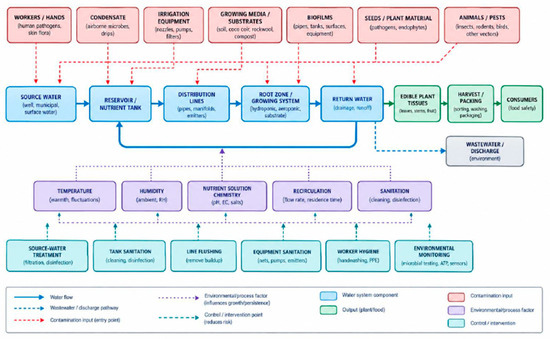
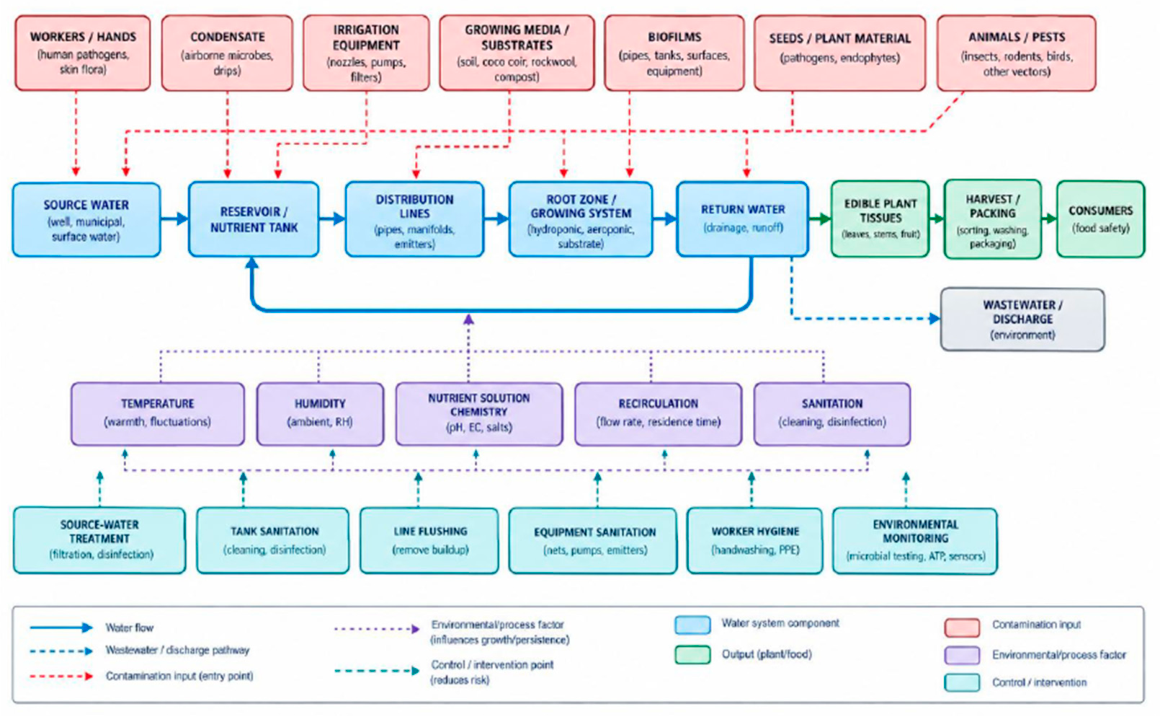

Disclaimer/Publisher’s Note: The statements, opinions and data contained in all publications are solely those of the individual author(s) and contributor(s) and not of MDPI and/or the editor(s). MDPI and/or the editor(s) disclaim responsibility for any injury to people or property resulting from any ideas, methods, instructions or products referred to in the content. |
© 2026 by the authors. Licensee MDPI, Basel, Switzerland. This article is an open access article distributed under the terms and conditions of the Creative Commons Attribution (CC BY) license.