


Abstract
A global transition in water management is currently underway, marked by the declining reliability of conventional sources and the accelerated adoption of non-conventional alternatives. This shift is driven by escalating pressures from climate change, population growth, and freshwater overexploitation. While the literature on management of water sources (WSs) is extensive, empirical clarity on Hybrid Water Systems Management (HWSM)—the integration of conventional and non-conventional WSs within a single system—remains limited. The present study addresses this gap through a systematic literature review using the Preferred Reporting Items for Systematic Reviews and Meta-Analyses (PRISMA) approach, which ensures methodological transparency and applicability. From over 9000+ peer-refereed articles retrieved from three major scientific databases (ScienceDirect, Scopus, and Web of Science Core Collections), published between 1999 and 2024, 44 studies were identified as the most relevant and consequently analyzed. The literature review refines the classification of WSs, distinguishing conventional sources, such as groundwater and surface water, from non-conventional alternatives, such as desalinated water, treated wastewater, gray water, and rainwater harvesting. The analysis also indicates that non-conventional WSs are now more prominent in the literature than conventional ones. Overall, the present study demonstrated that modern water management strategies increasingly emphasize optimization and circular reuse. In contrast, earlier approaches tend to focus more on water conservation and economic efficiency. The literature also indicates a gradual shift from traditional supply-dominant models toward integrated, cost-effective, and sustainability-oriented approaches that combine multiple sources and advanced allocation techniques.
1. Introduction
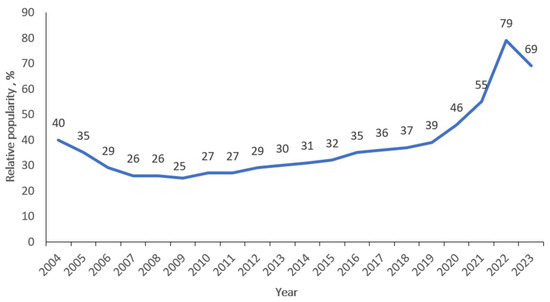
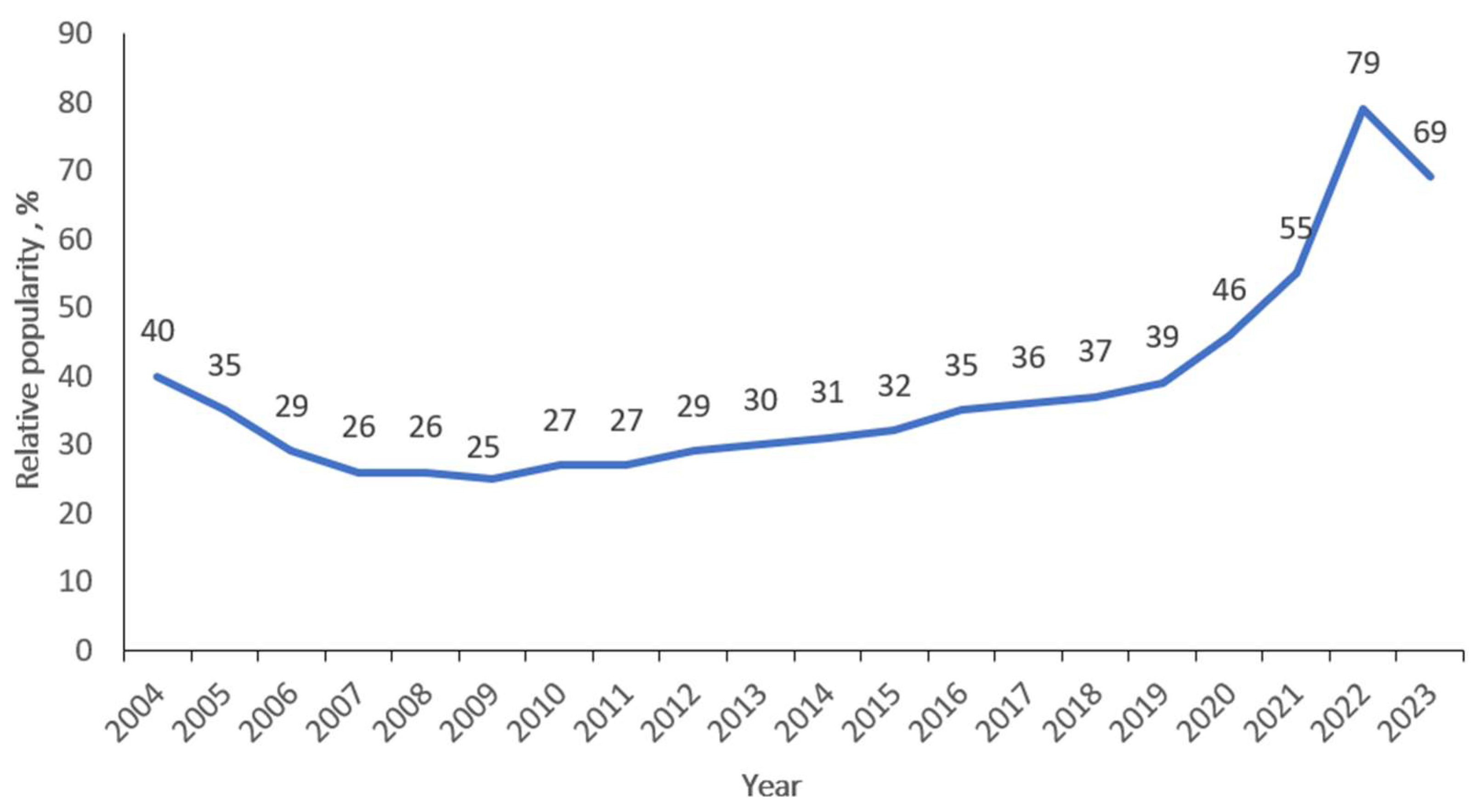
Water is an essential resource for human survival, economic development, and environmental sustainability [1]. Furthermore, the United Nations’ (UN) Sustainable Development Goal 6 [2] establishes access to safe water as a human right, fundamental to health, dignity, and reducing inequalities worldwide [3]. However, the growing global population, industrial expansion, and climate change are intensifying water scarcity [4,5,6,7]. About 1.9 billion people already live in areas with potentially severe water shortages [8]. This number is expected to rise to approximately 3 billion people by 2050, placing immense pressure on available water resources [9]. As a result, water sources (WSs)—both conventional and non-conventional—have become a focus of interest and have attracted significant attention from researchers [10,11,12,13,14,15,16,17], as well as ordinary Internet users (Figure 1).
Figure 1.
Web search interest in the “water sources” topic—relative popularity of queries in 2004–2023 (Source: Calculated using data from Google Trends [18]). Note: The data indicates trends in public interest, highlighting periods of increased attention to specific water management topics. Relative query popularity was calculated as the proportion of search queries for a given topic relative to the total search volume for all topics over the same period, normalized to a scale from 0 to 100 (low (0) to high (100)), indicating the relative level of interest in the topic.
Traditionally, conventional WSs, such as surface water (e.g., lake water, river water, reservoirs) and groundwater (e.g., spring water, well water), have been the primary means of meeting domestic, agricultural, and industrial water needs [12,19]. However, these WSs are increasingly under stress due to over-extraction, pollution, and changing precipitation patterns [20,21,22].
In response, non-conventional WSs (e.g., desalinated water, treated wastewater, greywater, rainwater) have emerged as viable alternatives to supplement water supplies [23,24]. Desalination, for example, has become necessary in arid and semi-arid regions where the natural availability of fresh water is limited [25,26]. Similarly, wastewater treatment and reuse contribute to a circular water economy, offering opportunities to reuse water for irrigation, industry, and even potable use [27,28].
Despite these advancements, integrating conventional and non-conventional WSs within a single management system remains a serious challenge. The effectiveness and sustainability of such systems depend on many factors, including economic feasibility, energy consumption, physical/technological constraints, public perception, and regulatory constraints [29,30,31]. Moreover, water resource management is often fragmented, with different institutions separately managing surface water, groundwater, desalination, and wastewater reuse, leading to inefficiencies and conflicts in allocation strategies [32,33]. Thus, a comprehensive understanding of how these diverse sources can be integrated to optimize water security is crucial.
In a recent study, Gárate-Ríos et al. [34] reviewed the water resource management literature from 2016 to 2021 across multiple databases, identifying an urgent need for new management paradigms that integrate economic, social, and environmental pillars. Similarly, Sriyono [35] identified five dominant research topics based on Scopus data available as of 2020: water resources, water quality, governance, sustainability, and climate change. These topics reflect a growing call to expand the scope of water management to include socio-environmental systems.
Expanding the scope, Ciampittiello et al. [36], analyzing the literature from 1990 to 2022, stressed the importance of integrating ecosystem protection and restoration within water governance frameworks. This ecological emphasis is also supported by emerging approaches like nature-based solutions and circular water systems, which aim to align water management with environmental sustainability.
Agricultural water use, which globally accounts for over 70% of freshwater withdrawals [21], has been a prominent concern. Hasan et al. [37] reviewed the literature from 2016 to 2023 and identified trends in sustainable water management, including the adoption of water-efficient technologies (e.g., drip irrigation and mulching), transboundary cooperation, and participatory governance. In addition, Rbaibi & SahibEddine [38] identified that effective resolution of interrelated WS challenges is closely linked to integrated management through the Water–Energy–Food Nexus approach.
While numerous studies examined the literature on WSs, existing literature reviews that examine the management of WSs from different perspectives do not focus on the unique characteristics of combined conventional and non-conventional water systems management. To date, most bibliographic literature reviews on WS management remain subjective in terms of document selection, relying on qualitative synthesis or focusing on a single, narrowly defined aspect of the topic. Thus, a holistic approach based on an interdisciplinary literature review is needed to identify the full range of studies focused on integrating conventional and non-conventional water sources within a single management system, hereafter referred to as Hybrid Water Systems Management (HWSM). However, to the best of our knowledge, no systematic literature review of this type has been published to date.
The present study aims to fill this gap by identifying existing research on HWSM, with a focus on the joint management of conventional and non-conventional water sources within a single integrated system.
To achieve this goal, this study adopts the PRISMA (Preferred Reporting Items for Systematic Reviews and Meta-Analyses) methodology. Unlike traditional approaches such as content analysis [39], co-citation analysis [40], or citation-based clustering [41], which can involve subjective decisions and limited scope, PRISMA provides a structured, fully replicable framework for identifying and selecting relevant studies [42,43]. It utilizes Boolean search queries to retrieve studies from the literature systematically [44] and employs tools like Covidence for screening and data extraction, thereby reducing potential selection bias and enhancing the reliability of the findings [43,45]. Yet, to the best of our knowledge, no studies carried out to date have attempted to use the PRISMA methodology in order to determine the comprehensive list of existing research on the management of conventional and non-conventional water sources within a single management system.
The review identifies the main conventional WSs—groundwater, surface water, and fresh/potable water (used in cases where studies refer to drinking-quality water without specifying whether it originates from groundwater or surface water)—alongside eight non-conventional alternatives, such as desalinated water, treated wastewater, gray water, and rainwater. As the present analysis shows, non-conventional water systems are now more prominent in the literature than conventional ones, indicating a significant shift in water management practices. Modern water strategies increasingly emphasize optimization and reuse, particularly in high-income and water-scarce regions. Overall, trends indicate a shift away from traditional supply-dominant models toward integrated, cost-effective, and sustainability-driven approaches that combine multiple sources and advanced allocation methods.
The remainder of the paper is structured as follows: Section 2 outlines our research approach. Section 3 presents the key findings, highlighting the latest trends and challenges in hybrid water resource management. Section 4 discusses the results of the analysis. Section 5 offers the conclusions, discusses the limitations and suggests recommendations for future research.
2. Materials and Methods
According to the PRISMA protocol guidelines [43], this review consists of a structured sequence of steps: (1) selection of search keywords; (2) selection of search parameters; (3) building and tailoring the search string; (4) conducting the initial search and eligibility assessment, and (5) evaluation of results. A detailed discussion of each step is provided in the subsections that follow.
2.1. Selection of Search Keywords
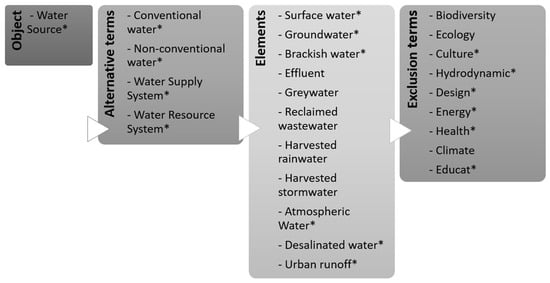
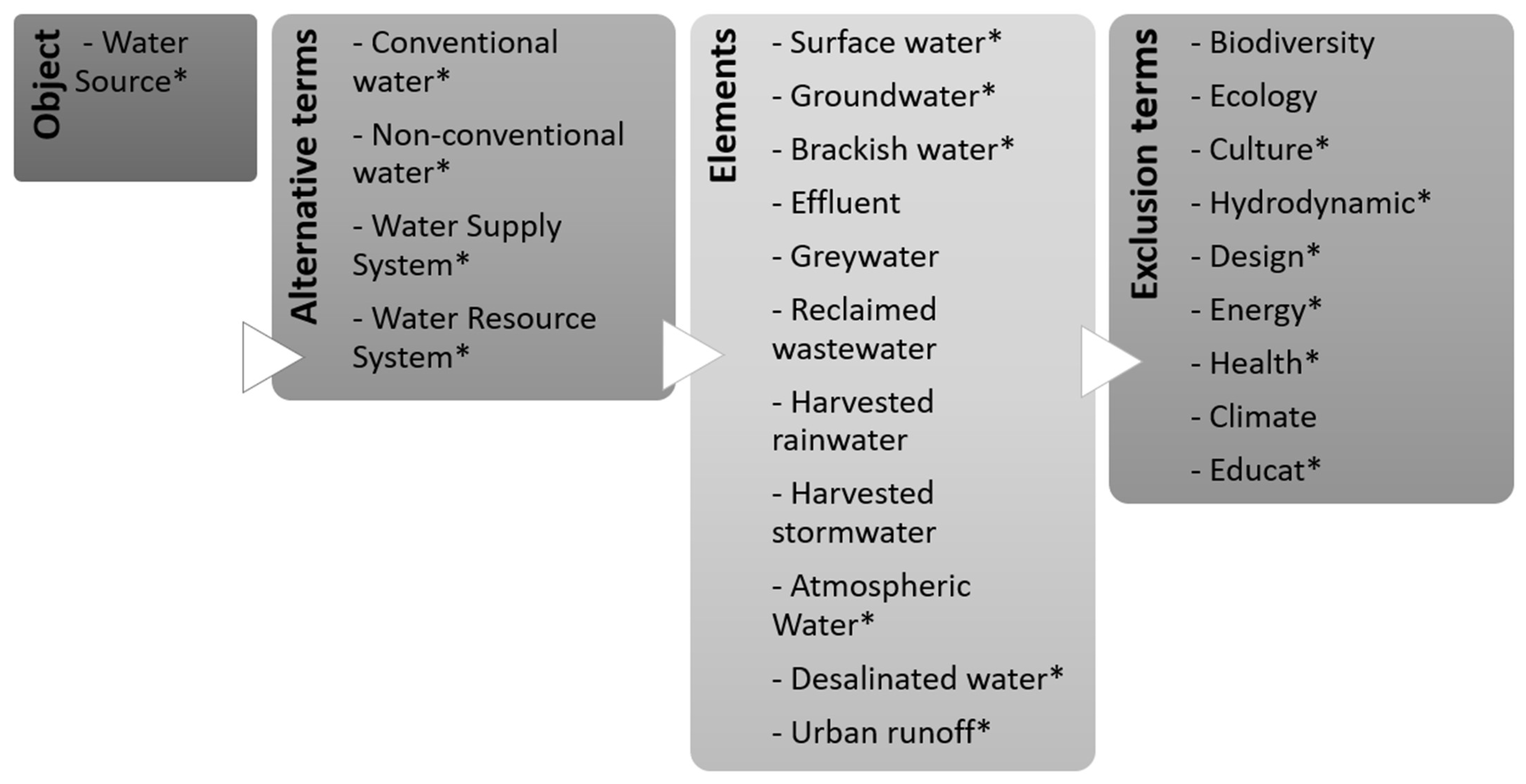
Following our definition of the search topic as “Management of conventional and non-conventional water sources”, the following search components were a priori defined: the search object (“Water Source *”); alternative terms (“Conventional water *”, “Non-conventional water *”, “Water Supply System *”, “Water Resource System *”); elements (“Surface water *”, “Groundwater *”, “Brackish water *”, “Effluent”, “Greywater”, “Reclaimed wastewater”, “Harvested rainwater”, “Atmospheric Water *”, “Desalinated water *”, “Urban runoff *”). Within this structure, elements represent a subset of the search components that capture specific categories of conventional and non-conventional water. To further refine the search and exclude irrelevant results, we also defined exclusion terms not directly related to the search topic: “Biodiversity”, “Ecology”, “Culture *”, “Hydrodynamic *”, “Design *”, “Energy *”, “Health *”, “Climate”, and “Educat *”, where * represents a wildcat search term. The main search terms used in the present systematic literature review are shown in Figure 2.
Figure 2.
Search terms used in the systematic literature review. Note: The figure presents the study selection criteria, illustrating the scope and focus areas of the literature review; * represents a wildcard search.
2.2. Selection of Search Parameters
A recent study by Gusenbauer & Gauster [46], based on an analysis of 404 systematic literature reviews and meta-analyses, found that only a portion of popular academic databases meet the requirements for systematic literature reviews and are suitable for evidence synthesis using adapted PRISMA and Cochrane Handbook guidelines. Of the 101 academic databases available, the most frequently used and adopted for systematic literature reviews in our research field are Web of Science Core Collection, Scopus, APA PsycINFO, and ScienceDirect [34,35,37,38,47,48]. Therefore, ScienceDirect, Scopus, and Web of Science Core Collections were selected as the main databases for the present study.
According to Zare et al. [49], the roots of integrated water resources management and assessment can be traced back to previous decades, but the field began to expand significantly around the 2000s and gained popularity among researchers, especially since 2009 [47]. As a result, the present study covers the period from 1999 to 2024. However, the effective search period is limited to 2002–2024, as no relevant studies that focus on the management of HWSM were found before 2002.
The literature review includes only original research articles published in English, the dominant language in modern scientific communication [45,50]. However, our study excludes “grey literature” (e.g., government reports, policy statements, professional newsletters, issues papers), focusing on articles published in peer-refereed scientific journals [51]. In addition, we do not limit the search by the organizational affiliation of the authors, the number of co-authors, sources of financial support, or the geographical location of publication, as such criteria were considered irrelevant for the purposes of this study.
2.3. Building and Tailoring the Search String
The initial search employed Boolean operators (“AND”, “OR”, and “NOT”) to structure the queries [52]. Due to individual differences in search functionalities across academic databases [53,54,55], the search syntax was customized for each database individually (see details in Appendix A).
2.4. Conducting the Initial Search and Eligibility Assessment
The initial search was performed on 10 January 2025. Following the initial identification, the titles and abstracts of the pre-identified publications were screened, and duplicate items, along with publications not directly related to the subject of research, were excluded from further consideration:
- Studies on flood risk management unrelated to WS management;
- Studies on water demand forecasting that are not linked to specific WSs;
- Studies of societal inequality in access to water;
- Studies on societal behavior regarding water usage;
- Studies on renewable energy unrelated to water management;
- Studies of pricing in water markets;
- Studies of AI-powered water quality index prediction;
- Studies related to climate change impacts on water resources;
- Studies on specific ICT technologies, including data collection, data Storage, data analysis, data protection, and cybersecurity in water systems.
2.5. Evaluation of Results
The application of exclusion criteria resulted in 165 publications being selected for detailed full-text analysis. This stage allowed us to filter out publications that did not report the required elements, resulting in 44 articles for further categorization and analysis. Following this, essential information was extracted from the pre-identified publications, including the publication year, geographical context, and research domain.
3. Results
3.1. PRISMA Flow Diagram
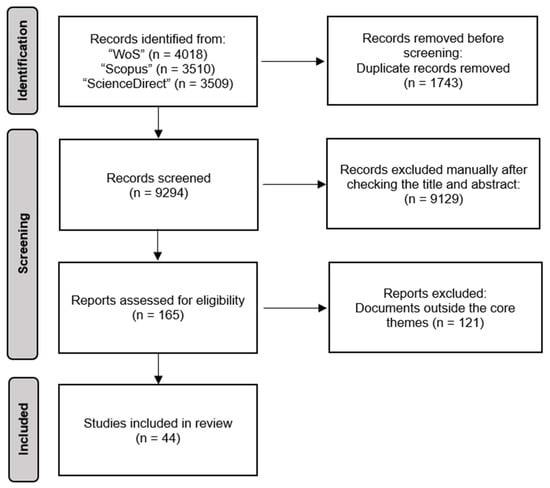
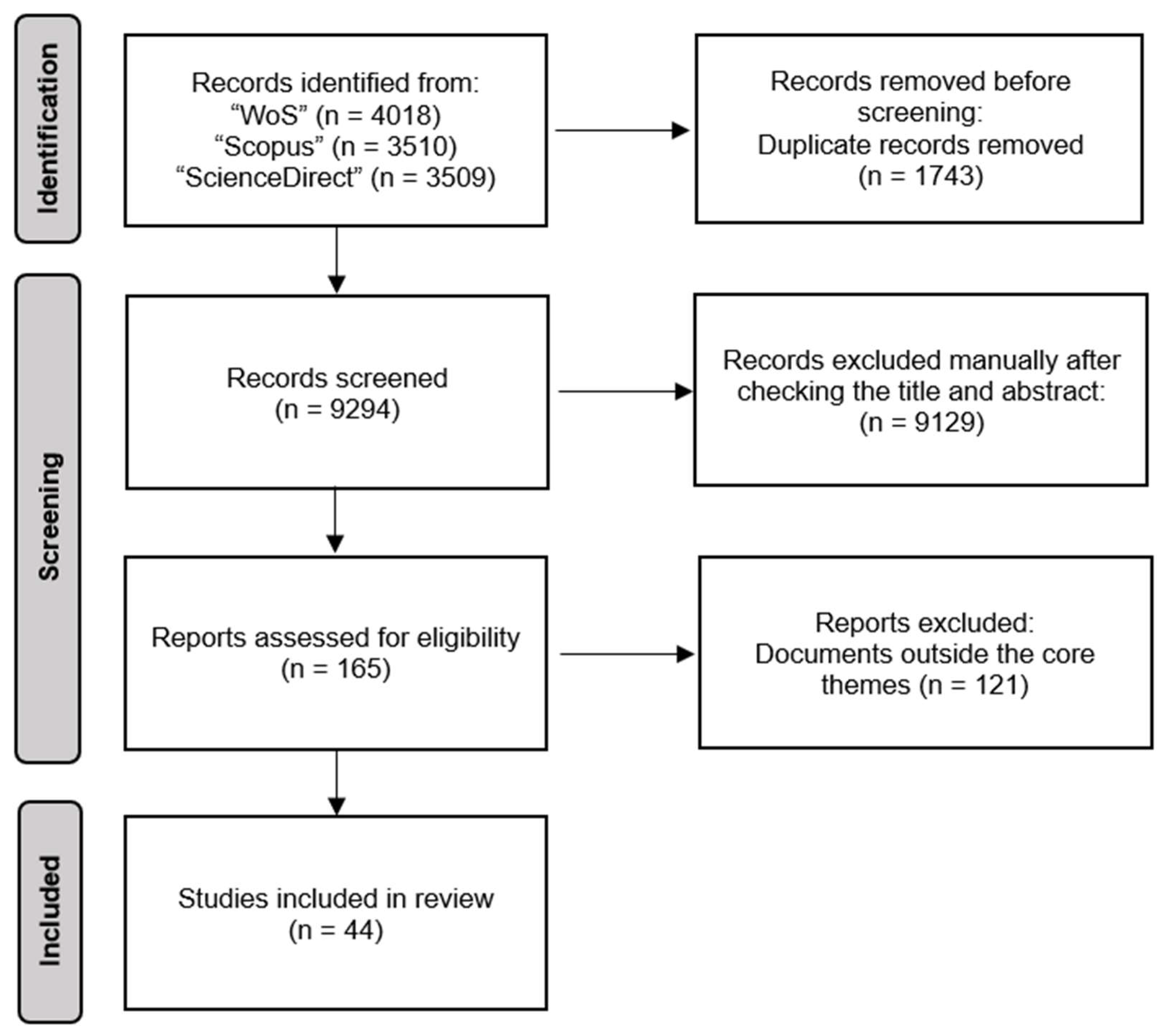
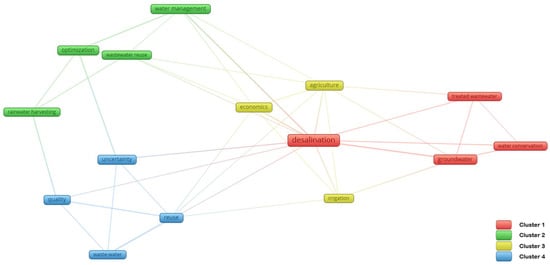
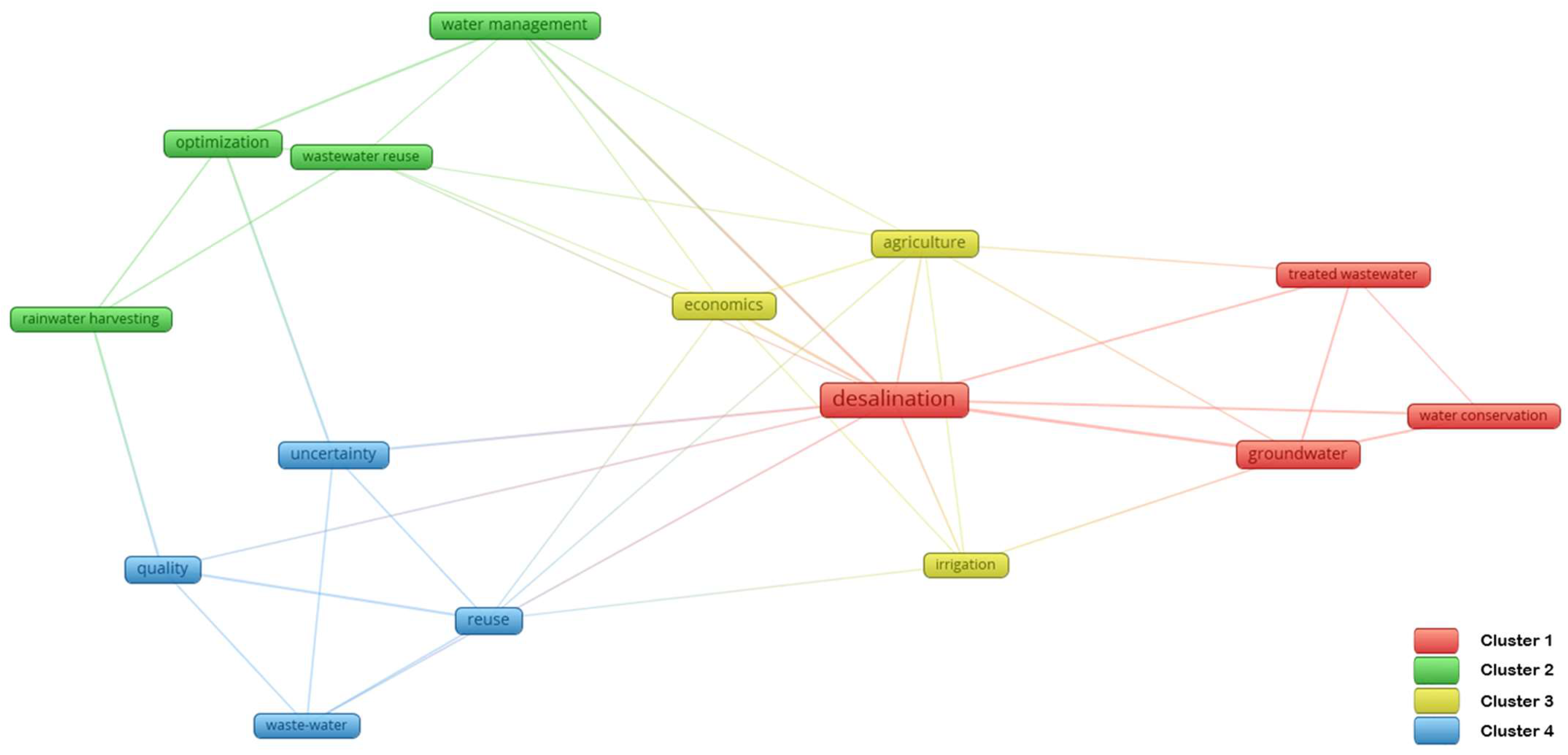
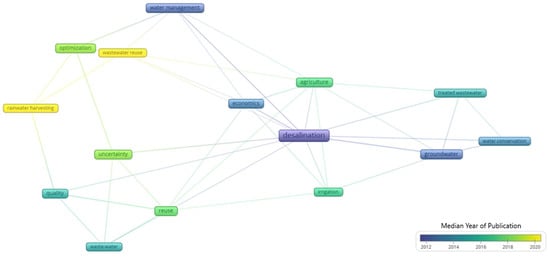
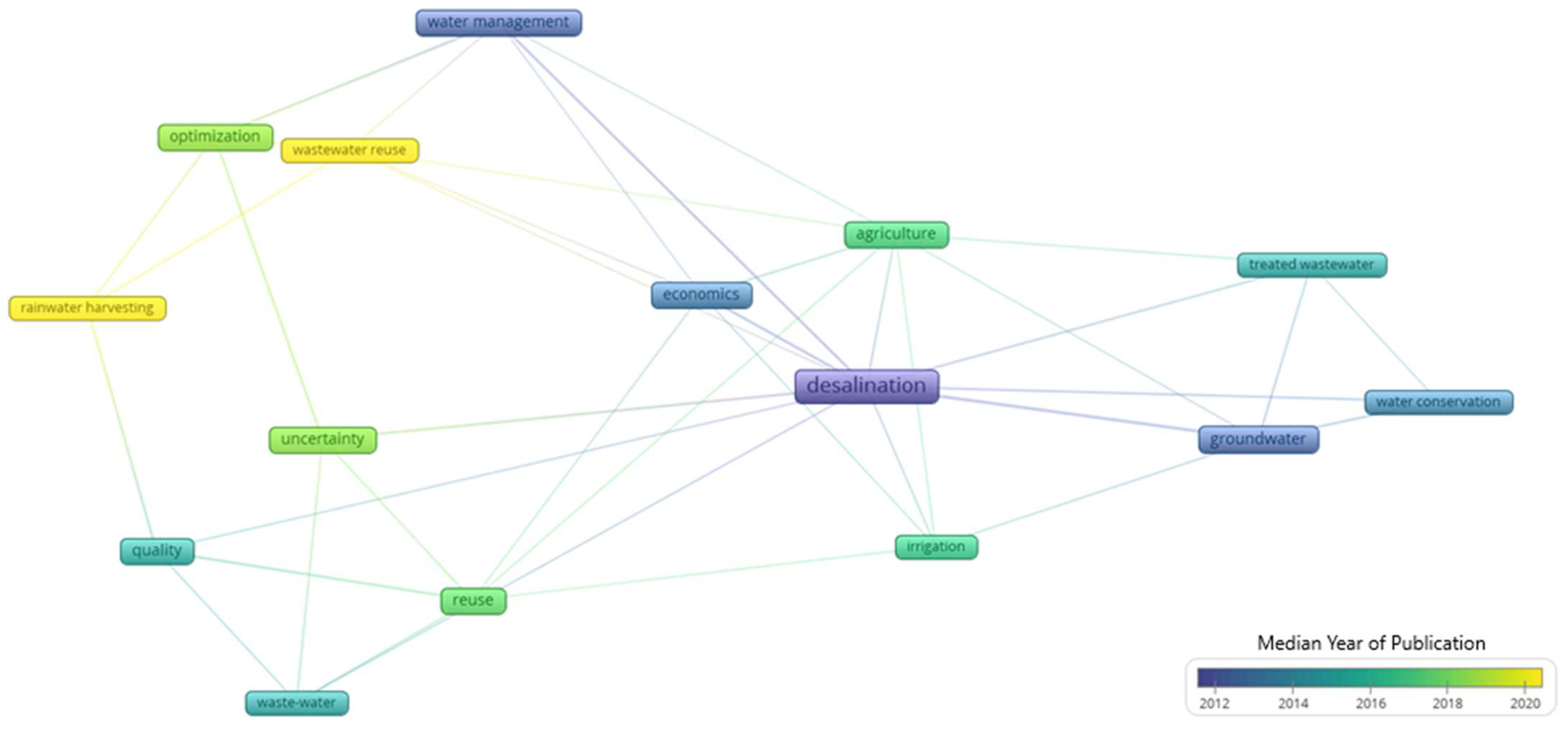
Figure 3 presents the PRISMA flow diagram, detailing the identification, screening, and inclusion of records at each stage of the analysis. The initial search yielded 9294 publications, which were subsequently narrowed down to 44 publications selected for the current review. For the next step, Figure 4 and Figure 5 visualize the keywords’ co-occurrence as determined by the VOSviewer tool [56], where keywords are represented as nodes grouped into clusters. Larger nodes in Figure 4 and Figure 5 denote terms that occur more frequently in the reviewed publications.
Figure 3.
PRISMA flow diagram showing the systematic process of article screening from initial identification to final inclusion. Note: The search was performed in January 2025; the diagram is generated using the PRISMA2020 R package [57].
Figure 4.
A network visualization that highlights the relationships and co-occurrence of keywords across the reviewed literature, illustrating major research clusters and their relationships. Note: The diagram is generated with the VOSviewer software, version 1.6.15.
Figure 5.
A network visualization that highlights the relationships and co-occurrence of keywords and median year of publication across the reviewed literature. Note: The diagram is generated with the VOSviewer software, version 1.6.15.
As Figure 4 shows, four clusters were identified: (1) a red cluster focused on groundwater and water conservation, (2) a green cluster on water management, optimization, and wastewater reuse, (3) a yellow cluster on irrigation, economics and agriculture, and (4) a blue cluster focusing on uncertainty, quality, and wastewater. “Desalination” is the central term, strongly linked to groundwater, agriculture, economics, and treated wastewater, indicating its integrative role in the management of non-conventional WSs.
Figure 5 illustrates the temporal co-occurrence of keywords, with colors indicating the median year of publication (from 2012, marked in dark blue, to 2024, marked in yellow). “Desalination” remains the central node, highlighting its core role in research concerning both conventional and non-conventional WSs. The keywords most closely associated with desalination include groundwater, management, economics, agriculture, and reuse, reflecting its intersection with resource allocation, policy, and sustainable development efforts. Meanwhile, keywords such as rainwater harvesting, optimization, and wastewater reuse (marked in yellow) indicate the current research focus, while keywords such as groundwater, economics, and water conservation (marked in darker colors) are fundamental topics that have been consistently studied over time. In other words, the results show that current WSs management strategies increasingly emphasize optimization and circular reuse rather than water conservation and economics.
3.2. Database Split
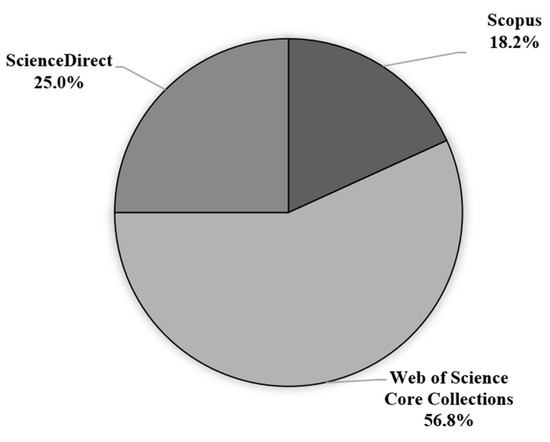
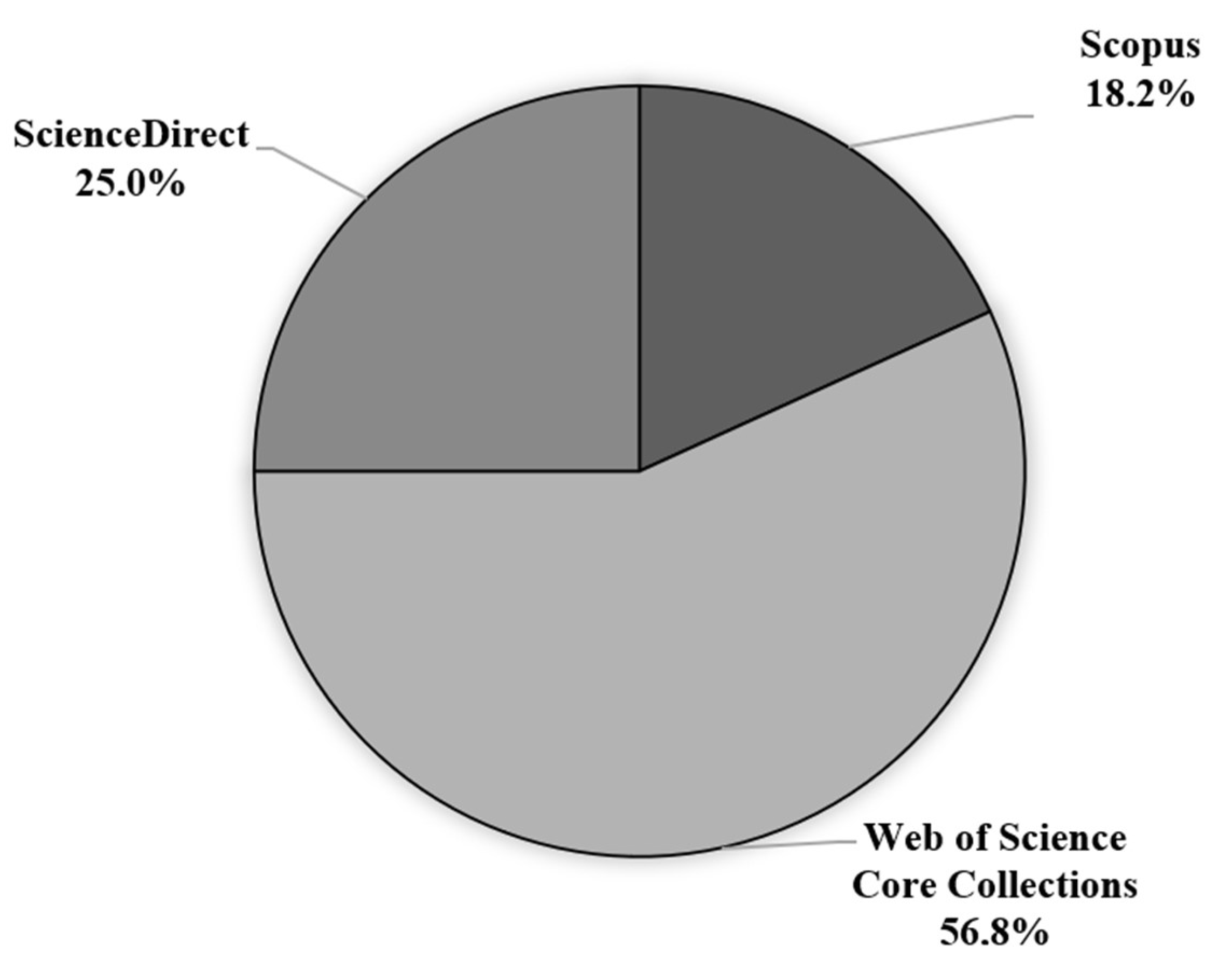
Among the 44 publications selected for full-text analysis, 25 (56.8%) come from Web of Science Core Collection, followed by 11 (25%) from ScienceDirect and 8 (18.2%) from Scopus (Figure 6). The observed differences in results can be explained by the different thematic focuses of the databases: Scopus database prioritizes disciplines such as humanities, arts, social sciences, and medicine [58], while the Web of Science Core Collection shows a stronger focus on the natural sciences and engineering [59].
Figure 6.
Split of publications among “ScienceDirect”, “Scopus”, and “Web of Science—Core Collections” databases (Total = 44). Note: Duplicate records across databases were removed before creating the distribution, ensuring that each publication was counted only once. For cluster analysis, each article was assigned to its dominant cluster.
3.3. Temporal Trends
Appendix B provides a detailed summary of relevant studies on HWSM. The results show a shift away from traditional supply-dominated models towards integrated, cost-effective, and sustainability-oriented approaches that combine multiple sources and advanced allocation techniques. Thus, optimization techniques ranging from multi-objective programming and heuristic algorithms to dynamic hydroeconomic models are increasingly being used to efficiently allocate WSs, minimize costs, and address uncertainty. Environmental and economic constraints such as water salinity, net present value, and energy costs are also frequently integrated into water allocation models to guide sustainable planning. In addition, reuse strategies involving treated wastewater and greywater are being promoted to reduce fresh/potable water withdrawals, especially for non-potable agricultural and industrial needs.
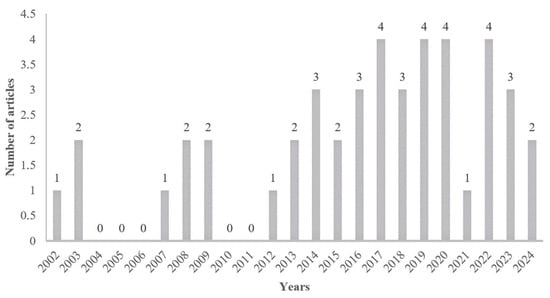
The temporal trend in the annual number of publications is shown in Figure 7. The results show that the first relevant publication on HWSM appeared in 2002, with low activity until 2012. From 2013 to 2021, interest steadily increased (2–4 articles published annually), with a peak of four papers lasting for several years. Although there was a slight decline after 2022, the number of publications remained relatively high throughout 2023 and 2024. This trend reflects a growing interest in managing WSs in response to climate change and the challenges of urbanization.
Figure 7.
Temporal trends in the number of publications on the research topic (Total = 44).
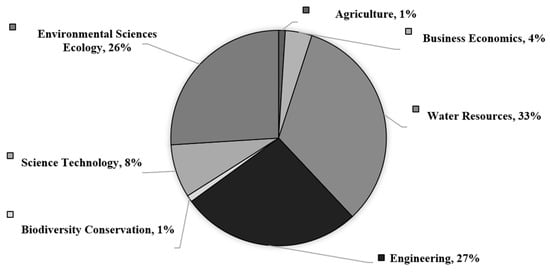
3.4. Research Fields and Geographic Coverage
The distribution of publications by the research field is shown in Figure 8. The results show that publications on HWSM cover seven main areas: agriculture; biodiversity conservation; business economics; engineering; environmental sciences ecology; science technology; and water resources. However, the number of publications in the field of “water resources” appears to be the most frequent (20 out of 44 articles analyzed), while the topics of “agriculture” and “biodiversity conservation” are represented by only one publication each (see Appendix B for details).
Figure 8.
Distribution of publications by the research field. Note: Some papers may span multiple subject areas (two or three) simultaneously (based on data from ScienceDirect, Scopus, and Web of Science Core Collection), so it is not possible to clearly associate these papers with a specific field. Accordingly, each publication was counted separately for each subject area. The total of 60 publications was used to calculate the percentage distribution across subject areas.
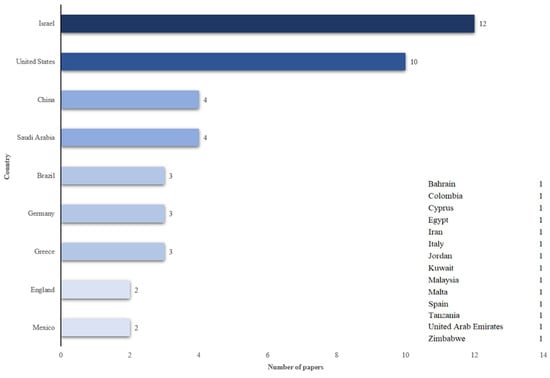
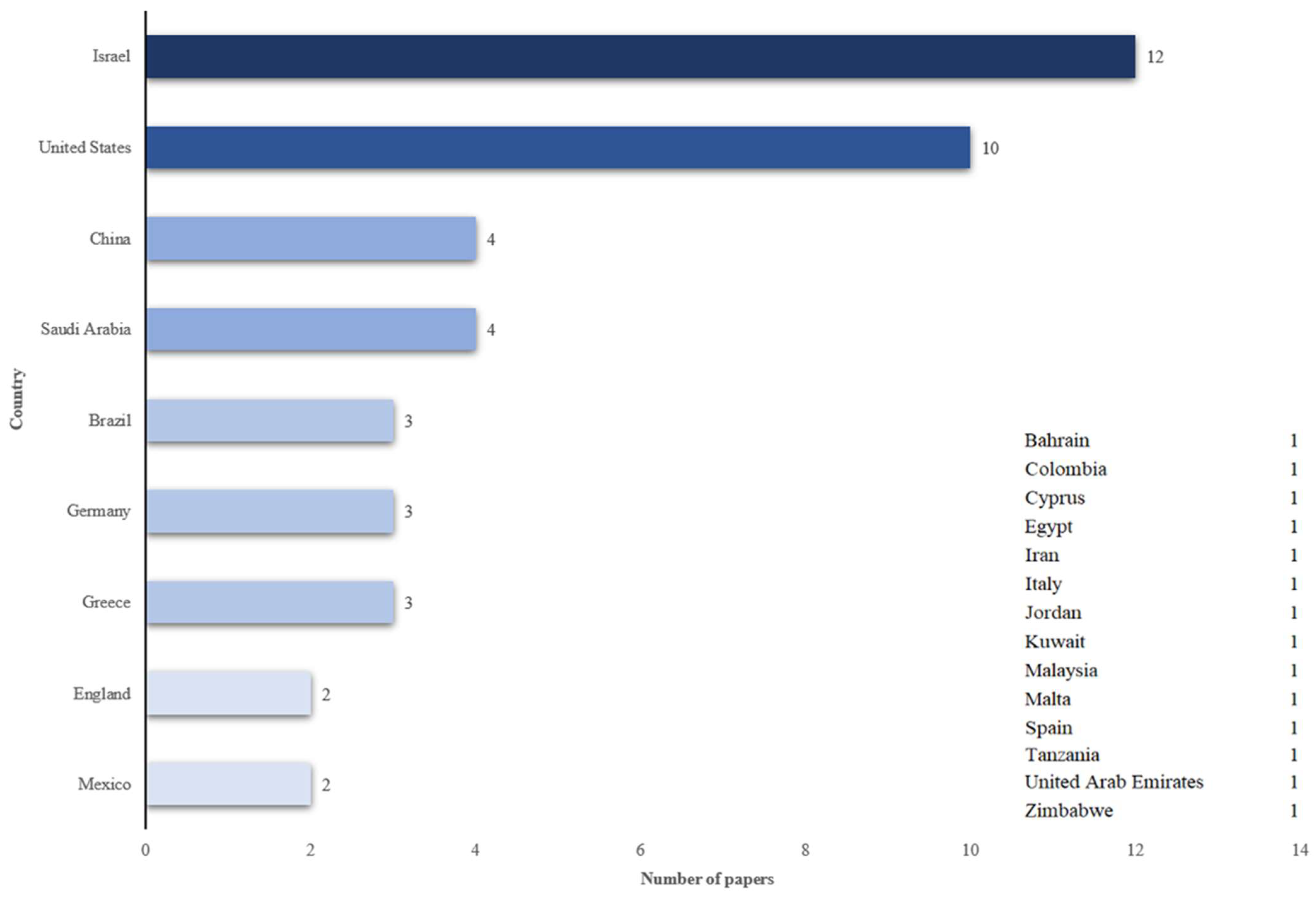
The geographic distribution of publications is shown in Figure 9. Geographically, most papers on HWSM originated in Israel (12), the USA (10), China (4), Saudi Arabia (4), and Brazil/Greece/Germany (3 each). The predominance of publications from these countries may be explained by national policies promoting water security research, significant water scarcity problems, and significant investments in innovative water technologies.
Figure 9.
Geographic distribution of publications. Note: The papers under review include 44 relevant publications published between 1999 and 2024, authored by researchers from 23 countries: Bahrain (1.8%), Brazil (5.3%), China (7%), Colombia (1.8%), Cyprus (1.8%), Egypt (1.8%), England (3.5%), Germany (5.3%), Greece (5.3%), Iran (1.8%), Israel (21.1%), Italy (1.8%), Jordan (1.8%), Kuwait (1.8%), Malaysia (1.8%), Malta (1.8%), Mexico (3.5%), Saudi Arabia (7%), Spain (1.8%), Tanzania (1.8%), United Arab Emirates (1.8%), United States (17.5%), and Zimbabwe (1.8%). Some papers included authors from multiple countries (up to four per paper), so each country was counted separately. The total number of country contributions was 57, used to calculate the percentage for each country.
3.5. Water Sources Categorization
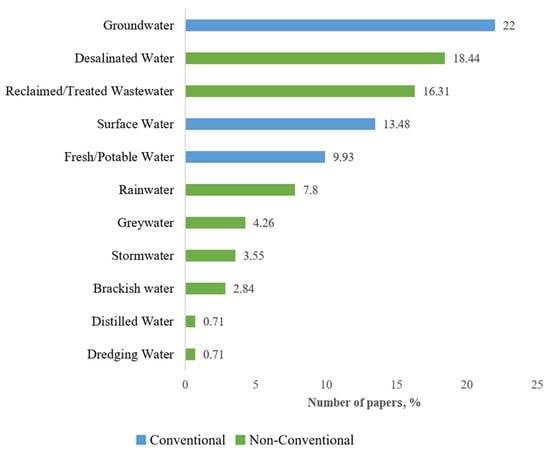
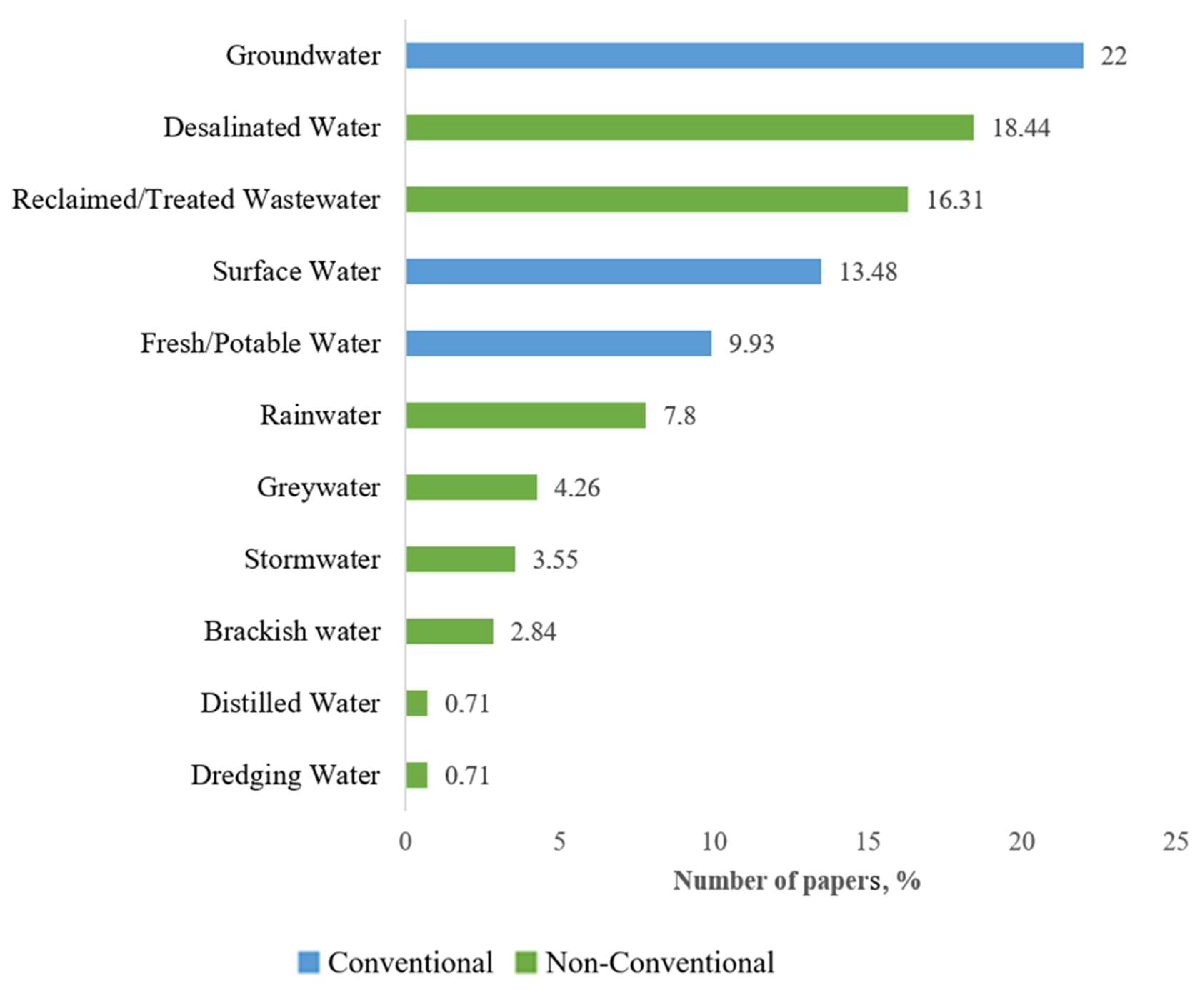
Figure 10 categorizes the WSs into two main categories: conventional and non-conventional. Within these categories, groundwater and desalinated water are the most frequently used sources (22% and 18.44%, respectively), while dredging water and distilled water are considerably less frequent (0.71% each). Furthermore, the fact that groundwater and desalinated water are represented close to each other (22% vs. 18.44%) indicates a comparable level of focus in the HWSM literature.
Figure 10.
Frequency of use of different water sources in HWSM literature (%, out of 44 relevant publications analyzed). Note: For the purposes of the study, stormwater and rainwater are classified as non-traditional sources, as large-scale collection and management practices for them are not widely implemented in many countries, including Israel. Natural springs are included in the Groundwater category, as they represent natural sources of groundwater.
4. Discussion
The main objective of the study was to identify the full range of studies focused on integrating conventional and non-conventional WSs within a single management system. An additional objective was to summarize the current state of knowledge on the classification of conventional and non-conventional WSs. The review helped to identify main conventional WSs (groundwater, surface water, and fresh/potable water—used in cases where studies referred to drinking-quality water without specifying whether it originated from groundwater or surface water) and eight non-conventional alternatives (desalinated water, treated wastewater, greywater, rainwater, stormwater, brackish water, dredging water, and distilled water), commonly used in empirical studies on the management of WSs. The study also enabled us to rank the identified WSs by their frequency of use in the HWSM literature, reflecting the current state of knowledge on both conventional and non-conventional WSs.
Overall, the literature review showed that modern water management strategies increasingly emphasize optimization and circular reuse, rather than water conservation and economics. Moreover, the results indicate a shift away from traditional supply-dominant models towards integrated, cost-effective, and sustainability-oriented approaches that combine multiple WSs and advanced allocation methods, such as multi-objective optimization and dynamic hydroeconomic modeling.
As mentioned earlier, scholars have investigated water management issues from different perspectives, and several review papers have been published to date [34,35,36,37,38,60]. Of these, only one review [38] used the PRISMA methodology to review integrated water management and analyze how “Water–Energy–Food” nexus approaches have been implemented to support sustainable water management.
The results of our analysis are partly consistent with those presented by Gárate-Ríos et al. [34], who identified an urgent need for new management paradigms that integrate economic, social, and environmental components. Similarly, the results presented by Dinar [60] demonstrate that addressing interrelated water resource challenges can be achieved through an integrated water resources management system that integrates the entire set of water types, including surface water, groundwater, reclaimed wastewater, and desalinated water.
Nonetheless, unlike previous literature reviews on water management, which focused on collaboration and interaction among different stakeholders, economic and modeling approaches, planning, water quality, and the implementation of sustainable development elements [34,35,36,37,38,60]. This review aimed to identify the full range of studies focused on integrating conventional and non-conventional water sources within a single management system.
The current study shows a relatively balanced distribution between conventional and non-conventional WSs, with a slight tendency toward non-conventional sources in the recent literature.
The results highlighted by this literature review show that atmospheric water harvesting remains largely overlooked despite its long-term potential and importance. Furthermore, other important WSs, such as dredging and distilled water, appear in ~1% of the studies included in this literature review.
Although 57% of the studies focused on WS management at the country level and 43% on city-level management, this distribution suggests that the literature covers different spatial resolutions. Given that many water challenges and innovations arise in urban areas, the city-scale perspective remains an essential dimension for further research.
Another noteworthy result of this study is that Israel is frequently highlighted in the reviewed literature as demonstrating a particularly diverse and potentially sustainable water supply system, integrating the largest number of both conventional and non-conventional WSs—eight out of eleven—under a single management system (Table 1). As reflected in our results (Figure 9 and Table 1), Israel’s experience is often cited as a global pioneer, combining desalination, wastewater reuse, and conventional WSs into one of the most advanced hybrid frameworks worldwide.
Table 1.
Diversity of water sources integrated into management systems (based on reviewed studies).
In addition to Israel, Brazil also stands out as a highly diverse country, combining conventional WSs with numerous non-conventional alternatives such as treated wastewater, greywater, and rainwater. Kuwait is a contrasting example, as its extremely limited natural resources mean it relies heavily on energy-intensive technologies such as desalination and distillation.
Surprisingly, while Australia represents a leading case in non-conventional water adoption, particularly during the Millennium Drought [61], it was not highlighted in our PRISMA screening process. This is because many Australian studies focused on a single non-conventional source rather than the management of hybrid water systems that include both conventional and non-conventional sources. This explains their limited representation in the final sample.
Regional patterns are also evident: while Latin America and sub-Saharan Africa place particular emphasis on rainwater harvesting, non-traditional sources such as greywater and treated wastewater predominate in the Middle East. This distribution highlights the adaptability of water management strategies to local conditions, highlighting the importance of household water management (HWSM) as a framework for integrating heterogeneous WSs.
Climate pressures and water scarcity are among the primary reasons for integrating non-conventional sources within HWSM. Similarly, cost considerations—including the energy requirements of desalination and wastewater treatment—are recurring themes in the reviewed literature. Our review complements this existing work by focusing on how these factors interact within the broader hybrid system perspective, highlighting integration strategies rather than analyzing each factor in isolation.
This review also shows that the research gaps in HWSM arise from three main causes: (1) disciplinary fragmentation, where engineering, economics, and environmental studies are developing separately; (2) governance and institutional barriers that limit cross-sector integration; and (3) the relatively recent adoption of non-conventional sources, which necessitate the development of integrated management frameworks. Addressing these challenges requires integrated frameworks that combine hybrid WSs, stronger governance frameworks to improve coordination, and interdisciplinary collaboration to better align technical, economic, and environmental perspectives.
In particular, the study refined eleven operational categories for classifying WSs, grouped into two aggregated groups—conventional (groundwater, surface water, and fresh/potable water—used in cases where studies referred to drinking-quality water without specifying whether it originated from groundwater or surface water) and non-conventional (desalinated water, treated wastewater, gray water, rainwater, stormwater, brackish water, dredging water, and distilled water). This outcome represents a more detailed categorization than that presented by Dinar [60], who identified a set of water types that included surface water, groundwater, reclaimed wastewater, and desalinated water.
The present analysis also helped to rank the WSs by their frequency of appearance in the reviewed literature, showing that groundwater and desalinated water are the most frequently used sources (22% and 18.44%, respectively), while dredging water and distilled water are considerably less frequent (0.71% each). In contrast to the pattern presented by Saleh et al. [62], where groundwater and treated wastewater are the most and least frequently used sources, with 51% and 9%, respectively.
The methodological approach can explain the differences in findings. Previous studies have often used literature review approaches without determining formal criteria for selecting relevant studies, which increased the risk of selection bias. In contrast, our study applied the PRISMA methodology, using the Covidence tool for screening and data extraction procedures [45]. Thus, the PRISMA method reduces potential selection bias and enhances the reliability of the findings [43] compared to other methods such as content analysis [39] or citation clustering [41], which may overlook key bibliographic information due to the absence of study-section protocols.
5. Conclusions
This systematic review, conducted in accordance with the PRISMA methodology, identified and analyzed existing research on HWSM. The review clarified the classification of WSs, distinguishing the main conventional types—groundwater and surface water—from eight non-conventional alternatives, including desalinated water, treated wastewater, gray water, and rainwater. The analysis revealed that non-conventional WSs are now more frequently discussed in the literature than conventional ones, indicating a significant shift in water management practices. Modern water strategies increasingly emphasize optimization and reuse, particularly in high-income, water-scarce regions. Overall, the findings reveal a shift away from traditional supply-dominant models toward integrated, cost-effective, and sustainability-driven approaches that combine multiple sources and advanced allocation techniques.
Several limitations of the present study should be noted. First, the systematic review covers the period from 1999 to 2024. Second, the literature review only includes original articles published in English. However, our study excludes “grey literature” (e.g., government reports, policy statements, professional newsletters, issues papers), focusing on articles published in peer–refereed scientific journals that appear in ScienceDirect, Scopus, and Web of Science Core Collections databases. Finally, only one specific research area was analyzed—management of conventional and non-conventional WSs. It should also be noted that certain global leaders in non-conventional water adoption, such as Australia, are underrepresented in the final sample, as many of their contributions emphasize single-source strategies rather than integrated hybrid systems. Future research should prioritize the evaluation of current knowledge in managing conventional and non-conventional WSs, with a focus on the sustainability and flexibility of WS management.
Author Contributions
Conceptualization, M.H. and O.D.; methodology, O.D.; software, O.D.; validation, O.D.; formal analysis, O.D.; data curation, M.H.; writing—original draft preparation, O.D.; writing—review and editing, M.H.; visualization, O.D.; supervision, M.H. All authors have read and agreed to the published version of the manuscript.
Funding
This research was funded by the Israeli Water Authority, grant number 4502268244.
Data Availability Statement
The data supporting the findings of this study are available on request from the corresponding author. No new datasets were generated or made publicly available.
Conflicts of Interest
The authors declare that they have no conflicts of interest.
Abbreviations
The following abbreviations are used in this manuscript:
| HWSM | Hybrid Water Systems Management |
| PRISMA | Preferred Reporting Items for Systematic Reviews and Meta-Analyses |
| UN | United Nations |
| WSs | Water Sources |
| VOSviewer | Visualization of Similarities Viewer |
Appendix A
Table A1.
Search Query Strings Used for “Scopus”, “Web of Science” and “ScienceDirect” Database Searches.
Appendix B
Table A2.
Summary of Studies.
Appendix C
Table A3.
Preferred Reporting Items for Systematic Reviews and Meta-Analyses Extension for Scoping Reviews (PRISMA-ScR) Checklist.
References
- United Nations. Press Release UN Secretary-General for World Water Day. 2023. Available online: https://press.un.org/en/2023/sgsm21727.doc.htm (accessed on 9 January 2025).
- Rigg, J. The Sustainable Development Goals (SDGS). In The Companion to Development Studies; Taylor & Francis Group: Oxfordshire, UK, 2024; pp. 253–257. [Google Scholar] [CrossRef] [Scilit]
- United Nations. UN-Water. Human Rights to Water and Sanitation. 2025. Available online: https://www.unwater.org/water-facts/human-rights-water-and-sanitation (accessed on 9 January 2025).
- Heidari, H.; Arabi, M.; Warziniack, T.; Sharvelle, S. Effects of Urban Development Patterns on Municipal Water Shortage. Front. Water 2021, 3, 694817. [Google Scholar] [CrossRef] [Scilit]
- Huang, Z.; Yuan, X.; Liu, X. The key drivers for the changes in global water scarcity: Water withdrawal versus water availability. J. Hydrol. 2021, 601, 126658. [Google Scholar] [CrossRef] [Scilit]
- Salehi, M. Global water shortage and potable water safety; Today’s concern and tomorrow’s crisis. Environ. Int. 2022, 158, 106936. [Google Scholar] [CrossRef] [Scilit] [PubMed]
- Biswas, A.; Sarkar, S.; Das, S.; Dutta, S.; Roy Choudhury, M.; Giri, A.; Bera, B.; Bag, K.; Mukherjee, B.; Banerjee, K.; et al. Water scarcity: A global hindrance to sustainable development and agricultural production–A critical review of the impacts and adaptation strategies. Camb. Prism. Water 2025, 3, e4. [Google Scholar] [CrossRef] [Scilit]
- United Nations. United Nations Environment Programme. Goal 6: Clean Water and Sanitation. 2025. Available online: https://www.unep.org/topics/sustainable-development-goals/why-do-sustainable-development-goals-matter/goal-6#:~:text=Clean%20freshwater%20is%20necessary%20for,human%20health%20and%20economic%20development (accessed on 9 January 2025).
- Boretti, A.; Rosa, L. Reassessing the projections of the World Water Development Report. Npj Clean Water 2019, 2, 15. [Google Scholar] [CrossRef] [Scilit]
- Viviroli, D.; Archer, D.R.; Buytaert, W.; Fowler, H.J.; Greenwood, G.B.; Hamlet, A.F.; Huang, Y.; Koboltschnig, G.; Litaor, M.I.; López-Moreno, J.I.; et al. Climate change and mountain water resources: Overview and recommendations for research, management and policy. Hydrol. Earth Syst. Sci. 2011, 15, 471–504. [Google Scholar] [CrossRef] [Scilit]
- Hagemann, S.; Chen, C.; Clark, D.B.; Folwell, S.; Gosling, S.N.; Haddeland, I.; Hanasaki, N.; Heinke, J.; Ludwig, F.; Voss, F.; et al. Climate change impact on available water resources obtained using multiple global climate and hydrology models. Earth Syst. Dyn. 2013, 4, 129–144. [Google Scholar] [CrossRef] [Scilit]
- Katsanou, K.; Karapanagioti, H.K. Surface Water and Groundwater Sources for Drinking Water. In Applications of Advanced Oxidation Processes (AOPs) in Drinking Water Treatment; Handbook of Environmental Chemistry; Springer: Cham, Switzerland, 2017; pp. 1–19. [Google Scholar] [CrossRef] [Scilit]
- Kundzewicz, Z.W.; Krysanova, V.; Benestad, R.E.; Hov, Ø.; Piniewski, M.; Otto, I.M. Uncertainty in climate change impacts on water resources. Environ. Sci. Policy 2018, 79, 1–8. [Google Scholar] [CrossRef] [Scilit]
- Carrard, N.; Foster, T.; Willetts, J. Groundwater as a Source of Drinking Water in Southeast Asia and the Pacific: A Multi-Country Review of Current Reliance and Resource Concerns. Water 2019, 11, 1605. [Google Scholar] [CrossRef] [Scilit]
- van Vliet, M.T.H.; Jones, E.R.; Flörke, M.; Franssen, W.H.P.; Hanasaki, N.; Wada, Y.; Yearsley, J.R. Global water scarcity including surface water quality and expansions of clean water technologies. Environ. Res. Lett. 2021, 16, 024020. [Google Scholar] [CrossRef] [Scilit]
- Agrawal, N.; Patrick, T.; Davis, M.; Ahiduzzaman, M.; Kumar, A. Analysis of Canada’s water use: Tracing water flow from source to end use. Can. Water Resour. J. Rev. Can. Des. Ressour. Hydr. 2022, 47, 19–39. [Google Scholar] [CrossRef] [Scilit]
- Shemer, H.; Wald, S.; Semiat, R. Challenges and Solutions for Global Water Scarcity. Membranes 2023, 13, 612. [Google Scholar] [CrossRef] [Scilit] [PubMed]
- Google. Google Trends. 2025. Available online: https://trends.google.com (accessed on 10 January 2025).
- Adamopoulos, I.P.; Syrou, N.F.; Adamopoulou, J.P.; Mijwil, M.M. Conventional water resources associated with climate change in the Southeast Mediterranean and the Middle East countries. Eur. J. Sustain. Dev. Res. 2024, 8, em0265. [Google Scholar] [CrossRef] [Scilit] [PubMed]
- Vaux, H. Groundwater under stress: The importance of management. Environ. Earth Sci. 2011, 62, 19–23. [Google Scholar] [CrossRef] [Scilit]
- Ingrao, C.; Strippoli, R.; Lagioia, G.; Huisingh, D. Water scarcity in agriculture: An overview of causes, impacts and approaches for reducing the risks. Heliyon 2023, 9, e18507. [Google Scholar] [CrossRef] [Scilit]
- Zhang, P.; Yang, M.; Lan, J.; Huang, Y.; Zhang, J.; Huang, S.; Yang, Y.; Ru, J. Water Quality Degradation Due to Heavy Metal Contamination: Health Impacts and Eco-Friendly Approaches for Heavy Metal Remediation. Toxics 2023, 11, 828. [Google Scholar] [CrossRef] [Scilit]
- Karimidastenaei, Z.; Avellán, T.; Sadegh, M.; Kløve, B.; Haghighi, A.T. Unconventional water resources: Global opportunities and challenges. Sci. Total Environ. 2022, 827, 154429. [Google Scholar] [CrossRef] [Scilit]
- Angelakis, A.N.; Tchobanoglous, G.; Capodaglio, A.G.; Tzanakakis, V.A. The Importance of Nonconventional Water Resources under Water Scarcity. Water 2024, 16, 1015. [Google Scholar] [CrossRef] [Scilit]
- March, H.; Hernández, M.; Saurí, D. Percepción de recursos convencionales y no convencionales en áreas sujetas a estrés hídrico: El caso de Alicante. Rev. Geogr. Norte Gd. 2015, 60, 153–172. [Google Scholar] [CrossRef] [Scilit]
- Prado de Nicolás, A.; Molina-García, Á.; García-Bermejo, J.T.; Vera-García, F. Desalination, minimal and zero liquid discharge powered by renewable energy sources: Current status and future perspectives. Renew. Sustain. Energy Rev. 2023, 187, 113733. [Google Scholar] [CrossRef] [Scilit]
- Reznik, A.; Feinerman, E.; Finkelshtain, I.; Fisher, F.; Huber-Lee, A.; Joyce, B.; Kan, I. Economic implications of agricultural reuse of treated wastewater in Israel: A statewide long-term perspective. Ecol. Econ. 2017, 135, 222–233. [Google Scholar] [CrossRef] [Scilit]
- Tortajada, C. Contributions of recycled wastewater to clean water and sanitation Sustainable Development Goals. Npj Clean Water 2020, 3, 22. [Google Scholar] [CrossRef] [Scilit]
- Cosgrove, W.J.; Loucks, D.P. Water management: Current and future challenges and research directions. Water Resour. Res. 2015, 51, 4823–4839. [Google Scholar] [CrossRef] [Scilit]
- Brooke, A.; Fenner, R.A. Improving urban water management and building water supply resilience in the city of Harare, Zimbabwe–a systems view. Civ. Eng. Environ. Syst. 2023, 40, 195–228. [Google Scholar] [CrossRef] [Scilit]
- Kalogiannidis, S.; Kalfas, D.; Giannarakis, G.; Paschalidou, M. Integration of Water Resources Management Strategies in Land Use Planning towards Environmental Conservation. Sustainability 2023, 15, 15242. [Google Scholar] [CrossRef] [Scilit]
- Bakker, K.; Cook, C. Water Governance in Canada: Innovation and Fragmentation. Int. J. Water Resour. Dev. 2011, 27, 275–289. [Google Scholar] [CrossRef] [Scilit]
- Evaristo, J.; Jameel, Y.; Tortajada, C.; Wang, R.Y.; Horne, J.; Neukrug, H.; David, C.P.; Fasnacht, A.M.; Ziegler, A.D.; Biswas, A. Water woes: The institutional challenges in achieving SDG 6. Sustain. Earth Rev. 2023, 6, 13. [Google Scholar] [CrossRef] [Scilit]
- Ríos, J.G.; Alvarado, G.D.P.P.; Gonzales, T.V.P.; Delgado, F.T. Gestión de recursos hídricos: Una revisión internacional de literatura. Sapienza Int. J. Interdiscip. Stud. 2021, 2, 186–199. [Google Scholar] [CrossRef] [Scilit]
- Sriyono, E. Water Resource Management in Developing Countries: Synthesizing the Literature. Teknik 2022, 43, 296–303. [Google Scholar] [CrossRef]
- Ciampittiello, M.; Marchetto, A.; Boggero, A. Water Resources Management under Climate Change: A Review. Sustainability 2024, 16, 3590. [Google Scholar] [CrossRef] [Scilit]
- Hasan, N.; Pushpalatha, R.; Manivasagam, V.S.; Arlikatti, S.; Cibin, R. Global Sustainable Water Management: A Systematic Qualitative Review. Water Resour. Manag. 2023, 37, 5255–5272. [Google Scholar] [CrossRef] [Scilit]
- Rbaibi, O.; SahibEddine, A. Sustainability in Integrated Water Resources Management: Systematic Literature Review. In Technical and Technological Solutions Towards a Sustainable Society and Circular Economy; World Sustainability Series; Springer: Cham, Switzerland, 2024; pp. 195–202. [Google Scholar] [CrossRef] [Scilit]
- Erlingsson, C.; Brysiewicz, P. A hands-on guide to doing content analysis. Afr. J. Emerg. Med. 2017, 7, 93–99. [Google Scholar] [CrossRef] [Scilit]
- Trujillo, C.M.; Long, T.M. Document co-citation analysis to enhance transdisciplinary research. Sci. Adv. 2018, 4. [Google Scholar] [CrossRef] [Scilit] [PubMed]
- Yun, J.; Ahn, S.; Lee, J.Y. Return to basics: Clustering of scientific literature using structural information. J. Informetr. 2020, 14, 101099. [Google Scholar] [CrossRef] [Scilit]
- Tricco, A.C.; Lillie, E.; Zarin, W.; O’Brien, K.K.; Colquhoun, H.; Levac, D.; Moher, D.; Peters, M.D.J.; Horsley, T.; Weeks, L.; et al. PRISMA Extension for Scoping Reviews (PRISMA-ScR): Checklist and Explanation. Ann. Intern. Med. 2018, 169, 467–473. [Google Scholar] [CrossRef] [Scilit] [PubMed]
- Page, M.J.; McKenzie, J.E.; Bossuyt, P.M.; Boutron, I.; Hoffmann, T.C.; Mulrow, C.D.; Shamseer, L.; Tetzlaff, J.M.; Akl, E.A.; Brennan, S.E.; et al. The PRISMA 2020 statement: An updated guideline for reporting systematic reviews. BMJ 2021, 372, n71. [Google Scholar] [CrossRef] [Scilit]
- Trifu, A.; Smîdu, E.; Badea, D.O.; Bulboacă, E.; Haralambie, V. Applying the PRISMA method for obtaining systematic reviews of occupational safety issues in literature search. MATEC Web Conf. 2022, 354, 00052. [Google Scholar] [CrossRef] [Scilit]
- Covidence. What You Need to Know About the PRISMA Reporting Guidelines. 2025. Available online: https://www.covidence.org/blog/what-you-need-to-know-about-the-prisma-reporting-guidelines/ (accessed on 10 January 2025).
- Gusenbauer, M.; Gauster, S.P. How to search for literature in systematic reviews and meta-analyses: A comprehensive step-by-step guide. Technol. Forecast. Soc. Change 2025, 212, 123833. [Google Scholar] [CrossRef] [Scilit]
- Durán-Sánchez, A.; del Río-Rama, M.D.L.C.; Álvarez-García, J.; Castellano-Álvarez, F.J. Scientific Coverage in Water Governance: Systematic Analysis. Water 2019, 11, 177. [Google Scholar] [CrossRef] [Scilit]
- Boros, A.; Gordos, B.; Tőzsér, D. A bibliometric analysis-based literature review of the relationship between sustainable water management and green innovations in the agricultural sector. Heliyon 2024, 10, e33364. [Google Scholar] [CrossRef] [Scilit]
- Zare, F.; Elsawah, S.; Iwanaga, T.; Jakeman, A.J.; Pierce, S. Integrated water assessment and modelling: A bibliometric analysis of trends in the water resource sector. J. Hydrol. 2017, 552, 765–778. [Google Scholar] [CrossRef] [Scilit]
- Xiao, Y.; Watson, M. Guidance on Conducting a Systematic Literature Review. J. Plan. Educ. Res. 2019, 39, 93–112. [Google Scholar] [CrossRef] [Scilit]
- Uttley, L.; Quintana, D.S.; Montgomery, P.; Carroll, C.; Page, M.J.; Falzon, L.; Sutton, A.; Moher, D. The problems with systematic reviews: A living systematic review. J. Clin. Epidemiol. 2023, 156, 30–41. [Google Scholar] [CrossRef] [Scilit] [PubMed]
- MacFarlane, A.; Russell-Rose, T.; Shokraneh, F. Search strategy formulation for systematic reviews: Issues, challenges and opportunities. Intell. Syst. Appl. 2022, 15, 200091. [Google Scholar] [CrossRef] [Scilit]
- Gusenbauer, M.; Haddaway, N.R. Which academic search systems are suitable for systematic reviews or meta-analyses? Evaluating retrieval qualities of Google Scholar, PubMed, and 26 other resources. Res. Synth. Methods 2020, 11, 181–217. [Google Scholar] [CrossRef] [Scilit] [PubMed]
- Anmarkrud, Ø.; Bråten, I.; Florit, E.; Mason, L. The Role of Individual Differences in Sourcing: A Systematic Review. Educ. Psychol. Rev. 2022, 34, 749–792. [Google Scholar] [CrossRef] [Scilit]
- Gusenbauer, M. Search where you will find most: Comparing the disciplinary coverage of 56 bibliographic databases. Scientometrics 2022, 127, 2683–2745. [Google Scholar] [CrossRef] [Scilit]
- McAllister, J.T.; Lennertz, L.; Atencio Mojica, Z. Mapping A Discipline: A Guide to Using VOSviewer for Bibliometric and Visual Analysis. Sci. Technol. Libr. 2022, 41, 319–348. [Google Scholar] [CrossRef] [Scilit]
- Haddaway, N.R.; Page, M.J.; Pritchard, C.C.; McGuinness, L.A. PRISMA2020: An R package and Shiny app for producing PRISMA 2020-compliant flow diagrams, with interactivity for optimised digital transparency and Open Synthesis. Campbell Syst. Rev. 2022, 18, e1230. [Google Scholar] [CrossRef] [Scilit]
- University of New Brunswick. DB Guide. Using Scopus. 2018. Available online: https://media.lib.unb.ca/research/DB_Guide-Scopus.pdf (accessed on 9 January 2025).
- Pranckutė, R. Web of Science (WoS) and Scopus: The Titans of Bibliographic Information in Today’s Academic World. Publications 2021, 9, 12. [Google Scholar] [CrossRef] [Scilit]
- Dinar, A. Challenges to Water Resource Management: The Role of Economic and Modeling Approaches. Water 2024, 16, 610. [Google Scholar] [CrossRef] [Scilit]
- van Dijk, A.; Beck, H.; Crosbie, R.; Jeu, R.; Liu, Y.Y.; Podger, G.; Timbal, B.; Viney, N. The Millennium Drought in southeast Australia (2001–2009): Natural and human causes and implications for water resources, ecosystems, economy, and society. Water Resour. Res. 2013, 49, 1040–1057. [Google Scholar] [CrossRef] [Scilit]
- Saleh, L.; al Zaabi, M.; Mezher, T. Estimating the social carbon costs from power and desalination productions in UAE. Renew. Sustain. Energy Rev. 2019, 114, 109284. [Google Scholar] [CrossRef] [Scilit]
- Abu Qdais, H.A.; Batayneh, F. The role of desalination in bridging the water gap in Jordan. Desalination 2002, 150, 99–106. [Google Scholar] [CrossRef] [Scilit]
- Talaat, H.A.; Sorour, M.H.; Abulnour, A.G.; Shaalan, H.F. The potential role of brackish water desalination within the Egyptian water supply matrix. Desalination 2003, 152, 375–382. [Google Scholar] [CrossRef] [Scilit]
- Voivontas, D.; Arampatzis, G.; Manoli, E.; Karavitis, C.; Assimacopoulos, D. Water supply modeling towards sustainable environmental management in small islands: The case of Paros, Greece. Desalination 2003, 156, 127–135. [Google Scholar] [CrossRef] [Scilit]
- Al-Ruwaih, F.M.; Almedeij, J. The future sustainability of water supply in Kuwait. Water Int. 2007, 32, 604–617. [Google Scholar] [CrossRef] [Scilit]
- Al-Katheeri, E.S. Towards the establishment of water management in Abu Dhabi Emirate. Water Resour. Manag. 2008, 22, 205–215. [Google Scholar] [CrossRef] [Scilit]
- Blute, N.K.; McGuire, M.J.; West, N.; Voutchkov, N.; Maclaggan, P.; Reich, K. Integration of desalinated seawater into a distribution system: A corrosion pilot study. J. Am. Water Work. Assoc. 2008, 100, 117. [Google Scholar] [CrossRef] [Scilit]
- Gikas, P.; Angelakis, A.N. Water resources management in Crete and in the Aegean Islands, with emphasis on the utilization of non-conventional water sources. Desalination 2009, 248, 1049–1064. [Google Scholar] [CrossRef] [Scilit]
- Lahav, O.; Salomons, E.; Ostfeld, A. Chemical stability of inline blends of desalinated, surface and ground waters: The need for higher alkalinity values in desalinated water. Desalination 2009, 239, 334–345. [Google Scholar] [CrossRef] [Scilit]
- Housh, M.; Ostfeld, A.; Shamir, U. Box-Constrained Optimization Methodology and Its Application for a Water Supply System Model. J. Water Resour. Plan. Manag. 2012, 138, 651–659. [Google Scholar] [CrossRef] [Scilit]
- Housh, M.; Ostfeld, A.; Shamir, U. Limited multi-stage stochastic programming for managing water supply systems. Environ. Model. Softw. 2013, 41, 53–64. [Google Scholar] [CrossRef] [Scilit]
- Nápoles-Rivera, F.; Serna-González, M.; El-Halwagi, M.M.; Ponce-Ortega, J.M. Sustainable water management for macroscopic systems. J. Clean. Prod. 2013, 47, 102–117. [Google Scholar] [CrossRef] [Scilit]
- Al-Juaidi, A.E.; Kaluarachchi, J.J.; Mousa, A.I. Hydrologic-Economic Model for Sustainable Water Resources Management in a Coastal Aquifer. J. Hydrol. Eng. 2014, 19, 04014020. [Google Scholar] [CrossRef] [Scilit]
- Asefa, T.; Adams, A.; Kajtezovic-Blankenship, I. A tale of integrated regional water supply planning: Meshing socio-economic, policy, governance, and sustainability desires together. J. Hydrol. 2014, 519, 2632–2641. [Google Scholar] [CrossRef] [Scilit]
- dos Santos, D.C.; Benetti, A. Application of the urban water use model for urban water use management purposes. Water Sci. Technol. 2014, 70, 407–413. [Google Scholar] [CrossRef] [Scilit]
- Behzadian, K.; Kapelan, Z. Advantages of integrated and sustainability based assessment for metabolism based strategic planning of urban water systems. Sci. Total Environ. 2015, 527, 220–231. [Google Scholar] [CrossRef] [Scilit]
- Ward, F.A.; Becker, N. Cost of water for peace and the environment in I srael: An integrated approach. Water Resour. Res. 2015, 51, 5806–5826. [Google Scholar] [CrossRef] [Scilit]
- Al-Zahrani, M.; Musa, A.; Chowdhury, S. Multi-objective optimization model for water resource management: A case study for Riyadh, Saudi Arabia. Environ. Dev. Sustain. 2016, 18, 777–798. [Google Scholar] [CrossRef] [Scilit]
- Luckmann, J.; Grethe, H.; McDonald, S. When water saving limits recycling: Modelling economy-wide linkages of wastewater use. Water Res. 2016, 88, 972–980. [Google Scholar] [CrossRef] [Scilit] [PubMed]
- Zavala, M.A.L.; Vega, R.C.; Miranda, R.A.L. Potential of Rainwater Harvesting and Greywater Reuse for Water Consumption Reduction and Wastewater Minimization. Water 2016, 8, 264. [Google Scholar] [CrossRef] [Scilit]
- George, D.S.; Anthony, K.K.; Santhirasegaram, V.; Saruan, N.M.; Kaur, H.; Razali, Z.; Somasundram, C. Effects of two different water sources used for irrigation on the soil geochemical properties and the quality of the Lohan guava (Psidium guajava L. Lohan). Water Sci. Technol. 2017, 75, 2465–2474. [Google Scholar] [CrossRef] [Scilit]
- Nel, N.; Jacobs, H.E.; Loubser, C.; Du Plessis, K. Supplementary household water sources to augment potable municipal supply in South Africa. Water SA 2017, 43, 553–562. [Google Scholar] [CrossRef] [Scilit]
- Porse Erik Mika, K.; Litvak, E.; Manago, K.; Naik, K.; Glickfeld, M.; Hogue, T.; Gold, M.; Pataki, D.; Pincetl, S. Systems Analysis and Optimization of Local Water Supplies in Los Angeles. J. Water Resour. Plan. Manag. 2017, 143, 04017049. [Google Scholar] [CrossRef] [Scilit]
- Ao, D.; Luo, L.; Dzakpasu, M.; Chen, R.; Xue, T.; Wang, X.C.C. Replenishment of landscape water with reclaimed water: Optimization of supply scheme using transparency as an indicator. Ecol. Indic. 2018, 88, 503–511. [Google Scholar] [CrossRef] [Scilit]
- Podda, A.; Cavazza, L.; Fadda, A.; Vissani, M.; Vascellari, M.; Dawoud, O.; Zoppis, R. Blending between desalinated water and other sources. Desalination Water Treat. 2018, 102, 76–81. [Google Scholar] [CrossRef] [Scilit]
- Tsur, Y.; Zemel, A. Water policy guidelines: A comprehensive approach. Water Resour. Econ. 2018, 23, 1–13. [Google Scholar] [CrossRef] [Scilit]
- Aparicio, J.; Tenza-Abril, A.J.; Borg, M.; Galea, J.; Candela, L. Agricultural irrigation of vine crops from desalinated and brackish groundwater under an economic perspective. A case study in Siġġiewi, Malta. Sci. Total Environ. 2019, 650, 734–740. [Google Scholar] [CrossRef] [Scilit]
- Porse, E.; Pincetl, S. Effects of Stormwater Capture and Use on Urban Streamflows. Water Resour. Manag. 2019, 33, 713–723. [Google Scholar] [CrossRef] [Scilit]
- Qi, Q.W.; Marwa, J.; Mwamila, T.B.; Gwenzi, W.; Noubactep, C. Making Rainwater Harvesting a Key Solution for Water Management: The Universality of the Kilimanjaro Concept. Sustainability 2019, 11, 5606. [Google Scholar] [CrossRef] [Scilit]
- Silva, S.M.O.; Souza, F.D.; Cid, D.A.C.; de Aquino, S.H.S.; Xavier, L.C.P. Proposal of integrated urban waters management as a strategy to promote water security: The Fortaleza case. Eng. Sanit. E Ambient. 2019, 24, 239–250. [Google Scholar] [CrossRef] [Scilit]
- Al-Juaidi, A.E.; Attiah, A.S. Evaluation of desalination and groundwater supply sources for future water resources management in Riyadh city. Desalination Water Treat. 2020, 175, 11–23. [Google Scholar] [CrossRef] [Scilit]
- Finkelshtain, I.; Kan, I.; Rapaport-Rom, M. Substitutability of Freshwater and Non-Freshwater Sources in Irrigation: An Econometric Analysis. Am. J. Agric. Econ. 2020, 102, 1105–1134. [Google Scholar] [CrossRef] [Scilit]
- Slater, Y.; Finkelshtain, I.; Reznik, A.; Kan, I. Large-Scale Desalination and the External Impact on Irrigation-Water Salinity: Economic Analysis for the Case of Israel. Water Resour. Res. 2020, 56, e2019WR025657. [Google Scholar] [CrossRef] [Scilit]
- Zhang, D.S.; Zhang, Y.X.; Liu, L.C.; Li, B.H.; Yao, X.C. Numerical Simulation of Multi-Water-Source Artificial Recharge of Aquifer: A Case Study of the Mi-Huai-Shun Groundwater Reservoir. Water Resour. 2020, 47, 399–408. [Google Scholar] [CrossRef] [Scilit]
- Housh, M.; Aharon, T. Info-Gap Models for Optimal Multi-Year Management of Regional Water Resources Systems under Uncertainty. Sustainability 2021, 13, 3152. [Google Scholar] [CrossRef] [Scilit]
- Gómez-Monsalve, M.; Domínguez, I.C.; Yan, X.; Ward, S.; Oviedo-Ocaña, E.R. Environmental performance of a hybrid rainwater harvesting and greywater reuse system: A case study on a high water consumption household in Colombia. J. Clean. Prod. 2022, 345, 131125. [Google Scholar] [CrossRef] [Scilit]
- Moradikian, S.; Emami-Skardi, M.J.; Kerachian, R. A distributed constraint multi-agent model for water and reclaimed wastewater allocation in urban areas: Application of a modified ADOPT algorithm. J. Environ. Manag. 2022, 317, 115446. [Google Scholar] [CrossRef] [Scilit]
- Ribeiro, F.W.; da Silva, S.M.O.; de Souza, F.D.; Carvalho, T.M.N.; Lopes, T. Diversification of urban water supply: An assessment of social costs and water production costs. Water Policy 2022, 24, 980–997. [Google Scholar] [CrossRef] [Scilit]
- Zafeirakou, A.; Karavi, A.; Katsoulea, A.; Zorpas, A.; Papamichael, I. Water resources management in the framework of the circular economy for touristic areas in the Mediterranean: Case study of Sifnos Island in Greece. Euro-Mediterr. J. Environ. Integr. 2022, 7, 347–360. [Google Scholar] [CrossRef] [Scilit]
- Gilboa, Y.; Friedler, E.; Schütze, M. Assessing water use and reuse options-a holistic analysis of a Model City, coupling dynamic system modelling with Life Cycle Assessment. Urban Water J. 2023, 20, 844–858. [Google Scholar] [CrossRef] [Scilit]
- Hendrickson, G.; Housh, M.; Sela, L. Optimizing desalination for regional water systems: Integrating uncertainty, quality, and sustainability. J. Clean. Prod. 2023, 415, 137785. [Google Scholar] [CrossRef] [Scilit]
- Housh, M. Optimizing bilinear multi-source water supply systems using mixed-integer linear programming approximations: An analysis of the Israeli seawater desalination array. Adv. Water Resour. 2023, 178, 104498. [Google Scholar] [CrossRef] [Scilit]
- Abbasmiri, S.S.; Mortazavi, S.A.; Alamdarlo, H.N.; Vakilpoor, M.H. Quantitative and qualitative management of water resources with the use of treated wastewater in agriculture. Water Environ. Res. 2024, 96, e11064. [Google Scholar] [CrossRef] [Scilit]
- Shi, Q.W.; Duan, L.M.; Cui, C.Q.; Yang, L.; Hao, R.; Wang, R.D.; Lu, X.Y.; Miao, P.; Sang, X.F.; Liu, X.M.; et al. Optimal Allocation of Water Resources in Ordos City Based on the General Water Allocation and Simulation Model. Water 2024, 16, 1711. [Google Scholar] [CrossRef] [Scilit]

Disclaimer/Publisher’s Note: The statements, opinions and data contained in all publications are solely those of the individual author(s) and contributor(s) and not of MDPI and/or the editor(s). MDPI and/or the editor(s) disclaim responsibility for any injury to people or property resulting from any ideas, methods, instructions or products referred to in the content. |
© 2025 by the authors. Licensee MDPI, Basel, Switzerland. This article is an open access article distributed under the terms and conditions of the Creative Commons Attribution (CC BY) license (https://creativecommons.org/licenses/by/4.0/).