


Abstract
Urban water, defined as water not used for agriculture or to support natural ecosystems, is increasingly impacted by anthropogenic pollution. Among the key concerns are emerging contaminants (ECs), a diverse group of largely unregulated chemical compounds that pose growing threats to both water and the life it supports. This review critically examines the challenges associated with the presence of ECs in urban water through two complementary approaches that together offer both scientific and policy-oriented insights. The first approach focuses on evaluating the difficulties in classifying, characterizing, detecting, monitoring, enforcing policies, and assessing the risks of ECs. The second approach focuses on assessing whether current efforts in research, public awareness, regulation, treatment, recycling, and international collaboration align with the United Nations Sustainable Development Goals (SDGs), particularly SDG 6 (clean water and sanitation), SDG 11 (sustainable cities and communities), and SDG 12 (responsible consumption and production). Current efforts to address the challenges posed by ECs and to achieve SDG targets remain insufficient, particularly in the areas of treatment and recycling. Globally, only 56% of household wastewater is treated safely, and industrial wastewater treatment in low-income countries remains severely lacking, with coverage under 30%. Globally, the effective management of ECs is hindered by outdated and inadequate treatment infrastructure, low recycling rates, and the technical complexity of handling multi-contaminant waste streams. In developing regions, these challenges are compounded by weak regulatory enforcement and limited public awareness. To effectively address ECs in urban water and fully meet the SDG targets, more integrated and globally coordinated efforts are necessary.
1. Introduction
Global population growth, economic expansion, and rural-to-urban migration are the primary drivers of urbanization, a transformative process that places substantial pressure on urban water systems [1,2]. With the global population projected to reach 9.7 billion by 2050 and 10.9 billion by 2100, urban areas are expected to expand rapidly to accommodate this growth [3]. Urbanization, a key feature of contemporary development, has profound effects on water systems, resulting in increased consumption, pollution, and ecological degradation [1,2]. Urbanization significantly elevates water demand, particularly for residential, commercial, and industrial purposes. Global urban water demand is expected to surge by 80% by 2050 [4]. Thus, the complex interaction among population growth, urbanization, and water systems is a hot topic that requires attention in sustainable water management to address emerging challenges and ensure long-term water security [1,2,5].
Urbanization disrupts natural hydrological cycles by replacing permeable surfaces with impermeable ones, increasing surface runoff, and reducing groundwater recharge [6]. This alteration in landscape and hydrology overwhelms urban drainage systems, leading to irregular flow patterns that damage aquatic ecosystems and cause frequent flooding [7]. Many cities face challenges with outdated or inadequate water infrastructure, resulting in inefficiencies such as contamination and leakage, which further strain water systems. Industrialization compounds the pressure on water resources, particularly for energy production and manufacturing, significantly increasing demand [5]. Runoff transports various harmful substances into urban water bodies, including biodegradable contaminants, such as plant debris and nitrogen and phosphorus compounds; non-biodegradable heavy metal contaminants, such as lead, mercury, and cadmium; as well as non-biodegradable emerging contaminants (ECs), such as microplastics (MPs), nano-plastics (NPs), pharmaceuticals (PhACs), and personal care products (PCPs) [8,9,10,11,12]. This environmental challenge is further intensified by the fact that approximately 80% of global wastewater is released untreated, with the issue becoming more severe in rapidly urbanizing regions. However, the occurrence, dynamics, and long-term impacts of contaminants in water systems, particularly in rapidly expanding regions with limited monitoring and regulation, remain inadequately understood [13].
Sustainable development depends not only on strong governance and active community participation but also on research-driven strategies to bridge critical knowledge gaps and inform effective solutions [14,15]. A systems-based approach to urban water management requires a clear understanding of freshwater contamination, particularly the sources, pathways, and long-term effects of non-biodegradable contaminants [10,11,16,17]. Therefore, addressing key topics in sustainability requires focusing on specific categories of contaminants in urban water [9,12,18].
The study delivers a comprehensive synthesis of EC-related issues in urban water systems, including rivers, ponds, reservoirs, lakes, and groundwater worldwide. The analysis draws on literature from databases such as PubMed, Scopus, and Web of Science, as well as reports from governmental and international organizations. The global relevance of EC-related challenges, along with the interdisciplinary scope of the topic, which incorporates diverse ECs, monitoring strategies, regulatory frameworks, community participatory approaches, and alignment with the SDGs, demands a comprehensive discussion to ensure both clarity and completeness. To facilitate logical flow, Figure 1 presents the conceptual framework and key thematic areas addressed in the study. The structure of the article comprises two core parts: the first addresses scientific challenges related to EC classification, characteristics, detection, and environmental behavior, whereas the second evaluates mitigation efforts and their alignment with the SDGs. Together, they form eight well-defined sections: (1) Introduction; (2) Classification practices for addressing the diversity of ECs; (3) Physicochemical characteristics that drive the environmental behavior of ECs; (4) Detection, monitoring, and policy enforcement challenges for ECs; (5) Risk assessment approaches for ecological and human health impacts of ECs; (6) Mechanistic drivers of ecological disturbance associated with EC exposure; (7) Current mitigation strategies for ECs and their alignment with relevant SDG targets; and (8) Conclusions. The review specifically aims to (1) synthesize current knowledge on ECs in urban water and evaluate challenges related to their detection, monitoring, and management, and (2) assess the alignment of current efforts with SDG targets, particularly SDGs 6, 11, and 12, focusing on the effectiveness of treatment and recycling strategies for EC-laden waste. Overall, this work offers valuable insights to support policymakers, researchers, and environmental managers in tackling the complexities surrounding ECs.
Figure 1.
The study framework. Source: Figure by authors.
2. Classification Practice
2.1. Definition
The classification practice for ECs has expanded beyond their chemical composition to include their sources, pathways, presence in environmental matrices, persistence, and potential impacts on both ecological and human health [19,20,21]. This complexity presents substantial challenges in defining ECs, as they originate from diverse sources, vary in persistence, and undergo transformations over time that can modify their toxicity and environmental behavior [19].
The term “emerging contaminants,” also known as “emerging pollutants,” refers to materials or chemical compounds detected in environmental matrices such as air, water, and soil that are not yet fully regulated or well understood in terms of their environmental behavior, toxicological effects, and long-term impacts on ecosystems and human health. These substances often bypass conventional monitoring programs and regulatory frameworks, raising growing concern among scientists, policymakers, and the public [19,22,23].
The designation “emerging” does not necessarily indicate that these contaminants are newly introduced; rather, it highlights the increasing recognition of their presence in the environment and the growing awareness of their potential risks [22,24,25,26]. ECs encompass a wide variety of both natural and synthetic chemical compounds, even though comprehensive knowledge of each group remains limited [19,20,21].
2.2. Classification
The scope for classifying ECs has consisted of more than just simple categorization, involving their sources, chemical properties, persistence, toxicity, and ecological impacts [19,22]. The classification of ECs is typically undertaken by researchers, regulatory bodies, and international organizations working to mitigate their environmental consequences. However, achieving a universally accepted classification system remains a challenge. Variations in classification criteria, gaps in scientific knowledge, and regional disparities in monitoring and regulatory practices create inconsistencies that hinder effective classification. Moreover, the continuous introduction of contaminants into the environment further complicates classification efforts [19,22,23].
Academics focus on identifying new ECs, evaluating their persistence, bioaccumulation potential, and toxicity, and classifying them based on scientific criteria. For instance, Stefanakis and Becker [19] and Morin-Crini et al. [22] established a list of major EC groups, emphasizing the importance of distinguishing water contaminants based on their persistence, mobility, and potential to disrupt ecological and human health systems. They proposed a framework that classifies ECs into categories such as persistent, slowly degradable, and biodegradable pollutants, which helps prioritize their management in water systems. However, new ECs are constantly being identified, requiring continuing updates to classification systems to account for previously unrecognized threats [21].
Regulatory bodies, including governmental and international organizations, primarily focus on establishing guidelines, monitoring frameworks, and conducting risk assessments to effectively manage ECs. Institutions such as the U.S. Environmental Protection Agency (U.S. EPA), the European Chemicals Agency, and the U.S. Food and Drug Administration play a crucial role in EC classification by identifying substances that require regulation and oversight. These organizations prioritize chemicals based on their known environmental and health risks, considering factors such as persistence, bioaccumulation, and toxicity. For instance, the U.S. EPA has classified chemicals such as per- and polyfluoroalkyl substances (PFAS) as ECs due to their persistence in the environment and potential toxicity to humans and wildlife [27]. The World Health Organization (WHO) and the United Nations Environment Programme (UNEP) also play a role in EC classification by providing frameworks for international collaboration and risk assessment of pollutants across borders. These organizations are often involved in identifying emerging trends in chemical contaminants and setting standards. For instance, the Stockholm Convention on persistent organic pollutants (POPs), managed by UNEP, focuses on chemicals with long-term environmental impacts. The convention has broadened its scope to include ECs such as flame retardants and plasticizers (FRPs) and pesticides, yet gaps remain in addressing newer substances [19,20,21,22,23].
3. Characteristics
3.1. Overview
ECs have been detected in various urban water systems, including rivers, ponds, reservoirs, lakes, and groundwater, as well as in aquatic organisms such as fish, crustaceans, and plankton. These ECs typically exhibit two broad categories of traits (Figure 2): (1) physicochemical traits, including resistance to conventional treatment, hydrophobicity, chemical persistence, and environmental mobility; and (2) biotic traits, such as bioaccumulation, biomagnification, and endocrine-disrupting potential [19,20,21,22,23]. ECs comprise residues originating from consumer products and industrial sources, including plastics (Table A1), PhACs (Table A2), PCPs (Table A3), endocrine-disrupting chemicals (EDCs) (Table A4), surfactants and their metabolites (SSMs) (Table A5), flame retardants (FRPs) (Table A6), industrial additives and agents (IAAs) (Table A7), gasoline additives (GAs) (Table A8), and antiseptics (Table A9). Despite growing awareness, the characterization of ECs in urban water systems remains limited in scope, particularly in terms of linking ECs to specific pollution sources and providing comprehensive national and global estimates (Table A10). This limitation stems from the need for life cycle analysis, which has been extensively applied only to a few goods (e.g., plastics in Figure 3a).
Figure 2.
Particle size classification of ECs and corresponding traits. RCT—resistance to conventional treatment; AP—air pollution; WP—water pollution; CP—chemical persistence; FP—food pollution; ECinh—inhalation of ECs; ECing—ingestion of ECs; ECder—dermal absorption of ECs; ECeff—effect of ECs on human health. Source: Figure by authors.
Most datasets on ECs in urban water are derived from laboratory and restricted-area studies, which may not fully capture the spatial variability of pollution sources across different regions. Existing data do not cover the full spectrum of ECs, particularly those that have yet to be widely studied or incorporated into environmental monitoring efforts. Consequently, applying current data to assess the global extent of urban water contamination remains challenging [22]. ECs, such as newly developed pesticides and novel industrial chemicals, remain poorly understood, and their long-term hydrological and ecological effects are still largely unknown. Many ECs are also present at trace concentrations, making them difficult to detect with conventional methods [21]. Moreover, little is known about the size-dependent effects of ECs in water. As particles reduce in size, they are likely to show enhanced surface area, reactivity, and potentially greater toxicity [28]. At the nanoscale, ECs may exhibit unique magnetic, electrical, and chemical properties not observed in larger particles [29]. As research progresses, it becomes increasingly clear that characterizing ECs in urban water is a challenging task [21,30]; however, this process will fully illuminate their behavior, especially in aquatic environments [19,20,21,22,23].
Figure 3.
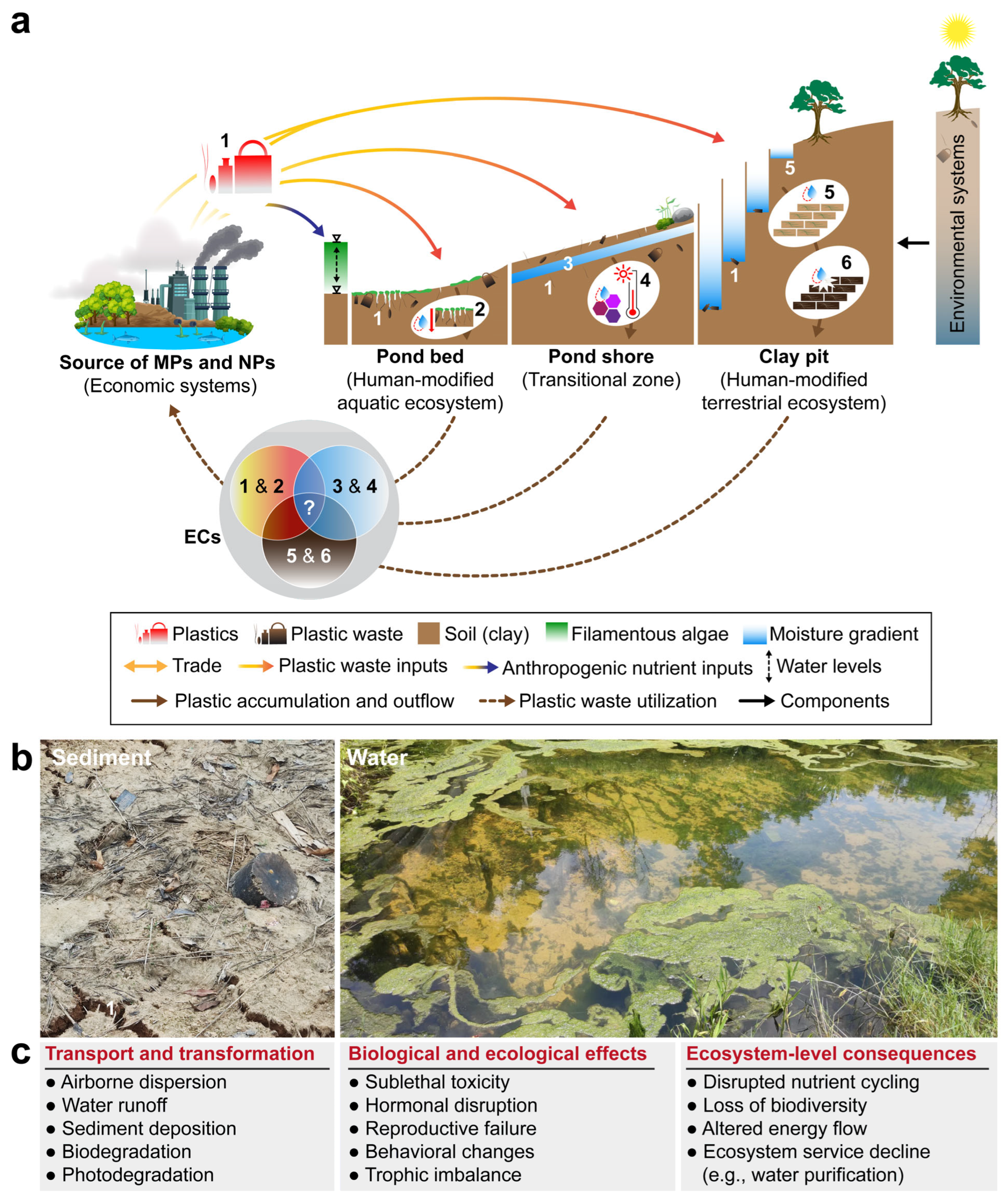
Plastic pollution in urban aquatic ecosystems. (a) Sources and transport pathways of plastic-derived MPs and NPs. 1—Characterization of plastic waste; 2—Effects of clay cracking and plastic waste penetration; 3—Moisture gradient in a plastic-impacted clay; 4—Effect of temperature and moisture on nutrient distribution; 5—Role of terrestrial plant mulching; 6—Performance comparison of natural clay and plastic-impacted clay; 1 to 6—Mechanisms of plastics inflow, accumulation, and outflow; ?—factors driving environmental changes [31]. (b,c) Potential impacts [12,18,22,30,31,32,33,34,35,36,37,38,39,40].
3.2. Plastics
Plastics in urban water bodies occur in various physical forms, including fragments, fibers, films, pellets, and beads [18,30,31]. They are typically classified by size into NPs (<0.2 mm), MPs (<5 mm), and macro-plastics (≥5 mm) [18,30]. In urban water, MPs and NPs primarily originate from the degradation of larger plastic waste, including bottles, packaging, and synthetic textiles (Table A1). Moreover, NPs are intentionally produced for use in consumer products, such as cosmetics, paints, and various industrial applications [31]. Both MPs and NPs are highly persistent in the environment due to their resistance to degradation (Table A10). These particles accumulate over time, posing substantial threats to aquatic organisms. MPs are often ingested by fish, mollusks, and invertebrates, potentially causing toxicity, physical harm, or bioaccumulation of harmful chemicals, which ultimately can be passed on to humans through the consumption of contaminated seafood. NPs, being smaller, penetrate biological membranes, leading to potentially more severe and complex health risks at the cellular level. These particles adsorb various contaminants, including pesticides, heavy metals, and POPs, which are typically transferred to aquatic organisms upon ingestion. Moreover, these particles can be transported over long distances by water currents [12,18,22,30,32,33,34,35,36,37,38,39,40].
A life cycle perspective proved valuable in understanding the complexity of plastic pollution in urban aquatic ecosystems [31]. This approach enabled the tracking of ECs from their origin as industrial products through various transformation, transport, and accumulation pathways. For instance, Figure 3a detailed the characterization of plastic waste and its penetration into cracked clay, influenced by moisture and temperature gradients, while also highlighting the modifying roles of mulching and soil type. These stages represent key phases in the plastic life cycle (use, degradation, environmental interaction, and eventual release into aquatic systems). Life cycle analysis further helped identify critical control points for intervention, which can be categorized as (1) policy measures, such as regulating the use of single-use plastics and promoting extended producer responsibility; (2) practical water management, including source control and improved stormwater filtration; (3) engineering solutions, such as permeable pavements and sediment traps to limit plastic runoff; and (4) advanced treatment technologies, such as recycling, membrane filtration, coagulation–flocculation, and advanced oxidation processes, to effectively recover plastic materials at MP and NP levels from wastewater and contaminated soils.
3.3. Pharmaceuticals
PhACs, found in urban water mostly in dissolved, particulate, or colloidal forms, are ECs originating from human consumption, veterinary applications, and improper disposal (Table A2). They include antibiotics (e.g., erythromycin and amoxicillin), analgesics (e.g., ibuprofen and acetaminophen), psychiatric drugs (e.g., diazepam and carbamazepine), and lipid regulators (e.g., bezafibrate and gemfibrozil). These substances exhibit varying degrees of solubility in water and lipids, with many displaying persistence due to incomplete metabolism in organisms (Table A10). PhACs often pass through wastewater treatment systems without being fully removed, eventually entering aquatic environments. Exposure to even low concentrations of these substances leads to bioaccumulation and biomagnification in aquatic organisms, further contributing to antibiotic resistance in bacteria, altering aquatic microbial communities, and potentially impacting both ecosystems and human health [19,22,41,42,43].
3.4. Personal Care Products
PCPs, which are found in urban water primarily in dissolved, particulate, or colloidal forms, are ECs that enter ecosystems predominantly through household product usage and wastewater discharge (Table A3). These compounds include fragrances, sunscreen agents, insect repellents, and others. Fragrances such as nitro, polycyclic, and macrocyclic musks, along with ingredients such as benzophenone (used in sunscreens), possess lipophilic properties and low water solubility. These chemicals resist biodegradation, resulting in moderate to high persistence in the environment (Table A10). The presence of PCPs in urban water raises concerns due to their persistence in typical water treatment processes and their potential to disrupt aquatic life [19,22,44,45,46,47].
3.5. Endocrine-Disrupting Chemicals
EDCs, present in urban water in dissolved, particulate, or sediment-bound forms, originate from sources such as industrial discharges, agricultural runoff, wastewater treatment plant effluents, and improper disposal of PhACs and PCPs (Table A4). EDCs such as nonylphenols, phthalates (e.g., di(2-ethylhexyl)phthalate), hormones (e.g., estradiol and diethylstilbestrol), and perfluorinated compounds (e.g., perfluorooctanoate) are particularly harmful due to their ability to interfere with hormonal systems. These chemicals are hydrophobic, have high resistance to degradation, and are persistent under environmental conditions (Table A10). EDCs mimic and block hormones in aquatic species, leading to developmental, reproductive, and behavioral changes. ECs have been linked to health issues, including reproductive disorders, developmental delays, and increased risk of cancers [19,22,48,49,50,51].
3.6. Surfactants and Surfactant Metabolites
SSMs found in urban water, in dissolved, particulate, or sediment-bound forms, originate from sources such as household and industrial cleaning products, wastewater discharges, and agricultural runoff (Table A5). Compounds such as alkylphenol ethoxylates, 4-nonylphenol, and their metabolites are commonly found in detergents, cleaning products, and industrial applications. These compounds possess amphiphilic structures, with both hydrophilic and lipophilic components, qualifying them as surface-active agents (Table A10). Their persistence in urban water and toxicity are concerning, particularly due to their resistance to degradation, potential for bioaccumulation, and ability to induce oxidative stress, damage cellular structures, and impair vital physiological functions in aquatic organisms [19,52,53,54,55,56].
3.7. Flame Retardants and Plasticizers
FRPs found in urban water, in dissolved, particulate, or sediment-bound forms, originate from sources such as industrial processes, household products, wastewater discharges, and the degradation of consumer goods such as furniture, electronics, and plastics. These include polybrominated diphenyl ethers, hexabromocyclododecanes, and tetra-bromo bisphenol A, chemicals employed in textiles, electronics, and construction materials to reduce flammability (Table A6). These compounds are lipophilic, persistent in the environment, and toxic to aquatic life (Table A10). FRPs in urban water are concerning, as bioaccumulation in organisms disrupts hormone function, impairs neurological development, and increases the risk of cancer in humans [19,22,50,57,58,59].
3.8. Industrial Additives and Agents
IAAs found in urban water, in dissolved, particulate, or sediment-bound forms, result from industrial discharges, wastewater effluents, and runoff from manufacturing sites. These include chelating agents (e.g., ethylenediaminetetraacetic acid, nitrilotriacetic acid, and diethylene triamine penta-acetic acid) and aromatic sulfonates (e.g., linear alkylbenzene sulfonates and naphthalene sulfonates) (Table A7). Their characteristics include high solubility, stability, and the ability to form complexes with metal ions (Table A10). IAAs in urban water are concerning because of their toxicity, bioaccumulation in aquatic organisms, and disruption of essential biochemical processes. These substances interfere with the growth and reproduction of organisms by affecting enzyme activity, nutrient cycling, and the food chain. IAAs have been linked to an increased risk of hepatic and renal impairment, developmental abnormalities, and cancers [22,60,61,62,63,64,65].
3.9. Gasoline Additives
GAs found in urban water, in dissolved, particulate, or colloidal forms, primarily originate from fuel spills, runoff from roads, and the degradation of gasoline-related products (Table A8). Chemicals such as dialkyl ethers (e.g., methyl tert-butyl ether and ethyl tert-butyl ether), benzene, toluene, xylene, alkylbenzenes, ethylbenzene, and polycyclic aromatic hydrocarbons are volatile, flammable, and moderately soluble in water. Their low boiling points facilitate contamination of water through spills or leaks from fuel storage systems (Table A10). Although they degrade relatively quickly in the environment, their presence in water systems significantly affects aquatic organisms [19,22,66,67,68,69,70]. GAs have been linked to neurotoxicity and potential carcinogenic effects in humans [69].
3.10. Antiseptics
Antiseptics detected in urban water, in dissolved, particulate, or colloidal forms, primarily originate from household and industrial products, wastewater discharges, and runoff from PCPs. These include triclosan, found in antibacterial soaps, toothpaste, and other personal care items, and chlorophene, present in disinfectants, antiseptic creams, and industrial cleaners (Table A9). Antiseptics, which possess antimicrobial properties, are moderately soluble in water due to their chemical structure, making them resistant to biodegradation (Table A10). The presence of antiseptics in urban water raises concerns due to their widespread use, environmental persistence, and potential adverse impacts on both ecosystems and human health. Their antimicrobial action disrupts microbial communities, nutrient cycling, and water purification. Antiseptics have been linked to health risks such as endocrine disruption and developmental toxicity [19,22,71,72,73,74,75].
4. Detection, Monitoring, and Policy Enforcement
Although the impacts of ECs are recognized, comprehensive detection and monitoring remain challenging due to the complexity of contaminant mixtures, limited analytical tools, a lack of long-term data, and varying regulatory frameworks across regions [19,21,22,76,77]. This review specifically addresses the challenges in detecting, monitoring, and enforcing policies on ECs within the broader context of hydrological processes, ecological balance, and water quality, factors essential to understanding the full extent of ecotoxicological risks associated with ECs. Hydrological processes serve as primary pathways for the entry and dispersion of ECs in urban water, leading to disruptions in microbial communities, the reproductive health of aquatic organisms, and alterations in food webs, which ultimately affect the ecological balance [22]. Focusing on water quality provides a clear, measurable method for assessing drinking water contamination and the associated public health risks of ECs in urban water [21,76,77].
4.1. Analytical Tools
Advanced analytical methods, such as high-resolution mass spectrometry (HRMS), liquid chromatography tandem mass spectrometry (LC–MS/MS), and biosensors, now enable trace-level detection of ECs in environmental samples, including water and sediments [76,77,78,79,80,81]. HRMS and LC–MS/MS offer unparalleled sensitivity and accuracy in identifying both known and unknown ECs, enabling comprehensive environmental monitoring and assessment of contaminant persistence, bioaccumulation, and transformation [82,83]. Biosensors, on the other hand, provide real-time, on-site monitoring capabilities, offering a cost-effective and rapid alternative for detecting and quantifying ECs [79,80]. Collectively, these methods contribute to a more nuanced understanding of the distribution, fate, and potential risks of ECs in urban water, thereby significantly enhancing the capacity to assess their ecotoxicological risks. However, challenges such as high costs, technical complexity, and the limited availability of standardized procedures must be addressed to improve their widespread application in routine environmental monitoring and policy implementation.
Studies employing advanced analytical methods for long-term monitoring have clearly demonstrated the reliability of datasets in assessing the dispersion and accumulation of ECs [22]. For instance, Loos et al. [82] analyzed ECs in river waters from 27 European countries and detected 35 compounds, comprising PhACs, pesticides, perfluoro-octan-sulfonate, perfluorooctanoate, benzotriazoles, hormones, and endocrine disrupters. The detection of such a large number of ECs highlighted the importance of advanced analytical methods in spatial monitoring of ECs. Similarly, Pham et al. [84] investigated the spatiotemporal distribution of MPs in the Jungnang, a major tributary of the Han River in South Korea, and found mean MP concentrations of 9.8 ± 7.9 particles L−1 in surface waters and 3640 ± 1620 particles kg−1 in sediments, with significantly higher levels during summer due to increased precipitation and river discharge. These relatively low concentrations of MPs in surface waters and their frequency of occurrence in summer ultimately confirmed the effectiveness of advanced analytical techniques, not only in spatial monitoring but also in temporal tracking of EC pollution.
4.2. Scalability and Integration Potential of Selected Environmental Monitoring Approaches
Environmental monitoring approaches such as citizen science projects (CSP) and non-targeted screening (NTS) offer scalable and integrative solutions by effectively connecting communities with advanced analytical tools for tracking ECs (Figure 4a). CSP enhances data collection through broad public engagement, whereas NTS enables the detection of previously unrecognized ECs that may be missed by targeted approaches (Figure 4b). Nevertheless, ensuring the reliability and effectiveness of these approaches requires addressing key challenges such as data accuracy, methodological standardization, and the need for comprehensive training in CSP initiatives [33,85,86,87].
Figure 4.
Scalability and integration potential of selected environmental monitoring approaches for ECs. (a) Workflow indicating the complementary roles of CSP and NTS in improving environmental monitoring. (b) Venn diagram showing the shared and distinct contributions of CSP and NTS in tackling ECs. Source: Figure by authors.
Studies employing either NTS or CSP for EC monitoring have identified key areas for improvement and integration potential. The effectiveness of NTS is demonstrated by Abafe et al. [88], who utilized ultrahigh-performance liquid chromatography coupled with quadrupole time-of-flight mass spectrometry to identify ECs in South African surface and wastewater. Their analysis achieved level two confidence identification of 315 compounds, including PhACs, industrial chemicals, PCPs, pesticides, and food additives. Notably, 40% of the detected compounds were PhACs and drugs, with 17 PhACs reported for the first time in South African waters and four documented in surface water globally for the first time. This application of NTS not only confirmed its capability to detect ECs of public health concern that had been overlooked in previous wastewater-based epidemiological studies but also provided a prioritized list of contaminants for future targeted analyses. Similarly, CSP has proven valuable in spatial monitoring, as demonstrated by Forrest et al. [89], who developed a CSP for MP monitoring method along a 550 km stretch of the Ottawa River in Canada. Volunteers filtered 100 L of river water through a 100 μm mesh at 43 sites, detecting MPs in 42 of 43 samples. The majority of MPs were identified as microfibers, with concentrations ranging from 0.02 to 0.41 particles L−1. This study underscored the advantages of CSP, including extensive spatial coverage at minimal cost, public engagement, and efficient volunteer recruitment through the Ottawa Riverkeeper network. However, it also highlighted challenges such as occasional mislabeling of samples and the limited volume of water filtered (100 L), emphasizing areas for methodological refinement, such as improving sample labeling protocols, increasing the volume of water sampled to enhance detection accuracy, and implementing standardized training for volunteers to minimize errors in data collection.
4.3. Policies
Policies addressing ECs in urban water have been implemented through national regulations, regional directives, and international agreements. Beyond these vital regulatory frameworks, new approaches have been introduced to enhance mitigation efforts. Market-based mechanisms, such as pollution taxes, tradable permits, and subsidies for cleaner production technologies, have been adopted in some regions to incentivize reductions in EC emissions. Public–private partnerships have emerged as a collaborative strategy, bringing together governments, research institutions, and private entities to develop innovative solutions for EC monitoring, treatment, and mitigation [90,91].
National regulations serve as the primary defense against contamination of urban water, establishing standards and enforcement mechanisms tailored to a country’s specific environmental, economic, and social conditions. For instance, the U.S. EPA addresses the growing concern over PFAS through its PFAS Action Plan, as these substances are increasingly detected in water supplies across the United States [27]. Similarly, China’s Water Pollution Prevention and Control Action Plan addresses contaminants from industrial effluents, particularly in rivers, reservoirs, and lakes [92]. A key advantage of national regulations is their ability to be customized to a country’s specific environmental needs [27,92,93]. The U.S. PFAS Action Plan, for instance, targets contaminants that are being increasingly detected in drinking water, with a focus on reducing their levels [27]. In general, national policies provide a foundational framework that can support local-level pollution regulation, though their effectiveness in enabling accurate and targeted control measures depends on implementation, oversight, and public trust [90,91]. In developing countries, for instance, the implementation of national regulations often faces substantial challenges. These challenges include inconsistent enforcement across regions, limited financial and human resources, inadequate infrastructure, and insufficient technical capacity, all of which hinder the timely and effective regulation of ECs [93].
Although national regulations establish the basic legal framework for pollution control within individual countries, they often fall short in addressing cross-border environmental issues. Regional directives aim to fill this gap by providing a coordinated framework among neighboring countries to manage shared environmental challenges, including ECs in urban water [94]. One of the most well-known regional directives is the EU Water Framework Directive, which aims to achieve good water quality across the European Union by addressing a broad spectrum of contaminants, including ECs. This directive mandates regular water quality assessments, requiring member states to implement pollution reduction measures and ensure compliance with established environmental standards [95]. Similarly, the 1992 Helsinki Convention focuses on pollution reduction in the Baltic Sea. This agreement fosters regional cooperation in monitoring and controlling hazardous substances, including ECs, to protect marine ecosystems. The convention strengthens environmental governance by ensuring that member states adopt preventive measures and share scientific data for effective EC management [96]. The key advantage of regional directives is that they promote cooperation among countries that share common water resources. However, the current implementation of these directives varies significantly from country to country, depending on local political, economic, and environmental priorities. In some cases, weaker enforcement in certain countries undermines the overall effectiveness of the directives. Additionally, these policies may not always be adaptable to newer ECs, as they are often designed based on existing knowledge of contaminants [95]. For example, Hernando et al. [97] critically reviewed the approaches for environmental risk assessment of ECs in water under European Union legislation. They highlighted the evolution of environmental risk assessment frameworks, beginning with the assessment of “new chemicals” in the 1980s, followed by the inclusion of PhACs in the 1990s, and the rigorous evaluation of pesticides and biocides under directives 91/414/EEC and 98/8/EC. These changes underscored the significance of the registration, evaluation, and authorization of chemicals as a key development in chemical risk assessment, though current methods may not adequately address nanotechnology-based materials.
International agreements provide a global framework for addressing the contamination of water bodies, particularly cross-national border ECs [90,91]. A notable example is the Stockholm Convention on POPs, an international treaty aimed at restricting the production, use, and release of toxic chemicals, many of which are classified as ECs. Adopted in 2001 and enforced in 2004, the convention targets contaminants known for their persistence in the environment, bioaccumulation in living organisms, and long-range transport through air and water. The treaty initially identified priority POPs, including pesticides (e.g., dichlorodiphenyltrichloroethane), industrial chemicals (e.g., polychlorinated biphenyls), and unintentional byproducts (e.g., dioxins and furans), with additional substances added in subsequent amendments [98]. A key advantage of international agreements is their ability to foster global cooperation on environmental challenges that transcend national borders. These agreements ensure that countries work collectively to manage the risks posed by ECs, particularly those that are persistent, bio-accumulative, and highly mobile in the environment. Moreover, they establish a framework for developing countries to receive technical and financial support for managing EC pollution, helping to bridge gaps in their regulatory capacities. Nevertheless, enforcement remains a major challenge. Compliance is often voluntary, and many countries fail to fully adhere to agreed-upon provisions due to political, economic, or infrastructural limitations. Developing nations, in particular, struggle to meet the strict regulatory standards set by international agreements due to limited resources. Additionally, these agreements are slow to respond to newly emerging contaminants, as many ECs had been insufficiently studied when the agreements were originally formulated.
5. Risk Assessment
5.1. Methodological Settings
Risk assessment of ECs in urban water has primarily focused on identifying potential hazards, predicting exposure levels and human health risks, and evaluating environmental risks. However, the integration of laboratory, field, and modeling methods, deemed crucial for enhancing risk assessment accuracy, has been largely underutilized [19,22,93,99,100].
The hazards posed by ECs have largely been evaluated using predictive models to determine their distribution and concentration levels in urban water, as well as to assess their potential toxic effects. These models have incorporated data on EC sources and persistence and degradation rates to estimate the likelihood of EC accumulation in water bodies. Although predictive models have offered valuable insights into the potential hazards of ECs, the findings heavily depend on assumptions, which may not always capture the full complexity of environmental conditions in urban water systems [10,19,87].
Exposure has been primarily conducted through laboratory experiments that simulate environmental conditions in water bodies to estimate the effects of ECs. These experiments have evaluated pollution mechanisms of ECs, including the influence of contaminant sources, chemical stability, degradation rates, and bioaccumulation. However, controlled experiments have not fully captured the dynamic and heterogeneous nature of water systems, where variations in temperature, hydrology, and anthropogenic activities significantly alter exposure patterns [59,73,101].
Environmental risk assessment has relied on the integration of laboratory, field, and modeling methods to assess the impact of ECs on aquatic ecosystems. Field studies have measured actual EC concentrations in water bodies, tracked seasonal and spatial variations, and examined their effects on aquatic organisms and ecosystem functions. However, analysis has often focused on individual ECs, overlooking the combined effects of multiple ECs, which may interact synergistically and antagonistically, leading to varying toxicity levels. Moreover, the influence of stormwater runoff, wastewater discharges, and water treatment processes on EC concentrations has not been fully accounted for, posing further challenges in accurately assessing long-term ecological risks [22,38,41,97,102].
5.2. Computational Tools
Computational tools have been widely applied to predict the toxicity of ECs, as they enable faster, more cost-effective, and more scalable assessments. For instance, quantitative structure–activity relationship (QSAR) models enable the rapid screening of extensive chemical libraries, predicting toxicological effects in a cost-effective and time-efficient manner, thus offering a valuable alternative to traditional approaches. However, challenges persist regarding the accuracy of these models and their ability to fully replicate the complex environmental interactions and multi-dimensional toxicological effects found in real-world ecosystems [103,104]. Similarly, artificial intelligence platforms employ machine learning algorithms and large datasets to refine predictions of EC behavior and toxicity. These platforms continuously improve their predictive models by incorporating new data inputs, enhancing accuracy over time, and providing more reliable assessments of environmental risks. Despite these advancements, artificial intelligence platforms face limitations in capturing the full complexity of environmental conditions, particularly those involving unpredictable factors, such as emerging ECs, local biotic interactions, and long-term ecological shifts [80,105,106].
5.3. Collaborative Networks
Collaborative networks, including the Network of Reference Laboratories, Research Centres, and Related Organizations for Monitoring Emerging Environmental Contaminants (NORMAN) and the Global Water Quality Monitoring Network (GEMS/Water), have played a pivotal role in improving coordination, facilitating data sharing, and fostering international collaboration [107,108,109]. Through these platforms, researchers and policymakers contribute to large-scale datasets, improving the collective understanding of ECs. Nevertheless, these approaches still face challenges in integrating diverse datasets and accounting for the complex interactions between pollutants, ecosystems, and human health. For instance, Dietrich et al. [108,110] emphasized the role of the Global Terrestrial Network-Hydrology (GTN-H), a collaborative initiative launched in 2001, which integrates 12 global data centers and networks, including the Global Runoff Data Centre (GRDC) and GEMS/Water. GTN-H supports integrated global water cycle observations, providing essential data for scientific research, regional initiatives, and United Nations programs. Despite this notable progress, challenges remain, such as restrictive data policies and the limited capacity to apply international data exchange standards.
6. Mechanistic Drivers of Ecological Disturbance
Table A10 and Table A11 summarize the mechanistic factors driving EC-induced ecological disturbances in urban water systems. These drivers include abiotic factors (e.g., pH and temperature), biotic factors (e.g., endocrine disruption and antimicrobial resistance), and cumulative ecosystem-level impacts (e.g., biodiversity loss, altered nutrient cycling, and disruptions in food web structure). Nevertheless, the interplay of these drivers in urban water systems remains indistinct, mainly due to four key challenges. First, the interactions of ECs, often existing as mixtures, are poorly understood, limiting the ability to predict additive, synergistic, or antagonistic effects. Second, mechanistic studies linking EC exposure to ecosystem responses remain scarce, especially in tropical and subtropical urban water systems. Third, ecological responses to ECs are often site-specific due to variations in hydrology, pollutant sources, and baseline ecosystem resilience, yet few studies address this context-dependent variability. Lastly, feedback loops between pollution and ecosystem disturbance, e.g., how species loss decreases the ability of aquatic ecosystems to filter pollutants, remain underexplored.
According to Figure 3 and Table A1, Table A2, Table A3, Table A4, Table A5, Table A6, Table A7, Table A8, Table A9, Table A10 and Table A11, ECs enter urban water systems through household, industrial, and agricultural discharges and persist through conventional treatment processes, thereby facilitating environmental interactions that intensify ecological risks [19,99,100,101,102,103,104,105,106,107,108,109,110,111,112]. Caffeine and its metabolites, paraxanthine, theobromine, and theophylline, are typically introduced into urban water systems through household wastewater. Their resistance to degradation during conventional treatment processes allows them to persist throughout the urban water cycle. This resistance mirrors that of PhACs and PCPs (e.g., 17β-estradiol and bisphenol A), which also exhibit low biodegradability and tend to accumulate downstream [93]. PhACs and MPs accumulate in urban waters largely through sedimentation, aggregation, and adsorption onto organic matter. Once settled in sediments, these ECs persist for extended periods and may be remobilized by natural events such as storms or by human activities like dredging [34,36,113]. Biofilms forming on MPs, referred to as the “plastisphere,” facilitate colonization by attracting microorganisms and organic carbon [36]. MPs act as carriers and accumulators of PhACs, with their transport and release influenced by polymer hydrophobicity, surface properties, weathering, and environmental factors, such as pH, salinity, and dissolved organic matter. Notably, the complex interactions between MPs and pH can cause substantial ecotoxicological impacts on aquatic organisms and food webs [113]. PhACs impair critical reproductive functions in aquatic organisms, affecting sperm quality, morphology, and genome integrity, which reduces fertility and reproductive success [114]. PhACs, EDCs, and elevated temperatures interact synergistically to disrupt freshwater food webs, exerting greater influence on metabolic processes across life stages than warming alone. These stressors induce substantial metabolic and lipidomic alterations, often with sex-specific effects [115]. Such impacts trigger cascading effects on reproductive success, resource availability, and overall ecosystem functioning [114,115]. EDCs interfere with hormonal signaling in aquatic organisms by mimicking or blocking natural hormones [101,116]. Compounds, such as bisphenol A and 17β-estradiol, bind to hormone receptors, disrupting gene expression related to growth, sex differentiation, and reproduction. These effects contribute to altered sex ratios, reduced fertility, and population-level changes [50,117,118,119]. At the microbial scale, PhACs disturb microbial communities by shifting species composition, weakening biofilm structure, and altering metabolic functions, which impairs nutrient cycling [120,121]. These compounds also apply selective pressure that fosters antibiotic resistance, particularly in wastewater and drinking water systems [122,123].
According to Figure 3 and Table A1, Table A2, Table A3, Table A4, Table A5, Table A6, Table A7, Table A8, Table A9, Table A10 and Table A11, EC-induced disturbances in urban waters involve diverse mechanisms, which can be categorized as environmental interactions, physical accumulation, chemical toxicity, and biological disruption. Environmental interactions occur when environmental conditions drive the movement, transformation, and disposal of pollutants. For instance, in subtropical urban ponds (Figure 3a,b), runoff causes downstream distribution of plastics; drought accelerates plastic breakdown and the vertical migration of plastic litter; and storms trigger the remobilization of plastic litter from sediments back into the water. In contrast, physical accumulation occurs when lipophilic compounds, such as pesticides, PhACs, and PCPs, adsorb onto organic matter in the water and subsequently settle into sediments. These ECs can remain trapped for extended periods or become permanently integrated into the sedimentary matrix. However, they may be remobilized by environmental interactions, such as storms, flooding, or human activities like dredging, resulting in renewed exposure and potential bioaccumulation within aquatic food webs. Chemical toxicity arises when ECs disrupt physiological functions in aquatic organisms by interfering with enzymatic activity, damaging cells, and impairing tissue function. For instance, at low concentrations, PhACs and PCPs can act as EDCs, causing hormonal imbalances that adversely affect reproduction, growth, and behavior in aquatic organisms. Repeated exposure may lead to chronic health effects and population declines in sensitive species. Biological disruption occurs when ECs, especially EDCs, interfere with hormonal systems in aquatic organisms, affecting reproduction, growth, and development.
7. Current Mitigation Efforts and Alignment with the SDGs
In the first part of this review, we examined the scientific challenges associated with ECs in urban water, focusing on their classification, physicochemical characteristics, detection techniques, and environmental behavior. In this second part, we shift the focus toward assessing current mitigation efforts and evaluating how these align with the SDGs. This transition underscores the importance of translating scientific understanding into practical strategies for sustainable urban water governance and pollution control.
7.1. Hypothetical Settings
Efforts to mitigate ECs are broadly categorized into research, public awareness, regulation, treatment, recycling, and international collaboration, and they closely align with SDGs targeting clean water (SDG 6), good health (SDG 3), sustainable cities (SDG 11), and global partnerships (SDG 17) (Table A12). Research drives innovation in treatment and recycling, informs policy, and provides data for monitoring EC pollution. Public awareness translates findings into behavioral changes, such as reduced plastic use. International collaboration facilitates knowledge exchange and shared solutions [90,124].
7.2. Research
Despite challenges such as limited funding and underexplored urban water systems, research on ECs has advanced significantly, supporting SDGs related to clean water (SDG 6), good health (SDG 3), and sustainable cities (SDG 11) [24,125,126,127,128,129]. Recent findings reveal improved detection across various EC categories, enhancing risk assessment of previously unknown contaminants and emerging threats [21,130,131,132,133,134] and informing policies aligned with SDGs. Progress in screening for hormonal activity and other bioeffects further supports ecosystem protection (SDG 15) and public health (SDG 3) by deepening understanding of EC impacts on aquatic environments and human health [135].
7.3. Public Awareness
Public awareness of ECs in the water remains a critical area for improvement, particularly in developing nations where the environmental and health risks associated with these contaminants are often underrecognized. In alignment with SDGs, particularly SDG 3 (good health and well-being), SDG 6 (clean water and sanitation), and SDG 12 (responsible consumption and production), several studies have revealed substantial gaps in public understanding and engagement. Benameur et al. [136] found that residents in Biskra, Algeria, lacked adequate knowledge of drinking water quality standards, relying instead on sensory cues such as taste and color, thereby underscoring the need for education on less perceptible but hazardous ECs. Leal et al. [137] revealed gaps in public knowledge about the environmental impacts of PhACs in water, advocating for targeted educational campaigns to promote proper medication disposal, a key action under SDG 12. Stanford et al. [138] emphasized that public uncertainty over the health risks posed by EDCs, PhACs, and PCPs affects support for mitigation investments, raising the need for risk communication strategies. Similarly, Rodriguez-Mozaz and Weinberg [139] emphasized the importance of awareness and prevention programs, recommending public education and improved management practices to mitigate EC pollution.
7.4. Regulation
Regulation has been a vital tool in addressing ECs in urban water, playing a key role in managing their impacts and guiding mitigation efforts [26,90]. As discussed in Section 4.3 of this review, policies are vital for establishing clear standards, enforcing compliance, and coordinating stakeholder actions to effectively reduce EC inputs and protect water quality. A substantial challenge remains the lack of comprehensive data on the environmental and health impacts of ECs [21,24,90], which hinders the development of evidence-based policies and limits the ability of regulators to set enforceable standards [90,140,141]. In line with the SDGs, key strategies that have been or are being implemented to address these challenges include (1) the establishment of “watch lists” for emerging water contaminants, which enable regulators to anticipate threats and take timely action to mitigate their impacts [95], and (2) the upgrading of water treatment plants, which enables the adoption of advanced treatment technologies [142,143,144].
7.5. Treatment
Despite challenges such as limited funding and the need for advanced technologies, wastewater treatment remains vital for achieving the SDGs [125,126,127]. Notably, the treatment of household, industrial, and agricultural wastewaters remains an effective strategy for conserving urban water quality [145,146]. In alignment with the SDGs, Mary et al. [147] reviewed the progress and challenges in addressing ECs, highlighting the need for cost-effective, scalable, and sustainable treatment solutions.
7.6. Recycling
Various stages of EC production and occurrence, as detailed in Table A1, Table A2, Table A3, Table A4, Table A5, Table A6, Table A7, Table A8 and Table A9, guide the development of appropriate intervention strategies for their control in urban waters. These strategies fall into four main categories: policy measures that balance consumption and waste through preventive actions; practical water management approaches targeting emissions at the source; engineering solutions focused on containment, filtration, and infrastructure upgrades; and advanced treatment technologies designed to completely eliminate residual contaminants. Notably, these stages confirm that the effectiveness of EC pollution control declines as strategies shift from preventive approaches (policy-level) to reactive (treatment-level) approaches (Figure 5), underscoring the importance of early-stage interventions in mitigating the environmental and health impacts of ECs.
Figure 5.
A comparative analysis of SDG-oriented intervention strategies for EC pollution control and urban water resource conservation. Source: Figure by authors.
Recycling has been a key strategy in reducing the environmental impact of contaminants, including ECs, and plays an important role in achieving the SDGs. However, its effectiveness is limited by three key challenges: (1) inadequate infrastructure driven by the high cost of advanced separation and recovery technologies; (2) low recycling rates due to substandard recovery systems; and (3) limited scalability resulting from technical difficulties in processing complex, multi-contaminant waste streams (Figure 5).
Real-world cases across various waste types confirm that the growing demand for goods generating ECs significantly complicates recycling challenges. For instance, Melchor-Martínez et al. [148] emphasized the economic and ecological concerns linked to ECs from improper storage and management of battery waste, with the global consumption of lithium batteries expected to grow at an annual rate of 8% in 2018 and 18–30% by 2030. Despite this increasing demand, only a small fraction, 5% of the over 345,000 t of lithium battery waste generated in 2018, was recycled. Similarly, Shen and Worrell [149] emphasize the escalating issue of waste treatment, as plastic production continues to soar, reaching 350–380 Mt yr−1. Despite improvements in recovery and recycling rates globally, plastic recycling remains limited, with only about 33% of plastic waste being recycled in the EU as of 2018. Additionally, the process of downcycling, where recycled plastic is often repurposed for lower-quality products, remains a key challenge. Thus, overcoming recycling challenges in urban water conservation demands advancements in recycling technologies and enhanced waste management practices [148,149].
7.7. International Collaboration
7.7.1. Global EC–Water Governance
ECs present a transboundary challenge that demands international cooperation to achieve SDGs, particularly SDG 6 (clean water and sanitation), SDG 3 (good health and well-being), and SDG 17 (partnerships for the goals) [22,23,90]. UNEP and WHO provide frameworks supporting SDG implementation, yet current agreements, such as the Stockholm Convention on Persistent Organic Pollutants, do not fully cover newer ECs or the growing risks in urban water systems [98]. Additionally, uneven regulatory standards among countries create loopholes that impede global development toward these SDGs, as harmful chemicals banned in one country may still be produced or exported to others with weaker controls [150].
7.7.2. Global Environmental Cleaning Efforts
As of 2020, only 56% of household wastewater was safely treated globally, while industrial wastewater treatment coverage in low-income countries remained below 30% [126,127]. Plastic emissions into aquatic environments reached 9–23 Mt yr−1 by 2016, with projections nearly doubling by 2025 [112]. Moreover, 2.15 Gt of plastics are expected to accumulate by 2050 due to landfill leakage and degradation [151]. Municipal waste generation is projected to increase from 1999 Mt in 2015 to 3539 Mt by 2050 [152]. In alignment with SDG 6 (clean water and sanitation), which targets a 50% reduction in water pollution by 2030, ECs pose a serious challenge to global sustainability [125,126,127]. Without substantial investment in advanced wastewater treatment technologies, the possibility of meeting this pollution reduction target will diminish.
8. Conclusions
ECs pose a substantial threat to urban water systems, affecting hydrological processes, ecological balance, water quality, public health, and sustainable development. These environmental pollutants persist in water bodies, especially in urban areas with concentrated pollution sources. Hydrologically, ECs disrupt water flow and retention, particularly where wastewater treatment is inadequate. In low-income regions, poor infrastructure allows ECs to re-enter the water cycle, compounding water management challenges. Ecologically, ECs harm aquatic life, disrupt microbial communities, and degrade biodiversity. Efforts to recycle EC-laden waste are limited by contamination, low recovery rates, and poor infrastructure. Although detection technologies have improved, the lack of long-term data at both local and global scale levels hinders a full understanding of EC pollution. Currently, only 56% of household wastewater is treated safely, and industrial wastewater treatment coverage is below 30% in many low-income regions. Public health risks are growing due to chronic exposure, while public awareness remains low. Weak regulation and fragmented legal frameworks allow ECs to persist in the environment unnoticed. Developing countries face the greatest challenges due to poor enforcement, limited capacity, and inconsistent regulations, leaving populations more vulnerable to EC impacts. To address these threats and meet SDGs 6, 11, and 12, coordinated global action is important. This includes improving detection, harmonizing regulations, investing in infrastructure, and raising public awareness to promote sustainable water management.
Author Contributions
Author Contributions: Conceptualization, J.C.N. and P.N.; Methodology, J.C.N.; Visualization, P.N.; Writing—original draft preparation, G.R.V.; writing—review and editing, J.C.N. and P.N.; visualization; Funding acquisition, J.C.N. All authors have read and agreed to the published version of the manuscript.
Funding
This research received no external funding.
Data Availability Statement
The original contributions presented in this study are included in the article. Further inquiries can be directed to the corresponding author.
Conflicts of Interest
The authors declare no conflict of interest.
Abbreviations
The following abbreviations are used in this manuscript:
| CSP | Citizen science projects |
| ECs | Emerging contaminants |
| EDCs | Endocrine-disrupting chemicals |
| FRPs | Flame retardants and plasticizers |
| GAs | Gasoline additives |
| GEMS/Water | The Global Water Quality Monitoring Network |
| GRDC | The Global Runoff Data Centre |
| GTN-H | The Global Terrestrial Network-Hydrology |
| HRMS | High-resolution mass spectrometry |
| IAAs | Industrial additives and agents |
| LC-MS/MS | Liquid chromatography tandem mass spectrometry |
| LOD | Limit of detection |
| LOQ | Limit of quantification |
| MPs | Microplastics |
| NORMAN | The Network of Reference Laboratories, Research Centres, and Related Organizations for Monitoring Emerging Environmental Contaminants |
| NPs | Nano-plastics |
| NTS | Non-targeted screening |
| PCPs | Personal care products |
| PFAS | Per- and polyfluoroalkyl substances |
| PhACs | Pharmaceuticals |
| POPs | Persistent organic pollutants |
| QSAR | Quantitative structure-activity relationship |
| SDGs | United Nations Sustainable Development Goals |
| SSMs | Surfactants and surfactant metabolites |
| U.S. EPA | U.S. Environmental Protection Agency |
| UNEP | United Nations Environment Programme |
| WHO | The World Health Organization |
Appendix A
Table A1.
Control potential of plastic-derived ECs across intervention strategies: policy measures (green-shaded column), practical water management (yellow-shaded column), engineering solutions (orange-shaded column), and advanced treatment technologies (blue-shaded column).
Table A2.
Control potential of PhAC-derived ECs across intervention strategies: policy measures (green-shaded column), practical water management (yellow-shaded column), engineering solutions (orange-shaded column), and advanced treatment technologies (blue-shaded column).
Table A3.
Control potential of PCP-derived ECs across intervention strategies: policy measures (green-shaded column), practical water management (yellow-shaded column), engineering solutions (orange-shaded column), and advanced treatment technologies (blue-shaded column).
Table A4.
Control potential of EDC-derived ECs across intervention strategies: policy measures (green-shaded column), practical water management (yellow-shaded column), engineering solutions (orange-shaded column), and advanced treatment technologies (blue-shaded column).
Table A5.
Control potential of SSM-derived ECs across intervention strategies: policy measures (green-shaded column), practical water management (yellow-shaded column), engineering solutions (orange-shaded column), and advanced treatment technologies (blue-shaded column).
Table A6.
Control potential of FRP-derived ECs across intervention strategies: policy measures (green-shaded column), practical water management (yellow-shaded column), engineering solutions (orange-shaded column), and advanced treatment technologies (blue-shaded column).
Table A7.
Control potential of IAA-derived ECs across intervention strategies: policy measures (green-shaded column), practical water management (yellow-shaded column), engineering solutions (orange-shaded column), and advanced treatment technologies (blue-shaded column).
Table A8.
Control potential of GA-derived ECs across intervention strategies: policy measures (green-shaded column), practical water management (yellow-shaded column), engineering solutions (orange-shaded column), and advanced treatment technologies (blue-shaded column).
Table A9.
Control potential of antiseptic-derived ECs across intervention strategies: policy measures (green-shaded column), practical water management (yellow-shaded column), engineering solutions (orange-shaded column), and advanced treatment technologies (blue-shaded column).
Table A10.
ECs commonly found in urban water systems, along with their potential impacts on hydrological processes, ecological balance, water quality, and human health.
Table A11.
Pollution mechanisms driven by ECs in urban waters and accompanying disturbances.
Table A12.
Key aspects of SDGs on EC pollution mitigation strategies in urban waters.
References
- Brears, R.C. Urban Water Security; Challenges in Water Management Series; Wiley: Chichester, UK, 2017. [Google Scholar]
- Izah, S.C.; Jacob, D.E.; Nelson, I.U.; Avez, S. Urban water crisis in the global south. In Water Crises and Sustainable Management in the Global South; Izah, S.C., Ogwu, M.C., Loukas, A., Hamidifar, H., Eds.; Springer: Singapore, 2024; pp. 45–83. [Google Scholar]
- Gu, D.; Andreev, K.; Dupre, M.E. Major trends in population growth around the world. China CDC Wkly. 2021, 3, 604. [Google Scholar] [CrossRef] [Scilit]
- Flörke, M.; Schneider, C.; McDonald, R.I. Water competition between cities and agriculture driven by climate change and urban growth. Nat. Sustain. 2018, 1, 51–58. [Google Scholar] [CrossRef] [Scilit]
- UNESCO; UN-Water. United Nations World Water Development Report 2020: Water and Climate Change; UNESCO: Paris, France, 2020; Available online: https://www.unwater.org/publications/world-water-development-report-2020/ (accessed on 21 June 2025).
- McGrane, S.J. Impacts of urbanisation on hydrological and water quality dynamics, and urban water management: A review. Hydrol. Sci. J. 2016, 61, 2295–2311. [Google Scholar] [CrossRef] [Scilit]
- WMO. State of the Global Climate 2021. Available online: https://public.wmo.int/en/our-mandate/climate/wmo-statement-state-of-global-climate (accessed on 21 June 2025).
- Deblonde, T.; Cossu-Leguille, C.; Hartemann, P. Emerging pollutants in wastewater: A review of the literature. Int. J. Hyg. Environ. Health 2011, 214, 442–448. [Google Scholar] [CrossRef] [Scilit] [PubMed]
- Geissen, V.; Mol, H.; Klumpp, E.; Umlauf, G.; Nadal, M.; van der Ploeg, M.; Ritsema, C.J. Emerging pollutants in the environment: A challenge for water resource management. Int. Soil Water Conserv. Res. 2015, 3, 57–65. [Google Scholar] [CrossRef] [Scilit]
- Mushtaq, N.; Singh, D.V.; Bhat, R.A.; Dervash, M.A.; Hameed, O.B. Freshwater contamination: Sources and hazards to aquatic biota. In Freshwater Pollution Dynamics and Remediation; Qadri, H., Bhat, R.A., Mehmood, M.A., Dar, G.H., Eds.; Springer Nature: Singapore, 2020; pp. 27–50. [Google Scholar]
- Singh, J.; Yadav, P.; Pal, A.K.; Mishra, V. Water pollutants: Origin and status. In Sensors in Water Pollutants Monitoring: Role of Material, Advanced Functional Materials and Sensors; Pooja, D., Kumar, P., Singh, P., Patil, S., Eds.; Springer: Singapore, 2020; pp. 5–20. [Google Scholar]
- Pashaei, R.; Dzingelevičienė, R.; Bradauskaitė, A.; Lajevardipour, A.; Mlynska-Szultka, M.; Dzingelevičius, N.; Raugelė, S.; Razbadauskas, A.; Abbasi, S.; Rees, R.M.; et al. Pharmaceutical and microplastic pollution before and during the COVID-19 pandemic in surface water, wastewater, and groundwater. Water 2022, 14, 3082. [Google Scholar] [CrossRef] [Scilit]
- UNESCO. The United Nations World Water Development Report 2017: Wastewater the Untapped Resource; UNESCO: Paris, France, 2017; Available online: https://www.unep.org/resources/publication/2017-un-world-water-development-report-wastewater-untapped-resource (accessed on 21 June 2025).
- Novotny, V. Sustainable urban water management. In Water and Urban Development Paradigms: Towards an Integration of Engineering, Design and Management Approaches; Feyen, J., Shannon, K., Neville, M., Eds.; CRC Press, Taylor & Francis Group: Boca Raton, FL, USA, 2008; pp. 19–31. [Google Scholar]
- Perera, E.D.; Moglia, M.; Glackin, S. Beyond “community-washing”: Effective and sustained community collaboration in urban waterways management. Sustainability 2023, 15, 4619. [Google Scholar] [CrossRef] [Scilit]
- Pereira, M.A.; Marques, R.C. Sustainable water and sanitation for all: Are we there yet? Water Res. 2021, 207, 117765. [Google Scholar] [CrossRef] [Scilit]
- Dehghani, M.H.; Karri, R.R.; Tyagi, I.; Scholz, M. (Eds.) Water, the Environment and the Sustainable Development Goals; Elsevier: Amsterdam, The Netherlands, 2024. [Google Scholar]
- Sarkar, B.; Dissanayake, P.D.; Bolan, N.S.; Dar, J.Y.; Kumar, M.; Haque, M.N.; Mukhopadhyay, R.; Ramanayaka, S.; Biswas, J.K.; Tsang, D.C.; et al. Challenges and opportunities in sustainable management of microplastics and nanoplastics in the environment. Environ. Res. 2022, 207, 112179. [Google Scholar] [CrossRef] [Scilit]
- Stefanakis, A.I.; Becker, J.A. A review of emerging contaminants in water: Classification, sources, and potential risks. In Impact of Water Pollution on Human Health and Environmental Sustainability; McKeown, A.E., Bugyi, G., Eds.; IGI Global: Hershey, PA, USA, 2016; pp. 55–80. [Google Scholar]
- García-Fernández, A.J.; Espín, S.; Gómez-Ramírez, P.; Sánchez-Virosta, P.; Navas, I. Water quality and contaminants of emerging concern (CECs). In Chemometrics and Cheminformatics in Aquatic Toxicology; Roy, K., Ed.; John Wiley & Sons: Hoboken, NJ, USA, 2021; pp. 1–21. [Google Scholar]
- Richardson, S.D.; Ternes, T.A. Water analysis: Emerging contaminants and current issues. Anal. Chem. 2022, 94, 382–416. [Google Scholar] [CrossRef] [Scilit]
- Morin-Crini, N.; Lichtfouse, E.; Liu, G.; Balaram, V.; Ribeiro, A.R.L.; Lu, Z.; Stock, F.; Carmona, E.; Teixeira, M.R.; Picos-Corrales, L.A.; et al. Worldwide cases of water pollution by emerging contaminants: A review. Environ. Chem. Lett. 2022, 20, 2311–2338. [Google Scholar] [CrossRef] [Scilit]
- Wang, R.; Tang, H.; Yang, R.; Zhang, J. Emerging contaminants in water environments: Progress, evolution, and prospects. Water Sci. Technol. 2024, 89, 2763–2782. [Google Scholar] [CrossRef] [Scilit] [PubMed]
- Bell, K.Y.; Wells, M.J.; Traexler, K.A.; Pellegrin, M.L.; Morse, A.; Bandy, J. Emerging pollutants. Water Environ. Res. 2011, 83, 1906–1984. [Google Scholar] [CrossRef] [Scilit]
- Sauvé, S.; Desrosiers, M. A review of what is an emerging contaminant. Chem. Cent. J. 2014, 8, 15. [Google Scholar] [CrossRef] [Scilit]
- Hartmann, J.; van der Aa, M.; Wuijts, S.; de Roda Husman, A.M.; van der Hoek, J.P. Risk governance of potential emerging risks to drinking water quality: Analysing current practices. Environ. Sci. Policy 2018, 84, 97–104. [Google Scholar] [CrossRef] [Scilit]
- Dean, W.S.; Adejumo, H.A.; Caiati, A.; Garay, P.M.; Harmata, A.S.; Li, L.; Sundar, S. A framework for regulation of new and existing PFAS by EPA. J. Sci. Policy Gov. 2020, 16, 1–14. [Google Scholar]
- Sajid, M. Nanomaterials: Types, properties, recent advances, and toxicity concerns. Curr. Opin. Environ. Sci. Health 2022, 25, 100319. [Google Scholar] [CrossRef] [Scilit]
- El-Kalliny, A.S.; Abdel-Wahed, M.S.; El-Zahhar, A.A.; Hamza, I.A.; Gad-Allah, T.A. Nanomaterials: A review of emerging contaminants with potential health or environmental impact. Discov. Nano 2023, 18, 68. [Google Scholar] [CrossRef] [Scilit]
- Blair, R.M.; Waldron, S.; Phoenix, V.; Gauchotte-Lindsay, C. Micro- and nanoplastic pollution of freshwater and wastewater treatment systems. Springer Sci. Rev. 2017, 5, 19–30. [Google Scholar] [CrossRef] [Scilit]
- Ndayishimiye, J.C.; Nyirajana, J.; Nyirabuhoro, P.; Nacumuyiki, P.I.; Coker, A.O.; Akintayo, F.O.; Mazei, Y.; Saldaev, D.; Nkinahamira, F.; Habumugisha, T.; et al. Determinants of environmental changes in human-modified ecosystems: Effects of plastics on moisture gradients, nutrients, and clay properties. Heliyon 2024, 10, e11491. [Google Scholar] [CrossRef] [Scilit]
- Wang, W.; Ndungu, A.W.; Li, Z.; Wang, J. Microplastics pollution in inland freshwaters of China: A case study in urban surface waters of Wuhan, China. Sci. Total Environ. 2017, 575, 1369–1374. [Google Scholar] [CrossRef] [Scilit]
- Cizdziel, J. Microplastics in the Mississippi River and Mississippi Sound; Final Grant Report for Award No. G16AP00065; Mississippi Water Resources Research Institute: Mississippi State, MS, USA, 2020. [Google Scholar]
- Wang, Y.; Yang, Y.; Liu, X.; Zhao, J.; Liu, R.; Xing, B. Interaction of microplastics with antibiotics in aquatic environment: Distribution, adsorption, and toxicity. Environ. Sci. Technol. 2021, 55, 15579–15595. [Google Scholar] [CrossRef] [Scilit]
- Entezari, S.; Al, M.A.; Mostashari, A.; Ganjidoust, H.; Ayati, B.; Yang, J. Microplastics in urban waters and its effects on microbial communities: A critical review. Environ. Sci. Pollut. Res. 2022, 29, 88410–88431. [Google Scholar] [CrossRef] [Scilit] [PubMed]
- Sooriyakumar, P.; Bolan, N.; Kumar, M.; Singh, L.; Yu, Y.; Li, Y.; Siddique, K.H. Biofilm formation and its implications on the properties and fate of microplastics in aquatic environments: A review. J. Hazard. Mater. Adv. 2022, 6, 100077. [Google Scholar] [CrossRef] [Scilit]
- de Oliveira, R.B.; Pelepenko, L.E.; Masaro, D.A.; Lustosa, G.M.; de Oliveira, M.C.; Roza, N.A.; Mazon, T. Effects of microplastics on the kidneys: A narrative review. Kidney Int. 2024, 106, 400–407. [Google Scholar] [CrossRef] [Scilit]
- Tran, N.H.; Reinhard, M.; Khan, E.; Chen, H.; Nguyen, V.T.; Li, Y.; Goh, S.G.; Nguyen, Q.B.; Saeidi, N.; Gin, K.Y.H. Emerging contaminants in wastewater, stormwater runoff, and surface water: Application as chemical markers for diffuse sources. Sci. Total Environ. 2019, 676, 252–267. [Google Scholar] [CrossRef] [Scilit] [PubMed]
- Zheng, Y.; Xu, S.; Liu, J.; Liu, Z. The effects of micro- and nanoplastics on the central nervous system: A new threat to humanity? Toxicology 2024, 504, 153799. [Google Scholar] [CrossRef] [Scilit]
- Zhi, L.; Li, Z.; Su, Z.; Wang, J. Immunotoxicity of microplastics: Carrying pathogens and destroying the immune system. TrAC Trends Anal. Chem. 2024, 177, 117817. [Google Scholar] [CrossRef] [Scilit]
- Zhou, H.; Ying, T.; Wang, X.; Liu, J. Occurrence and preliminary environmental risk assessment of selected pharmaceuticals in the urban rivers, China. Sci. Rep. 2016, 6, 34928. [Google Scholar]
- Patel, M.; Kumar, R.; Kishor, K.; Mlsna, T.; Pittman, C.U., Jr.; Mohan, D. Pharmaceuticals of emerging concern in aquatic systems: Chemistry, occurrence, effects, and removal methods. Chem. Rev. 2019, 119, 3510–3673. [Google Scholar] [CrossRef] [Scilit]
- Mojiri, A.; Zhou, J.L.; Ratnaweera, H.; Rezania, S.; Nazari, M. Pharmaceuticals and personal care products in aquatic environments and their removal by algae-based systems. Chemosphere 2022, 288, 132580. [Google Scholar] [CrossRef] [Scilit]
- Vlachogianni, T.; Valavanidis, A. Pharmaceuticals and personal care products as contaminants in the aquatic environment: A category of organic wastewater pollutants with special characteristics. Pharmakeftiki 2013, 25, 16–23. [Google Scholar]
- Jin, Y.; Yuan, T.; Li, J.; Shen, Z.; Tian, Y. Occurrence, health risk assessment, and water quality criteria derivation of six personal care products (PCPs) in Huangpu River, China. Environ. Monit. Assess. 2022, 194, 577. [Google Scholar] [CrossRef] [Scilit] [PubMed]
- Odukkathil, G.; Murugan, K.; Lambodharan, D.K.C.; Vasudevan, N. Xenobiotics in the urban water cycle. In Xenobiotics in Urban Ecosystems; Singh, R., Singh, P., Tripathi, S., Chandra, K.K., Bhadouria, R., Eds.; Springer: Cham, Switzerland, 2023; pp. 27–50. [Google Scholar]
- Punia, A.; Singh, R.P.; Chauhan, N.S. Xenobiotics in urban ecosystems: Sources, distribution and health impacts. In Xenobiotics in Urban Ecosystems; Singh, R., Singh, P., Tripathi, S., Chandra, K.K., Bhadouria, R., Eds.; Springer Nature: Cham, Switzerland, 2023; pp. 2–26. [Google Scholar]
- Wang, Y.; Hu, W.; Cao, Z.; Fu, X.; Zhu, T. Occurrence of endocrine-disrupting compounds in reclaimed water from Tianjin, China. Anal. Bioanal. Chem. 2005, 383, 857–863. [Google Scholar] [CrossRef] [Scilit]
- Gonsioroski, A.; Mourikes, V.E.; Flaws, J.A. Endocrine disruptors in water and their effects on the reproductive system. Int. J. Mol. Sci. 2020, 21, 1929. [Google Scholar] [CrossRef] [Scilit]
- Arman, N.Z.; Salmiati, S.; Aris, A.; Salim, M.R.; Nazifa, T.H.; Muhamad, M.S.; Marpongahtun, M. A review on emerging pollutants in the water environment: Existences, health effects and treatment processes. Water 2021, 13, 3258. [Google Scholar] [CrossRef] [Scilit]
- Płotka-Wasylka, J.; Mulkiewicz, E.; Lis, H.; Godlewska, K.; Kurowska-Susdorf, A.; Sajid, M.; Lambropoulou, D.; Jatkowska, N. Endocrine disrupting compounds in the baby’s world—A harmful environment to the health of babies. Sci. Total Environ. 2023, 881, 163350. [Google Scholar] [CrossRef] [Scilit]
- Kaptaner, B. Cytotoxic effects of 4-octylphenol on fish hepatocytes. Cytotechnology 2016, 68, 1577–1583. [Google Scholar] [CrossRef] [Scilit]
- Gautam, G.J.; Chaube, R. Toxic impact of alkylphenols on fish reproduction and endocrine disruption. Proc. Zool. Soc. 2021, 74, 648–659. [Google Scholar] [CrossRef] [Scilit]
- Grześkowiak, T.; Szymański, A.; Zgoła-Grześkoviak, A.; Beata, C.G.; Frankowski, R. Alkylphenols and alkylphenol ethoxylates: Their impact on living organisms, biodegradation, and environmental pollution. In Biodegradation, Pollutants and Bioremediation Principles; Bidoia, E.D., Montagnolli, R.N., Eds.; CRC Press: Boca Raton, FL, USA, 2021; pp. 1–32. [Google Scholar]
- Luo, Y.; Jin, X.; Xie, H.; Ji, X.; Liu, Y.; Guo, C.; Xu, J. Linear alkylbenzene sulfonate threats to surface waters at the national scale: A neglected traditional pollutant. J. Environ. Manag. 2023, 342, 118344. [Google Scholar] [CrossRef] [Scilit]
- Cunha, S.C.; Lapa, R.; Fernandes, J.O. Deep eutectic solvents for microextraction of endocrine disruptor contaminants from water and food. TrAC Trends Anal. Chem. 2024, 171, 117495. [Google Scholar] [CrossRef] [Scilit]
- Shi, Y.; Gao, L.; Li, W.; Wang, Y.; Liu, J.; Cai, Y. Occurrence, distribution and seasonal variation of organophosphate flame retardants and plasticizers in urban surface water in Beijing, China. Environ. Pollut. 2016, 209, 1–10. [Google Scholar] [CrossRef] [Scilit] [PubMed]
- Nassar, H.N.; Younis, S.A. From priority contaminants to emerged threat: Risk and occurrence-based analysis for better water management strategies in present and future. In Nano and Bio-Based Technologies for Wastewater Treatment: Prediction and Control Tools for the Dispersion of Pollutants in the Environment; Fosso-Kankeu, E., Ed.; Wiley: New York, NY, USA, 2019; pp. 41–103. [Google Scholar]
- Wang, R.; Cheng, H.; Gong, Y.; Huang, T. New brominated flame retardant decabromodiphenyl ethane (DBDPE) in water sediments: A review of contamination characteristics, exposure pathways, ecotoxicological effects and health risks. Environ. Pollut. 2023, 334, 122121. [Google Scholar] [CrossRef] [Scilit]
- Suter, M.J.F.; Alder, A.C.; Berg, M.; McArdell, C.S.; Riediker, S.; Giger, W. Determination of hydrophilic and amphiphilic organic pollutants in the aquatic environment. Chimia 1997, 51, 871. [Google Scholar] [CrossRef] [Scilit]
- Zhao, C.; Pan, Y.; Su, Y.; Zhang, Z.; Guo, Z.; Sun, L. Determination of EDTA species in water by square-wave voltammetry using a chitosan-coated glassy carbon electrode. Water Res. 2003, 37, 4270–4274. [Google Scholar] [CrossRef] [Scilit]
- Pirkanniemi, K. Complexing Agents: A Study of Short-Term Toxicity, Catalytic Oxidative Degradation, and Concentrations in Industrial Wastewaters. Ph.D. Thesis, University of Kuopio, Kuopio, Finland, 2007. [Google Scholar]
- Zhang, H.; Shen, N.; Li, Y.; Hu, C.; Yuan, P. Source, transport, and toxicity of emerging contaminants in aquatic environments: A review on recent studies. Environ. Sci. Pollut. Res. 2023, 30, 121420–121437. [Google Scholar] [CrossRef] [Scilit]
- Evstatiev, R.; Cervenka, A.; Austerlitz, T.; Deim, G.; Baumgartner, M.; Beer, A.; Gasche, C. The food additive EDTA aggravates colitis and colon carcinogenesis in mouse models. Sci. Rep. 2021, 11, 5188. [Google Scholar] [CrossRef] [Scilit] [PubMed]
- Mehra, S.; Chadha, P. Genetic and biochemical changes in liver and kidney of Channa punctatus after treatment with 2-naphthalene sulfonate. Toxicol. Res. 2021, 10, 292–298. [Google Scholar] [CrossRef] [Scilit] [PubMed]
- Daughtrey, W.C.; Gill, M.W.; Pritts, I.M.; Douglas, J.F.; Kneiss, J.J.; Andrews, L.S. Neurotoxicological evaluation of methyl tertiary-butyl ether in rats. J. Appl. Toxicol. 1997, 17, S57–S64. [Google Scholar] [CrossRef] [Scilit]
- Tranter, R.S.; Walker, R.W. Rate constants for the reactions of H atoms and OH radicals with ethers at 753 K. Phys. Chem. Chem. Phys. 2001, 3, 4722–4732. [Google Scholar] [CrossRef] [Scilit]
- Zhong, W.H.; Chen, J.M.; Lu, Z.; Chen, D.Z.; Chen, X. Aerobic degradation of methyl tert-butyl ether by a Proteobacteria strain in a closed culture system. J. Environ. Sci. 2007, 19, 18–22. [Google Scholar] [CrossRef] [Scilit] [PubMed]
- O’Callaghan, J.P.; Daughtrey, W.C.; Clark, C.R.; Schreiner, C.A.; White, R. Health assessment of gasoline and fuel oxygenate vapors: Neurotoxicity evaluation. Regul. Toxicol. Pharmacol. 2014, 70, S35–S42. [Google Scholar] [CrossRef] [Scilit]
- Ahmad, F.B.; Kalam, M.A.; Zhang, Z.; Masjuki, H.H. Sustainable production of furan-based oxygenated fuel additives from pentose-rich biomass residues. Energy Convers. Manag. X 2022, 14, 100222. [Google Scholar] [CrossRef] [Scilit]
- Ellis, J.B. Pharmaceutical and personal care products (PPCPs) in urban receiving waters. Environ. Pollut. 2006, 144, 184–189. [Google Scholar] [CrossRef] [Scilit]
- Zhao, J.L.; Ying, G.G.; Liu, Y.S.; Chen, F.; Yang, J.F.; Wang, L. Occurrence and risks of triclosan and triclocarban in the Pearl River system, South China: From source to the receiving environment. J. Hazard. Mater. 2010, 179, 215–222. [Google Scholar] [CrossRef] [Scilit]
- Weatherly, L.M.; Gosse, J.A. Triclosan exposure, transformation, and human health effects. J. Toxicol. Environ. Health B 2017, 20, 447–469. [Google Scholar] [CrossRef] [Scilit]
- Basiry, D.; Entezari Heravi, N.; Uluseker, C.; Kaster, K.M.; Kommedal, R.; Pala-Ozkok, I. The effect of disinfectants and antiseptics on co- and cross-selection of resistance to antibiotics in aquatic environments and wastewater treatment plants. Front. Microbiol. 2022, 13, 1050558. [Google Scholar] [CrossRef] [Scilit]
- Marteinson, S.C.; Lawrence, M.J.; Taranu, Z.E.; Kosziwka, K.; Taylor, J.J.; Green, A.; Cooke, S.J. Increased use of sanitizers and disinfectants during the COVID-19 pandemic: Identification of antimicrobial chemicals and considerations for aquatic environmental contamination. Environ. Rev. 2022, 31, 76–94. [Google Scholar] [CrossRef] [Scilit]
- Richardson, S.D. Environmental mass spectrometry: Emerging contaminants and current issues. Anal. Chem. 2008, 80, 4373–4402. [Google Scholar] [CrossRef] [Scilit] [PubMed]
- Richardson, S.D. Water analysis: Emerging contaminants and current issues. Anal. Chem. 2009, 81, 4645–4677. [Google Scholar] [CrossRef] [Scilit] [PubMed]
- Meher, A.K.; Zarouri, A. Environmental applications of mass spectrometry for emerging contaminants. Molecules 2025, 30, 364. [Google Scholar] [CrossRef] [Scilit]
- Flores-Contreras, E.A.; González-González, R.B.; González-González, E.; Melchor-Martínez, E.M.; Parra-Saldívar, R.; Iqbal, H.M. Detection of emerging pollutants using aptamer-based biosensors: Recent advances, challenges, and outlook. Biosensors 2022, 12, 1078. [Google Scholar] [CrossRef] [Scilit]
- La Cognata, R.; Piazza, S.; Freni, G. Pollutant monitoring solutions in water and sewerage networks: A scoping review. Water 2025, 17, 1423. [Google Scholar] [CrossRef] [Scilit]
- Shyamalagowri, S.; Shanthi, N.; Manjunathan, J.; Kamaraj, M.; Manikandan, A.; Aravind, J. Techniques for the detection and quantification of emerging contaminants. Phys. Sci. Rev. 2023, 8, 2191–2218. [Google Scholar] [CrossRef] [Scilit]
- Loos, R.; Gawlik, B.M.; Locoro, G.; Rimaviciute, E.; Contini, S.; Bidoglio, G. EU-wide survey of polar organic persistent pollutants in European river waters. Environ. Pollut. 2009, 157, 561–568. [Google Scholar] [CrossRef] [Scilit] [PubMed]
- Ng, K.; Alygizakis, N.; Nika, M.C.; Galani, A.; Oswald, P.; Oswaldova, M.; Čirka, Ľ.; Kunkel, U.; Macherius, A.; Sengl, M.; et al. Wide-scope target screening characterization of legacy and emerging contaminants in the Danube River Basin by liquid and gas chromatography coupled with high-resolution mass spectrometry. Water Res. 2023, 230, 119539. [Google Scholar] [CrossRef] [Scilit] [PubMed]
- Pham, D.T.; Choi, S.H.; Kwon, J.H. Year-round spatial and temporal distribution of microplastics in water and sediments of an urban freshwater system (Jungnang Stream, Korea). Environ. Pollut. 2024, 357, 124362. [Google Scholar] [CrossRef] [Scilit]
- Aceves-Bueno, E.; Adeleye, A.S.; Bradley, D.; Brandt, W.T.; Callery, P.; Feraud, M.; Garner, K.L.; Gentry, R.; Huang, Y.; McCullough, I.; et al. Citizen science as an approach for overcoming insufficient monitoring and inadequate stakeholder buy-in in adaptive management: Criteria and evidence. Ecosystems 2015, 18, 493–506. [Google Scholar] [CrossRef] [Scilit]
- Aceves-Bueno, E.; Adeleye, A.S.; Feraud, M.; Huang, Y.; Tao, M.; Yang, Y.; Anderson, S.E. The accuracy of citizen science data: A quantitative review. Bull. Ecol. Soc. Am. 2017, 98, 278–290. [Google Scholar] [CrossRef] [Scilit]
- Wilkinson, J.L.; Thornhill, I.; Oldenkamp, R.; Gachanja, A.; Busquets, R. Pharmaceuticals and personal care products in the aquatic environment: How can regions at risk be identified in the future? Environ. Toxicol. Chem. 2024, 43, 575–588. [Google Scholar] [CrossRef] [Scilit]
- Abafe, O.A.; Lawal, M.A.; Chokwe, T.B. Non-targeted screening of emerging contaminants in South African surface and wastewater. Emerg. Contam. 2023, 9, 100246. [Google Scholar] [CrossRef] [Scilit]
- Forrest, S.A.; Holman, L.; Murphy, M.; Vermaire, J.C. Citizen science sampling programs as a technique for monitoring microplastic pollution: Results, lessons learned and recommendations for working with volunteers for monitoring plastic pollution in freshwater ecosystems. Environ. Monit. Assess. 2019, 191, 172. [Google Scholar] [CrossRef] [Scilit]
- Puri, M.; Gandhi, K.; Kumar, M.S. Emerging environmental contaminants: A global perspective on policies and regulations. J. Environ. Manag. 2023, 332, 117344. [Google Scholar] [CrossRef] [Scilit]
- Rani, M.; Sharma, S.; Shanker, U. Legal and safety issues of emerging contaminants. In Occurrence, Distribution and Toxic Effects of Emerging Contaminants; Shanker, U., Rani, M., Eds.; CRC Press: Boca Raton, FL, USA, 2024; pp. 259–282. [Google Scholar]
- Tang, W.; Pei, Y.; Zheng, H.; Zhao, Y.; Shu, L.; Zhang, H. Twenty years of China’s water pollution control: Experiences and challenges. Chemosphere 2022, 295, 133875. [Google Scholar] [CrossRef] [Scilit]
- Peña-Guzmán, C.; Ulloa-Sánchez, S.; Mora, K.; Helena-Bustos, R.; Lopez-Barrera, E.; Alvarez, J.; Rodriguez-Pinzón, M. Emerging pollutants in the urban water cycle in Latin America: A review of the current literature. J. Environ. Manag. 2019, 237, 408–423. [Google Scholar] [CrossRef] [Scilit]
- Carvalho, L.; Mackay, E.B.; Cardoso, A.C.; Baattrup-Pedersen, A.; Birk, S.; Blackstock, K.L.; Solheim, A.L. Protecting and restoring Europe’s waters: An analysis of the future development needs of the Water Framework Directive. Sci. Total Environ. 2019, 658, 1228–1238. [Google Scholar] [CrossRef] [Scilit] [PubMed]
- Glineur, A.; Nott, K.; Carbonnelle, P.; Ronkart, S.; Purcaro, G. Development and validation of a method for determining estrogenic compounds in surface water at the ultra-trace level required by the EU Water Framework Directive Watch List. J. Chromatogr. A 2020, 1624, 461242. [Google Scholar] [CrossRef] [Scilit] [PubMed]
- Ehlers, P. The Baltic Sea area: Convention on the Protection of the Marine Environment of the Baltic Sea Area (Helsinki Convention) of 1974 and the revised convention of 1992. Mar. Pollut. Bull. 1994, 29, 617–621. [Google Scholar] [CrossRef] [Scilit]
- Hernando, M.D.; Rodríguez, A.; Vaquero, J.J.; Fernández-Alba, A.R.; García, E. Environmental risk assessment of emerging pollutants in water: Approaches under horizontal and vertical EU legislation. Crit. Rev. Environ. Sci. Technol. 2011, 41, 699–731. [Google Scholar] [CrossRef] [Scilit]
- SSC. Stockholm Convention on Persistent Organic Pollutants (POPS) Text and Annexes (revised in 2023); Geneva, Switzerland. 2023. Available online: https://www.pops.int/Portals/0/download.aspx?e=UNEP-POPS-COP-CONVTEXT-2023.English.pdf (accessed on 21 June 2025).
- Singh, G.; Singh, A.; Mishra, V.K. A critical review of occurrence, sources, fate, ecological risk, and health effect of emerging contaminants in water and wastewater. Environ. Nanotechnol. Monit. Manag. 2024, 22, 100994. [Google Scholar] [CrossRef] [Scilit]
- Singh, N.; Poonia, T.; Siwal, S.S.; Srivastav, A.L.; Sharma, H.K.; Mittal, S.K. Challenges of water contamination in urban areas. In Current Directions in Water Scarcity Research; Quinton, W., Pearson, R., Sioui, M., Eds.; Elsevier: Amsterdam, The Netherlands, 2024; pp. 173–202. [Google Scholar]
- Clark, C.L., II. Investigating Impacts of Acute and Chronic Exposure to Endocrine Disrupting Compounds on the Reproductive and Stress-Responsive Axes of Zebrafish (Danio rerio). Ph.D. Thesis, Cornell University, Ithaca, NY, USA, 2023. [Google Scholar]
- Talreja, N.; Hegde, C.; Kumar, E.M.; Chavali, M. Emerging Environmental Contaminants: Sources, Consequences and Future Challenges. In Green Technologies for Industrial Contaminants; John Wiley & Sons: Hoboken, NJ, USA, 2025; pp. 119–149. [Google Scholar]
- Delgado, L.F.; Charles, P.; Glucina, K.; Morlay, C. QSAR-like models: A potential tool for the selection of PhACs and EDCs for monitoring purposes in drinking water treatment systems—A review. Water Res. 2012, 46, 6196–6209. [Google Scholar] [CrossRef] [Scilit]
- Samadi, A.; Pour, A.K.; Jamieson, R. Development of remediation technologies for organic contaminants informed by QSAR/QSPR models. Environ. Adv. 2021, 5, 100112. [Google Scholar] [CrossRef] [Scilit]
- He, L.; Bai, L.; Dionysiou, D.D.; Wei, Z.; Spinney, R.; Chu, C.; Xiao, R. Applications of computational chemistry, artificial intelligence, and machine learning in aquatic chemistry research. Chem. Eng. J. 2021, 426, 131810. [Google Scholar] [CrossRef] [Scilit]
- Safeer, S.; Pandey, R.P.; Rehman, B.; Safdar, T.; Ahmad, I.; Hasan, S.W.; Ullah, A. A review of artificial intelligence in water purification and wastewater treatment: Recent advancements. J. Water Process Eng. 2022, 49, 102974. [Google Scholar] [CrossRef] [Scilit]
- Yusuf, A.; O’Flynn, D.; White, B.; Holland, L.; Parle-McDermott, A.; Lawler, J.; Regan, F. Monitoring of emerging contaminants of concern in the aquatic environment: A review of studies showing the application of effect-based measures. Anal. Methods 2021, 13, 5120–5143. [Google Scholar] [CrossRef] [Scilit] [PubMed]
- Dietrich, S.; Färber, C.; Zink, M.; Saile, P.; Looser, U. The Global Terrestrial Network-Hydrology (GTN-H): Network of networks for integrated observations of the global water cycle. In Proceedings of the A European Vision for Hydrological Observations and Experimentation, Naples, Italy, 12–15 June 2023. GC8-Hydro-55. [Google Scholar]
- James, C.A.; Sofield, R.; Faber, M.; Wark, D.; Simmons, A.; Harding, L.; O’Neill, S. The screening and prioritization of contaminants of emerging concern in the marine environment based on multiple biological response measures. Sci. Total Environ. 2023, 886, 163712. [Google Scholar] [CrossRef] [Scilit] [PubMed]
- Dietrich, S.; Grabs, W. The Global Terrestrial Network-Hydrology (GTN-H). In Proceedings of the 20th EGU General Assembly, EGU2018, Vienna, Austria, 4–13 April 2018; p. 13403. [Google Scholar]
- Tang, Y.; Yin, M.; Yang, W.; Li, H.; Zhong, Y.; Mo, L.; Sun, X. Emerging pollutants in water environment: Occurrence, monitoring, fate, and risk assessment. Water Environ. Res. 2019, 91, 984–991. [Google Scholar] [CrossRef] [Scilit]
- MacLeod, M.; Arp, H.P.H.; Tekman, M.B.; Jahnke, A. The global threat from plastic pollution. Science 2021, 373, 61–65. [Google Scholar] [CrossRef] [Scilit] [PubMed]
- Arienzo, M.; Donadio, C. Microplastic–pharmaceuticals interaction in water systems. J. Mar. Sci. Eng. 2023, 11, 1437. [Google Scholar] [CrossRef] [Scilit]
- Alavi, S.M.H.; Barzegar-Fallah, S.; Rahdar, P.; Ahmadi, M.M.; Yavari, M.; Hatef, A.; Linhart, O. A review on environmental contaminants-related fertility threat in male fishes: Effects and possible mechanisms of action learned from wildlife and laboratory studies. Animals 2021, 11, 2817. [Google Scholar] [CrossRef] [Scilit]
- Kokotović, I.; Veseli, M.; Ložek, F.; Karačić, Z.; Rožman, M.; Previšić, A. Pharmaceuticals and endocrine disrupting compounds modulate adverse effects of climate change on resource quality in freshwater food webs. Sci. Total Environ. 2024, 912, 168751. [Google Scholar] [CrossRef] [Scilit] [PubMed]
- Sharma, A.K.; Sharma, M.; Sharma, A.K.; Sharma, M. Mapping the impact of environmental pollutants on human health and environment: A systematic review and meta-analysis. J. Geochem. Explor. 2023, 255, 107325. [Google Scholar] [CrossRef] [Scilit]
- Kasonga, T.K.; Coetzee, M.A.; Kamika, I.; Ngole-Jeme, V.M.; Momba, M.N.B. Endocrine-disruptive chemicals as contaminants of emerging concern in wastewater and surface water: A review. J. Environ. Manag. 2021, 277, 111485. [Google Scholar] [CrossRef] [Scilit]
- Ogwezzy, P.I.; Etaware, P.M.; Obiebi, P.O.; Evuen, U.F.; Okom, S.U.; Eze, E.M.; Ainyanbhor, I.E.; Aruoren, O.; Anani, O.A.; Orogu, J.O. Emerging pollutant compounds challenges for freshwater ecologists. In Emergent Pollutants in Freshwater Plankton Communities: Ecological Effects and Sustainable Mitigation Strategies; Anani, O.A., Shah, M.P., Eds.; CRC Press: Boca Raton, FL, USA, 2024; pp. 1–12. [Google Scholar]
- Usman, U.L.; Banerjee, S.; Singh, N.B. Emerging micropollutants in the aquatic environment, toxicity effects, and their removal techniques. In Nanotechnology to Monitor, Remedy, and Prevent Pollution; Bilal, M., Iqbal, H.M., Gupta, R.K., Nguyen, T.A., Yasin, G., Eds.; Elsevier: Amsterdam, The Netherlands, 2024; pp. 373–409. [Google Scholar]
- Okoye, C.O.; Nyaruaba, R.; Ita, R.E.; Okon, S.U.; Addey, C.I.; Ebido, C.C.; Opabunmi, A.O.; Okeke, E.S.; Chukwudozie, K.I. Antibiotic resistance in the aquatic environment: Analytical techniques and interactive impact of emerging contaminants. Environ. Toxicol. Pharmacol. 2022, 96, 103995. [Google Scholar] [CrossRef] [Scilit]
- van Hamelsveld, S.; Jamali-Behnam, F.; Alderton, I.; Kurenbach, B.; McCabe, A.W.; Palmer, B.R.; Heinemann, J.A. Effects of selected emerging contaminants found in wastewater on antimicrobial resistance and horizontal gene transfer. Emerg. Contam. 2023, 9, 100257. [Google Scholar] [CrossRef] [Scilit]
- Pinto, I.; Simões, M.; Gomes, I.B. An overview of the impact of pharmaceuticals on aquatic microbial communities. Antibiotics 2022, 11, 1700. [Google Scholar] [CrossRef] [Scilit]
- Duarte, A.C.; Rodrigues, S.; Afonso, A.; Nogueira, A.; Coutinho, P. Antibiotic resistance in the drinking water: Old and new strategies to remove antibiotics, resistant bacteria, and resistance genes. Pharmaceuticals 2022, 15, 393. [Google Scholar] [CrossRef] [Scilit]
- Lee, J.Y.; Chia, R.W.; Veerasingam, S.; Uddin, S.; Jeon, W.H.; Moon, H.S.; Lee, J. A comprehensive review of urban microplastic pollution sources, environment, and human health impacts, and regulatory efforts. Sci. Total Environ. 2024, 946, 174297. [Google Scholar] [CrossRef] [Scilit]
- Mukhopadhyay, A.; Coomar, P.; Dey, U.; Sarkar, S.; Das, K.; Mukherjee, A. Water pollution (SDG 6.3). In Water Matters: Achieving the Sustainable Development Goals; Mukherjee, A., Ed.; Elsevier: Amsterdam, The Netherlands, 2024; pp. 3–11. [Google Scholar]
- UN-Habitat. Progress on Wastewater Treatment—Global Status and Acceleration Needs for SDG Indicator 6.3.1; UN-Habitat and WHO: Geneva, Switzerland, 2021; Available online: https://unhabitat.org/progress-on-wastewater-treatment-–-2021-update (accessed on 21 June 2025).
- UN-Water. UN-Water Annual Report 2021; UN-Water: Geneva, Switzerland, 2022; Available online: https://www.unwater.org/publications/un-water-annual-report-2021 (accessed on 21 June 2025).
- IPCC. Climate Change 2023: Synthesis Report. Contribution of Working Groups I, II and III to the Sixth Assessment Report of the Intergovernmental Panel on Climate Change; IPCC: Geneva, Switzerland, 2023; Available online: https://www.ipcc.ch/report/ar6/syr/downloads/report/IPCC_AR6_SYR_LongerReport.pdf (accessed on 21 June 2025).
- Ateia, M.; Wei, H.; Andreescu, S. Sensors for emerging water contaminants: Overcoming roadblocks to innovation. Environ. Sci. Technol. 2024, 58, 2636–2651. [Google Scholar] [CrossRef] [Scilit]
- Wu, J.; Zhang, L.; Yang, Z. A review on the analysis of emerging contaminants in aquatic environment. Crit. Rev. Anal. Chem. 2010, 40, 234–245. [Google Scholar] [CrossRef] [Scilit]
- Richardson, S.D. Environmental mass spectrometry: Emerging contaminants and current issues. Anal. Chem. 2010, 82, 4742–4774. [Google Scholar] [CrossRef] [Scilit]
- Krauss, M.; Singer, H.; Hollender, J. LC–high resolution MS in environmental analysis: From target screening to the identification of unknowns. Anal. Bioanal. Chem. 2010, 397, 943–951. [Google Scholar] [CrossRef] [Scilit]
- Petrovic, M.; Farré, M.; De Alda, M.L.; Perez, S.; Postigo, C.; Köck, M.; Radjenovic, J.; Gros, M.; Barceló, D. Recent trends in the liquid chromatography–mass spectrometry analysis of organic contaminants in environmental samples. J. Chromatogr. A 2010, 1217, 4004–4017. [Google Scholar] [CrossRef] [Scilit] [PubMed]
- Daghir, E.; Markuszewski, J. Disposition of drugs of abuse and their metabolites in wastewater as a method of the estimation of drug consumption. Curr. Drug Metab. 2010, 11, 629–638. [Google Scholar] [CrossRef] [Scilit]
- Svobodová, K.; Cajthaml, T. New in vitro reporter gene bioassays for screening of hormonal active compounds in the environment. Appl. Microbiol. Biotechnol. 2010, 88, 839–847. [Google Scholar] [CrossRef] [Scilit] [PubMed]
- Benameur, T.; Benameur, N.; Saidi, N.; Tartag, S.; Sayad, H.; Agouni, A. Predicting factors of public awareness and perception about the quality, safety of drinking water, and pollution incidents. Environ. Monit. Assess. 2022, 194, 22. [Google Scholar] [CrossRef] [Scilit] [PubMed]
- Leal, J.E.; Thompson, A.N.; Brzezinski, W.A. Pharmaceuticals in drinking water: Local analysis of the problem and finding a solution through awareness. J. Am. Pharm. Assoc. 2010, 50, 600–603. [Google Scholar] [CrossRef] [Scilit]
- Stanford, B.D.; Snyder, S.A.; Trenholm, R.A.; Holady, J.C.; Vanderford, B.J. Estrogenic activity of US drinking waters: A relative exposure comparison. J. Am. Water Works Assoc. 2010, 102, 55–65. [Google Scholar] [CrossRef] [Scilit]
- Rodriguez-Mozaz, S.; Weinberg, H.S. Meeting report: Pharmaceuticals in water—An interdisciplinary approach to a public health challenge. Environ. Health Perspect. 2010, 118, 1016–1020. [Google Scholar] [CrossRef] [Scilit]
- Reinikainen, J.; Bouhoulle, E.; Sorvari, J. Inconsistencies in the EU regulatory risk assessment of PFAS call for readjustment. Environ. Int. 2024, 186, 108614. [Google Scholar] [CrossRef] [Scilit]
- Nevitt, M.P.; Percival, R.V. Can Environmental Law Solve the “Forever Chemical” Problem? Wake For. Law Rev. 2022, 57, 239–265. [Google Scholar]
- Khan, N.A.; Khan, S.U.; Ahmed, S.; Farooqi, I.H.; Yousefi, M.; Mohammadi, A.A.; Changani, F. Recent trends in disposal and treatment technologies of emerging pollutants—A critical review. TrAC Trends Anal. Chem. 2020, 122, 115744. [Google Scholar] [CrossRef] [Scilit]
- Shah, A.I.; Dar, M.U.D.; Bhat, R.A.; Singh, J.P.; Singh, K.; Bhat, S.A. Prospectives and challenges of wastewater treatment technologies to combat contaminants of emerging concerns. Ecol. Eng. 2020, 152, 105882. [Google Scholar] [CrossRef] [Scilit]
- Rout, P.R.; Zhang, T.C.; Bhunia, P.; Surampalli, R.Y. Treatment technologies for emerging contaminants in wastewater treatment plants: A review. Sci. Total Environ. 2021, 753, 141990. [Google Scholar] [CrossRef] [Scilit]
- Woodard, I.C. Industrial Waste Treatment Handbook; Butterworth-Heinemann: Oxford, UK, 2001. [Google Scholar]
- Williams, P.T. Waste Treatment and Disposal, 2nd ed.; John Wiley & Sons: Hoboken, NJ, USA, 2005. [Google Scholar]
- Mary Ealias, A.; Meda, G.; Tanzil, K. Recent progress in sustainable treatment technologies for the removal of emerging contaminants from wastewater: A review on occurrence, global status and impact on biota. Rev. Environ. Contam. Toxicol. 2024, 262, 16. [Google Scholar] [CrossRef] [Scilit]
- Melchor-Martínez, E.M.; Macias-Garbett, R.; Malacara-Becerra, A.; Iqbal, H.M.; Sosa-Hernández, J.E.; Parra-Saldívar, R. Environmental impact of emerging contaminants from battery waste: A mini review. Case Stud. Chem. Environ. Eng. 2021, 3, 100104. [Google Scholar] [CrossRef] [Scilit]
- Shen, L.; Worrell, E. Plastic recycling. In Handbook of Recycling: State-of-the-Art for Practitioners, Analysts, and Scientists; Meskers, C., Worrell, E., Reuter, M.A., Eds.; Elsevier: Amsterdam, The Netherlands, 2024; pp. 497–510. [Google Scholar]
- Castleman, B.I. The export of hazardous factories to developing nations. Int. J. Health Serv. 1979, 19, 569–606. [Google Scholar] [CrossRef] [Scilit]
- Schwarz, A.E.; Lensen, S.M.C.; Langeveld, E.; Parker, L.A.; Urbanus, J.H. Plastics in the global environment assessed through material flow analysis, degradation and environmental transportation. Sci. Total Environ. 2023, 875, 162644. [Google Scholar] [CrossRef] [Scilit]
- Chen, D.M.C.; Bodirsky, B.L.; Krueger, T.; Mishra, A.; Popp, A. The world’s growing municipal solid waste: Trends and impacts. Environ. Res. Lett. 2020, 15, 074021. [Google Scholar] [CrossRef] [Scilit]
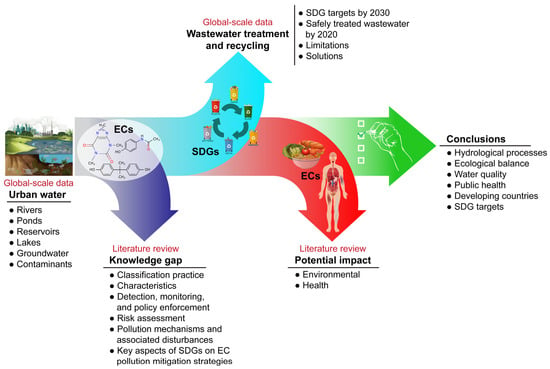
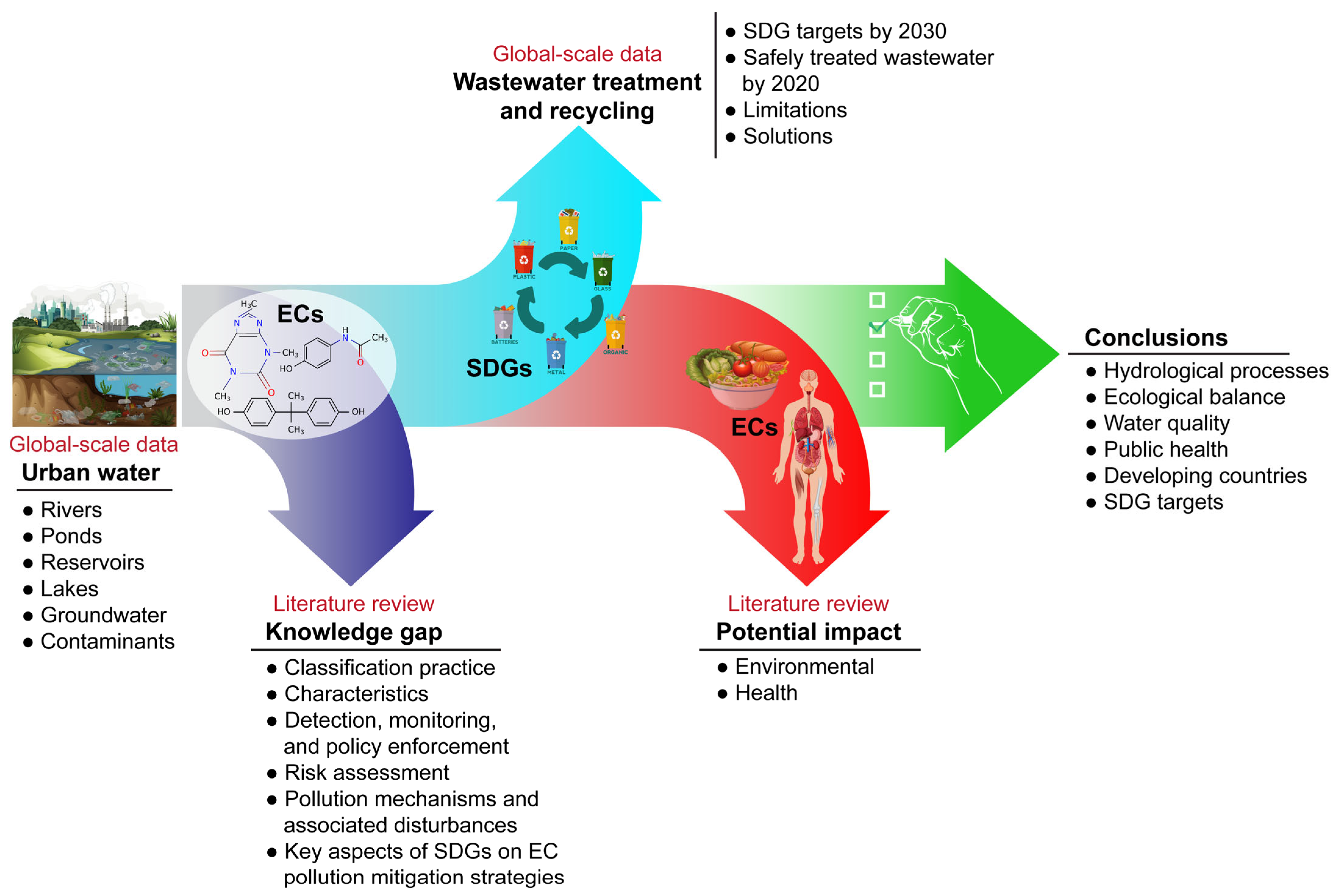
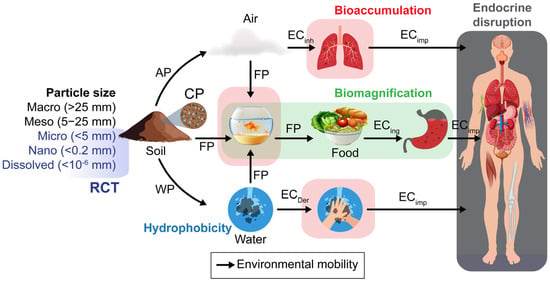
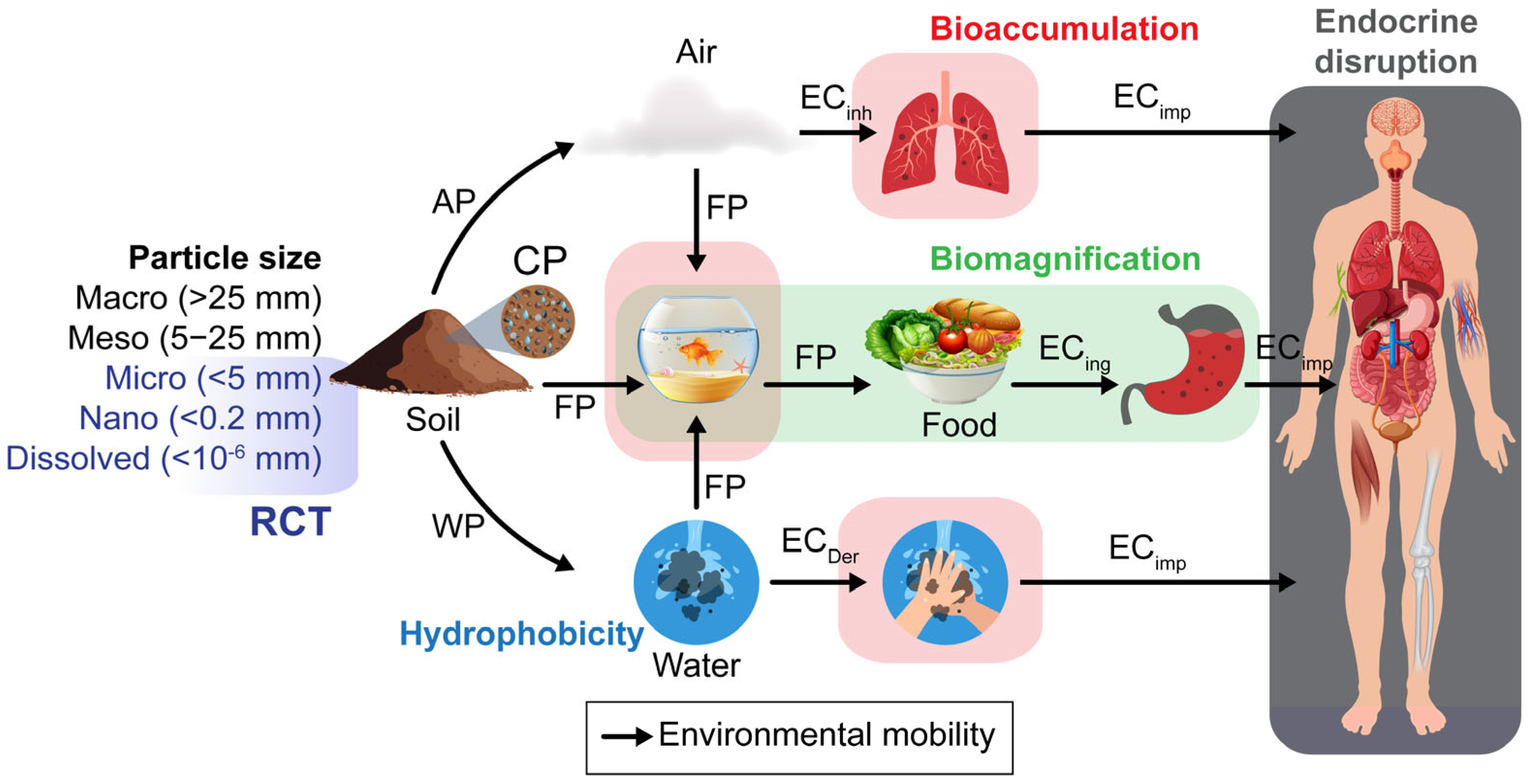
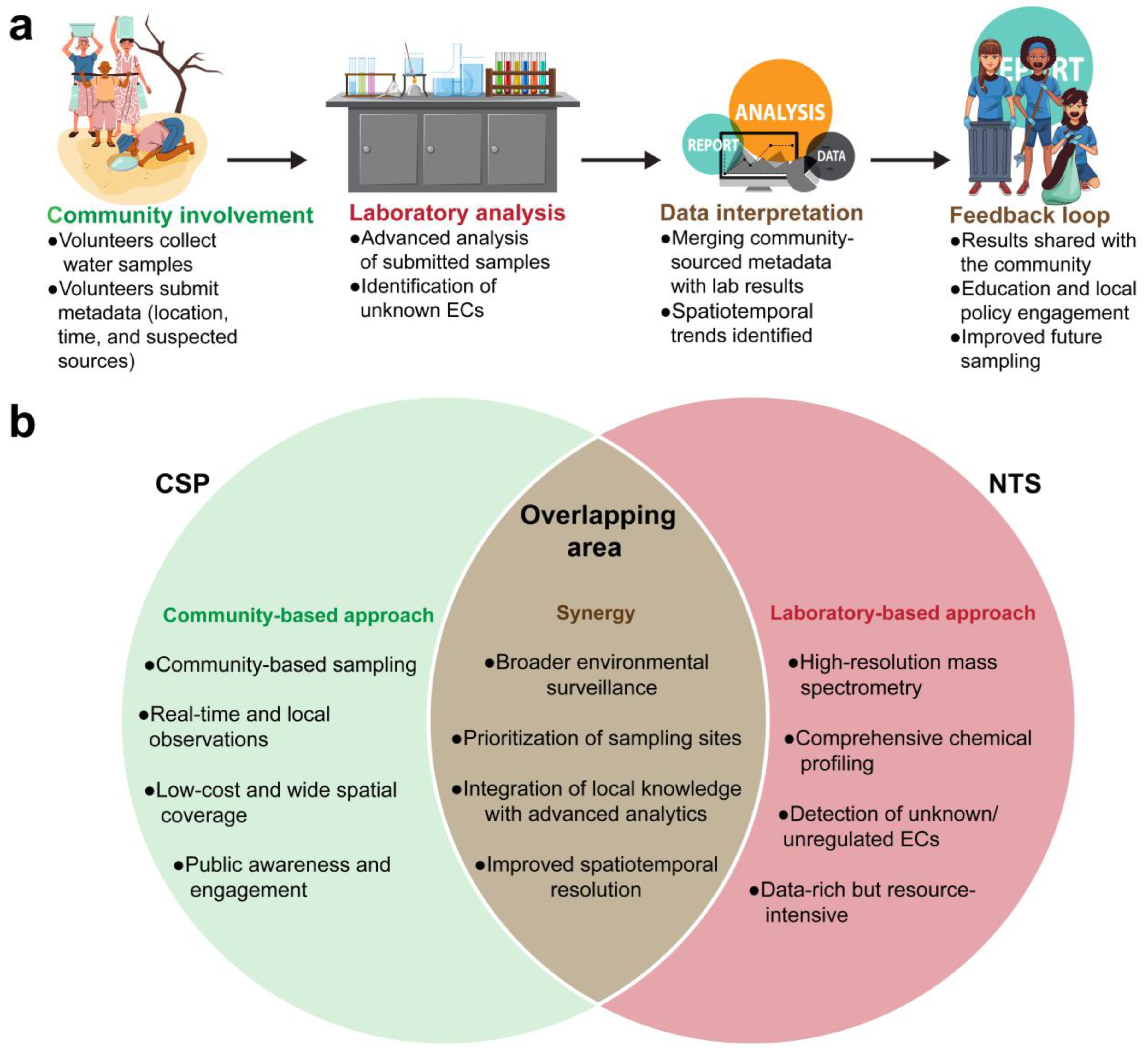
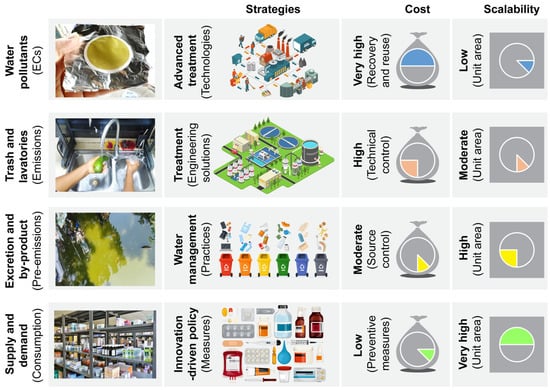
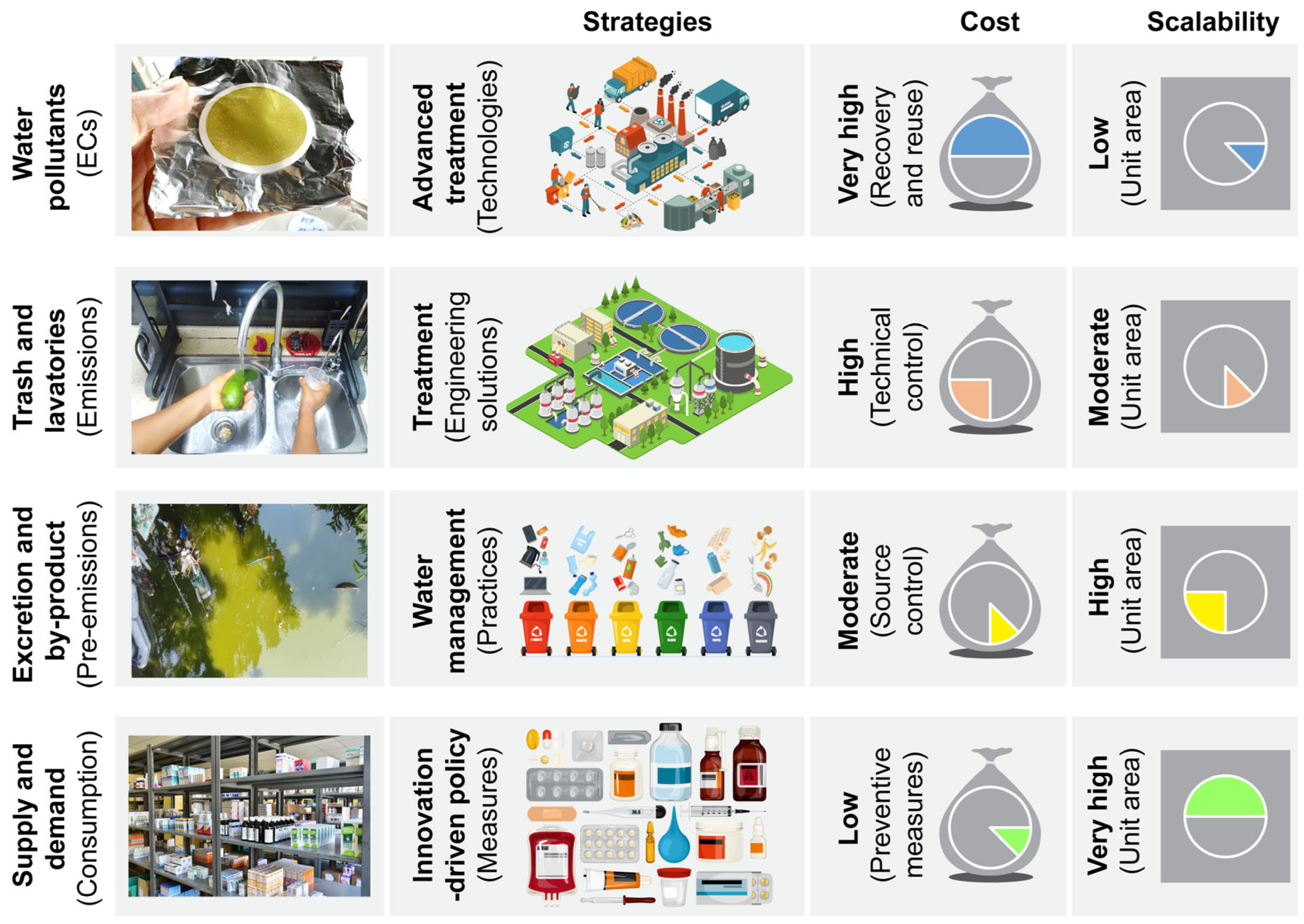
Disclaimer/Publisher’s Note: The statements, opinions and data contained in all publications are solely those of the individual author(s) and contributor(s) and not of MDPI and/or the editor(s). MDPI and/or the editor(s) disclaim responsibility for any injury to people or property resulting from any ideas, methods, instructions or products referred to in the content. |
© 2025 by the authors. Licensee MDPI, Basel, Switzerland. This article is an open access article distributed under the terms and conditions of the Creative Commons Attribution (CC BY) license (https://creativecommons.org/licenses/by/4.0/).