


Abstract
Climate change creates new challenges for preventing and protecting human health against different diseases that could appear and propagate. The Aedes albopictus mosquito species is an important vector for different diseases like dengue fever or zika. Although this species is not “indigenous” in Europe, its presence is noticed in many countries on the continent. The Ae. albopictus establishment is conditioned by the species’ characteristics and environmental factors. To assess the possible spread of Ae. albopictus in the Dobrogea region (situated in the Southeast of Romania), we conducted the following analysis: (1) Investigation of the current distribution and climatic factors favoring Ae. albopictus’ establishment in Europe; (2) Analysis of climate dynamics in Dobrogea in terms of the parameters identified at stage (1); (3) Testing the hypothesis that the climate from Dobrogea favors Ae. albopictus’ establishment in the region; (4) Building a Geographic Information System (GIS)-based model of the potential geographic distribution of Ae. albopictus in Dobrogea. Results show that the climate of Dobrogea favors the apparition of the investigated species and its proliferation.
1. Introduction
During the last years, weather and climate changes have a notable impact on human health [1,2,3,4]. According to the CDC data recently published, climate change has led to an augmentation of the incidence of emerging and re-emerging diseases, out of which vector-borne, food- and water-borne disease are the most important [5].
According to the WHO [6], vector-borne diseases (whose most common vectors are mosquitos) account for more than 17% of all infectious illnesses, causing more than 700,000 deaths annually. Globally, 146 (58.4%) countries/territories reported at least one arboviral disease, while 123 (49.2%) reported more than one arboviral disease, in many cases, local outbreaks [7,8,9].
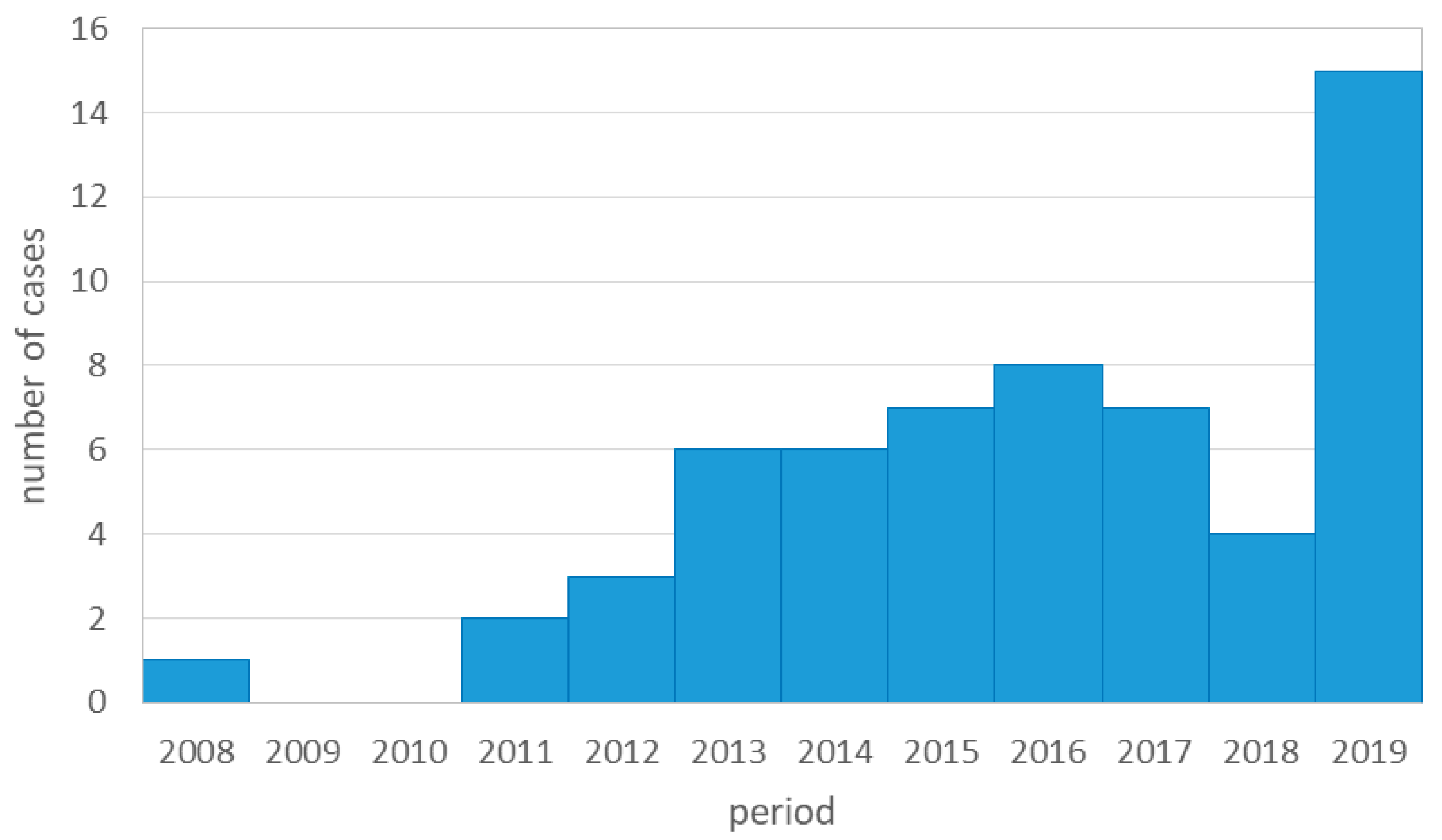
For instance, dengue fever (caused by mosquito bites, like Ae. albopictus (Skuse, 1895)) is common in many countries from tropical and subtropical areas. The Invasive Species Specialist Group considers that Ae. albopictus is one of the worst 100 invasive species due to its adaptability [10,11]. Thus it comes as no surprise that autochthonous dengue cases were documented in southern France in 2010, 2013, 2014, and 2015 [12,13,14]. In Spain, the first local outbreak of Dengue was registered in 2018. The second one was reported in September 2019, when the local health authorities announced a laboratory-confirmed autochthonous dengue case in Barcelona. The presence of Ae. albopictus in the same country has been reported since 2004 [15]. Autochthonous dengue cases have been reported in Europe (Croatia, France, Madeira Islands) and the United States (Hawaii, Florida, and Texas) [12,13], as well. The number of imported cases has also increased in Germany, Belgium, Italy, Spain, and the United Kingdom, due to the tourism intensification in endemic countries [14,15,16,17,18]. Imported dengue fever cases have been notified in Romania since 2008 [16], their number significantly increasing in 2019 (Figure 1).
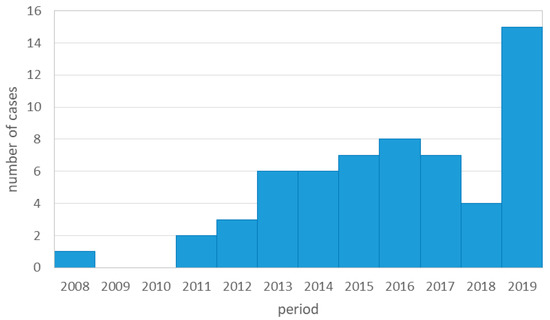
Figure 1.
The number of imported cases of dengue fever reported in Romania.
Following the outbreaks of dengue and chikungunya virus in Europe, European Centre for Disease Prevention and Control (ECDC) attempted to achieve a current distribution map and provide a historical spread of these mosquito species in Europe. According to the report published in 2009 [19], the North Mediterranean coast was already infested. At that time, there was no information concerning the Ae. albopictus spreading in Romania.
Scientists proposed different approaches to investigate the Ae. albopictus spatial distribution in Europe. Fisher et al. [20] published a review containing the principal models used to predict this species’ future distribution and classified them into two categories—mechanist and correlative. Since none of them is better than the other one, ECDC utilized the Random Forest model (correlative approach) and Multi-Criteria Decision Analyses (MDCA—mechanist approach) in its technical report [16]. It was shown that the Random Forest is suitable to describe mosquitos’ spread in the Mediterranean area or similar zones. According to both the maximum impact short- and long-term scenarios, entire Europe is suitable for Ae. albopictus establishment. The MDCA result (based on Intergovernmental Panel on Climate Change—IPPC’s long-term climate change scenario for 2030 with minimal impact) shows that Romania becomes unsuitable for Ae. albopictus spreading [19].
Recently, Kraemer et al. [21,22] and Kamal et al. [23] mapped the spreading zones of the Ae. albopictus vectors responsible for transmitting the major human arboviral diseases. According to [23], the Southern part of Romania is 50% suitable for the existence of this species, but the situation from Dobrogea (southeastern part of Romania) has yet to be reported. The reconstructed global distribution of Ae. albopictus [22] provides 50% suitability for the establishment of this mosquito species in Romania.
Prioteasa et al. [24] reported for the first time the existence of Ae. albopictus in Romania, in Bucharest, in 2012. Since then, its presence has been noticed every year. Recently, Fălcuţă et al. [25] investigated the existence of Ae. albopictus in 53 localities from Romania for the period 2017–2018. Their results confirm the presence of this invasive Aedes mosquito species, especially in the Bucharest metropolitan zone. ECDC 2020 map [26] shows the current distribution of Ae. albopictus, which takes into account the results from [25]. According to this document, Ae. albopictus is already established in Constanta county (situated in the south of Dobrogea) but was not recorded in Tulcea county (situated in the northern part of Dobrogea). That means that the vector has been confined to the country, and there is a risk of a local outbreak of Dengue fever soon, in the absence of drastic control measures.
In this context, this paper aims to (i) update the understanding of the current distribution and environmental factors favoring the Ae. albopictus’ establishment in different European regions by compiling the data from the literature and (ii) investigate the possibility of the future establishment of this mosquito species in Dobrogea, Romania, given (that rural and urban zones represent 30% in Constanta county and 60% in Tulcea county, that belong to the study region) and the climate could foster this species survival [27,28]. A Geographic Information System (GIS) model based on five climate criteria is proposed to identify the favorable areas for Ae. albopictus establishment.
2. Materials and Methods
2.1. Study Region
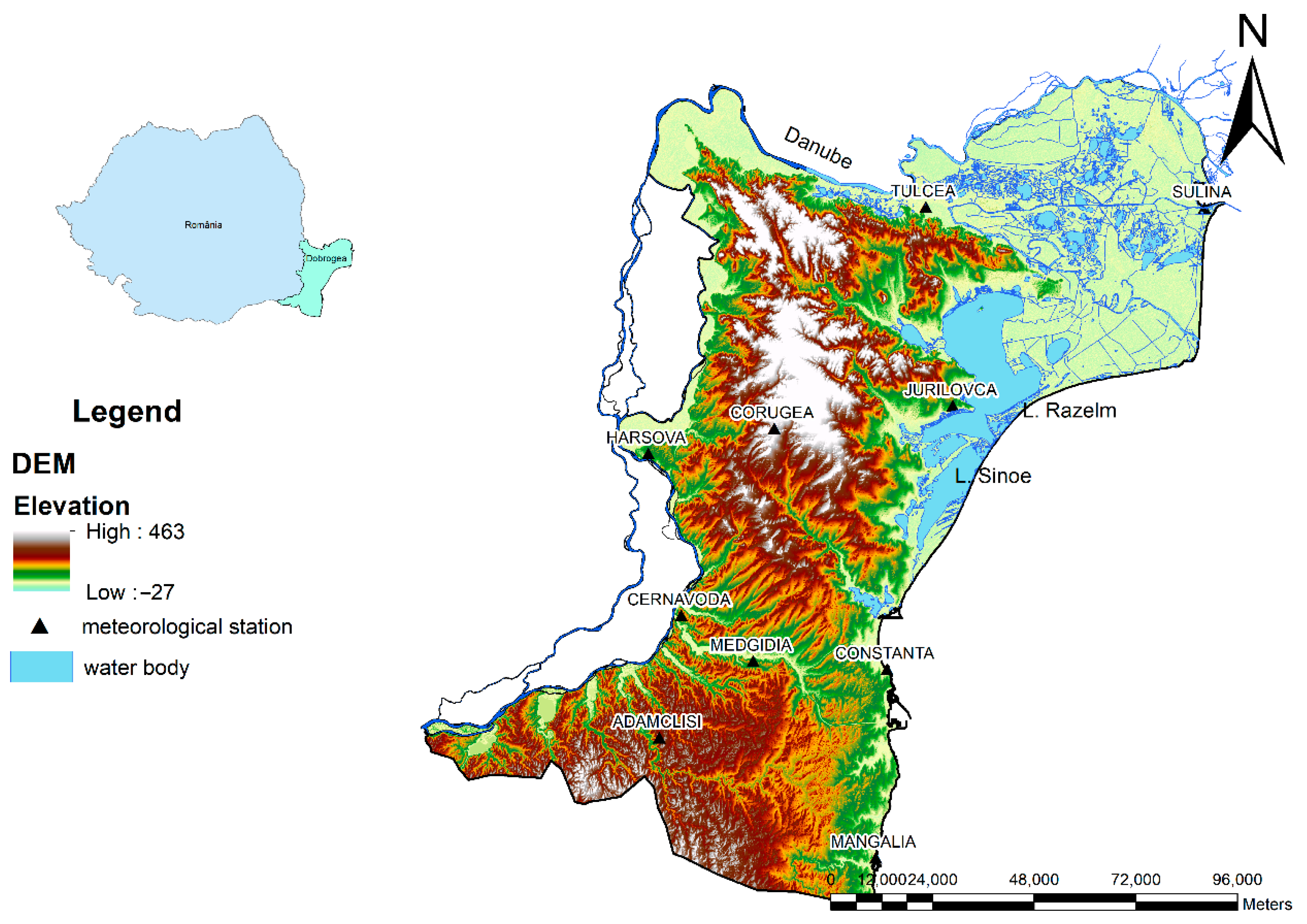
Dobrogea region (Figure 2) is situated in the Southeast of Romania between the Black Sea (East), lower Danube (West), and Danube Delta (North). From an administrative viewpoint, this territory, with 16,501 km2, is divided into two counties, Constanța and Tulcea. From a geomorphological point of view, the relief of Dobrogea contains the Dobrogea Plateau, the Danube floodplain, and the Danube Delta. The average altitude is about 200–300 m, the highest point being Tutuianu Peak (467 m).
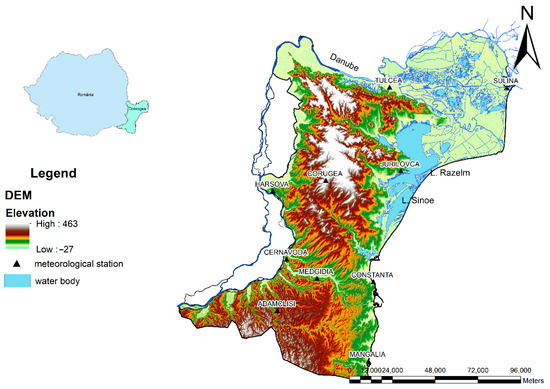
Figure 2.
The map of the Dobrogea region (DEM: Digital Elevation Model).
From a hydrological viewpoint, Dobrogea is divided into two basins, one tributary to the Danube River and the other tributary to the Black Sea basin. According to the Management Plan of Dobrogea-Littoral Watershed, the total length of rivers in Dobrogea is 1623 km of rivers; there are 18 lakes and four reservoirs. Wetland areas represent 23% of the region.
The climate of Dobrogea is temperate continental, with two zones. The first one contains the Danube Delta, the two lagoons (Razelm and Sinoe), and the Black Sea Littoral. This unit covers the territory between 20 and 50 km from the Romanian Littoral (depending on the warm or cold season) and has a continental climate. The Black Sea influences are felt during the cold season, the temperatures remaining positive up to an altitude of 100 m. During the warm season, the climate is affected by sea breezes. The second unit covers the western part of Dobogea, where the moderate continental belt influences are felt [29].
The mean annual temperature varies between 9.9 °C at Jurilovca village and 11.7 °C at Constanta. The mean multiannual precipitation varies from 261 mm at Sulina station to 488 mm at Cernavoda.
Different climatic parameters are investigated in the present study, covering the period after 1965. Data series was recorded at the ten principal meteorological stations in the region.
2.2. Materials and Methodology
As presented in the Introduction, Ae. albopictus is an important vector for different diseases. This mosquito species, native to the Southeast Asia region, appeared in Europe in the last decades of the XX century. As Lockwood et al. [30] mentioned, four stages are necessary to declare a species as “invasive”: introduction, establishment, expansion, and impact on the environment. A species can be transported from its original area to a new ecosystem by natural phenomena or humans. This article will address only the second stage (establishment), which is conditioned by environmental and species characteristics. To assess the possible spread of Ae. albopictus in Romania, especially in the Dobrogea region, we conducted the following steps.
- Analysis of the current distribution and climate factors favoring the establishment of Ae. albopictus in Europe.
To achieve this objective and evaluate the habitat of the Ae. albopictus in Europe, we investigated 67 locations where the presence of this species was reported. The selection of location is based on the scientific reports and literature [11,19,25,26,31,32,33,34,35]. The following climatic parameters are analyzed: mean multiannual temperature (°C), mean maximum multiannual temperature in the warmest month (°C), mean multiannual minimum temperature (°C) of the coldest month (generally January), mean multiannual precipitation (mm), and mean multiannual relative humidity (%). The climatic parameters investigated were obtained via [36]. For each of them, we computed the basic statistics and built spatial distribution maps in ArcGIS 10.7 (ESRI).
- 2.
- Understanding the physiological plasticity of Ae. albopictus.
The objective of this direction is to identify the principal climate parameters favoring the establishment of Ae. albopictus. A review of the scientific literature concerning the physiological plasticity of Ae. albopictus [37,38,39,40,41,42] demonstrates this species ability to adapt to different climate conditions.
- 3.
- Analysis of climate dynamics in Dobrogea in terms of the parameters identified in the first two steps. The aim is to determine the suitability of the climate for Ae. albopictus establishment.
Studies regarding the temperature and precipitation dynamics in the Dobrogea region [43,44,45,46,47,48] demonstrate that after 1997–1998 and 1995, respectively, increasing temperature (+0.8 °C on average) and rainfall (88–98 mm) trends are noticed as a result of climate change. Consequently, in this paper, the data records after 1997 (for temperature) and 1995 (for precipitation) are used. Data series provided by the Romanian National Meteorological Agency, registered at ten meteorological stations (Adamclisi, Cernavodă, Constanța, Corugea, Hârșova, Jurilovca, Mangalia, Medgidia, Sulina, and Tulcea) are utilized in this study. The geographical positions of the study locations are presented in Figure 2.
Firstly, we tested the hypothesis that the mean annual temperature series are normally distributed by using the Kolmogorov-Smirnov test. Secondly, we performed statistical tests to check different hypotheses related to the favorable climate conditions for Ae. albopictus establishment.
- 4.
- Building a GIS-based model for analyzing the spatial correlation between the climatic parameters identified.
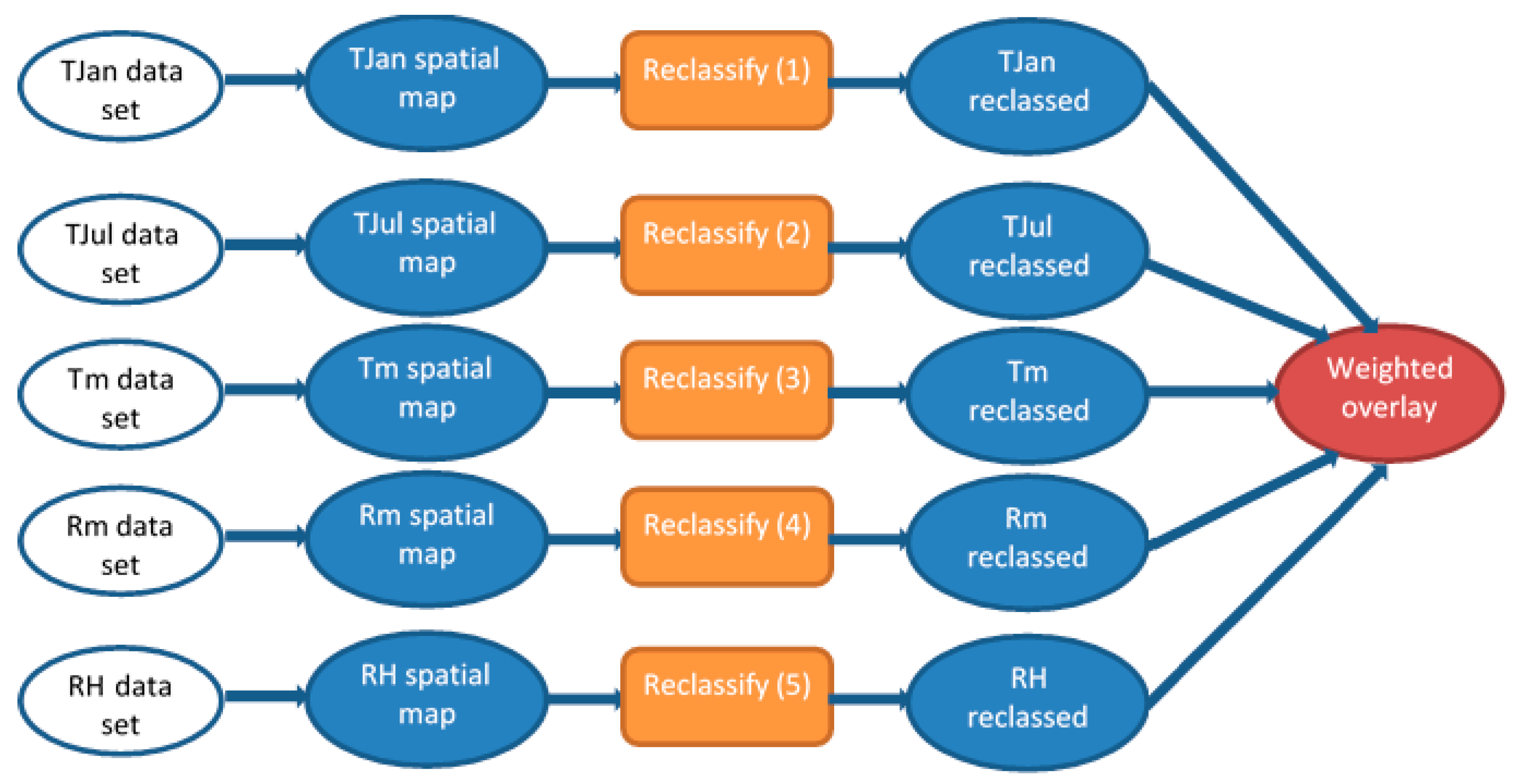
Figure 3 contains a scheme of the proposed model. Discrete climatic data processing was conducted via IDW (Inverse Distance Weight) interpolation, with the default parameter (beta = 2) in order to obtain the spatial maps. The analysis is based on the Weighted Overlay, a component of spatial modeling that uses the Multicriteria Evaluation (MCE) method integrated with GIS. To create an integrated analysis, a common measurement scale must first be established. Each raster file was reclassified into suitability units (for example, 1 to 6). The value 1 was assigned to the most suitable location and the highest value to the most disadvantageous one. After data homogenization, the Weighted Overlay operations were used. Weights were assigned to each class of each data set. Finally, the spatial distribution of the suitable zones for Ae. albopictus establishment was obtained. In this study, we built the model assuming that all datasets were equally important for identifying the most suitable area.
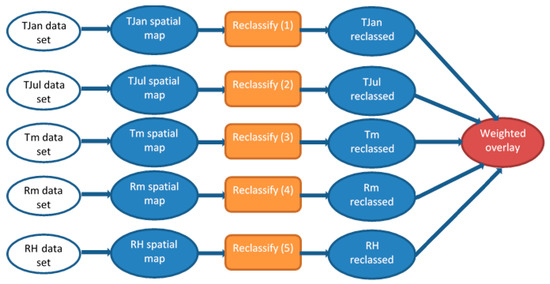
Figure 3.
Scheme of a Geographic Information System (GIS) model.
3. Results and Discussion
3.1. Analysis of the Current Distribution and Climate Factors Favoring the Establishment of Ae. albopictus in Europe
To evaluate the habitat availability for Ae. albopictus proliferation in Europe, we investigated 67 locations where this species’ presence was reported. Table 1 presents the geographical distribution and climatic parameters for the territories where the presence of Ae. albopictus was noticed.

Table 1.
Geographical distribution and the climatic parameters for locations where the presence of Ae. albopictus was reported. Mean multiannual temperature (MAT) (°C), mean multiannual maximum temperature (MAMaxT), mean multiannual minimum temperature (MAMimT) (°C), mean multiannual precipitation (MAP) (mm), mean multiannual humidity RH (%). The minimum and maximum values of the investigated parameters are highlighted in blue and yellow respectively.
Our study shows that Ae. albopictus survives in Europe in the following conditions:
- ➢
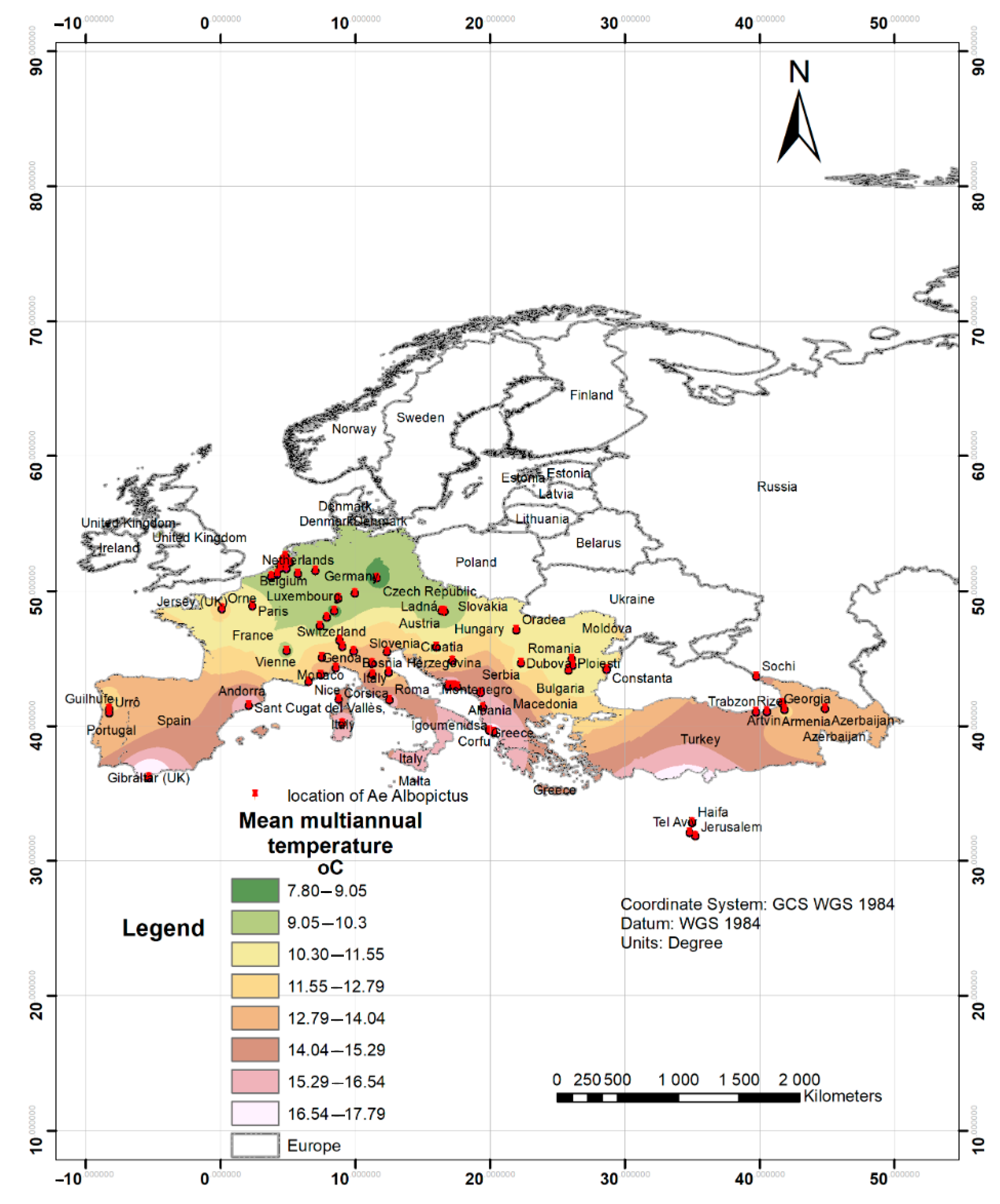
- According to Figure 4, the geographical areal boundary is between the latitudes of 52.3004° N (Netherlands—Haarlemmermeer region) and 36°8′0″ N (Gibraltar), and the longitudes of 8°17′0″ W (Penafiel area—Portugal) [32] and 44°49′16″ E (Bagratashen—Armenia) [34]. The limits are debatable, especially in the North and South.
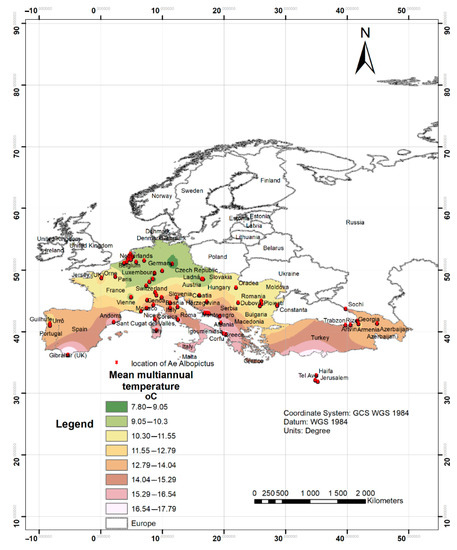 Figure 4. The mean multiannual temperatures in the geographical area where the Ae. albopictus was discovered.
- ●
- In The Netherlands, Ae. albopictus was discovered in greenhouses at 52.3004° N, even if some adults were found outdoors [49]. In Belgium, Shaffner et al. [50] consider that the area surrounding the observation site (Oost-Vlaanderen province) favors the mosquitos’ spread because they found immature stages of this species during the study period. The authors specified that the larvas and pupas came from The Netherlands and “have been on-site for 4–5 months” [50]. Considering the map provided by Kraemer [22], we should consider Jena (50°55′38″ N latitude) or Essen (51°27′3″ N), Germany as the northern limit of Ae. albopictus areal.
- ●
- Information about the presence of the study species South of Gibraltar is not available. However, Leshem et al. [33] reported in 2012 suitable conditions for the autochthonous transmission of dengue in Israel, meaning that the Ae. albopictus was already installed.
- ➢
- According to [26], most areas are located in the northern part of the Mediterranean Sea coast and on the Adriatic Sea Littoral (Figure 4).
- ➢
- The mean annual temperature in the zones where the Ae. albopictus appeared in Europe is 12.56 °C. The territories where the Ae. albopictus were detected are located between the 7.8 °C and 17.8 °C isotherms (Freudenstadt-Germany and Gibraltar, respectively). In most of them, the temperatures vary between 9 °C and 13.8 °C (Figure 4).
- ●
- The average multiannual maximum temperature is 26.59 °C, with variations between 32.6 °C (Podgorica—Montenegro) and 20.6 °C.
- ●
- The average multiannual minimum temperature is 0.58 °C, with variations between –6.2 °C (Ploiesti, Romania) and 7 °C (Gibraltar) or 9.3 °C (when considering the data series from Israel, as well).
Notice the existence of Ae. albopictus in Bucharest, in a temperate continental climate. Prioteasa et al. [21] show that the eggs survived two winters consecutively during the observation period (2013–2015).
- ➢
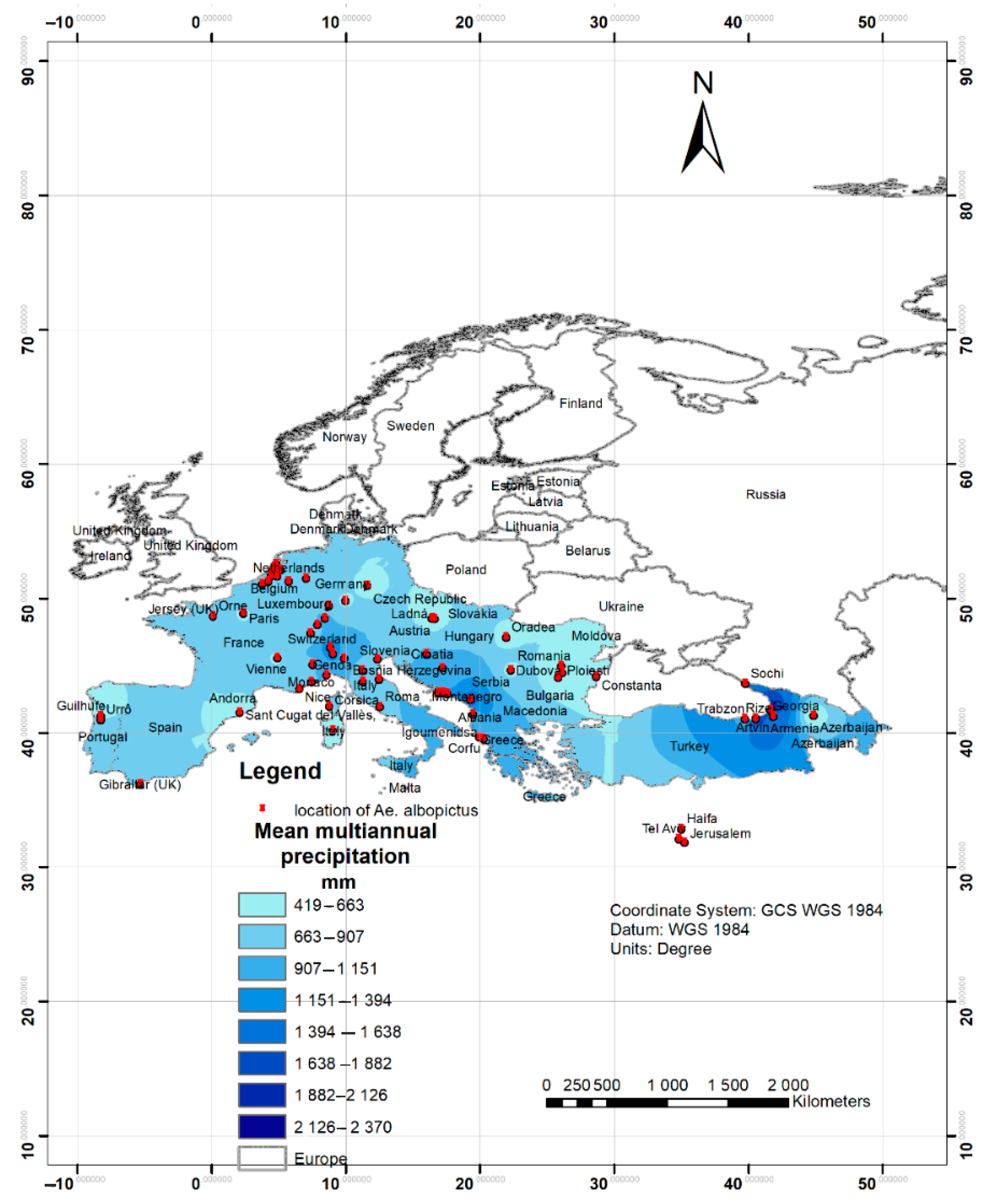
- The average multiannual precipitation is 850.5 mm, with variations from 419 mm (Sardinia—Italy) to the 2393 mm (Batumi—Georgia) isohyets (Figure 5).
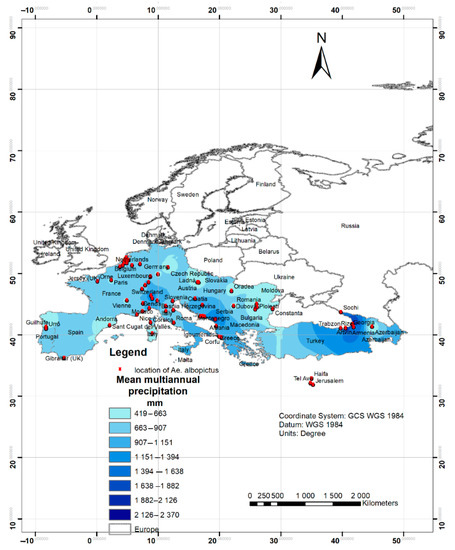 Figure 5. The mean multiannual precipitation in the area where the Ae. albopictus was discovered.
 - ➢
- The average multiannual humidity is about 75%, varying between 64% (Croatia and Bagratashen—Armenia) and 84% (when considering The Netherlands as well) or 81% (Constanta—Romania, without The Netherlands data). Taking into account Israel, the minimum is registered at Jerusalem—53%.
3.2. Understanding the Physiological Plasticity of Ae. albopictus
Table 2 summarizes the climate conditions for the different development stages of Ae. albopictus, retrieved from the above-mentioned literature.
Table 2.
Climate condition for development stages of Ae. albopictus.
3.3. Analysis of Climate Dynamics in Dobrogea
Figure 4 and Figure 5 show that Romania is located in the region where Ae. albopictus can proliferate. In the context of the analysis presented below, firstly, we investigated the mean multiannual temperature (tm), the mean multiannual minimum temperature in January (TJan), the mean multiannual maximum temperature in July (TJul), the mean multiannual precipitation (Rm), and the mean multiannual of relative humidity (RH).
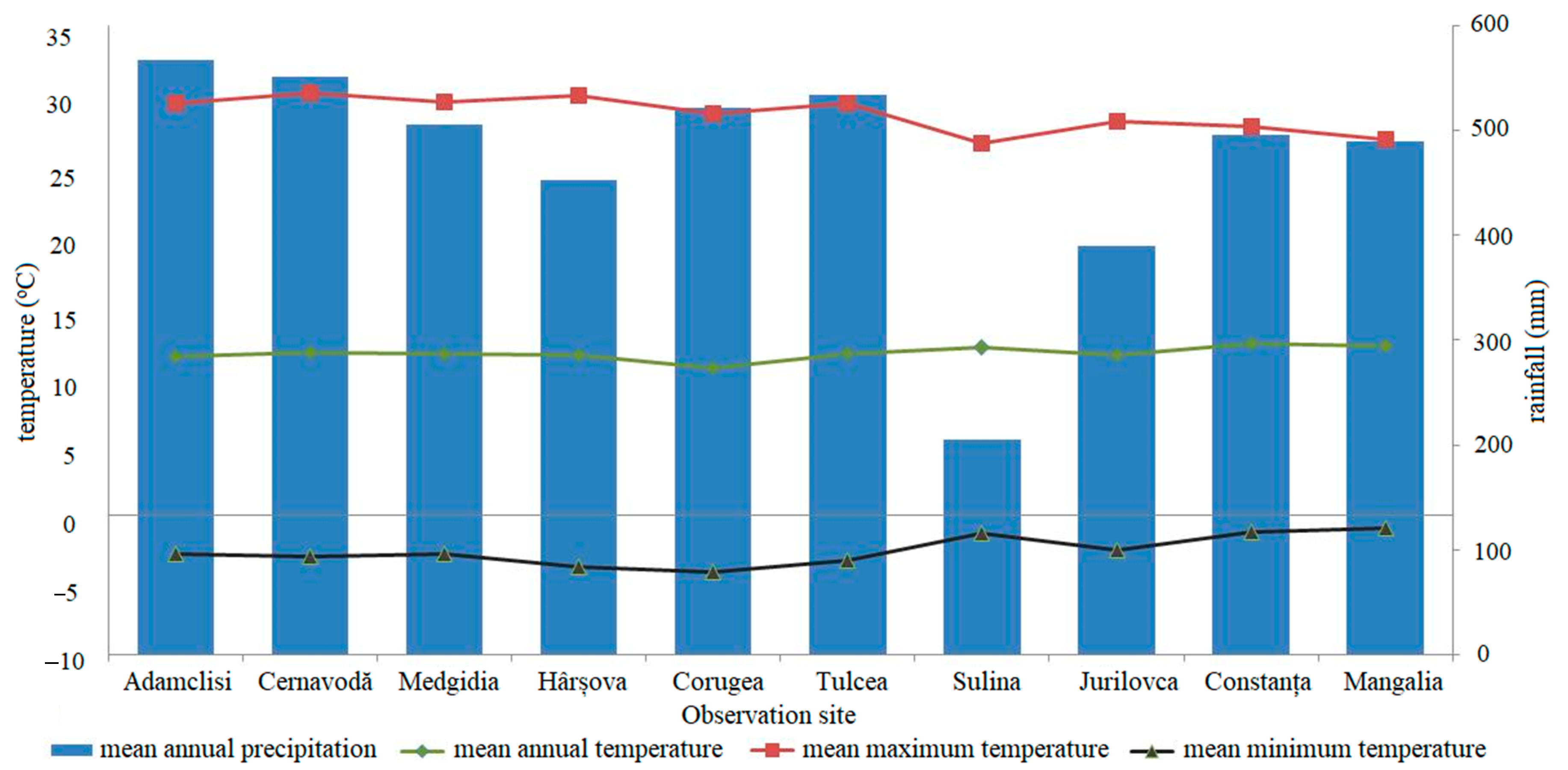
Figure 6 presents the dynamics of temperature and precipitation in Dobrogea. The mean multiannual temperature (tm) varied between 10 °C (at Corugea station) and 12.3 °C (Constanta), with a regional average of 11.6 °C. TJan varied between −4.1 °C (Corugea station) and −1 °C (Mangalia). TJul took values between 30.2 °C (Cernavoda) and 26.6 °C (Sulina). The warmest month was July and the coldest one was January.
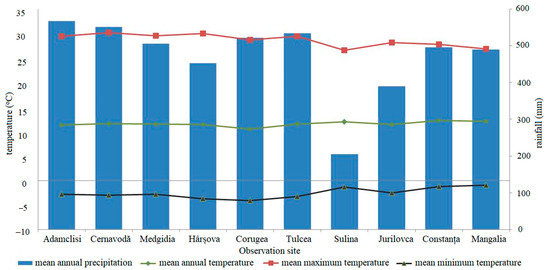
Figure 6.
Principal climatic parameters at weather stations in the Dobrogea region (average 1998–2019).
The multiannual precipitation (Rm) varied between 205 mm (Sulina) and 568 mm (Adamclisi). The average relative humidity (RH) in the region was 78.4% (77.8–84.2%). The day length varied between 8.9 h in December and 15 h in July.
To deeply investigate the suitability of climate conditions for the Ae. albopictus existence in the Dobrogea region, we performed some statistical tests on data series.
The Kolmogorov–Smirnov normality test on the annual precipitations series could not reject the hypothesis that the data series are normally distributed because all the p-values (p-val) were greater than 0.05 (which was chosen as significance level).
We used the t-test for checking the null hypothesis H0: The annual precipitation is equal to 500, against its alternative, H1: The annual precipitation is greater than 500. The value of 500 (mm) is the minimum value of annual rainfall at which the eggs survive (Table 2).
The null hypothesis was rejected for Jurilovca (t(24) = −2.41, p-val = 0.076) and Sulina series (t(24) = −11.89, p-val <0.001), whereas there was not enough evidence to reject the hypothesis that the annual precipitation is higher than 500 mm for the other eight series (all the p-val being greater than 0.05). This means that the precipitation conditions favor the installment of this species in eight out of ten of the studied locations.
We fitted the best probability density distributions for the mean annual temperature series, and, based on them, we computed the probabilities that the mean annual temperatures fall in the interval 10–25 °C (minimum and maximum optimal temperatures for eggs hatching). After fitting probability density distributions for the mean temperatures in July, we computed the probabilities that the temperatures fall between 20 °C and 25 °C (optimal temperatures for the eggs hatching). Table 3 contains the results of the tests.
Table 3.
The probability that the mean annual temperature (T-mean annual) is between 10 °C and 25 °C, and the probability that the mean temperatures in July are in the interval 20 °C and 25 °C.
Since the probabilities that the mean annual temperatures belong to the interval 10–25 °C have high values, it results in that they should be suitable for the eggs hatching. The probabilities that the mean temperatures in July are above 0.8268 (so, very high) at nine out of ten study locations indicating that the temperatures are optimal for the eggs hatching. P(20 < T-mean July < 25) is 0.4053 at Cernavoda, so the mean temperature in July is less suitable for the eggs hatching. Taking into account that the maximum temperatures in July are greater than 25 °C (as mentioned above), so optimal for reproduction, it results that there are climatic conditions for the Ae. albopictus establishment in the Dobrogea region.
3.4. Building a GIS-Based Model for Analyzing the Spatial Correlation between the Climatic Parameters Identified
Based on the proposed methodology (Figure 3), a spatial map (raster file) has been built for each climatic data set presented in Table 4. An integrated analysis was carried out to create a suitable GIS model for identifying the potential locations for Ae. albopictus establishment. In this respect, all spatial maps were combined. Since the five criteria have different measurement units for each spatial data set, a common scale was defined, ranging from 1 to 6. The proposed scale is presented in Table 4, where the score “1” is assigned to the most favorable class, whereas “6” is assigned to the most disadvantageous one. For example, the values of Rm (mm) vary between 205 and 568. This interval was divided into six subintervals with the same lengths. According to the values presented in Table 2, Table 4, and Figure 4, a score of “1” was attached to the subinterval 519–568 (Table 4), whereas and score of “6” was attached to the more unfavorable class (205–283).
Table 4.
Scores assigned to the climatic parameters.
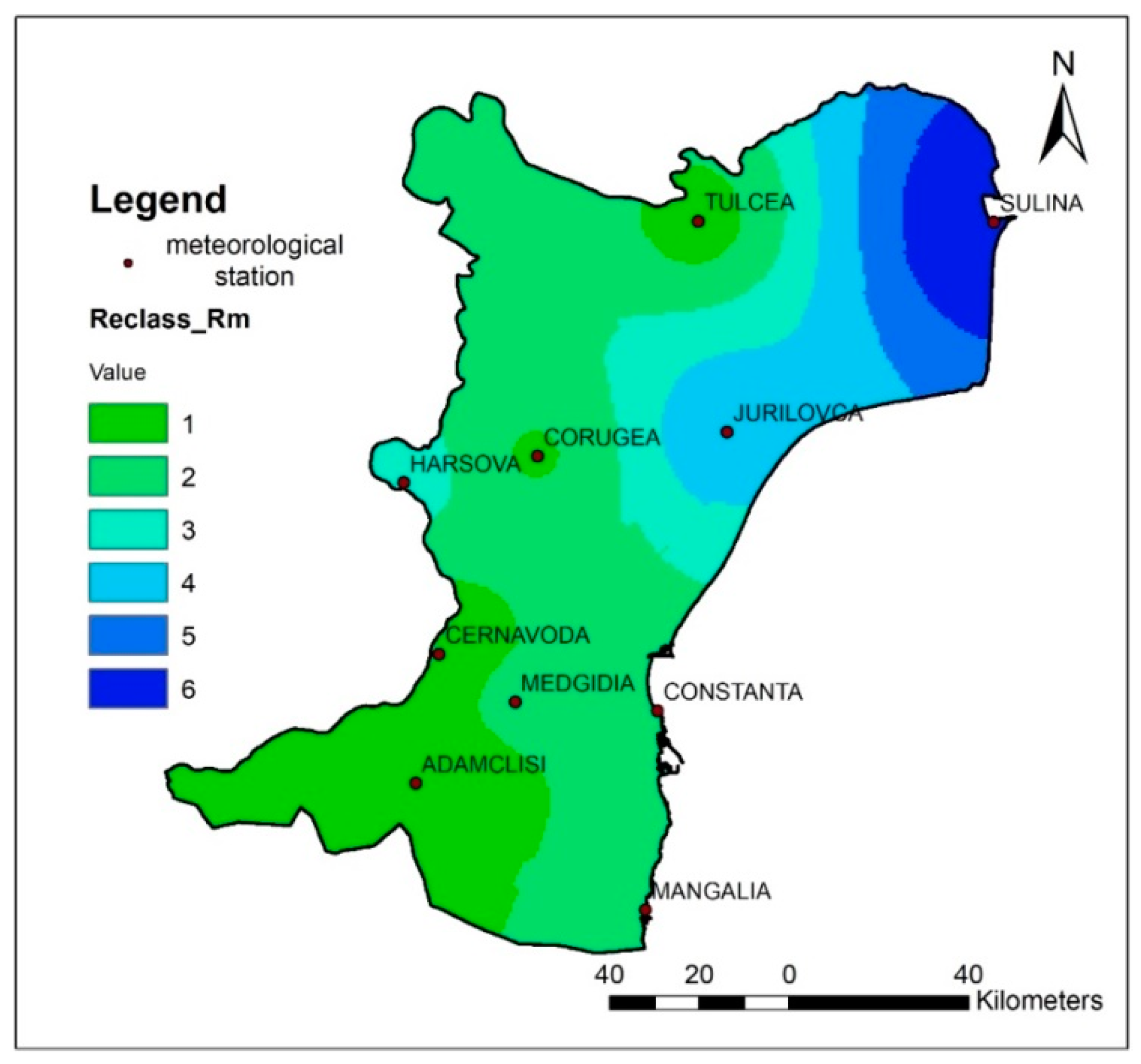
Figure 7 shows that most favorable classes for precipitation cover all Dobrogea, but the Danube Delta (north–east of the region). This is sustained by the rejection of the hypothesis that the annual mean precipitation is less than 500 mm at Sulina and Jurilovca.
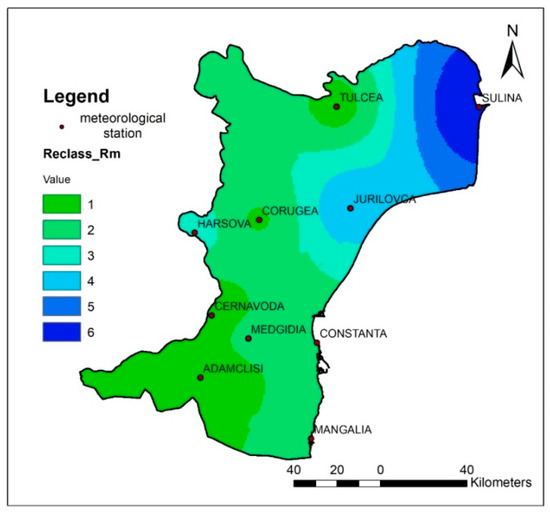
Figure 7.
Multiannual precipitation data set reclassified.
After been reclassified to a common measurement scale, the datasets were finally combined using the Weighted Overlay tool. Each input raster was weighted by its respective importance. All datasets were considered equally important, so they have an equal influence on the determination of favorable Ae. albopictus establishment (Table 4).
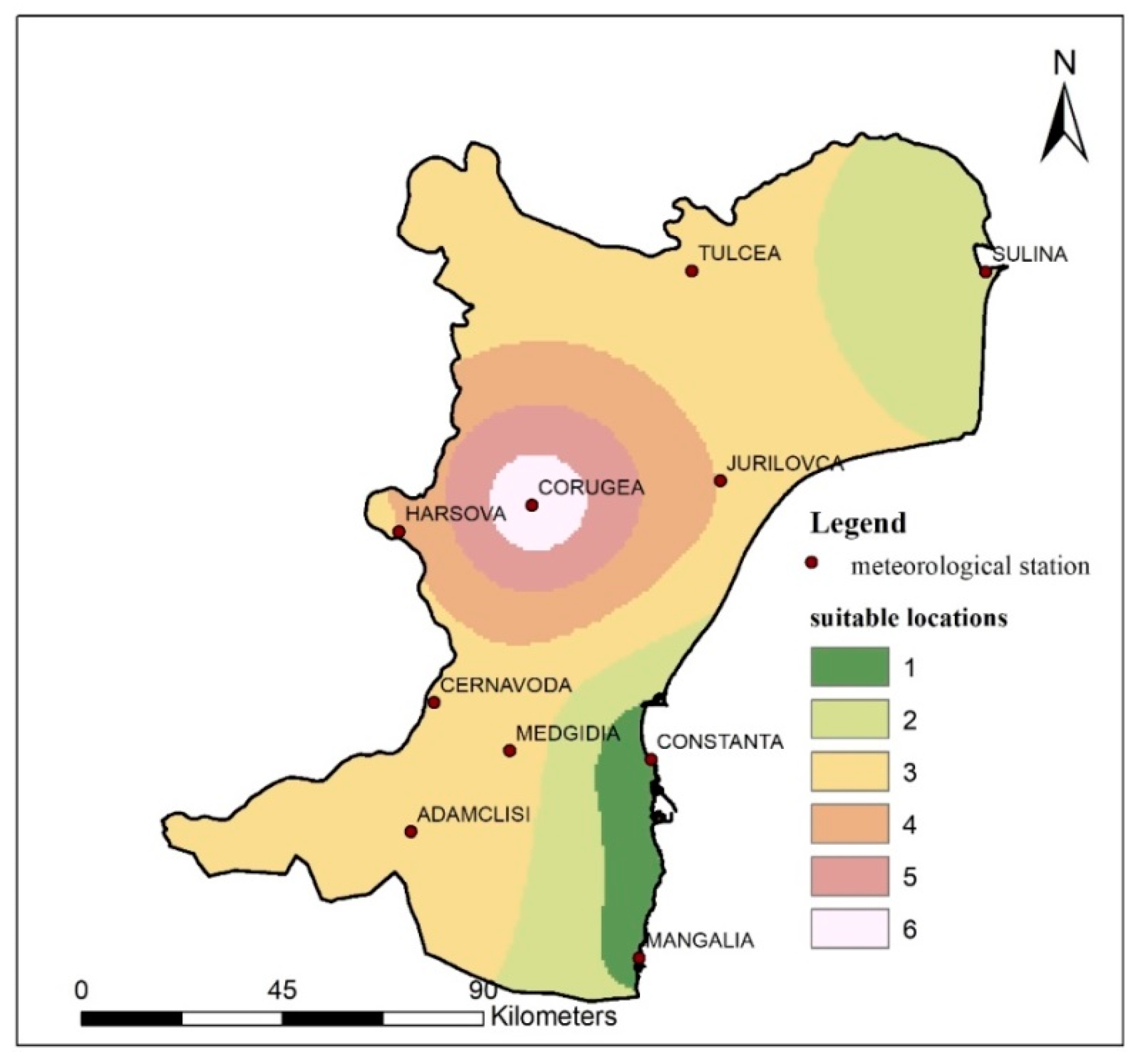
Figure 8 shows that the most suitable area for the Ae. albopictus establishment is on the Black Sea Littoral and the Danube Delta (the classes 1 and 2). The most unfavorable location is near Corugea, where the average temperature in January is −3.5 °C.
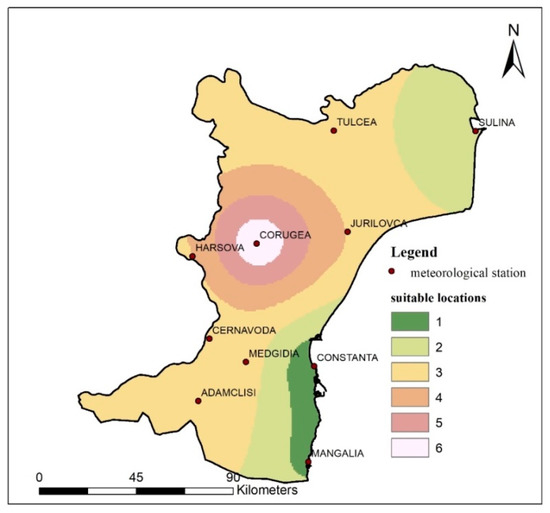
Figure 8.
Suitable locations of Ae. albopictus establishment.
We should remark that the condition that the annual precipitation is greater than 500 is not fulfilled for Sulina, which belongs to the most suitable location based on the map’s interpretation. This is only an apparent discordance since the weight associated with the precipitation is only 20% in the map creation.
According to Skolka [52], Ae. albopictus has been identified in Constanta city (since 2016–2017), in Murfatlar, Cumpăna (approximately 10 km Constanta), the lower Danube, and Danube Delta. In 2016, some dengue fever cases were reported in Mangalia, but there is no indication if those cases were autochthonous or imported [52].
4. Conclusions
Ae. albopictus mosquitos play an important role in speeding infectious diseases. This species was introduced in Europe, and it has a strong adaptive capacity. In this context, the study’s main objective was to develop a tool that could map the suitable locations for Ae. albopictus establishment in Dobrogea, Romania, using the available datasets of the current climate with respect to the Multicriteria Evaluation method. We performed statistical analyses to test the climate variables’ suitability for the establishment of this species in Dobrogea. The statistical tests and the GIS map should be interpreted together.
The previous studies carried out so far in Romania [24,25,52] had the goal of proving the mosquitoes’ presence in the country and not investigating the favorable conditions for their establishment and proliferation. For this reason, we consider that the assumption that all climatic parameters have an equal influence on identifying the most suitable area is reasonable.
Our approach differs from those found in the literature. It is easy to use, can be integrated into open source GIS (such as QGIS), and utilized in monitoring the mosquitoes’ habitat for placing the surveillance tools. This approach will give better results when a higher number of stations and a higher number of record data will be used.
A sensitive point of this study refers to the climatic datasets utilized to evaluate the Ae. albopictus spread in Europe. The direct and immediate interest in this study was to observe if Romania is situated in this area, from the climatic point of view. The objective was achieved by investigating the scientific literature related to (i) European area were Ae. albopictus was discovered and (ii) its climatic parameters (Table 2). However, utilizing a set of gridded data layers provided by different services like Worldclim (https://www.worldclim.org/), E-OBS (https://www.ecad.eu/download/ensembles/download.php), or CHELSA (https://chelsa-climate.org/) can significantly improve our findings (Figure 4 and Figure 5). The results obtained offer the possibility to choose the adequate climatic factors for the investigation performed for the Dobrogea region. Furthermore, other parameters could be introduced to improve the study accuracy. These will be done in the next step of our research.
To develop the model, we must better understand the correlation between the climatic factors, vegetation, soil type, water abundance, land use, etc., and the processes of Ae. albopictus establishment and development. More investigations are necessary to incorporate all information and reach a stage when the proposed approach’s findings could be compared with those of other used models. Still, we obtained encouraging results, and we consider this model a useful tool for a monitoring strategy.
To predict the Ae. albopictus establishment a combined approach of statistical, GIS analysis, and remote sensing imagery represents a task for all stakeholders involved.
According to climate change impact analyses [53], a continuous surveillance program is recommended, especially in areas with the highest suitability predicted by the model developed herein. Since the Ae. albopictus’ presence in the Dobrogea region was noticed, the development of a Protocol for Surveillance and Control of arboviruses transmitted by mosquitos in Romania is necessary.
Author Contributions
Conceptualization, I.M.D., and C.M.; methodology, C.M., and C.D.N.; validation, A.B., S.R., C.M. and I.M.D.; formal analysis and statistical testing, A.B.; investigation, I.M.D. and S.R; resources, I.M.D.; data curation, C.M., and I.M.D.; writing—original draft preparation, I.M.D., C.M., and A.B.; writing—review and editing, A.B.; visualization, A.B.; supervision, C.M. All authors have read and agreed to the published version of the manuscript.
Funding
This research received no external funding.
Institutional Review Board Statement
Not applicable.
Informed Consent Statement
Not applicable.
Data Availability Statement
Data are publicly available in the cited databases.
Conflicts of Interest
The authors declare no conflict of interest.
References
- Johnson, N.B.; Hayes, L.D.; Brown, K.; Hoo, E.C.; Ethier, K.A. Leading Causes of Morbidity and Mortality and Associated Behavioral Risk and Protective Factors—United States, 2005–2013. Morbidity and Mortality Weekly Report—Supplements; Centers for Disease Control and Prevention: Atlanta, GA, USA, 2014; Volume 63, pp. 3–27.
- Centers for Disease Control and Prevention. Chronic Obstructive Pulmonary Disease among Adults—United States, 2011. MMWR: Morbidity and Mortality Weekly Report 2012; Centers for Disease Control and Prevention: Atlanta, GA, USA, 2012; Volume 61, pp. 938–943. Available online: https://www.cdc.gov/mmwr/preview/mmwrhtml/mm6146a2.htm (accessed on 19 October 2020).
- Dumitru, I.M.; Lilios, G.; Arbune, M. Respiratory infections and air pollution, retrospective study over the past 10 years. J. Environ. Prot. Ecol. 2018, 19, 1445–1451. [Google Scholar]
- Hess, J.J.; McDowell, J.Z.; Luber, G. Integrating climate change adaptation into public health practice: Using adaptive management to increase adaptive capacity and build resilience. Environ. Health Persp. 2012, 120, 171–179. [Google Scholar] [CrossRef]
- Centers for Disease Control and Prevention. Deseases Carried by Vectors. Available online: https://www.cdc.gov/climateandhealth/effects/vectors.htm (accessed on 22 October 2020).
- WHO. Vector-Borne Diseases. Available online: https://www.who.int/news-room/fact-sheets/detail/vector-borne-diseases (accessed on 22 October 2020).
- Leta, S.; Beyene, T.J.; De Clercq, E.M.; Amenu, K.; Kraemer, M.U.G.; Revie, C.W. Global risk mapping for major diseases transmitted by Aedes aegypti and Aedes albopictus. Int. J. Infect. Dis. 2018, 67, 25–35. [Google Scholar] [CrossRef]
- Stanaway, J.D.; Shepard, D.S.; Undurraga, E.A.; Halasa, Y.A.; Coffeng, L.E.; Brady, O.J. The global burden of dengue: An analysis from the Global Burden of Disease Study 2013. Lancet Infect. Dis. 2016, 16, 712–723. [Google Scholar] [CrossRef]
- European Centre for Disease Prevention and Control. Aedes aegypti—Factsheet for Experts 2018. Available online: https://ecdc.europa.eu/en/disease-vectors/facts/mosquito-factsheets/aedes-aegypti (accessed on 22 October 2020).
- Global Invasive Species Database—Aedes albopictus. Available online: http://www.iucngisd.org/gisd/species.php?sc=109 (accessed on 22 October 2019).
- Lowe, S.; Browne, M.; Boudjelas, S.; De Poorter, M. 100 of the World’s Worst Invasive Alien Species—A selection from the Global Invasive Species Database, The Invasive SpeciesSpecialist Group (ISSG) a Specialist Group of the Species Survival Commission (SSC) of the World Conservation Union (IUCN). Available online: https://www.iucn.org/content/100-worlds-worst-invasive-alien-species-a-selection-global-invasive-species-database (accessed on 22 January 2021).
- European Centre for Disease Prevention and Control. Dengue outbreak in Réunion, France, 5 July 2018. Available online: https://www.ecdc.europa.eu/sites/portal/files/documents/Dengue%20outbreak%20in%20Reunion,%20France.pdf (accessed on 22 October 2020).
- European Centre for Disease Prevention and Control. Dengue outbreak in Madeira, Portugal, 2012. Available online: https://www.ecdc.europa.eu/sites/default/files/media/en/publications/Publications/dengue-outbreak-madeira-mission-report-nov-2012.pdf (accessed on 15 December 2020).
- European Centre for Disease Prevention and Control. Dengue Annual Epidemiological Report for 2017. Available online: https://ecdc.europa.eu/sites/portal/files/documents/dengue-annual-epidemiological-report-2017.pdf (accessed on 21 October 2020).
- European Centre for Disease Prevention and Control. Local Transmission of Dengue Fever in France and Spain, 22 October 2018. Available online: https://www.ecdc.europa.eu/sites/portal/files/documents/08-10-2018-RRA-Dengue-France.pdf (accessed on 25 October 2020).
- Surveillance Atlas of Infectious Disease. Available online: https://atlas.ecdc.europa.eu/public/index.aspx (accessed on 5 January 2021).
- Belik, V.; Geiser, T.; Brockmann, D. Natural human mobility patterns and spatial spread of infectious diseases. Phys. Rev. X 2011, 1, 011001. [Google Scholar] [CrossRef]
- Salami, D.; Capinha, C.; Martins, M.D.; Sousa, C. Dengue importation into Europe: A network connectivity-based approach. PLoS ONE 2020, 15, e0230274. [Google Scholar] [CrossRef]
- European Centre for Disease Prevention and Control—Technical Report—Development of Aedes albopictus Risk Maps 2009. Available online: www.ecdc.europa.eu/sites/portal/files/media/en/publications (accessed on 15 December 2020).
- Fischer, D.; Thomas, S.M.; Neteler, M.; Tjaden, N.B.; Beierkuhnlein, C. Climatic suitability of Aedes albopictus in Europe referring to climate change projections: Comparison of mechanistic and correlative niche modelling approaches. Euro. Surveill. 2014, 19, 20696. [Google Scholar] [CrossRef]
- Kraemer, M.U.; Sinka, M.E.; Duda, K.A.; Mylne, A.Q.; Shearer, F.M.; Barker, C.M.; Moore, C.G.; Carvalho, R.G.; Coelho, G.E.; Van Bortel, W.; et al. The global distribution of the arbovirus vectors Aedes aegypti and Ae. albopictus. Elife 2015, 4, e08347. [Google Scholar] [CrossRef] [PubMed]
- Kraemer, M.U.; Reiner, R.C.; Brady, O.J.; Messina, J.P.; Gilbert, M.; Pigott, D.M.; Yi, D.; Johnson, K.; Earl, L.; Marczak, L.B.; et al. Past and future spread of the arbovirus vectors Aedes aegypti and Aedes albopictus. Nat. Microbiol. 2019, 4, 854–863. [Google Scholar] [CrossRef] [PubMed]
- Kamal, M.; Kenawy, M.A.; Rady, M.H.; Khaled, A.S.; Samy, A.M. Mapping the global potential distributions of two arboviral vectors Aedes aegypti and Ae. albopictus under changing climate. PLoS ONE 2018, 13, e0210122. [Google Scholar] [CrossRef] [PubMed]
- Prioteasa, L.F.; Dinu, S.; Fălcuţă, E.; Ceianu, C.S. Established Population of the Invasive Mosquito Species Aedes albopictus in Romania. J. Am. Mosq. Control Assoc. 2015, 31, 177–181. [Google Scholar] [CrossRef] [PubMed]
- Fălcuţă, E.; Prioteasa, L.F.; Horváth, C.; Pastrav, I.R.; Schaffner, F.; Mihalca, A.D. The invasive Asian tiger mosquito Aedes albopictus in Romania: Towards a country-wide colonization? Parasitol. Res. 2020, 119, 841–845. [Google Scholar] [CrossRef] [PubMed]
- European Centre for Disease Prevention and Control and European Food Safety Authority. Mosquito Maps [Internet]. Stockholm: ECDC. 2020. Available online: https://ecdc.europa.eu/en/disease-vectors/surveillance-and-disease-data/mosquito-maps (accessed on 7 January 2021).
- Hawley, W.A. The biology of Aedes albopictus. J. Am. Mosq. Contr. 1988, 4, 1–40. [Google Scholar]
- Li, Y.; Kamara, F.; Zhou, G.; Puthiyakunnon, S.; Li, C.; Liu, Y.; Zhou, Y.; Yao, L.; Yan, G.; Chen, X.G. Urbanization Increases Aedes albopictus Larval Habitats and Accelerates Mosquito Development and Survivorship. PLoS Negl. Trop. Dis. 2014, 8, e3301. [Google Scholar] [CrossRef] [PubMed]
- Maftei, C.; Bărbulescu, A. Statistical analysis of climate evolution in Dobrudja region. In Proceedings of the World Congress on Engineering 2008, London, UK, 2–4 July 2008; IAENG: Hong Kong, China, 2008; Volume 2, pp. 1082–1087. [Google Scholar]
- Lockwood, J.L.; Hoopes, M.; Marchetti, M. Invasion Ecology; Blackwell Publishing: Malden, MA, USA, 2008. [Google Scholar]
- Akıner, M.M.; Öztürk, M.; Başer, A.B.; Günay, F.; Hacıoğlu, S.; Brinkmann, A.; Emanet, N.; Alten, B.; Özkul, A.; Nitsche, A.; et al. Arboviral screening of invasive Aedes species in northeastern Turkey: West Nile virus circulation and detection of insect-only viruses. PLoS Negl. Trop. Dis. 2019, 13, e0007334. [Google Scholar] [CrossRef]
- Osório, H.C.; Zé-Zé, L.; Neto, M.; Silva, S.; Marques, F.; Silva, A.S.; Alves, M.J. Detection of the Invasive Mosquito Species Aedes (Stegomyia) albopictus (Diptera: Culicidae) in Portugal. Int. J. Environ. Res. Public Health 2018, 15, 820. [Google Scholar] [CrossRef]
- Leshem, E.; Bin, H.; Shalom, U.; Perkin, M.; Schwartz, E. Risk for Emergence of Dengue and Chikungunya Virus in Israel. Emerg. Infect. Dis. 2012, 18, 345–347. [Google Scholar] [CrossRef]
- Paronyan, L.; Babayan, L.; Manucharyan, A.; Manukyan, D.; Vardanyan, H.; Melik-Andrasyan, G.; Schaffner, F.; Robert, V. The mosquitoes of Armenia: Review of knowledge and results of a field survey with first report of Aedes albopictus. Parasite 2020, 27, 42. [Google Scholar] [CrossRef]
- Walther, D.; Scheuch, D.E.; Kampen, H. The invasive Asian tiger mosquito Aedes albopictus (Diptera: Culicidae) in Germany: Local reproduction and overwintering. Acta Trop. 2017, 166, 186–192. [Google Scholar] [CrossRef]
- Climate-data.org. Available online: https://en.climate-data.org/ (accessed on 22 October 2019).
- Delatte, H.; Gimonneau, G.; Fontenille, D. Influence of Temperature on Immature Development, Survival, Longevity, Fecundity, and Gonotrophic Cycles of Aedes albopictus, Vector of Chikungunya and Dengue in the Indian Ocean. J. Med. Entomol. 2009, 46, 33–41. [Google Scholar] [CrossRef]
- Kobayashi, M.; Nihei, N.; Kurihara, T. Analysis of Northern Distribution of Aedes albopictus (Diptera: Culicidae) in Japan by Geographical Information System. J. Med. Entomol. 2002, 39, 4–11. [Google Scholar] [CrossRef] [PubMed]
- Medlock, J.M. Analysis of the potential for survival and seasonal activity of Aedes albopictus (Diptera: Culicidae) in the United Kingdom. J. Vector Ecol. 2006, 31, 292–304. [Google Scholar] [CrossRef]
- Mitchell, C.J. Geographic spread of Aedes albopictus and potential for involvement in arbovirus cycles in the Mediterranean basin. J. Vector Ecol. 1995, 20, 44–58. [Google Scholar]
- Monteiro, L.C.C.; de Souza, J.R.B.; de Albuquerque, C.M.R. Eclosion rate, development and survivorship of Aedes albopictus (Skuse) (Diptera: Culicidae) under different water temperatures. Neotrop. Entomol. 2007, 36, 966–971. [Google Scholar] [CrossRef] [PubMed]
- Thomas, S.M.; Obermayr, U.; Fischer, D.; Kreyling, J.; Beierkuhnlein, C. Low-temperature threshold for egg survival of a post-diapause and non-diapause European aedine strain, Aedes albopictus (Diptera: Culicidae). Parasite Vector 2012, 5, 100. [Google Scholar] [CrossRef]
- Bărbulescu, A. Modeling temperature evolution. Case study. Rom. Rep. Phys. 2016, 68, 788–798. [Google Scholar]
- Bărbulescu, A. Models for temperature evolution in Constanta area (Romania). Rom. J. Phys. 2016, 61, 676–686. [Google Scholar]
- Bărbulescu, A.; Deguenon, J. Change point detection and models for precipitation evolution. Case study. Rom. J. Phys. 2014, 59, 590–600. [Google Scholar]
- Bărbulescu, A.; Deguenon, J. About the variations of precipitation and temperature evolution in the Romanian Black Sea Littoral. Rom. Rep. Phys. 2015, 67, 625–637. [Google Scholar]
- Bărbulescu, A.; Maftei, C. Modeling the climate in the area of Techirghiol Lake (Romania). Rom. J. Phys. 2015, 60, 1163–1170. [Google Scholar]
- Bărbulescu, A.; Maftei, C.; Dumitriu, C. The modeling of the climatic process that participates at the sizing of an irrigation system. Bull. Appl. Comput. Math. Tech. Univ. Bp. 2002, XCVII D, 11–20. [Google Scholar]
- Scholte, E.-J.; Jacobs, F.; Linton, Y.-M.; Dijkstra, E.; Fransen, J.; Takken, W. First Record of Aedes (Stegomyia) albopictus in the Netherlands. Europ. Mosq. Bull. 2007, 22, 4–9. [Google Scholar]
- Schaffner, F.; Bortel, W.; Coosemans, M. First record of Aedes (Stegomyia) albopictus in Belgium. J. Am. Mosq. Control Assoc. 2004, 20, 201–203. [Google Scholar] [PubMed]
- Toma, L.; Severini, F.; Di Lucca, M.; Bella, A.; Romi, R. Seasonal patterns of oviposition and egg hatching rate of Aedes Albopiczus in Rome. J. Am. Mosquito. Contr. 2003, 19, 19–22. [Google Scholar]
- Skolka, M. The Asian Tiger Mosquito–Aedes albopictus (Skuse, 1894) in Constanta and abroad. In Proceedings of the 8th International Zoological Congress of Grigore Antipa Museum, Bucharest, Romania, 16–19 November 2016. [Google Scholar]
- Stocker, T.F.; Qin, D.; Plattner, G.-K.; Tignor, M.; Allen, S.K.; Boschung, J. Climate Change 2013: The physical science basis. In Contribution of Working Group I to the Fifth Assessment Report of the Intergovernmental Panel on Climate Change; IPCC, Cambridge University Press: Cambridge, UK; New York, NY, USA, 2013; p. 1535. [Google Scholar]
Publisher’s Note: MDPI stays neutral with regard to jurisdictional claims in published maps and institutional affiliations. |
© 2021 by the authors. Licensee MDPI, Basel, Switzerland. This article is an open access article distributed under the terms and conditions of the Creative Commons Attribution (CC BY) license (http://creativecommons.org/licenses/by/4.0/).