


Abstract
Extreme meteorological phenomena—characterized by gale-force winds, torrential rainfall, and ice-snow accumulation—pose significant threats to the operational safety of high-speed railways, with wind-induced hazards being especially critical. Such events can trigger catastrophic incidents, including train derailments and service disruptions, as evidenced by numerous documented cases worldwide. To bolster the wind resilience of high-speed railway systems, high-precision wind speed prediction has become a cornerstone for ensuring operational safety. This research presents a systematic review of international advancements in railway wind early warning systems, critically evaluating the technical attributes and performance constraints of four primary paradigms: physical numerical models, statistical methods, machine learning algorithms, and hybrid frameworks. Moving beyond a simple taxonomy, this paper delineates the strengths, limitations, and domain-specific applicability of each approach within the high-speed railways context. Furthermore, it assesses the transformative potential of emerging large-scale Artificial Intelligence (AI) meteorological models for wind speed forecasting. A quantitative comparison is provided to facilitate rigorous methodological assessment. The findings reveal four critical technical bottlenecks: (1) low computational efficiency of numerical models; (2) insufficient spatiotemporal resolution of monitoring data; (3) poor generalization of predictive models; and (4) the “black-box” nature and weak interpretability of AI models. To address these, this paper posits that future research should prioritize key technologies including multi-source heterogeneous data fusion, algorithmic optimization, design of intelligent algorithms, probabilistic risk forecasting, and the synergistic integration of AI with numerical weather prediction (NWP). Such advancements will catalyze the development of more robust HSR wind warning systems, ensuring sustained safety and operational efficiency under volatile meteorological conditions.
1. Introduction
Extreme meteorological hazards jeopardize both the safety and operational efficiency of railway transportation systems. Extensive studies demonstrate that extreme weather events—including gale-force winds, torrential rainfall, ice-snow accumulation, and extreme heat—can trigger significant operational disruptions and safety-critical incidents, ranging from speed restrictions and service suspensions to catastrophic derailments, with crosswind effects being particularly pervasive [1,2]. Empirical evidence underscores these risks; for instance, the 2005 Shinkansen derailment in Japan was attributed to strong crosswinds, resulting in significant casualties [3]; while high winds were also implicated in the 2015 Amtrak derailment in the United States [4]. Similarly, China’s Lanzhou–Xinjiang Railway, a corridor notoriously susceptible to wind hazards, has experienced multiple wind-induced accidents, including three emergency train stoppages in the Xinjiang section during the first half of 2024 alone [5]. Within this context, the role of wind resilience is paramount for China, which has established the world’s largest and most technologically advanced high-speed railway network, exceeding 50,000 km in mileage with operating speeds reaching 350 km/h. The inherent high velocities, coupled with intricate structural complexity and vast geographical coverage, have exacerbated the sensitivity of high-speed railway systems to wind loads, thereby imposing unprecedentedly stringent requirements for operational safety assurance. Therefore, there is an urgent need to develop refined strong-wind early warning technologies to further enhance the operational safety of high-speed railways.
However, developing such technologies remains highly challenging. Railway wind forecasting differs markedly from conventional meteorological forecasting, as it must resolve wind conditions at the actual height of infrastructure, particularly for exposed elevated bridges and viaducts. These challenges are widely recognized in wind engineering, where nested or standalone CFD models (e.g., LES and RANS) have been conventionally employed. Nevertheless, the interaction between complex terrain and infrastructure geometry generates highly localized wind fields that standard NWP systems often fail to capture. These challenges underscore the necessity of high-precision wind prediction for operational safety and robust early warning. In this context, high-resolution wind forecasting has emerged as a critical interdisciplinary endeavor. While its applications extend to safety to fields such as wind engineering and emergency response—all demanding very fine-scale forecasts—this review focuses specifically on the railway domain, with particular emphasis on high-speed railways in China, while including selective comparisons with other national and international schemes. To establish a clear benchmark for railway wind forecasting, quantitative technical requirements must be specified. Typical targets include a spatial resolution on the order of hundreds of meters to several kilometers, a temporal resolution ranging from minutes to hours, and a reference height of 5 m above rail level—the most widely adopted standard for high-speed railway wind warning systems worldwide. Herein, we survey the development of railway wind early warning systems worldwide, critically evaluates existing wind speed prediction methods and their applicability, and examines the emerging role of large-scale AI meteorological models. Through a comparative analysis of model characteristics and performance, we identify key challenges and outlines future research directions to advance railway wind forecasting [6]. Accordingly, this paper serves as a review and perspective on wind speed forecasting for high-speed railways in China.
2. Railway Wind Speed Early Warning Systems: Domestic and International Perspectives
2.1. International Railway
To enhance the safety of high-speed railway operations under adverse weather conditions, leading railway countries have strengthened research efforts and technological investment in wind monitoring and early warning systems. As a result, a number of dedicated railway wind warning systems have been developed, providing technical support for safer and more reliable high-speed train operations.
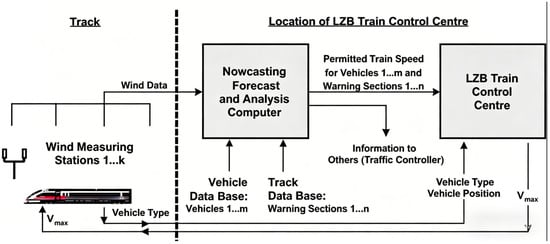
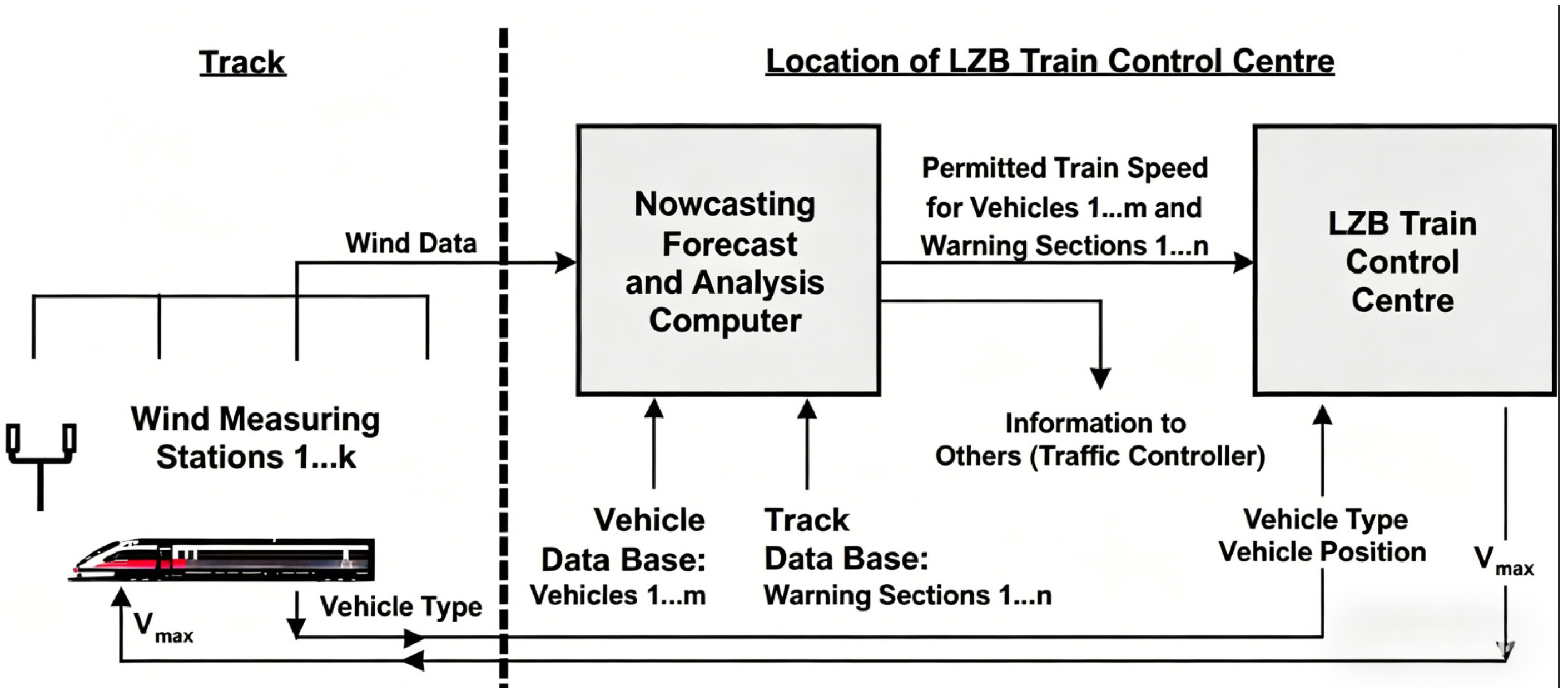
To improve the operational safety of high-speed railways under adverse weather conditions, several countries have developed dedicated wind monitoring and early warning systems. In Germany, Deutsche Bahn implemented the Nowcasting System, as shown in Figure 1, which applies linear extrapolation to monitored wind signals and provides an approximately 2 min lead time for strong-wind warning [7]. Its main advantage lies in its low computational cost, although its ability to represent rapidly evolving nonlinear wind behavior is limited. In Japan, the WINDAS strong-wind warning system developed by Kobayashi and Shimamura [8] uses Kalman filtering to assimilate real-time trackside wind observations and predict wind trends up to 30 min ahead. The method is robust to measurement noise, but its linear dynamic assumption may reduce performance during abrupt meteorological transitions. In France, Delaunay et al. [9] developed a wind alarm system for the Train à Grande Vitesse (TGV) that integrates short-term wind prediction with anti-overturning operational rules and automatically triggers train speed restrictions when warning thresholds are exceeded. In Denmark, the Prediktor system developed at Risø National Laboratory adopted an NWP-based physical modeling framework [10], providing a stronger physical basis than statistical or purely data-driven methods, albeit at substantially higher computational cost. More recently, the Korea Railroad Research Institute developed an AI-based meteorological disaster warning platform that combines historical climate data with real-time observations to improve the prediction of extreme winds and precipitation, while also supporting automated operational responses through integration with train dispatch systems. However, its generalizability under different climatic and topographic conditions remains to be fully assessed. China’s current system is primarily focused on natural disaster monitoring, with an emphasis on real-time observation of meteorological hazards, and has not yet established a comprehensive early warning functional framework. Overall, these systems differ in forecast horizon, computational efficiency, physical interpretability, and robustness, and thus provide valuable references for future research on railway wind early warning systems. The main characteristics of these systems are summarized in Table 1.
Figure 1.
Schematic diagram of the Nowcasting System and train speed restriction decision-making system based on Linienzugbeeinflussung (LZB, continuous train control).
Table 1.
Comparative analysis of early warning systems in different countries.
Overall, international experience indicates that railway wind warning systems can improve operational safety by linking meteorological monitoring and forecasting with predefined response protocols. A common feature of effective systems is the integration of forecast information with operational decision-making, suggesting that forecast accuracy alone is insufficient without an appropriate warning and response framework. For future applications, an important task is to adapt these technologies to China’s geographical, climatic, and operational conditions, thereby supporting the development of more effective wind warning systems for its high-speed railway network.
2.2. National Chinese
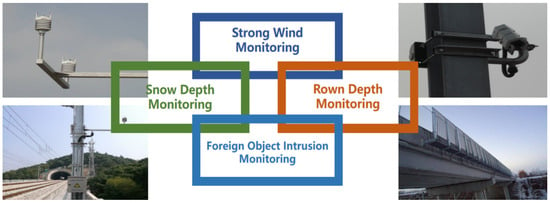
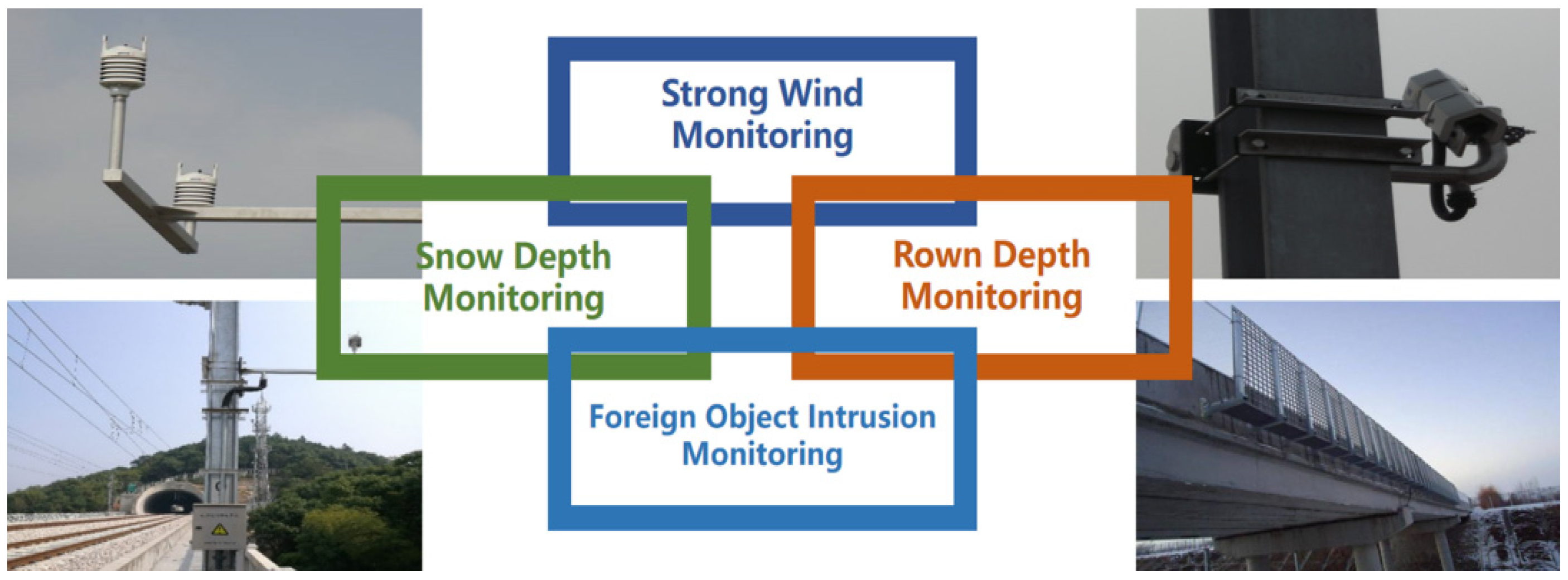
The core element of this safety framework is the High-Speed Railway Natural Hazard and Foreign Object Intrusion Monitoring System. As shown in Figure 2, the upper section displays the system’s monitoring platform interface, while the lower section illustrates the field-monitoring devices and their corresponding functional modules. The interface presents the spatial distribution of monitoring points via a schematic railway map and mileage markers, enabling centralized and visual management of hazard information in critical sections. Along the railway corridor, multiple types of sensors are deployed for monitoring strong winds, snow depth, rainfall/water depth, and foreign object intrusions. The system supports continuous hazard surveillance and provides real-time alerts to railway dispatch and infrastructure maintenance departments. Once meteorological parameters exceed predefined thresholds, warnings are immediately issued to the dispatch center, where speed restriction or other measures are activated following emergency response protocols. Since its initial deployment on the Beijing–Tianjin Intercity Railway in 2008, the system has served as a key technical pillar for ensuring operational safety.
Figure 2.
Natural Disaster and Foreign Object Intrusion Monitoring System.
2.3. A Representative Case
The unique challenges posed by China’s vast and varied terrain are well illustrated by the Lanzhou–Xinjiang High-Speed Railway. This corridor traverses some of China’s most wind-prone regions, including the Gobi Desert and other areas characterized by persistent strong-wind corridors. Frequent exposure to extreme wind events necessitates highly localized monitoring and forecasting, making this line a critical testbed for advancing early-warning capabilities within China’s HSR network.
At present, the theoretical basis and standardization of HSR disaster monitoring systems in China remain under development. Existing studies have focused primarily on line-specific monitoring of strong winds, rainfall, snowfall, earthquakes, and foreign object intrusion. In engineering practice, wind conditions along HSR corridors exhibit strong spatiotemporal variability, dependence, and randomness. Although current systems are effective for real-time monitoring and threshold-based alarms, their forecasting-based early warning capacity remains limited, which restricts the lead time available for preventive interventions. Therefore, enhancing the early warning of extreme winds continues to be a key technical challenge for the safe operation of China’s HSR system and for the future development of intelligent railways.
3. Wind Speed Prediction Algorithms
Wind speed is a non-stationary process characterized by strong stochasticity, high-frequency variability, and nonlinear dynamics, which make accurate forecasting difficult. In the railway environment, this challenge is further increased by microscale terrain effects, flow disturbances induced by viaducts and tunnel portals, and the requirement for timely warning delivery. According to forecasting horizon, wind speed prediction can generally be divided into ultra-short-term (less than 1 h), short-term (1 to 6 h), medium-to-long-term (6 h to several days), and long-term (seasonal to annual) forecasting. For high-speed railway applications, the main focus is on ultra-short-term and short-term forecasting because these time scales are most relevant to operational decision-making. Existing forecasting methods can be broadly grouped into four categories: namely physics-based, statistical, machine-learning, and hybrid methods. Each category has its own advantages and limitations in terms of physical interpretability, computational efficiency, data dependence, and predictive accuracy.
3.1. Physically Based Models
Wind speed prediction has its origins in meteorology, where early approaches were grounded in fundamental atmospheric principles. These methods rely primarily on numerical weather prediction (NWP) models, which use high-performance computing systems and the governing equations of atmospheric motion to simulate future weather conditions. By discretizing and numerically solving a set of coupled mathematical equations, NWP models predict the evolution of key atmospheric variables, including wind speed. A principal advantage of this approach is its strong physical interpretability, as the forecasts are derived directly from well-established physical laws governing atmospheric dynamics.
A portfolio of NWP model has been developed and employed for wind speed prediction over the past few decades [11,12]. Early operational systems, such as the Fifth-Generation Mesoscale Model (MM5) [13] and the High Resolution Model (HRM) [14], established the foundational framework for regional dynamical downscaling. The Weather Research and Forecasting (WRF) model [15] subsequently emerged as the most widely adopted community model, owing to its open-source availability, modular design, and a versatile suite of parameterization schemes for the planetary boundary layer (PBL). It typically operates at horizontal resolutions of 1–9 km in operational forecasting applications and requires moderate high-performance computing (HPC) resources. More recently, the development of convection-permitting models—operating at horizontal resolutions of 1–3 km—has enabled direct simulation of mesoscale convective systems without the need for cumulus parameterization. At the global scale, the Community Earth System Model (CESM) [16] and the Integrated Forecasting System (IFS) of the European Centre for Medium-Range Weather Forecasts (ECMWF) [17] provide the large-scale atmospheric forcing required to drives regional and local models. The Small-scale Modelling (COSMO) model, widely used in Europe for kilometric-resolution operational short-range forecasting, typically requires dedicated HPC clusters with capacities on the order of hundreds of CPU cores [18]. The Icosahedral Nonhydrostatic (ICON) model [19] represents another key innovation; it employs an unstructured triangular grid that enables seamless global-to-local downscaling without domain nesting, with operational configurations ranging from 13 km global resolution to 1 km nested regional domains. Furthermore, the Application of Research to Operations at Mesoscale (AROME) model [20], operated by Météo-France at 1.3 km resolution, demonstrates the operational deployment of non-hydrostatic convection-permitting NWP for high-resolution wind forecasting in complex terrain. These advancements highlight a clear trend toward finer resolutions, more sophisticated physical parameterizations, and advanced data assimilation schemes—all of which are directly relevant to high-precision railway corridor applications.
Despite significant advancements in numerical weather prediction (NWP) technology, even convection-permitting NWP models with horizontal resolutions refined to 1–3 km remain constrained by insufficient local spatial resolution, high computational costs, and lengthy operational update cycles. Consequently, they struggle to effectively capture the complex, corridor-scale wind field characteristics along railway lines. To overcome these limitations, researchers have developed various post-processing error correction models. Traditional calibration models primarily rely on linear methods [21], such as the Perfect Prognosis (PP) [22] and Model Output Statistics (MOS) [23] techniques. Owing to its algorithmic simplicity and physical interpretability, the MOS method remains widely utilized in operational meteorological forecasting. However, its inherent linear assumptions severely diminish its effectiveness in capturing highly nonlinear wind speed fluctuations driven by terrain channeling effects or convective gusts. In contrast, machine learning-based correction models can effectively fit complex nonlinear relationships among variables. Mainstream methodologies include artificial neural networks [24,25], support vector machines [26,27], and random forests [28]. For instance, Sun et al. [29] applied LASSO regression, random forests, and deep learning to correct near-surface 10 m wind speed predictions from the ECMWF model; their results verified that all three machine learning algorithms significantly outperformed the traditional linear MOS baseline. Crucially, random forests confer an additional advantage by providing mechanistic insights through feature importance rankings. This imparts a degree of transparency to the model, compensating for the general lack of interpretability inherent in pure deep learning calibration approaches. Furthermore, cutting-edge research has begun employing artificial intelligence for the spatial downscaling of NWP forecast fields, directly transforming coarse grids into finer grids with enhanced resolution. The core mechanism involves training deep neural networks using paired samples of low-resolution NWP forecasts and high-resolution wind fields (derived from high-density observations or high-fidelity simulations). Once trained, these models can output microscale wind field distribution maps in mere milliseconds by leveraging GPU hardware. This approach effectively circumvents the massive computational demands and protracted execution times associated with traditional high-fidelity computational fluid dynamics simulations. Consequently, it stands as one of the most promising technological paradigms for achieving the sub-kilometer, ultra-short-term wind speed forecasting essential for the safe operation of high-speed railways.
3.2. Statistically Based Models
For wind speed prediction, statistical approaches primarily rely on constructing regression models that map linear relationships within historical time series data. By analyzing temporal dependencies in past wind speed variations, these models formulate quantitative functions to generate forecasts. Common time series algorithms include the Autoregressive (AR) model [30], Moving Average (MA) model [31], Autoregressive Moving Average (ARMA) model [32], Autoregressive Integrated Moving Average (ARIMA) model [33], and Autoregressive Conditional Heteroskedasticity (ARCH) model [34]. A critical distinction among these is that while AR and ARMA methods are strictly applicable only to stationary time series, the ARIMA model can accommodate certain forms of non-stationarity through data differencing.
A substantial body of literature has documented the application of these methods. For instance, Hu et al. [35] applied the ARMA model to wind speed data collected from anemometer systems, generating predictions that closely corresponded with actual observations. To directly address the inherent non-stationarity of wind speed data, Shao et al. [36] and Meng et al. [37] utilized differencing techniques prior to constructing ARIMA models, their experimental results confirming the predictive reliability of this approach. Similarly, Torres et al. [38] evaluated the ARMA model’s performance in predicting hourly average wind speed using measurements from five meteorological stations in Navarre, Spain, demonstrating its practical viability.
In the railway sector, Wen [39] employed a time series-based algorithm for average wind speed early warning, utilizing measured data from a wind monitoring site along a high-speed railway line. That study executed predictions for 1 min, 2 min, 5 min, and 10 min average wind speeds, validating the method’s feasibility through residual discrepancy analyses. Despite these localized successes, the overall reported accuracy for statistical models in short-term wind forecasting (1–6 h) under moderate wind conditions is typically characterized by Mean Absolute Errors (MAEs) of 1.0–2.5 m/s and Root Mean Square Errors (RMSEs) of 1.5–3.5 m/s. Crucially, this performance degrades significantly during high-impact, extreme wind events (>15 m/s), where the highly nonlinear atmospheric dynamics overwhelm the representational capacity of linear statistical models.
Statistical approaches offer important practical advantages for railway deployment: they are computationally parsimonious, require minimal hardware infrastructure, and can be readily implemented on embedded systems at field monitoring stations. This profile renders them suitable for baseline alerting in data-sparse environments. However, their critical limitation for railway applications is the fundamental assumption of local stationarity. This assumption is systemically violated during the rapid onset of hazardous wind events—such as mountain gap outflows or convective downdrafts—which represent the most severe operational threats to running trains. Furthermore, standard ARIMA models are univariate; thus, they fail to incorporate spatial correlations among neighboring monitoring stations, thereby forfeiting a crucial opportunity to leverage upstream data for the advance warning of approaching high-wind systems.
In summary, statistical methods are highly valued for their computational efficiency, ease of implementation, and transparent model structure, making them adequate for specific real-time, short-term forecasting scenarios. Nevertheless, their broader utility in high-speed railway contexts is severely hampered by their inability to model strong nonlinearities and extreme events, their restrictive stationarity assumption, their failure to integrate spatial spatiotemporal contextual information, and their rapidly diminishing accuracy in multi-step ahead forecasting.
3.3. Machine Learning-Based Models
Machine learning (ML) algorithms exhibit inherent self-learning and adaptive capabilities, enabling them to effectively model the non-linearity and non-stationarity characteristic of wind speed data. Unlike physics-based numerical models, ML approaches derive predictive relationships inductively from historical observations without requiring explicit specification of complex atmospheric dynamics. The technical spectrum ranges from traditional machine learning approaches—such as Logistic Regression [40], Decision Trees Extreme Gradient Boosting (XGBoost) [41], and Support Vector Machine (SVM) [42]—to sophisticated deep learning architectures, such as, including Convolutional Neural Networks (CNNs) [43] and Long Short-Term Memory (LSTM) networks [44].
Support Vector Regression (SVR) [45], a variant of SVM, operates by mapping input features into a high-dimensional kernel space to resolve non-linear dependencies, demonstrating robust performance even with limited training samples. In the context of high-speed railway (HSR) disaster prevention, Zhou et al. [46] developed an SVR-based algorithm for the rapid prediction of wind and rain hazards and, notably, proposed an optimized scheme for monitoring station layout. This spatial optimization is a crucial contribution, as it addresses the challenge of maximizing wind field observability along heterogeneous railway corridor. However, SVR performance can degrade precipitously when the test data exhibits a distributional shift from the training set—a scenario frequently encountered during rare, extreme wind events.
Within the deep learning paradigm, the LSTM network has become particularly prominent for time-series forecasting, as its unique gating mechanism effectively addresses the vanishing gradient problem. Beyond standard architectures, CNNs have been adapted to extract local temporal features, such as short-duration gust patterns, while advanced variants like Bidirectional LSTM (BiLSTM) [47] and attention-based LSTMs further enhance interpretability and robustness. Tu et al. [48] conducted comparative experiments demonstrating that LSTM consistently outperforms SVR in temporal wind speed prediction. Similarly, Li et al. [49] constructed an LSTM-based wind speed prediction system for HSR lines, providing a practical reference for operational wind alert systems. The ability of LSTM to capture long-range temporal dependencies makes it exceptionally well-suited for wind speed forecasting, where “atmospheric memory”—the influence of synoptic-scale dynamics from previous hours—is a decisive predictive factor.
Nevertheless, from a railway-specific perspective, the limitations of conventional, single-site ML models remain acute. The scarcity of labeled extreme wind events along specific corridors means that the model may be poorly calibrated for the “high-impact tail” of the wind speed distribution—precisely the regime where operational safety decisions are most critical. Furthermore, typical ML frameworks treat monitoring stations as isolated data streams, failing to exploit the sequential spatial arrangement along the railway, which contains invaluable information regarding wind-field propagation and advection.
In summary, while machine learning offers compelling strengths for railway applications—such as capturing non-linear patterns and adapting to local microclimates—its deployment in safety-critical contexts faces several constraints. These models are often data-intensive and lack calibration for rare extreme events; conventional architectures struggle to model spatiotemporal dependencies between networked stations; their “black-box” nature limits physical interpretability; and there remains a persistent risk of overfitting when trained on sparse, domain-specific datasets.
3.4. Hybrid Forecasting Models
To overcome the limitations of standalone approaches, hybrid forecasting methods have been developed to integrate the complementary strengths of individual sub-models, thereby substantially improving forecasting reliability and generalizability. A typical hybrid framework involves multiple stages, including signal decomposition, parameter optimization, component reconstruction, and model evaluation. For railway wind forecasting, such hybrid approach are particularly promising because they combine the physical consistency of NWP with the local adaptability of machine learning. This directly addresses a central challenge in operational railway warning systems, where no single method can simultaneously satisfy the requirements for physical realism, corridor-scale resolution, and computational efficiency.
3.4.1. Decomposition-Based Hybrid Forecasting Models
Signal decomposition techniques are often employed to preprocess raw wind speed data, isolating its constituent components and thereby simplifying the modeling task for downstream prediction algorithms. Common decomposition methods include Wavelet Transform (WT) [50], Singular Value Decomposition (SVD) [51], Empirical Mode Decomposition (EMD) [52], and Complete Ensemble Empirical Mode Decomposition with Adaptive Noise (CEEMDAN) [53].
A number of studies have demonstrated the efficacy of these approaches. For example, Liu et al. [54,55] developed a wind speed prediction model that combines a wavelet transform with an artificial neural networks, and they validated their approach using monitoring data from meteorological stations along the Qinghai–Tibet Railway. This validation is particularly noteworthy, as the extreme topographic and thermal gradients along this corridor generate unique plateau wind dynamics, demonstrating that a decomposition–ANN framework can effectively accommodate highly challenging local wind regimes.
EMD decomposes complex signals into a set of Intrinsic Mode Functions (IMFs). Ruiz-Aguilar et al. [56] developed a hybrid forecasting framework combining EMD with an ANN, which significantly improved prediction stability. To address the mode-mixing issue inherent in EMD, CEEMDAN adds adaptive white noise at each decomposition stage, thereby enhancing the orthogonality and physical interpretability of the resulting IMF components. Based on this, Wang et al. [57] proposed a CEEMDAN-WOA-SVR wind speed prediction method tailored for railway lines, which improved both prediction accuracy and early warning capabilities for strong winds. The integration of the Whale Optimization Algorithm (WOA) in their framework represents a key innovation, as it automates the tuning of SVR kernel parameters for each individual IMF component. This eliminates the subjective parameter selection that often limits the transferability of simpler decomposition-based models to new railway corridors.
However, a critical operational concern with these decomposition-based models is that they typically require a full re-decomposition each time new data arrives. This can introduce a computational latency that is incompatible with the real-time requirements of railway warning systems. Consequently, adaptive, online variants of these decomposition methods warrant further investigation for operational deployment.
3.4.2. Parameter Optimization-Based Hybrid Forecasting Models
In machine learning and neural network models, the selection of hyperparameters is often performed heuristically or through brute-force methods like grid search, both of which lack robust theoretical guidance and are computationally expensive. The introduction of intelligent optimization algorithms is therefore essential to systematically navigate the complex hyperparameter space, thereby unlocking the full predictive potential of these models.
A wide array of nature-inspired optimization algorithms have been successfully applied in this domain, including the Whale Optimization Algorithm (WOA) [58], Grey Wolf Optimizer (GWO) [59], Genetic Algorithm (GA) [60], Particle Swarm Optimization (PSO) [61], and Northern Goshawk Optimization (NGO) [62], among others. For instance, Su et al. [63] demonstrated that using PSO to tune ARIMA model parameters led to significantly higher prediction accuracy. Similarly, Yu et al. [64] employed WOA to select optimal hyperparameters for the Variational Mode Decomposition (VMD) algorithm in wind speed forecasting. Li et al. [65] compared the performance of Least Squares Support Vector Machine (LSSVM) models that were individually optimized by Ant Colony Optimization (ACO), GA, and PSO. Their findings confirmed that these hybrid optimization frameworks significantly outperformed standalone, unoptimized LSSVM models. Ye and Sinica [66] integrated a GA with a Backpropagation (BP) neural network, demonstrating enhanced predictive performance across multiple time scales.
Across these studies, a consistent finding emerges: the specific choice of optimization algorithm often matters less than the systematic application of an optimization strategy itself. This suggests that a primary bottleneck in single-model performance is often suboptimal hyperparameter configuration rather than fundamental limitations in the model’s architecture. This insight carries important practical implications for railway applications, indicating that even relatively simple models like ARIMA or SVR, when coupled with an appropriate optimization routine, can achieve performance competitive with that of more complex deep learning architectures, particularly on smaller, corridor-scale datasets.
3.4.3. Combination Weighting-Based Forecasting Models
Combination weighting, a form of meta-learning or ensemble forecasting, aims to enhance prediction accuracy by integrating the outputs of multiple heterogeneous models. This approach first involves training several different forecasting models on the same wind speed time series. Subsequently, weight coefficients are assigned to each model based on its historical predictive performance. Finally, a combined forecast is generated through a weighted linear sum of the individual predictions. Since the forecasting effectiveness of any single model can vary under different wind speed regimes, such an ensemble strategy effectively mitigate the risk associated with relying on a single, potentially misspecified model. In practical, commonly used combination weighting algorithms include the arithmetic average method and the entropy method.
Zhu et al. [67] proposed a method for short-term wind speed prediction that integrates FEEMD decomposition, information entropy, and an SSA-optimized BP network. However, a common limitation of decomposition-based hybrid models is that the final prediction is often obtained through simple summation, which neglects the differing predictive performance of the individual sub-models. This underscores the need for more sophisticated fusion strategies to better integrate diverse predictions. Addressing this, Tang [68] constructed a novel short-term wind speed forecasting model that combines Complementary Ensemble Empirical Mode Decomposition (CEEMD) with Stacking fusion technology, using information entropy and approximate entropy to evaluate component complexity. The Stacking approach is particularly attractive for operational deployment because it is model-agnostic; as new and more capable base learners are developed, they can be seamlessly incorporated into the ensemble without redesigning the overall architecture. Furthermore, the entropy-based component classification used by Tang [68] provides a degree of interpretability by linking specific model components to identifiable frequency regimes within the wind speed signal.
A Synthesis of Methodological Trade-offs
In summary, while hybrid models consistently outperform their single-model counterparts, their greater complexity raises practical concerns for railway safety applications, where certification and regulatory approval demand transparent and auditable prediction pipelines. Consequently, future hybrid designs must prioritize interpretability alongside accuracy. This review yields several key insights for future development:
- The Inescapable Need for Physical Models: Despite their high computational costs, NWP-based methods remain indispensable for providing physically grounded forecasts of novel or unprecedented meteorological events that are absent from historical data. Furthermore, historical data also suffer from limited spatial coverage, capturing wind conditions only at discrete points. To support AI methods in such data-sparse contexts, physically consistent information must be generated—for instance, through nested CFD simulations (e.g., LES or RANS) or downscaled NWP outputs—to produce synthetic training data. This capability is crucial for any robust operational early warning system.
- The Enduring Value of Simplicity. Although statistical methods offer only modest accuracy, they provide reliable, real-time baseline alerts with minimal infrastructure overhead. This underscores their continued value, particularly as part of a multi-layered or ensemble warning system.
- The Data-Driven Advantage and its Limits: The accuracy gains from machine learning and hybrid approaches are most pronounced in localized, data-rich environments. Their reliability in data-scarce regions or during extreme, out-of-distribution events remains an open and critical question.
- The Complexity–Transparency Dilemma: The superior accuracy of hybrid models often comes at the cost of increased complexity and reduced transparency. This trade-off must be carefully managed in safety-critical railway applications, where understanding “why” an alert was issued can be as important as the alert itself.
4. Comparative Evaluation of Wind Speed Prediction Methods for Railway Applications
To facilitate cross-methodological comparison and guide model selection for railway-specific applications, Table 2 provides a consolidated summary of the key characteristics, representative performance benchmarks, spatial input capabilities, and operational applicability of the four methodological categories reviewed above.
Table 2.
Comparative summary of wind speed prediction methods for high-speed railway applications.
In summary, these findings provide important implications for the future development of wind speed forecasting for high-speed railways. Particular attention should be directed toward the nonstationary nature of wind speed and its influence on model performance, as forecasting accuracy generally deteriorates with increasing wind intensity, especially under extreme wind conditions that pose the greatest threat to railway operational safety. While hybrid models often perform well under moderate wind regimes, physically consistent numerical weather prediction (NWP) approaches remain more robust for rare and dynamically driven extreme events that are insufficiently represented in historical data, highlighting the need for regime-dependent ensemble forecasting strategies. In addition, future forecasting frameworks should move beyond conventional single-site prediction toward spatiotemporal modeling, given the strong spatial dependence of meteorological conditions along high-speed railway corridors; in this context, spatially aware approaches, such as graph neural networks and AI-based downscaling of NWP fields, offer considerable potential for improving corridor-scale wind prediction. Furthermore, the transition from deterministic to probabilistic forecasting is essential for operational risk management, as probabilistic outputs can better characterize uncertainty and quantify the likelihood of threshold exceedance, thereby supporting risk-informed decision-making and reducing unnecessary capacity losses caused by overly conservative control measures. Ultimately, future progress will depend on the integration of physics-based and data-driven approaches, combining the physical interpretability and extrapolation capability of NWP models with the predictive accuracy of advanced machine learning methods, so as to establish high-performance and operationally reliable early-warning systems for wind hazards affecting high-speed railway networks.
5. Large-Scale Artificial Intelligence (AI) Meteorological Prediction Models
Accurate weather forecasting is a cornerstone of modern society. At present, major global meteorological centers, such as the European Centre for Medium-Range Weather Forecasts (ECMWF), rely predominantly on NWP systems. These methods solve complex systems of differential equations governing atmospheric dynamics and physics and are therefore computationally intensive; for example, a single 10-day forecast may require several hours of computation on a supercomputer.
In contrast, the core principle of AI-based meteorological forecasting is to use deep neural networks to learn the complex and nonlinear evolution of the atmosphere directly from large historical reanalysis datasets. Unlike conventional NWP, this data-driven paradigm constructs forecasting models through end-to-end training rather than explicitly solving physical equations at runtime. Once trained, such models offer a transformative advantage in computational efficiency, often generating high-resolution forecasts within seconds or minutes.
In recent years, a new generation of large-scale AI meteorological models—including FourCastNet, GraphCast, NowcastNet, Pangu-Weather, FengWu, and FuXi—has demonstrated remarkable progress in both forecast skill and inference speed. From the perspective of railway wind prediction, their most relevant strengths lie in their high spatiotemporal resolution, rapid inference capability, and potential for fine-tuning using local observational data, all of which are directly aligned with demanding requirements of operational railway early-warning systems. However, their deployment in safety-critical railway applications also raises substantial concerns. These models are generally trained on global reanalysis datasets, which may insufficiently represent the highly localized wind regimes along specific railway corridors. This fundamental data limitation implies that the models may not have adequately learned the complex, terrain-specific wind patterns and extreme events that are critical for railway safety but are underrepresented in global datasets. Moreover, their limited interpretability—particularly in relation to physically meaningful processes such as terrain-induced wind acceleration—and the difficulty of assessing their reliability under out-of-distribution conditions pose major challenges for operational certification and regulatory acceptance.
Large AI meteorological models are generally classified according to forecast lead time into nowcasting, short-term, medium-term, and long-term forecasting. For high-speed railway wind speed prediction, the most relevant temporal scales are nowcasting (0–6 h) and short-term forecasting (6–72 h), as these correspond most directly to operational warning and dispatch requirements. International research efforts have produced significant models across this spectrum, such as Google DeepMind’s GraphCast (medium-range) and Huawei’s Pangu-Weather (medium-range). However, a critical gap exists for railway applications: many leading large-scale AI models are optimized for global, synoptic-scale forecasts over days, not for the very high spatial resolution and rapid update cycles required in nowcasting for local safety warnings. This misalignment underscores the need to critically evaluate whether these models’ architectures and training paradigms are suited to the stringent demands of railway wind prediction.
In the field of nowcasting, the research team at Tsinghua University has made pioneering contributions. Since 2017, their jointly developed spatiotemporal sequence prediction model, the Predictive Recurrent Neural Network (PredRNN), has been deployed operationally at the National Meteorological Center of China, representing an important step toward AI-enabled forecasting of severe convective weather. In 2023, the same team proposed NowcastNet, published in Nature [69], which integrates deep learning with physical principles. With a spatial resolution of 20 km and a temporal resolution of 10 min, it extends the effective forecast lead time to 3 h and has been incorporated into the Severe Weather Analysis Nowcasting System (SWAN) 3.0. In 2024, the team further developed a localized AI nowcasting system named FengLei, which leverages seven years of domestic meteorological observations and incorporates topographic information. This system achieves a spatial resolution of 5 km and provides radar echo extrapolation products for the 0–3 h range at 6 min intervals within only 3 min of computation, reportedly improving the forecast skill for strong echoes by 25% and enhancing responsiveness to complex weather events.
For short-term forecasting, Google’s MetNet series [70,71] has progressively expanded the forecast horizon of deep learning-based weather prediction. MetNet-3, released in 2023, was reported to outperform ECMWF’s IFS in terms of the Continuous Ranked Probability Score (CRPS) for precipitation forecasting over Central Europe [72]. However, this result should be interpreted with caution, as the comparison was limited to a specific variable (precipitation) and a specific region; its applicability to wind speed forecasting in complex terrain, particularly in railway corridor environments, remains to be established. The FengWu GHR model, released by the Shanghai AI Laboratory in April 2024, provides a global resolution of 9 km and a resolution of 1 km over China, with rapidly updated forecasts for high-impact weather events such as typhoons, heavy rainfall, and convective windstorms.
Although these advances in AI-based weather forecasting are highly promising, their direct application to corridor-scale railway wind prediction remains far from straightforward and requires rigorous validation. Several key research gaps should therefore be prioritized. First, systematic benchmarking is needed to assess AI model performance specifically for wind speed prediction along instrumented railway corridors. Second, targeted fine-tuning and transfer learning strategies must be developed to adapt global AI models to local railway wind regimes. Third, further investigation is required into the integration of AI forecasting models with microscale systems, particularly in regions of complex terrain where local wind fields are strongly terrain-modulated. Fourth, robust approaches for uncertainty quantification must be established, as reliable probabilistic information is a fundamental prerequisite for operational warning systems but is not yet standard in most current AI forecasting frameworks.
In summary, the emergence of large AI meteorological models represents a potentially transformative development for high-speed railway wind speed prediction, offering gains in both resolution and computational efficiency. Nevertheless, the transition from general-purpose weather forecasting tool to certified component of safety-critical railway warning system remains a substantial challenge. Future research should therefore focus on bridging this gap through railway-specific model adaptation, tighter integration of physical constraints, and the establishment of rigorous validation and uncertainty quantification frameworks, thereby supporting the development of next-generation intelligent early-warning systems for railway wind hazards.
6. Challenges in Short-Term Wind Speed Prediction
Against the backdrop of intensifying global warming, the increasing frequency of extreme climate events has not only amplified the uncertainty and variability of wind speed, but has also placed ever more stringent demands forecasting accuracy. For high-speed railways, the consequences are particularly severe: a single failure to predict a hazardous wind event may lead to train overturning, derailment, and catastrophic loss of life. This risk underscores the need for a rigorous assessment of the limitations of existing forecasting approaches. Based on the systematic review conducted in this study, several key challenges can be identified.
- Computational Latency versus Operational Urgency: Numerical weather prediction (NWP) models are fundamentally constrained by computational costs, which often result in long processing times and limited timeliness. In railway applications, this issue is particularly critical, as the rapid update cycles required for operational early warning are difficult to reconcile with the multi-hour latency of conventional NWP systems, even when supported by high-performance computing infrastructure.
- Data Sparsity and Monitoring Blind Spots: The sparse distribution of meteorological stations and anemometers leads to chronically insufficient spatiotemporal resolution of wind observations. Along many railway corridors, station spacing typically ranges from 5–10 km, whereas wind field may vary substantially over sub-kilometer scales, particularly in areas with complex terrain. As a result, critical monitoring blind spots emerge that are difficult to resolve using conventional interpolation methods, statistical models, or standard machine learning approaches.
- Limited Model Transferability: Wind speed is shaped by a combination of highly localized factors, including topography, land cover, prevailing wind direction, and regional meteorological conditions. Consequently, models trained on one railway corridor frequently often fail to generalize effectively to others—even within the same country—because of differences in terrain, configuration, dominant wind regimes, and local climatic characteristics. This limited transferability represents a major obstacle to the large-scale deployment of AI-based warning systems across national railway network.
- The Black-Box Generalization Problem of Large AI Models: Current large-scale AI meteorological models have not yet undergone sufficient long-term validation in railway specific operational contexts. Although these models are commonly trained on global reanalysis datasets such as ERA5, such datasets inevitably smooth out the micro-scale aerodynamic phenomena most critical to railway safety, including terrain-channeled flows and gap winds. This mismatch may introduce systematic biases precisely at the most hazardous locations. In addition, the limited interpretability of these models and the difficulty of verifying their reliability under out-of-distribution conditions remain major barriers to their deployment in safety-critical systems.
- Neglected Vehicle–Wind Interaction Physics: A final and often overlooked challenge lies in the complex interaction between train aerodynamics and the ambient wind field. At operating speeds above 300 km/h, the pressure wave generated by a passing train can significantly disturb the local airflow. Forecasting systems that estimate wind speed in isolation, without accounting for this vehicle–wind interaction, may systematically underestimate the actual aerodynamic risk, particularly in narrow canyon sections where crosswind are channeled and amplified.
Addressing these interconnected challenges requires a coordinated research effort in several key directions:
- Multi-Source Data Fusion for High-Resolution Wind Fields Reconstruction: Future systems must move beyond single-point measurements and integrate multi-source observations—including ground-based meteorological stations, satellite remote sensing, weather radar, and railway-corridor-deployed LiDAR—to build comprehensive, high-resolution wind datasets. Particular attention should be given to advanced spatial interpolation and reconstruction methods that exploit the linear geometry of railway corridors and incorporate physically informed spatial correlation constraints.
- Next-Generation AI-NWP Hybrid Frameworks: The integration of AI with NWP represents a particularly promising direction for future development. In this approach, AI can be designed to function as a smart downscaling tool, directly transforming coarse-resolution outputs from NWP models or global AI weather models into fine-scale, corridor-level predictions. Such a hybrid framework would effectively combine the physical consistency of NWP with the computational efficiency and adaptive learning capabilities of AI, offering a balanced pathway toward high-resolution railway wind forecasting.
- Wind direction: Wind direction critically affects high-speed railway operations by increasing running resistance, energy consumption, and compromising stability. Headwinds raise aerodynamic drag and energy use, while crosswinds threaten lateral stability—especially on viaducts or in open terrain—underscoring the need for improved wind direction along rail corridors.
7. Conclusions
Wind speed prediction plays a fundamental role in ensuring the operational safety of high-speed railways, and its significance is becoming increasingly pronounced under global warming and the rising frequency of extreme weather events. In recent years, substantial progress has been achieved in this field. On the one hand, the integration of numerical weather prediction, statistical methods, and machine learning has significantly improved forecasting performance, with hybrid frameworks emerging as one of the most effective approaches. On the other hand, advances in observational technologies, particularly LiDAR and microwave radiometers, have enhanced the capability to monitor boundary-layer wind fields at higher spatial and temporal resolutions, offering new opportunities for railway-oriented wind hazard assessment. Nevertheless, several critical challenges continue to constrain further progress. High-resolution forecasting remains limited by the trade-off between computational cost and operational timeliness. Sparse observational networks along railway corridors still hinder the accurate characterization of localized wind variability, especially in complex terrain. In addition, the transferability of prediction models across different regions remains insufficient, reflecting the strong dependence of railway wind fields on local topographic and meteorological conditions. Furthermore, the black-box nature of deep learning models poses persistent concerns regarding interpretability, physical consistency, and safety-oriented deployment in operational environments. These limitations indicate that future development should move toward more integrated, reliable, and physically grounded forecasting frameworks. Priority should be given to multi-source data fusion and assimilation, the development of physics-informed AI–NWP hybrid models, the incorporation of uncertainty quantification through probabilistic warning schemes, and the establishment of integrated early warning platforms linking monitoring, forecasting, risk assessment, and operational decision support. Overall, wind speed prediction for high-speed railways is evolving from a conventional forecasting task into a multidisciplinary problem involving meteorology, fluid dynamics, sensing technology, and artificial intelligence. Continued progress in this field will be essential for enhancing the resilience, intelligence, and safety of future high-speed railway systems.
Author Contributions
L.H.: Investigation; formal analysis; writing—original draft; validation; writing—review and editing. Z.M.: Methodology; formal analysis; writing—review and editing; supervision. H.F.: Methodology; investigation; formal analysis. All authors have read and agreed to the published version of the manuscript.
Funding
This work was supported by the National Natural Science Foundation of China (Grant No. 42505066) and the China Academy of Railway Sciences Group Co., Ltd., (Grant No. K2024T001). The APC was funded by the China Academy of Railway Sciences Group Co., Ltd.
Data Availability Statement
This paper is a review article and no data were established.
Conflicts of Interest
Lei Hu, Zhen Ma, and Huijin Fu were employed by the China Academy of Railway Sciences Group Co., Ltd. The remaining authors declare that the research was conducted in the absence of any commercial or financial relationships that could be construed as a potential conflict of interest.
References
- Xiao, J.; Yao, Z.; Qu, J.; Jiang, F. Characteristics and formation mechanism of extreme wind in the Baili Wind Zone along the Lanxin Railway. China Railw. Sci. 2016, 37, 130–137. [Google Scholar]
- Duan, F.; Song, Y.; Gao, S.; Liu, Y.; Chu, W.; Lu, X.; Liu, Z. Study on aerodynamic instability and galloping response of rail overhead contact line based on wind tunnel tests. IEEE Trans. Veh. Technol. 2023, 72, 7211–7220. [Google Scholar] [CrossRef] [Scilit]
- Liu, H.; He, S.; Chen, J. A data-driven adaptive adjustment strategy for strong wind alarm in high-speed railway. Acta Autom. Sin. 2019, 45, 2242–2250. [Google Scholar] [CrossRef]
- Gong, K.; Liu, L.Y.; Xiang, J.; Yu, C.Y.; Liu, Q.M.; Yang, H.M. Influence of crosswind on the entire process of train derailment on a heavy-haul railway bridge. J. China Railw. Soc. 2022, 44, 125–134. [Google Scholar] [CrossRef]
- Han, Y.; Hu, P.; Wang, L.; Liu, H.; Cai, C. Research advances in wind-train-bridge coupling vibration. Adv. Mech. 2025, 55, 378–418. [Google Scholar] [CrossRef]
- Zhang, F.; He, Y.; Liu, B.; Wang, X.; Wu, Z.; Ban, X. Research on synergy degree evaluation of railway engineering construction management in difficult and dangerous mountain areas. J. Railw. Eng. Soc. 2024, 41, 114–119. [Google Scholar] [CrossRef]
- Tielkes, T.; Matschke, G.; Schulte-Werning, B.; Ostermeyer, M.; Schroeder, M.; Wachter, B.; Hornemann, K. A new short-term wind alert system for high-speed train operation. In Proceedings of the 9th World Congress on Railway Research (WCRR 2008), Seoul, Republic of Korea, 18–22 May 2008. [Google Scholar]
- Kobayashi, N.; Shimamura, M. Study of a strong wind warning system. Jr. East Tech. Rev. 2003, 61–65. [Google Scholar]
- Delaunay, D.; Baker, C.J.; Cheli, F.; Morvan, H.; Berger, L.; Casazza, M.; Gomez, C.; Cleac’h, C.; Saffell, R.; Grégoire, R.; et al. Development of wind alarm systems for road and rail vehicles: Presentation of the WEATHER project. In Proceedings of the 13th SIRWEC Conference, Torino, Italy, 25–27 May 2006; Volume 1, pp. 73–79. [Google Scholar]
- Landberg, L. Short-term prediction of the power production from wind farms. J. Wind. Eng. Ind. Aerodyn. 1999, 80, 207–220. [Google Scholar] [CrossRef] [Scilit]
- Andrychowicz, M.; Espeholt, L.; Li, D.; Merchant, S.; Merose, A.; Zyda, F.; Agrawal, S.; Kalchbrenner, N. Deep learning for day forecasts from sparse observations. arXiv 2023, arXiv:2306.06079. [Google Scholar] [CrossRef] [Scilit]
- Baker, C.J. The flow around high-speed trains. J. Wind. Eng. Ind. Aerodyn. 2010, 98, 277–298. [Google Scholar] [CrossRef] [Scilit]
- Dudhia, J. A nonhydrostatic version of the Penn State-CAR NMesoscale Model: Validation tests and simulation of an Atlantic cyclone and cold front. Mon. Weather. Rev. 1993, 121, 1493–1513. [Google Scholar] [CrossRef] [Scilit]
- Anurose, T.J.; Subrahamanyam, D.B. Assessment of a surface-layer parameterization scheme in an atmospheric model for varying meteorological conditions. Ann. Geophys. 2014, 32, 669–677. [Google Scholar] [CrossRef] [Scilit]
- Skamarock, W.C.; Klemp, J.B.; Dudhia, J.; Gill, D.O.; Barker, D.M.; Wang, W.; Powers, J.G. A Description of the Advanced Research WRF Version 2 (No. NCARTN468STR). 2005. Available online: https://homepages.see.leeds.ac.uk/~lecrrb/wrf/arw_v2.pdf (accessed on 1 January 2005).
- Hurrell, J.W.; Holland, M.M.; Gent, P.R.; Ghan, S.; Kay, J.E.; Kushner, P.J.; Lamarque, J.-F.; Large, W.G.; Lawrence, D.; Marshall, S. The community earth system model: A framework for collaborative research. Bull. Am. Meteorol. Soc. 2013, 94, 1339–1360. [Google Scholar] [CrossRef] [Scilit]
- White, P.W. (Ed.) IFS Documentation: Part III: Dynamics and Numerical Procedures (CY21r4); European Centre for Medium-Range Weather Forecasts: Reading, UK, 2000. [Google Scholar]
- Voudouri, A.; Khain, P.; Carmona, I.; Avgoustoglou, E.; Kaufmann, P.; Grazzini, F.; Bettems, J.M. Optimization of high resolution COSMO model performance over Switzerland and Northern Italy. Atmos. Res. 2018, 213, 70–85. [Google Scholar] [CrossRef] [Scilit]
- Korn, P.; Brüggemann, N.; Jungclaus, J.H.; Lorenz, S.J.; Gutjahr, O.; Haak, H.; Linardakis, L.; Mehlmann, C.; Mikolajewicz, U.; Notz, D.; et al. ICON-O: The Ocean component of the ICON Earth system model—Global simulation characteristics and local telescoping capability. J. Adv. Model. Earth Syst. 2022, 14, e2021MS002952. [Google Scholar] [CrossRef] [Scilit]
- Le Toumelin, L.; Gouttevin, I.; Helbig, N.; Galiez, C.; Roux, M.; Karbou, F. Emulating the adaptation of wind fields to complex terrain with deep learning. Artif. Intell. Earth Syst. 2023, 2, e220034. [Google Scholar] [CrossRef] [Scilit]
- Xiao, Q.Y.; Hu, F.; Fan, S.J. A study on model output statistics (MOS) for wind energy numerical prediction. Resour. Sci. 2017, 39, 116–124. [Google Scholar] [CrossRef] [Scilit]
- Klien, W.H.; Lewis, B.M.; Enger, I. Objective prediction of five-day mean temperature during winter. J. Meteorol. 1959, 16, 672–682. [Google Scholar] [CrossRef] [Scilit]
- Glahn, H.R.; Lowry, D.A. The use of model output statistics (MOS) in objective weather forecasting. J. Appl. Meteorol. Climatol. 1972, 11, 1203–1211. [Google Scholar] [CrossRef] [Scilit]
- Baik, J.J.; Paek, J.S. A neural network model for predicting typhoon intensity. J. Meteorol. Soc. Jpn. Ser. II 2000, 78, 857–869. [Google Scholar] [CrossRef] [Scilit]
- Zjavka, L. Wind speed forecast correction models using polynomial neural networks. Renew. Energy 2015, 83, 998–1006. [Google Scholar] [CrossRef] [Scilit]
- Mohandes, M.A.; Halawani, T.O.; Rehman, S.; Hussain, A.A. Support vector machines for wind speed prediction. Renew. Energy 2004, 29, 939–947. [Google Scholar] [CrossRef] [Scilit]
- Kong, L.; Zhao, Y.; Wang, J.; Tong, J.; Dang, Z.; Zhang, W. Research on wind speed correction method based on support vector machine. J. Southwest Univ. (Nat. Sci. Ed.) 2014, 36, 194–200. [Google Scholar] [CrossRef]
- Lin, Y.; Liu, Z.; Luan, H.; Sun, M.; Rao, S.; Liu, S. Modeling relation paths for representation learning of knowledge bases. arXiv 2015, arXiv:1506.00379. [Google Scholar] [CrossRef] [Scilit]
- Sun, Q.; Jiao, R.; Xia, J.; Yan, Z.; Li, H.; Sun, J.; Wang, L.; Liang, Z. Wind speed correction of numerical weather prediction based on machine learning methods. Meteorology 2019, 45, 426–436. [Google Scholar] [CrossRef]
- Rhudy, M.B.; Longenberger, M.D. Identifying Stochastic Wind Speed Model Parameters Using Autocovariance. In Proceedings of the AIAA Aviation Forum and Ascend, Las Vegas, NV, USA, 21–25 July 2025; p. 3099. [Google Scholar] [CrossRef] [Scilit]
- Mehdizadeh, S.; Kozekalani Sales, A.; Safari, M.J.S. Estimating the short-term and long-term wind speeds: Implementing hybrid models through coupling machine learning and linear time series models. SN Appl. Sci. 2020, 2, 1048. [Google Scholar] [CrossRef] [Scilit]
- Daniel, A.R.; Chen, A.A. Stochastic simulation and forecasting of hourly average wind speed sequences in Jamaica. Sol. Energy 1991, 46, 1–11. [Google Scholar] [CrossRef] [Scilit]
- Box, G.E.P.; Jenkins, G.M. Time Series Analysis: Forecasting and Control; John Wiley and Sons Inc.: Hoboken, NJ, USA, 1970. [Google Scholar]
- Engle, R.F. Autoregressive conditional heteroscedasticity with estimates of the variance of United Kingdom inflation. Econometrica 1982, 50, 987–1007. [Google Scholar] [CrossRef] [Scilit]
- Hu, L.J.; Fu, Y.J.; Guo, S.S. Establishment and Analysis of an ARMA Wind Speed Prediction Model Based on Time Series. In Proceedings of the 9th National Conference on Signal and Intelligent Information Processing and Application (Special Issue), Siena, Italy, 15–17 May 2015; Available online: https://www.cnki.net (accessed on 18 October 2015).
- Shao, F.; Sun, Y.H.; Liang, L.Z. Wind speed forecasting in wind farms based on time series method. Autom. Instrum. 2008, 29, 21–24. [Google Scholar] [CrossRef]
- Meng, T.X.; Zhang, H.S. Short-term wind speed forecasting of wind farm based on ARIMA model. Sci. Technol. Eng. 2013, 13, 9814–9818. Available online: https://www.cnki.net (accessed on 25 March 2014).
- Torres, J.L.; Garcia, A.; De Blas, M.; De Francisco, A. Forecast of hourly average wind speed with ARMA models in Navarre (Spain). Sol. Energy 2005, 79, 65–77. [Google Scholar] [CrossRef] [Scilit]
- Wen, X.J. Research on Strong Wind Warning Methods and Early Warning Systems for High-Speed Railway; Beijing Jiaotong University: Beijing, China, 2023. [Google Scholar] [CrossRef]
- Cox, D.R. Some procedures connected with the logistic qualitative response curve. Res. Pap. Stat. 1966, 55–71. [Google Scholar]
- Mollasalehi, A.; Farhadi, A. Solar and Wind Power Forecasting: A Comparative Review of LSTM, Random Forest, and XGBoost Models. arXiv 2025, arXiv:2509.24059. [Google Scholar] [CrossRef] [Scilit]
- Cortes, C.; Vapnik, V. Support-Vector Networks. Mach. Learn. 1995, 20, 273–297. [Google Scholar] [CrossRef] [Scilit]
- Le Cun, Y.; Boser, B.; Denker, J.S.; Henderson, D.; Howard, R.E.; Hubbard, W.; Jackel, L.D. Backpropagation applied to handwritten zip code recognition. Neural Comput. 1989, 1, 541–551. [Google Scholar] [CrossRef] [Scilit]
- Graves, A. Long short-term memory. In Supervised Sequence Labelling with Recurrent Neural Networks; Springer: Berlin/Heidelberg, Germany, 2012; pp. 37–45. [Google Scholar] [CrossRef] [Scilit]
- Drucker, H.; Burges, C.J.; Kaufman, L.; Smola, A.; Vapnik, V. Support vector regression machines. Adv. Neural Inf. Process. Syst. 1996, 9, 155–161. [Google Scholar]
- Zhou, Y.; Ye, J.; Liu, G.; Gao, X. A rapid prediction method for rain and wind disasters in high-speed railway based on support vector regression. Eng. Constr. Des. 2019, 8, 245–246. [Google Scholar] [CrossRef]
- Graves, A.; Schmidhuber, J. Framewise phoneme classification with bidirectional LSTM and other neural network architectures. Neural Netw. 2005, 18, 602–610. [Google Scholar] [CrossRef] [Scilit]
- Tu, A.L.; Hu, X.S.M.; Deng, W.X. Wind speed prediction model based on LSTM. Inf. Comput. (Theory Ed.) 2021, 33, 142–145. Available online: https://www.cnki.net (accessed on 2 March 2021).
- Li, L.; Wang, R.; Zhang, W.J. Research on a high-speed railway strong wind prediction model and algorithm based on LSTM. Railw. Comput. Appl. 2021, 30, 18–21. Available online: https://www.cnki.net (accessed on 2 March 2021).
- Morlet, J.; Arens, G.; Fourgeau, E.; Giard, D. Wave propagation and sampling theory; Part I, Complex signal and scattering in multilayered media. Geophysics 1982, 47, 203–221. [Google Scholar] [CrossRef] [Scilit]
- Golub, G.; Kahan, W. Calculating the singular values and pseudo-inverse of a matrix. J. Soc. Ind. Appl. Math. Ser. B Numer. Anal. 1965, 2, 205–224. [Google Scholar] [CrossRef] [Scilit]
- Huang, N.E.; Shen, Z.; Long, S.R.; Wu, M.C.; Shih, H.H.; Zheng, Q.; Yen, N.C.; Tung, C.C.; Liu, H.H. The empirical mode decomposition and the Hilbert spectrum for nonlinear and non-stationary time series analysis. Proc. R. Soc. Lond. Ser. A Math. Phys. Eng. Sci. 1998, 454, 903–995. [Google Scholar]
- Torres, M.E.; Colominas, M.A.; Schlotthauer, G.; Flandrin, P. A complete ensemble empirical mode decomposition with adaptive noise. In Proceedings of the 2011 IEEE International Conference on Acoustics, Speech and Signal Processing (ICASSP), Prague, Czech Republic, 22–27 May 2011; IEEE: Piscataway, NJ, USA, 2011; pp. 4144–4147. [Google Scholar]
- Liu, H.; Tian, H.Q.; Li, Y.F. Optimization algorithm for short-term prediction of non-stationary wind speed signals based on wavelet analysis and neural network method. J. Cent. South Univ. (Sci. Technol.) 2011, 42, 2704–2711. Available online: https://www.cnki.net (accessed on 2 March 2021).
- Liu, H.; Tian, H.Q.; Li, Y.F.; Zhang, L. Comparative study on the performance of single-step high-accuracy hybrid forecasting models for railway wind speed. J. China Railw. Soc. 2016, 38, 41–49. [Google Scholar] [CrossRef]
- Ruiz-Aguilar, J.J.; Turias, I.; González-Enrique, J.; Urda, D.; Elizondo, D. A permutation entropy-based EMD–ANN forecasting ensemble approach for wind speed prediction. Neural Comput. Appl. 2021, 33, 2369–2391. [Google Scholar] [CrossRef] [Scilit]
- Wang, R.; Ma, Z.; Li, L. Ultra-short-term wind speed prediction method for high-speed railway lines based on CEEMDAN-WOA-SVR. China Railw. Sci. 2023, 44, 80–86. [Google Scholar] [CrossRef]
- Mirjalili, S.; Lewis, A. The whale optimization algorithm. Adv. Eng. Softw. 2016, 95, 51–67. [Google Scholar] [CrossRef] [Scilit]
- Mirjalili, S.; Mirjalili, S.M.; Lewis, A. Grey wolf optimizer. Adv. Eng. Softw. 2014, 69, 46–61. [Google Scholar] [CrossRef] [Scilit]
- Deb, K. Genetic algorithm in search and optimization: The technique and applications. In Proceedings of International Workshop on Soft Computing and Intelligent Systems; ISI: Calcutta, India, 1998; pp. 58–87. [Google Scholar]
- Kennedy, J.; Eberhart, R. Particle swarm optimization. In Proceedings of the ICNN’95-International Conference on Neural Networks, Perth, WA, Australia, 27 November–1 December 1995; IEEE: Piscataway, NJ, USA, 1995; Volume 4, pp. 1942–1948. [Google Scholar]
- Dehghani, M.; Hubálovský, Š.; Trojovský, P. Northern goshawk optimization: A new swarm-based algorithm for solving optimization problems. IEEE Access 2021, 9, 162059–162080. [Google Scholar] [CrossRef] [Scilit]
- Su, Z.; Wang, J.; Lu, H.; Zhao, G. A new hybrid model optimized by an intelligent optimization algorithm for wind speed forecasting. Energy Convers. Manag. 2014, 85, 443–452. [Google Scholar] [CrossRef] [Scilit]
- Yu, M.; Niu, D.; Gao, T.; Wang, K.; Sun, L.; Li, M.; Xu, X. A novel framework for ultra-short-term interval wind power prediction based on RF-WOA-VMD and BiGRU optimized by the attention mechanism. Energy 2023, 269, 126738. [Google Scholar] [CrossRef] [Scilit]
- Li, C.; Ding, X.; Zheng, X. Non-Gaussian fluctuating wind speed prediction based on hybrid intelligent optimized LSSVM. J. Vib. Shock. 2017, 36, 3–7. [Google Scholar] [CrossRef]
- Wang, L.; Li, C.; Li, C. A short-term wind speed prediction method based on the DGA-BP neural network. IAENG Int. J. Comput. Sci. 2024, 51, 496–505. [Google Scholar]
- Zhu, T.; Wang, W.; Yu, M. Short-term wind speed prediction based on FEEMD-PE-SSA-BP. Environ. Sci. Pollut. Res. 2022, 29, 79288–79305. [Google Scholar] [CrossRef] [Scilit]
- Tang, F. Short-term wind speed combination prediction model based on complementary ensemble empirical mode decomposition and stacking fusion. Acta Energiae Solaris Sin. 2024, 45, 735–744. [Google Scholar]
- Zhang, Y.; Hu, S.; Chen, B.; Xiang, J.; Huang, G. Skilful nowcasting of extreme precipitation with NowcastNet. Nature 2023, 619, 526–532. [Google Scholar] [CrossRef] [Scilit] [PubMed]
- Sønderby, C.K.; Espeholt, L.; Heek, J.; Dehghani, M.; Oliver, A.; Salimans, T.; Agrawal, S.; Hickey, J.; Kalchbrenner, N. Metnet: A neural weather model for precipitation forecasting. arXiv 2020, arXiv:2003.12140. [Google Scholar] [CrossRef] [Scilit]
- Espeholt, L.; Agrawal, S.; Sønderby, C.; Kumar, M.; Heek, J.; Bromberg, C.; Gazen, C.; Carver, R.; Andrychowicz, M.; Hickey, J.; et al. Deep learning for twelve hour precipitation forecasts. Nat. Commun. 2022, 13, 5145. [Google Scholar] [CrossRef] [Scilit]
- Diedrichs, B. On computational fluid dynamics modelling of crosswind effects for high-speed rolling stock. Proc. Inst. Mech. Eng. Part F J. Rail Rapid Transit 2003, 217, 203–226. [Google Scholar] [CrossRef] [Scilit]

Disclaimer/Publisher’s Note: The statements, opinions and data contained in all publications are solely those of the individual author(s) and contributor(s) and not of MDPI and/or the editor(s). MDPI and/or the editor(s) disclaim responsibility for any injury to people or property resulting from any ideas, methods, instructions or products referred to in the content. |
© 2026 by the authors. Licensee MDPI, Basel, Switzerland. This article is an open access article distributed under the terms and conditions of the Creative Commons Attribution (CC BY) license.