


Abstract
The frequency and intensity of tropical cyclones (TCs) in the Arabian Sea have increased in recent decades, heightening concerns regarding regional vulnerability and forecasting difficulties. This study examines the impact of the Madden–Julian Oscillation (MJO) on TCs activity—formation, frequency, and severity—over the Arabian Sea from 1982 to 2021. This study analyzes variations in convection, vertical wind shear (VWS), sea level pressure (SLP), and relative humidity (RH) across different MJO phases utilizing the best-track data from the India Meteorological Department (IMD), the Real-Time Multivariate MJO (RMM) index, and reanalysis datasets from the National Oceanic and Atmospheric Administration (NOAA) and the National Centers for Environmental Prediction–National Center for Atmospheric Research (NCEP–NCAR). Results show that more than 80% of TCs form during the convectively active phases of the MJO (P1–P4). These phases have the most noticeable negative outgoing longwave radiation (OLR) anomalies, as well as higher mid-level moisture and low-pressure anomalies, which are good for cyclogenesis. On the other hand, suppressed phases (P6–P8) have positive outgoing longwave radiation, dry air in the middle troposphere, and high-pressure anomalies, which make it harder for TCs to form. While VWS is predominantly favorable during both active and inactive phases, thermodynamic and convective factors principally regulate the modulation of TC activity. The simultaneous presence of active MJO phases with positive Indian Ocean Dipole (pIOD) and neutral or El Niño conditions markedly increases TC frequency, highlighting a combined influence link between interannual–El Niño–Southern Oscillation (ENSO) and IOD– and intraseasonal (MJO) variability. Additionally, the association between MJO and the Indo-Pacific Warm Pool (IPWP) reveals that TC activity peaks during convectively active MJO phases under the second twenty years of this study, emphasizing the influence of large-scale oceanic warming on TC variability. These findings underscore the critical function of the MJO in regulating TC activity variability in the Arabian Sea and stress its significance for enhancing intraseasonal forecasting and disaster preparedness in the area.
1. Introduction
Tropical cyclones (TCs) are among the deadliest weather occurrences that happen in the tropics. They have a large impact on the economy and the environment in coastal areas of the Indian Ocean [1,2,3,4,5]. About 7% of all TCs in the world happen in the North Indian Ocean (NIO), these TCs are spread out between the Arabian Sea and the Bay of Bengal [6,7,8]. The Bay of Bengal has historically been the site of the majority of TCs [9,10,11,12]; however, the Arabian Sea has undergone a rise in both the frequency and intensity of TCs, particularly during the past twenty years [3,13,14,15,16,17]. This growing trend makes people worry about how unsafe the area is and shows how crucial it is to know what makes tropical storms hard to predict in this basin.
In the NIO, TCs are strongly affected by broad patterns of climate variability. The El Niño–Southern Oscillation (ENSO), the Indian Ocean Dipole (IOD), and intraseasonal oscillations such as the Madden–Julian Oscillation (MJO) are all included in this [18,19,20,21,22]. The MJO is the principal method through which tropical intraseasonal variability presents itself. It happens when convective and circulation abnormalities shift eastward over a period of 30 to 60 days [22,23,24,25].
The MJO has a big effect on the tropical environment because it controls convection, vertical wind shear (VWS), moisture transport, and low-level vorticity [26,27,28,29,30]. Convection is stronger in various places during each phase of the MJO. A lot of convection happens over the Indian Ocean during phases 2 and 3, for example. The creation of Cyclone Fani, which was influenced by warm sea surface temperatures (SSTs) and the MJO, had analogous meteorological features [31]. This phenomenon has been recognized as a vital factor in the formation of TCs in the Indian Ocean and elsewhere [32,33,34]. Research shows that the Arabian Sea has more TCs when the MJO is in its convectively active phase. This technique makes cyclogenesis more likely when there is less VWS and more moisture convergence. On the other hand, when the MJO is in a suppressed phase, it is associated with unfavorable conditions that make it harder for TCs to form. Additionally, the MJO can interact with other large-scale climate phenomena like the IOD, the ENSO, and other intraseasonal oscillations [34,35,36]. Depending on their phase alignment and strength, these interactions can either strengthen or weaken the MJO’s effect on TC activity, which in turn can alter the overall variability of TCs over the Arabian Sea.
While the relationship between the MJO and TC activity has been thoroughly documented for the Indian Ocean basin, most previous studies have treated the Arabian Sea as part of a broader regional framework or have primarily focused on the Bay of Bengal. Thus, a concentrated and systematic assessment of TC activity and its link with the Madden-Julian Oscillation in the Arabian Sea is significantly limited, particularly during intense MJO phases and in relation to other major climatic phenomena.
This study examines the impact of MJO phases on TC activity over the Arabian Sea from 1982 to 2021 (RMM amplitude >1). Phase-dependent TC generation, frequency, severity, and duration are examined, as well as how the MJO interacts with large-scale climate processes like ENSO, IOD, and IPWP. This basin-focused study reveals illumination on intraseasonal influences on TC variability in the Arabian Sea basin, which has not been studied much.
The structure of this paper is as follows. Section 2 talks about the data and methods used in this work, focusing on the link between TCs and the MJO, as well as the MJO’s effect when it interacts with big climate events like ENSO, IOD, and Indo-Pacific warming pool (IPWP). Section 3 talks about the results and the discussion. It starts by looking at how TCs behave at different MJO phases and then goes on to look at how this relationship changes when MJO interacts with ENSO, IOD, and IPWP. In the end, Section 4 sums up the main findings and explains what the study’s conclusions are.
2. Data and Methods
2.1. Data
2.1.1. Tropical Cyclones (TCs) Data
The Indian Meteorological Department (IMD), which is the Regional Specialized Meteorological Centre (RSMC) for the NIO, provided the best-track archive of data on TCs in the Arabian Sea. The best-track dataset gives information every six hours about the cyclone’s location (latitude and longitude), highest sustained wind speed, and central pressure [37]. The first track point in the IMD-RSMC dataset shows where TC activity starts. This study collected data on all TCs that formed over the Arabian Sea during the pre-monsoon and post-monsoon seasons from 1982 to 2021. The IMD best-track dataset is recognized as the definitive and most reliable repository of historical TCs data for the basin, forming the foundation for the analysis of TC formation, frequency, severity, and duration in this study.
2.1.2. Real-Time Multivariate MJO (RMM) Index
The Real-Time Multivariate MJO (RMM) index, created by Wheeler and Hendon in 2004 [38], was used to show the MJO. The index is generated by looking at outgoing longwave radiation (OLR) and zonal wind anomalies at 850 hPa and 200 hPa in a detailed empirical orthogonal functions (EOF) study. It shows eight phases that show how MJO convection moves eastward. Daily RMM data were obtained from the Australian Bureau of Meteorology (available at: https://www.bom.gov.au/climate/mjo/graphics/rmm.74toRealtime.txt, accessed on 29 August 2025) and utilized to determine the MJO phases for each TC event in the Arabian Sea.
2.1.3. The ENSO, IOD, and IPWP Indices
This study utilized standardized indices from the NOAA Climate Prediction Center (CPC) to delineate ENSO and Indian Ocean Dipole (IOD) events from 1982 to 2021. The Oceanic Niño Index (ONI) was used to find the different phases of ENSO. For El Niño (La Niña) events, the three-month running mean of SST anomalies in the Niño 3.4 region (5° N–5° S, 120–170° W) had to be above +0.5 °C (below −0.5 °C) for at least five seasons in a row. Periods displaying anomalies within these parameters were classified as neutral ENSO conditions. The Dipole Mode Index (DMI) was used to describe events in the IOD. The DMI is the difference in SST anomalies between the western equatorial Indian Ocean (50–70° E, 10° S–10° N) and the southeastern equatorial Indian Ocean (90–110° E, 10° S–0°). An event is called a positive IOD (pIOD) when the DMI stays over +0.4 °C for at least three months in a row. An event is called a negative IOD (nIOD) when the DMI stays below −0.4 °C. Intervals within these criteria indicate neutral IOD conditions. The IPWP index is taken from the dataset of NOAA Extended Reconstruction SSTs Version 5 (ERSSTV5). It was made by averaging SST over the IPWP area (15° S–15° N, 60° E–180°) when SST was equal to or greater than 28 °C from 1982–2021 [39].
2.1.4. Atmospheric and Oceanic Parameters
This work utilized diverse reanalysis and observational datasets to investigate the comprehensive atmospheric and oceanic characteristics associated with tropical storm development in the Arabian Sea. The National Oceanic and Atmospheric Administration (NOAA) interpolated OLR dataset provided the OLR data. It showed daily and monthly anomalies at a spatial resolution of 2.5° × 2.5°. The OLR field is a reliable way to tell if there is convective activity, and it works especially well to tell the difference between the convective and suppressed phases of the MJO.
The National Centers for Environmental Prediction–National Center for Atmospheric Research (NCEP–NCAR) Reanalysis Project also gave us data on Relative Humidity (RH), Sea Level Pressure (SLP), and VWS. The variables were analyzed to identify the thermodynamic and dynamic conditions associated with MJO variability and its impact on TC activity in the Arabian Sea. The datasets provide comprehensive global coverage suitable for climatological study, ensuring alignment with the research period (1982–2021).
2.2. Methods
2.2.1. The Classification of the TCs over the Arabian Sea
In terms of TCs classification, since this study concentrates on Arabian Sea TC activity, which is a part of NIO, thus the TC’s classification depends on the IMD classification of TC categories as shown in Table 1.
Table 1.
The TCs classification according to the IMD for the NIO.
Each TC event is linked with a specific MJO phase (P1–P8) based on the RMM index and simultaneously occurs under a single ENSO regime (El Niño, La Niña, or Neutral) and a single IOD phase. Therefore, the classification by different circulation indices provides the large-scale climate background for each MJO phase rather than further subdividing the TC sample. Only days when the real-time multivariate MJO (RMM) amplitude surpassed 1.0 were considered, which ensured that TC activity was considered specifically during clearly defined and dynamically significant MJO phases. Periods characterized by weak or incoherent MJO signals (RMM amplitude ≤1) were omitted from the analysis. Each TC is assigned to a certain MJO phase according to the MJO phases associated with its genesis date, defined as the initial instance the system reached tropical depression strength over the Arabian Sea region (5–25° N, 50–80° E). This method prevents double-counting and provides a consistent one-to-one correlation between TC genesis and MJO phases. To reduce sampling uncertainty, the analysis emphasizes broader groupings of MJO phases (active and non-active) where appropriate. The term “active (non-active) MJO” refers to MJO occurrences that actively affect environmental conditions that are favorable (unfavorable) for TCs. In line with previous studies, active (non-active) MJO phases are identified when the MJO amplitude exceeds 1, indicating a signal of dynamic and thermodynamic significance. In the NIO, phases 1–4 are called “convective phases” because they have more convection, whereas phases 5–8 are called “suppressed convection” because they have less convection.
2.2.2. Calculations
- Anomalies
This study employed an anomaly-based technique to examine the effects of several ENSO, IOD, IPWP, and MJO events on TC activity in the AS region and to illustrate the differences observed. The anomaly fields utilized in this study were derived from the ESRL composite daily anomalies dataset, wherein anomalies are determined as the difference between the original daily values and the corresponding daily climatology estimated for the entire reference period. This technique avoids the seasonal cycle and isolates interannual and intraseasonal variability. The resultant daily anomaly fields were subsequently utilized in the composite studies.
- 2.
- TC Duration
To address the TCs’ duration, the total number of TC days or hours over the Arabian Sea was calculated and categorized based on El Niño, La Niña, positive IOD, negative IOD phases, and MJO phases.
- 3.
- Vertical wind shear
To get the vertical zonal wind shear, it subtracts the monthly or seasonally mean zonal wind at 850 hPa from the overlying monthly or seasonally mean zonal wind at 200 hPa.
2.2.3. Composite Analysis of Synoptic Condition
Composite analysis is the process of looking at and averaging the means or anomalies of one or more groups of ocean–atmosphere variables that were chosen based on how they relate to important conditions. It has been extracted directly from the NOAA ESRL/NCEP reanalysis dataset. Anomalies were computed using a standard ESRL/NCEP technique, characterized as departures from the long-term climatological mean for each variable and respective calendar period. It was created by removing daily climatology from the original data in order to eliminate the seasonal cycle and isolate MJO-related variability. Monthly climatology was excluded, as daily climatology more accurately reflects intra-seasonal variations. The composite period of OLR, RH, VWS, and SLP aligns with the duration of each TC throughout its respective MJO phase, El Niño and La Niña events, pIOD and nIOD, and IPWP condition. Using this approach provides methodological consistency, reproducibility, and comparison with prior studies utilizing the same dataset.
3. Results and Discussion
3.1. Climatology of TCs During MJO Phases
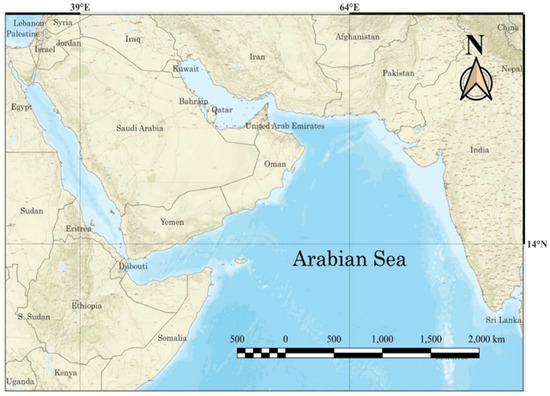
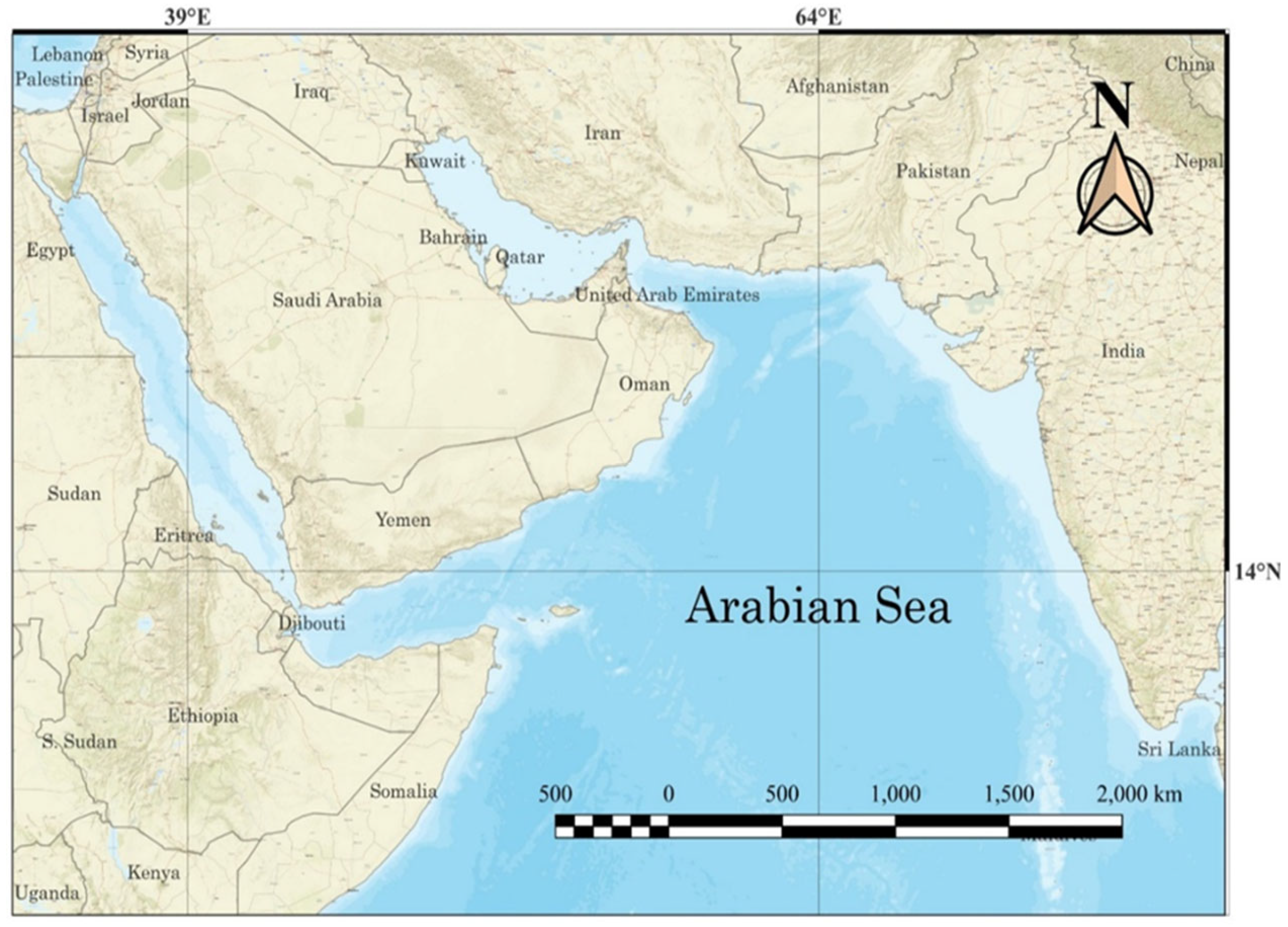
From IMD-RSMC TCs data, cyclonic systems with maximum sustained wind speeds of 34 knots or above, which is the criterion used by IMD for NIO TCs, are used in the study. Using these criteria, 45 cyclones were identified that satisfy the intensity criteria for the NIO basin from 1982 to 2021. Figure 1 shows the distribution of the genesis points of TCs, in which the area inside the box (0–30° N and 40–80° E) represents the area of cyclogenesis selected for the study.
Figure 1.
The domain of the study area (Arabian Sea).
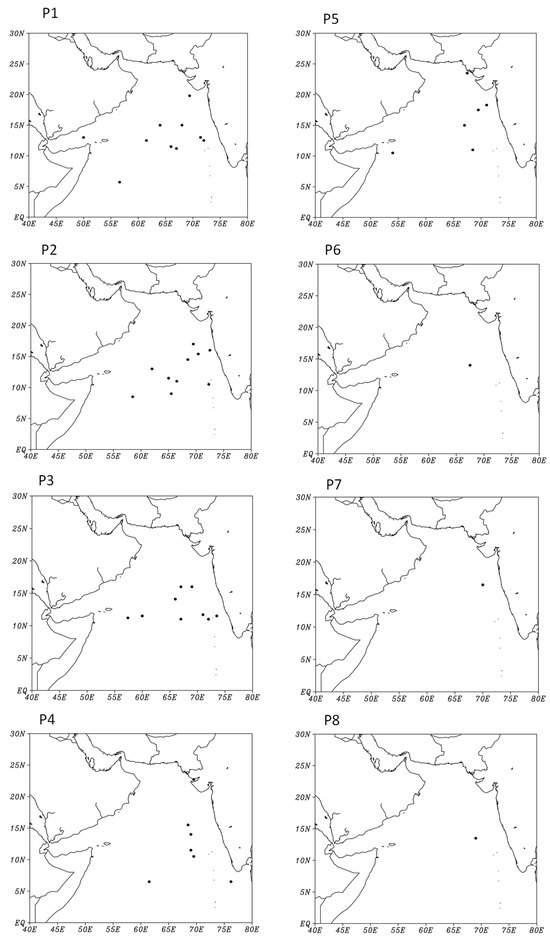
During the study period, a total of 45 TCs [3] over the Arabian Sea were examined with respect to their distribution across the eight phases of the MJO in both the pre-monsoon and post-monsoon seasons. The phase-wise distribution revealed notable variability, with 10 (22%), 10 (22%), 9 (20%), 7 (16%), 6 (14%), 1 (2%), 1 (2%), and 1 (2%) TCs forming in phases 1 to 8, respectively. This indicates that TC activity is relatively more frequent during the convective phases of the MJO (P1-P3), which together accounted for approximately 64% of the total TC activity, while it is substantially suppressed during the phases that are characterized by suppressed convection (P6-P8), which is only about 6% of the TC activity (Figure 2). Following the classification of [40], the MJO was divided based on its amplitude, where values greater than one represent strong MJO conditions and values less than one denote weak conditions. Out of the total, 12 TCs developed when the MJO amplitude was weak (less than 1), whereas the remaining TCs occurred during active MJO conditions (amplitude greater than 1). This result suggests that enhanced MJO activity generally provides a more favorable large-scale environment for TC activity over the Arabian Sea, and this significant disparity highlights the strong association between active convective MJO phases and increased TC activity over the Arabian Sea. These results corroborate previous studies [32,41,42] that emphasized the significant influence of the MJO on tropical storm activity throughout several ocean basins. The current analysis aligns with previous studies, indicating that TCs in the Arabian Sea are more prone to formation during the convectively active phases of the MJO. During these phases, the middle troposphere has more RH and stronger upward motion, which makes it easier for cyclogenesis to happen. The significant decline in TC occurrences during the suppressed phases of the MJO (P5–P8) indicates that extensive subsidence and diminished convection impede storm development. The synoptic situations linked to the MJO categories significantly affect the spatial distributions of TCs. A comprehensive analysis of the synoptic circumstances contributing to cyclogenesis and its spread during various phases is presented in the subsequent section.
Figure 2.
Spatial distribution of the TCs genesis locations over the Arabian Sea during 1982–2021 for the eight phases of the MJO: P1–P8. Each black dot indicates a TC genesis point. The figure illustrates the variation in TC formation frequency and preferred genesis regions under different MJO phases.
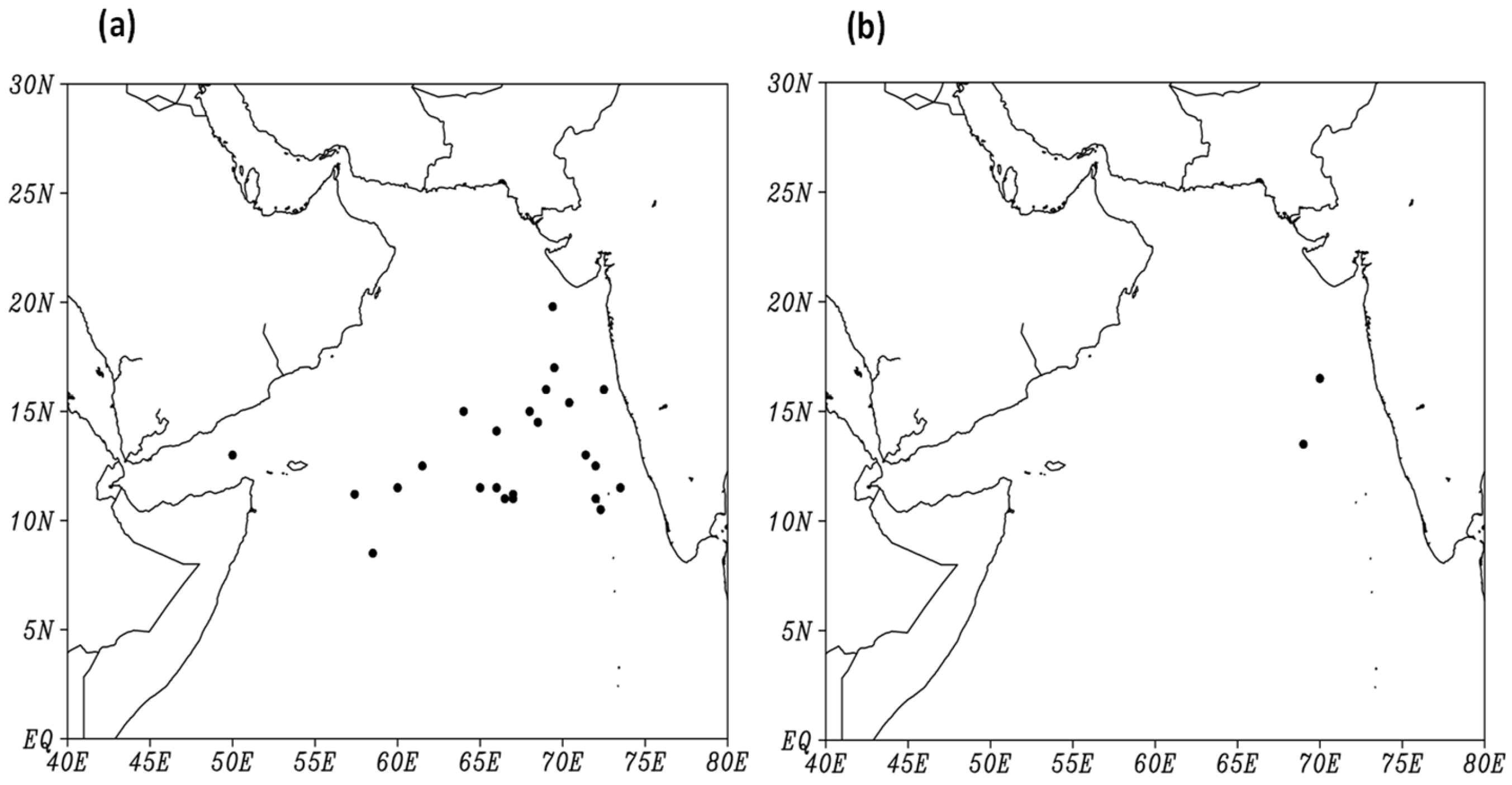
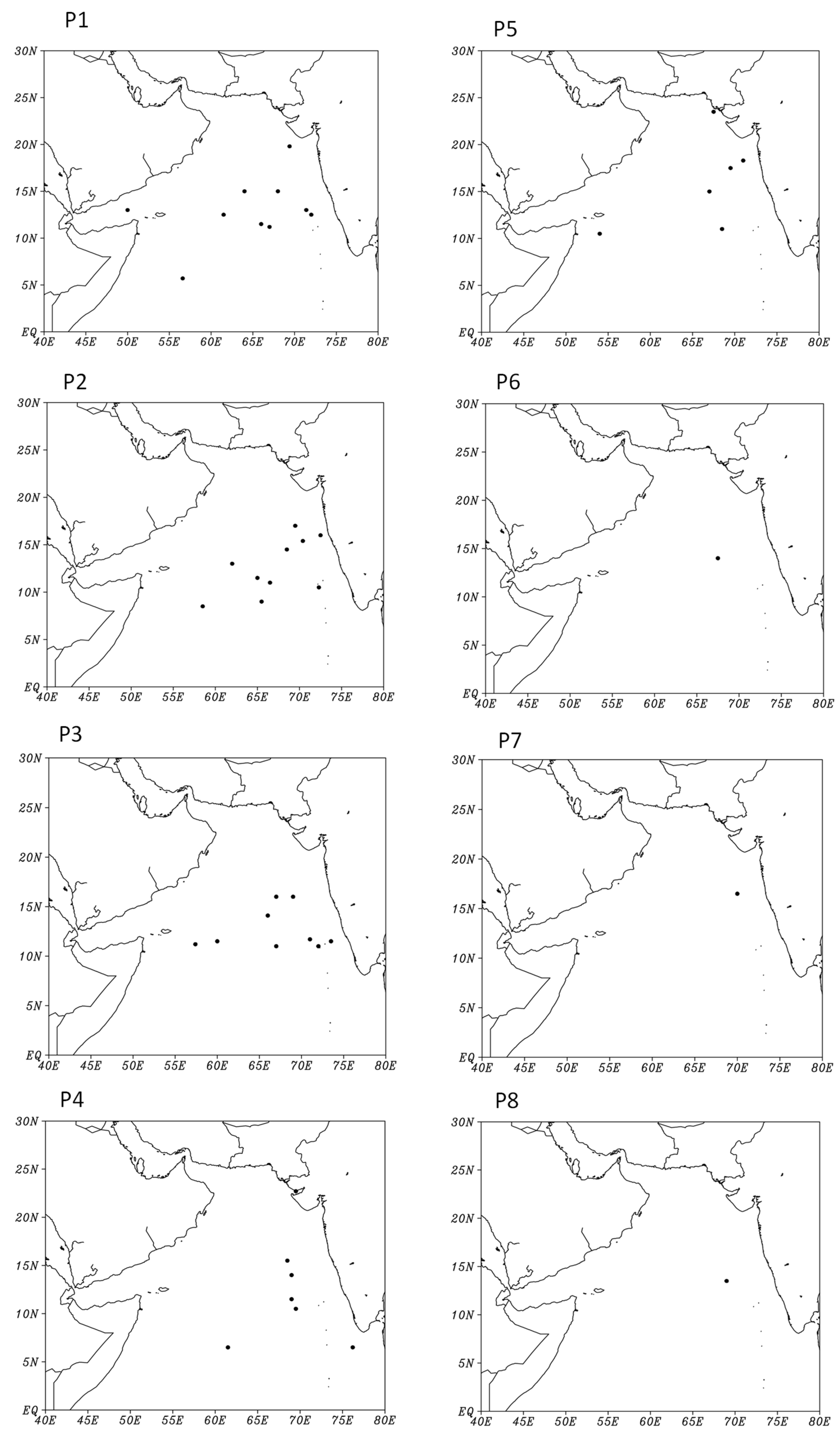
A thorough quantitative assessment of MJO–TC interactions was performed using daily MJO index data with an amplitude greater than one (Figure 3 and Table 2). Phases 1–3 (P1-P3) together had 993 MJO days, during which 24 TCs formed, contributing to 90.3 TC days. On the other hand, the suppressed phases 6–8 (P6-P8) had 853 MJO days but with only 2 TCs (Figure 3b) and 8.9 TC days. This clear imbalance shows how important the convectively active MJO envelope is for the activity of TCs. During P1 and P2, 8 to 9 TCs were recorded, with the highest number of TC days being 39.4 and 29.4, respectively. These numbers correspond to the regions with the most pronounced negative OLR anomalies shown in Figure 4 (P1 and P2). Phase 3 showed a lot of TC activity (7 TCs and 21.5 TC days), which suggests that positive large-scale conditions often last across several active phases.
Table 2.
Summary of MJO phases (amplitude > 1) and their association with TC activity over the Arabian Sea during 1982–2021. The table lists the total number of MJO days, the number of days with TC activity, and the total number of TCs formed during each phase. Combined groups (P1–P3 and P6–P8) represent the active and suppressed convective phases, respectively.
Figure 3.
Spatial distribution of TCs genesis points over the Arabian Sea during 1982–2021 for different phases of the MJO. Panel (a) shows TC genesis locations during the active MJO phases (P1–P3), when convection over the Indian Ocean is enhanced. Panel (b) shows TC genesis during the suppressed MJO phases (P6–P8), when convection is weaker. Each dot represents a TC genesis point.
To analyze the impact of the MJO on TC activity in the Arabian Sea, several parameters were examined, including OLR, a primary indication of large-scale convective variability linked to the MJO. The eight main MJO phases (P1–P8) are shown in Figure 4, which demonstrates how OLR anomalies were spread out in space across the study period. The left panels (P1–P4) illustrate the active convective phases, which are shown by negative OLR anomalies that show increased convection. The right panels (P5–P8) illustrate the suppressed or inactive phases. These are characterized by positive OLR anomalies, which show less convective activity.
Figure 4.
The OLR composite anomalies (W m−2) over the Arabian Sea during the eight phases of the MJO. The left column (P1–P4) represents anomalies during the first four MJO phases, while the right column (P5–P8) corresponds to the last four phases.
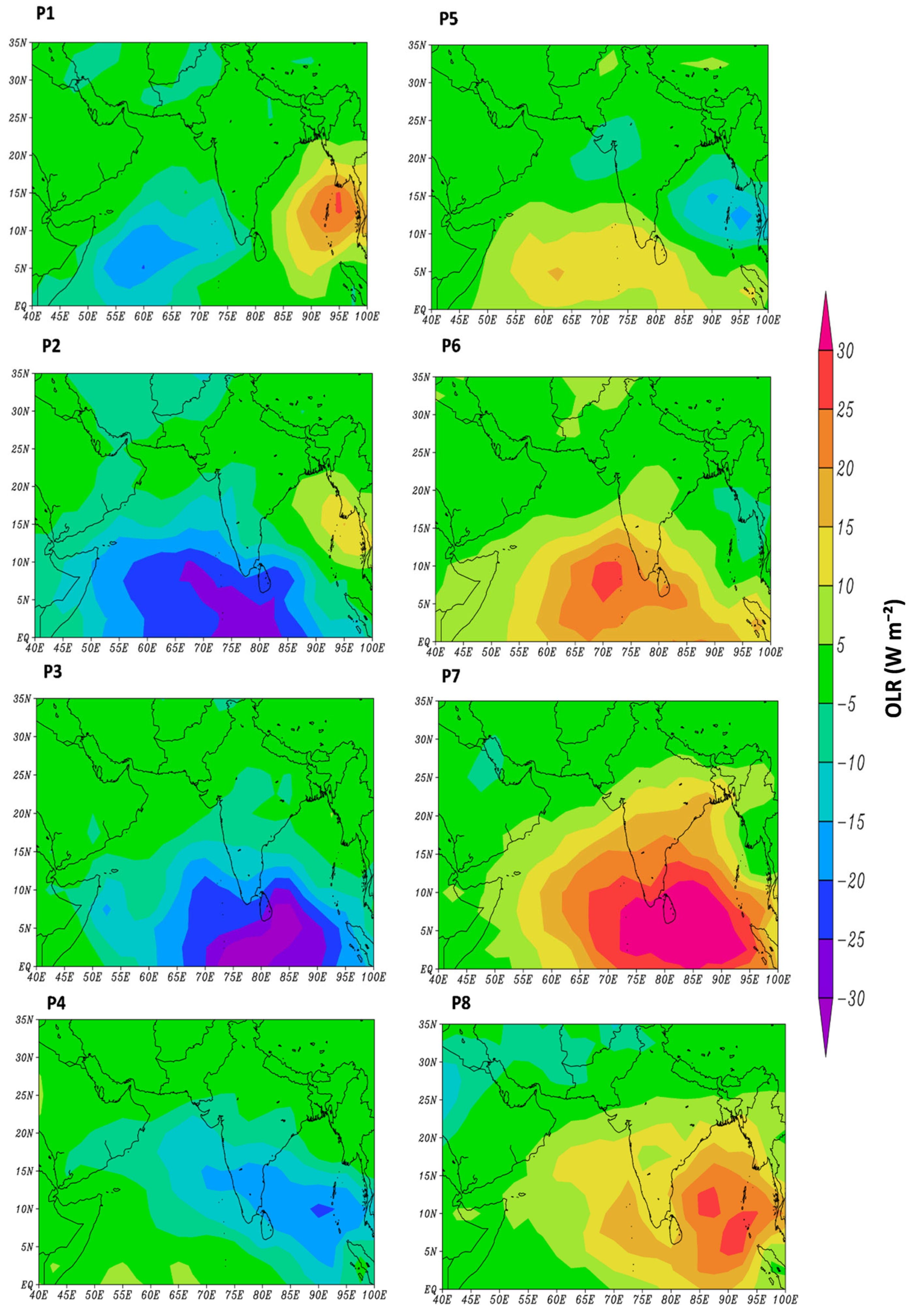
The middle and eastern Arabian Sea show very strong negative OLR anomalies in phases 1, 2, and 3. This suggests that convection is happening, which is good for TCs. From phases 6 to 8, on the other hand, positive OLR anomalies are common. This suggests that subsidence is common and convection is limited in most of the basin.
This difference shows how important the MJO is in changing how TCs form over the Arabian Sea. During active periods, cyclogenesis is facilitated by upward motion, moisture convergence, and convective instability. On the other hand, during inactive phases, higher OLR values and subsiding air make convection less likely and make it less likely that a TC will form.
3.2. Environmental Condition
Several studies have looked into the many environmental variables that affect TCs activity, focusing on things like OLR, RH, and VWS. Numerous inquiries concentrated on specific years or isolated events or analyzed the connection through diverse methodological frameworks and regional viewpoints [22,43,44,45,46]. This study provides a comprehensive perspective by consolidating environmental variables over many decades to clarify their collective influence on TC activity in the Arabian Sea under varying MJO, ENSO, and IOD conditions.
The analysis of OLR anomalies and TC frequency reveals that the most suitable MJO phases for TC activity in the Arabian Sea are phases 1 to 3, while phases 6 to 8 represent the least favorable conditions. A thorough examination of the extensive environmental attributes was conducted for these two-phase groups to clarify the physical factors contributing to this disparity. The analysis investigates the combined patterns of OLR, RH, SLP, and VWS to assess the impact of each factor on the modulation of TCs activity and development. Examining these parameters between the active (P1–P3) and suppressed (P6–P8) MJO phases provides essential insights into the kinetic and thermodynamic circumstances that either promote or hinder TC activity over the Arabian Sea.
Figure 5 illustrates the composite anomalies of significant atmospheric parameters linked to active (P1–P3; left column) and inactive (P6–P8; right column) MJO phases over the Arabian Sea. In the active periods of the MJO (P1–P3), pronounced negative OLR anomalies prevail across the majority of the central and eastern Arabian Sea (Figure 5a), signifying increased convective activity and substantial cloud formation. The convectively active environment aligns with positive RH anomalies in the mid-troposphere (Figure 5c), indicating ample moisture that facilitates robust convection and vertical development of cyclonic vortices. Concurrently, negative SLP anomalies (Figure 5e) dominate the basin, indicating a widespread low-pressure zone and increased low-level convergence—both critical antecedents for cyclogenesis. Basin-mean conditions during these phases, therefore, reflect a thermodynamically favorable environment that supports TC genesis and intensification. These integrated characteristics create a dynamically and thermodynamically advantageous setting for TC genesis and intensification during active phases.
In contrast, during the non-active MJO phases (P6–P8), the patterns are inverted. Positive OLR anomalies (Figure 5b) prevail in the Arabian Sea, indicating inhibited convection and diminished cloud cover. The mid-tropospheric RH field (Figure 5d) displays significant negative anomalies, signifying arid and stable conditions that restrict convective development. Consequently, pronounced positive SLP anomalies (Figure 5f) encompass a significant portion of the basin, aligning with subsidence and divergence at lower altitudes, which further impede cyclogenesis. These basin-averaged thermodynamic conditions are therefore substantially less favorable for TC development during suppressed MJO phases.
Figure 5.
Composite anomalies of key atmospheric parameters over the Arabian Sea during the active (P1–P3; left column) and non-active (P6–P8; right column) phases of the MJO. (a,b) OLR (W m−2), (c,d) RH at 500 hPa (%), and (e,f) SLP (hPa).
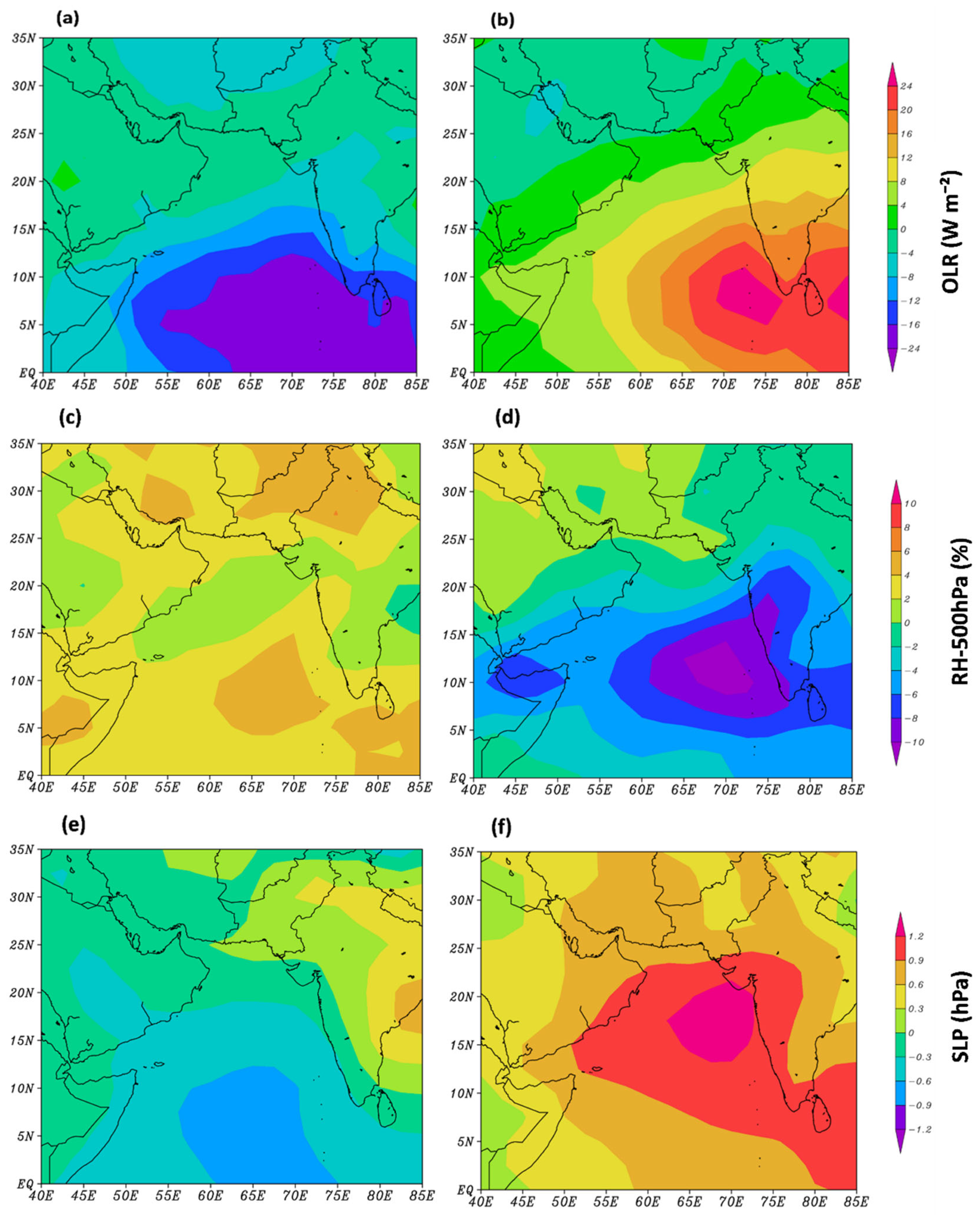
These results indicate that the MJO significantly influences the large-scale environment of the Arabian Sea. Active phases are defined by intense convection, elevated humidity, and diminished surface pressure, establishing extremely conducive circumstances for the development and intensification of TCs. The inactive periods are characterized by arid, steady, and high-pressure conditions that significantly inhibit cyclone activity.
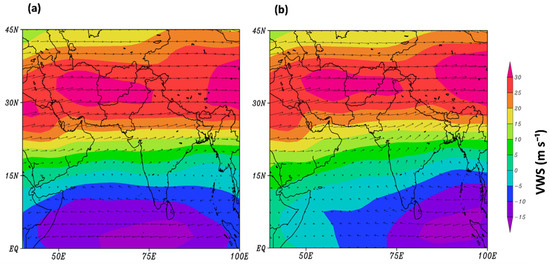
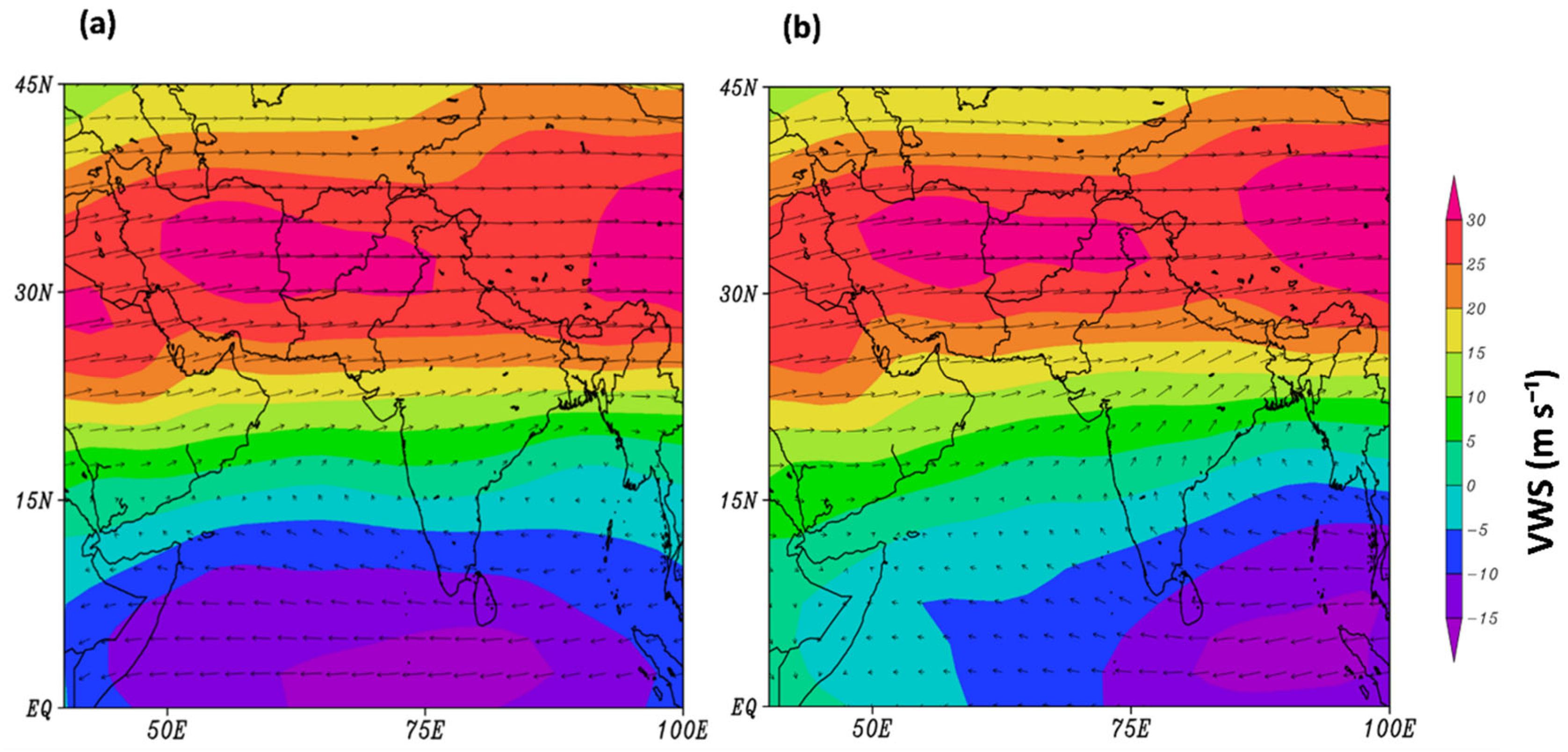
Figure 6 depicts the average VWS between 200 hPa and 850 hPa over the Arabian Sea during the active MJO phases (P1–P3) shown in Figure 6a, and inactive phases (P6–P8) shown in Figure 6b. The distribution of VWS is mainly analogous under both conditions, with moderate-to-low shear (below 15 m s−1) prevailing across the majority of the Arabian Sea. This suggests that the ambient shear is predominantly conducive to TCs development during both MJO conditions (P1–P3 and P6–P8). At the basin scale, this suggests that VWS is not the primary limiting factor for TC activity during either MJO phase.
Figure 6.
Composite mean of the VWS in m s−1 over the Arabian Sea during MJO phases: (a) P1–P3 and (b) P6–P8.
The minimal variation in VWS between the two phases indicates that the decline in TC activity during the non-active MJO phases cannot be ascribed to adverse shear conditions. However, spatial variations in VWS reveal localized regions of enhanced shear, particularly over parts of the central and northern Arabian Sea during non-active phases, which may still suppress cyclogenesis at regional scales. The inhibition of cyclogenesis is more likely associated with various environmental conditions, including diminished convection, reduced mid-level RH, and lower SST anomalies, which collectively obstruct TC development and strengthening. Consequently, although VWS is a significant dynamic parameter affecting TCs’ activity, its influence must be interpreted in conjunction with spatial variability and thermodynamic constraints, suggesting that thermodynamic and convective parameters exert a more substantial influence on cyclogenesis linked to the MJO over the Arabian Sea.
3.3. Interaction of MJO with ENSO, IOD, and IPWP
The interplay between large-scale climate patterns significantly influences TC activity in the Arabian Sea. The MJO significantly interacts with the ENSO and the IOD, affecting convection, atmospheric circulation, and ocean–atmosphere coupling in the area. Examining TC activity across various combinations of these climate types offers a critical understanding of their interrelated impact on storm formation and severity. The post-monsoon season (October–November–December) is the optimal period to investigate the interaction between ENSO and IOD events, as they usually peak around this time, and their influence on MJO and subsequent TC activity. In contrast, during the pre-monsoon season (April-May-June), ENSO and IOD are often in their nascent developmental phases, and their interaction with the MJO is rather feeble. This study concentrates solely on TCs occurring in the post-monsoon season to evaluate the combined effects of the MJO, ENSO, and IOD on TC activity in the Arabian Sea. Throughout the four-decade study period (1982–2021), a total of 45 TCs were documented in the Arabian Sea, with 25 occurring in the post-monsoon season. To look into this association, the TCs were grouped based on when they happened during active and non-active MJO phases under distinct ENSO and IOD circumstances (Table 3).
Table 3.
Distribution of TCs over the Arabian Sea during 1982–2021 under different ENSO and IOD conditions, separated by active (MJO amplitude > 1) and non-active MJO phases. The table highlights the number of TCs that formed during El Niño, Neutral ENSO, and La Niña events, as well as during pIOD, neutral, and negative nIOD.
The statistical distribution shows that TC activity increased significantly during active MJO phases, especially when the ENSO and IOD were neutral or positive. On the other hand, the TCs’ activity was often lower during non-active phases. In El Niño years, there were about 0.8 TCs on average each year. In neutral ENSO years, there were about 1.0 TCs, while in La Niña years, there were about 0.3 TCs. The average number of TCs during different IOD events was about 2.5 for each pIOD year, 1.1 for neutral IOD years, and 0.6 for nIOD years.
The findings demonstrate that TCs display markedly increased activity during neutral and positive ENSO and IOD events, while their activity decreases during La Niña and negative IOD years. The study shows that the most TCs happen when the MJO phases are both active and the IOD conditions are good. This shows that the MJO’s intraseasonal convective strengthening and the pIOD’s interannual warming are closely related. This combination makes it easier for TCs to happen over the Arabian Sea by increasing low-level convergence, mid-level moisture, and large-scale upward motion. The distributions show how important the MJO is as a main factor in TC activity. The results are in line with earlier studies that showed how background ocean–atmosphere factors affect TC activity. The notable warming of the tropical Indian Ocean in 2020, caused by intense IOD occurrences, showed that pIOD episodes raise SSTs and make it easier for large-scale convection to happen in the western Indian Ocean, which creates circumstances that are good for cyclogenesis [47].
The modeling investigation on the covariations between the IOD and ENSO showed that neutral or positive ENSO/IOD combinations influence the large-scale convective environment, hence enhancing TC activity [48]. Furthermore, investigations into the seasonal dynamics of TCs in the Arabian Sea indicate that elevated SSTs and reduced VWS linked to positive Indian Ocean Dipole phases are related to a heightened frequency of TCs [14,49]. These studies all back up what we found: When the MJO is active, TC activity in the Arabian Sea goes higher during neutral and positive ENSO/IOD conditions. On the other hand, when La Niña and negative IOD conditions are present, TC activity is at its lowest. This is because convection is suppressed and SSTs are cooler.
It is important to note that there are a few TCs that activate in the Arabian Sea, especially when breaking them down by the MJO phases, ENSO state, and IOD phase. This aspect restricts the statistical efficacy of formal significance testing, rendering results susceptible to sample fluctuation. Consequently, this work employs a descriptive and process-oriented methodology, focusing on the physically consistent correlations between TC activity and large-scale environmental parameters (OLR, RH, SLP, and VWS) during both active and inactive phases of the MJO. The identified discrepancies should be regarded as indicative rather than conclusive. Future studies will focus on extending the research to a broader time span with more TCs.
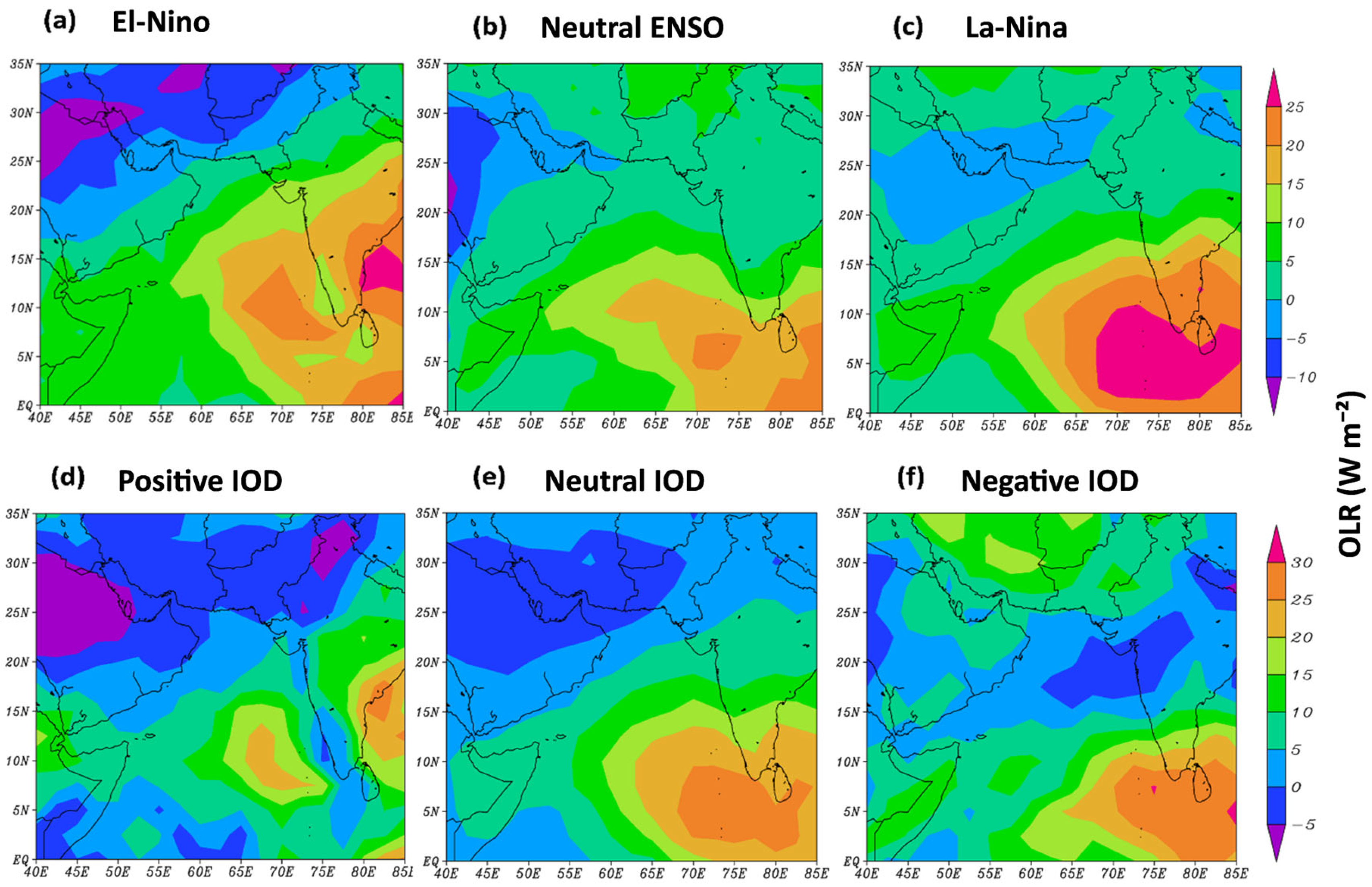
The OLR composite patterns (Figure 7) and TCs statistics (Table 3) together highlight the crucial role of the MJO in modulating TC activity over the Arabian Sea under varying ENSO and IOD events. The results indicate that TC activity over the Arabian Sea increases during active MJO phases, particularly under neutral and positive ENSO and IOD conditions, while La Niña and negative IOD phases exhibit the least activity. As illustrated in the figure, pronounced negative OLR anomalies—signifying enhanced convection—are observed over the Arabian Sea during neutral and positive ENSO and IOD periods, providing a favorable environment for cyclogenesis.
Figure 7.
Composite anomalies of OLR (W m−2) during active MJO phases under different ENSO and IOD conditions: (a) El Niño, (b) neutral ENSO, (c) La Niña, (d) positive IOD, (e) neutral IOD, and (f) negative IOD.
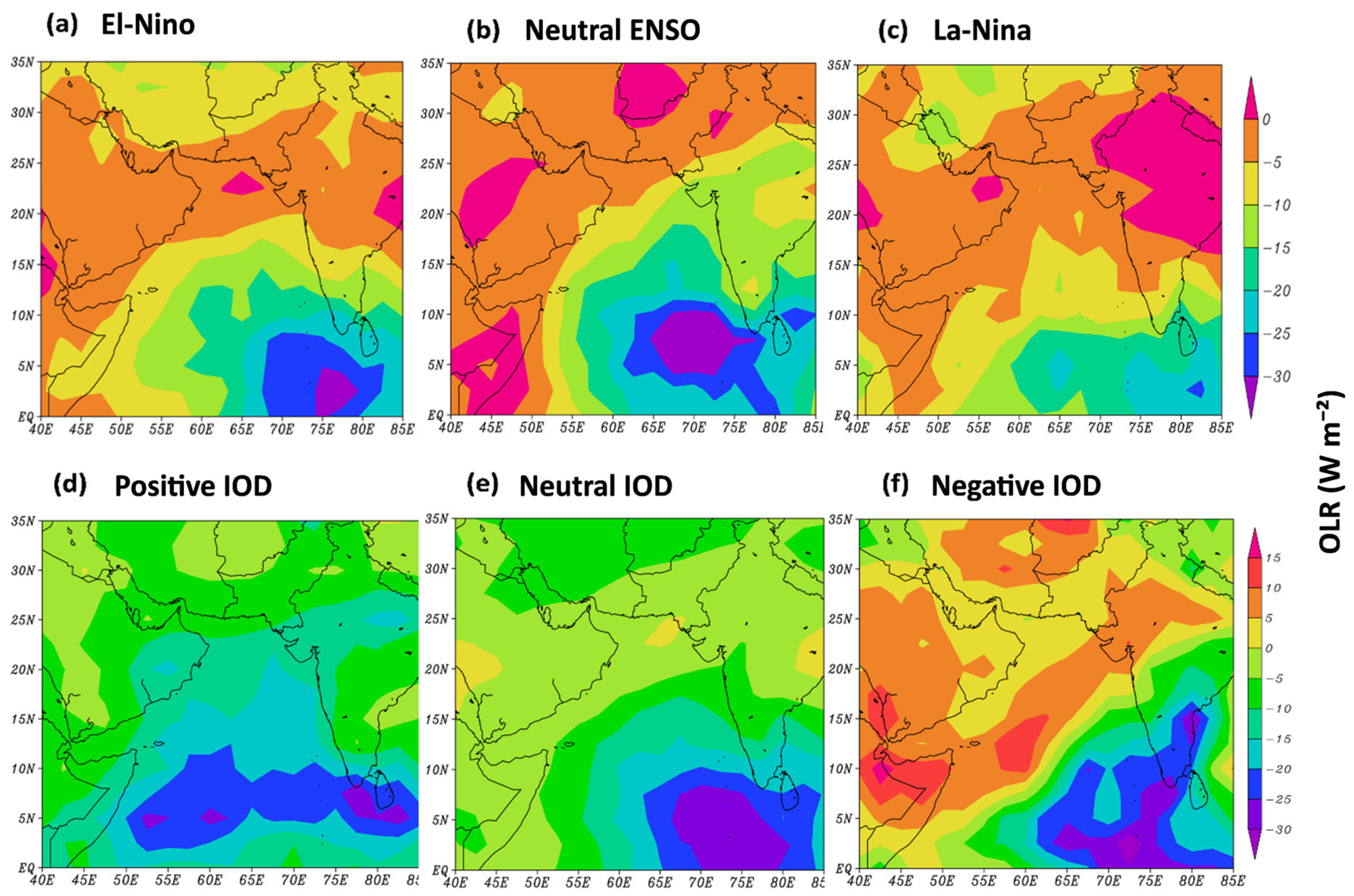
In contrast, during the non-active MJO phases (Figure 8), the OLR anomalies are generally positive or weakly negative over most parts of the Arabian Sea, reflecting suppressed convection and atmospheric stability. The positive anomalies are especially dominant during La Niña (Figure 8c) and negative IOD events (Figure 8f), extending across the basin from 5° N to 20° N, which coincide with reduced TC activity. Even under El Niño and positive IOD conditions (Figure 8a,d), where usually more TC activity over NIO is observed, ignoring the MJO effects [12,20,49], the absence of the MJO’s active convective phase results in weaker upward motion and diminished large-scale convection. The only modest negative OLR values appear confined to limited regions near the equatorial eastern Arabian Sea, indicating localized convection insufficient to support widespread cyclone genesis.
Figure 8.
Composite anomalies of OLR (W m−2) during non-active MJO phases under different ENSO and IOD conditions: (a) El Niño, (b) neutral ENSO, (c) La Niña, (d) positive IOD, (e) neutral IOD, and (f) negative IOD.
Overall, the comparison between Figure 7 and Figure 8 demonstrates that while ENSO and IOD influence the background thermodynamic environment, the MJO provides the critical intraseasonal forcing that determines whether convection is activated or suppressed over the Arabian Sea. Thus, enhanced TC activity during neutral and positive ENSO–IOD conditions occurs primarily when the active MJO phase overlaps with these favorable oceanic backgrounds, highlighting the strong interconnection between interannual (ENSO, IOD) and intraseasonal (MJO) variability in controlling cyclone formation in the basin.
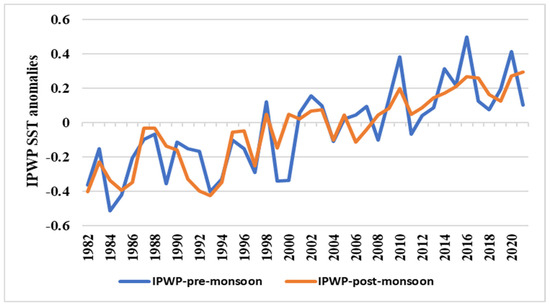
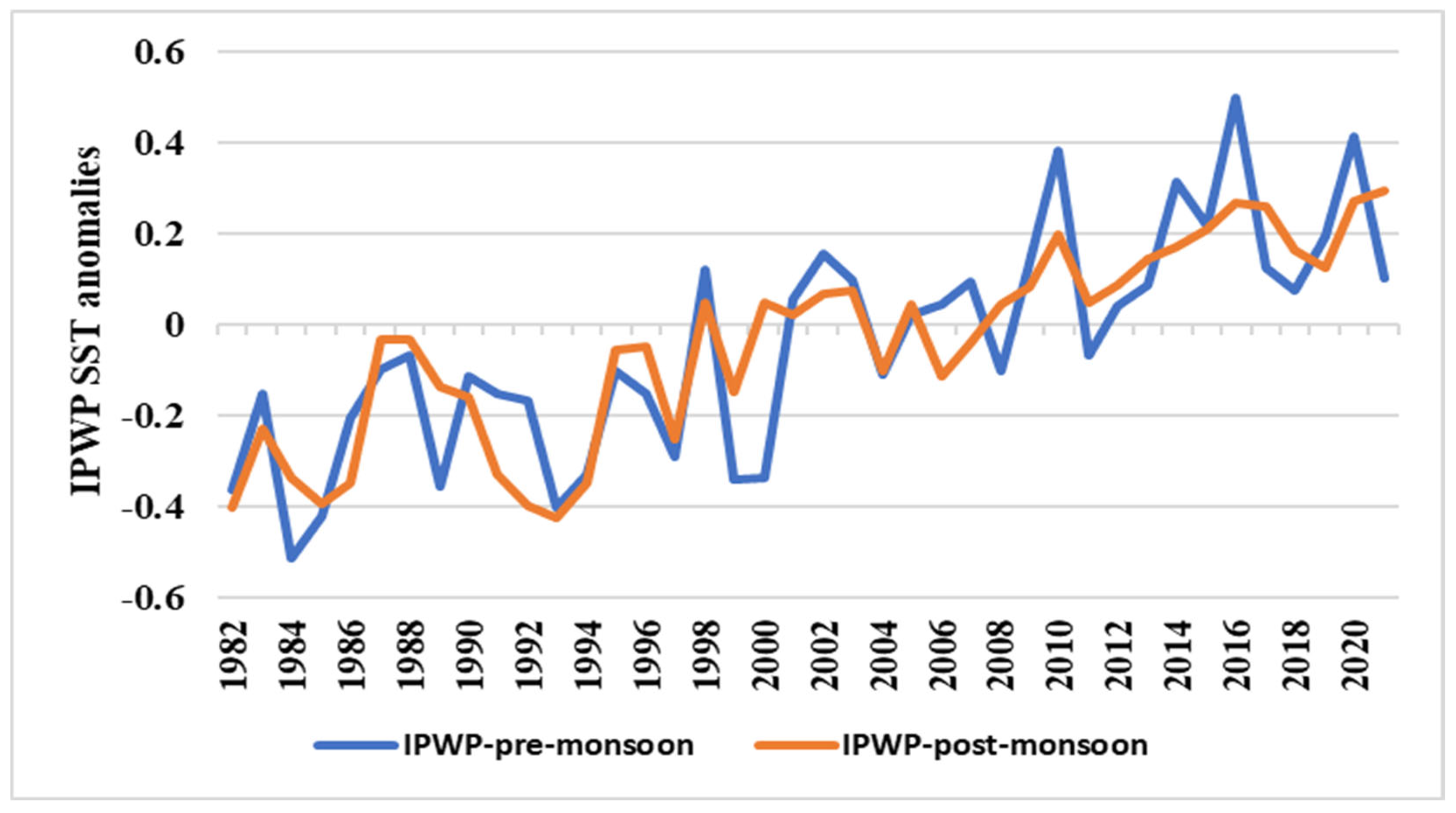
In addition, this study examines the variability of TC activity over the Arabian Sea when the MJO phases interact with the Indo-Pacific Warm Pool (IPWP). The IPWP is one of the most active parts of the global ocean-atmosphere system. SSTs that stay above 28 °C for a long time are very important for keeping deep convection going and releasing latent heat. Changes in the size and strength of the IPWP can change how moisture is available and how convection works in a region, which can affect TCs [50,51], their formation, and growth. This work seeks to elucidate the connection between the MJO and the IPWP, thereby enhancing the understanding of how large-scale thermodynamic and dynamic mechanisms collectively govern TC activity across the Arabian Sea. A recent study conducted by A.B. Almahri [49] demonstrates that the IPWP exhibits two different periods within the same timeframe as our research (1982–2021). As shown in Figure 9, the negative SST anomalies last from 1982 to 2001, while the positive ones last from 2002 to 2021.
Figure 9.
The composite anomalies of the IPWP SSTs during the pre-monsoon and post-monsoon seasons for the period (1982–2021) [49].
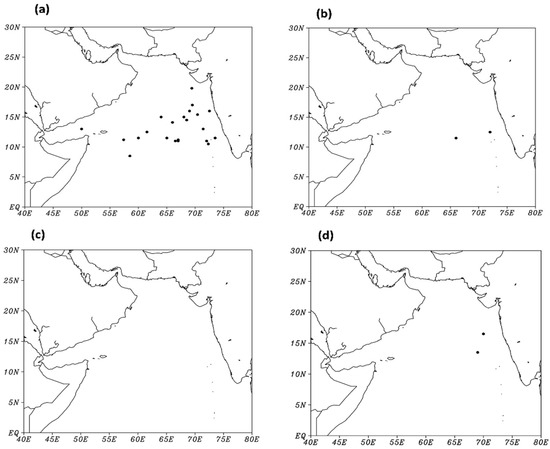
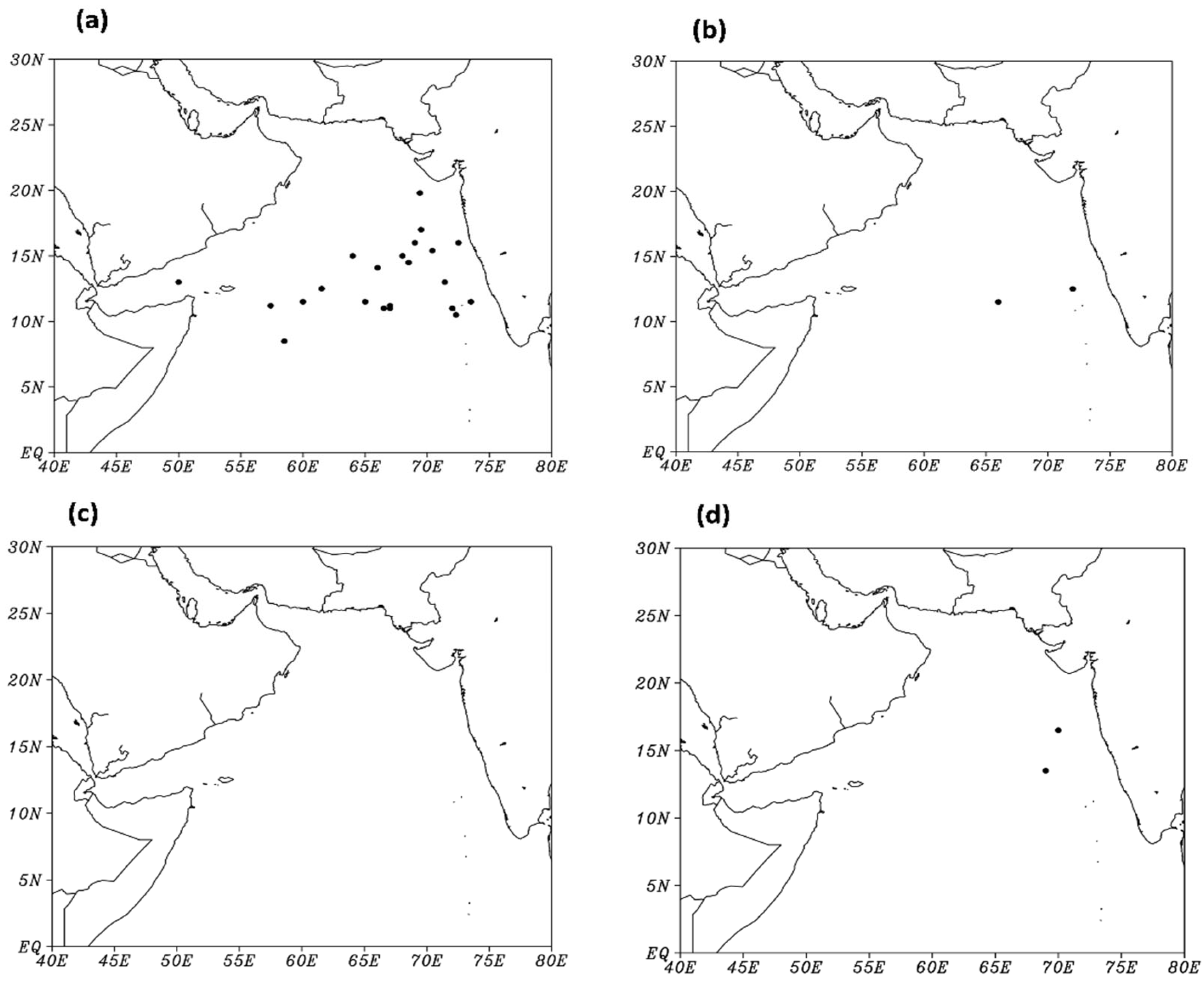
TCs become more active when the MJO is active (non-active), and the IPWP is positive (negative), as shown in Figure 10. The IPWP was positive (negative) from 2002 to 2021 (1982–2001), which caused more (less) TCs to form in the central and eastern Arabian Sea. It is clear that more TCs (22 TCs) occurred during active MJO and positive IPWP (Figure 10a).
Figure 10.
TCs genesis locations over the Arabian Sea in relation to IPWP and MJO conditions for the period 1982–2021. Panels (a,b) show TC genesis during active MJO phases in the two different periods of IPWP, 2002–2021 and 1982–2001, respectively. Panels (c,d) illustrate TC genesis during non-active MJO phases under the same periods.
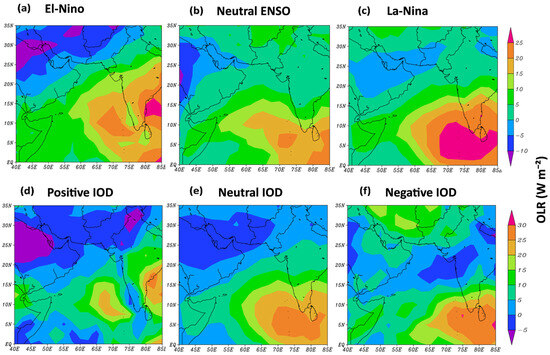
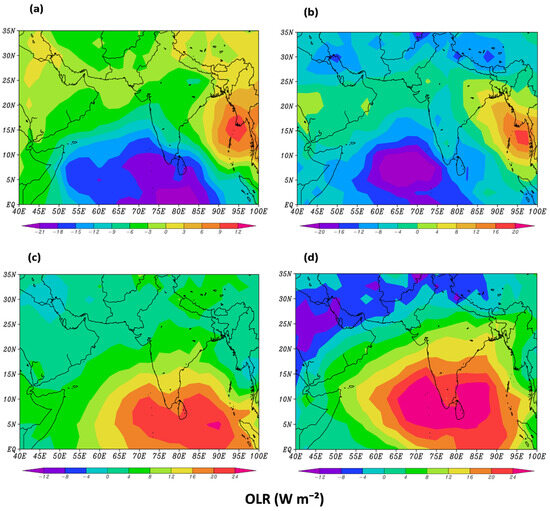
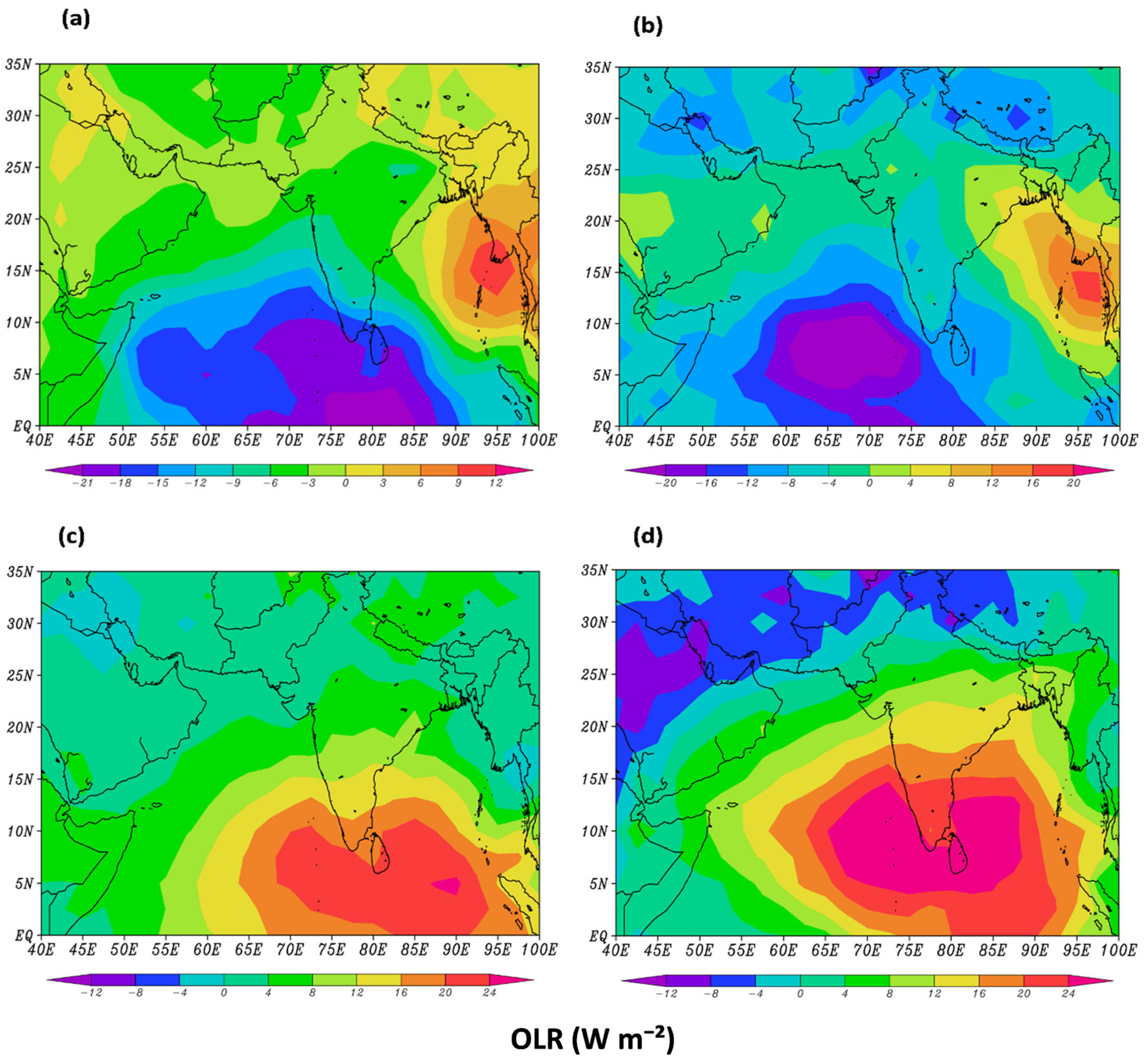
This coincided with areas of increased (decreased) convection and SSTs above 28 °C. This shows how intraseasonal (MJO) and interdecadal (IPWP) changes affect habitats where large-scale cyclogenesis happens. The MJO convective envelope is stronger when the IPWP phase is positive. During this time, the SST gets warmer all around the basin, and the OLR comes together (Figure 11a). This makes the Arabian Sea less stable because there is greater moisture and less OLR, and upward motion leading to more TC activity. There weren’t many TCs during the negative IPWP (1982–2001), even though the MJO was in active phases, but the SSTs were lower (negative IPWP anomalies), and only 2 TCs occurred over the Arabian Sea (Figure 11b). In the non-convective MJO conditions (Figure 11c,d), lower SSTs and higher OLR coupling make it less likely for cyclogenesis to occur. Other research [52] has shown that the IPWP is gradually affecting the number and strength of TCs in the Indo-Pacific region.
Figure 11.
The OLR anomalies (W m−2) over the Arabian Sea during two different IPWP periods and MJO conditions for the period 1982–2021. Panels (a,b) show OLR anomalies during active MJO phases under IPWP (2002–2021) and IPWP (1982–2001) conditions, respectively. Panels (c,d) illustrate OLR anomalies during non-active MJO phases under the same IPWP periods.
4. Conclusions
This study provides a comprehensive assessment of the influence of the MJO on TC activity in the Arabian Sea over a period of four decades (1982–2021). The data indicate that the majority of TCs occur during the convectively active phases of the MJO (P1–P3), characterized by intensified convection, elevated mid-level RH, and reduced SLP. All of these things help TCs to form. The suppressed MJO phases (P6–P8) are linked to stable and dry weather that makes it much harder for TCs to form. VWS is mainly good in both phases, which suggests that thermodynamic and convective mechanisms, not dynamic shear, are the key drivers that affect MJO–TC interactions in the basin.
The results show that the MJO has a stronger effect when it happens at the same time as a positive IOD or a neutral-to-El Niño ENSO phase. This leads to more convective activity and a higher chance of TC activity. Furthermore, the findings reveal that TC activity intensifies when convective MJO phases coincide with positive IPWP conditions, suggesting that large-scale oceanic warming strengthens the intraseasonal environment for cyclogenesis. Conversely, during suppressed MJO phases, TC formation is notably reduced under both positive and negative IPWP periods. This highlights the crucial role of the combined effects of intraseasonal and interannual climate variability in modulating the TC activity over the Arabian Sea.
The analysis highlights the MJO’s crucial role as a primary intraseasonal driver of TC variability in the region. Adding MJO phase data to forecasting models can make them much better at predicting when and how powerful TCs will be over the course of a week to a month. This can assist communities in the Arabian Sea basin in lowering their risk of disasters and build up measures to notify people early.
Author Contributions
Conceptualization, A.B.A., H.M.H. and A.H.L.; methodology, A.B.A. and H.M.H.; software, A.B.A. and H.M.H.; validation, A.B.A. and H.M.H.; formal analysis, A.B.A., H.M.H. and A.H.L.; investigation, A.B.A. and H.M.H.; resources, A.B.A. and A.H.L.; data curation, A.B.A. and H.M.H.; writing—original draft preparation, A.B.A. and A.H.L.; writing—review and editing, A.B.A., A.H.L. and H.M.H.; visualization, A.B.A., A.H.L. and H.M.H.; supervision, H.M.H. and A.H.L. All authors have read and agreed to the published version of the manuscript.
Funding
This work was supported by the Scientific Endowment Program for Supporting Publication Fees, a partnership between the Scientific Endowment and the Deanship of Scientific Research at King Abdullaziz University, Saudi Arabia.
Institutional Review Board Statement
Not applicable.
Informed Consent Statement
Not applicable.
Data Availability Statement
Data are contained within the article and are available on request from the corresponding author.
Acknowledgments
The project was funded by KAU Endowment (WAQF) at King Abdulaziz University, Jeddah, Saudi Arabia. The authors, therefore, acknowledge with thanks WAQF and Deanship of Scientific Research (DSR) for technical and financial support.
Conflicts of Interest
The authors declare no conflicts of interest.
References
- Riehl, H. Climate and Weather in the Tropics; Academic Press: Cambridge, MA, USA, 1979. [Google Scholar]
- Lavender, S.L.; Dowdy, A.J. Tropical cyclone track direction climatology and its intraseasonal variability in the Australian region. J. Geophys. Res. 2016, 121, 13236–13249. [Google Scholar] [CrossRef] [Scilit]
- Labban, A.H.; Hasanean, H.M.; Almahri, A.; Al-Sakkaf, A.S.; Hussein, M.A.A. Characterizing the Tropical Cyclones Activity over Arabian Sea (1982–2021). Oceans 2024, 5, 840–856. [Google Scholar] [CrossRef] [Scilit]
- Tiwari, G.; Rameshan, A.; Kumar, P.; Javed, A.; Mishra, A.K. Understanding the post-monsoon tropical cyclone variability and trend over the Bay of Bengal during the satellite era. Q. J. R. Meteorol. Soc. 2022, 148, 1–14. [Google Scholar] [CrossRef] [Scilit]
- Kabir, R.; Ritchie, E.A.; Stark, C. Tropical Cyclone Exposure in the North Indian Ocean. Atmosphere 2022, 13, 1421. [Google Scholar] [CrossRef] [Scilit]
- Gray, W.M. Global view of the origin of tropical disturbances and storms. Mon. Weather Rev. 1968, 96, 669–700. [Google Scholar] [CrossRef] [Scilit]
- Wahiduzzaman, M.; Oliver, E.C.J.; Wotherspoon, S.J.; Holbrook, N.J. A climatological model of North Indian Ocean tropical cyclone genesis, tracks and landfall. Clim. Dyn. 2017, 49, 2585–2603. [Google Scholar] [CrossRef] [Scilit]
- Wahiduzzaman, M.; Cheung, K.; Luo, J.-J.; Bhaskaran, P.K.; Tang, S.; Yuan, C. Impact assessment of Indian Ocean Dipole on the North Indian Ocean tropical cyclone prediction using a Statistical model. Clim. Dyn. 2022, 58, 1275–1292. [Google Scholar] [CrossRef] [Scilit]
- Bhardwaj, P.; Singh, O. Climatological characteristics of Bay of Bengal tropical cyclones: 1972–2017. Theor. Appl. Clim. 2020, 139, 615–629. [Google Scholar] [CrossRef] [Scilit]
- Dube, S.K.; Jain, I.; Rao, A.D.; Murty, T.S. Storm surge modelling for the Bay of Bengal and Arabian Sea. Nat. Hazards 2009, 51, 3–27. [Google Scholar] [CrossRef] [Scilit]
- Bhatla, R.; Raj, R.; Singh, M. Climatology of Recurvature of Tropical Cyclone over Bay of Bengal and Arabian Sea. 2018. Available online: https://mausamjournal.imd.gov.in/index.php/MAUSAM/article/view/335 (accessed on 5 October 2025).
- Felton, C.S.; Subrahmanyam, B.; Murty, V.S.N. ENSO-modulated cyclogenesis over the Bay of Bengal. J. Clim. 2013, 26, 9806–9818. [Google Scholar] [CrossRef] [Scilit]
- Sattar, A.M.; Cheung, K.K.W. Comparison between the active tropical cyclone seasons over the Arabian Sea and Bay of Bengal. Int. J. Clim. 2019, 39, 5486–5502. [Google Scholar] [CrossRef] [Scilit]
- Pradhan, P.K.; Kumar, V.; Mishra, A.K.; Pandey, L.K.; Dabbugottu, N.R. Decadal Variability of Tropical Cyclone Genesis Factors over the Arabian Sea During Post-Monsoon Season. Meteorology 2025, 4, 8. [Google Scholar] [CrossRef] [Scilit]
- Simpkins, G. Arabian Sea cyclone changes. Nat. Rev. Earth Environ. 2021, 2, 588. [Google Scholar] [CrossRef] [Scilit]
- Duan, W.; Yuan, J.; Duan, X.; Feng, D. Seasonal variation of tropical cyclone genesis and the related large-scale environments: Comparison between the Bay of Bengal and Arabian Sea sub-basins. Atmosphere 2021, 12, 1593. [Google Scholar] [CrossRef] [Scilit]
- Terry, J.P.; Gienko, G. Quantitative observations on tropical cyclone tracks in the Arabian Sea. Theor. Appl. Clim. 2019, 135, 1413–1421. [Google Scholar] [CrossRef] [Scilit]
- Girishkumar, M.S.; Ravichandran, M. The influences of ENSO on tropical cyclone activity in the Bay of Bengal during October–December. J. Geophys. Res. Oceans 2012, 117, C02033. [Google Scholar] [CrossRef] [Scilit]
- Wang, B.; Luo, X.; Yang, Y.M.; Sun, W.; Cane, M.A.; Cai, W.; Yeh, S.W.; Liu, J. Historical change of El Niño properties sheds light on future changes of extreme El Niño. Proc. Natl. Acad. Sci. USA 2019, 116, 22512–22517. [Google Scholar] [CrossRef] [Scilit]
- BMahala, B.K.; Nayak, B.K.; Mohanty, P.K. Impacts of ENSO and IOD on tropical cyclone activity in the Bay of Bengal. Nat. Hazards 2015, 75, 1105–1125. [Google Scholar]
- Li, Z.; Yu, W.; Li, K.; Liu, B.; Wang, G. Modulation of interannual variability of tropical cyclone activity over Southeast Indian Ocean by negative IOD phase. Dyn. Atmos. Oceans 2015, 72, 62–69. [Google Scholar] [CrossRef] [Scilit]
- Hansen, K.A.; Janiga, M.A.; Majumdar, S.J.; Kirtman, B.P. Impact of MJO Propagation Speed on Active Atlantic Tropical Cyclone Activity Periods. Geophys. Res. Lett. 2024, 51, e2023GL106872. [Google Scholar] [CrossRef] [Scilit]
- Madden, R.A.; Julian, P.R. Description of Global-Scale Circulation Cells in the Tropics with a 40–50 Day Period. J. Atmos. Sci. 1972, 29, 1109–1123. [Google Scholar] [CrossRef] [Scilit]
- Zhang, C. Madden–Julian oscillation: Bridging weather and climate. Bull. Am. Meteorol. Soc. 2013, 94, 1849–1870. [Google Scholar] [CrossRef] [Scilit]
- Madden, R.A.; Julian, P.R. Detection of a 40–50 Day Oscillation in the Zonal Wind in the Tropical Pacific. J. Atmos. Sci. 1971, 28, 702–708. [Google Scholar] [CrossRef] [Scilit]
- Chen, G.; Wang, B. Does the MJO have a westward group velocity? J. Clim. 2018, 31, 2435–2443. [Google Scholar] [CrossRef] [Scilit]
- Chen, G.; Wang, B. Dynamic moisture mode versus moisture mode in MJO dynamics: Importance of the wave feedback and boundary layer convergence feedback. Clim. Dyn. 2019, 52, 5127–5143. [Google Scholar] [CrossRef] [Scilit]
- Wu, L.; Takahashi, M. Contributions of tropical waves to tropical cyclone genesis over the western North Pacific. Clim. Dyn. 2018, 50, 4635–4649. [Google Scholar] [CrossRef] [Scilit]
- Zhao, C.; Li, T. Basin dependence of the MJO modulating tropical cyclone genesis. Clim. Dyn. 2019, 52, 6081–6096. [Google Scholar] [CrossRef] [Scilit]
- Kiladis, G.N.; Straub, K.H.; Haertel, P.T. Zonal and vertical structure of the Madden–Julian oscillation. J. Atmos. Sci. 2005, 62, 2790–2809. [Google Scholar] [CrossRef] [Scilit]
- Singh, V.K.; Roxy, M.K.; Deshpande, M. Role of warm ocean conditions and the MJO in the genesis and intensification of extremely severe cyclone Fani. Sci. Rep. 2021, 11, 3607. [Google Scholar] [CrossRef] [Scilit]
- Klotzbach, P.J. The Madden–Julian oscillation’s impacts on worldwide tropical cyclone activity. J. Clim. 2014, 27, 2317–2330. [Google Scholar] [CrossRef] [Scilit]
- Balaguru, K.; Leung, L.R.; Hagos, S.M.; Krishnakumar, S. An oceanic pathway for Madden–Julian oscillation influence on maritime continent tropical Cyclones. npj Clim. Atmos. Sci. 2021, 4, 52. [Google Scholar] [CrossRef] [Scilit]
- Diamond, H.J.; Schreck, C.J.; Allgood, A.; Becker, E.J.; Blake, E.S.; Bringas, F.G.; Camargo, S.J.; Chen, L.; Coelho, C.A.S.; Fauchereau, N.; et al. The tropics. Bull. Am. Meteorol. Soc. 2022, 103, S193–S256. [Google Scholar] [CrossRef] [Scilit]
- Lee, J.C.K.; Lee, R.W.; Woolnough, S.J.; Boxall, L.J. The links between the Madden-Julian Oscillation and European weather regimes. Theor. Appl. Clim. 2020, 141, 567–586. [Google Scholar] [CrossRef] [Scilit]
- Zavala-Garay, J.; Zhang, C.; Moore, A.M.; Kleeman, R. The linear response of ENSO to the Madden–Julian oscillation. J. Clim. 2005, 18, 2441–2459. [Google Scholar] [CrossRef] [Scilit]
- RSMC. Available online: https://rsmcnewdelhi.imd.gov.in/ (accessed on 5 October 2025).
- Wheeler, M.C.; Hendon, H.H. An all-season real-time multivariate MJO index: Development of an index for monitoring and prediction. Mon. Weather Rev. 2004, 132, 1917–1932. [Google Scholar] [CrossRef] [Scilit]
- Hoerling, M.; Eischeid, J.; Perlwitz, J. Regional precipitation trends: Distinguishing natural variability from anthropogenic forcing. J. Clim. 2010, 23, 2131–2145. [Google Scholar] [CrossRef] [Scilit]
- Lafleur, D.M.; Barrett, B.S.; Henderson, G.R. Some climatological aspects of the Madden–Julian Oscillation (MJO). J. Clim. 2015, 28, 6039–6053. [Google Scholar] [CrossRef] [Scilit]
- Chand, S.S.; Walsh, K.J.E. The influence of the Madden–Julian oscillation on tropical cyclone activity in the Fiji region. J. Clim. 2010, 23, 868–886. [Google Scholar] [CrossRef] [Scilit]
- Tu’uholoaki, M.; Espejo, A.; Sharma, K.K.; Singh, A.; Wandres, M.; Damlamian, H.; Chand, S. Influence of the Madden–Julian Oscillation (MJO) on Tropical Cyclones Affecting Tonga in the Southwest Pacific. Atmosphere 2023, 14, 1189. [Google Scholar] [CrossRef] [Scilit]
- Haertel, P. The Relationship between Madden–Julian Oscillation Moist Convective Circulations and Tropical Cyclone Genesis. Climate 2023, 11, 134. [Google Scholar] [CrossRef] [Scilit]
- Ye, C.; Deng, L.; Huang, W.-R.; Chen, J. Comparison of the Madden–Julian oscillation-related tropical cyclone genesis over the South China Sea and Western North pacific under different El Niño-Southern oscillation conditions. Atmosphere 2020, 11, 183. [Google Scholar] [CrossRef] [Scilit]
- Chen, J.-M.; Wu, C.-H.; Chung, P.-H.; Sui, C.-H. Influence of intraseasonal–interannual oscillations on tropical cyclone genesis in the western North Pacific. J. Clim. 2018, 31, 4949–4961. [Google Scholar] [CrossRef] [Scilit]
- Girishkumar, M.S.; Suprit, K.; Vishnu, S.; Prakash, V.P.T.; Ravichandran, M. The role of ENSO and MJO on rapid intensification of tropical cyclones in the Bay of Bengal during October–December. Theor. Appl. Clim. 2015, 120, 797–810. [Google Scholar] [CrossRef] [Scilit]
- Zhang, Y.; Du, Y. Extreme IOD induced tropical Indian Ocean warming in 2020. Geosci. Lett. 2021, 8, 37. [Google Scholar] [CrossRef] [Scilit]
- Wang, H.; Kumar, A.; Murtugudde, R.; Narapusetty, B.; Seip, K.L. Covariations between the Indian Ocean dipole and ENSO: A modeling study. Clim. Dyn. 2019, 53, 5743–5761. [Google Scholar] [CrossRef] [Scilit]
- Almahri, A.B.; Hasanean, H.M.; Labban, A.H. Teleconnections Between the Pacific and Indian Ocean SSTs and the Tropical Cyclone Activity over the Arabian Sea. Climate 2025, 13, 193. [Google Scholar] [CrossRef] [Scilit]
- Roxy, M.K.; Dasgupta, P.; McPhaden, M.J.; Suematsu, T.; Zhang, C.; Kim, D. Twofold expansion of the Indo-Pacific warm pool warps the MJO life cycle. Nature 2019, 575, 647–651. [Google Scholar] [CrossRef] [Scilit]
- Kim, H.-R.; Ha, K.-J.; Moon, S.; Oh, H.; Sharma, S. Impact of the Indo-Pacific warm pool on the Hadley, Walker, and monsoon circulations. Atmosphere 2020, 11, 1030. [Google Scholar] [CrossRef] [Scilit]
- Cui, J.; Li, T. Changes in MJO characteristics and impacts in the past century. J. Clim. 2022, 35, 577–590. [Google Scholar] [CrossRef] [Scilit]

Disclaimer/Publisher’s Note: The statements, opinions and data contained in all publications are solely those of the individual author(s) and contributor(s) and not of MDPI and/or the editor(s). MDPI and/or the editor(s) disclaim responsibility for any injury to people or property resulting from any ideas, methods, instructions or products referred to in the content. |
© 2026 by the authors. Licensee MDPI, Basel, Switzerland. This article is an open access article distributed under the terms and conditions of the Creative Commons Attribution (CC BY) license.