Article

Effects of Wind Barriers on Wind Fields and Vehicle Stability on Bridges
1
Department of Civil Engineering, Fuzhou University, Fuzhou 350108, China
2
Fujian Provincial Key Laboratory of Wind Disaster and Wind Engineering, Xiamen 361024, China
3
CCCC Second Highway Consultants Co., Ltd., Wuhan 430056, China
4
Industrial Systems Engineering, University of Regina, Regina, SK S4S0A2, Canada
5
Department of Civil Engineering and Architecture, Xiamen University of Technology, Xiamen 361024, China
6
School of Mechanical and Automotive Engineering, Xiamen University of Technology, Xiamen 361024, China
*
Authors to whom correspondence should be addressed.
Atmosphere 2022, 13(2), 318; https://doi.org/10.3390/atmos13020318
Submission received: 13 December 2021 / Revised: 30 January 2022 / Accepted: 11 February 2022 / Published: 14 February 2022
(This article belongs to the Special Issue Atmospheric Boundary Layer: Observation and Simulation)

Abstract

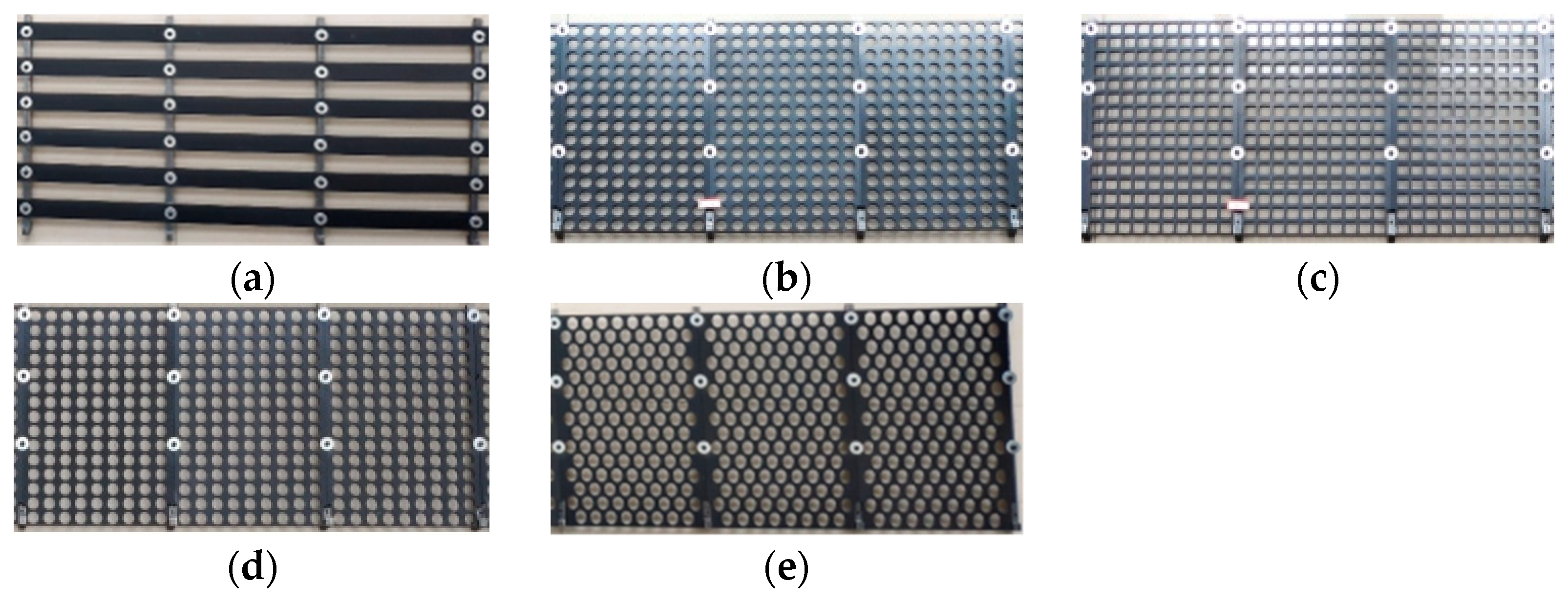
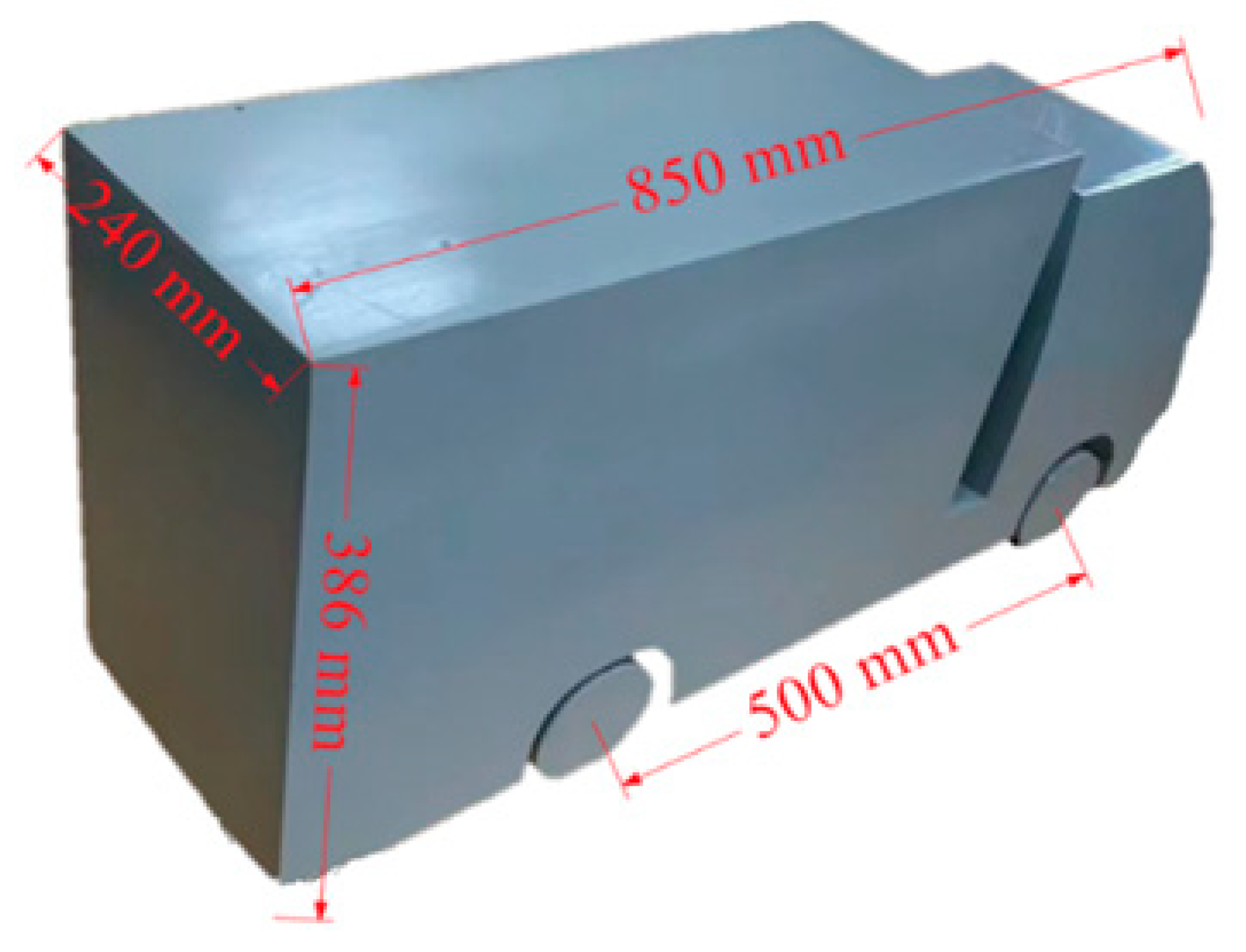
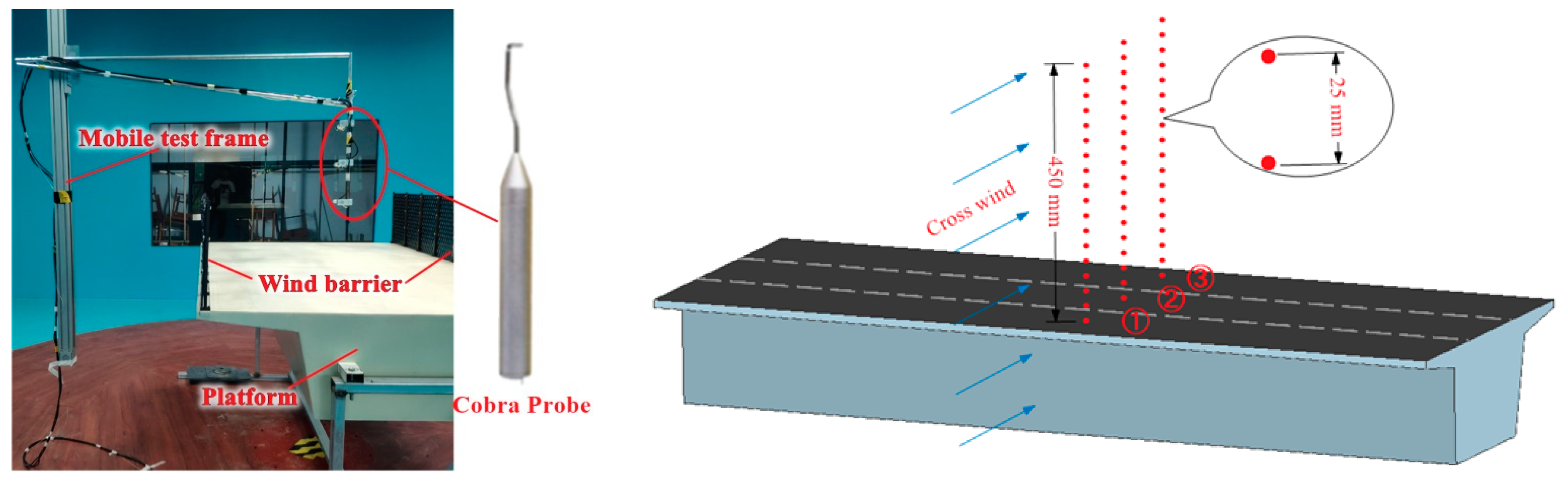
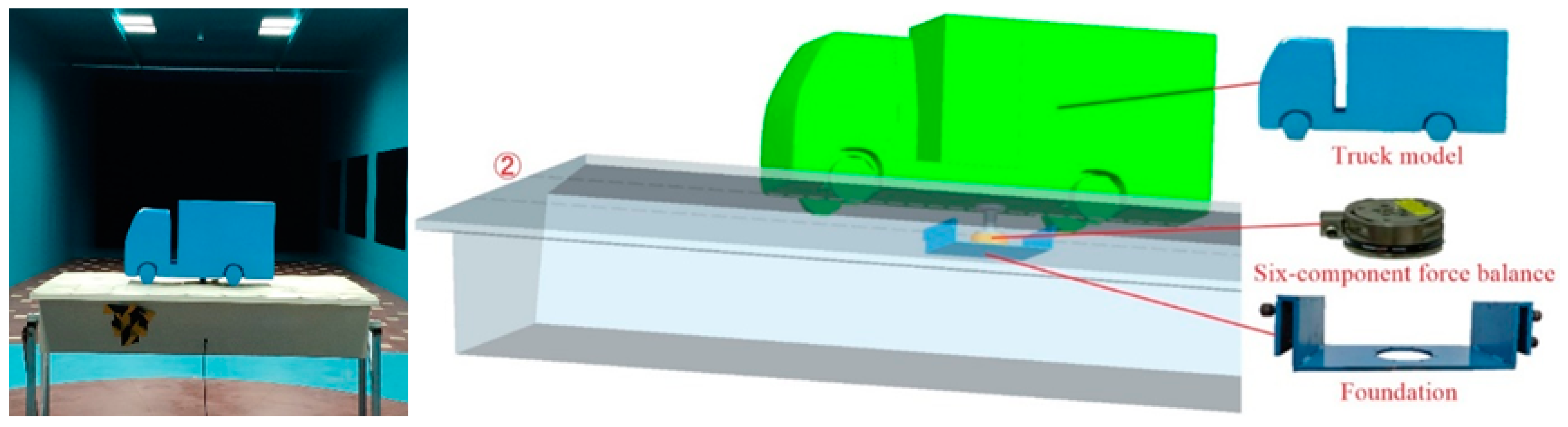
To explore the influence of bridge wind barriers, with their specific opening shapes and arrangements, on bridge deck wind fields and vehicle driving stability under different crosswinds, five bridge wind barrier schemes were designed. For two incoming wind speeds, the wind speed at different heights over three traffic lanes and the aerodynamic six-component force of the vehicle model were measured, and the influence of the wind barrier parameters on the vehicle driving stability was analyzed. The equivalent wind speed reduction coefficient of the wind barrier was compared with the dimensionless coefficients of the aerodynamic side force, roll moment, and aerodynamic lift to verify the accuracy of the shielding effect evaluation indices. The final conclusions provide a useful reference for designing bridge wind barriers.
Keywords: wind tunnel test; wind barrier; parameter; driving stability wind tunnel test; wind barrier; parameter; driving stability