


Abstract
Background/Objectives: Tree peony (Paeonia suffruticosa) has a short flowering period, and its regulatory mechanisms remain poorly understood. These limitations have severely constrained its industrial development. Expansins (EXPs) are key proteins that mediate cell wall loosening associated with petal expansion, yet they remain uncharacterized in tree peony. Methods: This study utilized gene family identification, key gene screening and functional research, as well as regulatory network analysis to reveal the role of the EXP family in the regulation of flower opening. Results: This study presents the first genome-wide identification of 36 PsEXP genes in tree peony, classifying them into four evolutionarily conserved subfamilies (PsEXPA, PsEXPB, PsEXLA, and PsEXLB). Promoter analysis revealed that 28 out of 36 PsEXP promoters contain gibberellin (GA)-responsive elements. Exogenous GA3 treatment significantly promoted flower opening and upregulated eight PsEXPs, with PsEXPA4-1 showing the highest expression level and promoter GA-responsive element abundance. Subcellular localization confirmed that PsEXPA4-1 was targeted to the cell wall. Overexpression of PsEXPA4-1 in Arabidopsis led to early flowering and enlarged petals, indicating that PsEXPA4-1 had the potential to promote cell expansion, consistent with its proposed role in tree peony flower opening. Mechanistically, we identified a bHLH transcription factor, PsbHLH25, whose expression was induced by GA. Y1H and dual-luciferase assays indicated that PsbHLH25 can bind to the PsEXPA4-1 promoter. Conclusions: This study systematically characterized the EXP gene family in tree peony, revealed PsEXPA4-1 as a key effector downstream of GA promoting flower opening, and discovered PsbHLH25 as a transcriptional activator linking GA signaling to PsEXPA4-1. These findings provided important insights into GA-mediated floral opening and genetic resources for understanding the molecular mechanisms and enabling precise flowering time regulation in tree peony.
1. Introduction
Floral display is a key horticultural trait in ornamental plants, possessing significant economic and esthetic value [1]. The process of flower formation is complex, typically encompassing the following three stages: floral transition, floral bud development, and flower opening [2,3]. Among these, the flower opening process can directly influence flowering time and is crucial in the regulation of plant flowering phenology [4]. However, in tree peony (Paeonia suffruticosa), a high-value ornamental species with a notoriously short flowering period, the molecular mechanisms regulating flower opening remain largely unexplored.
Flower opening progresses through bud swelling, anthesis initiation, petal bending, and full unfolding, driven by petal expansion and movement [5,6]. This process proceeds through distinct developmental phases. The division and expansion of petal epidermal cells serve as the primary drivers of petal movement, ultimately determining whether flowers open normally [7,8]. The enlargement of petal epidermal cells relies on coordinated changes in cell wall metabolism, cell turgor pressure, and cytoskeleton reorganization [7]. However, the cell wall is typically rigid, maintaining cell shape stability through a robust fibrous network [9]. Therefore, during flower opening, plants selectively loosen the cell wall network or matrix to allow accommodation to expansive forces generated by turgor pressure [9]. Petal cell expansion requires coordinated cell wall loosening. Enzymes associated with cell wall loosening include pectinases, endo-1,4-β-D-glucanases, xyloglucan endotransglycosylases/hydrolases (XTHs), and expansins (EXPs), among which EXP proteins play a significant role [10,11]. Among these, EXPs are unique because they directly mediate acid-induced cell wall extension without hydrolytic activity, making them key regulators of rapid cell expansion during processes such as flower opening [8,12].
Based on differences in gene structure and amino acid sequence composition, plant EXP proteins are categorized into the following four subfamilies: EXPA (α-expansin), EXPB (β-expansin), EXLA (expansin-like A), and EXLB (expansin-like B) [8]. EXPA and EXPB are the two primary expansin subtypes in plants, being both numerically and functionally predominant, although their distribution varies considerably among different species [12]. Functional studies have revealed that EXPs influence cellulose synthesis or deposition during petal cell wall assembly, determining petal cell size and thereby affecting the flower opening process [5]. In various plants such as Petunia hybrida [13], Dianthus caryophyllus [14], Nelumbo nucifera [15], and Rosa chinensis [16], EXP proteins have been implicated in regulating flower opening. Transformation of Petunia with an antisense expression vector for PhEXP1 resulted in transgenic plants with significantly smaller corolla areas compared to controls, indicating that PhEXP1 directly regulates cell wall metabolism in petunias [17]. Another expansin gene in petunia, PhEXPA1, has also been confirmed to participate in regulating cell wall metabolism [13]. The unfolding state of carnation petals during flower opening is closely correlated with the expression levels of DcEXPA1 and DcEXPA2 [14]. In roses, the transcriptional levels of EXPs increased significantly during petal growth, and the rate of petal area expansion correlated with the expression level of RhEXPA7 [16]. Similarly, the expression level of GgEXPA1 was associated with changes in petal area in Gladiolus grandiflorus [18]. During vegetative growth, EXP proteins are also known to promote leaf expansion and stem elongation, although the present study focuses on their role in flower opening [19,20].
Further research has revealed that EXPs not only play a significant role in the development of plant organs and tissues, but their expression is also influenced by plant hormones [5,7]. Gibberellic acid (GA), an important class of hormones in plant growth, development, and flowering regulation, has been extensively studied in the context of flower opening [21]. Research on rapeseed (Brassica campestris), cotton (Gossypium hirsutum), and Arabidopsis has shown that GA promotes EXP expression to regulate stem elongation, epidermal cell differentiation, and flower development [22,23,24]. In addition, transcriptional regulators such as DELLA and NAC proteins have been identified as upstream modulators of EXP genes in GA signaling pathways [24,25]. However, in tree peony, whether and how GA signaling regulates EXP expression during flower opening remains unknown.
Tree peony, renowned as one of China’s top ten traditional famous flowers, has become a significant commodity in the Lunar New Year flower market due to its high ornamental value and profound cultural significance [26,27]. However, the natural flowering period of tree peony predominantly occurs between March and May, with individual plants having a short blooming duration [28]. Precise flowering regulation is therefore required to meet market demand for the Spring Festival. Current flowering regulation for Lunar New Year tree peonies primarily relies on forcing cultivation in autumn and winter, encompassing the following two stages: dormancy release of mixed buds and flower opening [26]. Research and practice have mainly focused on the dormancy release stage, while the regulatory mechanisms governing the subsequent flower opening process remain inadequately understood [29]. Under forcing cultivation conditions, tree peonies still require a prolonged period of 60–70 days, involving multiple developmental stages, from dormancy release to full flower opening [30]. This leads to challenges in Lunar New Year peony production, including time and labor intensiveness, unpredictable flowering times, and even forcing failure [31]. Our previous research on the flowering process of peonies indicated that exogenous GA3 plays a significant role in flower development regulation, and the optimal treatment concentration is 800 mg/L [28]. However, in tree peony, the downstream effectors of the GA response and whether the EXP gene family can respond to GA signals to regulate the flowering process remain largely unknown.
To investigate whether GA signaling can promote flower opening in tree peony by upregulating specific EXP genes, this study utilizes the important Lunar New Year peony cultivar “Lu Hehong” (P. suffruticosa “Lu Hehong”) as experimental material. Based on genomic data [32], we identified and analyzed members of the EXP gene family in tree peony and examined their expression patterns in response to different concentrations of exogenous GA3. The key EXP members responsive to GA signaling that promote flowering in tree peony were screened. Additionally, PsEXPA4-1 showing the highest expression and greatest promoter GA-element abundance was selected for detailed functional analysis. Through extensive bioinformatics analysis and functional validation, we aimed to elucidate the roles of PsEXPA4-1 in mediating GA3 signaling to promote the flower opening process. The outcomes of this project are expected to further refine the molecular network of GA signaling in regulating tree peony flower opening and provide a critical theoretical foundation for advancing flowering regulation techniques and promoting the development of the Lunar New Year peony industry.
2. Materials and Methods
2.1. Plant Materials
The experimental materials were perennial potted plants of “Luhehong”, cultivated at the Tree Peony Experimental Base of Jiyang College, Zhejiang A&F University. All plants were six years old and showed uniform growth and developmental status at the start of the experiment. Samples from different plant tissues and various developmental stages were collected, with each sample weighing 0.5 g and processed in triplicate. The samples were rapidly frozen in liquid nitrogen and subsequently stored at −80 °C for further use.
2.2. Identification and Structural Analysis of the Members from the PsEXP Gene Family
The published genomic and annotation files of “Fengdan” were downloaded from the relevant data platform (https://db.cngb.org/search/project/CNP0000281/, accessed on 20 April 2025) [32]. Combined with the full-length transcriptome data obtained from sequencing “Luhehong”, the members of the PsEXP gene family in tree peony were screened. The PsEXP gene family was identified using the following criteria. First, the hidden Markov model (HMM) profile of the expansin domain (PF03330) was downloaded from the Pfam database (https://pfam.xfam.org/, accessed on 18 June 2025). Second, HMMER v3.0 was used to search against the tree peony genome with an E-value threshold of 1 × 10⁻⁵. Third, candidate sequences were further validated by confirming the presence of the conserved DPBB_1 domain (PF03330) and the pollen_allergen_1 domain (PF01357) using SMART (http://smart.embl-heidelberg.de/, accessed on 18 June 2025) and NCBI-CDD (https://www.ncbi.nlm.nih.gov/Structure/cdd/wrpsb.cgi, accessed on 18 June 2025). Sequences lacking either domain were excluded. The full set of EXP homologous sequences from the Arabidopsis genome was downloaded from the TAIR11 database (https://www.arabidopsis.org/, accessed on 20 June 2025), from which candidate AtEXP protein sequences were selected. The identified PsEXP protein sequences from tree peony and the AtEXP protein sequences from Arabidopsis were aligned using MEGA 11 software. A phylogenetic tree was constructed using the Neighbor-Joining (NJ) method, with branch support assessed through Bootstrap testing (1000 replicates). The phylogenetic tree was subsequently annotated and refined using the online iTOL v3.0 tool (https://itol.embl.de/, accessed on 25 June 2025). The PsEXP genes were systematically named based on their transcriptomic characteristics and phylogenetic relationships with 34 Arabidopsis homologs. First, all genes were assigned to subfamilies (EXPA, EXPB, EXLA, and EXLB) based on phylogenetic clustering with Arabidopsis AtEXP homologs. Second, within each subfamily, genes were numbered sequentially based on their genetic relationship with Arabidopsis and chromosomal position from Chr01 to Chr05. Third, for genes that are highly similar and form a clade with an Arabidopsis homolog, a hyphenated suffix (e.g., −1, −2) was added to indicate multiple members within the same clade. Genes that could not be mapped to chromosomes were numbered after the chromosome-mapped ones. Based on the obtained tree peony genomic and annotation files, the exon-intron structures were determined using the online software GSDS 2.0 (http://gsds.cbi.pku.edu.cn, accessed on 30 June 2025).
2.3. Chromosomal Localization and Synteny Analysis of the PsEXP Gene Family
The annotation information of the EXP gene family in tree peony was extracted using TBtools v2.136. Chromosomal localization was visualized employing the “Gene Location Visualize from GTF/GFF” module. Synteny analysis was subsequently performed using the “One Step MCScanX” module in TBtools.
2.4. Cis-Acting Element Analysis of the PsEXP Gene Family
To identify cis-regulatory elements in the upstream regions of PsEXPs, 2000 bp sequences upstream of the start codon of each PsEXP were extracted from the tree peony genome and annotation files. These sequences were subsequently submitted to the PlantCARE 2.0 database (http://bioinformatics.psb.ugent.be/webtools/plantcare/html/, accessed on 25 June 2025) for prediction, analysis, and screening of cis-acting elements.
2.5. Exogenous GA3 Treatment
After natural dormancy release, the plants were transferred to the greenhouse facility of the experimental base in December 2024 for subsequent management. The greenhouse environment was maintained with an average daytime temperature of 25 °C and a photoperiod of 14 h of light followed by 10 h of darkness. A total of 30 potted peony plants with consistent growth status, each bearing 6–10 floral buds, were selected and evenly divided into two groups. Based on previous study [28], we tested different GA3 concentrations on flower opening process in tree peony and 800 mg/L was selected as the optimal concentration for promoting flower opening without adverse effects. From 9 to 11 January 2025, floral buds were treated daily for three consecutive days with either 800 mg/L GA3 solution (containing 0.1% phosphoric acid and 0.025% Triton X-100, Aladdin Biochemical Technology Co., Ltd., Shanghai, China) or control solution (same buffer without GA3). Floral bud samples (n = 3 per group) were collected on days 0, 10, 20, 30, and 40, immediately frozen in liquid nitrogen, and stored at −80 °C.
2.6. RNA Extraction for Quantitative Real-Time PCR Analysis
Total RNA was extracted using an RNAprep Pure Plant Kit (TianGen, Beijing, China, #DP441), and its quality was evaluated using a nucleic acid analyzer (Implen Company, Munich, Germany) and agarose gel electrophoresis. First-strand cDNA was synthesized using the PrimeScriptTM RT kit (TaKaRa, Dalian, China, #639506). The PsACT of “Luhehong” was used as the internal reference gene for quantitative analysis [27]. All the primer sequences for PsEXPs and PsACT are listed in Supplementary Table S1. Quantitative reverse transcription polymerase chain reaction (qRT-PCR) was performed using the LightCycler® 480 II system (Roche, Basel, Switzerland). The reaction mixture (total volume of 20 µL) consisted of 10 µL of enzyme mix, 2 µL of cDNA, 0.8 µL each (10 µmol/L) of forward and reverse primers, and 6.4 µL of ddH2O. The amplification program was set as follows: initial denaturation at 95 °C for 30 s, followed by 40 cycles of denaturation at 95 °C for 5 s and annealing/extension at 60 °C for 30 s. A final dissociation step was performed at 95 °C for 5 s, 60 °C for 1 min, and 95 °C for 15 s. All qRT-PCR experiments were conducted with three independent biological replicates. For each biological replicate, three technical replicates were performed and averaged before statistical analysis. The 2−ΔΔCT method was used to determine the relevant expression.
2.7. Promoter Cloning and Activity Detection
Genomic DNA was isolated from buds of the cultivar “Lu Hehong” employing a commercial DNA extraction kit (Vazyme, Nanjing, China, #DC112-02) in accordance with the manufacturer’s protocol. Primer pairs specific to the promoters of PsEXPs were designed with Primer Premier software (version 6.0) and subsequently validated by conventional PCR amplification. To investigate the transcriptional regulation of PsEXPs by exogenous gibberellin (GA3) signaling, their promoter fragments were directionally cloned into the plant binary vector pCAMBIA1300-GUS. The resulting recombinant plasmids, proPsEXPs::GUS, were independently introduced into Agrobacterium tumefaciens strain GV3101 via electroporation. Stable tree peony callus lines were generated following a previously established protocol. Subsequently, tree peony callus (homologous, closer to native context) and tobacco leaves (heterologous, allowing rapid transformation) were transformed with the respective promoter-GUS constructs via an optimized vacuum infiltration method. For GA3 treatment assays, transformed materials were incubated in darkness at 25 °C for 24 h prior to exposure to liquid medium containing either 0 mg/L (mock control) or 800 mg/L exogenous GA3. Following 6 h of treatment, samples were harvested for histochemical β-glucuronidase (GUS) staining and quantitative fluorometric GUS activity assays, performed according to the manufacturer’s instructions using a commercial kit (Coolaber, Beijing, China, #SL7160 and #SL7161). All promoter activity assays were performed using three independent biological replicates. For each biological replicate, three technical replicates were measured and averaged.
2.8. Sequence and Phylogenetic Analysis
Full-length open reading frames of PsEXPA4-1 were amplified using the first-strand cDNA of the “Lu Hehong” flower buds. Sequences from Carica papaya (CpEXPA8, XP_021904225.1), Morus notabilis (MnEXPA4, XP_010108480.1), Quillaja saponaria (QsEXPA4, KAJ7964314.1), Fagus crenata (FcEXPA8, GMY10440.1), Spatholobus suberectus (SsEXPA8, TKY56599.1), Sesamum indicum (SiEXPA4, XP_011089527.1) and Actinidia eriantha (AeEXPA4, XP_057513338.1) were downloaded from GenBank. Sequence alignment was performed using DNAMAN (version 7.0). The phylogenetic tree was constructed using MEGA 11, with the Neighbor-Joining (NJ) method and branch support assessed through Bootstrap testing (1000 replicates). The phylogenetic tree was subsequently annotated and refined using the online ITOL v3.0 tool (https://itol.embl.de/, accessed on 10 December 2025).
2.9. Subcellular Localization
The coding sequence (CDS) of PsEXPA4-1 was amplified and subsequently cloned into the 35S::GFP vector (conferring kanamycin resistance). The resulting recombinant plasmid was isolated and then introduced into A. tumefaciens strain GV3101 via the heat-shock transformation method. The plasmid was transformed into onion (Allium cepa) epidermal cells via agroinfiltration, a well-established heterologous system for subcellular localization. The localization of the PsEXPA4-1-GFP fusion protein was observed using confocal microscopy. Subcellular localization of the PsEXPA4-1-GFP fusion protein was observed and imaged using a high-resolution confocal laser scanning microscope (TCS SP8 MP; Leica Microsystems GmbH, Wetzlar, Germany).
2.10. Genetic Transformation of Arabidopsis
To investigate the biological function of PsEXP4-1, the recombinant 35S::PsEXP4-1-GFP plasmid was transferred into A. tumefaciens strain GV3101. Wild-type Arabidopsis thaliana (Col-0) plants were transformed using the floral dip method. Transgenic seeds were selected on Murashige and Skoog (MS) medium supplemented with 50 mg/L kanamycin. Putative transgenic plants were confirmed by PCR analysis. Homozygous T3 generation plants were used for phenotypic characterization and expression analysis. For phenotyping, flowering time and the number of rosette leaves at bolting were recorded for 15 individual plants per genotype. The dimensions (length and width) of the largest rosette leaves from 15 plants per line were measured. Petal size was quantified using fully opened flowers from five independent plants per genotype, with three flowers per plant. For each flower, the length and width of four petals were measured, and average values were calculated per flower.
2.11. Yeast One-Hybrid Assay
The PsEXPA4-1 promoter fragment used as bait in the yeast one-hybrid assay was 2000 bp in length, spanning from −2000 to −1 relative to the ATG start codon. The promoter fragment was cloned into the pHis2 vector. The resulting construct was introduced into yeast strain Y187 to determine the optimal inhibitory concentration of 3-amino-1,2,4-triazole (3-AT). Subsequently, a cDNA library was constructed using total RNA extracted from “Luhehong” flower buds at different developmental stages. The library quality was assessed, showing a titer of >1 × 10⁶ CFU/mL and an average insert size of approximately 1.0 kb. The library was screened under the established selection condition (40 mM 3-AT) to identify proteins interacting with the PsEXPA4-1 promoter. Protein–DNA interactions were validated using the MatchmakerTM Gold Yeast One-Hybrid System (Coolaber, Beijing, China; #YH1011).
2.12. Dual-Luciferase Reporter Assay
The transcriptional regulation of PsEXP4-1 by PsbHLH25 was examined using the Dual-Glo® Luciferase Assay System (Promega, Madison, WI, USA). The coding sequence of PsbHLH25 was fused to the 35S promoter in the pORER4-35S-GFP vector, while the PsEXP4-1 promoter was inserted upstream of the luciferase gene in pGreen0800II-LUC. Both constructs, together with the pSoup helper plasmid, were co-transformed into A. tumefaciens GV3101. Bacterial suspensions (OD600 = 0.6) were prepared and incubated at room temperature for 3 h before infiltration.
Equal volumes of PsbHLH25-GFP and proPsEXPA4-1-LUC agrobacterial suspensions were mixed and infiltrated into leaves of Nicotiana benthamiana plants. After infiltration, plants were kept in darkness at 23 °C for 24 h and then transferred to a growth chamber with a 14 h light/10 h dark photoperiod at 23 °C for 48 h. Luciferase activity was visualized using an in vivo plant imaging system (Tanon 700, Shanghai, China) and quantitatively measured with a GLOMAX® multi-function detection system (Promega, Madison, WI, USA) using the Dual-Luciferase® Reporter Assay Kit (Promega, E1910). The pGreen0800II-LUC vector contains both LUC driven by the PsEXPA4-1 promoter and REN as an internal control. Relative LUC activity was calculated as the LUC/REN ratio to normalize for transformation efficiency. Three independent biological replicates (each with three technical replicates) were performed for the dual-luciferase assay.
2.13. Statistical Analysis
All statistical analyses were conducted using SPSS software (version 16.0; SPSS Inc., Chicago, IL, USA). Data are expressed as means ± standard deviation (SD) from three independent biological replicates. Student’s t-test was used for comparisons between two groups. One-way ANOVA followed by Duncan’s multiple range test was used for comparisons involving more than two groups. Normality and homogeneity of variances were checked using Shapiro–Wilk and Levene’s tests, respectively, before parametric analyses. A threshold of p < 0.05 was considered statistically significant.
3. Results
3.1. Identification and Structural Analysis of the PsEXP Gene Family
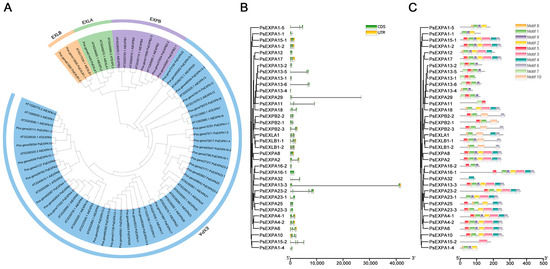
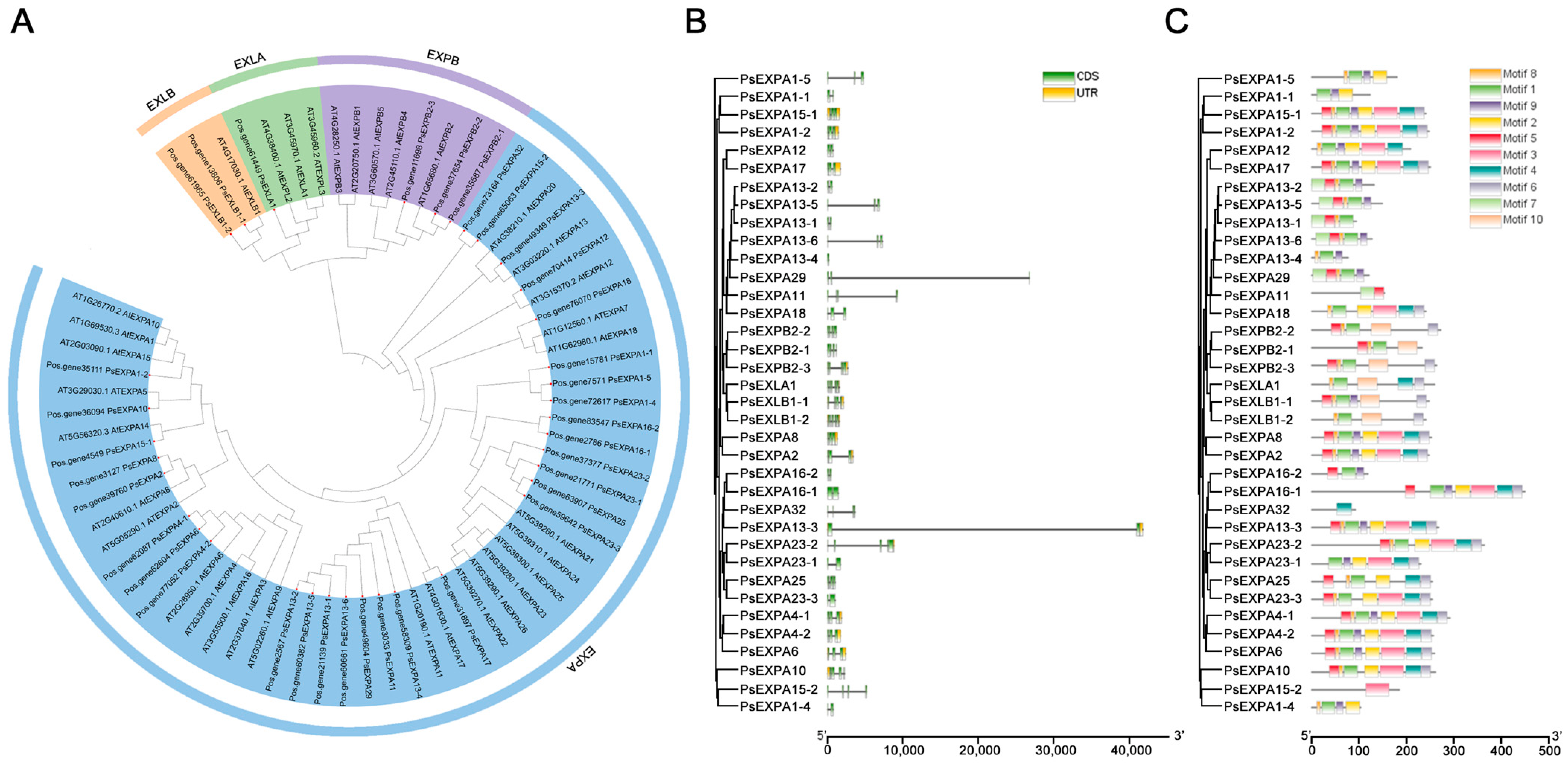
A total of 36 PsEXP genes were identified from the tree peony genome. Phylogenetic analysis further revealed that the PsEXP gene family in tree peony, along with its homologous genes in Arabidopsis, can be classified into the following four major subfamilies: EXPA, EXPB, EXPLA, and EXPLB. These four subfamilies are named PsEXPA, PsEXPB, PsEXLA, and PsEXLB, with 30, three, one, and two members, respectively (Figure 1A). Gene structure analysis revealed significant variation in sequence length and exon–intron distribution among the 36 identified PsEXP genes. Among these, only 15 PsEXP genes contained untranslated regions (UTRs), with PsEXPA13-2 possessing the longest sequence and PsEXPA13-4 exhibiting the shortest (Figure 1B). Analysis of motifs revealed that 10 conserved motifs were identified in the encoded protein products using the MEME suite. The majority of PsEXP proteins contain Motif1, Motif3, Motif5, and Motif6, indicating higher conservation of these four motifs within the PsEXP family of tree peony (Figure 1C). Based on domain annotation, these motifs map to the conserved DPBB_1 and pollen_allergen_1 domains, which are characteristic of expansin proteins and required for their activity. These four motifs suggested that they may be essential for expansin function, potentially related to cell wall binding and cell wall loosening activity. Notably, PsEXPA32 and PsEXPA15-2 contained only one conserved motif, which may indicate divergent evolution, potential truncation, or annotation artifacts. Further experimental validation is needed.
Figure 1.
Identification and structural analysis of the PsEXP proteins. (A) Phylogenetic relationship of PsEXP proteins. Different background colors represent four different groups of the PsEXP proteins. The PsEXP proteins were marked by red points. The At and Ps represent A.thaliana and P. suffruticosa, respectively. (B) Structural analysis of the PsEXP proteins. The black lines represent introns, and the color boxes represent the coding sequences. The horizontal value represents gene length from 5′ to 3′. (C) Conserved motif analysis of the PsEXP proteins. Different motif numbers were marked by different color boxes. The horizontal value represents gene length from 5′ to 3′.
3.2. Chromosomal Localization and Synteny Analysis of the PsEXP Gene Family
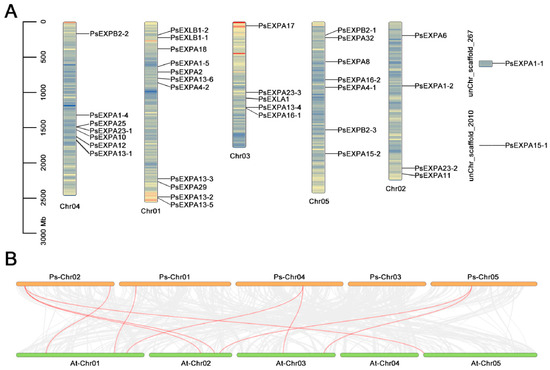
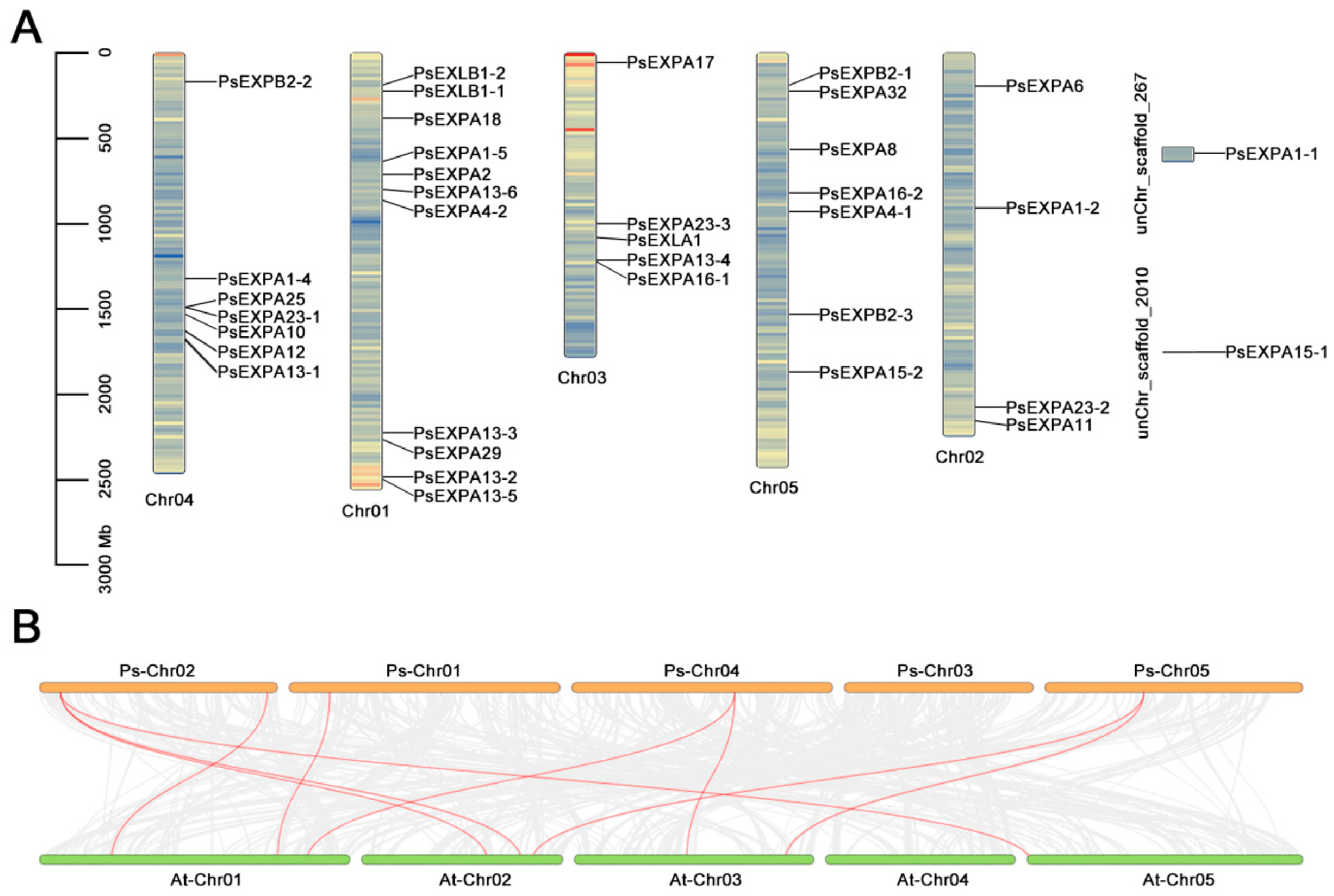
In the PsEXP gene family, with the exception of PsEXPA1-1 and PsEXPA15-1, which were not mapped to the assembled chromosomes possibly due to incomplete genome assembly or their location on unplaced scaffolds, the remaining proteins were distributed across Chr01–05 (Figure 2A). Chr01 contained the highest number of PsEXP proteins (11 in total), followed by Chr04 and05, each harboring seven PsEXP proteins, while Chr03 contained five genes. Chr02 carried four PsEXP proteins. To further investigate the evolutionary relationships of PsEXP proteins among different species, a synteny analysis was conducted between tree peony and Arabidopsis (Figure 2B, Supplementary Table S2). The results revealed that five PsEXP proteins located on five chromosomes of tree peony exhibited syntenic relationships with nine AtEXP proteins distributed across five chromosomes of Arabidopsis, forming five syntenic gene pairs. These conserved syntenic blocks indicate that certain EXP genes have evolved under purifying selection and may retain similar functions across eudicots. This suggests that certain EXP proteins may share conserved functions between tree peony and Arabidopsis.
Figure 2.
Chromosomal localization and synteny analysis of the EXP proteins. (A) Chromosomal localization of PsEXP proteins. The vertical value represented the length from different chromosomal. (B) The synteny analysis of the EXP proteins between tree peony and Arabidopsis. The At and Ps represented tree peony and Arabidopsis, respectively.
3.3. Promoter Analysis of PsEXP Genes
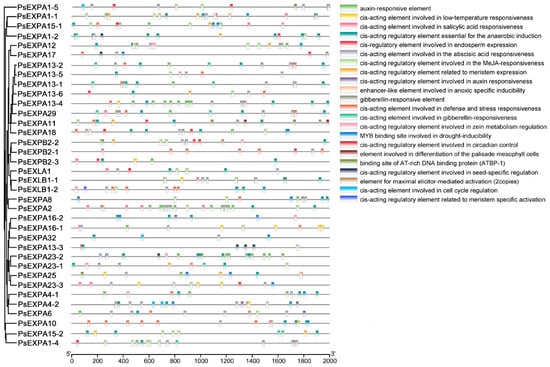
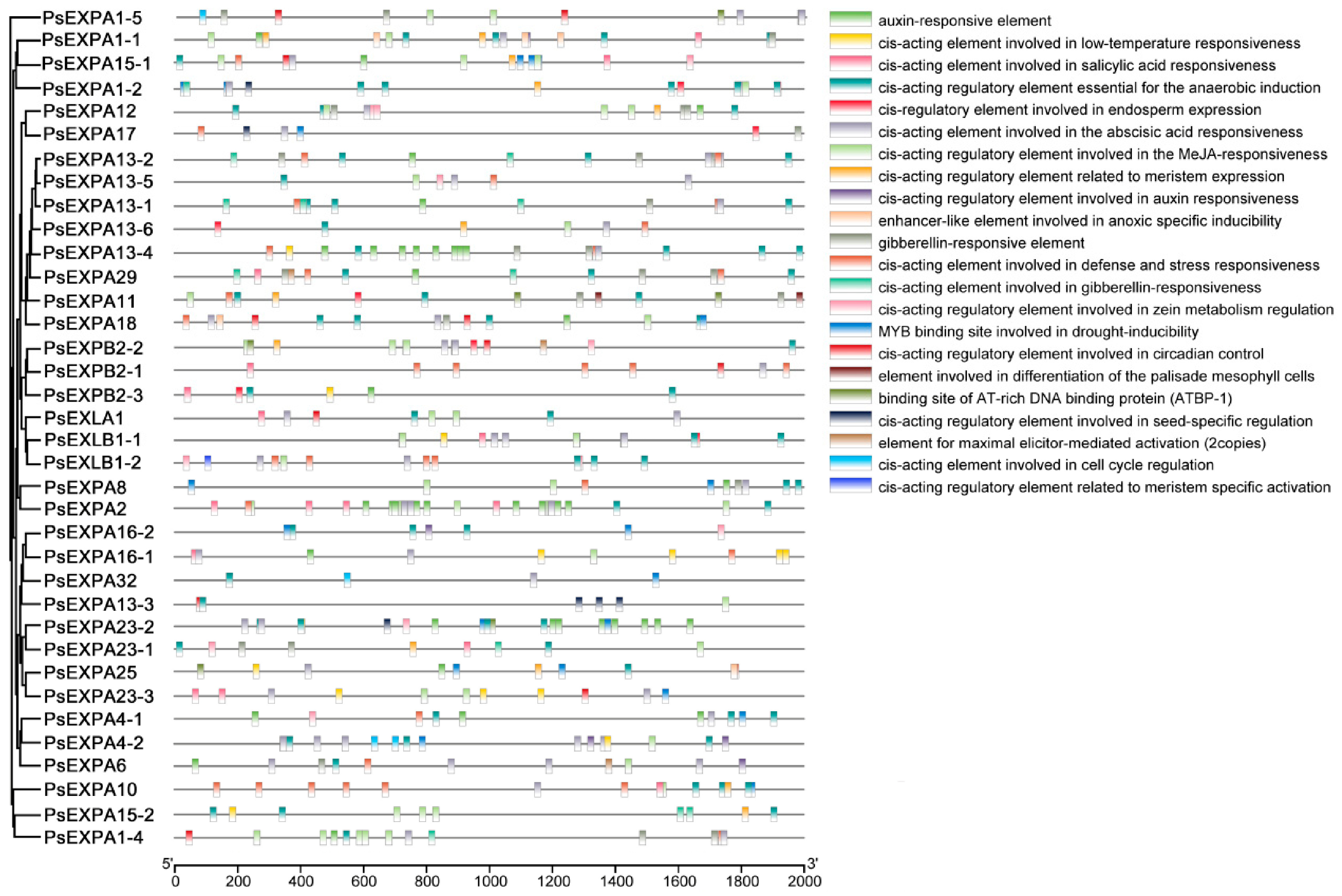
To investigate the distribution of cis-acting elements in the promoters of different PsEXP genes, we extracted the 2000 bp sequences upstream of the ATG start codon as putative promoter regions based on the genomic data. The distribution of cis-acting elements within these promoter sequences was analyzed using the online tool PlantCare 2.0. The results revealed that the promoters of various PsEXP genes contain abundant hormone-responsive elements and transcription factor binding sites (Figure 3). Notably, gibberellin (GA)-responsive elements were identified in 28 out of 36 PsEXP promoters, suggesting a potential link to GA regulation. Although promoter cis-element analysis alone does not constitute strong functional evidence, it provides a useful basis for hypothesizing regulatory relationships.
Figure 3.
The cis-regulatory element (CRE) analysis of PsEXP gene promoters. The black lines represent the 2 kb promoter regions, and the different color boxes correspond with the different kinds of CREs. The horizontal values represent the promoter length.
3.4. Expression Patterns of PsEXP Genes Under Different GA Treatments
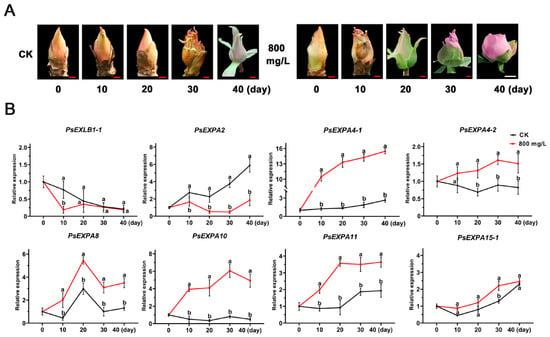
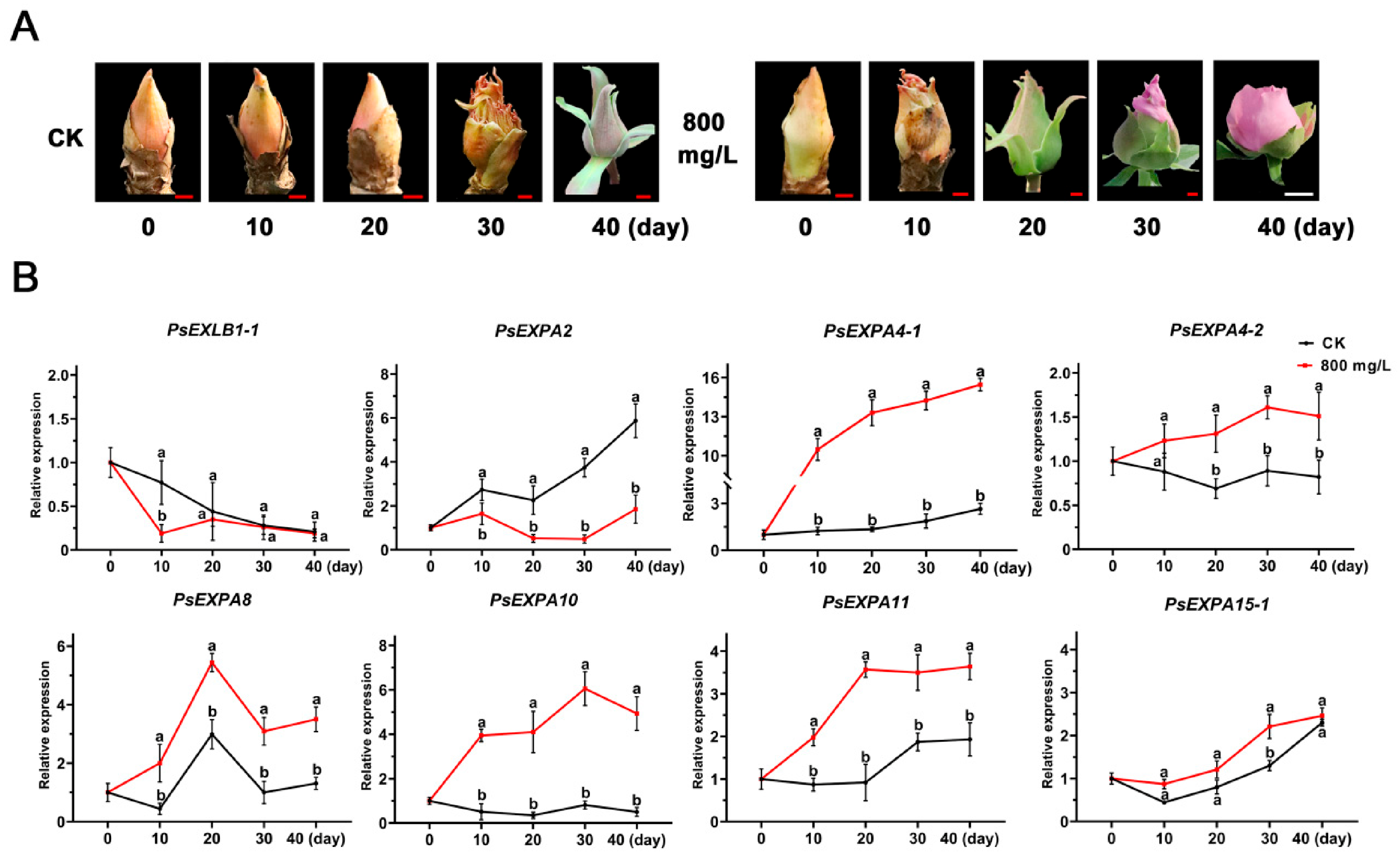
According to our previous research [28], plants were treated with 800 mg/L exogenous GA, and the expression patterns of PsEXP genes were analyzed. Consistent with earlier observations, GA treatment markedly promoted flower opening (Figure 4A). Expression analysis revealed that within the entire EXP gene family, 21 members showed undetectable expression levels under the tested conditions, likely because their transcript abundance was below the detection limit of qRT-PCR. Seven members exhibited no significant differential expression, and eight members were significantly upregulated in response to exogenous GA (Figure 4B, Supplementary Figure S1). Among these, the induction of PsEXPA2, PsEXPA4-1, PsEXPA10, and PsEXPA11 showed higher levels. PsEXPA4-1 displayed the highest expression level among all induced genes. Given the abundance of GA-responsive cis-elements in its promoter region, we propose that PsEXPA4-1 may play a critical role in mediating GA-induced flower opening in tree peony.
Figure 4.
The expression patterns of PsEXPs under GA treatments. (A) Phenotypic changes under exogenous GA treatment. Red scale = 0.5 cm; white scale = 1 cm. CK: control (water treatment); GA: 800 mg/L GA3 treatment. (B) Expression analysis of PsEXPs under different treatment conditions. CK: control; GA: GA3 treatment. Different letters indicate significant differences among genes within the same treatment group, mean ± SD, n = 3, p < 0.05.
3.5. GA Sensitivity of PsEXP Promoters and Validation of Candidate Genes
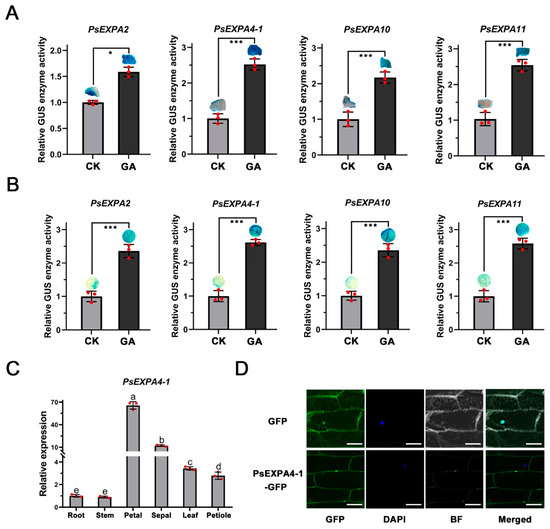
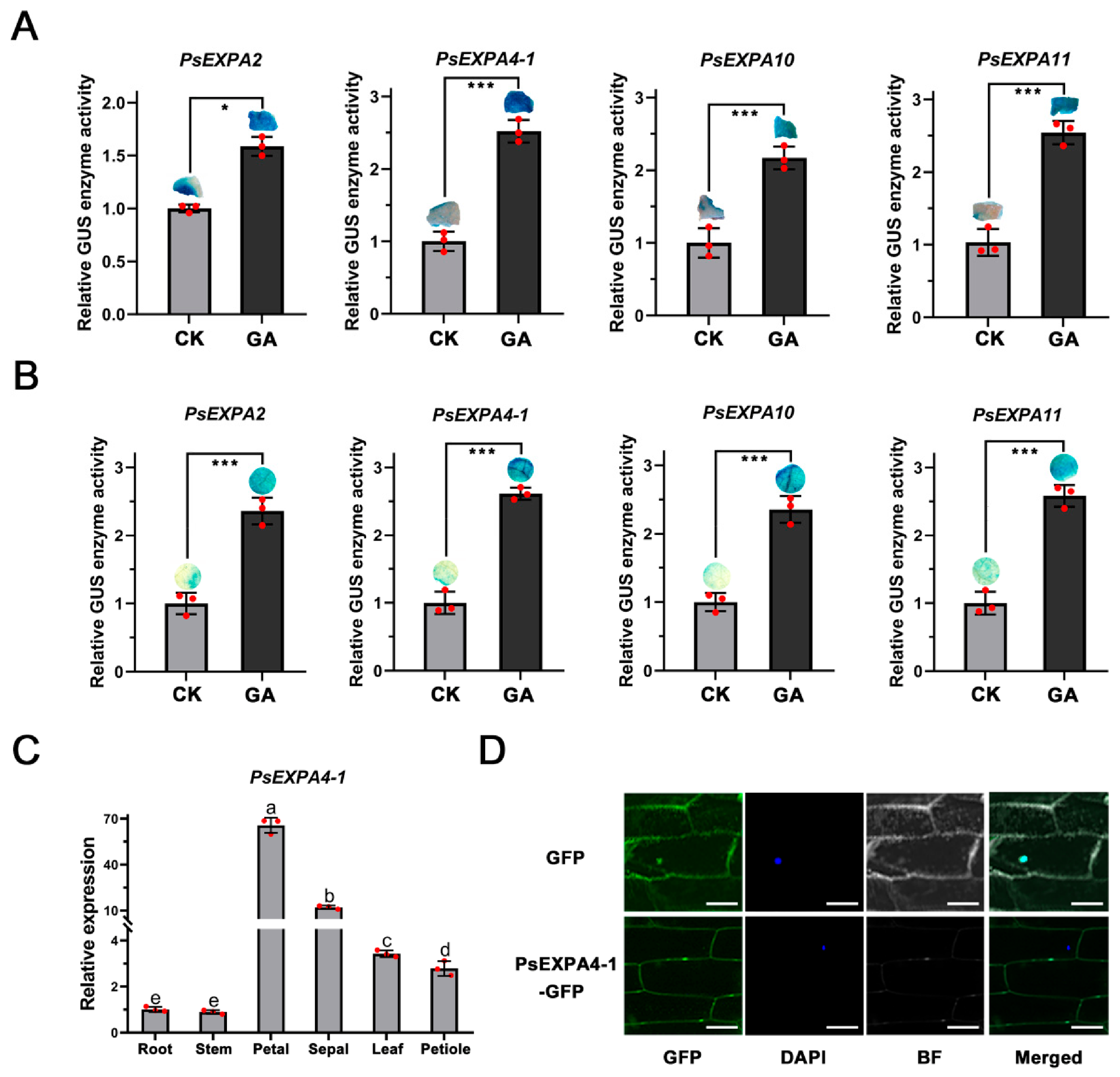
To further validate whether the expressions of the candidate genes PsEXPA2, PsEXPA4-1, PsEXPA10, and PsEXPA11 were directly induced by exogenous GA signaling, we assessed the activity of their promoters, both tree peony callus and tobacco leaves. The results demonstrated that exogenous GA significantly enhanced the promoter activity of these genes in both experimental systems (Figure 5A,B). Based on integrated analysis of promoter cis-elements and expression patterns, PsEXPA4-1 was selected for further investigation. Sequence and phylogenetic analysis confirmed that PsEXPA4-1 contains the conserved expansin domains (DPBB with six conserved cysteine residues and pollen_allergen) [8] and clusters with EXPA homologs from C. papaya and F. crenata (Supplementary Figure S2A,B). Tissue-specific expression analysis revealed that PsEXPA4-1 was predominantly expressed in petals, with lower expression in sepals (Figure 5C). Subcellular localization experiments indicated that the EXPA4-1 protein is primarily localized to the cell wall (Figure 5D).
Figure 5.
The promoter sensitivity analysis of PsEXPs under different treatments. (A) The promoter sensitivity analysis of PsEXPs to exogenous GA signal in tree peony callus. Means ± SD, n = 3, * p < 0.05, *** p < 0.001. (B) The promoter sensitivity analysis of PsEXPs to exogenous GA signal in tobacco leaves. Means ± SD, n = 3, *** p < 0.001. (C) The expression pattern analysis of PsEXPA4-1 in different tissues. Different letters indicated significant differences, Student’s t test, p < 0.05, means ± SD, n = 3. (D) Subcellular localization of PsEXPA4-1 protein in onion epidermal cells. GFP: fluorescence signal; DAPI: nuclear localization; BF: bright field; Merged: merge images. Scale bar: 100 um.
3.6. Function Analysis of PsEXPA4-1
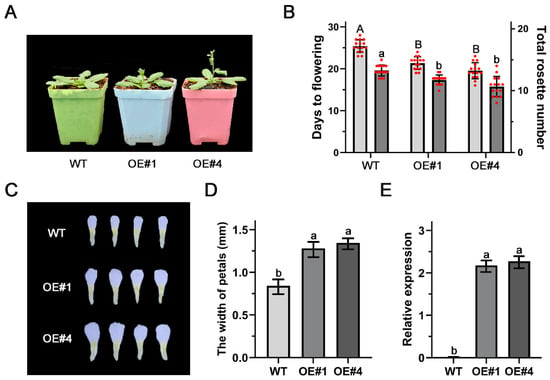
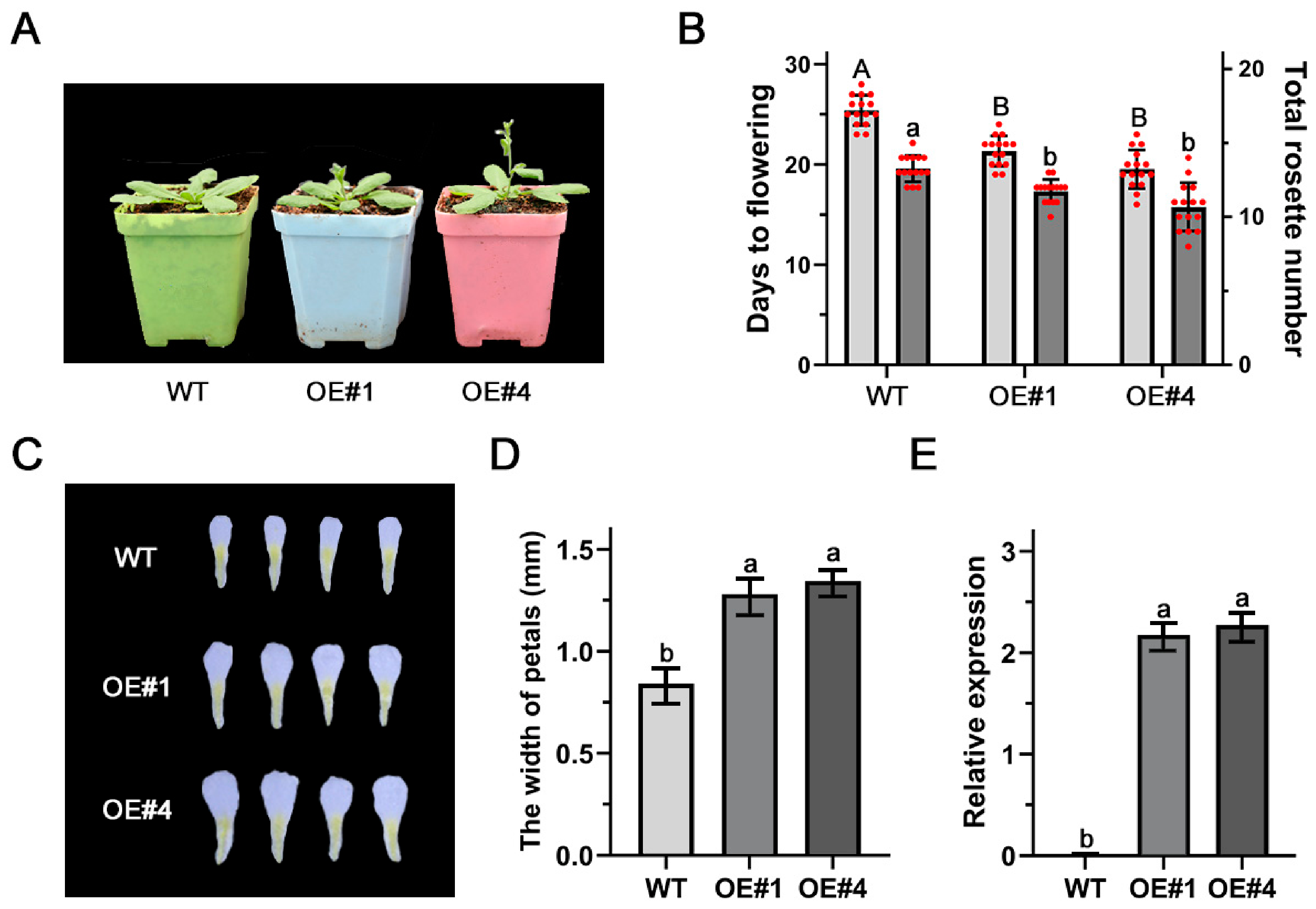
To further confirm the function of PsEXPA4-1 in flower opening regulation, it was overexpressed in Arabidopsis. A total of 10 independent transgenic lines were obtained and confirmed by PCR. Three independent homozygous T3 lines (OE-3, OE-6, and OE-9) showing high PsEXPA4-1 expression were selected for further phenotypic analysis. The results showed that overexpression of PsEXPA4-1 significantly accelerated flowering compared to WT plants (Figure 6A). Analyses of rosette leaf number and flowering time indicated that PsEXPA4-1 overexpression reduced rosette leaf number and promoted earlier flowering in Arabidopsis (Figure 6B). Statistical analysis of petal size across genotypes showed that the petal width of overexpressed lines was significantly greater than that of WT plants, being 0.42 mm and 0.48 mm larger than the control group respectively (Figure 6C,D). However, there was no significant difference in petal length (Supplementary Figure S3). Furthermore, expression analysis confirmed that PsEXPA4-1 transcript levels were markedly elevated in overexpression lines, suggesting that enhanced PsEXPA4-1 expression leads to earlier flowering and enlarged petals in Arabidopsis (Figure 6E).
Figure 6.
The function analysis of PsEXPA4-1 in Arabidopsis. (A) Phenotypic analyses of transgenic plants PsEXPA4-1. (B) Analysis of flowering time and rosette leaves number in transgenic plants. Uppercase letters indicated the flowering time. Lowercase letters indicated the rosette leaves number. Means ± SD, n = 15, p < 0.05. (C) Phenotypic analyses of petals from transgenic plants. (D) The width analysis of the petals in transgenic plants. Different letters indicated significant differences, Student’s t test, p < 0.05. Means ± SD, n = 3. (E) Expression levels analysis of PsEXPA4-1 in transgenic plants. Different letters indicated significant differences, Student’s t test, p < 0.05. Means ± SD, n = 3.
3.7. Verification of the Combination of PsEXPA4-1 and PsbHLH25
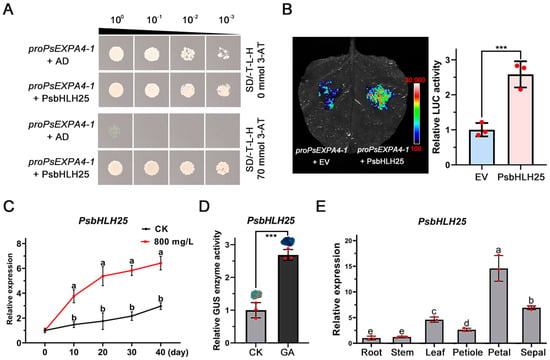
To elucidate the molecular mechanism of PsEXPA4-1 in response to exogenous GA3 signals to regulate the opening process of tree peony flowers, yeast one-hybrid was used to screen for upstream regulatory factors through the tree peony Yeast Library. Based on the screening results and the potential role in flower opening regulation, PsbHLH25 was selected as the key upstream transcription factor of PsEXPA4-1 for interaction verification and functional research. The yeast one-hybrid results revealed that PsbHLH25 could bind to the PsEXPA4-1 promoter to regulate its expression (Figure 7A). The dual-luciferase assay revealed that PsbHLH25 could upregulate the expression of PsEXPA4-1 (Figure 7B). These results indicated that PsbHLH25 could bind and promote the transcriptional accumulation of PsEXPA4-1. To investigate the potential role of PsbHLH25 in the flower opening process of tree peony, we identified it from the transcriptome data. Expression pattern analysis revealed that treatment with 800 mg/L exogenous GA3 significantly promoted PsbHLH25 expression (Figure 7C). Promoter activity analysis revealed that the PsbHLH25 promoter is sensitive to exogenous GA signal in callus, indicating that PsbHLH25 expression is regulated by exogenous GA signal (Figure 7D). Tissue-specific analysis revealed that PsbHLH25 expression was the highest in petals (Figure 7E).
Figure 7.
Binding analysis between PsbHLH25 protein and PsEXPA4-1 promoter. (A) Yeast single hybridization analysis between PsbHLH25 protein and PsEXPA4-1 promoter. (B) Dual-luciferase reporter analysis between PsbHLH25 protein and PsEXPA4-1. Ev: 35S::GFP empty. Means ± SD, n = 3, *** p < 0.001. (C) Analysis of expression patterns of PsbHLH25 under different GA3 treatments. Different letters indicated significant differences, Student’s t test, p < 0.05, means ± SD, n = 3. (D) The promoter sensitivity analysis of PsbHLH25 to exogenous GA signal in tree peony callus. Means ± SD, n = 3, *** p < 0.001. (E) The expression pattern analysis of PsbHLH25 in different tissues. Different letters indicated significant differences, Student’s t test, p < 0.05, means ± SD, n = 3.
4. Discussion
Expansins are well-established regulators of cell wall loosening and have been implicated in flower opening in various plant species [7,8]. However, in tree peony the EXP gene family has remained uncharacterized, and the molecular mechanisms linking phytohormone signaling to petal expansion are largely unknown.
This study presents the genome-wide identification and analysis of the EXP gene family in tree peony, resulting in the identification of 36 members. The number of EXP genes is similar to that of Arabidopsis (36) but is lower than that of rice (Oryza sativa) (58) [33]. Phylogenetic analysis classified these genes into the following four subfamilies: EXPA, EXPB, EXLA, and EXLB. This classification is consistent with findings in model plants such as Arabidopsis and sweet potato (Ipomoea batatas), indicating a high degree of evolutionary conservation of the EXP gene family across the plant kingdom [33,34]. Notably, the EXPA subfamily contained the highest number of members (30), suggesting that EXPA genes may play a more extensive and crucial role in tree peony growth and development, particularly in processes like petal cell expansion. This observation aligns with studies in other ornamental species like petunia and rose, where the EXPA subfamily has also been identified as the primary regulator of petal cell expansion and flower opening [13,16]. Gene structure analysis revealed that members within the same subfamily share similar exon–intron patterns. This structural conservation is often linked to functional relatedness, implying that the tree peony EXP subfamilies may retain fundamental functions observed in other plants [33]. Further synteny analysis between tree peony and Ar abidopsis identified homologous blocks between some PsEXP and AtEXP genes. This microsynteny provides a reliable evolutionary basis for inferring the functions of PsEXP genes by leveraging knowledge from model plants.
GA signaling plays a crucial role in regulating flowering time in tree peony. On the one hand, GA can accelerate dormancy release in tree peony and may even substitute for the requirement of environmental chilling during the dormancy release process [26,35]. On the other hand, GA signaling also plays a significant regulatory role in the flower opening process, effectively accelerating the progression of flower opening in tree peony [28]. Analysis of cis-acting elements in the promoters showed that many PsEXP gene promoters are enriched with hormone-responsive elements, with GA-responsive elements being particularly prominent. Additionally, exogenous GA treatment specifically induced significant upregulation of eight genes, including PsEXPA4-1. Those results indicated that PsEXP genes are potentially involved in GA-mediated regulation of flowering time in tree peony. The promotive effect of EXP genes on GA-mediated regulation of flowering time has also been well-documented in various ornamental plants, including cabbage (Brassica rapa) [36] and rapeseed [22]. The subcellular localization of PsEXPA4-1 to the cell wall aligns perfectly with the established function of expansins, further supporting the conserved physiological pathway in tree peony wherein GA signaling promotes petal epidermal cell expansion and subsequent flower opening by upregulating EXP gene expression.
Further molecular and cellular characterization revealed that PsEXPA4-1 encodes a typical EXPA protein containing characteristic domains, and overexpressing PsEXPA4-1 significantly promoted bolting and increased petal width in Arabidopsis. This phenotype is consistent with the EXP gene function reported in other plants. In Osmanthus fragrans, overexpression of OfEXPA2 and OfEXPA4 in P. hybrida both promoted the plant stem diameter and flower morphology [8]. CmEXPA7 played a crucial role in altering petal cell size in chrysanthemum (Chrysanthemum × morifolium) [37]. In Eustoma grandiflorum, overexpression of EgEXPA2 and EgEXPA3 also resulted in petal growth and early flowering [38]. Although EXPs are broadly associated with growth and cell expansion processes across multiple plant tissues and our data suggested that PsEXPA4-1 may play a role in flower opening, we cannot determine whether this role is specific to flower opening or reflects a more general function in GA-mediated growth responses. Future studies examining the tissue-specific effects of PsEXPA4-1 manipulation will be required to address this question. Furthermore, it remains unclear how GA directly regulates the expression of EXP genes. The EXP expression can be regulated by changes in exogenous GA signal through numerous upstream transcription factors and participates in the regulation of plant growth and development. NAC transcription factors participated in GA-mediated endosperm expansion and seed germination by regulating EXPA2 expression. RGL2 can interact with the NAC25 protein and inhibited the activity of the EXPA2 promoter [39]. The study of banana (Musa acuminata) revealed that MabHLH7 activated the promoters of cell wall modification genes, such as MaEXP2/21, and regulated the ripening process of banana fruits [40]. Our study identified a bHLH-class transcription factor, PsbHLH25, which was strongly induced by GA and highly expressed in petals. It could directly bind to and activate the PsEXPA4-1 promoter. Our findings suggested a working model in which GA signaling promotes flower opening in tree peony through the PsbHLH25-PsEXPA4-1 module. The bHLH transcription factor family plays extensive roles in plant development and hormone responses [41]. In chrysanthemum, the bHLH transcription factor CmBPE2 could interact with CmJAZ1-like to regulate petal size [37]. In O. fragrans, the bHLH protein OfBPEub interacted with OfARF6 to activate the expression of OfEXP15-4 to control flower opening process [42]. The bHLH transcription factor SlUPA-like in tomato (Solanum lycopersicum) was a key integrator of GA signaling to regulate the plant development [43]. However, the proposed GA-PsbHLH25-PsEXPA4-1 module has not been fully established due to the lack of stable transformation in tree peony, and our future research will focus on validating the necessity of PsEXPA4-1 and PsbHLH25 and exploring the upstream regulatory mechanisms of PsbHLH25. Furthermore, while our data showed that GA treatment induced PsbHLH25 expression and the PsbHLH25 promoter was GA-responsive, a direct causal relationship between GA signaling and PsbHLH25 regulation has not been fully established. It remains possible that additional intermediate factors mediate this response.
In conclusion, this study systematically characterizes the EXP gene family in tree peony and establishes PsEXPA4-1 as a key effector downstream of GA promoting flower opening. In addition, we discovered a novel transcriptional activator, PsbHLH25, connecting GA signaling to PsEXPA4-1, providing a testable hypothesis for future investigation. These results advance the molecular mechanistic research on tree peony flower opening, which will contribute to mapping a more comprehensive regulatory network for tree peony flower opening regulation and provide a solid theoretical foundation for the industry’s development.
Supplementary Materials
The following supporting information can be downloaded at https://www.mdpi.com/article/10.3390/genes17050586/s1, Figure S1: The expression analysis of PsEXPs under different treatment conditions. Different letters indicate significant differences, Mean ± SD, n = 3, p < 0.05; Figure S2: Sequence alignment and phylogenetic tree analysis of PsEXPA4-1 protein. (A) The amino acid sequence alignment of EXPs from different species. Conservative areas were marked with red rectangular boxes. Sequences from Carica papaya (CpEXPA8, XP_021904225.1), Morus notabilis (MnEXPA4, XP_010108480.1), Quillaja saponaria (QsEXPA4, KAJ7964314.1), Fagus crenata (FcEXPA8, GMY10440.1), Spatholobus suberectus (SsEXPA8, TKY56599.1), Sesamum indicum (SiEXPA4, XP_011089527.1) and Actinidia eriantha (AeEXPA4, XP_057513338.1) were downloaded from GenBank. (B) Phylogenetic tree analysis of PsEXPA4-1 and EXPs from other species; Figure S3: The length analysis of the petals in transgenic plants. Student’s t test, p < 0.05. Means ± SD, n = 3; Table S1: The primer sequences used in this study; Table S2: The collinearity analysis between EXP in tree peony and Arabidopsis.
Author Contributions
Conceptualization, Q.W. and X.C.; methodology, J.Y. and Z.W.; software, Y.S.; validation, Q.W., X.C. and Y.L.; formal analysis, J.Y. and Y.W.; data curation, C.Z. and Y.X.; writing—original draft preparation, J.Y., Z.W. and L.L.; writing—review and editing, X.Z. and X.C.; visualization, Q.W. All authors have read and agreed to the published version of the manuscript.
Funding
This research was funded by National Natural Science Foundation of China (Grant No. 32372742 and 32301643) and Talent Program of Zhejiang A&F University Jiyang College (RC2023B07), and Fujian Province Science and Technology Project (2025N0050).
Institutional Review Board Statement
Not applicable.
Informed Consent Statement
Not applicable.
Data Availability Statement
The original contributions presented in the study are included in the article/Supplementary Material, further inquiries can be directed to the corresponding authors.
Acknowledgments
We would like to thank Wei Zhou (Zhejiang Chinese Medical University) for providing the plasmids.
Conflicts of Interest
The authors declare no conflicts of interest.
References
- Yang, C.; Liu, C.; Li, S.; Zhang, Y.; Zhang, Y.; Wang, X.; Xiang, W. The transcription factors WRKY41 and WRKY53 mediate early flowering induced by the novel plant growth regulator guvermectin in Arabidopsis thaliana. Int. J. Mol. Sci. 2023, 24, 8424. [Google Scholar] [CrossRef] [Scilit]
- Meir, M.; Ransbotyn, V.; Raveh, E.; Barak, S.; Tel-Zur, N.; Zaccai, M. Dormancy release and flowering time in Ziziphus jujuba Mill., a “direct flowering” fruit tree, has a facultative requirement for chilling. J. Plant Physiol. 2016, 192, 118–127. [Google Scholar] [CrossRef] [Scilit]
- Meng, X.; Li, Y.; Yuan, Y.; Zhang, Y.; Li, H.; Zhao, J.; Liu, M. The regulatory pathways of distinct flowering characteristics in Chinese jujube. Hortic. Res. 2020, 7, 123. [Google Scholar] [CrossRef] [Scilit] [PubMed]
- Zhong, S.; Zhu, H.; Li, W.; Wu, D.; Miao, Y.; Dong, B.; Wang, Y.; Xiao, Z.; Fang, Q.; Deng, J.; et al. DNA methylome analysis reveals novel insights into active hypomethylated regulatory mechanisms of temperature-dependent flower opening in Osmanthus fragrans. Hortic. Res. 2024, 11, uhae010. [Google Scholar] [CrossRef] [Scilit]
- Sun, X.; Qin, M.; Yu, Q.; Huang, Z.; Xiao, Y.; Li, Y.; Ma, N.; Gao, J. Molecular understanding of postharvest flower opening and senescence. Mol. Hortic. 2021, 1, 7. [Google Scholar] [CrossRef] [Scilit]
- Richter, R.; Behringer, C.; Zourelidou, M.; Schwechheimer, C. Convergence of auxin and gibberellin signaling on the regulation of the GATA transcription factors GNC and GNL in Arabidopsis thaliana. Proc. Natl. Acad. Sci. USA 2013, 110, 13192. [Google Scholar] [CrossRef] [Scilit]
- Ma, N.; Ma, C.; Liu, Y.; Shahid, M.; Wang, C.; Gao, J. Petal senescence: A hormone view. J. Exp. Bot. 2018, 69, 719–732. [Google Scholar] [CrossRef] [Scilit]
- Miao, Y.F.; Li, W.L.; Zhu, H.J.; Wang, Y.G.; Fang, Q.; Xiao, Z.; Deng, J.P.; Lan, Y.G.; Zhong, S.W.; Zhao, H.B. The roles of OfEXPA2 and OfEXPA4 on petal cell expansion during flower opening in Osmanthus fragrans. Sci. Hortic. 2024, 338, 113720. [Google Scholar] [CrossRef] [Scilit]
- Wang, Y.; Jiao, Y. Cellulose microfibril-mediated directional plant cell expansion: Gas and brake. Mol. Plant 2020, 13, 1670–1672. [Google Scholar] [CrossRef] [Scilit] [PubMed]
- Gall, H.L.; Philippe, F.; Domon, J.M.; Gillet, F.; Pelloux, J.; Rayon, C. Cell wall metabolism in response to abiotic stress. Plants 2015, 4, 112–166. [Google Scholar] [CrossRef] [Scilit]
- Li, K.; Ma, B.; Shen, J.; Zhao, S.; Ma, X.; Wang, Z.; Fan, Y.; Tang, Q.; Wei, D. The evolution of the expansin gene family in Brassica species. Plant Physiol. Biochem. 2021, 167, 630. [Google Scholar] [CrossRef] [Scilit] [PubMed]
- Liu, C.; Zhao, H.; Li, J.; Cao, Z.; Deng, B.; Liu, X.; Qin, G. Identification of candidate expansin genes associated with seed weight in pomegranate (Punica granatum L.). Genes 2024, 15, 212. [Google Scholar] [CrossRef] [Scilit]
- Zenoni, S.; Fasoli, M.; Tornielli, B.; Santo, S.; Sanson, A.; Groot, P.; Sordo, S.; Citterio, S.; Monti, F.; Pezzotti, M. Overexpression of PhEXPA1 increases cell size, modifies cell wall polymer composition and affects the timing of axillary meristem development in Petunia hybrida. New Phytol. 2011, 191, 662–677. [Google Scholar] [CrossRef] [Scilit] [PubMed]
- Harada, T.; Torii, Y.; Morita, S.; Onodera, R.; Hara, Y.; Yokoyama, R.; Nishitani, K.; Satoh, S. Cloning, characterization, and expression of xyloglucan endotransglucosylase/hydrolase and expansin genes associated with petal growth and development during carnation flower opening. J. Exp. Bot. 2010, 62, 815–823. [Google Scholar] [CrossRef] [Scilit]
- Li, J.; Chen, L.; Song, H.; Xin, J.; Li, C.; Yang, M.; Sun, H. Systematic analysis of the expansin gene family in Nelumbo reveals candidate seed development responsive members in lotus (Nelumbo nucifera). Sci. Hortic. 2023, 324, 112578. [Google Scholar] [CrossRef] [Scilit]
- Dai, F.; Zhang, C.; Jiang, X.; Kang, M.; Yin, X.; Lu, P.; Zhang, X.; Zheng, Y.; Gao, J. RhNAC2 and RhEXPA4 are involved in the regulation of dehydration tolerance during the expansion of rose petals. Plant Physiol. 2012, 160, 2064–2082. [Google Scholar] [CrossRef] [Scilit]
- Zenoni, S.; Reale, L.; Tornielli, G. Downregulation of the Petunia hybrida α-expansin gene PhEXP1 reduces the amount of crystalline cellulose in cell walls and leads to phenotypic changes in petal limbs. Plant Cell 2004, 16, 295–308. [Google Scholar] [CrossRef] [Scilit]
- Azeez, A.; Sane, A.; Tripathi, S.; Bhatnagar, D.; Nath, P. The gladiolus GgEXPA1 is a GA-responsive alpha-expansin gene expressed ubiquitously during expansion of all floral tissues and leaves but repressed during organ senescence. Postharvest Biol. Technol. 2010, 58, 48–56. [Google Scholar] [CrossRef] [Scilit]
- Fan, N.; Xu, Q.; Yang, Z.; Zhuang, L.; Yu, J.; Huang, B. Identification of expansin genes as promoting or repressing factors for leaf elongation in tall fescue. Physiol. Plant. 2023, 175, e13861. [Google Scholar] [CrossRef] [Scilit]
- Zhou, S.; Han, Y.; Chen, Y.; Kong, X.; Wang, W. The involvement of expansins in response to water stress during leaf development in wheat. J. Plant Physiol. 2015, 183, 64–74. [Google Scholar] [CrossRef] [Scilit]
- Lange, M.; Lange, T. Ovary-derived precursor gibberellin A9 is essential for female flower development in cucumber. Development 2016, 143, 4425–4429. [Google Scholar] [CrossRef] [Scilit]
- Kou, E.; Huang, X.; Zhu, Y.; Su, W.; Liu, H.; Sun, G.; Chen, R.; Hao, Y.; Song, S. Crosstalk between auxin and gibberellin during stalk elongation in flowering Chinese cabbage. Sci. Rep. 2021, 11, 3976. [Google Scholar] [CrossRef] [Scilit]
- Xia, X.; Hu, Q.; Li, W.; Chen, Y.; Han, L.; Tao, M.; Wu, W.; Li, X.; Huang, G. Cotton (Gossypium hirsutum) JAZ3 and SLR1 function in jasmonate and gibberellin mediated epidermal cell differentiation and elongation. Plant Cell Tiss. Organ Cult. 2018, 133, 249–262. [Google Scholar] [CrossRef] [Scilit]
- Carrera-Castano, G.; Mira, S.; Fananas-Pueyo, I.; Sanchez-Montesino, R.; Contreras, A.; Weiste, C.; Droge-Laser, W.; Gmez, L.; Onate-Snchez, L. Complex control of seed germination timing by ERF50 involves RGL2 antagonism and negative feedback regulation of DOG1. New Phytol. 2024, 242, 2026–2042. [Google Scholar] [CrossRef] [Scilit] [PubMed]
- Shahnejat-Bushehri, S.; Tarkowska, D.; Sakuraba, Y.; Balazadeh, S. Arabidopsis NAC transcription factor JUB1 regulates GA/BR metabolism and signalling. Nat. Plants 2016, 2, 16013. [Google Scholar] [CrossRef] [Scilit]
- Wang, Q.; Li, B.; Qiu, Z.; Ying, J.; Jin, X.; Lu, Z.; Zhang, J.; Chen, X.; Zhu, X. The involvement of PsTCP genes in hormone mediated process of bud dormancy release in tree peony (Paeonia suffruticosa). BMC Genom. 2025, 26, 266. [Google Scholar] [CrossRef] [Scilit] [PubMed]
- Wang, Q.; Li, B.; Qiu, Z.; Lu, Z.; Hang, Z.; Wu, F.; Chen, X.; Zhu, X. Genome-wide identification of MYC transcription factors and their potential functions in the growth and development regulation of tree peony (Paeonia suffruticosa). Plants 2024, 13, 437. [Google Scholar] [CrossRef] [Scilit] [PubMed]
- Li, B.; Wang, Q.; Qiu, Z.; Lu, Z.; Zhang, J.; He, Q.; Yang, J.; Zhang, H.; Zhu, X.; Chen, X. Transcriptomic analysis of gibberellin-mediated flower opening process in tree peony (Paeonia suffruticosa). Plants 2025, 14, 1002. [Google Scholar] [CrossRef] [Scilit] [PubMed]
- Zhang, Y.; Gao, L.; Wang, Y.; Niu, D.; Yuan, Y.; Liu, C.; Zhan, X.; Gai, S. Dual functions of PsmiR172b-PsTOE3 module in dormancy release and flowering in tree peony (Paeonia suffruticosa). Hortic. Res. 2023, 10, uhad033. [Google Scholar] [CrossRef] [Scilit]
- Ji, X.; Yuan, Y.; Bai, Z.; Wang, M.; Niu, L.; Sun, D. PlZFP mediates the combinatorial interactions of abscisic acid with gibberellin and ethylene during flower senescence in cut herbaceous peony. Postharvest Biol. Technol. 2022, 195, 112130. [Google Scholar] [CrossRef] [Scilit]
- Zhai, X.; Feng, Y.; Zhang, X.; Guo, X. Comparative analysis based on physiological and transcriptomic data between juvenile and adult Tree Peony (Paeonia delavayi). Int. J. Mol. Sci. 2023, 24, 10906. [Google Scholar] [CrossRef] [Scilit]
- Yuan, J.; Jiang, S.; Jian, J.; Liu, M.; Yue, Z.; Xu, J.; Li, J.; Xu, C.; Lin, L.; Jing, Y.; et al. Genomic basis of the gigachromosomes and giga-genome of tree peony Paeonia ostii. Nat. Commun. 2022, 13, 7328. [Google Scholar] [CrossRef] [Scilit]
- Kende, H.; Bradford, K.; Brummell, D.; Cho, H.; Cosgrove, D.; Fleming, A.; Gehring, C.; Lee, Y.; Mcqueen-Mason, S.; Rose, J.; et al. Nomenclature for members of the expansin superfamily of genes and proteins. Plant Mol. Biol. 2004, 55, 311–314. [Google Scholar] [CrossRef] [Scilit]
- Zhang, J.; Dong, T.; Zhu, M.; Du, D.; Liu, R.; Yu, Q.; Sun, Y.; Zhang, Z. Transcriptome- and genome-wide systematic identification of expansin gene family and their expression in tuberous root development and stress responses in sweetpotato (Ipomoea batatas). Front. Plant Sci. 2024, 15, 1412540. [Google Scholar] [CrossRef] [Scilit]
- Gai, W.; Liu, C.; Liu, C.; Yang, M.; Li, F.; Xin, H.; Gai, S. Calcium signaling facilitates chilling- and GA- induced dormancy release in tree peony. Front. Plant Sci. 2024, 15, 1362804. [Google Scholar] [CrossRef] [Scilit] [PubMed]
- Wang, Y.; Song, S.; Hao, Y.; Chen, C.; Ou, X.; He, B.; Zhang, J.; Jiang, Z.; Li, C.; Zhang, S.; et al. Role of BraRGL1 in regulation of Brassica rapa bolting and flowering. Hortic. Res. 2023, 10, uhad119. [Google Scholar] [CrossRef] [Scilit] [PubMed]
- Guan, Y.; Ding, L.; Jiang, J.; Jia, D.; Li, S.; Jin, L.; Zhao, W.; Zhang, X.; Song, A.; Chen, S.; et al. The TIFY family protein CmJAZ1-like negatively regulates petal size via interaction with the bHLH transcription factor CmBPE2 in Chrysanthemum morifolium. Plant J. 2022, 112, 1489–1506. [Google Scholar] [CrossRef] [Scilit]
- Ochiai, M.; Matsumoto, S.; Yamada, K. Methyl jasmonate treatment promotes flower opening of cut Eustoma by inducing cell wall loosening proteins in petals. Postharvest Biol. Technol. 2013, 82, 1–5. [Google Scholar] [CrossRef] [Scilit]
- Sanchez-Montesino, R.; Bouza-Morcillo, L.; Marquez, J.; Ghita, M.; Duran-Nebreda, S.; Gómez, L.; Holdsworth, M.; Bassel, G.; Onate-Sánchez, L. A regulatory module controlling GA-mediated endosperm cell expansion is critical for seed germination in Arabidopsis. Mol. Plant 2019, 12, 71–85. [Google Scholar] [CrossRef] [Scilit]
- Song, C.; Shan, W.; Kuang, J.; Chen, J.; Lu, W. The basic helix-loop-helix transcription factor MabHLH7 positively regulates cell wall-modifying-related genes during banana fruit ripening. Postharvest Biol. Technol. 2020, 161, 111068. [Google Scholar] [CrossRef] [Scilit]
- Hao, Y.; Zong, X.; Ren, P.; Qian, Y.; Fu, A. Basic helix-loop-helix (bHLH) transcription factors regulate a wide range of functions in Arabidopsis. Int. J. Mol. Sci. 2021, 22, 7152. [Google Scholar] [CrossRef] [Scilit] [PubMed]
- Zhong, S.; Li, W.; Fang, B.; Cao, S.; Miao, Y.; Zhu, H.; Huang, L.; Wang, Y.; Lan, Y.; Liu, X.; et al. Temperature-responsive OfARF6 controls flower opening in Osmanthus fragrans through auxin feedback and protein degradation. Plant J. 2025, 124, e70621. [Google Scholar] [CrossRef] [Scilit] [PubMed]
- Guo, P.; Cheng, X.; Wang, Y.; Chen, G.; Chen, X.; Yang, Y.; Zhang, X.; Hu, Z. SlUPA-like, a bHLH transcription factor in tomato (Solanum lycopersicum), serves as the crosstalk of GA, JA and BR. Int. J. Mol. Sci. 2024, 25, 13419. [Google Scholar] [CrossRef] [Scilit] [PubMed]
Disclaimer/Publisher’s Note: The statements, opinions and data contained in all publications are solely those of the individual author(s) and contributor(s) and not of MDPI and/or the editor(s). MDPI and/or the editor(s) disclaim responsibility for any injury to people or property resulting from any ideas, methods, instructions or products referred to in the content. |
© 2026 by the authors. Licensee MDPI, Basel, Switzerland. This article is an open access article distributed under the terms and conditions of the Creative Commons Attribution (CC BY) license.