


Abstract
Background: N6-methyladenosine (m6A) is the most abundant mRNA internal modification in eukaryotes and regulates inflammatory and regenerative processes. Many studies relate the dysregulation of m6A-related pathways to periodontal inflammation, imbalance in cell homeostasis, impaired tissue regeneration, and remodeling of the alveolar bone. However, the mechanisms of the relationship between the m6A pathway and periodontitis have not been elucidated clearly yet. Objective: The objective of the current narrative review is to integrate the information related to the role of m6A RNA modification in the pathogenesis of periodontitis by focusing on inflammatory signaling, osteoimmune regulation, periodontal cell activity, bone remodeling, and its possible applications as a diagnosis and treatment approach. Methods: A literature search was conducted in PubMed to identify original research studies investigating the role of m6A RNA methylation and its regulators in periodontitis and periodontal tissues/cells. Out of 49 publications reviewed, 34 original research articles fulfilled the predetermined inclusion criteria. Results: The current literature suggests that N6-methyladenosine (m6A) modification is involved in various interconnected biological processes contributing to the development of periodontitis, including inflammatory responses, inflammasome activation and pyroptosis, osteoimmune reactions by macrophages, osteogenic differentiation, osteoclast formation, cellular senescence, and periodontal cells homeostasis. METTL3 has been reported to be the most widely investigated regulator, but its roles are not consistently harmful or beneficial. Depending on the RNA target, cellular environment, and state of inflammation, some of the m6A-associated pathways have been linked to periodontal inflammation and alveolar bone resorption, while others were linked to osteogenesis and regeneration. Several studies have highlighted the possibility of therapeutic interference in pathways leading to the formation of m6A, while human transcriptomic and gingival/salivary studies suggested that m6A could be used as a biomarker. Conclusions: The m6A modification of RNA is an emerging epitranscriptomic effect relating periodontal inflammation, immune responses, cellular differentiation, and bone remodeling. Even though target molecules and signaling pathways have been experimentally identified as points of potential therapeutic interference, the available evidence remains predominantly preclinical. Future work is expected to validate the diagnostic and therapeutic involvement of the m6A modification in periodontitis.
1. Introduction
Periodontitis is a chronic, multifactorial inflammatory disease characterized by progressive destruction of the tooth-supporting tissues, including the periodontal ligament and alveolar bone, potentially resulting in attachment loss and tooth loss long term [1,2]. The onset of periodontitis is stimulated by the action of periodontal pathogenic microorganisms with the dysregulated host-inflammatory and immunological reactions playing a leading role in the development of pathology, where the cytokine production leads to connective tissue destruction and bone resorption [1,2]. One of the major pathogens implicated in periodontal diseases is Porphyromonas gingivalis and lipopolysaccharide (LPS), which is one of its virulence factors, is often used to create a similar inflammatory environment in experimental settings [3]. Periodontitis therefore represents a complex interaction between microbial, environmental, inflammatory, and host-related factors that ultimately determines the balance between periodontal tissue destruction and repair [2].
Increasing attention has been directed toward epigenetic mechanisms capable of linking environmental and inflammatory stimuli with alterations in gene expression during periodontal disease [1,2]. Epigenetic regulation influences gene activity without altering the underlying DNA sequence and includes mechanisms such as DNA methylation, histone modifications, non-coding RNAs, and RNA modifications [1]. Advances in the science of molecular biology have expanded the scope of study on epigenetics to cover the area of epitranscriptomics, which includes chemical modifications of RNA and its effects on the regulation of post-transcription genes [4]. Of all chemical RNA modifications, N6-methyladenosine modification is now seen as one of the most prevalent internal modifications of eukaryotic messenger RNA and regulates multiple cellular functions [5,6].
The m6A modification of mRNA is a dynamic and reversible process that involves the activities of three major classes of proteins: writers, erasers, and readers [5,7]. Writers such as methyltransferase-like 3 (METTL3), methyltransferase-like 14 (METTL14), and Wilms tumor 1-associated protein (WTAP) are involved in the deposition of m6A marks, whereas fat mass and obesity-associated protein (FTO) and AlkB homolog 5 (ALKBH5) are some of the proteins responsible for the removal of these marks through the mechanism of demethylation [5,6]. Reader proteins, including members of the YTH domain-containing and insulin-like growth factor 2 mRNA-binding protein (IGF2BP) families, recognize m6A-modified transcripts and mediate their downstream biological effects [6]. Through these actions, m6A modifications affect RNA stability, RNA splicing, nuclear export, RNA degradation, and RNA translation, thereby influencing multiple physiological and pathological cellular processes [6,7].
A number of studies provide evidence that disturbance in the m6A regulatory pathway may contribute to periodontal inflammation and the progression of periodontitis [8,9]. Transcriptomic and epitranscriptomic analyses have identified altered expression of m6A regulators and distinct methylation patterns in periodontitis, some of which have been associated with immune-cell infiltration and inflammatory responses [8,9,10]. In addition, the regulators of m6A may alter inflammatory signaling pathways relevant to the destruction of periodontal tissues like the NF-κB, MAPK, and NLRP3 inflammasome pathways [11,12]. It has been demonstrated that the METTL3-dependent m6A regulation is responsible for the activation of the NLRP3 inflammasome pathway and pyroptosis resulting in inflammation and loss of alveolar bone in experimental periodontitis [13,14].
However, the biological role of m6A in periodontal tissues is not restricted to inflammatory destruction, as increasing evidence indicates that m6A regulation affects osteogenesis and periodontal regeneration [7,15,16]. The human periodontal ligament stem cells possess characteristics such as self-renewal and multilineage differentiation and are considered a major cell type for periodontal tissue regeneration, although their regenerative ability can be affected by inflammation in the periodontal environment [3,7]. M6A may influence the osteogenesis of periodontal ligament cells and stem cells via a range of downstream RNA targets and signaling pathways [7,15,16]. The m6A-mediated mechanism mediated by METTL3 affects the process of osteogenic differentiation via the stabilization or regulation of osteogenesis-associated RNAs, while the function of METTL14 is related to WNT3A-mediated osteogenesis signaling [7,16].
Current evidence indicates that the effects of m6A regulation in periodontitis are highly cell-, target-, and context-dependent, rather than being uniformly destructive or protective [7,17]. The identical regulator causes various biological effects based on the downstream RNA target and cell environment, where METTL3 increases osteogenic differentiation in some studies but is related to inflammation, pyroptosis, cellular senescence, and disturbance of bone remodeling in other research studies [12,14,16,17]. Such contradictory findings indicate the need to examine the interaction between individual m6A regulators and targets rather than considering m6A modification level globally as beneficial or detrimental [7,17].
Even though more evidence is rapidly accruing, there is still insufficient integration of the molecular mechanisms underlying the connection between m6A regulation and periodontal inflammation, destruction, and regeneration [18,19]. Therefore, this narrative review aims to synthesize current evidence summarizing existing evidence related to RNA m6A modification in relation to periodontitis, focusing on the role of m6A writers, erasers, and readers in inflammation, cell activity, osteogenesis, and bone remodeling. Particular attention is given to the context-dependent balance between m6A-mediated periodontal tissue destruction and regeneration, as well as to the potential therapeutic implications and directions for future research.
2. Materials and Methods
An electronic literature search was conducted on 19 August 2026 using MEDLINE (National Library of Medicine)-PubMed to identify studies investigating the role of N6-methyladenosine (m6A) RNA modification in periodontitis. The search strategy combined terms related to periodontitis with terms related to m6A modification and epitranscriptomic regulation. The following search query was used:
(“periodontitis”[Title/Abstract] OR “periodontal disease”[Title/Abstract] OR “periodontal inflammation”[Title/Abstract]) AND (“m6A”[Title/Abstract] OR “N6-methyladenosine”[Title/Abstract] OR “RNA methylation”[Title/Abstract] OR “epitranscriptomic*”[Title/Abstract])
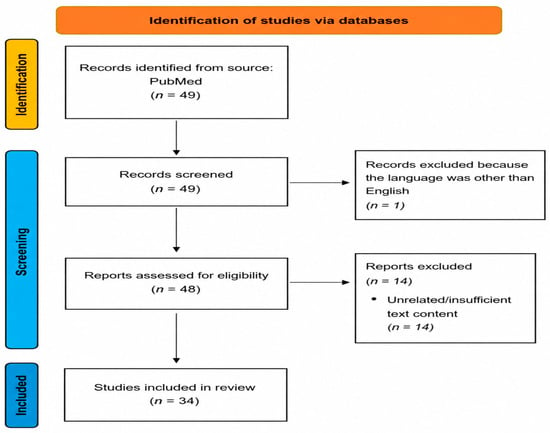
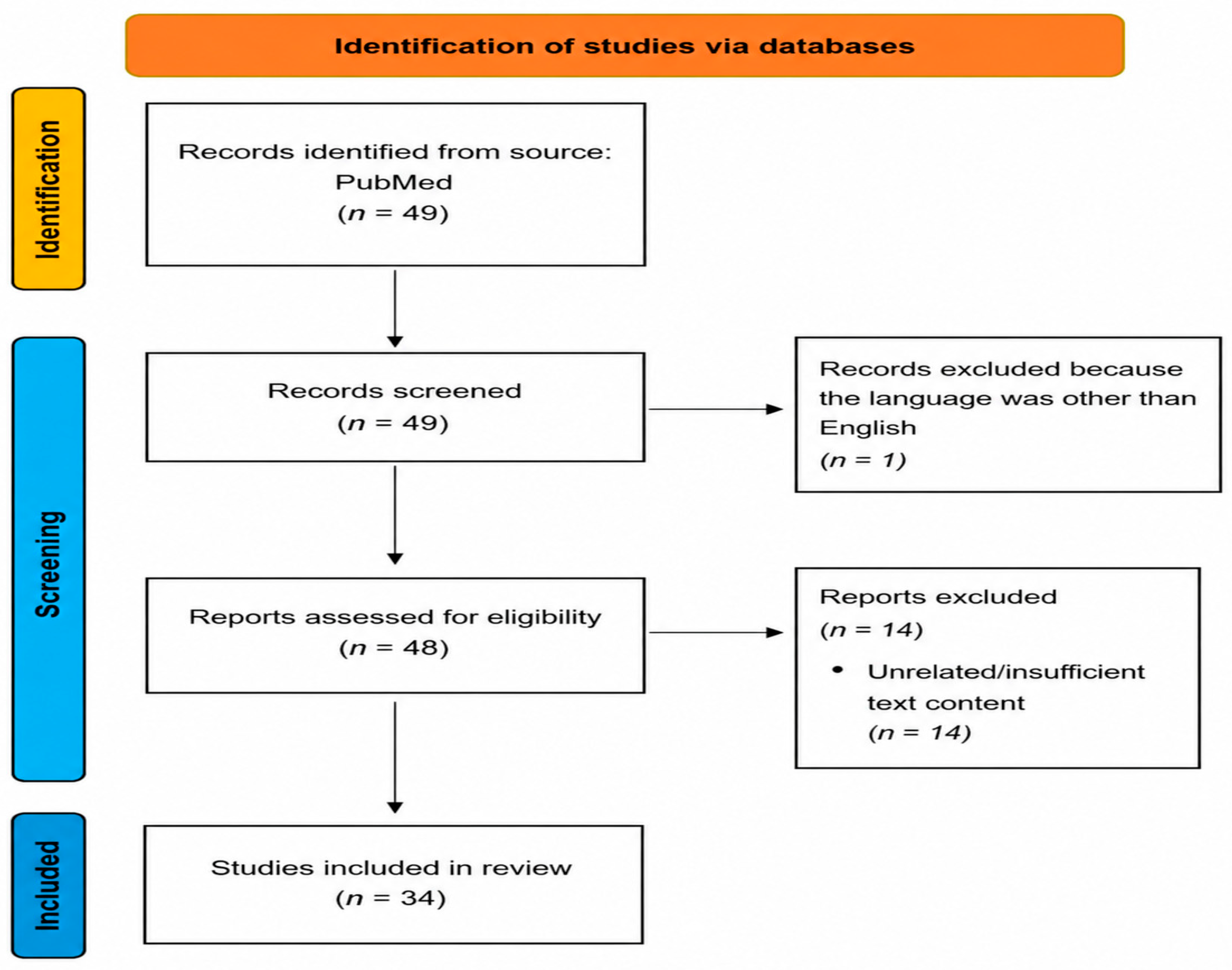
The electronic search identified a total of 49 records. Titles and abstracts were initially screened to assess their relevance to the scope of the review. Potentially eligible studies were subsequently evaluated according to predefined inclusion and exclusion criteria. Following the screening and eligibility assessment, 34 original studies were included in the final review.
Inclusion and Exclusion Criteria
The following inclusion criteria were applied:
- Language: Articles published in English.
- Topic: Studies investigating m6A RNA modification or m6A-related regulators in periodontitis, periodontal inflammation, or periodontal tissue and cellular homeostasis.
- Type of study: Original research articles, including human, animal, in vitro, bioinformatic, transcriptomic, and epitranscriptomic studies.
The following exclusion criteria were applied:
- Language: Articles published in languages other than English.
- Topic: Studies not directly related to periodontitis or periodontal biology.
- RNA modification: Studies focusing exclusively on RNA modifications other than m6A.
- Type of publication: Review articles, systematic reviews, editorials, commentaries, and other non-original publications.
- Insufficient relevance: Studies in which m6A modification was not sufficiently relevant to the main research question or periodontal outcomes.
Figure 1 summarizes the process of identification of studies via databases.
Figure 1.
Display of the identification of studies via databases.
3. Results
Table 1 summarizes the characteristics and key findings of the included studies. The main m6A-regulated molecular mechanisms identified across the included studies are summarized in Table 2. The available evidence indicates that m6A RNA modification is involved in various biological activities associated with periodontal disease, such as inflammatory signal transduction, inflammasome activation and pyroptosis, osteogenesis, osteoclastogenesis, cellular senescence, and osteoimmunology. These biological activities are regulated through m6A writers, erasers, and readers binding to particular RNA and signaling pathways. In addition, it should be noted that the biological effects of each m6A regulator depend on the context of the activity.
Table 1.
Characteristics and key findings of the included studies (n = 34).
Table 2.
Major m6A-regulated molecular mechanisms implicated in periodontitis.
4. Discussion
The m6A modification of mRNA may regulate the cellular differentiation, development, and regulation of immune responses, through its effects on RNA splicing, transport, translation, and stability [39,40]. Dysregulation of m6A-mediated RNA regulation can impair normal cellular functions and contribute to the development of various human diseases, including cancer, metabolic disorders, and neurological diseases [39,40].
The available evidence indicates that m6A RNA modification contributes to molecular regulation, linking inflammatory signaling and immune responses with periodontal cell function and bone remodeling [8,9,18]. However, there is considerable variability in the strength of evidence in the available studies. Evidence in humans has been established only through transcriptomic and small observations [8,9,23], whereas molecular mechanism evidence has been established through in vitro studies and animals [11,13,14,16]. The results of transcriptomic and epitranscriptomic analysis of humans with periodontitis reveal changes in the expression of genes related to m6A and RNA modifications that correlate with immune cell infiltration and inflammation [8,9,21]. These findings provide evidence of disease-associated m6A alterations in human samples but do not by themselves establish causal molecular mechanisms. However, these observations should not be interpreted as evidence that an overall increase or decrease in m6A is inherently pathogenic, since mechanistic studies indicate that the biological outcome depends strongly on the specific regulator, RNA target, cell type, and inflammatory microenvironment [15,16,17,18]. Such dependence could be the explanation for the apparently opposing biological functions being assigned to the same m6A regulator under different experimental conditions [13,16,17].
A major point of convergence among recent experimental mechanistic studies is the involvement of m6A regulation in periodontal inflammatory signaling [11,13,14]. METTL3 and METTL14 can control SLC39A9 expression via m6A RNA methylation, which in turn affects intracellular Zn2+ levels and IL-6 secretion, and p38/JNK MAPK pathways mediate this inflammatory response [11]. Furthermore, METTL3-induced m6A RNA methylation increases the stability of CARD11 mRNA and induces NF-κB signaling [17]. Moreover, ALKBH5 can increase the stability of TLR9 mRNA via m6A methylation, which then activates MAPK pathways, promoting inflammatory signaling and suppressing osteogenic differentiation [33]. Additionally, the METTL3-regulated IRE1α pathway indicates the possibility of the impact of m6A on the interactions between the process of inflammation, osteogenic differentiation, and bone regeneration via another stress-related pathway [30]. Overall, these experimental findings suggest that modification by m6A does not work through one inflammatory pathway only, but rather acts as a higher-order regulator of multiple interconnected pathways in periodontal tissue damage [11,17,33].
This relationship is particularly evident in the regulation of the NLRP3 inflammasome and pyroptosis [13,14,36]. METTL3-mediated regulation of the TNFAIP3/NEK7/NLRP3 and NLRP3/IGF2BP3 pathways was related to inflammasome activation, the pyroptotic death of cells, inflammation, and the destruction of periodontal bone [13,14]. Moreover, the m6A reader protein ELAVL1 has been involved in the process of pyroptosis of periodontal ligament fibroblasts through the JAK2/STAT3/NLRP3 pathway [36]. The convergence of different m6A components on NLRP3-related mechanisms suggests that inflammasome regulation may link epitranscriptomic dysregulation with periodontal tissue damage [13,14,36]. Nevertheless, the relevance of these mechanisms across the different stages of periodontitis remains uncertain, since much of the mechanistic evidence is derived from stimulated cellular systems and experimental animal models [13,14].
The regulation of m6A is not only related to the promotion of periodontal tissue damage but also with osteogenesis and regeneration, which have been proven in several studies [15,16,25]. The activity of METTL3 was shown to promote osteogenic differentiation in PDLSCs by modulating the regulation of lncRNA4114, CUTALP/miR-30b-3p/Runx2, and miR-141-3p/ZEB1 pathways [3,22,25]. Similarly, METTL14-mediated WNT3A/β-catenin signaling and IGF2BP1-dependent regulation of BMP2 support the involvement of other components of the m6A machinery in periodontal osteogenesis and regeneration [7,37]. These findings are consistent with broader epitranscriptomic analyses showing substantial changes in the m6A landscape of periodontal ligament cells under inflammatory or mechanical conditions [9,10,15]. However, these regenerative mechanisms have been demonstrated predominantly in cellular and animal models and have not yet been established in clinical studies [3,7,16,25,37].
The apparently contradictory behavior of METTL3 is particularly informative and may represent one of the observations emerging from the current literature [13,16,17]. METTL3 can support osteogenic differentiation and osteoblast homeostasis through specific RNA targets, while under different inflammatory conditions it can promote NF-κB signaling, NLRP3-associated pyroptosis, and other processes favoring periodontal destruction [13,16,17,25]. In addition, METTL3/YTHDF2-dependent regulation of the FOXO3/SIRT1 pathway is responsible for development of oxidative stress and cellular senescence and impaired osteogenesis, while regulation of TP53BP1 by WTAP provides one more mechanism explaining how aberrant methylation impacts on the senescence of periodontal stem cells [34,35]. In contrast, METTL3-regulated LOR and DSC1 signaling has been associated with reduced inflammation, apoptosis and increased periodontal cell survival [31,32]. Collectively, these results indicate that the biological effects of individual m6A regulators are determined not by the regulator alone, but by several context-dependent factors, including the specific downstream RNA target, cell type, inflammatory environment, disease stage, and experimental model [16,17,31,34]. Such context-dependent regulation has important implications for the future development of therapies because the non-specific inhibition of METTL3 may not only inhibit unwanted signal transduction but also block any beneficial mechanisms [16,17,31].
Furthermore, the involvement of the m6A includes the regulation of the balance between bone formation, bone resorption, and immune modulation [18,24,26]. Experimental studies have implicated FTO in impaired BMSC osteogenesis through the SOST/Wnt pathway in diabetes-associated periodontitis and in osteoclastogenesis through FTO/YTHDF2-dependent regulation of Cyclin A2/CDK2 [24,26]. IGF2BP2 has also been linked to macrophage function and osteoclastogenesis through CD5L/CD36-related mechanisms, while WTAP-related changes in macrophage polarization provide additional evidence connecting m6A regulation with osteoimmune control of periodontal bone remodeling [18,28]. The function of IGF2BP2 is condition-specific, meaning that the results of regulation depend on the disease phase, and that time context should be considered [18]. Taken together, these observations indicate that m6A represents a molecular level at which inflammatory and skeletal processes interact in the case of periodontal disease [18,28].
The interaction between m6A and non-coding RNA networks further increases the complexity of this regulatory system [22,25,38]. In this regard, it is possible to refer to examples of regulation of the lncRNA4114 and CUTALP that provide m6A-dependent RNA stability, which, in turn, can impact downstream microRNAs and transcription networks regulating osteogenesis [22,25]. At the same time, METTL14/YTHDF2-dependent regulation of the NEAT1_2 has been associated with paraspeckles integrity and the YBX1-dependent transcription of IL-6, providing the connection between modification by m6A and nuclear structure and periodontitis-associated inflammatory signals [38]. Overall, based on the above examples, it can be stated that m6A must be considered an element of a regulatory network that includes both coding and noncoding RNAs [22,25,38].
From a translational perspective, m6A-related pathways may represent potential targets for future therapeutic development; however, the currently available evidence is predominantly preclinical [12,19]. According to experimental studies, modulation of some m6A-related pathways may stimulate osteogenic and periodontal regeneration processes, such as METTL3-dependent control of Per1 and m6A regulation of PDLSCs [12,19]. Nevertheless, the variable effects of certain m6A regulators based on the context demonstrate that possible therapeutic approaches should focus on certain regulator–RNA interactions rather than enhancement or inhibition of the overall m6A modification process [16,17,18]. Thus, more detailed research might be needed in order to determine the efficacy and safety of these approaches in humans.
m6A-related alterations may also have potential diagnostic relevance, although the available clinical evidence remains preliminary [8,9,23]. Transcriptomic studies have identified m6A-related signatures associated with periodontitis and different immune phenotypes, while human gingival and salivary analyses have identified candidate m6A-associated transcripts and modified nucleosides with potential discriminatory value [8,9,23]. However, these observations require validation in larger prospective cohorts, since several studies relied on relatively small clinical samples or secondary transcriptomic datasets [8,9,23]. Similarly, there is evidence linking the m6A-related genetic variant rs2723183 to IL-37 but the evidence in question was entirely computational without any direct verification in periodontal tissue [20]. Therefore, m6A-related molecules should be considered biomarker candidates rather than diagnostic indicators for periodontitis [8,9,20].
Conclusively, all available data confirms a scenario in which m6A modification acts as an interaction platform that connects periodontitis-related inflammation, cellular homeostasis and tissue regeneration, not being a one-way factor leading to diseases [8,15,18]. In certain conditions, m6A can participate in the processes such as inflammatory signaling, pyroptosis, senescence, osteoclast formation and bone resorption but in alternative conditions can ensure cellular survival, osteogenic differentiation, bone turnover and periodontal tissue regeneration [16,26,31,34]. Future studies should therefore move beyond measurements of global m6A abundance or isolated regulator expression and define specific regulator–RNA target–reader–cell type relationships using well-characterized human periodontal tissues and prospective clinical cohorts [8,9,17]. These studies will be needed to establish the translatability of the discovered experimental models into clinically valuable markers or therapies for periodontitis [9,18].
5. Limitations
This narrative review has several limitations. First, the literature search was limited to PubMed, and relevant studies indexed in other databases may therefore have been missed. In addition, no formal risk-of-bias or methodological quality assessment was performed. Although 34 original studies were included, considerable heterogeneity existed in study designs, experimental models, cell types, m6A regulators, and molecular targets. Furthermore, much of the available evidence remains preclinical or derives from bioinformatic and transcriptomic analyses, while direct evidence from human periodontal tissues and well-characterized clinical populations remains limited [8,9,18,20]. Therefore, further well-designed clinical and mechanistic studies are required before m6A-related biomarkers or therapeutic strategies can be translated into periodontal practice [8,9,19].
6. Conclusions
The m6A modification of mRNA is an epitranscriptomic mechanism that regulates periodontal inflammation, immune responses, cellular homeostasis, and bone remodeling [8,9,18]. Current evidence indicates that m6A regulators can contribute to both periodontal tissue destruction and regeneration, with their biological effects depending on the specific regulator, RNA target, cell type, and inflammatory microenvironment [13,16,17]. In particular, the involvement of m6A-related mechanisms in inflammatory signaling, pyroptosis, osteogenesis, osteoclastogenesis, and cellular senescence highlights their involvement in the pathogenesis and progression of periodontitis [14,26,34]. Although m6A-associated pathways may have potential therapeutic and diagnostic relevance, the current evidence remains predominantly preclinical, and further validation in human periodontal tissues and well-designed clinical studies is required before these findings can be translated into clinical practice [8,9,19].
Author Contributions
Conceptualization, F.F., S.Z., V.Z., P.P., C.C., K.P., P.D., N.S., J.C., A.P.; methodology, F.F., S.Z., V.Z., P.P., C.C., K.P., P.D., N.S., J.C., A.P.; formal analysis, F.F., S.Z., V.Z., P.P., C.C., K.P., P.D., N.S., J.C., A.P.; investigation, F.F., S.Z., V.Z., P.P., C.C., K.P., P.D., N.S., J.C., A.P.; writing—original draft preparation, F.F., S.Z., V.Z., P.P., C.C., K.P., P.D., N.S., J.C., A.P.; writing—review and editing, F.F., S.Z., V.Z., P.P., C.C., K.P., P.D., N.S., J.C., A.P.; supervision, A.P. All authors have read and agreed to the published version of the manuscript.
Funding
This research received no external funding.
Institutional Review Board Statement
Not applicable.
Informed Consent Statement
Not applicable.
Data Availability Statement
The original data presented in the study are included in the article; further inquiries can be directed to the corresponding author.
Conflicts of Interest
The authors declare no conflicts of interest.
References
- Huang, J.; Zhou, Y. Emerging role of epigenetic regulations in periodontitis: A literature review. Am. J. Transl. Res. 2022, 14, 2162–2183. [Google Scholar] [PubMed]
- Suzuki, S.; Yamada, S. Epigenetics in susceptibility, progression, and diagnosis of periodontitis. Jpn. Dent. Sci. Rev. 2022, 58, 183–192. [Google Scholar] [CrossRef] [Scilit] [PubMed]
- Li, W.; Alimujiang, A. METTL3 Promotes Osteogenic Differentiation of Human Periodontal Ligament Stem Cells Under the Inflammatory Microenvironment Through the miR-141-3p/ZEB1 Axis. Cell Biochem. Biophys. 2024, 83, 1771–1783. [Google Scholar] [CrossRef] [Scilit] [PubMed]
- Krishnamoorthy, H.S.; Kannan, B.; Ganapathy, D.; Jayaseelan, V.P.; Arumugam, P. Dysregulated m6A methylation modification is associated with human peri-implantitis—A pilot study. J. Stomatol. Oral Maxillofac. Surg. 2023, 124, 101550. [Google Scholar] [CrossRef] [Scilit] [PubMed]
- Li, B.; Du, M.; Sun, Q.; Cao, Z.; He, H. m6A demethylase Fto regulates the TNF-α-induced inflammatory response in cementoblasts. Oral Dis. 2023, 29, 2806–2815. [Google Scholar] [CrossRef] [Scilit] [PubMed]
- Sun, X.; Meng, X.; Piao, Y.; Dong, S.; Dong, Q. METTL3 Promotes Osteogenic Differentiation of Human Periodontal Ligament Stem Cells through IGF2BP1-Mediated Regulation of Runx2 Stability. Int. J. Med. Sci. 2024, 21, 664–673. [Google Scholar] [CrossRef] [Scilit] [PubMed]
- Ma, L.; Li, M.; Xuan, G.; Dai, Y. METTL14-mediated m6A RNA methylation promotes the osteogenic differentiation of pPDLSCs by regulating WNT3A. Odontology 2025, 113, 1701–1711. [Google Scholar] [CrossRef] [Scilit] [PubMed]
- Zhang, X.; Zhang, S.; Yan, X.; Shan, Y.; Liu, L.; Zhou, J.; Kuang, Q.; Li, M.; Long, H.; Lai, W. m6A regulator-mediated RNA methylation modification patterns are involved in immune microenvironment regulation of periodontitis. J. Cell. Mol. Med. 2021, 25, 3634–3645. [Google Scholar] [CrossRef] [Scilit] [PubMed]
- Wang, Z.; Chen, H.; Peng, L.; He, Y.; Wei, J.; Zhang, X. DNER and GNL2 are differentially m6A methylated in periodontitis in comparison with periodontal health revealed by m6A microarray of human gingival tissue and transcriptomic analysis. J. Periodontal Res. 2023, 58, 529–543. [Google Scholar] [CrossRef] [Scilit] [PubMed]
- Zou, X.; Liu, C.; Wu, X.; Yuan, Z.; Yan, F. Changes in N6 -methyladenosine RNA methylomes of human periodontal ligament cells in response to inflammatory conditions. J. Periodontal Res. 2023, 58, 444–455. [Google Scholar] [CrossRef] [Scilit] [PubMed]
- Huang, J.; Wang, Y.; Zhou, Y. METTL3 and METTL14 regulate IL-6 expression via RNA m6A modification of zinc transporter SLC39A9 and DNA methylation of IL-6 in periodontal ligament cells. Biochim. Biophys. Acta (BBA) Mol. Cell Res. 2024, 1871, 119605. [Google Scholar] [CrossRef] [Scilit] [PubMed]
- Zhu, H.; Cai, C.; Yu, Y.; Zhou, Y.; Yang, S.; Hu, Y.; Zhu, Y.; Zhou, J.; Zhao, J.; Ma, H.; et al. Quercetin-Loaded Bioglass Injectable Hydrogel Promotes m6A Alteration of Per1 to Alleviate Oxidative Stress for Periodontal Bone Defects. Adv. Sci. 2024, 11, e2403412. [Google Scholar] [CrossRef] [Scilit] [PubMed]
- Zhou, X.; Yang, X.; Huang, S.; Lin, G.; Lei, K.; Wang, Q.; Lin, W.; Li, H.; Qi, X.; Seriwatanachai, D.; et al. Inhibition of METTL3 Alleviates NLRP3 Inflammasome Activation via Increasing Ubiquitination of NEK7. Adv. Sci. 2024, 11, e2308786. [Google Scholar] [CrossRef] [Scilit] [PubMed]
- Yang, Q.; Xiao, J.; Liu, Y.; Yang, Z.; Wang, C.; Sun, J.; Wang, H.; Liu, H.; Wang, X.; Ma, L.; et al. METTL3-mediated m6A modifications of NLRP3 accelerate alveolar bone resorption through enhancing macrophage pyroptosis. Cell. Signal. 2025, 127, 111572. [Google Scholar] [CrossRef] [Scilit] [PubMed]
- Sun, W.; Liu, J.; Zhang, X.; Zhang, X.; Gao, J.; Chen, X.; Wang, X.; Qin, W.; Jin, Z. Long Noncoding RNA and mRNA m6A Modification Analyses of Periodontal Ligament Stem Cells from the Periodontitis Microenvironment Exposed to Static Mechanical Strain. Stem Cells Int. 2022, 2022, 6243004. [Google Scholar] [CrossRef] [Scilit] [PubMed]
- Zhang, Y.; Kong, Y.; Zhang, W.; He, J.; Zhang, Z.; Cai, Y.; Zhao, Y.; Xu, Q. METTL3 promotes osteoblast ribosome biogenesis and alleviates periodontitis. Clin. Epigenet. 2024, 16, 18. [Google Scholar] [CrossRef] [Scilit] [PubMed]
- Zhou, B.; Wang, C. METTL3 knockdown promotes the osteogenic differentiation of hPDLSCs by regulating CARD11 levels. Clinics 2025, 80, 100787. [Google Scholar] [CrossRef] [Scilit] [PubMed]
- Ma, X.; Zhou, X.; Feng, M.; Ji, Y.; Song, F.; Tang, Q.; He, Q.; Zhang, Y. Dual Role of IGF2BP2 in Osteoimmunomodulation during Periodontitis. J. Dent. Res. 2024, 103, 208–217. [Google Scholar] [CrossRef] [Scilit] [PubMed]
- Chen, X.; Lin, Z.; Lei, H.; Qin, Y.; Xu, F.; Xie, L.; Jin, Z. An Intelligent MXene Nanoplatform for Bone Regeneration in Periodontitis Through Synergistic Scavenging Pathogenic cfDNA and ROS. Adv. Healthc. Mater. 2026, 15, e05749. [Google Scholar] [CrossRef] [Scilit] [PubMed]
- Lin, W.; Xu, H.; Wu, Y.; Wang, J.; Yuan, Q. In silico genome-wide identification of m6A-associated SNPs as potential functional variants for periodontitis. J. Cell. Physiol. 2020, 235, 900–908. [Google Scholar] [CrossRef] [Scilit] [PubMed]
- Ding, D.; Liu, G.; Gao, J.; Cao, M. Unveiling the m6A Methylation Regulator Links between Prostate Cancer and Periodontitis by Transcriptomic Analysis. Dis. Markers 2022, 2022, 4030046. [Google Scholar] [CrossRef] [Scilit] [PubMed]
- Zhang, X.; Liu, J.; Gao, J.; Sun, W.; Chen, X.; Wang, X.; Qin, W.; Jin, Z. N6-methyladenosine promotes osteogenic differentiation of PDLSCs from periodontitis patients. Oral Dis. 2024, 30, 1322–1336. [Google Scholar] [CrossRef] [Scilit] [PubMed]
- Vignon, M.; Bastide, A.; Attina, A.; David, A.; Bousquet, P.; Orti, V.; Vialaret, J.; Lehmann, S.; Periere, D.D.; Hirtz, C. Multiplexed LC-MS/MS quantification of salivary RNA modifications in periodontitis. J. Periodontal Res. 2023, 58, 959–967. [Google Scholar] [CrossRef] [Scilit] [PubMed]
- Zhou, J.; Zhu, Y.; Ai, D.; Zhou, M.; Li, H.; Li, G.; Zheng, L.; Song, J. Advanced glycation end products impair bone marrow mesenchymal stem cells osteogenesis in periodontitis with diabetes via FTO-mediated N6-methyladenosine modification of sclerostin. J. Transl. Med. 2023, 21, 781. [Google Scholar] [CrossRef] [Scilit] [PubMed]
- Chen, X.; Qin, Y.; Wang, X.; Lei, H.; Zhang, X.; Luo, H.; Guo, C.; Sun, W.; Fang, S.; Qin, W.; et al. METTL3-Mediated m6A Modification Regulates the Osteogenic Differentiation through LncRNA CUTALP in Periodontal Mesenchymal Stem Cells of Periodontitis Patients. Stem Cells Int. 2024, 2024, 3361794. [Google Scholar] [CrossRef] [Scilit] [PubMed]
- He, J.; Zhao, Y.; Zhang, Y.; Zhang, Z.; Li, D.; Xu, Q. FTO regulates osteoclast development by modulating the proliferation and apoptosis of osteoclast precursors in inflammatory conditions. Cell. Signal. 2024, 117, 111098. [Google Scholar] [CrossRef] [Scilit] [PubMed]
- Deepika, B.A.; Ramamurthy, J.; Kannan, B.; Jayaseelan, V.P.; Arumugam, P. Overexpression of insulin-like growth factor-2 mRNA-binding protein 1 is associated with periodontal disease. J. Oral Biol. Craniofacial Res. 2024, 14, 494–499. [Google Scholar] [CrossRef] [Scilit] [PubMed]
- Li, Y.; Yang, Y.; Niu, Y.; Li, Y.; Hu, Z.; Sun, S.; Chen, Y.; Hu, B.; Huang, Y.; Deng, X. The role of WTAP in regulating macrophage-mediated osteoimmune responses and tissue regeneration in periodontitis. Front. Immunol. 2024, 15, 1423378. [Google Scholar] [CrossRef] [Scilit] [PubMed]
- Anand, D.B.; Ramamurthy, J.; Kannan, B.; Jayaseelan, V.P.; Arumugam, P. N6-methyladenosine-mediated overexpression of TREM-1 is associated with periodontal disease. Odontology 2025, 113, 834–843. [Google Scholar] [CrossRef] [Scilit] [PubMed]
- Li, L.; Wang, Y.; Gao, L.; Wu, S.; Jin, Y. Curcumin-carbon dots suppress periodontitis via regulating METTL3/IRE1α signaling. Crit. Rev. Eukaryot. Gene Expr. 2025, 35, 25–35. [Google Scholar] [CrossRef] [Scilit] [PubMed]
- Su, Q.; Chen, J. LOR Regulated by METTL3 Alleviates Lipopolysaccharides-Induced Periodontitis Injury. J. Microbiol. Biotechnol. 2025, 35, e2505016. [Google Scholar] [CrossRef] [Scilit] [PubMed]
- Su, Q.; Chen, J. METTL3-Mediated m6A Modification of DSC1 Alleviates Inflammation and Cellular Dysfunction in Periodontitis. Int. Dent. J. 2026, 76, 109347. [Google Scholar] [CrossRef] [Scilit] [PubMed]
- Zhang, Y.; Li, J.; Chen, M.; Zhang, N.; Yu, X.; Wen, Y. ALKBH5 promotes inflammation and inhibits osteogenic differentiation by activating the TLR9/MAPK pathway in human periodontal ligament stem cells. Cytotechnology 2026, 78, 21. [Google Scholar] [CrossRef] [Scilit] [PubMed]
- Zhou, J.; Li, X.; Xiao, L.; Zhu, Y.; Yang, Y.; Gao, X. Hyperglycemia disrupts alveolar bone homeostasis by inducing stem cell senescence through Mettl3/Foxo3/Sirt1 axis in diabetic periodontitis. Life Sci. 2026, 388, 124215. [Google Scholar] [CrossRef] [Scilit] [PubMed]
- Xiong, M.; Wang, T.; Liu, Y. WTAP Contributes to Periodontitis Pathogenesis by Promoting PDLSC Senescence and Impairing Osteogenic Differentiation via m6A-Dependent Regulation of TP53BP1. Immun. Inflamm. Dis. 2026, 14, e70335. [Google Scholar] [CrossRef] [Scilit] [PubMed]
- Zhan, H.; Shi, G.; Xie, Q.; Chen, Y.; Zhang, Y. ELAVL1 modulates periodontal ligament fibroblast pyroptosis in periodontitis through the JAK2/STAT3/NLRP3 axis. Int. Immunol. 2026, 38, 506–520. [Google Scholar] [CrossRef] [Scilit] [PubMed]
- Wang, Z.; Weng, B.; Qian, J.; Guo, H. H3K18 lactylation promotes osteogenic differentiation of periodontal ligament stem cells via IGF2BP1/m6A/BMP2. Biochem. Pharmacol. 2026, 249, 117899. [Google Scholar] [CrossRef] [Scilit] [PubMed]
- Du, J.; Cheng, Z.A.; Zhang, Y.; Cong, Y.; Guo, D.; Zhou, Y.; Huang, J. METTL14-Mediated m6A Modification of NEAT1_2 Releases YBX1 From Paraspeckles to Exacerbate Periodontitis. J. Clin. Periodontol. 2026, 53, 1621–1634. [Google Scholar] [CrossRef] [Scilit] [PubMed]
- Jiang, X.; Liu, B.; Nie, Z.; Duan, L.; Xiong, Q.; Jin, Z.; Yang, C.; Chen, Y. The role of m6A modification in the biological functions and diseases. Signal Transduct. Target. Ther. 2021, 6, 74. [Google Scholar] [CrossRef] [Scilit] [PubMed]
- Yang, C.; Hu, Y.; Zhou, B.; Bao, Y.; Li, Z.; Gong, C.; Yang, H.; Wang, S.; Xiao, Y. The role of m6A modification in physiology and disease. Cell Death Dis. 2020, 11, 960. [Google Scholar] [CrossRef] [Scilit] [PubMed]

Disclaimer/Publisher’s Note: The statements, opinions and data contained in all publications are solely those of the individual author(s) and contributor(s) and not of MDPI and/or the editor(s). MDPI and/or the editor(s) disclaim responsibility for any injury to people or property resulting from any ideas, methods, instructions or products referred to in the content. |
© 2026 by the authors. Licensee MDPI, Basel, Switzerland. This article is an open access article distributed under the terms and conditions of the Creative Commons Attribution (CC BY) license.