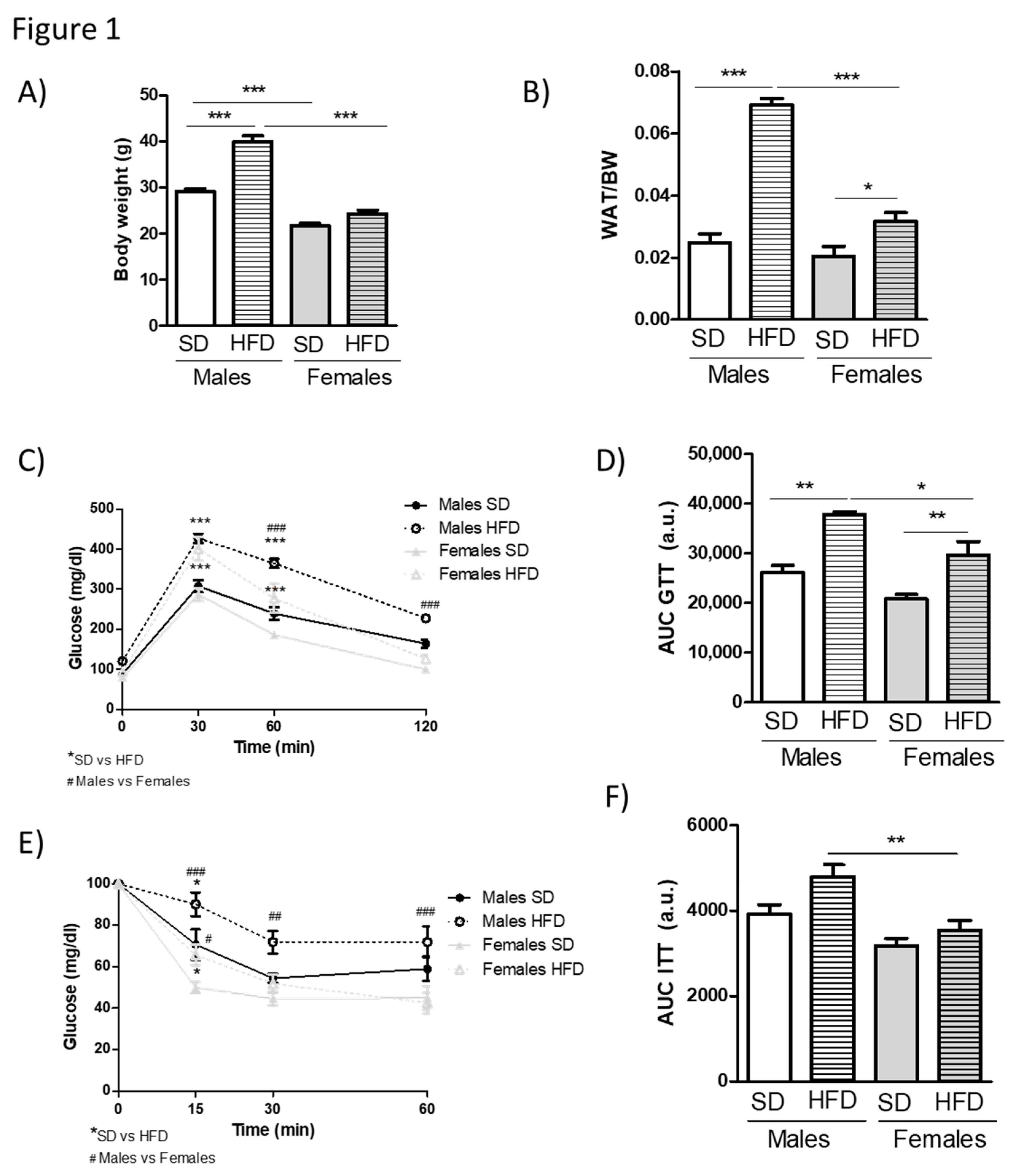
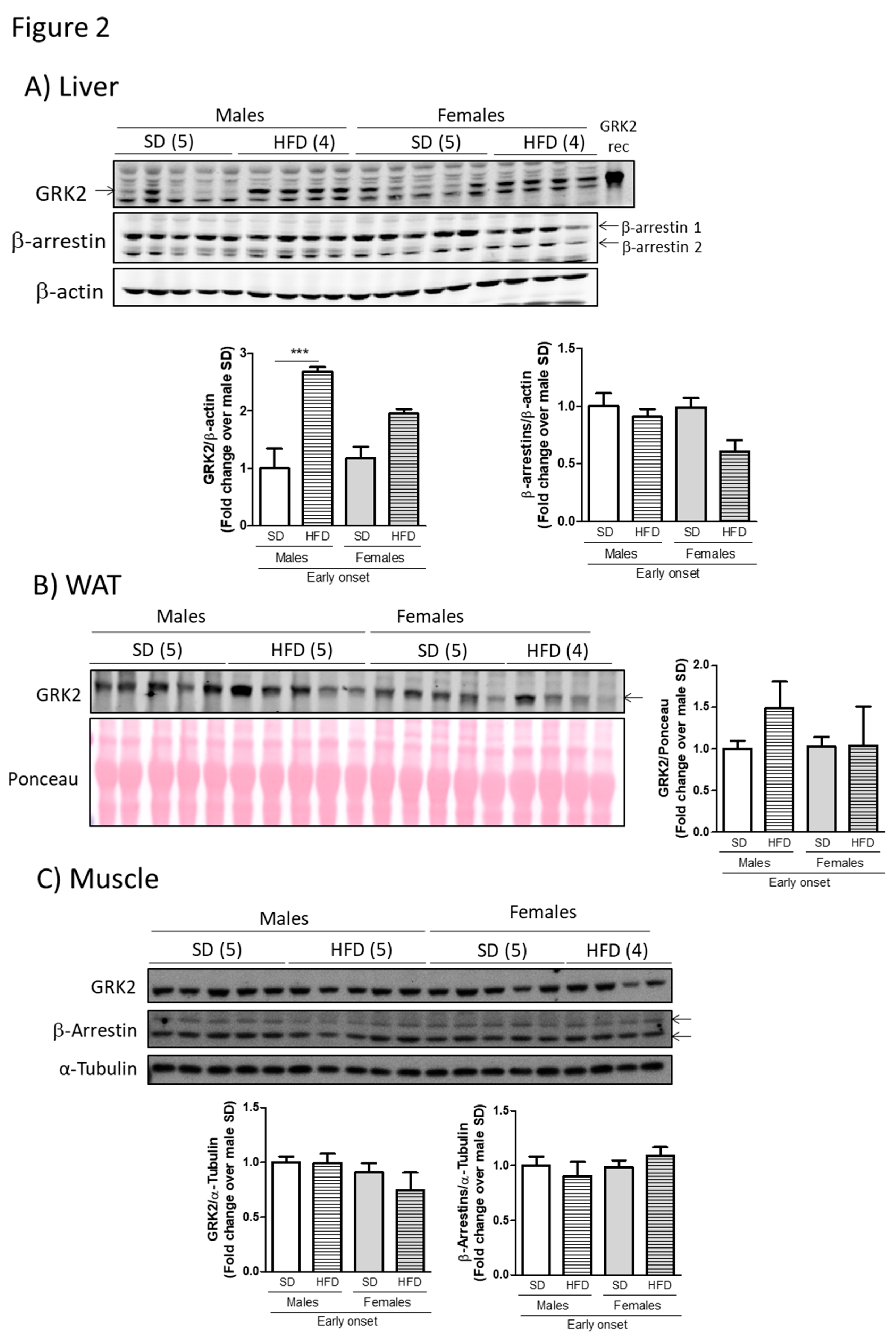
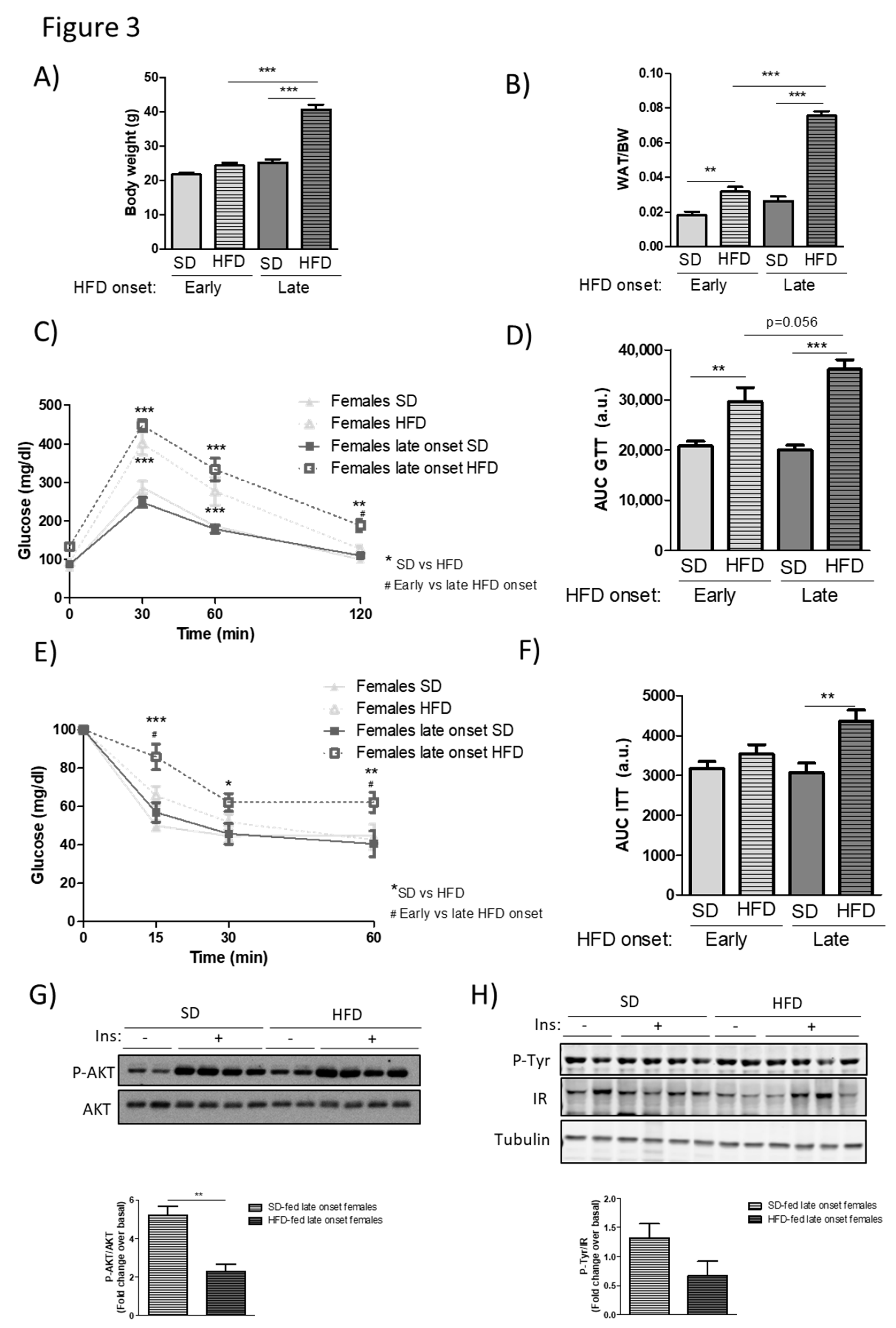
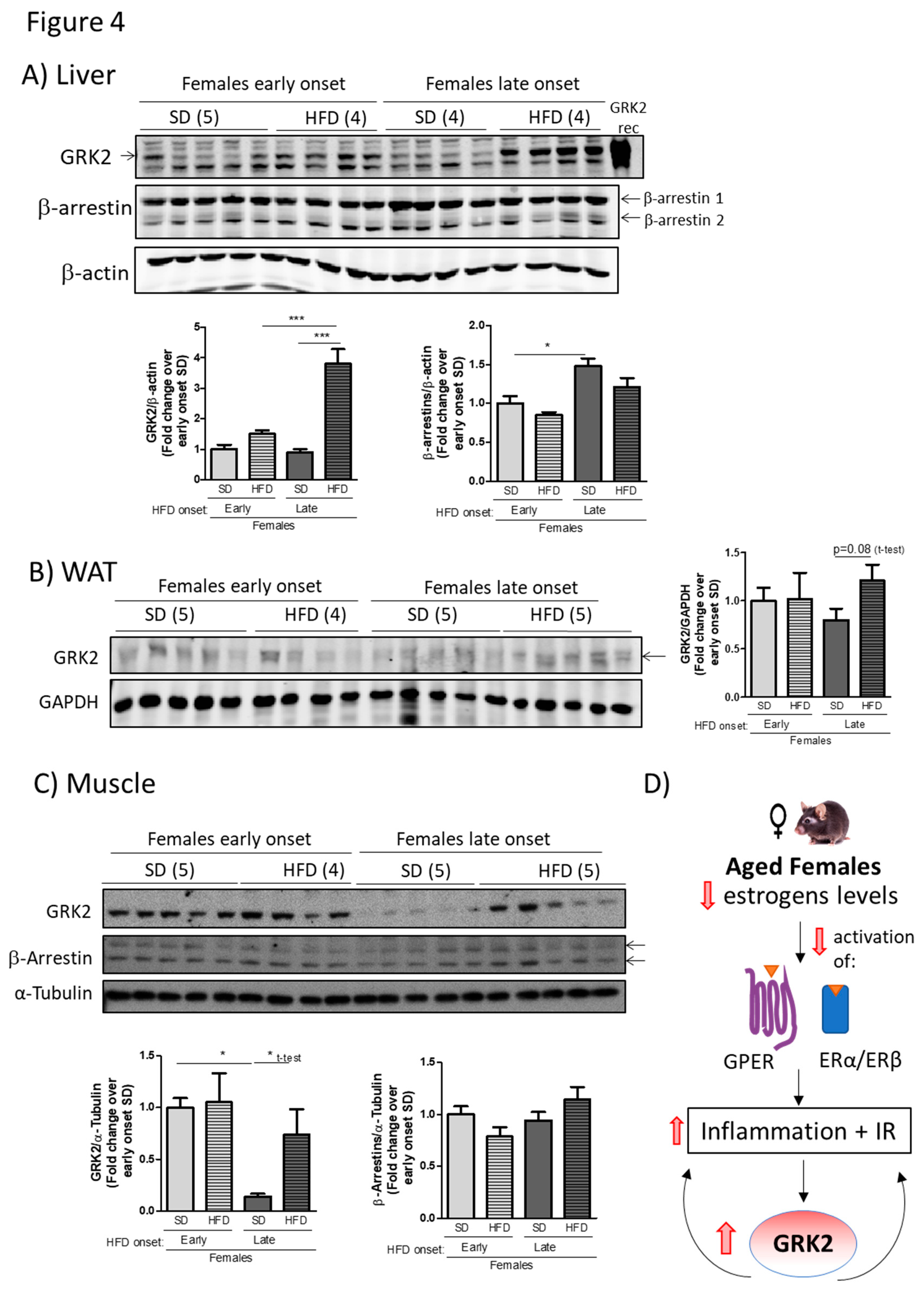
Sex Differences in High Fat Diet-Induced Metabolic Alterations Correlate with Changes in the Modulation of GRK2 Levels

Abstract
Share and Cite
Arcones, A.C.; Cruces-Sande, M.; Ramos, P.; Mayor, F.; Murga, C. Sex Differences in High Fat Diet-Induced Metabolic Alterations Correlate with Changes in the Modulation of GRK2 Levels. Cells 2019, 8, 1464. https://doi.org/10.3390/cells8111464
Arcones AC, Cruces-Sande M, Ramos P, Mayor F, Murga C. Sex Differences in High Fat Diet-Induced Metabolic Alterations Correlate with Changes in the Modulation of GRK2 Levels. Cells. 2019; 8(11):1464. https://doi.org/10.3390/cells8111464
Chicago/Turabian StyleArcones, Alba C., Marta Cruces-Sande, Paula Ramos, Federico Mayor, and Cristina Murga. 2019. "Sex Differences in High Fat Diet-Induced Metabolic Alterations Correlate with Changes in the Modulation of GRK2 Levels" Cells 8, no. 11: 1464. https://doi.org/10.3390/cells8111464
APA StyleArcones, A. C., Cruces-Sande, M., Ramos, P., Mayor, F., & Murga, C. (2019). Sex Differences in High Fat Diet-Induced Metabolic Alterations Correlate with Changes in the Modulation of GRK2 Levels. Cells, 8(11), 1464. https://doi.org/10.3390/cells8111464