Review

HSP70s in Breast Cancer: Promoters of Tumorigenesis and Potential Targets/Tools for Therapy
by
Alexander E. Kabakov
1 and
Vladimir L. Gabai
2,*
1
Department of Radiation Biochemistry, A. Tsyb Medical Radiological Research Center—Branch of the National Medical Research Radiological Center of the Ministry of Health of the Russian Federation, Koroleva 4, 249036 Obninsk, Russia
2
CureLab Oncology Inc., Dedham, MA 02026, USA
*
Author to whom correspondence should be addressed.
Cells 2021, 10(12), 3446; https://doi.org/10.3390/cells10123446
Submission received: 28 October 2021 / Revised: 25 November 2021 / Accepted: 3 December 2021 / Published: 7 December 2021

Abstract

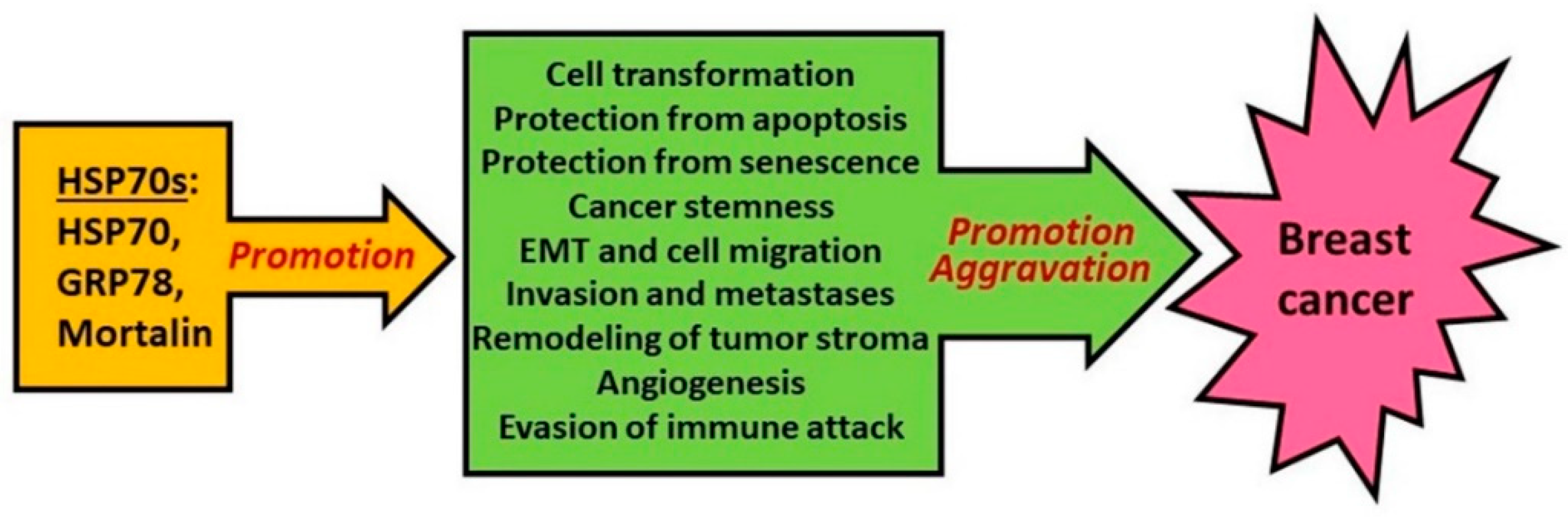
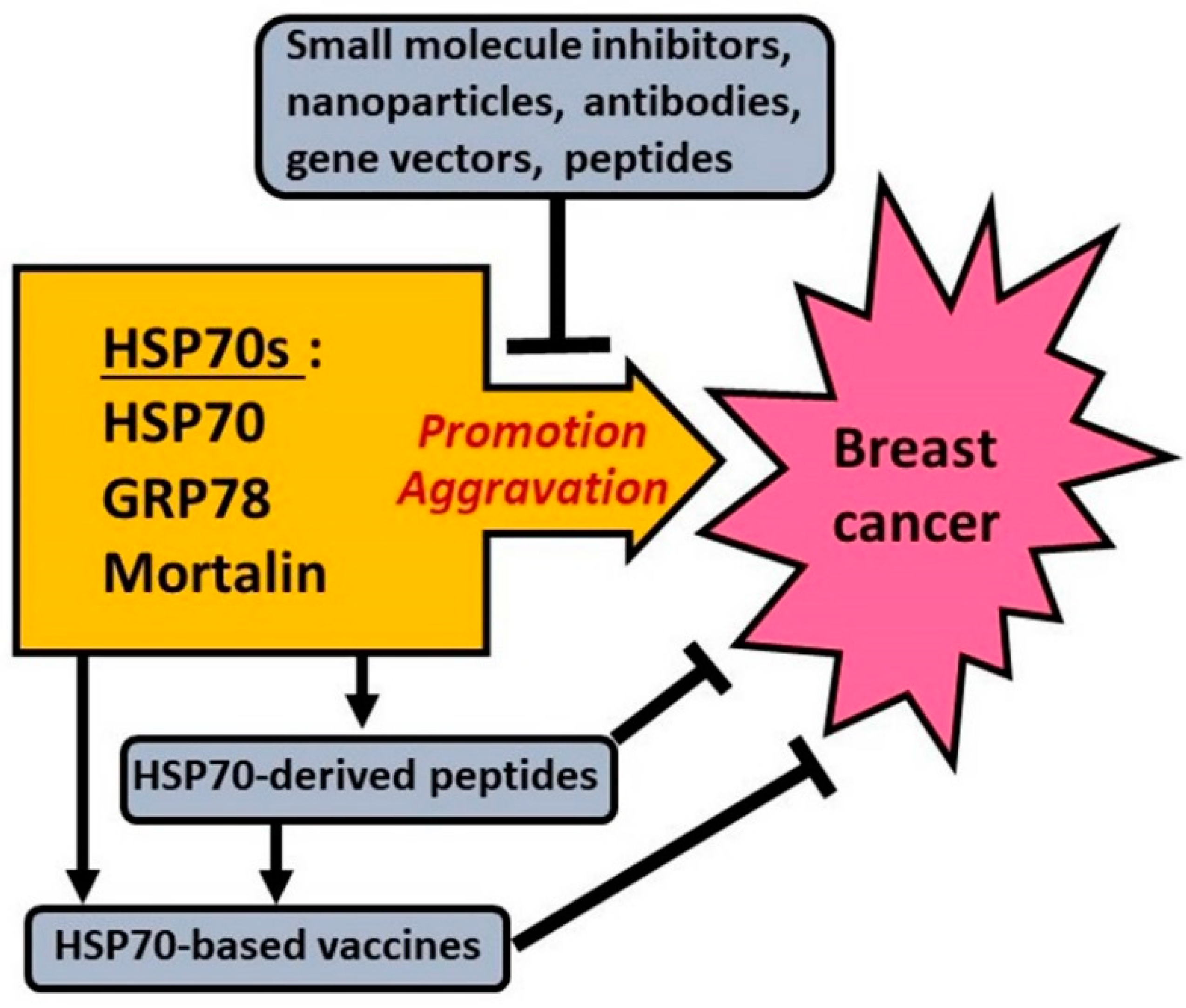
The high frequency of breast cancer worldwide and the high mortality among women with this malignancy are a serious challenge for modern medicine. A deeper understanding of the mechanisms of carcinogenesis and emergence of metastatic, therapy-resistant breast cancers would help development of novel approaches to better treatment of this disease. The review is dedicated to the role of members of the heat shock protein 70 subfamily (HSP70s or HSPA), mainly inducible HSP70, glucose-regulated protein 78 (GRP78 or HSPA5) and GRP75 (HSPA9 or mortalin), in the development and pathogenesis of breast cancer. Various HSP70-mediated cellular mechanisms and pathways which contribute to the oncogenic transformation of mammary gland epithelium are reviewed, as well as their role in the development of human breast carcinomas with invasive, metastatic traits along with the resistance to host immunity and conventional therapeutics. Additionally, intracellular and cell surface HSP70s are considered as potential targets for therapy or sensitization of breast cancer. We also discuss a clinical implication of Hsp70s and approaches to targeting breast cancer with gene vectors or nanoparticles downregulating HSP70s, natural or synthetic (small molecule) inhibitors of HSP70s, HSP70-binding antibodies, HSP70-derived peptides, and HSP70-based vaccines.
Keywords: heat shock protein; glucose-regulated protein; mortalin; mammary gland; cancer stem cells; epithelial-to-mesenchymal transition; chemotherapy; radiotherapy; immunotherapy heat shock protein; glucose-regulated protein; mortalin; mammary gland; cancer stem cells; epithelial-to-mesenchymal transition; chemotherapy; radiotherapy; immunotherapy