


Abstract
Long-term continuous cropping often leads to soil-borne pathogen enrichment, and reducing pathogen abundance in continuously cropped soils is an important control measure. In this study, three rotation crops—carrot (C), garlic (G), and bok choy (B)—were introduced into potato pathogen-infested soils. The effects of different systems on pathogen abundance, soil physicochemical properties, and soil microbial abundance were investigated to preliminarily clarify mechanisms by which crop rotation suppressed pathogen enrichment. The results showed that all rotation systems significantly reduced soil pathogen abundance (Fusarium oxysporum, Fo). Among the rotation systems, carrot rotation achieved the greatest Fo reduction and exhibited the strongest increase in soil pH, followed by garlic rotation, while bok choy rotation had the weakest effect. Carrot rotation significantly increased soil bacterial abundance over other treatments. Moreover, crop rotation effectively suppressed soil pathogen enrichment by increasing soil pH and bacterial abundance. Importantly, carrot rotation enhanced soil pathogen-suppressive enzyme activities and the abundance of antagonistic bacteria in the soil. In contrast, garlic root exudates directly inhibited the pathogen, while bok choy and carrot root exudates promoted pathogen growth. These findings demonstrated different rotation crops exhibit distinct pathogen suppression mechanisms. Carrot rotation may indirectly suppress soil pathogen enrichment by increasing the abundance of antagonistic bacteria and enhancing antifungal enzymes, whereas garlic rotation may directly inhibit the pathogen via root exudates. This study provides practical guidance for growers to select optimal rotation crops and design rational continuous cropping systems.
1. Introduction
The increased use and standardization of modern farming methods, while they aim to achieve high crop yields, have quickly disrupted the natural balance of farm soils. A major problem arising from this is continuous cropping, a phenomenon in which continuous cropping of the same crops for a long time leads to severe yield reduction and crop wilt disease. In these systems, the constant release of root exudates from the same type of crop, the unilateral alteration in soil physicochemical properties, and the accumulation of plant residues together create a highly specific microenvironment [1]. This process finally causes structural disorders in the soil microbial communities, mainly manifested as the progressive increase in soil-borne pathogens, such as Fusarium spp., together with a decrease in abundance and functions of beneficial soil microorganisms. As a result, the soil slowly changes into a “conducive” condition that facilitates the spread of pathogens [2,3]. This damage not only directly leads to a significant drop in crop production and quality but also renders farming highly dependent on fungicides for disease control. This then causes a series of environmental and agricultural problems, including pollution, pesticide residues, enhanced pathogen resistance, and loss of soil biodiversity [4]. As the world’s fourth largest food crop, potato plays a critical role in global food security, and stable cultivation is crucial for world food supply. Continuous potato cropping often causes a high rate of Fusarium wilt disease, which is mainly caused by Fusarium oxysporum f. sp. tuberosi. As a soil-borne microbial pathogen, it produces durable chlamydospores that can survive for more than 10 years in adverse soil conditions, and persists in potato monoculture soil, invades host plants through root wounds or natural openings, colonizes vascular tissues, and releases cell-wall-degrading enzymes and phytotoxins that cause browning, wilting, and death, with Fo abundance in the soil steadily increasing under continuous cropping. This disease often leads to a 30% to 50% yield loss and seriously limits the long-term growth of the potato industry [5,6]. Therefore, developing and establishing effective and safe integrated management strategies to alleviate obstacles associated with continuous potato cropping is of immediate practical and strategic importance for protecting food supply and supporting high-quality, green agricultural growth [7].
In dealing with the problems of continuous cropping, research has shifted from external input-dependent chemical control to ecological strategies that regulate ecosystem functions. Crop rotation, a widely applied and effective agronomic practice, is the main approach for alleviating continuous cropping problems by systematically regulating soil physical and chemical properties, microbial communities, and ecological functions [8]. Recent work has gradually revealed the multilevel factors underlying disease suppression via crop rotation. At the physical and chemical levels, rotation can change soil carbon-to-nitrogen ratio, adjust soil pH, and change redox potential, thus directly or indirectly suppressing pathogen growth [9]. Biologically, the core mechanism of disease suppression via crop rotation includes altering the assembly of bulk soil microbial communities and rhizosphere microbial groups by introducing non-host crops with different root exudates. This can enrich beneficial microorganisms and stimulate soil enzymes that can break down pathogen cell walls, thus building disease-suppressive microbial communities [10,11]. The beneficial microorganisms in soil mainly include diverse antagonistic microorganisms and taxa involved in niche competition, which are the dominant functional taxa driving soil disease suppression in agricultural systems. These antagonistic microorganisms suppress the pathogens by competing for root-zone resources and by releasing antimicrobials and cell-wall-degrading enzymes (including chitinase and β-1,3-glucanase), which directly damage fungal hyphae, inhibit spore germination, disrupt pathogen metabolism, and limit pathogen colonization and proliferation. In addition, some allelopathic crops, such as garlic, can exert direct chemical inhibition of pathogens through secondary products (e.g., allicin) released from their roots. Specifically for addressing potato continuous cropping obstacles, field trials and production practices have shown that rotation with cereals, legumes, or certain vegetables (e.g., garlic, onion) can reduce the frequency of soil-borne diseases to different levels [12,13]. However, current work still shows distinct limitations. Most studies have focused on assessing clear disease symptoms and yield performance after rotation, or revealing changes in whole microbial community diversity. A key limitation exists in our systematic and mechanistic understanding of how different rotational crops differentially regulate the abundance of specific pathogens like F. oxysporum—whether mainly through indirect microbial community regulation or by direct antifungal effects. Furthermore, the links between different crop types and their effects on modifying soil physicochemical properties, recruiting specific antagonistic microorganisms, and inducing the secretion of antifungal enzymes are still poorly understood [6,14]. This lack of insight into the crop-soil-microbe interaction mechanisms hinders the precise optimization of rotation models and the full realization of their disease-suppressive potential.
To address these research gaps and show the “crop-specific” mechanisms of disease suppression via crop rotation, we conducted a controlled rotation experiment. We selected garlic (G), known for its root chemicals with broad-spectrum antimicrobial activity, as a positive control showing “direct chemical inhibition”. At the same time, we chose two local vegetable crops for rotation with potato—carrot (C) and bok choy (B)—which may exhibit distinct disease suppression mechanisms. This work aims to complement traditional studies by developing a multi-dimensional research framework that connects observed phenomena to underlying mechanisms. We systematically investigated and compared, before and after rotation: (1) the abundance of the target pathogen F. oxysporum (Fo); (2) the main soil physicochemical properties; (3) the abundance of major microbial groups (total bacteria, fungi, and actinomycetes); and (4) the main biological indicators, specifically the soil enzyme activities including chitinase, β-1,3-glucanase, phosphatase, and urease. By integrating multi-factor quantitative studies, we aim to achieve these main goals: (1) to quantify and compare the efficacy of the three rotation crops in reducing the target pathogen F. oxysporum (Fo) in soil; (2) to find common mechanisms by identifying the main causes consistently associated with better soil quality and suppression of pathogen abundance after rotation, while also showing the special mechanisms by explaining and comparing the different paths through which different crops achieve pathogen control. By this side-by-side comparison of pathogen control results and ways among different rotation crops, this work aims to provide a solid theoretical basis for the rational selection and optimization of crop combinations in rotation plans to manage soil-borne diseases, including those affecting potatoes.
2. Materials and Methods
2.1. Experimental Design
A five-year (from 2018 to 2022) potato monoculture trial (with two cropping cycles per year) was conducted in Fengyang County, Chuzhou, Anhui (32.5° N, 117.6° E) using the local potato variety “Zhongshu 5”, which was manually sown in ridges with 60 cm row spacing. The soil in this field is a typical yellow-brown soil in the dry farming area of the Jianghuai hilly region, and it is classified as Hapli-Udic Luvisols in the Chinese Soil Taxonomy. The main physical and chemical properties of the topsoil layer (0–20 cm) were as follows: pH 5.62, organic matter 18.36 g·kg−1, alkali-hydrolyzable nitrogen 92.45 mg·kg−1, available phosphorus 28.63 mg·kg−1, available potassium 186.72 mg·kg−1, and electrical conductivity 235.6 μS·cm−1. This experiment was conducted from August to December in both 2023 and 2024 at the experimental station of Anhui University of Science and Technology, Anhui Province, China. From August to December in both 2023 and 2024, a field with a long-term history of potato monoculture was selected annually to conduct this study. (With an incidence rate > 50%, plants with typical symptoms of F. oxysporum infection, such as wilting, yellowing, and vascular browning, were defined as diseased individuals. The disease incidence was calculated as the number of diseased plants divided by the total number of plants multiplied by 100%.) Potato, carrot, garlic, and bok choy were planted in the long-term potato monoculture field to compare the influences of various crop rotation regimes on soil properties in a continuous cropping system. The soil from long-term potato monoculture was used as a positive control to determine the level of F. oxysporum contamination. Soil samples were collected at the harvest stage of each crop. To ensure the accuracy and reliability of the results, three biological replicates were established for each treatment, and each biological replicate had an area of 6 m × 8 m. All treatments were arranged in a completely randomized design. Each treatment included three biological replicates as the true experimental units, and three technical replicates were conducted for each biological replicate to verify data consistency and stability. All statistics in this article were calculated based on biological replicates to avoid pseudoreplication. Finally, all treatments received the same regular irrigation, uniform fertilization, and timely weeding.
2.2. Soil Sample Sampling and Processing
Soil samples were collected from the 0–20 cm plow layer. After sample collection, visible plant debris (such as roots, stems, and leaves) and stones were immediately removed from the soil samples in the laboratory. The fresh soil samples were thoroughly homogenized and passed through a 2 mm nylon sieve to ensure consistency for subsequent physicochemical property analyses and microbial assays. The sieved soil samples were then divided into three subsamples: one subsample was air-dried at room temperature in a well-ventilated environment, ground to pass through a 0.15 mm (100-mesh) sieve, and used for the determination of soil physicochemical properties; another subsample was stored at 4 °C for the determination of soil enzyme activities; and the remaining subsample was stored at −80 °C in a freezer for the determination of soil microbial communities and related biological activities [15]. Each treatment consisted of three independent biological replicates, and three technical replicates were performed for each biological replicate.
2.3. Sample Determination
2.3.1. Determination of Soil Physical and Chemical Properties
Air-dried soil samples were ground and passed through a 0.15 mm sieve for the determination of the following physicochemical properties. Three biological replicates were set up for each treatment, and each biological replicate was measured in three technical replicates. Soil organic carbon content was determined using the dichromate oxidation method [16]. Soil alkali-hydrolyzable nitrogen content was determined using the alkaline hydrolysis diffusion method [17]. Soil available phosphorus content was determined using the 0.5 mol·L−1 sodium bicarbonate method [18]. Soil available potassium content was determined using the ammonium acetate extraction-flame photometry method [19]. Soil electrical conductivity was determined with a conductivity meter [20], and soil pH was determined with a pH meter [21]. Soil water content was calculated from the weight difference between fresh soil samples and the corresponding oven-dried soil samples [22].
2.3.2. Microbial Real Time qPCR Quantification
Total soil DNA was extracted with the DNeasy PowerSoil Pro Kit (Qiagen, Hilversum, Netherlands) following the manufacturer’s instructions. SYBR Green was purchased from Takara (Kusatsu, Shiga, Japan), and eight-strip PCR tubes were purchased from Axygen (Union City, CA, USA). The gene copy numbers of fungi, bacteria, and actinomycetes were determined with an ABI 7500 Real-Time PCR System. The primer sets used were ITS1/5.8S (ITS1: 5′-TCCGTAGGTGAACCTGCGG-3′; 5.8S: 5′-CGCTGCGTTCTTCATCG-3′) for total fungi, 357/518 (357: 5′-TACGGGAGGCAGCAG-3′; 518: 5′-ATTACCGCGGCTGCTGG-3′) for total bacteria, and 243F/1387R (243F: 5′-GGATGAGCCCGCGGCCTATCAG-3′;1387R:5′-GGGCGGWGTGTACAAGGC-3′) for total actinomycetes. The qPCR program was as follows: 95 °C for 30 s; 30 cycles of 95 °C for 5 s and 60 °C for 34 s; and a melting curve stage of 95 °C for 15 s, 60 °C for 1 min, and 95 °C for 15 s. The 20 μL reaction mixture consisted of 10 μL 2 × SYBR Premix, 0.4 μL each of forward and reverse primers, 0.4 μL ROX II (50×), 2 μL of DNA template, and 6.8 μL ddH2O. Quantification of F. oxysporum was performed according to the method of Haegi et al. [23], using a real-time quantitative PCR (qPCR) assay with specific primers designed based on the translation elongation factor 1-α gene.
2.3.3. Determination of Soil Enzyme Activities
Soil chitinase activity was determined using a chitinase kit (Comin Biotechnology Co., Ltd., Suzhou, China) in accordance with the manufacturer’s instructions, based on the colorimetric method with p-nitrophenyl-N-acetyl-β-D-glucosaminide (pNP-NAG) as the substrate [24]. One unit of enzyme activity (U) was defined as the amount of enzyme that produced 1 μmol of p-nitrophenol per hour per gram of dry soil. Soil β-1,3-glucanase activity was determined with a β-1,3-glucanase kit (Nanjing Jiancheng Bioengineering Institute, Nanjing, China) in accordance with the manufacturer’s protocol, based on the 3,5-dinitrosalicylic acid (DNS) colorimetric method [25]. One unit of enzyme activity (U) was defined as the amount of enzyme that produced 1 mg of glucose equivalent per hour per gram of dry soil. Soil acid phosphatase activity was determined with an acid phosphatase kit (Nanjing Jiancheng Bioengineering Institute, China) in accordance with the manufacturer’s instructions, based on the method of Tabatabai and Bremner [26] with disodium p-nitrophenyl phosphate (PNPP) as the substrate. One unit of enzyme activity (U) was defined as the amount of enzyme that produced 1 μmol of p-nitrophenol per hour per gram of dry soil. Soil urease activity was determined with a urease kit (Comin Biotechnology Co., Ltd., Suzhou, China) according to the manufacturer’s protocol, based on the phenol-sodium hypochlorite colorimetric method [27]. One unit of urease activity (U) was defined as the amount of enzyme that produced 1 mg of NH3-N per gram of dry soil within 24 h.
2.3.4. Determination of the Effects of Root Exudates from Different Crops on Pathogen Growth
Root exudates were collected in accordance with the method of Phillips et al. [28] with modifications. Uniform seedlings of potato (control), garlic, carrot, and bok choy were carefully selected. Roots were gently rinsed with deionized water and then transferred to light-proof collection bottles containing 200 mL of sterile deionized water for 48 h. The collection solution was first filtered through qualitative filter paper to remove root debris and then sterilized by filtration through a 0.22 μm membrane filter to obtain the stock solution of root exudates from different crops, which was stored at 4 °C for further use [29].
The effect of root exudates on the growth of F. oxysporum f. sp. tuberosi, this pathogen was obtained from the Microbiology Lab in the College of Resources and Environmental Sciences at Nanjing Agricultural University. Its identity was confirmed via morphological characterization, molecular evidence, and pathogenicity confirmation. Routine culturing was conducted on PDA medium incubated at 28 °C in the dark. The pathogen responsible for potato Fusarium wilt, was determined via the mycelial growth rate assay as described by Dennis et al. [30]. Under sterile conditions, PDA medium was mixed with the root exudate stock solution at a ratio of 9:1 (v/v) to prepare plates containing 10% root exudates. Plates supplemented with an equal volume of sterile water served as the control (CK). A 5 mm diameter mycelial plug of the pathogen was inoculated at the center of each plate and incubated in the dark at 28 °C. Colony diameter was measured every 24 h via the cross-measurement method until the control plates were fully covered. Each treatment was set up in triplicate.
2.3.5. Determination of Antagonistic Bacteria Proportion
The proportion of antagonistic bacteria in the soil was determined in accordance with the methods described by Wei et al. [31] and Xiong et al. [32]. A total of 50 purified bacterial strains were isolated from the soil samples of each treatment. The dual-culture plate assay was performed to assess antagonistic activity against the target pathogen. A mycelial plug (5 mm in diameter) of the pathogen F. oxysporum f. sp. tuberosi, the causal agent of potato Fusarium wilt, was placed at the center of a PDA plate. The tested bacterial strains were streaked at a distance of 2.5 cm from the center. Plates without bacterial inoculation served as controls. Each treatment was set up in triplicate. After incubation at 28 °C for 5 days, the colony diameter of the pathogen was measured, and the width of the inhibition zone was calculated. Bacterial strains producing an inhibition zone width not less than 2 mm were considered antagonistic. The proportion of antagonistic bacteria was then calculated as the percentage of antagonistic strains relative to the total number of tested bacterial strains.
2.4. Data Analysis and Processing
Raw data were organized in Microsoft Excel 2019, and the means and standard errors for each variable were calculated. Statistical analyses were performed with R software (version 4.0). One-way analysis of variance (ANOVA) was used to test the significance of differences among treatments, followed by Duncan’s new multiple range test for multiple comparisons at a significance level of p < 0.05 [33]. Pearson correlation analysis was used to evaluate the correlations between pathogen abundance and soil physicochemical properties or microbial populations [34]. To enable the identification of the key factors influencing pathogen abundance, multiple linear regression models were fitted. The goodness-of-fit of the models was evaluated via the Akaike Information Criterion (AIC) and Bayesian Information Criterion (BIC) [35,36]. Normality of residuals was assessed via the Shapiro–Wilk test [37]. The relative importance of each predictor variable was determined through relative importance analysis [38]. Finally, structural equation modeling (SEM) was performed to analyze the causal relationships among crop rotation, soil physicochemical properties, microorganisms (fungi, bacteria, and actinomycetes) and pathogen abundance. Model fitting was conducted using the maximum likelihood method. The overall model fit was evaluated with the chi-square statistic (χ2), degrees of freedom (df), and probability value (p) [39]. For all statistical tests, the significance level was set at p < 0.05.
3. Results
3.1. Effects of Different Crop Rotations on F. oxysporum Abundance in Continuous Potato Cropping Soil
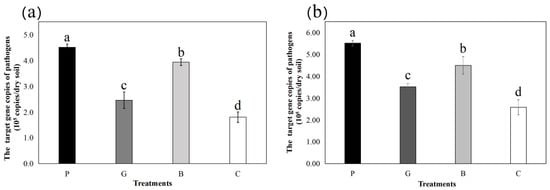
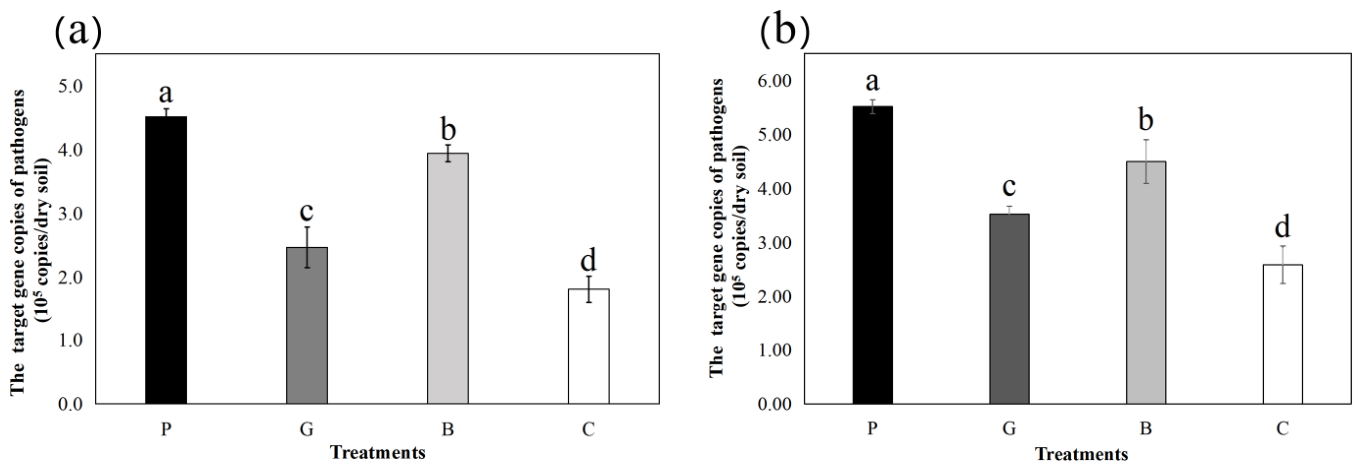
As shown in Figure 1a,b, all rotation regimes significantly reduced the abundance of F. oxysporum in soil compared with potato monoculture (P) (p < 0.05); bok choy (B) rotation only decreased pathogen abundance relative to the monoculture (p < 0.05), but pathogen abundance in this treatment remained significantly higher than that in garlic (G) and carrot (C) rotations (p < 0.05). Garlic (G) and carrot (C) rotations both exhibited significantly lower pathogen levels, with carrot rotation showing a significantly greater reduction than garlic (G) rotation (p < 0.05).
Figure 1.
Abundance of F. oxysporum in continuous potato cropping soil under different crop rotation systems in 2023 and 2024. Notes: Different lowercase letters indicate significant differences among different treatments at the p < 0.05 level. (a,b) Represent the experimental data obtained in 2023 and 2024, respectively. The vertical axis shows the target gene copies of F. oxysporum target gene copies per gram of dry soil. The same applies below. Different lowercase letters indicate significant differences among treatments at the p < 0.05 level. (a,b) Represent the experimental data obtained in 2023 and 2024, respectively. P: continuous potato cropping; C: potato–carrot rotation; G: potato–garlic rotation; B: potato–bok choy rotation. The y-axis shows the target gene copy number of F. oxysporum per gram of dry soil.
3.2. Effects of Different Crop Rotations on Soil pH and Electrical Conductivity (EC) in Continuous Potato Cropping Soil
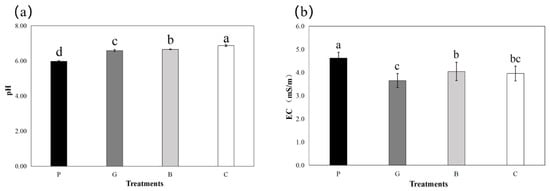
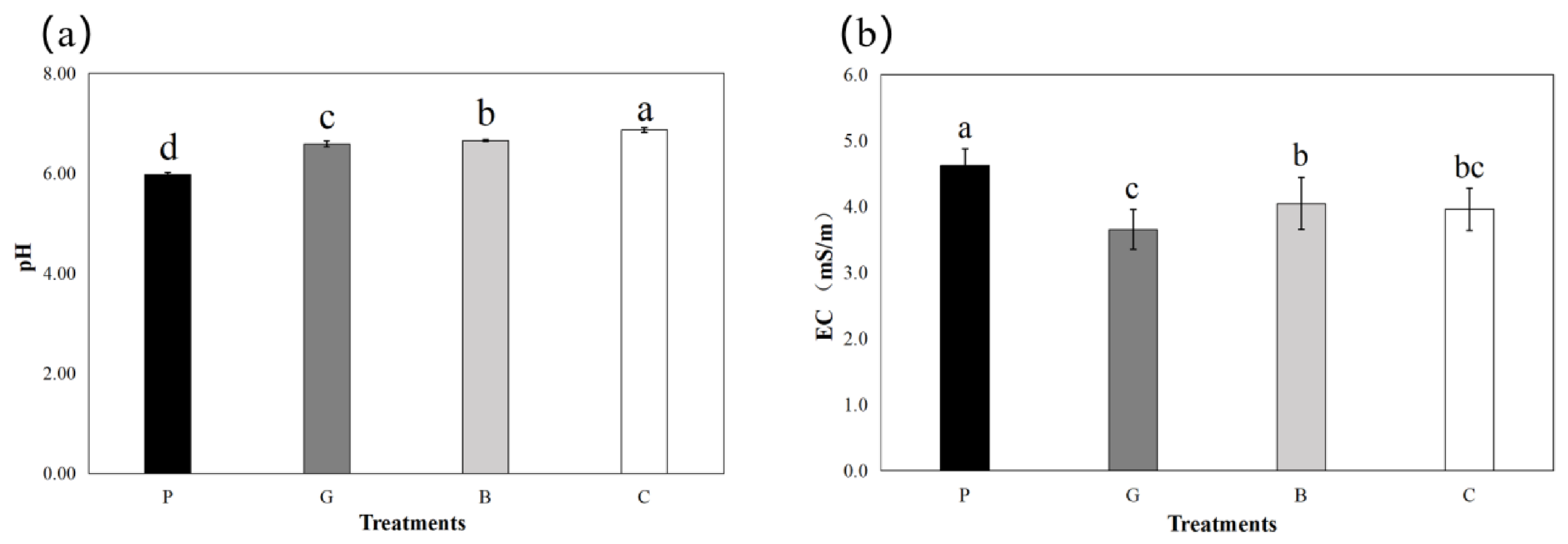
Crop rotation altered soil pH and electrical conductivity (EC) compared with continuous potato cropping (Figure 2). Soil pH differed significantly across treatments (p < 0.05; Figure 2a). Continuous potato cropping (P) had the lowest pH, which was significantly lower than that in all rotation treatments (p < 0.05). Carrot rotation (C) had the highest pH, followed by bok choy rotation (B), which was significantly lower than that in carrot rotation but higher than garlic rotation (G; p < 0.05). Soil EC also varied significantly among treatments (p <0.05; Figure 2b). The highest EC was observed in continuous potato cropping (P), which was significantly higher than that in all rotation treatments (p < 0.05). Garlic rotation (G) had the lowest EC. Bok choy rotation (B) had intermediate EC—which was significantly lower than that in potato monoculture (p < 0.05). No significant difference in EC was detected between carrot rotation (C) and bok choy rotation (B).
Figure 2.
Soil pH and electrical conductivity (EC) in continuous potato cropping soil under different crop rotation systems. Notes: The panel (a) shows soil pH; panel (b) shows soil electrical conductivity (EC). P: continuous potato cropping; C: potato–carrot rotation; G: potato–garlic rotation; B: potato–bok choy rotation. The y-axis shows pH (a) and EC (b) value. Different lowercase letters indicate significant differences among treatments at the p < 0.05 level.
3.3. Effects of Different Crop Rotations on Soil Nutrient Contents in Continuous Potato Cropping Soil
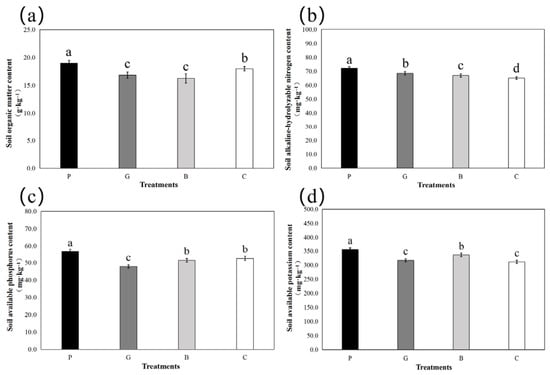
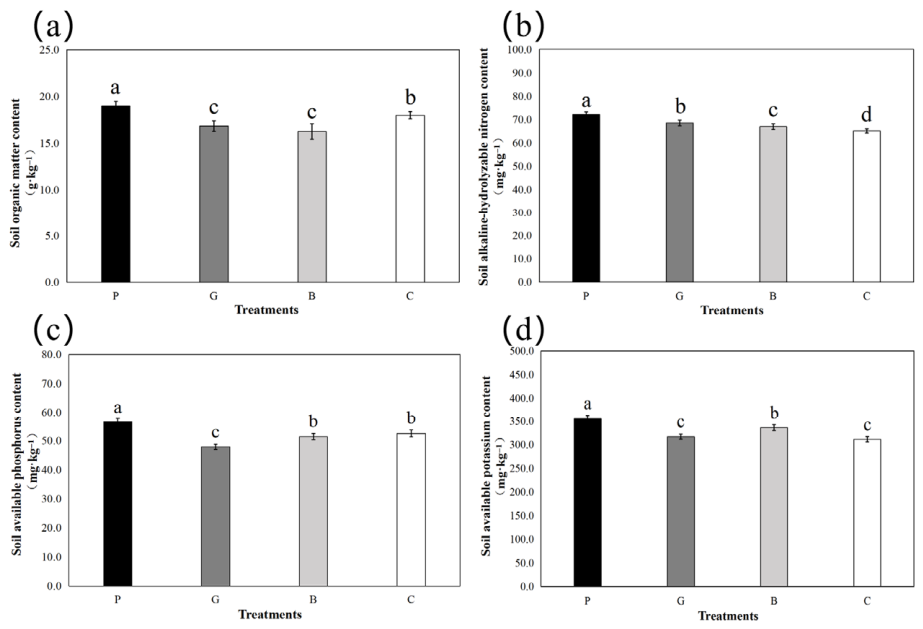
Crop rotation altered soil nutrient contents compared with continuous potato cropping (Figure 3). Soil organic matter (SOM) differed significantly across treatments (p < 0.05; Figure 3a). Continuous potato cropping (P) had the highest SOM content, which was significantly higher than that in all rotation treatments (p < 0.05). Carrot rotation (C) had intermediate SOM, while garlic (G) and bok choy (B) rotations had the lowest SOM, with no significant difference between them. Soil alkali-hydrolyzable nitrogen (AN) also varied significantly among treatments (p < 0.05; Figure 3b). The highest AN content was observed in continuous potato cropping (P), which was significantly higher than that in all rotation treatments (p < 0.05). Garlic rotation (G) showed intermediate AN, while carrot rotation (C) had the lowest AN content. Available phosphorus (AP) content differed significantly across treatments (p < 0.05; Figure 3c). Continuous potato cropping (P) had the highest AP content, which was significantly higher than that in all rotation treatments (p < 0.05). Bok choy (B) rotation and carrot rotation (C) had intermediate AP, with no significant difference between them (p > 0.05). Garlic rotation (G) had the lowest AP content, which was significantly lower than that of the other rotation treatments (p < 0.05). Available potassium (AK) content also differed significantly among treatments (p < 0.05; Figure 3d). The highest AK content was observed in continuous potato cropping (P), significantly exceeding all rotation treatments (p < 0.05). Bok choy rotation (B) had intermediate AK, while garlic (G) and carrot (C) rotations had the lowest AK, with no significant difference between them (p > 0.05).
Figure 3.
Soil nutrient contents in continuous potato cropping soil under different crop rotation systems. Notes: Panel (a) shows soil organic matter (SOM); panel (b) shows alkali-hydrolyzable nitrogen (AN); panel (c) shows available phosphorus (AP); panel (d) shows available potassium (AK). P: continuous potato cropping; C: potato–carrot rotation; G: potato–garlic rotation; B: potato-bok choy rotation. The y-axis shows the nutrient contents. Different lowercase letters indicate significant differences among treatments at the p < 0.05 level.
3.4. Effects of Different Crop Rotations on Soil Total Bacterial, Fungal and Actinobacterial Abundances in Continuous Potato Cropping Soil: Carrot Rotation Significantly Increases Total Bacterial Abundance
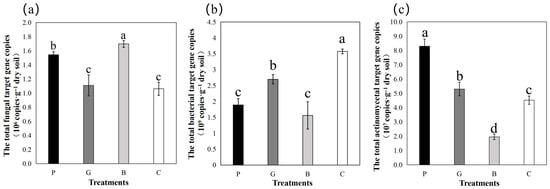
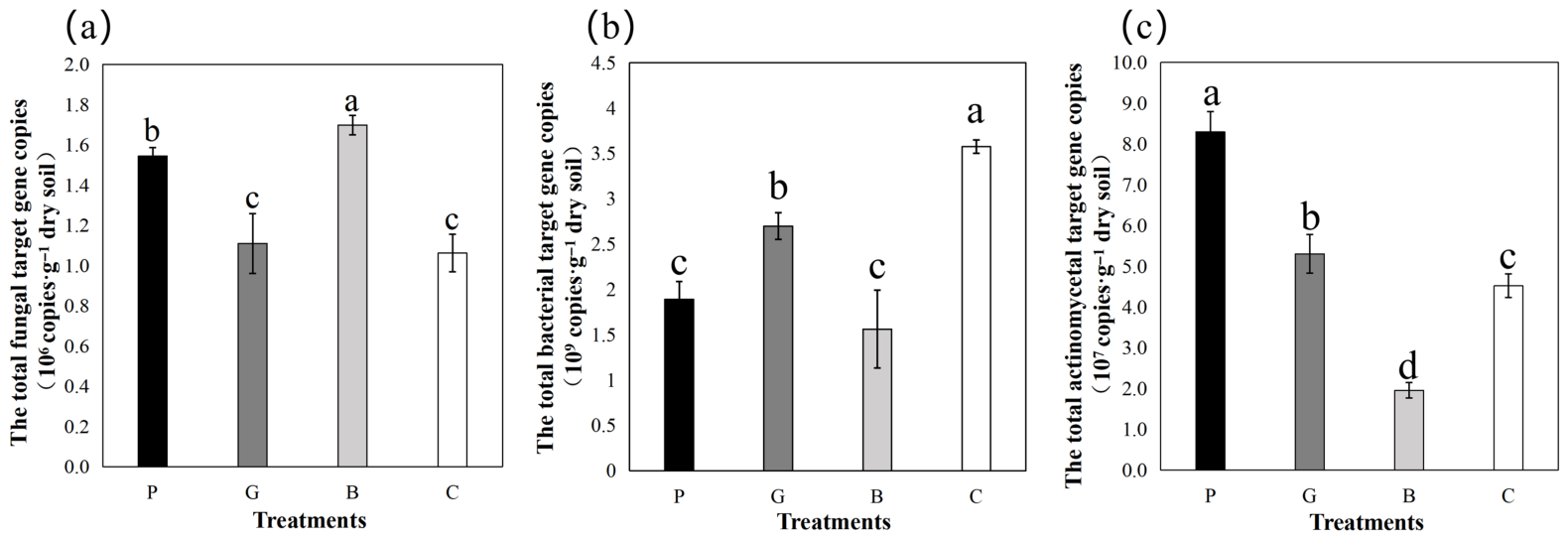
Crop rotation altered soil microbial abundance compared with continuous potato cropping (Figure 4). Fungal abundance differed significantly across treatments (p < 0.05; Figure 4a). Bok choy rotation (B) had the highest fungal abundance, which was significantly higher than that in all other treatments (p < 0.05). Continuous potato cropping (P) had intermediate fungal abundance, while garlic (G) and carrot (C) rotations had the lowest levels, with no significant difference between them (p > 0.05), which were approximately 1.1 × 10⁶ and 1.05 × 10⁶ copies·g−1 dry soil, respectively. Bacterial abundance also varied significantly among treatments (p < 0.05; Figure 4b). Carrot rotation (C) showed the highest bacterial abundance, which was significantly higher than that in all other treatments (p < 0.05). Garlic rotation (G) had intermediate bacterial abundance, while continuous potato cropping (P) and bok choy rotation (B) had the lowest levels, with no significant difference between them (p > 0.05), which were approximately 1.9 × 10⁹ and 1.6 × 10⁹ copies·g−1 dry soil, respectively. Actinomycetes abundance differed significantly across treatments (p < 0.05; Figure 4c). Continuous potato cropping (P) exhibited the highest actinobacterial abundance, which was significantly higher than that in all rotation treatments (p < 0.05), with an approximately value of 8.3 × 10⁷ copies·g−1 dry soil. Garlic (G) and carrot (C) rotations had intermediate levels, which were approximately 5.3 × 10⁷ and 4.5 × 10⁷ copies·g−1 dry soil, respectively, while bok choy rotation (B) had the lowest actinomycetes abundance, significantly lower than all other treatments (p < 0.05), approximately reaching 2.0 × 10⁷ copies·g−1 dry soil.
Figure 4.
Abundances of total bacteria, fungi and actinomycetes in continuous potato cropping soil under different crop rotation systems. Notes: Panel (a) shows fungal abundance; panel (b) shows bacterial abundance; panel (c) shows actinobacterial abundance. The same notation applies to subsequent figures. P: continuous potato cropping; C: potato–carrot rotation; G: potato–garlic rotation; B: potato–bok choy rotation. The y-axis shows the target gene copy number of total fungi, bacteria, and actinomycetes per gram of dry soil. Different lowercase letters indicate significant differences among treatments at the p < 0.05 level.
3.5. Correlation Analysis Between F. oxysporum Abundance and Soil Physicochemical, Microbial Properties Under Different Crop Rotations
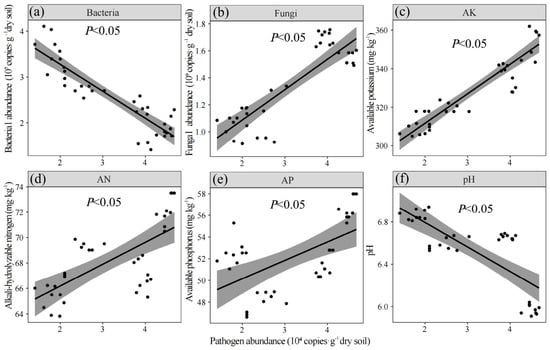
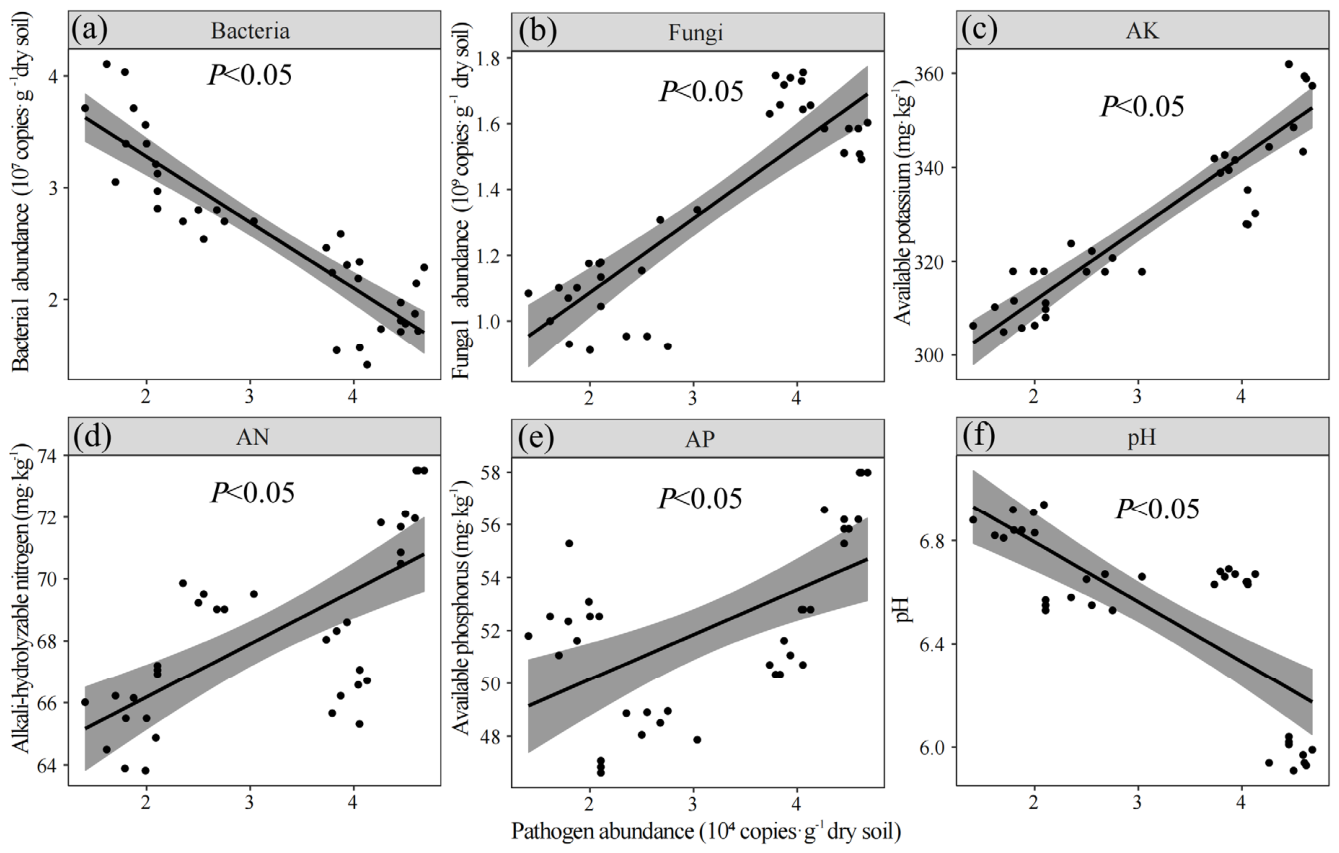
Correlation analysis revealed significant correlations between the abundance of the pathogen F. oxysporum and soil microbial parameters, nutrient contents, and pH (Figure 5). The abundance of F. oxysporum was significantly negatively correlated with bacterial abundance (Figure 5a, p < 0.05), but significantly positively correlated with fungal abundance (Figure 5b, p < 0.05). Soil available potassium (AK), alkali-hydrolyzable nitrogen (AN), and available phosphorus (AP) contents all showed significant positive correlations with pathogen abundance (Figure 5c–e, p < 0.05). In contrast, soil pH had a significant negative correlation with the pathogen abundance (Figure 5f, p < 0.05).
Figure 5.
Pearson correlation between F. oxysporum abundance and soil physicochemical, microbial properties under different crop rotations. Notes: Pearson correlation analysis showing the relationships between the abundance of F. oxysporum (Fo) and (a) bacterical bacterial abundance, (b) fungal abundance, (c) available potassium (AK), (d) alkali-hydrolyzable nitrogen (AN), (e) available phosphorus (AP), and (f) soil pH. The x-axis represents the gene copies of Fo per gram of dry soil (copies·g−1). Significant correlations were determined at the p < 0.05 level.
3.6. Linear Model Analysis of Key Driving Factors Associated with Soil F. oxysporum Abundance
Linear regression models identified key factors contributing to the variation in the abundance of the soil pathogen F. oxysporum (Table 1). The adjusted R2 value was 0.97, with these factors collectively explaining 96.93% of the variance in pathogen abundance (p < 0.001). The model yielded an AIC of 5.90 and a BIC of −3.90. The Shapiro–Wilk normality test confirmed that the model residuals followed a normal distribution (W = 0.97, p = 0.46), confirming the validity of the linear model. Available potassium (AK) showed the highest relative importance (27.81%) in explaining variation in pathogen abundance, exhibiting a highly significant positive correlation with pathogen abundance (p < 0.01, r = 0.31). Fungal abundance ranked second in relative importance (25.96%), also showing a highly significant positive association with pathogen abundance (p < 0.001, r = 0.37). Bacterial abundance accounted for 25.53% of the explained variance, demonstrating a highly significant negative correlation with pathogen abundance (p < 0.001, r = −0.24). Soil pH contributed 17.63% of the explained variance, with a highly significant negative relationship with pathogen abundance (p < 0.001, r = −0.19).
Table 1.
Linear model analysis of key factors associated with soil pathogen abundance.
3.7. Structural Equation Modeling of the Driving Pathways of Crop Rotation on Soil F. oxysporum Abundance
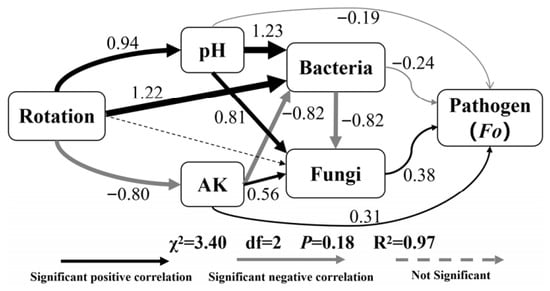
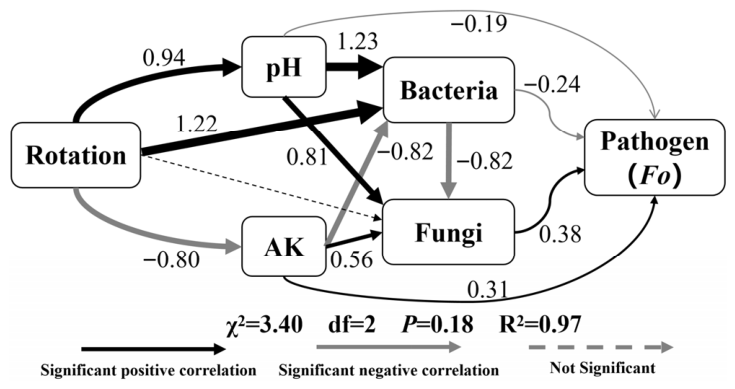
Structural equation modeling (SEM) was performed to disentangle the direct and indirect effects of crop rotation, soil physicochemical properties, and microbial communities on the abundance of the target pathogen F. oxysporum (Fo) (Figure 6). The model showed a good fit (χ2 = 3.40, df = 2, p = 0.18) and explained 97% of the variance in Fo abundance (R2 = 0.97), effectively capturing the underlying relationships among rotation, soil factors, microbial parameters, and pathogen abundance. Rotation exerted positive direct effects on soil pH (path coefficient = 0.94, p < 0.05) and bacterial abundance (path coefficient = 1.22, p < 0.05), but exerted a significant negative direct effect on available potassium (AK; path coefficient = −0.80, p < 0.05). And rotation exerted a non-significant direct effect on fungal abundance (p > 0.05). Soil pH showed strong positive direct effects on bacterial abundance (path coefficient = 1.23, p < 0.05) and fungal abundance (path coefficient = 0.81, p < 0.05), but exerted a significant negative direct effect on Fo abundance (path coefficient = −0.19, p < 0.05). Available potassium (AK) positively influenced fungal abundance (path coefficient = 0.56, p < 0.05) and Fo abundance (path coefficient = 0.31, p < 0.05), but exerted a significant negative direct effect on bacterial abundance (path coefficient = −0.82, p < 0.05). Bacterial abundance exerted significant negative direct effects on both fungal abundance (path coefficient = −0.82, p < 0.05) and Fo abundance (path coefficient = −0.24, p < 0.05). In contrast, fungal abundance showed a significant positive direct effect on Fo abundance (path coefficient = 0.38, p < 0.05).
Figure 6.
Structural equation model (SEM) of driving pathways of crop rotation on F. oxysporum abundance based on key factor analysis. Notes: This structural equation model (SEM) illustrates the causal relationships among crop rotation, soil physicochemical properties (pH, available potassium (AK)), soil microbial abundances (bacteria, fungi), and the abundance of F. oxysporum (Fo). Values on the arrows represent path coefficients; model fit indices include χ2, df, p, and R2. Black solid lines represent significant positive correlation; gray solid lines represent significant negative correlation; gray dashed lines represent non-significant correlation.
3.8. Effects of Different Crop Rotations on Soil Antifungal and Related Enzyme Activities in Continuous Potato Cropping Soil
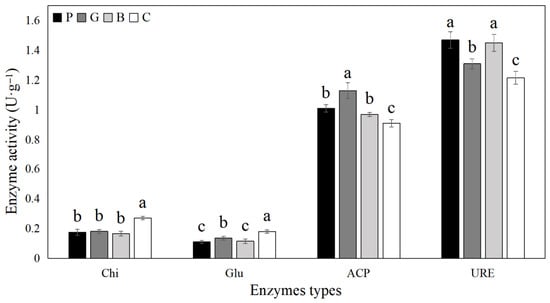
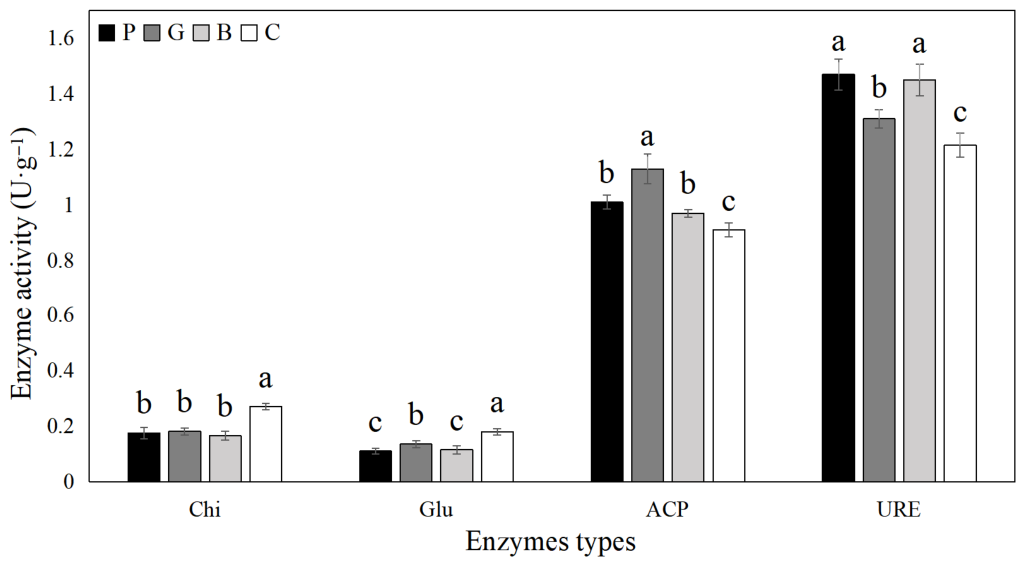
Crop rotation significantly altered the activity of chitinase (Chi), β-1,3-glucanase (Glu), acid phosphatase (ACP), and urease (URE) in soil (Figure 7). For chitinase, carrot rotation (C) had the highest activity, which was significantly higher than that in all other treatments (p < 0.05). No significant difference was detected among continuous potato cropping (P), garlic rotation (G), and bok choy rotation (B). β-1,3-glucanase activity followed a similar pattern. Carrot rotation (C) had the highest activity, significantly higher than the other treatments (p < 0.05). Garlic rotation (G) exhibited intermediate activity, while continuous potato cropping (P) and bok choy rotation (B) had the lowest activity levels, with no significant difference between them. Acid phosphatase activity differed significantly across treatments. Garlic rotation (G) had the highest ACP activity, which was significantly higher than that in all other treatments (p < 0.05). Continuous potato cropping (P) and bok choy rotation (B) had intermediate activity levels, while carrot rotation (C) had the lowest ACP activity, which was significantly lower than that in the other three treatments (p < 0.05). For urease, continuous potato cropping (P) and bok choy rotation (B) had the highest activity levels, with no significant difference between the two treatments. Garlic rotation (G) had intermediate URE activity, while carrot rotation (C) had the lowest activity, which was significantly lower than that in all other treatments (p < 0.05).
Figure 7.
Soil enzyme activities in continuous potato cropping soil under different crop rotation systems. Notes: Chi shows chitinase; Glu shows β-1,3-glucanase; ACP shows acid phosphatase; URE shows urease. The y-axis shows the enzyme activity (U·g−1). Different lowercase letters indicate significant differences among treatments at the p < 0.05 level.
3.9. Effects of Root Exudates from Different Rotation Crops on the Mycelial Growth of Potato Fusarium Wilt Pathogen
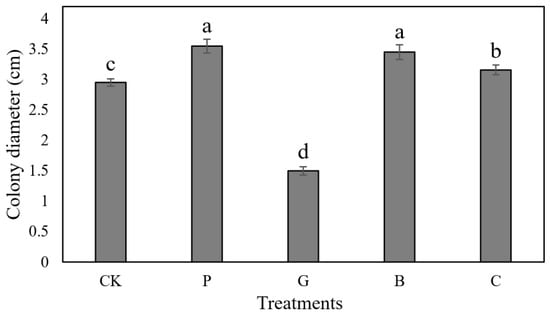
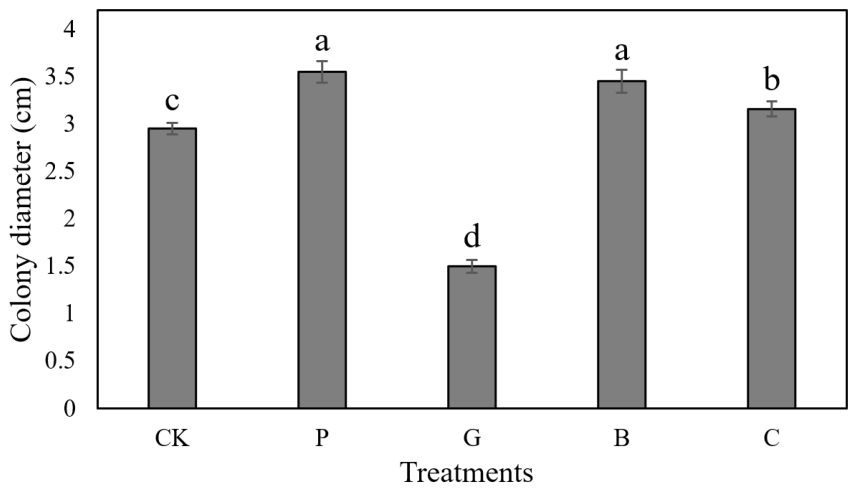
Root exudates from different crops differentially affected the colony growth of the pathogen F. oxysporum f. sp. tuberosi (Figure 8). Compared with the control (CK), the addition of potato (P), bok choy (B), and carrot (C) root exudates significantly increased the colony diameter of the target pathogen, whereas garlic (G) root exudates significantly reduced pathogen colony growth. No significant difference was observed between the potato (P) and bok choy (B) root exudate treatments. Carrot (C) root exudates resulted in significantly smaller pathogen colony diameters compared with those in the potato (P) and bok choy (B) root exudate treatments. Garlic (G) root exudates had the strongest inhibitory effect, with pathogen colony diameters significantly lower than those in all other treatments.
Figure 8.
Effects of root exudates from different rotation crops on the mycelial growth of potato Fusarium wilt pathogen F. oxysporum f. sp. Tuberosi. Notes: CK: blank control (supplemented with sterile water); P: 10% potato root exudates; G: 10% garlic root exudates; B: 10% bok choy root exudates; C: 10% carrot root exudates. The vertical axis shows the colony diameter of F. oxysporum. Different lowercase letters indicate significant differences among treatments at the p < 0.05 level.
3.10. Proportion of the Pathogen-Antagonistic Bacteria in the Soil Under Different Crop Rotation Treatments
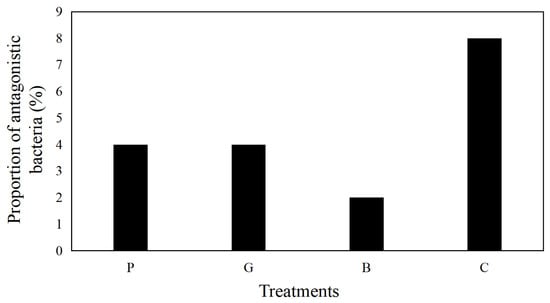
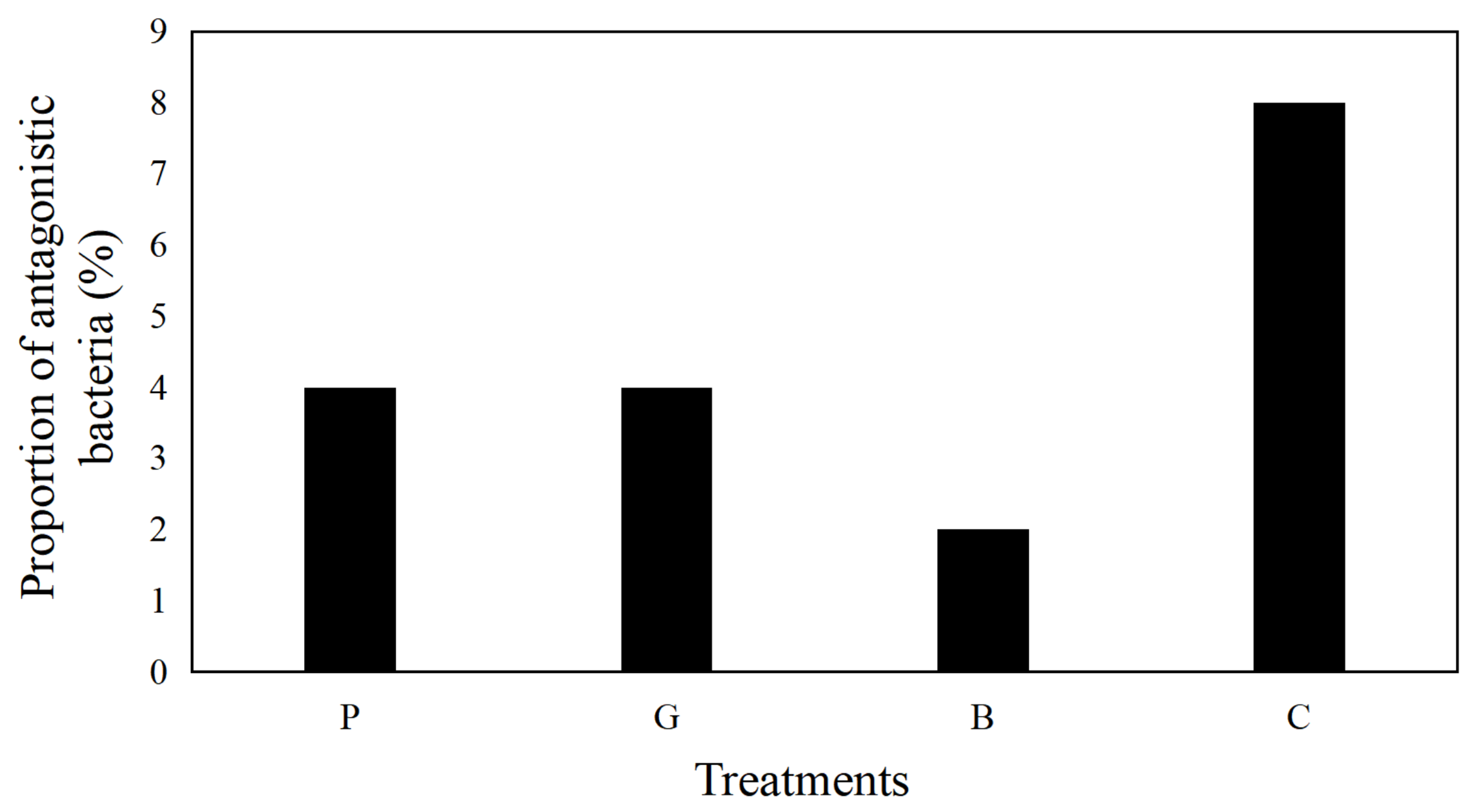
The proportion of antagonistic bacteria in the tested soil differed significantly across treatments (Figure 9). Continuous potato cropping (P) and garlic rotation (G) both had a 4% proportion of antagonistic bacteria. Bok choy rotation (B) had the lowest proportion at 2%. Carrot rotation (C) had the highest proportion of antagonistic bacteria, which accounted for 8% of the total culturable bacterial isolated.
Figure 9.
Proportion of pathogen-antagonistic bacteria in continuous potato cropping soil under different crop rotation systems. Notes: P: continuous potato cropping; C: potato–carrot rotation; G: potato–garlic rotation; B: potato–bok choy rotation. The vertical axis shows the percentage of antagonistic bacteria in soil (%).
4. Discussion
Rotation of carrot, garlic, and bok choy significantly reduced the abundance of F. oxysporum compared with potato monoculture. However, the level of pathogen suppression was different for each crop, with carrot rotation exhibiting the strongest inhibitory effect, followed by garlic, and then bok choy. This finding was consistent with the earlier study [40], which showed that crop rotation could alter soil microbial communities and reduce the abundance of pathogens hosted by non-rotational crops, possibly due to differences in root exudates, crop residues, and other related substances. Interestingly, even though carrot rotation exhibited the strongest pathogen suppression effect, carrot root exudates promoted the mycelial growth of F. oxysporum in in vitro assays. This suggested that direct inhibition of the pathogen by the exudates might not be the primary mechanism. Liu et al. [41] reported in soybean systems that crop rotation could suppress pathogen abundance mainly by altering the soil microbial communities and physicochemical properties. Wei et al. [31] also demonstrated that the presence and activity of antagonistic taxa in the microbial community were important for pathogen suppression. It might be reasonably hypothesized that carrot rotation is partially related to the enrichment of beneficial microorganisms or variations in physicochemical conditions. Meanwhile, garlic rotation significantly reduced the pathogen abundance during the field experiment, and the garlic root exudates also showed a direct pathogen-suppressive effect in in vitro assays. Zhou et al. [14] reported that garlic root-released diallyl disulfide (DADS) triggered ROS stress in the rhizosphere. This suppressed ROS-sensitive pathogens and boosted colonization of ROS-tolerant beneficial microbes, forming a “self-toxic but commensal-beneficial” mechanism. Our findings showed a consistent trend with the earlier work. On this basis, we tentatively hypothesize that garlic rotation might suppress the pathogen, at least in part, through this previously described mechanism. Further studies might be required to confirm similar mechanisms. On the other hand, bok choy rotation showed a weaker pathogen-suppressive effect in field experiments, and the laboratory verification experiments also failed to show any positive inhibitory activity, which might serve as one of the possible contributing factors to the limited disease-suppressive performance exhibited by this rotation regime. However, the more precise underlying causes remain to be further validated in future studies. Taken together, these findings provide preliminary evidence that the suppression of F. oxysporum by carrot, garlic, and bok choy rotation may instead be driven, at least in part, by crop-specific mechanisms. Beyond the direct and indirect effects of crop-specific traits, soil physicochemical properties and microbial abundance might also serve as critical drivers underlying the pathogen suppression by rotation.
Our research showed that crop rotation significantly altered soil physicochemical properties. All three rotation patterns significantly increased soil pH and reduced electrical conductivity (EC) to levels significantly lower than those in potato monoculture, with carrot rotation exhibiting the strongest effect. This was consistent with Li et al. [42], whose study demonstrated that rotation could alleviate soil acidification and salt accumulation in fields under long-term monocropping. Furthermore, higher pH could directly inhibit F. oxysporum, because acidic conditions were beneficial for the growth of the F. oxysporum [43], and the changes in soil pH could also alter microbial groups [44], which might play a partial contributing role in reducing pathogen abundance in this study. Moreover, soil pH had a significant negative correlation with the pathogen abundance, which tentatively indicates pH may be one of the potential factors mediating pathogen suppression. This is similar to Li et al. [45], who observed that pH might act as one of the possible contributing drivers regulating microbial communities and pathogen dynamics in rotation systems globally. Additionally, it is interesting that soil organic matter, alkali-hydrolyzable nitrogen, available phosphorus, and available potassium all decreased in the rotation treatments compared with those in the monoculture treatment. This probably indicates nutrient accumulation under long-term potato monoculture might result from excessive fertilization or poor nutrient uptake, which is a common phenomenon in continuous cropping systems. Qin et al. [46] also reported that rotation could relieve the nutrient problem, reducing excess nutrient accumulation in fertile soils while improving soil fertility in degraded soils. Notably, carrot rotation maintained relatively higher organic matter and appropriate nutrient levels while exhibiting the strongest pathogen inhibition, which might tentatively suggest the potential relevance of a balance between pathogen suppression and nutrient regulation. However, the definitive causal relationship between soil nutrients and pathogen suppression has yet to be fully elucidated and verified. Collectively, these results provided preliminary evidence that elevated soil pH and balanced soil nutrients may be partially associated with pathogen suppression in continuous cropping soils.
Importantly, carrot rotation significantly increased total bacterial abundance, but this effect was less pronounced on total fungal abundance. On the other hand, bok choy rotation increased total fungal abundance, but total bacterial abundance decreased accordingly. This finding is similar with Kong et al. [40], who reported that different crop rotation may exert “differential effects” on bacteria and fungi, which might be at least partly attributed to their different life strategies. Bacteria tended to grow rapidly and exhibit high dispersal capacity, so their community structure may be more likely to shift rapidly in the rhizosphere environment, but fungi generally tended to possess more stable ecological networks and were therefore relatively less likely to be influenced by short-term rotation regimes. Pathogen abundance decreased significantly with increasing bacterial abundance, but increased significantly with increasing fungal abundance across all treatments. This result provided preliminary evidence that total fungal abundance may not consistently act as a reliable indicator of pathogen suppression, at least in part, within the experimental systems evaluated herein; instead, the fungal community composition—the relative abundance of beneficial versus pathogenic fungal taxa—may tentatively serve as a more biologically relevant predictor. Liu et al. [41] also reported that rational crop rotation might suppress F. oxysporum by increasing the abundance of beneficial microorganisms and reducing the abundance of pathogenic microorganisms, rather than through a non-specific elevation of the total abundance of all microorganisms. Additional in-depth studies may be required to analyze the bacterial and fungal community composition, to tentatively elucidate the potential underlying mechanisms. Interestingly, the actinomycete abundance was the highest in potato monoculture, but this result did not correspond to enhanced pathogen suppression. The higher actinomycete abundance in the continuous potato monoculture soil did not appear to correspond to improved suppression, which might suggest that total abundance was at least partially decoupled from functional potential, at least within the long-term monoculture system evaluated in our study. Previous studies similarly indicated that microbial functional potential, rather than total abundance alone, might be more closely associated with pathogen suppression [31], suggesting that there might be value in conducting community-level functional identification in future studies. To further clarify the complex relationships among crop rotation, soil physicochemical properties, microbial communities, and pathogen suppression, multivariate quantitative analyses were conducted to integrate the above pathways.
Multivariate analysis was conducted to identify the multi-layered mechanisms underlying pathogen suppression by crop rotation. The linear model showed that the increase in bacterial abundance had a significant pathogen-suppressive effect, but the increase in fungal abundance and the content of available potassium exerted significant pathogen-promotive effects. The model explained 96.93% of the variation in pathogen abundance. Meanwhile, structural equation modeling (SEM) also showed clearly the causal pathways: rotation elevated soil pH, which then promoted bacterial growth, inhibited excessive fungal proliferation, and ultimately reduced pathogen abundance. This finding was consistent with Turner et al. [47], who reported that pathogen suppression might be best described as a complex three-way interactive relationship among crops, microbes, and pathogens within rotation systems, and rotation crops might exert an indirect inhibitory effect on pathogens by driving shifts in the structure of soil microbial communities. Meanwhile, soil enzyme activity assays provided additional evidence. Carrot rotation significantly increased the activities of chitinase and β-1,3-glucanase, which might break down fungal cell walls. This result corresponded with the higher abundance of antagonistic bacteria in soils of carrot rotation. This provided preliminary evidence that carrot rotation may be associated with a higher abundance of bacterial taxa that may potentially have the capacity to secrete antagonistic substances, such as cell wall-degrading enzymes, which may play a partial contributing role in reducing pathogen abundance at least within the carrot rotation system evaluated herein. Borase et al. [48] similarly observed that rotation might mediate enhanced disease suppression by increasing the abundance of specific functional microorganisms. However, the identity of functional microbial taxa, as well as the potential causal associations between functional microorganisms and enzyme activities, may require additional in-depth characterization in future dedicated studies.
In contrast, garlic rotation appeared to employ a different mechanism. Its root exudates directly inhibited F. oxysporum in in vitro assays. This is similar to Zhou et al. [14], who reported that garlic root might potentially exert inhibitory pressure on pathogens in the rhizosphere, but the specific microbial mechanisms can be elucidated in future studies. On the other hand, root exudates from carrot and bok choy promoted pathogen growth in vitro assays, but carrot still exhibited strong pathogen suppression in the soil. Root exudates vary across crop species, and might potentially influence both direct effects on pathogens and indirect effects by modulating rhizosphere microbial communities [49]. Although carrot root exudates promoted pathogen growth under in vitro conditions, corresponding pathogen suppressive effects were also detected in the tested soil system. It might be preliminarily inferred from the above results that carrot rotation may not directly suppress the target pathogen solely via root exudates, but may be indirectly linked to alterations in total bacterial abundance by secreting antifungal enzymes. Finally, bok choy rotation increased soil pH but showed weak pathogen suppression in field and laboratory experiments, which may be at least partially associated with the inherent compositional features of its root exudates, as well as the relatively limited shifts in soil microbial activities, at least within the scope of this study. Collectively, these results showed that disease suppression in rotation systems may not be a unidirectional process but a combined outcome of soil pH changes, soil enzyme activation, and crop-specific root exudates.
5. Conclusions
This research revealed the mechanisms of crop-specific pathogen suppression, which might be driven by the combined effects of root exudates, soil physicochemical properties, and soil microbial abundance. Carrot rotation reduced the pathogen abundance despite its root exudates promoting pathogen growth in vitro assays, but it might be associated with higher soil pH, increased total bacterial abundance, and elevated activities of cell wall-degrading enzymes. The pathogen suppression mechanisms of garlic rotation were different, as it could directly inhibit the pathogen through its root exudates. Structural equation modeling also showed that pH elevation may promote bacterial growth, inhibit excessive growth of fungi, and ultimately reduce the abundance of pathogens. Collectively, rotations suppress pathogens in crop-specific ways, which may be associated with crop characteristics, soil microbial abundance, and soil physicochemical properties. Therefore, suitably selected rotation crops may have the potential to reduce soil pathogen abundance, increase the relative abundance of total bacteria, and partially alleviate soil acidification at least within the experimental systems evaluated herein. Meanwhile, this research might provide some preliminary reference insights into the application of crop rotation for the integrated management of soil-borne diseases. Furthermore, with further extensive field verification and in-depth microbial community analysis in future studies, the findings of this study may offer a limited preliminary theoretical basis for the rational selection of rotation crops under continuous cropping systems.
Author Contributions
Conceptualization, X.Y. and J.W.; methodology, X.Y.; software, X.Y.; validation, X.Y.; formal analysis, X.Y.; investigation, X.Z., D.W., C.J. and H.Z.; resources, J.W.; data curation, X.Y., X.Z., D.W., C.J. and H.Z.; writing—original draft preparation, X.Y., X.Z., D.W., C.J. and H.Z.; writing—review and editing, X.Y. and J.W.; visualization, X.Y.; supervision, X.Y.; project administration, X.Y.; funding acquisition, X.Y. and J.W. All authors have read and agreed to the published version of the manuscript.
Funding
This research was funded by the Key Project of Anhui Provincial Department of Education (2024AH050297), Anhui Science and Technology University (XK-XJGY001), the Youth Program of the National Natural Science Foundation of China (32402661), and the Talent Introduction Project of Anhui Science and Technology University (ZHYJ202201).
Data Availability Statement
The data presented in this study are available on request from the corresponding author. The data are not publicly available due to privacy.
Acknowledgments
We thank all the colleagues that helped with the development of different parts of this manuscript. During the preparation of this manuscript/study, the authors used Deepseek (version 3.2) for the purposes of writing assistance (e.g., grammar, structure, spelling, and formatting). The authors have reviewed and edited the output and take full responsibility for the content of this publication.
Conflicts of Interest
The authors declare no conflicts of interest.
References
- Godfray, H.C.J.; Beddington, J.R.; Crute, I.R.; Haddad, L.; Lawrence, D.; Muir, J.F.; Pretty, J.; Robinson, S.; Thomas, S.M.; Toulmin, C. Food security: The challenge of feeding 9 billion people. Science 2010, 327, 812–818. [Google Scholar] [CrossRef] [Scilit]
- Berendsen, R.L.; Pieterse, C.M.J.; Bakker, P.A.H.M. The rhizosphere microbiome and plant health. Trends Plant Sci. 2012, 17, 478–486. [Google Scholar] [CrossRef] [Scilit]
- Li, X.; De Boer, W.; Zhang, Y.; Li, X.; Yang, X.; Shen, Q. Suppression of soil-borne Fusarium pathogens of peanut by intercropping with the medicinal herb Atractylodes lancea. Soil. Biol. Biochem. 2018, 116, 120–130. [Google Scholar] [CrossRef] [Scilit]
- Panth, M.; Hassler, S.C.; Baysal-Gurel, F. Methods for management of soilborne diseases in crop production. Agriculture 2020, 10, 16. [Google Scholar] [CrossRef] [Scilit]
- Larkin, R.P.; Halloran, J.M. Management effects of disease-suppressive rotation crops on potato yield and soilborne disease and their economic implications in potato production. Am. J. Potato Res. 2014, 91, 429–439. [Google Scholar] [CrossRef] [Scilit]
- Li, T.; Li, Y.; Wang, S.; Dang, P.; Zhao, Z.; Liao, Y. Assessing synergistic effects of crop rotation pattern, tillage practice, and rhizosphere effect on soil bacterial community structure and assembly in China’s Loess Plateau farmlands. Appl. Soil Ecol. 2022, 174, 104411. [Google Scholar] [CrossRef] [Scilit]
- Larkin, R.P.; Honeycutt, C.W.; Olanya, O.M.; He, Z. Impacts of crop rotation and irrigation on soilborne diseases and soil microbial communities. In Sustainable Potato Production: Global Case Studies; He, Z., Larkin, R.P., Eds.; Springer: Dordrecht, The Netherlands, 2012; pp. 23–41. [Google Scholar] [CrossRef] [Scilit]
- Vukicevich, E.; Lowery, T.; Bowen, P.; Úrbez-Torres, J.R.; Hart, M. Cover crops to increase soil microbial diversity and mitigate decline in perennial agriculture. A review. Agron. Sustain. Dev. 2016, 36, 48. [Google Scholar] [CrossRef] [Scilit]
- Li, X.; Zhang, T.; Wang, X.; Ma, Y. The composition of root exudates from two different resistant peanut cultivars and their effects on the growth of soil-borne pathogen. Int. J. Biol. Sci. 2013, 9, 164. [Google Scholar] [CrossRef] [Scilit]
- Ghorai, A.K.; Dutta, S.; Barman, A.R. Crop rotation effects on the rhizosphere bacterial community and suppression of bacterial wilt of eggplant. Trop. Plant Pathol. 2025, 50, 49. [Google Scholar] [CrossRef] [Scilit]
- Chen, S.; Waghmode, T.R.; Sun, R.; Kuramae, E.E.; Hu, C.; Liu, B. Root-associated microbiomes of wheat under the combined effect of plant development and nitrogen fertilization. Microbiome 2019, 7, 136. [Google Scholar] [CrossRef] [Scilit]
- Ge, A.H.; Liang, Z.H.; Han, L.L.; Wu, Z.H.; Li, H.W.; Jiang, W.; Zhang, Y.Y. Rootstock rescues watermelon from Fusarium wilt disease by shaping protective root-associated microbiomes and metabolites in continuous cropping soils. Plant Soil 2022, 479, 423–442. [Google Scholar] [CrossRef] [Scilit]
- Qin, J.; Bian, C.; Duan, S.; Li, S.; Wen, X.; Lu, X. Effects of different rotation cropping systems on potato yield, rhizosphere microbial community and soil biochemical properties. Front. Plant Sci. 2022, 13, 999730. [Google Scholar] [CrossRef] [Scilit]
- Zhou, Y.; Yang, Z.; Liu, J.; Wang, L.; Li, H.; Shen, Q.; Wei, Z. Crop rotation and native microbiome inoculation restore soil capacity to suppress a root disease. Nat. Commun. 2023, 14, 8126. [Google Scholar] [CrossRef] [Scilit]
- Du, M.; Xue, P.; Minasny, B. Soil storage temperature and air-drying did not significantly change bacterial taxa in the short-term. PeerJ 2025, 13, e20162. [Google Scholar] [CrossRef] [Scilit] [PubMed]
- Nelson, D.W.; Sommers, L.E. Total carbon, organic carbon, and organic matter. Methods Soil Anal. Part 3 Chem. Methods 1996, 5, 961–1010. [Google Scholar] [CrossRef] [Scilit]
- Bremner, J.M. Nitrogen availability indexes. Methods Soil Anal. Part 2 Chem. Microbiol. Prop. 1965, 9, 1324–1345. [Google Scholar] [CrossRef] [Scilit]
- Gao, J.; Li, W.; Li, J.; Zhang, Y. Rapid detection of soil available phosphorus using capacitively coupled contactless conductivity detection. Curr. Org. Synth. 2025, 22, 169–183. [Google Scholar] [CrossRef] [Scilit]
- Knudsen, D.; Peterson, G.A.; Pratt, P.F. Lithium, sodium, and potassium. Methods Soil Anal. Part 2 Chem. Microbiol. Prop. 1982, 9, 225–246. [Google Scholar] [CrossRef] [Scilit]
- Rhoades, J.D. Salinity: Electrical conductivity and total dissolved solids. Methods Soil Anal. Part 3 Chem. Methods 1996, 5, 417–435. [Google Scholar] [CrossRef] [Scilit]
- Thomas, G.W. Soil pH and soil acidity. Methods Soil Anal. Part 3 Chem. Methods 1996, 5, 475–490. [Google Scholar] [CrossRef] [Scilit]
- O’Kelly, B.C.; Sivakumar, V. Water content determinations for peat and other organic soils using the oven-drying method. Dry. Technol. 2014, 32, 631–643. [Google Scholar] [CrossRef] [Scilit]
- Haegi, A.; Catalano, V.; Luongo, L.; Belisario, A. A newly developed real-time PCR assay for detection and quantification of Fusarium oxysporum and its use in compatible and incompatible interactions with grafted melon genotypes. Phytopathology 2013, 103, 802–810. [Google Scholar] [CrossRef] [Scilit] [PubMed]
- Parham, J.A.; Deng, S.P. Detection, quantification and characterization of β-glucosaminidase activity in soil. Soil Biol. Biochem. 2000, 32, 1183–1190. [Google Scholar] [CrossRef] [Scilit]
- Miller, G.L. Use of dinitrosalicylic acid reagent for determination of reducing sugar. Anal. Chem. 1959, 31, 426–428. [Google Scholar] [CrossRef] [Scilit]
- Tabatabai, M.A.; Bremner, J.M. Use of p-nitrophenyl phosphate for assay of soil phosphatase activity. Soil Biol. Biochem. 1969, 1, 301–307. [Google Scholar] [CrossRef] [Scilit]
- Kandeler, E.; Gerber, H. Short-term assay of soil urease activity using colorimetric determination of ammonium. Biol. Fertil. Soils 1988, 6, 68–72. [Google Scholar] [CrossRef] [Scilit]
- Phillips, R.P.; Erlitz, Y.; Bier, R.; Bernhardt, E.S. New approach for capturing soluble root exudates in forest soils. Funct. Ecol. 2008, 22, 990–999. [Google Scholar] [CrossRef] [Scilit]
- Neumann, G. Root exudates and nutrient cycling. In Nutrient Cycling in Terrestrial Ecosystems; Marschner, P., Rengel, Z., Eds.; Springer: Berlin/Heidelberg, Germany, 2007; pp. 123–157. [Google Scholar] [CrossRef] [Scilit]
- Dennis, P.G.; Miller, A.J.; Hirsch, P.R. Are root exudates more important than other sources of rhizodeposits in structuring rhizosphere bacterial communities? FEMS Microbiol. Ecol. 2010, 72, 313–327. [Google Scholar] [CrossRef] [Scilit] [PubMed]
- Wei, Z.; Gu, Y.; Friman, V.P.; Kowalchuk, G.A.; Xu, Y.; Shen, Q.; Jousset, A. Initial soil microbiome composition and functioning predetermine future plant health. Sci. Adv. 2019, 5, eaaw0759. [Google Scholar] [CrossRef] [Scilit]
- Xiong, W.; Song, Y.; Yang, K.; Gu, Y.; Wei, Z.; Kowalchuk, G.A.; Xu, Y.; Shen, Q.; Jousset, A. Rhizosphere protists are key determinants of plant health. Microbiome 2020, 8, 27. [Google Scholar] [CrossRef] [Scilit] [PubMed]
- Duncan, D.B. Multiple range and multiple F tests. Biometrics 1955, 11, 1–42. [Google Scholar] [CrossRef] [Scilit]
- Pearson, K. Mathematical contributions to the theory of evolution.—III. Regression, heredity, and panmixia. Philos. Trans. R. Soc. A 1896, 187, 253–318. [Google Scholar] [CrossRef] [Scilit]
- Akaike, H. A new look at the statistical model identification. IEEE Trans. Autom. Control 2003, 19, 716–723. [Google Scholar] [CrossRef] [Scilit]
- Schwarz, G. Estimating the dimension of a model. Ann. Stat. 1978, 6, 461–464. Available online: https://www.jstor.org/stable/2958889 (accessed on 27 April 2026). [CrossRef] [Scilit]
- Shapiro, S.S.; Wilk, M.B. An analysis of variance test for normality (complete samples). Biometrika 1965, 52, 591–611. [Google Scholar] [CrossRef] [Scilit]
- Lindeman, R.H.; Merenda, P.F.; Gold, R.Z. Introduction to Bivariate and Multivariate Analysis; Scott, Foresman: Glenview, IL, USA, 1980. [Google Scholar] [CrossRef] [Scilit]
- Jöreskog, K.G.; Sörbom, D. LISREL 8: Structural Equation Modeling with the SIMPLIS Command Language; Scientific Software International: Chicago, IL, USA, 1993. [Google Scholar]
- Kong, W.; Yao, Y.; Qiu, L.; Li, Y.; Li, C. Crop rotation enhances soil microbial network complexity and functionality: A meta-analysis. Appl. Soil Ecol. 2025, 216, 106511. [Google Scholar] [CrossRef] [Scilit]
- Liu, Z.; Liu, J.; Yu, Z.; Hu, Y.; Zhang, Q.; Wang, G. Long-term continuous cropping of soybean is comparable to crop rotation in mediating microbial abundance, diversity and community composition. Soil Tillage Res. 2020, 197, 104503. [Google Scholar] [CrossRef] [Scilit]
- Li, H.; Li, C.; Song, X.; Zhao, J.; Zhao, L.; Yang, S.; Shi, Y. Impacts of continuous and rotational cropping practices on soil chemical properties and microbial communities during peanut cultivation. Sci. Rep. 2022, 12, 2758. [Google Scholar] [CrossRef] [Scilit]
- Rousk, J.; Bååth, E.; Brookes, P.C.; Lauber, C.L.; Lozupone, C.; Caporaso, J.G.; Knight, R.; Fierer, N. Soil bacterial and fungal communities across a pH gradient in an arable soil. ISME J. 2010, 4, 1340–1351. [Google Scholar] [CrossRef] [Scilit]
- Fierer, N.; Jackson, R.B. The diversity and biogeography of soil bacterial communities. Proc. Natl. Acad. Sci. USA 2006, 103, 626–631. [Google Scholar] [CrossRef] [Scilit]
- Shi, M.; Guo, A.; Kang, Y.; Zhang, Y.; Wang, Z.; Zhang, J. Effects of plastic film mulching and legume rotation on soil nutrients and microbial communities in the Loess Plateau of China. Chem. Biol. Technol. Agric. 2023, 10, 38. [Google Scholar] [CrossRef] [Scilit]
- Li, C.; Shi, L.; Wang, K.; Li, Y.; Jiao, S.; Li, H.; Delgado-Baquerizo, M. Crop rotation differentially increases soil bacterial and fungal diversities in global croplands: A meta-analysis. Nat. Commun. 2025, 16, 11686. [Google Scholar] [CrossRef] [Scilit] [PubMed]
- Turner, T.R.; Ramakrishnan, K.; Walshaw, J.; Heavens, D.; Alston, M.; Swarbreck, D.; Osbourn, A.; Grant, A.; Poole, P.S. Comparative metatranscriptomics reveals kingdom level changes in the rhizosphere microbiome of plants. ISME J. 2013, 7, 2248–2258. [Google Scholar] [CrossRef] [Scilit]
- Borase, D.N.; Nath, C.P.; Hazra, K.K.; Praharaj, S.; Singh, S.S.; Schjoerring, J.K.; Patra, A.K. Long-term impact of diversified crop rotations and nutrient management practices on soil microbial functions and soil enzymes activity. Ecol. Indic. 2020, 114, 106322. [Google Scholar] [CrossRef] [Scilit]
- Benitez, M.S.; Ewing, P.M.; Osborne, S.L.; Lehman, R.M. Rhizosphere microbial communities explain positive effects of diverse crop rotations on maize and soybean performance. Soil Biol. Biochem. 2021, 159, 108309. [Google Scholar] [CrossRef] [Scilit]

Disclaimer/Publisher’s Note: The statements, opinions and data contained in all publications are solely those of the individual author(s) and contributor(s) and not of MDPI and/or the editor(s). MDPI and/or the editor(s) disclaim responsibility for any injury to people or property resulting from any ideas, methods, instructions or products referred to in the content. |
© 2026 by the authors. Licensee MDPI, Basel, Switzerland. This article is an open access article distributed under the terms and conditions of the Creative Commons Attribution (CC BY) license.