


Abstract
Grape (Vitis vinifera L.) is an important fruit crop, but its production is severely threatened by ripe rot, a fungal disease caused by Colletotrichum gloeosporioides. However, V. pseudoreticulata ‘Dongan-1’ has been reported to have significant resistance to ripe rot. To investigate the molecular basis of this resistance, we employed RNA-Seq to profile transcriptome changes in the leaves and berry skins of ‘Dongan-1’ following infection. Gene Ontology (GO) enrichment analysis suggested that differentially expressed genes (DEGs) were mainly linked to stress response, cellular processes, and metabolic processes. Furthermore, Kyoto Encyclopedia of Genes and Genomes (KEGG) pathway analysis revealed that DEGs in both tissues were predominantly enriched in the plant MAPK signaling pathway, peroxisome pathway, plant–pathogen interaction pathway, and plant hormone signal transduction pathway. Notably, VpCML41 was identified as a highly induced gene. Functional characterization through heterologous overexpression in Arabidopsis thaliana and transient expression in ‘Thompson Seedless’ grape leaves demonstrated that VpCML41 enhances resistance to C. gloeosporioides. This enhanced resistance involves the coordinated regulation of salicylic acid and jasmonic acid signaling cascades. Our findings provide valuable genetic resources for understanding ripe rot resistance and offer a foundation for developing resistant grape varieties.
1. Introduction
Grapevine (V. vinifera L.) is among the world’s leading fruit crops. The fruit quality and production directly influence the stability of the fresh fruit, winemaking, and processing industries. However, grape production is persistently threatened by fungal diseases. Among these, ripe rot (also known as late rot or bitter rot) is a particularly destructive disease, leading to fruit decay, quality deterioration, and substantial yield losses [1]. Although macroscopic symptoms may not always be evident [2], the disease is primarily caused by species within the Colletotrichum genus, such as C. viniferum and members of the C. gloeosporioides complex. Under conditions of high temperature and humidity, the pathogen rapidly infects near-mature fruits, resulting in characteristic sunken lesions with pink conidial masses [3]. Infection can also occur on leaves, new shoots, and fruit stems, causing comprehensive damage to the plant. The disease has been associated with grapevine losses exceeding 30%, and under extreme conditions, these losses can reach 60% or higher [4].
Transcriptome analysis has become a fundamental tool for deciphering the molecular basis of grape resistance to fungal pathogens. For instance, profiling of grape cultivars infected with Plasmopara viticola has identified candidate resistance genes and early defense responses [5]. Comparative studies in Chinese wild grapes infected with powdery mildew have revealed key resistance-associated pathways and genes [6]. Similarly, analyses of grapes infected with white rot and Lasiodiplodia theobromae have highlighted the activation of defense-related metabolic pathways, such as flavonoid biosynthesis and phenylpropanoid [7,8]. In spine grape (Vitis davidii Foex), infection by C. viniferum induced significant transcriptional reprogramming during symptom development, underscoring the complexity of these interactions. Integrated transcriptome and metabolome studies have further demonstrated the activation of coordinated defense responses, such as oxidative burst, hormone signaling, and secondary metabolite production, in berries infected with Botrytis cinerea [9]. These approaches can provide deep in sights and help to understand the molecular basis of disease resistance in grapevine.
Calcium (Ca2+) serves as a ubiquitous second messenger in plants, playing a pivotal role in growth, development, and the orchestration of stress responses [10,11]. It is crucial for sustaining cellular structural integrity and functions as a central node in intracellular signaling networks [12]. Calmodulin (CaM) and calmodulin-like proteins (CMLs) are highly conserved Ca2+ sensors that decode these signals [13]. These proteins coordinate plant responses to diverse biotic and abiotic stresses by regulating a broad spectrum of downstream targets, including transcription factors, protein kinases, and metabolic enzymes [14,15,16,17]. In grapevine, multiple CaM and CML genes have been reported, and their expression profiles suggest involvement in stress adaptation [18]. For example, CML genes in V. amurensis were upregulated by stress hormones, UV-C, and stilbene precursors [19]. The functional link between CMLs and defense is supported by studies showing that VaCML92 influences abiotic stress response, stilbene precursors, and stilbene production [20]. The overexpression of certain CMLs enhanced the biosynthesis of these key defense compounds [21]. Furthermore, regulatory complexity is evidenced by mechanisms such as the alternative splicing of CML21, which modulates its function under stress [22]. Despite this progress, the specific role of CML proteins in mediating grapevine resistance to ripe rot remains largely unexplored.
Here, we conducted analyses on the leaves and berry skins of the resistant wild grape V. pseudoreticulata ‘Dongan-1’ following C. gloeosporioides infection. Based on RNA-Seq results, VpCML41 showed significant resistance to infection and was functionally characterized through heterologous overexpression in A. thaliana and transient expression in susceptible ‘Thompson Seedless’ grape leaves. For deeper insights, the promoter region of VpCML41 was cloned and characterized. Our results demonstrate that VpCML41 enhances ripe rot resistance. This study provides a valuable genetic resource for understanding defense mechanisms and for molecular breeding aimed at developing resistant cultivars.
2. Materials and Methods
2.1. Plant Materials and Pathogen Inoculation
The plant materials used in this experiment included the Chinese wild grape V. pseudoreticulata ‘Dongan-1’ and the Eurasian cultivar V. vinifera L. ‘Thompson Seedless’. ‘Dongan-1’ was maintained in climate-controlled growth chambers (PPQ-300, Ningbo Saifu Instrument Co., Ltd., Ningbo, Zhejiang, China) at the College of Horticulture, Fujian Agriculture and Forestry University (FAFU), Fuzhou, Fujian, China. ‘Thompson Seedless’ was obtained from the Fuzhou Institute of Agricultural Sciences, Fuzhou, Fujian, China. Wild-type A. thaliana (Columbia-0, Col-0), used for stable genetic transformation, was grown in a growth chamber at FAFU under controlled conditions (21 °C, 70% relative humidity, 12 h light/12 h dark photoperiod) for four weeks before treatment. The methods for inoculating grape with C. gloeosporioides (FZ-1) [23] and A. thaliana with C. higginsianum (CH-1) were performed according to Zhang et al. [24]. A spore suspension (1 × 10⁶ conidia/mL) of each pathogen was prepared and applied as a spray to the foliage of grapevine and A. thaliana. Post-inoculation, grapevines were kept at 28 °C and 85% humidity, while A. thaliana was grown under a 16 h light (23 °C)/8 h dark (21 °C) cycle. Lesion size was quantified by measuring the longest diameter of at least 30 lesions per genotype, and the mean lesion area was calculated to evaluate resistance levels.
For transcriptome sequencing, leaf and berry skin samples from V. pseudoreticulata ‘Dongan-1’ were taken at 0, 12, 24, 72, and 120 h post-inoculation (hpi) with C. gloeosporioides. For hormone treatment assays, transiently transformed leaves were treated with 2 mM salicylic acid (SA), 100 µM methyl jasmonate (MeJA), or inoculated with C. gloeosporioides. Controls included leaves transformed with a pCaMV35S::GUS construct (positive control) and a 0380::GUS construct (negative control). All experiments were conducted with three independent biological replicates, each comprising three technical replicates.
2.2. Transcriptome Sequencing and Bioinformatic Analysis
Total RNA was extracted from V. pseudoreticulata samples collected after inoculation with C. gloeosporioides strain FN-1. RNA-seq library construction and paired-end (PE150) sequencing were carried out by Novogene Co., Ltd. (Beijing, China). Clean reads were mapped to the grape reference genome (V. vinifera genome assembly 12X.v0). Differentially expressed genes (DEGs) were identified using the DESeq 2 package v1.32.0 with thresholds of |log2(Fold Change)| ≥ 1 and an adjusted p-value (padj) ≤ 0.05.
Gene Ontology (GO) enrichment and Kyoto Encyclopedia of Genes and Genomes (KEGG) pathway analyses of the DEGs were conducted using the Novogene Magic Platform (https://magic.novogene.com/, accessed on 30 November 2023). A gene clustering tree was generated with weighted gene co-expression network analysis (WGCNA v1.70). Highly co-expressed gene modules were identified and visualized using clustering trees and heatmaps.
2.3. Screening and Expression Analysis of Candidate Resistance Genes
Total RNA was extracted from leaf and berry skin samples of V. pseudoreticulata collected at different time points after C. gloeosporioides infection. cDNA was synthesized using a reverse transcription kit. The expression levels of candidate genes, including VpCML41, were estimated by quantitative real-time PCR (qRT-PCR) using gene-specific primers. The grape actin gene was used as an internal reference, and relative expression levels were estimated using the 2−ΔΔCt method (Table S1).
2.4. Plasmid Construction and Transformation of A. thaliana
The full-length coding sequence (CDS) of VpCML41 was amplified from V. pseudoreticulata cDNA using LA Taq DNA polymerase and cloned into the pMD20-T vector (TaKaRa, Dalian, China) for sequencing verification (Fuzhou Shangya Biological Co., Ltd., Fuzhou, China). To generate a C-terminal GFP fusion, the CDS was amplified with primers containing Xba I and Kpn I restriction sites and inserted into the pCAMBIA2300-GFP vector. The resulting pCAMBIA2300-GFP-VpCML41 construct was introduced into Agrobacterium tumefaciens strain GV3101 via the freeze–thaw method (Table S2). The floral dip method was used for stable transformation of A. thaliana (Col-0) [25].
2.5. Transient Transformation of Grape Leaves and Pathogen Assay
For transient expression in grape, A. tumefaciens GV3101 harboring the pCAMBIA2300-GFP-VpCML41 vector was cultured and resuspended in infiltration buffer (10 mM MgCl2, 10 mM MES, 150 µM acetosyringone) to an OD600 of 0.6–0.8. Healthy, uniformly sized leaves of ‘Thompson Seedless’ were infiltrated using a vacuum infiltration method. After infiltration, leaves were kept in the dark at 28 °C for 24 h to facilitate gene expression, followed by inoculation with C. gloeosporioides using the fungal plug method. Leaves infiltrated with the empty pCAMBIA2300-GFP vector served as the control [12]. Samples for phenotypic assessment and gene expression analysis were collected at 0, 24, 72, and 120 hpi. Each treatment included three biological replicates.
2.6. Cloning and Activity Analysis of the VpCML41 Promoter
Genomic DNA was extracted from young leaves of V. pseudoreticulata using a plant genomic DNA kit (Nanjing Vazyme Biotech Co., Ltd., Nanjing, China). A ~2.0 kb fragment upstream of the VpCML41 translational start site was amplified using specific primers (F-pVpCML41 and R-pVpCML41) and cloned into the pMD20-T vector. After sequencing, the promoter fragment was subcloned into the binary vector 0380::GUS using BamH I and Pst I restriction sites, generating the pVpCML41::GUS reporter construct (Table S3). The construct was introduced into A. tumefaciens GV3101. The bacterial suspensions (pVpCML41::GUS, 0380::GUS, and 35S::GUS) were infiltrated into young leaves of tobacco (Nicotiana benthamiana). Infiltrated leaves were incubated at 22 °C in the dark for 48 h before GUS histochemical staining [26]. For induction assays, infiltrated tobacco leaves were treated with 2 mM SA or a spore suspension of C. gloeosporioides. Samples were taken at 24 and 48 h post-treatment for GUS staining and fluorometric quantification of GUS activity, performed according to a standard protocol with minor modifications.
2.7. Embryogenic Callus Transformation of Grapes
Embryogenic callus was successfully induced from anthers of ‘Thompson Seedless’ following previously established protocols [27]. A hard, golden-yellow embryogenic callus was obtained on embryogenic callus induction medium and was then transferred to X6 proliferation medium to prepare for subsequent Agrobacterium-mediated transformation. The embryogenic calli were infected with A. tumefaciens strain EHA105 harboring the pCAMBIA2300-GFP-VpCML41 overexpression vector. Following a three-day co-cultivation period, the infected calli were transferred to X6 selection medium supplemented with carbenicillin (Carb), kanamycin (Kana), and cefotaxime (Cef). After selection, the transformed calli were examined under both optical and fluorescence microscopes to confirm successful transformation, as evidenced by the expression of the GFP reporter gene.
2.8. Statistical Analysis
SPSS Statistics 21.0 software was used for statistical analyses. Differences between treatments were evaluated using Student’s t-test. A p-value < 0.05 was considered statistically significant. All the figures were drawn using Microsoft Excel 2019 and GraphPad Prism 8.0. All experiments were performed thrice, each containing three technical replicates.
3. Results
3.1. Differential Gene Expression in Response to Pathogen Infection
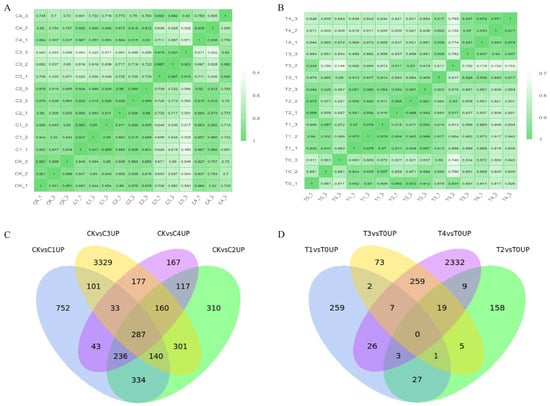
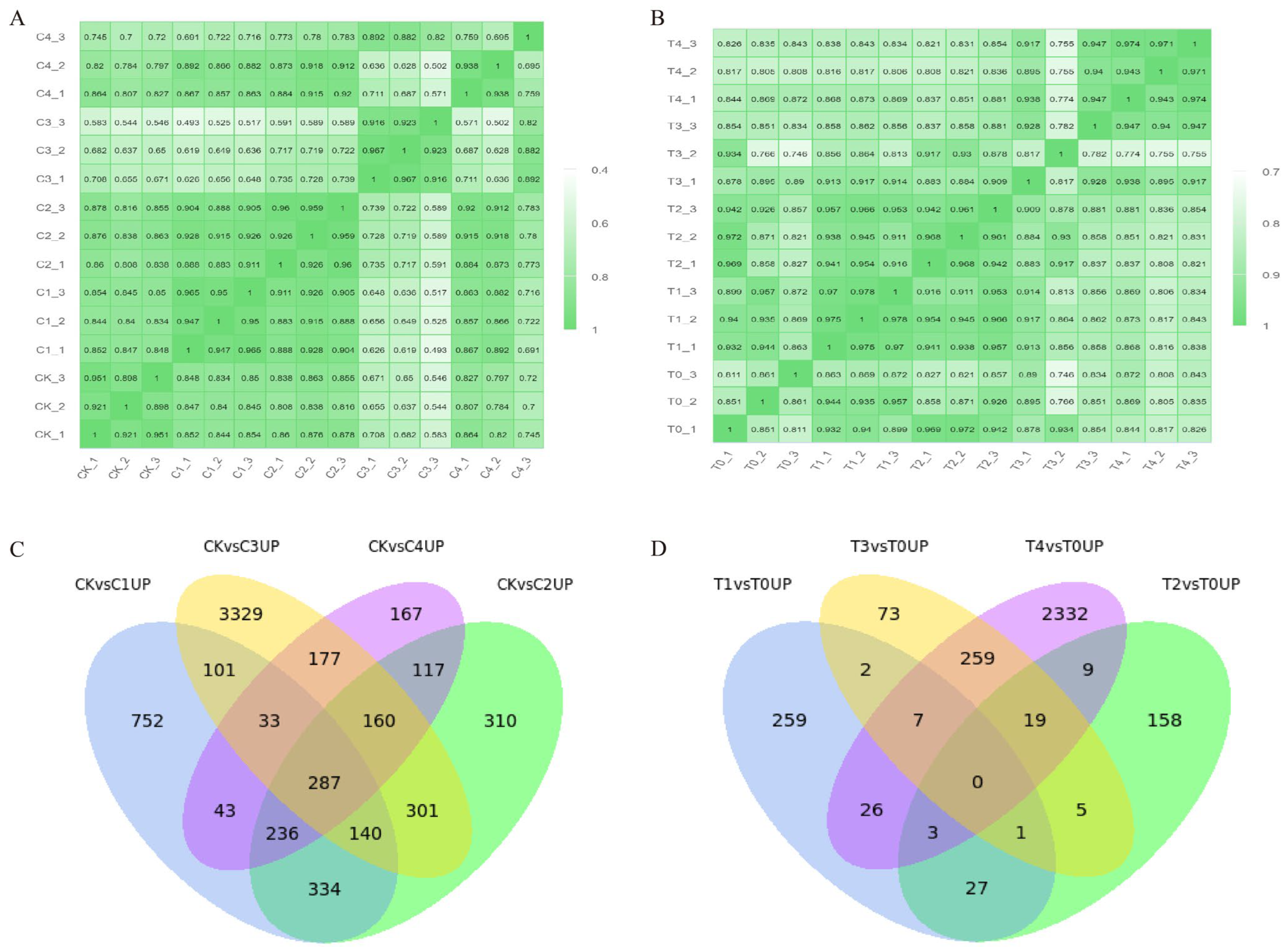
Transcriptome profiles of V. pseudoreticulata leaves and berry skin were analyzed at multiple time points after inoculation with C. gloeosporioides. The transcriptional data were reliable (Tables S4 and S5), as evidenced by Pearson correlation coefficients for biological replicates ranging from 0.695 to 1 (Figure 1A,B). In leaves, the number of DEGs changed dynamically over time. Relative to the uninfected control (CK), 4863 DEGs were identified at 12 hpi, consisting of 1926 upregulated and 2937 downregulated genes. This number remained similar at 24 hpi, with 4858 DEGs (1885 upregulated; 2973 downregulated). A pronounced peak occurred at 72 hpi, where 11,247 DEGs were detected (4528 upregulated and 6719 downregulated), marking the most active phase of transcriptional reprogramming in leaf tissue. By 120 hpi, the number of DEGs decreased to 3297 (1220 upregulated; 2077 downregulated) (Table S6). In contrast, the berry skin exhibited a delayed response. DEG numbers were stable at the early time points, with 1149 (12 hpi), 1194 (24 hpi), and 1036 (72 hpi) genes identified. A sharp increase was observed at 120 hpi, with 6023 DEGs (2665 upregulated and 3369 downregulated), indicating a major shift in gene expression late in the infection process (Table S7).
Figure 1.
Transcriptional response of different plant parts of Vitis pseudoreticulata following Colletotrichum gloeosporioides infection. (A,C) Transcriptional response of leaves; (B,D) Transcriptional response of berries.
3.2. Temporal and Tissue-Specific Patterns of Gene Regulation
Comparative analysis revealed distinct expression patterns between the two tissues. Across all time points, leaves contained a greater number of upregulated DEGs than berry skin. Venn diagram analysis identified 287 genes that were continuously upregulated in leaves throughout the infection time course (Figure 1C). No genes showed sustained upregulation across all four time points in the berry skin.
The period between 72 and 120 hpi represented a key transition. Within this interval, 259 genes were continuously upregulated in the berry skin, compared to 177 in leaves (Figure 1D). This finding confirms that the most dynamic transcriptional activity in the berry skin occurs during the later stages of infection.
3.3. GO Functional Enrichment Analysis of Differentially Expressed Genes
GO analysis was conducted to categorize the functions of DEGs in V. pseudoreticulata leaves and berry skin following inoculation with C. gloeosporioides.
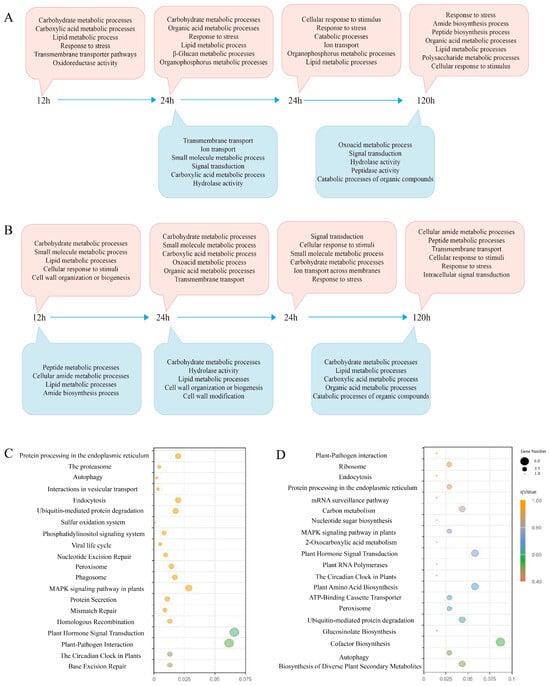
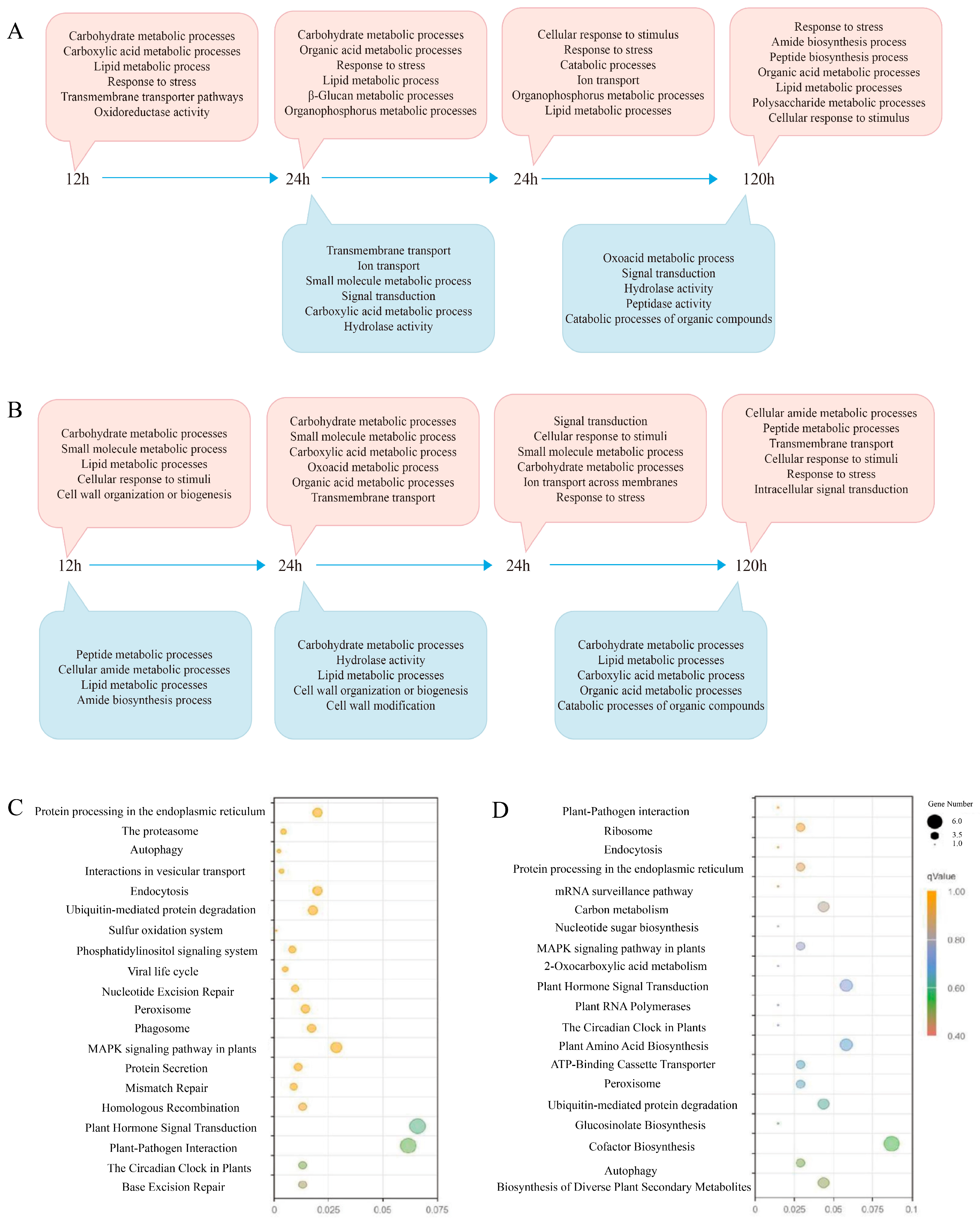
In leaves, stress response-related terms were consistently enriched among upregulated DEGs at every time point. The number of genes assigned to these terms increased progressively from 12 to 120 hpi, with the maximum count observed at 120 hpi. Upregulated genes involved in lipid metabolic processes were also enriched throughout the infection time course. Enrichment for genes related to ‘cellular response to stimulus’ began at 72 hpi and was most pronounced at this time point. The most significant enrichment of upregulated genes associated with carbohydrate metabolic processes occurred during the early phase (12–24 hpi). Downregulated genes in leaves showed distinct temporal patterns. At 24 hpi, enriched terms included transmembrane transport, signal transduction, ion transport, hydrolase activity, carboxylic acid metabolic processes, and small molecule metabolic processes. By 120 hpi, downregulated genes were further enriched for oxoacid metabolic processes and peptidase activity.
The enrichment pattern in the berry skin differed from that in leaves. Upregulated genes linked to stress response first appeared at 72 hpi, with their number increasing by 120 hpi. Enrichment for ‘cellular response to stimulus’ was detected at 12, 72, and 120 hpi, peaking at the latest time point. Genes associated with lipid metabolism were enriched only at 12 hpi, coinciding with a minor enrichment for cell wall organization or biogenesis. Enrichment for carboxylic acid and oxoacid metabolic processes emerged at 24 hpi. Like in leaves, the most significant enrichment of upregulated genes involved in carbohydrate metabolism occurred between 12 and 24 hpi. Among downregulated genes in the berry skins, those involved in lipid metabolism were consistently enriched throughout infection. Downregulated genes related to carbohydrate metabolism were most abundant between 72 and 120 hpi. At 72 hpi, additional enrichment was observed for downregulated genes associated with cell wall reactions, including cell wall modification.
3.4. KEGG Pathway Enrichment Analysis
KEGG analysis was performed to find the major metabolic and signal transduction pathways involved in the response to infection. The top 20 most significantly enriched pathways were analyzed for each time point and tissue. The analysis revealed that key defense-related pathways were activated in both leaves and berry skin. These included the plant MAPK signaling pathway, peroxisome pathway, plant hormone signal transduction pathway, plant–pathogen interaction pathway, and ubiquitin-mediated proteolysis. While these core pathways were shared, the degree of enrichment differed between tissues. Leaves exhibited a stronger enrichment of DEGs in the plant hormone signal transduction pathways and plant–pathogen interaction pathway. In contrast, the berry skin showed greater enrichment in pathways related to the biosynthesis of cofactors and amino acids. These results indicate that leaves and berry skin employ distinct transcriptional programs in response to C. gloeosporioides. However, the DEGs in both tissues converge on complementary biological processes that collectively contribute to the plant’s resistance mechanism, mitigating damage caused by the pathogen (Figure 2).
Figure 2.
Gene ontology (GO) and Kyoto encyclopedia of genes and genomes (KEGG) enrichment analysis of differentially expressed genes in different plant parts. (A,C) GO and KEGG enrichment analysis of differentially expressed genes in leaves; (B,D) GO and KEGG enrichment analysis of differentially expressed genes in berries.
3.5. Weighted Gene Co-Expression Network Analysis
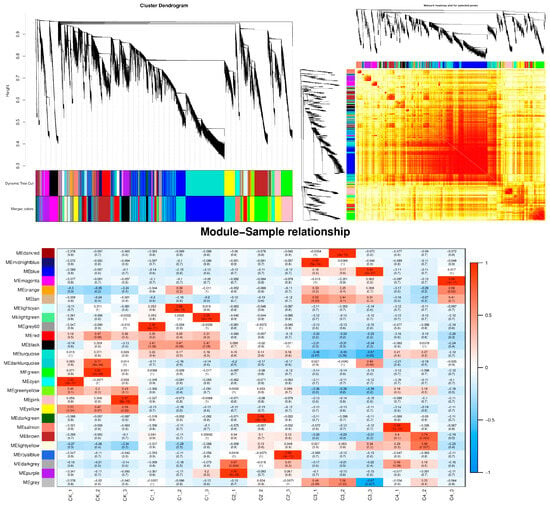
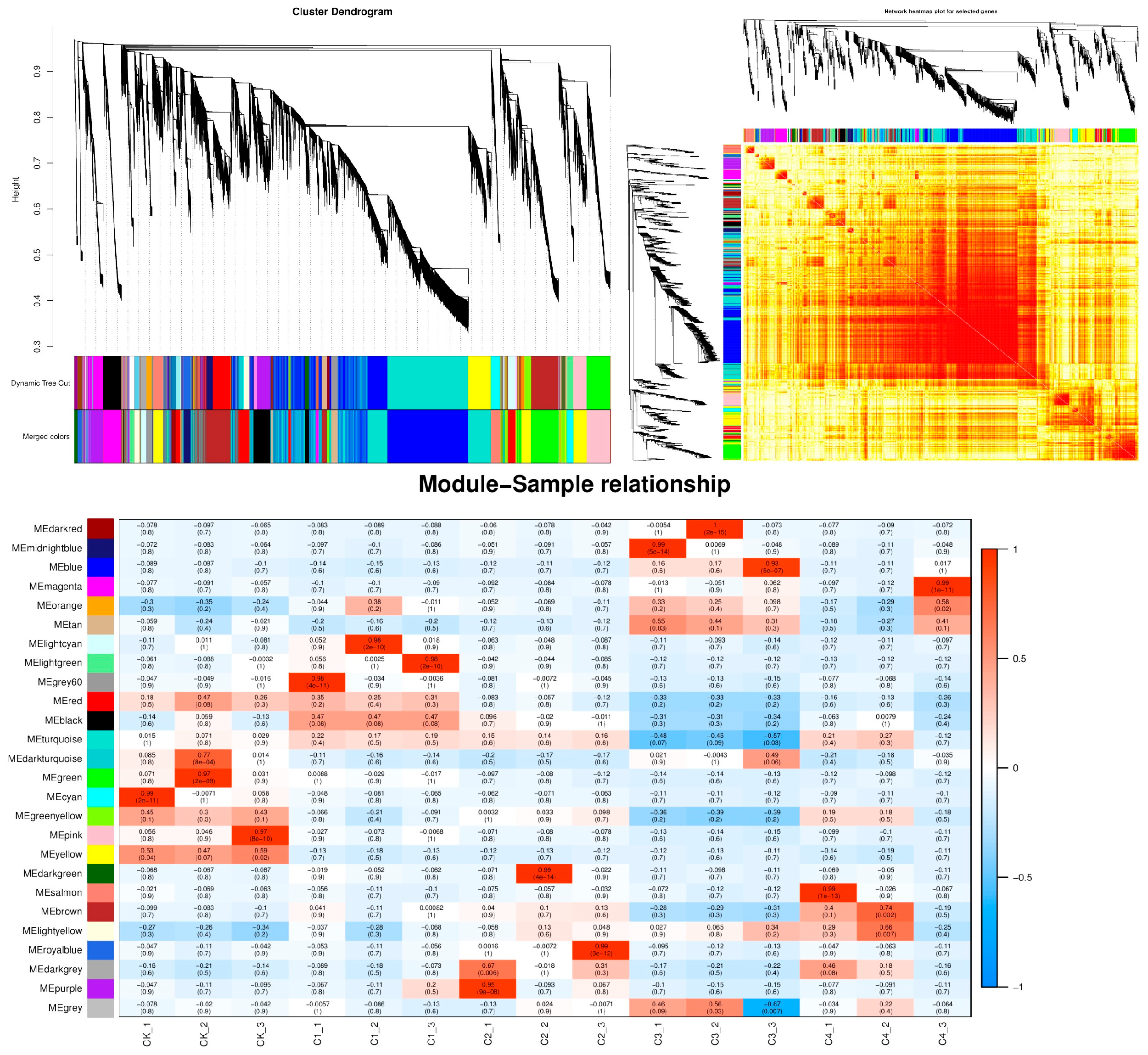
A gene clustering tree was generated to define modules of highly co-expressed genes. The resulting clustering tree and a heatmap depicting module–trait relationships are shown in Figure 3.
Figure 3.
Weighted gene co-expression network analysis of leaf transcriptomes. Hierarchical clustering dendrogram of genes showing module assignment (left) and topological overlap matrix (TOM) heatmap describing network connectivity (right). The lower panel shows module–trait relationships, with color intensity showing correlation strength and corresponding p-values.
In leaf tissue, 26 distinct co-expression modules were identified. The expression of genes within the MElightcyan, MElightgreen, and MEgrey60 modules was significantly increased at 12 hpi, correlating positively with the early defense response. At 24 hpi, a significant positive correlation with C. gloeosporioides infection was observed for the MEdarkgreen, MEdarkgrey, MEdarkblue, and MEdarkpurple modules. Expression levels in the MEdarkred, MEmidnightblue, MEblue, MEorange, and MEtan modules rose markedly by 72 hpi. Finally, the MEsalmon, MEbrown, and MElightyellow modules were significantly upregulated at 120 hpi.
Analysis of the berry skin identified 25 co-expression modules. At 12 hpi, genes in the MEcyan, MEgrey60, and MEpink modules were significantly upregulated. Expression was elevated in the MElightgreen, MEgreenyellow, and MEsalmon modules by 24 hpi. The MEdarkgreen, MEmidnightblue, and MEblue modules showed a strong positive correlation with infection at 72 hpi. The latest time point (120 hpi) featured significant upregulation across six modules: MElightcyan, MElightyellow, MEdarkgreen, MEpurple, MEgreen, and MEturquoise (Figure S1).
KEGG pathway enrichment analysis of the significantly upregulated modules from both tissues indicated their primary involvement in key defense pathways. These included plant–pathogen interaction, phenylpropanoid biosynthesis, MAPK signaling, peroxisome activity, and plant hormone signal transduction. These results illustrate dynamic and coordinated transcriptional reprogramming in leaves and berry skin during the response to pathogen infection.
3.6. Differential Expression Within Plant–Pathogen Interaction and Related Pathways
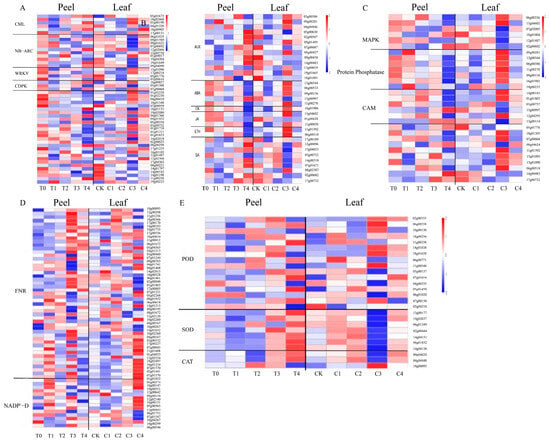
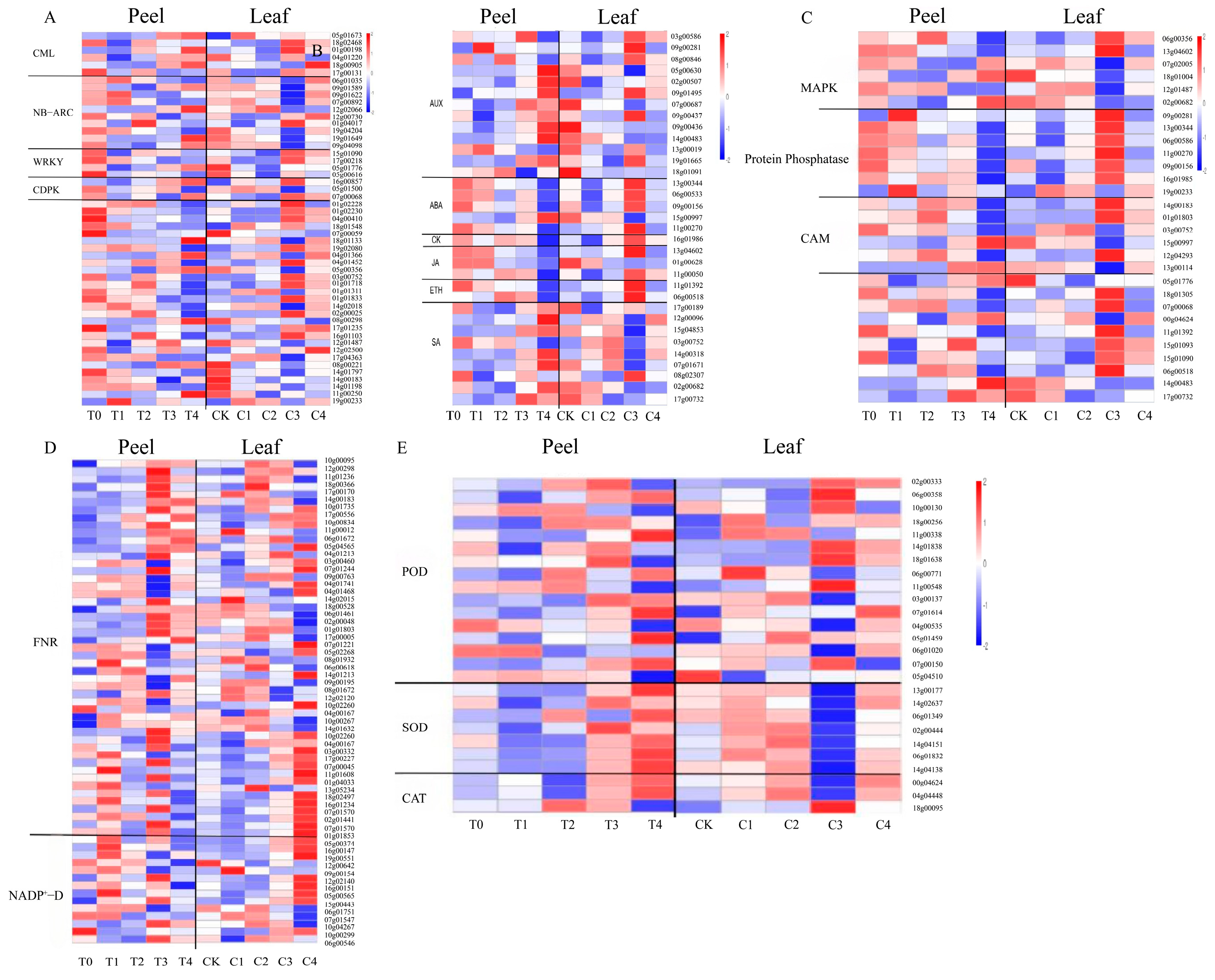
Analysis of the plant–pathogen interaction pathway identified 51 DEGs common to both leaves and berry skin (Figure 4A). These included six CML genes, nine Nucleotide-Binding adaptor shared by apaf1, certain R genes and CED4 (NB-ARC) genes, three WRKY transcription factor genes, three calcium-dependent protein kinase genes, and genes encoding heat shock proteins, pathogenesis-related proteins, and mitogen-activated protein kinases. The timing of peak upregulation differed between tissues. In the berry skin, the highest number of significantly upregulated genes in this pathway occurred at 120 hpi. In contrast, maximal upregulation in the leaves was observed at 72 hpi. Phytohormone signaling is integral to plant–pathogen interactions. Heatmap analysis of 33 common DEGs in plant hormone signal transduction pathways revealed distinct tissue-specific patterns (Figure 4B). In the berry skin, genes significantly upregulated at 120 hpi were primarily associated with auxin (AUX) and SA pathways. In leaves, infection for 72 hpi led to significant upregulation of genes related to AUX, abscisic acid (ABA), cytokinin (CK), and JA. Across both tissues, the upregulated genes included seven AUX-related, five ABA-related, two JA-related, two ethylene (ETH)-related, and six SA pathway-related genes, indicating a coordinated role for these hormones in the resistance of V. pseudoreticulata to C. gloeosporioides.
Figure 4.
Expression of differentially expressed genes (DEGs) in different pathways. (A) Expression of DEGs in the interaction pathway between plant and pathogen; (B) Expression of DEGs in plant hormone signal transduction pathway; (C) Expression of DEGs in plant Mitogen-activated protein kinase (MAPK) metabolic pathway; (D,E) Expression of DEGs in plant antioxidant pathway. Color intensity from blue to red denotes lower to higher expression levels.
The MAPK cascade, involving Mitogen-activated protein kinase kinase kinase (MAPKKK), Mitogen-activated protein kinase kinase (MAPKK), and Mitogen-activated protein kinase (MAPK) components, is a crucial signaling module in plant defense, regulating defense gene expression, phytoalexin synthesis, the hypersensitive response, and reactive oxygen species (ROS) production. We identified 31 common DEGs in the MAPK pathway from both tissues (Figure 4C), including six MAPK genes, seven protein phosphatase genes, six calmodulin genes (CAM), and key enzymes involved in hormone synthesis and WRKY transcription factor regulation.
Cellular redox homeostasis is vital for stress responses. Following pathogen inoculation, we identified seven DEGs encoding superoxide dismutase (SOD) and three DEGs encoding catalase (CAT) (Figure 4D,E). These enzymes are critical for managing oxidative stress during pathogen attacks.
3.7. Validation of RNA-Seq Data by qRT-PCR
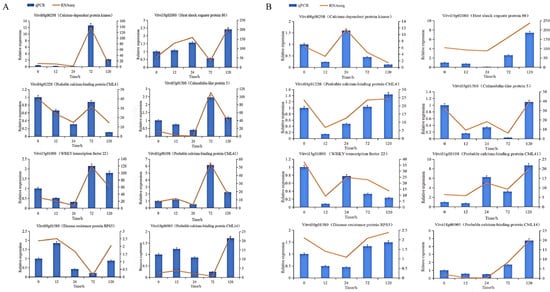
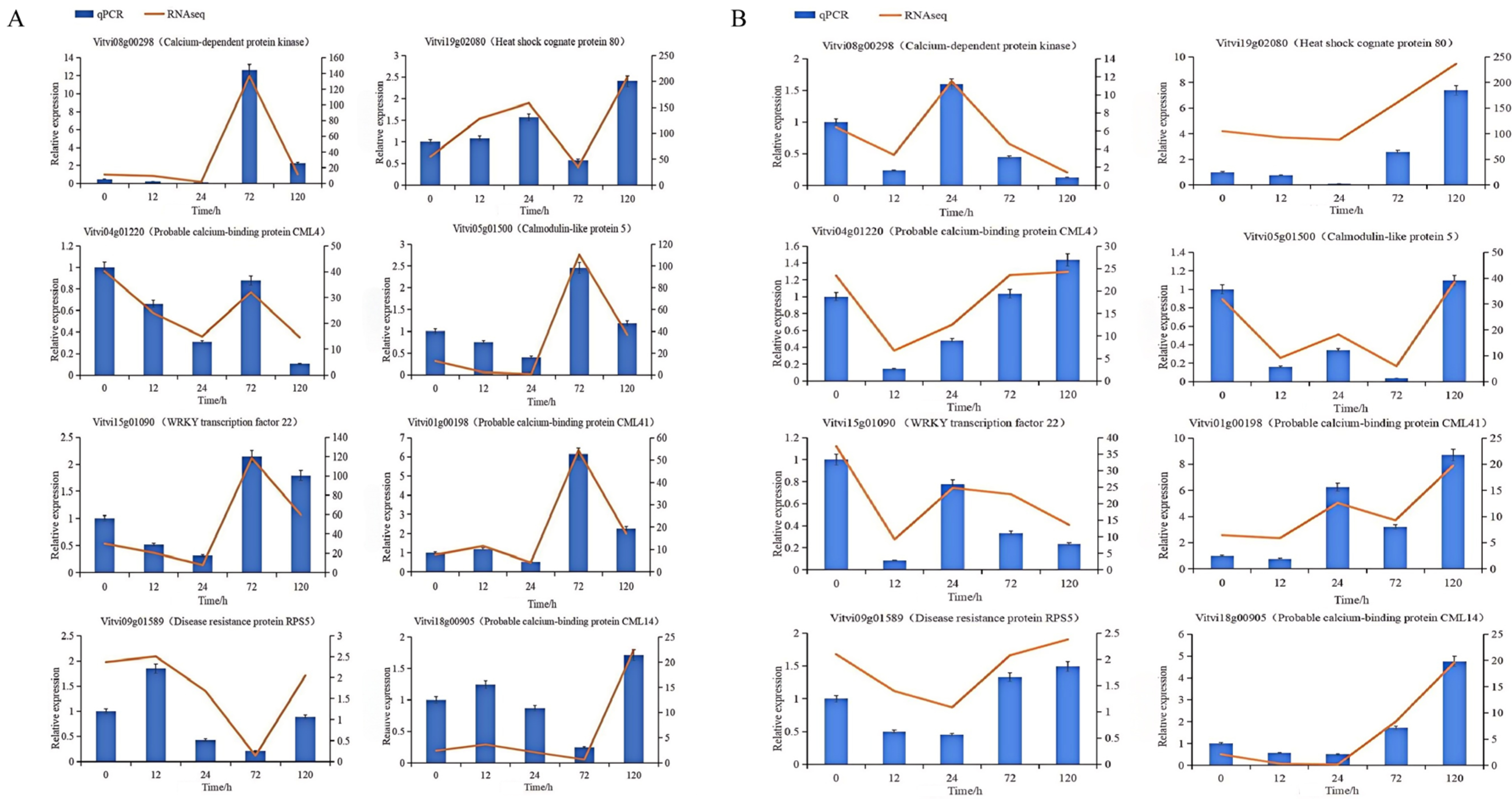
To confirm the consistency of the transcriptome data, the expression levels of eight DEGs were calculated using qRT-PCR. These genes were selected from the plant–pathogen interaction pathway and were upregulated in both berry skin and leaf tissue. The set included four calmodulin-like protein genes (Vitvi01g00198, Vitvi04g01220, Vitvi18g00905, Vitvi05g01500), one WRKY transcription factor gene (Vitvi15g01090), one heat shock protein gene (Vitvi19g02080), one calcium-dependent protein kinase gene (Vitvi08g00298), and one disease resistance protein gene (Vitvi09g01589).
The relative expression levels obtained by qRT-PCR were compared with the fragments per kilobase per million (FPKM) values from the RNA-seq analysis. As shown in Figure 5, the bar graphs (qRT-PCR data) and the line graphs (RNA-seq data) display highly concordant expression trends for all eight genes across the tested time points. This strong correlation validates the accuracy of the transcriptome sequencing results.
Figure 5.
Expression in different plant parts identified by quantitative reverse transcription polymerase chain reaction (qRT-PCR). (A) Expression patterns of genes in leaves identified by qRT-PCR; (B) Expression patterns of genes in berries identified by qRT-PCR.
3.8. Overexpression of VpCML41 in A. thaliana Increases Resistance to C. gloeosporioides
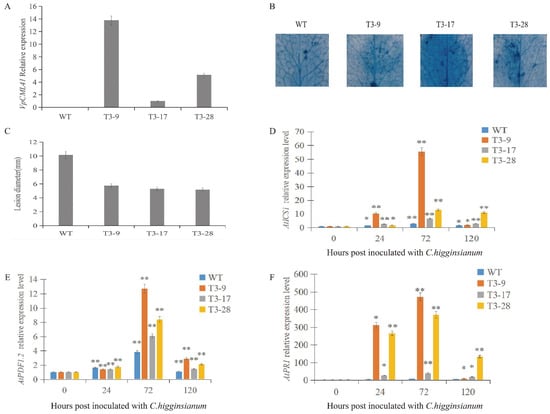
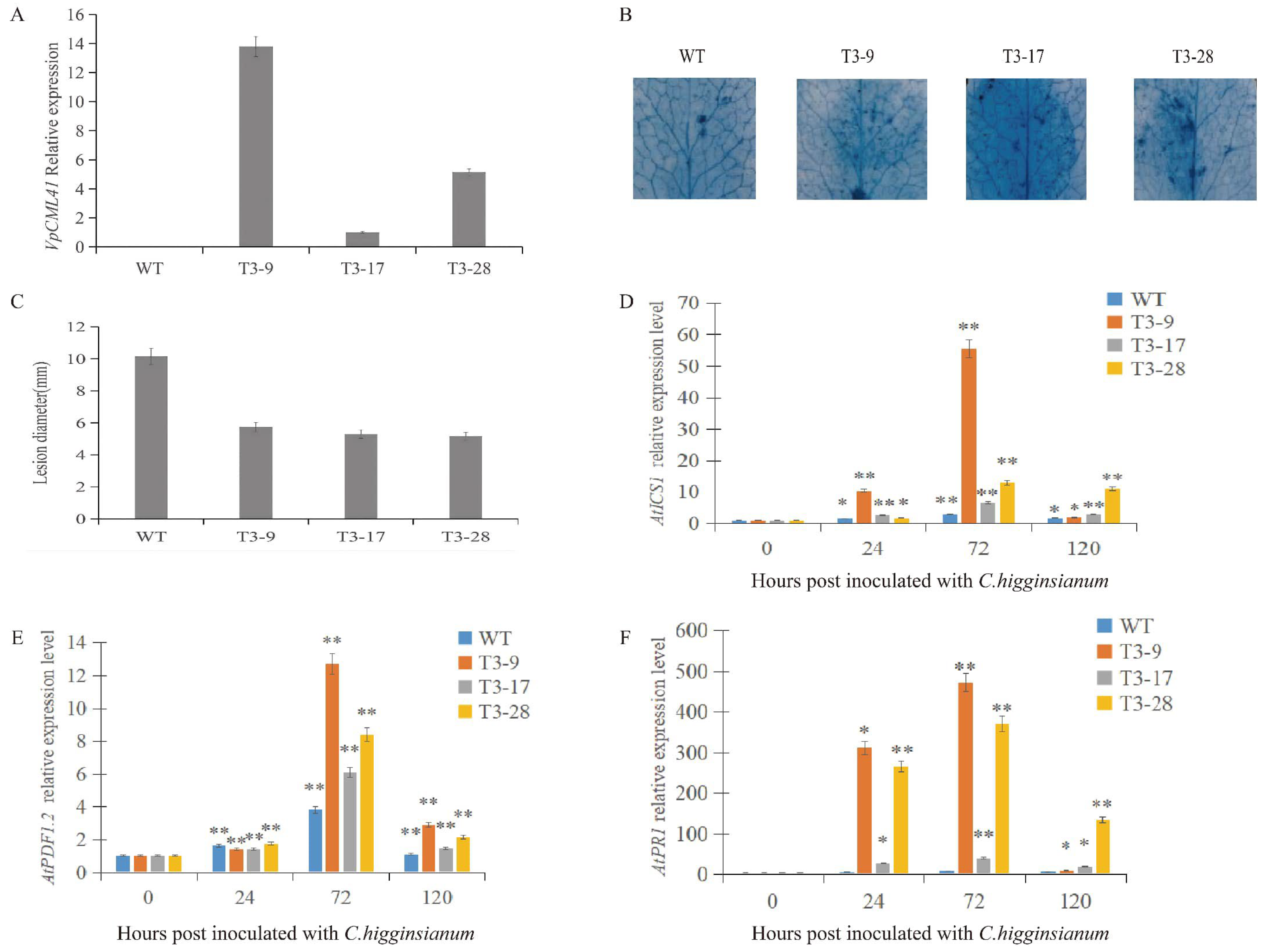
Following C. gloeosporioides infection, the transcript abundance of VpCML41 changed significantly in grapevine, and similar upregulation was observed upon treatment with SA and JA. Based on these expression patterns, VpCML41 was prioritized for further study. Homozygous T3 generation A. thaliana lines overexpressing VpCML41 were generated and validated (Figure S2). qRT-PCR analysis confirmed significantly elevated expression of the VpCML41 transgene in lines T3-9, T3-17, and T3-28 compared to wild-type (WT) plants (Figure 6A). These three lines were selected for subsequent functional assays.
Figure 6.
Functional characterization of VpCML41 in plant defense responses. (A) Relative expression level of the VpCML41 gene; (B) Trypan blue staining; (C) The lesion diameter of Colletotrichum higginsianum-inoculated Arabidopsis thaliana; (D) AtICS1 gene relative expression level; (E) AtPDF1.2 gene relative expression level; (F) AtPR1 gene relative expression level. (* p < 0.05, ** p < 0.01; Student’s t test).
To assess resistance, transgenic and WT plants were spray-inoculated with a spore suspension of C. higginsianum. Trypan blue staining of leaves collected three days post-inoculation revealed more extensive areas of cell death, indicative of a stronger hypersensitive response, in the transgenic lines compared to WT (Figure 6B). This was consistent with phenotypic observations showing significantly smaller lesion diameters on leaves of the VpCML41-overexpressing lines (Figure 6C).
To elucidate the molecular basis of this enhanced resistance, we estimated the transcript levels of key marker genes linked with the SA and JA signaling pathways in the transgenic lines. After pathogen inoculation, the expression of the SA-responsive marker genes AtPR1 and AtICS1 increased markedly by 24 h post-inoculation (hpi), peaked at 72 hpi (with relative expression values reaching 72.2 and 12.5, respectively), and remained significantly higher than WT levels at 120 hpi (Figure 6D–F). In contrast, the expression pattern of the JA pathway marker AtPDF1.2 exhibited variation among individual transgenic lines; notably, line T3-9 displayed a pronounced and significant induction, peaking at 12.72 at 72 hpi (Figure 6E). Collectively, these findings suggest that VpCML41 contributes to defense responses by coordinately modulating both SA- and JA-mediated signaling pathways.
3.9. Transient Overexpression of VpCML41 in Grape Enhances Ripe Rot Resistance
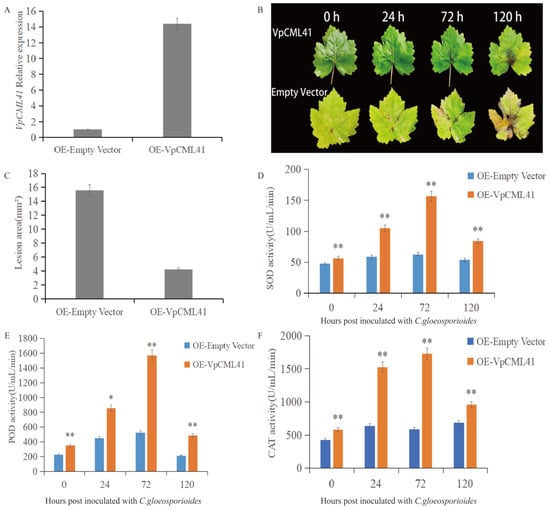
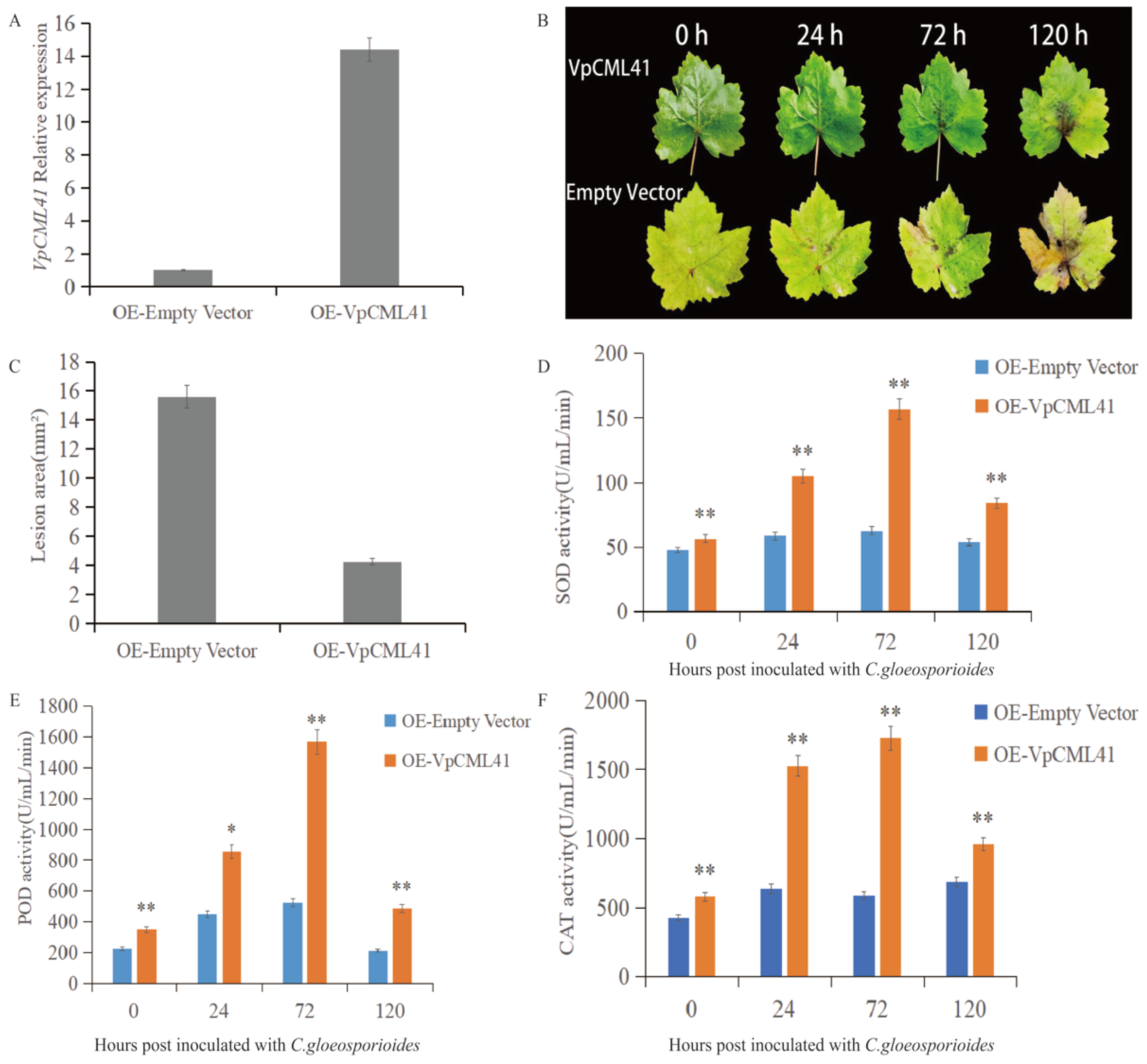
To investigate the function of VpCML41 in its homologous system, the overexpression vector pCAMBIA2300-GFP-VpCML41 was transiently introduced into leaves of the susceptible cultivar ‘Thompson Seedless’ via Agrobacterium infiltration. Leaves infiltrated with the empty pCAMBIA2300-GFP vector were used as a negative control. Quantitative PCR analysis performed 120 h post-infiltration displayed a significant increase in VpCML41 transcript levels in leaves expressing the construct compared to the control, verifying successful transient overexpression (Figure 7A).
Figure 7.
Functional validation of VpCML41 in resistance to Colletotrichum gloeosporioides in transiently overexpressed leaves. (A) Relative expression level of the VpCML41 gene; (B) Phenotypic observation of transiently overexpressed leaves and no-loaded leaves inoculated with C. gloeosporioides; (C) Plaque area statistics at 120 h after inoculation with C. gloeosporioides; (D–F) The activity of related antioxidant enzymes in transiently overexpressed leaves and no-loaded leaves inoculated with C. gloeosporioides was detected. Asterisks denote a statistically significant difference (* p < 0.05, ** p < 0.01; Student’s t test). Experimental values represent mean ± standard deviation (SD) derived from three independent biological replicates.
These transiently transformed leaves were subsequently challenged with C. gloeosporioides. Disease progression was monitored over 120 h (Figure 7B,C). At 24 h post-inoculation (hpi), no lesions were visible on VpCML41-overexpressing leaves, whereas small, sporadic spots had developed on control leaves. By 72 hpi, limited lesion formation was observed on the overexpression lines, while the lesion area had expanded considerably on control leaves.
We further analyzed the activity of key antioxidant enzymes following pathogen challenge. In control leaves, SOD and POD activities showed minimal change, remaining significantly lower than in the overexpression lines at all time points. In VpCML41-overexpressing leaves, the activities of SOD, POD, and CAT began to increase at 24 hpi, reached their peak levels (156.92, 1568.23, and 1728.38, respectively) at 72 hpi, and subsequently declined by 120 hpi (Figure 7D–F). Notably, the activity of these enzymes in the overexpressing lines was more than double that in the control leaves at 24 hpi.
These results demonstrate that transient overexpression of VpCML41 in grape leaves enhances earlier and stronger induction of antioxidant enzyme activity upon pathogen infection. This response is associated with reduced lesion development, indicating that VpCML41 contributes to ripe rot resistance by mitigating oxidative damage.
3.10. GUS Histochemical Staining of VpCML41 Promoter in V. pseudoreticulata
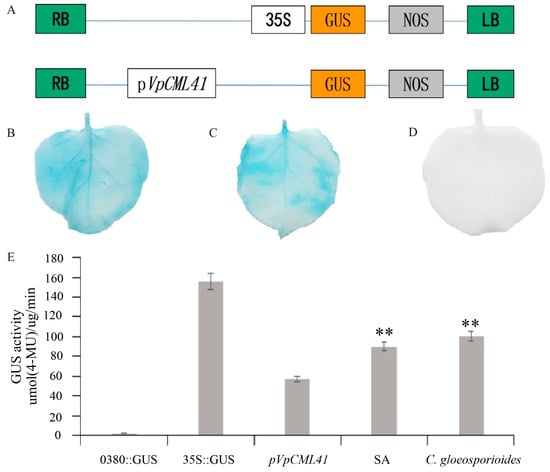
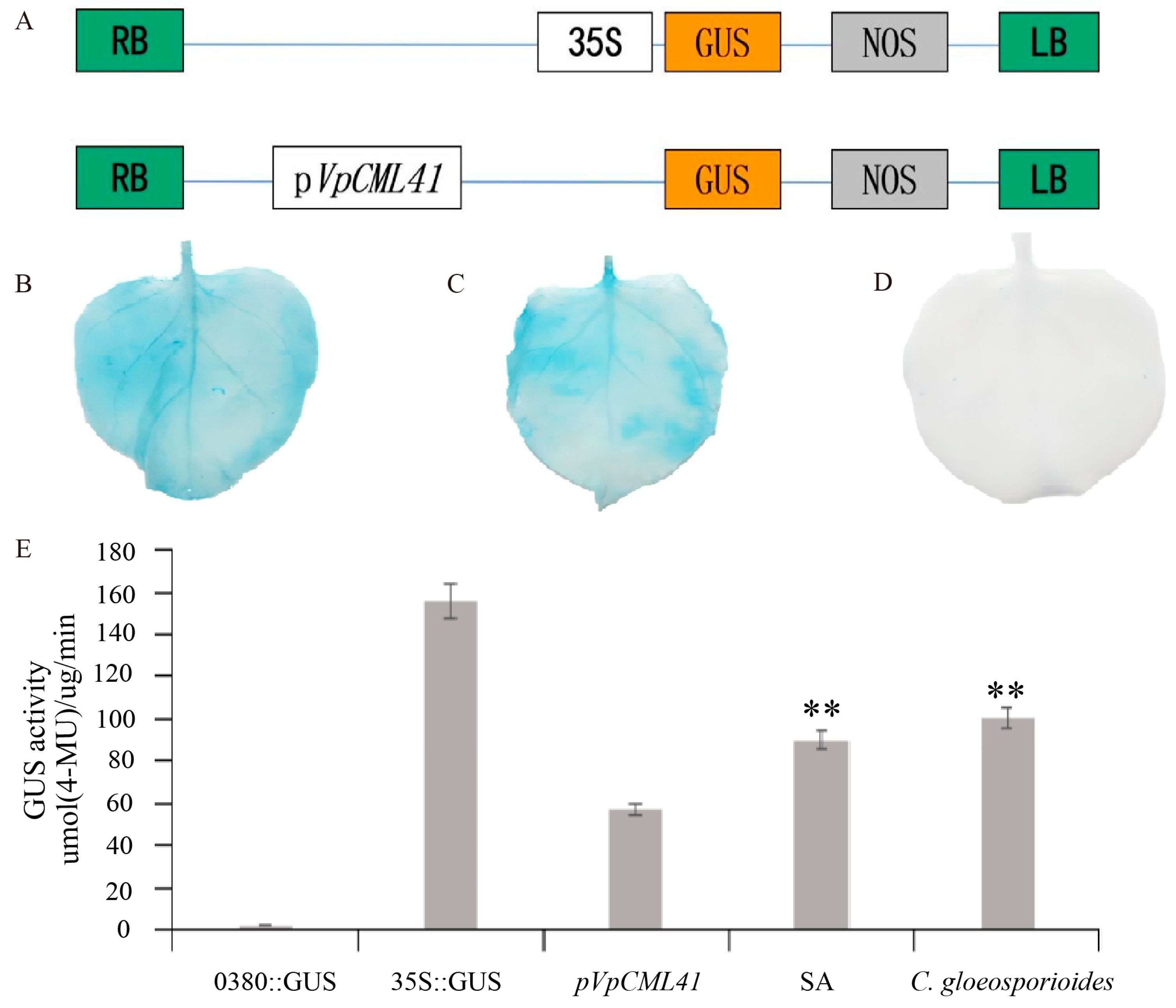
To further validate the functional activity of the VpCML41 promoter, the cloned promoter fragment was ligated into the digested 0380::GUS vector and used for transformation for subsequent analysis (Figure 8A). Transiently transformed tobacco leaves were subjected to GUS histochemical staining, with the pCaMV35S::GUS construct serving as a positive control and the 0380::GUS vector as a negative control. As shown in Figure 8B–D, the positive control leaves exhibited the most intense staining with the broadest coverage, whereas the negative control leaves remained nearly transparent. Notably, leaves transformed with the pVpCML41::GUS construct displayed staining that was slightly weaker than that of the positive control but markedly stronger than that of the negative control. These results indicate that the cloned promoter possesses transcriptional activity capable of driving GUS gene expression (Figure S3).
Figure 8.
Analysis of VpCML41 promoter activity using β-Glucuronidase reporter assays (GUS). (A) Construction of the VpCML41 promoter fused with the GUS expression vector; (B) pCaMV35S::GUS, positive control; (C) pVpCML41::GUS staining; (D) 0380::GUS, negative control; (E) GUS Enzyme activity in transiently transformed tobacco leaves with the Vitis pseudoreticulata pVpCML41 promoter (** p < 0.01; Student’s t test).
To assess the responsiveness of the VpCML41 promoter to exogenous stimuli, we measured GUS enzyme activity following treatment with C. gloeosporioides and MeJA. The positive control exhibited the highest GUS activity (155.73), while the negative control showed minimal activity (2.05). In leaves transformed with the pVpCML41::GUS construct, basal GUS activity was 56.6 under untreated conditions. Upon exogenous application of C. gloeosporioides or MeJA, GUS activity increased significantly, reaching 100.45 in the pathogen-treated group and 90.13 in the MeJA-treated group (Figure 8E). These results demonstrate that the VpCML41 promoter is responsive to both pathogen infection and MeJA hormone signaling.
3.11. Transformation of Grape Callus with VpCML41
Embryogenic callus was induced from anthers of V. vinifera ‘Thompson Seedless’ to establish a genetic transformation system, following established protocols from our laboratory. A hard, golden-yellow embryogenic callus was successfully obtained on induction medium. This callus was subsequently transferred to X6 medium for proliferation and preparation for Agrobacterium infection.
The embryogenic callus was infected with A. tumefaciens strain EHA105 carrying the pCAMBIA2300-GFP-VpCML41 overexpression vector. After a three-day co-cultivation period, the callus was transferred to X6 selection medium containing Carb, Kana, and Cef. Following one week of selection, transformed calli were examined. Fluorescence microscopy revealed clear green fluorescent protein (GFP) signals, confirming successful transformation, in contrast to the non-fluorescent control callus. This successful transformation of embryogenic callus provides a foundation for regenerating stably transformed grape plants (Figure S4).
4. Discussion
Transcriptome sequencing has become a fundamental tool for dissecting disease resistance mechanisms in plants. In grapevine, RNA-seq analyses of responses to pathogens like white rot, powdery mildew, and downy mildew have consistently highlighted the enrichment of DEGs in key pathways, including secondary metabolite biosynthesis, plant–pathogen interaction, and hormone signaling [8,28]. Recent transcriptomic studies on Chinese wild grape (Vitis davidii) infected with C. viniferum have similarly identified defense-related pathways such as flavonoid, phenylpropanoid, and stilbenoid biosynthesis, further supporting the central role of secondary metabolism in grape–Colletotrichum interactions [29,30]. Our study aligns with and extends these findings. Transcriptomic profiling of V. pseudoreticulata following C. gloeosporioides infection revealed that DEGs in both leaves and berry skins were significantly enriched for critical biological processes, including stress response, cellular processes, and metabolism. KEGG pathway analysis further identified the MAPK signaling pathway, peroxisome, plant–pathogen interaction, and plant hormone signal transduction as central to the response. Notably, the leaf tissue exhibited a more pronounced enrichment of DEGs in the plant–pathogen interaction and hormone transduction pathways compared to the berry skins, suggesting a tissue-specific orchestration of early defense signals.
The MAPK cascade is a conserved signaling module essential for translating external stimuli, including pathogen attack, into adaptive cellular responses [31,32]. In grapevine, specific MAPKs, such as VvMPK3 and VvMPK6, are known to phosphorylate transcription factors like VvWRKY33 to activate the biosynthesis of defense compounds, enhancing resistance to B. cinerea [33]. Furthermore, members of the upstream MAPKKK family are rapidly induced during grape–powdery mildew interactions [34]. Similar mechanisms operate in other species; for instance, AtMPK3 and AtMPK6 in A. thaliana coordinately regulate antifungal defenses [35], and parallel MAPK pathways involving MPK3/6 and MPK4 are activated during pattern-triggered immunity [36]. Our data corroborate the pivotal role of this pathway in ripe rot defense. We identified 31 common DEGs within the MAPK pathway in both tissues, including six mitogen-activated protein kinase genes and seven protein phosphatase genes. We propose that this cascade transduces stress signals via phosphorylation events, potentially interfacing with hormone signaling pathways to coordinate the grape’s resistance response to C. gloeosporioides.
Ca2+ serves as a ubiquitous secondary messenger, and its signals are decoded by sensors such as CML proteins, which are crucial integrators in plant stress signaling [37,38,39]. An increasing body of evidence underscores the role of specific CMLs in biotic stress [16,40]. In A. thaliana, AtCML8 and AtCML9 positively regulate resistance to Pseudomonas syringae [41], while in cotton, GbCML45 and GbCML50 enhance resistance to Verticillium wilt [42]. These proteins often function by modulating downstream defense outputs; for example, AtCML41 contributes to callose deposition to impede pathogen spread [43], and the overexpression of CaCML13 can potentiate a hypersensitive response (HR) and immune gene expression [44]. Our transcriptome analysis identified six CML genes differentially expressed during infection, among which VpCML41 showed the most significant and sustained upregulation, peaking at 72 hpi. This strong induction suggested a pivotal role for VpCML41 in ripe rot resistance, a hypothesis we functionally validated.
Heterologous overexpression of VpCML41 in A. thaliana conferred enhanced resistance to C. higginsianum, manifested as reduced lesion size and an intensified HR. This study used C. higginsianum in A. thaliana because stable grapevine transformants could not be obtained, and the A. thaliana–C. higginsianum pathosystem is a well-established heterologous platform; importantly, defense signaling pathways are largely conserved between Colletotrichum species, both triggering similar SA/JA responses [24,45]. It is acknowledged that direct validation in grapevine against C. gloeosporioides remains necessary for conclusive evidence. The mechanism underlying this resistance appears to involve the modulation of key defense hormone pathways. SA and JA are central regulators of plant immunity, and their pathways are often targeted by resistance genes. Notably, in V. davidii, JA biosynthesis has been shown to be closely linked to resistance against C. viniferum, with JA acting upstream of transcription factors that regulate lignin and resveratrol production [29,30]. In our VpCML41-overexpressing lines, the expression of SA-responsive markers (AtPR1, AtICS1) and the JA-responsive marker (AtPDF1.2) was significantly and dynamically upregulated post-inoculation compared to WT plants. This pattern indicates that VpCML41 potentiates defense by coordinately enhancing both SA- and JA-mediated signaling cascades. This aligns with findings in other systems, such as AhCML69 in peanut, which boosts resistance by upregulating both SA- and JA-pathway genes [46], and contrasts with cases like SlCML55 in tomato, which suppresses SA signaling to increase susceptibility [47].
5. Conclusions
In this study, we investigated the molecular mechanisms underlying ripe rot resistance in V. pseudoreticulata ‘Dongan-1’, a grape variety with strong resistance to C. gloeosporioides. Through comparative transcriptome analysis of leaves and berry skins post-infection, we identified that differentially expressed genes are primarily enriched in pathways associated with stress responses, cellular and metabolic processes, as well as key signaling cascades including the plant MAPK signaling pathway, peroxisome pathway, plant–pathogen interaction pathway, and plant hormone signal transduction pathway. Notably, we discovered and functionally characterized VpCML41, a gene highly induced upon infection. Heterologous overexpression in A. thaliana and transient expression in ‘Thompson Seedless’ grape leaves confirmed that VpCML41 significantly enhances resistance to C. higginsianum and C. gloeosporioides, respectively, via the coordinated regulation of salicylic acid and jasmonic acid signaling pathways. Collectively, our findings not only provide valuable genetic resources for understanding ripe rot resistance in grape but also lay a foundation for breeding resistant grape varieties via genetic improvement or marker-assisted selection.
Supplementary Materials
The following supporting information can be downloaded at: https://www.mdpi.com/article/10.3390/agronomy16090870/s1. Table S1: Primer sequences used for Quantitative Real-Time PCR (RT-qPCR) validation; Table S2: Primer sequences used for cloning VpCML41, Vector construction and Quantitative Real-Time PCR (RT-qPCR) validation; Table S3: Primer sequences used for cloning VpCML41 promoter validation; Table S4: Transcriptome data statistics of grapevine leaves in Vitis pseudoreticulata; Table S5: Transcriptome data statistics of grapevine peel in V. pseudoreticulata; Table S6: Transcriptome differential gene analysis of grapevine leaves treated with and without C. gloeosporioides infection; Table S7: Transcriptome differential gene analysis of grapevine berries treated with and without C. gloeosporioides infection; Figure S1: Weighted gene co-expression network analysis of peel; Figure S2: Construction and detection of the overexpression vector of VpCML41 in V. pseudoreticulata; Figure S3: Construction and detection of the full-length transient expression Vector of the V. pseudoreticulata VpCML41 promoter; Figure S4: Transformation of grape callus with VpCML41.
Author Contributions
Conceptualization, Z.W. and Y.L.; writing—original draft preparation, T.L., Q.Z., H.S. and Y.J.; methodology, L.Q. and J.F.; writing—review and editing, X.L. and B.A. All authors have read and agreed to the published version of the manuscript.
Funding
This study was supported by the National Natural Science Foundation of China (32072526), Fundamental Research Project of Provincial Public Welfare Research Institutes (2023R1026005), and the earmarked fund for CARS (CARS-29).
Data Availability Statement
The original contributions presented in this study are included in the article/Supplementary Material. Further inquiries can be directed to the corresponding authors.
Conflicts of Interest
The authors declare no conflicts of interest.
References
- Das, A.; Mishra, A.K.; Kamil, D.; Ghosh, A. Anthracnose disease in underutilized fruits in india and its management. Food Sci. Rep. 2023, 4, 52–58. [Google Scholar]
- Viret, O.; Gindro, K. Fungi and Grapevine Mycobiota. Sci. Fungi Grapevine 2025, 31, 101–105. [Google Scholar] [CrossRef] [Scilit]
- Lei, Y.; Yuan, X.J.; Chen, T.; Yuan, Y.; Liu, X.M.; Tang, X.B.; Chen, Q.X. Transcriptome analysis of berries of spine grape (Vitis davidii Föex) Infected by Colletotrichum viniferum during Symptom Development. Horticulturae 2022, 8, 843. [Google Scholar] [CrossRef] [Scilit]
- Hsieh, T.F.; Shen, Y.M.; Huang, J.H.; Tsai, J.N.; Lu, M.T.; Lin, C.P. Insights into grape ripe rot: A focus on the Colletotrichum gloeosporioides species complex and its management strategies. Plants 2023, 12, 2873. [Google Scholar] [CrossRef] [Scilit] [PubMed]
- Liu, L.; Zhang, B.; Wang, H.; Yu, S.Y.; Guan, T.S.; Huang, Y.F.; Liu, C.Y. Candidate resistance genes selection and transcriptome analysis for the early responses to Plasmopara viticola infection in grape cultivars. J. Plant Pathol. 2020, 102, 857–869. [Google Scholar] [CrossRef] [Scilit]
- Jiao, C.; Sun, X.P.; Yan, X.X.; Xu, X.Z.; Yan, Q.; Gao, M.; Fei, Z.J.; Wang, X.P. Grape transcriptome response to powdery mildew infection: Comparative transcriptome profiling of chinese wild grapes provides insights into powdery mildew resistance. Phytopathology 2021, 111, 2041–2051. [Google Scholar] [CrossRef] [Scilit] [PubMed]
- Li, P.; Tan, X.B.; Wang, H.; Sun, L.; Jiang, J.F.; Fan, X.C.; Zhang, Y. Transcriptome analysis of resistant and susceptible grapes reveals molecular mechanisms underlying resistance of white rot disease. Hortic. Adv. 2023, 1, 9. [Google Scholar] [CrossRef] [Scilit]
- Zhang, W.; Yan, J.; Li, X.H.; Xing, Q.K.; Chethana, K.W.T.; Zhao, W.S. Transcriptional response of grapevine to infection with the fungal pathogen Lasiodiplodia theobromae. Sci. Rep. 2019, 9, 5387. [Google Scholar] [CrossRef] [Scilit]
- Agudelo-Romero, P.; Erban, A.; Rego, C.; Carbonell-Bejerano, P.; Nascimento, T.; Sousa, L.; Martínez-Zapater, J.M.; Kopka, J.; Fortes, A.M. Transcriptome and metabolome reprogramming in Vitis vinifera cv. Trincadeira berries upon infection with Botrytis cinerea. J. Exp. Bot. 2015, 66, 1769–1785. [Google Scholar] [CrossRef] [Scilit]
- Park, C.J.; Shin, R. Calcium channels and transporters: Roles in response to biotic and abiotic stresses. Front. Plant Sci. 2022, 13, 964059. [Google Scholar] [CrossRef] [Scilit]
- Verma, S.; Negi, N.P.; Narwal, P.; Kumari, P.; Kisku, A.V.; Gahlot, P.; Kumar, D. Calcium signaling in coordinating plant development, circadian oscillations and environmental stress responses in plants. Environ. Exp. Bot. 2022, 201, 104935. [Google Scholar] [CrossRef] [Scilit]
- Wdowiak, A.; Podgórska, A.; Szal, B. Calcium in plants: An important element of cell physiology and structure, signaling, and stress responses. Acta Physiol. Plant. 2024, 46, 108. [Google Scholar] [CrossRef] [Scilit]
- Shi, J.Y.; Du, X.G. Identification, characterization and expression analysis of calmodulin and calmodulin-like proteins in Solanum pennellii. Sci. Rep. 2020, 10, 7474. [Google Scholar] [CrossRef] [Scilit]
- Bouché, N.; Yellin, A.; Snedden, W.A.; Fromm, H. Plant-specific calmodulin-binding proteins. Annu. Rev. Plant Biol. 2005, 56, 435–466. [Google Scholar] [CrossRef] [Scilit]
- Zeng, H.Q.; Zhu, Q.Q.; Yuan, P.G.; Yan, Y.; Yi, K.K.; Du, L.Q. Calmodulin and calmodulin-like protein-mediated plant responses to biotic stresses. Plant Cell Environ. 2023, 46, 3680–3703. [Google Scholar] [CrossRef] [Scilit] [PubMed]
- Yadav, M.; Pandey, J.; Chakraborty, A.; Hassan, M.I.; Kundu, J.K.; Roy, A.; Singh, I.K.; Singh, A.A. Comprehensive Analysis of Calmodulin-Like Proteins of Glycine max Indicates Their Role in Calcium Signaling and Plant Defense Against Insect Attack. Front. Plant Sci. 2022, 13, 817950. [Google Scholar] [CrossRef] [Scilit] [PubMed]
- Wang, L.X.; Liu, Z.G.; Han, S.K.; Liu, P.; Sadeghnezhad, E.; Liu, M.J. Growth or survival: What is the role of calmodulin-like proteins in plant? Int. J. Biol. Macromol. 2023, 242, 124733. [Google Scholar] [CrossRef] [Scilit] [PubMed]
- Vandelle, E.; Vannozzi, A.; Wong, D.; Danzi, D.; Digby, A.; Dal, S.S.; Astegno, A. Identification, characterization, and expression analysis of calmodulin and calmodulin-like genes in grapevine (Vitis vinifera) reveal likely roles in stress responses. Plant Physiol. Biochem. 2018, 129, 221–237. [Google Scholar] [CrossRef] [Scilit]
- Kiselev, K.V.; Aleynova, O.A.; Ogneva, Z.V.; Suprun, A.R.; Ananev, A.A.; Nityagovsky, N.N.; Dubrovina, A.S. The effect of stress hormones, UV-C, and stilbene precursors on calmodulin (CaM) and calmodulin-like gene (CML) expression in Vitis amurensis Rupr. Plant Cell Tissue Organ Cult. 2021, 146, 59–68. [Google Scholar] [CrossRef] [Scilit]
- Aleynova, O.A.; Kiselev, K.V.; Suprun, A.R.; Ananev, A.A.; Dubrovina, A.S. Involvement of the calmodulin-like protein gene VaCML92 in grapevine abiotic stress response and stilbene production. Int. J. Mol. Sci. 2023, 24, 15827. [Google Scholar] [CrossRef] [Scilit]
- Aleynova, O.A.; Suprun, A.R.; Ananev, A.A.; Nityagovsky, N.N.; Ogneva, Z.V.; Dubrovina, A.S.; Kiselev, K.V. Effect of calmodulin-like gene (CML) overexpression on stilbene biosynthesis in cell cultures of Vitis amurensis Rupr. Plants 2022, 11, 171. [Google Scholar] [CrossRef] [Scilit]
- Aleynova, O.A.; Kiselev, K.V.; Ogneva, Z.V.; Dubrovina, A.S. The grapevine calmodulin-like protein gene CML21 is regulated by alternative splicing and involved in abiotic stress response. Int. J. Mol. Sci. 2020, 21, 7939. [Google Scholar] [CrossRef] [Scilit]
- Shan, M.D.; Jiao, G.Z.; Liu, X.M.; Dai, X.C.; Chen, X.Q.; Lei, Y. Pathogen identification via multilocus phylogenetic analysis and resistance evaluation in Vitis Germplasm. Plant Pathol. 2026, 75, e70153. [Google Scholar] [CrossRef] [Scilit]
- Zhang, Q.M.; Luo, N.; Dai, X.C.; Lin, J.H.; Ahmad, B.; Chen, Q.X.; Wen, Z.F. Ectopic and transient expression of VvDIR4 gene in Arabidopsis and grapes enhances resistance to anthracnose via affecting hormone signaling pathways and lignin production. BMC Genom. 2024, 25, 895. [Google Scholar] [CrossRef] [Scilit] [PubMed]
- Clough, S.J.; Bent, A.F. Floral dip: A simplified method for Agrobacterium-mediated transformation of Arabidopsis thaliana. Plant J. 1998, 16, 735–743. [Google Scholar] [CrossRef] [Scilit] [PubMed]
- Wen, Z.F.; Yao, L.P.; Wan, R.; Li, Z.; Liu, C.H.; Wang, X.P. Ectopic expression in Arabidopsis thaliana of an NB-ARC encoding putative disease resistance gene from wild chinese Vitis pseudoreticulata enhances resistance to phytopathogenic Fungi and bacteria. Front. Plant Sci. 2015, 6, 1087. [Google Scholar] [CrossRef] [Scilit]
- Wang, Y.; Wang, X.H.; Fang, J.H.; Yin, W.C.; Yan, X.X.; Tu, M.X.; Liu, H.; Zhang, Z.D.; Li, Z.; Gao, M.; et al. VqWRKY56 interacts with VqbZIPC22 in grapevine to promote proanthocyanidin biosynthesis and increase resistance to powdery mildew. New Phytol. 2023, 237, 1856–1875. [Google Scholar] [CrossRef] [Scilit]
- Qu, J.J.; Dry, I.; Liu, L.L.; Guo, Z.X.; Yin, L. Transcriptional profiling reveals multiple defense responses in downy mildew-resistant transgenic grapevine expressing a TIR-NBS-LRR gene located at the MrRUN1/MrRPV1 locus. Hortic. Res. 2021, 8, 161. [Google Scholar] [CrossRef] [Scilit] [PubMed]
- Wang, D.; Jiang, X.L.; Zhang, W.B.; Cao, D.D.; Ye, G.P.; Chen, J.J.; Lei, Y.; Wei, X.Y. Transcriptomic and metabolomic analyses reveal mechanisms underpinning resistance of Chinese wild grape to Colletotrichum viniferum. Plant Physiol. Biochem. 2024, 215, 108851. [Google Scholar] [CrossRef] [Scilit]
- Lin, J.H.; Chen, T.; Liu, X.M.; Chen, Z.; Lei, Y. Salicylic acid represses VdMYB31 expression to enhance grape resistance to Colletotrichum viniferum. Int. J. Biol. Macromol. 2025, 288, 138731. [Google Scholar] [CrossRef] [Scilit]
- Rodriguez, M.C.; Petersen, M.; Mundy, J. Mitogen-activated protein kinase signaling in plants. Annu. Rev. Plant Biol. 2010, 61, 621–649. [Google Scholar] [CrossRef] [Scilit]
- Deng, L.; Ji, S.M.; Wang, G.P.; Liu, X. Calcium-dependent protein kinases in plant immunity: From calcium signaling to network integration. Front. Plant Sci. 2026, 16, 1704615. [Google Scholar] [CrossRef] [Scilit]
- Merz, P.R.; Moser, T.; Höll, J.; Kortekamp, A.; Buchholz, G.; Zyprian, E.; Bogs, J. The transcription factor VvWRKY33 is involved in the regulation of grapevine (Vitis vinifera) defense against the oomycete pathogen Plasmopara viticola. Physiol. Plant. 2015, 153, 365–380. [Google Scholar] [CrossRef] [Scilit]
- Wang, G.; Lovato, A.; Polverari, A.; Wang, M.; Liang, Y.H.; Ma, Y.C.; Cheng, Z.M. Genome-wide identification and analysis of mitogen activated protein kinase kinase kinase gene family in grapevine (Vitis vinifera). BMC Plant Biol. 2014, 14, 219. [Google Scholar] [CrossRef] [Scilit]
- Merkouropoulos, G.; Andreasson, E.; Hess, D.; Boller, T.; Peck, S.C. An Arabidopsis protein phosphorylated in response to microbial elicitation, AtPHOS32, is a substrate of MAP kinases 3 and 6. J. Biol. Chem. 2008, 283, 10493–10499. [Google Scholar] [CrossRef] [Scilit]
- Thulasi Devendrakumar, K.; Li, X.; Zhang, Y.L. MAP kinase signalling: Interplays between plant PAMP- and effector-triggered immunity. Cell. Mol. Life Sci. CMLS 2018, 75, 2981–2989. [Google Scholar] [CrossRef] [Scilit]
- Aldon, D.; Mbengue, M.; Mazars, C.; Galaud, J.P. Calcium Signalling in Plant Biotic Interactions. Int. J. Mol. Sci. 2018, 19, 665. [Google Scholar] [CrossRef] [Scilit] [PubMed]
- Ketehouli, T.; Nguyen Quoc, V.H.; Dong, J.Y.; Do, H.H.; Li, X.W.; Wang, F.W. Overview of the roles of calcium sensors in plants response to osmotic stress signalling. Funct. Plant Biol. FPB 2022, 49, 589–599. [Google Scholar] [CrossRef] [Scilit] [PubMed]
- Naz, M.; Afzal, R.M.; Raza, A.M.; Pandey, S.; Qi, S.S.; Dai, Z.C.; Du, D.L. Calcium (Ca2+) signaling in plants: A plant stress perspective. S. Afr. J. Bot. 2024, 169, 464–485. [Google Scholar] [CrossRef] [Scilit]
- Liu, S.; Zhao, L.Y.; Cheng, M.Z.; Sun, J.F.; Ji, X.M. Calmodulins and calmodulin-like proteins-mediated plant organellar calcium signaling networks under abiotic stress. Crop J. 2024, 12, 1321–1332. [Google Scholar] [CrossRef] [Scilit]
- Zhu, X.Y.; Perez, M.; Aldon, D.; Galaud, J.P. Respective contribution of CML8 and CML9, two arabidopsis calmodulin-like proteins, to plant stress responses. Plant Signal. Behav. 2017, 12, e1322246. [Google Scholar] [CrossRef] [Scilit] [PubMed]
- Yi, F.F.; Li, Y.Z.; Song, A.S.; Shi, X.Y.; Hu, S.C.; Wu, S.; Shao, L.L.; Chu, Z.Y.; Xu, K.; Li, L.L.; et al. Positive roles of the Ca2+ sensors GbCML45 and GbCML50 in improving cotton Verticillium wilt resistance. Mol. Plant Pathol. 2024, 25, e13483. [Google Scholar] [CrossRef] [Scilit] [PubMed]
- Xu, B.; Cheval, C.; Laohavisit, A.; Hocking, B.; Chiasson, D.; Olsson, T.S.G.; Shirasu, K.; Faulkner, C.; Gilliham, M. A calmodulin-like protein regulates plasmodesmal closure during bacterial immune responses. New Phytol. 2017, 215, 77–84. [Google Scholar] [CrossRef] [Scilit]
- Shen, L.; Yang, S.; Guan, D.Y.; He, S.L. CaCML13 Acts positively in pepper immunity against Ralstonia solanacearum infection forming feedback loop with CabZIP63. Int. J. Mol. Sci. 2020, 21, 4186. [Google Scholar] [CrossRef] [Scilit]
- Wen, Z.F.; Bai, J.H.; Wang, L.; Yao, L.P.; Ahmad, B.; Hanif, M.; Chen, Q.X. Over expression of a chitinase 2 gene from Chinese wild strawberry improves resistance to anthracnose disease in transgenic Arabidopsis thaliana. Plant Biotechnol. Rep. 2020, 14, 725–736. [Google Scholar] [CrossRef] [Scilit]
- Yang, D.; Chen, T.; Wu, Y.S.; Tang, H.Q.; Yu, J.Y.; Dai, X.Q.; Zheng, Y.X.; Wan, X.R.; Yang, Y.; Tan, X.D. Genome-wide analysis of the peanut CaM/CML gene family reveals that the AhCML69 gene is associated with resistance to Ralstonia solanacearum. BMC Genom. 2024, 25, 200. [Google Scholar] [CrossRef] [Scilit] [PubMed]
- Zhang, J.; Zou, A.H.; Wen, Y.X.; Wei, X.F.; Liu, C.Y.; Lv, X.; Sun, X.C. SlCML55, a novel Solanum lycopersicum calmodulin-like gene, negatively regulates plant immunity to Phytophthora pathogens. Sci. Hortic. 2022, 299, 111049. [Google Scholar] [CrossRef] [Scilit]
Disclaimer/Publisher’s Note: The statements, opinions and data contained in all publications are solely those of the individual author(s) and contributor(s) and not of MDPI and/or the editor(s). MDPI and/or the editor(s) disclaim responsibility for any injury to people or property resulting from any ideas, methods, instructions or products referred to in the content. |
© 2026 by the authors. Licensee MDPI, Basel, Switzerland. This article is an open access article distributed under the terms and conditions of the Creative Commons Attribution (CC BY) license.