


Abstract
Increasing freshwater scarcity alongside growing irrigation demand poses a major challenge for agricultural production. One potential response is the use of drought adaptation amendments: materials of natural or synthetic origin that, when applied to soil or crops, either increase water availability or improve plant performance under water stress. Because these amendments range from minerals and microorganisms to polymers and plant-derived compounds, they are often studied in separate disciplinary literatures rather than as a single category of inputs. Here, we review drought adaptation amendments for agricultural use and evaluate them along three dimensions: effectiveness in mitigating drought stress, economic feasibility, and environmental and human-health implications. Across amendment classes, effectiveness is achieved through several recurring pathways, including reduced soil evaporation, altered canopy energy balance, improved infiltration and soil water retention, improved rhizosphere and root access to retained water, and enhanced physiological tolerance to water deficit. No single amendment consistently performs best across all three criteria. Materials that strongly modify soil water dynamics can be effective but may be costly or environmentally risky, while lower-risk options often have smaller or more context-dependent effects. Among the most promising lower-risk options identified in this review are microbial inoculants, certain mineral amendments, and water-based plant extracts, though their effectiveness remains context-dependent. Future research should prioritize amendments that combine drought-mitigating effects with economic feasibility and minimal environmental or health risks.
1. Introduction
Global aridification is an important consequence of climate change [1]. Globally, drought and heat account for an estimated 10% reduction in major crop yields [2]. While drought and other stressors reduce global food production, demand for food is projected to double by 2050 due to population growth, dietary shifts, and the production of bioenergy [3]. Although drought and its impacts on crop productivity have been extensively documented [4], more research is needed to develop agricultural practices to adapt to these impacts [5].
In general, drought stress affects leaf development, ion balance, and enzyme activity, resulting in reduced crop yield [6]. Plants under drought stress have impaired mitosis, cell elongation, and cell expansion, leading to weak growth, poor stand establishment, and reduced germination [7,8,9]. Drought also alters the physical environment in ways that affect plant physiological and biochemical processes [10,11].
Agricultural drought adaptation includes a wide range of strategies, including breeding and genetic improvement, variety selection, planting-date adjustment, cultivation practices, nutrient management, and irrigation management [12,13]. These approaches can reduce crop vulnerability to water stress by altering plant traits, improving soil water conservation, or matching water applications more closely to crop demand [12,13,14]. However, they differ in timescale, cost, and degree of control over the soil–plant–atmosphere continuum.
Alongside these broader strategies, an important but comparatively fragmented area of intervention is the use of what we term drought adaptation amendments: materials applied to soils, plants, or seeds to reduce water loss, improve water retention or uptake, or mitigate the physiological effects of water deficit. These materials range from organic amendments and minerals to microorganisms, surfactants, superabsorbent polymers, and plant-derived compounds, and are therefore often treated in separate disciplinary literatures rather than evaluated together. Reviewing them as a group makes it possible to compare where they act in the soil–plant–atmosphere continuum, how they mitigate drought stress, and what tradeoffs they present in terms of cost and risk.
This review evaluates drought adaptation amendments for agricultural use along three principal criteria: effectiveness in mitigating drought stress, economic feasibility, and impacts on the environment and human health. The contribution of this review lies in bringing together a wide variety of materials that are often considered separately by specialist disciplines for a cross-cutting discussion of their effectiveness, feasibility, and risks in agricultural drought adaptation.
This review was developed through iterative searches of the agronomic, soil science, plant physiology, and environmental literature using combinations of terms related to drought stress, soil amendments, biostimulants, microbial inoculants, mineral amendments, surfactants, superabsorbent polymers, and hydrophobicity. Searches were then expanded through follow-up queries focused on specific candidate materials or concepts identified in the literature, such as particular amendment classes, formulations, or mechanisms. This iterative approach was important because the review process repeatedly revealed additional substances and lines of inquiry that were not part of the initial search terms. Searches continued until additional queries yielded limited new evidence and few newly identified amendment types. Studies were selected for relevance to agricultural drought adaptation, with emphasis on experimental evidence for effects on soil water relations, plant performance under water deficit, application rates, economic feasibility, and environmental or health implications. Because the literature spans different crops, soils, amendment classes, and response metrics, the review is comparative rather than quantitative.
Section 2 introduces a conceptual framework for comparing these materials based on their primary application sites and recurring mechanisms in the soil–plant–atmosphere continuum. Section 3 and Section 4 review naturally derived and synthetic drought adaptation amendments, respectively. Section 5 compares effectiveness across amendment classes, while Section 6 and Section 7 address economic feasibility and environmental and human-health implications.
2. Defining Drought Adaptation Amendments: Application Site and Mechanisms
Drought adaptation amendments differ widely in composition, but they can be compared by considering where they are applied and which parts of the soil–plant–atmosphere continuum they most directly influence. As shown in Figure 1, these materials may be applied to the soil surface, incorporated into the soil matrix, introduced to the rhizosphere or root zone, applied to foliage, or used as seed or seedling treatments. Across these application sites, their effects tend to converge on a limited number of recurring mechanisms: reducing soil evaporation, modifying canopy energy balance and transpiration demand, improving infiltration or rewetting, increasing water retention in the root zone, improving rhizosphere and root access to retained water, and enhancing plant physiological tolerance to water deficit. This framework is intended as a guide for comparison rather than a rigid classification, since many amendments act through more than one pathway.
Figure 1.
Conceptual framework for drought adaptation amendments in the soil–plant–atmosphere continuum. Example amendments are organized by primary site of application, including the soil surface, soil matrix, rhizosphere/root zone, foliage, and seed/seedling. Across these application sites, they converge on recurring mechanisms: modifying canopy energy balance and transpiration demand, improving physiological tolerance to water deficit, reducing soil evaporation at the surface, improving rhizosphere and root access to retained water, and improving infiltration, rewetting, and water storage in soil. Solid arrows indicate primary pathways and dashed arrows indicate secondary or overlapping pathways. The figure is conceptual and illustrates shared mechanisms rather than equal effectiveness across amendment classes, crops, soils, or drought conditions.
At the soil surface, mulches primarily reduce direct evaporation and buffer temperature. Within the soil matrix, organic amendments, porous minerals, surfactants, and superabsorbent polymers influence how water is stored or distributed through changes in wetting, pore structure, or retention. In the rhizosphere, arbuscular mycorrhizal fungi and plant growth-promoting rhizobacteria improve access to water through mechanisms including extraradical hyphae, root development, and exopolysaccharide production. Other amendments act more directly on the plant: kaolin modifies canopy energy balance by reflecting radiation, while humic acid, silicon, and several plant-derived or chemically defined compounds are discussed in terms of osmotic adjustment, antioxidant defense, stomatal regulation, or related drought-response pathways. The following subsections review naturally derived amendments organized by material type while referencing these application sites and mechanisms.
3. Effectiveness of Naturally Derived Drought Adaptation Amendments
3.1. Organic Materials
The benefits of adding organic matter to soil in the form of manure or compost for moisture retention have been debated since at least the 1930s. Early experiments proposed that adding manure increased the ability of the soil to hold water at field capacity, but that it also increased water held at the permanent wilting point, resulting in little or no gain in plant available water, or PAW [15]. A recent meta-analysis determined that a 1% increase in soil organic carbon by mass would result in an average increase of just over 1% in PAW, with greater impact on coarser soils [16]. However, such apparently small changes in soil organic carbon mass require extremely large volumes of manure or compost to accomplish, approximately 10–20% of soil volume, depending on its density [17].
While changes in PAW may be small, an increase in water holding capacity at saturation may increase the ability of the soil to absorb flood water, as demonstrated in studies where heavy applications of manure (30–60 tons/ha) increased infiltration and reduced runoff [18,19]. This could provide a benefit when drought is preceded by flooding. Organic matter may also have a greater effect on readily available water, which is the difference between water held at field capacity and a refill point at which the soil would be watered, rather than the permanent wilting point. One study found that the addition of organic matter increased water held at field capacity without impacting the refill point, facilitating an increase in readily available water [19].
A related organic amendment deserving mention is digestate, or biogas slurry, a stabilized liquid fertilizer that differs from solid manure in both handling and delivery. Because it can be integrated with irrigation systems, it may provide a more operationally flexible way to supply organic inputs under drought; recent studies and reviews also suggest potential benefits for soil water retention, crop growth, and water-use efficiency, although the evidence base remains smaller than for compost, manure, or biochar [20,21].
Biochar, or charcoal produced by heating under low-oxygen conditions (pyrolysis), has also been proposed to enhance soil water holding capacity [22,23]. Biochar can be made from various organic materials at different temperatures, resulting in different chemical and physical characteristics, with greatly varying impacts on soil and crops [24]. Biochar made from cellulose-rich grass or straw sources rather than lignin-dominant woody material has been shown to have a greater effect on the water holding capacity of soils [25].
However, reported effects of biochar on plant available water vary widely across studies. Omondi et al. (2016) [26] calculated an average increase in available water of 15%, while Razzaghi et al. [27] reported larger gains in coarse soils than in medium- or fine-textured soils. Recent meta-analytic evidence likewise suggests that biochar effects on field capacity and available water are generally more pronounced in coarse-textured soils [28]. The large application rates discussed below should therefore not be interpreted as applying uniformly across all soil types.
At least two studies have found that biochar increased soil moisture but did not increase biomass or crop yield [29,30]. One possible explanation is that, even where biochar improves soil moisture retention, water may not remain the most limiting factor for plant growth. Fehmi et al. [29], for example, suggest that any advantage from higher soil moisture may have been tempered by other constraints, including nutrient limitation. On the other hand, Kumar et al. [31] found increased crop growth under drought conditions without an increase in soil moisture, suggesting that biochar may also improve plant performance through stress-mitigation pathways not captured by bulk measures of soil water alone.
As with other forms of organic carbon, the volume of biochar required to induce significant changes in soil water storage can be extreme, with suggested application rates between 30 and 70 tons ha−1 [32]. At an application rate of about 100 tons ha−1, the growth and yield of quinoa (Chenopodium quinoa) in greenhouse conditions was increased under drought stress conditions [33]. Evidence from a biochar experiment in alkaline desert cropland soils in Arizona (USA) found that a minimum of 79.4 t ha−1 is needed to significantly increase PAW [34].
Biochar applications can also affect other soil characteristics related to water, such as increasing porosity. Although an increase in porosity is suggested to enhance the movement of air and drainage while improving water holding capacity of the soil, biochar applications can also decrease the infiltration and hydraulic conductivity of the soil due to the hydrophobic properties of organic matter [35,36].
Another form of organic carbon used to improve drought response is humic acid, which is derived from carbon-rich materials like lignite, leonardite, and peat through the process of humification over millions of years. Humic substances increase soil water retention, regulate soil macroaggregates, aid in carbon sequestration, and impact soil and microbial dynamics [37]. The main issue for their use in agriculture is that materials extracted from these carbon-rich sources are mixed with humins, multivalent cations, and heavy metals, making these substances insoluble [38].
Humic acid can both improve water retention of soil and aid in biological processes that mitigate plant stress by stabilizing the plasma membrane, increasing the activity of antioxidant enzymes, and supporting cellular osmotic regulation [39]. Osmotic regulation is one of the main processes responsible for drought tolerance because plants under drought stress accumulate a large amount of protein and free proline to maintain adequate turgor pressure, resist excessive water loss, and increase uptake of ions and cell permeability [40,41]. In crop trials under drought stress, the addition of humic acid to the soil increased the growth of roselle (Hibiscus sabdariffa) [42], crabapple (Malus robusta) [43], rapeseed (Brassica napus) [44], maize (Zea mays), and sorghum (Sorghum bicolor) [45].
Organic amendments may also be applied to the soil surface as mulch, creating a protective layer to reduce water loss through runoff and evaporation. Mulch can be made of plant residues which change the soil environment physically, chemically, and biologically [46]. These materials reduce surface evaporation, stabilize soil temperature, increase nighttime water condensation, impede soil erosion, improve water infiltration, and enhance water retention [47]. Materials used for mulching include cereal straws, with the amount ranging from 1 to 18 tons ha−1, and surface coverage from 67 to 100%. The effects of mulching are more pronounced during the earlier stages of crop growth, when the crop canopy is small and the potential evaporation from the soil’s surface is at its maximum. According to a review by Ramos et al. (2024) [47], in a wide range of applications, using 1 to 10 tons ha−1 of organic mulch reduced soil evaporation by an average of 40% in the early crop stages, 35% in the mid-season, and 33% in the late season stage.
3.2. Plant Extracts, Exudates, and Phytochemicals
Several plants contain compounds that may positively impact germination, development, productivity, nutrient uptake, and tolerance to abiotic stressors—including drought—when absorbed by other plants. Extracts of sorghum (Sorghum bicolor), sunflower (Helianthus annuus), and moringa (Moringa oleifera), made with simple water-based methods, have been shown to increase the performance of wheat under drought stress [48]. In one study, moringa extract, which contains the plant growth hormone zeatin, improved wheat yield by 40% compared to the control [49].
Plant extracts may be applied as a foliar spray or by soaking seeds before planting. Maqbool and Sadiq (2017) [50] found benefits to maize growth by soaking seed in a low-concentration solution of sorghum extract, and Farooq et al. (2018) [51] reported benefits to both seed soaking and foliar application of various extracts.
Extracts of Yucca spp. are marketed as natural surfactants to enhance soil wetting under brand names such as “ThermX70” and “Yucca Wet”, but no peer-reviewed studies of their effectiveness were located. Yucca schidigera has high levels of steroidal and polyphenolic compounds, which may also have potential as biostimulants and fungicides [52].
Many plant roots naturally exude mucilage, which enhances the moisture-retaining properties of the rhizosphere. Applications of plant mucilage from exogenous sources can enhance this effect in target crops. For example, cladodes (cactus pads) of Opuntia spp. are rich in highly soluble solids and mucilage, which form a gel when wet. As a result of these properties, amending soil with cactus pruning waste was found to increase water retention capacity [53]. Similarly, seeds of chia (Salvia hispanica and other Salvia spp.) form a mucilaginous coating when soaked, which can be used to enhance the water holding capacity of soil [54].
Several substances that play a role in inducing plant drought responses through hormonal or other pathways have been used in experiments to improve drought adaptation. These substances are produced by plants in biosynthetic processes and, as exogenous amendments, may be derived from plant sources or created synthetically.
Proline, an amino acid produced by most plants in response to stress, acts as an osmoprotectant. Several experiments with foliar application of proline have shown improved growth under drought conditions with rice (Oryza sativa) [55], wheat [56], cowpea (Vigna unguiculata) [57], maize [58], and cauliflower (Brassica oleracea var. botrytis) [59]. Synergistically, proline and salicylic acid improved drought tolerance in barley [60], while proline in combination with methionine enhanced cauliflower yields under drought stress [59]. Synergistic effects were also found when using proline with silicon on sugar beets (Beta vulgaris) [61], and proline with glutathione and ascorbic acid on chickpea (Cicer arietinum) [62].
Salicylic acid, another osmoprotectant, has been shown to improve drought tolerance in several crops. In addition to the synergistic effects with proline, Habibi et al. (2012) [63] found that salicylic acid mitigated drought effects on barley. In a review of salicylic acid effects on sunflowers, Damalas and Koutroubas (2022) [64] found seven studies showing improved tolerance to drought and other stresses, including salt, heat, cold, and heavy metals. Several studies reviewed by [65] found improved drought tolerance by soaking seeds of tomatoes (Solanum lycopersicum) and beans (Phaseolus vulgaris) in a salicylic acid solution, with some showing better results at lower concentrations.
Hussain et al. (2008) [66] compared the effects of salicylic acid and glycinebetaine, an osmoprotectant derived from sugar beet molasses, on sunflowers. They found the greatest effect with glycinebetaine when applied at the flowering stage. Other studies with glycinebetaine have shown positive results, including improved growth of tomatoes under both well-watered and drought conditions [67], and olives (Olea europaea) [68] under drought stress.
Ascorbic acid showed similar positive effects on drought tolerance to salicylic acid in an experiment with maize [69]. In field studies, ascorbic acid mitigated drought stress on wheat [70] and quinoa [71].
Melatonin, which reduces oxidative stress in plants, has also been applied exogenously in several drought experiments. Improved drought tolerance was found in studies with maize [72], tomato [73], and Chinese hickory (Carya cathayensis) [74]. In a study with coffee (Coffea arabica), Campos et al. [75] found improved drought tolerance at a moderate melatonin concentration (300 μM), but negative effects at a higher concentration (500 μM), suggesting that benefits may diminish or reverse above an optimal concentration range.
Hydrogen peroxide, which induces the production of oligosaccharides to maintain leaf water content or causes stomatal closure to conserve water, has also been the subject of drought tolerance studies. Positive results were found with cucumber (Cucumis sativus) [76], rice [77], and soybean (Glycine max) [78]. Like the dosage response of coffee to melatonin, Basal et al. (2024) [79] found improved drought tolerance in soybean with lower application rates of hydrogen peroxide (1.5 mM), but not the highest rate (10 mM).
Another compound with significant drought adaptation potential is thiourea, also known as thiocarbamide, an organosulfur compound similar to urea, but with oxygen atoms replaced by a sulfur atom (CH4N2S) [80]. Thiourea has been shown to increase membrane permeability, osmotic adjustment, and proper maintenance of enzymatic activity, leading to enhanced drought tolerance [81]. It also increases chlorophyll content and the accumulation of osmolytes, benefiting Rubisco activity and leading to an overall increase in photosynthetic rate even under drought conditions [82].
Thiourea has been documented to increase the growth and yield of many plants under drought stress. A study performed on potatoes under drought stress determined that application of thiourea at 0.5 and 0.75 mM resulted in an increase in the total number of leaves and leaf area, as well as protein, sugar, and proline content [83]. This effect may be due to the stimulation of growth through direct interference with enzymes responsible for the biosynthesis of growth-promoting compounds [84]. Similar benefits in the leaves of plants treated with thiourea have been observed in other crops, including maize [80], wheat [85], chickpea [86], and guar (Cyamopsis tetragonoloba) [82] under drought conditions.
3.3. Fungal and Microbial Inoculants
Cultures of various fungi and bacteria have been considered for their ability to enhance crop drought tolerance when applied to soils. Arbuscular mycorrhizal fungi can colonize the roots of around 80% of terrestrial plants, helping the host plant extract water and nutrients from the soil while feeding the fungi [87]. Such symbiosis is thought to protect host plants from the detrimental effects of drought [88], but the underlying mechanisms are still not fully understood. One possible pathway of improving crop drought tolerance is an extension of root extraradical hyphae, which increases the uptake and translocation of nutrients and water from soils into the roots [89]. Arbuscular mycorrhizal fungi can also improve polyamine accumulation, root diameter, and fine root production [90], thus increasing nutrient uptake and maintaining root system architecture capable of sensing and adjusting to soil water availability [91]. Arbuscular mycorrhizal fungi can improve the accumulation of potassium, calcium, magnesium, glucose, fructose, and sucrose to improve osmotic adjustment and can help crops develop antioxidants to defend against oxidative damage under drought, salinity, and high temperature stress [92]. Finally, arbuscular mycorrhizal fungi can secrete glomalin, which acts as a sort of “glue” to hold water in the rhizosphere [90,93].
Under drought conditions, arbuscular mycorrhizal fungi inoculation had a positive impact on the growth and nutrient content of pistachio seedlings (Pistacia vera) [94]. In a study of winter wheat (Triticum aestivum), two species of fungi were used to inoculate plants prior to emergence—Glomus mosseae and G. etunicatum. Plant growth and yield was increased by the inoculation of both fungi under drought and normal conditions but inoculation with G. etunicatum resulted in higher biomass and grain yields [95]. The effect of G. mosseae and G. hoi was investigated on sunflowers grown under drought stress [96]. When irrigation was restricted by up to 40%, plants inoculated with fungi produced more dry matter, bigger seeds, and greater seed and oil yields than plants devoid of fungal inoculation, with better results for those treated with G. mosseae.
Plant growth-promoting rhizobacteria are another group of microorganisms that may provide enhanced drought tolerance. Mechanisms include stimulating the production of hormones that aid in drought tolerance, secretion of osmolytes (compounds such as proline or sugars that aid in stress tolerance), or inducing plants to activate drought response genes [97]. Plant growth-promoting rhizobacteria provide plants with systemic resistance and promote plant growth [98]. These bacteria can influence the synthesis of phytohormones (cytokinins, auxins, or gibberellic acid) which improve plant growth, root development, water and nutrient uptake, and the production of exopolysaccharides [99,100].
Bacteria that have been genetically engineered to over-produce trehalose (a sugar and osmolyte) have been shown to improve drought tolerance in beans and maize [101,102]. Bacteria containing the enzyme ACC-deaminase, which decreases production of the plant stress hormone ethylene, have improved drought tolerance in peas, tomatoes, and peppers (Capsicum annuum) [103]. Numerous other studies have shown increased drought tolerance with plant growth-promoting rhizobacteria in maize [104], wheat [105], grapes (Vitis vinifera) [106], and lavender (Lavandula spp.) [107]. Fungi and bacteria may also be beneficial in combination, as found in a study with rice [108].
Commercial microbial inoculants merit brief mention here because the transition from experimental evidence to practical application is unusually complex in this category. In contrast to many mineral or chemical amendments, the effectiveness of microbial products may depend strongly on organism identity, host crop, soil conditions, inoculum quality, and post-application establishment. As a result, commercially available products do not always correspond closely to the species or strains evaluated in drought-stress experiments, complicating direct comparison between the research literature and marketed inputs [109].
3.4. Minerals
The addition of mineral amendments can lower soil bulk density, resulting in increased pore space, thereby enhancing aeration and water holding capacity [110]. The addition of inorganic nutrients to the rhizosphere of plants under drought stress results in the protection of various cellular organelles [111]. A variety of minerals have been considered as drought adaptation amendments, especially those high in various silicon-based substances.
Silicon (Si) is the second most abundant element found in soils, and while not considered an essential plant nutrient [112], it has shown benefits to plants under stress, including from salt, high temperatures, and heavy metals [113,114], and to have beneficial impacts on water relations, photosynthesis, and other physiological traits of plants under drought stress [115].
Most studies using silicon focus on its introduction through the roots, though beneficial impacts have also been documented as a foliar amendment [116]. Under drought conditions, several wheat cultivars showed improved plant growth and increased photosynthesis and yield following foliar applications of silicon [117]. Nano-silicon (<100 nanometers) has also been used experimentally as a foliar treatment to enhance crop drought tolerance. Nano-silicon may be derived from mineral or biogenic sources, like rice husk, or synthesized [118]. Foliar spray of nano-silicon has been shown to mitigate drought stress in olives [119] and maize [120]. It has also shown positive results as a soil amendment with barley [121] and as a seed treatment for wheat [122].
Silica (silicon dioxide), which is accumulated by many plants in the form of silicic acid and therefore depleted by crop harvests, has recently been suggested as a key driver of plant available water in soils [123]. This study found that adding 1% silica by weight to a sandy clay loam increased plant available water (PAW) by more than 40%, while 5% silica increased PAW by more than 60%. In this case, silica was extracted from rice straw, though a more commonly available form is diatomaceous earth or diatomite, a mineral composed of fossilized siliceous phytoplankton.
Aksakal et al. (2012) [124] found an increase in PAW, with increasing rates of diatomite application up to 30% by volume, while [125] found similar results alongside increased growth in potted strawberries. A study of guar under deficit irrigation found increased growth with diatomite application [126]. A greenhouse study of tomatoes under drought stress found that treatment with potassium silicate (a mineral form that may be either naturally occurring or synthetic) reduced stress by enhancing root hydraulic conductivity and water uptake [127].
Several other types of silica-rich minerals have been considered for water retention and other benefits. Pumice, a porous volcanic glass, was shown in a greenhouse study of maize to increase soil moisture retention as well as growth and yield parameters when applied at rates up to 0.3% by weight [128]. An experiment with pumice and biochar in sandy soil irrigated with saline water found greater water retention as well as salt removal with pumice, with the strongest effect at the highest application rate of 12% by volume [129]. A related study found improved growth of alfalfa (Medicago sativa) with the same 12–by-volume pumice application under saline irrigation [130]. One study comparing several inorganic amendments found the greatest increase in plant available water with pumice [131], while other studies have found better water retention with calcined diatomaceous earth [35,132].
Zeolites are porous aluminosilicate minerals that have been considered for their water-retaining properties as well as for the formulation of slow-release fertilizers, absorption of heavy metals, and reduction of nitrate leaching [133,134]. Studies of zeolites’ effects on soil moisture and crop performance under water stress have shown mixed results. A study with rice found that zeolite applied at 10 tons ha−1 along with an alternate-wetting-drying irrigation regime increased yields by 10%, reduced irrigation by 27.8% and reduced N fertilizer application by 33% [135]. A study of common beans (Phaseolus vulgaris) found that zeolite amendment partially mitigated the effects of deficit irrigation [136], while a study in fields of silty-clay soil amended with 50–150 tons ha−1 zeolite found that irrigation applications were reduced by half over two years compared to control plots [137]. However, a study in sandy soils found that zeolite increased soil moisture but hindered plant growth when applied at high rates [138]. The authors attribute this to the presence of sodium ions in the zeolite.
Kaolin, a type of aluminosilicate clay, can potentially enhance drought tolerance when applied as a foliar spray. In this case, the white clay applied to leaf surfaces increases albedo, reflecting excess radiation. In their review, Brito et al. (2019) [139] emphasize that the mechanisms by which kaolin film may improve tolerance to drought (as well as heat, salt, and pest stress) remain poorly understood. However, many studies have found a benefit to foliar kaolin application under drought stress conditions, including with basil (Ocimum basilicum) [140], peppers [141], tomatoes [142], grapes [143], olives [144], and walnuts [145].
Brito et al. (2019) [139] determined that under non-stress conditions, a reduction in photosynthesis caused by coating leaves with kaolin may reduce plant growth, but under harsh conditions, when plants cannot use all available radiation, benefits become clearer. However, these benefits may be more pronounced under moderate stress than under severe stress.
Similarly, foliar applications containing pigments commonly used on golf courses to artificially enhance turfgrass surfaces by masking damage and imperfections have been suggested to decrease canopy temperatures and enhance photosynthetic activity by blocking harmful UVB light (280–320 nm) [146]. These pigments are powders with varying chemical composition depending on the specific color desired: white pigments are commonly composed of titanium dioxide (TiO2), blue pigments contain phthalocyanine (a copper-based pigment), while green pigments consist of a more stable, chlorinated form of copper phthalocyanine. Under laboratory conditions, Turfscreen® (ZnO, green pigment, and TiO2) reduced photosynthetically active radiation by 39%, while copper-based pigment formulations (PAR® and Foursome®) only reduced radiation by approximately 20%. Nonetheless, the beneficial impacts of these products were not statistically significant under growth chamber conditions, and negative effects, including the reduction of light available for photosynthesis and blocking of stomata, were also observed [146].
The use of mineral materials (i.e., stones, ash, cinder, pebbles, or gravel) as mulch has a history dating back at least one thousand years in arid and semi-arid regions of the world [147,148]. The effects of this material can be long-lived, as shown in a study of rockpiles used to mulch agave plants by indigenous peoples in the Sonoran Desert around 1200 CE. Root mass under the mulched areas was found to be 2.7 times greater than in the surrounding control plots, corresponding to increased moisture availability [149]. However, the addition of such materials to the soil surface poses an obstacle to modern agricultural operations such as cultivating, amending, and planting.
4. Effectiveness of Synthetic and Semi-Synthetic Drought Adaptation Amendments
4.1. Plastic Mulch
Plastic films are widely used as mulch in the production of many specialty crops [150]. In a study comparing organic and plastic mulch, the latter was found to be more effective at reducing evapotranspiration [47]. A meta-analysis of the effects of plastic mulch on crop production in China found a 24% increase in yield and a 27% increase in water use efficiency, with the best results from black film [151].
4.2. Surfactants
Surfactants, or surface-active agents, are molecules with both a hydrophobic tail and a hydrophilic head that reduce surface tension at the air–water interface and thereby improve the penetration and distribution of water in soil [152,153]. Surfactants are commonly classified as ionic or non-ionic. Ionic surfactants include cationic, anionic, and amphoteric forms, whereas non-ionic surfactants have uncharged hydrophilic functional groups [154,155].
Under drought or deficit-irrigation conditions, surfactants can improve wetting, infiltration, and moisture distribution, although their effectiveness depends strongly on product composition and on soil and irrigation conditions [156,157]. In one study, application of polyether-modified trisiloxane improved lettuce growth, reduced root mass, and increased both irrigation efficiency and yield, suggesting improved uptake of water and nutrients as well as reduced evaporation through inhibition of capillary rise [158]. Other studies have reported positive effects on forage and grain production of maize [159] and potato [160], while one intercrop study found that adding surfactant to irrigation water increased the yield of berseem clover and sweet basil [161].
Much of the practical experience with surfactants comes from turfgrass management, especially on golf courses, where they have been used since the 1970s [162]. This history has clarified their potential to improve irrigation efficiency in agricultural settings, but it has also revealed the importance of formulation-specific effects, proprietary chemistries, and variable application protocols [163]. Non-ionic wetting agents such as ACA864 and AquaGro L® are known to reduce water repellency in turf thatch and the upper soil profile without foliar phytotoxicity under a range of conditions [164]. At the same time, earlier studies suggest that surfactant effects may decline with increasing irrigation duration, underscoring that these products are effective only under particular combinations of soil, water volume, and application regime [165].
Surfactants may also be useful in soilless horticulture, where hydrophobic substrates such as peat, bark, bagasse, and coconut fiber can contribute to uneven wetting and water loss [166,167]. For example, polyethylene glycol has been shown to improve water retention in rock wool and coconut peat and to promote tomato and lettuce germination [168]. At higher concentrations, however, polyethylene glycol is also used experimentally to induce drought stress, highlighting the importance of dose.
4.3. Superabsorbent Polymers
Superabsorbent polymers are hydrophilic polymer networks that absorb and hold a large amount of water and other aqueous solutions relative to their volume [169]. These compounds have been described as polyelectrolytes with a three-dimensional structure and crosslinked polymer chains. Naturally occurring superabsorbent polymers include chitosan, alginate, collagen, dextran, cellulose, and chitin, while synthetic superabsorbent polymers are typically made with compounds such as acrylic acid, methacrylic acid, polyethylene glycol, vinyl acetate, polyvinyl alcohol, and various acrylates [170,171]. The mechanisms responsible for the beneficial impacts of hydrogels on plant growth include increased water retention of the soil, improved ratio of size to number of pores, an increase in the availability of nutrients, increased aeration, and reduction of soil compaction [172].
Synthetic superabsorbent polymers were first developed in the 1960s by scientists at the United States Department of Agriculture, intended for improving water retention in soils [173]. However, the “Super Slurper” product they developed absorbed water but did not release it as easily, leading to wider adoption in other fields, particularly biomedical applications [174].
In 2002, Mexican chemical engineer Sergio Rico Velasco developed a potassium polyacrylate powder capable of absorbing 200–500 times its weight in water and storing water for longer than a month. This product is registered as Lluvia Solida® (“solid rain”) and claims to increase water retention of the soil, allowing plants to obtain water as needed for their growth [175]. Using Lluvia Solida®, the yield of strawberry (Fragaria x ananassa) significantly increased compared to control conditions [176]. In a study of Lluvia Solida® on maize, irrigation frequency was significantly reduced, with the total volume reduced by two-thirds [177]. Similar hydrogel applications have also resulted in increased yields of chickpea in sandy soils [178].
Other superabsorbent polymer products include commercial formulations such as Acuastock®, which improved the growth of chard (Beta vulgaris var. cycla) [179]. In this study, application rates were adjusted to soil type, with higher rates resulting in higher infiltration.
Other studies using superabsorbent polymers suggest that the beneficial impact on plants may be due to increased ionic exchange as well as increased moisture retention. For example, Tittonell et al. (2002) [180] found increased germination rate, uniformity, and size of chile pepper seedlings (Capsicum annuum) in unamended soils with a SAP compared to compost-amended soil without a SAP.
Superabsorbent polymers can also be used as seed coating and for treating roots during transplanting. In one study comparing superabsorbent polymers, seeds treated with Stockosorb® showed better results than those treated with Geohumus® [181]. Stockosorb® also showed positive results on tree seedlings of Norway spruce (Picea abies) during transplant to mitigate the impact of root desiccation [182].
Superabsorbent polymers have been found to benefit other woody perennials, including limes (Citrus aurantifolia) under drought conditions [183,184]. Agaba et al. (2010) [185] evaluated the effect of Luquasorb® on tree species, including Eucalyptus spp. and others, finding significantly higher survival when using the amendment due to an increase in plant available water. Another study evaluating the use of superabsorbent polymers on Eucalyptus microtheca found positive effects on stomatal conductance under drought conditions, along with significantly increased survival [186].
In recent years there has been a surge of research into composite superabsorbent polymers derived from natural materials, including food waste and crop residue, crosslinked with synthetic chemicals such as acrylic acid or acrylamide into a hydrogel-forming matrix. The absorption capacity of various composite superabsorbent polymers and their source materials are listed in Table 1, showing wide variation.
Table 1.
Absorbency of selected composite superabsorbent polymers (SAPs), verified preparation methods, and study context. Absorbency is measured as grams of distilled water absorbed by one gram of SAP.
The earliest examples of composite superabsorbent polymers date to the 1990s, such as research in Russia leading to the development of a product called Aquapastus derived from peat, humates, and an acrylic polymer [201], and a guar gum-based superabsorbent polymer [202].
Composite superabsorbent polymers have been produced experimentally using a wide array of materials including wheat bran [193], wheat straw [197], millet straw [203], sugar cane bagasse [204], sea buckthorn branches [205], mulberry branches [206], pineapple peels [207], algae-derived materials [199], yeast- and chitosan-derived materials [200], eggshells [190], rice husk ash [192], moldy bread [208], biochar [209], and various types of clay [210,211,212]. The methods for preparing these substances are thoroughly reviewed by [213].
Thee results in Table 1 indicate the mass of distilled water absorbed by the polymer (g g−1). While several can absorb more than 1 kg of water per gram, this absorbency is reduced as the salt content of water increases, and as pressure is applied to SAPs (as when buried in soil), posing a major limitation to their practical application [213]. For example, potassium polyacrylate superabsorbent polymers under 30 cm of soil can have their absorption capacity reduced by 97% [214]. Even minor impurities in water can severely reduce the absorbency of superabsorbent polymers; for example, a flax yarn waste-based polymer developed by [215] absorbed 875 g g−1 of distilled water, but only 490 g g−1 of rainwater. In a 0.9 wt% NaCl solution, it was reduced to 90 g g−1.
Several of the listed composite superabsorbent polymers with lower absorbency have mineral fertilizers (i.e., salts) incorporated into them, creating a hydrogel that regulates the release of fertilizer and potentially reduces application levels. Notably, Olad et al. (2017) [192] achieved over 1000 g g−1 absorbency in distilled water while also including fertilizer. The two lowest absorbencies listed [199,200] are notable because these superabsorbent polymers were synthesized entirely with naturally occurring source materials rather than the acrylic acid and acrylate used in most formulations.
Another emerging biopolymer deserving brief mention is γ-polyglutamic acid (γ-PGA), a microbially produced polymer of glutamic acid that has been investigated in agriculture both as a fertilizer synergist and as a precursor for highly biodegradable superabsorbent polymers [216,217,218]. As a soluble amendment, γ-PGA has been reported to improve biomass, root growth, water and nutrient use efficiency, and drought resistance in several crops [219,220,221,222]. However, the available evidence also suggests important limitations. Effective rates can be relatively high, and γ-PGA itself should not be treated as equivalent to crosslinked γ-PGA SAPs. γ-PGA is a single-chain water-soluble molecule, whereas γ-PGA SAP is a three-dimensional insoluble polymer with more direct water-retention effects in soil [218,223]. In winter wheat, for example, γ-PGA SAP increased soil water content more consistently, whereas γ-PGA itself was associated more strongly with yield improvement through nutrient-related effects than through increased soil water retention [223]. This distinction, together with the degradation of γ-PGA SAP into glutamic-acid-based products over time, suggests that γ-PGA is promising but still complex as a drought adaptation amendment, with agronomic effects that depend strongly on formulation, rate, and timing [223,224].
Several experiments have tested the efficacy of composite superabsorbent polymers under drought stress or deficit irrigation conditions. Experiments with Pusa® hydrogel, a cellulose-acrylate polymer developed by the Indian Agricultural Research Institute and commercially available in India, showed increased plant population, growth, and yield of rainfed wheat when applied at 5 kg ha−1 [225]. At the same application rate, Indian mustard (Brassica juncea) showed increased growth under all irrigation levels, with the greatest improvement from the control under rainfed conditions [226]. Similarly, cabbage (Brassica oleracea var. capitata) had increased growth under full irrigation with Pusa, and increased water productivity (ratio of yield to water applied) when using it under 75% ET irrigation [227]. Peppers showed increased growth under extended watering schedules (every 11 days compared to the control of every 7 days) with 15 or 20 kg ha−1 of Pusa [228].
Zeba (UPL Limited, Mumbai, India), a SAP derived from cornstarch grafted with acrylamide-acrylic acid copolymer, was evaluated using cotton (Gossypium hirsutum) grown from seed in a growth chamber. This compound can absorb up to 400 times its weight and slowly release moisture to plant roots [229]. Under drought conditions, the use of Zeba® resulted in significant benefits in emergence, root length, and shoot length of cotton [230].
Using the Russian product Aquapastus in a trial of furrow-irrigated potatoes in Uzbekistan at a rate of 2.5–5 g per plant reduced water consumption by 50% while maintaining yield [204]. Several potted plant experiments using composite SAPs under drought stress have also shown promise, with peppers [203], tomatoes [195], and arugula (Eruca sativa) [201].
5. Effectiveness Across Amendment Classes
Across amendment classes, differences in effectiveness are most clearly understood in terms of where materials act most directly in the soil–plant–atmosphere continuum. Mulches and foliar coatings such as kaolin primarily reduce non-productive water loss, though at different points in the continuum. Organic amendments, silica-rich minerals, surfactants, and superabsorbent polymers more often act by changing how water is retained, redistributed, or made available in the root zone. Microbial inoculants primarily act through the rhizosphere, improving access to water through extraradical hyphae, exopolysaccharides, root development, and related processes. Plant extracts and signaling compounds are less likely to transform bulk soil water storage, but can still improve drought performance by enhancing osmotic adjustment, antioxidant defense, stomatal regulation, or other physiological responses to water deficit. Some amendments span more than one category. Humic acid, for example, can affect both soil water relations and plant stress response, while silicon has been applied through roots, foliage, and seed treatments.
At the same time, effectiveness is not expressed in a single, uniform way. The studies reviewed here report outcomes including changes in soil moisture, plant available water, germination, biomass, yield, water-use efficiency, and physiological indicators of stress. These outcomes are not directly interchangeable, and the literature spans different soils, crops, amendment rates, and experimental settings. As a result, direct comparison across amendment classes is difficult even when the general goal is similar. This helps explain why it is challenging to identify a single metric that captures drought adaptation performance across all materials reviewed here. The effects and limitations of various amendments, along with their application sites and mechanisms, are reviewed in Table 2.
Table 2.
Comparative summary of effectiveness across drought adaptation amendment classes. Note: This table is comparative rather than quantitative. Reported effects are heterogeneous across crops, soils, amendment rates, and experimental settings, so classes are summarized descriptively rather than ranked by a single metric of effectiveness.
Taken together, the literature suggests that no single amendment class consistently excels across all drought contexts. Materials that more strongly alter soil water storage or distribution may produce larger direct effects on soil moisture dynamics, while microbial inoculants, plant extracts, and other biologically active compounds may improve drought tolerance through effects on uptake and stress physiology that are less easily captured by bulk soil metrics.
6. Economics of Drought Adaptation Amendments
Economic evaluation of drought adaptation amendments is inherently difficult because the available evidence spans different crops, soils, climates, amendment formulations, application methods, and experimental scales. Studies that explicitly address costs are few, and many report application rates in ways that do not translate directly to field production. In addition to summarizing the available economic findings, we compiled costs of commercially available products and used application rates reported in the cited studies to infer approximate costs per hectare (Table 3). These estimates should be interpreted as a first-order comparison rather than a universal ranking, since in many cases they rely on extrapolation from pot experiments, incomplete reporting of field-equivalent rates, or commercial products that do not fully correspond to the materials tested experimentally. In several cases, the products used for cost estimation should be understood as approximate commercial equivalents rather than exact matches to the materials evaluated experimentally. Even with these limitations, the results are useful for identifying which amendment classes are likely to be economically plausible under agricultural conditions and which are likely to remain cost-prohibitive.
Table 3.
Application rates and costs of various drought adaptation amendments. Experimental results were used to estimate an application rate per hectare for field production. In some cases, this has involved extrapolating from a per-plant application using data from the University of California Extension on typical plant density for each crop in commercial production. Prices of equivalent products found online were used to determine a per unit area price. Costs per hectare are rounded to the nearest $10 if under $200, and to the nearest $100 if over. These estimates should be interpreted as a first-order comparison rather than a universal ranking.
In many cases, the underlying studies do not provide the information needed to infer costs for field production. For example, a recent study showing positive results with humic acid provides the concentration of a seed soaking solution, but not the total volume used [45]. Based on the concentration of 100 mg L−1 and the price of commercially available bulk humic acid, 1000 L would cost $1 USD. This may be cost-effective, but additional study is required to test this hypothesis.
One creative instance of cost reduction is found in [72], where orange juice was found to be equally effective as isolated ascorbic acid for improving drought tolerance of quinoa. However, since this was a pot experiment with individual plants, it is difficult to infer an application rate that would apply to field production.
A study of polyacrylamide application to eucalyptus seedlings found that the cost per tree was between $0.016 and $0.026, concluding that this would be a cost-effective way to increase survival [187]. However, considering this study is more than 30 years old, this calculation would need to be updated. Two studies of Lluvia Sólida in Latin America found that it would likely be cost-prohibitive for small-scale farmers, despite effectively reducing water requirements [176,178].
In one of the more robust economic analyses of a drought adaptation amendment, Chaichi et al. (2015) [159] found that for maize production in southern California, application of a surfactant increased costs by about 5% while reducing water use by 40% and increasing profits by about 20%. However, the commercial version of the surfactant described (IrrigAid Gold, Aquatrols, Paulsboro, NJ, USA) is no longer available. A similar product from the same company, “Revolution,” currently retails for more than seven times the price cited in [159].
Mycorrhizal inoculants are among the cheapest amendments considered here, in part because application rates are low and living organisms may multiply following establishment. Their commercial availability also shows that microbial inoculants are already established as agricultural inputs rather than remaining purely experimental. However, marketed products do not always correspond closely to the organisms evaluated in drought-stress studies. In [89], for example, the fungi were Glomus mosseae and G. hoi, whereas the commercial product AgTiv Reach contains G. intraradices, a fungus of the same genus that has not been evaluated for its effect under drought conditions. Commercial mycorrhizal products are also known for inconsistent performance in the absence of standards and regulation for quality control [109]. Similarly, although bacterial inoculants are commercially available, we did not identify products corresponding closely to the species and strains that have shown benefits for drought adaptation experimentally.
A hydrogel composite of natural materials crosslinked with acrylate, Pusa Hydrogel, has been shown to be effective at a relatively low cost. However, it is available only in India. Zeba (UPL Limited, Mumbai, India) has wider international distribution. However, the cost in Table 3 is based on prices for customers in India. Based on prices for a U.S. supplier, the cost is closer to $300 ha−1.
Kaolin clay, as a foliar application, is a relatively inexpensive material with a low application rate, since it is used to coat foliage rather than change soil properties. Using cost estimates for olive production in California [232], a single application of kaolin at the rate recommended in [144] would increase operating costs by about 3%.
The lowest cost in Table 3 corresponds to the application of acid ester of block copolymer in [158]. However, it should be noted that this experiment tested the effect on soil only, finding an increase in soil moisture, but not on crop response.
A potentially promising category is water-based plant extracts, which can be made from crop residue. However, the costs of these are difficult to estimate, particularly for producing at a large scale. Producing these extracts on-farm implies a labor cost that may be impractical for many farmers, even if the source materials are essentially free.
Biochar also deserves mention in economic terms. Although its persistence in soil may allow benefits to accumulate over multiple years, studies showing improved plant available water often involve high application rates, making it likely to be among the more expensive amendment options at the field scale.
Two additional caveats should be kept in mind when interpreting the results of Table 3. First, the costs are calculated for a single application of each amendment without regard to the duration of its efficacy. Some may require multiple applications in a season (e.g., kaolin), while others may continue to have an effect for multiple years (e.g., pumice, zeolite, biochar). Second, these estimates do not include the cost of transportation and application, which could be significant, especially when large volumes of material are required (e.g., manure, biochar).
7. Environmental and Human Health Considerations
Environmental and human health considerations vary widely across drought adaptation amendments. In some cases, especially manure, biosolids, and surfactants, the literature identifies plausible direct pathways of human exposure through contaminants, water pollution, or contact with hazardous compounds. In other cases, the discussion is more indirect and centers on environmental co-benefits or risks, such as nutrient retention, heavy-metal mobility, greenhouse gas emissions, plastic residues, or persistence in soil. These considerations are addressed together because they stem from the same underlying question: what happens when drought adaptation amendments are introduced into agricultural environments, and what environmental or human-health implications may follow?
7.1. Organic Amendments
The principal use of manure as an agricultural amendment is not for its effect on soil moisture, but for its benefits to crop fertility and yield [233,234]. However, there are numerous environmental risks associated with its application due to the microbial, organic, and inorganic substances present in the material [235,236]. Manure and biosolids can include pathogenic microorganisms, heavy metals, antibiotics, hormones, and other classes of micropollutants [237,238,239,240]. These contaminants create clearer direct human-health pathways than for most amendment classes reviewed here, since exposure may occur through crop uptake, surface water contamination, or leaching to groundwater [241,242].
Organic mulch materials are the inverse of manure: their primary application is related to water conservation, but they can also confer benefits related to crop fertility, including increased cation exchange capacity, increased enzyme activity, and the presence of soil biota that improve nutrient availability [243]. However, there are minor risks to consider as well. Straw mulch and its leachate can produce phenolic acids with phytotoxic properties that inhibit crop growth [244]. Weed control via phytotoxicity can be a benefit of mulching [245,246], but it is important to understand how these materials affect the germination and growth of the intended crop [244,247]. The toxic effect of phenolic compounds may be ameliorated by arbuscular mycorrhizal fungi [248].
Yucca extracts also contain high amounts of phenolic compounds and saponins capable of inhibiting plant growth at high concentrations and have antimicrobial properties that could interfere with fungi or bacteria that might otherwise mitigate drought stress [52,249].
Biochar has numerous potential co-benefits alongside its effects on soil moisture, including carbon sequestration and increased nutrient-use efficiency. Improvements to crop production, however, are more pronounced in degraded soils than in healthy ones. There are also risks: certain feedstocks may contain heavy metals that impair soil health [250].
7.2. Fungal and Microbial Inoculants
Arbuscular mycorrhizal fungi can confer multiple benefits to crops in addition to potentially enhancing drought tolerance. These include enhanced tolerance to salinity and heavy-metal toxicity and improved nutrient uptake [251,252,253]. This review did not identify direct human-health risks associated with AMF inoculation.
Plant growth-promoting rhizobacteria can offer a similar array of benefits, including enhanced tolerance to a variety of stressors and increased nutrient uptake [254]. However, there are potential risks associated with these bacteria. Many of these microorganisms contain antibiotic resistance genes that could be transferred within soil ecosystems, contributing to the evolution of pathogens and therefore creating a plausible human-health concern as well as an ecological one [255,256]. They may also paradoxically disrupt plant growth by triggering defense mechanisms [257].
7.3. Minerals
For mineral amendments, the literature reviewed here is concerned mainly with environmental co-benefits and agronomic side effects rather than direct human-health risks. Reactive forms of silica, such as the amorphous silica found in diatomite, confer numerous benefits to soil health beyond the effect on soil water availability, including improved nutrient availability, growth of soil microbes, and increased carbon sequestration, while reducing the mobility of toxic metals, mitigating salinity stress, and reducing the abundance of pathogens [258]. Minerals that contain non-reactive silica, such as pumice, can also confer additional benefits, such as increased tolerance to salinity/sodicity stress and decreased crop uptake of heavy metals [130,259].
Some zeolites contain sodium ions that stress crops at high application rates but have been found in some instances to increase resilience to salt stress [260]. Other studies have reported improved growth and crop yield with zeolite addition in the absence of water stress [261], suggesting benefits related to nutrient availability and uptake rather than drought adaptation. Zeolites have also been found to reduce heavy metal toxicity and nutrient leaching [262].
7.4. Plastic Mulch
Despite benefits to crop production and water-use efficiency, plastic film is difficult to remove and its accumulation in the soil can impede water infiltration [263,264]. The persistence of macro- and microplastic residues in agricultural soils is therefore an environmental concern, and also raises broader concerns about human exposure through mulch-derived additives and microplastics in agricultural systems. Plastic film mulching has been linked to phthalate contamination and associated dietary-risk concerns, while mulch-film additives such as DEHP and BPA may migrate into soils and enter plant uptake pathways [265,266]. One study found that the presence of plastics impaired wheat growth, although this effect was mitigated by the presence of earthworms [267]. Use of plastic mulch has also been found to increase greenhouse gas emissions of crop production [268].
7.5. Surfactants
The use of surfactants can pose significant risks to the environment and human health. Due to their many industrial applications and extensive use, surfactants are discharged into the environment through wastewater, potentially harming ecosystems and contaminating water sources used for human consumption [269,270,271,272]. Anionic surfactants, which are predominantly linear alkylbenzene sulfonates, have been shown to cause biochemical and physiological effects in aquatic and terrestrial environments [273,274,275].
Several toxic effects of surfactants have been documented across microorganisms and other exposed organisms [270,272,275]. In general, surfactants can impair microbial growth and cellular function [270,273]. Nonylphenol ethoxylates and related degradation products are also widely recognized as contaminants of concern because of their endocrine-disrupting potential. Surfactants may also raise human-health concerns through contaminated water and other exposure pathways [270,275].
The formation of foam due to the presence of surfactants can degrade water quality by reducing the oxygen content of natural bodies of water. Surfactants can also affect the mobility and environmental behavior of other contaminants. Their occurrence, behavior, and treatment in environmental systems are complex and depend on processes including sorption and biodegradation [270,271].
7.6. Superabsorbent Polymers
The concerns associated with superabsorbent polymers are also primarily environmental, although their persistence may create broader exposure concerns. Superabsorbent polymers are widely used in hygiene and biomedical applications, construction, ecological remediation, and agriculture [276]. Most commercially available superabsorbent polymers are polyacrylate-, polymethacrylate-, and polyacrylamide-based [276]. Claims that composite SAPs are biodegradable or sustainable should be interpreted cautiously when the absorbent network still contains acrylic-based polymers, since reduced fossil content or the use of natural fillers is not the same as demonstrated biodegradation of the full material under soil conditions [277,278]. Although fully biodegradable alternatives are under development, most commercial SAPs remain acrylic-based, and many “bio-based” agricultural SAPs are composites rather than fully biodegradable substitutes [278]. The behavior of polymeric hydrogels in soil can vary with moisture dynamics, clay content, water quality, and temperature [279,280,281]. More broadly, degradation of polymer networks is complex and formulation dependent [282]. In the agricultural context reviewed here, the direct human-health implications of SAP residues are less clearly documented than the environmental concerns related to persistence and microplastic-like behavior.
8. Conclusions
This review has examined a wide range of substances that may function as drought adaptation amendments in agriculture. Taken together, the literature suggests that these materials are best understood not as a single category of input, but as a diverse set of interventions that act at different points in the soil–plant–atmosphere continuum. Their effects may arise through reduced soil evaporation, improved infiltration and water retention, improved rhizosphere and root access to retained water, modified canopy energy balance, or enhanced physiological tolerance to water deficit. At the same time, the evidence base is highly heterogeneous. Reported benefits include changes in soil moisture, plant available water, germination, growth, yield, water-use efficiency, and physiological stress indicators, and these outcomes do not always move together.
Various forms of organic matter, such as composted manure and biochar, can improve the availability of soil water, but often require large volumes of material to do so. These amendments may also confer important co-benefits to soil and crop health, although they may pose risks related to contaminants depending on source materials. Their apparent low cost must therefore be weighed against the volume of material required and the costs of transportation and application. Plant extracts are another intriguing avenue for future research and product development. Pure biosignaling molecules such as proline may be prohibitively expensive outside laboratory conditions, but natural alternatives such as ascorbic acid from orange juice concentrate, extracts made from crop residues, or direct application of plant materials such as Opuntia cactus appear more promising. These approaches may be especially relevant in small-scale or resource-constrained agricultural systems rather than highly mechanized systems dependent on external inputs.
Biological amendments, particularly arbuscular mycorrhizal fungi, emerge repeatedly in this review as promising candidates for further development. They can provide multiple agronomic benefits with comparatively limited identified risks and, in some cases, low apparent costs. However, their performance remains context-dependent, and a central limitation is the difficulty of linking experimental evidence to reliable commercial products containing the relevant species and strains. More research is needed to clarify their effectiveness across crops and environmental conditions and to develop clearer recommendations for application methods and rates. Silica-rich mineral amendments likewise appear promising in many contexts, often with relatively limited environmental or health concerns, although costs may be high. Foliar-applied kaolin stands out as a lower-cost mineral-based option that has shown promising results across many crops.
Synthetic amendments, including various surfactants and superabsorbent polymers, may be among the most effective materials for directly altering soil water dynamics, but they also raise some of the clearest environmental and human-health concerns discussed in this review. Their costs vary widely, and some can be produced relatively cheaply, but their risks complicate broad recommendations for agricultural use. Persistence is an especially important issue here, although its implications differ by material: persistence in soils may be a benefit for materials such as biochar or some mineral amendments, but a liability for plastic-based amendments whose residues may accumulate in the environment. Composite SAPs that incorporate agricultural waste materials may reduce reliance on fully synthetic inputs, but where acrylic-based polymers remain part of the absorbent network, these materials should not be assumed to eliminate concerns about plastic persistence or microplastic formation. In addition, many such materials remain experimental and are not yet commercially available on a meaningful scale.
Overall, this review does not identify a single amendment class that performs best across effectiveness, economic feasibility, and environmental and human-health considerations. Instead, it suggests that the most promising future directions lie in lower-cost, lower-risk materials, particularly those derived from biological and mineral sources. However, the strength of evidence remains uneven, and much of the literature is based on pot, greenhouse, or other controlled-environment studies rather than field trials. Future research should focus on identifying which amendments are most appropriate for particular soils, crops, and drought contexts, while paying closer attention to product composition, application rates, field-scale performance, and economic and environmental tradeoffs.
Author Contributions
Both authors contributed equally to conceptualization, methodology, investigation, review, and writing. All authors have read and agreed to the published version of the manuscript.
Funding
This work was supported by the USDA National Institute of Food and Agriculture (NIFA) through the Agriculture and Food Research Initiative, Award No. 2022-69014-36369 and Award No. 2025-69012-44233. The authors also acknowledge support from the U.S. Department of Agriculture, Economic Research Service (USDA-ERS).
Data Availability Statement
No new data were created or analyzed in this study.
Acknowledgments
The authors wish to acknowledge the support of the USDA Southwest Climate Hub and USDA-ARS Jornada Experimental Range. Thanks to Soum Sanogo for helpful comments on a draft.
Conflicts of Interest
The authors declare no conflicts of interest.
References
- Chai, R.; Mao, J.; Chen, H.; Wang, Y.; Shi, X.; Jin, M.; Zhao, T.; Hoffman, F.M.; Ricciuto, D.M.; Wullshleger, S.D. Human-caused long-term changes in global aridity. npj Clim. Atmos. Sci. 2021, 4, 65. [Google Scholar] [CrossRef] [Scilit]
- Lesk, C.; Rowhani, P.; Ramankutty, N. Influence of extreme weather disasters on global crop production. Nature 2016, 529, 84–87. [Google Scholar] [CrossRef] [Scilit]
- Tilman, D.; Balzer, C.; Hill, J.; Befort, B.L. Global food demand and the sustainable intensification of agriculture. Proc. Natl. Acad. Sci. USA 2011, 108, 20260–20264. [Google Scholar] [CrossRef] [Scilit]
- Madadgar, S.; AghaKouchak, A.; Farahmand, A.; Davis, S.J. Probabilistic estimates of drought impacts on agricultural production. Geophys. Res. Lett. 2017, 44, 7799–7807. [Google Scholar] [CrossRef] [Scilit]
- Troy, T.J.; Kipgen, C.; Pal, I. The impacts of climate extremes and irrigation on US crop yields. Environ. Res. Lett. 2015, 10, 054013. [Google Scholar] [CrossRef] [Scilit]
- Hameed, A.; Farooq, T.; Hameed, A.; Sheikh, M.A. Silicon-mediated priming induces acclimation to mild water-deficit stress by altering physio-biochemical attributes in wheat plants. Front. Plant Sci. 2021, 12, 625541. [Google Scholar] [CrossRef] [Scilit] [PubMed]
- Farooq, M.; Wahid, A.; Kobayashi, N.; Fujita, D.; Basra, S.M.A. Plant drought stress: Effects, mechanisms and management. Agron. Sustain. Dev. 2009, 29, 185–212. [Google Scholar] [CrossRef] [Scilit]
- Harris, D.; Tripathi, R.S.; Joshi, A. On-farm seed priming to improve crop establishment and yield in dry direct-seeded rice. In Direct Seeding: Research Strategies and Opportunities; Pandey, S., Mortimer, M., Wade, L., Tuong, T.P., Lopes, K., Hardy, B., Eds.; International Rice Research Institute: Manila, Philippines, 2002; pp. 231–240. [Google Scholar]
- Kaya, M.D.; Okçub, G.; Ataka, M.; Çıkılıc, Y.; Kolsarıcıa, Ö. Seed treatments to overcome salt and drought stress during germination in sunflower (Helianthus annuus L.). Eur. J. Agron. 2006, 24, 291–295. [Google Scholar] [CrossRef] [Scilit]
- Silva, E.C.; Nogueira, R.J.; Vale, F.H.; Melo, N.F.; Araujo, F.P. Water relations and organic solutes production in four umbu tree (Spondias tuberosa) genotypes under intermittent drought. Braz. J. Plant Physiol. 2009, 21, 43–53. [Google Scholar] [CrossRef] [Scilit]
- Fathi, A.; Tari, D.B. Effect of drought stress and its mechanism in plants. Int. J. Life Sci. 2016, 10, 1–6. [Google Scholar] [CrossRef] [Scilit]
- Bodner, G.; Nakhforoosh, A.; Kaul, H.P. Management of crop water under drought: A review. Agron. Sustain. Dev. 2015, 35, 401–442. [Google Scholar] [CrossRef] [Scilit]
- Parry, M.; Flexas, J.; Medrano, H. Prospects for crop production under drought: Research priorities and future direction. Ann. Appl. Biol. 2005, 147, 211–226. [Google Scholar] [CrossRef] [Scilit]
- Cattivelli, L.; Rizza, F.; Badeck, F.W.; Mazzucotelli, E.; Mastrangelo, A.M.; Francia, E.; Stanca, A.M. Drought tolerance improvement in crop plants: An integrated view from breeding to genomics. Field Crop. Res. 2008, 105, 1–14. [Google Scholar] [CrossRef] [Scilit]
- Berman, H.D. Soil organic matter and available water capacity. J. Soil Water Cons. 1994, 49, 189. [Google Scholar] [CrossRef] [Scilit]
- Minasny, B.; McBratney, A.B. Limited effect of organic matter on soil available water capacity. Eur. J. Soil Sci. 2017, 69, 39–47. [Google Scholar] [CrossRef] [Scilit]
- Rayne, N.; Aula, L. Livestock manure and the impacts on soil health: A review. Soil Syst. 2020, 4, 64. [Google Scholar] [CrossRef] [Scilit]
- Yagüe, M.R.; Domingo-Olivé, F.; Bosch-Serra, A.D.; Poch, R.M.; Boixadera, J. Dairy Cattle Manure Effects on Soil Quality: Porosity, Earthworms, Aggregates and Soil Organic Carbon Fractions. Land Degrad. Dev. 2015, 27, 1753–1762. [Google Scholar] [CrossRef] [Scilit]
- Nyamangara, J.; Gotosa, J.; Mpofu, S.E. Cattle manure effects on structural stability and water retention capacity of a granitic sandy soil in Zimbabwe. Soil Tillage Res. 2001, 62, 157–162. [Google Scholar] [CrossRef] [Scilit]
- Mukhtiar, A.; Mahmood, A.; Zia, M.A.; Ameen, M.; Dong, R.; Yang, S.; Javaid, M.M.; Khan, B.A.; Nadeem, M.A. Role of biogas slurry to reclaim soil properties providing an eco-friendly approach for crop productivity. Bioresour. Technol. Rep. 2024, 25, 101716. [Google Scholar] [CrossRef] [Scilit]
- Wang, H.; Qiu, X.; Liang, X.; Wang, H.; Wang, J. Biogas slurry change the transport and distribution of soil water under drip irrigation. Agric. Water Manag. 2024, 294, 108719. [Google Scholar] [CrossRef] [Scilit]
- Glaser, B.; Lehmann, J.; Zech, W. Ameliorating physical and chemical properties of highly weathered soils in the tropics with charcoal: A review. Biol. Fertil. Soils 2002, 35, 219–230. [Google Scholar] [CrossRef] [Scilit]
- Lehmann, J.; Joseph, S. Biochar for environmental management: An introduction. In Biochar for Environmental Management: Science, Technology and Implementation, 2nd ed.; Lehmann, J., Joseph, S., Eds.; Routledge: London, UK, 2015; pp. 1–13. [Google Scholar]
- Krull, E.S.; Baldock, J.A.; Skjemstad, J.O.; Smernik, R.J. Characteristics of biochar: Organo-chemical properties. In Biochar for Environmental Management: Science, Technology and Implementation, 2nd ed.; Lehmann, J., Joseph, S., Eds.; Routledge: London, UK, 2015; pp. 85–98. [Google Scholar]
- Joseph, S.; Pow, D.; Dawson, K.; Rust, J.; Munroe, P.; Taherymoosavi, S.; Mitchell, D.R.; Robb, S.; Solaiman, Z.M. Biochar increases soil organic carbon, avocado yields and economic return over 4 years of cultivation. Sci. Total Environ. 2020, 724, 138153. [Google Scholar] [CrossRef] [Scilit]
- Omondi, M.O.; Xia, X.; Nahayo, A.; Liu, X.; Korai, P.K.; Pan, G. Quantification of biochar effects on soil hydrological properties using meta-analysis of literature data. Geoderma 2016, 274, 28–34. [Google Scholar] [CrossRef] [Scilit]
- Razzaghi, F.; Obour, P.B.; Arthur, E. Does biochar improve soil water retention? A systematic review and meta-analysis. Geoderma 2020, 361, 114055. [Google Scholar] [CrossRef] [Scilit]
- Wei, B.; Peng, Y.; Lin, L.; Zhang, D.; Ma, L.; Jiang, L.; Li, Y.; He, T.; Wang, Z. Drivers of biochar-mediated improvement of soil water retention capacity based on soil texture: A meta-analysis. Geoderma 2023, 437, 116591. [Google Scholar] [CrossRef] [Scilit]
- Fehmi, J.S.; Rasmussen, C.; Gallery, R.E. Biochar and woodchip amendments alter restoration outcomes, microbial processes, and soil moisture in a simulated semi-arid ecosystem. Restor. Ecol. 2020, 28, e13100. [Google Scholar] [CrossRef] [Scilit]
- Keller, L.; Idowu, O.J.; Ulery, A.; Omer, M.; Brewer, C.E. Short-Term Biochar Impacts on Crop Performance and Soil Quality in Arid Sandy Loam Soil. Agriculture 2023, 13, 782. [Google Scholar] [CrossRef] [Scilit]
- Kumar, A.; Elad, Y.; Tsechansky, L.; Abrol, V.; Lew, B.; Offenback, R.; Graber, E.R. Biochar potential in intensive cultivation of Capsicum annuum L. (sweet pepper): Crop yield and plant protection. J. Sci. Food Agric. 2017, 98, 495–503. [Google Scholar] [CrossRef] [Scilit] [PubMed]
- Edeh, I.G.; Mašek, O.; Buss, W. A meta-analysis on biochar’s effects on soil water properties: New insights and future research challenges. Sci. Total Environ. 2020, 714, 136857. [Google Scholar] [CrossRef] [Scilit]
- Kammann, C.I.; Linsel, S.; Gößling, S.L.; Koryo, H. Influence of biochar on drought tolerance of Chenopodium quinoa Willd and on soil–plant relations. Plant Soil. 2011, 345, 195–210. [Google Scholar] [CrossRef] [Scilit]
- Hoglund, S.R.; Rathke, S.J.; Fidel, R.B.; Blankinship, J.C. Contrasting effects of biochar application rate in an alkaline desert cropland soil. J. Arid. Environ. 2023, 215, 105011. [Google Scholar] [CrossRef] [Scilit]
- Githinji, L.; Dane, J.H.; Walker, R.H. Physical and hydraulic properties of inorganic amendments and modeling their effects on water movement in sand-based root zones. Irrig. Sci. 2011, 29, 65–77. [Google Scholar] [CrossRef] [Scilit]
- Githinji, L. Effect of biochar application rate on soil physical and hydraulic properties of a sandy loam. Arch. Agron. Soil Sci. 2014, 60, 457–470. [Google Scholar] [CrossRef] [Scilit]
- Yang, F.; Antonietti, M. Artificial humic acids: Sustainable materials against climate change. Adv. Sci. 2020, 7, 1902992. [Google Scholar] [CrossRef] [Scilit]
- Sarlaki, E.; Kianmehr, M.H.; Kermani, A.; Ghorbani, M.; Javid, M.G.; Rezaei, M.; Peng, W.; Lam, S.S.; Tabatabaei, M.; Aghbashlo, M.; et al. Valorizing lignite waste into engineered nitro-humic fertilizer: Advancing resource efficiency in the era of a circular economy. Sustain. Chem. Pharm. 2023, 36, 101283. [Google Scholar] [CrossRef] [Scilit]
- Nabi, F.; Sarfaraz, A.; Kama, R.; Kanwal, R.; Li, H. Structure-Based Function of Humic Acid in Abiotic Stress Alleviation in Plants: A Review. Plants 2025, 14, 1916. [Google Scholar] [CrossRef] [Scilit] [PubMed]
- Chen, Y.; Aviad, T. Effects of humic substances on plant growth. In Humic Substances in Soil and Crop Sciences: Selected Readings; MacCarthy, P., Clapp, C.E., Malcolm, R.L., Bloom, P.R., Eds.; American Society of Agronomy: Madison, WI, USA, 2008; pp. 161–186. [Google Scholar]
- Subbarao, G.V.; Nam, N.H.; Chauhan, Y.S.; Johansen, C. Osmotic adjustment, water relations and carbohydrate remobilization in pigeonpea under water deficits. J. Plant Physiol. 2000, 157, 651–659. [Google Scholar] [CrossRef] [Scilit]
- Sanjari Mijani, M.; Sirous Mehr, A.; Fakheri, B. The effects of drought stress and humic acid on morphological traits, yield and anthocyanin of roselle (Hibiscus sabdariffa L.). J. Agroecol. 2016, 8, 346–358. [Google Scholar]
- Zhang, L.; Gao, M.; Zhang, L.; Li, B.; Han, M.; Alva, A.K.; Ashraf, M. Role of exogenous glycinebetaine and humic acid in mitigating drought stress-induced adverse effects in Malus robusta seedlings. Turk. J. Bot. 2013, 37, 920–929. [Google Scholar] [CrossRef] [Scilit]
- Lotfi, R.; Kalaji, H.M.; Valizadeh, G.R.; Behrozyar, E.K.; Hemati, A.; Gharavi-Kochebagh, P.; Ghassemi, A. Effects of humic acid on photosynthetic efficiency of rapeseed plants growing under different watering conditions. Photosynthetica 2017, 56, 962–970. [Google Scholar] [CrossRef] [Scilit]
- Abu-Ria, M.E.; Elghareeb, E.M.; Shukry, W.M.; Abo-Hamed, S.A.; Ibraheem, F. Mitigation of drought stress in maize and sorghum by humic acid: Differential growth and physiological responses. BMC Plant Biol. 2024, 24, 514. [Google Scholar] [CrossRef] [Scilit]
- Acharya, M. Nitrogen and water use efficiency in conservation agriculture. Int. J. Appl. Sci. Biotechnol. 2018, 6, 63–66. [Google Scholar] [CrossRef] [Scilit]
- Ramos, T.B.; Darouich, H.; Pereira, L.S. Mulching effects on soil evaporation, crop evapotranspiration and crop coefficients: A review aimed at improved irrigation management. Irrig. Sci. 2024, 42, 525–539. [Google Scholar] [CrossRef] [Scilit]
- Farooq, M.; Rizwan, M.; Nawaz, A.; Rehman, A.; Ahmad, R. Application of natural plant extracts improves the tolerance against combined terminal heat and drought stresses in bread wheat. J. Agron. Crop. Sci. 2017, 203, 528–538. [Google Scholar] [CrossRef] [Scilit]
- Afzal, M.I.; Iqbal, M.A. Plant Nutrients Supplementation with Foliar Application of Allelopathic Water Extracts Improves Wheat (Triticum aestivum L.) Yield. Adv. Agric. Biol. 2015, 4, 64–70. [Google Scholar] [CrossRef] [Scilit]
- Maqbool, N.; Sadiq, R. Allelochemicals as Growth Stimulators for Drought Stressed Maize. Am. J. Plant Sci. 2017, 8, 985–997. [Google Scholar] [CrossRef]
- Farooq, M.; Nadeem, F.; Arfat, M.Y.; Nabeel, M.; Musadaq, S.; Cheema, S.A.; Nawaz, A. Exogenous application of allelopathic water extracts helps improve tolerance against terminal heat and drought stresses in bread wheat (Triticum aestivum L. em. Thell.). J. Agron. Crop. Sci. 2018, 204, 298–312. [Google Scholar] [CrossRef] [Scilit]
- Benito, P.; Ligorio, D.; Bellón, J.; Yenush, L.; Mulet, J.M. Use of Yucca (Yucca schidigera) Extracts as Biostimulants to Promote Germination and Early Vigor and as Natural Fungicides. Plants 2023, 12, 274. [Google Scholar] [CrossRef] [Scilit] [PubMed]
- Bacchetta, L.; Canditelli, M.; Platamone, G.; Procacci, S.; Di Palma, P.R.; Maccioni, O.; Montereali, M.R.; Alisi, C.; Forni, C. Use of cactus pear pruning waste to improve soil properties and to produce high-quality compost. Org. Agric. 2024, 14, 263–275. [Google Scholar] [CrossRef] [Scilit]
- Hayat, F.; Abdalla, M.; Munir, M.U. Effect of Chia Seed Mucilage on the Rhizosphere Hydraulic Characteristics. Sustainability 2021, 13, 3303. [Google Scholar] [CrossRef] [Scilit]
- Hanif, S.; Saleem, M.F.; Sarwar, M.; Irshad, M.; Shakoor, A.; Wahid, M.A.; Khan, H.Z. Biochemically Triggered Heat and Drought Stress Tolerance in Rice by Proline Application. J. Plant Growth Regul. 2020, 40, 305–312. [Google Scholar] [CrossRef] [Scilit]
- Farooq, M.; Nawaz, A.; Chaudry, A.M.; Indrasti, R.; Rehman, A. Improving resistance against terminal drought in bread wheat by exogenous application of proline and gamma-aminobutyric acid. J. Agron. Crop. Sci. 2017, 203, 464–472. [Google Scholar] [CrossRef] [Scilit]
- Merwad, A.; Desoky, E.; Rady, M. Response of water deficit-stressed Vigna unguiculata performances to silicon, proline or methionine foliar application. Sci. Hortic. 2018, 228, 132–144. [Google Scholar] [CrossRef] [Scilit]
- Ali, Q.; Ashraf, M.; Shahbaz, M.; Humera, H. Ameliorating effect of foliar applied proline on nutrient uptake in water-stressed maize (Zea mays L.) plants. Pak. J. Bot. 2008, 40, 211–219. [Google Scholar]
- El-Bauome, H.A.; Abdeldaym, E.A.; El-Hady, M.; Darwish, D.B.E.; Alsubeie, M.S.; El-Mogy, M.M.; Bsahi, M.A.; Al-Qahtani, S.M.; Al-Harbi, N.A.; Alzuaibr, F.M.; et al. Exogenous proline, methionine, and melatonin stimulate growth, quality, and drought tolerance in cauliflower plants. Agriculture 2022, 12, 1301. [Google Scholar] [CrossRef] [Scilit]
- Zulfiqar, F.; Ashraf, M. Proline alleviates abiotic stress-induced oxidative stress in plants. J. Plant Growth Regul. 2023, 42, 4629–4651. [Google Scholar] [CrossRef] [Scilit]
- Al Kahtani, M.D.; Hafez, Y.M.; Attia, K.; Rashwan, E.; Al Husnain, L.; Al Gwaiz, H.; Abdelaal, K.A. Evaluation of silicon and proline application on the oxidative machinery in drought-stressed sugar beet. Antioxidants 2021, 10, 398. [Google Scholar] [CrossRef] [Scilit]
- El-Beltagi, H.S.; Mohamed, H.I.; Sofy, M.R. Role of Ascorbic acid, Glutathione and Proline Applied as Singly or in Sequence Combination in Improving Chickpea Plant through Physiological Change and Antioxidant Defense under Different Levels of Irrigation Intervals. Molecules 2020, 25, 1702. [Google Scholar] [CrossRef] [Scilit]
- Habibi, G. Exogenous salicylic acid alleviates oxidative damage of barley plants under drought stress. Acta Biol. Szeged. 2012, 56, 57–63. [Google Scholar]
- Damalas, C.A.; Koutroubas, S.D. Exogenous application of salicylic acid for regulation of sunflower growth under abiotic stress: A systematic review. Biologia 2022, 77, 1685–1697. [Google Scholar] [CrossRef] [Scilit]
- Hayat, Q.; Hayat, S.; Irfan, M.; Ahmad, A. Effect of exogenous salicylic acid under changing environment: A review. Environ. Exp. Bot. 2010, 68, 14–25. [Google Scholar] [CrossRef] [Scilit]
- Hussain, M.; Malik, M.A.; Farooq, M.; Ashraf, M.Y.; Cheema, M.A. Improving Drought Tolerance by Exogenous Application of Glycine betaine and Salicylic Acid in Sunflower. J. Agron. Crop. Sci. 2008, 194, 193–199. [Google Scholar] [CrossRef] [Scilit]
- Mäkelä, P.; Munns, R.; Colmer, T.D.; Condon, A.G.; Peltonen-Sainio, P. Effect of foliar applications of glycinebetaine on stomatal conductance, abscisic acid and solute concentrations in leaves of salt- or drought-stressed tomato. Aust. J. Plant Physiol. 1998, 25, 655–663. [Google Scholar] [CrossRef] [Scilit]
- Denaxa, N.; Roussos, P.A.; Damvakaris, T.; Stournara, V. Comparative effects of exogenous glycine betaine, kaolin clay particles and Ambiol on photosynthesis, leaf sclerophylly indexes and heat load of olive cv. Chondrolia Chalkidikis under drought. Sci. Hortic. 2012, 137, 87–94. [Google Scholar] [CrossRef] [Scilit]
- Loutfy, N.; Azooz, M.M.; Alhamd, M.F.A. Exogenously-applied Salicylic Acid and Ascorbic Acid Modulate some Physiological Traits and Antioxidative Defense System in Zea mays L. seedlings under drought stress. Egypt. J. Bot. 2020, 60, 313–324. [Google Scholar] [CrossRef] [Scilit]
- Hafez, E.M.; Gharib, H.S. Effect of exogenous application of ascorbic acid on physiological and biochemical characteristics of wheat under water stress. Int. J. Plant Prod. 2016, 10, 579–596. [Google Scholar]
- Aziz, A.; Akram, N.A.; Ashraf, M. Influence of natural and synthetic vitamin C (ascorbic acid) on primary and secondary metabolites and associated metabolism in quinoa (Chenopodium quinoa Willd.) plants under water deficit regimes. Plant Physiol. Biochem. 2018, 123, 192–203. [Google Scholar] [CrossRef] [Scilit]
- Ahmad, S.; Muhammad, I.; Wang, G.Y.; Zeeshan, M.; Yang, L.; Ali, I.; Zhou, X.B. Ameliorative effect of melatonin improves drought tolerance by regulating growth, photosynthetic traits and leaf ultrastructure of maize seedlings. BMC Plant Biol. 2021, 21, 368. [Google Scholar] [CrossRef] [Scilit] [PubMed]
- Liu, J.; Wang, W.; Wang, L.; Sun, Y. Exogenous melatonin improves seedling health index and drought tolerance in tomato. Plant Growth Regul. 2015, 77, 317–326. [Google Scholar] [CrossRef] [Scilit]
- Wang, J.; Chen, J.; Sharma, A.; Tao, S.; Zheng, B.; Landi, M.; Yuan, H.; Yan, D. Melatonin stimulates activities and expression level of antioxidant enzymes and preserves functionality of photosynthetic apparatus in hickory plants (Carya cathayensis Sarg.) under PEG-promoted drought. Agronomy 2019, 9, 702. [Google Scholar] [CrossRef] [Scilit]
- Campos, C.N.; Ávila, R.G.; de Souza, K.R.D.; Azevedo, L.M.; Alves, J.D. Melatonin reduces oxidative stress and promotes drought tolerance in young Coffea arabica L. plants. Agric. Water Manag. 2019, 211, 37–47. [Google Scholar] [CrossRef] [Scilit]
- Sun, Y.; Wang, H.; Liu, S.; Peng, X. Exogenous application of hydrogen peroxide alleviates drought stress in cucumber seedlings. S. Afr. J. Bot. 2016, 106, 23–28. [Google Scholar] [CrossRef] [Scilit]
- Sohag, A.A.; Tahjib-Ul-Arif, M.; Brestič, M.; Afrin, S.; Sakil, M.A.; Hossain, M.T.; Hossain, M.A.; Hossain, M.A. Exogenous salicylic acid and hydrogen peroxide attenuate drought stress in rice. Plant Soil Environ. 2020, 66, 7–13. [Google Scholar] [CrossRef] [Scilit]
- Guler, N.S.; Pehlivan, N. Exogenous low-dose hydrogen peroxide enhances drought tolerance of soybean (Glycine max L.) through inducing antioxidant system. Acta Biol. Hung. 2016, 67, 169–183. [Google Scholar] [CrossRef] [Scilit] [PubMed]
- Basal, O.; Zargar, T.B.; Veres, S. Elevated tolerance of both short-term and continuous drought stress during reproductive stages by exogenous application of hydrogen peroxide on soybean. Sci. Rep. 2024, 14, 2200. [Google Scholar] [CrossRef] [Scilit]
- Kaya, C.; Ashraf, M.; Sönmez, O. Promotive effect of exogenously applied thiourea on key physiological parameters and oxidative defense mechanism in salt-stressed Zea mays L. plants. Turk. J. Bot. 2015, 39, 786–795. [Google Scholar] [CrossRef] [Scilit]
- Naz, S.; Perveen, S. Response of wheat (Triticum aestivum L. var. Galaxy-2013) to pre-sowing seed treatment with thiourea under drought stress. Pak. J. Bot. 2021, 53, 1209–1217. [Google Scholar] [CrossRef] [Scilit] [PubMed]
- Garg, B.; Burman, U.; Kathju, S. Influence of thiourea on photosynthesis, nitrogen metabolism and yield of clusterbean (Cyamopsis tetragonoloba (L.) Taub.) under rainfed conditions of Indian arid zone. Plant Growth Regul. 2006, 48, 237–245. [Google Scholar] [CrossRef] [Scilit]
- Saleem, M.H.; Wang, X.; Parveen, A.; Perveen, S.; Mehmood, S.; Fiaz, S.; Ali, S.; Hussain, S.; Adnan, M.; Iqbal, N.; et al. Alleviation of drought stress by root-applied thiourea is related to elevated photosynthetic pigments, osmoprotectants, antioxidant enzymes, and tubers yield and suppressed oxidative stress in potatoes cultivars. PeerJ 2022, 10, e13121. [Google Scholar] [CrossRef] [Scilit]
- Germchi, S.; Behroozi, F.; Badri, S. Effect of thiourea on dormancy breaking and yield of potato (Solanum tuberosum L.) minitubers Marfona cv. in greenhouse. In International Conference on Environmental and Agriculture Engineering (ICEAE 2011); IPCBEE Vol. 15; IACSIT Press: Singapore, 2011; pp. 19–24. [Google Scholar]
- Ping, L.; Haiying, L.; Yulei, S.; Fuguo, Q. Effects of N-(1-Naphthaleacetyl)-N^-(2-Carboxy phenyl) Thiourea (NCT) on senescent physiological activities of wheat. Acta Agric. Boreali-Sin. 2002, 17, 33–36. [Google Scholar]
- Waqas, M.A.; Kaya, C.; Riaz, A.; Farooq, M.; Nawaz, I.; Wilkes, A.; Li, Y. Potential mechanisms of abiotic stress tolerance in crop plants induced by thiourea. Front. Plant Sci. 2019, 10, 1336. [Google Scholar] [CrossRef] [Scilit] [PubMed]
- Velasco, J. It’s All about Relationships: AMF-Plant Associations, the Rhizosphere, and Our Changing World. McNair Sch. Res. J. 2017, 13, 17. [Google Scholar]
- Augé, R.M. Water relations, drought and vesicular-arbuscular mycorrhizal symbiosis. Mycorrhiza 2001, 11, 3–42. [Google Scholar] [CrossRef] [Scilit]
- Gholamhoseini, M.; Ghalavand, A.; Dolatabadian, A.; Jamshidi, E.; Khodaei-Joghan, A. Effects of arbuscular mycorrhizal inoculation on growth, yield, nutrient uptake and irrigation water productivity of sunflowers grown under drought stress. Agric. Water Manag. 2013, 117, 106–114. [Google Scholar] [CrossRef] [Scilit]
- Wu, Q.-S.; Srivastava, A.K.; Zou, Y.-N. AMF-induced tolerance to drought stress in citrus: A review. Sci. Hortic. 2013, 164, 77–87. [Google Scholar] [CrossRef] [Scilit]
- Ingram, P.A.; Malamy, J.E. Root system architecture. In Advances in Botanical Research; Academic Press: Cambridge, MA, USA, 2010; Volume 55, pp. 75–117. [Google Scholar] [CrossRef] [Scilit]
- Bing, H.; Shi-Rong, G.; Chao-Xing, H.; Yan, Y.; Xian-chang, Y. Effects of arbuscular mycorrhiza fungi (AMF) on the plant growth, fruit yield, and fruit quality of cucumber under salt stress. Chin. J. Appl. Ecol./Yingyong Shengtai Xuebao 2012, 23, 154–158. [Google Scholar]
- Wright, S.F.; Upadhyaya, A. A survey of soils for aggregate stability and glomalin, a glycoprotein produced by hyphae of arbuscular mycorrhizal fungi. Plant Soil 1998, 198, 97–107. [Google Scholar] [CrossRef] [Scilit]
- Abbaspour, H.; Saeidi-Sar, S.; Afshari, H.; Abdel-Wahhab, M.A. Tolerance of Mycorrhiza infected pistachio (Pistacia vera L.) seedling to drought stress under glasshouse conditions. J. Plant Physiol. 2012, 169, 704–709. [Google Scholar] [CrossRef] [Scilit] [PubMed]
- Al-Karaki, G.; McMichael, B.; Zak, J. Field response of wheat to arbuscular mycorrhizal fungi and drought stress. Mycorrhiza 2004, 14, 263–269. [Google Scholar] [CrossRef] [Scilit]
- Vurukonda, S.S.K.P.; Vardharajula, S.; Shrivastava, M.; SkZ, A. Enhancement of drought stress tolerance in crops by plant growth promoting rhizobacteria. Microbiol. Res. 2016, 184, 13–24. [Google Scholar] [CrossRef] [Scilit]
- Kasim, W.A.; Osman, M.E.; Omar, M.N.; El-Daim, I.A.A.; Bejai, S.; Meijer, J. Control of drought stress in wheat using plant-growth-promoting bacteria. J. Plant Growth Regul. 2013, 32, 122–130. [Google Scholar] [CrossRef] [Scilit]
- Hussain, H.A.; Hussain, S.; Khaliq, A.; Ashraf, U.; Anjum, S.A.; Men, S.; Wang, L. Chilling and drought stresses in crop plants: Implications, cross talk, and potential management opportunities. Front. Plant Sci. 2018, 9, 393. [Google Scholar] [CrossRef] [Scilit]
- Vanderlind, E.M.; Harrison, J.J.; Musznski, A.; Carlson, R.W.; Turner, R.J.; Yost, C.K. Identification of a novel ABC transporter required for desiccation tolerance, and biofilm formation in Rhizobium leguminosarum bv. viciae 3841. FEMS Microbiol. Ecol. 2010, 71, 327–340. [Google Scholar]
- Glick, B.R. Plant Growth-Promoting Bacteria: Mechanisms and Applications. Scientifica 2012, 2012, 963401. [Google Scholar] [CrossRef] [Scilit] [PubMed]
- Rodríguez-Salazar, J.; Suárez, R.; Caballero-Mellado, J.; Iturriaga, G. Trehalose accumulation in Azospirillum brasilense improves drought tolerance and biomass in maize plants. FEMS Microbiol. Lett. 2009, 296, 52–59. [Google Scholar] [CrossRef] [Scilit] [PubMed]
- Zahir, Z.A.; Asghar, H.N.; Arshad, M. Effectiveness of Rhizobacteria Containing ACC Deaminase for Growth Promotion of Peas (Pisum sativum) Under Drought Conditions. J. Microbiol. Biotech. 2008, 18, 958–963. [Google Scholar]
- Mayak, S.; Tirosh, T.; Glick, B.R. Plant growth-promoting bacteria that confer resistance to water stress in tomatoes and peppers. Plant Sci. 2004, 166, 525–530. [Google Scholar] [CrossRef] [Scilit]
- Casanovas, E.M.; Barassi, C.A.; Sueldo, R.J. Azospiriflum Inoculation Mitigates Water Stress Effects in Maize Seedlings. Cereal Res. Commun. 2002, 30, 343–350. [Google Scholar] [CrossRef] [Scilit]
- Li, W.; Hou, Y.; Long, M.; Wen, X.; Han, J.; Liao, Y. Long-term effects of biochar application on rhizobacteria community and winter wheat growth on the Loess Plateau in China. Geoderma 2023, 429, 116250. [Google Scholar] [CrossRef] [Scilit]
- Rolli, E.; Marasco, R.; Vigani, G.; Ettoumi, B.; Mapelli, F.; Deangelis, M.L.; Gandolfi, C.; Casati, E.; Previatali, F.; Gerbino, R.; et al. Improved plant resistance to drought is promoted by the root-associated microbiome as a water stress-dependent trait. Environ. Microbiol. 2014, 17, 316–331. [Google Scholar] [CrossRef] [Scilit]
- Armada, E.; Probanza, A.; Roldán, A.; Azcón, R. Native plant growth promoting bacteria Bacillus thuringiensis and mixed or individual mycorrhizal species improved drought tolerance and oxidative metabolism in Lavandula dentata plants. J. Plant Physiol. 2016, 192, 1–12. [Google Scholar] [CrossRef] [Scilit] [PubMed]
- Gusain, Y.S.; Singh, U.S.; Sharma, A.K. Enhanced activity of stress related enzymes in rice (Oryza sativa L.) induced by plant growth promoting fungi under drought stress. Afr. J. Agric. Res. 2014, 9, 1430–1434. [Google Scholar] [CrossRef] [Scilit]
- Soloman, M.J.; Demarmels, R.; Watts-Williams, S.J.; McLaughlin, M.J.; Kafle, A.; Ketelsen, C.; Soupir, A.; Bucking, H.; Cavagnaro, T.R.; van der Heijden, M.G.A. Global evaluation of commercial arbuscular mycorrhizal inoculants under greenhouse and field conditions. Appl. Soil Ecol. 2022, 169, 104225. [Google Scholar] [CrossRef] [Scilit]
- Bigelow, C.A.; Bowman, D.C.; Cassel, D.K. Physical Properties of Three Sand Size Classes Amended with Inorganic Materials or Sphagnum Peat Moss for Putting Green Rootzones. Crop Sci. 2004, 44, 900–907. [Google Scholar] [CrossRef] [Scilit]
- Aiken, R.M. Root system regulation of whole plant growth. Annu. Rev. Phytopathol. 1996, 34, 325–346. [Google Scholar] [CrossRef] [Scilit]
- Ashraf, M.; Rahmatullah; Ahmad, M.; Afzal, M.; Tahir, A.; Kanwal, S.; Maqsood, M.A. Potassium and silicon improve yield and juice quality in sugarcane (Saccharum officinarum L.) under salt stress. J. Agron. Crop Sci. 2009, 195, 284–291. [Google Scholar] [CrossRef] [Scilit]
- Li, Q.F.; Ma, C.C.; Ji, J. Effect of silicon on water metabolism in maize plants under drought stress. Acta Ecol. Sin. 2009, 29, 4163–4168. [Google Scholar]
- Parveen, N.; Ashraf, M. Role of silicon in mitigating the adverse effects of salt stress on growth and photosynthetic attributes of two maize (Zea mays L.) cultivars grown hydroponically. Pak. J. Bot. 2010, 42, 1675–1684. [Google Scholar]
- Hattori, T.; Inanaga, S.; Araki, H. Application of silicon enhanced drought tolerance in Sorghum bicolor. Physiol. Plant 2005, 123, 459–466. [Google Scholar] [CrossRef] [Scilit]
- Guével, M.H.; Menzies, J.G.; Bélanger, R.R. Effect of root and foliar applications of soluble silicon on powdery mildew control and growth of wheat plants. Eur. J. Plant Pathol. 2007, 119, 429–438. [Google Scholar] [CrossRef] [Scilit]
- Maghsoudi, K.; Emam, Y.; Ashraf, M. Influence of foliar application of silicon on chlorophyll fluorescence, photosynthetic pigments, and growth in water-stressed wheat cultivars differing in drought tolerance. Turk. J. Bot. 2015, 39, 625–634. [Google Scholar] [CrossRef] [Scilit]
- Verma, K.K.; Zeng, Y.; Son, X.; Singh, M.; Wu, K.; Rajput, V.D.; Li, Y. Nanosilicon: An approach for abiotic stress mitigation and sustainable agriculture. Front. Plant Sci. 2022, 13, 1025974. [Google Scholar] [CrossRef] [Scilit] [PubMed]
- Hassan, I.F.; Ajaj, R.; Gaballa, M.S.; Ogbaba, C.C.; Klaji, H.M.; Hatterman-Valenti, H.M.; Alam-Eldein, S.M. Foliar application of nano-silicon improves the physiological and biochemical characteristics of ‘Kalamata’ olive subjected to deficit irrigation in a semi-arid climate. Plants 2022, 11, 1561. [Google Scholar] [CrossRef] [Scilit]
- Aqaei, P.; Weisany, W.; Diyanat, M.; Razmi, J.; Struik, P. Response of maize (Zea mays L.) to potassium nano-silica application under drought stress. J. Plant Nutr. 2020, 43, 1205–1216. [Google Scholar] [CrossRef] [Scilit]
- Ghorbanpour, M.; Mohammadi, H.; Kariman, K. Nanosilicon-based recovery of barley (Hordeum vulgare) plants subjected to drought stress. Environ. Sci. Nano 2020, 7, 443–461. [Google Scholar] [CrossRef] [Scilit]
- Raza, M.A.S.; Zulfiqar, B.; Iqbal, R.; Muzammil, M.N.; Aslam, M.U.; Muhammad, F.; Amin, J.; Aslam, H.M.U.; Ibrahim, M.A.; Uzair, M.; et al. Morpho-physiological and biochemical response of wheat to various treatments of silicon nanoparticles under drought stress conditions. Sci. Rep. 2023, 13, 2700. [Google Scholar] [CrossRef] [Scilit]
- Schaller, J.; Cramer, A.; Carminati, A.; Zarebanadkouki, M. Biogenic amorphous silica as main driver for plant available water in soils. Sci. Rep. 2020, 10, 2424. [Google Scholar] [CrossRef] [Scilit]
- Aksakal, E.L.; Angin, I.; Oztas, T. Effects of diatomite on soil physical properties. Catena 2012, 88, 1–5. [Google Scholar] [CrossRef] [Scilit]
- Angin, I.; Kose, M.; Aslantas, R. Effect of diatomite on growth of strawberry. Pak. J. Bot. 2011, 43, 573–577. [Google Scholar]
- Garcia, A.; Grover, K.; VanLeeuwen, D.; Stringam, B.; Schutte, B. Growth and performance of guar (Cyamopsis tetragonoloba (L.) Taub.) genotypes under various irrigation regimes with and without biogenic silica amendment in arid Southwest US. Plants 2023, 12, 2486. [Google Scholar] [CrossRef] [Scilit]
- Shi, Y.; Zhang, Y.; Han, W.; Feng, R.; Hu, Y.; Guo, J.; Gong, H. Silicon Enhances Water Stress Tolerance by Improving Root Hydraulic Conductance in Solanum lycopersicum L. Front. Plant Sci. 2016, 7, 196. [Google Scholar] [CrossRef] [Scilit]
- Malekian, A.; Valizadeh, E.; Dastoori, M.; Samadi, S.; Bayat, V. Soil water retention and maize (‘Zea mays’ L.) growth as effected by different amounts of pumice. Austral J. Crop Sci. 2012, 6, 450–454. [Google Scholar]
- Kong, C.; Camps-Arbestain, M.; Clothier, B.; Bishop, P.; Macías Vázquez, F. Use of either pumice or willow-based biochar amendments to decrease soil salinity under arid conditions. Environ. Technol. Innov. 2021, 24, 101849. [Google Scholar] [CrossRef] [Scilit]
- Kong, C.; Camps-Arbestain, M.; Clothier, B.; Bishop, P.; Macías Vázquez, F. Reclamation of salt-affected soils using pumice and algal amendments: Impact on soil salinity and the growth of lucerne. Environ. Technol. Innov. 2021, 24, 101867. [Google Scholar] [CrossRef] [Scilit]
- Boyraz, D.; Nalbant, H. Comparison of zeolite (cliniptilolite) with diatomite and pumice as soil conditioners in agricultural soils. Pak. J. Agric. Sci. 2015, 52, 923–929. [Google Scholar]
- Li, D.; Joo, Y.K.; Christians, N.E.; Minner, D.D. Inorganic Soil Amendment Effects on Sand-Based Sports Turf Media. Crop Sci. 2000, 40, 1121–1125. [Google Scholar] [CrossRef] [Scilit]
- Jakkula, V.S.; Wani, S.P. Zeolites: Potential soil amendments for improving nutrient and water use efficiency and agriculture productivity. Sci. Rev. Chem. Commun. 2018, 8, 119. [Google Scholar]
- Cataldo, E.; Salvi, L.; Paoli, F.; Fucile, M.; Masciandaro, G.; Manzi, D.; Masini, C.M.; Mattii, G.B. Application of zeolites in agriculture and other potential uses: A review. Agronomy 2021, 11, 1547. [Google Scholar] [CrossRef] [Scilit]
- Chen, T.; Wilson, L.T.; Liang, Q.; Xia, G.; Chen, W.; Chi, D. Influences of irrigation, nitrogen and zeolite management on the physicochemical properties of rice. Arch. Agron. Soil Sci. 2017, 63, 1210–1226. [Google Scholar] [CrossRef] [Scilit]
- Ozbahce, A.; Tari, A.F.; Gönülal, E.; Simsekli, N.; Padem, H. The effect of zeolite applications on yield components and nutrient uptake of common bean under water stress. Arch. Agron. Soil Sci. 2014, 61, 615–626. [Google Scholar] [CrossRef] [Scilit]
- Colombani, N.; Di Giuseppe, D.; Faccini, B.; Ferretti, G.; Mastrocicco, M.; Coltorti, M. Estimated Water Savings in an Agricultural Field Amended With Natural Zeolites. Environ. Process. 2016, 3, 617–628. [Google Scholar] [CrossRef] [Scilit]
- Ippolito, J.A.; Tarkalson, D.D.; Lehrsch, G.A. Zeolite Soil Application Method Affects Inorganic Nitrogen, Moisture, and Corn Growth. Soil Sci. 2011, 176, 136–142. [Google Scholar] [CrossRef] [Scilit]
- Brito, C.; Dinis, L.-T.; Moutinho-Pereira, J.; Correia, C. Kaolin, an emerging tool to alleviate the effects of abiotic stresses on crop performance. Sci. Hortic. 2019, 250, 310–316. [Google Scholar] [CrossRef] [Scilit]
- Salari, M.; Sodaeizadeh, H.; Hakimzadeh, M.A.; Yazdani-Biouki, R. Investigating of kaolin in increasing of drought tolerance of Basil (Ocimum basilicum var. purpurascens). Environ. Stress. Crop Sci. 2020, 13, 171–183. [Google Scholar] [CrossRef] [Scilit]
- Creamer, R.; Sanogo, S.; El-Sebai, O.A.; Carpenter, J.; Sanderson, R. Kaolin-based Foliar Reflectant Affects Physiology and Incidence of Beet Curly Top Virus but not Yield of Chile Pepper. HortScience 2005, 40, 574–576. [Google Scholar] [CrossRef] [Scilit]
- AbdAllah, A. Impacts of Kaolin and Pinoline foliar application on growth, yield and water use efficiency of tomato (Solanum lycopersicum L.) grown under water deficit: A comparative study. J. Saudi Soc. Agric. Sci. 2019, 18, 256–268. [Google Scholar] [CrossRef] [Scilit]
- Brillante, L.; Belfiore, N.; Gaiotti, F.; Lovat, L.; Sansone, L.; Poni, S.; Tomasi, D. Comparing Kaolin and Pinolene to Improve Sustainable Grapevine Production during Drought. PLoS ONE 2016, 11, e0156631. [Google Scholar] [CrossRef] [Scilit]
- Azizifar, S.; Abdossi, V.; Gholami, R.; Ghavami, M.; Mohammadi, T. Evaluation of the Effects of Kaolin and Salicylic Acid on Yield and some Physiological Responses of Olives under Drought Stress. J. Hort. Sci. 2022, 35, 605–619. [Google Scholar] [CrossRef] [Scilit]
- Mahmoudian, M.; Rahemi, M.; Karimi, S.; Yazdani, N.; Tajdini, Z.; Sarikhani, S.; Vahdati, K. Role of kaolin on drought tolerance and nut quality of Persian walnut. J. Saudi Soc. Agric. Sci. 2021, 20, 409–416. [Google Scholar] [CrossRef] [Scilit]
- McCarty, L.B.; Gann, J.R.; Wells, C.E.; Bruce, T.F.; Gerard, P.D. Physiological responses of creeping bentgrass to pigment-containing products. Agron. J. 2013, 105, 1797–1802. [Google Scholar] [CrossRef] [Scilit]
- Lightfoot, D.R. Morphology and Ecology of Lithic-Mulch Agriculture. Geogr. Rev. 1994, 84, 172–185. [Google Scholar] [CrossRef] [Scilit]
- Lightfoot, D.R. The Nature, History, and Distribution of Lithic Mulch Agriculture: An Ancient Technique of Dryland Agriculture. Agric. Hist. Rev. 1996, 44, 206–222. [Google Scholar]
- Fish, S.K.; Fish, P.R.; Miksicek, C.; Madsen, J. Prehistoric Agave Cultivation in Southern Arizona. Desert Plants 1985, 7, 107–112. [Google Scholar]
- Kasirajan, S.; Ngouajio, M. Polyethylene and biodegradable mulches for agricultural applications: A review. Agron. Sustain. Dev. 2012, 32, 501–529. [Google Scholar] [CrossRef] [Scilit]
- Gao, H.; Yan, C.; Liu, Q.; Ding, W.; Chen, B.; Li, Z. Effects of plastic mulching and plastic residue on agricultural production: A meta-analysis. Sci. Total Environ. 2019, 651, 484–492. [Google Scholar] [CrossRef] [Scilit]
- Dave, N.; Joshi, T. A concise review on surfactants and its significance. Int. J. Appl. Chem. 2017, 13, 663–672. [Google Scholar] [CrossRef] [Scilit]
- Leinauer, B.; Karcher, D.; Barrick, T.Y.; Ikemura, Y.; Hubble, H.; Makk, J. Water repellency varies with depth and season in sandy rootzones treated with ten wetting agents. Appl. Turfgrass Sci. 2007, 4, 1–9. [Google Scholar] [CrossRef] [Scilit]
- Zhu, F.J.; Ma, W.L.; Xu, T.F.; Ding, Y.; Zhao, X.; Li, W.L.; Liu, L.Y.; Song, W.W.; Li, Y.F.; Zhang, Z.F. Removal characteristic of surfactants in typical industrial and domestic wastewater treatment plants in Northeast China. Ecotoxicol. Environ. Saf. 2018, 153, 84–90. [Google Scholar] [CrossRef] [Scilit] [PubMed]
- Badmus, S.O.; Amusa, H.K.; Oyehan, T.A.; Saleh, T.A. Environmental risks and toxicity of surfactants: Overview of analysis, assessment, and remediation techniques. Environ. Sci. Pollut. Res. Int. 2021, 28, 62085–62104. [Google Scholar] [PubMed]
- Wolkowski, R.P.; Kelling, K.A.; Oplinge, E.S. Evaluation of Three Wetting Agents as Soil Additives for Improving Crop Yield and Nutrient Availability. Agron. J. 1985, 77, 695–698. [Google Scholar] [CrossRef] [Scilit]
- Abagandura, G.O.; Park, D.; Bridges, W.C. Surfactant and irrigation impacts on soil water content and leachate of soils and greenhouse substrates. Agrosystems Geosci. Environ. 2021, 4, e20153. [Google Scholar] [CrossRef] [Scilit]
- Baratella, V.; Trinchera, A. Organosilicone surfactants as innovative irrigation adjuvants: Can they improve water use efficiency and nutrient uptake in crop production? Agric. Water Manag. 2018, 204, 149–161. [Google Scholar] [CrossRef] [Scilit]
- Chaichi, M.R.; Nurre, P.; Slaven, J.; Rostamza, M. Surfactant Application on Yield and Irrigation Water Use Efficiency in Corn under Limited Irrigation. Crop Sci. 2015, 55, 386–393. [Google Scholar] [CrossRef] [Scilit]
- Oostindie, K.; Dekker, L.W.; Wesseling, J.G.; Ritsema, C.J.; Moore, D. Influence of a single soil surfactant application on potato ridge moisture dynamics and crop yield in a water repellent sandy soil. Acta Hortic. 2012, 938, 341–346. [Google Scholar] [CrossRef] [Scilit]
- Daneshnia, F.; Amini, A.; Chaichi, M.R. Surfactant effect on forage yield and water use efficiency for berseem clover and basil in intercropping and limited irrigation treatments. Agric. Water Manag. 2015, 160, 57–63. [Google Scholar] [CrossRef] [Scilit]
- Wilkinson, J.F.; Miller, R.H. Investigation and Treatment of Localized Dry Spots on Sand Golf Greens 1. Agron. J. 1978, 70, 299–304. [Google Scholar] [CrossRef] [Scilit]
- Karcher, D.; Richardson, M. Wetting agents improve rootzone moisture distribution. Golf Course Manag. 2014, 82, 80–83. [Google Scholar]
- Kostka, S.J.; Cisar, J.L.; Short, J.R.; Mane, S. Evaluation of soil surfactants for the management of soil water repellency in turfgrass. Int. Turfgrass Soc. Res. J. 1997, 8, 485–494. [Google Scholar]
- Letey, J.; Halsey, D.; Van Maren, A.; Richardson, W. Wind erosion control with chemical sprays. Calif. Agric. 1963, 17, 4–6. [Google Scholar]
- Gao, W.; Liang, J.; Pizzul, L.; Feng, X.M.; Zhang, K.; del Pilar Castillo, M. Evaluation of spent mushroom substrate as substitute of peat in Chinese biobeds. Int. Biodeterior. Biodegrad. 2015, 98, 107–112. [Google Scholar] [CrossRef] [Scilit]
- Zhao, L.; Lu, L.; Wang, A.; Zhang, H.; Huang, M.; Wu, H.; Xing, B.; Wang, Z.; Ji, R. Nano-biotechnology in agriculture: Use of nanomaterials to promote plant growth and stress tolerance. J. Agric. Food Chem. 2020, 68, 1935–1947. [Google Scholar] [CrossRef] [Scilit]
- Urrestarazu, M.; Mazuela, P.C.; Martínez, G.A. Effect of substrate reutilization on yield and properties of melon and tomato crops. J. Plant Nutr. 2008, 31, 2031–2043. [Google Scholar] [CrossRef] [Scilit]
- Mohamadnia, Z.Z.M.J.; Zohuriaan-Mehr, M.J.; Kabiri, K.; Jamshidi, A.; Mobedi, H. Ionically cross-linked carrageenan-alginate hydrogel beads. J. Biomater. Sci. Polym. Ed. 2008, 19, 47–59. [Google Scholar] [CrossRef] [Scilit]
- Khaled, S.G.; Khalil, G.A.; Ali, M.A.; Harhash, M.M.; ELSegieny, A.M. Impact of super absorbent polymers (hydrogels) on water use parameters of Plum trees under water stress conditions. J. Adv. Agric. Res. 2022, 27, 791–802. [Google Scholar] [CrossRef] [Scilit]
- Zhang, J.; Wang, A. Study on superabsorbent composites. IX: Synthesis, characterization and swelling behaviors of polyacrylamide/clay composites based on various clays. React. Funct. Polym. 2007, 67, 737–745. [Google Scholar] [CrossRef] [Scilit]
- Abobatta, W. Impact of hydrogel polymer in agricultural sector. Adv. Agric. Environ. Sci. Open Access 2018, 1, 59–64. [Google Scholar] [CrossRef] [Scilit]
- Halyal, U.A. Sodium polyacrylate as a super absorbent. Int. J. Adv. Res. Sci. Commun. Technol. 2021, 9, 74–84. [Google Scholar] [CrossRef] [Scilit]
- Oladosu, Y.; Rafii, M.Y.; Arolu, F.; Chukwu, S.C.; Salisu, M.A.; Fagbohun, I.K.; Muftaudeen, T.K.; Swaray, S.; Haliru, B.S. Superabsorbent polymer hydrogels for sustainable agriculture: A review. Horticulturae 2022, 8, 605. [Google Scholar] [CrossRef] [Scilit]
- Navarro, L.A.O.; Casanova, L.A.T. Efecto del polímero “lluvia sólida” y frecuencias de riego en el rendimiento de maíz amarillo duro, Lambayeque. Aporte Santiaguino 2019, 12, 81. [Google Scholar]
- Nolasco, J. Efecto del Polímero “Lluvia Sólida” en el Rendimiento del Cultivo de Fresa (Fragaria x Ananassa), Bajo Condiciones de Invernadero en Huaraz. Undergraduate Thesis, Universidad Nacional Santiago Antúnez de Mayolo, Huaraz, Peru, 2019. [Google Scholar]
- Orbegoso Navarro, L.A. Efecto del Polímero “Lluvia Sólida” y Frecuencias de Riego en el Rendimiento de Maíz Amarillo (Mega Híbrido), Bajo Condiciones de Cambio Climático, Fundo “La Pampa”, C.U. Mórrope, Lambayeque, 2016. Doctoral Thesis, Universidad Nacional Pedro Ruiz Gallo, Lambayeque, Peru, 2017. [Google Scholar]
- Huez-Lopez, M.; Lopez, J.; Jimenez, J.; Rueda-Puente, E.; Garza-Ortega, S.; Preciado, F. Capacidad de retención de agua del suelo y comportamiento de garbanzo afectado por la aplicación de un polímero al suelo. In Proceedings of the XV Congreso Internacional en Ciencias Agrícolas, Mexicali, México, 25–26 October 2012; pp. 595–600. [Google Scholar]
- Castañeda, I.D.J.G.; Cohen, I.S.; Wong, J.C.; Caciano, R.T.; Calzada, R.T.; Hernández, A.F. Efecto del polímero AQUASTOCK® en la capacidad de retención de humedad del suelo y su efecto en el rendimiento de la acelga (Beta vulgaris var. cycla). Rev. Chapingo Ser. Zonas Áridas 2008, 7, 65–72. [Google Scholar]
- Tittonell, P.A.; De Grazia, J.; Chiesa, A. Adición de polímeros superabsorbentes en el medio de crecimiento para la producción de plantines de pimiento. Hortic. Bras. 2002, 20, 641–645. [Google Scholar] [CrossRef] [Scilit]
- Gorim, L.; Asch, F. Seed coating increases seed moisture uptake and restricts embryonic oxygen availability in germinating cereal seeds. Biology 2017, 6, 31. [Google Scholar] [CrossRef] [Scilit]
- Sarvaš, M. Effect of desiccation on the root system of Norway spruce (Picea abies [L.] Karst.) seedlings and a possibility of using hydrogel STOCKOSORB® for its protection. J. For. Sci. 2003, 49, 531–536. [Google Scholar] [CrossRef] [Scilit]
- Arbona, V.; Iglesias, D.J.; Jacas, J.; Primo-Millo, E.; Talon, M.; Gómez-Cadenas, A. Hydrogel substrate amendment alleviates drought effects on young citrus plants. Plant Soil 2005, 270, 73–82. [Google Scholar] [CrossRef] [Scilit]
- Galecio, M.; Andanaque, J. El Riego con Polímeros Hidrosorb como Alternativa en el Riego de Plantaciones de Limonero (Citrus aurantifolia Swingle) en el Valle Cieneguillo Sur; Instituto de Investigación Ciencia Tecnología e Innovación–Gobierno Regional Piura: Piura, Peru, 2011. [Google Scholar]
- Agaba, H.; Baguma Orikiriza, L.J.; Osoto Esegu, J.F.; Obua, J.; Kabasa, J.D.; Hüttermann, A. Effects of Hydrogel Amendment to Different Soils on Plant Available Water and Survival of Trees under Drought Conditions. CLEAN–Soil Air Water 2010, 38, 328–335. [Google Scholar] [CrossRef] [Scilit]
- Callaghan, T.V.; Lindley, D.K.; Ali, O.M.; Abd El Nour, H.; Bacon, P.J. The Effect of Water-Absorbing Synthetic Polymers on the Stomatal Conductance, Growth and Survival of Transplanted Eucalyptus microtheca Seedlings in the Sudan. J. Appl. Ecol. 1989, 26, 663–672. [Google Scholar] [CrossRef] [Scilit]
- Zhang, M.; Cheng, Z.; Liu, M.; Zhang, Y.; Hu, M.; Li, J. Synthesis and properties of a superabsorbent from an ultraviolet-irradiated waste nameko mushroom substrate and poly(acrylic acid). J. Appl. Polym. Sci. 2014, 131, 40471. [Google Scholar] [CrossRef] [Scilit]
- Garduque, R.G.; Gococco, B.J.; Yu, C.A.; Nalzaro, P.J.; Tumolva, T. Synthesis and Characterization of Sodium Carboxymethyl Cellulose/Sodium Alginate/Hydroxypropyl Cellulose Hydrogel for Agricultural Water Storage and Controlled Nutrient Release. Solid. State Phenom. 2020, 304, 51–57. [Google Scholar] [CrossRef] [Scilit]
- Hua, S.; Wang, A. Synthesis, characterization and swelling behaviors of sodium alginate-g-poly(acrylic acid)/sodium humate superabsorbent. Carbohydr. Polym. 2009, 75, 79–84. [Google Scholar] [CrossRef] [Scilit]
- Quierós, M.V.A.; Bezerra, M.N.; Feitosa, J.P.A. Composite Superabsorbent Hydrogel of Acrylic Copolymer and Eggshell: Effect of Biofiller Addition. J. Braz. Chem. Soc. 2017, 28, 2004–2012. [Google Scholar] [CrossRef] [Scilit]
- Wen, P.; Han, Y.; Wu, Z.; He, Y.; Ye, B.; Wang, J. Rapid synthesis of a corncob-based semi-interpenetrating polymer network slow-release nitrogen fertilizer by microwave irradiation to control water and nutrient losses. Arab. J. Chem. 2017, 10, 922–934. [Google Scholar] [CrossRef] [Scilit]
- Olad, A.; Gharekhani, H.; Mirmohseni, A.; Bybordi, A. Synthesis, characterization, and fertilizer release study of the salt and pH-sensitive NaAlg-g-poly(AA-co-AAm)/RHA superabsorbent nanocomposite. Polym. Bull. 2017, 74, 3353–3377. [Google Scholar] [CrossRef] [Scilit]
- Gao, J.; Yang, Q.; Ran, F.; Ma, G.; Lei, Z. Preparation and properties of novel eco-friendly superabsorbent composites based on raw wheat bran and clays. Appl. Clay Sci. 2016, 132–133, 739–747. [Google Scholar] [CrossRef] [Scilit]
- Wang, W.; Wang, A. Synthesis, swelling behaviors, and slow-release characteristics of a guar gum-g-poly(sodium acrylate)/sodium humate superabsorbent. J. Appl. Polym. Sci. 2009, 112, 2102–2111. [Google Scholar] [CrossRef] [Scilit]
- El-Aziz, G.H.A.; Ibrahim, A.S.; Fahmy, A.H. Using Environmentally Friendly Hydrogels to Alleviate the Negative Impact of Drought on Plant. Open J. Appl. Sci. 2022, 12, 111–133. [Google Scholar] [CrossRef]
- Yoshimura, T.; Matsuo, K.; Fujioka, R. Novel biodegradable superabsorbent hydrogels derived from cotton cellulose and succinic anhydride: Synthesis and characterization. J. Appl. Polym. Sci. 2006, 99, 3251–3256. [Google Scholar] [CrossRef] [Scilit]
- Li, X.; Li, Q.; Su, Y.; Yue, Q.; Gao, B.; Su, Y. A novel wheat straw cellulose-based semi-IPNs superabsorbent with integration of water-retaining and controlled-release fertilizers. J. Taiwan Inst. Chem. Eng. 2015, 55, 170–179. [Google Scholar] [CrossRef] [Scilit]
- Wu, L.; Liu, M.; Liang, R. Preparation and properties of a double-coated slow-release NPK compound fertilizer with superabsorbent and water-retention. Bioresour. Technol. 2008, 99, 547–554. [Google Scholar] [CrossRef] [Scilit]
- Song, B.; Liang, H.; Sun, R.; Peng, P.; Jiang, Y.; She, D. Hydrogel synthesis based on lignin/sodium alginate and application in agriculture. Int. J. Biol. Macromol. 2020, 144, 219–230. [Google Scholar] [CrossRef] [Scilit]
- Feng, D.; Bai, B.; Wang, H.; Suo, Y. Enhanced mechanical stability and sensitive swelling performance of chitosan/yeast hybrid hydrogel beads. New J. Chem. 2016, 40, 3350–3362. [Google Scholar] [CrossRef] [Scilit]
- Smagin, A.V.; Sadovnikova, N.B.; Belyaeva, E.A.; Krivtsova, V.N.; Shoba, S.A.; Smagina, M.V. Gel-forming soil conditioners of combined action: Field trials in agriculture and urban landscaping. Polymers 2022, 14, 5131. [Google Scholar] [CrossRef] [Scilit]
- Lokhande, H.T.; Varadarajan, P.V. A new Guargum-based superabsorbent polymer synthesised using gamma radiation as a soil additive. Bioresour. Technol. 1992, 42, 110–122. [Google Scholar] [CrossRef] [Scilit]
- Wang, W.; Yang, Z.; Zhang, A.; Yang, S. Water retention and fertilizer slow release integrated superabsorbent synthesized from millet straw and applied in agriculture. Ind. Crops Prod. 2021, 160, 113126. [Google Scholar] [CrossRef] [Scilit]
- Gosukonda, J.S.; Degala, V.N.; Singh, H.P. Assessment of energy cane bagasse-derived cellulosic microfiber hydrogels on the growth of potted chili peppers. Heliyon 2024, 10, e28972. [Google Scholar] [CrossRef] [Scilit]
- Xu, X.; Bai, B.; Ding, C.; Wang, H.; Suo, Y. Synthesis and properties of an ecofriendly superabsorbent composite by grafting poly(acrylic acid) onto the surface of dopamine-coated sea buckthorn branches. Ind. Eng. Chem. Res. 2015, 54, 3268–3278. [Google Scholar] [CrossRef] [Scilit]
- Zhang, Y.; Liang, X.; Yang, X.; Liu, H.; Yao, J. An Eco-Friendly Slow-Release Urea Fertilizer Based on Waste Mulberry Branches for Potential Agriculture and Horticulture Applications. ACS Sustain. Chem. Eng. 2014, 2, 1871–1878. [Google Scholar] [CrossRef] [Scilit]
- Dai, H.; Huang, H. Enhanced Swelling and Responsive Properties of Pineapple Peel Carboxymethyl Cellulose-g-poly(acrylic acid-co-acrylamide) Superabsorbent Hydrogel by the Introduction of Carclazyte. J. Agric. Food Chem. 2017, 65, 565–574. [Google Scholar] [CrossRef] [Scilit]
- Youxin, Z.; Zhen, F.; Yurong, C.; Xianxing, H.; Sheng, Z.; Shuchen, S.; Xiaofei, T. A Bio-Based Hydrogel Derived from Moldy Steamed Bread as Urea-Formaldehyde Loading for Slow-Release and Water-Retention Fertilizers. ACS Omega 2021, 6, 33462–33469. [Google Scholar] [CrossRef] [Scilit]
- Doğaroğlu, Z.G. Two different biochar-doped hydrogels affect the growth of arugula (Eruca vesicaria) under different irrigation period. J. Soils Sediments 2022, 23, 232–245. [Google Scholar] [CrossRef] [Scilit]
- Verma, M.K.; Pandey, P.; De, N. Characterization of water retention and release capacity of innovative nano clay polymer composite superabsorbent. J. Pharmacogn. Phytochem. 2017, 6, 42–48. [Google Scholar]
- Wen, P.; Wo, Z.; He, Y.; Han, Y.; Tong, Y. Characterization of p(AA-co-AM)/bent/urea and its swelling and slow release behavior in a simulative soil environment. J. Appl. Polym. Sci. 2015, 133, 43082. [Google Scholar] [CrossRef] [Scilit]
- Jatav, G.K.; Mkhopadhyay, R.; De, N. Characterization of swelling behaviour of nanoclay composite. Int. J. Innov. Res. Sci. Eng. Tech. 2013, 2, 1560–1563. [Google Scholar]
- Liu, Y.; Wang, J.; Chen, H.; Cheng, D. Environmentally friendly hydrogel: A review of classification, preparation and application in agriculture. Sci. Total Environ. 2022, 846, 157303. [Google Scholar] [CrossRef] [Scilit]
- Kaur, P.; Agrawal, R.; Pfeffer, F.M.; Williams, R.; Bohidar, H.B. Hydrogels in Agriculture: Prospects and Challenges. J. Polym. Environ. 2023, 31, 3701–3718. [Google Scholar] [CrossRef] [Scilit]
- Zhang, Y.; Wu, F.; Liu, L.; Yao, J. Synthesis and urea sustained-release behavior of an eco-friendly superabsorbent based on flax yarn wastes. Carbohydr. Polym. 2013, 91, 277–283. [Google Scholar] [CrossRef] [Scilit]
- Bai, N.; He, Y.; Zhang, H.; Zheng, X.; Zeng, R.; Li, Y.; Li, S.; Lv, W. γ-Polyglutamic Acid Production, Biocontrol, and Stress Tolerance: Multifunction of Bacillus subtilis A-5 and the Complete Genome Analysis. Int. J. Environ. Res. Public Health 2022, 19, 7630. [Google Scholar] [CrossRef] [Scilit]
- Sun, J.D.; Tang, C.; Zhou, J.; Wei, P.; Wang, Y.J.; An, W.; Yan, Z.Y.; Yong, X.Y. Production of poly-γ-glutamic acid (γ-PGA) from xylose-glucose mixtures by Bacillus amyloliquefaciens C1. 3 Biotech 2021, 11, 100. [Google Scholar] [CrossRef] [Scilit] [PubMed]
- Guo, J.; Shi, W.; Wang, P.; Hao, Q.; Li, J. Performance characterization of γ-poly(glutamic acid) super absorbent polymer and its effect on soil water availability. Arch. Agron. Soil Sci. 2022, 68, 1145–1158. [Google Scholar] [CrossRef] [Scilit]
- Yin, A.; Jia, Y.; Qiu, T.; Gao, M.; Cheng, S.; Wang, X.; Sun, Y. Poly-γ-glutamic acid improves the drought resistance of maize seedlings by adjusting the soil moisture and microbial community structure. Appl. Soil Ecol. 2018, 129, 128–135. [Google Scholar] [CrossRef] [Scilit]
- Liang, J.; Shi, W.; He, Z.; Pang, L.; Zhang, Y. Effects of poly-γ-glutamic acid on water use efficiency, cotton yield, and fiber quality in the sandy soil of southern Xinjiang, China. Agric. Water Manag. 2019, 218, 48–59. [Google Scholar] [CrossRef] [Scilit]
- Chen, L.; Fei, L.; Mohamed, K.S.; Liu, L.; Wang, Z.; Zhong, Y.; Dai, Z. The effects of poly(γ-glutamic acid) on spinach productivity and nitrogen use efficiency in North-West China. Plant Soil Environ. 2018, 64, 517–522. [Google Scholar] [CrossRef] [Scilit]
- Ma, H.; Li, P.; Liu, X.; Li, C.; Zhang, S.; Wang, X.; Tao, X. Poly-γ-glutamic acid enhanced the drought resistance of maize by improving photosynthesis and affecting the rhizosphere microbial community. BMC Plant Biol. 2022, 22, 11. [Google Scholar] [CrossRef] [Scilit]
- Guo, J.; Zhang, J.; Zhang, K.; Li, S.; Zhang, Y. Effect of γ-PGA and γ-PGA SAP on soil microenvironment and the yield of winter wheat. PLoS ONE 2023, 18, e0288299. [Google Scholar] [CrossRef] [Scilit]
- Zhang, D.; Xu, Z.; Xu, H.; Feng, X.; Li, S.; Cai, H.; Wei, Y.; Ouyang, P. Improvement of poly(γ-glutamic acid) biosynthesis and quantitative metabolic flux analysis of a two-stage strategy for agitation speed control in the culture of Bacillus subtilis NX-2. Biotechnol. Bioprocess Eng. 2011, 16, 1144–1151. [Google Scholar] [CrossRef] [Scilit]
- Roy, T. Impact of Pusa hydrogel application on yield and productivity of rainfed wheat in North West Himalayan region. Curr. Sci. 2019, 116, 1246–1251. [Google Scholar] [CrossRef] [Scilit]
- Rathore, S.S.; Shekhawat, K.; Babu, S.; Singh, V.K. Mitigating moisture stress in Brassica juncea through deficit irrigation scheduling and hydrogel in ustocherpts soils of semi-arid India. Heliyon 2020, 6, e05786. [Google Scholar] [CrossRef] [Scilit] [PubMed]
- Kishore, N.; Khanna, M.; Rajanna, G.A.; Singh, M.; Singh, A.; Singh, S.; Banerjee, T.; Patanjali, N.; Rajput, J.; Kiruthiga, B. Soil water distribution and water productivity in red cabbage crop using superabsorbent polymeric hydrogels under different drip irrigation regimes. Agric. Water Manag. 2024, 295, 108759. [Google Scholar] [CrossRef] [Scilit]
- Singh, R.K.; Achary, S.; Chaurasia, O.P. Hydrogel applications for yield improvement of capsicum with deficit irrigation at cold desert Ladakh region. J. Environ. Biol. 2019, 40, 1227–1233. [Google Scholar] [CrossRef] [Scilit]
- Chiorescu, E.; Clinciu-Radu, A.R.; Chiorescu, D.; Teliban, G.C.; Robu, T. Research on the influence of hydrogels Zeba SP and Terracottem on the development of some aromatic plant species. Res. J. Agric. Sci. 2017, 49, 385–391. [Google Scholar]
- Papastylianou, P.; Kousta, A. Effect of superabsorbent polymer on seedling emergence and growth of cotton under water stress conditions. Bull. UASVM Hortic. 2020, 77, 85–91. [Google Scholar] [CrossRef] [Scilit]
- El-Asmar, J.; Jaafar, H.; Bashour, I.; Farran, M.T.; Saoud, I.P. Hydrogel Banding Improves Plant Growth, Survival, and Water Use Efficiency in Two Calcareous Soils. CLEAN–Soil. Air Water 2017, 45, 1700251. [Google Scholar] [CrossRef] [Scilit]
- Murdock, J.; Goodrich, B. Sample Costs to Establish an Orchard and Produce Table Olives, Manzanillo Variety, in the Central Valley, Modern-Style Medium Density, Mechanical Harvest. University of California Agriculture and Natural Resources Cooperative Extension. 2023. Available online: https://coststudyfiles.ucdavis.edu/uploads/pub/2023/11/30/2023moderntableolivedraft11302023.pdf (accessed on 18 March 2026).
- Arancon, N.Q.; Edwards, C.A.; Babenko, A.; Cannon, J.; Galvis, P.; Metzger, J.D. Influences of vermicomposts, produced by earthworms and microorganisms from cattle manure, food waste and paper waste, on the germination, growth and flowering of petunias in the greenhouse. Appl. Soil Ecol. 2008, 39, 91–99. [Google Scholar] [CrossRef] [Scilit]
- Warman, P.R. The effect of fertilizer, chicken manure and dairy manure on Timothy yield, tissue composition and soil fertility. Agric. Wastes 1986, 18, 289–298. [Google Scholar] [CrossRef] [Scilit]
- Ravindran, B.; Mupambwa, H.A.; Silwana, S.; Mnkeni, P.N. Assessment of nutrient quality, heavy metals and phytotoxic properties of chicken manure on selected commercial vegetable crops. Heliyon 2017, 3, e00493. [Google Scholar] [CrossRef] [Scilit]
- National Research Council. Biosolids Applied to Land: Advancing Standards and Practices; The National Academies Press: Washington, DC, USA, 2002. [Google Scholar] [CrossRef] [Scilit]
- Adeli, A.; Bolster, C.H.; Rowe, D.E.; McLaughlin, M.R.; Brink, G.E. Effect of long-term swine effluent application on selected soil properties. Soil Sci. 2008, 173, 223–235. [Google Scholar] [CrossRef] [Scilit]
- Clarke, B.O.; Smith, S.R. Review of ‘emerging’ organic contaminants in biosolids and assessment of international research priorities for the agricultural use of biosolids. Environ. Int. 2011, 37, 226–247. [Google Scholar] [CrossRef] [Scilit]
- Gros, M.; Mas-Pla, J.; Boy-Roura, M.; Geli, I.; Domingo, F.; Petrović, M. Veterinary pharmaceuticals and antibiotics in manure and slurry and their fate in amended agricultural soils: Findings from an experimental field site (Baix Empordà, NE Catalonia). Sci. Total Environ. 2019, 654, 1337–1349. [Google Scholar] [CrossRef] [Scilit]
- Pinheiro, A.; Albano, R.M.R.; Alves, T.C.; Kaufmann, V.; da Silva, M.R. Veterinary antibiotics and hormones in water from application of pig slurry to soil. Agric. Water Manag. 2013, 129, 1–8. [Google Scholar] [CrossRef] [Scilit]
- Oun, A.; Kumar, A.; Harrigan, T.; Angelakis, A.; Xagoraraki, I. Effects of biosolids and manure application on microbial water quality in rural areas in the US. Water 2014, 6, 3701–3723. [Google Scholar] [CrossRef] [Scilit]
- Prosser, R.S.; Sibley, P.K. Human health risk assessment of pharmaceuticals and personal care products in plant tissue due to biosolids and manure amendments, and wastewater irrigation. Environ. Int. 2015, 75, 223–233. [Google Scholar] [CrossRef] [Scilit] [PubMed]
- Hernández, J.R.R.; Pedreño, J.N.; Lucas, I.G. Evaluation of plant waste used as mulch on soil moisture retention. Span. J. Soil Sci. 2016, 6, 133–144. [Google Scholar] [CrossRef] [Scilit]
- Jobidon, R.; Thibault, J.R.; Fortin, J.A. Phytotoxic effect of barley, oat, and wheat-straw mulches in eastern Quebec forest plantations. 2. Effects on nitrification and black spruce (Picea mariana) seedling growth. For. Ecol. Manag. 1989, 29, 295–310. [Google Scholar] [CrossRef] [Scilit]
- Putnam, A.R.; DeFrank, J. Use of phytotoxic plant residues for selective weed control. Crop Prot. 1983, 2, 173–181. [Google Scholar] [CrossRef] [Scilit]
- Guenzi, W.D.; McCalla, T.M. Phenolic acids in oats, wheat, sorghum, and corn residues and their phytotoxicity 1. Agron. J. 1966, 58, 303–304. [Google Scholar] [CrossRef] [Scilit]
- Kimber, R.W.L. Phytotoxicity from plant residues. I. The influence of rotted wheat straw on seedling growth. Aust. J. Agric. Res. 1967, 18, 361–374. [Google Scholar] [CrossRef] [Scilit]
- Vassilev, N.; Medina, A.; Azcon, R.; Vassileva, M. Microbial solubilization of rock phosphate on media containing agro-industrial wastes and effect of the resulting products on plant growth and P uptake. Plant Soil 2006, 287, 77–84. [Google Scholar] [CrossRef] [Scilit]
- Piacente, S.; Montoro, P.; Oleszek, W.; Pizza, C. Yucca schidigera bark: Phenolic constituents and antioxidant activity. J. Nat. Prod. 2004, 67, 882–885. [Google Scholar] [CrossRef] [Scilit] [PubMed]
- Hussain, M.; Farooq, M.; Nawaz, A.; Al-Sadi, A.M.; Solaiman, Z.M.; Alghamdi, S.S.; Ammara, U.; Ok, Y.S.; Siddique, K.H.M. Biochar for crop production: Potential benefits and risks. J. Soil Sediments 2017, 17, 685–716. [Google Scholar] [CrossRef] [Scilit]
- Bücking, H.; Kafle, A. Role of Arbuscular Mycorrhizal Fungi in the Nitrogen Uptake of Plants: Current Knowledge and Research Gaps. Agronomy 2015, 5, 587–612. [Google Scholar] [CrossRef] [Scilit]
- Chaudhary, A.; Ooudyal, S.; Kaundal, A. Role of Arbuscular Mycorrhizal Fungi in Maintaining Sustainable Agroecosystems. Appl. Microbiol. 2025, 5, 6. [Google Scholar] [CrossRef] [Scilit]
- Wang, F.; Adams, C.A.; Yang, W.; Sun, Y.; Shi, Z. Benefits of arbuscular mycorrhizal fungi in reducing organic contaminant residues in crops: Implications for cleaner agricultural production. Crit. Rev. Environ. Sci. Technol. 2020, 50, 1580–1612. [Google Scholar] [CrossRef] [Scilit]
- Hayat, R.; Ali, S.; Amara, U.; Khalid, R.; Ahmed, I. Soil beneficial bacteria and their role in plant growth promotion: A review. Ann. Microbiol. 2010, 60, 579–598. [Google Scholar] [CrossRef] [Scilit]
- Ramakrishna, W.; Yadav, R.; Li, K. Plant growth promoting bacteria in agriculture: Two sides of a coin. Appl. Soil Ecol. 2019, 138, 10–18. [Google Scholar] [CrossRef] [Scilit]
- Mahdi, I.; Fahsi, N.; Hirji, M.; Sobe, M. Antibiotic resistance in plant growth promoting bacteria: A comprehensive review and future perspectives to mitigate potential gene invasion risks. Front. Microbiol. 2022, 13, 999988. [Google Scholar] [CrossRef] [Scilit]
- Etesami, H. The dual nature of plant growth-promoting bacteria: Benefits, risks, and pathways to sustainable deployment. Curr. Res. Microbiol. Sci. 2025, 9, 100421. [Google Scholar] [CrossRef] [Scilit]
- Schaller, J.; Kleber, M.; Puppe, D.; Stein, M.; Sommer, M.; Rillig, M.C. The importance of reactive silica for maintaining soil health. Plant Soil 2025, 513, 1651–1662. [Google Scholar] [CrossRef] [Scilit]
- Abedi-Koupai, J.; Mollaei, R.; Eslamian, S.S. The effect of pumice on reduction of cadmium uptake by spinach irrigated with wastewater. Ecohydrol. Hydrobiol. 2015, 15, 208–214. [Google Scholar] [CrossRef] [Scilit]
- Al-Busaidi, A.; Yamamoto, T.; Inoue, M.; Eneji, A.E.; Mori, A.; Irshad, M. Effects of Zeolite on Soil Nutrients and Growth of Barley Following Irrigation with Saline Water. J. Plant Nutr. 2008, 31, 1159–1173. [Google Scholar] [CrossRef] [Scilit]
- Abdi, G.; Khosh-Khui, M.; Eshghi, S. Effects of natural zeolite on growth and flowering of strawberry. Int. J. Agric. Res. 2010, 5, 799–804. [Google Scholar] [CrossRef] [Scilit]
- Mondal, M.; Biswas, B.; Garai, S.; Sarkar, S.; Banerjee, H.; Brahmachari, K.; Banyopadhyay, P.K.; Maitra, S.; Brestic, M.; Skalichy, M.; et al. Zeolites Enhance Soil Health, Crop Productivity and Environmental Safety. Agronomy 2021, 11, 448. [Google Scholar] [CrossRef] [Scilit]
- Chen, J.; Chen, P.; Guo, X.; Zhao, Q.; Feng, Y.; Gao, X.; Zhang, X.; Li, Y. Effects of plastic film residue and emitter flow rate on soil water infiltration and redistribution under different initial moisture content and dry bulk density. Sci. Total Environ. 2022, 807, 151381. [Google Scholar] [CrossRef] [Scilit]
- Salama, K.; Geyer, M. Plastic Mulch Films in Agriculture: Their Use, Environmental Problems, Recycling and Alternatives. Environments 2023, 10, 179. [Google Scholar] [CrossRef] [Scilit]
- Cui, J.; Bai, R.; Ding, W.; Liu, Q.; Liu, Q.; He, W.; Yan, C.; Li, Z. Potential agricultural contamination and environmental risk of phthalate acid esters arrived from plastic film mulching. J. Environ. Chem. Eng. 2024, 12, 111785. [Google Scholar] [CrossRef] [Scilit]
- Ramanayaka, S.; Zhang, H.; Semple, K.T. Environmental fate of microplastics and common polymer additives in non-biodegradable plastic mulch applied agricultural soils. Environ. Pollut. 2024, 363, 125249. [Google Scholar] [CrossRef] [Scilit]
- Qi, Y.; Yang, X.; Mejia Pelaez, A.; Huerta Lwanga, E.; Beriot, N.; Gertsen, H.; Garbeva, P.; Geissen, V. Macro- and microplastics in soil–plant system: Effects of plastic mulch film residues on wheat (Triticum aestivum) growth. Sci. Total Environ. 2018, 645, 1048–1056. [Google Scholar] [CrossRef] [Scilit] [PubMed]
- He, G.; Wang, Z.; Li, S.; Malhi, S. Plastic mulch: Tradeoffs between productivity and greenhouse gas emissions. J. Clean. Prod. 2018, 172, 1311–1318. [Google Scholar] [CrossRef] [Scilit]
- Camacho-Muñoz, D.; Martín, J.; Santos, J.L.; Aparicio, I.; Alonso, E. Occurrence of surfactants in wastewater: Hourly and seasonal variations in urban and industrial wastewaters from Seville (Southern Spain). Sci. Total Environ. 2014, 468, 977–984. [Google Scholar] [CrossRef] [Scilit] [PubMed]
- Ivanković, T.; Hrenović, J. Surfactants in the environment. Arh. Za Hig. Rada I Toksikol. 2010, 61, 95–109. [Google Scholar] [CrossRef] [Scilit]
- Olkowska, E.; Ruman, M.; Polkowska, Ż. Occurrence of surface active agents in the environment. J. Anal. Methods Chem. 2014, 2014, 769708. [Google Scholar] [CrossRef] [Scilit]
- Gheorghe, S.T.; Lucaciu, I.R.; Paun, I.U.; Vasile, G.; Petre, J.A.; Iancu, V.; Stoica, C.A.; Mitru, D.A.; Nita-Lazar, M.I. Anthropogenic pollutants: 10 years of progress in ecotoxicological studies and aquatic risk assessment. Rom. J. Ecol. Environ. Chem. 2019, 1, 26–38. [Google Scholar] [CrossRef] [Scilit]
- Argese, E.; Marcomini, A.; Bettiol, C.; Perin, G.; Miana, P. Submitochondrial particle response to linear alkylbenzene sulfonates, nonylphenol polyethoxylates and their biodegradation derivatives. Environ. Toxicol. Chem. 1994, 13, 737–742. [Google Scholar] [CrossRef]
- Hampel, M.; Mauffret, A.; Pazdro, K.; Blasco, J. Anionic surfactant linear alkylbenzene sulfonates (LAS) in sediments from the Gulf of Gdańsk (southern Baltic Sea, Poland) and its environmental implications. Environ. Monit. Assess. 2012, 184, 6013–6023. [Google Scholar] [CrossRef] [Scilit]
- Jardak, K.; Drogui, P.; Daghrir, R. Surfactants in aquatic and terrestrial environment: Occurrence, behavior, and treatment processes. Environ. Sci. Pollut. Res. 2016, 23, 3195–3216. [Google Scholar] [CrossRef] [Scilit] [PubMed]
- Ma, X.; Wen, G. Development history and synthesis of super-absorbent polymers: A review. J. Polym. Res. 2020, 27, 136. [Google Scholar] [CrossRef] [Scilit]
- Buchmann, C.; Neff, J.; Meyer, M.; Bundschuh, M.; Steinmetz, Z. Superabsorbent polymers in soil: The new microplastics? Camb. Prism. Plast. 2024, 2, e3. [Google Scholar] [CrossRef] [Scilit]
- Chen, J.; Wu, J.; Raffa, P.; Picchioni, F.; Koning, C.E. Superabsorbent Polymers: From long-established, microplastics generating systems, to sustainable, biodegradable and future proof alternatives. Prog. Polym. Sci. 2022, 125, 101475. [Google Scholar] [CrossRef] [Scilit]
- Buchmann, C.; Bentz, J.; Schaumann, G.E. Intrinsic and model polymer hydrogel-induced soil structural stability of a silty sand soil as affected by soil moisture dynamics. Soil Tillage Res. 2015, 154, 22–33. [Google Scholar] [CrossRef] [Scilit]
- Buchmann, C.; Schaumann, G.E. Effect of water entrapment by a hydrogel on the microstructural stability of artificial soils with various clay content. Plant Soil 2017, 414, 181–198. [Google Scholar] [CrossRef] [Scilit]
- Dehkordi, D.K. Effect of water quality and temperature on the efficiency of two kinds of hydrophilic polymers in soil. Water Environ. Res. 2018, 90, 490–497. [Google Scholar] [CrossRef] [Scilit]
- Pandey, J.K.; Reddy, K.R.; Kumar, A.P.; Singh, R.P. An overview on the degradability of polymer nanocomposites. Polym. Degrad. Stab. 2005, 88, 234–250. [Google Scholar] [CrossRef] [Scilit]
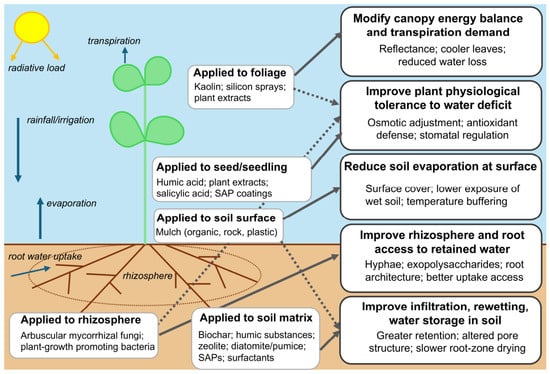
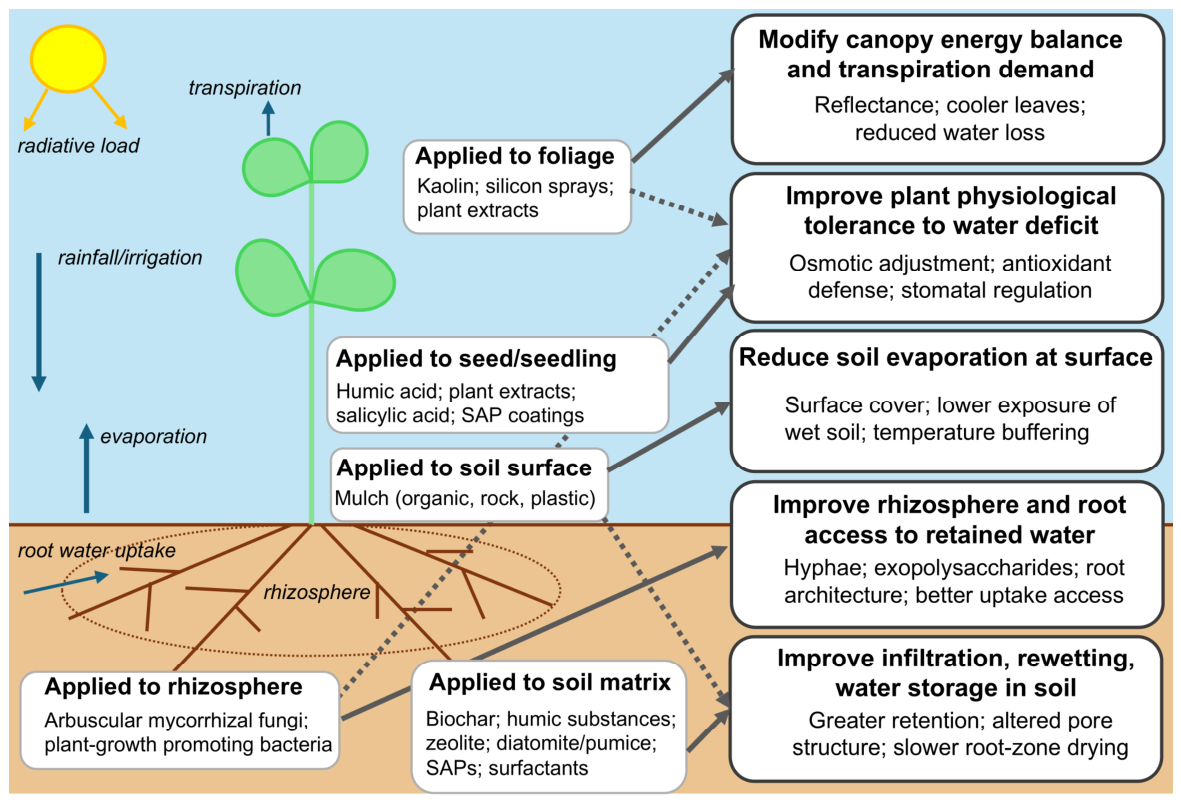

Disclaimer/Publisher’s Note: The statements, opinions and data contained in all publications are solely those of the individual author(s) and contributor(s) and not of MDPI and/or the editor(s). MDPI and/or the editor(s) disclaim responsibility for any injury to people or property resulting from any ideas, methods, instructions or products referred to in the content. |
© 2026 by the authors. Licensee MDPI, Basel, Switzerland. This article is an open access article distributed under the terms and conditions of the Creative Commons Attribution (CC BY) license.