1. Introduction
Tillage practices play a fundamental role in regulating soil structure, controlling bulk density, improving water availability, and ultimately determining the yield and quality of agricultural crops [
1,
2,
3]. In arid and semi-arid regions, where precipitation is limited and unevenly distributed, the effectiveness of tillage becomes even more critical, as it directly influences the capacity of the soil to retain moisture and support early plant development [
4,
5]. In recent years, increasing attention has been paid to conservation-oriented tillage systems that reduce the number of field passes, minimize soil disturbance, and improve the physical condition of the upper soil layer while maintaining sufficient loosening of deeper horizons [
6,
7,
8]. Among the modern approaches to soil management, strip tillage combined with plastic film mulching has gained particular importance [
9,
10]. Strip tillage makes it possible to localize soil disturbance within crop rows, thereby reducing energy consumption and preserving the structure of inter-row zones, while plastic film mulching contributes to moisture conservation, temperature regulation, and improved conditions for seed germination and early plant growth [
11,
12,
13]. These combined technologies are especially relevant for rainfed agriculture, where the preservation of soil water is a key factor determining crop productivity [
14]. In this context, improved soil–film contact and an optimized seedbed structure may significantly enhance water use efficiency (WUE) by reducing non-productive evaporation and improving the availability of soil moisture for plant uptake, which ultimately contribute to higher yield and improved crop quality [
15,
16,
17]. Despite the considerable number of studies devoted to strip tillage and mulching practices, a significant research gap remains in the field of combined machines capable of performing multiple technological operations in a single pass while ensuring the required soil physical conditions [
18,
19]. In particular, insufficient attention has been paid to the processes of secondary leveling and controlled compaction of the soil layer after deep non-inversion loosening [
20]. In practical conditions, the use of paraplow-type tools for strip tillage often leads to the formation of cavities, large clods, and an uneven surface, which negatively affects the quality of plastic film placement, reduces the efficiency of moisture conservation, and limits the realization of the potential gains in water use efficiency and crop yield [
21,
22,
23]. Therefore, there is a clear need for the development of integrated engineering solutions that can ensure both high-quality strip formation and efficient implementation of mulching technologies [
24]. One of the key elements of such combined systems is a leveler–compactor, which performs the functions of clod crushing, surface leveling, and controlled compaction of the upper soil layer [
25,
26]. The design and operating parameters of this working unit determine not only the quality of the treated strip, but also the traction resistance of the machine and, consequently, the overall energy efficiency of the tillage process [
27,
28]. At the same time, the geometry of the leveler–compactor influences the redistribution of soil mass, the duration of soil–tool interaction, and the formation of the final microrelief of the strip, which in turn affects the soil–film contact, the stability of moisture conditions, and the microenvironment of the seedbed [
29]. From the standpoint of sustainable agriculture, the development of combined tillage systems that integrate strip loosening, leveling, compaction, and plastic film mulching in a single pass is of particular importance [
30,
31,
32]. Such systems have the potential to reduce fuel consumption, decrease the soil degradation caused by repeated machine passes, and improve the uniformity of soil physical conditions within a crop row [
33]. Moreover, by enhancing the contact between the soil surface and the mulch film, these technologies contribute to more stable soil moisture regimes; improved water use efficiency; and more favorable conditions for crop establishment, root development, and subsequent yield formation [
34,
35,
36]. Therefore, the optimization of the design parameters of the leveler–compactor should be considered not only as an engineering task, but also as an important step toward improving soil health, crop productivity, and the quality of agricultural produce under resource-limited conditions [
37]. Based on the above considerations, the working hypothesis of this study is that the quality of strip pre-sowing soil preparation under plastic film can be significantly improved by optimizing the geometrical and operating parameters of a skid-type leveler–compactor integrated into a combined machine [
38]. It is assumed that the correct selection of these parameters will ensure the formation of a leveled and moderately compacted soil strip with a high degree of crumbling, an optimal bulk density, and minimal surface irregularities, while maintaining acceptable traction resistance [
39]. The aim of the present study is to substantiate the design and operating parameters of the leveler–compactor used in a combined machine for pre-sowing soil preparation of rainfed land with the simultaneous laying of drip irrigation hoses and plastic film for melon crops [
40].
To achieve this aim, the following objectives are addressed: (i) develop a technological scheme for one-pass strip tillage combined with plastic film mulching; (ii) determine the theoretical relationships governing the interaction between the leveler–compactor and the soil medium; (iii) experimentally investigate the influence of key geometrical and operating parameters on the soil physical indicators and draft resistance; and (iv) identify the optimal parameter ranges ensuring high-quality strip formation with minimal energy consumption. Thus, the present study contributes to the development of advanced tillage methods that combine mechanical optimization with agronomic functionality and are directly aligned with current research priorities aimed at improving soil structure, water availability, water use efficiency, and crop production under sustainable agricultural systems.
2. Materials and Methods
2.1. General Research Design and Relevance to Sustainable Tillage Under Plastic Film
The study was designed as an integrated theoretical and experimental investigation aimed at substantiating the constructional and operating parameters of a skid-type leveler–compactor used in a combined machine for pre-sowing soil preparation of rainfed land intended for melon crop cultivation, with the simultaneous laying of drip irrigation hoses and plastic film. From a methodological standpoint, the research combined analytical modeling of soil–tool interaction with single-factor and multifactor field experiments, which made it possible to establish quantitative relationships between the machine geometry, operating conditions, soil physical properties, and draft resistance within a unified framework.
This integrated approach was selected deliberately because it reflects current priorities in tillage engineering and conservation agriculture, where technological solutions must be evaluated simultaneously in terms of mechanical performance, soil physical conditions, and agronomic effectiveness. In strip tillage systems under plastic film, it is not sufficient to achieve only deep loosening of the soil profile; it is also necessary to form a stable and homogeneous seedbed with a controlled soil bulk density, aggregate size distribution, and minimal surface irregularities. These parameters are critical for ensuring proper soil–film contact, reducing non-productive evaporation, and maintaining a favorable thermal and moisture regime in the seed zone.
The experimental design was developed with explicit consideration of soil and environmental conditions typical for rainfed agriculture in arid and semi-arid regions. Under such conditions, the effectiveness of tillage operations is strongly influenced by the initial soil moisture, soil bulk density, and mechanical resistance, which determine the behavior of the soil during deformation and its response to loosening, leveling, and compaction. Therefore, the methodological framework included both a characterization of the initial soil physical state and an evaluation of its influence on the performance of the leveler–compactor, ensuring that the obtained results are agronomically meaningful and applicable under practical field conditions.
The working hypothesis of the study was that the quality of strip pre-sowing soil preparation under plastic film depends not only on deep non-inversion loosening, but also on the subsequent formation of a leveled and moderately compacted soil strip with a controlled microrelief, optimal soil bulk density, and a high proportion of fine aggregates. It was assumed that the appropriate selection of the geometrical and operating parameters of the leveler–compactor would enable stabilization of soil deformation processes, prevention of excessive soil accumulation in front of the tool, and consistent formation of a seedbed suitable for film laying.
In addition, it was hypothesized that, under rainfed conditions, the integration of strip loosening, leveling, compaction, irrigation hose placement, and plastic film laying in a single pass would reduce the number of field operations, limit traffic-induced soil degradation, and decrease the energy inputs per unit area. At the same time, the improved strip quality and enhanced soil–film contact were expected to contribute to better moisture conservation, more uniform crop emergence, and improved early plant development.
Thus, the adopted research design established a direct link between the engineering parameters of the tillage tool, the soil physical responses, and agronomic performance, and is therefore fully aligned with the principles of conservation-oriented tillage, resource-efficient field operations, and sustainable crop production under plastic film in water-limited environments.
2.2. Development of the Technological Scheme for One-Pass Soil Preparation and Film Laying
The methodological basis of the study was a comprehensive analysis of existing scientific and technical solutions for soil preparation in row crop cultivation, including strip tillage systems, pre-sowing surface conditioning tools, and technologies for plastic film mulching under arid and semi-arid conditions. Particular attention was given to the interaction between tillage operations and the formation of a soil environment suitable for crop establishment under plastic film, where both the soil structure and surface geometry are critical.
Based on this analysis, and taking into account the agro-technical requirements of melon cultivation on rainfed land, a one-pass technological sequence was developed. The design of this sequence was guided by the need to ensure not only the effective loosening of the soil profile but also the formation of a leveled and moderately compacted strip with controlled soil bulk density, aggregate size distribution, and minimal surface irregularities. These parameters are essential for achieving stable soil–film contact and reducing non-productive moisture losses.
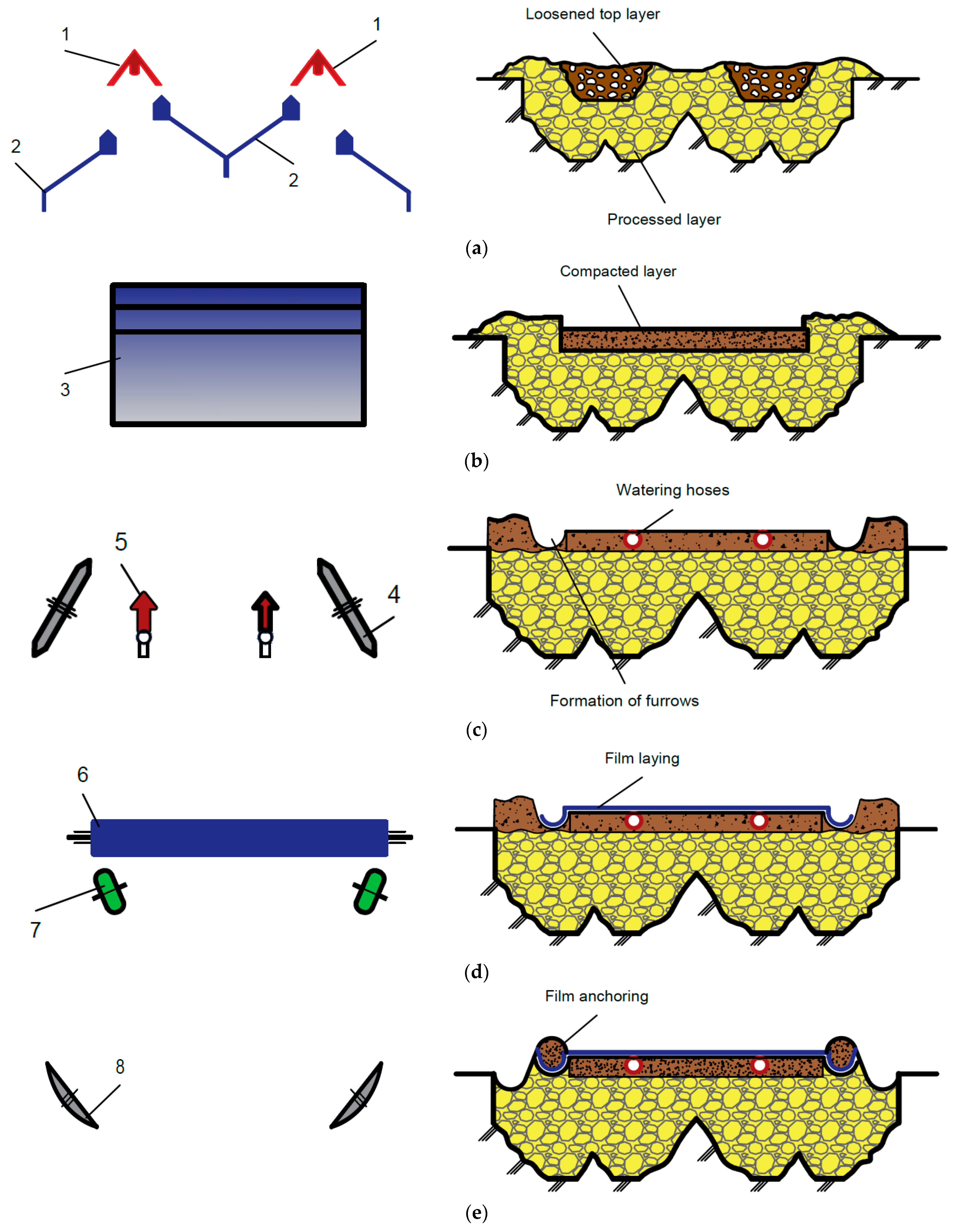
As shown in
Figure 1, the proposed technology included the following consecutive operations performed within a single pass of the aggregate. First, shallow strip loosening of the sowing line to a depth of 10–12 cm was combined with deep non-inversion loosening using paraplow-type tools (
Figure 1a), which ensured disruption of the compacted subsurface layer while maintaining the general soil structure. Second, leveling and controlled compaction of the central part of the treated strip intended for film placement were carried out (
Figure 1b), allowing for the transformation of the loosened soil into a uniform seedbed with reduced surface roughness and improved structural stability. Third, grooves were formed for embedding the edges of the plastic film simultaneously with the placement of drip irrigation hoses (
Figure 1c), ensuring the correct positioning of the irrigation system relative to the crop row. Fourth, a plastic film with a width of 140 cm was laid over the prepared strip (
Figure 1d), followed by covering of the lateral edges of the film with soil to ensure its fixation and sealing (
Figure 1e).
From a methodological perspective, the proposed sequence is significant because it integrates multiple technological operations—loosening, leveling, compaction, irrigation hose placement, and film laying—within a single engineering system, rather than treating them as separate field operations. This integration is particularly important under rainfed conditions, where minimizing the time interval between soil disturbance and film application is critical for reducing non-productive evaporation losses.
In addition, the immediate formation of a leveled and compacted strip improves the quality of soil–film contact, which directly affects the thermal and moisture regimes of the seedbed. As a result, the developed technological scheme ensures the coordinated interaction between the mechanical soil treatment and agronomic requirements, enabling the formation of a stable and homogeneous soil environment that promotes uniform crop emergence, efficient water use, and improved productivity under conditions of limited natural moisture.
2.3. Experimental Machine and Arrangement of Working Units
To implement the proposed technological sequence, a combined machine for the pre-sowing soil preparation of rainfed land for melon crop cultivation with the simultaneous laying of drip irrigation hoses and plastic film was designed and assembled. The design of the machine was based on the requirement to ensure the coordinated execution of all technological operations within a single pass, while maintaining the target soil physical conditions necessary for crop establishment under plastic film.
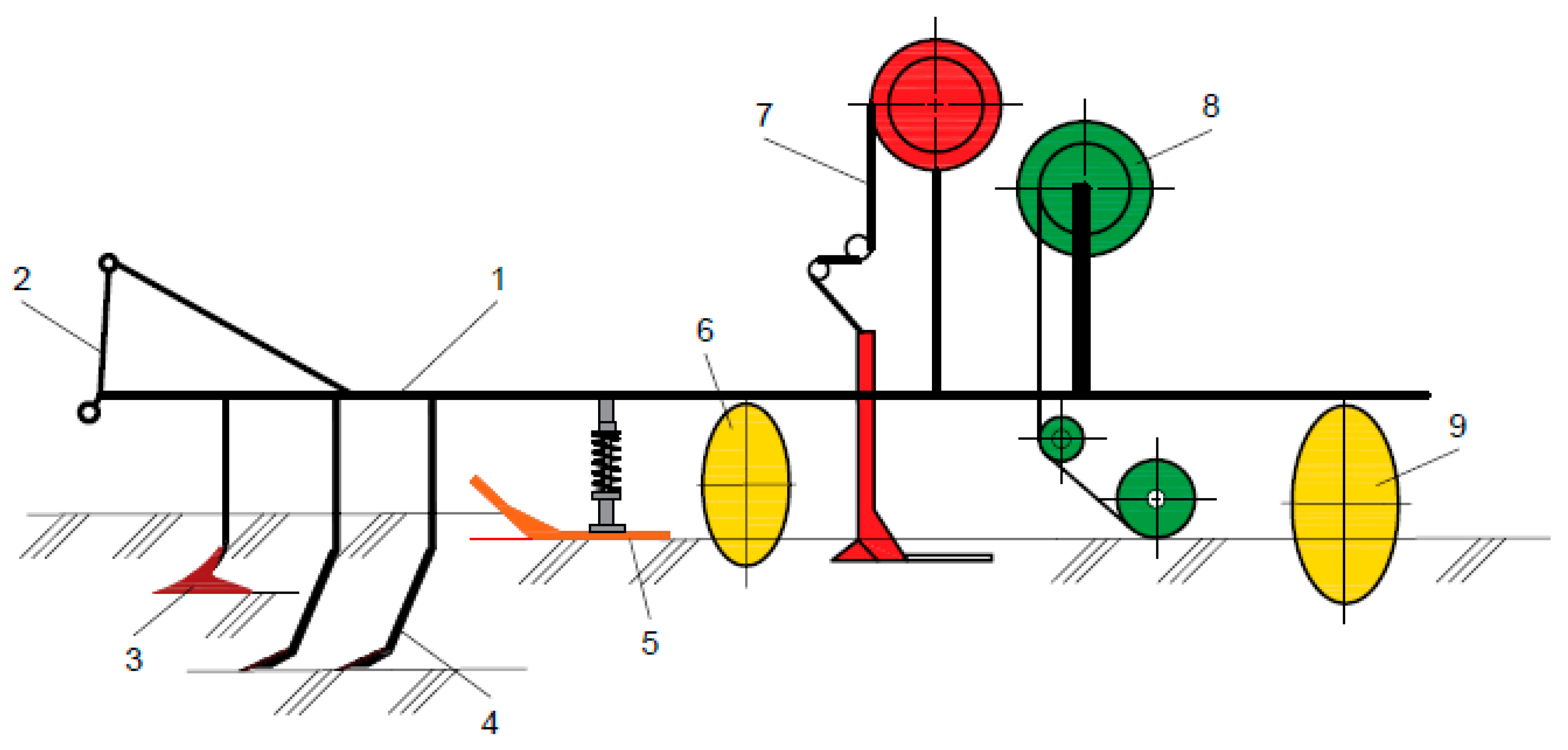
The technological scheme of the machine is presented in
Figure 2.
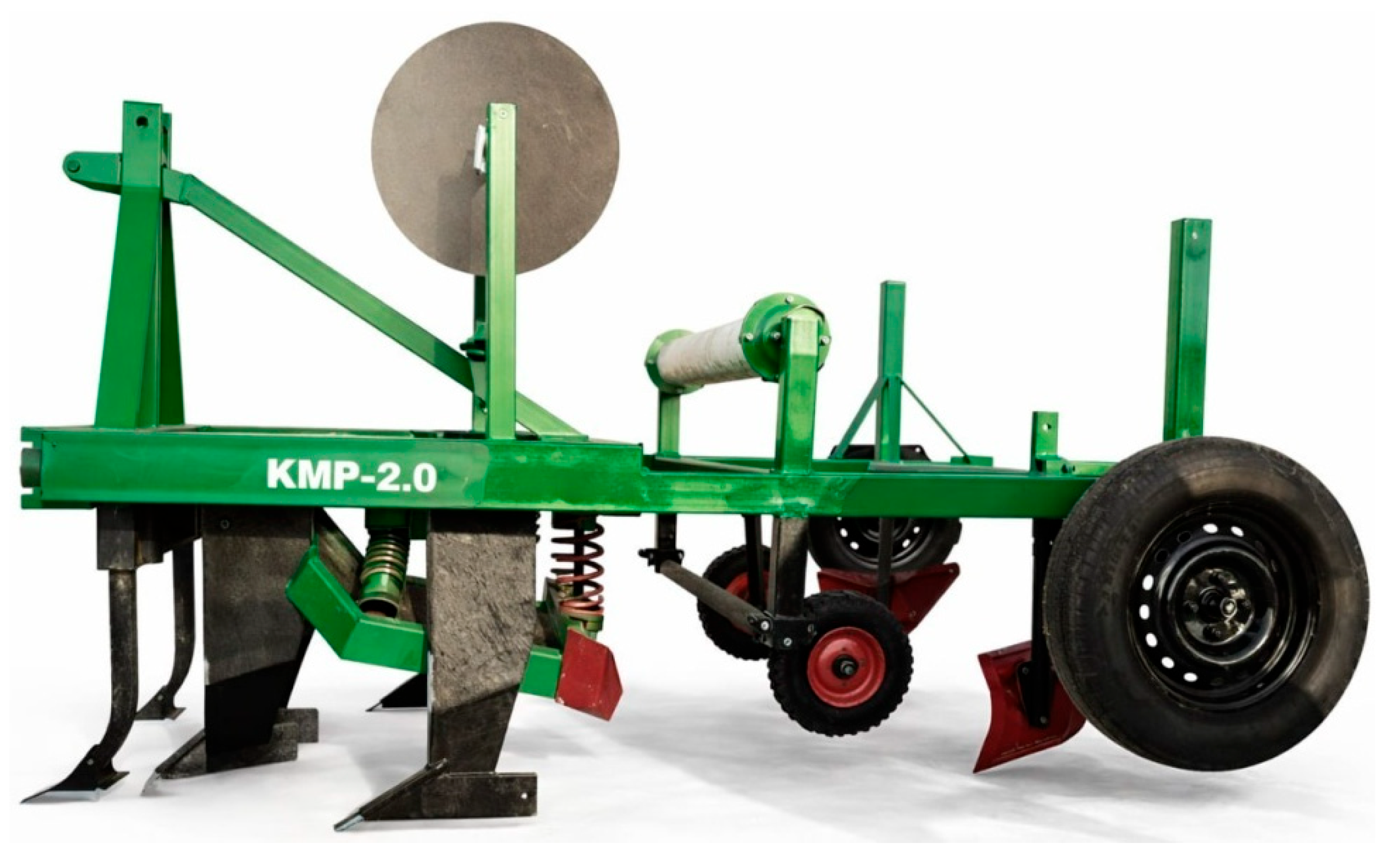
A general view of the developed machine is shown in
Figure 3.
As shown in
Figure 2, the machine consists of the following main working units: a frame (1), a hitching unit (2), a paired sweep share (3), paraplow-type loosening tools (4), a leveler–compactor (5), a flat disc (6), units for laying drip irrigation hoses and plastic film (7, 8), and spherical discs (9). This arrangement of working units was selected to ensure sequential and functionally interconnected soil treatment processes, in which each operation prepares the conditions for the subsequent stage of the technological process.
During operation, the paired sweep shares form a fine-tilth surface layer along the sowing line, creating favorable conditions for uniform seed placement. The inclined paraplow-type tools provide deep non-inversion loosening of the strip, reducing soil compaction in the subsurface layer and improving water infiltration. However, it is established that strip tillage using paraplow tools alone leads to the formation of cavities within the loosened layer, as well as the presence of large clods and pronounced surface irregularities.
Under such conditions, the physical state of the upper soil layer—particularly its soil bulk density, aggregate size distribution, and surface roughness—does not meet the agro-technical requirements for high-quality plastic film laying or stable crop emergence. The excessive roughness and the presence of coarse aggregates reduce the quality of soil–film contact, which can lead to increased evaporation losses and non-uniform thermal and moisture conditions in the seed zone.
To overcome these limitations, a leveler–compactor is introduced into the machine as a key intermediate functional unit. Its function is to transform the rough loosened soil surface into a leveled, moderately compacted, and finely aggregated strip with a controlled soil bulk density and minimal surface irregularities. This transformation is essential for ensuring stable seedbed conditions suitable for plastic film mulching and subsequent crop establishment.
From an agronomic perspective, the inclusion of the leveler–compactor improves the microrelief of the seedbed, enhances soil–film contact, reduces non-productive evaporation, and creates a more uniform microenvironment for seed germination and early plant development. In this way, the structural design of the machine establishes a direct link between the mechanical soil treatment and the formation of favorable conditions for crop growth under plastic film.
The experimental unit was coupled with an MTZ-80 tractor (Minsk Tractor Works, Minsk, Belarus), which is widely used under field conditions in the region. The selected tractor ensured the stable operation of the combined machine within the investigated range of draft resistance and reflects typical agricultural practice, thereby supporting the practical applicability of the obtained results.
2.4. Functional Role of the Leveler–Compactor and Selection of Its Design Concept
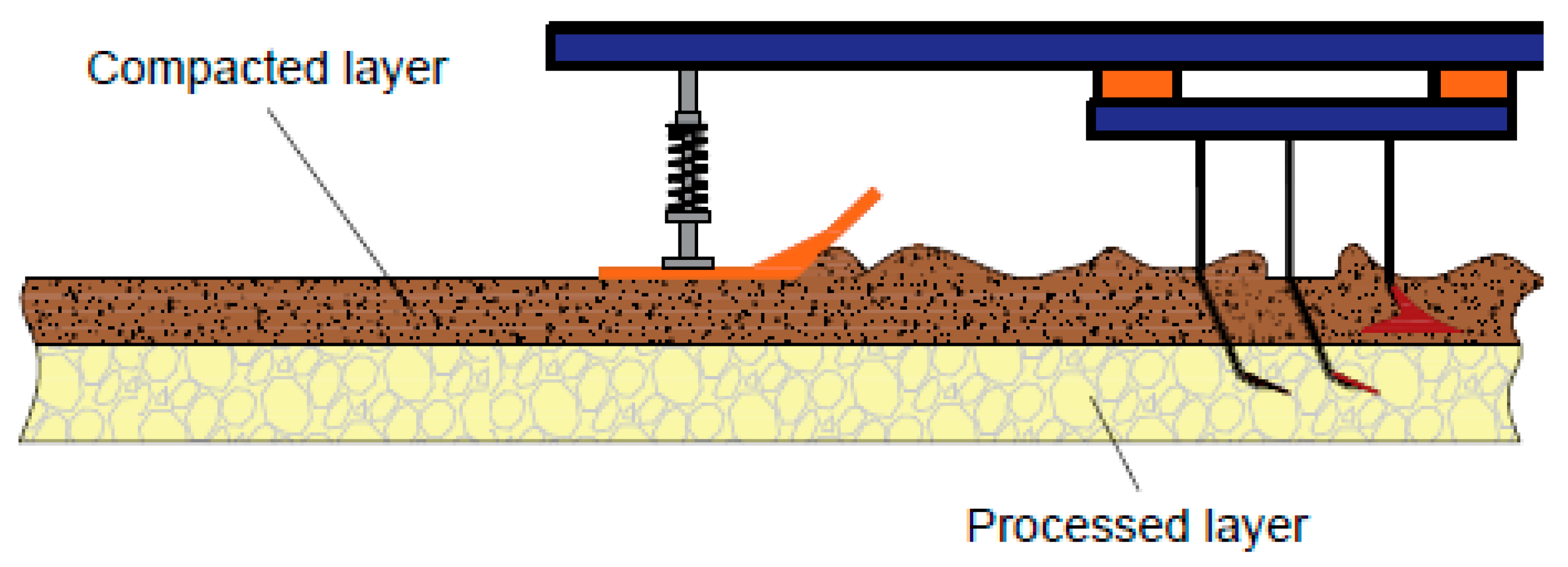
The need for additional leveling and controlled compaction after non-inversion strip loosening is illustrated schematically in
Figure 4.
After paraplow-type tillage, the upper soil layer within the treated strip was characterized by the presence of internal voids, coarse clods exceeding 50 mm in size, and pronounced surface irregularities that exceeded the permissible agro-technical limits for pre-sowing preparation under plastic film. Under such conditions, the physical state of the soil could not ensure adequate soil–film contact, which is essential for moisture conservation, stabilization of the thermal regime, and uniform crop emergence.
Therefore, the upper strip required a secondary treatment capable of performing three interrelated functions simultaneously: clod crushing, surface leveling, and controlled compaction. From an agronomic perspective, this stage is critical because the geometry of the soil surface and its structural condition directly determine the microenvironment of the seedbed under the film, including moisture retention, soil warming, and conditions for seedling establishment.
Following an analysis of the operating principles of existing leveling and compacting devices, a skid-type leveler–compactor was selected as the most suitable configuration due to its ability to provide continuous contact with the soil surface and ensure stable deformation of the loosened layer without excessive soil accumulation in front of the tool.
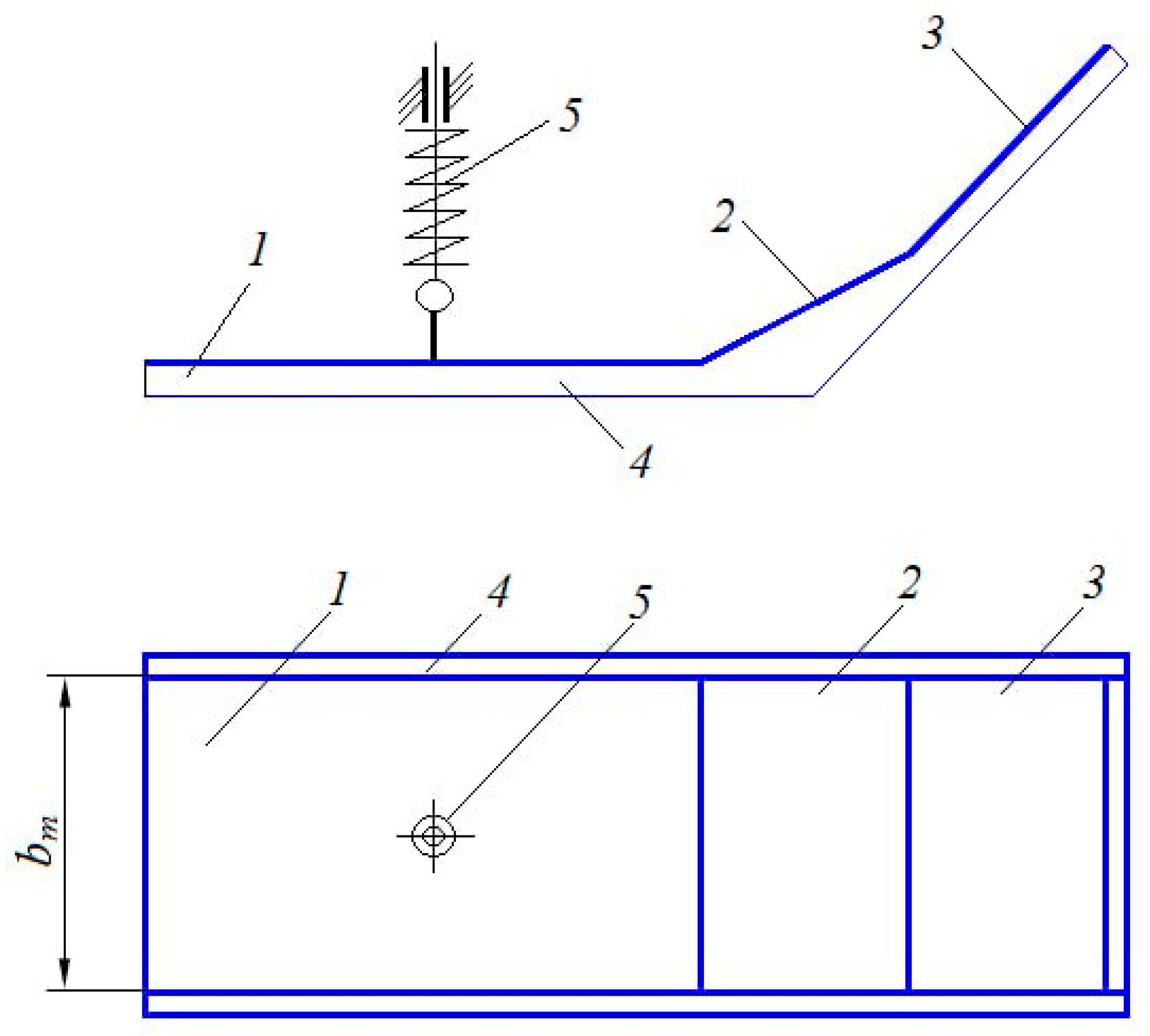
The constructive scheme of the selected leveler–compactor is presented in
Figure 5.
The device consists of a supporting base (1), a lower compacting part (2), an upper compacting part (3), side knives positioned along the lateral boundaries of the working zone (4), and a loading spring (5). During operation, the side knives form a strip whose width corresponds to the width of the plastic film, while the lower and upper compacting surfaces, together with the supporting base, interact with the loosened soil layer to crush aggregates, reduce surface roughness, and form a stable and geometrically uniform strip suitable for irrigation hose placement and film laying.
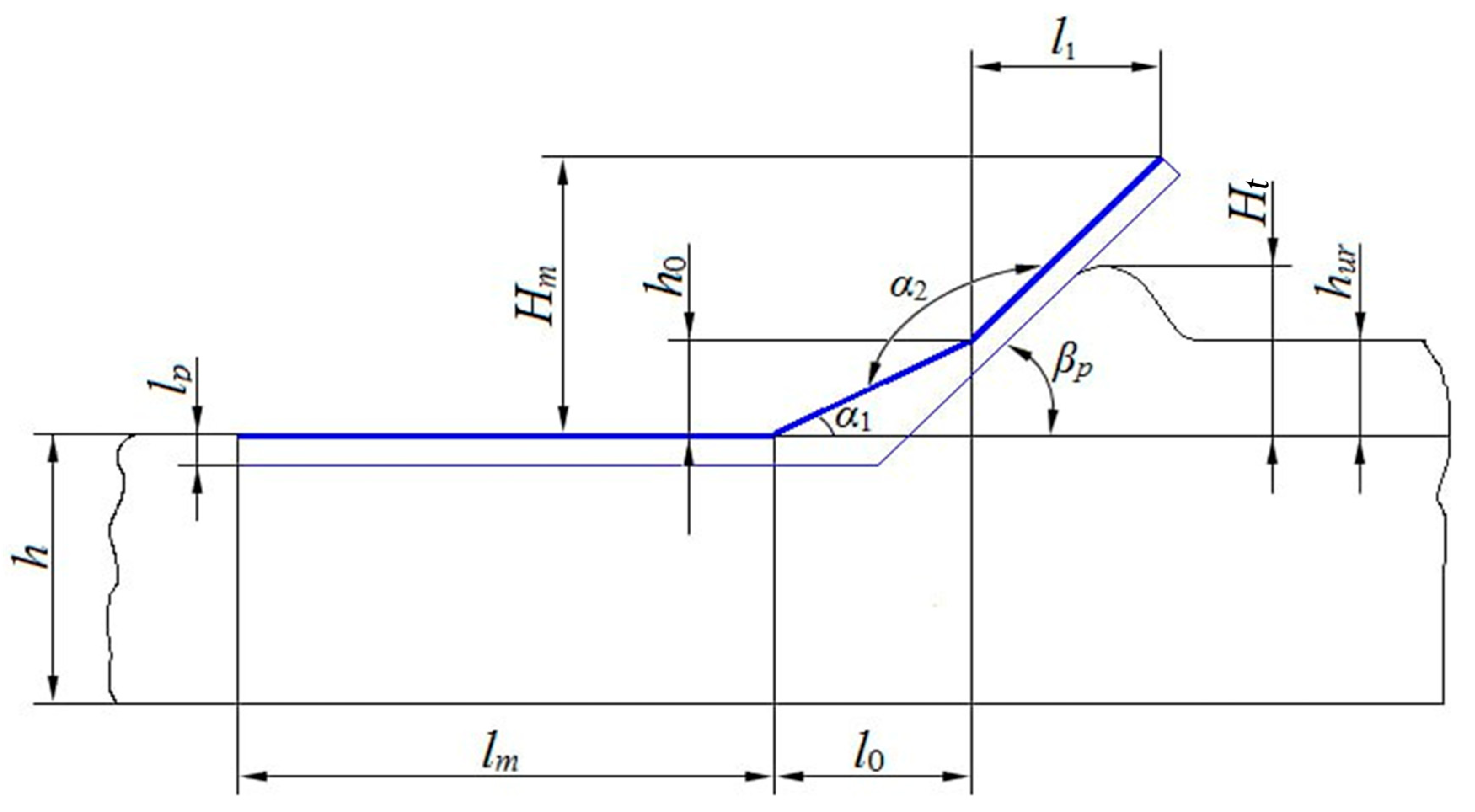
The main geometrical parameters of the leveler–compactor are shown in
Figure 6.
These parameters include α1, the installation angle of the lower compacting part relative to the horizontal plane; α2, the installation angle of the upper compacting part relative to the lower compacting part; l0, the length of the lower compacting surface; l1, the length of the upper compacting surface; Ht, the total height of the leveler–compactor (i.e., the structural height of the tool itself, not the height of the combined machine); and βp, the installation angle of the front knife edge relative to the horizontal plane.
In addition to these parameters, the theoretical analysis involves the angle β, which represents the installation angle of the leveler–compactor relative to the horizontal plane. This angle is used in the formulation of the governing relationships of soil–tool interaction. It should be emphasized that β characterizes the overall orientation of the tool, whereas α1 and α2 define the internal geometry of the working surfaces responsible for soil deformation and compaction.
The selected set of geometrical parameters are treated as the key design variables because they determine the duration and intensity of soil–tool interaction, the mechanism of soil displacement and compression, the tendency of soil to accumulate in front of the tool, and the resulting quality of strip formation. At the same time, these parameters directly influence the draft resistance and, consequently, the overall energy efficiency of the technological process.
Thus, the design of the leveler–compactor establishes a direct link between the tool geometry, soil deformation processes, and agronomic outcomes, ensuring the formation of a leveled and moderately compacted strip with properties suitable for plastic film mulching and stable crop establishment under rainfed conditions.
2.5. Theoretical Substantiation of the Main Geometrical Parameters
The theoretical analysis was based on the principles of classical mechanics, soil mechanics, and the theory of interaction between tillage tools and a deformable soil medium. The objective of this stage was to determine the admissible and agronomically justified ranges of the principal geometrical parameters of the leveler–compactor prior to field testing, taking into account the mechanics of soil deformation under typical tillage conditions.
The analysis was carried out under the assumption of quasi-static soil deformation, which is characteristic of tillage operations performed at relatively low travel speeds. Under these conditions, the interaction between the working surfaces of the tool and the soil medium can be described in terms of equilibrium between frictional forces, normal stresses, and the geometry of soil displacement.
The installation angles of the working surfaces were considered as the primary parameters governing the soil–tool interaction. The installation angle of the lower compacting part relative to the horizontal plane, α
1, and the installation angle of the upper compacting part relative to the lower compacting part, α
2, were determined from the following expressions:
In these expressions, ε denotes the installation angle of the lower compacting part relative to the horizontal plane (°), φ1 is the angle of friction of soil and plant residues against the working surface of the leveler–compactor (°), and β is the installation angle of the leveler–compactor relative to the horizontal plane (°). It should be noted that β characterizes the spatial orientation of the tool as a whole, whereas α1 and α2 describe the internal geometry of the working surfaces responsible for soil deformation and compaction.
Equations (1) and (2) were used to determine the rational angular configuration of the working surfaces under conditions that prevent excessive soil accumulation in front of the tool and ensure stable sliding and controlled compression of the soil layer. The calculations performed for ε = 25°, π = 3.14, φ1 = 36–40°, and β = 153° showed that the rational range of α1 is 25–27°, whereas α2 should lie within 153–155°.
The length of the lower compacting surface,
l0, was determined as follows:
where
k is the coefficient accounting for soil loosening;
a is the working depth of the leveler–compactor, in cm;
ρ0 is the soil bulk density before the passage of the leveler–compactor, in g cm
−3; and
ρm is the target soil bulk density after treatment, in g cm
−3. This relationship describes the required length of the lower working surface to achieve the desired degree of secondary consolidation of the upper soil layer. Substitution of
k = 1.25,
a = 4 cm,
ρ0 = 0.95 g cm
−3,
ρm = 1.18 g cm
−3, and
α1 = 25° yielded
l0 = 9.81 cm.
The length of the upper compacting surface,
l1, was determined using the following expression:
where
hur is the thickness of the soil layer subjected to crushing, in cm;
h is the thickness of the treated layer before the pass, in cm;
μ is the natural angle of soil slope (°);
h0 is the penetration depth of the lower compacting part, in cm; and
φ is the internal friction angle of the soil during deformation. This equation defines the conditions for the stable redirection of the displaced soil mass along the upper working surface and completion of the leveling process without excessive overflow or loss of soil from the treated strip. Calculations for
hur = 8.16 cm,
h = 30 cm,
ρ0 = 0.95 g cm
−3,
ρm = 1.18 g cm
−3,
α1 = 25°,
φ = 30°,
π = 3.14,
μ = 30°,
α2 = 153°, and
h0 = 8.16 cm gave
l1 = 13.21 cm.
The total height of the leveler–compactor,
Ht, was determined based on the condition that the soil mass remains within the working zone and does not spill over the upper part of the tool during operation:
where
ld is the average length of the soil deformation zone, in cm. It should be emphasized that
Ht represents the structural height of the leveler–compactor itself and not the height of the combined machine. This parameter determines the ability of the tool to retain and stabilize the displaced soil mass during deformation. Calculations for
hur = 8.16 cm,
ld = 8.56 cm,
π = 3.14,
μ = 30°,
α2 = 153°,
α1 = 25°,
h = 30 cm,
ρ0 = 0.95 g cm
−3, and
ρm = 1.18 g cm
−3 yielded
Ht = 27.31 cm.
The installation angle of the front knife edge relative to the horizontal plane,
βp, was determined based on the condition of sliding cutting of clods and plant residues:
where
φp is the angle of friction of soil along the knife blade (°). This condition ensures the stable penetration of the knife into the soil and effective lateral shaping of the strip with minimal clogging. For
π = 3.14 and
φp = 27°, the rational range of
βp was found to be 22.5–27.5°.
The draft resistance of the leveler–compactor in the combined machine is expressed as
where
f is the coefficient of friction;
σsj is the specific resistance associated with sliding and soil deformation;
lm and
bm are the characteristic contact length and width of the tool, in cm; ρ
e is the volumetric resistance of the soil, in N cm
−3;
bp is the knife width, in cm;
h0 is the penetration depth, in cm;
δn is the thickness of the cutting edge, in cm;
σ0 is the strength parameter of the soil layer;
q is the distributed load of the soil medium, in N cm
−3;
t is a geometric parameter related to the depth, in cm;
i is the internal angle of soil movement;
ly is the characteristic length of the upper compacting surface, in cm; and
h2 is the characteristic height of the deformation zone, in cm.
This expression was used to estimate the draft resistance and to evaluate the energy feasibility of the proposed design under field operating conditions. The substitution of the experimentally justified parameters showed that the draft resistance at a travel speed of 5 km h−1 was 891.3 N, confirming that the selected geometrical configuration ensured operation within acceptable energy consumption limits.
Thus, the theoretical analysis provided a physically and agronomically grounded basis for selecting the main geometrical parameters of the leveler–compactor, ensuring stable soil deformation, controlled compaction, and formation of a seedbed suitable for plastic film mulching under rainfed conditions.
2.6. Field Conditions and Initial Soil Characterization
The experimental studies were carried out under farmer field conditions in the Kashkadarya region of the Republic of Uzbekistan during the early-spring sowing period of melon crops cultivated under plastic film on rainfed land. The selection of this period and location was determined based on the typical arid and semi-arid agricultural conditions, where the effectiveness of soil preparation and the subsequent crop development are strongly influenced by the initial physical state of the soil and its capacity to retain moisture.
Prior to the experiments, the initial soil physical conditions were characterized in order to ensure the correct interpretation of soil–tool interaction and strip formation quality. The soil moisture content, soil bulk density, and soil hardness were determined for three layers: 0–10, 10–20, and 20–30 cm. The soil moisture was determined by the standard gravimetric method with oven drying at 105 °C to a constant weight. The soil bulk density was measured using the core sampling method with steel cylinders of known volume. The soil hardness was determined using a soil penetrometer (Datafield, Kyiv, Ukraine) with a cone angle of 30° and a base area of 1 cm2.
In the experimental field, the soil moisture was 21.5, 20.2, and 19.7% in the 0–10, 10–20, and 20–30 cm layers, respectively. The corresponding values of soil bulk density were 1.19, 1.21, and 1.32 g cm−3, while the soil hardness was 1.16, 1.22, and 1.29 MPa. These results indicate that the upper soil layer had moderate moisture and density conditions suitable for mechanical treatment, whereas the deeper layer exhibited increased density and mechanical resistance, confirming the necessity of deep non-inversion loosening within the proposed technological scheme.
The characterization of the initial soil state was essential because the performance of the leveler–compactor and the resulting quality of the formed strip depend strongly on the soil moisture, soil bulk density, and mechanical resistance. In particular, increased soil density and hardness may lead to a higher draft resistance and reduced effectiveness of clod crushing, whereas excessive moisture may promote soil adhesion to the working surfaces and reduce the stability of sliding along the tool. Therefore, the experiments were conducted under relatively uniform early-spring soil conditions to ensure comparability of the results.
The experimental unit consisted of the developed combined machine joined to an MTZ-80 tractor (traction class 1.4, rated engine power approximately 59 kW). The working speed was maintained within a range of 4.0–6.0 km h−1, which corresponds to typical field practice and ensures the practical relevance of the obtained results.
Since the developed technology is intended for rainfed cultivation under plastic film, the initial soil characterization was also important for subsequent interpretation of moisture conservation effects and for explaining how the differences in seedbeds’ physical conditions may influence crop emergence, early growth, and final productivity.
2.7. Single-Factor Experiments and Performance Indicators
During the first stage of field evaluation, three variants of the leveler–compactor were fabricated and tested in order to identify the influence of tool geometry on soil treatment quality and draft resistance. The variants differed in the configuration of the working surfaces responsible for leveling and compaction, while all other design and operating parameters were kept constant.
In the first and second variants, the front working surface was installed at angles of 90° and 45°, respectively, relative to the supporting base. In these configurations, a single surface simultaneously performed both leveling and compaction functions, without separation of these processes into distinct working elements. Such an arrangement simplified the geometry of the tool but limited the ability to control the sequence of soil deformation stages.
In contrast, the third variant was designed with a differentiated geometry of the working surfaces. In this case, the lower compacting part was installed at an angle of 25° relative to the horizontal plane, corresponding to the rational range of α1 determined in the theoretical analysis, while the upper leveling part was installed at an angle of 155° relative to the lower compacting part, corresponding to the rational range of α2. This configuration ensured sequential interaction with the soil, during which the initial compaction was followed by the controlled redistribution and leveling of the soil mass along the upper working surface.
For all variants, the working width was maintained constant at 90 cm in order to eliminate the influence of width on the results and to isolate the effect of geometrical configuration of the working surfaces.
The response criteria selected for the experiments were defined in accordance with the agro-technical requirements for soil preparation under plastic film and with the physical processes governing soil–tool interaction. The following indicators were used: the degree of soil crumbling in the upper 10 cm layer, the soil bulk density within the strip intended for hose and film placement, the root-mean-square deviation of surface irregularities across the strip, and the draft resistance of the leveler–compactor.
The agro-technical targets were specified as follows: the proportion of aggregates smaller than 25 mm was required to be at least 80%; the soil bulk density in the upper layer of the strip had to be within a range of 1.1–1.2 g cm−3; deviations of the strip surface height had to remain within ±2 cm; and the draft resistance had to be minimized within the constraints for achieving the required soil quality.
These indicators were selected because they provide a comprehensive characterization of soil physical conditions, suitability of the strip for plastic film laying, and energy efficiency of the technological process. In addition, they are directly related to the formation of the seedbed microenvironment, including the soil–film contact, moisture retention, and uniformity of the soil surface, which are critical factors influencing crop emergence, early plant development, and water use efficiency under rainfed conditions.
Thus, the single-factor experiments were designed not only to compare the alternative geometrical configurations of the leveler–compactor but also to establish the relationship among the tool geometry, soil physical responses, and agronomic performance criteria.
2.8. Methods for Determining Soil Crumbling, Surface Roughness, and Soil Density
The degree of soil crumbling was determined using a square sampling frame with dimensions of 0.5 × 0.5 m. Soil samples were collected from six randomly distributed points within the treated plot from the 0–10 cm layer immediately after the passage of the aggregate. Each sample was air-dried to a condition suitable for sieving and then separated using a set of sieves with mesh openings of 50 and 25 mm.
The mass of the fractions retained on each sieve and that passed through the final sieve was determined using RP-100Sh-13 laboratory scales (manufacturer not specified, Russia) with a weighing accuracy of ±5 g. Based on these measurements, the proportions of soil aggregates larger than 50 mm, between 50 and 25 mm, and smaller than 25 mm were calculated as percentages of the total sample mass. For the subsequent analysis, the fraction smaller than 25 mm (F < 25) was adopted as the principal indicator of soil crumbling quality, as it reflects the formation of a fine-structured seedbed suitable for plastic film laying and uniform crop emergence.
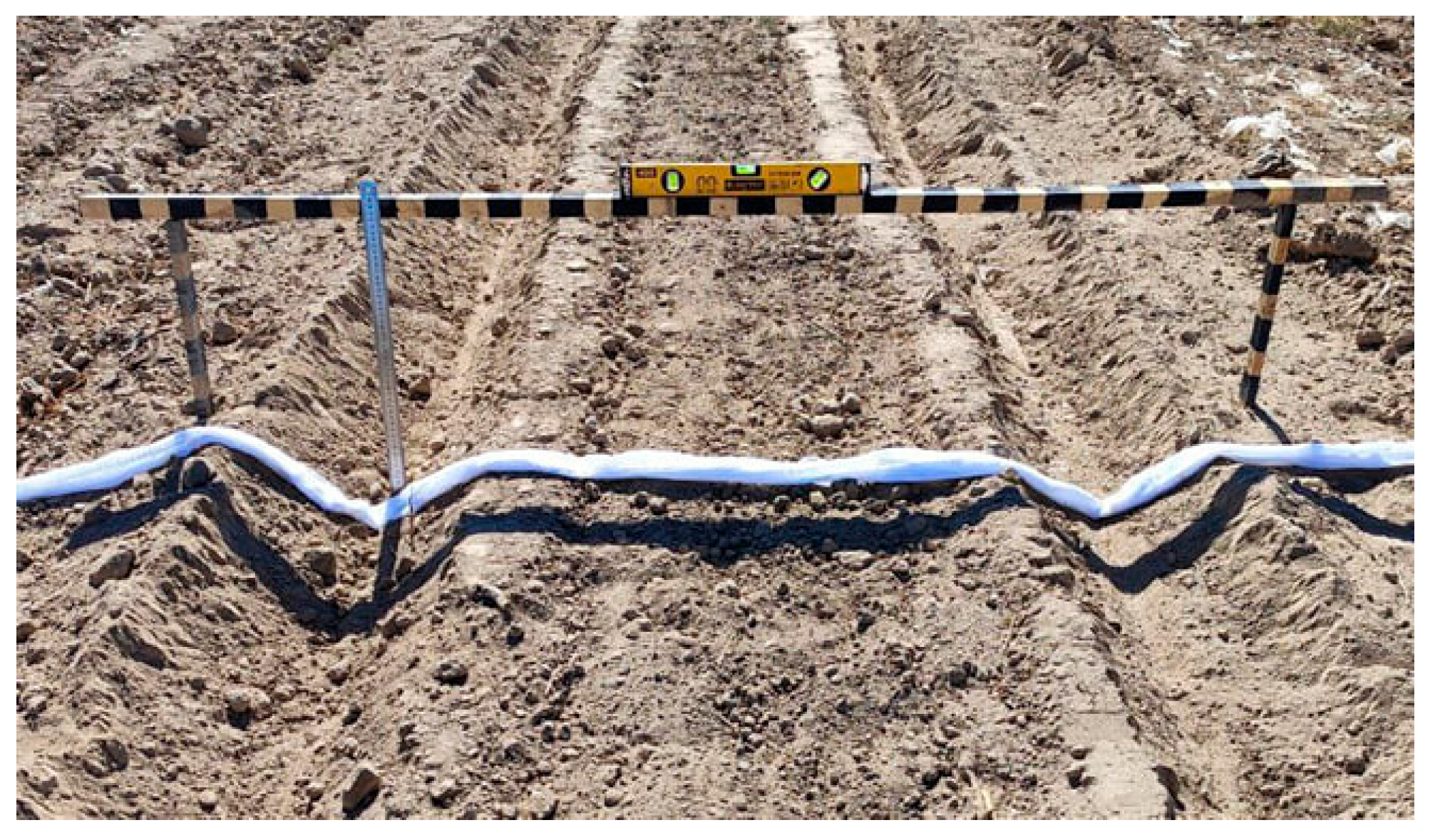
The surface roughness of the treated strip was quantified using the root-mean-square deviation of surface irregularities. The measurements were performed after soil treatment by the leveler–compactor. Wooden stakes were installed across the full width of the strip perpendicular to the direction of travel, and a graduated measuring rail with a scale interval of 5 cm was fixed on the stakes. The horizontal alignment of the rail was verified using a leveling device to ensure measurement accuracy.
The vertical distance from the lower edge of the rail to the soil surface was measured at 18 points spaced at 5 cm intervals across the strip, and the procedure was repeated at three longitudinal positions within the strip formed during a single pass of the machine. This measurement scheme provided a detailed quantitative description of the strip microrelief and allowed for evaluation of its suitability for achieving uniform soil–film contact.
The soil bulk density in the treated strip was determined for the upper layer after the passage of the machine using the core sampling method with cylinders of known volume. The measurements were carried out at multiple points within the strip to account for spatial variability. In the context of this study, the soil bulk density was considered not only as a descriptive physical parameter but also as a functional indicator of the state of the seedbed under the plastic film, reflecting the combined effects of loosening, aggregate breakdown, and secondary compaction.
Together, these measurements provided a comprehensive assessment of the physical conditions of the upper soil layer formed by the developed tillage method. The selected indicators—soil crumbling, surface roughness, and soil bulk density—are directly related to the formation of a stable seedbed microenvironment, including soil–film contact, moisture retention, and uniformity of the soil surface, which are critical for crop establishment and efficient water use under rainfed conditions.
2.9. Factor Ranges and Multifactor Experimental Design
After completion of the theoretical analysis and preliminary single-factor experiments, a multifactor experiment was carried out using a Design of Experiments (DOE) approach based on the Hartley-3 design in order to determine the optimal combination of geometrical and operating parameters of the leveler–compactor.
Three response functions were selected as the optimization criteria: the soil crumbling degree, Y1 (%); the soil bulk density in the upper strip intended for film laying, Y2 (g cm−3); and the draft resistance of the leveler–compactor, Y3 (kN). These indicators were chosen because they simultaneously characterize the soil structural quality, suitability of the strip for plastic film application, and the energy efficiency of the process.
The independent variables included in the multifactor design were selected based on their dominant influence on soil deformation processes and strip formation. These variables were defined as follows: X1, the installation angle of the lower compacting part relative to the horizontal plane (α1, °); X2, the installation angle of the upper compacting part relative to the lower compacting part (α2, °); X3, the total height of the leveler–compactor (Ht, cm); and X4, the travel speed of the aggregate (km h−1).
It should be noted that additional parameters, such as the length of the lower compacting surface (l0) and the specific vertical load applied to the tool, were investigated during the single-factor stage but were not included in the multifactor design. These parameters were preliminarily optimized and fixed at rational values in order to reduce the dimensionality of the experimental design and to focus the multifactor analysis on the most influential geometrical and kinematic variables governing soil deformation and strip formation.
The factor levels were defined on the basis of theoretical calculations and the results of the single-factor experiments. For X1, the levels were 20, 25, and 30° with an interval of 5°; for X2, they were 150, 155, and 160° with an interval of 5°; for X3, they were 20, 25, and 30 cm with an interval of 5 cm; and for X4, they were 4.0, 5.0, and 6.0 km h−1 with an interval of 1.0 km h−1.
Although the single-factor experiments indicated narrower optimal intervals for some parameters, the selected factor ranges were intentionally extended to ensure sufficient coverage of the design space and to allow for reliable estimation of regression coefficients and curvature effects. At the same time, the factor levels were centered around the most probable rational values identified by the preliminary analysis, ensuring both statistical robustness and physical relevance of the model.
The selected factor space thus represents a compromise between experimental efficiency and practical applicability. It enables identification of a combination of design and operating parameters that ensures the required soil structure of the treated strip—characterized by adequate crumbling, an optimal soil bulk density, and minimal surface roughness—while maintaining acceptable draft resistance and energy consumption.
2.10. Statistical Processing and Adequacy of the Predictive Models
The experimental data were processed using methods of mathematical statistics implemented in the PLANEXP software package (version 3.0; experimental design software commonly used for statistical analysis in engineering studies). The homogeneity of variances was evaluated using Cochran’s criterion, the significance of regression coefficients was assessed using Student’s t-test at a confidence level of 95%, and the adequacy of the regression models was verified using Fisher’s F-test.
This statistical framework allowed for the transition from empirical observations to predictive relationships to describe the influence of geometrical and operating parameters on the soil physical properties and machine performance. Regression models were constructed to represent the dependence of the response functions—soil crumbling degree (Y1), soil bulk density (Y2), and draft resistance (Y3)—on the selected factors within the defined experimental domain.
The optimization problem was formulated as a constrained multi-criteria task aimed at identifying the parameter combinations that ensured agronomically acceptable soil conditions while minimizing energy consumption. The constraints were defined as follows: the proportion of soil aggregates smaller than 25 mm (F < 25) had to be at least 80%, and the soil bulk density in the treated strip had to remain within a range of 1.1–1.2 g cm−3. Within these constraints, the objective function was the minimization of draft resistance.
The joint solution of the regression equations was carried out using the “Solver” tool in Microsoft Excel (Microsoft Corp., Redmond, WA, USA) in combination with PLANEXP. This approach enabled the numerical optimization of the factor space and identification of rational combinations of geometrical and operating parameters.
The application of statistical methods ensured the reliability and adequacy of the developed predictive models and allowed for the verification and refinement of the theoretically derived parameters based on the experimental field data. In the context of the developed technology for rainfed melon cultivation under plastic film, the optimization procedure also provided a basis for selecting operating conditions that promote favorable soil physical properties, reduce unnecessary energy expenditure, and indirectly contribute to improved water use efficiency and crop productivity.
2.11. Compliance of the Experimental Evaluation with National Testing Standards
The field and farm-scale tests of the prototype machine were carried out in accordance with the national standards TSt 63.04:2001 and TSt 63.03:2001 [
40,
41], which regulate the testing procedures for tillage machinery and methods for energy assessment under field conditions.
In accordance with these standards, the following parameters were determined: the depth of non-inversion tillage; the degree of soil crumbling in the upper 10 cm layer; the soil bulk density within the treated strip; and the root-mean-square deviation of strip surface irregularities, field productivity, and fuel consumption. All measurements were performed using standardized procedures to ensure consistency, reproducibility, and comparability of the results.
The fuel consumption of the aggregated unit was determined using a dedicated flow measurement device based on the calibrated measuring tank method. During operation, the fuel supplied to the engine was routed through a graduated measuring tank, which allowed for the direct determination of fuel consumption over a specified time interval or treated area. This method ensured sufficient accuracy under field conditions and complied with the requirements of TSt 63.03:2001.
Time–motion observations were conducted to determine the field productivity, fuel consumption per unit area, and the coefficients of utilization of shift time and operational time. These observations provided an integrated assessment of the performance of the machine under real production conditions.
From a methodological perspective, the application of standardized testing procedures ensured the linkage between the experimentally optimized parameters and practical field performance. This was essential for demonstrating the applicability of the proposed tillage-and-mulching technology under real agricultural conditions.
The use of national standards also ensured transparency, reproducibility, and comparability of the obtained results, thereby increasing the reliability of conclusions regarding the agronomic performance and energy efficiency of the developed machine.
3. Results
3.1. Initial Soil Conditions and Experimental Criteria
The experimental study of the influence of the leveler–compactor parameters on machine performance and soil treatment quality was carried out under farmer field conditions in the Kashkadarya region of the Republic of Uzbekistan during the early-spring sowing period on rainfed land. The selected conditions are representative of arid and semi-arid agricultural systems, where the effectiveness of strip tillage under plastic film is strongly influenced by the initial physical state of the soil.
The evaluation criteria used in the study included the degree of soil crumbling, the soil bulk density within the treated strip, the root-mean-square deviation of surface irregularities, and the draft resistance of the leveler–compactor. These indicators were selected in accordance with the agro-technical requirements for melon cultivation under plastic film and reflect both the physical quality of the seedbed and the energy efficiency of the technological process.
The target values for these criteria were defined as follows: the proportion of soil aggregates smaller than 25 mm (F < 25) had to be at least 80%; the soil bulk density in the upper layer of the strip covered with film had to remain within 1.1–1.2 g cm−3; deviations of the strip surface height had to remain within ±2 cm; and the draft resistance had to be minimized while maintaining the required soil structure. These requirements are critical because they determine the quality of strip formation, the effectiveness of soil–film contact, and the ability of the treated soil layer to conserve moisture and support uniform crop emergence.
The initial soil physical properties of the experimental field were determined prior to the tests for three layers (0–10, 10–20, and 20–30 cm). The results are presented in
Table 1.
The data indicate that the upper 0–20 cm layer was characterized by a moderate moisture content and soil bulk density values suitable for mechanical treatment and evaluation of the leveling–compaction process. In contrast, the 20–30 cm layer exhibited a higher soil bulk density and mechanical resistance, confirming the necessity of deep non-inversion loosening within the proposed technological scheme.
Thus, the observed soil profile provided a realistic and representative background for assessing the combined effect of paraplow-type loosening and subsequent strip leveling–compaction on soil physical properties.
The experimental unit was joined to an MTZ-80 tractor (traction class 1.4, rated engine power approximately 59 kW), and the working speed during the experiments was maintained within a range of 4.0–6.0 km h−1. Under these conditions, the obtained results can be considered representative of practical rainfed production systems, where strip preparation under plastic film must combine acceptable field productivity with controlled modification of the upper soil layer.
3.2. Influence of the Leveler–Compactor Design Variant on Soil Crumbling and Draft Resistance
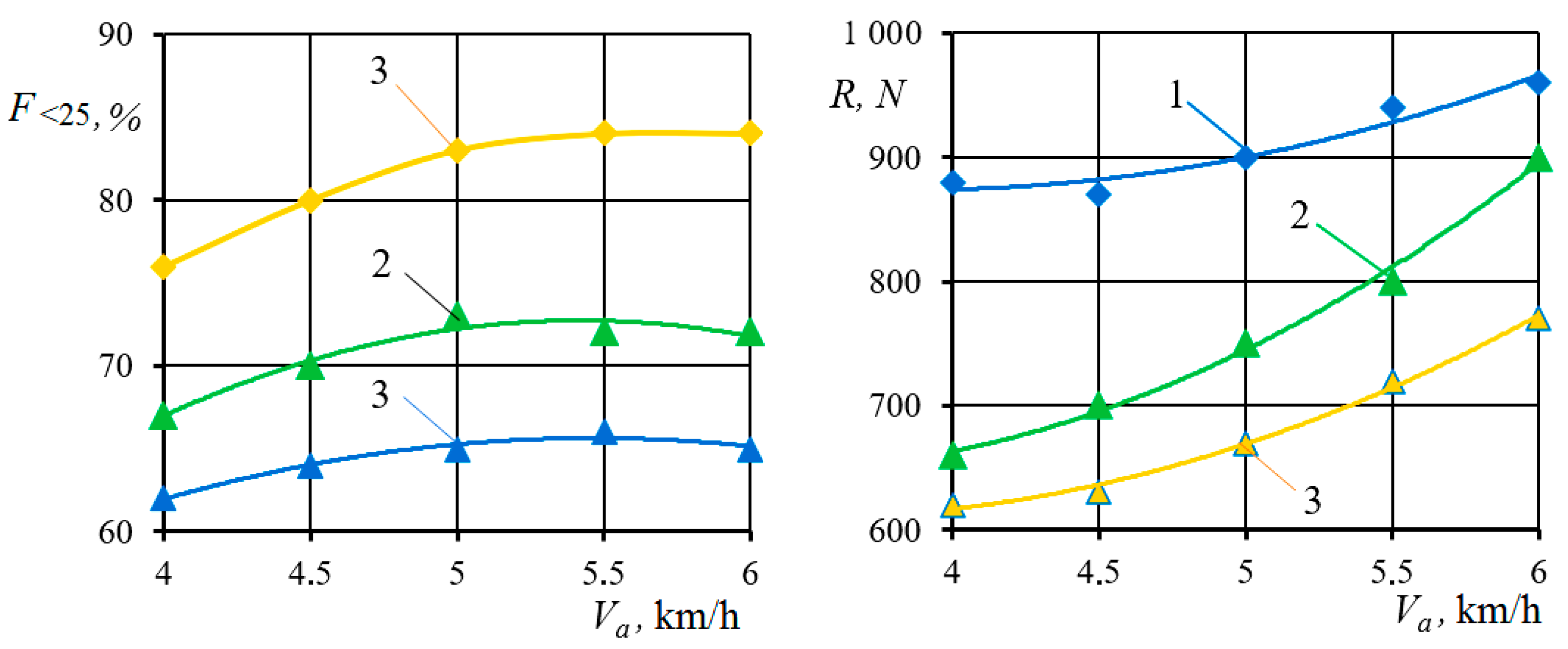
During the first stage of the study, three variants of the leveler–compactor were tested in order to identify the most rational design configuration. All variants had the same working width of 90 cm but differed in their geometrical arrangement of the leveling and compacting parts, as described in
Section 2.7.
The obtained dependencies show that, with an increasing travel speed from 4 to 6 km h−1, the degree of soil crumbling increased in all three variants following a convex parabolic trend, after which the increase became less pronounced. At the same time, the draft resistance increased according to a concave parabolic relationship, reflecting the growing resistance of the soil to deformation at higher operating speeds.
However, variants 1 and 2 did not satisfy the agronomic requirement for soil crumbling, as the proportion of aggregates smaller than 25 mm (F < 25) remained below the threshold of 80% throughout the tested speed range. In contrast, variant 3 ensured a degree of soil crumbling exceeding 80% within the entire investigated speed range of 4–6 km h−1, thereby meeting the requirements for pre-sowing soil preparation of melon crops under plastic film.
From an agronomic perspective, this result is significant because the formation of a fine, leveled, and moderately compacted upper strip directly determines the quality of soil–film contact, which influences moisture retention, soil warming, and the uniformity of crop emergence. The ability to achieve these conditions in a single pass is a key advantage of the proposed technological solution.
Therefore, variant 3 was selected for further single-factor and multifactor experiments as the most effective configuration, providing the best combination of soil crumbling quality and acceptable draft resistance.
The graphical dependencies shown in
Figure 7 are approximated by the following empirical regression equations.
For the degree of soil crumbling:
For the draft resistance:
The high coefficients of determination (R2) indicate good agreement between the experimental data and the regression models. Comparative analysis of the obtained relationships shows that variant 3 provides the most favorable balance between soil crumbling and draft resistance.
In practical terms, this means that the selected configuration allows for the formation of a seedbed with the required aggregate composition without excessive energy input. Such a balance between soil quality and energy consumption is consistent with the principles of conservation-oriented tillage and supports the efficiency of rainfed crop production under plastic film.
3.3. Effect of the Installation Angle of the Lower Compacting Part Relative to the Horizon
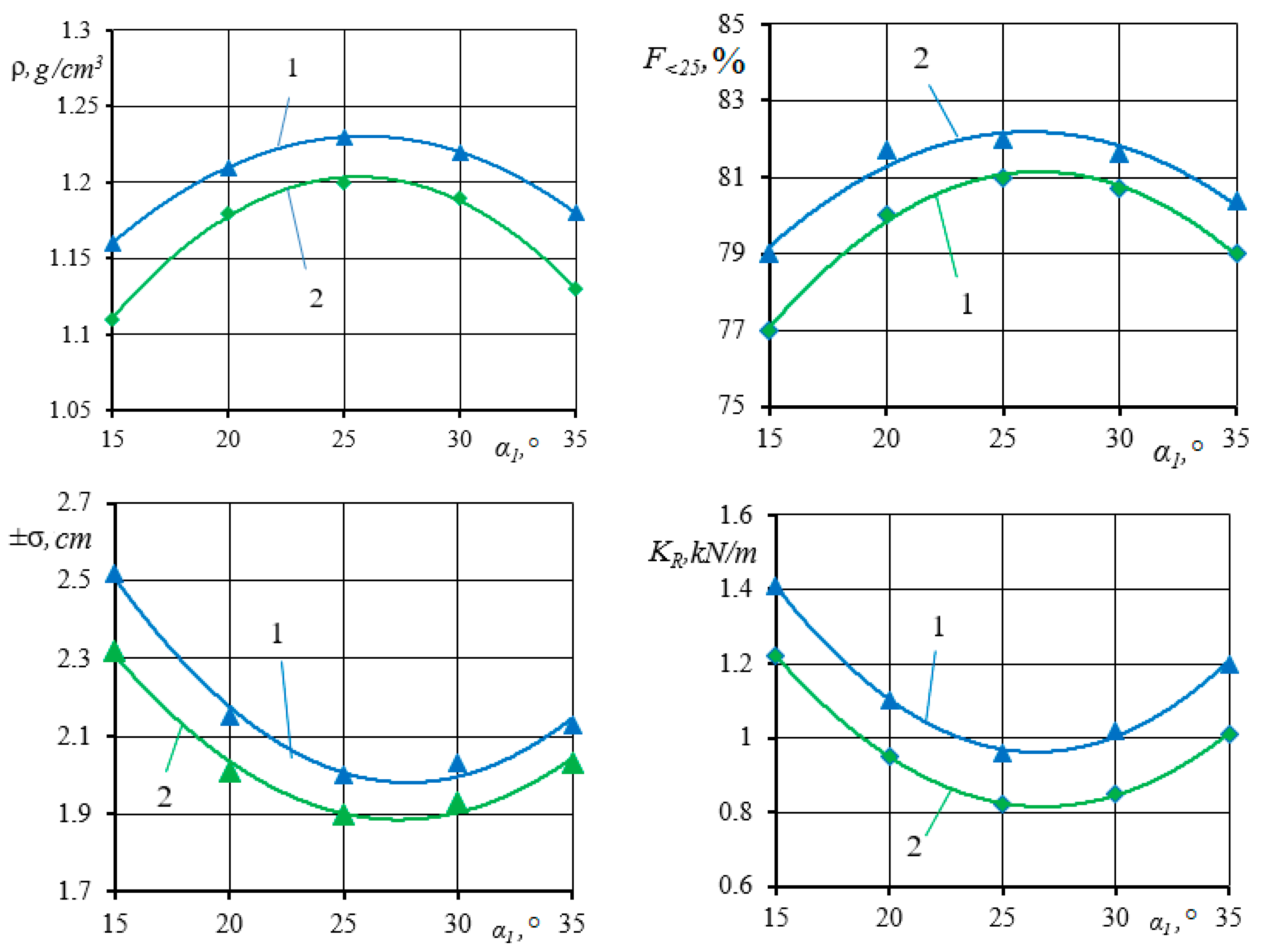
The influence of the installation angle of the lower compacting part relative to the horizontal plane (α
1) on the soil bulk density, degree of soil crumbling, root-mean-square deviation of strip surface irregularities, and specific draft resistance is presented in
Figure 8 and
Table 2.
The obtained dependencies indicate that the soil bulk density and the degree of soil crumbling varied according to a convex parabolic relationship with an increasing installation angle, whereas the root-mean-square deviation of surface irregularities and the specific draft resistance followed concave trends. As the angle increased from 20° to 30°, the surface roughness and draft resistance decreased, reaching minimum values within this interval. A further increase in the angle beyond 30° resulted in a deterioration of these parameters.
At the same time, the soil bulk density and the degree of soil crumbling increased within the range of 20–30°, indicating improved compaction and aggregate breakdown. However, when the angle exceeded 30°, both indicators decreased, suggesting a reduction in the effectiveness of soil–tool interaction.
This behavior can be explained by the mechanics of soil deformation. At installation angles close to 25–30°, the duration and nature of contact between the soil and the working surface are sufficient to ensure effective compression and redistribution of the soil layer without promoting excessive adhesion or accumulation of soil in front of the tool. Under these conditions, the soil layer is transformed into a leveled and moderately compacted strip with improved structural uniformity.
As a result, the surface becomes more even, the soil bulk density approaches the target range, and the degree of soil crumbling exceeds the minimum agronomic requirement. Therefore, the optimal range for the installation angle of the lower compacting part is identified as 25–30°, which ensures the required quality of strip formation under the investigated conditions.
The graphical dependencies shown in
Figure 8 are approximated by the following empirical regression equations.
For the soil bulk density:
For the degree of soil crumbling:
For the root-mean-square deviation of surface irregularities:
For the specific resistance of the leveler–compactor:
The corresponding experimental data are presented in
Table 2.
The data presented in
Table 2 confirm that the range of 25–30° provides the most favorable combination of soil bulk density, surface uniformity, and degree of soil crumbling. From a technological and agronomic standpoint, this range is optimal because it ensures the formation of a stable upper soil layer suitable for plastic film laying while maintaining moderate energy consumption.
3.4. Effect of the Installation Angle of the Upper Leveling Part Relative to the Lower Compacting Part
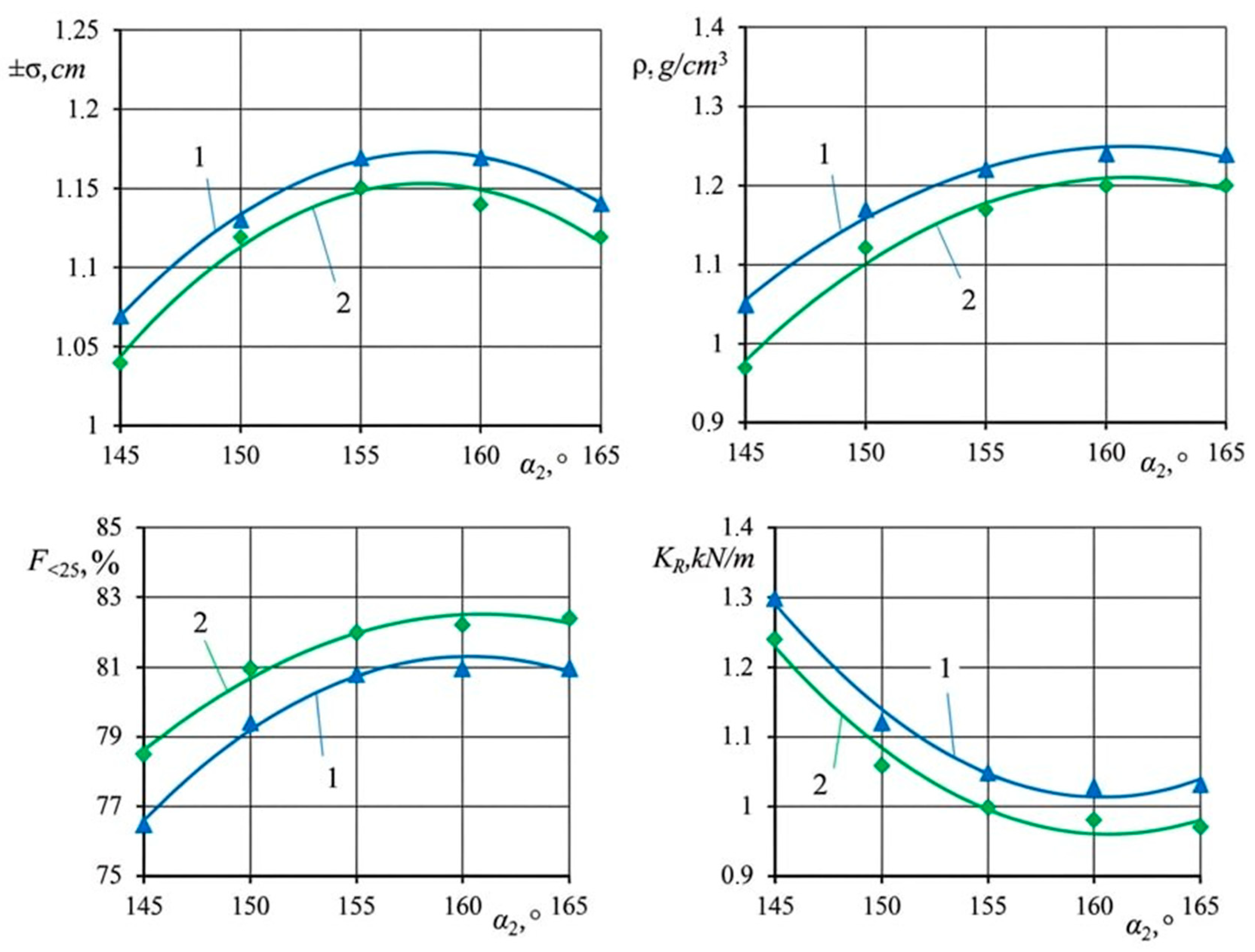
The influence of the installation angle of the upper leveling part relative to the lower compacting part (α
2) on the main quality and energy indicators is presented in
Figure 9 and
Table 3.
The obtained dependencies show that the root-mean-square deviation of surface irregularities, soil bulk density, and the degree of soil crumbling varied according to a convex parabolic relationship, whereas the specific draft resistance followed a concave trend. As the installation angle increased from 145° to 155°, the strip surface became more uniform, the soil bulk density approached the target range, and the degree of soil crumbling increased. At the same time, the draft resistance decreased significantly within this interval.
A further increase in the angle from 155° to 165° resulted in only minor changes in the soil physical indicators, while the specific draft resistance remained nearly constant. This indicates that beyond a certain threshold, increasing the angle does not lead to further improvement in the soil structure but maintains stable operating conditions.
From an engineering perspective, the rationality of the 155–165° range can be explained by the mechanism of soil mass redistribution. At these angles, the soil displaced by the lower compacting surface is effectively redirected and stabilized along the upper working surface without excessive resistance or accumulation. This ensures uniform strip geometry and prevents disruption of the leveled soil layer.
From an agronomic standpoint, this result is also significant because improved surface uniformity and aggregate structure enhance soil–film contact, reduce the formation of air gaps beneath the plastic film, and contribute to more efficient moisture conservation in the upper soil layer.
Therefore, the installation angle of the upper leveling part in the range of 155–165° can be considered optimal for achieving the required combination of soil quality indicators and acceptable energy consumption.
The graphical dependencies shown in
Figure 9 are approximated by the following empirical regression equations.
For the root-mean-square deviation of surface irregularities:
For the soil bulk density:
For the degree of soil crumbling:
For the specific draft resistance:
The corresponding experimental data are presented in
Table 3.
The data presented in
Table 3 confirm that the range of 155–165° provides the most favorable combination of soil bulk density, surface uniformity, and degree of soil crumbling while maintaining stable draft resistance. This confirms the critical role of the upper working surface in the final shaping of the mulch strip and in achieving the required agronomic conditions for crop establishment under plastic film.
3.5. Effect of the Length of the Lower Compacting Surface
The influence of the length of the working surface of the lower compacting part (
l0) on the soil bulk density, degree of soil crumbling, root-mean-square deviation of surface irregularities, and specific draft resistance is presented in
Figure 10 and
Table 4.
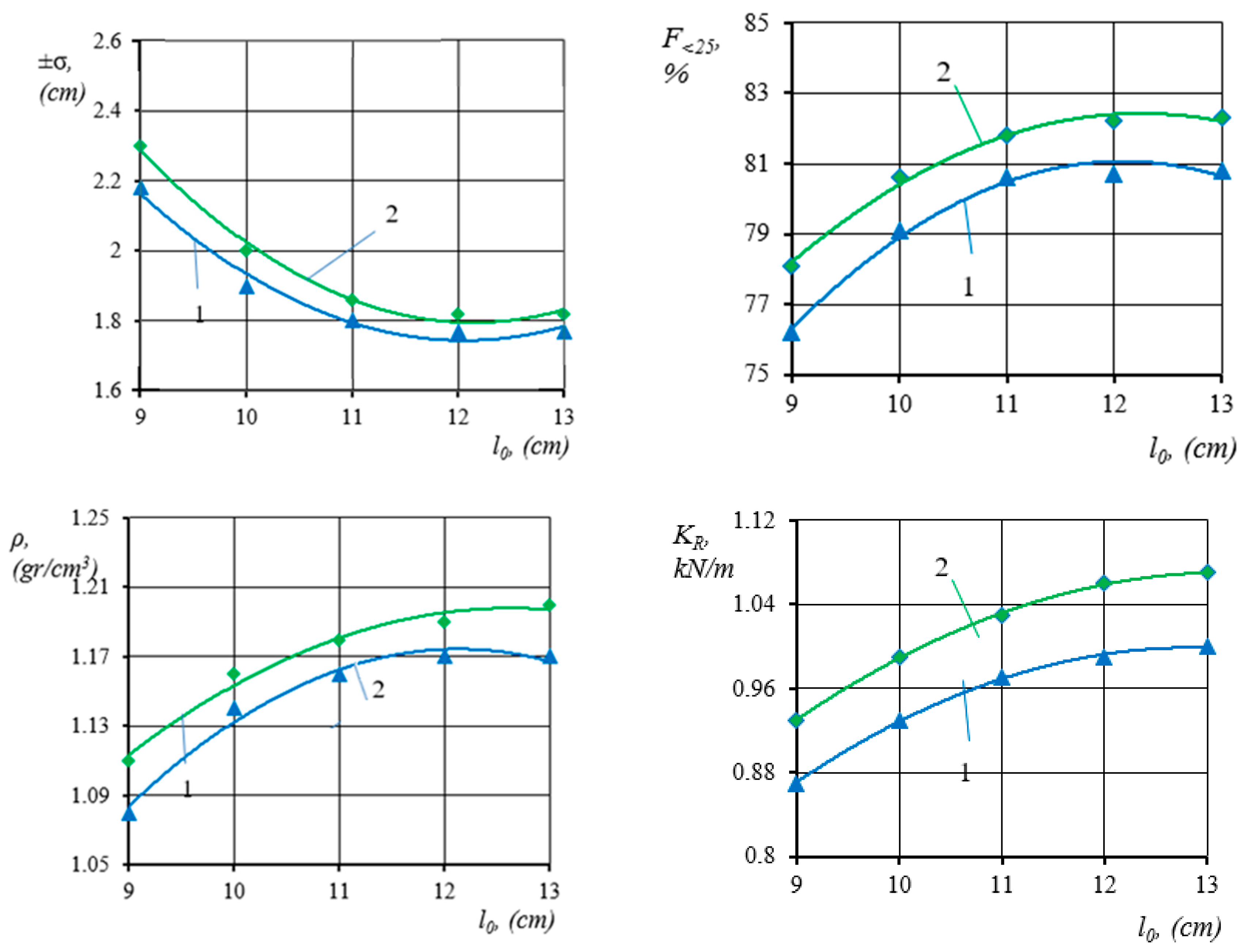
The obtained dependencies indicate that the root-mean-square deviation of surface irregularities followed a convex parabolic trend, whereas the soil bulk density, the degree of soil crumbling, and the specific draft resistance exhibited a concave relationship with an increasing l0. As the length of the lower compacting surface increased from 9 to 12 cm, the surface roughness decreased, while the soil crumbling and soil bulk density increased, indicating the improved structural formation of the upper soil layer. At the same time, the specific draft resistance also increased, reflecting a longer contact interaction between the soil and the working surface.
When the length increased further from 12 to 13 cm, the improvements in the soil physical indicators became negligible, whereas the draft resistance continued to rise. This indicates that further extension of the working surface does not significantly enhance the soil quality but leads to additional energy consumption.
From a mechanical standpoint, increasing l0 extends the duration of soil–tool interaction, promoting more intensive compaction and redistribution of the soil mass. However, beyond a certain length, the soil reaches a quasi-stable state, and further contact contributes primarily to resistance rather than to additional structural improvement.
From an agronomic perspective, an excessively short working surface does not ensure complete leveling and consolidation of the loosened soil, whereas an excessively long surface may lead to unnecessary densification of the upper layer and increased energy demand. Therefore, a length of 12 cm represents a rational compromise between achieving the required soil structure and maintaining acceptable draft resistance.
The graphical dependencies shown in
Figure 10 are approximated by the following empirical regression equations.
For the root-mean-square deviation of surface irregularities:
For the degree of soil crumbling:
For the soil bulk density:
For the specific draft resistance:
The data presented in
Table 4 confirm that increasing the length of the lower compacting surface beyond 12 cm results in only a marginal improvement in the soil quality indicators while causing a noticeable increase in the draft resistance. Therefore, a value of 12 cm can be considered optimal from both an engineering and agronomic perspective, as it ensures the required soil structure with moderate energy expenditure.
3.6. Effect of the Height of the Leveler–Compactor
The influence of the height of the leveler–compactor (
Ht) on the soil bulk density, degree of soil crumbling, root-mean-square deviation of surface irregularities, and specific draft resistance is presented in
Figure 11 and
Table 5.
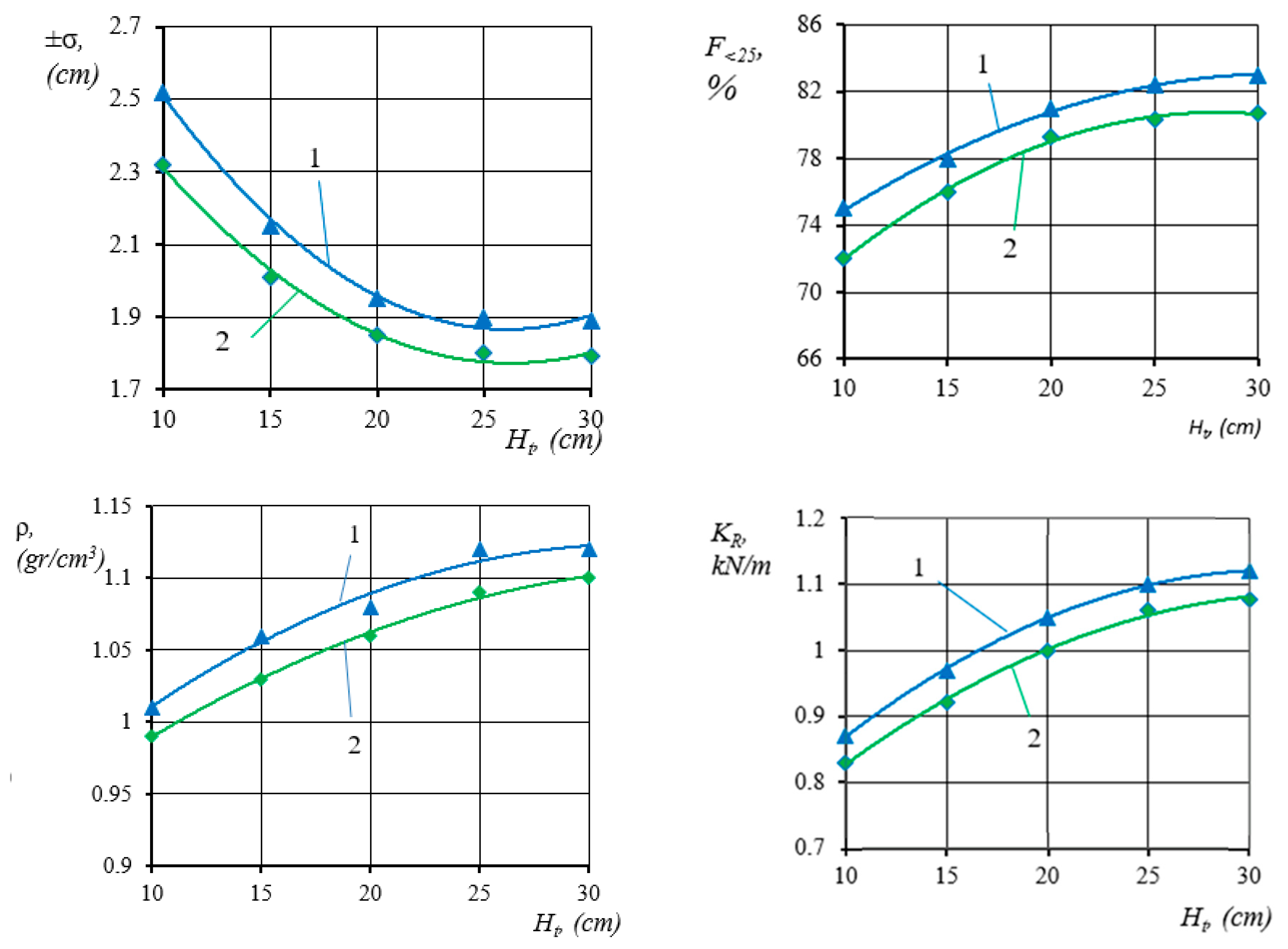
The obtained dependencies indicate that the root-mean-square deviation of surface irregularities followed a convex parabolic trend, whereas the soil bulk density, the degree of soil crumbling, and the specific draft resistance exhibited a concave relationship with an increasing Ht. As the height increased from 10 to 25 cm, the surface roughness decreased significantly, while the soil bulk density and the degree of soil crumbling increased, indicating an improved formation of the upper soil layer.
A further increase in height from 25 to 30 cm resulted in only minor changes in the soil physical indicators, while the specific draft resistance continued to increase slightly. This suggests that beyond a certain height, the additional structural capacity of the tool does not significantly improve the soil quality but contributes to increased resistance.
From a mechanical standpoint, increasing Ht enlarges the active volume in which soil deformation occurs, allowing the displaced soil mass to remain within the working zone and to be redistributed more uniformly. At an insufficient height, part of the soil mass may overflow the working surface, leading to unstable strip formation and increased surface irregularities. At heights of 25 cm and above, the deformation process becomes stable, and further increases in Ht do not significantly change the soil structure.
From an agronomic perspective, a sufficient tool height ensures the formation of a uniform and continuous strip suitable for plastic film laying. An improved surface uniformity and aggregate structure enhance soil–film contact, reduce moisture losses, and create favorable conditions for seedling emergence.
Therefore, a height range of 25–30 cm can be considered optimal for achieving the required soil quality while maintaining acceptable energy consumption.
The graphical dependencies shown in
Figure 11 are approximated by the following empirical regression equations.
For the root-mean-square deviation of surface irregularities:
For the degree of soil crumbling:
For the soil bulk density:
For the specific draft resistance:
The data presented in
Table 5 confirm that a height range of 25–30 cm provides the most favorable combination of soil bulk density, surface uniformity, and degree of soil crumbling while maintaining moderate draft resistance. From a technological and agronomic perspective, this parameter ensures stable strip formation and contributes to efficient moisture conservation and crop establishment under plastic film.
3.7. Effect of the Specific Vertical Load on the Leveler–Compactor
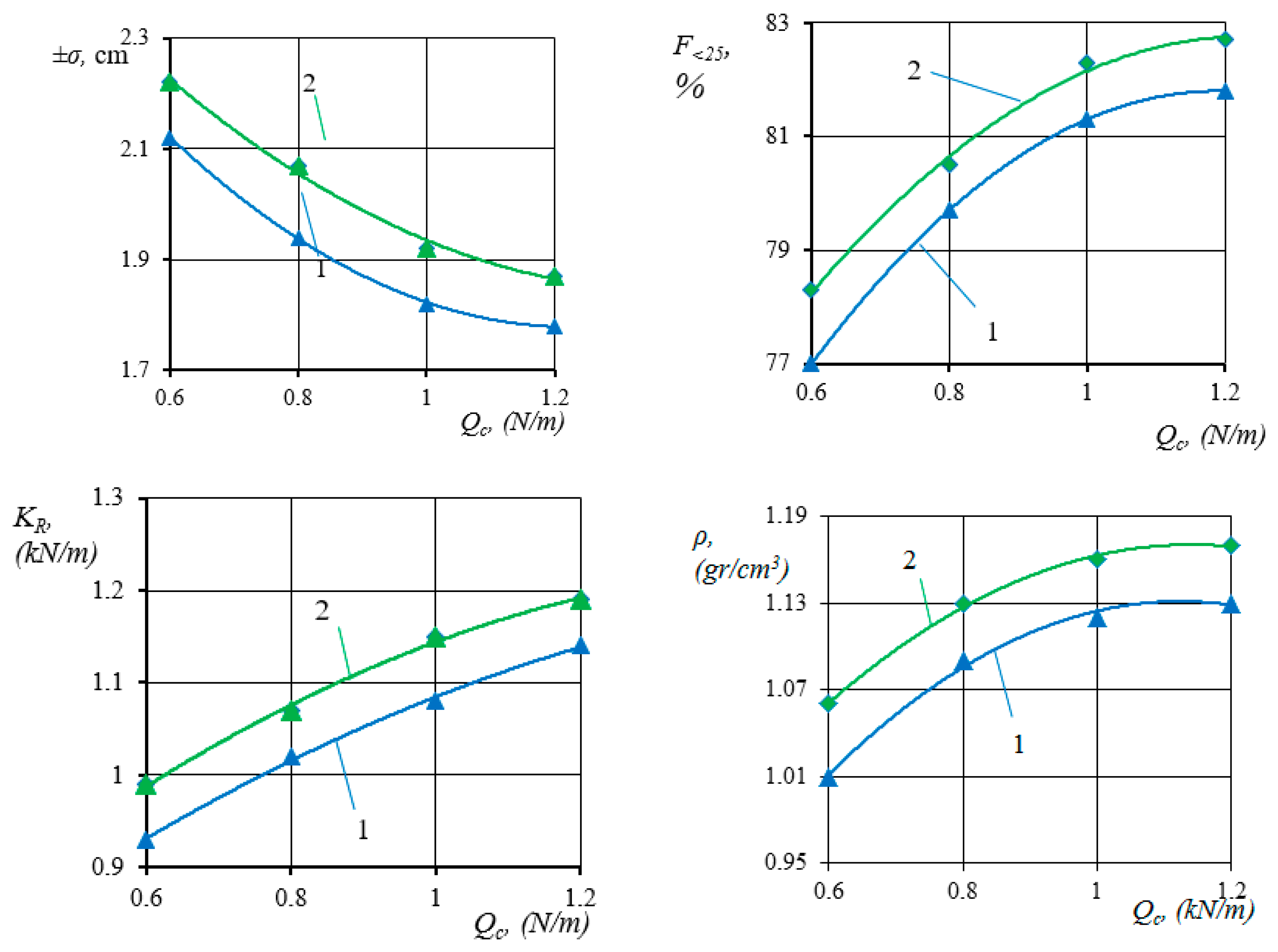
The influence of the specific vertical load applied to the leveler–compactor (
Qc) on the soil bulk density, degree of soil crumbling, root-mean-square deviation of surface irregularities, and specific draft resistance is presented in
Figure 12 and
Table 6.
During the experiments, the specific vertical load was controlled by adjusting the preload of the spring mechanism of the leveler–compactor and was maintained constant for each test run to ensure comparability of the results.
The obtained dependencies indicate that increasing the specific vertical load led to a decrease in the root-mean-square deviation of surface irregularities, which corresponded to improved leveling of the strip surface. At the same time, the soil bulk density and the degree of soil crumbling increased with an increasing load, reflecting the enhanced compaction and aggregate breakdown of the upper soil layer.
As the specific vertical load increased from 0.6 to 1.2 kN m−1, the quality indicators improved at both tested travel speeds. However, this improvement was accompanied by a noticeable increase in the specific draft resistance, indicating higher energy consumption.
This behavior reflects the classical trade-off between soil treatment quality and energy requirements. Increased loading intensifies the mechanical interaction between the tool and the soil, improving strip formation but also increasing resistance to motion. Therefore, the selection of the vertical load must ensure that the required soil structure is achieved without excessive energy expenditure.
From an agronomic perspective, improved leveling and aggregate structure enhance soil–film contact, reduce the presence of air gaps, and promote more effective moisture conservation in the upper soil layer. However, excessive loading may lead to over-compaction, which can negatively affect soil aeration and root development.
The graphical dependencies shown in
Figure 12 are approximated by the following empirical regression equations.
For the root-mean-square deviation of surface irregularities:
For the degree of soil crumbling:
For the soil bulk density:
For the specific draft resistance:
The data presented in
Table 6 confirm that increasing the specific vertical load improves the soil quality indicators but also increases the draft resistance. Therefore, the final selection of
Qc should be based on a compromise between achieving the required soil structure and minimizing energy consumption. Such optimization is essential for ensuring both agronomic effectiveness and resource efficiency in rainfed crop production under plastic film.
3.8. Multifactor Optimization of the Leveler–Compactor Parameters
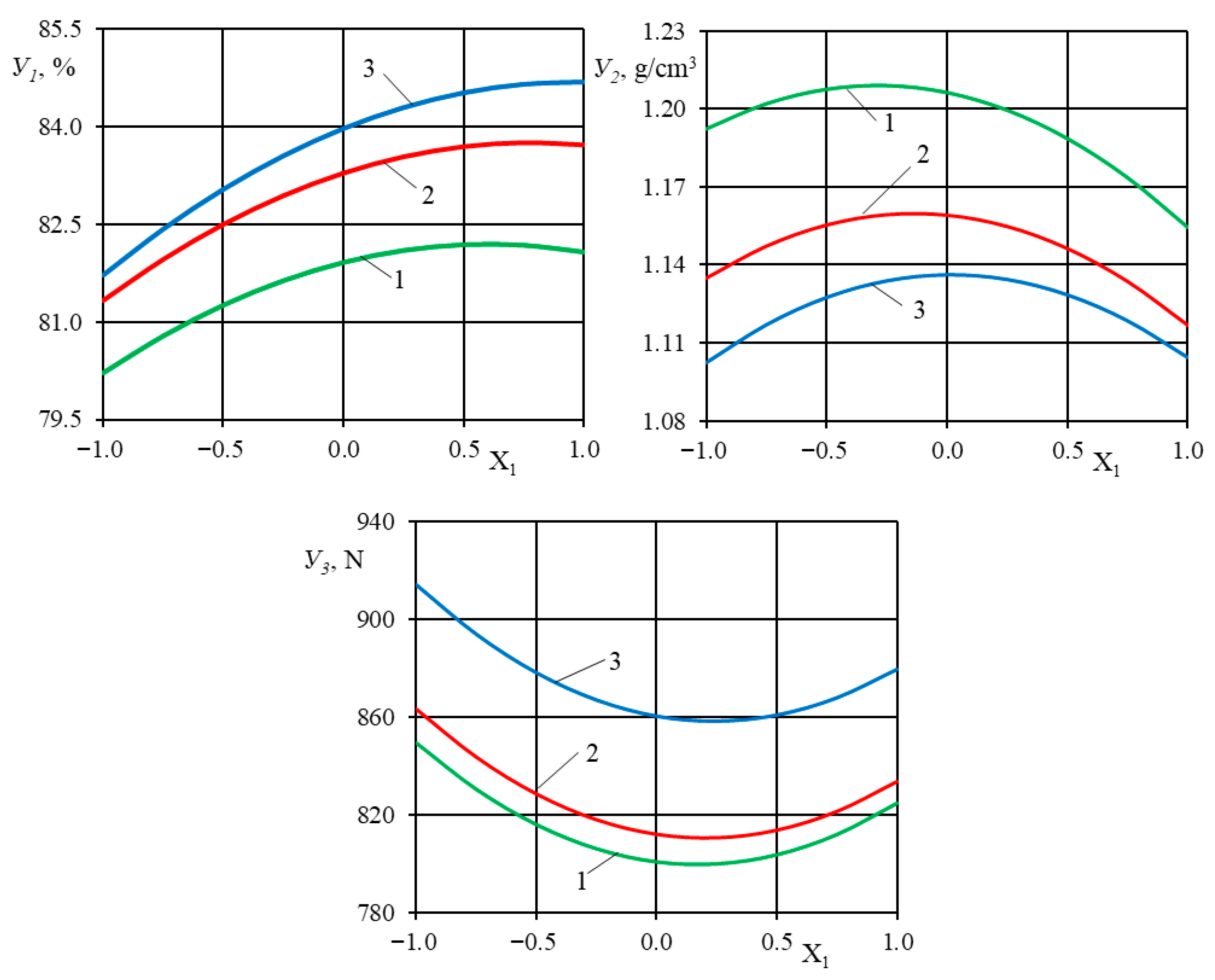
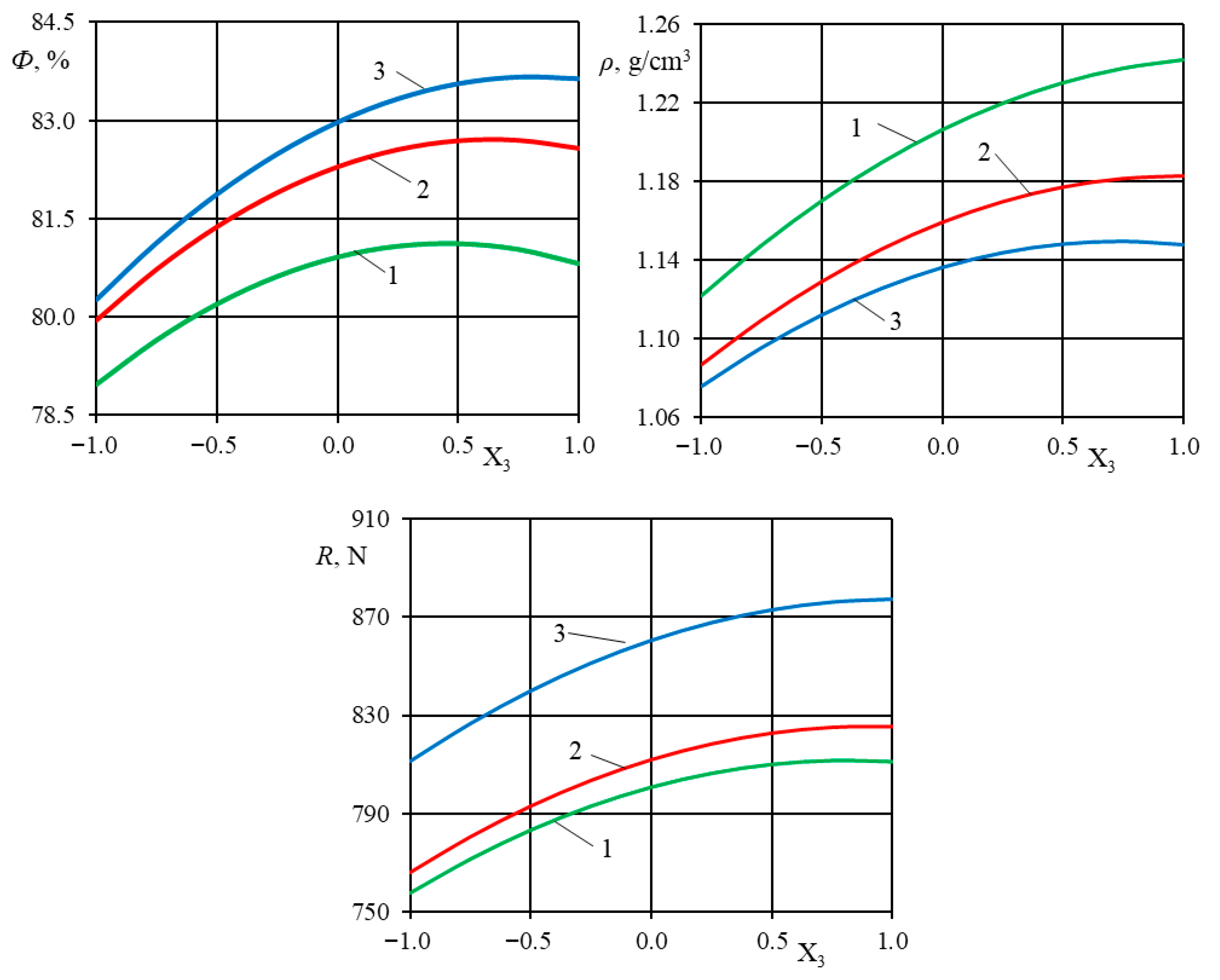
To determine the optimal parameters of the leveler–compactor identified during the theoretical analysis and single-factor experiments, a multifactor experiment based on the Hartley-3 design was conducted. The optimization criteria were the degree of soil crumbling, Y1 (%); the soil bulk density in the upper layer of the strip under plastic film, Y2 (g cm−3); and the draft resistance of the leveler–compactor, Y3 (N).
The independent variables selected for the analysis were as follows: X
1, the installation angle of the lower compacting part relative to the horizontal plane (
α1, °); X
2, the installation angle of the upper leveling part relative to the lower compacting part (
α2, °); X
3, the height of the leveler–compactor (
Ht, cm); and X
4, the travel speed of the aggregate (km h
−1). The factors, their symbols, and variation levels are presented in
Table 7.
After statistical processing of the experimental data using the PLANEXP software (version 3.0; experimental design software, commonly used for statistical analysis in engineering studies), the following regression equations were obtained.
For the degree of soil crumbling (F < 25), %:
For the soil bulk density (ρ), g cm
−3:
For the draft resistance of the leveler–compactor, R, N:
An analysis of the regression equations showed that all the selected factors significantly influenced the optimization criteria, with both linear and quadratic effects contributing to the response behavior.
The joint solution of the regression equations was performed using the “Solver” tool in MS Excel in combination with PLANEXP under the following constraints: the proportion of soil aggregates smaller than 25 mm (F < 25) had to be at least 80%, and the soil bulk density had to remain within a range of 1.1–1.2 g cm−3. Within these constraints, the objective was to minimize the draft resistance.
The optimization results are presented in
Table 8.
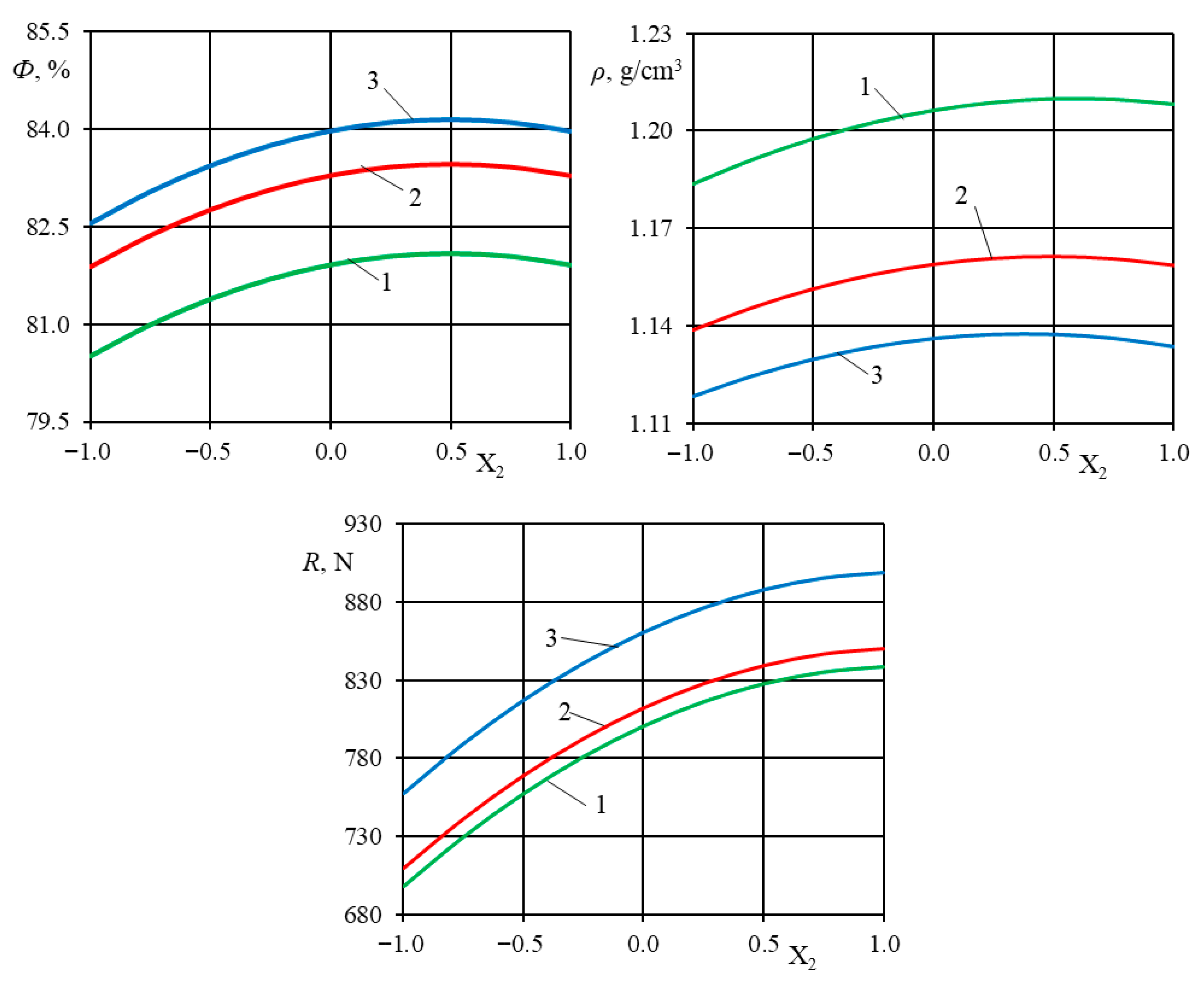
According to the optimization results, high-quality strip formation with minimal energy consumption is achieved when the installation angle of the lower compacting part (α1) is within 24–26°, the installation angle of the upper leveling part (α2) is within 151–155°, and the height of the leveler–compactor (Ht) is within 24.3–27.0 cm. These values are consistent with the results of the theoretical analysis and single-factor experiments.
Thus, the optimized geometrical configuration of the leveler–compactor ensures the formation of a soil structure suitable for plastic film mulching while maintaining acceptable energy consumption. From a broader perspective, these results demonstrate that model-based optimization of tillage tool parameters can effectively improve the soil physical conditions, reduce energy inputs, and support sustainable crop production under rainfed conditions.
3.9. Field and Farm-Scale Evaluation of the Integrated Strip Tillage and Mulching System
Based on the results of the theoretical analysis and controlled field experiments, a prototype of the combined machine for strip tillage with simultaneous laying of drip irrigation hoses and plastic film was manufactured and tested under real farm conditions in the Kashkadarya region of Uzbekistan. The evaluation extended beyond engineering performance and included agronomic indicators in order to assess the practical effectiveness of the developed technology for early watermelon production under rainfed conditions.
The initial soil conditions during the farm-scale testing were characterized by moisture contents of 16.8, 17.3, and 18.4% and soil bulk densities of 1.36, 1.28, and 1.27 g cm−3 in the 0–10, 10–20, and 20–30 cm layers, respectively. The soil hardness values ranged from 1.12 to 1.36 MPa. These parameters correspond to typical early-spring conditions in arid environments and confirm that the evaluation was carried out under representative production conditions.
In addition to the previously analyzed indicators (depth of tillage, soil crumbling, surface roughness, and fuel consumption), the assessment included field emergence, early biomass accumulation, water use, water use efficiency (WUE), and final yield. The developed system was compared with a conventional technology based on moldboard plowing, manual laying of irrigation hoses and plastic film, and furrow irrigation.
The data presented in
Table 9 demonstrate that the proposed system not only satisfies the agro-technical requirements for soil preparation but also significantly improves the agronomic performance. The degree of soil crumbling exceeds 87%, and the surface roughness remains well below the allowable threshold, ensuring stable and uniform contact between the soil surface and the plastic film.
The quality of the formed strip surface after the passage of the leveler–compactor is illustrated in
Figure 16.
The treated strip was characterized by a uniform and well-leveled profile with minimal surface irregularities and the absence of large clods. At the same time, the presence of small-scale undulations indicated that the soil retained a sufficiently loose structure without excessive compaction. This balance between leveling and preservation of soil porosity is essential for maintaining favorable air–water conditions in the seed zone.
The visual assessment was consistent with quantitative measurements of surface roughness, which remained within ±1.3–1.4 cm, confirming that the formed strip met the agronomic requirements for plastic film mulching.
From an agronomic perspective, the developed system resulted in a significant increase in field emergence (by approximately 13%), enhanced early biomass accumulation (by about 40%), and an increase in yield of 20–35% compared with the conventional method. These improvements are primarily associated with better soil–film contact, reduced evaporation losses, and improved moisture availability during early crop development.
At the same time, water use was reduced by more than an order of magnitude due to the transition from furrow irrigation to drip irrigation under plastic film, resulting in a nearly twofold increase in water use efficiency. This effect is particularly important under rainfed and water-limited conditions.
In addition, the duration of field preparation was reduced from 10–12 days to 2–3 days, enabling earlier sowing and earlier harvest. This factor is critical for market-oriented production systems, where earlier crop maturity directly affects the economic return.
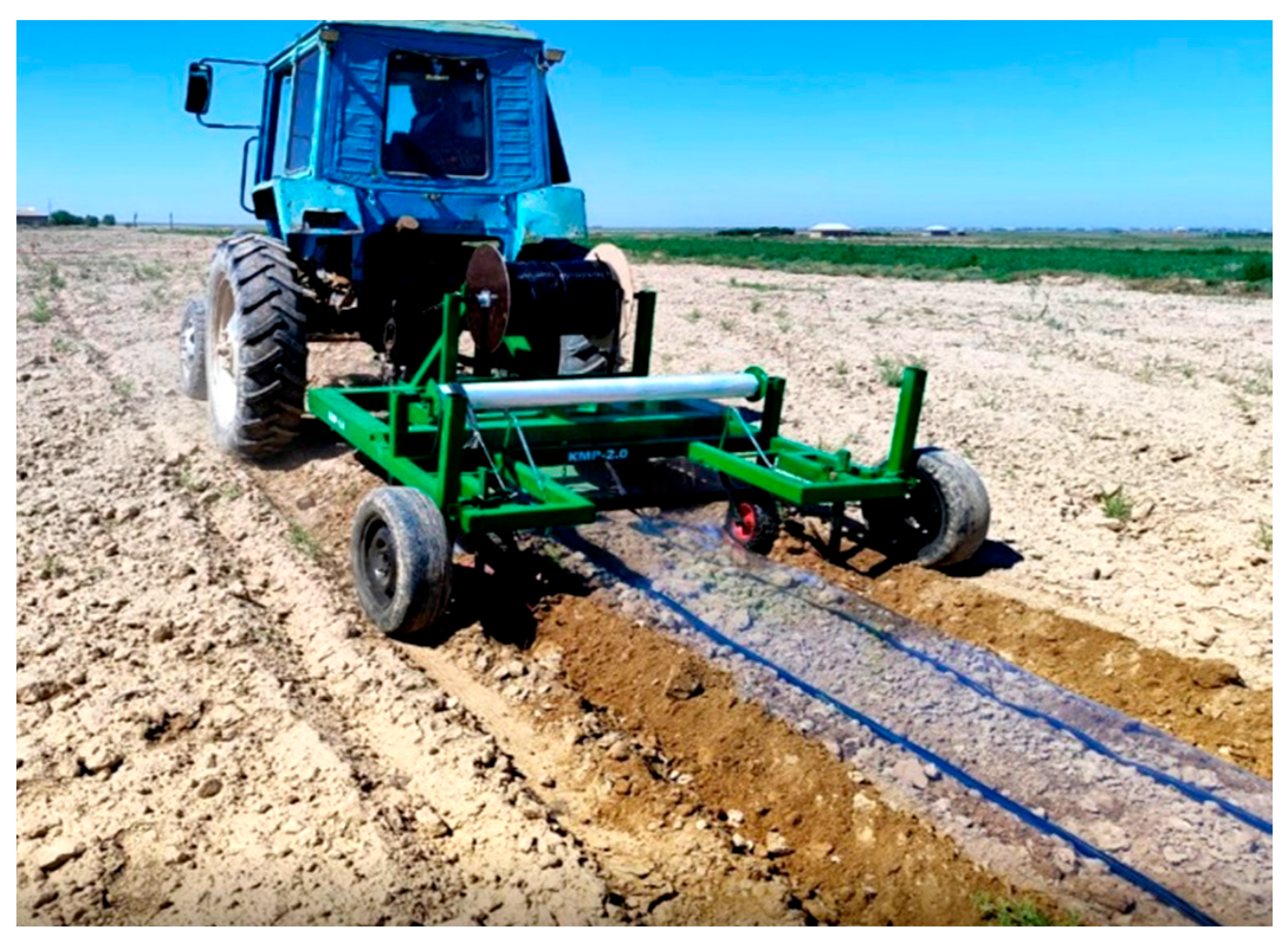
The operation of the combined machine under field conditions is illustrated in
Figure 17.
Overall, the obtained results confirm that the integration of strip tillage, leveling–compaction, drip irrigation placement, and plastic film mulching in a single technological pass provides substantial advantages in terms of soil physical quality, resource efficiency, and crop productivity.
3.10. Agronomic Response During Crop Establishment and Early Growth
The field observations confirmed that the improved physical condition of the strip formed by the developed technology had a direct and measurable effect on crop establishment and early plant development. The uniform leveling combined with controlled compaction of the upper soil layer ensured close and continuous contact between the soil surface and the plastic film. This, in turn, reduced non-productive evaporation and created a more stable thermal and moisture regime in the seed zone.
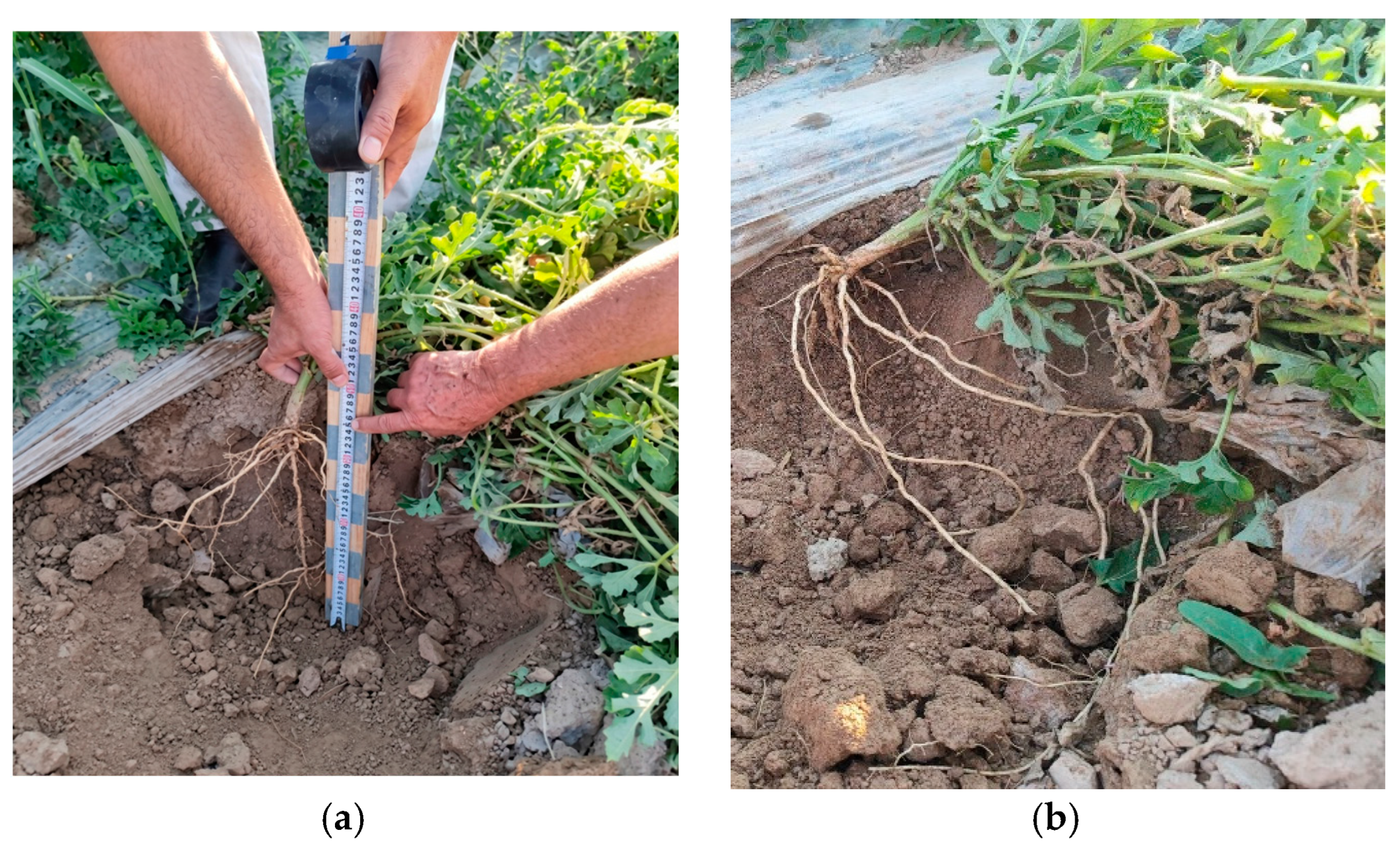
As a result, seed germination was more uniform, and the emergence period was shortened by 2–3 days compared with the conventional method. The improved physical structure of the soil also promoted the development of a more extensive root system, characterized by both greater lateral expansion and deeper penetration into the loosened soil layer.
At 35 days after sowing, the average root length under the proposed system reached 18–22 cm, compared with 12–15 cm under conventional cultivation. At 65 days, this difference became more pronounced, with root lengths reaching 45–52 cm compared with 32–38 cm, respectively. These results indicate that the optimized soil structure created favorable conditions for root growth during both the early and intermediate stages of plant development.
The improved root architecture contributed to a more efficient uptake of soil moisture and nutrients, which explains the observed increase in early biomass and the more intensive vegetative development of plants. In addition, the microclimatic conditions created under the plastic film promoted earlier flowering and fruit set, resulting in accelerated crop maturation by 6–8 days.
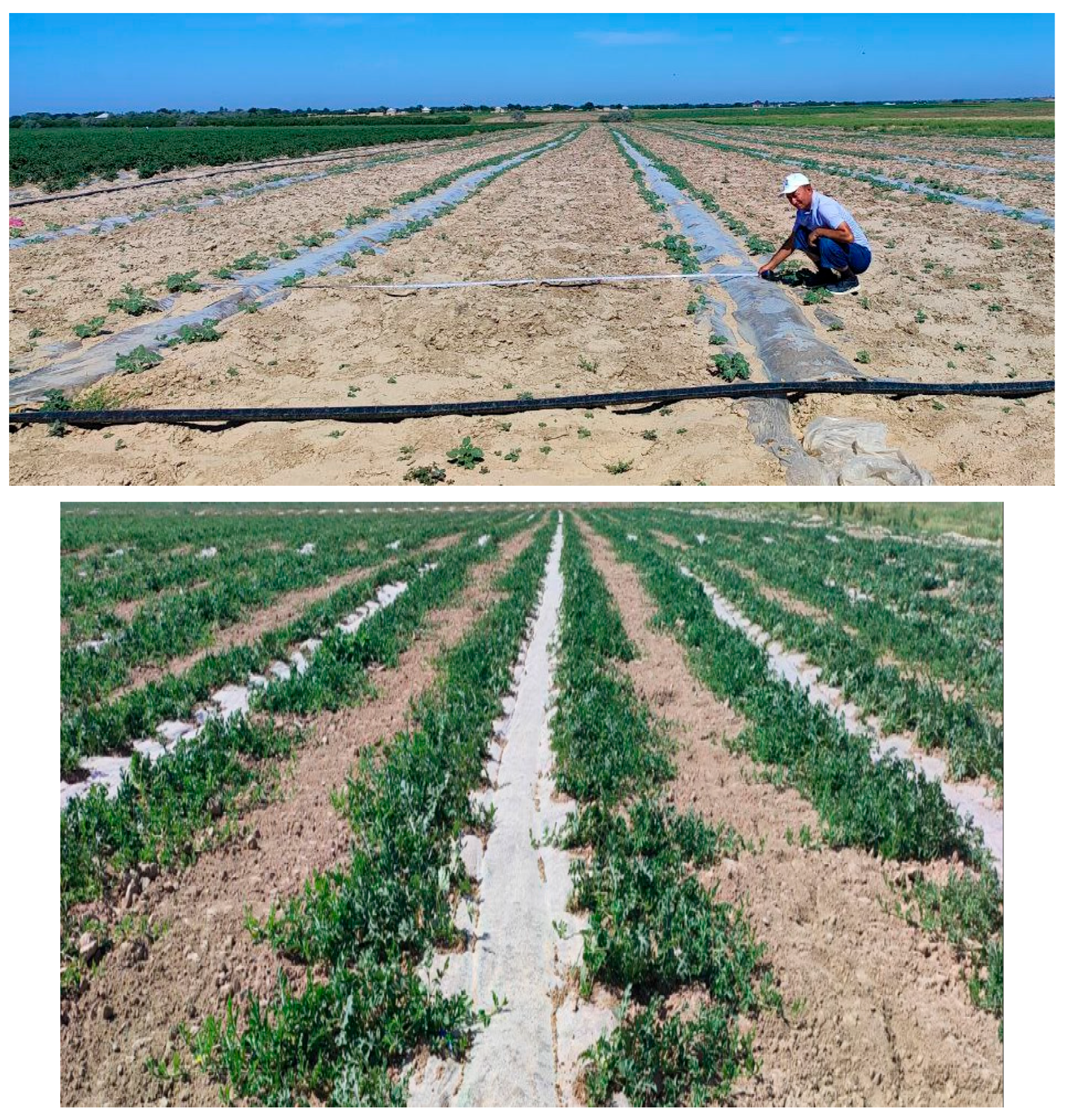
The visual appearance of seedlings obtained under the developed technology is shown in
Figure 18.
The morphology of the root system at different growth stages is presented in
Figure 19.
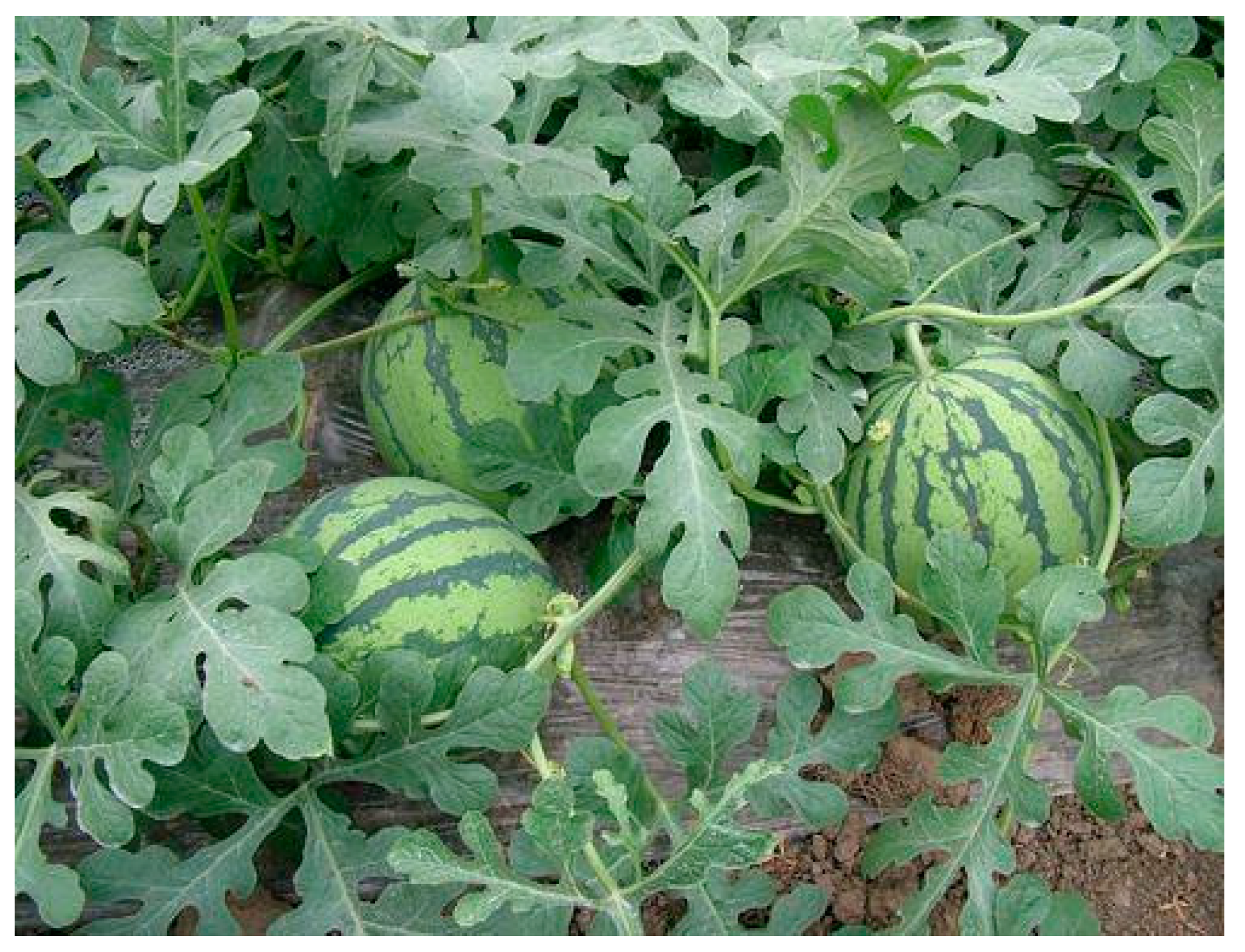
The process of fruit formation under the developed technology is illustrated in
Figure 20.
These observations demonstrate that the improvements in the soil physical properties achieved through optimized strip tillage and mulching directly translate into enhanced crop performance. The most pronounced effects were observed during the critical early stages of growth, when the conditions of the seedbed and root zone play a decisive role in determining the subsequent plant development and final productivity.
3.11. Effect of Optimized Strip Tillage Under Plastic Film on Watermelon Yield and Water Use Efficiency
The improvement of the soil physical conditions achieved through optimization of the leveler–compactor parameters had a direct and multidimensional effect on crop productivity and water use efficiency, particularly under the rainfed conditions, where moisture conservation played a decisive role. As demonstrated in the preceding sections, the optimized configuration ensured a high degree of soil crumbling (F < 25 ≥ 80%), formation of a leveled strip with minimal surface irregularities (±σ ≤ 2 cm), and maintenance of soil bulk density within an optimal range of 1.1–1.2 g cm−3. These parameters collectively created favorable conditions for improved seed–soil contact, uniform germination, and enhanced moisture retention under plastic film, which ultimately determined the yield formation and water use efficiency.
To quantify the agronomic performance of the proposed technology, the field data obtained during the experimental campaigns were statistically processed and supplemented by replicated measurements. The results for the yield are presented in
Table 10.
The data in
Table 10 demonstrate a consistent increase in yield with the progressive improvement of the soil preparation technology. Under conventional conditions, the yield remained within 36–38 t ha
−1, whereas the optimized system achieved 48–51 t ha
−1, corresponding to an increase of approximately 30–40%. This improvement is primarily associated with the enhanced soil structure, reduced evaporation losses, improved moisture retention under the plastic film, and the possibility of earlier sowing.
The water use efficiency was evaluated as a key indicator of sustainability. The results are presented in
Table 11.
As shown in
Table 11, the optimized technology significantly improved the water use efficiency, increasing the WUE from 7–7.5 kg m
−3 under conventional conditions to 17–19 kg m
−3, corresponding to more than a twofold increase. This effect is explained by the reduced evaporation under the plastic film, the improved soil moisture retention, and the localized water supply through drip irrigation.
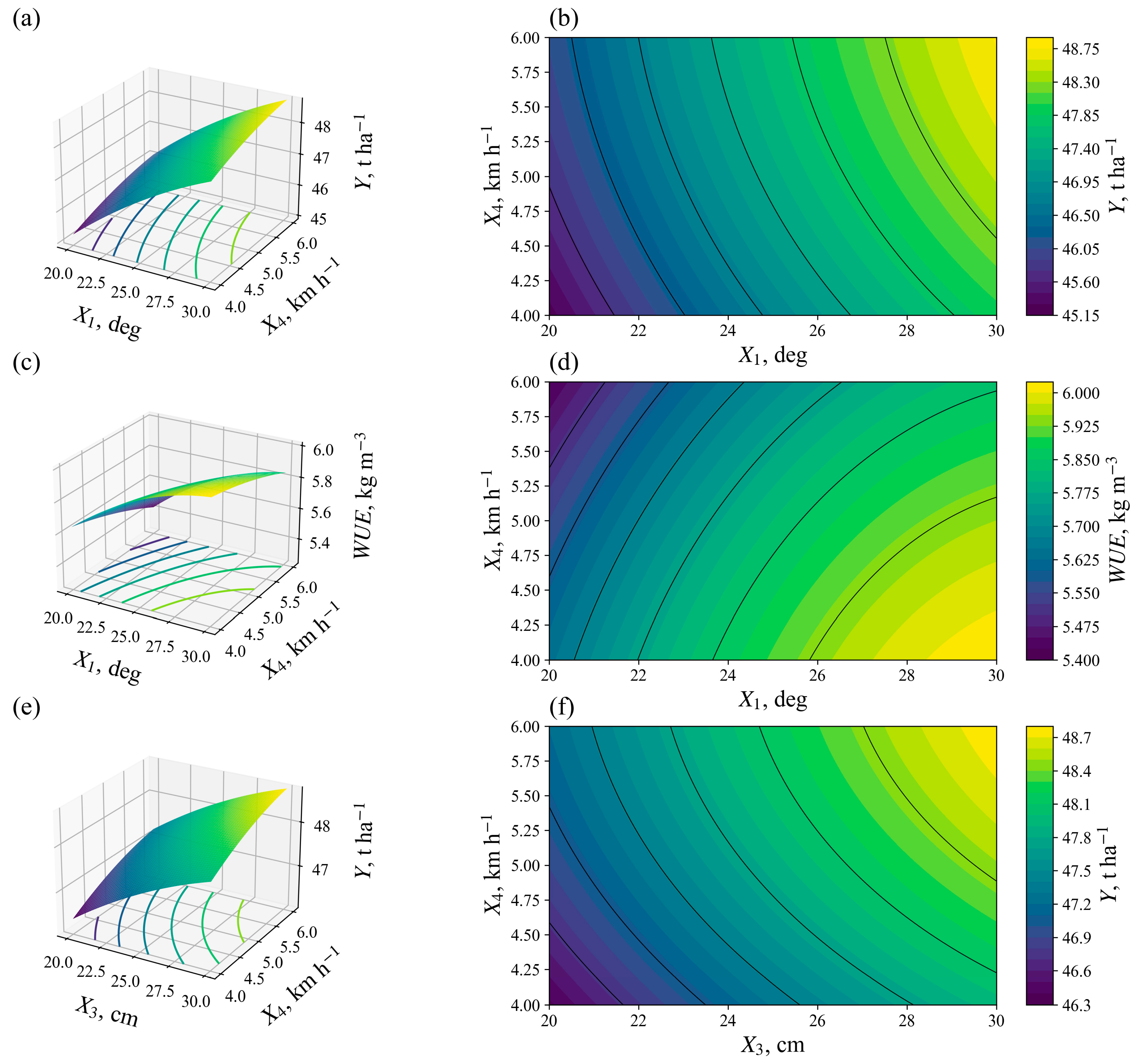
To describe the relationship between the technological parameters and agronomic performance, second-order regression models were developed based on the multifactor experimental design.
The yield model is expressed as
The water use efficiency model is
where X
1 is the installation angle of the lower compacting part (
α1), X
2 is the installation angle of the upper leveling part (
α2), X
3 is the height of the leveler–compactor (
Ht), and X
4 is the travel speed of the aggregate.
An analysis of these models indicates that both the yield and water use efficiency are governed by nonlinear relationships with clearly defined optimal regions. The yield increases with X1, X3, and X4 up to an optimum range (X1 = 25–30°, X3 = 25–30 cm, X4 = 5.0–5.5 km h−1), beyond which excessive compaction or reduced interaction time leads to diminishing returns. A similar pattern is observed for the WUE, which increases with improved soil–film contact but decreases at excessive parameter values due to degradation of soil structure.
The combined response surface and contour plots illustrating these relationships are presented in
Figure 21.
Overall, the results confirm that optimization of soil preparation parameters produces a synergistic effect, simultaneously improving the soil physical properties, increasing the crop yield, and enhancing the water use efficiency. This establishes a direct and quantitatively supported link between the engineering design parameters of tillage equipment and agronomic performance, which represents a key contribution of the present study.
3.12. General Agronomic Interpretation in the Context of Sustainable Tillage
The results obtained in this study demonstrate that optimization of the leveler–compactor parameters played a decisive role not only in improving the mechanical performance of the machine but also in shaping the soil physical environment that governs crop development. The identified rational parameter ranges—installation angle of the lower compacting part (α1 = 24–26°), installation angle of the upper leveling part (α2 = 151–155°), and height of the leveler–compactor (Ht = 24–27 cm)—ensured the formation of a leveled strip characterized by an optimal soil bulk density (1.15–1.20 g cm−3), a high proportion of agronomically valuable aggregates (F < 25 ≥ 80%), and minimal surface irregularities (±σ ≤ 2 cm).
From an agronomic perspective, this combination of physical properties creates a highly favorable seedbed environment. The improved aggregate structure enhances seed–soil contact and aeration, while the controlled soil bulk density ensures sufficient mechanical stability without restricting root penetration. At the same time, the reduced surface roughness promotes continuous contact between the soil and the plastic film, which is essential for minimizing evaporation losses and stabilizing the thermal regime in the upper soil layer.
The integration of strip loosening, leveling–compaction, drip irrigation hose placement, and plastic film mulching within a single technological pass represents a significant advancement compared with conventional multi-pass systems. By reducing the number of field operations, the developed approach minimizes soil disturbance and limits traffic-induced compaction in the inter-row zones. As a result, the structural integrity of the soil is better preserved, and the spatial heterogeneity of soil physical properties is reduced.
In water-limited environments, the combination of optimized strip tillage with drip irrigation under a plastic film leads to a substantial increase in water use efficiency. This effect is achieved through a synergistic interaction of several mechanisms, including reduced evaporation, improved water retention in the root zone, and more efficient utilization of available moisture by an enhanced root system. The results presented in
Section 3.9,
Section 3.10 and
Section 3.11 confirm that these processes translate directly into increased crop productivity.
An additional important outcome is the reduction in the duration of field preparation and the possibility of earlier sowing. Accelerated crop development and earlier fruit maturation provide a clear economic advantage, particularly in market-oriented production systems where early harvest significantly increases product value.
Thus, the developed technology should be considered not only as an engineering improvement of tillage equipment but also as an integrated agronomic strategy. It simultaneously addresses key components of sustainable agricultural systems, including soil structure preservation, efficient water use, reduction in energy inputs, and enhancement of crop yield and quality.
Overall, the findings establish a direct and quantitatively supported link between the design parameters of tillage machinery and the agronomic performance. This confirms that model-based optimization of soil preparation processes can serve as an effective tool for achieving sustainability goals in crop production under arid and semi-arid conditions.
3.13. Two-Year Field Yield Trial Design and Agronomic Validation
To further validate the agronomic performance of the developed strip tillage and mulching system, a two-year field experiment was conducted under farmer field conditions in the Kashkadarya region of Uzbekistan. The primary objective was to establish a quantitative relationship between the soil preparation quality, crop establishment, water use, and final yield formation for early watermelon production systems, thereby extending the mechanistic findings of
Section 3.1,
Section 3.2,
Section 3.3,
Section 3.4,
Section 3.5,
Section 3.6,
Section 3.7,
Section 3.8,
Section 3.9,
Section 3.10,
Section 3.11 and
Section 3.12 to multi-season field conditions.
The experiment was arranged as a randomized block design with four replications to ensure statistical reliability of the results. The total plot area was 300 m2, of which 240 m2 was used as the accounting area for the yield and agronomic measurements. The row spacing was 1.4 m, and the plant spacing within rows was 0.50 m. The same watermelon hybrid was used across all treatments, and all agronomic practices, including fertilization and crop protection, were kept identical in order to isolate the effect of soil preparation and irrigation method.
The general experimental conditions are summarized in
Table 12.
Three treatments representing different levels of technological intensity were investigated. The structure of the treatments is presented in
Table 13.
Treatment T1 represented conventional farmer practice, including moldboard plowing, secondary tillage, manual laying of irrigation hoses and plastic film, and furrow irrigation. Treatment T2 was designed to isolate the effect of drip irrigation under plastic film while maintaining conventional soil preparation. Treatment T3 corresponded to the proposed integrated system combining strip tillage, leveling–compaction, and simultaneous placement of drip irrigation hoses and plastic film in a single pass.
The measured parameters included the field emergence, early plant growth, root system development, yield components, total and marketable yield, irrigation water use, and water use efficiency. In addition, the soil bulk density and aggregate size distribution were determined after sowing to establish a direct mechanistic link between the soil physical condition and crop performance.
Such an experimental design allowed for not only a comparison of technological variants but also the identification of causal relationships between soil preparation quality, water management, and yield formation. This approach ensured that the agronomic advantages of the proposed system were supported by statistically reliable and reproducible field data obtained over multiple growing seasons.
3.14. Crop Establishment and Early Growth
The results of the two-year field experiment confirmed that the proposed integrated strip tillage and mulching system significantly improved crop establishment and early vegetative development compared with conventional practices. The field emergence increased, and the duration of the emergence period was reduced, indicating more favorable seedbed conditions and improved soil–film interaction.
The quantitative indicators of crop establishment and early growth are presented in
Table 14.
The data presented in
Table 14 show that the proposed system consistently outperformed the conventional and intermediate treatments across both years. The field emergence increased by approximately 12–14%, while the emergence period was shortened by 2–3 days. At the same time, the plants exhibited more intensive vegetative growth, reflected in increased vine length, leaf area, and root development. The improvement in the root system parameters, including both the length and biomass, indicates enhanced soil conditions in the root zone and more efficient resource uptake.
The effects of the technology on the yield formation, fruit characteristics, and water use efficiency are presented in
Table 15.
The results in
Table 15 demonstrate a consistent increase in productivity and product quality with increasing technological level. The proposed system increased the total yield by approximately 30–35% compared with the conventional technology and significantly improved the fruit quality, as reflected by the higher soluble solids content. At the same time, water consumption decreased drastically, resulting in a substantial increase in water use efficiency. This confirms the synergistic effect of optimized soil preparation and drip irrigation under plastic film.
The differences in crop performance are directly linked to the physical condition of the soil after sowing, as shown in
Table 16.
The data in
Table 16 confirm that the proposed system provided soil physical conditions closest to the optimal range identified in
Section 3.2,
Section 3.3,
Section 3.4,
Section 3.5 and
Section 3.6. In particular, the soil bulk density was maintained within the target interval of 1.1–1.2 g cm
−3, the proportion of aggregates smaller than 25 mm exceeded 85%, and the surface roughness remained well below the allowable threshold.
Thus, the improved soil structure created by the optimized leveler–compactor parameters directly explains the observed enhancements in crop establishment, vegetative growth, yield formation, and water use efficiency. These results confirm the strong functional relationship between the soil physical quality and agronomic performance under strip tillage with plastic film in arid conditions.
3.15. Statistical Analysis of the Two-Year Yield Trial
All the experimental data obtained during the two-year field study were processed using methods of mathematical statistics in accordance with the approach described in
Section 2.10. The analysis was performed for a randomized block design with four replications. The statistical model included the treatment as a fixed factor, while the year and replication were treated as random effects. The significance of differences between treatments was evaluated at the 95% confidence level using an analysis of variance (ANOVA), and mean comparisons were carried out using the least significant difference test (LSD
0.05).
The analysis revealed that the treatment factor had a highly significant effect (p < 0.001) on all the principal agronomic indicators, including the field emergence, vegetative growth parameters, yield components, total yield, marketable yield, soluble solids content, and water use efficiency. In contrast, the effect of year was not statistically significant for most indicators (p > 0.05), indicating relatively stable environmental conditions during the experimental period. The interaction between the treatment and year was also not significant, confirming the consistency and robustness of the proposed technology under varying seasonal conditions.
The results of the analysis of variance are presented in
Table 17.
The high F-values obtained for the treatment factor across all indicators confirm that the differences between the technological variants are statistically robust and are not due to random variation. The absence of a significant year effect and treatment × year interaction further indicates that the observed improvements are stable and reproducible across different growing seasons.
Thus, the statistical analysis confirms that the proposed integrated strip tillage and mulching system provides a reliable and consistent improvement in crop establishment, growth, yield, and water use efficiency, supporting the conclusions drawn from the experimental and agronomic analysis presented in
Section 3.9,
Section 3.10,
Section 3.11,
Section 3.12,
Section 3.13 and
Section 3.14.
3.16. Mean Comparison Using LSD0.05
To provide a detailed interpretation of treatment effects, mean values of the principal agronomic indicators were compared using the least significant difference criterion at the 5% probability level (LSD
0.05). This analysis complements the ANOVA results presented in
Section 3.15 by identifying the statistically homogeneous groups of treatments for each indicator.
The results of mean comparison are presented in
Table 18.
The results clearly demonstrate a statistically significant separation of treatments for nearly all agronomic indicators. The proposed integrated system (T3) consistently forms a distinct group with the highest values for yield, vegetative growth parameters, and water use efficiency, as well as the lowest values for days to emergence and water consumption. This indicates the stable and pronounced advantage of the optimized strip tillage and mulching system over both the conventional practice (T1) and the intermediate treatment (T2).
The intermediate treatment (T2), which includes drip irrigation under plastic film but retains conventional soil preparation, also shows significant improvement compared with T1. This confirms the positive effect of irrigation method and mulching alone. However, the additional gains observed with T3 demonstrate that optimization of soil physical conditions through strip tillage and controlled leveling–compaction plays a decisive role in maximizing crop performance.
It is noteworthy that for some indicators, such as the marketable yield percentage, treatments T2 and T3 do not differ significantly, indicating that certain quality parameters may reach a plateau once basic moisture and temperature conditions are optimized. In contrast, the parameters directly related to plant growth and resource use efficiency, including biomass accumulation, root development, and total yield, continue to improve significantly under the fully integrated system.
These findings confirm that yield formation in early watermelon production is governed by the combined effect of soil structure, moisture availability, and root system development. The proposed technology integrates these factors within a single operational framework, thereby producing a synergistic effect that cannot be achieved by partial improvements alone.
Overall, the LSD0.05 analysis supports the conclusions drawn from the ANOVA and demonstrates that the observed improvements are statistically robust, agronomically meaningful, and consistently reproducible across treatments and experimental conditions.





 ,
,