


Abstract
Drunken horse grass (Achnatherum inebrians) plays a vital role in ecological restoration and grassland sustainability in Northwest China, but its ecological functions are increasingly threatened by emerging fungal diseases. In 2024, a leaf spot disease characterized by brown lesions with yellow halos was observed on drunken horse grass in Gansu Province, China. The causal pathogens were identified as Alternaria alternata and Alternaria infectoria based on morphological characterization, pathogenicity tests, and multi-locus phylogenetic analysis (ITS, TEF, GPD, RPB2, Alt a 1, endoPG, and OPA10-2). Preliminary fungicide sensitivity assays revealed that tetramycin and difenoconazole had the strongest inhibitory effects against mycelial growth in vitro. The EC50 values for tetramycin were 0.0755 mg/L (A. alternata) and 0.2175 mg/L (A. infectoria), while for difenoconazole, they were 0.1023 mg/L (A. alternata) and 0.0599 mg/L (A. infectoria). To our knowledge, this is the first report of Alternaria species infecting the host plant, drunken horse grass, providing an essential basis for the effective management of this disease and the protection of grassland ecosystems.
1. Introduction
Drunken horse grass (Achnatherum inebrians) is a perennial bunchgrass native to the grasslands of northwestern China. Although historically regarded as a poisonous weed because of its narcotic effects on livestock [1], it has recently been recognized as a vital pioneer species for ecological restoration of degraded grasslands. Owing to its remarkable tolerance to multiple abiotic and biotic stresses, including drought [2], low temperatures [3], saline-alkali soils [4], heavy metals [5], pests [6] and pathogenic fungi [7], drunken horse grass plays an irreplaceable role in preventing soil erosion and maintaining ecosystem stability in harsh environments where other vegetation fails to survive [8,9]. Additionally, the mutualistic symbiosis between the endophyte Epichloë and the host grass results in high levels of ergot alkaloids, which can be toxic to birds and invertebrates [10,11]. Therefore, this grass has the potential to be developed as a bird-deterrent groundcover at airports. However, to date, relatively few studies have focused on diseases of drunken horse grass. Recent studies have reported several notable diseases, including basal stem rot caused by Fusarium pseudograminearum [12] and ergot caused by Claviceps purpurea [1].
Alternaria species are dark-colored fungi widely distributed in nature, with many species acting as plant pathogens and causing a wide range of economically important plant diseases [13]. A single plant may be infected by more than one Alternaria species, resulting in the development of the same or different diseases. For instance, three Alternaria species (A. tenuissima, A. alternata and A. burnsii) have been reported to infect maize (Zea mays L.), causing leaf blight that can lead to significant economic losses [14]. Additionally, four Alternaria species (A. triticina, A. alternata, A. tenuissima and A. arborescens) were isolated from wheat (Triticum aestivum L.), but only A. triticina was found to be capable of causing the disease [15].
With the advancement of molecular biology techniques, phylogenetic analyses based on gene sequences have become widely used for the classification and identification of plant pathogenic fungi. Although the broad morphological classification of Alternaria has been generally accepted, species delimitation at the molecular level remains a subject of ongoing debate [16,17]. Consequently, a variety of gene loci have been employed to resolve species boundaries. Based on sequences of 18S nrDNA (SSU), 28S nrDNA (LSU), RNA polymerase second largest subunit (RPB2), the internal transcribed spacer regions 1 and 2 and intervening 5.8S nrDNA (ITS), glyceraldehyde-3-phosphate dehydrogenase (GPD) and translation elongation factor 1-α (TEF), Woudenberg et al. proposed 32 new combinations and 10 new species, resurrected 10 previously described names, and established 16 new sections within Alternaria [18]. Subsequently, Woudenberg conducted whole-genome sequencing of 9 Alternaria species, complemented by transcriptome sequencing of 12 Alternaria species, and performed multilocus phylogenetic analysis of 168 Alternaria isolates using sequences from the major allergen gene (Alt a 1), polygalacturonase (endoPG), and an anonymous gene region (OPA10-2) [19].
Azoxystrobin is a low-toxicity, highly effective, broad-spectrum fungicide with good environmental compatibility and safety for non-target organisms [20], and it consistently inhibits mycelial growth of A. solani [21]. Demethylation inhibitor (DMI) fungicides are widely used to control diseases caused by Alternaria species, and difenoconazole, a representative DMI, has been shown to be effective against most Alternaria species [22]. Oxime tebuconazole, a novel ergosterol biosynthesis inhibitor, has so far demonstrated significant fungicidal activity mainly against Rhizoctonia solani, Fusarium graminearum and Botrytis cinerea [23]. Tetramycin is a novel polyene agricultural antibiotic with broad antimicrobial activity against numerous plant pathogens, and it exhibits strong inhibitory effects on A. tenuissima in kiwifruit (Actinidia chinensis Planch.), significantly promoting fruit growth and improving fruit quality and storability [24].
Despite its ecological importance, drunken horse grass is increasingly threatened by emerging diseases. In 2024, a severe brown leaf spot disease was observed in Gansu Province, causing extensive leaf necrosis and seriously threatening the growth of this restoration species. The rapid expansion of lesions indicated a potential epidemic that could compromise grassland restoration efforts. Moreover, given that Alternaria species often possess broad host ranges, infected drunken horse grass may serve as an inoculum reservoir, posing a risk of cross-infection to adjacent cereal crops such as wheat and barley [25]. Therefore, understanding the etiology and management of this disease is urgent not only for grassland ecological restoration but also for broader agronomic crop protection. The objectives of this study were to: (i) accurately characterize the Alternaria species isolated from drunken horse grass based on morphological characteristics and multi-locus phylogenetic analyses, (ii) evaluate their pathogenicity through inoculation assays using conidial suspensions on whole plants, and (iii) identify effective fungicides for disease control through preliminary in vitro screening.
2. Materials and Methods
2.1. Sample Collection and Isolation
We collected samples from three locations: Tianzhu County (37°10′27″ N, 102°49′8″ E), Shandan County (38°36′33″ N, 101°19′55″ E), and Su’nan County (38°57′48″ N, 99°55′38″ E). At each location, no fewer than five plots were established for survey sampling. Diseased leaves exhibiting brown spots surrounded by light yellow margins were collected, and disease incidence was recorded. Leaf tissues were surface-sterilized by immersion in 75% ethanol for 30 s, followed by 5% sodium hypochlorite (NaClO) for 3 min, and rinsed three times with sterile water. Using a sterile scalpel, small segments were excised from the junction between diseased and healthy tissue and transferred to potato dextrose agar (PDA) supplemented with antibiotics (benzylpenicillin potassium and streptomycin sulfate, each at 50 mg/L) to suppress Gram-positive and Gram-negative bacteria, respectively. The plates were incubated in the dark at 25 °C for 4 days. Hyphae from the margins of emerging colonies were then transferred to antibiotic-free PDA. As no conidia were produced on PDA, the isolates were subcultured onto potato carrot agar (PCA) to induce sporulation, after which single conidia were selected for purification. Disease severity was assessed using a 0–4 scale based on the percentage of leaf area: 0 = no symptoms; 1 = 1–10% of leaf area affected; 2 = 11–25%; 3 = 26–50%; and 4 = >50% [26]. The disease index and disease incidence were calculated using the following formula:
where Ni is the number of leaves at disease grade i, N is the total number of leaves assessed, and imax is the maximum disease grade.
where Ninfected is the number of leaves showing disease symptoms, and N is the total number of leaves examined.
Duncan’s multiple range test was utilized for statistical analysis to compare the differences in disease incidence and disease index among the three sampling sites, as it is highly effective for controlling Type I error rates when making multiple pairwise comparisons.
2.2. Morphological Characterization
After 4 days of incubation, colonies emerging from the leaf sections were counted. Mycelium from the margins of representative colonies was then transferred to fresh potato dextrose agar (PDA), oatmeal agar (OA), nutrient-poor synthetic agar (SNA), and potato carrot agar (PCA) plates. The cultures were incubated at 25 °C in the dark for 7 days, after which microscopic characteristics, including conidial size, shape, septation, and beak length, were examined. Conidia and hyphae were observed and photographed under a BX51 microscope (Olympus Corporation, Tokyo, Japan). Species identification was performed according to the morphological keys described by Simmons [27].
2.3. DNA Extraction, Polymerase Chain Reaction (PCR) Amplification and Sequencing
Fresh mycelium (7 days old) was collected from PDA plates using a sterile slide and used for DNA extraction. Genomic DNA was extracted with an E.Z.N.A.® Fungal DNA Kit (Omega Bio-tek, Norcross, GA, USA), following the manufacturer’s protocol for fresh samples. The DNA was subsequently stored at −20 °C until further analysis.
In this study, PCR amplification was conducted for the ITS, TEF, GPD, RPB2, Alt a 1, endoPG, and OPA10-2 regions using the specific primers listed in Table 1. Reactions were carried out in a T100 thermal cycler (Bio-Rad Laboratories, Hercules, CA, USA) in a total volume of 25 µL containing 9 µL of double-deionized water, 12.5 µL of DNA polymerase (2X SanTaq PCR Master Mix with Blue Dye; Sangon Biotech Co., Ltd., Shanghai, China), 1 µL each of forward and reverse primers, and 1.5 µL of template DNA. The PCR program consisted of an initial denaturation at 94 °C for 5 min; 35 cycles of denaturation at 94 °C for 30 s, annealing at gene-specific temperatures (ITS at 53 °C for 2 min, TEF at 52 °C for 2 min, GPD at 54 °C for 40 s, RPB2 at 55 °C for 30 s, Alt a 1 at 57 °C for 30 s and endoPG and OPA10-2 at 62 °C for 30 s), and extension at 72 °C for 30 s; followed by a final extension at 72 °C for 10 min. DNA sequencing was finally performed by Sangon Biotech Co., Ltd. (Xi’an, China).
Table 1.
Primers used for PCR amplification in molecular identification.
2.4. Phylogenetic Analysis
Table 2 presents the sequences obtained from the isolates (highlighted in bold) along with corresponding reference sequences from GenBank. The ITS, TEF, GPD, RPB2, Alt a 1, endoPG, and OPA10-2 sequences were concatenated using PhyloSuite [34]. The best-fit nucleotide substitution models were determined based on the Bayesian Information Criterion (BIC) using ModelFinder implemented in PhyloSuite. Maximum Likelihood (ML) analysis was conducted in MEGA v11 with 1000 bootstrap replicates. Bayesian Inference (BI) was performed using MrBayes v3.2.7. Two independent runs consisting of four Markov Chain Monte Carlo (MCMC) chains were executed for 5,000,000 generations, with sampling every 1000 generations. The first 25% of sampled trees were discarded as burn-in. Stationarity was considered reached when the average standard deviation of split frequencies fell below 0.01.
Table 2.
GenBank accession numbers of isolates in this study.
2.5. Pathogenicity Tests
The seeds of the host plant, drunken horse grass, used in this study were collected alongside the diseased leaves. The seeds were sterilized with 75% ethanol and sown in plastic round pots (10 cm in diameter and 9 cm in height) in a greenhouse maintained at 18–25 °C. Healthy seedlings (approximately 4 weeks old) were used for inoculation. Representative isolates of A. alternata (Aa-1) and A. infectoria (Ai-1) were selected for pathogenicity testing. Two selected isolates (Aa-1 and Ai-1) were cultured on PCA for seven days to induce conidia production. Conidial suspensions were prepared by adjusting the conidia concentration to 1 × 10⁷ conidia/mL in sterile water containing 0.01% (v/v) Tween-80 and 0.01 g/mL glucose. The suspension was sprayed onto the leaves of test plants, while the control plants were sprayed with distilled water. Each isolate was tested on five replicate pots, and the experiment was repeated twice. To maintain high humidity, inoculated plants were covered with transparent plastic bags for four days, after which the bags were removed. Disease incidence and disease index were evaluated one week after removal of the covers.
2.6. Toxicity Tests of Fungicides
Representative isolates of fungal A. alternata (Aa-1) and A. infectoria (Ai-1) were selected for fungicide toxicity testing. Four fungicides, representing different chemical classes and modes of action, were selected for the study: azoxystrobin (QoI) (Aisheng Libo Biotechnology Co., Ltd., Shanghai, China), difenoconazole (DMI) (Hebei Zhongbao Green Crops Technology Co., Ltd., Langfang, China), tebuconazole (DMI) (Shandong Xinxing Pesticide Co., Ltd., Qingdao, China), and tetramycin (biological) (Liaoning Wkioc Bioengineering Co., Ltd., Chaoyang, China) (Table 3). Sterile water-amended PDA served as the control treatment (Table 3). Concentration gradients were set with reference to the manufacturer’s recommendations. Each treatment group consisted of five replications. Mycelial plugs (6 mm in diameter) from the margins of colonies grown on PDA for 7 days were transferred to the center of Petri dishes containing different concentrations of fungicides. The plates were incubated at 25 °C in the dark. After 7 days, the colony diameters were measured using the perpendicular cross method, and the inhibition rate was calculated. The EC50 values were calculated using linear regression analysis of the probability value (probit) against the logarithm of the fungicide concentration using SPSS v26.0 (IBM Corp., Armonk, NY, USA).
Table 3.
Concentration gradients of different fungicides.
3. Results
3.1. Symptoms and Isolation Frequency
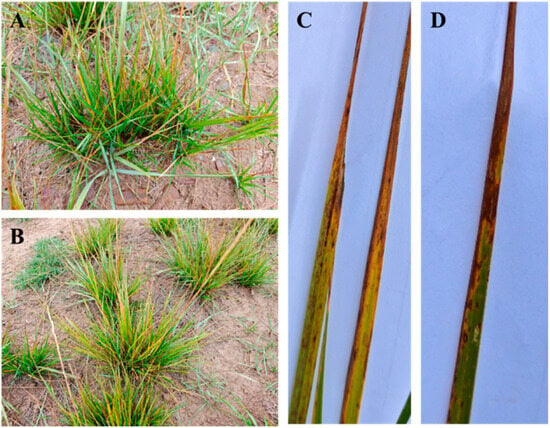
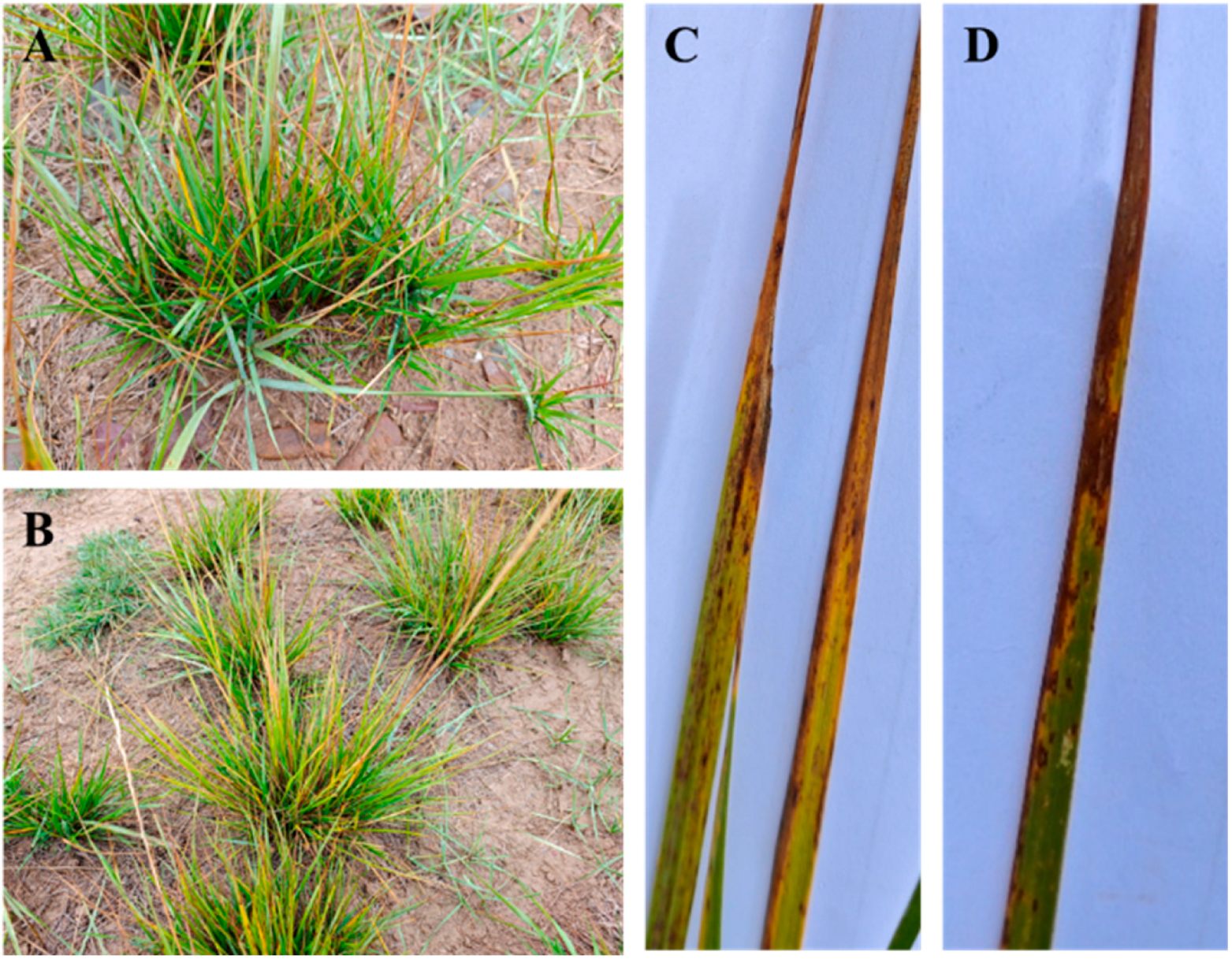
The disease was widespread across all three surveyed locations, with incidence ranging from 49.09% to 69.38%. Notably, Tianzhu County exhibited the highest disease incidence, whereas Su’nan County showed the lowest (Table 4). The initial symptom of this leaf spot disease was the appearance of small, brown spots along the leaf margins. As the infection progressed, the spots enlarged and coalesced, eventually covering most of the leaf surface, leading to leaf wilting and, in severe cases, necrosis (Figure 1).
Table 4.
The incidence of the disease and disease index.
Figure 1.
Natural symptoms of leaf spot disease on the host plant, drunken horse grass (Achnatherum inebrians), in the field (A,B). Overview of the diseased plants showing wilted and blighted leaves (C,D).
A total of 90 fungal isolates were obtained from the three sites, of which 78 were identified as Alternaria species, indicating that these are the primary pathogens responsible for the leaf spot disease. Based on morphological characteristics, two Alternaria species were tentatively identified and designated as Aa and Ai. Notably, isolate Ai was found exclusively in Tianzhu, while isolate Aa was recovered from the other two sites.
3.2. Morphological Characteristics of the Isolates
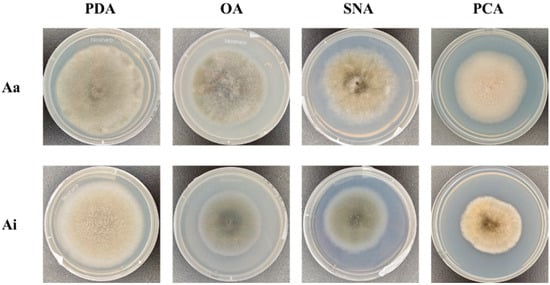
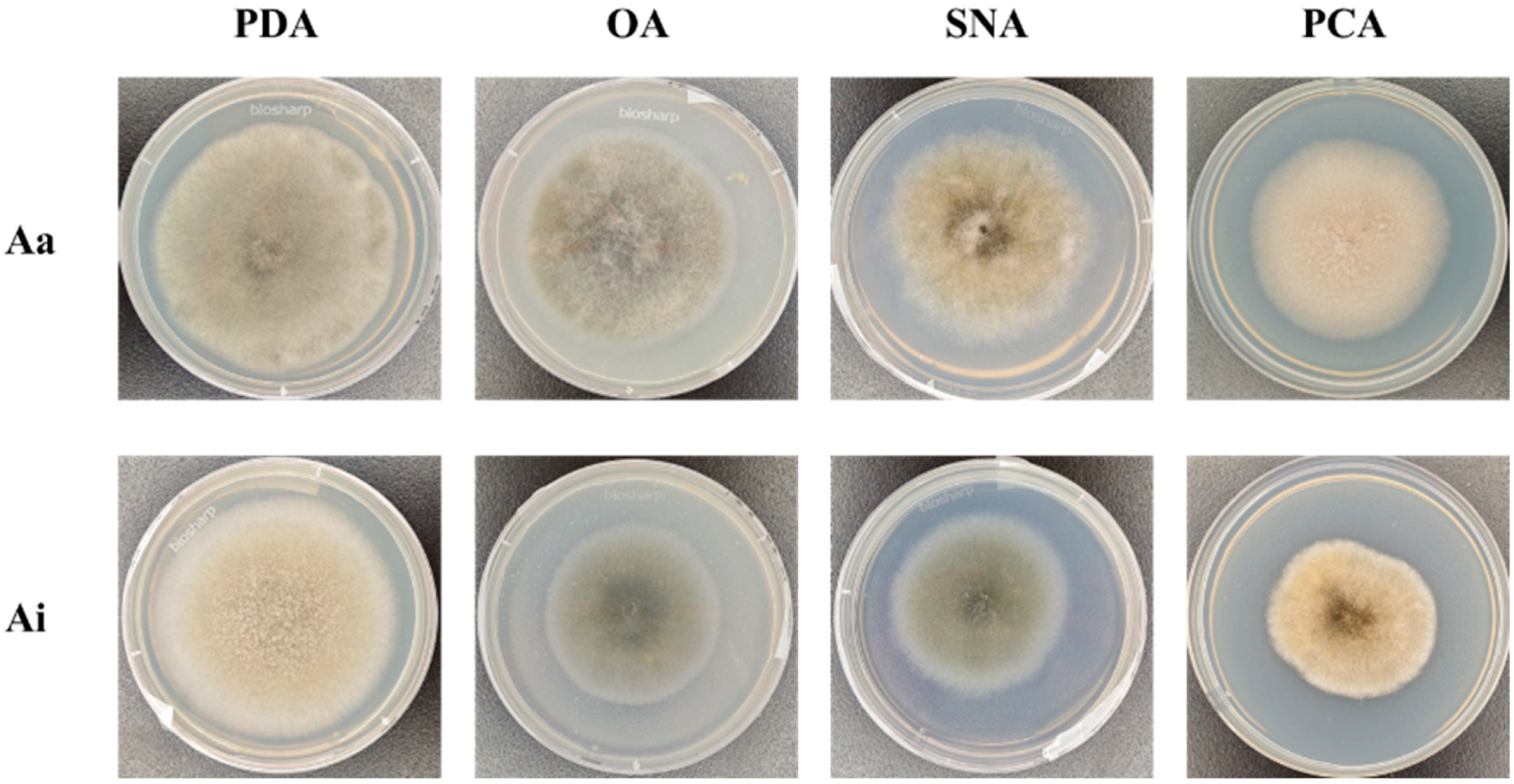
The primary mycelium of both fungal isolates, Aa and Ai, was initially white and gradually turned greenish-grey as it developed. The colony margins remained white, and the mycelium was dense and downy. Colony characteristics varied depending on the culture medium. Isolate Aa formed dark green colonies on PDA, OA, and SNA, but appeared white on PCA. In contrast, Ai colonies were white on PDA, dark green on OA and SNA, and on PCA displayed white margins with a black center (Figure 2). Both isolates Aa and Ai produced conidia exclusively on PCA, with little or no sporulation on PDA, OA or SNA.
Figure 2.
Colony morphology of the isolated fungal pathogens, Aa and Ai. The photographs show the macroscopic characteristics of the colonies after 7 days of incubation at 25 °C in the dark on four different culture media: potato dextrose agar (PDA), oatmeal agar (OA), nutrient-poor synthetic agar (SNA), and potato carrot agar (PCA).
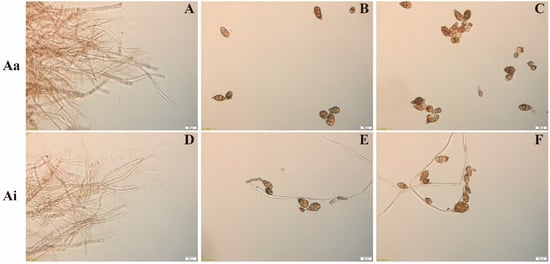
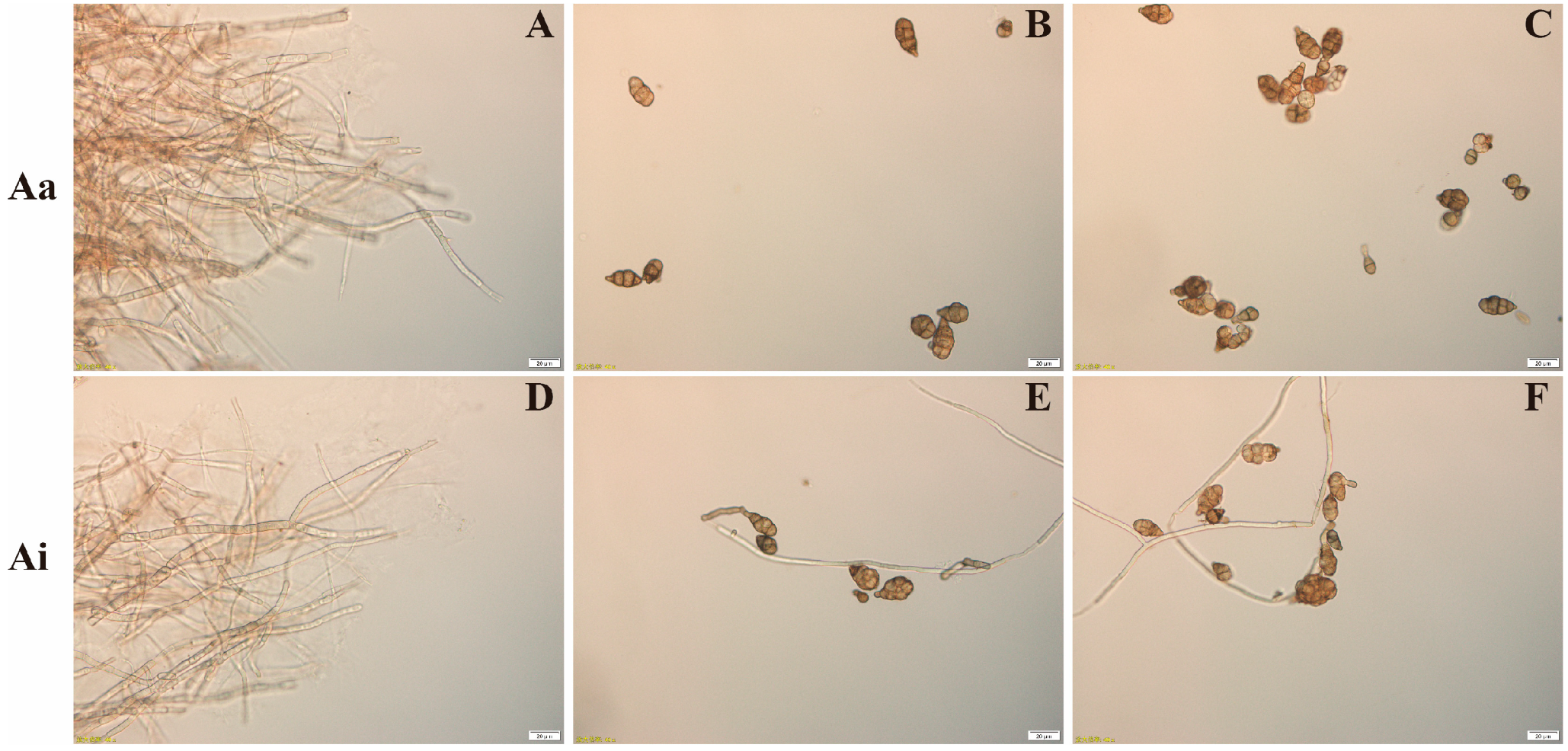
The mycelium of isolates Aa and Ai is branched and septate, with conidia forming in short chains. The conidia are light brown and display diverse shapes, including ovate, clavate, and pyriform. They possess 1–4 transverse septa, 0–3 longitudinal septa, and slightly thickened transverse walls (Figure 3). Conidia of isolate Aa measured 13.95–38.67 × 7.53–18.08 µm (average 23.84 ± 1.03 × 11.57 ± 0.96 µm), while conidia of isolate Ai measured 17.12–37.05 × 8.04–16.31 µm average 27.01 ± 1.48–10.15 ± 0.75 µm) (n = 50 for each isolate). Based on these morphological characteristics, isolates Aa and Ai were preliminarily identified as Alternaria species.
Figure 3.
Microscopic morphological characteristics of the fungal pathogens grown on PCA medium. Mycelium and spores of Aa (A–C) and mycelium and spores of Ai (D–F). Scale bars = 20 µm.
3.3. Phylogenetic Relationships
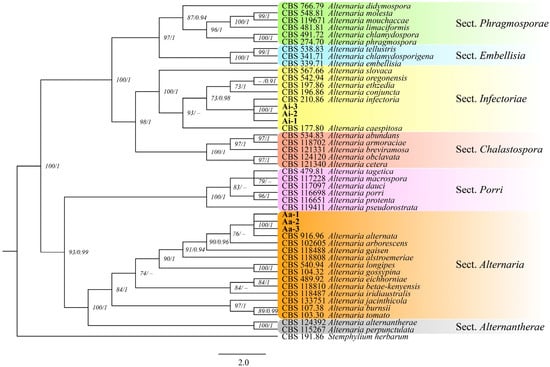
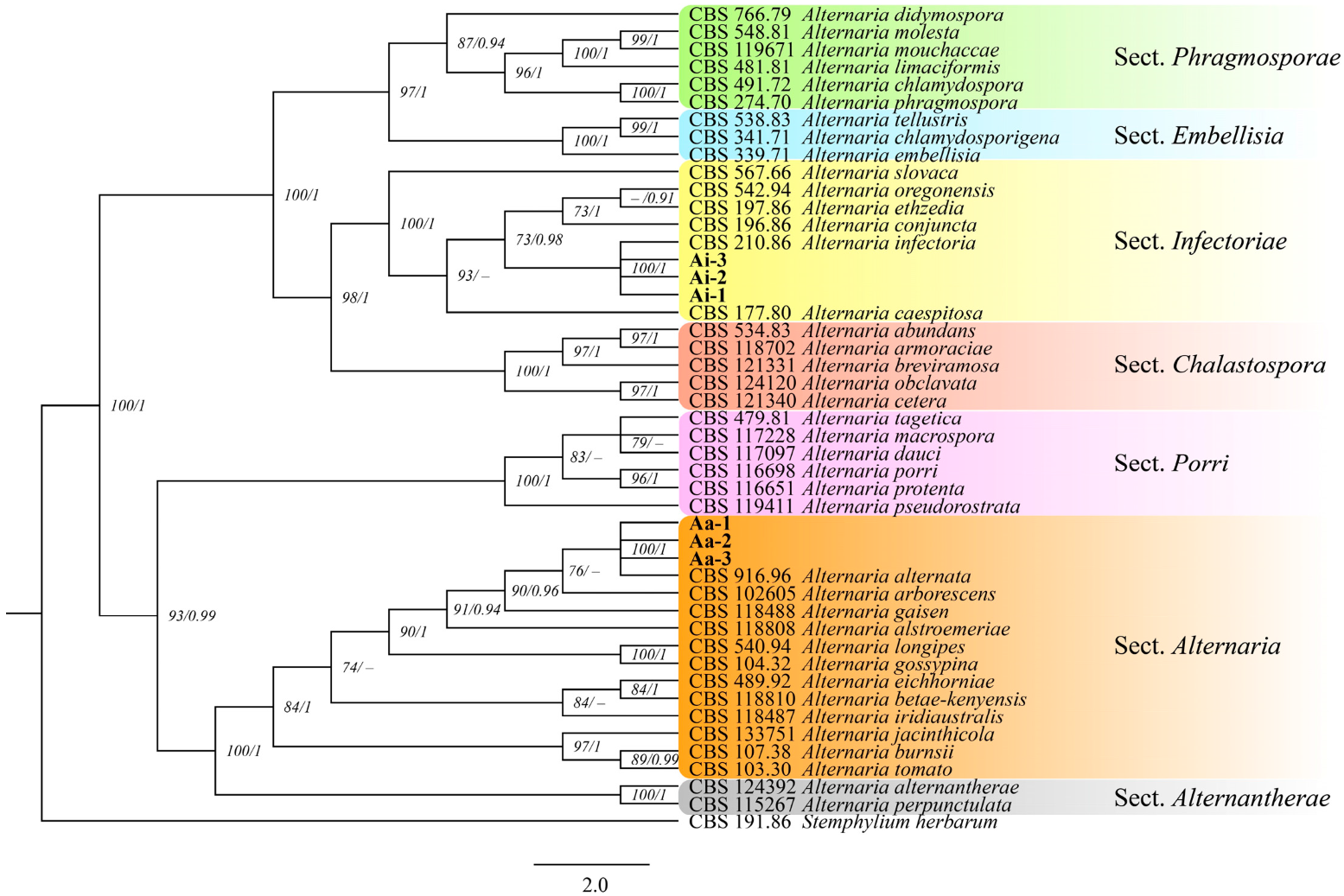
After processing, the 7-locus dataset comprised 3510 characters (551 for ITS, 247 for TEF, 222 for GPD, 840 for RPB2, 483 for Alt a 1, 477 for endoPG and 690 for OPA10-2, including alignment gaps). For the ML analysis, the best-fit nucleotide substitution model was K2+G. For the BI analysis, the best-fit models were determined by PhyloSuite (SYM+I+G for ITS, SYM+G for TEF, GTR+I+G for GPD and RPB2, TrN+I+G for Alt a 1, and K80 for endoPG and OPA10-2).
Phylogenetic analysis showed that the isolates Aa obtained in this study formed a well-supported clade with A. alternata (BS = 100%, PP = 1.00) and were clearly separated from closely related species. In contrast, the isolates Ai clustered with A. infectoria with strong statistical support (BS = 100%, PP = 1.00) and were distinct from other closely related species within the section Infectoriae (Figure 4).
Figure 4.
Phylogenetic tree based on the combined gene sequences of ITS, TEF, GPD, RPB2, Alt a 1, endoPG, and OPA10-2 of Alternaria isolates. Maximum likelihood bootstrap support values (BS) ≥ 70% and Bayesian posterior probabilities (BP) ≥ 0.90 are shown at the nodes (BS/BP). Values lower than these thresholds are indicated by dashes (–). Isolates obtained in this study are shown in bold. The tree was rooted to Stemphylium herbarum (CBS 191.86).
3.4. Pathogenicity Evaluation
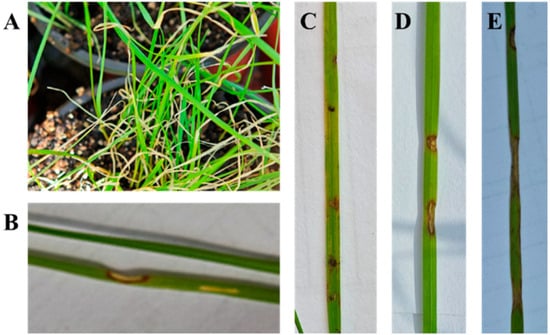
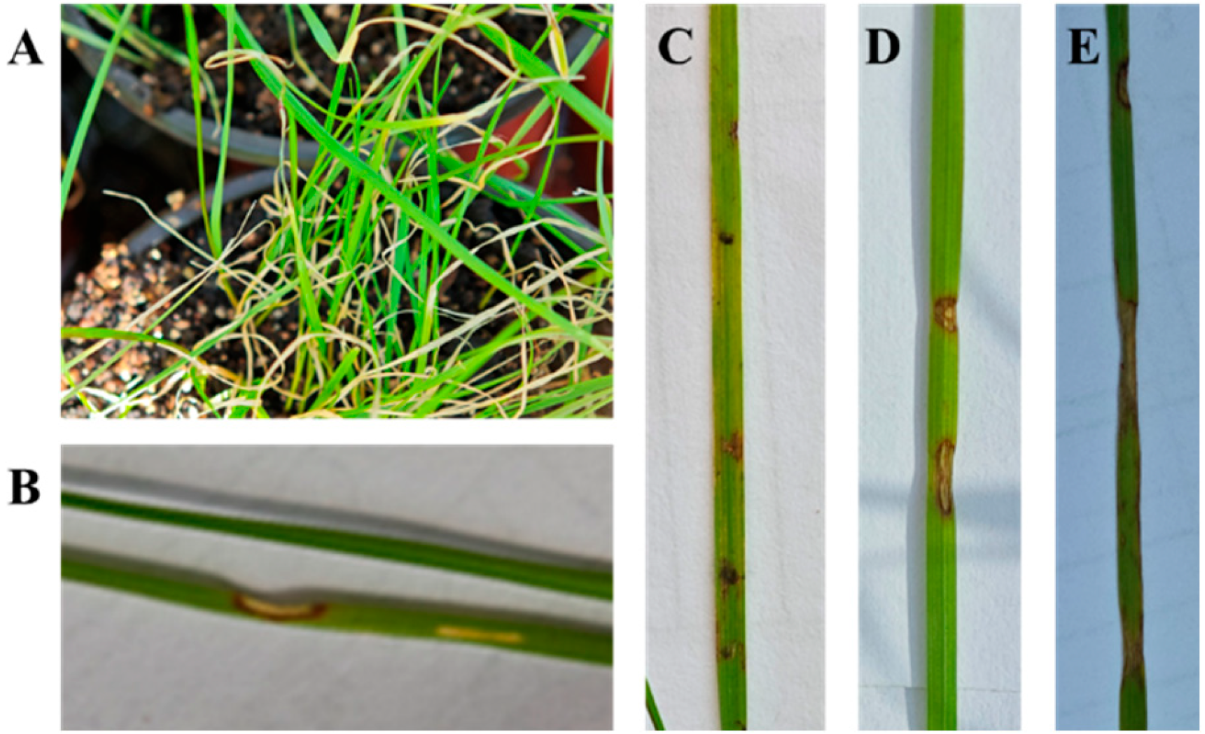
Seven days after inoculation, the conidial suspensions successfully induced leaf spots on the plants (Figure 5), whereas no symptoms were observed in the control group. Upon re-isolation from the symptomatic leaves, the pathogens re-isolated from the diseased leaves were identified as A. alternata and A. infectoria, while no pathogens were recovered from the control plants. Inoculated plants initially developed small, necrotic brown spots surrounded by a light-colored halo, closely resembling the symptoms observed under natural conditions. As the infection progressed, some leaves wilted, eventually leading to leaf necrosis and death.
Figure 5.
The symptoms of drunken horse grass leaf spot disease after 7 days inoculation. Overall appearance of the inoculated potted plant showing typical leaf wilting in the greenhouse (A). Enlarged views of single lesions demonstrating small, necrotic brown spots with light-colored halos, consistent with natural field symptoms (B–E).
The pathogenicity tests revealed clear differences in aggressiveness between the two fungal species on the host plants. A. alternata exhibited significantly higher aggressiveness than A. infectoria. Specifically, plants inoculated with A. alternata showed a disease incidence of 12.18 ± 1.37% and a disease index of 3.10 ± 0.81, whereas those inoculated with A. infectoria had significantly lower values of 7.80 ± 0.29% and 2.58 ± 0.22, respectively (Table 5). Both the disease incidence and disease index of A. alternata were significantly higher than those of A. infectoria. Nevertheless, the severity observed in inoculated plants was substantially lower than that recorded under natural field conditions.
Table 5.
Pathogenicity of Alternaria species on drunken horse grass 7 days after inoculation.
3.5. In Vitro Fungicide Efficacy
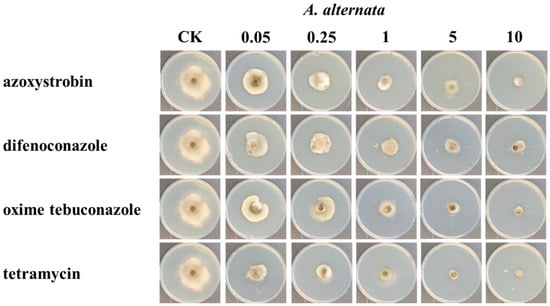
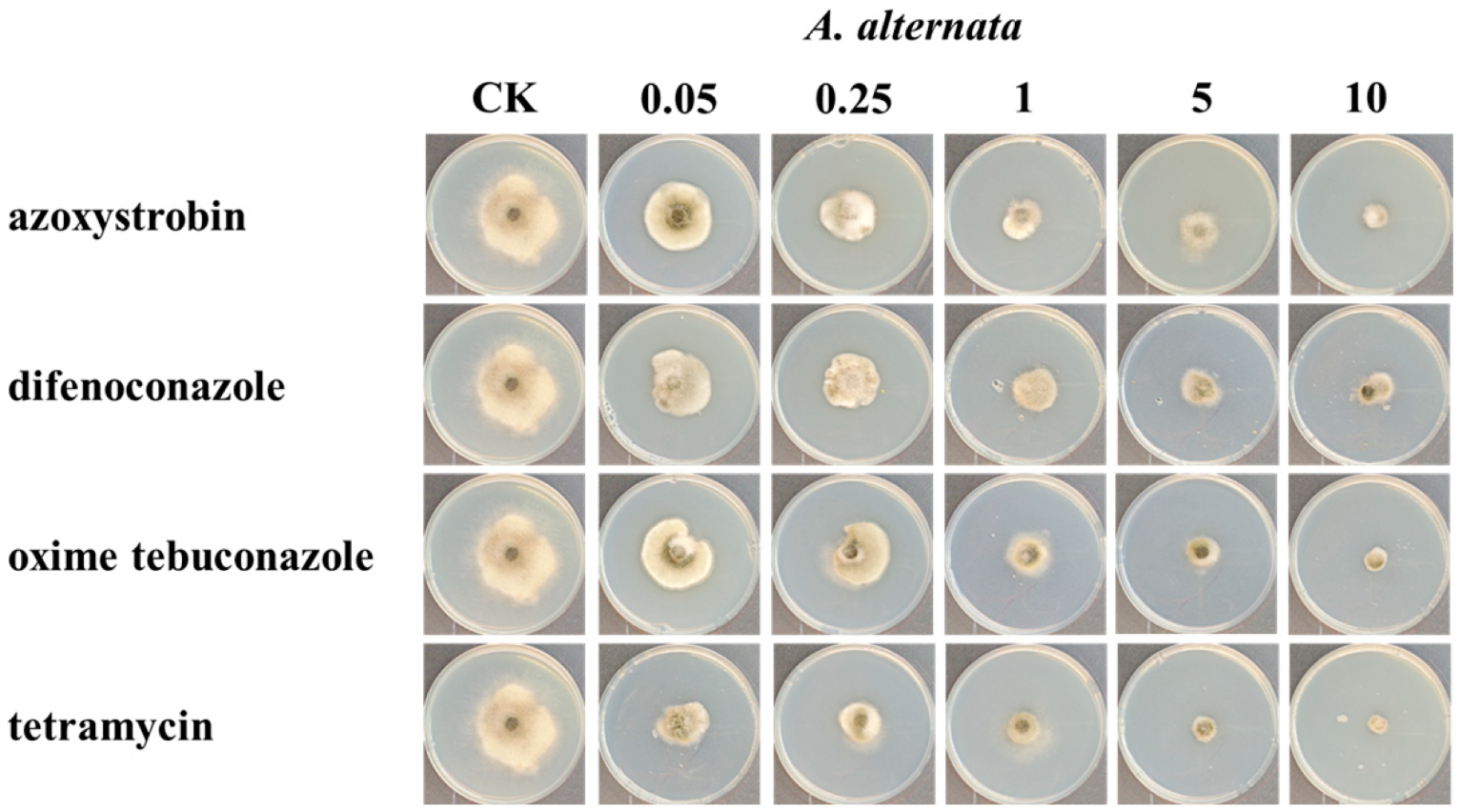
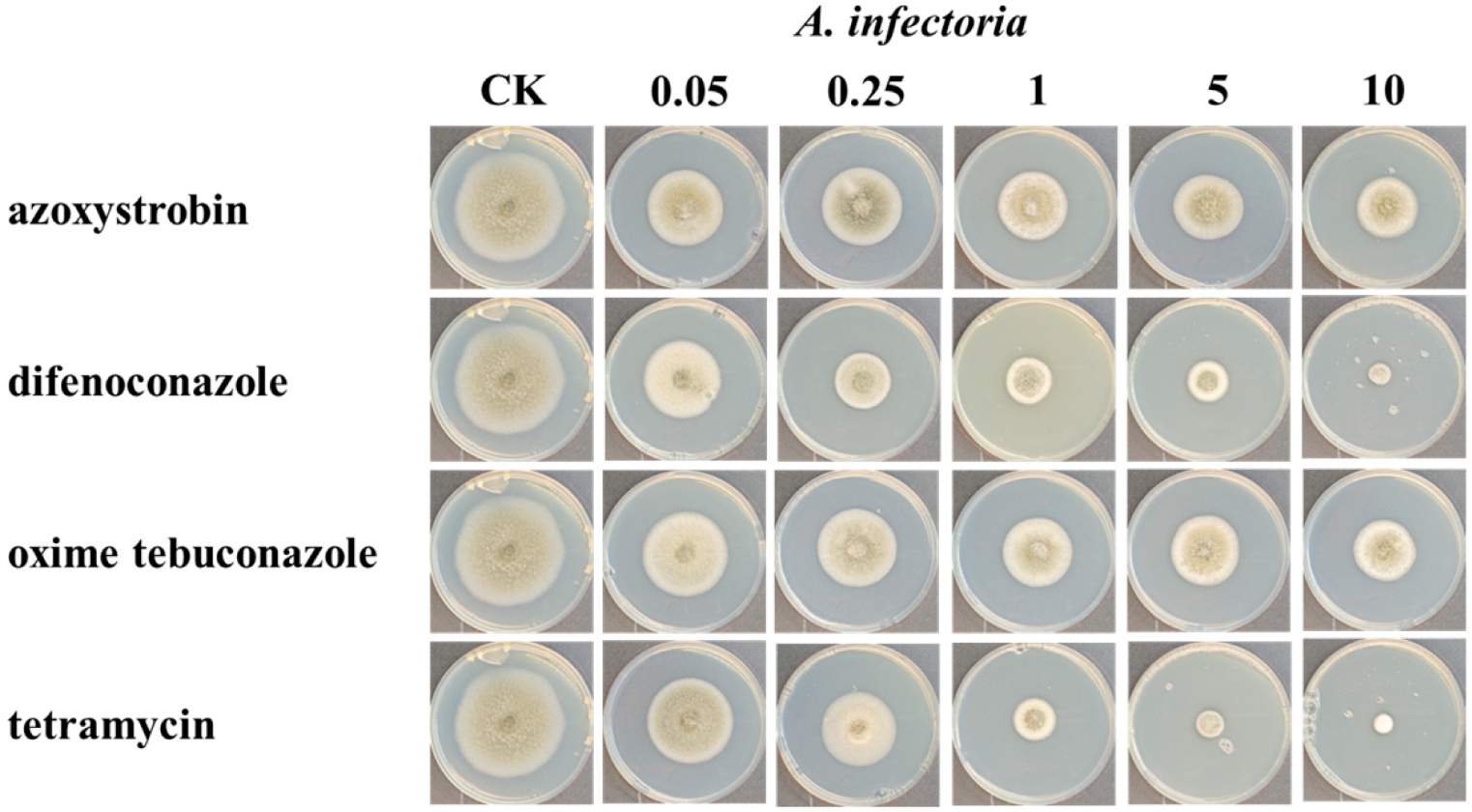
Mycelial growth inhibition increased in a dose-dependent manner for all four tested fungicides (Table 6). Difenoconazole and tetramycin demonstrated the strongest inhibitory effects against both pathogens. Specifically, at a concentration of 0.25 mg/L, difenoconazole inhibited A. alternata and A. infectoria by 93.02% and 93.80%, respectively. Similarly, tetramycin at 20 mg/L achieved high inhibition rates of 94.51% for A. alternata and 96.86% for A. infectoria. In contrast, azoxystrobin and oxime tebuconazole exhibited differential efficacy between the two species. Azoxystrobin (10 mg/L) was significantly more effective against A. alternata (82.16% inhibition) than against A. infectoria (63.65%). Likewise, oxime tebuconazole (5 mg/L) inhibited A. alternata by 81.93%, whereas its effectiveness against A. infectoria was significantly lower at 73.02% (Table 7). Generally, A. alternata was more sensitive to the tested fungicides than A. infectoria at equivalent concentrations, with the exception of difenoconazole. Based on the EC50 values, difenoconazole and tetramycin were identified as the most effective agents for controlling both pathogens. Azoxystrobin showed strong inhibitory activity against A. alternata (EC50 = 0.4499 mg/L) but was less effective against A. infectoria (EC50 = 2.8815 mg/L), while oxime tebuconazole showed relatively lower efficacy against both species.
Table 6.
The inhibition ratio of 4 fungicides at different concentrations against A. alternata and A. infectoria.
Table 7.
The toxicity of different fungicides on A. alternata and A. infectoria.
In addition, the white coloration of the mycelium of the pathogenic fungi in the presence of some high concentrations of fungicides suggests that they may affect the formation of mycelial pigments in the pathogenic fungi. Figure 6 and Figure 7 show the specific effects of four fungicides on the inhibition of pathogenic fungal hyphal growth at different concentrations.
Figure 6.
The inhibition rate of mycelium growth by different concentrations (mg/L) of four fungicides on A. alternata.
Figure 7.
The inhibition rate of mycelium growth by different concentrations (mg/L) of four fungicides on A. infectoria.
4. Discussion
In this study, the fungal pathogens A. alternata and A. infectoria were isolated from the leaves of the host plant, drunken horse grass leaves, and pathogenicity tests confirmed that both fungal species cause brown leaf spot disease. The identification of A. alternata on drunken horse grass is particularly noteworthy, as this widespread pathogen has a broad host range that includes many economically important crops. Consequently, infected drunken horse grass may serve as a critical reservoir of inoculum, posing a potential risk of cross-infection to neighboring cereal crops and pasture grasses, which highlights the broader agronomic and economic importance of managing this disease [40]. A. alternata is commonly associated with leaf spot diseases and can also affect crops post-harvest [41]. Furthermore, it can function as an endophyte in some plants, regulating physiological and biochemical processes that promote host growth [25,42,43]. In contrast, A. infectoria has been widely studied for its negative effects on human skin and immune function [44,45]. Although it can infect a wide range of dicotyledonous plants, A. infectoria is primarily recognized for its pathogenicity in key cereal crops such as wheat and barley [46,47,48].
The identification of these Alternaria species on drunken horse grass adds a critical piece to our understanding of fungal threats to grassland ecosystems. While Alternaria species are notorious pathogens on cereal crops, their impact on pasture and ecological grass species is increasingly recognized [49,50]. By establishing this first report on drunken horse grass, our study provides a necessary comparative baseline for future studies across different grass species in northwestern China.
Traditional methods for identifying Alternaria species have primarily relied on the morphological characteristics of reproductive structures. Simmons made major contributions to Alternaria taxonomy by describing the morphology of over 270 species and introducing the concept of “species-groups”, which consist of species complexes represented by type strains [27,51,52]. However, due to the extreme morphological similarity among Alternaria species, accurate species identification requires molecular sequence analysis in addition to morphological examination [18,19,53]. Furthermore, sequences of standard housekeeping genes alone have proven insufficient to reliably distinguish Alternaria species [33]. Multilocus phylogenetic analyses have therefore greatly advanced Alternaria taxonomy [35]. In recent years, multiple nucleotide sequences or gene fragments have been integrated into the phylogenetic studies of Alternaria species [18,19,54,55]. Using sequences such as ITS, GPD, RPB2, TEF, Alt a 1, endoPG and OPA10-2, Woudenberg reclassified several Alternaria species, particularly A. alternata [18]. Accordingly, in this study, we selected seven gene sequences (ITS, TEF, GPD, RPB2, Alt a 1, endoPG and OPA10-2) based on the authoritative taxonomic framework established by Woudenberg [18,19]. However, it must be acknowledged that the A. alternata species complex is notoriously difficult to resolve. While the 7-locus analysis provides robust species-level identification, it may still possess limitations in detecting subtle potential conflicts among individual gene datasets or resolving specialized pathotypes [25]. In the future, whole-genome sequencing might be necessary to fully unravel the evolutionary relationships and host-adaptation mechanisms within this complex [56].
Although there were visible differences in colony morphology on certain media, no significant differences were observed between A. alternata and A. infectoria in terms of the initial macroscopic symptoms they induced on the host plants. A. alternata primarily overwinters on mature, infected leaves. With the rise in temperatures in spring, conidia produced on these leaves are dispersed by air currents and deposited on young leaves, where they germinate under favorable conditions. Conidia production is particularly high when relative humidity exceeds 85%, and rainfall or sudden fluctuations in humidity can trigger the release of large numbers of conidia [57].
An intriguing observation from our pathogenicity tests is that the disease severity on artificially inoculated greenhouse plants was substantially lower than that recorded under natural field conditions. This discrepancy likely highlights the critical role of environmental factors and microbial interactions. In the field, drunken horse grass is subjected to multiple abiotic stresses, which can compromise plant immunity and predispose them to more severe infections [58]. Furthermore, drunken horse grass forms a well-documented mutualistic symbiotic relationship with the endophyte of the genus Epichloë [59]. While Epichloë typically confers enhanced stress tolerance to the host, the tripartite interaction among the host plant, the endophyte, and the necrotrophic Alternaria pathogen under varying environmental stresses remains entirely unknown.
To develop effective control strategies, it is essential to consider the classification and resistance risk of fungicides. Difenoconazole belongs to the demethylation inhibitors (DMI) class (FRAC Code 3), which inhibits ergosterol biosynthesis, and although highly effective, DMIs are considered to pose a medium risk of resistance development [60]. Azoxystrobin, a quinone outside inhibitor (QoI) (FRAC Code 11), acts by inhibiting mitochondrial respiration. However, QoI fungicides are classified as high-risk compounds for resistance development because of their specific single-site mode of action. In addition, the use of chemical fungicides can result in issues such as environmental pollution, food safety concerns, and the emergence of resistant pathogen populations [61,62].
In contrast, tetramycin is a polyene agricultural antibiotic that disrupts cell membrane permeability [63,64]. As a biological fungicide with a complex mode of action, it is generally considered to pose a lower risk of resistance development than single-site chemical fungicides [65]. In addition, tetramycin has been shown to inhibit mycelial growth and conidia germination in Alternaria species by disrupting cell wall and membrane integrity [66]. In the present study, both difenoconazole and tetramycin exhibited high efficacy against Alternaria species.
However, it must be noted that the fungicide screening in this study was strictly preliminary and conducted entirely in vitro. As is well known in plant pathology, high efficacy in laboratory settings does not always guarantee success under field conditions [67]. Moreover, the extensive use of single-site chemical fungicides carries a high risk of long-term resistance development in pathogen populations and poses toxicity risks to non-target organisms in fragile grassland ecosystems [68]. Therefore, from an Integrated Pest Management (IPM) perspective, the high efficacy of tetramycin in the experiment provides a promising and environmentally friendly alternative solution [66]. To mitigate resistance risks and minimize ecological impacts, we recommend future trials focusing on a rotation or combination strategy alternating between chemical fungicides and biological agents like tetramycin. In addition, it is necessary to determine the optimal dosage and application timing of these fungicides on drunken horse grass in natural ecosystems. Establishing such an IPM framework will be crucial for the sustainable ecological restoration of drunken horse grass.
5. Conclusions
To our knowledge, this is the first report of fungal Alternaria species (A. alternata and A. infectoria) causing leaf spot disease on the host plant, drunken horse grass. In natural grasslands, the incidence was approximately 60%, accompanied by a high disease severity index. Our study demonstrated that both difenoconazole and tetramycin effectively inhibited the mycelial growth of these pathogens under strict laboratory settings.
This study provides valuable insights into the identification of the pathogen and the pathogenicity of the leaf spot disease affecting drunken horse grass. Furthermore, the findings offer foundational guidance for the effective management and control of this disease, though future field evaluations are imperative before large-scale application.
Author Contributions
All authors contributed to the development of the study’s conception and design. Z.L. and W.Y. conducted experiments and processed data; T.D., J.L. (Jiaqi Liu), J.L. (Jiahui Long) and H.C. supervised experiments and revised the manuscript; X.W. and C.L. conceived the study and guided writing. All authors have read and agreed to the published version of the manuscript.
Funding
This research was supported by the National Natural Science Foundation of China (32503291) and the Science and Technology Plan of Gansu Province (25JRRA698).
Data Availability Statement
The data supporting the findings of this study are available from the corresponding authors upon reasonable request.
Acknowledgments
The authors express their profound gratitude for the support provided by their respective institutions.
Conflicts of Interest
The authors declare no conflicts of interest.
References
- Zhang, H.; Chen, T.; He, Y.; Li, C. First Report of Ergot (Claviceps purpurea) on Drunken Horse Grass (Achnatherum inebrians) in China. Plant Dis. 2021, 105, 2732. [Google Scholar] [CrossRef] [Scilit]
- Cui, X.; He, W.; Christensen, M.J.; Yue, J.; Zeng, F.; Zhang, X.; Nan, Z.; Xia, C. Abscisic Acid May Play a Critical Role in the Moderating Effect of Epichloë Endophyte on Achnatherum inebrians Under Drought Stress. J. Fungi 2022, 8, 1140. [Google Scholar] [CrossRef] [Scilit] [PubMed]
- Chen, N.; He, R.; Chai, Q.; Li, C.; Nan, Z. Transcriptomic Analyses Giving Insights into Molecular Regulation Mechanisms Involved in Cold Tolerance by Epichloë Endophyte in Seed Germination of Achnatherum inebrians. Plant Growth Regul. 2016, 80, 367–375. [Google Scholar] [CrossRef] [Scilit]
- Wang, J.; Hou, W.; Christensen, M.J.; Xia, C.; Chen, T.; Zhang, Z.; Nan, Z. The Fungal Endophyte Epichloë gansuensis Increases NaCl-Tolerance in Achnatherum inebrians Through Enhancing the Activity of Plasma Membrane H+-ATPase and Glucose-6-Phosphate Dehydrogenase. Sci. China Life Sci. 2021, 64, 452–465. [Google Scholar] [CrossRef] [Scilit]
- Jin, J.; Huang, R.; Wang, J.; Wang, C.; Liu, R.; Zhang, H.; Deng, M.; Li, S.; Li, X.; Tang, R.; et al. Increase in Cd Tolerance Through Seed-Borne Endophytic Fungus Epichloë gansuensis Affected Root Exudates and Rhizosphere Bacterial Community of Achnatherum inebrians. Int. J. Mol. Sci. 2022, 23, 13094. [Google Scholar] [CrossRef] [Scilit]
- He, Y.; Chen, T.; Zhang, H.; White, J.F.; Li, C. Fungal Endophytes Help Grasses to Tolerate Sap-Sucking Herbivores Through a Hormone-Signaling System. J. Plant Growth Regul. 2022, 41, 2122–2137. [Google Scholar] [CrossRef] [Scilit]
- Kou, M.-Z.; Bastías, D.A.; Christensen, M.J.; Zhong, R.; Nan, Z.-B.; Zhang, X.-X. The Plant Salicylic Acid Signalling Pathway Regulates the Infection of a Biotrophic Pathogen in Grasses Associated with an Epichloë Endophyte. J. Fungi 2021, 7, 633. [Google Scholar] [CrossRef] [Scilit]
- Yao, X.; Christensen, M.J.; Bao, G.; Zhang, C.; Li, X.; Li, C.; Nan, Z. A Toxic Endophyte-Infected Grass Helps Reverse Degradation and Loss of Biodiversity of over-Grazed Grasslands in Northwest China. Sci. Rep. 2015, 5, 18527. [Google Scholar] [CrossRef] [Scilit]
- Taiwaikuli, S.; Jin, G.; An, S.; Dong, Y.; Wei, P. Effects of Different Habitats on Achnatherum inebrians (Hance) Keng Ex Tzvelev (Drunken Horse Grass) Soil Seed Banks and Aboveground Vegetation. Plant Soil. Environ. 2023, 69, 421–428. [Google Scholar] [CrossRef] [Scilit]
- Potter, D.A.; Tyler Stokes, J.; Redmond, C.T.; Schardl, C.L.; Panaccione, D.G. Contribution of Ergot Alkaloids to Suppression of a Grass-Feeding Caterpillar Assessed with Gene Knockout Endophytes in Perennial Ryegrass. Entomol. Exp. Appl. 2008, 126, 138–147. [Google Scholar] [CrossRef] [Scilit]
- Li, C.-J.; Yao, X.; Nan, Z.-B. Advances in Research of Achnatherum inebrians-Epichloe Endophyte Symbionts. Chin. J. Plant Ecol. 2018, 42, 793–805. [Google Scholar] [CrossRef] [Scilit]
- Cao, J.; Li, C. First Report of Basal Stem Rot of Achnatherum inebrians Caused by Fusarium pseudograminearum in China. Plant Dis. 2024, 108, 3410. [Google Scholar] [CrossRef] [Scilit]
- Pitt, J.I.; Hocking, A.D. Fungi and Food Spoilage; Springer International Publishing: Cham, Switzerland, 2022. [Google Scholar]
- Xu, X.; Zhang, L.; Yang, X.; Cao, H.; Li, J.; Cao, P.; Guo, L.; Wang, X.; Zhao, J.; Xiang, W. Alternaria spp. Associated with Leaf Blight of Maize in Heilongjiang Province, China. Plant Dis. 2022, 106, 572–584. [Google Scholar] [CrossRef] [Scilit]
- Mercado Vergnes, D.; Renard, M.-E.; Duveiller, E.; Maraite, H. Identification of Alternaria spp. on Wheat by Pathogenicity Assays and Sequencing. Plant Pathol. 2006, 55, 485–493. [Google Scholar] [CrossRef] [Scilit]
- Peever, T.L.; Su, G.; Carpenter-Boggs, L.; Timmer, L.W. Molecular Systematics of Citrus-Associated Alternaria Species. Mycologia 2004, 96, 119–134. [Google Scholar] [CrossRef] [Scilit] [PubMed]
- Lawrence, D.P.; Rotondo, F.; Gannibal, P.B. Biodiversity and Taxonomy of the Pleomorphic Genus Alternaria. Mycol. Prog. 2015, 15, 3. [Google Scholar] [CrossRef] [Scilit]
- Woudenberg, J.H.C.; Groenewald, J.Z.; Binder, M.; Crous, P.W. Alternaria Redefined. Stud. Mycol. 2013, 75, 171–212. [Google Scholar] [CrossRef] [Scilit] [PubMed]
- Woudenberg, J.H.C.; Seidl, M.F.; Groenewald, J.Z.; de Vries, M.; Stielow, J.B.; Thomma, B.P.H.J.; Crous, P.W. Alternaria Section Alternaria: Species, Formae Speciales or Pathotypes? Stud. Mycol. 2015, 82, 1–21. [Google Scholar] [CrossRef] [Scilit]
- Bartlett, D.W.; Clough, J.M.; Godwin, J.R.; Hall, A.A.; Hamer, M.; Parr-Dobrzanski, B. The Strobilurin Fungicides. Pest Manag. Sci. 2002, 58, 649–662. [Google Scholar] [CrossRef] [Scilit]
- Xiao, Z.; Yan, Z.; Yu, C.; Ming, Z. Inhibitory Effect of Azoxystrobin on Alternaria solani. Chin. J. Pestic. Sci. 2008, 10, 41–46. [Google Scholar] [CrossRef]
- Zhang, Y.; Zhou, Q.; Tian, P.; Li, Y.; Duan, G.; Li, D.; Zhan, J.; Chen, F. Induced Expression of CYP51 Associated with Difenoconazole Resistance in the Pathogenic Alternaria Sect. on Potato in China. Pest Manag. Sci. 2020, 76, 1751–1760. [Google Scholar] [CrossRef] [Scilit]
- Sun, S.; Yan, J.; Tai, L.; Chai, J.; Hu, H.; Han, L.; Lu, A.; Yang, C.; Chen, M. Novel (Z)/(E)-1,2,4-Triazole Derivatives Containing Oxime Ether Moiety as Potential Ergosterol Biosynthesis Inhibitors: Design, Preparation, Antifungal Evaluation, and Molecular Docking. Mol. Divers. 2023, 27, 145–157. [Google Scholar] [CrossRef] [Scilit] [PubMed]
- Wang, Q.; Zhang, C.; Long, Y.; Wu, X.; Su, Y.; Lei, Y.; Ai, Q. Bioactivity and Control Efficacy of the Novel Antibiotic Tetramycin Against Various Kiwifruit Diseases. Antibiotics 2021, 10, 289. [Google Scholar] [CrossRef] [Scilit] [PubMed]
- DeMers, M. Alternaria alternata as Endophyte and Pathogen. Microbiology 2022, 168, 001153. [Google Scholar] [CrossRef] [Scilit] [PubMed]
- Townsend, G.R.; Heubergeb, J.W. Methods for Estimating Losses Caused by Diseases in Fungicidal Experiments. Plant Dis. Report. 1943, 27, 340–343. [Google Scholar] [CrossRef] [Scilit]
- Simmons, E.G. Alternaria: An Identification Manual; CBS Biodiversity Series; Centraalbureau voor Schimmelcultures: Utrecht, The Netherlands, 2007. [Google Scholar]
- White, T.J.; Bruns, T.; Lee, S.; Taylor, J. Amplification and Direct Sequencing of Fungal Ribosomal RNA Genes for Phylogenetics. In PCR Protocols, a Guide to Methods and Applications; Academic Press: San Diego, CA, USA, 1990; pp. 315–322. [Google Scholar]
- Jacobs, K.; Bergdahl, D.R.; Wingfield, M.J.; Halik, S.; Seifert, K.A.; Bright, D.E.; Wingfield, B.D. Leptographium Wingfieldii Introduced into North America and Found Associated with Exotic Tomicus piniperda and Native Bark Beetles. Mycol. Res. 2004, 108, 411–418. [Google Scholar] [CrossRef] [Scilit]
- Berbee, M.L.; Pirseyedi, M.; Hubbard, S. Cochliobolus Phylogenetics and the Origin of Known, Highly Virulent Pathogens, Inferred from ITS and Glyceraldehyde-3-Phosphate Dehydrogenase Gene Sequences. Mycologia 1999, 91, 964–977. [Google Scholar] [CrossRef] [Scilit]
- Liu, Y.J.; Whelen, S.; Hall, B.D. Phylogenetic Relationships among Ascomycetes: Evidence from an RNA Polymerse II Subunit. Mol. Biol. Evol. 1999, 16, 1799–1808. [Google Scholar] [CrossRef] [Scilit]
- Hong, S.G.; Cramer, R.A.; Lawrence, C.B.; Pryor, B.M. Alt a 1 Allergen Homologs from Alternaria and Related Taxa: Analysis of Phylogenetic Content and Secondary Structure. Fungal Genet. Biol. 2005, 42, 119–129. [Google Scholar] [CrossRef] [Scilit]
- Andrew, M.; Peever, T.L.; Pryor, B.M. An Expanded Multilocus Phylogeny Does Not Resolve Morphological Species Within the Small-Spored Alternaria Species Complex. Mycologia 2009, 101, 95–109. [Google Scholar] [CrossRef] [Scilit]
- Xiang, C.; Gao, F.; Jakovlić, I.; Lei, H.; Hu, Y.; Zhang, H.; Zou, H.; Wang, G.; Zhang, D. Using PhyloSuite for Molecular Phylogeny and Tree-Based Analyses. iMeta 2023, 2, e87. [Google Scholar] [CrossRef] [Scilit]
- Cheng, H.; Zhao, L.; Wei, X.; Liu, X.; Gao, G.; Deng, J.; Li, M. Alternaria Species Causing Leaf Spot on Hemp (Cannabis sativa) in Northern China. Eur. J. Plant Pathol. 2022, 162, 957–970. [Google Scholar] [CrossRef] [Scilit]
- Sadeghi, B.; Mirzaei, S. First Report of Alternaria Leaf Spot Caused by Alternaria chlamydosporigena on Tomato in Iran. Plant Dis. 2018, 102, 1175. [Google Scholar] [CrossRef] [Scilit]
- Lawrence, D.P.; Gannibal, P.B.; Peever, T.L.; Pryor, B.M. The Sections of Alternaria: Formalizing Species-Group Concepts. Mycologia 2013, 105, 530–546. [Google Scholar] [CrossRef] [Scilit] [PubMed]
- Lawrence, D.P.; Park, M.S.; Pryor, B.M. Nimbya and Embellisia Revisited, with Nov. Comb for Alternaria celosiae and A. perpunctulata. Mycol. Prog. 2012, 11, 799–815. [Google Scholar] [CrossRef] [Scilit]
- Woudenberg, J.H.C.; Truter, M.; Groenewald, J.Z.; Crous, P.W. Large-Spored Alternaria Pathogens in Section Porri Disentangled. Stud. Mycol. 2014, 79, 1–47. [Google Scholar] [CrossRef] [Scilit]
- Armitage, A.D.; Cockerton, H.M.; Sreenivasaprasad, S.; Woodhall, J.; Lane, C.R.; Harrison, R.J.; Clarkson, J.P. Genomics Evolutionary History and Diagnostics of the Alternaria alternata Species Group Including Apple and Asian Pear Pathotypes. Front. Microbiol. 2019, 10, 3124. [Google Scholar] [CrossRef] [Scilit]
- Palm, M.E.; Rotem, J. The Genus Alternaria: Biology, Epidemiology, and Pathogenicity; APS Press: St. Paul, MN, USA, 1997; Volume 89, p. 347. [Google Scholar]
- Gao, F.; Dai, C.; Liu, X. Mechanisms of Fungal Endophytes in Plant Protection Against Pathogens. Afr. J. Microbiol. Res. 2010, 4, 1346–1351. [Google Scholar] [CrossRef] [Scilit]
- Gupta, S.; Schillaci, M.; Walker, R.; Smith, P.M.C.; Watt, M.; Roessner, U. Alleviation of Salinity Stress in Plants by Endophytic Plant-Fungal Symbiosis: Current Knowledge, Perspectives and Future Directions. Plant Soil 2021, 461, 219–244. [Google Scholar] [CrossRef] [Scilit]
- Almeida, M.C.; Antunes, D.; Silva, B.M.A.; Rodrigues, L.; Mota, M.; Borges, O.; Fernandes, C.; Gonçalves, T. Early Interaction of Alternaria infectoria Conidia with Macrophages. Mycopathologia 2019, 184, 383–392. [Google Scholar] [CrossRef] [Scilit]
- Kieselová, K.; Gomes, T.; Santiago, F.; Martinha, H. Emerging Cutaneous Phaeohyphomycosis Caused by Alternaria infectoria. Acta Médica Port. 2021, 34, 774–778. [Google Scholar] [CrossRef] [Scilit] [PubMed]
- Poursafar, A.; Ghosta, Y.; Orina, A.S.; Gannibal, P.B.; Javan-Nikkhah, M.; Lawrence, D.P. Taxonomic Study on Alternaria Sections Infectoriae and Pseudoalternaria Associated with Black (Sooty) Head Mold of Wheat and Barley in Iran. Mycol. Prog. 2018, 17, 343–356. [Google Scholar] [CrossRef] [Scilit]
- Turzhanova, A.; Khapilina, O.N.; Tumenbayeva, A.; Shevtsov, V.; Raiser, O.; Kalendar, R. Genetic Diversity of Alternaria Species Associated with Black Point in Wheat Grains. PeerJ 2020, 8, e9097. [Google Scholar] [CrossRef] [Scilit] [PubMed]
- Gannibal, P.B.; Orina, A.S.; Kononenko, G.P.; Burkin, A.A. Distinction of Alternaria Sect. Pseudoalternaria Strains Among Other Alternaria Fungi from Cereals. J. Fungi 2022, 8, 423. [Google Scholar] [CrossRef] [Scilit]
- Wilson, H.E.; Carroll, G.C.; Roy, B.A.; Blaisdell, G.K. Tall Fescue Is a Potential Spillover Reservoir Host for Alternaria Species. Mycologia 2014, 106, 22–31. [Google Scholar] [CrossRef] [Scilit]
- Apangu, G.P.; Frisk, C.A.; Petch, G.M.; Hanson, M.; Skjøth, C.A. Unmanaged Grasslands Are a Reservoir of Alternaria and Other Important Fungal Species with Differing Emission Patterns. J. Environ. Manag. 2024, 370, 122416. [Google Scholar] [CrossRef] [Scilit]
- Simmons, E.G. Alternaria Taxonomy: Current Status, Viewpoint, Challenge. In Alternaria: Biology, Plant Diseases and Metabolites; Elsevier: Amsterdam, The Netherlands, 1992. [Google Scholar]
- Simmons, E.; Roberts, R.G. Alternaria Themes and Variations (73). Mycotaxon 1993, 48, 109–140. [Google Scholar] [CrossRef] [Scilit]
- Li, J.; Jiang, H.; Jeewon, R.; Hongsanan, S.; Bhat, D.J.; Tang, S.; Lumyong, S.; Mortimer, P.E.; Xu, J.; Camporesi, E.; et al. Alternaria: Update on Species Limits, Evolution, Multi-Locus Phylogeny, and Classification. Stud. Fungi 2022, 8, 1–61. [Google Scholar] [CrossRef] [Scilit]
- Park, M.S.; Romanoski, C.E.; Pryor, B.M. A Re-Examination of the Phylogenetic Relationship between the Causal Agents of Carrot Black Rot, Alternaria radicina and A. carotiincultae. Mycologia 2008, 100, 511–527. [Google Scholar] [CrossRef] [Scilit]
- Wang, T.; Zhao, J.; Sun, P.; Wu, X. Characterization of Alternaria Species Associated with Leaf Blight of Sunflower in China. Eur. J. Plant Pathol. 2014, 140, 301–315. [Google Scholar] [CrossRef] [Scilit]
- Dettman, J.R.; Eggertson, Q. Phylogenomic Analyses of Alternaria Section Alternaria: A High-Resolution, Genome-Wide Study of Lineage Sorting and Gene Tree Discordance. Mycologia 2021, 113, 1218–1232. [Google Scholar] [CrossRef] [Scilit]
- Solel, Z.; Kimchi, M. Histopathology of Infection of Minneola Tangelo by Alternaria alternata Pv. Dtri and the Effect of Host and Environmental Factors on Lesion Development. J. Phytopathol. 1998, 146, 557–561. [Google Scholar] [CrossRef] [Scilit]
- Bostock, R.M.; Pye, M.F.; Roubtsova, T.V. Predisposition in Plant Disease: Exploiting the Nexus in Abiotic and Biotic Stress Perception and Response. Annu. Rev. Phytopathol. 2014, 52, 517–549. [Google Scholar] [CrossRef] [Scilit] [PubMed]
- Chen, L.; Li, X.; Li, C.; Swoboda, G.A.; Young, C.A.; Sugawara, K.; Leuchtmann, A.; Schardl, C.L. Two Distinct Epichloë Species Symbiotic with Achnatherum inebrians, Drunken Horse Grass. Mycologia 2015, 107, 863–873. [Google Scholar] [CrossRef] [Scilit] [PubMed]
- Zhang, A.; Xie, X.; Liu, W. Enantioselective Separation and Phytotoxicity on Rice Seedlings of Paclobutrazol. J. Agric. Food Chem. 2011, 59, 4300–4305. [Google Scholar] [CrossRef] [Scilit]
- Raymaekers, K.; Ponet, L.; Holtappels, D.; Berckmans, B.; Cammue, B.P.A. Screening for Novel Biocontrol Agents Applicable in Plant Disease Management—A Review. Biol. Control. 2020, 144, 104240. [Google Scholar] [CrossRef] [Scilit]
- Steinberg, G.; Gurr, S.J. Fungi, Fungicide Discovery and Global Food Security. Fungal Genet. Biol. 2020, 144, 103476. [Google Scholar] [CrossRef] [Scilit]
- Dornberger, K.; Fügner, R.; Bradler, G.; Thrum, H. Tetramycin, a New Polyene Antibiotic. J. Antibiot. 1971, 24, 172–177. [Google Scholar] [CrossRef] [Scilit]
- Radics, L.; Incze, M.; Dornberger, K.; Thrum, H. Tetramycin B, a New Polyene Macrolide Antibiotic: The Structure of Tetramycins A and B as Studied by High-Field NMR Spectroscopy. Tetrahedron 1982, 38, 183–189. [Google Scholar] [CrossRef] [Scilit]
- Belakhov, V.V. Ecological Aspects of Application of Tetraene Macrolide Antibiotic Tetramycin in Agriculture and Food Industry (a Review). Russ. J. Gen. Chem. 2021, 91, 2858–2880. [Google Scholar] [CrossRef] [Scilit]
- Li, W.; Long, Y.; Yin, X.; Wang, W.; Zhang, R.; Mo, F.; Zhang, Z.; Chen, T.; Chen, J.; Wang, B.; et al. Antifungal Activity and Mechanism of Tetramycin Against Alternaria alternata, the Soft Rot Causing Fungi in Kiwifruit. Pestic. Biochem. Physiol. 2023, 192, 105409. [Google Scholar] [CrossRef] [Scilit]
- Fenu, G.; Malloci, F.M. Evaluating Impacts between Laboratory and Field-Collected Datasets for Plant Disease Classification. Agronomy 2022, 12, 2359. [Google Scholar] [CrossRef] [Scilit]
- Yang, L.-N.; He, M.-H.; Ouyang, H.-B.; Zhu, W.; Pan, Z.-C.; Sui, Q.-J.; Shang, L.-P.; Zhan, J. Cross-Resistance of the Pathogenic Fungus Alternaria alternata to Fungicides with Different Modes of Action. BMC Microbiol. 2019, 19, 205. [Google Scholar] [CrossRef] [Scilit]

Disclaimer/Publisher’s Note: The statements, opinions and data contained in all publications are solely those of the individual author(s) and contributor(s) and not of MDPI and/or the editor(s). MDPI and/or the editor(s) disclaim responsibility for any injury to people or property resulting from any ideas, methods, instructions or products referred to in the content. |
© 2026 by the authors. Licensee MDPI, Basel, Switzerland. This article is an open access article distributed under the terms and conditions of the Creative Commons Attribution (CC BY) license.