


Abstract
Wheat production in arid and semi-arid regions faces increasing pressure from water scarcity, climate change, and abiotic stresses. This review compares wheat production systems in Egypt and the Ningxia Hui Autonomous Region of northwestern China to examine how differences in agroecological conditions, irrigation systems, breeding priorities, and agricultural modernization influence wheat production and climate resilience. Although both regions rely heavily on irrigation, their production challenges differ: Egypt faces extremely limited rainfall, strong dependence on Nile water, and increasing pressure to improve domestic wheat production, whereas Ningxia combines low and seasonally uneven precipitation with dependence on Yellow River irrigation and challenges related to drought, salinity, and soil alkalinity. The comparison also reveals distinct but potentially complementary approaches to wheat improvement. Ningxia’s experience with long-term germplasm evaluation, genetic characterization, and the development of cultivars adapted to local production conditions offers opportunities to strengthen wheat improvement in Egypt. Conversely, Egyptian research on heat adaptation, early-maturing cultivars, and water-saving agronomic practices, including raised-bed planting, offers potentially useful approaches for Ningxia, subject to local validation. The principal contribution of this review is to integrate these contrasting regional experiences to identify reciprocal, context-dependent adaptation strategies rather than assuming that technologies can be transferred directly between regions. The review highlights the need for collaborative breeding, comparable multi-location field trials, improved irrigation management, and integrated assessment of yield, water productivity, grain quality, and environmental sustainability. These insights provide a basis for developing locally adapted strategies for more resilient wheat production in water-limited environments.
1. Introduction
1.1. A Future Perspective on the Global Food Problem
Considering the effects of climate change and water shortages, the global agricultural sector is confronted with unprecedented challenges in satisfying the food security demands of a rapidly growing population. The Food and Agriculture Organization (FAO) projects that by 2050, there will be over 9.7 billion people on the planet, which will significantly increase the demand for food.
It is estimated that agricultural production must rise by 60–70% from current levels in order to meet future consumption needs [1]. As a result of the growing global population, the effects of climate change, water scarcity, and changing consumer demands, agricultural production systems must undergo significant changes. It is anticipated that productivity gains, such as increased yields and more intensive land use, will be the main source of the necessary increase in primary food production, rather than the expansion of cultivated areas. These improvements will maximize crop productivity under environmental stress conditions such as salinity and drought [2].
1.2. Nutritional Value of Wheat
About 36% of the world’s population relies on wheat as its main source of nutrition [3]. Wheat provides about 55% of the carbohydrates and 21% of the calories consumed worldwide. Because of its high nutritional content and substantial contribution to human diets, wheat is one of the most important staple crops in the world. It is a rich source of bioactive substances, vitamins, and macronutrients that are essential for human health. Carbohydrates, proteins, and trace amounts of lipids, minerals (Cu, Mg, Zn, P, and Fe), vitamins (B and E), riboflavin, niacin, thiamine, and fiber make up the majority of wheat grains (Table 1). Wheat is a significant source of energy in human diets, with carbohydrates making up the majority of the grain—about 70–75%—primarily in the form of starch (Figure 1). The typical range of protein content is 10–15%, depending on environmental factors and genetics. The elasticity of dough and the quality of bread-making depend on wheat proteins, particularly gluten-forming proteins (gliadins and glutenins). Although lipids make up only 2–3% of the total, they help wheat-based products function and deliver energy [4,5,6,7,8].
Table 1.
Major nutritional and bioactive components of wheat grain and their functional significance for human health.
Figure 1.
Average nutritional composition of common wheat grain per 100 g. Source: Adapted from Wieser et al. [8].
In addition to their genetic and morphological differences, wheat types are important sources of dietary nutrients, although their nutritional composition varies according to genotype, growing conditions, and grain processing. Wheat grain contains carbohydrates, predominantly starch, as well as proteins, dietary fiber, lipids, vitamins, and minerals. The USDA FoodData Central database provides nutritional composition data for different wheat products and food entries, supporting the assessment of wheat as a major source of dietary energy and nutrients [9].
1.3. Classification of Wheat Types
The genus name for wheat, Triticum, comes from the Latin word “tero” (I thresh). The current name, Triticum aestivum, refers to hexaploid bread wheat with genomes A, B, and D, as opposed to tetraploid macaroni wheat, Triticum durum, which contains genomes A and B and is mostly used to make pasta. Bread wheat (Triticum aestivum) is currently the most commonly grown wheat. This type of free-threshing wheat has a hexaploid genome (AABBDD). According to Nesbitt and Samuel, it arose as a result of a recent hybridization between a diploid (DD) and an allotetraploid wheat (AABB) that took place no more than 8000 years ago, including Aegilops tauschii var. strangulata [10].
Triticum durum and Triticum aestivum are composed of seven pairs of chromosomes (2n = 14). Wheat is cultivated as a spring or winter crop. In order to develop and mature quickly and be harvested before the autumn snowfall arrives, spring wheat varieties are propagated in extremely cold areas. In more moderate climates, winter wheat is sown prior to the arrival of winter snowfall, which would otherwise cover the seedlings. When the snow thaws in the spring, this leads to vernalization and allows for quick development. In warm areas, the difference between winter and spring wheat is almost negligible. There is a significant difference between early and delayed maturity [11]. Endosperm texture, seed coat, dough strength, color, and planting season have all been used to differentiate wheat varieties. The following is a quick description of these [12].
1.3.1. Red and White Wheat
Red wheat varieties are preferred in environments that permit harvesting prior to germination because they usually show higher latency than white types. White wheat cultivars can be produced in arid regions during the ripening and harvesting stages, and they are ideal for bread and flat noodles [13].
1.3.2. Soft and Hard Wheat
Although there are several varieties of wheat grown all over the world, they all fall into two basic categories: hard wheat and soft wheat [14]. In hard and soft wheat, resistance to crushing is associated with seed integrity and variety [13].
1.3.3. Strong and Weak Wheat
The primary barrier to making leavened bread is the entire DNA sequence code for the proteins required to produce a sturdy, elastic dough that can trap gas bubbles during fermentation and allow the dough to rise. The dough’s special flexibility is mostly due to the type and amount of gluten it contains. Varieties with a high gliadin–glutenin content are viscous and produce expansible doughs that are ideal for making cookies, while those with a low gliadin–glutenin level are stronger and more elastic, making them ideal for bread-making [5]. Variations in high-molecular-weight glutenin alleles are almost directly linked to the resilience of the dough and bread quality. In bread wheat varieties, there are three or five main high-molecular-weight glutenin subunits [15,16]. Glu-D1 genes encode two of these subunits, Glu-B1 genes encode one or two, and Glu-A1 genes encode either none or one. More than half of the variation in the viscoelastic characteristics and baking capacity of dough can be attributed to the composition of high-molecular-weight glutenin subunits in wheat [17,18,19].
1.3.4. Winter and Spring Wheat
These types differ in the need for a cold phase for optimal development and reproductive growth. This requirement for vernalization has been greatly impacted by changes at the Vrn-1 position (located on the long arms of group 5 chromosomes), such as Vrn-B1, Vrn-A1, and Vrn-D1, and their superficial adjustment by minor flower-inducing genes [20]. All three wheat genomes have alleles at Vrn-1b that confer winter growth habits, while dominant Vrn-1a alleles in any of the three genomes and the presence of the recessive allele confer spring growth habits. However, because Vrn-1 genes are closely associated with genes that provide cold tolerance, they persist throughout the winter [20,21]. Wheat development is greatly influenced by a number of factors, including temperature, the requirement for a cold phase, variety, and plant responses to the proper lengths of dark and light intervals during their developmental period. Winter wheat cultivars were shown to mature more quickly throughout the flowering period when exposed to cold temperatures (usually between 3 and 10 °C) for 6 to 8 weeks. Greater day exposure has also been shown to enhance development; thus, as the days lengthen in the spring, greater exposure to light promotes better growth. The maturity rates of different types fluctuate constantly because of how differently they react to temperature, photoperiod, vernalization, and the degree of interaction between different elements. Consequently, they aid in the expansion of wheat’s global spread and adaptation in agriculture [22,23].
In China, both winter and spring wheat types are cultivated, whereas in Egypt, only spring wheat is grown, which is sown in the winter months from mid-October to mid-November and harvested from mid-April to June. The temperature requirements of winter and spring wheat cultivars differ significantly. For normal heading and flowering, winter wheat requires a period of cold exposure (vernalization) at temperatures between 0 °C and 5 °C. These varieties are planted in the autumn, go dormant in the winter, and start growing again in the spring. Winter wheat types can tolerate temperatures as low as −20 °C in their early stages, but as the plant approaches heading, its frost resistance slowly decreases. Spring wheat can be cultivated in the spring and does not require vernalization. Although it reaches maturity in late summer, it is more vulnerable to drought and frost than winter wheat.
1.4. Wheat Production in China and Egypt
Wheat is grown in more than 70% of the world’s agricultural areas. Global grain production is approximately 2862.8 million tons, with wheat production representing about 27% of global grain production in 2024/2025 [24]. China produces approximately 140 million tons of wheat, making it the world’s largest wheat producer and accounting for 17% of global wheat production (estimated at 800 million tons in 2024/2025); thus, its wheat production is crucial to the global supply–demand balance. In contrast, despite high productivity per unit area, Egypt remains one of the largest wheat importers worldwide due to the gap between domestic production and national consumption. Recent estimates indicate that Egypt produces approximately 9.5 million tons of wheat annually, while imports reach about 12.7 million tons. Accordingly, total national wheat availability reaches nearly 22.2 million tons per year. Based on these figures, wheat imports account for approximately 57% of Egypt’s total wheat supply, whereas domestic production contributes about 43%, reflecting a significant dependence on international markets to ensure food security. Per capita wheat consumption in China is about 64.3 kg, whereas in Egypt, it is about 173.3 kg in 2024/2025 [25]. Both China and Egypt face critical challenges in sustaining wheat production under limited freshwater resources. The Ningxia Hui Autonomous Region (Yellow River Ningxia Valley in China) and Egypt’s Nile Valley and Delta represent two contrasting yet comparable systems where irrigated agriculture is the foundation of wheat production. While China has achieved significant technological advancement in irrigation efficiency and yield optimization, Egypt continues to face structural constraints related to water scarcity and land fragmentation.
1.5. Wheat Cultivation Conditions
Wheat growth, yield, and grain quality are influenced by climatic conditions and soil properties, particularly temperature, water availability, and soil fertility. As a C3 crop, wheat generally performs well under relatively cool conditions, although its adaptation varies among genotypes and growth stages. The crop is cultivated across a wide range of latitudes, altitudes, and agroecological environments, reflecting substantial genetic diversity and adaptability. However, suboptimal temperatures, water deficits, and soil-related constraints can adversely affect crop development and productivity. These challenges are becoming increasingly important in wheat-producing regions because climate change and growing water scarcity intensify abiotic stresses, particularly in arid and semi-arid environments [26].
1.5.1. Temperature Requirements at Different Growth Stages
Temperature influences wheat development, yield formation, and grain quality throughout the growing season, and the magnitude and consequences of temperature stress depend on the developmental stage, stress intensity, and duration of exposure. Temperature affects germination, leaf and tiller development, stem elongation, spike formation, flowering, and grain filling. Therefore, understanding stage-specific temperature responses is essential for identifying appropriate adaptation strategies in contrasting wheat-producing environments [27].
a. Germination
Wheat can germinate across a relatively broad temperature range, although the germination rate and seedling establishment vary with temperature. The reported optimal range is approximately 12–25 °C, with faster germination generally occurring at warmer temperatures within this range and slower germination under cooler conditions [28,29,30]. Temperature during establishment is relevant to both Egypt and Ningxia, but the associated risks differ according to the sowing season and local climate. In Egypt, sowing dates should support timely establishment while avoiding the subsequent exposure of reproductive development to excessive temperatures. In Ningxia, sowing dates and cultivar characteristics need to be matched to the local growing season and the risk of low temperatures during establishment and early development.
b. Vegetative growth: leaf development and tillering
During vegetative growth, temperature affects leaf appearance, tiller formation and survival, root development, and the establishment of yield components. Moderate temperatures generally favor sustained vegetative growth, whereas frost can injure young tissues and growing points, and excessive heat can restrict tillering and accelerate development [29,30,31,32]. In Ningxia, where wheat production is exposed to substantial seasonal temperature variation, cultivar selection and sowing time should account for local cold conditions and the duration of the vegetative period. In Egypt, management should support adequate tiller establishment while limiting the risk that delayed development or inappropriate sowing dates will expose later growth stages to high temperatures. These considerations indicate that temperature adaptation depends not only on the crop’s optimum temperature but also on the timing of exposure relative to crop development.
c. Reproductive development and grain filling
The reproductive stages, particularly spike development, meiosis, anthesis, and grain filling, are highly sensitive to temperature stress. High temperatures around flowering can impair reproductive processes and reduce grain set, while heat after anthesis can accelerate senescence, shorten the grain-filling period, and reduce grain weight and starch accumulation [33,34]. The resulting yield losses depend on the timing, intensity, and duration of heat exposure, as well as cultivar characteristics and water availability.
These responses have distinct implications for Egypt and Ningxia. In Egypt, high temperatures toward the end of the growing season can expose wheat to terminal heat stress during flowering and grain filling. Adaptation therefore includes selecting heat-tolerant cultivars and optimizing sowing dates so that sensitive reproductive stages occur under comparatively more favorable temperatures. In Ningxia, adaptation requires matching cultivar development and sowing dates to the regional growing season, while accounting for cold conditions earlier in the season and the possibility of high temperatures during later development. Early or appropriately adapted cultivars may help reduce exposure to terminal heat, but their suitability needs to be evaluated under local conditions.
Overall, the comparison suggests that temperature-related adaptation should be based on the timing of stress relative to crop phenology rather than on a single temperature threshold applied to all growth stages and environments. For both regions, locally adapted cultivars, appropriate sowing dates, and multi-location field evaluations are important for identifying combinations that maintain yield and grain quality under prevailing thermal conditions. However, the relative importance of cold tolerance, reproductive heat tolerance, and grain-filling duration should be determined according to regional climate patterns and production systems.
1.5.2. Water Requirements
Wheat can withstand a wide variety of moisture conditions. Three-quarters of the world’s wheat-growing regions receive between 375 and 875 mm of precipitation annually, according to FAO data. The range of 250 to 1500 mm of annual rainfall is frequently mentioned as the ideal range for wheat. The crop gets adequate moisture within this range without running the risk of waterlogging. For a successful harvest, wheat specifically needs 30–38 cm (12–15 inches) of water during the growing season. In China, for winter wheat, average rainfall during the growing season from October to May ranges from approximately 60–200 mm. Supplemental irrigation is required because the water consumption is about 450–500 mm. Farmers generally irrigate winter wheat three to five times, with 180–300 mm of the total water application per season, from wells, rivers or reservoirs. In Egypt, the wheat crop requires 4–6 irrigations depending on the soil type and rainfall. Water requirements at different stages of wheat growth to reach physiological maturity and achieve the expected yield are, on average, about 350–600 mm [35,36].
1.5.3. Soil Requirements
Although the crop can thrive in a wide range of soil types, some are obviously better suited than others. For example, wheat grows best in fertile, deep, well-drained loam soil. According to Bayer Crop Science, loam and clay loam soils are the best for growing wheat. These soil types provide the drainage, aeration, water-holding capacity, and nutrient retention that wheat roots need to grow healthily.
Loamy soils are composed of a well-balanced blend of sand, silt, and clay. They drain well enough to prevent waterlogging while retaining enough moisture to keep the plant alive between rainfall events. Increased clay content in clay loam soils aids in moisture retention and provides a strong foundation for root development. Wheat can flourish in sandy soils despite their propensity to dry out quickly and lose nutrients through leaching. Sandy soils require more frequent irrigation and fertilization. On the other hand, very heavy clay soils may become waterlogged, which can lead to root rot and denitrification. Soils with a pH of 6.0–7.5 (tolerating up to 8.0) are ideal for wheat growth because they provide the best nutrient availability. Alkaline environments (> 7.5–8.0) may result in micronutrient deficits, while highly acidic soils (pH < 5.5) may make elements like manganese and aluminum toxic. Crop development and soil conditions are enhanced by soil amendments like gypsum for sodic soils and lime for acidic soils. Waterlogging limits root respiration, raises the risk of disease, and results in nutrient losses; hence, proper drainage is crucial for wheat. Excess water is removed from well-drained soils while sufficient moisture is retained. Long-term shallow water tables drastically reduce production, yet wheat can withstand groundwater depths of 0.6–0.8 m in sandy loam and silt loam soils and 0.8–1.0 m in clay soils [37,38,39].
1.5.4. Responding to Altitude and Latitude
Because wheat is very adaptable to a wide range of latitudes and altitudes, it is frequently grown. It can grow up to 3000 m above sea level; in Tibet, it has been recorded at 4570 m. Cooler temperatures at higher elevations may enhance grain quality, but they also shorten the growing season. Although it can grow outside of these ranges, wheat is primarily farmed between 30° and 60° N and 27° and 40° S. While it is usually sown in autumn and harvested in spring or summer in temperate countries, it is grown at cooler altitudes or during the dry season in tropical regions [40].
1.5.5. Soil Management and Fertilization
High wheat yields require integrated soil management techniques in addition to favorable soil and meteorological conditions. Nitrogen is the most yield-limiting element because of its significant impact on vegetative development and grain protein production; thus, balanced fertilization with nitrogen, phosphorus, and potassium, as well as secondary and micronutrients, is crucial. By adding organic matter, soil fertility can be further increased, thereby improving soil structure, water-holding capacity, microbial activity, and nutrient mineralization. In addition to promoting biological nitrogen fixation, crop rotation with leguminous plants helps break the cycles of pests and diseases linked to continuous wheat cultivation. Furthermore, conservation tillage techniques, such as reduced or no-tillage systems, increase soil aggregation, reduce erosion, and improve moisture retention; yet, because of the possibility of nitrogen immobilization in surface residues, they require careful fertilizer management [17,18,41].
1.6. Scientific Rationale and Knowledge Gap
Egypt and the Ningxia Hui Autonomous Region of northwestern China provide a scientifically relevant comparative framework for examining wheat production under contrasting water-limited agroecological conditions. Wheat production and food security are increasingly challenged by climate variability, pressure on agricultural resources, and the need to improve the efficiency and resilience of food production systems [1,24,25]. In Egypt, wheat production is closely associated with irrigation and the management of limited freshwater resources, making water availability and crop water requirements central considerations for production sustainability [31,36]. In Ningxia, wheat production provides an opportunity to examine adaptation to arid and semi-arid conditions and the broader challenge of improving agricultural water productivity under changing environmental conditions [39]. Although the two regions differ in their climatic characteristics, agricultural contexts, and production systems, both provide relevant settings for investigating how water availability and environmental stresses influence wheat performance and management priorities.
Climate-related stresses are important considerations in this comparison because temperature and water availability affect wheat development, yield formation, and grain quality. Heat stress during reproductive and grain-filling stages can reduce wheat yield and alter grain development, while drought responses vary with the timing and severity of water limitation [3,26,27,33]. Temperature and water availability also influence germination and seedling establishment, with implications for crop establishment under contrasting environments [28,29,30]. Furthermore, crop simulation studies demonstrate the importance of accounting for environmental variability and model uncertainty when evaluating wheat production and future yield responses [4,34,37]. These findings provide a scientific basis for comparing the environmental constraints affecting wheat production in Egypt and Ningxia and for examining how regional breeding and agronomic strategies address those constraints.
The comparison is also relevant to wheat genetic improvement and the adaptation of cultivars to specific production environments. Wheat genetic diversity has been affected by domestication and subsequent breeding, highlighting the importance of genetic resources for continued crop improvement [10]. In Ningxia, the genetic composition and breeding history of wheat cultivars provide a regional basis for examining the relationship between breeding progress and local production requirements [21]. Genetic regulation of flowering time is another important component of wheat adaptation because flowering phenology influences crop development and environmental exposure [20,22,23]. These genetic and developmental considerations can be examined alongside evidence on heat and drought responses to clarify how breeding priorities may differ between regions. Nevertheless, the potential usefulness of a cultivar or breeding strategy in another region cannot be assumed from its performance in its original environment; its suitability requires evaluation under the target region’s climatic conditions and management practices.
Beyond yield and stress adaptation, wheat production must also be considered in relation to resource-use efficiency and grain quality. Integrated nutrient management and improved nutrient-use efficiency are important components of sustainable cereal production [2,17,18]. At the same time, wheat quality is influenced by grain composition, storage proteins, and the genetic and environmental factors affecting processing and end-use characteristics [5,18,19]. Because wheat contributes substantially to human diets, production strategies should consider not only grain yield but also nutritional composition and quality attributes relevant to food processing and consumption [6,8]. A comparative assessment of Egypt and Ningxia therefore benefits from considering yield performance, environmental adaptation, resource management, and grain quality as connected rather than isolated dimensions of wheat production.
Despite the substantial body of research on wheat stress responses, crop modeling, genetic improvement, nutrient management, and grain quality, these topics are often investigated as separate components of wheat production. The specific knowledge gap addressed by this review is the need for an integrated comparison of how these components relate to the contrasting agroecological and production contexts of Egypt and Ningxia. In particular, a region-to-region synthesis can help clarify how environmental constraints intersect with breeding priorities, water and nutrient management, and grain-quality objectives, while distinguishing common challenges from region-specific requirements. This comparison is intended to synthesize the implications of the available literature rather than to assume that the two regions have identical production constraints or that practices can be transferred directly between them.
Accordingly, this review compares wheat production in Egypt and Ningxia through an integrated examination of environmental constraints, genetic resources and breeding priorities, water and nutrient management, and grain yield and quality. It aims to identify areas in which the experience of one region may inform research and practice in the other, while recognizing that potential transferability must be assessed through region-specific validation. By identifying both shared challenges and context-dependent responses, the review provides a scientific basis for reciprocal learning and for prioritizing future comparative research toward more resilient and resource-efficient wheat production systems.
2. Literature Search Strategy and Study Selection
Relevant literature published between 2000 and 2026 was identified through searches of Web of Science, Scopus, and Google Scholar. The search focused on wheat production systems in Egypt and the Ningxia Hui Autonomous Region of northwestern China, with particular attention to agroecological conditions, irrigation and water-use efficiency, climate-related stresses, wheat breeding, and agronomic management. The principal search terms included “wheat,” “Egypt,” “Ningxia,” “irrigation,” “water-use efficiency,” “drought stress,” “heat stress,” “salinity,” “alkalinity,” “wheat breeding,” “cultivar adaptation,” and “agronomic management.” These terms were combined in different ways to identify literature relevant to the objectives of the review.
Studies were selected based on their relevance to wheat production, environmental constraints, crop improvement, and management practices in the two regions. Priority was given to studies conducted directly in Egypt or Ningxia. Studies from other regions of China were also considered when they provided relevant evidence on wheat responses to abiotic stresses, breeding strategies, or water-saving practices that could inform the discussion of Ningxia. Findings from outside Ningxia were interpreted in the context of their original study locations and were not treated as direct evidence from Ningxia. Their potential applicability was assessed in relation to differences in climate, soil properties, irrigation conditions, and production systems. This approach enabled the review to integrate region-specific findings with broader evidence while acknowledging the limitations of transferring results between different agroecological environments.
3. Cultivated Area and Productivity per Unit Area
Globally, wheat production is high, and there is a large area under cultivation. Worldwide wheat production reached 800 million tons in 2025, with 221 million hectares under cultivation, yielding an average of 3.5 tons per hectare [25].
3.1. Egypt
3.1.1. Introduction of Wheat in Egypt
Throughout Egypt’s history, wheat has been the most significant crop. Egyptians obtain 45% of their daily protein and one-third of their daily calories from wheat-based foods, primarily in the form of subsidized baladi bread [42]. Over 22.5 million tons of wheat are consumed annually in Egypt, with a per capita share of 175 kg. This is more than 100 kg higher than the global average per person per year [43]. Egypt is the world’s largest importer of wheat, but it produces only about half of the 22.5 million tons needed each year, importing more than 50% of its consumption. Russia and Ukraine accounted for 85% of Egypt’s total wheat imports, with 20–25% coming from Ukraine and 60–66% from the Russian Federation, depending on the year [44]. Egypt must rely on imports to make up for the 8 to 9 million tons of wheat it produces annually. Egypt is the most populous country in the Arab world and the third most populous in Africa. Wheat is the most important food crop for the Egyptian diet, occupying about 1.5 million hectares of cultivated land. It is also regarded as a highly strategic and political commodity in Egypt.
Egypt’s population is currently expanding at a rate of 1.94 percent annually. By 2030, it is expected to reach 124 million, and by 2050, the demand for wheat is expected to nearly double [45].
3.1.2. Wheat Production and Development:
However, 96.5% of Egypt’s land is desert. Only roughly 3.5 million hectares of the approximately 100 million hectares of land—including the “new lands” that have been reclaimed from the desert in recent decades—are used for agricultural production [46]. Egypt has one of the fastest rates of population increase in the world, in addition to a severe lack of arable land and water. Currently, the population is expanding at a pace of 1.94%, adding over 2 million people annually [47]. Egypt’s water resources are derived from multiple sources, including approximately 55.5 BCM yr−1 from the Nile River, 1.6 BCM yr−1 from effective rainfall along the northern Mediterranean coastal zone (including Sinai), 2.4 BCM yr−1 from non-renewable deep groundwater in the Western Desert and Sinai, and 6.5 BCM yr−1 from shallow groundwater systems. Despite these contributions, the total available water supply is estimated at 66 BCM yr−1, which falls short of the current national water demand of approximately 79.5 BCM yr−1 across different sectors [48].
A substantial water deficit of approximately 13.5 BCM yr−1 persists between available resources and national demand. This gap is partially mitigated through the reuse of agricultural drainage water, both formally regulated and informally practiced. However, the Egyptian water resources system remains fundamentally constrained by limited supply capacity. On the demand side, several inefficiencies further exacerbate the situation, including evaporation losses from open water surfaces, seepage from canals and drainage networks, percolation losses from irrigated fields, and the proliferation of aquatic weeds within irrigation channels.
The agricultural sector plays a pivotal role in the national economy, contributing around 14% to gross domestic product (GDP) and employing approximately 31% of the labor force. Moreover, nearly 53% of the population resides in rural areas, with livelihoods directly or indirectly dependent on agriculture [49]. Egyptian agriculture is predominantly characterized by smallholder farming systems; over 80% of farmers cultivate less than 2 ha, while nearly half operate on holdings smaller than 0.4 ha [50]. Despite their limited land size, smallholders are central to food production, employment generation, and the utilization of land and water resources. The agricultural sector in Egypt faces mounting structural constraints driven by limited arable land, increasing water scarcity, and expanding desertification [51], which are likely to intensify with upstream developments such as the Grand Ethiopian Renaissance Dam on the Blue Nile and rapid population growth. These pressures are further compounded by land degradation, climate change impacts, and persistent rural poverty. In addition, high production costs, inadequate irrigation infrastructure, and pronounced land fragmentation continue to undermine agricultural productivity, particularly among smallholder farmers.
Under these conditions, agriculture is becoming progressively less attractive, especially for younger generations, prompting increased rural-to-urban migration. Consequently, the sector struggles to satisfy the country’s expanding and evolving food demand, resulting in a significant reliance on food imports, particularly staple crops such as wheat [43].
In response to increasing pressure on wheat supply, the Egyptian government has explored a range of strategies aimed at enhancing wheat productivity, improving grain quality, and optimizing processing technologies. One such approach involves increasing flour extraction rates from both domestic and imported wheat. For example, efforts have been made to raise the extraction rate of flour used in subsidized baladi bread from 82% to 87.5%, thereby maximizing output from available grain resources. In parallel, blending strategies have been investigated to partially substitute wheat in bread production. These include the incorporation of barley into wheat flour; however, this approach has been constrained by the limited availability of barley, which is widely used in the beverage industry. More recently, alternative formulations such as a 50:50 mixture of potatoes and wheat have also been experimentally evaluated [45,52,53,54]
In response to rising dependence on wheat imports and their associated economic and supply risks, the government of Egypt introduced a long-term development framework in 2014 aimed at strengthening domestic production capacity. Within the “Sustainable Development Strategy: Vision 2030,” a central objective is to enhance national wheat self-sufficiency through expanding cultivation into newly reclaimed sandy soils. This objective is pursued through two complementary pathways. The first emphasizes yield intensification (vertical expansion) by improving productivity per unit area via the adoption of high-performing wheat genotypes and the application of efficient, water-saving irrigation systems. The second focuses on area expansion (horizontal expansion), which involves cultivating newly available lands using wheat varieties specifically selected for their tolerance to harsh environmental conditions, including drought, salinity, and climate variability. Together, these approaches reflect an integrated strategy designed to increase wheat production while optimizing resource use under conditions of water scarcity and land limitation [36,55].
The expansion of wheat cultivation in Egypt is constrained by a complex set of interrelated factors. Rapid population growth is placing increasing pressure on food production systems, theoretically requiring a substantial increase in cultivated land area. However, this is hindered by limited water availability, the prevalence of abiotic stresses, fragmented landholdings, ongoing urban encroachment, and competition with other winter crops, in addition to rising production costs. Collectively, these constraints significantly limit opportunities for horizontal expansion [36,47,56]. As a result, research institutions such as the Agricultural Research Center under the Ministry of Agriculture and Land Reclamation, along with the National Research Center and various agricultural faculties, have increasingly prioritized vertical expansion strategies. These efforts focus on improving yield per unit area, particularly under both biotic and abiotic stress conditions. Key interventions include the development and dissemination of early-maturing wheat varieties, which contribute to improved water-use efficiency and allow for higher cropping intensity [57]. In addition, there has been an emphasis on increasing the distribution of certified seeds, establishing demonstration and extension fields to promote best management practices, and encouraging the adoption of raised-bed planting systems. This cultivation technique has been shown to reduce irrigation water requirements by approximately 25%, decrease seed rates by about 15%, and enhance yield uniformity and overall productivity [58].
3.1.3. Statistics of Wheat Production
For the 2025/26 marketing year (July–June), wheat production in Egypt is projected to reach approximately 9.3 million metric tons, reflecting a modest increase of about 1% compared to the 2024/25 season. This growth is primarily attributed to a slight expansion in the harvested area, which is expected to rise to around 1.43 million hectares, up from nearly 1.4 million hectares in the previous year. The expansion in cultivated area is largely influenced by improved government procurement prices, which provide farmers with stronger economic incentives to allocate more land to wheat production. Consequently, farmers’ planting decisions are closely linked to these price signals. Under Egyptian conditions, wheat is typically sown in November and harvested in April, aligning with the country’s winter cropping season [45].
3.2. Ningxia, China
3.2.1. Introduction of Wheat in Ningxia
The Ningxia Hui Autonomous Region is divided into three main areas based on natural conditions and economic and social development: the northern Yellow River valley, the middle dry zone, and the southern mountain region. The core of agricultural land in northern Ningxia is the irrigated area. Ningxia has good resources for agricultural development. One of China’s four main gravity irrigation systems is the Yellow River irrigation area, which runs 397 km across Ningxia [59,60]. In Ningxia, the total area devoted to wheat cultivation is estimated at approximately 80,000 ha, with an average productivity of about 3.45 t ha−1. Both spring- and winter-sown wheat types are grown in this region. Farmers often apply seeding rates considerably higher than optimal levels to secure stable yields, with recommended rates reaching up to 375 kg ha−1 [61]. Field evaluations of international germplasm, including nurseries from CIMMYT such as ESWYT and IBWSN, are conducted at the Crop Research Institute of the Ningxia Academy of Agriculture and Forestry Science (38° N, 106° E; 1120 m above sea level). The region experiences a mean annual rainfall of approximately 201.4 mm, with nearly two-thirds (62.2%) occurring between June and September. The dominant soil type is cumulic clay with a slightly alkaline reaction (pH ≈ 7.2), containing about 1.51% organic matter, along with available nutrient levels of 28.2 mg kg−1 phosphorus, 107 mg kg−1 potassium, and 11.9 mg kg−1 nitrogen [62,63].
The Yellow River Ningxia Valley, situated in northwestern China, is characterized by relatively flat terrain at an elevation of around 1100 m. The area benefits from a well-developed irrigation infrastructure, largely supported by the Yellow River, which plays a critical role in sustaining agricultural production under arid conditions.
In the Yellow River Ningxia Valley, water availability represents the primary constraint on crop productivity. Precipitation is highly seasonal and unevenly distributed, with more than 60% occurring between July and September. Both spring- and winter-sown wheat are cultivated in the region. Spring wheat is typically sown in early March and harvested by July, whereas winter wheat is planted in late September and reaches maturity by late June [64,65,66]. This region is particularly suitable for producing high-protein wheat due to its relatively long grain-filling duration combined with elevated temperatures during this critical growth stage, which favor protein accumulation. However, agricultural production faces multiple constraints, including arid climatic conditions, a fragile ecosystem, limited irrigation water availability, and significant wind erosion along the south–north gradient [64,65,66]. Under these challenging conditions, the adoption of conservation tillage practices has gained importance in Ningxia, as such approaches can help reduce soil degradation, improve water-use efficiency, and enhance environmental sustainability. Nevertheless, despite their potential, conservation tillage systems remain insufficiently developed and lack well-established, region-specific models, particularly in arid zones bordering desert areas and in irrigated lands dependent on the Yellow River [64,65,66].
3.2.2. Wheat Production and Development
Over the past 57 years, Chinese wheat (Triticum aestivum) production has grown significantly, mainly as a result of new varieties and improved crop management techniques. The substantial increase in wheat yield has been largely attributed to uniform sowing at lower seeding rates to control lodging and the use of leaf number and stage of development to determine the best time to apply fertilizers and irrigation water. However, flood irrigation and tillage-based methods have also led to major issues, such as reduced soil fertility and quality, environmental pollution, and the wasteful use of water resources. Improving water- and nutrient-use efficiency will be the main challenge facing wheat production in the future. To improve agricultural environments and stabilize or increase wheat production in China, we strongly recommend conservation-agriculture-based resource conservation technologies such as zero or reduced tillage, flat or raised-bed-planting systems, and sensible management of crop residues to prevent field burning [67].
Ningxia, a province in northwestern China with a variety of ecological types, has a long history of wheat farming. Since the 1950s, five major updates of bread wheat varieties have been implemented. The first variety update of Ningxia spring wheat resulted from the widespread cultivation of Australian wheat germplasm “Quality” in the 1950s. The second variety update of Ningxia wheat breeding resulted from the successful use of the Italian wheat resource “Abbondanza” in the 1960s. The milestone variety “Doudi 1” represents the third variety update in the 1970s. “Ningchun 4,” one of the most popular spring wheat varieties in China, was the fourth variety update of Ningxia wheat. “Ningchun 50”, which debuted in the 2000s, represents the most recent variety update [68,69,70]. In China, “Abbondanza” has been planted on more than 667,000 hectares as a tribute to the founding parents [57]. The ancestral founding parents of many modern wheat cultivars are important genetic resources for the creation of new cultivars.
Wheat breeding has benefited greatly from the introduction of wheat germplasm to Ningxia. Introduced bread wheat germplasms such as “Quality” and “Cajeme F-71” have fueled research on wheat breeding programs in the Ningxia Basin [68,69,70]. Superior landraces with special genetic resources for environmental adaptation formed the basis for wheat improvement programs in the early 1950s. Analyzing the genetic contributions made to bread wheat by landraces, introduced wheat varieties, and specific founding parents at different genomic levels during the past few decades is essential to guiding future wheat breeding in Ningxia [68,69,70,71,72].
3.2.3. Wheat Production Statistics
China is the world’s largest producer of wheat, accounting for 18% of global wheat production, with an annual production area of over 27 million hectares and a production output of 140 million tons in 2025. Despite late planting, wheat production is expected to grow slightly to 140.1 million tons in 2026–2027 due to improved yields. Consumption of 150 million tons and imports of 6 million tons are anticipated. Bread wheat (Triticum aestivum L.) is widely distributed throughout China’s diverse geographical conditions because of its high output and broad range of adaptation [73].
4. Analysis of Wheat Production Systems in Ningxia and Egypt
Wheat (Triticum aestivum L.) constitutes a strategic staple crop in both Ningxia (China) and Egypt, yet production systems differ substantially due to climatic conditions, water availability, differences in yield and quality improvement, and agricultural practices.
4.1. Analysis of Wheat Production Systems in Ningxia
4.1.1. Current Situation of Wheat Cultivation in Ningxia
The wheat-growing area in Ningxia accounts for approximately 3% of the total national wheat cultivation area. Despite its relatively small share, the region is considered representative of wheat production systems in northwestern China. Agroecological conditions vary considerably within the region: the northern plains around Yinchuan are significantly affected by soil salinity and alkalinity, whereas the southern mountainous zones are characterized by arid conditions and limited precipitation. Although irrigated areas benefit from favorable solar radiation and thermal resources, overall growing conditions remain constrained [74].
In response to these challenges, the wheat research group at the Crops Research Institute of the Ningxia Academy of Agriculture and Forestry Science has conducted long-term, region-specific research aimed at overcoming key production limitations. Their breeding and management strategies have prioritized early maturity, high yield potential, superior grain quality, disease resistance, improved water-use efficiency, and enhanced tolerance to abiotic stresses. Extensive germplasm screening efforts in Ningxia have led to the evaluation of more than 12,000 accessions of wheat. By integrating conventional breeding approaches with modern biotechnological tools, researchers have released 23 improved cultivars characterized by enhanced tolerance to drought and salinity, high yield potential, superior grain quality, resistance to major diseases, and strong gluten properties tailored for specific end-uses. Notably, varieties developed in the region account for approximately 60% of those officially approved in northwestern China, highlighting their regional importance [71,74,75].
The adoption of these improved cultivars has expanded considerably, with newly released varieties occupying nearly one-third of the national spring wheat area annually. Among them, the cultivars Ningchun 58 and Ningchun 62 have consistently set new yield benchmarks for spring wheat in the region over consecutive years. Maximum yields have reached approximately 11.6 t ha−1 for spring wheat, while winter wheat productivity has peaked at around 12.0 t ha−1.
Cumulatively, these varieties are disseminated across approximately 4.36 million mu within and beyond the region, generating substantial economic returns estimated at 350 million yuan. This widespread adoption has reinforced the dominance of the Ningchun series in northern spring wheat production zones, sustained Ningxia’s role as a key seed production base, and supported the development of regional brands such as “Sai Bei Xue” and “Xue Hua Fen” within the Hetao Irrigation District. Overall, these advancements contribute significantly to strengthening regional food security and improving farmers’ livelihoods.
Wheat is mostly grown in Ningxia’s irrigated dry and semi-arid regions along the Yellow River basin, which offer a consistent supply of water despite the region’s otherwise low and variable annual rainfall (180–350 mm) [76].
Winter wheat monoculture and winter wheat–summer maize rotation are the two primary cropping systems used in the area. Winter wheat is planted in October and harvested in June. Under irrigated conditions, average yields range from 4.0 to 5.5 t ha−1, but under water-limited or rainfed conditions, yields can fall to 2.5–3.0 t ha−1 [77]. Nitrogen, applied at rates of 150–200 kg N ha−1, is a major component of fertilization regimes. To increase productivity and reduce environmental impact, integrated nutrient–water management is becoming increasingly popular [78]. Although drip and sprinkler technologies are gaining popularity and increasing water productivity to 1.5–2.5 kg m−3, irrigation is still predominantly based on flood and furrow systems [79]. Research into drought-tolerant cultivars and optimal irrigation scheduling is driven by two fundamental constraints: soil salinity and water scarcity.
4.1.2. Supply, Demand and Challenges in Ningxia
In Ningxia, the wheat sector faces several structural and technical constraints.
First, there is a pronounced imbalance between production and consumption. In recent years, total wheat output has fluctuated between approximately 250,000 and 270,000 tons, whereas annual demand is estimated at around 850,000 tons. Consequently, local production satisfies only about one-third of total consumption requirements, highlighting a substantial supply gap.
Second, economic returns from wheat cultivation remain relatively modest, which weakens farmers’ incentives to expand production. High input costs combined with comparatively low returns make wheat less attractive than other major crops. On average, production costs are estimated at about 550 yuan per mu, while gross returns reach approximately 1200 yuan per mu, resulting in a net income of around 650 yuan per mu. This limited profitability significantly constrains farmers’ willingness to allocate land to wheat [80,81].
Third, foundational research on germplasm resources requires further strengthening. Although the region possesses considerable genetic diversity, the identification and functional characterization of key genes remain insufficient. In particular, the development of robust technical systems for precise germplasm evaluation is still limited, especially for traits related to heat tolerance, drought resistance, and salinity–alkalinity tolerance. As a result, the number of elite, widely usable breeding materials remains relatively low [80,81].
Fourth, progress in improving grain quality traits has been relatively constrained. Despite a favorable genetic background, breeding efforts have historically prioritized yield maximization, leading to the widespread adoption of medium-strength and medium-hard wheat types. There remains a shortage of specialized varieties, including strong-gluten types for bread-making, varieties with elevated resistant starch content, and biofortified lines such as selenium-enriched wheat [82,83,84].
4.2. Analysis of Wheat Production Systems in Egypt
4.2.1. Current Situation of Wheat Cultivation in Egypt
With a per capita consumption of between 180 and 200 kg annually, Egypt is one of the world’s largest consumers of wheat, reaching more than twice the global average of about 67 kg per year. Egypt imports 45–55% of its annual wheat requirements, producing barely half of the 22.5 million tons of wheat it consumes. This exceptionally high demand places considerable strain on domestic supply systems. Egypt imports around 40% of its wheat consumption, or about 14 million tons annually, to meet domestic demand, making it one of the world’s largest importers of wheat. An estimated USD 2 billion is spent annually as a result of this over-reliance on imports [85]. Furthermore, it exposes the nation to food security risks due to international price volatility and trade disruptions, which could also lead to more widespread social instability. Therefore, increasing wheat self-sufficiency is essential for boosting national resilience, reducing government expenditure, and decreasing reliance on foreign markets. However, due to productivity constraints, domestic wheat production remains insufficient to meet demand [86].
In response, current research programs seek to raise wheat yield and improve the nutritional value of flour, thereby promoting long-term food security and national capacity building. Egyptian research institutions are working to increase the yield of wheat varieties resistant to fungal and rust diseases. Additionally, the National Research Center is focusing on improving wheat productivity and quality in newly reclaimed sandy soils under climate change conditions, as well as assessing imported wheat varieties under salt and drought stress [87,88].
4.2.2. Supply, Demand and Challenges in Egypt
Wheat production occurs mainly in the Nile Delta and Valley, under a hyper-arid climate with negligible rainfall. The country depends entirely on irrigation from the Nile, making wheat cultivation highly water-dependent [89]. Egypt employs a single wheat season per year (November–April), with yields ranging from 6.0 to 8.0 t ha−1 under optimal irrigation and management, although water productivity varies between 1.8 and 3.0 kg m−3 depending on field management and irrigation technique [90].
Egypt leads the world in wheat production under irrigated spring wheat conditions, with a potential output reaching 7.5 t ha−1, according to published statistics from 2023 [89,91]. Nevertheless, Egypt has a severe supply–demand imbalance despite this potential and the scale of its agricultural sector, with a total cultivated area of 1.5 million hectares [58,85]. The nation recently produced about 10.0 × 10⁶ t of wheat, but this was substantially exceeded by consumption, estimated at 20.6 × 10⁶ t. This discrepancy leads to an astounding 10.6 × 10⁶ t wheat shortfall, which perpetuates the supply–demand mismatch and solidifies Egypt’s reliance on international markets to meet its national food security needs.
First, the small size of landholdings, where most farmers own less than one acre, makes it difficult to organize agricultural operations and adopt mechanization, resulting in significant waste and losses [92].
Second, there is limited use of modern agricultural machinery in planting, maintenance, and harvesting operations. Increased use of agricultural mechanization is a crucial strategy for two reasons: loss reduction and yield gap closure. Mechanization is equally important for minimizing post-harvest losses, which are estimated to be as high as 20.6% of the total supply along the entire value chain, even though it encourages reliance on fossil fuels. Modern, efficient machinery for tasks like land preparation and precision planting is scientifically proven to optimize resource use and help farmers bridge the significant yield gap. A larger proportion of the harvested crop is secured, and physical grain loss is reduced through the use of modern, high-efficiency combine harvesters and improved handling systems [46,93].
Third, to increase domestic production in Egypt, financial incentives that encourage wheat-producing farmers to allocate larger portions of their cropland to wheat cultivation are required. The majority of farmers have inadequate knowledge of contemporary agronomic techniques and limited access to information. Adequate and sustainable agricultural practices, such as crop rotation, balanced nutrient supply, and the use of organic amendments, must also be enabled through appropriate policies to help wheat producers increase their output. However, the most crucial elements are technologies and interventions that enhance irrigation water supply and improve its efficiency of use [94].
Fourth, although drip and sprinkler systems have recently been installed in high-value plots, basin and furrow irrigation remain the most common irrigation methods [95].
Fifth, to maximize output, fertilization is extensive, with nitrogen inputs averaging 180–220 kg N ha−1, supplemented by phosphate and potassium. Policies promoting water-saving technologies and precision agriculture are required because of constraints such as salt accumulation, water allocation restrictions, and growing land pressure resulting from population expansion [35,47,96,97].
Finally, comparative analysis highlights key differences and similarities. Ningxia faces climatic variability and water scarcity as primary limitations, whereas Egypt’s major challenge is managing a fixed water supply under high demand. Both regions rely on irrigation to sustain wheat productivity, but Ningxia is transitioning from traditional flood irrigation to modern water-saving systems, while Egypt emphasizes optimization of existing water resources, reuse, and precision irrigation [35]. Yields are generally higher in Egypt due to controlled irrigation and fertile delta soils, while Ningxia exhibits greater internal variability due to climate and soil limitations.
5. Comparison of Agro-Environmental Conditions and Irrigation Strategies in Ningxia and Egypt
Agro-environmental factors and irrigation practices in Egypt and Ningxia (China) show clear structural variations in water resource management, as well as convergent constraints related to aridity. Northwest China’s Ningxia region has a semi-arid to arid continental climate with significant annual precipitation variability and a heavy reliance on Yellow River irrigation [51,64,76,98]. Conventional flood irrigation is still widely used despite a long history of irrigation development, which leads to inefficient water use and contributes to soil salinization, alkalinity, and nutrient leaching [79]. Water-saving irrigation methods, including drip and micro-irrigation, have shown notable increases in water productivity and resource-use efficiency as a result of recent agricultural policy and technological advancements [99].
Egypt, on the other hand, has an extremely dry climate with very little precipitation and almost complete dependency on the Nile River as its main source of water [89]. Based on a vast network of canals and basin irrigation techniques, the irrigation system is highly organized and regulated. However, the strain on scarce water resources has increased due to rising water demand from population growth and climate change. As a result, national plans have placed a high priority on modernizing irrigation by expanding pressurized irrigation techniques, including sprinkler and drip irrigation, in addition to institutional initiatives aimed at improving the efficiency of water allocation [90].
Overall, even though both areas are moving toward more efficient irrigation in the face of water constraints, their governing challenges—such as increasing wheat yield under saline stress and water scarcity—differ significantly. While Egypt must maximize the use of a fixed and severely limited water supply, requiring strict water governance and efficiency-driven management measures, Ningxia faces the dual constraints of climatic variability and historically poor irrigation practices. The effects of temperature trends, drought and water stress, yield impacts and adaptation needs are illustrated in Table 2.
Table 2.
Climate change effects on wheat production and adaptation strategies in Ningxia and Egypt.
5.1. Ningxia Region (China)
Ningxia is located in the temperate arid and semi-arid desert climate zone, with an average annual precipitation of 180–367 mm. Its total area is 66,400 km2, and its geographic range is 104°17′–107°39′ E to 36°06′–37°50′ N. The Tengger Desert, the Yellow River and its surrounding alluvial plain, the central low hills and mountains, and the southern Loess Plateau comprise the region from north to south. Ningxia is crucial for maintaining the aquatic ecology and water environment of the Yellow River, producing food, ensuring the security of water resources in the Hetao Plain, and fortifying the ecological barrier in northern China. Ecologically delicate and sensitive areas and desertified terrain make up about half of the region (Figure 2) [100]. It is characterized by:
- Semi-arid continental climate;
- Annual precipitation: 180–367 mm;
- High evaporation rates;
- Large diurnal temperature variation;
- Dependence on Yellow River irrigation.
Wheat production is concentrated in irrigated plains where water diversion systems from the Yellow River support intensive agriculture. Recent studies show that irrigation-driven intensification has significantly increased wheat output in northern China, despite reductions in cultivated land area, due to improved irrigation infrastructure and technology [38].
Figure 2.
Scope of the study area (produced on the basis of the base map of the standard map with reference number GS (2019) 1822) [100].
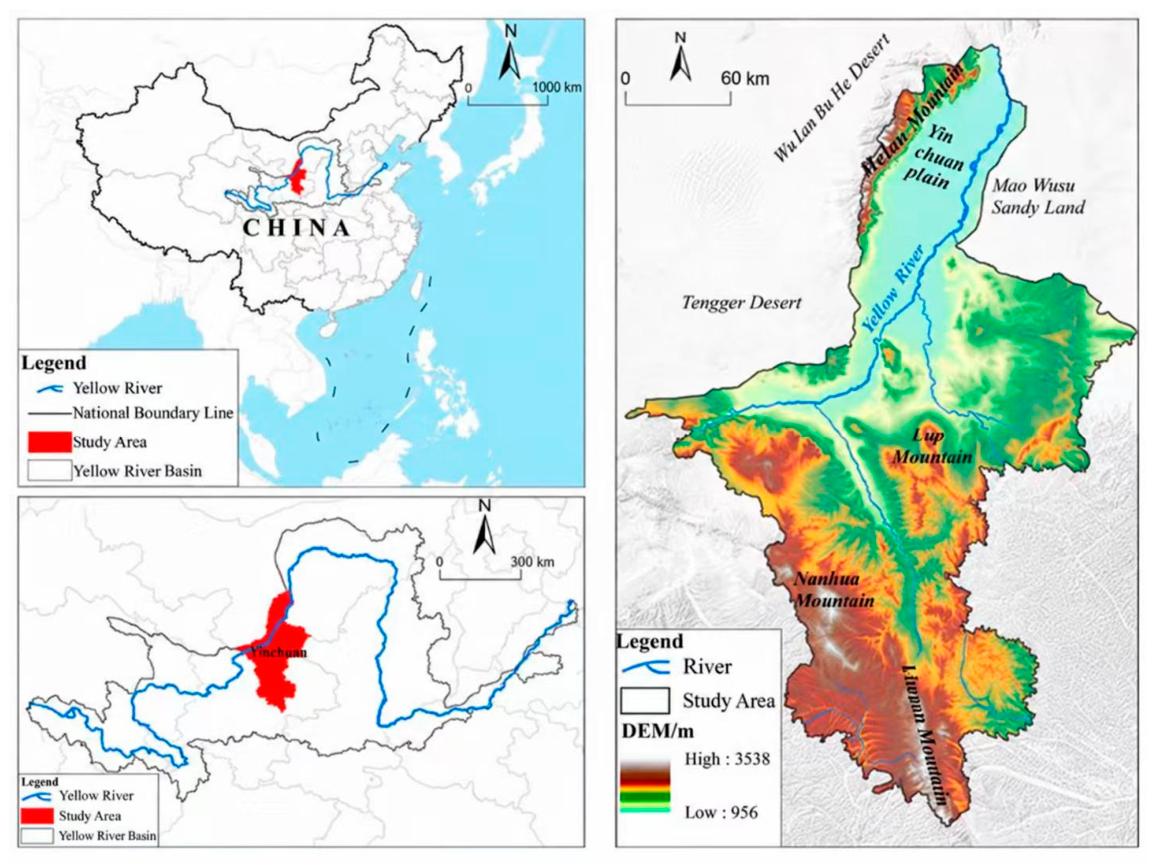
5.1.1. Wheat Water-Use Efficiency and Water Productivity in Ningxia
Water-Saving Irrigation Practices in China
A recent meta-analysis across China’s wheat regions (including semi-arid northwest areas such as Ningxia) quantified the effects of water-saving irrigation (WSI) [64]. Drip irrigation and micro-sprinkler irrigation significantly reduced irrigation water input (by 35%) without reducing yields. These systems increased water-use efficiency (WUE) by approximately 18.7% for drip and 10.1% for micro-sprinkler methods across studies. Moderately reduced irrigation (60–100% of full irrigation) optimized WUE while maintaining stable yields [64,101]. Comparative water management and water-use efficiency in wheat production systems of Egypt and Ningxia are shown in Table 3.
Table 3.
Comparative water management and water-use efficiency in wheat production systems of Egypt and Ningxia.
Water Stress and WUE
Water stress is a major constraint on wheat production in arid and semi-arid environments. Its effects on grain yield and water-use efficiency (WUE) depend on the intensity and timing of water deficits, cultivar characteristics, and irrigation management. Evidence from the Loess Plateau indicates that irrigated wheat yields were approximately 22% higher than rainfed yields, while WUE responded to water stress and management practices [102]. However, this yield difference reflects the specific conditions of the original study and should not be directly extrapolated to Ningxia without considering differences in climate, soil properties, and production systems.
Ningxia-specific studies provide more direct evidence of the relationship between irrigation management, yield, and water productivity. A two-year field experiment in the Ningxia Yellow River irrigation area found that combining a 20% reduction in irrigation water with a 25% reduction in nitrogen application increased spring-wheat WUE by approximately 21.8% and 31.19% relative to conventional irrigation and nitrogen management in 2021 and 2022, respectively. The treatment also reduced crop water consumption while maintaining or improving yield, although the magnitude of the response varied between years [103]. These findings suggest that coordinated water and nitrogen management may improve water productivity under local conditions, rather than relying on irrigation reduction alone.
Additional evidence from Ningxia shows that irrigation amount affects spring-wheat photosynthetic characteristics, transpiration, WUE, and yield components, with responses varying among cultivars and irrigation treatments [104]. Research on drip-irrigated spring wheat in the Ningxia Yellow River irrigation area has also demonstrated that water allocation can influence dry-matter translocation and grain-filling characteristics, indicating that the timing and distribution of irrigation may be as important as the seasonal irrigation total [105]. Moreover, a recent assessment using the AquaCrop model and XGBoost-SHAP analysis identified May and June as critical irrigation months for spring wheat in the Ningxia Irrigation District, with yield responses to irrigation deficits showing a nonlinear pattern [106]. Because this last study combines crop modeling with historical meteorological and yield data, its results are useful for regional planning but should be interpreted alongside field-based validation.
WUE depends on both grain yield and actual evapotranspiration, and therefore must be interpreted alongside the method used to calculate it. Grain yield per unit of seasonal evapotranspiration is not equivalent to grain yield per unit of irrigation water applied. A reduction in irrigation may increase irrigation-water productivity while decreasing total yield; consequently, WUE alone is insufficient to establish whether a management practice improves overall productivity. Comparisons should report grain yield, irrigation amount, actual evapotranspiration where available, and the precise WUE metric.
Overall, the Loess Plateau studies provide useful evidence on general relationships between water stress, yield, and WUE, but differences in rainfall regimes, soil conditions, wheat growth habits, and water-supply systems limit direct transferability to Ningxia. Local studies of irrigated spring wheat provide a stronger basis for evaluating irrigation scheduling and water-saving practices in the Yellow River irrigation area. Further multi-year field experiments are needed to establish the reliability of these practices across cultivars, soil conditions, and contrasting seasonal water availability.
5.1.2. Wheat Variety Evaluation in Ningxia (China)
Genetic Diversity and Breeding
- A major study assessed the genetic composition of 121 local Ningxia wheat cultivars and 86 introduced lines, revealing significant differences in genes controlling yield, quality, adaptation, and stress resistance.
- ○
- Modern Ningxia cultivars often carry dwarfing alleles (Rht-B1b and Rht-D1b) and yield-related favorable alleles such as Hap-1 at GW2-6B, which help increase grain weight and adaptation.
- ○
- Introduced varieties have provided important genetic diversity and have been essential in broadening the local breeding base.
- ○
- Traditional landraces differ significantly from modern cultivars in both genetic diversity and adaptation traits [72,103].
Agronomic Trait Diversity
- A 2025 study analyzing 63 spring wheat varieties (lines) approved in Ningxia (1979–2020) [104]. found improvement trends including earlier maturity, reduced plant height, increased grains per spike, higher main grain weight, and improved harvest index in varieties released after 2015. However, many modern varieties had a relatively narrow genetic base compared with older lines, and only recent lines showed noticeable yield trait improvements. Some modern and introduced lines carry favorable alleles (e.g., Rht B1b, Rht D1b, and Hap 1 at GW2 6B) associated with yield and grain size, indicating potential impacts on yield performance [103]. Chinese data focus more on genetic and agronomic trait diversity than on field yield trials of named commercial varieties.
However, agronomic trait improvements (e.g., grain weight, harvest index) are tied to yield potential in newer lines. Genetic differences at yield-related genes among Ningxia lines and introduced germplasm suggest breeding efforts affect yield traits.
5.1.3. Climate Change Impacts: Temperature and Drought Trends on Wheat in Ningxia
- Long-term climate projections for Ningxia Province show rising temperatures under future climate scenarios (e.g., SSP1-2.6, SSP2-4.5, and SSP5-8.5), with increases of about 0.037–0.45 °C per decade depending on emissions pathways. Higher temperatures can stress wheat crops and increase heat and water demand [105,106].
- Average annual precipitation is projected to increase modestly, but the combination of higher temperatures, dry–hot winds, and increased drought risk during the wheat-growing season suggests wheat growth will be more vulnerable to water stress in many future scenarios [100,106].
- Dry–hot wind events, which can accelerate evapotranspiration and soil moisture loss, are expected to become more frequent and intense, further increasing wheat drought risk and meteorological disasters linked to drought and heat stress [18,106]. Effective irrigation is projected to be increasingly necessary to mitigate the negative impacts of drought and hot winds on wheat yields in arid and semi-arid parts of Ningxia [98].
- Drought frequency and intensity during critical stages of wheat development (e.g., germination, heading) are likely to increase, posing risks to overall wheat yield stability unless effective adaptation measures (such as irrigation scheduling, drought-tolerant varieties, and improved water management) are applied [38,106].
5.1.4. Wheat Varieties and Genetic Improvement in Ningxia (China)
Historical Breeding and Variety Development
- Wheat breeding in Ningxia started in the 1950s–1960s, initially using local landraces and imported varieties.
- Modern cultivars incorporate introduced germplasm from Northern China and international sources, aimed at improving yield, stress tolerance, and quality traits (Table 4).
- Significant breeding achievements include semi-dwarf varieties using Rht-B1b and Rht-D1b dwarfing genes, which increase harvest index and reduce lodging risk [72,103].
Table 4.
Comparison of wheat variety evaluation and stress-tolerance traits in Ningxia and Egypt.
Genetic Improvement for Yield
- Recent breeding efforts have focused on:
- ○
- Increased grain number per spike;
- ○
- Improved 1000-grain weight;
- ○
- Early maturity and plant height reduction;
- ○
- Harvest index improvement.
- Genetic analysis of Ningxia wheat shows the use of favorable alleles such as GW2-6B (grain width) and Ppd-D1 (photoperiod sensitivity) for yield enhancement.
- Modern varieties released after 2015 show higher yield potential compared to older cultivars, although genetic diversity among modern lines is relatively narrow [103,107]. The comparison of wheat variety evaluation and stress-tolerance traits in Ningxia and Egypt is shown in Table 4.
Stress Adaptation
- Breeding focuses on drought and heat stress tolerance, critical in the semi-arid Ningxia region.
Traits such as a deep root system, osmotic adjustment, and early maturation are targeted for adaptation [38,106].
5.2. Egypt (Nile Valley and Delta)
Egypt is a transcontinental nation in northeastern Africa that stretches into southwest Asia via the Sinai Peninsula. Its official name is the Arab Republic of Egypt (ARE). Geographically, it spans an area of around one million square kilometers and is located between latitudes 22–32° N and longitudes 24–37° E. Its borders are Sudan to the south, Libya to the west, the Mediterranean Sea to the north, and the Red Sea and Palestine to the east [46,47]. Administratively, Egypt was divided into 19 governorates (Figure 3).
Figure 3.
Governorates of the Egyptian Nile region. Source: Authors’ map prepared using governorate-level administrative boundary data provided by CAPMAS and accessed through ArcGIS Online (Esri, version 2026.2) [108].
Egypt’s regional importance in Africa, the Middle East, and the Mediterranean is influenced by its strategic location. With an average annual rainfall of 60 to 190 mm along the Mediterranean coast, 25 to 60 mm in the Nile Delta, and less than 25 mm in Upper Egypt and its surrounding regions, Egypt has a dry climate. It is situated in North Africa and includes semi-desert, desert, and temperate grassland biomes [108]. Egypt experiences hot, dry summers and moderate winters due to its arid desert climate. Winter rainfall is sparse, erratic, and mostly limited to the northern coastal regions; yearly precipitation seldom exceeds 200 mm. Large desert plateaus make up the majority of Egypt’s topography, with the Nile Valley and Delta, which make up about 4% of the country’s total land area, serving as the main areas for agriculture and human habitation [47].
Egypt’s water resources are limited and depend mostly on the Nile River; they are augmented by non-renewable and renewable groundwater, infrequent rainfall, and flash floods in the Sinai. Egypt is becoming increasingly dependent on non-conventional water sources as a result of growing water scarcity. These include desalinated brackish water, treated wastewater (about 0.7 BCM/year), and agricultural drainage water (about 5 BCM/year). An estimated 7 BCM of groundwater is abstracted each year. These limitations demonstrate how crucial effective water management techniques are to maintaining agricultural output and ecological balance in Egypt’s mostly desert environment [89]. Traditional and non-traditional irrigation systems are the two main types. The main difference between these two forms is whether the soil surface is used as a water conveyor from the point of entry into the field to the site of application. In traditional irrigation methods, the soil is used in this way. The modern or non-traditional methods use other water conveyance systems, such as pipes and emitters in a drip irrigation system, or pipes and sprinklers in a sprinkler irrigation system. Conventional methods include strip irrigation, basin irrigation, border irrigation, and furrow irrigation [109]. One of the world’s oldest irrigation-based agricultural systems is found in Egypt. Wheat production is concentrated in:
- Nile Delta;
- Irrigated lands in Middle and Upper Egypt.
Key characteristics include:
- Hyper-arid climate;
- Annual rainfall: <100 mm in most regions;
- Dependence on the Nile River as the sole renewable water source;
- Intensive irrigated agriculture.
Egypt’s wheat is extremely susceptible to climate fluctuations, especially rising temperatures and water scarcity, which have a major impact on yield stability [90,110].
5.2.1. Wheat Water-Use Efficiency and Water Productivity in Egypt
Water Productivity and Irrigation Management
A recent modeling study using the DSSAT CERES-Wheat model evaluated irrigation effects on wheat yield and water productivity under water scarcity in Egypt. Results showed that frequent irrigation (50% depletion) increased yield by up to 22% compared to less frequent irrigation (90% depletion). On the other hand, reduced irrigation increased water productivity (WP), with some cultivars achieving 15–20% higher water productivity under water-limited conditions [91]. Strategic irrigation can balance yield and conservation in arid Egyptian climates [111]. Research at Fayoum University assessed five bread wheat cultivars over two seasons under water-stress conditions (drought index evaluation). Different water stress treatments significantly influenced yield performance among cultivars, indicating varietal differences in drought tolerance and adaptability [112].
Irrigation Methods and Productivity
- Experiments in Upper Egypt comparing irrigation techniques (traditional, surge furrow, and alternate furrow) found that improved methods:
- ○
- Increased grain yield and water productivity under deficit-irrigation scheduling (e.g., after 50% depletion of available soil water).
- ○
- Surge furrow irrigation produced the highest yields and associated productivity improvements in wheat [113].
- ○
- Field studies under drip irrigation in North Sinai report improvements in the water use performance of wheat (Sakha 8, Giza 7, Giza 69), suggesting that effective irrigation systems can enhance WUE compared to less efficient systems [114].
5.2.2. Wheat Varieties Evaluation in Egypt
Genetic Diversity and Breeding
A study on Egyptian wheat cultivars (e.g., Misr-1, Sohag-5, Gemmeiza-12, and Giza-171) identified genetic diversity and disease resistance; for example, Gemmeiza-12 was found to possess strong resistance against certain fungal pathogens, suggesting value for breeding [93,115].
A newly released cultivar, Sakha 96, has been evaluated for early maturity, high grain yield, and resistance to wheat rust diseases across multi-year yield trials [116,117].
Agronomic Trait Diversity
Evaluation of 16 bread wheat varieties across locations in Middle and Upper Egypt (e.g., Sids and El-Minya) showed differences in yield and stress tolerance. Stress tolerance indices were calculated using yields under favorable vs. stress environments, highlighting performance variation among varieties [118].
- Ibrahim evaluated eight bread wheat cultivars (e.g., Gemmeiza 7–10, Sakha 92–94, Giza 164, and Giza 168), with Gemmeiza 10 showing the highest grain yield per hectare and superior yield components, including tiller number and grains per spike. Other cultivars differed in yield-related traits, with Gemmeiza 7 showing superior biological yield and quality traits [119].
- Naif and Abdelghany evaluated four Egyptian wheat cultivars (Gemmeiza 11, Giza 168, Sids 12, and Bani Sweif 5) across two growing seasons and reported significant genotypic differences in several agronomic and yield-related traits, including number of spikes, grains per spike, grain yield, and harvest index [120].
- Ghallab et al. evaluated five bread wheat cultivars (e.g., Sakha 95, Misr 3, and Sids 14) under drought stress (skipping irrigation). Sakha 95 and Misr 3 exhibited better drought tolerance indices (higher stress tolerance and yield index), with grain yield reduced by up to 43% under severe stress [112].
- Elhag investigated 10 Egyptian wheat cultivars (e.g., Sakha 95, Sids 14, Gemmeiza 9, Shandawel 1) under saline soil conditions. Sakha 95 and Sids 14 had a high 1000-grain weight and good grain yield. Several other varieties showed high salinity tolerance [121].
- Multiple local trials have compared commercial and newly bred cultivars under normal and stress conditions (water or salinity) [87,96].
- Some Egyptian cultivars, such as Gemmeiza 10 and Sakha 96, have repeatedly shown high yield performance in multi-location evaluations [93,122].
Comparison of wheat breeding programs, genetic targets, and stress adaptation in Ningxia and Egypt is shown in Table 5.
Table 5.
Comparative analysis of wheat breeding strategies, genetic improvement, and stress adaptation in Ningxia (China) and Egypt.
5.2.3. Climate Change Impacts, Temperature and Seasonal Effects
- Sakha 96, a new cultivar evaluated across multiple seasons and locations (2017–2023), shows superior early maturity and reasonable grain yield, especially with late planting, compared with other commercial cultivars [123].
- Climate analysis of Egyptian wheat production (2000–2021) shows that higher spring and winter temperatures negatively affect wheat output. For example, a 1 °C increase in average spring or winter temperature is correlated with a reduction in wheat production, indicating sensitivity to warming trends [124]. Egypt’s arid climate and reliance on Nile irrigation make wheat especially vulnerable to shifts in temperature, precipitation variability, and water availability due to climate change [47,89]. Other research also indicates that increases in maximum and minimum winter temperatures (e.g., by 1 °C) are associated with a decline in wheat productivity per unit area. Humidity changes also affect wheat yields. This highlights the sensitivity of wheat productivity to changes in key climatic factors, including temperature and moisture [90,110].
- Wheat growers in the Nile Delta already report vulnerability to hydro-climatic fluctuations such as drought, extreme rainfall, and saltwater intrusion—events likely to be exacerbated under climate change. This affects production and farmers’ economic outcomes [36,47]. Comparative agronomic features of wheat production in Ningxia and Egypt are shown in Table 6.
Table 6.
Comparative agronomic features of wheat production in Ningxia and Egypt.
5.2.4. Wheat Varieties and Genetic Improvement in Egypt
Traditional and Modern Varieties
- Egyptian wheat production historically relied on landraces and early released varieties such as Sakha 8, Giza 164, and Gemmeiza 9.
- Modern cultivars are bred for high yield, early maturity, and disease resistance (e.g., Sakha 96, Giza 171, Gemmeiza 12) [93,122].
Yield and Stress Traits
- Breeding programs focus on drought and salinity tolerance, critical for Egypt’s arid and irrigated wheat areas.
- Improved traits in modern varieties include:
- ○
- Early flowering to escape heat stress;
- ○
- Increased tiller number and grains per spike;
- ○
- Higher 1000-grain weight;
- ○
- Resistance to wheat rusts (Puccinia spp.) and other pathogens [116,125].
Genetic Improvement Approaches
- Hybridization among high-yielding local and introduced varieties is widely used.
- Marker-assisted selection (MAS) is increasingly applied for:
- ○
- Rht genes (semi-dwarfism);
- ○
- Disease-resistance genes (e.g., Lr, Sr, Yr).
- Multi-location field trials evaluate yield stability, stress tolerance, and quality traits before cultivar release [93,100].
6. Comparative Analysis of Quality Traits Between Egyptian Wheat Cultivars and Wheat Cultivars Grown in Ningxia, China
Wheat quality traits play a crucial role in determining the nutritional, technological, and industrial value of wheat products. These traits are influenced by genotype, environmental conditions, agronomic practices, and climatic factors. Egyptian wheat cultivars are primarily bred for heat tolerance, adaptability to arid environments, and bread-making quality, whereas wheat cultivars grown in Ningxia Province, China, are strongly selected for drought tolerance, grain hardness, processing quality, and water-use efficiency. This comparative review analyzes major quality characteristics, including grain protein content, gluten strength, grain hardness, sedimentation value, rheological behavior, and industrial suitability of wheat cultivars from both regions. The analysis highlights significant differences in breeding priorities and environmental adaptation, while identifying opportunities for genetic exchange and collaborative breeding strategies. A comparative evaluation of quality traits is shown in Table 7.
Table 7.
Evidence-based comparison of wheat quality traits and stress adaptation in Egyptian and Ningxia wheat cultivars.
The evaluation criteria and indicators used to compare grain quality and stress adaptation are summarized in Table 8.
Table 8.
Comparative evaluation criteria for wheat grain quality and stress adaptation in Egyptian and Ningxia wheat cultivars.
6.1. Wheat Quality Traits in Egyptian Cultivars
Egyptian wheat cultivars have shown considerable improvements in grain quality during the last two decades due to national breeding programs.
Among the most important Egyptian cultivars are:
- Misr 1;
- Misr 3;
- Sakha 95;
- Gemmeiza 11;
- Sohag 5.
Recent studies demonstrated that Egyptian cultivars possess favorable bread-making characteristics, particularly in terms of grain protein content, wet gluten percentage, dough stability, and sedimentation value. Mansour et al. [126] reported that Egyptian cultivars maintained relatively stable grain quality under water deficit conditions, especially cultivars possessing superior drought tolerance mechanisms.
Additionally, recent molecular investigations showed that cultivars such as Misr 1 and Sohag 5 contain high concentrations of essential minerals, including zinc and magnesium, alongside elevated protein content and gluten quality. Environmental conditions in Egypt, especially high temperatures during grain filling, may increase grain protein concentration but can negatively influence grain weight and gluten stability.
a. Environmental Influence on Wheat Quality in Egypt
High temperatures during grain filling accelerate physiological maturity and may:
- Reduce grain size;
- Increase protein concentration;
- Affect gluten elasticity.
Water deficit conditions may also alter starch accumulation and rheological properties.
b. Genetic and Molecular Basis of Quality Traits
In Egypt, molecular breeding approaches such as SCoT markers, SDS-PAGE analysis, and marker-assisted selection have been increasingly used to improve wheat quality and stress tolerance simultaneously.
c. Industrial and Nutritional Implications (Egyptian Wheat Cultivars)
Egyptian cultivars are highly suitable for:
- Traditional flatbread;
- Baladi bread production;
- Bakery products requiring moderate gluten strength.
6.2. Wheat Quality Traits in Ningxia Wheat Cultivars
Wheat cultivars grown in Ningxia Province are characterized by strong adaptation to drought stress, low precipitation, temperature fluctuations and irrigation-limited conditions. Chinese breeding programs have heavily focused on grain hardness, gluten strength, processing quality and water-use efficiency. Studies conducted in Ningxia revealed that modern cultivars possess favorable alleles associated with higher protein content, strong gluten properties, improved sedimentation value, and better bread and noodle-making quality. Genome-wide association studies (GWAS) in Chinese wheat have identified several quantitative trait loci (QTLs) associated with protein accumulation, gluten composition, grain hardness and flour processing quality [103]. Widespread distribution of elite quality-related alleles has been reported in Ningxia wheat germplasm, particularly genes associated with semi-dwarfism, grain weight, and gluten performance.
a. Environmental Influence on Wheat Quality in Ningxia
The semi-arid climate of Ningxia, combined with cooler grain-filling periods compared with Egypt, contributes to more stable protein synthesis, improved gluten quality and better flour characteristics. Irrigation management in Ningxia also plays a critical role in stabilizing grain quality under drought conditions.
b. Genetic and Molecular Basis of Quality Traits
Modern Chinese breeding programs have identified several genes associated with grain quality, including Rht-B1b, Rht-D1b, GW2-6B and Sus2-2B. These genes contribute to improved grain filling, increased grain hardness, and enhanced processing quality.
c. Industrial and Nutritional Implications (Ningxia Wheat Cultivars)
Ningxia cultivars are particularly suitable for:
- Industrial bread-making;
- Noodles;
- High-quality flour production;
- Strong-gluten-based food industries.
7. Future Perspectives
The comparison between wheat production systems in Ningxia, China, and Egypt indicates that future research should move beyond general recommendations and focus on testing complementary breeding and management strategies under the distinct environmental and production conditions of the two regions. In Egypt, where wheat production depends heavily on irrigation and crops may encounter high temperatures during reproductive development and grain filling, breeding and agronomic research should prioritize yield stability under terminal heat stress, appropriate maturity, maintenance of grain weight, and performance under restricted irrigation and salinity. In Ningxia, where limited precipitation, seasonal variation in water availability, and local temperature conditions constrain production, research should emphasize water productivity, adaptation to the local growing season, and the maintenance of yield and grain quality under water-limited conditions. These priorities should guide the selection of complementary parental materials rather than imply that the same cultivar ideotype is suitable for both regions.
A first research priority is the reciprocal evaluation of Egyptian and Ningxia wheat germplasm. Selected Egyptian cultivars and breeding lines should be tested in Ningxia to identify material with useful yield stability, water productivity, and adaptation to local growing conditions. Conversely, selected Ningxia germplasm should be evaluated in Egyptian environments for reproductive-stage heat tolerance, grain-filling stability, and performance under irrigation and salinity constraints. Initial trials should identify promising parental lines and useful traits rather than assume that cultivars can be transferred directly between regions. Multi-environment experiments should compare genotypes under clearly defined irrigation regimes and, where feasible, controlled or well-characterized heat and salinity conditions. Measurements should include grain yield, flowering and maturity dates, grain number, thousand-grain weight, harvest index, grain-quality traits, and water productivity. Statistical analysis of genotype-by-environment interactions would help distinguish broadly adapted material from genotypes suited to specific environments.
A second priority is to integrate conventional breeding with molecular characterization and genomic tools in ways that reflect the genetic and environmental complexity of the target traits. Marker-assisted selection can be used for validated major genes, including relevant disease-resistance and plant-height loci, whereas genomic selection may be more appropriate for complex traits such as drought adaptation, heat tolerance, yield stability, and grain quality when adequate training populations and multi-environment phenotypic data are available. Candidate genes and quantitative trait loci reported in Chinese wheat germplasm should be validated in Egyptian and Ningxia genetic backgrounds before being used in breeding decisions. The same principle applies to alleles identified in Egyptian material. Selection should also assess potential trade-offs among yield, maturity, stress adaptation, and grain quality, since the contribution of an individual allele may depend on genetic background and growing conditions.
A third priority is to evaluate grain quality alongside agronomic performance. Egyptian wheat improvement should maintain the processing characteristics required for local bread products, including baladi bread, while investigating whether selected Ningxia germplasm can contribute useful variation in grain hardness, gluten functionality, or other relevant quality traits. In Ningxia, Egyptian germplasm should be evaluated against local end-use requirements rather than assuming that its suitability for Egyptian bread-making necessarily translates into suitability for noodles or other products. Comparisons should use standardized analytical and processing methods and account for environmental and management effects on protein concentration, gluten properties, sedimentation value, and flour performance. This would enable breeding programs to identify material that combines stress adaptation and yield stability with quality characteristics appropriate to the intended market.
A fourth priority is to test the transferability of water-management practices between the two systems. Egyptian irrigation research could inform the evaluation of irrigation scheduling and deficit-irrigation strategies in Ningxia, while Ningxia’s experience with water-saving irrigation and the assessment of water productivity could help guide trials in Egyptian wheat-producing areas. Such exchanges should be treated as hypotheses for field testing, not as universally applicable recommendations. Trials should quantify grain yield, water applied, crop water use where measurable, water productivity, energy requirements, and economic returns. Soil salinity, irrigation-water quality, drainage, and the availability of irrigation infrastructure should be considered when interpreting results. This approach would clarify which practices are transferable, which require adaptation, and which are limited by local conditions.
Finally, comparative research should connect agronomic and breeding outcomes with practical implementation. Collaborative field trials, participatory evaluation with farmers, and economic assessments could determine whether promising cultivars and irrigation practices provide benefits under commercial production conditions. Harmonized indicators for yield stability, water productivity, grain quality, input costs, and soil-related constraints would make results from Egypt and Ningxia more directly comparable. A coordinated research framework involving germplasm characterization, multi-location testing, standardized quality assessment, and economic evaluation would therefore provide a practical basis for reciprocal wheat improvement while preserving the region-specific requirements of each production system.
8. Conclusions and Future Research Directions
This review compared climate-resilient wheat production systems in Ningxia, China, and Egypt, highlighting the shared challenges of water scarcity, climate variability, and increasing pressure on agricultural resources, as well as differences in irrigation infrastructure, production systems, institutional capacities, and agricultural modernization. Although both regions depend heavily on irrigation, their experiences demonstrate that climate adaptation requires context-specific strategies that integrate crop improvement, efficient water management, sustainable soil management, and supportive agricultural policies.
The experience of Ningxia highlights the potential benefits of long-term regional wheat breeding programs, systematic germplasm evaluation, improved cultivars, and the gradual adoption of water-saving irrigation technologies. These approaches are particularly relevant to regions experiencing drought, salinity, alkalinity, and substantial seasonal variations in water availability. In contrast, Egypt’s experience emphasizes the importance of improving water productivity under conditions of limited water availability, increasing domestic wheat production, optimizing agronomic practices, and strengthening food security through more efficient use of existing agricultural land and water resources. Nevertheless, the effectiveness of these approaches depends on local environmental conditions, infrastructure, production costs, and farmers’ capacity to adopt new technologies.
Several research priorities emerge from this comparison. First, future breeding programs should prioritize wheat genotypes that combine high yield potential with tolerance to multiple stresses, particularly heat, drought, salinity, and soil alkalinity. Integrating conventional breeding with genomic selection, molecular characterization, and multi-environment field evaluation could accelerate the identification of stable, locally adapted cultivars. Greater attention should also be given to maintaining genetic diversity and improving grain quality alongside yield and stress tolerance.
Second, research should focus on improving irrigation efficiency and crop water productivity through optimized irrigation scheduling, regulated deficit irrigation where appropriate, precision irrigation, and the integration of soil-moisture sensors, weather information, and remote sensing. Future studies should evaluate these technologies under realistic field conditions, considering not only yield responses but also water savings, energy consumption, investment costs, and long-term environmental effects. In water-limited regions, irrigation strategies should be assessed within the broader context of basin-level water availability and competing demands among agricultural, domestic, industrial, and ecological uses.
Third, integrated soil management requires greater research attention. Salinity and alkalinity management, improved drainage, balanced fertilization, organic amendments, conservation agriculture, and crop rotation should be evaluated in combination rather than as isolated interventions. Long-term experiments are particularly important for determining their effects on soil health, nutrient-use efficiency, greenhouse gas emissions, and the sustainability of wheat production.
Fourth, digital and climate-smart agriculture offers opportunities to improve decision-making under increasingly variable climatic conditions. Future research should investigate the practical integration of crop simulation models, seasonal climate forecasts, remote sensing, artificial intelligence, and digital decision-support systems. Such tools should be validated across contrasting agroecological environments and designed to remain accessible to smallholder farmers and agricultural extension services.
Fifth, further comparative research should examine the socioeconomic and institutional conditions that determine whether successful technologies can be transferred between regions. Priorities include participatory on-farm trials, economic assessments, farmer adoption studies, improved seed systems, extension services, and policy mechanisms that support investment in water-saving technologies. Research should also evaluate the distribution of costs and benefits among farmers with different landholding sizes and resource capacities.
Based on the experiences of Ningxia and Egypt, several strategic options may be relevant to other arid and semi-arid countries facing climate change. These include developing locally adapted, climate-resilient crop varieties; improving irrigation scheduling and water allocation; strengthening soil conservation and salinity management; expanding access to reliable climate information; improving seed production and distribution systems; and aligning agricultural research with national water and food security priorities. Countries with well-developed irrigation infrastructure may benefit from precision management and modernization, whereas regions with limited infrastructure may need to prioritize affordable, scalable interventions and improvements in water governance. In both situations, technology transfer should be accompanied by farmer training, institutional coordination, economic evaluation, and continuous monitoring of environmental outcomes.
Future studies should also adopt harmonized indicators to compare yield stability, water productivity, energy use, profitability, soil health, and climate resilience across regions. Long-term, multi-location experiments and interdisciplinary assessments would help distinguish technologies that perform well under specific local conditions from those that can be adapted more widely.
In conclusion, sustainable wheat production under climate change cannot be achieved through yield improvement alone. It requires an integrated approach that combines genetic improvement, efficient water use, sustainable soil management, digital innovation, and supportive institutions. The comparative experiences of Ningxia and Egypt provide a useful foundation for developing locally adapted strategies that strengthen agricultural resilience, improve resource-use efficiency, and contribute to long-term food security in arid and semi-arid regions.
Author Contributions
D.M.S.: Conceptualization, supervision, manuscript review, writing—original draft preparation and editing. D.C.: Literature collection, critical review of the literature, figure preparation, editing, and proofreading. W.Z.: Literature review, manuscript drafting, writing—original draft preparation, and visualization. Y.D. Literature review, methodology, formal analysis, validation. H.X.: Visualization, writing—review and editing. T.Y.: Critical review of the literature, figure preparation, editing, and proofreading. All authors have read and agreed to the published version of the manuscript.
Funding
The research was funded by the Key Research and Development project of Ningxia Hui Autonomous Region (2025BBF01010), National Key Research and Development Program of China (2022YFD1200900).
Institutional Review Board Statement
Not applicable.
Informed Consent Statement
Not applicable.
Data Availability Statement
Data sharing is not applicable. No new data were created or analyzed in this study.
Conflicts of Interest
The authors declare no conflicts of interest.
References
- Food and Agriculture Organization (FAO). The State of Food Security and Nutrition in the World 2024; Financing to End Hunger, Food Insecurity and Malnutrition in All Its Forms; FAO; IFAD; UNICEF; WFP; WHO: Rome, Italy, 2024; Available online: https://www.fao.org/publications/sofi (accessed on 24 September 2026).
- Dhillon, J.S.; Eickhoff, E.M.; Mullen, R.W.; Raun, W.R. World potassium use efficiency in cereal crops. Agron. J. 2019, 111, 889–896. [Google Scholar] [CrossRef] [Scilit]
- Riaz, M.W.; Yang, L.; Yousaf, M.I.; Sami, A.; Mei, X.D.; Shah, L.; Rehman, S.; Xue, L.; Si, H.; Ma, C. Effects of heat stress on growth, physiology of plants, yield and grain quality of different spring wheat (Triticum aestivum L.) genotypes. Sustainability 2021, 13, 2972. [Google Scholar] [CrossRef] [Scilit]
- Martre, P.; Wallach, D.; Asseng, S.; Ewert, F.; Jones, J.W.; Rötter, R.P.; Boote, K.J.; Ruane, A.C.; Thorburn, P.J.; Cammarano, D. Multimodel ensembles of wheat growth: Many models are better than one. Glob. Change Biol. 2015, 21, 911–925. [Google Scholar] [CrossRef] [Scilit] [PubMed]
- Khaled, A.A.; Hassan, M.I.; Abdelrahman, H.A.; El-Sayed, S.M. Chemical composition and nutritional quality of wheat grains under different environmental conditions. Foods 2023, 12, 1845. [Google Scholar] [CrossRef] [Scilit] [PubMed]
- Shewry, P.R.; Hey, S.J. The contribution of wheat to human diet and health. Food Energy Secur. 2015, 4, 178–202. [Google Scholar] [CrossRef] [Scilit] [PubMed]
- Brouns, F.; van Buul, V.J.; Shewry, P.R. Does wheat make us fat and sick? J. Cereal Sci. 2013, 58, 209–215. [Google Scholar] [CrossRef] [Scilit]
- Wieser, H.; Koehler, P.; Scherf, K.A. The two faces of wheat. Front. Nutr. 2020, 7, 517313. [Google Scholar] [CrossRef] [Scilit] [PubMed]
- U.S. Department of Agriculture (USDA); Agricultural Research Service. Food Data Central: Foundation Foods; Version Current: April 2024; U.S. Department of Agriculture: Beltsville, MD, USA, 2024. Available online: https://fdc.nal.usda.gov/ (accessed on 24 September 2026).
- Haudry, A.; Cenci, A.; Ravel, C.; Bataillon, T.; Brunel, D.; Poncet, C.; Hochu, I.; Poirier, S.; Santoni, S.; Glémin, S.; et al. Grinding up wheat: A massive loss of nucleotide diversity since domestication. Mol. Biol. Evol. 2007, 24, 1506–1517. [Google Scholar] [CrossRef] [Scilit] [PubMed]
- Wrigley, C. Wheat: A unique grain for the world. In Wheat: Chemistry and Technology; Khan, K., Shewry, P.R., Eds.; American Association of Cereal Chemists: St. Paul, MN, USA, 2009; pp. 1–17. [Google Scholar]
- Gooding, M.; Khan, K.; Shewry, P. The wheat crop. In Wheat: Chemistry and Technology, 4th ed.; Khan, K., Shewry, P.R., Eds.; Elsevier: Amsterdam, The Netherlands, 2009; pp. 19–49. [Google Scholar]
- Edwards, M.A. Morphological Features of Wheat Grain and Genotype Affecting Flour Yield. Ph.D. Thesis, Southern Cross University, Lismore, NSW, Australia, 2010. [Google Scholar]
- Katyal, M.; Singh, N.; Virdi, A.S.; Kaur, A.; Chopra, N.; Ahlawat, A.K. Extraordinarily soft, medium-hard and hard Indian wheat varieties: Composition, protein profile, dough and baking properties. Food Res. Int. 2017, 100, 306–317. [Google Scholar] [CrossRef] [Scilit] [PubMed]
- Li, Y.; Fu, J.; Shen, Q.; Yang, D. High-molecular-weight glutenin subunits: Genetics, structures, and relation to end-use qualities. Int. J. Mol. Sci. 2021, 22, 184. [Google Scholar] [CrossRef] [Scilit] [PubMed]
- Zhou, H.; Wei, Y.; Wang, X. Structure and Quantitative-Structure-Function Relationships of Wheat High-Molecular-Weight Glutenin Subunits: From Allelic Polymorphism to Dough Rheology. Compr. Rev. Food Sci. Food Saf. 2026, 25, e70585. [Google Scholar] [CrossRef] [Scilit] [PubMed]
- Liu, E.; Yan, C.; Mei, X.; He, W.; Bing, S.H.; Ding, L.; Liu, Q.; Liu, S.; Fan, T. Long-term effect of chemical fertilizer, straw, and manure on soil chemical and biological properties in northwest China. Geoderma 2010, 158, 173–180. [Google Scholar] [CrossRef] [Scilit]
- Zhang, Y.; Zhang, Y.; He, Z.; Yan, J. Wheat glutenin polymers: The role of glutenin subunits in polymer formation and dough quality. J. Cereal Sci. 2022, 106, 103487. [Google Scholar] [CrossRef] [Scilit]
- Rasheed, A.; Xia, X.; Yan, Y.; Appels, R.; Mahmood, T.; He, Z. Wheat seed storage proteins: Advances in molecular genetics, diversity and breeding applications. J. Cereal Sci. 2014, 60, 11–24. [Google Scholar] [CrossRef] [Scilit]
- Milec, Z.; Strejčková, B.; Šafář, J. Contemplation on wheat vernalization. Front. Plant Sci. 2022, 13, 1093792. [Google Scholar] [CrossRef] [Scilit] [PubMed]
- Zhang, W.; Li, Y.; Wang, F.; Si, J.; Kong, L. Genetic composition and breeding evolution of wheat cultivars in Ningxia, China. Crop J. 2021, 9, 1124–1136. [Google Scholar] [CrossRef] [Scilit]
- Distelfeld, A.; Li, C.; Dubcovsky, J. Regulation of flowering in temperate cereals. Curr. Opin. Plant Biol. 2009, 12, 178–184. [Google Scholar] [CrossRef] [Scilit] [PubMed]
- Kamran, A.; Iqbal, M.; Spaner, D. Flowering time in wheat (Triticum aestivum L.): A key factor for global adaptability. Plants 2021, 10, 1371. [Google Scholar] [CrossRef] [Scilit] [PubMed]
- Food and Agriculture Organization (FAO). Food Outlook—Biannual Report on Global Food Markets; FAO: Rome, Italy, 2025; Available online: https://www.fao.org/giews/reports/food-outlook (accessed on 24 September 2026).
- Food and Agriculture Organization (FAO). FAOSTAT Statistical Database: Crops and Livestock Products (Wheat); FAO: Rome, Italy, 2025; Available online: https://www.fao.org/faostat/ (accessed on 6 May 2026).
- Liu, H.; Searle, I.R.; Mather, D.E.; Able, A.J.; Able, J.A. Morphological, physiological, and yield responses of durum wheat to drought stress during different growth stages. Agronomy 2020, 10, 1781. [Google Scholar] [CrossRef] [Scilit]
- Farooq, M.; Bramley, H.; Palta, J.A.; Siddique, K.H.M. Heat stress in wheat during reproductive and grain-filling phases. Crit. Rev. Plant Sci. 2011, 30, 491–507. [Google Scholar] [CrossRef] [Scilit]
- Al-Ahmadi, M.J.; Kafi, M. Germination, seedling growth and vigor of wheat affected by temperature and water availability. J. Plant Growth Regul. 2021, 40, 1023–1034. [Google Scholar] [CrossRef] [Scilit]
- Hussain, S.; Khan, F.; Cao, W.; Wu, L. Seed germination and early seedling growth of wheat under different temperature regimes. Agronomy 2022, 12, 895. [Google Scholar] [CrossRef] [Scilit]
- Iqbal, M.A.; Hamid, A.; Ahmad, T.; Siddiqui, M.H. Temperature stress and its impact on wheat germination and seedling establishment. Plants 2020, 9, 1372. [Google Scholar] [CrossRef] [Scilit] [PubMed]
- Food and Agriculture Organization (FAO). AQUASTAT Country Profile—Egypt; FAO: Rome, Italy, 2021; Available online: https://www.fao.org/aquastat (accessed on 24 September 2026).
- Hatfield, J.L.; Prueger, J.H. Temperature extremes: Effect on plant growth and development. Weather Clim. Extrem. 2015, 10, 4–10. [Google Scholar] [CrossRef] [Scilit]
- Tiwari, C.; Wallwork, H.; Dhungana, P.; Ackerman, P.; Gbegbelegbe, S. Heat stress during grain filling reduces starch accumulation and grain weight in wheat. Field Crops Res. 2023, 292, 108826. [Google Scholar] [CrossRef] [Scilit]
- Wang, E.; Martre, P.; Zhao, Z.; Ewert, F.; Maiorano, A.; Rötter, R.P.; Kimball, B.A.; Ottman, M.J.; Wall, G.W.; White, J.W.; et al. The uncertainty of crop yield projections is reduced by improved temperature response functions. Nat. Plants 2017, 3, 17102. [Google Scholar] [CrossRef] [Scilit] [PubMed]
- Zhang, X.; Chen, S.; Sun, H.; Pei, D.; Wang, Y. Dry matter, harvest index, grain yield and water use efficiency as affected by water supply in winter wheat. Irrig. Sci. 2008, 27, 1–10. [Google Scholar] [CrossRef] [Scilit]
- Food and Agriculture Organization of the United Nations (FAO). FAO Crop Water Information: Wheat; FAO: Rome, Italy, 2022; Available online: https://www.fao.org/land-water/databases-and-software/crop-information/wheat (accessed on 14 October 2026).
- Xue, Q.; Weiss, A.; Baenziger, P.S. Predicting wheat response to water stress using crop simulation models. Agric. Water Manag. 2020, 236, 106164. [Google Scholar] [CrossRef] [Scilit]
- Jägermeyr, J.; Müller, C.; Ruane, A.C.; Elliott, J.; Balkovic, J.; Castillo, O.; Faye, B.; Foster, I.; Folberth, C.; Franke, J.A.; et al. Climate impacts on global agriculture emerge earlier in new generation of climate and crop models. Nat. Food 2021, 2, 873–885. [Google Scholar] [CrossRef] [Scilit] [PubMed]
- Kang, S.Z.; Hao, X.M.; Du, T.S.; Tong, L.; Su, X.L.; Lu, H.N.; Li, X.L.; Huo, Z.L.; Li, S.E.; Ding, R.S. Improving agricultural water productivity to ensure food security in China under changing environment: From research to practice. Agric. Water Manag. 2017, 179, 5–17. [Google Scholar] [CrossRef] [Scilit]
- Reynolds, M.P.; Braun, H.J.; Cavalieri, A.J.; Chapotin, S.; Davies, W.J.; Ellul, P.; Feuillet, C.; Govaerts, B.; Kropff, M.J.; Lucas, H.; et al. Improving global integration of crop research. Science 2017, 357, 359–360. [Google Scholar] [CrossRef] [Scilit] [PubMed]
- Hobbs, P.R.; Sayre, K.; Gupta, R. The role of conservation agriculture in sustainable agriculture. Philos. Trans. R. Soc. B Biol. Sci. 2008, 363, 543–555. [Google Scholar] [CrossRef] [Scilit] [PubMed]
- High Level Panel of Experts on Food Security and Nutrition (HLPE). Food Security and Nutrition: Building a Global Narrative Towards 2030; Committee on World Food Security (CFS), Food and Agriculture Organization of the United Nations (FAO): Rome, Italy, 2020; Available online: https://www.fao.org/cfs/cfs-hlpe/publications/hlpe-15/en (accessed on 28 September 2026).
- McGill, J.; Sterk, B.; Talks, P.; Prikhodko, D. Egypt—Wheat Sector Review; FAO Investment Centre, Report No. 21; Food and Agriculture Organization of the United Nations: Rome, Italy, 2015. [Google Scholar]
- Tellioglu, I.; Konandreas, P. Agricultural Policies, Trade and Sustainable Development in Egypt; International Centre for Trade and Sustainable Development (ICTSD): Geneva, Switzerland, 2017. [Google Scholar] [CrossRef]
- United States Department of Agriculture (USDA); Foreign Agricultural Service (FAS). Egypt: Grain and Feed Annual; USDA; FAS: Washington, DC, USA, 2023.
- Food and Agriculture Organization of the United Nations (FAO). Food Loss and Waste Assessment in the Egyptian Wheat Value Chain; FAO: Rome, Italy, 2021. [Google Scholar]
- World Bank. Population Growth (Annual %)—Egypt; World Bank: Washington, DC, USA, 2023; Available online: https://data.worldbank.org/indicator/SP.POP.GROW?locations=EG (accessed on 28 September 2026).
- Omar, M.E.M.; Moussa, A.M.A. Water management in Egypt for facing the future challenges. J. Adv. Res. 2016, 7, 403–412. [Google Scholar] [CrossRef] [Scilit] [PubMed]
- Food and Agriculture Organization of the United Nations (FAO). Food Loss and Waste in Egypt: Wheat and Bread Value Chain; FAO: Rome, Italy, 2022. [Google Scholar]
- Thoraya, S.; Mohamed, R.; Fletscher, T.; Abouleish, H.; Abouleish-Boes, M. The Future of Agriculture in Egypt: Comparative Study of Organic and Conventional Food Production Systems in Egypt; Version 1.0; Carbon Footprint Center, Heliopolis University for Sustainable Development: Cairo, Egypt, 2016. [Google Scholar]
- Xu, H.; Tian, Y.; Sabra, D.M.; AbdelRahman, M.A.E. Desertification dynamics, drivers, and restoration strategies in arid agroecosystems: Comparative lessons from Ningxia (China) and Egypt for sustainable land management. Sustainability 2026, 18, 8311. [Google Scholar] [CrossRef] [Scilit]
- Abdelghafor, R.F.; Mustafa, A.I.; Ibrahim, A.M.H.; Krishnan, P.G. Quality of bread from composite flour of sorghum and hard white winter wheat. Adv. J. Food Sci. Technol. 2011, 3, 9–15. [Google Scholar]
- Noort, M.W.J.; van Haaster, D.; Hemery, Y.; Schols, H.A.; Hamer, R.J. The effect of particle size of wheat flour and barley flour on bread quality. J. Cereal Sci. 2019, 85, 37–45. [Google Scholar] [CrossRef] [Scilit]
- Food and Agriculture Organization of the United Nations (FAO). Egypt Country Programming Framework (2023–2027); FAO: Rome, Italy, 2022. [Google Scholar]
- Sallam, A.; Alqudah, A.M.; Dawood, M.F.A.; Baenziger, P.S.; Börner, A. Drought stress tolerance in wheat and barley: Advances in physiology, breeding and genetics research. Int. J. Mol. Sci. 2019, 20, 3137. [Google Scholar] [CrossRef] [Scilit] [PubMed]
- Zahran, M.A.; Willis, A.J. The Vegetation of Egypt, 2nd ed.; Springer: Dordrecht, The Netherlands, 2009. [Google Scholar] [CrossRef] [Scilit]
- International Maize and Wheat Improvement Center (CIMMYT). Sustainable Intensification of Wheat Systems in Egypt: Raised-Bed Planting and Water Productivity; CIMMYT: Mexico City, Mexico, 2021. [Google Scholar]
- Bakry, B.A.; Elewa, T.A.; El-Karamany, M.F.; Zeidan, M.S. Water saving and productivity improvement of wheat under raised-bed planting system. J. Appl. Sci. Res. 2013, 9, 684–692. [Google Scholar]
- Li, S.; Si, J.; Feng, B.; Kong, L.; Wang, F. Advances in wheat breeding and cultivar development in Ningxia Irrigation Region. Field Crops Res. 2020, 252, 107793. [Google Scholar] [CrossRef] [Scilit]
- Ningxia Statistical Bureau. Ningxia Statistical Yearbook 2022; Ningxia Statistical Bureau: Yinchuan, China, 2022.
- Zhang, W.; Zhao, J.; He, J.; Kang, L.; Wang, X.; Zhang, F.; Hao, C.; Ma, X.; Chen, D. Functional gene assessment of bread wheat: Breeding implications in Ningxia Province. BMC Plant Biol. 2021, 21, 103. [Google Scholar] [CrossRef] [Scilit] [PubMed]
- Zhao, Y.; Wang, Y.; Li, J.; Huang, G. Soil properties and agricultural water management in arid regions of Ningxia, China. Agric. Water Manag. 2021, 250, 106837. [Google Scholar]
- International Maize and Wheat Improvement Center (CIMMYT). International Wheat Yield Trials (ESWYT, IBWSN)—Field Evaluation Guidelines and Global Testing Network; CIMMYT: Texcoco, Mexico, 2022. [Google Scholar]
- Sun, H.; Shao, L.; Liu, X.; Miao, W.; Chen, S.; Zhang, X. Determination of water consumption and the water-saving potential of wheat in the Yellow River Basin. Agric. Water Manag. 2020, 230, 105989. [Google Scholar] [CrossRef] [Scilit]
- Wang, X.; Liu, F.; Jiang, D.; Cao, W. High temperature effects on grain filling and starch synthesis in wheat. J. Agron. Crop Sci. 2021, 207, 408–420. [Google Scholar] [CrossRef] [Scilit]
- Dai, F.; Zhang, X.; Yu, H.; Li, S. Conservation tillage improves soil quality and water use efficiency in arid regions of northwest China. Soil Tillage Res. 2022, 219, 105318. [Google Scholar]
- Wang, F.; He, Z.; Sayre, K.; Li, S.; Si, J.; Feng, B.; Kong, L. Wheat cropping systems and technologies in China. Field Crops Res. 2009, 111, 181–188. [Google Scholar] [CrossRef] [Scilit]
- Zhou, Y.; He, Z.; Sui, X.; Xia, X.; Zhang, X.; Zhang, G. Genetic improvement of wheat yield and associated traits in China. Euphytica 2007, 157, 1–9. [Google Scholar] [CrossRef] [Scilit]
- He, Z.; Xia, X.; Bonjean, A.P. Wheat Improvement in China. In The World Wheat Book: A History of Wheat Breeding; Bonjean, A.P., Angus, W.J., van Ginkel, M., Eds.; Lavoisier: Paris, France, 2011; pp. 863–892. [Google Scholar]
- Chinese Academy of Agricultural Sciences (CAAS). Wheat Breeding Progress and Cultivar Development in Northwest China; CAAS: Beijing, China, 2020.
- Zhang, Y.; Li, S.; Si, J.; Feng, B. Progress in wheat breeding and cultivar replacement in Ningxia Irrigation Region. J. Triticeae Crops 2020, 40, 721–730. [Google Scholar]
- Cui, F.; Zhao, C.; Ding, A.; Li, J.; Wang, L.; Wang, X. Pedigree analysis of modern Chinese wheat cultivars reveals key founder parents and genetic contributions. Front. Plant Sci. 2021, 12, 672782. [Google Scholar] [CrossRef]
- United States Department of Agriculture (USDA); Foreign Agricultural Service (FAS). China: Grain and Feed Annual; USDA; FAS: Washington, DC, USA, 2025.
- Chen, W.; Liu, T.; Gao, F.; Ma, J. Evaluation of wheat germplasm resources for drought and salinity tolerance in northwestern China. Euphytica 2018, 214, 145. [Google Scholar]
- Li, X.; Zhang, X.; Chen, S.; Sun, H. Agricultural water use and irrigation development in the Yellow River Basin, China. Agric. Water Manag. 2020, 232, 106064. [Google Scholar] [CrossRef] [Scilit]
- Zhang, H.; Wu, Q.; Sun, G. Climate variability and water resource constraints in arid regions: A case study of Ningxia, China. Agric. Water Manag. 2024, 285, 108345. [Google Scholar]
- Liu, J.; Zhao, L.; Sun, Q. Agricultural water use and irrigation dependency in arid regions: Evidence from Ningxia, China. Agric. Water Manag. 2025, 295, 108721. [Google Scholar] [CrossRef] [Scilit]
- Wang, H.; Liu, X.; Shao, L.; Zhang, X. Improving wheat water productivity through drip and micro-irrigation technologies in arid regions of China. Irrig. Sci. 2024, 42, 287–301. [Google Scholar]
- Li, Q.; Zhao, Y.; Huang, G.; Wang, J. Effects of traditional flood irrigation on salinity dynamics and nutrient losses in arid agricultural soils of northwest China. Soil Tillage Res. 2025, 238, 106102. [Google Scholar]
- Ningxia Statistical Bureau. Ningxia Statistical Yearbook 2023; Ningxia Statistical Bureau: Yinchuan, China, 2023.
- National Development and Reform Commission of China (NDRC). Cost and Return of Agricultural Products in China; NDRC: Beijing, China, 2022.
- Zhou, Y.; He, Z.; Zhang, G.; Xia, X.; Zhang, X. Breeding for yield and quality in wheat: Progress and challenges in China. Crop J. 2020, 8, 953–963. [Google Scholar] [CrossRef] [Scilit]
- Cakmak, I.; Kutman, U.B. Agronomic biofortification of cereals with zinc: A review. Eur. J. Soil Sci. 2018, 69, 172–180. [Google Scholar] [CrossRef] [Scilit]
- Lara, T.S.; Lessa, J.H.L.; Souza, K.R.D.; Corguinha, A.P.B.; Martins, F.A.D.; Lopes, G.; Guilherme, L.R.G. Selenium biofortification of wheat grain via foliar application and its effect on plant metabolism. J. Food Compos. Anal. 2019, 81, 10–18. [Google Scholar] [CrossRef] [Scilit]
- United States Department of Agriculture (USDA). Egypt: Grain and Feed Annual; USDA Foreign Agricultural Service: Washington, DC, USA, 2024.
- Food and Agriculture Organization of the United Nations (FAO). FAOSTAT Statistical Database: Wheat Production and Yield in Egypt; FAO: Rome, Italy, 2023; Available online: https://www.fao.org/faostat/ (accessed on 24 September 2026).
- Abdelsalam, N.R.; Kandil, E.E.; Al-Msari, M.A.; Al-Jaddadi, M.A.M.; Ali, H.M. Evaluation of wheat genotypes for salinity tolerance and productivity under arid conditions. Agronomy 2021, 11, 1493. [Google Scholar] [CrossRef] [Scilit]
- Elkot, A.F.; El-Rashidy, Z.A.A.; Gab Alla, M.M. Evaluation of eight bread wheat cultivars for soil salinity tolerance. Egypt. J. Agron. 2023, 45, 157–170. [Google Scholar] [CrossRef] [Scilit]
- Food and Agriculture Organization of the United Nations (FAO). Food Outlook: Biannual Report on Global Food Markets; FAO: Rome, Italy, 2023. [Google Scholar]
- Kheir, A.M.S.; Alrajhi, A.A.; Ghoneim, A.M.; Ali, E.F.; Magrashi, A.; Zoghdan, M.G.; Abdelkhalik, S.A.M.; Fahmy, A.E.; Elnashar, A. Modeling deficit irrigation-based evapotranspiration optimizes wheat yield and water productivity in arid regions. Agric. Water Manag. 2021, 256, 107122. [Google Scholar] [CrossRef] [Scilit]
- Elkot, A.F.; Ibrahim, S.D.; Hamada, A.; Ahmed, E.G.G.; Ibrahim, A.R.H.; El-Maghraby, M.A.; Gill, K. Molecular characterization and evaluation of different irrigation regimens on yield and other agronomic traits of some Egyptian wheat cultivars. J. Crop Improv. 2024, 38, 488–512. [Google Scholar] [CrossRef] [Scilit]
- World Bank. Arab Republic of Egypt: Country Climate and Development Report; World Bank: Washington, DC, USA, 2022. [Google Scholar]
- Abdelmageed, K.; Chang, X.; Wang, D.; Wang, Y.; Yang, Y.; Zhao, G.; Tao, Z. Evolution of varieties and development of production technology in Egypt wheat: A review. J. Integr. Agric. 2019, 18, 483–495. [Google Scholar] [CrossRef]
- Abdalla, A.; Stellmacher, T.; Becker, M. Trends and prospects of change in wheat self-sufficiency in Egypt. Agriculture 2023, 13, 7. [Google Scholar] [CrossRef] [Scilit]
- Abdelraouf, R.E.; El Habbasha, S.F.; Taha, M.H. Effect of irrigation systems on wheat productivity and water use efficiency under Egyptian conditions. Ann. Agric. Sci. 2017, 62, 25–32. [Google Scholar]
- Kheir, A.M.S.; Ghoneim, A.M.; Ali, M.G.M.; El-Metwally, I.M.; Hafez, E.M. Improving wheat productivity under water deficit conditions in arid regions through efficient irrigation management. Agriculture 2022, 12, 522. [Google Scholar] [CrossRef] [Scilit]
- Abdelraouf, R.E.; El-Shawadfy, M.A.; Hassan, A.A. Nitrogen fertilization management and water productivity of wheat under Egyptian conditions. Agric. Water Manag. 2020, 231, 105995. [Google Scholar]
- Li, X.; Tan, J.; Wang, X.; Shang, Q.; Li, H.; Li, X. Analysis of future drought risk and wheat meteorological disaster in Ningxia (northwest China) based on CMIP6 and SPEI. Agronomy 2024, 14, 3051. [Google Scholar] [CrossRef] [Scilit]
- Zhang, X.; Zhang, J.; Xue, J.; Wang, G. Improving wheat yield and water-use efficiency by optimizing irrigations in northern China. Sustainability 2023, 15, 10503. [Google Scholar] [CrossRef] [Scilit]
- He, Z.; Xia, X.; Zhang, Y. Wheat production and breeding in China: Advances and future prospects. Crop J. 2021, 9, 432–445. [Google Scholar] [CrossRef] [Scilit]
- Jin, N.; Ren, W.; Tao, B.; He, L.; Ren, Q.; Li, S.; Yu, Q. Effects of water stress on water use efficiency of irrigated and rainfed wheat in the Loess Plateau, China. Sci. Total Environ. 2018, 642, 1–11. [Google Scholar] [CrossRef] [Scilit] [PubMed]
- Ali, S.S.; Xu, Y.; Ma, X.; Ahmad, I.; Kamran, M.; Dong, Z.; Cai, T.; Jia, Q.; Ren, X.; Zhang, P.; et al. Planting patterns and deficit irrigation strategies to improve wheat production and water use efficiency under simulated rainfall conditions. Front. Plant Sci. 2017, 8, 1408. [Google Scholar] [CrossRef] [Scilit] [PubMed]
- Ma, Y.; Tan, J.; Wei, G.; Wang, Y.; Tian, H.; Wang, X. Effects of nitrogen reduction and water saving on water consumption characteristics and water use efficiency of spring wheat in Ningxia Yellow River Irrigation Area. Agric. Res. Arid Areas 2024, 42, 150–160, (In Chinese with English abstract). [Google Scholar]
- Bai, H.; Lü, X.; Hui, J.; Dong, J.; Zhu, Y.; Li, S. Irrigation amount affecting photosynthetic characteristics and yield components of spring wheat in Ningxia. Chin. Agric. Sci. Bull. 2017, 33, 9–14. [Google Scholar] [CrossRef]
- Mao, X.; Jin, J.; He, Z. Dry matter transfer and grain-filling characteristics of spring wheat under drip irrigation in Ningxia Yellow River Irrigation District. J. Chin. Agric. Mech. 2022, 4, 174–181. [Google Scholar] [CrossRef]
- Ren, Z.; Li, B.; Liu, J.; Zhao, Y.; Li, K.; Zhu, Y.; Yu, H. Quantifying crop yield responses to irrigation deficits using AquaCrop and XGBoost-SHAP: Insights from the Ningxia Irrigation District. Agric. Water Manag. 2026, 333, 110621. [Google Scholar] [CrossRef] [Scilit]
- Wu, X.; Chang, X.; Jing, R. Genetic insight into yield-associated traits of wheat grown in multiple rain-fed environments. PLoS ONE 2012, 7, e31249. [Google Scholar] [CrossRef] [Scilit] [PubMed]
- Esri. Egypt Administrative Boundaries (Governorate Level), Provided by CAPMAS. Available online: https://services3.arcgis.com/t6lYS2Pmd8iVx1fy/ArcGIS/rest/services/egy_bnd_admin1_govcapmas_2017/FeatureServer (accessed on 14 October 2026).
- Abd El-Hafez, S.A.; Elwan, A.M.; Eid, M.A. Modern irrigation systems and water-use efficiency in arid agriculture of Egypt. Irrig. Drain. 2022, 71, 845–857. [Google Scholar] [CrossRef] [Scilit]
- Elbasiouny, H.; Elbehiry, F.; Abowaly, M.; Abu-Alkheir, A. Climate change impacts on wheat productivity and water security in Egypt. Agric. Water Manag. 2024, 295, 108760. [Google Scholar]
- Elsayed, M.L.; Elkot, A.F.; Noreldin, T.; Richard, B.; Qi, A.; Shabana, Y.M.; Saleh, S.M.; Fitt, B.D.L.; Kheir, A.M.S. Optimizing wheat yield and water productivity under water scarcity: A modeling approach for irrigation and cultivar selection across different agro-climatic zones of Egypt. Agric. Water Manag. 2025, 317, 109668. [Google Scholar] [CrossRef] [Scilit]
- Ghallab, K.H.; Abd El-Megeed, S.A.; Mohamed, Z.S. Evaluation of grain yield of some new bread wheat varieties under water stress. Labyrinth Fayoum J. Sci. Interdiscip. Stud. 2024, 2, 1–7. [Google Scholar] [CrossRef] [Scilit]
- Alotaibi, M.O.; Gebreel, M.; Ikram, M.; Rekaby, S.A.; AbdElgalil, M.A.; Mahmoud, E.; Moghanm, F.S.; Ghoneim, A.M. Enhancing Water Productivity and Wheat (Triticum aestivum L.) Production through Applying Different Irrigation Manners. BMC Plant Biol. 2025, 25, 331. [Google Scholar] [CrossRef] [Scilit] [PubMed]
- Elkot, A.F.; Shabana, Y.; Elsayed, M.L.; Saleh, S.M.; Gadallah, M.A.M.; Fitt, B.D.L.; Richard, B.; Qi, A. Yield responses to total water input from irrigation and rainfall in six wheat cultivars under different climatic zones in Egypt. Agronomy 2024, 14, 3057. [Google Scholar] [CrossRef] [Scilit]
- Ghebrial, E.W.; El-Orabey, W.M.; Shahin, A.A.; Megahed, H.M. Genetic diversity and disease resistance among Egyptian bread wheat cultivars under fungal pathogen stress. Cereal Res. Commun. 2024, 52, 115–128. [Google Scholar]
- Singh, R.P.; Hodson, D.P.; Huerta-Espino, J.; Jin, Y.; Njau, P.; Wanyera, R.; Herrera-Foessel, S.A.; Ward, R.W. The emergence of Ug99 races of the stem rust fungus is a threat to world wheat production. Annu. Rev. Phytopathol. 2011, 49, 465–481. [Google Scholar] [CrossRef] [Scilit] [PubMed]
- Mahmoud, A.A.; El-Hag, A.A.; Abo-Warda, A.M.; Abdelbacki, A.M.M. Performance and stability of Sakha 96 wheat cultivar under diverse Egyptian environments. J. Plant Prod. 2021, 12, 849–857. [Google Scholar]
- Darwish, M.A.H.; Mohamed, M.M.; Ghalab, E.; Fares, W.M. Yield productivity of sixteen Egyptian bread wheat varieties grown under Middle Egypt and West El-minya conditions. J. Plant Prod. 2023, 14, 283–293. [Google Scholar] [CrossRef] [Scilit]
- Ibrahim, M.E.; Abdel-Aal, S.M.; Hussein, A.S.; Gafar, N.A. Technological, rheological and yield differences among Egyptian wheat varieties. J. Sci. Food Agric. 2011, 91, 831–840. [Google Scholar] [CrossRef] [Scilit] [PubMed]
- Naif, E.; Abdelghany, M. Effect of heat stress on yield and its components of some Egyptian wheat cultivars. J. Plant Prod. 2022, 13, 753–761. [Google Scholar] [CrossRef] [Scilit]
- El-Hag, A.A.; Shahein, A.M.; Ahmed, M.S.H.; El-Sayed, S.A. Performance and stability analysis of some Egyptian wheat cultivars under different environmental conditions. Egypt. J. Plant Breed. 2024, 25, 451–468. [Google Scholar]
- El-Hag, A.A.; Shahein, A.M.; Saudy, H.S.; El-Hosary, A.A. Yield stability and adaptability of Egyptian bread wheat cultivars across different agro-ecological zones. Egypt. J. Agron. 2021, 43, 187–201. [Google Scholar]
- Amin, I.A.; Abdelkhalek, A.F.; El-Sayed, A.A.; Hamada, A.A.; Bassiouni, M.A. Sakha 96: A new early maturing Egyptian bread wheat cultivar. Egypt. J. Agric. Res. 2024, 102, 277–290. [Google Scholar] [CrossRef] [Scilit]
- Alboghdady, M.; Abbas, S.; Alashry, M.K.; Hu, Y.; El Hendawy, S. Modeling the short- and long-term impacts of climate change on wheat production in Egypt using autoregressive distributed lag approach. Land 2025, 14, 1962. [Google Scholar] [CrossRef] [Scilit]
- Kandil, E.E.; Abdelsalam, N.R.; Mansour, M.A.; Ali, H.M.; Siddiqui, M.H. Evaluating the performance of bread wheat genotypes under drought and salinity stress conditions in reclaimed sandy soils. Agronomy 2022, 12, 1124. [Google Scholar] [CrossRef] [Scilit]
- Mansour, E.; Rehan, M.; Mohamed, A.M.; El Mantawy, R.F.; Kheir, A.M.S.; Abd El-Moneim, D.; Safhi, F.A.; ALshamrani, S.M.; Hafez, E.M.; Behiry, S.I.; et al. Genetic potential and inheritance patterns of physiological, agronomic and quality traits in bread wheat under normal and water deficit conditions. Plants 2022, 11, 952. [Google Scholar] [CrossRef] [Scilit] [PubMed]
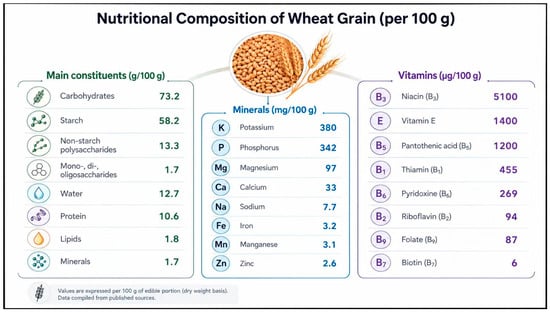
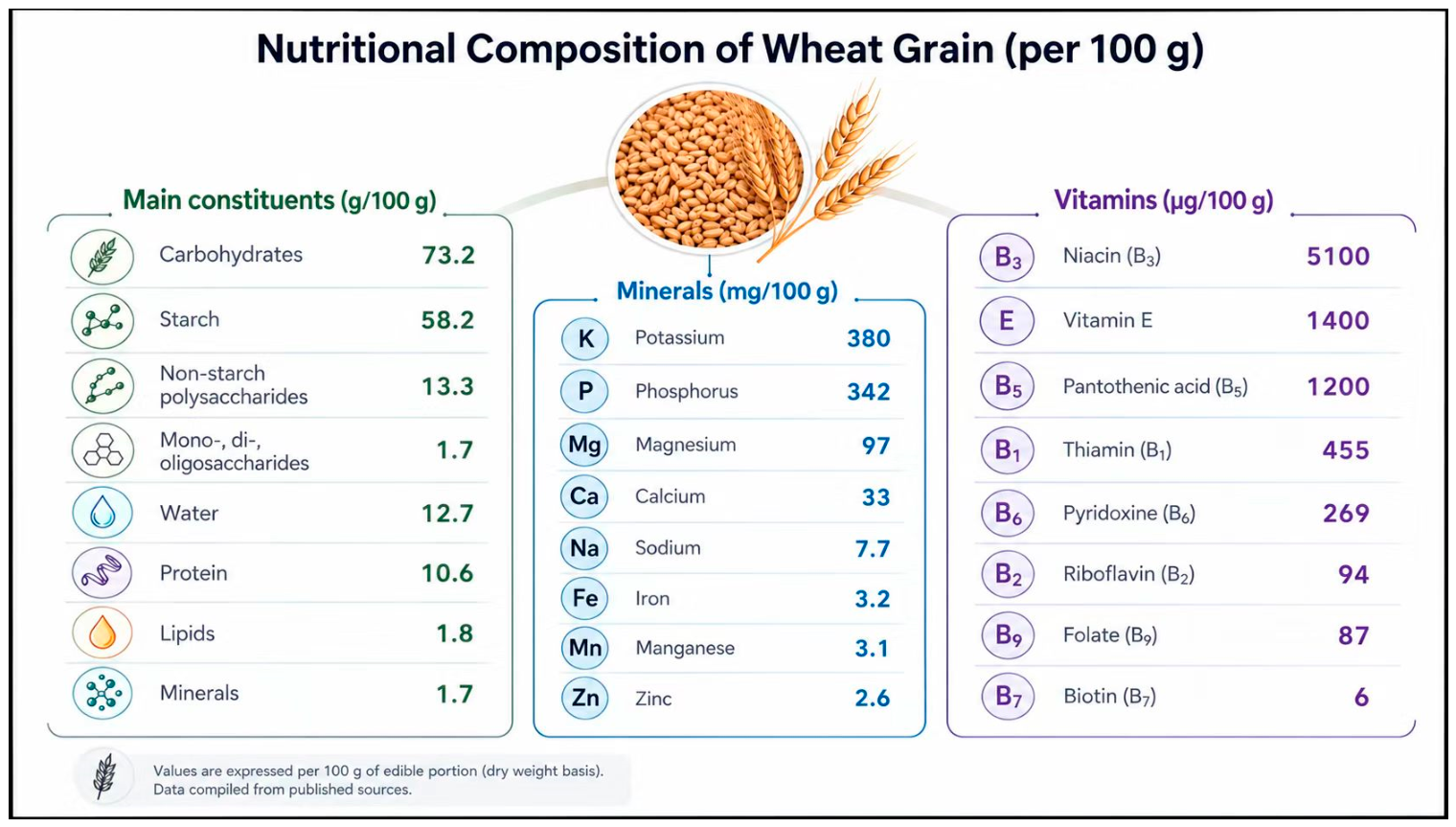
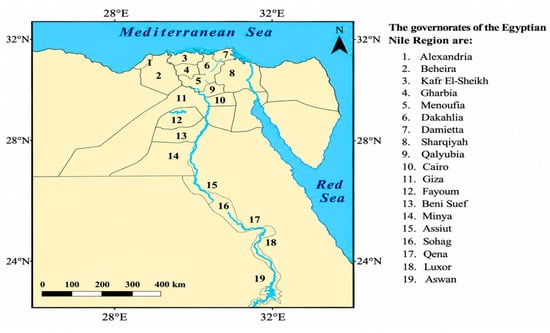
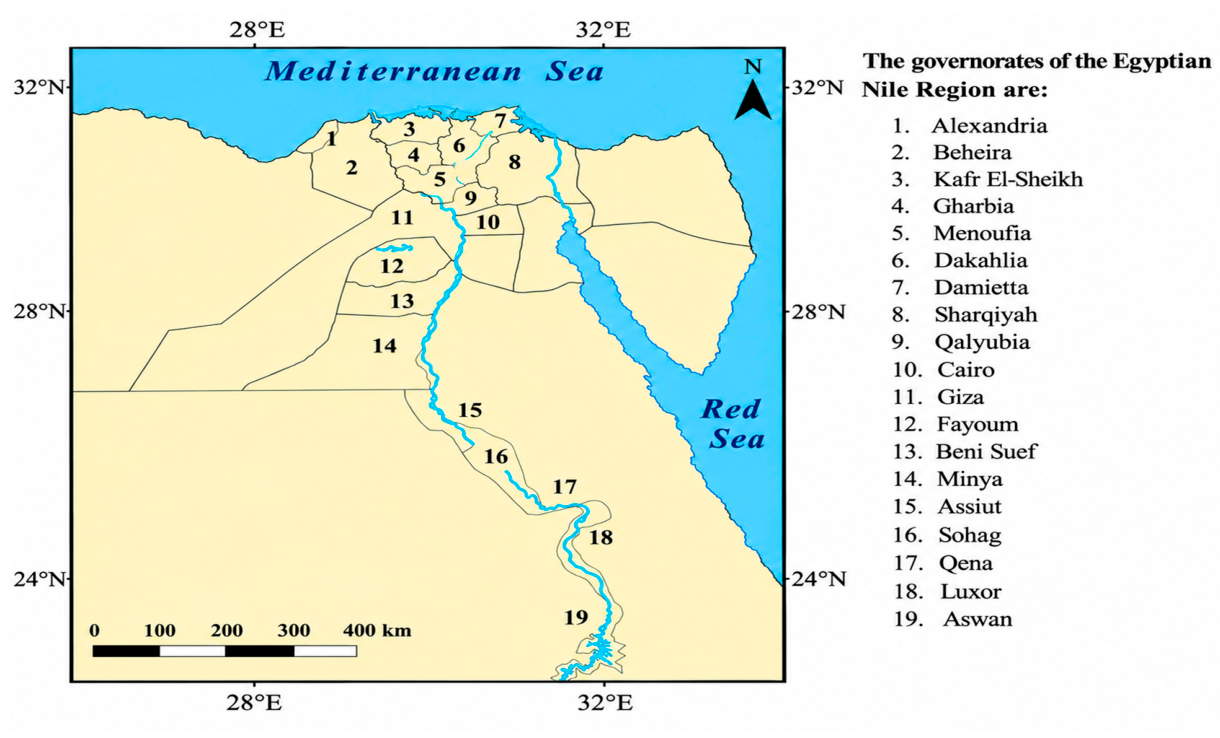

Disclaimer/Publisher’s Note: The statements, opinions and data contained in all publications are solely those of the individual author(s) and contributor(s) and not of MDPI and/or the editor(s). MDPI and/or the editor(s) disclaim responsibility for any injury to people or property resulting from any ideas, methods, instructions or products referred to in the content. |
© 2026 by the authors. Licensee MDPI, Basel, Switzerland. This article is an open access article distributed under the terms and conditions of the Creative Commons Attribution (CC BY) license.