


Abstract
Lygus pratensis is an important pest of cotton in the Xinjiang Uyghur Autonomous Region, Chana. Diapause plays a key role in seasonal survival, population dynamics, and spring population establishment of this species; therefore, understanding the environmental cues regulating diapause is essential for improving population prediction and developing more effective control strategies. In this study, we investigated the effects of temperature and photoperiod on diapause induction in L. pratensis and further examined how temperature, photoperiod, and duration of cold exposure influence diapause termination. Female ovarian development and the proportion of females carrying eggs were examined under different combinations of temperature and photoperiod. The results showed that both temperature and photoperiod significantly affected diapause induction. The highest diapause rate, 88.33%, occurred when adults were reared under a short photoperiod of 9 L:15 D at 16 °C. In contrast, only 3.33% of females entered diapause under a long photoperiod of 15 L:9 D at 20 °C. Diapause termination experiments indicated that temperature significantly affected the time required for diapause termination, but not the final termination rate. Photoperiod also influenced diapause termination at 24 °C, with termination rates of 44.44% under 8 L:16 D and 100% under 16 L:8 D. However, the duration of exposure to low temperature at 4 °C had no significant effect on diapause termination. These findings demonstrate that temperature and photoperiod are the key environmental factors regulating diapause induction and termination in L. pratensis. Moreover, diapause termination in this species appears to be controlled mainly by environmental cues rather than by a required period of cold exposure. This study provides a biological basis for predicting seasonal population occurrence and optimizing management strategies for L. pratensis in cotton-growing regions of Xinjiang.
1. Introduction
Lygus pratensis (Linnaeus, 1758) (Hemiptera: Miridae) is an important agricultural pest [1]. Its development consists of three stages: egg, nymph (first to fifth instar), and adult [2], with significant generational overlap [3]. The growth and development of L. pratensis are strongly influenced by factors such as temperature, humidity, and light. Due to its long reproductive period, strong adaptability, high reproductive potential, and remarkable flight dispersal capability, adult L. pratensis can migrate between various host plants and cause damage throughout different seasons [4,5,6]. Lygus pratensis is the dominant pest of cotton in southern Xinjiang and is widely distributed across Eurasia, North Africa, and North America [7]. Lygus pratensis has a wide host range comprising 159 plant species, including economic crops such as cotton, alfalfa, grapes, apples, pears, as well as weeds [8]. Both adults and nymphs of this species primarily damage plants by sucking phloem sap from the leaves and stem; this damage can bring about plant stunting, as well as boll, bud, or flower abscission [9,10,11,12]. In recent years, the rapid development of animal husbandry and agriculture in Xinjiang has provided abundant host plants for L. pratensis. In addition, the large-scale cultivation of Bacillus thuringiensis (Bt) cotton for effective control of cotton bollworm Helicoverpa armigera (Lepidoptera: Noctuidae) has resulted in decreased use of broad-spectrum insecticides [6]. These two factors gave rise to population outbreaks of L. pratensis in cotton fields in southern Xinjiang [13]. Yield losses of up to 30% have been recorded in the absence of control measures, significantly impacting production in agriculture and forestry [14].
Lygus pratensis has four generations a year in Xinjiang. L. pratensis overwinters as diapausing adults beneath weeds, litter, and debris adjacent to the cotton field, and emerges to feed on spring hosts, especially early spring nectar source plants such as Chinese date (Ziaziphus jujuba (Rosales: Rhamnaceae)), grape vine (Vitis vinifera (Vitales: Vitaceae)), pear (Pyrus spp. (Rosales: Rosaceae), apple (Malus pumila (Rosales: Rosaceae), and others, damaging them in late March and early April [15]. Moreover, during the occurrence period from April to October, the adults transfer among different hosts and spread easily, exacerbating the difficulty of control [16,17]. In addition, overwintering mirids directly determine the size of the population base of the first generation in the subsequent year, which is one of the most important reasons influencing population changes [18]. Therefore, studying the effects of environmental factors on the induction and termination of dormancy in L. pratensis can help predict the timing of diapause termination in spring based on changes in environmental temperature and photoperiod during winter and spring. This is crucial for understanding changes in population numbers and the extent of crop damage, providing a new basis for developing scientifically effective integrated pest management strategies.
Diapause is a crucial adaptation strategy in insects to cope with challenging conditions such as food shortage, low temperature, and photoperiod deficiency, as well as to synchronize the stage of development with the conditions in the external environment [19,20]. Diapause may occur at different stages of the life cycle, from egg to adult, in different insect species [21]. Depending on when it occurs, diapause can be divided into egg diapause (embryonic diapause), nymphal diapause, pupal diapause, and adult diapause [22,23,24,25,26]. Adult diapause is characterized by halted reproductive maturation and is thus often defined as reproductive diapause [27]. According to the initiation of diapause in insects, there is obligate diapause and facultative diapause [28]. Insects that undergo obligate diapause are also called monostrophic insects. These insects (e.g., Lymantria dispar (Lepidoptera: Lymantriidae), Leguminivora glycinivorella (Lepidoptera: Olethreutidae) and Bactrocera minax (Diptera: Tephritidae)) have one generation a year, and diapause is regulated genetically [29,30,31]. Regardless of whether the external environment is suitable or not, the insects enter diapause on schedule; even if the environment is suitable, their growth and development remain at a standstill until diapause terminates. In contrast, facultative diapause insects (e.g., Carposina niponensis (Lepidoptera: Carposinidae) and Colaphellus bowringi (Coleoptera: Chrysomelidae)), are multivoltine insects [32,33]. In these insects, diapause induction and termination are largely regulated by environmental cues, particularly photoperiod and temperature. Because L. pratensis completes multiple generations per year in Xinjiang and overwinters as diapausing adults only under unfavorable seasonal conditions, it can be considered a facultative diapause species. Therefore, identifying the environmental factors that regulate diapause induction and termination in L. pratensis is essential for understanding its seasonal adaptation and predicting its population dynamics.
Although the growth and development of diapause insects are restrained and metabolism is reduced, the diapause process is not static [34]. Insect diapause comprises several physiological stages including induction, preparation, initiation, maintenance, termination, and post-diapause quiescence [35]. Diapause insects perceive and store adverse environmental signals during the period of diapause induction [36]. Photoperiod and temperature are always considered the most important environmental factors affecting insect diapause [37]; diapause induction can be affected by these two factors individually or synergistically [38,39]. Insects diapause for several months in winter due to the cold and resume activities in warm spring. Thus, low temperature is considered to be a necessary condition for the onset of diapause [28]. Many studies have shown that short photoperiods can induce diapause [38,40,41]. During diapause, insects consume stored energy, which directly affects life-history traits, such as post-diapause survival rate, development, reproduction, and adult longevity [42,43]. Diapause is therefore closely related to population dynamics. However, the effects of photoperiod and temperature on the diapause induction of L. pratensis are not known.
Although L. pratensis is a major pest of cotton in Xinjiang and its overwintering adults directly influence the population size of the first generation in the following year, the environmental cues regulating diapause induction and termination in this species remain poorly understood. This knowledge gap limits our ability to predict the timing of post-diapause reproductive recovery, seasonal population dynamics, and potential outbreaks in cotton fields. Therefore, the present study aimed to: (1) determine the effects of temperature and photoperiod on diapause induction in L. pratensis; (2) evaluate the effects of temperature and photoperiod on diapause termination; and (3) assess whether the duration of low-temperature exposure influences diapause termination. Ovarian development and the proportion of females carrying eggs were used as indicators of diapause status. In addition, because diapause intensity can be evaluated by the pre-oviposition period after transfer to diapause-averting conditions [44], we hypothesized that the duration of low-temperature exposure may affect diapause intensity and subsequent reproductive recovery in L. pratensis. By clarifying how key environmental factors regulate diapause in L. pratensis, this study provides important biological information for improving population prediction and developing more effective integrated pest management strategies for this pest in cotton-growing regions of Xinjiang.
2. Materials and Methods
2.1. Collection and Rearing of Insects
Lygus pratensis adults were collected from weeds by the net sweeping method at the Experimental Base of the Agricultural Science Research Institute of the First Division of the Xinjiang (81°23′25″ E, 40°32′8″ N), in July 2024. The colony was maintained continuously with cauliflower (Brassica oleracea) fruit cut into approximate 4 cm3 pieces as a food source and an oviposition substrate in nylon-mesh containers (30 × 30 × 30 cm) at 25 ± 0.5 °C, 70% ± 5% RH and 16:8 h (L:D) photoperiod in the laboratory. The 10% w/v honey solution was provided on degreased cotton to supplement nutrition. Cauliflower heads were changed every two days by moving them to a plastic box (14 × 8 × 8 cm), lined with filter paper, in an incubator (Ningbo Jiangnan Instrument Factory, Ningbo, China) at 25 ± 0.5 °C, 70% ± 5% RH and 16:8 h (L:D) until the 1st nymphs emerged. Newly hatched nymphs were placed individually in plastic tubes (diameter = 2.5 cm, height = 8.5 cm) that had their top covered with fine mesh for ventilation.
2.2. Diapause Induction
When the time of adult development and reproduction is more than three times longer than that of normal adults, it is considered to include diapause [45]. Under suitable conditions, L. pratensis can lay eggs 7 days after eclosion. Therefore, we chose L. pratensis 20 days after emergence as the research object. Our recent studies have classified the presence or absence of oocytes in the ovaries of L. pratensis, and the ovaries of diapause adults are undeveloped and with no mature eggs. Therefore, we dissected the females that emerged 20 days later, and if no eggs were found, it was determined to be diapause. This method can accurately reflect the state of L. pratensis (unpubl. Data).
In southern Xinjiang, L. pratensis enters diapause in autumn before overwintering; therefore, the temperature conditions in October were used as a field-based reference for selecting diapause-inducing temperature treatments [16]. In October 2023, the daily mean temperature ranged from 4.2 °C to 24.2 °C, with an average of 14.1 °C (https://en.tutiempo.net, accessed on 28 November 2023). In contrast, photoperiod treatments were selected based on the annual variation in daylength, rather than only the daylength in October, because photoperiod is a seasonal cue and both long-day and short-day conditions are required to evaluate their effects on diapause induction. In 2023, daylength ranged from a maximum of 15.05 h to a minimum of 9.16 h (https://en.tutiempo.net, accessed on 20 January 2024). Previous studies showed that L. pratensis does not lay eggs at temperatures below 13 °C, whereas 25 °C is suitable for its reproductive development [46]. Therefore, we selected 12 °C, 16 °C, 20 °C, and 24 °C to cover a temperature range from below the oviposition threshold to favorable reproductive conditions, and to assess how temperature affects reproductive activity and diapause status in L. pratensis. To preliminarily confirm the effect of temperature on ovarian development and diapause induction, female adults reared at 12 °C and 24 °C were dissected at different ages after adult emergence. These two temperatures were selected because 12 °C was below the oviposition threshold and was expected to induce diapause, whereas 24 °C represented a favorable temperature for reproductive development in L. pratensis. Therefore, 12 °C and 24 °C were used as contrasting temperature treatments to verify whether low temperature inhibited ovarian development and whether higher temperature promoted ovarian maturation. Female adults were dissected at 5, 10, and 15 days after emergence to observe ovarian development and the presence or absence of yolk-containing oocytes. Subsequently, we selected 16 °C and 20 °C, the autumn intermediate temperatures sensitive to photoperiod signals, to cross with five photoperiod regimes (9 L:15 D, 11 L:13 D, 12 L:12 D, 13 L:11 D, and 15 L:9 D) to further clarify their interactive impacts on diapause induction. Among these temperatures, 16 °C and 20 °C were further selected to examine the interactive effects of temperature and photoperiod on diapause induction because they represent intermediate autumn temperatures under which diapause induction may be sensitive to photoperiodic cues. Diapause and non-diapause states were distinguished based on the presence or absence of egg-laying; therefore, males were not included in the experiments.
Newly hatched nymphs were exposed to combinations of five photoperiods (9 L:15 D, 11 L:13 D, 12 L:12 D, 13 L:11 D, and 15 L: 9 D) and two temperatures (16 and 20 °C) at 70% ± 5% RH. At present, there have been no reports on artificial feed sources for L. pratensis. Cauliflower and green beans were used as the main food and spawning substrates [38,39]. Egg cover could not be seen by the microscopic examination of cauliflower. The number of eggs could only be judged roughly by the number of nymphs hatched when cauliflower was used as the spawning substrate, making it difficult to judge diapause by oviposition. Therefore, the nymphs were provided with 2-cm-long pods of green bean (Phaseolus vulgaris) (replaced daily) until adult emergence. A total of 10 treatment combinations were established in this experiment. Each treatment combination included three replicates, with 40 newly hatched nymphs per replicate and 120 newly hatched nymphs per treatment combination. The newly eclosed adults were coupled and transferred to a new plastic tube in the same incubator, with green bean pods as a food source and an oviposition substrate. Each treatment comprised 20 pairs of adults and had three repetitions. Green bean pods were replaced every day and observed under a stereomicroscope (Leica Microsystems Wetzlar GmbH, Wetzlar, Germany) to count the number of eggs laid. The observations lasted for 20 days. Whether the paired L. pratensis induced diapause was determined by the oviposition or ovarian maturity. Laying females were defined as non-diapause, but if the females did not lay eggs during 20 days of observation, we further performed dissection and confirmed ovarian maturity. The females without mature oocytes were defined as being in diapause.
2.3. The Impact of Temperature and Photoperiod on Diapause Termination
To investigate the effects of temperature and photoperiod on diapause termination in L. pratensis, adults presumed to be in diapause were used as the experimental material. Newly hatched nymphs were reared as described in Section 2.1 and maintained at 12 °C under a 9 L:15 D photoperiod. Diapause induction continued for 30 days after adult emergence. Because ovarian dissection is destructive, individuals used in the diapause-termination experiment could not be dissected before treatment. Therefore, diapause status was confirmed by ovarian dissection using a subset of females from the same cohort. The remaining adults were selected for the experiment based on the same diapause-inducing conditions, age, and external morphological characteristics commonly observed in diapause-induced individuals. Under these laboratory diapause-inducing conditions, diapause females generally showed a dull grayish-green body with uneven blood-red coloration on the pronotum, whereas males were darker and brown. These color traits were used only as auxiliary, non-destructive indicators for selecting likely diapause individuals, rather than as definitive evidence of diapause. Diapause termination was then determined by the resumption of oviposition after transfer to the experimental conditions.
Based on our previous observations of overwintered L. pratensis adults collected from the field in southern Xinjiang, the body color of diapause females gradually changes from dull grayish-green to a brighter and more uniform green in April, coinciding with the onset of oviposition and indicating reproductive recovery after overwintering (unpubl. Data). Therefore, the temperature conditions in April were used as a field-based reference for selecting diapause-termination temperature treatments. The daily average temperature varied between 7.1 °C and 23.9 °C with a mean of 18 °C in April 2023 (https://en.tutiempo.net, accessed on 6 November 2023). We chose 20 °C, 24 °C, and 28 °C to explore the effect of temperature on diapause termination in L. pratensis. These temperatures cover conditions close to the April mean temperature, the upper range of spring field temperatures, and warmer conditions that may favor post-diapause reproductive development. To examine the effect of photoperiod on diapause termination, we conducted the photoperiod experiment at 24 °C. This temperature was selected because it is close to the previously reported suitable temperature for reproductive development in L. pratensis and is also near the upper range of field temperatures recorded in April. Using 24 °C allowed us to evaluate the effect of photoperiod under a temperature condition favorable for reproductive recovery, thereby reducing the possibility that low temperature would limit oviposition. The photoperiod treatments included 0 L:24 D, 9 L:15 D, 15 L:9 D, and 24 L:0 D. In addition, because field-collected L. pratensis adults experience low temperatures for several months under natural overwintering conditions, it remains unclear whether exposure to low temperature is required for diapause termination. In a separate experiment, diapause adults induced at 12 °C under a 9 L:15 D photoperiod were maintained at 4 °C for 30, 60, 90, or 120 days and then transferred to 24 °C under a 16 L:8 D photoperiod; diapause adults from the same induction conditions but without low-temperature exposure were used as the control. In this study, diapause termination was defined as the resumption of reproductive development after transfer from 12 °C to the experimental temperature, as indicated by whether females oviposited. The diapause-termination rate was calculated as the percentage of females that met this criterion during the observation period. The time of diapause termination was recorded as the number of days from transfer to first oviposition. The oviposition of adults was recorded daily for approximately 2 months (until adults laid eggs or died). Each treatment was repeated three times with 20 pairs of L. pratensis in each replicate.
2.4. Dissection of Insects
The female insects were placed on ice to anesthetize them; then, they were moved to a slide, and a drop of phosphate-buffered saline (PBS) (Sangon Bioengineering Co., Shanghai, China), was placed on the insect body. The abdomen of the insect was upward, fixed on the thorax with one anatomical needle, and the other anatomical needle was used to separate the thorax and the abdomen. Then, one anatomical needle was fixed on the upper side of the abdominal edge, and the other one was inserted at the penultimate section of the abdomen to peel off the abdomen until the whole ovaries were pulled out. In this study, yolk-containing oocytes/eggs were defined morphologically as clearly distinguishable oval or elongated-oval structures located in the ovary or oviduct, showing a pale yellow to orange-yellow, opaque appearance due to visible yolk deposition. Small, transparent, whitish, or poorly delimited oocytes without obvious yellow yolk accumulation were not counted. Each treatment was replicated three times, with 20 individuals dissected per replicate. A Leica m205c stereomicroscope (Leica Microsystems Wetzlar GmbH, Wetzlar, Germany) was used for observation and taking photos.
2.5. Data Analysis
The fecundity, number of oocytes in ovaries, and induction and termination of diapause in L. pratensis were analyzed statistically. Student’s t-test was used for two-group comparisons, one-way ANOVA was adopted for multigroup comparisons, and multivariate analysis of variance was used for the two-factors comparisons (photoperiod, temperature and their interaction). The normal distribution test and the variance homogeneity analysis were performed on all data to confirm the suitability of the data for ANOVA. Tukey’s HSD test was used to analyze significant differences among the treatments (p < 0.05). All statistical analyses were performed using SPSS 25.
3. Results
3.1. Effects of Temperature and Photoperiod on Fecundity in L. pratensis
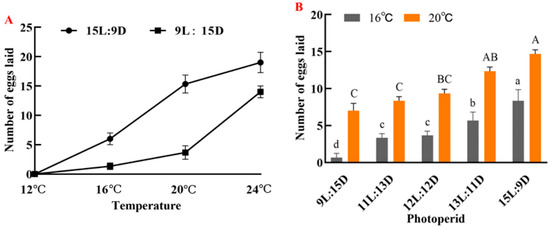
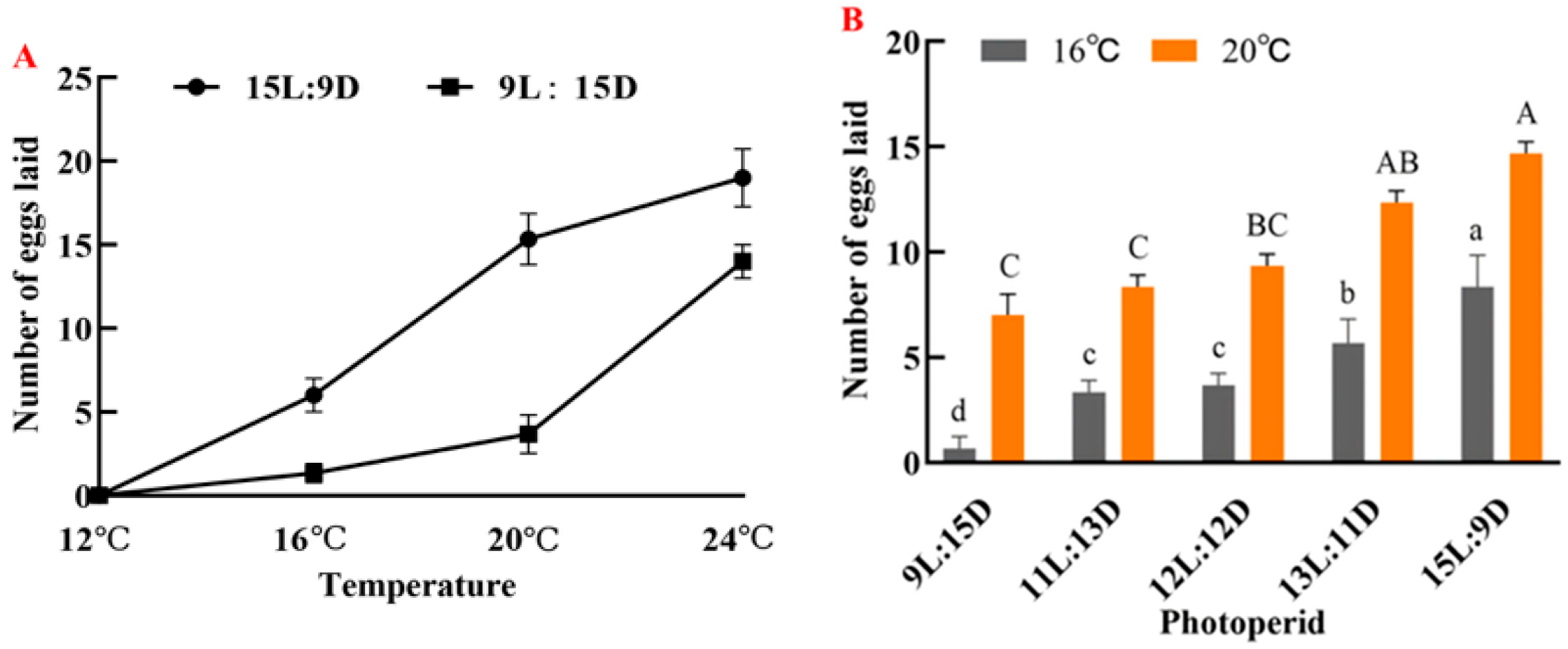
First, we characterized the fecundity of L. pratensis at four rearing temperature treatments (12, 16, 20, and 24 °C) under photoperiods of 15 L:9 D and 9 L:15 D. When rearing temperature was set up at 12 °C, the adults did not lay eggs. The results indicated that the adults might be diapause at this temperature. With the increase in temperature, the quantity of oviposition increased. At 24 °C, each pair of adults laid approximately 13 eggs in 20 days. Under the photoperiod 9 L:15 D, at 16 °C, adults laid few eggs (Figure 1A). Then, we identified the fecundity of L. pratensis under five photoperiods at 16 °C and 20 °C. Egg production in L. pratensis increased with increasing photoperiod at both 16 °C and 20 °C. At the same photoperiod, females maintained at 20 °C generally laid more eggs than those at 16 °C. Egg production was lowest under 9 L:15 D and highest under 15 L:9 D, indicating that long photoperiods promoted oviposition, whereas short photoperiods, especially under low temperature, inhibited egg laying (Figure 1B). Egg production was significantly affected by temperature and photoperiod. The effect of temperature was significant, and the effect of photoperiod was also significant. Egg production at low temperatures can be promoted by long photoperiods, leading to a significant increase in egg production. Low temperatures and short photoperiods are the main environmental factors that inhibit egg laying in L. pratensis. However, the interaction between temperature and photoperiod was not significant (Table 1).
Figure 1.
Effects of temperature and photoperiod on the fecundity of L. pratensis: (A,B) number of eggs laid by L. pratensis under different temperature and photoperiod treatments. Error bars show ± standard errors (SE). Figure (A) was based on the preliminary fecundity screening across four temperatures under two fixed photoperiods; the three replicates for the 12 °C treatments were all 0 and, therefore, there are no error bars and no pairwise statistical comparison. Figure (B) was based on the full factorial experiment with 16 °C and 20 °C crossed with five photoperiods, and the two-way ANOVA in Table 1 was performed exclusively using this dataset. After testing for normality and homogeneity of variance, the data met the assumptions. Multiple comparisons were performed using Duncan’s new multiple range test. Lowercase and uppercase letters indicate significant differences (p < 0.05) among photoperiod treatments at 16 °C and 20 °C, respectively. The same method applies to all subsequent data.
Table 1.
Two-way ANOVA of the effects of temperature and photoperiod on egg production in L. pratensis.
3.2. Effects of Temperature and Photoperiod on Ovarian Development in L. pratensis
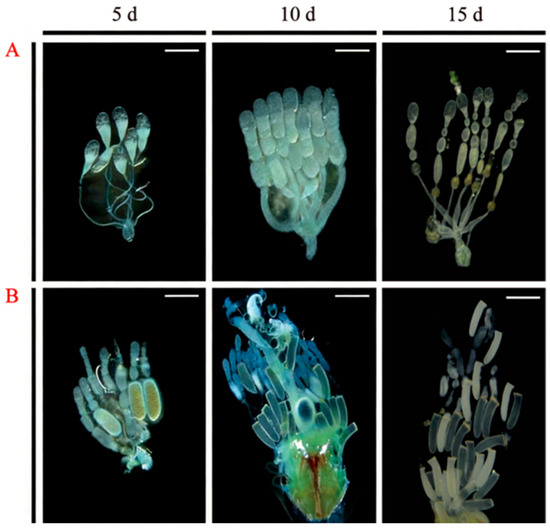
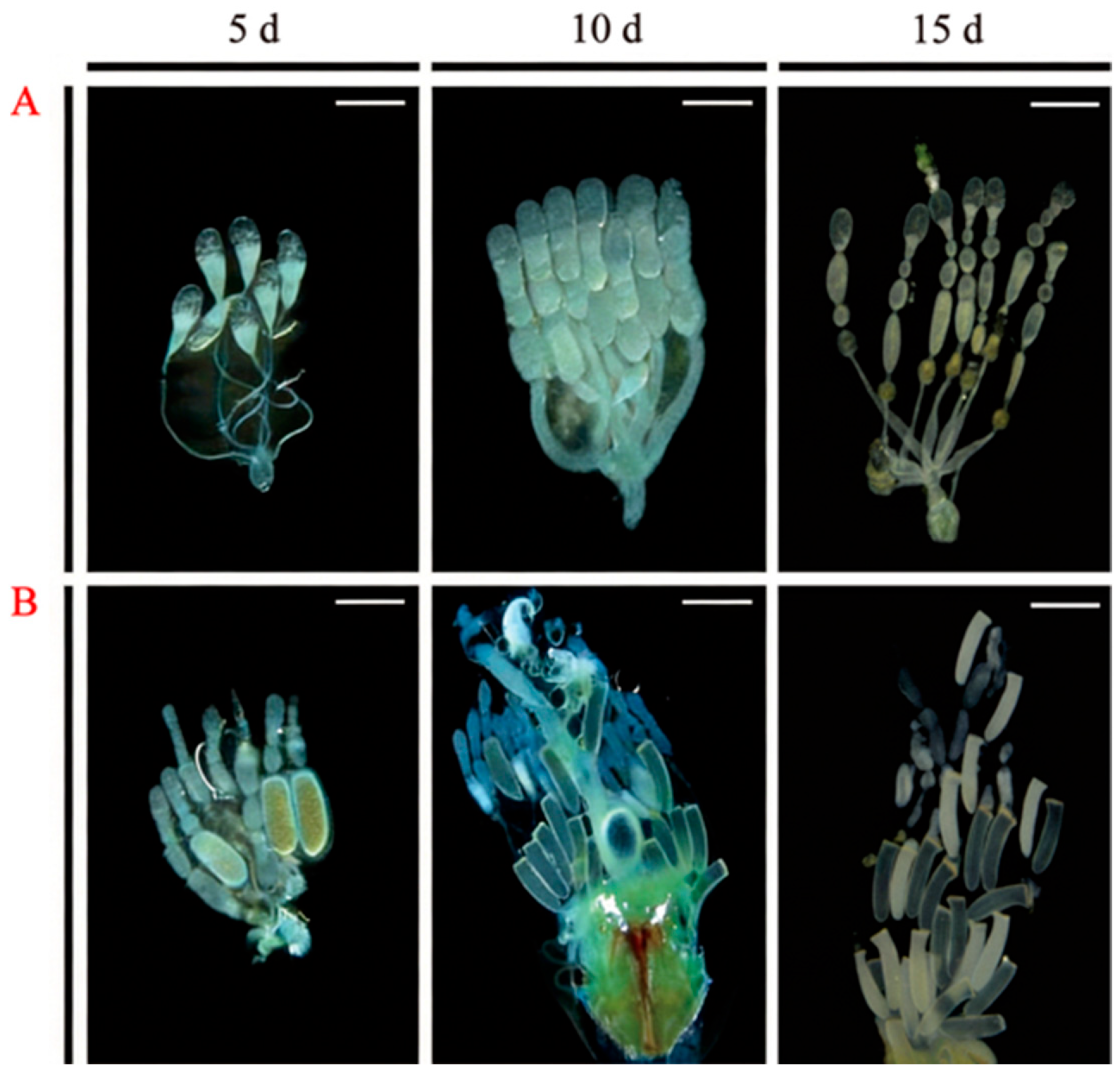
To preliminarily confirm whether low temperature inhibited ovarian development and induced diapause in L. pratensis, we compared ovarian development in female adults reared at two contrasting temperatures, 12 °C and 24 °C. These two temperatures were selected because 12 °C was below the oviposition threshold and was expected to induce diapause, whereas 24 °C was suitable for reproductive development. The results showed that the ovaries of female adults reared at 12 °C were undeveloped, and almost no yolk-containing oocytes were observed. In contrast, females reared at 24 °C showed normal ovarian development, with oocytes present on the 5th day after emergence and abundant by the 15th day. These results indicate that 12 °C inhibited ovarian development and promoted diapause induction, whereas 24 °C favored ovarian growth and reproductive development in L. pratensis (Figure 2).
Figure 2.
Effects of 12 °C versus 24 °C on ovarian development in L. pratensis: (A) ovaries of female adults reared at 12 °C; (B) ovaries of female adults reared at 24 °C. Bar = 1 mm.
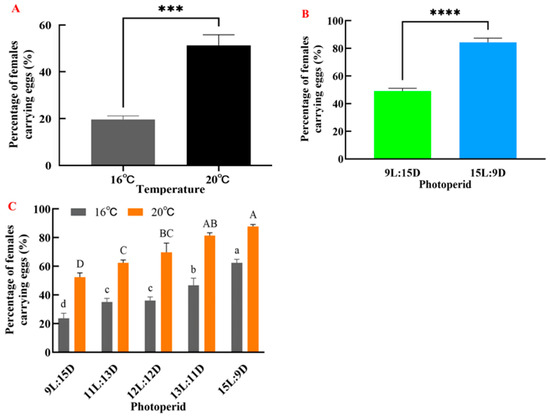
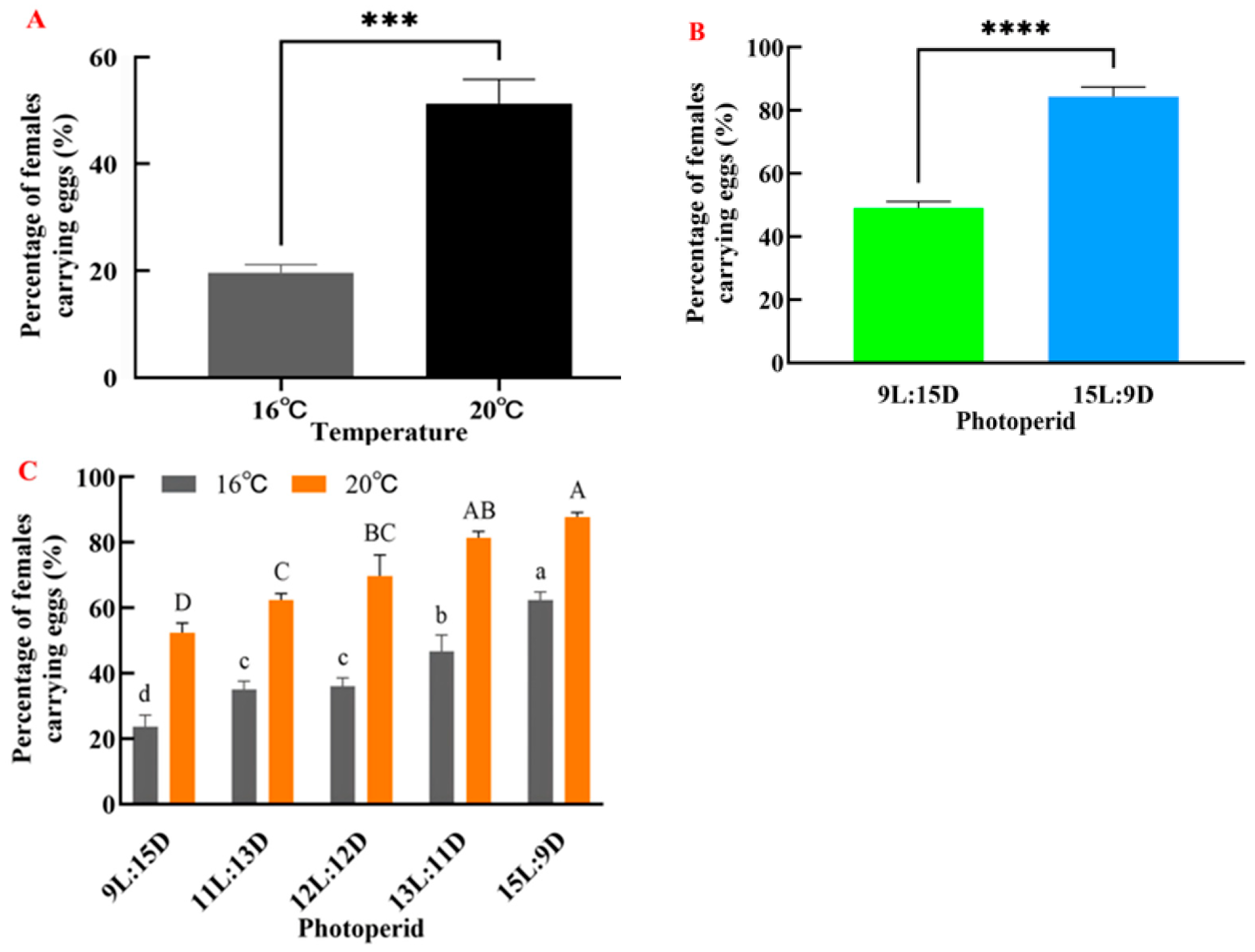
Based on this preliminary comparison, we further examined the combined effects of temperature and photoperiod on ovarian development at 16 °C and 20 °C. Female adults of L. pratensis reared at 16 °C and 20 °C were dissected to determine the percentage of females carrying eggs, in order to further investigate the effects of photoperiod and temperature on ovarian development. The percentage of females carrying eggs was significantly higher in L. pratensis females reared at 20 °C than in those reared at 16 °C (Figure 3A). Similarly, the percentage of females carrying eggs under the long photoperiod (15 L:9 D) was significantly higher than that under the short photoperiod (9 L:15 D) (Figure 3B). In addition, we determined the percentage of females carrying eggs in L. pratensis under five photoperiods at 16 °C and 20 °C. As the temperature increased and the photoperiod lengthened, the percentage of females carrying eggs also increased, indicating that temperature and photoperiod influence egg production (Figure 3C). Temperature and photoperiod had significant effects on the percentage of females carrying eggs, whereas their interaction had no significant effect (Table 2).
Figure 3.
Effects of temperature and photoperiod on percentage of females carrying eggs in L. pratensis: (A) represents temperature treatments; (B) represents photoperiod treatments; (C) represents the combined effects of temperature and photoperiod. Percentage data were arcsine square-root transformed prior to analysis to meet the assumptions of normality and homogeneity of variance. After testing for normality and homogeneity of variance, one-way analysis of variance (one-way ANOVA) was conducted. ***, significant at p < 0.001; ****, significant at p < 0.0001. The same method applies to all subsequent data.
Table 2.
Two-way ANOVA of the effects of temperature and photoperiod on percentage of females carrying eggs in L. pratensis.
3.3. Effects of Temperature and Photoperiod on Diapause Incidence in L. pratensis
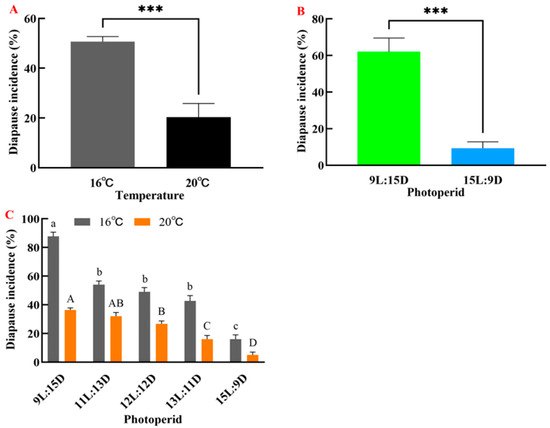
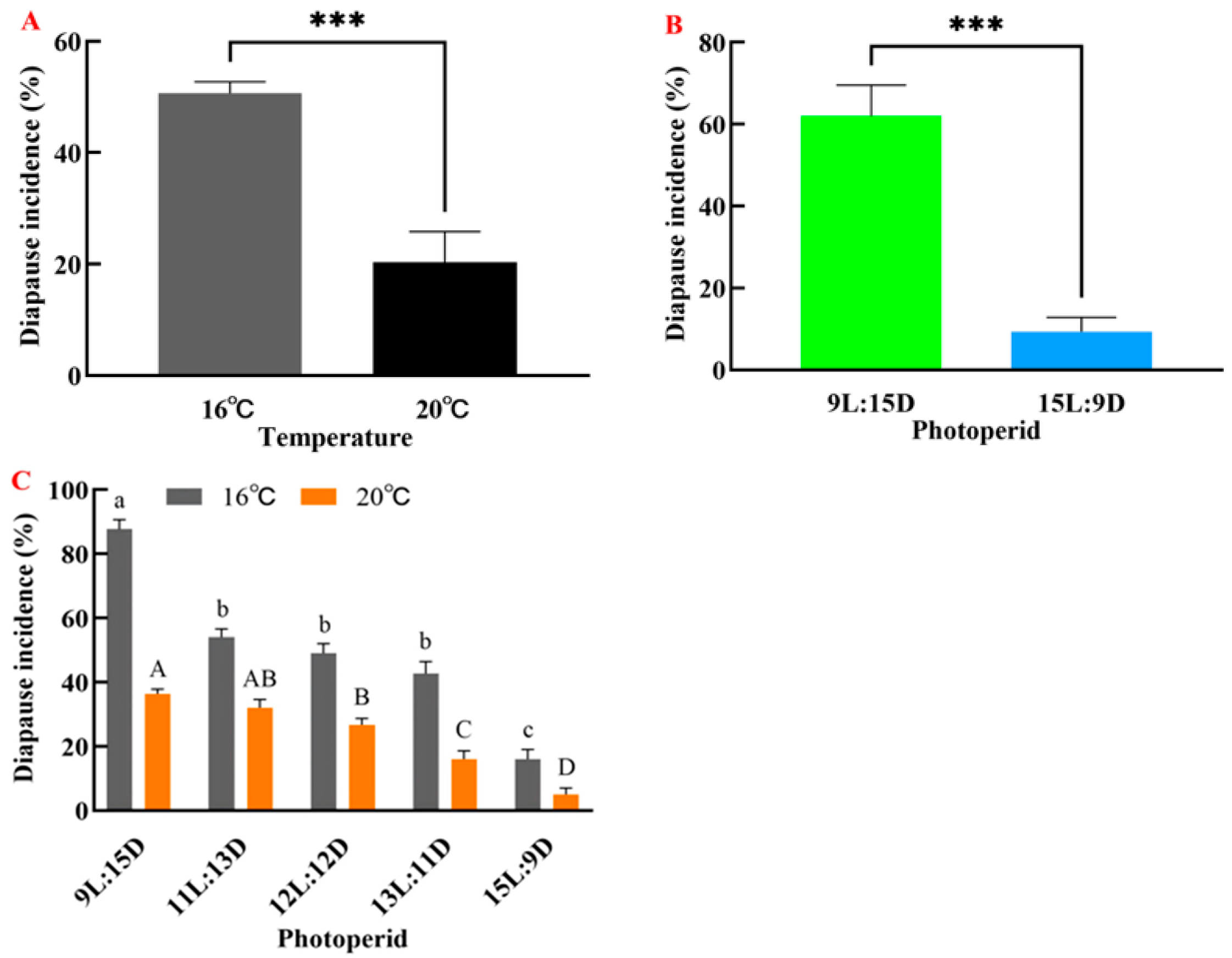
The diapause rate of L. pratensis was significantly higher at 16 °C than 20 °C (Figure 4A). The diapause rate of L. pratensis was significantly higher under short (9 L:15 D) than the long photoperiod (15 L:9 D) (Figure 4B). The analysis of the effects of the combination of five photoperiods and two temperatures showed that the diapause rate was highest (at 87.67%) when the adults were reared under a short photoperiod (9 L:15 D) and low temperature of 16 °C. In contrast, the diapause rate of the female adults of L. pratensis was only 5.33% when the adults were reared under a long photoperiod (15 L:9 D) and at 20 °C (Figure 4C). The temperature, photoperiod, and their interactive effect on diapause rate were significant (Table 3).
Figure 4.
Effects of temperature and photoperiod on the diapause incidence of L. pratensis.
Table 3.
Two-way ANOVA of the effects of temperature and photoperiod on females diapause incidence in L. pratensis.
3.4. Diapause Termination in Response to Temperature
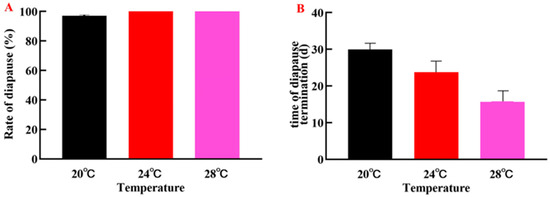
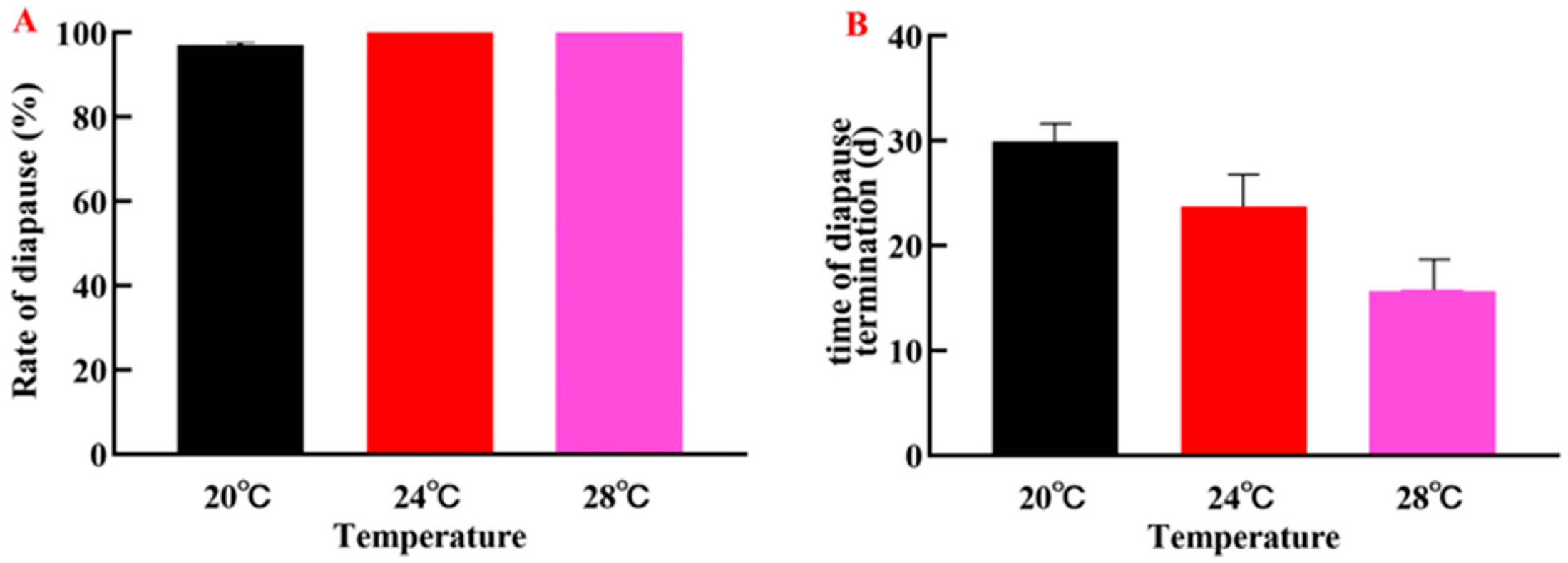
Temperature had no significant effect on diapause-termination incidence. The incidence was 97.14% at 20 °C and reached 100% at both 24 °C and 28 °C (Figure 5A). The number of days required for diapause termination decreased as temperature increased. Females required 29.97 days at 20 °C, 23.75 days at 24 °C, and 15.70 days at 28 °C to reach the defined diapause-termination endpoint (Figure 5B).
Figure 5.
Effect of temperature on the termination of diapause in L. pratensis: (A) rate of diapause termination at different temperature treatments; (B) time of diapause termination at different temperature treatments. Because post-diapause reproductive development is inherently temperature dependent, no ANOVA or multiple comparisons were performed for the time-to-termination data; these values are presented descriptively to show the thermal response after transfer.
3.5. Diapause Termination in Response to Photoperiod
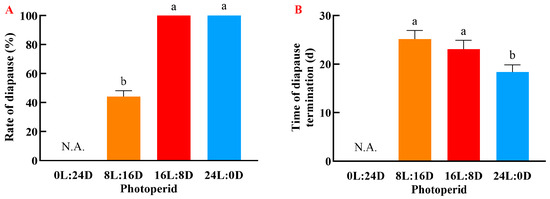
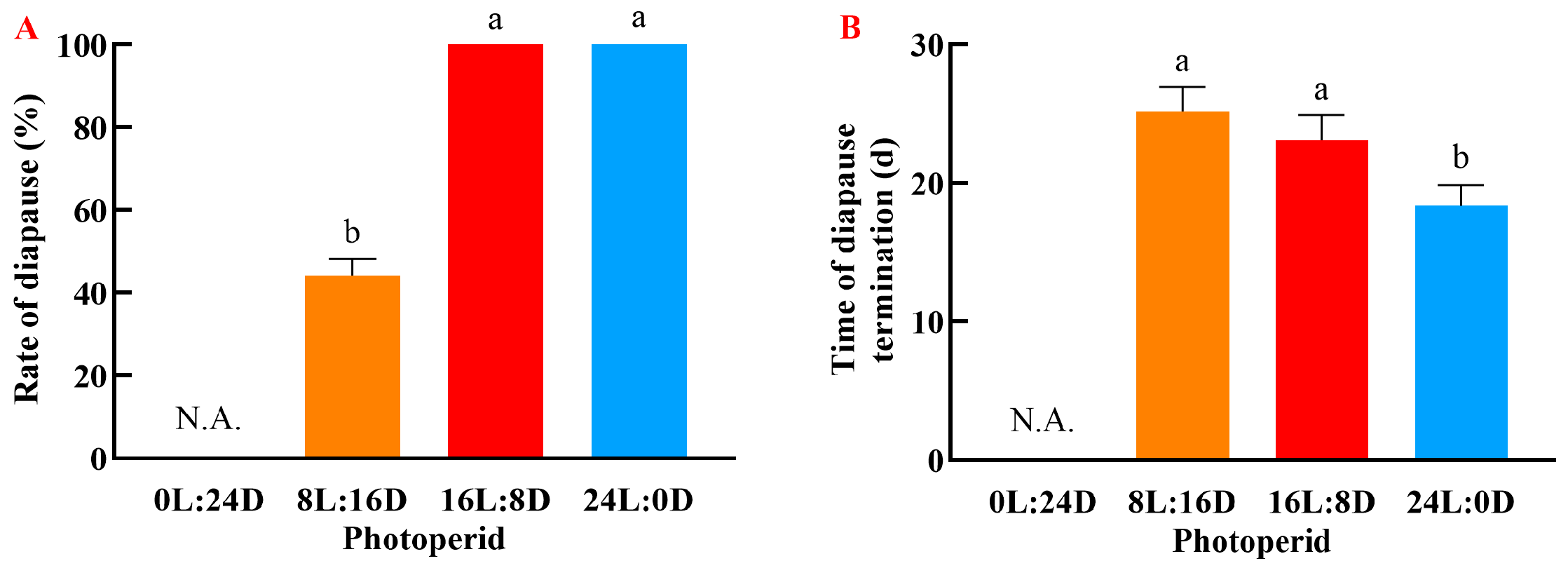
The effect of photoperiod on the rate diapause termination in L. pratensis was significant. The rate of diapause termination was 100% at 16 L:8 D and 24 L:0 D, which was significantly higher than at 8 L:16 D and 0 L:24 D. At 0 L:24 D, L. pratensis adults did not lay eggs, and they all died. Photoperiod also had a significant effect on time of diapause termination. Diapause was shortest (18.38 d) at 24 L:0 D and longest (25 d) at 8 L:16 D. There was a significant difference between 24 L:0 D and 0 L:24 D, but 24 L:0 D was not significantly different from 16 L:8 D (Figure 6).
Figure 6.
Effect of photoperiod on the termination of diapause in L. pratensis: (A) rate of diapause termination at different photoperiod treatments; (B) time of diapause termination at different photoperiod treatments. N.A., no oviposition, indicates that no females oviposited and all adults died under 0 L:24 D; therefore, the time of diapause termination could not be determined, and this treatment was excluded from the ANOVA for both panels (A,B). In figure (A), the three replicates for the 16 L:8 D and 24 L:0 D treatments were all 100%; therefore, the error was 0 and no error bars are shown. Different lowercase letters denote significance at the 0.05 level.
3.6. Diapause Termination in Response to Chilling (4 °C)
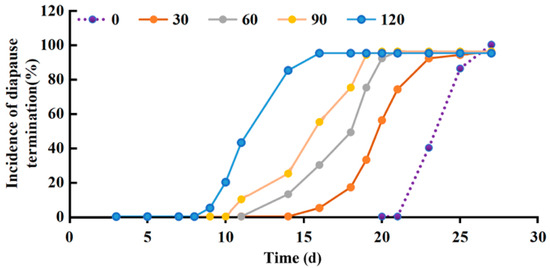
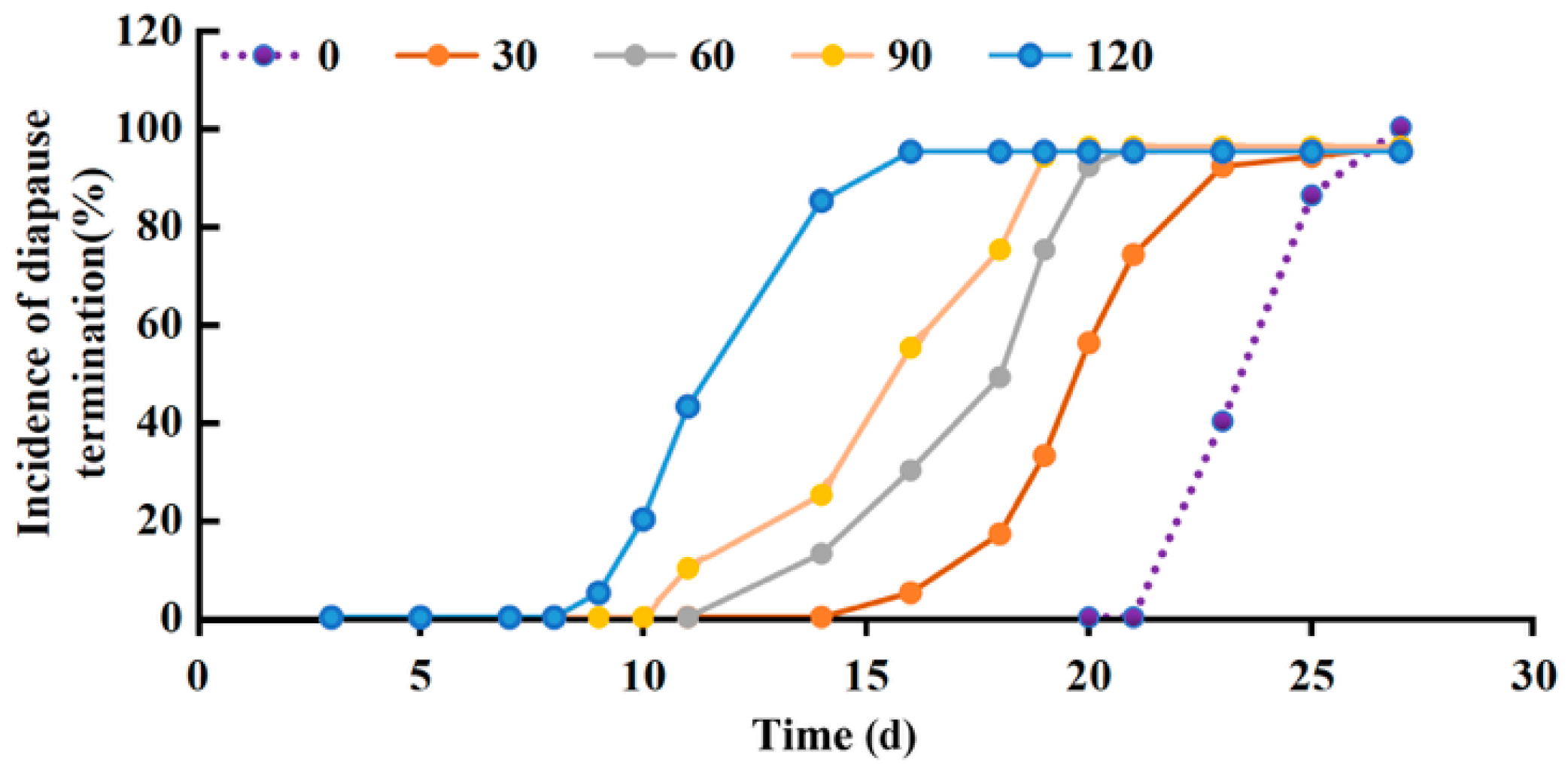
After 120 days of cold treatment, all L. pratensis entered diapause, and the diapause termination rate reached 94% after 16 days of transfer to the optimal temperature (24 °C). In contrast, the diapause termination rate in L. pratensis without cold treatment reached 96% after 27 days of transfer to the optimal temperature. As the duration of cold treatment increased, the time required for diapause termination in L. pratensis after transfer to the optimal temperature was shortened. This indicates that increasing the duration of cold treatment can reduce the diapause intensity of L. pratensis. Longer cold treatment periods help facilitate diapause termination in L. pratensis, leading to faster oviposition (Figure 7).
Figure 7.
The incidence of diapause termination in L. pratensis under different times (0 d, 30 d, 60 d, 90 d, 120 d) at low-temperature (4 °C).
4. Discussion
Using the internationally recognized developmental period method [47,48], Fecundity can be used as the criterion for diapause, and individuals that do not lay eggs for 2–3 times longer than normal oviposition are regarded as diapaused [45,49]. Previous studies on the development of L. pratensis at different temperatures indicated that the eggs of L. pratensis did not hatch at 15 °C, but it remained unclear whether L. pratensis was in diapause. At 13 °C, L. pratensis did not lay eggs, indicating that the L. pratensis entered diapause [50]. However, under the conditions of 18 °C and 16 L:8 D, L. pratensis could lay eggs [46]. Our results on the fecundity of L. pratensis also showed that 12 °C caused diapause, but at 16 °C, some L. pratensis laid eggs. However, if egg-laying is to be used as the criterion for determining diapause, it is necessary to examine the replaced food under a microscope every day, which is a tedious task.
Thus, most insects in the temperate zone enter diapause induced by short day-length, except for a few species that have different types of diapause induction [34,51,52]. The short-day photoperiodic response of diapause has been widely reported amongst Hemipteran insects that overwinter as adults, but has also been found in insects that overwinter as nymphs or eggs [53,54,55,56]. On the other hand, temperature is the primary factor inducing diapause in some tropical areas where the variation of day-length is not significant [57,58]. In southern Xinjiang, L. pratensis completes four generations per year. This species overwinters as diapausing adults beneath weeds, leaf litter, and debris near cotton fields. In the following spring, after host plants begin to sprout, overwintered adults emerge from their shelters and become active, mainly colonizing wheat fields and alfalfa fields. After a period of feeding, adults begin to mate and oviposit, with eggs commonly deposited in tender stems, petioles, leaf veins, or buds, where the first generation develops. In June, first-generation adults migrate into cotton fields and give rise to the second generation. The second and third generations develop on cotton plants, during which population densities reach their peak and feeding damage causes the shedding of squares and bolls. In early September, as cotton plants mature and senesce, they become less suitable for feeding by L. pratensis. Consequently, third-generation adults migrate out of cotton fields and lay eggs mainly on weeds belonging to Chenopodiaceae and Asteraceae, producing the fourth generation. Diapause is an important adaptive strategy that enables L. pratensis to cope with adverse environmental conditions, such as food scarcity, low temperature, and short photoperiods. However, the effects of temperature and photoperiod on diapause regulation in L. pratensis have not been fully confirmed.
The temperature usually regulates the photoperiod effect in insects from temperate zones, and high temperature can inhibit the effect of a short photoperiod on diapause induction [59]. For example, the rate of diapause induced by photoperiod in cabbage beetle C. bowringi and cornstalk borer Sesamia nonagrioides (Lepidoptera: Noctuidae) decreased significantly when the temperature exceeded 25 °C [60]. The same response was found in our study. Under short photoperiod conditions (9 L:15 D), the diapause rate of L. pratensis induced by the photoperiod significantly decreased as the temperature increased. However, some studies provided the opposite conclusion, whereby diapause was induced by photoperiod but was not altered by temperature in Adelphocoris suturalis (Hemiptera: Miridae) and bean bug Riptortus clavatus (Hemiptera: Alydidae) [61,62]. Some scholars believe that different response mechanisms in various species may be related to the regional temperature changes. In areas with warmer temperatures in early autumn, species may delay the time of entering diapause by sensing a decrease in temperature, which may pose a threat to the overwintering population [63]. This theory is also in line with our study. In the region of our study, the temperature changes intensely whereas the photoperiod changes weakly, which may be the reason why the temperature has a more significant effect on the diapause induction in L. pratensis.
We conducted a preliminary study on the diapause termination of L. pratensis. The temperature higher than the average temperature in the field was selected. The results showed that diapause was terminated at temperatures higher than 20 °C, and rising temperatures can shorten the time of diapause termination. Various reports predict that the global average temperature will rise by more than 2 °C in the next 100 years [64]. The increase in temperature in spring may shorten the time of diapause termination in L. pratensis in advance, potentially prolonging the period in which harm can occur. Strangely, the rate of diapause termination was only 40% in the photoperiod 8 L:16 D at 24 °C, but the rate of diapause termination was 100% under 16 L:8 D at 24 °C. The results show that photoperiod might have a large impact on diapause termination in L. pratensis. The diapause termination of Lygus hesperus (Heteroptera: Miridae) and Lygus lineolaris (Heteroptera: Miridae) also shows strong sensitivity to photoperiod [65,66], indicating that related Lygus species may share partially conserved diapause-regulation mechanisms. Therefore, the present study provides a comparative basis for future investigations on diapause responses in other Lygus species. Future studies should examine whether different Lygus species respond similarly to changes in temperature and photoperiod under standardized experimental conditions, which would help clarify interspecific variation in diapause strategies and improve predictions of seasonal population dynamics and outbreak risk.
In many temperate and overwintering insects, low temperature plays an important role in diapause development and termination, and chilling duration can affect post-diapause development [67]. However, responses to low temperature are often species-specific [68]. Our results indicate that diapause termination in L. pratensis does not strictly depend on low-temperature exposure, but cold treatment shortened the time required for females to resume oviposition. Similar temperature-related effects on diapause termination or post-diapause reproductive recovery have also been reported in related mirid species, such as L. hesperus and L. lineolaris [65,69]. These findings suggest that low temperature may accelerate diapause completion and help synchronize reproductive activity with favorable spring conditions in L. pratensis. In this study, temperature and photoperiod treatments were applied beginning at the nymphal stage, but diapause was determined after adult emergence based on oviposition and ovarian development. Therefore, the diapause described here should be interpreted as adult reproductive diapause. This is consistent with the overwintering strategy of L. pratensis in southern Xinjiang, where the species overwinters mainly as diapausing adults. Although the environmental treatments were experienced during immature development, their effects were reflected in the subsequent reproductive status of adults. Future studies should further examine whether temperature and photoperiod also affect nymphal survival, developmental duration, and adult emergence rate, which would provide a more comprehensive understanding of stage-specific responses in L. pratensis.
5. Conclusions
The results of our study characterize the diapause regulation in L. pratensis as influenced by environmental cues, with temperature being the main factor governing diapause induction. This work provides original insights into the diapause mechanism in L. pratensis. Additionally, our study lays a suitable foundation for establishing specific populations of L. pratensis in the laboratory. Furthermore, it offers data essential for predicting the population dynamics of L. pratensis. This information is crucial to developing appropriate control measures to mitigate the potential catastrophic damage that L. pratensis could inflict on cotton. Future studies should further investigate the molecular and physiological mechanisms underlying diapause regulation and evaluate how changing environmental conditions may affect the seasonal population dynamics and outbreak risk of L. pratensis.
Author Contributions
Conceptualization, C.G., P.L. and H.F.; methodology, C.G., P.L., Z.W. and L.W.; software, H.H., Z.W. and L.W.; validation, C.G., P.L., H.H. and H.F.; formal analysis, C.G., L.W., P.L. and H.F.; investigation, C.G., P.L., H.H. and Z.W.; resources, C.G., P.L., L.W., H.H. and H.F.; data curation, C.G., P.L., H.H. and Z.W.; writing—original draft preparation, C.G., P.L. and L.W.; writing—review and editing, C.G., P.L., Z.W., L.W. and H.F.; visualization, C.G., P.L., H.H. and Z.W.; supervision, L.W.; project administration, H.F.; funding acquisition, H.F. All authors have read and agreed to the published version of the manuscript.
Funding
This research was funded by the National Natural Science Foundation of China (32272539), “Tianchi Talents” Introduction Program Young Doctoral Program (524316005), the Corps Science and Technology Program Project (2024ZD111), and the Scientific Research and Innovation Project for Postgraduates of Tarim University (TDBSCX202420).
Data Availability Statement
The original contributions presented in this study are included in the article. Further inquiries can be directed to the corresponding authors.
Conflicts of Interest
The authors declare no conflicts of interest.
References
- Liu, B.; Li, H.Q.; Ali, A.; Li, H.B.; Liu, J.; Yang, Y.Z.; Lu, Y.H. Effects of temperature and humidity on immature development of Lygus pratensis (L.) (Hemiptera: Miridae). J. Asia-Pac. Entomol. 2015, 18, 139–143. [Google Scholar] [CrossRef] [Scilit]
- Wu, K.M.; Guo, Y.Y. The evolution of cotton pest management practices in China. Annu. Rev. Entomol. 2005, 50, 31–52. [Google Scholar] [CrossRef] [Scilit] [PubMed]
- Yang, M.C.; Yang, T. Hazardous occurrence of Lygus pratensis in Southern Xinjiang and its prevention and control. Plant Prot. 2001, 27, 31–32. [Google Scholar] [CrossRef]
- Zhang, L.J.; Cai, W.Z.; Luo, J.Y.; Zhang, S.; Wang, C.Y.; Lv, L.M.; Zhu, X.Z.; Wang, L.; Cui, J.J. Phylogeographic patterns of Lygus pratensis (Hemiptera: Miridae): Evidence for weak genetic structure and recent expansion in Northwest China. PLoS ONE 2017, 12, e0174712. [Google Scholar] [CrossRef] [Scilit] [PubMed]
- Ruberson, J.R.; Williams, L.I. Biological control of Lygus spp.: A component of areawide management. Southwest. Entomol. 2000, 23, 96–110. [Google Scholar]
- Lu, Y.H.; Wu, K.M.; Jiang, Y.Y.; Xia, B.; Li, P.; Feng, H.Q.; Wyckhuys, K.A.G.; Guo, Y.Y. Mirid bug outbreaks in multiple crops correlated with wide-scale adoption of Bt cotton in China. Science 2010, 328, 1151–1154. [Google Scholar] [CrossRef] [Scilit] [PubMed]
- Li, H.B.; Wu, K.M.; Xu, Y.; Yang, X.R.; Yao, J.; Wang, F. Population dynamics of pest mirids in cotton filed in southern Xinjiang. Chin. J. Appl. Entomol. 2007, 44, 219–222. [Google Scholar] [CrossRef]
- Li, P.F.; Gou, C.Q.; Feng, H.Z. Biology and ecology of Lygus pratensis (Linn, 1758) (Heteroptera: Miridae): Towards the practical management of cropping landscapes in China. Insects 2025, 16, 441. [Google Scholar] [CrossRef] [Scilit] [PubMed]
- Gou, C.Q.; Sun, P.; Liu, D.C.; Dilinuer, A.M.T.; Feng, H.Z. Effects of different host plants on the growth and development of Lygus pratensis. J. Envion. Entomol. 2019, 41, 1065–1069. [Google Scholar]
- Wang, W.; Zhang, R.F.; Liu, H.Y.; Tian, J.C.; Shelton, A.M.; Yao, J. Use of safflower as a trap crop for managing the mirid bug, Lygus pratensis Linnaeus (Hemiptera: Miridae), in cotton fields. Pest Manag. Sci. 2021, 77, 1829–1838. [Google Scholar] [CrossRef] [Scilit] [PubMed]
- Wang, W.; Zhang, R.F.; Liu, H.H.; Zhang, Y.; Yao, J. Control indices for Lygus pratensis (Heteroptera: Miridae) in cotton plantations in Kashgar, Xinjiang. Chin. J. Appl. Entomol. 2016, 53, 1146–1152. [Google Scholar] [CrossRef]
- Zhang, R.F.; Wang, W.; Liu, H.Y.; Guljamal, T.; Yao, J. Comparison of three sampling techniques for estimating the population density of Lygus pratensis in cotton fields. Chin. J. Appl. Entomol. 2018, 55, 310–316. [Google Scholar]
- Gou, C.Q.; Sun, P.; Liu, D.C.; Dilinuer, A.M.T.; Feng, H.Z. Effects of Lygus pratensis (Hemiptera: Miridae) infestation on the nutrient contents and protective enzyme activities in host plants. Acta Entomol. Sin. 2018, 61, 976–983. [Google Scholar]
- Gou, C.Q.; Sun, P.; Liu, D.C.; Dilinuer, A.M.T.; Feng, H.Z. Changes of physiological indices of cotton infested by Lygus pratensis. China Cotton 2018, 45, 9–11+24. [Google Scholar] [CrossRef]
- Zhang, R.F.; Wang, W.; Liu, H.Y.; Yao, J. Seasonal host transfer pattern and migration capacity of Lygus pratensis (Hemiptera: Miridae) in southern Xinjiang oasis cropland. Chin. J. Ecol. 2021, 40, 171–179. [Google Scholar] [CrossRef]
- Zhao, J.P.; Gou, C.Q.; Zhang, K.K.; Liang, Y.F.; Feng, H.Z. Study on internal reproductive system structure and ovarian development of female adult of the Lygus pratensis. China Cotton 2020, 47, 8–10. [Google Scholar] [CrossRef]
- Zhang, R.F.; Wang, W.; Liu, H.Y.; Yao, J. Host plants species and seasonal succession host feeding of Lygus pratensis (Heteroptera: Miridae). Xinjiang Agric. Sci. 2022, 59, 707–715. [Google Scholar] [CrossRef]
- Wang, W.; Zhang, R.F.; Liu, H.Y.; Yao, J. Behavioral responses and population dynamics of Lygus pratensis (Heteroptera: Miridae) to five host plants. Xinjiang Agric. Sci. 2020, 57, 671–678. [Google Scholar]
- Ahmadi, F.; Mikani, A.; Moharramipour, S. Induction of diapause by clock proteins period and timeless via changes in PTTH and ecdysteroid titer in the sugar beet moth, Scrobipalpa ocellatella (Lepidoptera: Gelechiidae). Arch. Insect Biochem. Physiol. 2021, 107, e21790. [Google Scholar] [CrossRef] [Scilit] [PubMed]
- Chen, C.; Wei, X.T.; Xiao, H.J.; He, H.M.; Xia, Q.W.; Xue, F.S. Diapause induction and termination in Hyphantria cunea (Drury) (Lepidoptera: Arctiinae). PLoS ONE 2014, 9, e98145. [Google Scholar] [CrossRef] [Scilit] [PubMed]
- Moraiti, C.A.; Nakas, C.T.; Papadopoulos, N.T. Diapause termination of Rhagoletis cerasi pupae is regulated by local adaptation and phenotypic plasticity: Escape in time through bet-hedging strategies. J. Evol. Biol. 2014, 27, 43–54. [Google Scholar] [PubMed]
- Chalar, C.; Clivio, G.; Montagne, J.; Costabile, A.; Lima, A.; Papa, N.G.; Berois, N.; Arezo, M.J. Embryonic developmental arrest in the annual killifish Austrolebias charrua: A proteomic approach to diapause III. PLoS ONE 2021, 16, e0251820. [Google Scholar] [CrossRef] [Scilit] [PubMed]
- Chen, Z.Z.; Dong, Y.C.; Wang, Y.H.; Andongma, A.A.; Rashid, M.A.; Krutmuang, P.; Niu, C.Y. Pupal diapause termination in Bactrocera minax: An insight on 20-hydroxyecdysone induced phenotypic and genotypic expressions. Sci. Rep. 2016, 6, 27440. [Google Scholar] [CrossRef] [Scilit] [PubMed]
- Madder, M.; Speybroeck, N.; Brandt, J.; Berkvens, D. Diapause induction in adults of three Rhipicephalus appendiculatus stocks. Exp. Appl. Acarol. 1999, 23, 961–968. [Google Scholar] [CrossRef] [Scilit] [PubMed]
- Suang, S.; Manaboon, M.; Singtripop, T.; Hiruma, K.; Kaneko, Y.; Tiansawat, P.; Neumann, P.; Chantawannakul, P. Larval diapause termination in the bamboo borer, Omphisa fuscidentalis. PLoS ONE 2017, 12, e0174919. [Google Scholar] [CrossRef] [Scilit] [PubMed]
- van der Weijden, V.A.; Ulbrich, S.E. Embryonic diapause in roe deer: A model to unravel embryo-maternal communication during pre-implantation development in wildlife and livestock species. Theriogenology 2020, 158, 105–111. [Google Scholar] [CrossRef] [Scilit] [PubMed]
- Zhu, D.H.; Cui, S.S.; Fan, Y.S.; Liu, Z. Adaptive strategies of overwintering adults: Reproductive diapause and mating behavior in a grasshopper, Stenocatantops splendens (Orthoptera: Catantopidae). Insect Sci. 2013, 20, 235–244. [Google Scholar] [CrossRef] [Scilit] [PubMed]
- Wu, S.H.; Kostromytska, O.S.; Xue, F.S.; Koppenhofer, A.M. Chilling effect on termination of reproductive diapause in Listronotus maculicollis (Coleoptera: Curculionidae). J. Insect Physiol. 2018, 104, 25–32. [Google Scholar] [CrossRef] [Scilit] [PubMed]
- Li, Y.; Liang, Y.; Shi, J. The change of several important macronutrient matrials in asian gypsy moth, Lymantria dispar (Lepidoptera: Lymantriidae). Chin. Agric. Sci. Bull. 2014, 30, 55–60. [Google Scholar] [CrossRef]
- Ren, Z.T.; Zhao, H.M.; Zhou, Y.J.; Xue, K. Research on diapause termination in an overwintering population of Leguminivora glycinivorella (Lepidoptera: Olethreutidae). Chin. J. Appl. Entomol. 2023, 60, 1777–1784. [Google Scholar]
- Zhou, Z.X.; Yuan, J.J.; Li, S.X.; Liang, L.; Li, C.R. Activity of trehalase and sorbitol dehydrogenase of the Chinese citrus fruit fly, Bactrocera minax (Enderlein) during diapause period. Plant Prot. 2020, 46, 144–148. [Google Scholar] [CrossRef]
- Tan, Q.Q.; Liu, W.; Zhu, F.; Lei, C.L.; Hahn, D.A.; Wang, X.P. Describing the diapause-preparatory proteome of the beetle Colaphellus bowringi and identifying candidates affecting lipid accumulation using isobaric tags for mass spectrometry-based proteome quantification (iTRAQ). Front. Physiol. 2017, 8, 251. [Google Scholar] [CrossRef] [Scilit] [PubMed]
- Zhang, Y.L.; Mu, W.; Zhao, D.; Wei, G.; Pang, J.J. Effects of illumination and cold storage on development and reproduction of Carposina niponensis. J. Appl. Ecol. 2006, 17, 1348–1350. [Google Scholar] [CrossRef] [Scilit]
- Saunders, D.S. Dormancy, diapause, and the role of the circadian system in insect photoperiodism. Annu. Rev. Entomol. 2020, 65, 373–389. [Google Scholar] [CrossRef] [Scilit] [PubMed]
- Denlinger, D.L. Regulation of diapause. Annu. Rev. Entomol. 2002, 47, 93–122. [Google Scholar] [CrossRef] [Scilit] [PubMed]
- Hahn, D.A.; Denlinger, D.L. Energetics of insect diapause. Annu. Rev. Entomol. 2011, 56, 103–121. [Google Scholar] [CrossRef] [Scilit] [PubMed]
- Wang, X.X.; Fan, J.L.; Zhou, M.; Gao, G.; Wei, L.Y.; Kang, L. Interactive effect of photoperiod and temperature on the induction and termination of embryonic diapause in the Migratory locust. Pest Manag. Sci. 2021, 77, 2854–2862. [Google Scholar] [CrossRef] [Scilit] [PubMed]
- Ahmadi, F.; Moharramipour, S.; Mikani, A. The effect of temperature and photoperiod on diapause induction in pupae of Scrobipalpa ocellatella (Lepidoptera: Gelechiidae). Environ. Entomol. 2018, 47, 1314–1322. [Google Scholar] [CrossRef] [Scilit] [PubMed]
- Feng, H.Q.; Jin, Y.L.; Zhang, Y.F.; Huang, J.R.; Feng, H.Y.; Hou, Y.M. Modelling the combined effects of photoperiod and temperature on diapause induction in Apolygus lucorum (Meyer-Dur) across different latitudes. Pest Manag. Sci. 2021, 77, 2231–2237. [Google Scholar] [CrossRef] [Scilit] [PubMed]
- Cheng, W.N.; Long, Z.R.; Zhang, Y.D.; Liang, T.T.; Zhu-Salzman, K.Y. Effects of temperature, soil moisture and photoperiod on diapause termination and post-diapause development of the wheat blossom midge, Sitodiplosis mosellana (Gehin) (Diptera: Cecidomyiidae). J. Insect Physiol. 2017, 103, 78–85. [Google Scholar] [CrossRef] [Scilit] [PubMed]
- Jones, I.M.; Seehausen, M.L.; Bourchier, R.S.; Smith, S.M. The effects of photoperiod on diapause induction in Hypena opulenta (Lepidoptera: Erebidae), a biological control agent against invasive swallow-worts in North America. Environ. Entomol. 2020, 49, 580–585. [Google Scholar] [CrossRef] [Scilit] [PubMed]
- Lehmann, P.; Pruisscher, P.; Posledovich, D.; Carlsson, M.; Käkelä, R.; Tang, P.; Nylin, S.; Wheat, C.W.; Wiklund, C.; Gotthard, K. Energy and lipid metabolism during direct and diapause development in a pierid butterfly. J. Exp. Biol. 2016, 219, 3049–3060. [Google Scholar] [CrossRef] [Scilit] [PubMed]
- Penkov, S.; Raghuraman, B.K.; Erkut, C.; Oertel, J.; Galli, R.; Ackerman, E.J.M.; Vorkel, D.; Verbavatz, J.M.; Koch, E.; Fahmy, K.; et al. A metabolic switch regulates the transition between growth and diapause in C. Elegans. BMC Biol. 2020, 18, 31. [Google Scholar] [CrossRef] [Scilit] [PubMed]
- Brown, V.K.; Hodek, I. Diapause and Life Cycle Strategies in Insects, 1st ed.; Brown, V.K., Hodek, I., Eds.; Springer: Dordrecht, The Netherlands, 1986. [Google Scholar]
- He, X.Z.; Wang, Q.; Carpenter, A. Effect of day length on development and reproductive diapause in Nysius huttoni White (Heteroptera, Lygaeidae). J. Appl. Entomol. 2004, 128, 528–532. [Google Scholar] [CrossRef] [Scilit]
- Li, Y.; Yang, A.; Feng, L.K.; Wang, P.L. Effects of different temperatures on the development and eproduction of Lygus pratensis. Plant Prot. 2015, 41, 59–62. [Google Scholar] [CrossRef]
- Sun, S.H.; Zhao, L.W.; Qi, J.Y. Diapause induction and post-diapause development in Chouioia cunea Yang (Hymenoptera: Euloph idae). Acta Entomol. Sin. 2009, 52, 1307–1311. [Google Scholar] [CrossRef]
- Brodeur, J.; McNeil, J.N. Biotic and abiotic factors involved in diapause induction of the parasitoid, Aphidius nigripes (Hymenoptera: Aphidiidae). J. Insect Physiol. 1989, 35, 969–974. [Google Scholar] [CrossRef] [Scilit]
- Li, Y.Y.; Zhang, L.S.; Chen, H.Y.; Wang, W.; Zhang, J. Temperature and photoperiodic response of diapause in duction in Aphidius gifuensis. Chin. J. App. Entomol. 2013, 50, 718–726. [Google Scholar] [CrossRef]
- Zhang, X.F. A preliminary study on the ontogenetic process of Lygus pratensis. Shaanxi J. Agric. Sci. 2014, 60, 43–44. [Google Scholar]
- Caporale, A.; Romanowski, H.P.; Mega, N.O. Winter is coming: Diapause in the subtropical swallowtail butterfly Euryades corethrus (Lepidoptera, Papilionidae) is triggered by the shortening of day length and reinforced by low temperatures. J. Exp. Zool. A Ecol. Integr. Physiol. 2014, 327, 182–188. [Google Scholar] [CrossRef] [Scilit] [PubMed]
- Kauranen, H.; Kinnunen, J.; Hiillos, A.L.; Lankinen, P.; Hopkins, D.; Wiberg, R.A.W.; Ritchie, M.G.; Hoikkala, A. Selection for reproduction under short photoperiods changes diapause-associated traits and induces widespread genomic divergence. J. Exp. Biol. 2019, 222, jeb205831. [Google Scholar] [CrossRef] [Scilit] [PubMed]
- Hejníková, M.; Nouzova, M.; Ramirez, C.E.; Fernandez-Lima, F.; Noriega, F.G.; Dolezel, D. Sexual dimorphism of diapause regulation in the hemipteran bug Pyrrhocoris apterus. Insect Biochem. Mol. Biol. 2022, 142, 103721. [Google Scholar] [CrossRef] [Scilit] [PubMed]
- Liu, S.H.; Yang, B.J.; Gu, J.H.; Yao, X.M.; Zhang, Y.X.; Song, F.; Liu, Z.W. Molecular cloning and characterization of a juvenile hormone esterase gene from brown planthopper, Nilaparvata lugens. J. Insect Physiol. 2008, 54, 1495–1502. [Google Scholar] [CrossRef] [Scilit] [PubMed]
- Matsumoto, K.; Suetsugu, Y.; Tanaka, Y.; Kotaki, T.; Goto, S.G.; Shinoda, T.; Shiga, S. Identification of allatostatins in the brown-winged green bug Plautia stali. J. Insect Physiol. 2017, 96, 21–28. [Google Scholar] [CrossRef] [Scilit] [PubMed]
- Zhu, L.; Yin, T.Y.; Sun, D.; Liu, W.; Zhu, F.; Lei, C.L.; Wang, X.P. Juvenile hormone regulates the differential expression of putative juvenile hormone esterases via methoprene-tolerant in non-diapause-destined and diapause-destined adult female beetle. Gene 2017, 627, 373–378. [Google Scholar] [CrossRef] [Scilit] [PubMed]
- Denlinger, D.L. Dormancy in tropical insects. Annu. Rev. Entomol. 1986, 31, 239–264. [Google Scholar] [CrossRef] [PubMed]
- Denlinger, D.L. Relationship between cold hardiness and diapause. In Insects at Low Temperature; Lee, R.E., Denlinger, D.L., Eds.; Chapmann and Hall: New York, NY, USA, 1991; pp. 174–198. [Google Scholar]
- Wang, L.F.; Lin, K.J.; Chen, C.; Fu, S.; Xue, F.S. Diapause induction and termination in the small brown planthopper, Laodelphax striatellus (Hemiptera: Delphacidae). PLoS ONE 2014, 9, e107030. [Google Scholar] [CrossRef] [Scilit] [PubMed]
- Eizaguirre, M.; López, C.; Asín, L.; Albajes, R. Thermoperiodism, photoperiodism and sensitive stage in the diapause induction of Sesamia nonagrioides (Lepidoptera: Noctuidae). J. Insect Physiol. 1994, 40, 113–119. [Google Scholar] [CrossRef] [Scilit]
- Feng, H.Q.; Chen, P.Y.; Li, G.P.; Qiu, F.; Guo, X.R. Diapause induction in Apolygus lucorum and Adelphocoris suturalis (Hemiptera: Miridae) in Northern China. Environ. Entomol. 2012, 41, 1606–1611. [Google Scholar] [CrossRef] [Scilit] [PubMed]
- Kobayashi, S.; Numata, H. Effects of temperature and photoperiod on the induction of diapause and the determination of body coloration in the bean bug, Riptortus clavatus. Zool. Sci. 1995, 12, 343–348. [Google Scholar] [CrossRef] [Scilit]
- Ramirez-Soria, M.J.; Wackers, F.; Sanchez, J.A. When natural enemies go to sleep: Diapause induction and termination in the pear psyllid predator Pilophorus gallicus (Hemiptera: Miridae). Pest Manag. Sci. 2019, 75, 3293–3301. [Google Scholar] [CrossRef] [Scilit] [PubMed]
- Dunlap, R.A. Energy for the future. In Energy from Nuclear Fusion; Dunlap, R.A., Ed.; Institute of Physics: Bristol, UK, 2021; pp. 1–54. [Google Scholar]
- Brent, C.S. Diapause termination and postdiapause in Lygus hesperus (Heteroptera: Miridae). J. Insect Sci. 2021, 21, 4. [Google Scholar] [CrossRef] [Scilit] [PubMed]
- Ugine, T.A. Developmental times and age-specific life tables for Lygus lineolaris (Heteroptera: Miridae), reared at multiple constant temperatures. Environ. Entomol. 2012, 41, 1–10. [Google Scholar] [CrossRef] [Scilit] [PubMed]
- Koštál, V. Eco-physiological phases of insect diapause. J. Insect Physiol. 2006, 52, 113–127. [Google Scholar] [CrossRef] [Scilit] [PubMed]
- Schiesari, L.; O’Connor, M.B. Diapause: Delaying the developmental clock in response to a changing environment. Curr. Top. Dev. Biol. 2013, 105, 213–246. [Google Scholar] [CrossRef] [Scilit] [PubMed]
- Snodgrass, G.L.; Jackson, R.E.; Perera, O.P.; Allen, K.C.; Luttrell, R.G. Effect of food and temperature on emergence from diapause in the tarnished plant bug (Hemiptera: Miridae). Environ. Entomol. 2012, 41, 1302–1310. [Google Scholar] [CrossRef] [Scilit] [PubMed]

Disclaimer/Publisher’s Note: The statements, opinions and data contained in all publications are solely those of the individual author(s) and contributor(s) and not of MDPI and/or the editor(s). MDPI and/or the editor(s) disclaim responsibility for any injury to people or property resulting from any ideas, methods, instructions or products referred to in the content. |
© 2026 by the authors. Licensee MDPI, Basel, Switzerland. This article is an open access article distributed under the terms and conditions of the Creative Commons Attribution (CC BY) license.