


Abstract
Controlled environment agriculture (CEA), including hydroponics, vertical farming (VF), and soilless cultivation, is expanding rapidly as food production shifts toward resource-efficient and climate-resilient systems. However, conventional substrates such as rockwool, peat, coco coir, and perlite present limitations related to nutrient buffering, structural stability, and environmental sustainability. Biochar has emerged as a promising alternative substrate component due to its porous structure, surface functionality, and ability to modify root-zone conditions. This review synthesizes current knowledge on the role of biochar in controlled cultivation systems, focusing on its physicochemical properties, substrate interactions, and plant physiological responses. Biochar incorporation influences water retention, aeration, nutrient availability, and microbial activity within confined root environments, thereby improving root architecture, photosynthetic performance, crop quality, and plant uniformity. Applications across hydroponic, VF, and soilless cultivation systems demonstrate improved moisture regulation, nutrient buffering, and substrate stability. Biochar interactions with conventional media such as coco peat, perlite, and peat moss further highlight its role in engineered growing substrates. Despite these advantages, challenges remain, including feedstock variability, pH and electrical conductivity effects, lack of standardized specifications, and limited long-term performance data in recirculating systems. Emerging research areas such as engineered biochar, nano-biochar, microbial integration, and precision cultivation technologies offer opportunities to optimize biochar performance in controlled environments. Overall, biochar represents a versatile and sustainable substrate component for CEA, with potential to enhance crop productivity, substrate durability, and resource efficiency. Future research should focus on material standardization, system-specific optimization, and large-scale validation to support commercial adoption.
1. Introduction
CEA is expanding as food production shifts toward resource-efficient and climate-resilient systems. Recent estimates indicate that the global controlled environment agriculture market is experiencing rapid growth, driven by increasing urbanization, climate change, and rising demand for year-round food production [1]. VF alone is projected to expand substantially over the coming decade, with hydroponic cultivation representing one of the fastest-growing sectors in intensive agriculture. Compared with conventional soil-based systems, hydroponic and soilless cultivation can reduce water consumption by up to 70–90% while improving land-use efficiency and crop productivity under controlled conditions [2]. These advantages have accelerated the adoption of CEA systems, particularly in regions affected by water scarcity, limited arable land, and climatic instability. Hydroponics, VF, and other soilless cultivation methods allow precise control of temperature, humidity, light, and nutrient delivery, improving crop management efficiency under controlled cultivation conditions [2]. These systems are particularly relevant in regions affected by water scarcity, soil degradation, and climate variability [3]. Despite these advantages, CEA depends heavily on substrates such as rockwool, perlite, peat, and coco coir, many of which show limitations related to nutrient buffering, disposal, reuse, and environmental sustainability. In confined cultivation systems, such limitations can quickly affect root function and plant performance [4].
Biochar has gained increasing attention as a substrate component for controlled cultivation. In contrast to conventional inert media, biochar is a carbon-rich material whose structure and surface characteristics can modify the behavior of the growing medium [5]. Most studies on biochar have focused on soil systems, where it has been linked to improved soil structure, nutrient retention, and microbial activity. However, CEA systems operate under different conditions. Roots develop in limited substrate volumes, irrigation is tightly managed, and small shifts in water or nutrient status can rapidly influence crop growth. This makes substrate behavior more critical than in open-field cultivation [6].
Recent studies indicate that biochar may improve substrate function in hydroponic and soilless systems by altering moisture balance, aeration, and nutrient dynamics [7]. Its use has also been explored in VF, where lightweight and structurally stable media are required. At the same time, reported outcomes remain inconsistent because biochar performance depends on feedstock type, pyrolysis conditions, particle size, and the cultivation system in which it is applied [8]. Differences in crop type, irrigation regime, and substrate composition further complicate comparison across studies.
Although biochar has been widely reviewed in relation to soil systems, its role in CEA has not been synthesized in a system-specific way. Hydroponic, VF, and soilless cultivation differ fundamentally from soil-based production because roots grow in confined substrates with limited buffering capacity and tightly managed irrigation and nutrient supply [9]. Under these conditions, biochar influences not only nutrient retention but also moisture distribution, aeration, pH stability, root anchorage, and microbial activity within a restricted root zone. However, current studies are scattered across crop types, substrate blends, and production settings, making it difficult to identify the material properties and mechanisms that are most relevant for CEA [10]. At present, the application of biochar in CEA remains at an emerging and largely experimental stage compared with its more established use in soil systems. Most available studies are limited to greenhouse-scale trials, short-term hydroponic experiments, or substrate blending approaches, while large-scale commercial adoption in VF and recirculating hydroponic systems remains limited. Variability in biochar properties, lack of standardized substrate formulations, and insufficient long-term system evaluations continue to restrict broader implementation in commercial CEA production systems. Key aspects such as recirculating nutrient interactions, shallow root-zone behavior, repeated irrigation effects, substrate reuse, and the influence of feedstock and pyrolysis conditions remain insufficiently integrated. This review addresses these gaps by evaluating biochar as a functional substrate component in hydroponics, VF, and soilless cultivation, while also discussing nano-biochar, present limitations, and priorities for future research.
2. Controlled Environment Agriculture Systems
CEA involves crop production in managed environments where growth conditions are regulated. Unlike field cultivation, plant development occurs within confined production units where irrigation, temperature, humidity, and lighting are controlled [11]. Under these conditions, the growing medium plays a direct role in regulating water movement, aeration, nutrient distribution, and root anchorage. Because rooting volume is limited, substrate behavior influences plant growth more rapidly than in soil-based systems [6]. Hydroponics, VF, soilless cultivation, and indoor farming differ in design and operational characteristics. These systems vary in rooting depth, irrigation frequency, and cultivation density. Such differences create distinct functional demands on growing media and influence how substrates perform during cultivation [7].
2.1. Hydroponics
Hydroponic systems supply nutrients through aqueous solutions rather than soil. Roots may be suspended directly in nutrient solutions or supported by inert substrates [9]. Common hydroponic approaches include nutrient film technique, deep water culture, and drip-fed substrate systems [12]. Aeroponics is often considered a related soilless cultivation method in which roots are suspended in air and supplied with nutrient mist rather than continuous solution contact. Although these systems differ in design, all rely on stable water and nutrient delivery together with adequate oxygen supply [13]. Substrates in hydroponic systems mainly provide mechanical support and localized moisture regulation. Rockwool, perlite, and coco coir are commonly used because they are uniform and easy to handle. However, these materials are largely inert and contribute little to nutrient buffering. As a result, nutrient concentrations and moisture levels may fluctuate during irrigation cycles. Hydroponic systems also often involve dense root growth within confined containers. This can influence oxygen movement and nutrient uptake. Repeated irrigation cycles may alter substrate structure over time, particularly in long cultivation periods. These conditions increase the importance of substrate stability, consistent pore space, and balanced moisture–aeration characteristics during cultivation.
2.2. Vertical Farming
VF arranges crops in stacked layers under controlled lighting and irrigation. This design increases production within limited space but introduces constraints related to substrate weight and moisture distribution. Growing media must remain lightweight while supporting root development. Stacked cultivation layers may experience differences in airflow and evaporation [14]. Upper layers may dry faster, while lower layers may retain more moisture. These variations affect substrate moisture distribution and plant growth uniformity. Substrates used in VF must therefore maintain consistent moisture retention and adequate aeration. VF systems often use shallow trays or modular containers. Limited rooting depth increases reliance on substrate properties. Short-cycle crops such as leafy greens and herbs are commonly grown, requiring substrates that perform consistently across repeated planting cycles [15].
2.3. Soilless Cultivation
Soilless cultivation involves growing plants in non-soil media supplied with nutrients through irrigation. These systems depend heavily on substrate composition to regulate moisture and aeration. Peat, coco coir, perlite, and vermiculite are widely used media that provide different physical properties [16]. Over time, substrate properties may change. Organic materials may shrink or compact, while mineral-based media may remain stable but lack chemical buffering. Repeated irrigation may also lead to salt accumulation and uneven nutrient distribution. These changes influence root growth and plant performance during cultivation. Long-cycle crops in greenhouse systems are particularly sensitive to substrate stability. Media that maintain structure and consistent moisture conditions support uniform plant growth. These requirements highlight the importance of selecting substrate components suited for extended cultivation periods [17].
2.4. Indoor Farming
Indoor farming refers to crop production in enclosed environments with fully controlled growth conditions. Lighting, temperature, humidity, and irrigation are regulated to support rapid plant growth [18]. These systems often involve high planting density and frequent irrigation. Limited container volume restricts root expansion and increases reliance on substrate performance. Rapid plant growth increases water and nutrient demand [18]. Substrates must maintain aeration while supporting stable moisture conditions. Indoor farming systems also involve repeated production cycles. Substrate durability becomes important when media are reused across multiple crops. Materials that maintain structure and consistent performance support stable plant growth under indoor cultivation conditions. These controlled cultivation systems create varying substrate requirements depending on irrigation design, rooting depth, and production intensity [19]. Such requirements highlight the importance of substrate components that can regulate moisture distribution, nutrient availability, aeration, and structural stability in confined cultivation environments. Figure 1 illustrates the integration of biochar across hydroponics, VF, soilless cultivation, and indoor farming systems and highlights their impact on plant growth under controlled cultivation conditions. A detailed discussion of biochar properties and their role in improving substrate performance is presented in the following section.
Figure 1.
Biochar incorporation across hydroponics, vertical farming, soilless cultivation, and indoor farming systems and its impact on plant growth and substrate performance. (Created in BioRender. Francis, D.V. (2026) https://BioRender.com/ouqse0c, accessed on 15 March 2026).
3. Biochar Properties Relevant to CEA
Biochar has emerged as a functional substrate component for CEA due to its unique physicochemical characteristics. Its porous structure, surface chemistry, mineral composition, and particle size distribution influence water retention, aeration, nutrient availability, and microbial activity within engineered growing media [20]. These properties vary depending on feedstock type and pyrolysis conditions, leading to differences in structural stability, surface reactivity, and mineral content [21]. Such variability influences how biochar interacts with nutrient solutions and root systems in hydroponic, VF, and soilless cultivation environments. Understanding these biochar properties is therefore important for evaluating their role in improving substrate performance and supporting plant growth under confined cultivation conditions. Figure 2 illustrates the key biochar characteristics influencing root-zone processes in CEA.
Figure 2.
Biochar properties influencing root-zone processes in CEA, including porous structure, nutrient adsorption, water retention, microbial colonization, oxygen diffusion, and improved plant growth. (Figure 2 Created in BioRender. Francis, D.V. (2026) https://BioRender.com/hb0dy9w, accessed on 15 March 2026).
3.1. Biochar as Root-Zone Engineering Material
In controlled cultivation systems, plant roots develop within confined substrates where water, nutrients, and oxygen move through interconnected pore spaces. Biochar introduces additional pore networks and reactive surfaces that modify these processes. Rather than acting only as a passive component, biochar alters local microenvironments by influencing moisture distribution, aeration, and nutrient dynamics.
Studies using biochar-amended coco coir, peat, and perlite mixtures report more uniform root distribution and improved moisture conditions. In hydroponic substrates, biochar has also been associated with enhanced root growth and improved nutrient stability. These responses indicate that biochar modifies root-zone conditions through combined physical and chemical interactions.
3.1.1. Hydraulic Regulation
Water distribution within confined substrates determines nutrient transport and root hydration. Rapid wetting and drying cycles commonly occur in hydroponic and VF systems due to limited substrate volume. Biochar modifies water movement through its hierarchical pore structure and particle arrangement. Micropores retain water through capillary forces, while mesopores and macropores facilitate drainage and airflow. This combination allows moisture retention without prolonged saturation [22]. Water stored within biochar pores is gradually released between irrigation events, reducing rapid drying and maintaining root hydration. Biochar also enhances lateral movement of water within growing media. Interconnected pores improve capillary connectivity, promoting uniform moisture distribution [23]. In shallow VF trays, this hydraulic behavior reduces localized water stress and supports consistent plant growth.
3.1.2. Oxygen Diffusion and Root Respiration
Root metabolism depends on oxygen availability within the growing medium. Limited aeration restricts root respiration and nutrient uptake, particularly in dense hydroponic systems [6]. Biochar influences oxygen movement by maintaining pore structure and reducing compaction. Rigid biochar particles help preserve air-filled porosity during repeated irrigation cycles. Increased pore space improves oxygen diffusion and supports root respiration [24]. A comparative study on sustainable basil cultivation using biochar and soilless growth media reported increased root biomass and reduced root browning in biochar-amended substrates. The study showed improved root development and healthier root systems in media containing biochar. Enhanced aeration within biochar-containing substrates also supported microbial activity in the root zone. Oxygen availability within biochar pores promoted aerobic microbial processes involved in nutrient transformation and root health [25]. These findings support the role of biochar in improving oxygen diffusion and root respiration in confined cultivation environments.
3.1.3. Root–Substrate Interface
Root development depends on physical interaction between roots and substrate surfaces. Biochar particles introduce irregular surfaces and interconnected pore networks that influence root penetration and anchorage. These structural features promote root attachment and improve root distribution within confined growing media [26]. These structural features also enhance mechanical stability in lightweight substrates, which is particularly important in VF systems where shallow substrate depth limits root anchorage. Improved root–substrate contact supports uniform root expansion and efficient nutrient uptake. These physical interactions contribute to stable root development in hydroponic, VF, and soilless cultivation systems [27].
3.1.4. Micro-Scale Nutrient Gradients
Nutrient movement in soilless substrates occurs through diffusion and water flow. Biochar surfaces adsorb nutrient ions and release them gradually, creating localized nutrient availability near root surfaces. This process influences nutrient uptake efficiency and supports continuous nutrient supply under confined growing conditions.
Biochar retains nutrients such as potassium, calcium, magnesium, and ammonium through electrostatic interactions and surface functional groups [28]. Gradual release reduces nutrient loss and maintains stable root-zone nutrient concentrations. These micro-scale nutrient zones within biochar pores support sustained root growth and improved nutrient utilization in controlled cultivation systems [29].
3.2. Porous Structure and Structural Stability
Biochar contains micro-, meso-, and macropores formed during pyrolysis. These pores develop as volatile compounds are released and internal plant structures are thermally decomposed, leaving behind a carbon-rich porous matrix [30]. This hierarchical pore network influences water retention, aeration, and root penetration. Pore size distribution varies depending on feedstock type and pyrolysis temperature. Woody biochar typically exhibits larger macropores that improve aeration and root penetration, whereas crop residue biochar often contains smaller pores that enhance water retention. These structural differences influence substrate performance in controlled cultivation systems. Biochar particles also maintain structural stability during repeated irrigation cycles. The rigid carbon framework resists compaction and prevents substrate collapse, preserving pore space and supporting consistent root-zone conditions during extended cultivation [31].
3.3. Water Retention Behavior
Water availability in confined substrates changes rapidly due to frequent irrigation and limited substrate volume. Biochar improves moisture stability by retaining water within internal pores and surface structures. This stored water becomes available to roots between irrigation cycles, reducing rapid drying and maintaining continuous root hydration [32]. Water retention capacity depends on particle size and production conditions. Fine biochar particles increase moisture retention by providing greater surface area, whereas coarse particles improve drainage and prevent excess saturation. Adjusting particle size distribution therefore allows regulation of moisture balance in hydroponic and soilless cultivation systems [33]. In repeated irrigation cycles, conventional substrates may experience uneven wetting and drying patterns. Biochar improves moisture distribution and reduces fluctuations in water availability. These characteristics support stable root-zone moisture conditions and consistent plant growth in controlled cultivation environments [32].
3.4. Nutrient Retention and Ion Exchange
Biochar surfaces contain functional groups such as carboxyl, hydroxyl, and phenolic groups that interact with nutrient ions. These surface functionalities develop during pyrolysis and contribute to the cation exchange capacity of biochar [34]. Through electrostatic interactions and surface adsorption, biochar retains nutrients within the growing medium and regulates their availability to plant roots. Biochar adsorbs nutrients including potassium, calcium, magnesium, ammonium, and phosphate [35]. This adsorption reduces nutrient leaching during irrigation and prevents sudden fluctuations in nutrient concentration. Gradual desorption from biochar surfaces supports sustained nutrient availability and improves nutrient use efficiency under confined cultivation conditions [36].
In hydroponic and soilless systems, nutrient solutions are often recirculated, which can lead to rapid nutrient depletion or accumulation. Biochar incorporation helps buffer nutrient concentrations by temporarily retaining excess ions and releasing them when concentrations decline. This buffering behavior contributes to stable nutrient supply and consistent plant growth [29]. Biochar surface charge and adsorption capacity also vary with pH and production conditions. Higher pyrolysis temperatures typically increase surface area and mineral content, enhancing nutrient adsorption capacity. These characteristics make biochar a functional substrate component for regulating nutrient dynamics in CEA systems [37].
3.5. Microbial Habitat and Root-Zone Biology
Biochar pores provide protected microhabitats that support microbial colonization within confined growing media. The porous carbon matrix shields microorganisms from rapid moisture fluctuations and nutrient variability, promoting microbial survival and diversity in soilless substrates [38]. Biochar surfaces also facilitate the establishment of beneficial microbial communities, including plant growth-promoting bacteria and nutrient-transforming microorganisms. These microbes contribute to nitrogen transformation, phosphorus solubilization, and organic matter mineralization, improving nutrient availability in the root zone. This biological activity is particularly important in hydroponic and soilless systems where microbial populations are typically limited compared to soil environments [39].
Biochar also supports biofilm formation within pore networks and on particle surfaces. These biologically active zones strengthen root–microbe interactions and improve nutrient cycling near roots [38]. Microbial activity within biochar contributes to root health and supports stable biological conditions during repeated irrigation cycles. These interactions highlight the role of biochar as a biological support structure that enhances root-zone functionality in CEA systems [40].
3.6. pH Buffering
Biochar typically exhibits neutral to alkaline pH due to mineral ash components and alkaline surface functional groups formed during pyrolysis. These mineral components, including calcium, magnesium, and potassium carbonates, contribute to pH buffering and help stabilize root-zone conditions. This buffering capacity becomes important in hydroponic and soilless systems where limited substrate volume increases sensitivity to pH fluctuations [41]. Moderate pH stabilization improves nutrient availability and supports balanced root development. However, highly alkaline biochar may reduce the availability of micronutrients such as iron, manganese, and zinc, particularly in confined cultivation systems. The influence of biochar on pH therefore depends on feedstock type, pyrolysis temperature, and application rate [42].
Higher pyrolysis temperatures and mineral-rich feedstocks generally produce more alkaline biochar with stronger buffering capacity. Careful selection of biochar characteristics is therefore necessary to maintain optimal root-zone pH and stable plant growth in CEA systems [43].
3.7. Electrical Conductivity and Mineral Release
Biochar mineral content influences electrical conductivity (EC) in growing media. During initial application, fresh biochar may release soluble salts derived from ash and mineral components formed during pyrolysis [44]. This initial release can temporarily increase EC, particularly in confined hydroponic and soilless systems where nutrient concentrations change rapidly. Pre-washing or conditioning of biochar before incorporation helps remove excess soluble salts and stabilizes EC levels [45]. Biochar also influences EC through gradual mineral release. Nutrients such as potassium, calcium, magnesium, and phosphorus may be slowly released from biochar surfaces, contributing to sustained nutrient availability. This controlled mineral release reduces sudden nutrient fluctuations and supports stable root-zone conditions [46].
In recirculating hydroponic systems, EC often increases due to evaporation and nutrient accumulation. Biochar can adsorb excess ions and moderate EC fluctuations, preventing rapid changes in nutrient concentration. This buffering effect contributes to consistent nutrient supply and improved plant growth in controlled cultivation environments. Feedstock type, pyrolysis temperature, and biochar aging further influence mineral release and EC behavior. These factors should be considered when selecting biochar for hydroponic, VF, and soilless cultivation systems [47].
3.8. Structure–Function Relationships Governing Biochar Performance in Controlled Environment Agriculture Systems
Biochar performance in controlled environment agriculture (CEA) systems is strongly dependent on its physicochemical characteristics, which vary substantially according to feedstock source, pyrolysis temperature, residence time, activation process, and particle size distribution [20,26,48]. Consequently, biochar cannot be considered a uniform material across hydroponic, vertical farming, and soilless cultivation systems, as structural and chemical variability directly influences hydraulic behavior, nutrient retention, oxygen diffusion, microbial colonization, and root-zone stability.
Feedstock composition plays a central role in determining biochar functionality within confined cultivation systems. Woody feedstocks generally produce biochars with greater structural stability, higher carbon content, and larger pore networks, whereas manure- or sludge-derived biochars often contain higher ash content, elevated electrical conductivity (EC), and greater nutrient availability [20,35]. These compositional differences significantly influence nutrient adsorption–desorption dynamics and pH behavior in hydroponic and recirculating systems, where rapid ionic fluctuations can strongly affect root-zone chemistry [28,29]. Excessive ash content or alkaline biochars may contribute to undesirable increases in nutrient solution pH and salinity, particularly under confined substrate conditions with limited buffering capacity [49,50].
Pyrolysis temperature further governs pore development, aromaticity, surface area, hydrophobicity, and functional group composition [26,48]. Low-temperature biochars typically retain greater oxygen-containing functional groups and exhibit higher cation exchange capacity, thereby improving nutrient adsorption and water retention [35,51]. In contrast, high-temperature biochars generally possess greater porosity and surface area, enhancing aeration and oxygen diffusion within densely rooted substrates [48]. However, excessive pyrolysis temperatures may reduce surface functionalization and hydrophilicity, potentially limiting water absorption and nutrient interaction under recirculating cultivation systems [22,52].
Particle size distribution also influences transport regulation within CEA environments. Fine biochar particles increase reactive surface area and nutrient adsorption capacity but may simultaneously reduce pore continuity and contribute to clogging risks within hydroponic irrigation systems [53,54]. Conversely, larger particles improve macroporosity and aeration but may exhibit lower nutrient retention efficiency [48]. These particle-size-dependent responses become particularly important in nutrient film technique (NFT) and deep-water culture (DWC) systems, where uninterrupted solution flow and dissolved oxygen regulation are essential for maintaining root-zone stability [54,55].
Surface chemistry and pore architecture collectively regulate microbial colonization patterns within engineered substrates. Highly porous biochars provide protected microsites for microbial attachment and biofilm formation, thereby supporting localized nutrient transformation and rhizosphere signaling processes [26,38,40]. Variations in pore connectivity and internal surface chemistry can therefore alter microbial spatial organization and biochemical activity within confined root environments [56,57]. Such effects are especially relevant in CEA systems, where microbial populations are often more restricted and environmentally controlled compared with open-field soils.
Importantly, these structure–function relationships demonstrate that biochar performance in CEA systems is highly system-specific and cannot be generalized independently of production conditions or cultivation architecture. The interactions among feedstock composition, pyrolysis conditions, surface chemistry, pore structure, and cultivation system design collectively determine the extent to which biochar regulates hydraulic flow, nutrient transport, oxygen diffusion, and microbial activity within controlled cultivation environments [11,57]. Understanding these relationships is therefore essential for optimizing biochar engineering strategies tailored to hydroponic, vertical farming, and soilless agricultural systems.
4. Biochar in Hydroponic Systems
Hydroponic cultivation operates under conditions where plant roots develop in confined substrates or are directly exposed to circulating nutrient solutions. In these systems, small variations in nutrient concentration, oxygen availability, or solution flow can rapidly influence root activity and plant growth. Unlike soil-based cultivation, hydroponic environments provide limited buffering capacity, making substrate characteristics particularly important for maintaining stable root-zone conditions [6].
Biochar introduces functional properties that differ from conventional inert hydroponic media. Its carbon framework, mineral composition, and surface chemistry influence interactions between roots and nutrient solution. When incorporated into hydroponic systems, biochar modifies solution movement, root contact surfaces, and localized nutrient availability. These effects become especially relevant in recirculating hydroponic systems where nutrient composition changes continuously during plant uptake [55]. Studies across hydroponic and CEA systems report improvements in root development, nutrient retention, moisture distribution, and aeration following biochar incorporation. A comparative summary of feedstock types, application methods, and observed plant responses is presented in Table 1.
4.1. Biochar as a Hydroponic Growth Matrix
Biochar has been investigated as a standalone hydroponic growth matrix due to its structural rigidity and interconnected pore network. Unlike rockwool or perlite, biochar retains nutrient solution within internal pores while maintaining drainage and airflow. This structure supports localized moisture near root surfaces and reduces rapid drying between irrigation cycles [58].
A study on the effect of biochar as a hydroponic substrate on growth, colour and nutritional content of red lettuce (Lactuca sativa) reported that biochar used as a hydroponic substrate improved red lettuce growth, leaf color, and nutritional content compared with conventional media. The improved performance was linked to enhanced moisture retention and better root development within the biochar matrix [59]. Similarly, the effect of biochar application on rice, wheat, and corn seedlings in hydroponic culture demonstrated that biochar incorporation enhanced seedling growth of rice, wheat, and corn under hydroponic conditions. The study reported increased root length, improved biomass accumulation, and enhanced nutrient uptake, indicating that biochar-supported root environments improve early plant development in hydroponic systems [60].
In deep water culture and drip-fed hydroponic systems, roots develop in confined containers where nutrient availability fluctuates. Biochar retains solution within internal pores and releases it gradually, supporting continuous nutrient uptake. Biochar also maintains structural stability during long hydroponic cycles, preventing substrate collapse and supporting consistent root expansion [58]. Particle size distribution further influences biochar performance. Coarse particles promote solution flow and aeration, whereas finer fractions increase solution retention. Optimizing particle size allows control of solution residence time and nutrient availability within hydroponic systems [61].
4.2. Biochar as a Reactive Component in Hydroponic Media
In hydroponic systems, biochar is frequently combined with inert substrates to introduce reactive functionality. When mixed with coco coir, perlite, or peat-based media, biochar modifies solution movement and nutrient retention within the substrate. This combination transforms inert hydroponic media into reactive growth matrices. Biochar particles interact with nutrient solution through adsorption–desorption processes. During irrigation, nutrient ions bind to biochar surfaces and are released gradually as roots absorb surrounding nutrients. This localized buffering reduces rapid changes in nutrient concentration, particularly in systems with intermittent irrigation [55].
Blending biochar with conventional substrates also modifies solution distribution. In coco coir-based systems, biochar reduces oversaturation by improving solution drainage, while in perlite-based systems biochar increases solution retention. These complementary interactions improve nutrient solution uniformity within hydroponic containers [3,20].
Table 1.
Summary of biochar applications in CEA systems, including hydroponics, VF, soilless cultivation, and indoor farming, comparing feedstock sources, application methods, crop responses, and reported effects on root growth, nutrient dynamics, moisture retention, and aeration, along with observed limitations.
Biochar incorporation also influences substrate density and hydraulic conductivity. Changes in hydraulic conductivity affect solution residence time and root exposure to nutrients. This effect becomes important in vertical hydroponic systems where uniform nutrient delivery across layers is required [78].
The studies summarized in Table 1 indicate that biochar responses in CEA systems follow patterns that differ substantially from those reported in conventional soil systems. Across hydroponic, aquaponic, and soilless cultivation studies, biochar performance was consistently influenced by restricted substrate volume, continuous fertigation, rapid nutrient turnover, and system-dependent oxygen dynamics. Unlike field soils, where buffering capacity and heterogeneous pore structure moderate physicochemical changes, CEA systems exhibited greater sensitivity to biochar-induced shifts in EC, pH, nutrient availability, and hydraulic behavior [79,80]. In addition, several studies reported that moderate biochar incorporation improved root development, aeration, and nutrient retention, whereas excessive incorporation frequently resulted in elevated EC, altered nutrient balance, or reduced plant performance [63,68,74]. These observations demonstrate that biochar functionality in CEA systems cannot be directly extrapolated from soil-based studies and requires system-specific optimization based on substrate behavior, irrigation regime, and root-zone constraints. To address this conceptual distinction, Table 2 summarizes the principal physicochemical and biological differences between soil and CEA systems that govern biochar performance under controlled cultivation conditions.
Table 2.
Comparative differences between soil and controlled environment agriculture (CEA) systems influencing biochar behavior, performance, and application strategies.
4.3. Integrated Mass-Transfer Regulation by Biochar in Confined CEA Systems
The responses observed in hydroponic, vertical farming, and soilless cultivation systems indicate that biochar does not function solely as a passive substrate amendment under controlled environment agriculture (CEA) conditions. Instead, biochar acts as a dynamic root-zone regulator that simultaneously influences hydraulic transport, ion exchange, gas diffusion, and microbial spatial organization within confined cultivation environments (Figure 3) [11,57]. Unlike soil systems, where large rooting volumes and natural heterogeneity buffer physicochemical fluctuations, CEA systems operate under restricted substrate depth, continuous fertigation, rapid solution turnover, and tightly controlled irrigation regimes. Under these conditions, even small alterations in substrate structure can rapidly influence root-zone stability, nutrient transport behavior, and plant physiological responses [57].
Figure 3.
Coupled mass-transfer regulation by biochar in confined controlled environment agriculture (CEA) systems across hydroponic, vertical farming, and soilless cultivation environments. (Figure 3 Created in BioRender. Francis, D. V. (2026) https://BioRender.com/cz0i9xk, accessed on 15 March 2026).
The responses summarized in Table 3 demonstrate that biochar performance in controlled environment agriculture systems is highly dependent on cultivation architecture, hydraulic behavior, substrate composition, and application rate. Variability in nutrient retention, oxygen diffusion, moisture redistribution, and root-zone stability indicates that biochar responses cannot be generalized across hydroponic, vertical farming, and soilless systems. These observations suggest that the functionality of biochar in confined cultivation environments is closely associated with coupled mass-transfer processes governing water, nutrient, gaseous, and microbial interactions within the rhizosphere [71].
Table 3.
System-specific responses, incorporation ranges, and transport-related constraints of biochar across controlled environment agriculture (CEA) systems.
The confined nature of CEA systems fundamentally alters mass-transfer processes compared with open-field soils. In hydroponic and recirculating systems, nutrient ions move continuously through solution flow rather than gradual soil diffusion, resulting in rapid fluctuations in electrical conductivity, nutrient concentration, and dissolved oxygen availability [53,55]. Similarly, shallow substrates used in vertical farming systems exhibit limited hydraulic buffering and increased susceptibility to rapid wetting–drying transitions [81]. These conditions create transient physicochemical gradients within the root zone, where localized oxygen depletion, nutrient accumulation, or moisture instability may develop over short time scales. Biochar modifies these processes by introducing interconnected pore networks and reactive carbon surfaces that influence transport pathways within confined substrates [82].
Within hydroponic systems, biochar primarily regulates ionic and hydraulic transport through adsorption–desorption interactions occurring along internal pore surfaces [28,29]. Nutrient ions temporarily retained within biochar microstructures are gradually released back into the circulating solution as local concentration gradients change near actively absorbing roots. This buffering behavior moderates abrupt nutrient fluctuations commonly observed in recirculating fertigation systems and contributes to more stable nutrient availability within confined root zones. Simultaneously, internal biochar porosity alters solution residence time within the substrate matrix, slowing rapid nutrient displacement and improving localized nutrient persistence around roots [83].
In vertical farming systems, the functional role of biochar becomes more strongly associated with hydraulic redistribution and oxygen regulation within shallow cultivation layers. Due to restricted substrate depth and frequent pulse irrigation, vertical farming systems often experience uneven moisture fronts and localized drying near tray surfaces or irrigation emitters. Biochar modifies capillary connectivity within these shallow substrates, improving lateral moisture redistribution and reducing spatial variability in water availability [22,52]. The maintenance of interconnected air-filled pores also enhances oxygen diffusion under repeated irrigation cycles, thereby reducing transient hypoxic conditions that commonly develop within densely rooted vertical farming trays [84].
In contrast, soilless greenhouse systems are more strongly influenced by long-term substrate structural dynamics and repeated irrigation-induced physicochemical shifts. Under extended cultivation cycles, conventional substrates such as peat and coco coir may undergo shrinkage, compaction, and uneven pore collapse, altering water flow and root penetration pathways [78]. Biochar particles act as structural stabilizers within these engineered media by preserving pore continuity and reducing substrate deformation during repeated irrigation events [85]. These structural effects alter hydraulic conductivity and improve the spatial uniformity of root-zone moisture distribution throughout prolonged cultivation periods.
Beyond physical transport regulation, biochar also introduces biologically active microsites that influence microbial colonization patterns within confined cultivation systems. Unlike agricultural soils containing diverse and spatially heterogeneous microbial populations, CEA systems typically support restricted and highly managed microbial communities due to sterilized substrates, recirculating nutrient solutions, and controlled environmental conditions [57]. The porous biochar matrix creates protected ecological niches that support localized microbial establishment under otherwise biologically simplified environments [26,38]. These pore-associated microbial zones may function as transient biochemical hotspots where nutrient mineralization, organic compound transformation, and rhizosphere signaling occur at localized scales [40,56]. Consequently, microbial regulation in biochar-amended CEA systems is not merely a result of increased microbial abundance, but rather the spatial redistribution of microbial activity within engineered root-zone microenvironments.
Importantly, the dominant transport mechanisms regulated by biochar differ substantially among CEA systems. In hydroponics, nutrient adsorption–desorption dynamics and dissolved oxygen regulation become the primary controlling processes due to continuous solution movement [54,55]. In vertical farming, shallow substrate hydraulics and transient moisture redistribution dominate substrate behavior under stacked cultivation conditions [14,81]. In long-cycle soilless systems, substrate structural stability, pore continuity, and repeated irrigation effects become increasingly important determinants of root-zone performance [20,78]. These system-specific differences demonstrate that biochar functionality in CEA cannot be generalized from conventional soil studies, where transport processes are moderated by large heterogeneous soil volumes and slower physicochemical turnover rates.
Thus, biochar functions within CEA systems as a coupled transport-regulation material that integrates physical, chemical, and biological processes within confined root environments. Its role extends beyond simple water retention or nutrient buffering and involves dynamic regulation of hydraulic flow, ionic movement, oxygen diffusion, microbial localization, and root-zone spatial stability under highly controlled cultivation conditions. Understanding these integrated transport interactions is essential for developing system-specific biochar engineering strategies optimized for hydroponic, vertical farming, and soilless cultivation systems.
4.4. Root Architecture Under Hydroponic Conditions
Root development in hydroponic systems is strongly influenced by limited rooting volume and continuous nutrient solution exposure. Under these conditions, biochar modifies root architecture by creating spatial variability within the substrate, allowing roots to develop in zones with balanced moisture and aeration. This localized heterogeneity promotes more uniform root distribution compared with conventional inert substrates [78]. Hydroponic systems often produce dense root clusters near irrigation points. Biochar incorporation redistributes root growth throughout the container by improving internal solution retention and air-filled pore space [4]. This results in increased formation of fine roots and enhanced root surface area, which supports more efficient nutrient uptake under confined conditions. In addition, biochar contributes to improved root anchorage in lightweight hydroponic substrates. Structural rigidity of biochar particles stabilizes root systems and reduces root displacement during irrigation or solution circulation [26]. Improved mechanical stability becomes particularly important in drip-fed hydroponic systems and shallow containers where root support is limited. These structural modifications indicate that biochar influences root architecture primarily through physical redistribution of rooting zones and improved mechanical stability, distinguishing its role from conventional inert hydroponic substrates [6].
4.5. Nutrient Solution Regulation
Hydroponic systems operate under continuously changing nutrient conditions as plants selectively absorb ions and solution composition shifts over time. In recirculating and closed hydroponic systems, these fluctuations can lead to nutrient imbalance, localized depletion, or accumulation of specific ions. Biochar modifies these dynamics by acting as an intermediate phase between the nutrient solution and plant roots [55]. Unlike inert hydroponic substrates, biochar contains charged surfaces and mineral components that interact directly with dissolved nutrients. These interactions slow the movement of ions within the substrate and reduce rapid concentration changes near root surfaces. As a result, nutrient availability becomes more spatially distributed rather than concentrated near irrigation points, supporting more uniform uptake within confined hydroponic containers [10]. Biochar also influences nutrient solution behavior through its internal pore structure. Nutrient solution retained within biochar pores forms localized micro-reservoirs that maintain ion availability between irrigation cycles. This effect becomes particularly important in drip-fed and intermittent hydroponic systems where short drying periods can temporarily reduce nutrient access [86]. In addition, hydroponic nutrient solutions often experience selective ion uptake, where certain nutrients decline more rapidly than others. Biochar can moderate this imbalance by temporarily retaining nutrients and releasing them gradually as concentration gradients develop. This buffering effect contributes to more stable nutrient conditions within the root zone, particularly in systems with limited substrate volume [53]. Feedstock type, particle size, and production temperature influence the extent of nutrient regulation. Biochars with higher surface area and functional group density typically show stronger interaction with dissolved ions, whereas coarse biochar particles primarily influence solution distribution and residence time. These variations contribute to differences in nutrient regulation observed across hydroponic cultivation systems [83].
4.6. Biochar as Passive Filtration and Contaminant Control
Water quality plays a central role in hydroponic and aquaponic systems, particularly where nutrient solutions are recirculated for extended cultivation periods. Over time, dissolved organic compounds, excess nutrients, and trace elements can accumulate in the circulating solution, influencing root activity and plant growth [87]. Biochar introduces filtration capacity within hydroponic substrates by physically and chemically interacting with dissolved constituents as solution flows through the root zone. The porous structure of biochar allows nutrient solution to pass through internal channels, increasing contact between dissolved compounds and reactive surfaces [54]. This process facilitates adsorption of excess ions and reduces localized accumulation within the system. In recirculating hydroponic systems, such filtration helps maintain more stable solution conditions and supports consistent plant performance during long cultivation cycles. Biochar can also interact with dissolved organic compounds derived from root exudates and microbial activity. In closed hydroponic environments, these compounds may accumulate and influence root growth or nutrient availability. Passage of solution through biochar-containing substrates increases retention of these compounds and reduces their buildup in the circulating nutrient solution [88].
In aquaponic systems, where water quality is influenced by fish metabolism and organic inputs, biochar has been used as a filtration medium to improve solution conditions. Studies using biochar-based filters have reported reductions in ammonia and improved plant growth in aquaponic production, indicating that biochar can function beyond a substrate component and contribute directly to water purification [65]. Biochar composition also influences filtration behavior. Materials derived from agricultural residues or woody biomass may contain mineral components that enhance adsorption capacity and influence interaction with dissolved ions. These properties allow biochar to function as a passive filtration medium integrated within hydroponic substrates without requiring separate filtration units [89]. This filtration role differs from nutrient buffering discussed earlier, as biochar here influences overall solution quality rather than localized nutrient availability. These processes become particularly relevant in recirculating hydroponic, aquaponic, and long-cycle greenhouse systems where maintaining water quality is essential for sustained plant growth [90].
5. Biochar in VF
VF systems operate with shallow substrates, stacked growing layers, and frequent irrigation, creating confined root environments with limited buffering capacity. Under these conditions, small variations in moisture, aeration, and nutrient distribution can rapidly influence plant growth. Biochar incorporation has gained attention in VF because its porous structure and lightweight nature can help stabilize root-zone conditions within shallow and densely arranged cultivation systems [91].
5.1. Substrate and Water Distribution in Shallow VF Systems
VF systems commonly use shallow trays or thin substrate layers that restrict root expansion and reduce buffering capacity within the growing medium. Under these conditions, irrigation events and environmental fluctuations can rapidly influence root-zone conditions. Maintaining uniform moisture and aeration across shallow substrates therefore becomes critical for consistent crop performance [92]. Thin substrates also increase sensitivity to short irrigation cycles and rapid moisture loss, particularly in stacked cultivation systems where drainage and airflow may vary between layers [93]. Biochar incorporation alters substrate behavior in shallow systems by improving pore continuity within limited media depth. This enhances horizontal moisture movement and reduces localized drying that can occur in thin growing layers [94]. In vertically stacked configurations, biochar modifies internal flow pathways and promotes lateral moisture redistribution within trays, reducing localized wetting near irrigation emitters and dry zones at tray edges [95]. These effects become particularly important where irrigation uniformity is difficult to maintain across multiple layers.
Frequent automated irrigation cycles, commonly used in VF, may also lead to rapid wet–dry fluctuations. Biochar-amended substrates moderate these transitions by improving capillary connectivity and slowing moisture loss within shallow media layers. This helps maintain more stable moisture conditions across stacked trays and reduces variability between upper and lower cultivation levels [7,45]. In addition to water distribution, shallow substrates often limit root penetration and spatial distribution. Biochar particles create structural heterogeneity that promotes more even root expansion across trays rather than concentrated root clustering near irrigation points. Improved root distribution supports uniform nutrient uptake and reduces variability in plant growth, which is especially important for leafy greens and microgreen production in high-density VF systems [93].
5.2. Lightweight Substrate Development for VF
VF systems require lightweight substrates to reduce structural load in stacked cultivation installations. Excess substrate weight increases mechanical stress on support structures, irrigation components, and movable trays. Biochar is inherently lightweight due to its highly porous carbon structure, making it suitable for multi-layer vertical systems. Incorporation of biochar reduces substrate bulk density while maintaining structural stability within shallow growing trays [81]. Lightweight biochar-based substrates also improve operational efficiency during tray handling and system maintenance. This becomes particularly important in indoor vertical farms where trays are frequently moved, replaced, or automated. In addition, biochar particles maintain pore structure within lightweight media, preventing compaction and supporting consistent root penetration. These characteristics make biochar suitable for VF applications where both substrate weight and structural stability are critical design considerations [22].
5.3. Nutrient Stability in VF
VF systems operate with limited substrate volume and high planting density, increasing sensitivity to nutrient fluctuations. Under these confined conditions, rapid nutrient depletion may occur during short crop cycles, particularly in fast-growing leafy vegetables. Biochar incorporation improves nutrient stability by enhancing nutrient distribution within shallow substrates and maintaining localized availability near actively growing root zones [96]. In stacked cultivation systems, frequent fertigation and restricted substrate depth can also create spatial variability in nutrient concentration. Biochar improves nutrient homogeneity within the substrate matrix, supporting more consistent nutrient uptake across trays. This uniformity is particularly important in vertically arranged production systems where uneven nutrient availability may lead to variability between cultivation layers [97]. These characteristics are especially beneficial for microgreens and other high-density crops commonly cultivated in VF systems, where synchronized growth, uniform canopy development, and consistent harvest quality are critical for commercial production.
6. Biochar in Soilless Cultivation
Soilless cultivation systems rely on engineered substrates such as coco peat, peat moss, and perlite to support root development and regulate water and nutrient supply. During extended cultivation cycles, these materials often experience structural changes including compaction, shrinkage, and uneven moisture distribution, which can affect root growth and plant performance. These limitations become more pronounced in greenhouse and container-based production systems where substrates are reused or maintained for longer periods [98]. Biochar incorporation has been explored as a strategy to improve substrate durability and performance in soilless cultivation. When blended with conventional substrates, biochar modifies physical stability, moisture behavior, and nutrient availability within the growing media. These interactions vary depending on the substrate type, creating different functional roles for biochar in coco peat, perlite, and peat-based systems. Understanding these substrate-specific interactions is important for optimizing biochar use in CEA [16].
6.1. Biochar–Coco Peat Interactions
Coco peat is widely used in soilless cultivation due to its high-water retention capacity and favorable organic structure. However, excessive moisture retention in coco peat can reduce air-filled porosity and limit oxygen diffusion around roots. During extended cultivation cycles, coco peat may also compress, leading to structural instability and uneven root distribution. Biochar incorporation modifies coco peat structure by introducing rigid particles that help maintain substrate stability and improve aeration. This structural reinforcement reduces compaction and supports consistent root development in container-based cultivation systems. Biochar also influences moisture behavior within coco peat by redistributing water within the substrate, reducing localized saturation and promoting more uniform root hydration [85]. Biochar addition further affects nutrient dynamics in coco peat-based media. Variability in nutrient availability commonly observed in coco peat can be moderated by biochar incorporation, which improves nutrient retention and distribution within the root zone. These interactions contribute to more stable plant growth under soilless cultivation conditions [69]. Experimental evidence supports these effects. Adekiya et al. (2022) evaluated biochar-based substrates combined with rice husk and cocopeat for tomato production under screenhouse conditions. Biochar-containing mixtures generally improved substrate physical properties, including reduced bulk density and enhanced water-holding capacity, while also promoting better plant growth, root development, and fruit yield compared with soil-based systems. Biochar-based combinations also showed competitive performance relative to cocopeat, indicating their potential as alternative growing media. These findings suggest that biochar incorporation can enhance substrate performance while offering a sustainable and cost-effective replacement for conventional cocopeat-based systems [99].
6.2. Biochar–Perlite Systems
Perlite is widely used in soilless cultivation to improve drainage and aeration due to its lightweight structure. However, perlite retains minimal water and nutrients, which can result in rapid substrate drying and increased dependence on frequent irrigation and nutrient adjustments. In addition, perlite particles may shift during repeated irrigation cycles, creating uneven root-zone conditions in container-based systems. Biochar incorporation complements perlite by introducing moisture buffering and nutrient retention capacity within otherwise inert media [100]. When blended with perlite, biochar moderates rapid wet–dry cycles and improves substrate stability, supporting more consistent root-zone conditions. Similar trends have been observed in crop studies where biochar–perlite combinations improved plant performance under reduced water availability, indicating enhanced moisture retention and root-zone stability in perlite-containing media [101]. Biochar particles may also improve cohesion within perlite-based substrates, reducing particle displacement and maintaining uniform root environments. A recent study evaluated almond shell biochar incorporated into perlite for soilless cultivation of arugula (Eruca sativa). Biochar addition improved substrate physicochemical properties and enhanced plant growth compared with perlite alone. Moderate biochar incorporation levels showed the most favorable plant performance, indicating that biochar–perlite mixtures can improve substrate functionality without compromising aeration. The study also highlighted the sustainability potential of using agricultural residues such as almond shells for biochar production in soilless cultivation systems [102].
6.3. Biochar–Peat Moss Systems
Peat moss is widely used in greenhouse cultivation due to its uniform texture and moisture retention capacity. However, prolonged cultivation can lead to compaction and reduced air-filled porosity, which may limit root development and affect plant performance. In addition, the naturally acidic pH of peat-based substrates may influence nutrient availability during extended growing cycles [82]. Biochar incorporation improves the structural stability of peat-based media by introducing rigid particles that reduce compaction and maintain pore continuity. This helps sustain root penetration and stable substrate conditions during long-cycle greenhouse production. Biochar addition may also moderate the moisture behavior of peat-based substrates, reducing waterlogging and supporting more balanced root-zone conditions [103]. Another important interaction involves pH adjustment. Biochar often contains alkaline mineral components, which can partially offset the acidic nature of peat moss and contribute to more balanced nutrient availability in soilless cultivation systems [5]. Experimental evidence supports these interactions. A greenhouse study comparing peat–biochar and peat–perlite substrates for Cannabis sativa production demonstrated that biochar-based substrates supported comparable plant growth, biomass accumulation, and cannabinoid production relative to conventional peat–perlite systems. The results indicated that biochar functioned effectively as a structural aggregate within peat-based media while maintaining favorable growing conditions. In addition, biochar incorporation provided a sustainable alternative to conventional aggregates, highlighting the potential of peat–biochar combinations for improving substrate sustainability without compromising crop performance in greenhouse soilless cultivation systems [104].
6.4. Engineered Biochar-Based Soilless Media
Beyond blending with individual substrates, biochar has also been incorporated into engineered composite growing media designed specifically for soilless cultivation. These media typically combine biochar with organic fibers such as coconut coir, wood fiber, bark, sawdust, rice husk, wheat straw, or sugarcane bagasse, also inert materials including perlite, vermiculite, pumice, or zeolite [3]. Such combinations allow adjustment of aeration, moisture retention, and structural stability in greenhouse and container-based systems. A study evaluating biochar-based mixtures prepared from agricultural combined with vermiculite or zeolite reported improved water-holding capacity, air-filled porosity, and bulk density compared with conventional cocopeat–perlite media [20]. Several biochar-based composites demonstrated physical properties within optimal ranges for soilless growth media, indicating their suitability as alternative substrates. Similarly, greenhouse cucumber cultivation using biochar combined with compost showed improved biomass production, yield, and nutrient availability compared with peat-dominant substrates [76]. Biochar-based mixtures enhanced nutrient retention and supported stable plant growth, demonstrating their effectiveness as sustainable alternatives in container-based cultivation. These engineered biochar-based substrates illustrate the flexibility of biochar in soilless culture, where combinations with organic fibers and inert materials can be tailored to improve moisture dynamics, aeration, and long-term substrate stability in CEA systems.
7. Biochar-Mediated Physiological Responses in CEA
Plant performance in CEA is closely linked to physiological stability, particularly under confined root volumes and intensive production conditions. Biochar incorporation influences plant physiology beyond physical substrate improvements, affecting photosynthetic activity, biochemical composition, and plant metabolic responses. These physiological changes contribute to improved crop quality and productivity in hydroponic, VF, and soilless cultivation systems.
7.1. Photosynthetic Performance and Biomass Accumulation
Biochar incorporation has been associated with improvements in plant photosynthetic performance, which directly influences biomass accumulation and yield in controlled cultivation systems. These physiological responses are particularly important in greenhouse, hydroponic, and soilless environments where plant growth is highly dependent on optimized root-zone conditions [105]. A study on soybean cultivars with different phosphorus efficiencies demonstrated that biochar application improved leaf photosynthetic rate, chlorophyll content, nitrogen balance, and carbohydrate accumulation. Enhanced carbon assimilation resulted in increased biomass and grain yield, with phosphorus-efficient cultivars showing stronger responses to biochar incorporation. These findings highlight that biochar effects on plant growth may vary among cultivars, but overall improvements in photosynthetic activity contribute to higher productivity [106]. Similarly, greenhouse experiments on tomato cultivation reported improved chlorophyll fluorescence parameters and photosynthetic activity following biochar application. Biochar treatments enhanced net photosynthetic rate, electron transport efficiency, and water-use efficiency, resulting in increased tomato yield compared with untreated controls. These improvements were associated with enhanced light energy utilization and improved physiological performance of leaves under controlled cultivation conditions [107]. Comparable responses were observed in pepper (Capsicum annuum) grown in biochar-amended media, where biochar improved leaf area, root biomass, and photochemical efficiency. Plants grown with moderate biochar incorporation exhibited improved growth and reduced sensitivity to environmental fluctuations, indicating enhanced physiological stability. However, higher biochar concentrations did not always result in further yield improvements, suggesting that optimal application rates are important for maximizing plant performance [108].
7.2. Crop Quality and Biochemical Composition
Beyond biomass production, biochar incorporation has also been associated with improvements in crop quality and biochemical composition in CEA. These responses include changes in mineral content, antioxidant compounds, pigments, and nutritional attributes, which are particularly important in hydroponic and soilless production systems [109]. A hydroponic study on red lettuce grown using palm-kernel biochar reported improved leaf nutrient composition, including increased nitrogen, phosphorus, potassium, calcium, and magnesium levels. Biochar-based substrates also enhanced colour attributes and increased bioactive metabolites, indicating improved phytochemical quality alongside plant growth [59].
Similarly, a tomato study under water-limited conditions reported improvements in fruit nutritional quality following biochar incorporation. Biochar-amended treatments increased crude protein, crude fiber, ash content, and lycopene concentration, while also maintaining fruit yield under reduced moisture availability. These results highlight biochar’s potential to improve both nutritional value and crop resilience in controlled cultivation systems [110]. In hydroponic basil production under arid conditions, date-palm-derived biochar improved plant physiological performance and shoot growth, with enhanced metabolic activity linked to improved plant quality. Moderate biochar incorporation levels showed the most favorable responses, suggesting that optimized biochar concentrations influence biochemical composition and plant performance in hydroponic environments [63]. In addition, greenhouse experiments with sorghum demonstrated that biochar application improved nutrient composition and biomass production, with increased potassium, calcium, and magnesium concentrations observed in biochar-amended substrates. These improvements were accompanied by enhanced grain production and root biomass, indicating improved crop quality and nutrient accumulation under controlled cultivation conditions [109].
7.3. Root Architecture and Crop Uniformity in CEA
Root architecture plays a central role in plant performance CEA, where plants are cultivated under confined root volumes and highly regulated nutrient delivery systems. Under these conditions, uniform root development directly influences nutrient uptake efficiency, plant synchronization, and crop uniformity [111]. Biochar incorporation has been increasingly associated with modifications in root morphology, root physiology, and rhizosphere interactions. Biochar has been shown to influence fine root development and root physiological activity. A study on Acer mono demonstrated that biochar application significantly improved fine root length, root respiration, and nutrient accumulation. Enhanced root physiological activity was associated with improved nitrogen utilization and increased root metabolic function, indicating that biochar may stimulate active root growth and nutrient absorption processes. These responses highlight the role of biochar in supporting uniform root development under controlled nutrient environments [112]. Similarly, biochar has been reported to modify root-zone nutrient dynamics and root morphology in soybean systems. Biochar incorporation improved nitrogen cycling and increased nutrient migration toward the root zone. These changes enhanced root growth and improved root system development, suggesting that biochar can promote more consistent nutrient access and reduce variability in plant growth. Improved root-zone nutrient availability is particularly important in controlled cultivation systems where nutrient delivery is externally regulated [113]. Biochar application has also been associated with increased root biomass and improved nutrient uptake in perennial crops such as tea (Camellia sinensis). Biochar incorporation increased root growth and improved soil nutrient availability, including nitrogen, phosphorus, and potassium. Enhanced root biomass and improved nutrient distribution contributed to more stable plant growth. These findings suggest that biochar may promote synchronized plant development through improved root-zone conditions [114]. Improved root architecture following biochar incorporation may also contribute to uniform crop performance. Increased root branching, improved root penetration, and enhanced nutrient acquisition allow plants to access nutrients more evenly within confined growing systems. These responses are particularly important in hydroponic, VF, and container-based cultivation systems where limited substrate volume can amplify growth variability [93]. In controlled environment agriculture, crop uniformity is critical for harvesting efficiency and product consistency. Biochar-mediated improvements in root morphology, nutrient distribution, and physiological activity therefore contribute to more uniform plant growth and improved production stability. These root-level interactions represent an important mechanism through which biochar supports crop performance in controlled cultivation systems.
8. Challenges and Limitations
Although biochar shows potential in CEA, several technical and operational limitations affect its consistent performance in hydroponic, VF, and soilless cultivation systems. Unlike field soils, controlled cultivation systems operate within confined root zones where substrate variability, nutrient imbalance, or structural changes rapidly influence plant growth. These conditions require greater consistency in substrate properties, which remains a major challenge for biochar application [115]. The major technical challenges, their impacts on plant growth, and potential mitigation strategies for biochar application in CEA are summarized in Table 4.
8.1. Feedstock-Dependent Variability
Biochar properties vary significantly depending on biomass source and production conditions. Differences in feedstock composition influence pore structure, mineral content, and surface chemistry. These variations directly affect water distribution, nutrient adsorption, and electrical conductivity in controlled cultivation systems [116]. Woody biochar typically exhibits higher structural stability and lower mineral content, whereas manure-derived biochar often contains elevated ash content and higher electrical conductivity [44]. In hydroponic and soilless systems, such differences may alter nutrient solution composition and root-zone conditions. Pyrolysis temperature also influences biochar characteristics. Low-temperature biochar generally retains more functional groups and higher ion exchange capacity, whereas high-temperature biochar exhibits greater structural rigidity but reduced surface functionality. These variations make it difficult to predict biochar performance without detailed characterization [117]. Particle size variation further contributes to inconsistency. Fine biochar particles increase surface reactivity but may reduce aeration, while coarse particles improve oxygen diffusion but provide limited nutrient retention. In controlled cultivation systems, these differences influence root-zone behavior and plant growth responses [24].
8.2. Lack of Standardized Biochar Specifications
Unlike conventional substrates such as rockwool or coco coir, biochar lacks standardized quality parameters. Properties such as surface area, pore distribution, ash content, and mineral composition vary across production batches. This variability complicates large-scale adoption in controlled cultivation systems [116]. CEA requires uniform substrate performance across repeated production cycles. Variability in biochar properties may lead to inconsistent crop performance, particularly in high-density cultivation systems. Another limitation involves inconsistent characterization methods. Some studies focus on surface area and porosity, while others evaluate chemical composition or nutrient retention. The absence of standardized evaluation methods makes comparison across studies difficult [118]. Pre-treatment requirements also remain inconsistent. Fresh biochar may contain volatile compounds or soluble salts that influence plant growth. Washing, conditioning, or aging improves performance, but these processes are not standardized. This variability affects reproducibility in controlled cultivation systems [119].
8.3. pH and Nutrient Imbalance
Biochar typically exhibits alkaline pH due to mineral ash formation during pyrolysis. While moderate alkalinity may stabilize substrate pH, excessive alkalinity may influence micronutrient availability. Controlled cultivation systems operate within narrow pH ranges, making biochar-induced pH shifts more significant [120]. Micronutrients such as iron, manganese, and zinc become less available under alkaline conditions. This may result in nutrient deficiencies in hydroponic and soilless cultivation systems. Biochar derived from mineral-rich biomass often exhibits higher alkalinity, increasing the risk of nutrient imbalance. In recirculating hydroponic systems, continuous interaction between biochar and nutrient solution may gradually shift pH over time. This dynamic behavior requires monitoring and adjustment of nutrient solution composition [121].
Table 4.
Key challenges, limitations, and mitigation strategies for biochar application in CEA systems.
8.4. Electrical Conductivity and Salt Release
Biochar mineral content may influence electrical conductivity in growing media. Fresh biochar may release soluble salts during initial irrigation cycles, particularly when produced from nutrient-rich feedstocks. Elevated electrical conductivity may affect plant growth, root development, and nutrient uptake, especially in hydroponic and soilless cultivation systems where plants are sensitive to rapid changes in nutrient solution composition. Salt release varies depending on feedstock composition and production temperature [115]. Manure-based biochar and low-temperature biochar often contain higher ash content and soluble salts compared to woody or high-temperature biochars. These variations influence nutrient solution stability and may alter root-zone chemistry in controlled cultivation systems [124]. In addition, nutrient release behavior from biochar may differ depending on production and modification methods. Studies on biochar-based controlled-release systems indicate that nutrient retention and release dynamics depend on biochar structure, coating techniques, and preparation methods. Such variability can complicate nutrient management in hydroponic and soilless cultivation systems [130]. Conditioning or washing biochar prior to application reduces soluble salts and stabilizes substrate performance. However, these steps add processing requirements and increase operational complexity. Standardizing pre-treatment procedures therefore remains necessary for consistent performance across controlled cultivation systems.
8.5. Long-Term Performance in Recirculating Systems
Long-term behavior of biochar in controlled cultivation systems remains insufficiently studied. In hydroponic and soilless systems, substrates are often used across multiple production cycles. Changes in biochar surface chemistry over time may influence nutrient retention, pH regulation, and microbial activity. Long-term performance variability has also been reported to depend on environmental conditions, feedstock properties, and management practices, indicating that biochar responses may evolve over time [124]. Repeated irrigation cycles may lead to accumulation of organic residues within biochar pores. This accumulation may alter pore structure and hydraulic behavior. Such changes may influence root-zone conditions during extended cultivation cycles. Biochar may also accumulate nutrients over time. Gradual buildup of nutrients within biochar pores may influence nutrient balance and electrical conductivity [131]. Monitoring long-term nutrient dynamics therefore becomes important for sustainable application in recirculating hydroponic systems. Microbial colonization within biochar pores may also change over time. While beneficial microbial communities may develop and enhance nutrient cycling, excessive microbial growth may alter root-zone conditions. These biological changes require further investigation, particularly in closed hydroponic and VF systems.
Another limitation involves dosage optimization. Excessive nano-biochar concentrations may alter nutrient balance, microbial interactions, or root physiology. Long-term effects of nano-biochar in hydroponic systems remain limited and require further study.
8.6. Scaling and Commercial Adoption
Most studies evaluating biochar in controlled cultivation systems are conducted under laboratory or small-scale greenhouse conditions. Large-scale adoption in commercial vertical farms and hydroponic facilities remains limited. Scaling biochar application requires consistent production, quality control, and cost-effective processing. Variability in feedstock availability, production methods, and post-processing conditions may influence biochar performance and limit large-scale adoption [132]. Economic feasibility and regulatory considerations also influence commercialization. Recent reviews on biochar-based fertilizer technologies highlight that cost, scalability, and regulatory frameworks remain key barriers to broader adoption of biochar-based agricultural technologies [130]. Transportation and storage of biochar also influence practical implementation, particularly in large-scale VF systems where substrate uniformity is essential. In addition, uncertainty regarding performance at realistic application rates has been identified as a factor limiting adoption of biochar technologies in commercial agriculture [132]. Integration with existing hydroponic systems presents additional challenges. Substrate compatibility, nutrient management, and irrigation system design must be optimized before commercial adoption. Despite these limitations, continued research on biochar engineering, standardized production, and system-specific optimization may improve its suitability for CEA.
8.7. Contradictory Responses and System-Specific Failures
Although numerous studies report positive effects of biochar on plant growth and substrate performance, inconsistent and contradictory responses have also been observed across controlled environment agriculture (CEA) systems. Biochar does not universally improve hydroponic or soilless cultivation performance, and its effectiveness is strongly influenced by feedstock composition, pyrolysis conditions, application rate, cultivation system design, and irrigation strategy. In several studies, excessive biochar incorporation resulted in nutrient imbalance, elevated electrical conductivity (EC), unstable pH regulation, and reduced plant growth, particularly within confined root-zone environments where physicochemical fluctuations occur rapidly [124,125]. Such responses demonstrate that biochar performance in CEA systems is highly context-dependent and cannot be generalized across cultivation platforms.
Hydroponic systems appear particularly sensitive to inappropriate biochar loading and particle characteristics. Fine biochar particles may accumulate within nutrient delivery lines, filters, or recirculating channels, potentially contributing to flow instability and clogging in nutrient film technique (NFT) systems [130]. Excessive adsorption of nutrient ions onto highly reactive biochar surfaces may also temporarily reduce nutrient bioavailability, resulting in nutrient immobilization and transient deficiencies within recirculating nutrient solutions [125]. In deep-water culture (DWC) systems, excessive biochar incorporation may alter dissolved oxygen dynamics by changing root-zone hydraulic behavior and microbial activity. Such effects may contribute to localized oxygen depletion under highly confined cultivation conditions.
Contradictory responses have also been reported in relation to pH regulation and salinity dynamics. While moderate alkalinity may stabilize acidic substrates, highly alkaline biochars derived from manure-rich or mineral-rich feedstocks may excessively increase substrate pH and reduce micronutrient availability [120]. Continuous recirculation in hydroponic systems may further amplify these effects through gradual accumulation of salts and dissolved minerals over repeated cultivation cycles [131]. In vertical farming systems, where shallow substrate depth limits buffering capacity, such physicochemical instability may become more pronounced due to rapid wetting–drying fluctuations and concentrated fertigation regimes.
Biological responses to biochar also remain variable across cultivation systems. Although biochar may support beneficial microbial colonization and rhizosphere stabilization, uncontrolled microbial proliferation within biochar pores may alter nutrient cycling behavior and contribute to biofilm accumulation under recirculating hydroponic conditions [126]. In some cases, excessive microbial growth may destabilize nutrient solution quality and influence oxygen availability within densely rooted cultivation systems. These observations indicate that biochar-mediated microbial regulation may produce both beneficial and adverse outcomes depending on cultivation design, environmental conditions, and long-term substrate management practices. These contradictory findings demonstrate that biochar application in CEA systems requires careful optimization rather than generalized implementation. Application rate, particle size, feedstock source, pyrolysis conditions, hydraulic design, and nutrient management strategy must be evaluated together to avoid undesirable physicochemical and biological responses under confined cultivation conditions.
9. Future Research Directions
The application of biochar in CEA is still developing, and several research gaps remain in understanding its role in hydroponic and soilless cultivation systems. Future research should focus on engineering biochar materials specifically for controlled cultivation rather than adapting materials originally developed for soil systems. This shift will enable the development of biochar-based substrates optimized for confined root zones, recirculating nutrient solutions, and high-density crop production.
9.1. Engineering Biochar for Controlled Cultivation Systems
Future studies should focus on designing biochar with tailored physicochemical properties suitable for hydroponic environments. Controlled modification of pore structure, surface chemistry, and particle size may improve water distribution and nutrient availability in confined substrates. Feedstock selection represents an important research direction. Agricultural waste from controlled environment facilities, including crop residues and pruning waste, may be converted into biochar for reuse within cultivation systems. This circular approach may improve sustainability while reducing substrate dependence [133]. Pyrolysis optimization also requires further investigation. Temperature, heating rate, and residence time influence biochar characteristics. Developing optimized production protocols for hydroponic-specific biochar may improve consistency and performance [134]. Surface modification techniques such as oxidation, mineral enrichment, or nutrient loading may also enhance biochar functionality. These engineered biochar materials may improve nutrient delivery and root-zone stability in controlled cultivation systems [135].
9.2. Nano-Biochar and Advanced Biochar Materials
Nano-biochar represents an emerging research area with potential applications in controlled cultivation systems. Future studies should focus on understanding nano-biochar interactions with plant roots, nutrient solutions, and microbial communities. Controlled delivery systems based on nano-biochar may improve nutrient use efficiency [136]. Integration of nano-biochar with fertilizer formulations may enable targeted nutrient delivery in hydroponic systems. Another research direction involves hybrid biochar materials. Combining biochar with polymers, hydrogels, or biodegradable materials may improve substrate stability and nutrient retention. These hybrid materials may be particularly relevant for VF and indoor cultivation. Long-term studies evaluating nano-biochar stability and plant responses are required [137]. Understanding particle behavior in recirculating hydroponic systems remains essential for practical implementation.
9.3. Biochar in VF and Indoor Cultivation
VF and indoor cultivation systems present unique operational conditions, including shallow substrates, stacked growing layers, and high planting densities. Future research should evaluate biochar performance under these confined environments, particularly its influence on water redistribution and root-zone uniformity across vertical production systems [81]. Another important research direction involves lightweight substrate formulation. Since VF structures require low bulk density media, studies should explore biochar blends that maintain structural stability while reducing overall substrate weight [138]. Crop uniformity is also critical in indoor farming, especially for microgreens and short-cycle leafy vegetables. Future work should examine how biochar influences synchronized germination, uniform root development, and consistent biomass production under high-density cultivation [133]. In addition, research should investigate biochar behavior under automated irrigation systems commonly used in vertical farms, including drip, mist, and ebb-and-flow systems. Understanding these interactions may support the development of biochar-based substrates optimized for indoor controlled cultivation [52].
9.4. Biochar–Microbial Interactions in Controlled Systems
Biochar provides surfaces for microbial colonization, but microbial interactions in hydroponic systems remain poorly understood. Future research should investigate microbial communities associated with biochar in recirculating systems [45]. Beneficial microbial interactions may influence nutrient transformation and plant growth. Understanding these interactions may support development of biochar-based biological substrates. Research should also evaluate biochar-mediated suppression of root pathogens in hydroponic systems. CEA often experiences rapid pathogen spread, making microbial stability important. Studies combining biochar and microbial inoculants may provide new approaches for improving plant growth in controlled cultivation systems [139].
9.5. Long-Term System Performance
Most studies evaluating biochar in controlled cultivation systems are short-term experiments. Long-term studies are required to understand changes in biochar structure and nutrient interactions over multiple cultivation cycles. Repeated irrigation and nutrient exposure may alter biochar properties. Monitoring these changes will improve understanding of biochar durability in hydroponic systems [140]. Long-term microbial colonization and nutrient accumulation within biochar pores also require investigation. These factors may influence plant growth in continuous cultivation systems. Understanding long-term performance will support commercial adoption and system optimization [56,141].
9.6. Integration with Smart Agriculture and Precision Cultivation
CEA increasingly incorporates sensors and automation. Future research may integrate biochar with precision cultivation technologies. Sensors monitoring pH, electrical conductivity, and nutrient composition may be used to evaluate biochar performance in real-time. These data-driven approaches may improve biochar optimization. Biochar-based substrates may also be designed for compatibility with automated irrigation systems. Integration with precision cultivation may improve crop productivity and resource efficiency. These approaches represent an emerging research direction linking biochar materials with smart agriculture technologies [134].
10. Conclusions
Biochar has emerged as a promising material for CEA due to its ability to modify root-zone conditions, regulate nutrient availability, and improve plant growth in hydroponic and soilless cultivation systems. Unlike soil-based applications, biochar in controlled systems functions as an engineered root-zone component that influences water distribution, oxygen availability, and nutrient dynamics within confined growing environments. These properties make biochar particularly relevant for hydroponics, VF, and other intensive cultivation systems where small changes in substrate behavior directly affect plant performance.
Recent studies demonstrate that biochar incorporation can improve root architecture, enhance nutrient uptake efficiency, and support plant resilience under controlled cultivation conditions. The development of nano-biochar further expands these possibilities by enabling targeted nutrient delivery and micro-scale root-zone interactions. These emerging approaches highlight the transition of biochar from a traditional soil amendment to a functional material designed specifically for controlled cultivation systems.
Despite these advantages, several challenges remain, including feedstock variability, lack of standardized production protocols, and limited long-term studies in recirculating hydroponic systems. Addressing these limitations will require focused research on biochar engineering, characterization, and system-specific optimization. Standardized production and performance evaluation will be essential for reliable application in commercial CEA.
Future research should prioritize the development of engineered biochar materials, hybrid biochar composites, and nano-biochar systems tailored for hydroponic and VF applications. Integration with microbial strategies and precision cultivation technologies may further enhance the functionality of biochar-based substrates. These advancements will support the development of stable, efficient, and sustainable cultivation systems for high-density food production.
Overall, biochar represents a versatile material for improving CEA. Continued research focused on material design, system integration, and long-term performance will strengthen its role in sustainable indoor and hydroponic food production systems.
Author Contributions
D.F. and S.K. conceived, designed the study, performed the literature review, data analysis, and wrote the main manuscript. N.B. contributed to conceptual inputs and assisted in manuscript structuring. S.C., G.C., R.H., M.K., A.A. and A.J. contributed to reviewing and editing of the manuscript. All authors have read and agreed to the published version of the manuscript.
Funding
The project is registered under the code 11F038 Asian University Alliance (AUA) fund.
Data Availability Statement
No new data were created or analyzed in this study.
Acknowledgments
The authors would also like to express their gratitude to the United Arab Emirates University for providing the research infrastructure and support. Authors confirm that this is a review article and no original data analysis was conducted. Generative AI tools, including ChatGPT Edu and QuillBot Free, were used only for language refinement and improving clarity. BioRender was used to create schematic diagrams. No AI tools were used for data generation, analysis, or interpretation.
Conflicts of Interest
The authors declare that they have no known competing financial interests or personal relationships that could have appeared to influence the work reported in this paper.
References
- Benke, K.; Tomkins, B. Future food-production systems: Vertical farming and controlled-environment agriculture. Sustain. Sci. Pract. Policy 2017, 13, 13–26. [Google Scholar] [CrossRef] [Scilit]
- Lakhiar, I.A.; Yan, H.; Syed, T.N.; Zhang, C.; Shaikh, S.A.; Rakibuzzaman, M.; Vistro, R.B. Soilless Agricultural Systems: Opportunities, Challenges, and Applications for Enhancing Horticultural Resilience to Climate Change and Urbanization. Horticulturae 2025, 11, 568. [Google Scholar] [CrossRef] [Scilit]
- Gebreegziher, W.G. Soilless Culture Technology to Transform Vegetable Farming, Reduce Land Pressure and Degradation in Drylands. Cogent Food Agric. 2023, 9, 2265106. [Google Scholar] [CrossRef] [Scilit]
- Atzori, G.; Pane, C.; Zaccardelli, M.; Cacini, S.; Massa, D. The Role of Peat-Free Organic Substrates in the Sustainable Management of Soilless Cultivations. Agronomy 2021, 11, 1236. [Google Scholar] [CrossRef] [Scilit]
- Manyà, J.J.; Gascó, G. Biochar as a Renewable-Based Material: With Applications in Agriculture, the Environment and Energy; World Scientific (Europe): London, UK, 2020. [Google Scholar]
- Balliu, A.; Zheng, Y.; Sallaku, G.; Fernández, J.A.; Gruda, N.S.; Tuzel, Y. Environmental and Cultivation Factors Affect the Morphology, Architecture and Performance of Root Systems in Soilless Grown Plants. Horticulturae 2021, 7, 243. [Google Scholar] [CrossRef] [Scilit]
- Tuxun, A.; Xiang, Y.; Shao, Y.; Son, J.E.; Yamada, M.; Yamada, S.; Tagawa, K.; Baiyin, B.; Yang, Q. Soilless Cultivation: Precise Nutrient Provision and Growth Environment Regulation Under Different Substrates. Plants 2025, 14, 2203. [Google Scholar] [CrossRef] [Scilit]
- Gödekmerdan, E.; Baştabak, B. Biochar Production Methods and Their Diverse Applications in Improving Plant Production System to Achieve Agricultural Sustainability. In Biochar Ecotechnology for Sustainable Agriculture and Environment; Elsevier: Amsterdam, The Netherlands, 2025; pp. 157–179. [Google Scholar]
- Fussy, A.; Papenbrock, J. An Overview of Soil and Soilless Cultivation Techniques—Chances, Challenges and the Neglected Question of Sustainability. Plants 2022, 11, 1153. [Google Scholar] [CrossRef] [Scilit]
- Joseph, S.; Cowie, A.L.; Van Zwieten, L.; Bolan, N.; Budai, A.; Buss, W.; Cayuela, M.L.; Graber, E.R.; Ippolito, J.A.; Kuzyakov, Y.; et al. How Biochar Works, and When It Doesn’t: A Review of Mechanisms Controlling Soil and Plant Responses to Biochar. GCB Bioenergy 2021, 13, 1731–1764. [Google Scholar] [CrossRef] [Scilit]
- Amitrano, C.; Chirico, G.B.; De Pascale, S.; Rouphael, Y.; De Micco, V. Crop Management in Controlled Environment Agriculture (CEA) Systems Using Predictive Mathematical Models. Sensors 2020, 20, 3110. [Google Scholar] [CrossRef] [Scilit] [PubMed]
- Bagul, H.; Patel, N.; Ahlawat, T.R.; Krishnamurthy, R.; Oyedeji, S. (Eds.) Controlled Environment Horticulture: Where Plant Biotechnology Meets Sustainable Future; Bentham Science Publishers: Singapore, 2025. [Google Scholar]
- Yang, X.; Luo, Y.; Jiang, P. Sustainable Soilless Cultivation Mode: Cultivation Study on Droplet Settlement of Plant Roots under Ultrasonic Aeroponic Cultivation. Sustainability 2022, 14, 13705. [Google Scholar] [CrossRef] [Scilit]
- Shi, X.; Shi, C.; Tablada, A.; Guan, X.; Cui, M.; Rong, Y.; Zhang, Q.; Xie, X. A Review of Research Progress in Vertical Farming on Façades: Design, Technology, and Benefits. Sustainability 2025, 17, 921. [Google Scholar] [CrossRef] [Scilit]
- Jones, A.; Naroju, S.P.; Nandwani, D.; Witcher, A.; Chowdhury, S. Sustainable Substrate Strategies for Urban Vertical Farming: A Case Study on Organic Leafy Greens. Urban Agric. Reg. Food Syst. 2025, 10, e70034. [Google Scholar] [CrossRef] [Scilit]
- Singh, J.; Nigam, R.; Tiwari, A.; Rathi, M.S. Effect of Different Soilless Media on the Growth and Development of Horticultural Crops. Int. J. Agric. Invent. 2024, 9, 68–77. [Google Scholar] [CrossRef] [Scilit]
- Elseedy, M.E.; Farahat, E.M.; El-Shazly, M.M.; Taha, A.A. Overview of Soilless Agriculture Systems: Advantages and Disadvantages. J. Soil Sci. Agric. Eng. 2025, 16, 243–248. [Google Scholar] [CrossRef] [Scilit]
- Ampim, P.A.Y.; Obeng, E.; Olvera-Gonzalez, E. Indoor Vegetable Production: An Alternative Approach to Increasing Cultivation. Plants 2022, 11, 2843. [Google Scholar] [CrossRef] [Scilit] [PubMed]
- Gruda, N. Increasing Sustainability of Growing Media Constituents and Stand-Alone Substrates in Soilless Culture Systems. Agronomy 2019, 9, 298. [Google Scholar] [CrossRef] [Scilit]
- Banitalebi, G.; Mosaddeghi, M.R.; Shariatmadari, H. Evaluation of Physico-Chemical Properties of Biochar-Based Mixtures for Soilless Growth Media. J. Mater. Cycles Waste Manag. 2021, 23, 950–964. [Google Scholar] [CrossRef] [Scilit]
- Murtaza, G.; Ahmed, Z.; Usman, M. Feedstock Type, Pyrolysis Temperature and Acid Modification Effects on Physiochemical Attributes of Biochar and Soil Quality. Arab. J. Geosci. 2022, 15, 305. [Google Scholar] [CrossRef] [Scilit]
- Ramezanzadeh, H.; Zarehaghi, D.; Baybordi, A.; Bouket, A.C.; Oszako, T.; Alenezi, F.N.; Belbahri, L. The Impacts of Biochar-Assisted Factors on the Hydrophysical Characteristics of Amended Soils: A Review. Sustainability 2023, 15, 8700. [Google Scholar] [CrossRef] [Scilit]
- Haque, A.N.A.; Uddin, M.K.; Sulaiman, M.F.; Amin, A.M.; Hossain, M.; Solaiman, Z.M.; Mosharrof, M. Biochar with Alternate Wetting and Drying Irrigation: A Potential Technique for Paddy Soil Management. Agriculture 2021, 11, 367. [Google Scholar] [CrossRef] [Scilit]
- Zhou, L.; Tao, H.; Qiliang, Y.; Feng, H.; Siddique, K.H.M.; Jin, T. Biochar Particle Size Shapes Soil Water–Oxygen Conditions and Delays Senescence in Sweet Corn under Mulched Drip Irrigation. Soil Tillage Res. 2026, 258, 107049. [Google Scholar] [CrossRef] [Scilit]
- Adhikari, S.; Vernon, M.; Adams, S.; Webb, L.; Timms, W. Optimizing Sustainable Basil Cultivation with Smart-Monitoring: A Comparative Study of Biochar and Soilless Growth Media. Biochar 2025, 7, 89. [Google Scholar] [CrossRef] [Scilit]
- Etesami, H.; Hejazi Mahabadi, S.; Otabek, U.; Zahro, B.; Tulkin, O.; Muhammad, A. Biochar as a Rhizosphere Modulator: Enhancing Root Resilience to Multifaceted Environmental Stresses for Sustainable Agriculture. J. Soil. Sci. Plant Nutr. 2025, 25, 10330–10363. [Google Scholar] [CrossRef] [Scilit]
- Nguyen, C.N.; Chau, H.-W.; Kumar, A.; Chakraborty, A.; Muttil, N. Biochar Amendment in Green Roof Substrate: A Comprehensive Review of the Benefits, Performance, and Challenges. Appl. Sci. 2024, 14, 7421. [Google Scholar] [CrossRef] [Scilit]
- Lu, J.; Luo, Y.; Huang, J.; Hou, B.; Wang, B.; Ogino, K.; Zhao, J.; Si, H. The Effect of Biochar on the Migration Theory of Nutrient Ions. Sci. Total Environ. 2022, 845, 157262. [Google Scholar] [CrossRef] [Scilit]
- Liu, L.; Tan, Z.; Gong, H.; Huang, Q. Migration and Transformation Mechanisms of Nutrient Elements (N, P, K) within Biochar in Straw–Biochar–Soil–Plant Systems: A Review. ACS Sustain. Chem. Eng. 2019, 7, 22–32. [Google Scholar] [CrossRef] [Scilit]
- Qiu, Z.; Wang, Y.; Bi, X.; Zhou, T.; Zhou, J.; Zhao, J.; Miao, Z.; Yi, W.; Fu, P.; Zhuo, S. Biochar-Based Carbons with Hierarchical Micro-Meso-Macro Porosity for High Rate and Long Cycle Life Supercapacitors. J. Power Sources 2018, 376, 82–90. [Google Scholar] [CrossRef] [Scilit]
- Muzyka, R.; Misztal, E.; Hrabak, J.; Banks, S.W.; Sajdak, M. Various Biomass Pyrolysis Conditions Influence the Porosity and Pore Size Distribution of Biochar. Energy 2023, 263, 126128. [Google Scholar] [CrossRef] [Scilit]
- Li, L.; Zhang, Y.-J.; Novak, A.; Yang, Y.; Wang, J. Role of Biochar in Improving Sandy Soil Water Retention and Resilience to Drought. Water 2021, 13, 407. [Google Scholar] [CrossRef] [Scilit]
- Alghamdi, A.G.; Alkhasha, A.; Ibrahim, H.M. Effect of Biochar Particle Size on Water Retention and Availability in a Sandy Loam Soil. J. Saudi Chem. Soc. 2020, 24, 1042–1050. [Google Scholar] [CrossRef] [Scilit]
- Banik, C.; Lawrinenko, M.; Bakshi, S.; Laird, D.A. Impact of Pyrolysis Temperature and Feedstock on Surface Charge and Functional Group Chemistry of Biochars. J. Environ. Qual. 2018, 47, 452–461. [Google Scholar] [CrossRef] [Scilit]
- Hossain, M.Z.; Bahar, M.M.; Sarkar, B.; Donne, S.W.; Ok, Y.S.; Palansooriya, K.N.; Kirkham, M.B.; Chowdhury, S.; Bolan, N. Biochar and Its Importance on Nutrient Dynamics in Soil and Plant. Biochar 2020, 2, 379–420. [Google Scholar] [CrossRef] [Scilit]
- Ahmed, N.; Deng, L.; Wang, C.; Shah, Z.-H.; Deng, L.; Li, Y.; Li, J.; Chachar, S.; Chachar, Z.; Hayat, F.; et al. Advancements in Biochar Modification for Enhanced Phosphorus Utilization in Agriculture. Land 2024, 13, 644. [Google Scholar] [CrossRef] [Scilit]
- Li, H.; Dong, X.; Da Silva, E.B.; De Oliveira, L.M.; Chen, Y.; Ma, L.Q. Mechanisms of Metal Sorption by Biochars: Biochar Characteristics and Modifications. Chemosphere 2017, 178, 466–478. [Google Scholar] [CrossRef] [Scilit]
- Wong, J.W.C.; Ogbonnaya, U.O. Biochar Porosity: A Nature-Based Dependent Parameter to Deliver Microorganisms to Soils for Land Restoration. Environ. Sci. Pollut. Res. 2021, 28, 46894–46909. [Google Scholar] [CrossRef] [Scilit] [PubMed]
- Huang, F.; Rong, S.; Tao, S.; Chu, H.; Huang, H.; Gao, S.; Zhang, X.; Xiong, X.; Zhang, C. A Novel Chitosan/Biochar-Modified Eco-Concrete with Balanced Mechanical, Planting, and Water Purification Performance for Riparian Restoration. J. Clean. Prod. 2024, 481, 144144. [Google Scholar] [CrossRef] [Scilit]
- Cui, E.; Fan, X.; Li, Z.; Liu, Y.; Neal, A.L.; Hu, C.; Gao, F. Variations in Soil and Plant-Microbiome Composition with Different Quality Irrigation Waters and Biochar Supplementation. Appl. Soil Ecol. 2019, 142, 99–109. [Google Scholar] [CrossRef] [Scilit]
- Huang, K.; Li, M.; Li, R.; Rasul, F.; Shahzad, S.; Wu, C.; Shao, J.; Huang, G.; Li, R.; Almari, S.; et al. Soil Acidification and Salinity: The Importance of Biochar Application to Agricultural Soils. Front. Plant Sci. 2023, 14, 1206820. [Google Scholar] [CrossRef] [Scilit]
- Choudhary, T.K.; Khan, K.S.; Hussain, Q.; Ashfaq, M. Nutrient Availability to Maize Crop (Zea mays L.) in Biochar Amended Alkaline Subtropical Soil. J. Soil. Sci. Plant Nutr. 2021, 21, 1293–1306. [Google Scholar] [CrossRef] [Scilit]
- Demir, Z.; Bozkurt, P.A. Co-Pyrolysis of Agricultural Biomass for Potentially Functional Biochar: Combined Influence of Both Feedstocks and Structural Characterization. Sci. Rep. 2026, 16, 10947. [Google Scholar] [CrossRef] [Scilit]
- Rathnayake, D.; Creber, H.; Van Poucke, R.; Sohi, S.; Meers, E.; Mašek, O.; Ronsse, F. Biochar from Sawmill Residues: Characterization and Evaluation for Its Potential Use in the Horticultural Growing Media. Biochar 2021, 3, 201–212. [Google Scholar] [CrossRef] [Scilit]
- Chopra, A.; Rao, P.; Prakash, O. Biochar-Enhanced Soilless Farming: A Sustainable Solution for Modern Agriculture. Mitig. Adapt. Strat. Glob. Change 2024, 29, 72. [Google Scholar] [CrossRef] [Scilit]
- Mondal, B.; Biswas, J.K.; Bordoloi, N.; Moulick, D.; Majumdar, J. Biochar as a Treasure Trove of Essential Nutrients: Combating Elemental Deficiency in Crops. In Biochar: A Precious Resource from Biological Waste; Singh, S., Srivastava, S., Eds.; Springer Nature: Singapore, 2025; pp. 229–279. [Google Scholar]
- Murtaza, G.; Ahmed, Z.; Iqbal, R.; Deng, G. Biochar from Agricultural Waste as a Strategic Resource for Promotion of Crop Growth and Nutrient Cycling of Soil under Drought and Salinity Stress Conditions: A Comprehensive Review with Context of Climate Change. J. Plant Nutr. 2025, 48, 1832–1883. [Google Scholar] [CrossRef] [Scilit]
- Blok, C.; Van Der Salm, C.; Hofland-Zijlstra, J.; Streminska, M.; Eveleens, B.; Regelink, I.; Fryda, L.; Visser, R. Biochar for Horticultural Rooting Media Improvement: Evaluation of Biochar from Gasification and Slow Pyrolysis. Agronomy 2017, 7, 6. [Google Scholar] [CrossRef] [Scilit]
- Omara, P.; Singh, H.; Singh, K.; Sharma, L.; Otim, F.; Obia, A. Short-term effect of field application of biochar on cation exchange capacity, pH, and electrical conductivity of sandy and clay loam temperate soils. Technol. Agron. 2023, 3, 16. [Google Scholar] [CrossRef] [Scilit]
- Oyebode, G. Evaluating the Performance of Broccoli (Brassica oleracea var. Italica) in the Sandponics System Using Brackish Water with Biochar and Compost. 2025. Available online: https://fount.aucegypt.edu/etds/2467?utm_source=fount.aucegypt.edu%2Fetds%2F2467&utm_medium=PDF&utm_campaign=PDFCoverPages (accessed on 15 March 2026).
- Peiris, C.; Gunatilake, S.R.; Wewalwela, J.J.; Vithanage, M. Biochar for sustainable agriculture: Nutrient dynamics, soil enzymes, and crop growth. In Biochar from Biomass and Waste; Elsevier: Amsterdam, The Netherlands, 2019; pp. 211–224. [Google Scholar] [CrossRef] [Scilit]
- Acharya, B.S.; Dodla, S.; Wang, J.J.; Pavuluri, K.; Darapuneni, M.; Dattamudi, S.; Maharjan, B.; Kharel, G. Biochar Impacts on Soil Water Dynamics: Knowns, Unknowns, and Research Directions. Biochar 2024, 6, 34. [Google Scholar] [CrossRef] [Scilit]
- Kunnen, K.; Ali, M.M.; Lataf, A.; Van Hees, M.; Nauts, R.; Horemans, N.; Vandamme, D.; Cuypers, A. From Crop Left-Overs to Nutrient Resource: Growth-Stimulating Potential of Biochar in Nutrient Solutions for Wheat Soilless Cultivation Systems. Front. Plant Sci. 2024, 15, 1414212. [Google Scholar] [CrossRef] [Scilit]
- Yue, S.; Li, W.; Qin, F.; Dong, M.; Weng, G.; Ali, H.M.; Weng, J.; Mehmood, S. Assessment of Biochar Filter Application in Improving Chromium Stress Tolerance and Plant Physiology in Chinese Cabbage (Brassica rapa) under a Flow-through Water Setup. BMC Biotechnol. 2025, 25, 74. [Google Scholar] [CrossRef] [Scilit]
- Awad, Y.M.; Lee, S.-E.; Ahmed, M.B.M.; Vu, N.T.; Farooq, M.; Kim, I.S.; Kim, H.S.; Vithanage, M.; Usman, A.R.A.; Al-Wabel, M.; et al. Biochar, a Potential Hydroponic Growth Substrate, Enhances the Nutritional Status and Growth of Leafy Vegetables. J. Clean. Prod. 2017, 156, 581–588. [Google Scholar] [CrossRef] [Scilit]
- Nguyen, T.T.N.; Wallace, H.M.; Xu, C.-Y.; Zwieten, L.V.; Weng, Z.H.; Xu, Z.; Che, R.; Tahmasbian, I.; Hu, H.-W.; Bai, S.H. The Effects of Short Term, Long Term and Reapplication of Biochar on Soil Bacteria. Sci. Total Environ. 2018, 636, 142–151. [Google Scholar] [CrossRef] [Scilit] [PubMed]
- Tan, B.; Li, Y.; Liu, T.; Tan, X.; He, Y.; You, X.; Leong, K.H.; Liu, C.; Li, L. Response of Plant Rhizosphere Microenvironment to Water Management in Soil- and Substrate-Based Controlled Environment Agriculture (CEA) Systems: A Review. Front. Plant Sci. 2021, 12, 691651. [Google Scholar] [CrossRef] [Scilit]
- Vandecasteele, B.; Similon, L.; Moelants, J.; Hofkens, M.; Melis, P.; Visser, R. Cascading use of renewable growing media versus peat or mineral wool: Added value of biochar for end-of-life, recycling of nutrients and C storage potential. Res. Sq. 2022. [Google Scholar] [CrossRef] [Scilit]
- Rosli, N.S.M.; Abdullah, R.; Yaacob, J.S.; Razali, R.B.R. Effect of Biochar as a Hydroponic Substrate on Growth, Colour and Nutritional Content of Red Lettuce (Lactuca sativa L.). Bragantia 2023, 82, e20220177. [Google Scholar] [CrossRef] [Scilit]
- Yin, Y.; Li, J.; Zhu, S.; Chen, Q.; Chen, C.; Rui, Y.; Shang, J. Effect of Biochar Application on Rice, Wheat, and Corn Seedlings in Hydroponic Culture. J. Environ. Sci. 2024, 135, 379–390. [Google Scholar] [CrossRef] [Scilit]
- Liao, W.; Thomas, S.C. Biochar Particle Size and Post-Pyrolysis Mechanical Processing Affect Soil pH, Water Retention Capacity, and Plant Performance. Soil Syst. 2019, 3, 14. [Google Scholar] [CrossRef] [Scilit]
- Pyo, J.S.; Lee, S.Y.; Ahn, J.H.; Jang, H.; Yun, Y.U.; Kim, S.C. Effects of Biochar-Based Mixed Substrates for Hydroponics on Growth and Yield of Cherry Tomato. J. Bio-Environ. Control 2025, 34, 410–419. [Google Scholar] [CrossRef] [Scilit]
- Tsombou, F.M.; Saeed Ali Alhmoudi, A.M.; Saeed Sulaiman Jemei Al Dhanhani, A.; Saeed Mohamed Alhmoudi, M.A.; Mirza, S.B.; Engracial, M.J.; Ridouane, F.L. Biochar from Date Palm Enhances Hydroponic Growth of Ocimum Basilicum under Arid Conditions of Fujairah. Sci. Rep. 2025, 15, 34238. [Google Scholar] [CrossRef] [Scilit]
- Aali, N.; Alemzadeh Ansari, N.; Zahedi, S.M. Development of Sustainable Strawberry Production in Closed Cultivation Systems: Effects of Bagasse Biochar on Morphological and Physiological Attributes, Yield and Autotoxic Changes. J. Environ. Manag. 2024, 371, 123100. [Google Scholar] [CrossRef] [Scilit] [PubMed]
- Zhu, Z.; Chan, F.K.S.; Xu, M.; Li, G.; Feng, M.; Zhang, G.; Zhu, Y.-G. Effects of Rice Straw Biochar on Aquaponic Plant Growth, Nutrient Uptake and Bacterial Communities. ACS Sustain. Resour. Manag. 2025, 2, 934–943. [Google Scholar] [CrossRef] [Scilit]
- Erdawati; Allanas, E.; Pratiwi, Y. Effectiveness Biochar/CuFe2O4 as a Media Filter for Water Quality in the Aquaponic System of Gourami with Bell Pepper; AIP Publishing: Jakarta, Indonesia, 2021; p. 040004. [Google Scholar]
- Syaranamual, S.; Tuhumena, V.L.; Syufi, Y.; Daeng, B.; Muyan, Y.; Karamang, S.; Martanto, E.A.; Baan, S.; Musaad, I.; Amriati, B.; et al. The Implementation of Sustainable Urban Agriculture: Response of Mustard (Brassica juncea L.) towards Planting Media Composition of Top Soil, Biochar and Manure at Vertical Farming. Agron. Res. 2024, 22, 712–726. [Google Scholar] [CrossRef]
- Wang, J.; Shi, D.; Huang, C.; Zhai, B.; Feng, S. Effects of Common Biochar and Acid-Modified Biochar on Growth and Quality of Spinach in Coastal Saline Soils. Plants 2023, 12, 3232. [Google Scholar] [CrossRef] [Scilit]
- Simiele, M.; Argentino, O.; Baronti, S.; Scippa, G.S.; Chiatante, D.; Terzaghi, M.; Montagnoli, A. Biochar Enhances Plant Growth, Fruit Yield, and Antioxidant Content of Cherry Tomato (Solanum lycopersicum L.) in a Soilless Substrate. Agriculture 2022, 12, 1135. [Google Scholar] [CrossRef] [Scilit]
- Graber, E.R.; Meller Harel, Y.; Kolton, M.; Cytryn, E.; Silber, A.; Rav David, D.; Tsechansky, L.; Borenshtein, M.; Elad, Y. Biochar Impact on Development and Productivity of Pepper and Tomato Grown in Fertigated Soilless Media. Plant Soil 2010, 337, 481–496. [Google Scholar] [CrossRef] [Scilit]
- Agosti, A.; Nazeer, S.; Leto, L.; Hadj Saadoun, J.; Levante, A.; Maestri, E.; Cirlini, M.; Chiancone, B. Combined Effects of Biochar and Wood Distillate on Growth, Yield, and Fruit Quality of Soilless-Grown Highbush Blueberry Plants (Vaccinium corymbosum L.). Plants 2025, 14, 3773. [Google Scholar] [CrossRef] [Scilit]
- Nazeer, S.; Agosti, A.; Rossi, R.; Del Vecchio, L.; Maestri, E.; Cirlini, M.; Chiancone, B. Effect of Biochar and Wood Distillate Application on Vegeto-Productive Performances of Strawberry Plants (Cv. Charlotte) Under Controlled Conditions. J. Sustain. Agric. Environ. 2025, 4, e70096. [Google Scholar] [CrossRef] [Scilit]
- Vandecasteele, B.; Hofkens, M.; De Zaeytijd, J.; Visser, R.; Melis, P. Towards Environmentally Sustainable Growing Media for Strawberry Cultivation: Effect of Biochar and Fertigation on Circular Use of Nutrients. Agric. Water Manag. 2023, 284, 108361. [Google Scholar] [CrossRef] [Scilit]
- Yan, J.; Yu, P.; Liu, C.; Li, Q.; Gu, M. Replacing Peat Moss with Mixed Hardwood Biochar as Container Substrates to Produce Five Types of Mint (Mentha spp.). Ind. Crops Prod. 2020, 155, 112820. [Google Scholar] [CrossRef] [Scilit]
- Lamichhane, B.; Dunn, B.L.; Singh, H.; Kumar, A.; Norwood, B. Determining Eastern Red Cedar Biochar Soilless Media Supplementation Rates for Potted Ornamental Kale and Chrysanthemum Production. HortScience 2024, 59, 777–786. [Google Scholar] [CrossRef] [Scilit]
- Venkataramani, S.; Kafle, A.; Singh, M.; Singh, S.; Simpson, C.; Siebecker, M.G. Greenhouse Cultivation of Cucumber (Cucumis sativus L.) in Standard Soilless Media Amended with Biochar and Compost. HortScience 2023, 58, 1035–1044. [Google Scholar] [CrossRef] [Scilit]
- Islam, M.M.; Islam, R.; Nizam, R.; Afsana, N.; Sakib, S.; Parvin, S.; Mahmud, J.A.; Hasanuzzaman, M. Synergistic Effects of Vermicompost and Biochar Amendments on Cherry Tomato Production in an Urban Rooftop Garden: A 2-year Study. Urban Agric. Reg. Food Syst. 2026, 11, e70045. [Google Scholar] [CrossRef] [Scilit]
- Huang, L.; Gu, M. Effects of Biochar on Container Substrate Properties and Growth of Plants—A Review. Horticulturae 2019, 5, 14. [Google Scholar] [CrossRef] [Scilit]
- Sanchez, E.; Zabaleta, R.; Navas, A.L.; Maldonado, V.N.F.; Fabani, M.P.; Mazza, G.; Rodriguez, R. Influence of Walnut Shell Biochar and Fertilizer on Lettuce Production in Hydroponic and Conventional Systems. Agronomy 2025, 15, 658. [Google Scholar] [CrossRef] [Scilit]
- Sokołowski, A.; Piskorski, P.; Dybowski, M.; Szerement, J.; Oleszczuk, P.; Gao, Y.; Czech, B. Corn-Derived Biochar Mitigates Oxidative Stress and Increases the Content of Essential Elements in Lettuce Leaves Grown in Phthalate-Polluted Soil. Sci. Total Environ. 2025, 986, 179803. [Google Scholar] [CrossRef] [Scilit]
- Kraus, M.; Žáková, K.; Žák, J. Biochar for Vertical Greenery Systems. Energies 2020, 13, 6320. [Google Scholar] [CrossRef] [Scilit]
- Turunen, M.; Hyväluoma, J.; Heikkinen, J.; Keskinen, R.; Kaseva, J.; Hannula, M.; Rasa, K. Quantifying the Pore Structure of Different Biochars and Their Impacts on the Water Retention Properties of Sphagnum Moss Growing Media. Biosyst. Eng. 2020, 191, 96–106. [Google Scholar] [CrossRef] [Scilit]
- Yang, W.; Shang, J.; Li, B.; Flury, M. Surface and Colloid Properties of Biochar and Implications for Transport in Porous Media. Crit. Rev. Environ. Sci. Technol. 2020, 50, 2484–2522. [Google Scholar] [CrossRef] [Scilit]
- Ventura, M.; Zhang, C.; Baldi, E.; Fornasier, F.; Sorrenti, G.; Panzacchi, P.; Tonon, G. Effect of biochar addition on soil respiration partitioning and root dynamics in an apple orchard. Eur. J. Soil Sci. 2014, 65, 186–195. [Google Scholar] [CrossRef] [Scilit]
- Leila, I. Biochar-Amended Soilless Substrates for Enhanced Water Retention, Nutrient Use Efficiency, and Crop Performance in Controlled Environment Horticulture. Natl. J. Plant Sci. Smart Hortic. 2024, 2, 42–48. [Google Scholar]
- Tan, Z.; Zou, J.; Zhang, L.; Huang, Q. Morphology, Pore Size Distribution, and Nutrient Characteristics in Biochars under Different Pyrolysis Temperatures and Atmospheres. J. Mater. Cycles Waste Manag. 2018, 20, 1036–1049. [Google Scholar] [CrossRef] [Scilit]
- Estim, A.; Saufie, S.; Mustafa, S. Water Quality Remediation Using Aquaponics Sub-Systems as Biological and Mechanical Filters in Aquaculture. J. Water Process Eng. 2019, 30, 100566. [Google Scholar] [CrossRef] [Scilit]
- Sun, C.; Wang, D.; Shen, X.; Li, C.; Liu, J.; Lan, T.; Wang, W.; Xie, H.; Zhang, Y. Effects of Biochar, Compost and Straw Input on Root Exudation of Maize (Zea mays L.): From Function to Morphology. Agric. Ecosyst. Environ. 2020, 297, 106952. [Google Scholar] [CrossRef] [Scilit]
- Khiari, Z.; Alka, K.; Kelloway, S.; Mason, B.; Savidov, N. Integration of Biochar Filtration into Aquaponics: Effects on Particle Size Distribution and Turbidity Removal. Agric. Water Manag. 2020, 229, 105874. [Google Scholar] [CrossRef] [Scilit]
- Tanveer, M.; Wang, S.; Ma, X.; Yu, P.; Xu, P.; Zhuang, L.; Hu, Z. Enhancement of Nitrogen Transformation in Media-Based Aquaponics Systems Using Biochar and Zerovalent Iron. Bioresour. Technol. 2025, 418, 131933. [Google Scholar] [CrossRef] [Scilit]
- Kaushal, A.; Yadav, R.K.; Singh, N. Biochar Application in Sustainable Production of Horticultural Crops in the New Era of Soilless Cultivation. In Biochar Production for Green Economy; Elsevier: Amsterdam, The Netherlands, 2024; pp. 249–267. [Google Scholar]
- Khandaker, M.; Kotzen, B. The Potential for Combining Living Wall and Vertical Farming Systems with Aquaponics with Special Emphasis on Substrates. Aquac. Res. 2018, 49, 1454–1468. [Google Scholar] [CrossRef] [Scilit]
- Wan, H.; Liu, X.; Shi, Q.; Chen, Y.; Jiang, M.; Zhang, J.; Cui, B.; Hou, J.; Wei, Z.; Hossain, M.A.; et al. Biochar Amendment Alters Root Morphology of Maize Plant: Its Implications in Enhancing Nutrient Uptake and Shoot Growth under Reduced Irrigation Regimes. Front. Plant Sci. 2023, 14, 1122742. [Google Scholar] [CrossRef] [Scilit] [PubMed]
- Ali, I.A.A.; Hassan, K.M.; Nasser, M.A.; Abou El-Nasr, M.K.; Salah, S.; Abdul-Hafeez, E.Y.; Hassan, F.A.S. Vertical Farming: A Smart Solution for Ornamental Plant Production—A Review. Sustainability 2026, 18, 2924. [Google Scholar] [CrossRef] [Scilit]
- Wang, H.; Shao, D.; Ji, B.; Gu, W.; Yao, M. Biochar Effects on Soil Properties, Water Movement and Irrigation Water Use Efficiency of Cultivated Land in Qinghai-Tibet Plateau. Sci. Total Environ. 2022, 829, 154520. [Google Scholar] [CrossRef] [Scilit]
- Meyer Zu Drewer, J.; Köster, M.; Abdulai, I.; Rötter, R.P.; Hagemann, N.; Schmidt, H.P. Impact of Different Methods of Root-Zone Application of Biochar-Based Fertilizers on Young Cocoa Plants: Insights from a Pot-Trial. Horticulturae 2022, 8, 328. [Google Scholar] [CrossRef] [Scilit]
- Zulfiqar, F.; Allaire, S.E.; Akram, N.A.; Méndez, A.; Younis, A.; Peerzada, A.M.; Shaukat, N.; Wright, S.R. Challenges in Organic Component Selection and Biochar as an Opportunity in Potting Substrates: A Review. J. Plant Nutr. 2019, 42, 1386–1401. [Google Scholar] [CrossRef] [Scilit]
- Erdal, İ.; Aktaş, H. Comparison of the Perlite, Leonardite, Vermicompost and Peat Moss and Their Combinations with Cocopeat as Tomato Growing Media. J. Soil. Sci. Plant Nutr. 2025, 25, 2726–2741. [Google Scholar] [CrossRef] [Scilit]
- Adekiya, A.O.; Ayeni, J.F.; Olayanju, A.; Aremu, C.; Suleiman, O.K. Potentials of Soilless Substrates from Biochar and Rice Husk as a Replacement for Cocopeat in Nigeria on Tomato (Solanum lycopersicum). Res. Crops 2022, 23, 139–148. [Google Scholar] [CrossRef] [Scilit]
- Shylla, B.; Sharma, A.; Thakur, M.; Handa, A. Perlite-An Effective Soilless Substrate for Producing Strawberry Plants Free from Nematode Transmitted Viruses. Int. J. Curr. Microbiol. App. Sci. 2018, 7, 398–403. [Google Scholar] [CrossRef] [Scilit]
- Fatima, H.; Kamran, A.; Jahan, S.; Komal, L. Effect of Gibberellic Acid and Perlite-Biochar to Combat Water Deficiency in Wheat (Triticum aestivum L.). J. Soil. Sci. Plant Nutr. 2026, 26, 2671–2686. [Google Scholar] [CrossRef] [Scilit]
- Zabaleta, R.; Sánchez, E.; Fabani, P.; Mazza, G.; Rodriguez, R. Almond Shell Biochar: Characterization and Application in Soilless Cultivation of Eruca Sativa. Biomass Conv. Bioref. 2024, 14, 18183–18200. [Google Scholar] [CrossRef] [Scilit]
- Aurdal, S.M. The Persistent Challenge of Alternatives to Peat in Container-Based Horticulture: A Historical Review of the Field of Growing Media. Front. Hortic. 2025, 4, 1657037. [Google Scholar] [CrossRef] [Scilit]
- Veazie, P.; Balance, M.S.; Whipker, B.E.; Jeong, K.Y. Comparison of Peat–Perlite-Based and Peat–Biochar-Based Substrates with Varying Rates of Calcium Silicate on Growth and Cannabinoid Production of Cannabis Sativa ‘BaOx’. HortScience 2023, 58, 1250–1256. [Google Scholar] [CrossRef] [Scilit]
- Zhang, W.; Niu, W.; Luo, H. Effect of Biochar Amendment on the Growth and Photosynthetic Traits of Plants Under Drought Stress: A Meta-Analysis. Agronomy 2024, 14, 2952. [Google Scholar] [CrossRef] [Scilit]
- Zhu, Q.; Kong, L.; Shan, Y.; Yao, X.; Zhang, H.; Xie, F.; Ao, X. Effect of Biochar on Grain Yield and Leaf Photosynthetic Physiology of Soybean Cultivars with Different Phosphorus Efficiencies. J. Integr. Agric. 2019, 18, 2242–2254. [Google Scholar] [CrossRef] [Scilit]
- Liu, X.; Zhang, J.; Wang, Q.; Chang, T.; Shaghaleh, H.; Hamoud, Y.A. Improvement of Photosynthesis by Biochar and Vermicompost to Enhance Tomato (Solanum lycopersicum L.) Yield under Greenhouse Conditions. Plants 2022, 11, 3214. [Google Scholar] [CrossRef] [Scilit]
- Pokovai, K.; Tóth, E.; Horel, Á. Growth and Photosynthetic Response of Capsicum annuum L. in Biochar Amended Soil. Appl. Sci. 2020, 10, 4111. [Google Scholar] [CrossRef] [Scilit]
- Videgain-Marco, M.; Marco-Montori, P.; Martí-Dalmau, C.; Jaizme-Vega, M.D.C.; Manyà-Cervelló, J.J.; García-Ramos, F.J. Effects of Biochar Application in a Sorghum Crop under Greenhouse Conditions: Growth Parameters and Physicochemical Fertility. Agronomy 2020, 10, 104. [Google Scholar] [CrossRef] [Scilit]
- Usman, M.; Ahmad, N.; Raza, W.; Zhao, Z.; Abubakar, M.; Rehman, S.U.; Ikram, S.; Tariq, H. Impact of Biochar on the Yield and Nutritional Quality of Tomatoes (Solanum lycopersicum) under Drought Stress. J. Sci. Food Agric. 2023, 103, 3479–3488. [Google Scholar] [CrossRef] [Scilit] [PubMed]
- Griffiths, M.; York, L.M. Targeting Root Ion Uptake Kinetics to Increase Plant Productivity and Nutrient Use Efficiency. Plant Physiol. 2020, 182, 1854–1868. [Google Scholar] [CrossRef] [Scilit]
- Razaq, M.; Salahuddin; Shen, H.; Sher, H.; Zhang, P. Influence of Biochar and Nitrogen on Fine Root Morphology, Physiology, and Chemistry of Acer Mono. Sci. Rep. 2017, 7, 5367. [Google Scholar] [CrossRef] [Scilit]
- Li, Q.; Fu, Q.; Li, T.; Liu, D.; Hou, R.; Li, M.; Gao, Y. Biochar Impacts on the Soil Environment of Soybean Root Systems. Sci. Total Environ. 2022, 821, 153421. [Google Scholar] [CrossRef] [Scilit]
- Zou, Z.; Mi, W.; Li, X.; Hu, Q.; Zhang, L.; Zhang, L.; Fu, J.; Li, Z.; Han, W.; Yan, P. Biochar Application Method Influences Root Growth of Tea (Camellia Sinensis L.) by Altering Soil Biochemical Properties. Sci. Hortic. 2023, 315, 111960. [Google Scholar] [CrossRef] [Scilit]
- Awad-Allah, E.F.A.; Mohamed, I.A.A. Harnessing Organic Inputs and Nutrient Cycling in Hydroponic Vegetable Cultivation: Challenges and Opportunities. Int. J. Veg. Sci. 2026, 32, 258–286. [Google Scholar] [CrossRef] [Scilit]
- Vijayaraghavan, K. Recent Advancements in Biochar Preparation, Feedstocks, Modification, Characterization and Future Applications. Environ. Technol. Rev. 2019, 8, 47–64. [Google Scholar] [CrossRef] [Scilit]
- Tomczyk, A.; Sokołowska, Z.; Boguta, P. Biochar Physicochemical Properties: Pyrolysis Temperature and Feedstock Kind Effects. Rev. Environ. Sci. Biotechnol. 2020, 19, 191–215. [Google Scholar] [CrossRef] [Scilit]
- Steiner, C. Considerations in Biochar Characterization. In SSSA Special Publications; Guo, M., He, Z., Uchimiya, S.M., Eds.; Wiley: Hoboken, NJ, USA, 2016; Volume 63, pp. 87–100. [Google Scholar]
- Hasnain, M.; Hira, I.; Zainab, R.; Ali, F.; Fitzgerald, M.; Abideen, Z. Hazards and Mitigation Measures of Applying Biochar in Water, Soil, Plants, Animals and Atmospheric for Environmental Safety. Environ. Geochem. Health 2026, 48, 132. [Google Scholar] [CrossRef] [Scilit]
- Wang, Y.; Zheng, K.; Yang, L.; Li, H.; Liu, Y.; Xie, N.; Zhou, G. Alkali-Activated Materials Reinforced via Fibrous Biochar: Modification Mechanisms, Environmental Benefits, and Challenges. J. Compos. Sci. 2025, 9, 298. [Google Scholar] [CrossRef] [Scilit]
- Ky, N.V.; Trung, T.H.; Anh, P.L.; Long, H.H.; Truc, D.T.N.; Anh, N.H. Assessment of the soil chemical properties on the intensive coffee plantations in the Central Highlands, Vietnam. J. Degrad. Min. Lands Manag. 2026, 13, 9415–9425. [Google Scholar] [CrossRef] [Scilit]
- Ahmed, S.F.; Mehejabin, F.; Chowdhury, A.A.; Almomani, F.; Khan, N.A.; Badruddin, I.A.; Kamangar, S. Biochar Produced from Waste-based Feedstocks: Mechanisms, Affecting Factors, Economy, Utilization, Challenges, and Prospects. GCB Bioenergy 2024, 16, e13175. [Google Scholar] [CrossRef] [Scilit]
- Wang, L.; Ok, Y.S.; Tsang, D.C.W.; Alessi, D.S.; Rinklebe, J.; Wang, H.; Mašek, O.; Hou, R.; O’Connor, D.; Hou, D. New Trends in Biochar Pyrolysis and Modification Strategies: Feedstock, Pyrolysis Conditions, Sustainability Concerns and Implications for Soil Amendment. Soil Use Manag. 2020, 36, 358–386. [Google Scholar] [CrossRef] [Scilit]
- Bo, X.; Zhang, Z.; Wang, J.; Guo, S.; Li, Z.; Lin, H.; Huang, Y.; Han, Z.; Kuzyakov, Y.; Zou, J. Benefits and Limitations of Biochar for Climate-Smart Agriculture: A Review and Case Study from China. Biochar 2023, 5, 77. [Google Scholar] [CrossRef] [Scilit]
- Tisserant, A.; Cherubini, F. Potentials, Limitations, Co-Benefits, and Trade-Offs of Biochar Applications to Soils for Climate Change Mitigation. Land 2019, 8, 179. [Google Scholar] [CrossRef] [Scilit]
- Kavitha, B.; Reddy, P.V.L.; Kim, B.; Lee, S.S.; Pandey, S.K.; Kim, K.-H. Benefits and Limitations of Biochar Amendment in Agricultural Soils: A Review. J. Environ. Manag. 2018, 227, 146–154. [Google Scholar] [CrossRef] [Scilit]
- Wang, L.; O’Connor, D.; Rinklebe, J.; Ok, Y.S.; Tsang, D.C.W.; Shen, Z.; Hou, D. Biochar Aging: Mechanisms, Physicochemical Changes, Assessment, And Implications for Field Applications. Environ. Sci. Technol. 2020, 54, 14797–14814. [Google Scholar] [CrossRef] [Scilit]
- Saldarriaga, J.F.; López, J.E. Biochar as a Bridge Between Biomass Energy Technologies and Sustainable Agriculture: Opportunities, Challenges, and Future Directions. Sustainability 2025, 17, 11285. [Google Scholar] [CrossRef] [Scilit]
- Pierson, D.; Anderson, N.; Brewen, J.; Clark, N.; Hardy, M.C.; McCollum, D.; McCormick, F.H.; Morisette, J.; Nicosia, T.; Page-Dumroese, D.; et al. Beyond the Basics: A Perspective on Barriers and Opportunities for Scaling up Biochar Production from Forest Slash. Biochar 2024, 6, 1. [Google Scholar] [CrossRef] [Scilit]
- Palansooriya, K.N.; Dissanayake, P.D.; El-Naggar, A.; Gayesha, E.; Wijesekara, H.; Krishnamoorthy, N.; Cai, Y.; Chang, S.X. Biochar-Based Controlled-Release Fertilizers for Enhancing Plant Growth and Environmental Sustainability: A Review. Biol. Fertil. Soils 2025, 61, 701–715. [Google Scholar] [CrossRef] [Scilit]
- Ghadirnezhad Shiade, S.R.; Fathi, A.; Minkina, T.; Wong, M.H.; Rajput, V.D. Biochar Application in Agroecosystems: A Review of Potential Benefits and Limitations. Environ. Dev. Sustain. 2023, 26, 19231–19255. [Google Scholar] [CrossRef] [Scilit]
- Singh, B.; Macdonald, L.M.; Kookana, R.S.; Van Zwieten, L.; Butler, G.; Joseph, S.; Weatherley, A.; Kaudal, B.B.; Regan, A.; Cattle, J.; et al. Opportunities and Constraints for Biochar Technology in Australian Agriculture: Looking beyond Carbon Sequestration. Soil Res. 2014, 52, 739–750. [Google Scholar] [CrossRef] [Scilit]
- Chen, W.; Meng, J.; Han, X.; Lan, Y.; Zhang, W. Past, Present, and Future of Biochar. Biochar 2019, 1, 75–87. [Google Scholar] [CrossRef] [Scilit]
- Fodah, A.E.M.; Ghosal, M.K.; Behera, D. Microwave-Assisted Pyrolysis of Agricultural Residues: Current Scenario, Challenges, and Future Direction. Int. J. Environ. Sci. Technol. 2022, 19, 2195–2220. [Google Scholar] [CrossRef] [Scilit]
- Gęca, M.; Khalil, A.M.; Tang, M.; Bhakta, A.K.; Snoussi, Y.; Nowicki, P.; Wiśniewska, M.; Chehimi, M.M. Surface Treatment of Biochar—Methods, Surface Analysis and Potential Applications: A Comprehensive Review. Surfaces 2023, 6, 179–213. [Google Scholar] [CrossRef] [Scilit]
- Singh, O.; Singh, S.; Shahi, U.P.; Singh, V.; Singh, K.K.; Singh, S.; Derdzyan, T.; Sousa, J.R. Nano-Biochar in Sustainable Agriculture: Applications, Benefits, and Future Perspectives. In Advances in Environmental Engineering and Green Technologies; Singh, A., Rajput, V.D., Singh, R.K., Ghazaryan, K., Minkina, T., Eds.; IGI Global Scientific Publishing: Hershey, PA, USA, 2026; pp. 195–220. [Google Scholar]
- Samaraweera, H.; Palansooriya, K.N.; Dissanayaka, P.D.; Khan, A.H.; Sillanpää, M.; Mlsna, T. Sustainable Phosphate Removal Using Mg/Ca-Biochar Hybrids: Current Trends and Future Outlooks. ChemRxiv 2023. [Google Scholar] [CrossRef] [Scilit]
- Picca, G.; Goñi-Urtiaga, A.; Lozano De Sosa, L.; Colombo Rodriguez, M.V.; Fernández Navarro, I.; Plaza, C.; Panettieri, M. Sustainability in Urban Agriculture: The Role of Biochar in Enhancing the Productive Capacity of Compost-Based Growing Media for Rooftop Farming. Urban For. Urban Green. 2025, 107, 128774. [Google Scholar] [CrossRef] [Scilit]
- Bhatt, B.; Gupta, S.K.; Mukherjee, S.; Kumar, R. A Comprehensive Review on Biochar against Plant Pathogens: Current State-of-the-Art and Future Research Perspectives. Heliyon 2024, 10, e37204. [Google Scholar] [CrossRef] [Scilit]
- Luo, P.; Zhang, W.; Xiao, D.; Hu, J.; Li, N.; Yang, J. Biochar-Based Fertilizers: Advancements, Applications, and Future Directions in Sustainable Agriculture—A Review. Agronomy 2025, 15, 1104. [Google Scholar] [CrossRef] [Scilit]
- Bhattacharyya, P.N.; Sandilya, S.P.; Sarma, B.; Pandey, A.K.; Dutta, J.; Mahanta, K.; Lesueur, D.; Nath, B.C.; Borah, D.; Borgohain, D.J. Biochar as Soil Amendment in Climate-Smart Agriculture: Opportunities, Future Prospects, and Challenges. J. Soil Sci. Plant Nutr. 2024, 24, 135–158. [Google Scholar] [CrossRef] [Scilit]
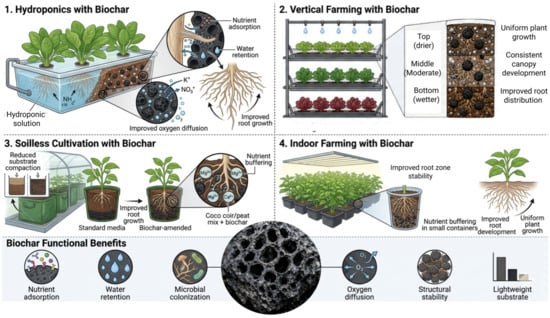
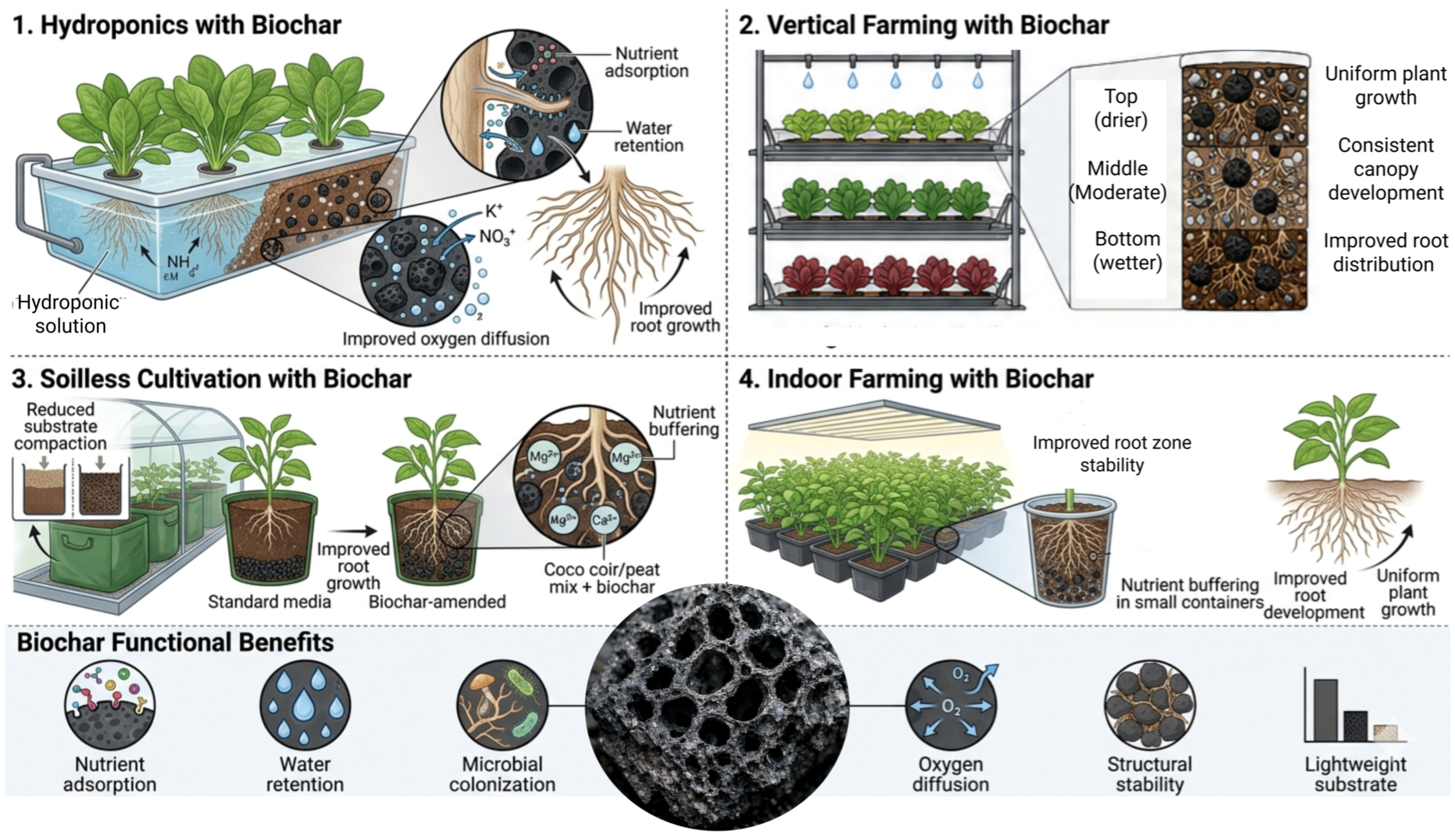
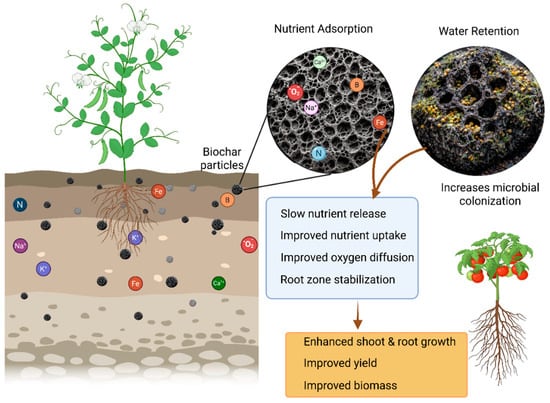
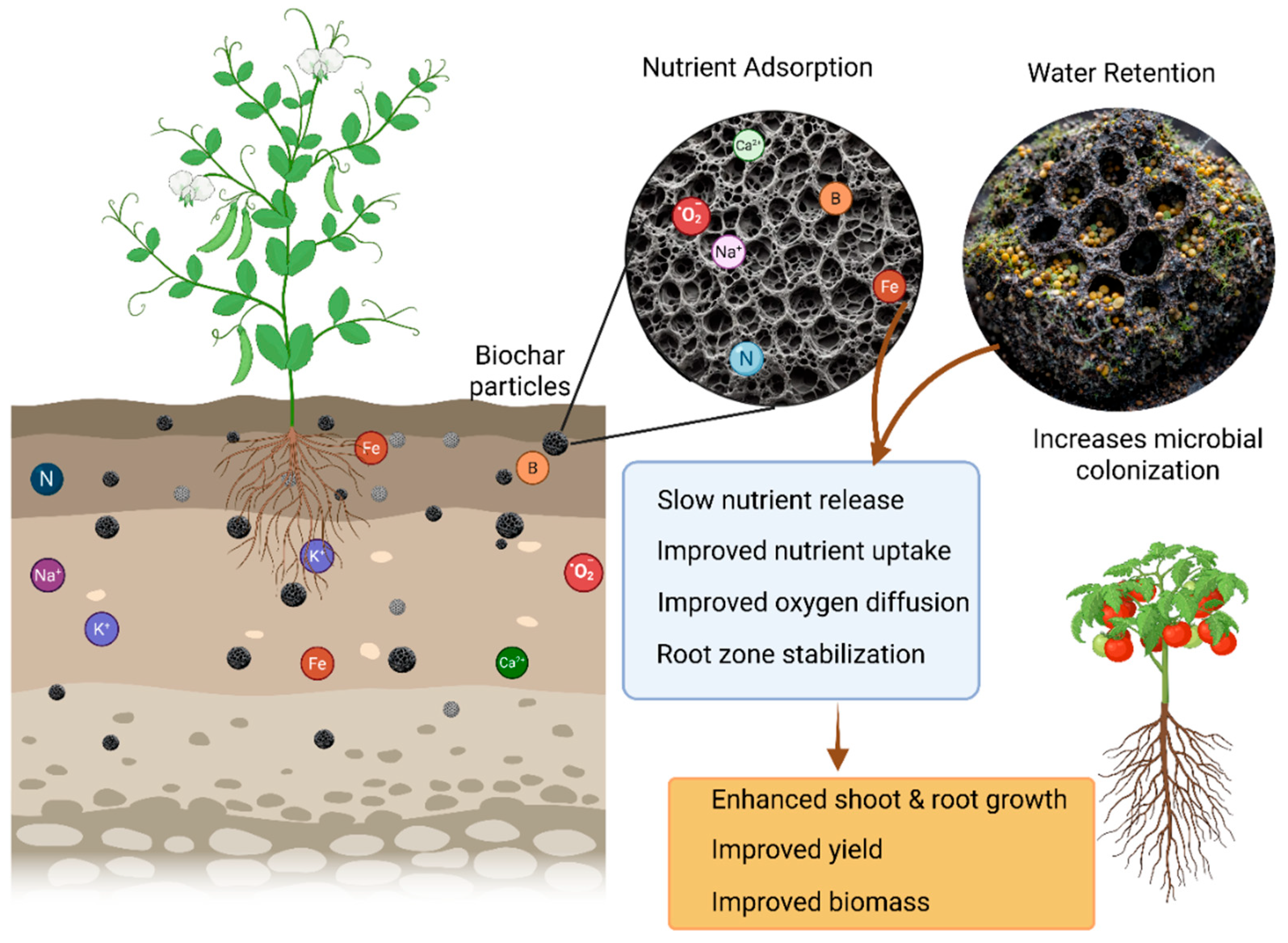
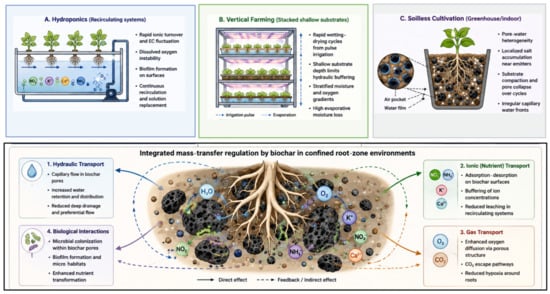
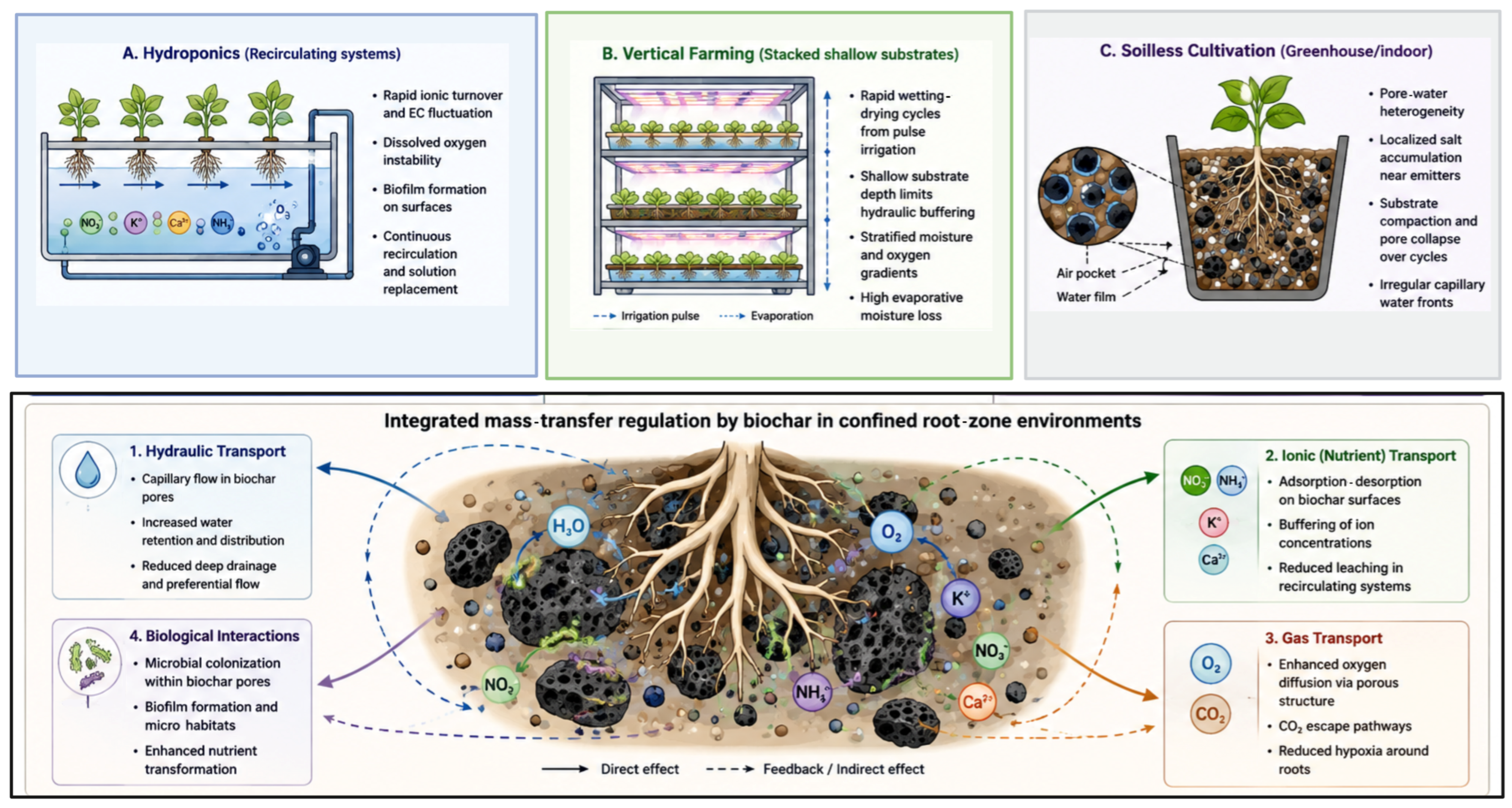

Disclaimer/Publisher’s Note: The statements, opinions and data contained in all publications are solely those of the individual author(s) and contributor(s) and not of MDPI and/or the editor(s). MDPI and/or the editor(s) disclaim responsibility for any injury to people or property resulting from any ideas, methods, instructions or products referred to in the content. |
© 2026 by the authors. Licensee MDPI, Basel, Switzerland. This article is an open access article distributed under the terms and conditions of the Creative Commons Attribution (CC BY) license.