Article

Effects of Organic/Synthetic Fertilizers on Stimulated Biosynthesis of Polyphenol Compounds: Efficiency and Sustainability of Plants and Weeds in Monoculture and Competitive Conditions

1
Institute for Plant Protection and Environment, 11040 Belgrade, Serbia
2
Faculty of Applied Ecology Futura, University of Metropolitan, 11000 Belgrade, Serbia
3
Biotechnology Research Center, Alfournag, Tripoli 13.18.200, Libya
4
Institute for the Application of Science in Agriculture, 11000 Belgrade, Serbia
*
Author to whom correspondence should be addressed.
Agronomy 2026, 16(14), 1334; https://doi.org/10.3390/agronomy16141334
Submission received: 19 May 2026 / Revised: 3 July 2026 / Accepted: 7 July 2026 / Published: 13 July 2026
(This article belongs to the Section Plant-Crop Biology and Biochemistry)

Abstract

Intensified use of fertilizers enhances crop yield; however, it can also make weed management more challenging. In addition to providing nutrients to crops, fertilizers also provide nutrients to weeds when they grow together with crops. All this leads to competition between crops and weeds, which is an important source of biotic stress. As a defense mechanism against biotic stress, plants accumulate polyphenolic compounds and increase antioxidant activity. This study aims to quantify the influence of organic and synthetic fertilizers on weed behavior and competitiveness in agroecosystems by evaluating total phenol content, polyphenolic acids (chlorogenic, ferulic, p-coumaric, and trans-cinnamic) content, and their antioxidative activity in weeds (Avena fatua and Abutilon theophrasti) and wheat and their rhizospheres across different cultivation systems (monoculture vs. competitive conditions). Our study showed that under competitive conditions, the use of fertilizers significantly increased the concentration of selected individual phenolic acids in all tested species (weeds and wheat) compared to monoculture. In addition, the level of antioxidant activity and total phenolic content in the weed leaves (Avena fatua and Abutilon teophrasti) was higher compared to the control after the application of all tested fertilizers when grown in competition with wheat (total phenolic content in Avena fatua: C vs. F1 p = 0.025 *, C vs. F3 p = 0.008 **; in Abutilon teophrasti: C vs. F2 p = 0.0000 **). The application of all tested fertilizers affected the increase in antioxidant activity in weed plants (p = 0.0000 ** in Avena fatua and in Abutilon teophrasti C vs. F1, p = 0.013 *, and C vs. F2, p = 0.0012 **). This shows that, in plants, response to stress levels not only total phenol, but also their antioxidative activity should be taken into consideration.

1. Introduction

Agricultural production relies heavily on regular management using various chemical methods (herbicides, fungicides, insecticides, fertilizers, etc.) in order to remove pathogens, insects, and weeds and achieve high yields. Heavy reliance on pesticides and fertilizers is associated with both beneficial and adverse effects. On the one hand, their application can enhance crop productivity and improve nutrient availability for cultivated plants. Conversely, their use may contribute to environmental contamination, compromise food quality, and increase nutrient availability for non-target, i.e., weeds. Fertilizers, whether of organic or synthetic origin, promote plant growth and productivity [1,2].
Nowadays, agricultural producers must find environmentally friendly methods that will not reduce their yields and ensure sustainability in the system of growing demand for safe and healthy food. At a time when efforts are being made to replace conventional production with organic, the application of non-synthetic fertilizers occupies an important position within contemporary crop production systems. Fertilizers are known to stimulate yield growth, facilitate overcoming stressful conditions (frost, precipitation, high temperatures, etc.) [3], improve soil fertility, and generally maintain high yields in conditions of climate change [2]. However, a key question that emerges is whether fertilizers have similar effects on weed species. In the era of reduced pesticide use, weed species have greater opportunities for growth and establishment. Many alternative weed control methods (bioherbicides, mechanization, use of flame, hot water, and non-pesticide chemicals) have not proven to be as effective as pesticides [4,5].
The risk of uncontrolled fertilizer application leads to the biosynthesis of polyphenols in weeds as a mechanism of survival in stressful conditions (e.g., competition against crops). Polyphenols accumulate in various plant parts, epidermal and subepidermal cell shoots and leaves, vacuoles, etc. [6] and affect numerous processes (photosynthesis, regulation of gene expression, biosynthesis of growth hormones, respiration, etc.).
Also, through polyphenol biosynthesis, plants strengthen their defense mechanisms against herbivory and pathogen infection [7,8]. Another important aspect of polyphenol biosynthesis is their antioxidant activity, which changes under the influence of fertilizer application [9,10] and is closely related to strengthening plant resistance mechanisms under stress conditions: inhibiting enzymes involved in ROS formation (microsomal monooxygenase, succinoxidase, NADPH oxidase, etc.) and enhancing the activity of enzymes (antioxidants) capable of scavenging radicals [11].
The antioxidant activity of polyphenols in plants can also be attributed to their ability to chelate microelements, inhibit enzymes involved in ROS formation (glutathione-S-transferase, microsomal monooxygenase, mitochondrial succinoxidase, NADPH oxidase, xanthine oxidase, etc.), and enhance the activity of high-molecular-weight antioxidants (enzymes) capable of scavenging radicals [11].
The importance of monitoring polyphenol biosynthesis stems from the fact that weed species cause significant damage in agricultural production: consumption of water and nutrients, use of underground and aboveground space, competition for available light, acting as pathogens, and serving as insect hosts. Weed competitiveness increases significantly under stress conditions [12,13,14]. Therefore, investigating polyphenol biosynthesis and antioxidant activity in weed species following fertilizer application is relevant for evaluating the sustainability of fertilizer management from an ecological perspective in agricultural production systems. Previous research has indicated no significant differences between organic and synthetic fertilizers with respect to their effects on polyphenol content [15,16,17,18].
Given the considerations outlined above, several critical questions emerge. Do fertilizer applications also promote weed growth and enhance their competitive capacity within agroecosystems? Furthermore, what are the economic implications of fertilization in the context of crop–weed interactions? Addressing these issues requires an understanding of the physiological responses of weed species to nutrient inputs. Consequently, the present study was designed to investigate how different fertilizers influence the polyphenol content and antioxidant activity in selected weed species under two cultivation systems: monoculture conditions and competitive crop-weed interactions. By comparing these systems, we aimed to show whether fertilization changes the physiological responses of the weed, depending on the presence or absence of interspecific competition.

2. Materials and Methods

The experiments were conducted in 2021 in laboratory conditions of the Institute for Plant Protection and Environment, Belgrade, Serbia. Plants (Avena fatua, Abutilon theophrasti, and Triticum aestivum) were sown in 1-liter pots (after emergence, thinned to 6 plants per species; in monoculture to 12 plants) and grown under controlled conditions (25/22 °C day/night, 12/12 h photoperiod). Five cropping system combinations were established in three replicates. The plants were treated 25 days after germination (3 pots per treatment) with different fertilizers: F1, F2, and F3 (Table 1). The fertilizer concentrations used in the experiment are those recommended by the manufacturer.
TPC and phenolic acids were extracted from 3 g of plant material (crushed with liquid nitrogen) and 2.5 g of soil in which the plants were grown using 70% methanol in an ultrasonic bath (2 × 30 min), then filtered through a 0.45-µm PTFE filter. The content of total phenols and the individual phenolic acids was determined by the modified Folin–Ciocalteu method and high-performance liquid chromatography [19,20].
Total phenol content (TPC) was read at λ = 765 nm (LLG uniSpec2 Spectrophotometer, Lab Logistics Group GmbH, Meckenheim, Germany) and expressed as mg GAE/g fresh mass. Individual phenolic acids (chlorogenic, trans-cinnamic, p-coumaric, and ferulic) were quantified by liquid chromatography on a Nexera-XR Shimadzu system (Shimadzu Corporation, Kyoto, Japan) equipped with an SB C18 Zorbax column (4.6 × 250 mm, 5 µm pore size). A stock solution of individual phenolic acids at 1 mg/mL concentration was prepared in 70% methanol, from which diluted solutions were prepared. Samples (10 µL injection volume) ran at 1 mL/min, with detection at λ = 280 for trans-cinnamic acid and λ = 325 nm for chlorogenic, p-coumaric, and ferulic acids; concentrations were calculated via LabSolutions software Ver. 5.8x (μg/g f.m.).
Antioxidant activity (AA) was determined using the DPPH method [21] and expressed as Trolox equivalent (TE). Tenfold-diluted plant extracts (200 µL) were mixed with 3.8 mL of 0.1 mM DPPH reagent, incubated for 30 min in the dark, and read at λ = 517 nm on an LLG uniSpec2 spectrophotometer. Results are reported as μmol TE per g fresh mass (TE/g f.m).
Statistical analyses (ANOVA, MANOVA with LSD post hoc comparisons, and Student’s t-test) were performed in Stat 7 to evaluate the effects of cropping system and fertilizer treatment on phenolic content and antioxidant activity. All ANOVA data corrected by the Bonferroni test (FWER).

3. Results and Discussion

Synthetic fertilizers enhance soil productivity and stimulate microbial activity, thereby boosting crop yields [22,23]. Efforts to expand organic production, along with the rising prevalence of herbicide-resistant weeds, have renewed interest in how fertilization regimes alter crop weed dynamics in agroecosystems over time. Biofertilizers offer comparable agronomic benefits; however, with reduced air, water, and soil pollution and improved product quality in comparison to synthetic fertilizers [24]. Studies have shown that nutrients from fertilizers enhance crop biomass by enhancing leaf photosynthesis and secondary metabolite (polyphenol) production and confer stress tolerance in plants, animals, and humans. Polyphenols, as secondary metabolites, are the carriers of the defense systems in plants, animals, and humans [25,26,27]. They function as defensive allelochemicals that mediate competitive interactions in agroecosystems. Phenolic acids have different roles under stress conditions. Among them, chlorogenic acid generally enhances resistance to abiotic stress, ferulic acid, formed in the process of biosynthesis of phenylalanine and tyrosine, protects against UV radiation, p-coumaric acid exhibits allelopathic inhibition of seed germination (e.g., Lactuca sativa and Sorghum sudanese), and trans-cinnamic acid activates the galactose pathway, as part of a stress-response signaling [28,29,30,31].
In our study, the analysis of changes in the content of polyphenolic acids in weeds and wheat in monoculture after the application of fertilizers did not show a statistically significant difference (Supplementary File). It should be emphasized that chlorogenic, p-cumaric, and ferulic acids were detected in all plants in monoculture, but cinnamon acid only in Abutilon teophrasti (Supplementary File). Also, the content of total phenols did not vary regardless of the application of fertilizers (Supplementary File).
Statistical analysis (ANOVA) of changes in the content of polyphenolic acids in wheat and weed versus control plants under competition is shown in Table 2.
Based on the data analysis (Table 2), it can be concluded that in the conditions of competition with the weed species Avena fatua grown with wheat, there were no changes in the content of polyphenolic acids compared to the control after fertilizer application (Table 2). In wheat plants, a statistically significant increase in ferulic acid content was measured after application of F3 fertilizer in competition with Avena fatua. In competition with Abutilon teophrasti plants, there was a statistically significant increase in the content of chlorogenic acid (after application F3) and ferulic acid (except after application F1) (Table 2). The analysis (ANOVA) showed a statistically significant increase in the content of ferulic (after application F1 and F2) and p-coumaric acid (after application F1) in Abutilon teophrasti plants (Table 2). In wheat plants, a statistically significant increase in ferulic acid content was measured after application of F3 fertilizer in competition with Avena fatua. In competition with Abutilon teophrasti plants, there was a statistically significant increase in the content of chlorogenic acid (after application F3) and ferulic acid (except after application F1) (Table 2). In Abutilon teophrasti plants, a statistically significant increase in ferulic acid content was measured after the application of F1 and F2 fertilizers, and the content of p-coumaric acid after the application of F1 fertilizers, in competition with wheat plants (Table 2). ANOVA analysis also shows a greater effect of fertilizer F3 compared to F1 and F2 (Table 2).
This reciprocal enhancement of specific phenolic acids in weeds suggests that, under nutrient-rich, competitive scenarios, secondary-metabolite biosynthesis reinforces weed stress tolerance and allelopathic capacity, thereby strengthening their competitive advantage over wheat.
Bell and Naelewaja (2017) showed that supplemental N-P fertilization partially restored the competitive advantage of wheat vs. Avena fatua, and Agenbag and Villers (2006) point out that nitrogen fertilizers improved the germination of Avena fatua seeds from 21.6% to 76.1% [32,33], increased its biomass, and competitive advantage, compared to wheat plants [34,35].
In the case of the weed species Abutilon theophrasti, measurements show that added nitrogen has little effect on its polyphenol biosynthesis due to its weak ability to absorb nitrogen [36]. This was also shown in our study, where F3 (synthetic fertilizer) did not affect the growth of polyphenolic acids in plants (C vs. F3 non-significant differences) (Table 2) in both cultivation systems. Another effect of fertilizers is observed in the system of conventional production, where applied fertilizers increased the resistance of weeds (Setaria viridis, Amaranthus retroflexus) to the application of herbicides [37]. Additionally, the application of phosphorus fertilizers may enter metabolic routes that expedite the development of herbicide resistance [38].
Our results (ANOVA analysis) showed a greater effect in polyphenolic acid content in the case of synthetic fertilizers (F2, F3) (p < 0.05 *, p < 0.01 **) vs. organic fertilizer F1 (Table 2). The literature shows conflicting conclusions about the influence of different types of fertilizers on the content of polyphenolic acids as a basis for survival under stress conditions. Wendy et al. (2012) reported that organic nitrogen fertilizers promote phenolic-acid accumulation more than synthetic fertilizers, whereas they found comparable stimulation from potassium and phosphorus inputs [39,40]. In contrast, documented declines in phenolic acids following the addition of nitrogen [41,42]. Although today the total production of fertilizers is decreasing, the consumption of individual nutrients (N, P, K) continues to rise. Data for the period 2023–2025 indicate 5% increase in N use, 2% for P2O5, and 4% for K2O [43].
Competition in agroecosystems is typically quantified by plant density (individuals per m2), allelopathic interference, and shifts in defensive secondary metabolites. Many studies show that weeds often outperform crops.
Our results showed that under crop-weed competition, all tested species (wheat and weeds) accumulated more phenolic acids than under monoculture conditions (t-test, Table 3), signaling an up-regulated chemical defense. Therefore, in order to obtain the full effect of fertilizer application without unintentionally empowering weeds’ competitive ability, fertilizer applications should be based on site-specific crop demands, prevailing weed flora, and detailed soil diagnostics.
In the experiments conducted, we also monitored the content of polyphenolic acids in the rhizosphere of the roots of the plants grown in different systems. The analysis of soil samples showed the presence only of trans-cinnamic acid and a decrease in the content of acid following the application of synthetic fertilizers (F2, F3) compared with control samples in Abutilon teophrasti rhizosphere grown under monoculture conditions (C = 15.51, after F1 = 1.74 mg/kg soli, after F2 = 0 mg/kg soli, after F3 = 0.93 mg/kg soli; C vs. F1 0.01 *, C vs. F2 0.000 **, C vs. F3 0.000 **). In the other growing conditions/combinations, phenolic acids were not detected. The absence of polyphenolic acids in the soil observed in our study is contrary to findings from other researchers [44,45,46]. Some studies have shown that phenolic acids (p-coumaric, trans-cinnamic) were detected in the rhizosphere of Avena fatua vs. wheat after the application of synthetic fertilizers, likely contributing to its competitive advantage [44,45].
The presence of ferulic and p-coumaric acids in crop rhizosphere further enhances their competitive advantage, as even low concentrations (10−4 to 10−3) can inhibit the germination of some weeds (e.g., Raphanus sativus) [46]. Blum et al. (1991) point out that a mixture of phenolic acids (wheat rhizosphere) inhibits the growth of roots and hypocotyls of Trifolium incarnatum [47]. The allelopathic competitiveness of Avena fatua is attributed to its production of a diverse number of allelochemicals (p-coumaric, 4-hydrobenzoic, vanillic, and ferulic acids) [44,45]. This weed species produces and secretes allelochemicals into the rhizosphere depending on the current developmental conditions [44,48]. Similar allelochemicals have been detected in the rhizosphere of Avena fatua and other cereals [48,49,50]. In the experiment carried out in the Abutilon theophrasti rhizosphere, only trans-cinnamic acid was detected, although other studies suggest that Abutilon theophrasti can produce a broader spectrum of phenolic compounds (cyanidin, quercetin, delphinidin, myricetin, catechin, and epicatechin) [51]. However, since this is a small-scale laboratory experiment, the lack of detection may be attributed to the experimental conditions. This aspect of the experiment can be viewed as preliminary and provides a robust foundation for future investigations under field conditions.
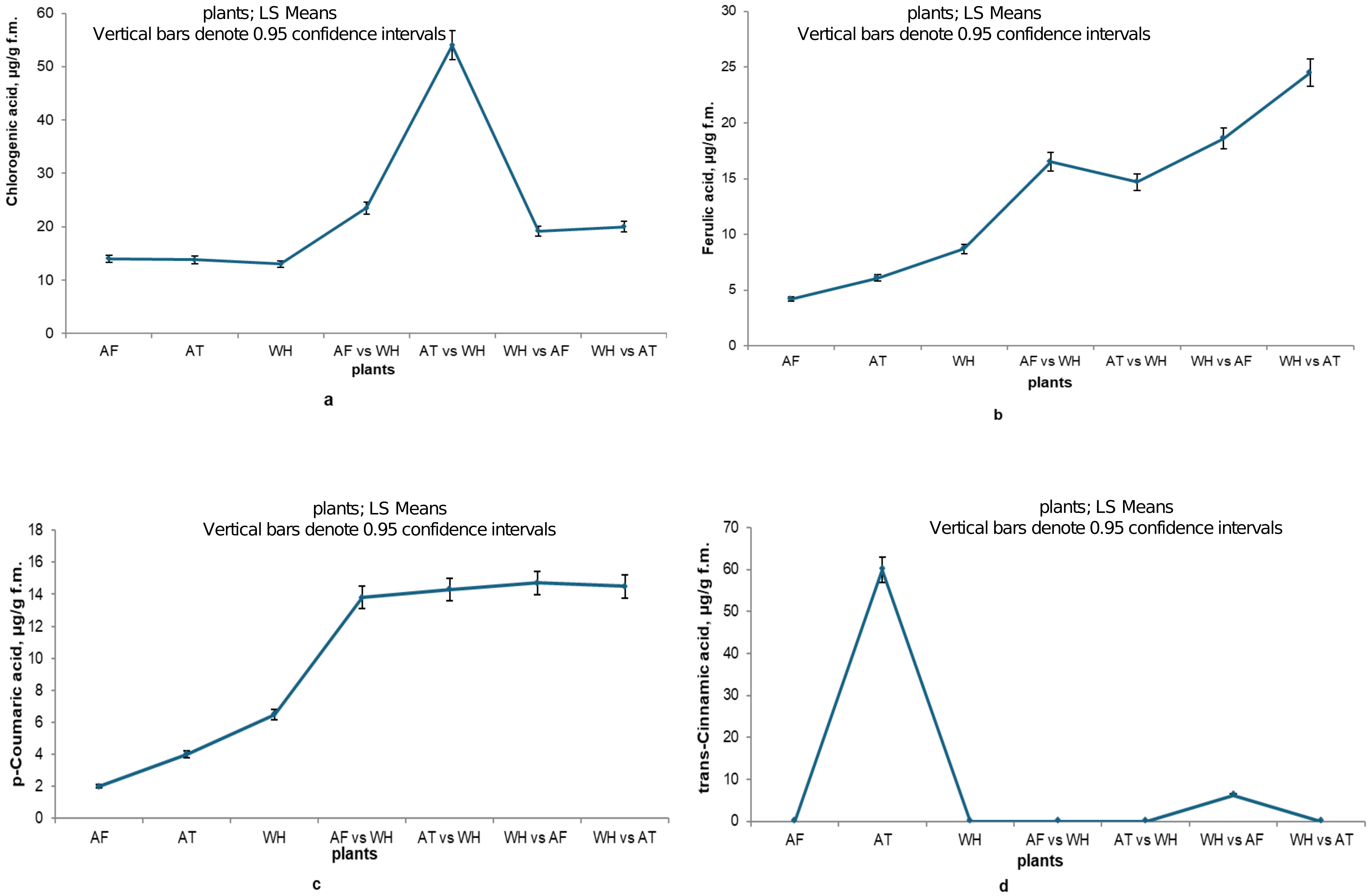
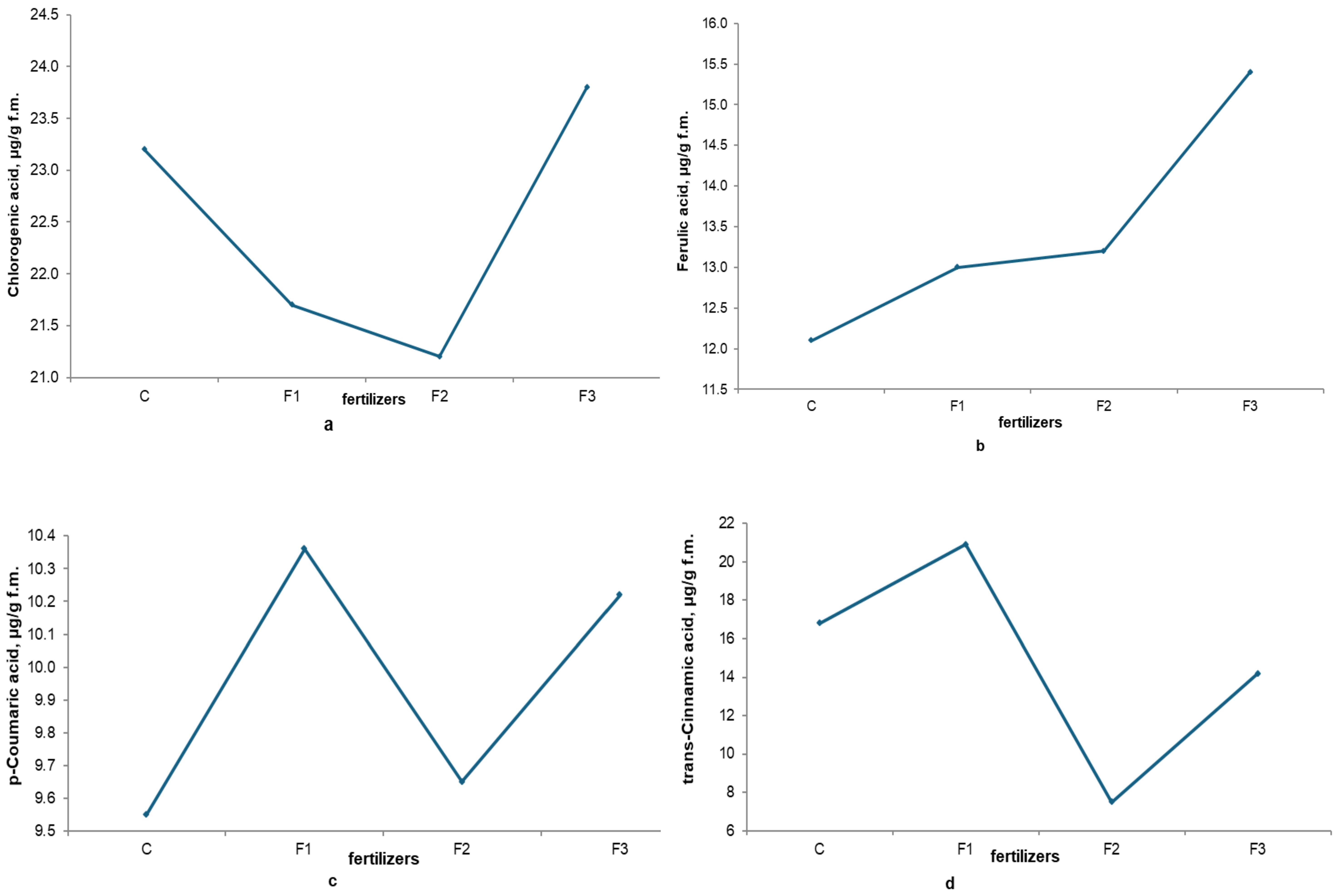
In our study, bifactorial analysis (MANOVA) showed that growing systems (Figure 1a–d) and applied fertilizers (Figure 2a–d) have a greater influence on phenolic acid content vs. plant species. In Avena fatua, under competition, all acid concentrations increased significantly when Avena fatua was grown with wheat (Figure 1a–d). In Abutilon theophrasti, an elevated phenolic acid content was noted in both monoculture and competitive conditions, except for chlorogenic acid in monoculture and trans-cinnamic acid in competition with wheat (Figure 1a–d). These findings indicate that under competitive conditions, weeds increase their allelopathic responses and, consequently, their competitive activity. On the other hand, wheat exhibited a higher content of ferulic and p-coumaric acids across both cultivation systems, apart from trans-cinnamic acid in competition with weeds (Figure 1a–d). The elevated levels of ferulic acid in wheat likely reflect its naturally high content in cereal tissues (maize 98.9%, wheat 98.8%, oats 97.8%) and the fact that wheat increases its competitive/allelopathic advantage through the biosynthesis of p-coumaric, vanillic, ferulic acids, etc. [47,52,53].
Specifically, fertilizer F1 reduced chlorogenic acid content while simultaneously elevating the concentrations of all other phenolic acids. Fertilizer F2 decreased both chlorogenic and trans-cinnamic acids, increased ferulic acid, and had no impact on p-coumaric acid content. In contrast, Fertilizer F3 increased the levels of chlorogenic, ferulic, and p-coumaric acids, while reducing trans-cinnamic acid content relative to the control (Figure 2a–d).
These findings (Figure 1 and Figure 2) highlight that nutrient management in agroecosystems must be done in a controlled manner, emphasizing that crop fertilization should be tailored to match the specific nutritional requirements of the crops.
Although competition between crops and weeds is defined by the growth rate of plants and their biomass, as well as morphological characteristics (height, branching, leaf angle, etc.), an important factor is the antioxidant activity of polyphenols. Many physiological and environmental factors, as well as agricultural practices, influence not only antioxidative activity, but also the antioxidative activity mechanisms [54]. Reactive molecules can disrupt cellular redox balance, leading to oxidative stress [55]. Each free radical binds to the nearest stable molecule through a chain reaction, turning them into new free radicals, which potentially leads to lipid peroxidation in cell membranes and cell collapse (oxidative stress) [56]. In response, plants activate intrinsic defense systems by synthesizing antioxidants, including polyphenols and related enzymes [57]. Our research confirms that the concentration and activity of these polyphenols are more directly correlated with fertilizer application than with the growing conditions per se, highlighting the critical role of nutrient management in modulating antioxidative defenses.
Observations of total phenol content and their antioxidative activity in weed species grown in competition with wheat revealed that fertilizer application led to statistically significant effects compared with the control (ANOVA, Table 4 and Table 5). This effect was independent of fertilizer type (organic, synthetic). In wheat plants grown in competition with Avena fatua, total phenol content decreased significantly from 0.888 µg/g f.m. in monoculture to 0.582 mg GAE/g f.m. (milligram of gallic acid equivalent per gram of fresh mass) under competitive conditions, regardless of the fertilizer type. Moreover, when wheat was grown in competition with Abutilon theophrasti, the total phenol content decreased even further to 0.262 mg GAE/g f.m., in line with [48]. In contrast, ref. [58] have suggested that nitrogen derived from applied fertilizers can stimulate the activity of phenylalanine ammonium lyase, thereby enhancing phenol biosynthesis in wheat [59].
Comparison of Table 2 and Table 4 showed that in Avena fatua plants, there were no statistical changes in the content of individual acids after fertilizer application, contrary to a statistically significant increase in total phenol content after F1 and F3 fertilizer application (C vs. F1 = 0.025 *, C vs. F3 = 0.008 *). In wheat plants competing with Avena fatua, the content of total phenol was statistically significant after the application of the tested fertilizers, while the antioxidant activity was increased after the application of F2 and F3. However, this correlation does not exist in competition with Abutilon teophrasti plants. This can be explained by the fact that other phenolic compounds that were not the subject of this research (flavonoids, hydroxybenzoic acids, and other secondary metabolites) contribute to the antioxidant activity of plants. This knowledge can be used as a basis for further research.

4. Conclusions

In monoculture, fertilizer application did not affect polyphenol content in either crops or weeds. By contrast, under competitive conditions, all tested species showed significant increases in phenolic acid content. Bifactorial analysis revealed that the type of applied fertilizer had a stronger influence on the content of phenolic acids than the plant species. In cropping systems where Avena fatua and Abutilon theophrasti competed with wheat, fertilizer application, whether organic or synthetic, resulted in enhanced total phenol content and antioxidative activity compared with controls in all tested plants. These findings highlight the importance of tailoring fertilizer application to the specific nutritional needs of crops, as indiscriminate nutrient application may inadvertently support weed survival under stress conditions compared to crops (lack of moisture, rise in temperature, etc.). Therefore, it is necessary to monitor the effect of various agrotechnical methods (fertilization, crop protection, etc.) on the weed population in agrophytocoenoses. This type of analysis is important in the long term, especially in the conditions of the organic production system of cultivated plants, which will be the subject of future research. However, the study was conducted in laboratory conditions, in small pots, which limits the direct extrapolation of the results to field conditions. Further greenhouse and field experiments are needed to confirm the practical implications for weed management and fertilization strategies.

Supplementary Materials

The following supporting information can be downloaded at: https://www.mdpi.com/article/10.3390/agronomy16141334/s1. Impact of fertilizer treatment on the TPC and polyphenolic acids in the examined plants and soil.

Author Contributions

Conceptualization and methodology, D.Š. and S.Đ.; validation, S.J.; formal analysis, M.A.E.; investigation, D.Š., A.A., S.J., and L.N.; writing—original draft preparation, D.Š. and S.J.; writing—review and editing, A.A., S.J., and S.Đ. All authors have read and agreed to the published version of the manuscript.

Funding

The authors would like to acknowledge the financial support of the Ministry of Science, Technological Development, and Innovation of the Republic of Serbia (Grants No. 451-03-33/2026-03/200010 and 451-03-33/2026-03/200045).

Data Availability Statement

The original contributions presented in this study are included in the article/Supplementary Materials. Further inquiries can be directed to the corresponding author.

Conflicts of Interest

The authors declare no conflicts of interest.

References

  1. FAO. World Fertilizer Trends and Outlook to 2022; Food and Agriculture Organization of the United Nations: Rome, Italy, 2022.
  2. Bayu, T. Review on contribution of integrated soil fertility management for climate change mitigation and agricultural sustainability. Cogent Environ. Sci. 2020, 6, 1823631. [Google Scholar] [CrossRef]
  3. Monteiro, E.; Gonçalves, B.; Cortez, I.; Castro, I. The Role of Biostimulants as Alleviators of Biotic and Abiotic Stresses in Grapevine: A Review. Plants 2022, 11, 396. [Google Scholar] [CrossRef] [PubMed]
  4. Moss, S. Integrated weed management (IWM): Why are farmers reluctant to adopt non-chemical alternatives to herbicides? Pest Manag. Sci. 2019, 75, 1205–1211. [Google Scholar] [PubMed]
  5. Mennan, H.; Jabran, K.; Zandstra, B.H.; Pala, F. Non-chemical weed management in vegetables by using cover crops: A review. Agronomy 2020, 10, 257. [Google Scholar] [CrossRef]
  6. Zagoskina, N.V.; Zubova, M.Y.; Nechaeva, T.L.; Kazantseva, V.V.; Goncharuk, E.A.; Katanskaya, V.M.; Baranova, E.N.; Aksenova, M.A. Polyphenols in plants: Structure, biosynthesis, abiotic stress, regulation, and practical applications. Int. J. Mol. Sci. 2023, 24, 13874. [Google Scholar] [CrossRef] [PubMed]
  7. Singh, S.; Kaur, I.; Kariyat, R. The multifunctional roles of polyphenols in plant-herbivore interactions. Int. J. Mol. Sci. 2021, 22, 1442. [Google Scholar] [CrossRef] [PubMed]
  8. Pratyusha, S. Phenolic compounds in the plant development and defense: An overview. In Plant Stress Physiology Perspectives in Agriculture; Hasanuzzaman, M., Nahar, K., Eds.; IntechOpen: London, UK, 2022; pp. 1–17. [Google Scholar]
  9. El-Nakhel, C.; Pannico, A.; Graziani, G.; Kyriacou, M.C.; Gaspari, A.; Ritieni, A.; De Pascale, S.; Rouphael, Y. Nutrient Supplementation Configures the Bioactive Profile and Production Characteristics of Three Brassica L. Microgreens Species Grown in Peat-Based Media. Agronomy 2021, 11, 346. [Google Scholar] [CrossRef]
  10. Ma, Y.; Zhang, S.; Feng, D.; Duan, N.; Rong, L.; Wu, Z.; Shen, Y. Effect of different doses of nitrogen fertilization on bioactive compounds and antioxidant activity of brown rice. Front. Nutr. 2023, 10, 1071874. [Google Scholar] [CrossRef] [PubMed]
  11. Dias, M.C.; Pinto, D.; Silva, A.M.S. Plant flavonoids: Chemical characteristics and biological activity. Molecules 2021, 26, 5377. [Google Scholar] [CrossRef] [PubMed]
  12. Swanton, C.; Vazan, S. Influence of agronomic practices on the persistence of weed seedbanks. In Persistence Strategies of Weeds; Wiley: Hoboken, NJ, USA, 2022; pp. 184–199. [Google Scholar]
  13. Ramesh, K.; Matloob, A.; Aslam, F.; Florentine, S.; Chauhan, B.S. Weeds in a Changing Climate: Vulnerabilities, Consequences, and Implications for Future Weed Management. Front. Plant Sci. 2017, 8, 95. [Google Scholar] [CrossRef] [PubMed]
  14. Isah, T. Stress and Defense Responses in Plant Secondary Metabolites Production. Biol. Res. 2019, 52, 39. [Google Scholar] [CrossRef] [PubMed]
  15. Mditshwa, A.; Magwaza, L.S.; Tesfay, S.Z.; Mbili, N.C. Postharvest quality and composition of organically and conventionally produced horticultural crops: A review. Sci. Hortic. 2017, 216, 148–159. [Google Scholar]
  16. Neugart, S.; Wiesner-Reinhold, M.; Frede, K.; Jander, E.; Homann, T.; Rawel, H.M.; Schreiner, M.; Baldermann, S. Effect of Solid Biological Waste Compost on the Metabolite Profile of Brassica rapa ssp. chinensis. Front. Plant Sci. 2018, 9, 305. [Google Scholar] [CrossRef] [PubMed]
  17. López-Yerena, A.; Lozano-Castellón, J.; Olmo-Cunillera, A.; Tresserra-Rimbau, A.; Quifer-Rada, P.; Jiménez, B.; Pérez, M.; Vallverdú-Queralt, A. Effects of Organic and Conventional Growing Systems on the Phenolic Profile of Extra-Virgin Olive Oil. Molecules 2019, 24, 1986. [Google Scholar] [CrossRef] [PubMed]
  18. Heimler, D.; Romani, A.; Ieri, F. Plant polyphenol content, soil fertilization and agricultural management: A review. Eur. Food Res. Technol. 2017, 243, 1107–1115. [Google Scholar] [CrossRef]
  19. Singleton, V.L.; Orthofer, R.; Lamuela-Raventos, R. Analysis of total phenols and other oxidation substrates and antioxidants by means of folin-ciocalteu reagent. Methods Enzymol. 1999, 299, 152–178. [Google Scholar] [CrossRef]
  20. Robbins, R.J. Phenolic acids in foods: An overview of analytical methodology. J. Agric. Food Chem. 2003, 51, 2866–2887. [Google Scholar] [CrossRef] [PubMed]
  21. Gil, M.I.; Tomás-Barberán, F.A.; Hess-Pierce, B.; Kader, A.A. Antioxidant capacities, phenolic compounds, carotenoids, and vitamin C contents of nectarine, peach, and plum cultivars from California. J. Agric. Food Chem. 2002, 50, 4976–4982. [Google Scholar] [CrossRef] [PubMed]
  22. Agbede, T.M.; Ojeniyi, O.S.; Adeyemo, J.A. Effect of poultry manure on soil physical and chemical properties, growth and grain yield of sorghum in southwestt. Nigeria. Am.-Eurasian J. Sustain. Agric. 2008, 2, 72–77. [Google Scholar]
  23. Muhammad, D.; Khattak, R.A. Growth and nutrient concentration of maize in press mud treated saline-sodic soils. Soil Environ. 2009, 28, 145–155. [Google Scholar]
  24. Savci, S. Investigation of effect of chemical fertilizers on environment. APCBEE Procedia 2012, 1, 287–292. [Google Scholar] [CrossRef]
  25. Chen, Y.H.; Liu, L.; Guo, Q.S.; Zhu, Z.B.; Zhang, L.X. Effects of different water management options and fertilizer supply on photosynthesis, fluorescence parameters and water use efficiency of Prunella vulgaris seedlings. Biol. Res. 2016, 49, 12. [Google Scholar] [CrossRef] [PubMed]
  26. Moore, J.; Hao, Z.; Zhou, K.; Luther, M.; Costa, J.; Yu, L.L. Carotenoid, tocopherol, phenolic acid, and antioxidant properties of Maryland-grown soft wheat. J. Agric. Food Chem. 2005, 53, 6649–6657. [Google Scholar] [CrossRef] [PubMed]
  27. Naczk, M.; Shahidi, F. Phenolics in cereals, fruits and vegetables: Occurrence, extraction and analyses. J. Pharm. Biomed. Anal. 2006, 41, 1523–1542. [Google Scholar] [PubMed]
  28. Farah, A.; Donangelo, C.M. Phenolic compounds in coffee. Braz. J. Plant Physiol. 2006, 18, 23–36. [Google Scholar] [CrossRef]
  29. Graf, E. Antioxidant potential of ferulic acid. Free Radic. Biol. Med. 1992, 13, 435–448. [Google Scholar] [CrossRef] [PubMed]
  30. Berrie, A.M.M.; Parker, W.; Knights, B.A.; Hendrie, M.R. Studies on lettuce seed germination-I. Coumarin induced dormancy. Phytochemistry 1968, 7, 567–573. [Google Scholar] [CrossRef]
  31. Wang, J.Y.; Yao, D.D.; Xu, C.X.; Zhao, G.Q.; Hua, C.L. Effect of coumarin on sorghum sudanense seed germination and seedling growth. Pratacult. Sci. 2017, 34, 2279–2288. [Google Scholar]
  32. Agenbang, G.A.; de Villiers, O.T. The effect of nitrogen fertilizers on the germination and seedling emergence of wild oat (A. fatua L.) seed in different soil types. Weed Res. 2006, 29, 239–245. [Google Scholar] [CrossRef]
  33. Bell, R.A.; Nalewaja, D.J. Competition of Wild oat in wheat and barley. Weed Sci. 2017, 16, 505–508. [Google Scholar]
  34. Sexsmith, J.; Pittman, U. Effect of nitrogen fertilizers on germination and stand of wild oats. Weeds 1963, 11, 99–101. [Google Scholar] [CrossRef]
  35. Pourreza, J.; Bahrani, A. Effects of Nitrogen Fertilizer on Wild Oat (Avena fatua) Competition with Wheat (Triticum aestivum). In Proceedings of the 5th International Conference on Environment Science and Engineering; Springer: Berlin/Heidelberg, Germany, 2015; Volume 83. [Google Scholar]
  36. Bonifas, D.K.; Walters, T.D.; Cassman, K.G.; Lindquist, J.L. Nitrogen supply aff ogen supply affects root:shoot r oot:shoot ratio in corn and v atio in corn and velvetleaf (Abutilon theophrasti). Weed Sci. 2005, 53, 670–675. [Google Scholar]
  37. Cathcart, R.; Chandler, K.; Swanton, C. Fertilizer nitrogen rate and the response of weeds to herbicides. Weed Sci. 2009, 52, 291–296. [Google Scholar]
  38. Achary, V.M.M.; Ram, B.; Manna, M.; Datta, D.; Bhatt, A.; Reddy, M.K.; Agrawa, P.K. Phosphite: A novel P fertilizer for weed management and pathogen control. Plant Biotechnol. J. 2017, 15, 1493–1508. [Google Scholar] [CrossRef] [PubMed]
  39. Wendy, A.; Johnson, W.J.; Raymond, A.; Cloyd, R.A.; Nechols, J.R.; Williams, K.A.; Nathan, O.; Nelson, N.O.; Rotenberg, D.; Kennelly, M.M. Effect of nitrogen source on pac choi (Brassica rapa L.) chemistry and interactions with the diamondback moth (Plutella xylostella L.). HortScience 2012, 47, 1457–1465. [Google Scholar] [CrossRef]
  40. Mudau, T.N.; Soundy, P.; Du Toits, E.S. Nitrogen, phosphorus and potassium nutrition increases growth and total polyphenol concentrations of bush tea in a shaded nursery environment. HortTechnology 2007, 17, 107–110. [Google Scholar] [CrossRef]
  41. Li, Y.; Gou, G.; Zhang, Q.; Su, Q.; Xiao, G. Heavy metal contamination and source in arid agricultural soil in central Gansu Province. J. Environ. Sci. 2008, 20, 607–612. [Google Scholar] [CrossRef]
  42. Biesiada, A.; Nawirska-Olszanska, A.; Kucharska, A.; Sokół-Łetowska, A.; Kadra, K. The effect of nitrogen fertilization on nutritive value and antioxidative activity of red cabbage. Acta Sci. Pol. Hortorum Cultus 2010, 9, 13–21. [Google Scholar]
  43. IFA—International Fertilizer Association. Available online: www.fertilizer.org (accessed on 6 July 2026).
  44. Schumacher, W.J.; Thill, D.C.; Lee, G.A. Allelopathic potential of wild oat (Avena fatua) on spring wheat (Triticum aestivum) growth. J. Chem. Ecol. 1983, 9, 1235–1245. [Google Scholar] [CrossRef] [PubMed]
  45. Iannucci, A.; Fragasso, M.; Platani, C.; Narducci, A.; Miullo, V.; Papa, R. Dynamics of release of allelochemical compounds from roots of wild oat (Avena fatua L.). Agrochimica 2012, 56, 185–192. [Google Scholar]
  46. Lodhi, M.A.K.; Bilal, R.; Malik, K.A. Allelopathy in agroecosystems: Wheat Phytotoxicity and its Possible Roles in Crop Rotation. J. Chem. Ecol. 1987, 13, 1881–1891. [Google Scholar] [CrossRef] [PubMed]
  47. Blum, U.; Wentworth, T.R.; Klein, K.; Worsham, A.D.; King, L.D.; Gerig, T.M.; Lyu, S.W. Phenolic acid content of soils from wheat-no till, wheat-conventional till, and fallow-conventional till soybean cropping systems. J. Chem. Ecol. 1991, 17, 1045–1068. [Google Scholar] [PubMed]
  48. Wu, H.; Haig, T.; Prately, J.; Lemerle, D.; An, M. Allelochemicals in wheat (Triticum aestivum L.): Variation of phenolic acids in root tissues. J. Agric. Food Chem. 2001, 48, 5321–5325. [Google Scholar]
  49. Pérez, F.J.; Ormeno-Nuñez, J. Root exudates of wild oats: Allelopathic effect on spring wheat. Phytochemistry 1991, 30, 2199–2202. [Google Scholar] [CrossRef]
  50. He, H.B.; Lin, W.X.; Wang, H.B.; Fang, C.X.; Liang, Y.Y. Analysis of metabolites in root exudates from allelopathic and non allelopathic rice seedlings. Allelopath. J. 2006, 18, 247–254. [Google Scholar]
  51. Paszkowski, W.L.; Kremer, R.J. Biological activity and tentative identification of flavonoid components velvetleaf (Abutilon theophrasti Medik.) seed coats. J. Chem. Ecol. 1988, 14, 1573–1582. [Google Scholar] [CrossRef] [PubMed]
  52. Adom, K.K.; Liu, R.H. Antioxidant activity of grains. J. Agric. Food Chem. 2002, 50, 6182–6187. [Google Scholar] [CrossRef] [PubMed]
  53. Einhellig, F.A. Mechanism of action of allelochemicals in allelopathy. In Allelopathy; American Chemical Society: Washington, DC, USA, 1995; pp. 96–116. [Google Scholar]
  54. Ksouri, R.; Megdiche, W.; Falleh, H.; Trabelsi, N.; Boulaaba, M.; Smaoui, A.; Abdelly, C. Influence of biological, environmental and technical factors on phenolic content and antioxidant activities of Tunisian halophytes. Comptes Rendus Biol. 2008, 331, 865–873. [Google Scholar] [CrossRef]
  55. Vaya, J.; Aviram, M. Nutritional antioxidants: Mechanisms of action, analyses of activities and medical applications. Curr. Med. Chem.-Immunol. Endocr. Metab. Agents 2001, 1, 99–107. [Google Scholar] [CrossRef]
  56. Kaur, C.; Kapoor, H. Antioxidant in fruits and vegetables—The millennium’s health. Int. J. Food Sci. Technol. 2001, 36, 703–725. [Google Scholar]
  57. Wu, D.; Cederbaum, A. Alcohol, oxidative stress, and free radical damage. Alcohol Res. Health 2003, 27, 277–284. [Google Scholar] [PubMed]
  58. Haukioja, E.; Ossipov, V.; Koricheva, J.; Honkanen, T.; Larsson, S.; Lempa, K. Biosynthetic origin of carbon-based secondary compounds: Cause of variable responses of woody plants to fertilization? Chemoecology 1998, 8, 133–139. [Google Scholar] [CrossRef]
  59. Langenkamper, G.; Zorb, C.; Seifert, M.; Mader, P.; Fretzdorff, B.; Betsche, T. Nutritional quality of organic and conventional wheat. J. Appl. Bot. Food Qual. 2006, 80, 150. [Google Scholar]
Figure 1. Effect of growing system under fertilizer application on phenolic acid content in weeds and wheat (MANOVA); AF-Avena fatua, WH-wheat, AT-Abutilon teophrasti, (a) chlorogenic acid, (b) ferulic, (c) p-coumaric, (d) trans-cinnamic.
Agronomy 16 01334 g001
Figure 2. Effect of fertilizers application on phenolic acid content in different growing systems (MANOVA); (a) chlorogenic acid, (b) ferulic, (c) p coumaric, (d) trans-cinnamic, F1, F, and F3—fertilizers.
Agronomy 16 01334 g002
Table 1. Experimental design.
Cropping
System
Triticum aestivum Competition with Avena fatuaTriticum aestivum Competition with Abutilon theophrastiAbutilon theophrasti
Monoculture
Avena fatua
Monoculture
Triticum aestivum
Monoculture
Treatmentscontrol
F1—organic formulation (mixture of hydroxycinnamic acids: chlorogenic, carbonic, and cichoric acid, extracted from Echinacea purpurea L.),
Concentration of use: 15 µL/100 mL water
F2—organic/synthetic formulation (2% amino acids: alanine, serine, isoleucine, histidine; 2% organic carbon, vitamins; 1.7% nitrogen and trace elements in the form of a chelate complex (Fe, Zn, Mg, Ca, Mo, etc.)
Concentration of use: 1.5 mL/100 mL water F2—organic/synthetic formulation (2% amino acids: alanine, serine, isoleucine, histidine; 2% organic carbon, vitamins; 1.7% nitrogen and trace elements in the form of a chelate complex (Fe, Zn, Mg, Ca, Mo, etc.), 1.5 mL/100 mL water
F3—synthetic formulation (inorganic N (8%) with secondary elements Ca (10%) and Mg (1.14%)) and trace elements (Cu, Zn, Mo, and Fe (0.01%) and Mn (0.001%))
Concentration of use: 1.5 mL/100 mL water
Table 2. Statistical analysis of polyphenolic acids content under competition conditions.
Avena fatua—competition—wheat
ChlorogenicFerulicp-Coumarictrans-Cinnamic
C vs. F1nsnsnsnd
C vs. F2nsnsnsnd
C vs. F3nsnsnsnd
F1 vs. F2nsnsnsnd
F1 vs. F3nsnsnsnd
F2 vs. F3nsnsnsnd
SD4.022.850.60-
mean23.3316.5213.71-
Wheat—competition—Avena fatua
ChlorogenicFerulicp-Coumarictrans-Cinnamic
C vs. F1nsnsnsnd
C vs. F2nsnsnsnd
C vs. F3ns0.012 *nsnd
F1 vs. F2nsnsnsnd
F1 vs. F3ns0.042 *nsnd
F2 vs. F3nsnsnsnd
SD1.695.911.87-
mean19.2618.6314.68-
Wheat—competition—Abutilon theophrasti
ChlorogenicFerulicp-Coumarictrans-Cinnamic
C vs. F10.006 **nsnsnd
C vs. F2ns0.000 **nsnd
C vs. F30.000 **0.000 **nsnd
F1 vs. F2ns0.000 **nsnd
F1 vs. F3ns0.000 **nsnd
F2 vs. F30.018 *0.000 **nsnd
SD0.712.050.35-
mean20.0224.7414.54-
Abutilon theophrasti—competition—wheat
ChlorogenicFerulicp-Coumarictrans-Cinnamic
C vs. F1ns0.000 **0.018 *nd
C vs. F2ns0.048 *nsnd
C vs. F3nsnsnsnd
F1 vs. F2nsnsnsnd
F1 vs. F3ns0.000 **0.006 **nd
F2 vs. F3ns0.006 **nsnd
SD19.870.450.41-
mean54.3214.5914.38-
Fertilizers: F1, F2, F3; C—control; SD—standard deviation, p < 0.05 *, p < 0.01 **, ns—nonsignifficant differences, nd—not detected.
Table 3. Mean concentrations of phenolic acids (µg/g f.m.) in plants under competition versus monoculture conditions following fertilizer application (t-test).
Wheat competition with Avena fatua
ChlorogenicFerulicp-Coumarictrans-Cinnamic
tptptp
C-m vs. C-c−9.880.000 **−7.570.012 *−9.970.000 **nd
F1-m vs. F1-c−4.900.048 *−4.22ns−4.900.048 *nd
F2-m vs. F2-c−3.60ns−5.330.036 *−5.530.03 *nd
F3-m vs. F3-c−6.710.018 *−2.11ns−4.68nsnd
Wheat competition with Abutilon theophrasti
tptptp
C-m vs. C-c−9.110.000 **−13.410.000 **−10.920.000 **nd
F1-m vs. F1-c−4.56ns−4.860.048 *−13.140.000 **nd
F2-m vs. F2-c−5.010.042 *−7.110.012 *−6.530.018 *nd
F3-m vs. F3-c−6.960.018 *−2.11ns−5.190.036 *nd
Avena fatua competition with wheat
tptptp
C-m vs. C-c−3.090.036 *−16.870.000 *−12.050.000 **nd
F1-m vs. F1-c−2.65ns−11.100.000 **−95.890.000 **nd
F2-m vs. F2-c−14.220.000 **−3.980.016 *−12.620.000 **nd
F3-m vs. F3-c−9.3460.000 **−16.530.000 **−21.400.000 **nd
Abutilon theophrasti competition with wheat
tptptptp
C-m vs. C-c−9.42ns−23.730.000 **6.510.018 *148.910.000 **
F1-m vs. F1-c−2.60ns−39.970.000 **−43.160.000 **137.430.000 **
F2-m vs. F2-c−1.61ns−90.510.000 **−74.310.000 **79.180.000 **
F3-m vs. F3-c−26.990.000 **−11.370.000 **−30.610.000 **15.640.000 **
Fertilizers: F1, F2, F3; C—control; ns—nonsignificant differences, p < 0.05 *, p < 0.01 **, c—competition, m—monoculture, t-test, nd—not detected.
Table 4. Statistical analysis of the total phenol content and antioxidative activity in weeds grown in competition with wheat following the application of different fertilizers (ANOVA).
Avena fatua vs. WheatAbutilon theophrasti vs. Wheat
TPC mg GAE/g f.m.AA μmol TE/g f.m.TPC mg GAE/g f.m.AA μmol TE/g f.m.
C vs. F10.025 *0.000 **ns0.013 *
C vs. F2ns0.000 **0.000 **0.000 **
C vs. F30.008 **0.000 **nsns
F1 vs. F2ns0.000 **0.000 **0.000 **
F1 vs. F3ns0.000 **ns0.000 **
F2 vs. F3ns0.000 **0.000 **ns
SD0.183.741.571.36
mean0.725.898.999.91
Fertilizers: F1, F2, F3; C—control; SD—standard deviation; ns—nonsignificant differences; TPC—total phenol content, AA—antioxidative activity, p < 0.05 *, p < 0.01 **; mg GAE/g f.m.—milligram of gallic acid equivalent per gram of fresh mass; µmol TE/g f.m.—micromoles of Trolox equivalent per gram of fresh mass.
Table 5. Statistical analysis of the total phenol content and antioxidative activity in wheat plants grown in competition with weeds following the application of different fertilizers (ANOVA).
Wheat vs. Avena fatuaWheat vs. Abutilon theophrasti
TPC mg GAE/g f.m.AA μmol TE/g f.m.TPC mg GAE/g f.m.AA μmol TE/g f.m.
C vs. F10.000 **nsnsns
C vs. F20.000 **0.03 *nsns
C vs. F30.000 **0.018 *nsns
F1 vs. F2ns0.042 **nsns
F1 vs. F3ns0.024 *nsns
F2 vs. F3nsNsnsns
SD0.291.160.070.64
mean0.433.720.215.06
Fertilizers: F1, F2, F3; C—control; SD—standard deviation; ns—nonsignificant differences; TPC—total phenol content, AA—antioxidative activity, p < 0.05 *, p < 0.01 **; mg GAE/g f.m.—milligram of gallic acid equivalent per gram of fresh mass; µmol TE/g f.m.—micromoles of Trolox equivalent per gram of fresh mass.
Disclaimer/Publisher’s Note: The statements, opinions and data contained in all publications are solely those of the individual author(s) and contributor(s) and not of MDPI and/or the editor(s). MDPI and/or the editor(s) disclaim responsibility for any injury to people or property resulting from any ideas, methods, instructions or products referred to in the content.