


Abstract
Future climate models indicate an enhanced severity of regional drought and more frequent rewetting events, which may cause cascading impacts on the nitrogen cycle and nitrous oxide (N2O) emissions, and the underlying microbial mechanism remains largely unknown. Here we conducted an incubation study on the impact of different soil moisture statuses on N2O producers and N2O reducers following the application of different fertilizer types (urea and manure) on a neutral vegetable soil. The different soil moisture treatments included 100% field capacity, drought, and rewetting (50% to 100% field capacity). Results showed that the N2O emissions significantly decreased under drought conditions. Only ammonia-oxidizing archaea (AOA) and fungal nirK were well adapted to drought stress in the control soil. Different fertilizers modulated the resilience of the functional guilds. Ammonia-oxidizing bacteria (AOB), nirK-type denitrifying bacteria and nosZ clade (both I and II) showed significant resilience in both fertilized and non-fertilized soils in response to soil rewetting. Soil rewetting also changed the underlying microbial mechanisms of N2O emissions. The results show a more significant negative relationship between N2O emissions and nosZI clade at 100% field capacity, as well as nosZII clade after soil rewetting. We highlight the significant role of the nosZII clade following soil rewetting events, which might be one factor that led to relatively lower N2O emissions compared to those at 100% field capacity. Our results provide new insights into developing mitigation strategies by fostering nosZII, which should be studied further in other cropland ecosystems or vegetable systems with frequent irrigation.
1. Introduction
A recent US national climate assessment indicated that the future climate continues to change with enhanced severity and frequency of regional droughts [1]. Increasing drought can lead to rapid declines in microbial activities and functions, and thereby inhibit the rates of nutrient cycling and destroy ecosystem sustainability [2]. The influence of drought on nitrogen (N)-cycle-related microorganisms in vegetable soils is of particular importance as it links to crop yields and food supply [3,4]. Soil N cycling is a multi-microbial-driven process including archaeal, bacterial and fungal [5]. The microbial community responses generated by these multi-microbial interactions to drought stress can influence the N biochemical process and consequently alter the ecosystem function [6,7]. However, integrated understanding of the impact of drought on N-related microbes in vegetable soils remains limited, and there is a pressing need to establish ecosystem stability under future climate change conditions.
Nitrous oxide (N2O) is an intermediate product of the N cycle and is also an important greenhouse gas, with a warming potential about 295 times greater than that of carbon dioxide (CO2) [8]. About 65% of global N2O emissions are from agricultural soils where large amounts of N fertilizers are used [9]. N2O can be produced through nitrification and denitrification, which are driven by multiple soil microorganisms, including archaea (e.g., ammonia-oxidizing archaea, AOA), bacteria (including ammonia-oxidizing bacteria, AOB, and denitrifying bacteria), and fungi (e.g., denitrifying fungi) [10]. These N2O producers are sensitive to drought stress and their responses may vary depending on their different physiological and biochemical characteristics, as well as different soil conditions [2,11,12]. It was previously reported that in dryland ecosystems, AOA and denitrifying fungi have higher resistance to drought stress than AOB and denitrifying bacteria due to their stronger ability for osmoregulation and reactivation [13,14]. Unlike the many microbial and abiotic processes responsible for generating N2O, the reduction of N2O, the last step of denitrification, is catalyzed by N2O reductase and encoded by the nosZ gene [15]. Recently, a new clade named nosZ clade II (nosZII) was identified, which was distinctly different from the previous nosZ clade (nosZ clade I, nosZI) and remained less studied [16,17]. The nosZII clade has been shown to be abundant in agricultural soils and to be more sensitive to climatic factors than nosZI, such as temperature and soil moisture content [5,18]. Despite these increasing scientific efforts, knowledge of how these N2O-related functional guilds, including N2O producers and reducers, respond to drought stress, especially their niche separations in vegetable soil ecosystems, still remains vague.
Fertilization is a regular agricultural management practice in vegetable soils for promoting crop yields, which also contributes to substantial N2O emissions [19]. Likewise, fertilization can modulate the response of soil microbes to changed environmental conditions, and consequently alter N2O emissions [4,5]. This modulation effect is of particular importance during soil rewetting, as the fertilizers provide substantial substrates that remain available under conditions with sufficient moisture [2,20,21]. This may cause a pulse of microbial activity and provide hot spots for N2O emissions [21]. Different fertilizer types, such as urea or manure, can provide different forms of C and N during soil rewetting and influence the resilience of soil microbes [5]. However, how different fertilizers modulate the resilience of the N2O producers and reducers in response to soil drought and rewetting in vegetable soils remains largely unknown. Corresponding knowledge is critical for developing appropriate agricultural management systems to sustain agricultural production and mitigate N2O emissions.
In this study, we evaluated the response of N2O producers (including ammonia-oxidizing archaea (AOA), ammonia-oxidizing bacteria (AOB), nirS/K-type bacterial denitrifiers and fungal nirK-type denitrifiers) and N2O reducers (including nosZI and nosZII clades) to drought conditions (50% field capacity, FC), comparing them to 100% FC moisture content in vegetable soil. Additionally, we also studied their resilience when the soil moisture contents at 50% FC were rewetted to 100% FC with different fertilizer types (urea and manure) applied. We hypothesized that (1) the N2O producers and reducers would respond differently to drought conditions and may vary with different fertilizer types; (2) the application of different fertilizer types may modulate their resistance and resilience to drought and rewetting; and (3) the dominant microbes of N2O emissions may be distinctly different under different soil moisture contents.
2. Materials and Methods
2.1. Soil
A neutral vegetable soil classified as hydragric anthrosol was used for the incubation study. Surface soil (0–10 cm) was collected from a vegetable field in Changshu, Jiangsu province, China (31°32′ N, 120°41′ E). The site has a subtropical monsoon climate with a mean annual temperature of 17 °C and an annual rainfall of 1136 mm. The soil was thoroughly mixed and sieved through a 5 mm screen. The soil pH was 6.5 (H2O) and the soil properties were 1.3 g kg−1 total N, 12.4 g kg−1 organic C, 19.3 g kg−1 total K, 113 mg kg−1 available K, 1.4 g kg−1 total P and 13.2 mg kg−1 available P.
2.2. Soil Analyses
The soil pH was analyzed in a soil: water solution (1:2.5 w/v) by a Mettler Toledo pH meter (Mettler-Toledo, Zurich, Switzerland). Soil ammonium (NH4+) and nitrate (NO3−) contents were analyzed in 2 M KCl extracts from five grams of soil using a Lachat flow injection auto-analyzer (Lachat Instruments, Milwaukee, WI, USA) [22]. Soil total N and organic carbon were analyzed using the Kjeldahl method and the dichromate oxidation method, respectively. Soil total P was digested with H2SO4-HClO4, and available P was determined using the molybdenum blue method [23]. Soil total K was analyzed with NaOH and available K was measured by flame photometry.
2.3. Incubation Experiment
Two corresponding sets were conducted during the incubation experiment: one set for soil sampling to measure mineral N dynamics and functional microbial communities, and the other set for measuring N2O emissions. During pre-incubation, two soil moisture treatments were applied: 100% and 50% field capacity (FC), equivalent to 33.4% and 11% gravimetric soil water content, respectively. After 30 days of pre-incubation at 25 °C, half of the soil samples at 50% FC were changed to 100% FC, and there were three soil moisture treatments applied during the study period: 100% FC, 50% FC and 50% → 100% FC. For each soil moisture treatment, there were three N treatments: control (no N fertilizer), urea (300 kg N ha−1) and cow manure (composted and air-dried, 300 kg N ha−1). The soil samples were then placed in the incubator at 25 °C for 80 days in the dark. Each treatment had four replicates [24].
For the soil sampling experiment, fresh soil samples equivalent to 500 g of dry soil were sieved through a 5 mm screen and weighed in 1 L incubation vessels. A lid with two 0.5 mm diameter breathing holes was placed on top of the incubation vessel to allow air exchange. Urea was thoroughly mixed with soil by dissolving in 20 g of deionized water [25]. Manure was applied to the soil surface and then thoroughly mixed with the soil. The incubation vessels were placed inside the incubator in a randomized block design, and the soil moisture was maintained by weight by adjusting it twice per week. Soil samples were collected once a week in the first two months and then once a fortnight until the end of the study. The collected soil samples were used for mineral N or DNA analysis.
For the N2O sampling experiment, fresh soil samples equivalent to 500 g of dry soil were sieved through a 5 mm sieve and weighed into specifically designed incubation vessels. The special N2O measurement apparatus consisted of a specimen jar (diameter 12 cm, volume 1 L) with a N2O sampling system (a syringe needle fitted on the lid through a rubber septum). After the soils were placed inside the jar, half of the specimen jar space was left for N2O sampling. A breathing hole of 1 cm diameter on the lid was created to allow aeration during incubation between N2O sampling. During N2O sampling, the breathing hole was blocked with a rubber bung. The soil moisture was maintained by weight by adjusting it twice per week. The N2O samples were collected twice per week in the first month and then once per week until the end of the study. Over 40 min, 3 samples at 0 min, 20 min and 40 min were taken using a syringe. The concentrations of N2O in the gas samples were then analyzed using gas chromatography (GC-2010 Plus, SHIMADZU, Kyoto, Japan).
2.4. qPCR
Total soil genomic DNA was extracted from 0.5 g of each soil sample on Days 0, 20, 40 and 65 using the Fast DNA®SPIN Kit for Soil (MP Biomedicals, Solon, OH, USA) according to the manufacturer’s instructions. Soil DNA concentration and quantity were determined by a Nanodrop®ND-2000 spectrophotometer (NanoDrop Technologies, Montchanin, DE, USA).
The functional genes from ammonia oxidizers (including archaeal and bacterial amoA genes) and denitrifiers (including bacterial nirS/nirK, fungal nirK, nosZI and nosZII) were amplified by the ABI-7500 real-time PCR machine (Applied Biosystems, Foster City, CA, USA). The primers of the functional genes and conditions used in the qPCR were the same as described in Xu et al. [5]. The reaction was a typical 20 µL system including 400 nm of each primer, a 10.0 µL SYBR premix Ex Taq (Takara Bio Inc., Kusatsu, Shiga Prefecture, Japan), 1.5 µL of DNA template and nuclease-free water. Standard curves were diluted from plasmid with a range from 101 to 108 gene copies µL−1. Ten-fold dilution of each DNA sample was used for all types of quantification, with high amplification efficiencies of 88–101% obtained.
2.5. Resistance Index (RS) and Resilience Index (RL)
Microbes serve as fundamental drivers sustaining multiple ecosystem processes; accordingly, the capacity of microbial assemblages to tolerate external perturbations and recover post-disturbance constitutes a core component modulating the functional persistence of ecosystems [26]. The resistance index was used to assess the resistance of N2O-related microbes to drought conditions. The resilience index was used to assess the resilience of microbial communities when drought conditions were rewetted. The RS and RL were calculated as described in [27]. The resistance index (RS) is as follows:
The resilience index (RL) at time is as follows:
where is the absolute difference between the control and the drought treatment at the end of the pre-incubation (Day 0), and is the absolute difference between the control and the rewet treatment at time . The index of resistance and resilience varies within −1 and +1 and a value of +1 equates to maximal resistance or resilience. The lower values indicate less resistance or resilience. When , the index of RS and RL may give negative values.
2.6. Cloning, Sequencing and Phylogenetic Analysis
The community structure of the N2O reducer, including nosZI and nosZII, was analyzed by cloning and sequencing. The PCR products were purified and then cloned into the pEASY-T1 Vector (TransGen Biotech, Hangzhou, China) and transformed into Trans1-T1 Phage-Resistant Chemically Competent Cells (TransGen Biotech, Hangzhou, China). For each treatment, thirty–forty positive clones were chosen and approximately 300 clones of each gene were sequenced. Sequences at a 97% similarity level were grouped into one operational taxonomic unit (OTU). Phylogenetic trees were built using representative sequences on MEGA version 6.0 with 1000 replicates to generate the bootstrap values. Sequences were deposited in the National Genomics Data Center’s Genome Sequence Archive (GSA) under BioProject accession number PRJCA004758.
2.7. Statistical Analysis
The difference between treatments was checked by one-way analysis of variance (ANOVA), followed by Duncan’s post hoc test using SPSS version 16. A two-way repeated-measure ANOVA was used to test for main effects, including soil moisture content and fertilizer types, as well as their interaction effects on N2O-related microbes. Sampling day was set as a within-subject factor. Redundancy analysis (RDA) and Mantel’s test were conducted in R studio 1.0.44 using the “vegan” package to assess the relationships between abiotic factors (including soil moisture content, ammonia and nitrate concentrations) and the N2O-reducer community. Pearson’s correlation coefficients were used to test the correlation matrix between N2O producers (including AOA, AOB, nirK-type, nirS-type and fungal nirK-type denitriers) or their ratio and nosZ clade (I and II) and N2O emission under different soil moisture conditions.
The direct and indirect impact of fertilizer types on N2O emissions and the corresponding relationships with functional microbes under different soil moisture contents were tested by Partial Least Squares Path modeling (PLS-PM). The PLS-PM model has been widely used to test the effect of environmental conditions on soil functional microbes [12,28,29]. The model used the “plspm” package with 1000 bootstraps to validate the coefficient of determination (R2) and the estimates of path coefficients. The predictive power of the path model was assessed by “goodness-of-fit” (GoF) and was performed in R studio 1.0.44.
3. Results and Discussion
3.1. Impact of Soil Moisture Status and Fertilizer Types on Nitrification and N2O
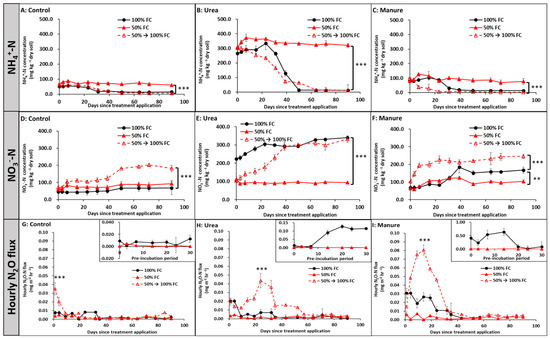
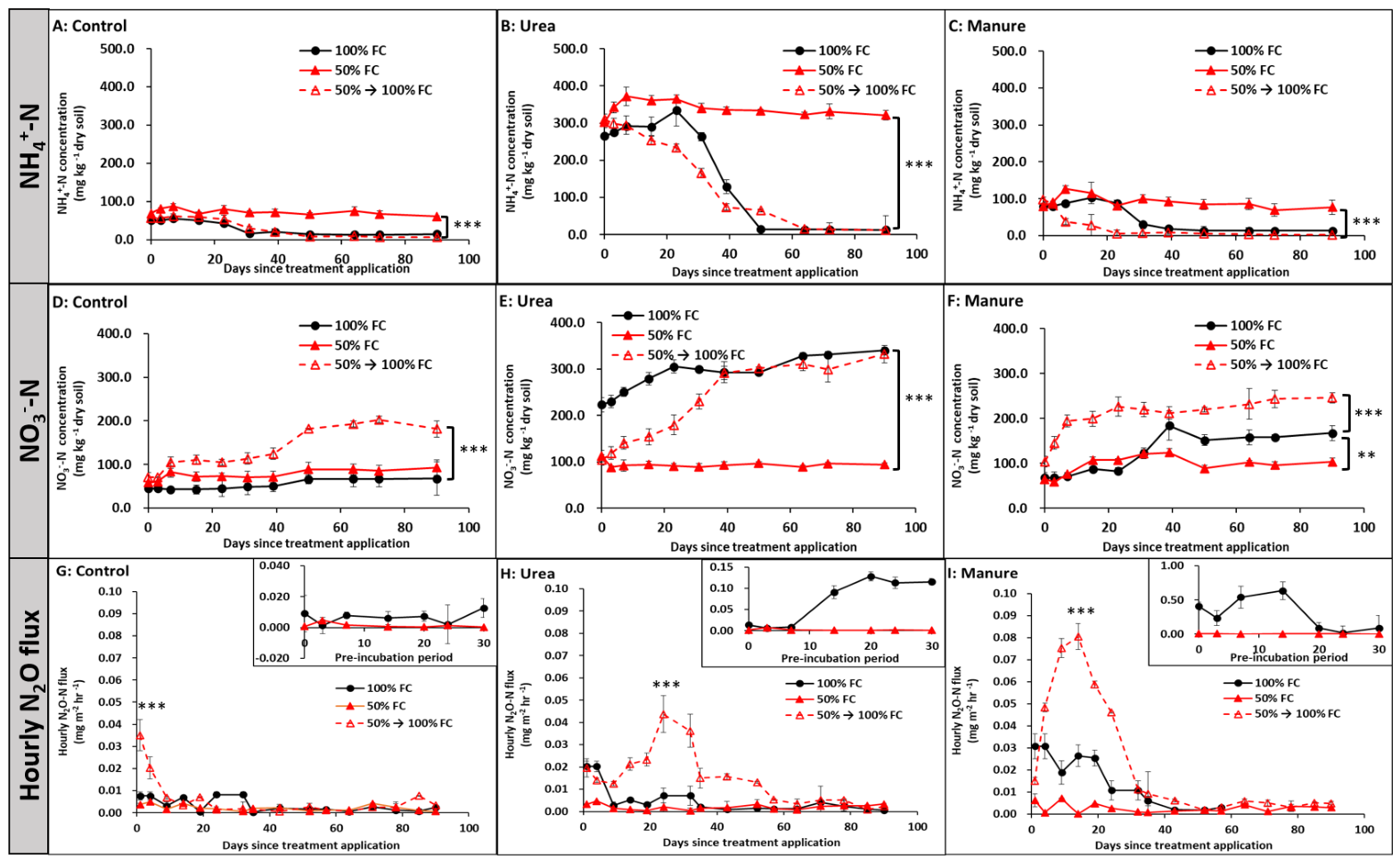
The concentrations of ammonium and nitrate were significantly affected by both soil moisture content and different fertilizer types (Figure 1). The application of urea significantly increased the concentration of ammonium and nitrate at both 50% FC and 100% FC. In comparison, the application of manure had a less significant effect on ammonium and nitrate than urea (Figure 1). The ammonium and nitrite concentrations remained relatively stable throughout the incubation period at 50% FC, indicating a slow nitrification rate. The soil moisture content at 50% FC was equivalent to 11% gravimetric soil water content, representing a drought condition when compared to that at 100% FC. Drought conditions can lead to a series of changes in soil physicochemical characteristics, such as the stability of soil aggregates, availability of O2 and substrates, and the reduction in decomposable organic matter in soil [1,2,30]. Microbial activities could be inhibited in stressed conditions and, thus, inhibit the rate of nitrification [21,31]. The ammonium concentrations decreased rapidly after soil rewetting, hinting that the rate of nitrification was stimulated. Different soil moisture conditions caused cascading effects on N2O emissions (Figure 1). At 50% FC, the N2O emissions were remarkably lower regardless of the application of different fertilizers compared to those at 100% FC. This indicated that the effect of drought stress overruled the effect of fertilization and had an overriding effect on N2O emissions [32,33]. Soil rewetting led to a pulse emission of N2O, especially in urea- and manure-treated soils (Figure 1), which may have contributed to the sudden release of available C and N substrates and the recovery of underlying functional guilds [5]. Although the N2O emissions increased rapidly after soil rewetting, their emissions were significantly lower compared to those at 100% FC during the first 30 days of the pre-incubation period (Figure 1, small figures). This indicated that the N2O emissions can be modulated by historical soil moisture status, which was mainly due to the different responses of the underlying functional microbes [20,21].
Figure 1.
The concentrations of (A–C): NH4+-N; (D–F): NO3−-N and (G–I): hourly N2O emissions as affected by different soil moisture statuses and fertilizer types (urea and manure). The vertical bars indicate the standard error of the means (S.E.M.). *** (p < 0.001), ** (0.001 < p < 0.01).
3.2. Impact of Soil Moisture Status and Fertilizer Types on Ammonia Oxidizers
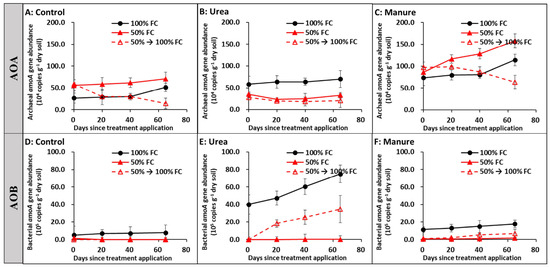
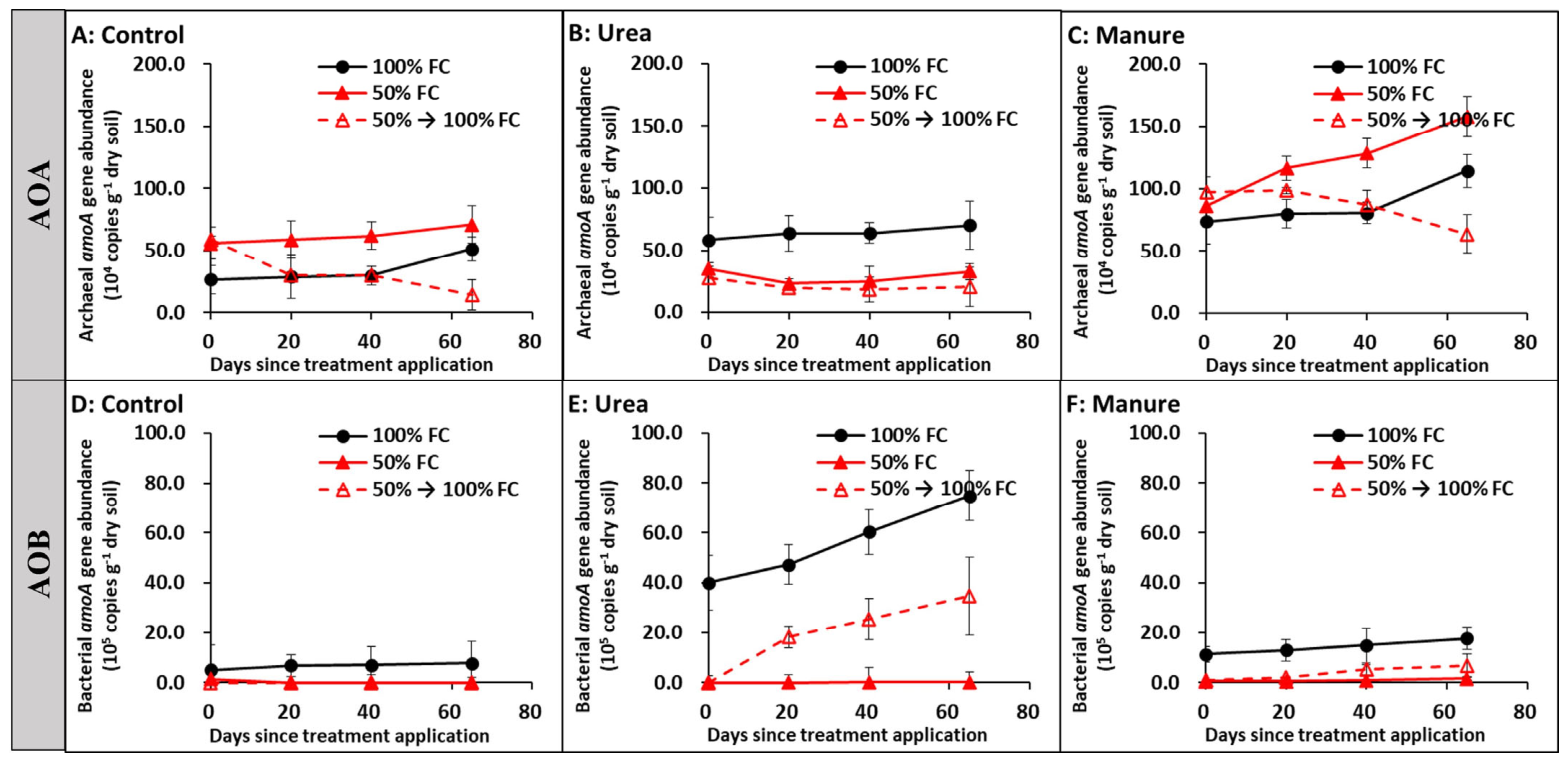
Soil moisture had a significant effect on the abundance of AOA and AOB, with the effect varying with N fertilizer type (Table 1). The abundance of AOA increased significantly at 50% FC compared to 100% FC, in both control and manure treatments (Figure 2). By contrast, the abundance of AOB decreased significantly in all treatments (control, urea and manure treatment) at 50% FC compared to that at 100% FC (Figure 2). It was reported that AOA have an oligotrophic lifestyle due to their high metabolic efficiency and high affinity for N substrates [13,34]. These characteristics help AOA adapt to drought conditions with low-level substrate supply. Additionally, the drought conditions significantly inhibited the growth of AOB, which could lessen competition with AOA [35], resulting in the significantly increased abundance of AOA under drought conditions in control and manure treatments. However, the abundance of AOA in urea treatment at 50% FC was significantly decreased. This was largely due to the high ammonia concentration in urea treatment, which was toxic to AOA [36,37].
Table 1.
Results from repeated-measure ANOVAs for N2O emissions and related microbes in response to different soil moisture contents and fertilizer types.
Figure 2.
The abundance of (A–C) archaeal amoA genes and (D–F) bacterial amoA genes as affected by different soil moisture statuses and fertilizer types (urea and manure). The vertical bars indicate the standard error of the means (S.E.M.).
The resistance and resilience of ammonia oxidizers to drought were also significantly modulated by fertilizer types (Table 2). The application of urea and manure significantly improved the resistance of AOA and AOB to drought conditions, with the values of the resistance index being significantly higher than the control. This was largely due to the application of fertilizers, which provided available substrates within physically protected soil pores to help AOA and AOB cope with the drought stress [11,31]. In comparison, the resilience of AOA and AOB, which is defined as the speed with which a system returns to its pre-disturbance level following a disturbance [38], was modulated by different fertilizer types (Table 2). The abundance of AOB in both urea and manure treatments increased significantly after the drought soil was rewetted to 100% FC, while the abundance of AOA decreased significantly in both control and manure treatments (Figure 2). It was reported that soil rewetting could cause a pulse of microbial activities due to the sudden increase in key substrates such as ammonia and soluble organic carbon [2,14]. This effect could be more significant under fertilization and benefit the growth of AOB (Figure 2). It was published that AOB and other bacteria, such as denitrifying bacteria, are characterized as quicker and stronger nutrient hunters compared with AOA [9]. Thus, the significantly increased abundance of AOB and denitrifying bacteria might inhibit the recovery of AOA.
Table 2.
The effect of different fertilizer types on the ability of N2O-related microbes to resist drying disturbance and recover from it.
3.3. Impact of Soil Moisture Status and Fertilizer Types on Denitrifying Bacteria and Fungi
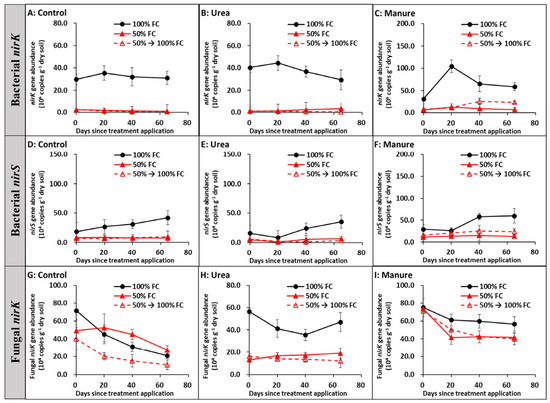
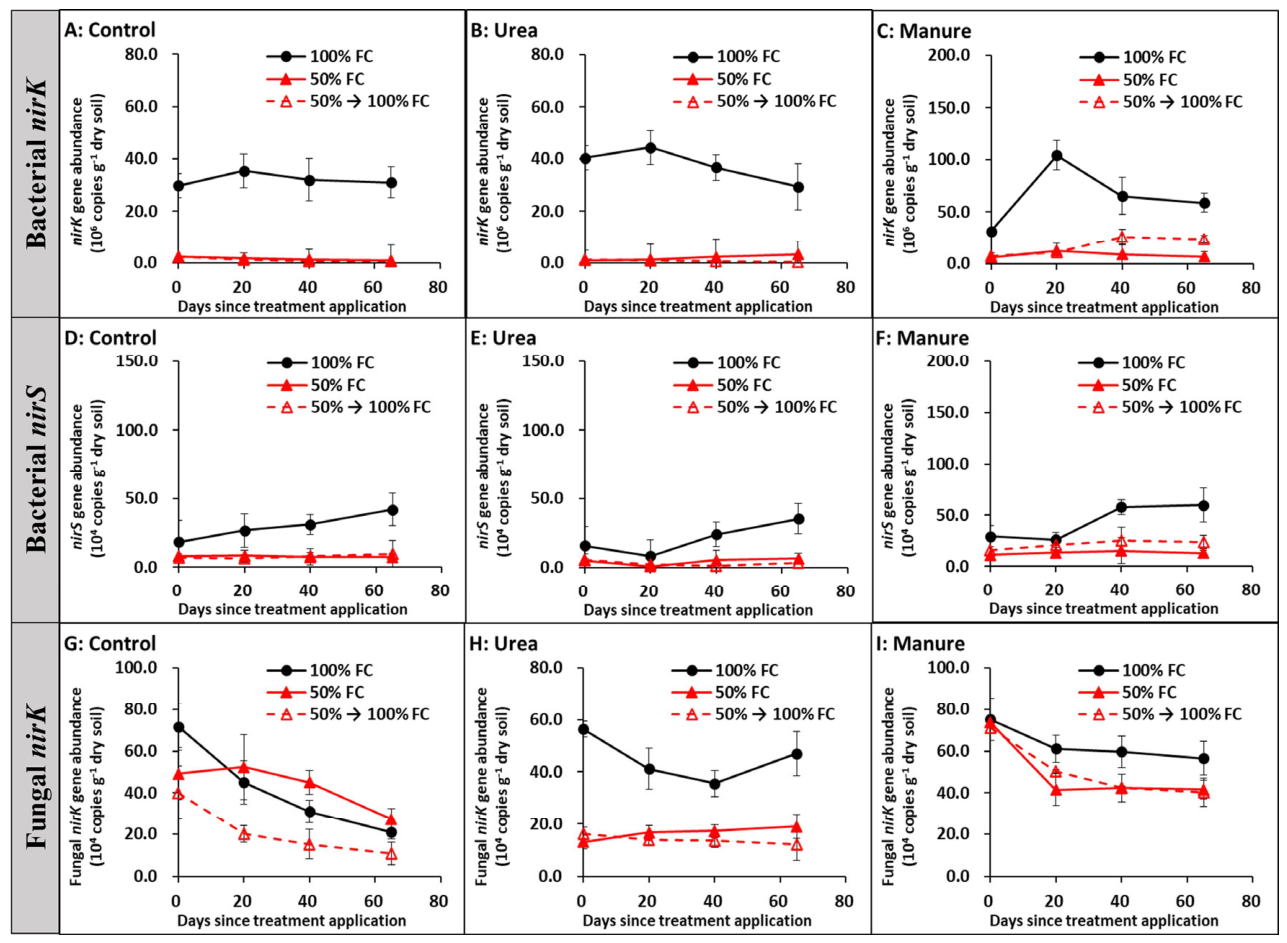
The growth of both nirK- and nirS-type denitrifying bacteria was significantly inhibited at 50% FC compared to that at 100% FC in both fertilized (urea and manure) and non-fertilized (control) soils (Figure 3). These two denitrifying bacterial communities are functionally equivalent in nitrite reduction with nirK containing copper and nirS containing cytochrome cd1 [39]. Most bacterial denitrifiers are characterized as facultative aerobes and are sensitive to the concentration of O2 [4,32]. The nirK and nirS genes mainly generate denitrifying enzymes under near-anaerobic conditions and their activity can therefore be inhibited under drought conditions [3]. By contrast, the drought conditions at 50% FC had little effect on the abundance of fungal nirK in the control soil. It was reported that the fungal community was more resistant due to the hyphal network, which can bridge discrete resources [14,21]. Additionally, denitrifying fungi have lower N requirements than bacteria and higher efficiency in degrading recalcitrant organic substrates, which may help them survive under drought conditions with limited nutrients, especially the limited N substrates and degradable organic carbon sources [10,40]. However, the abundance of fungal nirK at 50% FC was significantly decreased compared to that at 100% FC in urea- and manure-treated soil. This indicates that the “adapt” strategies of denitrifying fungi may lose their advantages under substrate-sufficient conditions [41]. In a similar way, the abundance of fungal nirK also decreased after the soil moisture content at 50% FC was changed to 100% FC. A high flux of nutrients from mineralization may occur with the burst of respiration rapidly depleting soil O2 during soil rewetting, which could benefit the growth of denitrifying bacteria rather than fungi [5,10,21]. This indicated that denitrifying fungi may have strong resistance but weak resilience to drought [21,41]. Comparably, nirK-type denitrifying bacteria were recovered in the manure treatment after soil rewetting (Figure 3 and Table 2). Although nirS and nirK are functional equivalents, their sensitivity to environmental change was notably different, leading to niche differentiation under different soil conditions [4,42]. Our results indicate a better ability to recover for the nirK-type denitrifying bacteria with the application of manure, and the weaker recovery ability of nirS-type denitrifying bacteria, which might be permanently affected by the drought stress conditions.
Figure 3.
The abundance of (A–C) the nirK gene; (D–F) nirS gene and (G–I): fungal nirK gene as affected by different soil moisture statuses and fertilizer types (urea and manure). The vertical bars indicate the standard error of the means (S.E.M.).
3.4. Impact of Soil Moisture Status and Fertilizer Types on N2O Reducers (nosZI and nosZII)
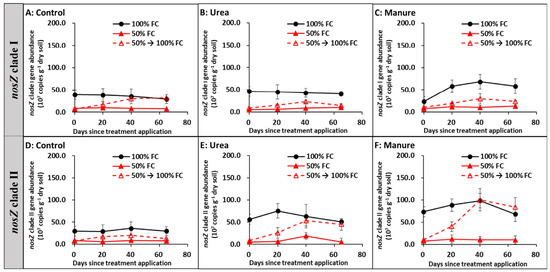
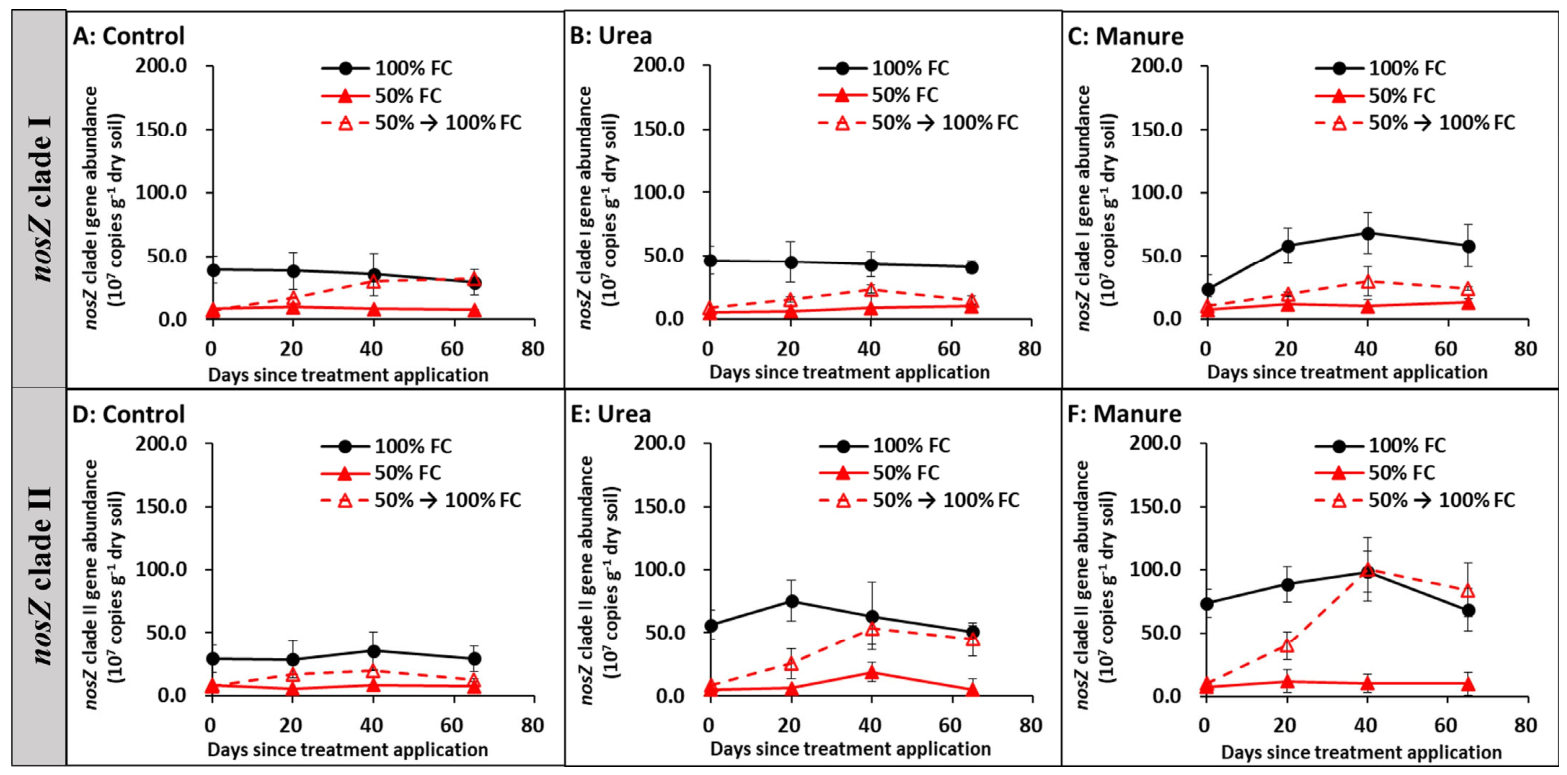
The abundances of nosZI and nosZII were both significantly affected by different soil moisture statuses and were significantly decreased at 50% FC in both fertilized and non-fertilized soils (Table 1 and Figure 4). The last step of denitrification, which is catalyzed by N2O reductase and encoded by the nosZ gene, is the only known sink for N2O [15]. The nosZII was found to be more sensitive than nosZI to environmental changes such as reduced soil moisture and elevated temperature [5,32,43], but their tolerance to drought conditions has been rarely studied. Our result showed a significant inhibiting effect of drought on both nosZII and nosZI abundance, regardless of the application of different fertilizers (Figure 4). Although it was supported that the nosZII N2O reducers were well-adapted to warmer and drier conditions, the soil moisture content ranged between 70% and 80% FC and did not reach the drought level [5]. Therefore, both nosZII and nosZI N2O reducers were sensitive to drought conditions and showed a weak resistance to drought stress. The resistance indices of nosZI and nosZII ranged between 0.04 and 0.14, which indicated a weak resistance ability (Table 2). However, strong resilience of nosZII N2O reducers was observed after soil rewetting in urea and manure treatments, with the abundance of nosZII increasing from 50% to 100% in FC treatments (Figure 4). By contrast, the nosZI N2O reducers were only observed to be resilient in control soil (Figure 4). It was reported that the most vital differentiation between nosZI and nosZII was the growth rate [11]. Under substrate-limited conditions, the nosZI community has a higher growth rate than nosZII [44]. This niche differentiation also occurred during the soil rewetting event in our study, with the nosZII community recovering more rapidly in fertilized soils where substrates were sufficient, while the nosZI community recovered more rapidly in non-fertilized soil where substrates were limited.
Figure 4.
The abundances of (A–C) the nosZ clade I gene and (D–F) nosZ clade II gene as affected by different soil moisture statuses and fertilizer types (urea and manure). The vertical bars indicate the standard error of the means (S.E.M.).
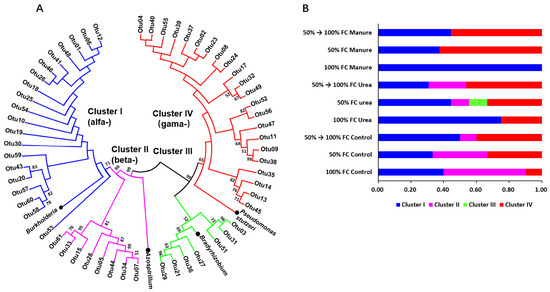
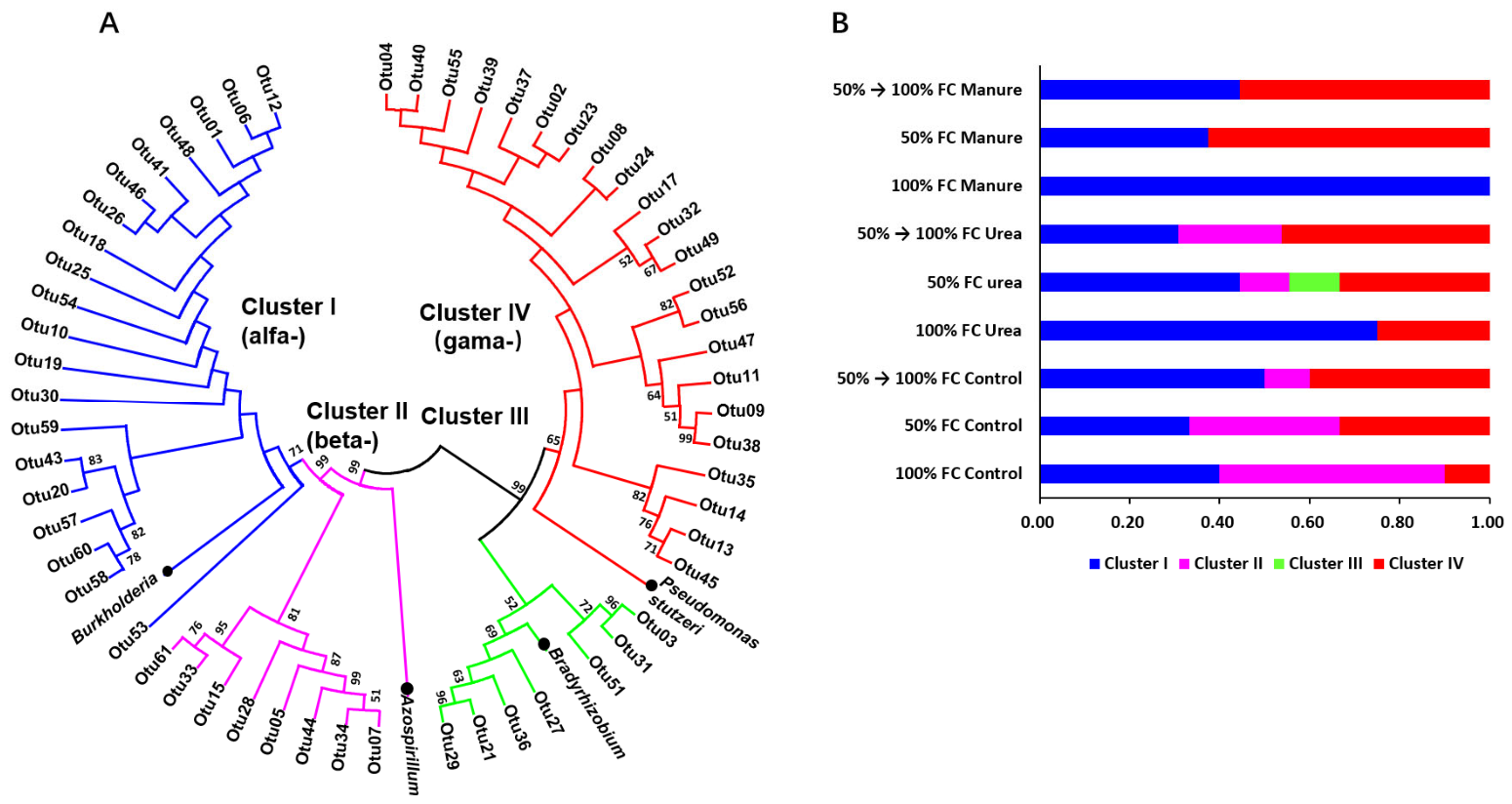
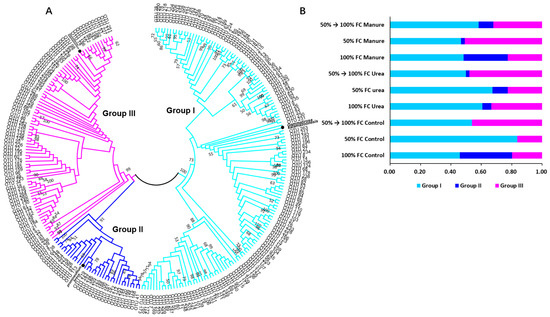
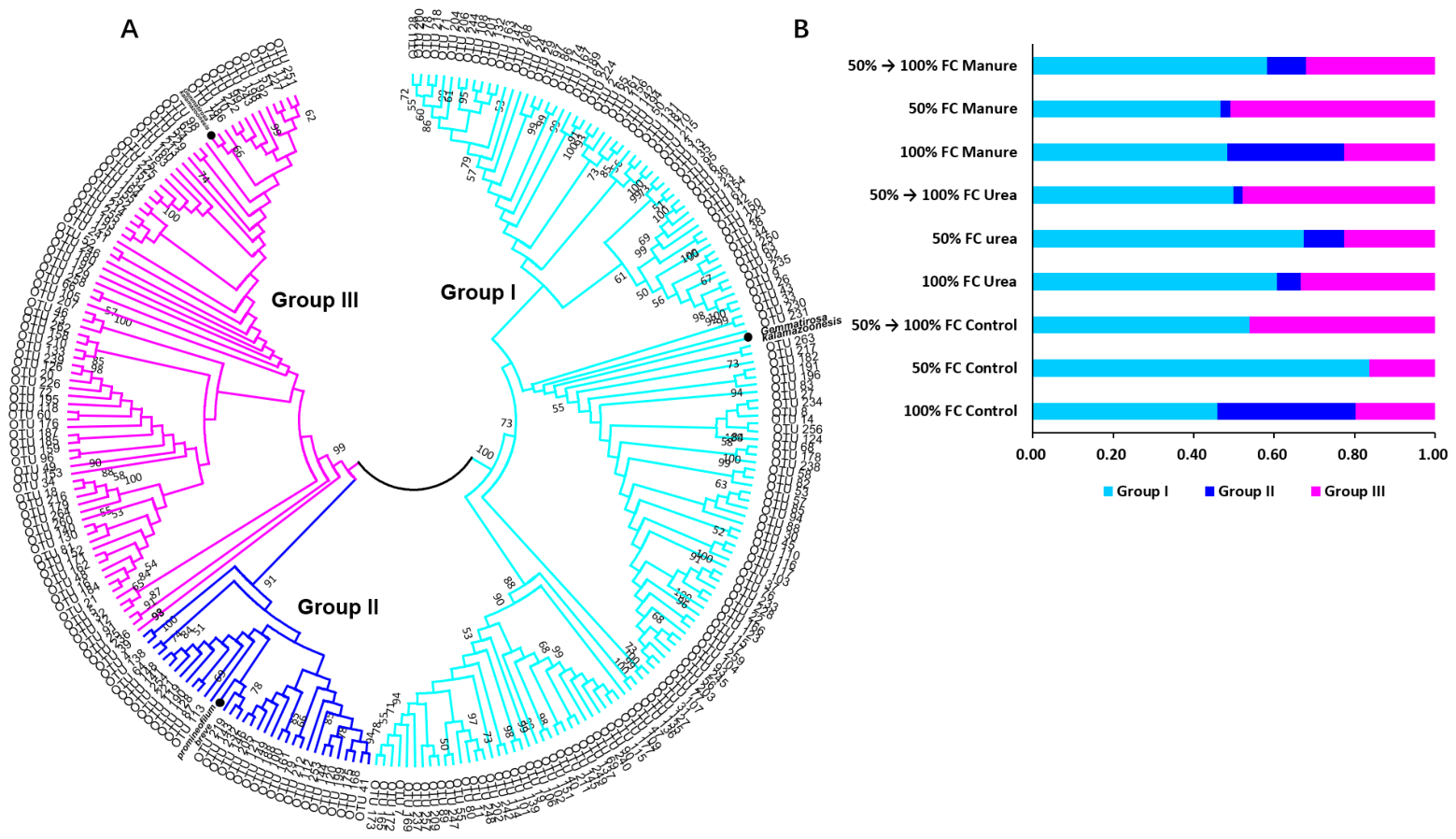
The phylogenetic analysis showed that the nosZI phylogenetic tree contained 61 OTUs, which were mainly grouped into four clusters according to Dambreville et al. [45] and Chen et al. [46] (Figure 5). Most of the nosZI OTUs were related to Alpha- (cluster I), Beta- (cluster II) and Gammaproteobacteria (cluster IV). Alphaproteobacterial OTUs were closely related to Burkholderia, which were allocated in all treatments and were the only dominant clusters in the manure treatment at 100% FC. The drought condition significantly increased the proportion of NosZI-containing Gammaproteobacteria (cluster IV), which were closely related to Pseudomonas stutzeri in all treatments at 50% FC, indicating that this cluster might be the selected drought-tolerant species. Cluster III was closely related to Bradyrhizobium, which was only allocated in urea treatment at 50% FC, hinting that tolerant species were also modulated by different fertilizers. Compared to the nosZI community, the nosZII-type community was far more diverse, with a total of 264 OTUs obtained (Figure 6). The phylogenetic analysis showed that the nosZII OTUs were divided into three groups according to Xu et al. [5]. Group I was closely related to Gemmatirosa kalamazoonesis and was the dominant group in all treatments. Group II was closely related to Candidatus promineofilum breve and was mainly allocated in control and manure treatments at 100% FC. The dominant group after soil rewetting was Group III, which was closely related to Gemmatirosa kalamazoonesis. The proportion of this group increased almost three times during the rewetting treatment compared to that in the dry treatment in both the control and urea treatment groups [47]. It was stated that this group of species has shown strong resilience to simulated warmer and drier conditions in vegetable soil [5]. Our results further proved that the Gemmatirosa kalamazoonesis species had a strong resilience when the soil was rewetted from drought conditions.
Figure 5.
Phylogenetic relationships of (A) nosZI gene sequences and (B) the relative proportion change in microbial community structures of each treatment in each group. Bootstrap values (>50%) are indicated at branch points.
Figure 6.
Phylogenetic relationships of (A) nosZII gene sequences and (B) the relative proportion change in microbial community structures of each treatment in each group. Bootstrap values (>50%) are indicated at branch points.
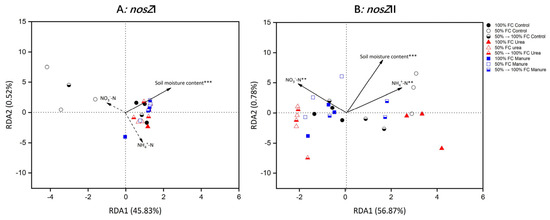
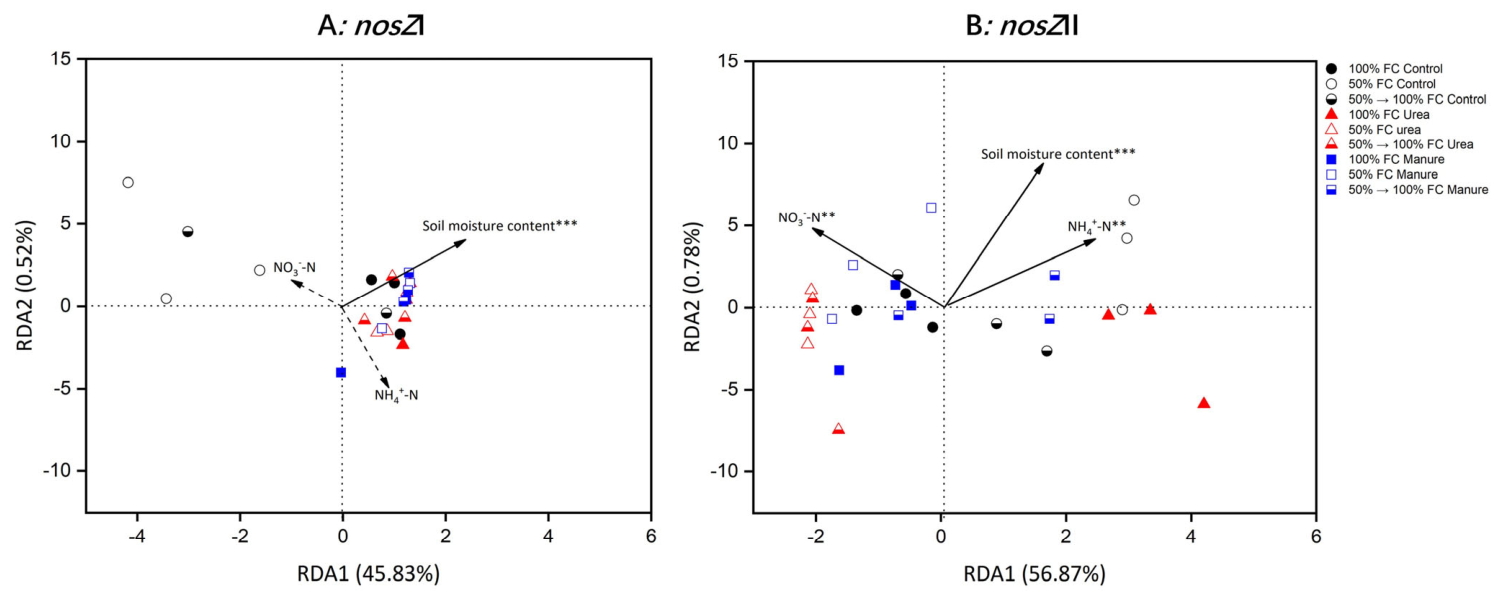
For nosZI, RDA1 and RDA2 separately explained 45.83% and 0.52% of total community variance, jointly capturing 46.35% of overall variation. For the nosZII, the two axes accounted for 56.87% (RDA1) and 0.78% (RDA2) of variance, with a cumulative explanatory power of 57.65%. Generally, the RDA showed that the community change in nosZI was significantly correlated with soil moisture content (p < 0.01), while the community change in nosZII was significantly correlated with both soil moisture content (p < 0.01) and N status (ammonia and nitrate) (0.01 < p < 0.05) [48], showing the different sensitivities of nosZI- and nosZII-type communities to N status (Figure 7).
Figure 7.
Redundancy analysis (RDA) between communities of (A): nosZI or (B): nosZII and physiochemical characteristics. The significant differences identified were *** p < 0.01, ** 0.01 < p < 0.05 based on Mantel’s test.
3.5. The Relationships Between N2O Emissions, N2O Producers and N2O Reducers
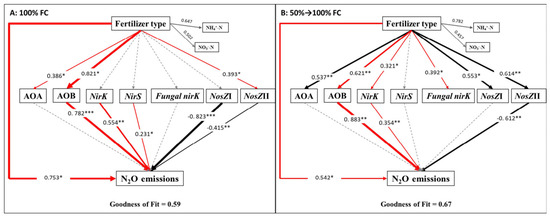
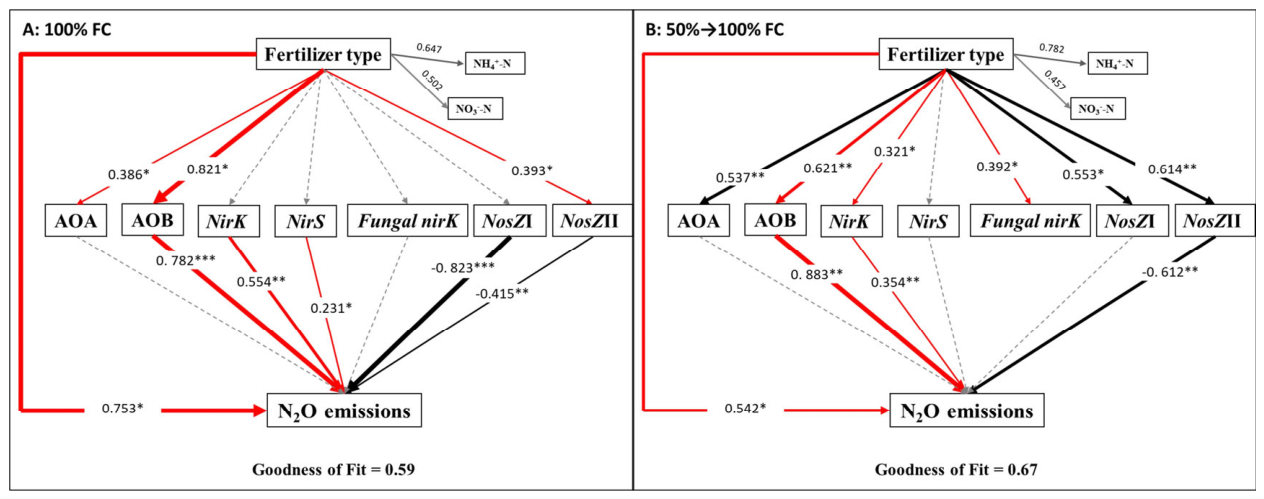
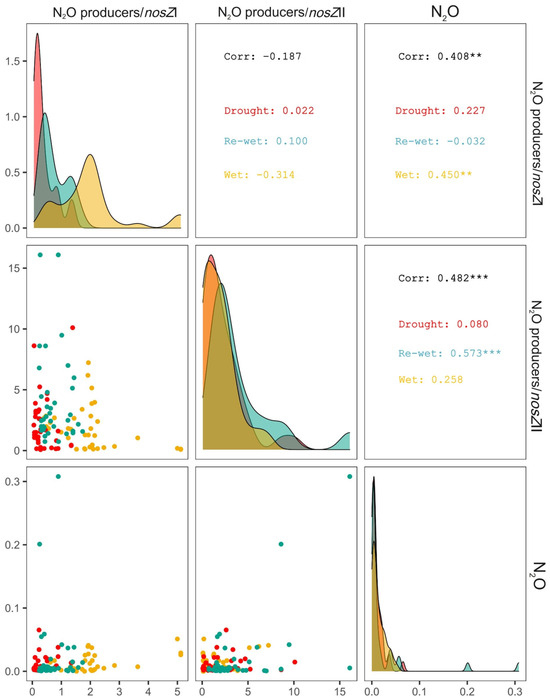
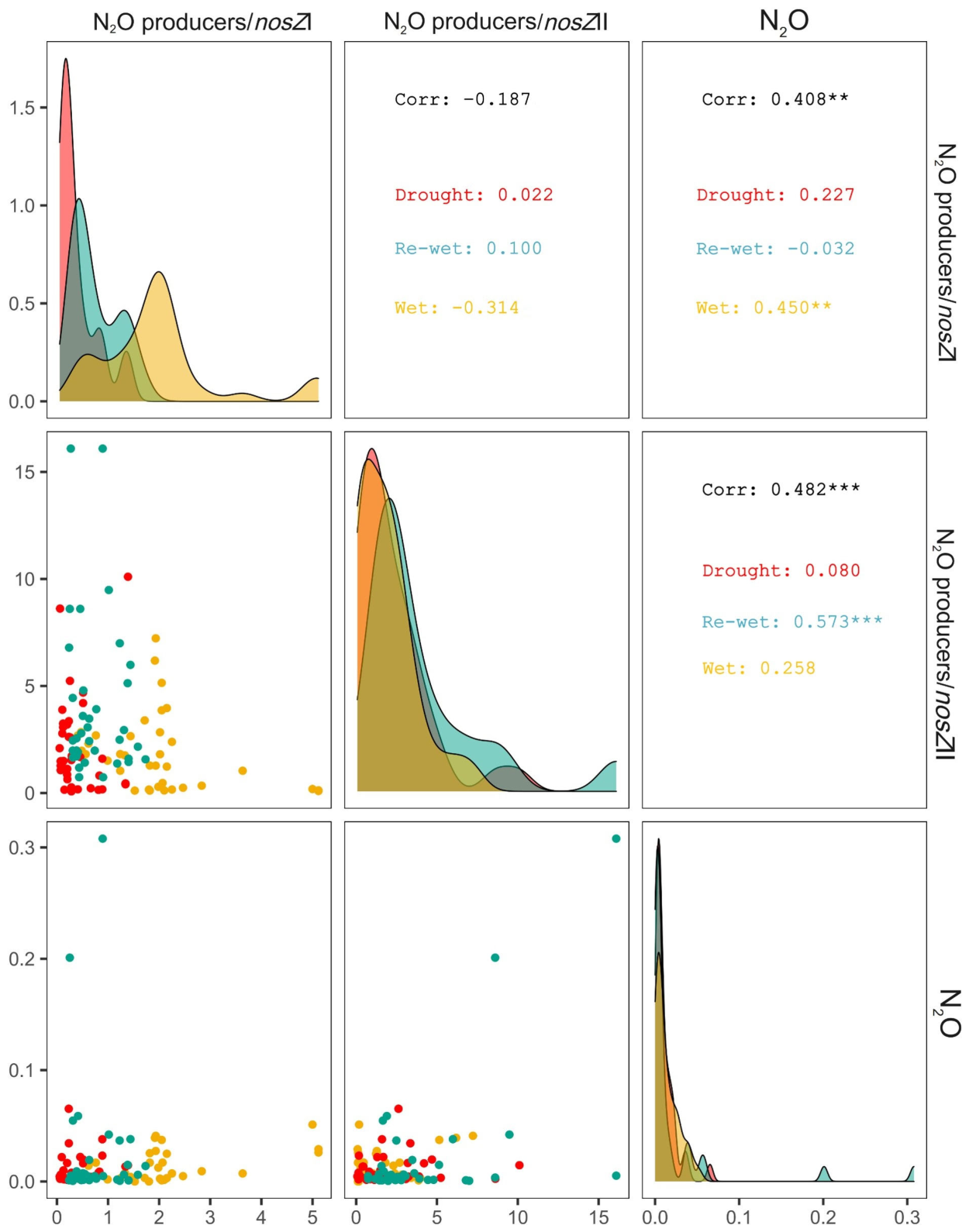
The PLS-PM model showed that N2O emissions were correlated to different N2O-producers and reducers under 100% FC and 50% to 100% FC treatments (Figure 8). Generally, the N2O emissions were significantly correlated with AOB and denitrifying bacteria, including nirK and nirS, nosZI (−0.823) and nosZII (−0.415) at 100% FC. Comparably, the N2O emissions were significantly correlated to AOB, nirK and nosZII at 50% to 100% FC treatment. This indicated that the soil rewetting event may select specific functional groups with strong resilience [2,12]. Additionally, the Pearson correlations indicated that the N2O emissions were significantly related to the ratio of N2O producers to nosZI in 100% FC (wet soil), whereas emissions were significantly related to the ratio of N2O producers to nosZII in rewetting soil (Figure 9). These results indicated that the nosZI clade N2O reducer might play a significant role in N2O reduction at 100% FC, while the nosZII clade was comparatively more important during soil rewetting, showing niche differentiation under different soil moisture statuses [5,11]. The important role of the nosZII clade N2O reducer in N2O emissions during soil rewetting might be one reason that led to relatively lower N2O emissions [49]. It was found that most nosZII clade N2O reducers lack nitrite reductases and are unable to denitrify, indicating that they can only reduce N2O rather than produce it [18]. Our work indicated the important role of the nosZII clade N2O reducer in N2O emissions during soil dry–rewetting events [50]. Related knowledge should be further studied in other cropland ecosystems or vegetable systems with frequent irrigation to better predict N2O emissions and improve the management strategy to mitigate greenhouse gas emissions.
Figure 8.
Partial Least Squares Path Model (PLS-PM) and the effect of different fertilizer types on N2O emissions and related microorganisms. (A) 100% FC and (B) 50% FC changed to 100% FC treatment. Larger path coefficients are reflected in the width of the arrow, with red indicating a positive effect and black a negative effect. Path coefficients that were not significantly different from 0 are shown as grey dashed lines. Path coefficients are calculated after 1000 bootstraps. Coefficients that differ significantly from 0 are indicated by * p ≤ 0.05, ** p ≤ 0.01, *** p ≤ 0.001. The model is assessed using the goodness-of-fit statistic (0.59 and 0.67).
Figure 9.
Pearson correlations between the ratio of N2O producers (including AOA, AOB, nirK-type, nirS-type and fungal nirK-type denitriers) and nosZ clades (I and II) and N2O emissions under drought (50% FC), rewetting (50% FC changed to 100% FC) and wet (100%) conditions. Coefficients that differ significantly from 0 are indicated by ** p ≤ 0.01, *** p ≤ 0.001.
However, given that the experiment was conducted under controlled indoor conditions, the results derived had certain limitations with respect to field-scale popularization and application. In particular, in situ field environments had far greater complexity compared with indoor incubation, including fluctuating ambient temperatures, soil disturbances, root activities, and varying intensities of wetting–drying cycles [51]. Furthermore, this experiment was only conducted on neutral vegetable soil, and further investigations covering diverse agricultural field systems are required in future research.
4. Conclusions
Our results showed that the N2O producers and reducers responded differently to drought conditions and varied with different fertilizer types. The growth of both the N2O-producers and reducers was significantly affected by the drought stress (50% FC). Only AOA and fungal nirK were well adapted to drought conditions in control soil, while the other functional guilds were significantly inhibited under such stress situations, leading to a significant decrease in N2O emissions under drought conditions [52]. The application of different fertilizer types modulated the resistance and resilience of the functional guilds to drought and rewetting. The AOB, nirK-type denitrifier and nosZ clade (both I and II) showed significant resilience in both fertilized and non-fertilized soils in response to soil rewetting. The dominant microbes of N2O emissions were distinctly different under different soil moisture contents. Our study emphasized that the nosZII clade N2O reducer might play an important role in N2O emissions in soil rewetting events. This should be further studied in more ecosystems with microbial activity analysis (i.e., RT-qPCR or measurements of enzymatic activity) to confirm these findings and help develop migration strategies to reduce N2O emissions.
Author Contributions
L.Y.: Conceptualization, Formal analysis, Data curation, Investigation, Roles/Writing—original draft. Q.L.: Data curation, Writing—review and editing. Y.H.: Methodology, Writing—review and editing. H.C.: Supervision, Project administration. Y.Z.: Supervision, Project administration. D.G.: Methodology, Writing—review and editing. X.G.: Funding acquisition, Project administration, Resources, Writing—review and editing. X.X.: Funding acquisition, Project administration, Resources, Writing—review and editing. All authors have read and agreed to the published version of the manuscript.
Funding
The work was funded by the Shandong Key R&D Program for Rural Revitalization Boost (2024TZXD075), Shandong Agriculture Research System (SDARS15), the National Natural Science Foundation of China (42107316), and the Natural Science Foundation of Shandong Provincial (ZR202102260221).
Data Availability Statement
The shared data involved in this study do not have any ethical, legal or privacy-related issues. All data supporting the core conclusions of this review are disclosed in the manuscript.
Conflicts of Interest
The authors declare that they have no known competing financial interests or personal relationships that could have appeared to influence the work reported in this paper.
References
- Fahey, C.; Koyama, A.; Antunes, P.M.; Dunfield, K.; Flory, S.L. Plant communities mediate the interactive effects of invasion and drought on soil microbial communities. ISME J. 2020, 14, 1396–1409. [Google Scholar] [CrossRef] [Scilit] [PubMed]
- Jansson, J.K.; Hofmockel, K.S. Soil microbiomes and climate change. Nat. Rev. Microbiol. 2020, 18, 35–46. [Google Scholar] [CrossRef] [Scilit] [PubMed]
- Greaver, T.L.; Clark, C.M.; Compton, J.E.; Vallano, D.; Talhelm, A.F.; Weaver, C.P.; Band, L.E.; Baron, J.S.; Davidson, E.A.; Tague, C.L.; et al. Key ecological responses to nitrogen are altered by climate change. Nat. Clim. Change 2016, 6, 836–843. [Google Scholar] [CrossRef] [Scilit]
- Li, L.F.; Zheng, Z.Z.; Wang, W.J.; Biederman, J.A.; Xu, X.L.; Ran, Q.W.; Qian, R.Y.; Xu, C.; Zhang, B.; Wang, F.; et al. Terrestrial N2O emissions and related functional genes under climate change: A global meta-analysis. Glob. Change Biol. 2020, 26, 931–943. [Google Scholar] [CrossRef] [Scilit] [PubMed]
- Xu, X.Y.; Liu, Y.W.; Singh, B.P.; Yang, Q.; Zhang, Q.C.; Wang, H.L.; Xia, Z.D.; Di, H.J.; Singh, B.K.; Xu, J.M.; et al. NosZ clade II rather than clade I determine in situ N2O emissions with different fertilizer types under simulated climate change and its legacy. Soil Biol. Biochem. 2020, 150, 107974. [Google Scholar] [CrossRef] [Scilit]
- Hutchins, D.A.; Jansson, J.K.; Remais, J.V.; Rich, V.I.; Singh, B.K.; Trivedi, P. Climate change microbiology—Problems and perspectives. Nat. Rev. Microbiol. 2019, 17, 391–396. [Google Scholar] [CrossRef] [Scilit] [PubMed]
- Singh, B.K.; Bardgett, R.D.; Smith, P.; Reay, D.S. Microorganisms and climate change: Terrestrial feedbacks and mitigation options. Nat. Rev. Microbiol. 2010, 8, 779–790. [Google Scholar] [CrossRef] [Scilit] [PubMed]
- Di, H.J.; Cameron, K.C.; Shen, J.P.; Winefield, C.S.; O’Callaghan, M.; Bowatte, S.; He, J.Z. Nitrification driven by bacteria and not archaea in nitrogen-rich grassland soils. Nat. Geosci. 2009, 2, 621–624. [Google Scholar] [CrossRef] [Scilit]
- Duan, P.P.; Zhou, J.; Feng, L.; Jansen-Willems, A.B.; Xiong, Z.Q. Pathways and controls of N2O production in greenhouse vegetable production soils. Biol. Fertil. Soils 2019, 55, 285–297. [Google Scholar] [CrossRef] [Scilit]
- Xu, X.Y.; Liu, X.R.; Li, Y.; Ran, Y.; Liu, Y.P.; Zhang, Q.C.; Li, Z.; He, Y.; Xu, J.M.; Di, H.J. High temperatures inhibited the growth of soil bacteria and archaea but not that of fungi and altered nitrous oxide production mechanisms from different nitrogen sources in an acidic soil. Soil Biol. Biochem. 2017, 107, 168–179. [Google Scholar] [CrossRef] [Scilit]
- Stein, L.Y. The Long-Term Relationship between Microbial Metabolism and Greenhouse Gases. Trends Microbiol. 2020, 28, 500–511. [Google Scholar] [CrossRef] [Scilit] [PubMed]
- Xu, X.Y.; Xia, Z.D.; Liu, Y.W.; Liu, E.F.; Müller, K.; Wang, H.L.; Luo, J.F.; Wu, X.L.; Beiyuan, J.; Fang, Z.; et al. Interactions between methanotrophs and ammonia oxidizers modulate the response of in situ methane emissions to simulated climate change and its legacy in an acidic soil. Sci. Total Environ. 2021, 752, 142225. [Google Scholar] [CrossRef] [Scilit] [PubMed]
- Hu, H.W.; Macdonald, C.A.; Trivedi, P.; Anderson, I.C.; Zheng, Y.; Holmes, B.; Bodrossy, L.; Wang, J.T.; He, J.Z.; Singh, B.K. Effects of climate warming and elevated CO2 on autotrophic nitrification and nitrifiers in dryland ecosystems. Soil Biol. Biochem. 2016, 92, 1–15. [Google Scholar] [CrossRef] [Scilit]
- Hu, H.W.; Trivedi, P.; He, J.Z.; Singh, B.K. Microbial nitrous oxide emissions in dryland ecosystems: Mechanisms, microbiome and mitigation. Environ. Microbiol. 2017, 19, 4808–4828. [Google Scholar] [CrossRef] [Scilit] [PubMed]
- Domeignoz-Horta, L.A.; Philippot, L.; Peyrard, C.; Bru, D.; Breuil, M.C.; Bizouard, F.; Justes, E.; Mary, B.; Léonard, J.; Spor, A. Peaks of in situ N2O emissions are influenced by N2O-producing and reducing microbial communities across arable soils. Glob. Change Biol. 2018, 24, 360–370. [Google Scholar] [CrossRef] [Scilit] [PubMed]
- Sanford, R.A.; Wagner, D.D.; Wu, Q.Z.; Chee-Sanford, J.C.; Thomas, S.H.; Cruz-García, C.; Rodríguez, G.; Massol-Deyá, A.; Krishnani, K.K.; Ritalahti, K.M.; et al. Unexpected nondenitrifier nitrous oxide reductase gene diversity and abundance in soils. Proc. Natl. Acad. Sci. USA 2012, 109, 19709–19714. [Google Scholar] [CrossRef] [Scilit] [PubMed]
- Jones, C.M.; Graf, D.R.H.; Bru, D.; Philippot, L.; Hallin, S. The unaccounted yet abundant nitrous oxide-reducing microbial community: A potential nitrous oxide sink. ISME J. 2013, 7, 417–426. [Google Scholar] [CrossRef] [Scilit] [PubMed]
- Domeignoz-Horta, L.A.; Putz, M.; Spor, A.; Bru, D.; Breuil, M.C.; Hallin, S.; Philippot, L. Non-denitrifying nitrous oxide-reducing bacteria—An effective N2O sink in soil. Soil Biol. Biochem. 2016, 103, 376–379. [Google Scholar] [CrossRef] [Scilit]
- Liu, H.Y.; Ding, Y.; Zhang, Q.C.; Liu, X.M.; Xu, J.M.; Li, Y.; Di, H.J. Heterotrophic nitrification and denitrification are the main sources of nitrous oxide in two paddy soils. Plant Soil 2019, 445, 39–53. [Google Scholar] [CrossRef] [Scilit]
- Banerjee, S.; Helgason, B.; Wang, L.F.; Winsley, T.; Ferrari, B.C.; Siciliano, S.D. Legacy effects of soil moisture on microbial community structure and N2O emissions. Soil Biol. Biochem. 2016, 95, 40–50. [Google Scholar] [CrossRef] [Scilit]
- Kaurin, A.; Mihelic, R.; Kastelec, D.; Grcman, H.; Bru, D.; Philippot, L.; Suhadolc, M. Resilience of bacteria, archaea, fungi and N-cycling microbial guilds under plough and conservation tillage, to agricultural drought. Soil Biol. Biochem. 2018, 120, 233–245. [Google Scholar] [CrossRef] [Scilit]
- Han, Z.; Leng, Y.; Sun, Z.; Li, Z.; Xu, P.; Wu, S.; Liu, S.; Li, S.; Wang, J.; Zou, J. Substitution of organic and bio-organic fertilizers for mineral fertilizers to suppress nitrous oxide emissions from intensive vegetable fields. J. Environ. Manag. 2024, 349, 119390. [Google Scholar] [CrossRef] [Scilit] [PubMed]
- Chen, H.B.; Yang, X.; Wang, H.L.; Sarkar, B.; Shaheen, S.M.; Gielen, G.; Bolan, N.; Guo, J.; Che, L.; Sun, H.L.; et al. Animal carcass- and wood-derived biochars improved nutrient bioavailability, enzyme activity, and plant growth in metal-phthalic acid ester co-contaminated soils: A trial for reclamation and improvement of degraded soils. J. Environ. Manag. 2020, 261, 110246. [Google Scholar] [CrossRef] [Scilit] [PubMed]
- Li, H.R.; Luo, Q.S.; Sun, L.C.; Xu, H.; Hao, X.; Zhu, K.; Li, M.; Li, B.; Jiao, W.; Geng, J.; et al. Comparative study of nosZI and nosZII clade isolates: Insights into their responses to environmental variables and soil fertilization types. Front. Plant Sci. 2025, 16, 1537010. [Google Scholar] [CrossRef] [Scilit] [PubMed]
- Wan, Z.W.; Wang, L.; Huang, G.Q.; Rasul, F.; Awan, M.I.; Cui, H.; Liu, K.; Yu, X.; Tang, H.; Wang, S.; et al. nirS and nosZII bacterial denitrifiers as well as fungal denitrifiers are coupled with N2O emissions in long-term fertilized soils. Sci. Total Environ. 2023, 897, 165426. [Google Scholar] [CrossRef] [Scilit] [PubMed]
- Izabel-Shen, D. Understanding response of microbial communities to saltwater intrusion through microcosms. Comput. Struct. Biotechnol. J. 2021, 19, 929–933. [Google Scholar] [CrossRef] [Scilit] [PubMed]
- Orwin, K.H.; Wardle, D.A. New indices for quantifying the resistance and resilience of soil biota to exogenous disturbances. Soil Biol. Biochem. 2004, 36, 1907–1912. [Google Scholar] [CrossRef] [Scilit]
- De Long, J.R.; Jackson, B.G.; Wilkinson, A.; Pritchard, W.J.; Oakley, S.; Mason, K.E.; Stephan, J.G.; Ostle, N.J.; Johnson, D.; Baggs, E.M.; et al. Relationships between plant traits, soil properties and carbon fluxes differ between monocultures and mixed communities in temperate grassland. J. Ecol. 2019, 107, 1704–1719. [Google Scholar] [CrossRef] [Scilit] [PubMed]
- Fan, X.P.; Yin, C.; Chen, H.; Ye, M.J.; Zhao, Y.H.; Li, T.Q.; Wakelin, S.A.; Liang, Y.C. The efficacy of 3,4-dimethylpyrazole phosphate on N2O emissions is linked to niche differentiation of ammonia oxidizing archaea and bacteria across four arable soils. Soil Biol. Biochem. 2019, 130, 82–93. [Google Scholar] [CrossRef] [Scilit]
- Gómez-Gener, L.; Lupon, A.; Laudon, H.; Sponseller, R.A. Drought alters the biogeochemistry of boreal stream networks. Nat. Commun. 2020, 11, 1795. [Google Scholar] [CrossRef] [Scilit] [PubMed]
- Nguyen, L.T.T.; Osanai, Y.; Anderson, I.C.; Bange, M.P.; Tissue, D.T.; Singh, B.K. Flooding and prolonged drought have differential legacy impacts on soil nitrogen cycling, microbial communities and plant productivity. Plant Soil 2018, 431, 371–387. [Google Scholar] [CrossRef] [Scilit]
- Di, H.J.; Cameron, K.C.; Podolyan, A.; Robinson, A. Effect of soil moisture status and a nitrification inhibitor, dicyandiamide, on ammonia oxidizer and denitrifier growth and nitrous oxide emissions in a grassland soil. Soil Biol. Biochem. 2014, 73, 59–68. [Google Scholar] [CrossRef] [Scilit]
- Xu, X.Y.; Liu, X.R.; Li, Y.; Ran, Y.; Liu, Y.P.; Zhang, Q.C.; Li, Z.; He, Y.; Xu, J.M.; Di, H.J. Legacy effects of simulated short-term climate change on ammonia oxidisers, denitrifiers, and nitrous oxide emissions in an acid soil. Environ. Sci. Pollut. Res. 2017, 24, 11639–11649. [Google Scholar] [CrossRef] [Scilit] [PubMed]
- Prosser, J.I.; Hink, L.; Gubry-Rangin, C.; Nicol, G.W. Nitrous oxide production by ammonia oxidizers: Physiological diversity, niche differentiation and potential mitigation strategies. Glob. Change Biol. 2020, 26, 103–118. [Google Scholar] [CrossRef] [Scilit] [PubMed]
- Zhao, J.; Bello, M.O.; Meng, Y.Y.; Prosser, J.I.; Gubry-Rangin, C. Selective inhibition of ammonia oxidising archaea by simvastatin stimulates growth of ammonia oxidising bacteria. Soil Biol. Biochem. 2020, 141, 107673. [Google Scholar] [CrossRef] [Scilit]
- Ouyang, Y.; Norton, J.M.; Stark, J.M.; Reeve, J.R.; Habteselassie, M.Y. Ammonia-oxidizing bacteria are more responsive than archaea to nitrogen source in an agricultural soil. Soil Biol. Biochem. 2016, 96, 4–15. [Google Scholar] [CrossRef] [Scilit]
- Hink, L.; Gubry-Rangin, C.; Nicol, G.W.; Prosser, J.I. The consequences of niche and physiological differentiation of archaeal and bacterial ammonia oxidisers for nitrous oxide emissions. ISME J. 2018, 12, 1084–1093. [Google Scholar] [CrossRef] [Scilit] [PubMed]
- Griffiths, B.S.; Philippot, L. Insights into the resistance and resilience of the soil microbial community. FEMS Microbiol. Rev. 2013, 37, 112–129. [Google Scholar] [CrossRef] [Scilit] [PubMed]
- Kuypers, M.M.M.; Marchant, H.K.; Kartal, B. The microbial nitrogen-cycling network. Nat. Rev. Microbiol. 2018, 16, 263–276. [Google Scholar] [CrossRef] [Scilit] [PubMed]
- Feng, H.J.; Wang, S.Y.; Gao, Z.D.; Wang, Z.K.; Ren, X.Q.; Hu, S.W.; Pan, H. Effect of land use on the composition of bacterial and fungal communities in saline-sodic soils. Land Degrad. Dev. 2019, 30, 1851–1860. [Google Scholar] [CrossRef] [Scilit]
- Evans, S.E.; Wallenstein, M.D. Soil microbial community response to drying and rewetting stress: Does historical precipitation regime matter? Biogeochemistry 2012, 109, 101–116. [Google Scholar] [CrossRef] [Scilit]
- Braker, G.; Conrad, R. Diversity, Structure, and Size of N2O-Producing Microbial Communities in Soils-What Matters for Their Functioning? In Advances in Applied Microbiology; Laskin, A.I., Sariaslani, S., Gadd, G.M., Eds.; Elsevier: Amsterdam, The Netherlands, 2011; Volume 75, pp. 33–70. [Google Scholar]
- Yoon, S.; Nissen, S.; Park, D.; Sanford, R.A.; Löffler, F.E. Nitrous Oxide Reduction Kinetics Distinguish Bacteria Harboring Clade I NosZ from Those Harboring Clade II NosZ. Appl. Environ. Microbiol. 2016, 82, 3793–3800. [Google Scholar] [CrossRef] [Scilit] [PubMed]
- Chen, H.; Yin, C.; Fan, X.P.; Ye, M.J.; Peng, H.Y.; Li, T.Q.; Zhao, Y.H.; Wakelin, S.A.; Chu, G.X.; Liang, Y.C. Reduction of N2O emission by biochar and/or 3,4-dimethylpyrazole phosphate (DMPP) is closely linked to soil ammonia oxidizing bacteria and nosZI-N2O reducer populationsyy. Sci. Total Environ. 2019, 694, 133658. [Google Scholar] [CrossRef] [Scilit] [PubMed]
- Dambreville, C.; Hallet, S.; Nguyen, C.; Morvan, T.; Germon, J.C.; Philippot, L. Structure and activity of the denitrifying community in a maize-cropped field fertilized with composted pig manure or ammonium nitrate. FEMS Microbiol. Ecol. 2006, 56, 119–131. [Google Scholar] [CrossRef] [Scilit] [PubMed]
- Chen, Z.; Liu, J.B.; Wu, M.N.; Xie, X.L.; Wu, J.S.; Wei, W.X. Differentiated Response of Denitrifying Communities to Fertilization Regime in Paddy Soil. Microb. Ecol. 2012, 63, 446–459. [Google Scholar] [CrossRef] [Scilit] [PubMed]
- Govednik, A.; Jones, C.M.; Hallin, S.; Suhadolc, M. nosZII communities influence soil N2O consumption potential in a long-term tillage and fertilization experiment. Appl. Soil Ecol. 2026, 224, 107165. [Google Scholar] [CrossRef] [Scilit]
- Rijk, I.; Ekblad, A.; Dahlin, A.S.; Enell, A.; Larsson, M.; Leroy, P.; Kleja, D.B.; Tiberg, C.; Hallin, S.; Jones, C. Biochar and peat amendments affect nitrogen retention, microbial capacity and nitrogen cycling microbial communities in a metal and polycyclic aromatic hydrocarbon contaminated urban soil. Sci. Total Environ. 2024, 936, 173454. [Google Scholar] [CrossRef] [Scilit] [PubMed]
- Barneze, A.S.; van Groenigen, J.W.; Philippot, L.; Bru, D.; Abalos, D.; De Deyn, G.B. Plant communities can attenuate flooding induced N2O fluxes by altering nitrogen cycling microbial communities and plant nitrogen uptake. Soil Biol. Biochem. 2023, 185, 109142. [Google Scholar] [CrossRef] [Scilit]
- Yang, L.Y.; Li, S.; Shangguan, H.Y.; Qiao, Z.-H.; Huang, X.-R.; Zhou, S.-Y.; Li, H.; Su, X.-X.; Sun, X.; Zhu, Y.-G.; et al. Diversity and activity of soil N2O-reducing bacteria shaped by urbanization. Environ. Sci. Technol. 2024, 58, 17295–17303. [Google Scholar] [CrossRef] [Scilit] [PubMed]
- Walitang, D.I.; Kim, K.; Lee, Y.; Heo, T.-Y.; Sa, T. Nitrification and denitrification gene abundances under stable soil chemical properties established by long-term compost fertilization. Appl. Sci. 2023, 13, 11146. [Google Scholar] [CrossRef] [Scilit]
- Liu, C.M.; Zhang, W.Z.; Hou, H.J.; Liao, R.; Wei, W.; Sheng, R. Effect of long-term land use on the nosZI- and nosZII-containing microbial communities. Appl. Soil Ecol. 2023, 189, 104961. [Google Scholar] [CrossRef] [Scilit]

Disclaimer/Publisher’s Note: The statements, opinions and data contained in all publications are solely those of the individual author(s) and contributor(s) and not of MDPI and/or the editor(s). MDPI and/or the editor(s) disclaim responsibility for any injury to people or property resulting from any ideas, methods, instructions or products referred to in the content. |
© 2026 by the authors. Licensee MDPI, Basel, Switzerland. This article is an open access article distributed under the terms and conditions of the Creative Commons Attribution (CC BY) license.