The Important Role of nosZII Clade N2O Reducers in Reducing N2O Emissions After Soil Rewetting in a Neutral Vegetable Soil

Abstract
1. Introduction
2. Materials and Methods
2.1. Soil
2.2. Soil Analyses
2.3. Incubation Experiment
2.4. qPCR
2.5. Resistance Index (RS) and Resilience Index (RL)
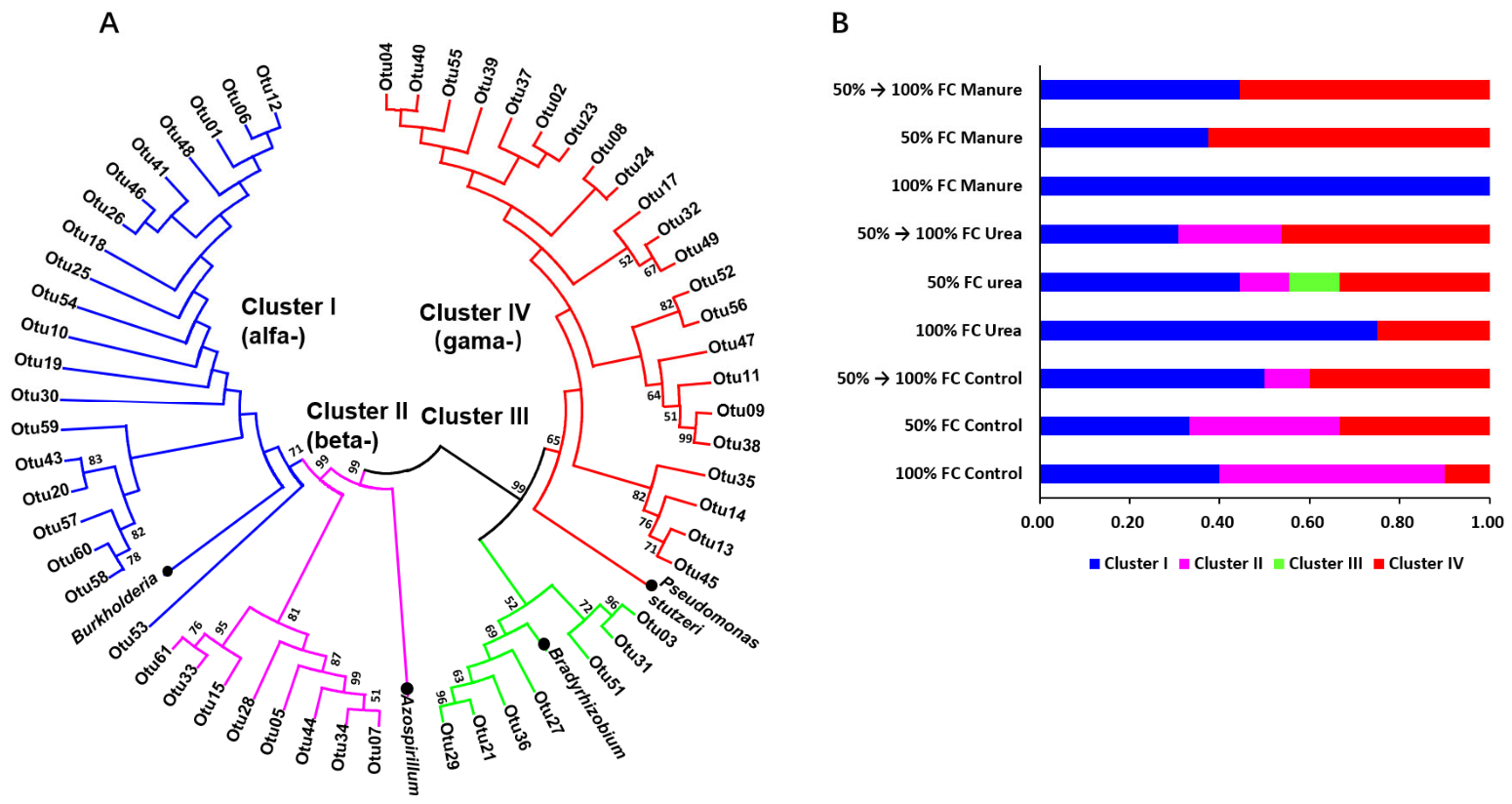
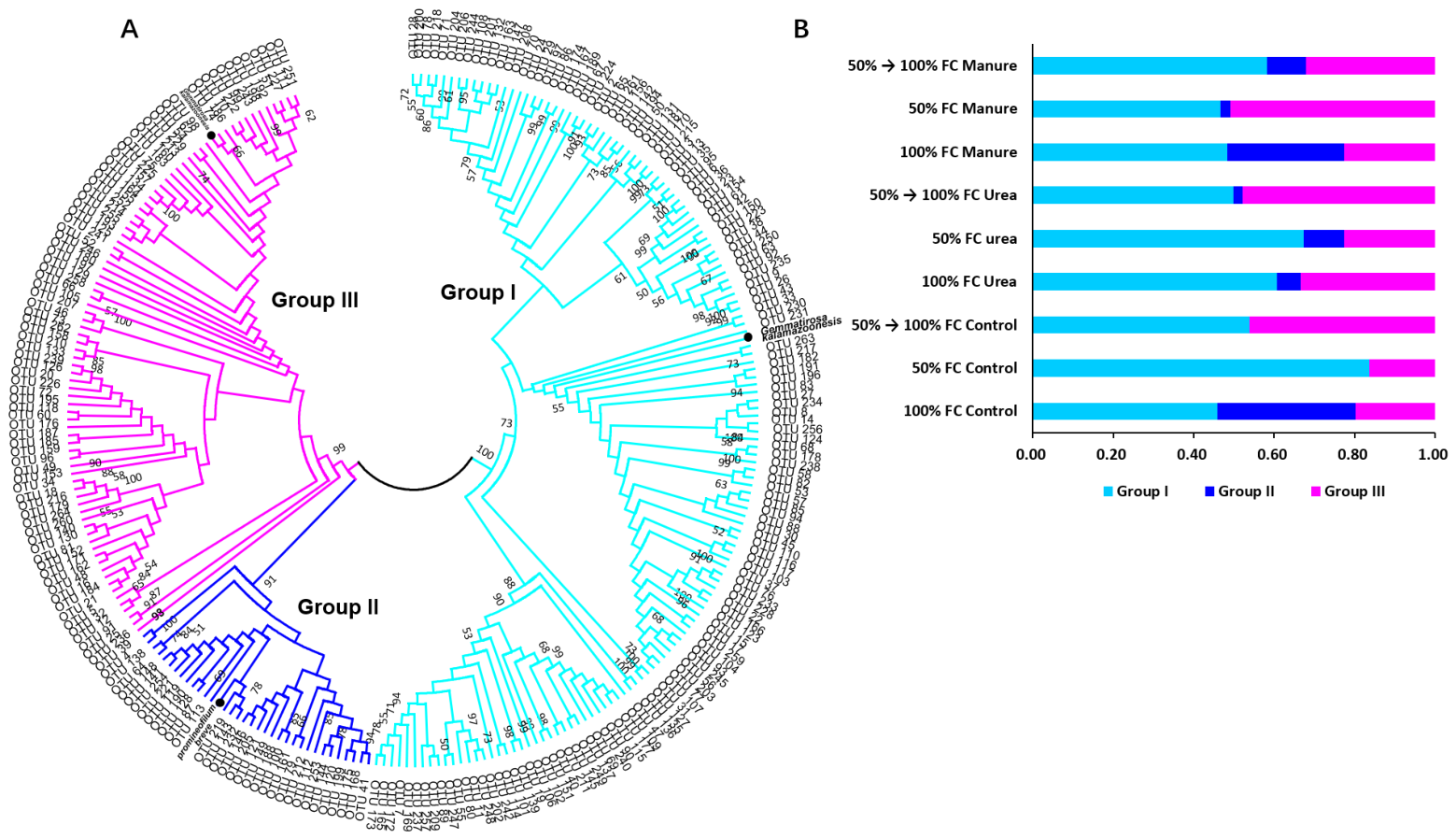
2.6. Cloning, Sequencing and Phylogenetic Analysis
2.7. Statistical Analysis
3. Results and Discussion
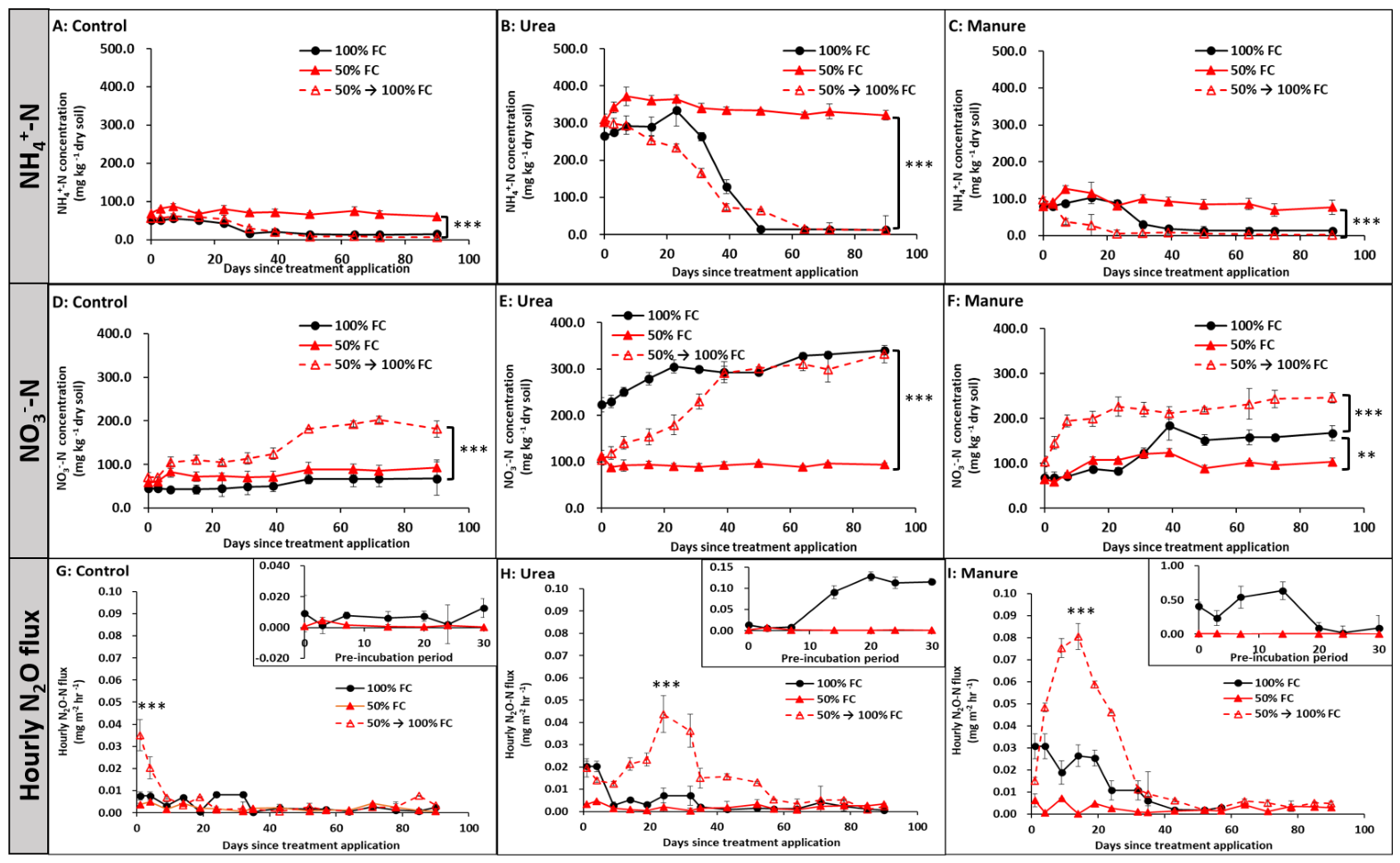
3.1. Impact of Soil Moisture Status and Fertilizer Types on Nitrification and N2O
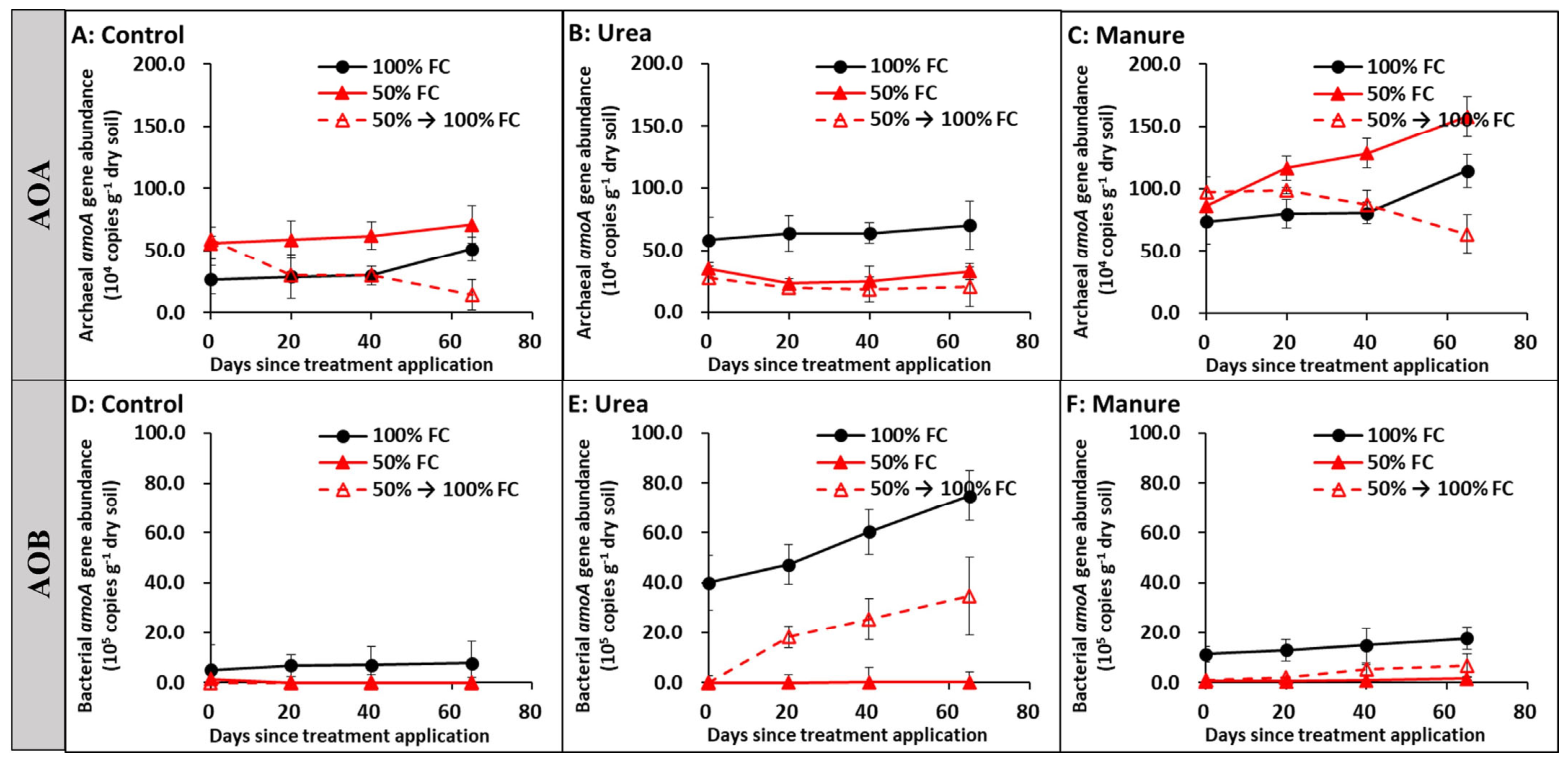
3.2. Impact of Soil Moisture Status and Fertilizer Types on Ammonia Oxidizers
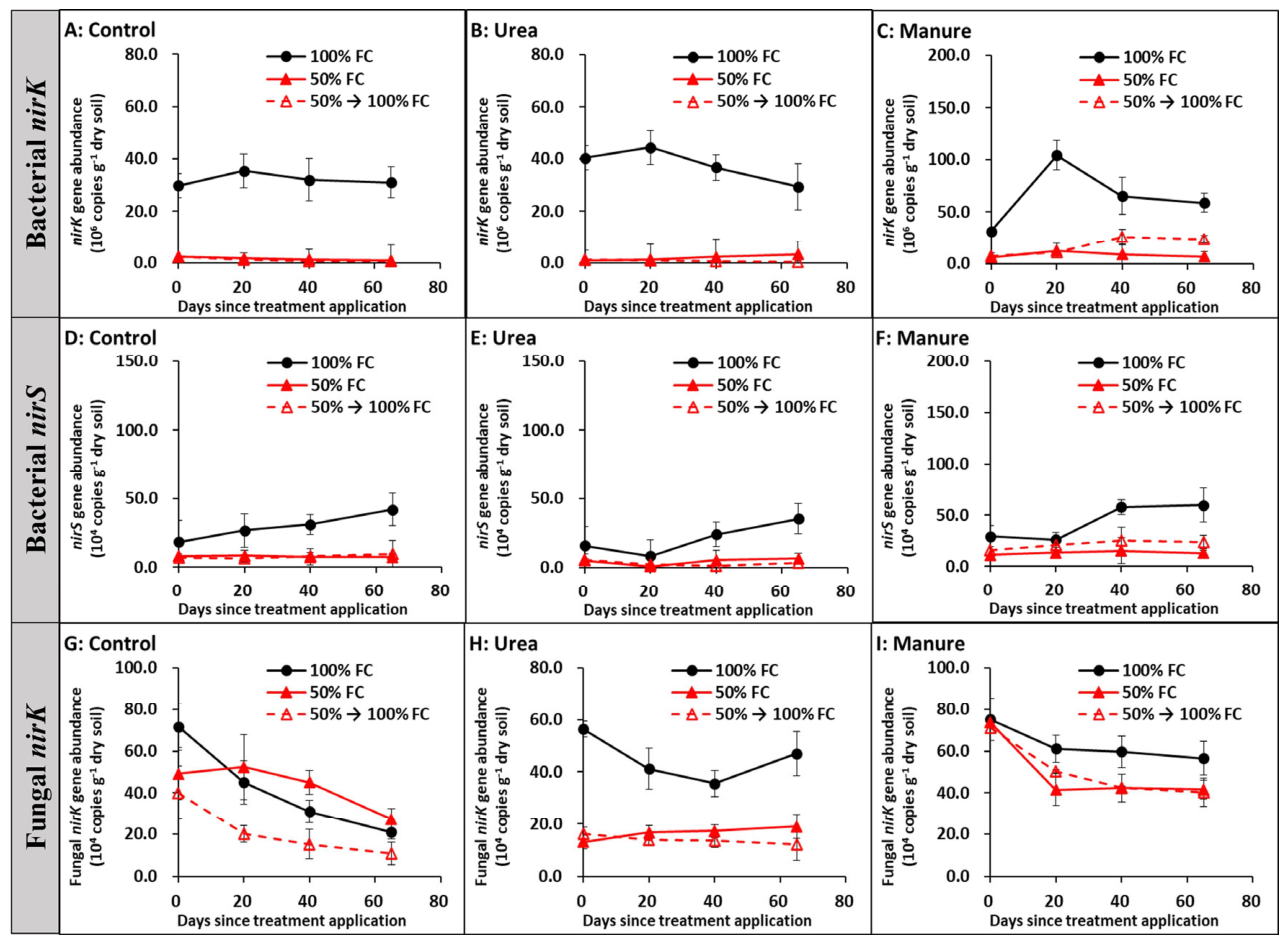
3.3. Impact of Soil Moisture Status and Fertilizer Types on Denitrifying Bacteria and Fungi
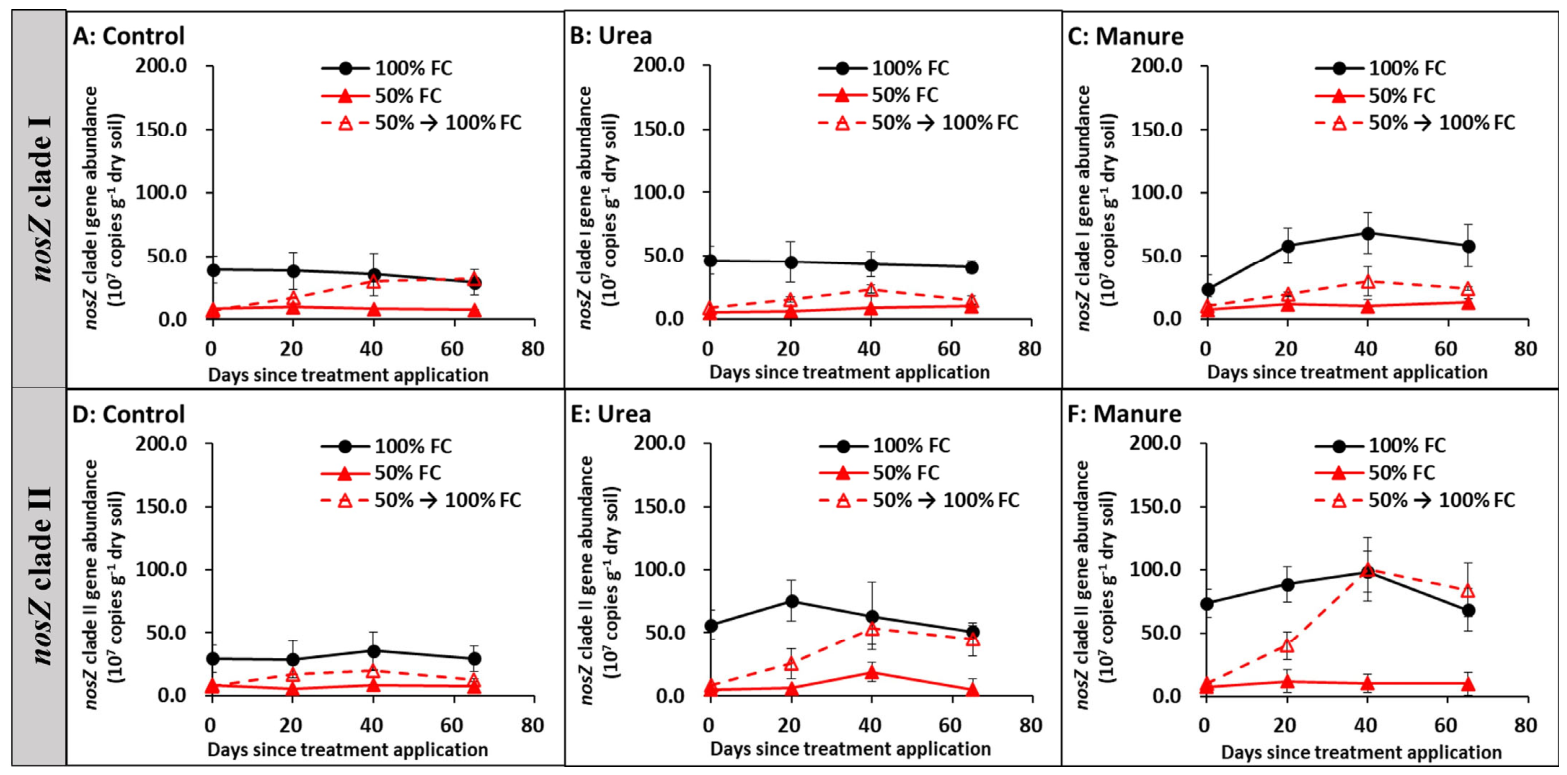
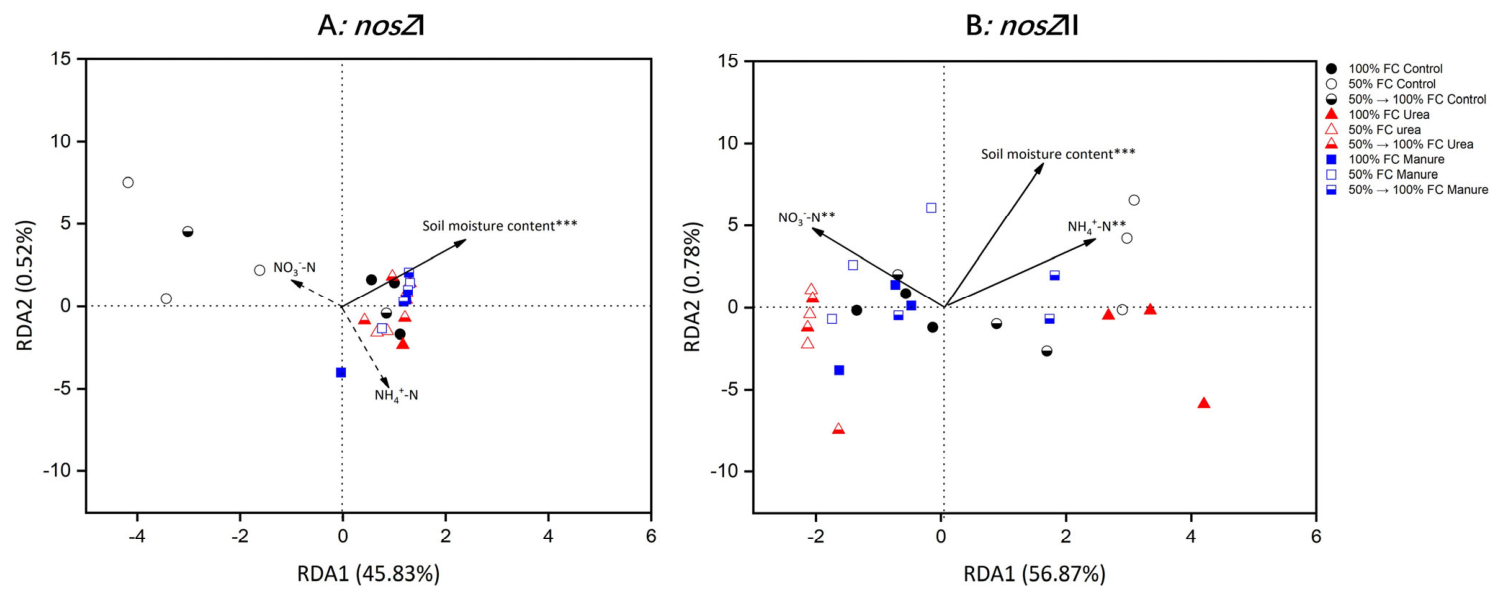
3.4. Impact of Soil Moisture Status and Fertilizer Types on N2O Reducers (nosZI and nosZII)
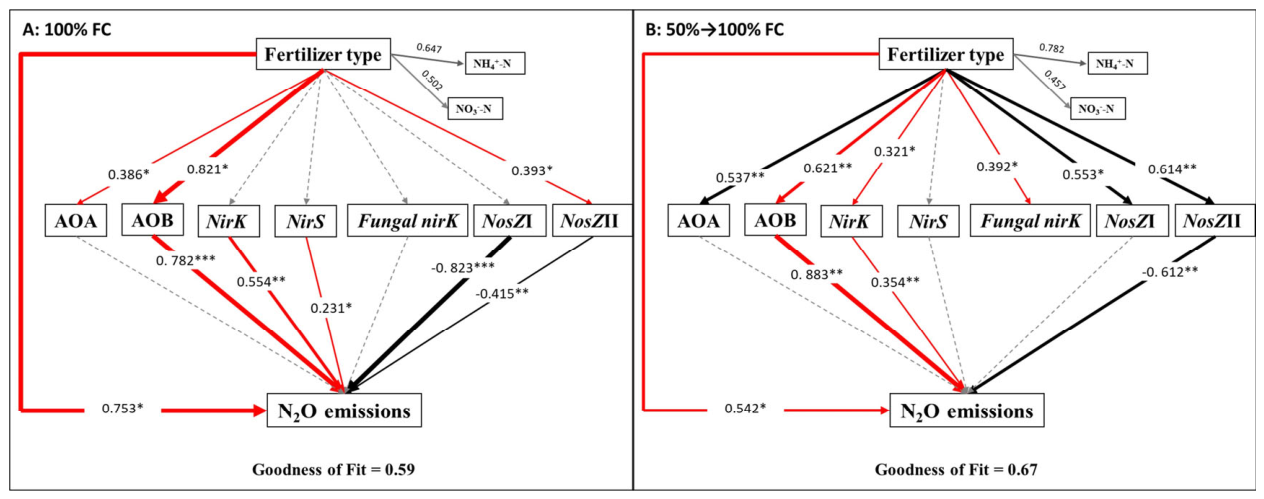
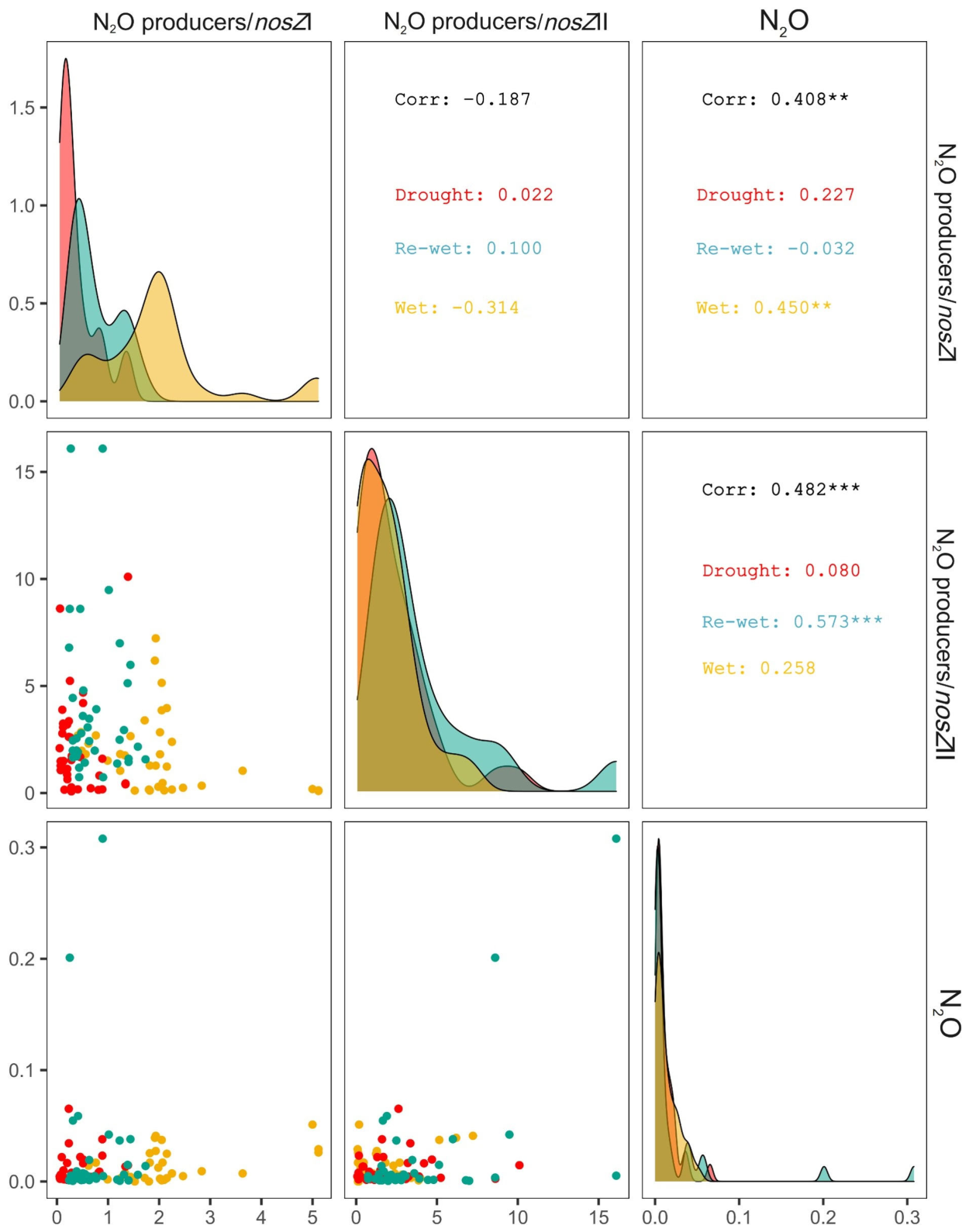
3.5. The Relationships Between N2O Emissions, N2O Producers and N2O Reducers
4. Conclusions
Author Contributions
Funding
Data Availability Statement
Conflicts of Interest
References
- Fahey, C.; Koyama, A.; Antunes, P.M.; Dunfield, K.; Flory, S.L. Plant communities mediate the interactive effects of invasion and drought on soil microbial communities. ISME J. 2020, 14, 1396–1409. [Google Scholar] [CrossRef] [Scilit] [PubMed]
- Jansson, J.K.; Hofmockel, K.S. Soil microbiomes and climate change. Nat. Rev. Microbiol. 2020, 18, 35–46. [Google Scholar] [CrossRef] [Scilit] [PubMed]
- Greaver, T.L.; Clark, C.M.; Compton, J.E.; Vallano, D.; Talhelm, A.F.; Weaver, C.P.; Band, L.E.; Baron, J.S.; Davidson, E.A.; Tague, C.L.; et al. Key ecological responses to nitrogen are altered by climate change. Nat. Clim. Change 2016, 6, 836–843. [Google Scholar] [CrossRef] [Scilit]
- Li, L.F.; Zheng, Z.Z.; Wang, W.J.; Biederman, J.A.; Xu, X.L.; Ran, Q.W.; Qian, R.Y.; Xu, C.; Zhang, B.; Wang, F.; et al. Terrestrial N2O emissions and related functional genes under climate change: A global meta-analysis. Glob. Change Biol. 2020, 26, 931–943. [Google Scholar] [CrossRef] [Scilit] [PubMed]
- Xu, X.Y.; Liu, Y.W.; Singh, B.P.; Yang, Q.; Zhang, Q.C.; Wang, H.L.; Xia, Z.D.; Di, H.J.; Singh, B.K.; Xu, J.M.; et al. NosZ clade II rather than clade I determine in situ N2O emissions with different fertilizer types under simulated climate change and its legacy. Soil Biol. Biochem. 2020, 150, 107974. [Google Scholar] [CrossRef] [Scilit]
- Hutchins, D.A.; Jansson, J.K.; Remais, J.V.; Rich, V.I.; Singh, B.K.; Trivedi, P. Climate change microbiology—Problems and perspectives. Nat. Rev. Microbiol. 2019, 17, 391–396. [Google Scholar] [CrossRef] [Scilit] [PubMed]
- Singh, B.K.; Bardgett, R.D.; Smith, P.; Reay, D.S. Microorganisms and climate change: Terrestrial feedbacks and mitigation options. Nat. Rev. Microbiol. 2010, 8, 779–790. [Google Scholar] [CrossRef] [Scilit] [PubMed]
- Di, H.J.; Cameron, K.C.; Shen, J.P.; Winefield, C.S.; O’Callaghan, M.; Bowatte, S.; He, J.Z. Nitrification driven by bacteria and not archaea in nitrogen-rich grassland soils. Nat. Geosci. 2009, 2, 621–624. [Google Scholar] [CrossRef] [Scilit]
- Duan, P.P.; Zhou, J.; Feng, L.; Jansen-Willems, A.B.; Xiong, Z.Q. Pathways and controls of N2O production in greenhouse vegetable production soils. Biol. Fertil. Soils 2019, 55, 285–297. [Google Scholar] [CrossRef] [Scilit]
- Xu, X.Y.; Liu, X.R.; Li, Y.; Ran, Y.; Liu, Y.P.; Zhang, Q.C.; Li, Z.; He, Y.; Xu, J.M.; Di, H.J. High temperatures inhibited the growth of soil bacteria and archaea but not that of fungi and altered nitrous oxide production mechanisms from different nitrogen sources in an acidic soil. Soil Biol. Biochem. 2017, 107, 168–179. [Google Scholar] [CrossRef] [Scilit]
- Stein, L.Y. The Long-Term Relationship between Microbial Metabolism and Greenhouse Gases. Trends Microbiol. 2020, 28, 500–511. [Google Scholar] [CrossRef] [Scilit] [PubMed]
- Xu, X.Y.; Xia, Z.D.; Liu, Y.W.; Liu, E.F.; Müller, K.; Wang, H.L.; Luo, J.F.; Wu, X.L.; Beiyuan, J.; Fang, Z.; et al. Interactions between methanotrophs and ammonia oxidizers modulate the response of in situ methane emissions to simulated climate change and its legacy in an acidic soil. Sci. Total Environ. 2021, 752, 142225. [Google Scholar] [CrossRef] [Scilit] [PubMed]
- Hu, H.W.; Macdonald, C.A.; Trivedi, P.; Anderson, I.C.; Zheng, Y.; Holmes, B.; Bodrossy, L.; Wang, J.T.; He, J.Z.; Singh, B.K. Effects of climate warming and elevated CO2 on autotrophic nitrification and nitrifiers in dryland ecosystems. Soil Biol. Biochem. 2016, 92, 1–15. [Google Scholar] [CrossRef] [Scilit]
- Hu, H.W.; Trivedi, P.; He, J.Z.; Singh, B.K. Microbial nitrous oxide emissions in dryland ecosystems: Mechanisms, microbiome and mitigation. Environ. Microbiol. 2017, 19, 4808–4828. [Google Scholar] [CrossRef] [Scilit] [PubMed]
- Domeignoz-Horta, L.A.; Philippot, L.; Peyrard, C.; Bru, D.; Breuil, M.C.; Bizouard, F.; Justes, E.; Mary, B.; Léonard, J.; Spor, A. Peaks of in situ N2O emissions are influenced by N2O-producing and reducing microbial communities across arable soils. Glob. Change Biol. 2018, 24, 360–370. [Google Scholar] [CrossRef] [Scilit] [PubMed]
- Sanford, R.A.; Wagner, D.D.; Wu, Q.Z.; Chee-Sanford, J.C.; Thomas, S.H.; Cruz-García, C.; Rodríguez, G.; Massol-Deyá, A.; Krishnani, K.K.; Ritalahti, K.M.; et al. Unexpected nondenitrifier nitrous oxide reductase gene diversity and abundance in soils. Proc. Natl. Acad. Sci. USA 2012, 109, 19709–19714. [Google Scholar] [CrossRef] [Scilit] [PubMed]
- Jones, C.M.; Graf, D.R.H.; Bru, D.; Philippot, L.; Hallin, S. The unaccounted yet abundant nitrous oxide-reducing microbial community: A potential nitrous oxide sink. ISME J. 2013, 7, 417–426. [Google Scholar] [CrossRef] [Scilit] [PubMed]
- Domeignoz-Horta, L.A.; Putz, M.; Spor, A.; Bru, D.; Breuil, M.C.; Hallin, S.; Philippot, L. Non-denitrifying nitrous oxide-reducing bacteria—An effective N2O sink in soil. Soil Biol. Biochem. 2016, 103, 376–379. [Google Scholar] [CrossRef] [Scilit]
- Liu, H.Y.; Ding, Y.; Zhang, Q.C.; Liu, X.M.; Xu, J.M.; Li, Y.; Di, H.J. Heterotrophic nitrification and denitrification are the main sources of nitrous oxide in two paddy soils. Plant Soil 2019, 445, 39–53. [Google Scholar] [CrossRef] [Scilit]
- Banerjee, S.; Helgason, B.; Wang, L.F.; Winsley, T.; Ferrari, B.C.; Siciliano, S.D. Legacy effects of soil moisture on microbial community structure and N2O emissions. Soil Biol. Biochem. 2016, 95, 40–50. [Google Scholar] [CrossRef] [Scilit]
- Kaurin, A.; Mihelic, R.; Kastelec, D.; Grcman, H.; Bru, D.; Philippot, L.; Suhadolc, M. Resilience of bacteria, archaea, fungi and N-cycling microbial guilds under plough and conservation tillage, to agricultural drought. Soil Biol. Biochem. 2018, 120, 233–245. [Google Scholar] [CrossRef] [Scilit]
- Han, Z.; Leng, Y.; Sun, Z.; Li, Z.; Xu, P.; Wu, S.; Liu, S.; Li, S.; Wang, J.; Zou, J. Substitution of organic and bio-organic fertilizers for mineral fertilizers to suppress nitrous oxide emissions from intensive vegetable fields. J. Environ. Manag. 2024, 349, 119390. [Google Scholar] [CrossRef] [Scilit] [PubMed]
- Chen, H.B.; Yang, X.; Wang, H.L.; Sarkar, B.; Shaheen, S.M.; Gielen, G.; Bolan, N.; Guo, J.; Che, L.; Sun, H.L.; et al. Animal carcass- and wood-derived biochars improved nutrient bioavailability, enzyme activity, and plant growth in metal-phthalic acid ester co-contaminated soils: A trial for reclamation and improvement of degraded soils. J. Environ. Manag. 2020, 261, 110246. [Google Scholar] [CrossRef] [Scilit] [PubMed]
- Li, H.R.; Luo, Q.S.; Sun, L.C.; Xu, H.; Hao, X.; Zhu, K.; Li, M.; Li, B.; Jiao, W.; Geng, J.; et al. Comparative study of nosZI and nosZII clade isolates: Insights into their responses to environmental variables and soil fertilization types. Front. Plant Sci. 2025, 16, 1537010. [Google Scholar] [CrossRef] [Scilit] [PubMed]
- Wan, Z.W.; Wang, L.; Huang, G.Q.; Rasul, F.; Awan, M.I.; Cui, H.; Liu, K.; Yu, X.; Tang, H.; Wang, S.; et al. nirS and nosZII bacterial denitrifiers as well as fungal denitrifiers are coupled with N2O emissions in long-term fertilized soils. Sci. Total Environ. 2023, 897, 165426. [Google Scholar] [CrossRef] [Scilit] [PubMed]
- Izabel-Shen, D. Understanding response of microbial communities to saltwater intrusion through microcosms. Comput. Struct. Biotechnol. J. 2021, 19, 929–933. [Google Scholar] [CrossRef] [Scilit] [PubMed]
- Orwin, K.H.; Wardle, D.A. New indices for quantifying the resistance and resilience of soil biota to exogenous disturbances. Soil Biol. Biochem. 2004, 36, 1907–1912. [Google Scholar] [CrossRef] [Scilit]
- De Long, J.R.; Jackson, B.G.; Wilkinson, A.; Pritchard, W.J.; Oakley, S.; Mason, K.E.; Stephan, J.G.; Ostle, N.J.; Johnson, D.; Baggs, E.M.; et al. Relationships between plant traits, soil properties and carbon fluxes differ between monocultures and mixed communities in temperate grassland. J. Ecol. 2019, 107, 1704–1719. [Google Scholar] [CrossRef] [Scilit] [PubMed]
- Fan, X.P.; Yin, C.; Chen, H.; Ye, M.J.; Zhao, Y.H.; Li, T.Q.; Wakelin, S.A.; Liang, Y.C. The efficacy of 3,4-dimethylpyrazole phosphate on N2O emissions is linked to niche differentiation of ammonia oxidizing archaea and bacteria across four arable soils. Soil Biol. Biochem. 2019, 130, 82–93. [Google Scholar] [CrossRef] [Scilit]
- Gómez-Gener, L.; Lupon, A.; Laudon, H.; Sponseller, R.A. Drought alters the biogeochemistry of boreal stream networks. Nat. Commun. 2020, 11, 1795. [Google Scholar] [CrossRef] [Scilit] [PubMed]
- Nguyen, L.T.T.; Osanai, Y.; Anderson, I.C.; Bange, M.P.; Tissue, D.T.; Singh, B.K. Flooding and prolonged drought have differential legacy impacts on soil nitrogen cycling, microbial communities and plant productivity. Plant Soil 2018, 431, 371–387. [Google Scholar] [CrossRef] [Scilit]
- Di, H.J.; Cameron, K.C.; Podolyan, A.; Robinson, A. Effect of soil moisture status and a nitrification inhibitor, dicyandiamide, on ammonia oxidizer and denitrifier growth and nitrous oxide emissions in a grassland soil. Soil Biol. Biochem. 2014, 73, 59–68. [Google Scholar] [CrossRef] [Scilit]
- Xu, X.Y.; Liu, X.R.; Li, Y.; Ran, Y.; Liu, Y.P.; Zhang, Q.C.; Li, Z.; He, Y.; Xu, J.M.; Di, H.J. Legacy effects of simulated short-term climate change on ammonia oxidisers, denitrifiers, and nitrous oxide emissions in an acid soil. Environ. Sci. Pollut. Res. 2017, 24, 11639–11649. [Google Scholar] [CrossRef] [Scilit] [PubMed]
- Prosser, J.I.; Hink, L.; Gubry-Rangin, C.; Nicol, G.W. Nitrous oxide production by ammonia oxidizers: Physiological diversity, niche differentiation and potential mitigation strategies. Glob. Change Biol. 2020, 26, 103–118. [Google Scholar] [CrossRef] [Scilit] [PubMed]
- Zhao, J.; Bello, M.O.; Meng, Y.Y.; Prosser, J.I.; Gubry-Rangin, C. Selective inhibition of ammonia oxidising archaea by simvastatin stimulates growth of ammonia oxidising bacteria. Soil Biol. Biochem. 2020, 141, 107673. [Google Scholar] [CrossRef] [Scilit]
- Ouyang, Y.; Norton, J.M.; Stark, J.M.; Reeve, J.R.; Habteselassie, M.Y. Ammonia-oxidizing bacteria are more responsive than archaea to nitrogen source in an agricultural soil. Soil Biol. Biochem. 2016, 96, 4–15. [Google Scholar] [CrossRef] [Scilit]
- Hink, L.; Gubry-Rangin, C.; Nicol, G.W.; Prosser, J.I. The consequences of niche and physiological differentiation of archaeal and bacterial ammonia oxidisers for nitrous oxide emissions. ISME J. 2018, 12, 1084–1093. [Google Scholar] [CrossRef] [Scilit] [PubMed]
- Griffiths, B.S.; Philippot, L. Insights into the resistance and resilience of the soil microbial community. FEMS Microbiol. Rev. 2013, 37, 112–129. [Google Scholar] [CrossRef] [Scilit] [PubMed]
- Kuypers, M.M.M.; Marchant, H.K.; Kartal, B. The microbial nitrogen-cycling network. Nat. Rev. Microbiol. 2018, 16, 263–276. [Google Scholar] [CrossRef] [Scilit] [PubMed]
- Feng, H.J.; Wang, S.Y.; Gao, Z.D.; Wang, Z.K.; Ren, X.Q.; Hu, S.W.; Pan, H. Effect of land use on the composition of bacterial and fungal communities in saline-sodic soils. Land Degrad. Dev. 2019, 30, 1851–1860. [Google Scholar] [CrossRef] [Scilit]
- Evans, S.E.; Wallenstein, M.D. Soil microbial community response to drying and rewetting stress: Does historical precipitation regime matter? Biogeochemistry 2012, 109, 101–116. [Google Scholar] [CrossRef] [Scilit]
- Braker, G.; Conrad, R. Diversity, Structure, and Size of N2O-Producing Microbial Communities in Soils-What Matters for Their Functioning? In Advances in Applied Microbiology; Laskin, A.I., Sariaslani, S., Gadd, G.M., Eds.; Elsevier: Amsterdam, The Netherlands, 2011; Volume 75, pp. 33–70. [Google Scholar]
- Yoon, S.; Nissen, S.; Park, D.; Sanford, R.A.; Löffler, F.E. Nitrous Oxide Reduction Kinetics Distinguish Bacteria Harboring Clade I NosZ from Those Harboring Clade II NosZ. Appl. Environ. Microbiol. 2016, 82, 3793–3800. [Google Scholar] [CrossRef] [Scilit] [PubMed]
- Chen, H.; Yin, C.; Fan, X.P.; Ye, M.J.; Peng, H.Y.; Li, T.Q.; Zhao, Y.H.; Wakelin, S.A.; Chu, G.X.; Liang, Y.C. Reduction of N2O emission by biochar and/or 3,4-dimethylpyrazole phosphate (DMPP) is closely linked to soil ammonia oxidizing bacteria and nosZI-N2O reducer populationsyy. Sci. Total Environ. 2019, 694, 133658. [Google Scholar] [CrossRef] [Scilit] [PubMed]
- Dambreville, C.; Hallet, S.; Nguyen, C.; Morvan, T.; Germon, J.C.; Philippot, L. Structure and activity of the denitrifying community in a maize-cropped field fertilized with composted pig manure or ammonium nitrate. FEMS Microbiol. Ecol. 2006, 56, 119–131. [Google Scholar] [CrossRef] [Scilit] [PubMed]
- Chen, Z.; Liu, J.B.; Wu, M.N.; Xie, X.L.; Wu, J.S.; Wei, W.X. Differentiated Response of Denitrifying Communities to Fertilization Regime in Paddy Soil. Microb. Ecol. 2012, 63, 446–459. [Google Scholar] [CrossRef] [Scilit] [PubMed]
- Govednik, A.; Jones, C.M.; Hallin, S.; Suhadolc, M. nosZII communities influence soil N2O consumption potential in a long-term tillage and fertilization experiment. Appl. Soil Ecol. 2026, 224, 107165. [Google Scholar] [CrossRef] [Scilit]
- Rijk, I.; Ekblad, A.; Dahlin, A.S.; Enell, A.; Larsson, M.; Leroy, P.; Kleja, D.B.; Tiberg, C.; Hallin, S.; Jones, C. Biochar and peat amendments affect nitrogen retention, microbial capacity and nitrogen cycling microbial communities in a metal and polycyclic aromatic hydrocarbon contaminated urban soil. Sci. Total Environ. 2024, 936, 173454. [Google Scholar] [CrossRef] [Scilit] [PubMed]
- Barneze, A.S.; van Groenigen, J.W.; Philippot, L.; Bru, D.; Abalos, D.; De Deyn, G.B. Plant communities can attenuate flooding induced N2O fluxes by altering nitrogen cycling microbial communities and plant nitrogen uptake. Soil Biol. Biochem. 2023, 185, 109142. [Google Scholar] [CrossRef] [Scilit]
- Yang, L.Y.; Li, S.; Shangguan, H.Y.; Qiao, Z.-H.; Huang, X.-R.; Zhou, S.-Y.; Li, H.; Su, X.-X.; Sun, X.; Zhu, Y.-G.; et al. Diversity and activity of soil N2O-reducing bacteria shaped by urbanization. Environ. Sci. Technol. 2024, 58, 17295–17303. [Google Scholar] [CrossRef] [Scilit] [PubMed]
- Walitang, D.I.; Kim, K.; Lee, Y.; Heo, T.-Y.; Sa, T. Nitrification and denitrification gene abundances under stable soil chemical properties established by long-term compost fertilization. Appl. Sci. 2023, 13, 11146. [Google Scholar] [CrossRef] [Scilit]
- Liu, C.M.; Zhang, W.Z.; Hou, H.J.; Liao, R.; Wei, W.; Sheng, R. Effect of long-term land use on the nosZI- and nosZII-containing microbial communities. Appl. Soil Ecol. 2023, 189, 104961. [Google Scholar] [CrossRef] [Scilit]



| N2O | AOA | AOB | nirK | nirS | Fungal nirK | nosZI | nosZII | |||||||||
|---|---|---|---|---|---|---|---|---|---|---|---|---|---|---|---|---|
| F | p | F | p | F | p | F | p | F | p | F | p | F | p | F | p | |
| Day (D) | 52.218 | 0.031 | 21.102 | 0.021 | 47.21 | 0.003 | 19.673 | 0.027 | 21.678 | 0.031 | 22.213 | 0.003 | 0.214 | 0.091 | 6.321 | 0.046 |
| Moisture (M) | 59.511 | 0.001 | 29.038 | 0.013 | 8.112 | 0.001 | 26.992 | 0.001 | 59.323 | 0.001 | 53.531 | 0.021 | 89.271 | <0.001 | 92.111 | <0.001 |
| Fertilizer (F) | 87.544 | <0.001 | 69.221 | <0.001 | 9.325 | 0.005 | 0.073 | 0.949 | 0.084 | 0.819 | 54.991 | 0.024 | 56.244 | 0.014 | 62.191 | 0.021 |
| D × M | 53.214 | 0.022 | 23.221 | 0.003 | 2.897 | 0.099 | 23.114 | 0.005 | 1.946 | 0.315 | 4.035 | 0.229 | 1.431 | 0.372 | 4.154 | 0.016 |
| D × F | 7.514 | 0.026 | 6.521 | 0.153 | 3.228 | 0.078 | 0.021 | 0.777 | 1.458 | 0.264 | 7.168 | 0.028 | 1.733 | 0.763 | 10.561 | 0.013 |
| M × F | 12.122 | 0.032 | 4.218 | 0.054 | 4.141 | 0.013 | 0.089 | 0.533 | 3.134 | 0.041 | 0.574 | 0.479 | 21.293 | 0.008 | 7.404 | 0.023 |
| D × M × F | 4.228 | 0.042 | 4.21 | 0.061 | 7.68 | 0.969 | 0.676 | 0.577 | 1.932 | 0.437 | 1.678 | 0.073 | 0.576 | 0.492 | 2.432 | 0.224 |
| Control | Urea | Manure | F-Value | ||
|---|---|---|---|---|---|
| AOA | Day 0 | 0.02 c | 0.92 a | 0.66 ab | 52.33 *** |
| Day 20 | 0.93 a | 0.06 c | 0.46 b | 59.66 ** | |
| Day 40 | 0.62 ab | 0.04 c | 0.77 a | 56.33 *** | |
| Day 65 | 0.07 c | 0.24 ab | 0.37 a | 30.31 * | |
| AOB | Day 0 | 0.01 b | 0.08 a | 0.09 a | 24.67 ** |
| Day 20 | 0.16 a | 0.21 a | 0.19 a | 0.39 | |
| Day 40 | 0.17 b | 0.49 a | 0.32 a | 18.22 ** | |
| Day 65 | 0.23 a | 0.55 a | 0.44 a | 1.47 | |
| nirK | Day 0 | 0.02 a | 0.01 a | 0.07 a | 1.24 |
| Day 20 | 0.11 a | 0.05 a | 0.09 a | 2.34 | |
| Day 40 | 0.07 b | 0.04 b | 0.23 a | 18.73 ** | |
| Day 65 | 0.05 b | 0.07 b | 0.38 a | 56.73 *** | |
| nirS | Day 0 | 0.34 a | 0.26 a | 0.34 a | 2.11 |
| Day 20 | 0.28 a | 0.27 a | 0.38 a | 3.45 | |
| Day 40 | 0.33 a | 0.36 a | 0.39 a | 4.22 | |
| Day 65 | 0.28 a | 0.41 a | 0.44 a | 1.57 | |
| Fungal nirK | Day 0 | 0.72 a | 0.36 bc | 0.51 b | 8.33 * |
| Day 20 | 0.13 b | 0.19 b | 0.66 a | 9.88 * | |
| Day 40 | 0.34 b | 0.29 b | 0.61 a | 61.78 *** | |
| Day 65 | 0.52 a | 0.07 b | 0.59 a | 27.32 ** | |
| nosZI | Day 0 | 0.14 a | 0.07 b | 0.11 a | 7.32 * |
| Day 20 | 0.19 a | 0.12 a | 0.19 a | 1.18 | |
| Day 40 | 0.71 a | 0.11 b | 0.29 b | 59.78 *** | |
| Day 65 | 0.83 a | 0.71 a | 0.79 a | 1.37 | |
| nosZII | Day 0 | 0.11 a | 0.04 b | 0.07 b | 7.96 * |
| Day 20 | 0.41 a | 0.11 bc | 0.04 c | 21.88 ** | |
| Day 40 | 0.57 b | 0.89 a | 0.94 a | 27.63 ** | |
| Day 65 | 0.53 b | 0.99 a | 0.98 a | 59.32 *** |
Disclaimer/Publisher’s Note: The statements, opinions and data contained in all publications are solely those of the individual author(s) and contributor(s) and not of MDPI and/or the editor(s). MDPI and/or the editor(s) disclaim responsibility for any injury to people or property resulting from any ideas, methods, instructions or products referred to in the content. |
© 2026 by the authors. Licensee MDPI, Basel, Switzerland. This article is an open access article distributed under the terms and conditions of the Creative Commons Attribution (CC BY) license.
Share and Cite
Yu, L.; Li, Q.; Han, Y.; Cui, H.; Zhang, Y.; Guo, D.; Gao, X.; Xu, X. The Important Role of nosZII Clade N2O Reducers in Reducing N2O Emissions After Soil Rewetting in a Neutral Vegetable Soil. Agronomy 2026, 16, 1263. https://doi.org/10.3390/agronomy16131263
Yu L, Li Q, Han Y, Cui H, Zhang Y, Guo D, Gao X, Xu X. The Important Role of nosZII Clade N2O Reducers in Reducing N2O Emissions After Soil Rewetting in a Neutral Vegetable Soil. Agronomy. 2026; 16(13):1263. https://doi.org/10.3390/agronomy16131263
Chicago/Turabian StyleYu, Lei, Qiumei Li, Yunxuan Han, Hui Cui, Yan Zhang, Dong Guo, Xia Gao, and Xiaoya Xu. 2026. "The Important Role of nosZII Clade N2O Reducers in Reducing N2O Emissions After Soil Rewetting in a Neutral Vegetable Soil" Agronomy 16, no. 13: 1263. https://doi.org/10.3390/agronomy16131263
APA StyleYu, L., Li, Q., Han, Y., Cui, H., Zhang, Y., Guo, D., Gao, X., & Xu, X. (2026). The Important Role of nosZII Clade N2O Reducers in Reducing N2O Emissions After Soil Rewetting in a Neutral Vegetable Soil. Agronomy, 16(13), 1263. https://doi.org/10.3390/agronomy16131263