Article

Preliminary Study on Control Efficacy and Mechanism of Cyproconazole Against Southern Corn Rust

1
Plant Protection Institute, Hebei Academy of Agriculture and Forestry Sciences, National Collection of Plant-Associated Microbes (Hebei), IPM Innovation Center of Hebei Province, International Science and Technology Joint Research Center on IPM of Hebei Province, Baoding 071000, China
2
National Agro-Tech Extension and Service Center, Beijing 100125, China
*
Author to whom correspondence should be addressed.
Agronomy 2026, 16(13), 1238; https://doi.org/10.3390/agronomy16131238

Submission received: 13 May 2026 / Revised: 20 June 2026 / Accepted: 23 June 2026 / Published: 25 June 2026
(This article belongs to the Section Pest and Disease Management)

Abstract

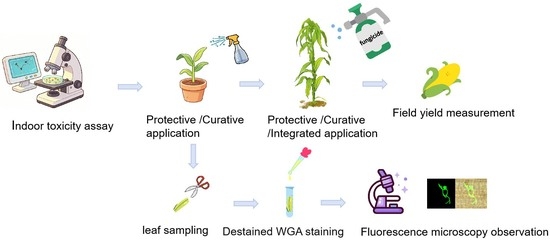
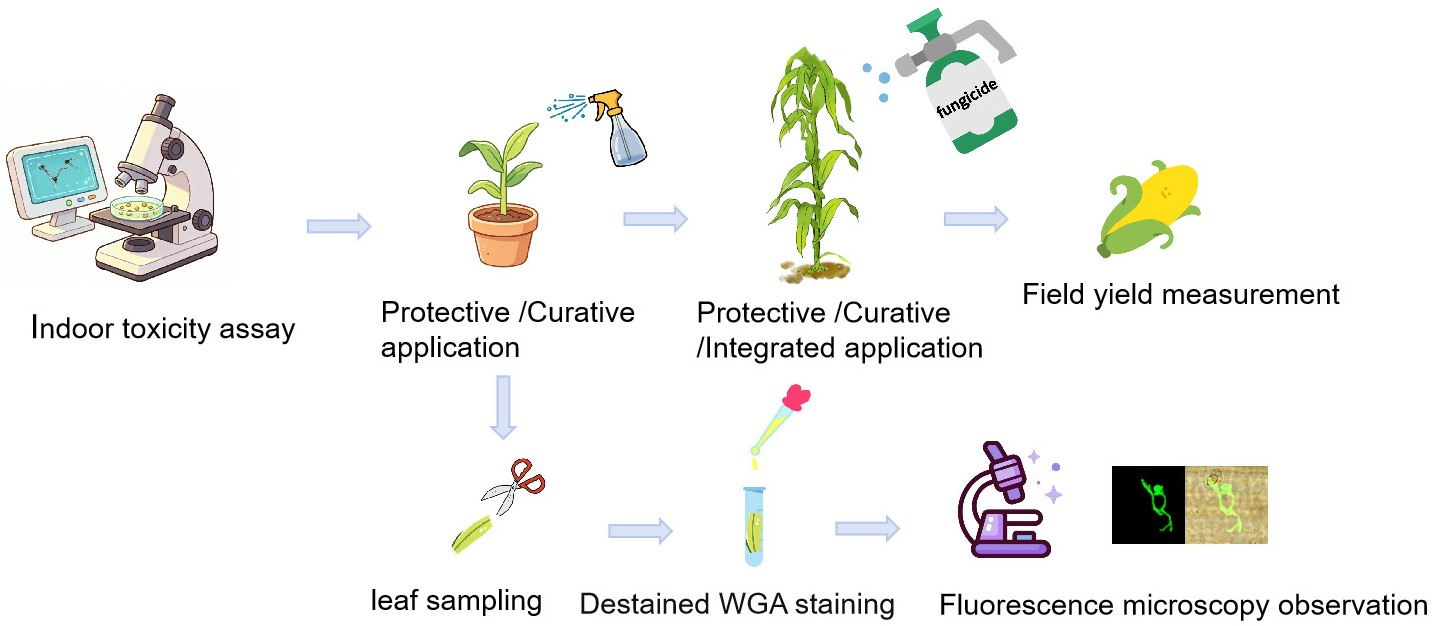
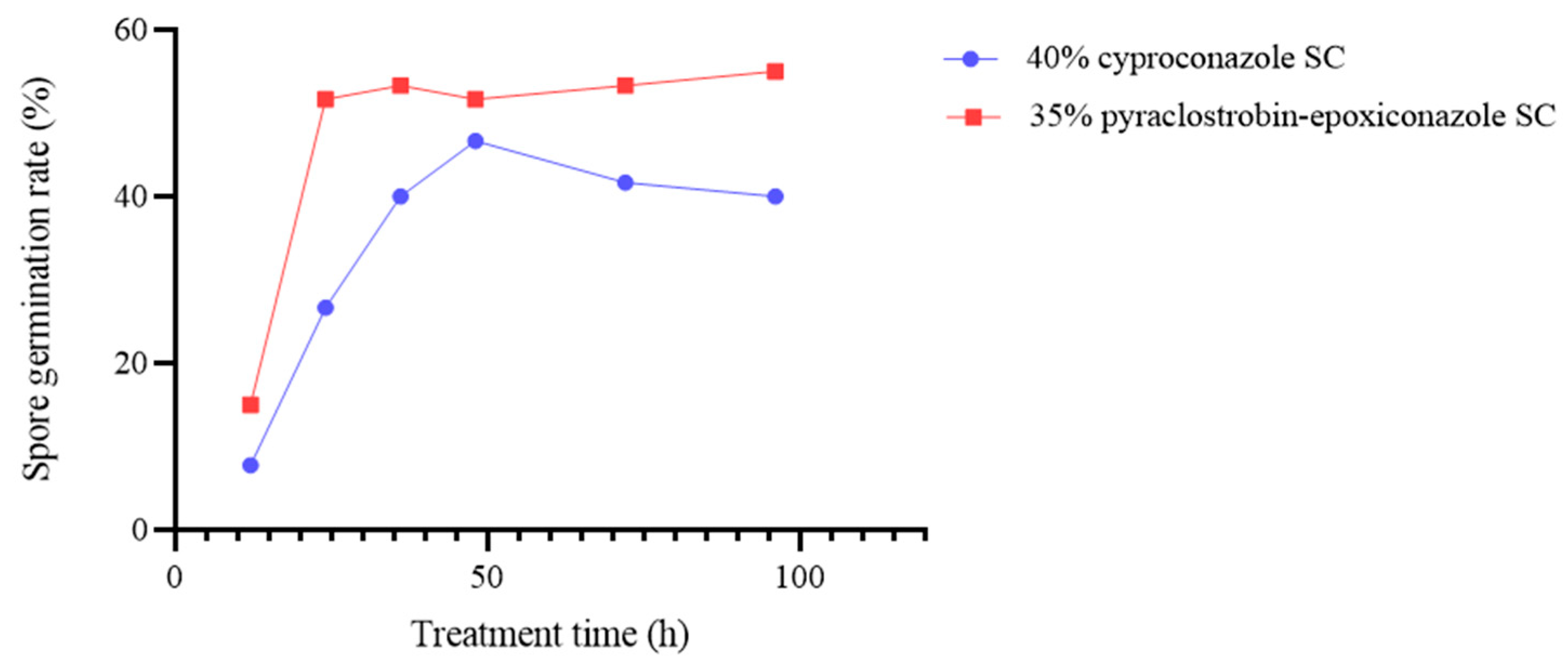
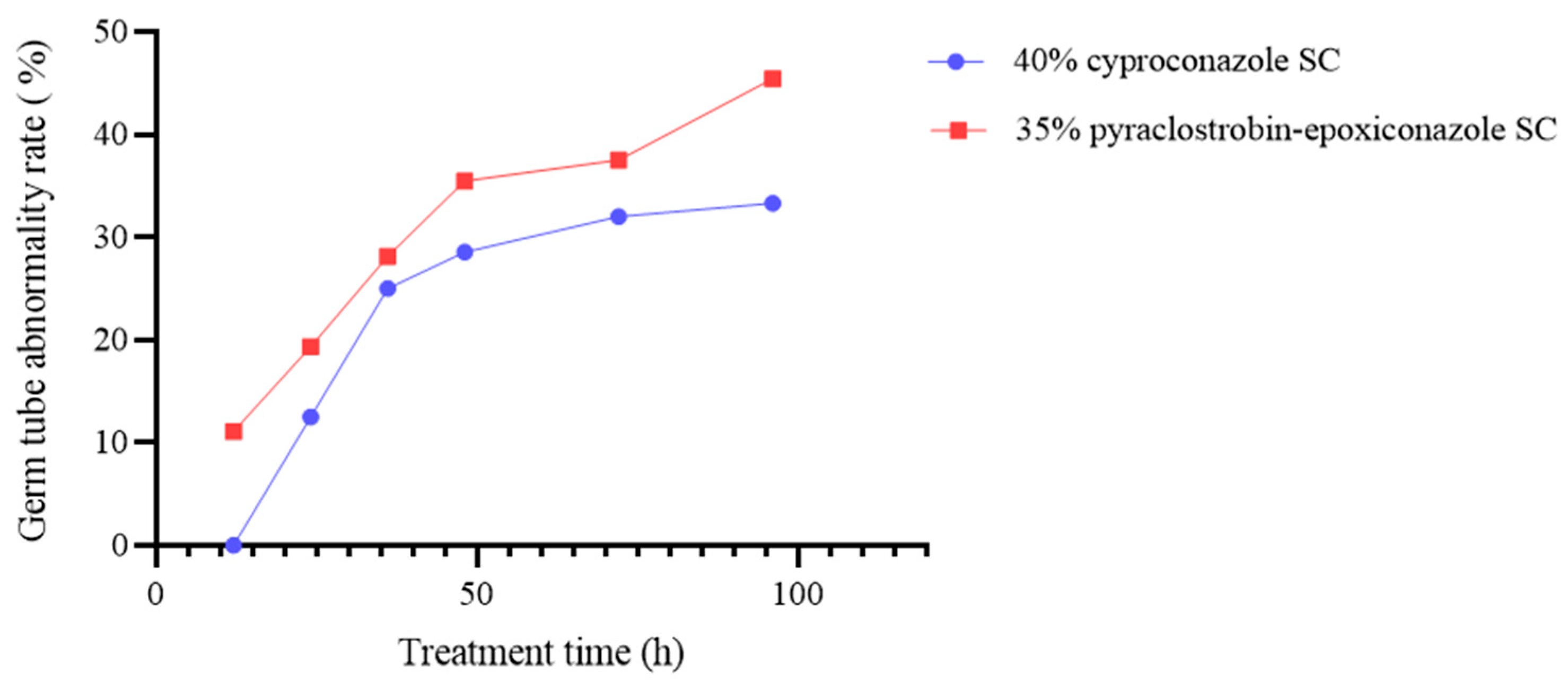
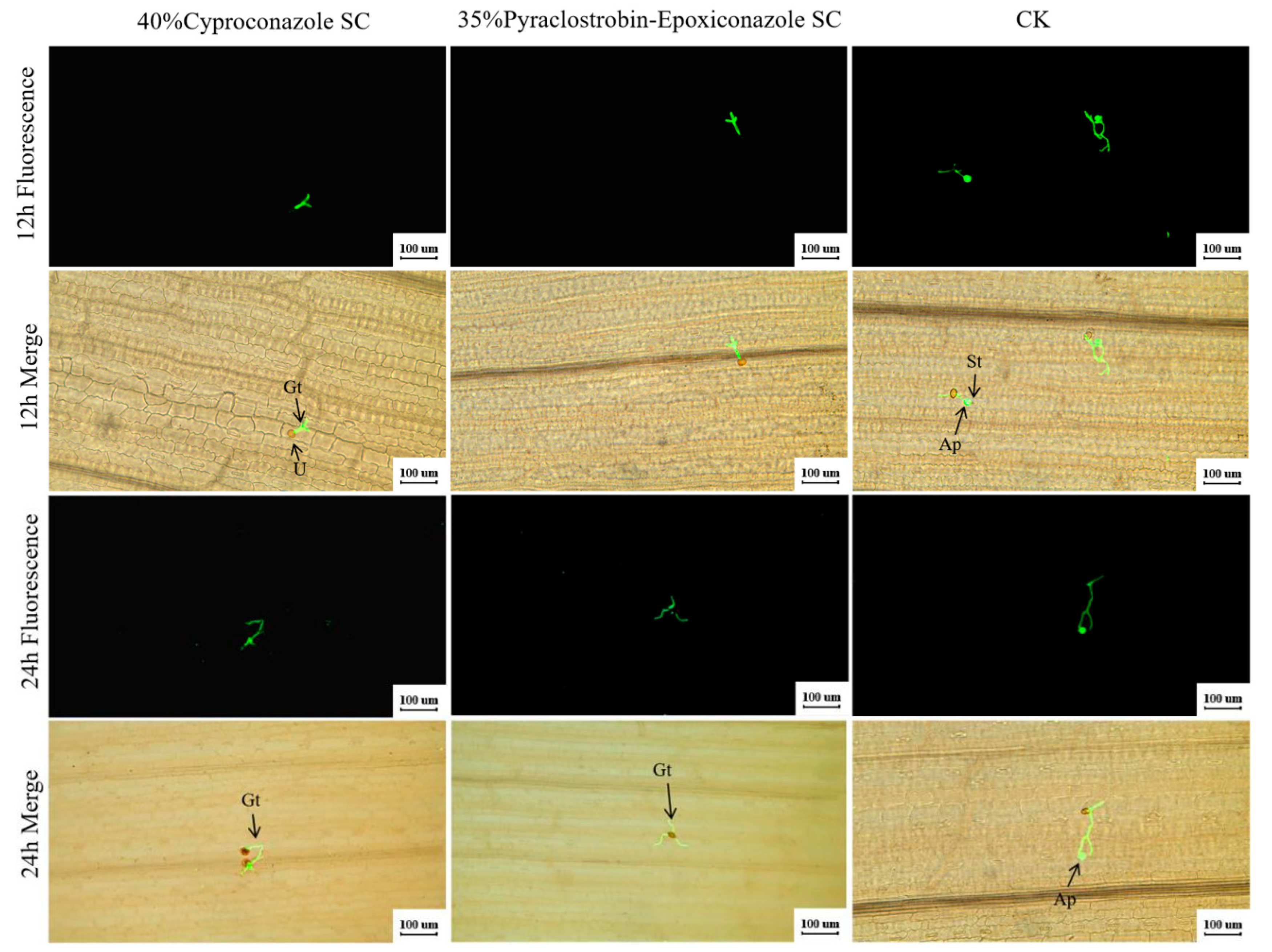
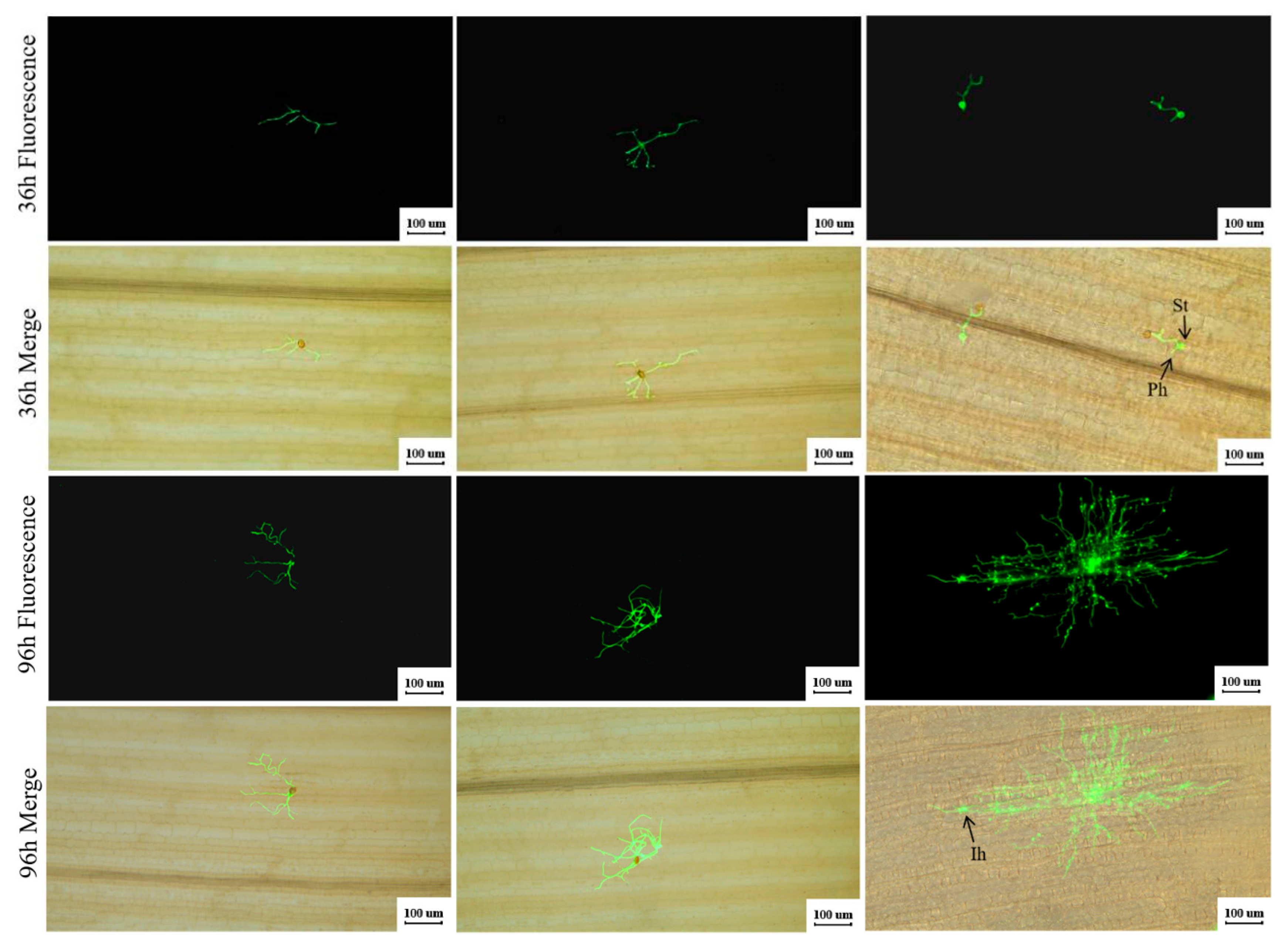
This study clarified the field control efficacy, yield regulation effect and action mechanism of 40% cyproconazole suspension concentrate (SC) against southern corn rust caused by Puccinia polysora, aiming to provide scientific support for its registration, extension and field application. Indoor toxicity was assayed using urediniospore germination and germ tube elongation inhibition combined with seedling pot tests and field efficacy trials. Wheat germ agglutinin staining was applied to observe the pathogen infection process. Cyproconazole showed strong inhibition on spore germination and germ tube elongation, with EC50 values of 70.455 mg·L−1 and 21.686 mg·L−1. On corn seedlings, its protective and curative control efficacies reached 91.11% and 82.19%. At 45 days after application during ear maturity, the field protective and curative efficacies were 65.93–78.38% and 69.26–80.79%, respectively. Notably, the integrated control strategy with two applications achieved even higher efficacy, ranging from 73.33% to 86.80%, and a yield loss recovery rate of 54.09–54.51%, both of which were superior to those of the conventional fungicide pyraclostrobin·epoxiconazole SC. Using WGA fluorescence staining, fluorescence microscopy directly visualized that the fungicide suppressed infection by inhibiting spore germination, germ tube elongation and appressorium formation. In summary, 40% cyproconazole SC has prominent persistent control efficacy and a yield-improving effect with a definite action mechanism, which is worthy of accelerated registration and popularization for southern corn rust management.
Keywords: southern corn rust; Puccinia polysora; indoor toxicity; control efficacy; yield loss recovery rate; fluorescence observation southern corn rust; Puccinia polysora; indoor toxicity; control efficacy; yield loss recovery rate; fluorescence observation
Graphical Abstract