


Abstract
To characterize the physicochemical and forward transmission optical properties of a novel cryo-lathed PEAPEMA-based hydrophobic acrylic intraocular lens (IOL) co-modified with an EGDMA cross-linker and HEMA-derived hydrophilic moieties, and compare its anti-glistening performance with three commercial hydrophobic acrylic IOLs. A 4-week standardized temperature cycling accelerated aging protocol was adopted to induce glistenings. The investigational Mercury ASOB55L was compared with Clareon SY60WF, Tecnis ZCB00, and AcrySof SN60WF. We tested water contact angle (sessile drop), equilibrium water content (gravimetry), surface topography (AFM), surface chemical groups (ATR-FTIR), and optical indices including MTF and Strehl ratio. Glistening severity was quantified by microvacuole density and scored using the modified Miyata grading scale. Results: Following accelerated aging, Mercury ASOB55L showed stable Grade 1 glistening with low microvacuole density (similar to Clareon SY60WF and Tecnis ZCB00), while AcrySof SN60WF exhibited severe Grade 4 glistening. ASOB55L possessed the highest EWC (3.26 ± 0.70%) and the smallest water contact angle. Near-surface hydroxyl signals were identified in ASOB55L and SY60WF. Only Grade 4 glistenings caused measurable deterioration of MTF and Strehl ratio; Grade 1–3 glistenings did not significantly impair forward transmission optics. The surface roughness of ASOB55L was comparable to commercial IOLs. In vitro accelerated aging testing indicated that this multi-modified PEAPEMA-based Mercury ASOB55L IOL has favorable glistening-resistant behavior and objective optical performance comparable to mainstream commercial hydrophobic acrylic IOLs. Better glistening tolerance was observed alongside moderately increased EWC (<4.0%) and reduced surface hydrophobicity, which forms the basis for our preliminary material design hypothesis.
1. Introduction
Hydrophobic acrylic copolymers are among the most dominant polymeric biomaterials for fabricating intraocular lenses (IOLs) in modern cataract surgery [1]. Such materials combine favorable material properties, including mechanical foldability for micro-incision implantation, satisfactory biocompatibility, low postoperative intraocular inflammation, and reduced risk of posterior capsule opacification (PCO) [2]. Their intrinsically hydrophobic surface enables tight mechanical apposition against the posterior lens capsule, creating a physical barrier that retards lens epithelial cell migration and alleviates both anterior and posterior capsular opacification [3]. Nevertheless, conventional hydrophobic acrylic IOL polymers still suffer from two intrinsic material-derived drawbacks that cannot be fully eliminated merely by optimizing manufacturing workflows.
First, glistenings, which manifest as fluid-filled microvacuoles embedded within the polymer bulk matrix, represent a well-recognized material-driven complication for numerous hydrophobic acrylic IOL products [4]. Glistening formation is triggered by temperature fluctuation-stimulated water infiltration and subsequent phase separation within cross-linked polymer networks, and these micro defects may emerge months after intraocular implantation [5]. Although mild-grade glistenings are mostly asymptomatic, massive accumulation of microvacuoles elevates intra-lens stray light, provokes photic phenomena, and may deteriorate contrast sensitivity and overall visual performance [6]. Second, excessive surface hydrophobicity renders IOL optics vulnerable to surface-related adverse events: pigment granules, inflammatory cells, and surgical viscoelastic residues tend to adhere to the optic surface, potentially inducing anterior segment irritation and subjective visual disturbance [7]. Importantly, glistenings originate from bulk matrix polymer characteristics, whereas surface adhesion-associated complications are governed predominantly by near-surface physicochemical behaviors; these two types of adverse responses should be strictly distinguished [8].
Cross-linker chemistry is a critical design variable that governs polymer network architecture, equilibrium water content (EWC), surface wettability, and glistening susceptibility of hydrophobic acrylic IOL materials [9]. Ethylene glycol dimethacrylate (EGDMA) is a well-established difunctional cross-linking monomer broadly exploited in acrylic biomaterial systems [10]. Although EGDMA has been adopted in several commercial IOL formulations (e.g., Tecnis ZCB00), those existing devices rely on fluorine-containing primary monomer backbones rather than the classic 2 phenylethyl acrylate co 2 phenylethyl methacrylate (PEAPEMA) hydrophobic acrylic backbone [11]. Replacing the conventional 1,4-butanediol diacrylate (BDDA) cross-linker with EGDMA constitutes one modification route for PEAPEMA-based copolymers; however, material performance can be further tuned by introducing hydrophilic comonomers such as 2-hydroxyethyl methacrylate (HEMA), as well as by changing fabrication approaches such as cryo-lathing. Traditional BDDA cross-linked PEAPEMA networks are structurally heterogeneous and highly susceptible to glistening-related microvacuole generation [12]. In theory, combined EGDMA cross-linking and HEMA incorporation can construct more homogeneous three-dimensional polymer networks, tailor EWC and surface physicochemical responses of PEAPEMA copolymers, and suppress glistening development while tuning surface adhesion propensity. Additionally, cryo-lathing manufacturing may reduce intrinsic bulk micro defects that potentially serve as nucleation sites for glistening microvacuoles. It should be emphasized that commercially finished IOL components couple cross-linker chemistry, hydrophilic comonomer doping, and fabrication technique simultaneously; therefore, single-factor experimental deconvolution of individual contributions is not feasible using off-the-shelf IOL devices.
Nevertheless, systematic in vitro investigations concerning glistening progression, surface topography, chemical fingerprinting, and optical performance for this multi-modified PEAPEMA-based IOL remain scarce. Few reports have implemented side-by-side benchmarking against established commercial IOL products under unified accelerated aging protocols. Furthermore, for this specific copolymer system, the quantitative structure–property correlations linking EWC, contact angle, surface roughness, and glistening severity have not been adequately validated. It also remains poorly defined how glistening of different severity grades alters objective forward transmission optical metrics such as MTF and Strehl ratio, noting that these metrics are relatively insensitive to stray light-related photic symptoms.
Herein, we conducted standardized temperature cycling accelerated aging for glistening induction combined with multidimensional material characterization to evaluate a monofocal hydrophobic acrylic IOL (Mercury ASOB55L). This lens is produced via cryo-lathing from a PEAPEMA-based copolymer co-modified by EGDMA cross-linking and HEMA-derived hydrophilic moieties. Three clinically prevalent commercial hydrophobic acrylic IOLs (AcrySof SN60WF, Clareon SY60WF, Tecnis ZCB00) were employed as parallel benchmarks. The primary objectives of this work were: (1) to quantify glistening-associated microvacuole density over sequential aging time points using the modified Miyata grading scale; (2) to characterize key physicochemical properties, including water contact angle, equilibrium water content, surface roughness, and copolymer chemical functional groups; and (3) to determine modulation transfer function (MTF) and Strehl ratio pre- and post-glistening induction, and characterize changes in these forward propagation optical metrics corresponding to varying glistening grades. We hypothesized that combined material modifications (EGDMA cross-linking together with HEMA incorporation) of the PEAPEMA copolymer would mitigate glistening formation by fine-tuning the equilibrium water content of the polymer matrix. Outcomes from this study offer experimental references for the rational material design of next-generation hydrophobic acrylic intraocular lens polymers.
2. Materials and Methods
2.1. IOL Samples
This study evaluated four types of single-piece hydrophobic acrylic IOLs: AcrySof SN60WF (Alcon, Fort Worth, TX, USA), Clareon SY60WF (Alcon, Fort Worth, TX, USA), Tecnis ZCB00 (Johnson & Johnson, Santa Ana, CA, USA), and Mercury ASOB55L (Century Healthcare, Tianjin, China). Detailed material compositions and manufacturing processes for the four IOL models are summarized in Table 1. Notably, although both Tecnis ZCB00 and Mercury ASOB55L use ethylene glycol dimethacrylate (EGDMA) as the cross-linker, their primary monomer backbones differ substantially. Mercury ASOB55L, the primary material investigated herein, is a cryo-lathed PEAPEMA-based copolymer co-modified with EGDMA cross-linking and HEMA-derived hydrophilic moieties.
Table 1.
Characteristics of the studied IOLs.
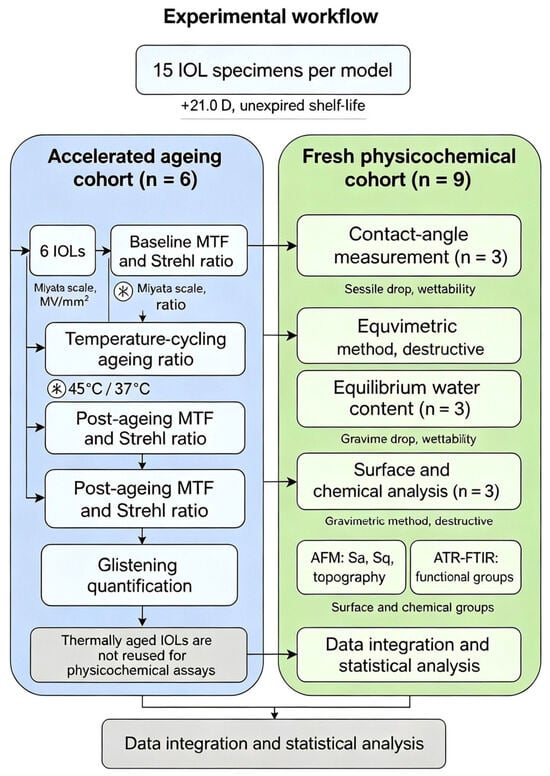
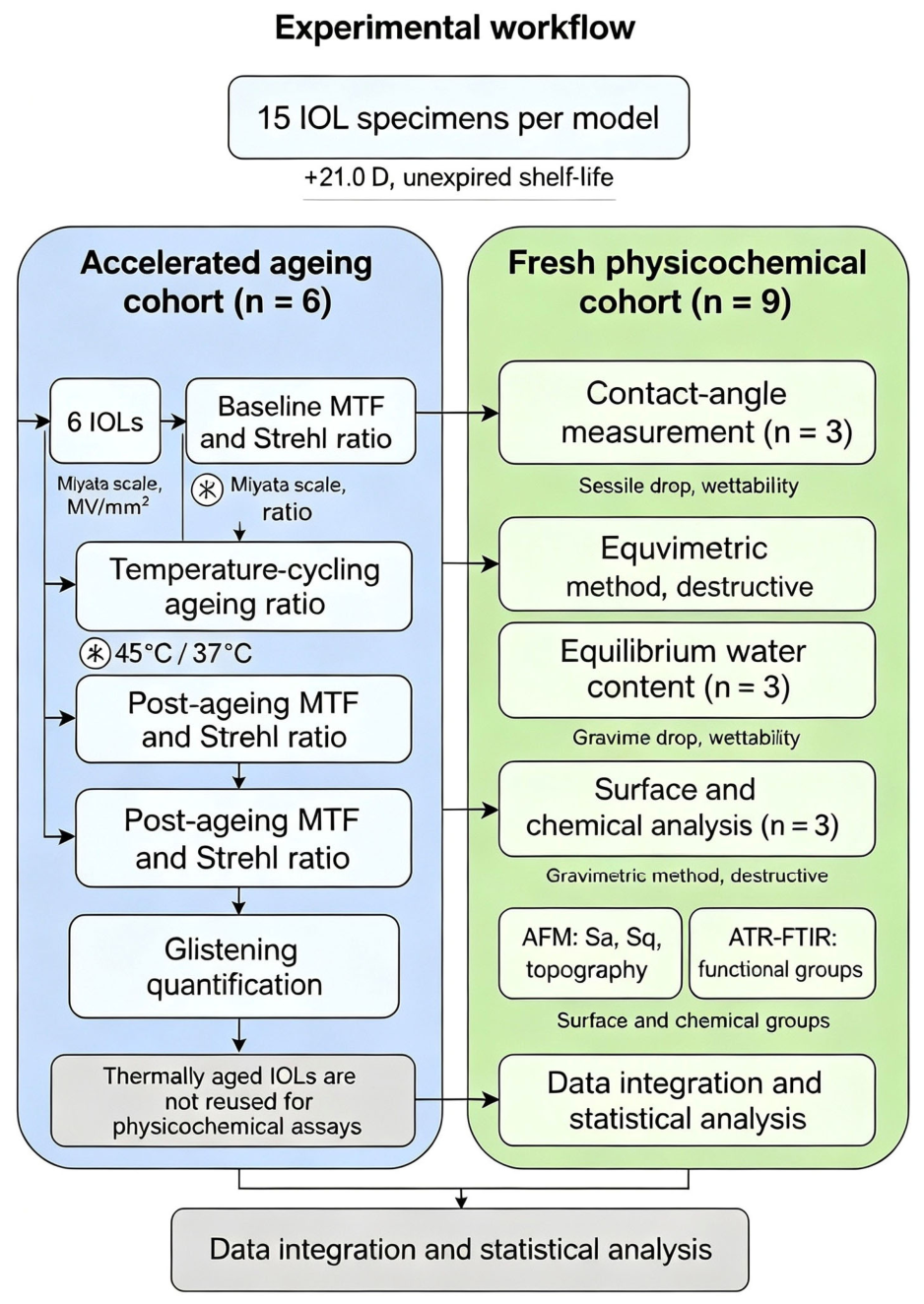
For each IOL model, 15 specimens with a nominal dioptric power of +21.0 D and unexpired shelf life were included and separated into two mutually exclusive experimental subsets (Figure 1). Six lenses were assigned for temperature cycling accelerated aging glistening induction together with pre- and post-aging optical bench measurements. The remaining nine fresh, non-aged IOLs were dedicated to physicochemical characterization. Within this fresh lens cohort, three specimens were allocated for contact angle measurement, another three for destructive gravimetric equilibrium water content (EWC) determination, and three for non-destructive atomic force microscopy (AFM) and attenuated total reflection Fourier-transform infrared (ATR FTIR) spectroscopy. Critically, thermally aged IOLs were not repurposed for surface or bulk material physicochemical assays, because temperature cycling modifies the internal polymer network as well as surface physicochemical properties of IOL materials.
Figure 1.
Schematic workflow showing sample allocation and experimental procedures for each IOL model. Fifteen +21.0 D IOL specimens were split into two mutually exclusive groups. Six lenses received temperature cycling accelerated aging for glistening induction, with pre/post aging optical and glistening measurements. Nine fresh, non-aged IOLs underwent physicochemical assays: contact angle (n = 3), EWC (n = 3), and shared AFM and ATR FTIR (n = 3). Aged IOLs were excluded from physicochemical testing to avoid bias from thermally modified polymer structures.
2.2. Accelerated Aging Protocol for Glistening Induction
Glistenings were induced via temperature cycling accelerated aging according to previously reported protocols [13]. Each of the six IOL specimens allocated for aging was immersed in a cuvette filled with 0.9% sodium chloride solution and incubated inside a heating cabinet at 45 °C. Incubation time points were set at 24 h, 7 days, 14 days, and 28 days. Following high-temperature incubation, samples were transferred to a 37 °C water bath for 150 min prior to microscopic imaging. Specimens were repeatedly measured across sequential time points: after imaging, IOLs were returned to the heating cabinet for continued aging to generate a broad range of glistening severity. Microscopic observation was performed using an Olympus SZX16 stereomicroscope (Olympus Corporation, Tokyo, Japan) equipped with a DP74 digital camera (Olympus, Tokyo, Japan). Central optic photographs were captured for glistening quantification. For each lens, five randomly selected fields within the central optic zone were acquired; ImageJ software (version 1.49v) was used to calculate microvacuole density (MV/mm2). IOLs were graded according to the Miyata glistening scale [14]: Grade 0 (no glistenings), Grade 1 (1–100 MV/mm2), Grade 2 (101–200 MV/mm2), Grade 3 (201–500 MV/mm2), and Grade 4 (>500 MV/mm2). All micrographs were captured with a built-in scale bar for size reference.
2.3. Contact Angle Measurement for IOL Wettability Assessment
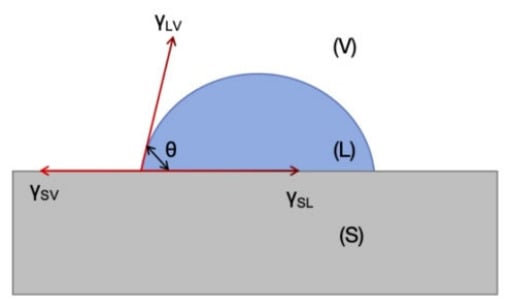
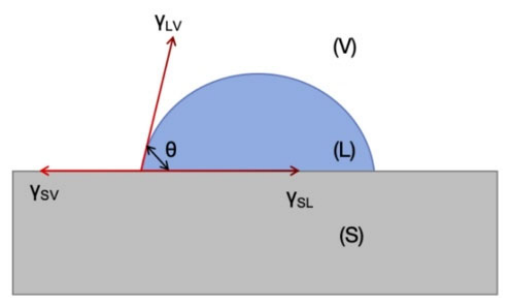
Surface wettability was characterized by sessile drop contact angle measurement (Figure 2) [15]. Measurements were performed on a Dataphysics OCA25 goniometer (DataPhysics Instruments GmbH, Filderstadt, Germany). A 15–25 μL liquid droplet was dispensed using an automated Hamilton syringe. Digital drop profiles were recorded and analyzed by the instrument’s built-in software. Five repeated measurements were acquired for each IOL sample. Lower contact angle values correspond to higher surface hydrophilicity. Because contact angle readings are highly sensitive to surface contamination, moisture, and prior solvent exposure, all measurements were performed on newly opened, dry IOL specimens before any immersion in aqueous solutions, so as to preserve the native surface physicochemical status.
Figure 2.
Schematic representation of the measurement of contact angles (θ): the contact angle (θ) is defined as the angle between the solid surface and a tangent, drawn on the drop surface, passing through the triple point atmosphere–liquid–solid. L = liquid; S = solid; θ = solid/liquid contact angle; γ L = surface free energy of liquid; γ S = surface free energy of solid (in the presence of liquid vapor, γ SV); γ SL = interfacial free energy between solid and liquid.
2.4. Gravimetric Determination of Equilibrium Water Content (EWC)
The gravimetric method was applied to determine equilibrium water content [16]. Pre-weighed dry IOL specimens were immersed in physiological saline at 37 °C. At scheduled time intervals, each IOL was retrieved; superficial surface water was gently blotted off with lint-free tissue paper, and the swollen specimen was weighed on a high-precision electronic balance (Denber, Germany). Immersion–blotting–weighing cycles were repeated until a constant weight was achieved (equilibrium swelling), defined as successive weight changes less than 0.1 mg. As this assay is destructive and requires prior immersion in saline, it was performed last among the fresh lens characterizations. Equilibrium water content was calculated using Equation (1):
where Ce = equilibrium water content, W1 = weight of swollen specimen at equilibrium, W2 = initial dry weight of the IOL specimen.
2.5. Atomic Force Microscopy (AFM) for IOL Surface Roughness Evaluation
Surface topography and roughness of IOL optic regions were characterized using a Dimension Icon AFM system (Bruker Nano Inc., Santa Barbara, CA, USA) [17]. Three fresh, non-aged IOL specimens per model (n = 3, shared with ATR FTIR measurement) were measured. Three separate 10 μm × 10 μm scanning locations were acquired within the central optic zone for each IOL sample. Measurements were operated in contact mode using silicon cantilevers with integrated pyramidal tips (SICONG, Santa Clara, CA, USA); the nominal spring constant was 0.2 N/m. Cantilever spring constants were calibrated prior to measurement. To mitigate artifacts originating from IOL optic curvature, lenses were carefully mounted with minimal tilt under ambient room air conditions. Scanning areas of 10 μm × 10 μm were acquired over the central optic zone with a pixel resolution of 512 × 512 and scan speed of 1.0 line/s. Image post-processing was completed using NanoScope 8.0 software; first-order flattening was applied to eliminate background slope artifacts originating from piezoelectric scanner distortion. Two quantitative parameters were used to characterize the roughness of the IOL optic surface: average arithmetic surface roughness (Sa) and root-mean-square surface roughness (Rq).
2.6. Fourier-Transform Infrared (FTIR) Spectroscopic Characterization
Attenuated total reflection Fourier-transform infrared (ATR FTIR) spectroscopy was performed to characterize chemical functional group profiles of the four IOL materials [18]. A Nicolet 5700 FTIR spectrometer (Thermo Fisher Scientific, Waltham, MA, USA) equipped with a diamond ATR accessory was employed for spectral acquisition. Before measurement, IOL samples were taken out of their original packaging, wiped gently with lint-free optical tissue to remove surface contaminants, and kept in a dry environment at room temperature to eliminate residual surface moisture. Three independent non-aged IOL specimens of each IOL model (n = 3, shared with AFM testing) were analyzed; two separate spectra were acquired on different optic regions for each IOL to ensure spectral reproducibility. Spectra were recorded across the wavenumber range of 4000 cm−1 to 400 cm−1. For each sample, 64 successive scans were accumulated at a spectral resolution of 4 cm−1. A background spectrum was collected prior to every sample measurement to subtract ambient water vapor and carbon dioxide interference. All raw infrared spectra were baseline corrected using the built-in OMNIC software (Version 9.2, Thermo Fisher Scientific, Waltham, MA, USA). Characteristic absorption peaks were identified and assigned to specific chemical moieties of the copolymer formulations, with special attention paid to the broad hydroxyl (OH) stretching band (3100–3600 cm−1) originating from the HEMA-derived hydrophilic group.
2.7. Optical Performance Evaluation Before and After Accelerated Aging
The optical performance of IOL specimens was quantitatively evaluated before and after temperature cycling accelerated aging glistening induction using an OptiSpheric IOL PRO2 automated optical test station (Trioptics GmbH, Wedel, Germany) [19]. Optical measurements were performed on the identical six IOL specimens per model that received accelerated aging treatment (n = 6), with all tests conducted at both baseline (pre-aging) and post-aging time points to characterize aging-induced optical alterations. A minimum of two independent repeated measurements were acquired and averaged for each IOL sample to minimize random experimental error. The modulation transfer function (MTF) and Strehl ratio were adopted for optical quality assessment [20]; these metrics quantify forward image-forming performance and are known to be relatively insensitive to off-axis stray light. All testing procedures were implemented in strict accordance with the ISO 11979 2:2014 standard specifications [21]. During characterization, each IOL was securely mounted on a dedicated lens holder and fully submerged in balanced salt solution with a refractive index of 1.336 at room temperature. An aberration-neutral model cornea was adopted throughout the optical measurement process to simulate physiological ocular imaging conditions. All optical characterizations were performed under monochromatic illumination at a wavelength of 546 nm. Two aperture diameters of 3.0 mm and 4.5 mm were configured to correspond to human photopic and mesopic pupil sizes, respectively. MTF values were analyzed at a spatial frequency of 100 lp/mm, corresponding to a theoretical visual acuity of 20/20. The Strehl ratio was calculated as the ratio of the integrated area under the measured MTF curve to that under the ideal diffraction-limited MTF curve, with integration performed up to 100 lp/mm. Raw MTF datasets were further processed using custom-written MATLAB scripts (Version 9.13.0, R2022b, MathWorks, Natick, MA, USA) for standardized data analysis.
2.8. Statistical Analysis
All statistical analyses were conducted using IBM SPSS Statistics software (Version 27, IBM Corporation, Armonk, NY, USA). The Kolmogorov–Smirnov test was utilized to verify the normality of dataset distribution, and the Levene test was applied to assess the homogeneity of variances for all experimental data. Preliminary normality testing revealed that several datasets violated the normality assumption; therefore, non-parametric statistical methods were adopted for subsequent intergroup comparison. The Kruskal–Wallis test was performed for overall multi-group statistical analysis, followed by post hoc pairwise Mann–Whitney U tests with Bonferroni correction to eliminate multiple comparison bias. A p-value < 0.05 was defined as the threshold for statistically significant differences in all tests. For material characterizations (contact angle, equilibrium water content, surface roughness), the mean value of repeated measurements from each individual IOL was adopted, and each lens was treated as a single independent experimental unit. Given the limited sample size (n = 3 per group), only descriptive comparisons are presented for these parameters. Of note, sequential glistening grades obtained from repeated measurements on the same SN60WF lenses represent non-independent longitudinal observations; therefore, pairwise Mann–Whitney comparisons across glistening-grade subgroups were not performed for these repeated optical datasets.
3. Results
3.1. Glistening Grading of IOLs
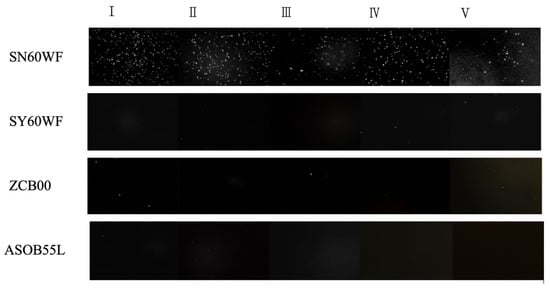
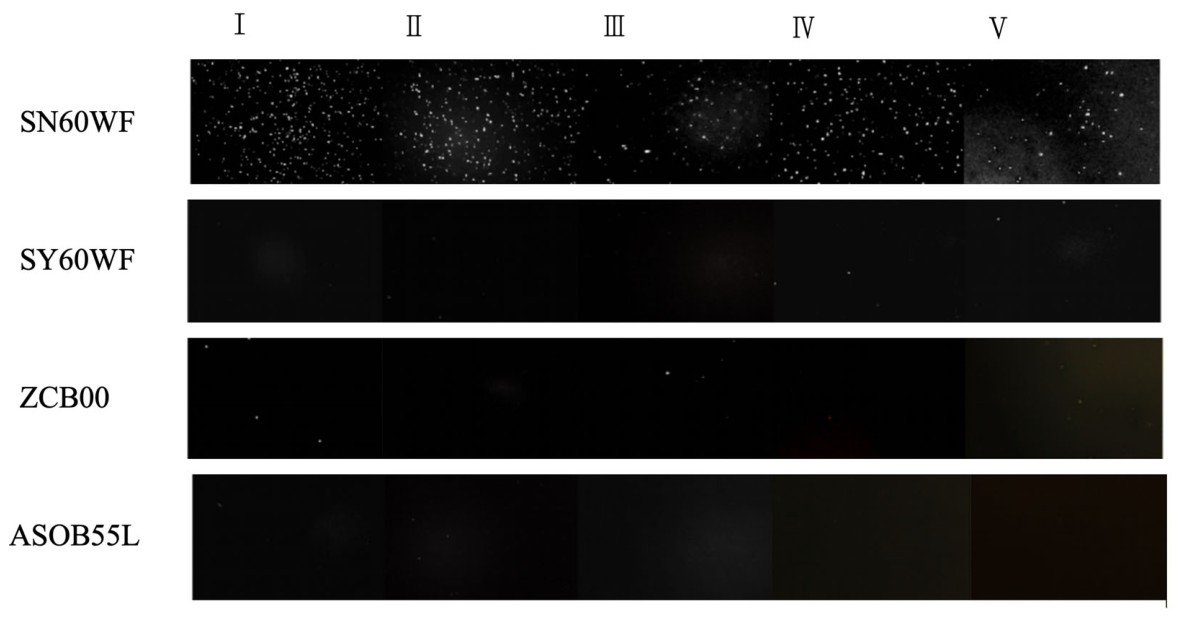
Representative micrographs showing glistening-associated microvacuoles for each IOL model at the 24 h aging time point are displayed in Figure 3. All glistening observations were performed on the six IOL specimens per model subjected to temperature cycling accelerated aging treatment. Microvacuole density (MV/mm2) and corresponding Miyata glistening grades at four sequential aging time points (24 h, 7 days, 14 days, and 28 days) are summarized in Table 2. Compared with the SN60WF group, SY60WF, ZCB00, and ASOB55L exhibited significantly lower microvacuole densities at the 28-day endpoint following temperature cycling accelerated aging (p < 0.05, Mann–Whitney U test). No statistically significant intergroup differences were identified in pairwise comparisons among SY60WF, ZCB00, and ASOB55L.
Figure 3.
Microscopic images of the central optic region for all tested IOLs. Images were acquired at 90-fold magnification after standardized accelerated aging glistening induction.
Table 2.
Glistening characteristics of the studied IOLs across serial aging time points.
3.2. Contact Angle of IOLs for Wettability Assessment
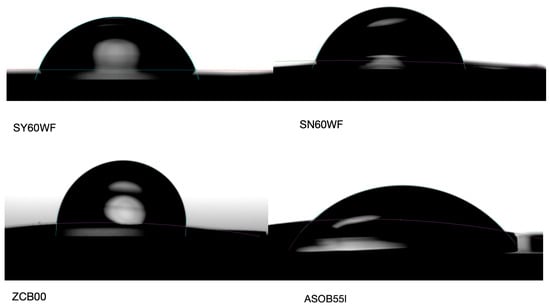
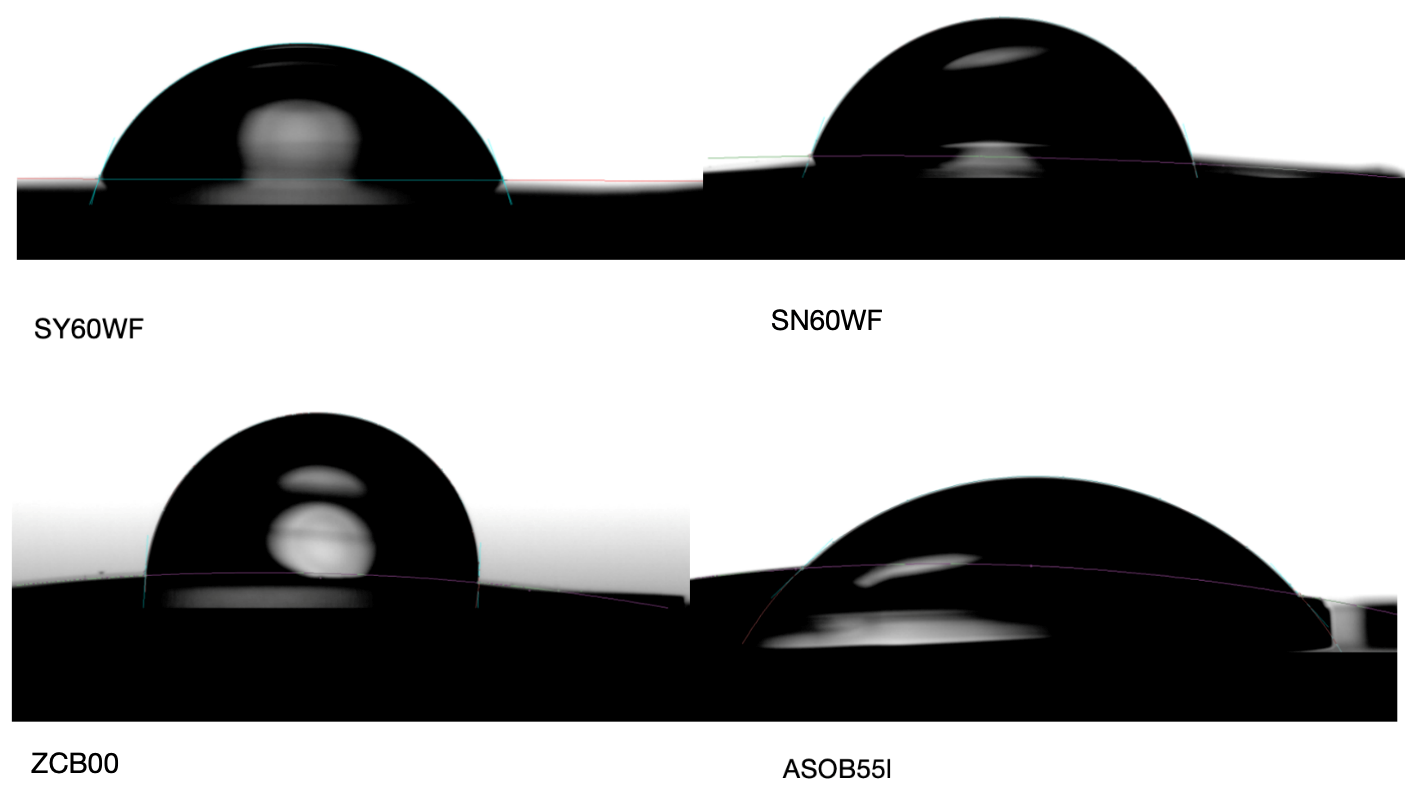
Contact angle measurements were performed on fresh, non-aged IOL specimens (n = 3 per model). Contact angle results for all tested IOL specimens are illustrated in Figure 4. The mean contact angle values were 69.3 ± 0.53° for AcrySof SN60WF, 71.05 ± 0.92° for Clareon SY60WF, 86.96 ± 5.17° for Tecnis ZCB00, and 40.39 ± 2.62° for Mercury ASOB55L. Tecnis ZCB00 yielded the highest contact angle value, whereas Mercury ASOB55L exhibited the lowest contact angle among the four IOL models.
Figure 4.
Contact angle measurements of different IOL samples.
3.3. Equilibrium Water Content (EWC) of IOLs
Equilibrium water content was determined using fresh, non-aged IOL specimens (n = 3 per model). Measured equilibrium water content (EWC) values were 3.26 ± 0.70% for ASOB55L, 1.90 ± 0.14% for SY60WF, 1.80 ± 0.28% for ZCB00, and 0.90 ± 0.30% for SN60WF. EWC was significantly higher in ASOB55L compared with SN60WF.
3.4. Surface Roughness Analysis of IOLs
Surface roughness evaluation was conducted on the shared fresh, non-aged IOL specimens (n = 3 per model, identical samples used for ATR FTIR measurement). The surface roughness parameters Sa and Sq of all IOLs are summarized in Table 3. Clareon SY60WF exhibited the lowest mean surface roughness among all IOL models. Tecnis ZCB00 and Mercury ASOB55L showed intermediate mean surface roughness values, while AcrySof SN60WF presented the highest mean surface roughness.
Table 3.
Surface roughness parameters of investigated IOL models.
3.5. Chemical Characterization via Fourier-Transform Infrared (FTIR) Spectroscopy
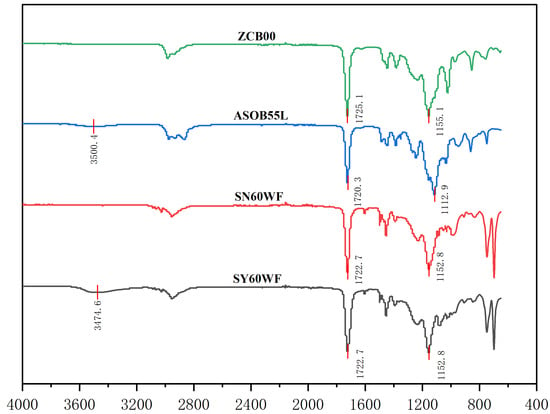
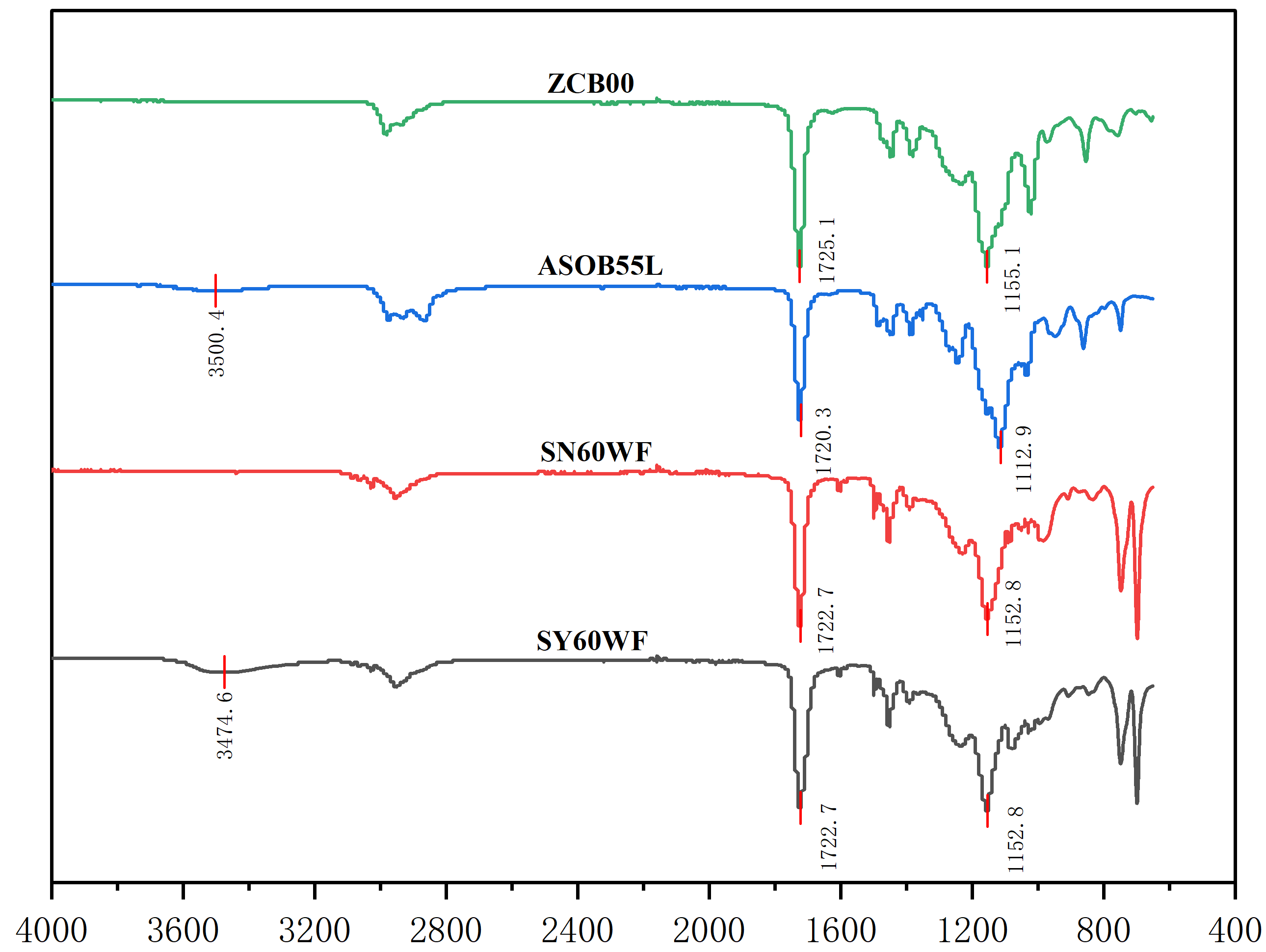
ATR FTIR spectroscopic analysis was performed on the same set of fresh, non-aged IOL specimens used for AFM measurements (n = 3 per model). FTIR spectra for all four IOL materials are shown in Figure 5. The C=O stretching band near 1720–1730 cm−1 corresponds to the ester carbonyl groups of the methacrylate backbone (PEAPEMA/EGDMA/HEMA). The C–O stretching bands around 1150–1250 cm−1 are associated with the ester C–O–C linkages of the polymer network. A broad absorption band ranging from 3100 cm−1 to 3600 cm−1, corresponding to OH stretching vibration originating from intra- and intermolecular hydrogen bonding, was observable in the spectra acquired from ASOB55L and SY60WF.
Figure 5.
FTIR spectra of different IOLs.
3.6. Optical Quality Evaluation of IOLs
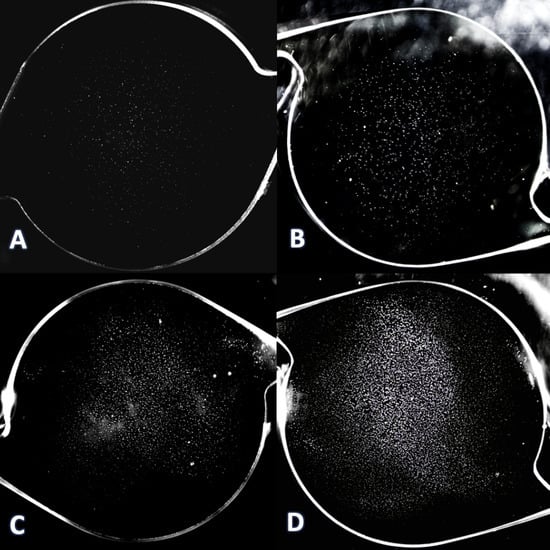
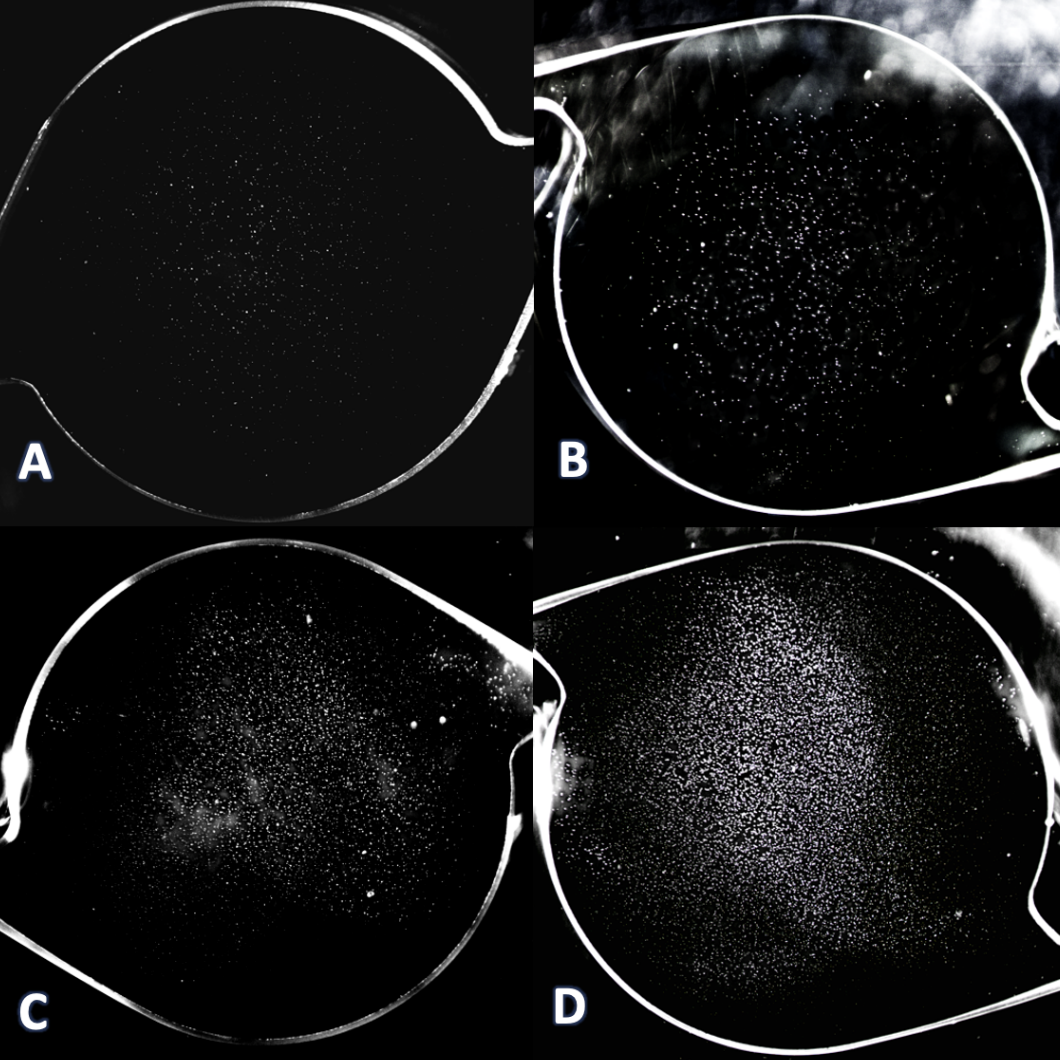
Representative micrographs illustrating glistening Grade 1 to Grade 4 are presented in Figure 6. For most IOL specimens, microvacuole density tended to decrease from the central optic zone toward the peripheral region. Modulation transfer function (MTF) and Strehl ratio values measured under 3.0 mm and 4.5 mm apertures prior to glistening-induced accelerated aging are summarized in Table 4; corresponding post-aging optical metrics are listed in Table 5. For each individual IOL, pre- and post-aging values were compared using the paired Wilcoxon signed-rank test. No statistically significant deterioration was detected for Mercury ASOB55L at either aperture (p > 0.05 for both MTF at 100 lp/mm and Strehl ratio under the 4.5 mm aperture). No statistically significant intergroup differences in MTF or Strehl ratio were detected among the four IOL groups either before or after accelerated aging (p > 0.05, Wilcoxon test).
Figure 6.
Representative micrographs illustrating glistening classification from Grade 1 to Grade 4 ((A): Grade 1; (B): Grade 2; (C): Grade 3; (D): Grade 4). Scale bars are incorporated in each panel.
Table 4.
The mean MTF and Strehl ratio at the 3.0 mm and 4.5 mm apertures before glistening.
Table 5.
The mean MTF and Strehl ratio at the 3.0 mm and 4.5 mm apertures after glistening.
Optical metrics stratified by glistening grade for SN60WF IOL specimens are summarized in Table 6. Note that these graded subgroups originate from progressive glistening development within the same set of SN60WF lenses subjected to aging, rather than fully independent sample cohorts. Lenses reaching Grade 4 glistening displayed lower MTF values at spatial frequencies of 25 lp/mm, 50 lp/mm, and 100 lp/mm. Under the 3.0 mm aperture, MTF reductions amounted to 0.03 (25 lp/mm), 0.09 (50 lp/mm), and 0.14 (100 lp/mm). Under the 4.5 mm aperture, corresponding MTF decrements were 0.17 (25 lp/mm), 0.05 (50 lp/mm), and 0.20 (100 lp/mm).
Table 6.
MTF and Strehl Ratio of Acrysof SN60WF IOL under different glistening grades.
4. Discussion
Hydrophobic acrylic IOLs represent dominant polymeric biomaterials for modern phacoemulsification-based cataract surgery. Despite well-documented clinical benefits, glistenings—material-derived opacities consisting of water-filled microvacuoles embedded within the polymer matrix—remain a key unresolved challenge for this class of implant materials [22]. Modification of cross-linker chemistry and incorporation of hydrophilic comonomers jointly reshape polymer network architecture, accompanied by coupled shifts in equilibrium water content (EWC) and surface wettability. It should be emphasized that glistening susceptibility arises from the combined effects of intrinsic polymer chemistry and manufacturing technology, rather than being governed by any single factor [23]. From a polymer physics viewpoint, glistening originates from spinodal decomposition: temperature fluctuation-driven water permeation triggers water–polymer phase separation inside cross-linked copolymer networks [24]. All four IOL materials tested in this study contain polar ester moieties along their backbones and side chains; these groups can bind water molecules via hydrogen bonding and establish preconditions for phase separation and microvacuole nucleation, even after hydrophilic comonomer modification. Moderately elevated EWC may homogenize water distribution across the bulk polymer matrix and suppress local phase separation events, thereby mitigating microvacuole generation [25], yet this proposed mechanism cannot be definitively proven using only finished commercial IOL samples.
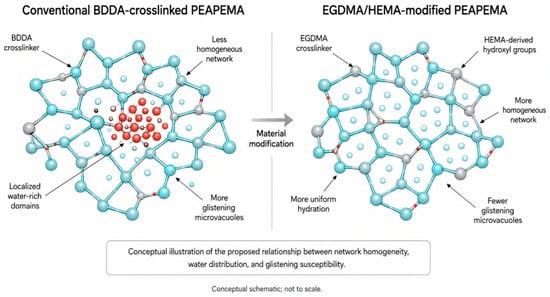
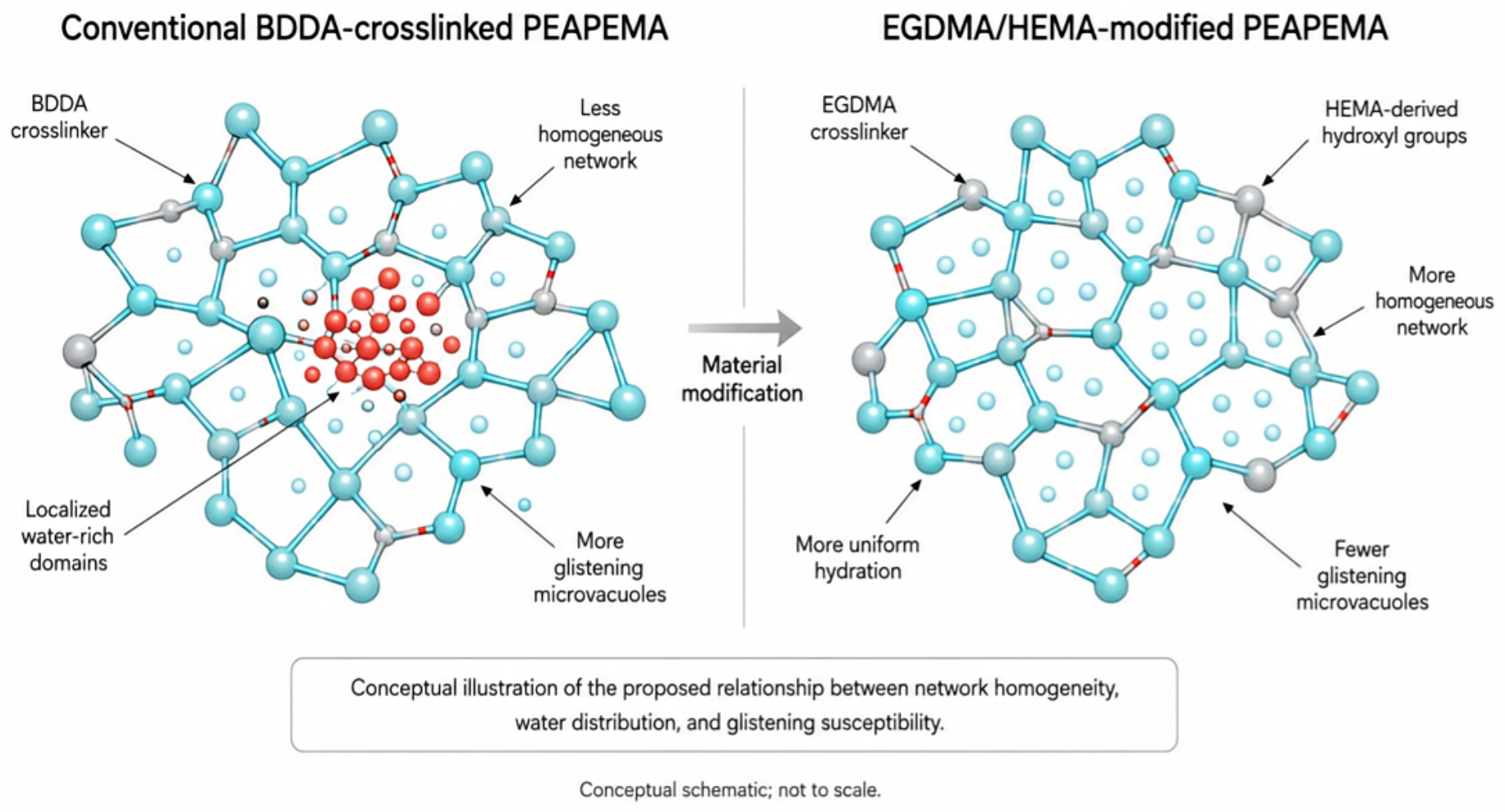
It is critical to distinguish the material design philosophy between Mercury ASOB55L and Tecnis ZCB00, even though both adopt ethylene glycol dimethacrylate (EGDMA) as a cross-linking monomer. Tecnis ZCB00 achieves glistening-resistant performance, which is largely attributed to its fluorine-containing acrylate primary backbone, among other contributing factors, including cross-linker chemistry and cryo-lathing fabrication [26]. By contrast, Mercury ASOB55L retains the classic PEAPEMA backbone and incorporates three simultaneous modifications: replacement of BDDA with an EGDMA cross-linker, introduction of HEMA-derived hydrophilic units, and fabrication by cryo-lathing [27]. Since only off-the-shelf commercial lenses were available for this work, we cannot quantitatively isolate the individual contributions of cross-linker substitution, HEMA incorporation, and cryo-lathing processing to the final material performance. Our in vitro data show that Mercury ASOB55L exhibited the highest EWC among the four tested IOLs (3.26 ± 0.70%), followed by Clareon SY60WF (1.90 ± 0.14%). Broad hydroxyl-related absorption bands in ATR FTIR spectra suggested the presence of HEMA-related moieties at the near-surface of ASOB55L and SY60WF; nevertheless, ATR FTIR only probes near-surface layers and cannot provide direct evidence for bulk polymer chemical composition. Consistent with higher EWC, ASOB55L displayed a markedly reduced water contact angle relative to the highly hydrophobic Tecnis ZCB00. We hypothesize that moderate matrix hydration may homogenize internal water distribution and restrain phase separation-driven microvacuole nucleation, which offers one plausible but unproven explanation for the favorable anti-glistening behavior observed for ASOB55L and SY60WF under our test conditions. Figure 7 presents a conceptual, non-quantitative schematic illustrating this hypothesized network homogenization mechanism. This model is inferred exclusively from our indirect experimental readouts; direct bulk polymer characterizations (e.g., cross-link density measurement, DSC) would be required for formal validation.
Figure 7.
Conceptual illustration of the hypothesized relationship between network homogeneity, water distribution, and glistening susceptibility for conventional BDDA-cross-linked PEAPEMA and EGDMA/HEMA-modified PEAPEMA. This schematic is non-quantitative and derived from experimental inferences rather than direct molecular-level measurements.
Only advancing contact angle data were acquired by sessile drop measurements in this study. Contact angle hysteresis originating from surface pinning could not be fully characterized under the present experimental setup, and measurements were further complicated by the curved optic surface of IOLs. Surface wettability carries important clinical implications for intraocular implants. High surface hydrophobicity facilitates tight apposition between the IOL and the capsular bag; tight mechanical contact also restricts lens epithelial cell migration and lowers posterior capsule opacification rates. On the contrary, excessive hydrophilicity may promote adhesion of pigment granules, inflammatory cells, and surgical viscoelastic residues onto the IOL optic [28].
Manufacturing technique represents another confounding variable that jointly modulates glistening susceptibility alongside polymer chemical composition. AcrySof SN60WF and Clareon SY60WF are manufactured by cast molding, while Tecnis ZCB00 and Mercury ASOB55L are produced via cryo-lathing of pre-polymerized solid polymer blanks. Cryo-lathing avoids thermally induced stress generated during in-mold polymerization and may reduce intrinsic bulk micro void defects that can serve as nucleation sites for glistening microvacuoles. In comparison, cast molding relies on in situ polymerization within closed mold cavities [29]. Uncontrolled phase separation during curing may leave latent microscale defects inside polymer matrices, which can initiate water-filled microvacuole formation under temperature fluctuation. As highlighted above, the cryo-lathed IOLs (ZCB00 and ASOB55L) differ from cast molded IOLs in both cross-linker chemistry and primary monomer compositions. We lacked control IOL samples with identical chemical formulation but different manufacturing workflows; accordingly, the independent contribution of cryo-lathing to glistening resistance cannot be quantitatively separated from chemical modification effects using this dataset. Notably, the cast molded SY60WF also maintained minimal glistening progression across the full aging period. This observation demonstrates that optimized chemical formulation alone can achieve satisfactory glistening tolerance even with conventional cast molding manufacturing. Even so, moderate EWC elevation for HEMA-modified IOLs inevitably partially sacrifices intrinsic surface hydrophobicity, and excessive hydrophilicity may compromise the clinically valuable capsular apposition properties mentioned above.
Taken together, our experimental observations lead us to put forward a preliminary hypothesis: constraining EWC below 4.0% may constitute a promising material design window; within this range, polymers can obtain improved glistening resistance while retaining essential hydrophobic-associated surface characteristics. This HEMA-assisted EWC tuning strategy is mechanistically distinct from alternative glistening-resistant concepts, such as cross-linked polyisobutylene (xPIB) IOLs [30]. The xPIB system eliminates polar and hydrolysable groups to achieve glistening-free performance without increasing water uptake. Both technical routes can achieve acceptable glistening-resistant performance, yet they involve inherent trade-offs regarding surface wettability, mechanical behavior, and manufacturability.
AFM-based surface roughness analysis revealed distinct topographical features among the four IOL models. Cast-molded Clareon SY60WF exhibited the lowest arithmetic mean surface roughness. Cryo-lathed Mercury ASOB55L showed intermediate roughness parameters, smoother than SN60WF but slightly higher than SY60WF. IOL surface topography is co-regulated by material formulation and manufacturing workflows. In general, cast molding tends to yield smoother optic surfaces compared with cryo-lathing [31].
It should be noted that MTF and Strehl ratio mainly evaluate coherent forward image-forming optical quality and show limited sensitivity toward microvacuoles corresponding to mild to moderate glistening grades [32]. In our study, measurable deterioration of these optical metrics was only detected for SN60WF specimens with Grade 4 glistenings. Off-axis stray light is generally considered to be more closely associated with clinical photic symptoms such as glare and halos. However, stray light was not directly quantified in the current experiment. This may partly explain why Grade 1–3 glistenings did not produce significant MTF or Strehl ratio degradation in the present dataset. These optical results confirm that the Mercury ASOB55L IOL maintains objective forward transmission optical quality comparable with mainstream commercial hydrophobic acrylic IOL benchmarks under in vitro conditions, provided severe glistening is avoided. The optical bench data require careful interpretation. For Mercury ASOB55L, MTF at 100 lp/mm under the 4.5 mm aperture decreased from 0.40 to 0.30 and the Strehl ratio from 0.75 to 0.60 after accelerated aging, although glistening remained minimal. These shifts are therefore not evidence of confirmed optical deterioration, and are more plausibly attributable to the intrinsic measurement variability of the optical bench together with aging-associated effects that do not generate resolvable microvacuoles, such as limited free-volume relaxation or slight near-surface rearrangement of the polymer. Temperature cycling is not equivalent to glistening formation, and post-aging optical metrics cannot be ascribed to glistening severity alone. Importantly, optical deterioration observed during accelerated aging cannot be attributed solely to glistening severity. The duration of aging itself may independently alter polymer material properties and optical performance of IOLs.
This investigation has several important inherent limitations that must be acknowledged when interpreting results. First, the temperature cycling accelerated aging model cannot fully recapitulate the complex in vivo intraocular microenvironment, including aqueous humor components, continuous protein adsorption, and long-term material degradation. The magnitude and rate of temperature change applied in vitro exceed physiological intraocular conditions; the temperature change rate itself is known to strongly influence the final severity of glistening. Therefore, these in vitro findings cannot be directly extrapolated to clinical performance; long-term clinical follow-up will be essential to validate in vivo stability and durability for Mercury ASOB55L. Second, because only finished commercial IOL products were accessible, direct bulk polymer characterizations such as differential scanning calorimetry (for glass transition temperature) and quantitative cross-link density measurements were not feasible. Evidence supporting the hypothesized EGDMA-driven network homogenization remains indirect, inferred from EWC, ATR FTIR, and glistening susceptibility readouts. Third, our experimental battery focused on glistening progression, surface physicochemical traits, and fundamental forward-mode optical indices. Key assessments, including stray light quantification, cell–material interaction studies, and cytotoxicity testing, were not performed, restricting complete preclinical evaluation for translation. Fourth, only +21.0 D dioptric IOLs were tested in this work; whether this copolymer maintains consistent physicochemical and optical performance across other refractive powers remains to be verified. Fifth, chemical formulation variables and manufacturing technique act as inseparable confounding factors in this benchmark study. Without matched control samples sharing identical chemistry but differing fabrication workflows, we cannot quantitatively disentangle the respective contributions of cryo-lathing versus chemical modification. Sixth, our data confirm favorable anti-glistening behavior of ASOB55L under the present accelerated aging protocol, while avoiding any claim of superiority over these other modern glistening-resistant IOL materials. Finally, in order to better establish the relationship between material stability and glistening resistance, we will include side-by-side ATR-FTIR and EWC characterization before and after aging in the future.
5. Conclusions
Under standardized in vitro accelerated aging conditions, the multi-modified (EGDMA cross-linked, HEMA-containing, cryo-lathed) PEAPEMA-based Mercury ASOB55L IOL demonstrated favorable glistening-resistant performance. Its surface topography and forward transmission objective optical metrics were comparable with benchmark commercial hydrophobic acrylic IOLs. This material exhibited moderately elevated equilibrium water content below 4.0%, accompanied by a partial reduction in surface hydrophobicity, which correlates with improved glistening tolerance under our experimental conditions. We hypothesize that controlling EWC below 4.0% may offer a balanced material design window that reconciles anti-glistening capacity and hydrophobic-related biological merits, although this remains to be validated in further material-oriented studies.
Author Contributions
Conceptualization, Y.T. and Y.W.; methodology, T.P.; software, H.G.; validation, Y.T., T.P., and A.X.; formal analysis, A.X.; investigation, T.P.; resources, Y.S.; data curation, H.G.; writing—original draft preparation, Y.T.; writing—review and editing, Y.W.; visualization, Y.S.; supervision, Y.W.; project administration, Y.T.; funding acquisition, None. All authors have read and agreed to the published version of the manuscript.
Funding
This research was funded by the Hubei Provincial Health Commission Science and Technology Project (Grant No. WJ2025M093), the Xiangjiang Public Welfare Foundation Technology Innovation and Application Development Project (Grant No. KY24013), and the Hunan Provincial Natural Science Foundation (Grant No. 2026JJ30194).
Institutional Review Board Statement
Not applicable.
Data Availability Statement
The raw data supporting the conclusions of this article will be made available by the authors on request.
Acknowledgments
The authors thank the laboratory staff for technical support during material characterization and optical testing. No artificial intelligence tools were used in manuscript preparation.
Conflicts of Interest
The authors declare no conflicts of interest.
Abbreviations
The following abbreviations are used in this manuscript:
| IOL | Intraocular lens |
| EGDMA | Ethylene glycol dimethacrylate |
| HEMA | 2-hydroxyethyl methacrylate |
| PEAPEMA | 2-phenylethyl acrylate-co-2-phenylethyl methacrylate |
| EWC | Equilibrium water content |
| AFM | Atomic force microscopy |
| ATR-FTIR | Attenuated total reflection Fourier-transform infrared |
| MTF | Modulation transfer function |
| Sa | Arithmetic mean surface roughness |
| Rq | Root-mean-square surface roughness |
References
- Wu, K.Y.; Khammar, R.; Sheikh, H.; Marchand, M. Innovative Polymeric Biomaterials for Intraocular Lenses in Cataract Surgery. J. Funct. Biomater. 2024, 15, 391. [Google Scholar] [CrossRef] [Scilit] [PubMed]
- Leydolt, C.; Schartmüller, D.; Schwarzenbacher, L.; Prenner, V.; Danzinger, V.; Lisy, M.; Abela-Formanek, C.; Menapace, R. Posterior capsule opacification with two similar-design hydrophobic acrylic intraocular lenses: 3-year results of a randomized controlled trial. J. Cataract. Refract. Surg. 2024, 50, 1242–1246. [Google Scholar] [CrossRef] [Scilit] [PubMed]
- Zhao, X.; Deng, P.; Zou, J.; Xu, X. Combating posterior capsular opacification: From conventional intraocular lens modifications to proactive defense via interface engineering. Mater. Today Bio. 2025, 36, 102666. [Google Scholar] [CrossRef] [Scilit] [PubMed]
- Grzybowski, A.; Auffarth, G.U.; LaHood, B.R. How do intraocular lens materials influence the outcome of cataract surgery? Curr. Opin. Ophthalmol. 2025, 36, 18–24. [Google Scholar] [CrossRef] [Scilit] [PubMed]
- Auffarth, G.U.; Brézin, A.; Lignereux, F.; Khoramnia, R.; Yildirim, T.M.; Kohnen, T.; Bianco, J. Randomized multicenter trial to assess posterior capsule opacification and glistenings in two hydrophobic acrylic intraocular lenses. Sci. Rep. 2023, 13, 2822. [Google Scholar] [CrossRef] [Scilit] [PubMed]
- Tandogan, T.; Auffarth, G.U.; Son, H.S.; Merz, P.; Choi, C.Y.; Khoramnia, R. In-vitro glistening formation in six different foldable hydrophobic intraocular lenses. BMC Ophthalmol. 2021, 21, 126. [Google Scholar] [CrossRef] [Scilit] [PubMed]
- Apivatthakakul, A.; Tantraworasin, A.; Kunavisarut, P.; Pathanapitoon, K. Comparative biocompatibility of hydrophilic vs. hydrophobic intraocular lenses following phacoemulsification in patients with uveitis. PLoS ONE 2025, 20, e0331586. [Google Scholar] [CrossRef] [Scilit] [PubMed]
- Kanclerz, P.; Yildirim, T.M.; Khoramnia, R. Microscopic Characteristics of Late Intraocular Lens Opacifications. Arch. Pathol. Lab. Med. 2021, 145, 759–767. [Google Scholar] [CrossRef] [Scilit] [PubMed]
- Hu, C.T.; Liang, Z.X.; Luo, J.Y.; Chiu, P.H.; Day, A.I.; Shih, P.J.; Li, J.H.; Kuo, B.I.; Wang, I.J.; Yen, J.Y.; et al. Strategic Design of Biocompatible, Glistening-Free, and Foldable Artificial Intraocular Lenses Based on Hydro-Amphiphilic Ternary Copolymers. Biomacromolecules 2025, 26, 4612–4625. [Google Scholar] [CrossRef] [Scilit] [PubMed]
- Pitzanti, G.; Mohylyuk, V.; Corduas, F.; Byrne, N.M.; Coulter, J.A.; Lamprou, D.A. Urethane dimethacrylate-based photopolymerizable resins for stereolithography 3D printing: A physicochemical characterisation and biocompatibility evaluation. Drug Deliv. Transl. Res. 2024, 14, 177–190. [Google Scholar] [CrossRef] [Scilit] [PubMed]
- Vacalebre, M.; Frison, R.; Corsaro, C.; Neri, F.; Santoro, A.; Conoci, S.; Anastasi, E.; Curatolo, M.C.; Fazio, E. Current State of the Art and Next Generation of Materials for a Customized IntraOcular Lens according to a Patient-Specific Eye Power. Polymers 2023, 15, 1590. [Google Scholar] [CrossRef] [Scilit] [PubMed]
- Auffarth, G.U.; Schickhardt, S.K.; Fang, H.; Wang, Q.; Khoramnia, R.; Yildirim, T.M. Ophthalmic viscosurgical device interaction with two hydrophobic acrylic intraocular lenses of different equilibrium water content. Sci. Rep. 2022, 12, 14563. [Google Scholar] [CrossRef] [Scilit] [PubMed]
- Tandogan, T.; Auffarth, G.U.; Choi, C.Y.; Son, H.S.; Khoramnia, R. Comparative analysis of in vitro accelerated glistening formation in foldable hydrophobic intraocular lenses. Int. Ophthalmol. 2021, 41, 3073–3080. [Google Scholar] [CrossRef] [Scilit] [PubMed]
- Kanclerz, P.; Yildirim, T.M.; Khoramnia, R. A review of late intraocular lens opacifications. Curr. Opin. Ophthalmol. 2021, 32, 31–44. [Google Scholar] [CrossRef] [Scilit] [PubMed]
- Liu, S.; Zhao, X.; Han, Y.; Lin, Q. Hierarchy-constructed superhydrophobic and transparent coating modified intraocular lens by layer-by-layer self-assembly for glistening reduction and antiadhesion. Colloids Surf. B Biointerfaces 2025, 245, 114333. [Google Scholar] [CrossRef] [Scilit] [PubMed]
- Aki, D.; Esmaeili Rad, M.; Şenel, E.C.; Onceyiz, M.C.; Gokmenoglu, M.C.; Duta, L.; Gunduz, O. Fine-tuning equilibrium water content and mechanical properties of acrylic-based copolymers for intraocular lens applications. Biomed. Mater. 2025, 20, 045026. [Google Scholar] [CrossRef] [Scilit] [PubMed]
- De Giacinto, C.; Porrelli, D.; Turco, G.; Pastore, M.R.; D’Aloisio, R.; Tognetto, D. Surface properties of commercially available hydrophobic acrylic intraocular lenses: Comparative study. J. Cataract. Refract. Surg. 2019, 45, 1330–1334. [Google Scholar] [CrossRef] [Scilit] [PubMed]
- Borkenstein, A.F.; Ranz, L.; Neuper, C.; Borkenstein, E.M.; Fitzek, H. Assessing Particle Release from Intraocular Lenses with a Combination of OptoFluidic Force Induction, μ-Raman and μ-FTIR. Bioengineering 2025, 12, 1138. [Google Scholar] [CrossRef] [Scilit] [PubMed]
- Naujokaitis, T.; Khoramnia, R.; Łabuz, G.; Choi, C.Y.; Auffarth, G.U.; Tandogan, T. Imaging Function and Relative Light Transmission of Explanted Opacified Hydrophilic Acrylic Intraocular Lenses. Diagnostics 2023, 13, 1804. [Google Scholar] [CrossRef] [Scilit] [PubMed]
- Kim, J.; Yoo, Y.S.; Park, J.; Whang, W.J.; Kim, D.Y. Evaluating the impact of the water content of hydrophobic intraocular lenses on visual quality. Biomed. Eng. Lett. 2026, 16, 451–462. [Google Scholar] [CrossRef] [Scilit] [PubMed]
- Schmid, R.; Borkenstein, A.F. Optical Bench Evaluation of the Latest Refractive Enhanced Depth of Focus Intraocular Lens. Clin. Ophthalmol. 2024, 18, 1921–1932. [Google Scholar] [CrossRef] [Scilit] [PubMed]
- Durr, G.M.; Ahmed, I.I.K. Intraocular Lens Complications: Decentration, Uveitis-Glaucoma-Hyphema Syndrome, Opacification, and Refractive Surprises. Ophthalmology 2021, 128, e186–e194. [Google Scholar] [PubMed]
- Yildirim, T.M.; Schickhardt, S.K.; Wang, Q.; Friedmann, E.; Khoramnia, R.; Auffarth, G.U. Quantitative evaluation of microvacuole formation in five intraocular lens models made of different hydrophobic materials. PLoS ONE 2021, 16, e0250860. [Google Scholar] [CrossRef] [Scilit] [PubMed]
- Grzybowski, A.; Markeviciute, A.; Zemaitiene, R. A narrative review of intraocular lens opacifications: Update 2020. Ann. Transl. Med. 2020, 8, 1547. [Google Scholar] [CrossRef] [Scilit] [PubMed]
- Werner, L.; Thatthamla, I.; Ong, M.; Schatz, H.; Garcia-Gonzalez, M.; Gros-Otero, J.; Cañones-Zafra, R.; Teus, M.A. Evaluation of clarity characteristics in a new hydrophobic acrylic IOL in comparison to commercially available IOLs. J. Cataract. Refract. Surg. 2019, 45, 1490–1497. [Google Scholar] [CrossRef] [Scilit] [PubMed]
- Stanojcic, N.; O’Brart, D.; Hull, C.; Wagh, V.; Azan, E.; Bhogal, M.; Robbie, S.; Li, J.O. Visual and refractive outcomes and glistenings occurrence after implantation of 2 hydrophobic acrylic aspheric monofocal IOLs. J. Cataract. Refract. Surg. 2020, 46, 986–994. [Google Scholar] [CrossRef] [Scilit] [PubMed]
- Lai, J.; Wang, T.; Li, Y.; Tu, I. Synthesis, characterization and ocular biocompatibility of potential keratoprosthetic hydrogels based on photopolymerized poly (2-hydroxyethyl methacrylate)-co-poly (acrylic acid). J. Mater. Chem. 2012, 22, 1812–1823. [Google Scholar] [CrossRef] [Scilit]
- Bhattacharjee, H.; Bhattacharjee, K.; Das, D.; Javeri, H.; Buragohain, S. Raman Spectroscopy of six explanted acrylic hydrophobic foldable intraocular lenses with glistening. Indian J. Ophthalmol. 2022, 70, 2872–2876. [Google Scholar] [CrossRef] [Scilit] [PubMed]
- Das, K.K.; Werner, L.; Collins, S.; Hong, X. In vitro and schematic model eye assessment of glare or positive dysphotopsia-type photic phenomena: Comparison of a new material IOL to other monofocal IOLs. J. Cataract. Refract. Surg. 2019, 45, 219–227. [Google Scholar] [CrossRef] [Scilit] [PubMed]
- Schickhardt, S.K.; Łabuz, G.; Munro, D.J.; Lieberwirth, I.; Zhang, L.; Fang, H.; Auffarth, G.U. In-vitro assessment of a novel intraocular lens made of crosslinked polyisobutylene. J. Mech. Behav. Biomed. Mater. 2024, 152, 106368. [Google Scholar] [CrossRef] [Scilit] [PubMed]
- Yildirim, T.M.; Fang, H.; Schickhardt, S.K.; Wang, Q.; Merz, P.R.; Auffarth, G.U. Glistening formation in a new hydrophobic acrylic intraocular lens. BMC Ophthalmol. 2020, 20, 186. [Google Scholar] [CrossRef] [Scilit] [PubMed]
- Philippaki, E.; O’Brart, D.P.; Hull, C.C. Comparison of glistenings formation and their effect on forward light scatter between the Acrysof SN60WF and Eternity Natural Uni NW-60 intraocular lenses. BMJ Open Ophthalmol. 2020, 5, e000399. [Google Scholar] [CrossRef] [Scilit] [PubMed]

Disclaimer/Publisher’s Note: The statements, opinions and data contained in all publications are solely those of the individual author(s) and contributor(s) and not of MDPI and/or the editor(s). MDPI and/or the editor(s) disclaim responsibility for any injury to people or property resulting from any ideas, methods, instructions or products referred to in the content. |
© 2026 by the authors. Licensee MDPI, Basel, Switzerland. This article is an open access article distributed under the terms and conditions of the Creative Commons Attribution (CC BY) license.