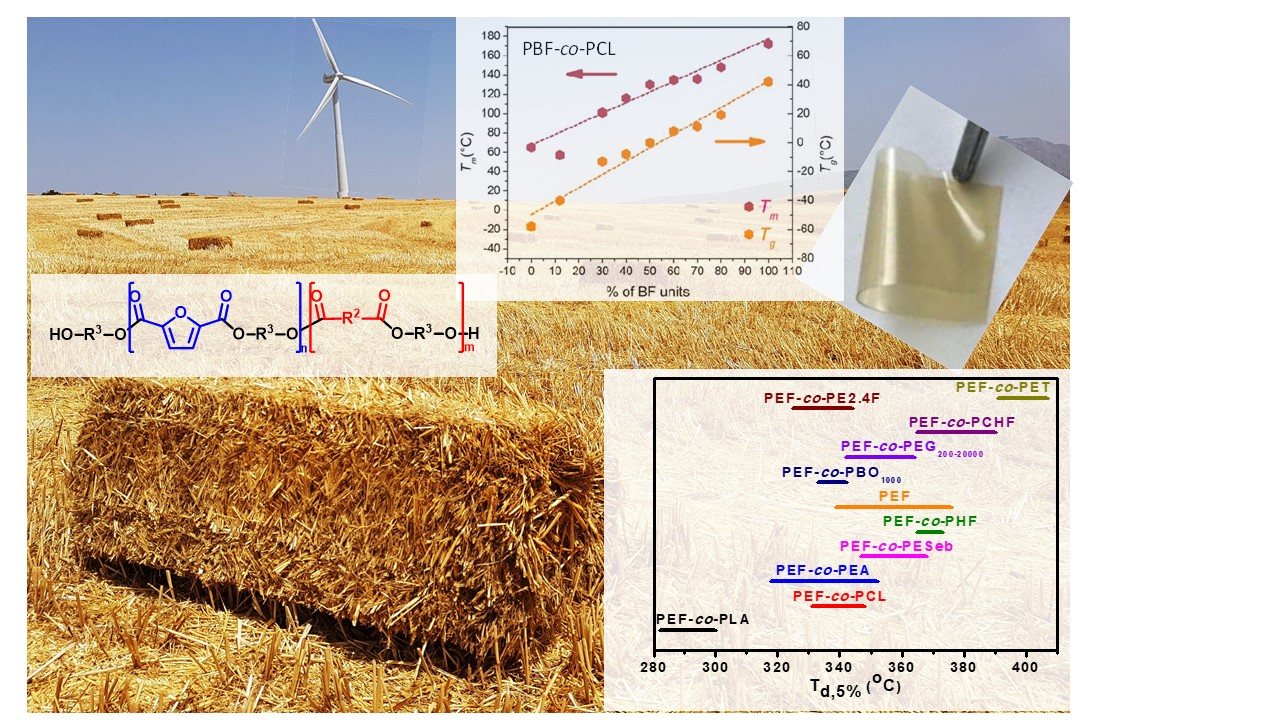
Tuning the Properties of Furandicarboxylic Acid-Based Polyesters with Copolymerization: A Review

 ,
,  ,
, 
 ,
,  and
and 
Abstract
Share and Cite
Terzopoulou, Z.; Papadopoulos, L.; Zamboulis, A.; Papageorgiou, D.G.; Papageorgiou, G.Z.; Bikiaris, D.N. Tuning the Properties of Furandicarboxylic Acid-Based Polyesters with Copolymerization: A Review. Polymers 2020, 12, 1209. https://doi.org/10.3390/polym12061209
Terzopoulou Z, Papadopoulos L, Zamboulis A, Papageorgiou DG, Papageorgiou GZ, Bikiaris DN. Tuning the Properties of Furandicarboxylic Acid-Based Polyesters with Copolymerization: A Review. Polymers. 2020; 12(6):1209. https://doi.org/10.3390/polym12061209
Chicago/Turabian StyleTerzopoulou, Zoi, Lazaros Papadopoulos, Alexandra Zamboulis, Dimitrios G. Papageorgiou, George Z. Papageorgiou, and Dimitrios N. Bikiaris. 2020. "Tuning the Properties of Furandicarboxylic Acid-Based Polyesters with Copolymerization: A Review" Polymers 12, no. 6: 1209. https://doi.org/10.3390/polym12061209
APA StyleTerzopoulou, Z., Papadopoulos, L., Zamboulis, A., Papageorgiou, D. G., Papageorgiou, G. Z., & Bikiaris, D. N. (2020). Tuning the Properties of Furandicarboxylic Acid-Based Polyesters with Copolymerization: A Review. Polymers, 12(6), 1209. https://doi.org/10.3390/polym12061209