


Abstract
Poly(ethylene terephthalate) (PET) is an important semicrystalline polymer, but its relatively slow crystallization restricts processing efficiency and dimensional stability. The incorporation of fillers is an effective means of promoting PET crystallization, while the resulting polymer–filler interface may also alter chain stability during processing and subsequent use. Crystallization involves segmental motion and chain ordering, whereas degradation changes the molecular structure of PET through reactions such as chain scission. Although these processes are closely related at the molecular scale, they have generally been discussed separately. This review summarizes the effects of inorganic particles, layered materials, carbon materials, fibers, and organic nucleating agents on the crystallization and degradation behavior of PET. The discussion addresses heterogeneous nucleation, crystal growth, interfacial chain organization, and the influence of filler dispersion and surface condition. Particular attention is given to the effects of filler interfaces on hydrolysis, thermal and oxidative degradation, and changes occurring during repeated melt processing. High-temperature thermal decomposition is distinguished from molecular-weight loss under processing and aging conditions. The retention of fillers during mechanical recycling is also considered. By examining crystallization and degradation together, this review clarifies how filler-induced crystal formation is related to PET chain stability and provides guidance for the selection and use of fillers in PET materials.
1. Introduction
Poly(ethylene terephthalate) (PET) combines high mechanical strength and dimensional stability with chemical resistance, transparency, and good gas-barrier properties, and it supports a mature industrial chain. PET fibers are widely used in apparel and technical textiles. Bottle-grade PET is a major material for beverage and food packaging, while PET films are used for electrical insulation, optical substrates, and flexible packaging. Reinforcement with glass fibers or modification with mineral and conductive fillers further extends the use of PET in electrical components, automotive parts, and heat-resistant products. The scale and diversity of these applications have increased the demand for efficient processing, reliable long-term performance, and effective recycling [1,2,3,4]. PET is a representative semicrystalline aromatic polyester. Its crystalline fraction strongly affects stiffness and heat resistance, while lamellar perfection and the state of the amorphous phase influence barrier properties, transparency, and toughness [5,6]. The rigid terephthalate units in the polymer backbone slow the rearrangement of chains from the melt into an ordered lattice. Crystallization may therefore remain incomplete during rapid injection molding, extrusion, or spinning, resulting in high demolding temperatures, long molding cycles, and insufficient dimensional stability. Accelerating crystallization while controlling the final crystalline structure is consequently important for PET processing and modification.
The incorporation of fillers is an effective means of regulating PET crystallization. Filler surfaces provide heterogeneous nucleation sites, allowing crystallization to begin at a higher temperature and proceed over a shorter period. Some fillers also increase the final crystallinity and improve the heat resistance and dimensional stability of PET. Their effects, however, depend on the interface formed with the polymer rather than on filler composition alone. Surface chemistry influences the adsorption and arrangement of PET chains, while dispersion determines how much of the filler surface remains available for nucleation. Moderate interfacial interactions favor nucleus formation, whereas agglomeration reduces the effective surface area. Strong adsorption or confinement may also restrict the chain motion required for subsequent lamellar growth. An increase in crystallization temperature or a reduction in crystallization time therefore does not necessarily correspond to a higher final crystallinity.
PET can undergo chain scission during drying and melt processing, and degradation may continue during service or repeated processing. The resulting decrease in molecular weight reduces melt strength and mechanical performance. At the same time, shorter chains possess greater mobility and may enter the crystal lattice more readily. A well-dispersed filler with a stable interface can slow the transport of water and oxygen through PET. In contrast, adsorbed water, reactive surface sites, or decomposition of an organic modifier may accelerate ester-bond cleavage. An increase in crystallinity may thus originate from heterogeneous nucleation at the filler surface or from the rearrangement of shorter chains produced by degradation. Although both processes raise the measured crystalline fraction, they have different implications for the long-term performance of PET.
Crystallization and degradation are two central processes that govern the processing and long-term performance of PET. Crystallization involves segmental motion and the ordering of polymer chains, whereas degradation changes the molecular structure of the chains, most commonly through chain scission. Although these processes are different in nature, both occur at the molecular scale and are strongly affected by the polymer–filler interface. A filler may provide active surfaces for nucleation and promote crystal growth, but the same surface may also restrict chain mobility or initiate reactions that reduce molecular weight. Moreover, shorter chains produced during degradation may crystallize more readily, making it difficult to attribute an increase in crystallization solely to the nucleating effect of the filler. The influence of fillers on PET crystallization and degradation must therefore be considered together. This review examines their relationship during processing, service, and mechanical recycling, with particular attention to changes in interfacial activity, molecular weight, and the crystalline structure of PET.
2. Effects of Fillers on the Crystallization Behavior of PET
Whether PET crystallizes during cooling from the melt or during heating from the amorphous state, the process involves nucleation followed by crystal growth [7,8,9,10,11,12,13,14]. Filler surfaces generally lower the free-energy barrier for heterogeneous nucleation and allow crystallization to begin at a smaller degree of supercooling. This is commonly observed as an increase in the melt-crystallization temperature (Tc), a decrease in the cold-crystallization temperature (Tcc), and shorter induction and half-crystallization times (t1/2). After nuclei have formed, PET chains must still diffuse toward the growth front and fold into lamellae. Strong adsorption of chains or the formation of a dense filler network can hinder this process. A pronounced nucleating effect therefore does not necessarily lead to a higher final crystallinity; in some systems, the increased number of nuclei instead produces smaller and more defective crystals.
2.1. Inorganic Particulate Fillers
Inorganic particles withstand the processing temperature of PET and can induce nucleation through their surfaces or specific crystallographic planes. Early studies focused mainly on silica and calcium carbonate, and the range was subsequently extended to metal oxides, boron nitride, and porous materials. Smaller particles provide a larger theoretical interfacial area, but this area is available to PET chains only when the particles are well dispersed. Particle shape and surface crystallography also affect the arrangement of adsorbed chains. For silicates and layered double hydroxides, exfoliation and the accessibility of the interlayer region are often more important than the nominal particle size. Agglomeration or excessively strong interfacial interactions restrict chain mobility and can suppress crystal growth.
2.1.1. Silica
Silica is chemically stable and can withstand PET processing temperatures. Its particle size and surface silanol density can be adjusted through the preparation route, making it a useful model filler for examining size and surface effects on PET crystallization. Silanol groups promote adsorption of PET chains, although the high surface energy of nanosilica also favors agglomeration and often necessitates surface treatment or in situ dispersion. Groeninckx et al. compared talc, kaolin, SiO2, and TiO2 as nucleating substrates for the low-temperature crystallization of amorphous PET [15]. Electron microscopy showed transcrystalline growth from particle surfaces, and the differences among fillers were related to particle volume fraction, particle-size distribution, and surface nucleating ability. Ke et al. examined monodisperse SiO2 core–shell particles with diameters of 35–380 nm [16]. Nucleation became more effective as particle size decreased, and 35 nm SiO2 produced the strongest effect. At a SiO2 mass fraction of 2.0%, the isothermal crystallization rate was approximately 30% higher than that of neat PET. The apparent activation energies for isothermal and non-isothermal crystallization changed from −196.1 to −218.7 kJ·mol−1 and from −185.5 to −199.8 kJ·mol−1, respectively. Polarized optical microscopy further showed an increased nucleation density and smaller spherulites, together with some restriction of spherulite growth. Antoniadis et al. prepared PET composites containing 0.5–4 wt.% SiO2 by in situ polymerization [17]. The crystallization peak shifted to higher temperature as the content increased to 2 wt.%, whereas no further acceleration was obtained at 3–4 wt.%. At high conversion, the sample containing 4 wt.% SiO2 exhibited a larger kinetic barrier, which was attributed to particle agglomeration and to restrictions imposed by branched or crosslinked structures. These results demonstrate that a small primary particle size improves nucleation only when dispersion and interfacial accessibility are maintained.
Han et al. grafted diethylene glycol, triethylene glycol, or tetraethylene glycol segments onto SiO2 and subsequently attached low-molecular-weight PET to prepare three organic–inorganic nucleating agents [18]. At a cooling rate of 10 °C·min−1, neat PET crystallized at 199.2 °C. Addition of the three hybrid nucleating agents increased Tc to 208.8, 212.5, and 216.1 °C, respectively, while crystallinity increased from approximately 23% to 27%, 29%, and 30%. The tetraethylene-glycol-containing filler therefore raised Tc by 16.9 °C and crystallinity by about seven percentage points. Flexible ether chains improved dispersion and segmental mobility, whereas the grafted low-molecular-weight PET enhanced structural compatibility with the matrix. Research on PET/SiO2 has consequently shifted from asking whether a particle can nucleate PET to determining how an accessible interface can be created. A smaller particle increases the theoretical surface area, but agglomeration reduces the area actually available to PET. Surface grafting improves dispersion, although an excessively dense layer may shield the inorganic surface or prevent PET chains from approaching it. Low filler contents, good dispersion, and moderate interfacial interactions are therefore most likely to increase both crystallization rate and crystallinity. This interpretation is consistent with the work of Wu and Ke, who showed that a polystyrene coating changes both SiO2 dispersion and interfacial nucleation [19]. Zhang et al. reported that a rare-earth-complex-functionalized SiO2 increased PET crystallinity while imparting fluorescence, indicating that functionalization need not suppress nucleation when the coating thickness and compatibility are appropriate [20]. The relevant descriptor for nanosilica is thus the accessible surface area in the PET matrix rather than the primary particle size alone.
2.1.2. Calcium Carbonate
Calcium carbonate is an abundant, low-cost extender filler that is widely used to increase polymer stiffness. Nano-CaCO3 provides numerous potential nucleation sites, but untreated particles readily absorb moisture and agglomerate. Commercial grades are therefore commonly coated with fatty acids or coupling agents. Such coatings improve dispersion in PET but may also mask active sites on the inorganic surface. The crystallization effect of CaCO3 is consequently more sensitive than that of talc to wetting and dispersion. Sun et al. dispersed nano-CaCO3 in ethylene glycol and prepared PET/CaCO3 composites by in situ polymerization [21]. Conventional and step-scan DSC showed that CaCO3 acted as a heterogeneous nucleant during the early stage of crystallization, with the highest relative crystallization rate at 3 wt.%. At later stages, restriction of PET chain mobility became increasingly important. CaCO3 improved crystal perfection, but a further increase in content did not yield a proportional enhancement. Di Lorenzo et al. characterized the thermal behavior and morphology of PET/CaCO3 nanocomposites, and Gao et al. examined the effects of CaCO3 content on physical properties and thermal stability [22,23]. Collectively, these studies show that nominal particle size reflects the effective nucleating area only when the particles are well wetted and dispersed. A surface coating can suppress agglomeration, but an excessively thick or poorly compatible coating reduces direct contact between PET chains and the mineral surface. The saturation of crystallization enhancement at higher CaCO3 contents generally results from the combined effects of aggregation and restricted segmental mobility.
2.1.3. Metal Oxides
Metal oxides generally withstand PET processing temperatures, and their polar surfaces can promote heterogeneous nucleation. Their industrial role may also include optical or electrical functions. The response of PET depends on the surface hydroxyl groups and metal sites that interact with ester groups. An organic coating may improve dispersion while shielding these active sites, and some unpassivated oxides can reduce melt stability. TiO2 is widely used in PET as a white pigment and UV-screening additive. Taniguchi and Cakmak found that submicrometer TiO2 reduced Tcc during quiescent heating of amorphous PET, demonstrating enhanced thermally induced crystallization [24]. When amorphous films were stretched between Tg and Tcc, however, only 0.35 wt.% TiO2 reduced strain hardening and suppressed orientation-induced crystallization. The particles disrupted cooperative alignment of the oriented chains. The same filler thus promoted quiescent crystallization but inhibited deformation-induced crystallization. Zhu et al. compared untreated and surface-treated TiO2 [25]. The treated particles produced lower crystallization temperatures and melting points and had a weaker effect on crystallinity, indicating that the organic layer improved dispersion while masking high-energy TiO2 sites. Zhang et al. prepared PET/TiO2 composites by melt blending and analyzed their non-isothermal kinetics using the Mo method [26]. TiO2 shortened the crystallization time and increased the overall rate while altering the nucleation process. These studies show that the nucleating ability of TiO2 changes with its surface state and the processing route.
ZnO combines a polar surface with strong UV absorption. He et al. prepared PET composites containing 0.5, 1.0, and 1.5 wt.% ZnO by in situ polymerization [27]. The isothermal rate constant increased from 46.841 min−1 for neat PET to 129.51, 290.129, and 294.768 min−1, respectively. The small additional increase between 1.0 and 1.5 wt.% indicates that the available nucleation sites approached saturation. At 1.5 wt.% ZnO, UV transmittance also decreased from 84.5% to 14.3%, demonstrating that crystallization control can be combined with optical functionality. Chen et al. studied isothermal crystallization of PET filled with antimony-doped tin oxide (ATO) [28]. The Avrami exponent varied with ATO content and crystallization temperature, indicating changes in both nucleation density and subsequent crystal growth. Because metal centers at oxide surfaces may also affect transesterification, thermal degradation, and oxidation, an oxide-induced increase in Tc should be examined together with intrinsic viscosity or molecular weight. Otherwise, faster crystallization of shorter, degradation-generated chains may be mistaken for purely physical nucleation. Cayuela et al. further showed that the dispersant strongly affects the non-isothermal crystallization kinetics and thermomechanical response of PET/TiO2 [29]. Farhoodi et al. compared spherical TiO2 with platelet-shaped Cloisite 20A [30]. Both increased PET crystallinity, but the largest effect was obtained at 3 wt.% TiO2 and only 1 wt.% clay. TiO2 agglomerated at 5 wt.%, and no further enhancement occurred. The comparison illustrates that platelets and near-spherical particles provide different interfacial areas and constraints and therefore have different optimum loading ranges.
2.1.4. Boron Nitride and Porous Inorganic Fillers
Boron nitride is thermally stable, electrically insulating, and thermally conductive. Nanosheets, whiskers, and nanotubes present interfaces with different curvature to PET chains. Mesoporous molecular sieves operate differently: their pores can adsorb oligomers and chain ends, but the internal surface contributes to nucleation only if it is accessible to PET. Boron nitride is commonly introduced to obtain thermally conductive PET composites and can also act as a nucleating substrate at low loading. Wang and Wen compared two-dimensional boron nitride nanosheets, one-dimensional whiskers, and boron nitride nanotubes at the same mass fraction of 0.5% [31]. All three increased the crystallization rate and crystallinity of PET; nanotubes were the most effective, followed by whiskers and then nanosheets. The marked differences among chemically identical fillers demonstrate the combined importance of curvature, aspect ratio, size, and accessible surface area. Run et al. investigated the isothermal crystallization and melting behavior of PET/mesoporous-molecular-sieve composites [32]. The particles shortened t1/2, and the crystallization activation energy decreased with increasing loading. Porous fillers can nucleate PET at their external surfaces and may also adsorb oligomers and chain ends within accessible pores. Their effectiveness therefore depends on pore size, surface hydroxyl groups, and pore accessibility. Ceramic and porous fillers generally promote interfacial pre-ordering at low contents, whereas higher contents can create a particle network and a larger constrained-chain fraction that inhibits crystal growth.
2.2. Layered Inorganic Fillers
Layered inorganic fillers present broad surfaces to PET. Expandable clays and layered double hydroxides may admit polymer chains into an interlayer region, whereas talc and mica act mainly through their external basal planes. Exfoliation increases the surface exposed by an expandable filler. For talc and mica, nucleation depends more strongly on lattice matching and interfacial wetting. Graphene has a similar sheet-like shape but different surface chemistry and is therefore discussed with carbon materials.
2.2.1. Montmorillonite and Organoclays
Montmorillonite platelets have nanoscale thickness and a high specific surface area, so a small addition creates a large polymer–filler interface. Their effect on PET crystallization is governed by both platelet exfoliation and the thermal stability of the organic modifier, making organoclay systems a representative case in which faster nucleation coexists with restricted crystal growth. Wang et al. applied the Jeziorny, Ozawa, and Mo approaches to the non-isothermal melt crystallization of PET/clay nanocomposites [33]. At a given cooling rate, t1/2 was shorter than for neat PET, confirming heterogeneous nucleation by the clay platelets. The Ozawa model did not fully describe the process, whereas the Mo approach provided a better fit. Two-dimensional confinement combined with continuously changing temperature prevents the system from being represented by a single crystallization mechanism. Wan et al. prepared PET/montmorillonite composites by in situ polymerization [34]. Early crystals were rod-like and later developed three-dimensionally. They were substantially smaller than those in neat PET, and the clearly bounded spherulites of PET were replaced by interlocking irregular crystals. Although the clay greatly accelerated crystallization, WAXD and infrared measurements showed little change in lattice parameters or overall crystallinity and indicated more crystal defects. The increased nucleation rate therefore altered crystal number and morphology more than the final crystalline fraction. Wang et al. subsequently examined the mechanical, thermal, and crystallization behavior of PET/MMT composites [35]. Montmorillonite increased Tc and the crystallization enthalpy, but the magnitude depended on intercalation and exfoliation. Well-dispersed platelets provided a larger nucleating interface, whereas stacking or agglomeration prevented the nominal clay content from being converted into an equivalent number of effective nuclei.
Calcagno et al. compared Cloisite 15A, 30B, and 10A [36]. All three organoclays increased the crystallization temperature and rate of PET, with Cloisite 10A giving the strongest response. Its aromatic modifier favored platelet dispersion and chain adsorption. Bandyopadhyay et al. studied PET containing 1.3 or 2 wt.% Cloisite 20A [37]. The intercalated silicate initiated crystallization earlier, but confinement between platelets limited subsequent growth. Polarized optical microscopy showed a higher density of smaller spherulites. Stoeffler et al. then showed that decomposition of different onium modifiers changes clay dispersion and crystallization kinetics [38]. Studies of melt-spun and recycled PET further demonstrated that the outcome depends on the processing route and on whether the platelets remain separated [39,40,41,42,43]. Exfoliation supplies a larger nucleating surface, but it also strengthens confinement. The highest degree of exfoliation therefore does not necessarily produce the largest crystalline fraction. Modifier stability and the molecular weight retained after processing are part of the same response because modifier decomposition can promote chain scission.
2.2.2. Layered Double Hydroxides
Layered double hydroxides (LDHs) consist of positively charged metal hydroxide sheets separated by exchangeable anions. Changing the interlayer anion alters compatibility with PET, but unmodified LDHs readily retain water and form aggregates. Cui et al. intercalated LDH with terephthalate and prepared PET composites by in situ polymerization [44]. At 2 wt.%, the modified LDH formed a partly exfoliated structure with platelets approximately 1–2 nm thick and 20–80 nm in lateral dimension. It dispersed more uniformly and was more thermally stable than carbonate-intercalated LDH. The chemical similarity between terephthalate and the PET repeat unit favored chain entry into the galleries. Cao et al. introduced a photofunctional anion and found that the modified LDH raised the crystallization-peak temperature and shortened t1/2 without appreciably changing spherulitic growth [45]. These results show that improved dispersion can be offset by interlayer water or by an unstable modifier. The molecular weight retained after processing is therefore important when the crystallization effect of an LDH is interpreted.
2.2.3. Talc, Mica, and Other Inorganic Platelets
Talc, mica, and glass flakes are non-expandable or difficult-to-intercalate plate-like materials. Their high aspect ratios, thermal stability, and relatively flat basal surfaces allow them to nucleate polymers primarily at the external platelet surface. Talc has a comparatively hydrophobic, crystalline basal plane; mica carries interlayer ions; and glass flakes are amorphous. Differences in surface energy, lattice matching, and wetting therefore lead to different nucleating abilities and constraints on growth. Talc is among the earliest mineral nucleants used in engineering PET. Shinoda et al. followed PET/talc crystallization by time-resolved light scattering [46]. Increasing the talc content accelerated the overall crystallization rate but left the linear growth rate of spherulites nearly unchanged, indicating that talc primarily increases nucleation density. Haubruge et al. used electron diffraction and transmission electron microscopy to establish the structural origin of talc-induced crystallization [47]. PET (100) planes contacted the talc (001) basal plane, and the PET [1] chain axis aligned with three pseudohexagonal directions on talc, providing direct evidence of epitaxy. The long period of the PET lamellar stacks near the contact surface also increased, although some lattice mismatch remained.
Jiang et al. compared 1 wt.% talc with sodium benzoate and a sodium ionomer at the same loading [48]. For neat PET crystallized isothermally at 195 °C, t1/2 was 49.8 s. The talc blend crystallized at 221 °C and had a shorter t1/2 of 27.0 s. Hoffman–Lauritzen analysis showed that the fold-surface free energy decreased from 80.3 to 25.4 mJ·m−2, while the Avrami exponent decreased from approximately 2.5 to 1.9. Talc was less effective than the two sodium nucleants, but its thermal stability and low cost favor practical use. Mica also provides a flat basal surface, although its galleries do not expand appreciably. Lin et al. analyzed PET/mica by non-isothermal kinetics, and Miri et al. compared micro- and nanoscale glass flakes [49,50]. The nucleating effect of these platelets depends on whether their external surfaces remain exposed; stacking reduces the available interface and can lead to early saturation. Expandable clays gain surface through exfoliation, whereas talc and mica depend more strongly on basal-plane structure. In both cases, additional interface is beneficial only while PET chains retain sufficient mobility for crystal growth.
2.3. Carbonaceous Particles and Carbon Nanomaterials
Carbon-based fillers occur in PET as particles, elongated nanostructures, or two-dimensional sheets. Their conjugated surfaces can adsorb the aromatic segments of PET, while an emerging filler network alters melt flow and electrical conduction. Unlike continuous carbon fibers, which carry macroscopic loads, these fillers generally operate at low concentrations. Their nucleating efficiency depends primarily on the surface area exposed to PET; surface defects and oxygen-containing groups further affect chain adsorption.
2.3.1. Carbon Black and Graphite
Carbon black and graphite possess conjugated surfaces that interact with the aromatic segments of PET and may also impart electrical conductivity or light absorption. Carbon black has a small primary particle size but readily forms aggregates. At low loading it increases the number of nuclei, whereas a developed particle network restricts PET chain mobility. Alshammari et al. examined PET containing 2–20 wt.% graphite [51]. Increasing the graphite content from 0 to 2 wt.% decreased Tcc from 133.5 to 122.6 °C, raised Tc from 209.2 to 218.1 °C, and increased crystallinity from 11.8% to 15.9%. At 20 wt.%, Tc and crystallinity reached 223.4 °C and 21.3%, respectively. The smaller gain above 2 wt.% indicates that much of the accessible nucleating surface was already present at low loading. Crystallinity values for highly filled samples require correction for the filler mass fraction. Pan et al. studied carbonaceous particles in extruded PET foams and found that their apparent nucleating effect was coupled to changes in melt strength and cell stability [52]. Differences in surface defects and aggregation therefore explain why similar shifts in Tc may accompany different rheological responses.
2.3.2. Carbon Nanotubes
Carbon nanotubes are rolled graphene sheets whose elongated geometry provides a large interface at very low loading. Their conjugated surface adsorbs aromatic PET segments and can orient chains along the nanotube axis. They may also reinforce PET and impart electrical conductivity, although tube entanglement impairs dispersion. Acid treatment or grafting improves compatibility but can introduce surface defects. Anand et al. found that only 0.03 wt.% single-walled carbon nanotubes raised the cooling-crystallization peak of PET by approximately 10 °C and markedly accelerated isothermal crystallization [53]. WAXD showed that oriented nanotubes induced oriented PET crystals from an initially random melt. Cruz-Delgado et al. investigated melt-extruded PET containing 1 or 2 wt.% carbon nanotubes [54]. The nanotubes increased Tc and shifted the apparent growth geometry toward one-dimensional growth. As PET crystallized around the nanotubes, their spacing decreased and electrical conductivity rose by approximately two orders of magnitude. Wurm et al. showed that nanotube nucleation became most apparent at higher crystallization temperatures, where homogeneous nucleation was slower [55]. Apparent nucleation efficiency therefore depends strongly on the temperature range and thermal protocol, and values obtained under different crystallization conditions are not directly comparable.
Heeley et al. used synchrotron scattering to study PET/multi-walled-carbon-nanotube composites [56]. PET lamellae grew preferentially around the nanotubes and formed an oriented interfacial structure, whereas neat PET formed predominantly random lamellae. This morphology provided a structural basis for the higher crystallization temperature. Later studies extended the analysis to melt-spun fibers, nanotube functionalization, and deformation [57,58,59,60,61,62,63,64,65,66]. The increase in crystallization did not consistently improve fracture stress because aggregates and nonuniform orientation remained as weak regions [61,62,63]. Infrared measurements also showed that nanotube content changed PET chain conformation [64]. These studies establish that the nanotube surface can orient lamellae, but final crystallinity and fiber strength remain limited by dispersion and network defects. Crystallization also reduces nanotube spacing and thereby changes electrical percolation.
2.3.3. Graphene and Its Derivatives
Graphene is a two-dimensional sheet of sp2-hybridized carbon atoms. Its conjugated surface favors adsorption of aromatic PET segments, and its large lateral dimensions can create an extended interface in the matrix. Graphene oxide carries hydroxyl, epoxy, and carboxyl groups on its basal plane and edges. These groups can improve compatibility, whereas extensive oxidation lowers filler thermal stability and restacking reduces the surface area accessible to PET. Yang et al. prepared recycled-PET/graphene-nanoplatelet composites and showed that formation of a platelet network increased nucleation but prevented a linear rise in crystallization rate as confinement increased [67]. Zhao et al. introduced graphene quantum dots (GQDs) with an average diameter of 2.8 nm [68]. Figure 1 compares the full composition series rather than a single formulation. Increasing the GQD content from 0 to 0.5 wt.% raised the melt-crystallization temperature from 194.3 to 206.0 °C and the crystalline fraction from 33.4% to 35.9%, while the temperature at 5% mass loss rose from 405.2 to 410.1 °C. Further addition lowered the crystallization temperature and sharply reduced the temperature at 5% mass loss, although the crystalline fraction remained above that of neat PET. These results identify an optimum loading window in which GQDs provide accessible nucleation sites without an excessive concentration of thermally labile oxygen-containing groups. Dan et al. subsequently reported that functionalized GO increased the PET crystallization temperature from 185.1 to 207.5 °C and shortened the crystallization half-time from 595 to 201 s, showing that a compatible grafted interphase can supply planar nuclei while retaining sufficient chain mobility [69].
Figure 1.
Composition dependence of (a) melt-crystallization temperature, (b) crystalline fraction, and (c) temperature at 5% mass loss for PET/GQD nanocomposites. Data were replotted from Zhao et al. [68] under the Creative Commons Attribution 4.0 license. Among the tested compositions, PET containing 0.5 wt.% GQDs shows the highest crystallization temperature and temperature at 5% mass loss.
Restacking of graphene sheets reduces the interface available to PET. A higher oxidation level generally improves dispersion but lowers filler thermal stability, whereas more strongly reduced graphene is more heat resistant but agglomerates more readily. Zhang et al. showed that a platelet network modifies both electrical conduction and melt crystallization [70]. Xing et al. grafted low-molecular-weight PET onto graphene oxide and obtained a more uniform interphase than with unmodified GO [71]. Tong et al. used noncovalent functionalization to improve dispersion, although strong adsorption or platelet overlap restricted continued crystal growth [72]. Ozdemir et al. obtained a similar change in matrix mobility by using a copolymer dispersant [73]. Raman results reported by Bistričić et al. related these changes to PET conformation [74]. Oxidation and grafting therefore change both the graphene surface available to PET and the thermal stability of the interface.
2.4. Fiber-Reinforced Systems
Fibers create elongated interfaces on which PET crystals can grow approximately normal to the surface and form a transcrystalline layer. This local structure can influence both bulk crystallization and stress transfer. Carbon fibers and carbon nanomaterials differ greatly in scale and mechanical role despite their related surface chemistry. Fiber-reinforced systems are therefore described by the continuity of the transcrystalline region and the strength of the bonded interface. Noman et al. showed that defects introduced during composite manufacture can obscure the effect of surface treatment [75]. In PET, poor wetting or fiber misalignment may likewise prevent a chemically active surface from producing a continuous transcrystalline layer.
2.4.1. Glass Fibers
Glass fibers are drawn from molten silicate glass and combine high strength and modulus with dimensional stability and moderate cost. They are among the most widely used reinforcements for engineering thermoplastics. Their surfaces contain silanol groups and are usually protected with a sizing or coupling agent to improve handling, dispersion, and resin adhesion. Glass composition, fiber diameter, surface roughness, and sizing chemistry collectively control PET wetting, nucleation, and transcrystalline growth. Reinsch and Rebenfeld compared the effects of polymer additives and reinforcing fibers on PET crystallization [76]. Glass and other fibers changed the half-crystallization time and crystallinity, but the magnitude depended on fiber type, surface condition, and crystallization temperature. Poor compatibility between the sizing and PET led to discontinuous transcrystalline layers and a weaker nucleating effect. Fu et al. combined Surlyn 8920 and AX 8900 nucleating agents in glass-fiber-reinforced PET/PBT blends [77]. AX 8900 alone produced no further acceleration, whereas addition of Surlyn 8920 increased crystal growth and lowered the kinetic barrier. When a high glass-fiber content already supplies numerous interfaces, a second nucleating agent is useful only if it also improves matrix-chain mobility or interfacial compatibility. Glass fibers and low-molecular-weight nucleants may therefore act synergistically or counteract one another through adsorption and viscosity changes.
2.4.2. Carbon Fibers
Carbon fibers are produced by stabilization and carbonization of precursors such as polyacrylonitrile or pitch and provide high specific strength and modulus, heat resistance, and electrical conductivity. Their surfaces consist mainly of oriented graphitic microcrystals and amorphous carbon. Untreated fibers have relatively low surface energy and limited adhesion to PET. Oxidation, sizing, or chemical grafting introduces oxygen-containing groups and roughness, improving wetting and interfacial nucleation, although excessive confinement can hinder lamellar growth. Lin et al. compared unmodified carbon fibers with maleic-anhydride-grafted fibers [78]. Both acted as heterogeneous nucleants, but the grafted fibers dispersed more uniformly, bonded more strongly to PET, and produced a larger crystallization enhancement. The interfacial reaction also increased melt viscosity and could restrict long-range crystal growth. Um et al. varied the cooling rate to control matrix crystallinity in carbon-fiber-reinforced PET and showed that crystal perfection after fiber-induced nucleation continued to influence adhesion and temperature-dependent mechanical behavior [79]. Qiao et al. added carbon nanotubes to continuous-carbon-fiber-reinforced PET [80]. With approximately 56 wt.% continuous fiber, the nanotube-free composite had a crystallinity of 16.5%. Only 0.1 wt.% nanotubes increased Tc by 15.3 °C and crystallinity to 18.8%; crystallinity reached 20.1% at 1.0 wt.% but decreased at 2.0 wt.%. The continuous fibers determined the macroscopic interfacial orientation, whereas nanotubes supplied additional local nuclei. At excessive nanotube loading, agglomeration and confinement impaired growth. The spatial distribution of crystals between fiber surfaces and resin-rich regions is therefore as important as average crystallinity.
2.4.3. Natural and Other Fibers
Natural fibers contain cellulose microfibrils that can promote wetting and heterogeneous nucleation. Their low density and renewable origin are attractive, but retained moisture and limited thermal stability complicate processing with PET. Surface treatment and drying can alter the fiber as well as the surrounding polymer. Talla et al. studied PET containing 1–20 wt.% alkali-treated hemp fibers [81]. The fibers increased modulus but markedly reduced elongation at break. A decrease in Tcc or faster crystallization may reflect surface nucleation, PET hydrolysis caused by residual moisture, or both, so molecular-weight data are needed to interpret the response. Riba-Moliner et al. analyzed non-isothermal crystallization of PET/SiC hybrid multifilaments and showed that spinning-induced orientation acts together with the inorganic interface [82]. Tomisawa et al. followed structure development under different melt-spinning conditions [83]. Spinning speed and subsequent drawing changed the formation pathway of crystals after necking. Although no filler was used in that study, the result shows how strongly thermomechanical history can affect the structure of a filled fiber. Average crystallinity alone does not describe the thickness or continuity of a transcrystalline layer.
2.5. Reactive and Organic–Inorganic Hybrid Fillers
Carboxylates, ionomers, and some hybrid particles do more than provide a solid surface. They can undergo ion exchange, coordination, or chemical reactions with PET end groups and thereby create new nucleating structures. These additives often nucleate strongly at low loading but are also more likely to change PET molecular weight.
2.5.1. Carboxylates, Amides, and Ionomers
Carboxylates, amides, and ionomers are organic or ionic nucleants whose composition and mode of action can be designed. Metal carboxylates form ionic aggregates with PET carboxyl end groups; amides use hydrogen bonding and regular molecular frameworks to promote chain ordering; and ionomers contain ionic groups along the polymer chain that form persistent ionic domains. They are effective at low loading, but some carboxylates also promote transesterification or chain scission and therefore differ mechanistically from inert particles. Jiang et al. showed that sodium benzoate nucleated PET more strongly than either a sodium ionomer or talc [48]. The fold-surface free energy decreased from 80.3 mJ·m−2 for neat PET to 25.4, 21.3, and 18.3 mJ·m−2 after addition of talc, the ionomer, and sodium benzoate, respectively. Legras et al. and Dekoninck et al. proposed that sodium organic-acid salts do not act merely as inert particles: reaction of Na+ with carboxyl end groups creates ionic structures and can be accompanied by ester exchange or chain scission [84,85]. Gilmer et al. selected sodium-salt structures that retained nucleating activity while limiting molecular-weight loss [86]. Bouma and Gaymans showed that hydrogen-bonding diamides also regulate PET and PBT crystallization without metal ions [87], and Tang and Xin demonstrated that ionomer structure changes PET morphology, isothermal kinetics, and melting behavior [88]. Wang et al. added 0.6 wt.% of the bicyclic disodium dicarboxylate HPN-68L to PET [89]. Tc increased by approximately 14 °C, nucleation efficiency reached 68.4%, and the isothermal rate at 220 °C was about 9.2 times that of neat PET. SAXS and polarized microscopy showed a shorter long period and many more spherulites without a change in the basic crystal form. However, molecular weight, intrinsic viscosity, and impact strength all decreased. The apparent enhancement resulted from ionic nucleation combined with greater mobility of shorter chains, demonstrating that high nucleation efficiency may be accompanied by losses in molecular weight and toughness.
2.5.2. Silsesquioxanes and Molecular Hybrid Structures
Polyhedral oligomeric silsesquioxanes (POSS) contain a nanoscale siloxane cage surrounded by organic substituents, combining an inorganic core with tunable organic functionality. The substituents may be inert alkyl groups or reactive hydroxyl, epoxy, or amino groups. POSS can remain as dispersed nanoscopic units or become incorporated into PET through end-group reactions or copolymerization; its dispersion and mechanism therefore depend on functionality. Sirin et al. compared epoxy-, hydroxyl-, and amino-functional POSS in melt-spun PET fibers [90]. All three decreased Tcc and increased Tc. At 1 wt.%, hydroxyl-POSS produced a tensile modulus approximately five times that of neat PET, whereas epoxy-POSS approximately doubled it. The response depended not only on the cage but also on reaction with PET end groups and dispersion during spinning and orientation. Zhang et al. showed that the interaction between isobutyl substituents and the cage core modifies PET nucleation and growth [91]. Lee et al. chemically linked amino-T12-POSS to PET and found that it still induced crystallization, although its mechanism differed from that of a dispersed particle [92]. Chen et al. prepared PET/bisphenol molecular hybrids by melt post-polycondensation and observed pronounced effects of bisphenol structure and content on crystallization and thermal behavior [93]. The crystallization behavior of molecular hybrids differs according to whether they are physically dispersed, linked through end-group reactions, or incorporated by copolymerization.
2.5.3. Metal–Organic Frameworks
Metal–organic frameworks consist of metal nodes connected by organic ligands, and their pores create a large polymer-contacting surface. Chain adsorption depends on the ligand and metal node, while pore accessibility determines how much of this surface can act as a nucleus. UiO-66 contains zirconium–oxo clusters and terephthalate ligands and remains stable at PET processing temperatures. Its terephthalate ligand is chemically similar to the PET repeat unit. Yin et al. used the ligand surface and exposed Zr4+ sites of UiO-66 to strengthen interfacial interactions [94]. At 0.5 and 1 wt.%, UiO-66 increased Tc from 194.3 °C to 209.8 and 211.6 °C, respectively. At 3 wt.%, pronounced agglomeration reduced the crystallization enhancement. Film tensile strength increased by 21.3% at 1 wt.% and 31.0% at 3 wt.%, but agglomeration and crystal defects limited further improvement. Samieifakhr and Shojaei prepared PET/UiO-66 by melt blending [95]. At 1 wt.%, t1/2 decreased by approximately 45% and Tc increased by approximately 11 °C. The maximum impact strength occurred at 0.5 wt.% rather than at the composition with the fastest crystallization. UiO-66 also caused a continuous decrease in complex viscosity. These results show that the content giving the strongest nucleating response need not maximize mechanical performance. Interfacial reactions in hybrid fillers may change PET molecular weight as well as nucleation, which may account for part of the accompanying rheological response.
2.6. Factors Governing Filler-Induced PET Crystallization
Although these fillers differ in composition, they affect PET crystallization through a common sequence. Polymer chains first encounter the surface that remains exposed after melt mixing. Nuclei can then form if this surface favors local ordering, but continued growth depends on the mobility of the surrounding chains. The following discussion begins with the accessible interface and then considers how surface chemistry and filler dimensions control the resulting crystalline structure.
2.6.1. Accessible Interfacial Area and Dispersion
Nominal filler content does not determine the area available for nucleation because only the surface that remains in contact with PET after mixing can influence chain ordering. A well-dispersed filler distributes nuclei throughout the matrix, whereas agglomeration buries part of the surface and concentrates nucleation in limited regions. Studies of silica show that reducing particle size improves nucleation only while the particles remain sufficiently separated [16,17,18]. UiO-66 produces a similar response: the crystallization benefit is strong at low content but weakens when the porous particles agglomerate [94,95].
Dispersion also determines how uniformly crystallization proceeds. Isolated particles generally increase nucleus density and reduce spherulite size, while aggregates leave larger regions of the matrix only weakly affected. Platelet separation controls the distribution of nuclei in clay-filled PET [34,35,36,37,38,39,40,41,42,43], and grafting graphene oxide produces a more uniform interphase than unmodified sheets [71,72,73]. Functionalization has a comparable effect on carbon nanotubes when it improves compatibility without creating an extensively damaged surface [57,58,59,60,61,62,63,64,65,66].
2.6.2. Surface Chemistry and Chain Mobility
The PET matrix and the filler surface jointly determine whether newly formed nuclei develop into a substantial crystalline fraction. Functional groups at the interface may improve wetting or stabilize an ordered PET conformation, but strong adsorption and dense interfacial packing reduce the mobility required for lamellar growth. Molecular weight introduces a similar balance because shorter chains rearrange more readily, while the accompanying loss of entanglements changes the crystal population and weakens the melt. Reactions involving carboxyl end groups, residual catalysts, or reactive nucleants can therefore accelerate crystallization while simultaneously reducing chain integrity [84,85,86,87,88,89,90,91,92,93,94,95,96,97,98].
Surface treatment changes the balance between adsorption and mobility. A compatible coating can separate particles and increase the interface available to PET, but a thick coating may mask active sites on the underlying filler [18,19,20,25]. Organic modifiers on layered fillers can improve exfoliation and at the same time introduce products that promote chain scission during melting [38,39,40,41,42,43,44,45]. The crystallization response of a treated filler must therefore be interpreted together with the molecular weight retained after processing.
2.6.3. Crystallization Modes at Filler Interfaces
Figure 2 relates the form of the filler interface to the crystalline structure that develops around it. Dispersed particles produce isolated nuclei and usually reduce spherulite size [16,17,18,19,20,21,22,23,24,25,26,27,28,29,30]. Extended mineral surfaces can impose a preferred orientation, as shown by epitaxial growth on talc and transcrystallization around fibers [46,47,48,49,50,76,77,78,79,80,81,82,83]. Carbon nanotubes provide an elongated axis from which PET lamellae may grow radially [53,54,55,56,57,58,59,60,61,62,63,64,65,66]. Clay galleries confine chain ordering to a narrow region [40,41,42,43,44,45], whereas sodium carboxylates and ionomers create ionic domains that act as chemical nuclei [84,85,86,87,88,89]. In each case, the initial mode of nucleation influences crystal orientation and spacing, but subsequent growth still depends on chain mobility.
Figure 2.
Schematic representation of crystallization modes at PET–filler interfaces: (a) discrete heterogeneous nucleation on particles; (b) epitaxial lamellar growth on talc or mica; (c) fiber-induced transcrystallization; (d) carbon-nanotube-induced nanohybrid shish kebab structure; (e) chain organization under two-dimensional clay confinement; and (f) chemical nucleation by ionic clusters.
2.6.4. Effects of Filler Content and Dimensions
In many filled PET systems, the crystallization benefit passes through a maximum as filler content rises. The corresponding composition range is commonly described as the optimum loading window. At low content, newly added filler exposes additional nucleating surface. Further addition eventually favors aggregation or chain confinement, and the position of this transition depends on particle dimensions, surface treatment, mixing history, and PET molecular weight. Figure 1 illustrates the concentration dependence for GQDs: the crystallization temperature and the temperature at 5% mass loss reached their highest values at 0.5 wt.%, whereas further addition gave a smaller crystallization response and earlier mass loss. Similar saturation or reversal has been reported for silica and metal oxides [16,17,18,27,30], carbon nanotubes [58], UiO-66 [94,95], and mineral-filled RPET [99].
Particle dimensions influence both the amount of exposed surface and the shape of the growing crystals. In a monodisperse SiO2 series, the nucleating effect increased as particle diameter decreased from 380 to 35 nm [16]. Boron nitride fillers with tubular, whisker-like, and sheet-like forms produced different responses at the same mass fraction because their interfaces presented different curvatures [31]. A related distinction appears at the micrometer scale in mineral-filled RPET. Wollastonite had an average size of 30 μm and an aspect ratio of 6:1, whereas mica and talc had platelet aspect ratios near 30:1 and average sizes of 44 and 2.7 μm, respectively [99]. At 20 wt.%, talc increased the heat-distortion temperature from 68.4 to 93.6 °C, while mica produced a smaller improvement because its larger platelets and weaker adhesion contributed less effectively to matrix stiffness. Surface area measured for the powder alone therefore cannot represent the interface that remains after compounding.
2.6.5. Interpreting Changes in Crystallization
Kinetic analysis is useful for comparing samples measured under the same protocol, but a fitted parameter does not establish a unique crystallization mechanism. The Avrami exponent reflects nucleation, growth geometry, and changes that occur as crystallization proceeds. In non-isothermal experiments, the Jeziorny correction does not restore truly isothermal conditions, while Ozawa and Mo fits may describe only part of the conversion range. Hoffman–Lauritzen parameters also depend on the selected temperature interval and the value assigned to the equilibrium melting temperature. Conclusions drawn from these models should therefore remain consistent with the observed crystalline structure and with the uncertainty of the fitted parameters [8,9,10,11,12,13,14,33,34,35,36,37].
A change in crystallization rate may result from additional nuclei, altered crystal orientation, or restricted lamellar growth. These possibilities have different consequences for the final crystalline fraction and cannot be distinguished from the fitted rate alone. A concurrent decrease in molecular weight or melt viscosity provides further evidence that chain scission has increased the mobility of shorter chains [56,64,69,83,100,101,102,103,104]. Representative filler classes and their reported effects are summarized in Table 1.
Table 1.
Representative filler classes used in PET and their reported effects on crystallization and degradation. Loading ranges refer to the cited studies and are not universal formulation limits.
2.7. Processing History, Reprocessing, and Filler Retention
Thermal and deformation history determine whether interfacial nuclei develop into the structure observed in a finished product. Crystallization during slow cooling may differ from that produced during molding or high-speed spinning. PET must also be dried before melting because a filler can reintroduce absorbed water. Insufficient drying causes hydrolysis at the start of extrusion, while excessive melt temperature or residence time adds thermal and oxidative chain scission [124,125,126,127,128]. In organoclay systems, decomposition of the modifier may further lower molecular weight [108,109,110,111]. Mixing changes platelet exfoliation and particle dispersion and can shorten reinforcing fibers [39]. Subsequent drawing aligns nanotubes or graphene sheets [58,65,66,74], while spinning history controls the structure formed around a fiber [79,82,83]. Results obtained after a controlled thermal treatment may therefore differ from the structure produced during molding or spinning.
Most fillers remain in mechanically recycled PET and pass through another melt cycle. Mineral particles may retain nucleating activity, whereas organic coatings can decompose and reinforcing fibers may break. Chain scission lowers the molecular weight of the matrix at the same time, and aggregation can enlarge interfacial voids. The resulting material is therefore not equivalent to virgin PET containing the same nominal filler content. In mineral-filled RPET, wollastonite, mica, and talc increased crystallinity and heat-distortion temperature, but high platelet loading reduced tensile strength [99]. Mechanical recycling also changes PET stretchability [129]. Chain extenders can recover melt strength, although the resulting chain architecture may alter crystallization [109,110,111,130]. Crystallinity alone therefore cannot describe the recycling response because molecular weight and filler dispersion also change across successive cycles.
During repeated processing, filler dispersion and PET molecular weight change at the same time as crystallization. A stable, well-dispersed interface can promote nucleation while leaving sufficient mobility for crystal growth. In contrast, interfacial water, unstable surface treatments, or aggregation can accelerate chain scission. Because degradation-generated short chains crystallize readily, crystallinity may rise after reprocessing even as melt strength and toughness decline.
3. Degradation Behavior of Filled PET Systems
PET degrades during melt processing and continues to change in service. Water cleaves ester bonds, heat drives thermal scission, and oxygen introduces radical reactions. Fillers alter the access of these reactants to PET and may also participate through their surface sites. An unstable organic modifier can become an additional source of reactive products at the processing temperature. Because fillers also change crystallization, they redistribute the regions that are most accessible to degradation. A well-dispersed interface may slow transport, whereas a hydrophilic or reactive surface can accelerate ester cleavage. Thermogravimetric mass loss may consequently be delayed even when molecular weight falls during extrusion. An increase in crystallinity after aging may likewise result from the ordering of shorter chains rather than from improved stability.
3.1. Degradation During Processing and Service
The physical state of PET changes which degradation process dominates. In the melt, thermal cleavage, hydrolysis, and oxidation occur together. In solid PET, transport through the amorphous phase limits access of water and oxygen, while ultraviolet light initiates reactions near the surface. A filler may slow this transport or introduce sites that catalyze ester cleavage. The same formulation can therefore retard high-temperature mass loss yet lose molecular weight during compounding.
3.1.1. Processing and Isothermal Degradation: Chain Scission Before Mass Loss
PET is commonly processed at 260–300 °C. Within this range, ester bonds can cleave through a six-membered cyclic transition state to form carboxyl and vinyl ester end groups. Further decomposition of vinyl esters produces acetaldehyde, while carboxyl end groups catalyze additional chain scission. Residual water causes hydrolysis, and oxygen generates peroxy radicals and hydroperoxides that ultimately yield alcohols, aldehydes, carboxylic acids, and some crosslinked structures. Molecular-weight loss during processing therefore reflects concurrent thermal cleavage, hydrolysis, and thermo-oxidation. Jabarin and Lofgren monitored intrinsic viscosity, carboxyl end groups, and volatiles and reported apparent activation energies of approximately 117 and 159 kJ·mol−1 for air-dried and vacuum-dried PET, respectively [124]. Thus, residual moisture and oxygen change the dominant reaction even at the same temperature. Villain et al. detected acetaldehyde, formaldehyde, and other low-molecular-weight volatiles whose formation depended on temperature, atmosphere, and drying [125]. Analyses of oligomers and end groups by Montaudo et al. and Samperi et al. further demonstrated random ester-bond cleavage, chain-end reactions, and oligomer rearrangement at processing temperatures [126,127]. Romao et al. distinguished thermomechanical degradation from thermo-oxidative degradation and showed that shear, oxygen diffusion, and residence time jointly determine the molecular weight and end-group composition after processing [128].
Fillers influence melt degradation primarily through interfacial reactions. Water adsorbed by hydrophilic particles enters the PET melt rapidly, while surface silanols, metal ions, and acidic sites may catalyze transesterification or ester cleavage. Ammonium salts, long-chain alkyl groups, and coupling agents in organically modified fillers may decompose below the PET processing temperature and generate amines, olefins, acidic species, or radicals. Xu et al. found substantial molecular-weight loss in all melt-extruded PET/organoclay systems, with more severe degradation for clays rich in edge hydroxyl groups or residual ammonium salts [108]. Some quaternary ammonium salts began to decompose near 155 °C, and products of Hofmann elimination generated acidic sites. Better-exfoliated systems degraded more strongly because they exposed more active surface to the melt. Ghanbari et al. used a multifunctional chain extender to compensate for molecular-weight loss and simultaneously improve platelet exfoliation by increasing melt viscosity and interfacial stress [109]. Later work showed that approximately 0.5 wt.% multifunctional epoxy chain extender increased the low-frequency complex viscosity of PET containing 2 wt.% organoclay by more than one order of magnitude [110]. De Lima et al. reported that a first melt-processing cycle reduced the intrinsic viscosity of low-molar-mass PET from approximately 60 to 54 mL·g−1 and that increasing organoclay loading caused further molar-mass loss and altered rheology [111]. Chain extension can restore viscosity but does not erase the preceding ester-bond cleavage. Thermogravimetric improvement likewise does not necessarily indicate melt stability. Vassiliou et al. obtained thermal-degradation activation energies of 223.5, 222.1, and 228.3 kJ·mol−1 for neat PET, PET with 2 wt.% fumed SiO2, and PET with 2 wt.% organoclay, respectively [112]. Silica promoted crystallization without increasing the degradation barrier, while clay delayed the release of volatiles even though it promoted chain scission during extrusion. Delayed mass loss, reduced processing molecular weight, and recovery of melt viscosity can therefore coexist.
3.1.2. High-Temperature Thermal Decomposition and Char Formation
Dynamic TGA generally probes temperatures above the PET processing window and records volatile evolution rather than the first ester-bond scission event. A higher temperature at 5% mass loss may result from slower release of degradation products or from formation of a carbonaceous barrier. Dilution by an inorganic phase can also shift the curve. Such a change does not show that PET molecular weight was retained during extrusion or isothermal exposure. Chain stability during processing is determined from molecular-weight changes under relevant melt conditions, whereas TGA describes the later stages of decomposition and residue formation [108,109,110,111,112,113,114,115,116,117,118,121,122,123,124,125,126,127,128,131,132,133].
Kinetic parameters obtained from TGA are model-dependent. The apparent activation energy changes with atmosphere, heating rate, conversion range, and fitting procedure. Agreement with a single model is not evidence for a unique molecular pathway because chemical reactions overlap with the diffusion of volatile products. The onset of chain scission and the later maximum mass-loss rate are consequently different quantities. This distinction explains why an organoclay, graphene derivative, or phosphorus-containing filler may lower molecular weight during compounding while still shifting the principal TGA peak or increasing char [108,109,110,111,112,116,117,118].
3.1.3. Hydrolysis and Hydrothermal Aging
PET hydrolysis involves nucleophilic attack of water on ester bonds, producing hydroxyl and carboxyl end groups. The newly generated carboxyl groups catalyze further hydrolysis, giving the process an increasingly autocatalytic character. Below Tg, water diffuses mainly through the mobile amorphous fraction and the reaction is controlled jointly by transport and segmental mobility. Above Tg, enhanced amorphous-chain mobility greatly increases the rate. Loss of entanglement as molecular weight decreases causes elongation and impact performance to deteriorate before large changes in mass or appearance become evident. Launay et al. aged PET in distilled water at 100 °C and modeled the amorphous-phase reaction as second order, obtaining a rate constant of approximately 1.83 × 10⁻⁸ kg·mol−1·s−1; both water uptake and crystallinity increased during hydrolysis [134]. Dubelley et al. analyzed results over 60–160 °C and 40–100% relative humidity and obtained a humidity reaction order of approximately 1.5 and an apparent activation energy near 100 kJ·mol−1 [135]. Arhant et al. extended aging to 25–105 °C for as long as five years and reported activation energies of 31 ± 12 and 134 ± 4 kJ·mol−1 below and above Tg, respectively [136]. Above Tg, chain scission was accompanied by pronounced chemi-crystallization, whereas long-term aging at lower temperature did not produce comparable crystal reorganization.
Water activity and temperature set the chemical driving force and rate of PET hydrolysis. The internal structure then controls how readily water reaches susceptible ester bonds. Diffusion is slower through well-formed crystals than through the mobile amorphous phase. Carboxyl end groups accelerate further scission, and a lower initial molecular weight shortens the time required to lose useful mechanical strength. Filler surfaces can also change the local concentration of water. Hydrophilic galleries, fiber sizing, or voids around aggregates may therefore produce different degradation rates even when bulk crystallinity is similar [104,105,106,119,120,134,135,136].
Fillers alter water uptake, diffusion, and the state of interfacial water. A well-dispersed barrier phase lengthens the transport path, whereas hydrophilic surfaces, agglomerates, and interfacial voids increase local water accumulation. Wu and Ke compared SiO2/polystyrene core–shell particles with diameters of approximately 440 and 40 nm [105]. At 2 wt.% SiO2, the 40 nm particles dispersed more uniformly, and both equilibrium water uptake and apparent diffusivity were lower than in neat PET and in the micrometer-particle composite. The improvement resulted from polymer coating and a sound nanoscale interface rather than from the intrinsically hydrophilic silica surface. Xu et al. thermally aged PET/SiO2 at 190 °C and found that a small SiO2 content slowed the loss of intrinsic viscosity and generation of carboxyl end groups, whereas higher loading accelerated degradation [106]. At low loading, dispersed particles restricted transport of oxygen and degradation products; at higher loading, agglomerated interfaces and more silanol groups increased contact with reactive surfaces. Fiber-reinforced PET is even more strongly governed by the interface. Pegoretti and Penati exposed recycled PET and short-glass-fiber composites to water at 70 °C and to 80% relative humidity [119]. Initial uptake was approximately proportional to the square root of time. More glass fiber reduced apparent diffusivity but increased total uptake relative to that predicted from the PET fraction, showing that capillary paths and microcracks around fibers participated in transport. Number-average molecular weight decreased while crystallinity increased. Foulc et al. likewise observed matrix plasticization within 6 h of hydrothermal exposure, while GPC and carboxyl-end-group measurements showed that chemical degradation began at the earliest stage [120]. Glass fibers may lower transport through the bulk matrix but do not eliminate interfacial water uptake or stress concentration.
3.1.4. Photo-Oxidation and Degradation Under Other Service Conditions
Absorption of UV radiation creates excited states in PET and initiates Norrish reactions near the surface. Continued chain scission forms oxygenated products and eventually causes embrittlement and microcracking. A filler may screen the incident radiation, but an active oxide can also generate reactive oxygen species. Carbon black acts mainly by absorption, whereas the effect of TiO2 or ZnO depends on passivation and dispersion. Fechine et al. exposed biaxially oriented PET films to approximately 1100 h of UV aging and compared an organic absorber with carbon-black and white-pigment formulations [137]. The organic absorber gave the greatest retention of molecular weight and mechanical properties. Infrared analysis of evolved CO2 confirmed that oxidation continued in the less protected films [138]. Yang et al. suppressed the photocatalytic activity of ZnO/TiO2 particles by silane treatment [107]. The resulting coating transmitted no more than 20% of UV light while retaining approximately 90% visible-light transmittance. Silanization increased the powder contact angle from below 2° to 134 ± 2.1°. Tang et al. studied partial-discharge aging of PET backsheet films and found that TiO2 and BaSO4 reduced surface erosion [139]. TiO2 was more effective, while addition of 1.0 wt.% Tinuvin 1577 improved the BaSO4 formulation. These results show that optical shielding is beneficial only when the filler surface does not introduce a competing oxidation pathway.
3.2. Regulation of Degradation by Interfacial Structure
Filler interfaces alter the transport of small molecules, local heat transfer, and interfacial reactions. Dispersed platelets or fibers lengthen the diffusion paths of water and oxygen, while thermally conductive fillers change the internal temperature distribution. At the same time, functional groups or metal sites at the surface may facilitate cleavage of adjacent ester bonds. Better dispersion increases both the area available for barrier formation and the contact between PET chains and reactive surfaces. Barrier and catalytic effects therefore often coexist, and the dominant contribution determines whether the composite becomes more or less stable.
3.2.1. Diffusion-Barrier and Heat-Transfer Effects
The principal physical effects of fillers on PET degradation arise from modified diffusion and heat transfer. High-aspect-ratio platelets and fibers lengthen the paths of water, oxygen, and volatile degradation products, while a constrained polymer layer at the surface reduces local free volume. With good dispersion and a continuous interface, ingress and product release slow, delaying thermogravimetric mass loss and surface oxidation. Xu et al. prepared graphite-nanoplatelet/PET composites by in situ polymerization [131]. The temperature at 5% mass loss increased from 399.5 °C for neat PET to 413.2, 417.5, 415.8, and 414.5 °C at 0.5, 1, 2, and 4 wt.% nanoplatelets, respectively, while the temperature of maximum mass-loss rate increased from 435.9 to as high as 453.9 °C. The optimum near 1 wt.% reflected effective platelet barriers; further addition promoted agglomeration. Yuan et al. used poly(vinylpyrrolidone)-modified palygorskite in in situ-polymerized PET [132]. Under nitrogen, the fibrous silicate delayed volatile transport but its metal-derived species catalyzed decomposition; under air, the composite showed better oxidative thermal stability than PET. Thus, barrier and catalytic contributions from the same mineral depend on atmosphere. Thermally conductive carbon or boron nitride networks can reduce local overheating during processing [31,133], but under sustained external heating they may also conduct heat more rapidly into the specimen. Carbon absorption can additionally raise the surface temperature. Higher thermal conductivity therefore does not inherently reduce thermo-oxidation; the outcome depends on thickness, heating mode, filler network, and surface heat dissipation.
3.2.2. Catalytic and Inhibitory Effects of Surface-Active Sites
Surface chemistry determines whether a stable interphase forms or whether the interface becomes a preferred site of chain scission. Unmodified SiO2 carries water-adsorbing silanol groups that hydrogen-bond with PET end groups. Montmorillonite and LDHs hinder diffusion, but interlayer water or decomposition of their modifiers may accelerate degradation. Metal oxides and metal–organic frameworks can catalyze ester reactions through coordinatively unsaturated sites. Lee et al. melt-blended PET with LDHs containing different anions and obtained the best exfoliation with dodecyl-sulfate-modified LDH [113]. The dispersed platelets improved the barrier, but stability of the interlayer organic species at the PET processing temperature remained decisive. Herrero et al. compared terephthalate- and dodecyl-sulfate-intercalated LDHs prepared by conventional or microwave-assisted in situ polymerization [114]. Both interlayer chemistry and heating method changed exfoliation and thermal behavior. Xu et al. reported that nitrate-intercalated LDH remained as relatively large particles, whereas dodecyl sulfate and dodecylbenzenesulfonate promoted exfoliation [115]. UiO-66 has regular pores and chemically compatible terephthalate ligands, but defect-exposed Zr4+ sites are Lewis acidic. Yin et al. found that the 5% mass-loss temperature decreased from 405.2 °C for neat PET to 401.6, 401.7, and 395.9 °C with 0.5, 1, and 3 wt.% UiO-66, respectively, while the residual mass at 700 °C increased from 13.2% to 21.2% [94]. Related studies also found concurrent changes in crystallization, melt flow, and decomposition [95,122]. A larger high-temperature residue therefore indicates retention of the inorganic framework or char, not delayed scission of the PET backbone.
The GQD system studied by Zhao et al. illustrates a loading-dependent surface effect [68]. At 0.5 wt.%, the temperature at 5% mass loss increased from 405.2 to 410.1 °C, whereas it decreased to 397.8 and 382.6 °C at 3 and 5 wt.%, respectively (Figure 1c). Figure 3 presents the complete thermogravimetric curves. At low content, the quantum dots constrained chain mobility and formed a carbonaceous barrier during heating. At higher content, their hydroxyl and carboxyl groups decomposed earlier and could promote alcoholysis of PET. The concentration dependence shows that the nucleating and high-temperature mass-loss responses of GQDs change over the investigated loading range.
Figure 3.
Thermogravimetric curves of neat PET and PET containing 0.5–5 wt.% graphene quantum dots (GQDs). Reproduced from Zhao et al. [68] under the Creative Commons Attribution 4.0 license (https://creativecommons.org/licenses/by/4.0/, accessed on 20 September 2026).
3.2.3. Dispersion, Interfacial Defects, and Chain Confinement
Opposite results for the same filler commonly arise from differences in dispersion and interfacial integrity. Uniformly dispersed particles form a more continuous barrier and restrict PET chain mobility. Agglomerates, by contrast, leave voids, retain water, and concentrate stress. As degradation causes shrinkage and embrittlement, a weak interface debonds and the resulting cracks become rapid pathways for water and oxygen. PET chains close to a well-bonded interface move more slowly, which can retard hydrolysis and free-radical reactions. These chains may nevertheless remain in a rigid amorphous region because they cannot enter the regular lattice and may carry high residual stress. Subsequent chain scission and loss of adhesion release part of this constrained population, altering the glass transition and diffusion behavior.
Xing et al. directly related dispersion to thermal stability [71]. Unmodified GO formed large aggregates and interfacial gaps, whereas grafting low-molecular-weight PET produced a more uniform platelet distribution. Relative to neat PET, the temperatures of maximum mass-loss rate for PET/GO, PET/GO-g-LMPET, and PET/GL-g-LMPET increased by approximately 5.3, 7.4, and 16.6 °C, respectively. The higher peak temperatures were attributed to more uniform dispersion, stronger entanglement between the grafted layer and the PET matrix, and slower release of degradation products. Because molecular-weight evolution during compounding was not reported, these results primarily describe the high-temperature mass-loss response.
POSS systems likewise demonstrate the combined importance of interfacial chemistry and dispersion. Kim and Yoon used terephthalic-acid-modified amino-POSS to prepare PET fibers in situ [123]. At 1 wt.%, the modified POSS increased the 5% mass-loss temperature to 350 °C, above those of neat PET and the unmodified amino-POSS composite. The particles were mainly 50–80 nm, retention of storage modulus at 120 °C improved by approximately 15%, and Tg increased by about 10 °C. Unmodified amino-POSS began to decompose near 230 °C, whereas terephthalic-acid modification stabilized it above 350 °C. Stability was therefore governed by the thermal resistance of the peripheral groups and the resulting interface rather than by the cage alone. Glass fibers provide another combination of geometric barrier and surface catalysis. Rubio Arias and Thielemans measured maximum mass-loss-rate temperatures of 395 and 415 °C for PET containing 34 wt.% glass fiber and for neat PET, respectively [121]. Surface groups on the fibers may promote earlier PET decomposition, while the fibers impede penetration of depolymerization media and require more severe conditions for complete depolymerization. The same interface can thus catalyze local chain scission and act as a geometric barrier.
3.3. Interactions Between Crystalline Structure and Degradation
The crystalline regions of PET are densely packed and are relatively inaccessible to small molecules. Chains in the mobile amorphous fraction have greater mobility, whereas interfacial chains in the rigid amorphous fraction occupy an intermediate state. PET degradation is therefore selective with respect to phase structure. Filler-induced nucleation increases the number of lamellae and redistributes both spherulitic boundaries and amorphous regions. Short chains generated by degradation may subsequently enter the crystal lattice, so that molecular-weight loss and increased crystallinity occur simultaneously. Crystallization is thus both a structural factor that affects degradation and a continuing consequence of the degradation process.
3.3.1. Selective Degradation in Crystalline and Amorphous Regions
The crystalline regions of PET have dense chain packing and low free volume and are consequently less accessible to water and oxygen. Below Tg, hydrolysis and oxidation occur preferentially in the mobile amorphous fraction, between lamellae, and at spherulite boundaries. Folded chains at lamellar surfaces, tie molecules connecting adjacent lamellae, and structurally defective interfaces are also more susceptible than the perfect lattice. As amorphous chains lose molecular weight and tie molecules are severed, toughness and crack resistance can fall rapidly even when crystallinity remains high. Greater crystallinity generally reduces the volume available for diffusion, but phase fraction alone is insufficient. Numerous small spherulites create more boundary area, and filler-induced small lamellae increase the crystalline–amorphous interface. If these interfaces are imperfect or stressed, the amount of reactive material may increase with nucleation density. PET specimens with the same crystallinity can therefore hydrolyze or oxidize at different rates because of differences in lamellar thickness, spherulite size, rigid amorphous fraction, and tie-molecule density [88,91,92,93,100,101,102,103]. During melt processing the crystals disappear, so initial crystallinity cannot directly prevent ester-bond cleavage. It does, however, affect melting time, homogenization, and thermal history. More perfect crystals require longer or hotter melting, and excessive residence time increases degradation. Crystalline structure therefore acts indirectly through processing conditions in the melt but directly controls reactant transport during solid-state hydrolysis, photo-oxidation, and thermo-oxidative aging.
3.3.2. Effects of Filler-Induced Crystallization on the Degradation Rate
Most inorganic particles, platelets, and carbon materials increase heterogeneous nucleation density and shift melt crystallization to higher temperature. Earlier crystal formation reduces the mobile amorphous fraction after cooling and can slow water and oxygen diffusion during service. However, nucleation also changes lamellar size, spherulite boundaries, and the rigid amorphous fraction. When nucleation is strong but growth time is short, numerous thin and imperfect lamellae may form; a higher Tc does not necessarily imply slower long-term degradation. Faster crystallization may also result indirectly from molecular-weight loss. Shorter chains formed by scission are more mobile and can produce a lower Tcc, a narrower crystallization peak, or a higher apparent crystallization rate. Sodium organic-acid nucleants are a representative example. Legras et al. and Dekoninck et al. showed that some sodium salts react with carboxyl end groups or ester bonds to form ionic structures while cleaving chains [84,85]. Gilmer et al. retained nucleation while limiting molecular-weight loss through salt design [86]. With 0.6 wt.% HPN-68L, Wang et al. observed a 14 °C increase in Tc and a 9.2-fold increase in the isothermal rate at 220 °C, but also decreases in molecular weight, intrinsic viscosity, and impact strength [89]. Carbon nanotubes show a similar loading-dependent competition. Vassiliou et al. obtained thermal-degradation activation energies of 228.3 kJ·mol−1 for neat PET, 242.1 kJ·mol−1 with 0.5 wt.% acid-treated MWCNTs, and 203.0 kJ·mol−1 at 2 wt.% [116]. Dispersion favored nucleation and stability at low loading, whereas agglomeration, carboxyl reactions, and local heat transfer dominated at higher loading. Pilawka et al. observed two-stage mass loss from PET scission and nanotube oxidation in air for 0.025–0.4 wt.% SWCNT/PET, with model-dependent activation energies [117]. Neither crystallization temperature nor degradation activation energy alone demonstrates protection of PET chains.
3.3.3. Degradation-Induced Crystallization and Apparent Stability
After chain scission during hydrolysis, thermo-oxidation, or prolonged annealing, segments previously constrained by entanglements become more mobile and can enter the crystal lattice. This chemi-crystallization or degradation-induced crystallization produces the apparently contradictory combination of decreasing molecular weight and increasing crystallinity or melting enthalpy. The additional crystals may temporarily maintain modulus and dimensional stability but reduce effective tie molecules and increase brittleness. Arhant et al. observed pronounced chemi-crystallization during long-term hydrolysis above Tg [136], and studies of glass-fiber-reinforced PET likewise reported concurrent loss of number-average molecular weight and increased crystallinity [119,120]. Interfacial water uptake and stress concentration promoted local scission, followed by rearrangement of short chains into crystals. Glass fibers slowed diffusion through the bulk matrix but did not prevent interfacial chemi-crystallization or microcracking. A greater high-temperature residue can create a similar appearance of stability. Wei et al. grafted hexachlorocyclotriphosphazene onto graphene oxide and introduced it into PET by in situ polymerization [118]. GO-HCCP increased the char residue at 700 °C by 32.5%. For PET containing 0.4 wt.% GO and 0.2 wt.% HCCP-derived structure, peak heat-release rate, peak smoke-production rate, and CO production decreased by 26.0%, 16.7%, and 37.5%, respectively. GO alone increased peak heat-release rate from 875.9 to 916.0 kW·m−2. Phosphazene promoted char formation and graphene provided a barrier framework, but flame retardancy cannot be equated with chain stability under ambient or hydrothermal conditions. Crystallinity may continue to increase while amorphous-chain molecular weight and tie-molecule density decline, allowing defects to propagate and toughness, fatigue life, and elongation at break to decrease.
3.4. Evolution of Filled PET During Processing and Service
Filler effects develop progressively during manufacture and service. Moisture carried by a filler can lower molecular weight during melt mixing, and reactive sites or unstable surface treatments provide additional routes for chain scission. Flow disperses and orients the filler before cooling converts some interfacial nuclei into crystals. Short chains formed by degradation may also crystallize more readily. The resulting interphase determines how easily water and oxygen later enter the material and how damage develops around the filler.
During service, transport occurs mainly through amorphous regions and imperfect interfaces. A well-dispersed filler can lengthen the diffusion path, whereas debonding and microcracks make it shorter. Early chain scission increases the mobility of short chains and may raise apparent crystallinity. Continued rupture of tie molecules then weakens the connection between lamellae. The outcome depends on the balance between the barrier effect of the filler and any local catalytic action. Several systems show a limited composition range in which dispersion and nucleation remain favorable. At higher content, aggregation creates water-adsorbing or reactive regions. Surface treatment follows the same pattern: a stable coating reduces uptake, whereas an unstable modifier can accelerate scission.
A higher decomposition temperature does not by itself establish better preservation of the PET backbone. Thermogravimetric analysis records high-temperature mass loss, while molecular-weight changes reveal earlier chain scission during processing. Filled PET may therefore undergo initial scission and still leave a larger residue because the filler later forms a barrier or remains as inorganic material. The same distinction applies during hydrothermal or photo-oxidative aging, where retained mechanical behavior depends on damage that develops well before complete mass loss.
Crystalline structure links the early processing response to later degradation. Filler-induced crystals reduce the amount of mobile amorphous material and can slow the diffusion of small molecules. Excessive nucleation, however, creates more lamellar boundaries and may leave a larger population of constrained chains. Short chains formed during degradation can continue to crystallize even after the tie molecules that carry load have been lost. Durability therefore depends on the integrity of the lamellae and the interface rather than on crystallinity or decomposition temperature alone. Faster crystallization is most useful when the filler introduces little moisture, remains stable in the melt, and does not prevent continued crystal growth.
4. Conclusions
Fillers promote PET crystallization mainly by providing surfaces for heterogeneous nucleation. The crystalline structure that develops is closely related to the geometry and condition of the exposed filler surface. Dispersed particles increase nucleation density and reduce spherulite size. Plate-like fillers provide extended surfaces for chain adsorption and may induce oriented crystal growth, while fibers and carbon nanotubes can produce transcrystalline layers or radially arranged lamellae. At low or moderate contents, good dispersion allows nucleation and crystal growth to proceed simultaneously. As the filler content increases, aggregation reduces the effective interfacial area and stronger confinement limits the movement of PET chains, gradually weakening the crystallization-promoting effect.
The filler interface also changes the degradation behavior of PET. A stable and well-bonded interface can reduce the transport of water and oxygen through the matrix. In contrast, adsorbed moisture, reactive surface sites, metal species, and unstable organic modifiers may accelerate hydrolysis or thermal and oxidative chain scission. Crystalline regions are less accessible to water and oxygen than the amorphous phase, so a higher initial crystallinity generally improves resistance to diffusion-controlled degradation. During aging, however, chain scission increases the mobility of shorter PET chains and promotes their rearrangement into crystals. Molecular-weight reduction, secondary crystallization, and the gradual loss of mechanical properties may therefore occur at the same time.
The overall effect of a filler depends on how the polymer–filler interface changes during processing and use. Repeated melt processing may reduce PET molecular weight and alter filler dispersion. Fibers can become shorter, layered fillers may restack, and surface treatments may gradually decompose or detach. These changes affect both the nucleating activity of the filler and its influence on chain stability. In mechanically recycled PET, retained fillers can continue to promote crystallization, but their effectiveness depends on the processing history of the matrix and the condition of the remaining interface. The practical value of filler modification therefore lies in achieving faster crystallization while maintaining the molecular integrity and required performance of PET.
Future development of filled PET will increasingly focus on precise control of the interface rather than simply increasing filler content. Surface treatments that provide nucleation sites and remain stable during drying, melt processing, and long-term use will be particularly important. For recycled PET, understanding the evolution of retained fillers during repeated processing will support their combined use with stabilizers or chain extenders. Further studies under realistic processing and service conditions are also needed to establish how molecular weight, crystalline structure, and mechanical performance evolve together. Progress in these areas will facilitate the development of filled PET materials with improved processing efficiency, greater durability, and better retention of properties through repeated recycling.
Author Contributions
Conceptualization, T.W.; investigation and literature review, Y.C., D.Y., B.K. and C.C.; writing—original draft preparation, Y.C., D.Y., B.K. and C.C.; writing—review and editing, T.W.; visualization, B.K. and T.W.; supervision and project administration, T.W. Y.C. prepared the section on inorganic particulate fillers; D.Y. prepared the sections on layered and carbon-based fillers; B.K. prepared the sections on reinforcing fibers and organic–inorganic hybrid fillers; C.C. prepared the sections on PET degradation and the effects of crystalline structure; T.W. coordinated, integrated, and critically revised the manuscript. All authors have read and agreed to the published version of the manuscript.
Funding
This research was funded by the Key Research and Development Program of Shandong Province, China, grant number 2024CXGC010802, and Jiangxi Jiangtou Oil and Gas Technology Service Co., Ltd., project number TRQ20262281.
Data Availability Statement
No new data were created or analyzed in this study. Data sharing is not applicable to this article.
Acknowledgments
The authors gratefully acknowledge the support provided by Jiangxi Jiangtou Oil and Gas Technology Service Co., Ltd. under project number TRQ20262281. The manuscript was prepared and critically reviewed by all authors. OpenAI Codex (GPT-5) was used to assist with literature verification and English translation. All AI-assisted content was carefully checked, revised, and approved by the authors, who take full responsibility for the manuscript.
Conflicts of Interest
Authors Yunyi Cai and Du Yao are employees of Jiangxi Jiangtou Oil and Gas Technology Service Co., Ltd. This work received funding from the company. The funder had no influence on the design of the review, the interpretation of the literature, the conclusions, or the decision to submit the work for publication. The remaining authors declare no conflicts of interest.
References
- Awaja, F.; Pavel, D. Recycling of PET. Eur. Polym. J. 2005, 41, 1453–1477. [Google Scholar] [CrossRef] [Scilit]
- Welle, F. Twenty years of PET bottle to bottle recycling—An overview. Resour. Conserv. Recycl. 2011, 55, 865–875. [Google Scholar] [CrossRef] [Scilit]
- Al-Sabagh, A.M.; Yehia, F.Z.; Eshaq, G.; Rabie, A.M.; ElMetwally, A.E. Greener routes for recycling of polyethylene terephthalate. Egypt. J. Pet. 2016, 25, 53–64. [Google Scholar] [CrossRef] [Scilit]
- Geyer, R.; Jambeck, J.R.; Law, K.L. Production, use, and fate of all plastics ever made. Sci. Adv. 2017, 3, e1700782. [Google Scholar] [CrossRef] [Scilit] [PubMed]
- Di Lorenzo, M.L. Crystallization of Poly(ethylene terephthalate): A Review. Polymers 2024, 16, 1975. [Google Scholar] [CrossRef] [Scilit] [PubMed]
- Lu, X.F.; Hay, J.N. Isothermal crystallization kinetics and melting behaviour of poly(ethylene terephthalate). Polymer 2001, 42, 9423–9431. [Google Scholar] [CrossRef] [Scilit]
- Mehta, A.; Gaur, U.; Wunderlich, B. Equilibrium melting parameters of poly(ethylene terephthalate). J. Polym. Sci. Polym. Phys. Ed. 1978, 16, 289–296. [Google Scholar] [CrossRef] [Scilit]
- Gaonkar, A.A.; Murudkar, V.V.; Deshpande, V.D. Comparison of crystallization kinetics of polyethylene terephthalate and reorganized polyethylene terephthalate. Thermochim. Acta 2020, 683, 178472. [Google Scholar] [CrossRef] [Scilit]
- Lu, W.; Debelak, K.A.; Witt, A.R.; Yang, C.; Collins, W.E.; Lott, C. Structural features of crystallized poly(ethylene terephthalate) polymers. J. Polym. Sci. B Polym. Phys. 2002, 40, 245–254. [Google Scholar] [CrossRef]
- Tan, S.; Su, A.; Li, W.; Zhou, E. New insight into melting and crystallization behavior in semicrystalline poly(ethylene terephthalate). J. Polym. Sci. B Polym. Phys. 2000, 38, 53–60. [Google Scholar] [CrossRef] [Scilit]
- Androsch, R.; Schick, C.; Rhoades, A.M. Application of Tammann’s Two-Stage Crystal Nuclei Development Method for Analysis of the Thermal Stability of Homogeneous Crystal Nuclei of Poly(ethylene terephthalate). Macromolecules 2015, 48, 8082–8089. [Google Scholar] [CrossRef] [Scilit]
- Lin, C.C. The rate of crystallization of poly(ethylene terephthalate) by differential scanning calorimetry. Polym. Eng. Sci. 1983, 23, 113–116. [Google Scholar] [CrossRef] [Scilit]
- Jabarin, S.A. Crystallization kinetics of polyethylene terephthalate. I. Isothermal crystallization from the melt. J. Appl. Polym. Sci. 1987, 34, 85–96. [Google Scholar] [CrossRef] [Scilit]
- Jabarin, S.A. Crystallization kinetics of polyethylene terephthalate. II. Dynamic crystallization of PET. J. Appl. Polym. Sci. 1987, 34, 97–102. [Google Scholar] [CrossRef] [Scilit]
- Groeninckx, G.; Berghmans, H.; Overbergh, N.; Smets, G. Crystallization of poly(ethylene terephthalate) induced by inorganic compounds. I. Crystallization behavior from the glassy state in a low-temperature region. J. Polym. Sci. Polym. Phys. Ed. 1974, 12, 303–316. [Google Scholar] [CrossRef] [Scilit]
- Ke, Y.C.; Wu, T.B.; Xia, Y.F. The nucleation, crystallization and dispersion behavior of PET–monodisperse SiO2 composites. Polymer 2007, 48, 3324–3336. [Google Scholar] [CrossRef] [Scilit]
- Antoniadis, G.; Paraskevopoulos, K.M.; Bikiaris, D.; Chrissafis, K. Non-isothermal crystallization kinetic of poly(ethylene terephthalate)/fumed silica (PET/SiO2) prepared by in situ polymerization. Thermochim. Acta 2010, 510, 103–112. [Google Scholar] [CrossRef] [Scilit]
- Han, Z.; Wang, Y.; Wang, J.; Wang, S.; Zhuang, H.; Liu, J.; Huang, L.; Wang, Y.; Wang, W.; Belfiore, L.; et al. Preparation of Hybrid Nanoparticle Nucleating Agents and Their Effects on the Crystallization Behavior of Poly(ethylene terephthalate). Materials 2018, 11, 587. [Google Scholar] [CrossRef] [Scilit] [PubMed]
- Tianbin, W.; Yangchuan, K. Preparation of silica–PS composite particles and their application in PET. Eur. Polym. J. 2006, 42, 274–285. [Google Scholar] [CrossRef] [Scilit]
- Zhang, Y.; Wang, Y.; Li, H.; Gong, X.; Liu, J.; Huang, L.; Wang, W.; Wang, Y.; Zhao, Z.; Belfiore, L.A.; et al. Fluorescent SiO2@Tb3+(PET-TEG)3Phen Hybrids as Nucleating Additive for Enhancement of Crystallinity of PET. Polymers 2020, 12, 568. [Google Scholar] [CrossRef] [Scilit] [PubMed]
- Sun, L.L.; Wang, Q.Y.; Wang, L.; Gu, Z.; Zheng, K. Crystallization and melting behavior of PET/nano-CaCO3 composites studied by step-scan DSC. Polym. Mater. Sci. Eng. 2012, 28, 108–112. (In Chinese) [Google Scholar]
- Gao, W.; Ma, X.; Liu, Y.; Wang, Z.; Zhu, Y. Effect of calcium carbonate on PET physical properties and thermal stability. Powder Technol. 2013, 244, 45–51. [Google Scholar] [CrossRef] [Scilit]
- Di Lorenzo, M.L.; Errico, M.E.; Avella, M. Thermal and morphological characterization of poly(ethylene terephthalate)/calcium carbonate nanocomposites. J. Mater. Sci. 2002, 37, 2351–2358. [Google Scholar] [CrossRef] [Scilit]
- Taniguchi, A.; Cakmak, M. The suppression of strain induced crystallization in PET through sub micron TiO2 particle incorporation. Polymer 2004, 45, 6647–6654. [Google Scholar] [CrossRef] [Scilit]
- Zhu, X.; Wang, B.; Chen, S.; Wang, C.; Zhang, Y.; Wang, H. Synthesis and Non-isothermal Crystallization Behavior of PET/Surface-treated TiO2 Nanocomposites. J. Macromol. Sci. Part B 2008, 47, 1117–1129. [Google Scholar] [CrossRef] [Scilit]
- Zhang, J.; Ji, Q.; Shen, X.; Xia, Y.; Tan, L.; Wang, F.; Kong, Q. Flame Retardancy and Non-isothermal Crystallization Behaviour of PET/TiO2 Nanocomposites. Polym. Polym. Compos. 2012, 20, 399–406. [Google Scholar] [CrossRef] [Scilit]
- He, J.; Shao, W.; Zhang, L.; Deng, C.; Li, C. Crystallization behavior and UV-protection property of PET-ZnO nanocomposites prepared by in situ polymerization. J. Appl. Polym. Sci. 2009, 114, 1303–1311. [Google Scholar] [CrossRef] [Scilit]
- Chen, X.; Li, C.; Shao, W. Isothermal crystallization kinetics and melting behaviour of PET/ATO nanocomposites prepared by in situ polymerization. Eur. Polym. J. 2007, 43, 3177–3186. [Google Scholar] [CrossRef] [Scilit]
- Cayuela, D.; Cot, M.; Algaba, I.; Manich, A.M. Effect of different dispersing agents in the non-isothermal kinetics and thermomechanical behavior of PET/TiO2 composites. J. Macromol. Sci. Part A 2016, 53, 237–244. [Google Scholar] [CrossRef] [Scilit]
- Farhoodi, M.; Mousavi, S.M.A.; Sotudeh-Gharebagh, R.; Emam-Djomeh, Z.; Oromiehie, A. Effect of spherical and platelet-like nanoparticles on physical and mechanical properties of polyethylene terephthalate. J. Thermoplast. Compos. Mater. 2014, 27, 1127–1138. [Google Scholar] [CrossRef] [Scilit]
- Wang, S.; Wen, B. Effect of functional filler morphology on the crystallization behavior and thermal conductivity of PET resin: A comparative study of three different shapes of BN as heterogeneous nucleating agents. Compos. Sci. Technol. 2022, 222, 109346. [Google Scholar] [CrossRef] [Scilit]
- Run, M.; Wu, S.; Zhang, D.; Wu, G. Melting behaviors and isothermal crystallization kinetics of poly(ethylene terephthalate)/mesoporous molecular sieve composite. Polymer 2005, 46, 5308–5316. [Google Scholar] [CrossRef] [Scilit]
- Wang, Y.; Shen, C.; Li, H.; Li, Q.; Chen, J. Nonisothermal melt crystallization kinetics of poly(ethylene terephthalate)/clay nanocomposites. J. Appl. Polym. Sci. 2004, 91, 308–314. [Google Scholar] [CrossRef] [Scilit]
- Wan, T.; Chen, L.; Chua, Y.C.; Lu, X. Crystalline morphology and isothermal crystallization kinetics of poly(ethylene terephthalate)/clay nanocomposites. J. Appl. Polym. Sci. 2004, 94, 1381–1388. [Google Scholar] [CrossRef] [Scilit]
- Wang, Y.; Gao, J.; Ma, Y.; Agarwal, U.S. Study on mechanical properties, thermal stability and crystallization behavior of PET/MMT nanocomposites. Compos. Part B Eng. 2006, 37, 399–407. [Google Scholar] [CrossRef] [Scilit]
- Calcagno, C.I.W.; Mariani, C.M.; Teixeira, S.R.; Mauler, R.S. The effect of organic modifier of the clay on morphology and crystallization properties of PET nanocomposites. Polymer 2007, 48, 966–974. [Google Scholar] [CrossRef] [Scilit]
- Bandyopadhyay, J.; Sinha Ray, S.; Bousmina, M. Nonisothermal Crystallization Kinetics of Poly(ethylene terephthalate) Nanocomposites. J. Nanosci. Nanotechnol. 2008, 8, 1812–1822. [Google Scholar] [CrossRef] [Scilit]
- Stoeffler, K.; Lafleur, P.G.; Denault, J. Thermal decomposition of various alkyl onium organoclays: Effect on polyethylene terephthalate nanocomposites’ properties. Polym. Degrad. Stab. 2008, 93, 1332–1350. [Google Scholar] [CrossRef] [Scilit]
- Litchfield, D.W.; Baird, D.G. The role of nanoclay in the generation of poly(ethylene terephthalate) fibers with improved modulus and tenacity. Polymer 2008, 49, 5027–5036. [Google Scholar] [CrossRef] [Scilit]
- Yang, F.; Mubarak, C.; Keiegel, R.; Kannan, R.M. Supercritical carbon dioxide (scCO2) dispersion of poly(ethylene terephthalate)/clay nanocomposites: Structural, mechanical, thermal, and barrier properties. J. Appl. Polym. Sci. 2017, 134, 44779. [Google Scholar] [CrossRef] [Scilit]
- Chowreddy, R.R.; Nord-Varhaug, K.; Rapp, F. Recycled Poly(Ethylene Terephthalate)/Clay Nanocomposites: Rheology, Thermal and Mechanical Properties. J. Polym. Env. 2019, 27, 37–49. [Google Scholar] [CrossRef] [Scilit]
- Kostenko, M.; Stetsyshyn, Y.; Harhay, K.; Melnyk, Y.; Donchak, V.; Gubriy, Z.; Kracalik, M. Impact of the functionalized clay nanofillers on the properties of the recycled polyethylene terephthalate nanocomposites. J. Appl. Polym. Sci. 2024, 141, e55543. [Google Scholar] [CrossRef] [Scilit]
- Lima, J.C.; Costa, A.R.M.; Sousa, J.C.; Arruda, S.A.; Almeida, Y.M.B. Thermal behavior of polyethylene terephthalate/organoclay nanocomposites: Investigating copolymers as matrices. Polym. Compos. 2021, 42, 849–864. [Google Scholar] [CrossRef] [Scilit]
- Cui, W.; Jiao, Q.; Zhao, Y.; Li, H.; Liu, H.; Zhou, M. Preparation of poly(ethylene terephthalate)/layered double hydroxide nanocomposites by in-situ polymerization and their thermal property. Express Polym. Lett. 2012, 6, 485–493. [Google Scholar] [CrossRef] [Scilit]
- Cao, T.; Feng, Y.; Chen, G.; Guo, C.Y. Effect of photofunctional organo anion-intercalated layered double hydroxide nanoparticles on poly(ethylene terephthalate) nonisothermal crystallization kinetics. React. Funct. Polym. 2014, 83, 1–6. [Google Scholar] [CrossRef] [Scilit]
- Shinoda, Y.; Okuyama, T.; Okamoto, M. Time-resolved Light Scattering Studies of Crystallization in Mixtures of Poly (ethylene telephthalate) and Talc. Seikei-Kakou 1993, 5, 481–486. [Google Scholar] [CrossRef] [Scilit][Green Version]
- Haubruge, H.G.; Daussin, R.; Jonas, A.M.; Legras, R.; Wittmann, J.C.; Lotz, B. Epitaxial Nucleation of Poly(ethylene terephthalate) by Talc: Structure at the Lattice and Lamellar Scales. Macromolecules 2003, 36, 4452–4456. [Google Scholar] [CrossRef] [Scilit]
- Jiang, X.L.; Luo, S.J.; Sun, K.; Chen, X.D. Effect of nucleating agents on crystallization kinetics of PET. Express Polym. Lett. 2007, 1, 245–251. [Google Scholar] [CrossRef] [Scilit]
- Lin, X.; Zhang, H.; Ke, M.; Xiao, L.; Zuo, D.; Qian, Q.; Chen, Q. Non-isothermal crystallization kinetics of poly(ethylene terephthalate)/mica composites. Polym. Bull. 2014, 71, 2287–2301. [Google Scholar] [CrossRef] [Scilit]
- Miri, F.S.; Ehsani, M.; Khonakdar, H.A.; Kavyani, B. A Comprehensive Study on Physical, Mechanical, and Thermal Properties of Poly(Ethylene Terephthalate) Filled by Micro- and Nanoglass Flakes. J. Vinyl Addit. Technol. 2020, 26, 380–389. [Google Scholar] [CrossRef] [Scilit]
- Alshammari, B.A.; Al-Mubaddel, F.S.; Karim, M.R.; Hossain, M.; Al-Mutairi, A.S.; Wilkinson, A.N. Addition of Graphite Filler to Enhance Electrical, Morphological, Thermal, and Mechanical Properties in Poly (Ethylene Terephthalate): Experimental Characterization and Material Modeling. Polymers 2019, 11, 1411. [Google Scholar] [CrossRef] [Scilit] [PubMed]
- Pan, J.; Zhang, D.; Wu, M.; Ruan, S.; Castro, J.M.; Lee, L.J.; Chen, F. Impacts of Carbonaceous Particulates on Extrudate Semicrystalline Polyethylene Terephthalate Foams: Nonisothermal Crystallization, Rheology, and Infrared Attenuation Studies. Ind. Eng. Chem. Res. 2020, 59, 15586–15597. [Google Scholar] [CrossRef] [Scilit]
- Anoop Anand, K.; Agarwal, U.S.; Joseph, R. Carbon nanotubes induced crystallization of poly(ethylene terephthalate). Polymer 2006, 47, 3976–3980. [Google Scholar] [CrossRef] [Scilit]
- Cruz-Delgado, V.J.; Ávila-Orta, C.A.; Espinoza-Martínez, A.B.; Mata-Padilla, J.M.; Solis-Rosales, S.G.; Jalbout, A.F.; Medellín-Rodríguez, F.J.; Hsiao, B.S. Carbon nanotube surface-induced crystallization of polyethylene terephthalate (PET). Polymer 2014, 55, 642–650. [Google Scholar] [CrossRef] [Scilit]
- Wurm, A.; Herrmann, A.; Cornelius, M.; Zhuravlev, E.; Pospiech, D.; Nicula, R.; Schick, C. Temperature Dependency of Nucleation Efficiency of Carbon Nanotubes in PET and PBT. Macromol. Mater. Eng. 2015, 300, 637–649. [Google Scholar] [CrossRef] [Scilit]
- Heeley, E.L.; Hughes, D.J.; Crabb, E.M.; Bowen, J.; Bikondoa, O.; Mayoral, B.; Leung, S.; McNally, T. The formation of a nanohybrid shish-kebab (NHSK) structure in melt-processed composites of poly(ethylene terephthalate) (PET) and multi-walled carbon nanotubes (MWCNTs). Polymer 2017, 117, 208–219. [Google Scholar] [CrossRef] [Scilit]
- Yoo, H.J.; Jung, Y.C.; Cho, J.W. Effect of interaction between poly(ethylene terephthalate) and carbon nanotubes on the morphology and properties of their nanocomposites. J. Polym. Sci. B Polym. Phys. 2008, 46, 900–910. [Google Scholar] [CrossRef] [Scilit]
- Mazinani, S.; Ajji, A.; Dubois, C. Structure and properties of melt-spun PET/MWCNT nanocomposite fibers. Polym. Eng. Sci. 2010, 50, 1956–1968. [Google Scholar] [CrossRef] [Scilit]
- Shen, L.; Gao, X.; Tong, Y.; Yeh, A.; Li, R.; Wu, D. Influence of different functionalized multiwall carbon nanotubes on the mechanical properties of poly(ethylene terephthalate) fibers. J. Appl. Polym. Sci. 2008, 108, 2865–2871. [Google Scholar] [CrossRef] [Scilit]
- May-Pat, A.; Aviles, F.; Toro, P.; Yazdani-Pedram, M.; Cauich-Rodriguez, J.V. Mechanical properties of PET composites using multi-walled carbon nanotubes functionalized by inorganic and itaconic acids. Express Polym. Lett. 2012, 6, 96–106. [Google Scholar] [CrossRef] [Scilit]
- Yoo, H.J.; Kim, K.H.; Yadav, S.K.; Cho, J.W. Effects of carbon nanotube functionalization and annealing on crystallization and mechanical properties of melt-spun carbon nanotubes/poly(ethylene terephthalate) fibers. Compos. Sci. Technol. 2012, 72, 1834–1840. [Google Scholar] [CrossRef] [Scilit]
- Kim, J.Y.; Park, H.S.; Kim, S.H. Multiwall-carbon-nanotube-reinforced poly(ethylene terephthalate) nanocomposites by melt compounding. J. Appl. Polym. Sci. 2007, 103, 1450–1457. [Google Scholar] [CrossRef] [Scilit]
- Zhu, Z.; Wang, R.; Dong, Z.; Huang, X.; Zhang, D. Morphology, crystallization, and mechanical properties of poly(ethylene terephthalate)/multiwalled carbon nanotubes composites. J. Appl. Polym. Sci. 2011, 120, 3460–3468. [Google Scholar] [CrossRef] [Scilit]
- Tzavalas, S.; Mouzakis, D.E.; Drakonakis, V.; Gregoriou, V.G. Polyethylene terephthalate–multiwall nanotubes nanocomposites: Effect of nanotubes on the conformations, crystallinity and crystallization behavior of PET. J. Polym. Sci. B Polym. Phys. 2008, 46, 668–676. [Google Scholar] [CrossRef] [Scilit]
- Mayoral, B.; Hornsby, P.R.; McNally, T.; Schiller, T.L.; Jack, K.; Martin, D.J. Quasi-solid state uniaxial and biaxial deformation of PET/MWCNT composites: Structural evolution, electrical and mechanical properties. RSC Adv. 2013, 3, 5162–5183. [Google Scholar] [CrossRef] [Scilit]
- Heeley, E.L.; Hughes, D.J.; Crabb, E.; Kershaw, M.; Shebanova, O.; Leung, S.; Mayoral, B.; McNally, T. Structure evolution in poly(ethylene terephthalate) (PET)—Multi-walled carbon nanotube (MWCNT) composite films during in-situ uniaxial deformation. Polymer 2016, 92, 239–249. [Google Scholar] [CrossRef] [Scilit]
- Yang, B.; Chen, J.; Su, L.F.; Miao, J.B.; Chen, P.; Qian, J.S.; Xia, R.; Shi, Y. Melt crystallization and thermal properties of graphene platelets (GNPs) modified recycled polyethylene terephthalate (RPET) composites: The filler network analysis. Polym. Test. 2019, 77, 105869. [Google Scholar] [CrossRef] [Scilit]
- Zhao, L.; Yin, Y.; Xiao, W.; Li, H.; Feng, H.; Wang, D.; Qu, C. Rapid Crystallization and Fluorescence of Poly(ethylene terephthalate) Using Graphene Quantum Dots as Nucleating Agents. Polymers 2023, 15, 3506. [Google Scholar] [CrossRef] [Scilit] [PubMed]
- Dan, Y.; Wang, Y.; Zhang, M.; Huang, L.; Sun, Q.; Zhang, P.; Li, Z.; Wang, W.; Tang, J. Synthesis of Polyethylene Terephthalate (PET) with High Crystallization and Mechanical Properties via Functionalized Graphene Oxide as Nucleation Agent. Molecules 2024, 29, 1953. [Google Scholar] [CrossRef] [Scilit] [PubMed]
- Zhang, H.B.; Zheng, W.G.; Yan, Q.; Yang, Y.; Wang, J.W.; Lu, Z.H.; Ji, G.Y.; Yu, Z.Z. Electrically conductive polyethylene terephthalate/graphene nanocomposites prepared by melt compounding. Polymer 2010, 51, 1191–1196. [Google Scholar] [CrossRef] [Scilit]
- Xing, L.; Wang, Y.; Wang, S.; Zhang, Y.; Mao, S.; Wang, G.; Liu, J.; Huang, L.; Li, H.; Belfiore, L.A.; et al. Effects of Modified Graphene Oxide on Thermal and Crystallization Properties of PET. Polymers 2018, 10, 613. [Google Scholar] [CrossRef] [Scilit] [PubMed]
- Tong, Z.; Zhuo, W.; Zhou, J.; Huang, R.; Jiang, G. Crystallization behavior and enhanced toughness of poly(ethylene terephthalate) composite with noncovalent modified graphene functionalized by pyrene-terminated molecules: A comparative study. J. Mater. Sci. 2017, 52, 10567–10580. [Google Scholar] [CrossRef] [Scilit]
- Ozdemir, E.; Arenas, D.R.; Kelly, N.L.; Hanna, J.V.; van Rijswijk, B.; Degirmenci, V.; McNally, T. Ethylene methyl acrylate copolymer (EMA) assisted dispersion of few-layer graphene nanoplatelets (GNP) in poly(ethylene terephthalate) (PET). Polymer 2020, 205, 122836. [Google Scholar] [CrossRef] [Scilit]
- Bistričić, L.; Borjanović, V.; Leskovac, M.; Mikac, L.; McGuire, G.E.; Shenderova, O.; Nunn, N. Raman spectra, thermal and mechanical properties of poly(ethylene terephthalate) carbon-based nanocomposite films. J. Polym. Res. 2015, 22, 39. [Google Scholar] [CrossRef] [Scilit]
- Noman, M.T.; Amor, N.; Azeem, M.; Hussain, F. Fiber–Matrix Interface Engineering in Polymer Composites: Linking Surface Chemistry to Multiscale Mechanical Performance. Polymers 2026, 18, 1842. [Google Scholar] [CrossRef] [Scilit] [PubMed]
- Reinsch, V.E.; Rebenfeld, L. Crystallization processes in poly(ethylene terephthalate) as modified by polymer additives and fiber reinforcement. J. Appl. Polym. Sci. 1994, 52, 649–662. [Google Scholar] [CrossRef] [Scilit]
- Fu, J.H.; Chen, X.D.; Xu, Q.J.; Wang, R.Y.; Wang, X.J. Effects of hybrid nucleating agents on glass fiber-reinforced polyethylene terephthalate/polybutylene terephthalate alloy crystallization. Polym. Compos. 2016, 37, 1167–1172. [Google Scholar] [CrossRef] [Scilit]
- Lin, G.; Li, D.; Liu, M.; Zhang, X.; Zheng, Y. Rheological behavior, mechanical properties, and nonisothermal crystallization behavior of poly(ethylene terephthalate)/modified carbon fiber composites. High. Perform. Polym. 2019, 31, 733–740. [Google Scholar] [CrossRef] [Scilit]
- Um, H.J.; Hwang, Y.T.; Choi, K.H.; Kim, H.S. Effect of crystallinity on the mechanical behavior of carbon fiber reinforced polyethylene-terephthalate (CF/PET) composites considering temperature conditions. Compos. Sci. Technol. 2021, 207, 108745. [Google Scholar] [CrossRef] [Scilit]
- Qiao, L.; Yan, X.; Tan, H.; Dong, S.; Ju, G.; Shen, H.; Ren, Z. Mechanical Properties, Melting and Crystallization Behaviors, and Morphology of Carbon Nanotubes/Continuous Carbon Fiber Reinforced Polyethylene Terephthalate Composites. Polymers 2022, 14, 2892. [Google Scholar] [CrossRef] [Scilit] [PubMed]
- Talla, A.F.S.; Erchiqui, F.; Kocaefe, D.; Kaddami, H. Effect of Hemp Fiber on PET/Hemp Composites. J. Renew. Mater. 2014, 2, 285–290. [Google Scholar] [CrossRef] [Scilit]
- Riba-Moliner, M.; Mijas, G.; Roig, D.; Cayuela, D. Obtaining of a PET/SiC hybrid multifilament: Non-isothermal crystallization studies. J. Text. Inst. 2021, 112, 1779–1787. [Google Scholar] [CrossRef] [Scilit]
- Tomisawa, R.; Ikaga, T.; Kim, K.H.; Ohkoshi, Y.; Okada, K.; Masunaga, H.; Kanaya, T.; Masuda, M.; Maeda, Y. Effect of melt spinning conditions on the fiber structure development of polyethylene terephthalate. Polymer 2017, 116, 367–377. [Google Scholar] [CrossRef] [Scilit]
- Dekoninck, J.M.; Legras, R.; Mercier, J.P. Nucleation of poly(ethylene terephthalate) by sodium compounds: A unique mechanism. Polymer 1989, 30, 910–913. [Google Scholar] [CrossRef] [Scilit]
- Legras, R.; Bailly, C.; Daumerie, M.; Dekoninck, J.M.; Mercier, J.P.; Zichy, M.V.; Nield, E. Chemical nucleation, a new concept applied to the mechanism of action of organic acid salts on the crystallization of polyethylene terephthalate and bisphenol—A polycarbonate. Polymer 1984, 25, 835–844. [Google Scholar] [CrossRef] [Scilit]
- Gilmer, J.W.; Neu, R.P.; Liu, Y.J.; Jen, A.K.Y. The use of sodium salts as nucleation agents for polyethylene terephthalate with minimal molecular weight reduction. Polym. Eng. Sci. 1995, 35, 1407–1412. [Google Scholar] [CrossRef] [Scilit]
- Bouma, K.; Gaymans, R.J. Crystallization of poly(ethylene terephthalate) and poly (butylene terephthalate) modified by diamides. Polym. Eng. Sci. 2001, 41, 466–474. [Google Scholar] [CrossRef] [Scilit]
- Tang, S.; Xin, Z. Structural effects of ionomers on the morphology, isothermal crystallization kinetics and melting behaviors of PET/ionomers. Polymer 2009, 50, 1054–1061. [Google Scholar] [CrossRef] [Scilit]
- Wang, D.; Luo, F.; Shen, Z.; Wu, X.; Qi, Y. A study on the crystallization behavior and mechanical properties of poly(ethylene terephthalate) induced by chemical degradation nucleation. RSC Adv. 2017, 7, 37139–37147. [Google Scholar] [CrossRef] [Scilit]
- Sirin, H.; Turan, D.; Ozkoc, G.; Gurdag, S. POSS reinforced PET based composite fibers: “Effect of POSS type and loading level”. Compos. Part B Eng. 2013, 53, 395–403. [Google Scholar] [CrossRef] [Scilit]
- Zhang, X.; Zhao, S.; Mohamed, M.G.; Kuo, S.W.; Xin, Z. Crystallization behaviors of poly(ethylene terephthalate) (PET) with monosilane isobutyl-polyhedral oligomeric silsesquioxanes (POSS). J. Mater. Sci. 2020, 55, 14642–14655. [Google Scholar] [CrossRef] [Scilit]
- Lee, A.S.; Jeon, H.; Choi, S.S.; Park, J.; Hwang, S.Y.; Jegal, J.; Oh, D.X.; Kim, B.C.; Hwang, S.S. Crystallization derivation of amine functionalized T 12 polyhedral oligomeric silsesquioxane-conjugated poly(ethylene terephthalate). Compos. Sci. Technol. 2017, 146, 42–48. [Google Scholar] [CrossRef] [Scilit]
- Chen, S.; Xie, S.; Guang, S.; Bao, J.; Zhang, X.; Chen, W. Crystallization and Thermal Behaviors of Poly(ethylene terephthalate)/Bisphenols Complexes through Melt Post-Polycondensation. Polymers 2020, 12, 3053. [Google Scholar] [CrossRef] [Scilit] [PubMed]
- Yin, Y.; Wang, Y.; Meng, L. UIO-66 as Nucleating Agent on the Crystallization Behavior and Properties of Poly(Ethylene Terephthalate). Polymers 2021, 13, 2266. [Google Scholar] [CrossRef] [Scilit] [PubMed]
- Samieifakhr, M.; Shojaei, A. Improved crystallization behavior and enhanced impact strength of melt processed poly(ethylene terephthalate)/UiO-66 nanocomposites. Polymer 2024, 290, 126593. [Google Scholar] [CrossRef] [Scilit]
- Pilati, F.; Toselli, M.; Messori, M.; Manzoni, C.; Turturro, A.; Gattiglia, E.G. On specific factors affecting the crystallization of PET: The role of carboxyl terminal groups and residual catalysts on the crystallization rate. Polymer 1997, 38, 4469–4476. [Google Scholar] [CrossRef] [Scilit]
- Gümther, B.; Zachmann, H.G. Influence of molar mass and catalysts on the kinetics of crystallization and on the orientation of poly(ethylene terephthalate). Polymer 1983, 24, 1008–1014. [Google Scholar] [CrossRef] [Scilit]
- Di Fiore, C.; Leone, B.; De Rosa, C.; Guerra, G.; Petraccone, V.; Di Dino, G.; Bianchi, R.; Vosa, R. Influence of the antimony catalyst remnants on the melt crystallization of PET. J. Appl. Polym. Sci. 1993, 48, 1997–2001. [Google Scholar] [CrossRef] [Scilit]
- Droß, M.; Ehleben, M.; Dröder, K. Mineral Filler Hybridization in Recycled Polyethylene Terephthalate. Polymers 2025, 17, 259. [Google Scholar] [CrossRef] [Scilit] [PubMed]
- Righetti, M.C.; Laus, M.; Di Lorenzo, M.L. Temperature dependence of the rigid amorphous fraction in poly(ethylene terephthalate). Eur. Polym. J. 2014, 58, 60–68. [Google Scholar] [CrossRef] [Scilit]
- Androsch, R.; Wunderlich, B. The link between rigid amorphous fraction and crystal perfection in cold-crystallized poly(ethylene terephthalate). Polymer 2005, 46, 12556–12566. [Google Scholar] [CrossRef] [Scilit]
- Chen, Z.; Hay, J.N.; Jenkins, M.J. The effect of secondary crystallization on crystallization kinetics—Polyethylene terephthalate revisited. Eur. Polym. J. 2016, 81, 216–223. [Google Scholar] [CrossRef] [Scilit]
- Chen, J.; Zhang, W.; Chen, Y.; Zhang, H.; Ye, B.; Yu, W.; Li, L. Structural evolutions of the amorphous fraction of polyethylene terephthalate during the secondary crystallization. Polymer 2022, 253, 124987. [Google Scholar] [CrossRef] [Scilit]
- Liu, M.; Zhang, S.; Chen, Q.; Xie, Z.; Huang, Z.X.; Qu, J.P. Toward Excellent Barrier Performance for Semicrystalline Polyethylene Terephthalate via Controlling Crystallinity and Rigid Amorphous Fraction. Macromolecules 2024, 57, 7970–7979. [Google Scholar] [CrossRef] [Scilit]
- Wu, T.; Ke, Y. The absorption and thermal behaviors of PET–SiO2 nanocomposite films. Polym. Degrad. Stab. 2006, 91, 2205–2212. [Google Scholar] [CrossRef] [Scilit]
- Xu, Y.J.; Song, Y.H.; Zheng, Q. Effects of nanosilica on crystallization and thermal ageing behaviors of polyethylene terephthalate. Chin. J. Polym. Sci. 2015, 33, 697–708. [Google Scholar] [CrossRef] [Scilit]
- Yang, D.; Ramu, A.G.; Choi, D. Synthesis of Transparent ZnO–TiO2 and Its Nanocomposites for Ultraviolet Protection of a Polyethylene Terephthalate (PET) Film. Catalysts 2022, 12, 1590. [Google Scholar] [CrossRef] [Scilit]
- Xu, X.; Ding, Y.; Qian, Z.; Wang, F.; Wen, B.; Zhou, H.; Zhang, S.; Yang, M. Degradation of poly(ethylene terephthalate)/clay nanocomposites during melt extrusion: Effect of clay catalysis and chain extension. Polym. Degrad. Stab. 2009, 94, 113–123. [Google Scholar] [CrossRef] [Scilit]
- Ghanbari, A.; Heuzey, M.C.; Carreau, P.J.; Ton-That, M.T. A novel approach to control thermal degradation of PET/organoclay nanocomposites and improve clay exfoliation. Polymer 2013, 54, 1361–1369. [Google Scholar] [CrossRef] [Scilit]
- Ghanbari, A.; Heuzey, M.C.; Carreau, P.J. Polyethylene terephthalate/organoclay nanocomposites: Improvement of morphology and viscoelastic properties by using a chain-extender. Appl. Clay Sci. 2022, 225, 106551. [Google Scholar] [CrossRef] [Scilit]
- de Lima, J.A.; Fitaroni, L.B.; Chiaretti, D.V.; Kaneko, M.L.; Cruz, S.A. Degradation process of low molar mass poly(ethylene terephthalate)/organically modified montmorillonite nanocomposites. J. Thermoplast. Compos. Mater. 2017, 30, 504–520. [Google Scholar] [CrossRef] [Scilit]
- Vassiliou, A.A.; Chrissafis, K.; Bikiaris, D.N. In situ prepared PET nanocomposites: Effect of organically modified montmorillonite and fumed silica nanoparticles on PET physical properties and thermal degradation kinetics. Thermochim. Acta 2010, 500, 21–29. [Google Scholar] [CrossRef] [Scilit]
- Lee, W.D.; Im, S.S.; Lim, H.M.; Kim, K.J. Preparation and properties of layered double hydroxide/poly(ethylene terephthalate) nanocomposites by direct melt compounding. Polymer 2006, 47, 1364–1371. [Google Scholar] [CrossRef] [Scilit]
- Herrero, M.; Martínez-Gallegos, S.; Labajos, F.M.; Rives, V. Layered double hydroxide/polyethylene terephthalate nanocomposites. Influence of the intercalated LDH anion and the type of polymerization heating method. J. Solid. State Chem. 2011, 184, 2862–2869. [Google Scholar] [CrossRef] [Scilit]
- Xu, K.; Chen, G.; Shen, J. Exfoliation and dispersion of micrometer-sized LDH particles in poly(ethylene terephthalate) and their nanocomposite thermal stability. Appl. Clay Sci. 2013, 75–76, 114–119. [Google Scholar] [CrossRef] [Scilit]
- Vassiliou, A.A.; Chrissafis, K.; Bikiaris, D.N. Thermal degradation kinetics of in situ prepared PET nanocomposites with acid-treated multi-walled carbon nanotubes. J. Therm. Anal. Calorim. 2010, 100, 1063–1071. [Google Scholar] [CrossRef] [Scilit]
- Pilawka, R.; Paszkiewicz, S.; Rosłaniec, Z. Thermal degradation kinetics of PET/SWCNTs nanocomposites prepared by the in situ polymerization. J. Therm. Anal. Calorim. 2014, 115, 451–460. [Google Scholar] [CrossRef] [Scilit]
- Wei, L.; Wang, R.; Zhu, Z.; Wang, W.; Wu, H. Functionalization of PET with Phosphazene Grafted Graphene Oxide for Synthesis, Flammability, and Mechanism. Materials 2021, 14, 1470. [Google Scholar] [CrossRef] [Scilit] [PubMed]
- Pegoretti, A.; Penati, A. Effects of hygrothermal aging on the molar mass and thermal properties of recycled poly(ethylene terephthalate) and its short glass fibre composites. Polym. Degrad. Stab. 2004, 86, 233–243. [Google Scholar] [CrossRef] [Scilit]
- Foulc, M.P.; Bergeret, A.; Ferry, L.; Ienny, P.; Crespy, A. Study of hygrothermal ageing of glass fibre reinforced PET composites. Polym. Degrad. Stab. 2005, 89, 461–470. [Google Scholar] [CrossRef] [Scilit]
- Rubio Arias, J.J.; Thielemans, W. Efficient Depolymerization of Glass Fiber Reinforced PET Composites. Polymers 2022, 14, 5171. [Google Scholar] [CrossRef] [Scilit] [PubMed]
- Ahmed, M.; Al-Hadeethi, Y.M.; Alshahrie, A.; Kutbee, A.T.; Al-Hossainy, A.F.; Shaaban, E.R. Thermal analysis and non-isothermal crystallization kinetic of PET/UiO-66 nanocomposite. J. Mater. Res. Technol. 2022, 18, 3492–3501. [Google Scholar] [CrossRef] [Scilit]
- Kim, H.U.; Yoon, K.H. Morphology and thermal properties of PET nanocomposite fibers by modified amine-polyhedral oligomeric silsesquioxane. Compos. Sci. Technol. 2015, 121, 89–94. [Google Scholar] [CrossRef] [Scilit]
- Jabarin, S.A.; Lofgren, E.A. Thermal stability of polyethylene terephthalate. Polym. Eng. Sci. 1984, 24, 1056–1063. [Google Scholar] [CrossRef] [Scilit]
- Villain, F.; Coudane, J.; Vert, M. Thermal degradation of poly(ethylene terephthalate) and the estimation of volatile degradation products. Polym. Degrad. Stab. 1994, 43, 431–440. [Google Scholar] [CrossRef] [Scilit]
- Montaudo, G.; Puglisi, C.; Samperi, F. Primary thermal degradation mechanisms of PET and PBT. Polym. Degrad. Stab. 1993, 42, 13–28. [Google Scholar] [CrossRef] [Scilit]
- Samperi, F.; Puglisi, C.; Alicata, R.; Montaudo, G. Thermal degradation of poly(ethylene terephthalate) at the processing temperature. Polym. Degrad. Stab. 2004, 83, 3–10. [Google Scholar] [CrossRef] [Scilit]
- Romão, W.; Franco, M.F.; Corilo, Y.E.; Eberlin, M.N.; Spinacé, M.A.S.; De Paoli, M.A. Poly (ethylene terephthalate) thermo-mechanical and thermo-oxidative degradation mechanisms. Polym. Degrad. Stab. 2009, 94, 1849–1859. [Google Scholar] [CrossRef] [Scilit]
- Sylvestre, N.; Bouvard, J.L.; Derrien, M.; Monnier, X.; Combeaud, C. Effects of mechanical recycling on PET stretchability. Polymer 2024, 307, 127256. [Google Scholar] [CrossRef] [Scilit]
- Mestry, J.; Abdelwahab, M.A.; Elkholy, H.M.; Rabnawaz, M. Superior glycidol-free chain extenders for post-consumer PET bottles and PET thermoform blends. Resour. Conserv. Recycl. 2024, 203, 107420. [Google Scholar] [CrossRef] [Scilit]
- Xu, Q.; Wang, C.; Wang, B.; Chen, Y.; Wang, H. In situ polymerization and characterization of graphite nanoplatelet/poly(ethylene terephthalate) nanocomposites for construction of melt-spun fibers. RSC Adv. 2017, 7, 33477–33485. [Google Scholar] [CrossRef] [Scilit]
- Yuan, X.; Li, C.; Guan, G.; Xiao, Y.; Zhang, D. Thermal degradation investigation of poly(ethylene terephthalate)/fibrous silicate nanocomposites. Polym. Degrad. Stab. 2008, 93, 466–475. [Google Scholar] [CrossRef] [Scilit]
- Sahoo, A.; Gayathri, H.N.; Phanindra Sai, T.; Upasani, P.S.; Raje, V.; Berkmans, J.; Ghosh, A. Enhancement of thermal and mechanical properties of few layer boron nitride reinforced PET composite. Nanotechnology 2020, 31, 315706. [Google Scholar] [CrossRef] [Scilit] [PubMed]
- Launay, A.; Thominette, F.; Verdu, J. Hydrolysis of poly(ethylene terephthalate): A kinetic study. Polym. Degrad. Stab. 1994, 46, 319–324. [Google Scholar] [CrossRef] [Scilit]
- Dubelley, F.; Planes, E.; Bas, C.; Pons, E.; Yrieix, B.; Flandin, L. Predictive durability of polyethylene terephthalate toward hydrolysis over large temperature and relative humidity ranges. Polymer 2018, 142, 285–292. [Google Scholar] [CrossRef] [Scilit]
- Arhant, M.; Gall, M.L.; Gac, P.Y.L. Non-Arrhenian hydrolysis of polyethylene terephthalate—A 5-year long aging study above and below the glass transition temperature. Polym. Degrad. Stab. 2023, 215, 110439. [Google Scholar] [CrossRef] [Scilit]
- Fechine, G.J.M.; Rabello, M.S.; Souto-Maior, R.M. The effect of ultraviolet stabilizers on the photodegradation of poly(ethylene terephthalate). Polym. Degrad. Stab. 2002, 75, 153–159. [Google Scholar] [CrossRef] [Scilit]
- Fechine, G.J.M.; Christensen, P.A.; Egerton, T.A.; White, J.R. Evaluation of poly(ethylene terephthalate) photostabilisation using FTIR spectrometry of evolved carbon dioxide. Polym. Degrad. Stab. 2009, 94, 234–239. [Google Scholar] [CrossRef] [Scilit]
- Tang, R.; Liggat, J.J.; Siew, W.H. Filler and additive effects on partial discharge degradation of PET films used in PV devices. Polym. Degrad. Stab. 2018, 150, 148–157. [Google Scholar] [CrossRef] [Scilit]
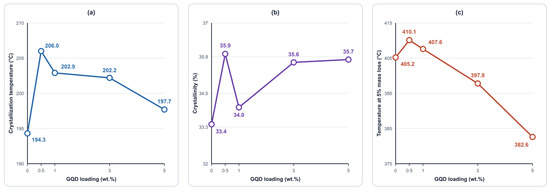
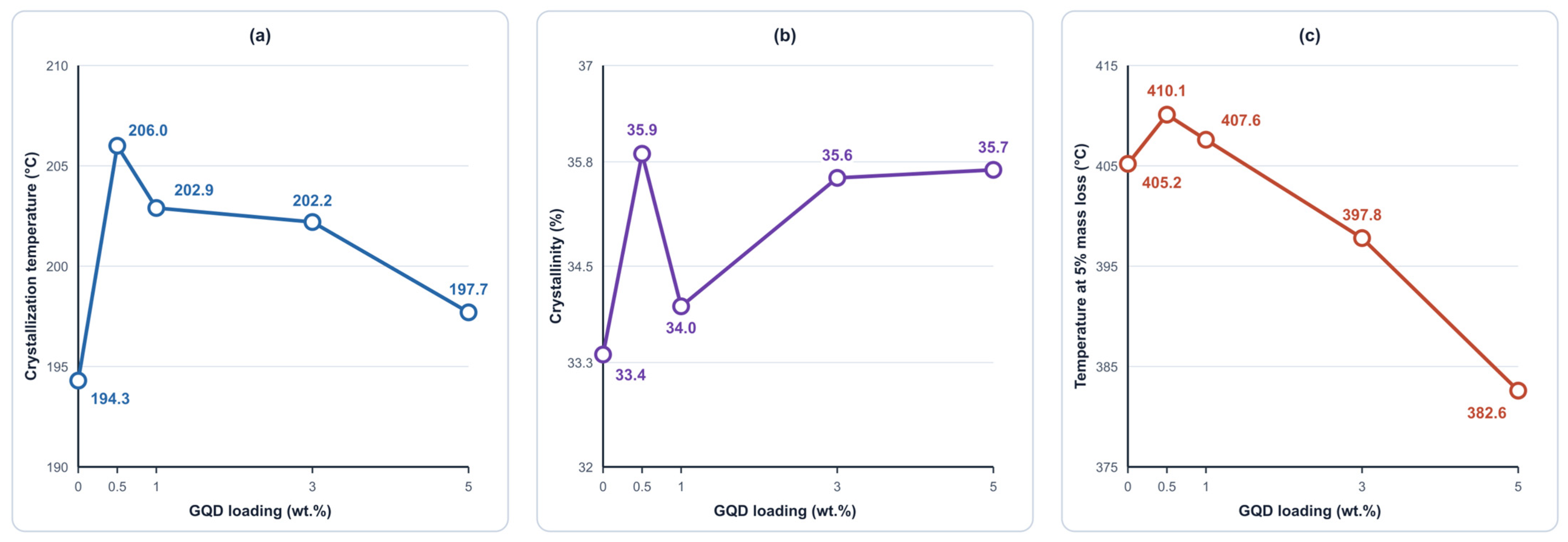
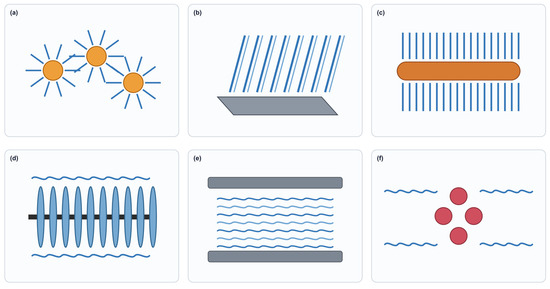
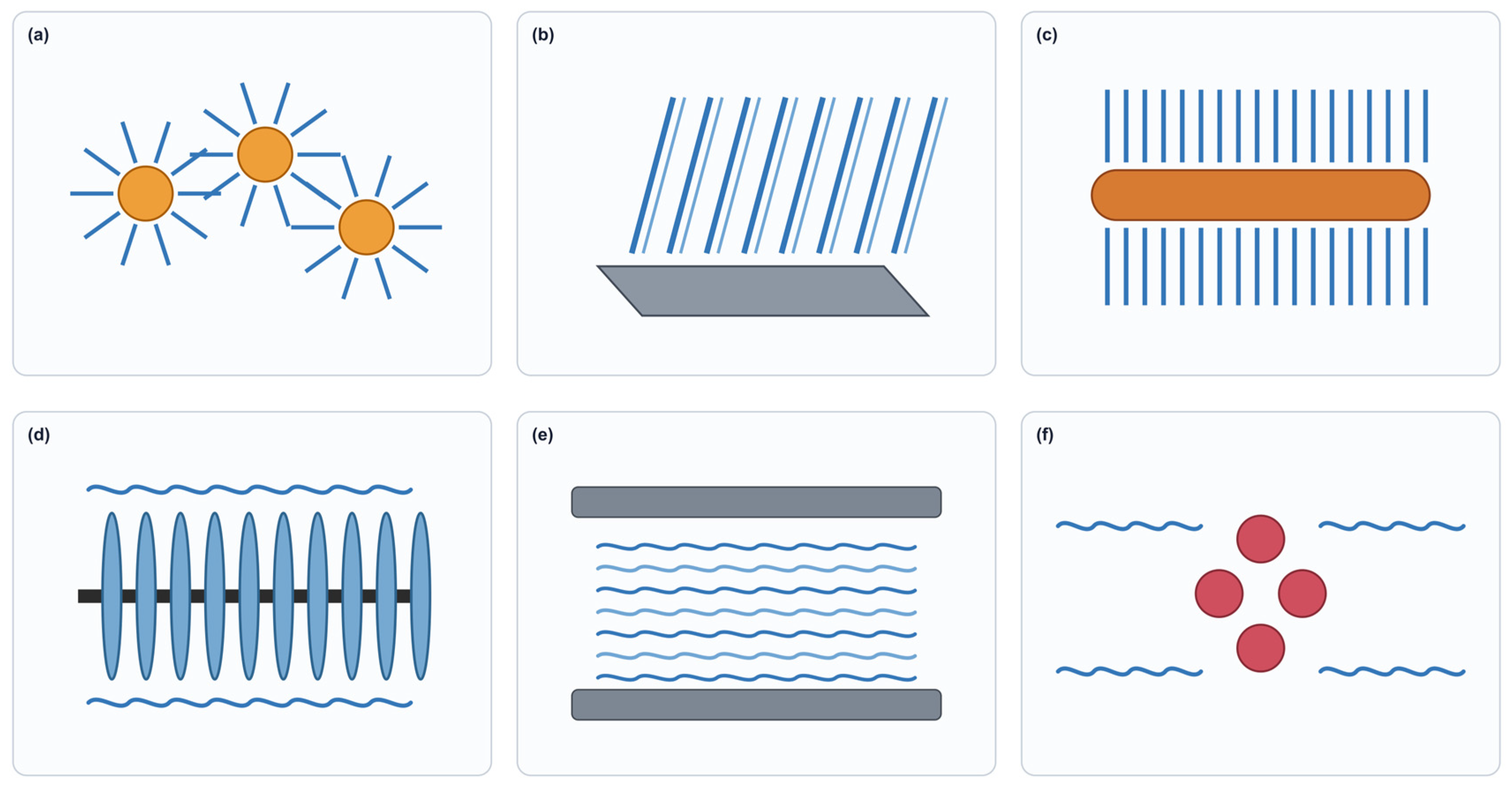
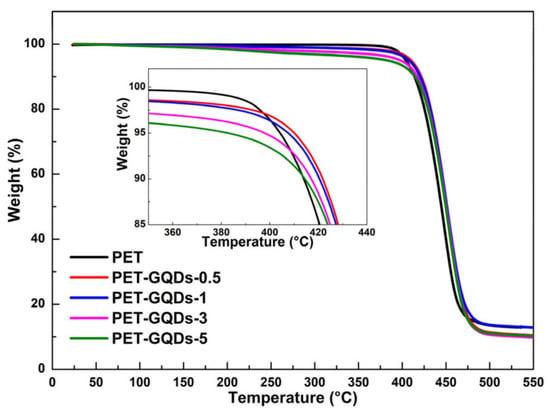
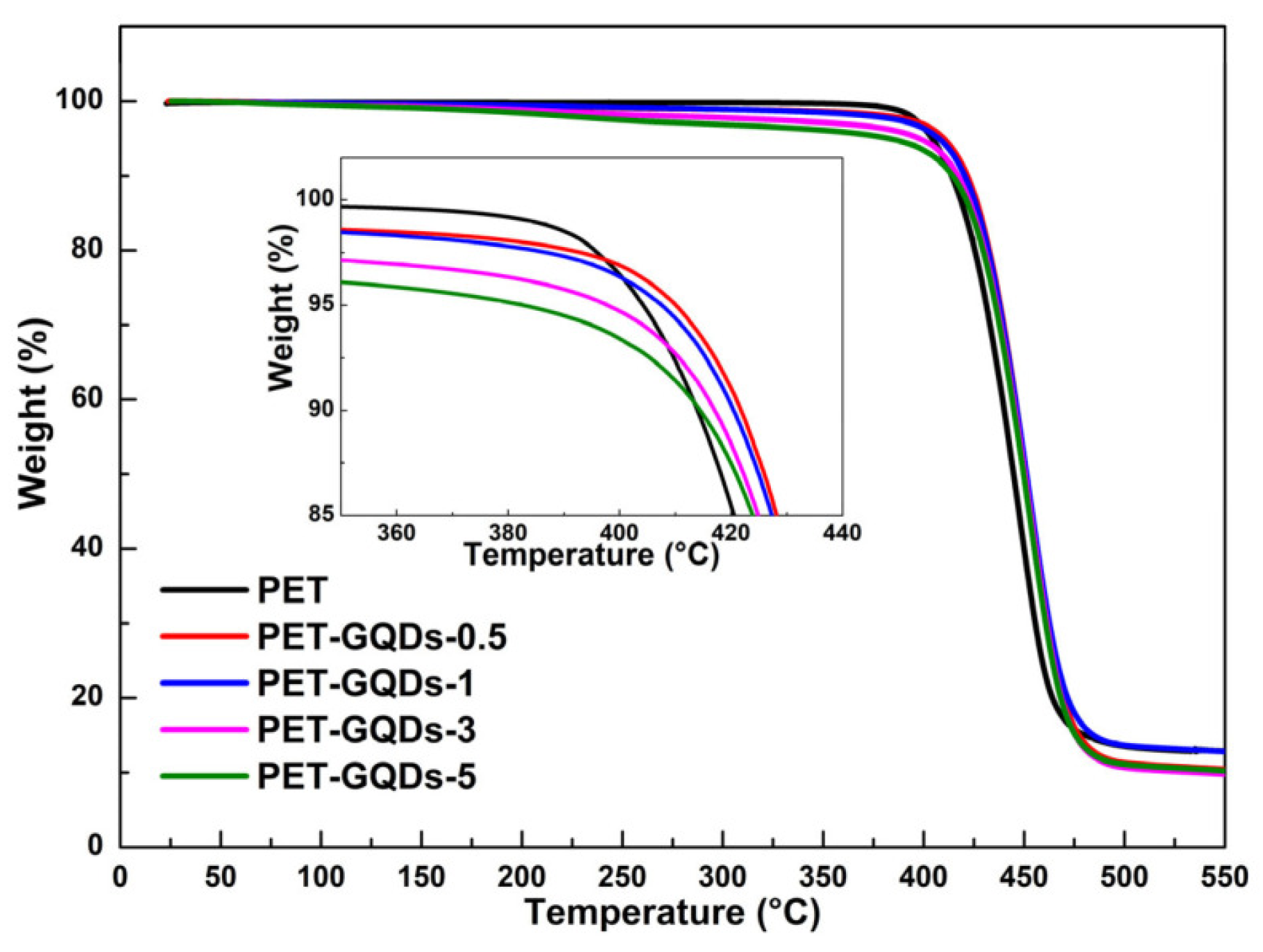

Disclaimer/Publisher’s Note: The statements, opinions and data contained in all publications are solely those of the individual author(s) and contributor(s) and not of MDPI and/or the editor(s). MDPI and/or the editor(s) disclaim responsibility for any injury to people or property resulting from any ideas, methods, instructions or products referred to in the content. |
© 2026 by the authors. Licensee MDPI, Basel, Switzerland. This article is an open access article distributed under the terms and conditions of the Creative Commons Attribution (CC BY) license.