


Abstract
Directional solidification experiments with the seeding method were conducted to investigate the convergent competitive growth process of bi-crystals in a nickel-based superalloy under withdrawal rate transition conditions, aiming to clarify the behavior and mechanism of non-steady-state convergent grain competition. The results show that competitive overgrowth after a withdrawal-rate transition is influenced by the pre-transition steady-state withdrawal rate. Following the transition, the primary dendrite arm spacing (PDAS) does not adjust instantaneously; instead, it evolves over a finite solidification distance toward a new steady state that retains a dependence on the prior growth history. The competitive advantage of the favorably oriented (FO) grain progressively increases as solidification proceeds after the transition. By correlating the transverse and longitudinal microstructural evolution, the role of this history-dependent transient response, termed “growth inertia” in this work, in convergent bi-crystal competition is discussed. These findings indicate that transient solidification history should be considered when designing withdrawal-rate schedules for single-crystal blade casting.
1. Introduction
Nickel-based single-crystal superalloys, owing to their excellent high-temperature mechanical properties, have become the core material for aero-engine turbine blades [1]. These alloys possess a face-centered cubic (FCC) structure, and optimal service performance is achieved when the <001> crystallographic direction is aligned parallel to the maximum stress axis of the blade [2,3,4,5,6]. Directional solidification combined with either the grain selector method or the seeding technique is the mainstream process for manufacturing single-crystal blades. Both of these processing routes inherently involve competitive grain growth, which has a direct influence on the final quality and mechanical performance of the castings [7,8,9,10,11].
Research on the mechanism of competitive grain growth dates back to the classical model proposed by Walton and Chalmers [12]. Subsequently, Rappaz et al. [13,14] further elaborated and refined this model through directional solidification experiments using transparent organic alloys, eventually leading to the widely recognized Walton–Chalmers (W–C) model. In this model, grains with their <001> orientation parallel to the heat flow direction are defined as favorably oriented (FO) grains, while those deviating from the heat flow direction are defined as unfavorably oriented (UO) grains. Based on the spatial distribution of dendrite tips between the two grains, their competitive growth can be classified into two modes: convergent growth, characterized by dendrite tips approaching each other in an inverted “V” configuration, and divergent growth, characterized by dendrite tips moving away from each other in a “V” configuration. The W–C model predicts that during convergent competitive growth, the two grains can coexist over a long period without one being eliminated. However, Zhou et al. [15,16,17] observed an “unusual overgrowth” phenomenon, in which UO grains eliminate FO grains. They attributed this to the solute field interactions between dendrite tips at the grain boundary, which alter the tip positions. Li et al. [18] simulated convergent bi-crystal competitive growth using a phase-field method and found that, under the influence of solute interactions, the FO dendrites at the grain boundary undergo lateral migration relative to their neighboring FO dendrites. When the dendrite spacing decreases to a certain threshold, the unusual overgrowth occurs. Takaki et al. [19] further elucidated that the interaction among multiple dendrites at the grain boundary is responsible for the unusual overgrowth. Hu et al. [20,21,22] observed various growth behaviors during directional solidification experiments, including dendrite annihilation, lateral migration, interpenetration, and the branching of new dendrites. Zhang et al. [23] also captured similar phenomena within individual grains, including dendrite annihilation and the formation of new dendritic branches, which in turn cause differences in competitive growth rates among grains. In recent years, studies on competitive grain growth have consistently indicated that the solute field is the dominant factor controlling the occurrence of unusual overgrowth [24,25]. In particular, during convergent competitive growth, unusual overgrowth is more likely to occur at low withdrawal rates; as the withdrawal rate increases, the competitive trend gradually shifts toward FO grains, eliminating UO grains [17,18,20,21,22,23,24,25]. It should be noted that the aforementioned studies on convergent competitive grain elimination were primarily conducted under steady-state directional solidification conditions. In practice, however, due to the complex geometry of turbine blades and the varying solidification parameters during processing, directional solidification is often carried out under non-steady-state conditions [26,27,28,29,30,31,32]. To date, the behavior and underlying mechanisms of non-steady-state competitive grain growth have not been sufficiently explored.
To clarify the competitive growth of grains under non-steady-state conditions, this study investigates the effect of abrupt withdrawal rate transition on convergent bi-crystal competitive growth through directional solidification experiments. Particular attention is given to the history dependence of the primary dendrite arm spacing (PDAS) and grain-boundary migration during the transient stage. The results are expected to improve the understanding of competitive growth during the fabrication of single-crystal blades, in which complex geometry can lead to variations in solidification conditions.
2. Materials and Methods
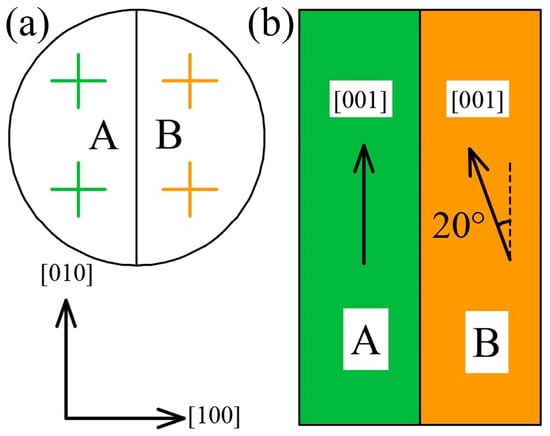
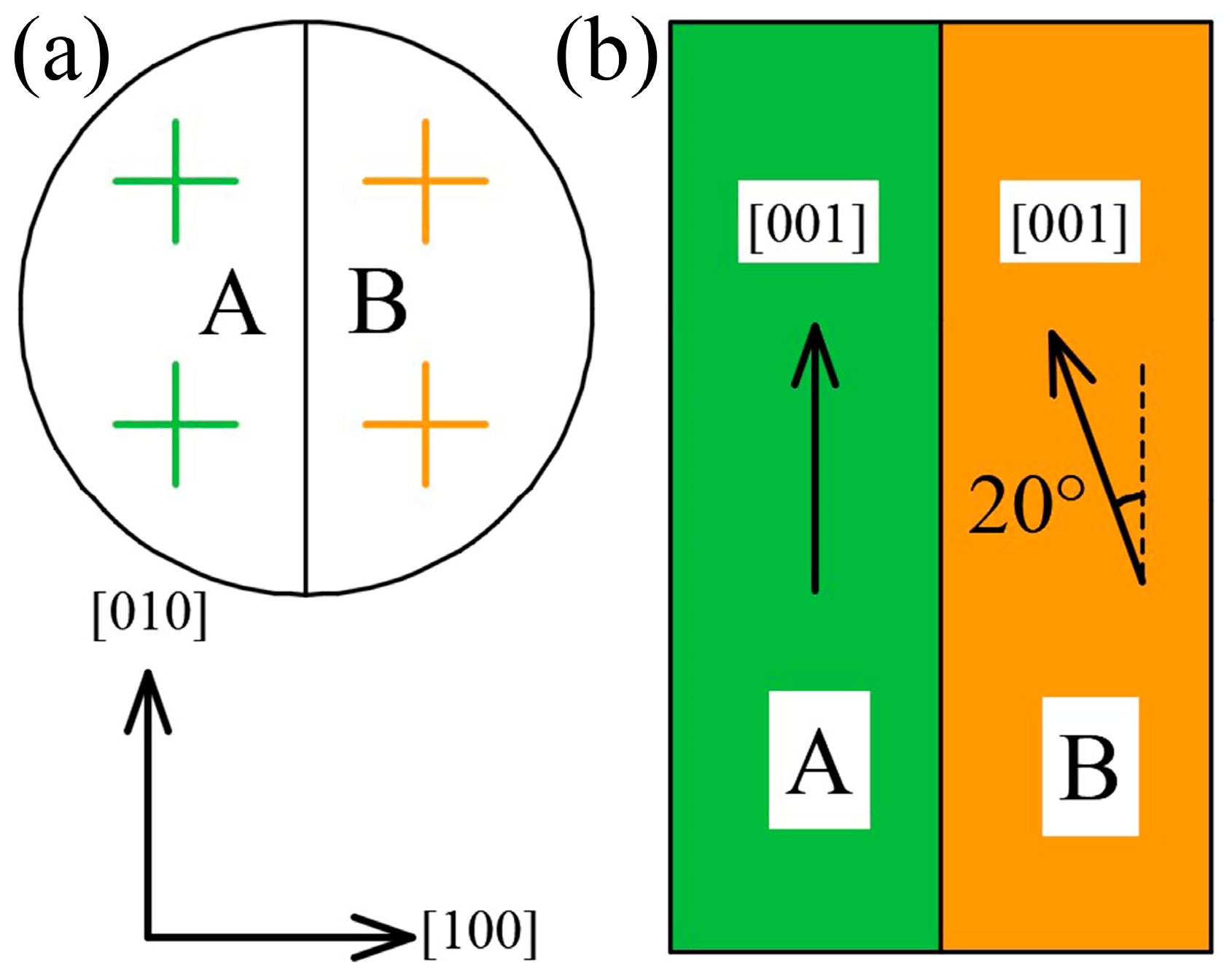
The material used in this study is a second-generation nickel-based single-crystal superalloy, with a nominal composition of Ni– 4.3Cr– 9.0Co– 7.5Ta– 2.0Mo– 8.0W– 2.0Re– 5.6Al– 0.1Hf (mass fraction, %). Directional solidification experiments were conducted in a Bridgman-type furnace equipped with a liquid metal cooling system. The master alloy was machined into cylindrical bars of 4 mm in diameter and 70 mm in height. The seeds were prepared as half-cylinders with dimensions of 4 mm in diameter and 25 mm in height. Two half-cylindrical seeds, denoted as Seed A and Seed B, were assembled according to the configuration shown in Figure 1 and placed at the bottom of an alumina tube. In the transverse cross-section, the <010> orientation of both seeds was parallel to the splicing axis of the bi-crystal, while the <100> orientation was perpendicular to this axis (Figure 1a). In the longitudinal cross-section, the <001> orientation of Seed A was parallel to the splicing axis, whereas the <001> orientation of Seed B formed a 20° misorientation angle with respect to this axis (Figure 1b). After placing the seeds, the master alloy bar was loaded on top of the bi-crystal seeds within the alumina tube, and the entire assembly was fixed onto a water-cooled chill plate. The furnace was heated to 1650 °C and held at this temperature for 30 min. The samples were then withdrawn according to the schemes listed in Table 1, followed by furnace cooling.
Figure 1.
Schematic diagram showing the arrangement of bi-crystal seeds: (a) transverse cross-section; (b) longitudinal cross-section.
Table 1.
Directional solidification parameters for investigating convergent bi-crystal competitive growth under withdrawal rate transition conditions.
After the directional solidification experiments, the specimens were sectioned for metallographic examination using standard procedures. Transverse sections were taken at distances ranging from 5 mm to 35 mm above the remelt interface, and longitudinal sections were taken both at the initial remelt interface and in the later stage of solidification. To capture the microstructural evolution during the withdrawal rate transition, additional longitudinal sections were taken at a solidification distance of 20 mm. The samples were ground and polished, and then etched using a solution of HNO3, HF, and C3H8O3 in a volume ratio of 1:2:3. Microstructural observations were performed using a Leica DM-2700M optical microscope (Leica Microsystems Gmbh, Wetzlar, Germany).
Primary dendrite arm spacing (PDAS) was measured using Image-Pro Plus 6.0 (IPP6) by the area method. For each analyzed region, the area S occupied by dendrites was determined from the image scale, and the number N of primary dendrite trunks within that area was counted. The primary dendrite arm spacing λ was then calculated using the formula:
To quantify competitive growth, the area fraction of Grain A in the entire bi-crystal transverse section, ΔS, was defined as
where SA is the area occupied by Grain A and S is the total cross-sectional area of the bi-crystal. Each data point was determined from the complete transverse section at the corresponding solidification distance, rather than from an average of multiple local microscope fields of view.
3. Results
3.1. Microstructural Characteristics Influenced by Bi-Crystal Orientation
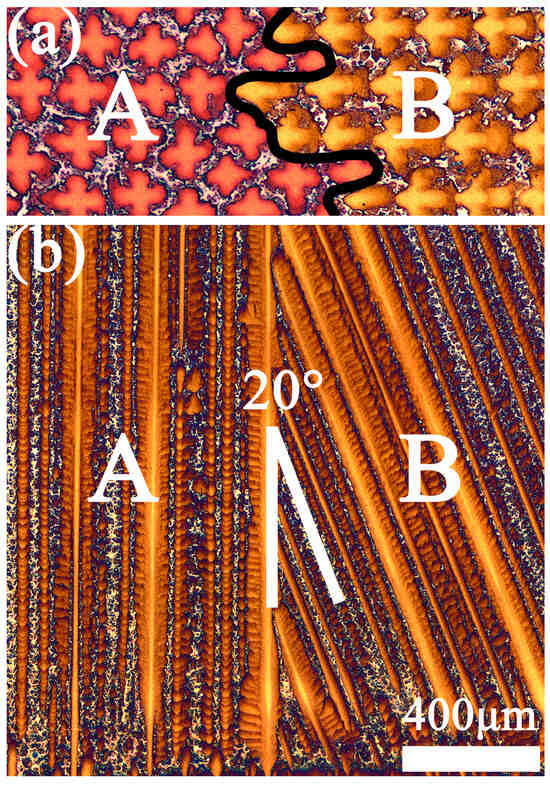
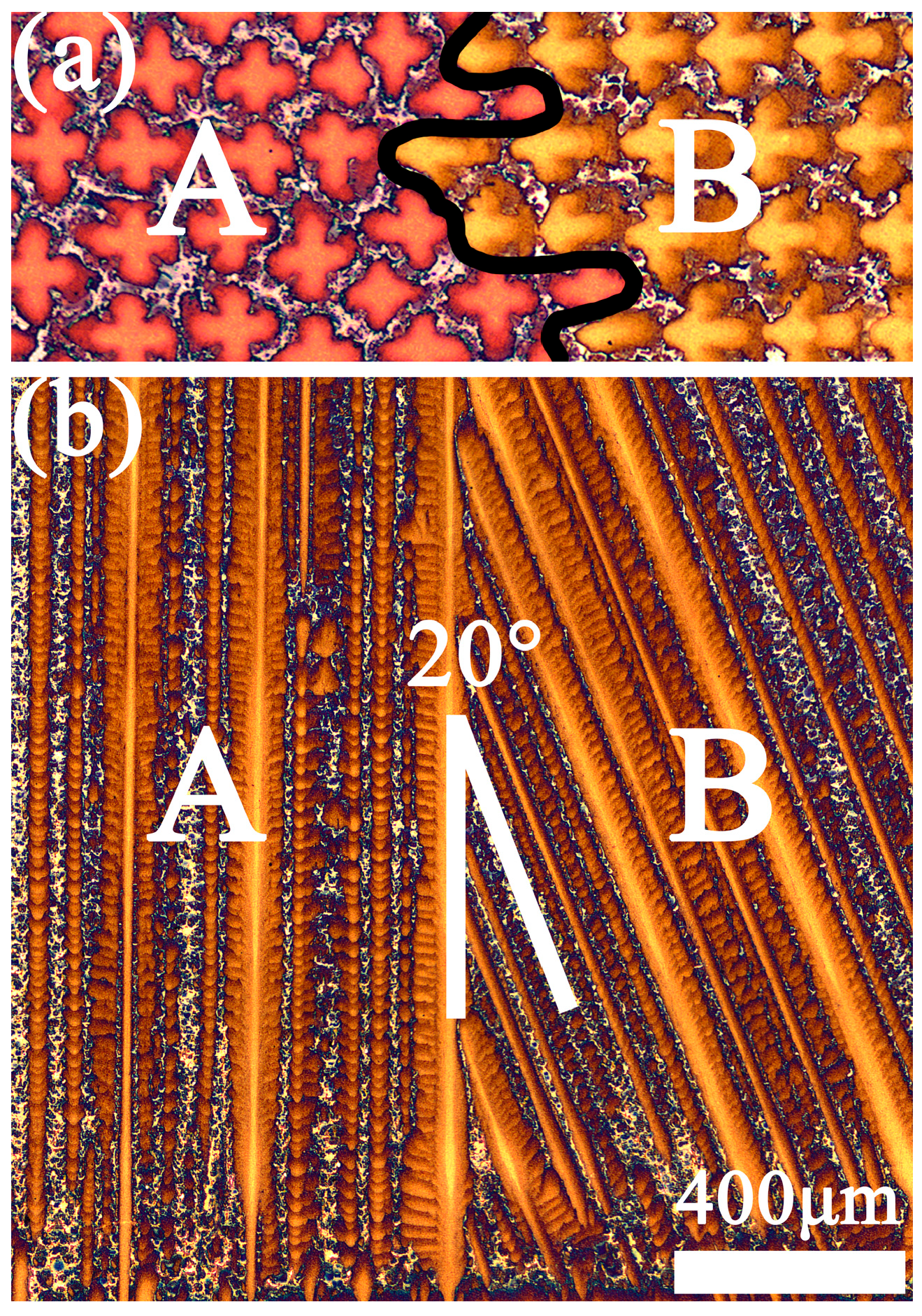
Figure 2 presents the solidification microstructures of the bi-crystal samples on both transverse and longitudinal sections. Grain A, whose <001> direction is parallel to the heat flow direction, is defined as the favorably oriented (FO) grain; Grain B, whose <001> direction deviates by 20° from the heat flow direction, is defined as the unfavorably oriented (UO) grain. Grains A and B together form a convergent competitive growth configuration. In the transverse section (Figure 2a, within the orange dashed region), the dendrites of Grain A are uniformly arranged in a “cross-shaped” pattern [33], whereas those of Grain B exhibit a “bird-shaped” morphology and are linearly aligned along the <010> direction. Based on these distinct dendritic morphological features, the grain boundary between the two grains can be clearly delineated on the transverse section, as indicated by the black solid line in Figure 2.
Figure 2.
Solidification microstructure characteristics of bi-crystals with different orientations: (a) transverse section; (b) longitudinal section.
3.2. Steady-State and Non-Steady-State Growth Behavior
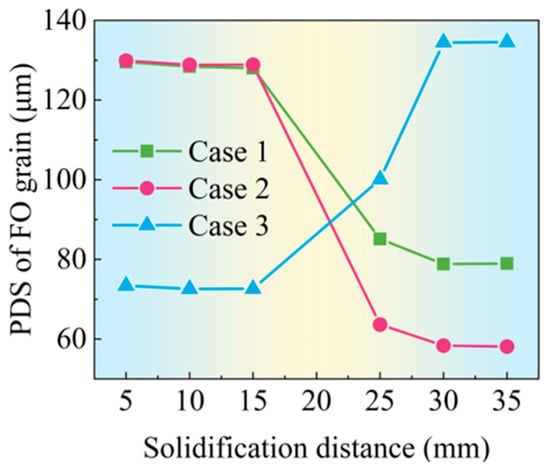
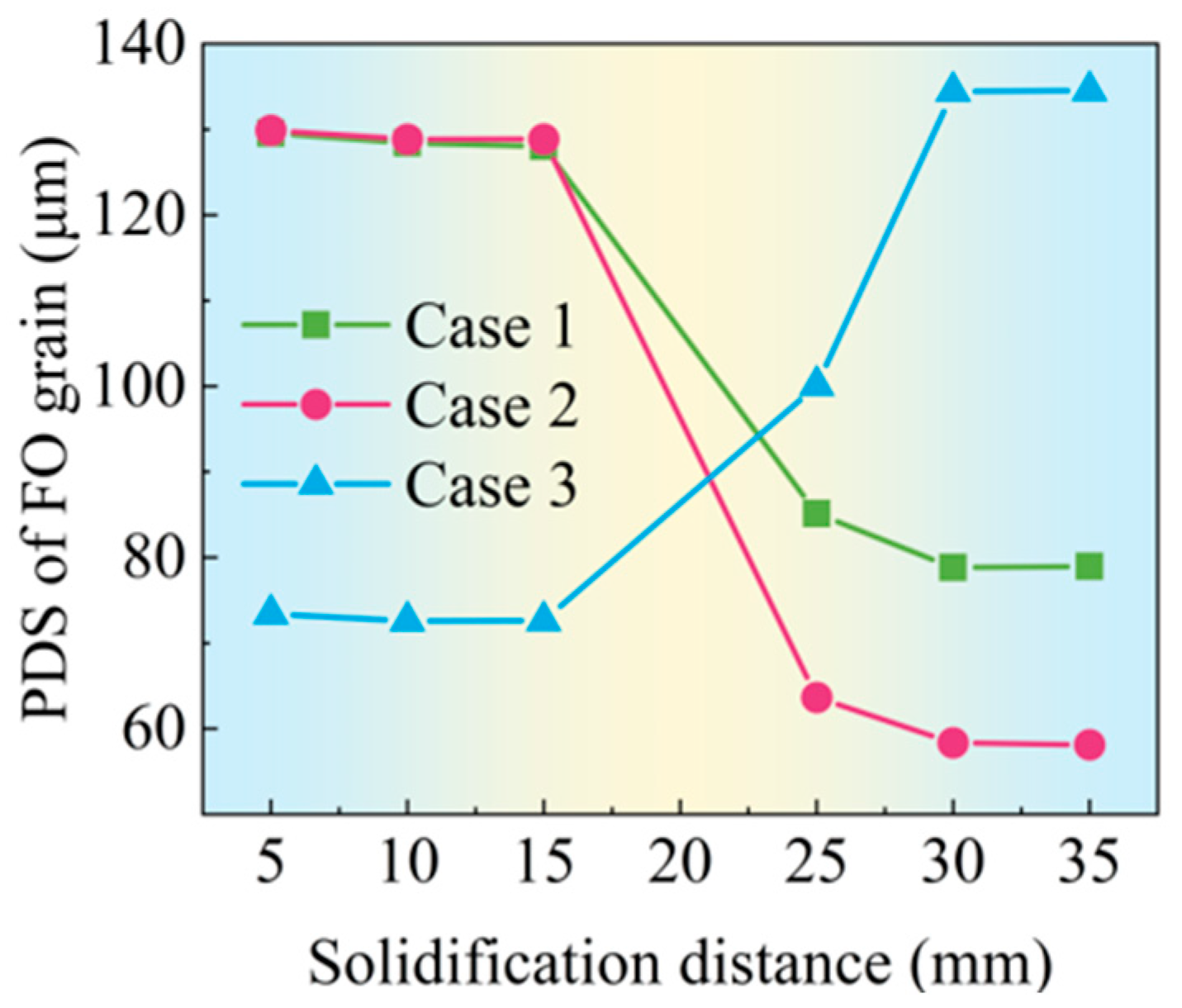
During directional solidification, both the initial stage and the period following a change in processing parameters involve a transition from a non-steady state to a steady state; this transition typically requires a solidification distance equivalent to approximately 2–3 times the height of the mushy zone [34,35]. The primary dendrite spacing, as a key characteristic scale in directional dendritic growth [22,30], serves as an important criterion for determining whether the solidification process has reached a steady state. In this study, the evolution of the primary dendrite spacing of the FO grains before and after the withdrawal rate transition was measured, and the results are shown in Figure 3.
Figure 3.
Variation in primary dendrite spacing (PDS) of favorably oriented (FO) grains with solidification distance under withdrawal rate transition conditions.
During the initial stage at the withdrawal rate v1, the primary dendrite spacing remained essentially stable with increasing solidification distance: for Cases 1 and 2, the average primary dendrite spacing was approximately 128 μm, while for Case 3, it was about 72 μm. This indicates that the initial solidification distance of 20 mm was sufficient to ensure that a steady state was achieved in this stage. After the transition to the withdrawal rate v2, the primary dendrite spacing exhibited notable fluctuations before a solidification distance of 30 mm, after which it gradually stabilized. Under the steady-state conditions of the v2 stage, the primary dendrite spacings for Case 1 and 2 were approximately 79 μm and 58 μm, respectively, while that for Case 3 was about 134 μm.
Therefore, when the directional solidification parameters are altered, the grain growth indeed enters a non-steady-state stage, which serves as a transitional interval connecting the preceding steady state and the subsequent steady state. During this interval, the grains exhibit a certain “growth inertia” [29,30]. Here, “growth inertia” refers to the history-dependent persistence of the dendritic array and grain-competition state after an abrupt change in withdrawal rate. Specifically, microstructural parameters such as PDAS and the competitive elimination tendency do not immediately attain the values or behavior expected under the new steady-state condition. Instead, they retain the influence of the pre-transition state and evolve over a finite solidification distance before approaching a new state [29,30]. In this sense, growth inertia is a transient history effect rather than mechanical inertia. The PDAS evolution in Figure 3 provides a direct microstructural manifestation of this effect: although the withdrawal rate changes abruptly at 20 mm, the dendritic array requires further growth before stabilizing under the new condition.
3.3. Effect of Withdrawal Rate Transition on Competitive Growth
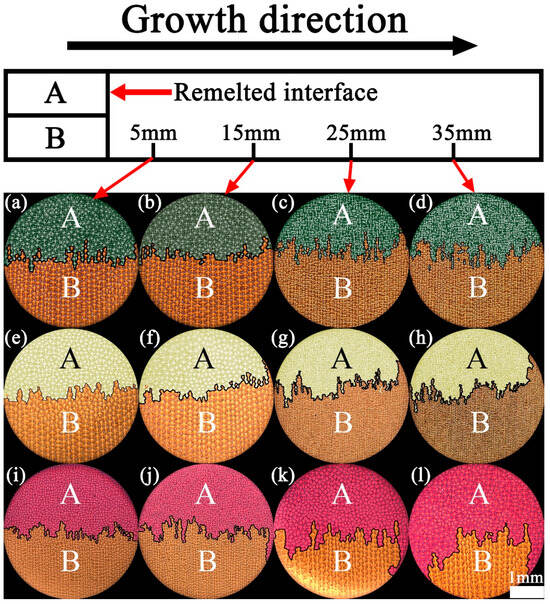
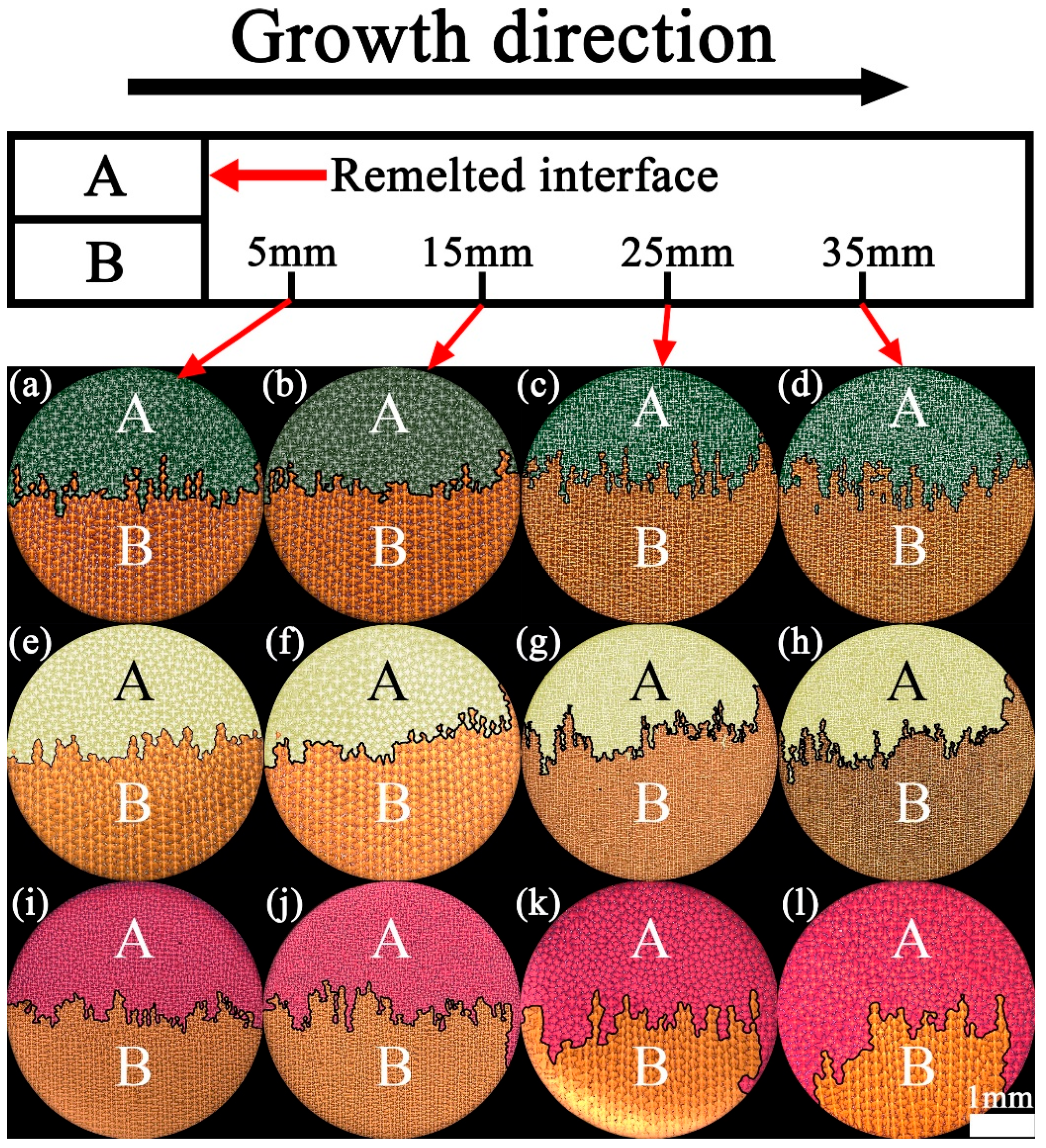
Figure 4 shows the microstructural evolution of the bi crystals under withdrawal rate transition conditions. For Case 1 (Figure 4a–d), the initial withdrawal rate was 25 μm/s. As the solidification distance increased, the grain boundary gradually shifted toward the FO Grain A, leading to a decrease in the number of FO dendrites and the area fraction of Grain A, indicating that the FO grain was being progressively eliminated by the UO grain. After the withdrawal rate was abruptly increased to 200 μm/s, during the period up to a solidification distance of 25 mm, although the number of FO dendrites recovered somewhat, the area of Grain A continued to decrease. With further solidification to 35 mm, the grain boundary reversed its migration direction toward the UO Grain B, and both the number of FO dendrites and the area fraction of Grain A increased, suggesting that the competitive advantage of the FO grain gradually improved. For Case 2, in which the post-transition withdrawal rate was further increased to 400 μm/s (Figure 4e–h), the observed migration trend of the grain boundary and the variation in the FO dendrite count were similar to those in Case 1. For Case 3 (Figure 4i–l), the initial withdrawal rate was 200 μm/s. With increasing solidification distance in this stage, part of the grain boundary migrated toward the FO Grain A, while another part moved more significantly toward the UO Grain B, indicating that although the two grains mutually eliminated each other, the competitive advantage of the FO grain had already begun to emerge. When the withdrawal rate was abruptly decreased to 25 μm/s, the number of FO dendrites decreased with further solidification; however, the area fraction of Grain A in the overall transverse section gradually increased, implying that the UO grain was being progressively eliminated by the FO grain.
Figure 4.
Microstructural evolution of convergent bi crystals under withdrawal rate transition conditions: (a–d) Case 1; (e–h) Case 2; (i–l) Case 3.
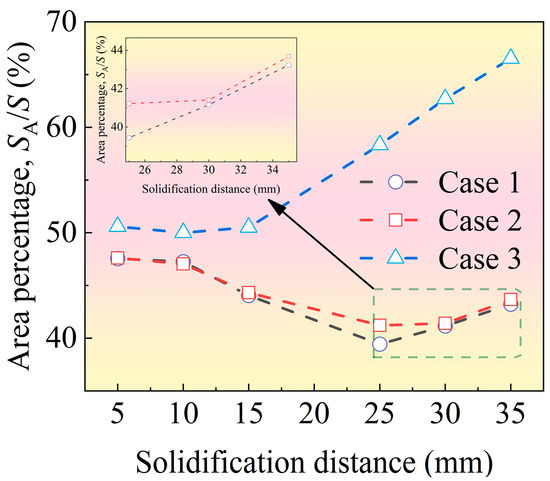
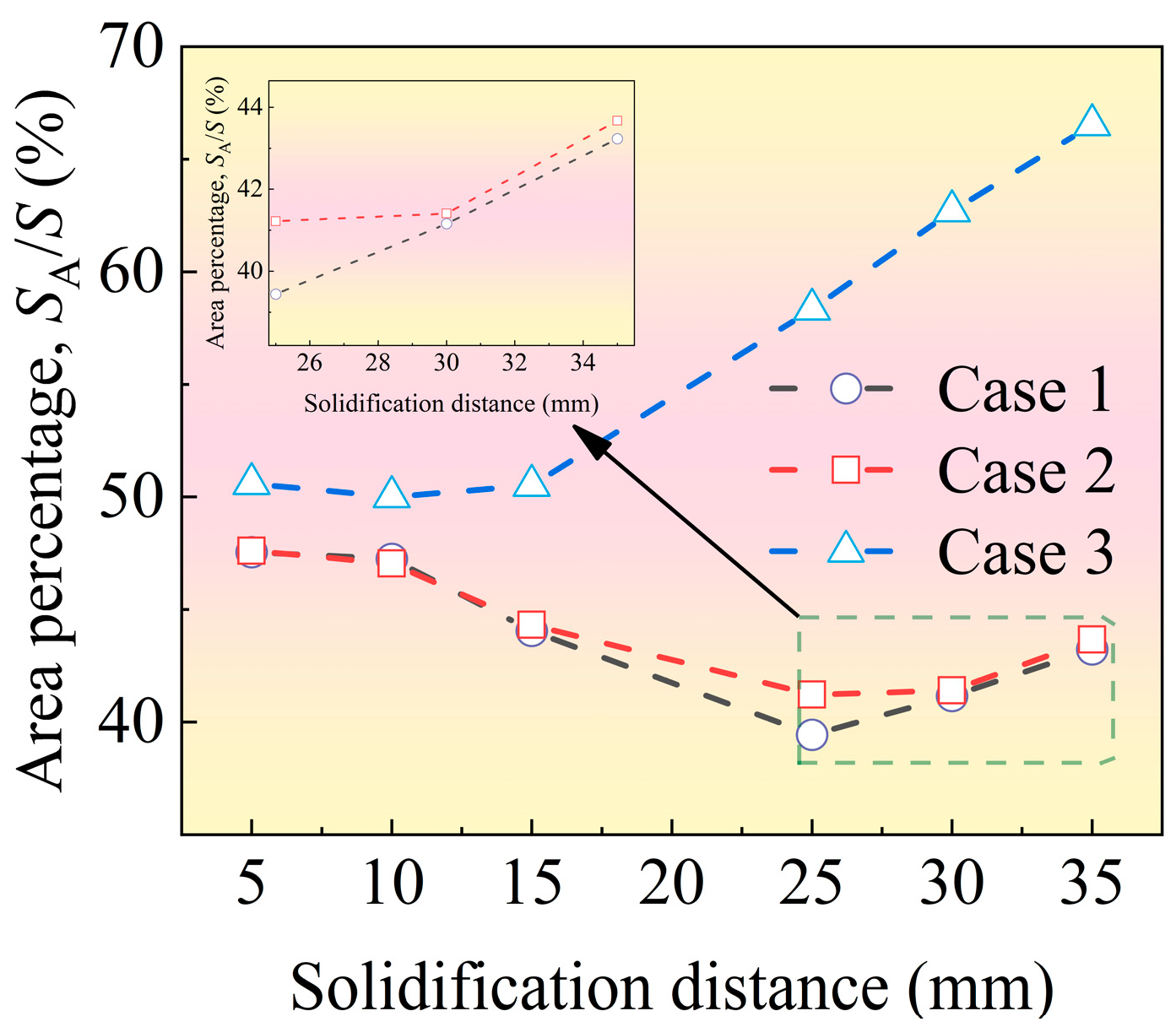
To further quantify these evolutionary processes, the whole-section area fraction of the FO grain, ΔS, was evaluated as a function of solidification distance, and the results are presented in Figure 5. During the v1 stage, ΔS for both Cases 1 and 2 decreased with increasing solidification distance, indicating that the FO grain was gradually being eliminated by the UO grain. In contrast, for Case 3, ΔS fluctuated around 50%, suggesting that the FO grain possessed a stronger competitive advantage at the higher withdrawal rate compared with the lower rates. In the v2 stage, Cases 1 and 2 continued the competitive trend established at the lower withdrawal rate: ΔS decreased up to a solidification distance of 25 mm, although the elimination rate of the FO grain in Case 2 was relatively lower than that in Case 1. With further solidification, ΔS increased in both cases, and the ΔS value in Case 2 was larger than that in Case 1. This indicates that, owing to the growth inertia, when transitioning from a low withdrawal rate to a high withdrawal rate, the competitive advantage of the FO grain requires a transitional adjustment period before it can strengthen with increasing solidification distance, thereby weakening the competitive capability of the UO grain. In Case 3, during the v2 stage, ΔS continued to increase steadily, demonstrating that when the withdrawal rate is abruptly reduced from a high value to a low value, the competitive advantage of the FO grain is unexpectedly enhanced rather than diminished, again due to the growth inertia.
Figure 5.
Evolution of the whole-section area fraction of the favorably oriented (FO) grain, ΔS, with solidification distance under withdrawal-rate transition conditions. Each point corresponds to one complete transverse section at the indicated axial position; the values are not averages of multiple fields of view.
3.4. Microstructural Evolution on Longitudinal Sections Before and After the Transition
Longitudinal-section microstructures can reveal the competitive elimination behavior of convergent bi-crystals under steady-state withdrawal conditions [20,21,23,24,25]. Following this approach, we compared longitudinal microstructures before, near, and after the withdrawal-rate transition to examine how growth inertia influences competitive elimination.
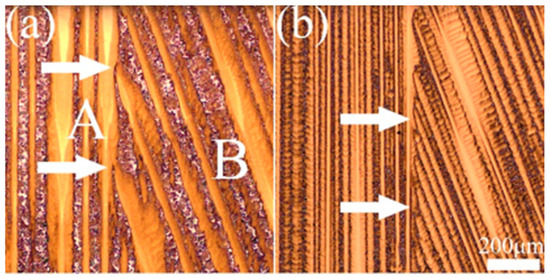
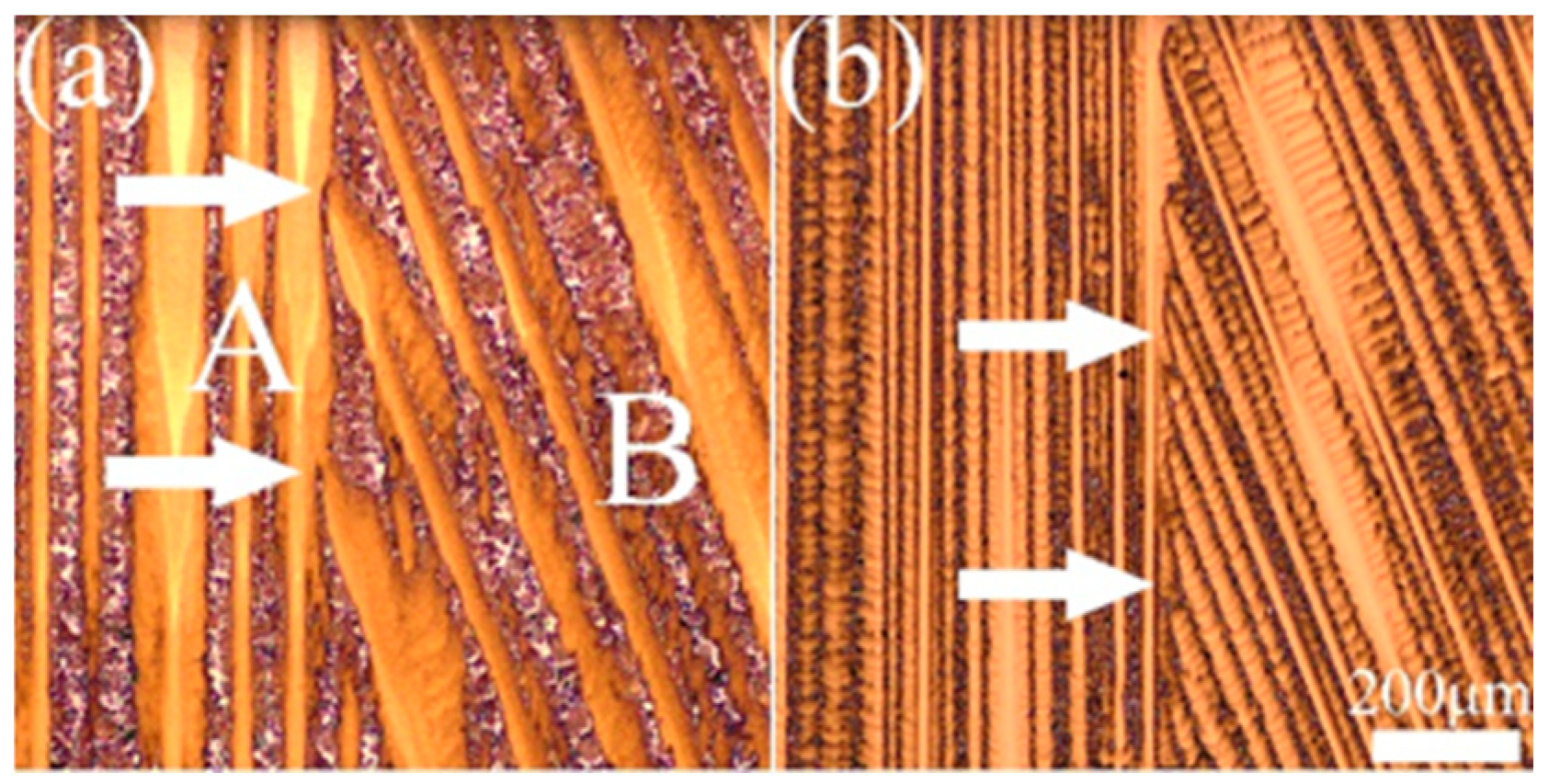
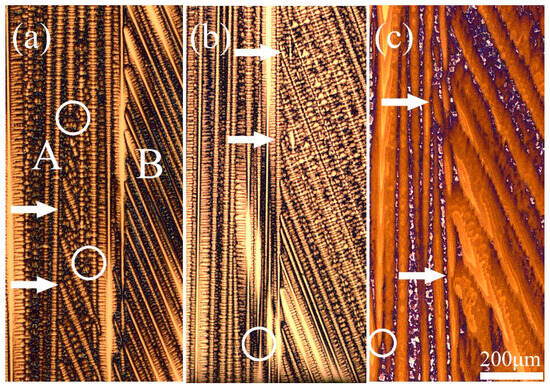
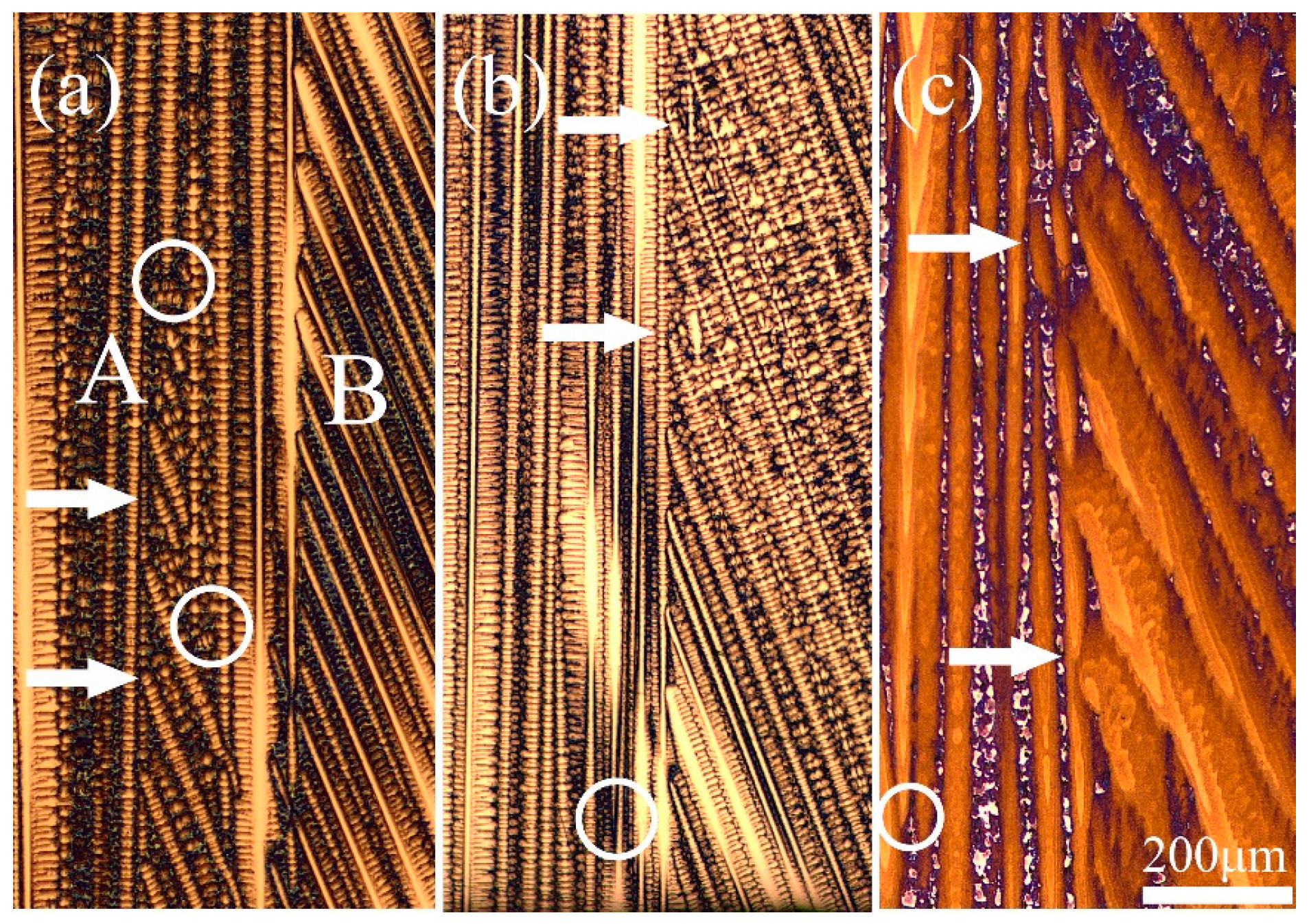
Figure 6 displays the longitudinal section microstructures of the convergent bi crystals during the v1 stage. The white arrows indicate the interpenetration of UO dendrites into the FO dendrite region. In Case 1 (Figure 6a), the UO dendrites penetrated to a depth equivalent to 3–4 FO dendrites, whereas in Case 3 (Figure 6b), they only penetrated into the gap of 1 FO dendrite. This indicates that with increasing withdrawal rate before the transition, the insertion of UO dendrites into the FO dendrite region becomes progressively more difficult.
Figure 6.
Longitudinal section microstructures of convergent bi crystals in the v1 stage: (a) Case 1 (V = 25 μm/s); (b) Case 3 (V = 200 μm/s).
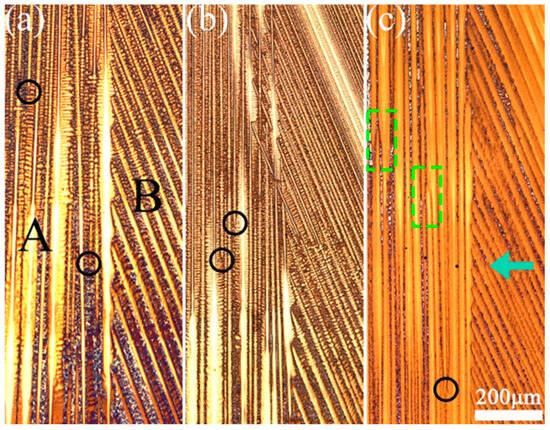
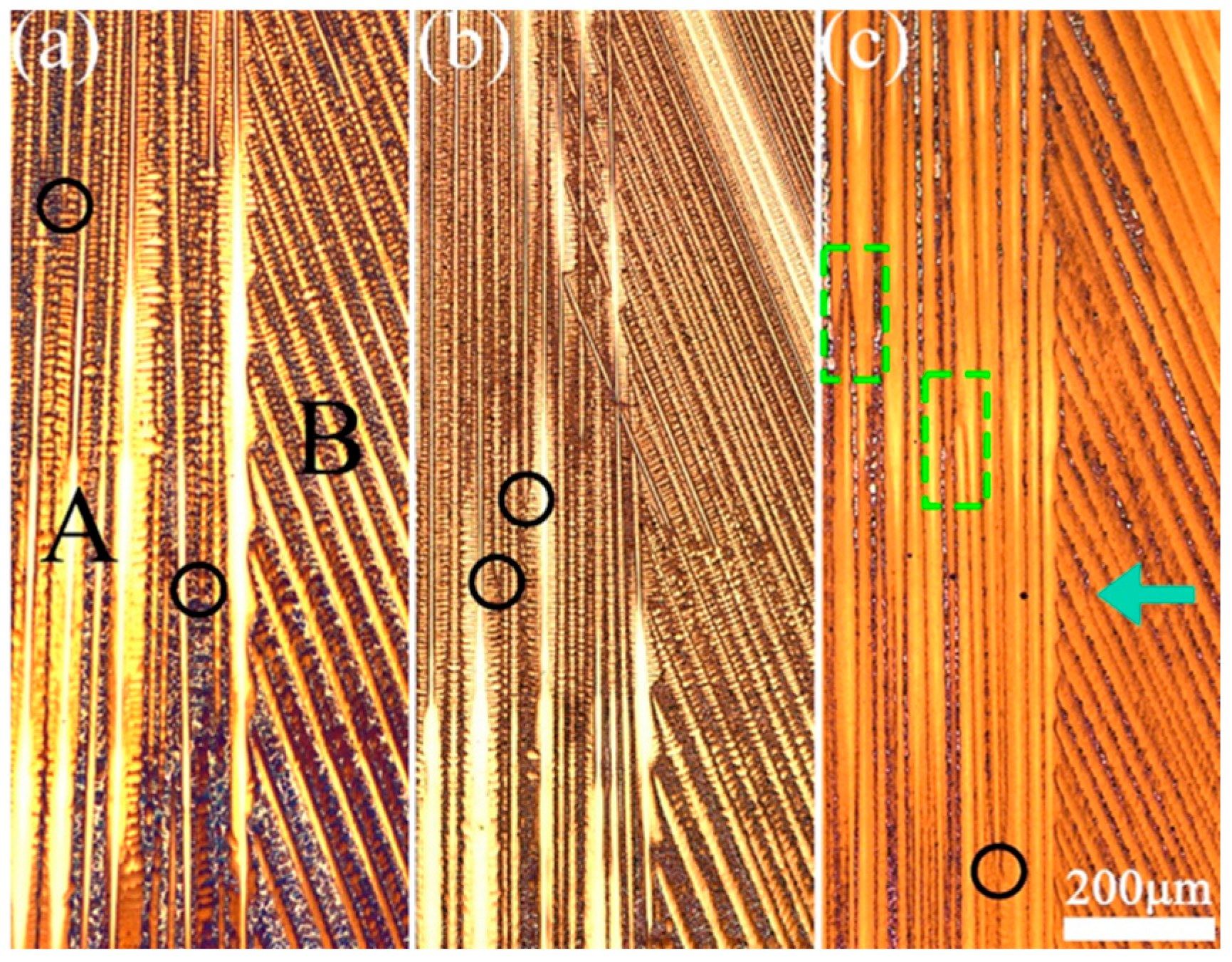
At a solidification distance of approximately 40 mm in the v2 stage, where the solidification process had reached steady-state conditions, the longitudinal section microstructures of the convergent bi crystals are shown in Figure 7. White arrows again indicate the insertion of UO dendrites into the FO region. Comparing Case 1 (Figure 7a) and Case 2 (Figure 7b), it is evident that a higher withdrawal rate makes it more difficult for UO dendrites to insert into the FO dendrite gaps. In addition, as indicated by the white circles, FO dendrites can branch into new primary dendrites at the grain boundary, thereby increasing the number of FO dendrites. For Case 3 (Figure 7c), the UO dendrites could only insert to a depth of about 1–2 FO dendrite spacings, and the white circles also show the branching of new primary dendrites from the FO grain toward the grain boundary.
Figure 7.
Longitudinal section microstructures of convergent bi crystals in the v2 stage at an average solidification distance of 40 mm: (a) Case 1 (V = 200 μm/s); (b) Case 2 (V = 400 μm/s); (c) Case 3 (V = 25 μm/s).
By comparing the bi-crystal microstructures before and after the withdrawal rate transition, it is clear that the competitive behavior under transition conditions is influenced by growth inertia. To further explore this influence, the longitudinal section microstructures at the transition position (Figure 8) were examined. In Cases 1 and 2, the coarse dendrites gradually refined, and the FO dendrites branched into new primary dendrites (black circles in Figure 8a,b). Notably, although Case 2 experienced a higher transition rate, deeper dendrite interpenetration was still observed (Figure 8b), indicating that dendrite insertion is also subject to growth inertia. In Case 3 (Figure 8c), a phenomenon of intra-grain competition was observed: the secondary dendrites of neighboring dendrites blocked each other, and coarsening reduced the interdendritic spacing, causing some dendrites to shrink and disappear due to insufficient growth space [23]. This phenomenon occurred in both the FO grain (green dashed boxes) and the UO grain (cyan arrows). Furthermore, in Case 3, the FO dendrites had already branched new dendrites at the grain boundary before the transition, and continued to coarsen with increasing solidification distance after the transition (black circles). Although some FO dendrites were squeezed and annihilated due to self-competition after the transition, new branches had already formed before annihilation, ensuring the continuation of growth (leftmost green dashed box). This indicates that after the transition, the FO dendrites, under the influence of growth inertia, maintain the ability to branch new dendrites and thus sustain their population, without exhibiting dendrite insertion.
Figure 8.
Longitudinal section microstructures of convergent bi crystals at the withdrawal rate transition position: (a) Case 1; (b) Case 2; (c) Case 3.
4. Discussion
Under steady-state directional solidification at a constant withdrawal rate, the competitive capability of the favorably oriented (FO) grain increases with increasing withdrawal rate [17,18,20,21,22,23,24,25]. However, the experimental results presented above demonstrate that under withdrawal rate transition conditions, the grain growth enters a non-steady-state regime, in which the subsequent direction of competitive growth no longer fully follows the trend observed under steady-state constant-rate solidification, owing to the influence of growth inertia. As shown in Figure 3, although the primary dendrite spacing after the transition still tends to decrease with increasing withdrawal rate, the steady-state spacing ultimately attained depends on the solidification history, confirming the existence of growth inertia [29,30].
This growth inertia following the withdrawal rate transition is also manifested in the competitive elimination process of the bi-crystals (Figure 4 and Figure 5). After the transition, the competitive behavior undergoes a non-steady-state evolution, ultimately leading to different elimination tendencies. In the two schemes involving a transition from a low rate to a high rate, the elimination outcomes at each steady-state stage are consistent with the competitive trends observed during constant-rate solidification at the corresponding rates. However, during the non-steady-state transition period, under the influence of growth inertia, the FO grain continues to be eliminated by the UO grain, maintaining the trend established before the transition. In contrast, in the scheme involving a transition from a high rate to a low rate, the competitive trend is completely opposite to that under steady-state constant-rate solidification at the low rate. Here, dominated by growth inertia, the FO grain consistently maintains its competitive advantage, and this advantage expands progressively with increasing solidification distance.
At the grain boundary, the lateral migration and insertion of dendrites cause the local dendrite spacing to fall into a non-steady-state range, which in turn triggers dendrite annihilation or the branching of new primary dendrites. These phenomena are ultimately reflected in the competitive elimination trend between the grains [20,21,22]. Concurrently, these processes affect the local dendrite density at the grain boundary, leading to differences in competitive advantage among dendrites. Hu et al. [20,21,22], in their studies on competitive growth under steady-state constant-rate conditions, demonstrated that reducing the depth and frequency of dendrite insertion, as well as the dendrite array density, weakens the compactness of the dendrite arrangement at the grain boundary. Moreover, the branching of new FO dendrites at the grain boundary not only increases the number of FO dendrites but also promotes their lateral migration toward the UO grain side, thereby expanding the transverse-section area occupied by the FO grain. All these factors reduce the competitive capability of the UO grain.
As shown in Figure 6, before the withdrawal rate transition, the degree of dendrite insertion decreases with increasing withdrawal rate. In the post-transition steady-state stage (Figure 7), dendrite insertion can still be observed at high withdrawal rates (Figure 7a), indicating that the influence of growth inertia has not been completely eliminated. At the same time, the branching capability of the FO dendrites continues to increase (Figure 7a,b), which not only consolidates their growth space but also continuously encroaches upon the UO grain region through lateral migration toward the grain boundary. In the case where the withdrawal rate is abruptly reduced from a high value to a low value (Figure 7c), the FO dendrites are still able to branch into new dendrites and grow coarser near the grain boundary, indicating that growth inertia continues to dominate, thereby weakening the competitive capability of the UO grain [25].
The present study focuses on microstructural morphology, PDAS, and whole-section grain-area evolution. Local crystallographic orientation changes during the transient stage were not quantified by EBSD. Because withdrawal rate transitions can be associated with misorientation in single-crystal superalloys [31], future EBSD mapping would be valuable for correlating local orientation changes with grain-boundary migration, dendrite penetration, and branching. In addition, Figure 5 is based on one complete transverse section at each axial position; it therefore documents the within-specimen evolution but does not quantify specimen-to-specimen statistical scatter.
From a processing perspective, the results indicate that the competitive state of a growing single crystal cannot be predicted solely from the instantaneous withdrawal rate. After an abrupt rate change, the pre-transition microstructure continues to influence PDAS and grain competition over a finite solidification distance. Therefore, withdrawal-rate schedules for single-crystal blade casting should consider both the direction and magnitude of rate changes and the available stabilization distance after a transition, particularly in regions where survival of the FO grain is critical. The present experiments do not define an optimal industrial schedule, but they provide a mechanistic basis for interpreting and controlling transient grain competition beyond steady-state data.
5. Conclusions
- (1)
- The withdrawal rate before the transition affects the growth behavior of the bi-crystals after the transition. The primary dendrite spacing does not change instantaneously upon the withdrawal rate transition, but rather requires a certain period of evolution before reaching a new steady state.
- (2)
- Under withdrawal rate transition conditions, influenced by the growth inertia of the grains, the competitive capability of the favorably oriented grains progressively strengthens during solidification following the transition.
Author Contributions
Conceptualization, J.Z., M.H. and S.H.; methodology, J.Z., M.H. and Y.G.; validation, J.Z., X.Z. and M.Z.; writing—original draft preparation, J.Z. and M.H.; writing—review and editing, M.H. and S.H.; supervision, S.H.; project administration, S.H.; funding acquisition, S.H. All authors have read and agreed to the published version of the manuscript.
Funding
This research was funded by the National Natural Science Foundation of China (grant number 52301064).
Data Availability Statement
Data is contained within the article.
Conflicts of Interest
The authors declare no conflicts of interest.
References
- Reed, R.C. The Superalloys: Fundamentals and Applications; Cambridge University Press: Cambridge, UK, 2008. [Google Scholar]
- D’souza, N.; Ardakani, M.; McLean, M.; Shollock, B. Directional and single-crystal solidification of Ni-base superalloys: Part I. The role of curved isotherms on grain selection. Metall. Mater. Trans. A 2000, 31, 2877–2886. [Google Scholar] [CrossRef] [Scilit]
- Newell, M.; D’Souza, N.; Green, N. Formation of low angle boundaries in Ni-based superalloys. Int. J. Cast Met. Res. 2009, 22, 66–69. [Google Scholar] [CrossRef] [Scilit]
- Kontis, P.; Kostka, A.; Raabe, D.; Gault, B. Influence of composition and precipitation evolution on damage at grain boundaries in a crept polycrystalline Ni-based superalloy. Acta Mater. 2019, 166, 158–167. [Google Scholar] [CrossRef] [Scilit]
- Yan, X.; Xu, Q.; Tian, G.; Liu, Q.; Hou, J.; Liu, B. Multi-scale modeling of liquid-metal cooling directional solidification and solidification behavior of nickel-based superalloy casting. J. Mater. Sci. Technol. 2021, 67, 36–49. [Google Scholar] [CrossRef] [Scilit]
- Yuan, X.; Hu, X.; Zhang, C.; Yu, H.; Ren, W.; Ding, B.; Lu, H.; Zhong, Y.; Lei, Z.; Wang, H.; et al. Primary-dendrite-pattern regulation by secondary branch during the directional solidification of the single crystal superalloy. Mater. Charact. 2023, 204, 113208. [Google Scholar] [CrossRef] [Scilit]
- Gao, S.; Liu, L.; Wang, N.; Zhao, X.; Zhang, J.; Fu, H. Grain selection during casting Ni-base, single-crystal superalloys with spiral grain selector. Metall. Mater. Trans. A 2012, 43, 3767–3775. [Google Scholar] [CrossRef] [Scilit]
- Li, Y.; Liu, L.; Huang, T.; Zhang, J.; Fu, H. The process analysis of seeding-grain selection and its effect on stray grain and orientation control. J. Alloys Compd. 2016, 657, 341–347. [Google Scholar] [CrossRef] [Scilit]
- Zhang, X.; Sun, X.; Zhou, Y.; Jin, T. Study on the tendency of stray grain formation of Ni–based single crystal superalloys. Acta Metall. Sin. 2012, 48, 1229–1236. [Google Scholar] [CrossRef] [Scilit]
- He, M.; Hu, S.; Li, Y.; Qu, P.; Liu, Y.; Huang, X.; Bai, W.; Li, W.; Wang, X. Effect of C on converging bi-crystal competitive growth behavior of nickel-based superalloys. Mater. Today Commun. 2025, 49, 114092. [Google Scholar] [CrossRef] [Scilit]
- Wang, J.; Guo, C.; Li, J.; Wang, Z. Recent progresses in competitive grain growth during directional solidification. Acta Metall. Sin. 2018, 54, 657–668. [Google Scholar]
- Walton, D.; Chalmers, U.B. The origin of the preferred orientation in the columnar zone of ingots. Trans. Metall. Soc. AIME 1959, 215, 1. [Google Scholar]
- Rappaz, M.; Gandin, C.-A. Probabilistic modelling of microstructure formation in solidification processes. Acta Metall. Mater. 1993, 41, 345–360. [Google Scholar] [CrossRef] [Scilit]
- Gandin, C.-A.; Rappaz, M. A coupled finite element-cellular automaton model for the prediction of dendritic grain structures in solidification processes. Acta Metall. Mater. 1994, 42, 2233–2246. [Google Scholar] [CrossRef] [Scilit]
- Zhou, Y.; Volek, A.; Green, N. Mechanism of competitive grain growth in directional solidification of a nickel-base superalloy. Acta Mater. 2008, 56, 2631–2637. [Google Scholar] [CrossRef] [Scilit]
- Zhou, Y.; Jin, T.; Sun, X. Structure evolution in directionally solidified bicrystals of nickel base superalloys. Acta Metall. Sin. 2010, 46, 1327–1334. [Google Scholar] [CrossRef] [Scilit]
- Zhou, Y.; Sun, X. Effect of solidification rate on competitive grain growth in directional solidification of a nickel-base superalloy. Sci. China Technol. Sci. 2012, 55, 1327–1334. [Google Scholar] [CrossRef] [Scilit]
- Li, J.; Wang, Z.; Wang, Y.; Wang, J. Phase-field study of competitive dendritic growth of converging grains during directional solidification. Acta Mater. 2012, 60, 1478–1493. [Google Scholar] [CrossRef] [Scilit]
- Takaki, T.; Sakane, S.; Ohno, M.; Shibuta, Y.; Shimokawabe, T.; Aoki, T. Large-scale Phase-field Studies of Three-dimensional Dendrite Competitive Growth at the Converging Grain Boundary during Directional Solidification of a Bicrystal Binary Alloy. ISIJ Int. 2016, 56, 1427–1435. [Google Scholar] [CrossRef] [Scilit]
- Hu, S.; Liu, L.; Cui, Q.; Huang, T.; Zhang, J.; Fu, H. Converging competitive growth in bicrystal of ni-based superalloy during directional solidification. Acta Metall. Sin. 2016, 52, 897–904. [Google Scholar]
- Hu, S.; Yang, W.; Cui, Q.; Huang, T.; Zhang, J.; Liu, L. Effect of secondary dendrite orientations on competitive growth of converging dendrites of Ni-based bi-crystal superalloys. Mater. Charact. 2017, 125, 152–159. [Google Scholar] [CrossRef] [Scilit]
- Hu, S.; Liu, L.; Yang, W.; Zhang, J.; Huang, T.; Wang, Y.; Zhou, X. Competitive converging dendrites growth depended on dendrite spacing distribution of Ni-based bi-crystal superalloys. J. Alloys Compd. 2018, 735, 1878–1884. [Google Scholar] [CrossRef] [Scilit]
- Zhang, X.; Feng, L.; Yang, Y.; Zhou, Y.; Liu, Q. Influence of Secondary Orientation on Competitive Grain Growth of Nickel-Based Superalloys. Acta Metall. Sin. 2020, 56, 969–978. [Google Scholar]
- Wang, H.; Zhang, X.; Meng, J.; Yang, J.; Yang, Y.; Zhou, Y.; Sun, X. A new model of competitive grain growth dominated by the solute field of the Nickel-based superalloys during directional solidification. J. Alloys Compd. 2021, 873, 159794. [Google Scholar] [CrossRef] [Scilit]
- Meng, X.; Li, J.; Jing, C.; Liu, J.; Ma, S.; Liang, J.J.; Zhang, C.; Wang, M.; Zou, M.; Lin, T.; et al. Misorientation dependent thermal condition-solute field cooperative effect on competitive grain growth in the converging case during directional solidification of a nickel-base superalloy. J. Mater. Sci. Technol. 2021, 96, 151–159. [Google Scholar] [CrossRef] [Scilit]
- Zhang, Y.; Jia, Y.; Zhou, J.; Yin, Y.; Ji, X.; Shen, X.; Li, W. Effect of withdrawal rate on freckle formation of large-size directional solidified nickel-based superalloy blades. J. Mater. Res. Technol. 2024, 30, 1518–1530. [Google Scholar] [CrossRef] [Scilit]
- Yang, L.; Ren, N.; Li, J.; Panwisawas, C.; Zhang, Y.; Xia, M.; Dong, H.; Li, J. Thermal-solutal convection-induced low-angle grain boundaries in single-crystal nickel-based superalloy solidification. J. Mater. Sci. Technol. 2025, 208, 214–229. [Google Scholar] [CrossRef] [Scilit]
- Ma, D. Response of primary dendrite spacing to varying temperature gradient during directional solidification. Metall. Mater. Trans. B 2004, 35, 735–742. [Google Scholar] [CrossRef] [Scilit]
- Lin, X.; Huang, W.; Feng, J.; Li, T.; Zhou, Y. History-dependent selection of primary cellular/dendritic spacing during unidirectional solidification in aluminum alloys. Acta Mater. 1999, 47, 3271–3280. [Google Scholar] [CrossRef] [Scilit]
- Huang, T.; Liu, L.; Zhang, W.; Zhang, J.; Fu, H. Influence of withdrawing rate transition on the primary dendrite arm spacing and microsegregation of directionally solidified single crystal superalloy dd3. Acta Metall. Sin. 2009, 45, 1225–1231. [Google Scholar]
- Ai, C.; Zhou, J.; Zhang, H.; Pei, Y.; Li, S.; Gong, S. Misorientation induced by withdrawal rate transition and its effect on intermediate temperature stress rupture properties of a Ni3Al based single crystal superalloy. J. Alloys Compd. 2015, 637, 77–83. [Google Scholar] [CrossRef] [Scilit]
- Fang, X.; Guo, X.; Qiao, Y. Microstructural transition of Nb-Si based alloy during directional solidification upon abruptly decreasing withdrawal rate. J. Alloys Compd. 2020, 843, 156073. [Google Scholar] [CrossRef] [Scilit]
- Yuan, X.; Zhang, C.; Yu, H.; Ren, W.; Ding, B.; Lu, H.; Zhong, Y.; Lei, Z.; Wang, H.; Wang, Q.; et al. Study on the homogeneity of tilted dendritic structures in single crystal superalloys. J. Mater. Res. Technol. 2023, 27, 1128–1145. [Google Scholar] [CrossRef] [Scilit]
- Hui, J.; Tiwari, R.; Wu, X.; Tewari, S.N.; Trivedi, R. Primary dendrite distribution and disorder during directional solidification of Pb-Sb alloys. Metall. Mater. Trans. A 2002, 33, 3499–3510. [Google Scholar] [CrossRef] [Scilit]
- Wang, W.; Lee, P.D.; Mclean, M. A model of solidification microstructures in nickel-based superalloys: Predicting primary dendrite spacing selection. Acta Mater. 2003, 51, 2971–2987. [Google Scholar] [CrossRef] [Scilit]

Disclaimer/Publisher’s Note: The statements, opinions and data contained in all publications are solely those of the individual author(s) and contributor(s) and not of MDPI and/or the editor(s). MDPI and/or the editor(s) disclaim responsibility for any injury to people or property resulting from any ideas, methods, instructions or products referred to in the content. |
© 2026 by the authors. Licensee MDPI, Basel, Switzerland. This article is an open access article distributed under the terms and conditions of the Creative Commons Attribution (CC BY) license.