


Abstract
In the manufacturing process of high-grade non-oriented electrical steel, cast billets are subjected to hot rolling and normalizing treatments. These processes are implemented to optimize the microstructure and texture of steel sheets during production, mitigate corrugated defects, and enhance the magnetic properties of the final finished sheets. In this study, two types of high-strength non-oriented silicon steel test specimens were prepared via the incorporation of the trace alloying element Sn, namely one without Sn addition and the other with 0.045 wt% Sn. The test specimens were first hot-rolled to a thickness of 2.0 mm, followed by normalization treatment in the laboratory to simulate the continuous normalizing process employed by a domestic steel mill. The effects of Sn on the normalized microstructure, texture, and precipitates of non-oriented silicon steel tailored for new energy vehicles were investigated. The findings reveal that the alloying element Sn can increase the thickness of the recrystallized layer on the surface of hot-rolled sheets and refine the grain size of non-oriented silicon steel. After continuous normalizing treatment, a comparison between the two test specimens shows that as the normalizing temperature rises, the reduction in average grain size of the 0.045 wt% Sn specimen relative to the Sn-free specimen increases from 1.4% to 15.96%. Additionally, the incorporation of Sn reduces the fraction of the {111} texture component (detrimental to magnetic properties) while increasing the fraction of the {100} texture component (beneficial to magnetic properties) in the non-oriented silicon steel. Precipitates exhibited significant coarsening and a reduction in number with increasing temperature, while the addition of Sn exerted a certain inhibitory effect on precipitate growth. Furthermore, the 0.045 wt% Sn-containing test specimen achieved an optimal balance between magnetic and mechanical properties when subjected to normalization at 980 °C and annealing at 920 °C. Under these processing conditions, the magnetic induction B50 reached 1.733 T, the iron loss P1.5/50 was 2.01 W/kg, the yield strength was 410 MPa, and the tensile strength was 529 MPa.
Keywords:
non-oriented silicon steel; Sn; normalizing process; microstructure; texture; precipitates 1. Introduction
Owing to the persistent deterioration of the environment, new energy vehicles (NEVs) have emerged as the development trend of the global automotive industry [1]. The operating principle of NEVs involves converting electrical energy from the battery into kinetic energy for vehicle propulsion via the drive motor. As one of the critical components of NEVs, the drive motor system plays a pivotal role [2]. Non-oriented electrical steel sheets, as the core material for drive motor rotors, form the basis for achieving high efficiency and high power density in automotive motors. Owing to the extremely high rotational speed of drive motors and the high torque demands during the startup and acceleration of electric vehicles, rotor core materials are required to exhibit high strength and high magnetic flux density [3,4,5]. Additionally, as the proportion of iron loss in total power loss becomes significant when the rotor operates at high rotational speeds, hot-rolled non-oriented silicon steel for rotors of new energy vehicle drive motors must not only possess high strength and high magnetic flux density but also satisfy the performance requirement of low iron loss at high frequencies [6].
The properties of this category of steel are governed by multiple factors, including chemical composition, grain size, alloying element proportions, and the quantity and distribution of precipitated phases. Furthermore, the microstructure and texture orientation of hot-rolled sheets exert a significant influence on these properties [7,8]. Normalizing treatment is a primary approach to modifying the microstructure and deformation texture of hot-rolled sheets. Following normalizing treatment, the microstructure is homogenized, and the number of recrystallized grains increases remarkably. This process eliminates rhombic defects, promotes the coarsening and dissolution of partially precipitated phases, enhances the {100} and {110} texture components, and simultaneously weakens the {111} component detrimental to magnetic properties, thereby significantly improving the magnetic properties of the thin strip [9,10]. Previous studies [11,12] have demonstrated that Sn can refine grains, reduce the area fraction of the detrimental {111} texture, and increase magnetic permeability. For instance, Dong et al. [13] reported that the addition of Sn reduces iron loss, with the optimal effect observed at a Sn content of 0.1%. N. Mavrikakis et al. [14] demonstrated that Sn regulates texture and refines grains via grain boundary segregation and anisotropic solute drag, which effectively lowers iron loss and enhances magnetic induction in electrical steel. Suehiro R et al. [15] found that trace Sn induces anisotropic solute drag through grain boundary segregation, suppressing the {111}<112> texture while promoting the preferential growth of the {411}<148> texture, thereby optimizing the magnetic properties of 3% Si steel. Despite these insights, research on the role of Sn in non-oriented silicon steel for new energy vehicle applications remains incomplete. Furthermore, given the high cost of Sn as an alloying element, a trade-off must be achieved between performance and cost.
Previous studies have primarily focused on the effect of Sn on hot-rolled microstructure and final magnetic properties, yet systematic research regarding its influence on the normalized microstructure and texture of non-oriented silicon steel remains limited [16,17]. Understanding how Sn modulates the normalization process is critical, as it directly governs recrystallization behavior and texture evolution—both of which are key to enhancing magnetic properties. Thus, this study aims to investigate the effects of 0.045 wt% Sn on the normalized microstructure, microtexture, and precipitation behavior of a 2.0 mm-thick high-strength non-oriented silicon steel for new energy vehicle applications. The objective is to provide a theoretical basis for optimizing production processes and alloy design, thereby effectively improving magnetic properties through microstructure regulation.
2. Materials and Methods
2.1. Test Materials
In this study, two experimental non-oriented silicon steel grades for new energy vehicle applications with distinct Sn contents were selected as research subjects. The initial billets were melted and cast into 80 mm-thick ingots using a DDVIF-25-60-5 vacuum (Inner Mongolia Baotou Steel Pipe Co., Ltd., Baotou, China) induction furnace. The detailed chemical compositions of the two experimental steels are presented in Table 1, where S1 and S2 denote the two grades with different Sn contents, respectively.
Table 1.
Chemical compositions of the two experimental steel grades (mass fraction, %).
2.2. Trial Protocol
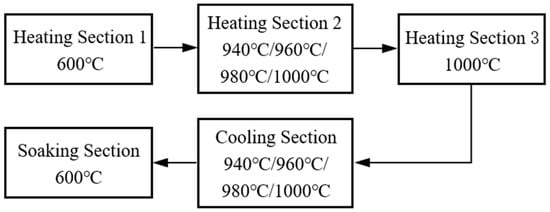
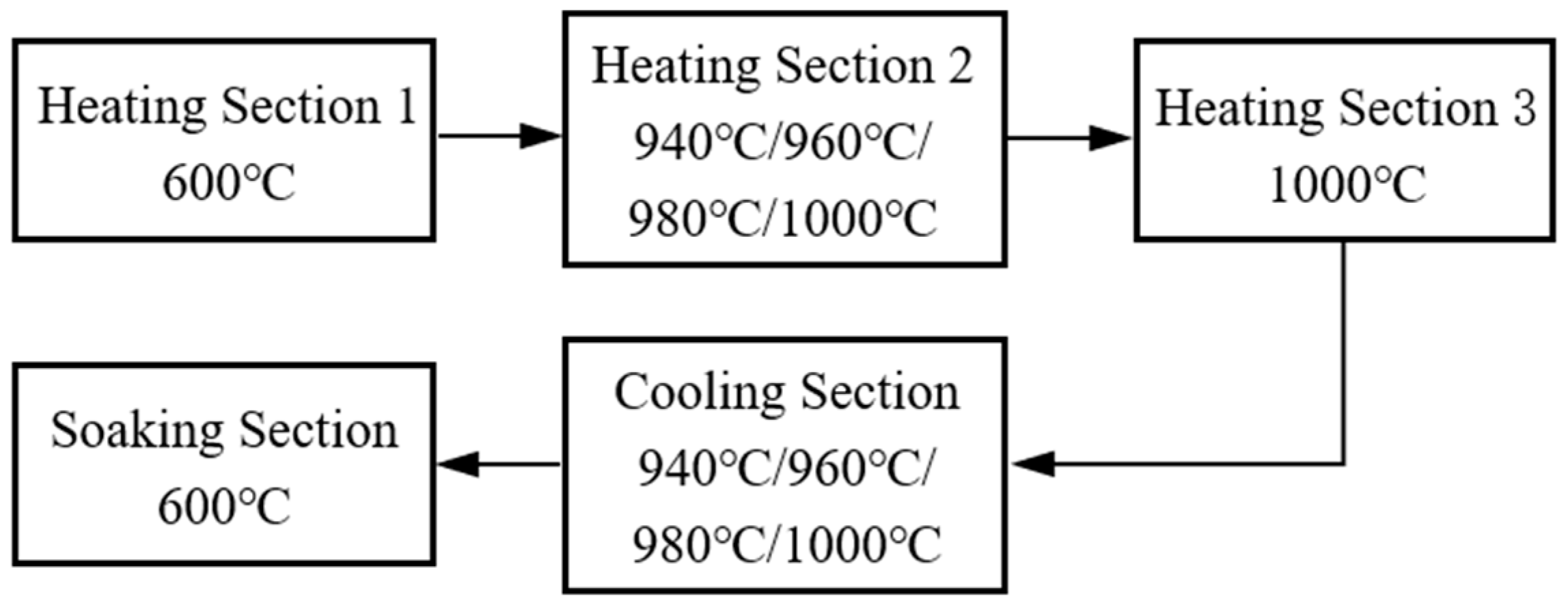
The normalization process flow is illustrated in Figure 1. The experimental steel grades were first preheated to 600 °C, followed by rapid heating to 1000 °C, and then subjected to normalization soaking at 940 °C, 960 °C, 980 °C, and 1000 °C, respectively. Finally, the samples were slowly cooled to 600 °C and air-cooled after being removed from the furnace. The strip speed during normalization was set to 20 m/min to simulate the industrial normalization line, with corresponding in-furnace durations for each segment: 30 s for heating section 1, 40 s for heating section 2, 50 s for heating section 3, 90 s for the soaking section, and 60 s for the cooling section. A three-stage continuous annealing furnace was employed for the continuous normalization treatment.
Figure 1.
Flowchart of the continuous normalization process.
2.3. Characterization Methods
The samples were first ground with 800-grit SiC paper, followed by mechanical polishing or electro-polishing. Microstructural observations were conducted using a Zeiss VERTA1 metallographic microscope (OM) (Axio Observer series, Carl Zeiss, Oberkochen, Germany) at a magnification of 100×. Electron backscatter diffraction (EBSD) and energy-dispersive X-ray spectroscopy (EDS) analyses (equipped with an Oxford X-MaxN20 detector (Sigma300, Carl Zeiss, Oberkochen, Germany)) were performed on a ZEISS Sigma300 field-emission scanning electron microscope (FE-SEM).For EBSD measurements, the operating parameters were set as follows: accelerating voltage of 20 kV, working distance of 12 mm, aperture size of 120 μm, electron probe current of 3.0 μA, and step size of 0.25 μm. For SEM characterization, the parameters were: accelerating voltage of 15 kV, working distance of 9 mm, and aperture size of 60 μm.
3. Result Analysis
3.1. Microstructural Evolution
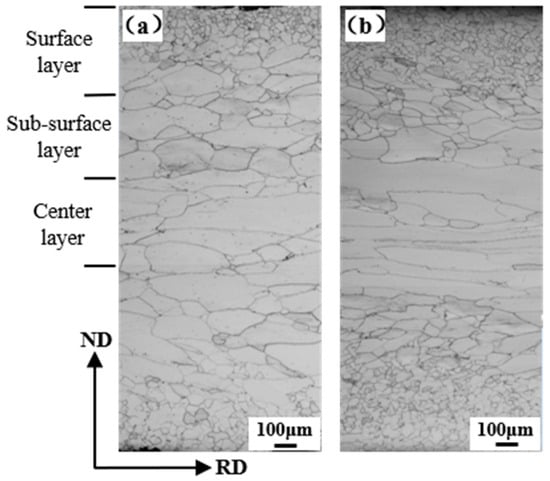
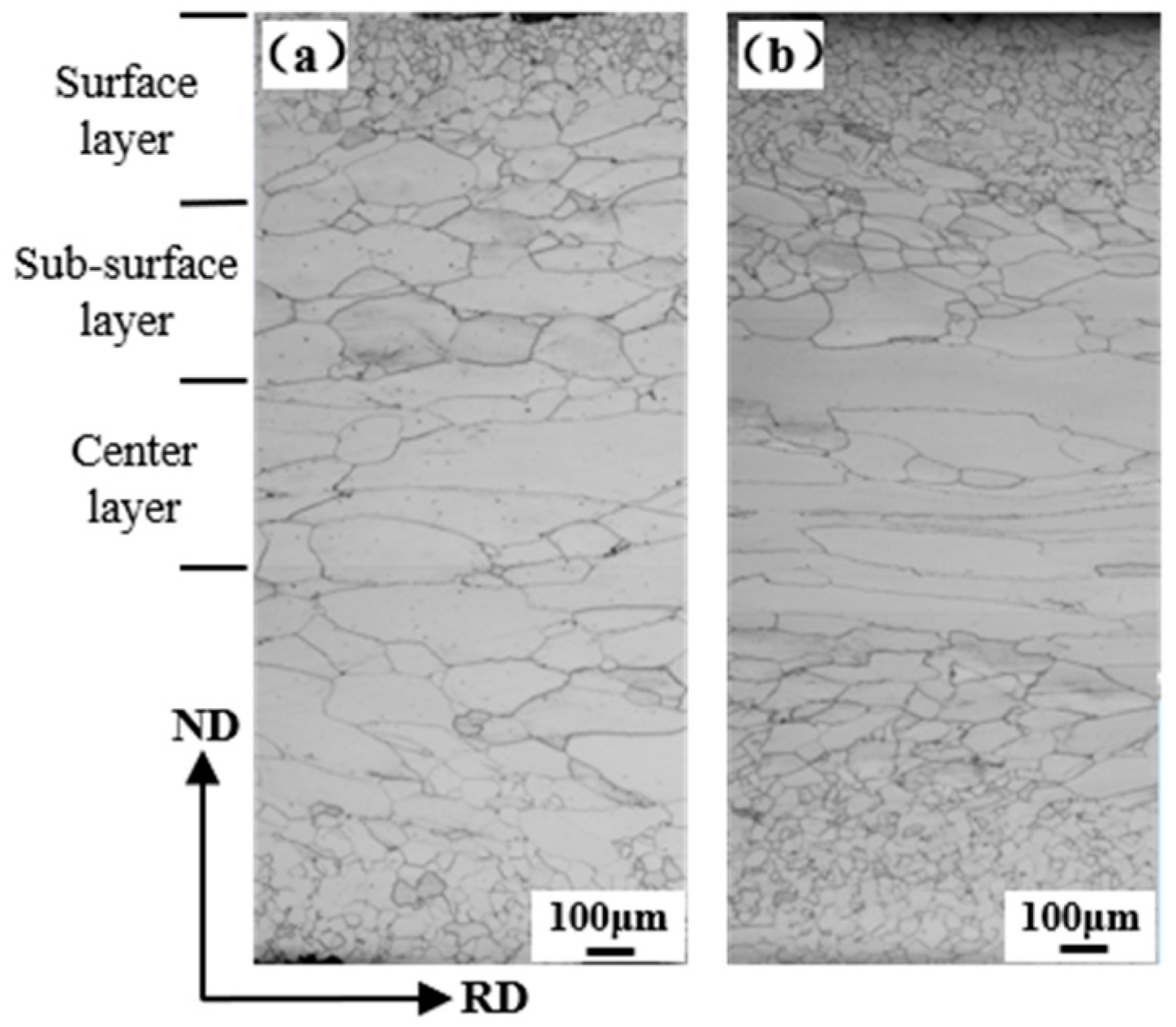
Figure 2 presents the microstructures of the hot-rolled sheets of the two experimental steel grades (S1 and S2). The microstructures within the hot-rolled sheets exhibit inhomogeneous distribution along the thickness direction: the surface layer consists of fine recrystallized grains, the subsurface layer is dominated by an interwoven region of recrystallized and banded structures, and the central layer is primarily composed of elongated deformed grains. The inhomogeneous microstructural distribution is attributed to the stress state and deformation degree during hot rolling [18,19,20]. During rolling, the surface layer, in contact with the rolls, undergoes intense shear deformation, rapid heat dissipation, and low temperature, leading to the accumulation of high deformation storage energy. This triggers preferential dynamic or static recrystallization during subsequent cooling. The subsurface layer, as a transition zone between the intensely sheared surface and the deformed core, forms a mixed structure due to incomplete microstructural evolution, consisting of both recrystallized and recovered grains [21]. The central layer, characterized by slow heat dissipation and high temperature, undergoes relatively low deformation (predominantly compressive), resulting in insufficient deformation storage energy to drive recrystallization. Instead, dynamic recovery dominates, forming a typical fibrous structure. The wider recrystallized zone in S2 is ascribed to the segregation of Sn at grain boundaries, which modulates the distribution of deformation storage energy and promotes the nucleation and growth of recrystallized grains.
Figure 2.
Microstructure of hot-rolled plates of test steels (a) S1; (b) S2.
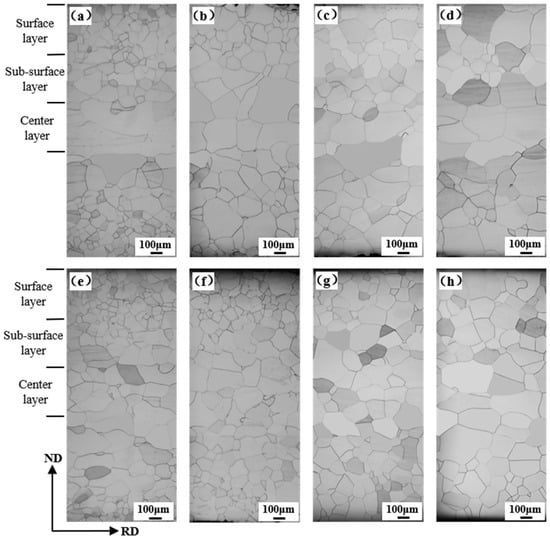
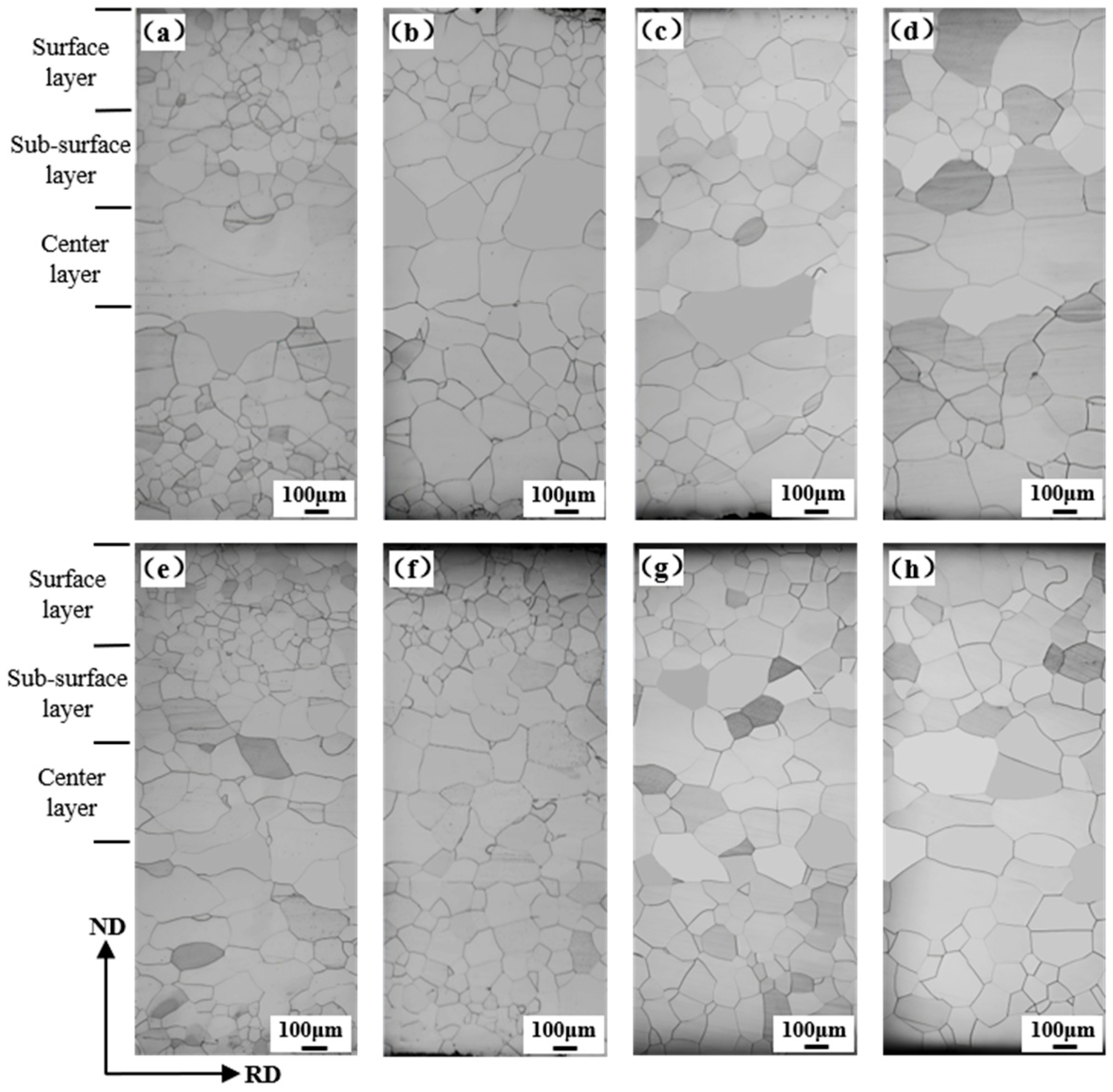
Figure 3 presents the normalized microstructures of the two experimental steel grades. It is evident that after continuous normalization, the hot-rolled microstructure of the non-oriented silicon steel sheets has undergone complete recrystallization and grain growth. Quantitative analysis using Image-Pro Plus (6.0.0.260) software revealed the following:
Figure 3.
Microstructure of test steels after normalizing at different temperatures. (a) S1 940 °C; (b) S1 960 °C; (c) S1 980 °C; (d) S1 1000 °C; (e) S2 940 °C; (f) S2 960 °C; (g) S2 980 °C; (h) S2 1000 °C.
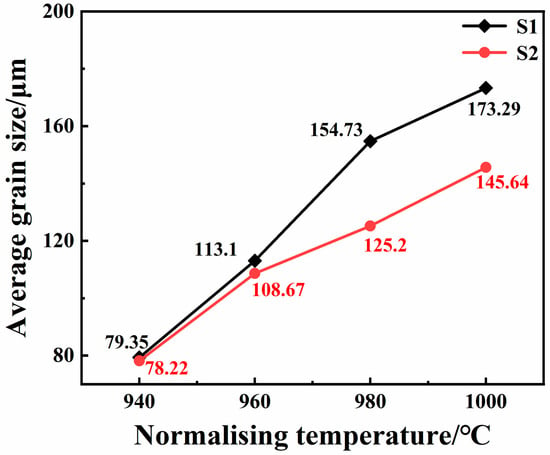
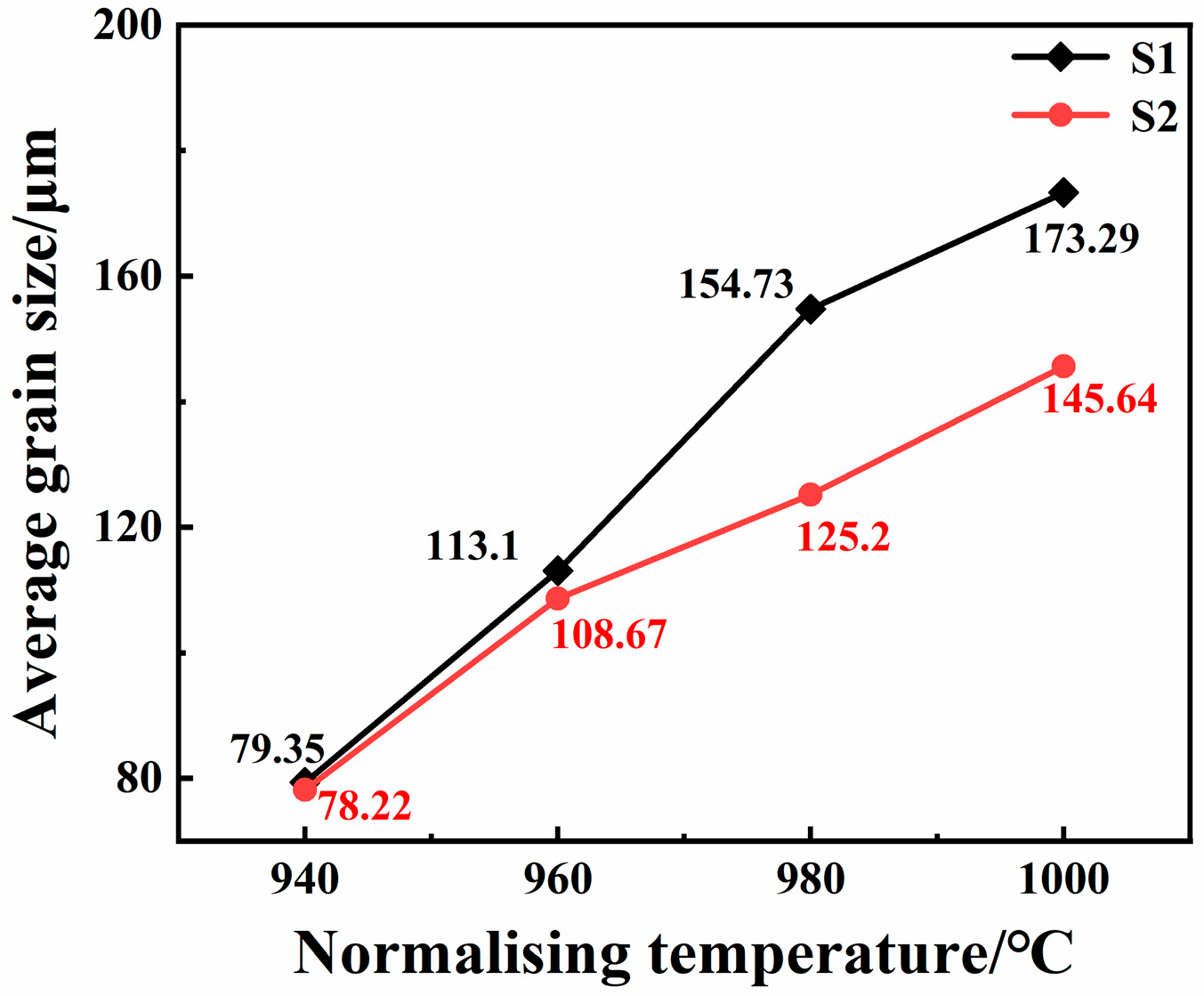
At a normalization temperature of 940 °C, the microstructure of S1 (Figure 3a) exhibits an average grain size of 79.35 μm, while S2 (Figure 3e, normalized at the same temperature, hereinafter referred to as “at the same temperature”) has an average grain size of 78.22 μm. Notably, at this temperature, the central layer of S1 contains unrecrystallized regions, whereas S2 has achieved full recrystallization.
When the normalization temperature is increased to 960 °C, the average grain size of S1 (Figure 3b) reaches 113.10 μm, and that of S2 (Figure 3f) is 108.67 μm. At this temperature, both experimental steels have completed full recrystallization, forming equiaxed ferrite grains. As the normalization temperature rises, the average grain size of both steels increases significantly (Figure 4). From Figure 4, it can be observed that S2 exhibited a relatively smaller grain size, while S1 (without Sn addition) showed poorer microstructural uniformity.
Figure 4.
Relationship between average grain size and normalizing temperature for test steel.
3.2. Textural Evolution
The purpose of normalizing hot-rolled non-oriented silicon steel sheets is to eliminate microstructure and texture defects inherited from the hot-rolling process by providing thermal energy, thereby creating optimal conditions for subsequent hot-rolling and final normalization. Normalization effectively reduces the intensity of α-fiber and γ-fiber textures, which are detrimental to magnetic induction [22,23,24]. Concurrently, it enhances the intensity of λ-fiber texture—a texture favorable for magnetization—aligning more grains along easy-magnetization directions and thus improving the magnetic induction of the final sheet. While X-ray diffraction (XRD) enables macro-averaged quantitative texture analysis, it fails to provide critical microscopic information such as grain-level orientation, grain boundary types, and local texture inhomogeneity. Given that this study aims to reveal the mechanism underlying the effect of Sn on recrystallization texture evolution, XRD was not employed; instead, electron backscatter diffraction (EBSD) was adopted, as it is more suitable for characterizing micro-texture.
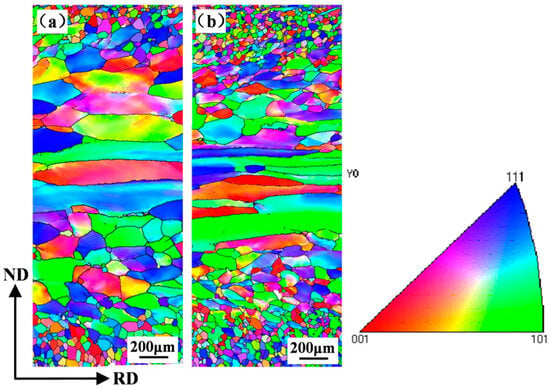
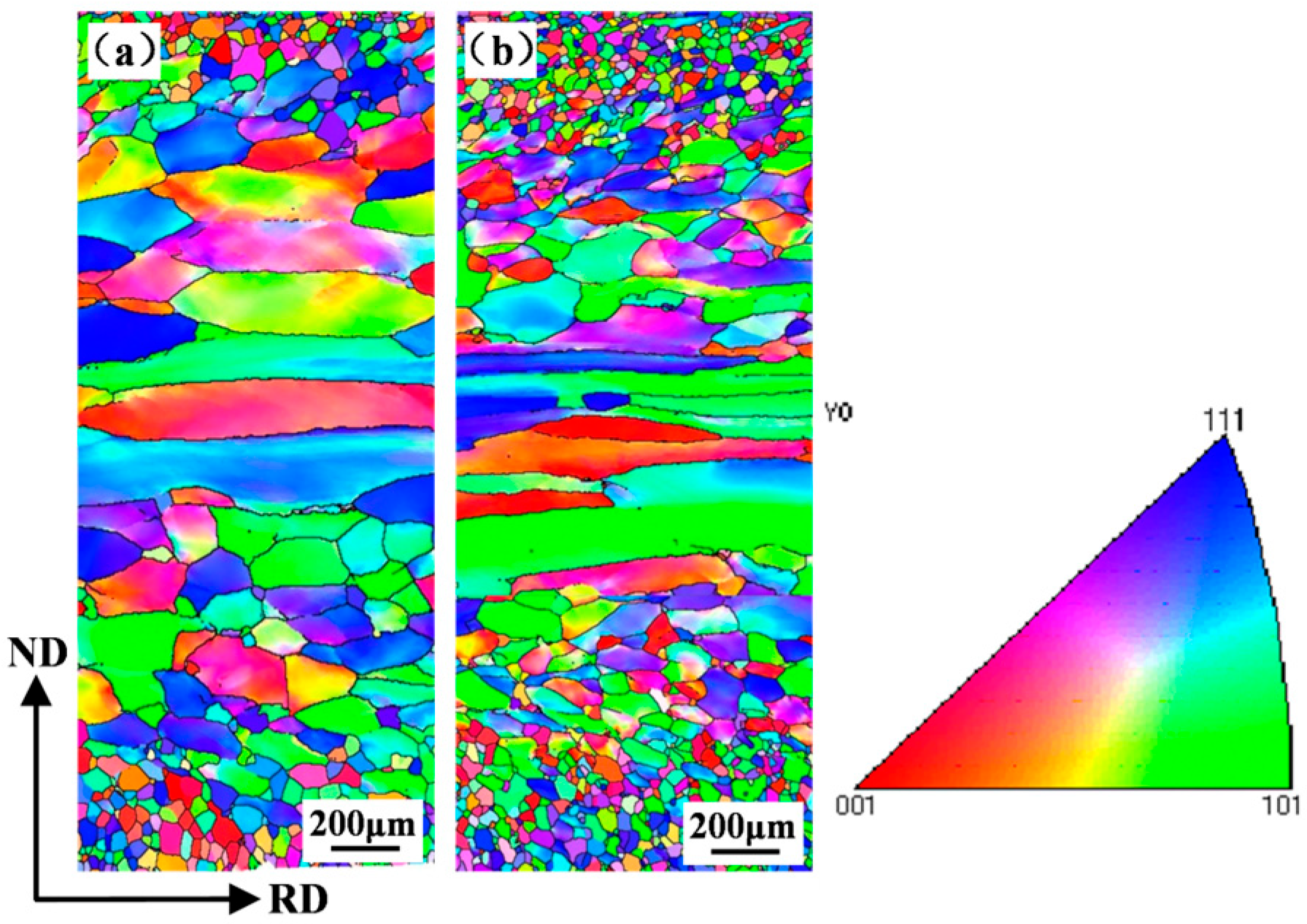
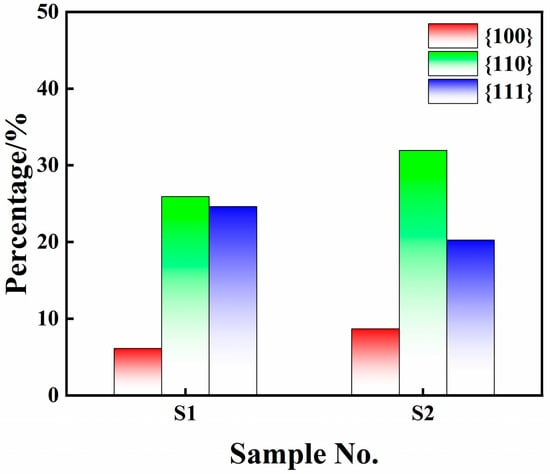
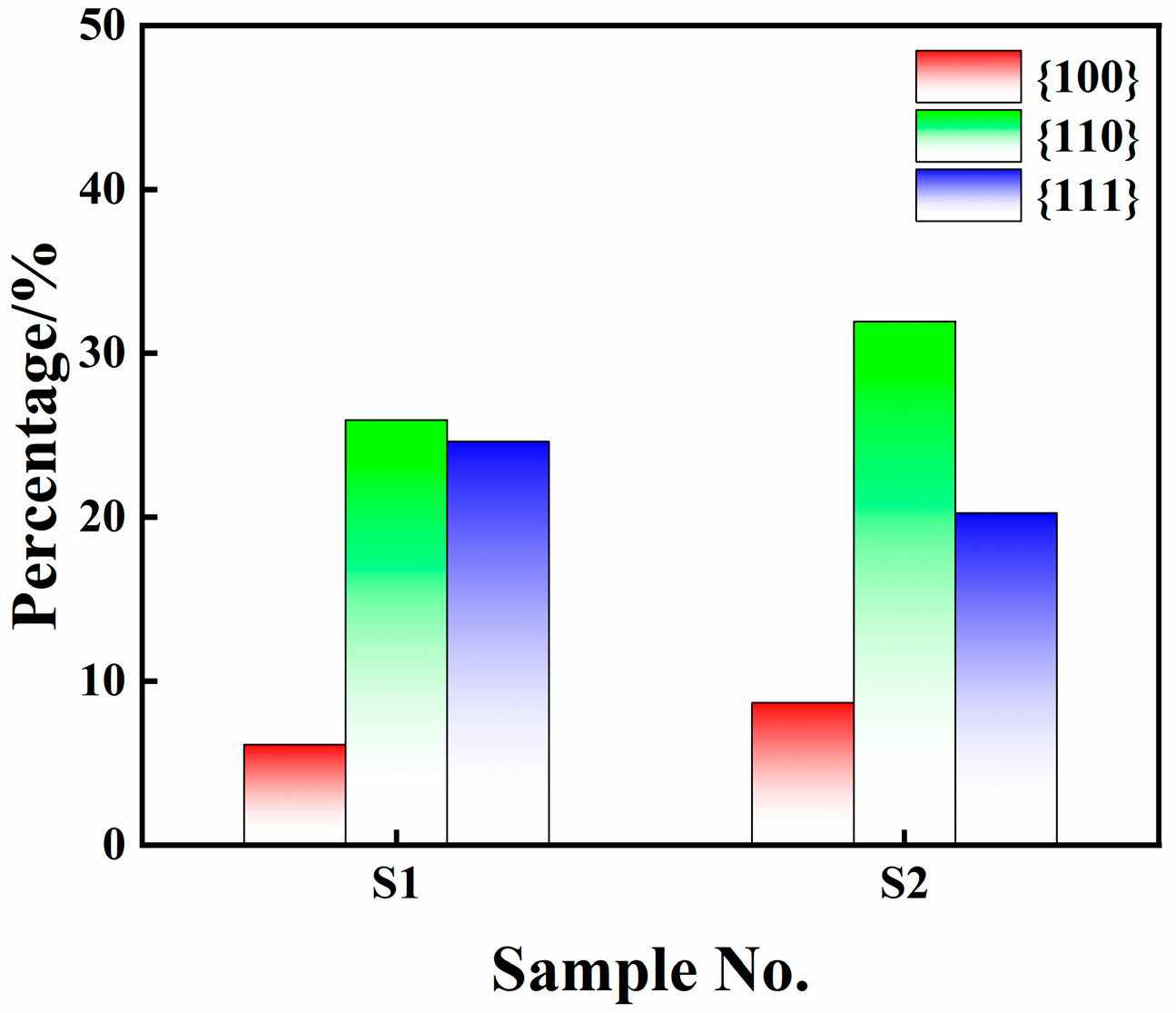
Figure 5 presents the grain orientation maps of the hot-rolled sheets of the two experimental steel grades (S1 and S2), while Figure 6 shows the surface texture fraction of the hot-rolled sheets. Compared with S1, S2 exhibits a weaker γ-fiber texture and a lower volume fraction of the {111} texture, which is attributed to the suppression of the detrimental γ-fiber texture by Sn atoms during the hot-rolling stage.
Figure 5.
Microstructural grain orientation diagram of the test steel hot-rolled sheet. (a) S1; (b) S2.
Figure 6.
Proportion of surface texture in the test steel hot-rolled sheet.
Sn atoms primarily exist in a solid-solution state in the steel and segregate at grain boundaries and subgrain boundaries, inducing a pinning effect that significantly inhibits dynamic recovery during hot rolling. This results in higher deformation storage energy and greater lattice distortion in the deformed grains of the hot-rolled sheets, and this high-storage-energy state serves as a strong driving force for subsequent recrystallization. During subsequent cooling or normalization, recrystallization preferentially initiates in regions with high storage energy, and the nucleation and growth of recrystallized grains are orientation-selective.
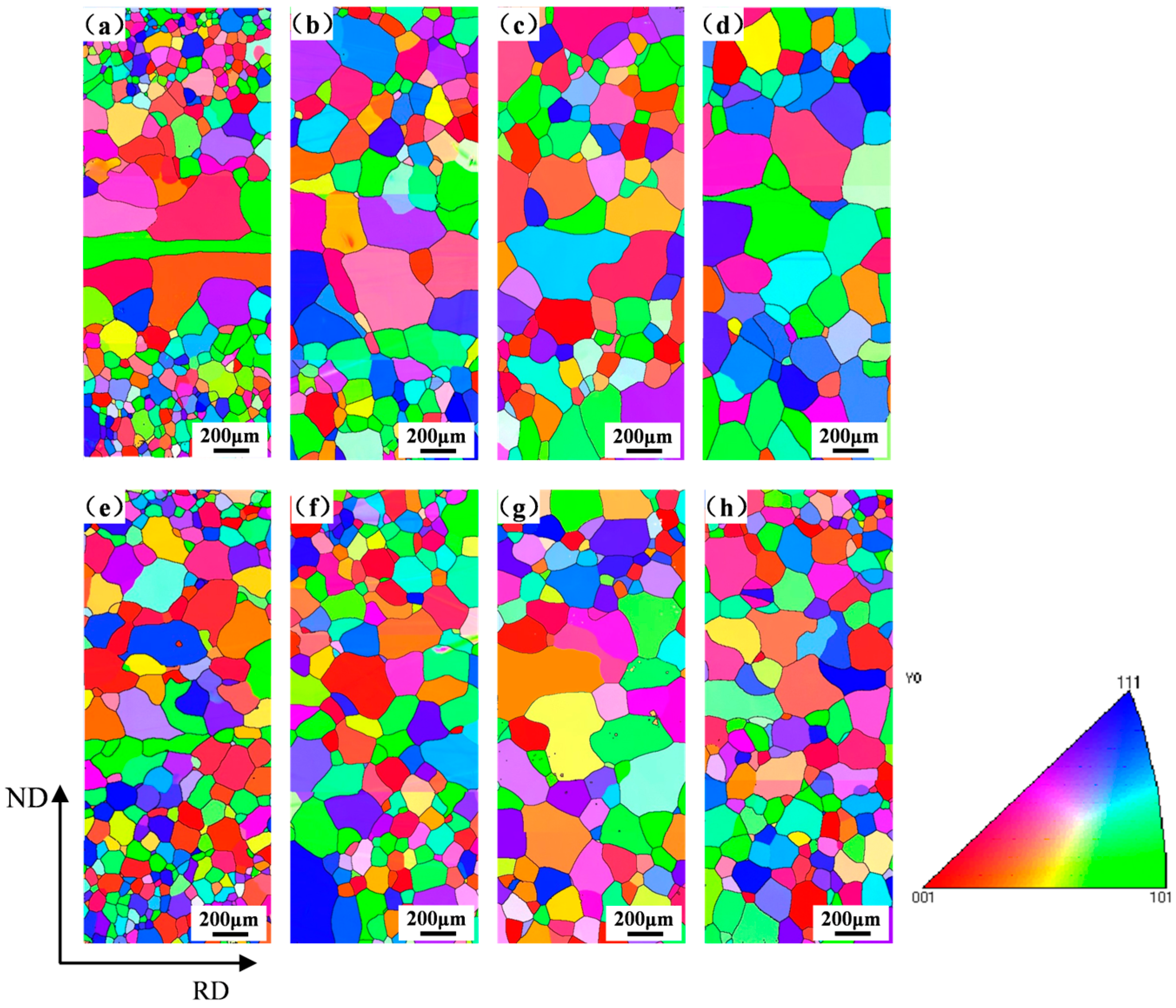
After normalization treatment, both S1 and S2 exhibited an increase in the fraction of {100} and {110} plane textures, accompanied by a decrease in the {111} plane texture fraction. EBSD results are presented as inverse pole figure (IPF) maps of the microstructural grains for the experimental steels after normalization at different temperatures (Figure 7).
Figure 7.
Microstructural grain orientation diagrams of the test steel after normalization at different temperatures. (a) S1 940 °C; (b) S1 960 °C; (c) S1 980 °C; (d) S1 1000 °C; (e) S2 940 °C; (f) S2 960 °C; (g) S2 980 °C; (h) S2 1000 °C.
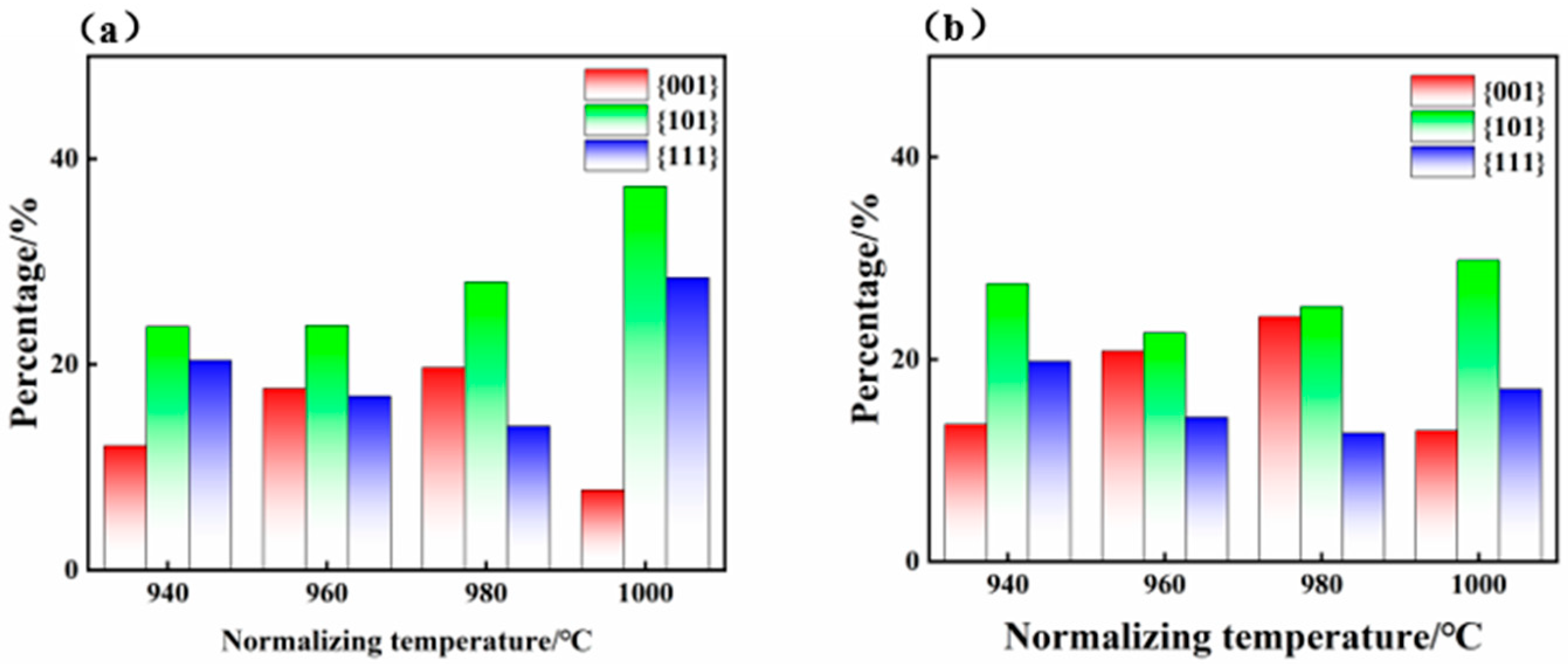
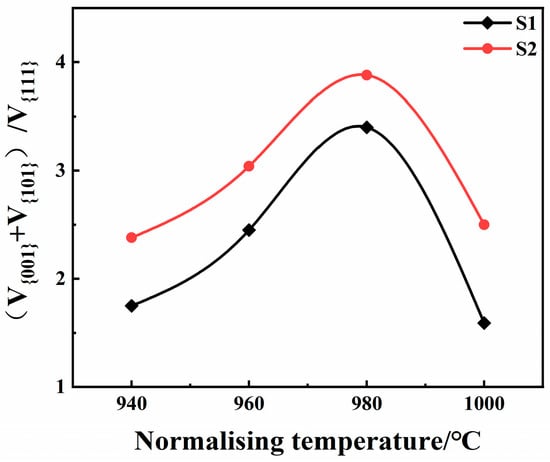
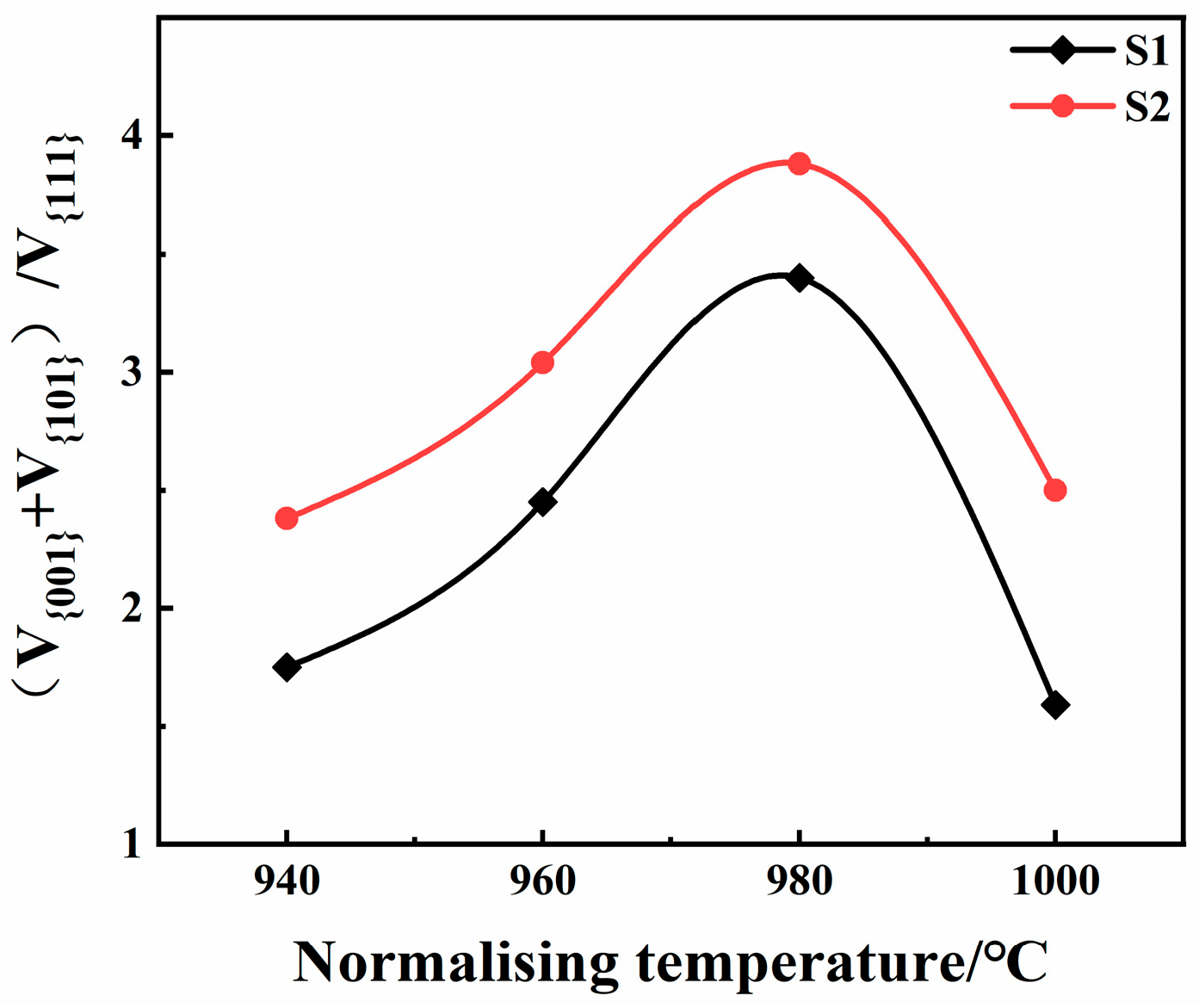
Figure 8a shows the plane texture fractions of S1: as the normalization temperature increased, the {100} texture content first increased and then decreased, peaking at 980 °C with a volume fraction of 19.70%. Similarly, Figure 8b illustrates the plane texture fractions of S2: the {100} texture content also followed a trend of first increasing and then decreasing with rising normalization temperature, reaching a peak of 24.22% at 980 °C. At the same normalization temperature, S2 consistently displayed a higher {100} texture content and a lower {111} texture content compared to S1. Figure 9 depicts the ratio of favorable to unfavorable textures for the experimental steels after normalization.
Figure 8.
Proportion of favorable texture after normalizing at different temperatures for the test steel. (a) S1; (b) S2.
Figure 9.
Ratio of favorable to unfavorable texture after normalizing test steel at different temperatures.
3.3. Evolution of Precipitates and Material Properties
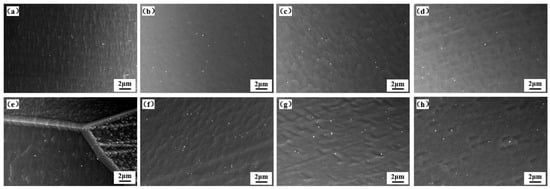
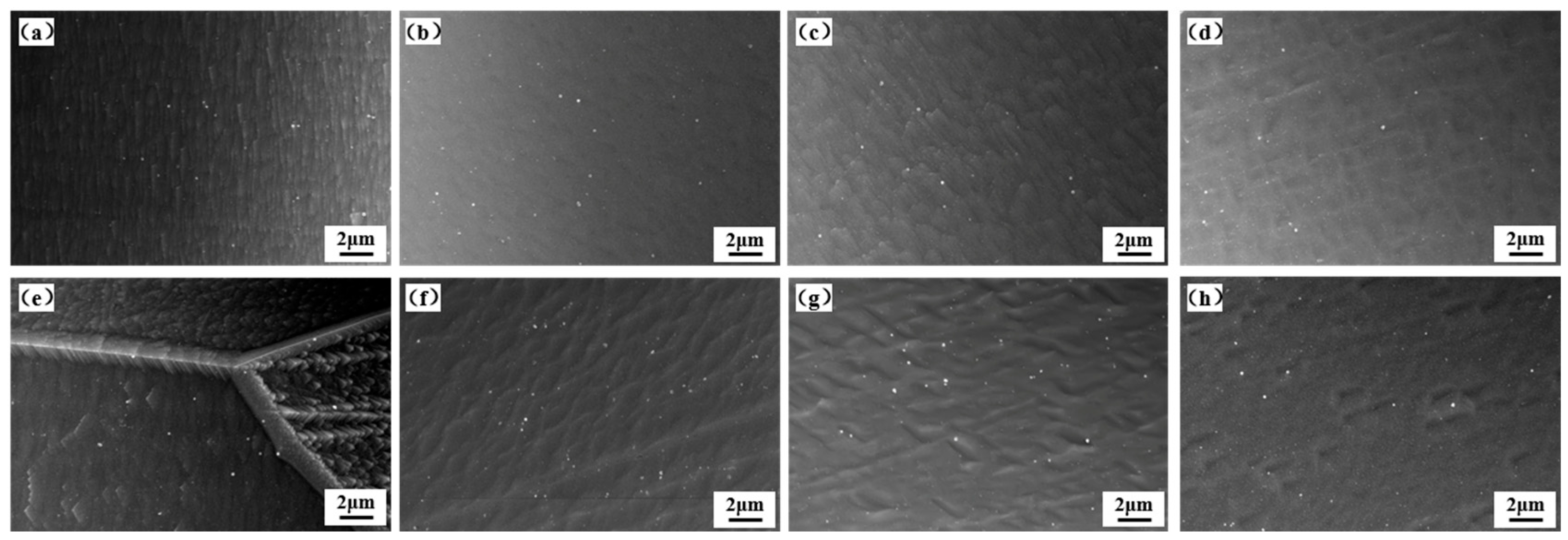
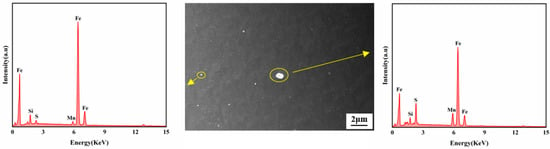
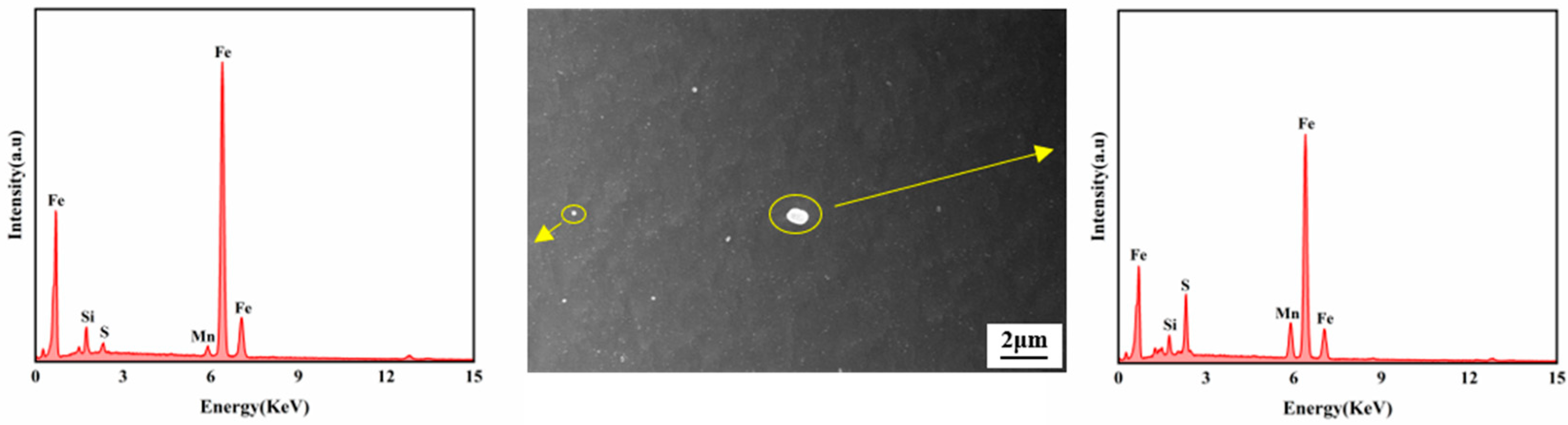
Figure 10 presents SEM images of the second-phase precipitates in the two experimental steel grades after normalization at different temperatures. Energy-dispersive X-ray spectroscopy (EDS) analysis was performed on the microstructures of the steels in Figure 10, confirming that the bright spot-like features correspond to MnS second-phase precipitates (Figure 11). It is observed that with increasing normalization temperature, the precipitates undergo coarsening and dissolution during continuous normalization, leading to an increase in precipitate size and a decrease in their number. The normalization temperature modulates precipitate size by driving the sequential processes of dissolution, precipitation, and coarsening [25,26]. Compared to S1, S2 exhibits suppressed precipitate coarsening and dissolution, resulting in finer and more uniformly dispersed precipitates. This phenomenon is attributed to the segregation of Sn atoms at grain boundaries during normalization. These segregated Sn atoms alter the nucleation and growth kinetics of precipitates by influencing grain boundary energy and elemental diffusion, thereby indirectly regulating the precipitation behavior of the second phase.
Figure 10.
Precipitate distribution in the test steel after normalizing at different temperatures (a) S1 940 °C; (b) S1 960 °C; (c) S1 980 °C; (d) S1 1000 °C. (e) S2 940 °C; (f) S2 960 °C; (g) S2 980 °C; (h) S2 1000 °C.
Figure 11.
EDS analysis of test steel after normalization at different temperatures.
The average sizes of the MnS precipitates in the two experimental steel grades were quantified using Image-Pro Plus software at different normalization temperatures. For S1, the average MnS sizes were 170.88 nm, 192.50 nm, 215.04 nm, and 222.04 nm; for S2, the corresponding values were 139.77 nm, 165.18 nm, 180.75 nm, and 203.40 nm. These results demonstrate that the MnS precipitates in S2 are consistently finer in size.
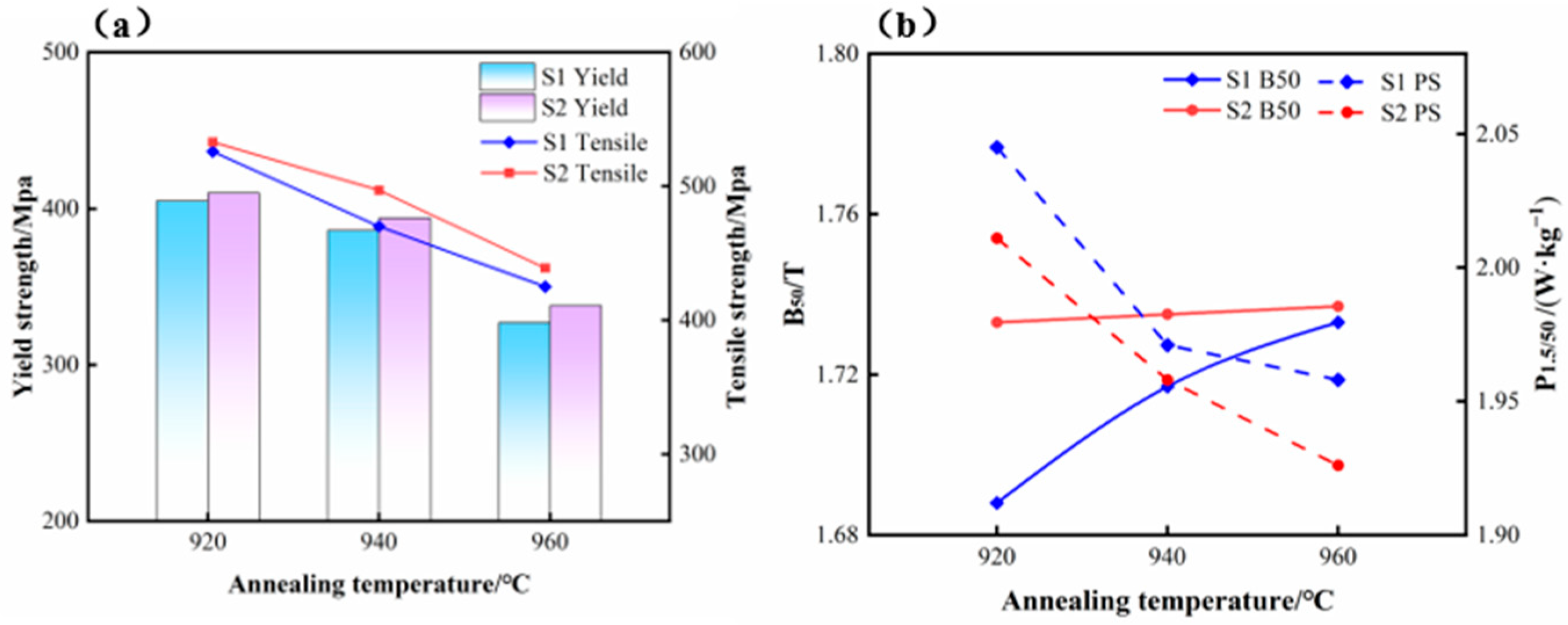
The experimental steel normalized at 980 °C was selected for subsequent annealing treatment. Following annealing, the mechanical and magnetic properties of the specimens were characterized. The annealing temperature was varied within the range of 920–960 °C, and the relationships between annealing temperature, mechanical properties, and magnetic properties of the experimental steels are presented in Figure 12. Figure 12a illustrates the correlation between yield strength (YS) and tensile strength (TS) for S1 and S2: as the annealing temperature increases, both YS and TS decrease. Figure 12b depicts the relationship between magnetic induction (B50) and iron loss (P1.5/50): with increasing annealing temperature, iron loss decreases while magnetic induction increases.
Figure 12.
Mechanical and Magnetic Properties of the Test Steel After Annealing (a) yield strength and tensile strength; (b) B50 and P1.5/50.
A comparison between S1 and S2 reveals that at the same annealing temperature, S2 exhibits slightly higher YS and TS than S1, indicating superior mechanical properties. In terms of magnetic performance, S2 shows a consistently higher B50 and significantly lower P1.5/50 across the entire annealing temperature range, reflecting enhanced magnetic permeability and reduced energy loss. Overall, S2 demonstrates better comprehensive performance than S1.
4. Discussion
4.1. Effect of Sn on Microstructure
A comprehensive analysis of the microstructures of the experimental steels across different normalization temperatures reveals the following evolution pathway during continuous normalization: the distinctly layered microstructure of the hot-rolled sheet → fine-grained surface layer, a mixed structure of fine grains and banded regions in the subsurface layer, and banded structure in the central layer → equiaxed ferrite. The grain size of ferrite increases with increasing normalization temperature. After complete recrystallization, the average grain size of S2 is smaller than that of S1 by 1.13 μm, 4.43 μm, 29.53 μm, and 27.65 μm respectively (at corresponding normalization temperatures), confirming the grain-refining effect of Sn. As illustrated in Figure 3, at the same normalization temperature, the addition of Sn reduces the recrystallization completion temperature and enhances the uniformity of grain size.
The elongated deformed microstructure in the central layer of the hot-rolled sheet arises from the drag or pinning effect induced by Sn atoms segregated at grain boundaries, which inhibits grain growth and the recrystallization process. This hindrance prevents the deformed grains in the hot-rolled sheet from equiaxing, resulting in a more elongated morphological feature. Such a morphology stores higher deformation energy, thereby promoting the preferential completion of recrystallization during normalization [27,28].
4.2. Effect of Sn on Texture
The texture of the normalized plates of the experimental steels is predominantly composed of {100}, {110}, and {111} plane textures. Electron Backscatter Diffraction (EBSD) results indicate that after normalization, both S1 and S2 exhibit a reduced fraction of the unfavorable {111} texture and an increased fraction of the favorable {100} and {110} textures compared to the hot-rolled sheets. Consequently, the volume ratio of favorable to unfavorable textures, defined as (V{100} + V{110})/V{111}, is enhanced (Figure 9). Notably, the fraction of the {100} texture component in S2 is higher than that in S1. At the same normalization temperature, the ratio of favorable to unfavorable textures in S2 is consistently greater than that in S1. Specifically, the {100} texture fraction of S2 is increased by 1.48%, 3.15%, 4.52%, and 8.15% relative to S1 at the respective normalization temperatures.
This phenomenon can be attributed to the high stored energy state induced by Sn during recrystallization, which favors the nucleation of λ-fiber textures (beneficial for magnetic properties) and thus inherently suppresses the development of γ-fiber textures through competitive growth [29]. Studies have shown that grain boundary mobility of {111}-oriented grains is particularly sensitive to Sn segregation: Sn atoms pin the grain boundaries of {111} grains, significantly impeding their growth. Recrystallization involves selective nucleation and growth: when the growth of unfavorable textures (e.g., {111}) is inhibited, favorable textures (e.g., {100} and {110})—which are less affected by Sn—gain advantages in both growth space and kinetics [30,31]. These favorable textures can more efficiently consume the surrounding deformed matrix and smaller grains, thereby dominating the recrystallization texture. Consequently, S2 exhibits a weakened {111} texture intensity, while the intensities of {100} and {110} textures are correspondingly enhanced—with a notable increase in the volume fraction of the {100} texture. This mechanism promotes the nucleation and growth of λ-fiber textures, which are favorable for magnetization.
4.3. Effect of Temperature on Precipitates and Influence of Sn on Properties
The second-phase precipitates in the experimental steels are predominantly dispersed as white, spherical fine particles within the ferrite matrix, with negligible distribution at grain boundaries. Energy-Dispersive Spectroscopy (EDS) analysis confirms that these second-phase precipitates are MnS. As the normalization temperature increases, the number of second-phase precipitates decreases gradually: MnS precipitates transition from a large quantity of fine particles at 940 °C to a small number of coarse particles at 1000 °C.
The particle size of second-phase precipitates in the two experimental steels at different normalization temperatures, as previously measured using Image-Pro Plus software, reveals that increasing temperature under continuous normalization conditions significantly coarsens MnS particles. This phenomenon can be attributed to the reduced dissolution free energy and increased diffusion coefficient of second-phase particles at elevated temperatures, which promote the re-dissolution of original micron-sized large particles. This re-dissolution redistributes grain growth-inhibiting elements (e.g., Al, N) uniformly in the matrix in a solid-solution state [32,33]. During subsequent cooling, the decrease in temperature reduces the solubility of these elements, creating a supersaturated state that provides the chemical driving force for precipitation. Additionally, the higher temperature during normalization provides the kinetic conditions for atomic diffusion. Under appropriate undercooling, AlN and MnS predominantly nucleate uniformly, forming a large number of fine particles. These particles exert a strong pinning effect, effectively suppressing abnormal grain growth during final product annealing and thus optimizing magnetic properties.
As illustrated in Figure 12a,b, a comparison of the yield strength (YS) and tensile strength (TS) of the two experimental steels at identical annealing temperatures reveals that S2 exhibited the most favorable mechanical performance, with a YS of 410 MPa and a TS of 529 MPa. These results validate that the addition of 0.045 wt% Sn is more effective in enhancing the mechanical properties of the steels. The grain refinement effect induced by Sn promotes the formation of a dense distribution of uniformly sized fine grains at grain boundaries, which elevates the material’s hardness and consequently enhances its mechanical properties. Relative to S1, S2 showed increases in TS of 10 MPa, 27 MPa, and 14 MPa at the corresponding annealing temperatures. Notably, at 920 °C, S2 achieved the highest hardness alongside the optimal YS and TS—this observation emphasizes the critical contribution of Sn-induced grain refinement to the mechanical performance of the steels.
After continuous annealing, S2 exhibits a lower iron loss (P1.5/50) and a higher magnetic induction (B50) than S1; additionally, S2 shows a smaller fluctuation in magnetic induction, whereas S1 displays a larger fluctuation. This phenomenon can be attributed to the crystallographic anisotropy of magnetic properties: the <100> direction is an easy magnetization direction, characterized by high magnetic induction and low hysteresis loss, while the <111> direction is a hard magnetization direction, associated with low magnetic permeability and high iron loss [34,35]. During annealing, Sn segregates at grain boundaries, which inhibits the growth of the unfavorable {111} texture in S2. As a result, the volume fraction of the high-loss {111} texture (which contributes to elevated iron loss) decreases, while the volume fractions of the easy-magnetization {100} and {110} textures increase. This texture evolution directly leads to reduced iron loss and enhanced magnetic induction in S2.
5. Conclusions
- (1)
- Normalization treatment can eliminate the deformed microstructure in hot-rolled non-oriented silicon steel sheets, promote recrystallization, and enhance microstructural uniformity. The deformed microstructure of S1-normalized sheets disappears at 960 °C, while that of S2-normalized sheets vanishes at 940 °C. As the normalization temperature increases, the average grain size gradually increases. The average grain size of S2-normalized sheets is smaller than that of S1-normalized sheets. The addition of Sn can refine the grains of normalized sheets and improve microstructural uniformity.
- (2)
- The texture of hot-rolled non-oriented silicon steel sheets is dominated by {110} and {111} plane textures. Following continuous normalization, the volume fractions of {100} and {110} plane textures in S1 increase but remain consistently lower than those in S2, while the volume fraction of {111} plane texture decreases yet remains consistently higher than that in S2. The addition of Sn promotes the formation of favorable {100} and {110} textures in the normalized sheets and inhibits the growth of the unfavorable {111} texture.
- (3)
- Normalizing temperature exerts a significant influence on precipitation behavior: as the temperature increases, MnS precipitates undergo coarsening, accompanied by a reduction in their number density. The addition of Sn refines these precipitated particles, thereby enhancing the magnetic properties of non-oriented silicon steel and lowering its iron loss. When the S2 test steel is normalized at 980 °C and annealed at 920 °C, its magnetic and mechanical properties achieve an optimal balance. Under these process conditions, the magnetic induction (B50) reaches 1.733 T, the iron loss (P1.5/50) is 2.01 W/kg, the yield strength (YS) is 410 MPa, and the tensile strength (TS) is 529 MPa.
Author Contributions
Conceptualization, Z.W. and H.Z.; methodology, Z.W. and H.Z.; software, Y.Z.; validation, Y.Z. and H.R.; formal analysis, H.Z.; investigation, B.L.; resources, Z.W.; data curation, Y.Z. and J.L.; writing—original draft preparation, Y.Z.; writing—review and editing, H.Z.; visualization, Y.Z. and Y.D.; supervision, Y.H.; project administration, X.Z.; funding acquisition, Z.W. All authors have read and agreed to the published version of the manuscript.
Funding
Autonomous Region Key R&D and Achievement Transformation Programme (2023YFHH0026, 2023YFHH0017); Inner Mongolia Natural Science Foundation Project (2024LHMSMS05053); Gansu Provincial Science and Technology Plan Funding Project (25JRRB002); Inner Mongolia Autonomous Region Science and Technology Plan Project (2024SKYPT0034, 2025KYPT0030); State-owned Assets Supervision and Administration Commission Key Core Technology R&D Project (2023GZ004); Inner Mongolia Autonomous Region “Yingcai Xingmeng” Project Team—“Innovation Team for Research & Development and Processing of Novel Rare Earth Metal Materials” (2025TYL07).
Data Availability Statement
The original contributions presented in the study are included in the article. Further inquiries can be directed to the corresponding authors.
Acknowledgments
The author thanks the aforementioned funding for the support of this research.
Conflicts of Interest
Author Xiaolong Zhao and Yanjun Di are employed by the company Jiuquan Iron and Steel Group Gansu Hongxing Hongyu New Material Co., Ltd. Author Jun Li is employed by the company Advanced Technology and Materials Co., Ltd. All authors declare that the research was conducted in the absence of any commercial or financial relationships that could be construed as a potential conflict of interest.
References
- Xuan, D.; Dong, L.; Guo, H.; Xu, N.; Liu, X.; Xue, F.; Jiang, Q. Cost-effective production of non-oriented silicon steel without normalization: Microstructural and texture optimization for enhanced magnetic properties. Mater. Lett. 2025, 390, 138451. [Google Scholar] [CrossRef] [Scilit]
- Li, N.; Zuo, R.; Lu, Y.; Wang, H.J.; Pei, Y.H.; Xia, X.L. Effect of Mn on the Microstructures and Magnetic Properties of Medium-Grade Non-oriented Silicon Steel Without the Normalizing Process. JOM 2025, 77, 8155–8165. [Google Scholar] [CrossRef] [Scilit]
- Zhong, B.; Cheng, Z.; Wendler, M.; Volkova, O.; Liu, J. Optimized rolling processes to balance magnetic and mechanical properties of high-strength non-oriented silicon steels. Mater. Des. 2023, 232, 112096. [Google Scholar] [CrossRef] [Scilit]
- He, Z.; Sha, Y.; Gao, Y.; Chang, S.; Zhang, F.; Zuo, L. Recrystallization texture development in rare-earth (RE)-doped non-oriented silicon steel. J. Iron Steel Res. Int. 2020, 27, 1339–1346. [Google Scholar] [CrossRef] [Scilit]
- Sammer, B.; Thiele, K.; Ilie, S.; Rössler, R.; Kreuzer, H.; Michelic, S.K. Evolution of non-metallic inclusions in non-oriented electrical steel: Industrial observations and laboratory test results. Metall. Res. Technol. 2026, 123, 207. [Google Scholar] [CrossRef] [Scilit]
- Wang, X.F.; Wang, P.Y.; Li, F.Q.; Song, H.Y.; Liu, H.T. Effects of cold rolling routes on microstructure, texture evolution, and magnetic anisotropy of ultra-thin non-oriented electrical steel. J. Mater. Res. Technol. 2026, 41, 17–28. [Google Scholar] [CrossRef] [Scilit]
- Zu, G.; Wang, T.; Li, M.; Yin, Z.; Yuan, L.; Meng, X.; Wang, C.; Zhao, Y.; Li, J.; Zhao, Y. Research on the optimization of mechanical and magnetic properties of non-oriented silicon steel through annealing process control. Mater. Sci. Eng. A 2026, 959, 150065. [Google Scholar] [CrossRef] [Scilit]
- Gu, Z.; Yu, H.; Zhang, Y.; Gu, Z.; Yu, H.; Zhang, Y.; Wang, Y.; Fang, F.; Wu, S. Evolution of Texture, Microstructure and Magnetic Properties in Fe-0.7%Si Non-oriented Silicon Steel Processed by Twin-roll Strip Casting: Regular Article. ISIJ Int. 2026, 66, 233–242. [Google Scholar] [CrossRef] [Scilit]
- Guo, F.; Niu, Y.; Fu, B.; Qiao, J.; Qiu, S. Influence Mechanisms of Trace Rare-Earth Ce on Texture Development of Non-Oriented Silicon Steel. Materials 2025, 18, 3493. [Google Scholar] [CrossRef] [Scilit]
- Zhao, L.; Yang, J.; Hu, H.; Fu, X. Effect of rare-earth Ce on the texture of non-oriented silicon steels. High Temp. Mater. Process. 2024, 43, 20220321. [Google Scholar] [CrossRef] [Scilit]
- Qiao, J.L.; Liu, L.; Guo, F.H.; Xiang, L.; Qiu, S.T.; Wang, H.J. Effect of hot band annealing on inclusions, texture, and magnetic properties of 2.97%Si-0.59% Al non-oriented silicon steel. Ironmak. Steelmak. 2020, 47, 22–30. [Google Scholar] [CrossRef] [Scilit]
- Lin, G.; Hu, W.; Lin, D.; Zhang, R.; Liu, H. Effect of Sn on Microstructure and Electromagnetic Properties of 50W1300. Shandong Metall. 2022, 44, 48–51. [Google Scholar] [CrossRef]
- Dong, H.; Zhao, Y.; Yu, X.; Lian, F. Effect of Tin Content on Iron Loss and Texture of Non-oriented Silicon Steel Strip. Funct. Mater. 2008, 15, 5–8. [Google Scholar] [CrossRef]
- Mavrikakis, N.; Saikaly, W.; Calvillo, P.R.; Campos, A.P.C.; Jacomet, S.; Bozzolo, N.; Mangelinck, D.; Dumont, M. How Sn addition influences texture development in single-phase Fe alloys: Correlation between local chemical information, microstructure and recrystallisation. Mater. Charact. 2022, 190, 112072. [Google Scholar] [CrossRef] [Scilit]
- Suehiro, R.; Hayakawa, Y.; Takamiya, T. Effect of Sn Addition on Evolution of Primary Recrystallization Texture in 3% Si Steel. ISIJ Int. 2019, 59, 351–358. [Google Scholar] [CrossRef] [Scilit]
- Wang, Y.; Li, M.; Han, Y.; Zhu, W.; Ran, X.; Liang, Y.; Zu, G. Fabrication of high-strength, high-permeability, non-oriented electrical steel by adjusting the cold-rolled microstr ucture and introducing Cu-rich precipitates. Mater. Charact. 2025, 229, 115517. [Google Scholar] [CrossRef] [Scilit]
- Cheng, Y.Y.; Bao, Q.S.; Xu, M.D.; Zu, S.H.; Hu, J.R.; Liu, Y.X.; Liu, C.; Chang, J.Q.; Fan, X.A.; Yang, G.W. Effect of Si content on microstructure and properties of ultra-thin non-oriented silicon steel ribbons prepared with planar flow casting. J. Iron Steel Res. Int. 2026, 33, 48. [Google Scholar] [CrossRef] [Scilit]
- Li, X.; Chen, C.; Wang, T.; Guo, Z.; Wang, H.; Wang, H.; Xue, L.; Tian, J.; Sun, Y. Inclusions and phases in Fe-RE-Si steelmaking alloys and their effect on evolution of inclusions in non-oriented silicon steels. J. Rare Earths 2026, 44, 377–387. [Google Scholar] [CrossRef] [Scilit]
- Fan, L.; Wang, X.; Xiao, L.; Yue, E. Investigation on the Microstructure and Texture Changes of 2% Si Non-oriented Silicon Steel under Different Processes. J. Mater. Eng. Perform. 2025, 35, 15255–15264. [Google Scholar] [CrossRef] [Scilit]
- Chu, S.; Xiang, L.; Guo, F.; Qiu, S. Effect of Annealing Temperature on Microstructure, Texture, and Magnetic Properties of Non-Oriented Silicon Steel for Electric Vehicle Traction Motors. Metals 2025, 15, 1235. [Google Scholar] [CrossRef] [Scilit]
- Hu, J.Z.; Liang, R.Y.; Guo, F.; Wu, H.; Feng, J.W.; Zhang, W.T.; Xu, C.C.; Guo, P.L. Effect of rare-earth yttrium and cold rolling reduction rate on texture evolution and magnetic properties of non-oriented electrical steel. J. Iron Steel Res. Int. 2025, 32, 3908–3922. [Google Scholar] [CrossRef] [Scilit]
- Shi, J.; Yang, L.; Peng, B.; Wei, G.; Yuan, Y. Analysis of Typical Inclusion Evolution and Formation Mechanism in the Smelting Process of W350 Non-Oriented Silicon Steel. Materials 2025, 18, 1188. [Google Scholar] [CrossRef] [Scilit]
- Xue, L.; Li, X.; Wang, T.; Zhao, Q.; Wang, H.; Wang, J.; Lin, W.; Niu, X.; Mu, W.; Chen, C. Analysis of Inclusions in the Entire Smelting Process of High-Grade Rare Earth Non-Oriented Silicon Steel. Crystals 2025, 15, 779. [Google Scholar] [CrossRef] [Scilit]
- Han, C.; Wang, X.; Li, R.; Zhao, S.; Tian, J.; Du, Z.; Li, F. Microstructure evolution of forsterite film during the high-temperature annealing process in grain-oriented silicon steel. Thin Solid Films 2025, 812, 140607. [Google Scholar] [CrossRef] [Scilit]
- Liu, Y.; Yang, X.; Wu, L.; Li, J.; Zhang, B.; Wang, Y.; Wang, Y.; Ruan, S.; Sun, J.; Gu, X.; et al. Establishment of Multivalent Molybdenum Salt System and Its Effect on the Anti-Corrosion Performance of Insulating Coatings for Oriented Silicon Steel. Coatings 2025, 15, 176. [Google Scholar] [CrossRef] [Scilit]
- Zhou, C.; Luan, S.; Qiao, J.; Wang, H. Effect of Normalizing Temperature on Microstructure, Texture and Magnetic Properties of Non-Oriented Silicon Steel. Metals 2025, 15, 217. [Google Scholar] [CrossRef] [Scilit]
- Wang, J.H.; Shao, K.X.; Qiao, J.L.; Pan, H.B.; Fu, B.; Qiu, S.T. Influence Mechanism of Sn on 2.7%Si-0.5%Al Non-oriented Silicon Steel. JOM 2024, 76, 4961–4971. [Google Scholar] [CrossRef] [Scilit]
- Guan, Y.; Li, Z.; Wang, Y.; Wang, Y.; Wang, S.; Zou, P. Influence of Cross-Rolling on the Microstructure, Texture, and Magnetic Properties of 6.5 wt.%Si Non-oriented Silicon Steel. J. Mater. Eng. Perform. 2025; prepublish. [CrossRef] [Scilit]
- Randle, V.; Engler, O. Introduction to Texture Analysis: Macrotexture, Microtexture and Orientation Mapping; CRC Press: Boca Raton, FL, USA, 2009. [Google Scholar]
- Sun, C.; Cao, G.; Fu, H.; Chen, F.; Huang, J.; Ji, H. Study on the influence of residual temperature normalizing process on the performance of automotive hub bearing forgings. J. Mater. Res. Technol. 2025, 397, 792–7802. [Google Scholar] [CrossRef] [Scilit]
- Zheng, Y.; Liu, Y.; Ma, Y.; Guo, Z.; Han, B.; Zhang, Y.; Wang, B.; Zhu, L.; Zhang, D.; Feng, J.; et al. Effects of normalizing process on microstructure, texture, and precipitates of Sn bearing oriented silicon steel. J. Mater. Res. Technol. 2024, 31, 142–156. [Google Scholar] [CrossRef] [Scilit]
- Lv, Y.; Zhang, Y.; Bao, W.; Wang, W.; Liu, Y. Temperature Variation of Steel Plate with Different Thickness on Normalizing Process. J. Phys. Conf. Ser. 2021, 1820, 012127. [Google Scholar] [CrossRef] [Scilit]
- Guo, F.; Niu, Y.; Fu, B.; Qiao, J.; Qiu, S. Influence Mechanisms of Cold Rolling Reduction Rate on Microstructure, Texture and Magnetic Properties of Non-Oriented Silicon Steel. Crystals 2024, 14, 853. [Google Scholar] [CrossRef] [Scilit]
- Li, J.; Zhang, H.; Zhang, C.; Wu, Z.; Su, Z.; Lin, Z. Effect of annealing process on recrystallization behavior of non-oriented silicon steel with Nb-rich for new energy vehicles. Metall. Res. Technol. 2024, 121, 617. [Google Scholar] [CrossRef] [Scilit]
- Du, Y.; O’Malley, R.J.; Buchely, M.F.; Kelly, P. Effect of Annealing Time on Texture Evolution of Fe–3.4 wt% Si Nonoriented Electrical Steel. Steel Res. Int. 2023, 94, 2300218. [Google Scholar] [CrossRef] [Scilit]

Disclaimer/Publisher’s Note: The statements, opinions and data contained in all publications are solely those of the individual author(s) and contributor(s) and not of MDPI and/or the editor(s). MDPI and/or the editor(s) disclaim responsibility for any injury to people or property resulting from any ideas, methods, instructions or products referred to in the content. |
© 2026 by the authors. Licensee MDPI, Basel, Switzerland. This article is an open access article distributed under the terms and conditions of the Creative Commons Attribution (CC BY) license.