


Abstract
Treatment of palladium precursor Pd(PPh3)Cl2 with equivalent arylfluorodithiophosphato ligand [PPh4][(4-EtO-C6H4)FPS2] in chloroform at reflux resulted in a mononuclear palladium(I)–sulfur complex cis-[Pd(PPh3)2{κ2-S,S′-(4-EtO-C6H4)FPS2}]. This complex was characterized by UV-Vis and IR spectroscopic analysis, thermogravimetric analysis, and XPS analysis, and its molecular structure has been established by single-crystal X-ray diffraction. SBA-15, as a mesoporous material, was selected as a mesoporous silica substrate to further form a homogeneous catalyst, Pd@SBA-15, which has been characterized by IR spectroscopy, electron microscope and N2 adsorption–desorption test. In addition, the catalytic activity of Pd@SBA-15 for the Suzuki–Miyaura cross-coupling reaction was also investigated.
1. Introduction
The formation of carbon–carbon bonds in catalytic Suzuki–Miyaura cross-coupling reactions has been widely investigated for decades due to its significant role in aromatic compounds, pharmaceuticals, agrochemicals and potential bioactive compounds [1,2,3]. On the other hand, this reaction has various advantages, such as easily prepared boronic acids, the commercial availability of aromatic precursors, and high stability towards moisture and mild reaction conditions [4]. Palladium, a well-known heterogeneous catalyst, is widely recognized as the most effective transition metal for the Suzuki–Miyaura cross-coupling reaction [5,6]. Palladium complexes mainly occur diamagnetically and show 0, +2 and +4 oxidation states at Pd centers. On the contrary, paramagnetic Pd(I) species have been demonstrated as intermediates in Pd-catalyzed reactions and act as pre-catalysts. However, to the best of our knowledge, only a few Pd(I) complexes have been structurally reported so far [7,8,9,10].
Mesoporous silica material SBA-15 has attracted sustained interest in the immobilization of various homogeneous organometallic complexes for catalytic reactions due to its attractive features such as high surface area, large pore size, inert to many chemical substrates and enhanced accessibility to active sites [11,12,13]. In addition, the solubility could be adjusted to meet the needs of different solvent systems. Despite widespread use of Pd(0) and Pd(II) complexes immobilized on mesoporous silica material SBA-15 in organic cross-coupling reactions [14,15,16,17], no reports exist on the investigation of Pd(I) with hybrid phosphine–sulfide ligands supported on SBA-15 in the Suzuki–Miyaura cross-coupling reaction.
Recently, Mirika’s group [7] reported a mononuclear palladium(I) complex, which is stabilized by the dithiapyridinophane ligand and exhibits catalytic reactivity in the Kumada cross-coupling reaction, which is superior to its Pd(0) or Pd(II) analogs. It is noted that the mononuclear Pd(I) species could act as the active intermediates in Pd-promoted organic reactions. In this manuscript, the synthesis and characterization of a mononuclear Pd(I) complex with triphenylphosphine and dithiophosphato ligands have been described. The structure has been established by X-ray single diffraction. In addition, immobilization of this Pd(I) complex on silica support SBA-15 was conducted via a post-grafting strategy, which could retain a highly ordered meso-structure and enhance accessibility to active sites compared to Mirika’s work. Silane coupling agent was also used to enhance the interaction and stability between Pd(I) complex and SBA-15. The activity of this homogeneous catalyst for the Suzuki–Miyaura cross-coupling reaction was also investigated.
2. Materials and Methods
All the reactions were carried out under N2 atmosphere using standard Schlenk techniques. Solvents were analytically pure and distilled prior to use. Pd(PPh3)Cl2, (3-aminopropyl)triethoxysilane (APTES), SBA-15, bromobenzene, 4-methylphenylboronic acid and potassium carbonate were purchased from Energy Chemical Co., Ltd. (Shanghai, China) and used without further purification. The fluorodithiophosphato ligand [PPh4][(4-EtO-C6H4)FPS2] was synthesized according to the literature [18]. UV-Vis spectra were measured on a Shimadzu UV-2600 spectrophotometer (Shimazu Co., Ltd., Kyoto, Japan). Infrared spectra were recorded on a PerkinElmer 16 PC FT-IR spectrophotometer (PerkinElmer Inc., Waltham, MA, USA) using pressed KBr pellets. Elemental analyses were carried out using a PerkinElmer 2400 CHN analyzer (PerkinElmer Inc., Waltham, MA, USA). XPS analysis was carried out on a K-Alpha analyzer (Thermo Fisher Scientific Inc., Waltham, MA, USA). The thermogravimetric analysis (TGA) was carried out on a Hitachi STA 200 simultaneous thermal analyzer (Hitachi Ltd., Tokyo, Japan) with a heating rate of 10 °C/min from room temperature to 800 °C in a N2 atmosphere. SEM images were collected on a Sigma 500 electron microscope (Carl Zeiss AG, Oberkochen, Germany). TEM images were collected on a JEM-2010 electron microscope (JEOL Ltd., Tokyo, Japan). N2 adsorption/desorption isotherms were obtained at 77 K with a Micrometrics ASAP 2020 M + C system after the samples were first degassed at 120 °C for 6 h. GC-MS was recorded on Agilent 7890B and 5977B (Agilent Technologies Inc., Santa Clara, CA, USA).
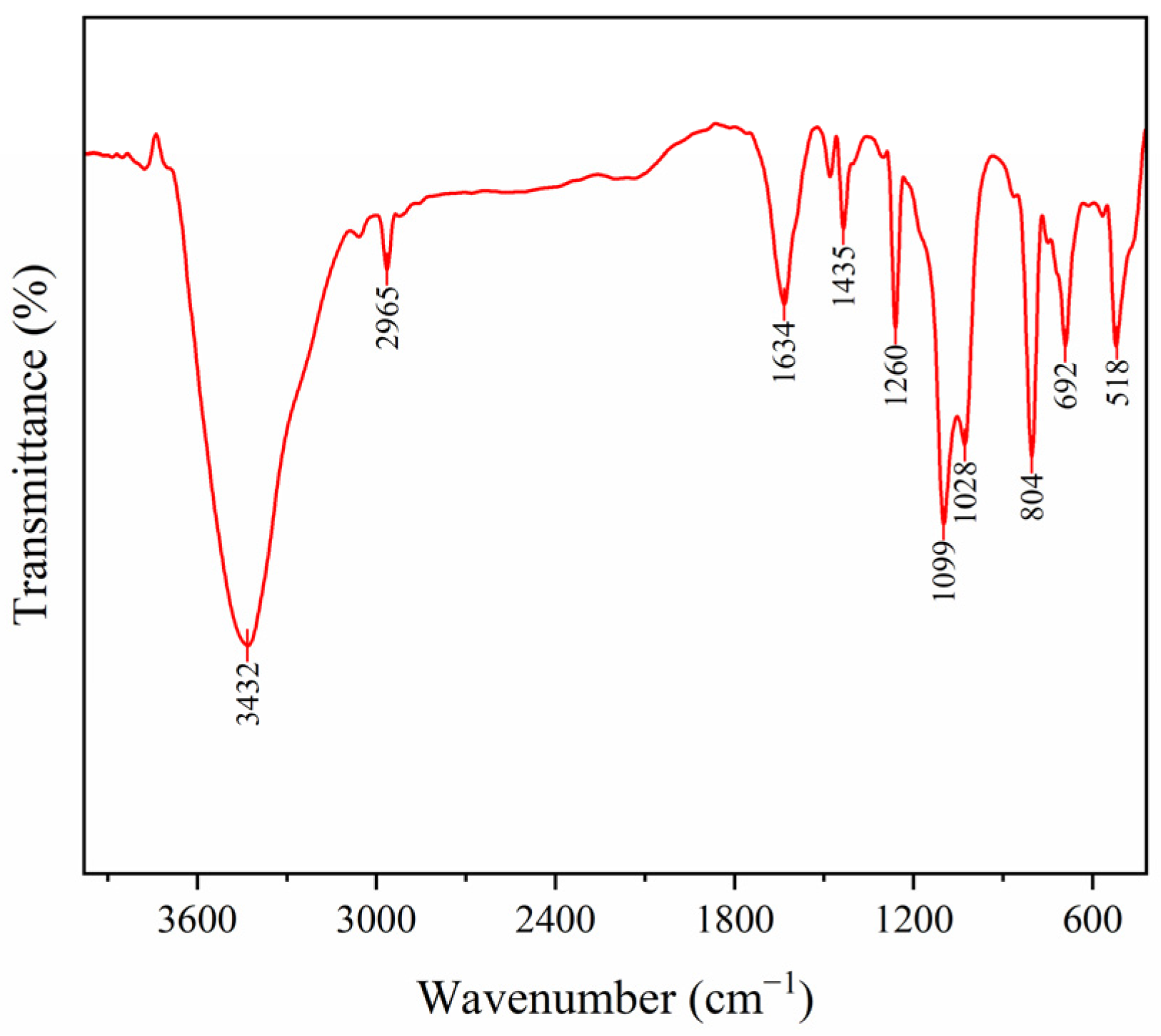
Synthesis of cis-[Pd(PPh3)2{κ2-S,S′-(4-EtO-C6H4)FPS2}]: A mixture of precursor Pd(PPh3)Cl2 (0.03 g, 0.043 mmol) and equivalent [PPh4][(4-EtO-C6H4)FPS2] (0.024 g, 0.043 mmol) were stirred in chloroform (20 mL) at 60 °C for 4 h. After filtrating, the bright yellow solvent was pumped off in vacuum and concentrated to about 3 mL. Slow evaporation at 2~8 °C gave colorless block crystals suitable for X-ray diffraction overnight. Yield: 23.0 mg, 62.2%. Anal. Calc. for C44H39FOP3PdS2: C 61.01; H 4.54; S 7.40%. Found: C 61.12; H 4.52; S 7.35%. IR (KBr disc, cm−1): 3432 (br), 2965 (m), 1634 (m), 1435 (w), 1260 (m), 1099 (s), 1028 (s), 804 (s), 692 (m), and 518 (m).
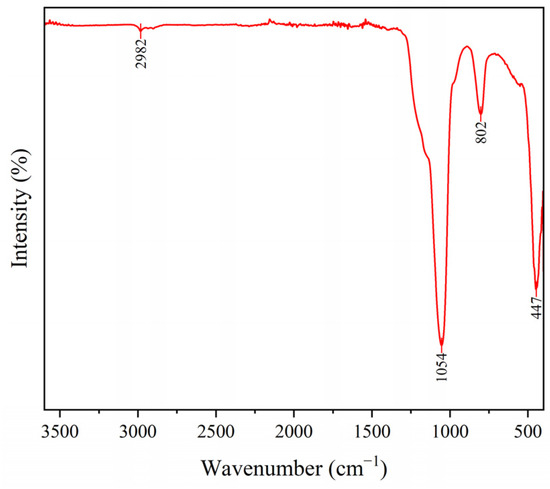
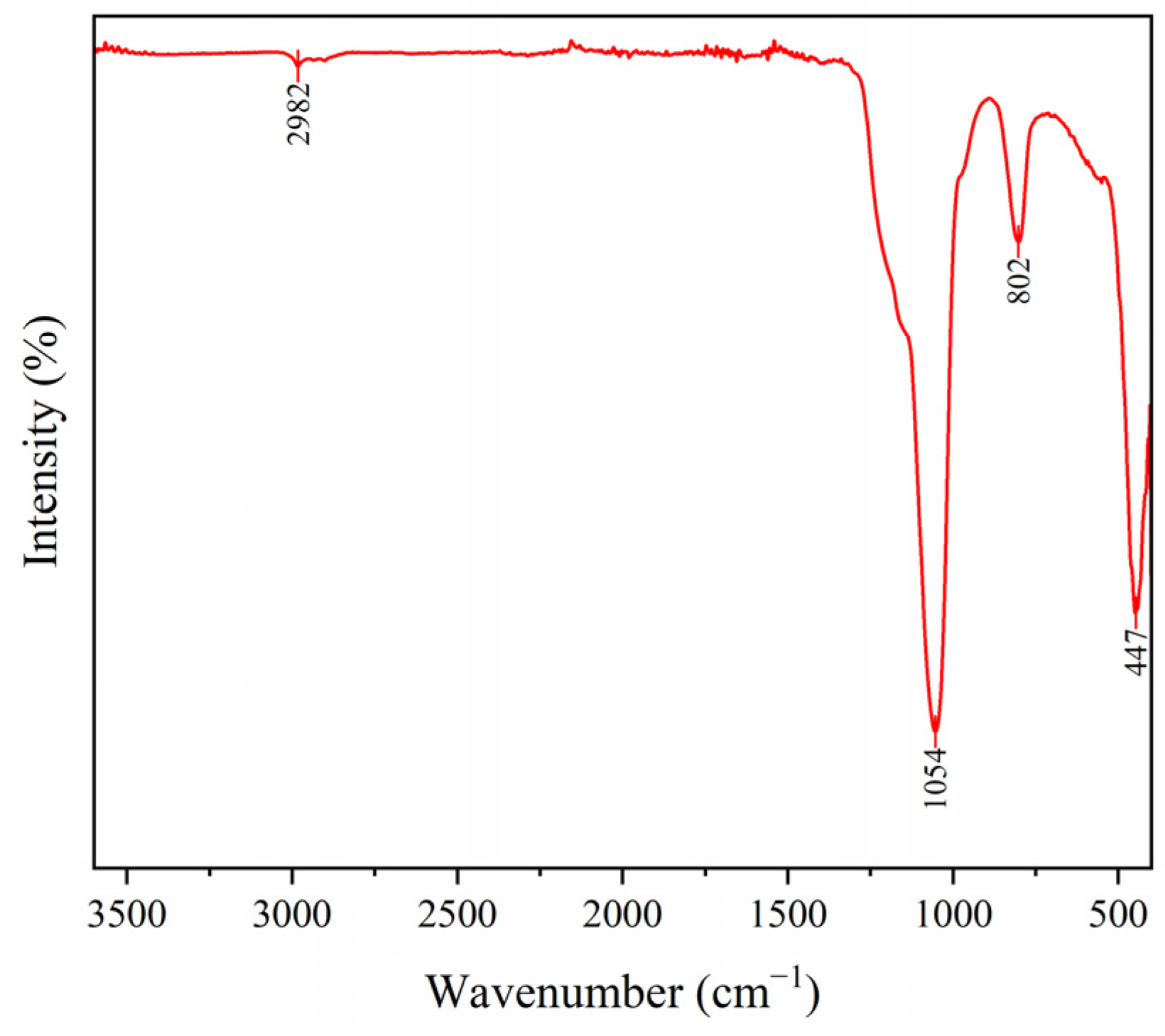
Preparation of immobilized Pd@SBA-15: A mixture of cis-[Pd(PPh3)2{κ2-S,S′-(4-EtO-C6H4)FPS2}] (43 mg, 0.05 mmol) and APTES (12 μL, 0.05 mmol) was stirred in dichloromethane (20 mL) at reflux for 2 h, during which the color was changed from yellow to light orange. The solvent was pumped off in vacuum, and the residue was washed with diethyl ether (2 mL × 2) to give [Pd(PPh3){NH2(CH2)3Si(OC2H5)3}-{κ2-S,S′-(4-EtO-C6H4)FPS2}] as an intermediate. The intermediate (10 mg) and SBA-15 (0.1 g), dried for 10 h at 100 °C in advance, were added to ethanol (20 mL), and the mixture was heated at 90 °C overnight. After cooling to room temperature, the solvent from the filtrate was removed in vacuum, and the residue was washed with cold ethanol (2 mL × 2) and diethyl ether (2 mL × 2) in turn to produce products as white powders. IR (KBr disc, cm−1): 2982 (w), 1054 (s), 802 (m), 447 (s).
X-ray crystallography: Intensity data of palladium(I) complex cis-[Pd(PPh3)2{κ2-S,S′-(4-EtO-C6H4)FPS2}] was collected with a Bruker SMART APEX 1000 CCD diffractometer (Bruker AXS Inc., Karlsruhe, Germany) X-ray source system. The collected frames were processed with the software SAINT (Bruker SAINT). The data were corrected using SADABS (Bruker APEX2) for absorption. Structures were solved by the direct methods and refined by full-matrix least-squares on F2 with the Olex2 software (Olex2 1.3) package [19,20,21]. All non-hydrogen atoms were refined anisotropically. The positions of all hydrogen atoms were generated geometrically (Csp3−H = 0.96 Å and Csp2−H = 0.93 Å) and included in the structure factor calculations with assigned isotropic thermal parameters, but were not refined.
Procedure for Suzuki–Miyaura cross-coupling reaction: Homogeneous catalysts Pd@SBA-15 (10 mg), K2CO3 (0.28 g, 2.0 mmol), bromobenzene (105 μL, 1.0 mmol) and 4-methylphenylboronic acid (0.16 g, 1.2 mmol) were added to a Schlenk tube in mixed EtOH/H2O (20/5 mL) and the mixture was heated to 80 °C for 3 h. After cooling to room temperature, the filtrate was poured into water (100 mL) with stirring. Dichloromethane (20 mL) was then added, and the mixture was shaken sufficiently. The organic phase was collected, and MgSO4 was added for drying. The solvent was removed under vacuum, and a white solid was obtained. The sample of the product was dissolved in dichloromethane and analyzed by GC-MS.
3. Results and Discussion
As is shown in Scheme 1, treatment of Pd(PPh3)Cl2 with equivalent [PPh4][(4-EtO-C6H4)FPS2] resulted in a rare neutral mononuclear palladium(I) complex cis-[Pd(PPh3)2{κ2-S,S′-(4-EtO-C6H4)FPS2}]. The two chlorine atoms were replaced by one fluorodithiophosphato ligand and the oxidation state of the Pd center was +1, indicating the reducibility of the conjugated electron-rich system.
Scheme 1.
Synthetic route and structural sketch of cis-[Pd(PPh3)2{κ2-S,S′-(4-EtO-C6H4)FPS2}].
Figure S1 shows the UV-Vis spectra of the palladium(I) complex cis-[Pd(PPh3)2{κ2-S,S′-(4-EtO-C6H4)FPS2}] in dichloromethane at room temperature. The strong band at 305 nm is assigned to the π → π* transition of the PS2 fragment as well as the PPh3 groups.
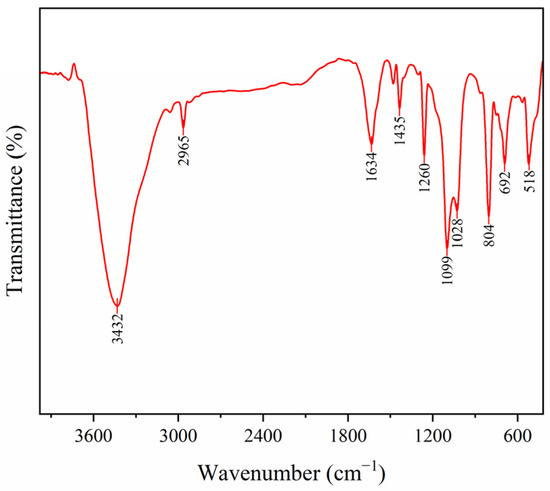
The IR spectra (see Figure 1) exhibit stretching vibrations at 804 cm−1, which is assigned to the typical ν(P–F) [22] and two bands at 518 and 692 cm−1 owing to characteristic νas(PS2) and νs(PS2), respectively [23]. These two observed bands at 1634 and 1435 cm−1, as well as one band at 2965 cm−1, are assigned to the stretching vibrations of ν(C=C) and ν(C–H), respectively. Moreover, the asymmetric C–O–C stretching vibration and symmetric C–O–C stretching vibration are observed at 1260 and 1099 cm−1, respectively.
Figure 1.
IR spectrum of palladium(I) complex cis-[Pd(PPh3)2{κ2-S,S′-(4-EtO-C6H4)FPS2}].
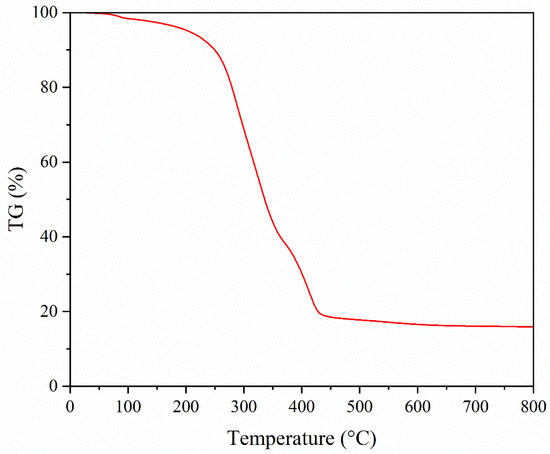
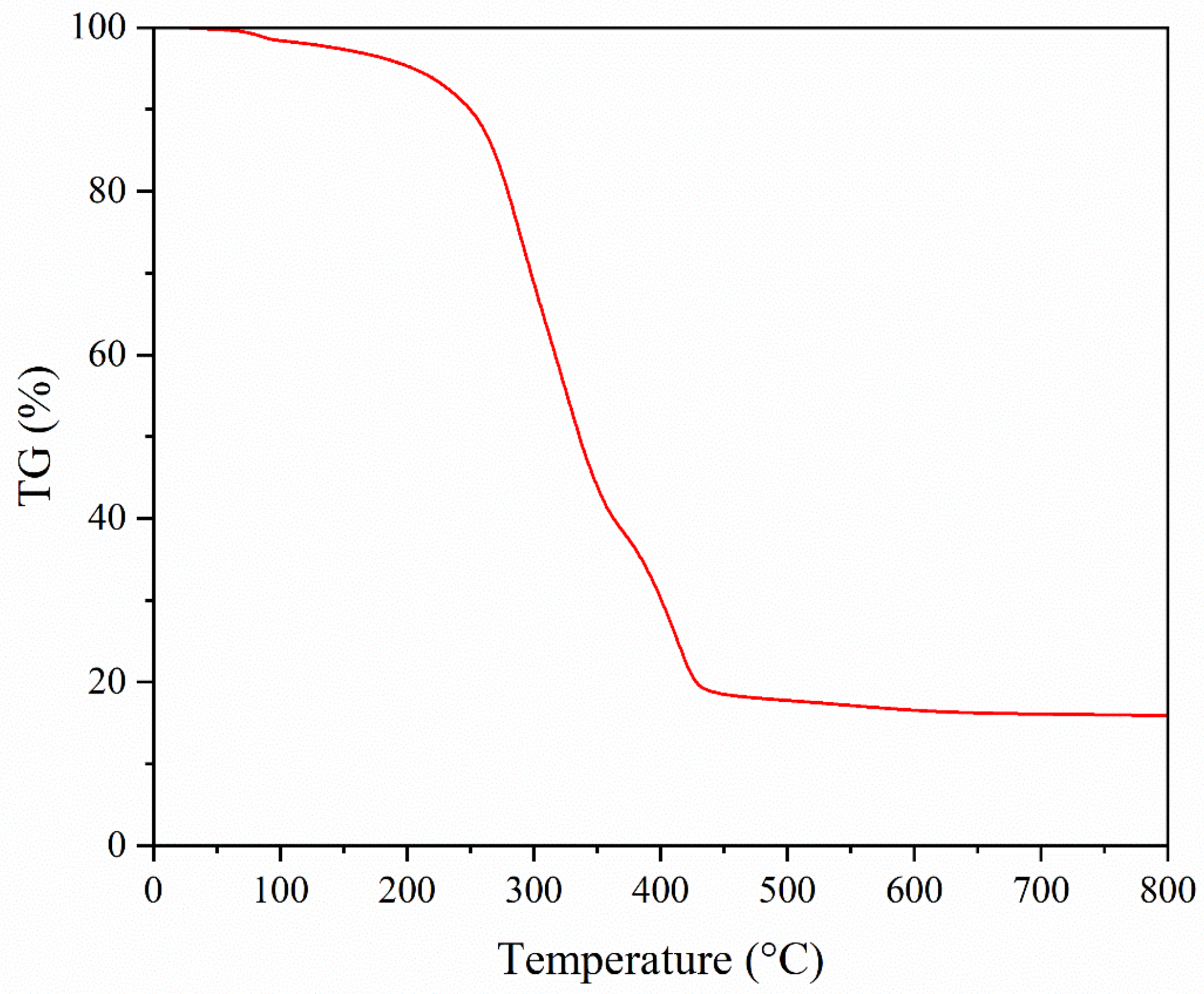
Thermogravimetric analysis (TGA) of palladium(I) complex cis-[Pd(PPh3)2{κ2-S,S′-(4-EtO-C6H4)FPS2}] was carried out (Figure 2). The first stage showed elimination of organic residues, and the second stage occurred at around 435 °C. Finally, the residual weight was reduced to 15.91% and no longer changed with the increase in temperature. The result matches well with the molecular weight (866.18), and the component of the last residue can be accurately inferred as PdS (molecular weight: 138.48).
Figure 2.
Thermogravimetric curve for palladium(I) complex cis-[Pd(PPh3)2{κ2-S,S′-(4-EtO-C6H4)FPS2}].
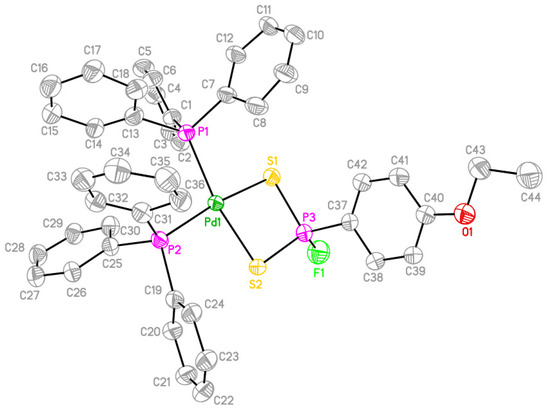
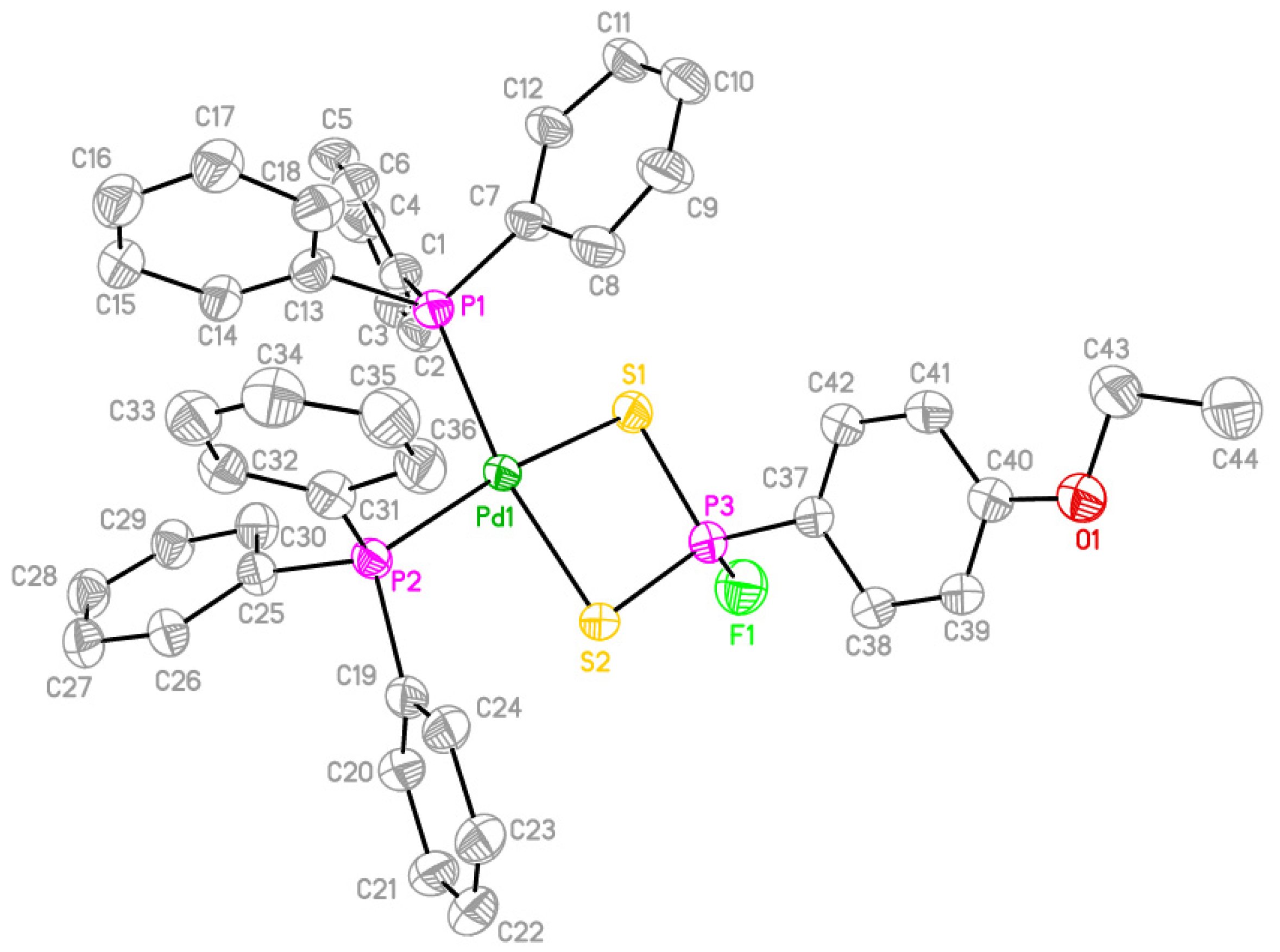
Slow evaporation from chloroform resulted in crystals of palladium(I) complex cis-[Pd(PPh3)2{κ2-S,S′-(4-EtO-C6H4)FPS2}], which was confirmed by single-crystal X-ray crystallography. The molecular structure is illustrated in Figure 3. Crystallographic data and experimental details are also summarized in Table 1. The mononuclear complex was crystallized in the space group Pī. The Pd center is surrounded by two phosphorus atoms of PPh3 ligands and two chelating sulfur atoms of [(4-EtO-C6H4)FPS2]− ligand. The Pd center is coordinated in a square-planar configuration, and the sum of the four bond angles around Pd is about 360.2°, indicating that the center of the Pd atom and two phosphorus atoms, as well as two sulfur atoms, are located in the same plane. The Pd–S bond lengths are 2.363(2) and 2.331(2), respectively, which are within the normal Pd–S range of 2.2–2.5 Å [24] and in good agreement with the values of other palladium–sulfur complexes (2.2780–2.4063 Å) [25,26,27,28]. The mean deviation from the plane of the PdPS2 four-membered chelating ring is calculated as 0.0631 Å, suggesting its near coplanarity. The two P–S bond lengths are approximately equal (2.045(3) and 2.055(3) Å), indicative of the delocalized electron system of the PS2 group [29]. The phosphorus atom of one PPh3 ligand lies cis to another, together with the P–Pd–P bond angle, which is 99.32(8)°, possibly due to the high steric hindrance of the PPh3 ligand. In addition, the Pd–P bond lengths are 2.314(2) and 2.309(2) Å, respectively, which compare well to the values of palladium complexes with PPh3 ligands (2.2534(10)–2.320(2) Å) [30,31,32].
Figure 3.
Molecular structure of palladium(I) complex cis-[Pd(PPh3)2{κ2-S,S′-(4-EtO-C6H4)FPS2}]. Thermal ellipsoids are shown at the 30% probability level and hydrogen atoms are omitted. Selected bond lengths (Å) and angles (deg): P(1)–C(1) 1.829(8), P(1)–C(7) 1.822(9), P(1)–C(13) 1.838(8), P(2)–C(19) 1.833(4), P(2)–C(25) 1.798(8), P(2)–C(31) 1.803(8), Pd(1)–P(1) 2.314(2), Pd(1)–P(2) 2.309(2), Pd(1)–S(1) 2.363(2), Pd(1)–S(2) 2.331(2), P(3)–S(1) 2.045(3), P(3)–S(2) 2.055(3), P(3)–F(1) 1.481(6), P(3)–C(37) 1.810(9), O(1)–C(40) 1.363(11), O(1)–C(43) 1.440(11), P(1)–Pd(1)–P(2) 99.32(8), S(1)–Pd(1)–S(2) 82.67(8), P(1)–Pd(1)–S(1) 87.64(8), P(2)–Pd(1)–S(2) 90.57(8), P(1)–Pd(1)–S(2) 169.49(8), P(2)–Pd(1)–S(1) 172.45(8), S(1)–P(3)–S(2) 98.25(12), S(1)–P(3)–F(1) 117.3(3), and S(2)–P(3)–F(1) 114.3(3).
Table 1.
Crystallographic data and experimental details for palladium(I) complex cis-[Pd(PPh3)2{κ2-S,S′-(4-EtO-C6H4)FPS2}].
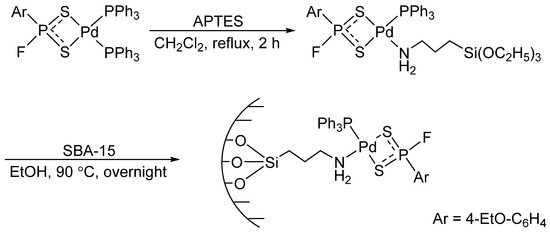
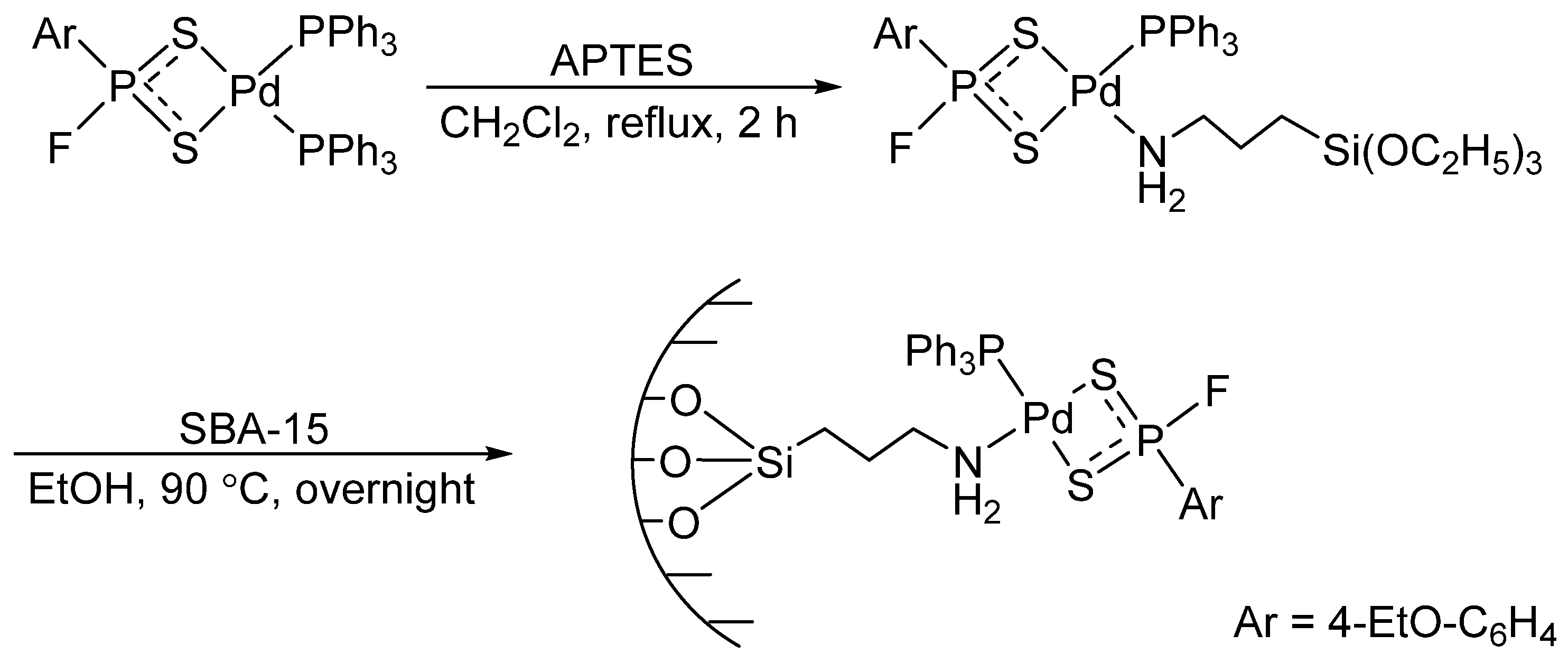
Immobilization of cis-[Pd(PPh3)2{κ2-S,S′-(4-EtO-C6H4)FPS2}] on the mesoporous silica substrate SBA-15 is shown in Scheme 2. The intermediate [Pd(PPh3){NH2(CH2)3Si(OC2H5)3}-{κ2-S,S′-(4-EtO-C6H4)FPS2}] could be recognized as the ligand exchange from PPh3 to APTES. The process of immobilization was conducted in EtOH at reflux overnight, in which APTES acts like a linkage to connect the SBA-15 substrate and Pd(I) complex via a Pd–N coordination bond.
Scheme 2.
Synthetic route and structural sketch of Pd@SBA-15.
The IR spectra (Figure 4) of Pd@SBA-15 show strong vibration at 1054 cm−1 and medium vibration at 802 cm−1, assigned to νas(SiO) and νs(SiO), respectively [32]. In addition, the strong band at 447 cm−1 is assigned to the Si–O–Si bending vibration frequency.
Figure 4.
IR spectrum of Pd@SBA-15.
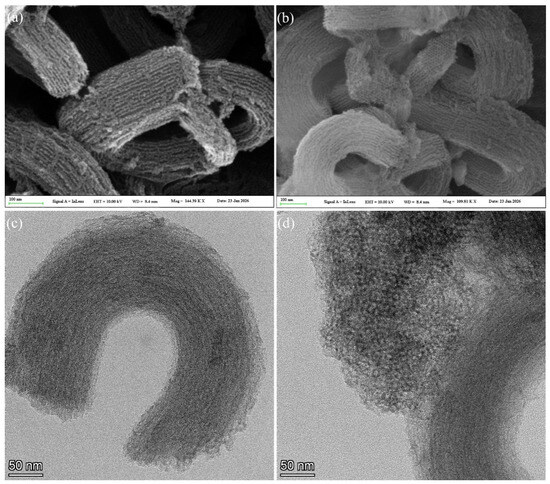
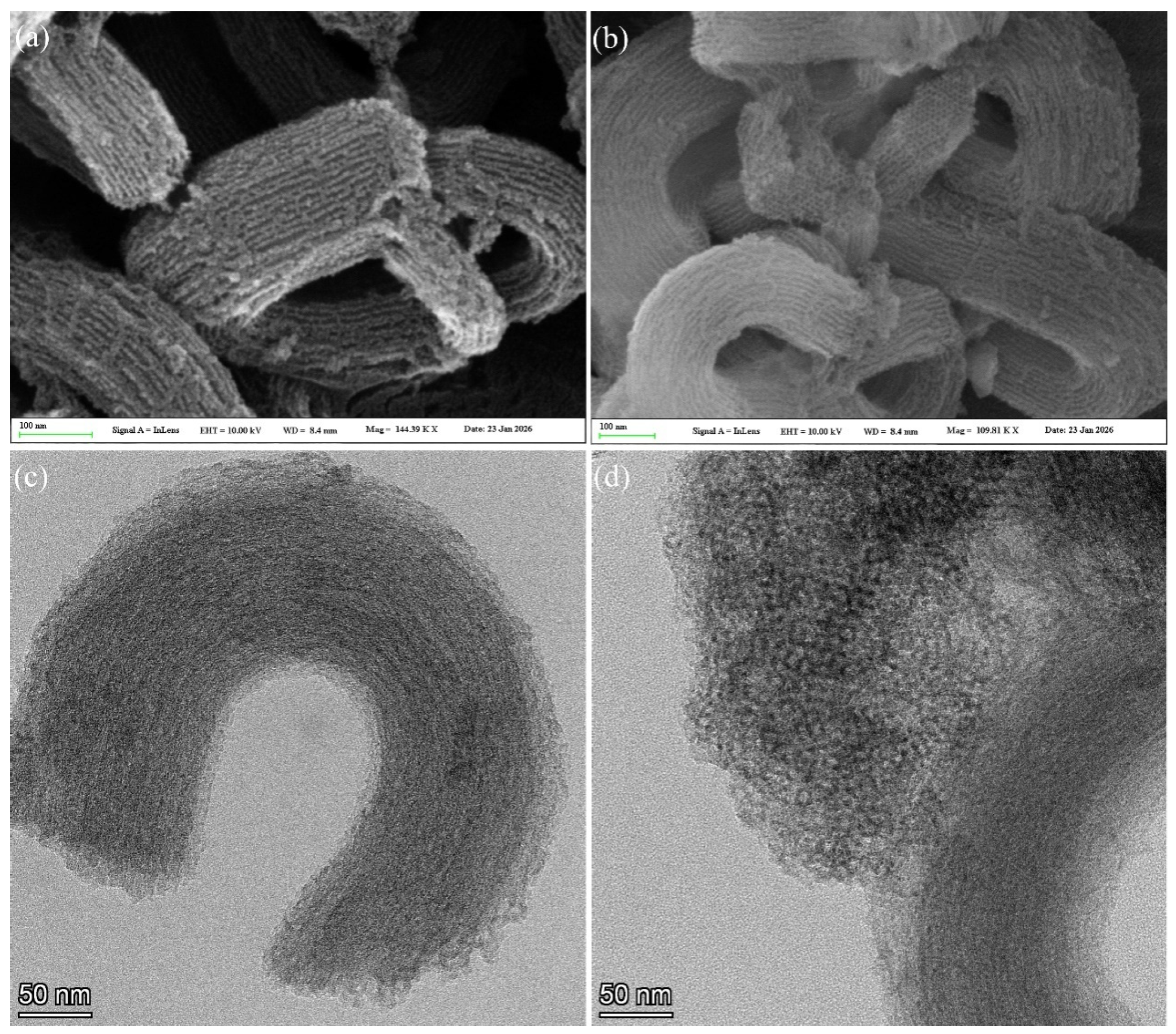
The scanning electron microscope (SEM) as well as transmission electron microscope (TEM) images of Pd@SBA-15 are shown in Figure 4. Tests under the same conditions for the original SBA-15 were also conducted for comparison. Figure 5a,b exhibit a similar ordered mesoporous structure, but the Pd complex loaded on the channel cannot be clearly seen. However, the presence of Pd on SBA-15 is determined in the contrastive TEM images (see Figure 5c,d).
Figure 5.
SEM images of SBA-15 (a) and Pd@SBA-15 (b), and TEM images of SBA-15 (c) and Pd@SBA-15 (d).
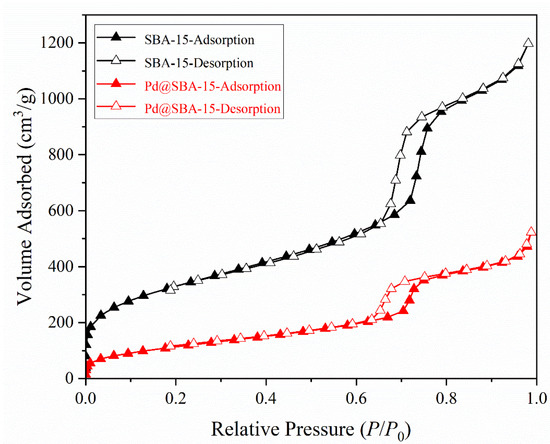
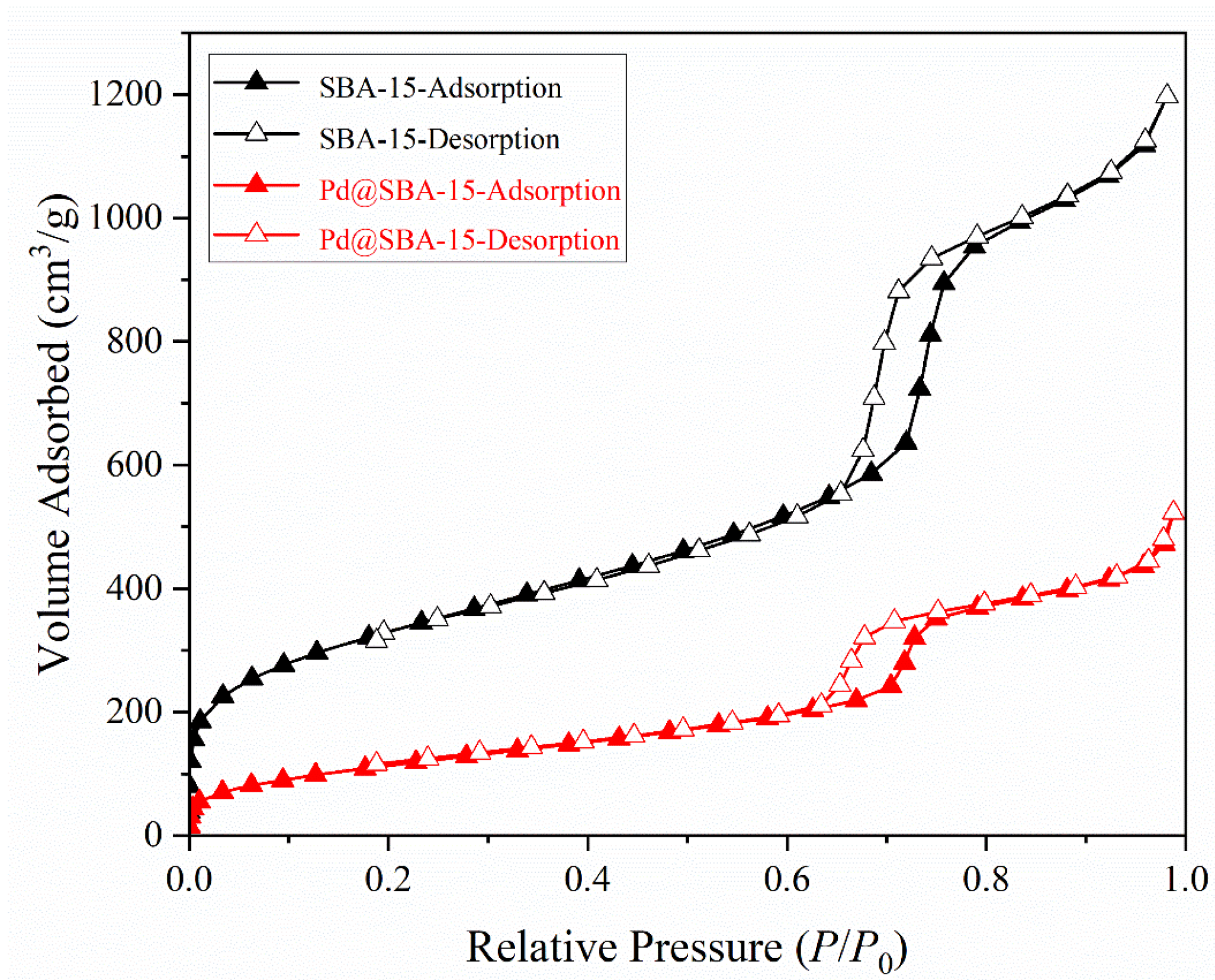
The pore structures of SBA-15 as well as Pd@SBA-15 were also detected by low-pressure N2 sorption measurements at 77 K (Figure 6). The characteristic shape of N2 sorption isotherms of SBA-15 did not change due to the loading of Pd complex, indicating that the original pore structure of SBA-15 was still maintained after immobilization. The average pore widths and the BET specific surface area of Pd@SBA-15 are 3.23 nm and 372.32 m2/g, respectively, and are decreased compared to the values of SBA-15 (4.34 nm and 1145.97 m2/g), indicating that the Pd complex occupied the partial inner surface of SBA-15 [33].
Figure 6.
N2 adsorption–desorption isotherms of SBA-15 and Pd@SBA-15.
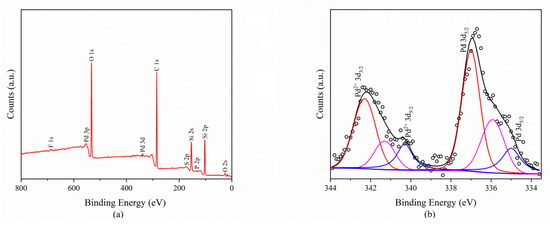
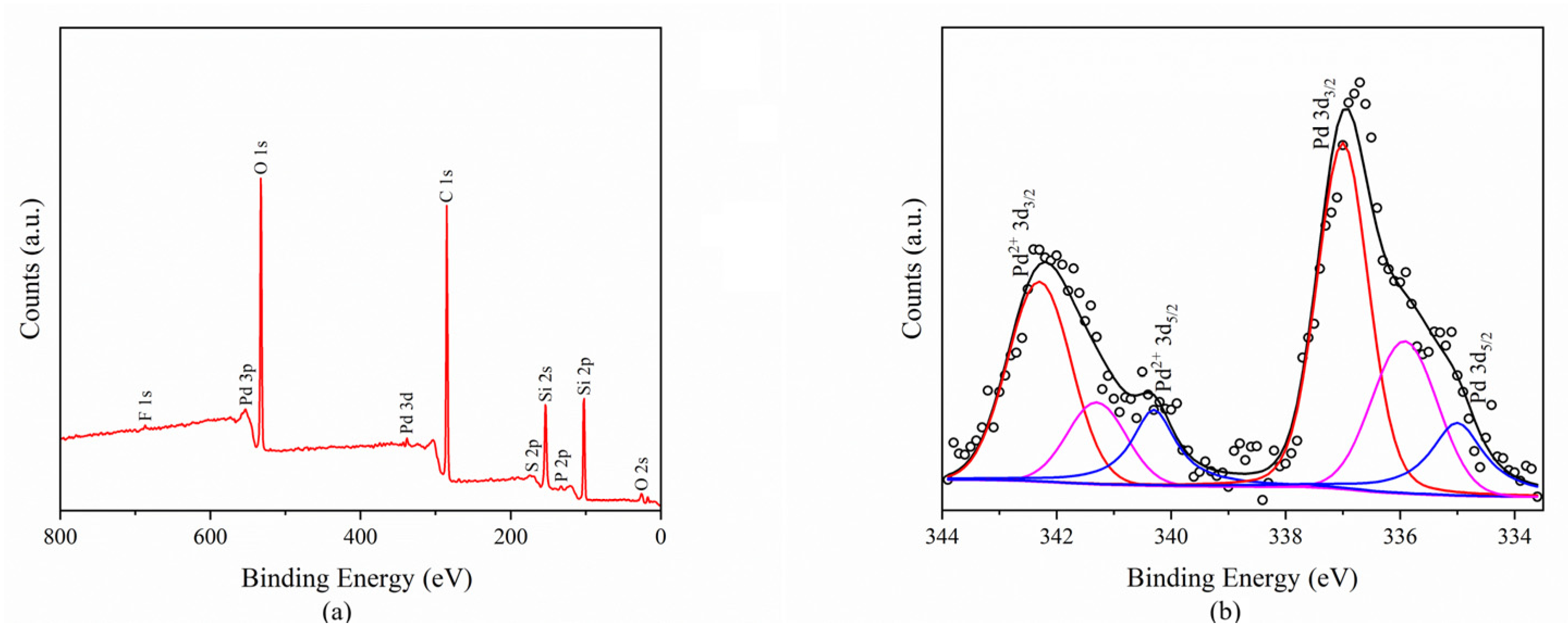
In the XPS spectrum (see Figure 7a), elements including oxygen, carbon and silicon, with binding energy values of 532, 284, 154 and 101 eV for O 1s, C 1s, Si 2s and Si 2p, respectively, were detected. It is noted that Figure 7b shows four peaks at 342.3, 340.3, 337.1 and 335.0 eV, and the first two binding energies are assigned to Pd 3d5/2 and Pd 3d3/2 of the Pd2+, and the last two binding energies are attributed to Pd 3d5/2 and Pd 3d3/2 of the Pd0 [34]. However, an additional two peaks located at 341.3 and 336.0 eV are observed. It may not be exactly accurate to refer to the two peaks as Pd 3d5/2 and Pd 3d3/2 of the Pd+, and it could be concluded that the coordination of Pd–P induced the redox reaction of palladium(I) under X-ray irradiation and resulted in the Pd center appearing in a mixed valence state [35].
Figure 7.
(a) XPS spectrum of Pd@SBA-15: (a) survey spectrum; (b) Pd 3d.
A typical and qualitative test using Pd@SBA-15 as the homogeneous catalyst was conducted in the presence of the EtOH/H2O co-solvent, which shows advantages toward green chemistry and the high yield of biaryl [36,37]. Inorganic salt potassium carbonate was selected to provide an alkaline environment. 4-methylphenylboronic acid and bromobenzene were chosen as reactants for optimizing the reaction conditions. The effect of temperature was initially investigated, and temperatures of 25–80 °C were examined. When the reaction temperature increased to 80 °C, the reaction was carried out well and with a high conversion of 97.46%. The component was confirmed as 4-methylbiphenyl by GC-MS analysis (m/z = 168.2, see Figure S2). Usually, Pd-catalysts are prepared by multistep and expensive routes. Therefore, the stability and reusability of Pd@SBA-15 were also tested. After reaction, the catalyst was separated by centrifugation and washed with cold ethanol and diethyl ether. The catalyst was then dried and reused five times without obvious loss in its catalytic activity. Under the same conditions, the conversion reached 90.36% in cycle 5 compared to the fresh catalyst (97.46%), indicating the good stability and robustness of the supported catalyst.
4. Conclusions
In summary, a well characterized mononuclear palladium(I) complex cis-[Pd(PPh3)2{κ2-S,S′-(4-EtO-C6H4)FPS2}] was synthesized. The molecular structure has been determined by single-crystal X-ray crystallography. This complex is a mononuclear rare case in which the Pd center shows +1 oxidation state under the auxiliary verification of XPS characterization. The Pd center is surrounded by two PPh3 ligands as well as one fluorodithiophosphato anionic ligand [(4-EtO-C6H4)FPS2]− and adopts a square-planar configuration. Furthermore, a post-grafting strategy was used for the preparation of Pd@SBA-15 based on mesoporous silica material SBA-15. The morphology and pore structure were investigated by an electron microscope and N2 adsorption–desorption analysis. It is shown that the prepared new homogeneous catalyst can efficiently catalyze the Suzuki–Miyaura cross-coupling reaction at 80 °C in EtOH/H2O co-solvent, and high conversion can be obtained. Moreover, the catalyst can be easily separated and reused several times without any significant loss in its catalytic activity.
Supplementary Materials
The following supporting information can be downloaded at https://www.mdpi.com/article/10.3390/cryst16040235/s1. Additional UV-vis spectrum (Figure S1) and GC-MS report (Figure S2). CCDC number <2519124> contain the supplementary crystallographic data for <cis-[Pd(PPh3)2{κ2-S,S′-(4-EtO-C6H4)FPS2}]>. These data can be obtained free of charge via http://www.ccdc.cam.ac.uk/conts/retrieving.html (accessed on 28th December 2025) or from the Cambridge Crystallographic Data Centre (CCDC), 12 Union Road, Cambridge CB2 1EZ, UK.
Author Contributions
All authors made significant scientific contributions to the work. C.C.: Writing—original draft, Experiment and Data curation. T.-T.S.: Experiment and Characterization. X.-Y.Z.: Writing—review and editing. M.-F.C.: Software and Data curation. Q.-F.Z.: Supervision. All authors have read and agreed to the published version of the manuscript.
Funding
This project was partially supported by the Natural Science Foundation of China (21372007).
Data Availability Statement
The original contributions presented in the study are included in the article; further inquiries can be directed to the corresponding author.
Conflicts of Interest
The authors declare no competing financial interests or personal relationships.
References
- Suzuki, A. Carbon-carbon bonding made easy. Chem. Commun. 2005, 38, 4759–4763. [Google Scholar] [CrossRef] [Scilit] [PubMed]
- Kader, D.A.; Sidiq, M.K.; Taher, S.G.; Aziz, D.M. Recent advances in palladium-catalyzed Suzuki-Miyaura cross-coupling reactions: Exploration of catalytic systems, reaction parameters, and ligand influences: A review. J. Organomet. Chem. 2025, 1030, 123569–123615. [Google Scholar] [CrossRef] [Scilit]
- Golovenko, E.A.; Kocheva, A.N.; Semenov, A.V.; Baykova, S.O.; Deriabin, K.V.; Baykov, S.V.; Boyarskiy, V.P.; Islamova, R.M. Palladium-functionalized polysiloxane drop-casted on carbon paper as a heterogeneous catalyst for the Suzuki-Miyaura reaction. Polymers 2024, 16, 2826. [Google Scholar] [CrossRef] [Scilit] [PubMed]
- Hooshmand, S.E.; Heidari, B.; Sedghi, R.; Varma, R.S. Recent advances in the Suzuki-Miyaura cross-coupling reaction using efficient catalysts in eco-friendly media. Green Chem. 2019, 21, 381–405. [Google Scholar] [CrossRef] [Scilit]
- King, A.K.; Brar, A.; Li, G.G.; Findlater, M. Homogeneous and recyclable palladium catalysts: Application in Suzuki-Miyaura cross-coupling reactions. Organometallics 2023, 42, 2353–2358. [Google Scholar] [CrossRef] [Scilit]
- Gupta, V.; Singh, S.; Sachan, S.K.; Maurya, B.; Char, S.; Prasad, D.L.V.K.; Anantharaman, G. Cyclic palladium formamidinate: Synthesis, structure, reactivity, and application to Suzuki-Miyaura cross-coupling. Inorg. Chem. 2022, 61, 3811–3815. [Google Scholar] [CrossRef] [Scilit]
- Tran, G.N.; Bouley, B.S.; Mirica, L.M. Isolation and characterization of heteroleptic mononuclear palladium(I) complexes. J. Am. Chem. Soc. 2022, 144, 20008–20015. [Google Scholar] [CrossRef] [Scilit]
- Liu, J.; Bollmeyer, M.M.; Kim, Y.; Xiao, D.; MacMillan, S.N.; Chen, Q.; Leng, X.B.; Kim, S.H.; Zhao, L.L.; Lancaster, K.M.; et al. An isolable mononuclear palladium(I) amido complex. J. Am. Chem. Soc. 2021, 143, 10751–10759. [Google Scholar] [CrossRef] [Scilit]
- Troadec, T.; Tan, S.; Wedge, C.J.; Rourke, J.P.; Unwin, P.R.; Chaplin, A.B. One-electron oxidation of [M(PtBu3)2] (M = Pd, Pt): Isolation of monomeric [Pd(PtBu3)2]+ and redox-promoted C−H bond cyclometalation. Angew. Chem. Int. Ed. 2016, 55, 3754–3757. [Google Scholar] [CrossRef] [Scilit]
- MacInnis, M.C.; DeMott, J.C.; Zolnhofer, E.M.; Zhou, J.; Meyer, K.; Hughes, R.P.; Ozerov, O.V. Cationic two-coordinate complexes of Pd(I) and Pt(I) have longer metal-ligand bonds than their neutral counterparts. Chem 2016, 1, 902–920. [Google Scholar] [CrossRef] [Scilit]
- Parambadath, S.; Singh, A.P. Ru(II)-chiral (1R,2S)-(+)-cis-1-amino-2-indanol immobilized over SBA-15 for asymmetric transfer hydrogenation reaction of prochiral ketones. Catal. Today 2009, 141, 161–167. [Google Scholar] [CrossRef] [Scilit]
- Long, J.; Liu, G.H.; Cheng, T.Y.; Yao, H.; Qian, Q.Q.; Zhuang, J.L.; Gao, F.; Li, H.X. Immobilization of rhodium-based transfer hydrogenation catalysts on mesoporous silica materials. J. Catal. 2013, 298, 41–50. [Google Scholar] [CrossRef] [Scilit]
- Payamifar, S.; Abdouss, M.; Marjani, A.P. A review of magnetic chitosan-immobilized palladium nanoparticle catalysts in the Suzuki reaction. J. Organomet. Chem. 2025, 1041, 123859–123885. [Google Scholar] [CrossRef] [Scilit]
- Darabi, A.; Nikoorazm, M.; Tahmasbi, B.; Ghorbani-Choghamarani, A. R Palladium(0) complex of 1-(1H-benzo[d]imidazol-2-yl)guanidine on SBA-15 as an effective, selective, green, and robust catalyst for the Suzuki-Miyaura coupling reaction. Inorg. Chem. Commun. 2025, 180, 115083–115093. [Google Scholar] [CrossRef] [Scilit]
- Veisi, H.; Manesh, A.A.; Eivazi, N.; Faraji, A.R. Palladium nanoparticles supported on 1,3-dicyclohexylguanidine functionalized mesoporous silica SBA-15 as highly active and reusable catalyst for the Suzuki–Miyaura cross-coupling reaction. RSC Adv. 2015, 5, 20098–20107. [Google Scholar] [CrossRef] [Scilit]
- Rahimi, L.; Mansoori, Y.; Nuri, A.; Koohi-Zargar, B.; Esquivel, D. Anew Pd(II)-supported catalyst on magnetic SBA-15 for C−C bond formation via the Heck and Hiyama cross-coupling reactions. Appl. Organomet. Chem. 2020, 150, 2850–2862. [Google Scholar] [CrossRef] [Scilit]
- Mohan, A.; Rout, L.; Thomas, A.M.; Peter, J.; Nagappan, S.; Parambadath, S.; Ha, S.K. Palladium nanoparticles-anchored dual-responsive SBA-15-PNIPAM/PMAA nanoreactor: A novel heterogeneous catalyst for a green Suzuki–Miyaura cross-coupling reaction. RSC Adv. 2020, 10, 28193–28204. [Google Scholar] [CrossRef] [Scilit]
- Chen, C.; Chen, M.T.; Pan, S.; Liang, Q.W.; Jia, A.Q.; Zhang, Q.F. Syntheses, reactivity, X-ray structures, and antioxidant properties of ruthenium(II) complexes with aryl/ferrocenyl-fluorodithiophosphate ligands [PPh4][(X)FPS2] (X = p-Methoxy-C6H4, p-Ethoxy-C6H4, Ferrocenyl). Inorg. Chem. 2025, 64, 22298–22307. [Google Scholar] [CrossRef] [Scilit]
- Sheldrick, G.M. A short history of SHELX. Acta Crystallogr. A 2008, 64, 112–122. [Google Scholar] [CrossRef] [Scilit]
- Sheldrick, G.M. Crystal structure refinement with SHELXL. Acta Crystallogr. C 2015, 71, 3–8. [Google Scholar] [CrossRef] [Scilit]
- Bourhis, L.J.; Dolomanov, O.V.; Gildea, R.J.; Howard, J.A.K.; Puschmann, H. The anatomy of a comprehensive constrained, restrained refinement program for the modern computing environment−Olex2 dissected. Acta Crystallogr. A 2015, 71, 59–75. [Google Scholar] [CrossRef] [Scilit]
- Gaydon, Q.; Bohle, D.S. The sulfur rich fluorothiophosphate dianions [S5P2F2]2− and [S3PF]2−: Cluster and chelation control of P−S heterolysis. Chem. Eur. J. 2022, 28, e202202026. [Google Scholar] [CrossRef] [Scilit] [PubMed]
- Karakus, M. Synthesis and characterization of chiral gold (I) phosphine complexes with new dithiophosphorus ligands. Phosphorus Sulfur Silicon 2011, 186, 1523–1530. [Google Scholar] [CrossRef] [Scilit]
- Reger, D.L.; Collins, J.E. Syntheses of palladium(II) chalcogenide complexes. solid state structure of [(CH3)2NCS2]Pd(PEt3)SCH3. Inorg. Chem. 1995, 34, 2473–2475. [Google Scholar] [CrossRef] [Scilit]
- Wang, X.Y.; Shi, H.T.; Ma, Q.; Zhang, Q.F. Syntheses and structures of silver(I) and palladium(II) complexes with ferrocenyl-phosphonodithiolate ligands. Z. Naturforsch. 2010, 65, 32–36. [Google Scholar] [CrossRef] [Scilit]
- Yih, K.H.; Lee, G.H. Thiocarbarmoyl-assisted formation of a new type of α- and β-isomer paddlewheel Pd24+ compounds. Synthesis, characterization, and crystal structures of [Pd(η1-SCNMe2)(η2-Tp)(PPh3)], [Pd2(μ-Hdppa)2(μ-SCNMe2)2][Cl]2, [Pd2(μ-dppa)2(μ-SCNMe2)2], and [Pd{η2-S2P(OEt)2}]2(μ-dppa)(μ-SCNMe2). Organometallics 2010, 29, 3397–3403. [Google Scholar] [CrossRef] [Scilit]
- Gholivand, K.; Salami, R.; Farshadfar, K.; Butcher, R.J. Synthesis and structural characterization of Pd(II) and Cu(I) complexes containing dithiophosphorus ligand and their catalytic activities for Heck reaction. Polyhedron 2016, 119, 267–276. [Google Scholar] [CrossRef] [Scilit]
- Birri, A.; Harvey, B.; Hogarth, G.; Subasi, E.; Uğur, F. Allyl palladium dithiocarbamates and related dithiolate complexes as precursors to palladium sulfides. J. Organomet. Chem. 2007, 692, 2448–2455. [Google Scholar] [CrossRef] [Scilit]
- Elsegood, M.R.J.; Miles, C.R.; Sharp, S.J.; Smith, M.B.; Karakus, M. Dinuclear metal complexes of a new hybrid phosphine-phosphonodithioate ligand. J. Organomet. Chem. 2021, 935, 121668–121673. [Google Scholar] [CrossRef] [Scilit]
- Panneerselvam, K.; Lu, T.H.; Tung, S.F.; Narayan, S.; Jain, V. Crystal structure of bis(triphenylphosphine)palladium(II) isopropyldithiophosphate. Anal. Sci. 1999, 15, 497–498. [Google Scholar] [CrossRef] [Scilit]
- Esterhuysen, C.; Kruger, G.J.; Blewett, G.; Raubenheimer, H.G. 4-Membered metallodithiophosphinate rings-flat or puckered? A comparison of two crystal structures with computational and literature data. Inorg. Chim. Acta 2006, 359, 609–616. [Google Scholar] [CrossRef] [Scilit]
- Stamatopoulos, I.; Roulia, M.; Vallianatou, K.A.; Raptopoulou, C.P.; Psycharis, V.; Carravetta, M.; Papachristodoulou, C.; Hey-Hawkins, E.; Kostas, I.D.; Kyritsis, P. Immobilization of [Pd{(Ph2P)2N(CH2)3Si(OCH3)3-κP,P′}X2] (X = Cl, Br) onto montmorillonite: Investigating their performance as homogeneous or heterogenized Suzuki-Miyaura catalysts. ChemistrySelect 2017, 2, 12051–12059. [Google Scholar] [CrossRef] [Scilit]
- Lin, W.T.; Song, Y.P.; Wang, L.; Li, N.; Fu, Y.H.; Chen, D.L.; Zhu, W.D.; Zhang, F.M. Palladium nanoparticles supported on Ce-MOF-801 as highly efficient and stable heterogeneous catalysts for Suzuki-Miyaura coupling reactions. Catal. Lett. 2023, 153, 2368–2377. [Google Scholar] [CrossRef] [Scilit]
- Rout, L.; Mohan, A.; Thomas, A.M.; Ha, C.K. Rational design of thermoresponsive functionalized MCM-41 and their decoration with bimetallic Ag–Pd nanoparticles for catalytic application. Micropor. Mesopor. Mat. 2020, 291, 109711–109721. [Google Scholar] [CrossRef] [Scilit]
- Vreugdenhil, F.; Hagenhoff, B.; Zalm, P.C. X-ray-induced metal reduction in polymer hosts. Surf. Interface Anal. 1999, 25, 46–49. [Google Scholar] [CrossRef] [Scilit]
- Beletskaya, I.P.; Alonso, F.; Tyurin, V. The Suzuki-Miyaura reaction after the Nobel prize. Coord. Chem. Rev. 2019, 385, 137–173. [Google Scholar] [CrossRef] [Scilit]
- Liang, Y.C.; Ning, X.; Zhen, Y.Z.; Zhang, Y.T. Hierarchically structured and highly active palladium-loaded Al-MIL-53-linked hybrid periodic mesoporous silica catalysts for Suzuki-Miyaura cross-coupling reaction. Micropor. Mesopor. Mat. 2022, 346, 112329–112342. [Google Scholar] [CrossRef] [Scilit]



Disclaimer/Publisher’s Note: The statements, opinions and data contained in all publications are solely those of the individual author(s) and contributor(s) and not of MDPI and/or the editor(s). MDPI and/or the editor(s) disclaim responsibility for any injury to people or property resulting from any ideas, methods, instructions or products referred to in the content. |
© 2026 by the authors. Licensee MDPI, Basel, Switzerland. This article is an open access article distributed under the terms and conditions of the Creative Commons Attribution (CC BY) license.