Article

New Solid Forms: Structural, Supramolecular, and Dehydration-Induced Phase Transitions of Three Hydrated 17α-Alkylated Testosterone Derivatives


1
National Institute for Research and Development of Isotopic and Molecular Technologies, Donat 67-103, 5, 700, 400293 Cluj-Napoca, Romania
2
Interdisciplinary Research Institute in Bio-Nano-Sciences, Babes-Bolyai University, Treboniu Laurian, 42, 400271 Cluj-Napoca, Romania
*
Author to whom correspondence should be addressed.
Crystals 2026, 16(4), 234; https://doi.org/10.3390/cryst16040234
Submission received: 12 February 2026 / Revised: 24 March 2026 / Accepted: 25 March 2026 / Published: 1 April 2026
(This article belongs to the Section Biomolecular Crystals)

Abstract

Synthetic derivatives of testosterone known as 17α-alkylated anabolic–androgenic steroids have been developed to retain anabolic effects while enabling oral administration. Here, we present newly identified hydrated solid forms of three agents: oxandrolone hemihydrate (C19H30O3·0.5H2O), fluoxymesterone hydrate (C20H29FO3·H2O), and methandienone hemihydrate (C20H28O2·0.5H2O). Their crystal structures were determined using single-crystal X-ray diffraction, supplemented by powder X-ray diffraction and thermal analyses. Computational methods were employed to investigate molecular interactions and crystal packing. Lattice energy evaluations revealed that the hydrated forms are energetically less stable than their anhydrous counterparts, with significantly less negative values (e.g., −113.4 kJ/mol for oxandrolone hemihydrate vs. −164.4 kJ/mol for the anhydrous form). Energy decomposition analysis indicates that while water molecules participate mostly in electrostatic-driven hydrogen bonding, they disrupt the dispersive packing efficiency found in the anhydrous phases. Specifically, intermolecular interaction energies show that host–host hydrogen bonds (up to −62.2 kJ/mol in oxandrolone) dominate over weaker host–water couplings (−8.9 to −34.9 kJ/mol). The newly reported crystal structures contribute to the expanding catalog of solid-state forms for 17α-alkylated steroids and provide important details regarding their metastable nature and the dehydration-driven phase transformations observed under climatic stress conditions.

1. Introduction

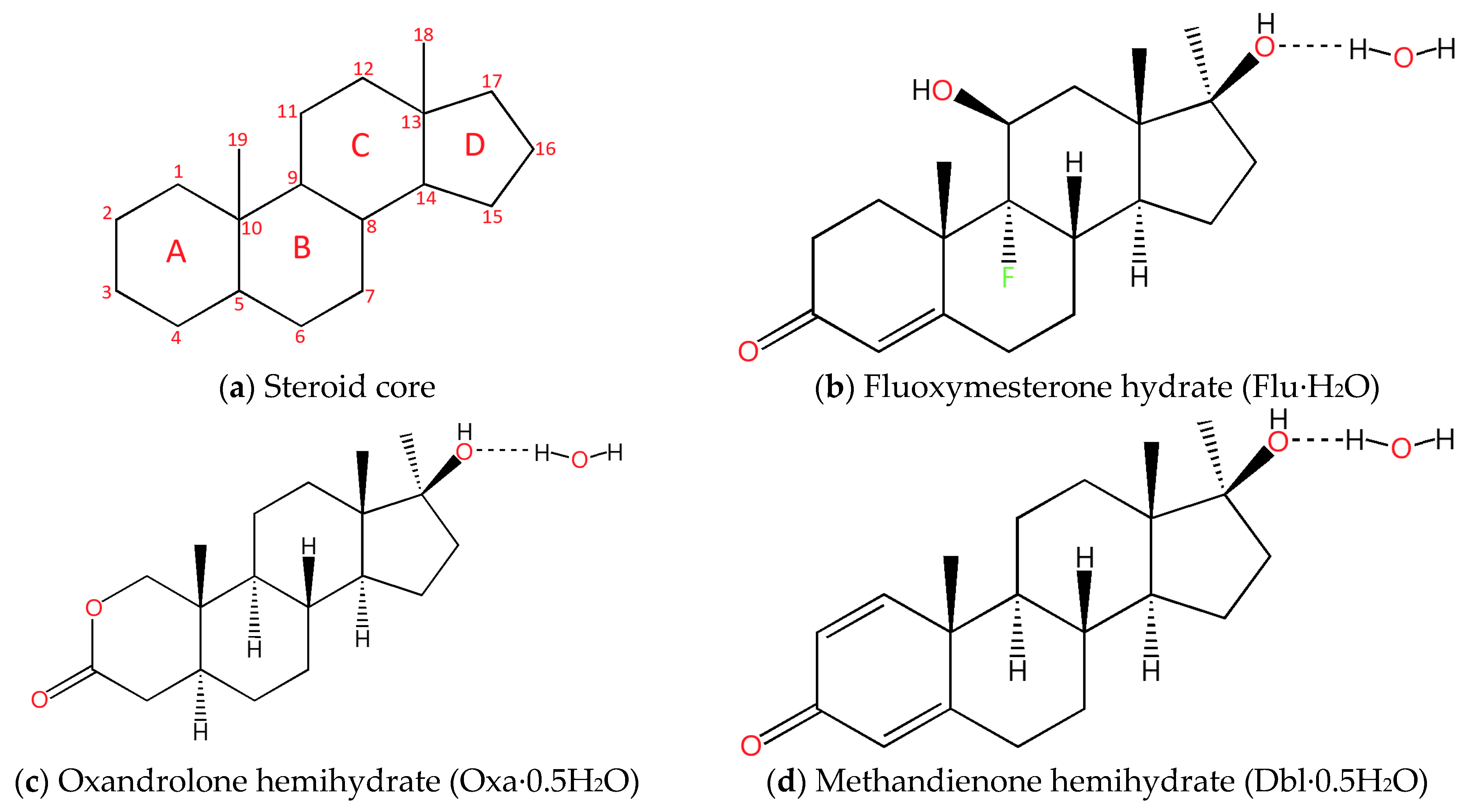
Steroids represent a diverse group of biologically active compounds sharing a common tetracyclic core (Figure 1a). While their biological roles are extensive, their solid-state behavior, particularly polymorphism and the formation of solvate hydrates, is critical for pharmaceutical stability and bioavailability. The presence of hydroxyl and carbonyl groups on the steroid nucleus facilitates complex hydrogen-bonding networks, often requiring the incorporation of water molecules to stabilize the crystal lattice [1]. The discovery and characterization of new solid forms, such as hydrates or polymorphs, offer significant opportunities to optimize the physicochemical profile of steroid drugs, potentially leading to improved solubility, enhanced shelf life, and more predictable manufacturing processes [2,3].
This study focuses on three synthetic anabolic-androgenic agents derived from testosterone: fluoxymesterone hydrate (C20H29FO3·H2O; 9α-Fluoro-11β-hydroxy-17α-methyltestosterone hydrate), oxandrolone hemihydrate (C19H30O3·0.5H2O; 17β-Hydroxy-17α-methyl-2-oxa-5α-androstan-3-one hydrate), and methandienone hemihydrate (C20H28O2·0.5H2O; 17β-Hydroxy-17α-methyl-1,4-androstadien-3-one hydrate). Clinically, these compounds are utilized for their ability to bind androgen receptors and promote protein synthesis [4,5,6,7], being prescribed for conditions such as muscle wasting [8,9], osteoporosis, recovery from burns [10,11,12,13], sarcopenia [12,13,14,15], hypogonadism, anemia and breast cancer [16,17,18,19,20,21]. Despite their therapeutic value, their non-medical use in sports is prohibited by anti-doping regulations [22].
From a structural perspective, these agents share a C17-alpha-alkylation, which enhances oral bioavailability by resisting hepatic metabolism [23]. The 17α-alkyl group introduces steric bulk that prevents close-packing of the steroid nuclei, thereby facilitating the incorporation of water molecules as structural fillers and hydrogen-bonding mediators to satisfy the crystal’s energetic requirements. Each compound presents unique structural features that dictate its supramolecular architecture: fluoxymesterone (Figure 1b) features a 9-α-fluorine and 11-β-hydroxyl substitution; oxandrolone (Figure 1c) incorporates a rare lactone bridge within the A-ring [24,25]; and methandienone (Figure 1d) possesses a 1,2-double bond that alters the planarity of the steroid core.
While the crystal structures of these steroids in anhydrous form have been previously reported and clinically utilized, the identification and structural characterization of their metastable hydrates were largely unexplored. Therefore, the objective of this work is to elucidate the crystal structures of these three newly identified hydrates using single-crystal X-ray diffraction and to investigate their supramolecular synthons through computational methods. By analyzing intermolecular interactions and thermal stability, we aim to provide insight into how minor chemical modifications to the steroid scaffold translate into significant differences in their solid-state architecture and pharmaceutical shelf life.

2. Materials and Methods

2.1. Crystallization and Crystal Growth

The compounds were supplied by Wuhan Shu Mai Technology Co. (Wuhan, China), and all solvents were obtained from Merck (Darmstadt, Germany).
Crystals of sufficient quality for X-ray diffraction measurements were grown using the following procedures:
(i)
The fluoxymesterone hydrate form (denoted Flu·H2O) was crystallized by slow evaporation from a water–butanol mixture (1:1, v/v) heated at 60 °C and slowly cooled (Figure 1b);
(ii)
The oxandrolone hemihydrate form (denoted Oxa·0.5H2O) was crystallized by dissolving anhydrous oxandrolone in ethanol at 60 °C, followed by mixing with distilled water preheated to 60 °C and allowing the solution to cool slowly over several days (Figure 1c);
(iii)
The methandienone hemihydrate form (denoted Dbl·0.5H2O) was crystallized by recrystallization from an ethanol and water mixture (1:1, v/v), which was heated as well at 60 °C (Figure 1d).
The choice of solvent systems was rationally optimized to prioritize the stabilization of the hydrate phases while maximizing the crystallization yield from the limited material available. Solvents were primarily chosen based on their high solubility for the steroid compounds at elevated temperatures (60 °C), allowing for the preparation of highly concentrated solutions. In contrast to previous reports where anhydrous forms were obtained via vacuum sublimation for methandienone [26] or from specific acetone–water systems for oxandrolone [27], our protocols utilized controlled cooling from ethanol–water or butanol–water mixtures. Although a range of alternative solvents, including acetone, tetrahydrofuran, and acetonitrile, were screened, they consistently yielded anhydrous forms, thereby highlighting the specific role of the selected alcohol–water ratios in stabilizing these previously unreported hydrates.
In the case of fluoxymesterone, while the anhydrous form is confirmed by the CSD entry FHMANE [28], the original literature lacks a documented experimental protocol for its crystallization. Our use of a water–butanol mixture (1:1, v/v) provided a specific kinetic pathway; the higher boiling point of butanol and its distinct solvating properties favored a slower crystallization kinetic, which proved successful in stabilizing the fluoxymesterone hydrate (Flu·H2O) and providing single crystals of good quality for X-ray analysis.

2.2. Powder X-Ray Diffraction Characterization

Powder X-ray diffraction (PXRD) measurements were carried out on a Bruker D8 Advance diffractometer operating at 40 kV and 40 mA. The instrument used monochromated CuKα1 radiation (λ = 1.54056 Å), provided by a germanium monochromator placed in the incident beam, and was equipped with a LYNXEYE detector. Diffraction patterns were recorded with a step corresponding to a scan rate of 0.01° s−1 using the DIFFRACplus XRD Commander software.

2.3. Single-Crystal X-Ray Diffraction Measurements and Structure Refinement

Single crystals appropriate for diffraction measurements were chosen and protected with inert oil before being mounted on nylon loops attached to the goniometer of a SuperNova diffractometer (Oxford, UK) operating at 50 kV and 0.8 mA. The instrument was equipped with dual micro-focus Cu and Mo radiation sources and an Eos CCD detector (Oxford, UK). Diffraction data were recorded and subsequently corrected for Lorentz, polarization, and absorption effects using the CrysAlisPro software package (version V1.171.43.115a, 2024) [29]. Structure determination and refinement were performed within Olex2 (version 1.2.10) [30]. Initial solutions were obtained with SHELXT [31] using intrinsic phasing, followed by refinement through full-matrix least-squares procedures implemented in SHELXL [32].
Hydrogen atoms bonded to carbon were placed in calculated positions and treated using a riding model during refinement. The isotropic displacement parameters were fixed at 1.2UeqI for tertiary CH (C–H = 0.98 Å) and secondary CH2 groups (C–H = 0.97 Å), while methyl CH3 groups (C–H = 0.96 Å) were assigned values of 1.5UeqI. Hydrogen atoms belonging to hydroxyl groups were refined using a riding model with the O–H distance restrained to 0.82 Å, whereas for water molecules an O–H distance of 0.85 Å was applied.

2.4. Theoretical Analysis of Molecular Interactions and Lattice Stability

To investigate the stability and packing of the crystal structures, intermolecular interactions and lattice energies were analyzed for molecules within the asymmetric unit as well as for neighboring molecules within distances equal to or shorter than the sum of their van der Waals radii. Pairwise interaction energies were partitioned into four components: electrostatic (Eele), polarization (Epol), dispersion (Edisp), and exchange–repulsion (Erep). Calculations were based on wave functions obtained at the B3LYP/6-31G(d,p) level using CrystalExplorer (version 17.5) [33,34], applying the standard CE-B3LYP scaling factors (kele = 1.057, kpol = 0.740, kdis = 0.871, krep = 0.618). Before computing the Interaction energies, all C–H and O–H bond distances were adjusted to standard neutron diffraction values (1.083 Å for C–H and 0.993 Å for O–H) [35].

2.5. Differential Thermal Analysis (DTA) and Thermogravimetric Analysis (TGA) and Stability

Thermal behavior of the samples was investigated using a Shimadzu DTG-60H analyzer (Kyoto, Japan), performing simultaneous differential thermal analysis (DTA) and thermogravimetric analysis (TGA). A quantity of roughly 4–6 mg of analyzed powders was placed in open alumina crucibles and heated from ambient temperature up to 400 °C at a rate of 5 °C min−1 under a nitrogen atmosphere (70 mL min−1). Alumina powder served as the reference, and the resulting data were analyzed with the TA60WS software (version 2.20).
The stability of the hydrates was evaluated using a Memmert HCP105 climatic chamber (Schwabach, Germany), allowing precise control of relative humidity (±1% RH) and temperature (±0.1 °C). Samples were stored under controlled climatic conditions and periodically withdrawn for analysis. Structural changes and phase transformations were monitored by X-ray diffraction (PXRD) to evaluate the solid-state stability over time.

3. Results

3.1. Structural Characterization of the Crystals

Crystallographic and refinement parameters for all analyzed crystals are compiled in Table 1.

3.1.1. Dbl·0.5H2O

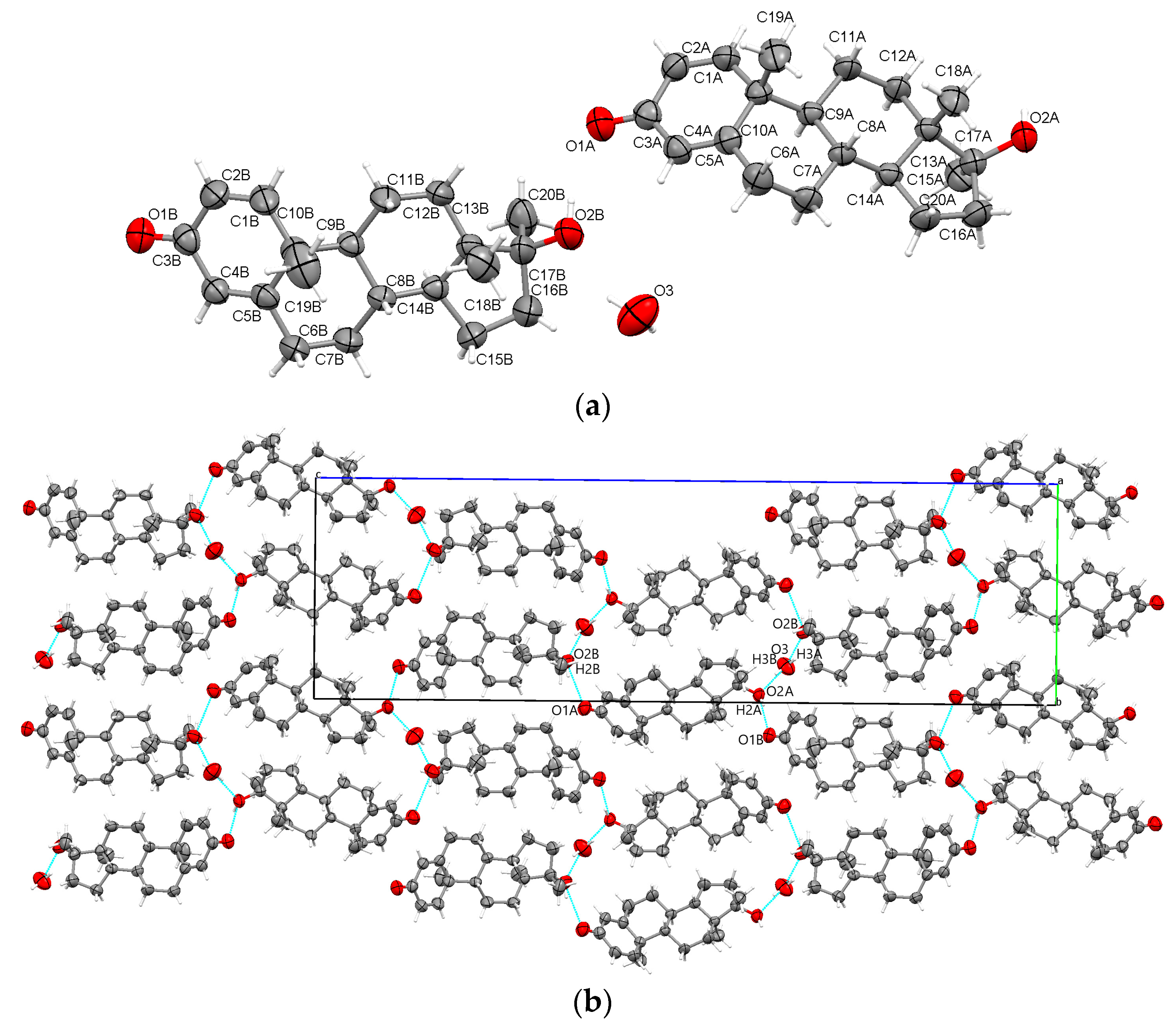
The hemihydrate form of methandienone crystallizes in a noncentrosymmetric orthorhombic P212121 space group, with two independent steroid molecules and one water molecule in the asymmetric unit (Figure 2a), similar to the previously reported anhydrous methandienone structure [26]. Similarly, as in the anhydrous form [26], the methandienone molecules adopt a head-to-tail arrangement, forming infinite zig-zag chains along the c-axis through O2–H···O1 hydrogen bonds between hydroxyl and ketone groups. The water molecule bridges adjacent chains along the b direction via O–H···O interactions (Figure 2b), while additional C–H···O contacts further stabilize the crystal lattice. The A-ring double bonds (C1 = C2 and C4 = C5) adopt a planar conformation, the B and C six-membered rings adopt distorted half-chair conformations, and the D ring adopts an envelope conformation.
A structural entry associated with a methandienone derivative, with the reference code CERVAX [36], was identified in the Cambridge Structural Database, which possesses similar lattice parameters and a similar asymmetric unit. A chemical and structural examination reveals that the CERVAX entry corresponds to 17α-methyltestosterone, a saturated analog (sp3 at C1 and C2). In contrast, the present study focuses on methandienone, which possesses a specific C1 = C2 double bond (sp2 hybridization). This fundamental difference in chemical identity affects the planarity of the A-ring; thus, the CERVAX entry adopts a distorted half-chair geometry compared with the planarity in Dbl·0.5H2O.

3.1.2. Oxa·0.5H2O

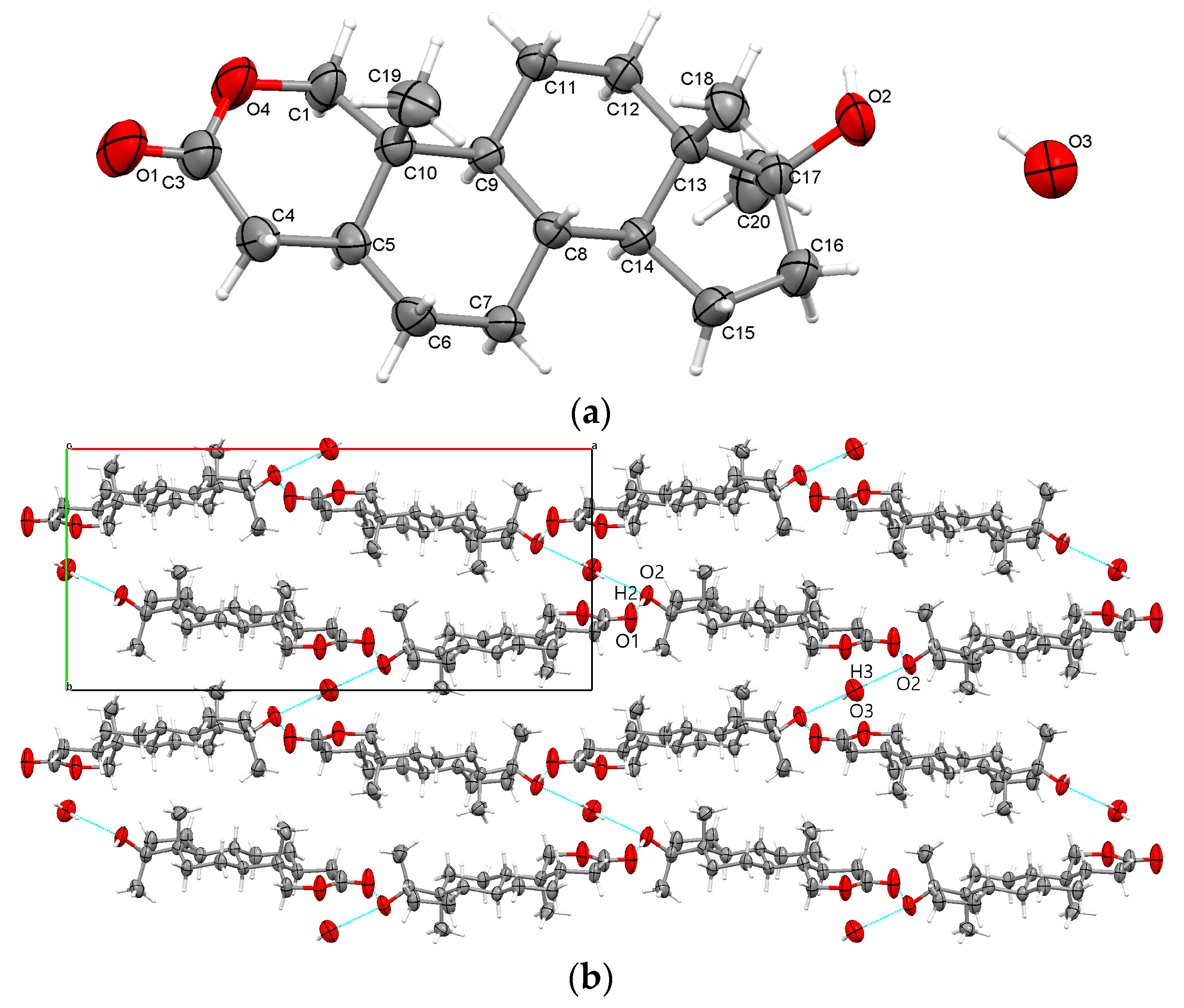
The hemihydrate form of oxandrolone crystallizes in the orthorhombic, noncentrosymmetric P21212 space group, with the asymmetric unit containing one steroid molecule and one water molecule located on a special position (a 2-fold rotoinversion axis), contributing ½ to the asymmetric unit content (Figure 3a). Similar to the methandienone anhydrous oxandrolone structure [27] (ref. ANSTER10), the molecules adopt a head-to-tail arrangement, forming infinite zig-zag chains along the a-axis through O2–H2···O1 hydrogen bonds between hydroxyl and ketone groups. Comparable infinite chains are also observed in the anhydrous oxandrolone structure. Adjacent chains are bridged by water molecules via O3–H3···O2 hydrogen bonds with the steroid hydroxyl groups, complemented by additional C–H···O contacts between water and steroid molecules (Figure 3b). The presence of a lactone bridge in the A ring induces a slightly distorted half-chair conformation, the B and C rings adopt chair geometries, and the D ring exhibits a mildly distorted envelope conformation.

3.1.3. Flu·H2O

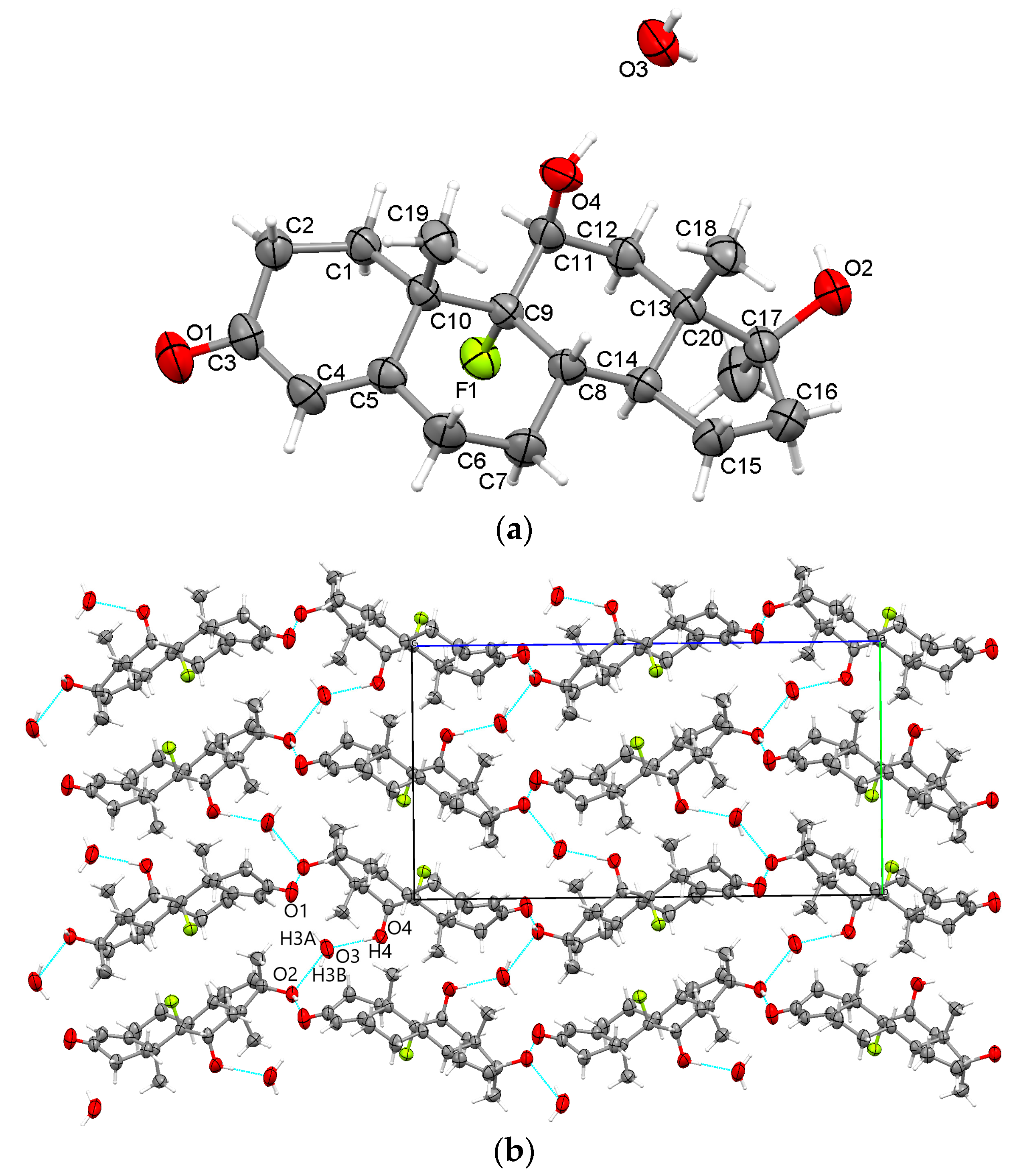
The analysis revealed that the crystal adopts an orthorhombic P212121 space group, with a 1:1 stoichiometric ratio between steroid and water (Figure 4a), in contrast to the 2:1 ratio observed for oxandrolone and methandienone hydrates. The supramolecular architecture is characterized by head-to-tail molecular chains connected through O2–H2···O1 hydrogen bonds between hydroxyl and ketone groups. Water molecules participate in interchain connections via O3–H3B···O2 and O3–H3B···O1 hydrogen bonds, and, due to the presence of a hydroxyl group at the 11β-position of the steroid core, an additional O4–H4···O3 hydrogen bond is formed. Weak van der Waals interactions, including C–H···O2 and C–H···F contacts, further stabilize the crystal lattice (Figure 4b). The inclusion of water produces a lattice configuration similar to that of anhydrous fluoxymesterone [28] (ref. FHMANE in CSD), which contains one steroid molecule per asymmetric unit. In terms of ring conformations, the A ring adopts an intermediate sofa–half-chair geometry, the B and C rings are in chair conformations, and the five-membered D ring displays a slightly distorted envelope shape. For all three structures, the relevant intermolecular contact distances and bonds are listed in Table 2.

3.2. X-Ray Powder Diffraction Analysis

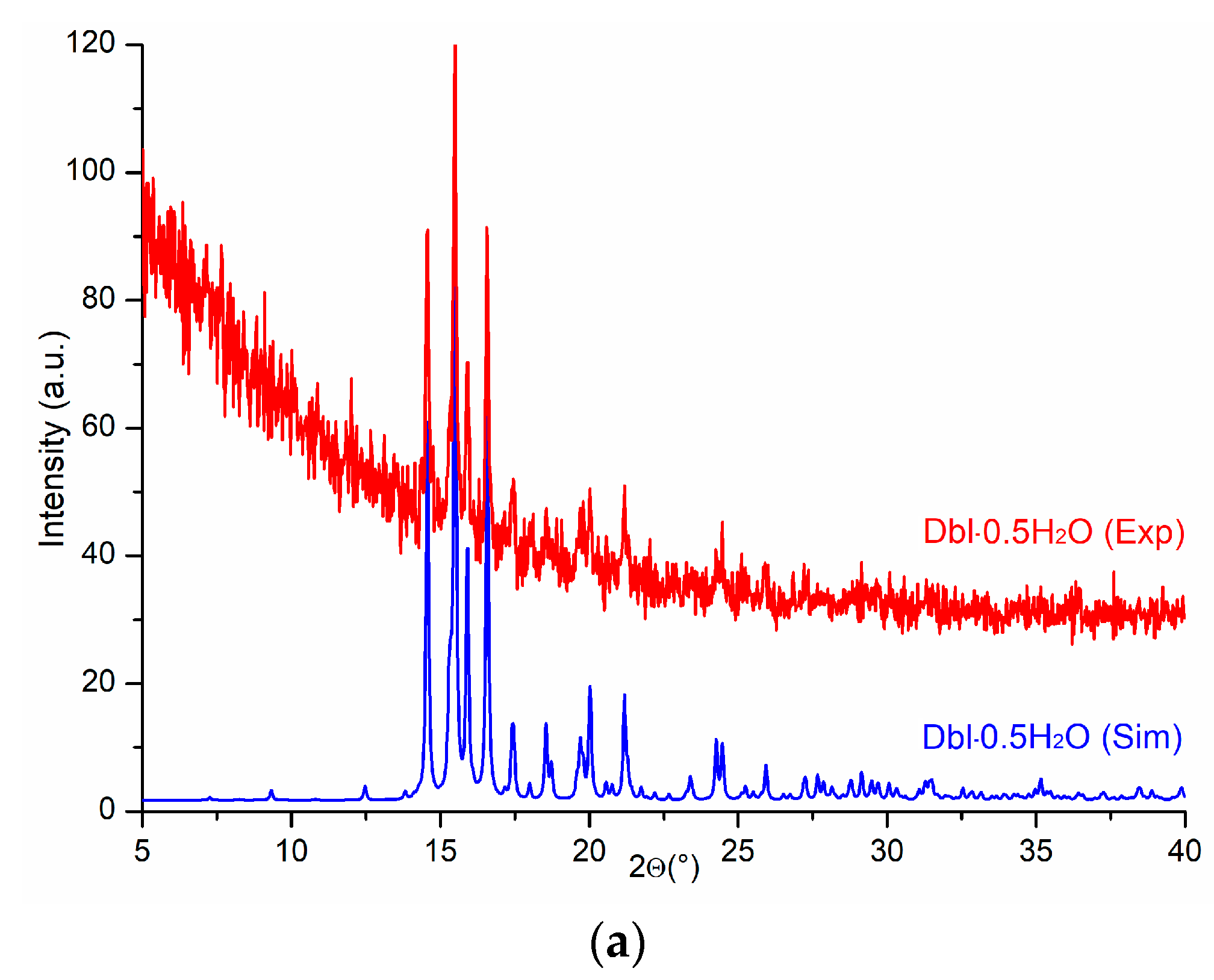
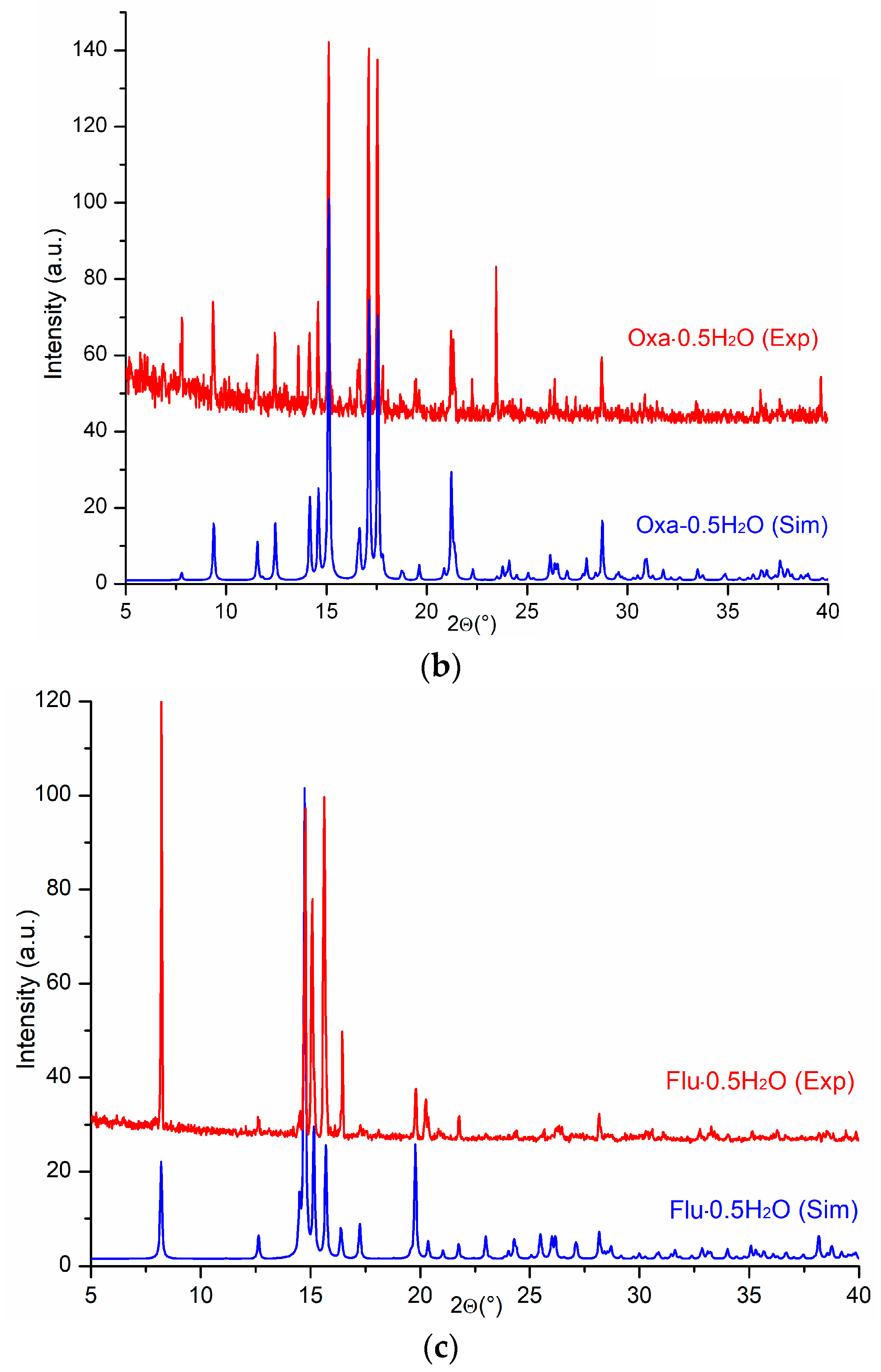
The phase purity and homogeneity of the obtained materials were evaluated using powder X-ray diffraction (PXRD). Figure 5a–c presents a comparison between the calculated diffraction profiles (labeled Sim, derived from the corresponding CIF files) and the experimentally recorded patterns (labeled Exp). The close agreement in the positions of the diffraction reflections confirms that the investigated samples consist of single, well-defined crystalline phases. Variations in the relative intensities of certain reflections observed in the experimental patterns can be understood based on the preferred orientation effects of the crystallites.

3.3. Evaluation of Crystalline Form Stability in the Climatic Chamber

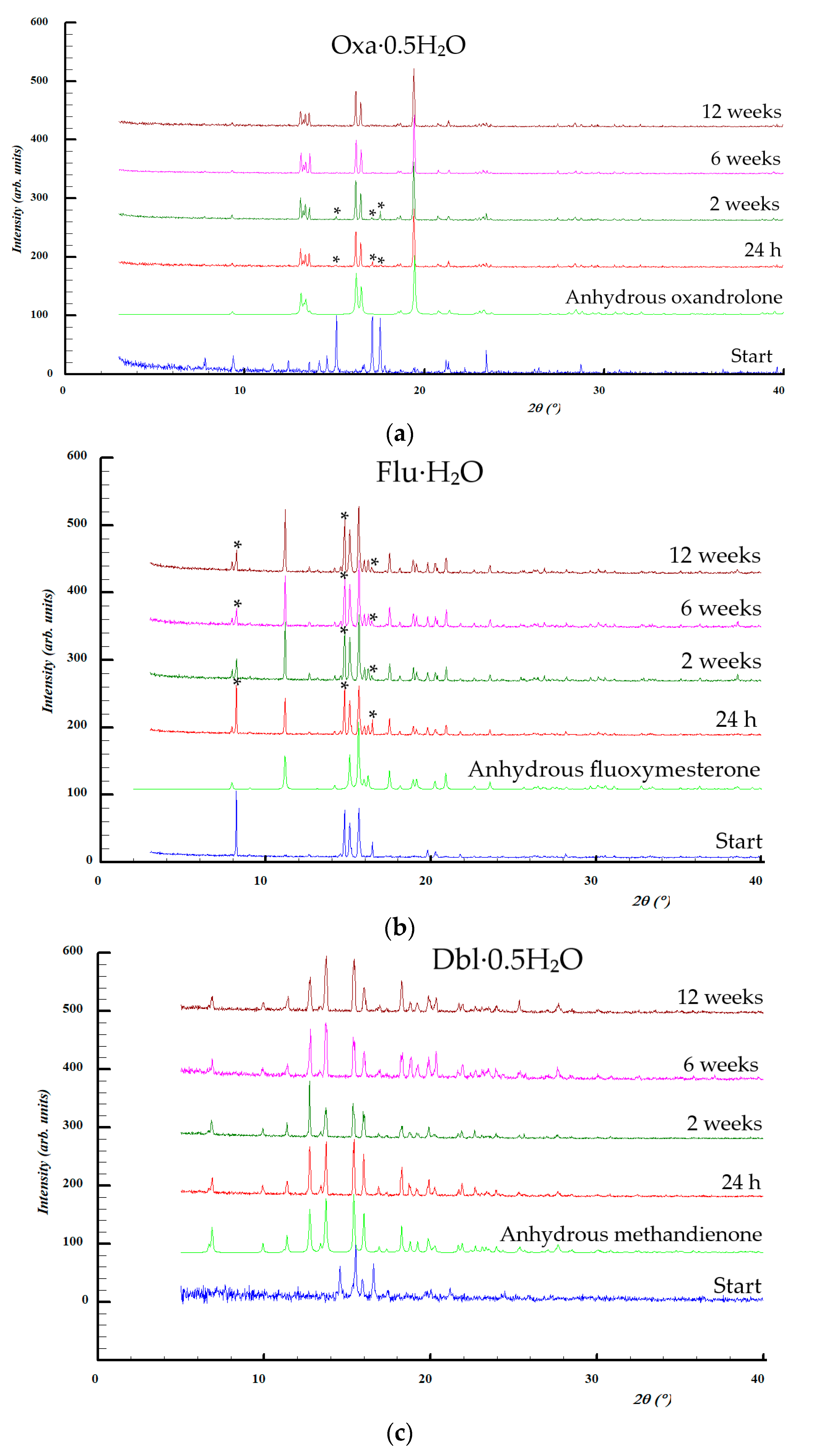
The stability of a given solid form (polymorph, solvate, hydrate, salt, or cocrystal) can be a critical concern, as phase transitions during extended storage can modify the crystalline form of the drug, potentially altering its storage lifespan and therapeutic efficacy. Thus, stability studies were performed by storing samples in a climatic chamber under controlled conditions (75% relative humidity and 40 °C) to assess the solid-state stability and monitor possible phase transformations (Figure 6).
The stability tests revealed that, after just 24 h of exposure, the compounds were not stable and underwent transformations toward their anhydrous form. The diffraction lines marked with * indicate the most intense lines of the hydrated phase.
(i)
Oxa hydrate showed only trace amounts of the initial hydrate after 24 h, which completely disappeared after two weeks.
(ii)
Flu hydrate exhibited a less pronounced transformation within the first 24 h but continued to convert over 12 weeks, with a considerable amount of hydrate still present at the end of this period.
(iii)
Dbl hydrate experienced a complete phase transformation within 24 h and remained anhydrous throughout the 12-week study.

3.4. Lattice Energies Evaluation

The lattice energies of the new hydrate forms were computed and compared with those of the corresponding anhydrous structures.
The anhydrous oxandrolone structure was taken from the ANESTER10 entry in the CSD, FHMANE was used for anhydrous fluoxymesterone, and NEQQEH for methandienone.
The resulting values and their energy decompositions are reported in Table 3.
Lattice energy calculations were carried out to rationalize the solid-state transformations observed during storage under controlled climatic conditions. The hydrated crystal forms exhibited rapid phase transformations when exposed to constant temperature and humidity. In all cases, the calculated lattice energies reveal weaker crystal packing for multicomponent forms compared to the corresponding anhydrous phases, supporting their metastable nature. Within the CrystalExplorer framework, the energetic contribution of incorporated water was found to be negligible, indicating weak and largely non-cooperative interactions with the host lattice. As a result, the release of water molecules facilitates structural reorganization toward thermodynamically more stable anhydrous arrangements.
Energy decomposition analysis further clarifies the origin of these stability differences. Anhydrous phases are predominantly stabilized by dispersive interactions, reflecting dense and efficient molecular packing. In contrast, hydrated crystal forms display an increased relative contribution from electrostatic and polarization terms associated with solvent-mediated hydrogen bonding; however, these interactions do not compensate for the substantial loss of dispersive stabilization. Consequently, hydrated architectures are less compact and inherently more labile.
For all three investigated systems (Dbl, Flu, and Oxa), the hydrated forms are energetically less stable than their anhydrous counterparts, as evidenced by their significantly less negative lattice energies. The anhydrous phases consistently correspond to deeper thermodynamic minima, in full agreement with the experimentally observed dehydration and phase transitions under climatic storage conditions. Similar behavior was also reported in the case of other pharmaceutical agents such as gefitinib, where the incorporation of new guest molecules within the lattice resulted in new crystals with a higher value of lattice energy and, thus, a lower overall stability compared to the original form [37].
Overall, the hydrated forms rapidly transform toward more energetically stable anhydrous phases, even at room temperature, highlighting that, from a pharmaceutical perspective, these initial hydrated forms lack long-term stability.
Similar dehydration-driven phase transformations from hydrate or solvate forms to more thermodynamically stable anhydrous phases have been widely reported in the pharmaceutical literature. Numerous studies describe solid-state transformations of hydrated or solvated APIs under thermal or climatic stress conditions, where the loss of guest molecules induces structural reorganization toward more stable anhydrous forms, with significant implications for physical stability and drug development [38,39,40].
Recent, periodic DFT calculations with dispersion corrections have been shown to provide more accurate assessments of relative crystal stability than simple lattice energy estimates [41].

3.5. Computation of Intermolecular Interaction Energies

The interaction energies of intermolecular interactions within the asymmetric units, as well as the molecules located in their proximity at distances equal to or less than the sum of the van der Waals radii, were thoroughly investigated (Table 4). This comprehensive examination allowed for a deeper understanding of the crystal packing and the development of supramolecular assemblies.
The specific interatomic contacts (e.g., O2···H1) listed in Table 4 are provided solely to identify the specific molecular pairs and their relative orientation within the unit cell. The energy values (Etot) refer to the total interaction energy between all the molecular pairs.
Furthermore, the total intermolecular interaction energies and their decomposition into four components: electrostatic (Eele), polarization (Epol), dispersion (Edisp), and repulsion (Erep) are presented in Table 4.
The intermolecular interaction analysis for the three hydrated crystals (Dbl·0.5H2O, Oxa·0.5H2O, and Flu·H2O) reveals a consistent pattern in which hydrogen-bonding contacts dominate the stabilization of the asymmetric unit. For Dbl·0.5H2O, the strongest interactions are Dbl–Dbl hydrogen bonds with total energies around Etot = −35.4 and −36.5 kJ/mol, whereas contacts with the water molecule are weaker (Etot = −21.9 kJ/mol), indicating a limited contribution of the water to the lattice stabilization.
In Oxa·0.5H2O, a strong Oxa–Oxa hydrogen bond (Etot = −62.2 kJ/mol) clearly governs the molecular packing, while interactions involving water are modest (Etot = −8.9 kJ/mol), reflecting weak coupling with the host lattice.
In Flu·H2O, both Flu–Flu hydrogen bonds and Flu–water interactions exhibit similar Etot values, being in the range of −27.7 to −34.9 kJ/mol, which explains why, being strongly bound to the host molecule, not all water molecules left the crystal lattice at the end of the 12-week exposure in the climatic chamber. The dispersive interactions dominate the weaker contacts.
Overall, the analysis indicates that while the water molecules participate in hydrogen bonding, their energetic contribution is minor compared to the strong host–host interactions. This supports the earlier lattice energy results, which showed that the hydrated forms are energetically less stable than the corresponding anhydrous crystals. The incorporation of water slightly perturbs dispersive packing efficiency, leading to shallower energetic minima and a metastable character consistent with the observed phase transformations under climatic storage conditions.

3.6. DTA/TGA Analysis

Differential Thermal Analysis (DTA) was employed to investigate the thermal behavior and stability of the pharmaceutical compounds, providing key information about melting points and phase transitions.
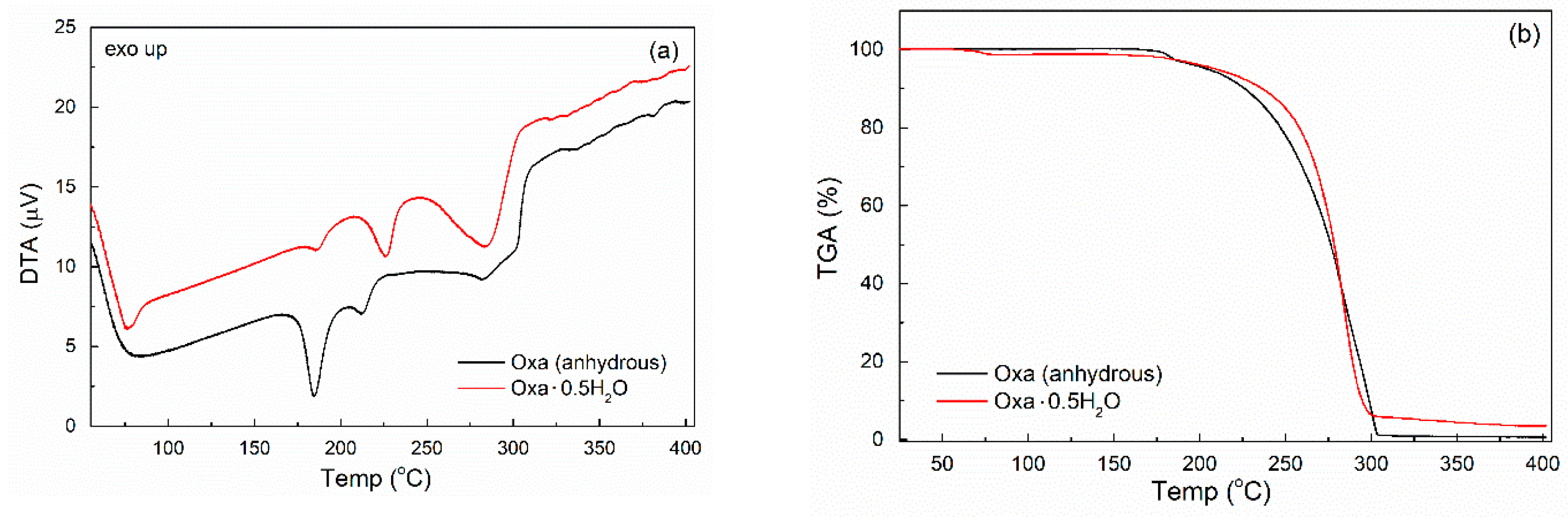
(i) Anhydrous Oxa exhibits a strong endothermic signal with a peak at 185 °C, indicating the melting of a large fraction of the analyzed material (Figure 7). This is immediately followed by a small exotherm, which suggests a molecular rearrangement of the remaining oxandrolone molecules. This is then followed by a minor endotherm at 212 °C, completing the melting process for the anhydrous compound. Decomposition occurs at approximately 282 °C and is accompanied by a significant mass loss.
An endothermic peak for Oxa·0.5H2O is observed at 76 °C, corresponding to the evaporation of water molecules embedded in the crystal lattice (Figure 7), with a measured mass loss of ~1.5%. Notably, the observed mass loss is lower than the theoretical water content calculated from the molecular formula, which can be attributed to the low stability of the hemihydrate; partial water loss likely occurred prior to measurement. At 186 °C, a small endotherm is detected, associated with partial melting of the compound. This is immediately followed by an exotherm, corresponding to a molecular rearrangement, and subsequently by a strong endothermic peak at 226 °C, which finalizes the melting process. Decomposition is observed as an endothermic peak at 283.6 °C. Both crystal forms exhibit two-step melting, with structural rearrangements occurring between the two melting points.
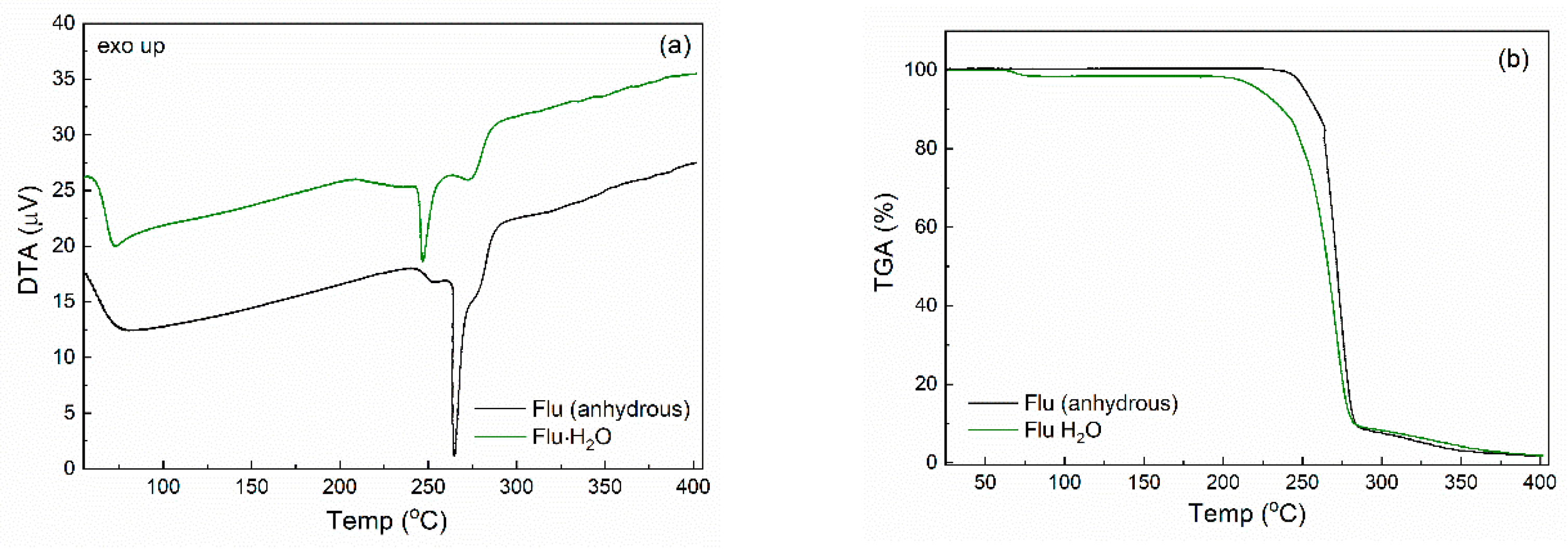
(ii) Fluoxymesterone hydrate (Figure 8) shows an endothermic event at 73 °C associated with water evaporation from the crystal structure, accompanied by a 1.7% mass loss, which is again lower than the theoretical content (5%) due to partial pre-measurement dehydration. A sharp endothermic peak at 247 °C corresponds to melting, followed by decomposition at 272.3 °C. The anhydrous form (Figure 8) exhibits a small endotherm at 254 °C immediately followed by a sharp melting peak at 265 °C.
A notable difference was observed in the thermal behavior of fluoxymesterone compared to the other compounds. While the dehydration of oxandrolone and methandienone led to anhydrous phases with melting points similar to their commercial anhydrous counterparts, the dehydrated form of fluoxymesterone hydrate exhibited a melting endotherm at 247 °C, significantly lower than the 265 °C observed for the native anhydrous form. This shift of approximately 18 °C suggests that the dehydration of Flu·H2O leads to a less stable (possibly metastable or disordered) anhydrous polymorph or a phase with lower crystallinity. The structural reorganization following the loss of lattice water in fluoxymesterone appears to be more disruptive to the packing efficiency than in the other two steroids, resulting in a distinct thermal profile for the newly formed anhydrous matrix.
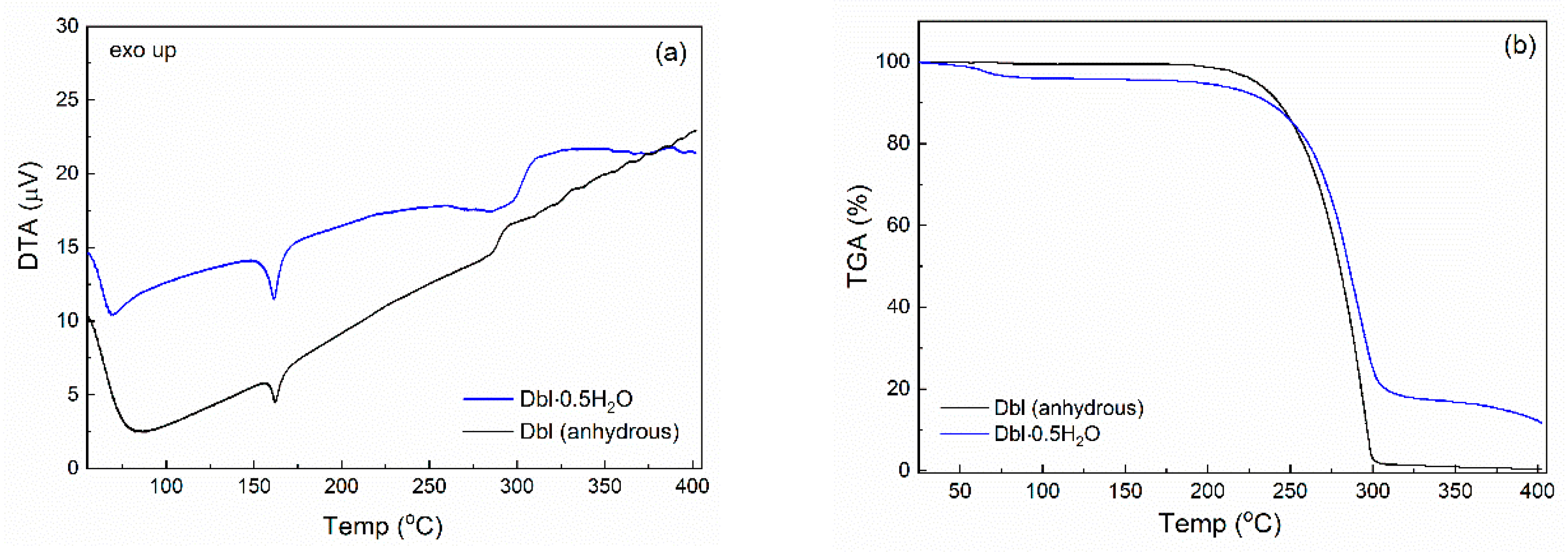
(iii) The thermal behavior of the methandienone hemihydrate (Figure 9) reveals an endothermic peak at 70 °C, corresponding to the dehydration process. This is accompanied by an experimental mass loss of 3.8%, which exceeds the theoretical stoichiometric value of 2.9%. The additional 0.9% weight loss is attributed to non-stoichiometric interstitial water or surface-adsorbed moisture. The compound subsequently undergoes melting in a single step at 162 °C, followed by decomposition at 296 °C.
The thermogram of the anhydrous methandienone (Figure 9) displays a similar melting endotherm at 162 °C, confirming the structural consistency between the two phases. Interestingly, a mass loss of 1.7% is detected prior to melting, despite the absence of a distinct dehydration endotherm. This suggests that the water molecules are weakly associated with the crystal surface or reside within relatively large, disordered voids in the open framework. Such a configuration leads to a slow, continuous evaporation over a broad temperature range that does not produce a detectable thermal event in the DTA curve. The ability of the methandienone lattice to accommodate this water content without undergoing a phase transition highlights the robustness of its hydrogen-bonded molecular chains, which allow the framework to act as a stable host for non-stoichiometric water while maintaining its crystalline integrity. Finally, decomposition of the anhydrous form occurs at 284 °C.
A difference in the final residual mass was observed between the two forms of methandienone (Figure 9). While the anhydrous form undergoes almost complete volatilization by 300 °C, the hemihydrate leaves a stable residue of approximately 18%. This discrepancy is likely due to the structural reorganization following initial dehydration, which alters the thermal degradation pathway of the steroid core, favoring the formation of a carbonaceous char in the case of the dehydrated hydrate phase, as opposed to the more complete decomposition observed for the native anhydrous crystals.
The early onset of water loss for Dbl·0.5H2O compared to Oxa·0.5H2O and Flu·H2O is also in agreement with the calculated lattice energies: Dbl·0.5H2O has the least stable lattice, reflected by a higher lattice energy, making it more prone to dehydration. Thus, the higher observed water loss is consistent with both experimental data and the theoretical analysis of lattice stability.
Detailed thermograms, including the temperatures of the thermal events and the corresponding mass losses, are presented in Figure S1 (Supporting Information). Table S1 (Supporting Information) presents the differences between the mass losses observed in TGA and the theoretically calculated values. The experimental PXRD patterns of all anhydrous steroids were compared with the theoretical patterns calculated from the available CSD entries; these comparisons, which show excellent structural agreement, are provided in the Supplementary Materials (Figure S2).
The discrepancy between the TGA dehydration temperatures (>60 °C) and the spontaneous water loss at room temperature is attributed to kinetic factors. The rapid heating rate in TGA/DTA (5 °C/min) does not provide the necessary residence time for the diffusion-controlled desolvation to occur at lower temperatures. Conversely, under ambient conditions, the extended timescale allows the system to overcome these kinetic barriers, leading to structural reorganization toward the thermodynamically favored anhydrous phases.

4. Conclusions

In this study, new solid forms of 17α-alkylated testosterone derivatives, namely oxandrolone hemihydrate, fluoxymesterone hydrate, and methandienone hemihydrate, were obtained and structurally and energetically characterized. Single-crystal X-ray diffraction revealed the arrangement of steroid molecules and water within the lattice, highlighting hydrogen-bonding networks that connect molecular chains and contribute to the supramolecular architectures.
Thermal analyses (DTA/TGA) confirmed that all hydrated forms lose lattice water at relatively low temperatures, transforming into the corresponding anhydrous phases. Melting and decomposition temperatures of the hydrates closely match those of the anhydrous forms, indicating that dehydration effectively converts the material to a more stable crystalline state. These observations are consistent with stability studies performed under controlled climatic conditions, which showed rapid dehydration of the hydrates and the corresponding structural reorganization toward thermodynamically favored anhydrous forms.
Lattice energy calculations further support this trend, demonstrating that the hydrated crystals are energetically less stable than their anhydrous counterparts due to reduced dispersive interactions and weaker molecular packing. Electrostatic and polarization contributions from water molecules partially compensate for this destabilization but are insufficient to offset the overall reduction in lattice stability.
Overall, the combination of crystallographic, thermal, and computational analyses indicates that while the hydrates are well-defined solid forms, they are metastable and prone to dehydration under ambient or elevated temperature conditions. These findings provide insight into the solid-state behavior of orally active 17α-alkylated testosterone derivatives, with implications for their pharmaceutical handling, storage, and formulation.

Supplementary Materials

The following supporting information can be downloaded at: https://www.mdpi.com/article/10.3390/cryst16040234/s1, Figure S1: Thermograms of analyzed samples: Oxa·0.5H2O (a); anhydrous oxandrolone (b); Flu·H2O (c); anhydrous fluoxymesterone (d); Dbl·0.5H2O (e); anhydrous methandienone (f); Figure S2: Overlay of experimental and simulated powder diffraction data for the anhydrous samples: Dbl (a); Oxa (b); Flu (c); Table S1: Theoretical (The) and experimental (Exp) mass loss differences in the TGA analysis. The CIFs were deposited by the Cambridge Crystallographic Data Centre: 2530535 (Dbl·0.5H2O); 2530536 (Flu·H2O); 2530537 (Oxa·0.5H2O). They can be obtained free of charge on written application to CCDC, 12 Union Road, Cambridge, CB2 1EZ, UK (fax: +44 1223 336033); on request via e-mail to deposit@ccdc.cam.uk or by access to http://www.ccdc.cam.ac.uk.

Author Contributions

Conceptualization, A.T. and G.B.; methodology, A.T.; software, A.T.; validation, A.T., M.M.-P., M.O.M. and G.B.; formal analysis, G.B.; investigation, A.T., M.M.-P., M.O.M. and G.B.; resources, G.B.; data curation, A.T.; writing—original draft preparation, A.T. and G.B.; writing—review and editing, A.T.; visualization, G.B.; supervision, G.B.; project administration, G.B.; funding acquisition, G.B. All authors have read and agreed to the published version of the manuscript.

Funding

This work was supported through the “Nucleu” Program within the National Research Development and Innovation Plan 2022–2027, Romania, carried out with the support of MEC, project no. 27N/03.01.2023, component project code PN 23 24 01 01.

Data Availability Statement

The original contributions presented in this study are included in the article/Supplementary Material. Further inquiries can be directed to the corresponding author.

Conflicts of Interest

The authors declare no conflicts of interest.

References

  1. Griesser, U.J. The Importance of Solvates in the Pharmaceutical Industry. In Polymorphism in the Pharmaceutical Industry; Hilfiker, R., von Raumer, M., Eds.; Wiley-VCH: Weinheim, Germany, 2006; pp. 211–233. [Google Scholar]
  2. Brittain, H.G. Polymorphism in Pharmaceutical Solids, 2nd ed.; Drugs and the Pharmaceutical Sciences; Informa Healthcare: New York, NY, USA, 2009. [Google Scholar]
  3. Aitipamula, S.; Banerjee, R.; Bansal, A.K.; Biradha, K.; Desiraju, G.R.; Dikundwar, A.G.; Dubey, R.; Duggirala, N.; Ghogale, P.P.; Ghosh, S.; et al. Polymorphs, Salts, and Cocrystals: What’s in a Name? Cryst. Growth Des. 2012, 12, 2147–2152. [Google Scholar] [CrossRef]
  4. Alemany, M. The Roles of Androgens in Humans: Biology, Metabolic Regulation and Health. Int. J. Mol. Sci. 2022, 23, 11952. [Google Scholar] [CrossRef] [PubMed]
  5. Dotson, J.L.; Brown, R.T. The History of the Development of Anabolic-Androgenic Steroids. Pediatr. Clin. N. Am. 2007, 54, 761–769. [Google Scholar] [CrossRef] [PubMed]
  6. McCullough, D.; Webb, R.; Enright, K.J.; Lane, K.E.; McVeigh, J.; Stewart, C.E.; Davies, I.G. How the love of muscle can break a heart: Impact of anabolic androgenic steroids on skeletal muscle hypertrophy, metabolic and cardiovascular health. Rev. Endocr. Metab. Disord. 2020, 22, 389–405. [Google Scholar] [CrossRef]
  7. Hervel, G.R.; Knibbs, A.V.; Burkinshaw, L.; Morgan, D.B.; Jones, P.R.; Chettle, D.R.; Vartsky, D. Effects of methandienone on the performance and body composition of men undergoing athletic training. Clin. Sci. 1981, 60, 457–461. [Google Scholar] [CrossRef]
  8. Woerdeman, J.; Ronde, W. Therapeutic effects of anabolic androgenic steroids on chronic diseases associated with muscle wasting. Expert Opin. Investig. Drugs 2011, 20, 87–97. [Google Scholar] [CrossRef]
  9. Marchetti, N. Anabolic Medications for Muscle Wasting in Chronic Obstructive Pulmonary Disease. Is the Evidence Getting Stronger? Am. J. Respir. Crit. Care Med. 2019, 199, 87–97. [Google Scholar] [CrossRef]
  10. Bandeira, L.; Lewiecki, E.M. Anabolic therapy for osteoporosis: Update on efficacy and safety. Arch. Endocrinol. Metab. 2022, 66, 707–716. [Google Scholar] [CrossRef]
  11. Li, H.; Guo, Y.; Yang, Z.; Roy, M.; Guo, Q. The efficacy and safety of oxandrolone treatment for patients with severe burns: Asystematic review and metaanalysis. Burns 2015, 42, 717–727. [Google Scholar] [CrossRef]
  12. Przkora, R.; Herndon, D.N.; Suman, O.E. The Effects of Oxandrolone and Exercise on Muscle Mass and Function in Children with Severe Burns. Pediatrics 2007, 119, 109–116. [Google Scholar] [CrossRef]
  13. Young, G.A.; Yule, A.G.; Hill, G.L. Effects of an anabolic steroid on plasma amino acids, proteins, and body composition in patients receiving intravenous hyperalimentation. J. Parenter. Enter. Nutr. 1983, 7, 221–225. [Google Scholar] [CrossRef] [PubMed]
  14. Orr, R.; Fiatarone Singh, M. The anabolic androgenic steroid oxandrolone in the treatment of wasting and catabolic disorders: Review of efficacy and safety. Drugs 2004, 64, 725–750. [Google Scholar] [CrossRef] [PubMed]
  15. Bross, R.; Javanbakht, M.; Bhasin, S. Anabolic Interventions for Aging-Associated Sarcopenia. J. Clin. Endocrinol. Metab. 1999, 84, 3420–3430. [Google Scholar] [CrossRef] [PubMed]
  16. Schroeder, E.T.; Zheng, L.; Yarasheski, K.E.; Qian, D.; Stewart, Y.; Flores, C.; Martinez, C.; Terk, M.; Sattler, F.R. Treatment with oxandrolone and the durability of effects in older men. J. Appl. Physiol. 2004, 96, 1055–1062. [Google Scholar] [CrossRef]
  17. Dalmau, E.; Armengol-Alonso, A.; Muñoz, M.; Seguí-Palmer, M.Á. Current status of hormone therapy in patients whith hormone receptor positive (HR+) advanced breast cancer. Breast 2014, 23, 710–720. [Google Scholar] [CrossRef]
  18. Kennedy, B.J. Fluoxymesterone Therapy in Advanced Breast Cancer. N. Engl. J. Med. 1958, 259, 673–675. [Google Scholar] [CrossRef]
  19. Manni, A.; Arafah, B.M.; Pearson, O.H. Androgen-induced remissions after antiestrogen and hypophysectomy in stage IV breast cancer. Cancer 1981, 48, 2507–2509. [Google Scholar] [CrossRef]
  20. Stanhope, R.; Bommen, M.; Brook, C.G.D. Constitutional Delay of Growth and Puberty in Boys: The Effect of a Short Course of Treatment with Fluoxymesterone. Acta Pediatr. 1985, 74, 390–393. [Google Scholar] [CrossRef]
  21. Faqueto, H.; Santos, M.R.; Manfredi, L.H. Anabolic-Androgenic Steroids and Exercise Training: Breaking the Myths and Dealing with Better Outcome in Sarcopenia. Front. Physiol. 2022, 13, 838526. [Google Scholar] [CrossRef]
  22. Kicman, A.T. Pharmacology of anabolic steroids. Br. J. Pharmacol. 2008, 154, 502–521. [Google Scholar] [CrossRef]
  23. Solimini, R.; Rotolo, M.C.; Mastrobattista, L.; Mortali, C.; Minutillo, A.; Pichini, S.; Pacifici, R.; Palmi, I. Hepatotoxicity associated with illicit use of anabolic androgenic steroids in doping. Eur. Rev. Med. Pharmacol. Sci. 2017, 21, 7–16. [Google Scholar] [PubMed]
  24. Anthony, A.; Jaskolski, M.; Nangia, A. Crystal chemistry of some synthetic 2-oxa-steroids: Conformation, packing motifs and isostructurality. Acta Crystallogr. B 2000, 56, 512–525. [Google Scholar] [CrossRef] [PubMed]
  25. Ginotra, S.K.; Chhikara, B.S.; Singh, M.; Chandra, R. Efficient oxidizing methods for the synthesis of oxandrolone intermediates. Chem. Pharm. Bull. 2004, 52, 989–991. [Google Scholar] [CrossRef] [PubMed][Green Version]
  26. Karpinska, J.; Erxleben, A.; McArdle, P. 17β-Hydroxy-17α-methylandrosta-1,4-dien-3-one. Acta Crystallogr. E 2013, 60, 69. [Google Scholar] [CrossRef]
  27. Rendle, D.F.; Trotter, J. Crystal and molecular structure of 17β-hydroxy-17α-methyl-2-oxa-5α-androstan-3-one. J. Chem. Soc. Perkin Trans. 1975, 2, 1361–1365. [Google Scholar] [CrossRef]
  28. Duax, W.L.; Strong, P.D.; Wolff, M.E. 9a-FLUORO-11S,17S-DIHYDROXY-17a-METHYL-4-ANDROSTEN-3-ONE. Cryst. Struct. Commun. 1979, 8, 985. [Google Scholar]
  29. Rigaku. CrysAlis PRO; Rigaku Oxford Diffraction: Yarnton, UK, 2018. [Google Scholar]
  30. Dolomanov, O.V.; Bourhis, L.J.; Gildea, R.J.; Howard, J.A.K.; Puschmann, H. OLEX2: A complete structure solution refinement and analysis. J. Appl. Cryst. 2009, 42, 339–341. [Google Scholar] [CrossRef]
  31. Sheldrick, G.M. SHELXT-Integrated Space-Group and Crystal-Structure Determination. Acta Crystallogr. 2015, A71, 3–8. [Google Scholar] [CrossRef]
  32. Sheldrick, G.M. Crystal Structure Refinement with SHELXL. Acta Crystallogr. 2015, C71, 3–8. [Google Scholar] [CrossRef]
  33. Mackenzie, C.F.; Spackman, P.R.; Jayatilaka, D.; Spackman, M.A. CrystalExplorer model energies and energy frameworks: Extension to metal coordination compounds, organic salts, solvates and open-shell systems. IUCrJ 2017, 4, 575–587. [Google Scholar] [CrossRef]
  34. Spackman, P.R.; Turner, M.J.; McKinnon, J.J.; Wolff, S.K.; Grimwood, D.J.; Jayatilaka, D.; Spackman, M.A. CrystalExplorer: A program for Hirshfeld surface analysis, visualization and quantitative analysis of molecular crystals. J. Appl. Crystallogr. 2021, 54, 1006–1011. [Google Scholar] [CrossRef]
  35. Allen, F.H.; Kennard, O.; Watson, D.G.; Brammer, L.; Orpen, A.G.; Taylor, R. Tables of Bond Lengths determined by X-Ray and Neutron Diffraction. Part 1. Bond Lengths in Organic Compounds. J. Chem. Soc. Perkin Trans. 1987, 2, S1–S19. [Google Scholar] [CrossRef]
  36. Verma, R.; Jasrotia, D.; Bhat, M. Synthesis and X-ray crystallographic analysis of 17α-hydroxy-17-methylandrost-4-ene-17-one. J. Chem. Crystallogr. 2006, 36, 283–287. [Google Scholar] [CrossRef]
  37. Angira, D.; Shaik, A.; Kirubakaran, S.; Thiruvenkatam, V. Exploring a solvated dimer of Gefitinib: A quantitative analysis. Acta Crystallogr. C 2018, 74, 944–950. [Google Scholar] [CrossRef] [PubMed]
  38. Jones, E.C.L.; Goldsmith, K.E.; Ward, M.R.; Bimbo, L.M.; Oswald, I.D.H. Exploring the thermal behaviour of the solvated structures of nifedipine. Acta Crystallogr. B 2023, 79, 164–175. [Google Scholar] [CrossRef] [PubMed]
  39. Salameh, A.K.; Taylor, L.S. Physical stability of crystal hydrates and their anhydrates in the presence of excipients. J. Pharm. Sci. 2006, 95, 446–461. [Google Scholar] [CrossRef]
  40. Fujii, K.; Aoki, M.; Uekusa, H. Solid-State Hydration/Dehydration of Erythromycin A Investigated by ab Initio Powder X-ray Diffraction Analysis: Stoichiometric and Nonstoichiometric Dehydrated Hydrate. Cryst. Growth Des. 2013, 13, 2060–2066. [Google Scholar] [CrossRef]
  41. Dubok, A.S.; Rychkov, D.A. Relative Stability of Pyrazinamide Polymorphs Revisited: A Computational Study of Bending and Brittle Forms Phase Transitions in a Broad Temperature Range. Crystals 2023, 13, 617. [Google Scholar] [CrossRef]
Figure 1. Chemical formula structures of studied compounds: basic steroid core (a); fluoxymesterone hydrate (b); oxandrolone hemihydrate (c); methandienone hemihydrate (d).
Crystals 16 00234 g001
Figure 2. Asymmetric unit of Dbl·0.5H2O (a); molecular chains linked by O-H···O bondings (b).
Crystals 16 00234 g002
Figure 3. Asymmetric unit of Oxa·0.5H2O (a); intermolecular O-H···O hydrogen bonds and crystal packing (b).
Crystals 16 00234 g003
Figure 4. Asymmetric unit of Flu·H2O (a); intermolecular O-H···O hydrogen bonds and crystal packing (b).
Crystals 16 00234 g004
Figure 5. Overlay of experimental and simulated powder diffraction data for the investigated samples: Dbl·0.5H2O (a); Oxa·0.5H2O (b); Flu·H2O (c).
Crystals 16 00234 g005aCrystals 16 00234 g005b
Figure 6. Powder diffraction data of the samples placed in the climate-controlled chamber: Oxa·0.5H2O (a); Flu·H2O (b); Dbl·0.5H2O (c). Note: The diffraction lines marked with * indicate the most intense lines of the hydrated phase.
Crystals 16 00234 g006
Figure 7. Comparison of the differential thermal analysis (a) and thermogravimetric analysis (b) curves of Oxa in anhydrous and hydrated form.
Crystals 16 00234 g007
Figure 8. Comparison of the differential thermal analysis (a) and thermogravimetric analysis (b) curves of Flu in anhydrous and hydrated form.
Crystals 16 00234 g008
Figure 9. Comparison of the differential thermal analysis (a) and thermogravimetric analysis (b) curves of Dbl in anhydrous and hydrated form.
Crystals 16 00234 g009
Table 1. Structural and refinement details of the newly characterized hydrates.
CrystalDbl·0.5H2OOxa·0.5H2OFlu·H2O
Empirical formulaC20H29O2.5 C19H31O3.5 C20H31FO4
Formula weight 309.43315.44354.45
Temperature/K 293(2) 293(2) 293(2)
Crystal system orthorhombic orthorhombic orthorhombic
Space group P212121 P21212 P212121
a/Å 6.4730(2) 22.6998(5) 7.40120(10)
b/Å 12.6728(4) 10.3490(3) 11.6819(2)
c/Å 42.7435(10) 7.4773(2) 21.5560(3)
α/° 909090
β/° 909090
γ/° 909090
Volume/Å3 3506.29(18) 1756.57(8) 1863.73(5)
Z 844
ρcalcg/cm3 1.1721.1931.263
μ/mm−1 0.5880.6360.758
F(000) 1352.0692.0768.0
Radiation Cu Kα (λ = 1.54184)Cu Kα (λ = 1.54184) Cu Kα (λ = 1.54184)
2Θ range for data collection/° 7.276 to 142.697.79 to 142.852 8.204 to 142.538
Index ranges −7 ≤ h ≤ 6, −13 ≤ k ≤ 15, −52 ≤ l ≤ 21−27 ≤ h ≤ 27, −12 ≤ k ≤ 12, −9 ≤ l ≤ 8 −9 ≤ h ≤ 9, −14 ≤ k ≤ 11, −26 ≤ l ≤ 26
Reflections collected 886824,37326,141
Independent reflections 5530 [Rint = 0.0220, Rsigma = 0.0347]3400 [Rint = 0.0533, Rsigma = 0.0249] 3570 [Rint = 0.0222, Rsigma = 0.0121]
Data/restraints/parameters 5530/0/4173400/0/211 3570/2/234
Goodness-of-fit on F2 1.0041.0781.094
Final R indexes [I ≥ 2σ (I)] R1 = 0.0498, wR2 = 0.1395R1 = 0.0424, wR2 = 0.1311R1 = 0.0343, wR2 = 0.0926
Final R indexes [all data] R1 = 0.0616, wR2 = 0.1551 R1 = 0.0448, wR2 = 0.1356R1 = 0.0381, wR2 = 0.0962
Largest diff. peak/hole/e Å−3 0.14/−0.300.19/−0.200.34/−0.14
Flack parameter0.26(17)−0.04(12)−0.01(4)
Table 2. Intermolecular interaction distances and angles for studied hydrates (Å, o).
StructureD-H···AD-HH···AD···A<(D-H···A)
Dbl·0.5H2OO2B-H2B···O1A0.8202.0932.877(4)159.8
O2A-H2A···O1B0.8202.1062.907(4)165.5
C2A-H2AA···O1B0.9302.6673.561(5)161.5
O3-H3B···O2A0.8502.1522.985(5)166.4
C16A-H16B···O30.9702.6783.433(6)135.0
C6B-H6BA···H20D-C20B 2.335
O3-H3A···O2B0.8502.0872.882(5)155.5
C16B-H16D···O30.8202.6733.526(7)147.0
C2B-H2BA···O30.9302.5853.265(6)130.4
C19B-H19E···O1B0.9602.6953.381(5)128.8
Oxa·0.5H2OO2-H2···O10.8201.9782.789(3)170.4
C11-H11A···H18A-C18A 2.406
O3-H3···O20.8502.1602.907(2)146.2
C4-H4A···O30.9702.6963.324(4)132.0
C5-H5···O30.9802.6863.361(3)126.5
Flu·H2OO2-H2···O10. 8202.1442.954(3)169.3
C2-H2B···H18A-C18 2.327
C15-H15A···F10.9702.5963.404(3)140.9
C2-H2B···H6B-C6 2.372
O3- H3A···O10.9342.2223.103(3)156.9
O3-H3B···O20.8502.0932.898(3)157.7
Table 3. Crystal lattice energies of the analyzed crystals.
CrystalEele(kJ/mol)Epol (kJ/mol)Edisp (kJ/mol)Erep (kJ/mol)Elatt (kJ/mol)
Dbl·0.5H2O−29.5−7.1−48.726.0−59.3
Anhydrous Dbl−51.0−16.5−106.952.4−122.0
Flu·H2O−77.5−14.0−80.954.9−117.5
Anhydrous Flu−85.6−14.2−149.375.5−179.7
Oxa·0.5H2O−47.3−12.5−72.418.8−113.4
Anhydrous Oxa−48.3−15.8−144.243.9−164.4
Abbreviations: Eele-electrostatic term; Epol-polarization term; Edisp-dispersion term; Erep-dispersion term; Etot-total intermolecular interaction energy.
Table 4. Magnitude and nature of intermolecular interaction energies in the hydrates.
CrystalInteraction Pair ContactEeleEpolEdispErepEtot
Dbl·0.5H2ODbl-Dbl
(asym unit)
O2B-H2B···O1A −39.6−7.6−10.721.4−36.5
Dbl-DblO2A-H2A···O1B−35.8−7.9−13.521.8−35.4
Dbl-DblC2A-H2AA···O1B−13.9−3.27.40−24.5
Dbl-waterO3-H3B···O2A
C16A-H16B···O3
−27.3−4.5−8.218.1−21.9
Dbl-DblC6B-H6BA···H20D-C20B−1.7−0.8−26.910.5−18.9
Dbl-waterO3-H3A···O2B
C16B-H16D···O3
−28.0−5.5−9.523.0−20.0
Dbl-DblC2B-H2BA···O3−4.9−1.4−5.45.0−6.7
Dbl-DblC19B-H19E···O1B−3.6−1.8−28.59.5−24.4
Oxa·0.5H2OOxa-OxaO2-H2···O1−42.2−9.0−11.00−62.2
Oxa-OxaC11-H11A···H18A-C18A−1.0−0.9−22.813.2−11.5
Oxa-waterO3-H3···O2−5.7−2.1−6.75.6−8.9
Oxa-waterC4-H4A···O3
C5-H5···O3
−5.7−2.1−6.75.6−8.9
Flu·H2OFlu-FluO2-H2···O1−41.80−14.223.2−32.8
Flu-FluC15-H15A···F1−6.7−0.1−35.611.7−30.7
Flu-FluC2-H2A···H18A-C18−6.5−0.8−31.113.0−25.5
Flu-WaterO4- H4···O3−43.5−7.8−8.224.6−34.9
Flu-WaterO3-H3B···O2−28.2−4.3−7.917.7−27.7
Abbreviations: Eele-electrostatic term; Epol-polarization term; Edisp-dispersion term; Erep-dispersion term; Etot-total intermolecular interaction energy.
Disclaimer/Publisher’s Note: The statements, opinions and data contained in all publications are solely those of the individual author(s) and contributor(s) and not of MDPI and/or the editor(s). MDPI and/or the editor(s) disclaim responsibility for any injury to people or property resulting from any ideas, methods, instructions or products referred to in the content.