


Abstract
This study presents the effect of partially replacing milled fireclay (3% to 12%) with mineral wool melt centrifugation waste (CWW) in lightweight refractory concrete with cenospheres (CHs). We analyzed hydration heat evolution, mineral composition (XRD), density, compressive strength, apparent porosity, and shrinkage after high-temperature exposure at 800 °C, 1000 °C, and 1200 °C. Increasing the amount of CWW accelerates the exothermic reaction (EXO) in cement paste and increases the sample compressive strength after curing and drying. After high-temperature exposure at 1000 °C and 1200 °C, due to the presence of an amorphous phase and the sintering process in the sample, additional phases, such as diopside, anorthite, and gehlenite, the compressive strength values in the samples with 6% and 9% CWW grow more intensively (up to 20.2%) than in CWW-free samples. With increasing CWW amount, the porosity of samples after high-temperature exposure at 800 °C, 1000 °C and 1200 °C varies in the ranges 41.7–35%, 38.9–33.7% and 38.1–32.2%, but shrinkage of samples varies in the range 0.09–0.2%, 0.12–0.25% and 0.13–0.33%. Overall, a CWW content of 6–12% increases compressive strength for lightweight refractory concrete with a density of 1340–1380 kg/m3 after high-temperature exposure at 1200 °C. Based on the strength-to-density ratio of the samples, a CWW content of 6–9% is optimal.
1. Introduction
Waste recycling is becoming more popular as governments and businesses work to promote the circular economy. Among concretes in which waste can be successfully utilized, a special place is occupied by refractory concrete, the price of which is very high, and the replacement of components with waste is particularly relevant. Demand for lightweight refractory concretes is very high because of their special properties—low density, which allows for lighter construction, low thermal conductivity, and sufficient resistance to thermal shock. However, one of the biggest problems with lightweight refractory concrete is its low mechanical strength.
Reducing cement consumption, controlling the rheological characteristics of concrete mixes, and enhancing the mechanical and physical properties of concrete are just a few issues in lightweight refractory concrete technology that can be addressed by altering the material’s properties with waste-based fillers appropriate in chemical composition.
Refractory concrete functionality can be enhanced by adding different wastes, such as blast furnace slag [1], Ferronickel Slags [2], different types of ashes, petroleum catalytic cracking catalyst waste, mineral wool manufacturing waste, and cenospheres (CHs). Studies [3,4,5,6] show that replacing conventional raw materials with granulated blast furnace slag can produce refractory castables with up to 74% more blast furnace slag and improved corrosion resistance. The precipitation of minerals such as gehlenite and anorthite improves the castable’s physical properties. Study [2] demonstrates that it is feasible to turn ferronickel slag from electric arc furnaces into refractory materials by neutralizing the harmful FeO and CaO components with sintered magnesia. Petroleum catalyst wastes accelerate aluminate cement hydration, yielding high-strength monoliths with denser, temperature-resistant structures [7,8].
Fly ash, a coal combustion by-product rich in silica and alumina, is increasingly used as a cost-effective, sustainable raw material in refractory manufacturing. It is utilized to produce lightweight insulating firebricks, castables, and advanced ceramics, cutting production costs and promoting a circular economy [9,10,11]. In silico aluminate refractory castables can replace conventional, more expensive ingredients like kaolinite clay and alumina with fly ash. During burning, fly ash impurities form a silica-rich liquid phase. This promotes in situ crystallization of secondary mullite, greatly enhancing mechanical strength and interparticle bonding. Studies [10] show that adding roughly 10% fly ash to castables balances densification and strength, achieving cold crushing strengths over 65.3 MPa at 1400 °C.
Waste from mineral wool manufacturing, particularly ultrafine cupola dust, can replace microsilica in refractory concrete or serve as an active filler. This recycled addition, rich in SiO2, Al2O3, and CaO, increases the end product’s mechanical strength and thermal-shock resistance [6]. In calcium aluminate cement mixtures, ultrafine waste dust (cupola dust) can replace commercial microsilica, usually at 1% to 3% [6].
CH, created during the combustion of coal fly ash, are mostly lightweight, hollow aluminosilicate microspheres formed from an amorphous, glassy substance containing 50–65% by weight of amorphous SiO2, 20–30% Al2O3, 1–8% Fe2O3, as well as traces of Ca, Mg, phosphates, chlorides, sulfates, etc.
When added to refractory castables, they act as lightweight aggregates and tailored pore-forming agents, significantly increasing flowability, lowering weight, and improving thermal insulation without significantly compromising mechanical strength. By replacing heavier traditional aggregates, CH yields lighter monolithic linings, reducing the stress on structural components. Because CH contains 30% to 40% alumina and other high-melting oxides, cenospheres can withstand extreme continuous temperatures, typically ranging from 1450 °C to over 1600 °C [5,12].
However, among overwired wastes, the less developed but still very promising are aluminosilicate microspheres—cenospheres and mineral wool waste. CH typically has a very low bulk density (0.3–0.5 g/cm3); therefore, it accumulates on the surface of the ash layer in settling basins [13,14].
CH can be used as an additive in lower-cost [15,16] Portland cement-based concrete. CH’s spherical shape can reduce water use and heat of hydration [17].
These features enable CH use in contemporary refractory materials [12,18,19]. Low thermal conductivity (0.1–0.2 W/m·K), thermal stability (sintering often occurs in the temperature range of 1000–1450 °C), resistance to acids, aggressive chemicals, etc., have all been demonstrated for CH [14]. These characteristics create numerous opportunities for their use in refractory concrete, composite materials, and high-temperature ceramics [20,21].
Refractory castables based on calcium aluminate cement have been extensively used to line a variety of high-temperature furnaces. Porous refractory castables are known to have enhanced thermal-shock resistance. Most lightweight refractory castables possess higher porosity. The use of CH in lightweight refractory concrete to improve shrinkage, thermal insulation, and performance while lowering density is of great interest [12]. The results of the study [5] show that increasing the amount of CH in the refractory castable composition (up to 20%) reduces the density of the samples during high-temperature exposure at 1200 °C from 1895 kg/m3 to 1115 kg/m3 and the compressive strength by 60%, respectively, from 12.5 MPa to 5 MPa.
The resulting porous structures of samples with 15 and 20% cenospheres effectively relax stresses arising during high-temperature exposure and practically compensate for shrinkage. However, the large, porous specific surface area of CH limits its use in refractory concretes [22] because it increases water demand, which in turn reduces rheological performance and strength. Therefore, to expand the application of these lightweight concretes, it is necessary to develop concretes with higher strength after thermal treatment. For this purpose, mineral wool waste generated during the centrifugation process of mineral wool production could be suitable. This process generates a large amount of waste (up to 15% of the output) [23]. This waste consists of mineral wool fibers, melt fragments, pellets, and a small amount of organic binder (1–2%) [24]. Recycling this waste is a serious challenge, as it is technologically difficult to recycle it back into production. One possible solution is to use this waste in ceramics; however, it can increase the shrinkage of the ceramic body [23]. Reusing mineral wool waste as a substitute for cement-based composites may be a promising direction for developing effective recycling technologies.
In the study [6], the reuse of mineral wool waste with low calcium content was investigated in the production of refractory concrete with calcium aluminate cement and microsilica. The study found that replacing microsilica with mineral wool waste (1% to 3%) in refractory concrete has the most positive impact when the high-temperature exposure temperature does not exceed 800 °C. Moreover, properties improve slightly when mineral wool waste does not exceed 2%. The combination of MgO and CaO in refractories creates materials with enhanced properties, leveraging the high refractoriness and thermal-shock resistance of MgO alongside the basicity and slag resistance of CaO [4,25]. These refractories typically form complex mineral phases such as magnesium–calcium silicates, which improve their thermal-shock resistance performance in environments with variable or aggressive slags [26,27].
At temperatures of 800–1000 °C, 3% microsilica replacing CWW decreases compressive strength by 40%. However, other studies [28] report that high-calcium mineral wool waste, which is mineral wool melt centrifugation waste (CWW), can be used in refractory materials because, during high-temperature exposure at 1000 °C, mineral diopside forms, which can significantly increase strength after high-temperature exposure. The same is reported in the research [4,29]: when dolomite was added to kaolin clay (Al2O3 is 25.2%) to create an SiO2-CaO-MgO-Al2O3 refractory material, the MgO level rose from 0.2% to 5.3–9.5% and the CaO content from 1.4% to 11.6–17.7%. In the present system, dolomite controls the material’s sintering properties, and diopside and anorthite crystallized at 900 °C. The same trends were observed in research [23,28]. When CWW, an aluminum-rich waste, was used in ceramics, anorthite and diopside crystallization significantly increased. The resulting samples possess increased mechanical properties and reduced density and shrinkage.
We aim to explore CWW’s potential as a raw material for a new lightweight refractory castable with cenospheres to maintain balanced shrinkage and improve mechanical properties. At the same time, this study can contribute to the research field by conducting a detailed analysis of the properties and performance characteristics of refractory concretes and refractory materials using CWW.
2. Materials and Methods
2.1. Materials
The following materials were used in the studies:
The calcium aluminate cement GÓRKAL 70 (Górka Cement Sp. z o.o., Trzebinia, Poland) used in this study had a specific surface area of 0.425 m2/g, a bulk density of 1100 kg/m3, and at least 88% of particles smaller than 0.063 mm. Its refractoriness was at least 1630 °C. The main mineralogical phases were CA, CA2, and C12A7. The chemical composition comprised 70.2% Al2O3, 28.0% CaO, 0.5% SiO2, 0.3% Fe2O3, and 0.5% Na2O+K2O. After 24 h of curing, the compressive strength was 41.7 MPa.
Coarse fireclay aggregate (A) (fraction up to 5 mm) was made from fireclay brick with (Al2O3 ≥ 30%) by crushing and sieving. The fireclay brick density was 1930 kg/m3, and the bulk density was 1260 kg/m3.
The ground fireclay (MA) was prepared using a DECO-JM-1*5L laboratory ball mill (DECO, Yueyang, Hunan, China). The bulk density of the ground fireclay was 1120 kg/m3, and its specific surface area was 0.37 m2/g.
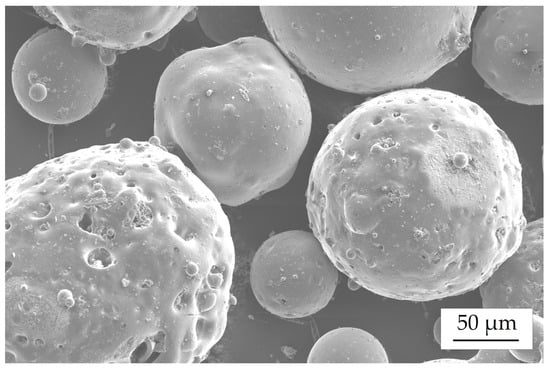
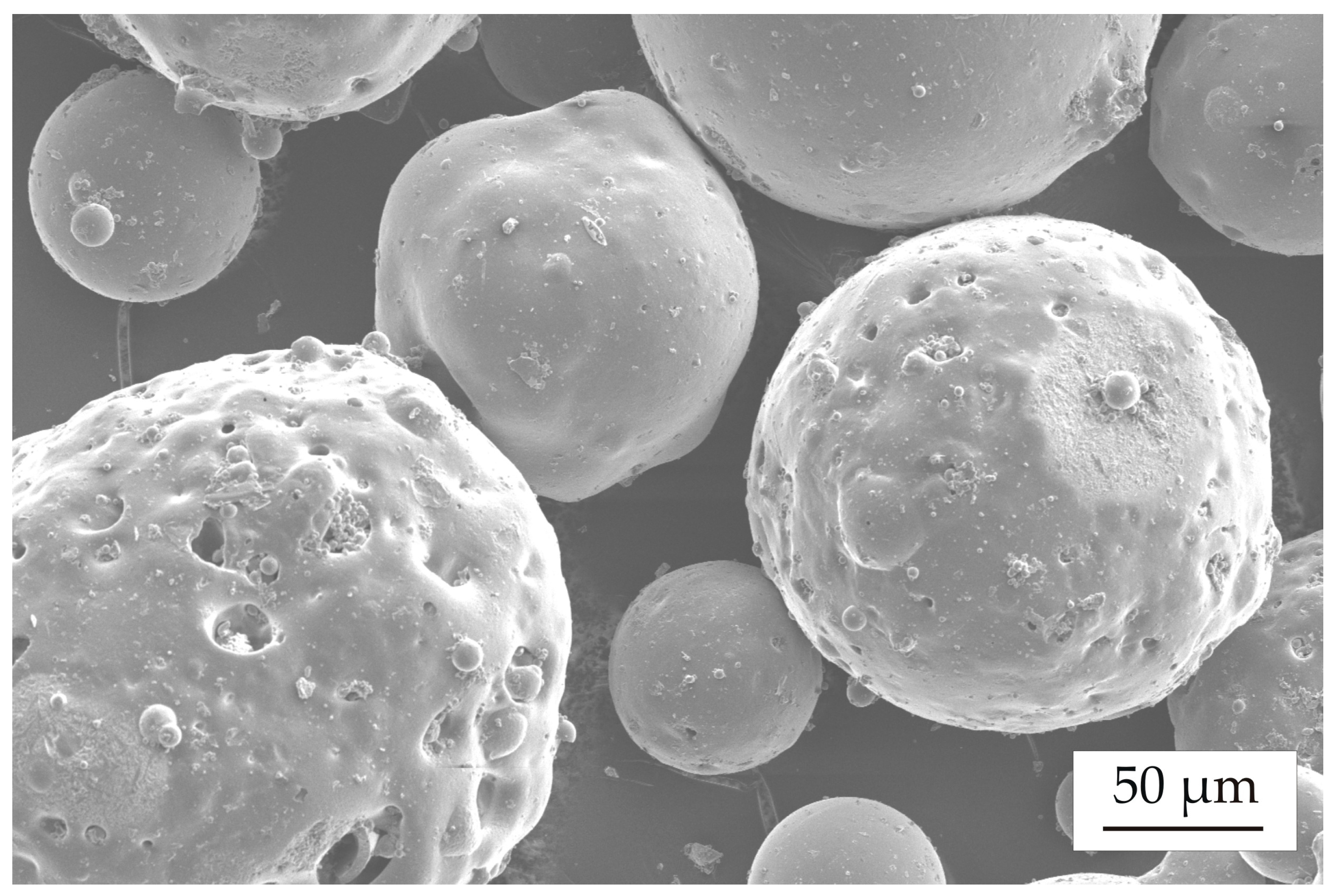
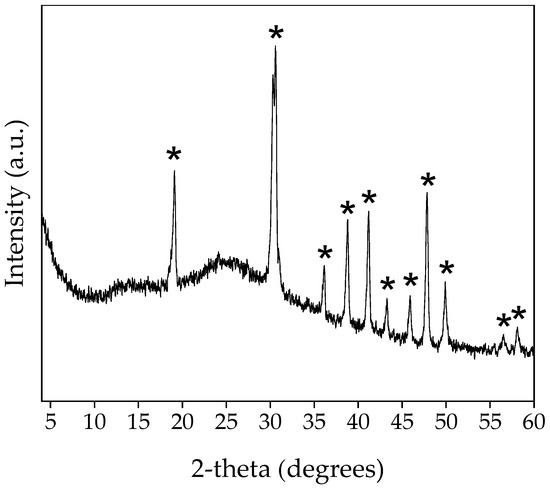
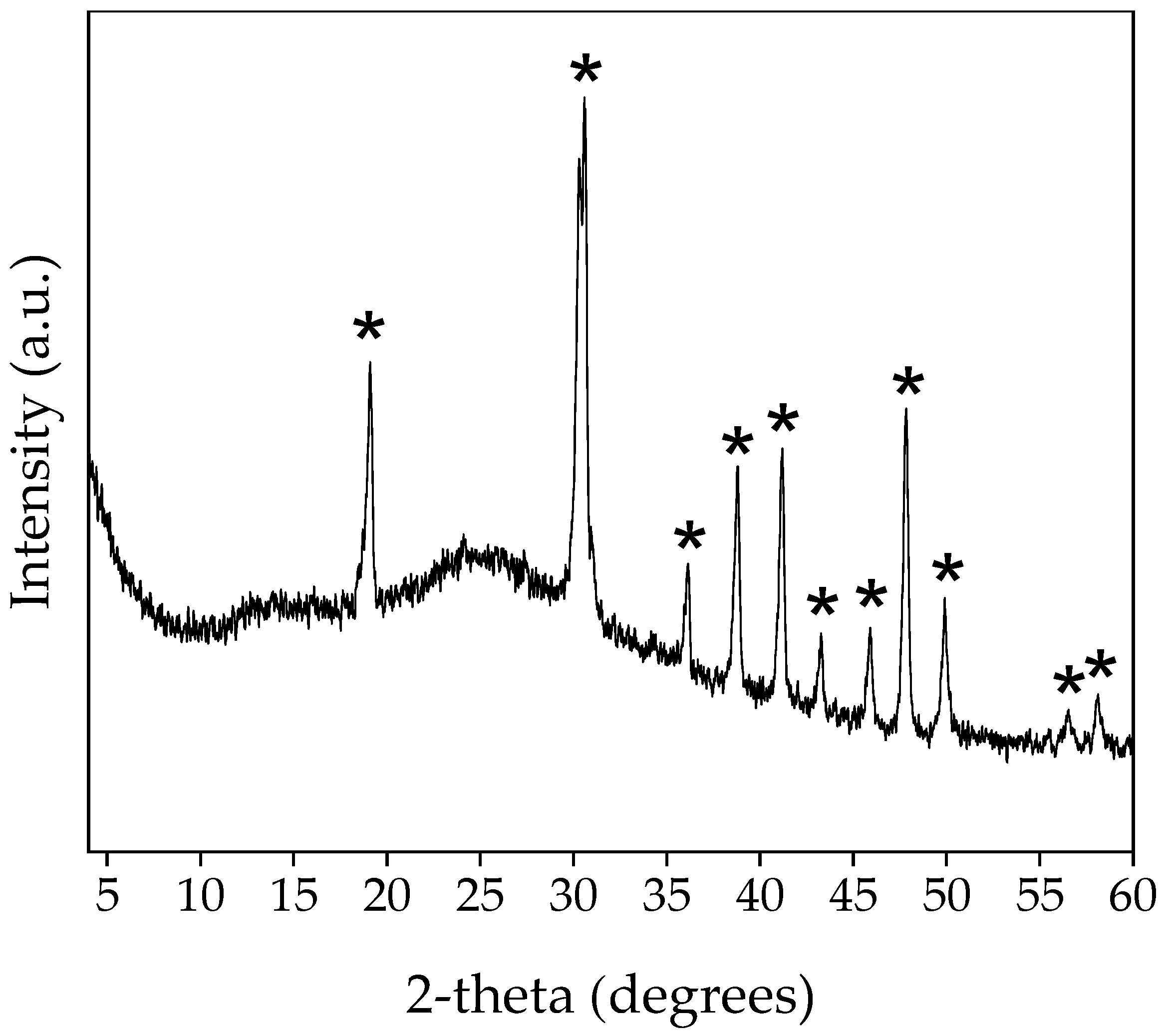
Cenospheres (CHs) mainly consist of SiO2 and Al2O3. At 400 °C and 1000 °C, the ignition loss was 0.57% and 0.9%, respectively. The bulk density of cenospheres is 406 kg/m3. Table 1 indicates that spheres with a diameter of 25–250 µm make up the majority of cenospheres. The chemical composition of cenosphere is presented in Table 2. Figure 1 shows the overall view of cenospheres. The surface of smaller cenospheres is also finer. X-ray phase analysis of cenospheres (Figure 2) determined that the main mineral forming in the cenospheres is mullite (Al6Si2O13).
Table 1.
Particle-size distribution of the cenospheres, CWW, and MA.
Table 2.
Chemical composition of cenospheres, CWW and MA (mass%).
Figure 1.
SEM studies of cenospheres.
Figure 2.
X-ray phase analysis of cenospheres, *-mullite.
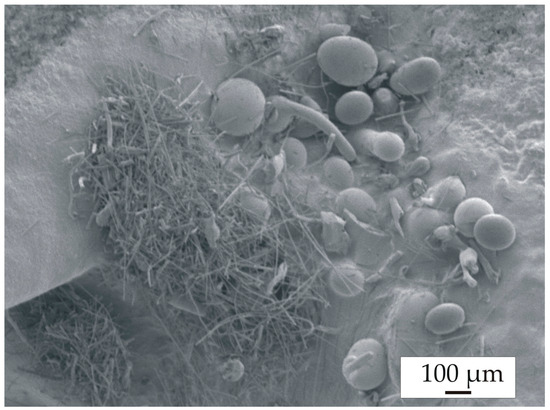
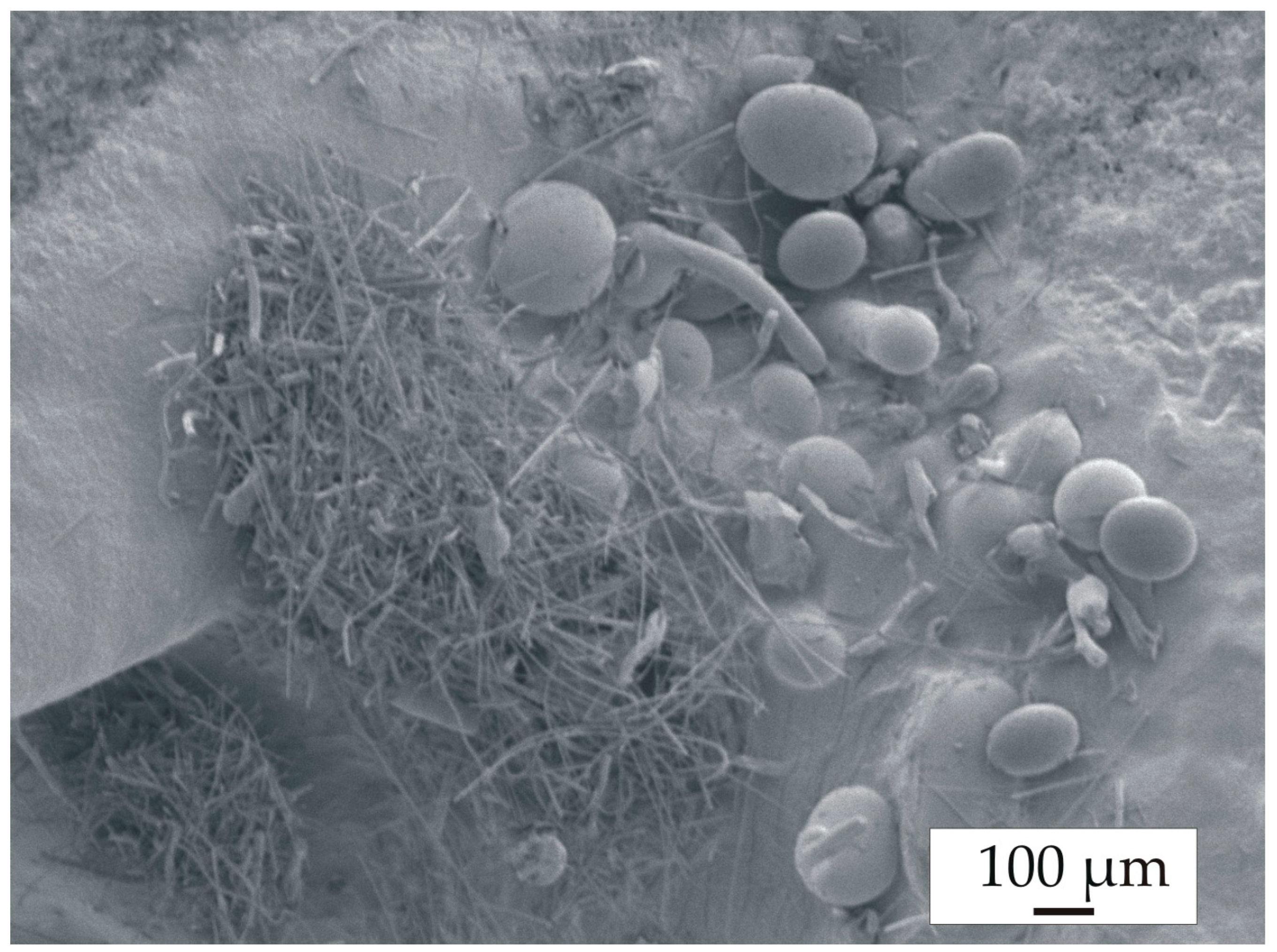
Mineral wool melt centrifugation waste (CWW) is composed of aluminum silicate and is formed in the process of centrifugation of mineral wool. CWW consists of mineral wool fibers, melt pieces, beads, and a small amount of organic binder material (1–2%) (Figure 3), which are neutralized according to the methodology [23] before use. The CWW contains approximately 1–2% organic binder. The present study did not quantify gaseous emissions during high-temperature exposure; therefore, the current data cannot assess the environmental implications of binder decomposition. This represents a limitation of the study and should be addressed by dedicated emission analysis in future work.
Figure 3.
CWW overall view.
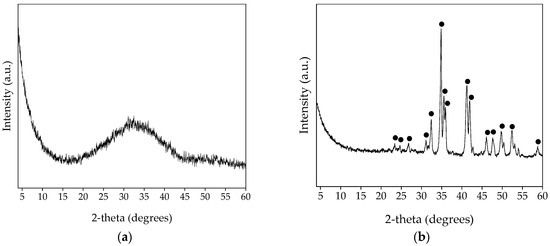
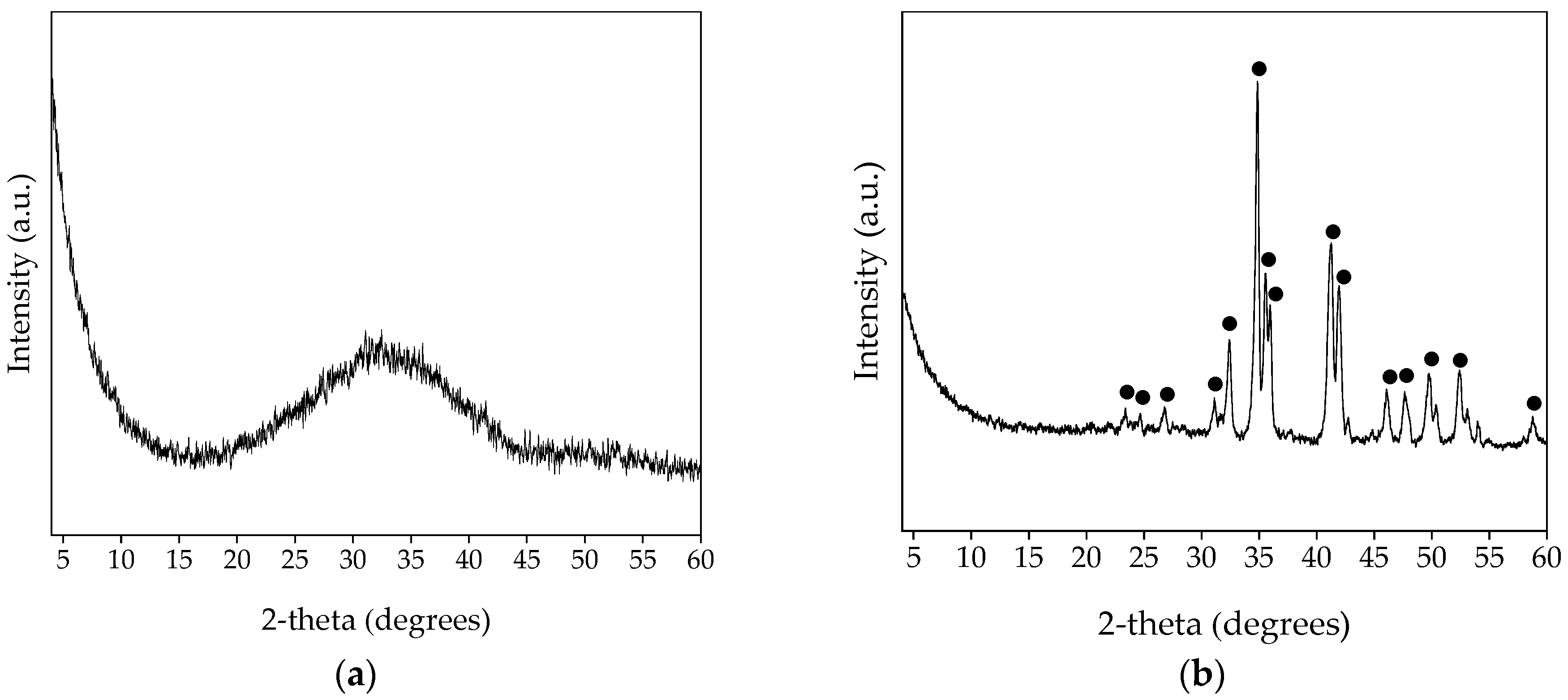
Therefore, CWW can replace milled fireclay aggregate. Particle size composition is presented in Table 1. The average particle size of the CWW is 51 μm and a specific surface area of 2050 cm2/g. The chemical composition of CWW is presented in Table 2. Figure 3 presents the overall view, and Figure 4a presents the X-ray phase analysis of CWW. As shown in the X-ray phase analysis, the amorphous phase dominates. Figure 4 b shows the results for CWW high-temperature exposure at 1000 °C. Diopside was the predominant phase in the mineralogical composition of the mineral wool waste high-temperature exposure at 1000 °C.
Figure 4.
X-ray diffraction patterns: (a) untreated CWW and (b) CWW high-temperature exposure at 1000 °C; ●—diopside.
To reduce the W/C ratio in concrete, the polycarboxylate-based deflocculant Castament FS 20 (BASF, Beiersdorf, Germany) was used.
2.2. Methods and Sample Preparation
The crystalline phases in the raw materials and high-temperature exposure samples were investigated using an X-ray diffractometer DRON-7 (Bourevestnik JSC, Saint Petersburg, Russia) (copper anticathode, nickel filter, anode voltage 30 kV, anode current 8 mA). Phase composition was identified using ASTM reference data.
Microstructural analysis was performed using a JSM-7600F scanning electron microscope (JEOL Ltd., Tokyo, Japan; resolution 1.5 nm).
Dynamic viscosity studies were performed to evaluate the dynamic viscosity of the pure cement matrix paste, the effect of CWW addition, and the effect of different water amounts in cement matrix pastes with CWW. The dynamic viscosity of cement matrix pastes was measured using the vibro-viscometer SV-10 (capacity: up to 12.000 mPa·s; accuracy: 0.01 mPa·s). Testing started immediately after preparing the cement matrix paste and lasted 10 min.
The concrete mixture was prepared in a special forced-mix Hobart-type mixer (56 rpm) with a capacity of 20 L. The room and concrete component temperature was 20 ± 1 °C. The dry components were mixed for 3 min, then water (75% of the total water content) was added and mixed for 3 min; then the remaining water was added, and the mixture was mixed for 3 min. The mixture was placed in 70 × 70 × 70 mm forms. The parameters of the exothermic reaction were determined for cement pastes containing the same fine components used to investigate the effect of CWW on the hydration behavior of the binder system. Coarse fireclay aggregate was not included in these tests. Therefore, the measured EXO peak temperature and peak time characterize the hydration behavior of the cement paste only and are not intended to represent the thermal response of the complete refractory concrete mixture [30]. Processing of concrete samples and their main physical and mechanical properties were carried out in accordance with the requirements of ASTM Standard [31] and EN 1402-5 [32].
The samples were kept at 20 ± 1 °C for 72 h, then dried at 105 ± 2 °C for 48 h (24 h at 60 °C and 24 h at 105 ± 2 °C). After drying, the samples were transferred to an electronic controller furnace (SNOL 8,2/1300) and high-temperature exposure at 800 °C, 1000 °C, and 1200 °C, keeping at the specified temperature for 3 h. The high-temperature exposure regime includes heating from 20 °C to 800 °C, 1000 °C, and 1200 °C at 3 °C/min, and cooling from 800 °C, 1000 °C or 1200 °C at 60 °C/h.
The compressive strength of heat-resistant concrete after 3 days of hardening, drying, and high-temperature exposure at temperatures of 800, 1000, and 1200 °C was determined using an ALPHA3-3000S hydraulic press (FORM+TEST Seidner & Co. GmbH, Riedlingen, Germany) in accordance with the requirements of EN 12390-3 [33]. The paper presents the arithmetic averages of each of the five successful measurements.
Apparent porosity measurements were performed by boiling-water immersion for 2 h, followed by soaking in water for 24 h [34]. Bulk density was calculated from the mass and geometrical volume of the specimens. Linear shrinkage was determined from the change in specimen dimensions before and after high-temperature exposure and expressed as a percentage of the initial dimensions. For apparent porosity, density, and shrinkage, we reported the arithmetic mean of five successful measurements.
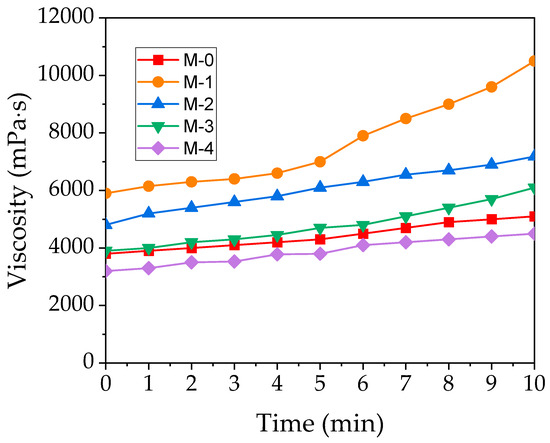
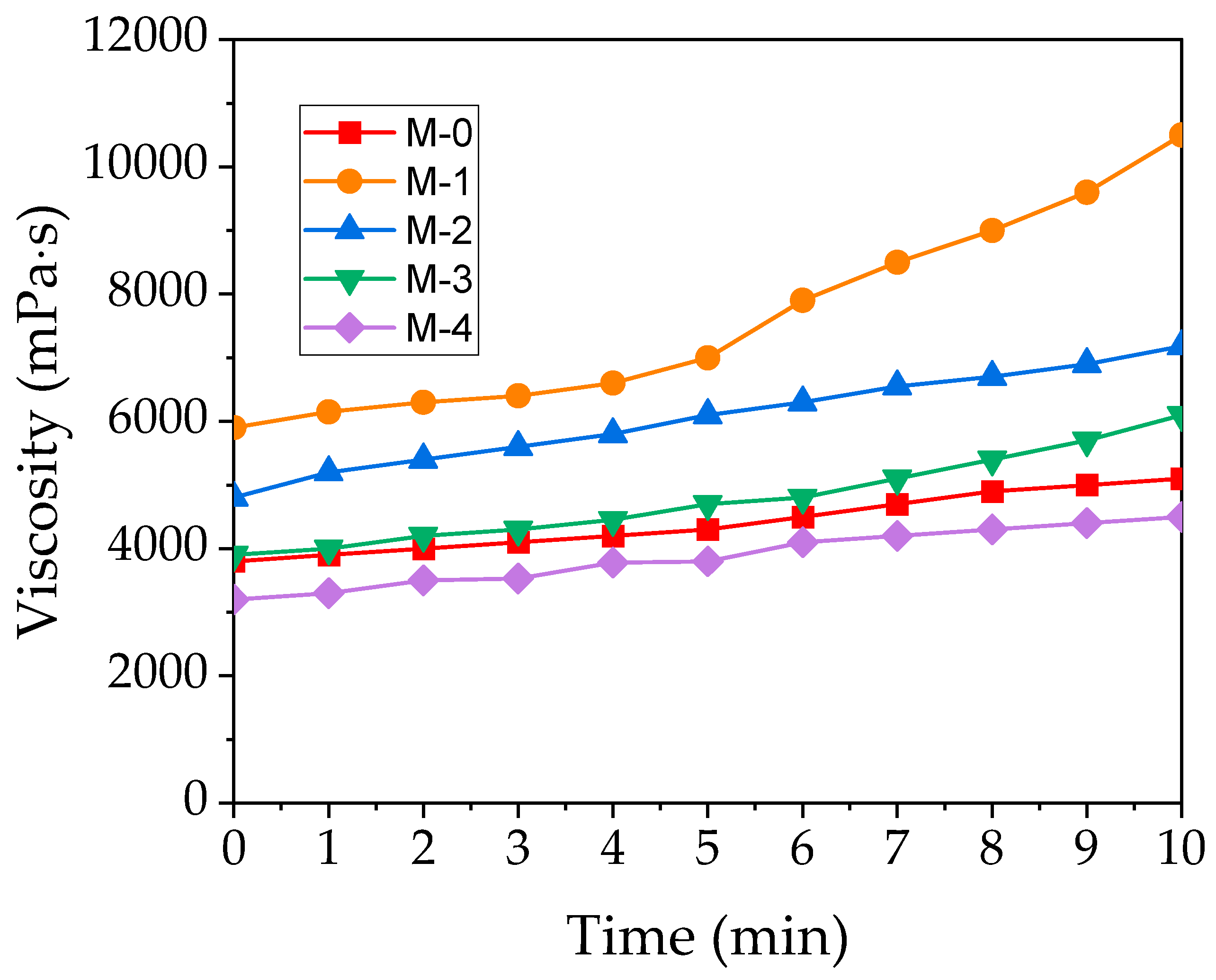
XRD testing was performed on the cement matrix (M-0) and the cement matrix with CWW addition (M-CWW). To prepare M-0, 100 g of cement, 15 g of cenospheres, and 18 g of water were used. Because CWW is a fine fraction with a specific surface area of about 2050 cm2/g, adding it can markedly increase the water requirement. To prepare a dry mix of M-CWW, 100 g of cement, 15 g of CH, and 9 g of CWW were used. To select an appropriate water content comparable to the rheological properties of M-0 paste, dynamic viscosity studies on M-CWW pastes with different water contents were performed (18 g, 24 g, 30 g, and 36 g), named M-1, M-2, M-3, and M-4. The dynamic viscosity results are presented in Figure 5. Having compared the viscosity of M-0 paste with 18 g of water, without CWW addition, it turned out that the viscosity of paste M-1 with the same amount of water during the first minute of measurement increased by 57.7%, after 5 min—62.8%, and after 10 min—105.9%. When more water (24 g) was added to the paste, the paste viscosity increased by 33.3% during the first minute, 41.9% after 5 min, and 40.8% after 10 min. Adding 30 g of water increased the paste viscosity compared to the M-0 paste, increasing paste viscosity by 2.6% during the first minute, by 9.3% after 5 min, and by 19.6% after 10 min. An even higher amount of water (36 g) also reduced viscosity compared to the M-0 paste. During the first minute, paste viscosity decreased by 15.4%, after 5 min by 11.6%, and by 11.8% after 10 min. The water content of 30 g had the least effect on viscosity during the first 5 min of measurement. Therefore, for further XRD studies, a water content of 30 g was chosen, which ensures the smallest difference in viscosity between the M-0 paste and the paste with CWW addition. The exact composition of M-CWW is as follows: 100 g of cement, 15 g of CH, 9 g of CWW, and 30 g of water. After preparation, M-0 and M-CWW samples were cured, and XRD was recorded at 1000 °C and 1200 °C.
Figure 5.
Dynamic viscosity of cement matrix (M-0) and the cement matrix with CWW addition (M-1, M-2, M-3, M-4) using different amounts of water.
To study the effect of adding varying amounts of CWW on the cement hydration process and the physical and mechanical properties of lightweight concrete with CH, five compositions with varying amounts of CWW were prepared (Table 3). The first control composition, Z-0, used only fireclay filler and CH, while compositions Z-3–Z-12 varied CWW from 3% to 12%. The amount of CWW increased as the amount of milled chamotte decreased. Water content was constant at 14.8% of the dry components.
Table 3.
Compositions of lightweight refractory concrete with different amounts of CWW.
3. Results
3.1. Hydration Temperature
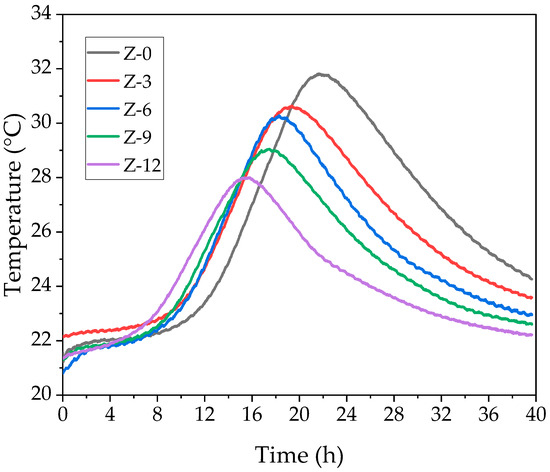
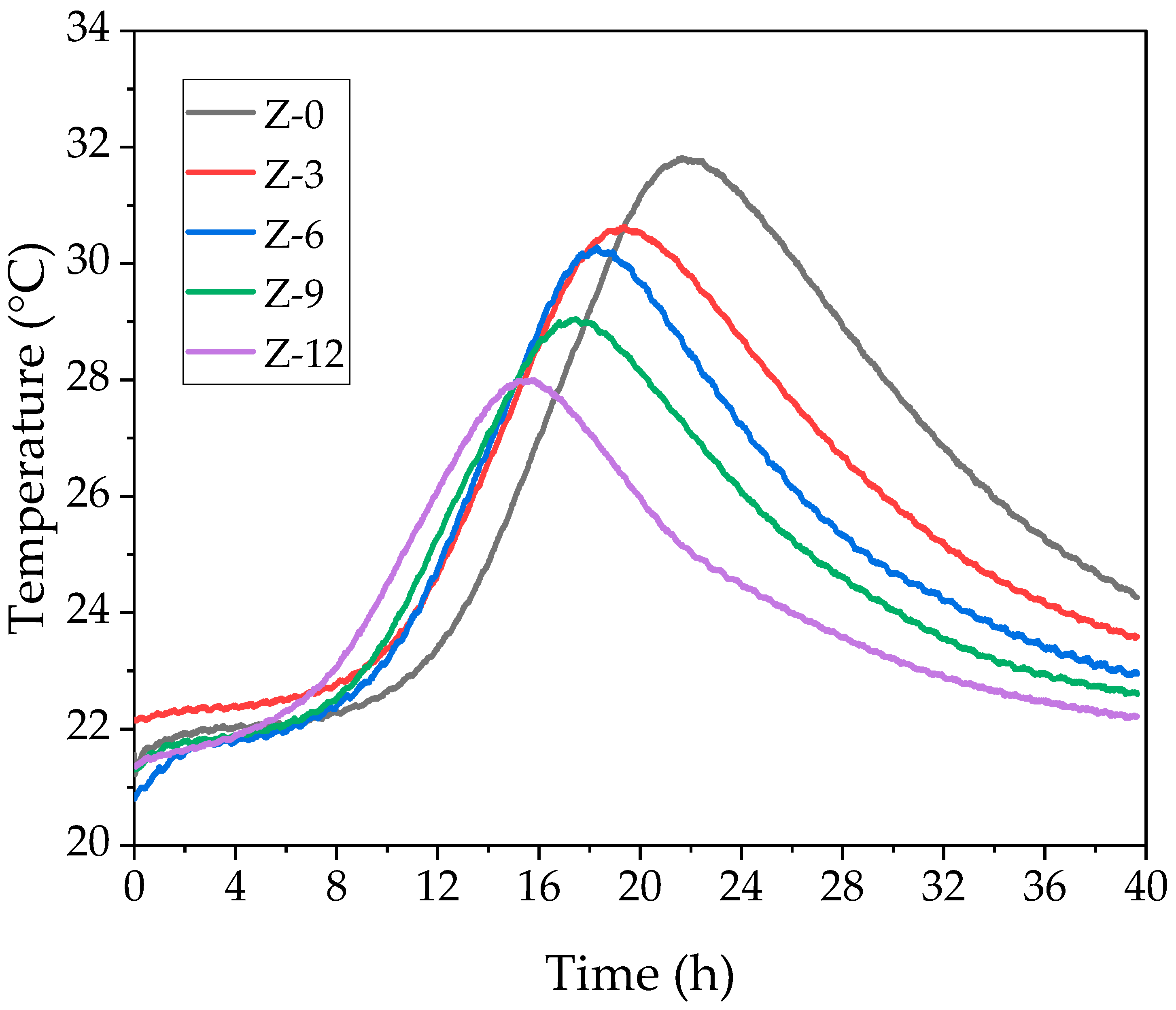
Studies of the EXO peak temperature and peak time in the cement paste samples showed (Figure 6) that the reference paste without CWW exhibited an EXO maximum after 1280 min, with a peak temperature of 31.7 °C. The incorporation of CWW progressively shortened the time required to reach the EXO maximum. At CWW contents corresponding to 3%, 6%, 9%, and 12% in the investigated fine-component system, the EXO peak occurred after 1170, 1060, 1030, and 920 min, respectively, while the corresponding peak temperatures decreased to 30.9, 30.2, 29.0, and 27.8 °C.
Figure 6.
Effect of CWW content on the exothermic hydration response of the cement paste.
Compared with the control composition Z-0, increasing CWW from 3% to 12% decreased the EXO maximum time by up to 28.1% but decreased the EXO maximum temperature by up to 12.30%. According to [6,35], CWW in water suspension shows a pH of 9.29, but CH shows a slightly acidic pH. Research [36] indicates that higher pH speeds up precipitation and shortens the time it takes for low-cement castables to harden. However, CH’s slightly acidic pH can influence the EXO time of cement paste in the control sample.
Compared with the control sample, 3% and 6% CWW slightly reduce the EXO temperature, possibly due to the pozzolanic activity of the amorphous CWW phase, which reacts with cement hydration products. Additionally, the amorphous cenosphere phase can show pozzolanic activity. However, higher amounts of CWW do not visibly contribute to the pozzolanic reaction [37]. These results indicate that CWW affects the hydration kinetics of the cementitious binder system. However, the EXO measurements were performed on cement pastes without the coarse fireclay aggregate. Consequently, the measured peak temperatures and peak times should not be directly interpreted as the thermal response of the complete refractory concrete mixtures, because the presence of coarse aggregate may alter the heat capacity, thermal conductivity, and heat dissipation conditions of the system.
3.2. Density
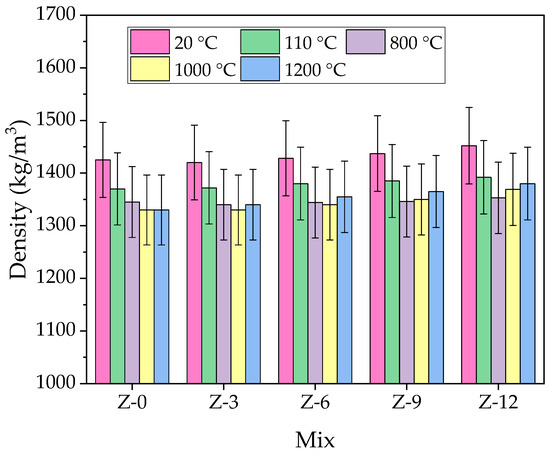
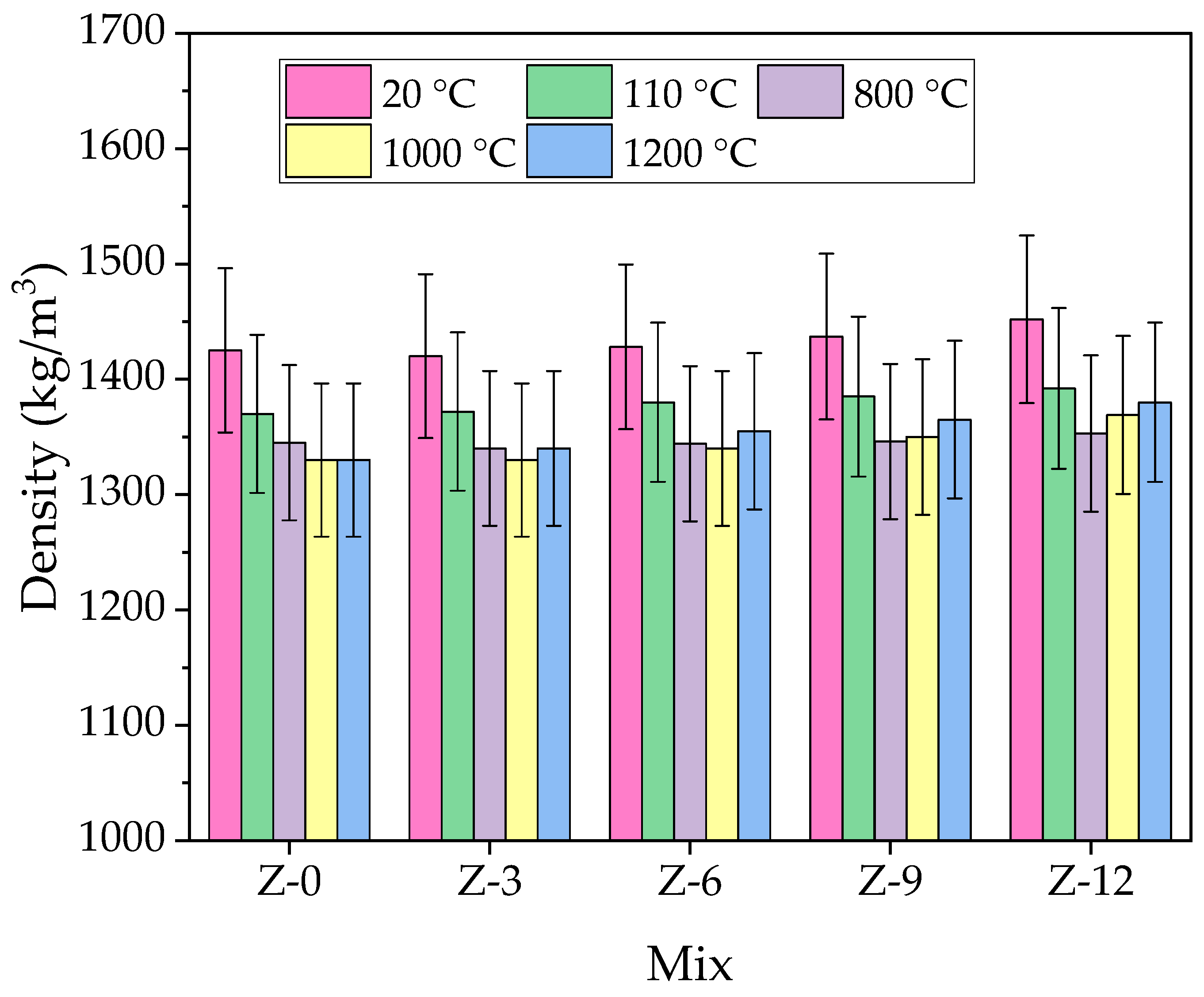
Increasing the amount of CWW in the composition leads to a slight increase in sample density (Figure 7). After 3 days of hardening, the density difference between control samples Z-0 and Z-12 is 1.86%. During drying and high-temperature exposure at 800 °C, the samples’ density mainly decreased due to further dehydration; the density differences between Z-0 and Z-12 were 1.58% and 0.60%. With further high-temperature exposure at 1000 °C and 1200 °C, samples with higher CWW (9 and 12%) showed increased density due to higher amorphous-phase content and the onset of sintering. The density of the Z-0 and Z-3 samples is the same (1330 kg/m3), and the density of Z-6, Z-9, and Z-12 is 1340 kg/m3, 1352 kg/m3, and 1369 kg/m3 after high-temperature exposure at 1000 °C. As shown, the density of samples Z-6, Z-9, and Z-12 increases by up to 2.85% compared with that of the control sample. After high-temperature exposure at 1200 °C, the density of Z-0 samples does not change, but the density of samples with CWW increases by up to 3.62%. It can be concluded that smaller amounts of CWW (3–6%) have less influence on the density of samples after high-temperature exposure at 1000 °C and 1200 °C. Higher amounts of CWW (9 and 12%) start to increase sample density at 1000 °C.
Figure 7.
Density of refractory concrete samples depending on the amount of CWW in the composition.
3.3. Compressive Strength
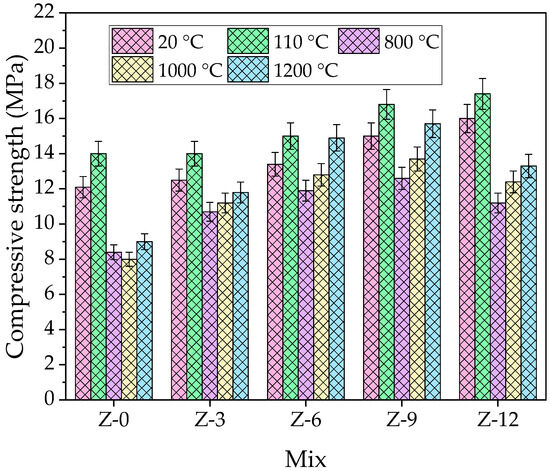
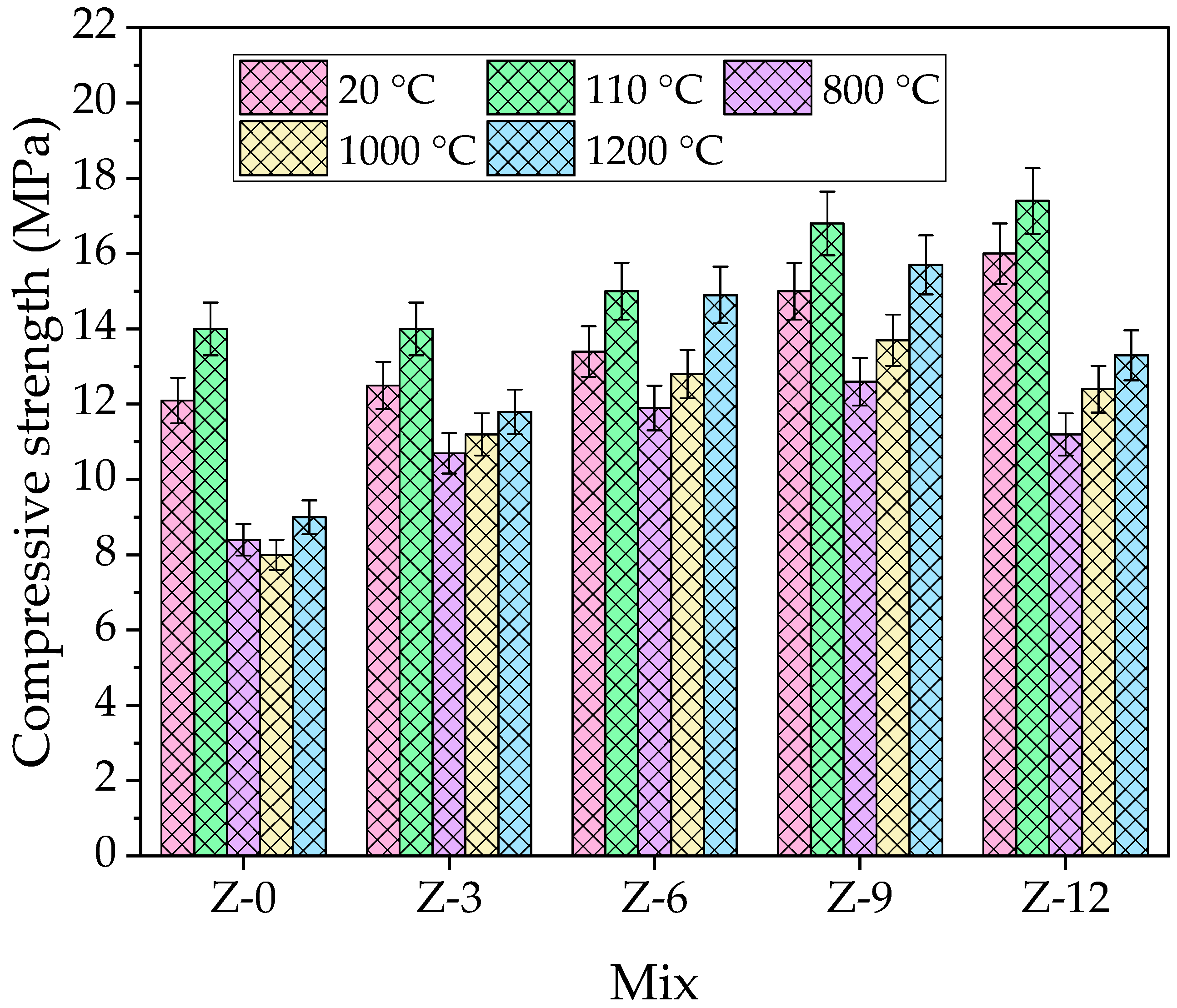
Compressive strength tests of the samples after 3 days of curing (Figure 8) showed that increasing the amount of CWW from 3% to 12% in the composition increases the strength of the samples from 12.5 MPa to 16.2 Mpa, respectively, by 24.3%, compared to control composition samples. Research in [35,36] states that adding amorphous SiO2 to aluminate cement leads to the formation of different stable hydration products (AH3, C3AH6, and C-A-S-H), resulting in higher compressive strength. Due to its high SiO2 and Al2O3 content and amorphous structure, CWW can participate in pozzolanic reactions, generating additional cementitious hydrates that fill the pore system and improve the space-filling capacity of the mortar matrix [38].
Figure 8.
Compressive strength of refractory concrete samples depending on the amount of CWW in the composition.
After drying, the strength of all composition samples increases with higher CWW content in the composition and reaches 17.4 Mpa for Z-12 composition samples. That may be because CWW contains an amorphous phase that, during drying, interacts with cement hydration products to form mineral strattlingite, which further improves mechanical properties [39,40,41].
High-temperature exposure at 800 °C decreases compressive strength in all composition samples, but to different extents depending on the CWW content. At intermediate temperatures (600 °C to 800 °C), traditional refractory concretes bound with calcium aluminate cement may experience a significant decrease in compressive strength due to the breakdown of their initial hydrated products. As heating proceeds and a strong ceramic bond forms, magnesium-silicate phases reduce this drop and greatly increase residual and high-temperature strength [3,4,42,43].
After high-temperature exposure at 800 °C, the strength of compositions Z-0–Z-12 decreases by 40.2%, 23.5%, 20.5%, 24.1%, and 35.6%, compared to the strength after drying, because of the release of hydraulically and chemically bonded water from the samples during the dehydration process of the main aluminate cement hydrate (CAH10, C2AH8, C3AH6, AH3), which can take place in the temperature range 60–350° C. As the CWW content increases to 9%, the drop in compressive strength after high-temperature exposure at 800 °C decreases, but at 12% CWW the drop increases.
Further high-temperature exposure at 1000 °C and 1200 °C reduces strength only in sample Z-0 (after 1000 °C), while strength increases in samples Z-3–Z-12.
The highest strength increase is observed in samples Z-6 and Z-9, whose compressive strength compared to the control sample increases by the compressive strength values in the samples Z-6 and Z-9 grew more intensive (20.2%, 19.8%) than in samples Z-0, Z-3 and Z-12 (4.5%, 9.32%, and 15.8%) compared to sample compressive strength after high-temperature exposure at 800 °C. The calcium, magnesium, and silica components of refractory concrete begin to sinter when burnt at high temperatures, usually between 700 °C and 1200 °C. This process binds the concrete aggregates into a dense ceramic matrix, forming thermally stable crystalline phases such as diopside (CaO⋅MgO⋅2SiO2) [42,43,44]. When refractory concrete is exposed to high temperatures that cause sintering, diopside can greatly boost the concrete’s compressive strength [45,46]. Additionally, CH, with a high amorphous content, can participate in sintering reactions [35].
In study [47], adding 10 wt% CWW significantly enhanced the ceramic body’s compressive strength. The most pronounced improvement occurred in the 850–950 °C range, whereas the increase in compressive strength became more modest beyond the 1000 °C plateau.
According to the research [45,46], increasing the SiO2/MgO ratio in the ceramic composition promotes the formation of a low-viscosity liquid phase, ion migration, and crystallization, and lowers the sintering temperature. Increasing the SiO2/MgO ratio affects phase restoration. At lower SiO2/MgO (1.75–2.08), there were some melilite changes to diopside, and at higher SiO2/MgO (2.50–4.71), diopside transforms to anorthite. Additionally, pure diopside, when sintered in the presence of a liquid phase, can reinforce the material because needle-shaped diopside crystals form a strong crystalline framework that binds the structure. In our case, the calculated SiO2/MgO ratio shows that the most beneficial compressive strength is observed for Z-6 and Z-9 sample compositions, where the SiO2/MgO ratio is 22.42 and 15.52, and the Al2O3/SiO2 ratio is 0.601 and 0.598. SiO2/MgO ratio is lowest in the Z-12 composition (11.71). Although this ratio is lowest in the Z-12 composition, the Al2O3/SiO2 ratio here is 0.594. This tendency could potentially affect the suppressed formation of diopside. The calculated Al2O3/SiO2 and SiO2/MgO ratios characterize only the CWW–CH–MA fine fraction and not the bulk chemical composition of the concrete. In addition, when calculating the ratios only for reactive components (aluminate cement, CH, and CWW), the SiO2/MgO ratios are as follows: 89.66, 18.29, 11.387, 8.78, and 6.83. Al2O3/SiO2 ratios for reactive components change more markedly and are as follows: 2.044, 1.827, 1.661, 1.5316, and 1.426. Therefore, these ratios are used only as qualitative indicators of changes in the chemistry of the reactive fine fraction and cannot, by themselves, establish the phase-formation mechanism.
The calculated ratio of the strength of samples Z-0–Z-12 to their density (specific strength), after high-temperature exposure at 1200 °C (6.77, 8.81, 10.99, 11.5, and 9.64), shows that compositions Z-6, Z-9, and Z-12 are the most advantageous in this ratio.
3.4. Apparent Porosity
Porosity is a fundamental technical parameter for most refractory materials and affects almost all properties of refractory products, especially strength, thermal conductivity, erosion resistance, and thermal-shock resistance. During the forming and heat treatment of refractory castables, pores inevitably form during dehydration and sintering. High-porosity refractories have excellent insulating properties but low density, corrosion resistance, and strength. In lightweight refractory concrete, apparent porosity—the volume of open, interconnected pores—typically ranges from 25% to 55% after high-temperature exposure. This highly porous network is intentionally created using lightweight aggregates (such as perlite, expanded glass, or vermiculite) to drastically reduce thermal conductivity, improve thermal-shock resistance, and provide excellent insulation for high-temperature applications [48]. Porosity results from using porous lightweight aggregates, with pore content up to 67%.
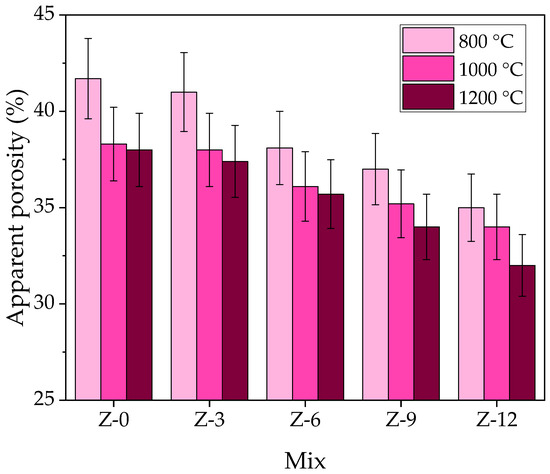
Figure 9 shows the porosity results of sample Z-0-Z-12 compositions after high-temperature exposure at elevated temperatures of 800–1200 °C. As the CWW amount increased, apparent porosity decreased from 41.7% to 35% at 800 °C. At 1000 °C, the apparent porosity of all composition samples except Z-0 and Z-3 samples decreased markedly compared to those at 800 °C and varied in the range of 36.1–33.7% for Z-6–Z-12 samples, whereas for Z-0 and Z-3 samples, the apparent porosity was 38.9% and 38.4%. The same observations are presented in the research [49,50]. This may occur because samples with a higher CWW content start sintering earlier [46]. High-temperature exposure at 1000 °C and 1200 °C can lead to sintering and liquid-phase formation, which closes some pores and can decrease and influence apparent porosity, as pointed out in the research [49,51]. However, this is only the authors’ assumption, and the experiments do not directly support an increase in closed porosity. The results indicate that added CWW could promote the sinterability of the refractory matrix, resulting in a relatively densified structure and lower apparent porosity.
Figure 9.
Apparent porosity of refractory concrete samples depending on the amount of CWW in the composition.
Diopside (CaMgSiO6), which forms during sintering of CWW, can act as an active mineral additive and melting agent. At high temperatures, it promotes a dense ceramic bond. Additionally, dispersed diopside particles act as a microfiller, blocking microcracks and reducing open porosity [23,24], increasing the thermal resistance of burned materials. Our research has not directly investigated or confirmed CWW’s effect as a microcrack-reducing agent.
At 1200 °C, a further drop in apparent porosity is observed. The smallest drop is observed for Z-0 samples, but the largest for Z-12 samples. Compared with apparent porosity values after high-temperature exposure at 800 °C, increasing the CWW amount decreases the porosity of Z-0–Z-12 samples as follows: 8.87, 8.78, 6.29, 8.1, and 8.57%.
3.5. Shrinkage
High-temperature exposure of samples and increasing temperature lead to dehydration, followed by the free removal of water from concrete specimens, resulting in dissociation of hydrates where polymorphic transitions occur and new phases that can increase sample shrinkage form [52]. It all causes local volume changes—expansion and/or shrinkage—determining the total deformation of the sample.
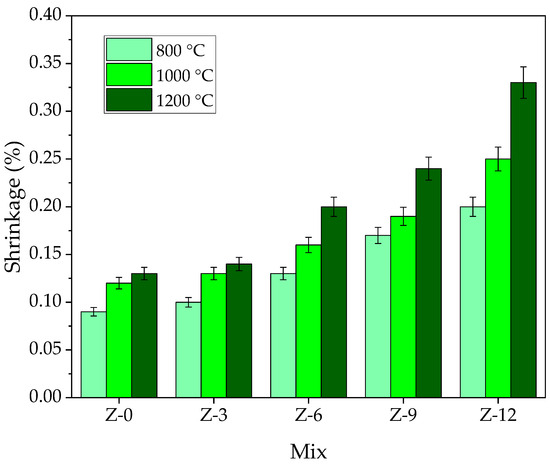
Shrinkage studies (Figure 10) show that, compared to Z-0 samples, shrinkage slightly increases with higher exposure temperatures, from 0.09% to 0.13%. Such lightweight concrete, which contains CH, shows low shrinkage [5] because CH is volume-stable and resistant to high temperatures. Mullite dominance in CH composition also improves sample strength and reduces shrinkage [35,53]. The unique structure of CH relaxes deformations during high-temperature exposure and almost compensates for shrinkage.
Figure 10.
Shrinkage in refractory concrete samples depending on the amount of CWW in the composition.
Here, we determined gradual shrinkage in Z-3–Z-12 lightweight concrete as the high-temperature exposure temperature increased to 800 °C. In the Z-3–Z-12 composition samples, shrinkage increased from 0.1% to 0.19%, consistent with the density and apparent porosity test results.
Shrinkage increased more noticeably in Z-3–Z-12 samples after high-temperature exposure at 1000 °C and 1200 °C. Shrinkage values increased by 7.6%, 25%, 36.8%, and 52% after high-temperature exposure at 1000 °C and by 7.1%, 35%, 45.8%, and 60.6% after high-temperature exposure at 1200 °C. However, the maximum deformation, which is established for Z-12 composition samples (0.33%), did not exceed ~1.1% ultimate shrinkage for refractory concretes [54]. The melting temperature of pure diopside is about 1520 °C, which allows materials based on it to withstand prolonged heating in the range of 1300–1400 °C without significant deformation. Pure diopside is volumetrically stable during thermal treatment, but a liquid phase can influence this parameter. When sintered with a liquid phase, it acts as a reinforcing agent.
Along with low density and shrinkage, samples with CWW show fairly high compressive strength.
3.6. XRD Analysis
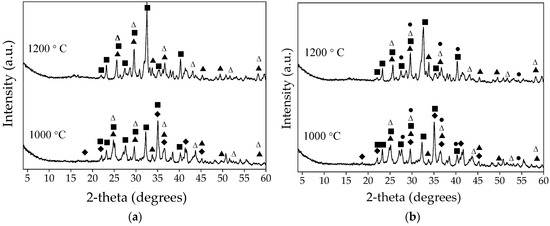
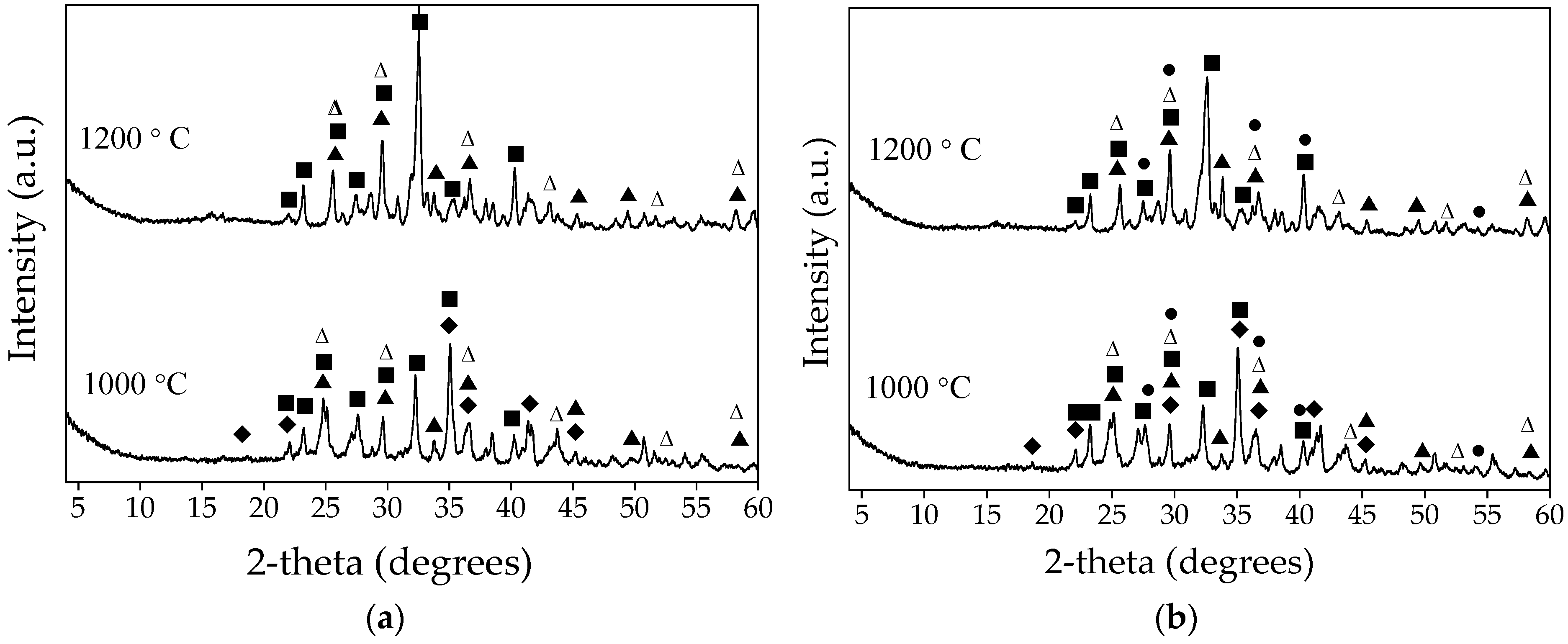
XRD curves of the M-0 and M-CWW samples after high-temperature exposure at temperatures of 1000 °C and 1200 °C are presented in Figure 11. Because CH provides a high amount of silica (SiO2) and alumina (Al2O3), alumina cement supplies calcium oxide (CaO) and additional Al2O3, and the CWW supplies magnesium oxide (MgO) and (SiO2), anorthite, gehlenite, and diopside can form during high-temperature exposure between 1000–1200 °C. Each component supplies the basic chemical elements needed to form the crystal structures of diopside, gehlenite, and anorthite. The hydrates in the alumina cement dehydrate, and the silica–magnesium waste breaks down into extremely reactive, non-crystalline oxides at lower temperatures (between 700 °C and 900 °C). Above 1000 °C, solid-state reactions occur. Free CaO and MgO from the cement and CWW actively diffuse into the reactive amorphous silica matrix supplied by the CH and CWW. The resulting material will probably be a multiphase ceramic matrix due to the presence of alumina oxide from both the alumina cement and CH. Alongside anorthite and gehlenite, diopside can appear depending on the exact oxide ratio.
Figure 11.
X-ray diffraction patterns of the (a) M-0 and (b) M-CWW samples after high-temperature exposure at 1000 °C and 1200 °C; ■ – anorthite; △ – gehlenite; ▲ – CA2; ◆ – CA; ● – diopside.
In the M-0 composition sample after high-temperature exposure at 1000 °C, intensive crystallization of CA (calcium aluminate) and CA2 minerals can be observed. Also, crystallization of anorthite CaO·Al2O3·2SiO2 and gehlenite 2CaO·Al2O3·SiO2 is observed [35]. In the M-CWW sample, crystallization of CA minerals, anorthite and gehlenite, is observed. Gehlenite crystallization is more pronounced [55]. Some differences between the M-0 and M-CWW samples can be attributed to differences in water content, which could affect hydrate formation and subsequent phase transformations. This sample also shows a new mineral, diopside. Adding CWW, rich in calcium, magnesium, and SiO2, resulted in diopside formation and more intense gehlenite crystallization [39]. In both samples, after high-temperature exposure at 1200 °C, mineral CA was not identified because it reacted more extensively with the amorphous phase of CH and CWW to form anorthite, gehlenite, and diopside in the M-CWW sample. It should be noted that the SiO2/MgO ratio in the CWW-containing samples was lower than that in the M-0 sample, while the formation of diopside had a significant influence on their compressive strength. However, the possible trend persists, with anorthite and gehlenite peak intensities significantly lower in the M-0 sample than in the M-CWW sample. The anorthite peak in the M-CWW sample is more intense than the gehlenite peak, although quantitative phase analysis should supplement these observations. These studies reflect the compressive strength test results and support the assumption that adding CWW can affect mineral formation during high-temperature exposure.
3.7. SEM Analysis
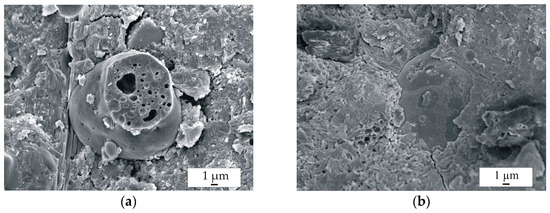
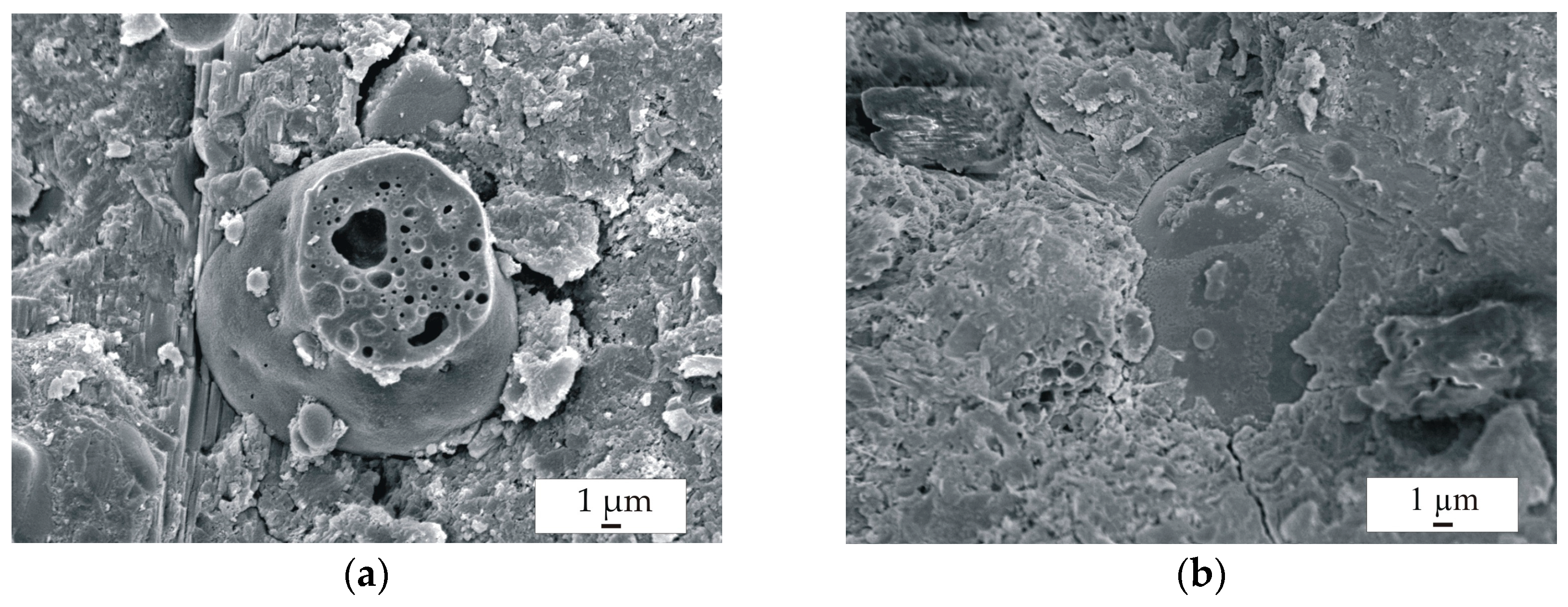
The structure of samples M-0 and M-CWW after high-temperature exposure at 1200 °C is presented in Figure 12a,b. It is seen that a less dense structure is created in the M-0 sample around the CH particle in comparison to the M-CWW sample. The structure around the CH particle in the M-0 sample is not even. When CWW is added to the M-CWW composition, the matrix around the CH particle looks denser and more homogeneous, possibly due to lower apparent porosity and the formation of new phases.
Figure 12.
The view of the sample: (a) M-0 and (b) M-CWW after high-temperature exposure at 1200 °C.
It should be noted that thermal conductivity and thermal-shock resistance were not directly measured in this study. Therefore, the density and apparent porosity results provide only indirect structural information and cannot be used to directly assess the thermal-insulation performance or thermal-shock resistance of the investigated lightweight refractory concretes. Direct measurements of these properties should be included in future studies.
4. Conclusions
- (1)
- In the cement paste system, increasing the CWW content altered the hydration kinetics by shortening the EXO peak time. Compared with the CWW-free reference paste, increasing the CWW content from 3% to 12% shortened the EXO peak time by up to 28.1%, while the EXO peak temperature decreased by up to 12.3%. These results refer specifically to the cement paste system and should not be directly extrapolated to the thermal response of the complete refractory concrete containing coarse aggregate.
- (2)
- The increase in the amount of CWW in the composition leads to an increase in the sample density. Smaller amounts of CWW (3–6%) have less influence on the density of samples after high-temperature exposure at 1000 °C and 1200 °C. Higher amounts of CWW (9% and 12%) increased sample density at 1000 °C and 1200 °C to 2.85% and 3.62%, respectively, compared with the control samples.
- (3)
- The increase in the amount of CWW in the composition leads to an increase in the sample compressive strength after curing and drying. When the CWW content varied from 3% to 9%, the drop in compressive strength after high-temperature exposure at 800 °C was visibly less (23.5%, 20.5%, and 24.1%), whereas in the Z-12 and control compositions it was 35.6% and 40.2%. After high-temperature exposure at 1000 °C and 1200 °C temperatures, due to the presence of the amorphous phase and the sintering process in the sample, additional phases, such as diopside, anortite and gehlenite appeared; the compressive strength values in the samples Z-6 and Z-9 grew more intensive (20.2%, 19.8%) than in samples Z-0, Z-3 and Z-12 (4.5%, 9.32%, and 15.8%) compared to sample compressive strength after high-temperature exposure at 800 °C. Possibly, the Al2O3/SiO2 ratio of 0.601–0.598 and the SiO2/MgO ratio of 22.42–15.52 led to a balance in new-phase crystallization and provided higher mechanical properties in Z-6 and Z-9 samples. Overall, CWW amounts of 6–9% increased compressive strength by up to 20.2–19.8% compared with the control sample, an important improvement for lightweight refractory concrete with a density of 1340–1380 kg/m3 after high-temperature exposure at 1200 °C.
- (4)
- With increasing CWW amount, the apparent porosity of samples after high-temperature exposure at 800 °C, 1000 °C and 1200 °C varies in the ranges 41.7–35%, 38.9–33.7%, and 38.1–32.2%, due to the sintering process, which leads to the formation of a liquid phase, which decreases apparent porosity. After high-temperature exposure at 1200 °C, the smallest drop in apparent porosity is observed for Z-0 samples, but the highest for Z-12 samples.
- (5)
- With increasing CWW amount, shrinkage of Z-0–Z-12 samples varies in the range 0.09–0.2%, 0.12–0.25%, and 0.13–0.33% after high-temperature exposure at 800 °C, 1000 °C, and 1200 °C. Results show a more noticeable increase in shrinkage in Z-3 and Z-12 samples. Compared to the control sample, shrinkage values of Z-3–Z-12 samples after high-temperature exposure at 1200 °C increased by 7.1%, 35.0%, 45.8%, and 60.6%.
Author Contributions
Conceptualization, I.P. and J.P.; methodology, I.P. and J.P.; validation, I.P. and J.P.; formal analysis, I.P. and J.P.; investigation, I.P. and J.P.; resources, I.P. and J.P.; data curation, I.P.; writing—original draft preparation, I.P.; writing—review and editing, J.P.; visualization, I.P.; supervision, J.P.; project administration, I.P. and J.P. All authors have read and agreed to the published version of the manuscript.
Funding
This research received no external funding.
Data Availability Statement
The original contributions presented in this study are included in the article. Further inquiries can be directed to the corresponding author.
Conflicts of Interest
The authors declare no conflicts of interest.
References
- López-Perales, J.F.; Contreras, J.E.; Vázquez-Rodríguez, F.J.; Gómez-Rodríguez, C.; Díaz-Tato, L.; Banda-Muñoz, F.; Rodríguez, E.A. Partial Replacement of a Traditional Raw Material by Blast Furnace Slag in Developing a Sustainable Conventional Refractory Castable of Improved Physical-Mechanical Properties. J. Clean. Prod. 2021, 306, 127266. [Google Scholar] [CrossRef] [Scilit]
- Tang, H.; Peng, Z.; Shang, W.; Ye, L.; Luo, J.; Rao, M.; Li, G. Preparation of Refractory Materials from Electric Furnace Ferronickel Slag and Blast Furnace Ferronickel Slag: A Comparison. J. Environ. Chem. Eng. 2022, 10, 107929. [Google Scholar] [CrossRef] [Scilit]
- Milat, M.; Juradin, S.; Ostojić-Škomrlj, N.; Tesovnik, A. Recycling Mineral Wool Waste: Towards Sustainable Construction Materials. Recycling 2025, 10, 174. [Google Scholar] [CrossRef] [Scilit]
- Díaz-Tato, L.; Iturralde Carrera, L.A.; López-Perales, J.F.; Aviles, M.; Rodríguez-Castellanos, E.A.; Rodríguez-Resendiz, J. Advances in Magnesia–Dolomite Refractory Materials: Properties, Emerging Technologies, and Industrial Applications: A Review. Technologies 2025, 13, 523. [Google Scholar] [CrossRef] [Scilit]
- Pundienė, I.; Pranckevičienė, J.; Kligys, M.; Kairitė, A.; Girskas, G. Effect of Adding Cenospheres on Heat-Resistant Lightweight Concrete Properties. Refract. Ind. Ceram. 2019, 59, 482–487. [Google Scholar] [CrossRef] [Scilit]
- Stonys, R.; Kuznetsov, D.; Krasnikovs, A.; Škamat, J.; Baltakys, K.; Antonovič, V.; Černašejus, O. Reuse of Ultrafine Mineral Wool Production Waste in the Manufacture of Refractory Concrete. J. Environ. Manag. 2016, 176, 149–156. [Google Scholar] [CrossRef] [Scilit] [PubMed]
- Nicacio, J.A.P.; Lins, V.d.F.C.; Bracarense, A.Q. Degradation of Castable Refractory in a Fluidized Catalytic Cracking Unit of a Brazilian Oil Refinery: A Case Study. J. Braz. Soc. Mech. Sci. Eng. 2021, 43, 539. [Google Scholar] [CrossRef] [Scilit]
- Pathak, A.; Rana, M.S.; Marafi, M.; Kothari, R.; Gupta, P.; Tyagi, V.V. Waste Petroleum Fluid Catalytic Cracking Catalysts as a Raw Material for Synthesizing Valuable Zeolites: A Critical Overview on Potential, Applications, and Challenges. Sustain. Mater. Technol. 2023, 38, e00733. [Google Scholar] [CrossRef] [Scilit]
- Debnath, N.K.; Pabbisetty, V.K.; Sarkar, K.; Singh, A.; Majhi, M.R.; Singh, V.K. Preparation and Characterization of Semi-Silica Insulation Refractory by Utilizing Lignite Fly Ash Waste Materials. Constr. Build. Mater. 2022, 345, 128321. [Google Scholar] [CrossRef] [Scilit]
- López-Perales, J.F.; Díaz-Tato, L.; Costilla-Aguilar, S.U.; González-Carranza, Y.; Contreras de León, J.E.; Rodríguez-Castellanos, E.A. Fly Ash as a Secondary Raw Material Improving the Sustainable Characteristics of a Conventional Silicoaluminate Refractory Castable. Inorganics 2025, 13, 367. [Google Scholar] [CrossRef] [Scilit]
- Krasnyi, B.L.; Ikonnikov, K.I.; Lemeshev, D.O.; Sizova, A.S. Fly Ash as Technogenic Raw Material for Producing Refractory and Insulating Ceramic Materials (Review). Glas. Ceram. 2021, 78, 48–56. [Google Scholar] [CrossRef] [Scilit]
- Škamat, J.; Boris, R.; Malaiškienė, J.; Antonovič, V.; Stonys, R.; Kudžma, A. Possibilities to Recycle Thermal Power Plant By-Products in Refractory Castables. Sustainability 2024, 16, 6349. [Google Scholar] [CrossRef] [Scilit]
- Sear, L.K.A. (Ed.) Properties and Use of Coal Fly Ash, 1st ed.; Emerald Publishing Limited: London, UK, 2001; ISBN 978-0-7277-3847-9. [Google Scholar]
- Ranjbar, N.; Kuenzel, C. Cenospheres: A Review. Fuel 2017, 207, 1–12. [Google Scholar] [CrossRef] [Scilit]
- McBride, S.P.; Shukla, A.; Bose, A. Processing and Characterization of a Lightweight Concrete Using Cenospheres. J. Mater. Sci. 2002, 37, 4217–4225. [Google Scholar] [CrossRef] [Scilit]
- Hanif, A.; Parthasarathy, P.; Ma, H.; Fan, T.; Li, Z. Properties Improvement of Fly Ash Cenosphere Modified Cement Pastes Using Nano Silica. Cem. Concr. Compos. 2017, 81, 35–48. [Google Scholar] [CrossRef] [Scilit]
- Kolay, P.K.; Bhusal, S. Recovery of Hollow Spherical Particles with Two Different Densities from Coal Fly Ash and Their Characterization. Fuel 2014, 117, 118–124. [Google Scholar] [CrossRef] [Scilit]
- Zhou, H.; Brooks, A.L. Thermal and Mechanical Properties of Structural Lightweight Concrete Containing Lightweight Aggregates and Fly-Ash Cenospheres. Constr. Build. Mater. 2019, 198, 512–526. [Google Scholar] [CrossRef] [Scilit]
- Kowsalya, M.; Sindhu Nachiar, S.; Anandh, S. A Review on Fly Ash Cenosphere as a Solid Waste in Concrete Application. Mater. Today Proc. 2022, 68, 2072–2078. [Google Scholar] [CrossRef] [Scilit]
- Brooks, A.L.; Shen, Z.; Zhou, H. Development of a High-Temperature Inorganic Synthetic Foam with Recycled Fly-Ash Cenospheres for Thermal Insulation Brick Manufacturing. J. Clean. Prod. 2020, 246, 118748. [Google Scholar] [CrossRef] [Scilit]
- Urunkar, Y.; Pandit, A.; Bhargava, P.; Joshi, J.; Mathpati, C.; Vasanthakumaran, S.; Jain, D.; Hussain, Z.; Patel, S.; More, V. Light-Weight Thermal Insulating Fly Ash Cenosphere Ceramics. Int. J. Appl. Ceram. Technol. 2018, 15, 1467–1477. [Google Scholar] [CrossRef] [Scilit]
- Pundienė, I.; Korjakins, A.; Pranckevičienė, J.; Kligys, M. Effect of Silicon Carbide Aggregate, Prepared by Different Methods, on the Properties of Refractory Concrete with Cenospheres. Ceram. Int. 2018, 44, 15944–15953. [Google Scholar] [CrossRef] [Scilit]
- Kizinievič, O.; Balkevičius, V.; Pranckevičiene, J.; Kizinievič, V. Investigation of the Usage of Centrifuging Waste of Mineral Wool Melt (CMWW), Contaminated with Phenol and Formaldehyde, in Manufacturing of Ceramic Products. Waste Manag. 2014, 34, 1488–1494. [Google Scholar] [CrossRef] [Scilit] [PubMed]
- Pranckevičienė, J. Impact of Mineral Wool Production Waste on Properties of Sintered Ceramics. Ph.D. Thesis, Vilnius Gediminas Technical University, Vilnius, Lithuania, 2011. [Google Scholar]
- Cheng, Y.; Duan, S.; Zhang, L. Comparison Study of the Effect of MgO, MgO-CaO, MgO-Al2O3-C, and MgO-C Refractories on Cleanliness of a SiMn-Killed Steel. Steel Res. Int. 2025, 96, 535–555. [Google Scholar] [CrossRef] [Scilit]
- Hou, Y.; Zhang, S.; Dang, J.; Guo, J.; Zhou, H.; Lü, X. Viscosity and Structure Relationship with Equimolar Substitution of CaO with MgO in the CaO–MgO–Al2O3–SiO2 Slag Melts. Int. J. Miner. Metall. Mater. 2025, 32, 70–79. [Google Scholar] [CrossRef] [Scilit]
- Zhan, X.; Wu, X.; Xing, Y.; Cui, X.; Wang, S.; Zhao, F.; Meng, W.; Ma, C.; Zhong, X. Improved Hydration Resistance of MgO–2CaO·SiO2–3CaO·SiO2 Composite Refractory Using Low-Grade Minerals. Mater. Res. Express 2020, 7, 085502. [Google Scholar] [CrossRef] [Scilit]
- Pranckeviciene, I.; Pundiene, I. Effect of Co-Use of Mineral Wool Production Waste and Catalytic Cracking Catalyst Waste on Ceramic Structure and Properties. Glas. Ceram. 2021, 77, 34–40. [Google Scholar] [CrossRef] [Scilit]
- Toya, T.; Tamura, Y.; Kameshima, Y.; Okada, K. Preparation and Properties of CaO–MgO–Al2O3–SiO2 Glass-Ceramics from Kaolin Clay Refining Waste (Kira) and Dolomite. Ceram. Int. 2004, 30, 983–989. [Google Scholar] [CrossRef] [Scilit]
- Alcoa. Calcium Aluminate Cement: Test Methods; Alcoa: Frankfurt, Germany, 1999. [Google Scholar]
- ASTM C134-95; Test Methods for Size, Dimensional Measurements, and Bulk Density of Refractory Brick and Insulating Firebrick. ASTM International: West Conshohocken, PA, USA, 2023.
- EN 1402-5; Unshaped Refractory Products—Part 5: Preparation and Treatment of Test Pieces. European Committee for Standardization: Brussels, Belgium, 2003.
- EN 12390-3; Testing Hardened Concrete—Part 3: Compressive Strength of Test Specimens. European Committee for Standardization: Brussels, Belgium, 2009.
- ASTM C20-00; Standard Test Methods for Apparent Porosity, Water Absorption, Apparent Specific Gravity, and Bulk Density of Burned Refractory Brick and Shapes by Boiling Water. ASTM International: West Conshohocken, PA, USA, 2005.
- Pundienė, I.; Pranckevičienė, J. The Synergistic Effect of Adding a Blend of Deflocculants and Microsilica on the Properties of High Temperature Resistant Lightweight Concrete with Cenospheres. Constr. Build. Mater. 2020, 230, 116961. [Google Scholar] [CrossRef] [Scilit]
- Wohrmeyer, C.; Simonin, F.; Parr, C.; Alt, C. The Control and Optimisation of Low Cement Castables. In Proceedings of the UNITECR ’05, 9th Biennial Worldwide Congress on Refractories, Orlando, FL, USA, 8–11 November 2005; pp. 408–412. [Google Scholar]
- Łaźniewska-Piekarczyk, B.; Smyczek, D. Valorization of Mineral Wool Waste as a Pozzolanic Supplementary Cementitious Material—Comparative Reactivity in Portland and Calcium Sulfoaluminate Systems. Sustainability 2026, 18, 3366. [Google Scholar] [CrossRef] [Scilit]
- Alghamdi, H.; Shoukry, H.; Mim, N.J.; Khawaji, M.; Abadel, A.A.; Farouk, M. Impact of Waste Rockwool on the Performance of LC3-Based Lightweight Mortar: A Promising Solution for Greener Construction. Constr. Build. Mater. 2024, 443, 137805. [Google Scholar] [CrossRef] [Scilit]
- Pundiene, I.; Pranckeviciene, J.; Kligys, M. Effect of a Mixture of Different Types of Deflocculants on the Structure and Properties of Cement Rock and Castable Refractories. Glas. Ceram. 2017, 74, 295–301. [Google Scholar] [CrossRef] [Scilit]
- López, A.H.; Calvo, J.L.G.; Olmo, J.G.; Petit, S.; Alonso, M.C. Microstructural Evolution of Calcium Aluminate Cements Hydration with Silica Fume and Fly Ash Additions by Scanning Electron Microscopy, and Mid and near-Infrared Spectroscopy. J. Am. Ceram. Soc. 2008, 91, 1258–1265. [Google Scholar] [CrossRef] [Scilit]
- Rivas Mercury, J.M.; Turrillas, X.; de Aza, A.H.; Pena, P. Calcium Aluminates Hydration in Presence of Amorphous SiO2 at Temperatures below 90 °C. J. Solid State Chem. 2006, 179, 2988–2997. [Google Scholar] [CrossRef] [Scilit]
- Kalpokaite-Dickuviene, R.; Brinkiene, K.; Makstys, A.; Cesniene, J.; Matulioniene, V. Effect of Modifying Additives on Mechanical Properties of Refractory Concrete. Mater. Sci. 2012, 18, 290–295. [Google Scholar] [CrossRef] [Scilit]
- Karamanov, A.; Arrizza, L.; Matekovits, I.; Pelino, M. Properties of Sintered Glass-Ceramics in the Diopside–Albite System. Ceram. Int. 2004, 30, 2129–2135. [Google Scholar] [CrossRef] [Scilit]
- Gu, F.; Zhang, Y.; Tu, Y.; Wu, X.; Zhu, Y.; Long, Y.; Shen, D. Assessing Magnesia Effect on Preparing Refractory Materials from Ferrochromium Slag. Ceram. Int. 2022, 48, 13100–13107. [Google Scholar] [CrossRef] [Scilit]
- Wu, S.; Hou, Q.; Yu, J.; Wang, C.; Zhao, J.L.; Wang, S.; Luo, X.; Qi, X. Sintering Behavior and Thermal Shock Resistance of MgO-Mg2SiO4 Refractories by Co-Doped Silica Fume and Quicklime. Ceram. Int. 2024, 50, 56060–56069. [Google Scholar] [CrossRef] [Scilit]
- Chen, T.; Peng, T.; Sun, H.; Ding, W.; Chu, L.; Wu, M.; Li, X. Effect of SiO2/MgO Ratio on the Properties of Diopside-Based Ceramics. Constr. Build. Mater. 2024, 438, 137085. [Google Scholar] [CrossRef] [Scilit]
- Adediran, A.; Lemougna, P.N.; Yliniemi, J.; Tanskanen, P.; Kinnunen, P.; Roning, J.; Illikainen, M. Recycling Glass Wool as a Fluxing Agent in the Production of Clay- and Waste-Based Ceramics. J. Clean. Prod. 2021, 289, 125673. [Google Scholar] [CrossRef] [Scilit]
- Mukherjee, M.S.; Bhaskar Rao, H.V. Factors Affecting Porosity and Their Control in Refractory Manufacture. Trans. Indian Ceram. Soc. 1973, 32, 17N–23N. [Google Scholar] [CrossRef] [Scilit]
- Sutcu, M.; Akkurt, S.; Bayram, A.; Uluca, U. Production of Anorthite Refractory Insulating Firebrick from Mixtures of Clay and Recycled Paper Waste with Sawdust Addition. Ceram. Int. 2012, 38, 1033–1041. [Google Scholar] [CrossRef] [Scilit]
- Ponomar, V.; Adesanya, E.; Ohenoja, K.; Illikainen, M. High-Temperature Performance of Slag-Based Fe-Rich Alkali-Activated Materials. Cem. Concr. Res. 2022, 161, 106960. [Google Scholar] [CrossRef] [Scilit]
- Kurpińska, M.; Ferenc, T. Effect of Porosity on Physical Properties of Lightweight Cement Composite with Foamed Glass Aggregate. ITM Web Conf. 2017, 15, 06005. [Google Scholar] [CrossRef] [Scilit]
- ElKhatib, L.W.; Khatib, J.; Assaad, J.J.; Elkordi, A.; Ghanem, H. Refractory Concrete Properties—A Review. Infrastructures 2024, 9, 137. [Google Scholar] [CrossRef] [Scilit]
- Koç, S.; Toplan, N.; Yildiz, K.; Toplan, H.Ö. Effects of Mechanical Activation on the Non-Isothermal Kinetics of Mullite Formation from Kaolinite. J. Therm. Anal. Calorim. 2010, 103, 791–796. [Google Scholar] [CrossRef] [Scilit]
- Kudžma, A.; Antonovič, V.; Stonys, R.; Škamat, J. The Investigation of Properties of Insulating Refractory Concrete with Portland Cement Binder. IOP Conf. Ser. Mater. Sci. Eng. 2015, 96, 012015. [Google Scholar] [CrossRef] [Scilit]
- Pundienė, I.; Pranckevičienė, J. Effect of Prewetting Cenospheres on Hydration Kinetics, Microstructure, and Mechanical Properties of Refractory Castables. Crystals 2025, 15, 68. [Google Scholar] [CrossRef] [Scilit]

Disclaimer/Publisher’s Note: The statements, opinions and data contained in all publications are solely those of the individual author(s) and contributor(s) and not of MDPI and/or the editor(s). MDPI and/or the editor(s) disclaim responsibility for any injury to people or property resulting from any ideas, methods, instructions or products referred to in the content. |
© 2026 by the authors. Licensee MDPI, Basel, Switzerland. This article is an open access article distributed under the terms and conditions of the Creative Commons Attribution (CC BY) license.