


Abstract
Heat-treated A356 aluminum alloy has attracted sustained attention because of its low density, good castability and corrosion resistance. These properties make it valuable for automotive, structural and aerospace applications, while its final performance depends strongly on microstructural control. This review examines the microstructural evolution of A356 Al alloy from as-cast conditions through post-casting using various heat treatments. The emphasis is on the morphology and distribution of the primary α-Al matrix, eutectic Si phase and secondary intermetallic constituents such as Mg2Si. It discusses how investment casting and other ingot metallurgy routes influence dendritic arm spacing, porosity formation and eutectic silicon morphology. This review answers the question “which heat treatment leads to better microstructural features and betterment of the mechanical properties?”. The review also highlights the role of T5 and T6 artificial aging, hot isostatic pressing and their combined effects on pore elimination, densification, hardness, ductility, tensile strength and fatigue resistance. In addition, the usefulness of EBSD for texture and grain structure analysis is considered as a route to deeper understanding of grain texture and orientation. Overall, the review shows that the performance of A356 alloy is governed by the interplay between casting-induced defects and heat-treatment-driven microstructural refinement; it also identifies processing routes that offer the best balance between strength, ductility and improved service life of components made from A356 Al alloy.
1. Introduction
1.1. Production Routes and Grades of Al Alloys
Aluminum (Al) alloys are extensively used materials in various industries, viz., engineering, construction, automotive and aerospace industries due to the remarkable properties they have. Pure Al possesses excellent and attractive properties, such as light weight, good corrosion resistance and high thermal conductivity. Although this metal has these attractive properties, it still needs the addition of other elements, such as silicon (Si), magnesium (Mg), titanium (Ti) and strontium (Sr), to produce an alloy that can be applied in the aforementioned industries. Each of these alloying elements has its own function when added into pure Al, as outlined in Table 1. The main aim of adding these elements is to increase ductility, strength, hardness, corrosion resistance, and grain refinement and to decrease the wear rate [1].
Table 1.
Alloying elements and their effects on A356 Al alloy.
These alloying elements are introduced into pure aluminum via various state-of-the-art technologies, viz., hot extrusion, rolling, forging, powder metallurgy (PM) and ingot metallurgy. Ingot metallurgy employs processes such as die casting, gravity casting and investment casting. These technologies are then used to produce various grades and series (series 1 to 8) of aluminum alloys [7]. From these series produced, series 3 (A356) is heavily utilized in both the aerospace and automotive industries, but these still need to be processed post-casting. The main aim of processing post-casting is to refine the grains and achieve grains that are uniform throughout the material [8].
According to Hall–Petch, as grain sizes in a material decrease, the material’s yield strength increases, therefore improving the yield strength of the material. Higher yield strength is one of the desirable properties in the aerospace and automotive industries [9]. During the post-casting process, dynamic nucleation occurs, which controls solidification to produce numerous nuclei. Inoculation adds grain refiners into the metal melt and enhances heterogeneous nucleation and thermal analysis evaluates the cleanliness of the melt, reducing the scrap rates in the metal and heat treatment [10].
Heat treatment is a process employed in physical metallurgy to modify the structure of materials, with the aim of achieving the desired microstructure and mechanical properties. Heat treatment processes can be categorized into solution heat treatment and artificial aging, while cooling the samples after heat treatment can be classified into quenching, annealing and normalizing. More often, aluminum (Al) alloys produced via casting routes exhibit inferior mechanical and microstructural properties due to segregation and coarsening of dendritic structures and entrapment of dissolved gases [11]. For the alloy to be applied in the aerospace and automotive industry, the alloy will need to be heat-treated to improve the microstructural and mechanical properties.
1.2. Phase Diagram and Structures of A356 Al Alloy
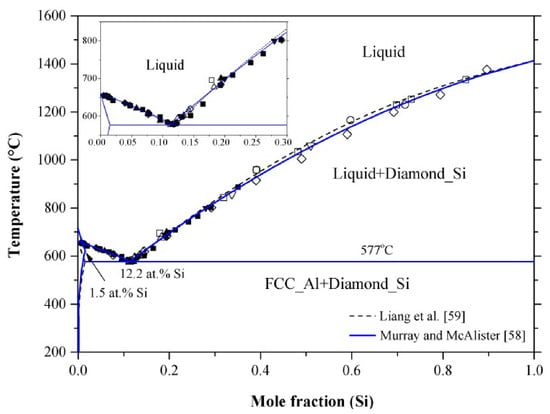
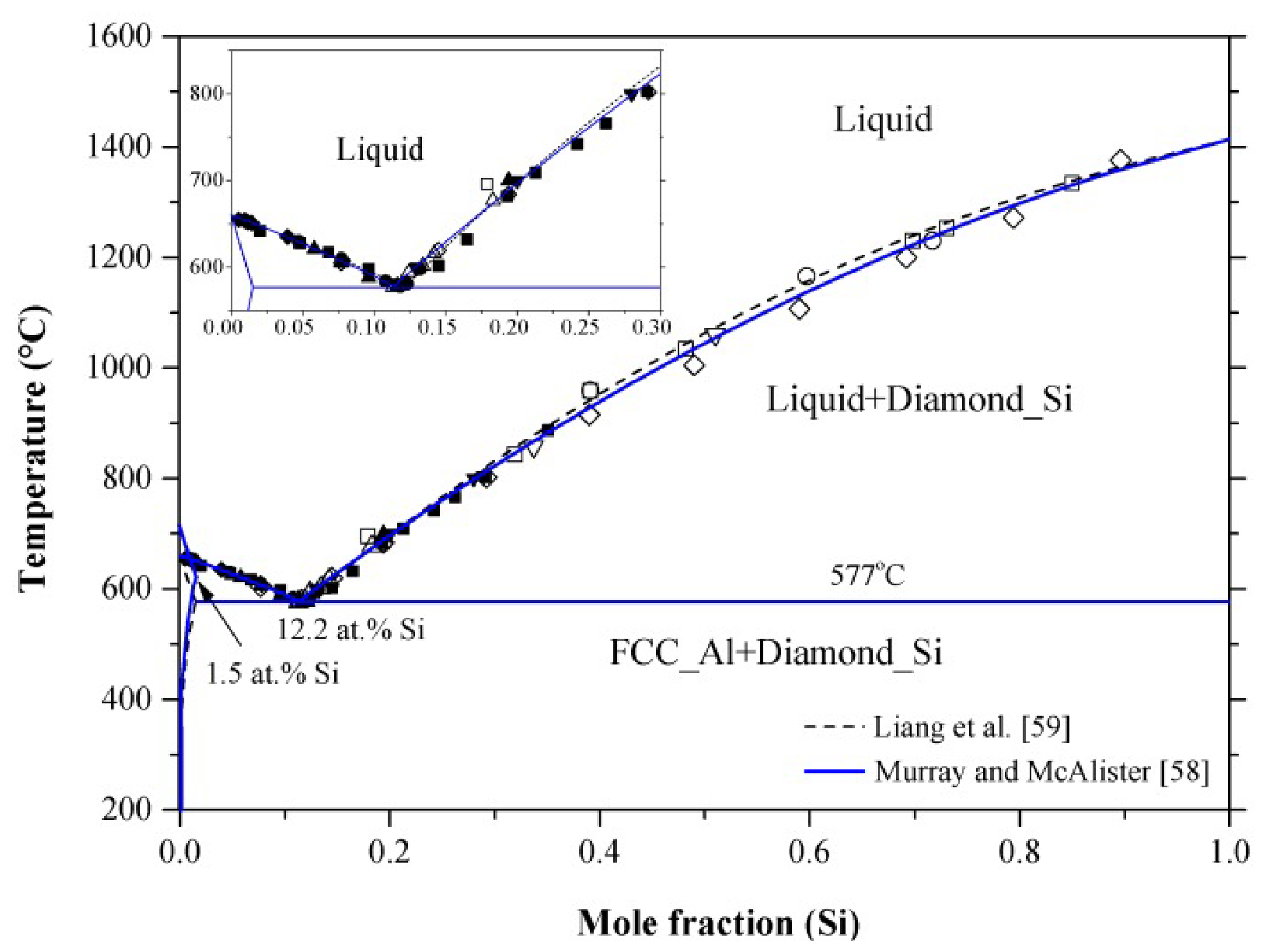
Aluminum alloys occur in vast grades and series; each of these alloys is alloyed with various alloying elements in different quantities, listed in Table 1. Alloying elements can be added through powder metallurgy. Among these elements, Si is the most used element, especially in the ingot metallurgy (IM) production routes, and it appears in quantities of ~6.5 wt% to ~7 wt% [1,2,12]. The addition of Si is essential, as it enhances castability by improving the fluidity of the melt and lowering shrinkage. The addition of this element has to be carefully controlled, as higher addition of Si compromises other mechanical properties such as ductility. The binary phase diagram of Si and Al can be used to depict different phases that will form in response to different Si quantities added to the Al alloy. Figure 1 below depicts the Al-Si binary phase diagram with the Si range in A356.
Figure 1.
Al-Si binary phase diagram showing A356 [13].
1.3. Phases, Morphology and Associated Properties of A356 Al Alloys
A356 Al alloys can be produced via wrought, ingot metallurgy routes and recently additive manufacturing has been drawing interest from Al production houses. This present review explores the ingot metallurgy and additive manufacturing (laser powder bed fusion) production routes. A typical A356 Al alloy that has been cast into near-net shape in its microstructure generally has two phases present: dendritic alpha aluminum (α-Al) phase and eutectic Si phase [14]. Dendritic phases are tree-like structures formed during the solidification of the alloys; these tree-like structures form the basis of dendritic arm spacings. To date, three kinds of dendritic arm spacings are: primary, secondary and tertiary dendritic arm spacings. Secondary dendritic arm spacing (SDAS) is the most explored and used by academics and industries. While dendrites form a tree-like structure, eutectic phases form needle-like particles and sometimes acicular structures in the as-cast condition. Due to rapid cooling rates in investment casting methods, the dendrites that are forming in the A356 Al alloy are finer, with smaller dendritic arm spacing; within the dendrites are networks of lamellar eutectic silicon phases that form after the dendrites have formed [15].
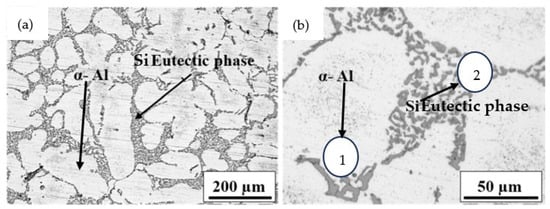
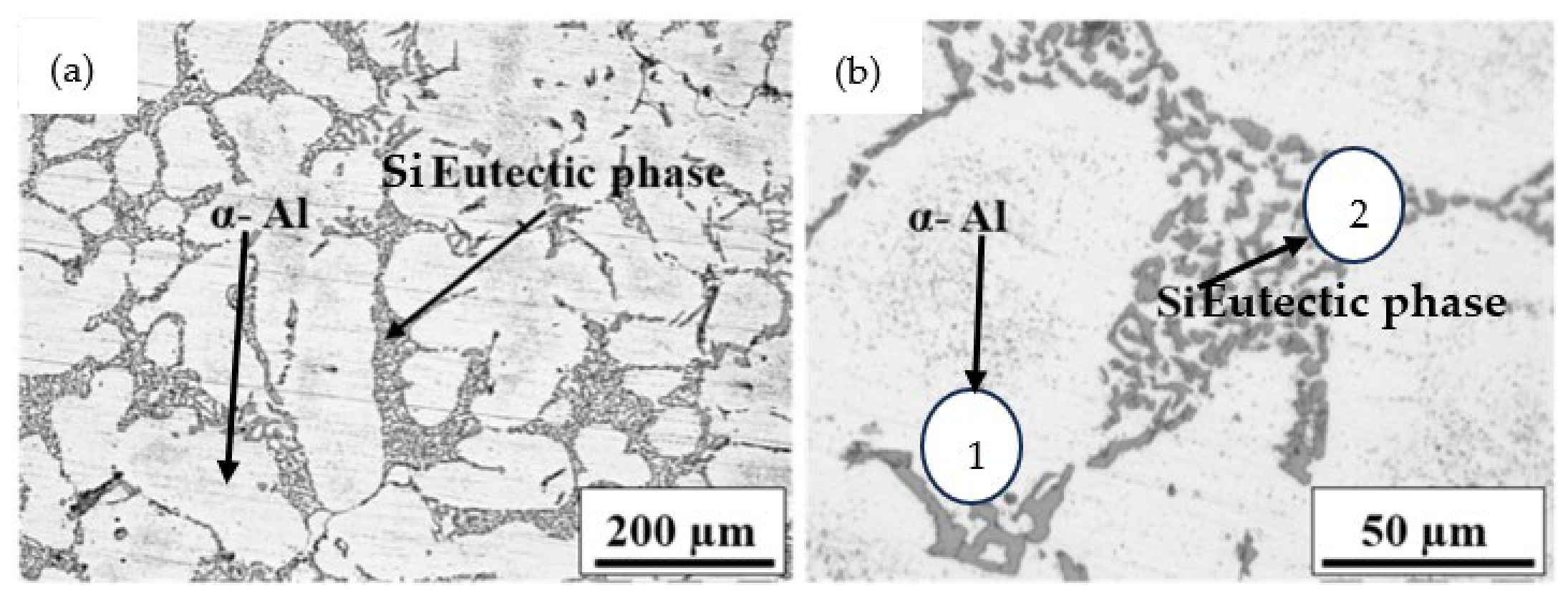
Dendrites are phases visible in the microstructure of a material. They form when a liquid metal is undercooled below its freezing point. Small spherical solids form in the undercooled melt, acting as a nucleating site for the growth of a nucleus. As the nucleus grows, it loses stability, leading to the development of a tree-like morphology called dendrites. Dendrites have a stem from which secondary arms extend, and lastly, they have tertiary arms, which extend from secondary arms, and overall, the morphology of dendrites will be a complex tree-like structure. Formation of dendrites has three proscesses: nucleation, growth and solidification of the dendrites. Figure 2a below shows a dendritic micrograph of the A356 Al alloy, represented by 1, the α-Al phase, as well as eutectic silicon phase represented by 2. Figure 2b shows an eutectic silicon phase at a higher magnification. The eutectic Si phase constitutes ~12–15 vol.% and forms during the final stages of solidification at approximately 577 °C, coexisting with the α-Al matrix. In the unmodified as-cast condition, the eutectic Si typically exhibits a coarse, acicular morphology. This kind of morphology acts as a stress raiser and impairs ductility as well as fatigue resistance due to its sharp edges. A study by Zhang et al. [16] and Abdelaziz et al. [17] discovered that chemical modification with strontium (~0.01–0.05 wt.%) transforms the acicular structures into a finer spheroidized form. Additions of Sr reduce particle size from 4.5 µm in the unmodified condition to 1.3 µm in the Sr-modified condition [18]. The above-mentioned studies clearly show that unwanted and undesirable properties can be transformed into more desirable properties (making the unwanted more attractive and desirable) with the addition of the correct dopant in the right quantities.
Figure 2.
Microstructure of as-cast A356 Al alloy at (a) lower maginification and (b) at higher magnification showing different phases [19]: microsrtucutre 1—alpha aluminum dendrites, 2—eutectic silicon phases.
The dendrites in a material grow in different directions; they grow in the direction of the crystal structure in a material. Since the material of focus in this review paper is aluminum and it has a face-centered cubic structure (FCC) with the family of directions <100>, the stem and dendrite arms will grow along this direction [20]. A change in this orientation of dendrite growth is witnessed when supersaturation is increased.
Table 2 below summarizes all the major morphologies (α-Al and eutectic Si) present in the A356 Al alloy. These morphologies are represented in Figure 2 and the effects they have on the microstructure and the mechanical properties of the alloy.
Table 2.
Effects of microstructural phases on the mechanical properties and microstructure of A356.
1.4. Applications of the A356 Al Alloy
Aluminum alloys are produced from the Al element, which is easily recyclable and does not lose quality after recycling [21]. A356 Al alloy is a well-known cast Al alloy, drawing attention with its attractive properties, such as high strength-to-weight ratio, excellent corrosion resistance, high temperature stability and good ductility, which drew attention in the automotive, aerospace and marine industries and sectors [22]. A356 has good castability properties, allowing the alloy to be cast into intricate and near-net shapes, mainly through investment casting methods. This alloy and the aforementioned production route offer a good surface finish of the final produced part [23].
1.4.1. Automotive Industry
A356 aluminum and Al-Si-Mg casting alloys are extensively used in automotive cylinder heads due to their excellent castability, high strength-to-weight ratio and thermal properties [24]. Comparative studies on cast aluminum alloys, including A356-T6 and A356 0.5Cu-T6, demonstrate that after thermal exposure simulating engine conditions, A356 retains its robust mechanical response with the evolving microstructures. The change in the microstructures is influenced by precipitate coarsening, which inversely affects thermal conductivity [25]. These properties make A356 Al suitable for high-performance internal combustion engine cylinder heads, where isothermal and thermo-mechanical fatigue tests at 120 to 280 °C reveal its good deformation and fatigue resistance behavior under elevated thermal loads, supporting light weighting for fuel efficiency.
The A356 Al alloy is a widely used alloy in the automotive industry. It is used mainly for its lightweight properties and good thermal stability. Currently, the majority of vehicles, such as half-ton pickup trucks and sport utility vehicles (SUVs), use cast Al blocks for their engines [23]. These blocks were found to be more economical and to reduce the weight added to the overall power train of the vehicles. Cast iron blocks were previously used and still are used in some modern vehicles. The disadvantage of these blocks is that they are more prone to corrosion and heavier, which compromises fuel efficiency, adding more weight and strain to the power and drive train of the vehicles. For this material to be applied in automotive and structural applications, it needs to be coated to improve its corrosion resistance, which in turn increases the production and manufacturing costs [23]. There is still a high demand for Al alloys in the automotive market.
1.4.2. Aerospace
The same advantageous properties: lightweight nature, high strength, and corrosion resistance extend the application of A356 hypoeutectic alloys into the aerospace industry. This alloy comprises ~60 to ~80% of an aircraft’s weight to enhance fuel efficiency and loading capacity. Specific areas of application are structural components (fuselage and wings) [26]. To meet the rigorous strength, ductility and toughness demands of high-performance aerospace usage, A356 alloys are further processed using various post-casting treatments, such as artificial aging heat treatment, and in some cases, HIP treatment is also carried out in the melt prior to casting. Such treatments ensure precise control over precipitate evolution, significantly enhancing hardness and impact strength and reducing pores [9].
2. Review Methodology
Online assessment of searching for existing literature on the A356 Al alloy was carried out. This review is produced from conference proceedings and journal articles. The following keywords were used: (“A356 Aluminum alloy” OR “Al-Si-Mg alloy systems”) AND (“Post-casting treatment of A356 Al alloy” OR “Different heat treatment on A356 Al alloy”) AND (“ Pore elimination techniques in A356 Al alloy”). Only articles published in English were considered, with a preference for articles between the years 2020 and 2026; due to the limited literature footprint, articles published earlier than 2020 were also considered.
3. Processing Techniques of A356 Al Alloy
3.1. Investment Casting of A356 Al Alloy
Investment casting is one of the Al alloy production routes, and it dates to the 1940s. It is a metal forming process that produces intricate and precise metal components by first making a polymer pattern coated with a refractory material. The coating solidifies, forming a durable mold. The molten metal is then poured into the cavity, melting the polymer inside the cavity, allowing the molten metal to fill all the empty spaces inside the cavity, and solidifying, inheriting the shape of the mold. Metal is poured in such a way that it accommodates the shrinkage, cooling and pouring rates of the metal as it solidifies, limiting the misrun of the molten metal. The final produced part is a near-shape component. Although these components are near-shape and have a low density (lightweight) they still need further treatment to modify their microstructure with the aim of improving the mechanical properties. For aerospace and automotive industries, which are the largest consumers of these alloys, high strength, ductility, good heat dissipation and lightweight are of high importance and are desired properties [27]. These properties can be achieved through various heat treatment processes, viz., solution heat treatment, precipitation hardening (T5/T6) and HIP.
3.2. Solution Heat Treatment
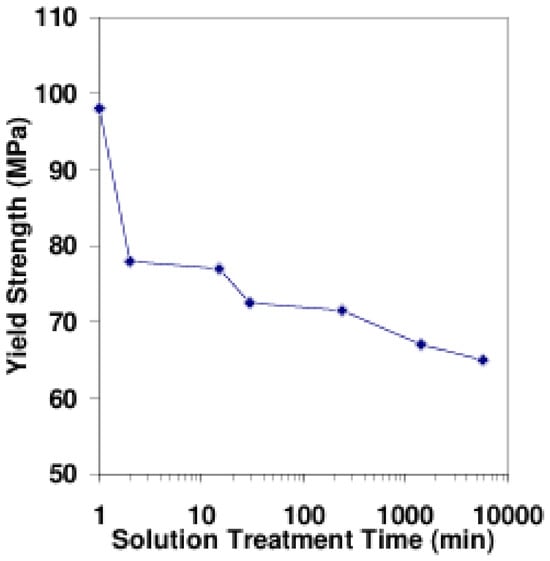
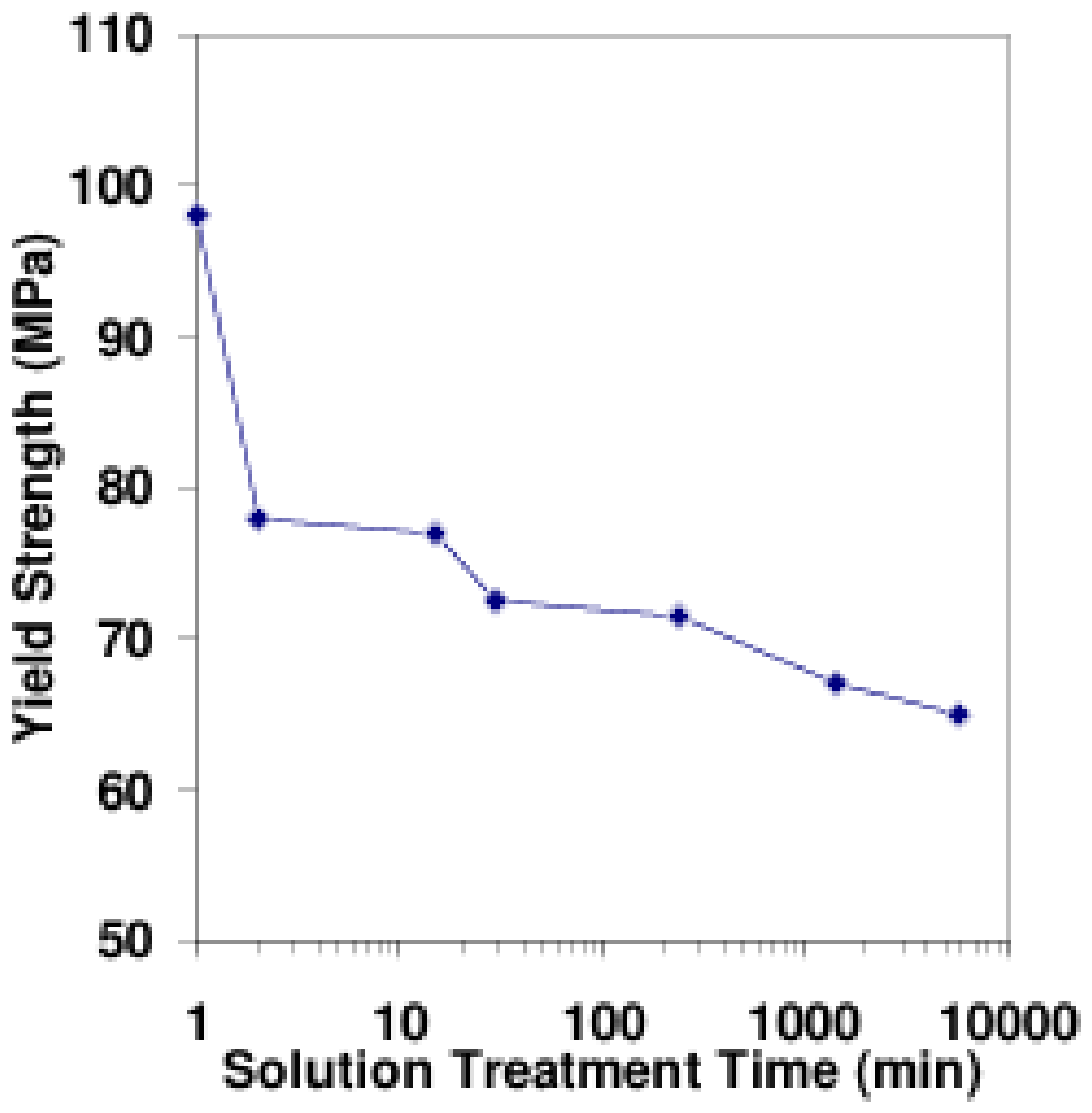
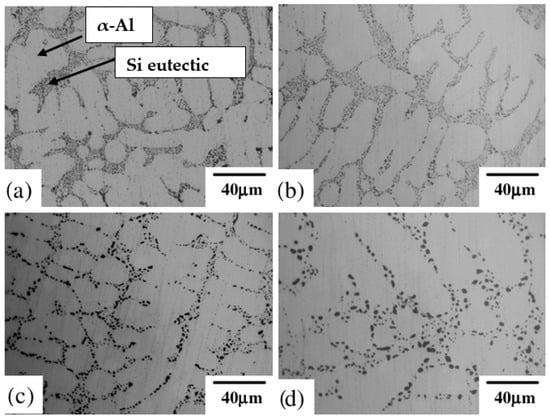
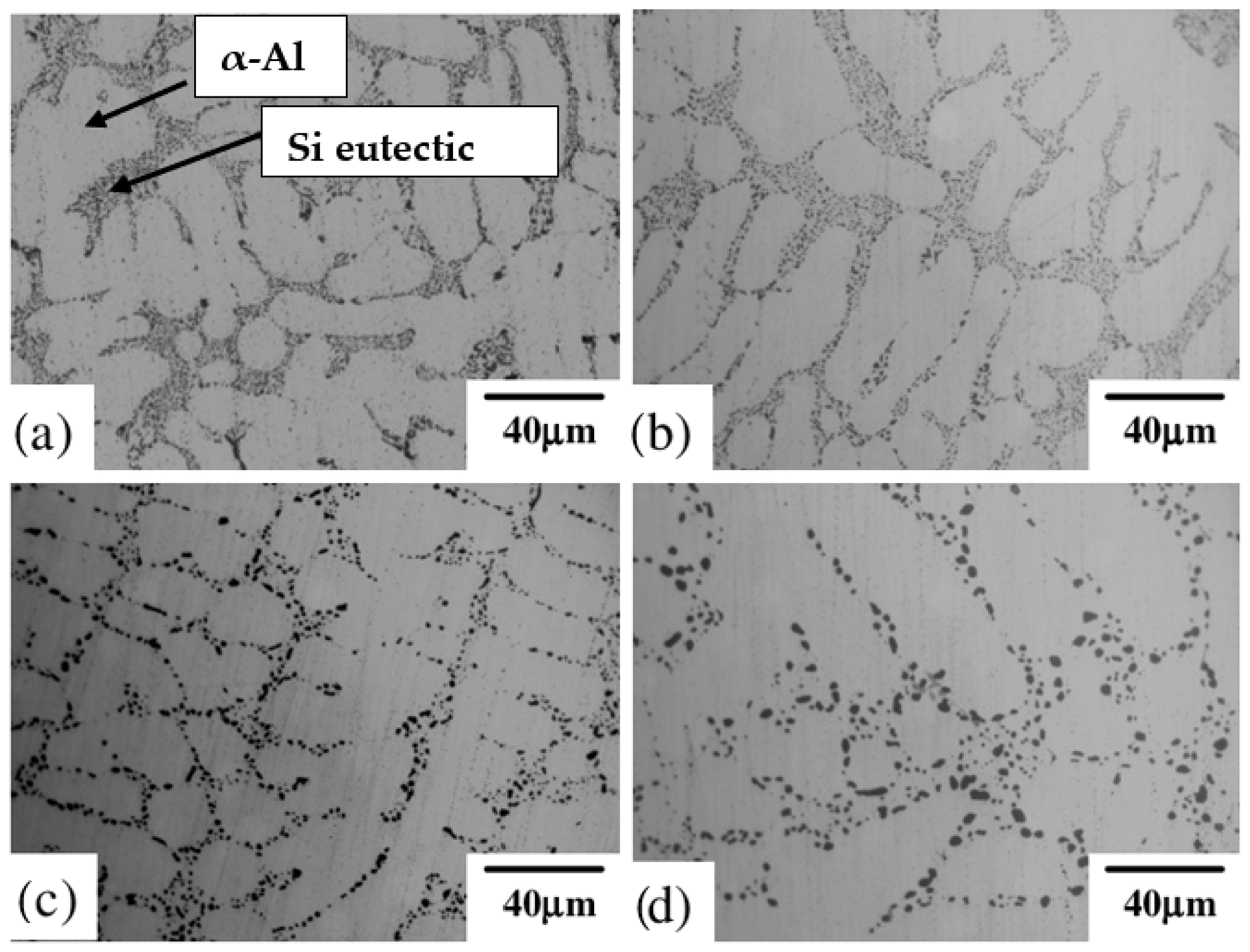
Solution heat treatment of the A356 Al alloy induces profound microstructural transformations, primarily through the dissolution of secondary phases and modification of eutectic silicon morphology within the matrix [28]. Leo and Colley conducted a study in 2011, where they evaluated the effect of solutionizing time at 540 °C on the microstructure. The samples were solution heat-treated for 10, 100, 1000 and 10,000 min. From these four treatments, the 10 min treatment had the greatest evolution in the microstructure and properties. Figure 3 below shows a significant decrease in yield strength from the sample in cast condition to solution heat-treated condition in the first 10 min. Between 10 and 100 min, the change continued, but after 100 min, the change was much more insignificant. In a similar study carried out over 1, 4, 6 and 8 h, the elongation % improved to ~11.5% in the first hour and had an insignificant change after the first hour [28]. The authors discovered that spheroidization of the eutectic Si phase occurred in the first hour, while the 4th, 6th and 8th hour treatments increased the size of the α-Al matrix. A similar study by Nnakwo et al. and Jang et al. reported that in controlled regimes at 525 to 540 °C for 5 h [29], acicular silicon particles are spheroidized via solution heat treatment. Spheroidization promotes a more uniform distribution of internal stress and improves properties such as ductility [30]. Folowoing Figure 3 is Figure 4 which depicts microstructural evolution of the alloy with respect to changing holding times.
Figure 3.
Effect of solution treatment on the yield strength of A356 Al alloy [31].
Figure 4.
Microstructural evolution of solution heat-treated A356 under different times: (a) as-cast, (b) 2 min, (c) 30 min and (d) 240 min [31].
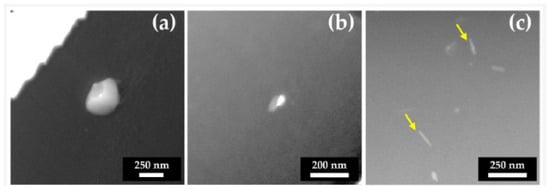
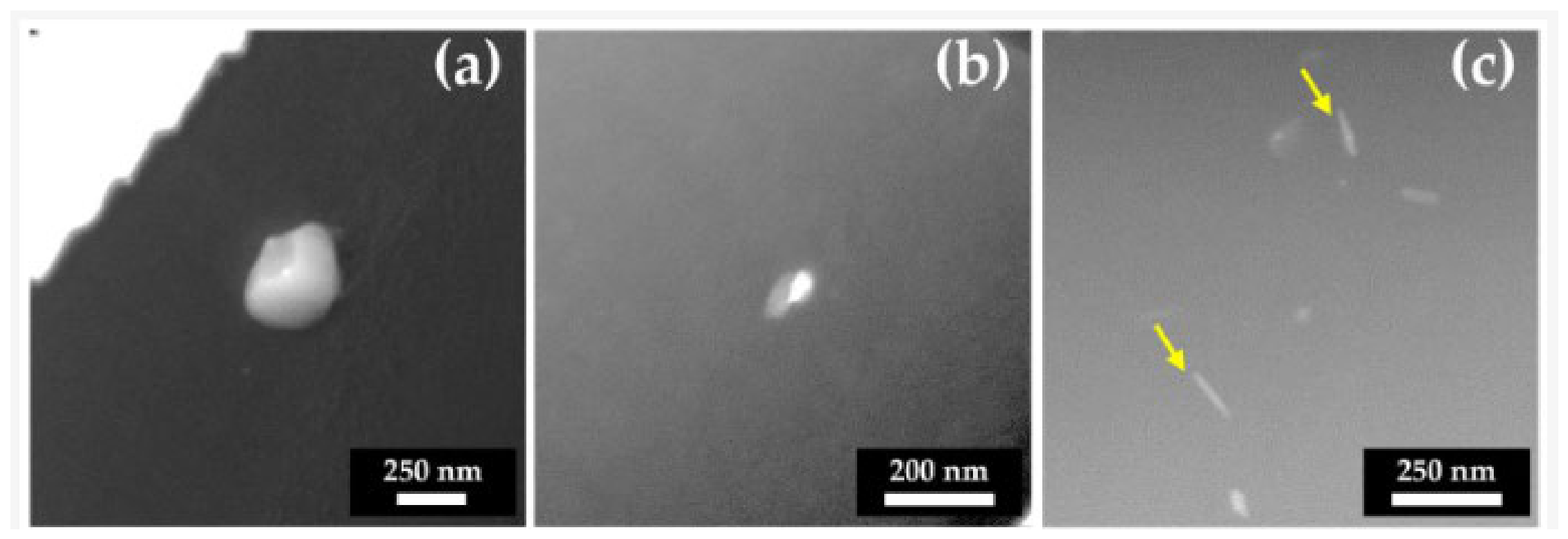
Figure 5 shows TEM images of A356 Al showing the Mg2Si precipitates; in the as-cast condition, the precipitate was more spherical, and as holding time was increased, the precipitates became more disk-like shaped. Extended high-temperature solutionizing further enhances silicon morphology refinement and elevates the quality index in direct chill (DC) cast variants by optimizing the phase distribution [28]. Rheological die casting combined with solution treatment yields even finer microstructures, minimizing defects and facilitating precipitation-ready solid solutions [32].
Figure 5.
TEM images in (a) as-cast condition, and (b,c) in heat-treated condition [30].
These microstructural changes during solution heat treatment profoundly influence the mechanical and corrosion properties of the A356 alloy [30]. Spheroidized eutectic Si particles and supersaturated solid solutions enable precipitation hardening upon subsequent treatment. Figure 4 shows the effects of heat treatment on the evolution of precipitates (Mg2Si); the precipitates impede dislocation motion and influence the increase in Vickers hardness, as this is a hard phase compared to the α-Al and eutectic Si phases. The study reported an increase from ~59 HV in the as-cast condition to ~92 HV after solution treatment at 525 °C for 4 h and extended aging at 190 °C for 6 h. Solution heat treatment brings about impressive mechanical properties; they deplete Mg from the α-Al matrix, elevating corrosion susceptibility in NaCl environments. Corrosion susceptibility decreases corrosion potential (from −664 mV to −780 mV) and increases current density up to 1.89 µA/cm2 [30]. The decrease in the corrosion potential means that this metal would be active and the surface of the alloy acts as an anode, making it more prone to corrosion. Increasing current density means the alloy is now corroding at a higher rate than in the as-cast condition. While solution heat treatment merged with artificial aging improves mechanical properties, corrosion properties are compromised, and therefore, a balance between formation of precipitates (Mg2Si) and reservation of Mg in the matrix should also be taken into consideration for A356 to maintain its corrosion properties for marine applications.
3.3. Aging T5 and T6 Heat Treatment
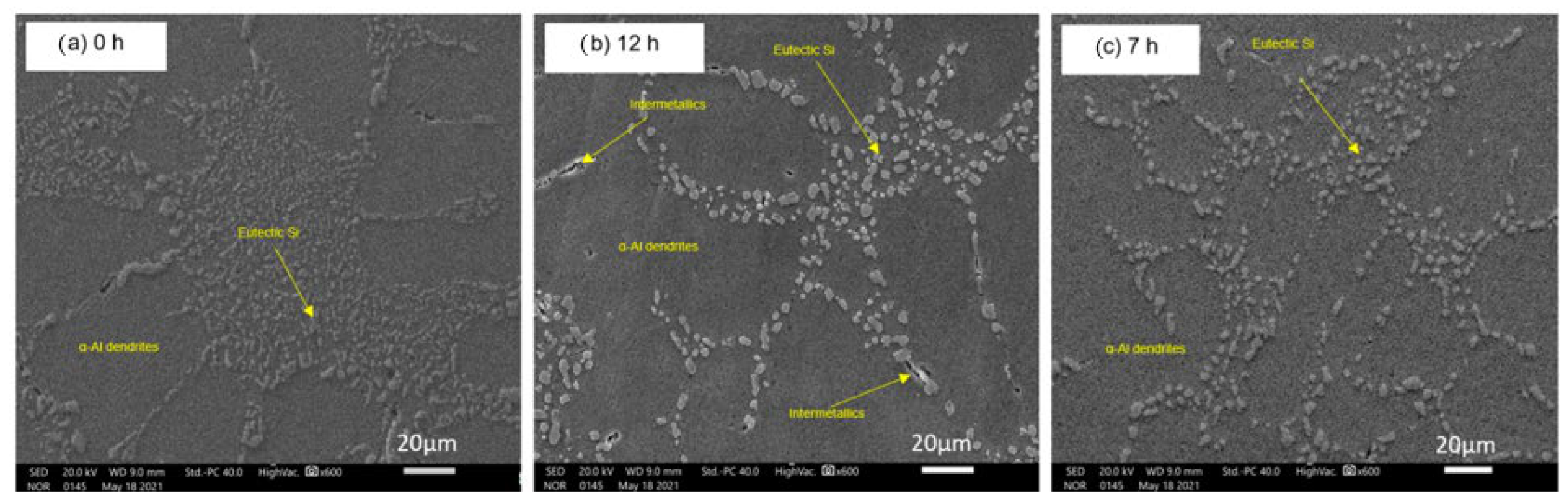
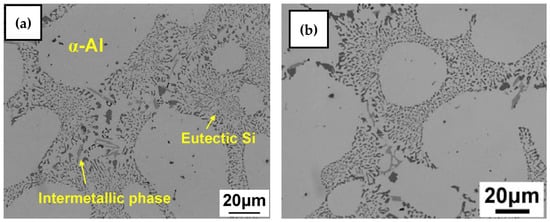
The T5 treatment is an artificial aging treatment that does not involve solutionizing the sample. The T5 treatment strengthens the A356 Al alloy through precipitation of Mg2Si phases at dislocations and grain boundaries, enhancing yield strength and hardness while preserving as-cast microstructure features such as eutectic silicon morphology [33,34]. T5 treatments on cast Al-Si-Mg systems boost hardness via dispersed precipitates, mitigating pore-induced degradation in tensile and fatigue performance [35]. Figure 6 below shows the micrographs of A356 in the as-cast condition (Figure 6a) and T5-treated condition (Figure 6b). The as-cast condition has prominent α-Al phases, while the T5-treated sample shows less of the α-Al; this led to an increase in eutectic Si phases present in the material, leading to improvement in the mechanical properties (tensile strength and hardness) of the A356 Al alloy.
Figure 6.
(a) As-cast sample, (b) T5 heat-treated sample [36].
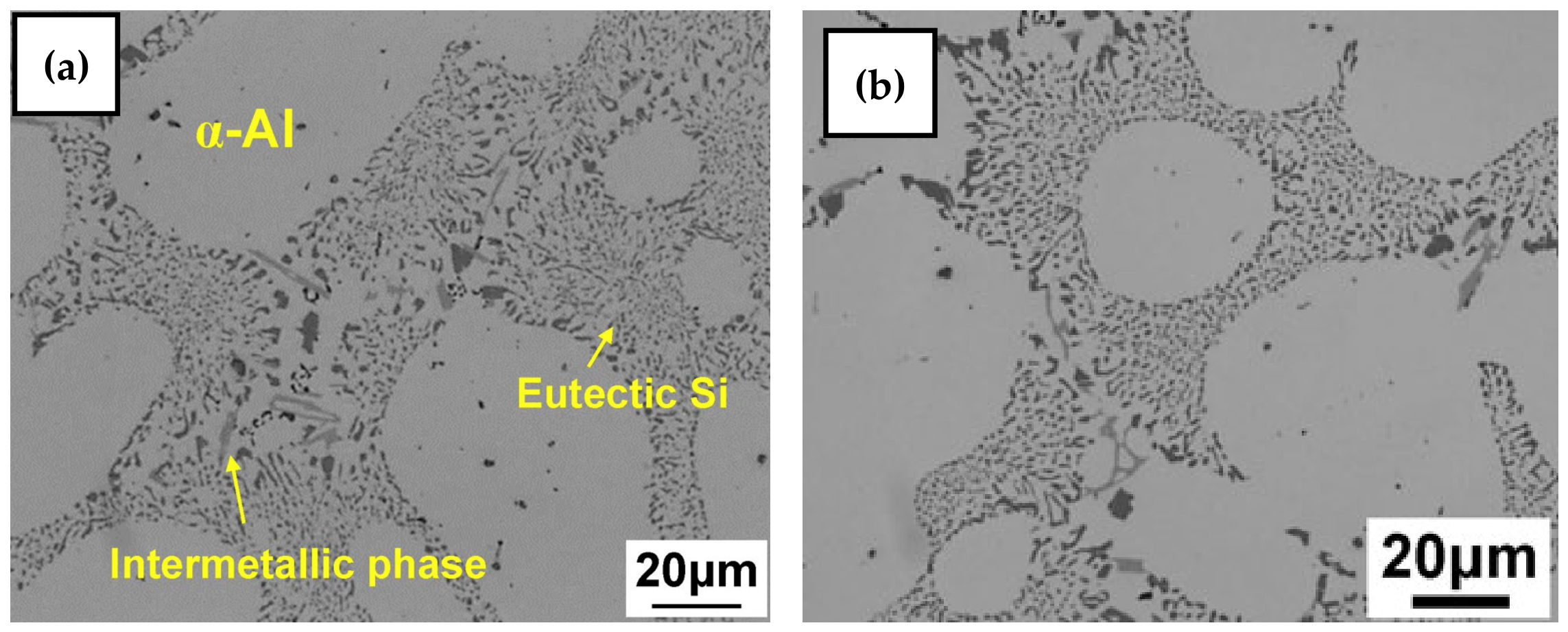
T6 heat treatment is a heat treatment that comprises a solution treatment at ~540 °C, followed by quenching and artificial aging at a temperature range of ~155–180 °C. Artificial aging dissolves secondary phases into a supersaturated matrix [37]. Silicon particles are spheroidized, and fine Mg2Si particles are precipitated for peak strength in the A356 Al alloy [38]. Varied T6 conditions optimize the microstructure, reducing dendritic arm spacing and refining precipitates to elevate tensile strength to ~310 MPa UTS, hardness and elongation. These properties are improved in a manner that would be ideal for motor vehicle components. Despite these gains, persistent casting pores and a coarse, brittle intermetallic-like Fe-rich phase act as crack initiation sites and are weak links in the overall microstructure, and compromise the fatigue life of the component [34]. Figure 7 below compares micrographs of the original cast sample and T6-treated sample; the original cast sample has clear dendritic structures, while the T6-treated sample has coarser phases and prominent pores.
Aziz et al. in 2024 [39] carried out a study where the effects of T5 and T6 were evaluated on the microstructure and tensile strength. From this study, T6 was the heat treatment that led to the greatest improvement in tensile strength, both at ambient and elevated temperature conditions. A similar observation was made in terms of tensile behavior in the publication by PARTMFG titled “Essential guide to A356 aluminum alloy: Properties, uses, and benefits”, where T6 was superior to T5 in improving tensile strength. When comparing the tensile behavior of the alloy in these two different conditions at ambient temperatures, it had the greatest performance, as tensile behavior is temperature-dependent. At ambient temperatures, there are more dislocations impeded compared to elevated temperatures, where there is less blocking of dislocations.
Figure 7.
(a) As-cast sample, (b,c) T6 heat-treated sample [40].
3.4. Hot Isostatic Pressing
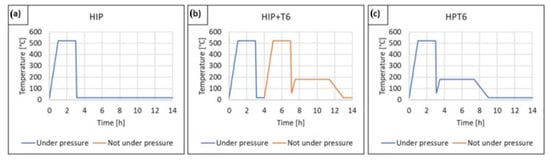
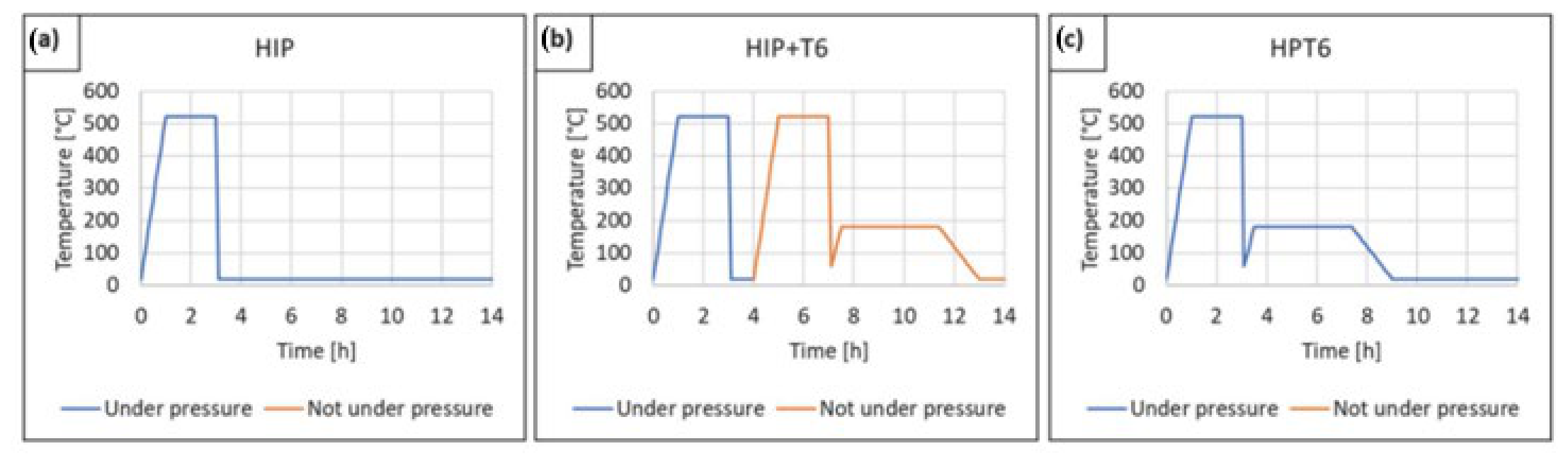
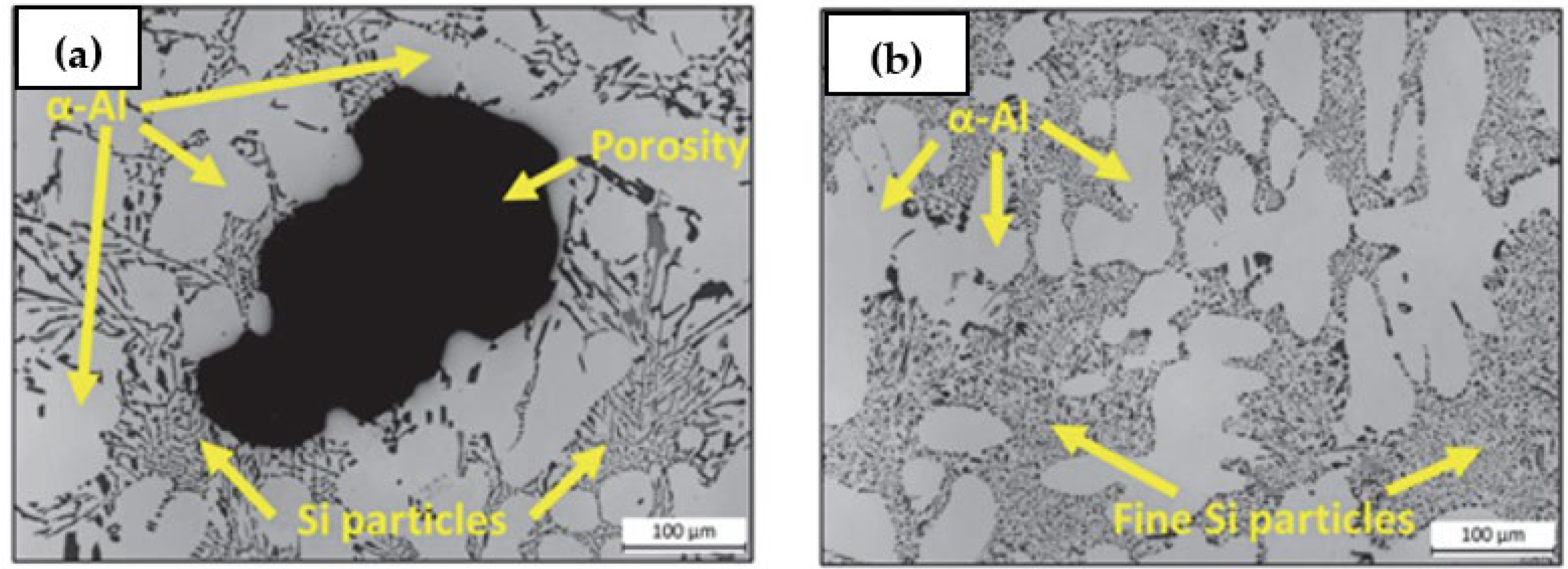
Hot isostatic pressing (HIP) is a method employed by metal-producing industries to improve mechanical properties and the performance of different materials. This is carried out through a reduction in the micro-voids present in the material and densification of the metal by applying pressure at ~ 100 MPa and high temperatures ~ 520 °C [41]. These alloys can be produced through ingot metallurgy routes and additive manufacturing. While casting routes offer good surface finish and near-net shapes in final products, they also leave micro-voids, also known as casting defects. To improve the mechanical properties of these alloys, processes such as HIP are used to eliminate defects, such as micro-voids. Figure 8 below shows different variants of HIP treatments used by Luca Girellie et al. and the parameters used in each variant.
Figure 8.
Different variants of HIP: (a) HIP treatment; (b) HIP followed by T6 treatment; (c) HIP combined with T6 [42].
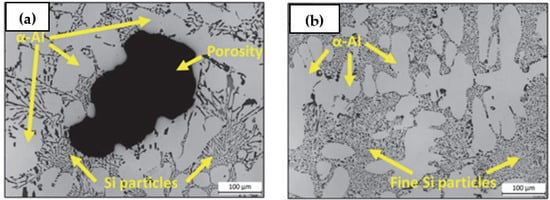
A substantial body of work shows that HIP significantly reduces pore sizes, area fraction and volume fraction of pores in A356 Al and Al-Si-Mg cast alloys. A study by Dinesh reported a reduction in pore dimension from ~67 µm to ~18 µm, with a corresponding decrease in volume fraction and density of the pores [43,44,45,46]. Figure 9 below shows the presence of pores in HIP and non-HIP conditions, showing a significant reduction in pores. Yi et al. conducted a study and observed that the density of the pores was reduced to 0.5 mm2 from 1.2 mm2 in HIP and non-HIP conditions of the A356 Al alloy [44]. Further investigations report marked reductions in porosity metrics and improved consistency of mechanical properties after HIP. However, HIP should be viewed as a porosity reduction and pore healing process rather than a guaranteed defect elimination process. Even in optimized conditions, a small residual population of pores can remain and, in heavily oxidized melts, pores can be partially closed.
Figure 9.
(a) Cast sample non-HIP condition, (b) sample in HIP condition [42].
Microstructurally, HIP has a negligible effect on solidification features such as SDAS and grain sizes in A356 Al. Multiple studies report that SDAS and grain sizes remain essentially unchanged both in HIP and non-HIP conditions. This observation is consistent with the mechanism of HIP, which primarily acts on existing entrapped gases, without significantly altering the solidification structures. Consequently, any resultant yield strength and hardness are not attributed to Hall–Petch strengthening from grain refinement, as grain sizes are not modified by HIP treatment. Instead, the improvement in strength, hardness and fatigue life is predominantly linked to the reduction of stress concentrators in the alloy. The benefits of HIP are also strongly conditioned by the initial melt quality, as an oxidized melt cannot be reliably healed by HIP. This underscores that HIP cannot fully compensate for poor melt quality and excessive oxidation. HIP treatment should be viewed as a complementary route that amplifies benefits of good foundry practice rather than substituting for it.
3.5. EBSD Maps of A356 Al Alloy
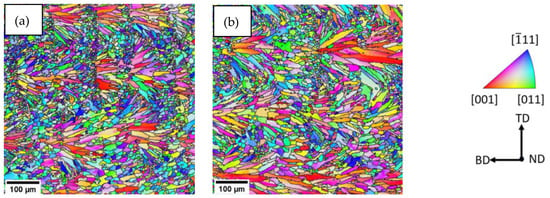
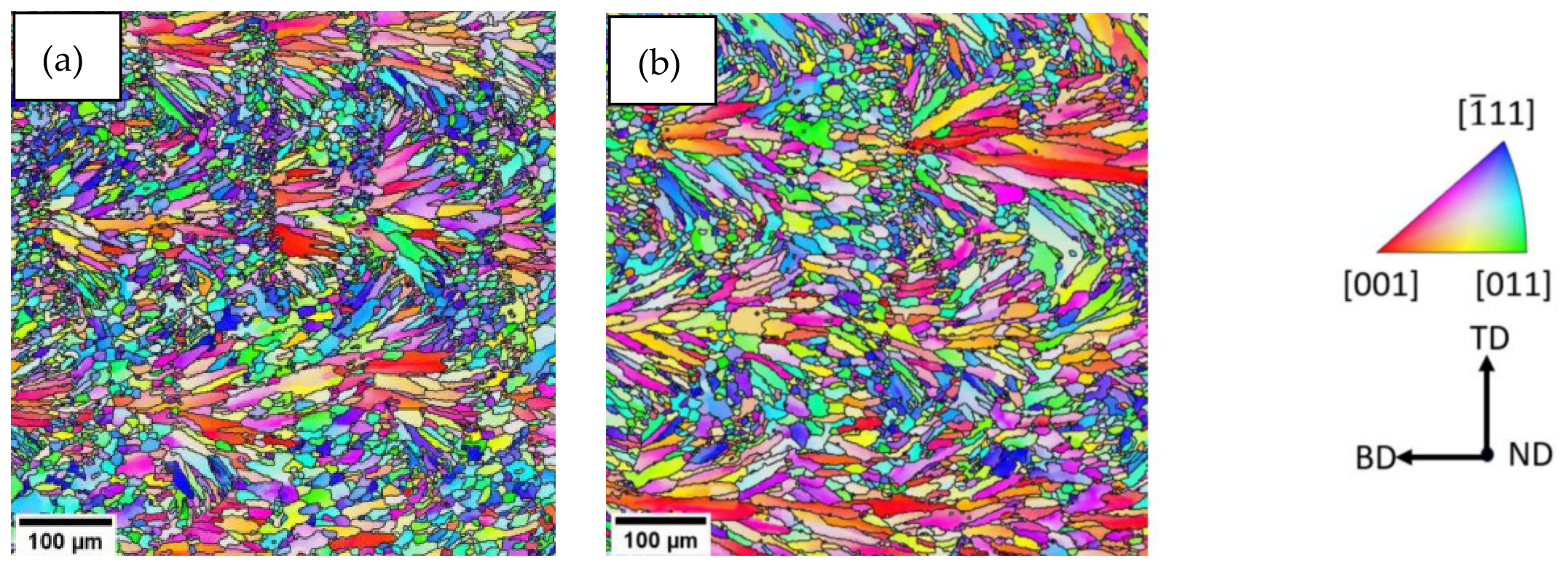
Electron backscatter diffraction (EBSD) maps are a powerful characterization tool that provide information on grain size, grain orientation, grain boundaries, crystallographic texture and local strain. Figure 10 represents the EBSD maps and inverse pole figure (IPF) along the x direction/build direction (BD). Figure 10a,b is the EBSD map in the received condition and in the T6 condition, respectively. Figure 10 is populated mainly by columnar and equiaxed grains in various preferred orientations. In both as-build and T6 conditions, there is a presence of columnar grains along the preferred [001] orientation in the build direction [45]. The columnar grains are paired with equiaxed grains; in the as-build condition, columnar grains prefer the [ 11] orientation compared to T6 condition that has equiaxed grains without any preferred orientation.
Figure 10.
EBSD IPF maps along the build direction, (a) as-build and (b) T6 conditions [45].
Formation of equiaxed grains can be observed as a result of an enormous thermal gradient and a columnar-to-equiaxed transition (CET) that occurred in front of the columnar grains, where equiaxed grains develop from columnar grains [46,47]. From the maps, it can also be observed that there are continuous alternating layers of columnar and equiaxed grains, confirming a further CET. The formation of equiaxed grains forms more grain boundaries, which increases hardness and strength grain boundaries, limiting the dislocation motion, consistent with the Hall–Petch relationship. Changes in grain orientation and texture from the as-cast to T6 condition influence the alloy’s anisotropy, meaning that the response of mechanical properties such as strength, ductility and stiffness may vary with the loading direction [48]. Furthermore, the evolution of grain orientation affects dislocation activity and contributes to the overall strength–ductility response of the alloy.
3.6. Highlights of the Key Effects on Microstructure and Mechanical Properties
Heat treatments have proven to be one of the widely used post-casting techniques used to improve microstructure and mechanical properties of the alloys [24]. These techniques mainly address the size of the grains, shape of the grains, and the arrangement of the grain boundaries in the microstructure of the alloy [49]. Overall, the microstructure will be altered, and the effect of the heat-treatment technique will be evaluated by comparing the before-and-after microstructures of the alloy. Effects of the heat treatment on the mechanical properties are also evaluated in the same way by comparing the before-and-after performance of the alloy when tested for specific mechanical properties.
The present study reviews different post-casting heat treatments and the improvements they had in the underlying microstructure and mechanical properties. Table 3 below compares the principal microstructural effects of four processing techniques. The table further highlights that they strengthen the alloy differently and they use different mechanisms for strengthening.
Table 3.
Effects of different processing routes on the microstructure and mechanical properties of A356 Al alloy.
While heat treatment plays a huge role in improving the mechanical properties of the A356 Al alloy, the initial composition of the alloy plays a critical role as it also influences the microstructural evolution, consequently affecting mechanical properties. The processing parameters of these techniques also come into play. Changes in these parameters result in different microstructures and consequently the mechanical properties of the A356 Al alloy [50]. Therefore, a balance of processing parameters is also paramount when evaluating the effects of the heat-treatment techniques; although the main theme of the review is the comparison of techniques employed, processing parameters are also worth noting.
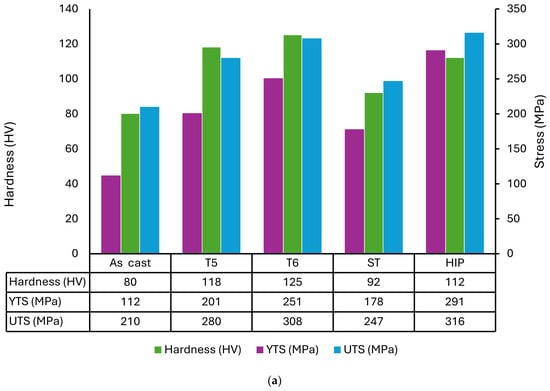
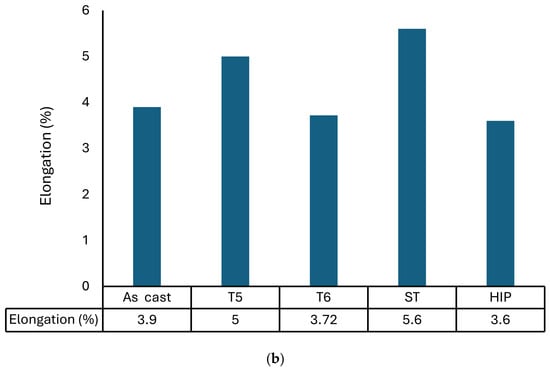
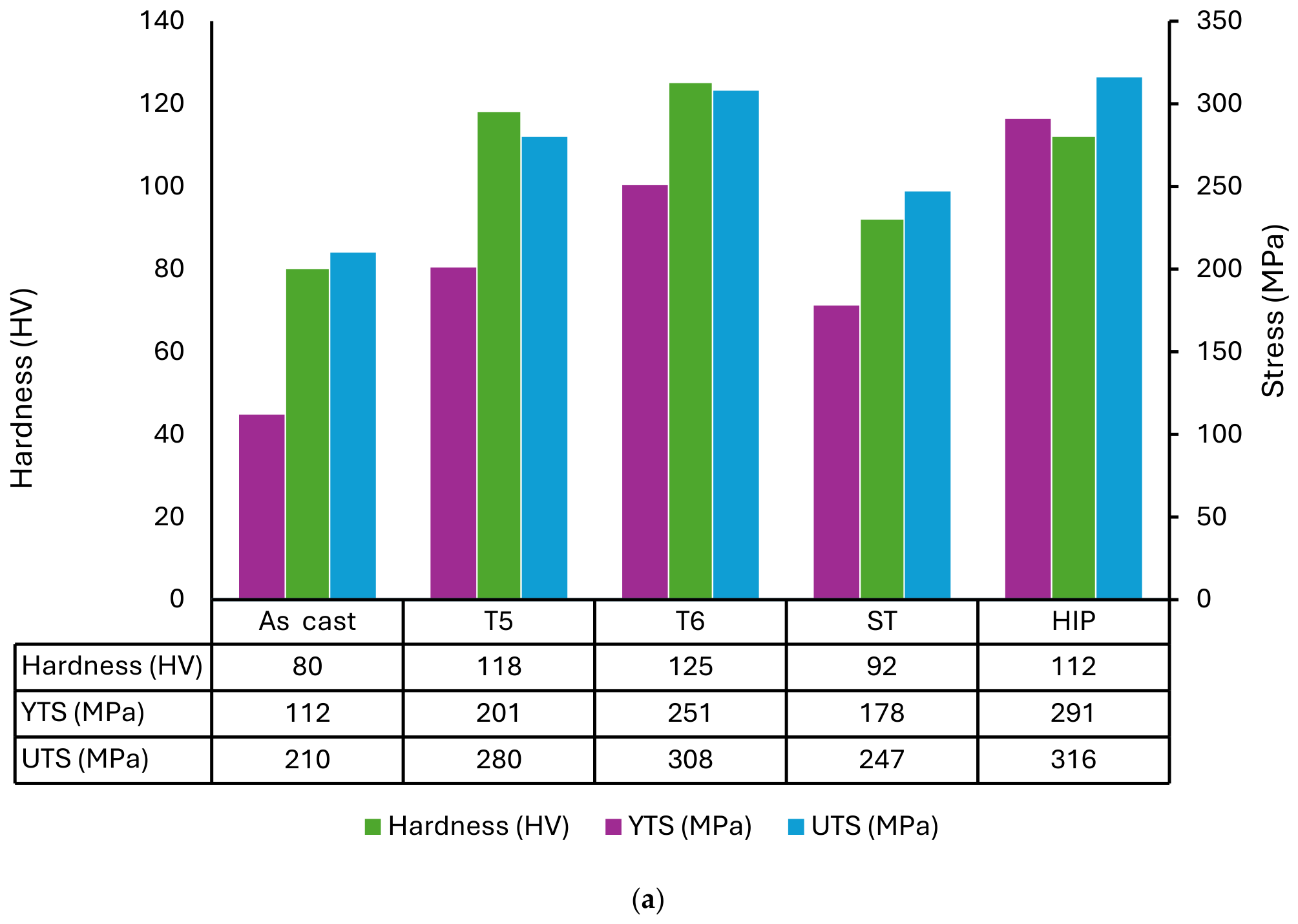
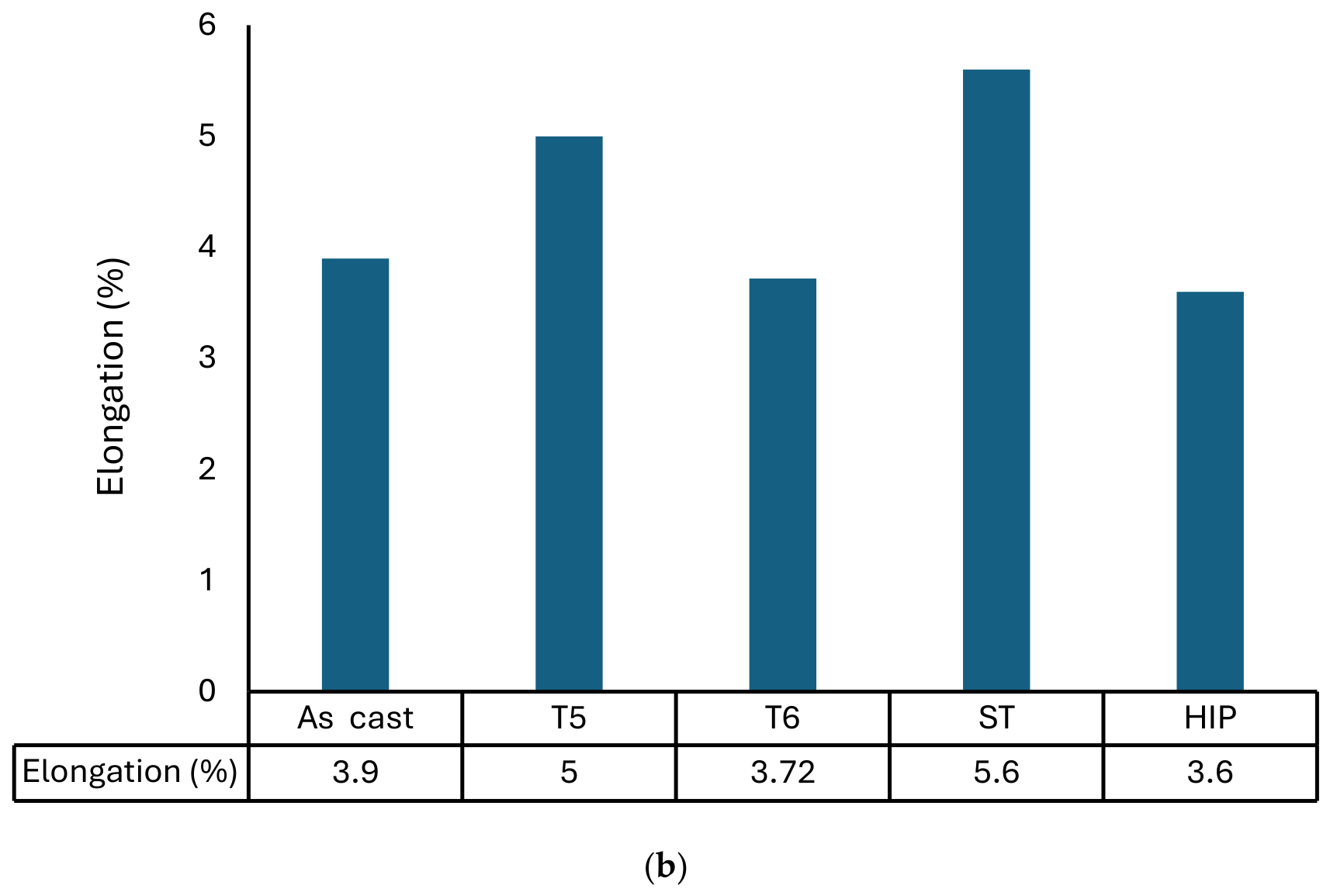
Figure 11a,b summarize the variation in mechanical properties of the A356 Al alloy reported under different heat-treatment conditions. Overall, the figures indicate that post-casting heat treatment enhances hardness, yield and ultimate tensile strength, with hardness increasing from 80 HV to 125 HV [28,33,34], YTS from 112 MPa to 291 MPa, and UTS reaching 316 MPa across the reviewed studies [45,47,48,49,50]. Elongation also shows an increase from 3.9% to 5.6%, with solution-treated samples exhibiting the highest value [47,50,51,52]. These trends suggest that heat treatment plays an important role in improving the strength and hardness of A356-based alloys, while its effect on ductility remains comparatively limited.
Figure 11.
(a) Mechanical properties of A356 Al alloy in the as-cast and post-cast processing conditions. (b) Elongation of A356 Al alloy in the as-cast and post-cast processing conditions.
However, direct comparison among the studies should be interpreted cautiously, as the alloys differed in composition, processing route, and baseline microstructure. For instance, one study reported a Si content of 10.2 wt%, whereas in other studies, compositions of Si were in the range of 6.5–7 wt%. In addition, one dataset involved laser powder bed fusion, while the remaining studies considered cast alloys produced by routes such as investment and sand casting. These differences likely influenced the initial microstructural state and the measured property response. The comparisons above were only limited to mechanical properties and not extended to microstructural comparisons, as different compositions and processing routes can lead to different microstructural structures. The observed strengthening is consistent with precipitation-hardening behavior, in which solution treatment and aging promote the formation of Mg2Si precipitates, contributing to improved hardness and tensile strength.
3.7. Concluding Remarks
In summary, the processing techniques for A356 Al alloy profoundly alter the microstructure. Investment casting lays the foundation by producing near-net-shape components. The microstructure comprises α-Al matrices interspersed with eutectic Si and inherent casting defects like micro-voids. Solution heat treatment at 525–540 °C promotes the spheroidization of acicular eutectic Si particles, refines their morphology and produces a supersaturated solid solution ready for subsequent precipitation hardening. T6 aging further dissolves secondary phases, reduces dendrite arm spacing (SDAS) and refines Mg2Si precipitates for enhanced uniformity. T5 aging, by contrast, preserves as-cast eutectic Si while promoting Mg2Si precipitation at grain boundaries, limiting grain growth. Hot isostatic pressing (HIP) stands out as a critical intervention. It dramatically reduces pore size from ~67 µm to ~18 µm and volume fractions without interfering with SDAS and grain sizes, as evidenced by studies from Dinesh and Yi et al. [45,46]. This densification eliminates pores prevalent in cast alloys, ensuring microstructural integrity. The efficacy of HIP treatment hinges on the initial cast quality to avoid intermetallic interference. The effects of these treatments are listed in Table 3, which compares microstructure before and after the treatments under given conditions and parameters.
HIP’s microstructural advantages are particularly noteworthy in aerospace and automotive applications, where casting defects compromise performance. HIP achieves pore densities as low as 0.5 mm2 from 1.2 mm2 without invoking Hall–Petch strengthening via grain refinement. Unlike heat treatments that actively modify phases, such as solutionizing diffusional spheroidization or T6′s precipitate refinement. HIP acts primarily through isostatic pressure to collapse internal voids, preserving the underlying dendritic structures of A356. This approach complements other processes; for instance, combining HIP with T6 can mitigate porosity-induced limitations in fatigue-prone components like turbine blades or cylinder heads. Overall, while thermal processes optimize phase distribution and solute partitioning, HIP uniquely addresses pore elimination, elevating the baseline microstructure for subsequent enhancements and underscoring its indispensability in high-integrity castings.
These microstructural refinements translate directly into superior mechanical properties, although the improvements depend on the alloy composition, casting process used, initial microstructure and heat-treatment parameters used. Solution heat treatment boosts Vickers hardness from ~59 HV to over 92 HV via spheroidized silicon phases and Mg2Si precipitates that impede dislocations. T6 provides much higher yield and tensile strength and hardness when compared to T5. On the other hand, T5 provides much better elongation when compared to T6 treatment. HIP amplifies these gains by eliminating casting pores, yielding an increase in elongation at pressures >100 MPa, as represented in Table 3.
The influence of HIP on mechanical properties is particularly significant for rigorous applications, as it moderately enhances Young’s modulus (78–83 GPa) and hardness. Though HIP has a significant effect on mechanical properties, heat treatments are synergized to balance strength–ductility trade-offs, evident in elongation jumps from 3.7% to 7% or higher when combined with T6-like processes [44,45,46,47,48,49]. Studies confirm that HIP reduces pore-induced degradation in tensile and fatigue performance by reducing stress concentrators and crack initiation sites in the alloy far beyond thermal routes alone. The improvements in mechanical properties and values presented should be regarded as study-specific rather than universal values, as different processing techniques and parameters can completely change these values and resultant properties.
4. Conclusions
The A356 Al alloy continues to be an important cast alloy, as its properties can be tailored through thermal processing and microstructural control. Heat treatments are particularly beneficial in refining eutectic Si particles and promoting the precipitation formation of Mg2Si. HIP treatments are beneficial mainly in reducing pores. These mechanisms collectively enhance hardness, strength and ductility. As much as these treatments are effective in improving properties, initial alloy composition and cast quality affect the efficacy of these treatments. However, the literature remains limited in addressing strategies that prevent defect formation at the processing stage and optimize HIP + T6 processing parameters for improved elongation without major loss of strength. Future research should therefore focus on process optimization aimed at achieving improved strength-ductility synergy in the A356 Al alloy subjected to HIP + T6 treatment while minimizing the formation of casting defects.
Author Contributions
P.K.S.: Conceptualization, Data curation, Writing—original draft, Writing—review and editing, M.N.M.: Conceptualization, Writing—review and editing, Formal analysis, Funding acquisition, Supervision. All authors have read and agreed to the published version of the manuscript.
Funding
This work was supported by the National Research Foundation in South Africa under the Competitive Support Grant (Ref no: CSUR240508217931).
Data Availability Statement
All findings from this study are fully presented in the article. Any further questions should be directed to the corresponding author.
Conflicts of Interest
The authors declare no conflict of interest.
References
- Dada, M.; Popoola, P. Recent advances in joining technologies of aluminum alloys: A review. Discov. Mater. 2024, 4, 86. [Google Scholar] [CrossRef] [Scilit]
- Niu, G.; Wang, Y.; Zhu, L.; Ye, J.; Mao, J. Fluidity of casting Al–Si series alloys for automotive light-weighting: A systematic review. Mater. Sci. Technol. 2022, 38, 902–911. [Google Scholar] [CrossRef] [Scilit]
- Möller, H.; Govender, G.; Stumpf, W.E. Natural and artificial aging response of semisolid metal processed Al-Si-Mg alloy A356. Int. J. Cast Met. Res. 2007, 20, 340–346. [Google Scholar] [CrossRef] [Scilit]
- Yildirim, M.; Özyürek, D. The effects of Mg amount on the microstructure and mechanical properties of Al-Si-Mg alloys. Mater. Des. 2013, 51, 767–774. [Google Scholar] [CrossRef] [Scilit]
- Fortini, A.; Merlin, M.; Fabbri, E.; Pirletti, S.; Garagnani, G.L. On the influence of Mn and Mg additions on tensile properties, microstructure and quality index of the A356 aluminum foundry alloy. Procedia Struct. Integr. 2016, 2, 2238–2245. [Google Scholar] [CrossRef] [Scilit]
- Qasim, Z.; Jabbar, M.A.; Hassan, J. Enhancement the Mechanical Properties of Aluminum Casting Alloys (A356) by Adding Nanorods Structures from Zinc Oxide. J. Mater. Sci. Eng. 2017, 6, 2–5. [Google Scholar]
- Sharma, N.; Singh, G.; Goyal, S.; Sharma, P. A comprehensive study on aluminium alloy series-a review. Recent Adv. Mech. Eng. 2017, 1, 11–27. [Google Scholar]
- Zhang, X.; Le, Q.; Zhao, D.; Jiang, Y.; Wang, Y.; Wang, T.; Liao, Q. Research status and prospect of grain refinement in aluminum alloy. J. Mater. Res. Technol. 2025, 34, 1880–1893. [Google Scholar] [CrossRef] [Scilit]
- Li, S.; Yue, X.; Li, Q.; Peng, H.; Dong, B.; Liu, T.; Yang, H.; Fan, J.; Shu, S.; Qiu, F.; et al. Development and applications of aluminum alloys for aerospace industry. J. Mater. Res. Technol. 2023, 27, 944–983. [Google Scholar] [CrossRef] [Scilit]
- Bertolo, V.; Vilasi, L.; Jiang, Q.; Riemslag, T.; Scott, S.; Walters, C.; Sietsma, J.; Popovich, V. Grain refinement by rapid cyclic heating and its effect on cleavage fracture behaviour of an S690 high strength steel. J. Mater. Res. Technol. 2023, 23, 1919–1933. [Google Scholar] [CrossRef] [Scilit]
- Kuang, Q.; Wang, R.; Zhao, J. Achieving high strength and ductility in rapidly solidified Al-Mg-Li alloy via heat treatment. Mater. Lett. 2026, 407, 140044. [Google Scholar] [CrossRef] [Scilit]
- Shaha, S.K.; Czerwinski, F.; Kasprzak, W.; Friedman, J.; Chen, D.L. Microstructure and mechanical properties of Al-Si cast alloy with additions of Zr-V-Ti. Mater. Des. 2015, 83, 801–812. [Google Scholar] [CrossRef] [Scilit]
- Mostafa, A.; Medraj, M. Binary phase diagrams and thermodynamic properties of silicon and essential doping elements (Al, As, B, Bi, Ga, In, N, P, Sb and Tl). Materials 2017, 10, 676. [Google Scholar] [CrossRef] [Scilit]
- Jiang, W.; Chen, X.; Wang, B.; Fan, Z.; Wu, H. Effects of vibration frequency on microstructure, mechanical properties, and fracture behavior of A356 aluminum alloy obtained by expendable pattern shell casting. Int. J. Adv. Manuf. Technol. 2016, 83, 167–175. [Google Scholar] [CrossRef] [Scilit]
- Rad, P.A.; Nili-Ahmadabadi, M.; Shirazi, H. The Effect of ‘Repetitive Corrugation and Straightening by Rolling’ (RCSR) Process on the Semi-Solid Microstructure of A356 Aluminum Alloy. In Proceedings of the Iran International Aluminum Conference, Tehran, Iran, 11–12 May 2016; pp. 1–7. [Google Scholar]
- Zhang, W.; Ma, S.; Wei, Z.; Bai, P. The relationship between residual amount of Sr and morphology of eutectic Si phase in A356 alloy. Materials 2019, 12, 3222. [Google Scholar] [CrossRef] [Scilit]
- Abdelaziz, M.H.; Samuel, A.M.; Doty, H.W.; Samuel, F.H. Effect of morphological changes of eutectic Si particles on the ambient and high temperature tensile properties of Zr containing Al–Si alloys. J. Mater. Res. Technol. 2020, 9, 5962–5981. [Google Scholar] [CrossRef] [Scilit]
- Spangenberger, A.G.; Lados, D.A.; Coleman, M.; Birosca, S.; Hardy, M.C. Microstructural mechanisms and advanced characterization of long and small fatigue crack growth in cast A356-T61 aluminum alloys. Int. J. Fatigue 2017, 97, 202–213. [Google Scholar] [CrossRef] [Scilit]
- Gebril, M.A.; Omar, M.Z.; Mohamed, I.F.; Othman, N.K.; Aziz, A.M.; Irfan, O.M. The Microstructural Refinement of the A356 Alloy Using Semi-Solid and Severe Plastic-Deformation Processing. Metals 2023, 13, 1843. [Google Scholar] [CrossRef] [Scilit]
- Henry, S.; Minghetti, T.; Rappaz, M. Dendrite Growth Morphologies in Aluminium Alloys. Acta Mater. 1998, 46, 6431–6443. [Google Scholar] [CrossRef] [Scilit]
- Al-Alimi, S.; Yusuf, N.K.; Ghaleb, A.M.; Lajis, M.A.; Shamsudin, S.; Zhou, W.; Altharan, Y.M.; Abdulwahab, H.S.; Saif, Y.; Didane, D.H.; et al. Recycling aluminium for sustainable development: A review of different processing technologies in green manufacturing. Results Eng. 2024, 23, 102566. [Google Scholar] [CrossRef] [Scilit]
- Dwivedi, S.P.; Sharma, S.; Misra, K.R. A356 Aluminum Alloy and applications—A Review. Int. J. Adv. Mater. Manuf. Charact. 2014, 4, 81–86. [Google Scholar] [CrossRef] [Scilit]
- Mackay, R.I. Development of a New Durable AL-Si Alloy for the Next Generation of Engine Block Casting. Ph.D. Thesis, University of Windsor, Windsor, ON, Canada, 2008. [Google Scholar]
- Akhil, K.T.; Arul, S.; Sellamuthu, R. The effect of heat treatment and aging process on microstructure and mechanical properties of a356 aluminium alloy sections in casting. Procedia Eng. 2014, 97, 1676–1682. [Google Scholar] [CrossRef] [Scilit]
- Roy, S.; Allard, L.F.; Rodriguez, A.; Porter, W.D.; Shyam, A. Comparative Evaluation of Cast Aluminum Alloys for Automotive Cylinder Heads: Part II—Mechanical and Thermal Properties. Metall. Mater. Trans. A 2017, 48, 2543–2562. [Google Scholar] [CrossRef] [Scilit]
- Nnakwo, K.C.; Nwajioke, C.T.; Ujah, C.O.; Nwogbu, C.C.; Nwobodo, L.O.; Agbo, A.O.; Ubah, J.I. Tailoring the tensile characteristics, hardness and impact strength of A356 hypoeutectic alloy via multi-step aging heat treatment. Discov. Mater. 2025, 5, 228. [Google Scholar] [CrossRef] [Scilit]
- Boyer, R.R.; Cotton, J.D.; Mohaghegh, M.; Schafrik, R.E. Materials considerations for aerospace applications. MRS Bull. 2015, 40, 1055–1066. [Google Scholar] [CrossRef] [Scilit]
- Yasin, M.R.M.; Razak, S.N.A.A. Effect of high temperature solution heat treatment time on quality index and morphology of A356 DC alloy. Mater. Today Proc. 2021, 48, 1924–1928. [Google Scholar] [CrossRef] [Scilit]
- Nnakwo, K.C.; Nwajioke, C.T.; Chukwuneke, J.L.; Ugwuanyi, B.C.; Ogbunaoffor, K.C.; Ozoh, C.C. Microstructure evolution in A356 alloy subjected to controlled heat treatment regimes processes. Discov. Appl. Sci. 2024, 6, 497. [Google Scholar] [CrossRef] [Scilit]
- Jang, K.-S.; Jang, T.; Jo, H.; Shin, D.; Lee, S.; Kim, S.-D.; Kwon, S.-H.; Lee, J. Effect of Heat Treatment on Corrosion Resistance of A356 Casting Alloy. Materials 2025, 18, 1056. [Google Scholar] [CrossRef] [Scilit]
- Colley, L.J. Microstructure-Property Models for Heat Treatment of A356 Aluminum Alloy. Ph.D. Thesis, The University of British Columbia, Vancouver, BC, Canada, 2011. [Google Scholar]
- Xiong, W. Effect of the rheological die casting process and heat treatment on the microstructure and properties of A356 alloy. Mater. Lett. 2025, 385, 138186. [Google Scholar] [CrossRef] [Scilit]
- Menargues, S.; Martín, E.; Baile, M.T.; Picas, J.A. New short T6 heat treatments for aluminium silicon alloys obtained by semisolid forming. Mater. Sci. Eng. A 2015, 621, 236–242. [Google Scholar] [CrossRef] [Scilit]
- do Lee, C. Effect of T6 heat treatment on the defect susceptibility of fatigue properties to microporosity variations in a low-pressure die-cast A356 alloy. Mater. Sci. Eng. A 2013, 559, 496–505. [Google Scholar] [CrossRef] [Scilit]
- Marterior, A.A.; Nocheseda, C.J.; Balela, M.D. Effect of T6-like and T5-like Heat Treatment on the Microstructure and Hardness of Cast and 3D-Printed Al-Si-Mg Alloy Systems. Philipp. J. Sci. 2025, 154, 37–45. [Google Scholar] [CrossRef] [Scilit]
- Yang, B.; Chen, S.; Song, H.; Zhang, S.; Chang, H.; Xu, S.; Zhu, Z.; Li, C. Effects of microstructure coarsening and casting pores on the tensile and fatigue properties of cast A356-T6 aluminum alloy: A comparative investigation. Mater. Sci. Eng. A 2022, 857, 144106. [Google Scholar] [CrossRef] [Scilit]
- Kim, S.; Lee, S.; Kim, D.; Kim, M. Experimental investigation on tensile properties and yield strength modeling of t5 heat-treated counter pressure cast a356 aluminum alloys. Metals 2021, 11, 1192. [Google Scholar] [CrossRef] [Scilit]
- Ishak, M.; Amir, A.; Hadi, A. Effect of Solution Treatment Temperature on Microstructure and Mechanical Properties of A356 Alloy. Int. Rev. Mech. Eng. 2013, 8, 289–295. [Google Scholar]
- Aziz, A.M.; Omar, M.Z.; Samat, S.; Mohamed, I.F.; Sajuri, Z.; Baghdadi, A.H. Microstructural and Tensile Behavior of a Thixoformed Al–Si–Cu–Mg Given T5 and T6 Heat Treatments Tested at Room and Elevated Temperatures. Int. J. Met. 2024, 18, 2343–2356. [Google Scholar] [CrossRef] [Scilit]
- Rodrigues, R.A.; da Costa, J.C.M.; Kieling, A.C.; Nascimento, N.R.D.; de Oliveira, J.S.; da Cunha, J.S.; Pinheiro, S.C.; del Pino, G.G.; Rivera, J.L.V.; Fernández, M.V.; et al. Effect of Different T6 Heat Treatment Conditions on the Microstructure and Mechanical Properties of Al-7%Si-0.35% Mg (A356) Alloy for Use in Motorcycles. Metals 2025, 15, 692. [Google Scholar] [CrossRef] [Scilit]
- Bogdanoff, T.; Ghassemali, E.; Jarfors, A.E.W.; Seifeddine, S. The Impact of HIP Process and Heat Treatment on the Mechanical Behaviour of an Al–Si–Mg Alloy Component. Int. J. Met. 2024, 18, 2882–2892. [Google Scholar] [CrossRef] [Scilit]
- Girelli, L.; Giovagnoli, M.; Tocci, M.; Fortini, A.; Gelfi, M.; Merlin, M.; Pola, A. Impact behavior of gravity cast AlSi10Mg alloy: Effect of hot isostatic pressing and innovative high pressure T6 heat treatment. Frat. Integrita Strutt. 2023, 17, 204–217. [Google Scholar] [CrossRef] [Scilit]
- Dinesh B, G.; Moganraj, A.; Muktinutalapati, N.R. Effect of Hot Isostatic Pressing on Microstructure and Mechanical Properties of Cast Aluminum Alloys—A Review. Trans. Indian Inst. Met. 2025, 78, 79. [Google Scholar] [CrossRef] [Scilit]
- Yi, J.Z.; Gao, Y.X.; Lee, P.D.; Flower, H.M.; Lindley, T.C. Scatter in Fatigue Life Due to Effects of Porosity in Cast A356-T6 Aluminum-Silicon Alloys. Metall. Mater. Trans. A 2003, 34, 1879–1890. [Google Scholar] [CrossRef] [Scilit]
- Rajan, A.N.R.; Krochmal, M.; Wegener, T.; Biswas, A.; Hartmaier, A.; Niendorf, T.; Moeini, G. Micromechanical Modeling of AlSi10Mg Processed by Laser-Based Additive Manufacturing: From as-Built to Heat-Treated Microstructures. Materials 2022, 15, 5562. [Google Scholar] [CrossRef] [Scilit]
- Liu, X.; Zhao, C.; Zhou, X.; Shen, Z.; Liu, W. Microstructure of selective laser melted AlSi10Mg alloy. Mater. Des. 2019, 168, 107677. [Google Scholar] [CrossRef] [Scilit]
- Hadadzadeh, A.; Amirkhiz, B.S.; Li, J.; Mohammadi, M. Columnar to equiaxed transition during direct metal laser sintering of AlSi10Mg alloy: Effect of building direction. Addit. Manuf. 2018, 23, 121–131. [Google Scholar] [CrossRef] [Scilit]
- Khan, F.; Baig, S.; Ghiaasiaan, S.R.; Gradl, P.R.; Shao, S.; Shamsaei, N. Effect of thermal post-processing on microstructure and tensile behavior of additively manufactured aluminum alloys (AlSi10Mg and Scalmalloy) via L-PBF: A comparative study. In Proceedings of the 33rd Annual International Solid Freeform Fabrication Symposium—An Additive Manufacturing Conference, Austin, TX, USA, 25–27 July 2022; pp. 1–13. [Google Scholar]
- Kumar, N.M.S.; Dhruthi; Pramod, G.K.; Samrat, P.; Sadashiva, M. A Critical Review on Heat Treatment of Aluminium Alloys. Mater. Today Proc. 2022, 58, 71–79. [Google Scholar] [CrossRef] [Scilit]
- Ran, G.; Zhou, J.; Wang, Q.G. The effect of hot isostatic pressing on the microstructure and tensile properties of an unmodified A356-T6 cast aluminum alloy. J. Alloys Compd. 2006, 421, 80–86. [Google Scholar] [CrossRef] [Scilit]
- Cavaliere, P.; Cerri, E.; Leo, P. Effect of heat treatments on mechanical properties and fracture behavior of a thixocast A356 aluminum alloy. J. Mater. Sci. 2004, 39, 1653–1658. [Google Scholar] [CrossRef] [Scilit]
- Peng, J.H.; Tang, X.; He, J.; Xu, D. Effect of heat treatment on microstructure and tensile properties of A356 alloys. Trans. Nonferrous Met. Soc. China 2011, 21, 1950–1956. [Google Scholar] [CrossRef] [Scilit]

Disclaimer/Publisher’s Note: The statements, opinions and data contained in all publications are solely those of the individual author(s) and contributor(s) and not of MDPI and/or the editor(s). MDPI and/or the editor(s) disclaim responsibility for any injury to people or property resulting from any ideas, methods, instructions or products referred to in the content. |
© 2026 by the authors. Licensee MDPI, Basel, Switzerland. This article is an open access article distributed under the terms and conditions of the Creative Commons Attribution (CC BY) license.