


Abstract
This study investigated the variation in precipitation in Fe-25Cr-5Al-Ti-RE ferritic stainless steel under different quenching heat treatment temperatures. Quenching heat treatments were performed at five temperatures, namely 600 °C, 700 °C, 800 °C, 900 °C, and 1000 °C. To analyze the alloy’s microstructure and precipitation behavior, comprehensive characterization techniques were employed, including X-ray Diffraction (XRD), scanning electron microscopy (SEM), and transmission electron microscopy (TEM). The results demonstrated that after quenching at these temperatures, the main precipitation in the alloy was a chromium-rich phase (α′), aluminum oxide (Al2O3), titanium carbide (TiC), and titanium nitride (TiN). Specifically, Al2O3 was detected exclusively after heat treatments at 800 °C, 900 °C, and 1000 °C, with its particle size ranging from 10 nm to 100 nm. During high-temperature heat treatment, aluminum atoms and oxygen atoms in the matrix interacted with each other, and fine Al2O3 particles precipitated through a solid-state phase transition. Regarding titanium-containing precipitates, TiC precipitated after heat treatments at 700 °C, 800 °C, and 900 °C, whereas TiN was only observed after the quenching treatment at 1000 °C. The size of TiC particles fell within the range of 100 nm to 400 nm, while TiN particles exhibited a significantly larger size, spanning from 5 μm to 10 μm. Thermodynamic and kinetic analyses revealed that at elevated temperatures, nitrogen (N) exhibited a relatively high diffusion coefficient in the matrix; meanwhile, titanium (Ti) demonstrated an extremely strong chemical affinity for N. Consequently, even when the N content in the alloy was at a low level, N tended to preferentially react with Ti rather than with carbon (C) to form TiN.
1. Introduction
Fe-Cr-Al alloys find extensive application in high-temperature environments, particularly as nuclear cladding materials, where their precipitated phases exert a significant influence on performance [1,2,3].
Precipitated phases are closely associated with the heat treatment process of Fe-Cr-Al alloys, and different precipitated phases may form under varying heat treatment temperatures. Therefore, investigating the relationship between the two is of great significance. In Fe-Cr-Al alloys, the chromium-rich phase (α′) was found to be the most common precipitated phase, with rapid and massive formation occurring at 475 °C [4,5,6,7]. Li et al. [6] observed that α′ also existed at other temperatures. When heat-treated at 600 °C, continuous precipitates were present along grain or subgrain boundaries. At 700 °C, the precipitates along grain boundaries became less continuous. When the annealing temperature was set to 1000 °C, the precipitates distributed randomly within the matrix phase.
Beyond the chromium-rich phase (α′), other precipitated phases were associated with the added alloying elements. For aluminum-related precipitates [8,9,10], the aluminum-related precipitated phases were associated with the aluminum content. Hanus et al. [8] observed that nanoscale Y-Al oxide particles were observed when the aluminum content was less than 13 wt%. However, when the aluminum content exceeded 13 wt%, Fe3Al intermetallic precipitates formed. As the aluminum concentration increased to 16 wt%, the FeAl phase emerged. Regarding titanium-related precipitates [11,12,13], Fe2AlTi0.6Cr0.4 precipitates were identified, which exhibited a cubic crystal system. Their crystallography was related to the Heusler-type Fe2AlTi structure.
In another study on the same steel grade with identical composition, a detailed analysis was conducted on the effects induced by quenching temperatures [14]. It was found that the optimal performance was achieved after treatment at 800 °C, primarily attributed to the favorable influences of grain size and orientation.
This study clarified the temperature-dependent precipitation behavior, size characteristics, and formation mechanisms of key secondary phases in Fe-25Cr-5Al-Ti-RE ferritic stainless steel. The findings provided essential experimental data and theoretical support for optimizing heat treatment processes to regulate the type, size, and distribution of precipitated phases, thereby laying a foundation for further improving the mechanical and service performance of this ferritic stainless steel.
2. Experimental Procedure
2.1. Preparation of Materials
The composition of the Fe-25Cr-5Al-Ti-RE ferritic stainless steel used in this study is as follows. Its chemical composition is listed in Table 1.
Table 1.
Chemical composition of Fe-25Cr-5Al-Ti-RE, %.
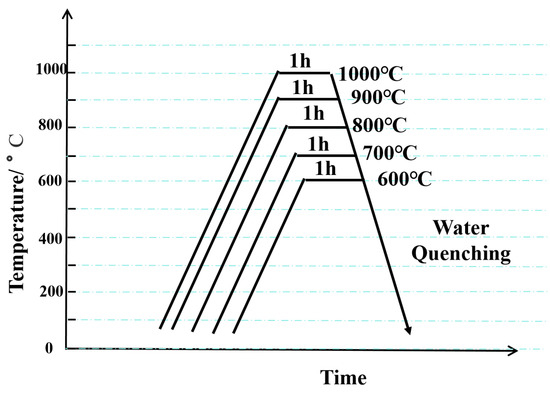
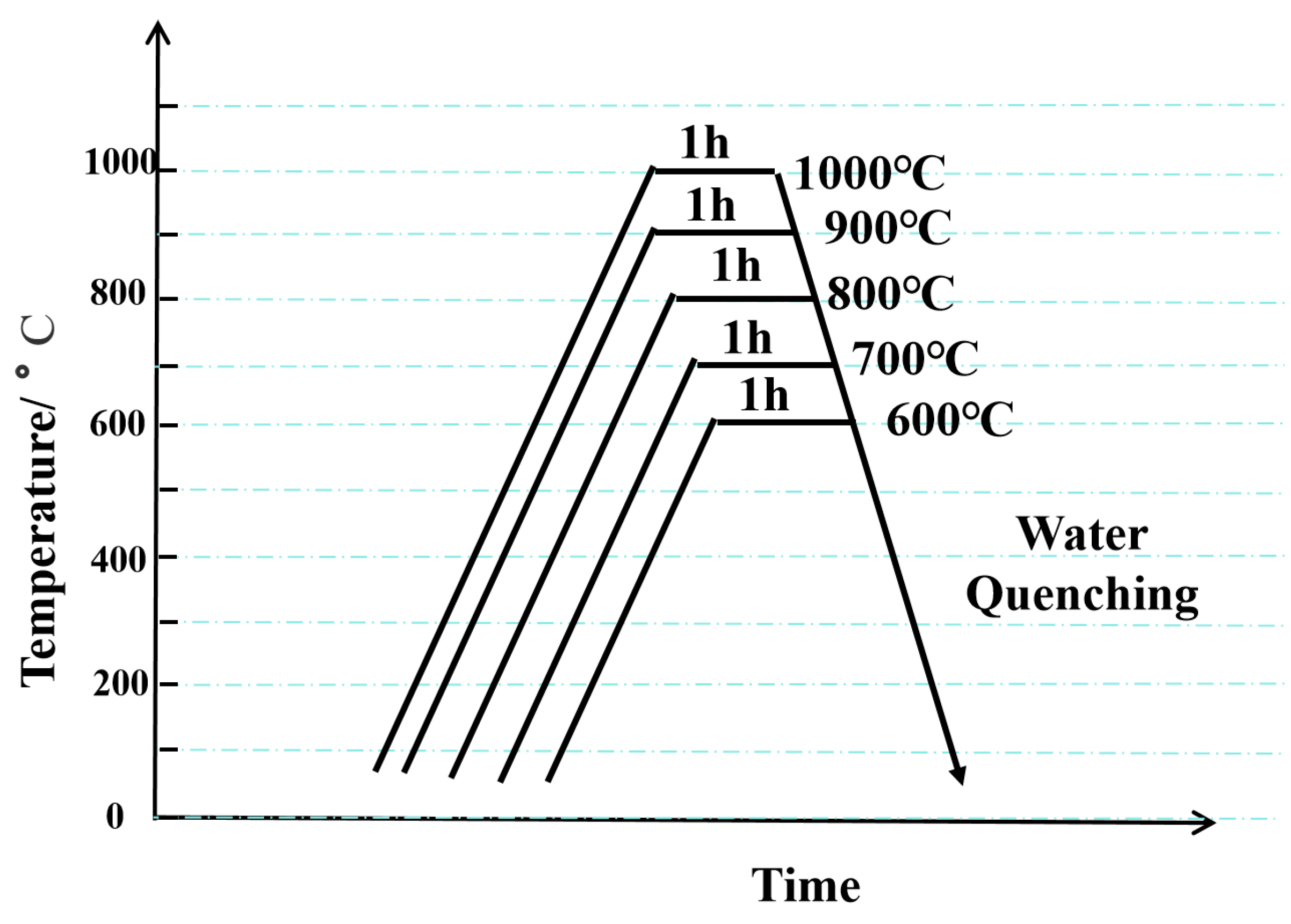
The operation steps of heat treatment are as follows (see Figure 1). Samples with a diameter of 6.5 mm were placed in an air-atmosphere furnace; were heated sequentially to 600 °C, 700 °C, 800 °C, 900 °C, and 1000 °C; and were held at each target temperature for 60 min. After heat preservation was completed, the samples were immediately put into water for quenching and cooling.
Figure 1.
Heat treatment process of Fe-25Cr-5Al-Ti-RE ferritic stainless steel.
2.2. Characterization of Materials
A phase analysis of the specimens was performed via an X-ray diffractometer (XRD, Tokyo, Japan), with a copper target employed as the X-ray source for the diffraction measurements. Specifically, step-scanned profiles under the θ/2θ scan mode were acquired using a Smartlab Bragg–Brentano diffractometer. XRD data were collected over a 2θ range up to 100°, as Bragg diffraction intensities were found to be negligible beyond this angle; subsequently, the positions of diffraction peaks were identified from the XRD profiles using the second derivative method.
For scanning electron microscopy (SEM) observation, the specimens first underwent grinding and polishing processes. A subset of the polished specimens was etched with diluted aqua regia—a solution that was prepared by mixing 60 wt.% concentrated nitric acid and 37 wt.% hydrochloric acid at a volumetric ratio of 1:3. SEM analysis was then carried out using a field-emission scanning electron microscope (TESCAN 9000X, TESCAN, Brno, Czech Republic), which was equipped with an Oxford Energy-Dispersive Spectroscopy (EDS) detector for compositional characterization.
Transmission electron microscopy (TEM) specimens were prepared by twinjet electropolishing, with a DJ2000 twinjet electropolisher (Beijing Dedong Technology Co., Ltd., Beijing, China) employed for the process. The electrolyte used was a mixture consisting of 90 vol.% ethanol and 10 vol.% perchloric acid.
3. Results and Discussion
3.1. XRD Analysis
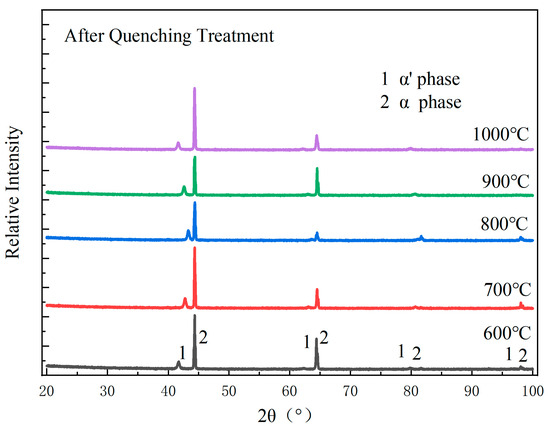
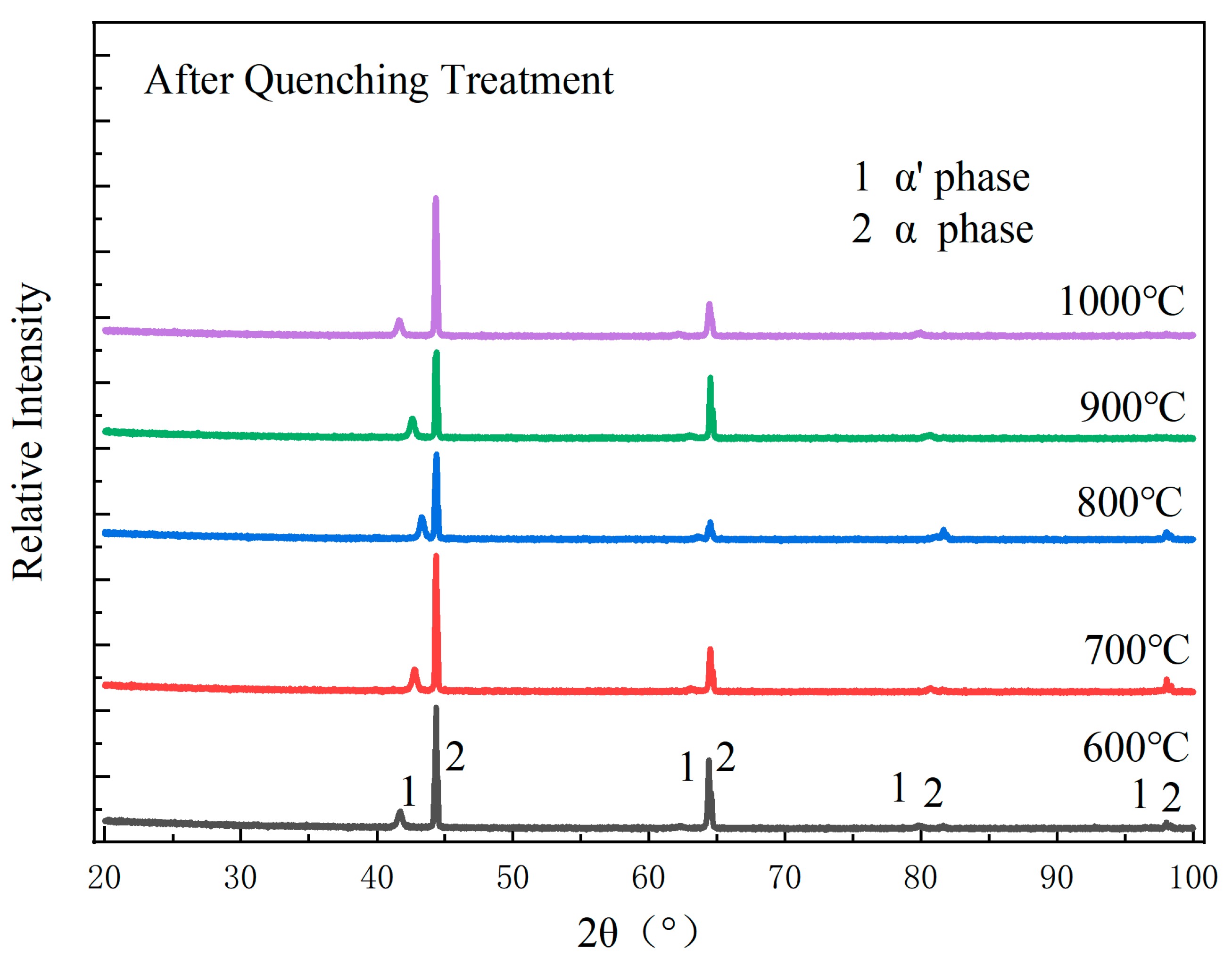
Figure 2 shows the XRD analysis results of the specimens after heat treatment at 600 °C, 700 °C, 800 °C, 900 °C, and 1000 °C.
Figure 2.
XRD profiles of Fe-25Cr-5Al-Ti-RE after quenching.
It was difficult to distinguish between the α phase and the α′ phase. Taking the results after quenching treatment at 600 °C as an example, diffraction peaks were observed at scanning angles of 44.54°, 64.28°, 80.6°, and 98.17°.
Li et al. [6] pointed out that the crystal plane families corresponding to the angles of 44.54°, 64.28°, 80.6°, and 98.17° were identified as {110}, {200}, {211}, and {220}, respectively. Among them, the diffraction peaks corresponding to {110} and {200} were found to be relatively prominent.
The surface of the lamellar α′ phase is primarily dominated by the close-packed {110} planes in the body-centered cubic (BCC) material. Under this condition, the α′ phase in the lamellar structure exhibits the lowest surface energy. Furthermore, the α′ phase is ordered on the {110} planes. This ordering is likely associated with the enrichment of Cr atoms in the α′ phase.
3.2. SEM Analysis
After heat treatment at 600 °C, 700 °C, 800 °C, 900 °C, and 1000 °C, different precipitated phases were observed in the Fe-25Cr-5Al-Ti-RE ferritic stainless steel. The results obtained via SEM observation are as follows.
Figure 3 shows the typical precipitated phases after heat treatment at 600 °C.
Figure 3.
Typical precipitation phase after 600 °C quenching heat treatment.
In ferritic stainless steels, the α′ phase was observed to exhibit a peak precipitation temperature of 475C. It was found to have a body-centered cubic (BCC) structure and was identified as a precipitated phase with “the same structure but different composition” when compared to the α-Fe matrix. The lattice constants of the two phases were determined to be close to each other—specifically, the lattice constant of the α′ phase was measured to be slightly larger than that of the matrix, which was attributed to the larger atomic radius of Cr compared to Fe.
A core compositional characteristic of the α′ phase was its high chromium enrichment: the Cr content in the α′ phase was found to reach 35–50%, which was significantly higher than that in the matrix. Additionally, the α′ phase was observed to feature an extremely small size (5–20 nm), mostly presenting a spherical or sphere-like morphology. It was found to distribute uniformly and dispersedly within the grains or near the grain boundaries of the ferritic matrix.
The precipitated phases after heat treatment at 700 °C are shown in Figure 4.
Figure 4.
Typical precipitation phase after 700 °C quenching heat treatment.
Titanium carbide (TiC) was identified as a typical carbide precipitated phase [15,16]. Titanium (Ti) and carbon (C) were observed to tend to nucleate defects such as grain boundaries and dislocations, with relatively coarse TiC particles formed in the process. TiC was found to have an extremely high melting point (approximately 3140 °C) and was observed to hardly dissolve or decompose at the service temperature of ferritic stainless steels (usually ≤600 °C). Its chemical stability was determined to be much higher than that of carbides such as Cr23C6 and Fe3C, so it was confirmed to be capable of functioning for a long time.
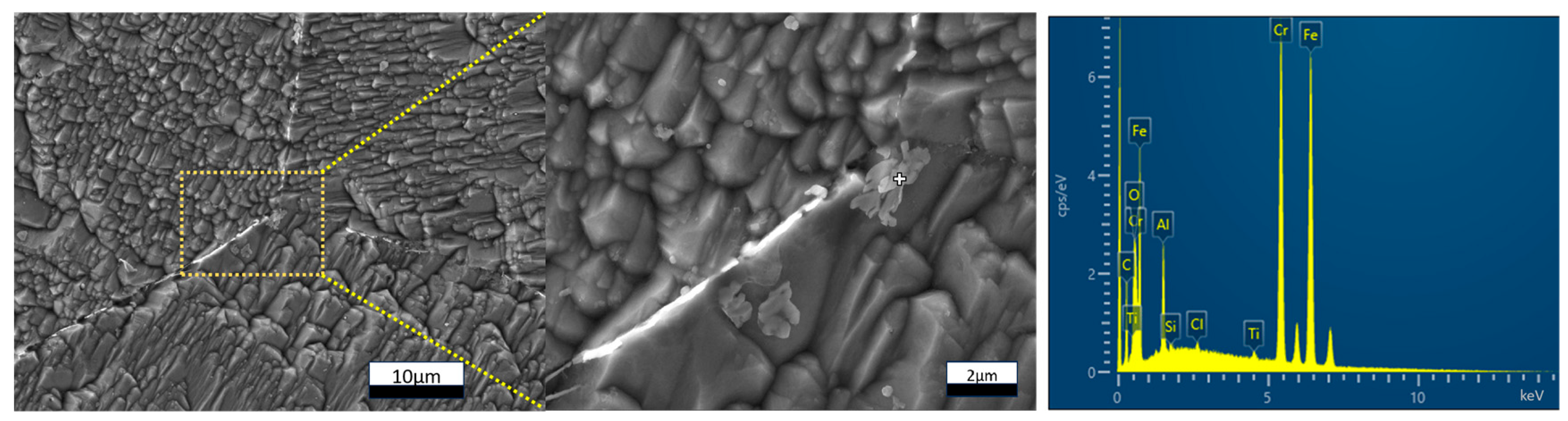
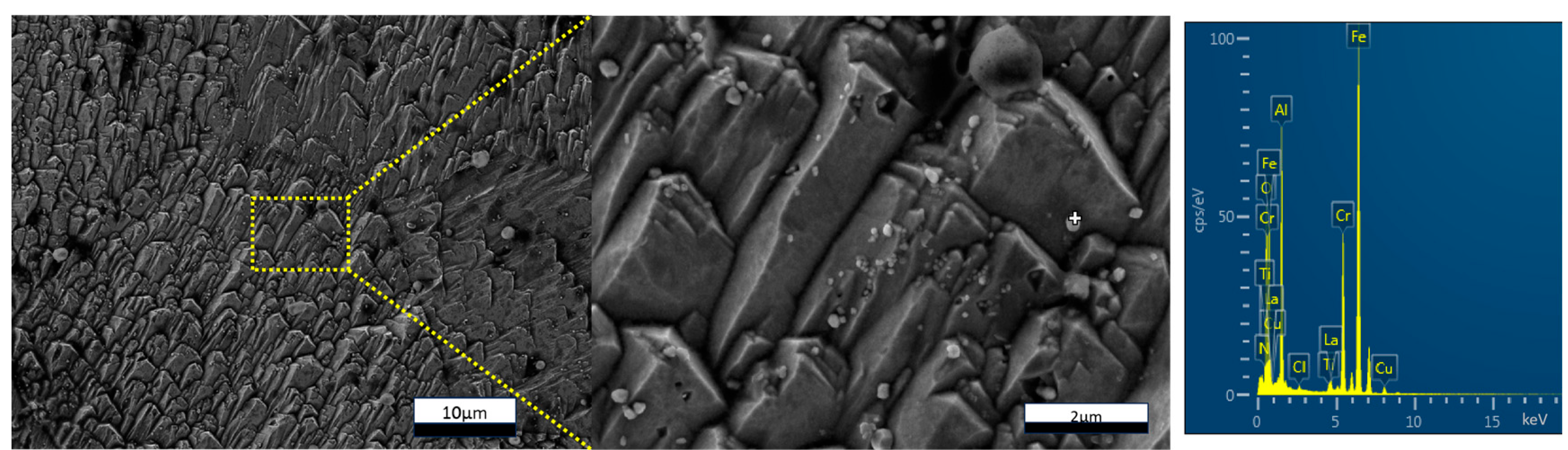
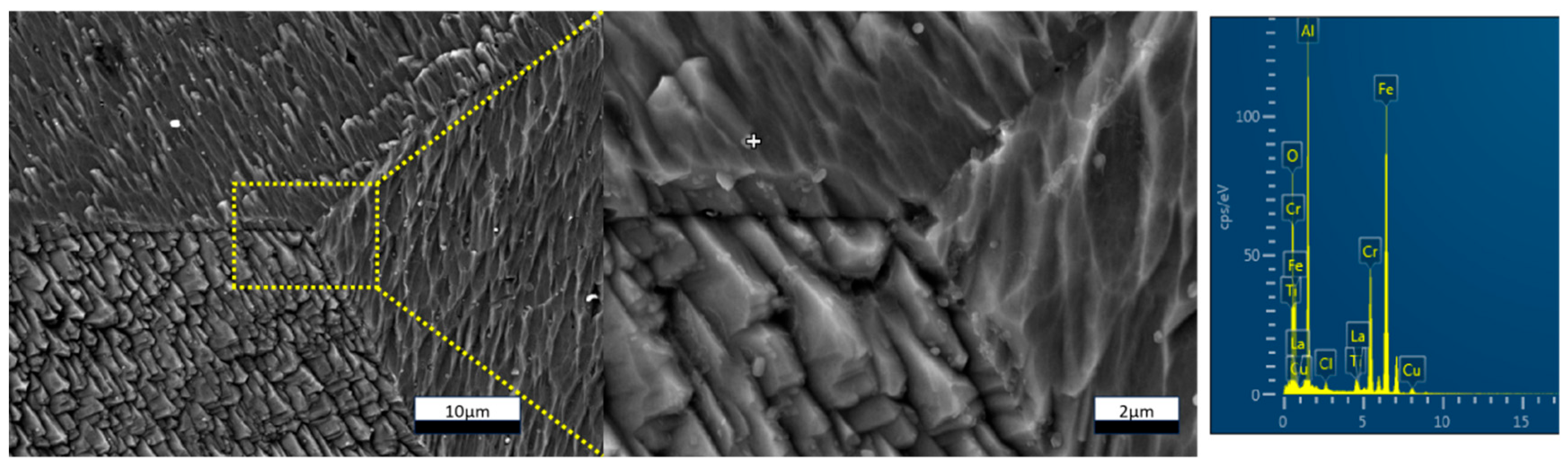
After heat treatment at 800 °C and 900 °C, similar precipitated phases were observed (see Figure 5 and Figure 6).
Figure 5.
Typical precipitation phase after 800 °C quenching heat treatment.
Figure 6.
Typical precipitation phase after 900 °C quenching heat treatment.
The precipitation morphology of Al2O3 was found to be dominated by fine spherical or short rod-like particles, with sizes typically ranging from 50 to 500 nm. Due to the relatively high energy present in defect regions of the ferritic matrix (such as grain boundaries, dislocation lines, and vacancies), Al atoms and O atoms (derived from dissolved oxygen in the alloy or external oxidation) were observed to tend to aggregate more easily here, which was confirmed to satisfy the energy requirement for nucleation. Therefore, Al2O3 was observed to preferentially nucleate and grow at grain boundaries (especially grain boundary triple junctions) and dislocation-rich regions, with discontinuous granular or chain-like precipitates formed.
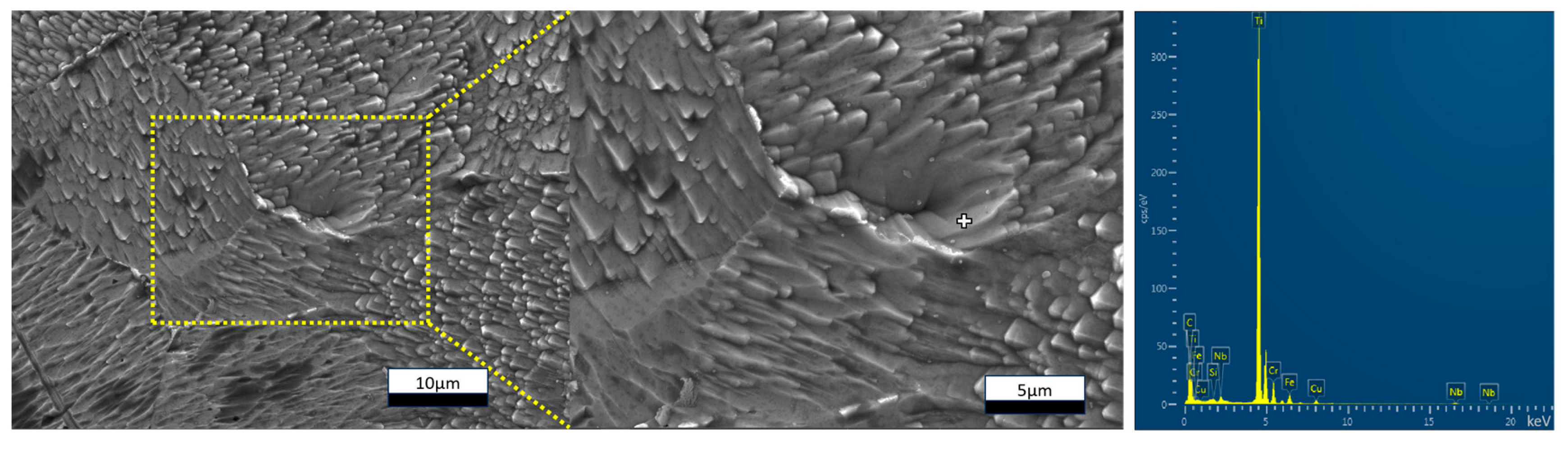
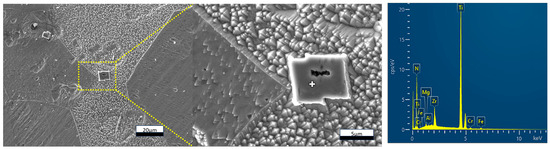
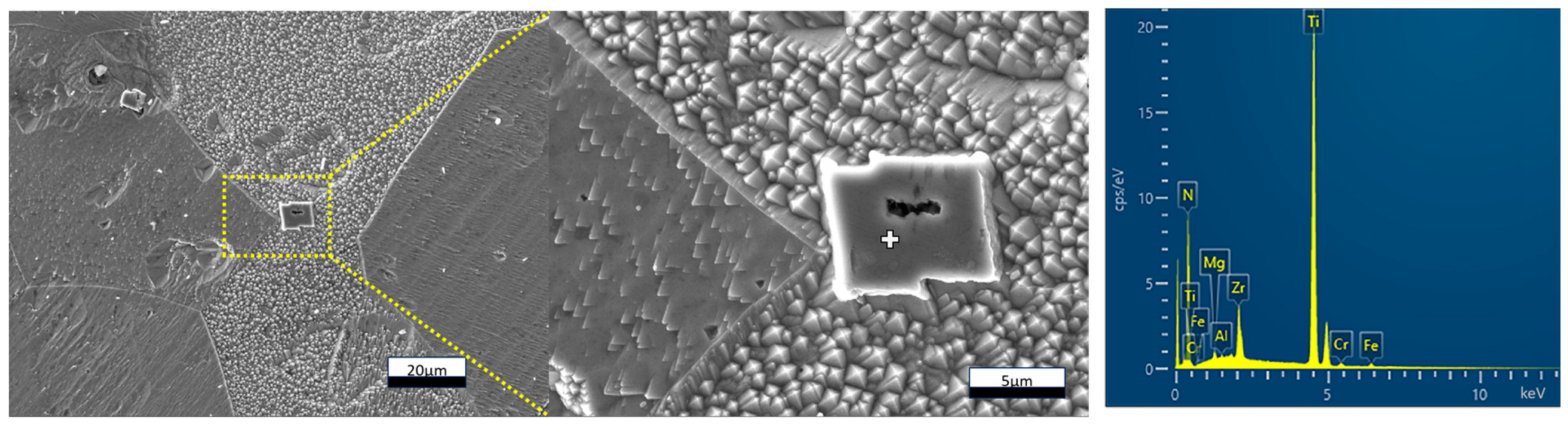
Titanium nitride precipitated phases were found, as shown in Figure 7. The precipitation morphology of TiN was found to be mostly regular cubic, spherical, or short columnar particles, with sizes typically ranging from 5 to 10 μm. TiN was observed to preferentially nucleate at grain boundaries (including grain boundary triple junctions): the grain boundary regions were determined to have relatively high energy and were found to be prone to the enrichment of Ti and N atoms [17,18]. When numerous dislocations and vacancies were present in the matrix, Ti and N atoms were also observed to aggregate in these regions, with dispersed intragranular TiN particles formed.
Figure 7.
Typical precipitation phase after 1000 °C quenching heat treatment.
3.3. TEM Analysis
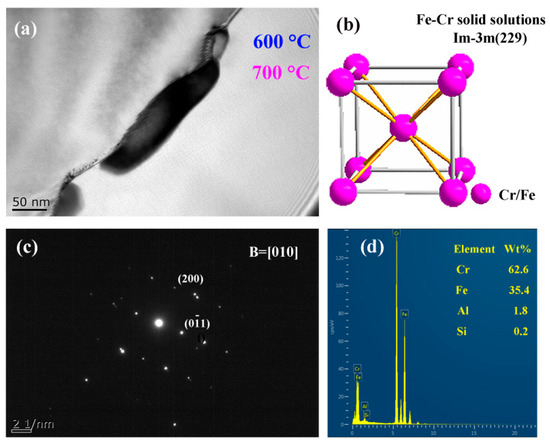
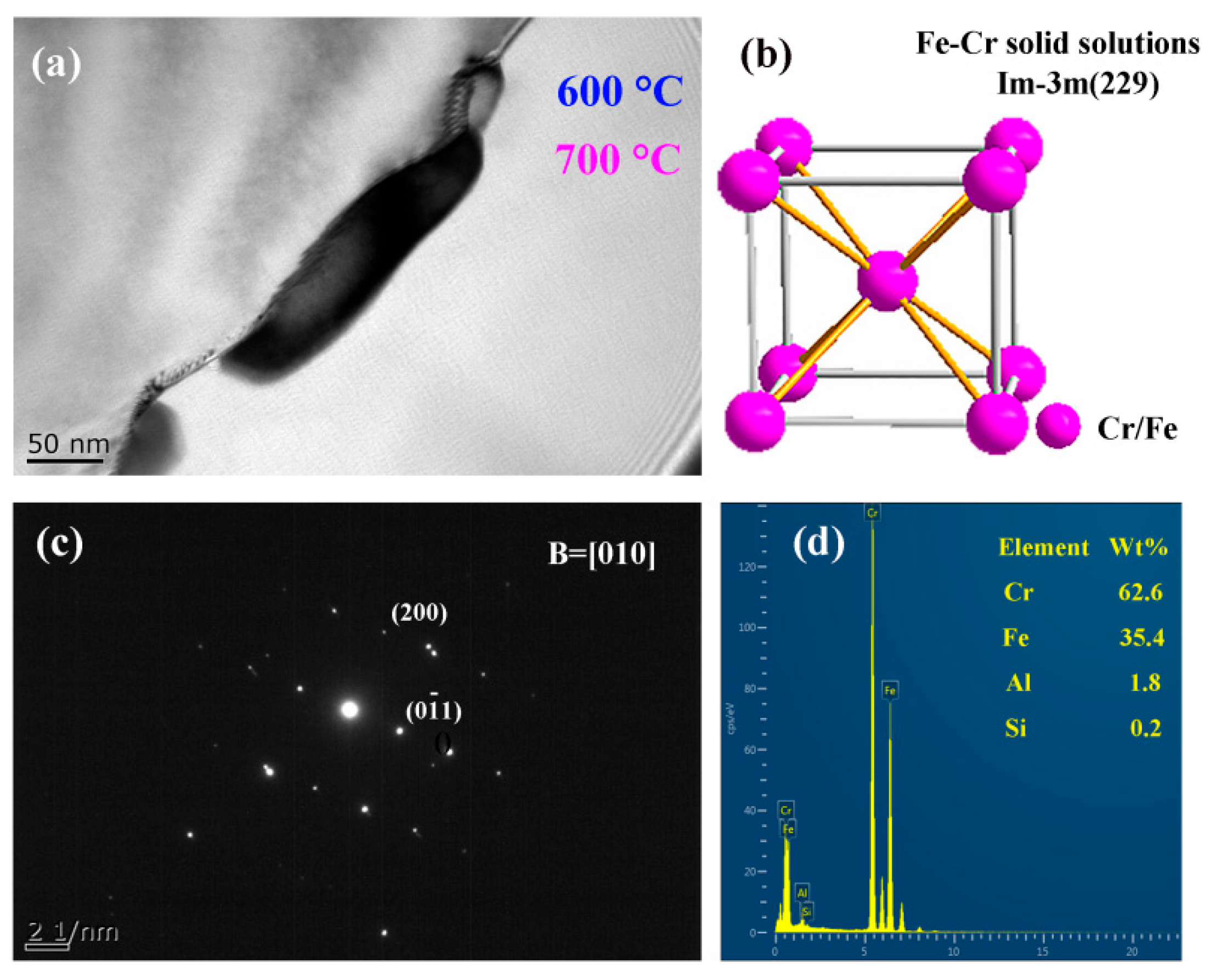
As shown in Figure 8, the α′ phase was observed after the material was subjected to heat treatment at 600 °C and 700 °C. It was found to have a cubic structure, which is the same as that of the α phase; the main difference was identified to lie in the lattice size.
Figure 8.
α′ phase after 600 °C and 700 °C quenching heat treatment. (a) TEM micrograph, (b) α′ phase lattice, (c) corresponding SAD pattern, (d) EDS.
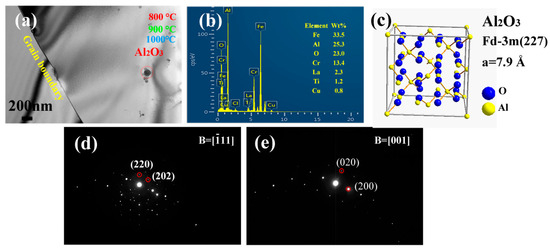
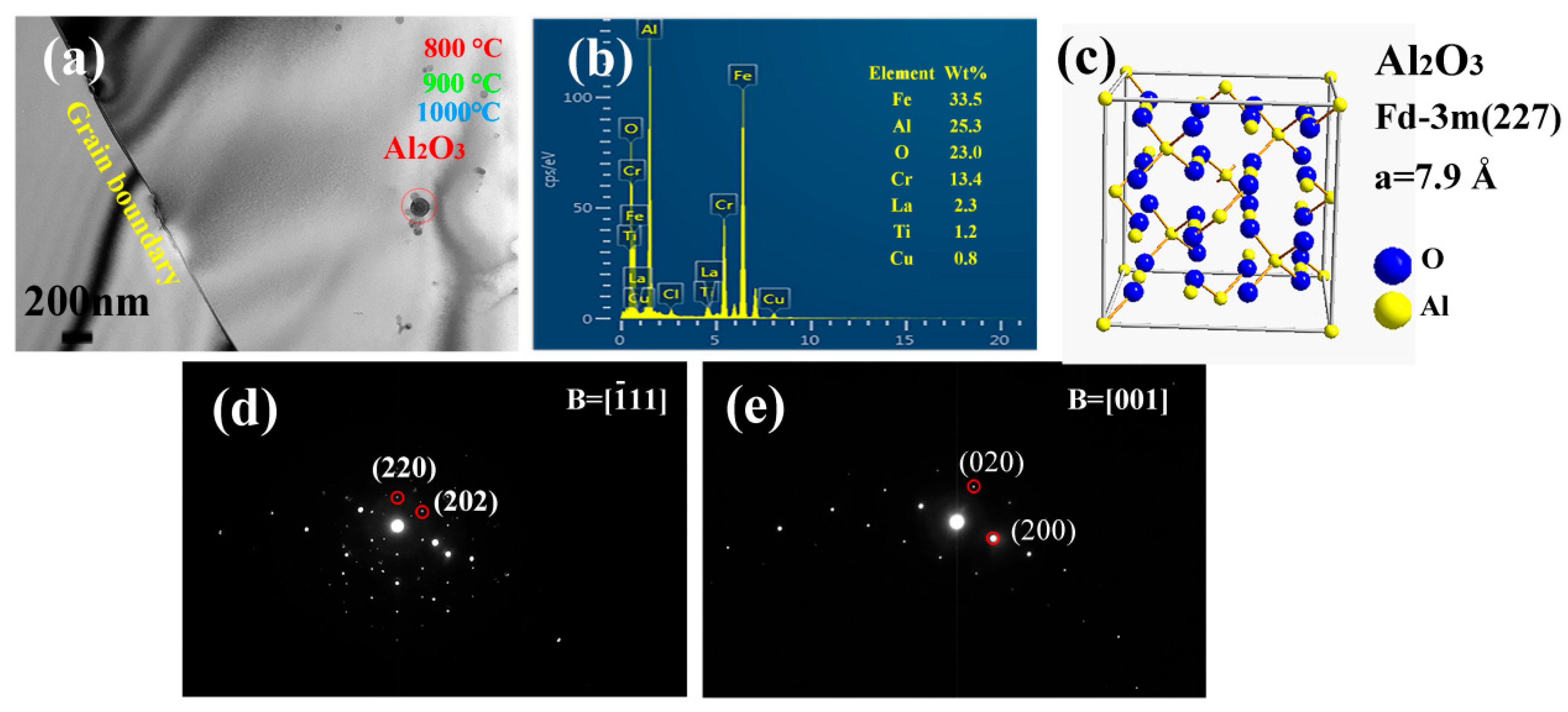
As shown in Figure 9, Al2O3 was observed after the heat treatment at 800 °C, 900 °C, and 1000 °C. Al2O3 was identified to belong to the hexagonal crystal system. Oxygen (O) atoms were found to adopt a hexagonal close-packed (HCP) structure, while aluminum (Al) atoms were observed to occupy 2/3 of the octahedral interstitial sites, with a dense and stable atomic configuration formed. A large difference in crystal structure between Al2O3 and the ferritic matrix was determined, and no coherent or semi-coherent relationship between the two phases was confirmed.
Figure 9.
Al2O3 after 800 °C, 900 °C, and 1000 °C quenching heat treatment. (a) TEM micrograph, (b) EDS, (c) Al2O3 lattice, (d,e) corresponding SAD pattern.
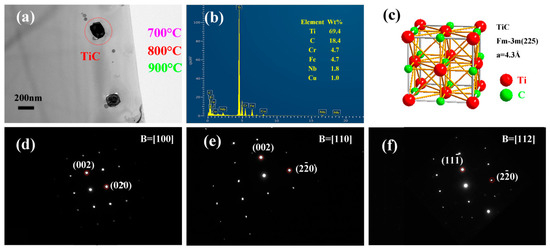
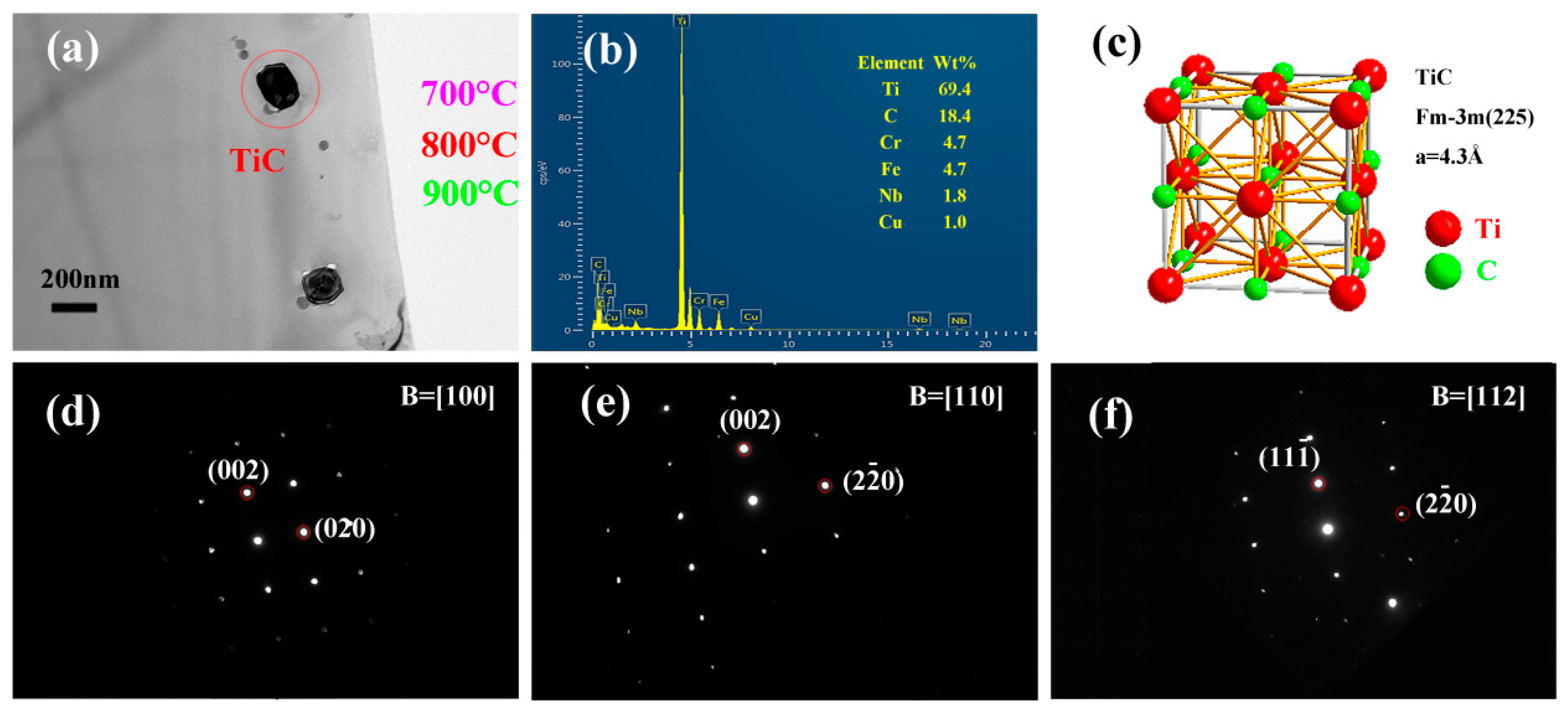
TiC was observed after heat treatment at 700 °C, 800 °C, and 900 °C (see Figure 10). TiC was identified to belong to the face-centered cubic (FCC) crystal system, with a lattice parameter of approximately a = 0.43 nm. The ferritic matrix was found to have a body-centered cubic (BCC) structure, with a lattice parameter of approximately a = 0.2866 nm. The lattice misfit between TiC and the matrix was determined to be small (it was calculated to be approximately 1.5% via the formula), so a semi-coherent interface could be formed between the two phases [15,19]. At this interface, atoms were observed to achieve partial matching through slight lattice distortion. This matching property was confirmed to enable TiC to easily nucleate in the matrix, and after precipitation, TiC was found to bind tightly to the matrix without easy detachment. TiC was observed to exhibit a fine spherical or cubic shape, with sizes ranging only from 100 to 400 nm.
Figure 10.
TiC after 700 °C, 800 °C, and 900 °C quenching heat treatment. (a) TEM micrograph, (b) EDS, (c) TiC lattice, (d–f) corresponding SAD pattern.
4. Discussion
Based on the analytical observation results of XRD, SEM, and TEM, it was shown that in the Fe-25Cr-5Al-Ti-RE ferritic stainless steel, the main precipitated phases were identified as a chromium-rich phase (α′ phase), aluminum oxide (Al2O3), titanium carbide (TiC), and titanium nitride (TiN). The reasons for the precipitation of these precipitated phases still need to be further discussed and analyzed.
4.1. α′
The solubility of chromium in ferrite was altered with changes in temperature. When the temperature was 475 °C, the solid solubility of chromium in the ferrite matrix was reduced. The chromium atoms that had been uniformly dissolved in ferrite at high temperatures then exceeded the saturated solid solubility at this temperature, and the excess chromium atoms tended to precipitate from the ferrite matrix and form a new phase. As a result, the chromium atoms aggregated through diffusion and gradually formed the α′ chromium-rich phase.
The free energy for the precipitation of the α′ phase is shown in Equation (1). The total Gibbs free energy change for the formation of a new phase (ΔG) is composed of three components: the volume free energy (ΔGv), the surface energy (ΔGs), and the strain energy (ΔGε) [20].
The α′ phase was distributed along the grain boundaries or within the grains of the α phase. The smaller the difference in lattice constants between the α and α′ phases, the better the bonding effect between the two phases, thereby enabling the strengthening of the Fe-25Cr-5Al-RE alloy. At the crystallite scale, the α′ phase had been dissolved into the α matrix after hot-rolling treatment. When quenching was performed at 600~900 °C, the α-(Fe, Cr) ferrite phase was decomposed into Fe-rich ferrite (α phase) and Cr-rich chromium ferrite (α′ phase). This α-α′ phase decomposition induced a stress field (resulting from the misfit between the α and α′ phases), and this stress field could hinder the movement of dislocations. At heating temperatures of 600 °C and 700 °C, the α′ phase exhibited a lamellar structure, was distributed along the grain boundaries, and was enclosed by the {110} crystal plane with the lowest surface energy.
4.2. Al2O3
Al2O3 was usually produced as a deoxidation product and formed as inclusions. However, the Al2O3 in this study was found to have an extremely fine size; therefore, it was not classified as an inclusion but as a precipitated phase. During high-temperature heat treatment, the aluminum atoms in the matrix microstructure were found to interact with oxygen atoms (either dissolved oxygen in steel or oxygen released from the decomposition of trace oxides). When the conditions were satisfied, fine Al2O3 particles were precipitated through a solid-state phase transformation pathway. The reaction equation of oxygen and aluminum is shown in Equation (2) [21].
Aluminum atoms dissolved in the matrix were found to react with oxygen from the heating furnace or oxygen dissolved in steel, and alumina (Al2O3) was produced through this reaction. High-temperature heat treatment was required (to provide energy for atomic diffusion) + the oxygen concentration was found to reach the critical value.
4.3. Precipitates of Titanium
In this study, the precipitated phases of Ti included TiC and TiN. The size of TiC particles fell within the range of 100 nm to 400 nm, whereas that of TiN particles exhibited a significantly larger size, spanning from 5 μm to 10 μm.
The Gibbs free energies of formation of TiC and TiN are as follows (see Equations (3) and (4)) [21,22,23]. It could be concluded from the formulas that TiN was more likely to form at content levels of the same order of magnitude.
As interstitial atoms, C and N atoms were mainly present in the octahedral interstitial sites in α-Fe. C and N atoms could also be present in the tetrahedral interstitial sites during diffusion (see Figure 11).
Figure 11.
A schematic diagram of the existence and diffusion of C and N in α-Fe.
The Arrhenius expression form of the diffusion coefficient is as follows [21].
In this formula, D0 is the diffusion constant; Ea is the diffusion barrier; kB and T are the Boltzmann constant and absolute temperature, respectively; and kB is 1.38 × 10⁻²³ J·K−1.
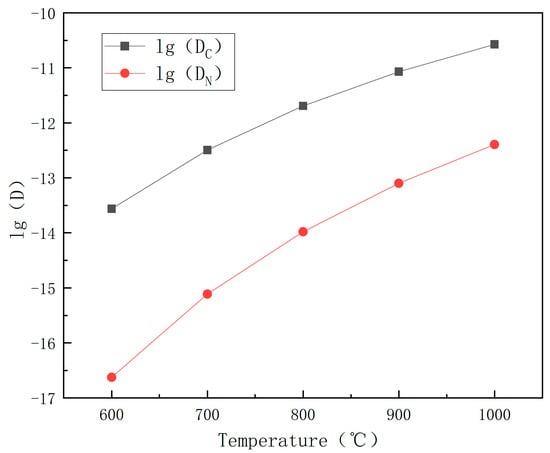
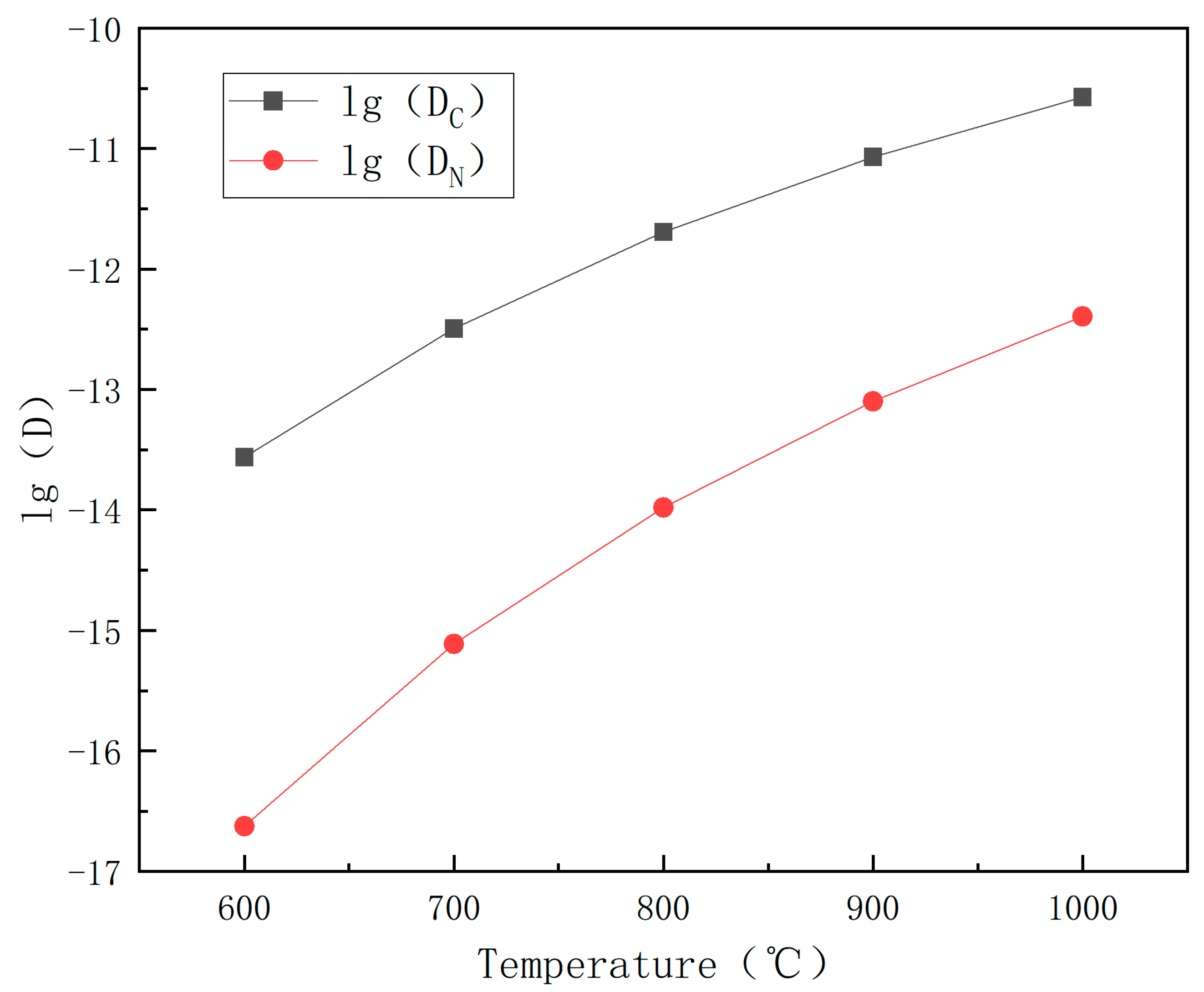
The diffusion coefficients of C and N were logarithmically transformed, and the corresponding results of the logarithmic values and temperature are shown in Figure 12.
Figure 12.
Diffusion coefficients of C and N in ferritic stainless steel at different temperatures.
It can be seen from the figure that the diffusion coefficient of C was much larger than that of N [24,25]. When the temperature was 1000 °C, the diffusion coefficient of N (4.04 × 10⁻¹³) was comparable to that of C at 700 °C (3.21 × 10⁻¹³).
In terms of the Gibbs free energy of the reaction, TiN was more easily formed than TiC, which indicated that a stronger chemical affinity existed between Ti and N. However, in terms of the diffusion coefficients of C and N, the diffusion coefficient of C in α-Fe was much higher than that of N. Therefore, TiC precipitated phases were formed at 700 °C, 800 °C, and 900 °C, while TiN precipitated phases were formed at 1000 °C. Therefore, TiN did not exist at low temperatures, and the main reason for this was influenced by the diffusion coefficient of N.
5. Summary
- (1)
- After heat treatments at 600 °C, 700 °C, 800 °C, and 900 °C, the main precipitates in Fe-25Cr-5Al-Ti-RE ferritic stainless steel are a chromium-rich phase (α′), aluminum oxide (Al2O3), titanium carbide (TiC), and titanium nitride (TiN).
- (2)
- Al2O3 was detected exclusively after heat treatments at 800 °C, 900 °C, and 1000 °C, with its particle size ranging from 10 nm to 100 nm. During high-temperature heat treatment, aluminum atoms and oxygen atoms in the matrix interacted with each other, and fine Al2O3 particles precipitated through a solid-state phase transition.
- (3)
- TiC precipitated after heat treatments at 700 °C, 800 °C, and 900 °C, whereas TiN was only observed after the quenching treatment at 1000 °C. The size of TiC particles fell within the range of 100 nm to 400 nm, while TiN particles exhibited a significantly larger size, spanning from 5 μm to 10 μm.
- (4)
- Thermodynamic and kinetic analyses revealed that at elevated temperatures, nitrogen (N) exhibited a relatively high diffusion coefficient in the matrix; meanwhile, titanium (Ti) demonstrated an extremely strong chemical affinity for N. Consequently, even when the N content in the alloy was at a low level, N tended to preferentially react with Ti rather than with carbon (C) to form TiN.
Author Contributions
X.D.: conceptualization, validation, formal analysis, resources, data curation, and writing. J.M.: methodology, investigation, and conceptualization. G.S.: methodology and investigation. T.L.: conceptualization, validation, formal analysis, resources, data curation, and writing. J.Q.: methodology, investigation, and writing. C.L.: review and editing. Y.Y.: review and editing. All authors have read and agreed to the published version of the manuscript.
Funding
This research was supported by Open Foundation of the State Key Laboratory of Advanced Refractories (G202509), the Natural Science Fundamental Research Program of Shanxi Province (202403021221129), and Open Fund of Shanxi Key Laboratory of Advanced Manufacturing Technology (XJZZ202504).
Data Availability Statement
The data that support the findings of this study are available from the corresponding authors.
Conflicts of Interest
Author Guowang Song was employed by the company Taiyuan Heavy Machinery Group Co., Ltd. The remaining authors declare that the research was conducted in the absence of any commercial or financial relationships that could be construed as a potential conflict of interest.
References
- Gussev, M.N.; Field, K.G.; Yamamoto, Y. Design, properties, and weldability of advanced oxidation-resistant FeCrAl alloys. Mater. Des. 2017, 129, 227–238. [Google Scholar] [CrossRef] [Scilit]
- Palaniappan, S.; Joshi, S.S.; Sharma, S.; Radhakrishnan, M.; Krishna, K.V.M.; Dahotre, N.B. Additive manufacturing of FeCrAl alloys for nuclear applications-A focused review. Nucl. Mater. Energy 2024, 40, 101702. [Google Scholar] [CrossRef] [Scilit]
- Tangirbergen, A.; Amangeldi, N.; Revankar, S.T.; Yergaliuly, G. A review of irradiation-induced hardening in FeCrAl alloy systems for accident-tolerant fuel cladding. Nucl. Eng. Des. 2024, 429, 113659. [Google Scholar] [CrossRef] [Scilit]
- Chao, J.; Capdevila, C.; Serrano, M.; Garcia-Junceda, A.; Jimenez, J.A.; Miller, M.K. Effect of α–α′ phase separation on notch impact behavior of oxide dispersion strengthened (ODS) Fe20Cr5Al alloy. Mater. Des. 2014, 53, 1037–1046. [Google Scholar] [CrossRef] [Scilit]
- Yang, Z.; Wang, Z.X.; Xia, C.H.; Ouyang, M.H.; Peng, J.C.; Zhang, H.W.; Xiao, X.S. Aluminum suppression of α′ precipitate in model Fe–Cr–Al alloys during long-term aging at 475 °C. Mater. Sci. Eng. A 2020, 772, 138714. [Google Scholar] [CrossRef] [Scilit]
- Li, T.; Liu, Y.; Cheng, S.; Liu, C. The Effect of Heating Temperature on α-α′ Miscibility and Separation in Fe-25Cr-5Al-RE Alloy. Metals 2023, 13, 597. [Google Scholar] [CrossRef] [Scilit]
- Stasiak, T.; Jasiński, J.J.; Zieliński, M.; Wilczopolska, M.; Kosińska, A.; Chmurzyński, W.; Mulewska, K.; Diduszko, R.; Chmielewski, M.; Kowal, M.; et al. Mechanical properties, 475 °C embrittlement and irradiation resistance of FeCrAl-Y2O3 ODS alloy with Ti and V alloying additions. J. Nucl. Mater. 2025, 617, 156131. [Google Scholar] [CrossRef] [Scilit]
- Hanus, P.; Pecanac, M.; Trivkovic, M.; Bojić, S.; Balos, S. Comparison of iron aluminide Fe3Al with armour steel in ballistic behaviour. Def. Technol. 2024, 42, 183–190. [Google Scholar] [CrossRef] [Scilit]
- Rank, M.; Franke, P.; Hoffmann, J.; Seifert, H.J. Experimental investigation of phase equilibria in the Al–Cr–Fe system. Calphad 2019, 66, 101638. [Google Scholar] [CrossRef] [Scilit]
- Wei, Q.; Yang, J.; Jia, X.; Luo, J.; Zhang, M.; Zhu, X. Crystal structures, mechanical properties, and electronic structure analysis of ternary FeCrAl alloys. Phys. Lett. A 2025, 533, 130228. [Google Scholar] [CrossRef] [Scilit]
- Capdevila, C.; Aranda, M.M.; Rementeria, R.; Chao, J.; Urones-Garrote, E.; Aldazabal, J.; Miller, M.K. Strengthening by intermetallic nanoprecipitation in Fe–Cr–Al–Ti alloy. Acta Mater. 2016, 107, 27–37. [Google Scholar] [CrossRef] [Scilit]
- Wang, H.; Sun, R.; Li, Z.; Zhang, P.; Wang, S.; Hu, L.; Xu, S.; Yao, M. Effect of titanium on the high-temperature steam oxidation behavior of FeCrAl alloys at 1000 °C and 1200 °C. J. Alloys Compd. 2025, 1039, 183176. [Google Scholar] [CrossRef] [Scilit]
- Yang, T.-X.; Li, Z.-X.; Zhou, C.-J.; Xu, Y.-C.; Dou, P. Effects of Zr and/or Ti addition on the morphology, crystal and metal/oxide interface structures of nanoparticles in FeCrAl-ODS steels. J. Nucl. Mater. 2023, 585, 154613. [Google Scholar] [CrossRef] [Scilit]
- Du, X.; Lin, Z.; Li, T.; Yang, F.; Liu, C.; Ma, J. Effect of Quenching Temperature on the Mechanical Properties of Fe-25Cr-5Al-Ti-RE Ferritic Stainless Steel. J. Alloys Metall. Syst. 2025, 10, 100191. [Google Scholar] [CrossRef] [Scilit]
- Kobayashi, Y.; Takahashi, J.; Kawakami, K. Effects of dislocations on the early stage of TiC precipitation kinetics in ferritic steel: A comparative study with and without a pre-deformation. Acta Mater. 2019, 176, 145–154. [Google Scholar] [CrossRef] [Scilit]
- Huang, L.; Li, G.; Yang, P.; Lu, R.; Zheng, Y.; Gu, J.; Fu, H. Microstructure and wear resistance of TiC-reinforced high carbon wear-resistant steel after heat treatment. J. Mater. Res. Technol. 2025, 38, 3591–3605. [Google Scholar] [CrossRef] [Scilit]
- Zhang, J.; Xu, X.; Zhang, S.; Kuang, S.; Zhang, L. Precipitation and growth mechanism of TiN on Y2O3 (110) and (100) surfaces of yttrium-containing T4003 stainless steel. Phys. B Condens. Matter 2024, 684, 415980. [Google Scholar] [CrossRef] [Scilit]
- Xing, L.; Guo, J.; Li, X.; Zhang, Z.; Wang, M.; Bao, Y.; Zeng, F.; Chen, B. Control of TiN precipitation behavior in titanium-containing micro-alloyed steel. Mater. Today Commun. 2020, 25, 101292. [Google Scholar] [CrossRef] [Scilit]
- Kobayashi, Y.; Takahashi, J.; Kawakami, K. Experimental evaluation of the particle size dependence of the dislocation–particle interaction force in TiC-precipitation-strengthened steel. Scr. Mater. 2012, 67, 854–857. [Google Scholar] [CrossRef] [Scilit]
- Callister, W.D.; Rethwisch, D.G. Fundamentals of Materials Science and Engineering; John Wiley & Sons: Hoboken, NJ, USA, 2022. [Google Scholar]
- Gaskell, D.R.; Laughlin, D.E. Introduction to the Thermodynamics of Materials; CRC Press: Boca Raton, FL, USA, 2024. [Google Scholar]
- Fu, J.; Qiu, W.; Nie, Q.; Wu, Y. Precipitation of TiN during solidification of AISI 439 stainless steel. J. Alloys Compd. 2017, 699, 938–946. [Google Scholar] [CrossRef] [Scilit]
- Hou, Y.; Kadoi, K. Nucleation of equiaxed δ-ferrite grain by Oxide + TiN to improve tensile properties of ferritic stainless steel welds. Mater. Charact. 2025, 227, 115270. [Google Scholar] [CrossRef] [Scilit]
- Biao, Y.; Li-Ge, W.; Yong, Y.; En-Ze, W.; Li-Xia, P. First-principles calculations of the diffusion behaviors of C, N and O atoms in V metal. Acta Phys. Sin. 2015, 64, 026602. [Google Scholar] [CrossRef] [Scilit]
- David, M.; Prillieux, A.; Monceau, D.; Connétable, D. First-principles study of the insertion and diffusion of interstitial atoms (H, C, N and O) in nickel. J. Alloys Compd. 2020, 822, 153555. [Google Scholar] [CrossRef] [Scilit]



Disclaimer/Publisher’s Note: The statements, opinions and data contained in all publications are solely those of the individual author(s) and contributor(s) and not of MDPI and/or the editor(s). MDPI and/or the editor(s) disclaim responsibility for any injury to people or property resulting from any ideas, methods, instructions or products referred to in the content. |
© 2025 by the authors. Licensee MDPI, Basel, Switzerland. This article is an open access article distributed under the terms and conditions of the Creative Commons Attribution (CC BY) license (https://creativecommons.org/licenses/by/4.0/).