


Abstract
Laccases are biotechnologically valuable enzymes that oxidize phenolic compounds across multiple industries. Their kinetic parameters Km, kcat, and redox potential (E°)—vary with substrate, origin, sequence, and structure, all of which influence electron transfer efficiency toward the trinuclear copper center. Improving kcat and E° is therefore essential for industrial applications. This review analyzes 143 studies, compiling 244 kcat values for ABTS, 125 for 2,6-dimethoxyphenol (2,6-DMP), and 53 for syringaldazine (SGZ). A high-performing laccase was defined by the upper quartile (Q3) of reported values: kcat ≥ 798, 293, and 140 s−1 for ABTS, 2,6-DMP, and SGZ, respectively. Among 36 mutagenesis studies—classified as rational, semi-rational, or directed evolution—directed evolution combined with rational and semi-rational design yielded the greatest improvements, reaching kcat values up to 1328.8 s−1 for ABTS. While Km data are compiled to assess catalytic efficiency, cross-study analysis reveals no consistent directional trend in substrate affinity among engineered variants. In contrast, kcat shows systematic improvement across diverse systems and substrates, establishing it as the primary performance metric for evaluating laccase engineering outcomes.
Keywords:
laccase; kcat; electron-transfer; directed-evolution; protein engineering; turnover number 1. Introduction
Laccases (p-benzenediol: oxygen oxidoreductase, EC 1.10.3.2) are copper-containing metalloenzymes capable of oxidizing a variety of phenolic compounds. These enzymes are widely distributed across organisms, including bacteria, fungi, plants, and insects. In plants, laccases play a critical role in lignification, while in fungi, they contribute to lignin degradation (delignification) [1]. Fungal laccases, with molecular weights ranging from 50 to 80 kDa [2,3], are of biotechnological interest due to their ability to oxidize phenols, polyphenols, and related compounds through a reaction where molecular oxygen acts as the electron acceptor:
2 Benzenediol + O2 ⟶ 2 Benzoquinone + 2H2O
This catalytic process occurs in two half-reactions: the oxidation of the substrate and the reduction of oxygen to water [4]. Laccases exhibit low substrate specificity and, coupled with their high E°, can oxidize a wide range of substrates [5]. The laccase mechanism involves multiple copper centers. In its oxidized state, the enzyme contains four copper atoms, one type 1 copper (T1 Cu) and three in the trinuclear center (TNC), where (ET) begins with an electron donor reducing T1 Cu, which subsequently transfers electrons to the TNC via the tripeptide His-Cys-His to reduce O2 to H2O [6,7]. The laccase structure includes T1, T2, and T3 copper sites, each with specific His ligands that facilitate electron transfer (ET) [6].
Laccases are notable for their ability to produce water as a byproduct and their broad substrate versatility, making them attractive for biotechnological applications. These enzymes can be used in diverse sectors, including food, animals, paper and pulp, cosmetics, pharmaceutical, textile, and other industries [8,9]. Native laccases often show turnover numbers insufficient for industrial deployment, particularly with bulky, poorly reactive, or non-phenolic substrates [10,11]. In many reported cases, oxidation proceeds slowly, requiring extended reaction times that are incompatible with industrial operation. These kinetic constraints, rather than substrate binding alone, constitute a primary barrier to the consolidation of laccases as robust industrial biocatalysts [12,13].
For an enzyme to be effectively implemented as an industrial biocatalyst—particularly in environmental applications such as wastewater treatment, pollutant degradation, or bioremediation—it must meet stringent, often competing, requirements [14,15]. These include high catalytic efficiency under operational conditions, robustness against temperature, pH, and chemical stressors, tolerance to inhibitors and complex matrices, compatibility with non-conventional reaction media, and economic feasibility in terms of production and operational costs [13,16]. From a kinetic standpoint, industrial relevance is not solely determined by substrate affinity (Km) but is critically determined by the enzyme’s ability to sustain high turnover rates, which directly dictate reaction time, reactor productivity, and overall process efficiency [17,18]. In environmental biotechnology, where target compounds are often present at low concentrations, dissolved in complex matrices, or structurally recalcitrant, slow catalytic turnover becomes a major bottleneck. Under such conditions, enzymes with low catalytic constant (kcat) values require long residence times, high enzyme loading, or auxiliary mediators, all of which negatively affect scalability and cost-effectiveness [19,20]. Consequently, increasing the kcat is a central objective in enzyme optimization, as it directly reflects the maximum number of catalytic cycles an enzyme can perform per unit time once substrate binding is no longer rate-limiting [17]. In practical terms, improvements in kcat translate into faster contaminant removal, reduced enzyme dosages, and enhanced feasibility of continuous or high-throughput treatment systems.
Given these limitations, contemporary research in laccase engineering has increasingly focused on strategies to overcome intrinsic kinetic constraints, expand substrate scope, and improve operational performance under industrially relevant conditions [18]. In this context, protein engineering approaches have become indispensable tools. These methodologies enable the systematic exploration of sequence–function relationships and the identification of mutations that enhance catalytic turnover, even in the absence of a complete mechanistic understanding. Importantly, the primary goal of many of these engineering campaigns is not merely to improve substrate affinity or stability in isolation, but to directly or indirectly enhance kcat, thereby addressing the core kinetic limitation that restricts industrial applicability [18]. To improve the kinetic properties of laccases, protein engineering design strategies can be employed [18,21]. Each design strategy has advantages and disadvantages compared to the others. Some of the requirements for each technique, along with the results obtained and the difficulties each presents, are shown in Table 1.
Table 1.
Requirements, outcomes, and limitations of laccase engineering strategies.
- Rational design relies on detailed structural and functional knowledge of the target protein to introduce specific, hypothesis-driven modifications, generating variants with predictable improved or novel properties [22].
- Semi-rational design also draws on structural and functional information, but where existing knowledge is insufficient to predict outcomes precisely; small libraries carrying a moderate number of mutations at strategically selected positions are generated and screened experimentally to identify functional improvements [23].
- Directed evolution is an empirical strategy that mimics natural evolution under controlled conditions over much shorter timescales, generating random mutations by genetic diversification followed by iterative rounds of selection or screening to isolate variants with enhanced or desired traits [24].
It is important to note that these strategies are not mutually exclusive. In many cases, hybrid design campaigns are employed, combining elements from all three approaches to maximize the efficiency of the engineering process and to achieve proteins or enzymes with best functional characteristics. A direct and quantitative approach to assessing the functional improvement of an enzyme involves characterizing its kinetic parameters, such as the Michaelis constant (Km), the catalytic constant (kcat), the maximum velocity (Vmax), and the catalytic efficiency (kcat/Km). These parameters reflect fundamental properties of enzymatic activity, although they are not strictly constant, as they are influenced by experimental conditions such as temperature, pH, and ionic strength. To rigorously prove an enhancement in enzymatic activity, it is essential to compare the kinetic parameters of the parental enzyme with those of its mutant variant under identical assay conditions.
By using protein engineering strategies, various aspects of laccases have been improved, including thermal stability [25,26,27,28,29], increased activity [30,31,32,33,34], greater stability at different pH levels [25,26,30,35], and improved affinity for certain substrates [36]. More specifically, the degradation of dyes and bulky substrates such as triphenylmethane has been enhanced [10,37]. The oxidation of arylamines [38], aniline [39], and 2,6-dimethoxyphenol [40] has improved. The stability and activity of laccases in [16,26,41] have also been enhanced, as has their activity and resistance in ionic liquids [42]. A thermostable fungal laccase has also been converted into an active, blood-tolerant laccase [43], and greater stability against urea, a chemical denaturant, has been achieved [44].
Despite these advances, the kinetic performance of many engineered laccases remains a limiting factor for practical applications. In numerous cases, environmentally and commercially relevant compounds are either oxidized only very slowly or partially converted, requiring long reaction times incompatible with efficient process operation. These limitations indicate insufficient catalytic turnover under the applied conditions, highlighting kcat—rather than substrate affinity or stability alone—as a critical bottleneck that must be addressed to enable rapid and complete oxidation in real-world applications.
Beyond classical kinetic descriptors, laccase activity can be interpreted within the framework of Marcus electron transfer theory, which provides a thermodynamic and kinetic basis for understanding how structural and energetic factors influence electron-transfer rates in enzymatic systems [45] (Equation (1)). In this context, kcat is determined not only by substrate binding or E°, but also by electronic coupling between the substrate and the T1 copper site, the reorganization energy of the protein environment, and the overall thermodynamic driving force governing electron transfer. Previous experimental and computational studies that combine Marcus theory with molecular dynamics and quantum-mechanical approaches have demonstrated that subtle structural rearrangements—such as mutations affecting the T1 copper environment or internal electron-transfer pathways—can significantly modulate electron-transfer efficiency in laccases [46]. This framework is therefore particularly useful for interpreting the heterogeneous effects of protein engineering strategies on kcat observed across different laccase variants and substrates.
It is important to note that Marcus’ theory is used here as a qualitative interpretative framework rather than as a predictive model for absolute kcat values. Specifically, the rate constant derived from Marcus theory (kET) describes the microscopic electron-transfer step between donor and acceptor states and is not equivalent to kcat, the observed macroscopic rate constant that integrates multiple coupled steps, including substrate oxidation, intramolecular electron transfer, O2 reduction, and associated protein dynamics. Nevertheless, the factors governing kET—free energy of reaction, reorganization energy, and electronic coupling—provide a mechanistically grounded basis for interpreting how mutations affect kcat in laccases.
Despite considerable progress in the improvement and engineering of laccases, some substrates remain unoxidized, or oxidation occurs over extraordinarily long periods, which is not ideal from an industrial or environmental perspective. For example, the degradation of Acid Yellow 23 was only 35% at pH 5 and 25 °C for 24 h [47]. The Derma Pardo 5 GL (DP 5GL) and Sella Solid Yellow 4GL (SSY 4GL) colorants degraded by 24% and 12% in a 24 h period [48]. Furthermore, during the degradation of the Lanaset G Grey dye, the discoloration level achieved by laccase after 24 h was less than 35% [49]. In another study, the ability of the laccase Trametes trogiia to decolorize the dyes Reactive Black 5 (RB5) and Reactive Violet 5 (RV5) was evaluated. It was observed that 49% of the initial concentration of the RB5 dye was removed after 24 h, and that 12% of the RV5 dye was also degraded [50]. A purified laccase produced by the fungus Marasmius sp. was used to bleach three industrial textile dyes, HER navy blue, HE4BD green, and HE2R orange, achieving a degradation of the textile dyes of approximately 90% in 96 h [51]. In the biodegradation of polycyclic aromatic hydrocarbons (PAHs), the biodegradation of pyrene and fluoranthene was not significant, while fluorene and phenanthrene had a degradation percentage of 41.7 and 25.3%, respectively, after 24 h of reaction [52]. For the degradation of emerging contaminants such as antibiotics, different degradation percentages have been reported in 24 h reactions [53,54,55]. In other studies using laccase for the degradation of simulated molasses wastewater, the results showed that after 48 h using immobilized laccase, a degradation of 74% was achieved; furthermore, in the degradation of bakery yeast effluents using laccase immobilized in glass, 68% was achieved in 24 h at pH 4.5 and 28 °C for a 1% v/v melanoidin solution [56]. The synthesis time of polymeric dyes could be reduced by exploring new routes to industrial textile dyeing [57,58], since laccase reactions have been reported to take up to 24 h [59]. Similarly, it is relevant to reduce reaction times for the synthesis of organic molecules using laccase [60,61,62].
Given the growing academic, research, and industrial interest in laccase-based processes, continued enzyme engineering is required to adapt laccases to the specific operational conditions and performance demands of successful applications. In this context, the present review aims to identify which protein engineering strategies have achieved the most significant improvements in laccase kinetic parameters by comparing kcat values reported in studies employing mutagenesis-based approaches. Rational, semi-rational, and directed evolution strategies were evaluated, with particular emphasis on kcat values determined for several substrates, including 2,2′-azino-bis(3-ethylbenzothiazoline-6-sulfonic acid) (ABTS), 2,6-dimethoxyphenol (2,6-DMP), and syringaldazine (SGZ). To this end, 143 scientific publications were systematically reviewed to establish the quartile distribution of kcat values for laccases of both eukaryotic and prokaryotic origin, providing a quantitative overview of their kinetic performance toward the selected substrates.
2. Results
2.1. Analysis of Kcat Values in Laccases
Given the substantial heterogeneity in experimental conditions across studies and laccase variants, catalytic improvements were quantified using normalized effect sizes, expressed as log2 fold changes relative to the corresponding parental enzymes. This normalization enabled a comparative assessment of mutational effects by eliminating scale differences across studies; however, it does not account for residual variability in pH, temperature, or substrate-dependent mechanisms. Cross-study comparisons should therefore be interpreted as meta-patterns rather than quantitative equivalences. With this caveat, normalization facilitates identification of general trends in kcat modulation. This normalization was applied exclusively to assess the effects of mutations relative to parental enzymes.
The normalized effect sizes were calculated as follows:
To describe the empirical distribution of native laccase turnover numbers reported in the literature [63], absolute kcat values were first compiled and analyzed separately for each substrate. These distributions were used to define reference ranges corresponding to the upper quartile of reported kcat values for ABTS, 2,6-DMP, and SGZ. To this end, 143 articles were analyzed, reporting a total of 244 kcat values for ABTS, 125 for 2,6-DMP, and 53 for SGZ (Table S1). As shown in Figure 1, the upper ranges of the kcat distributions indicate that values above approximately 800 s−1 for ABTS, 300 s−1 for 2,6-DMP, and 150 s−1 for SGZ lie beyond the data’s central tendency and correspond to the upper quartile of reported laccase kcat values in the analyzed dataset.
Figure 1.
Box and whisker plots for kcat values in s−1 for ABTS, 2,6-DMP, and SGZ. (A) linear values. (B) log10 values.
2.2. Effect of Mutations on the Value of Laccase Kinetic Parameters
For this part of the analysis, a curated database of 36 studies reporting protein engineering strategies applied to laccases was compiled. These studies provided kinetic and, where available, redox parameters (Km, kcat, and E°) for commonly used model substrates in laccase characterization, including ABTS and 2,6-DMP (Table S2). Several articles did not explicitly label their engineering approach as rational, semi-rational, or directed evolution. In such cases, studies were classified according to the explicitly described mutagenesis strategies (e.g., site-directed, saturation, or random mutagenesis), consistent with definitions widely used in protein engineering literature [63,64,65]. Based on this classification, 16 studies employed rational design, 5 employed semi-rational design, 8 employed directed evolution, 1 employed a combination of semi-rational design and directed evolution, and 4 employed a combination of rational design and directed evolution. It should be noted that the number of studies per category is unbalanced—particularly for the semi-rational group (n = 5)—which limits the statistical power of comparisons involving that category. Median log2FC values for semi-rational design should therefore be interpreted as indicative trends rather than robust estimates. While the semi-rational design category is underrepresented compared to the other groups, the observed trends are internally consistent and align with mechanistic expectations for this strategy: intermediate results between the specificity of rational design and the broader mutational sampling of directed evolution. Therefore, these results are presented as exploratory and hypothesis-generating, rather than conclusive, and future meta-analyses incorporating a larger number of semi-rational studies will be needed to confirm and refine the trends identified here.
The comparison among engineering strategies should nevertheless be interpreted with caution. As suggested by the asymmetry observed in Egger’s regression analysis (Figure S2), publication bias may contribute to the distribution of reported kinetic improvements. However, this asymmetry also reflects intrinsic differences in the objectives of the engineering strategies themselves. Rational design is frequently used to investigate the mechanistic role of individual amino acid residues and therefore often includes variants expected to decrease or alter catalytic performance. In contrast, directed evolution is specifically designed to identify improved variants through iterative diversification and selection, increasing the likelihood that beneficial mutants will be reported. Consequently, the distributions of log2FC(kcat) presented here reflect not only the effectiveness of each engineering strategy but also differences in experimental objectives and publication practices. Accordingly, these comparisons should be interpreted as descriptive trends within the published literature rather than as a definitive ranking of protein engineering methodologies.
Across these studies, mutations produced a broad spectrum of effects on laccase kinetic parameters, including both enhancements and impairments. Although multiple parameters were affected, the present analysis focuses primarily on kcat, in line with the purpose of this review and the central role of catalytic turnover in determining enzymatic performance. Detailed information on additional kinetic and redox parameters is provided in Table S2.
To evaluate whether the choice of protein engineering strategy—rational, semi-rational, directed evolution, or combined—systematically influenced the magnitude of kcat improvement, mutational effects were quantified as log2 fold changes relative to each study’s corresponding parental enzyme, enabling between-strategy comparisons independently of absolute turnover values and assay-specific differences. When summarized using median log2FC values and visualized across substrates and engineering strategies, clear differences emerged (Figure 2). Directed evolution consistently produced the largest positive shifts in kcat across all three substrates evaluated, followed by semi-rational design and combined strategies, while rational design showed the smallest median improvements and the highest proportion of negative log2FC values.
Figure 2.
Median log2FC(kcat) by engineering strategy and substrate. Cell values represent median fold changes from paired parental–mutant comparisons (Table S2). Positive values indicate increased catalytic turnover relative to the parental enzyme.
To formally evaluate whether these differences were statistically significant, log2 fold-change values from 27 paired parental–mutant comparisons (ABTS substrate) were compared across the four strategy groups using the Kruskal–Wallis test (H = 14.10, df = 3, p = 0.003) (Figure 3). Post-hoc pairwise comparisons using the Dunn test with Bonferroni correction revealed that directed evolution produced significantly larger log2FC(kcat) values than rational design (median: 5.40× vs. 0.93×; z = 3.376, p = 0.004). No other pairwise comparison reached statistical significance after correction, although the contrast between rational and semi-rational design showed a marginal trend (p = 0.067). Notably, rational design showed a median fold-change below 1 (0.93×), indicating that, on average, this strategy did not improve kcat relative to the parental enzyme. These results support the conclusion that directed evolution produces the most consistent and largest improvements in catalytic turnover, although this advantage may partly reflect broader sampling of sequence space rather than intrinsic mechanistic superiority of the strategy.
Figure 3.
Distribution of log2FC(kcat) by engineering strategy (ABTS substrate, n = 27 paired comparisons). Kruskal–Wallis H = 14.10, p = 0.003; post-hoc Dunn test with Bonferroni correction. * p < 0.05. † p = 0.011, non-significant after correction. The horizontal line at log2FC = 0 indicates no change relative to the parental enzyme.
3. Discussion
The present analysis reveals that catalytic turnover (kcat) is the kinetic parameter most consistently enhanced across engineered laccases, both in absolute magnitude and in normalized effect sizes. This trend holds despite substantial heterogeneity in enzyme origin, substrates, assay conditions, and engineering strategies. Engineered variants generated through directed evolution, rational design, or combined approaches frequently reach or exceed the upper quartile of reported kcat values for common laccase substrates such as ABTS and 2,6-DMP. These observations indicate that kcat is a global performance metric that is comparatively amenable to improvement across diverse laccase systems, regardless of the organism’s origin or the engineering strategy employed.
This behavior is consistent with the mechanistic complexity of multicopper oxidases. In laccases, kcat reflects an effective rate constant that integrates several coupled microscopic processes, including substrate oxidation at the type 1 (T1) copper site, intramolecular electron transfer to the trinuclear copper center (T2/T3), molecular oxygen reduction to water, proton-coupled steps, and associated protein reorganization [6]. Because multiple steps can contribute to rate limitation depending on substrate and conditions, perturbations introduced by protein engineering may manifest predominantly as changes in kcat rather than as systematic alterations in a single microscopic parameter.
In contrast to kcat, changes in substrate affinity (Km) do not exhibit consistent cross-study trends. While substantial reductions in Km have been reported in specific cases—such as engineered variants of Fusarium oxysporum laccase displaying large decreases in Km for 2,6-DMP—other studies report modest changes or even increases in Km under comparable engineering strategies [40]. This variability likely reflects the fact that substrate affinity in laccases depends on a relatively restricted set of interactions within the substrate-binding pockET and access channels, which are highly sensitive to substrate identity, protonation state, and local electrostatics.
Quantitative analysis of paired parental–mutant data in Table S3 provides additional context for Km’s limited role as a performance driver across engineered laccases. Among the 15 paired comparisons compiled (9 for ABTS, 6 for 2,6-DMP), log2FC(Km) values span a wide range (approximately −3.9 to +1.6), with no consistent directional trend across substrates or engineering strategies. In 9 of the 15 pairs, kcat is the dominant contributor to changes in catalytic efficiency (|log2FC(kcat)| > |log2FC(Km)|), while in the remaining 6 pairs, Km is dominant. Notably, three of the highest efficiency gains observed (log2FC > 3.5, corresponding to >10-fold improvements) are driven primarily by reductions in Km—specifically in directed evolution mutants of Fusarium oxysporum laccase (4C1 and 4A9), where Km for ABTS decreased from 0.722 mM (parental Gr2) to 0.049 and 0.232 mM, respectively. These cases represent exceptional, system-specific outcomes rather than a general pattern, and they highlight that Km improvements, while possible and occasionally substantial, cannot be reliably predicted from knowledge of the engineering strategy alone. This further supports the focus on kcat as the primary cross-study performance metric, while acknowledging that Km remains a relevant parameter for individual, system-specific engineering campaigns.
Catalytic efficiency (kcat/Km) integrates turnover and substrate affinity into a single parameter and is frequently reported in individual studies. However, its interpretation across heterogeneous datasets requires caution. To address this, catalytic efficiency was evaluated only for paired parental–mutant variants for which both kcat and Km were measured under identical conditions. Using normalized effect sizes, catalytic efficiency can be expressed as (Table S3):
This formulation clarifies the relative contributions of turnover and affinity to changes in efficiency. For ABTS, paired data show a positive median log2FC(kcat/Km), corresponding to approximately 1.5-fold improvements, indicating that increases in kcat often translate into net gains in efficiency when substrate affinity is maintained. In contrast, for 2,6-DMP, the median log2FC(kcat/Km) is close to zero, despite substantial increases in kcat observed in several variants. This suggests compensatory effects in Km that offset turnover gains for this substrate.
Analysis of the relative contributions of kcat and Km further indicates that improvements in catalytic efficiency are most often driven by increases in kcat rather than reductions in Km (Table S3). These findings reinforce the conclusion that catalytic turnover is the principal driver of performance enhancement in engineered laccases, while efficiency gains remain substrate- and system-dependent. Although the central tendency of log2FC(kcat/Km) values indicates only moderate efficiency gains, a small number of outliers exhibit markedly larger effects, with log2FC values above ~3.5, corresponding to more than one order-of-magnitude increases in catalytic efficiency. These extreme cases reflect exceptional, system-specific outcomes rather than general behavior and highlight the heterogeneous response of catalytic efficiency to mutational changes.
Many of the original studies propose mechanistic interpretations for the effects of individual amino acid substitutions on kcat, although these explanations are frequently system-specific, hypothesis-driven, and difficult to compare across heterogeneous laccase variants and experimental conditions. For this reason, the present analysis prioritizes cross-study trends and quantitative performance metrics over reproducing individual mechanistic rationalizations. Nevertheless, several well-documented case studies provide valuable insights into the complex relationships among E°, substrate affinity, and catalytic turnover.
A representative example is the study reported in [66], in which the redox potential (E°) of a high-redox-potential laccase (HRPL) was increased from 740 mV to 790 mV in the GreeDo variant, derived from OB-1 and PM1 laccases. Despite this substantial increase in E°, no consistent improvement in kinetic parameters was observed across all tested substrates. This finding contrasts with the commonly reported linear correlations between log(kcat) or log(kcat/Km) and the E° difference (ΔE°) between the substrate and the laccase, as reported in earlier studies [67,68]. At the same time, it has been reported that Km values appear to be largely independent of the E° of laccases, whereas kcat tends to scale with the E° difference between the enzyme and the substrate [69].
The present review supports the notion that kcat is the kinetic parameter most amenable to general enhancement through protein engineering, largely independent of changes in Km. Notably, improvements in Km do not necessarily coincide with increases in kcat, and vice versa. It should be noted, however, that this apparent independence has a kinetic limiting condition. In the full Michaelis–Menten framework, Km = (k−1 + kcat)/k1, so kcat and Km are strictly decoupled only when k−1 >> kcat, i.e., under rapid equilibrium conditions where substrate dissociation is much faster than catalysis. For laccases with an intrinsically slow turnover rate, this assumption may not hold, and changes in kcat could, in principle, affect the observed Km. Therefore, the trends observed in the numerous studies should be interpreted with this caveat in mind, particularly for variants with low kcat, where the rapid equilibrium approximation is less likely to hold. This lack of direct coupling is further illustrated by several studies in which substantial increases in E° do not translate into higher catalytic turnover. For instance, substitution of the weak axial copper ligand at the T1 site in the Bacillus subtilis laccase (CotA) results in an increase in E° of approximately 100 mV relative to the wild-type enzyme (E° = 455 mV). However, the M502L mutant exhibits a two- to four-fold decrease in kcat for the tested substrates [70].
A similar trend was observed in the small laccase from Streptomyces coelicolor (SLAC), where mutations around the T1Cu site were introduced to increase E° from 367 mV up to 556 mV by creating a positive dipolar interaction near the copper center [70]. Although all generated variants displayed increases in E°, ranging from 1 to 189 mV, the corresponding kcat values for ABTS showed only minor changes, from 1.9 ± 0.0 s−1 for the wild-type enzyme to 2.8 ± 0.2 s−1 for the best-performing variant (Y229F/S292F-SLAC). Notably, the variant exhibiting the largest increase in E° (Y229F/V290N/S292F-SLAC) showed a kcat value of 1.38 ± 0.04 s−1, which was even lower than that of the wild-type enzyme. In contrast, a pronounced reduction in Km was observed across all variants, decreasing from 4.4 ± 0.5 mM in the wild type to 0.79 ± 0.4 mM in the engineered enzymes [71].
These observations raise important questions about the mechanistic basis for how increases in E° influence catalytic performance. One possible explanation is that higher E° values may preferentially affect substrate affinity rather than catalytic turnover, potentially by increasing the electronic coupling and substrate interaction terms in the electron-transfer equation. However, this hypothesis is not universally supported. Other studies have demonstrated that when evaluating kinetic constants for the same laccase across different substrates, lower Km values do not necessarily correspond to higher kcat values [72]. Similarly, when comparing different laccases acting on the same substrate, the enzyme exhibiting the highest Km has, in some cases, also displayed the highest kcat value [73].
All these case studies reinforce the conclusion that catalytic turnover in laccases arises from a complex interplay among redox properties, substrate interactions, and intramolecular electron-transfer processes, and that increases in E° or substrate affinity alone are insufficient to predict an increase in kcat.
From Marcus’s perspective, changes in E° are only one of several factors governing electron-transfer rates. The free energy of activation for electron transfer is also strongly influenced by the reorganization energy, which reflects the energetic cost of reorganizing both the protein environment and the substrate, and by the electronic coupling between donor and acceptor states [45]. Consequently, increases in E° alone are not sufficient to guarantee faster electron transfer or higher catalytic turnover.
In laccases, the reorganization energy is expected to be particularly sensitive to local protein dynamics, hydration, and subtle rearrangements around the T1 copper site and along intramolecular electron-transfer pathways [74]. Mutations that rigidify or destabilize specific structural elements, alter hydrogen-bond networks, or modulate solvent accessibility can significantly affect the system’s reorganization energy without producing proportional changes in E° or substrate affinity [74,75]. Such effects provide a plausible explanation for the frequent observation that engineered variants with higher E° do not exhibit increased kcat values.
These mechanistic considerations are supported by structural and computational evidence from specific laccase variants in the present dataset. The inner-sphere reorganization energy of blue copper T1 sites has been calculated to be approximately 0.5 eV [76,77], substantially lower than for typical copper complexes (~1.4 eV) due to the constrained geometry imposed by protein ligands. Even modest increases in λ~inner~ can therefore offset the thermodynamic gain from a higher E°. This is illustrated by the CotA M502L mutant (log2FC = −1.08), where replacement of the axial methionine ligand increases E° by ~100 mV but decreases kcat two- to four-fold [70]. As proposed by Durão et al., loss of axial sulfur coordination increases solvent accessibility of the T1 site, raising λinner and reducing kET despite the favorable shift in ΔG° [78]. The same pattern holds for the I494A substitution (log2FC = −2.63), where disruption of the hydrophobic environment surrounding the His497 ligand similarly increases solvent accessibility and, by inference, λinner [77]. These near-site perturbations consistently reduce kcat, regardless of changes in E°.
A complementary and physically intuitive explanation for the dependence between T1 E° and kcat lies in the multi-step architecture of the laccase catalytic cycle. When the reduction potential of the T1 site increases substantially, intramolecular electron transfer to the copper trinuclear cluster (TNC) can become the rate-limiting step: since the TNC reduction potential does not increase synchronously, the electron becomes kinetically trapped at T1, ultimately reducing the total kcat rather than increasing it [74]. This T1 → TNC bottleneck is therefore entirely consistent with—and mechanically complementary to—the reorganization energy argument described above. It should also be noted that applying Marcus theory in this context represents a simplification for phenolic substrates, where proton transfer is kinetically coupled to the electron transfer event (proton-coupled electron transfer, PCET) and can itself be the rate-limiting step [74].
In contrast, mutations at intermediate distances from the T1 site can act preferentially on ΔG° via electrostatic modulation, as illustrated by the D206A substitution in TvL (log2FC = +1.73), where replacement of a negatively charged residue near the T1 copper is expected to relieve an electrostatic penalty on the oxidized Cu2+ state, increasing E° and ΔG° without direct perturbation of the coordination sphere. This interpretation is consistent with Mehra et al. [79] who demonstrated, using DFT calculations on 54 laccase substrates, that substrate electronic reorganization energies—rather than ΔE° alone—correlate significantly with experimental kcat values, thereby establishing λ as a predictive parameter alongside ΔG°. Furthermore, Mehra et al. [80] showed, through extensive molecular dynamics simulations on TvL mutants, that changes in Km correlate with substrate-binding dynamics, whereas kcat reflects the intrinsic electron-transfer rate, providing computational support for the mechanistic independence of Km and kcat observed across our dataset.
At greater distances from the active site, mutations are unlikely to directly affect ΔG°, λinner, or JDA, but can still modulate kcat through long-range conformational dynamics that alter λouter. This is consistent with the dynamic network mechanism described by Vânia Brissos et al. [81], who showed that distal mutations in a metallooxidase collectively rigidify allosterically coupled conformational networks, favoring catalytically competent substrate orientations. Ali et al. [17] similarly concluded that E° is insufficient as a single predictor of laccase activity and that substrate-binding geometry and protein dynamics are equally determinant.
Electronic coupling between the substrate and T1 copper, and between T1 and the trinuclear copper cluster, can also be modulated by mutations that alter the orientation of redox-active residues or the geometry of the electron-transfer pathway [82], thereby enhancing or impairing electron-tunneling efficiency independently of E° or Km. Taken together, kcat integrates the combined influence of ΔG°, reorganization energy, and electronic coupling, which helps rationalize why directed evolution, which explores mutational space without presupposing specific mechanistic bottlenecks, consistently achieves larger kcat improvements than rational design approaches focused primarily on E° or substrate-binding interactions.
Computational approaches, including molecular dynamics and QM/MM simulations, have provided valuable mechanistic insights into how mutations affect kcat in laccases [40]. Structural and simulation studies of evolved HPRL have shown that mutations can promote more favorable substrate orientations and enhance electron-transfer pathways toward the T1 copper site, consistent with experimentally observed increases in catalytic constants [83]. QM/MM and spin-density analyses of arylamine oxidation reactions have identified key electronic interactions and delocalization effects that correlate with a 2-fold increase in kcat [84].
In other cases, QM/MM-guided interpretation of mutational effects has successfully rationalized enhanced turnover numbers in engineered laccases oxidizing non-phenolic substrates, linking experimental kinetics to changes in substrate positioning and electron distribution predicted computationally [38,40]. While such studies are necessarily system-specific, they support the broader conclusion that kcat enhancements often arise from subtle changes in electronic structure and protein dynamics rather than from single, easily isolable determinants.
Finally, the trends identified in this review suggest a natural role for data-driven and AI-assisted approaches in future laccase engineering efforts. Rather than replacing experimental protein engineering, machine learning and AI methods can serve as accelerators by prioritizing mutational targets, guiding library design, and integrating heterogeneous kinetic datasets. Recent advances in enzyme engineering demonstrate that ML-guided strategies can efficiently explore sequence–function landscapes, particularly when combined with iterative experimental validation [85].
As is the case for many enzymes, catalytic performance does not depend on a particular property, but rather on the combined influence of catalytic turnover, protein stability, expression levels, and underlying mechanistic factors such as electron-transfer dynamics. Laccases provide a representative example of this broader principle, as their observed activity reflects the integration of these contributions across multiple coupled steps. Because these factors interact in complex, often nonlinear ways, predicting the effects of individual mutations remains challenging. In this context, AI-assisted, data-driven frameworks that use normalized kinetic metrics—such as log2FC(kcat) and log2FC(kcat/Km)—provide a practical strategy for guiding enzyme engineering. By learning from patterns across diverse datasets, these approaches can help prioritize mutations and design strategies that are more likely to enhance catalytic turnover. Importantly, this perspective is consistent with empirical evidence showing that directed evolution, which relies on iterative data generation and selection rather than detailed mechanistic assumptions, has been the most effective strategy for improving kcat across a wide range of laccase systems.
The present work complements and extends several prior reviews on laccase engineering. Maté and Alcalde [64] provided a landmark qualitative synthesis of rational and directed evolution strategies, establishing the conceptual framework for understanding how mutations affect redox potential and substrate range. Sitarz et al. [13] offered a structural and functional perspective on laccase tuning for lignocellulose and industrial applications, with emphasis on the role of E° and substrate-binding geometry. More recently, Ali et al. [17] explicitly argued that redox potential alone is insufficient as an activity predictor, citing substrate geometry and protein dynamics as equally determining factors. The present analysis advances beyond these contributions in three respects: first, by assembling the largest curated dataset of quantitative kcat values reported to date (422 values across three substrates, 143 studies); second, by applying normalized log2FC effect sizes to enable cross-study quantitative comparison that is independent of absolute enzyme activity; and third, by demonstrating empirically—rather than inferentially—that kcat is the kinetic parameter most consistently and significantly improved across all three engineering strategies, while Km shows no consistent directional trend. Together, these contributions establish an empirical reference framework for future laccase engineering campaigns and for the integration of data-driven and computational approaches in enzyme optimization.
4. Materials and Methods
This review was conducted and reported in accordance with the PRISMA 2020 guidelines [86] systematic literature search was performed in Scopus using two independent queries. The first query, aimed at compiling kcat values for wild-type and native laccases, used the search string: “Laccase” AND “kcat”. The second query, targeting mutagenesis studies, used: “Laccase” AND (“engineering” OR “improvement” OR “directed evolution”). Both searches were conducted without date restrictions and covered all document types indexed in Scopus.
Records were screened in two sequential stages. In the first stage, titles and abstracts were evaluated independently against the following pre-defined inclusion criteria: (i) the study reported at least one quantitative kcat value for a laccase from any biological source (prokaryotic or eukaryotic); (ii) kinetic characterization was performed with at least one of the model substrates ABTS, 2,6-DMP, or SGZ; and (iii) the study was published as a peer-reviewed original research article or review. Records were excluded at this stage if: (a) no quantitative kcat was reported (e.g., only specific activity or Vmax without kcat); (b) the enzyme studied was not a laccase (EC 1.10.3.2); or (c) the article was a book chapter, conference abstract, or editorial. Records passing the first screening stage were retrieved in full text and subjected to a second, more detailed eligibility assessment. At this stage, studies were additionally excluded if: the study employed mutagenesis exclusively to investigate the structural or mechanistic role of specific amino acid residues, without an explicit aim of improving catalytic performance (e.g., studies introducing alanine substitutions solely to assess coordination or substrate binding); and reported kcat values were inconsistent across tables and text, units were ambiguous or non-convertible to s−1, or the parental enzyme identity was insufficient to allow log2FC calculation for the mutagenesis sub-dataset. A total of 143 articles met all inclusion criteria and were retained for analysis. Of these, 36 studies that additionally reported paired parental–mutant kcat values under identical assay conditions and an explicitly classifiable protein engineering strategy were included in the comparative mutagenesis analysis. The complete literature selection process is summarized in the PRISMA 2020 flow diagram (Figure S1). From each included article, the following data were extracted: kcat (s−1), Km (μM or mM), when available, substrate identity, organism of origin, and—for mutagenesis studies—protein engineering strategy, mutant designation, and parental enzyme identity. All extracted values were compiled and organized into structured tables for subsequent comparative analysis (Tables S1–S3).
5. Limitations
Several limitations of this review should be acknowledged. First, the literature search was conducted exclusively in Scopus; databases such as Web of Science and PubMed were not searched, which may have introduced selection bias and limited coverage of relevant studies. Second, the number of studies available for the semi-rational design category (n = 5) is insufficient for robust statistical inference, and results for this group should be interpreted as indicative trends rather than definitive estimates. Third, the comparative analysis is based on paired parental–mutant kcat values extracted from heterogeneous experimental systems, and differences in assay conditions (pH, temperature, substrate concentration) across studies may introduce systematic noise that cannot be fully corrected by log2FC normalization.
Fourth, publication bias was formally assessed using Egger’s regression test and the trim-and-fill method (Figure S2). Egger’s test did not detect statistically significant funnel asymmetry (intercept = 2.19 ± 1.90, t = 1.15, p = 0.261); however, the test has limited power at n = 27. Visual inspection of the funnel plot revealed asymmetry consistent with underrepresentation of studies reporting small or negative kcat changes, particularly within the rational design category. The trim-and-fill procedure estimated 13 potentially missing comparisons; after imputation, the adjusted weighted mean log2FC decreased from 0.31 to 0.05, suggesting that the overall magnitude of kcat improvement reported in the literature may be partially inflated by selective reporting. This asymmetry should also be interpreted considering the distinct objectives of protein engineering strategies: rational design studies frequently include mechanistic variants that are not intended to improve catalytic performance, whereas directed evolution specifically selects beneficial variants. This bias in the lack of negative data in protein engineering has direct consequences that go beyond bibliometric distortion; it imposes a fundamental gap in our understanding of protein sequence–function relationships. Variants with reduced or unaltered kcat are not engineering failures; they are informative data points that define the shape of the fitness landscape and reveal which positions and substitutions are catalytically intolerant. The systematic omission of such information in the published literature severely limits our ability to construct comprehensive structure-function models for laccases and oxidoreductases in general. This concern has been explicitly recognized in the field of directed evolution: Wittmann et al. developed evSeq precisely to retrieve sequence-fitness information from the thousands of variants generated but never sequenced during a typical protein engineering campaign, arguing that the widespread availability of such data would “revolutionize both our biochemical understanding of proteins and our ability to design them” [87]. More recently, Long et al. extended this effort with LevSeq, a long-read sequencing pipeline designed to systematically capture sequence-function data across whole protein-coding genes during directed evolution workflows, with the explicit goal of making negative and neutral fitness data available for machine-learning-guided protein engineering [88]. The present quantitative meta-analysis offers further evidence of this structural gap in the literature: the log2FC(kcat) distributions presented here are determined not only by the biochemical properties of the laccases or the mechanistic scope of each engineering strategy, but also by what researchers choose to publish (or are incentivized to publish). It is worth noting that this limitation does not invalidate the study’s central objective: comparing the magnitude of the positive modulation of kcat achievable through rational, semi-rational, and directed evolution approaches under the reported conditions. This limitation is particularly relevant for cross-strategy comparisons and should be considered when interpreting the quantitative estimates presented in this review.
Finally, this review focuses on kcat as the primary performance metric; other industrially relevant parameters, such as thermostability, inhibitor tolerance, and expression yield, were not systematically analyzed. Engineering campaigns that improve these properties at the expense of catalytic turnover would not be captured by the present framework, which represents a deliberate analytical scope rather than a general limitation of laccase engineering as a field.
6. Conclusions
This review provides a quantitative and comparative assessment of protein engineering strategies applied to laccases, with a specific focus on catalytic turnover as a key determinant of enzymatic performance. By systematically analyzing kinetic data from 143 publications and normalizing mutational effects across heterogeneous systems, this work establishes empirical reference ranges for high kcat values and demonstrates that directed evolution consistently achieves larger improvements in catalytic turnover than rational or semi-rational design approaches.
Across diverse laccase families and substrates, Km and E° exhibit more system-specific behavior and do not yield consistent cross-study trends. Analysis of paired kinetic parameters further shows that improvements in catalytic efficiency are predominantly driven by increases in kcat rather than by enhanced substrate affinity. These findings support the view that catalytic turnover reflects the integration of multiple coupled processes—including electron transfer, protein dynamics, and environmental reorganization—rather than a single structural or thermodynamic factor.
The frequent mismatch between increased E° and improved kcat underscores the limitations of relying on redox tuning alone as a design principle. Instead, the results highlight the importance of approaches capable of sampling complex, non-intuitive mutational effects, such as directed evolution, particularly when combined with computational analyses that provide insights into electron-transfer pathways and dynamic contributions to catalysis.
From an applied perspective, this review offers practical guidance for future laccase engineering campaigns by identifying kcat as a robust, comparative performance metric and demonstrating the value of normalized effect-size analyses for cross-study evaluation. Looking ahead, integrating experimental evolution with computational modeling and data-driven frameworks, including machine learning, holds significant promise for more efficient enzyme optimization. Such synergistic strategies are expected to facilitate the rational prioritization of mutations and accelerate the development of laccases tailored to specific industrial and environmental applications.
Supplementary Materials
The following supporting information can be downloaded at: https://www.mdpi.com/article/10.3390/catal16080698/s1, Figure S1: PRISMA 2020 flow diagram; Figure S2: Egger’s regression test; Table S1: kcat values of the laccase dataset for different substrates; Table S2: kcat and Km values of different native and mutant laccases for ABTS, 2,6-DMP and other reagents; Table S3: Paired kinetic parameters and catalytic efficiency changes for parental–mutant laccase pairs. References [89,90,91,92,93,94,95,96,97,98,99,100,101,102,103,104,105,106,107,108,109,110,111,112,113,114,115,116,117,118,119,120,121,122,123,124,125,126,127,128,129,130,131,132,133,134,135,136,137,138,139,140,141,142,143,144,145,146,147,148,149,150,151,152,153,154,155,156,157,158,159,160,161,162,163,164,165,166,167,168,169,170,171,172,173,174,175,176,177,178,179,180,181,182,183,184,185,186,187,188,189,190,191,192,193,194,195,196,197,198,199,200,201,202,203,204,205,206,207,208,209,210,211,212,213,214,215,216,217,218] are cited in the Supplementary Materials files.
Author Contributions
Conceptualization, A.R.-E., N.R.-M. and E.T.; methodology, A.R.-E. and E.T.; software, E.T.; validation, N.R.-M. and E.T.; formal analysis, N.R.-M. and E.T.; investigation, A.R.-E.; resources, N.R.-M. and E.T.; data curation, A.R.-E. and E.T.; writing—original draft preparation, A.R.-E.; writing—review and editing, N.R.-M. and E.T.; visualization, E.T.; supervision, N.R.-M. and E.T.; project administration, E.T.; funding acquisition, N.R.-M. and E.T. All authors have read and agreed to the published version of the manuscript.
Funding
This research was funded by the Secretariat of Science, Humanities, Technology and Innovation (SECIHTI) through postgraduate studies grant number 4031218.
Data Availability Statement
Data are contained within the article.
Acknowledgments
SECIHTI for the grant.
Conflicts of Interest
The authors declare no conflicts of interest.
Abbreviations
The following abbreviations are used in this manuscript:
| Km | Michaelis constant |
| kcat | Catalytic constant |
| Vmax | Maximum velocity |
| ET | Electron transfer |
| E° | Redox potential |
References
- Yoshida, H. LXIII.—Chemistry of Lacquer (Urushi). Part I. Communication from the Chemical Society of Tokio. J. Chem. Soc. Trans. 1883, 43, 472–486. [Google Scholar] [CrossRef] [Scilit]
- Chauhan, P.S.; Goradia, B.; Saxena, A. Bacterial Laccase: Recent Update on Production, Properties and Industrial Applications. 3 Biotech 2017, 7, 323. [Google Scholar] [CrossRef] [Scilit] [PubMed]
- Baldrian, P. Fungal Laccases—Occurrence and Properties. FEMS Microbiol. Rev. 2006, 30, 215–242. [Google Scholar] [CrossRef] [Scilit] [PubMed]
- Mehra, R.; Muschiol, J.; Meyer, A.S.; Kepp, K.P. A Structural-Chemical Explanation of Fungal Laccase Activity. Sci. Rep. 2018, 8, 17285. [Google Scholar] [CrossRef] [Scilit] [PubMed]
- Cañas, A.I.; Camarero, S. Laccases and Their Natural Mediators: Biotechnological Tools for Sustainable Eco-Friendly Processes. Biotechnol. Adv. 2010, 28, 694–705. [Google Scholar] [CrossRef] [Scilit] [PubMed]
- Hakulinen, N.; Rouvinen, J. Three-Dimensional Structures of Laccases. Cell. Mol. Life Sci. 2015, 72, 857–868. [Google Scholar] [CrossRef] [Scilit] [PubMed]
- Zhukhlistova, N.E.; Zhukova, Y.N.; Lyashenko, A.V.; Zaĭtsev, V.N.; Mikhaĭlov, A.M. Three-Dimensional Organization of Three-Domain Copper Oxidases: A Review. Crystallogr. Rep. 2008, 53, 92–109. [Google Scholar] [CrossRef] [Scilit]
- Singh, D.; Gupta, N. Microbial Laccase: A Robust Enzyme and Its Industrial Applications. Biologia 2020, 75, 1183–1193. [Google Scholar] [CrossRef] [Scilit]
- Méndez-Albores, A.; Tarín, C.; Rebollar-Pérez, G.; Dominguez-Ramirez, L.; Torres, E. Biocatalytic Spectrophotometric Method to Detect Paracetamol in Water Samples. J. Environ. Sci. Health Part A Tox. Hazard. Subst. Environ. Eng. 2015, 50, 1046–1056. [Google Scholar] [CrossRef] [Scilit] [PubMed]
- Galli, C.; Gentili, P.; Jolivalt, C.; Madzak, C.; Vadalà, R. How Is the Reactivity of Laccase Affected by Single-Point Mutations? Engineering Laccase for Improved Activity towards Sterically Demanding Substrates. Appl. Microbiol. Biotechnol. 2011, 91, 123–131. [Google Scholar] [CrossRef] [Scilit] [PubMed]
- Giardina, P.; Faraco, V.; Pezzella, C.; Piscitelli, A.; Vanhulle, S.; Sannia, G. Laccases: A Never-Ending Story. Cell. Mol. Life Sci. 2010, 67, 369–385. [Google Scholar] [CrossRef] [Scilit] [PubMed]
- Fernández-Fernández, M.; Sanromán, M.Á.; Moldes, D. Recent Developments and Applications of Immobilized Laccase. Biotechnol. Adv. 2013, 31, 1808–1825. [Google Scholar] [CrossRef] [Scilit] [PubMed]
- Sitarz, A.K.; Mikkelsen, J.D.; Meyer, A.S. Structure, Functionality and Tuning up of Laccases for Lignocellulose and Other Industrial Applications. Crit. Rev. Biotechnol. 2016, 36, 70–86. [Google Scholar] [CrossRef] [Scilit] [PubMed]
- Mayolo-deloisa, K.; González-gonzález, M.; Rito-palomares, M.; Paula, A.; Tavares, M.; Rito-palomares, M. Laccases in Food Industry: Bioprocessing, Potential Industrial and Biotechnological Applications. Front. Bioeng. Biotechnol. 2020, 8, 222. [Google Scholar] [CrossRef] [Scilit] [PubMed]
- Younus, H.; Khan, M.A.; Khan, A.; Alhumaydhi, F.A. Eco-Friendly Biocatalysts: Laccase Applications, Innovations, and Future Directions in Environmental Remediation. Catalysts 2025, 15, 921. [Google Scholar] [CrossRef] [Scilit]
- Rasekh, B.; Khajeh, K.; Ranjbar, B.; Mollania, N.; Almasinia, B.; Tirandaz, H. Protein Engineering of Laccase to Enhance Its Activity and Stability in the Presence of Organic Solvents. Eng. Life Sci. 2014, 14, 442–448. [Google Scholar] [CrossRef] [Scilit]
- Ali, M.; Bhardwaj, P.; Ishqi, H.M.; Shahid, M.; Islam, A. Laccase Engineering: Redox Potential Is Not the Only Activity-Determining Feature in the Metalloproteins. Molecules 2023, 28, 6209. [Google Scholar] [CrossRef] [Scilit] [PubMed]
- Yadav, A.; Khera, K.; Arunima; Mehrotra, R.; Verma, P.; Yadav, D.; Kudanga, T. Chapter 5—Laccase Engineering: Tailoring Laccases for Effective and Efficient Catalysis. In Progress in Biochemistry and Biotechnology; Yadav, D., Kudanga, T.B.T.-B.L., Eds.; Academic Press: Cambridge, MA, USA, 2024; pp. 103–124. ISBN 978-0-323-91889-3. [Google Scholar]
- Al-Maqdi, K.A.; Elmerhi, N.; Athamneh, K.; Bilal, M.; Alzamly, A.; Ashraf, S.S.; Shah, I. Challenges and Recent Advances in Enzyme-Mediated Wastewater Remediation—A Review. Nanomaterials 2021, 11, 3124. [Google Scholar] [CrossRef] [Scilit] [PubMed]
- de Sousa Júnior, P.G.; dos Santos, K.M.; Silva, D.E.P.; Nascimento Dari, D.; de Jesus Andrade Lima, V.; da Silva Aires, F.I.; de Castro Bizerra, V.; Miranda Nunes, F.; Sousa dos Santos, J.C. Microbial Enzymatic Pathways for Petroleum Biodegradation in Aquatic Environments: Molecular Mechanisms and Environmental Perspectives. ACS EST Water 2025, 5, 6217–6245. [Google Scholar] [CrossRef] [Scilit]
- Guan, G.; Li, B.; Xu, L.; Qian, J.; Zou, B.; Huo, S.; Ding, Z.; Cui, K.; Wang, F. Improving the Properties of Laccase Through Heterologous Expression and Protein Engineering. Microorganisms 2025, 13, 1422. [Google Scholar] [CrossRef] [Scilit] [PubMed]
- Reetz, M.T.; Sun, Z.; Qu, G. Introduction to Directed Evolution and Rational Design as Protein Engineering Techniques. In Enzyme Engineering; Wiley-VCH: Weinheim, Germany, 2023; pp. 1–28. ISBN 9783527836895. [Google Scholar]
- Lutz, S. Beyond Directed Evolution—Semi-Rational Protein Engineering and Design. Curr. Opin. Biotechnol. 2010, 21, 734–743. [Google Scholar] [CrossRef] [Scilit] [PubMed]
- Zeymer, C.; Hilvert, D. Directed Evolution of Protein Catalysts. Annu. Rev. Biochem. 2018, 87, 131–157. [Google Scholar] [CrossRef] [Scilit] [PubMed]
- Miele, A.; Giardina, P.; Notomista, E.; Piscitelli, A.; Sannia, G.; Faraco, V. A Semi-Rational Approach to Engineering Laccase Enzymes. Mol. Biotechnol. 2010, 46, 149–156. [Google Scholar] [CrossRef] [Scilit] [PubMed]
- Maté, D.; García-Burgos, C.; García-Ruiz, E.; Ballesteros, A.O.; Camarero, S.; Alcalde, M. Laboratory Evolution of High-Redox Potential Laccases. Chem. Biol. 2010, 17, 1030–1041. [Google Scholar] [CrossRef] [Scilit] [PubMed]
- Gomez-Fernandez, B.J.; Risso, V.A.; Sanchez-Ruiz, J.M.; Alcalde, M. Consensus Design of an Evolved High-Redox Potential Laccase. Front. Bioeng. Biotechnol. 2020, 8, 354. [Google Scholar] [CrossRef] [Scilit] [PubMed]
- Vicente, A.I.; Viña-Gonzalez, J.; Mateljak, I.; Monza, E.; Lucas, F.; Guallar, V.; Alcalde, M. Enhancing Thermostability by Modifying Flexible Surface Loops in an Evolved High-Redox Potential Laccase. AIChE J. 2020, 66, e16747. [Google Scholar] [CrossRef] [Scilit]
- Mateljak, I.; Rice, A.; Yang, K.; Tron, T.; Alcalde, M. The Generation of Thermostable Fungal Laccase Chimeras by SCHEMA-RASPP Structure-Guided Recombination in Vivo. ACS Synth. Biol. 2019, 8, 833–843. [Google Scholar] [CrossRef] [Scilit] [PubMed]
- Festa, G.; Autore, F.; Fraternali, F.; Giardina, P.; Sannia, G. Development of New Laccases by Directed Evolution: Functional and Computational Analyses. Proteins Struct. Funct. Bioinform. 2008, 72, 25–34. [Google Scholar] [CrossRef] [Scilit] [PubMed]
- Brissos, V.; Chen, Z.; Martins, L.O. The Kinetic Role of Carboxylate Residues in the Proximity of the Trinuclear Centre in the O2 Reactivity of CotA-Laccase. Dalton Trans. 2012, 41, 6247–6255. [Google Scholar] [CrossRef] [Scilit] [PubMed]
- Pardo, I.; Santiago, G.; Gentili, P.; Lucas, F.; Monza, E.; Medrano, F.J.; Galli, C.; Martínez, A.T.; Guallar, V.; Camarero, S. Re-Designing the Substrate Binding PockET of Laccase for Enhanced Oxidation of Sinapic Acid. Catal. Sci. Technol. 2016, 6, 3900–3910. [Google Scholar] [CrossRef] [Scilit]
- Camarero, S.; Pardo, I.; Cañas, A.I.; Molina, P.; Record, E.; Martínez, A.T.; Martínez, M.J.; Alcalde, M. Engineering Platforms for Directed Evolution of Laccase from Pycnoporus cinnabarinus. Appl. Environ. Microbiol. 2012, 78, 1370–1384. [Google Scholar] [CrossRef] [Scilit] [PubMed]
- Madzak, C.; Mimmi, M.C.; Caminade, E.; Brault, A.; Baumberger, S.; Briozzo, P.; Mougin, C.; Jolivalt, C. Shifting the Optimal PH of Activity for a Laccase from the Fungus Trametes versicolor by Structure-Based Mutagenesis. Protein Eng. Des. Sel. 2005, 19, 77–84. [Google Scholar] [CrossRef] [Scilit] [PubMed]
- Miele, A.; Giardina, P.; Sannia, G.; Faraco, V. Random Mutants of a Pleurotus ostreatus Laccase as New Biocatalysts for Industrial Effluents Bioremediation. J. Appl. Microbiol. 2010, 108, 998–1006. [Google Scholar] [CrossRef] [Scilit] [PubMed]
- Pardo, I.; Vicente, A.I.; Mate, D.M.; Alcalde, M.; Camarero, S. Development of Chimeric Laccases by Directed Evolution. Biotechnol. Bioeng. 2012, 109, 2978–2986. [Google Scholar] [CrossRef] [Scilit] [PubMed]
- Chiadò, A.; Bosco, F.; Bardelli, M.; Simonelli, L.; Pedotti, M.; Marmo, L.; Varani, L. Rational Engineering of the Lccβ T. versicolor Laccase for the Mediator-Less Oxidation of Large Polycyclic Aromatic Hydrocarbons. Comput. Struct. Biotechnol. J. 2021, 19, 2213–2222. [Google Scholar] [CrossRef] [Scilit] [PubMed]
- Santiago, G.; De Salas, F.; Lucas, M.F.; Monza, E.; Acebes, S.; Martinez, A.T.; Camarero, S.; Guallar, V. Computer-Aided Laccase Engineering: Toward Biological Oxidation of Arylamines. ACS Catal. 2016, 6, 5415–5423. [Google Scholar] [CrossRef] [Scilit]
- De Salas, F.; Aza, P.; Gilabert, J.F.; Santiago, G.; Kilic, S.; Sener, M.E.; Vind, J.; Guallar, V.; Martínez, A.T.; Camarero, S. Engineering of a Fungal Laccase to Develop a Robust, Versatile and Highly-Expressed Biocatalyst for Sustainable Chemistry. Green Chem. 2019, 21, 5374–5385. [Google Scholar] [CrossRef] [Scilit]
- Kwiatos, N.; Jędrzejczak-Krzepkowska, M.; Krzemińska, A.; Delavari, A.; Paneth, P.; Bielecki, S. Evolved Fusarium oxysporum Laccase Expressed in Saccharomyces Cerevisiae. Sci. Rep. 2020, 10, 3244. [Google Scholar] [CrossRef] [Scilit] [PubMed]
- Pardo, I.; Rodríguez-Escribano, D.; Aza, P.; de Salas, F.; Martínez, A.T.; Camarero, S. A Highly Stable Laccase Obtained by Swapping the Second Cupredoxin Domain. Sci. Rep. 2018, 8, 15669. [Google Scholar] [CrossRef] [Scilit] [PubMed]
- Wallraf, A.M.; Liu, H.; Zhu, L.; Khalfallah, G.; Simons, C.; Alibiglou, H.; Davari, M.D.; Schwaneberg, U. A Loop Engineering Strategy Improves Laccase Lcc2 Activity in Ionic Liquid and Aqueous Solution. Green Chem. 2018, 20, 2801–2812. [Google Scholar] [CrossRef] [Scilit]
- Mate, D.M.; Gonzalez-Perez, D.; Falk, M.; Kittl, R.; Pita, M.; De Lacey, A.L.; Ludwig, R.; Shleev, S.; Alcalde, M. Blood Tolerant Laccase by Directed Evolution. Chem. Biol. 2013, 20, 223–231. [Google Scholar] [CrossRef] [Scilit] [PubMed]
- Mollania, N.; Khajeh, K.; Ranjbar, B.; Hosseinkhani, S. Enhancement of a Bacterial Laccase Thermostability through Directed Mutagenesis of a Surface Loop. Enzym. Microb. Technol. 2011, 49, 446–452. [Google Scholar] [CrossRef] [Scilit] [PubMed]
- Marcus, R.A.; Sutin, N. Electron Transfers in Chemistry and Biology. Biochim. Biophys. Acta-Rev. Bioenerg. 1985, 811, 265–322. [Google Scholar] [CrossRef] [Scilit]
- Nam, K.; Shao, Y.; Major, D.T.; Wolf-Watz, M. Perspectives on Computational Enzyme Modeling: From Mechanisms to Design and Drug Development. ACS Omega 2024, 9, 7393–7412. [Google Scholar] [CrossRef] [Scilit] [PubMed]
- Jankowska, K.; Su, Z.; Zdarta, J.; Jesionowski, T.; Pinelo, M. Synergistic Action of Laccase Treatment and Membrane Filtration during Removal of Azo Dyes in an Enzymatic Membrane Reactor Upgraded with Electrospun Fibers. J. Hazard. Mater. 2022, 435, 129071. [Google Scholar] [CrossRef] [Scilit] [PubMed]
- Couto, S.R. Decolouration of Industrial Azo Dyes by Crude Laccase from Trametes hirsuta. J. Hazard. Mater. 2007, 148, 768–770. [Google Scholar] [CrossRef] [Scilit] [PubMed]
- Romero, S.; Blánquez, P.; Caminal, G.; Font, X.; Sarrà, M.; Gabarrell, X.; Vicent, T. Different Approaches to Improving the Textile Dye Degradation Capacity of Trametes versicolor. Biochem. Eng. J. 2006, 31, 42–47. [Google Scholar] [CrossRef] [Scilit]
- Sayahi, E.; Ladhari, N.; Mechichi, T.; Sakli, F. Azo Dyes Decolourization by the Laccase from Trametes trogii. J. Text. Inst. 2016, 107, 1478–1482. [Google Scholar] [CrossRef] [Scilit]
- Vantamuri, A.B.; Kaliwal, B.B. Purification and Characterization of Laccase from Marasmius Species BBKAV79 and Effective Decolorization of Selected Textile Dyes. 3 Biotech 2016, 6, 189. [Google Scholar] [CrossRef] [Scilit] [PubMed]
- Ike, P.T.L.; Birolli, W.G.; dos Santos, D.M.; Porto, A.L.M.; Souza, D.H.F. Biodegradation of Anthracene and Different PAHs by a Yellow Laccase from Leucoagaricus gongylophorus. Environ. Sci. Pollut. Res. 2019, 26, 8675–8684. [Google Scholar] [CrossRef] [Scilit] [PubMed]
- Becker, D.; Varela Della Giustina, S.; Rodriguez-Mozaz, S.; Schoevaart, R.; Barceló, D.; de Cazes, M.; Belleville, M.-P.; Sanchez-Marcano, J.; de Gunzburg, J.; Couillerot, O.; et al. Removal of Antibiotics in Wastewater by Enzymatic Treatment with Fungal Laccase—Degradation of Compounds Does Not Always Eliminate Toxicity. Bioresour. Technol. 2016, 219, 500–509. [Google Scholar] [CrossRef] [Scilit] [PubMed]
- de Cazes, M.; Belleville, M.-P.; Petit, E.; Llorca, M.; Rodríguez-Mozaz, S.; de Gunzburg, J.; Barceló, D.; Sanchez-Marcano, J. Design and Optimization of an Enzymatic Membrane Reactor for Tetracycline Degradation. Catal. Today 2014, 236, 146–152. [Google Scholar] [CrossRef] [Scilit]
- Barrios-Estrada, C.; de Jesús Rostro-Alanis, M.; Muñoz-Gutiérrez, B.D.; Iqbal, H.M.N.; Kannan, S.; Parra-Saldívar, R. Emergent Contaminants: Endocrine Disruptors and Their Laccase-Assisted Degradation—A Review. Sci. Total Environ. 2018, 612, 1516–1531. [Google Scholar] [CrossRef] [Scilit] [PubMed]
- Georgiou, R.P.; Tsiakiri, E.P.; Lazaridis, N.K.; Pantazaki, A.A. Decolorization of Melanoidins from Simulated and Industrial Molasses Effluents by Immobilized Laccase. J. Environ. Chem. Eng. 2016, 4, 1322–1331. [Google Scholar] [CrossRef] [Scilit]
- Pezzella, C.; Giacobbe, S.; Giacobelli, V.G.; Guarino, L.; Kylic, S.; Sener, M.; Sannia, G.; Piscitelli, A. Green Routes towards Industrial Textile Dyeing: A Laccase Based Approach. J. Mol. Catal. B Enzym. 2016, 134, 274–279. [Google Scholar] [CrossRef] [Scilit]
- Vicente, A.I.; Viña-Gonzalez, J.; Santos-Moriano, P.; Marquez-Alvarez, C.; Ballesteros, A.O.; Alcalde, M. Evolved Alkaline Fungal Laccase Secreted by Saccharomyces cerevisiae as Useful Tool for the Synthesis of C–N Heteropolymeric Dye. J. Mol. Catal. B Enzym. 2016, 134, 323–330. [Google Scholar] [CrossRef] [Scilit]
- Jia, W.; Wang, Q.; Fan, X.; Dong, A.; Yu, Y.; Wang, P. Laccase-Mediated in Situ Oxidation of Dopa for Bio-Inspired Coloration of Silk Fabric. RSC Adv. 2017, 7, 12977–12983. [Google Scholar] [CrossRef] [Scilit]
- de Salas, F.; Pardo, I.; Salavagione, H.J.; Aza, P.; Amougi, E.; Vind, J.; Martínez, A.T.; Camarero, S. Advanced Synthesis of Conductive Polyaniline Using Laccase as Biocatalyst. PLoS ONE 2016, 11, e0164958. [Google Scholar] [CrossRef] [Scilit] [PubMed]
- Polak, J.; Jarosz-Wilkołazka, A.; Szałapata, K.; Grąz, M.; Osińska-Jaroszuk, M. Laccase-Mediated Synthesis of a Phenoxazine Compound with Antioxidative and Dyeing Properties—The Optimisation Process. New Biotechnol. 2016, 33, 255–262. [Google Scholar] [CrossRef] [Scilit] [PubMed]
- Qwebani-Ogunleye, T.; Kolesnikova, N.I.; Steenkamp, P.; de Koning, C.B.; Brady, D.; Wellington, K.W. A One-Pot Laccase-Catalysed Synthesis of Coumestan Derivatives and Their Anticancer Activity. Bioorg. Med. Chem. 2017, 25, 1172–1182. [Google Scholar] [CrossRef] [Scilit] [PubMed]
- Miton, C.M.; Tokuriki, N. How Mutational Epistasis Impairs Predictability in Protein Evolution and Design. Protein Sci. 2016, 25, 1260–1272. [Google Scholar] [CrossRef] [Scilit] [PubMed]
- Mate, D.M.; Alcalde, M. Laccase Engineering: From Rational Design to Directed Evolution. Biotechnol. Adv. 2015, 33, 25–40. [Google Scholar] [CrossRef] [Scilit] [PubMed]
- Sellés Vidal, L.; Isalan, M.; Heap, J.T.; Ledesma-Amaro, R. A Primer to Directed Evolution: Current Methodologies and Future Directions. RSC Chem. Biol. 2023, 4, 271–291. [Google Scholar] [CrossRef] [Scilit] [PubMed]
- Wang, Y.; Xue, P.; Cao, M.; Yu, T.; Lane, S.T.; Zhao, H. Directed Evolution: Methodologies and Applications. Chem. Rev. 2021, 121, 12384–12444. [Google Scholar] [CrossRef] [Scilit] [PubMed]
- Mateljak, I.; Monza, E.; Lucas, M.F.; Guallar, V.; Aleksejeva, O.; Ludwig, R.; Leech, D.; Shleev, S.; Alcalde, M. Increasing Redox Potential, Redox Mediator Activity, and Stability in a Fungal Laccase by Computer-Guided Mutagenesis and Directed Evolution. ACS Catal. 2019, 9, 4561–4572. [Google Scholar] [CrossRef] [Scilit]
- Xu, F. Oxidation of Phenols, Anilines, and Benzenethiols by Fungal Laccases: Correlation between Activity and Redox Potentials as Well as Halide Inhibition. Biochemistry 1996, 35, 7608–7614. [Google Scholar] [CrossRef] [Scilit] [PubMed]
- Xu, F.; Kulys, J.J.; Duke, K.; Li, K.; Krikstopaitis, K.; Deussen, H.J.; Abbate, E.; Galinyte, V.; Schneider, P. Redox Chemistry in Laccase-Catalyzed Oxidation of N-Hydroxy Compounds. Appl. Environ. Microbiol. 2000, 66, 2052–2056. [Google Scholar] [CrossRef] [Scilit] [PubMed]
- Xu, F.; Shin, W.; Brown, S.H.; Wahleithner, J.A.; Sundaram, U.M.; Solomon, E.I. A Study of a Series of Recombinant Fungal Laccases and Bilirubin Oxidase That Exhibit Significant Differences in Redox Potential, Substrate Specificity, and Stability. Biochim. Biophys. Acta 1996, 1292, 303–311. [Google Scholar] [CrossRef] [Scilit] [PubMed]
- Durão, P.; Bento, I.; Fernandes, A.T.; Melo, E.P.; Lindley, P.F.; Martins, L.O. Perturbations of the T1 Copper Site in the CotA Laccase from Bacillus subtilis: Structural, Biochemical, Enzymatic and Stability Studies. J. Biol. Inorg. Chem. 2006, 11, 514–526. [Google Scholar] [CrossRef] [Scilit] [PubMed]
- Wang, J.-X.; Vilbert, A.C.; Cui, C.; Mirts, E.N.; Williams, L.H.; Kim, W.; Jessie Zhang, Y.; Lu, Y. Increasing Reduction Potentials of Type 1 Copper Center and Catalytic Efficiency of Small Laccase from Streptomyces coelicolor through Secondary Coordination Sphere Mutations. Angew. Chem. Int. Ed. 2023, 62, e202314019. [Google Scholar] [CrossRef] [Scilit] [PubMed]
- Koschorreck, K.; Richter, S.M.; Swierczek, A.; Beifuss, U.; Schmid, R.D.; Urlacher, V.B. Comparative Characterization of Four Laccases from Trametes versicolor Concerning Phenolic C–C Coupling and Oxidation of PAHs. Arch. Biochem. Biophys. 2008, 474, 213–219. [Google Scholar] [CrossRef] [Scilit] [PubMed]
- Jones, S.M.; Solomon, E.I. Electron Transfer and Reaction Mechanism of Laccases. Cell. Mol. Life Sci. 2015, 72, 869–883. [Google Scholar] [CrossRef] [Scilit] [PubMed]
- Hadt, R.G.; Gorelsky, S.I.; Solomon, E.I. Anisotropic Covalency Contributions to Superexchange Pathways in Type One Copper Active Sites. J. Am. Chem. Soc. 2014, 136, 15034–15045. [Google Scholar] [CrossRef] [Scilit] [PubMed]
- Olsson, M.H.; Ryde, U.; Roos, B.O. Quantum Chemical Calculations of the Reorganization Energy of Blue-Copper Proteins. Protein Sci. 1998, 7, 2659–2668. [Google Scholar] [CrossRef] [Scilit] [PubMed]
- Ryde, U.; Olsson, M.H.M. Structure, Strain, and Reorganization Energy of Blue Copper Models in the Protein. Int. J. Quantum Chem. 2001, 81, 335–347. [Google Scholar] [CrossRef]
- Durão, P.; Chen, Z.; Silva, C.S.; Soares, C.M.; Pereira, M.M.; Todorovic, S.; Hildebrandt, P.; Bento, I.; Lindley, P.F.; Martins, L.O. Proximal Mutations at the Type 1 Copper Site of CotA Laccase: Spectroscopic, Redox, Kinetic and Structural Characterization of I494A and L386A Mutants. Biochem. J. 2008, 412, 339–346. [Google Scholar] [CrossRef] [Scilit] [PubMed]
- Mehra, R.; Kepp, K.P. Contribution of Substrate Reorganization Energies of Electron Transfer to Laccase Activity. Phys. Chem. Chem. Phys. 2019, 21, 15805–15814. [Google Scholar] [CrossRef] [Scilit] [PubMed]
- Mehra, R.; Meyer, A.S.; Kepp, K.P. Molecular Dynamics Derived Life Times of Active Substrate Binding Poses Explain KM of Laccase Mutants. RSC Adv. 2018, 8, 36915–36926. [Google Scholar] [CrossRef] [Scilit] [PubMed]
- Brissos, V.; Borges, P.T.; Núñez-Franco, R.; Lucas, M.F.; Frazão, C.; Monza, E.; Masgrau, L.; Cordeiro, T.N.; Martins, L.O. Distal Mutations Shape Substrate-Binding Sites during Evolution of a Metallo-Oxidase into a Laccase. ACS Catal. 2022, 12, 5022–5035. [Google Scholar] [CrossRef] [Scilit] [PubMed]
- Solomon, E.I.; Szilagyi, R.K.; DeBeer George, S.; Basumallick, L. Electronic Structures of Metal Sites in Proteins and Models: Contributions to Function in Blue Copper Proteins. Chem. Rev. 2004, 104, 419–458. [Google Scholar] [CrossRef] [Scilit] [PubMed]
- de Salas, F.; Cañadas, R.; Santiago, G.; Virseda-Jerez, A.; Vind, J.; Gentili, P.; Martínez, A.T.; Guallar, V.; Muñoz, I.G.; Camarero, S. Structural and Biochemical Insights into an Engineered High-Redox Potential Laccase Overproduced in Aspergillus. Int. J. Biol. Macromol. 2019, 141, 855–867. [Google Scholar] [CrossRef] [Scilit] [PubMed]
- Lucas, M.F.; Monza, E.; Jørgensen, L.J.; Ernst, H.A.; Piontek, K.; Bjerrum, M.J.; Martinez, Á.T.; Camarero, S.; Guallar, V. Simulating Substrate Recognition and Oxidation in Laccases: From Description to Design. J. Chem. Theory Comput. 2017, 13, 1462–1467. [Google Scholar] [CrossRef] [Scilit] [PubMed]
- Yang, J.; Li, F.-Z.; Arnold, F.H. Opportunities and Challenges for Machine Learning-Assisted Enzyme Engineering. ACS Cent. Sci. 2024, 10, 226–241. [Google Scholar] [CrossRef] [Scilit] [PubMed]
- Page, M.J.; McKenzie, J.E.; Bossuyt, P.M.; Boutron, I.; Hoffmann, T.C.; Mulrow, C.D.; Shamseer, L.; Tetzlaff, J.M.; Akl, E.A.; Brennan, S.E.; et al. Declaración PRISMA 2020: Una Guía Actualizada Para La Publicación de Revisiones Sistemáticas. Rev. Esp. Cardiol. 2021, 74, 790–799. [Google Scholar] [CrossRef]
- Wittmann, B.J.; Johnston, K.E.; Almhjell, P.J.; Arnold, F.H. EvSeq: Cost-Effective Amplicon Sequencing of Every Variant in a Protein Library. ACS Synth. Biol. 2022, 11, 1313–1324. [Google Scholar] [CrossRef] [Scilit] [PubMed]
- Long, Y.; Mora, A.; Li, F.Z.; Gürsoy, E.; Johnston, K.E.; Arnold, F.H. LevSeq: Rapid Generation of Sequence-Function Data for Directed Evolution and Machine Learning. ACS Synth. Biol. 2025, 14, 230–238. [Google Scholar] [CrossRef] [Scilit] [PubMed]
- Hou, Y.; Zhao, L.; Yue, C.; Yang, J.; Zheng, Y.; Peng, W.; Lei, L. Enhancing Catalytic Efficiency of Bacillus subtilis Laccase BsCotA through Active Site PockET Design. Appl. Microbiol. Biotechnol. 2024, 108, 460. [Google Scholar] [CrossRef] [Scilit] [PubMed]
- Egbewale, S.O.; Kumar, A.; Mokoena, M.P.; Olaniran, A.O. Purification, Characterization and Three-Dimensional Structure Prediction of Multicopper Oxidase Laccases from Trichoderma lixii FLU1 and Talaromyces pinophilus FLU12. Sci. Rep. 2024, 14, 13371. [Google Scholar] [CrossRef] [Scilit] [PubMed]
- Wehaidy, H.R.; Saleh, S.A.; Abdel Wahab, W.A.; Ahmed, S.A.; Youssef, H.F.; El-Hennawi, H.M.; Abdel-Naby, M.A. Catalytic, Kinetic, and Thermodynamic Properties of Pleurotus ostreatus NRRL 3501 Laccase Immobilized on Clinoptilolite Nanoparticles and Its Application in Dye Decolorization. Egypt. J. Chem. 2024, 67, 461–469. [Google Scholar] [CrossRef] [Scilit]
- Zeng, B.; Fu, Y.; Ye, J.; Yang, P.; Cui, S.; Qiu, W.; Li, Y.; Wu, T.; Zhang, H.; Wang, Y.; et al. Ancestral Sequence Reconstruction of the Prokaryotic Three-Domain Laccases for Efficiently Degrading Polyethylene. J. Hazard. Mater. 2024, 476, 135012. [Google Scholar] [CrossRef] [Scilit] [PubMed]
- Olmeda, I.; Paredes-Martínez, F.; Sendra, R.; Casino, P.; Pardo, I.; Ferrer, S. Biochemical and Structural Characterization of a Novel Psychrophilic Laccase (Multicopper Oxidase) Discovered from Oenococcus oeni 229 (ENOLAB 4002). Int. J. Mol. Sci. 2024, 25, 8521. [Google Scholar] [CrossRef] [Scilit] [PubMed]
- Alishah Aratboni, H.; Martinez, M.; Olvera, C.; Ayala, M. Thermostabilization of a Fungal Laccase by Entrapment in Enzymatically Synthesized Levan Nanoparticles. PLoS ONE 2024, 19, e0304242. [Google Scholar] [CrossRef] [Scilit] [PubMed]
- Bian, L.; Zhang, S.; Chang, T.; Zhang, J.; Zhang, C. Engineering Site 228 of Streptomyces coelicolor Laccase for Optimizing Catalytic Activity. J. Agric. Food Chem. 2024, 72, 6019–6027. [Google Scholar] [CrossRef] [Scilit] [PubMed]
- Li, J.; Liu, Z.; Zhao, J.; Wang, G.; Xie, T. Molecular Insights into Substrate Promiscuity of CotA Laccase Catalyzing Lignin-Phenol Derivatives. Int. J. Biol. Macromol. 2024, 256, 128487. [Google Scholar] [CrossRef] [Scilit] [PubMed]
- Khan, S.I.; Sahinkaya, M.; Colak, D.N.; Zada, N.S.; Uzuner, U.; Belduz, A.O.; Çanakçi, S.; Khan, A.Z.; Khan, S.; Badshah, M.; et al. Production and Characterization of Novel Thermostable CotA-Laccase from Bacillus altitudinis SL7 and Its Application for Lignin Degradation. Enzym. Microb. Technol. 2024, 172, 110329. [Google Scholar] [CrossRef] [Scilit] [PubMed]
- Cheng, C.-M.; Patel, A.K.; Singhania, R.R.; Tsai, C.-H.; Chen, S.-Y.; Chen, C.-W.; Dong, C. Di Heterologous Expression of Bacterial CotA-Laccase, Characterization and Its Application for Biodegradation of Malachite Green. Bioresour. Technol. 2021, 340, 125708. [Google Scholar] [CrossRef] [Scilit] [PubMed]
- Ouyang, F.; Zhao, M. Enhanced Catalytic Efficiency of CotA-Laccase by DNA Shuffling. Bioengineered 2019, 10, 182–189. [Google Scholar] [CrossRef] [Scilit] [PubMed]
- Monza, E.; Lucas, M.F.; Camarero, S.; Alejaldre, L.C.; Martínez, A.T.; Guallar, V. Insights into Laccase Engineering from Molecular Simulations: Toward a Binding-Focused Strategy. J. Phys. Chem. Lett. 2015, 6, 1447–1453. [Google Scholar] [CrossRef] [Scilit] [PubMed]
- Wang, T.-N.; Lu, L.; Wang, J.-Y.; Xu, T.-F.; Li, J.; Zhao, M. Enhanced Expression of an Industry Applicable CotA Laccase from Bacillus subtilis in Pichia pastoris by Non-Repressing Carbon Sources Together with PH Adjustment: Recombinant Enzyme Characterization and Dye Decolorization. Process Biochem. 2015, 50, 97–103. [Google Scholar] [CrossRef] [Scilit]
- El Yagoubi, Y.; Lemieux, B.; Segura, P.A.; Cabana, H. Characterization of Laccases from Trametes Hirsuta in the Context of Bioremediation of Wastewater Treatment Plant Effluent. Enzym. Microb. Technol. 2023, 171, 110308. [Google Scholar] [CrossRef] [Scilit] [PubMed]
- Escalante Morales, L.K.; Sengar, P.; Dorado Baeza, A.; Vazquez-Duhalt, R.; Chauhan, K. Enhanced Laccase Activity and Stability as Crosslinked Enzyme Aggregates on Magnetic Copper Ferrite Nanoparticles for Biotechnological Processes. ChemCatChem 2023, 15, e202301071. [Google Scholar] [CrossRef] [Scilit]
- Kumar, V.V.; Sivanesan, S.; Cabana, H. Magnetic Cross-Linked Laccase Aggregates—Bioremediation Tool for Decolorization of Distinct Classes of Recalcitrant Dyes. Sci. Total Environ. 2014, 487, 830–839. [Google Scholar] [CrossRef] [Scilit] [PubMed]
- Liu, Y.; Guo, Y.; Liu, L.; Tang, Y.; Wang, Y.; Ma, Q.; Zhao, L. Improvement of Aflatoxin B(1) Degradation Ability by Bacillus licheniformis CotA-Laccase Q441A Mutant. Heliyon 2023, 9, e22388. [Google Scholar] [CrossRef] [Scilit] [PubMed]
- Navada, K.K.; Kulal, A. Kinetic Characterization of Purified Laccase from Trametes hirsuta: A Study on Laccase Catalyzed Biotransformation of 1,4-Dioxane. Biotechnol. Lett. 2021, 43, 613–626. [Google Scholar] [CrossRef] [Scilit] [PubMed]
- Rebrikov, D.N.; Stepanova, E.V.; Koroleva, O.V.; Budarina, Z.I.; Zakharova, M.V.; Yurkova, T.V.; Solonin, A.S.; Belova, O.V.; Pozhidaeva, Z.A.; Leont’evsky, A.A. Laccase of the Lignolytic Fungus Trametes hirsuta: Purification and Characterization of the Enzyme, and Cloning and Primary Structure of the Gene. Appl. Biochem. Microbiol. 2006, 42, 564–572. [Google Scholar] [CrossRef] [Scilit]
- Frasconi, M.; Favero, G.; Boer, H.; Koivula, A.; Mazzei, F. Kinetic and Biochemical Properties of High and Low Redox Potential Laccases from Fungal and Plant Origin. Biochim. Biophys. Acta-Proteins Proteom. 2010, 1804, 899–908. [Google Scholar] [CrossRef] [Scilit] [PubMed]
- Kolyadenko, I.; Tishchenko, S.; Gabdulkhakov, A. Structural Insight into the Amino Acid Environment of the Two-Domain Laccase’s Trinuclear Copper Cluster. Int. J. Mol. Sci. 2023, 24, 11909. [Google Scholar] [CrossRef] [Scilit] [PubMed]
- Rawal, R.S.; Mehant, A.; Suman, S.K. Deciphering Ligninolytic Enzymes in the Secretome of Pycnoporus sp. and Their Potential in Degradation of 2-Chlorophenol. Environ. Sci. Pollut. Res. 2023, 30, 92830–92841. [Google Scholar] [CrossRef] [Scilit] [PubMed]
- Lei, L.; Zhao, L.; Hou, Y.; Yue, C.; Liu, P.; Zheng, Y.; Peng, W.; Yang, J. An Inferred Ancestral CotA Laccase with Improved Expression and Kinetic Efficiency. Int. J. Mol. Sci. 2023, 24, 10901. [Google Scholar] [CrossRef] [Scilit] [PubMed]
- Yang, Y.; Ghatge, S.; Hur, H.-G. Improvement of Thermoalkaliphilic Laccase (CtLac) by a Directed Evolution and Application to Lignin Degradation. Appl. Microbiol. Biotechnol. 2023, 107, 273–286. [Google Scholar] [CrossRef] [Scilit] [PubMed]
- Zhang, A.; Hou, Y.; Wang, Q.; Wang, Y. Characteristics and Polyethylene Biodegradation Function of a Novel Cold-Adapted Bacterial Laccase from Antarctic Sea Ice Psychrophile Psychrobacter sp. NJ228. J. Hazard. Mater. 2022, 439, 129656. [Google Scholar] [CrossRef] [Scilit] [PubMed]
- Chang, F.; Wu, L.; Xiong, Z.; Yang, Y.; Xia, X.; Wu, Q.; Ge, C.; Chen, H. Light-Induced Expression of a Novel Marine Laccase in Escherichia coli from Marinomonas profundimaris and Its Application in Synthetic Dye Decolorization. Protein Expr. Purif. 2022, 197, 106108. [Google Scholar] [CrossRef] [Scilit] [PubMed]
- Birge, A.; Alcicek, E.A.; Baltaci, M.O.; Sisecioglu, M.; Adiguzel, A. Purification and Biochemical Characterization of a New Thermostable Laccase from Enterococcus faecium A2 by a Three-Phase Partitioning Method and Investigation of Its Decolorization Potential. Arch. Microbiol. 2022, 204, 533. [Google Scholar] [CrossRef] [Scilit] [PubMed]
- Arteaga-Castrejón, A.A.; Trejo-Hernández, M.R.; Mekmouche, Y.; Amouric, A.; Rousselot-Pailley, P.; Robert, V.; Tron, T.; Martínez-Morales, F. Relevance of Surface-Exposed Lysine Residues Designed for Functionalization of Laccase. Mol. Biol. 2022, 56, 600–609. [Google Scholar] [CrossRef] [Scilit]
- Guo, Y.; Wang, Y.; Liu, Y.; Ma, Q.; Ji, C.; Zhao, L. Detoxification of the Mycoestrogen Zearalenone by Bacillus licheniformis Spore CotA Laccase and Application of Immobilized Laccase in Contaminated Corn Meal. LWT 2022, 163, 113548. [Google Scholar] [CrossRef] [Scilit]
- George, J.; Rajendran, D.S.; Venkataraman, S.; Rathankumar, A.K.; Saikia, K.; Muthusamy, S.; Singh, I.; Singh, I.; Sinha, S.; Ramkumar, S.; et al. Insolubilization of Tramates versicolor Laccase as Cross-Linked Enzyme Aggregates for the Remediation of Trace Organic Contaminants from Municipal Wastewater. Environ. Res. 2022, 209, 112882. [Google Scholar] [CrossRef] [Scilit] [PubMed]
- Cesur, A.; Nada, Y.; Asada, Y.; Watanabe, A. Production and Properties of a Laccase Isozyme (FvLcc3) from the Edible Mushroom Flammulina velutipes, Which Is Undetectable under the Culture Condition for Fruiting Body Formation. Biosci. Biotechnol. Biochem. 2022, 86, 624–627. [Google Scholar] [CrossRef] [Scilit] [PubMed]
- El-Shora, H.M.; Khateb, A.M.; Darwish, D.B.; El-Sharkawy, R.M. Thiolation of Myco-Synthesized Fe(3)O(4)-NPs: A Novel Promising Tool for Penicillium expansium Laccase Immobilization to Decolorize Textile Dyes and as an Application for Anticancer Agent. J. Fungi 2022, 8, 71. [Google Scholar] [CrossRef] [Scilit] [PubMed]
- Si, J.; Wu, Y.; Ma, H.-F.; Cao, Y.-J.; Sun, Y.-F.; Cui, B.-K. Selection of a PH- and Temperature-Stable Laccase from Ganoderma australe and Its Application for Bioremediation of Textile Dyes. J. Environ. Manag. 2021, 299, 113619. [Google Scholar] [CrossRef] [Scilit] [PubMed]
- Sun, Y.; Liu, Z.-L.; Hu, B.-Y.; Chen, Q.-J.; Yang, A.-Z.; Wang, Q.-Y.; Li, X.-F.; Zhang, J.-Y.; Zhang, G.-Q.; Zhao, Y.-C. Purification and Characterization of a Thermo- and PH-Stable Laccase from the Litter-Decomposing Fungus Gymnopus luxurians and Laccase Mediator Systems for Dye Decolorization. Front. Microbiol. 2021, 12, 672620. [Google Scholar] [CrossRef] [Scilit] [PubMed]
- Csarman, F.; Obermann, T.; Zanjko, M.C.; Man, P.; Halada, P.; Seiboth, B.; Ludwig, R. Functional Expression and Characterization of Two Laccases from the Brown Rot Fomitopsis pinicola. Enzym. Microb. Technol. 2021, 148, 109801. [Google Scholar] [CrossRef] [Scilit] [PubMed]
- Fernandes, J.M.C.; Fraga, I.; Bezerra, R.M.F.; Dias, A.A. Removal Pattern of Vinasse Phenolics by Phlebia rufa, Characterization of an Induced Laccase and Inhibition Kinetics Modeling. Biodegradation 2021, 32, 287–298. [Google Scholar] [CrossRef] [Scilit] [PubMed]
- Si, J.; Ma, H.; Cao, Y.; Cui, B.; Dai, Y. Introducing a Thermo-Alkali-Stable, Metallic Ion-Tolerant Laccase Purified from White Rot Fungus Trametes hirsuta. Front. Microbiol. 2021, 12, 670163. [Google Scholar] [CrossRef] [Scilit] [PubMed]
- Dai, S.; Yao, Q.; Yu, G.; Liu, S.; Yun, J.; Xiao, X.; Deng, Z.; Li, H. Biochemical Characterization of a Novel Bacterial Laccase and Improvement of Its Efficiency by Directed Evolution on Dye Degradation. Front. Microbiol. 2021, 12, 633004. [Google Scholar] [CrossRef] [Scilit] [PubMed]
- Nelson, A.A.; Anne, F.T. A Novel Acid-Stable Intracellular Laccase from Aureobasidium pullulans: Purification, Characterization and Application in the Removal of Bisphenol A from Solutions. Biocatal. Agric. Biotechnol. 2021, 33, 101966. [Google Scholar] [CrossRef] [Scilit]
- Debnath, R.; Mistry, P.; Roy, P.; Roy, B.; Saha, T. Partial Purification and Characterization of a Thermophilic and Alkali-Stable Laccase of Phoma herbarum Isolate KU4 with Dye-Decolorization Efficiency. Prep. Biochem. Biotechnol. 2021, 51, 901–918. [Google Scholar] [CrossRef] [Scilit] [PubMed]
- Guo, Y.; Qin, X.; Tang, Y.; Ma, Q.; Zhang, J.; Zhao, L. CotA Laccase, a Novel Aflatoxin Oxidase from Bacillus licheniformis, Transforms Aflatoxin B1 to Aflatoxin Q1 and Epi-Aflatoxin Q1. Food Chem. 2020, 325, 126877. [Google Scholar] [CrossRef] [Scilit] [PubMed]
- Jeon, S.-J.; Park, J.-H. Refolding, Characterization, and Dye Decolorization Ability of a Highly Thermostable Laccase from Geobacillus sp. JS12. Protein Expr. Purif. 2020, 173, 105646. [Google Scholar] [CrossRef] [Scilit] [PubMed]
- Xu, K.-Z.; Wang, H.-R.; Wang, Y.-J.; Xia, J.; Ma, H.; Cai, Y.-J.; Liao, X.-R.; Guan, Z.-B. Enhancement in Catalytic Activity of CotA-Laccase from Bacillus pumilus W3 via Site-Directed Mutagenesis. J. Biosci. Bioeng. 2020, 129, 405–411. [Google Scholar] [CrossRef] [Scilit] [PubMed]
- Xu, K.-Z.; Ma, H.; Wang, Y.-J.; Cai, Y.-J.; Liao, X.-R.; Guan, Z.-B. Extracellular Expression of Mutant CotA-Laccase SF in Escherichia coli and Its Degradation of Malachite Green. Ecotoxicol. Environ. Saf. 2020, 193, 110335. [Google Scholar] [CrossRef] [Scilit] [PubMed]
- Mehandia, S.; Sharma, S.C.; Arya, S.K. Isolation and Characterization of an Alkali and Thermostable Laccase from a Novel Alcaligenes faecalis and Its Application in Decolorization of Synthetic Dyes. Biotechnol. Rep. 2020, 25, e00413. [Google Scholar] [CrossRef] [Scilit] [PubMed]
- Yang, X.; Wu, Y.; Zhang, Y.; Yang, E.; Qu, Y.; Xu, H.; Chen, Y.; Irbis, C.; Yan, J. A Thermo-Active Laccase Isoenzyme from Trametes trogii and Its Potential for Dye Decolorization at High Temperature. Front. Microbiol. 2020, 11, 241. [Google Scholar] [CrossRef] [Scilit] [PubMed]
- Palmieri, G.; Cennamo, G.; Faraco, V.; Amoresano, A.; Sannia, G.; Giardina, P. Atypical Laccase Isoenzymes from Copper Supplemented Pleurotus ostreatus Cultures. Enzym. Microb. Technol. 2003, 33, 220–230. [Google Scholar] [CrossRef] [Scilit]
- Wu, M.-H.; Lee, C.-C.; Hsiao, A.-S.; Yu, S.-M.; Wang, A.H.-J.; Ho, T.-H.D. Kinetic Analysis and Structural Studies of a High-Efficiency Laccase from Cerrena sp. RSD1. FEBS Open Bio 2018, 8, 1230–1246. [Google Scholar] [CrossRef] [Scilit] [PubMed]
- Maestre-Reyna, M.; Liu, W.-C.; Jeng, W.-Y.; Lee, C.-C.; Hsu, C.-A.; Wen, T.-N.; Wang, A.H.-J.; Shyur, L.-F. Structural and Functional Roles of Glycosylation in Fungal Laccase from Lentinus Sp. PLoS ONE 2015, 10, e0120601. [Google Scholar] [CrossRef] [Scilit] [PubMed]
- Zhang, G.; Wang, H. Purification and Characterization of a Laccase from the Edible Wild Mushroom Tricholoma mongolicum. J. Microbiol. Biotechnol. 2010, 20, 1069–1076. [Google Scholar] [CrossRef] [Scilit] [PubMed]
- de Souza, C.G.; Peralta, R.M. Purification and Characterization of the Main Laccase Produced by the White-Rot Fungus Pleurotus pulmonarius on Wheat Bran Solid State Medium. J. Basic Microbiol. 2003, 43, 278–286. [Google Scholar] [CrossRef] [Scilit] [PubMed]
- Cambria, M.; Cambria, A.; Ragusa, S.; Rizzarelli, E. Production, Purification, and Properties of an Extracellular Laccase from Rigidoporus lignosus. Protein Expr. Purif. 2000, 18, 141–147. [Google Scholar] [CrossRef] [Scilit] [PubMed]
- Galhaup, C.; Goller, S.; Peterbauer, C.K.; Strauss, J.; Haltrich, D. Characterization of the Major Laccase Isoenzyme from Trametes pubescens and Regulation of Its Synthesis by Metal IonsaaThe GenBank Accession Numbers for the Lap2 and Lap1a Genes Reported in This Paper Are AF414807 and AF414808, Respectively. Microbiology 2002, 148, 2159–2169. [Google Scholar] [CrossRef] [Scilit] [PubMed]
- Schmidt, G.; Krings, U.; Nimtz, M.; Berger, R.G. A Surfactant Tolerant Laccase of Meripilus giganteus. World J. Microbiol. Biotechnol. 2012, 28, 1623–1632. [Google Scholar] [CrossRef] [Scilit] [PubMed]
- Rai, R.; Bibra, M.; Chadha, B.S.; Sani, R.K. Enhanced Hydrolysis of Lignocellulosic Biomass with Doping of a Highly Thermostable Recombinant Laccase. Int. J. Biol. Macromol. 2019, 137, 232–237. [Google Scholar] [CrossRef] [Scilit] [PubMed]
- Shafiei, M.; Afzali, F.; Karkhane, A.A.; Ebrahimi, S.M.; Haghbeen, K.; Aminzadeh, S. Cohnella sp. A01 Laccase: Thermostable, Detergent Resistant, Anti-Environmental and Industrial Pollutants Enzyme. Heliyon 2019, 5, e02543. [Google Scholar] [CrossRef] [Scilit] [PubMed]
- Boruah, P.; Sarmah, P.; Das, P.K.; Goswami, T. Exploring the Lignolytic Potential of a New Laccase Producing Strain Kocuria Sp. PBS-1 and Its Application in Bamboo Pulp Bleaching. Int. Biodeterior. Biodegrad. 2019, 143, 104726. [Google Scholar] [CrossRef] [Scilit]
- Novoa, C.; Dhoke, G.V.; Mate, D.M.; Martínez, R.; Haarmann, T.; Schreiter, M.; Eidner, J.; Schwerdtfeger, R.; Lorenz, P.; Davari, M.D.; et al. KnowVolution of a Fungal Laccase toward Alkaline PH. ChemBioChem 2019, 20, 1458–1466. [Google Scholar] [CrossRef] [Scilit] [PubMed]
- Gupta, V.; Balda, S.; Gupta, N.; Capalash, N.; Sharma, P. Functional Substitution of Domain 3 (T1 Copper Center) of a Novel Laccase with Cu Ions. Int. J. Biol. Macromol. 2019, 123, 1052–1061. [Google Scholar] [CrossRef] [Scilit] [PubMed]
- Ma, Y.; Li, L.; Tian, H.; Lu, M.; Megharaj, M.; He, W. Transcriptional Analysis of the Laccase-like Gene from Burkholderia cepacia BNS and Expression in Escherichia coli. Appl. Microbiol. Biotechnol. 2019, 103, 747–760. [Google Scholar] [CrossRef] [Scilit] [PubMed]
- Mtibaà, R.; Barriuso, J.; de Eugenio, L.; Aranda, E.; Belbahri, L.; Nasri, M.; Martínez, M.J.; Mechichi, T. Purification and Characterization of a Fungal Laccase from the Ascomycete Thielavia sp. and Its Role in the Decolorization of a Recalcitrant Dye. Int. J. Biol. Macromol. 2018, 120, 1744–1751. [Google Scholar] [CrossRef] [Scilit] [PubMed]
- Ibrahim, V.; Mendoza, L.; Mamo, G.; Hatti-Kaul, R. Blue Laccase from Galerina sp.: Properties and Potential for Kraft Lignin Demethylation. Process Biochem. 2011, 46, 379–384. [Google Scholar] [CrossRef] [Scilit]
- Kiiskinen, L.-L.; Kruus, K.; Bailey, M.; Ylösmäki, E.; Siika-aho, M.; Saloheimo, M. Expression of Melanocarpus albomyces Laccase in Trichoderma reesei and Characterization of the Purified Enzyme. Microbiology 2004, 150, 3065–3074. [Google Scholar] [CrossRef] [Scilit] [PubMed]
- Ullrich, R.; Huong, L.M.; Dung, N.L.; Hofrichter, M. Laccase from the Medicinal Mushroom Agaricus blazei: Production, Purification and Characterization. Appl. Microbiol. Biotechnol. 2005, 67, 357–363. [Google Scholar] [CrossRef] [Scilit] [PubMed]
- Klonowska, A.; Gaudin, C.; Fournel, A.; Asso, M.; Le Petit, J.; Giorgi, M.; Tron, T. Characterization of a Low Redox Potential Laccase from the Basidiomycete C30. Eur. J. Biochem. 2002, 269, 6119–6125. [Google Scholar] [CrossRef] [Scilit] [PubMed]
- Ming-Qiang, A.; Wang, F.-F.; Feng, H. Purification and Characterization of a Thermostable Laccase from Trametes trogii and Its Ability in Modification of Kraft Lignin. J. Microbiol. Biotechnol. 2015, 25, 1361–1370. [Google Scholar] [CrossRef] [Scilit] [PubMed]
- Yang, Y.; Ding, Y.; Liao, X.; Cai, Y. Purification and Characterization of a New Laccase from Shiraia sp.SUPER-H168. Process Biochem. 2013, 48, 351–357. [Google Scholar] [CrossRef] [Scilit]
- Hsu, C.-A.; Wen, T.-N.; Su, Y.-C.; Jiang, Z.-B.; Chen, C.-W.; Shyur, L.-F. Biological Degradation of Anthroquinone and Azo Dyes by a Novel Laccase from Lentinus Sp. Environ. Sci. Technol. 2012, 46, 5109–5117. [Google Scholar] [CrossRef] [Scilit] [PubMed]
- Si, J.; Peng, F.; Cui, B. Purification, Biochemical Characterization and Dye Decolorization Capacity of an Alkali-Resistant and Metal-Tolerant Laccase from Trametes pubescens. Bioresour. Technol. 2013, 128, 49–57. [Google Scholar] [CrossRef] [Scilit] [PubMed]
- Litthauer, D.; van Vuuren, M.J.; van Tonder, A.; Wolfaardt, F.W. Purification and Kinetics of a Thermostable Laccase from Pycnoporus sanguineus (SCC 108). Enzym. Microb. Technol. 2007, 40, 563–568. [Google Scholar] [CrossRef] [Scilit]
- Ben Younes, S.; Sayadi, S. Purification and Characterization of a Novel Trimeric and Thermotolerant Laccase Produced from the Ascomycete Scytalidium thermophilum Strain. J. Mol. Catal. B Enzym. 2011, 73, 35–42. [Google Scholar] [CrossRef] [Scilit]
- Yan, J.; Chen, D.; Yang, E.; Niu, J.; Chen, Y.; Chagan, I. Purification and Characterization of a Thermotolerant Laccase Isoform in Trametes trogii Strain and Its Potential in Dye Decolorization. Int. Biodeterior. Biodegrad. 2014, 93, 186–194. [Google Scholar] [CrossRef] [Scilit]
- Patel, H.; Gupte, S.; Gahlout, M.; Gupte, A. Purification and Characterization of an Extracellular Laccase from Solid-State Culture of Pleurotus ostreatus HP-1. 3 Biotech 2014, 4, 77–84. [Google Scholar] [CrossRef] [Scilit] [PubMed]
- Ramírez-Cavazos, L.I.; Junghanns, C.; Ornelas-Soto, N.; Cárdenas-Chávez, D.L.; Hernández-Luna, C.; Demarche, P.; Enaud, E.; García-Morales, R.; Agathos, S.N.; Parra, R. Purification and Characterization of Two Thermostable Laccases from Pycnoporus sanguineus and Potential Role in Degradation of Endocrine Disrupting Chemicals. J. Mol. Catal. B Enzym. 2014, 108, 32–42. [Google Scholar] [CrossRef] [Scilit]
- Zhang, J.; Sun, L.; Zhang, H.; Wang, S.; Zhang, X.; Geng, A. A Novel Homodimer Laccase from Cerrena unicolor BBP6: Purification, Characterization, and Potential in Dye Decolorization and Denim Bleaching. PLoS ONE 2018, 13, e0202440. [Google Scholar] [CrossRef] [Scilit] [PubMed]
- Fonseca, M.I.; Molina, M.A.; Winnik, D.L.; Busi, M.V.; Fariña, J.I.; Villalba, L.L.; Zapata, P.D. Isolation of a Laccase-coding Gene from the Lignin-degrading Fungus Phlebia brevispora BAFC 633 and Heterologous Expression in Pichia pastoris. J. Appl. Microbiol. 2018, 124, 1454–1468. [Google Scholar] [CrossRef] [Scilit] [PubMed]
- Gu, C.; Zheng, F.; Long, L.; Wang, J.; Ding, S. Engineering the Expression and Characterization of Two Novel Laccase Isoenzymes from Coprinus comatus in Pichia pastoris by Fusing an Additional Ten Amino Acids Tag at N-Terminus. PLoS ONE 2014, 9, e93912. [Google Scholar] [CrossRef] [Scilit] [PubMed]
- Ghatge, S.; Yang, Y.; Song, W.-Y.; Kim, T.-Y.; Hur, H.-G. A Novel Laccase from Thermoalkaliphilic Bacterium Caldalkalibacillus thermarum Strain TA2.A1 Able to Catalyze Dimerization of a Lignin Model Compound. Appl. Microbiol. Biotechnol. 2018, 102, 4075–4086. [Google Scholar] [CrossRef] [Scilit] [PubMed]
- Mohammadian, M.; Fathi-Roudsari, M.; Mollania, N.; Badoei-Dalfard, A.; Khajeh, K. Enhanced Expression of a Recombinant Bacterial Laccase at Low Temperature and Microaerobic Conditions: Purification and Biochemical Characterization. J. Ind. Microbiol. Biotechnol. 2010, 37, 863–869. [Google Scholar] [CrossRef] [Scilit] [PubMed]
- Yadav, D.; Ranjan, B.; Mchunu, N.; Le Roes-Hill, M.; Kudanga, T. Secretory Expression of Recombinant Small Laccase from Streptomyces coelicolor A3(2) in Pichia pastoris. Int. J. Biol. Macromol. 2018, 108, 642–649. [Google Scholar] [CrossRef] [Scilit] [PubMed]
- Gorshkov, V.; Tarasova, N.; Gogoleva, N.; Osipova, E.; Petrova, O.; Kovtunov, E.; Gogolev, Y. Polyphenol Oxidase from Pectobacterium atrosepticum: Identification and Cloning of Gene and Characteristics of the Enzyme. J. Basic Microbiol. 2017, 57, 998–1009. [Google Scholar] [CrossRef] [Scilit] [PubMed]
- Bronikowski, A.; Hagedoorn, P.-L.; Koschorreck, K.; Urlacher, V.B. Expression of a New Laccase from Moniliophthora roreri at High Levels in Pichia pastoris and Its Potential Application in Micropollutant Degradation. AMB Express 2017, 7, 73. [Google Scholar] [CrossRef] [Scilit] [PubMed]
- Patel, A.M.; Patel, V.M.; Pandya, J.; Trivedi, U.B.; Patel, K.C. Evaluation of Catalytic Efficiency of Coriolopsis caperata DN Laccase to Decolorize and Detoxify RBBR Dye. Water Conserv. Sci. Eng. 2017, 2, 85–98. [Google Scholar] [CrossRef] [Scilit]
- Ausec, L.; Berini, F.; Casciello, C.; Cretoiu, M.S.; van Elsas, J.D.; Marinelli, F.; Mandic-Mulec, I. The First Acidobacterial Laccase-like Multicopper Oxidase Revealed by Metagenomics Shows High Salt and Thermo-Tolerance. Appl. Microbiol. Biotechnol. 2017, 101, 6261–6276. [Google Scholar] [CrossRef] [Scilit] [PubMed]
- Ihssen, J.; Jankowska, D.; Ramsauer, T.; Reiss, R.; Luchsinger, R.; Wiesli, L.; Schubert, M.; Thöny-Meyer, L.; Faccio, G. Engineered Bacillus pumilus Laccase-like Multi-Copper Oxidase for Enhanced Oxidation of the Lignin Model Compound Guaiacol. Protein Eng. Des. Sel. 2017, 30, 449–453. [Google Scholar] [CrossRef] [Scilit] [PubMed]
- Feng, Y.; Lu, K.; Gao, S.; Mao, L. The Fate and Transformation of Tetrabromobisphenol A in Natural Waters, Mediated by Oxidoreductase Enzymes. Environ. Sci. Process. Impacts 2017, 19, 596–604. [Google Scholar] [CrossRef] [Scilit] [PubMed]
- Nitheranont, T.; Watanabe, A.; Asada, Y. Heterologous Expression of Two Minor Laccase Isozyme CDNAs from the Edible Mushroom Grifola frondosa. Biosci. Biotechnol. Biochem. 2017, 81, 2367–2369. [Google Scholar] [CrossRef] [Scilit] [PubMed]
- Nitheranont, T.; Watanabe, A.; Asada, Y. Extracellular Laccase Produced by an Edible Basidiomycetous Mushroom, Grifola frondosa: Purification and Characterization. Biosci. Biotechnol. Biochem. 2011, 75, 538–543. [Google Scholar] [CrossRef] [Scilit] [PubMed]
- Theerachat, M.; Emond, S.; Cambon, E.; Bordes, F.; Marty, A.; Nicaud, J.-M.; Chulalaksananukul, W.; Guieysse, D.; Remaud-Siméon, M.; Morel, S. Engineering and Production of Laccase from Trametes versicolor in the Yeast Yarrowia lipolytica. Bioresour. Technol. 2012, 125, 267–274. [Google Scholar] [CrossRef] [Scilit] [PubMed]
- Chen, Z.; Durão, P.; Silva, C.S.; Pereira, M.M.; Todorovic, S.; Hildebrandt, P.; Bento, I.; Lindley, P.F.; Martins, L.O. The Role of Glu498 in the Dioxygen Reactivity of CotA-Laccase from Bacillus subtilis. Dalton Trans. 2010, 39, 2875–2882. [Google Scholar] [CrossRef] [Scilit] [PubMed]
- Li, L.; Xie, T.; Liu, Z.; Feng, H.; Wang, G. Activity Enhancement of CotA Laccase by Hydrophilic Engineering, Histidine Tag Optimization and Static Culture. Protein Eng. Des. Sel. 2017, 31, 1–5. [Google Scholar] [CrossRef] [Scilit] [PubMed]
- Kallio, J.P.; Auer, S.; Jänis, J.; Andberg, M.; Kruus, K.; Rouvinen, J.; Koivula, A.; Hakulinen, N. Structure-Function Studies of a Melanocarpus albomyces Laccase Suggest a Pathway for Oxidation of Phenolic Compounds. J. Mol. Biol. 2009, 392, 895–909. [Google Scholar] [CrossRef] [Scilit] [PubMed]
- Hu, M.-R.; Chao, Y.-P.; Zhang, G.-Q.; Yang, X.-Q.; Xue, Z.-Q.; Qian, S.-J. Molecular Evolution of Fome lignosus Laccase by Ethyl Methane Sulfonate-Based Random Mutagenesis in Vitro. Biomol. Eng. 2007, 24, 619–624. [Google Scholar] [CrossRef] [Scilit] [PubMed]
- Xu, G.; Wu, Y.; Zhang, Y.; Fang, W.; Xiao, Y.; Fang, Z. Role of N-Glycosylation on the Specific Activity of a Coprinopsis cinerea Laccase Lcc9 Expressed in Pichia pastoris. J. Biosci. Bioeng. 2019, 128, 518–524. [Google Scholar] [CrossRef] [Scilit] [PubMed]
- Siroosi, M.; Amoozegar, M.A.; Khajeh, K. Purification and Characterization of an Alkaline Chloride-Tolerant Laccase from a Halotolerant Bacterium, Bacillus sp. Strain WT. J. Mol. Catal. B Enzym. 2016, 134, 89–97. [Google Scholar] [CrossRef] [Scilit]
- Li, S.; Tang, B.; Liu, Y.; Chen, A.; Tang, W.; Wei, S. High-Level Production and Characterization of Laccase from a Newly Isolated Fungus Trametes sp. LS-10C. Biocatal. Agric. Biotechnol. 2016, 8, 278–285. [Google Scholar] [CrossRef] [Scilit]
- Koyani, R.D.; Vazquez-Duhalt, R. Laccase Encapsulation in Chitosan Nanoparticles Enhances the Protein Stability against Microbial Degradation. Environ. Sci. Pollut. Res. 2016, 23, 18850–18857. [Google Scholar] [CrossRef] [Scilit] [PubMed]
- Safary, A.; Moniri, R.; Hamzeh-Mivehroud, M.; Dastmalchi, S. A Strategy for Soluble Overexpression and Biochemical Characterization of Halo-Thermotolerant Bacillus Laccase in Modified E. coli. J. Biotechnol. 2016, 227, 56–63. [Google Scholar] [CrossRef] [Scilit] [PubMed]
- Ademakinwa, A.N.; Agboola, F.K. Biochemical Characterization and Kinetic Studies on a Purified Yellow Laccase from Newly Isolated Aureobasidium pullulans NAC8 Obtained from Soil Containing Decayed Plant Matter. J. Genet. Eng. Biotechnol. 2016, 14, 143–151. [Google Scholar] [CrossRef] [Scilit] [PubMed]
- Azimi, M.; Nafissi-Varcheh, N.; Mogharabi, M.; Faramarzi, M.A.; Aboofazeli, R. Study of Laccase Activity and Stability in the Presence of Ionic and Non-Ionic Surfactants and the Bioconversion of Indole in Laccase-TX-100 System. J. Mol. Catal. B Enzym. 2016, 126, 69–75. [Google Scholar] [CrossRef] [Scilit]
- Balcázar-López, E.; Méndez-Lorenzo, L.H.; Batista-García, R.A.; Esquivel-Naranjo, U.; Ayala, M.; Kumar, V.V.; Savary, O.; Cabana, H.; Herrera-Estrella, A.; Folch-Mallol, J.L. Xenobiotic Compounds Degradation by Heterologous Expression of a Trametes sanguineus Laccase in Trichoderma atroviride. PLoS ONE 2016, 11, e0147997. [Google Scholar] [CrossRef] [Scilit] [PubMed]
- Shrestha, P.; Joshi, B.; Joshi, J.; Malla, R.; Sreerama, L. Isolation and Physicochemical Characterization of Laccase from Ganoderma lucidum-CDBT1 Isolated from Its Native Habitat in Nepal. BioMed Res. Int. 2016, 2016, 3238909. [Google Scholar] [CrossRef] [Scilit] [PubMed]
- Sharma, M.; Chaurasia, P.K.; Yadav, A.; Yadav, R.S.S.; Yadava, S.; Yadav, K.D.S. Purification and Characterization of a Thermally Stable Yellow Laccase from Daedalea flavida MTCC-145 with Higher Catalytic Performance towards Selective Synthesis of Substituted Benzaldehydes. Russ. J. Bioorganic Chem. 2016, 42, 59–68. [Google Scholar] [CrossRef] [Scilit]
- Kalyani, D.C.; Munk, L.; Mikkelsen, J.D.; Meyer, A.S. Molecular and Biochemical Characterization of a New Thermostable Bacterial Laccase from Meiothermus ruber DSM 1279. RSC Adv. 2016, 6, 3910–3918. [Google Scholar] [CrossRef] [Scilit]
- Ike, P.T.L.; Moreira, A.C.; de Almeida, F.G.; Ferreira, D.; Birolli, W.G.; Porto, A.L.M.; Souza, D.H.F. Functional Characterization of a Yellow Laccase from Leucoagaricus gongylophorus. SpringerPlus 2015, 4, 654. [Google Scholar] [CrossRef] [Scilit] [PubMed]
- An, H.; Xiao, T.; Fan, H.; Wei, D. Molecular Characterization of a Novel Thermostable Laccase PPLCC2 from the Brown Rot Fungus Postia placenta MAD-698-R. Electron. J. Biotechnol. 2015, 18, 451–458. [Google Scholar] [CrossRef] [Scilit]
- Dabirmanesh, B.; Khajeh, K.; Ghazi, F.; Ranjbar, B.; Etezad, S.-M. A Semi-Rational Approach to Obtain an Ionic Liquid Tolerant Bacterial Laccase through π-Type Interactions. Int. J. Biol. Macromol. 2015, 79, 822–829. [Google Scholar] [CrossRef] [Scilit] [PubMed]
- Fan, L.; Zhao, M.; Wang, Y. Expression of CotA Laccase in Pichia pastoris and Its Electrocatalytic Sensing Application for Hydrogen Peroxide. Appl. Microbiol. Biotechnol. 2015, 99, 9483–9493. [Google Scholar] [CrossRef] [Scilit] [PubMed]
- Yang, J.; Ng, T.B.; Lin, J.; Ye, X. A Novel Laccase from Basidiomycete Cerrena sp.: Cloning, Heterologous Expression, and Characterization. Int. J. Biol. Macromol. 2015, 77, 344–349. [Google Scholar] [CrossRef] [Scilit] [PubMed]
- Yang, J.; Yang, X.; Lin, Y.; Ng, T.B.; Lin, J.; Ye, X. Laccase-Catalyzed Decolorization of Malachite Green: Performance Optimization and Degradation Mechanism. PLoS ONE 2015, 10, e0127714. [Google Scholar] [CrossRef] [Scilit] [PubMed]
- Kalyani, D.; Tiwari, M.K.; Li, J.; Kim, S.C.; Kalia, V.C.; Kang, Y.C.; Lee, J.-K. A Highly Efficient Recombinant Laccase from the Yeast Yarrowia lipolytica and Its Application in the Hydrolysis of Biomass. PLoS ONE 2015, 10, e0120156. [Google Scholar] [CrossRef] [Scilit] [PubMed]
- Lee, K.-M.; Kalyani, D.; Tiwari, M.K.; Kim, T.-S.; Dhiman, S.S.; Lee, J.-K.; Kim, I.-W. Enhanced Enzymatic Hydrolysis of Rice Straw by Removal of Phenolic Compounds Using a Novel Laccase from Yeast Yarrowia lipolytica. Bioresour. Technol. 2012, 123, 636–645. [Google Scholar] [CrossRef] [Scilit] [PubMed]
- Wu, Y.-R.; Luo, Z.-H.; Kwok-Kei Chow, R.; Vrijmoed, L.L.P. Purification and Characterization of an Extracellular Laccase from the Anthracene-Degrading Fungus Fusarium solani MAS2. Bioresour. Technol. 2010, 101, 9772–9777. [Google Scholar] [CrossRef] [Scilit] [PubMed]
- Junghanns, C.; Pecyna, M.J.; Böhm, D.; Jehmlich, N.; Martin, C.; von Bergen, M.; Schauer, F.; Hofrichter, M.; Schlosser, D. Biochemical and Molecular Genetic Characterisation of a Novel Laccase Produced by the Aquatic Ascomycete Phoma sp. UHH 5-1-03. Appl. Microbiol. Biotechnol. 2009, 84, 1095–1105. [Google Scholar] [CrossRef] [Scilit] [PubMed]
- Lu, L.; Zhao, M.; Zhang, B.-B.; Yu, S.-Y.; Bian, X.-J.; Wang, W.; Wang, Y. Purification and Characterization of Laccase from Pycnoporus sanguineus and Decolorization of an Anthraquinone Dye by the Enzyme. Appl. Microbiol. Biotechnol. 2007, 74, 1232–1239. [Google Scholar] [CrossRef] [Scilit] [PubMed]
- Martins, L.O.; Soares, C.M.; Pereira, M.M.; Teixeira, M.; Costa, T.; Jones, G.H.; Henriques, A.O. Molecular and Biochemical Characterization of a Highly Stable Bacterial Laccase That Occurs as a Structural Component of the Bacillus subtilis Endospore Coat*. J. Biol. Chem. 2002, 277, 18849–18859. [Google Scholar] [CrossRef] [Scilit] [PubMed]
- Xiao, Y.Z.; Chen, Q.; Hang, J.; Shi, Y.Y.; Xiao, Y.Z.; Wu, J.; Hong, Y.Z.; Wang, Y.P. Selective Induction, Purification and Characterization of a Laccase Isozyme from the Basidiomycete Trametes sp. AH28-2. Mycologia 2004, 96, 26–35. [Google Scholar] [CrossRef] [Scilit]
- Prins, A.; Kleinsmidt, L.; Khan, N.; Kirby, B.; Kudanga, T.; Vollmer, J.; Pleiss, J.; Burton, S.; Le Roes-Hill, M. The Effect of Mutations near the T1 Copper Site on the Biochemical Characteristics of the Small Laccase from Streptomyces coelicolor A3(2). Enzym. Microb. Technol. 2015, 68, 23–32. [Google Scholar] [CrossRef] [Scilit] [PubMed]
- Yang, J.; Lin, Q.; Ng, T.B.; Ye, X.; Lin, J. Purification and Characterization of a Novel Laccase from Cerrena sp. HYB07 with Dye Decolorizing Ability. PLoS ONE 2014, 9, e110834. [Google Scholar] [CrossRef] [Scilit] [PubMed]
- Sondhi, S.; Sharma, P.; Saini, S.; Puri, N.; Gupta, N. Purification and Characterization of an Extracellular, Thermo-Alkali-Stable, Metal Tolerant Laccase from Bacillus tequilensis SN4. PLoS ONE 2014, 9, e96951. [Google Scholar] [CrossRef] [Scilit] [PubMed]
- Chaurasia, P.K.; Yadav, R.S.S.; Yadava, S. Purification and Characterization of Yellow Laccase from Trametes hirsuta MTCC-1171 and Its Application in Synthesis of Aromatic Aldehydes. Process Biochem. 2014, 49, 1647–1655. [Google Scholar] [CrossRef] [Scilit]
- Chairin, T.; Nitheranont, T.; Watanabe, A.; Asada, Y.; Khanongnuch, C.; Lumyong, S. Purification and Characterization of the Extracellular Laccase Produced by Trametes polyzona WR710–1 under Solid-State Fermentation. J. Basic Microbiol. 2014, 54, 35–43. [Google Scholar] [CrossRef] [Scilit] [PubMed]
- Sherif, M.; Waung, D.; Korbeci, B.; Mavisakalyan, V.; Flick, R.; Brown, G.; Abou-Zaid, M.; Yakunin, A.F.; Master, E.R. Biochemical Studies of the Multicopper Oxidase (Small Laccase) from Streptomyces coelicolor Using Bioactive Phytochemicals and Site-Directed Mutagenesis. Microb. Biotechnol. 2013, 6, 588–597. [Google Scholar] [CrossRef] [Scilit] [PubMed]
- Ben Younes, S.; Sayadi, S. Detoxification of Indigo Carmine Using a Combined Treatment via a Novel Trimeric Thermostable Laccase and Microbial Consortium. J. Mol. Catal. B Enzym. 2013, 87, 62–68. [Google Scholar] [CrossRef] [Scilit]
- Bao, S.; Teng, Z.; Ding, S. Heterologous Expression and Characterization of a Novel Laccase Isoenzyme with Dyes Decolorization Potential from Coprinus comatus. Mol. Biol. Rep. 2013, 40, 1927–1936. [Google Scholar] [CrossRef] [Scilit] [PubMed]
- Durand, F.; Gounel, S.; Mano, N. Purification and Characterization of a New Laccase from the Filamentous Fungus Podospora anserina. Protein Expr. Purif. 2013, 88, 61–66. [Google Scholar] [CrossRef] [Scilit] [PubMed]
- Gelo-Pujic, M.; Kim, H.H.; Butlin, N.G.; Palmore, G.T. Electrochemical Studies of a Truncated Laccase Produced in Pichia pastoris. Appl. Environ. Microbiol. 1999, 65, 5515–5521. [Google Scholar] [CrossRef] [Scilit] [PubMed]
- Mateljak, I.; Alcalde, M. Engineering a Highly Thermostable High-Redox Potential Laccase. ACS Sustain. Chem. Eng. 2021, 9, 9632–9637. [Google Scholar] [CrossRef] [Scilit]
- Pardo, I.; Camarero, S. Exploring the Oxidation of Lignin-Derived Phenols by a Library of Laccase Mutants. Molecules 2015, 20, 15929–15943. [Google Scholar] [CrossRef] [Scilit] [PubMed]
- Aza, P.; De Salas, F.; Molpeceres, G.; Rodríguez-Escribano, D.; De La Fuente, I.; Camarero, S. Protein Engineering Approaches to Enhance Fungal Laccase Production in S. cerevisiae. Int. J. Mol. Sci. 2021, 22, 1157. [Google Scholar] [CrossRef] [Scilit] [PubMed]
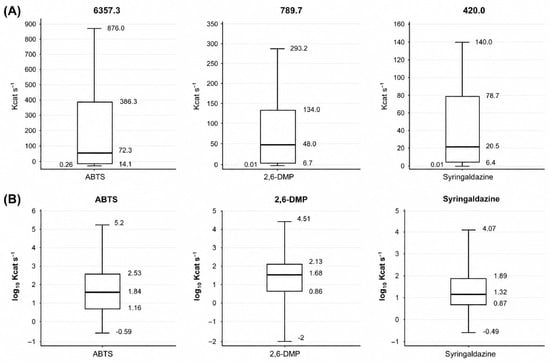
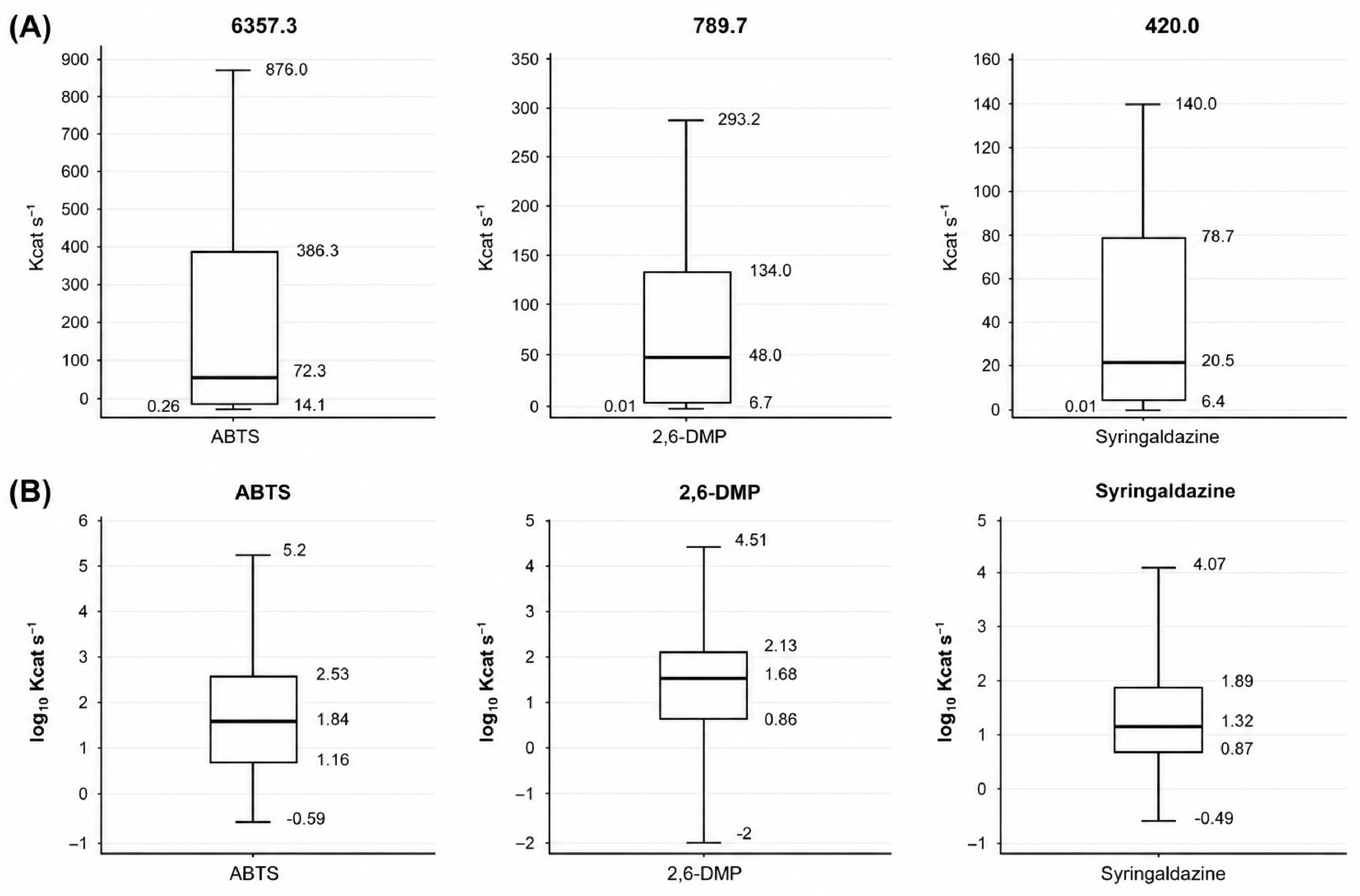
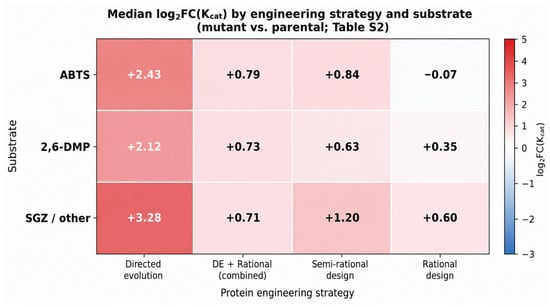
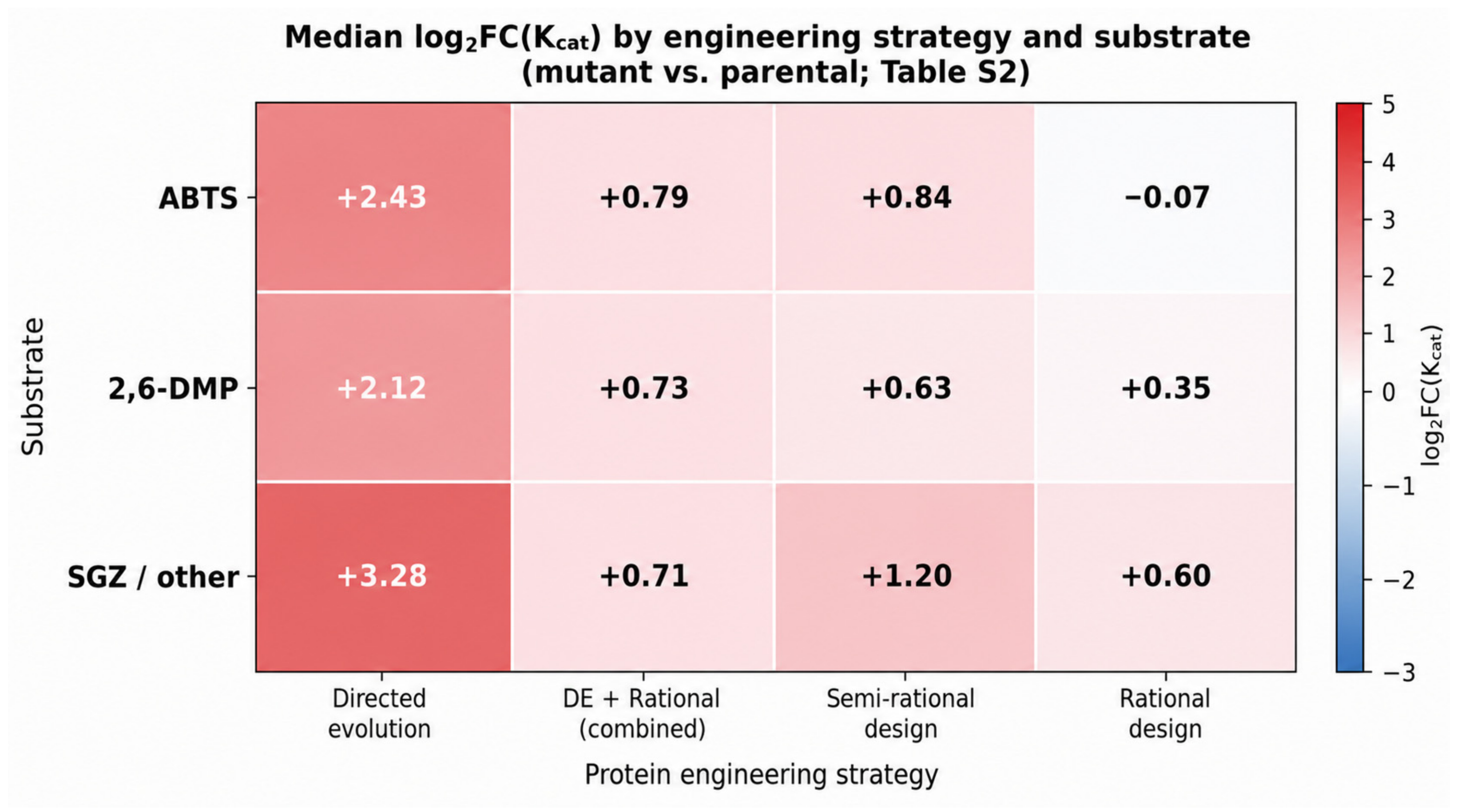
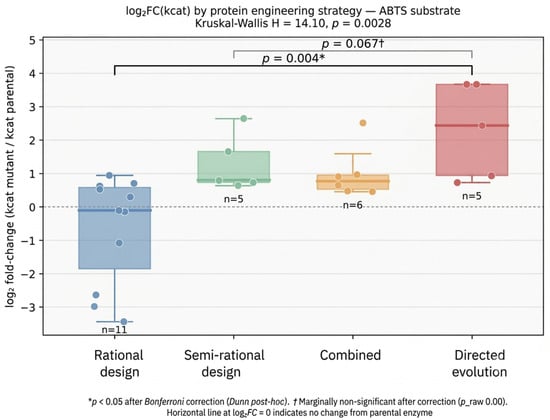
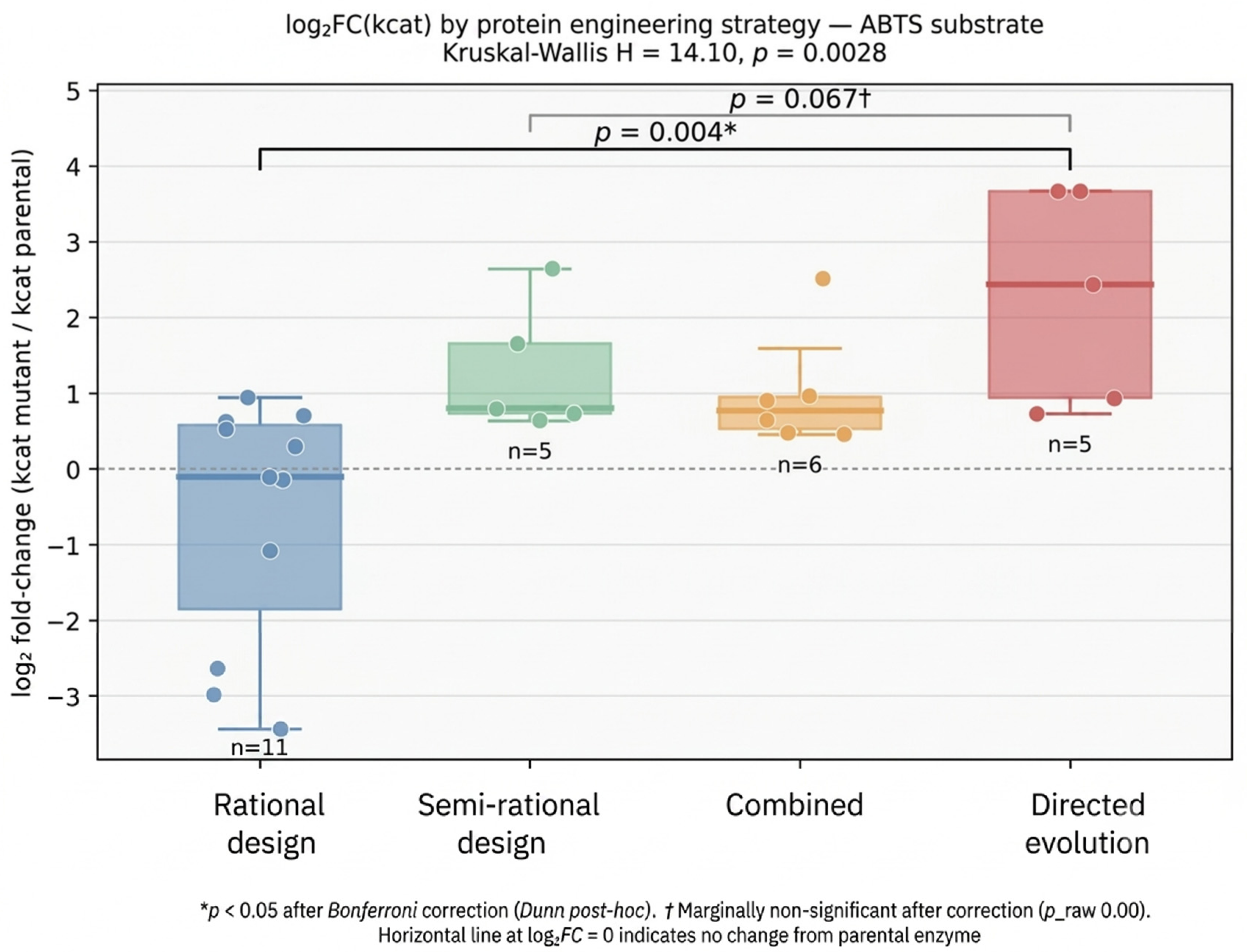

Disclaimer/Publisher’s Note: The statements, opinions and data contained in all publications are solely those of the individual author(s) and contributor(s) and not of MDPI and/or the editor(s). MDPI and/or the editor(s) disclaim responsibility for any injury to people or property resulting from any ideas, methods, instructions or products referred to in the content. |
© 2026 by the authors. Licensee MDPI, Basel, Switzerland. This article is an open access article distributed under the terms and conditions of the Creative Commons Attribution (CC BY) license.