


Abstract
This review examines the state-of-the-art in catalytic oxidative dehydrogenation of propane and butane to olefins under oxygen-free gas-phase conditions (FOx–PCODH and FOx–BCODH). First, it is compared with traditional methods for C3–C4 olefin production, using reaction enthalpies as an indicator of the process energy required. The role of catalyst oxygen species, including lattice and chemisorbed oxygen, is discussed in relation to olefin formation under oxygen-free gas-phase operation. This is followed by a review of V2O5-based catalysts, with particular emphasis on co-catalysts and catalyst supports. The performance of V2O5-based catalysts for FOx–PCODH is assessed using overall olefin formation rates. Special attention is given to catalyst performance in the mini-fluidized CREC Riser Simulator, which exhibit the highest overall olefin formation rates. These studies are also valuable to shed light into the FOx–PCODH reaction mechanism and to determine paraffin conversion, olefin selectivity, oxygen availability, and coke formation. This data can be used to determine FOx–PCODH kinetic parameters by assessing the effects of temperature, contact time, paraffin partial pressure, and catalyst-to-feedstock ratio. Finally, this review analyzes Barracuda-based numerical simulations of a large-scale downer reactor using statistically derived kinetic parameters. These simulations are employed to confirm the viability of the FOx–PCODH process at an industrial scale.
1. Introduction
Light olefins, also known as lower alkenes with the formula CnH2n, such as ethylene, propylene, and butenes, are key components in the petrochemical industry. The production of light olefins is motivated by the need to manufacture a wide range of products, including polymers, plastics, and chemicals, such as acrylic acid, isopropanol, and epoxides [1,2,3,4,5]. These chemical intermediates can be transformed into household appliances, plastic films, packaging and labels, textiles, automotive components, and laboratory equipment [1,6]. Consequently, due to increased consumption of their derived products, the demand for light olefins has been increasing steadily. In 2020, the worldwide demand for propylene reached 115.2 million metric tons (MMT). It is expected to continue growing to 158.4 MMT in 2027 [7].
Light paraffins such as ethane, propane, and butane are the primary components of natural gas. These compounds are alkanes with fewer than five carbon atoms and are generally represented by the formula CnH2n+2 [8]. Ethane can be steam-cracked via homogeneous, endothermic reactions to produce mainly ethylene [9,10,11,12]. Although this is a well-established large-scale process, industrial companies remain reluctant to introduce process modifications given already affected large scale investments, despite its significant negative environmental impact.
Likewise, light olefins such as propylene, 1-butene, and iso-butene can also be produced via energy demanding steam cracking and fluid catalytic cracking [13,14,15,16,17]. These technologies often use feedstocks such as vacuum refinery hydrocarbon residues, gas oil, and de-asphalted oil, with olefins being a byproduct [1,3,13,18]. These processes require high temperatures, large amounts of energy, and have low selectivity to light olefins [6,19,20]. In addition, large quantities of coke are formed, leading to catalyst deactivation, sintering, and frequent plant shutdowns [3,6,21,22,23].
Therefore, there is both opportunity and interest in the development of environmentally acceptable and economically viable technologies to meet the market light-olefin demand. A promising alternative for producing propylene and butenes from light paraffins by using more environmentally friendly technologies is catalytic oxidative dehydrogenation (CODH), in which oxygen is co-fed with the paraffins in gas–phase mixtures. CODH renders the reaction mildly exothermic while limiting coke formation [24,25,26]. Nevertheless, CODH selectivity to olefins can be negatively affected by the exothermic combustion of light paraffins, which generates COx, water, and other byproducts, such as methane. CODH with oxygen in the gas phase also raises concerns regarding the formation of flammable and potentially explosive hydrocarbon–oxygen mixtures in the gas phase [9,27,28,29].
To address these various issues, CODH under oxygen-free conditions in the gas phase (FOx–CODH) has been proposed. This process uses the catalyst lattice to provide the needed oxygen, offering the intrinsic advantage of converting light paraffins into olefins, with high selectivity [1,9,30,31,32].
The present review focuses on FOx–CODH, with special consideration given to vanadium doped on different catalyst supports. Efficient methodologies for catalyst performance evaluations that use the CREC Riser Simulator invented and developed at the Chemical Reactor Engineering Center (CREC) laboratories at the University of Western Ontario, Canada [33] are also reported. Furthermore, the present review highlights the value of this mini-fluidized bed CREC Riser Simulator unit for the evaluation of light paraffin conversion and the determination of olefin selectivity, olefin/H2 ratio, and coke formation. Through this approach, one can develop a mechanistic and kinetic analysis of FOx–CODH together with the establishment of key reaction parameters. This review also examines a FOx–CODH integrated process in a large-scale downflow reactor by using BarracudaTM 17.3.0 software simulations.
2. Stoichiometry and Reaction Enthalpies
Table 1 reports standard reaction enthalpies (∆Hr) at 298 K for the conversion of propane into olefins via (a) dehydrogenation, (b) oxydehydrogenation with oxygen being provided in the gas phase, and (c) the FOx–CODH process.
In Section A of Table 1, non-oxidative propane dehydrogenation stoichiometries are shown (Equations (2)–(6)). These reactions are thermodynamically limited and strongly endothermic [14,34,35,36,37]. As a result, these processes need to be conducted at high temperatures (>650 °C) while using low partial pressures of light paraffins to yield limited amounts of undesired products (e.g., CO, CO2, CH4, coke) [37,38,39,40,41].
On the other hand, the ODH of light paraffins, formulated using Equation (1), is an exothermic reaction:
Thus, there is no need for thermal energy to be supplied to either the ODH or CODH process (See Table 1, sections B to D). This is in contrast with the endothermic nature of light olefin dehydrogenation, where significant amounts of heat need to be provided [8,42].
As examples of the CODH process, one can consider both propane oxydehydrogenation (PODH) with oxygen being supplied in the gas phase (Equations (7)–(16)) and FOx–PCODH (17)–(21)) in which gas-phase oxygen is absent. As described in Table 1, PODH may be influenced by successive secondary oxidation reactions that may lead to the formation of undesired byproducts (Equations (18)–(21)) [27,43]. Therefore, for a better management of these undesirable reaction steps, it is critical to implement FOx–PCODH catalysts such as V2O5 under oxygen-free gas phase conditions with high olefin selectivity.
Table 1.
Reaction enthalpies at 298 K and 1 atm for propane () dehydrogenation, propane Oxydehydrogenation, and propane catalytic oxydehydrogenation under oxygen-free conditions.
While the above postulated reactions for FOx–PCODH are all thermodynamically allowed, there is, however, still debate on whether oxydehydrogenation truly involves totally or partially oxidized vanadium chemical species, as described in Section C of Table 1 with Equations (17)–(21), or alternatively, if it involves chemisorbed oxygen obtained from other surface chemical species, as described in Section D of Table 1, and as follows:
with O-S representing the chemisorbed oxygen in the catalyst lattice.
Thus, the FOx–CODH process takes advantage of the catalyst’s structural lattice oxygen, also referred to as nucleophilic oxygen, O2− or Olatt [45,46], with the amount of oxygen available being a function of the state of reduction of the metal oxide catalyst (e.g., V5+ to V3+) [6]. However, when the catalyst is fresh or has been regenerated, there can be other forms of oxygen available, such as weakly adsorbed or chemisorbed oxygen (also referred to as electrophilic oxygen species like Oelec, O2−, or O−) [45,47].
As a result, by assuming a Mars-van Krevelen mechanism [48], in which one mole of propane reacts with one mole of lattice oxygen (C3H8 + -O- → C3H6 + H2O), the amount of lattice oxygen accessible in the catalyst can be estimated. This mechanism is based on the metal oxide content and the stoichiometric oxygen available, as described in Figure 1. It is worth mentioning that the work of Rostom and de Lasa [49] showed that the amount of lattice oxygen available from a 7.5V/ZrO2-γAl2O3 catalyst employed for FOx–PCODH exceeded the propane converted that was fed via successive propane injections by a factor of three, as shown in Appendix A.
Figure 1.
Oxidized catalyst (V2O5) and reduced catalyst containing vanadium oxide species (VOx). Note: Intermediate reaction steps are omitted for clarity given the lack of significant amounts of gas phase detectable oxygenated species [49].
Therefore, if the lattice oxygen were the only active species, one would expect it to be depleted after the third successive injection. Results show, however, that the propane conversion with stable high olefin yield continues over 10 consecutive injections, indicating that FOx–PCODH cannot be entirely attributable to the lattice oxygen [49].
Although a greater reduction of the catalyst (e.g., V2O5→V2O3) could, in principle, increase the availability of lattice oxygen, this is unlikely to occur under the FOx–PCODH operating conditions studied by Rostom and de Lasa [49]. By using an XPS analysis, these authors reported only the presence of V5+ and V4+ species on the used catalyst over the 10 consecutive injections. This sustained catalyst activity over multiple injections, therefore, suggests the involvement of extra oxygen species beyond those in the crystal lattice. In our view, it is important for future research to consider alternative reaction pathways that fully account for the sources of oxygen that contribute to the FOx–PCODH process.
One should mention that the V2O5 catalyst can be activated with air at 550–600 °C, as described by Equation (27) of Table 1. This V2O5 catalyst activation facilitates the integration of catalytic oxydehydrogenation and catalyst reactivation (also known as regeneration), in a single process, which includes an FOx–PCODH fluidized reactor and an air fluidized regeneration unit, both operating within a close temperature range [49].
It is interesting to note that one can study FOx–PCODH together with catalyst regeneration using either Route 1 (Equations (17)–(21) and (27)) or Route 2 (Equations (22) and (28)). While Route 1 is a function of the chemical state of vanadium only, Route 2 depends on the chemisorbed oxygen and the catalyst (O-S) bond strength. Thus, by establishing the oxygen chemisorption enthalpy, the reaction enthalpies of the reactions described by Equations in Sections D and F of Table 1 can be calculated. However, even if the specific values of the FOx–PCODH reaction enthalpies differ for Route 1 and Route 2, the overall heat of reaction (which is the algebraic addition of the enthalpy of reaction for the FOx–PCODH, and the heat of catalyst regeneration (Sections E and F, Table 1)) for both routes yield the same values. This observation is critical, as it removes the overall reaction enthalpy uncertainty in an integrated process, configured with a FOx–PCODH reactor and a catalyst regenerator.
It is noteworthy that the concepts that apply to the free-of-oxygen oxidative dehydrogenation of propane discussed in this review also apply to butane, as recently reported by Bin Sulayman and de Lasa [44].
Thus, it is our view that FOx–CODH offers a new approach for light paraffin conversion into olefins, with significant savings of thermal energy and no required natural gas consumption, providing a process free of CO2 emissions.
3. FOx–PCODH Vanadium-Based Catalysts
The FOx–CODH of light paraffins has been conducted by employing metal oxide catalysts, including vanadium oxide-based catalysts, vanadium–magnesium–oxygen systems, and molybdate-based catalysts, among others. The general stoichiometric equation for the oxidative dehydrogenation of propane to propylene over metal oxide catalysts is given by Equation (30). Once the catalyst becomes deactivated through partial reduction, it can be regenerated using oxygen from air, as shown in Equation (31) [1].
One should note that the redox properties of vanadium-based catalysts play a crucial role in reactions that proceed via the Mars–van Krevelen mechanism. In this mechanism, the lattice oxygen from vanadium oxides reacts with hydrocarbon molecules to form alkenes and water. The resulting reduced vanadium species are subsequently re-oxidized by gaseous molecular oxygen in the regenerator, thereby replenishing the active catalyst sites [50].
FOx–PCODH involves three simultaneous and consecutive processes: the oxidative dehydrogenation of propane, the combustion of propane to form COx, and the combustion of propylene to form COx, as shown in Figure 2 and previously summarized in Table 1. The combustion of both propane and propylene limits both propylene yields and selectivities. Moreover, it is widely recognized that the propane CODH process can be both thermally and kinetically constrained, as selectivity toward the desired propylene decreases with increasing propane conversion [1]. As a result, a portion of both the propane feed and the propylene product can be further oxidized to carbon oxides.
Figure 2.
PODH reaction network.
A critical aspect in designing effective catalysts for alkane FOx–CODH is the stoichiometric control of oxygen supply to active sites. One must ensure that it meets the requirements for the selective oxidation of hydrocarbons to desired products or intermediates. This approach avoids the supply of excess oxygen, which promotes complete oxidation to undesired products. Strategies to achieve this controlled oxygen supply include the use of metals with intermediate oxidation states and the design of catalysts in which active oxygen species are dispersed among a few neighboring active sites. This can be further enhanced through the partial modification of oxide surfaces via sub-stoichiometric treatments that deactivate specific regions of the catalyst [8,51].
FOx–PCODH has been extensively studied using vanadium-based catalysts. Due to their low cost, high catalytic activity, thermal stability, and large specific surface area, supported vanadium oxides (VOx) are among the most promising catalysts for dehydrogenation reactions. VOx-based catalysts for alkane oxidation contain a variety of vanadium species in different oxidation states (V5+, V4+, V3+), including oligomeric Vn+ species, isolated vanadium sites, and crystalline V2O5 phases. The distribution and reactivity of these species are strongly influenced by the nature of the support, the vanadium loading, and the preparation method [37,52].
Various synthesis methods, such as wet impregnation, incipient wetness impregnation, flame spray pyrolysis, and sol–gel, have been employed to optimize the dispersion and redox properties of vanadium-based catalysts [18,30,52,53].
Supported catalysts offer several advantages over unsupported systems, including improved control over metal loading and oxide active species dispersion, as well as greater flexibility in tuning physicochemical properties [1,25]. In the oxidative dehydrogenation of light alkanes, a wide range of supports has been investigated, including SiO2, Al2O3, TiO2, ZrO2, CeO2, Nb2O5, MgO, and zeolites [18,54,55]. Typically, a soluble vanadium precursor, such as ammonium metavanadate (NH4VO3), is deposited onto the support in a quantity equal to or close to the support pore volume via incipient wetness impregnation. This method generally yields a distribution of vanadium species on the support surface, including both V2O5 nanoparticles and isolated vanadyl species [18].
Table A1 in the Appendix C summarizes the various catalysts employed in FOx–PCODH, as reported in the technical literature. Vanadium remains the most widely researched active component. Recent studies focus on its modification either through atomic-scale doping with metals such as molybdenum (Mo), tungsten (W), and rhenium (Re) [56,57], or by combining it with oxygen carrier materials, such as ceria (CeO2) nanodomains and Ca-doped SrFeO3 perovskites [39,58]. Common supports used in these systems include silica (SiO2), titanium dioxide (TiO2), and alumina phases (γ-Al2O3 or θ-Al2O3) [6,30,47,59].
The acidity of the support strongly influences catalytic performance and product selectivity. Because propylene interacts more strongly with acidic sites than the propane feedstock, high surface acidity promotes the adsorption of propylene, increasing its residence time on the catalyst surface and augmenting the chances for further transformation into undesired products (e.g., overoxidation to COx and coke) [6,19]. To mitigate this effect, researchers employ basic or less acidic oxides to modify catalyst supports, forming mixed oxides such as CaO–γ-Al2O3, BaO–θ-Al2O3, MgO–θ-Al2O3, CeO2–γ-Al2O3, and ZrO2–γ-Al2O3. These modifications neutralize acid sites and moderate the binding strength between propylene and the catalyst surface [6,20,46,49,59]. Alternatively, and to address this issue, a UiO-66 support based on confinement agents has recently been explored to prevent the access of hydrocarbons to sites responsible for overoxidation during PCODH [60].
Desirable isolated VO4 species are also formed at low vanadium loadings, before reaching monolayer surface coverage. At higher vanadium loadings, these isolated sites tend to promote the formation of undesirable agglomerates into polyvanadates, eventually leading to the creation of V2O5 crystallites, which cause the complete combustion of propane [1]. Raman spectroscopy can help to identify these undesirable V2O5 crystallites by a sharp band around 1040 cm−1. This band corresponds to a V=O stretching vibration [30,47].
For the catalyst to be used in fluidized-bed reactors the particle size must promote good fluidization. The reported optimal average size is approximately 87 to 90 μm [49,53]. Additionally, typical prepared fluidizable catalysts displayed the following properties: (a) specific surface: 14–200 m2/g, (b) vanadium loading: 5–10%, (c) average crystallite size: <4 nm, (d) ammonia acidity: 8.26 cm3 STP/gcat free of vanadium species and 13 cm3 STP/gcat with added vanadium species [6,49,53,59].
FOx–PCODH Vanadium-Based Catalysts Performance
The FOx–PCODH catalyst performance depends on several factors, such as active metal dispersion, support effects, and redox properties. Although alumina is widely used in oxidative dehydrogenation and in modified vanadium systems, silica with well-dispersed vanadium is often cited as a stronger candidate for achieving high selectivity in CODH reactions, given its anticipated lower acidity.
In this context, the catalysts used in FOx–CODH processes must be prepared on supports with a suitable particle size and density (e.g., 40–90 μm and 1.21–1.73 g/cm3, respectively [53,61]) to ensure good fluidization under the selected operating conditions. In addition, the supports should possess an adequate specific surface area and pore structure (e.g., approximately 200 m2/g, and 72–109 Å mean pore size [49,53]) in order to facilitate the incipient wetness impregnation of vanadium precursor species.
Figure 3a reports literature data illustrating the relationship between propane conversion and propylene selectivity in FOx–PCODH systems. The observed trend is that there is a trade-off between activity and selectivity, demonstrating the difficulty of achieving both simultaneously. It is shown, however, that FOx–PCODH catalysts with high conversions (e.g., 65.1% reported in [6]) can still maintain a competitive selectivity (85.2%). However, surpassing both thresholds simultaneously remains challenging.
Figure 3.
(a) FOx–PCODH best conversions and selectivities for different catalysts evaluated in the last decade, (b) FOx–PCODH overall rates of propylene formation using different catalysts in fixed and fluidized beds. Note: overall rates are calculated with data from [1,6,19,20,30,39,46,47,56,57,58,59].
While the majority of studies report propane conversion and propylene selectivity as evaluation metrics, these parameters provide a limited view of the catalytic performance. One could instead consider the turnover frequency (TOF), which requires knowing the number of active catalyst sites for its calculation [47]. However, given the lack of such information, reaction rates based on the unit weight of the catalyst can be used instead as a basis for comparison [39,56]. Thus, for the FOx–PCODH case, an overall olefin formation rate can be established as a key parameter by using Equation (32) as follows:
It should be noted that the overall rates of propylene formation derived from Equation (32) and reported in Figure 3b were calculated based on catalyst weight and reaction time, using the highest values reported in the literature for each study considered. Interestingly, the application of Equation (32) yields performance results that differ significantly from those observed in Figure 3a. One might expect that catalysts with the highest conversion and selectivity would also exhibit the highest olefin productivity; however, this is not necessarily the case. The overall rate of propylene formation established at a set temperature also depends on operating conditions such as contact time and catalyst loading. Consequently, catalysts with moderate conversion and selectivity can outperform others in terms of olefin productivity when operating under conditions that favor higher reaction rates (e.g., low amounts of catalysts required, or short reaction times). Thus, these results suggest that catalytic performance should be evaluated based on olefin productivity (overall formation rate), rather than relying solely on conversion–selectivity relationships.
It is important to note that only a limited number of the best catalysts evaluated for FOx–PCODH are of the fluidizable type, as described by the green bars in Figure 3b [6,19,20,59]. One should mention that fluidizable catalysts were evaluated in the CREC Riser Simulator by Hugo de Lasa and co-workers at the University of Western Ontario [1,19], as well as by Mohammad Mozahar Hossain and collaborators at the King Fahd University of Petroleum and Minerals [6,20,59]. These fluidizable catalysts consistently demonstrated both suitable fluidization behavior and relatively high overall propylene formation rates. As such, they can be considered as promising candidates for further investigation and for potential application in the scale-up of circulating fluidized bed FOx–PCODH processes. However, additional studies are still recommended to confirm their stability, attrition resistance, and performance under extended time-on-stream conditions.
These results underscore the importance of not only catalyst development but also their evaluation in representative laboratory-scale reactor systems. In this context, the CREC Riser Simulator enables catalyst testing under conditions that closely approximate those of industrial fluidized riser and downer reactors. Such a system allows for the controlled assessment of key operating variables, including temperature, reactant partial pressure, reaction time, and catalyst-to-propane ratio, thereby providing a more relevant basis for catalyst screening, kinetic analysis, process scale-up, and future process development.
4. FOx–BCODH Vanadium-Based Catalysts
The objective of butane oxidative dehydrogenation (BODH) is to produce valuable C4 olefins (such as 1-butene, isobutene, and 1,3-butadiene) while overcoming the limitations of traditional processes like steam cracking and fluid catalytic cracking. As previously noted, these conventional routes typically suffer from high energy consumption due to elevated operating temperatures, thermodynamic constraints, and rapid catalyst deactivation [62,63,64].
Although ODH is an exothermic alternative, a major challenge is, as seen in the case of PODH, the undesired deep oxidation of butanes to carbon oxides (COx) [65]. The catalytic oxidative dehydrogenation of butane under a gas-phase oxygen-free atmosphere (FOx–BCODH) addresses this issue by enabling dehydrogenation through the lattice oxygen of solid metal oxide catalysts (e.g., vanadium oxides), rather than relying on co-fed molecular oxygen.
FOx–BCODH can involve five parallel processes as described in Figure 4: (i) the target reaction, in which n-butane reacts with lattice oxygen to form the desired C4 olefins and water; (ii) the cracking of n-butane into lighter C1–C3 hydrocarbons (e.g., methane, ethane, ethylene, propane, and propylene); (iii) the combustion of n-butane to COx; (iv) the secondary combustion of the formed butenes to unwanted COx; and (v) the secondary combustion of the lighter hydrocarbons [66].
Figure 4.
BODH reaction network.
Regarding supported catalysts used in FOx–BCODH, researchers frequently employ γ-alumina (γ-Al2O3). As observed in these studies, the acidic nature of alumina supports can cause unwanted cracking, carbon deposition (coking), and deep oxidation. To address these issues, various strategies focus on modifying the acid–base properties of the support through doping. One reported approach involves adding MgO to vanadium-based alumina catalysts. MgO neutralizes strong acidic sites and reduces the metal–support interactions that contribute to over-oxidation [63]. Similarly, cerium doping decreases support acidity, enhances the thermal stability of the catalyst, and mitigates deactivation [49].
Unsupported catalysts such as zinc–molybdenum–vanadium mixed oxide (ZnMo0.45V0.55Ox) have also been investigated for iso-butane FOx–CODH to form isobutene. Researchers have modified this material by developing a solvent-free grinding synthesis that uses Vitamin C as a pore-forming agent, lowering the valence states of the metals and generating oxygen vacancies that enhance the reactivity of the lattice oxygen [17].
FOx–BCODH Vanadium-Based Catalysts Performance
Table 2 summarizes the performance of various BCODH catalytic systems. The limited number of studies available, while promising, indicate that FOx–BCODH is still in its early stages. Throughout the reported data, reactor configuration plays an important role, with fluidized-bed systems significantly outperforming fixed-bed reactors in terms of conversion, yield, and overall olefin productivity rates [44,62,63]. This trend suggests that efficient gas–solid contact and continuous catalyst redox cycling are essential under oxygen-free conditions. It is also worth noting that, although high selectivities can be achieved, overall performance remains constrained by the limited conversion [62].
Table 2.
FOx–BCODH using different catalysts over the last decade.
5. Experimental FOx–CODH Reactors with Fluidized Catalysts
As discussed in Section 3 and Section 4, experimental investigations of FOx–PCODH have primarily employed two bench-scale reactor configurations: fluidized-bed and fixed-bed reactors. Among fluidized-bed systems, the CREC Riser Simulator has been one of the valuable laboratory scale reactors used to study FOx–BCODH under short contact-time conditions, typically ranging from 5 to 31 seconds [6,19,59]. Maintaining such brief exposure times is critical, as it minimizes deep oxidation pathways and thereby enhances olefin selectivity.
Figure 5 illustrates the CREC Riser Simulator unit, a 53 cm3 mini fluidized-bed batch reactor that can be used for evaluating fluidizable catalysts and developing kinetic models for paraffin CODH [1,33]. The reactor consists of an upper shell and a lower shell, a catalyst basket, and a high-speed impeller operating between 4500 and 7000 rpm. These components ensure stable fluidization and minimize transfer limitations. Typical catalyst loadings range from 0.40 to 0.76 g per experiment. Light paraffins are injected in pulses of 1.2–10 mL per run, while reaction temperatures are maintained between 475 and 650 °C, depending on catalyst formulation and on the targeted conversion and selectivity levels.
Figure 5.
Schematic diagram of the CREC Riser Simulator and accessories: (a) CODH Downflow Reactor, (b) CREC Riser Simulator [1]. Note: In (a) The red broken arrows represent initial, progress and final comparable reaction conditions in both in downer reactor and CREC Riser Simulator. In (b) The black arrows represent various operational steps in the CREC Riser Simulator.
The operation of the CREC Riser Simulator involves achieving the desired emulated reactivity found in a continuous riser or downer. The steps involved are as follows (see Figure 5b):
- (a)
- Run preparation—Step 1: The V1, 4PV, and V2 valves are set to the “open” position and the 6PV is set to the “bypass sample loop” position with lines 1, 2, 3, 4, 5, 7 being interconnected forming a single continuous flow path, while the V4 valve is set to the “vent” position.
- (b)
- Run Preparation—Step 2: The 4PV is turned to the “closed” position and the V4 valve is connected to the vacuum box, with the sample loop of the 6PV being set to the “load position”.
- (c)
- Run preparation—Step 3: The 6PV is turned back to the “bypass sample loop position”.
- (d)
- End of Reaction Time Step: The 4PV is turned to the “open” position to allow reactant products to be quickly removed from the reactor and sent to the vacuum box.
- (e)
- Post Reaction Step: The vacuum box contents are mixed via a mixing device. Following this, the 6PV is turned to the “load” position and a product gas sample with a gas carrier is sent to the GC via lines six and eight.
Typically, following a series of 10 propane injections performed according to the protocols described above, a continuous flow of air is introduced for 15 min at 575 °C [49]. This procedure facilitates the combustion of the coke deposited during the reaction and ensures complete regeneration (reoxygenation) of the FOx–CODH catalyst. Catalyst samples collected before the coke combustion step are analyzed by Total Organic Carbon (TOC) analysis to quantify the coke formed during the reaction.
Typical CODH pressure profiles in the CREC Riser Simulator during and after the reaction are presented in Figure 6. Immediately after the paraffin sample is injected into the reactor using a syringe, the pressure rises sharply from atmospheric conditions. As the FOx–CODH reaction proceeds, the pressure continues to increase due to product formation. Once the designated reaction time has elapsed, the unreacted feed and reaction products are transferred almost instantaneously to a vacuum box, producing the characteristic sudden pressure drop observed in the profile.
Figure 6.
Pressure profile for propane FOx–CODH in the CREC Riser Simulator. Operating conditions: T = 575 °C, reaction time = 10 s, propane injected = 1 cc NTP, and catalyst loaded = 0.7 g.
Researchers both at the University of Western Ontario, Canada and King Fahd University of Petroleum and Minerals, Sausi Arabia successfully evaluated FOx–CODH by studying ethane, propane, and butane conversions and selectivities, using the Riser Simulator reactor [6,9,19,20,32,44,49,53,59,62,63,67,68]. Their work has involved various VOx/γ-Al2O3 catalyst configurations and different paraffin reactants (ethane, propane, and butane) under oxygen-free conditions. Table 3 reports various vanadium-based catalysts for propane and butane FOx–PCODH, assessed in recent years in the CREC Riser Simulator. Several catalyst formulations, particularly ZrO2-γ-Al2O3 and CaO-γ-Al2O3 support for propane and MgO-γ-Al2O3 for butane, achieved selectivities of around 85–94% while maintaining a moderate paraffin conversion. It is worth noting that in these experiments, at the evaluated catalyst loadings, the CREC Riser Simulator was able to reproduce the anticipated hydrodynamics and reaction conditions characteristic of continuous industrial riser or downer fluidized-bed units, despite operating in batch mode. Moreover, the high overall olefin formation rates achieved under short-contact-time conditions further demonstrate the suitability of fluidized-bed reactors for oxygen-free CODH applications.
Table 3.
FOx–CODH catalysts evaluated in the CREC Riser Simulator.
Additionally, it was observed that after the first two injections propylene selectivity increased while COx formation decreased. This trend was attributed to the reduction of the available labile lattice oxygen [53]. This demonstrates that achieving the highest propylene selectivities in FOx–CODH requires the consumption of such labile oxygen in the catalyst, leading to a partially reduced catalyst state.
Fluidized bed reactors surpass fixed bed reactors as technologies of choice for exothermic FOx–PCODH and FOx–BCODH. Exothermic fixed-bed reactors have issues with reaction temperature control, both along the reactor unit and inside the catalyst pellets. Axial and radial temperature gradients in these units may also promote undesired total oxidation reactions and accelerate catalyst deactivation. Consequently, fixed beds require special design approaches to manage heat accumulation (catalyst dilution, multitubular reactors with heat exchange), which increase the operational complexity and costs [1].
In contrast, circulating fluidized beds, as the ones envisioned for FOx–CODH, provide better heat and mass transfer properties, thus permitting quasi-isothermal operation with minimal diffusional issues in the fluidized particles. Fluidized reactors allow catalyst circulation between reaction and regeneration units, which is helpful for an integrated FOx-CODH process with continuous lattice oxygen regeneration.
6. FOx-CODH Reaction Network Validation
Establishing the validity of the FOx–PCODH and FOx–BCODH reaction networks requires integrating the reaction stoichiometry, the catalyst characterization, the experimental product analysis, the controlled parameter variation, and the mathematical modeling.
An initial step in developing and optimizing FOx–PCODH and FOx–BCODH reaction networks is to conduct experimental catalytic runs in reactor units loaded with fluidizable inert support particles (e.g., Al2O3) under the chosen temperatures, partial pressures, and reaction times required to minimize light paraffin thermal conversion [6,45,49,53]. These “blank” experiments typically yield mostly unconverted propane with only trace amounts of methane, ethane, and CO2. This confirms that paraffin thermal conversion is negligible under these investigated conditions.
FOx–CODH reactions are monitored during experimental runs. This is accomplished through the analysis of reactor effluents by using a gas chromatograph (GC) equipped with: (a) a thermal conductivity detector (TCD), (b) a flame ionization detector (FID), and (c) a mass spectrometry detector (MS) [20,39,53]. These analytical techniques enable the identification and quantification of products such as (a) unconverted paraffins, (b) olefins, (c) CO, CO2, H2O, H2, CH4, and (d) other light hydrocarbons. This comprehensive analysis allows for carbon balance calculations and the monitoring of species consumption and formation as the lattice oxygen is depleted and the catalyst progressively deactivates.
The proposed triangular reaction network reported in Figure 2 can also be validated through selectivity–conversion analysis. The propylene and carbon oxide selectivities at near-zero propane conversion show that these species are formed from propane via a parallel reaction network. One can notice, however, that at a high propane conversion, olefin selectivity typically decreases while COx formation increases. This indicates that propylene, as a primary FOx–PCODH product, is depleted later via an undesirable secondary oxidation into carbon oxides [20,53].
This triangular reaction network was validated by using in situ Diffuse Reflectance Infrared Fourier Transform Spectroscopy (DRIFTS) [39,46,47]. This technique enables the observation of chemical double bond formation. DRIFTS reveal C–H bond stretching and V–OH bond formation, indicating that propane activation proceeds via hydrogen abstraction at vanadium–oxygen surface sites. Additionally, C=C stretching vibrations were detected, confirming the formation of propylene intermediates. Furthermore, C=O stretching bands observed in the 1660–1680 cm−1 region also suggest the formation of oxygenated species, such as acetone, which is considered an intermediate product obtained prior to the generation of COx [39,47].
In addition to evaluating gas-phase products, catalyst deactivation caused by coke formation can be assessed [53,63]. In these cases, the amount of carbon deposited on the spent catalyst is quantified using a Total Organic Carbon (TOC) Analyzer. By using this method, the deposited coke is determined via its combustion to CO2. It is subsequently measured by using an infrared gas analyzer.
Hydrogen formation in the reactor effluent can also serve as a useful indicator to evaluate catalytic oxidative dehydrogenation (CODH) mechanisms [39,63]. In this context, by studying FOx–BCODH, our team has proposed that the C4-olefin/H2 ratio can be used as a diagnostic parameter for mechanism confirmation [63,69]. In non-oxidative dehydrogenation, this ratio is expected to fall between 0.5 and 1, in accordance with the reaction stoichiometry. However, significantly higher values observed (ranging from 3.09 to 3.99, and up to 7.34) indicate the suppression of H2 formation. This is attributed to the oxidative dehydrogenation reaction, where hydrogen is removed primarily as H2O through the contribution of lattice oxygen [63]. This validation approach can also be extended to FOx–PCODH.
7. Kinetics Models
7.1. FOx–PCODH
The kinetic models proposed to describe FOx–PCODH in recent years can generally be classified as either Langmuir–Hinshelwood (L–H) [19,20] or Mars–van Krevelen (MvK) models [31]. The L–H approach assumes that reactant species are adsorbed onto catalyst active sites prior to the reaction. In contrast, the MvK model proposes that the lattice oxygen from metal oxides within the catalyst plays a key role in limiting the reaction of hydrocarbon molecules [18]. On this basis, kinetics models have been developed based on reactions frameworks for FOx–PCODH by using the CREC Riser Simulator and a series-parallel propane reaction network, as described in Figure 2 of Section 3.
These models rely on multiple interrelated equations. In L–H models, the surface coverage of adsorbed species (θᵢ) is described by using adsorption equilibrium constants (Kᵢ) in combination with reactant partial pressures (pᵢ) [19] or concentrations (Cᵢ) [20]. To account for the decrease in available oxygen, given that the reaction utilizes lattice oxygen rather than gaseous oxygen, these models incorporate an exponential decay term, , where λ is the decay constant, and XC3H8 represents the propane conversion. The resulting ri reaction rates obtained by combining these expressions within the L–H framework [19], are presented in Equations (33)–(35) as follows:
Furthermore, both the kinetic and adsorption parameters (rate constants ki and adsorption constants Ki) together with the activation energies are obtained by using Arrhenius equations, as shown in Equations (36) and (37). In these equations, and are the reaction and adsorption constant pre-exponential factors respectively, Ei is the activation energy, is the heat of adsorption, R is the universal gas constant, and Tm is the median temperature. These mathematical expressions are particularly advantageous because they are centered around a reference or median temperature Tm used to reduce the cross-correlation between activation energies and pre-exponential factors [19,31]. In this way, the overall reactor behavior is represented by a set of first-order differential mass–balance equations with the parameters , , Ei, and having to be estimated.
Hossain [20] and Al-Ghamdi et al. [31] estimated adsorption constants and kinetic parameters simultaneously within a single regression framework. In contrast, Rostom et al. [19] highlighted that the non-linear nature of the rate equations renders the parameter estimation procedure susceptible to over-parameterization. To address this issue, Rostom et al. [19] reduced the number of independent fitting parameters in the ODH model by determining the adsorption constants prior to kinetic model fitting, and by using separate adsorption isotherm experiments conducted with the CREC Riser Simulator. Furthermore, Rostom et al. [19] reported negligible coke formation and, consequently, set the decay constant λ to zero.
Once the system of kinetic model equations was established, the kinetic model was solved numerically by using appropriate differential equations solvers, data-fitting techniques, and statistical and physical criteria to validate the various chemical species partial pressures. This was accomplished when the sum of squared residuals (SSQ or SSR) between the predicted and experimental species partial pressures was minimized. Additional indicators of good fit included a normal distribution of residuals, high correlation coefficients, low cross-correlation among parameters, and reduced confidence intervals [19,20,44,66].
By following this procedure, Hossain [20] demonstrated that replacing a pure CaO support with a mixed CaO–γ-Al2O3 support reduced the activation energy required for propylene formation from 126.7 to 120.3 kJ·mol−1, while increasing the activation energy associated with undesired CO2 formation from 32.8 to 55.1 kJ·mol−1. The activation energy required for the secondary combustion of propylene remained approximately constant at 53.7 kJ·mol−1. Similarly, Al-Ghamdi et al. [31] reported activation energies of up to 124.9 kJ·mol−1 for propylene formation, along with values of 52.8 kJ·mol−1 and 53.8 kJ·mol−1 for the combustion of propane and propylene, respectively, when using a VOx/γ-Al2O3 catalyst.
In contrast, Rostom et al. [19] reported lower activation energies when employing a VOx/ZrO2–γ-Al2O3 catalyst, with values of 55.7 kJ·mol−1 required for propylene formation and 33.3 kJ·mol−1 being needed for propane combustion. Despite the relatively low activation energy required for combustion, the catalyst maintained a high propylene selectivity, which was attributed to a larger pre-exponential factor k0. The activation energy for secondary propylene combustion was 98.5 kJ·mol−1, thereby limiting consecutive oxidation reactions. Additionally, it was confirmed that the cross-correlation coefficients among the estimated parameters were well below unity, indicating that the assigned parameter values were only weakly affected by one another (see Table 4).
Table 4.
Reported kinetic parameter for FOx–PCODH adapted from Rostom and de Lasa [19].
Beyond ODH reaction kinetics, kinetic modeling has also benefited from the evaluation of catalyst acidity. Ayandiran et al. [6] investigated ammonia temperature-programmed desorption (NH3-TPD) using the Cvetanovic and Amenomiya model. This model showed good agreement with experimental data, with correlation coefficients being close to unity and residuals being normally distributed. Their results indicated that increasing the CaO loading led to an increase in the activation energy of desorption, from 39.2 kJ/mol to 96.3 kJ/mol, suggesting stronger interactions between the active sites and the support.
7.2. FOx–BCODH
Early kinetic descriptions of BODH were primarily based on redox mechanisms, such as those of the MvK model. More recent studies, however, have adopted the L–H model to describe reactions under oxygen-free gas-phase conditions. Similar to the FOx–PCODH kinetic models, recent L–H formulations for FOx–BCODH incorporate kinetic and adsorption parameters (ki and Ki), with Arrhenius-type expressions having temperature-centering approximations. These estimations are used to describe temperature dependence, and exponential decay functions to account for catalyst deactivation due to lattice oxygen depletion [44,66].
Both the KFUPM-Saudi Arabia research group and the CREC-UWO group have been leading kinetic modeling research using the CREC Riser Simulator. Lucky et al. [66] formulated two alternative Langmuir–Hinshelwood (L–H) models for a VOx/CeO2–γ-Al2O3 catalyst, based on the five-step reaction network, previously shown in Figure 4. In Model I, a single type of adsorption site (“X”) was assumed, with all sites having equivalent activity and the product selectivity was limited by the accessibility of the reactants to the lattice oxygen. In Model II, two types of adsorption sites (“X” and “Z”) were considered, where the mildly acidic X sites promoted ODH to C4-olefins, while the more strongly acidic Z sites favored cracking into lighter hydrocarbons. These results indicated that the single-site adsorption model provided the best fit to the experimental data. Accordingly, authors conducted a simultaneous regression of both the intrinsic kinetic parameters and the adsorption constants, resulting in a total of 17 parameters being calculated.
In contrast, a recent approach proposed by Bin Sulayman and de Lasa [44] was developed, in which a L–H model using a VOx/MgO–γ-Al2O3 catalyst was based on a simplified triangular parallel–series reaction network comprised of only three primary reactions, as illustrated in Figure 7. Light cracking products (C1–C3 hydrocarbons) were excluded from the kinetic model due to their minimal yields (<2%). Additionally, Bin Sulayman and de Lasa set the decay parameter λ to zero, as coke formation was negligible (<0.02 wt%). To further simplify parameter estimation, the adsorption constants were determined through separate adsorption experiments conducted in the CREC Riser Simulator reactor, following the approach previously used by Rostom et al. [19] for FOx–PCODH. As a result, the number of parameters to be estimated was reduced to six, thereby significantly reducing model complexity.
Figure 7.
Simplified BODH reaction network.
When comparing the CREC Riser Simulator results, it is worth mentioning that both CREC-UWO and KFUPM groups reported very similar activation energies for the primary formation of C4-olefins (90.2 kJ/mol [66] and 89 kJ/mol, respectively [44]). In contrast, for the primary combustion of n-butane and for the secondary combustion of C4-olefins, Lucky et al. [66] estimated activation energies of 121.6 kJ/mol and 81.0 kJ/mol, respectively, whereas Bin Sulayman and de Lasa [44] showed significantly lower values of 42 kJ/mol and 44 kJ/mol, respectively. These lower values suggest that the corresponding reactions are controlled by relatively small pre-exponential factors rather than by high activation energy barriers. Overall, the triangular L–H model proposed by Bin Sulayman and de Lasa demonstrated good agreement with experimental data. The intrinsic parameters were estimated under a high number of degrees of freedom (>420), with narrow 95% confidence intervals and cross-correlation coefficients below 0.89.
8. Coke Formation as a Challenge for CODH Large Scale Implementation
Coke formation, or carbon deposition on catalysts, is presently a major limitation in conventional olefin production processes. The adoption of the FOx–CODH technology offers a promising pathway to mitigate this issue. As discussed in earlier sections, FOx–CODH utilizes lattice oxygen to facilitate hydrogen removal and enable water formation via an exothermic reaction that is thermodynamically favored at relatively low temperatures (approximately 450–600 °C). Operating within this lower temperature range significantly suppresses thermal cracking pathways, which are the primary contributors to coke formation, thereby enhancing catalyst stability and extending process longevity [1,6,39,46].
Recent studies have consistently demonstrated that under optimal conditions, coke formation can have a minimal effect on FOx–CODH activity. Coke can therefore be neglected as a deactivation factor, as discussed in Section 7 [19,44,63]. Similarly, experiments using a VOx/γ-Al2O3 catalyst at 550 °C, with ten 10 ml consecutive propane injections, led to 1–1.5 wt% carbon deposition only [53]. Likewise, studies evaluating VOx/TiO2 and W/Re-doped VOx catalysts at 500 °C reported carbon mass balances between 96% and 98%, indicating minimal carbon loss in the form of coke [47,57]. On this basis, it is speculated that in the FOx–CODH reaction, when there is an excess of lattice oxygen, coke forms primarily on the support matrix (e.g., γ-alumina) rather than on the active sites.
Furthermore, coke formation can also occur when the lattice oxygen is completely depleted. Under these conditions, non-oxidative dehydrogenation and cracking reactions can occur [39,45,56]. As a result, coke formation can lead to losses of valuable light paraffin feedstock as coke and subsequently to both the unwanted consumption of light paraffins and the severe deactivation of the catalyst. However, if the FOx–CODH reactor is operated under slight excess oxygen conditions, while considering the oxygen stochiometric requirements, coke formation can be mitigated by modifying or replacing acidic supports. For instance, fluidizable γ-Al2O3 with a strong acidic character can be substituted with lower-acidity catalyst support materials, such as fluidizable silica [6,19,59]. With this approach, one can expect minimal coke formation, negligible catalyst deactivation, and improved overall FOx–CODH catalytic performance with the entire light paraffin feedstock being employed for CODH, as discussed in Section 3 and Section 4 of this review.
9. Future Perspectives for FOx–CODH
To overcome the challenges associated with maintaining sufficient lattice oxygen for the reaction in a continuous unit at an industrial scale, researchers have proposed the use of a twin circulating fluidized bed reactor system for FOx–CODH processes [1,6]. In this configuration, as illustrated in Figure 8, catalyst particles continuously circulate between a downer reactor unit, where the FOx–CODH reaction takes place, and a separate dense fluidized bed regenerator used for catalyst reoxidation. Within the regenerator, the partially reduced catalyst is reoxidized through exposure to air, replenishing the lattice oxygen, and combusting any coke that may have been formed. Additionally, multiple cyclone separators are required at the outlets of both the downer and the regenerator to separate product gases from catalyst particles. Given that the reaction and regeneration stages are spatially separated, each can be optimized independently, allowing for improved process control and overall system performance. Furthermore, the twin fluidized bed configuration is also equipped with a catalyst cooler, allowing the CODH catalyst to be thermally reconditioned (temperature reduced) prior to being fed back to the CODH downer unit.
Figure 8.
Proposed configuration for FOx–CODH industrial operation. Adapted from [1].
By using the Computational Particle Fluid Dynamics (CPFD) Barracuda software, Rostom et al. [61] proposed an industrial downer reactor, with a length of 20 m, with particle cluster velocities between 2.8 and 3.5 m/s, and with gas–catalyst contact times between 5 and 7 s. It was demonstrated that this type of simulation plays an essential role in the scale-up and optimization of industrial reactor configurations. This is the case given that CPFD provides valuable information regarding hydrodynamics, gas–solid flow behavior, and reaction kinetics.
Thermal management is another critical consideration, as both the FOx–CODH reaction and catalyst regeneration are exothermic. CPFD simulations predict temperature increases of 11–13 °C along the downer reactor [61]. To maintain stable continuous operation, a fraction of the hot catalyst flow exiting the ODH reactor, as described in Figure 8, is partially cooled during its transport back to the reactor inlet, thereby helping to regulate the system temperature [31].
Furthermore, as observed in the studies discussed, CODH has typically been investigated using pure ethane, propane, or butane as feedstocks. However, in industrial practice, these paraffins are commonly present as mixtures, such as in natural gas, liquefied natural gas (LNG), and shale gas streams rich in light alkanes (methane, ethane, propane, and butane) [18,28,70]. Consequently, the disparity between experimental conditions and practical industrial feed compositions highlights the need for further research on the direct synthesis of olefins from mixed paraffin feeds.
Investigating CODH using mixed-component feeds (e.g., ethane–propane mixtures) could also provide valuable insights into catalyst behavior, including competitive adsorption, selectivity patterns, and potential inhibitory interactions between compounds. Therefore, using advanced experimental tools, such as the CREC Riser Simulator to evaluate the performance of fluidizable vanadium-based catalysts, while employing multi-component feeds that more closely resemble real-world conditions, particularly oxygen-free environments, represents a promising direction for future research.
10. Conclusions
- Vanadium-based catalysts supported on γ-Al2O3, ZrO2, SiO2, or mixed oxides have demonstrated to be valuable for FOx–CODH performance. A combination of vanadium with promoters such as Mo, Re, W, or CaO improves catalyst stability, redox behavior, and dispersion.
- Sustained paraffin conversion suggests that oxygen sources other than lattice oxygen participate in FOx–CODH. Further research is needed to identify the oxygen species involved in the reaction.
- Conversion and selectivity alone are not sufficient indicators to evaluate catalyst performance. A more reliable metric is the overall olefin formation rate, since catalysts with moderate conversion and selectivity may still be more efficient if they operate at shorter reaction times or are present in the reactor in smaller amounts.
- The experimental evaluation of CODH vanadium-based fluidizable catalysts under free oxygen conditions (FOx–CODH), particularly when employing the CREC Riser Simulator, shows excellent 14–21 mmol C4/(gcat h) overall olefin formation rates. These experimental assessments also lead to trustworthy kinetic models with accurate parameters with reduced spans and cross-correlation coefficients.
- The numerical simulation of fluidizable FOx–CODH catalysts in a continuous downer unit obtained by using the CPFD Barracuda software allows one to establish the expected light paraffin conversion, the olefin selectivity and the overall process productivity together with the removal of the heat of reaction. This minimizes undesirable reactions such as cracking and coke formation.
- The numerical simulation of the entire CODH process, including catalyst circulation and regeneration, obtained by using the CPFD Barracuda software allows one to predict the conditions required for FOx–CODH process scale-up and for the stable operation of an industrial unit. This prevents undesirable coke accumulation as well as promoting adequate CODH catalyst re-oxygenation.
- The suggested process integration, including a downer reactor and a dense phase fluidized bed, provides insights on how the FOx–CODH technology could be implemented at the industrial scale, which still nowadays remains a significant challenge.
Author Contributions
Conceptualization, H.d.L. and L.B.R.; methodology, L.B.R. and H.d.L.; formal analysis, H.d.L. and L.B.R.; investigation, L.B.R. and H.d.L.; resources, H.d.L.; data curation, L.B.R.; writing and original draft preparation, L.B.R.; writing, review and editing, H.d.L.; supervision, H.d.L. All authors have read and agreed to the published version of the manuscript.
Funding
This research was funded by the Natural Sciences and Engineering Council of Canada, HdL NSERC-12492 Discovery Grant.
Data Availability Statement
All data relevant to this review manuscript is included in the manuscript and/or referenced properly with the adequate text citation.
Acknowledgments
The authors gratefully acknowledge Florencia de Lasa for her assistance with manuscript editing, figure preparation, and her contributions to the design and drawing of the graphical abstract.
Conflicts of Interest
The authors declare no conflicts of interest.
Abbreviations
The following abbreviations are used in this manuscript:
| ODH | Oxidative dehydrogenation |
| PODH | Propane oxydehydrogenation |
| BODH | Butane oxidative dehydrogenation |
| CODH | Catalytic Oxidative dehydrogenation |
| FOx–CODH | CODH under oxygen-free conditions in the gas phase |
| FOx–PCODH | Free-of-Oxygen Propane Catalytic Oxydehydrogenation |
| FO–BCODH | Free-of-Oxygen Butane Catalytic Oxydehydrogenation |
| L–H | Langmuir–Hinshelwood |
| MvK | Mars–van Krevelen |
| MMT | Million metric tons |
| CPFD | Computational Particle Fluid Dynamics |
| CREC | Chemical Reactor Engineering Center |
Notation
| ΔHr | Standard reaction enthalpies [kJ·mol−1] |
| Overall rate of olefin formation [mmol·(gcat h)−1] | |
| ri | Reaction rate [mol·(gcat s)−1] |
| Kᵢ | Adsorption equilibrium constants [cm3·mol−1] |
| θᵢ | Surface coverage of adsorbed species “i” |
| ki | Reaction rate constants [mol·(gcat s)−1] |
| Cᵢ | Concentration of species “i” [mol·cm−3] |
| Pᵢ | Partial pressure of species “i” [atm] |
| Intrinsic pre-exponential factor [mol·(gcat s)−1] | |
| Ei | Activation energy [kJ·mol−1] |
| T | Temperature [K] |
| Tm | Median temperature [K] |
| C% | Paraffin Conversion [%] |
| S% | Olefin selectivity [%] |
| Y% | Yield [%] |
Appendix A. Oxygen Available and Lattice Oxygen
One can estimate the amount of available lattice oxygen in a catalyst by considering both its metal oxide content and its oxygen-to-catalyst ratio. In the work of Rostom and de Lasa [49], a 7.5V/ZrO2–γ-Al2O3 catalyst was used for propane oxidative dehydrogenation under oxygen-free conditions, while employing ten successive propane injections.
By assuming a Mars–van Krevelen mechanism, in which one mole of lattice oxygen reacts with one mole of propane, the V2O5 was reduced to V2O4, as follows:
or alternatively by considering the chemisorbed oxygen as,
One should note that the stoichiometry proposed by Equations (A1) and (A2), based on Rostom and de Lasa [49], was validated using XPS. The results of these authors showed that vanadium appeared as both V5+ and V4+ species in the spent catalyst only, with no indication of other V3+ species being present.
Thus, and on this basis, a maximum O/V2O5 available weight ratio was calculated as follows:
Furthermore, and by considering a catalyst composition of 7.5V/ZrO2-γAl2O3 [49], the maximum O/catalyst available weight ratio was calculated as follows:
Therefore, by employing a catalyst mass of 0.4 g (typically used in CREC Riser Simulator experiments), the work of Rostom and de Lasa, ref. [49]) showed that a total 1.65 × 10⁻⁴ moles of O were available to react according to the MvK mechanism:
Given that an injection of 5 mL of propane, corresponds to moles, and a typical propane conversion of 25%, the amount of propane consumed could be calculated to be 5.11 × 10⁻⁵ moles. Thus, the ratio between the available oxygen and the consumed propane could be estimated by employing Equation (A6) as follows:
This indicated that the FOx–PCOD catalyst contained approximately enough lattice oxygen to sustain, at most, three consecutive injections. However, experimental results reported by Rostom and de Lasa [49] showed that the same level of catalyst conversion was maintained over ten consecutive injections. This suggests that additional oxygen species, such as chemisorbed oxygen, are also present and contribute to sustaining the FOx–PCOD reaction.
Appendix B. Overall Rates of Formation Formulae for Calculations
Plug Flow Reactors (PFR) are fixed-bed quartz tube reactors:
Fluidized-Bed Reactors and the CREC Riser Simulator:
Pulse Transient Microreactors are small packed catalytic beds:
where is the inlet molar flow rate of propane [mmol/h], is the total amount of propane fed during the experiment [mmol], is the amount of propane injected per pulse [mmol], is the catalyst mass [g], is the contact time or reaction time, and is the average residence time. Propane conversion () and propylene selectivity () are expressed as dimensionless fractions.
Appendix C. Oxidative Dehydrogenation of Propane Using Various Reported FOx–PCODH Catalysts
Table A1.
Oxidative dehydrogenation of propane in different catalytic systems over the last decade.
References
- Rostom, S.; de Lasa, H. Propane Oxidative Dehydrogenation on Vanadium-Based Catalysts under Oxygen-Free Atmospheres. Catalysts 2020, 10, 418. [Google Scholar] [CrossRef] [Scilit]
- Sattler, J.J.H.B.; Ruiz-Martinez, J.; Santillan-Jimenez, E.; Weckhuysen, B.M. Catalytic Dehydrogenation of Light Alkanes on Metals and Metal Oxides. Chem. Rev. 2014, 114, 10613–10653. [Google Scholar] [CrossRef] [Scilit] [PubMed]
- Han, Z.-F.; Xue, X.-L.; Wu, J.-M.; Lang, W.-Z.; Guo, Y.-J. Preparation and Catalytic Properties of Mesoporous n V-MCM-41 for Propane Oxidative Dehydrogenation in the Presence of CO2. Chin. J. Catal. 2018, 39, 1099–1109. [Google Scholar] [CrossRef] [Scilit]
- Qiu, Y.; Li, X.; Zhang, Y.; Xie, C.; Zhou, S.; Wang, R.; Luo, S.-Z.; Jing, F.; Chu, W. Various Metals (Ce, In, La, and Fe) Promoted Pt/Sn-SBA-15 as Highly Stable Catalysts for Propane Dehydrogenation. Ind. Eng. Chem. Res. 2019, 58, 10804–10818. [Google Scholar] [CrossRef] [Scilit]
- Otroshchenko, T.; Kondratenko, V.A.; Rodemerck, U.; Linke, D.; Kondratenko, E.V. ZrO2-Based Unconventional Catalysts for Non-Oxidative Propane Dehydrogenation: Factors Determining Catalytic Activity. J. Catal. 2017, 348, 282–290. [Google Scholar] [CrossRef] [Scilit]
- Ayandiran, A.A.; Bakare, I.A.; Binous, H.; Al-Ghamdi, S.; Razzak, S.A.; Hossain, M.M. Oxidative Dehydrogenation of Propane to Propylene over VOx/CaO–γ-Al2O3 Using Lattice Oxygen. Catal. Sci. Technol. 2016, 6, 5154–5167. [Google Scholar] [CrossRef] [Scilit]
- Bathena, T.; Phung, T.; Murugesan, V.; Goulas, K.A.; Karakoti, A.S.; Ramasamy, K. Transition Metal Oxides in CO2 Driven Oxidative Dehydrogenation: Uncovering Their Redox Properties. J. CO2 Util. 2024, 84, 102848. [Google Scholar] [CrossRef] [Scilit]
- Smoliło, M.; Samson, K.; Zhou, T.; Duraczyńska, D.; Ruggiero-Mikołajczyk, M.; Drzewiecka-Matuszek, A.; Rutkowska-Zbik, D. Oxidative Dehydrogenation of Propane over Vanadium-Containing Faujasite Zeolite. Molecules 2020, 25, 1961. [Google Scholar] [CrossRef] [Scilit] [PubMed]
- Bakare, I.A.; Mohamed, S.A.; Al-Ghamdi, S.; Razzak, S.A.; Hossain, M.M.; de Lasa, H.I. Fluidized Bed ODH of Ethane to Ethylene over VOx–MoOx/γ-Al2O3 Catalyst: Desorption Kinetics and Catalytic Activity. Chem. Eng. J. 2015, 278, 207–216. [Google Scholar] [CrossRef] [Scilit]
- Fairuzov, D.; Gerzeliev, I.; Maximov, A.; Naranov, E. Catalytic Dehydrogenation of Ethane: A Mini Review of Recent Advances and Perspective of Chemical Looping Technology. Catalysts 2021, 11, 833. [Google Scholar] [CrossRef] [Scilit]
- Yusuf, S.; Neal, L.; Haribal, V.; Baldwin, M.; Lamb, H.H.; Li, F. Manganese Silicate Based Redox Catalysts for Greener Ethylene Production via Chemical Looping—Oxidative Dehydrogenation of Ethane. Appl. Catal. B 2018, 232, 77–85. [Google Scholar] [CrossRef] [Scilit]
- Wang, J.; Liang, X.; Xing, Z.; Chen, H.; Li, Y.; Song, D.; He, F. Ce-Doped LaMnO3 Redox Catalysts for Chemical Looping Oxidative Dehydrogenation of Ethane. Catalysts 2023, 13, 131. [Google Scholar] [CrossRef] [Scilit]
- Al-Absi, A.A.; Aitani, A.M.; Al-Khattaf, S.S. Thermal and Catalytic Cracking of Whole Crude Oils at High Severity. J. Anal. Appl. Pyrolysis 2020, 145, 104705. [Google Scholar] [CrossRef] [Scilit]
- Almuqati, N.S.; Aldawsari, A.M.; Alharbi, K.N.; González-Cortés, S.; Alotibi, M.F.; Alzaidi, F.; Dilworth, J.R.; Edwards, P.P. Catalytic Production of Light Olefins: Perspective and Prospective. Fuel 2024, 366, 131270. [Google Scholar] [CrossRef] [Scilit]
- Li, Y.; Zhang, Q.; Fu, S.; Kondratenko, V.A.; Otroshchenko, T.; Bartling, S.; Zhang, Y.; Zanina, A.; Wang, Y.; Cui, G.; et al. Active Species and Fundamentals of Their Creation in Co-Containing Catalysts for Efficient Propane Dehydrogenation to Propylene. Chem. Eng. J. 2023, 460, 141778. [Google Scholar] [CrossRef] [Scilit]
- Zhang, Y.; Zhao, Y.; Otroshchenko, T.; Han, S.; Lund, H.; Rodemerck, U.; Linke, D.; Jiao, H.; Jiang, G.; Kondratenko, E.V. The Effect of Phase Composition and Crystallite Size on Activity and Selectivity of ZrO2 in Non-Oxidative Propane Dehydrogenation. J. Catal. 2019, 371, 313–324. [Google Scholar] [CrossRef] [Scilit]
- Chang, Y.; Li, G.; Li, K.; Li, D.; Li, N.; Ma, S.; Zhang, Y. Oxygen Carrier Prepared by Solvent-Free Grinding and Biomass Based Oxygenates for Chemical Looping Oxidative Dehydrogenation of Isobutane. Energy 2024, 291, 130340. [Google Scholar] [CrossRef] [Scilit]
- Langeslay, R.R.; Kaphan, D.M.; Marshall, C.L.; Stair, P.C.; Sattelberger, A.P.; Delferro, M. Catalytic Applications of Vanadium: A Mechanistic Perspective. Chem. Rev. 2019, 119, 2128–2191. [Google Scholar] [CrossRef] [Scilit] [PubMed]
- Rostom, S.; de Lasa, H. High Propylene Selectivity via Propane Oxidative Dehydrogenation Using a Novel Fluidizable Catalyst: Kinetic Modeling. Ind. Eng. Chem. Res. 2018, 57, 10251–10260. [Google Scholar] [CrossRef] [Scilit]
- Hossain, M.M. Kinetics of Oxidative Dehydrogenation of Propane to Propylene Using Lattice Oxygen of VOx/CaO/ΓAl2O3 Catalysts. Ind. Eng. Chem. Res. 2017, 56, 4309–4318. [Google Scholar] [CrossRef] [Scilit]
- Xiong, H.; Lin, S.; Goetze, J.; Pletcher, P.; Guo, H.; Kovarik, L.; Artyushkova, K.; Weckhuysen, B.M.; Datye, A.K. Thermally Stable and Regenerable Platinum–Tin Clusters for Propane Dehydrogenation Prepared by Atom Trapping on Ceria. Angew. Chem. Int. Ed. 2017, 56, 8986–8991. [Google Scholar] [CrossRef] [Scilit] [PubMed]
- Lu, Z.; Tracy, R.W.; Abrams, M.L.; Nicholls, N.L.; Barger, P.T.; Li, T.; Stair, P.C.; Dameron, A.A.; Nicholas, C.P.; Marshall, C.L. Atomic Layer Deposition Overcoating Improves Catalyst Selectivity and Longevity in Propane Dehydrogenation. ACS Catal. 2020, 10, 13957–13967. [Google Scholar] [CrossRef] [Scilit]
- Bruening, M.A.; Hall, J.N.; Kim, Y.L.; Grizzi, V.; Perras, F.A.; Niklas, J.; Poluektov, O.G.; Kropf, A.J.; Liu, C.; Kaphan, D.M.; et al. Propane Dehydrogenation Catalyzed by Supported Group IV (Ti, Zr, Hf) Organometallics on Silicon Nitride. ACS Catal. 2026, 16, 6841–6850. [Google Scholar] [CrossRef] [Scilit]
- Cavani, F.; Ballarini, N.; Cericola, A. Oxidative Dehydrogenation of Ethane and Propane: How Far from Commercial Implementation? Catal. Today 2007, 127, 113–131. [Google Scholar] [CrossRef] [Scilit]
- Liu, Q.; Li, J.; Zhao, Z.; Gao, M.; Kong, L.; Liu, J.; Wei, Y. Design, Synthesis and Catalytic Performance of Vanadium-Incorporated Mesoporous Silica KIT-6 Catalysts for the Oxidative Dehydrogenation of Propane to Propylene. Catal. Sci. Technol. 2016, 6, 5927–5941. [Google Scholar] [CrossRef] [Scilit]
- Dasireddy, V.D.B.C.; Logar, N.Z.; Kovač, J.; Likozar, B. Production of Butadiene by Oxidative Butane Dehydrogenation with NO: Effect of the Oxidant Species and Lattice Oxygen Mobility in V2O5–WO3/TiO2 Catalyst. Catal. Sci. Technol. 2022, 12, 2990–3003. [Google Scholar] [CrossRef] [Scilit]
- Bhasin, M.M.; McCain, J.H.; Vora, B.V.; Imai, T.; Pujadó, P.R. Dehydrogenation and Oxydehydrogenation of Paraffins to Olefins. Appl. Catal. A Gen. 2001, 221, 397–419. [Google Scholar] [CrossRef] [Scilit]
- Koh, H.L. Research Trends of Technology Using Oxygen for Dehydrogenation of Light Alkanes. Appl. Chem. Eng. 2016, 27, 128–134. [Google Scholar] [CrossRef] [Scilit]
- Usachev, N.Y.; Kalinin, V.P.; Kazakov, A.V.; Kanaev, S.A.; Stakheev, A.Y. Influence of the Composition and Preparation Method of Molybdenum Systems on Their Oxidizing Properties in Ethane Conversion. Russ. Chem. Bull. 2022, 71, 1641–1647. [Google Scholar] [CrossRef] [Scilit]
- Fukudome, K.; Suzuki, T. Highly Selective Oxidative Dehydrogenation of Propane to Propylene over VOx–SiO2 Catalysts. Catal. Surv. Asia 2015, 19, 172–187. [Google Scholar] [CrossRef] [Scilit]
- Al-Ghamdi, S.; Moreira, J.; De Lasa, H. Kinetic Modeling of Propane Oxidative Dehydrogenation over VOx/γ-Al2O3 Catalysts in the Chemical Reactor Engineering Center Riser Reactor Simulator. Ind. Eng. Chem. Res. 2014, 53, 15317–15332. [Google Scholar] [CrossRef] [Scilit]
- Elbadawi, A.H.; Ba-Shammakh, M.S.; Al-Ghamdi, S.; Razzak, S.A.; Hossain, M.M.; de Lasa, H.I. Phenomenologically Based Kinetics of ODH of Ethane to Ethylene Using Lattice Oxygen of VOx/Al2O3–ZrO2 Catalyst. Chem. Eng. Res. Des. 2017, 117, 733–745. [Google Scholar] [CrossRef] [Scilit]
- De Lasa, H.I. Riser Simulator. U.S. Patent 5,102,628, 7 April 1992. [Google Scholar]
- Dai, Y.; Gao, X.; Wang, Q.; Wan, X.; Zhou, C.; Yang, Y. Recent Progress in Heterogeneous Metal and Metal Oxide Catalysts for Direct Dehydrogenation of Ethane and Propane. Chem. Soc. Rev. 2021, 50, 5590–5630. [Google Scholar] [CrossRef] [Scilit] [PubMed]
- James, O.O.; Mandal, S.; Alele, N.; Chowdhury, B.; Maity, S. Lower Alkanes Dehydrogenation: Strategies and Reaction Routes to Corresponding Alkenes. Fuel Process. Technol. 2016, 149, 239–255. [Google Scholar] [CrossRef] [Scilit]
- Wang, W.; Chen, S.; Pei, C.; Luo, R.; Sun, J.; Song, H.; Sun, G.; Wang, X.; Zhao, Z.-J.; Gong, J. Tandem Propane Dehydrogenation and Surface Oxidation Catalysts for Selective Propylene Synthesis. Science 2023, 381, 886–890. [Google Scholar] [CrossRef] [Scilit] [PubMed]
- Hu, Z.-P.; Yang, D.; Wang, Z.; Yuan, Z.-Y. State-of-the-Art Catalysts for Direct Dehydrogenation of Propane to Propylene. Chin. J. Catal. 2019, 40, 1233–1254. [Google Scholar] [CrossRef] [Scilit]
- Wang, F.; Jian, J.; Zhao, W.; Ma, Z.; Shuang, Y.; Wang, J.; Wang, S.; Guo, P.; Wang, H. CO2-Assisted Oxidative Dehydrogenation of Propane Catalyzed by Fe Modified Vanadium Oxide/Silicalite-1 Catalysts. Chem. Eng. J. 2025, 505, 159104. [Google Scholar] [CrossRef] [Scilit]
- Chen, S.; Luo, R.; Zhao, Z.-J.; Pei, C.; Xu, Y.; Lu, Z.; Zhao, C.; Song, H.; Gong, J. Concerted Oxygen Diffusion across Heterogeneous Oxide Interfaces for Intensified Propane Dehydrogenation. Nat. Commun. 2023, 14, 2620. [Google Scholar] [CrossRef] [Scilit] [PubMed]
- Zhang, S.; Zhou, C.; Wang, S.; Qin, Z.; Shu, G.; Wang, C.; Song, L.; Zheng, L.; Wei, X.; Ma, K.; et al. Facilitating CO2 Dissociation via Fe Doping on Supported Vanadium Oxides for Intensified Oxidative Dehydrogenation of Propane. Chem. Eng. J. 2024, 481, 148231. [Google Scholar] [CrossRef] [Scilit]
- Blasco, T.; Nieto, J.M.L. Oxidative Dyhydrogenation of Short Chain Alkanes on Supported Vanadium Oxide Catalysts. Appl. Catal. A Gen. 1997, 157, 117–142. [Google Scholar] [CrossRef] [Scilit]
- Mamedov, E.A.; Cortés Corberán, V. Oxidative Dehydrogenation of Lower Alkanes on Vanadium Oxide-Based Catalysts. The Present State of the Art and Outlooks. Appl. Catal. A Gen. 1995, 127, 1–40. [Google Scholar] [CrossRef] [Scilit]
- Hu, P.; Lang, W.-Z.; Yan, X.; Chu, L.-F.; Guo, Y.-J. Influence of Gelation and Calcination Temperature on the Structure-Performance of Porous VOX-SiO2 Solids in Non-Oxidative Propane Dehydrogenation. J. Catal. 2018, 358, 108–117. [Google Scholar] [CrossRef] [Scilit]
- Bin Sulayman, A.; de Lasa, H. A Kinetic Model for Catalytic N-Butane Oxidative Dehydrogenation under Oxygen-Free Reaction Conditions in a Fluidized CREC Riser Simulator. Catalysts 2024, 14, 505. [Google Scholar] [CrossRef] [Scilit]
- Djinović, P.; Zavašnik, J.; Teržan, J.; Jerman, I. Role of CO2 During Oxidative Dehydrogenation of Propane Over Bulk and Activated-Carbon Supported Cerium and Vanadium Based Catalysts. Catal. Lett. 2021, 151, 2816–2832. [Google Scholar] [CrossRef] [Scilit]
- Qiang, F.; Guo, T.; Nie, M.; Liu, Y.; Wu, M.; Guo, Q. Effect of Ce Content on the Chemical Looping Oxidative Dehydrogenation of Propane to Propylene over a VOx-CeO2/γ-Al2O3 Oxygen Carrier. Catalysts 2023, 13, 797. [Google Scholar] [CrossRef] [Scilit]
- Chen, S.; Pei, C.; Chang, X.; Zhao, Z.; Mu, R.; Xu, Y.; Gong, J. Coverage-Dependent Behaviors of Vanadium Oxides for Chemical Looping Oxidative Dehydrogenation. Angew. Chem. Int. Ed. 2020, 59, 22072–22079. [Google Scholar] [CrossRef] [Scilit] [PubMed]
- Mars, P.; van Krevelen, D.W. Oxidations Carried out by Means of Vanadium Oxide Catalysts. Chem. Eng. Sci. 1954, 3, 41–59. [Google Scholar] [CrossRef] [Scilit]
- Rostom, S.; de Lasa, H.I. Propane Oxidative Dehydrogenation Using Consecutive Feed Injections and Fluidizable VOx/ΓAl2O3 and VOx/ZrO2–ΓAl2O3 Catalysts. Ind. Eng. Chem. Res. 2017, 56, 13109–13124. [Google Scholar] [CrossRef] [Scilit]
- Fukudome, K.; Ikenaga, N.; Miyake, T.; Suzuki, T. Oxidative Dehydrogenation of Propane Using Lattice Oxygen of Vanadium Oxides on Silica. Catal. Sci. Technol. 2011, 1, 987–998. [Google Scholar] [CrossRef] [Scilit]
- Callahan, J.L.; Grasselli, R.K. A Selectivity Factor in Vapor-phase Hydrocarbon Oxidation Catalysis. AIChE J. 1963, 9, 755–760. [Google Scholar] [CrossRef] [Scilit]
- Zhu, H.; Ould-Chikh, S.; Dong, H.; Llorens, I.; Saih, Y.; Anjum, D.H.; Hazemann, J.; Basset, J. VOx/SiO2 Catalyst Prepared by Grafting VOCl3 on Silica for Oxidative Dehydrogenation of Propane. ChemCatChem 2015, 7, 3332–3339. [Google Scholar] [CrossRef] [Scilit]
- Al-Ghamdi, S.A.; de Lasa, H.I. Propylene Production via Propane Oxidative Dehydrogenation over VOx/γ-Al2O3 Catalyst. Fuel 2014, 128, 120–140. [Google Scholar] [CrossRef] [Scilit]
- Schumacher, L.; Funke, M.; Hess, C. Unraveling the Mechanism of the CO2—Assisted Oxidative Dehydrogenation of Propane over VOx/CeO2: An Operando Spectroscopic Study. RSC Sustain. 2024, 2, 3846–3865. [Google Scholar] [CrossRef] [Scilit]
- Schumacher, L.; Hess, C. The Active Role of the Support in Propane ODH over VOx/CeO2 Catalysts Studied Using Multiple Operando Spectroscopies. J. Catal. 2021, 398, 29–43. [Google Scholar] [CrossRef] [Scilit]
- Chen, S.; Zeng, L.; Mu, R.; Xiong, C.; Zhao, Z.-J.; Zhao, C.; Pei, C.; Peng, L.; Luo, J.; Fan, L.-S.; et al. Modulating Lattice Oxygen in Dual-Functional Mo–V–O Mixed Oxides for Chemical Looping Oxidative Dehydrogenation. J. Am. Chem. Soc. 2019, 141, 18653–18657. [Google Scholar] [CrossRef] [Scilit] [PubMed]
- Jiang, C.; Song, H.; Sun, G.; Chang, X.; Zhen, S.; Wu, S.; Zhao, Z.; Gong, J. Data-Driven Interpretable Descriptors for the Structure–Activity Relationship of Surface Lattice Oxygen on Doped Vanadium Oxides. Angew. Chem. Int. Ed. 2022, 61, e202206758. [Google Scholar] [CrossRef] [Scilit] [PubMed]
- Oing, A.; Donat, F.; Müller, C.R. Controlling Selectivity in the Chemical Looping Oxidative Dehydrogenation of Propane through Interface Engineering. Nat. Commun. 2025, 16, 5247. [Google Scholar] [CrossRef] [Scilit] [PubMed]
- Bakare, I.A.; Adamu, S.; Qamaruddin, M.; Al-Bogami, S.A.; Al-Ghamdi, S.; Hossain, M.M. Oxidative Dehydrogenation of Propane to Propylene over VOx on Mixed θ-Al2O3/Alkaline Earth Metal Oxide Supports. Ind. Eng. Chem. Res. 2019, 58, 10785–10792. [Google Scholar] [CrossRef] [Scilit]
- Farzaneh, A.; Moghaddam, M.S. Low-Temperature Propane Oxidative Dehydrogenation over UiO-66 Supported Vanadia Catalysts: Role of Support Confinement Effects. J. Colloid Interface Sci. 2023, 629, 404–416. [Google Scholar] [CrossRef] [Scilit] [PubMed]
- Rostom, S.; de Lasa, H. Downer Fluidized Bed Reactor Modeling for Catalytic Propane Oxidative Dehydrogenation with High Propylene Selectivity. Chem. Eng. Process. Intensif. 2019, 137, 87–99. [Google Scholar] [CrossRef] [Scilit]
- Khan, M.Y.; Adamu, S.; Lucky, R.A.; Razzak, S.A.; Hossain, M.M. Oxidative Dehydrogenation of n-Butane to C4 Olefins Using Lattice Oxygen of VOx/Ce-Meso-Al2O3 under Gas-Phase Oxygen-Free Conditions. Energy Fuels 2020, 34, 7410–7421. [Google Scholar] [CrossRef] [Scilit]
- Bin Sulayman, A.; Torres Brauer, N.; de Lasa, H. A Fluidizable Catalyst for N-Butane Oxidative Dehydrogenation under Oxygen-Free Reaction Conditions. Catalysts 2023, 13, 1462. [Google Scholar] [CrossRef] [Scilit]
- Xu, B.; Zhu, X.; Cao, Z.; Yang, L.; Yang, W. Catalytic Oxidative Dehydrogenation of N-Butane over V2O5/MO-Al2O3 (M = Mg, Ca, Sr, Ba) Catalysts. Chin. J. Catal. 2015, 36, 1060–1067. [Google Scholar] [CrossRef] [Scilit]
- Liu, X.; Duan, L.; Yang, W.; Zhu, X. Oxidative Dehydrogenation of N-Butane to Butenes on Mo-Doped VMgO Catalysts. RSC Adv. 2017, 7, 34131–34137. [Google Scholar] [CrossRef] [Scilit]
- Lucky, R.A.; Adamu, S.; Khan, M.Y.; Razzak, S.A.; Hossain, M.M. Kinetics of Oxidative Dehydrogenation of N-Butane to C4-Olefins over a VOx/CeO2-ΓAl2O3 Catalyst in Gas-Phase Oxygen-Free Conditions. Ind. Eng. Chem. Res. 2020, 59, 17815–17827. [Google Scholar] [CrossRef] [Scilit]
- Elbadawi, A.H.; Ba-Shammakh, M.S.; Al-Ghamdi, S.; Razzak, S.A.; Hossain, M.M.; de Lasa, H.I. A Fluidizable VOx/γ–Al2O3–ZrO2 Catalyst for the ODH of Ethane to Ethylene Operating in a Gas Phase Oxygen Free Environment. Chem. Eng. Sci. 2016, 145, 59–70. [Google Scholar] [CrossRef] [Scilit]
- Elbadawi, A.H.; Osman, M.S.; Razzak, S.A.; Hossain, M.M. VOx-Nb/La-ΓAl2O3 Catalysts for Oxidative Dehydrogenation of Ethane to Ethylene. J. Taiwan Inst. Chem. Eng. 2016, 61, 106–116. [Google Scholar] [CrossRef] [Scilit]
- Bin Sulayman, A. Catalytic Oxidative Dehydrogenation of N-Butane Under Oxygen-Free Reaction Conditions in a Fluidized CREC Riser Simulator: Reactivity, Kinetic Modelling. Ph.D. Thesis, Western University, London, ON, Canada, 2024. [Google Scholar]
- Yao, R.; Herrera, J.E.; Chen, L.; Chin, Y.-H.C. Generalized Mechanistic Framework for Ethane Dehydrogenation and Oxidative Dehydrogenation on Molybdenum Oxide Catalysts. ACS Catal. 2020, 10, 6952–6968. [Google Scholar] [CrossRef] [Scilit]
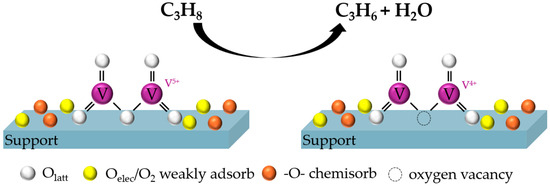
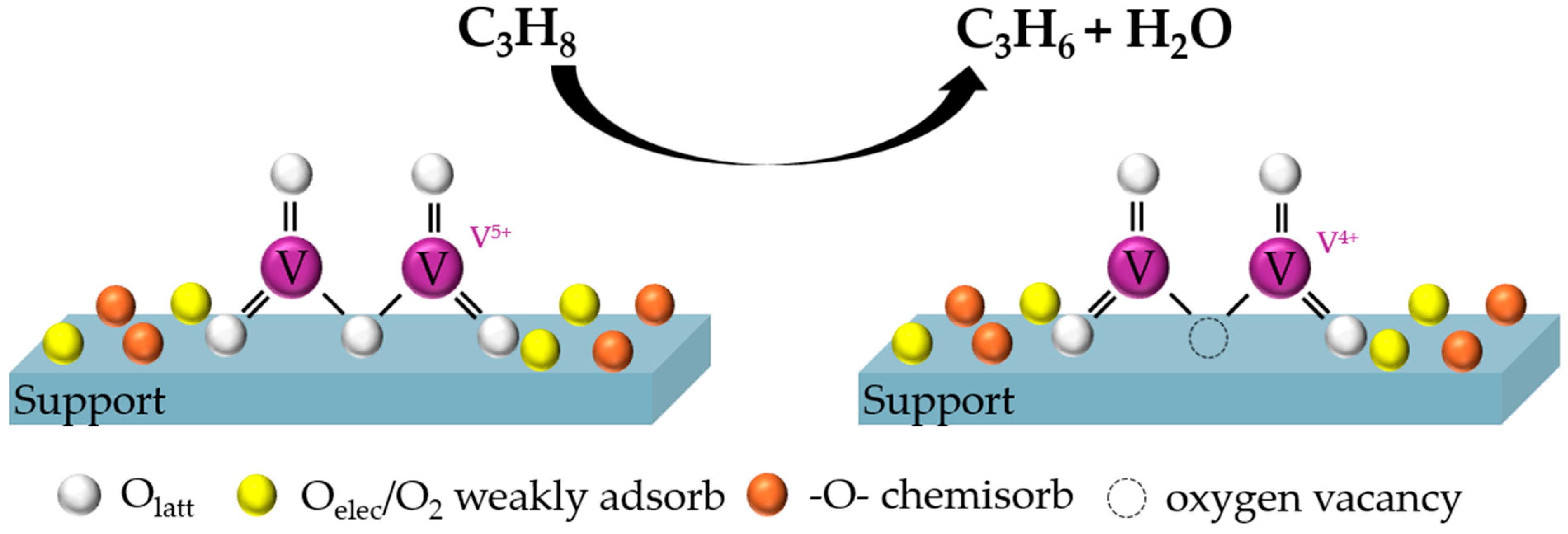
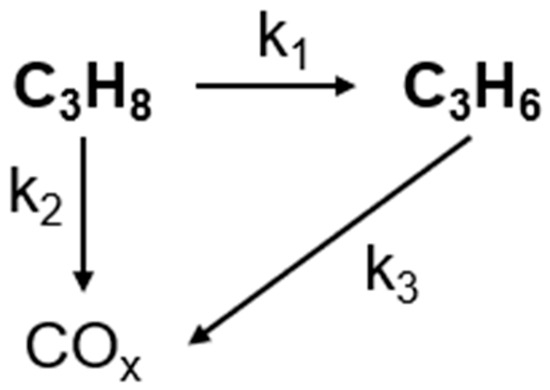
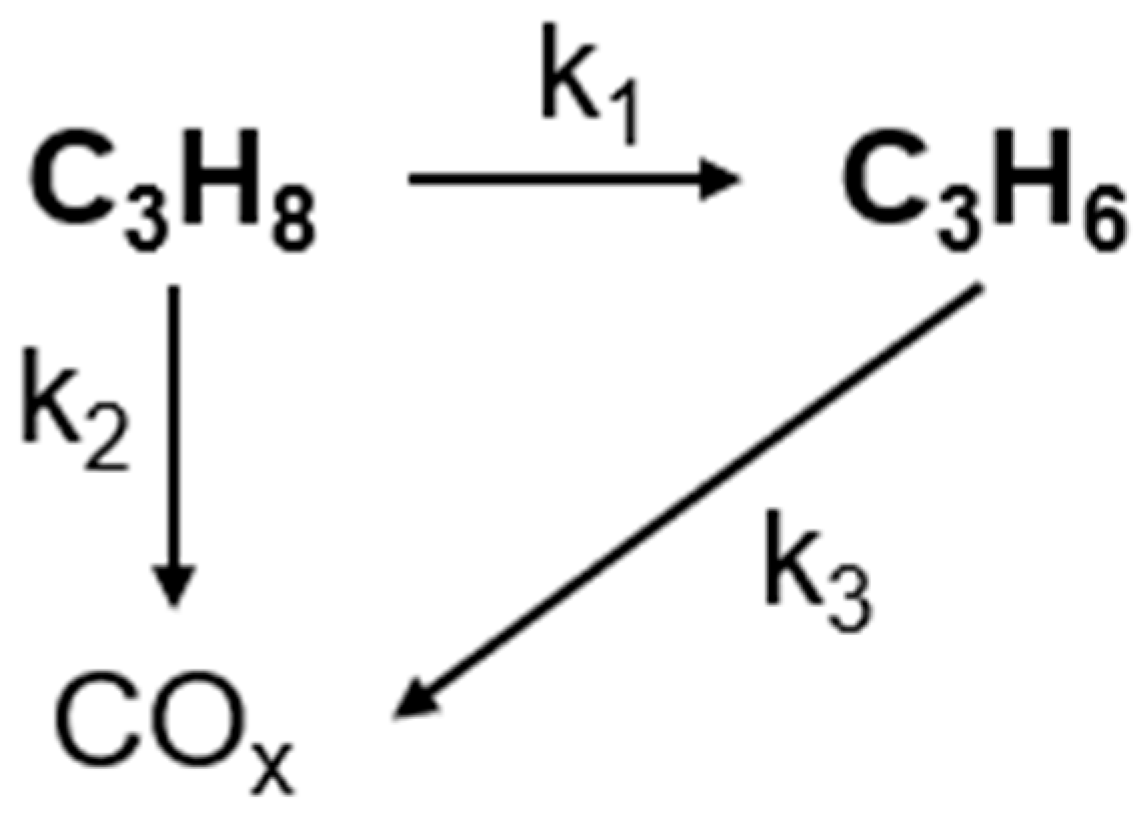
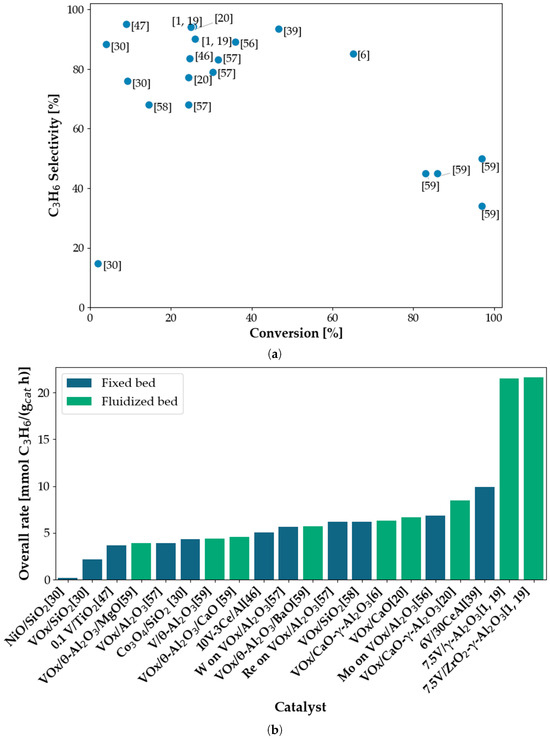
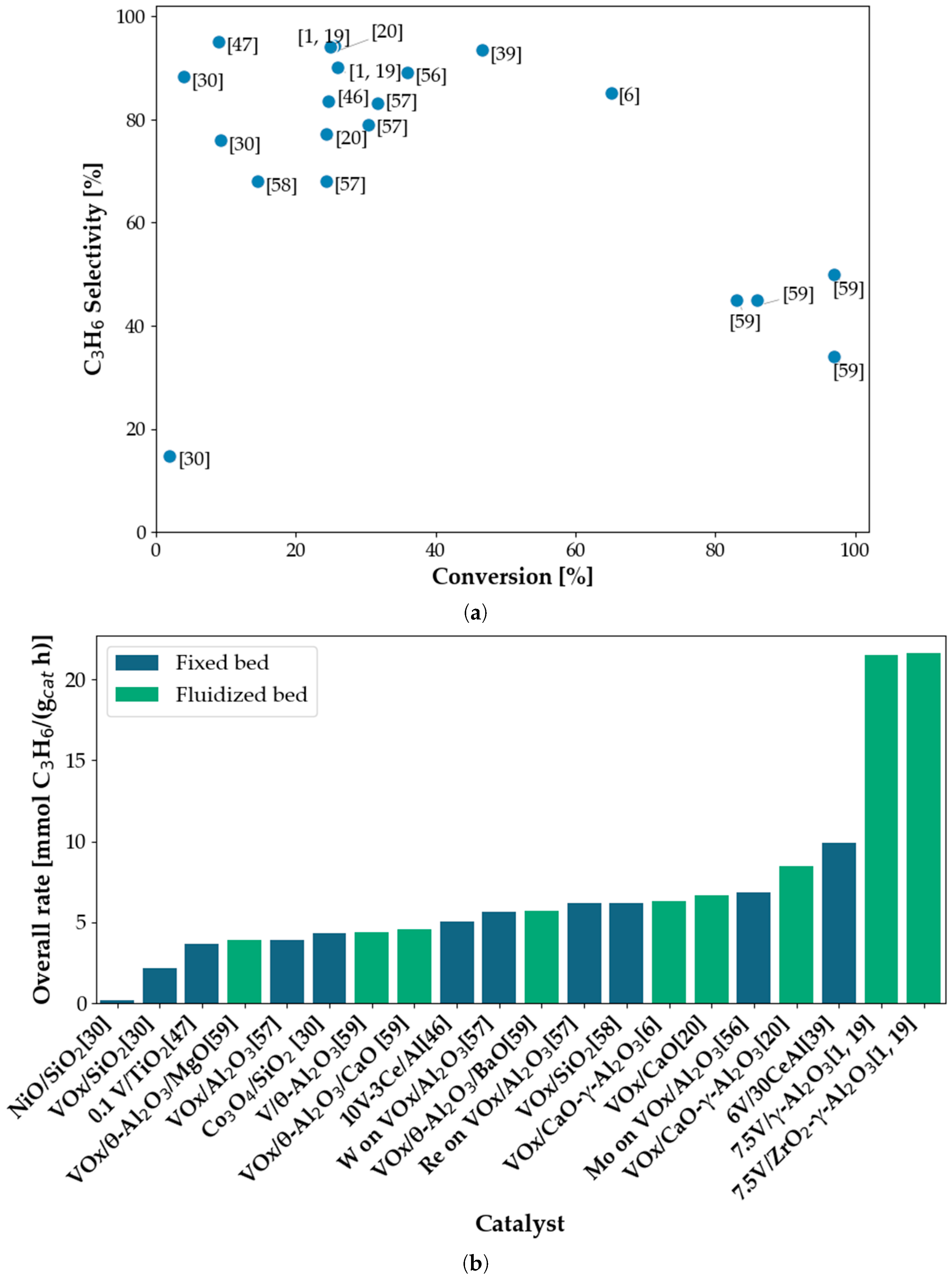
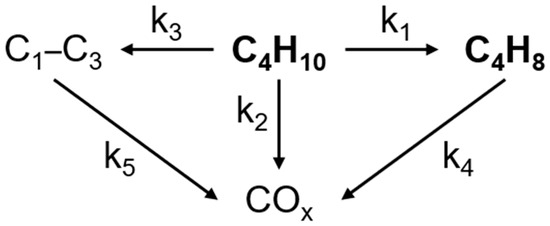
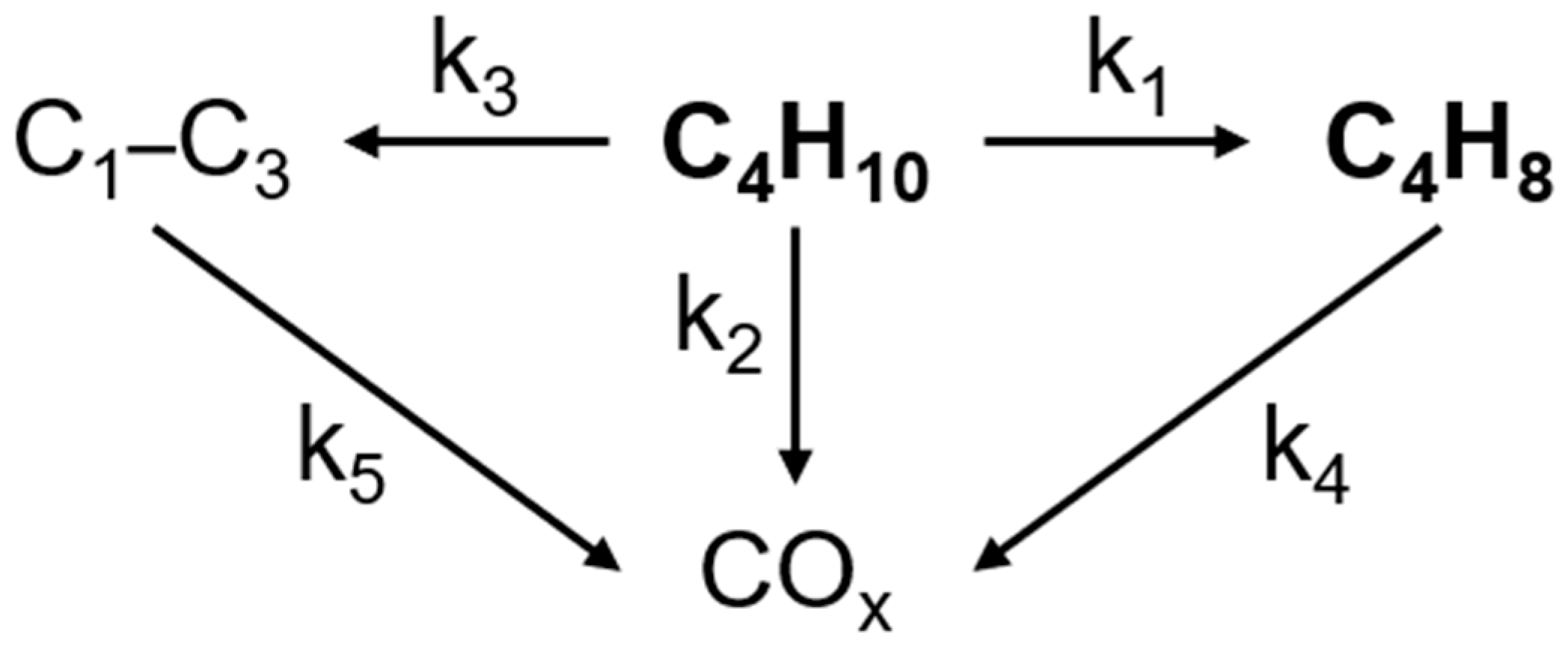
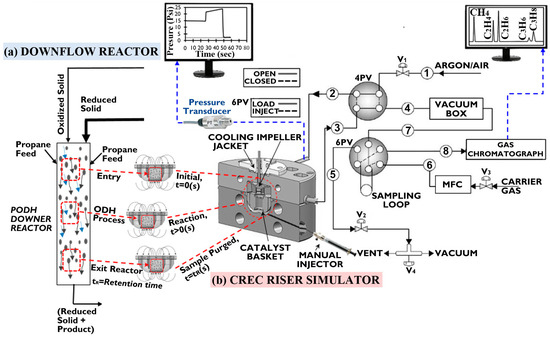
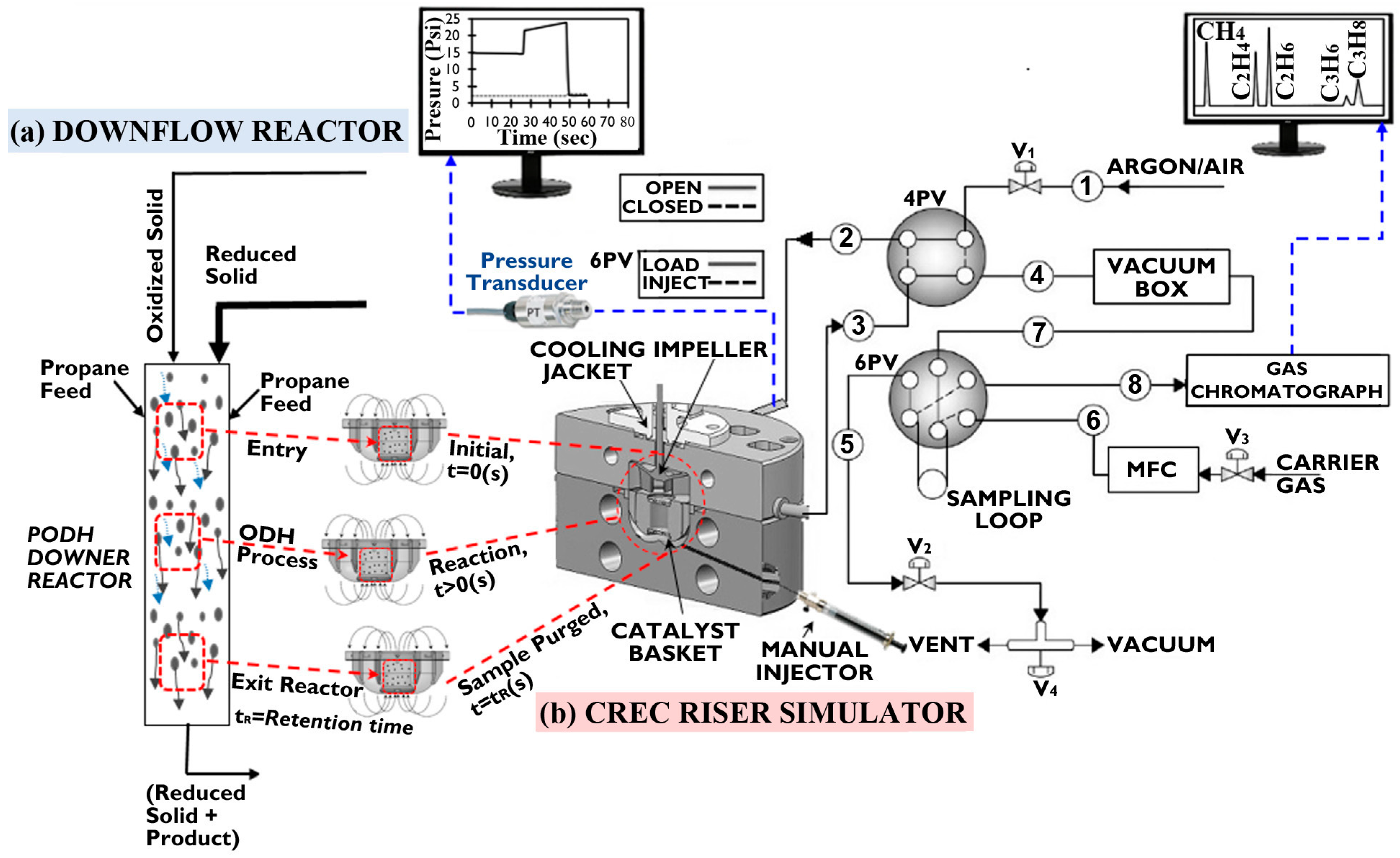
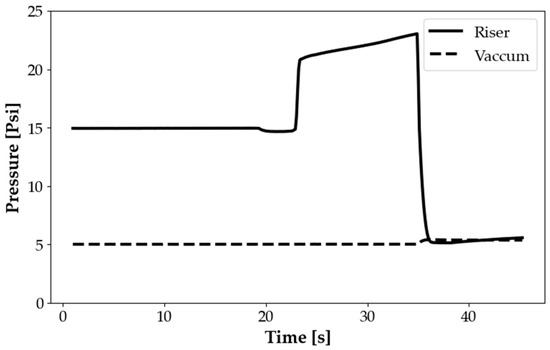
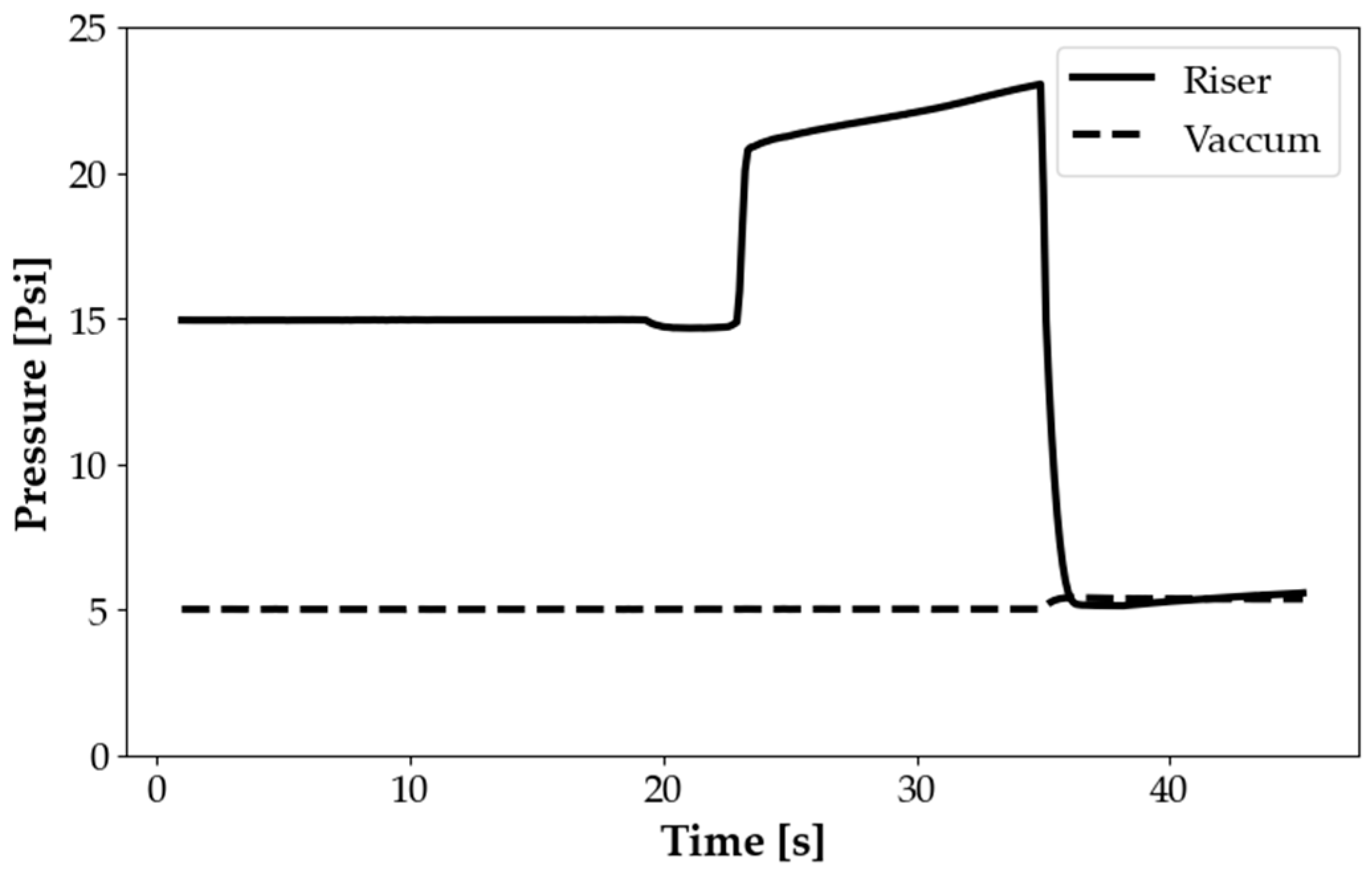
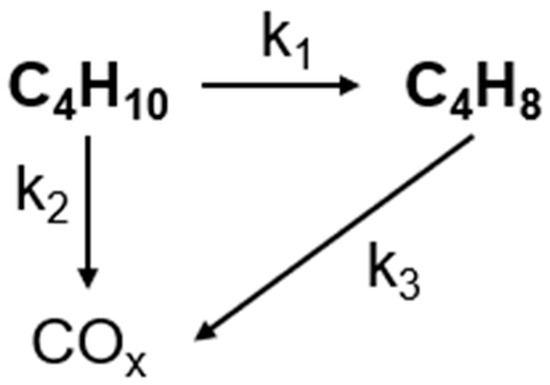
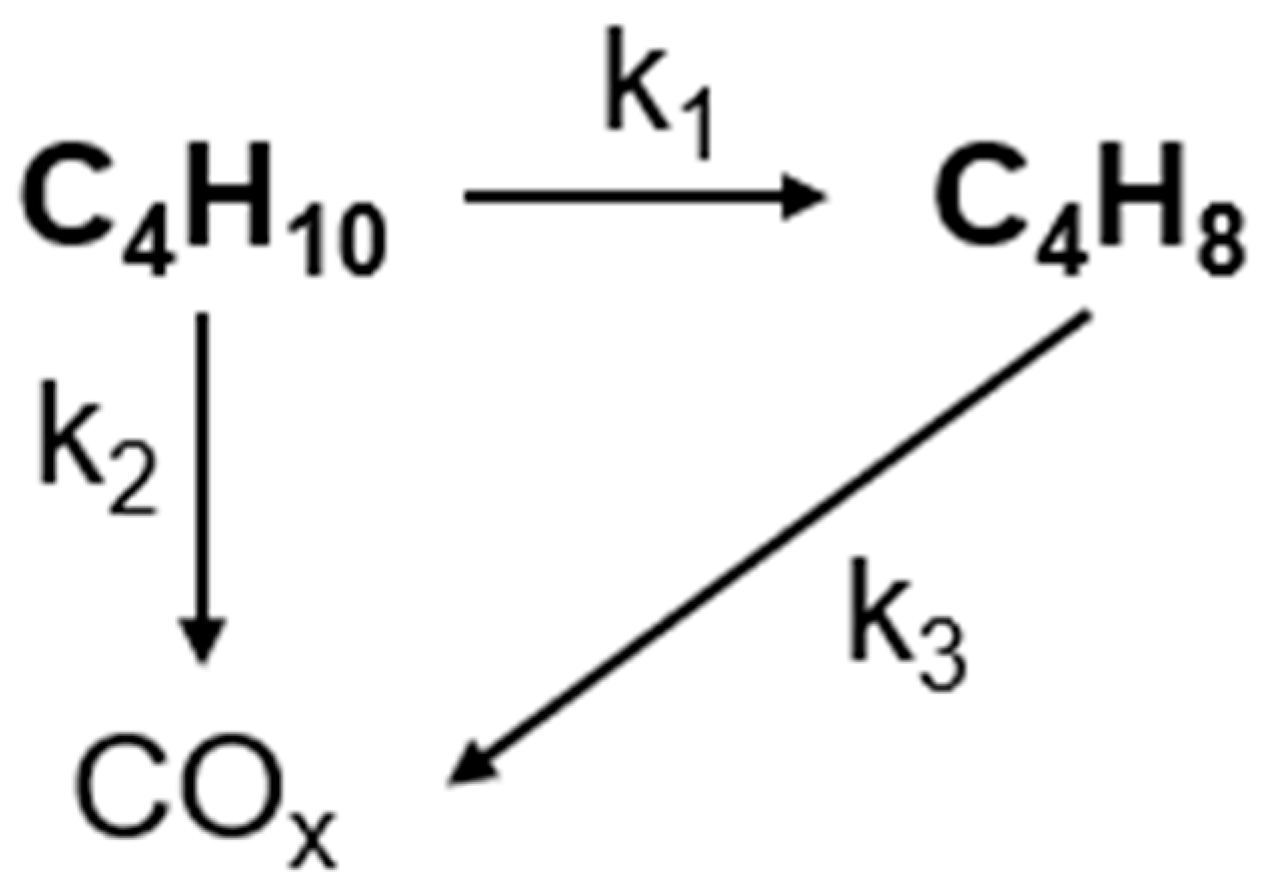
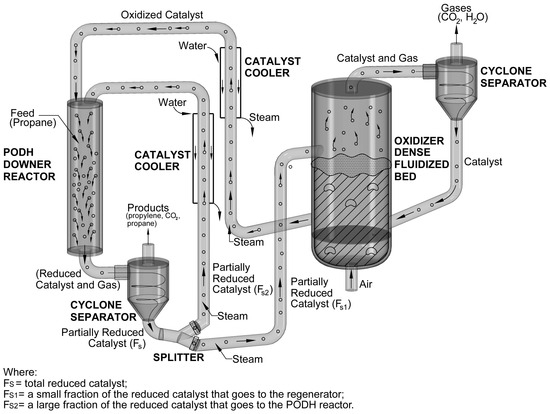
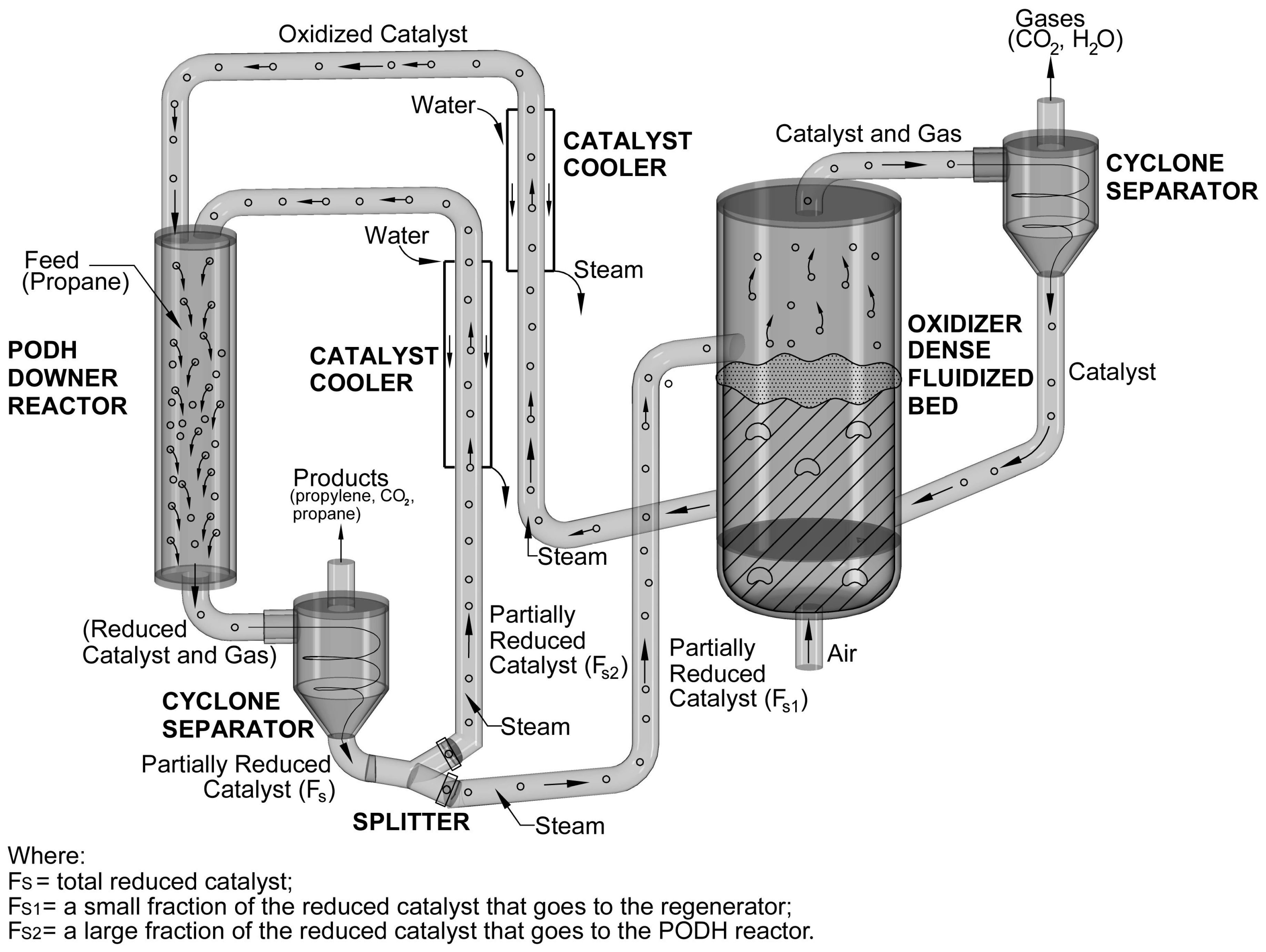

Disclaimer/Publisher’s Note: The statements, opinions and data contained in all publications are solely those of the individual author(s) and contributor(s) and not of MDPI and/or the editor(s). MDPI and/or the editor(s) disclaim responsibility for any injury to people or property resulting from any ideas, methods, instructions or products referred to in the content. |
© 2026 by the authors. Licensee MDPI, Basel, Switzerland. This article is an open access article distributed under the terms and conditions of the Creative Commons Attribution (CC BY) license.