


Abstract
Iron-based Fischer–Tropsch synthesis (Fe-FTS) catalysts are central to coal-to-liquid (CTL) processes but suffer from rapid and complex deactivation under industrial conditions. This review critically examines the key deactivation mechanisms, including carbon/wax deposition, hydrothermal sintering, chemical poisoning (S, Cl, As), and mechanical attrition, and evaluates modern regeneration strategies. These strategies include supercritical fluid extraction for wax removal, controlled oxidative decoking, reductive reconstruction of active iron carbides (χ-Fe5C2), chemical de-poisoning, and structural upcycling. We also discuss emerging techniques such as non-thermal plasma and supercritical fluid-assisted reactivation. Finally, we highlight challenges in irreversible phase transformation, in -situ regeneration engineering, and economic feasibility, and outline future directions toward regeneration-friendly catalyst design and advanced syngas purification for a circular CTL economy.
1. Introduction
The global energy architecture is currently navigating a complex transition defined by the dual imperatives of mitigating climate change and ensuring national energy sovereignty. While the shift toward renewable energy sources is accelerating, the inherent energy density requirements of heavy industries, long-haul aviation, and chemical manufacturing ensure that liquid hydrocarbons will remain indispensable for the foreseeable future [1]. For nations including China, South Africa, and parts of the Indo-Pacific, the coal-to-liquid (CTL) technology represents far more than an industrial process due to their resource distribution [2]. It is a strategic buffer against volatile global oil markets and a cornerstone of chemical feedstock self-sufficiency. The Fischer–Tropsch Synthesis (FTS), as the thermochemical heart of the CTL chain, facilitates the catalytic conversion of coal-derived syngas (CO + H2) into high-value fuels and olefins [3]. In the last five years, the operational focus of mega-scale facilities, such as the 4-million-ton-per-year CTL plant in Ningxia, has expanded beyond volume production to include integration with Green Hydrogen and Carbon Capture, Utilization, and Storage (CCUS) technologies, ensuring the continued relevance of coal-based synthesis in a decarbonizing world [4].
The economic and environmental viability of the CTL industry is inherently tethered to the lifecycle performance of the catalyst, particularly the iron-based systems (Fe-FTS) that dominate the sector due to their ability to process hydrogen-lean syngas through intrinsic Water-Gas Shift (WGS) activity, such as commercialized SFT418 and CNFT-1 [5,6]. The support material is another critical factor determining the performance of industrial Fe-FTS catalysts. Common supports include SiO2 [7], Al2O3 [8], and carbon-based materials [9]. Through metal–support interactions (MSIs), the support affects the dispersion, reducibility, and carburization of iron species, as well as the sintering resistance and product selectivity. Unlike the relatively stable metallic cobalt catalysts [10] used in gas-to-liquid (GTL) processes, iron catalysts are notoriously dynamic and susceptible to rapid deactivation. Industrial Fe-FTS catalysts function as dynamic chemical entities that undergo a continuous and often non-linear evolution from oxide precursors to various iron carbides (χ-Fe5C2, Fe2C, Fe3C) [6,11]. Related studies have revealed that this phase flexibility is a double-edged sword. While it enables functional versatility, it also renders the catalyst vulnerable to structural collapse, sintering, and re-oxidation under the harsh hydrothermal conditions of industrial reactors [12]. The resulting frequent catalyst replacement cycles introduce significant operational costs and generate massive quantities of spent catalysts, which are increasingly classified as hazardous industrial waste, thereby necessitating a shift from consumption toward a cyclic catalyst economy.
The deactivation of iron-based catalysts in CTL applications is a multi-factorial phenomenon that extends beyond simple active site loss to include complex chemical poisoning and mechanical attrition. Coal-derived syngas, even after sophisticated purification, contains refractory impurities such as sulfur, chlorine, and trace nitrogen species [13] that induce catastrophic poisoning via the shrinking-core mechanism or electronic modification of the iron surface [14]. Simultaneously, the high-temperature and high-pressure environment promotes the formation of deleterious carbonaceous species, ranging from amorphous coke to graphitic encapsulations that physically isolate active sites. In slurry-bed reactors, which are the preferred choice for modern CTL plants, the challenge is further compounded by wax-drowning, which is the accumulation of heavy C30+ hydrocarbons [15]. This mechanical degradation, or attrition, not only reduces the effective particle size but also leads to downstream fouling and pressure drop issues.
Despite the accumulation of vast amounts of experimental data on FTS deactivation over the past decade, there remains a conspicuous lack of a comprehensive synthesis that bridges the gap between atomic-scale deactivation mechanisms and industrial-scale regeneration protocols. The existing literature often treats catalyst deactivation as an irreversible terminal state, whereas modern industrial requirements demand sophisticated restoration strategies to extend catalyst lifespan and minimize the environmental footprint. This critical review addresses this gap by synthesizing the most related and recent breakthroughs in in situ characterization, supercritical fluid extraction for wax removal, and plasma-assisted oxidative regeneration. By evaluating the thermodynamic and kinetic hurdles of restoring deactivated iron phases, this work provides a systematic framework for understanding the catalyst lifecycle. The ultimate goal is to provide a roadmap for the transition toward predictive catalyst management, integrating real-time deactivation monitoring with adaptive regeneration scheduling to enhance the sustainability of the CTL industry.
2. Deactivation Mechanisms of Iron-Based Catalysts in Coal-Based FTS
The industrial operation of iron-based F-T synthesis within the CTL framework represents one of the most hostile environments for heterogeneous catalysis. The deactivation of these catalysts is not a linear decay of surface area but a multidimensional collapse of the chemical, structural, and mechanical integrity of the catalyst system [16,17]. Over the last decade, the application of operando spectroscopy and multi-scale modeling has redefined the understanding of this process, revealing that deactivation is driven by a synergistic interplay between the volatile nature of iron carbides and the refractory impurities intrinsic to coal-derived syngas. This chapter dissects these mechanisms by categorizing them into four fundamental domains: carbon/wax deposition, sintering, chemical poisoning, and mechanical attrition.
2.1. Carbon/Wax Deposition Derived Deactivation
Carbon-induced deactivation in Fe-FTS is far more complex than simple site blockage [18]. It involves a hierarchical evolution of carbon species: from atomic carbidic carbon and amorphous surface coke to highly ordered graphitic filaments or whiskers. At the high temperatures of HTFT (320–350 °C), the Boudouard reaction is the primary driver of coking [19,20]. Other related studies have revealed that these carbon whiskers originate from iron nanoparticles that have detached from the support. The carbon grows from the base of the particle, exerting enough mechanical pressure to rupture the pores of the silica support, leading to a catastrophic loss of surface area (Figure 1a,b) [21,22]. In the application of a bubble fluid-bed reactor, the severe carbon deposition would worsen the continuous operating [23].
Figure 1.
(a) SEM images of carbon deposited Fe-based catalysts [21] (reprinted with permission from Higashi, R. et al., Copyright 2025 ISIJ International); (b) conceptual model of fouling, crystallite encapsulation and pore plugging of a supported metal catalyst due to carbon deposition and crystallite growth due to sintering by atomic migration or crystallite migration [22] (reprinted with permission from Bartholomew, C.H., Copyright 2001 Elsevier); (c) hematite precursor reduction and sintering images under environmental TEM [24] (reprinted with permission from Janbroers, S. et al., Copyright 2011 Elsevier).
In slurry-bed reactors operating at lower temperatures, the dominant carbon-related deactivation is wax-drowning or pore-filling. In this regime, as summarized in Table 1, the accumulation of C40+ hydrocarbons within the mesopores alters the diffusion kinetics of the reactants [25]. Because CO has a significantly lower solubility and diffusion coefficient in FTS wax compared to H2, the effective H2/CO ratio at the active site surface becomes much higher than that in the bulk gas phase [26,27]. This localized hydrogen-rich environment promotes the termination of chain growth, shifting the selectivity toward methane and light gases. This wax accumulation was reported to account for up to 40% of the observed activity loss in the first 500 h of operation for precipitated iron catalysts [28].
Table 1.
The summary of deactivation of Fe-based FTS catalysts.
2.2. Sintering
Sintering, or the coalescence of active iron particles, is traditionally viewed as a thermal ripening process. However, in the presence of CO, iron catalysts exhibit anomalous mobility (Figure 1c) [24]. Supported by in situ TEM, researchers proposed the liquid-like mobility model, where iron atoms form transient, highly mobile sub-carbonyl species (Fe(CO)x) that migrate across the support surface even at temperatures as low as 240 °C. This mobility is enhanced by the presence of H2O, which hydroxylates the SiO2 or Al2O3 support, reducing the anchoring energy between the iron carbide and the support surface [22].
The role of promoters in this context is dualistic. While structural promoters like SiO2 are intended to act as physical barriers (e.g., SFT418 from China Shenhua Coal-to-Oil and Chemical Co., Ltd., Ningxia, China), the harsh hydrothermal environment of a CTL reactor often leads to the formation of iron silicates (Fe2SiO4) at the metal–support interface [29,30]. These silicates are catalytically inactive and represent an irreversible loss of iron. Moreover, as the iron crystallites grow from the optimal 10–20 nm range to over 50 nm, the proportion of low-coordination edge and corner sites drops exponentially, which are responsible for the dissociation of CO [31]. Bartholomew et al. proposed a kinetic model and suggested that the deactivation rate due to sintering follows a second-order power-law expression [32], but with an activation energy that decreases as the sulfur concentration in the feed increases, indicating a dangerous synergy between sintering and poisoning [33,34].
2.3. Chemical Poisoning
Coal-derived syngas presents a uniquely complex and challenging impurity profile compared to natural gas-derived feeds. Beyond the well-recognized sulfur species (H2S and COS), the gas stream also contains chlorine (primarily HCl) and trace but highly detrimental compounds such as arsenic, phosphorus, and nitrogen-containing species [35,36]. These impurities, even at ppm levels, can rapidly accumulate on the catalyst surface, leading to irreversible deactivation.
Sulfur poisoning is the most severe and pervasive deactivation mechanism in iron-based HTFT catalysts. Unlike cobalt-based catalysts, where sulfur poisoning is largely a surface phenomenon that blocks active sites, iron exhibits a fundamentally different behavior due to its ability to form bulk iron sulfides (Fe1−xS) [34,37]. This means that H2S does not merely adsorb on the surface but can penetrate the iron lattice, causing a permanent, structurally disruptive phase transformation (Figure 2a) [38]. As sulfur migrates into the bulk, it consumes the active iron phase, converting it into catalytically inactive iron sulfide phases that cannot be easily regenerated under typical process conditions.
Figure 2.
(a) Quasi in situ XPS spectra of precipitated iron oxide after the sulfiding and the subsequent reduction process [38] (reprinted with permission from Hellgardt, K. et al., Copyright 1999 Elsevier); (b) CO conversion with various Cl content on catalysts and TEM image with element mapping of Cl1 catalyst [39] (reprinted with permission from Li, W. et al., Copyright 1999 MDPI); (c) the particle size distribution of 100:5:4.2:11 Fe/Cu/K/(P)SiO2 catalyst before and after F−T synthesis [40] (reprinted with permission from Bukur, D.B. et al., Copyright 2015 American Chemical Society).
Furthermore, the interaction between sulfur and the potassium promoter, which is a critical component for enhancing chain-growth probability and olefin selectivity, is particularly detrimental. Recent work by Jiang et al. has demonstrated that sulfur atoms preferentially target potassium-promoted sites, neutralizing the electronic and structural benefits provided by the promoter before the iron active sites themselves are fully poisoned [41]. This preferential attack on promoters means that the catalyst loses its selectivity advantages early in its lifetime, accelerating the shift toward undesirable light gas products even while overall conversion remains moderately high.
In addition to sulfur, other trace poisons such as chlorine (HCl) and arsenic species further compound the deactivation challenge. Chlorine is known to promote iron volatilization and accelerate sintering, while arsenic forms stable iron arsenides that are catalytically inert (Figure 2b) [39]. The cumulative effect of these refractory poisons underscores the critical importance of rigorous syngas purification upstream of the reactor, as the economic viability of a CTL plant is heavily dependent on the lifetime of its expensive iron catalyst inventory.
2.4. Mechanical Degradation and Attrition
Beyond chemical deactivation, the physical integrity of the catalyst is a major operational determinant in commercial CTL processes, particularly in slurry-bed reactor configurations. Unlike fixed-bed reactors, where the catalyst remains stationary, slurry-phase reactors expose catalyst particles to a highly dynamic and mechanically demanding environment. The combination of high-velocity gas bubbles rising through the slurry, mechanical agitation from stirrers or liquid recirculation, and the internal stresses generated by phase transitions (e.g., from iron oxide to iron carbide) creates a continuous state of mechanical stress on the catalyst particles.
Under these conditions, catalyst particles undergo attrition, a process of progressive fragmentation. Initially robust particles begin to fracture, generating a population of sub-micron fines (Figure 2c) [40]. This mechanical degradation is not merely a physical change, it carries profound catalytic and operational consequences. From a catalytic perspective, the resulting fines exhibit an altered surface-to-volume ratio that often does not correspond to optimal active site geometry. While smaller particles may initially offer higher external surface area, they are also more susceptible to over-oxidation or re-carburization cycles, and their reduced size can alter the intrinsic activity and selectivity relative to the designed particle size distribution. Operationally, the generation of fines poses several severe challenges: (i) Filter plugging and downstream fouling: The fine particulates are difficult to separate from the liquid product stream. They accumulate in downstream filters, leading to pressure drop increases, frequent filter replacements, and unplanned shutdowns [42]. (ii) Slurry rheology and viscosity increase: A high concentration of sub-micron fines significantly increases the apparent viscosity of the slurry. This alters the hydrodynamics within the reactor, reducing gas holdup and compromising the uniformity of gas–liquid–solid contact [43]. (iii) Heat transfer impairment: The increased slurry viscosity and the potential for localized solids sedimentation reduce the heat transfer coefficient between the slurry and the cooling coils. Given the highly exothermic nature of Fischer–Tropsch synthesis, compromised heat removal creates risks of hot spot formation, which can accelerate sintering and further exacerbate deactivation.
The economic significance of mechanical degradation cannot be overstated. This loss must be compensated by fresh catalyst makeup, adding directly to the operating expenditure. Consequently, the physical robustness of the catalyst, including its crush strength, attrition resistance, and resistance to fracture from phase transformation stresses, is as critical to commercial success as its intrinsic chemical activity.
The interplay between chemical and physical deactivation creates the fundamental economic boundaries of the CTL industry. A catalyst may possess excellent initial activity and selectivity, but if it rapidly fragments under slurry-phase conditions or succumbs to sulfur poisoning within weeks, the overall process economics become unsustainable. As highlighted by recent analyses, the optimization of CTL catalysts must therefore simultaneously address chemical resistance to poisons, structural stability against sintering, and mechanical integrity under dynamic operating conditions [18].
3. Regeneration Strategies for Deactivated Iron Catalysts
The regeneration of iron-based Fischer–Tropsch catalysts represents a critical frontier in enhancing the economic and environmental sustainability of CTL operations. Unlike cobalt catalysts, which can often be restored through simple hydrogen stripping or oxidation-reduction cycles [44], the multicomponent nature of iron catalysts, comprising various carbides, oxides, and promoters, demands a sophisticated, multi-stage restoration protocol [45]. Recent advancements in supercritical fluid science [46], plasma chemistry [47], and operando spectroscopy have provided new insights into how the complex deactivation products (heavy wax, graphitic coke, and oxidized phases) can be systematically removed to restore the catalytic activity and selectivity to near-fresh levels. This chapter evaluates the hierarchy of regeneration techniques, focusing on the fundamental mechanisms of wax extraction, controlled coke combustion, and the re-establishment of the active carbide–promoter interface. The included regeneration strategies are summrized in Table 2 and discussed in detail below.
Table 2.
Regeneration strategies for deactivated Fe-based FTS catalysts.
3.1. Physicochemical Foundations of Wax Removal and Pore Restoration
The initial stage of Fe-FTS catalyst regeneration is the exhaustive extraction of heavy hydrocarbons, commonly referred to as wax (CnH2n+2, n > 30). In the context of industrial slurry-bed reactors, the catalyst particles are continuously suspended in a liquid wax medium. Over extended operational cycles, the internal pore volume becomes completely occluded by these high-molecular-weight paraffins. This occlusion is not merely a surface coating but a dense, intra-crystalline saturation that creates a diffusion barrier. According to the Wilke–Chang estimation for diffusivity in liquids, the diffusion coefficient of CO and H2 in FTS wax is approximately three orders of magnitude lower than in the gas phase [48]. Consequently, as the pores fill with wax, the catalyst transitions from a reaction-controlled regime to a severe mass-transfer-limited regime, characterized by a sharp decline in the observed reaction rate.
The removal of this wax is a prerequisite for any subsequent thermal treatment. If a wax-laden catalyst is directly subjected to oxidative decoking, the entrapped paraffins undergo uncontrolled thermal cracking and partial oxidation, leading to a thermal surge within the catalyst pores. This localized exothermic event can raise the internal temperature of a single catalyst pellet by more than 150 °C above the ambient gas temperature, triggering the irreversible sintering of iron carbides into large, inactive magnetite clusters [49]. Therefore, pore restoration must be achieved through highly selective, low-temperature extraction methods that preserve the delicate morphology of the iron active phases.
3.1.1. Traditional Solvent Extraction
Traditional regeneration protocols rely on liquid-phase solvent extraction, typically employing aromatic hydrocarbons like toluene or xylene. The efficacy of this process is governed by the thermodynamic affinity between the solvent molecules and the long-chain paraffins. To scientifically evaluate solvent selection beyond empirical trial-and-error, Hansen Solubility Parameters (HSPs) have been integrated, which decomposes the total cohesive energy density of a substance into three components: dispersive interactions, polar interactions, and hydrogen bonding [50]. For Fischer–Tropsch wax, the solubility behavior is dominated by dispersive forces, with negligible polar or hydrogen-bonding contributions. Aromatic solvents exhibit favorable thermodynamic compatibility with paraffinic waxes due to their balanced HSP profiles [51]. However, industrial application faces a capillary entrapment challenge: in mesopores with diameters below 10 nm, the Laplace pressure required to displace entrapped wax can reach several megapascals, preventing complete solvent penetration under passive conditions. Ultrasonic-assisted extraction (UAE) addresses this limitation by utilizing cavitation-induced micro-jets and shock waves to actively drive solvent into the pore network [52,53]. This mechanical disruption overcomes capillary barriers and enhances mass transfer, leading to improved wax removal efficiency compared to conventional solvent soaking.
3.1.2. Supercritical Fluid Extraction
The most significant paradigm shift in catalyst pore restoration is the transition from liquid solvents to supercritical fluid extraction (SFE), primarily using CO2 or supercritical light alkanes (C3–C4). As summarized in Table 1, the fundamental advantage of the supercritical state is the elimination of the liquid–gas interface, which reduces the surface tension to zero. By eliminating the Laplace pressure barrier, supercritical fluids can penetrate the entire hierarchical pore structure of the iron catalyst with gas-like diffusivity while maintaining a liquid-like solvating power.
In a typical SFE regeneration cycle, the pressure and temperature are maintained above the critical point of the chosen solvent (e.g., for CO2, Pc = 7.38 MPa, Tc = 31.1 °C) [54]. The solvent must have a critical temperature near the operating temperature of the Fischer–Tropsch reactor (200–300 °C) to effectively dissolve the wax without energy-intensive temperature swings. Hydrocarbon solvents such as propane, butane, pentane, and hexane are preferred for this application due to their favorable solvating properties for long-chain paraffins under supercritical conditions. The extraction kinetics in SFE generally follow a three-stage profile: (i) a constant extraction rate period controlled by the solubility of wax in the bulk supercritical phase; (ii) a falling rate period where the process is governed by the diffusion of dissolved wax through the catalyst pore network; and (iii) an asymptotic tailing period representing the removal of strongly adsorbed or trapped wax fractions. From a microscopic perspective, the final wax fraction is the most difficult to remove, as it consists of hydrocarbons tightly associated with the catalyst surface or trapped within pore constrictions. Because supercritical fluids possess gas-like diffusivity and low surface tension, they can penetrate the catalyst pore structure more effectively than liquid solvents, enabling efficient wax removal without the capillary entrapment issues associated with conventional liquid extraction [54]. This technique has been shown to restore catalyst activity and selectivity, providing an effective approach for the regeneration of spent Fischer–Tropsch catalysts prior to subsequent reactivation steps [55].
3.2. Coke Removal by Oxidation
Following the extraction of paraffinic wax, the restoration of iron-based Fischer–Tropsch catalysts necessitates the removal of hard coke, including amorphous carbonaceous deposits and highly ordered graphitic filaments or whiskers [56]. Oxidative regeneration, which involves the controlled combustion of these carbon species in an oxygen-containing atmosphere, is an effective method for reclaiming the active surface area [57]. For iron catalysts, this process requires careful control of oxidation parameters, as the iron active phases themselves are susceptible to oxidation, and the exothermic combustion of carbon can generate localized heat [58]. Achieving complete decoking without inducing irreversible sintering or the formation of inactive iron silicates necessitates precise understanding and control of the regeneration conditions.
3.2.1. Carbon Removal by Combustion
The primary challenge in the oxidative regeneration of spent iron-based Fischer–Tropsch catalysts is the management of the exothermic heat released during carbon combustion. The regeneration process involves the controlled combustion of carbonaceous deposits in an oxygen-containing atmosphere, which is an effective method for reclaiming catalyst activity (Figure 3a) [59]. However, this process requires careful temperature control, as the exothermic nature of carbon oxidation can generate localized hot spots within the catalyst bed [60].
Figure 3.
(a) CO consumption rate before, during, and after regeneration of Fe-FTS catalysts [59] (reprinted with permission from Gorimbo, J. et al., Copyright 2017 American Chemical Society); (b) in situ XRD patterns of unpromoted, promoted iron oxide samples [61] (reprinted with permission from Coombes, M. et al., Copyright 2021 Elsevier).
The presence of potassium promoters further influences the oxidation behavior of iron-based catalysts. Recent studies have shown that potassium incorporation affects the reduction and carburization kinetics of iron phases, with higher potassium loadings leading to accelerated carburization rates [62]. This altered redox behavior can impact the temperature gradients during regeneration.
In situ characterization techniques, including infrared thermography and operando X-ray absorption spectroscopy, have been successfully employed to monitor temperature distributions and structural changes in catalysts during exothermic reactions [60]. Such approaches reveal that localized temperature excursions can occur, with catalyst surface temperatures substantially exceeding the measured bulk bed temperature during exothermic processes. These thermal gradients can potentially accelerate undesirable structural transformations, including particle sintering, which represents a significant deactivation mechanism in iron-based Fischer–Tropsch catalysts [56].
3.2.2. Kinetic Analysis of Various Coke Morphologies
Detailed kinetic studies using thermogravimetric analysis have revealed that the oxidation of carbonaceous species on iron catalysts follows a multi-stage profile. The first stage corresponds to the removal of reactive amorphous carbon, which can be distinguished from graphitic carbon and carbidic carbon using electron energy loss spectroscopy (EELS). The second stage involves the oxidation of more ordered graphitic carbon species, which exhibit different oxidation characteristics due to their stable sp2-hybridized structure [63]. The regeneration temperature window is thus defined as the range where carbon deposits can be oxidized while preserving the iron phase structure.
Controlled oxidation protocols utilize the kinetic divergence between different carbon species. By maintaining dilute oxygen concentrations during the initial regeneration phase, amorphous carbon is removed gradually. Subsequently, the temperature is increased at a controlled rate to facilitate the oxidation of more refractory carbon species while ensuring that the heat of reaction is dissipated uniformly, preventing structural degradation of the catalyst [64].
In situ X-ray diffraction studies have confirmed that this controlled approach helps prevent the formation of fayalite (Fe2SiO4), a deactivation product that forms when iron oxides react with silica supports under high-temperature conditions. The iron–silica interaction during catalyst processing has been shown to produce an amorphous Fe-O-Si matrix, which, given sufficient thermal energy, transforms into crystalline fayalite (Figure 3b) [61].
3.3. Reductive Reconstruction of Active Phases from Oxidized Catalysts
Following the exhaustive removal of carbonaceous deposits and waxes, the catalyst exists in a highly oxidized state, predominantly consisting of α-Fe2O3 (hematite) or Fe3O4 (magnetite). The final and most critical phase of regeneration is the conversion of these inactive iron oxides back into catalytically active Hägg carbide (χ-Fe5C2) and other iron carbide phases [65,66]. Extensive studies have confirmed that χ-Fe5C2 is the active phase for Fischer–Tropsch synthesis, playing an essential role in CO hydrogenation and C–C chain growth. This conversion represents a delicate structural reorganization that must accommodate the inherited strain and promoter distribution from the catalyst’s previous lifecycle [6]. The structural complexity and dynamic evolution of iron-based catalysts under reaction conditions impose significant challenges for understanding and controlling the phase transformation process. The choice of the reducing environment, whether pure hydrogen, carbon monoxide-rich syngas, or emerging non-thermal energetic fields, critically dictates the final dispersion, phase purity, and long-term stability of the regenerated catalyst.
3.3.1. Hydrogen-Induced Reduction
The use of pure H2 remains the most traditional approach for cleansing the iron surface and restoring the metallic iron state. The thermodynamic pathway of H2 reduction typically follows the sequence α-Fe2O3 → Fe3O4 → α-Fe at temperatures below 570 °C; the intermediate FeO phase only appears at higher temperatures (Figure 4a) [67]. In the context of regenerated catalysts, this pathway is fraught with structural risks. Because the iron crystallites have already undergone thermal stress during the preceding oxidation stage, their anchoring to the support is often weakened [68]. As the reduction progresses toward metallic iron, the particles exhibit enhanced surface mobility at elevated temperatures. This mobility frequently leads to Ostwald ripening, where smaller Fe0 clusters coalesce into larger, inactive grains [12]. The Ostwald-ripening-like growth mechanism in iron-based catalysts involves the cyclic formation–decomposition of iron carbonyl intermediates that transport iron species from small particles to large ones.
Figure 4.
(a) In situ XRD patterns and in situ TEM images of Fe2O3 reduction [67] (reprinted with permission from Nielsen, M.R. et al., Copyright 2020 Elsevier); (b) dependence of the magnetization on temperature during the temperature ramp and exposure of the flow of CO and H2/CO = 1 [69] (reprinted with permission from Chernavskii, P. et al., Copyright 2016 Wiley).
Furthermore, metallic iron is not the active phase for FTS; it must subsequently undergo a carburization induction period when syngas is introduced. Studies have shown that catalysts reduced with H2 exhibit a loose structure and poor mechanical strength, and while they typically have higher initial activity, they suffer from higher deactivation rates compared to catalysts activated via direct carburization methods [70]. The phase transformation during activation influences catalyst performance, with H2-reduced catalysts producing more methane and gaseous hydrocarbons than CO- or syngas-pretreated catalysts [71]. Consequently, while H2 regeneration provides a clean starting point, it often results in a lower density of active sites and reduced mechanical integrity compared to direct carburization methods.
3.3.2. Syngas-Driven Activation
To circumvent the sintering risks associated with metallic iron, modern industrial protocols favor direct syngas-driven activation. By utilizing a H2/CO mixture, the catalyst can be transformed from magnetite (Fe3O4) directly into iron carbides, bypassing the Fe0 state entirely (Figure 4b) [69]. The catalyst activation proceeds in two steps: reduction of hematite into magnetite, followed by magnetite carbidization into Hägg carbide (χ-Fe5C2). The transformation of magnetite to carbide causes the crystals to break down into smaller crystallites of the carbide phase, a phenomenon that is essential for obtaining Fischer–Tropsch synthesis activity [72]. This in situ carbide formation preserves the high surface area of the oxide precursor.
Moreover, syngas activation facilitates the redispersion of alkali promoters such as potassium. Density functional theory (DFT) studies have demonstrated that the K2O promoter can increase CO adsorption energy while modifying the dissociation capabilities of carburization gases on iron catalyst surfaces [73]. On the reactive χ-Fe5C2 surface, K2O strengthens the adsorption of CO, H, C, and CH intermediates, resulting in faster C–O bond dissociation and enhanced chain-growth probability while decreasing CH4 selectivity [74]. The K2O promoter facilitates electron transfer to Fe surface atoms, leading to a lower overall barrier for CO dissociation and higher barriers for hydrogenation of surface intermediates. Studies have also shown that the interaction between potassium and structural promoters significantly influences the formation of iron carbides [75].
3.3.3. Advanced and Non-Thermal Regeneration Technologies
Beyond the dualism of H2 and syngas, there are other emerging approaches for catalyst reactivation, including non-thermal plasma (NTP) and supercritical fluid-assisted (SFA) methods. NTP-assisted regeneration utilizes high-energy electrons and reactive radicals to drive reduction processes at significantly lower temperatures compared to conventional thermal methods [47,76]. Studies have demonstrated that atmospheric pressure plasma treatment can lower the reduction temperature of iron oxides while avoiding particle sintering [77]. By operating under conditions that minimize thermal stress, plasma-induced reactivation offers a potential route to mitigate the sintering issues commonly associated with high-temperature regeneration.
Parallel to plasma, supercritical fluid-assisted reactivation has been explored as an alternative approach. The unique properties of supercritical fluids, including gas-like diffusivity, liquid-like density, and zero surface tension, enable effective transport of reactants into the catalyst pore structure [54,78]. This technique utilizes the superior mass-transfer characteristics of the supercritical phase to facilitate uniform treatment across the catalyst particle, potentially preventing the non-uniform deactivation profiles often observed in industrial-scale reactors. Experimental studies have demonstrated that supercritical media can restore some of the lost activity and selectivity of Fischer–Tropsch catalysts during washing stages [79].
While these technologies are currently at laboratory or pilot scale, their ability to operate under milder conditions than traditional thermal regeneration makes them promising components for future catalyst management strategies.
3.4. Thermal Redispersion and Mitigation of Grain Sintering
Thermal sintering, characterized by the migration and coalescence of iron nanoparticles, results in a significant reduction in the active carbidic surface area [80]. During Fischer–Tropsch synthesis, average iron particle diameters have been reported to increase by a factor of 4 over 600 h on stream, with some particles exceeding 150 nm [81]. To counteract this agglomeration, regeneration strategies employ redispersion mechanisms, most notably the oxidation-reduction (OR) cycle. Controlled oxidation causes structural expansion and fragmentation of sintered particles, and subsequent reduction produces a new generation of smaller, active particles, with studies showing approximately 20% smaller crystallites after the second reduction step compared to the initial reduction [82].
To prevent re-sintering of regenerated particles, promoter reinforcement is integrated into the regeneration protocol. Structural promoters such as SiO2 act as physical spacers that increase the activation energy for surface diffusion [83]. Silica-supported iron catalysts exhibit initial activity 20–40% higher than precipitated (unsupported) iron catalysts, whereas Al2O3 supports show approximately 50% lower activity, demonstrating the critical role of promoter–support interactions in stabilizing dispersed iron phases [8]. The redistribution of potassium further stabilizes the catalyst through electronic effects that influence selectivity and phase stability [80,84]. Together, these redispersion and promoter reinforcement strategies provide a framework for restoring and maintaining catalyst activity over multiple operational cycles.
3.5. Chemical De-Poisoning and Recovery of Contaminated Sites
Coal-derived impurities, primarily sulfur (H2S, COS) and chlorine (HCl), form stable chemical bonds with iron that are thermodynamically resistant to simple thermal treatment. Unlike thermal regeneration methods that rely on high-temperature decomposition, which often exacerbates sintering or promotes undesirable phase transformations, the removal of these strongly bound poisons requires dedicated chemical leaching strategies that selectively break the poison–metal bonds without compromising the catalyst’s structural integrity.
The interaction between sulfur and iron catalysts has been extensively studied, with foundational work establishing that the extent of sulfur penetration depends critically on the exposure conditions. At low H2S concentrations (<2 ppm), sulfur forms monolayer surface sulfides on iron; at higher concentrations or lower temperatures, bulk iron sulfides (FeSx) develop, representing a more severe and irreversible form of poisoning (Figure 5a) [59,85]. This mechanistic understanding has informed the development of regeneration protocols that target both surface and bulk sulfur species. The most established approach for sulfur removal is oxidative alkaline leaching. This two-step process exploits the differential solubility of iron sulfides versus their oxidized counterparts. During controlled oxidation, FeSx can be converted to more soluble oxidized sulfur species. A well-established approach for sulfur removal involves roasting the spent iron-based catalyst in the presence of alkali carbonates (such as sodium or potassium carbonate) at temperatures not exceeding 400 °C, which converts sulfur into water-soluble salts that can subsequently be removed by water leaching [86]. This method has been demonstrated for the regeneration of iron catalysts contaminated with carbon and sulfur, yielding a catalyst substantially free of sulfur after the leaching step. The effectiveness of alkaline-based sulfur removal has been further supported by studies on iron-containing catalysts for gas desulfurization. Research on Fe-KOH/LSB catalysts for low-temperature catalytic hydrolysis of carbon disulfide showed that water washing could remove sulfates from the catalyst surface, and that the regeneration process involving alkaline treatment helped recover catalytic activity [87]. More recent studies have further elucidated the sulfur–iron interaction under reaction conditions. Research on α-Al2O3-supported iron catalysts with varying sulfur loadings (S/Fe = 0.001 to 0.05) revealed that trace amounts of sulfur can actually promote the reduction of FeO to metallic iron during hydrogen reduction. However, at higher sulfur concentrations, CO dissociation and iron carbide formation are significantly inhibited, and product selectivity shifts from C5+ hydrocarbons toward C2–C4 light gases [85]. This suggests that sulfur removal strategies must be sufficiently aggressive to reduce sulfur content below the threshold where these adverse effects manifest.
Figure 5.
(a) The effect of incorporation of sulfur into a Fe/α-Al2O3 catalyst on the CO conversion [85] (reprinted with permission from Xu, J.-D. et al., Copyright 2016 Elsevier); (b) effects of hydrohalic acids in syngas on a precipitated Fe-based catalyst [88] (reprinted with permission from Ma, W. et al., Copyright 2015 American Chemical Society).
Chlorine represents a particularly challenging poison for iron-based catalysts due to its tendency to form stable iron chlorides (Figure 5b) [88]. Early studies on iron–copper Fischer–Tropsch catalysts demonstrated that chloride ions act as a permanent poison, with catalysts prepared from solutions containing up to 0.92% Cl exhibiting significantly reduced activity, confirming that even trace chlorine contamination can severely compromise catalytic performance [89]. XANES spectroscopy investigations have further elucidated the poisoning mechanism, revealing that chlorine is present on the catalyst surface with a structure similar to MCl compounds following HCl exposure. At the Fe K-edge, the white line was observed to be slightly increased relative to the clean catalyst, indicating that Cl adsorption intercepts electron density from the iron carbide active phase, resulting in less back-donation and thereby hindering the scission of CO molecules (Figure 5b) [90]. To address chlorine contamination, several regeneration approaches have been developed. For Fe-ZSM-5 catalysts used in Fischer–Tropsch synthesis, oxidative regeneration using a mixture of O2/N2 or air at 300–500 °C for 8 h under atmospheric pressure, followed by reduction in H2/N2 mixture and activation at 270 °C, has been demonstrated to restore catalyst activity and selectivity [64]. Alternative methods employ alkaline solutions or organic solvents to wash the catalyst, effectively removing copper chlorides and polymerization constituents from the catalyst surface. These approaches have proven effective for removing chloride contaminants while preserving catalyst structural integrity, providing viable pathways for the regeneration of chlorine-poisoned iron catalysts.
Arsenic, lead, and other heavy metal poisons represent a distinct class of contaminants that act as permanent site-blockers even at trace concentrations. These elements form stable compounds with iron that are resistant to conventional oxidation or hydrothermal treatment, necessitating more specialized removal strategies. Hydrometallurgical approaches have been demonstrated for the recovery of iron values from spent catalysts. Contacting wax-coated spent iron-based low-temperature Fischer–Tropsch catalysts with concentrated nitric acid at elevated temperatures can recover up to 75% of the iron into metal nitrate solution [91]. However, wax separation during dissolution presents challenges, leading to investigations of pretreatment methods. Comparative studies have shown that wax removal by solvent extraction using C9–C11 paraffin followed by low-temperature treatment (<500 °C) yields greater than 80% metal recovery, and the resulting metal nitrate solutions can be used to prepare fresh catalysts with activity comparable to standard commercial formulations [91].
Collectively, these chemical de-poisoning strategies address the full spectrum of coal-derived contaminants encountered in iron-based Fischer–Tropsch catalysis. Oxidative alkaline leaching provides an effective route for sulfur removal, capitalizing on the differential solubility of sulfides versus sulfates. Hydrothermal treatment with acid solutions offers a complementary approach for chlorine remediation. For the most recalcitrant poisons, including arsenic, lead, and other heavy metals, selective chelation provides the necessary selectivity to remove contaminants while preserving the catalyst’s active components. The integration of these methods with advanced separation techniques such as supercritical fluid extraction enables comprehensive catalyst recovery, supporting the long-term operational viability of coal-to-liquid facilities.
3.6. Structural Upcycling and Management of Mechanical Degradation
Mechanical degradation, including attrition in slurry-bed reactors, often renders a catalyst physically unusable even if its chemical activity can be restored. In slurry bubble column reactors, iron-based Fischer–Tropsch catalysts undergo severe attrition due to vigorous particle movement, inter-particle collisions, and phase transformations during activation and reaction, generating sub-micron fines that can clog filters and escape the reactor system [40]. Studies on spray-dried iron catalysts have shown that the formation of fines (<10 μm) is a critical issue, and the addition of silica binders significantly improves attrition resistance; catalysts with spherical particle morphology exhibit considerably higher resistance than irregularly shaped particles [40]. Instead of discarding these fines, they can be collected and subjected to structural re-granulation. This approach involves milling the spent catalyst into a fine powder, mixing it with a fresh binder (such as silica sol or alumina sol), and re-subjecting the slurry to spray-drying, followed by calcination to create a secondary-generation catalyst. A related method for recycling catalyst support material involves crushing the used catalyst support obtained by leaching catalytic components from spent catalysts, then admixing it with new catalyst support material to achieve the required particle size distribution [92].
For catalysts that have reached the end of their chemical life or are too fragmented for re-granulation, material upcycling serves as the final management strategy. Recovery processes have been developed that utilize solvent extraction to separate heavy hydrocarbons from spent iron catalysts. Using light liquid paraffin (initial boiling point 210 °C) as solvent at elevated temperatures (120–160 °C), heavy hydrocarbon recovery rates of 95–98% can be achieved, with the recovered catalyst containing less than 0.5% residual hydrocarbons. Additionally, spent catalyst can be regenerated by roasting with alkali carbonates (sodium, potassium, or calcium) at temperatures not exceeding 400 °C to convert sulfur into water-soluble salts, followed by water leaching to obtain a catalyst substantially free of carbon and sulfur [86]. Magnetic separation techniques have also been developed to selectively recover iron-based catalysts from slurry streams based on their magnetic properties, enabling efficient recycling of catalyst fines [93]. These holistic management strategies ensure that the lifecycle of the iron catalyst ends not as landfill waste, but as a valuable secondary resource for other industrial applications.
4. Challenges and Outlook
The maturation of CTL technology has positioned Fe-FTS as a cornerstone of global energy security and chemical feedstock diversification. However, as the industrial catalyst usage transitions from a continuous disposal consumption model to a circular model, several formidable barriers emerge. The transition toward sustainable catalyst management requires reconciling the microscopic physics of deactivation with the macroscopic realities of industrial economics and environmental policy.
4.1. Challenges
The persistent hurdles in Fe-FTS regeneration are not isolated to a single discipline but are interconnected across scientific, technical, and economic domains. A comprehensive understanding of these challenges is essential for advancing catalyst regeneration technologies toward industrial viability.
From a fundamental scientific perspective, the primary challenge is the irreversible chemical sinking of active iron. Over thousands of hours of operation, a thermodynamic drive forces iron atoms into stable, non-reducible crystalline lattices with the catalyst support. Studies have shown that iron catalysts lose activity due to the conversion of active phases to inactive phases, loss of active surface area from crystalline growth (sintering), and chemical poisoning [94]. The deactivation of iron catalysts at high operating temperatures is particularly problematic, as it can lead to agglomeration and sintering that permanently alter the catalyst structure. Furthermore, the stochastic nature of promoter migration remains a challenge; while promoters such as K or Cu redistribute during regeneration, controlling their atomic-scale replacement to replicate the initial state is difficult, leading to selectivity drift where the balance between CO dissociation and H–C coupling is perpetually altered [95].
Technologically, the shift from ex situ to in situ regeneration represents a significant engineering hurdle. Currently, most regeneration requires unloading the catalyst from slurry-bed reactors, which is labor-intensive, risky, and economically draining due to reactor downtime [96]. Developing an in situ protocol that can handle wax extraction, oxidative decoking, and reductive activation within large-scale reactors without damaging internal cooling coils or gas distributors is a monumental task. The removal of heat generated by the exothermic Fischer–Tropsch reaction remains the main challenge during reactor design and operation, and any regeneration protocol must operate within these thermal constraints [96]. Furthermore, the management of waste streams requires integrated on-site treatment facilities that many older CTL plants lack.
The most daunting challenge is perhaps the economic feasibility of regeneration. Iron is fundamentally a low-cost commodity compared to cobalt or noble metals. Consequently, the value-at-risk for a spent iron catalyst is low, making the economic justification for complex, multi-stage regeneration difficult. However, emerging policy frameworks are beginning to reshape this narrative. Techno-economic assessments of FTS plants have identified capital expenditure and minimum fuel selling price as critical factors influencing commercial viability [97]. Lifecycle assessment (LCA) studies have also highlighted the potential for global environmental impacts associated with FTS plants, including atmospheric and toxicological effects. Under stricter environmental regulations and carbon management policies, the cost of disposing of thousands of tons of hazardous spent catalysts may soon exceed the cost of regeneration, making cyclic FTS catalysts a regulatory necessity.
4.2. Future Perspectives
To overcome the challenges outlined above, the next decade of FTS research is moving toward pre-emptive stability and intelligent regeneration. Instead of designing catalysts solely for initial activity, future research is pivoting toward designed-for-regeneration architectures. One promising direction involves the use of highly stable, non-reactive supports that do not form irreducible spinels with iron. Carbon nanotubes (CNTs) have emerged as attractive catalyst supports due to their unique properties, including high surface area, excellent thermal conductivity, and chemical inertness. Studies have demonstrated that iron catalysts supported on CNTs exhibit enhanced catalytic activity and stability in Fischer–Tropsch synthesis, with the support structure playing a crucial role in determining the dispersion and reducibility of the iron phase [9,98]. The encapsulation of iron carbide nanoparticles within thin, porous shells also offers a strategy to prevent sintering during both reaction and regeneration cycles [99,100].
Another significant perspective involves shifting the burden from the catalyst to the feedstock. Advanced deep desulfurization using metal–organic frameworks (MOFs) can reduce syngas impurities to parts-per-billion levels, effectively minimizing poisoning as a deactivation mechanism. Research has shown that MOFs are effective materials for the desulfurization of fuels, with the ability to selectively adsorb sulfur-containing compounds [101]. The development of improved gas purification technologies is critical because iron-based Fischer–Tropsch catalysts are susceptible to sulfur poisoning even at trace concentrations; studies have determined that the sulfur limit (sensitivity) for precipitated iron catalysts is as low as 50 ppb H2S in the syngas feed [37,85]. By removing poisons before they reach the catalyst, the intrinsic lifetime of the catalyst can be substantially extended.
Beyond catalyst development, reactor innovation is equally critical for advancing industrial Fe-FTS technology. In this context, microchannel reactors have emerged as a promising alternative to conventional fixed-bed and slurry-bed designs, offering enhanced heat and mass transfer that can improve product selectivity and process intensification. With recent progress in modular reactor concepts (e.g., Velocys’ microFTL technology), microchannel reactors are expected to gain increasing attention for decentralized and small-to-medium-scale CTL applications, although their long-term industrial viability remains to be demonstrated.
The integration of artificial intelligence (AI) and machine learning (ML) into catalyst management represents the final frontier [102]. By developing digital twins of industrial reactors, operators can use real-time sensor data, including temperature profiles and product selectivity drifts, to predict exactly when the catalyst has reached the optimal regeneration point. Digital twin technology has been increasingly applied in the chemical industry to model reactor behavior, predict catalyst performance, and optimize regeneration scheduling. Instead of waiting for severe deactivation, AI-enabled systems can trigger mild, partial regeneration that maintains catalyst performance within optimal operating windows. This proactive management approach, combined with advanced automation, promises to minimize operational disruptions and maximize the recovery of the active carbide phase throughout the catalyst lifetime.
4.3. Conclusions
The quest for efficient iron-based Fischer–Tropsch catalyst regeneration is no longer just a scientific curiosity. It is a vital component of the global effort to decarbonize the chemical industry and maximize resource efficiency. While the challenges of irreversible phase change and economic parity remain, the emergence of regeneration-friendly materials, in situ processing, and AI-driven lifecycle management offers a clear roadmap forward. By viewing the spent catalyst not as a waste product but as a sophisticated pre-aged precursor, the CTL industry can finally close the loop on the Fischer–Tropsch process, ensuring its relevance in a sustainable, circular energy future.
Author Contributions
Conceptualization, Y.D.; Writing—original draft, Y.D. and M.W.; Visualization, S.S.; Writing—review and editing, S.S. and Y.Q. All authors have read and agreed to the published version of the manuscript.
Funding
This research and APC was funded by Ningxia Coal Industry Co., Ltd., grant number 20250563A.
Data Availability Statement
No new data were created or analyzed in this study. Data sharing is not applicable to this article.
Conflicts of Interest
Author Yongping Ding and Meng Wu were employed by the company Construction Headquarters for the Coal-to-Oil and Chemical Engineering Project of Ningxia Coal Industry Co., Ltd. The remaining authors declare that the research was conducted in the absence of any commercial or financial relationships that could be construed as a potential conflict of interest.
References
- Chu, S.; Majumdar, A. Opportunities and challenges for a sustainable energy future. Nature 2012, 488, 294–303. [Google Scholar] [CrossRef] [Scilit] [PubMed]
- Guo, M.; Xu, Y. Coal-to-liquids projects in China under water and carbon constraints. Energy Policy 2018, 117, 58–65. [Google Scholar]
- Rommens, K.T.; Saeys, M. Molecular views on Fischer–Tropsch synthesis. Chem. Rev. 2023, 123, 5798–5858. [Google Scholar] [CrossRef] [Scilit] [PubMed]
- Guo, Y.; Peng, L.; Tian, J.; Mauzerall, D.L. Deploying green hydrogen to decarbonize China’s coal chemical sector. Nat. Commun. 2023, 14, 8104. [Google Scholar] [CrossRef] [Scilit] [PubMed]
- Gholami, Z.; Gholami, F.; Tišler, Z.; Hubáček, J.; Tomas, M.; Bačiak, M.; Vakili, M. Production of light olefins via Fischer-Tropsch process using iron-based catalysts: A review. Catalysts 2022, 12, 174. [Google Scholar] [CrossRef] [Scilit]
- Ding, X.; Zhu, M.; Sun, B.; Yang, Z.; Han, Y.-F. An overview on dynamic phase transformation and surface reconstruction of iron catalysts for catalytic hydrogenation of COx for hydrocarbons. ACS Catal. 2024, 14, 6137–6168. [Google Scholar] [CrossRef] [Scilit]
- Chang, Q.; Li, J.; Suo, H.; Qing, M.; Wang, H.; Zhang, C.; Wen, X.; Xiang, H.; Yang, Y.; Li, Y. Unravelling the formation of Fe2SiO4 on Fischer-Tropsch Fe/SiO2 catalyst. Catal. Today 2024, 431, 114605. [Google Scholar]
- Mollashahi, E.; Akbari, M.; Sepahi, M.; Rezazadeh, E.; Mirzaei, A.A. Iron Distribution Control into Porous γ-Al2O3 Microspheres for Fischer-Tropsch Synthesis. Chem. Afr. 2025, 8, 5137–5149. [Google Scholar] [CrossRef] [Scilit]
- Hlabathe, T.; Gorimbo, J. Carbon Supported Catalysts in Fischer-Tropsch Synthesis: Structural Properties of Carbon Supports. Adv. Mater. Sci. Technol. 2022, 4, 1. [Google Scholar] [CrossRef] [Scilit]
- ten Have, I.C.; Weckhuysen, B.M. The active phase in cobalt-based Fischer-Tropsch synthesis. Chem. Catal. 2021, 1, 339–363. [Google Scholar] [CrossRef] [Scilit]
- Chang, Q.; Zhang, C.; Liu, C.; Wei, Y.; Cheruvathur, A.V.; Dugulan, A.I.; Niemantsverdriet, J.; Liu, X.; He, Y.; Qing, M. Relationship between iron carbide phases (ε-Fe2C, Fe7C3, and χ-Fe5C2) and catalytic performances of Fe/SiO2 Fischer–Tropsch catalysts. ACS Catal. 2018, 8, 3304–3316. [Google Scholar] [CrossRef] [Scilit]
- Zhuo, O.; Yang, L.; Gao, F.; Xu, B.; Wu, Q.; Fan, Y.; Zhang, Y.; Jiang, Y.; Huang, R.; Wang, X. Stabilizing the active phase of iron-based Fischer–Tropsch catalysts for lower olefins: Mechanism and strategy. Chem. Sci. 2019, 10, 6083–6090. [Google Scholar] [PubMed]
- Gupta, P.K.; Datta, S.; Saw, S.K.; Kumari, S.; Sahu, G.; Singh, R.K.; Chauhan, V.; Chavan, P.D. Syngas cleaning technologies in gasification process for downstream applications. In Asian Mining Congress 2023; Springer: Cham, Switzerland, 2023; pp. 307–316. [Google Scholar]
- Ma, W.; Jacobs, G.; Sparks, D.E.; Pendyala, V.R.R.; Hopps, S.G.; Thomas, G.A.; Hamdeh, H.H.; MacLennan, A.; Hu, Y.; Davis, B.H. Fischer–Tropsch synthesis: Effect of ammonia in syngas on the Fischer–Tropsch synthesis performance of a precipitated iron catalyst. J. Catal. 2015, 326, 149–160. [Google Scholar]
- Wang, F.; Guo, Z.; Wang, T. Analysis and processing optimization of products from medium temperature Fischer-Tropsch synthesis in industrial slurry bed reactor. J. China Coal Soc. 2020, 45, 1267–1274. [Google Scholar]
- Gorimbo, J.; Muleja, A.; Liu, X.; Hildebrandt, D. Fischer–Tropsch synthesis: Product distribution, operating conditions, iron catalyst deactivation and catalyst speciation. Int. J. Ind. Chem. 2018, 9, 317–333. [Google Scholar] [CrossRef] [Scilit]
- Eliason, S.; Bartholomew, C. Reaction and deactivation kinetics for Fischer–Tropsch synthesis on unpromoted and potassium-promoted iron catalysts. Appl. Catal. A Gen. 1999, 186, 229–243. [Google Scholar] [CrossRef] [Scilit]
- de Smit, E.; Weckhuysen, B.M. The renaissance of iron-based Fischer–Tropsch synthesis: On the multifaceted catalyst deactivation behaviour. Chem. Soc. Rev. 2008, 37, 2758–2781. [Google Scholar] [PubMed]
- Vogt, E.T.; Fu, D.; Weckhuysen, B.M. Carbon deposit analysis in catalyst deactivation, regeneration, and rejuvenation. Angew. Chem. Int. Ed. 2023, 62, e202300319. [Google Scholar] [CrossRef] [Scilit]
- Vogt, E.; Van Dillen, A.; Geus, J. Prevention of Growth of Filamentary Carbon in Supported iron and Nickel Catalysts. In Studies in Surface Science and Catalysis; Elsevier: Amsterdam, The Netherlands, 1987; Volume 34, pp. 221–233. [Google Scholar]
- Higashi, R.; Iwami, Y.; Murakami, T. Carbon Deposition Behavior Catalyzed by Porous Iron Whiskers in a CO–CO2–H2 Atmosphere. ISIJ Int. 2025, 65, 2035–2042. [Google Scholar]
- Bartholomew, C.H. Mechanisms of catalyst deactivation. Appl. Catal. A Gen. 2001, 212, 17–60. [Google Scholar] [CrossRef] [Scilit]
- Kang, S.H.; Bae, J.W.; Cheon, J.Y.; Lee, Y.J.; Ha, K.S.; Jun, K.W.; Lee, D.H.; Kim, B.W. Catalytic performance on iron-based Fischer-Tropsch catalyst in fixed-bed and bubbling fluidized-bed reactor. Appl. Catal. B-Environ. 2011, 103, 169–180. [Google Scholar]
- Janbroers, S.; Crozier, P.; Zandbergen, H.; Kooyman, P. A model study on the carburization process of iron-based Fischer–Tropsch catalysts using in situ TEM–EELS. Appl. Catal. B Environ. 2011, 102, 521–527. [Google Scholar] [CrossRef] [Scilit]
- Basha, O.M.; Sehabiague, L.; Abdel-Wahab, A.; Morsi, B.I. Fischer–Tropsch synthesis in slurry bubble column reactors: Experimental investigations and modeling—A review. Int. J. Chem. React. Eng. 2015, 13, 201–288. [Google Scholar] [CrossRef] [Scilit]
- Chou, J.S.; Chao, K.C. Solubility of synthesis and product gases in a Fischer-Tropsch SASOL wax. Ind. Eng. Chem. Res. 1992, 31, 621–623. [Google Scholar] [CrossRef] [Scilit]
- Masuku, C.M.; Ma, W.; Hildebrandt, D.; Glasser, D.; Davis, B.H. A vapor–liquid equilibrium thermodynamic model for a Fischer–Tropsch reactor. Fluid Phase Equilibria 2012, 314, 38–45. [Google Scholar] [CrossRef] [Scilit]
- Gangwal, S.K.; Subramani, V.; Green, D.A. Evaluation of a Long-Term Fischer-Tropsch Test and the Resulting Spent Iron Catalyst. In Proceedings of the 2007 Spring National Meeting, Houston, TX, USA, 22–27 April 2007. [Google Scholar]
- Suo, H.; Wang, S.; Zhang, C.; Xu, J.; Wu, B.; Yang, Y.; Xiang, H.; Li, Y.-W. Chemical and structural effects of silica in iron-based Fischer–Tropsch synthesis catalysts. J. Catal. 2012, 286, 111–123. [Google Scholar]
- Zhang, C.-H.; Wan, H.-J.; Yang, Y.; Xiang, H.-W.; Li, Y.-W. Study on the iron–silica interaction of a co-precipitated Fe/SiO2 Fischer–Tropsch synthesis catalyst. Catal. Commun. 2006, 7, 733–738. [Google Scholar]
- Coombes, M. The Effect of Silica on the Reduction of Precipitated Iron-Based Fischer-Tropsch Catalysts; Nelson Mandela Metropolitan University: Gqeberha, South Africa, 2016. [Google Scholar]
- Bartholomew, C.H. Sintering kinetics of supported metals: Perspectives from a generalized power law approach. In Studies in Surface Science and Catalysis; Elsevier: Amsterdam, The Netherlands, 1994; Volume 88, pp. 1–18. [Google Scholar]
- Owens, W.; Kim, M.; Rodriguez, N.; Baker, R. Influence of sulfur on the interaction of iron with carbon monoxide. In Studies in Surface Science and Catalysis; Elsevier: Amsterdam, The Netherlands, 1994; Volume 88, pp. 191–198. [Google Scholar]
- Warringham, R.; Davidson, A.L.; Webb, P.B.; Tooze, R.P.; Parker, S.F.; Lennon, D. Perspectives on the effect of sulfur on the hydrocarbonaceous overlayer on iron Fischer-Tropsch catalysts. Catal. Today 2020, 339, 32–39. [Google Scholar] [CrossRef] [Scilit]
- Alptekin, G. Impact of Contaminants Present in Coal-Biomass Derived Synthesis Gas on Water-Gas Shift and Fischer-Tropsch Synthesis Catalysts; TDA Research, Inc.: Wheat Ridge, CO, USA, 2013. [Google Scholar]
- Zhao, L.; Etezadi, R.; Tsotsis, T. Syngas from coal. In Advances in Synthesis Gas: Methods, Technologies and Applications; Elsevier: Amsterdam, The Netherlands, 2023; pp. 363–377. [Google Scholar]
- Ma, W.; Jacobs, G.; Sparks, D.E.; Shafer, W.D.; Hamdeh, H.H.; Hopps, S.D.; Pendyala, V.R.R.; Hu, Y.; Xiao, Q.; Davis, B.H. Effect of H2S in syngas on the Fischer–Tropsch synthesis performance of a precipitated iron catalyst. Appl. Catal. A Gen. 2016, 513, 127–137. [Google Scholar]
- Hellgardt, K.; Chadwick, D. Transformations of ferrihydrite during calcination and sulphidation. Catal. Today 1999, 49, 79–86. [Google Scholar] [CrossRef] [Scilit]
- Li, W.; Zhang, X.; Wang, T.; Zhang, X.; Wei, L.; Lin, Q.; Lv, Y.; Men, Z. The effect of chlorine modification of precipitated iron catalysts on their Fischer–Tropsch synthesis properties. Catalysts 2022, 12, 812. [Google Scholar] [CrossRef] [Scilit]
- Bukur, D.B.; Ma, W.-P.; Carreto-Vazquez, V.; Nowicki, L.; Adeyiga, A.A. Attrition Resistance and Catalytic Performance of Spray-Dried Iron Fischer− Tropsch Catalysts in a Stirred-Tank Slurry Reactor. Ind. Eng. Chem. Res. 2004, 43, 1359–1365. [Google Scholar] [CrossRef] [Scilit]
- Jiang, F.; Zhang, M.; Liu, B.; Xu, Y.; Liu, X. Insights into the influence of support and potassium or sulfur promoter on iron-based Fischer–Tropsch synthesis: Understanding the control of catalytic activity, selectivity to lower olefins, and catalyst deactivation. Catal. Sci. Technol. 2017, 7, 1245–1265. [Google Scholar]
- Zhang, X.; Bu, Y.; Men, Z. Application of filtration technology in slurry oil clarification. Chem. Ind. Eng. Prog. 2016, 35, 3746. [Google Scholar]
- An, M.; Guan, X.; Yang, N.; Bu, Y.; Xu, M.; Men, Z. Effects of internals on fluid dynamics and reactions in pilot-scale slurry bubble column reactors: A CFD study for Fischer-Tropsch synthesis. Chem. Eng. Process.-Process Intensif. 2018, 132, 194–207. [Google Scholar]
- Rytter, E.; Holmen, A. Deactivation and regeneration of commercial type Fischer-Tropsch Co-catalysts—A mini-review. Catalysts 2015, 5, 478–499. [Google Scholar] [CrossRef] [Scilit]
- Arce-Ramos, J.M.; Li, W.-Q.; Lim, S.H.; Chang, J.; Hashimoto, T.; Kamata, H.; Sullivan, M.B.; Borgna, A.; Chen, L.; Poh, C.K. Investigating the deactivation and regeneration mechanism of Fe-based catalysts during CO2 reduction to chemicals. Appl. Catal. B Environ. Energy 2024, 347, 123794. [Google Scholar] [CrossRef] [Scilit]
- Gumerov, F.; Sagdeev, A.; Gallyamov, R.; Galimova, A.; Sagdeev, K. Regeneration of the catalysts by supercritical fluid extraction. Int. J. Anal. Mass Spectrom. Chromatogr. 2014, 2, 1–14. [Google Scholar]
- Pinard, L.; Batiot-Dupeyrat, C. Non-thermal plasma for catalyst regeneration: A review. Catal. Today 2024, 426, 114372. [Google Scholar]
- Zheng, Q.; Williams, J.; Mantle, M.D.; Sederman, A.J.; Baart, T.A.; Guédon, C.M.; Gladden, L.F. Experimental determination of H2 and CO diffusion coefficients in a wax mixture confined in a porous titania catalyst support. J. Phys. Chem. B 2020, 124, 10971–10982. [Google Scholar] [CrossRef] [Scilit] [PubMed]
- Zhang, J.; Abbas, M.; Chen, J. The evolution of Fe phases of a fused iron catalyst during reduction and Fischer–Tropsch synthesis. Catal. Sci. Technol. 2017, 7, 3626–3636. [Google Scholar] [CrossRef] [Scilit]
- Hansen, C.M. Hansen Solubility Parameters: A User’s Handbook; CRC Press: Boca Raton, FL, USA, 2007. [Google Scholar]
- Yu, Y.; Jiang, C.; Zhang, S.; Zhang, C. Solubility and morphology of wax crystal of vacuum distillate of Fischer-Tropsch oil in solvent. Clean Coal Technol. 2023, 29, 47–55. [Google Scholar]
- Cravotto, G.; Cintas, P. Power ultrasound in organic synthesis: Moving cavitational chemistry from academia to innovative and large-scale applications. Chem. Soc. Rev. 2006, 35, 180–196. [Google Scholar] [PubMed]
- Ashokkumar, M.; Cavalieri, F.; Chemat, F.; Okitsu, K.; Sambandam, A.; Yasui, K.; Zisu, B. Handbook of Ultrasonics and Sonochemistry; Springer: Singapore, 2016; Volume 1. [Google Scholar]
- Abbaslou, R.M.M.; Mohammadzadeh, J.S.S.; Dalai, A.K. Review on Fischer–Tropsch synthesis in supercritical media. Fuel Process. Technol. 2009, 90, 849–856. [Google Scholar] [CrossRef] [Scilit]
- Durham, E.; Zhang, S.; Roberts, C. Supercritical reactivation of Fischer Tropsch catalysts. In Proceedings of the 2008 AIChE Annual Meeting, Philadelphia, PA, USA, 16–21 November 2008. [Google Scholar]
- Peña, D.; Cognigni, A.; Neumayer, T.; van Beek, W.; Jones, D.S.; Quijada, M.; Rønning, M. Identification of carbon species on iron-based catalysts during Fischer-Tropsch synthesis. Appl. Catal. A Gen. 2018, 554, 10–23. [Google Scholar]
- Pour, A.N.; Housaindokht, M.R. Fischer-Tropsch synthesis on iron catalyst promoted with HZSM-5 zeolite: Regeneration studies of catalyst. J. Nat. Gas Sci. Eng. 2013, 14, 49–54. [Google Scholar] [CrossRef] [Scilit]
- Gorimbo, J. An Experimental and Thermodynamic Study of Iron Catalyst Activation and Deactivation During Fischer Tropsch Synthesis; University of the Witwatersrand: Johannesburg, South Africa, 2016. [Google Scholar]
- Gorimbo, J.; Lu, X.; Liu, X.; Yao, Y.; Hildebrandt, D.; Glasser, D. Low-pressure Fischer–Tropsch synthesis: In situ oxidative regeneration of iron catalysts. Ind. Eng. Chem. Res. 2017, 56, 4267–4274. [Google Scholar] [CrossRef] [Scilit]
- Perera, S.M.; Harrington, B.; Fadhul, A.; Pickel, A.D.; Porosoff, M.D. Leveraging and understanding exotherms in tandem catalysts with in situ luminescence thermometry. EES Catal. 2026, 4, 333–340. [Google Scholar] [CrossRef] [Scilit]
- Coombes, M.; Olivier, E.; Prestat, E.; Haigh, S.; Du Plessis, E.; Neethling, J. Iron-silica interaction during reduction of precipitated silica-promoted iron oxides using in situ XRD and TEM. Appl. Catal. A Gen. 2021, 613, 118031. [Google Scholar] [CrossRef] [Scilit]
- Ketlogetswe, O.P.; Khasu, M.; Marquart, W.; Drivas, C.; McShane, E.B.; Kondrat, S.A.; Grzybek, G.; Stelmachowski, P.; Kotarba, A.; Claeys, M. Tuning potassium concentration in empowered supports for Fischer-Tropsch synthesis. ChemCatChem 2026, 18, e01430. [Google Scholar]
- Jin, Y.; Xu, H.; Datye, A.K. Electron energy loss spectroscopy (EELS) of Iron Fischer–Tropsch catalysts. Microsc. Microanal. 2006, 12, 124–134. [Google Scholar] [CrossRef] [Scilit] [PubMed]
- Zamani, Y.; Yousefian, S.H.; Nakhaeipour, A.; Moshtari, B.; Bahadoran, F.; Taheri, S.A. A method for the Regeneration of used Fe-ZSM5 Catalyst in Fischer-Tropsch Synthesis. Chem. Eng. 2010, 21, 1045–1050. [Google Scholar]
- Zhao, H.; Ma, D. χ-Fe5C2: Structure, synthesis, and tuning of catalytic properties. Acta Phys.-Chim. Sin. 2020, 36, 1906087. [Google Scholar] [CrossRef] [Scilit]
- Yakobson, D.L.; Philipp, E.C.; Bohn, M.S. Method for Activating an Iron-Based Fischer-Tropsch Catalyst. US7683006B2, 23 March 2010. [Google Scholar]
- Nielsen, M.R.; Moss, A.B.; Bjørnlund, A.S.; Liu, X.; Knop-Gericke, A.; Klyushin, A.Y.; Grunwaldt, J.-D.; Sheppard, T.L.; Doronkin, D.E.; Zimina, A. Reduction and carburization of iron oxides for Fischer–Tropsch synthesis. J. Energy Chem. 2020, 51, 48–61. [Google Scholar] [CrossRef] [Scilit]
- Jin, Y.; Datye, A.K. Phase transformations in iron Fischer–Tropsch catalysts during temperature-programmed reduction. J. Catal. 2000, 196, 8–17. [Google Scholar]
- Chernavskii, P.; Kazak, V.; Pankina, G.; Ordomsky, V.; Khodakov, A. Mechanistic Aspects of the Activation of Silica-Supported Iron Catalysts for Fischer–Tropsch Synthesis in Carbon Monoxide and Syngas. ChemCatChem 2016, 8, 390–395. [Google Scholar]
- Gao, F.; Wang, H.; Qing, M.; Yang, Y.; Li, Y. Controlling the phase transformations and performance of iron-based catalysts in the Fischer-Tropsch synthesis. Chin. J. Catal. 2013, 34, 1312–1325. [Google Scholar]
- Bukur, D.B.; Koranne, M.; Lang, X.; Rao, K.; Huffman, G.P. Pretreatment effect studies with a precipitated iron Fischer-Tropsch catalyst. Appl. Catal. A Gen. 1995, 126, 85–113. [Google Scholar] [CrossRef] [Scilit]
- Shroff, M.D.; Kalakkad, D.S.; Coulter, K.E.; Kohler, S.D.; Harrington, M.S.; Jackson, N.B.; Sault, A.G.; Datye, A.K. Activation of precipitated iron Fischer-Tropsch synthesis catalysts. J. Catal. 1995, 156, 185–207. [Google Scholar] [CrossRef] [Scilit]
- Gong, J.; Cao, C.; Sun, R.; Cui, L.; Gao, R.; Hao, H. A DFT insight into the tuning effect of potassium promoter on the formation of carbon atoms via carburization gases dissociation on iron-based catalysts. Catalysts 2020, 10, 527. [Google Scholar] [CrossRef] [Scilit]
- Ren, X.; Men, Z.; Wang, P.; Filot, I.A.; Hensen, E.J. The nature of K promotion of χ-Fe5C2 for high chain-growth probability in the Fischer–Tropsch reaction. Appl. Catal. B Environ. Energy 2025, 374, 125403. [Google Scholar] [CrossRef] [Scilit]
- Zhao, G.; Zhang, C.; Qin, S.; Xiang, H.; Li, Y. Effect of interaction between potassium and structural promoters on Fischer–Tropsch performance in iron-based catalysts. J. Mol. Catal. A Chem. 2008, 286, 137–142. [Google Scholar]
- Lee, D.H.; Song, Y.-H.; Kim, K.-T.; Jo, S.; Kang, H. Current state and perspectives of plasma applications for catalyst regeneration. Catal. Today 2019, 337, 15–27. [Google Scholar] [CrossRef] [Scilit]
- Yoo, J.; Lee, D.; Lee, J.; Kim, T.; Jin, H.; Yun, G.S. Catalytic effect of plasma in lowering the reduction temperature of Fe2O3. arXiv 2021, arXiv:2102.13369. [Google Scholar]
- Roberts, C.B.; Elbashir, N.O. An overview to ‘Advances in C1 chemistry in the year 2002’. Fuel Process. Technol. 2003, 83, 1–9. [Google Scholar] [CrossRef] [Scilit]
- Elbashir, N.O.; Dutta, P.; Manivannan, A.; Seehra, M.S.; Roberts, C.B. Impact of cobalt-based catalyst characteristics on the performance of conventional gas-phase and supercritical-phase Fischer–Tropsch synthesis. Appl. Catal. A Gen. 2005, 285, 169–180. [Google Scholar]
- Gorimbo, J. Deactivation Mechanisms of Iron-Based Catalysts in Fischer-Tropsch Synthesis: Insights from Extended Time-on-Stream Studies and Multi-Technique Analysis. In Proceedings of the 2024 AIChE Annual Meeting, San Diego, CA, USA, 27–31 October 2024. [Google Scholar]
- Sarkar, A.; Seth, D.; Dozier, A.K.; Neathery, J.K.; Hamdeh, H.H.; Davis, B.H. Fischer–Tropsch synthesis: Morphology, phase transformation and particle size growth of nano-scale particles. Catal. Lett. 2007, 117, 1–17. [Google Scholar]
- Unmuth, E.; Schwartz, L.; Butt, J. Iron alloy Fischer-Tropsch catalysts: I. Oxidation-reduction studies of the Fe-Ni system. J. Catal. 1980, 61, 242–255. [Google Scholar] [CrossRef] [Scilit]
- Bukur, D.B.; Sivaraj, C. Supported iron catalysts for slurry phase Fischer–Tropsch synthesis. Appl. Catal. A Gen. 2002, 231, 201–214. [Google Scholar] [CrossRef] [Scilit]
- Eran, T.N.; Galli, F.; Guyot, J.; Lefebvre, J.; Grainca, A.; Patience, G.; Pirola, C. Copper, potassium promoted iron on metallosilicate and aluminum oxide supports synthesized via a non-hydrolytic sol-gel for Fischer-Tropsch. Catal. Today 2024, 433, 114655. [Google Scholar]
- Xu, J.-D.; Chang, Z.-Y.; Zhu, K.-T.; Weng, X.-F.; Weng, W.-Z.; Zheng, Y.-P.; Huang, C.-J.; Wan, H.-L. Effect of sulfur on α-Al2O3-supported iron catalyst for Fischer–Tropsch synthesis. Appl. Catal. A Gen. 2016, 514, 103–113. [Google Scholar]
- Rodriguez, D.; Schemel, R. Process for the Regeneration of Spent Catalyst Used in the Upgrading of Heavy Hydrocarbon Feedstocks. DE3661272D1, 29 December 1988. [Google Scholar]
- Wang, C.; Li, K.; Sun, X.; Mei, Y.; Song, X.; Ning, P.; Sun, L. Surface characteristics of regenerative Fe-KOH/LSB catalysts for low-temperature catalytic hydrolysis of carbon disulfide and research of the surface regeneration mechanism. Front. Mater. Sci. 2018, 12, 426–437. [Google Scholar] [CrossRef] [Scilit]
- Ma, W.; Jacobs, G.; Thomas, G.A.; Shafer, W.D.; Sparks, D.E.; Hamdeh, H.H.; Davis, B.H. Fischer–Tropsch synthesis: Effects of hydrohalic acids in syngas on a precipitated iron catalyst. ACS Catal. 2015, 5, 3124–3136. [Google Scholar] [CrossRef] [Scilit]
- Hofer, L.; Anderson, R.; Peebles, W.; Stein, K. Chloride Poisoning of Iron–Copper Fischer–Tropsch Catalysts. J. Phys. Chem. 1951, 55, 1201–1206. [Google Scholar] [CrossRef] [Scilit]
- Pendyala, V.R.R.; Jacobs, G.; Ma, W.; Sparks, D.E.; Shafer, W.D.; Khalid, S.; Xiao, Q.; Hu, Y.; Davis, B.H. Fischer–Tropsch Synthesis: XANES investigation of hydrogen chloride poisoned iron and cobalt-based catalysts at the K-edges of Cl, Fe, and Co. Catal. Lett. 2016, 146, 1858–1866. [Google Scholar] [CrossRef] [Scilit]
- Hauman, D. Metal Reclamation from a Spent Iron-Based Fischer-Tropsch Catalyst; University of the Free State: Bloemfontein, South Africa, 2009. [Google Scholar]
- Liu, Q.; Han, Y.; Song, D.; Xu, L.; Lai, B. Process for Recovery of Cobalt, Ruthenium, and Aluminum from Spent Catalyst. US20140377151A1, 25 December 2014. [Google Scholar]
- Brennan, J.A.; Chester, A.W.; Chu, Y.-F. Separation of Catalyst from Slurry Bubble Column Wax and Catalyst Recycle. US4605678A, 12 August 1986. [Google Scholar]
- Ghofran Pakdel, M.; Atashi, H.; Zohdi-Fasaei, H.; Mirzaei, A.A. Effect of temperature on deactivation models of alumina supported iron catalyst during Fischer-Tropsch synthesis. Pet. Sci. Technol. 2019, 37, 500–505. [Google Scholar] [CrossRef] [Scilit]
- Amin, M.; Usman, M.; Kella, T.; Khan, W.U.; Khan, I.A.; Hoon Lee, K. Issues and challenges of Fischer–Tropsch synthesis catalysts. Front. Chem. 2024, 12, 1462503. [Google Scholar] [CrossRef] [Scilit] [PubMed]
- Espinoza, R.; Steynberg, A.; Jager, B.; Vosloo, A. Low temperature Fischer–Tropsch synthesis from a Sasol perspective. Appl. Catal. A Gen. 1999, 186, 13–26. [Google Scholar] [CrossRef] [Scilit]
- Yahyazadeh, A.; Dalai, A.K.; Ma, W.; Zhang, L. Fischer–Tropsch synthesis for light olefins from syngas: A review of catalyst development. Reactions 2021, 2, 227–257. [Google Scholar] [CrossRef] [Scilit]
- Li, W.; Lin, Q.; Lv, Y.; Li, H.; Liu, W.; Liu, Y.; Zhang, M.; Men, Z. Optimization strategy and research progress of iron-based Fischer–Tropsch synthesis catalysts: A green and low-carbon perspective. Clean Energy 2025, 9, 39–54. [Google Scholar]
- Agwara, J.N.; Bakas, N.J.; Neidig, M.L.; Porosoff, M.D. Challenges and Opportunities of Fe-based Core-Shell Catalysts for Fischer-Tropsch Synthesis. ChemCatChem 2022, 14, e202200289. [Google Scholar]
- Ma, Z.; Li, H.; Zhang, X.; Liu, F.; Liu, J.; Sun, H.; Wang, M.; Liu, Z.; Yan, Z. Promoter modified hydrophobic core–shell Fe-based catalysts for Fischer-Tropsch synthesis: Enhancing its performance in suppressing water gas shift reaction. Fuel 2024, 374, 132485. [Google Scholar]
- Hao, L.; Hurlock, M.J.; Ding, G.; Zhang, Q. Metal–organic frameworks towards desulfurization of fuels. In Metal-Organic Framework From Design to Applications; Springer: Cham, Switzerland, 2019; pp. 175–202. [Google Scholar]
- Liu, Y.; Zhang, X.; Li, L.; Liu, X.; Lei, T.; Bai, J.; Guo, W.; Zhou, Y.; Liu, X.; Teng, B. Machine learning insights into catalyst composition and structural effects on CH4 selectivity in iron-based fischer tropsch synthesis. Artif. Intell. Chem. 2024, 2, 100062. [Google Scholar] [CrossRef] [Scilit]
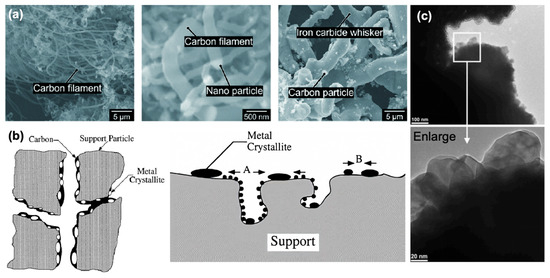
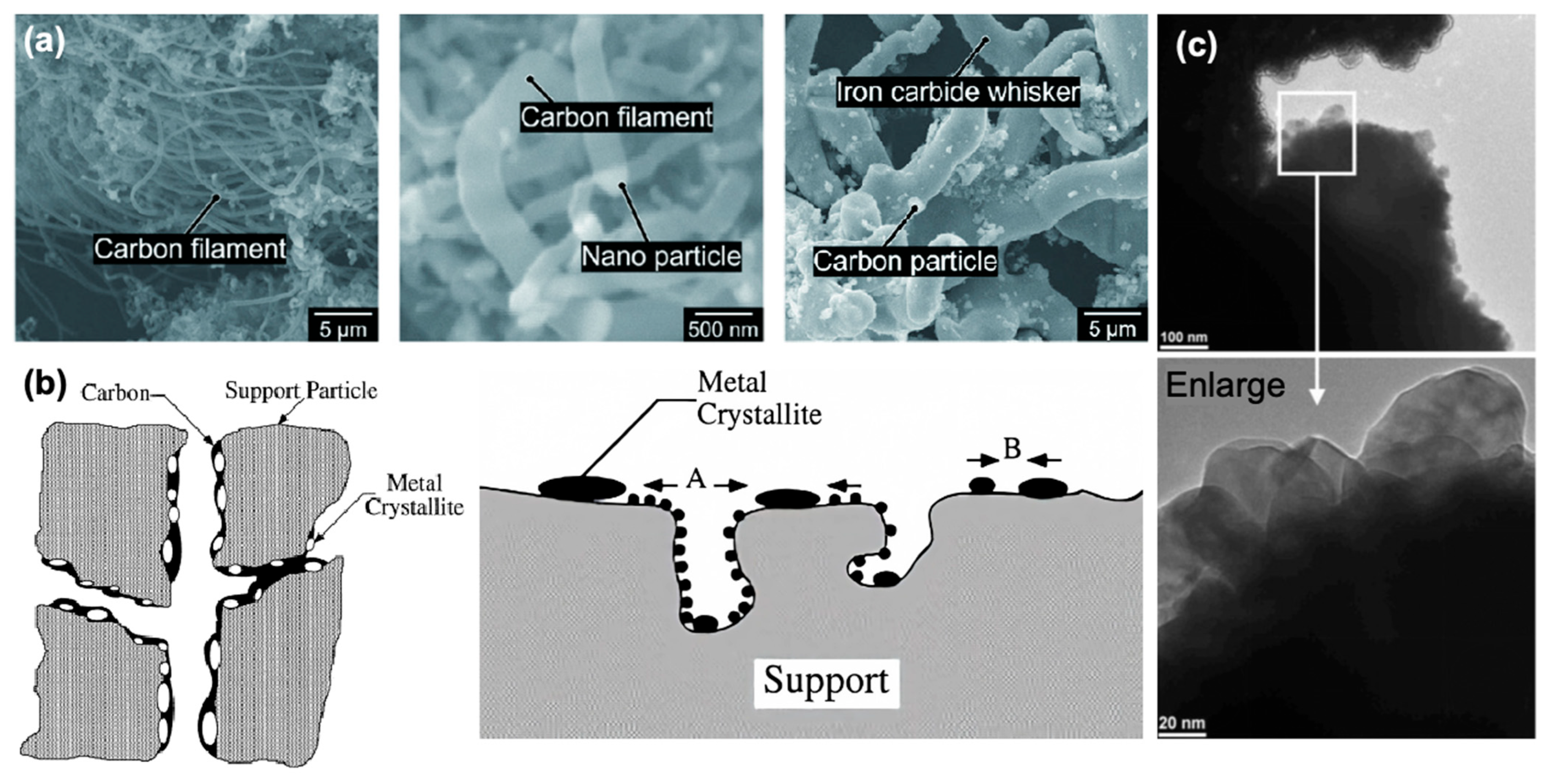
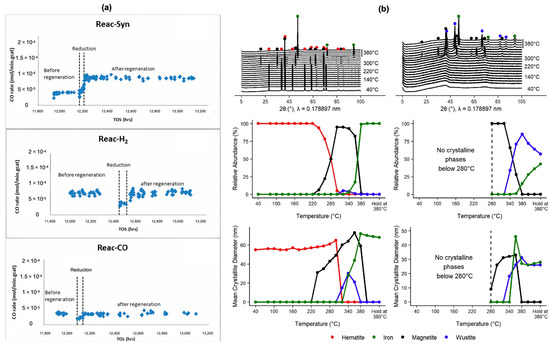
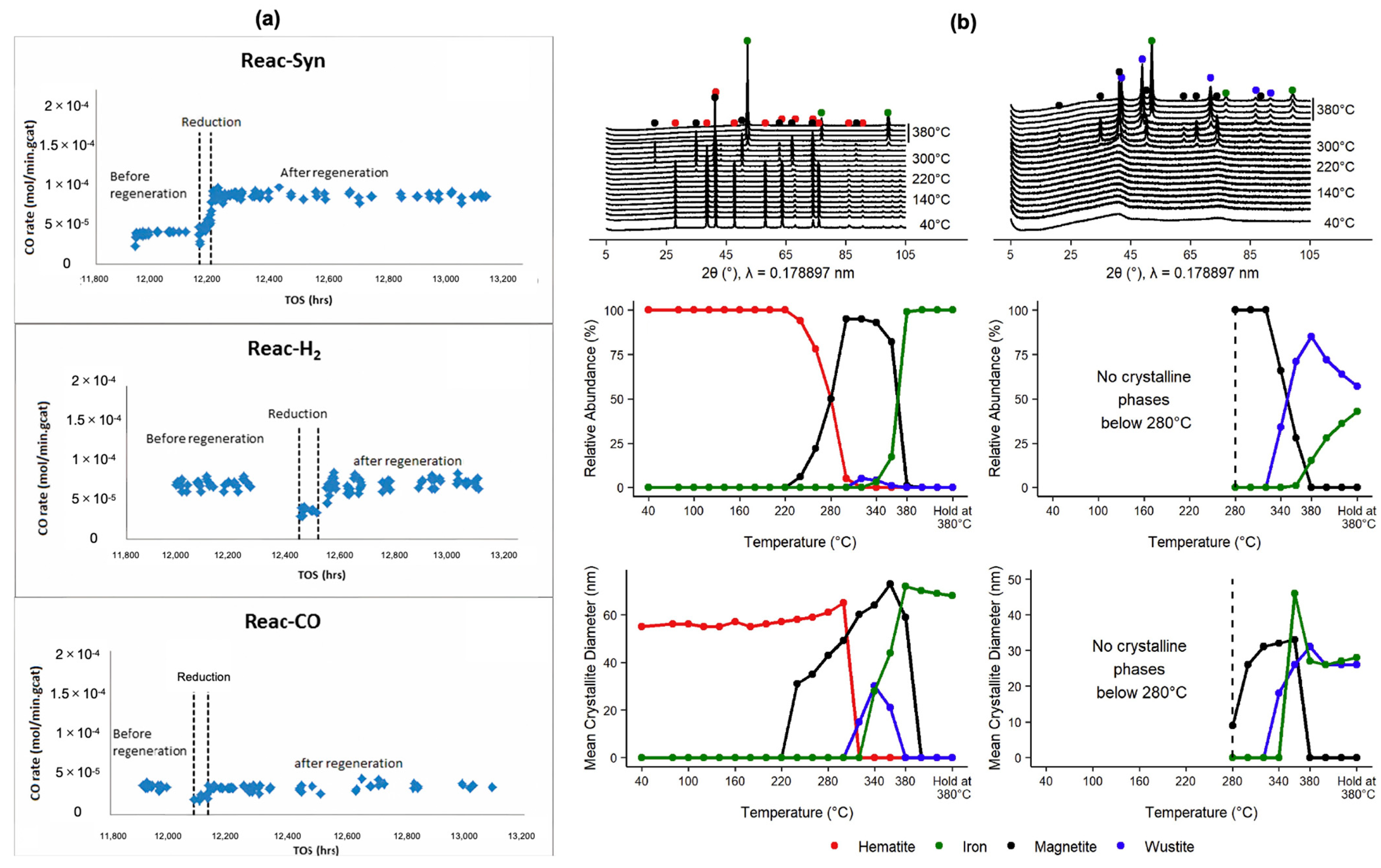
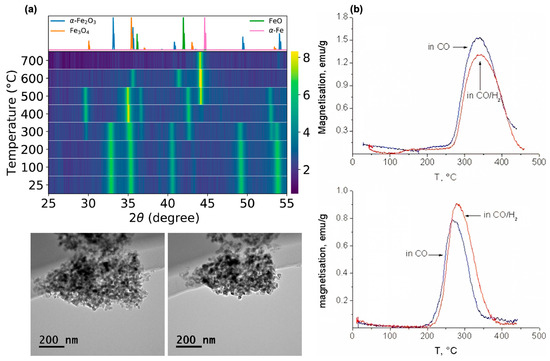
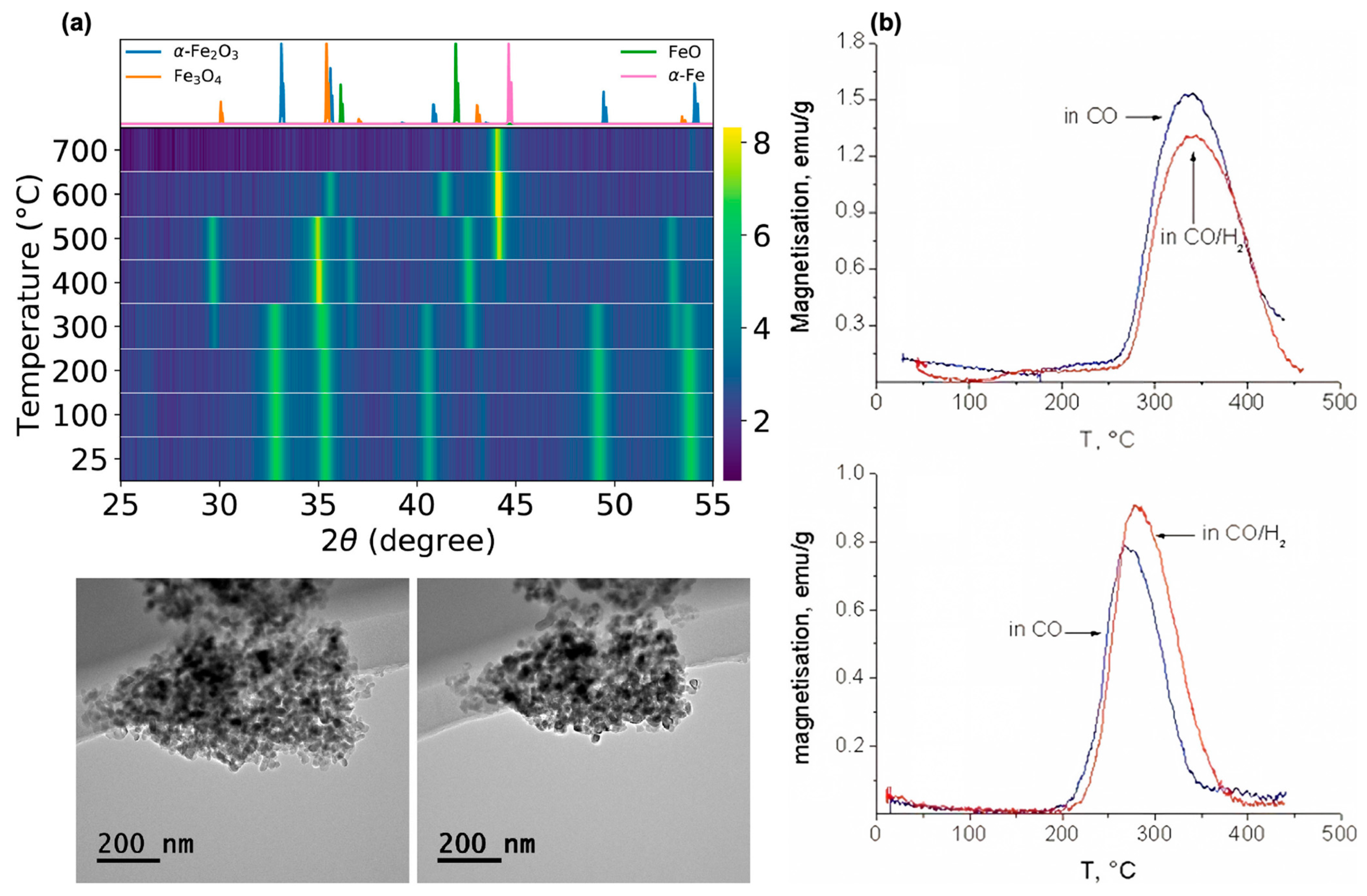
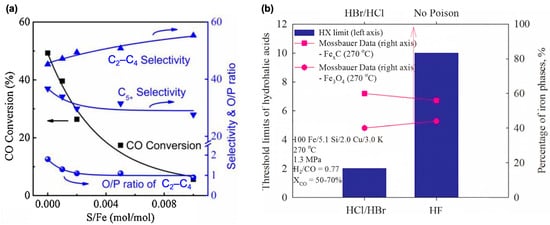
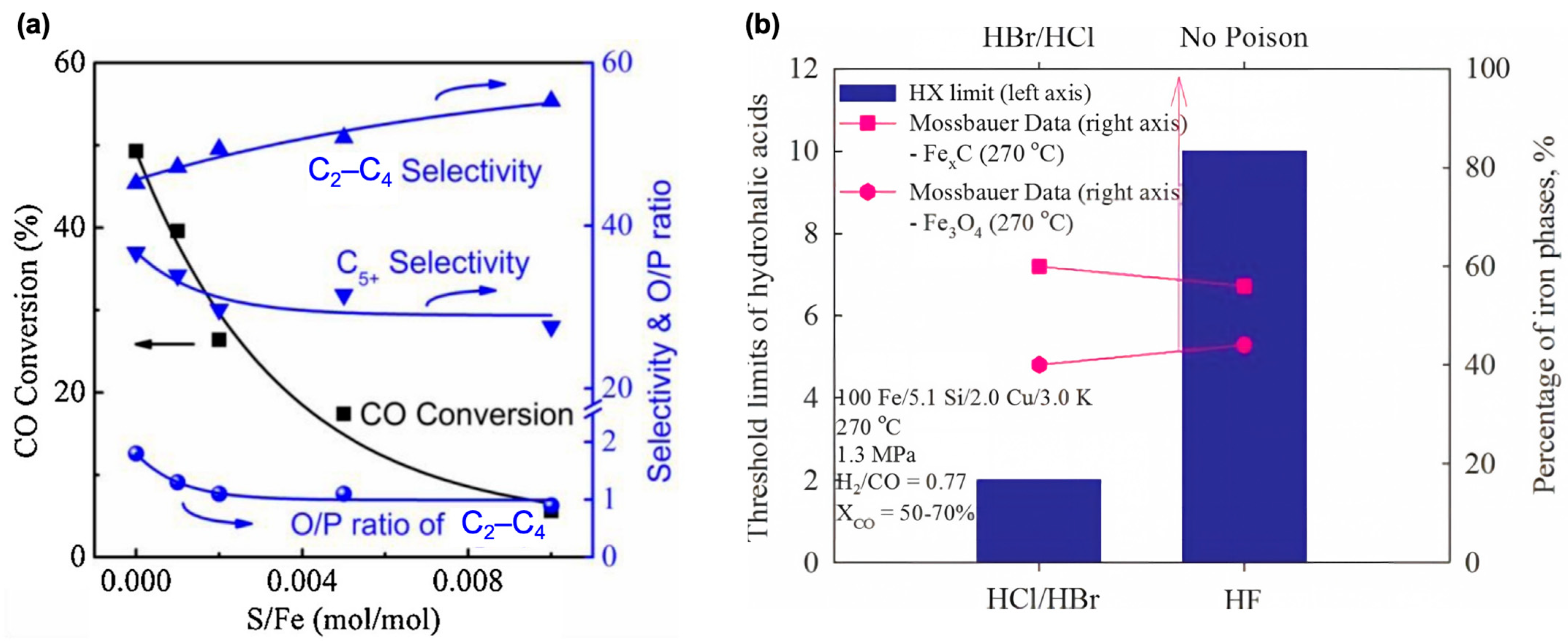

Disclaimer/Publisher’s Note: The statements, opinions and data contained in all publications are solely those of the individual author(s) and contributor(s) and not of MDPI and/or the editor(s). MDPI and/or the editor(s) disclaim responsibility for any injury to people or property resulting from any ideas, methods, instructions or products referred to in the content. |
© 2026 by the authors. Licensee MDPI, Basel, Switzerland. This article is an open access article distributed under the terms and conditions of the Creative Commons Attribution (CC BY) license.