


Abstract
The effect of palladium addition to a hybrid Co/SiO2 + HZSM-5 + Al2O3 catalyst on the combined Fischer–Tropsch (FT) synthesis and hydrocarbon hydroconversion process was studied. Catalysts with a Pd content of 0.075–0.3 wt.% were characterized by a complex of physicochemical methods, including synchrotron radiation X-ray diffraction (SR-XRD), temperature-programmed reduction with hydrogen (H2-TPR), temperature-programmed desorption of hydrogen with oxygen titration (H2-TPD/O2 titration), IR spectroscopy of adsorbed pyridine, and STEM-EDX analysis. It was found that the addition of palladium decreases the cobalt oxide reduction temperature due to interphase hydrogen transfer. Tests in hydrocarbon synthesis at 240–250 °C, a pressure of 2 MPa, and an H2/CO ratio of 2 showed that the sample with 0.15% Pd exhibits the highest selectivity for C5+ hydrocarbons (66.8% at 240 °C) and stability for 150 h. Analysis of the synthesis products revealed a fivefold decrease in the proportion of alkenes and an increase in isoalkanes with increasing Pd concentration. This effect enables the in situ hydroprocessing of primary FT products in a single reactor. The results demonstrate that the targeted introduction of palladium into the hybrid system is an effective strategy for regulating its functionality, allowing for the one-stage production of high-quality fuels with a controlled hydrocarbon composition from syngas.
1. Introduction
The challenges in modern energetics are stimulating an active search for innovative methods for producing environmentally friendly motor fuels as alternatives to petroleum products. One promising area remains GTL (Gas-to-Liquid) technology, which converts natural or associated gas into synthetic hydrocarbon mixtures [1,2]. Central to this technology is Fischer–Tropsch (FT) synthesis, which converts synthesis gas (CO+H2) into linear and branched hydrocarbons of varying molecular weights—from light gases (C1–C4) to heavy waxes (C35+) [3]. The efficiency of this process is determined by the properties of catalysts, which traditionally include Group VIII metals, such as iron or cobalt, each of which affects the selectivity and yield of target products [4].
Despite the widespread use of iron- and cobalt-containing systems in industry, their use is associated with a number of limitations. For example, iron catalysts exhibit high activity in the formation of olefins and oxygen-containing compounds [5], while cobalt analogs predominantly generate n-alkanes, which negatively impacts the quality of fuel fractions: low octane number of gasoline and high cloud point of diesel fuel [6]. To correct these deficiencies, an additional hydrofining stage is required, including isomerization and cracking on zeolite catalysts in the presence of hydrogen [7].
An alternative to multi-stage processes has been the development of bifunctional catalytic systems combining active centers for FT synthesis and acidic centers of zeolites responsible for hydrocarbon modification [8,9,10]. Such hybrid catalysts allow the production of fuels with improved characteristics in a single stage by combining chain growth reactions and their subsequent isomerization [11]. A key aspect in their development is the optimization of the interaction between the metal and acid components, which is achieved by varying the structure of the carriers, methods of applying active phases, and the introduction of promoters [12,13,14].
In the previous studies, we proposed a hybrid system based on Co/SiO2, HZSM-5 zeolite, and alumina, which demonstrated the ability to generate synthetic crude oil with a high liquid fraction content [15,16]. However, the significant proportion of unsaturated hydrocarbons (>40%) in the reaction products limits the practical application of such fuels. To suppress the formation of alkenes, the introduction of hydrogenating additives, such as palladium, which exhibits high activity in hydrogenation reactions, appears promising [17]. Despite its cost, its unique ability to selectively saturate double bonds without significantly affecting FT synthesis makes it a valuable component for catalyst modification.
The use of palladium in hybrid FT synthesis catalysts is limited due to its tendency to accelerate hydrogenolysis and the formation of light hydrocarbons, as well as a decrease in CO conversion [18]. However, palladium, with its strong hydrogenating properties, may reduce the proportion of unsaturated hydrocarbons that form on zeolite-containing FT catalysts due to their secondary transformations. Thus, the fuel obtained in FT synthesis can be tailored as closely as possible to the required performance properties. Therefore, the aim of this work is to investigate the effect of palladium addition to the Co/SiO2+HZSM-5+Al2O3 hybrid catalyst on its functional properties in the combined process of hydrocarbon synthesis and modification.
2. Results and Discussion
Table 1 summarizes the textural properties of the reduced Pd-containing ZSM-5 samples. The introduction of palladium results in a minor decrease in both the specific surface area and micropore volume. This reduction is attributed to two primary factors: the partial blockage of pore mouths by metal nanoparticles located on the external surface, and the partial filling of the micropores by palladium clusters. Notably, even with a palladium loading of 0.3 wt.%, the decrease in micropore volume remains below 10%, indicating that the structural integrity of the zeolite framework is well preserved.
Table 1.
Porous structure characteristics for ZSM-5.
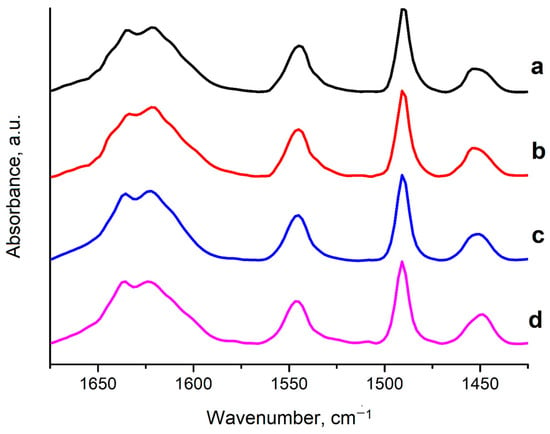
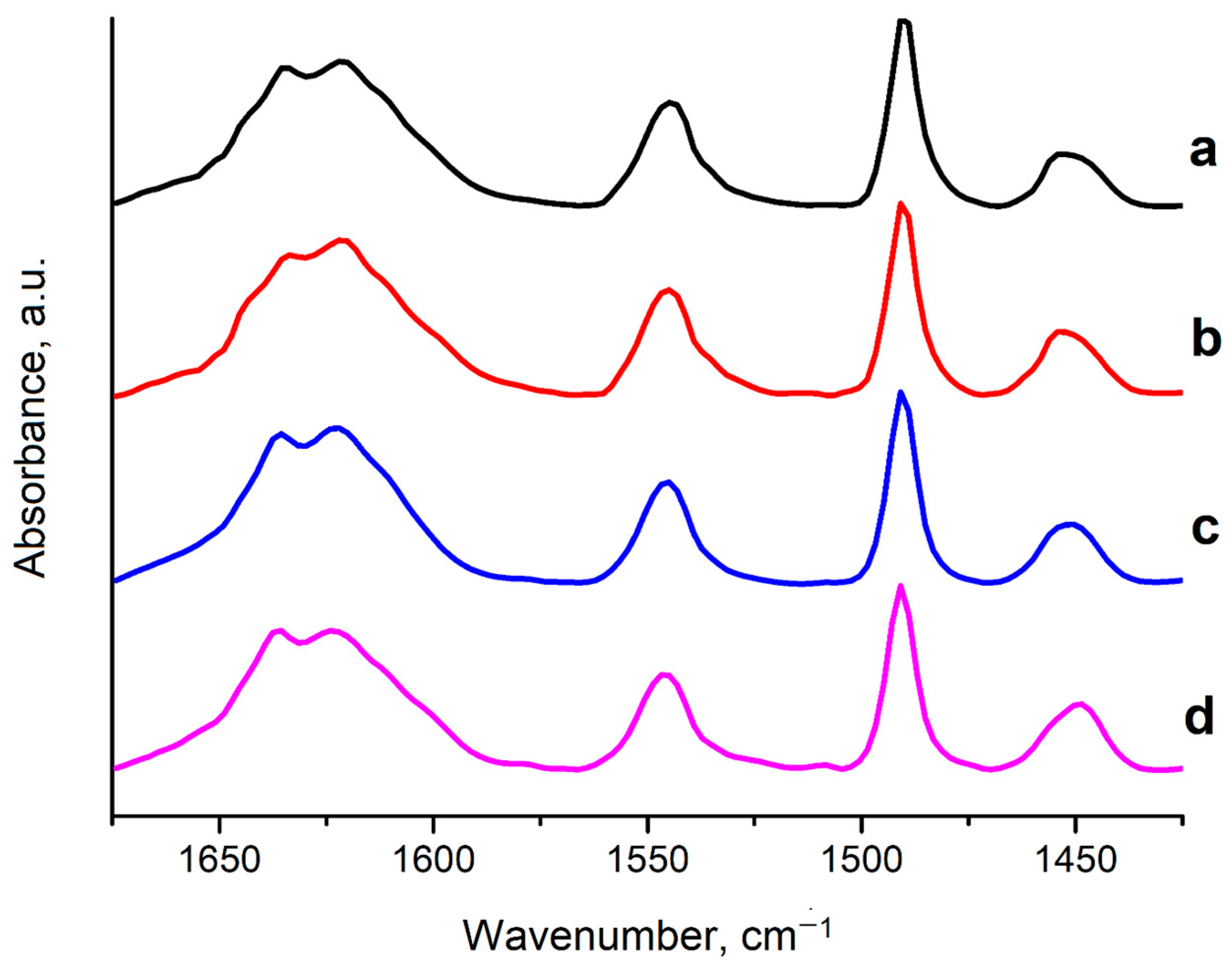
Figure 1 displays the FTIR spectra of adsorbed pyridine on ZSM-5 samples with varying palladium content. All spectra exhibit characteristic bands corresponding to two types of acid sites [19]: Brønsted acid sites (BAS) and Lewis acid sites (LAS). The bands at 1639 cm−1 and 1545 cm−1 correspond to the pyridinium ion formed via protonation on BAS. The bands at 1624 cm−1 and 1454 cm are assigned to pyridine coordinately bonded to LAS. The band at 1491 cm−1 is associated with both types of acid sites.
Figure 1.
IR spectra of adsorbed pyridine over Pd/ZSM-5 zeolite samples after desorption at 150 °C: (a) ZSM-5 (Pd/0.0), (b) ZSM-5 (Pd/0.075), (c) ZSM-5 (Pd/0.15), and (d) ZSM-5 (Pd/0.3).
The parent H-ZSM-5 sample exhibits the highest concentration of BAS (Table 2). Increasing the palladium content leads to a decrease in BAS concentration, accompanied by an increase in LAS concentration.
Table 2.
Acidic properties of ZSM-5 according to IR spectroscopy of adsorbed pyridine.
These results can be explained by the interaction between the palladium species and the zeolite acid sites. During the preparation and calcination steps, palladium cations (Pd2+) exchange with the protons of the bridging hydroxyl groups (Si−OH−Al), thereby consuming strong Brønsted sites via the ion-exchange mechanism.
Consequently, the exchanged isolated Pd cations, along with small electron-deficient palladium oxide (PdO) clusters formed on the surface, generate new Lewis acid sites. It is important to note that the introduction of 0.3 wt.% Pd causes only a moderate redistribution of acid sites, preserving sufficient acidity for bifunctional catalysis.
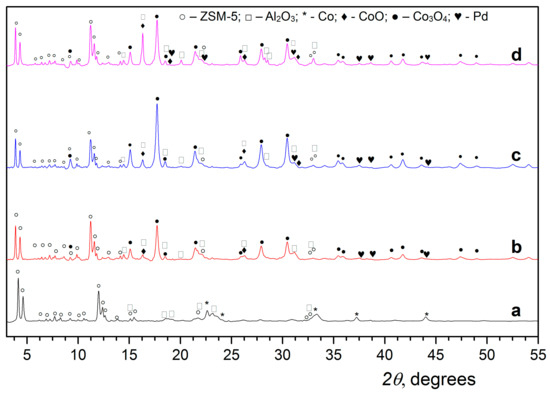
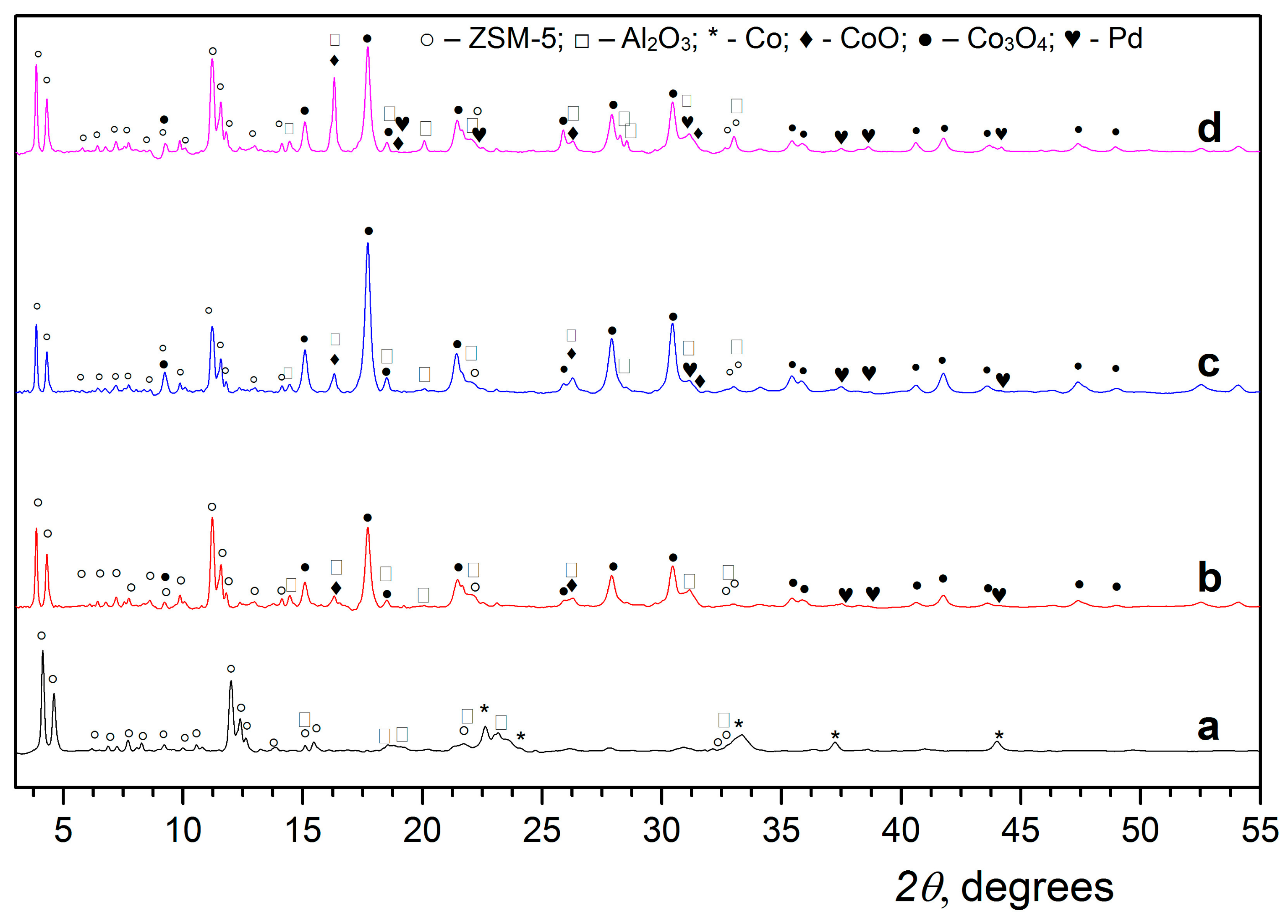
The phase composition and structure of the catalysts were studied using X-ray phase analysis. The X-ray diffraction pattern was uniform for all the samples (Figure 2).
Figure 2.
Synchrotron radiation X-ray diffraction (SR-XRD) patterns of the Pd-modified hybrid catalysts. (a)–HZ (reduced form); (b)—0.075 PdHZ; (c)—0.15 PdHZ; (d)—0.3 PdHZ.
Cobalt in the catalysts is present predominantly as the oxide phase Co3O4. The diffraction patterns also show reflections corresponding to aluminum oxide. The intense reflections in the 2θ range of 5–30° are characteristic of the ZSM-5 zeolite framework. Signals from palladium were nearly undetectable due to its low concentration, with only minor peaks observed for the 0.3 PdHZ sample, which has the highest palladium loading among the studied catalysts. Furthermore, the 0.3 PdHZ sample exhibits more intense aluminum oxide signals, indicating a higher degree of crystallinity for this phase in this particular catalyst.
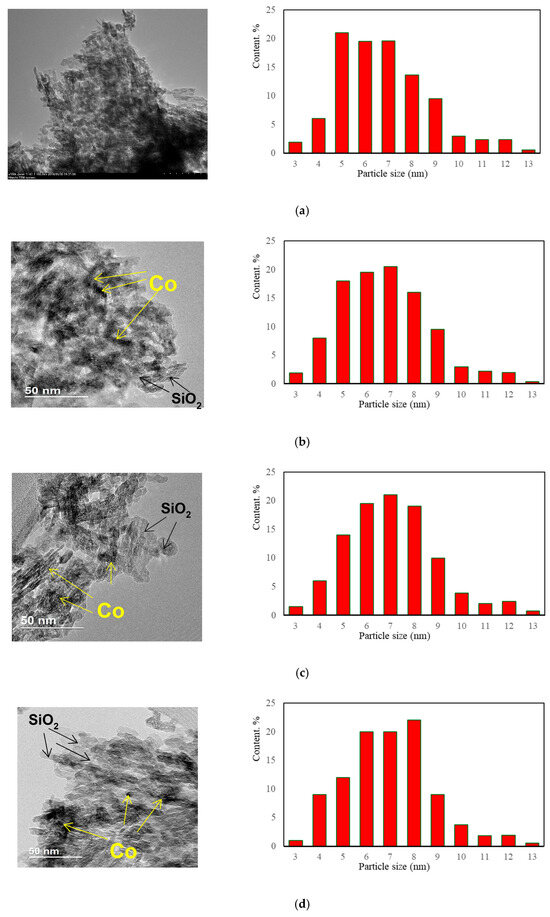
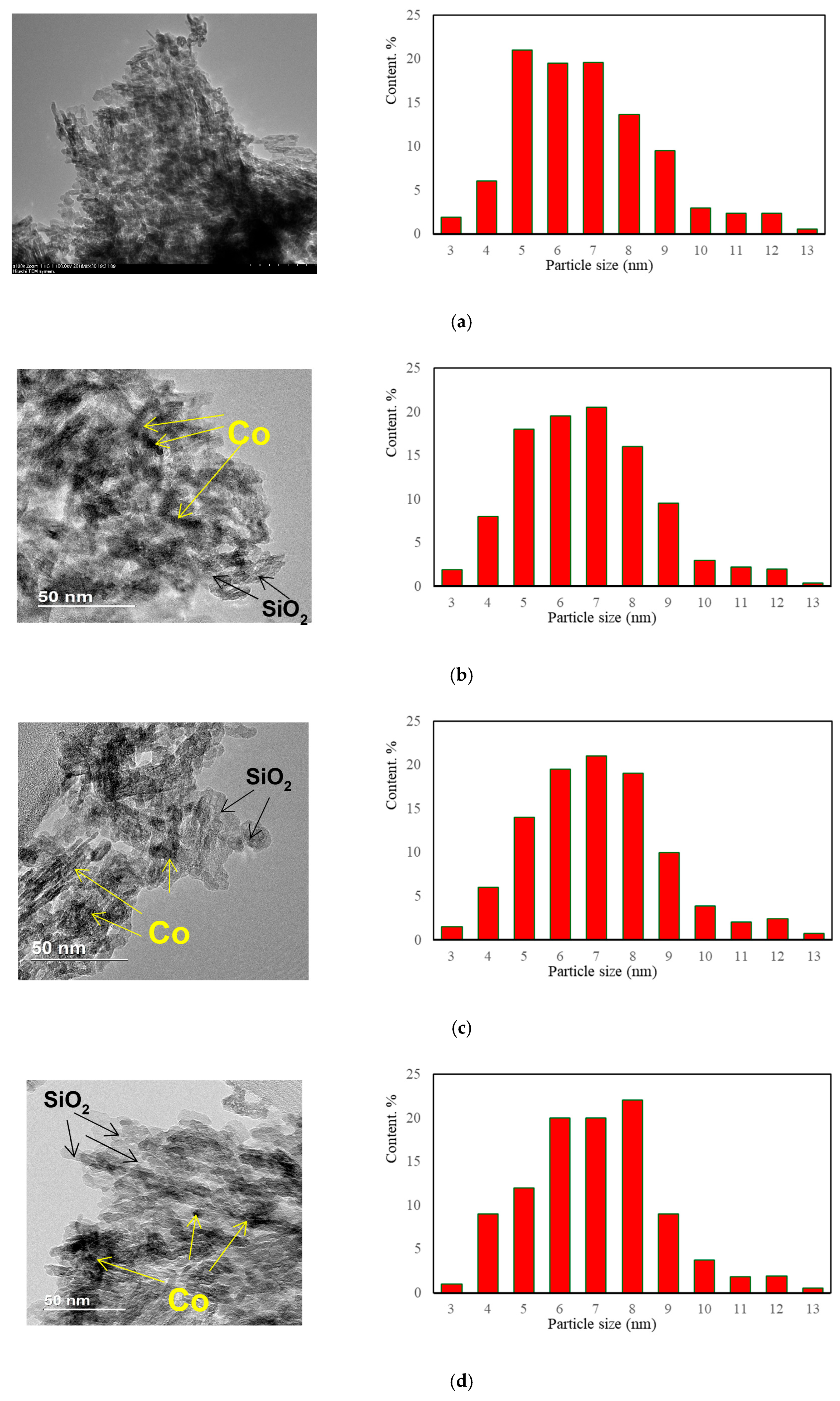
Analysis of the TEM images (Figure 3), where cobalt nanoparticles are visible as dark contrasts against the SiO2 background, was used to calculate the size distribution histograms. The results show that the average cobalt particle size on the surface for all samples is approximately 8 ± 2 nm. The majority of the particles are in the 5–9 nm size range.
Figure 3.
Representative TEM micrograph of the reduced hybrid catalyst Z and the histogram of cobalt NPs size distribution: (a)—HZ; (b)—0.075 PdHZ; (c)—0.15 PdHZ; (d)—0.3 PdHZ.
The size and dispersion of metallic cobalt crystallites, calculated using the Scherrer equation, with an average Co3O4 particle size of 12.0–15.5 nm, are 8.9–11.6 nm and 10.2–13.2%, respectively (Table 3).
Table 3.
Characteristics of catalysts depending on the content of the hydrogenating component (Pd) in the polyfunctional catalyst according to X-ray diffraction data.
A clear dependence of the degree of cobalt reduction on the palladium content in the catalyst is observed. With increasing palladium content, the degree of reduction measured by magnetometry increases from 51% for the Z sample to 62% for the 0.3 Pd/HZ sample.
These data suggest that palladium, when attached to the zeolite component, promotes spillover (migration) of atomic hydrogen onto the cobalt particles, thereby enhancing their reduction.
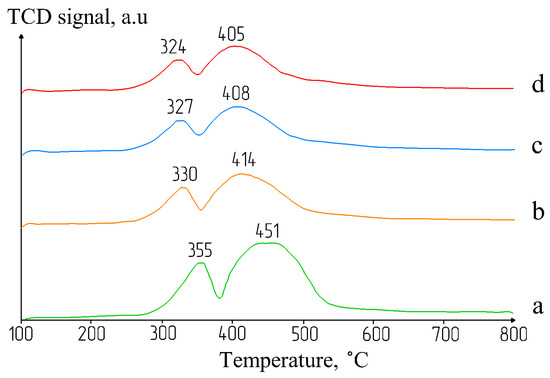
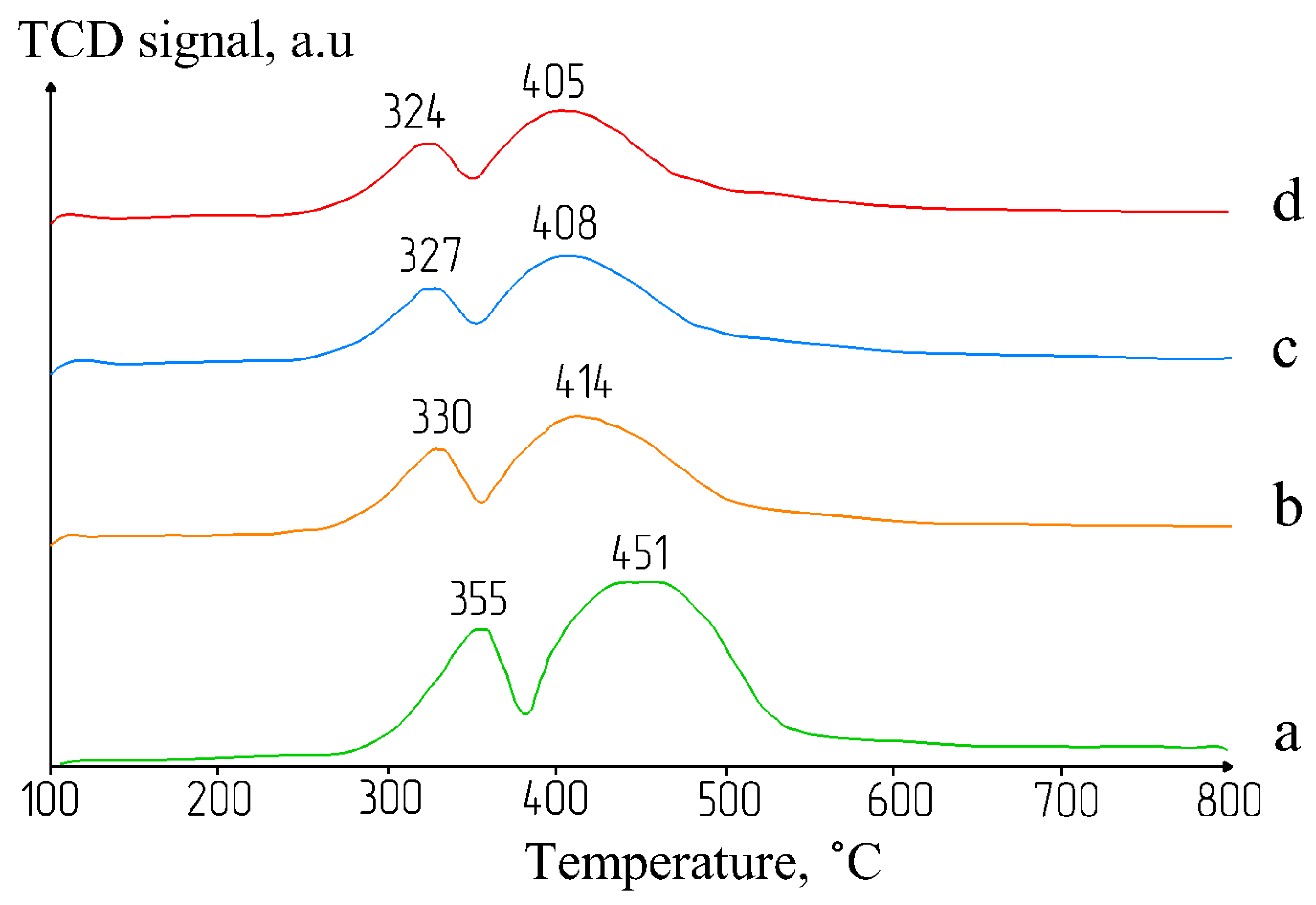
This is also confirmed by the results of temperature-programmed reduction (TPR): with the addition of palladium, the temperature maximum of the first peak shifts to lower temperatures, reaching a decrease of 31 °C for the 0.3 Pd/HZ catalyst. Furthermore, calculation of the ratio of the low-temperature peak area (up to 400 °C) to the total area of all peaks showed that this parameter increases with increasing palladium content. The TPR spectra of the composite catalysts are similar (Figure 4 and Table 4). Reduction peaks with hydrogen absorption maxima were identified, corresponding to the Co3+→Co2+ transition in the 250–400 °C region and the Co2+→Co0 transition in the 400–600 °C region.
Figure 4.
TPR spectra of composite catalysts depending on the content of the hydrogenating component (Pd). (a)—HZ; (b)—0.075 PdHZ; (c)—0.15 PdHZ; (d)—0.3 PdHZ.
Table 4.
TPR spectra of catalysts depending on the content of the hydrogenating component (Pd).
The hydrogen absorption maxima for all catalysts are located in the same temperature range and correspond to the reduction of cobalt oxide according to the scheme Co3+→Co2+ and Co2+→Co0 in the temperature ranges of 250–350 °C and 350–500 °C. For catalysts containing palladium, a shift in the reduction maxima to lower temperatures (by an average of 25 °C) is observed. This is likely due to the fact that palladium is reduced from the oxide at lower temperatures and is able to catalyze the reduction of cobalt oxide through interfacial diffusion of adsorbed hydrogen.
The ratio of the areas of the hydrogen absorption peaks S2/S1 for the catalysts is in the range of 2.6–2.7 (Table 4), which differs slightly from the theoretically expected value based on the stoichiometry of the reduction of cobalt oxide Co3O4, for which the ratio of the hydrogen consumed in the reaction Co3+→Co2+→Co0 is equal to 4. The decrease in the value of the area ratio S2/S1 is probably explained by the fact that some of the cobalt may be in a difficult-to-reduce form.
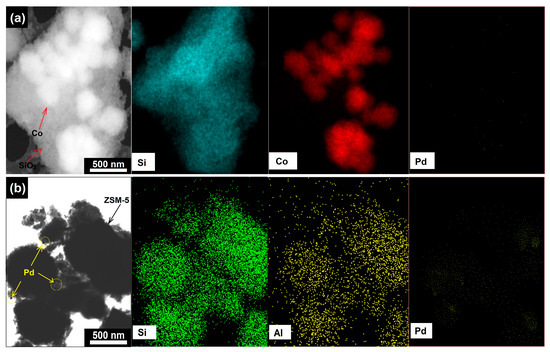
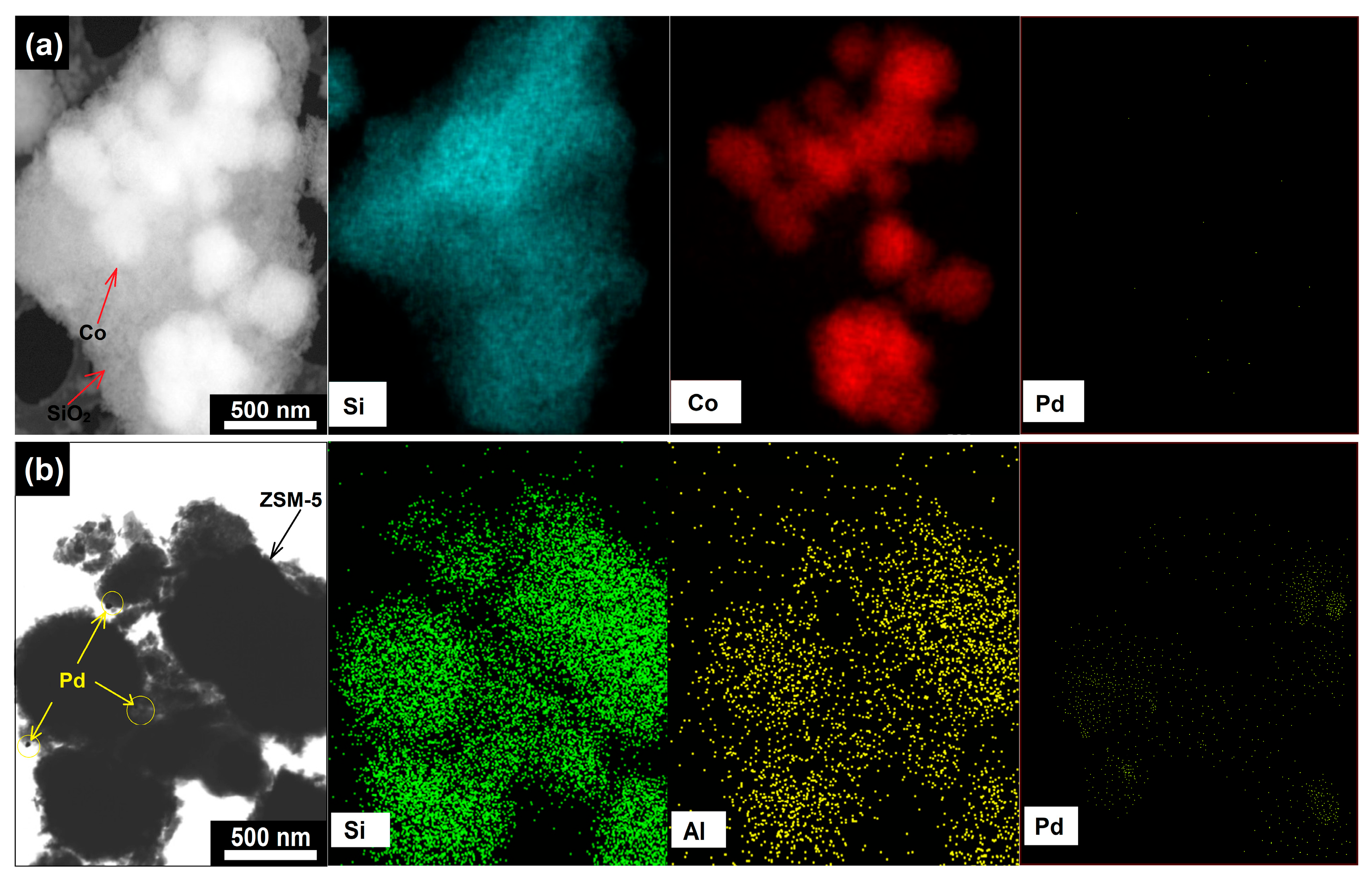
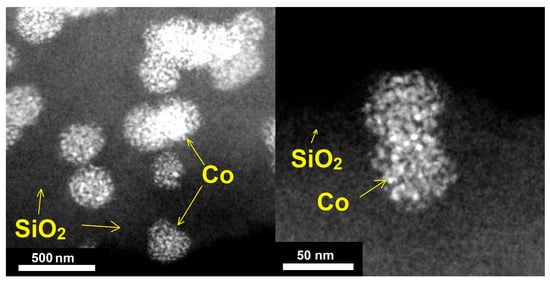
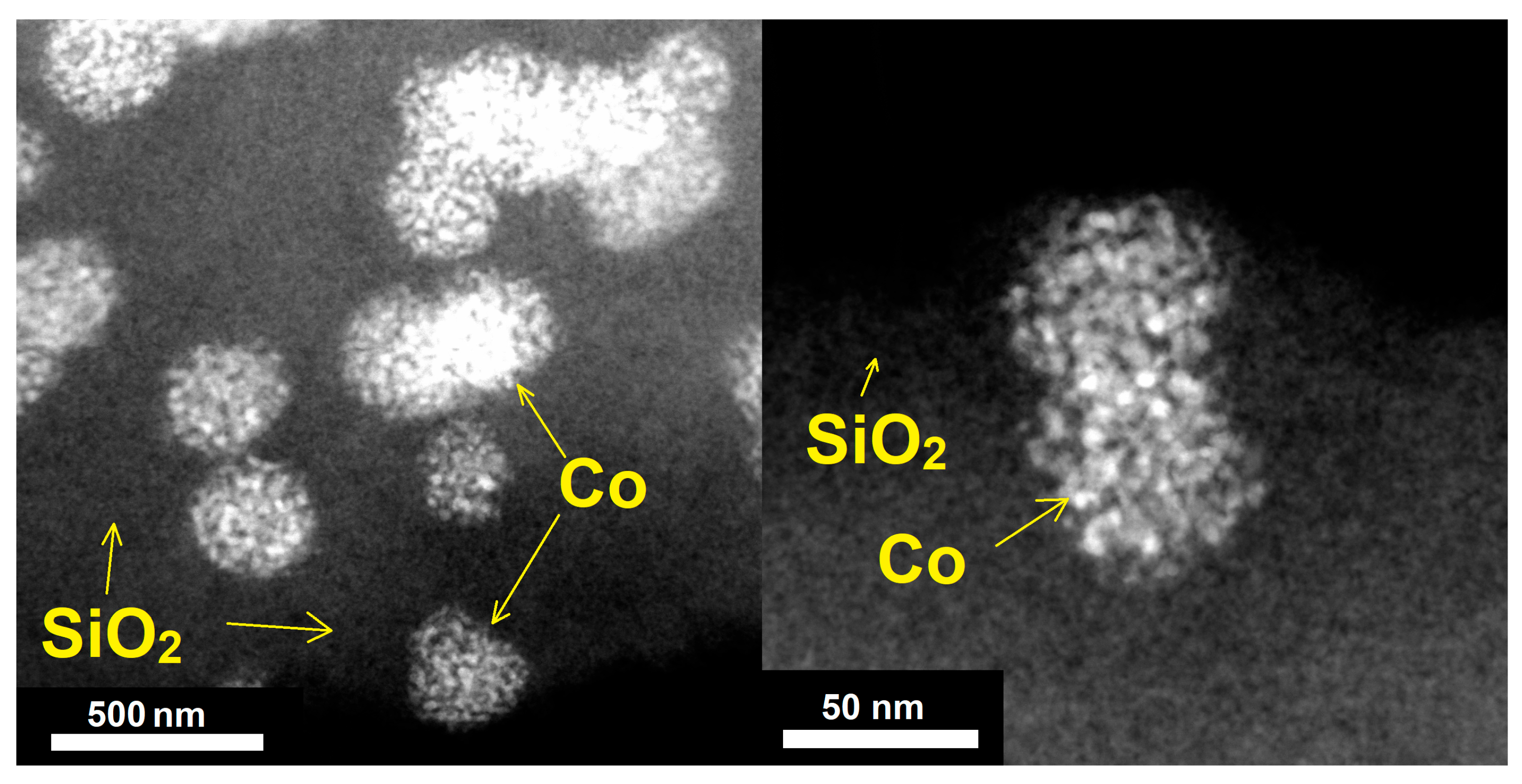
Figure 5 displays STEM images and elemental mapping (EDX) results for the composite catalyst. The images clearly distinguish two separate phases: the ZSM-5 zeolite region (Figure 5b) and the Cobalt-containing mesoporous SiO2 area (Figure 5a). Cobalt particles are localized on the silica support as spherical aggregates ranging from 50 to 300 nm in size, composed of smaller nanoparticles. This internal structure is further confirmed by the TEM image in Figure 6, which shows a detailed view of the Co/SiO2 region. It clearly reveals that these spherical aggregates consist of primary cobalt nanoparticles with an approximate size of 8 nm.
Figure 5.
STEM-EDX images of the hybrid catalyst sample: (a) STEM-HAADF-EDX of the Co-containing region; (b) STEM-EDX of the region containing the acid component (ZSM-5).
Figure 6.
TEM images of the hybrid catalyst sample of the Co-containing region.
The STEM-EDX data reveal a specific localization pattern for Palladium: the majority of the Pd is associated with the acidic component (ZSM-5). Only trace amounts of Pd are detected on the Cobalt phase and the mesoporous SiO2 support, likely due to minor redistribution during the mechanical granule mixing process. Thus, no significant formation of a bimetallic Co-Pd phase (alloy) occurs in the studied composite catalyst. Instead, these metals are spatially separated: Cobalt is supported on SiO2, while Palladium is predominantly localized on the ZSM-5 zeolite, serving as a hydrogenation component on the acidic sites. This spatial separation is consistent with the design of the hybrid catalyst, where Pd is intended to regulate the zeolite’s acid function rather than directly promote Cobalt reduction. The Pd/ZSM-5 catalyst operates via a classical bifunctional mechanism. The STEM-EDX analysis (Figure 5) confirms the localization of Pd nanoparticles directly on the ZSM-5 support, ensuring the necessary proximity between the two functions. The Pd sites provide the hydrogenation/dehydrogenation function, activating the paraffins/olefins, while the Brønsted acid sites of the ZSM-5 framework facilitate the subsequent skeletal isomerization and hydrocracking steps via carbocation intermediates. The contribution of Lewis acid sites to these specific transformation pathways is considered negligible compared to the proton-donating Brønsted sites [21,22,23].
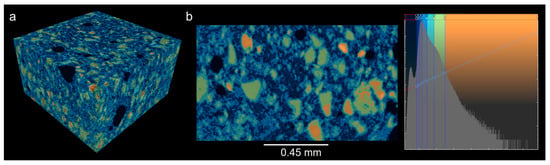
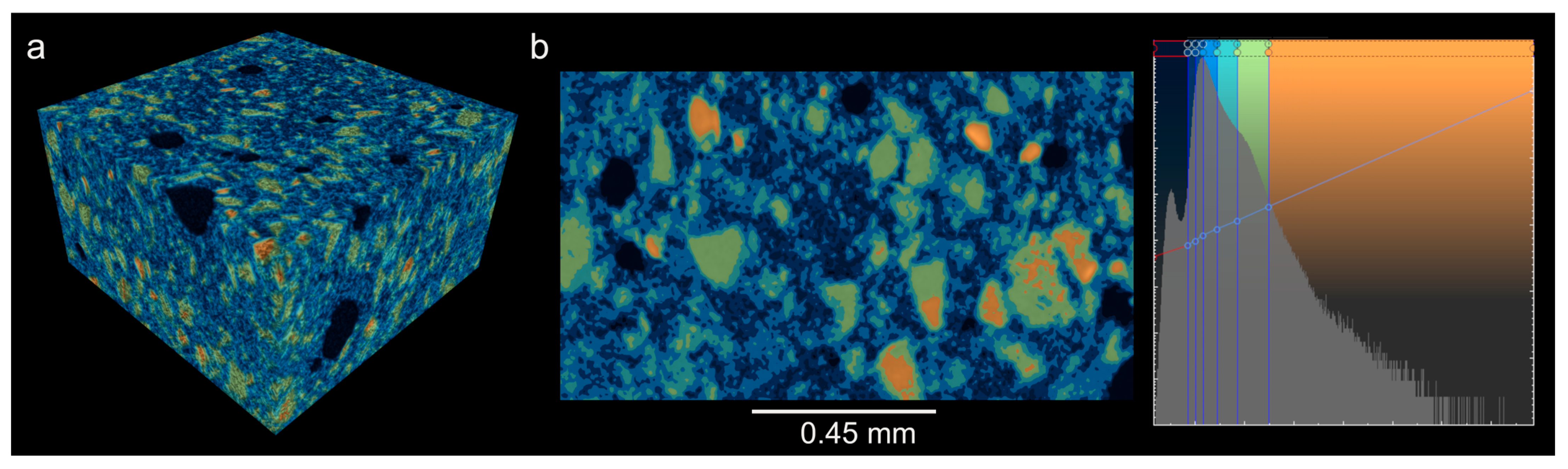
The 3D microtomography results (Figure 7) show that the interior of the composite catalyst, with a Pd hydrogenation component concentration of 0.15%, contains voids (pores). The pore volume, determined from the overview tomogram, was 0.0437 mm3, and the total void volume was 1.5894 mm3. For a clearer visualization of the results, the qualitative density map is presented in the figures not in shades of gray, but in a pseudo-color scale. Several structures can be visually distinguished: shades of blue correspond to the metallic component of the catalyst, with an increase in density (from blue to dark blue), a lighter color indicates ZSM-5 zeolite, and orange particles indicate Al2O3. When Pd is introduced into the zeolite structure by impregnation, the distribution of silicon, aluminum, and oxygen is uniform, while the cobalt particles are fragmented.
Figure 7.
Computer microtomography of the 0.15 PdHZ catalyst. (a)—three-dimensional virtual models of the 0.15 PdHZ catalyst; (b)—sets of virtual sections in three cross-sections.
To determine the effect of palladium content in the catalysts on their catalytic performance, tests were conducted at temperatures of 240 and 250 °C, a pressure of 2.0 MPa, a gas space velocity of 1000 h−1, and an H2/CO ratio of 2. The catalyst test data are presented in Table 5 and Table 6 and in Figure 8.
Table 5.
Data on the catalytic activity of composite catalysts containing Pd introduced by impregnation with zeolite HZ, at t = 240 °C, GSHV = 1000 h−1, P = 2 MPa, H2/CO ratio = 2.
Table 6.
Data on the catalytic activity of composite catalysts containing Pd at t = 250 °C, GSHV = 1000 h−1, P = 2 MPa, H2/CO ratio = 2.
Figure 8.
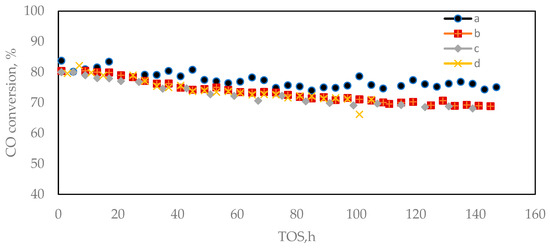
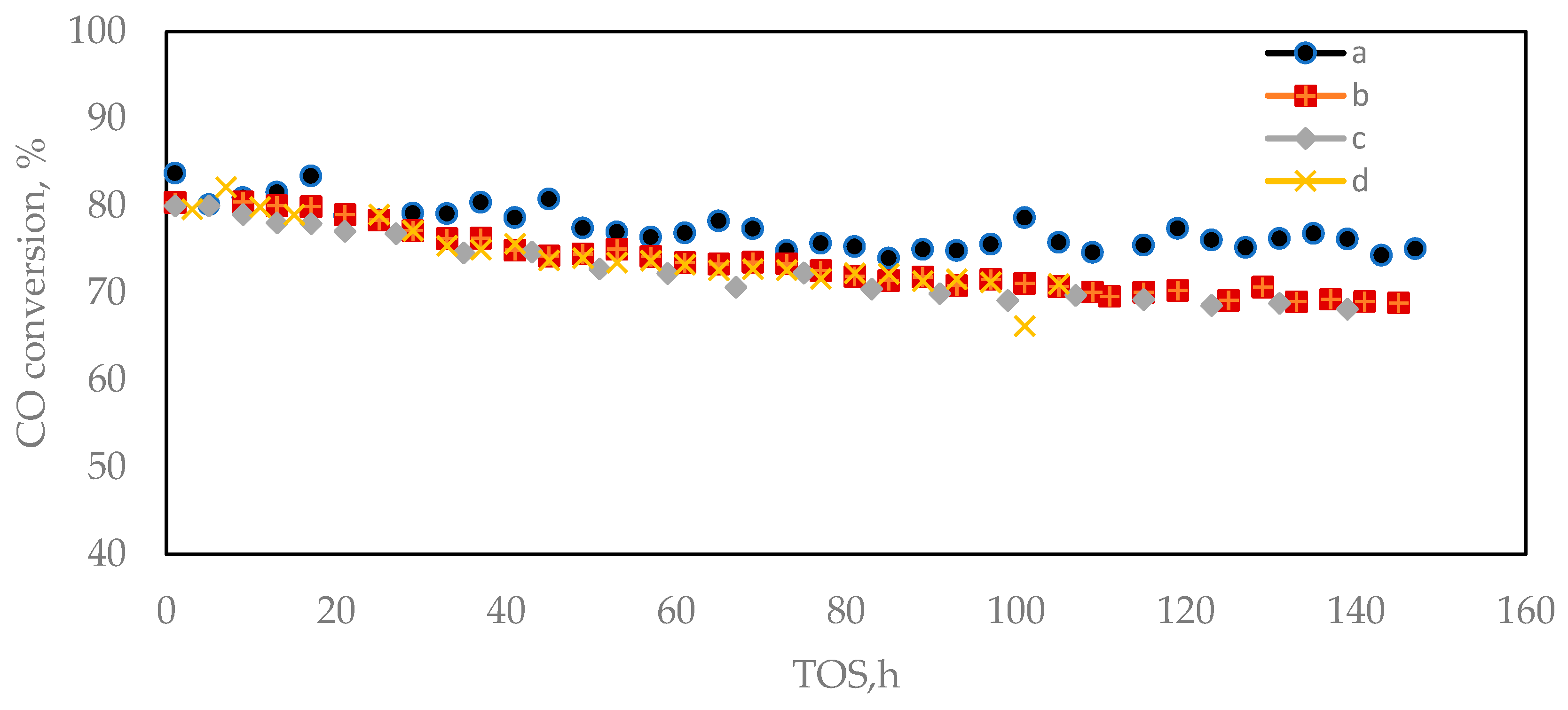
Effect of the time on-stream (TOS) on CO conversion over catalysts a—HZ; b—0.075 PdHZ; c—0.15 PdHZ; d—0.3 PdHZ; reaction conditions: T = 240 °C, P = 2.0 MPa, H2/CO = 2, GHSV = 1000 h−1.
At a synthesis temperature of 240 °C, the CO conversion for the studied catalysts is 71.7–75.6% (Table 5). Overall, all catalysts have comparable catalytic activity. However, the selectivity for the formation of C5+ hydrocarbons varies, with the highest values being characteristic of the HZ and 0.15 PdHZ catalysts: 67.1 and 66.8%, respectively.
To determine the role of palladium in the formation of hydrocarbons directly from CO and H2, we tested a catalyst containing only palladium on ZSM-5 zeolite (0.3% Pd), without a cobalt component. The catalyst demonstrated independent activity in the Fischer–Tropsch synthesis, with CO conversion of 2.4%. The product distribution was characterized by high selectivity for methane (34.8%) and low selectivity for the target liquid C5+ hydrocarbons (21.0%). Significant selectivity for CO2 (20.7%) was also observed, indicating the concomitant occurrence of a water-gas shift reaction.
These data confirm that, although palladium is capable of catalyzing the hydrogenation of CO, its contribution to the synthesis of heavy hydrocarbons via the Fischer–Tropsch mechanism is insignificant. The observed decrease in selectivity for C5+ for the hybrid catalyst 0.3 PdHZ (53.5% versus 67.1% for HZ) may be partly due to the side activity of palladium, which shifts the selectivity towards lighter products (C1–C4).
Figure 8 presents the catalyst stability data. The addition of palladium to the hybrid catalyst results in a slight decrease in initial CO conversion. However, over long-term operation, the modified catalyst demonstrates greater stability, as evidenced by a significantly slower decrease in CO conversion over time. We hypothesize that the addition of palladium may contribute to increased resistance to deactivation, for example, by reducing the rate of carbonization due to its high hydrogenation capacity. However, more extensive studies under longer-term catalyst operating conditions are needed to thoroughly analyze the deactivation mechanisms (sintering, coke deposition) and confirm long-term stability under industrial conditions.
Increasing the temperature to 250 °C intensifies the hydrocarbon synthesis process, resulting in increased CO conversion, which for the catalysts under consideration is in the range of 82.0–85.9% (Table 6).
The obtained results with a temperature synthesis of 250 °C are similar to the data obtained at a synthesis temperature of 240 °C (Table 5): the studied catalysts have comparable catalytic activity, the maximum selectivity for C5+ hydrocarbons is shown by the HZ and 0.15 PdHZ catalysts—72.8 and 69.7%, respectively.
The results of the analysis of the synthesis products of polyfunctional composite catalysts at 240 °C containing Pd introduced by impregnation with zeolite HZSM-5 are presented in Table 7.
Table 7.
Group and fractional composition of hydrocarbons obtained on composite catalysts containing Pd introduced by impregnation with zeolite HZSM-5, GSHV = 1000 h−1, P = 2 MPa, t = 240 °C, H2/CO ratio = 2.
In the synthesis products of the sample with a Pd concentration of 0.075%, the amount of iso-alkanes and branched alkenes predominates over linear hydrocarbons by a factor of 1.2. The total content of linear hydrocarbons predominates in the catalyst without the hydrogenating component, with α-alkenes accounting for approximately one-third of these hydrocarbons, and iso-alkanes and branched alkenes present in smaller amounts. The sample without the additive also has the lowest content of the C19+ fraction and the highest selectivity for alkenes. The iso/n value passes through a maximum corresponding to the catalyst with 0.075% Pd.
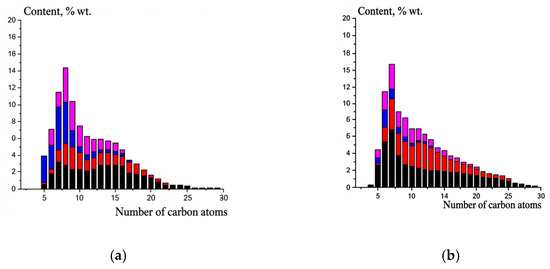
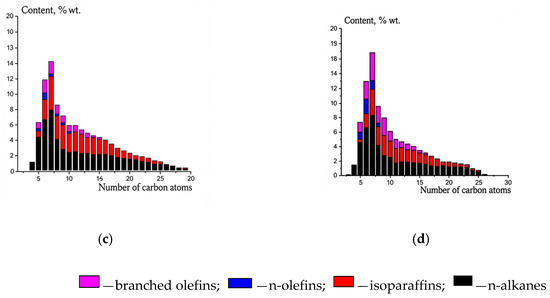
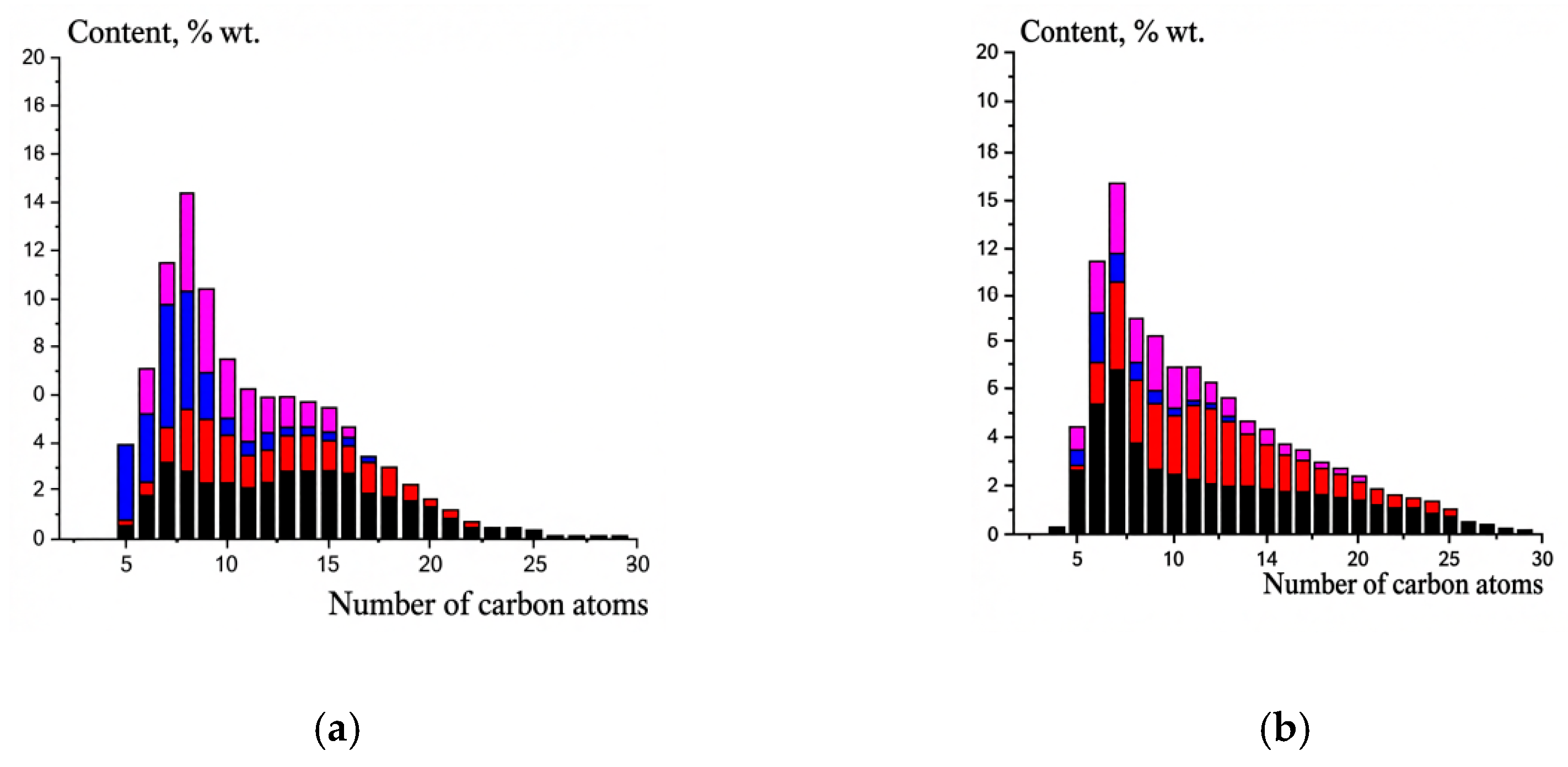
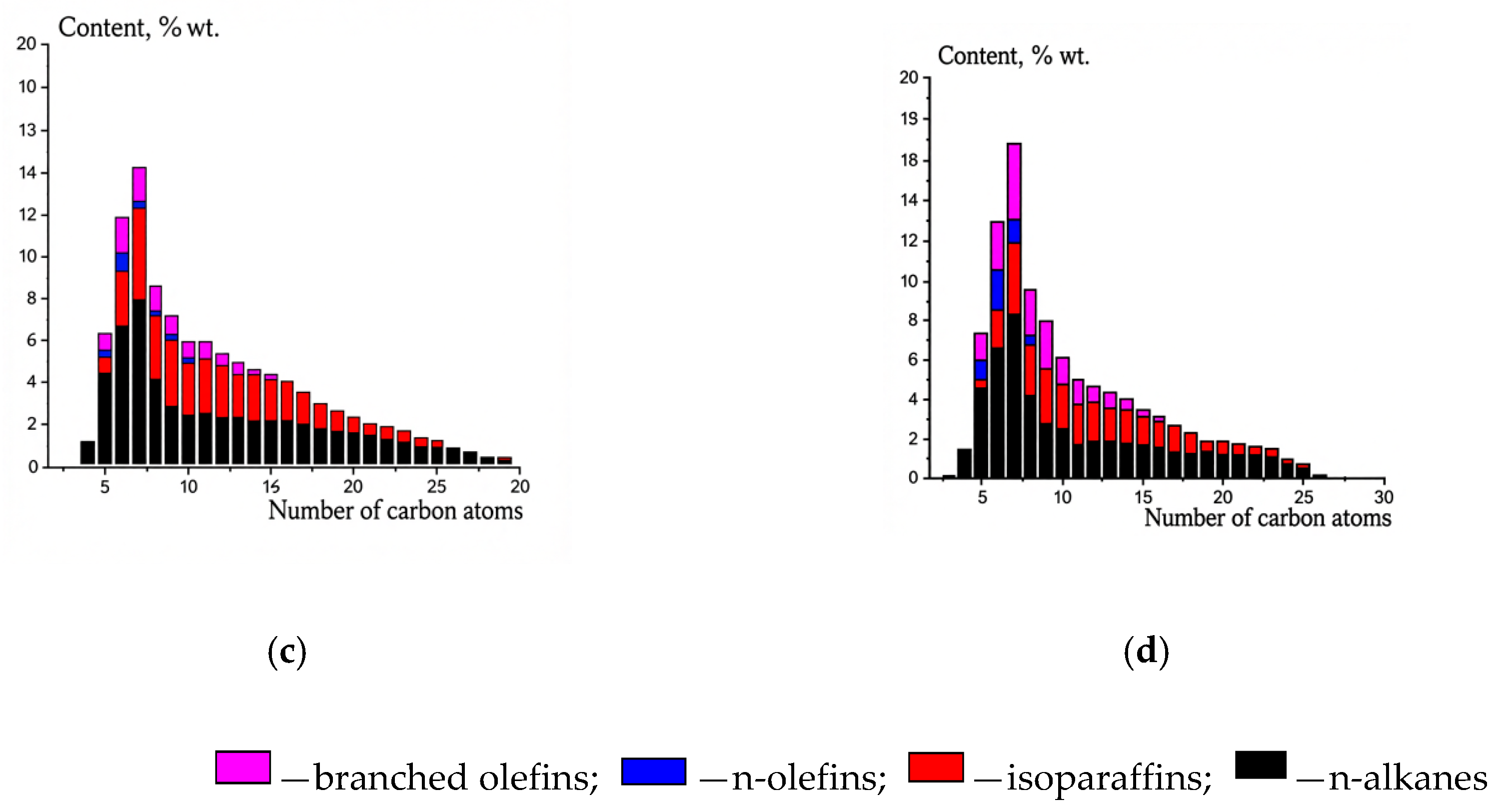
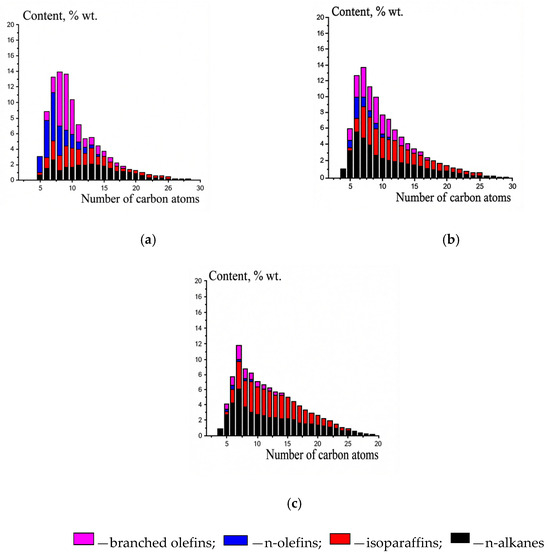
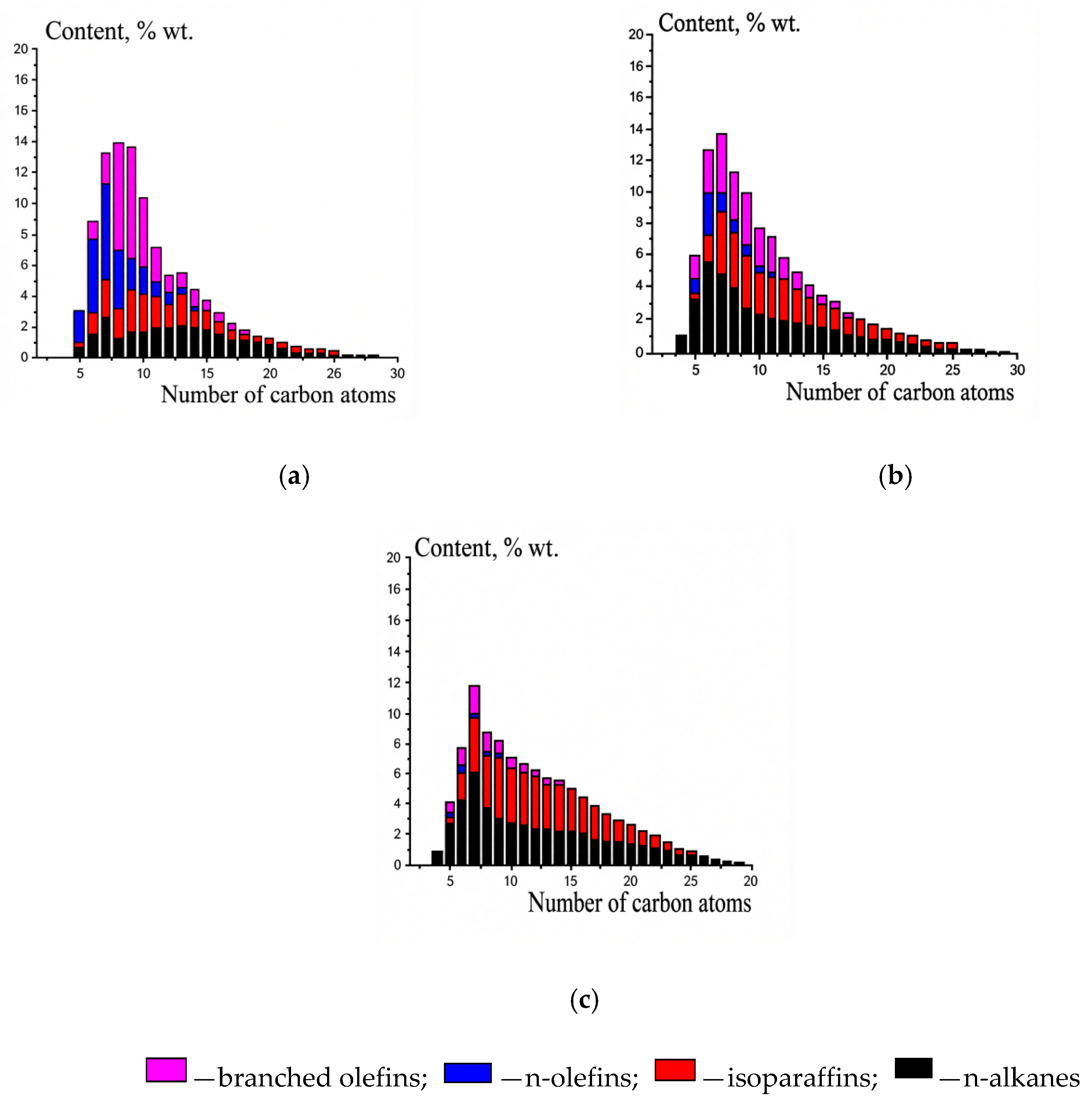
The carbon chain length of the synthesized hydrocarbons on the studied catalysts does not exceed thirty carbon atoms; for the catalyst with 0.3% Pd, the chain length is 27 atoms. The distribution of C5+ n-alkanes for all samples with a hydrogenating additive is unimodal, with maxima in the C6–C8 region. For the catalyst without Pd, the maxima are at C6–C8 and C13–C16, and the distribution is bimodal (Figure 9).
Figure 9.
Molecular weight distribution of C5+ synthesis products of GSHV = 1000 h−1, P = 2 MPa, t = 240 °C, H2/CO ratio = 2. (a)—HZ; (b)—0.075 PdHZ; (c)—0.15 PdHZ; (d)—0.3 PdHZ.
The results of the analysis of the synthesis products of polyfunctional composite catalysts at 250 °C, as a hydrogenating component containing Pd, introduced by impregnation of zeolite HZSM-5, are presented in Table 8 and Figure 10.
Table 8.
Group and fractional composition of hydrocarbons obtained on catalysts containing Pd introduced by impregnation with zeolite HZSM-5, GSHV = 1000 h−1, P = 2 MPa, t = 250 °C, H2/CO ratio = 2.
Figure 10.
Molecular weight distribution of C5+ synthesis products of GSHV = 1000 h−1, P = 2 MPa, t = 250 °C, H2/CO ratio = 2. (a)—HZ; (b)—0.075 PdHZ; (c)—0.15 PdHZ.
As the Pd concentration increases, the C5–C10 hydrocarbon content decreases, while the C19+ content increases. The C11–C18 fraction yield and iso/n values are extreme: the maximum C19+ content corresponds to a sample with a Pd concentration of 0.075%, and the iso/n value passes through a maximum corresponding to the catalyst with 0.075% Pd.
The o/p values decrease with increasing Pd concentration. As the synthesis temperature increases, the iso/n and o/p values increase. With increasing dispersion, selectivity for iso-alkanes increases, while for alkenes, it decreases.
Table 9 compares various hydrogenating metals impregnated into the zeolite component of hybrid catalysts.
Table 9.
Comparison of performance and selectivity indicators of hybrid catalysts with different hydrogenating components (GSHV = 1000 h−1, P = 2 MPa, t = 240 °C, H2/CO ratio = 2).
The introduction of a hydrogenating metal into the zeolite portion of a hybrid cobalt-zeolite catalyst profoundly affects the physicochemical and catalytic properties. The addition of ruthenium increases overall productivity, ensuring the highest yield of liquid C5+ hydrocarbons. In this parameter, the metals are arranged in descending order of effectiveness: Ru > Pd > Pt > Ni. However, the product obtained with ruthenium is characterized by a relatively high proportion of olefins, while palladium exhibits exceptional hydrogenation capacity, almost completely saturating olefins to paraffins and yielding the most stable product. The ability to hydrogenate olefins decreases in the order Pd > Pt > Ru ≈ Ni.
The Pt catalyst generates the highest proportion of branched iso-alkanes, directly demonstrating its superior ability to catalyze isomerization reactions. In terms of selectivity for isomeric hydrocarbon formation, the metals rank in the order Pt > Pd > Ru > Ni. This result makes platinum an ideal choice for producing high-octane gasoline. Meanwhile, nickel, being the most economical option, consistently ranks at the bottom of all rankings, trailing noble metals in all key parameters.
Thus, the presented data vividly illustrate the principle of “fine-tuning” complex catalytic systems. The choice of a specific hydrogenating metal allows for targeted yield adjustments: be it maximum overall yield (Ru), high-octane gasoline with an abundance of isomers (Pt), or stable paraffinic fuel with minimal olefin content (Pd). Each series—productivity, branching, or saturation—reveals its own hierarchy of metals, transforming catalyst design into a strategic tool for managing the properties of the final product. Overall, taking all factors into account, the palladium catalyst enables the production of fuels with an optimal balance of isomeric hydrocarbons and a minimum content of unsaturated hydrocarbons. This opens up prospects for producing high-quality fuels from CO and H2 in a single step using such a catalyst.
3. Materials and Methods
3.1. Preparation of Catalysts
A bifunctional catalyst was prepared by mechanically mixing the powders (fraction < 100 μm) of the Co-Al2O3/SiO2 FTS catalyst (the preparation and characterization have been reported previously [27,28]) with the acid form of zeolite ZSM-5 (H-ZSM-5) and boehmite as a binder. An aqueous solution of triethylene glycol (0.03 mol per 1 mol of boehmite) and nitric acid (0.02 mol per 1 mol of boehmite) was added to the powder mixture for plasticization. Cylindrical pellets with a diameter of 2 mm and a length of 2–3 mm were extruded and dried at ambient temperature for 24 h. After that, the extrudate was dried at heating in the following mode: at 80 °C for 4 h, then at temperatures of 100 °C, 120 °C and 140 °C for 1 h each. Finally, it was calcined for 4 h at 400 °C to convert boehmite into alumina. The resulting hybrid catalyst contained the optimal amounts of Co/SiO2 (35 wt.%), ZSM-5 (30 wt.%) and Al2O3 (35 wt.%) as shown in preliminary experiments; it is further referred to as Z.
Palladium was introduced by impregnating HZSM-5 zeolite with a solution of palladium(II) acetate Pd(CH3COO)2 in dilute acetic acid for 0.5 h at 70–80 °C with constant stirring. Then the excess solution was removed, and the wet zeolite powder was subjected to heat treatment in the following order: 4 h at 80 °C, 4 h at 100–150 °C, 4 h at 400 °C. The FT synthesis catalyst Co–Al2O3/SiO2 was used as the metal component in the preparation of catalysts of the composition 35(Co–Al2O3/SiO2)/35xPd HZSM-5/30Al2O3 (% by weight) containing palladium (x is the palladium content, %, by weight) in the acid component. When converted to a composite catalyst, the Pd content was 0.075, 0.15, and 0.3% by weight. Depending on the Pd content in the acid component, the catalysts were designated as 0.075 PdHZ, 0.15 PdHZ, and 0.3 PdHZ.
3.2. Catalysts Characterization
The X-ray powder diffraction study (XRD) of the samples was performed at a X-ray structural analysis beamline of Kurchatov Synchrotron Radiation (SR) Source 30 at a wavelength of 0.074 Å. The sample was placed in a cryoloop of 300 μm in size and rotated around the horizontal axis during the measurement, which made it possible to average the diffraction patterns according to the orientations of the sample. Diffraction patterns were collected with a 2D Rayonix SX165 detector (Rayonix, L.L.C., Evanston, IL 60201, USA.), which was located at an angle of 2θ = 28.5° to the SR beam at a distance of 150 mm; Debye–Scherrer geometry (transmission) was used with a beam size of 400 μm. The exposure time was 3–5 min. To calibrate the sample-detector distance, we needed a polycrystalline standard with a known position of the diffraction peaks. In this series of measurements, LaB6 powder (NIST SRM 660a) was used as such a standard. The qualitative phase composition was determined using PDF-2 [29] in the Crystallographica software (Version 3.1.0.2). The sizes of the coherent scattering regions (CSR) of Co0 were estimated using the Scherrer equation [23]:
where d()—is the average particle size, nm; K is the Scherrer constant (K = 0.89); λ is the X-ray wavelength, nm; θ is the Bragg angle, rad; β is the half-height of the reflection, rad.
Temperature-programmed reduction (TPR) studies of catalyst surface processes were performed using a Micromeritics ChemiSorb 2750 analyzer (Norcross, GA, USA) with a thermal conductivity detector (TCD). For TPR, the catalysts were pre-exposed to a helium flow (20 mL min-1) for 1 h at 200 °C. They were then cooled to room temperature and fed with a mixture of 10% hydrogen and 90% nitrogen (20 mL min-1). TPR was carried out in the temperature range of 20–800 °C at a heating rate of 20 °C min-1.
The temperature-programmed desorption of hydrogen (H2-TPD) was conducted on the same instrument within a temperature range of 25–500 °C in a helium flow after saturation of the reduced sample with hydrogen and removal of the physically adsorbed gas. The degree of reduction of cobalt was determined according to the results of pulsed oxidation of the reduced sample with oxygen.
IR spectroscopy of adsorbed pyridine was employed to separately determine the concentrations of Brønsted and Lewis acid sites. Spectra were recorded using a Bruker Vertex-70 V FTIR spectrometer (Billerica, MA, USA) equipped with an MCT detector in the 4000–400 cm−1 range with a resolution of 4 cm−1. Samples in the form of self-supporting wafers (∅10 mm, 15–20 mg) were placed in a custom-made vacuum cell fitted with CaF2 windows. Prior to pyridine adsorption, the samples were activated in situ under vacuum (10−3 mbar) at 450 °C for 3 h. Pyridine vapor adsorption was performed at 150 °C for 30 min, followed by the removal of physisorbed pyridine via evacuation at the same temperature for 30 min. The concentrations of Brønsted (BAS) and Lewis (LAS) acid sites were calculated by integrating the absorption band areas corresponding to the vibrations of the pyridinium ion (PyH+, ∼1545 cm−1) and coordinated pyridine (PyL, ∼1454 cm−1), using known molar extinction coefficients [19].
The textural properties, including the BET specific surface area and the volumes of micro-, meso-, and macropores, were determined using low-temperature N2 adsorption–desorption on a Quantachrome Nova 1200e analyzer (Boynton Beach, FL, USA).
A target-oriented approach was utilized for the optimization of the analytic measurements [30]. Before measurements, the samples were deposited on the 3 mm carbon-coated copper grids from an isopropanol suspension. The observations were carried out using a Hitachi Regulus SU8230 field-emission scanning electron microscope (FE-SEM, Tokyo, Japan). Images were acquired in transmitted electron mode at 30 kV accelerating voltage [30].
3.3. Catalytic Tests
The catalytic properties were studied in an isothermal reactor with a fixed catalyst bed and a diameter of 16 mm. The reactor was loaded with 10 cm3 of catalyst (1–2 mm fraction) mixed with 30 cm3 of quartz of the same particle size distribution. The catalyst was reduced with hydrogen for 1 h at a temperature of 400 °C and a gas space velocity of 3000 h−1. The samples were activated with synthesis gas with a ratio of H2/CO = 2 and catalytic tests were carried out at a pressure of 2.0 MPa and a gas space velocity of 1000 h−1, raising the temperature from 180 °C to 240–250 °C at a rate of 5 °C h−1. Balance experiments were carried out for 100–150 h, analyzing the composition and amount of gas at the outlet of the unit every 2 h. The activity of the catalysts was judged by the CO conversion, selectivity and productivity of the catalysts, and the fractional and hydrocarbon composition of the synthesis products.
The composition of the feed gas and gaseous synthesis products was analyzed using a Crystal 5000 gas chromatograph (Chromatec, Yoshkar-Ola, Russia) equipped with a thermal conductivity detector and two columns (Haysep R active phase and NaX molecular sieves). The analysis mode was temperature-programmed with a heating rate of 8 °C min−1. The condensed synthesis products were separated by distillation at atmospheric pressure, isolating fuel fractions with boiling points: gasoline—up to 180 °C, diesel—180–330 °C, still residue—above 330 °C. The component composition of fractions C5–10 (gasoline), C11–18 (diesel) and C19+ (still residue) at atmospheric pressure was determined by capillary gas chromatography–mass spectrometry. An Agilent GC 7890A gas chromatograph with an MSD 5975C mass-selective detector (Agilent Technologies, Santa Clara, CA, USA) and an HP-5MS capillary column (30 m × 0.25 mm × 0.25 μm) with a dimethylsilicone (5% diphenyl/95% dimethylpolysiloxane) stationary phase was used. Mass spectra were recorded in the range of 45–550 amu with electron impact ionization (70 eV). The mass spectrometer was calibrated using perfluorotributylamine (FC-43) in the leakage mode. Helium (grade 6.0, purity not less than 99.9999%) was used as a carrier gas with a programmable flow: from 0.6 mL/min (hold 0.5–5 min) to 2 mL/min. Identification of peaks in the obtained chromatograms was performed by comparing the experimental mass spectra with NIST library data. An external standard method was used for quantitative analysis. Identification of components was confirmed by comparing retention times with reference samples analyzed under identical conditions. The concentration of each component (as a percentage) was determined by internal normalization of peak areas, corrected for the detector response factor.
4. Conclusions
Studies of hybrid catalysts based on the Co/SiO2 + HZSM-5 + Al2O3 system with added palladium revealed key patterns in their activity and selectivity. It was found that the addition of palladium significantly impacts the cobalt oxide reduction process. Palladium acts as a hydrogen transfer catalyst, leading to a shift in the Co3O4 reduction temperature by approximately 25 °C toward lower values. This effect facilitates the formation of highly dispersed cobalt metal (Co0) particles with a size of 9.0–10.8 nm, which corresponds to the optimal range for efficient hydrocarbon synthesis via the Fischer–Tropsch mechanism.
Palladium significantly altered the product composition: its addition led to a sharp decrease in the proportion of unsaturated hydrocarbons (alkenes) from 50% to 8.8% and a simultaneous increase in the content of branched isoalkanes to 45.3% with an optimal Pd loading of 0.15 wt%. This effect is crucial, as it enables hydrorefining of synthesis products directly in a single reactor, eliminating a separate process step. Furthermore, the hydrocarbon chain length distribution became unimodal, with a maximum in the C6–C8 range.
The developed catalyst, containing only 0.15% palladium, can be used to produce high-quality fuels—high-octane gasoline, diesel fuel with improved low-temperature properties, and stable kerosene, including SAF—with an optimal balance of isomeric hydrocarbons and a minimum content of unsaturates. This opens the possibility of creating an efficient single-stage process for producing ready-to-use or easily standardized fuel from syngas (CO and H2), combining the high knock resistance of the gasoline fraction, the excellent fluidity of the diesel fraction, and the necessary oxidative stability of aviation fuel.
Author Contributions
Project administration, Supervision, R.Y.; Writing—original draft, A.C.; Investigation, A.V., D.P. and E.Y.; Writing—review & editing, V.M.; Formal analysis, A.A.; Methodology, A.N. and E.S.; Investigation, R.S. Conceptualization, Supervision, M.A. All authors have read and agreed to the published version of the manuscript.
Funding
The work was carried out within the framework of the strategic project ‘Development of technologies for small-tonnage chemical products and materials for energy’ of the Platov South-Russian State Polytechnic University (NPI) Development Program in the implementation of the strategic academic leadership program ‘Priority-2030’ (catalysts were synthesized, their catalytic and physicochemical properties were studied, the hydrocarbon composition of the products was determined). Nikolaev A. and Sadyrin E. acknowledge the support of the Russian Science Foundation (grant No 25-19-00523. https://rscf.ru/project/25-19-00523/ (accessed on 10 January 2026)). (3D visualization and micro-CT study of samples.) The microtomography was carried out using the equipment of the Resource Center for Collective Use of the Scientific and Educational Center ‘Materials’ of the Don State Technical University (RCCU DSTU).
Data Availability Statement
The original contributions presented in this study are included in the article. Further inquiries can be directed to the corresponding author.
Conflicts of Interest
The authors declare no conflicts of interest.
References
- Khodakov, A.Y.; Wei, C.; Fongarland, P. Advances in the Development of Novel Cobalt Fischer–Tropsch Catalysts for Synthesis of Long-Chain Hydrocarbons and Clean Fuels. Chem. Rev. 2007, 107, 1692–1744. [Google Scholar] [CrossRef] [Scilit] [PubMed]
- Adeleke, A.A.; Liu, X.; Lu, X.; Moyo, M.; Hildebrandt, D. Cobalt Hybrid Catalysts in Fischer–Tropsch Synthesis. Rev. Chem. Eng. 2020, 36, 437–457. [Google Scholar] [CrossRef] [Scilit]
- Dry, M.E. The Fischer–Tropsch Process: 1950–2000. Catal. Today 2002, 71, 227–241. [Google Scholar] [CrossRef] [Scilit]
- Steynberg, A.P.; Dry, M.E. Fischer–Tropsch Technology. In Studies in Surface Science and Catalysis; Elsevier: Amsterdam, The Netherlands, 2004; Volume 152. [Google Scholar]
- Bartholomew, C.H.; Farrauto, R.J. Fundamentals of Industrial Catalytic Processes, 2nd ed.; John Wiley & Sons: Hoboken, NJ, USA, 2006. [Google Scholar]
- Ram, V.; Salkuti, S.R. An Overview of Major Synthetic Fuels. Energies 2023, 16, 2834. [Google Scholar] [CrossRef] [Scilit]
- Sartipi, S.; Alberts, M.; Meijerink, M.J.; Keller, T.C.; Perez-Ramirez, J.; Gascon, J.; Kapteijn, F. Towards Liquid Fuels from Biosyngas: Effect of Zeolite Structure in Hierarchical-Zeolite-Supported Cobalt Catalysts. ChemSusChem 2013, 6, 1646–1650. [Google Scholar] [CrossRef] [Scilit]
- Sartipi, S.; Makkee, M.; Kapteijn, F.; Gascon, J. Catalysis engineering of bifunctional solids for the one-step synthesis of liquid fuels from syngas: A review. Catal. Sci. Technol. 2014, 4, 893–907. [Google Scholar] [CrossRef] [Scilit]
- Valero-Romero, M.J.; Sartipi, S.; Sun, X.; Rodríguez-Mirasol, J.; Cordero, T.; Kapteijn, F.; Gascon, J. Carbon/H-ZSM-5 composites as supports for bi-functional Fischer–Tropsch synthesis catalysts. Catal. Sci. Technol. 2016, 6, 2633–2646. [Google Scholar] [CrossRef] [Scilit]
- Kibby, C.; Jothimurugesan, K.; Das, T.; Lacheen, H.S.; Rea, T.; Saxton, R.J. Chevron’s gas conversion catalysis-hybrid catalysts for wax-free Fischer–Tropsch synthesis. Catal. Today 2013, 215, 131–141. [Google Scholar] [CrossRef] [Scilit]
- Subramanian, V.; Zholobenko, V.L.; Cheng, K.; Lancelot, C.; Heyte, S.; Thuriot, J.; Paul, S.; Ordomsky, V.V.; Khodakov, A.Y. The Role of Steric Effects and Acidity in the Direct Synthesis of iso-Paraffins from Syngas on Cobalt Zeolite Catalysts. ChemCatChem 2016, 8, 380–389. [Google Scholar] [CrossRef] [Scilit]
- Kruse, N.; Machoke, A.G.; Schwieger, W.; Güttel, R. Nanostructured encapsulated catalysts for combination of Fischer–Tropsch synthesis and hydroprocessing. ChemCatChem 2015, 7, 1018–1022. [Google Scholar] [CrossRef] [Scilit]
- Martínez, A.; Valencia, S.; Murciano, R.; Cerqueira, H.S.; Costa, A.F.; Aguiar, E.F.S. Catalytic behavior of hybrid Co/SiO2-(medium-pore) zeolite catalysts during the one-stage conversion of syngas to gasoline. Appl. Catal. A Gen. 2008, 346, 117–125. [Google Scholar] [CrossRef] [Scilit]
- Tsubaki, N.; Yoneyama, Y.; Michiki, K.; Fujimoto, K. Three-component hybrid catalyst for direct synthesis of isoparaffin via modified Fischer–Tropsch synthesis. Catal. Commun. 2003, 4, 108–111. [Google Scholar] [CrossRef] [Scilit]
- Mitchenko, S.; Yakovenko, R.; Soromotin, V.; Svetogorov, R.; Rusalev, Y. Tuning Selectivity in Low-Temperature Fischer–Tropsch Synthesis by Applying Gas Recycle Mode. Appl. Catal. A Gen. 2024, 675, 119641. [Google Scholar] [CrossRef] [Scilit]
- Narochnyi, G.B.; Saliev, A.N.; Zubkov, I.N.; Savost’yanov, A.P.; Yakovenko, R.E. Producing Synthetic High-Octane Gasoline from Associated Petroleum Gas. Catal. Ind. 2025, 17, 47–55. [Google Scholar] [CrossRef] [Scilit]
- Lin, Q.; Zhang, Q.; Yang, G.; Chen, Q.; Li, J.; Wei, Q.; Tan, Y.; Wan, H.; Tsubaki, N. Insights into the Promotional Roles of Palladium in Structure and Performance of Cobalt-Based Zeolite Capsule Catalyst for Direct Synthesis of C5–C11 Iso-Paraffins from Syngas. J. Catal. 2016, 344, 378–388. [Google Scholar] [CrossRef] [Scilit]
- Jacobs, G.; Ma, W.; Davis, B.H. Influence of Reduction Promoters on Stability of Cobalt/γ-Alumina Fischer–Tropsch Synthesis Catalysts. Catalysts 2014, 4, 49–76. [Google Scholar] [CrossRef] [Scilit]
- Tamura, M.; Shimizu, K.; Satsuma, A. Comprehensive IR Study on Acid/Base Properties of Metal Oxides. Appl. Catal. A Gen. 2012, 433–434, 135–145. [Google Scholar] [CrossRef] [Scilit]
- Xu, D.; Li, W.; Duan, H.; Ge, Q.; Xu, H. Reaction performance and characterization of Co/Al2O3 Fischer–Tropsch catalysts promoted with Pt, Pd and Ru. Catal. Lett. 2005, 102, 229–235. [Google Scholar] [CrossRef] [Scilit]
- Weitkamp, J. Catalytic Hydrocracking—Mechanisms and Versatility of the Process. ChemCatChem 2012, 4, 292–306. [Google Scholar] [CrossRef] [Scilit]
- Corma, A. Inorganic Solid Acids and Their Use in Acid-Catalyzed Hydrocarbon Reactions. Chem. Rev. 1995, 95, 559–614. [Google Scholar] [CrossRef] [Scilit]
- Martinez, A.; Lopez, C. The Influence of ZSM-5 Zeolite Composition on the Synthesis of Gasoline-Range Hydrocarbons from Syngas over Hybrid Co/ZSM-5 Catalysts. Appl. Catal. A Gen. 2005, 294, 151–159. [Google Scholar] [CrossRef] [Scilit]
- Sulima, S.I.; Bakun, V.G.; Zubkov, I.N.; Savost’yanov, A.P.; Yakovenko, R.E. Effects of Ruthenium on the Catalytic Performance of Cobalt-Based Hybrid Catalysts for Synthesis of Hydrocarbons from CO and H2. Pet. Chem. 2023, 63, 1095–1104. [Google Scholar] [CrossRef] [Scilit]
- Yakovenko, R.E.; Zubkov, I.N.; Papeta, O.P.; Kataria, Y.V.; Bakun, V.G. The Influence of Platinum on the Catalytic Properties of Bifunctional Cobalt Catalysts for the Synthesis of Hydrocarbons from CO and H2. Catalysts 2024, 14, 351. [Google Scholar] [CrossRef] [Scilit]
- Yakovenko, R.E.; Zubkov, I.N.; Bakun, V.G.; Savost’yanov, A.P. Combined Synthesis and Hydroprocessing of Hydrocarbons over Co/SiO2 + ZSM-5 + Al2O3 Catalysts Promoted by Nickel. Pet. Chem. 2021, 61, 516–526. [Google Scholar] [CrossRef] [Scilit]
- Savost’yanov, A.P.; Narochnyi, G.B.; Yakovenko, R.E.; Mitchenko, S.A.; Zubkov, I.N. Enhancement of the Fischer–Tropsch Process for Producing Long-Chain Hydrocarbons on a Cobalt–Alumina–Silica Gel Catalyst. Pet. Chem. 2018, 58, 281–290. [Google Scholar] [CrossRef] [Scilit]
- Savost’yanov, A.P.; Narochnyi, G.B.; Yakovenko, R.E.; Bakun, V.G.; Zemlyakov, N.D. Synthesis of High-Molecular-Weight Hydrocarbons from CO and H2 over a Cobalt Catalyst. Catal. Ind. 2014, 8, 278–284. [Google Scholar] [CrossRef] [Scilit]
- PDF-2: The Powder Diffraction File TM. International Center for Diffraction Data (ICDD). PDF-2 Release 2012. 2024. No. 000-61-0765. Available online: https://www.icdd.com (accessed on 5 February 2026).
- Kachala, V.V.; Khemchyan, L.L.; Kashin, A.S.; Orlov, N.V.; Grachev, A.A.; Zalesskiy, S.S.; Ananikov, V.P. Target-oriented analysis of gaseous, liquid and solid chemical systems by mass spectrometry, nuclear magnetic resonance spectroscopy and electron microscopy. Russ. Chem. Rev. 2013, 82, 648–685. [Google Scholar] [CrossRef] [Scilit]

Disclaimer/Publisher’s Note: The statements, opinions and data contained in all publications are solely those of the individual author(s) and contributor(s) and not of MDPI and/or the editor(s). MDPI and/or the editor(s) disclaim responsibility for any injury to people or property resulting from any ideas, methods, instructions or products referred to in the content. |
© 2026 by the authors. Licensee MDPI, Basel, Switzerland. This article is an open access article distributed under the terms and conditions of the Creative Commons Attribution (CC BY) license.