Article

Upgrading Conversion of Corncob to Furan Amino Acid via Cascade Catalysis of Solid Acid and Whole-Cell Catalyst

1
National-Local Joint Engineering Research Center of Biomass Refining and High-Quality Utilization, Institute of Urban & Rural Mining, Changzhou University, Changzhou 213164, China
2
School of Petrochemical Engineering, Changzhou University, Changzhou 213164, China
*
Author to whom correspondence should be addressed.
Catalysts 2026, 16(2), 180; https://doi.org/10.3390/catal16020180
Submission received: 25 December 2025 / Revised: 2 February 2026 / Accepted: 9 February 2026 / Published: 11 February 2026

Abstract

The sustainable synthesis of valuable noncanonical amino acids from renewable raw materials holds significant importance. This research developed a viable chemical–biological coupling process, leveraging the synergistic effect of a solid acid catalyst and the whole cell of E. coli PpLTA to selectively synthesize β-(2-furanyl) serine from corncob. Initially, a novel magnetic solid acid catalyst, Fe3O4/C-SO3H, was successfully fabricated and employed to catalyze the degradation of corncob in a toluene–water biphasic system for furfural production. Under the optimal conditions (catalyst loading of 2.0% w/w and reaction at 170 °C for 20 min), the furfural yield could attain 62.3%. After ten cycles of use, the yield of furfural remained at 44.7% and the retention rate of catalytic activity was 71.7%. Furthermore, the biocompatibility verification results demonstrated that the furfural derived from corncob could be completely transformed by E. coli PpLTA at a concentration of 50 mM, and this furfural system did not generate any by-products that hindered the biotransformation process. This chemical–biological coupling approach offers a technical solution for the efficient production of noncanonical amino acids from biomass resources.

Graphical Abstract

1. Introduction

Furfural, a typical bio-based platform compound, primarily derives from renewable biomass resources like hemicellulose. It serves as a crucial precursor for furan-based chemicals and finds extensive application in the domains of medicine, fertilizers, and pesticides [1,2,3]. Its derivatives, furan-based chiral amino acids, are the core materials for the development of novel peptide drugs. Owing to the rigid and hydrophobic structure of the furan ring, it can effectively address the flexibility issue within peptide molecules, enhance the stability of the peptide backbone and the activity of the drug, and simultaneously realize the high-value utilization of biomass resources, which aligns with the concept of green chemistry [4].
Currently, the industrial preparation of furfural primarily depends on homogeneous acid catalysts (e.g., sulfuric acid, hydrochloric acid, and acidic ionic liquids). Although these catalysts exhibit excellent catalytic activity and selectivity, they possess inherent drawbacks. The catalysts are difficult to recycle and reuse, the reaction incurs high energy consumption, the equipment experiences severe corrosion, side reactions occur frequently, and environmental pollution is prominent, which fails to meet the requirements of clean production [5]. To address these issues, heterogeneous solid acid catalysts have become the focus of research. These catalysts include types such as mineral materials [6,7], metal oxides [8], zeolites [9], resins [10], and biochar [11]. However, they generally encounter bottlenecks such as complex preparation processes, insufficient catalytic stability, or high costs, which limit their industrial application. As reviewed by Cousin et al. [12], while heterogeneous solid acids have replaced homogeneous acids in many biomass conversion processes, their industrial application is still limited by challenges such as difficult separation and insufficient stability. In contrast, carbon-based solid acid catalysts stand out because of their advantages, such as wide raw material sources, low cost, high specific surface area, and adjustable surface active groups, and have emerged as a highly promising green catalytic material [13]. Xu et al. [14] prepared a novel carbon-based solid acid catalyst (S-800-CG) via the carbonization of calcium gluconate at 800 °C and subsequent room-temperature sulfonation with 4-diazobenzenesulfonate, which had a high specific surface area (599.17 m2/g) and sulfonic acid group density (1.29 mmol/g). In a 1,4-dioxane system, it efficiently catalyzed corncob conversion to furfural, achieving a 52.9% yield from 200 mg corncob at 190 °C for 70 min. After four reuse cycles, the yield still reached 36.4%, demonstrating good stability and industrial application potential. Lin et al. [15] developed a low-cost, eco-friendly sulfonated mesoporous carbon catalyst (SC-CaCt-700) with high specific surface area and SO3H density. At 200 °C for 100 min, it achieved a 93% furfural yield from corn stover via GVL but showed poor reusability as the yield decreased from 95% to 61% after five reaction cycles. Nevertheless, despite the separability of heterogeneous catalysts via filtration or centrifugation, they still face the core challenge of efficient recovery in biomass catalytic refining systems, which limits their practical application. The introduction of magnetic components (e.g., Fe3O4) into carbon-based solid acids enables rapid, efficient catalyst separation by external magnetic fields, while preserving catalytic activity and recovery convenience [16]. Zhang et al. [17] prepared a magnetic carbon-based solid acid catalyst (MCSA) from tobacco straw via the process of FeCl3 loading, NaCl pore forming, pyrolysis at 800 °C under N2 atmosphere and concentrated sulfuric acid sulfonation. The catalyst possessed both Brønsted acid sites (5.04 μmol/mg; carboxyl groups) and Lewis acid sites (21.16 μmol/mg). In a GVL–water mixed solvent (8:2, v/v), it catalyzed tobacco straw conversion to furfural, achieving a maximum yield of 46.68% under the optimal conditions of 190 °C, 120 min and 0.06 g catalyst dosage. Trung et al. [18] employed magnetic sulfonated graphene oxide (Fe3O4/SGO) as a catalyst for the conversion of sugarcane bagasse into furfural. The experimental results demonstrated that, subsequent to the catalyst being recycled five times, the furfural yield remained stable within the range of 13.7–13.9%, suggesting excellent cycle stability. Moreover, its magnetic characteristic allows for rapid separation via a magnetic field, and it can be reused after undergoing washing and drying processes, thereby considerably simplifying the recovery procedure. Nevertheless, the catalytic performance of this catalyst in furfural synthesis was not satisfactory. Therefore, the development of carbon-based magnetic solid acids and their application in the catalytic conversion of lignocellulosic biomass for furfural preparation hold important theoretical guiding significance and practical application value for promoting the furfural industry towards a green, low-carbon, and sustainable direction.
In the realm of the catalytic conversion of furfural, enzyme catalysis technology exhibits substantial advantages. When compared with traditional chemical catalysis, it features milder reaction conditions, higher catalytic efficiency, and superior environmental compatibility, thus offering a highly promising technological pathway for the green synthesis of furan-based chiral amino acids [19]. Among these enzymes, threonine aldolase (TA, a PLP-dependent enzyme) can reversibly catalyze the aldol addition reaction between aldehyde and glycine, effectively generating β-hydroxy-α-amino acids with double stereocenters at the α and β positions, which fulfill the synthesis requirements of chiral amino acids [20]. Recent reviews [21] have emphasized that integrating chemical catalysis (for biomass degradation) and biocatalysis (for high-value product synthesis) is a key strategy to achieve full-chain biomass valorization. However, few studies have reported such coupling processes for furan amino acid synthesis, primarily due to the inhibitory effect of furfural on microbial cells.
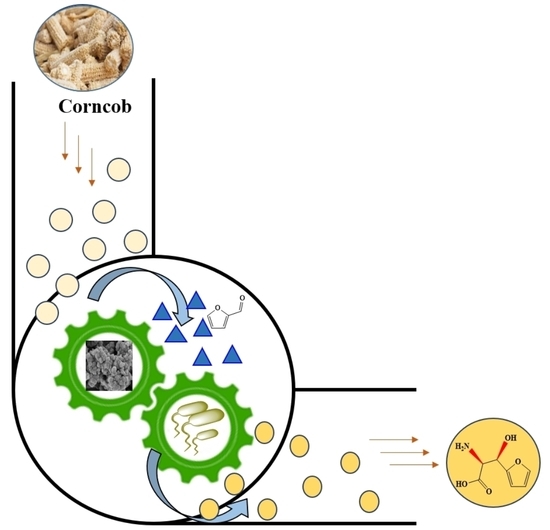
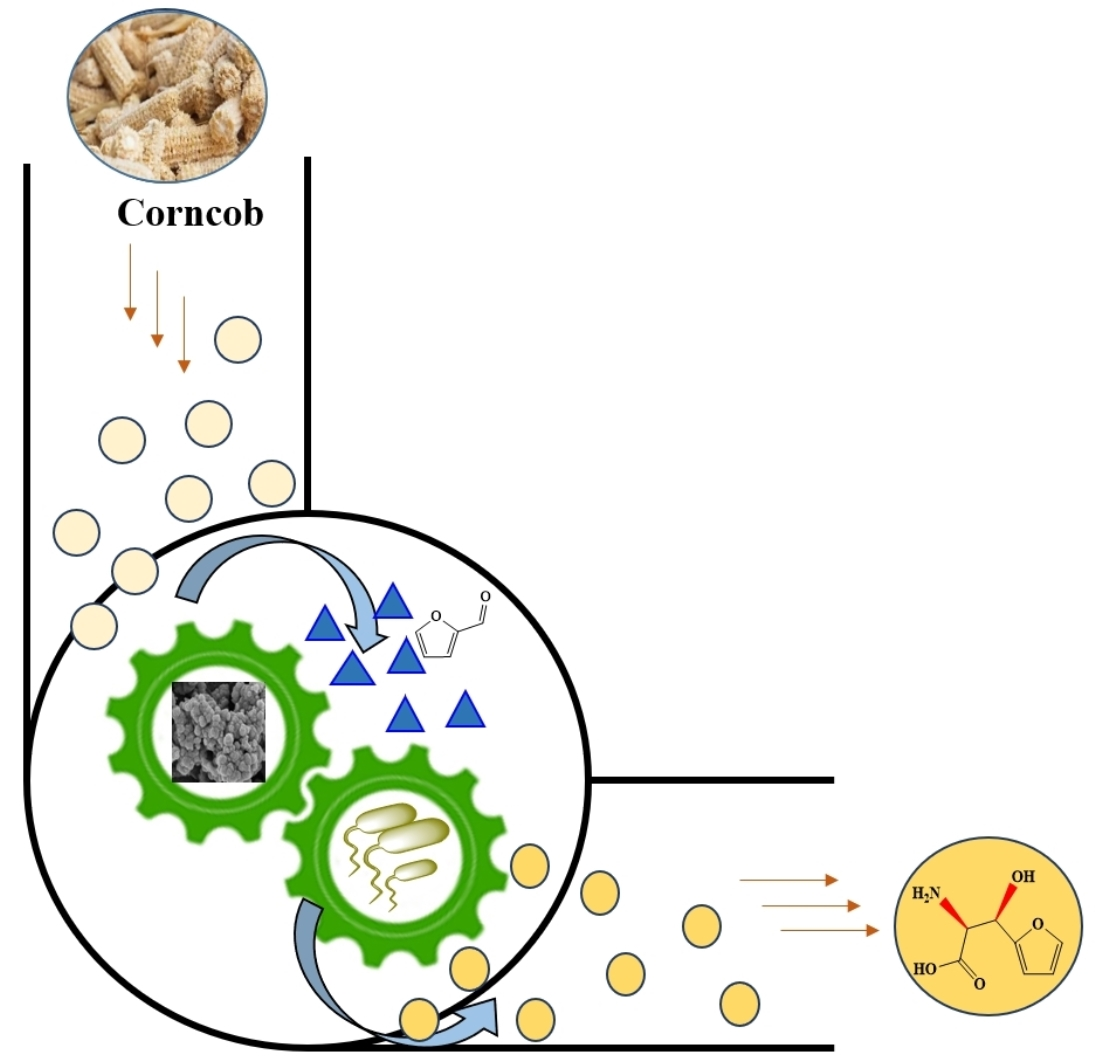
In this study, the chitosan carbon-based magnetic solid acid Fe3O4/C-SO3H was employed as the catalyst to transform corncob into furfural. Subsequently, via the constructed E. coli whole cell containing PpLTA (derived from Pseudomonas putida LTA), furfural was catalytically converted into β-(2-furanyl) serine (FLSE). This represents an efficient one-pot chemical–biological process (Scheme 1). Meanwhile, the morphology and properties of Fe3O4/C-SO3H were characterized and analyzed, and the key process parameters of the two-step catalytic reaction were optimized. Ultimately, the optimal experimental scheme featuring simple process steps, excellent product selectivity, and high yield was obtained, offering theoretical support and technical reference for the large-scale production of biomass-based furan-type amino acids.

2. Results and Discussion

2.1. Characterization of Solid Acid Catalysts

2.1.1. Acid Density

Table 1 presents the acid density parameters of the Fe3O4/C-SO3H solid acid catalyst. This material contains both Brønsted and Lewis acidic sites. The Brønsted acidic sites consist of sulfonic acid groups (-SO3H) and carboxyl groups (-COOH), with a Brønsted acid density of 1.515 mmol/g. The Lewis acid density is 1.971 mmol/g, and the total acid density of the catalyst is 3.487 mmol/g. The synergistic effect of these Brønsted–Lewis dual acidic sites can effectively facilitate the “hydrolysis–dehydration” sequential reaction in the biomass conversion process, enhancing the catalytic efficiency.

2.1.2. Scanning Electron Microscopy (SEM)

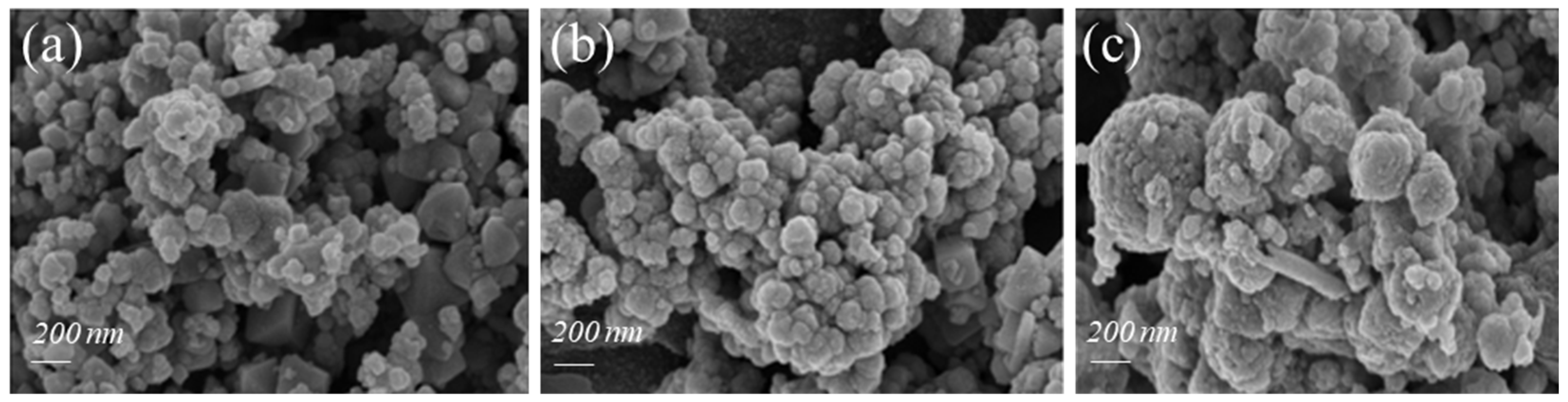
As depicted in Figure 1a, the nano-sized Fe3O4 magnetic particles exhibit an irregular spherical morphology, featuring a relatively uniform particle size distribution. Figure 1b shows that chitosan forms an irregular sheet-like or laminated structure after carbonization, and the Fe3O4 magnetic particles exhibit increased particle size after carbonization coating. In Figure 1c, the composite material after sulfonation and high-temperature calcination shows significantly increased surface roughness, attributed to the synergistic etching effect of the high temperature and the sulfonating agent [22], which forms trace surface voids that provide attachment sites for acidic active groups.

2.1.3. Transmission Electron Microscopy Analysis (TEM)

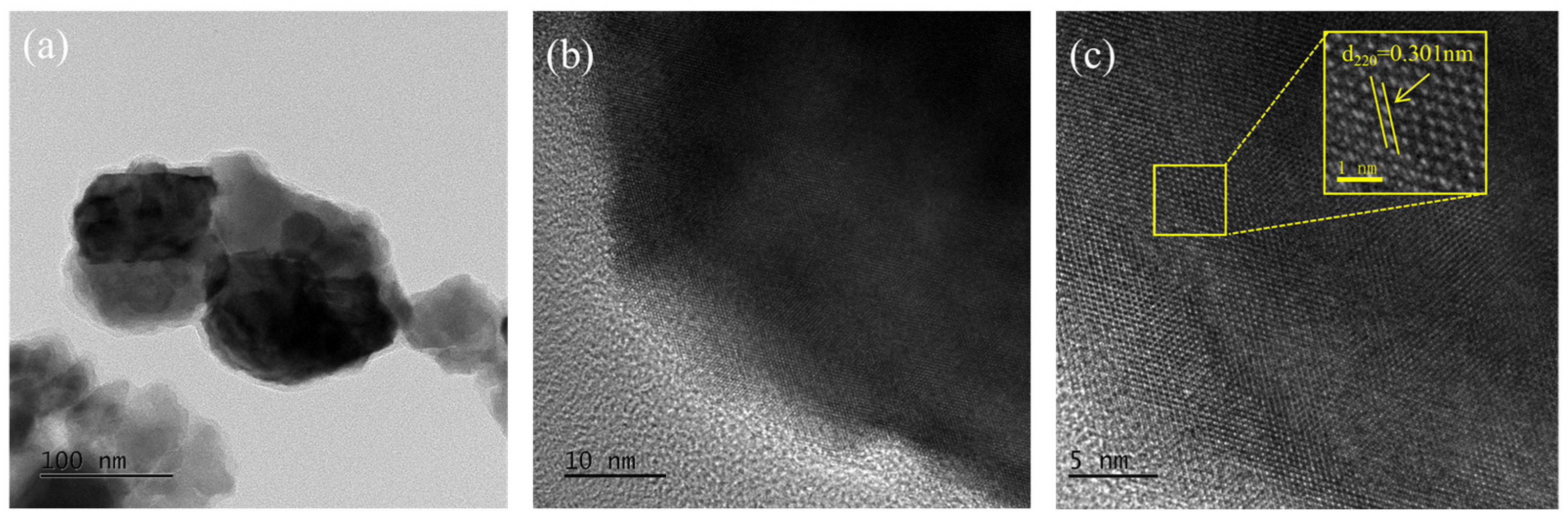
Figure 2a depicts an amorphous agglomeration structure, which corresponds to the encapsulation state of Fe3O4 particles by the carbon-based carrier. There are no distinct lattice stripes, suggesting that the carbon layer has an amorphous graphite-like structure [23]. The sulfonated carbon-based surface demonstrates amorphous characteristics, which confirms the structure in which sulfonic acid groups are loaded onto the amorphous carbon layer (Figure 2b). Figure 2c clearly reveals the lattice stripes of Fe3O4, with a lattice spacing d of 0.301 nm corresponding to the (220) crystal plane of Fe3O4, thereby confirming the presence of Fe3O4 crystal nuclei in the material [24]. In conclusion, the TEM results validate the crystal type of Fe3O4 and endow the material with magnetic responsiveness. The amorphous carbon layer acts as the substrate for functional group loading, while the sulfonic acid groups confer acidic catalytic activity. The spatial distribution of each component lays the structural groundwork for the functional synergy of the material.

2.1.4. Fourier Transform Infrared Spectroscopy (FTIR)

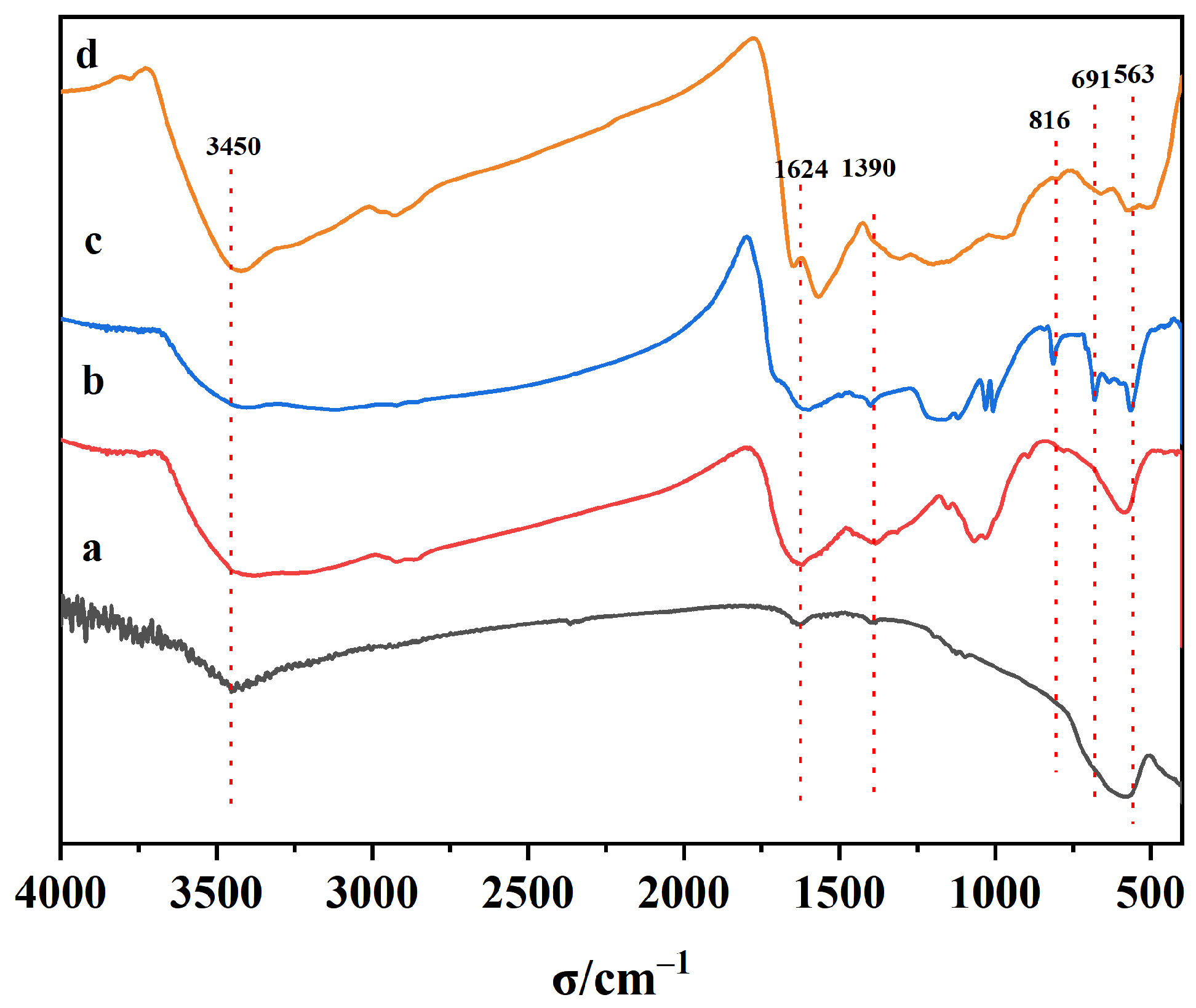
As can be seen from Figure 3, the results of the infrared spectroscopy indicate that the absorption peak in the vicinity of 3450 cm−1 corresponds to the stretching vibration of the O-H bond [25]. The absorption peak at 1624 cm−1 pertains to the stretching vibration of the C=C bond within the carbon-based sp2 hybridization structure. The absorption peak at 1390 cm−1 corresponds to the stretching vibration of the C-O bond in the carbon-based oxygen-containing functional group [26]. The characteristic peak at 563 cm−1 represents the stretching vibration of the Fe-O bond, which is in line with the characteristic vibration of Fe3O4 [27]. This outcome suggests that subsequent to the carbonization and sulfonation processes of Fe3O4, its crystal structure has not experienced substantial alterations and maintains favorable structural stability. Regarding the Fe3O4/C sample obtained from sulfonation (curve c), the absorption peaks at 816, 691 cm−1 are the characteristic vibrations of the S-O bond (corresponding to the sulfonic acid group -SO3H) [28]. By comparing the peak positions of curve b (Fe3O4/C) and curve c, it can be clearly discerned that curve c represents the product after sulfonation modification. The emergence of these characteristic peaks directly verifies that the sulfonic acid group has been successfully grafted onto the material surface.

2.1.5. X-Ray Diffraction Instrument (XRD)

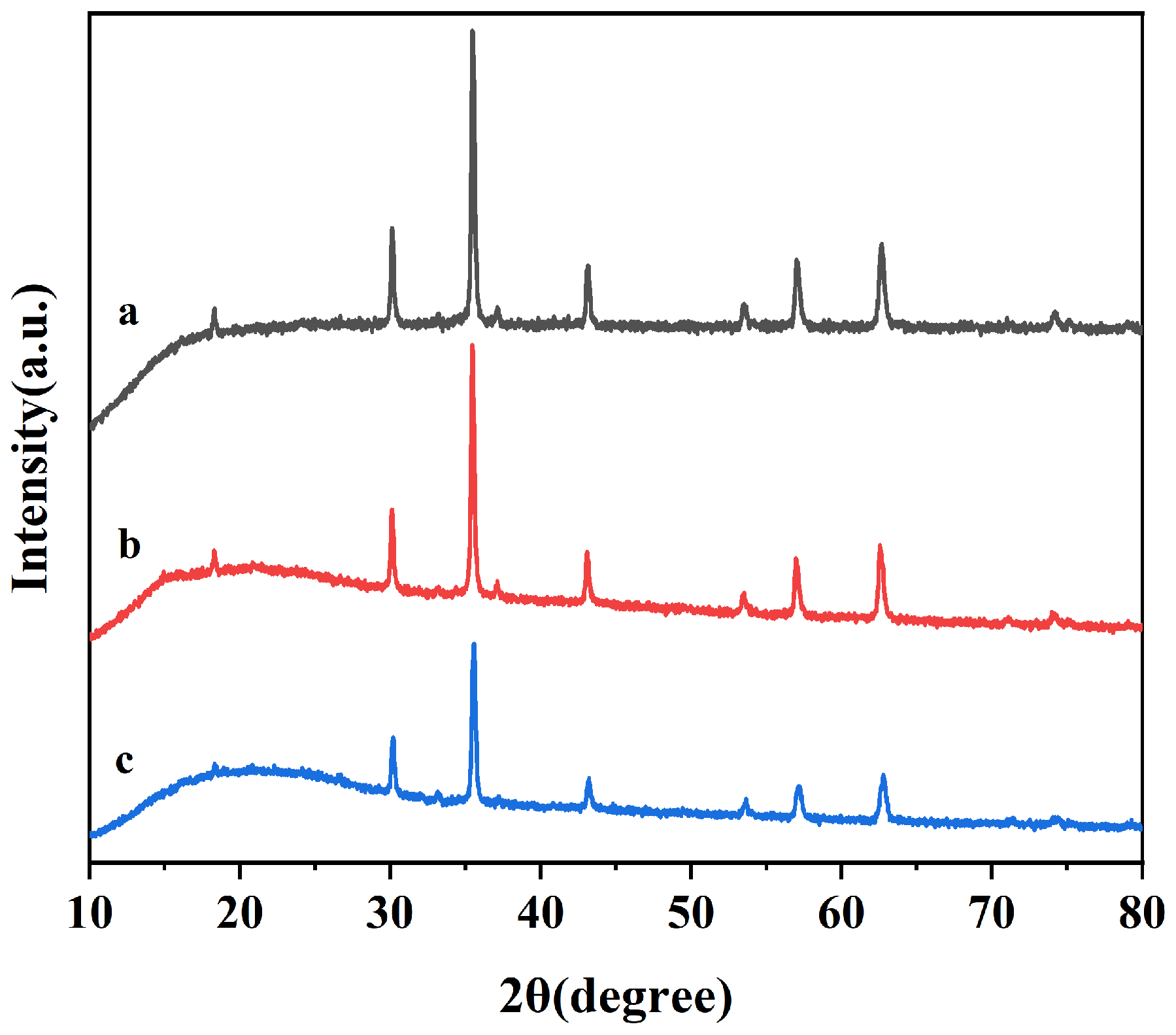
As is evident from Figure 4b,c, both Fe3O4/C and Fe3O4/C-SO3H display seven characteristic diffraction peaks at 2θ = 18.54°, 29.96°, 35.63°, 43.04°, 53.34°, 56.92°, and 62.52°. Their positions precisely correspond to the characteristic peaks of curve a (Fe3O4), which pertain to the (111), (220), (311), (400), (422), (511), and (440) crystal planes of Fe3O4 (in accordance with the standard PDF card of Fe3O4) [29]. This indicates that the crystal structure of Fe3O4 remains unchanged after carbonization and sulfonation modification, thereby maintaining the stability of the crystal structure.
Simultaneously, the intensities of the diffraction peaks of curves b and c are notably weaker than those of curve a. This phenomenon can be attributed to the fact that after the Fe3O4 particles are encapsulated by carbon-based/sulfonic acid groups, the X-ray diffraction signal of the crystalline Fe3O4 is masked by the amorphous matrix [30,31,32], further validating the composite structure of “crystalline Fe3O4 amorphous matrix”.

2.1.6. Thermal Gravimetric Analysis (TGA)

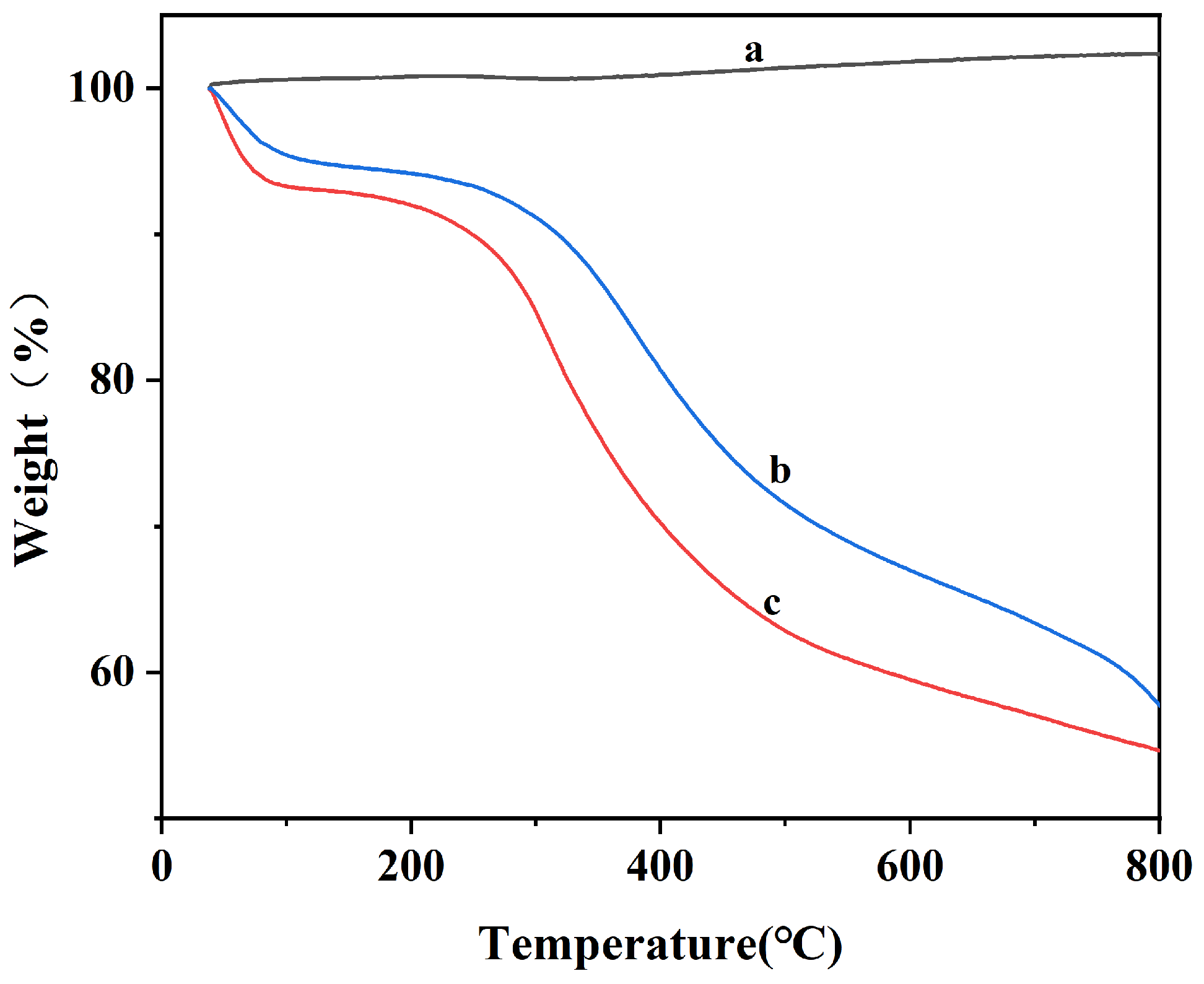
As shown in Figure 5, the TGA results indicate that curve a (Fe3O4) demonstrates nearly no substantial weight loss within the temperature range of 0 to 800 °C. This suggests that Fe3O4 itself possesses excellent thermal stability, and neither decomposition nor mass loss occurred at the tested temperature [33]. Curve b (Fe3O4/C) displays a significant weight loss, which can be attributed to the thermal decomposition of the carbon-based organic components. The C-O and C-H bonds in the carbon carrier break, and the carbon framework undergoes oxidation, leading to a reduction in mass [34,35]. However, the extent of weight loss is less than that of curve c. Curve c (Fe3O4/C-SO3H) experiences the most notable weight loss. Apart from the thermal decomposition of the carbon-based material, it also involves the thermal decomposition of the sulfonic acid groups (-SO3H) after 400 °C [36,37]. Consequently, the overall weight loss is more pronounced. When the temperature reaches 600 °C, the sample enters the residual stable stage, and the weight gradually approaches a constant value, with a residual rate of approximately 50–60%. The residue primarily consists of inorganic oxides formed by the oxidation of Fe3O4 [38].

2.1.7. Specific Surface Area Analysis and Measurement (BET)

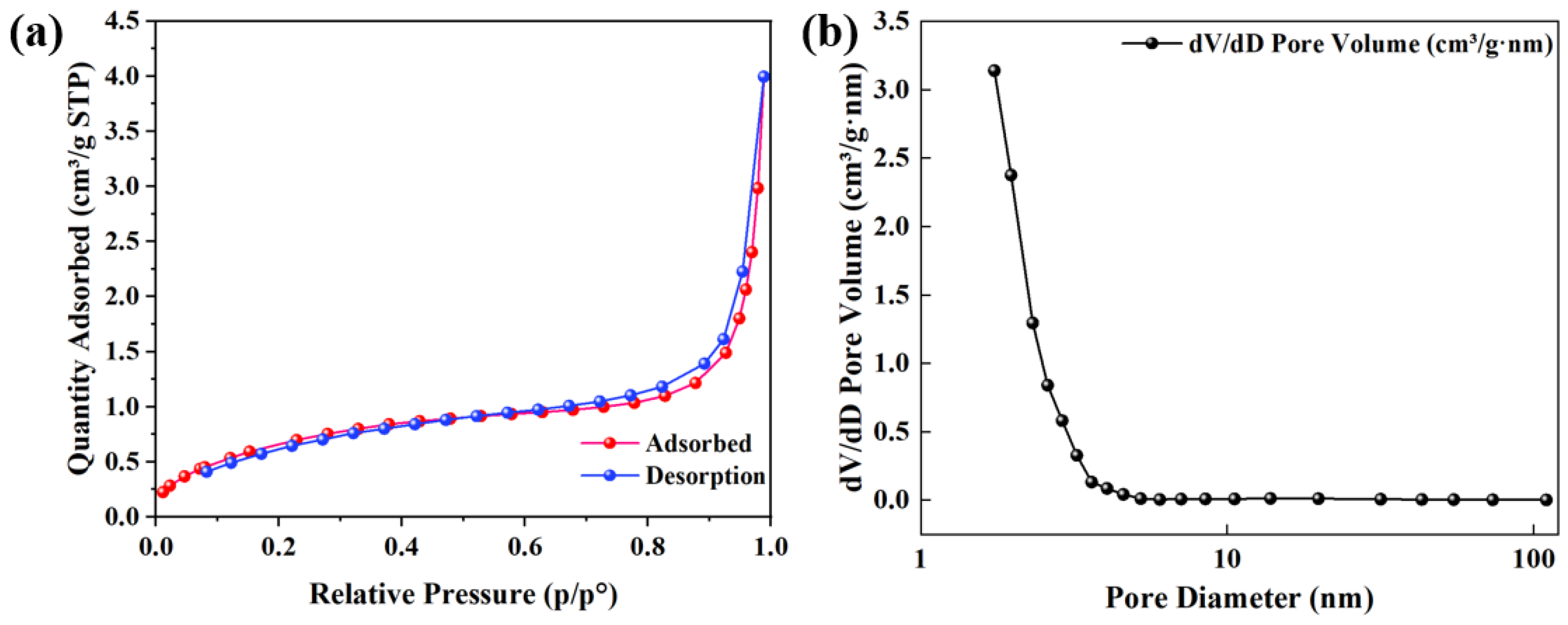
Figure 6 shows the nitrogen adsorption–desorption isotherm of Fe3O4/C-SO3H (a) and the BJH pore diameter distribution curve (b). An adsorption inflection point occurs in the low relative pressure (P/P0 = 0.01–0.1) section, corresponding to micropore filling [39]. In the medium–high pressure section (P/P0 = 0.4–1.0), the adsorption amount increases slowly without a significant hysteresis, belonging to an IV-type isotherm (Figure 6a). The adsorption and desorption curves almost overlap, without a significant hysteresis, indicating a relatively regular pore structure [40]. The pore volume is mainly concentrated in the 1–5 nm range, and the pore volume of micropores (<2 nm) is the largest (Figure 6b). Table 2 compares the pore structure parameters of three materials: Fe3O4/C, C-SO3H, and Fe3O4/C-SO3H. It clearly reflects the regulatory effect of Fe3O4 introduction and sulfonation modification on the pore structure of carbon-based materials. After introducing Fe3O4, the specific surface area is lower than that of pure carbon-based C-SO3H [41]. C-SO3H has the largest pore volume, indicating that the pore structure of the pure carbon-based material is more developed. Fe3O4/C-SO3H has the lowest pore volume, confirming the pore blockage and framework contraction caused by sulfonation. Additionally, the micropore volumes of the three materials are similar, and Fe3O4/C-SO3H is basically consistent with Fe3O4/C, indicating that sulfonation has a minor effect on micropores. The average pore diameter of C-SO3H is the largest, and after sulfonation, the pore diameter of Fe3O4/C-SO3H decreases, which is the result of -SO3H occupying the pore space and the contraction of the carbon framework.

2.1.8. X-Ray Photoelectron Spectroscopy (XPS)

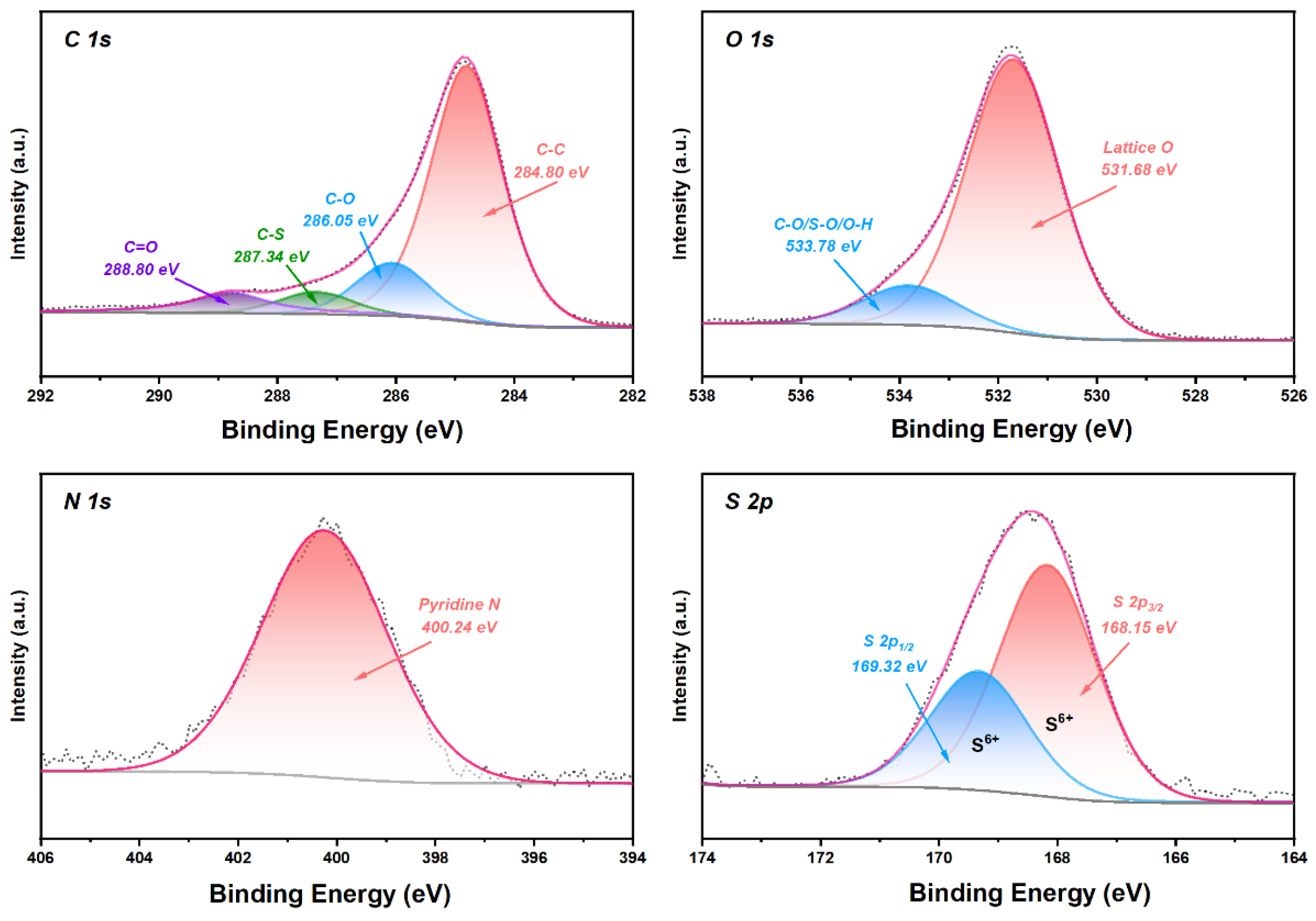
Figure 7 depicts the peak fitting diagram of X-ray photoelectron spectroscopy (XPS) for the Fe3O4/C-SO3H material, clearly illustrating the chemical state distribution characteristics of the four elements: C, O, N, and S. In the C 1s spectrum, the principal peak at 284.8 eV is attributed to the sp2 hybridized carbon (C-C) within the carbon layer, corresponding to the graphitized carbon-based framework [42]. The secondary characteristic peaks at 286.05 eV and 288.80 eV correspond to C-O and C=O moieties, respectively, which are formed by the oxidation of the carbon shell. Specifically, the C=O peak originates from surface carboxyl groups (-COOH), which serve as an additional source of Brønsted acidity in the catalyst [43,44]. Meanwhile, the characteristic peak at 287.34 eV can be ascribed to the C-S bond, directly validating the covalent bonding of the sulfonic acid group with the carbon layer. The S 2p spectrum exhibits a characteristic double peak at 168.15 eV and 169.32 eV, which precisely aligns with the 2p3/2 and 2p1/2 orbital splitting characteristics of S6+ in -SO3H [45], clearly indicating the successful grafting of the sulfonic acid group on the carbon-based surface.
The O 1s spectrum can be deconvoluted into two characteristic peaks. The peak at 531.68 eV corresponds to the lattice oxygen (Fe-O) of Fe3O4, and this peak occupies a large proportion, suggesting that only a portion of the carbon layer covers the Fe3O4 core. The peak at 533.78 eV corresponds to oxygen species such as C-O/S-O, arising from the oxygen atoms in the oxygen-containing functional groups on the carbon-based surface and the sulfonic acid group. The N 1s spectrum reveals a characteristic peak of pyrrole-type nitrogen at 400.24 eV, the origin of which is the nitrogen doping during the carbon layer synthesis process. In summary, XPS accurately characterizes the surface composition of the material at the elemental chemical state level, confirming the successful loading of the sulfonic acid group and the bonding mode of each element.

2.2. Preparation of Furfural from Corncob by Fe3O4/C-SO3H Catalyst

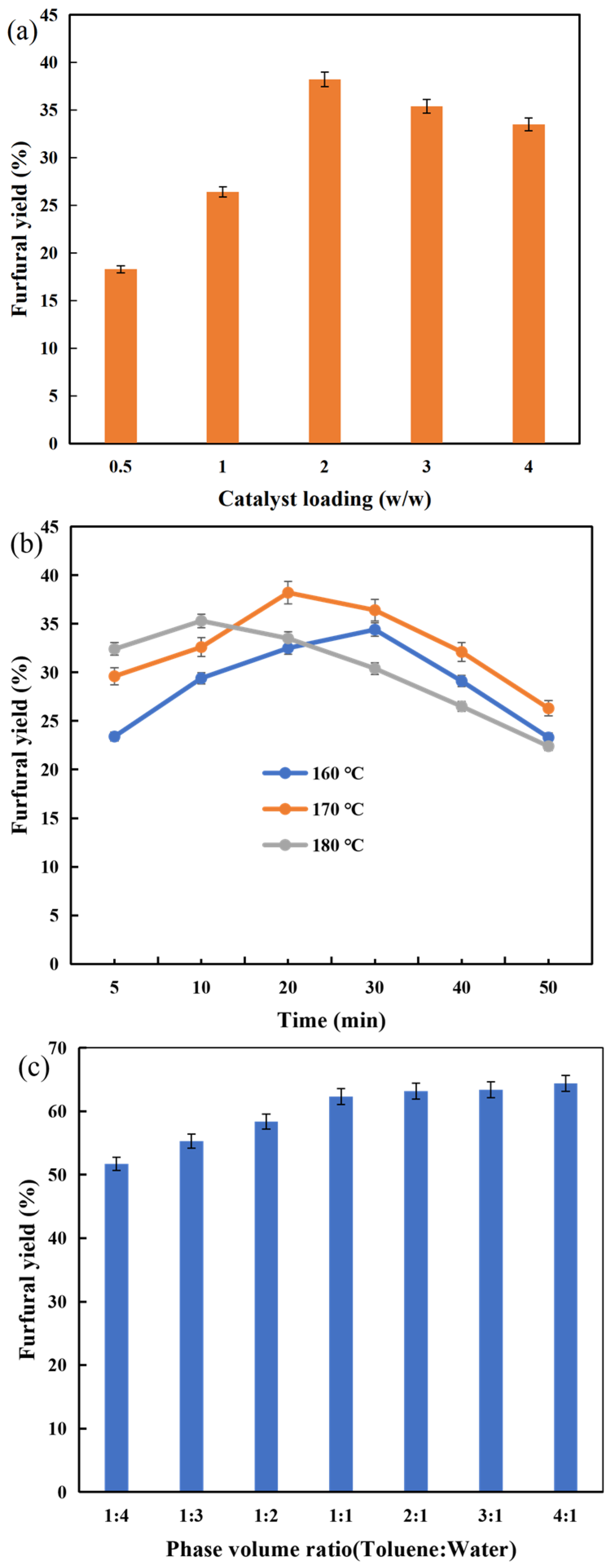
The loading amount of the catalyst exerts a significant regulatory influence on the yield of furfural. When the catalyst loading ranges from 0.5% to 2.0% (w/w), the yield of furfural exhibits an upward trend. As the loading amount continues to increase, the yield of furfural gradually declines. This phenomenon may be attributed to the excessive acid sites on the solid acid catalyst, which lead to the occurrence of side reactions and the consumption of xylose or furfural intermediates. Therefore, 2.0% (w/w) is determined as the optimal catalyst loading for the subsequent experiments.
The reaction temperature and duration are the crucial influencing factors for the degradation of corn husk to produce furfural. Initially, the hemicellulose in corncob is hydrolyzed into xylose, and, subsequently, the obtained xylose is dehydrated under the action of the solid acid catalyst to form furfural [46]. To explore the optimal parameters, the variations in furfural yield under different temperatures (160–180 °C) and durations (5–50 min) were investigated (Figure 8). The results indicated that under each temperature condition, the furfural yield initially increased with the prolongation of the reaction time. After reaching a specific reaction time, the furfural yield gradually decreased, which was caused by the further degradation of furfural. Among these conditions, at 170 °C for 20 min, the furfural yield reached its highest level, at 38.2%.
It is widely recognized that furfural is capable of reacting with xylose and can also undergo spontaneous hydrolysis in an acidic environment. The limited solubility of furfural in aqueous solutions represents another constraining factor. A biphasic system consisting of organic solvents and water is a promising approach for enhancing the yield of furfural. This is because the generated furfural can be extracted into the organic phase, thus avoiding unfavorable side reactions and spontaneous hydrolysis. The influence of different volume ratios of toluene to water on the furfural yield was experimentally investigated, as depicted in Figure 8c. It was discovered that as the quantity of toluene increased, the yield of furfural gradually rose, which was directly associated with the improved extraction capacity of the organic phase for furfural. Nevertheless, when the volume ratio was elevated from 1:1 (yield 62.3%) to 4:1 (yield 64.4%), the increase in yield tended to plateau. Taking both yield and economic cost into account, a biphasic system with a toluene to water volume ratio of 1:1 was chosen for the subsequent experiments.

2.3. Chemical–Biological Method for the Synthesis of FLSE

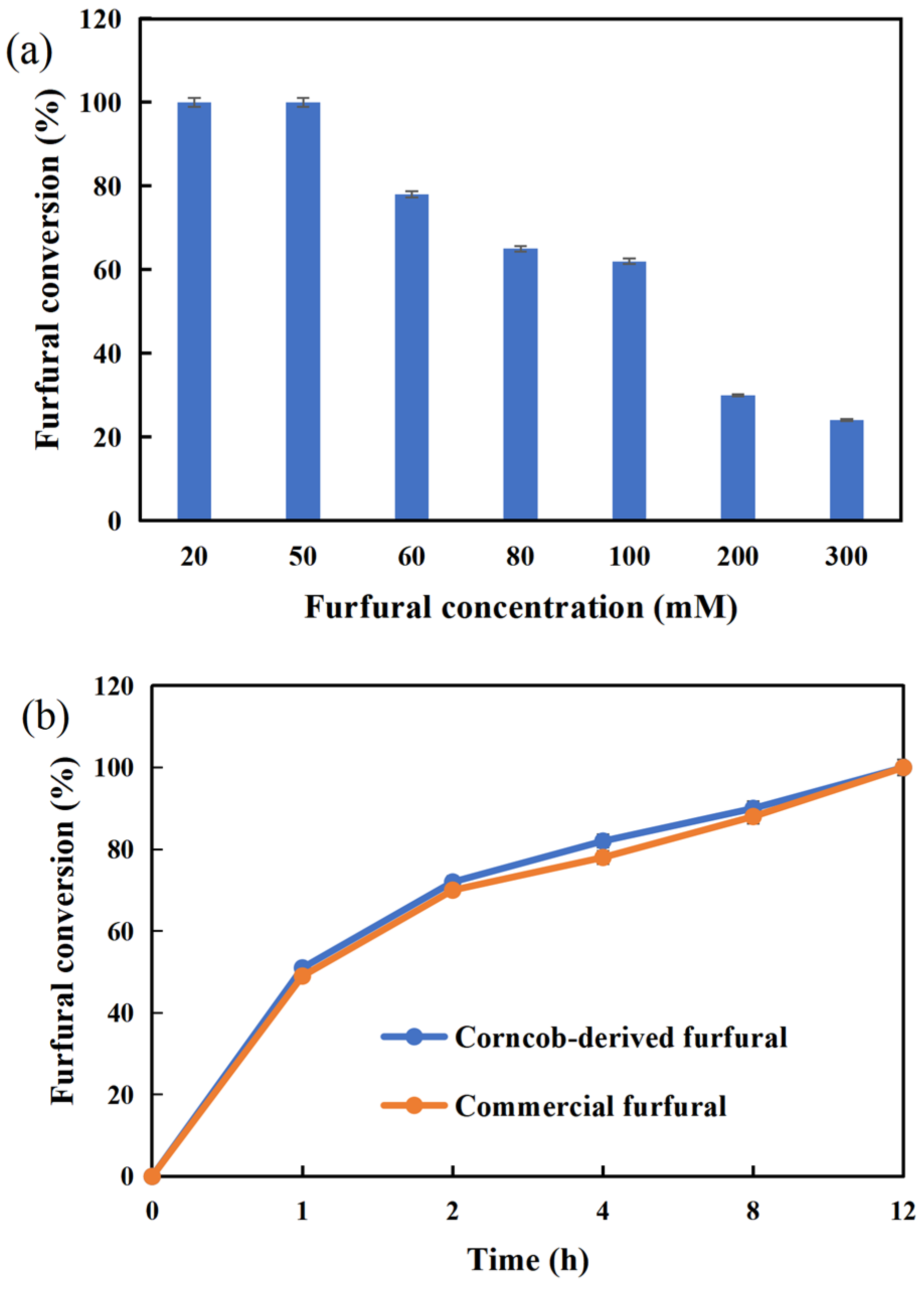
The efficiency of biotransformation is substantially dependent on the tolerance of microorganisms to the substrate. Given that furfural and its derivatives are typical inhibitors of microbial fermentation, they can impose toxic inhibitory effects on cell activity [47]. Consequently, it is imperative to prioritize the assessment of the tolerance of the target strain to furfural and its transformation characteristics. In the experiment, E. coli PpLTA was employed as the transformation strain to examine its catalytic transformation effect on different concentrations (20–300 mM) of furfural within 12 h (Figure 9a). The results demonstrated that when the furfural concentration was within the range of 20–50 mM, the strain was capable of achieving the complete conversion of furfural. When the concentration rose to 60 mM, the furfural conversion rate notably decreased to 78%, and as the furfural concentration further escalated, the conversion rate continued to decline. This outcome suggests that the maximum tolerance concentration of E. coli PpLTA to furfural is 50 mM. Beyond this concentration, the toxic inhibitory effect of furfural on the strain significantly intensifies, thus resulting in a reduction in the transformation efficiency.
The biocompatibility of the furfural system prepared through the degradation of corncob catalyzed by the solid acid Fe3O4/C-SO3H was verified. The furfural derived from corncob was diluted to 50 mM (the critical concentration tolerated by the strain) and parallel transformation experiments were carried out with commercial furfural serving as the control (Figure 9b). The results indicated that the conversion rate curves of the two furfural systems essentially overlapped, and both achieved the complete conversion of furfural. This finding confirmed that the system for preparing furfural from corncob catalyzed by the solid acid Fe3O4/C-SO3H exhibits good biocompatibility [48] and does not generate by-products that inhibit the E. coli PpLTA biotransformation process. Compared with the aqueous system [4], the diastereoselectivity (de value) of the obtained FLSE at the β-position was enhanced by 15% in the toluene–water biphasic system, indicating that the biphasic system is capable of improving the diastereoselectivity of biocatalytic reactions. The underlying mechanism is speculated to be that toluene can rigidify the spatial structure of the enzyme molecule, maintain the precise conformation of the active center, enhance the enzyme’s recognition and binding specificity toward the chiral center of the substrate, and thereby improve the de value. Therefore, it can be employed as a subsequent enzymatic in situ catalytic synthesis substrate systems.

2.4. The Recycling of Solid Acid

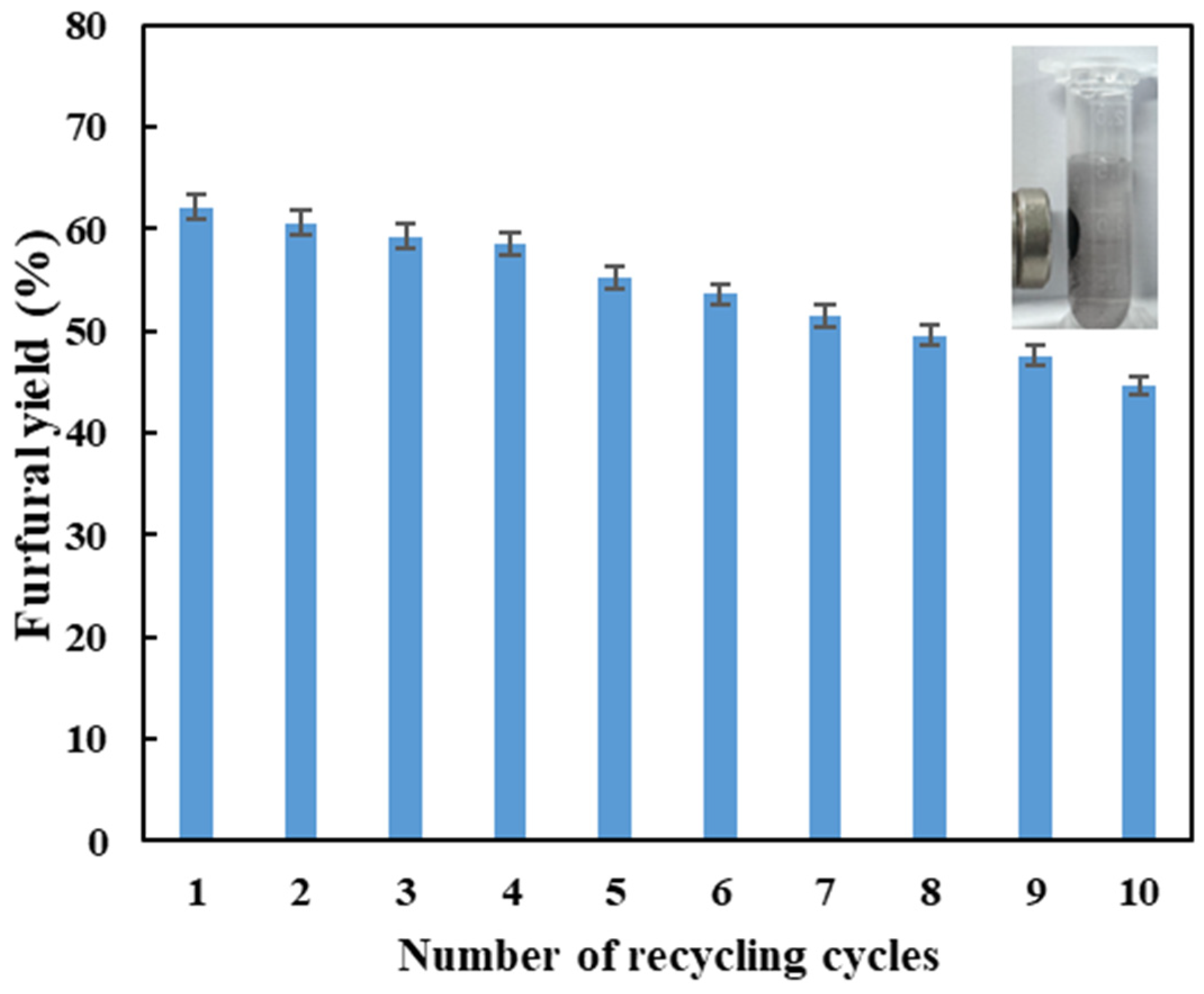
As shown in Figure 10, the furfural yield of the Fe3O4/C-SO3H catalyst reached 62.1% in the first cycle, which is highly consistent with the yield obtained under the optimized reaction conditions, verifying the reproducibility of the catalytic performance. With the increase in recycling cycles, the catalytic activity showed a gradual and mild decline rather than an abrupt drop: the furfural yield was still maintained at 55.2% after five cycles, and remained at 44.7% even after ten consecutive cycles, corresponding to an activity retention rate of 71.7%. Notably, no sudden performance failure was observed during the entire ten-cycle recycling process, which is a direct reflection of the excellent structural stability of the Fe3O4/C-SO3H catalyst. By comparing the infrared spectra (Figure 3) of the fresh (c) and those after ten cycles (d), the key characteristic peaks (carbon skeleton; -SO3H and Fe3O4) did not undergo significant changes or disappear. Only the peak intensity showed a slight attenuation. The reason for this phenomenon might be that during multiple cycles, the catalyst surface adsorbs small amounts of humins and reaction intermediates, which physically shields the characteristic peaks, resulting in a decrease in signal intensity. This is consistent with the results of the reusable test, where the catalytic activity gradually decreases but does not suddenly collapse. This further verifies the structural stability of the catalyst.

3. Materials and Methods

3.1. Chemicals

The corncob was procured from Lianyungang Hui Feng Bio-fertilizer Co., Ltd. (Lianyungang, China). Nano Fe3O4 (200 nm) and ethanol were acquired from Shanghai Macklin Biochemical Co., Ltd. (Shanghai, China). p-toluenesulfonic acid was procured from Shanghai Haohong Biomedical Technology Co., Ltd. (Shanghai, China). Methyl orange was obtained from Tianjin Huasheng Chemical Reagent Co., Ltd. (Tianjin, China). Furfural, sodium bicarbonate, chitosan, and phenolphthalein were procured from China National Pharmaceutical Group Chemical Reagent Co., Ltd. (Shanghai, China). Pyridoxal 5′–phosphate (PLP) was purchased from Sigma-Aldrich Trading Co., Ltd. (Shanghai, China). Tryptone and yeast extract were purchased from Oxoid Co., Ltd (Hampshire, UK). The other chemicals were of analytical grade and were commercially available.

3.2. Preparation of the Solid Acid Catalyst Fe3O4/C-SO3H

A solid acid catalyst, Fe3O4/C-SO3H, possessing both magnetic and acidic properties, was prepared using nano-Fe3O4 and chitosan as precursors through hydrothermal carbonization, acidification modification, and calcination treatment. The specific procedures were as follows. The raw materials were taken in a mass ratio of m (nano-Fe3O4):m (chitosan) = 1:10 and accurately weighed. Subsequently, they were placed in a 100 mL reaction vessel. An appropriate quantity of deionized water was added, and the mixture was stirred to form a homogeneous paste. The paste was then sonicated for 10 min to ensure dispersion. The reaction vessel was sealed and placed in an oven at 200 °C for an 8 h hydrothermal reaction. After cooling to room temperature, the product was successively washed with anhydrous ethanol and deionized water and then dried at 80 °C until a constant weight was achieved, yielding the carbon-based magnetic composite Fe3O4/C.
p-Toluenesulfonic acid was taken in a mass ratio of m (Fe3O4/C):m (p-toluenesulfonic acid) = 2:1 and dissolved in deionized water (the volume of water was 15 times the mass of Fe3O4/C; mL/g). Fe3O4/C was added to this solution, and the mixture was sonicated for 30 min to guarantee full contact between the materials. The mixture was then allowed to stand and age for 12 h. After discarding the supernatant, the product was collected and dried at 80 °C until a constant weight was obtained. The acidified product was transferred to a crucible and calcined at 250 °C for 4 h. Upon completion of the calcination, the furnace was allowed to cool naturally to room temperature. The product was taken out, packaged, and the solid acid catalyst Fe3O4/C-SO3H was obtained.

3.3. Preparation of the Whole-Cell Catalyst

The seed culture was inoculated into LB medium (containing 50 μg·mL−1 kanamycin) at a 1% (v/v) inoculation volume. The culture was incubated at 37 °C, 180 rpm, in an orbital shaker until the OD600 reached 0.6–0.8. Then, IPTG was added to a final concentration of 0.2 mmol/L, and the culture was further incubated at 25 °C for 8 h to induce the expression of threonine aldolase [49]. The induced culture was centrifuged at 8000 rpm for 5 min, the supernatant was discarded, and the bacterial precipitate was collected, which was the whole-cell catalyst E. coli PpLTA for threonine aldolase.

3.4. Synthesis of Furfural from Corncob Catalyzed by Solid Acid Fe3O4/C-SO3H

In a 100 mL reactor, 3 g of corncob powder was added successively, along with toluene–water mixtures of different volume ratios (1:4–4:1), and a specific quantity of solid acid Fe3O4/C-SO3H (0.5–4 wt%). The reactor was rapidly heated to the desired reaction temperature (160–180 °C) using an electric heating jacket, and magnetic stirring was started simultaneously. The stirring duration was set to 5–50 min. After reaching the predetermined reaction time, the reactor was immediately transferred to an ice–water bath for rapid cooling to room temperature, and the reaction was terminated. The concentration of furfural was determined by HPLC [50], and the furfural yield was calculated.
F u r f u r a l   y i e l d ( % ) = Q u a l i t y   o f   F u r f u r a l × 0.88 Q u a l i t y   o f   P e n t o s a n s   i n   C o r n   C o b × 150 96 × 100

3.5. Biocatalysts E. coli PpLTA Catalyze the Conversion of Furfural

Under the conditions of a reaction temperature of 30 °C, pH 8.0, 50 μM PLP, and 100 g/L E. coli PpLTA, the conversion of different concentrations of furfural (commercial grade) (20–300 mM) into FLSE by E. coli PpLTA was investigated. The concentration of glycine was generally set at ten times that of furfural to ensure that the reaction favored the production of FLSE. The hydrolysate of corncob furfural was utilized as a substitute for the commercial furfural. By comparing different furfural raw materials, the inhibitory or promoting effects of impurities (such as small amounts of phenols and sugars) in the corncob hydrolysate on the biocatalytic reaction were analyzed. The detection method of FLSE is based on the findings reported in the previous literature [4].

3.6. Characterization of the Solid Acid Catalyst Fe3O4/C-SO3H

The morphology and microstructure of the Fe3O4/C-SO3H samples were characterized by scanning electron microscopy (SEM) [4,7,13,29]. The lattice stripes, structural defects and particle morphology features of the samples were observed by transmission electron microscopy (TEM) [29]. Fourier transform infrared spectroscopy (FTIR) was used to collect spectra in the wavenumber range of 4000–400 cm−1 [4,7,13,29]. X-ray diffraction (XRD) was employed to conduct phase analysis and identification within the 2θ = 10–80° range [4,7,29]. The porosity and specific surface area of the samples were determined by the nitrogen adsorption–desorption method. The specific surface area and the pore volume were calculated using the Bruner–Emmett–Teller (BET) method, and Barrett–Joyner–Halenda (BJH) model, respectively [4,13,29]. The thermal degradation behavior of the material was evaluated by thermogravimetric analysis (TGA). The samples were heated from room temperature to 800 °C at a rate of 10 °C/min in a N2 atmosphere, and the mass change was recorded in real time [14]. The chemical states of the C, N, Fe and S elements in the samples were analyzed by X-ray photoelectron spectroscopy (XPS) [13]. The density of sulfonic acid groups, carboxyl groups and the total acidity in the carbon-based solid acid were determined by acid–base titration [51]. This method is widely used for acidity quantification of carbon-based solid acids due to its simplicity, accuracy, and compatibility with surface functional groups such as -SO3H and -COOH. The specific steps are as follows.

3.6.1. Sulfonic Acid Density Determination

Accurately weigh 0.25 g of the Fe3O4/C-SO3H solid acid sample and place it in a 100 mL beaker. Precisely add 25 mL of a 0.05 mol/L NaCl standard solution. Place the beaker in an ultrasonic cleaning machine and ultrasonicate it at room temperature for 1 h to allow the sulfonic acid groups in the sample to fully exchange ions with the Cl ions in the NaCl solution. After the ultrasonic treatment, transfer the mixture to a centrifuge tube and centrifuge it at 8000 rpm for 20 min to separate the mixture. Transfer the supernatant to a 150 mL conical flask. Add 1–2 drops of phenolphthalein indicator to the conical flask, shake and mix well, and then titrate with a 0.05 mol/L NaOH standard solution. During the titration process, continuously shake the conical flask to ensure complete mixing of the solution. When the solution shows a slight red color and this color remains stable for 30 s without fading, stop the titration and record the volume of NaOH standard solution consumed at this point. The calculation Formula (2) is as follows:
ρ S O 3 H = 0.05 × V N a O H / m

3.6.2. Total Acid Density Determination

Weigh 0.25 g of the Fe3O4/C-SO3H solid acid sample and place it in a 100 mL beaker. Precisely add 25 mL of a 0.05 mol/L NaOH standard solution to ensure that all the acidic groups (sulfonic acid groups, carboxyl groups, etc.) in the sample fully react with NaOH. Place the beaker in an ultrasonic cleaning machine and ultrasonicate it at room temperature for 1 h to promote the thorough contact reaction between the acidic groups and the NaOH solution. After the ultrasonic treatment, transfer the mixture to a centrifuge tube and centrifuge it at 8000 rpm for 20 min to separate the components. Transfer the supernatant to a 150 mL conical flask. Add 1–2 drops of phenolphthalein indicator to the conical flask, shake and mix well, and then perform back titration with a 0.05 mol/L HCl standard solution. During the titration process, continuously shake the conical flask to ensure the solution is thoroughly mixed. When observing that the solution gradually fades from purple to colorless and this colorless state remains stable for 30 s without returning, stop the titration and record the volume of HCl standard solution consumed at this point. The calculation Formula (3) is as follows:
ρ T o t a l   a c i d = [ 0.05 × ( 25 0.05 × V H C L ) ] / m

3.6.3. Carboxylic Acid Density Determination

Weigh 0.25 g of the Fe3O4/C-SO3H solid acid sample and place it in a 100 mL beaker. Add 25 mL of a 0.05 mol/L NaHCO3 standard solution. Place the beaker in an ultrasonic cleaning machine and ultrasonicate it at room temperature for 1 h. After the ultrasonic treatment, transfer the mixture to a centrifuge tube and centrifuge it at 8000 rpm for 20 min. Transfer the supernatant to a 150 mL conical flask. Add 2–3 drops of 0.1% methyl orange indicator, shake and mix well, then titrate with 0.05 mol/L HCl standard solution. During the titration, continuously shake the conical flask to ensure complete mixing of the solution. When the solution changes from yellow to orange and this orange color remains stable for 30 s without fading, stop the titration and record the volume of HCl standard solution consumed at this point. The calculation Formula (4) is as follows:
ρ C O O H = [ 0.05 × ( 25 0.05 × V H C L ) ] / m ρ S O 3 H

3.7. Recovery and Utilization of Solid Acid Catalysts

A ten-cycle recycling experiment was conducted following the optimal reaction conditions for the conversion of corncob to furfural (catalyst loading 2.0% w/w, 170 °C, 20 min, and toluene–water volume ratio 1:1) to verify the recyclability and stability of Fe3O4/C-SO3H. The specific experimental procedures are as follows. After each catalytic reaction, use an external magnetic field to separate the Fe3O4/C-SO3H catalyst from the reaction system (toluene–water biphasic mixture). Wash the separated catalyst sequentially with anhydrous ethanol and deionized water. Dry the washed catalyst at 80 °C for 4 h to a constant weight, and then directly reuse it in the next cycle of corncob catalytic degradation reaction under the same reaction conditions. Record the furfural yield of each cycle and calculate the yield retention rate to evaluate the catalytic activity stability of the recycled catalyst.

4. Conclusions

This study employed the magnetic solid acid Fe3O4/C-SO3H and the whole-cell E. coli PpLTA for the synthesis of furan amino acids, and it successfully established a one-pot two-step process. This conversion process is capable of directly transforming biomass into furan-based amino acid (FLSE). This strategy has the potential to minimize the separation steps of intermediate products, consequently shortening the operation time, reducing material loss, and enhancing the selectivity and yield of the overall reaction. Therefore, this work validates the feasibility of converting lignocellulosic biomass into furan amino acids via chemical–biological methods. This process offers a highly promising technical approach for the development of high-value-added products from corncob.

Author Contributions

Conceptualization, L.G. and R.J.; methodology, L.G.; software, R.J. and N.Z.; validation, L.G., R.J. and M.L.; formal analysis, L.G., R.J. and D.G.; investigation, L.G., R.J. and M.L.; resources, L.G., N.Z. and J.Z.; data curation, L.G., J.L. and M.L.; writing—original draft preparation, L.G. and R.J.; writing—review and editing, L.G.; visualization, J.L. and D.G.; supervision, J.Z.; project administration, L.G. and J.Z.; and funding acquisition, L.G. All authors have read and agreed to the published version of the manuscript.

Funding

This research was funded by National Natural Science Foundation of China (22208030, 52303004), and the Project of Natural Science Research in Universities of Jiangsu Province (22KJB530004).

Data Availability Statement

All data supporting the findings of this study are available within the paper.

Conflicts of Interest

The authors declare no conflicts of interest.

Abbreviations

The following abbreviations are used in this manuscript:
FLSEβ-(2-furanyl) serine
PLPPyridoxal 5′–phosphate

References

  1. Lin, Q.X.; Zhan, Q.W.; Li, R.; Liao, S.W.; Ren, J.L.; Peng, F.; Li, L.B. Solvent effect on xylose-to-furfural reaction in biphasic systems: Combined experiments with theoretical calculations. Green Chem. 2021, 23, 8510–8518. [Google Scholar] [CrossRef]
  2. Lu, G.H.; Zong, M.H.; Li, N. Combining Electro-, Photo-, and Biocatalysis for One-Pot Selective Conversion of Furfural into Value-Added C4 Chemicals. ACS Catal. 2023, 13, 1371–1380. [Google Scholar] [CrossRef]
  3. Xia, Z.H.; Zong, M.H.; Li, N. Catalytic synthesis of 2,5-bis(hydroxymethyl)furan from 5-hydroxymethylfurfual by recombinant Saccharomyces cerevisiae. Enzym. Microb. Technol. 2020, 134, 109491. [Google Scholar] [CrossRef]
  4. Gong, L.; Xiu, Y.S.; Dong, J.J.; Han, R.Z.; Xu, G.C.; Ni, Y. Sustainable one-pot chemo-enzymatic synthesis of chiral furan amino acid from biomass via magnetic solid acid and threonine aldolase. Bioresour. Technol. 2021, 337, 125344. [Google Scholar] [CrossRef]
  5. Yang, T.; Li, W.Z.; Ogunbiyi, A.T.; An, S.X. Efficient catalytic conversion of corn stover to furfural and 5-hydromethylfurfural using glucosamine hydrochloride derived carbon solid acid in Υ-valerolactone. Ind. Crops Prod. 2021, 161, 113173. [Google Scholar] [CrossRef]
  6. Huang, Y.B.; Liao, X.L.; Deng, Y.Y.; He, Y.C. Co-catalysis of corncob with dilute formic acid plus solid acid SO42−/SnO2-montmorillonite under the microwave for enhancing the biosynthesis of furfuralcohol. Catal. Commun. 2019, 120, 38–41. [Google Scholar] [CrossRef]
  7. Di, J.H.; Gong, L.; Yang, D.; He, Y.C.; Tang, Z.Y.; Ma, C.L. Enhanced conversion of biomass to furfurylamine with high productivity by tandem catalysis with sulfonated perlite and ω-transaminase whole-cell biocatalyst. J. Biotechnol. 2021, 334, 26–34. [Google Scholar] [CrossRef] [PubMed]
  8. Qu, Y.; Zhao, Y.; Xiong, S.S.; Wang, C.G.; Wang, S.R.; Zhu, L.J.; Ma, L.L. Conversion of Glucose into 5-Hydroxymethylfurfural and Levulinic Acid Catalyzed by SO42−/ZrO2 in a Biphasic Solvent System. Energy Fuels 2020, 34, 11041–11049. [Google Scholar] [CrossRef]
  9. Song, X.B.; Yue, J.; Zhu, Y.T.; Wen, C.Y.; Chen, L.G.; Liu, Q.Y.; Ma, L.L.; Wang, C.G. Efficient Conversion of Glucose to 5-Hydroxymethylfurfural over a Sn-Modified SAPO-34 Zeolite Catalyst. Ind. Eng. Chem. Res. 2021, 60, 5838–5851. [Google Scholar] [CrossRef]
  10. Yang, T.; Chen, D.; Li, W.Z.; Zhang, H. Efficient conversion of corn stover to 5-hydroxymethylfurfural and furfural using a novel acidic resin catalyst in water-1, 4-dioxane system. Mol. Catal. 2021, 515, 111920. [Google Scholar] [CrossRef]
  11. Li, Q.; Gao, R.Y.; Zhang, Y.; Zhang, Y.F.; Liu, T.L.; He, Y.C.; Zheng, M.M. Enhanced upgrading of corncob to furfuryl alcohol with a novel silica-supported SO42−-TiO2 chemocatalyst and immobilized whole-cell biocatalyst. Green Chem. 2023, 25, 7764–7773. [Google Scholar] [CrossRef]
  12. Cousin, E.; Namhaed, K.; Peres, Y.; Cognet, P.; Delmas, M.; Hermansyah, H.; Gozan, M.; Alaba, P.A.; Aroua, M.K. Towards efficient and greener processes for furfural production from biomass: A review of the recent trends. Sci. Total Environ. 2022, 847, 157599. [Google Scholar] [CrossRef]
  13. Xu, T.W.; Wang, X.H.; Wang, H.M.; Yao, J.P.; Kong, F.G.; Ren, J.L.; Wang, S.J. Efficient conversion of xylose and corncob to furfural using a novel carbon-based solid acid derived from black liquor lignin-tin complexes. J. Environ. Chem. Eng. 2024, 12, 114516. [Google Scholar] [CrossRef]
  14. Xu, Z.Y.; Zhang, G.W.; Wang, K.J. Efffcient conversion of biomass derivatives to furfural with a novel carbon-based solid acid catalyst. Catal. Commun. 2023, 175, 106608. [Google Scholar] [CrossRef]
  15. Lin, H.; Chen, J.; Zhao, Y.; Wang, S. Conversion of C5 carbohydrates into furfural catalyzed by SO3H-functionalized ionic liquid in renewable γ-valerolactone. Energy Fuel 2017, 31, 3929–3934. [Google Scholar] [CrossRef]
  16. Yi, B.T.; Wang, H.M.; Liu, K.Y.; Wang, X.H.; Kong, F.G.; Ren, J.L. Simultaneous production of furfural and levulinic acid from sugarcane bagasse using a novel, magnetically recoverable tin-based solid acid catalyst in hydrothermal treatment. Mol. Catal. 2025, 586, 115421. [Google Scholar] [CrossRef]
  17. Zhang, Z.X.; Lu, L.F.; Xu, H.C.; Lu, X.B.; Li, X.Y. A magnetic carbon-based solid acid catalyst derived from tobacco stalk for efffcient valorization of tobacco stalk to furfural. Ind. Crops Prod. 2025, 227, 120816. [Google Scholar] [CrossRef]
  18. Trung, T.Q.; Thinh, D.B.; Anh, T.N.M.; Nguyet, D.M.; Quan, T.H.; Viet, N.Q.; Tuan, T.T.; Dat, N.M.; Nam, H.M.; Hieu, N.H.; et al. Synthesis of furfural from sugarcane bagasse by hydrolysis method using magnetic sulfonated graphene oxide catalyst. Vietnam J. Chem. 2020, 58, 245–250. [Google Scholar] [CrossRef]
  19. Zou, S.M.; Wang, J.P.; Zong, M.H.; Wang, Z.L.; Zheng, Z.J.; Li, N. One-pot photoenzymatic synthesis of maleic acid and its derivatives from bio-based furfural via catalytic cascades. Green Chem. 2023, 25, 6892–6900. [Google Scholar] [CrossRef]
  20. Wang, C.G.; Liu, Y.; Cui, Z.B.; Yu, X.H.; Zhang, X.H.; Li, Y.P.; Zhang, Q.; Chen, L.G.; Ma, L.L. In Situ Synthesis of Cu Nanoparticles on Carbon for Highly Selective Hydrogenation of Furfural to Furfuryl Alcohol by Using Pomelo Peel as the Carbon Source. Acs Sustain. Chem. Eng. 2020, 8, 12944–12955. [Google Scholar] [CrossRef]
  21. Bakili, S.; Kivevele, T.; Kichonge, B.; Salifu, A.A.; King’ondu, C.K. Furfural from lignocellulose biomass a comprehensive review of hydrolysis methods production technologies and integration into the circular economy. Discov. Sustain. 2025, 6, 870. [Google Scholar] [CrossRef]
  22. Xu, M.R.; Duan, Y.F.; Li, H.F.; He, S.L.; Zi, X.Y.; Zhao, Y.T.; Jiao, C.; Li, X.Y. A Pathway for Sugar Production from Agricultural Waste Catalyzed by Sulfonated Magnetic Carbon Microspheres. Molecules 2025, 30, 2675. [Google Scholar] [CrossRef]
  23. Monfared, A.Y.; Bagherzade, G.; Kargar, P.G.; Mohammadi, B. A nanoarchitecture of sulfuric acid-decorated magneticg-C3N4 nanohybrid for upgrading biosugars to 5-hydroxymethylfurfural in solvent-free conditions. Fuel 2026, 405, 136487. [Google Scholar] [CrossRef]
  24. Jiang, W.X.; Zhang, F.R.; Shen, B.W.; Yuan, H.; Pan, Z.Q.; Zhou, H. Magnetically recyclable solid acid catalyst Fe3O4@ETMS-TETA-SO3H for efficient alcoholysis of dioscin from Dioscorea Zingiberensis CHWrigh. Catal. Commun. 2020, 143, 106066. [Google Scholar] [CrossRef]
  25. Xu, H.; Gao, M.X.; Hu, X.; Chen, Y.H.; Li, Y.; Xu, X.Y.; Zhang, R.Q.; Yang, X.; Tang, C.F.; Hu, X.J. A novel preparation of S-nZVI and its high efficient removal of Cr(VI) in aqueous solution. J. Hazard. Mater. 2021, 416, 125924. [Google Scholar] [CrossRef]
  26. Han, Y.W.; Ye, L.; Gu, X.C.; Zhu, P.L.; Lu, X.B. Lignin-based solid acid catalyst for the conversion of cellulose to levulinic acid using γ-valerolactone as solvent. Ind. Crops Prod. 2019, 127, 88–93. [Google Scholar] [CrossRef]
  27. Su, T.C.; Zeng, J.; Gao, H.Y.; Jiang, L.Q.; Bai, X.Z.; Zhou, H.X.; Xu, F.X. One-pot synthesis of a chemically functional magnetic carbonaceous acid catalyst for fermentable sugars production from sugarcane bagasse. Fuel 2020, 262, 116512. [Google Scholar] [CrossRef]
  28. Mohtasham, N.H.; Gholizadeh, M. Nano silica extracted from horsetail plant as a natural silica support for the synthesis of H3PW12O40 immobilized on aminated magnetic nanoparticles (Fe3O4@SiO2-EP-NH-HPA): A novel and efficient heterogeneous nanocatalyst for the green one-pot synthesis of pyrano 2,3-cpyrazole derivatives. Res. Chem. Intermed. 2020, 46, 3037–3066. [Google Scholar] [CrossRef]
  29. Jiang, H.J.; Dong, X.Q.; Shou, J.X. Synthesis of Novel Magnetic Carbon Microtube-Based Solid Acid and Its Catalytic Activities for Biodiesel Synthesis. Catalysts 2022, 12, 305. [Google Scholar] [CrossRef]
  30. Kitano, M.; Arai, K.; Kodama, A.; Kousaka, T.; Nakajima, K.; Hayashi, S.; Hara, M. Preparation of a Sulfonated Porous Carbon Catalyst with High Specific Surface Area. Catal. Lett. 2009, 131, 242–249. [Google Scholar] [CrossRef]
  31. Esmaeili, Z.; Bazarganipour, M.; Zilouei, H. Magnetic solid acid catalyst derived from different alkaline pretreatment of rice straw for hydrolysis of microcrystalline cellulose. Cellulose 2023, 30, 8709–8727. [Google Scholar] [CrossRef]
  32. Nda-Umar, U.I.; Ramli, I.; Muhamad, E.N.; Taufiq-Yap, Y.H.; Azri, N. Synthesis and characterization of sulfonated carbon catalysts derived from biomass waste and its evaluation in glycerol acetylation. Biomass Convers. Biorefinery 2022, 12, 2045–2060. [Google Scholar] [CrossRef]
  33. Sayadi, S.; Brouillette, F. Magnetic phosphorylated lignocellulosic fibers: A hybrid material for water purification-Part I material synthesis. Colloids Surf. A-Physicochem. Eng. Asp. 2025, 718, 136923. [Google Scholar] [CrossRef]
  34. Edrisi, M.; Azizi, N. Sulfonic acid-functionalized graphitic carbon nitride composite: A novel and reusable catalyst for the one-pot synthesis of polysubstituted pyridine in water under sonication. J. Iran. Chem. Soc. 2020, 17, 901–910. [Google Scholar] [CrossRef]
  35. Wu, T.; Liu, Y.; Zeng, X.; Cui, T.T.; Zhao, Y.T.; Li, Y.N.; Tong, G.X. Facile Hydrothermal Synthesis of Fe3O4/C Core-Shell Nanorings for Efficient Low-Frequency Microwave Absorption. ACS Appl. Mater. Interfaces 2016, 8, 7370–7380. [Google Scholar] [CrossRef]
  36. Shaker, M.; Elhamifar, D. Sulfonic Acid Supported on Magnetic Methylene-Based Organosilica as an Efficient and Recyclable Nanocatalyst for Biodiesel Production via Esterification. Front. Energy Res. 2020, 8, 78. [Google Scholar] [CrossRef]
  37. Abbasabadi, M.K.; Azarifar, D.; Zand, H.R.E. Sulfonic acid-functionalized Fe3O4-supported magnetized graphene oxide quantum dots: A novel organic-inorganic nanocomposite as an efficient and recyclable nanocatalyst for the synthesis of dihydropyrano 2,3-c pyrazole and 4H-chromene derivatives. Appl. Organomet. Chem. 2020, 34, e6004. [Google Scholar] [CrossRef]
  38. Bastos, R.R.C.; Corrêa, A.P.D.; da Luz, P.T.S.; da Rocha, G.N.; Zamian, J.R.; da Conceiçao, L.R.V. Optimization of biodiesel production using sulfonated carbon-based catalyst from an amazon agro-industrial waste. Energ. Convers. Manag. 2020, 205, 112457. [Google Scholar] [CrossRef]
  39. Wu, M.; Yao, X.J.; Jiang, J.L.; Ji, Y.N.A.; Gu, Y.X.; Deng, Q.L.; Ouyang, J. Synthesis of Magnetic Sulfonated Carbon/Fe3O4/Palygorskite Composites and Application as a Solid Acid Catalyst. Clays Clay Miner. 2022, 70, 514–526. [Google Scholar] [CrossRef]
  40. Saidi, M.; Safaripour, M.; Ameri, F.A.; Jomeh, M.E. Application of sulfonated biochar-based magnetic catalyst for biodiesel production: Sensitivity analysis and process optimization. Chem. Eng. Process.-Process Intensif. 2023, 190, 109419. [Google Scholar] [CrossRef]
  41. Diao, Y.; Shan, R.; Li, M.; Gu, J.; Yuan, H.R.; Chen, Y. Efficient Adsorption of a Sulfonamide Antibiotic in Aqueous Solutions with N-doped Magnetic Biochar: Performance, Mechanism, and Reusability. ACS Omega 2023, 8, 879–892. [Google Scholar] [CrossRef]
  42. Falowo, O.A.; Oyekola, O.O.; Oladipo, B.; Taiwo, A.E.; Ilesanmi, A.; Davies, O. Synthesis of Sulfonated Magnetic Nano-catalyst Using Rice Husk Ash for Corncob Hydrolysis: Kinetic and Thermodynamic Study. Waste Biomass Valoriz. 2024, 15, 973–987. [Google Scholar] [CrossRef]
  43. Wu, Z.Y.; Yin, P.; Ju, H.X.; Chen, Z.Q.; Li, C.; Li, S.C.; Liang, H.W.; Zhu, J.F.; Yu, S.H. Natural Nanofibrous Cellulose-Derived Solid Acid Catalysts. Research 2019, 2019, 6262719. [Google Scholar] [CrossRef]
  44. Wang, K.; Rezayan, A.; Si, L.Q.; Zhang, Y.S.; Nie, R.F.; Lu, T.L.; Wang, J.S.; Xu, C.B. Highly Efficient 5-Hydroxymethylfurfural Production from Glucose over Bifunctional SnOx/C catalyst. ACS Sustain. Chem. Eng. 2021, 9, 11351–11360. [Google Scholar] [CrossRef]
  45. Liu, Q.W.; Liu, Z.; Qiao, L.H. Ionic liquid-controlled synthesis of Fe3O4 nanoparticles (NPs) for the preparation of magnetic solid acids. Mater. Today Commun. 2023, 35, 105778. [Google Scholar] [CrossRef]
  46. Sun, D.Y.; Liu, P.L.; Liu, H.J.; Yang, Z.X.; Gao, L.J.; Wei, R.P.; Pan, X.M.; Xiao, G.M. Efficient Conversion of Xylan to Furfural Using Niobium-Modified SBA-15 Catalyst in Biphasic Solvents: Experiments and Simulations. Ind. Eng. Chem. Res. 2025, 64, 2069–2083. [Google Scholar] [CrossRef]
  47. Jilani, S.B.; Prasad, R.; Yazdani, S.S. Overexpression of Oxidoreductase YghA Confers Tolerance of Furfural in Ethanologenic Escherichia coli Strain SSK42. Appl. Environ. Microbiol. 2021, 87, e01855-21. [Google Scholar] [CrossRef] [PubMed]
  48. Li, H.L.; Wang, Y.Q.; Zhu, Y.K.; Xu, X.J.; Wu, A.M.; Deng, X.M. Bamboo-derived Magnetic Carbonaceous Solid Acid Catalyst for the Conversion of Corncob into Furfural Promoted by Warm Water Immersion. Bioresources 2018, 13, 6221–6237. [Google Scholar] [CrossRef]
  49. Wang, Z.W.; Gong, C.J.; He, Y.C. Improved biosynthesis of 5-hydroxymethy1-2-furancarboxylic acid and furoic acid from biomass-derived furans with high substrate tolerance of recombinant Escherichia coli HMFOMUT whole-cells. Bioresour. Technol. 2020, 303, 122930. [Google Scholar] [CrossRef] [PubMed]
  50. Zhang, L.X.; Tian, L.; Sun, R.J.; Liu, C.; Kou, Q.Q.; Zuo, H.W. Transformation of corncob into furfural by a bifunctional solid acid catalyst. Bioresour. Technol. 2019, 276, 60–64. [Google Scholar] [CrossRef]
  51. Rekha, B.; Saravanathamizhan, R. Preparation and characterization of biomass-based nanocatalyst for hydrolysis and fermentation of catalytic hydrolysate to bioethanol. Biomass Convers. Biorefinery 2023, 13, 1601–1612. [Google Scholar] [CrossRef]

Scheme 1. A chemical–biological catalytic process.
Catalysts 16 00180 sch001
Figure 1. SEM images of solid acid. (a) nano-sized Fe3O4; (b) Fe3O4/C; and (c) Fe3O4/C-SO3H.
Catalysts 16 00180 g001
Figure 2. TEM images of the Fe3O4/C-SO3H sample at different magnifications. (a) Low-magnification TEM image (scale bar: 100 nm); (b) Enlarged TEM image (scale bar: 10 nm); (c) High-resolution TEM (HRTEM) image (scale bar: 5 nm). The arrow indicates the lattice fringes corresponding to the (220) plane.
Catalysts 16 00180 g002
Figure 3. FT-IR spectra of solid acids. (a) Fe3O4; (b) Fe3O4/C; (c) Fe3O4/C-SO3H; and (d) recycled Fe3O4/C-SO3H.
Catalysts 16 00180 g003
Figure 4. XRD pattern of solid acid. (a) Fe3O4; (b) Fe3O4/C; and (c) Fe3O4/C-SO3H.
Catalysts 16 00180 g004
Figure 5. TGA curve of solid acid. (a) Fe3O4; (b) Fe3O4/C; and (c) Fe3O4/C-SO3H.
Catalysts 16 00180 g005
Figure 6. N2 adsorption–desorption isotherms of Fe3O4/C-SO3H (a) and pore diameter distribution of Fe3O4/C-SO3H (b).
Catalysts 16 00180 g006
Figure 7. XPS spectrum of Fe3O4/C-SO3H catalyst.
Catalysts 16 00180 g007
Figure 8. The effects of catalyst loading (a) temperature (b) time (b) and solvent ratio (c) on the yield of furfural.
Catalysts 16 00180 g008
Figure 9. Biocatalytic conversion of furfural. (a) Effect of initial substrate concentration on the conversion efficiency; (b) Biotransformation of corncob-derived furfural.
Catalysts 16 00180 g009
Figure 10. The utilization situation of the solid acids after ten cycles of use.
Catalysts 16 00180 g010
Table 1. Determination of acid density of Fe3O4/C-SO3H.
-SO3H (mmol/g)-COOH (mmol/g)Lewis Acid(mmol/g)Total Acid (mmol/g)
0.727 ± 0.0130.788 ± 0.0090.788 ± 0.0093.487 ± 0.011
Table 2. BET measurement results.
ParametersFe3O4/CC-SO3HFe3O4/C-SO3H
BET-specific surface area (m2/g)343
Total pore volume (cm3/g)0.0090.0120.006
Micropore volume (cm3/g)0.00100.00120.0010
Average pore size (nm)10119
Disclaimer/Publisher’s Note: The statements, opinions and data contained in all publications are solely those of the individual author(s) and contributor(s) and not of MDPI and/or the editor(s). MDPI and/or the editor(s) disclaim responsibility for any injury to people or property resulting from any ideas, methods, instructions or products referred to in the content.