
Review

An Overview of the Latest Advances in the Catalytic Synthesis of Glycerol Carbonate
by
Debora Procopio
and
Maria Luisa Di Gioia
*
Dipartimento di Farmacia e Scienze della Salute e della Nutrizione, Dipartimento di Eccellenza L. 232/2016, Edificio Polifunzionale, Università della Calabria, 87036 Rende, Italy
*
Author to whom correspondence should be addressed.
Catalysts 2022, 12(1), 50; https://doi.org/10.3390/catal12010050
Submission received: 4 December 2021 / Revised: 29 December 2021 / Accepted: 30 December 2021 / Published: 2 January 2022
(This article belongs to the Special Issue Catalytic Valorization of Glycerol: Strategies and Perspectives)

Abstract

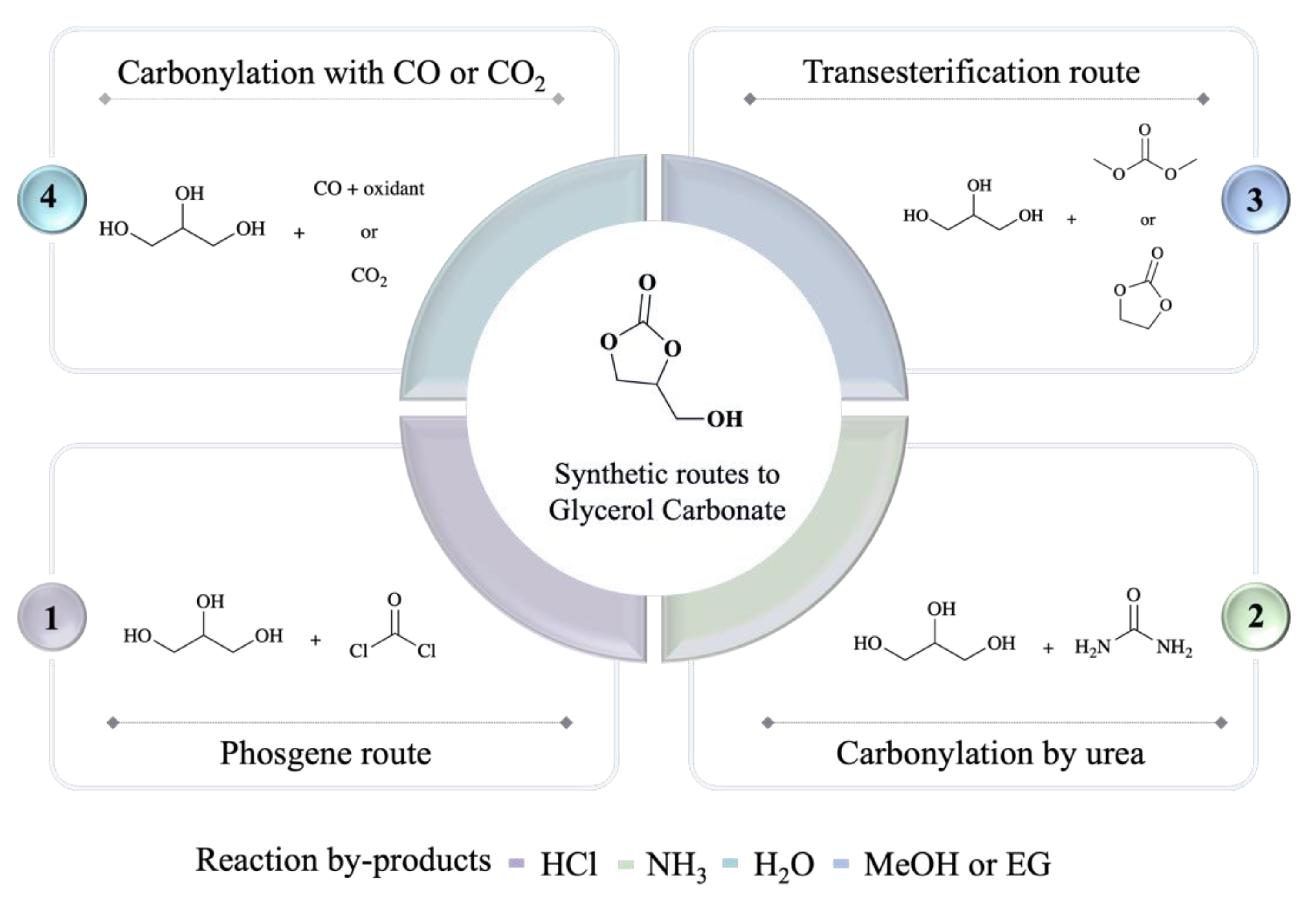
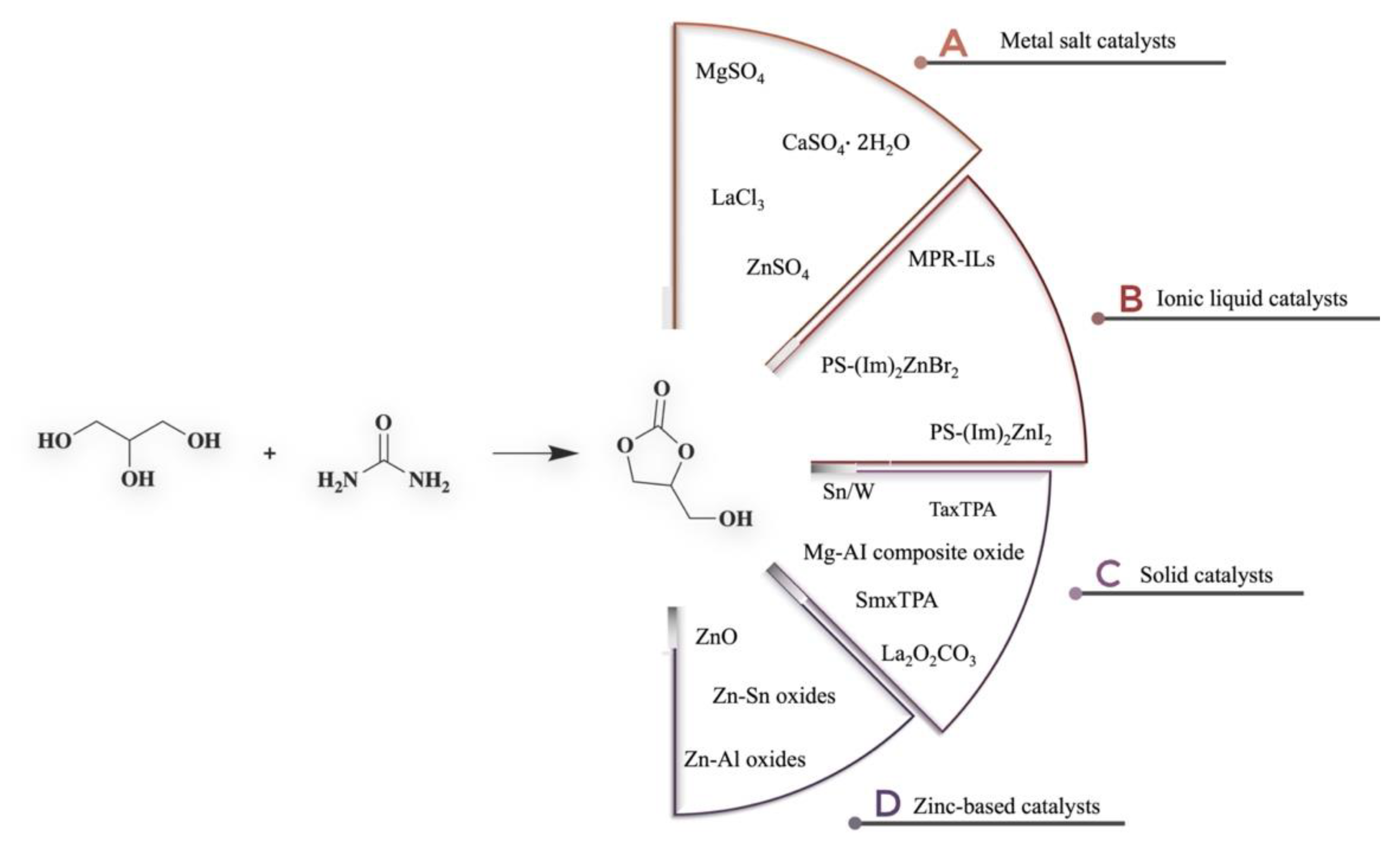
In recent years, the development of renewable energy alternatives to traditional fossil fuels has become one of the major challenges all over the world, due to the decline of fossil fuel reserves and their effect on global warming. Biodiesel has become a popular alternative energy source to reduce gas emissions compared to traditional fossil fuels. According to statistics, a nine-fold increase in global biofuel production between 2000 and 2020 was observed. However, its production generates a large amount of glycerol as a by-product, posing an environmental problem when disposed directly in landfills or by incineration. Therefore, low-value glycerol should be converted into high value-added derivatives. As glycerol carbonate is one of the most important derivatives of glycerol, this review aims to discuss the studies over the last ten years about glycerol carbonate synthetic methods, including the typical routes such as phosgene, esterification reaction, urea, oxidative and direct carbonylation as well as several rare synthetic procedures. At the same time, it summarizes the different catalytic reaction systems of each route comparing the advantages and disadvantages of various catalysts and evaluating their catalytic activity. Finally, the future development of glycerol carbonate synthesis is prospected from the point of view of development, technology research and industrialization.
Keywords: glycerol; green chemistry; by-product; glycerol carbonate; catalysis glycerol; green chemistry; by-product; glycerol carbonate; catalysis