


Abstract
Hazard recognition and prevention techniques utilize augmented reality (AR) and virtual reality (VR) technology for immersive training and identification of potential hazards. Currently, no scoping reviews exist specifically on hazard recognition and prevention using AR and VR, which is crucial for forming evidence-based guidelines. This scoping review aimed to identify the use of AR and VR in hazard recognition and prevention, identify research gaps, and provide future recommendations. This Joanna Brings Institute (JBI) approach was used to investigate hazard recognition and prevention with AR and VR interventions. A total of six reliable databases were included: Google Scholar, IEEE Xplore, ACM Digital Library, PubMed, Scopus, and APA PsycNet, focusing on records and publications from the last five years. The review identified 5438 publications, with 22 meeting final inclusion criteria. The major findings include the use of AR and VR for teaching new skills, ensuring health and safety, enhancing realism, developing cognitive skills, improving performance, increasing engagement, and stimulating a sense of presence. Limitations identified include limited or non-diverse sample size, absence of real-world scenarios or contextual learning, inadequate game mechanics, insufficient validation of test results, lack of dynamic game behaviour, insufficient expert inclusion, technology issues, long-term impact assessment, and cost comparisons with traditional approaches. Technological issues have emerged as an additional impediment, limiting the efficacy of AR/VR applications in hazard recognition and prevention. In light of these findings, future research should focus on integrating contextual learning, expert inclusion, sample recruitment, expert validation, long-term impact assessment, and resolving technological challenges to enhance AR/VR applications’ efficacy and real-world viability.
1. Introduction
The term ‘hazard’ refers to an identifiable situation that is potentially dangerous, posing a threat, danger, or trouble. For example, the presence of massive water bottles near computer equipment in a lab can sometimes constitute a risk [1]. Such hazards may also lead to slippage, particularly if the floor contains any amount of fluid. The purpose of this proposed scoping review is to chart, contrast, and categorize relevant literature on hazard-related environments, with a focus on expanding awareness and anticipation through the use of augmented and virtual realities. A scoping review follows a systematic search of peer-reviewed journals to discover all available evidence relevant to the research question [2].
Hazard recognition and prevention are essential safety management responsibilities, crucial for protecting people and infrastructure from potential disasters [3]. Modern tools like AR and VR have been used to transfer these basic capacities within the working environment [4]. While these approaches have proven valuable, they are not without limitations [4]. This scoping review aims to investigate the current state of research on hazard recognition and prevention using augmented and virtual reality. Hazard recognition and prevention encompass a broad field, including applications in civil engineering, fire safety, and training older adults in recognizing hazards. Currently, no scoping review provides a comprehensive summary of the latest research in this particular domain. To address this, eight variables were considered: study aim, participants’ age range, research questions, field of study, research methodologies used, major findings, study limitations, and settings (geographic locations). Key information was collected and summarized accordingly. The findings of this scoping review will help researchers understand the extent of current literature on hazard recognition and prevention using augmented and virtual reality, the research methodologies adopted in the domain, the hardware tools used for empirical studies, major findings, and the limitations of these studies.
AR and VR technologies are increasingly being used in disaster management training to enhance understanding of dangerous conditions and develop efficient moderation solutions [5]. AR overlays digital information on real-world environments, while VR immerses practitioners in concrete environments through embodied simulations of events [6,7]. The integration of these innovations may further transform the manner in which the prevention and detection of hazards are conducted. The prospects of using AR and VR in training for disaster management are gradually beginning to appear as the very existence of the digital environment evolves [8,9]. The realistic interactions provided by these technologies can reduce information asymmetry between practice and theory, contributing to faster and more efficient moderation solutions [10]. However, traditional training methods may struggle with learners’ separation, which could be addressed by integrating AR and VR in hazard recognition and prevention training [7,11,12].
Furthermore, understanding the variables associated with successful hazard recognition training is critical for both participants and training providers. Evidence on effective training can help identify best practices to reduce hazards and inform the development of strategies to mitigate risks [13]. Several attempts have been made at hazard recognition and prevention, evident across a wide and diverse range of publications employing various approaches [1,13,14]. Several studies have investigated the appropriateness of innovation in hazard recognition, while others have examined components such as sense of presence, engagement, motivation, and situational learning in hazard recognition and prevention [15,16,17]. Currently, there are narrative reviews on firefighting techniques but no systematic reviews have been published specifically on hazard recognition and prevention [15,18]. Compiling this evidence through a systematic review is essential for identifying recent studies, uncovering any gaps in the literature, and contributing to evidence-based recommendations for training providers in safety and emergency management.
Hazard recognition and prevention is a diverse field that requires focused attention. This research article aims to provide a comprehensive overview of the latest advancements in hazard recognition and prevention using emerging technologies such as augmented and virtual reality, with the objective of assisting future researchers in aligning their work effectively. By keeping the scope of hazard recognition “broad”, this article explores the full spectrum of hazard recognition and prevention using AR/VR technologies. The outcomes of this research offer valuable insights into the current state of hazard recognition and prevention research, highlighting the strengths and weaknesses of existing methodologies as well as the associated research limitations. This scoping review explores the literature to determine how AR and VR have been used in training for hazard recognition and prevention. The discussion section supports the key findings of this research, emphasizing the need for collaboration between researchers, practitioners, and developers to address the challenges identified in this report. By understanding the current research gaps and limitations of AR/VR, we can develop more practical hazard recognition skills.
2. Methods
When there is a substantial and distinct body of evidence, scoping reviews are essential for giving an overview of the most recent research and identifying areas that should be subjected to a systematic review with more in-depth analysis [19]. There are various frameworks which have evolved to streamline the process of systematic reviews. PRISMA (Preferred Reporting Items for Systematic Reviews and Meta-Analysis) is widely acknowledged as the methodological framework for systematic reviews and is advised by many journals [20]. PRISMA provides an evidence-based least set of items that should be consulted and reported, and their resources include a standardized checklist and flow diagram. There are several other entities that do alike job, sharing methodology, providing resources and collating systematic reviews, including the Joanna Briggs Institute (JBI) [21]. This scoping review followed JBI systematic review process [21,22] along with the PRISMASc guidelines. Through this review, a clearer route toward improving training approaches that provide people strong abilities in hazard detection and prevention emerges, eventually enhancing overall safety and resilience in the face of future calamities.
2.1. Stage 1: Identifying the Research Question
The mnemonic Population, Concept and Context (PCC) guides the eligibility criteria and to build the research question [23]. A title and research question were developed by following the PCC strategy which leads to the inclusion criteria. The population consists of general public regardless of their gender and age during this review. The concept was “Use of Augmented and Virtual Reality Technology”, and “hazard recognition and prevention” to pursue this scoping review. The following scoping review questions were framed:
- What are the main AR/VR-based technology interventions in hazard recognition and prevention?
- What are the research gaps in the current literature?
- What are the future recommendations to bridge the research gaps?
2.2. Stage 2: Identifying Relevant Studies
Inclusion Criteria
The PCC approach guided the eligibility criteria for this review. The inclusion criteria addressed the following:
- Empirical research methods (Qualitative, Quantitative, and mixed method)
- The following databases were used for the scoping review:
- ○
- ACM Digital Library
- ○
- Google Scholar (First 100 records)
- ○
- IEEE Xplore
- ○
- PsycNet
- ○
- PubMed
- ○
- Scopus
- Papers must address hazard recognition and prevention in disaster management.
- This review included articles which discuss the training and skills development.
- Research in extended or mixed reality were considered if the article discusses about the hazard recognition and prevention.
- Experiments referring to hazard assessment were included.
- Literature must not be older than five years and published in English language.
2.3. Search Strategy
According to the scoping review protocol, a systematic search strategy was applied to find the literature that will be covered in the review [20]. In accordance with PRISMA ScR guidelines, the search strategy must contain a thorough electronic search that utilizes at least one database limited to a specific timeline. To complete the present review, the following databases were chosen as a source of literature on ‘Augmented and Virtual Technology’. (1) Google Scholar (first 100 records), (2) IEEE Xplore, (3) ACM Digital Library, (4) PubMed, (5) Scopus, (6) APA PsycNet. These repositories were chosen in order to create a thorough search and to cover a wide spectrum of relevant literature. Last 5 years’ records were included to limit the search for specific time frame. Peer reviewed literature search queries are listed in Appendix A—Table A1. When it is necessary to combine search strings, the Boolean operators ‘and’ and ‘or’ were used to direct the search. The Joanna Briggs Institute (JBI) advises using three-step search techniques. Initial keywords were first determined, then the text words in the title and abstract were consulted, together with the index terms used to describe pertinent reviews. The additional terms, such as ‘meta-analysis’ or ‘systematic review’, were added to the search terms. Following the construction of database-specific search filters for each bibliographic citation database specified in the protocol, all included reviews’ reference lists were searched involving Google Scholar. A final PRISMA flowchart is included to show records of these searches.
2.4. Stage 3: Study Selection
Study selection process was divided into two levels: (1) Title and abstract review, (2) full document review. After the manual databases searches wherever applicable, the first level is to employ the researcher to review the titles and abstracts independently to identify suitable literature for inclusion in the review after deciding the inclusion and exclusion measures, as shown in Table 1. To elaborate further on selection and inclusion criteria at first level, the title of the article was read first, if the title makes use of the term ‘hazard’, ‘risk’, ‘hazard recognition’, ‘prevention’, along with the term ‘augmented reality’, or ‘virtual reality’ is mentioned, then the full abstract was consulted. If the article title, and abstract discuss the use of AR/VR in hazard recognition or prevention, such articles were included in the study otherwise the articles were discarded. Table 1 illustrates the search query used to identify relevant articles. Conflicts were handled by reviewing the findings thoroughly. This eliminated prejudice and resolved disputes. EndNote 20 software was used to export the articles to remove duplicates from the selected articles.
Table 1.
Inclusion and exclusion criteria for scoping review.
Second Level—To establish eligibility requirements, an impartial full text review of research was conducted. All inclusions and exclusions were listed in tabular form as shown in Table 1 with supporting documentation. Following questions help in reviewing:
- Was the article published within the specified time limits?
- Was the article published in English language only?
- Does the examined population match the inclusion criteria?
- Is the study relevant to the review question?
- Are the results measured?
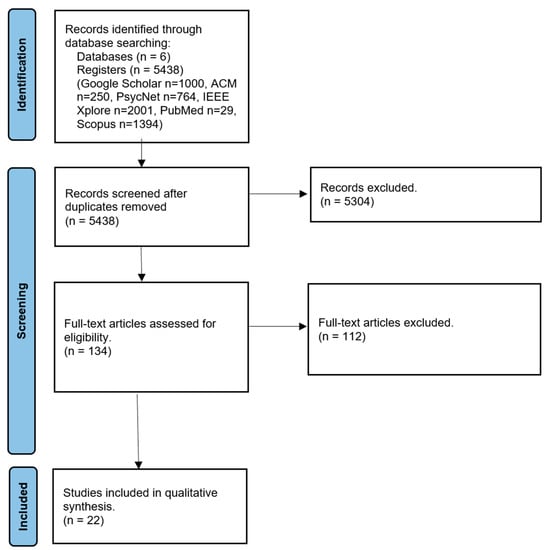
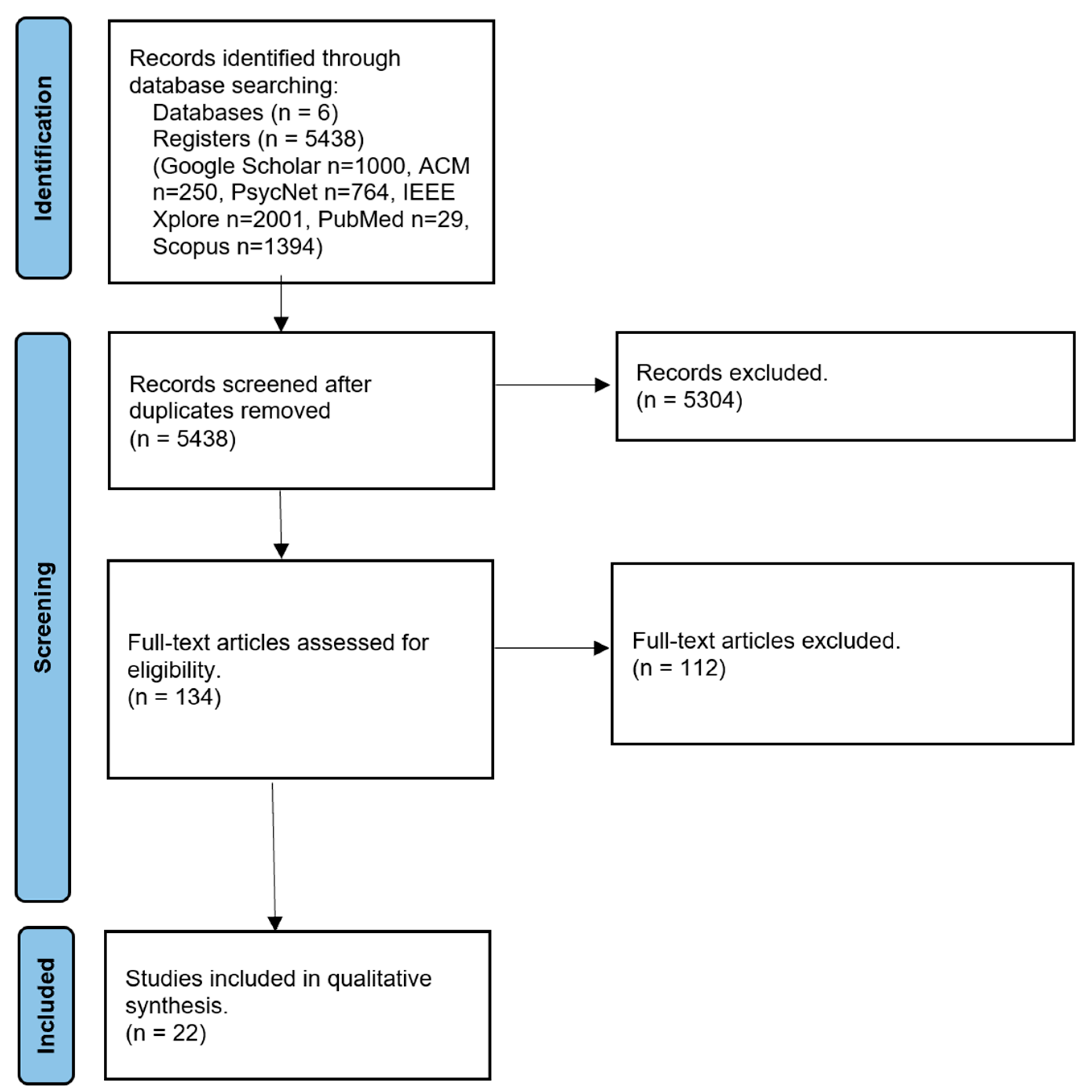
Additionally, 5438 publications were found in the initial search; 5304 were removed after reading the titles and abstracts. We looked at these abstracts in light of inclusion and exclusion criteria. A total of 134 papers underwent full text reviews; 22 studies made it all the way to the end of the charting process, as seen in the PRISMA Flowchart Figure 1 below.
Figure 1.
PRISMA flow diagram for scoping review.
2.5. Stage 4: Data Charting
The process of ‘charting the data’ is used to extract data for scoping reviews. The scoping review included articles’ study and participant characteristics were retrieved and tabulated. Information collected from each publication included author and year, study aims/purpose, participants age range, research question/hypothesis, field of study, research methodology/method, HMD/Equipment used, major findings, limitations of the study, and settings. The purpose was to come up with a descriptive summary of the results that addressed the objectives of the scoping review and, ideally, offered solutions to the study’s open-ended questions.
2.6. Stage 5: Collating, Summarizing, and Reporting the Results
The scoping review goals was to list and summarize the evidence that is currently available. According to PRISMA extension for scoping review checklist, the findings are presented in a descriptive narrative fashion with a PRISMA flowchart (PRISMA ScR). Organizing and categorizing the studies according to the study techniques are carried out. To report on key ideas and research features, frequent counts are done.
3. Key Findings
3.1. Study Characteristics
A total of 22 articles were meticulously reviewed, as listed in Appendix A, Table A2. Among these, a comprehensive selection process led to the inclusion of articles from a diverse range of fields. Notably, five articles were drawn from the realm of Civil Engineering and Construction Sites, shedding light on hazard recognition and prevention within this critical sector. The literature review includes articles from various sectors, including fire and emergency departments, healthcare and medical sectors, driving simulators, coal mining sports, agriculture, and falls prevention in older adults. These diverse fields provide a balanced view of hazard identification and mitigation in various realistic settings. The aim is to provide a good cross-section view and incorporate various sectors and scenarios, thereby expanding the understanding and study of hazard identification and mitigation in various realistic settings.
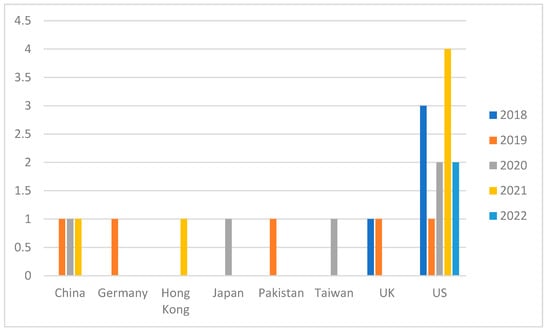
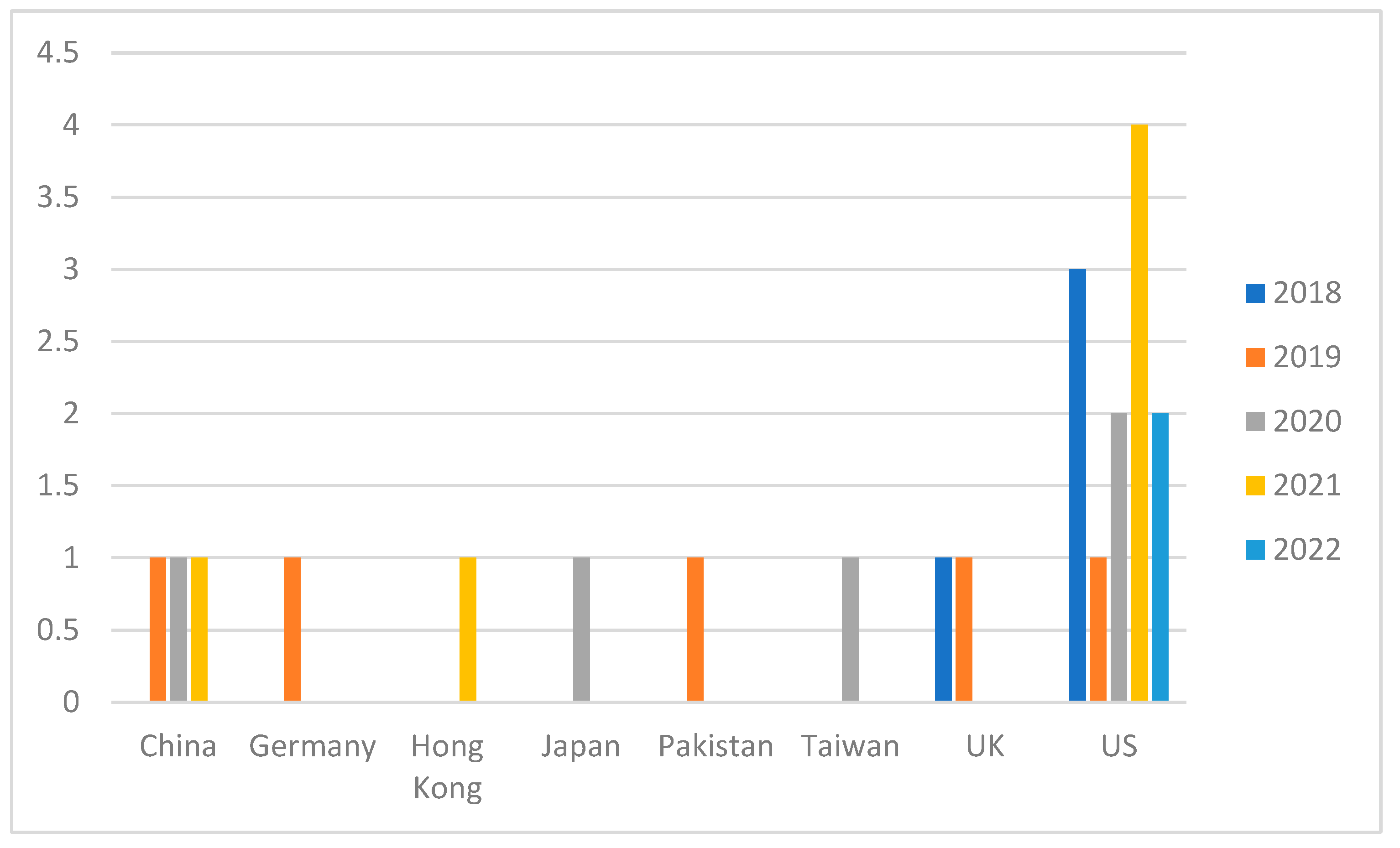
The exploration of augmented and virtual reality (AR/VR) interventions in enterprise hazard identification demonstrated unique trends with regard to the share of contributions from the field. Notably, civil engineering and the construction industry demonstrated significant use of AR/VR technology, primarily for risk assessment exercises. This sector also showed considerable interest in applying VR/AR technology to enhance hazard identification and management. The Fire and Emergency department emerged as a major user of AR and VR, particularly for training employees to handle emergencies. Ranking third, the healthcare and medical sectors highlighted the potential of AR/VR for improving hazard assessment in medical settings. Additionally, these technologies have been applied in fields such as sports, driving simulations, agriculture, and fall prevention for older adults. As highlighted in this paper, AR/VR interventions have proven versatile enough to adapt to difference scenarios across various fields, changing approaches to hazard assessment while promoting safer, better-informed decisions. Figure 2 below shows the frequency of research submissions by year and geographic location.
Figure 2.
Yearly Geographical Research Contribution.
Moreover, analysing the temporal distribution of publications revealed that the years from 2019 to 2021 saw the most significant contributions in hazard recognition and prevention research. Geographical patterns of research contributions shed light on the regions actively engaged in hazard recognition and prevention research. Notably, the United States, China, and the United Kingdom emerged as significant contributors in this field. These countries displayed a strong commitment to research in this domain, which aligns with their prominence in research and development in various sectors.
3.2. Participants Recruitment Samples
Out of the 22 articles reviewed, 9 articles focused on recruiting Civil Engineers as their study participants. This indicates a significant emphasis on this professional group within the reviewed literature.
The study focuses on the application of Augmented Reality (AR/VR) interventions in various occupational fields, including students, medical staff, senior citizens, and athletes. Three articles, including those by articles [21,24,25,26], are exclusively about students, reflecting the research community’s interests in academic populations. Two articles [27,28], focus on medical staff, indicating a healthcare perspective. The scoping review is broad, covering participants from various groups and genders. However, two articles did not clearly describe participants, raising questions about missing data in reporting results.
3.3. Goals and Applications of AR and VR
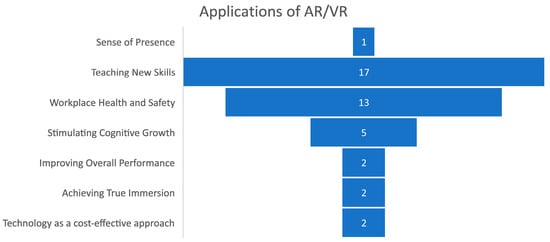
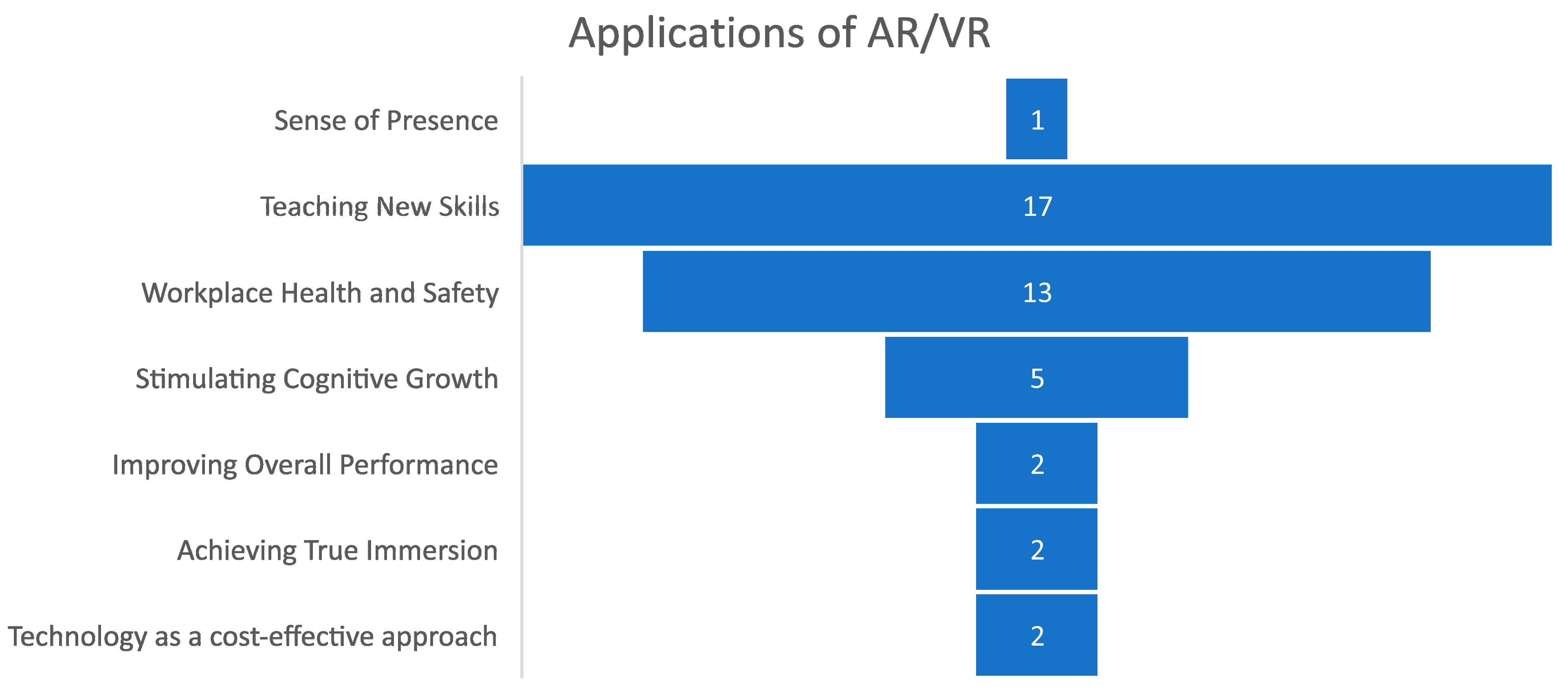
The analysis of the twenty-two reviewed studies exposed important features of the various ways in which AR and VR are employed. These articles contribute to increasing the knowledge database in the field, and the work they do can be grouped into several topics. Out of 17 papers, augmented reality and virtual reality have benefited authors in acquiring new content knowledge [4,29,30,31] as shown in Figure 3, explaining why they have been used as instructional tools. These technologies have been pointed out as crucial by 13 publications for Workplace Health and Safety [14,32]. Moreover, 5 papers have explored the cognitive development [7,31,33] that the AR/VR can provide. Two papers were aimed at increasing general effectiveness [34,35], assessing immersion aspects [28,36] of AR/VR and comparing costs with non-technological solutions [24,29,37].
Figure 3.
Applications of AR/VR.
Furthermore, one paper significantly contributes to understanding presence in AR/VR contexts, highlighting the diverse nature of AR/VR technology and its broad applicability across various fields, underscoring the transformative potential of these technologies in various domains. From skill acquisition and performance enhancement to improved safety practices and cognitive development, the study illuminates the multifaceted positive impacts of integrating AR/VR interventions into diverse contexts.
3.4. Major Limitations
The scoping review uncovered several noteworthy limitations that warrant consideration when interpreting the findings. These include:
3.4.1. Limited or Non-Diverse Sample Sizes
The review unveiled some papers having low sample sizes or inadequate diversity of the participants. Observing the 22 articles, 9 of them have mentioned that the study was unable to recruit people with required characteristics, number, or the sample size utilized either male or female but not both simultaneously. The authors have also pointed out that occasionally participants included were not necessarily obtained from the field of interest. This may bring some bias when generalizing the results to other populations in the community and/or, countries.
3.4.2. Absence of Real-World Scenarios or Contextual Learning
The study identified a challenge in enhancing hazard identification and mitigation using AR/VR in game environments, with 8 out of 22 articles not considering contextual learning. Additionally, the lack of real-life case scenarios was noted, which could affect the generalization of the findings to real-life situations [14,15,28,34,36,38,39,40]. This highlights the need for more comprehensive and realistic scenarios in game environments.
3.4.3. Inadequate Game Mechanics and Validation
Out of them, four studies were found to be having inadequate game mechanics [23,35,38,41]. Additionally, many use cases lacked proper testing and validation, potentially compromising the reliability and effectiveness of the interventions.
3.4.4. Lack of Dynamic Behaviour in Games
Lack of dynamic behaviours within game simulations was considered as a limitation in three papers [3,30,40]. Lack of dynamic elements may cause the effective and realistic training interventions to be more of a simulation than actual.
3.4.5. Need for Inclusion of Expert Insights
Five researchers highlighted the need for further studies of various types, for instance, based on the analysis of previous accidents and/or interviews with specialists [11,29,32,42,43]. This would help in adding more depth and understanding of the feasibility of the interventions in real life application.
3.4.6. Technology Issues and Sensor Problems
Some of the strategies’ constraints were pinpointed concerning the technology to be employed in the proposed solutions. Two articles discussed some of the issues with the sensors used that indicated that depending on the situation, the sensors may affect the effectiveness of the interventions for corresponding scenarios [21,44].
3.4.7. Uncertainty Regarding Long-Term Impact
Scholars identified a limitation in game-based training, as the results were not conclusive on the long-term implications, leading to two articles [11,39]. This lack of clarity could affect the holism of such interventions.
3.4.8. Cost Comparison with Traditional Training
Research on the cost of game-based training is essential to determine if it is cheaper or more expensive than traditional training [4,29,37]. This assessment will provide insights into the potential of AR/VR-integrated interventions and their real-world possibilities. However, limitations should be considered in future studies to avoid them and improve training interventions in AR/VR environments. Understanding these limitations can help avoid potential drawbacks and enhance the effectiveness of AR/VR training.
3.5. Prominent Research Questions or Hypotheses
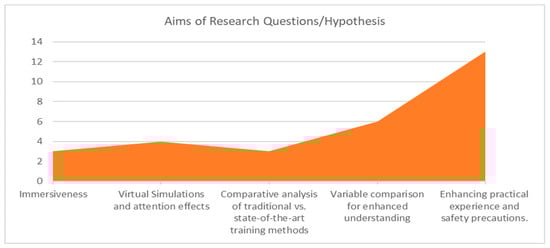
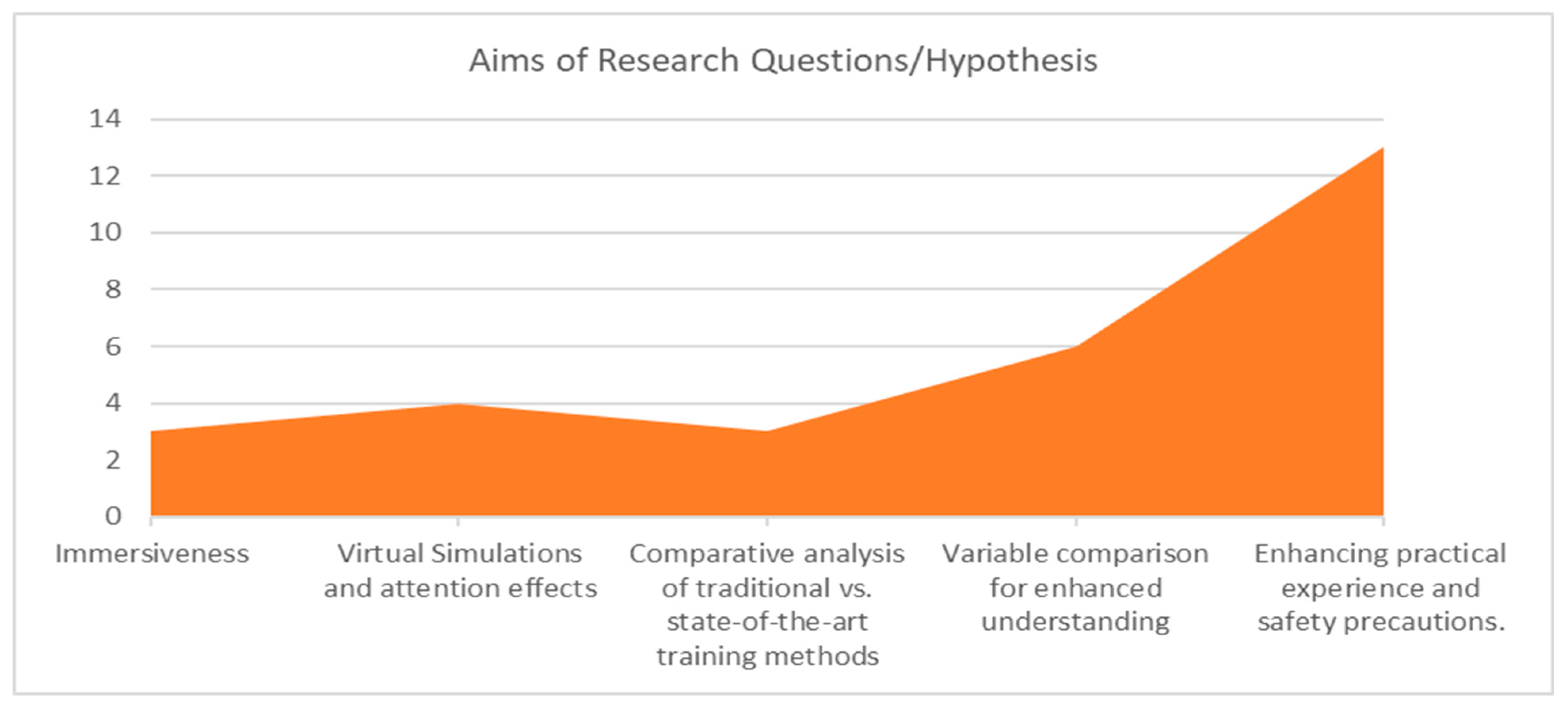
The use of Augmented Reality (AR) and Virtual Reality (VR) in hazard recognition and prevention comprises a rich tapestry of research aims, as seen by our extensive evaluation of 22 selected papers. Three publications theorized and focused their research on increasing the experience of immersion in AR/VR settings [4,7,28] highlighting the importance of immersion. Four publications have focused on the immersive characteristics of virtual simulations and their possible impact on attention [36,38,41,45] laying the way for lively debate. Furthermore, three publications attempted to give useful comparative assessments, pitting traditional training techniques against cutting-edge AR/VR training methodologies [4,33,46] so providing crucial insights into these technologies’ revolutionary potential. A notable subgroup of six publications conducted variable comparisons, adding to our understanding of the intricacies of AR/VR adoption [11,24,31,42,46,47]. Issue with technology adoption is an umbrella term used in AR/VR that refers to in-adequate headmounted display sizes, feelings of fatigue due to excessive use, motion-sickness and safety issues. Discussion of these terms are beyond the scope of this article. However, AR/VR genuinely shines in the arena of practical experience and safety measures [3,4,14,23,29,31,34,36,44,45,47,48,49], with a sizable 13 papers making major contributions in this sector as depicted in Figure 4. These findings highlight the diverse nature of AR/VR research and the critical role it plays across a wide range of applications and goals.
Figure 4.
Research Questions or hypothesis.
In summation, the findings highlight the interconnected and multidimensional nature of research questions and hypotheses in selected articles, aiming to expand knowledge on AR/VR interventions for hazard detection and mitigation. By studying these complex dimensions, researchers aim to enhance safety interventions, increase cognitive involvement, and optimize training approaches for a safer and more knowledgeable environment.
3.6. HMD or Equipment Used
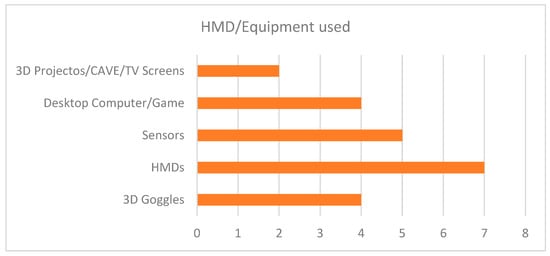
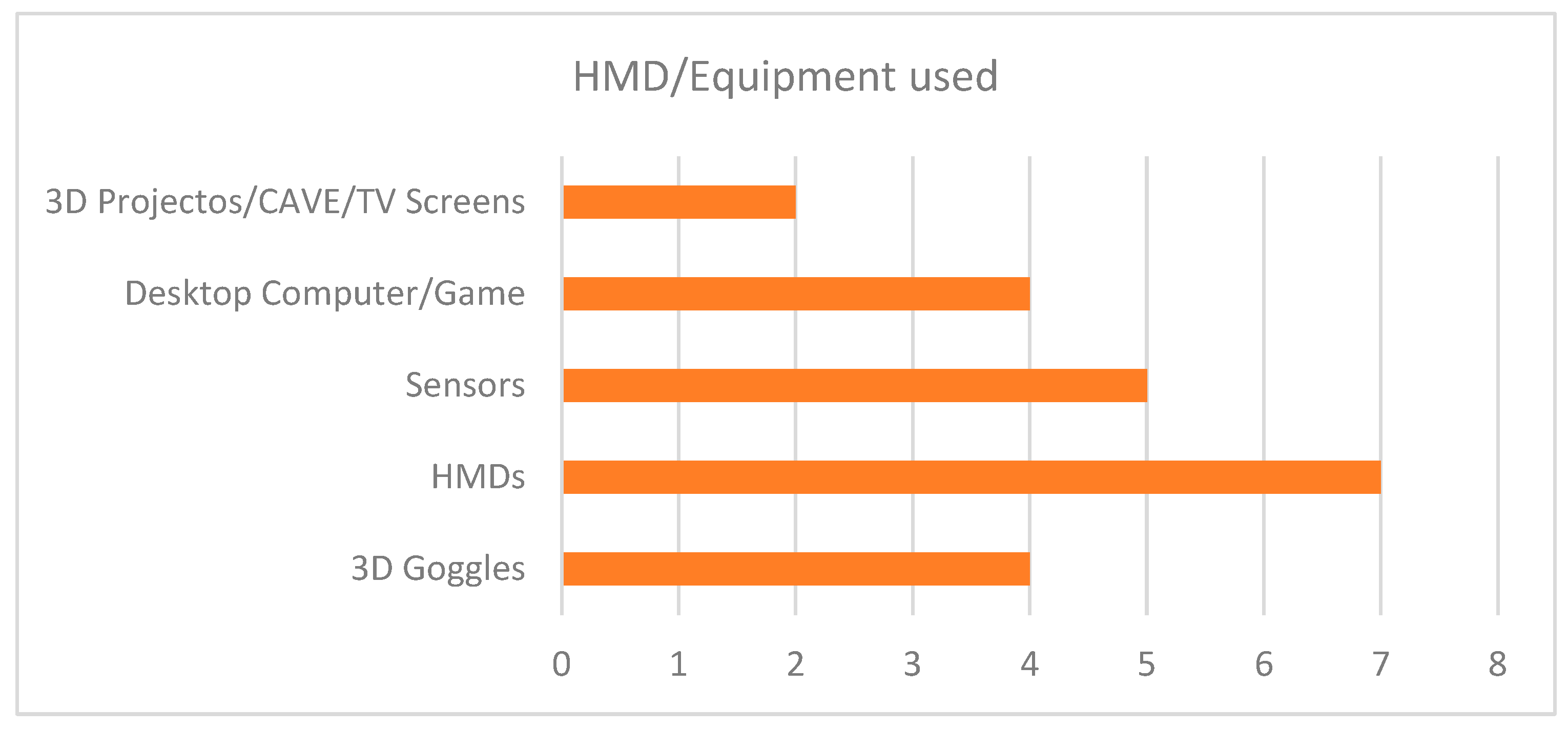
AR and VR in the hazard identification and risk mitigation field, specifically while using the tools and technologies emphasizes their function as critical factors for determining the results. The following is the list of the HMD/equipment used in the reviewed articles as shown in the Figure 5 below. Out of the 22 articles reviewed, seven articles adopted HMD, including OnePlus, HTC Vive, and Oculus Quest/Rift, and other immersive tools [28,29,31,32,35,37,38]. All these devices acting as a window to the AR/VR worlds enable deep interactions. Overall, five research papers have focused on the issue of integrating more sensors, which only makes the sense of presence and performance even better while at the same time supplying new skills. These sensors include gyroscopes, Garmin Vivo smart devices, wristbands, accelerometers, and emotive sensors [28,36,42,45,47]. Four articles have focused on the use of 3D Goggles, including Tobii as a brand [3,24,33,37].
Figure 5.
HMD or Equipment Used.
Moreover, an equivalent quantity of articles has used conventional yet efficient approaches; utilizing either Desktop computers or laptops as the fundamental hardware in their trials [11,34,44,48]. However, in terms of exhibition, only two articles have gone a step further and used 3D Projector screens, TV screens or even design CAVE environment to discover the potentiality of AR/VR technology [24,37,41]. All these choices in the hardware are in harmony with the diversification and creativity in the technological space of the AR/VR research.
4. Discussion and Conclusions
4.1. Discussion
The scoping review of 22 articles on hazard identification and risk reduction provides valuable insights for future researchers. Key patterns and trends are identified, including the importance of Google Scholar [29] and PubMed in hazard identification and risk avoidance [50]. These databases use technology related to extended reality for knowledge sharing. The review also highlights the enhancement of research work in the past three years, with active engagement in hazard identification and the use of AR/VR for risk avoidance [5]. This trend indicates a positive trend in future developments in this field, with optimism for significant progress in the coming years. On a global scale, the United States of America [10] the UK [14], and China [26] significantly contributed to the advancement of knowledge on hazards and prevention using gamification. The term gamification refers to game-based learning and it covers serious games, educational games to develop cognitive skills etc. They offer diverse perspectives on this crucial subject. The Civil Engineering and Construction Sites sector has seen a greater focus on identifying hazards and risk control measures [51]. The fire and emergency domain and medical sector have also seen the application of AR/VR in safety-oriented sectors [14,52], highlighting the importance of these technologies in various sectors.
The scoping review revealed key findings on the effectiveness of AR/VR interventions in teaching new skills, health and safety [26,53] true reality [54], cognitive skills [2] and organizational performance [42]. These findings affirm the efficiencies of AR/VR interventions, demonstrating their potential to revolutionize training practices and improve safety, and provide evidence for their potential to improve overall organizational performance. The scoping review of 22 articles revealed a lack of contextual knowledge and real events in the use of AR/VR in gamification. Despite being effective tools for simulating dangerous scenarios, there is a need for better integration of contextual learning into risk assessment and risk avoidance planning [55,56]. This is a missed opportunity for real-life scenarios training. The small sample size raises questions about the generalizability of the results and calls for more comprehensive sampling techniques [16,57]. Despite the stimulating nature of the gamified approach, there are disadvantages, such as the dynamic restriction of game behaviours in hazard recognition and prevention programs. However, the strong dynamics of interactions within the virtual world enhance the realism and effectiveness of training scenarios [58,59].
Further research should consider more comprehensive sampling techniques to increase confidence in the results’ generalizability [60]. One more factor requiring focus is external validation [32,61], because the input from experts can enhance the effectiveness of the gamification technique [13]. Moreover, the incorporation of sensors into the process of gamification is important [22] because it may provide actual information and evaluation, thus enhancing the learning process [22,62]. Finally, one of the major weaknesses it is the absence of sufficient variation in gamification activities conducted through augmented reality and/or virtual reality [63]. The importance lies in utilizing outcomes in diverse scenarios for hazard identification, avoiding limited context [27].
Additionally, the identified research gaps and ideas for future work include discovering more fields where extended reality could be applied, such as fire hazard identification in dwelling areas and hazard identification in flight operations [38]. One limitation pointed out is the lack of context, that is, no real-life applications featured in some of the research studies. Further work, emphasis should be made on the improvement of contextual learning through to focus on, a more immersive environment as well as presence in the virtual environment [55]. Based on the variation in the participant sample sizes, the future research should develop a set of rules and regulations in sampling techniques in the gamified learning environment [52,64]. This would mean actualizing more generalizable results at net level [63,65].
In order to increase the external construct validity of future research, the authors suggest that the industry specialists should be involved at all stages of user validation/testing [66]. The proposed extended reality interventions could have improved the quality and relevance of the current interventions, particularly in investigating the effects on instructional outcomes, particularly lasting knowledge and skills gains [67]. Evaluating the extended impact of training is crucial to determine the duration of learning results. Future research should compare the costs of using AR/VR training environments to other types of training to ensure comprehensive understanding [68].
Actualizing associated variables, researchers can provide an understanding into the economic efficiency and benefits of extended-reality training. Another good word of the advice is the effectiveness of surveys as the primary tool to gather requirements. To contribute towards the solution of the problem, researchers can formulate adequate study questions that align with the existing requirements and challenges in disaster management through involving stakeholders, practitioners, and future users as suggested by [69]. Researchers are stressing on making the semantics of interventions more efficient, feasible, and realistic. They are adopting other top-notch technologies such as those are Oculus Quest Pro, HoloLens and Apple Vision to improve the touch sensation allow to enhance the graphic processing and create better and more entertaining AR/VR memorable [70,71]. Dynamic graphics processing and user comfort are key factors influencing client engagement and safety instruction efficiency. Designers and developers should maintain a user-centred approach, focusing on individual preferences and ergonomic requirements, to ensure the successful implementation of these technologies [49,72]. This will increase user engagement and improve safety results in a variety of industries [37,73].
Furthermore, the analysis of the publication year indicated that the identification and risk prevention has been active and most productive in the years 2019, 2020 and 2021 as depicted in Figure 2. This indicates that there was enhanced focus on this area at this period suggesting that more attention was being paid to the area. Research may have increased in these years due to an increased focus on safety and risk factors and the quest for new solutions to risks [74,75]. By addressing these gaps and exploring the outlined directions, future research in the field of extended reality for hazard recognition and prevention can pave the way for more effective and impactful training approaches, fostering safer and more informed decision-making across diverse domains.
Initially, we started our search in a broad range to cover each and every aspect of hazard recognition and prevention using augmented and virtual reality. After completing the scoping review survey, we managed to narrow down our research findings to fewer areas where hazard recognition and prevention were applied. This approach helped us to identify the current use of hazard recognition and prevention using AR/VR across diverse industries and domains. Our findings offer valuable insights for future researchers to enhance their research and follow the best practices. A notable trend observed is the widespread adoption of technology in the civil engineering and construction sites as they possess lots of challenges in hazard recognition and prevention. By incorporating augmented and virtual reality technology these industries have significantly improved their hazard recognition and prevention capabilities. Healthcare and medical sectors follow closely behind, recognizing the potential of technology-driven hazard recognition and prevention trainings. Other establishments including driving simulators, coal mining, sports, agriculture and falls prevention in older adults had helped identifying and mitigating hazards. By examining these various fields, we can gain a deeper understanding of identifying, assessing and mitigating hazards and overcoming the research gaps identified in this scoping review.
4.2. Conclusions
The scoping review of 22 articles highlights the dynamic and evolving field of the hazard identification and mitigation through the use of augmented and virtual reality (AR/VR) technologies. This review has provided informative and insightful perspectives on the integration of AR/VR for enhancing safety measures and training across a range of sectors. It underscores the prominent role of AR/VR in supporting skill development, enhancing safety awareness, and improving performance. Applications of AR/VR have been implemented in diverse domains such as civil engineering, construction, fire and emergency services, and healthcare. These contributions reflect coordinated global efforts to improve hazard identification and coping strategies.
This review also identifies several limitations in AR/VR applications, including insufficient research into game mechanics testing, contextual learning, and participant recruitment. Despite their apparent ease of integration, AR/VR technologies still face challenges that need to be addressed to create more effective interventions. Addressing these limitations will help pave the way for broader application of AR/VR across different fields, enhancement of contextual learning experiences, and long-term assessment of knowledge retention.
Overall, this scoping review serves as a guiding reference for future research, providing valuable insights for researchers, practitioners, and stakeholders invested in safety management. As AR/VR technology continues to evolve, this comprehensive analysis will undoubtedly contribute to the development of effective hazard recognition and prevention strategies, ultimately fostering safer environments and more informed decision-making.
This study was conducted in early 2023. The results may vary if the same search string is used beyond this period.
Author Contributions
T.F. led the conceptualization of the research question and conducted the literature search and literature review. A.A.M. developed the methodology and suggested the JBI protocol for scoping review, M.T.K.T. assisted in data collection instruments. M.T.K.T. and A.A.M. performed the data validation. K.Y.S. reviewed the work and gave his insights in improving the writing style. All authors have read and agreed to the published version of the manuscript.
Funding
This research received no external funding.
Data Availability Statement
Scoping review downloaded articles and excel sheet data can be shared on request. Articles reviewed during the scoping review are added in the Appendix A.
Conflicts of Interest
The authors declare no conflicts of interest.
Appendix A
Table A1.
Search Queries.
Table A2.
Data Extraction.
References
- Bellanca, J.L.; Orr, T.J.; Helfrich, W.; Macdonald, B.; Navoyski, J.; Eiter, B. Assessing Hazard identification in surface stone mines in a virtual environment. Advances in Intelligent Systems and Computing. In Proceedings of the AHFE 2016 International Conference on Digital Human Modeling and Simulation, Orlando, FL, USA, 27–31 July 2016. [Google Scholar]
- Welsh, J.A.; Nix, R.L.; Blair, C.; Bierman, K.L.; Nelson, K.E. The Development of Cognitive Skills and Gains in Academic School Readiness for Children from Low-Income Families. J. Educ. Psychol. 2010, 102, 43–53. [Google Scholar] [CrossRef] [Scilit]
- Xu, W.; Liang, H.-N.; Yu, K.; Wen, S.; Baghaei, N.; Tu, H. Acceptance of Virtual Reality Exergames Among Chinese Older Adults. Int. J. Hum.–Comput. Interact. 2022, 39, 1134–1148. [Google Scholar] [CrossRef] [Scilit]
- Chen, H.; Hou, L.; Zhang, G.; Moon, S. Development of BIM, IoT and AR/VR technologies for fire safety and upskilling. Autom. Constr. 2021, 125. [Google Scholar] [CrossRef] [Scilit]
- Wolf, M.; Teizer, J.; Wolf, B.; Bükrü, S.; Solberg, A. Investigating hazard recognition in augmented virtuality for personalized feedback in construction safety education and training. Adv. Eng. Inform. 2022, 51, 101469. [Google Scholar] [CrossRef] [Scilit]
- Conges, A.; Evain, A.; Benaben, F.; Chabiron, O.; Rebiere, S. Crisis Management Exercises in Virtual Reality. In Proceedings of the 2020 IEEE Conference on Virtual Reality and 3D User Interfaces Abstracts and Workshops (VRW), Atlanta, GA, USA, 22–26 March 2020. [Google Scholar]
- Noghabaei, M.; Han, K. Hazard recognition in an immersive virtual environment: Framework for the simultaneous analysis of visual search and EEG patterns. arXiv 2020, arXiv:2003.09494. [Google Scholar]
- Chen, Y.-J.; Lai, Y.-S.; Lin, Y.-H. BIM-based augmented reality inspection and maintenance of fire safety equipment. Autom. Constr. 2020, 110, 103041. [Google Scholar] [CrossRef] [Scilit]
- Eiris, R.; Gheisari, M.; Esmaeili, B. PARS: Using Augmented 360-Degree Panoramas of Reality for Construction Safety Training. Int. J. Environ. Res. Public Health 2018, 15, 2452. [Google Scholar] [CrossRef] [Scilit]
- Uddin, S.M.J.; Albert, A.; Alsharef, A.; Pandit, B.; Patil, Y.; Nnaji, C. Hazard Recognition Patterns Demonstrated by Construction Workers. Int. J. Environ. Res. Public Health 2020, 17, 7788. [Google Scholar] [CrossRef] [Scilit]
- Engelmann, T.; Wallstein, S.; Hitzler, D. An Experimental Study to Investigate the Potential of Online Shopping in Immersive Virtual Realities Compared to Conventional Online Shops. Int. J. Virtual Real. 2019, 19, 31–45. [Google Scholar] [CrossRef] [Scilit]
- Shamsudin, N.M.; Mahmood, N.H.N.; Rahim, A.R.A.; Mohamad, S.F.; Masrom, M. Utilization of virtual reality technology smartphone application for the enhancement of construction safety and health hazard recognition training in piling work: Pilot study. Adv. Sci. Lett. 2018, 24, 8660–8662. [Google Scholar] [CrossRef] [Scilit]
- Pedram, S.; Kennedy, G.; Sanzone, S. Toward the validation of VR-HMDs for medical education: A systematic literature review. Virtual Real. 2023, 27, 2255–2280. [Google Scholar] [CrossRef] [Scilit]
- Albert, A.; Hallowell, M.R.; Skaggs, M.; Kleiner, B. Empirical measurement and improvement of hazard recognition skill. Saf. Sci. 2017, 93, 1–8. [Google Scholar] [CrossRef] [Scilit]
- Farghaly, K.; Collinge, W.; Mosleh, M.H.; Manu, P.; Cheung, C.M. Digital information technologies for prevention through design (PtD): A literature review and directions for future research. Constr. Innov. 2022, 22, 1036–1058. [Google Scholar] [CrossRef] [Scilit]
- Strojny, P.; Dużmańska-Misiarczyk, N. Measuring the effectiveness of virtual training: A systematic review. Comput. Educ. X Real. 2023, 2, 100006. [Google Scholar] [CrossRef] [Scilit]
- Tan, B.; Yanling, L.; Kaixuan, W. Design and Application of the Virtual Simulation Teaching System for Grouting Fire Prevention and Extinguishment. In Proceedings of the 2nd World Symposium on Software Engineering, Chengdu, China, 25–27 September 2020. [Google Scholar] [CrossRef] [Scilit]
- Tricco, A.C.; Lillie, E.; Zarin, W.; O’Brien, K.K.; Colquhoun, H.; Levac, D.; Moher, D.; Peters, M.D.J.; Horsley, T.; Weeks, L.; et al. PRISMA Extension for Scoping Reviews (PRISMA-ScR): Checklist and Explanation. Ann. Intern. Med. 2018, 169, 467–473. [Google Scholar] [CrossRef] [Scilit]
- Feng, Z.; González, V.A.; Amor, R.; Lovreglio, R.; Cabrera-Guerrero, G. Immersive virtual reality serious games for evacuation training and research: A systematic literature review. Comput. Educ. 2018, 127, 252–266. [Google Scholar] [CrossRef] [Scilit]
- Velev, D.; Zlateva, P.; Steshina, L.; Petukhov, I. Challenges of using drones and virtual/augmented reality for disaster risk management. ISPRS—Int. Arch. Photogramm. Remote Sens. Spat. Inf. Sci. 2019, 42, 437–440. [Google Scholar] [CrossRef] [Scilit]
- Arksey, H.; O’Malley, L. Scoping studies: Towards a methodological framework. Int. J. Soc. Res. Methodol. 2005, 8, 19–32. [Google Scholar] [CrossRef] [Scilit]
- Mouratidis, K.; Hassan, R. Contemporary versus traditional styles in architecture and public space: A virtual reality study with 360-degree videos. Cities 2020, 97, 102499. [Google Scholar] [CrossRef] [Scilit]
- Xu, J.; Tang, Z.; Yuan, X.; Nie, Y.; Ma, Z.; Wei, X.; Zhang, J. A VR-based the emergency rescue training system of railway accident. Entertain. Comput. 2018, 27, 23–31. [Google Scholar] [CrossRef] [Scilit]
- Leder, J.; Horlitz, T.; Puschmann, P.; Wittstock, V.; Schütz, A. Comparing immersive virtual reality and powerpoint as methods for delivering safety training: Impacts on risk perception, learning, and decision making. Saf. Sci. 2019, 111, 271–286. [Google Scholar] [CrossRef] [Scilit]
- Levac, D.; Colquhoun, H.; O’Brien, K.K. Scoping studies: Advancing the methodology. Implement. Sci. 2010, 5, 69. [Google Scholar] [CrossRef] [Scilit]
- Zhou, L.; Xue, P.; Zhang, Y.; Wei, F.; Zhou, J.; Wang, S.; Hu, Y.; Lou, X.; Zou, H. Occupational health risk assessment methods in China: A scoping review. Front. Public Health 2022, 10, 1035996. [Google Scholar] [CrossRef] [Scilit]
- Fussell, S.G.; Truong, D. Using virtual reality for dynamic learning: An extended technology acceptance model. Virtual Real. 2022, 26, 249–267. [Google Scholar] [CrossRef] [Scilit]
- Adami, P.; Rodrigues, P.B.; Woods, P.J.; Becerik-Gerber, B.; Soibelman, L.; Copur-Gencturk, Y.; Lucas, G. Effectiveness of VR-based training on improving construction workers’ knowledge, skills, and safety behavior in robotic teleoperation. Adv. Eng. Informatics 2021, 50. [Google Scholar] [CrossRef] [Scilit]
- Haddaway, N.R.; Collins, A.M.; Coughlin, D.; Kirk, S. The Role of Google Scholar in Evidence Reviews and Its Applicability to Grey Literature Searching. PLoS ONE 2015, 10, e0138237. [Google Scholar] [CrossRef] [Scilit]
- Hajiseyedjavadi, F.; Zhang, T.; Agrawal, R.; Knodler, M.; Fisher, D.; Samuel, S. Effectiveness of visual warnings on young drivers hazard anticipation and hazard mitigation abilities. Accid. Anal. Prev. 2018, 116, 41–52. [Google Scholar] [CrossRef] [Scilit]
- Roofigari-Esfahan, N.; Porterfield, C.; Ogle, T.; Upthegrove, T.; Jeon, M.; Lee, S.W. Group-based VR Training to Improve Hazard Recognition, Evaluation, and Control for Highway Construction Workers. In Proceedings of the 2022 IEEE Con-ference on Virtual Reality and 3D User Interfaces Abstracts and Workshops (VRW), Christchurch, New Zealand, 12–16 March 2022. [Google Scholar]
- Harris, D.J.; Bird, J.M.; Smart, P.A.; Wilson, M.R.; Vine, S.J. A Framework for the Testing and Validation of Simulated Environments in Experimentation and Training. Front. Psychol. 2020, 11, 605. [Google Scholar] [CrossRef] [Scilit]
- Liao, P.-C.; Sun, X.; Zhang, D. A multimodal study to measure the cognitive demands of hazard recognition in construction workplaces. Saf. Sci. 2021, 133, 105010. [Google Scholar] [CrossRef] [Scilit]
- Money, A.G.; Atwal, A.; Boyce, E.; Gaber, S.; Windeatt, S.; Alexandrou, K. Falls Sensei: A serious 3D exploration game to enable the detection of extrinsic home fall hazards for older adults. BMC Med Inform. Decis. Mak. 2019, 19, 85. [Google Scholar] [CrossRef] [Scilit]
- Qi, D.; Ryason, A.; Milef, N.; Alfred, S.; Abu-Nuwar, M.R.; Kappus, M.; De, S.; Jones, D.B. Virtual reality operating room with AI guidance: Design and validation of a fire scenario. Surg. Endosc. 2021, 35, 779–786. [Google Scholar] [CrossRef] [Scilit]
- Yamamoto, K.; Ishihara, M. Building a Firefighting Training System in MR. In Proceedings of the HCI International 2020–Late Breaking Posters: 22nd International Conference, Copenhagen, Denmark, 19–24 July 2020; pp. 244–250. [Google Scholar] [CrossRef] [Scilit]
- Cvetković, V.M.; Dragašević, A.; Protić, D.; Janković, B.; Nikolić, N.; Milošević, P. Fire safety behavior model for residential buildings: Implications for disaster risk reduction. Int. J. Disaster Risk Reduct. 2022, 76. [Google Scholar] [CrossRef] [Scilit]
- Al-Ansi, A.M.; Jaboob, M.; Garad, A.; Al-Ansi, A. Analyzing augmented reality (AR) and virtual reality (VR) recent development in education. Soc. Sci. Humanit. Open 2023, 8, 100532. [Google Scholar] [CrossRef] [Scilit]
- Bhandari, S.; Hallowell, M.R.; Van Boven, L.; Welker, K.M.; Golparvar-Fard, M.; Gruber, J. Using augmented virtuality to examine how emotions influence construction-hazard identification, risk assessment, and safety decisions. J. Constr. Eng. Manag. 2020, 146, 04019102. [Google Scholar] [CrossRef] [Scilit]
- Namkoong, K.; Chen, J.; Leach, J.; Song, Y.; Vincent, S.; Byrd, A.P.; Mazur, J. Virtual reality for public health: A study on a VR intervention to enhance occupational injury prevention. J. Public Health 2022, 45, 136–144. [Google Scholar] [CrossRef] [Scilit]
- Hasanzadeh, S.; Polys, N.F.; de la Garza, J.M. Presence, Mixed Reality, and Risk-Taking Behavior: A Study in Safety Interventions. IEEE Trans. Vis. Comput. Graph. 2020, 26, 2115–2125. [Google Scholar] [CrossRef] [Scilit]
- Farrell, W.A. Learning Becomes Doing: Applying Augmented and Virtual Reality to Improve Performance. Perform. Improv. 2018, 57, 19–28. [Google Scholar] [CrossRef] [Scilit]
- Lv, Z.; Chen, D.; Hossain, M.S. Traffic Safety Detection System by Digital Twins and Virtual Reality Technology. In Proceedings of the 2022 IEEE International Instrumentation and Measurement Technology Conference (I2MTC), Ottawa, ON, Canada, 16–19 May 2022. [Google Scholar]
- Eiter, B.M.; Bellanca, J.L.; Helfrich, W.; Orr, T.J.; Hrica, J.; Macdonald, B.; Navoyski, J. Recognizing mine site hazards: Identifying differences in hazard recognition ability for experienced and new mineworkers. In Proceedings of the Advances in Intelligent Systems and Computing, Los Angeles, CA, USA, 17–21 July 2017. [Google Scholar] [CrossRef] [Scilit]
- Hussain, F.; Ehatisham-Ul-Haq, M.; Azam, M.A. Activity-Aware Fall Detection and Recognition Based on Wearable Sensors. IEEE Sens. J. 2019, 19, 4528–4536. [Google Scholar] [CrossRef] [Scilit]
- Fong, D.T.P.; Chan, Y.-Y.; Chu, V.W.S.; Lam, A.H.F.; Yung, P.S.H. Using a Single Uniaxial Gyroscope to Detect Lateral Ankle Sprain Hazard. IEEE Sens. J. 2021, 21, 3757–3762. [Google Scholar] [CrossRef] [Scilit]
- Zhang, C. Review of Structural Fire Hazards, Challenges, and Prevention Strategies. Fire 2023, 6, 137. [Google Scholar] [CrossRef] [Scilit]
- Xu, M.; Xie, X.; Lv, P.; Niu, J.; Wang, H.; Li, C.; Zhu, R.; Deng, Z.; Zhou, B. Crowd Behavior Simulation with Emotional Contagion in Unexpected Multihazard Situations. IEEE Trans. Syst. Man Cybern. Syst. 2021, 51, 1567–1581. [Google Scholar] [CrossRef] [Scilit]
- Xu, Q.; Chong, H.-Y.; Liao, P.-C. Exploring eye-tracking searching strategies for construction hazard recognition in a laboratory scene. Saf. Sci. 2019, 120, 824–832. [Google Scholar] [CrossRef] [Scilit]
- Riva, G. Virtual reality for health care: The status of research. CyberPsychol. Behav. 2002, 5, 219–225. [Google Scholar] [CrossRef] [Scilit]
- Bor, M.v.d.L.-V.D.; Slond, F.; Liesdek, O.C.; Suyker, W.J.; Weldam, S.W. The use of virtual reality in patient education related to medical somatic treatment: A scoping review. Patient Educ. Couns. 2022, 105, 1828–1841. [Google Scholar] [CrossRef] [Scilit]
- Rout, B.; Sikdar, B. Hazard Identification, Risk Assessment, and Control Measures as an Effective Tool of Occupational Health Assessment of Hazardous Process in an Iron Ore Pelletizing Industry. Indian J. Occup. Environ. Med. 2017, 21, 56–76. [Google Scholar] [CrossRef] [Scilit]
- Zhao, X.; Ren, Y.; Cheah, K.S.L. Leading Virtual Reality (VR) and Augmented Reality (AR) in Education: Bibliometric and Content Analysis from the Web of Science (2018–2022). SAGE Open 2023, 13, 21582440231190821. [Google Scholar] [CrossRef] [Scilit]
- Sviridova, E.; Yastrebova, E.; Bakirova, G.; Rebrina, F. Immersive technologies as an innovative tool to increase academic success and motivation in higher education. Front. Educ. 2023, 8, 1192760. [Google Scholar] [CrossRef] [Scilit]
- Mukasheva, M.; Kornilov, I.; Beisembayev, G.; Soroko, N.; Sarsimbayeva, S.; Omirzakova, A. Contextual structure as an approach to the study of virtual reality learning environment. Cogent Educ. 2023, 10, 2165788. [Google Scholar] [CrossRef] [Scilit]
- Nimma, D. Image Processing in Augmented Reality (AR) and Virtual Reality (VR). Int. J. Recent Innov. Trends Comput. Commun. 2024, 12, 475–482. [Google Scholar]
- Mottelson, A.; Petersen, G.B.; Lilija, K.; Makransky, G. Conducting Unsupervised Virtual Reality User Studies Online. Front. Virtual Real. 2021, 2, 681482. [Google Scholar] [CrossRef] [Scilit]
- Tijs, T.; Brokken, D.; Ijsselsteijn, W. Dynamic Game Balancing by Recognizing Affect. In Proceedings of the Fun and Games: Second International Conference, Eindhoven, The Netherlands, 20–21 October 2008; pp. 88–93. [Google Scholar] [CrossRef] [Scilit]
- Wang, J.; Cheng, R.; Liu, M.; Liao, P.-C. Research Trends of Human–Computer Interaction Studies in Construction Hazard Recognition: A Bibliometric Review. Sensors 2021, 21, 6172. [Google Scholar] [CrossRef] [Scilit]
- Przybylski, A.K.; Weinstein, N. Investigating the Motivational and Psychosocial Dynamics of Dysregulated Gaming: Evidence from a Preregistered Cohort Study. Clin. Psychol. Sci. 2019, 7, 1257–1265. [Google Scholar] [CrossRef] [Scilit]
- Nimma, D.; Zhou, Z. IntelPVT: Intelligent patch-based pyramid vision transformers for object detection and classification. Int. J. Mach. Learn. Cybern. 2024, 15, 1767–1778. [Google Scholar] [CrossRef] [Scilit]
- Liu, X.; Zhang, J.; Hou, G.; Wang, Z. Virtual reality and its application in military. IOP Conf. Ser. Earth Environ. Sci. 2018, 170, 032155. [Google Scholar] [CrossRef] [Scilit]
- Schmidt, M.; Glaser, N.; Schmidt, C.; Kaplan, R.; Palmer, H.; Cobb, S. Programming for generalization: Confronting known challenges in the design of virtual reality interventions for autistic users. Comput. Educ. X Real. 2023, 2, 100013. [Google Scholar] [CrossRef] [Scilit]
- Ferris, L.; Bond, R.; McNeice, L.; Grimley, A.; Taylor, A.; Magee, J.; Lyons, F.; Charles, D. Virtual Reality Simulation and Eye Tracking to Assess Hazard Perception of Car Drivers. In Proceedings of the 32nd International BCS Human Computer Interaction Conference, Belfast, UK, 4–6 July 2018. [Google Scholar]
- Sankaranarayanan, G.; Wooley, L.; Hogg, D.; Dorozhkin, D.; Olasky, J.; Chauhan, S.; Fleshman, J.W.; De, S.; Scott, D.; Jones, D.B. Immersive virtual reality-based training improves response in a simulated operating room fire scenario. Surg. Endosc. 2018, 32, 3439–3449. [Google Scholar] [CrossRef] [Scilit]
- Marougkas, A.; Troussas, C.; Krouska, A.; Sgouropoulou, C. How personalized and effective is immersive virtual reality in education? A systematic literature review for the last decade. Multimedia Tools Appl. 2023, 83, 18185–18233. [Google Scholar] [CrossRef] [Scilit]
- Salinas, D.; Rivera, F.M.-L.; Mora-Serrano, J. Critical Analysis of the Evaluation Methods of Extended Reality (XR) Experiences for Construction Safety. Int. J. Environ. Res. Public Health 2022, 19, 15272. [Google Scholar] [CrossRef] [Scilit]
- Farra, S.L.P.; Gneuhs, M.C.; Hodgson, E.; Kawosa, B.C.; Miller, E.T.P.; Simon, A.; Timm, N.; Hausfeld, J.M. Comparative Cost of Virtual Reality Training and Live Exercises for Training Hospital Workers for Evacuation. CIN Comput. Informatics, Nurs. 2019, 37, 446–454. [Google Scholar] [CrossRef] [Scilit]
- Patel, R.; Kermanshachi, S.; Namian, M. A Socioeconomic-Based Analysis of Disaster Preparedness, Awareness, and Education. In Proceedings of the Creative Construction e-Conference 2020, Budapest, Hungary, 28 June–1 July 2020. [Google Scholar] [CrossRef] [Scilit]
- Jeon, J.; Cai, H. Classification of construction hazard-related perceptions using: Wearable electroencephalogram and virtual reality. Autom. Constr. 2021, 132, 103975. [Google Scholar] [CrossRef] [Scilit]
- Kao, C.-L.; Chien, L.-C.; Wang, M.-C.; Tang, J.-S.; Huang, P.-C.; Chuang, C.-C.; Shih, C.-L. The development of new remote technologies in disaster medicine education: A scoping review. Front. Public Health 2023, 11, 1029558. [Google Scholar] [CrossRef] [Scilit]
- Mitsuhara, H.; Iguchi, K.; Shishibori, M. Using Digital Game, Augmented Reality, and Head Mounted Displays for Immediate-Action Commander Training. Int. J. Emerg. Technol. Learn. 2017, 12, 101–117. [Google Scholar] [CrossRef] [Scilit]
- Jeelani, I.; Han, K.; Albert, A. Development of virtual reality and stereo-panoramic environments for construction safety training. Eng. Constr. Arch. Manag. 2020, 27, 1853–1876. [Google Scholar] [CrossRef] [Scilit]
- Luo, T. Safety climate: Current status of the research and future prospects. J. Saf. Sci. Resil. 2020, 1, 106–119. [Google Scholar] [CrossRef] [Scilit]
- Jeelani, I.; Asadi, K.; Ramshankar, H.; Han, K.; Albert, A. Real-time vision-based worker localization & hazard detection for construction. Autom. Constr. 2021, 121, 103448. [Google Scholar] [CrossRef] [Scilit]

Disclaimer/Publisher’s Note: The statements, opinions and data contained in all publications are solely those of the individual author(s) and contributor(s) and not of MDPI and/or the editor(s). MDPI and/or the editor(s) disclaim responsibility for any injury to people or property resulting from any ideas, methods, instructions or products referred to in the content. |
© 2024 by the authors. Licensee MDPI, Basel, Switzerland. This article is an open access article distributed under the terms and conditions of the Creative Commons Attribution (CC BY) license (https://creativecommons.org/licenses/by/4.0/).