


Simple Summary
Gastrointestinal tract cancers—which target the esophagus, stomach, colon, liver, biliary system, and pancreas—continue to represent a major worldwide cause of illness and death. Many patients continue to face a poor prognosis despite surgery, chemotherapy, and radiation. In this review, we examine the development of cancer vaccines, a developing form of immunotherapy designed to stimulate the body’s own immune system to recognize and attack tumor cells. Specifically, we report on the development of vaccine-based therapies for gastrointestinal cancers, including different vaccine categories as well as results from historical and recent clinical trials, while carefully noting the exploratory nature of the findings. We also discuss ongoing challenges in this field, including the ability of tumors to suppress the immune system, as well as strategies to overcome these barriers. In summarizing the current state of cancer vaccine development, this review aims to guide ongoing research in effective vaccine strategies.
Abstract
Gastrointestinal (GI) malignancies—which comprise esophageal, gastric, colorectal, hepatobiliary, and pancreatic cancers—remain a leading global cause of oncologic morbidity and mortality. The prognosis for many patients (especially those diagnosed with advanced-stage disease) remains poor despite conventional therapies—namely, surgery, chemotherapy, and radiation. Immunotherapy, however, has emerged as a new strategy in oncology, and, in particular, the advent of cancer vaccines now provides an investigational approach to improving clinical outcomes in patients with GI malignancies. This review aims to provide a comprehensive overview of multiple vaccine-based strategies developed to better target GI cancers, spanning from early preclinical studies to the most recently completed clinical trials. We first introduce the main vaccine therapy classes and the immunologic rationale underlying each. We then summarize key findings from past and ongoing trials using a cancer-type-based approach, primarily focusing on vaccine safety and immunogenicity, and commenting on limitations in overall efficacy. Finally, we identify the challenges of applying mostly early-phase trials to clinical practice as well as future directions for integrating these vaccine-based approaches into personalized treatments for GI cancer patients.
1. Introduction
Gastrointestinal (GI) cancers represent a wide breadth of pathology that encompasses malignancies of the esophagus, stomach, colorectum, liver, biliary tract, and pancreas. Cumulatively, they constitute a substantial portion of cancer morbidity and mortality, with the World Health Organization reporting that they account for 26% of the global cancer incidence burden as well as 35% of all cancer-related deaths [1]. Despite ongoing oncologic advances in surgery, radiotherapy, chemotherapy, immunotherapy, and targeted therapies, the prognoses for many patients remain poor, especially when diagnosed at an advanced stage with possible metastasis. Furthermore, other unfavorable factors such as tumor recurrence, tumor resistance to chemotherapy, and (often intolerable) treatment-related toxicity also continue to impede long-term survival [2,3]. As such, there remains an urgent need for novel therapeutic modalities to better target the various types of GI malignancies compared to the current standard of care.
Cancer vaccines have emerged as another method of cancer targeting in recent years. For instance, multiple vaccine-based therapies have been designed to stimulate cytotoxic T-lymphocytes against defined tumor or neoantigen targets [4]. Over the past two decades, multiple vaccine categories have been developed for GI malignancy; although still predominantly investigated in early phase trials, they have shown potential as complementary, synergistic, and single-agent therapies. This review will survey both past findings on vaccine-induced immunogenicity and more recent attempts to establish the clinical efficacy of cancer vaccines, as relevant to GI malignancies, which are among the most immunologically heterogeneous tumor groups. We will first define and examine the various classes of cancer vaccines as well as the dynamic interplay between each vaccine type and multiple components of the immune system. Next, we will catalog the clinical outcomes reported to date for vaccine therapy in each major category of GI malignancy, along with ongoing trials, while emphasizing that most trials demonstrate safety and preliminary signals of efficacy rather than established clinical benefit. Finally, we will highlight both the opportunities and challenges of integrating such vaccines into the standard of care in gastrointestinal oncology. Building on prior literature, this review provides a unique perspective through establishing a framework for GI cancer vaccines that underscores immune context, tumor heterogeneity, and therapeutic use.
2. Vaccine Classes
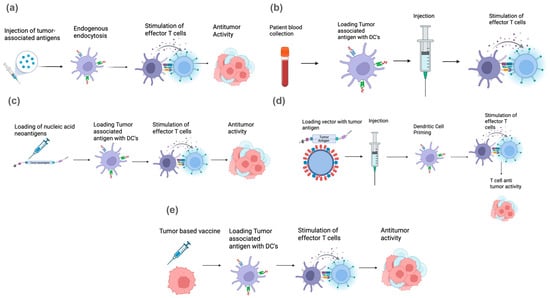
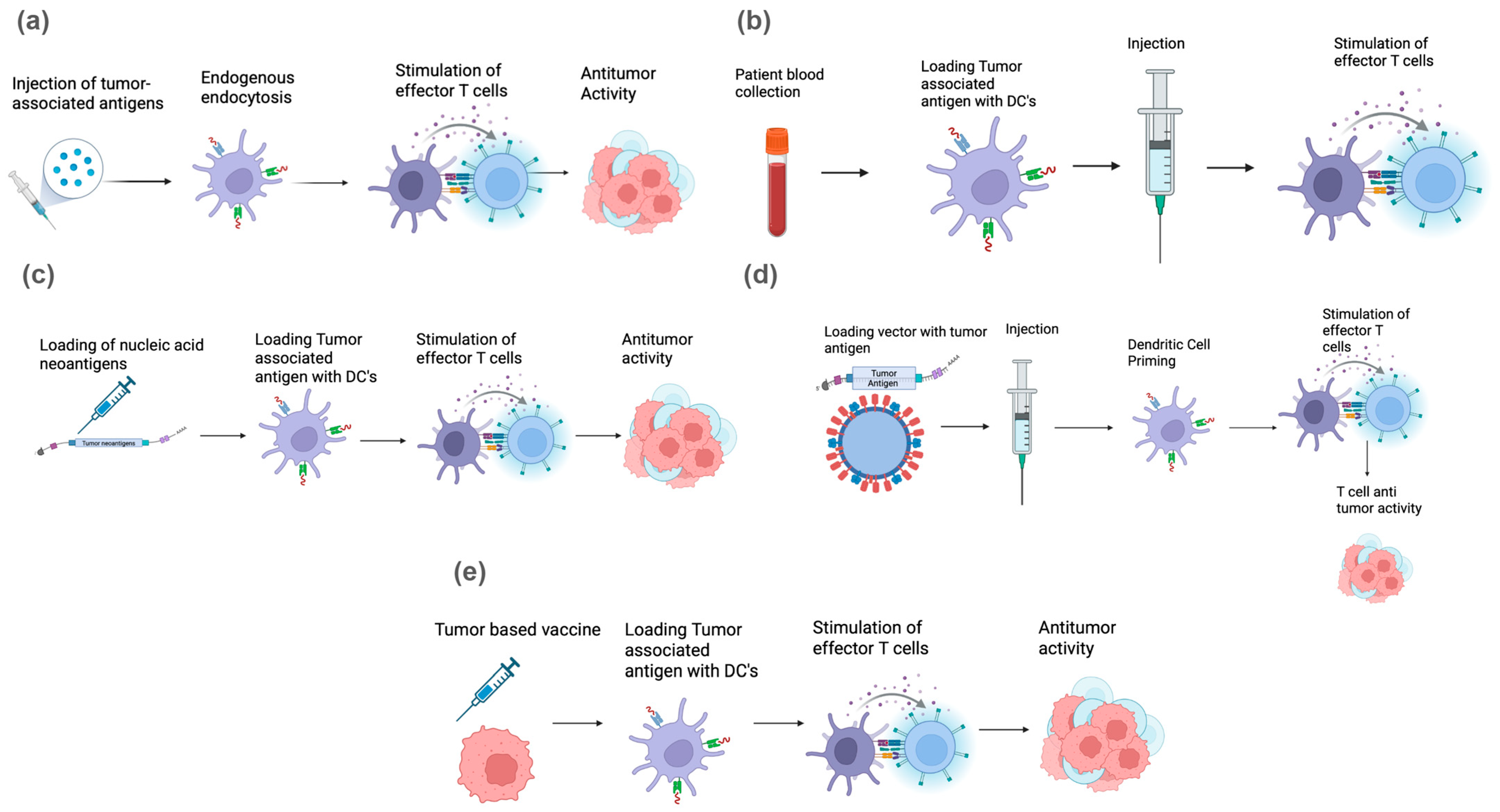
Although there is a myriad of different vaccine categories, they are primarily derived from five main classes in the context of treating malignancy: peptide vaccines, dendritic cell vaccines, whole tumor cell vaccines, viral vector vaccines, and nucleic acid vaccines (Figure 1). These vaccines can target tumor-associated antigens (TAAs), which are host-derived, or neoantigens, which are created from tumor-specific mutations. While each vaccine platform has similarities in its antigen-presenting and downstream immunologic pathways, each class targets tumor cells via distinct mechanisms of action. As such, they each offer advantages and disadvantages in terms of efficacy, safety, and immunogenicity, as we describe below:
Figure 1.
Mechanisms of action underlying key cancer vaccine classes: (a) in peptide vaccines, peptides derived from tumor-specific antigens (TAAs) activate effector T-cells; (b) in dendritic cell (DC) vaccines, DCs are pulsed with TAAs, which are presented to effector T-cells; (c) in nucleic acid vaccines, genetic material encodes TAAs and tumor neoantigens to induce an immune response; (d) in vector-based vaccines, immunogenic viral/bacterial vectors are used to deliver the mRNA-encoded TAAs; and (e) in whole tumor vaccines, tumor cells are directly used to generate an immune response.
2.1. Peptide Vaccines
One keystone vaccine strategy in oncology is the peptide vaccine, in which short amino acid sequences are derived from proteins that are either uniquely expressed or overexpressed in tumor cells. One such example of a peptide in the context of GI malignancies is carcinoembryonic antigen (CEA), which becomes emulsified with immunologic adjuvants to enhance uptake and presentation by antigen-presenting cells (APCs) [5] (Figure 1a). The long-peptide vaccines represent a closely related strategy, in which longer amino acid sequences (typically ≥ 20 amino acids) allow presentation by both CD8+ and CD4+ T-cells.
2.2. Dendritic Cell Vaccines
Dendritic cell (DC) vaccines leverage DCs’ key role as APCs that prime T cells to coordinate adaptive immunity. Typically, monocyte-derived DCs are harvested from autologous leukapheresis and subsequently loaded in vitro with either a preselected peptide or an mRNA encoding a neoantigen [6]. These modified DCs are then matured with cytokine cocktails before finally being reinfused into the patient (Figure 1b). DC vaccines are of great interest in GI oncology—specifically in treating colorectal carcinoma and pancreatic adenocarcinoma—where endogenous DC activation is often suppressed by the tumor microenvironment (TME) [7].
2.3. Whole-Cell Vaccines
Whole-cell vaccines consist of autologous or allogeneic tumor cells that are often irradiated to prevent pathologic replication. These cells are then engineered to secrete immune-stimulatory cytokines, such as granulocyte–macrophage colony-stimulating factor (GM-CSF), which recruits and activates DCs at the site of vaccination (Figure 1e). The prototypical GM-CSF-secreting whole-cell vaccine platform (GVAX) has been tested in both colorectal and pancreatic cancer thus far [8,9]. Whole-cell vaccines of similar formulations are also currently being studied in ongoing trials that are specific to gastric and biliary tract cancers.
2.4. Viral Vector Vaccines
Viral vector vaccines utilize viruses that are genetically engineered, so they cannot cause disease but retain the ability to infect host cells. As such, these viruses are modified to encode tumor antigens that are directly presented to host APCs (Figure 1d). This stimulates a strong innate immune response via pattern recognition receptors, including toll-like receptors, thereby enhancing the immune response. One notable example within the field of GI immuno-oncology includes PANVAC, a recombinant vaccinia/fowlpox vaccine encoding CEA [10].
2.5. Nucleic Acid Vaccines
Nucleic acid vaccines consist of either a DNA or an mRNA formulation, and they represent a rapidly evolving field of immunology following the advent of the COVID-19 mRNA vaccine [11,12]. DNA vaccines typically deliver plasmid DNA encoding selected antigens and thereby inducing durable cellular immunity. mRNA vaccines, alternatively, are delivered via lipid nanoparticles and translated directly in the cytoplasm to produce the target antigen (Figure 1c). This mechanism eliminates the risk of genomic integration and allows for rapid, customizable manufacturing. Nucleic acid vaccines can also encode multiple neoantigens simultaneously and be co-formulated with immunostimulatory elements, both of which offer flexibility that can be personalized to different patients (a characteristic that is unlike of other vaccine strategies).
3. Vaccines in GI Malignancy Types
Of note, while Table 1, Table 2, Table 3 and Table 4 provide an in-depth catalog of trials in which therapeutic cancer vaccines have been implemented to treat GI malignancies, the narrative below will mainly discuss and highlight key landmark trials for each GI cancer subtype. It should be noted that combination regimens composed of both vaccinations and immune checkpoint inhibitors have been rigorously assessed with mechanistic immunological justification prior to implementation in the trials listed below.
3.1. Esophageal Cancer
Multiple studies have attempted to implement therapeutic vaccines to treat esophageal malignancies (Table 1). One phase I study evaluated a CHP-MAGE-A4 vaccine in patients (n = 22) with primarily metastatic esophageal cancer. The vaccine was found to be safe and able to induce immunogenicity in approximately 25% of patients [13]. Combining multiple immunogenic peptides into a single vaccine has been another strategy explored. For instance, Iinuma et al. administered a 5-peptide vaccine (TTK, URLC10, KOC1, VEGFR1, VEGFR2) along with chemoradiation therapy in patients (n = 11) with unresectable ESCC (NCT00632333). The regimen was well tolerated, and several patients experienced prolonged periods of complete response, suggesting a potential role for multi-peptide vaccines given alongside chemoradiation in the setting of locally advanced, unresectable ESCC [14].
Table 1.
Landmark gastroesophageal vaccines in recent and ongoing trials. Articles accessed on 22 January 2026. An in-depth and comprehensive version of Table 1 is provided in Table S1 in the supplementary section of this manuscript. (AE = adverse event, RFS = relapse-free survival, IFN-γ = interferon gamma, CTL = cytotoxic T-lymphocyte, HER2 = human epidermal growth factor receptor 2, PD-1 = programmed death protein-1).
S-588410 is a multi-peptide cancer vaccine comprising five HLA-A*24:02-restricted peptides obtained from five cancer-testis antigens. In a phase III study conducted in patients with ESCC who received curative resection after neoadjuvant therapy (n = 276), S-588410 showed safety and induced immune responses, but failed to meet the primary endpoint of significantly improved relapse-free survival (84.3 vs. 84.1 weeks, p = 0.8156) or overall survival (236.3 weeks and not reached, p = 0.6533) when compared against placebo. Overall, 98.5% of vaccinated patients demonstrated CTL responses within 12 weeks, illustrating that while immune responses were achieved, barriers in the TME may have suppressed vaccine-induced CTL antitumor activity. Significantly, among patients with upper thoracic ESCC, grade 3 injection reactions and strong vaccine induced immune responses were associated with prolonged survival. Additionally, S-588410 increased PD-1+ expression in tumor tissues, suggesting that while it did not improve survival as a monotherapy, it may be effective in combination with immune checkpoint inhibitors [16].
Several trials are investigating a novel cancer antigen delivery system, cholesteryl pullulan (CHP), in combination with a cancer-testis antigen such as NY-ESO-1 or MAGE-4. In one phase II trial, a CHP-NY-ESO-1 vaccine was administered to patients (n = 54) with surgically resected ESCC at clinical stages II-IV in the adjuvant setting. While no overall improvement in disease-free survival was observed between the vaccine and control groups, patients whose tumors exhibited high NY-ESO-1 expression and elevated polymeric immunoglobulin receptor (PIGR) levels showed greater gene expression changes with vaccination than those with lower expression of these markers [30].
The G17DT vaccine adopts a different strategy by targeting gastrin via stimulating anti-gastrin antibodies. When combined with cisplatin and fluorouracil-based chemotherapy in patients with advanced esophageal and gastric cancer (n = 96), the G17DT vaccine improved both overall survival (10.3 months vs. 3.8 months, p ≤ 0.0001) and time to tumor progression (5.5 months vs. 2.1 months, p = 0.0005) for immune-responders when compared against immune-nonresponders, without any significant increase in treatment-related toxicity. However, it is important to note that the study was a phase II single-arm study with no chemotherapy only control group, suggesting possible confounding results [17].
These trials have demonstrated both safety and immunogenicity, but findings regarding monotherapy efficacy remain limited. Future research aims to focus on combination approaches with immune checkpoint blockade (ICB), as well as on neoantigen discovery to further personalized vaccine development.
3.2. Gastric Cancer
Gastric cancer (GC) is the fifth most common malignancy and the fourth leading cause of death globally. Therefore, developing a vaccine remains imperative in treating this specific subtype of GI malignancy. Peptide, nucleic acid, and DC vaccine trials are important avenues of research for GC vaccine development (Table 1). One of the more prominent vaccines against GC is HER-Vaxx (IMU-131), a B-cell epitope peptide vaccine that targets the HER2 oncoprotein. HER-Vaxx induced vaccine-specific immune responses and tumor regression in 11 patients in a phase 1b trial when administered concurrently with chemotherapy in metastatic HER2-positive GC (n = 14). In the 11 patients, there was 1 complete response, 5 partial responses, and 4 cases of stable disease. No serious AEs related to vaccination were reported, reflecting a favorable safety profile [22]. In the HERIZON trial, a randomized phase II trial conducted in the metastatic setting, further evidence for the therapeutic potential of HER-Vaxx was demonstrated. The combination of HER-Vaxx and chemotherapy (n = 19) led to a 40% improvement in OS, with a median OS of 13.9 months, compared with 8.3 months in the chemotherapy-alone group (n = 17). Tumor burden decreased by an average of 30% from baseline in the combination group, compared with a 10% reduction in the chemotherapy-only group [23]. These clinical benefits correlated with robust HER2-specific antibody responses, demonstrating a mechanistic link between humoral immunity and tumor control.
A case report demonstrated the possible benefit of using a personalized neoantigen-loaded monocyte-derived DC vaccine (Neo-MoDC) in combination with PD-1 blockade. Vaccination induced robust T cell responses against neoantigens (NCT03185429), which were further amplified following immune checkpoint inhibition. This approach resulted in a clinical response with complete regression of all tumors for 25 months in a patient [31].
OSTGC-A24 is an HLA-A*24:02-binding vaccine targeting four cancer specific gastric cancer antigens FOXM1, DEPDC1, KIF20A and URLC10, and tumor angiogenesis antigen VEGFR1. In a phase I study, 24 HLA-A*24:02 patients with metastatic disease were enrolled and assigned to three cohorts (n = 24) receiving 1 mg of OSTGC-A24 administered every 3 weeks, every 2 weeks, or every week (NCT01227772). The vaccine was well tolerated, and specific CTL induction was achieved with administration every 2 weeks. However, no overall survival or median progression-free survival benefit was demonstrated in the study [24].
Another phase I trial explored the tolerability of combining Mult-Antigen Stimulated Cell Therapy Injection-I (MASCT-I), a multi-antigen peptide vaccine loaded with 15 tumor-associated antigens onto mature DC’s, with the PD-1 antibody camrelizumab in 15 patients with advanced gastric cancer exhibiting PD-L1 expression or microsatellite disease (NCT03393416). There were no grade 3 or 4 adverse reactions, and compared with historical outcomes of camrelizumab therapy, progression-free survival was modestly improved in those who received combination therapy (3.93 months vs. 2 months). Notably, these results are exploratory in nature given the lack of a concurrent control arm and phase I nature of the study [25].
3.3. Colorectal Cancer
There are several ongoing vaccine trials for colorectal cancer (CRC). These trials span all five vaccine subtypes mentioned above (Table 2). Notable trials have specifically targeted antigens classically associated with CRC, including CEA and MUC1, whereas more recent trials have employed mutation-directed strategies targeting KRAS or frameshift neoantigens. Early immunogenicity results suggest the potential to reduce recurrence risk in the adjuvant (post-surgical resection) setting, warranting further studies of adjuvant CRC vaccine strategies. Furthermore, because microsatellite-instability CRC has previously been proven to respond well to ICB, it represents an attractive target for ongoing and future combination vaccine strategies.
In a phase II study, the immunogenicity of an RNA-based DC vaccine was compared with that of a peptide-based DC vaccine in the neoadjuvant setting patients with resectable CRC and liver metastases (NCT00228189). Eleven patients received a CEA peptide-pulsed DC vaccine while five received a CEA mRNA-transfected DC vaccine. CEA peptide-specific T cell responses were detected in 8 of 11 patients in the peptide group (73%), whereas no such responses were detected in the RNA group. These findings indicate that DC CEA mRNA transfection was not superior to peptide pulsing for antigen loading of DCs in CRC patients [7].
In a phase I study, 12 patients with metastatic CRC who had progressed on chemotherapy received CEA-pulsed DCs mixed with tetanus toxoid, followed by low-dose IL-2 treatment to increase T cell expansion (NCT00154713). The regimen was well tolerated, with no severe treatment-related adverse events observed. Although T cells showed a significant increase in proliferation against CEA in two patients, the overall immune response was modest [32].
MUC1 mucin is a transmembrane glycoprotein that is overexpressed and hypoglycosylated in colorectal adenocarcinomas and precursor colorectal adenomas compared with MUC1 expressed on normal epithelial cells. A randomized double-blind trial evaluated a MUC1 vaccine versus placebo in individuals with advanced adenomas within 1 year of removal (n = 103), assessing whether vaccination could elicit an immune response and reduce colon adenoma formation in patients with high risk for CRC (NCT02134925). At 12 weeks, 25% of vaccine recipients showed a greater than two-fold increase in anti-MUC1 IgG levels compared with placebo, and 22% of vaccine recipients were classified as immune responders at both week 12 and week 55. While the rate of recurrent adenomas was not statistically significant, immune responders experienced a 38% absolute reduction in adenoma recurrence compared with the placebo group [33].
5T4 is a trophoblast glycoprotein with restricted expression in approximately 90% of CRCs. Phase I and II clinical trials evaluated the effectiveness of cyclophosphamide and modified vaccinia Ankara-5T4 to determine whether anti-5T4 immune responses and regulatory T cell depletion were associated with patient survival. Fifty-four patients with metastatic, inoperable CRC were enrolled and randomized to four treatment arms: control, cyclophosphamide only, MVA-5T4 only, or cyclophosphamide plus MVA-5T4. Among those with over a 2-fold increase in anti-5T4 T-cell and antibody responses, cyclophosphamide treatment was associated with longer progression-free survival (5.7 months vs. 2.4 months) and overall survival (20.0 vs. 13.1 months), although these differences did not reach statistical significance (p = 0.10 and p = 0.09, respectively). Patients who achieved a greater than two-fold increase in anti-5T4 responses had significantly prolonged progression-free (5.6 vs. 2.4 months, p < 0.001) and overall survival (20.0 vs. 10.3 months, p = 0.008). The addition of cyclophosphamide did not appear to either enhance or diminish the response to the vaccination [34].
Table 2.
Landmark CRC vaccines in recent and ongoing trials. Articles accessed on 22 January 2026. An in-depth and comprehensive version of Table 2 is provided in Table S2 in the supplementary section of this manuscript. (DC = dendritic cell, CEA = carcinoembryonic antigen, AE = adverse event, PFS = progression-free survival, OS = overall survival, PD-L1 = programmed death-ligand 1, TIL = tumor-infiltrating lymphocyte).
3.4. Hepatocellular Carcinoma
Multiple DC vaccine trials have demonstrated both safety and immunogenicity in hepatocellular carcinoma (HCC) (Table 3). However, among the GI malignancies, HCC has arguably demonstrated the most compelling early clinical data regarding personalized vaccine strategies, particularly in combination with anti-PD-1 therapy. One notable small-cohort trial (n = 36, NCT04251117) that combined a personalized DNA vaccine (GNOS-PV02) with pembrolizumab reported tumor shrinkage in approximately 30% of patients with advanced HCC, with a favorable safety profile (mainly consisting of injection-site events) [48].
Table 3.
Landmark HCC vaccines in recent and ongoing trials. Articles accessed on 22 January 2026. An in-depth and comprehensive version of Table 3 is provided in Table S3 in the supplementary section of this manuscript. (ORR = objective response rate, IHC = immunohistochemistry, HLA = human leukocyte antigen, TAA = tumor-associated antigen, DC = dendritic cell, PFS = progression-free survival, AE = adverse event).
Glypican-3 (GPC3), a carcinoembryonic antigen, is overexpressed in approximately 80% of hepatocellular carcinomas and has been explored as a target for antigen-specific immunotherapy. The GPC3 peptide vaccine, when used as adjuvant therapy in a phase II trial (n = 41), reduced the 1-year recurrence rate by 50% in patients with GPC3-positive tumors. A follow-up study of patients demonstrated longer 5-year and 8-year survival rates in those with GP3C-positive tumors who received the vaccine, attributed to CTLs induced by vaccination [49].
Another peptide vaccine, Hepa-Vac101, incorporates multiple tumor-associated peptides (TUMAPs) presented on HLA molecules of HCC tumor cells and induced tumor-specific T cell responses in approximately two-thirds of patients (n = 82, NCT03203005); however, the magnitude of immunogenicity proved to be limited and there was no data on progression-free or overall survival [50]. The ImmunoTACE trial is a randomized phase II trial in patients with intermediate-stage HCC (n = 48) that evaluated the efficacy of a DC vaccine in which dendritic cells were pulsed ex vivo with lysates of HepG2 cell lines, in combination with therapeutic transarterial chemoembolization (TACE) and cyclophosphamide preconditioning. Those who received the DC vaccine had improved progression-free survival compared with the controls (18.6 months vs. 10.4 months). The improvement was postulated to result from a combination of TACE-induced antigen release and DC-mediated immune priming, leading to an increased AFP-specific immune response [51].
The YCP02 phase I trial (n = 20) employed multi-HLA-binding peptides derived from heat shock protein 70 and glypican-3, combined with a perioperative adjuvant regimen of hLAG-3Ig and Poly-ICLC. The vaccine was well tolerated and demonstrated the potential to convert immunologically “cold” HCC tumors into “hot” tumors through inducing CD8+ T-cell infiltration into tumor tissues. Given its phase I nature, there was no assessment to see if the vaccine improved long-term clinical outcomes [52].
Ongoing and future trials are focused on continuing DC-based approaches and on strategies combining personalized vaccines with ICB (or with procedures such as TACE).
3.5. Biliary Tract Cancers
Approaches to treating biliary tract cancers (BTCs), including cholangiocarcinoma and gallbladder adenocarcinoma, primarily consist of early-phase DC and peptide strategies that have demonstrated both safety and feasibility. However, vaccine work in treating BTC remains relatively exploratory, as trial enrollment is limited by both the rarity and heterogeneity of BTC. This is further complicated by the immunosuppressive TME in many BTC cases, which may limit vaccine efficacy. As such, most BTC trials currently remain focused on advancing antigen discovery before progressing to combination trial designs with ICB (Table 4).
Table 4.
Landmark BTC and PDAC vaccines in recent and ongoing trials. Articles accessed on 22 January 2026. An in-depth and comprehensive version of Table 4 is provided in Table S4 in the supplementary section of this manuscript. (RFS = relapse-free survival, PFS = progression-free survival, OS = overall survival, AE = adverse event, TCR = T-cell receptor, DFS = disease-free survival, IFN-γ = interferon gamma).
Several tumor-associated antigens are being explored as therapeutic targets in BTC. One such target is Wilms’ tumor protein 1 (WT1), which acts as a tumor suppressor and a transcriptional activator of oncogenes [81]. WT1 mutations are present in over 80% of BTC and are associated with poorer prognosis [82]. A phase I trial evaluating a WT1 peptide vaccine in combination with gemcitabine-cisplatin therapy in patients with inoperable advanced biliary tract and pancreatic ductal adenocarcinoma found CTL responses in 59% of patients. In the phase I trial (n = 25), median survival time from the first vaccination was approximately 9.5 months among 16 BTC patients, but the lack of a control arm and subsequent phase II data limit the assessment of overall survival or progression-free benefit [55].
Another peptide vaccine strategy is OCV-C01, an HLA-A24:0-restricted, three-peptide cancer vaccine targeting VEGFR1, VEGFR2, and KIF20A. This vaccine targets VEGFR1 and VEGFR2 to inhibit angiogenesis, cancer cell proliferation, and metastasis. In addition, KIF20A, which is highly expressed in cholangiocarcinoma tissues, was included as a tumor-specific antigen. A phase II trial of OCV-C01 was conducted in patients with advanced BTC with unresectable tumors who had failed standard chemotherapy. Six patients were administered the vaccine, four of whom were HLA-A*24:02 positive. These four patients had vaccine-specific T cell responses to one or more of the three antigens. Log-rank analysis demonstrated prolonged overall survival in patients with vaccine-specific T-cell responses compared with non-responders [56].
Another peptide cancer vaccine trial evaluated nine patients with advanced BTC refractory to chemotherapy comprising HLA-A*24:02-restricted epitope peptides which are highly overexpressed in BTC samples: lymphocyte antigen 6 complex locus (LY6K), TTK protein kinase, insulin-like growth factor II mRNA binding protein (IMP-3) and DEP domain-containing 1. This phase I trial revealed that the four-peptide cancer vaccine was well tolerated, with no grade 3 or higher adverse events. Peptide-specific T-cell immune responses were observed in 7 of 9 patients, and stable disease was achieved in 6 of 9. Notably, injection site reactions and CTL induction appeared to be prognostic factors for both overall and progression-free survival, although formal assessment of clinical efficacy was limited given small sample size and lack of a control arm [57].
An open-label randomized phase II study investigated whether low-dose cyclophosphamide could enhance immune and clinical response in patients with BTC receiving personalized peptide vaccinations (PPV). Patients received two to four HLA-restricted peptides selected based on pre-existing peptide-specific IgG responses, and 49 patients were randomized to PPV with or without low-dose cyclophosphamide. PPV combined with low-dose cyclophosphamide improved overall and progression-free survival compared with PPV alone (median OS: 12.1 vs. 5.9 months). Plasma IL-6 increased only in the PPV-alone group, suggesting that cyclophosphamide may enhance anti-tumor immunity by suppressing IL-6 [58].
Regarding ongoing trials, a phase I trial is currently evaluating the safety and immune response of a personalized mutant peptide vaccine with poly-ICLC adjuvant (mBTCvax) in combination with durvalumab and tremelimumab in patients with advanced BTC (NCT06564623).
3.6. Pancreatic Adenocarcinoma
Pancreatic ductal adenocarcinoma (PDAC) remains one of the most aggressive malignancies within the field of oncology due to its late-stage diagnosis, with an overall five-year survival of approximately 13% [83]. Although immunotherapy has revolutionized the treatment of pancreatic ductal adenocarcinoma (PDAC), its immunosuppressive TME has historically conferred resistance to multiple immunotherapies [84]. Human PDACs have fewer neoantigens (35 on average) than more immunogenic cancers [85]. Regarding vaccine strategies, numerous studies have been conducted to determine their effectiveness in treating PDAC, with the number of trials published comparable to that in CRC therapy (Table 4). These vaccine strategies have included GVAX (a granulocyte–macrophage colony-stimulating factor-secreting tumor cell vaccine), CRS-207 (a Listeria-based vector), and personalized neoantigen strategies [43,44,45]. One randomized phase 2 trial (n = 54, NCT02648282) combining GVAX with CRS-207 failed to show a clear survival benefit over chemotherapy in late-stage disease [63]. However, combinations of vaccines with ICB or with local radiotherapy have produced encouraging immune responses in small-cohort trials. Recent preliminary small-cohort reports highlight neoantigen mRNA vaccine platforms that demonstrate favorable overall survival rates when combined with other forms of multimodality therapy. Ongoing and future studies are expanding on these findings through phase 3 trials with larger cohorts and by designing novel delivery systems, such as lipid nanoparticles for mRNA delivery.
Mutations in KRAS occur in 20–25% of all tumors and are particularly prevalent in very high ratios in PDAC and CRC, with reported rates of 93% and 50%, respectively. The phase 1 AMPLIFY-20 trial evaluated the ELI-002 2 vaccine, a lymph-node-targeted amphiphile vaccine composed of mutant KRAS (mKRAS) peptide antigens targeting the G12D and G12R variants (NCT04853017). The vaccine was given to 25 patients in the adjuvant setting, 20 with PDAC and 5 with CRC, who had detectable minimal residual mutant mKRAS disease after locoregional treatment. ELI-002 2P induced mKRAS-specific T cell responses in 84% of treated patients and was associated with a median tumor biomarker reduction of 76% compared with 10.2% in the control group. Those with robust T cell responses had an 88% reduced risk of relapse compared to those with weaker T cell responses [64]. At one-year follow-up, 67% of patients developed T cell responses against personalized antigens not present in the vaccine. These results suggest that the vaccine led to a broader immune response beyond the initial antigens. Using limited exploratory analysis, the investigators found that patients with significant T cell responses experienced prolonged relapse-free and median overall survival [65]. To further assess whether this vaccine can demonstrate disease-free survival, a randomized phase II trial, AMPLIFY-7P, is underway [66].
Another personalized mRNA neoantigen vaccine is Autogene cevumeran, composed of 20 HLA-restricted neoantigens developed in real time from surgically resected PDAC tumors. In a Phase I study, patients with resectable PDAC received adjuvant atezolizumab, autogene cevumeran, and standard PDAC chemotherapy with modified FOLFIRINOX following surgical resection (n = 15, NCT04161755). High-magnitude neoantigen-specific T cell responses were observed in 50% of patients, and at a median follow-up of 18 months, those with vaccine-expanded T cells demonstrated longer median recurrence-free survival than patients without a strong immune response. Additionally, vaccine-expanded T cells persisted for up to 2 years despite subsequent treatment with mFOLFIRNOX [67]. At the 3-year follow-up, responders with vaccine-induced T cells again demonstrated prolonged recurrence-free survival, and 86% of T cell clones in patients persisted at substantial frequencies [68]. While these results showed promising evidence of establishing potentially immunologically active antitumor immune cells, clinical benefit is yet to be determined, with more information on efficacy to be provided in the ongoing IMCODE 003 trial [69].
Survivin is a member of the inhibitor of apoptosis protein (IAP) family and an HLA-A*24-restricted peptide vaccine, HLA-24-SVN-2B, was developed from the survivin splice variant 2B (SVN-2B). This vaccine was evaluated with interferon-β in a phase II clinical trial in patients with unresectable or advanced PDAC. Eighty-three patients were enrolled and randomized to receive the survivin 2B peptide plus interferon-β, SVN-2B alone, or placebo; no progression-free survival was observed across treatment groups. However, among patients who had proceeded in Step 2 of the trial, in which SVN-2B with interferon-β was administered to both groups, those who had received combination therapy of SVN-2B and interferon-B in the initial phase demonstrated improved overall survival [70]. Autopsy analyses from trial participants revealed CTLs had successfully infiltrated tumor lesions; however, high levels of PD-L1 expression on cancer cells were observed, likely limiting antitumor efficacy. These findings suggest that combining a tumor-specific peptide vaccine with an immune checkpoint inhibitor may represent a promising therapeutic strategy [86].
In a phase REACtiVE-2 phase I dose-escalation study, a DC vaccine Mesopher, in combination with the agonistic CD40-specific antibody mitazalimab, was administered to 16 patients with metastatic PDAC following treatment with modified FOLFIRINOX (NCT05650918). Mesopher is an ex vivo-generated DC-based vaccine derived from patients’ monocytes and loaded with allogeneic mesothelioma tumor cell lysate, which contains a broad mix of antigens, including mesothelin, WT1, and survivin, which are expressed in both mesothelioma and PDAC. CD40 activation was used to enhance tumor-specific T cell responses, increase T cell and DC infiltration into tumors, and reduce levels of immunosuppressive M2-like macrophages. Treatment led to vaccine-specific T cell responses, increased intratumoral T cell infiltration, and reduced tumor-associated collagen deposition. However, there were no objective radiological responses, and progression-free and overall survival were not reported as endpoints [71].
4. Discussion
The field of therapeutic cancer vaccines in treating GI malignancies has advanced over the past decade, driven largely by advances in tumor genomics, antigen discovery, and combination with other immunotherapy strategies. Despite decades of prior investigation, earlier vaccine efforts were largely restrained by both suboptimal antigen selection and weak immunogenicity.
This contrasts with our contemporary review above, which illustrates a significant shift from single-antigen approaches toward more robust platforms that leverage tumor-specific neoantigens, improved antigen-delivery systems, and synergistic combinations with immune checkpoint blockade and other immunomodulatory therapies.
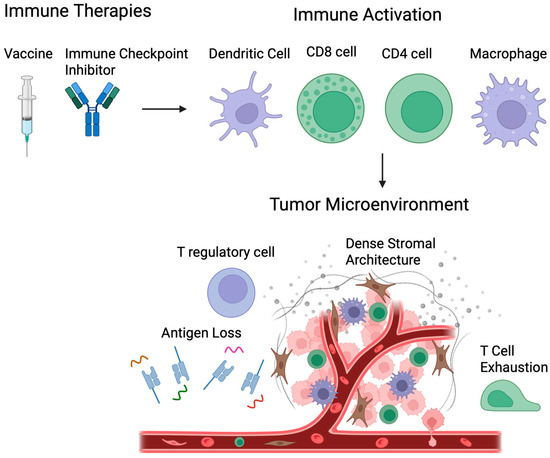
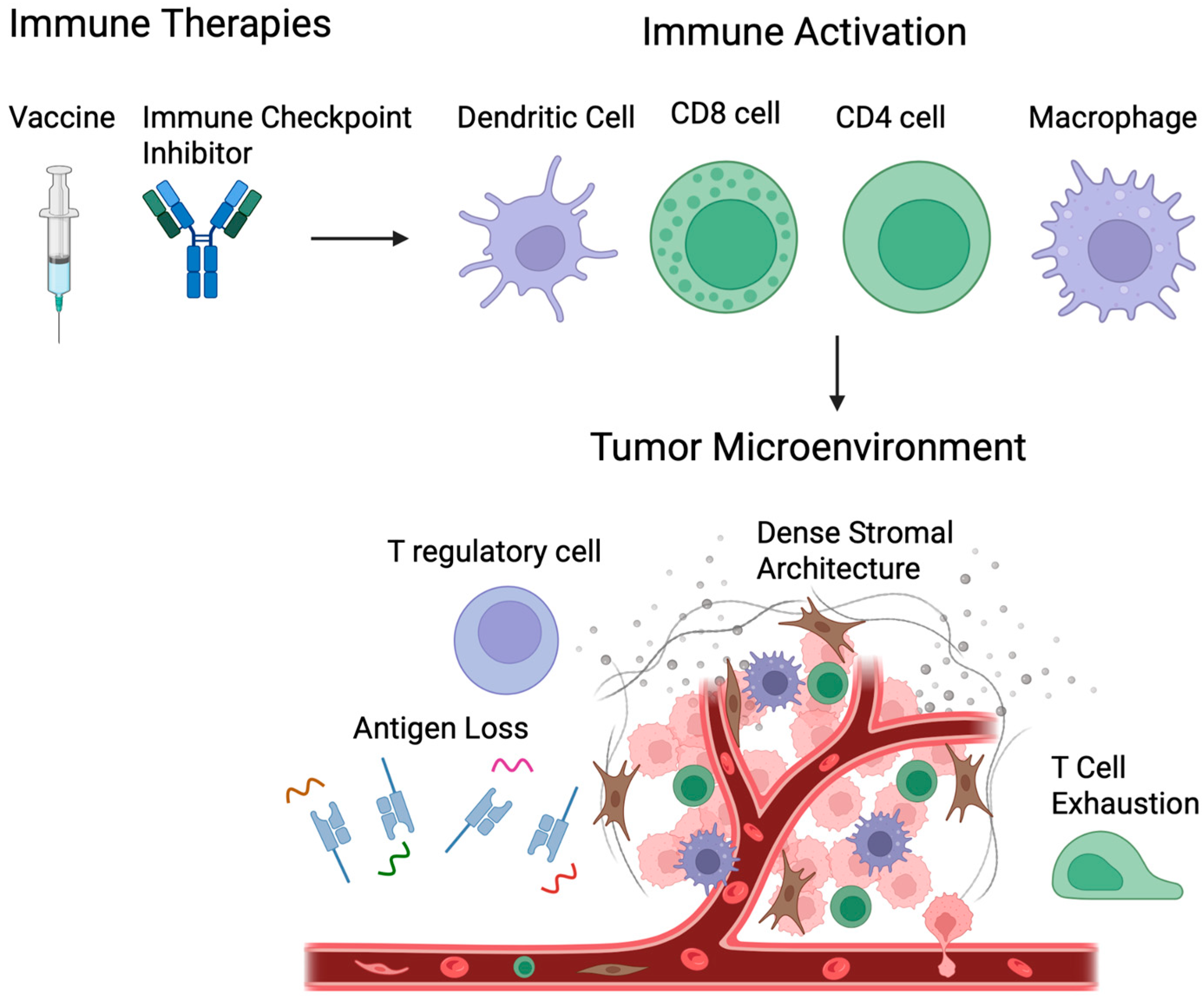
One central theme that has consistently emerged across the different GI cancer subtypes is the discrepancy between vaccine-induced immunogenicity and clinical significance. Numerous trials have demonstrated an inflammatory response following vaccine administration, including expansion of antigen-specific CD4+ and CD8+ T-cells, increased cytokine production, and (in some cases) enhanced tumor infiltration. However, ORRs and survival improvements remain inconsistent and modest at best in most advanced-disease settings, particularly in early-phase trials. This disconnect highlights the formidable immunosuppressive barriers imposed by the TME, including dense stromal architecture (as seen in the PDAC subtype), regulatory T-cells, and chronic T-cell exhaustion, along with mechanisms intrinsic to tumor evasion such as antigen loss and MHC down-regulation (Figure 2). These factors collectively limit the ability of vaccine-primed T-cells to effectively execute clinically significant anti-tumor activity. In more recent trials, however, immunogenicity has tended to better correlate with overall survival rates; ongoing research should continue to address this discrepancy between appropriate immune response and meaningful clinical benefit.
Figure 2.
Immune-based therapies within the tumor microenvironment (TME). While vaccines and immunotherapies can activate immune cells and responses, the TME poses formidable barriers such as regulatory T cells, dense stromal architecture, antigen loss and T cell exhaustion, ultimately blunting the immune response.
One such method to address this discrepancy is to consider the clinical context. For instance, there is a growing consensus that minimal residual disease and adjuvant settings represent the most favorable environments for therapeutic vaccination, as seen in various CRC and PDAC trials [67]. Tumor burden is low in these contexts; as a result, immunosuppression is less pronounced, and vaccine-induced immune responses are less likely to be overwhelmed by rapid tumor progression. This mechanism thereby favors earlier immunotherapeutic intervention rather than salvage treatment in end-stage disease.
Furthermore, antigen selection has inherently emerged as a common theme in terms of establishing vaccine effectiveness. Many trials have demonstrated improved immunogenicity and survival with biomarker-driven vaccination strategies, underscoring the importance of continued development of new biomarkers to enable more personalized vaccines, as seen in various HCC and PDAC studies [48,66]. As such, it will remain critical to continue developing new platforms for delivering these vaccines. Of note, across multiple trials, the different vaccine types were overall well tolerated, with few grade 3 adverse events. While injection site reactions were relatively common, they often correlated with improved immune response and longer survival. The prevalence of such adverse effects should continue to be monitored and recorded as research into personalized vaccine development continues.
While many of these studies have shown signals of efficacy, they have predominantly consisted of phase I or phase II data; as such, there remains a need for continued research, especially in phase III and ultimately real-world settings. These studies were also often limited to specific regional medical centers, and it will be crucial to apply these vaccines to a more heterogeneous population. GI cancers are characterized by distinct tumor environments that influence antigen presentation and T-cell infiltration, requiring context-specific approaches. Furthermore, it also remains paramount that ongoing research in treating GI malignancies with cancer vaccines should continue combination trials with ICB, as well as with chemoradiation, in both adjuvant and neoadjuvant settings. Several trials have commented on the combination of ICB with cancer vaccines that can help convert traditionally immunologically “cold” tumors to “hot” tumors via enhancement of T-cell infiltration and modulation of the immunologically suppressive TME. Recent findings reveal that coordination between humoral and cellular immunity can enhance the antitumor effects of ICB, underscoring an important avenue for future investigation [87].
The future roadmap in the development of therapeutic vaccines for GI malignancies will likely be defined by an integrated, comprehensive framework that combines biomarker-guided therapy, advances in artificial intelligence (AI), and next-generation delivery techniques. Biomarkers, ranging from neoantigen load to circulating tumor DNA, will play a central role in identifying patients most likely to benefit from vaccination and subsequent dynamic monitoring of treatment response. Furthermore, AI-driven antigen prediction platforms are concurrently expected to substantially enhance the identification of a variety of neoantigens, thereby enabling the rapid development of more highly personalized vaccines [88]. Finally, both the advances in biomarker- and AI-guided therapy will be complemented by innovations in vaccine delivery platforms. Specifically, lipid nanoparticle-based technology will further optimize delivery efficiency, stability, and targeted uptake by APCs, enhancing both the magnitude and durability of immune responses [89]. Collectively, these developments suggest a future in which the field of GI cancer vaccines becomes robust enough to provide patients with a meaningful form of therapy in addition to traditional, established forms of management.
5. Conclusions
Therapeutic cancer vaccines continue to emerge as a potential credible and increasingly sophisticated method of immunotherapy for GI malignancies, driven largely by advances in neoantigen discovery, a multitude of different delivery platforms, and combination strategies with immune checkpoint blockade. Although much of the data is from early and exploratory phases, recent studies have demonstrated that safety, robust immunogenicity, and indicators of clinical efficacy can be achieved, especially when vaccines are deployed under biologically favorable conditions. For instance, the results acquired from these various clinical trials have thus far suggested that successful vaccine strategies in GI oncology will require combination regimens that address tumor microenvironment-mediated immune resistance, as well as strategic deployment in adjuvant or minimal residual disease settings rather than late-stage refractory disease. Continued innovation in this field will also depend heavily on rigorously designed trials that focus on further biomarker and delivery mechanism development. Collectively, these biotechnological advances place cancer vaccines in a landmark period in GI oncology, with the potential to transition from experimental immunologic mechanisms to clinically significant therapies that meaningfully alter the natural progression of GI cancers.
Supplementary Materials
The following supporting information can be downloaded at: https://www.mdpi.com/article/10.3390/cancers18091420/s1, Table S1: Landmark gastroesophageal vaccines in recent and ongoing trials (extended); Table S2: Landmark CRC vaccines in recent and ongoing trials (extended); Table S3: Landmark HCC vaccines in recent and ongoing trials (extended); Table S4: Landmark BTC and PDAC vaccines in recent and ongoing trials.
Author Contributions
Conceptualization, K.T., K.D. and A.S.; Software, K.D.; Resources, K.T.; Data Curation, K.T.; Writing—Original Draft Preparation, K.T., K.D. and A.S.; Writing—Review and Editing, K.T., K.D. and A.S.; Supervision, A.S. All authors have read and agreed to the published version of the manuscript.
Funding
This research received no external funding.
Institutional Review Board Statement
Not applicable.
Informed Consent Statement
Not applicable.
Data Availability Statement
No new data was created or analyzed in this study.
Acknowledgments
The authors acknowledge the use of Biorender (version current as of April 2026) for assistance in the creation of any figures and graphical elements included in this manuscript. The authors did not use any artificial intelligence tools to assist with language editing during the preparation of this work. All authors involved have reviewed the content and therefore take full responsibility for the above manuscript.
Conflicts of Interest
The authors declare no conflicts of interest.
References
- Arnold, M.; Abnet, C.C.; Neale, R.E.; Vignat, J.; Giovannucci, E.L.; McGlynn, K.A.; Bray, F. Global Burden of 5 Major Types of Gastrointestinal Cancer. Gastroenterology 2020, 159, 335–349.e15. [Google Scholar] [CrossRef] [Scilit]
- Van Cutsem, E.; Cervantes, A.; Nordlinger, B.; Arnold, D.; ESMO Guidelines Working Group. Metastatic Colorectal Cancer: ESMO Clinical Practice Guidelines for Diagnosis, Treatment and Follow-Up. Ann. Oncol. 2014, 25, iii1-9. [Google Scholar] [CrossRef] [Scilit]
- Mizrahi, J.D.; Surana, R.; Valle, J.W.; Shroff, R.T. Pancreatic Cancer. Lancet 2020, 395, 2008–2020. [Google Scholar] [CrossRef] [Scilit]
- Yong, X.; Xiao, Y.F.; Luo, G.; He, B.; Lü, M.H.; Hu, C.J.; Guo, H.; Yang, S.M. Strategies for Enhancing Vaccine-Induced CTL Antitumor Immune Responses. J. Biomed. Biotechnol. 2012, 2012, 605045. [Google Scholar] [CrossRef] [Scilit]
- Lynch, K.T.; Squeo, G.C.; Kane, W.J.; Meneveau, M.O.; Petroni, G.; Olson, W.C.; Chianese-Bullock, K.A.; Slingluff, C.L.; Foley, E.F.; Friel, C.M. A Pilot Trial of Vaccination with Carcinoembryonic Antigen and Her2/Neu Peptides in Advanced Colorectal Cancer. Int. J. Cancer 2022, 150, 164–173. [Google Scholar] [CrossRef] [Scilit] [PubMed]
- Lee, K.W.; Yam, J.W.P.; Mao, X. Dendritic Cell Vaccines: A Shift from Conventional Approach to New Generations. Cells 2023, 12, 2147. [Google Scholar] [CrossRef] [Scilit]
- Lesterhuis, W.J.; De Vries, I.J.; Schreibelt, G.; Schuurhuis, D.H.; Aarntzen, E.H.; De Boer, A.; Scharenborg, N.M.; Van De Rakt, M.; Hesselink, E.J.; Figdor, C.G.; et al. Immunogenicity of Dendritic Cells Pulsed with CEA Peptide or Transfected with CEA mRNA for Vaccination of Colorectal Cancer Patients. Anticancer Res. 2010, 30, 5091–5097. [Google Scholar]
- Yarchoan, M.; Huang, C.Y.; Zhu, Q.; Ferguson, A.K.; Durham, J.N.; Anders, R.A.; Thompson, E.D.; Rozich, N.S.; Thomas, D.L.; Nauroth, J.M.; et al. A Phase 2 Study of GVAX Colon Vaccine with Cyclophosphamide and Pembrolizumab in Patients with Mismatch Repair Proficient Advanced Colorectal Cancer. Cancer Med. 2020, 9, 1485–1494. [Google Scholar] [CrossRef] [Scilit] [PubMed]
- Le, D.T.; Lutz, E.; Uram, J.N.; Sugar, E.A.; Onners, B.; Solt, S.; Zheng, L.; Diaz, L.A.; Donehower, R.C.; Jaffee, E.M.; et al. Evaluation of Ipilimumab in Combination with Allogeneic Pancreatic Tumor Cells Transfected with a GM-CSF Gene in Previously Treated Pancreatic Cancer. J. Immunother. 2013, 36, 382–389. [Google Scholar] [CrossRef] [Scilit]
- Gatti-Mays, M.E.; Strauss, J.; Donahue, R.N.; Palena, C.; Del Rivero, J.; Redman, J.M.; Madan, R.A.; Marté, J.L.; Cordes, L.M.; Lamping, E.; et al. A Phase I Dose-Escalation Trial of BN-CV301, a Recombinant Poxviral Vaccine Targeting MUC1 and CEA with Costimulatory Molecules. Clin. Cancer Res. 2019, 25, 4933–4944. [Google Scholar] [CrossRef] [Scilit] [PubMed]
- Wang, L.; Zhou, X.; Wei, Y.; Lin, J. A Novel Multi-Epitope mRNA Vaccine Against Colorectal Cancer: In Silico Design and Immune Efficacy Profiling. Front. Immunol. 2025, 16, 1649091. [Google Scholar] [CrossRef] [Scilit] [PubMed]
- Wu, Y.; Sun, G.; Ren, W.; Gui, Y.; Wang, C.; Ye, X.; Chen, Y.; Pang, X.; Zhang, Q.; Wang, Z.J.; et al. Spleen-Targeted NeoPol-mL242 mRNA Vaccine Induces Robust T-Cell Responses in a Hepatocellular Carcinoma Model. J. Nanobiotechnol. 2025, 23, 602. [Google Scholar] [CrossRef] [Scilit]
- Ueda, S.; Miyahara, Y.; Nagata, Y.; Sato, E.; Shiraishi, T.; Harada, N.; Ikeda, H.; Shiku, H.; Kageyama, S. NY-ESO-1 Antigen Expression and Immune Response Are Associated with Poor Prognosis in MAGE-A4-vaccinated Patients with Esophageal or Head/Neck Squamous Cell Carcinoma. Oncotarget 2018, 9, 35997–36011. [Google Scholar] [CrossRef] [Scilit]
- Iinuma, H.; Fukushima, R.; Inaba, T.; Tamura, J.; Inoue, T.; Ogawa, E.; Horikawa, M.; Ikeda, Y.; Matsutani, N.; Takeda, K.; et al. Phase I Clinical Study of Multiple Epitope Peptide Vaccine Combined with Chemoradiation Therapy in Esophageal Cancer Patients. J. Transl. Med. 2014, 12, 84. [Google Scholar] [CrossRef] [Scilit]
- Kageyama, S.; Wada, H.; Muro, K.; Niwa, Y.; Ueda, S.; Miyata, H.; Takiguchi, S.; Sugino, S.H.; Miyahara, Y.; Ikeda, H.; et al. Dose-Dependent Effects of NY-ESO-1 Protein Vaccine Complexed with Cholesteryl Pullulan (CHP-NY-ESO-1) on Immune Responses and Survival Benefits of Esophageal Cancer Patients. J. Transl. Med. 2013, 11, 246. [Google Scholar] [CrossRef] [Scilit] [PubMed]
- Makino, T.; Miyata, H.; Yasuda, T.; Kitagawa, Y.; Muro, K.; Park, J.-H.; Hikichi, T.; Hasegawa, T.; Igarashi, K.; Iguchi, M.; et al. A Phase 3, Randomized, Double-Blind, Multicenter, Placebo-Controlled Study of S-588410, a Five-Peptide Cancer Vaccine as an Adjuvant Therapy After Curative Resection in Patients with Esophageal Squamous Cell Carcinoma. Esophagus 2024, 21, 447–455. [Google Scholar] [CrossRef] [Scilit]
- Ajani, J.A.; Hecht, J.R.; Ho, L.; Baker, J.; Oortgiesen, M.; Eduljee, A.; Michaeli, D. An Open-Label, Multinational, Multicenter Study of G17DT Vaccination Combined with Cisplatin and 5-Fluorouracil in Patients with Untreated, Advanced Gastric or Gastroesophageal Cancer: The GC4 Study. Cancer 2006, 106, 1908–1916. [Google Scholar] [CrossRef] [Scilit]
- Chen, Y.; Shi, H.S.; Hu, Y.; Yuan, Y.; Yang, Y.S.; Xu, H.; Yang, L.; Ding, Z.Y. Abstract 4108: Safety and feasibility of personalized neoantigen DC vaccines in postoperative esophagus squamous cell carcinoma: A Phase 1b trial. Cancer Res. 2024, 84, 4108. [Google Scholar] [CrossRef] [Scilit]
- Higashihara, Y.; Kato, J.; Nagahara, A.; Izumi, K.; Konishi, M.; Kodani, T.; Serizawa, N.; Osada, T.; Watanabe, S. Phase I clinical trial of peptide vaccination with URLC10 and VEGFR1 epitope peptides in patients with advanced gastric cancer. Int. J. Oncol. 2014, 44, 662–668. [Google Scholar] [CrossRef] [Scilit]
- Wu, M.; Shen, H.; Mo, F.; Chen, S.; Wu, Z.; Jia, L.; Wang, X.; Wang, H.; Wu, H. 1319 First-in-human study of a personalized neoantigen peptide vaccine (iNeo-Vac-P01) for postoperative esophageal cancer in a Chinese cohort. J. Immunother. Cancer 2025, 13, A1558. [Google Scholar]
- National Library of Medicine. Clinical Study of Personalized mRNA Vaccine Encoding Neoantigen in Patients with Advanced Esophageal Cancer and Non-small Cell Lung Cancer. Available online: https://clinicaltrials.gov/study/NCT03908671 (accessed on 18 January 2026).
- Wiedermann, U.; Garner-Spitzer, E.; Chao, Y.; Maglakelidze, M.; Bulat, I.; Dechaphunkul, A.; Arpornwirat, W.; Charoentum, C.; Yen, C.-J.; Yau, T.C.; et al. Clinical and Immunologic Responses to a B-Cell Epitope Vaccine in Patients with HER2/neu-Overexpressing Advanced Gastric Cancer—Results from Phase Ib Trial IMU.ACS.001. Clin. Cancer Res. 2021, 27, 3649–3660. [Google Scholar] [CrossRef] [Scilit] [PubMed]
- Tobias, J.; Maglakelidze, M.; Andrić, Z.; Ryspayeva, D.; Bulat, I.; Nikolić, I.; Petrović, Z.; Chawla, T.; Nagarkar, R.; Garner-Spitzer, E.; et al. Phase II Trial of HER-Vaxx, a B-Cell Peptide-Based Vaccine, in HER2-Overexpressing Advanced Gastric Cancer Patients Under Platinum-Based Chemotherapy (HERIZON). Clin. Cancer Res. 2024, 30, 4044–4054. [Google Scholar] [CrossRef] [Scilit]
- Sundar, R.; Rha, S.Y.; Yamaue, H.; Katsuda, M.; Kono, K.; Kim, H.S.; Kim, C.; Mimura, K.; Kua, L.-F.; Yong, W.P. A Phase I/Ib Study of OTSGC-A24 Combined Peptide Vaccine in Advanced Gastric Cancer. BMC Cancer 2018, 18, 332. [Google Scholar] [CrossRef] [Scilit] [PubMed]
- Bu, Z.; Jia, Z.; Ji, K.; Ji, X.; Zhang, J.; Wu, X.; Kong, Y.; Zhu, A.; Li, X.; Ji, J. A phase I study to evaluate the safety of multiantigen stimulated tumor specific cell therapy (MASCT-I) in subjects with advanced gastric cancer. J. Clin. Oncol. 2021, 39, 200. [Google Scholar] [CrossRef] [Scilit]
- Ishikawa, H.; Imano, M.; Shiraishi, O.; Yasuda, A.; Peng, Y.F.; Shinkai, M.; Yasuda, T.; Imamoto, H.; Shiozaki, H. Phase I clinical trial of vaccination with LY6K-derived peptide in patients with advanced gastric cancer. Gastric Cancer 2014, 17, 173–180. [Google Scholar] [CrossRef] [Scilit]
- Hardwick, N.R.; Carroll, M.; Kaltcheva, T.; Qian, D.; Lim, D.; Leong, L.; Chu, P.; Kim, J.; Chao, J.; Fakih, M.; et al. p53MVA therapy in patients with refractory gastrointestinal malignancies elevates p53-specific CD8+ T-cell responses. Clin. Cancer Res. 2014, 20, 4459–4470. [Google Scholar] [CrossRef] [Scilit]
- Bashir, B.; Mitchell, E.P.; Posey, J.; Mallick, A.B.; Lin, D.; Singla, R.; Fernandez, E.; Ramirez, M.J.; Singh, J.; Kraft, W.K.; et al. Phase 2A trial of Ad5.F35-GUCY2C-PADRE vaccine for recurrence prevention in gastrointestinal (GI) adenocarcinomas post definitive surgery and adjuvant therapies. J. Clin. Oncol. 2024, 42, TPS235. [Google Scholar] [CrossRef] [Scilit]
- National Library of Medicine. Therapeutic Cancer Vaccine (AST-301, pNGVL3-hICD) in Gastric Cancer (Conerstone3). Available online: https://clinicaltrials.gov/study/NCT05771584 (accessed on 18 January 2026).
- Nagata, Y.; Kageyama, S.; Ishikawa, T.; Kokura, S.; Okayama, T.; Abe, T.; Murakami, M.; Otsuka, K.; Ariyoshi, T.; Kojima, T.; et al. Prognostic Significance of NY-ESO-1 Antigen and PIGR Expression in Esophageal Tumors of CHP-NY-ESO-1-vaccinated Patients as Adjuvant Therapy. Cancer Immunol. Immunother. 2022, 71, 2743–2755. [Google Scholar] [CrossRef] [Scilit]
- Guo, Z.; Yuan, Y.; Chen, C.; Lin, J.; Ma, Q.; Liu, G.; Gao, Y.; Huang, Y.; Chen, L.; Chen, L.-Z.; et al. Durable Complete Response to Neoantigen-Loaded Dendritic-Cell Vaccine Following Anti-PD-1 Therapy in Metastatic Gastric Cancer. NPJ Precis. Oncol. 2022, 6, 34. [Google Scholar] [CrossRef] [Scilit]
- Liu, K.J.; Chao, T.Y.; Chang, J.Y.; Cheng, A.L.; Ch’ang, H.J.; Kao, W.Y.; Wu, Y.C.; Yu, W.L.; Chung, T.R.; Whang-Peng, J. A phase I clinical study of immunotherapy for advanced colorectal cancers using carcinoembryonic antigen-pulsed dendritic cells mixed with tetanus toxoid and subsequent IL-2 treatment. J. Biomed. Sci. 2016, 23, 64. [Google Scholar] [CrossRef] [Scilit]
- Schoen, R.E.; Boardman, L.A.; Cruz-Correa, M.; Bansal, A.; Kastenberg, D.; Hur, C.; Dzubinski, L.; Kaufman, S.F.; Rodriguez, L.M.; Richmond, E.; et al. Randomized, double-blind, placebo-controlled trial of MUC1 peptide vaccine for prevention of recurrent colorectal adenoma. Clin. Cancer Res. 2023, 29, 1678–1688. [Google Scholar] [CrossRef] [Scilit]
- Scurr, M.; Pembroke, T.; Bloom, A.; Roberts, D.; Thomson, A.; Smart, K.; Bridgeman, H.; Adams, R.; Brewster, A.; Jones, R.; et al. Effect of modified vaccinia Ankara–5T4 and low-dose cyclophosphamide on antitumor immunity in metastatic colorectal cancer: A randomized clinical trial. JAMA Oncol. 2017, 3, e172579. [Google Scholar] [CrossRef] [Scilit]
- Radomski, M.; Zeh, H.J.; Edington, H.D.; Pingpank, J.F.; Butterfield, L.H.; Whiteside, T.L.; Wieckowski, E.; Bartlett, D.L.; Kalinski, P. Prolonged intralymphatic delivery of dendritic cells through implantable lymphatic ports in patients with advanced cancer. J. Immunother. Cancer 2016, 4, 24. [Google Scholar] [CrossRef] [Scilit]
- Bracken-Clarke, D.; Pastor, D.M.; Marté, J.L.; Donahue, R.N.; Hodge, J.W.; Cordes, L.; Floudas, C.S.; Tschernia, N.P.; Karzai, F.; Brownell, I.; et al. The quadruple immunotherapy for colorectal cancer (QuICC) trial for mismatch repair-proficient metastatic colorectal cancer. Oncologist 2026, 31, oyag008. [Google Scholar] [CrossRef] [Scilit] [PubMed]
- Bever, K.M.; Thomas, D.L.; Zhang, J.; Diaz Rivera, E.A.; Rosner, G.L.; Zhu, Q.; Nauroth, J.M.; Christmas, B.; Thompson, E.D.; Anders, R.A.; et al. A feasibility study of combined epigenetic and vaccine therapy in advanced colorectal cancer with pharmacodynamic endpoint. Clin. Epigenet. 2021, 13, 25. [Google Scholar] [CrossRef] [Scilit]
- National Library of Medicine. Immunotherapy in Treating Patients with Resected Liver Metastases from Colon Cancer. Available online: https://clinicaltrials.gov/study/NCT00003433 (accessed on 18 January 2026).
- Caballero-Baños, M.; Benitez-Ribas, D.; Tabera, J.; Varea, S.; Vilana, R.; Bianchi, L.; Ayuso, J.R.; Pagés, M.; Carrera, G.; Cuatrecasas, M.; et al. Phase II randomised trial of autologous tumour lysate dendritic cell plus best supportive care compared with best supportive care in pre-treated advanced colorectal cancer patients. Eur. J. Cancer 2016, 64, 167–174. [Google Scholar] [CrossRef] [Scilit]
- Español-Rego, M.; Fernández-Martos, C.; Elez, E.; Foguet, C.; Pedrosa, L.; Rodríguez, N.; Ruiz-Casado, A.; Pineda, E.; Cid, J.; Cabezón, R.; et al. A phase I-II multicenter trial with avelumab plus autologous dendritic cell vaccine in pre-treated mismatch repair-proficient (MSS) metastatic colorectal cancer patients; GEMCAD 1602 study. Cancer Immunol. Immunother. 2023, 72, 827–840. [Google Scholar] [CrossRef] [Scilit]
- Rappaport, A.R.; Kyi, C.; Lane, M.; Hart, M.G.; Johnson, M.L.; Henick, B.S.; Liao, C.Y.; Mahipal, A.; Shergill, A.; Spira, A.I.; et al. A shared neoantigen vaccine combined with immune checkpoint blockade for advanced metastatic solid tumors: Phase 1 trial interim results. Nat. Med. 2024, 30, 1013–1022. [Google Scholar] [CrossRef] [Scilit]
- McKeague, M.L.; Lohmueller, J.; Dracz, M.T.; Saadallah, N.; Ricci, E.D.; Beckwith, D.M.; Ayyalasomayajula, R.; Cudic, M.; Finn, O.J. Preventative cancer vaccine-elicited human anti-MUC1 antibodies have multiple effector functions. Antibodies 2024, 13, 85. [Google Scholar] [CrossRef] [Scilit] [PubMed]
- Kundranda, M.N.; Dragovich, T.; Price, A.; Lanauze, P.; Bloch, M.; Bishop, M.; Chang, J.; Har-Noy, M. Phase I/IIb trial: In-situ vaccine for metastatic colorectal cancer. J. Clin. Oncol. 2018, 36, TPS871. [Google Scholar] [CrossRef] [Scilit]
- Hubbard, J.M.; Ahn, D.H.; Jones, J.C.; Zhu, M.; Wittenberger, K.; Csiszovszki, Z.; Somogyi, E.; Lorincz, O.; Molnar, L.; Tóth, J.; et al. A phase II, multicenter, open-label study of polyPEPI1018 in combination with atezolizumab in participants with relapsed or refractory microsatellite-stable metastatic colorectal (MSS mCRC) cancer (Oberto-301). J. Clin. Oncol. 2024, 42, 3594. [Google Scholar] [CrossRef] [Scilit]
- Hubbard, J.M.; Tőke, E.R.; Moretto, R.; Graham, R.P.; Youssoufian, H.; Lőrincz, O.; Molnár, L.; Csiszovszki, Z.; Mitchell, J.L.; Wessling, J.; et al. Safety and activity of PolyPEPI1018 combined with maintenance therapy in metastatic colorectal cancer: An open-label, multicenter, phase Ib study. Clin. Cancer Res. 2022, 28, 2818–2829. [Google Scholar] [CrossRef] [Scilit]
- Liang, K.L.; Huff, A.; Berg, M.; Wang, H.; Nauroth, J.; Friedman, K.; Thomas, A.; Figlewski, M.; Laheru, D.; Jaffee, E.M.; et al. A phase Ib study of a pooled synthetic long peptide mutant KRAS vaccine combined with balstilimab/botensilimab in metastatic pancreatic cancer and metastatic MMR-proficient colorectal cancer in the maintenance setting. J. Clin. Oncol. 2025, 43, TPS2698. [Google Scholar] [CrossRef] [Scilit]
- National Library of Medicine. Neoantigen Dendritic Cell Vaccine and Nivolumab in HCC and Liver Metastases from CRC. Available online: https://clinicaltrials.gov/study/NCT04912765 (accessed on 18 January 2026).
- Yarchoan, M.; Gane, E.J.; Marron, T.U.; Perales-Linares, R.; Yan, J.; Cooch, N.; Shu, D.H.; Fertig, E.J.; Kagohara, L.T.; Bartha, G.; et al. Personalized neoantigen vaccine and pembrolizumab in advanced hepatocellular carcinoma: A phase 1/2 trial. Nat. Med. 2024, 30, 1044–1053. [Google Scholar] [CrossRef] [Scilit]
- Taniguchi, M.; Mizuno, S.; Yoshikawa, T.; Fujinami, N.; Sugimoto, M.; Kobayashi, S.; Takahashi, S.; Konishi, M.; Gotohda, N.; Nakatsura, T. Peptide vaccine as an adjuvant therapy for glypican-3-positive hepatocellular carcinoma induces peptide-specific CTLs and improves long prognosis. Cancer Sci. 2020, 111, 2747–2759. [Google Scholar] [CrossRef] [Scilit] [PubMed]
- Löffler, M.W.; Gori, S.; Izzo, F.; Mayer-Mokler, A.; Ascierto, P.A.; Königsrainer, A.; Ma, Y.T.; Sangro, B.; Francque, S.; Vonghia, L.; et al. Phase I/II multicenter trial of a novel therapeutic cancer vaccine, HepaVac-101, for hepatocellular carcinoma. Clin. Cancer Res. 2022, 28, 2555–2566. [Google Scholar] [CrossRef] [Scilit]
- Ma, Y.T.; Zuo, J.; Kirkham, A.; Curbishley, S.; Blahova, M.; Rowe, A.L.; Bathurst, C.; Mehrzad, H.; Karkhanis, S.; Punia, P.; et al. Addition of dendritic cell vaccination to conditioning cyclophosphamide and chemoembolization in patients with hepatocellular carcinoma: The ImmunoTACE trial. Clin. Cancer Res. 2025, 31, 3412–3423. [Google Scholar] [CrossRef] [Scilit]
- Nakajima, M.; Hazama, S.; Tokumitsu, Y.; Shindo, Y.; Matsui, H.; Matsukuma, S.; Nakagami, Y.; Tamada, K.; Udaka, K.; Sakamoto, M.; et al. Phase I study of a novel therapeutic vaccine as perioperative treatment for patients with surgically resectable hepatocellular carcinoma: The YCP02 trial. Hepatol. Res. 2023, 53, 649–660. [Google Scholar] [CrossRef] [Scilit] [PubMed]
- National Library of Medicine. Cancer Stem Cells Vaccine Therapy in Treating Hepatocellular Cancer Patient. Available online: https://clinicaltrials.gov/study/NCT02089919 (accessed on 18 January 2026).
- National Library of Medicine. An Individualized Anti-Cancer Vaccine in Advanced Hepatocellular Carcinoma Subjects. Available online: https://clinicaltrials.gov/study/NCT02409524 (accessed on 18 January 2026).
- Kaida, M.; Morita-Hoshi, Y.; Soeda, A.; Wakeda, T.; Yamaki, Y.; Kojima, Y.; Ueno, H.; Kondo, S.; Morizane, C.; Ikeda, M.; et al. Phase 1 Trial of Wilms Tumor 1 (WT1) Peptide Vaccine and Gemcitabine Combination Therapy in Patients with Advanced Pancreatic or Biliary Tract Cancer. J. Immunother. 2011, 34, 92–99. [Google Scholar] [CrossRef] [Scilit] [PubMed]
- Murahashi, M.; Tsuruta, T.; Yamada, K.; Hijikata, Y.; Ogata, H.; Kishimoto, J.; Yoshimura, S.; Hikichi, T.; Nakanishi, Y.; Tani, K. Clinical Trial of a Cancer Vaccine Targeting VEGF and KIF20A in Advanced Biliary Tract Cancer. Anticancer Res. 2021, 41, 1485–1496. [Google Scholar] [CrossRef] [Scilit]
- Aruga, A.; Takeshita, N.; Kotera, Y.; Okuyama, R.; Matsushita, N.; Ohta, T.; Takeda, K.; Yamamoto, M. Long-Term Vaccination with Multiple Peptides Derived from Cancer-Testis Antigens Can Maintain a Specific T-Cell Response and Achieve Disease Stability in Advanced Biliary Tract Cancer. Clin. Cancer Res. 2013, 19, 2224–2231. [Google Scholar] [CrossRef] [Scilit]
- Shirahama, T.; Muroya, D.; Matsueda, S.; Yamada, A.; Shichijo, S.; Naito, M.; Yamashita, T.; Sakamoto, S.; Okuda, K.; Itoh, K.; et al. A Randomized Phase II Trial of Personalized Peptide Vaccine with Low Dose Cyclophosphamide in Biliary Tract Cancer. Cancer Sci. 2017, 108, 838–845. [Google Scholar] [CrossRef] [Scilit] [PubMed]
- Matsuyama, M.; Ishii, H.; Furuse, J.; Ohkawa, S.; Maguchi, H.; Mizuno, N.; Yamaguchi, T.; Ioka, T.; Ajiki, T.; Ikeda, M.; et al. Phase II Trial of Combination Therapy of Gemcitabine Plus Anti-Angiogenic Vaccination of Elpamotide in Patients with Advanced or Recurrent Biliary Tract Cancer. Investig. New Drugs 2015, 33, 490–495. [Google Scholar] [CrossRef] [Scilit] [PubMed]
- Aruga, A.; Takeshita, N.; Kotera, Y.; Okuyama, R.; Matsushita, N.; Ohta, T.; Takeda, K.; Yamamoto, M. Phase I Clinical Trial of Multiple-Peptide Vaccination for Patients with Advanced Biliary Tract Cancer. J. Transl. Med. 2014, 12, 61. [Google Scholar] [CrossRef] [Scilit]
- National Library of Medicine. Phase 2 Study: OBI-833/OBI-821 Maintenance for Globo H+ Advanced Biliary Tract Cancer After Gemcitabine/Cisplatin. Available online: https://www.clinicaltrials.gov/study/NCT06490198 (accessed on 18 January 2026).
- National Library of Medicine. Targeting Driver Oncogenes with a Peptide Vaccine Plus Durvalumab and Tremelimumab for Patients with Biliary Tract Cancers (BTC). Available online: https://www.clinicaltrials.gov/study/NCT06564623 (accessed on 18 January 2026).
- Wang, J.; Gai, J.; Zhang, T.; Niu, N.; Qi, H.; Thomas, D.L.; Li, K.; Xia, T.; Rodriguez, C.; Parkinson, R.; et al. Neoadjuvant Radioimmunotherapy in Pancreatic Cancer Enhances Effector T Cell Infiltration and Shortens Their Distances to Tumor Cells. Sci. Adv. 2024, 10, eadk1827. [Google Scholar] [CrossRef] [Scilit]
- Pant, S.; Wainberg, Z.A.; Weekes, C.D.; Furqan, M.; Kasi, P.M.; Devoe, C.E.; Leal, A.D.; Chung, V.; Basturk, O.; VanWyk, H.; et al. Lymph-Node-Targeted, mKRAS-Specific Amphiphile Vaccine in Pancreatic and Colorectal Cancer: The Phase 1 AMPLIFY-201 Trial. Nat. Med. 2024, 30, 531–542. [Google Scholar] [CrossRef] [Scilit]
- Wainberg, Z.A.; Weekes, C.D.; Furqan, M.; Kasi, P.M.; Devoe, C.E.; Leal, A.D.; Chung, V.; Perry, J.R.; Kheoh, T.; McNeil, L.K.; et al. Lymph Node-Targeted, mKRAS-Specific Amphiphile Vaccine in Pancreatic and Colorectal Cancer: Phase 1 AMPLIFY-201 Trial Final Results. Nat. Med. 2025, 31, 3648–3653. [Google Scholar] [CrossRef] [Scilit]
- National Library of Medicine. A Study of ELI-002 7P in Subjects with KRAS/NRAS Mutated Solid Tumors (AMPLIFY-7P). Available online: https://clinicaltrials.gov/study/NCT05726864 (accessed on 20 April 2026).
- Rojas, L.A.; Sethna, Z.; Soares, K.C.; Olcese, C.; Pang, N.; Patterson, E.; Lihm, J.; Ceglia, N.; Guasp, P.; Chu, A.; et al. Personalized RNA Neoantigen Vaccines Stimulate T Cells in Pancreatic Cancer. Nature 2023, 618, 144–150. [Google Scholar] [CrossRef] [Scilit] [PubMed]
- Sethna, Z.; Guasp, P.; Reiche, C.; Milighetti, M.; Ceglia, N.; Patterson, E.; Lihm, J.; Payne, G.; Lyudovyk, O.; Rojas, L.A.; et al. RNA Neoantigen Vaccines Prime Long-Lived CD8+ T Cells in Pancreatic Cancer. Nature 2025, 639, 1042–1051. [Google Scholar] [CrossRef] [Scilit]
- National Library of Medicine. A Study of the Efficacy and Safety of Adjuvant Autogene Cevumeran Plus Atezolizumab and mFOLFIRINOX Versus mFOLFIRINOX Alone in Participants with Resected PDAC (IMCODE003). Available online: https://clinicaltrials.gov/study/NCT05968326 (accessed on 20 April 2026).
- Shima, H.; Tsurita, G.; Wada, S.; Hirohashi, Y.; Yasui, H.; Hayashi, H.; Miyakoshi, T.; Watanabe, K.; Murai, A.; Asanuma, H.; et al. Randomized Phase II Trial of Survivin 2B Peptide Vaccination for Patients with HLA-A24-Positive Pancreatic Adenocarcinoma. Cancer Sci. 2019, 110, 2378–2385. [Google Scholar] [CrossRef] [Scilit]
- Kucukcelebi, S.; van’t Land, F.R.; van der Burg, S.H.; Eskens, F.A.L.M.; Homs, M.Y.V.; Willemsen, M.; Onrust-van Schoonhoven, A.; Rozendaal, N.E.M.; Fellah, A.; Vadgama, D.; et al. REACtiVe-2: Phase I Evaluation of Dendritic Cell Vaccination and Agonistic CD40 Therapy Following (M)FOLFIRINOX in Metastatic Pancreatic Cancer. Nat. Commun. 2025, 16, 10609. [Google Scholar] [CrossRef] [Scilit] [PubMed]
- Hewitt, D.B.; Nissen, N.; Hatoum, H.; Musher, B.; Sengupta, A.; Aneja, S.; Hendifar, A.; Tuli, R.; Zell, J.K.; Root, A.; et al. A Phase 3 Randomized Clinical Trial of Chemotherapy with or Without Algenpantucel-L (HyperAcute-Pancreas) Immunotherapy in Subjects with Borderline Resectable or Locally Advanced Unresectable Pancreatic Cancer. Ann. Surg. 2022, 275, 45–53. [Google Scholar] [CrossRef] [Scilit]
- Hopkins, A.C.; Yarchoan, M.; Durham, J.N.; Yusko, E.C.; Rytlewski, J.A.; Robins, H.S.; Laheru, D.A.; Le, D.T.; Lutz, E.R.; Jaffee, E.M. T cell receptor repertoire features associated with survival in immunotherapy-treated pancreatic ductal adenocarcinoma. JCI Insight 2018, 3, e122092. [Google Scholar] [CrossRef] [Scilit]
- Wu, A.A.; Bever, K.M.; Ho, W.J.; Fertig, E.J.; Niu, N.; Zheng, L.; Parkinson, R.M.; Durham, J.N.; Onners, B.; Ferguson, A.K.; et al. A phase II study of allogeneic GM-CSF-transfected pancreatic tumor vaccine (GVAX) with ipilimumab as maintenance treatment for metastatic pancreatic cancer. Clin. Cancer Res. 2020, 26, 5129–5139. [Google Scholar] [CrossRef] [Scilit] [PubMed]
- Zheng, L.; Ding, D.; Edil, B.H.; Judkins, C.; Durham, J.N.; Thomas, D.L.; Bever, K.M.; Mo, G.; Solt, S.E.; Hoare, J.A.; et al. Vaccine-induced intratumoral lymphoid aggregates correlate with survival following treatment with a neoadjuvant and adjuvant vaccine in patients with resectable pancreatic adenocarcinoma. Clin. Cancer Res. 2021, 27, 1278–1286. [Google Scholar] [CrossRef] [Scilit]
- Agarwal, P.; Guo, M.; Munjal, K.; Qi, H.; Parkinson, R.; Ferguson, A.; Mitchell, C.; Harrison, J.; Anders, R.A.; Thompson, E.D.; et al. A phase II study of neoadjuvant GVAX and cyclophosphamide combined with nivolumab and SBRT followed by surgery in borderline resectable pancreatic adenocarcinoma. Clin. Cancer Res. 2025, 31, 3205–3214. [Google Scholar] [CrossRef] [Scilit] [PubMed]
- Bever, K.M.; Huff, A.L.; Danilova, L.; Wetzel, M.; Tandurella, J.A.; Durham, J.N.; Wang, T.; Lee, J.W.; Coyne, E.M.; Montagne, J.M.; et al. A randomized phase II study: CRS207/GVAX plus anti-PD-1 and anti-CTLA4 recruits mesothelin- and mKRAS-specific T cells into PDAC. Cancer Immunol. Res. 2026, 14, 411–422. [Google Scholar] [CrossRef] [Scilit]
- National Library of Medicine. Personalized Peptide Vaccine in Treating Patients with Advanced Pancreatic Cancer or Colorectal Cancer. Available online: https://clinicaltrials.gov/study/NCT02600949 (accessed on 18 January 2026).
- Haldar, S.D.; Judkins, C.; Ferguson, A.; Diwan, E.A.; Lim, S.J.; Wang, H.; Nauroth, J.; Goggins, M.; Laheru, D.; Jaffee, E.M.; et al. A phase I study of a mutant KRAS-targeted long peptide vaccine in patients at high risk of developing pancreatic cancer. J. Clin. Oncol. 2023, 41, TPS758. [Google Scholar] [CrossRef] [Scilit]
- Haldar, S.D.; Judkins, C.; Ferguson, A.; Diwan, E.A.; Lim, S.J.; Wang, H.; Nauroth, J.; Goggins, M.; Laheru, D.; Jaffee, E.M.; et al. A phase I study of a mutant KRAS-targeted long peptide vaccine combined with ipilimumab/nivolumab in resected pancreatic cancer and MMR-proficient metastatic colorectal cancer. J. Clin. Oncol. 2023, 41, TPS814. [Google Scholar] [CrossRef] [Scilit]
- Nian, Q.; Lin, Y.; Zeng, J.; Zhang, Y.; Liu, R. Multifaceted Functions of the Wilms Tumor 1 Protein: From Its Expression in Various Malignancies to Targeted Therapy. Transl. Oncol. 2025, 52, 102237. [Google Scholar] [CrossRef] [Scilit]
- Han, S.; Lee, S.Y.; Wang, W.W.; Tan, Y.B.; Sim, R.H.Z.; Cheong, R.; Tan, C.; Hopkins, R.; Connolly, J.; Shuen, W.H.; et al. A Perspective on Cell Therapy and Cancer Vaccine in Biliary Tract Cancers (BTCs). Cancers 2020, 12, 3404. [Google Scholar] [CrossRef] [Scilit] [PubMed]
- GBD 2017 Pancreatic Cancer Collaborators. The Global, Regional, and National Burden of Pancreatic Cancer and Its Attributable Risk Factors in 195 Countries and Territories, 1990–2017: A Systematic Analysis for the Global Burden of Disease Study 2017. Lancet Gastroenterol. Hepatol. 2019, 4, 934–947. [Google Scholar] [CrossRef] [Scilit]
- Bear, A.S.; Vonderheide, R.H.; O’Hara, M.H. Challenges and Opportunities for Pancreatic Cancer Immunotherapy. Cancer Cell 2020, 38, 788–802. [Google Scholar] [CrossRef] [Scilit]
- Balachandran, V.P.; Łuksza, M.; Zhao, J.N.; Makarov, V.; Moral, J.A.; Remark, R.; Herbst, B.; Askan, G.; Bhanot, U.; Senbabaoglu, Y.; et al. Identification of Unique Neoantigen Qualities in Long-Term Survivors of Pancreatic Cancer. Nature 2017, 551, 512–516. [Google Scholar] [CrossRef] [Scilit]
- Kubo, T.; Tsurita, G.; Hirohashi, Y.; Yasui, H.; Ota, Y.; Watanabe, K.; Murai, A.; Matsuo, K.; Asanuma, H.; Shima, H.; et al. Immunohistological Analysis of Pancreatic Carcinoma After Vaccination with Survivin 2B Peptide: Analysis of an Autopsy Series. Cancer Sci. 2019, 110, 2386–2395. [Google Scholar] [CrossRef] [Scilit]
- Gonzalez-Kozlova, E.; Sweeney, R.; Figueiredo, I.; Tuballes, K.; Ozbey, S.; Hamon, P.; Park, M.D.; Ioannou, G.; Nose, Y.; Guo, R.; et al. Humoral IgG1 responses to tumor antigens underpin clinical outcomes in immune checkpoint blockade. Nat. Med. 2026, 32, 978–991. [Google Scholar] [CrossRef] [Scilit] [PubMed]
- Tejaswi, L.; Ramesh, P.; Aditya, S.; Raju, R.; Prasad, T.S.K. Computational neoantigen prediction for cancer immunotherapy. Genes Immun. 2025, 26, 531–538. [Google Scholar] [CrossRef] [Scilit]
- Kon, E.; Ad-El, N.; Hazan-Halevy, I.; Stotsky-Oterin, L.; Peer, D. Targeting cancer with mRNA-lipid nanoparticles: Key considerations and future prospects. Nat. Rev. Clin. Oncol. 2023, 20, 739–754. [Google Scholar] [CrossRef] [Scilit] [PubMed]
Disclaimer/Publisher’s Note: The statements, opinions and data contained in all publications are solely those of the individual author(s) and contributor(s) and not of MDPI and/or the editor(s). MDPI and/or the editor(s) disclaim responsibility for any injury to people or property resulting from any ideas, methods, instructions or products referred to in the content. |
© 2026 by the authors. Licensee MDPI, Basel, Switzerland. This article is an open access article distributed under the terms and conditions of the Creative Commons Attribution (CC BY) license.