


Simple Summary
Some patients treated for gynecologic cancer need reliable contraception during treatment and survivorship. The choice depends on pregnancy potential, treatment, blood-clot risk, other medical conditions, anatomy, and the particular tumor. This review distinguishes studies of contraceptive use after diagnosis from studies of cancer prevention, menopausal hormone therapy, tumor biology, and contraceptive risks in populations without cancer. These sources answer different questions. Current professional guidance supports access to a broad range of methods for many survivors, with additional assessment for hormone-sensitive tumors, estrogen-blocking treatment, and intrauterine procedures. We propose a qualitative framework to organize these considerations. It has not been clinically validated and does not estimate an individual patient’s risk. Its purpose is to support informed discussion with the clinical team alongside existing guidelines, local prescribing information, and the patient’s preferences.
Abstract
Contraceptive counseling in gynecologic oncology requires integration of medical eligibility, contraceptive pharmacology, tumor characteristics, and treatment status. This narrative review synthesizes professional guidance and selected clinical, epidemiologic, and mechanistic literature, distinguishing direct post-diagnosis contraceptive outcomes from indirect evidence. General-population studies associate combined oral contraception with increased venous thromboembolism (VTE), with differences between formulations; most progestin-only pills, implants, and levonorgestrel intrauterine systems show no consistent increase, whereas depot medroxyprogesterone acetate has a VTE signal. These estimates do not quantify formulation-specific risk in patients with gynecologic cancer. Histotype and endocrine treatment warrant particular attention in low-grade serous and endometrioid ovarian carcinomas, adult granulosa cell tumors, and low-grade endometrial stromal sarcoma. Molecular prognostic markers have not been validated as predictors of contraceptive effects on recurrence or survival. A qualitative framework, an annotated method-selection table, and a decision pathway organize formulation, host, tumor, treatment, and procedural considerations, including perimenopausal use and regional prescribing differences. The framework is an author-derived synthesis rather than a validated prediction model, evidence-grading system, or medical eligibility classification. It is intended to support individualized, multidisciplinary counseling alongside established recommendations. Prospective studies of post-diagnosis exposure, recurrence, survival, and vascular outcomes are needed before its clinical utility can be established.
1. Introduction
Patients who retain pregnancy potential after a gynecologic cancer diagnosis may need contraception during treatment, surveillance, maintenance therapy, and survivorship. Counseling must address both pregnancy prevention and the consequences of a particular method in the patient’s current clinical setting. The 2025 Society of Family Planning (SFP)/Society of Gynecologic Oncology (SGO) recommendations support access to most contraceptive methods for many patients with ovarian or previously treated endometrial or cervical cancer. They also identify circumstances requiring additional assessment, including hormonally sensitive ovarian tumors, estrogen-blocking treatment, active uterine or cervical malignancy, and gestational trophoblastic disease (GTD) [1,2].
These recommendations provide the clinical starting point, but they do not resolve every combination of formulation, comorbidity, histotype, and treatment state. Ethinyl estradiol (EE)/levonorgestrel and estetrol (E4)/drospirenone differ pharmacologically; progestin-only pills (POPs), implants, levonorgestrel intrauterine systems (LNG-IUSs), and depot medroxyprogesterone acetate (DMPA) also have distinct exposure and adverse-effect profiles. Evidence about cancer incidence, prognostic biomarkers, or response to endocrine treatment cannot by itself establish the effect of contraceptive exposure on recurrence after diagnosis [2,3,4,5,6,7,8,9].
The contribution of this review is to organize these different sources into a single qualitative assessment that keeps their evidentiary limits visible. We distinguish established medical eligibility guidance from general-population contraceptive evidence, other cancer-related hormonal evidence, and author-derived clinical interpretation. The proposed framework considers the formulation, the patient’s vascular and other medical risks, and tumor and treatment constraints. The cardiopulmonary vulnerability described by Fanaki and colleagues provides one relevant clinical context for patients with obesity and gynecologic cancer, but it is not a validated contraceptive risk model [1,3,7].
Pregnancy potential should be reassessed as treatment and reproductive goals change. Chemotherapy-associated amenorrhea, diminished ovarian reserve, and treatment-related menstrual suppression do not reliably establish permanent infertility. The American Society of Clinical Oncology (ASCO) fertility-preservation guideline supports reassessment throughout survivorship; contraceptive counseling similarly requires review when systemic therapy, endocrine therapy, functional status, or fertility plans change [1,10].
2. Materials and Methods
This narrative review used PubMed, including MEDLINE-indexed records, and professional-society guidance. The original review covered the literature available through September 2026. During revision on 2 November 2026, targeted PubMed verification searches and checks of cited publications, society guidance, and regulatory product information were undertaken to clarify evidence provenance, perimenopausal use, and regional availability. Search concepts combined contraception and individual methods or agents with gynecologic malignancy, recurrence or survival, VTE or thrombosis, obesity, tumor molecular classification, and perimenopause. The five verification queries are documented in Supplementary Table S1; they were used for focused source checking and do not represent an exhaustive systematic search.
Sources were selected for clinical relevance to pregnancy prevention, method-specific adverse effects, oncologic outcomes, or interpretation of tumor biology. Professional guidance, systematic reviews and meta-analyses, and clinical cohort or case–control studies were prioritized; mechanistic and prognostic studies were retained when needed to explain a biologic concern or the limits of inference. SFP/SGO guidance provided the principal cancer-specific recommendations, while the U.S. Medical Eligibility Criteria (MEC) 2024 and WHO MEC 2025 provided condition-specific eligibility guidance [2,3,8]. Differences between formal MEC classifications and exceptional specialist decisions described by SFP/SGO are identified explicitly. This review did not undertake duplicate systematic screening, a new meta-analysis, or a formal independent risk-of-bias or GRADE assessment.
For synthesis, evidence was separated into direct contraceptive outcomes after diagnosis; indirect cancer evidence from menopausal hormone therapy, fertility-sparing treatment, or therapeutic endocrine exposure; general-population contraceptive incidence and vascular outcomes; and prognostic or mechanistic findings. Guideline recommendations were identified separately from the underlying study designs. Country or region refers to the recruited population or source database, rather than the authors’ affiliations; multinational syntheses are identified as such in the text and Supplementary Table S2. Odds ratios (ORs), relative risks (RRs), and hazard ratios (HRs) retain their original endpoints and comparators. Confidence intervals (CIs) including 1.0 were not interpreted as proof of equivalence or safety. Confounding, exposure timing, selection, and competing risks were considered when interpreting observational associations. Neither MEC categories nor overlapping pharmacologic dimensions were added or multiplied to estimate an individual’s risk [3,9,11].
3. Tumor-Specific Oncologic Determinants of Contraceptive Selection
Tumor characteristics establish the oncologic and procedural constraints within which contraceptive selection takes place. The subsections below distinguish incidence prevention, prognostic or mechanistic evidence, endocrine-treatment experience, and direct post-diagnosis contraceptive outcomes. Each ends with the clinical implication and the principal evidence limitation; formulation and host risks are then considered in Section 4.
3.1. Endometrial Carcinoma: Molecular Class and Progestin Responsiveness
Multinational systematic reviews and pooled epidemiologic analyses associate previous oral contraceptive use with lower endometrial cancer incidence; a multinational Epidemiology of Endometrial Cancer Consortium analysis also associated previous intrauterine device (IUD) use with lower incidence [12,13,14]. These prevention findings do not estimate recurrence risk after a cancer diagnosis. The SFP/SGO recommendation to offer all medically eligible methods to patients with a history of endometrial cancer is a clinical recommendation, not evidence that each formulation has been tested for post-treatment oncologic safety. Most patients treated by hysterectomy no longer require contraception; the question is clinically relevant when pregnancy potential and suitable reproductive anatomy remain. Active intrauterine disease requires a separate assessment before any new IUD placement [2,3].
Molecular classification and estrogen receptor/progesterone receptor (ER/PR) expression refine prognosis but are not validated contraceptive-selection biomarkers. In a Korean validation cohort, 158 tumors had no specific molecular profile (NSMP); high-grade or ER-negative tumors had worse five-year recurrence-free survival than low-grade ER-positive tumors (48.7% versus 93.5%; adjusted HR 5.53, 95% CI 1.79–17.11) [15]. A multicenter European/Canadian cohort and multinational evidence syntheses also support prognostic roles for hormonal or molecular markers, while a meta-analysis of fertility-sparing treatment found differences in progestin-treatment response across molecular subgroups [16,17,18,19]. None of these findings estimates an interaction between molecular subgroup and contraceptive-dose estrogen or progestin exposure. Pathology should therefore inform oncology review without being converted into a formulation-specific recurrence prediction.
In Lynch syndrome, a cohort recruited in the United States, Australia, Canada, and New Zealand associated at least one year of hormonal contraceptive use with lower endometrial cancer incidence (HR 0.39, 95% CI 0.23–0.64) [20]. A U.S. randomized intermediate-biomarker trial demonstrated endometrial antiproliferative responses to oral contraception and DMPA, rather than a clinical reduction in cancer events [21]. A multinational meta-analysis of menopausal hormone therapy after endometrial cancer reported a pooled HR of 0.90 (95% CI 0.28–2.87) and OR of 0.63 (95% CI 0.48–0.83); these estimates pooled different designs and do not establish a protective contraceptive effect [11]. Clinically, method choice after treatment follows medical eligibility and the oncologic plan. In fertility-sparing management, the 52 mg LNG-IUS may form part of the antineoplastic protocol; contraceptive-dose POPs or implants must not replace therapeutic progestin regimens. DMPA requires separate vascular and skeletal assessment [2,6,22,23].
3.2. Ovarian Malignancies: Histotype, Endocrine Phenotype, and Germline Context
Ovarian malignancies include epithelial, borderline, germ-cell, and sex-cord stromal tumors with different endocrine biology. A multinational meta-analysis of 67 studies reported an RR of 0.69 (95% CI 0.61–0.78) for ovarian cancer incidence in cohort comparisons of ever versus never oral contraceptive use [24]. A multinational synthesis in BRCA1/2 pathogenic-variant carriers also found lower ovarian cancer incidence with oral contraception (pooled HR 0.62, 95% CI 0.52–0.74; pooled OR 0.49, 95% CI 0.38–0.63), while breast cancer estimates differed by study design and effect measure [25]. These findings inform prevention and competing breast/ovarian risks, not contraceptive effects on recurrence after ovarian cancer. SFP/SGO supports access to all medically eligible methods, with additional shared decision-making for hormonally sensitive histotypes [2].
High-grade serous ovarian carcinoma (HGSOC) frequently expresses ER, but receptor expression alone does not establish estrogen-dependent growth or a contraceptive contraindication. Multinational Ovarian Cancer Association Consortium/Ovarian Tumor Tissue Analysis (OCAC/OTTA) consortium data describe receptor-associated etiologic and prognostic heterogeneity, not a validated contraceptive exposure rule [26]. Low-grade serous ovarian carcinoma (LGSOC) and endometrioid ovarian carcinoma warrant more explicit endocrine assessment. In a Dutch multicenter endometrioid ovarian cancer cohort, ER-negative tumors had worse overall survival (HR 3.51, 95% CI 1.75–7.01); this was a prognostic association, not an estimate of harm from contraceptive estrogen [27]. The endocrine-treatment responsiveness of LGSOC supplies indirect biologic support for caution, but not a quantified post-diagnosis contraceptive risk [28,29]. For hormonal contraception in these histotypes, SFP/SGO recommends shared decision-making with the oncologist; estrogen-containing methods should be avoided during estrogen-blocking treatment [2].
French CNGOFS guidance does not contraindicate hormonal contraception after borderline ovarian tumor (BOT), while noting that direct post-BOT contraceptive data are absent. Its caution about serous tumors with micropapillary features, microinvasion, or peritoneal implants primarily concerns menopausal hormone therapy; applying that concern to contraceptive selection is an indirect clinical consideration, not a demonstrated contraceptive recurrence effect [30]. Adult granulosa cell tumor is a hormonally active neoplasm commonly associated with FOXL2 alteration. A narrative review of menopausal hormone therapy and a U.S. multicenter receptor–outcome study provide indirect context, but neither establishes the recurrence effect of contraceptive-dose hormones [31,32]. Hormonal methods, including progestin-only options, therefore require individualized oncology discussion in granulosa cell tumor. For germ-cell, clear-cell, and mucinous ovarian malignancies, no validated contraceptive-specific endocrine marker exists; host risk, treatment, bleeding, and anatomy usually guide selection [2].
3.3. Cervical, Vulvar, and Vaginal Malignancies: Viral Biology and Anatomic Feasibility
Multinational epidemiologic studies associate prolonged oral contraceptive use with higher cervical cancer incidence, including in human papillomavirus (HPV)-positive populations; a separate multinational meta-analysis associated IUD use with lower cervical cancer odds (summary OR 0.64, 95% CI 0.53–0.77) [33,34,35]. These observational incidence associations do not establish effects on post-treatment recurrence. SFP/SGO supports access to all medically eligible methods after cervical dysplasia or cervical cancer, but advises against new IUD placement in active cervical malignancy. U.S. MEC classifies IUD initiation in cervical cancer awaiting treatment as category 4 and continuation as category 2 pending treatment. An initiation restriction should therefore not be translated into automatic removal of an existing device [2,3].
Gastric-type cervical adenocarcinoma, HPV-associated or HPV-independent vulvar carcinoma, and the viral biology of vaginal cancer have prognostic and therapeutic implications, but no validated predictive role for contraceptive outcomes. The supporting literature includes molecular pathology studies, multinational syntheses, and a Taiwanese vaginal cancer cohort; geographic provenance is detailed in Supplementary Table S2 [36,37,38,39]. Counseling after treatment depends more immediately on the retained anatomy, cervical patency, radiation-related fibrosis, friable lesions, bleeding, and vascular risk. For vulvar and vaginal cancers, method selection largely extrapolates from medical eligibility and treatment sequelae because direct cancer-specific contraceptive outcome data are sparse.
3.4. Uterine Mesenchymal Tumors: Endocrine Dependence and Estrogen Exposure
Low-grade endometrial stromal sarcoma (LG-ESS) is commonly ER/PR-positive and clinically endocrine-responsive. In a small U.S. retrospective series, four of five patients exposed to estrogen replacement had recurrence [40]. Contemporary U.S. and Chinese retrospective cohorts describe outcomes with therapeutic endocrine treatment; the Chinese cohort associated ovarian preservation with recurrence (HR 6.25, 95% CI 1.786–21.874) and found stage-dependent associations with postoperative hormone therapy [41,42]. These are observations about estrogen replacement, endogenous ovarian exposure, or antineoplastic treatment. Their selection bias and wide confidence intervals preclude a numerical estimate of risk from a particular contraceptive formulation.
The practical preference to avoid systemic estrogen in LG-ESS is consequently an oncology precaution supported by indirect clinical and biologic evidence, rather than by a direct contraceptive comparison. A copper IUD may be considered if uterine anatomy and bleeding permit. Progestin-only contraception requires oncology review and applicable product-label checks; the antitumor activity of high-dose progestins does not establish the safety or therapeutic adequacy of contraceptive-dose progestins. The same blanket estrogen restriction should not be transferred to every uterine sarcoma. For example, a Norwegian uterine sarcoma cohort identified prognostic receptor associations, but did not test contraceptive exposure; leiomyosarcoma and high-grade stromal sarcoma require histology-specific assessment [9,43].
3.5. Gestational Trophoblastic Disease: Surveillance-Driven Contraception
In GTD, avoiding pregnancy also preserves the interpretability of human chorionic gonadotropin (hCG) surveillance. Direct evidence is more relevant here than in most gynecologic cancer settings. A multinational systematic review included 42 studies and 8294 participants, but more than half the studies were case reports and only two were randomized trials. It found no apparent differences in hCG regression or postmolar gestational trophoblastic neoplasia (GTN) between contraceptive types; sparse data limit formulation-specific conclusions [44]. Cohorts from Brazil and the United Kingdom similarly did not identify an increase in postmolar GTN with hormonal contraception [45,46]. Hormonal contraception can generally begin after evacuation without waiting for hCG normalization, subject to host eligibility. Under U.S. MEC, IUD initiation is category 2 with persistently elevated hCG or malignant disease when intrauterine disease is neither suspected nor demonstrated, and category 4 when intrauterine disease is suspected or confirmed. SFP/SGO describes exceptional specialist shared decisions in the latter setting; this is not routine permission for insertion [2,3].
GTD genetics, including NLRP7- or KHDC3L-related recurrent molar pregnancy, can alter reproductive counseling but have not been shown to predict contraceptive safety. The applicable clinical variables remain the disease state, hCG trajectory, intrauterine involvement, treatment, host eligibility, and the need to prevent pregnancy during surveillance [47].
Table 1 links tumor-specific options to their evidence basis and distinguishes published eligibility guidance from author interpretation. The listed options are candidates for individualized assessment, not a ranking of preferred methods. A guideline recommendation should not be mistaken for direct recurrence evidence for every listed formulation.
Table 1.
Tumor-specific contraceptive considerations and the basis for clinical interpretation.
The framework applies to patients with pregnancy potential from adolescence after menarche through the reproductive years and perimenopause. The conventional 15–49-year reproductive-age range is descriptive, not an eligibility cutoff: some patients require contraception beyond age 49, often until menopause or age 50–55 according to national guidance. Age, amenorrhea, or a single hormone test should not be used alone to establish loss of fertility after cancer treatment. Contraception is not required after hysterectomy or established permanent loss of spontaneous pregnancy potential. Intrauterine options additionally require a retained, suitable uterine cavity. Perimenopausal method selection and stopping rules are addressed in Section 5.2 [1,3,48,49]. Representative regimens appear in Section 4; local approval, availability, contraindications, and device duration must be checked before prescribing.
4. Pharmacologic Determinants of Contraceptive Exposure and Cumulative Clinical Risk
4.1. Estrogenic Compounds: Receptor Pharmacology, Hepatic Signaling, and Thrombotic Risk
Combined hormonal contraception (CHC) includes oral, transdermal, and vaginal preparations containing an estrogen and a progestin. EE, estradiol (E2), estradiol valerate (E2V), and E4 differ in receptor pharmacology, metabolism, and hepatic effects. EE has substantial hepatic effects on sex hormone-binding globulin (SHBG) and proteins involved in coagulation and fibrinolysis. E2/E2V and E4 generally produce smaller changes in selected hepatic or hemostatic markers than some EE combinations. These pharmacologic findings, synthesized from the international literature, are not equivalent to comparative VTE-event evidence and do not establish safety in cancer [50].
Drug quantities cannot be compared as estrogen-equivalent doses. Representative formulations available in some U.S. or European markets include EE 20–30 micrograms with levonorgestrel 100–150 micrograms; E2 1.5 mg/nomegestrol acetate 2.5 mg in a 24/4 regimen; multiphasic E2V/dienogest; and E4 14.2 mg/drospirenone 3 mg in a 24/4 regimen. E4 14.2 mg corresponds to 15 mg estetrol monohydrate. Oral schedules, patch delivery, vaginal delivery, approved indications, and availability differ by product and jurisdiction; these examples are not cancer-specific dose adjustments [50,51].
A multinational network meta-analysis estimated VTE incidence among non-users at 1.9–3.7 per 10,000 woman-years and an RR of 3.5 (95% CI 2.9–4.3) with combined oral contraception [4]. In UK QResearch/Clinical Practice Research Datalink (CPRD) nested case–control studies of women aged 15–49, current use was associated with an adjusted OR of 2.97 (95% CI 2.78–3.17). Estimated additional VTE cases per 10,000 users per year were approximately six for levonorgestrel or norgestimate and fourteen for desogestrel or cyproterone combinations [52]. These are general-population estimates, not absolute risks for a patient with active cancer. A multinational meta-analysis reported lower VTE odds with E2/E2V-based versus synthetic-estrogen combinations (OR 0.67, 95% CI 0.51–0.87), but prescribing differences, residual confounding, and observational designs limit causal interpretation [53].
E4/drospirenone has mainly surrogate evidence. A meta-analysis of three randomized trials involving 183 participants in the Netherlands and Japan reported more favorable changes in selected hemostatic markers than EE/drospirenone, but did not establish fewer clinical VTE events. Doses and indications varied, including a Japanese endometriosis trial; the results do not uniformly represent the currently marketed contraceptive regimen [54]. Neither these biomarker findings nor observational E2/E2V comparisons justify bypassing an estrogen contraindication. In gynecologic oncology, any formulation-level preference is considered only after medical eligibility and tumor or treatment constraints have been assessed [3,50].
4.2. Progestogens: Receptor Selectivity, Systemic Exposure, and Method-Specific Safety
Progestins differ in androgenic, antiandrogenic, mineralocorticoid, and glucocorticoid activity, which can influence noncontraceptive effects. These properties do not independently predict tumor recurrence. In EE-containing combinations, international evidence and the UK QResearch/CPRD studies generally associate desogestrel, gestodene, drospirenone, or cyproterone with higher VTE estimates than levonorgestrel; norgestimate estimates are closer to those for levonorgestrel [4,52]. These comparisons concern the complete combined formulation, rather than an intrinsic VTE ranking that can be transferred to estrogen-free products.
Regulatory context is essential when interpreting these comparisons. Cyproterone acetate is not approved by the U.S. Food and Drug Administration. European guidance restricts cyproterone acetate 2 mg/EE 35 micrograms to defined androgen-related acne or hirsutism indications, with prior treatment requirements for acne; it should not be presented as a routine contraceptive choice. Its inclusion here reflects comparative VTE data from countries where it has been prescribed, rather than a recommendation to use it for contraception in cancer. The same local-label check applies to other agents and devices, including formulation-specific contraindications [55,56].
Estrogen-free methods should not be treated as a uniform pharmacologic class. POPs and implants provide systemic progestin exposure; the LNG-IUS has predominantly local endometrial action with some systemic absorption; DMPA provides prolonged systemic exposure and ovarian suppression. An updated multinational systematic review of 33 studies generally found no consistent VTE or arterial thromboembolism increase with POPs, implants, or LNG-IUSs, while DMPA had a VTE signal, with low or very low certainty across outcomes [6]. In the Dutch MEGA case–control study, DMPA was associated with an OR of 3.6 (95% CI 1.8–7.1) versus hormonal non-use [22]. Representative regimens include desogestrel 75 micrograms daily, drospirenone 4 mg in a 24/4 regimen, norethindrone 0.35 mg daily where available, an etonogestrel 68 mg implant, and DMPA 150 mg intramuscularly approximately every 13 weeks or 104 mg subcutaneously according to the local label. The U.S. etonogestrel implant label was extended to five years in January 2026; this should not be assumed to define the approved duration in every jurisdiction [57].
DMPA-associated ovarian suppression can reduce bone mineral density. In a U.S. Washington State cross-sectional study of 457 women aged 18–39, DMPA users had lower lumbar-spine bone mineral density, with larger femoral-neck differences among the youngest users; the study did not estimate fracture risk [23]. Cancer-related ovarian insufficiency, aromatase inhibition, glucocorticoids, malnutrition, smoking, and low physical activity can make this concern more relevant. These indirect data support individual skeletal assessment and comparison with other methods, rather than a universal DMPA prohibition [3,6].
4.3. Intrauterine and Nonhormonal Contraception: Local Pharmacodynamics and Procedural Constraints
Copper IUDs act locally through effects on sperm and the intrauterine environment. The LNG-IUS thickens cervical mucus and suppresses the endometrium; consistent ovulation suppression is not required for its contraceptive effect. Lower systemic exposure does not establish absence of an effect on a hormone-sensitive tumor. Device content, release rate, duration, and indication must be distinguished. For example, U.S. prescribing information for a 52 mg LNG-IUS describes approximately 21 micrograms/day after 24 days, declining to 7 micrograms/day by year eight; its contraceptive indication is eight years, while its heavy-menstrual-bleeding indication is five years. These durations do not define an antineoplastic treatment schedule. Lower-dose LNG-IUSs must not be substituted for the 52 mg device in an oncology protocol solely because they provide contraception [2,58,59].
IUDs and implants offer highly effective contraception with little dependence on daily adherence. In the U.S. Contraceptive CHOICE Project, bleeding and cramping differed between methods: at three months, 63% of copper-IUD users reported increased cramping, while lighter bleeding was reported by 67% of LNG-IUS users. Satisfaction remained high across the methods [60]. This general-population experience supports discussing bleeding expectations but does not quantify outcomes during cancer treatment. Anemia, thrombocytopenia, anticoagulation, and tumor-related bleeding may favor an endometrial-suppressing method if medically and oncologically appropriate; copper IUDs may be less attractive when bleeding is already problematic [1,58].
New IUD placement requires assessment of disease and anatomy in addition to pharmacology. U.S. MEC classifies initiation in active endometrial cancer, cervical cancer awaiting treatment, or persistent intrauterine GTD as category 4; relevant continuation categories differ. SFP/SGO advises against placement in active cervical malignancy and allows selected shared decisions for active endometrial disease or intrauterine GTD under specialist care. A 52 mg LNG-IUS used to treat endometrial neoplasia belongs to an oncologic protocol, not routine contraceptive insertion. Cervical stenosis, post-trachelectomy anatomy, radiation fibrosis, or cavity distortion can prevent placement even after oncologic treatment. Eligible non-intrauterine methods should then be discussed; condoms and permanent methods remain options according to effectiveness needs and patient preference [2,3].
4.4. Patient-Related Risk Factors
Obesity and gynecologic cancer can coexist with inflammation, venous stasis, endothelial dysfunction, reduced mobility, surgery, and systemic treatment. The cardiopulmonary literature describes the resulting clinical vulnerability, but does not supply a validated combined absolute risk for a given contraceptive [7]. Counseling should identify the specific conditions that alter eligibility and consequences of pregnancy, rather than infer a risk category from body size or cancer diagnosis alone.
A U.S. TriNETX retrospective study using records from 56 tertiary-care hospitals compared hormonal-therapy users with and without obesity. Reported VTE proportions were 0.99% and 0.51%, respectively; formulation-specific comparisons also differed [5]. These are study-specific cumulative proportions, not annualized incidence rates, and the database is not a cancer-specific contraceptive cohort. Selection, exposure classification, and residual confounding limit individual prediction. The study supports considering obesity in counseling, but it cannot determine a formulation-specific VTE probability for an oncology patient or establish that estrogen-free methods have identical effects across all tumor types.
Formal medical eligibility remains the reference for prior VTE, thrombophilia, hypertension, cardiovascular disease, surgery, and other comorbidities. For example, CHC is U.S. MEC category 4 for major surgery with prolonged immobilization and for a history of deep vein thrombosis/pulmonary embolism with high recurrence risk in a patient not receiving anticoagulation. DMPA has a less favorable classification than several other progestin-only methods in some thrombotic settings. Obesity alone is category 2 for CHC, not an automatic contraindication. Categories must not be added, and routine thrombophilia screening before contraception is not recommended for the general population [3,6]. Anticoagulation status, bleeding, and the exact condition require their own assessment.
Cardiac and pulmonary diagnoses also require condition-specific review. Pulmonary hypertension, complicated valvular disease, cardiomyopathy, ischemic vascular disease, or severe hypertension can shift the balance away from estrogen through mechanisms extending beyond VTE. General-population formulation comparisons cannot override these eligibility considerations. Conversely, a survivor in remission with recovered mobility and no persistent contraindication should not automatically retain restrictions imposed during a thrombogenic treatment period [3,7].
4.5. Integrative Multidimensional Framework for Contraceptive Selection
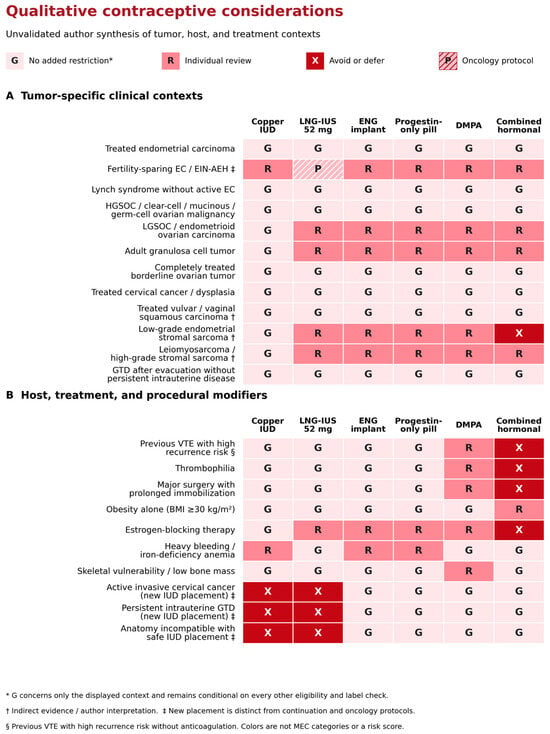
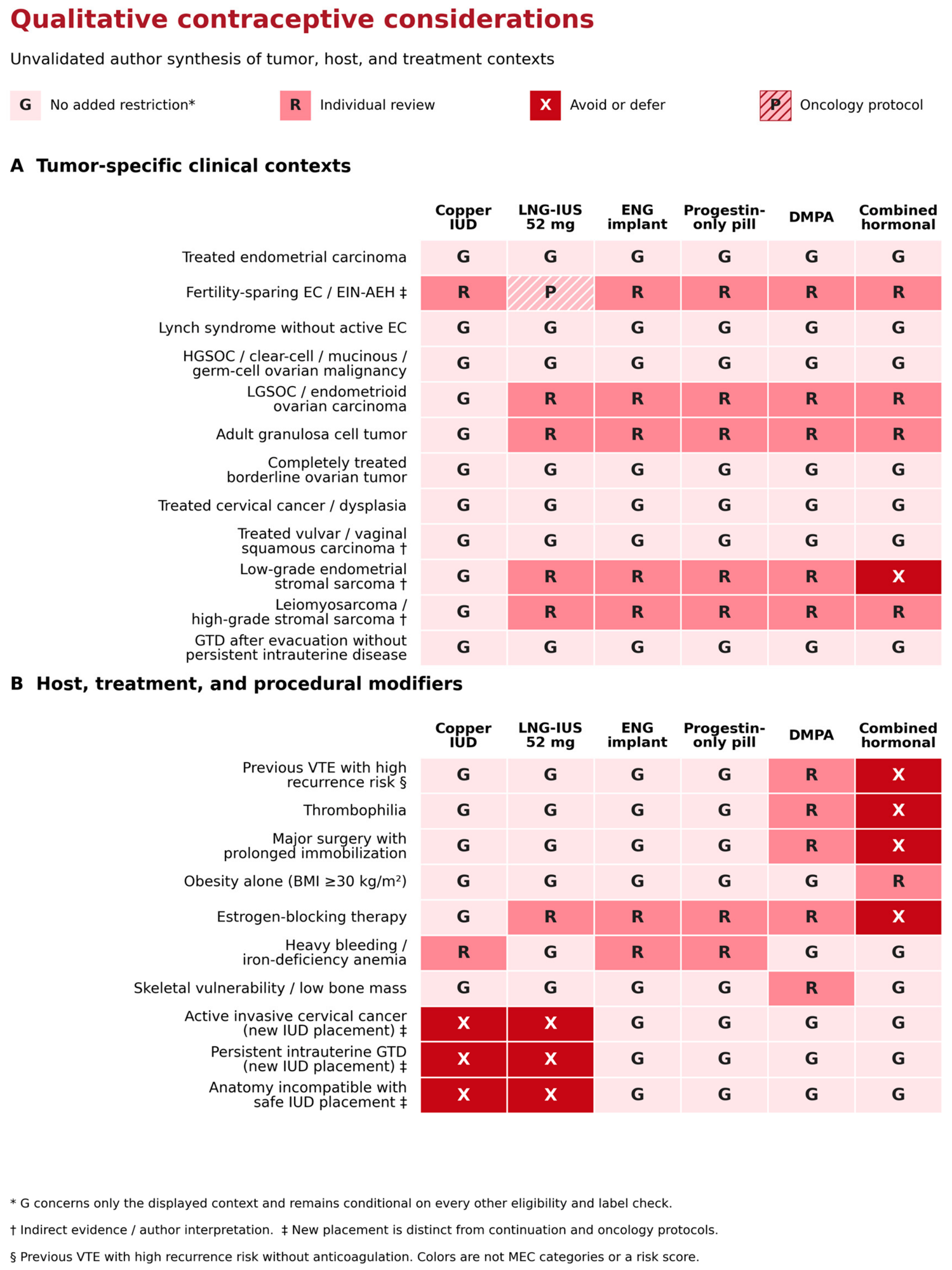
The five dimensions are estrogen pharmacology, progestin pharmacology, their complete formulation, host characteristics, and tumor or treatment state (Table 2; Figure 1). The first three describe overlapping aspects of one exposure; they are not independent risk contributions. Host factors determine the clinical context in which a formulation is considered, while tumor, therapy, and anatomy may impose additional constraints. The framework provides a structured checklist, not a calculation or prediction. As the setting becomes more specific, direct evidence often becomes less available, making explicit qualification and oncology review more necessary [2,3,4,7].
Table 2.
Evidence supporting the pharmacologic, host, and tumor dimensions and the limits of clinical extrapolation.
Figure 1.
Author-derived qualitative matrix of contraceptive considerations. (A) Tumor contexts in Table 1. (B) Host, treatment, and procedural modifiers in Section 4/Table 2. G means no additional restriction identified from that context, conditional on all other eligibility and local-label checks; it does not establish cancer-specific safety. R denotes individualized review, X avoidance or deferral, and P an oncology protocol. Cell shading increases from G (lightest) through R to X (darkest); hatching denotes P. * G concerns only the displayed context. These labels are not validated probabilities, effect sizes, evidence grades, efficacy rankings, or formal U.S./WHO MEC categories. Contexts and colors must not be summed. † Indirect evidence or author synthesis. ‡ New IUD placement: U.S. MEC category 4 in active EC or persistent intrauterine GTD remains distinct from exceptional SFP/SGO specialist decisions. Initiation restrictions do not automatically require device removal; a 52 mg LNG-IUS for EC/EIN-AEH requires an oncology protocol. § Previous VTE with high recurrence risk without anticoagulation; other states need separate review. Obesity alone does not contraindicate CHC. Devices require suitable retained anatomy, and contraceptive-dose progestins must not replace antineoplastic treatment [1,2,3,6,20,21,22,23,30,40,41,42,43,44]. BMI, body mass index; CHC, combined hormonal contraception; DMPA, depot medroxyprogesterone acetate; EC, endometrial carcinoma; EIN-AEH, endometrial intraepithelial neoplasia/atypical endometrial hyperplasia; ENG, etonogestrel; GTD, gestational trophoblastic disease; HGSOC/LGSOC, high-/low-grade serous ovarian carcinoma; IUD, intrauterine device; LNG-IUS, levonorgestrel intrauterine system; MEC, Medical Eligibility Criteria; SFP/SGO, Society of Family Planning/Society of Gynecologic Oncology; VTE, venous thromboembolism.
5. Integrated Interpretation, Clinical Application, and Research Priorities
5.1. Quantitative Interpretation and Evidence Hierarchy
Interpretation begins by asking what outcome a study actually measures. Direct post-diagnosis contraceptive studies are most relevant to contraceptive-associated recurrence or survival, although their validity still depends on design and precision. Studies of menopausal hormones or therapeutic progestins provide indirect cancer evidence. General-population VTE studies inform vascular counseling, while cancer-incidence studies address prevention rather than recurrence. Prognostic markers and mechanisms may identify questions for oncology discussion but do not estimate the effect of contraceptive exposure. This ordering reflects directness for the clinical question, not a new evidence-grading system.
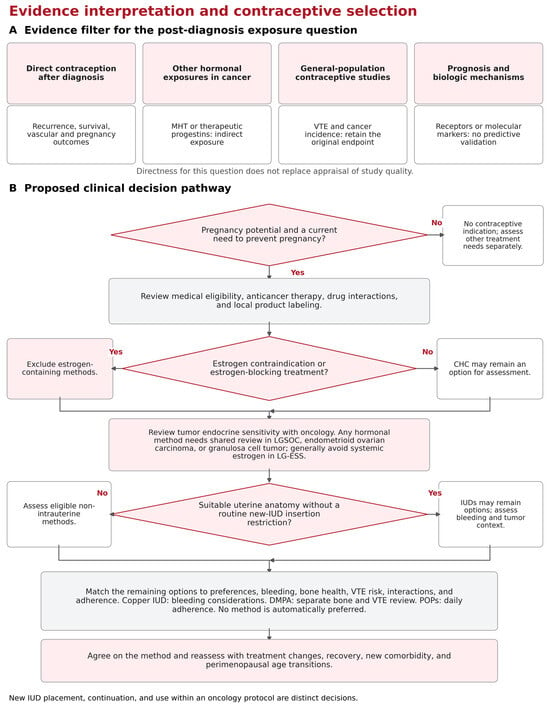
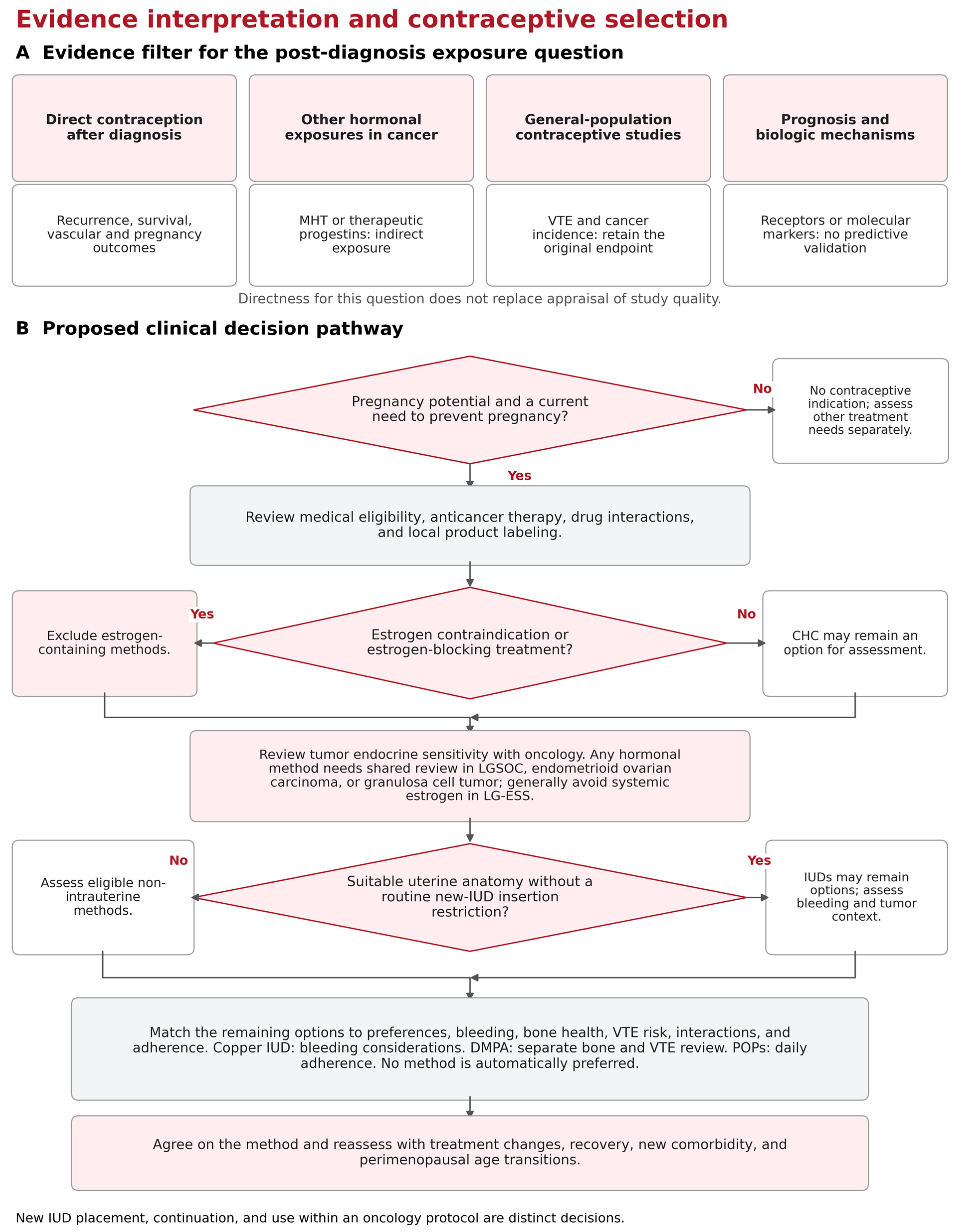
Absolute risk cannot be derived by multiplying general-population contraceptive RRs by separate obesity or cancer estimates. A relative association must retain its original comparator, population, exposure period, and endpoint. Even a low population-average absolute risk may matter to an individual patient; active treatment, surgery, immobility, or prior VTE can change the clinical balance without supplying a validated numerical multiplier. Likewise, a prognostic HR for ER loss describes tumor behavior and does not quantify a contraceptive effect. Figure 2 summarizes this evidence filter; published eligibility recommendations remain distinct from the hierarchy of study directness [2,3,4,11,15].
Figure 2.
Proposed evidence filter and clinical decision pathway for Section 5.1 and Section 5.2. (A) Evidence is organized by directness for the specific question of contraceptive exposure after cancer diagnosis; this is not a formal certainty grading. (B) Diamonds denote decision points, rectangles denote assessment steps or outcomes, and arrows indicate the direction of the pathway; Yes/No labels identify the branch taken. Shading is used for visual distinction only and does not indicate risk level. A qualitative decision tree applies medical eligibility, current treatment, tumor endocrine considerations, procedural feasibility, and patient preference. A branch retains options for assessment and does not establish safety or identify a universally preferred method. Hormonal contraception in LGSOC, endometrioid ovarian carcinoma, or granulosa cell tumor requires oncology shared decision-making; systemic estrogen avoidance in LG-ESS relies on indirect evidence. New IUD placement is distinct from continuation and from an oncologic treatment protocol. The pathway has not been clinically validated and must be used alongside current guidance and local labeling [1,2,3,6,8,9,40,41,42,43,44,45,46,48,49]. CHC, combined hormonal contraception; DMPA, depot medroxyprogesterone acetate; IUD, intrauterine device; LG-ESS, low-grade endometrial stromal sarcoma; LGSOC, low-grade serous ovarian carcinoma; MHT, menopausal hormone therapy; POP, progestin-only pill; VTE, venous thromboembolism.
5.2. Clinical Decision Pathway
Begin the pathway by assessing pregnancy potential, reproductive goals, and the need to avoid pregnancy during treatment. Next, apply condition-specific medical eligibility and review current anticancer or endocrine therapy, drug interactions, and local product labeling. Exclude estrogen-containing methods when contraindicated, including during estrogen-blocking treatment. For LGSOC, endometrioid ovarian carcinoma, granulosa cell tumor, or other clinically endocrine-sensitive disease, discuss any hormonal method with the oncology team; progestin-only exposure must not be assumed to be oncologically neutral. Systemic estrogen avoidance in LG-ESS is an indirect-evidence precaution. These assessments identify candidates for discussion, not a universally preferred method [2,3,9,40,41,42,43].
Among the remaining options, assess bleeding, bone health, uterine access, adherence, and the patient’s preference. A copper IUD may worsen bleeding; DMPA requires separate bone and thrombotic consideration; vomiting, malabsorption, or enzyme-inducing medication can make oral methods less suitable. Method-specific renal, hepatic, potassium, and interaction restrictions also remain applicable. IUD eligibility is assessed separately for new placement and continuation. If CHC remains appropriate, EE/levonorgestrel is a well-studied lower-VTE comparator among EE formulations; observational E2/E2V findings and E4 biomarker data do not prove superiority in cancer. LNG-IUSs and implants provide low user-dependent failure, whereas POP effectiveness depends more on adherence. Figure 1 displays the qualitative context matrix, while Figure 2B shows how evidence interpretation, eligibility, tumor review, and patient preferences are integrated [3,6,22,23,52,53,54,58,60,61].
Perimenopause does not automatically require different contraceptive drugs or cancer-specific dose adjustments, but increasing vascular and skeletal risk can change eligibility. Under UK Faculty of Sexual and Reproductive Healthcare (FSRH) guidance, medically eligible patients may use CHC before age 50; at 50, they should switch to an estrogen-free or nonhormonal method. POPs, implants, and suitable IUDs may remain options, while DMPA warrants reassessment after 50. U.S. guidance advises contraception until menopause or approximately age 50–55 and does not impose the same universal CHC stopping rule based on age alone. In a cancer survivor, the more restrictive applicable disease, treatment, or product-label condition still governs. Amenorrhea during hormonal contraception or cancer treatment cannot alone establish menopause, and menopausal hormone therapy is not contraception. Stopping decisions require method- and age-specific national guidance [3,48,49].
5.3. Research Priorities and Future Perspectives
The principal unanswered questions concern exposure after diagnosis: whether individual methods or formulations affect recurrence, progression, overall or cancer-specific survival, VTE, bleeding, fractures, and treatment completion. Direct evidence is especially limited for hormonally sensitive ovarian tumors and uterine sarcomas. Prospective registries should record histotype, stage, remission and treatment state, receptor and molecular findings, the exact contraceptive formulation and exposure interval, and relevant host risks. Analyses need to address time-varying treatment and contraception, confounding by indication, immortal time, competing events, and treatment-related loss of pregnancy potential. Interaction analyses are required before a biomarker can be called predictive of contraceptive effect [1,6,18,26,31].
This is a selective narrative synthesis with possible selection and publication bias; it does not provide an exhaustive evidence base or a new formal certainty assessment. General-population vascular data may not transport to active cancer, and menopausal hormone therapy, antineoplastic progestins, incidence prevention, and prognostic receptor studies are not interchangeable with contraceptive exposure. Few studies jointly characterize formulation, tumor subtype, treatment, and host risk. Observational null findings do not establish equivalence, and regional prescribing differences further limit transportability. The table, qualitative matrix, and decision pathway have not undergone independent clinical validation. They must not be used to calculate risk, override eligibility criteria, or infer recurrence safety from a color or molecular profile.
Before implementation as a clinical tool, the framework requires independent assessment of feasibility, consistency between clinicians, patient understanding, and consequences for prescribing and outcomes. Prospective validation should evaluate these functions separately from the oncologic and vascular safety of particular methods. Until such evidence is available, no performance, calibration, clinical benefit, or safety claim is made for the proposed approach.
6. Conclusions
Established contraceptive eligibility guidance and the 2025 SFP/SGO recommendations support access to a broad range of methods for many patients with gynecologic cancer who retain pregnancy potential. Current vascular risk, anticancer and endocrine treatment, tumor histotype, bleeding, skeletal health, anatomy, and preferences determine the individualized discussion. Incidence prevention, molecular prognosis, and therapeutic endocrine response should remain distinct from evidence about contraceptive exposure after diagnosis [2,3,6,8].
The proposed five-dimensional framework, annotated tables, qualitative matrix, and decision pathway organize these considerations; they have not been validated as a prediction tool or clinical decision rule. Formulation differences observed outside oncology do not establish cancer-specific safety, and uncertainty is greatest for post-diagnosis recurrence, survival, and formulation-specific outcomes. Their intended role is to support shared decisions and multidisciplinary assessment alongside current guidelines and local labeling. Prospective clinical evaluation is required before claims of improved decision quality or patient outcomes can be made.
Supplementary Materials
The following supporting information can be downloaded at https://www.mdpi.com/article/10.3390/cancers18223695/s1. Table S1, Targeted literature-verification strategy and source selection; Table S2, Country or region and evidence role of the referenced literature. References [1,2,3,4,5,6,7,8,9,10,11,12,13,14,15,16,17,18,19,20,21,22,23,24,25,26,27,28,29,30,31,32,33,34,35,36,37,38,39,40,41,42,43,44,45,46,47,48,49,50,51,52,53,54,55,56,57,58,59,60,61] are cited in the Supplementary Materials.
Author Contributions
Conceptualization, V.L., N.T. and V.P.; Methodology, V.L. and V.P.; Investigation, V.L., C.C., R.P., D.E.V., N.T., D.B., A.V., G.B., G.D., P.P. and V.P.; Writing—Original Draft Preparation, V.L.; Writing—Review and Editing, all authors; Supervision, N.T. and V.P.; Project Administration, V.L. All authors have read and agreed to the published version of the manuscript.
Funding
This research received no external funding.
Institutional Review Board Statement
Not applicable. This manuscript is a narrative review based exclusively on the previously published literature and professional guidance and does not report new human or animal research.
Informed Consent Statement
Not applicable.
Data Availability Statement
No new data were created or analyzed in this study. Data sharing is not applicable to this article.
Acknowledgments
During the preparation of this manuscript, the authors used ChatGPT (version 6 Astra) for language editing. The authors reviewed and edited the output and take full responsibility for the content of this publication.
Conflicts of Interest
The authors declare no conflicts of interest.
References
- Batur, P.; Brant, A.; McCourt, C.; Schwarz, E.B. Society of Family Planning Committee Statement: Contraceptive considerations for individuals with cancer and cancer survivors part 1—Key considerations for clinical care Joint with the Society of Gynecologic Oncology. Contraception 2025, 147, 110870. [Google Scholar] [CrossRef] [Scilit] [PubMed]
- Batur, P.; Brant, A.; McCourt, C.; Schwarz, E.B. Society of Family Planning Clinical Recommendation: Contraceptive considerations for individuals with cancer and cancer survivors part 2—Breast, ovarian, uterine, and cervical cancer: Joint with the Society of Gynecologic Oncology. Contraception 2025, 147, 110867. [Google Scholar] [CrossRef] [Scilit] [PubMed]
- Nguyen, A.T.; Curtis, K.M.; Tepper, N.K.; Kortsmit, K.; Brittain, A.W.; Snyder, E.M.; Cohen, M.A.; Zapata, L.B.; Whiteman, M.K. U.S. Medical Eligibility Criteria for Contraceptive Use, 2024. MMWR Recomm. Rep. 2024, 73, 1–126. [Google Scholar] [CrossRef] [Scilit] [PubMed]
- Stegeman, B.H.; de Bastos, M.; Rosendaal, F.R.; van Hylckama Vlieg, A.; Helmerhorst, F.M.; Stijnen, T.; Dekkers, O.M. Different combined oral contraceptives and the risk of venous thrombosis: Systematic review and network meta-analysis. BMJ 2013, 347, f5298. [Google Scholar] [CrossRef] [Scilit] [PubMed]
- Citla-Sridhar, D.; Rajpurkar, M.; Srivaths, L.; Bannow, B.S.; Rosovsky, R.P.; Sokkary, N. Venous thromboembolism in obese hormonal contraceptive users: A large national database study. Res. Pract. Thromb. Haemost. 2025, 9, 103230. [Google Scholar] [CrossRef] [Scilit] [PubMed]
- Tepper, N.K.; Nguyen, A.T.; Whiteman, M.K.; Curtis, K.M. Progestin-only contraception and thrombosis: An updated systematic review. Contraception 2026, 159, 110978. [Google Scholar] [CrossRef] [Scilit] [PubMed]
- Fanaki, M.; Thomakos, N.; Lygizos, V.; Varthaliti, A.; Haidopoulos, D.; Vlachos, D.E.; Pergialiotis, V. Cardiopulmonary Complications in Obese Patients with Gynecologic Cancer: A Narrative Review. Life 2026, 16, 323. [Google Scholar] [CrossRef] [Scilit] [PubMed]
- World Health Organization. Medical Eligibility Criteria for Contraceptive Use, 6th ed.; World Health Organization: Geneva, Switzerland, 2025. [Google Scholar]
- Gompel, A.; Ramirez, I.; Bitzer, J.; European Society of Contraception Expert Group on Hormonal Contraception. Contraception in cancer survivors—An expert review Part I. Breast and gynaecological cancers. Eur. J. Contracept. Reprod. Health Care 2019, 24, 167–174. [Google Scholar] [CrossRef] [Scilit] [PubMed]
- Su, H.I.; Lacchetti, C.; Letourneau, J.; Partridge, A.H.; Qamar, R.; Quinn, G.P.; Reinecke, J.; Smith, J.F.; Tesch, M.; Wallace, W.H.; et al. Fertility Preservation in People With Cancer: ASCO Guideline Update. J. Clin. Oncol. 2025, 43, 1488–1515, Erratum in J. Clin. Oncol. 2025, 43, 1847. https://doi.org/10.1200/JCO-25-0066. Erratum in J. Clin. Oncol. 2025, 43, 2553. https://doi.org/10.1200/JCO-25-01373. [Google Scholar] [CrossRef] [Scilit] [PubMed]
- Londero, A.P.; Parisi, N.; Tassi, A.; Bertozzi, S.; Cagnacci, A. Hormone Replacement Therapy in Endometrial Cancer Survivors: A Meta-Analysis. J. Clin. Med. 2021, 10, 3165. [Google Scholar] [CrossRef] [Scilit] [PubMed]
- Felix, A.S.; Gaudet, M.M.; La Vecchia, C.; Nagle, C.M.; Shu, X.O.; Weiderpass, E.; Adami, H.O.; Beresford, S.; Bernstein, L.; Chen, C.; et al. Intrauterine devices and endometrial cancer risk: A pooled analysis of the Epidemiology of Endometrial Cancer Consortium. Int. J. Cancer 2015, 136, E410–E422. [Google Scholar] [CrossRef] [Scilit] [PubMed]
- Harajka, A.; Hercsik, T.; das Virgens, I.P.A.; Máthé, I.; Tornyossy, Z.; AlFarwi, A.; Meznerics, F.A.; Kiss-Dala, S.; Fehérvári, P.; Nagy, R.; et al. Association of oral contraceptives and risk of endometrial cancer: A systematic review and meta-analysis. Acta Obstet. Gynecol. Scand. 2025, 104, 591–603. [Google Scholar] [CrossRef] [Scilit] [PubMed]
- Collaborative Group on Epidemiological Studies on Endometrial Cancer. Endometrial cancer and oral contraceptives: An individual participant meta-analysis of 27,276 women with endometrial cancer from 36 epidemiological studies. Lancet Oncol. 2015, 16, 1061–1070. [Google Scholar] [CrossRef] [Scilit] [PubMed]
- Jeong, S.; Kim, S.; Ouh, Y.T.; Lee, S.; Min, K.J.; Song, J.Y.; Lee, J.K.; Lee, N.W.; Hwang, S.Y.; Chun, Y.; et al. Validation of the 2025 ESGO/ESTRO/ESP postoperative risk stratification system in endometrial cancer: A same-cohort comparison with the 2020 molecular classification. Gynecol. Oncol. 2026, 211, 153–161. [Google Scholar] [CrossRef] [Scilit] [PubMed]
- Vrede, S.W.; Van Weelden, W.J.; Bulten, J.; Gilks, C.B.; Teerenstra, S.; Huvila, J.; Matias-Guiu, X.; Gil-Moreno, A.; Asberger, J.; Sweegers, S.; et al. Hormonal biomarkers remain prognostically relevant within the molecular subgroups in endometrial cancer. Gynecol. Oncol. 2025, 192, 15–23. [Google Scholar] [CrossRef] [Scilit] [PubMed]
- Marchetti, M.; Vezzaro, T.; Carollo, M.; Facchetti, E.; Masatti, L.; Xhindoli, L.; Costeniero, D.; Maggino, T.; Tozzi, R.; Saccardi, C.; et al. The challenge of molecular stratification in No Specific Molecular Profile endometrial cancer. Gynecol. Oncol. 2025, 200, 145–154. [Google Scholar] [CrossRef] [Scilit] [PubMed]
- Ferrari, F.; Gozzini, E.; Torroni, L.; Rota, M.; Soleymani Majd, H.; Dell’Avalle, C.; Ferrari, F.A.; Odicino, F. Prognostic role of immunohistochemical and molecular markers in no specific molecular profile endometrial cancer: A systematic review and meta-analysis. Am. J. Obstet. Gynecol. 2026, 234, 584–605. [Google Scholar] [CrossRef] [Scilit] [PubMed]
- Ferrari, F.A.; Uccella, S.; Franchi, M.; Scambia, G.; Fanfani, F.; Fagotti, A.; Pavone, M.; Raspagliesi, F.; Bogani, G. Performance of molecular classification in predicting oncologic outcomes of fertility-sparing treatment for atypical endometrial hyperplasia and endometrial cancer. Int. J. Gynecol. Cancer 2025, 35, 100016. [Google Scholar] [CrossRef] [Scilit] [PubMed]
- Dashti, S.G.; Chau, R.; Ouakrim, D.A.; Buchanan, D.D.; Clendenning, M.; Young, J.P.; Winship, I.M.; Arnold, J.; Ahnen, D.J.; Haile, R.W.; et al. Female Hormonal Factors and the Risk of Endometrial Cancer in Lynch Syndrome. JAMA 2015, 314, 61–71. [Google Scholar] [CrossRef] [Scilit] [PubMed]
- Lu, K.H.; Loose, D.S.; Yates, M.S.; Nogueras-Gonzalez, G.M.; Munsell, M.F.; Chen, L.M.; Lynch, H.; Cornelison, T.; Boyd-Rogers, S.; Rubin, M.; et al. Prospective multicenter randomized intermediate biomarker study of oral contraceptive versus depo-provera for prevention of endometrial cancer in women with Lynch syndrome. Cancer Prev. Res. 2013, 6, 774–781. [Google Scholar] [CrossRef] [Scilit] [PubMed]
- van Hylckama Vlieg, A.; Helmerhorst, F.M.; Rosendaal, F.R. The risk of deep venous thrombosis associated with injectable depot-medroxyprogesterone acetate contraceptives or a levonorgestrel intrauterine device. Arterioscler. Thromb. Vasc. Biol. 2010, 30, 2297–2300. [Google Scholar] [CrossRef] [Scilit] [PubMed]
- Scholes, D.; Lacroix, A.Z.; Ott, S.M.; Ichikawa, L.E.; Barlow, W.E. Bone mineral density in women using depot medroxyprogesterone acetate for contraception. Obstet. Gynecol. 1999, 93, 233–238. [Google Scholar] [CrossRef] [Scilit] [PubMed]
- Arshadi, M.; Hesari, E.; Ahmadinezhad, M.; Yekta, E.M.; Ebrahimi, F.; Azizi, H.; Esfarjani, S.V.; Rostami, M.; Khodamoradi, F. The association between oral contraceptive pills and ovarian cancer risk: A systematic review and meta-analysis. Bull. Cancer 2024, 111, 918–929. [Google Scholar] [CrossRef] [Scilit] [PubMed]
- van Bommel, M.H.D.; IntHout, J.; Veldmate, G.; Kets, C.M.; de Hullu, J.A.; van Altena, A.M.; Harmsen, M.G. Contraceptives and cancer risks in BRCA1/2 pathogenic variant carriers: A systematic review and meta-analysis. Hum. Reprod. Update 2023, 29, 197–217. [Google Scholar] [CrossRef] [Scilit] [PubMed]
- Fu, Z.; Borho, L.; Taylor, S.E.; Kelemen, L.E.; DeFazio, A.; Webb, P.M.; Köbel, M.; Meagher, N.S.; Na, R.; Antoniou, A.C.; et al. Ovarian cancer risk and survival according to tumor sex hormone receptor expression: An Ovarian Cancer Association Consortium and Ovarian Tumor Tissue Analysis Consortium pooled analysis. Gynecol. Oncol. 2025, 198, 112–129. [Google Scholar] [CrossRef] [Scilit] [PubMed]
- Zelisse, H.S.; Snijders, M.L.H.; Groenendijk, F.H.; Halfwerk, J.B.G.; Hooijer, G.K.J.; van Driel, W.J.; León-Castillo, A.; Lok, C.A.R.; Kooreman, L.F.S.; Lambrechts, S.; et al. The prognostic potential of molecular subtypes including estrogen receptor status in endometrioid ovarian cancer. Gynecol. Oncol. 2025, 196, 137–145. [Google Scholar] [CrossRef] [Scilit] [PubMed]
- Kelliher, L.; Yoeli-Bik, R.; Schweizer, L.; Lengyel, E. Molecular changes driving low-grade serous ovarian cancer and implications for treatment. Int. J. Gynecol. Cancer 2024, 34, 1630–1638. [Google Scholar] [CrossRef] [Scilit] [PubMed]
- Kabirian, R.; Gaillard, T.; Bello-Roufai, D.; Malhaire, C.; Huchet, V.; Callens, C.; Pham, B.; Bentivegna, E.; Borghese, B.; Laas, E.; et al. Therapeutic advances and molecular insights in low-grade serous ovarian carcinoma. Bull. Cancer 2026, 113, 533–540. [Google Scholar] [CrossRef] [Scilit] [PubMed]
- Rousset-Jablonski, C.; Pautier, P.; Chopin, N. Borderline Ovarian Tumours: CNGOFS Guidelines for Clinical Practice—Hormonal Contraception and MHT/HRT after Borderline Ovarian Tumour. Gynecol. Obstet. Fertil. Senol. 2020, 48, 337–340. (In French) [Google Scholar] [CrossRef] [Scilit] [PubMed]
- Shore, A.; Fang, L.; Hewins, S.; Huntsman, D.G.; Dawson, L.M. Granulosa cell tumors and menopausal hormone therapy: A narrative review. Gynecol. Oncol. Rep. 2026, 65, 102123. [Google Scholar] [CrossRef] [Scilit] [PubMed]
- Puechl, A.M.; Edwards, J.; Suri, A.; Nakayama, J.; Bean, S.; Gehrig, P.; Saks, E.; Duska, L.; Broadwater, G.; Ehrisman, J.; et al. The association between progesterone receptor expression and survival in women with adult granulosa cell tumors. Gynecol. Oncol. 2019, 153, 74–79. [Google Scholar] [CrossRef] [Scilit] [PubMed]
- Smith, J.S.; Green, J.; Berrington de Gonzalez, A.; Appleby, P.; Peto, J.; Plummer, M.; Franceschi, S.; Beral, V. Cervical cancer and use of hormonal contraceptives: A systematic review. Lancet 2003, 361, 1159–1167. [Google Scholar] [CrossRef] [Scilit] [PubMed]
- International Collaboration of Epidemiological Studies of Cervical Cancer; Appleby, P.; Beral, V.; Berrington de González, A.; Colin, D.; Franceschi, S.; Goodhill, A.; Green, J.; Peto, J.; Plummer, M.; et al. Cervical cancer and hormonal contraceptives: Collaborative reanalysis of individual data for 16,573 women with cervical cancer and 35,509 women without cervical cancer from 24 epidemiological studies. Lancet 2007, 370, 1609–1621. [Google Scholar] [CrossRef] [Scilit] [PubMed]
- Cortessis, V.K.; Barrett, M.; Brown Wade, N.; Enebish, T.; Perrigo, J.L.; Tobin, J.; Zhong, C.; Zink, J.; Isiaka, V.; Muderspach, L.I.; et al. Intrauterine Device Use and Cervical Cancer Risk: A Systematic Review and Meta-analysis. Obstet. Gynecol. 2017, 130, 1226–1236. [Google Scholar] [CrossRef] [Scilit] [PubMed]
- Yoshida, H.; Higuchi, D.; Takigawa, W.; Kikkawa, N.; Yamanaka, T.; Nagao, A.; Kobayashi-Kato, M.; Uno, M.; Ishikawa, M.; Shiraishi, K. Gastric-Type Cervical Adenocarcinoma: Clinicopathologic Features, Molecular Landscape, and Therapeutic Challenges. J. Pers. Med. 2026, 16, 72. [Google Scholar] [CrossRef] [Scilit] [PubMed]
- Selenica, P.; Alemar, B.; Matrai, C.; Talia, K.L.; Veras, E.; Hussein, Y.; Oliva, E.; Beets-Tan, R.G.H.; Mikami, Y.; McCluggage, W.G.; et al. Massively parallel sequencing analysis of 68 gastric-type cervical adenocarcinomas reveals mutations in cell cycle-related genes and potentially targetable mutations. Mod. Pathol. 2021, 34, 1213–1225. [Google Scholar] [CrossRef] [Scilit] [PubMed]
- Fulgione, C.; Inzani, F.; Raffone, A.; Raimondo, D.; Arciuolo, D.; Ronchi, S.; Marchiori, D.; Maragliano, R.; Neola, D.; Vastarella, M.G.; et al. Prognosis of HPV-independent, p53-wild-type vulvar squamous cell carcinoma: A systematic review and meta-analysis. Gynecol. Oncol. 2025, 201, 210–215. [Google Scholar] [CrossRef] [Scilit] [PubMed]
- Tung, H.J.; Wang, Y.C.; Lin, C.Y.; Liao, M.J.; Pan, Y.B.; Jung, S.M.; Wang, C.C.; Huang, H.J.; Chao, A.; Chou, H.H.; et al. Human papillomavirus prevalence, genotype distribution, and prognostic factors of vaginal cancer. Int. J. Cancer 2024, 155, 1996–2008. [Google Scholar] [CrossRef] [Scilit] [PubMed]
- Chu, M.C.; Mor, G.; Lim, C.; Zheng, W.; Parkash, V.; Schwartz, P.E. Low-grade endometrial stromal sarcoma: Hormonal aspects. Gynecol. Oncol. 2003, 90, 170–176. [Google Scholar] [CrossRef] [Scilit] [PubMed]
- Saab, R.; Fellman, B.M.; Legarreta, A.F.; Meyer, L.A.; Fleming, N.D.; Ratan, R.; Nassif Haddad, E.F.; Frumovitz, M.; Soliman, P.T. Comparative analysis of hormonal therapy in low-grade endometrial stromal sarcoma: A retrospective study. Gynecol. Oncol. 2024, 191, 143–149. [Google Scholar] [CrossRef] [Scilit] [PubMed]
- Huang, X.; Peng, P. Hormone Therapy Reduces Recurrence in Stage II–IV Uterine Low-Grade Endometrial Stromal Sarcomas: A Retrospective Cohort Study. Front. Oncol. 2022, 12, 922757. [Google Scholar] [CrossRef] [Scilit] [PubMed]
- Davidson, B.; Kjæreng, M.L.; Førsund, M.; Danielsen, H.E.; Kristensen, G.B.; Abeler, V.M. Progesterone Receptor Expression Is an Independent Prognosticator in FIGO Stage I Uterine Leiomyosarcoma. Am. J. Clin. Pathol. 2016, 145, 449–458. [Google Scholar] [CrossRef] [Scilit] [PubMed]
- Hagey, J.M.; Drury, K.E.; Kaplan, S.; Davidson, B.A.; Morse, J.E. Contraceptive use following gestational trophoblastic disease: A systematic review. Contraception 2024, 137, 110488. [Google Scholar] [CrossRef] [Scilit] [PubMed]
- Dantas, P.R.S.; Maestá, I.; Filho, J.R.; Junior, J.A.; Elias, K.M.; Howoritz, N.; Braga, A.; Berkowitz, R.S. Does hormonal contraception during molar pregnancy follow-up influence the risk and clinical aggressiveness of gestational trophoblastic neoplasia after controlling for risk factors? Gynecol. Oncol. 2017, 147, 364–370. [Google Scholar] [CrossRef] [Scilit] [PubMed]
- Braga, A.; Maestá, I.; Short, D.; Savage, P.; Harvey, R.; Seckl, M.J. Hormonal contraceptive use before hCG remission does not increase the risk of gestational trophoblastic neoplasia following complete hydatidiform mole: A historical database review. BJOG Int. J. Obstet. Gynaecol. 2016, 123, 1330–1335. [Google Scholar] [CrossRef] [Scilit] [PubMed]
- Slim, R. Genetics and Genomics of Gestational Trophoblastic Disease. Hematol. Oncol. Clin. N. Am. 2024, 38, 1219–1232. [Google Scholar] [CrossRef] [Scilit] [PubMed]
- Faculty of Sexual & Reproductive Healthcare. Contraception for Women Aged Over 40 Years; August 2017, Amended May 2025. Available online: https://www.cosrh.org/Common/Uploaded%20files/documents/fsrh-guideline-contraception-for-women-aged-over-40-years.pdf (accessed on 2 November 2026).
- Centers for Disease Control and Prevention. When Contraceptive Protection Is No Longer Needed. U.S. Selected Practice Recommendations for Contraceptive Use 2024. Available online: https://www.cdc.gov/contraception/hcp/usspr/contraception-not-needed.html (accessed on 2 November 2026).
- Stanczyk, F.Z.; Winer, S.A.; Foidart, J.M.; Archer, D.F. Comparison of estrogenic components used for hormonal contraception. Contraception 2024, 130, 110310. [Google Scholar] [CrossRef] [Scilit] [PubMed]
- European Medicines Agency. Drovelis EPAR and Product Information. Available online: https://www.ema.europa.eu/en/medicines/human/EPAR/drovelis (accessed on 2 November 2026).
- Vinogradova, Y.; Coupland, C.; Hippisley-Cox, J. Use of combined oral contraceptives and risk of venous thromboembolism: Nested case-control studies using the QResearch and CPRD databases. BMJ 2015, 350, h2135. [Google Scholar] [CrossRef] [Scilit] [PubMed]
- Douxfils, J.; Raskin, L.; Didembourg, M.; Donis, N.; Dogné, J.M.; Morimont, L.; Beaudart, C. Are natural estrogens used in contraception at lower risk of venous thromboembolism than synthetic ones? A systematic literature review and meta-analysis. Front. Endocrinol. 2024, 15, 1428597. [Google Scholar] [CrossRef] [Scilit] [PubMed]
- Lemos, M.J.; Ferraz, J.M.; Queiroz, L.F.; Diniz, A.F.; da Silva, C.M.L.; Dos Santos, P.L.; Gomide, P.M.A.O.; Novellino, A.M.M. Hemostatic safety profile of estetrol vs. ethinylestradiol in oral contraceptives: A systematic review and meta-analysis. Rev. Bras. Ginecol. Obstet. 2026, 48, e-rbgo27. [Google Scholar] [CrossRef] [Scilit] [PubMed]
- European Medicines Agency. Cyproterone- and Ethinylestradiol-Containing Medicines Referral. Available online: https://www.ema.europa.eu/en/medicines/human/referrals/cyproterone-ethinylestradiol-containing-medicines (accessed on 2 November 2026).
- Therapeutic Goods Administration. Consultation Proposed Amendments to the Poisons Standard Oral Contraceptives ACMS 34 June 2021. Australian Government. 2021. Available online: https://www.tga.gov.au/sites/default/files/consultation-proposed-amendments-poisons-standard-oral-contraceptives-acms-34-june-2021.pdf (accessed on 2 November 2026).
- U.S. Food and Drug Administration. Nexplanon Etonogestrel Implant Prescribing Information; Revised January 2026. Available online: https://www.accessdata.fda.gov/drugsatfda_docs/label/2026/021529s027lbl.pdf (accessed on 2 November 2026).
- Madden, T. Intrauterine Contraception: Device Types, Characteristics, and Counseling Points. UpToDate. Literature Review Current Through August 2026; Updated 17 March 2026. Available online: https://www.uptodate.com/contents/intrauterine-contraception-device-types-characteristics-and-counseling-points (accessed on 2 November 2026).
- DailyMed. Mirena Levonorgestrel Intrauterine Device U.S. Prescribing Information. National Library of Medicine. Available online: https://dailymed.nlm.nih.gov/dailymed/drugInfo.cfm?setid=dcbd6aa2-b3fa-479a-a676-56ea742962fc (accessed on 2 November 2026).
- Diedrich, J.T.; Desai, S.; Zhao, Q.; Secura, G.; Madden, T.; Peipert, J.F. Association of short-term bleeding and cramping patterns with long-acting reversible contraceptive method satisfaction. Am. J. Obstet. Gynecol. 2015, 212, 50.e1–50.e8. [Google Scholar] [CrossRef] [Scilit] [PubMed]
- Bauerfeind, A.; von Stockum, S.; Boehnke, T.; Heinemann, K. Venous Thromboembolic Risk of Estradiol Valerate-Dienogest Compared with Ethinyl Estradiol-Levonorgestrel Combined Oral Contraceptives. Obstet. Gynecol. 2024, 143, 431–434. [Google Scholar] [CrossRef] [Scilit] [PubMed]

Disclaimer/Publisher’s Note: The statements, opinions and data contained in all publications are solely those of the individual author(s) and contributor(s) and not of MDPI and/or the editor(s). MDPI and/or the editor(s) disclaim responsibility for any injury to people or property resulting from any ideas, methods, instructions or products referred to in the content. |
© 2026 by the authors. Licensee MDPI, Basel, Switzerland. This article is an open access article distributed under the terms and conditions of the Creative Commons Attribution (CC BY) license.