


Simple Summary
Tripartite motif (TRIM) family proteins are characterized as possessing the RING-finger domain, B-box, and Coiled-coil domain. TRIM proteins are involved in the ubiquitination process and are associated with carcinogenesis. In this study, we performed a systematic review on the functions (tumor promoting or tumor suppressive) of TRIM family proteins in urological cancers. A total of 84 articles were identified for the final analysis and 27, 14, 28, and 1 TRIM proteins were associated with kidney cancers, bladder cancers, prostate cancers, and testicular cancers. TRIM proteins could be a potential therapeutic target for treating cancer and thus this study may give new insights to researchers experimenting on this topic.
Abstract
We aimed to investigate the roles of tripartite motif (TRIM) proteins in urological cancers. Methods: A systematic review was conducted to investigate the oncological role of tripartite motif proteins in urological cancers. Results: A total of 84 articles were identified for the final analysis (26 articles on kidney cancers, 19 on bladder cancers, 37 on prostate cancers, and 1 on testicular cancers). In total, 27 TRIM family proteins were involved in kidney cancer, of which 9 were associated with tumor-promoting findings (TRIM24, TRIM27, TRIM37, TRIM44, TRIM46, TRIM47, TRIM59, TRIM63, and TRIM65) and of which 9 TRIM proteins were tumor-suppressive (TRIM2, TRIM7, TRIM8, TRIM13, TRIM21, TRIM26, TRIM28, TRIM33, and TRIM58). Fourteen TRIM family proteins were associated with bladder cancer (tumor-promoting: TRIM9, TRIM25, TRIM26, TRIM28, TRIM29, TRIM59, TRIM65, and TRIM66; tumor-suppressive: TRIM19 and TRIM38). Ten TRIM family proteins were associated with prostate cancer (tumor-promoting: TRIM11, TRIM24, TRIM28, TRIM33, TRIM44, TRIM59, TRIM63, TRIM66, and TRIM68; tumor-suppressive: TRIM32 and TRIM36). Twenty-eight TRIM family proteins were identified to be associated with prostate cancer (tumor-promoting: TRIM11, TRIM24, TRIM28, TRIM33, TRIM44, TRIM59, TRIM63, TRIM66, and TRIM68; tumor-suppressive: TRIM32 and TRIM36). TRIM proteins regulate urological cancers by ubiquitination or modulation of oncologic pathways. Conclusions: This review identifies TRIM proteins that are involved in urological cancers. Some of these proteins have the potential to be the therapeutic target.
1. Introduction
The tripartite motif (TRIM) proteins mediate several types of post-translational modifications, most notably, ubiquitination [1,2,3] but also SUMOylation [4,5] and ISGylation [5]. There are over 80 members of the TRIM family in humans, most of which share a common domain structure consisting of a really-interesting-new-gene (RING-finger), B-box, and a coiled-coil domain [1,2,3].
Ubiquitination is a three-step enzymatic cascade that enables degradation of proteins. Ubiquitin binds to the E1 ubiquitin-activating enzyme in an adenosine-triphosphate-dependent (ATP-dependent) manner after it is transferred to an E2 ubiquitin-conjugating enzyme. The ubiquitin is passed on to a lysine residue in a substrate either by direct delivery from E2 that is mediated by the RING type E3 or first transferred to the HECT/RBR type E3 before being transferred to the substrate [1,2,3]. The substrate attached with the ubiquitin chains can be degraded by 26S proteasome. When a single ubiquitin is transferred to a lysine residue of the substrate, it is referred to as “monoubiquitination” [6]. Monoubiquitination can occur at multiple lysine residues, leading to multi-monoubiquitination. Each monoubiquitination can be modified by the formation of polymetric chains containing multiple ubiquitins [7].
SUMOylation and ISGylation are distinct from the ubiquitination process since they are post-translational modifications that use ubiquitin-like proteins, small ubiquitin-like modifier (SUMO) or interferon-stimulated gene 15 (ISG15), instead of ubiquitin and thereby not associated with protein degradation directly. Unlike ubiquitination, these modifications are usually not directly responsible for proteasomal ubiquitination but rather regulated and modified protein activity. Certain types of TRIM proteins are involved in these processes [4,5].
TRIM family proteins function as important regulators in cancer, infectious diseases, and neurogenetic diseases [1,2,3,4,5]. In this review, we focused on the association between TRIM proteins and urological malignancies.
2. Materials and Methods
The protocol has been registered in the International Prospective Register of Systematic Reviews database (PROSPERO: CRD42024563339). The Preferred Reporting Items for Systematic Reviews and Meta-Analyses (PRISMA) checklist is reported in Table S1. This study was a systematic review of evaluation on association between urological cancers and TRIM proteins.
3. Evidence Acquisition
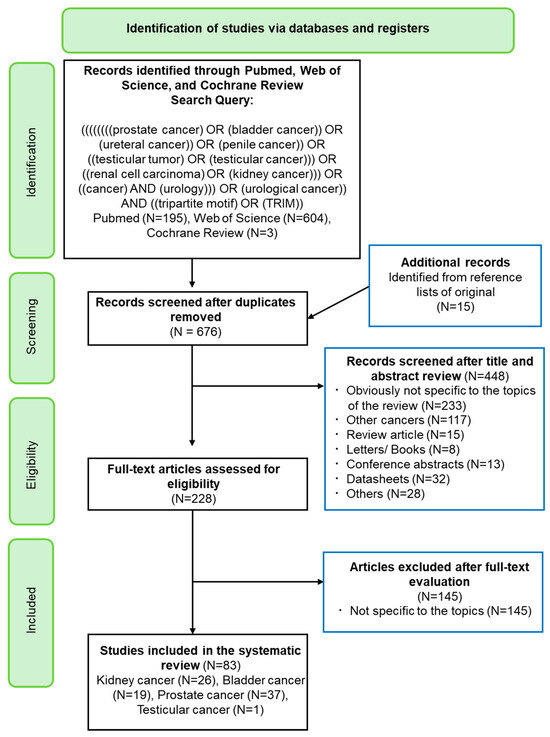
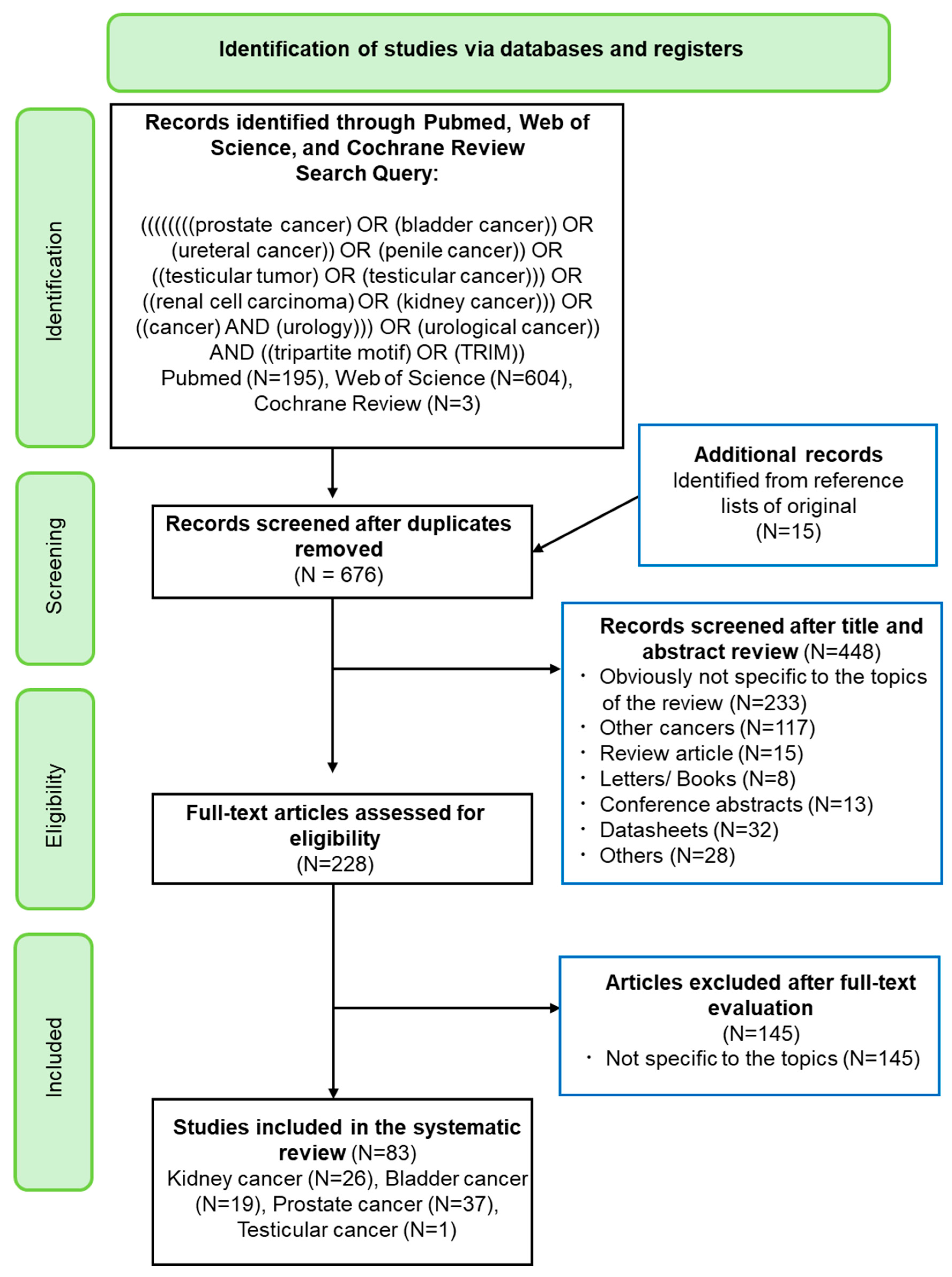
Articles presenting association between TRIM proteins and urological cancers were included in this review. Systematic review and meta-analysis were carried out according to the PRISMA statement [8] and the Cochrane Handbook for Systematic Reviews of Interventions [9]. The search of the literature using the electronic databases (Pubmed, Web of Science, Cochrane Library) was performed on 31 May 2024. We first identified potential eligible studies that were appropriate for the topic of this study by performing an initial screening on the titles and abstracts. The review of the literature was conducted using electronic databases (Pubmed, Web of Science, and Cochrane Library) with search combinations of the following keywords in corresponding sections. The keywords ((((((((prostate cancer) OR (bladder cancer)) OR (ureteral cancer)) OR (penile cancer)) OR ((testicular tumor) OR (testicular cancer))) OR ((renal cell carcinoma) OR (kidney cancer))) OR ((cancer) AND (urology))) OR (urological cancer)) AND ((tripartite motif) OR (TRIM)) were used to identify the literature that potentially matched the aim of this review (Figure 1). Representative publications published after year 2000 and other literature relevant to the topic were used in the present review. Studies relevant to human carcinogenesis were included. Conference abstracts, letters/books, datasheets, review articles, articles not written in English, and articles not specific to the topic were excluded (Figure 1). One reviewer (Y.Y.) independently extracted the data, and the second reviewer (F.U.) verified the extracted data. All discrepancies regarding data extraction were resolved by consensus or finally decided by Delphi consensus with other authors. A total of 86 articles, including 27 studies of kidney cancer, 14 studies of bladder cancer, 29 studies of prostate cancer (including CRPC), and 1 study of testicular cancer, were included in the final systematic review (Figure 1).
Figure 1.
Identification of studies via databases and registers. A total of 83 articles were included for the final review.
4. Risk of Bias Assessment
The risk of bias and quality of the papers were assessed by the “Risk of Bias In Non-Randomized Studies -of Interventions (ROBINS-I)” for NRCTs (Table S2) [10]. Two authors (Y.Y. and S.K.) independently made assessment of the risk of bias in each study. All discrepancies between the two assessments were resolved by a consensus between the two authors and the supervisor (F.U.).
5. Categorization of Classes, Structures of TRIM, and Function of Domains
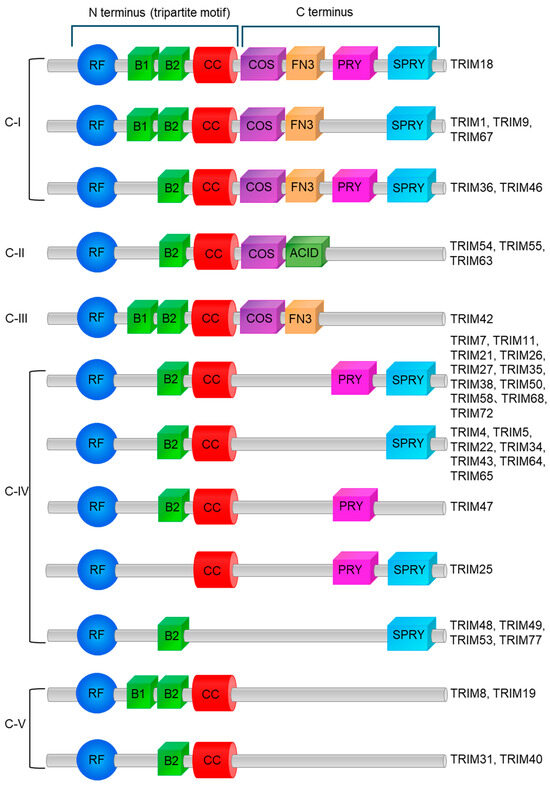
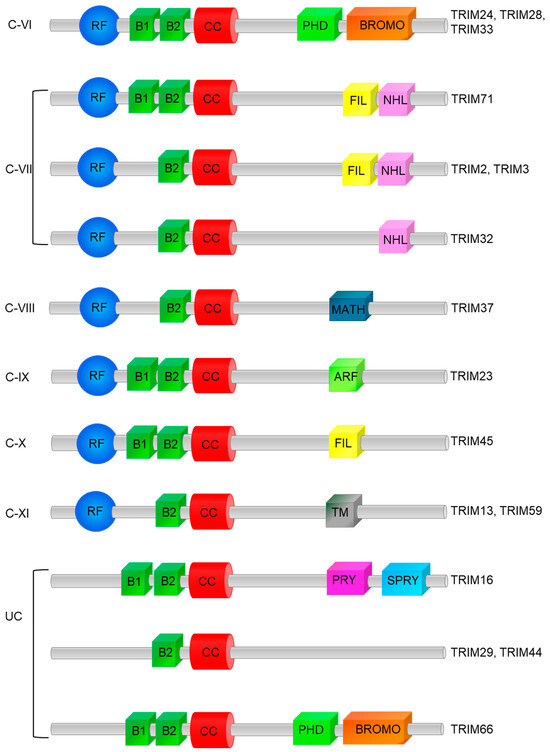
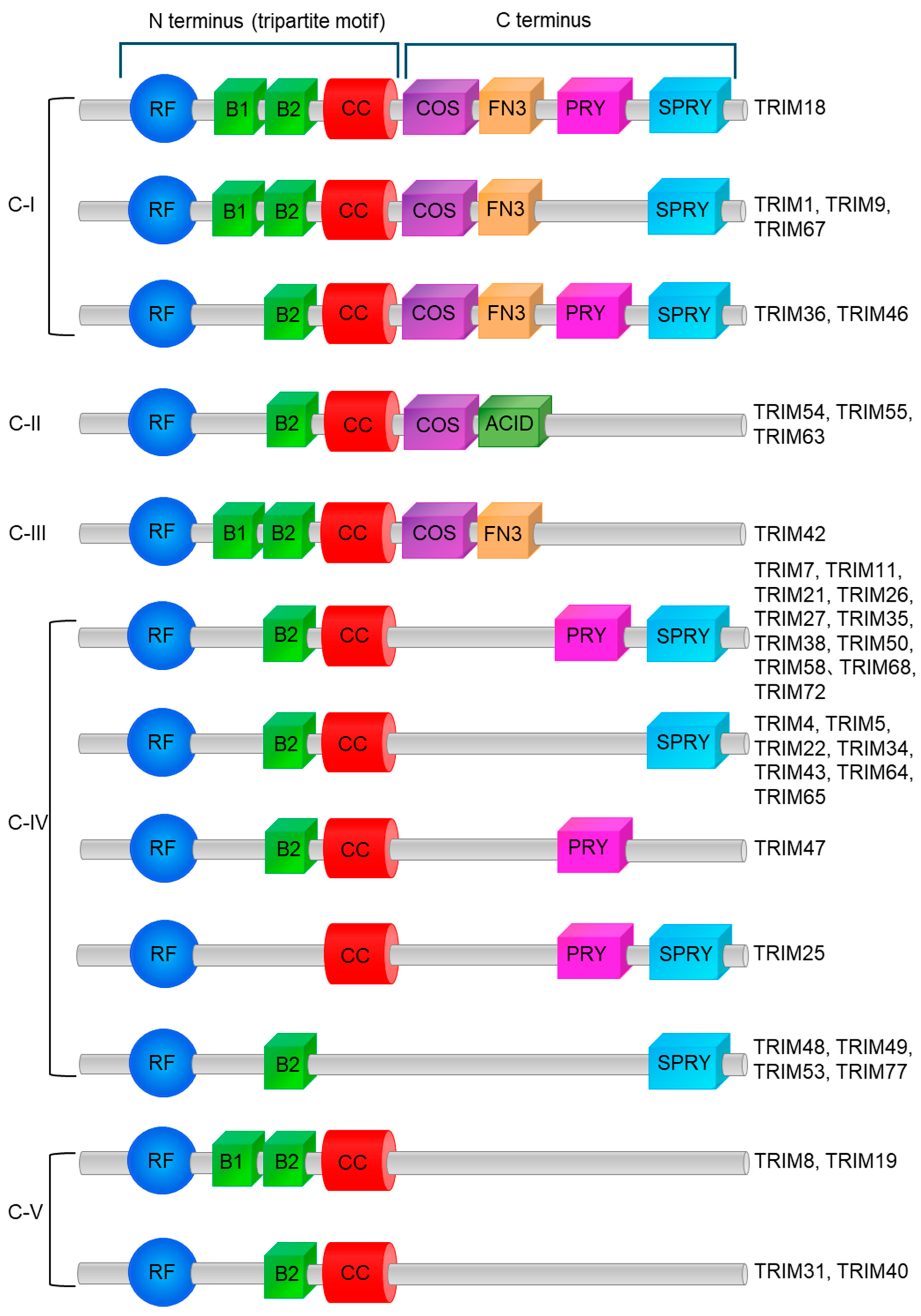
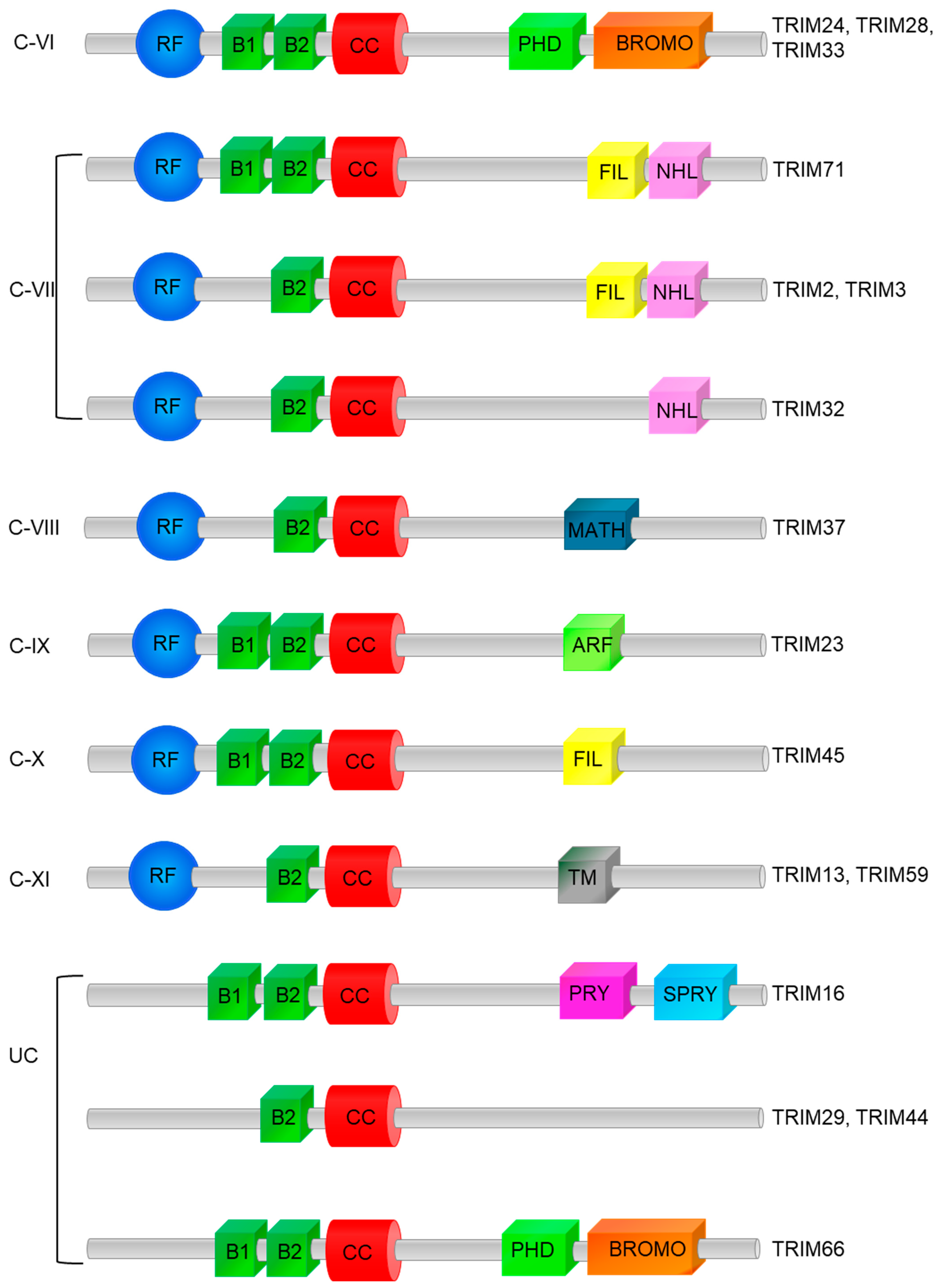
Most TRIM proteins share a conserved N-terminal tripartite motif structure composed of one RING-finger, one or two B-boxes (B-box1 and B-box2), and one coiled-coil domain [1,2,3]. TRIM proteins are further categorized into 11 classes (C-I to C-XI) based on differences in their C-terminal domains [1,2,3]. Not all TRIM proteins have a RING-finger domain and these proteins are unclassified [1,2,3]. Figure 2 shows the classification of the TRIM family proteins that are relevant to urological cancers (Figure 2) [1,2,3].
Figure 2.
Classification of TRIM protein bases on its structure.
The B-boxes are also a Cys-His motif much like the RING-finger domain. Each B-box binds one or two zinc ions and is composed of a relatively small number of amino acids. B-box1 of TRIM1 and TRIM18 may contribute to the recognition of the substrate [11]. Other functions of the B-boxes include mediating the protein–protein interactions, including binding to other types of TRIM family members, although their precise biological functions remain unclear. Gushchina et al. hypothesized that B-boxes may have originally evolved as independent E3 ligase domains but evolutionally became functionally secondary to the RING-finger domain [12]. This idea is based on the study that showed the function of B-boxes maintaining the E3 ligase activity of TRIM18, albeit with lower activity than the RING-finger domain [13].
The RING domain forms a RING-finger structure by coordinating two zinc atoms in the middle of the cysteine/histidine residues forming a “cross-brace” structure [14,15]. RING-fingers are capable of acting as E3 ubiquitin ligase and therefore promote conjugation of ubiquitin to a lysine on the target protein by interacting with E2 ubiquitin ligase [1]. Notably, some TRIM proteins (TRIM14, TRIM16, TRIM20, TRIM29, TRIM44, TRIM66, TRIM70, TRIM76, and TRIML1) lack the RING-finger domain [1]. Theoretically, these proteins still have the potential to function as E3 ligases by using the B-boxes, although this theory needs further investigation. Another possible function of these “no-RING” TRIM proteins is the deubiquitination. Taken together, TRIM proteins that lack the RING-finger may retain E3 ligase activity by using B-box domains or may serve alternative roles such as deubiquitination. It is shown that TRIM44 can deubiquitinate p62, an autophagy substrate [16]. Furthermore, TRIM44 can deubiquitinate and stabilize Filamin A (FLNA), an upstream regulator of breast-cancer-1 (BRCA1) [17]. It also binds to other TRIM family members such as TRIM17 and stabilizes it [18].
The coiled-coil domain is responsible for the self-assembly of TRIM proteins and is considered to be involved in homo- and hetero-multimerization of the TRIM proteins (Gushchina, Pharmacol Ther 2018) [12]. This function of higher-order assembly may allow the TRIM protein to provide different tasks depending on the formation of the structure. For instance, TRIM2 and TRIM3 are both members of the C-VII and these proteins are highly homologous in terms of sequence identity in RING-finger and B-box domains [19]. TRIM2 possesses a RING-finger domain that tends to dimerize and form a higher order self-association while the RING-finger domain of the TRIM3 is monomeric and does not develop high-order self-association form [19]. Interestingly, these TRIM proteins have different functional roles despite their similarity of molecular structure. TRIM2 is neuroprotective and ubiquitinates Bcl-2-interacting mediator of cell death (Bim) during rapid ischemic tolerance in the nervous system [20]. This protein also promotes cancer cell proliferation, migration, and invasion by deubiquitinating Snail1 in lung adenocarcinoma [21]. In contrast, TRIM3 polyubiquitinates γ-actin and controls hippocampal plasticity and learning [22].
6. The Role of TRIM Proteins in Kidney Cancer
A total of 27 TRIM family proteins were cancer-associated, of which 9 were associated with oncogenic findings (TRIM24, TRIM27, TRIM37, TRIM44, TRIM46, TRIM47, TRIM59, TRIM63, and TRIM65) and 9 TRIM family proteins (TRIM2, TRIM7, TRIM8, TRIM13, TRIM21, TRIM26, TRIM28, TRIM33, and TRIM58) were associated with tumor-suppressive evidence (Table 1) [23,24,25,26,27,28,29,30,31,32,33,34,35,36,37,38,39,40,41,42,43,44,45,46,47,48]. TRIM19 was the only TRIM protein to have reported both oncogenic and tumor-suppressive effects (Table 1) [31,32]. The most common pathways regulated by TRIM family proteins were TGFβ pathway, PI3K/AKT/mTOR pathway, and epithelial–mesenchymal transition (EMT)-related pathway.
Table 1.
Articles describing association of TRIM proteins with kidney cancer (N = 26).
TRIM7, TRIM13, and TRIM26 regulate the PI3K/AKT/mTOR pathway as tumor suppressors in kidney cancers [27,30,36]. TRIM7 inhibits Hypoxia Inducible Factor 1 alpha (HIF-1ɑ) by targeting Src protein and regulating PI3K/AKT/mTOR pathway [27]. Upregulation of TRIM13 inhibits NFκβ, MMP-9, and p-AKT and suppresses cell migration and invasion [30], while TRIM26 degrades ETK and inhibits the AKT/mTOR pathway [36].
TRIM family proteins, which act as tumor promoters, include TRIM24 [28,35], TRIM27 [24,26,28], TRIM37 [41], TRIM44 [42], TRIM46 [43], TRIM47 [44], TRIM58 [26,45], TRIM59 [46], TRIM63 [47], and TRIM65 [26,48]. Among these proteins, TRIM24 and TRIM37 promoted EMT and facilitated cell proliferation and invasion [34,41]. Notably, TRIM33 is controversial regarding its function involved with cancer progression. Xu et al. investigated a Cancer Genome Atlas (TGCA) database and found that mRNA expression of TRIM33 in clear cell renal carcinoma tissues were downregulated and that low TRIM33 expression was associated with poor prognosis [40]. Gain-of-function study in 786-O and ACHN kidney cancer cells lines also showed that TRIM33 overexpression inhibited cell proliferation, migration, and invasion of these cancer cells [40].
TRIM44, a known tumor-suppressing gene, downregulates Fyn-related kinase (FRK) and promotes cancer progression in renal cell carcinoma [42]. The downregulation of FRK by TRIM44 can also be observed in ovarian cancer [49]. In fact, TRIM44 is associated with tumor progression in over 10 types of cancer, including thyroid cancer [50,51], esophageal cancer [52,53,54], gastric cancer [55,56,57], lung cancer [58,59,60,61,62], hepatocellular carcinoma [63], colorectal cancer [64,65,66], ovarian cancer [67,68,69], cervical cancer [70], breast cancer [71], prostate cancer [72,73], and testicular cancer [74]. Genomic and transcriptomic data revealed a TRIM44 overexpression in 16.1% of epithelial cancers and a positive correlation between TRIM44 and mTOR signaling [75]. Previous reports identified NFκβ signaling pathway as a target pathway of TRIM44 in cancers of the larynx [76], lung [59], liver [63], breast [71], colorectal [66], and ovary [69]. Other pathways regulated by TRIM44 included the AKT-related pathway in esophagus [52], non-small cell lung cancer (NSCLC) [60], colorectal [64], prostate [72], and glioma cancers [77]. TRIM44 is also among the downstream targets of circRNA in regulating glycolysis in cancer [78].
The role of tumor-suppressor protein promyelocytic leukemia (PML), also known as TRIM19, is controversial regarding the involvement with cancer progression. Both mRNA expression and protein levels of PML were overexpressed based on the data of The Cancer Genome Atlas (TCGA) and National Cancer Institute’s Clinical Proteomic Tumor Analysis Consortium (CPTAC) [28,32]. Simoni et al. showed that PML knockdown leads to accumulation of G0/G1 distribution in RCC cell lines and inhibition of tumor growth in vivo [32]. PML knockdown also promoted accumulation of p53 and its bona fide transcriptional target p21 for growth arrest in clear cell RCC cell lines [32]. In contrast, Lin et al. revealed a mechanism involving the stabilization of PML by SCP phosphatases and inhibition of mTOR/HIF signaling [31]. They found that phosphatase SCP1 and its isoforms SCP2/3 dephosphorylate PML at S518 and block the degradation of PML [31]. SCP1 stabilized PML, which led to enhanced tumor-suppressive effects regarding proliferation, migration, invasion tumor growth, and tumor angiogenesis. Furthermore, it suppressed the mTOR-HIF pathway [31].
7. The Role of TRIM Proteins in Bladder Cancer
Bladder cancer is characterized by a high potential tumor recurrence. As shown in Table 2, 14 TRIM family proteins were reported to have association in carcinogenesis [79,80,81,82,83,84,85,86,87,88,89,90,91,92,93,94,95,96,97]. Among them, TRIM9 [79], TRIM25 [88], TRIM26 [89], TRIM28 [87], TRIM29 [90], TRIM59 [93,94], TRIM65 [95], and TRIM66 [96] were previously reported as having oncogenic association with bladder cancer. Several pathways, including the CEACAM6-SMAD2/3 pathway [79], NF-kappa beta pathway [86], and AKT pathway [86,89], were associated with TRIM proteins that promoted cancer progression of bladder cancer. Notably, TRIM24 and TRIM26 both activate the AKT pathway and promote cell proliferation and invasion [86,89]. TRIM59 [94] and TRIM65 [95] modulated epithelial–mesenchymal transition of urothelial carcinoma cells by ubiquitination of target proteins. Other TRIM proteins (TRIM9, TRIM38, TRIM65, and TRIM66) promoted progression of bladder cancer by targeting GLUT1 [92], ANXA2 [95], and MMP11 [96].
Table 2.
Articles describing association of TRIM proteins with bladder cancer (N = 19).
Chen W et al. found that TRIM59 is associated with promotion of EMT and promotion of cell proliferation, invasion, and migration via activation of transforming growth factor TGF-beta/SMAD2/3 signaling pathway [93]. Another study investigated the stiffness of bladder cancer cells by using atomic force microscopy. Tumor cells with intrinsic softness potentially function as cancer stem cells in various types of cancer [93]. Consequently, bladder cancer, of which intrinsic soft tumor cells are identified, is known to be associated with cancer recurrence [93]. They found that ITGB8/TRIM59/AKT/mTOR/glycolysis pathways were upregulated in bladder cancers with soft tumor cells [93].
Multiple studies have shown that TRIM21 is associated with bladder cancer [83,84,85]. TRIM21 binds to Prothymosin Alpha (PTMA) and degrades it, reducing both nuclear and cytoplasmic PTMA [83]. This reduction in PTMA levels leads to decreased PTEN expression and enhanced Nrf2 signaling, both of which show oncogenic effect [83]. TRIM21 also removes the inhibitory effect that PTMA has on Nuclear Respiratory Factor 1 (NRF1) signaling by degrading PTMA [83]. Another study revealed that TRIM21 is also associated with the interaction with ubiquitin-conjugating E2 enzyme (UBE2S) that leads to the ubiquitination of lipoma preferred partner (LPP) via K11-linked polyubiquitination, thereby promoting the lymphatic metastasis of bladder cancer [85]. The authors further showed that targeting UBES with cephalomannine inhibited the progression of bladder cancer cells and human bladder-cancer-derived organoids in vitro and lymphatic metastasis model in vivo [85]. In contrast, the research by Deng M et al. discovered that Zinc Fingers And Homeoboxes 3 (ZHX3), a known oncogenic factor associated with poor prognosis, was a target of degradation by TRIM21 [84]. Taken together, TRIM21 changes its oncogenic and tumor-suppressive roles depending on its binding targets.
8. The Role of TRIM Proteins in Prostate Cancer
A total of 29 TRIM family proteins are involved in prostate cancer (Table 3) [72,73,98,99,100,101,102,103,104,105,106,107,108,109,110,111,112,113,114,115,116,117,118,119,120,121,122,123,124,125,126,127,128,129,130]. TRIM family proteins regulate various pathways such as AKT/PI3K pathway, apoptosis-related pathway, glycolysis pathway, and HIF-1 pathway (Table 3).
Table 3.
Articles describing association of TRIM proteins with prostate cancer (PCa), including castration-resistant PCa and neuroendocrine PCa (N = 37).
Among the TRIM family proteins regulating carcinogenesis in prostate cancer, TRIM36 is a unique protein since this protein is both androgen-dependent and also acts as a tumor suppressor [122]. TRIM36 was initially identified as haprin, which was involved in the acrosome reaction [131]. Fujimura et al. investigated mRNA expression of both cancerous and stromal tissues of biopsy samples and identified TRIM36 as one of the 10 genes associated with cancer tissues [121]. Low expression of TRIM36 level is also observed in neuroendocrine prostate cancer and TRIM36 inhibits the glycolysis pathway by downregulating Glutathione Peroxidase 4 (GPX4) by interacting with lys-48 and HK2 [123].
TRIM25, also known as estrogen-responsive finger protein (Efp), is an estrogen-induced protein that is involved in promoting cancer progression of cancer originating in prostate as well as in breast [132], liver [133], and in colon [134]. In prostate cancer, TRIM25 stabilizes the TP53/G3BP2/RanBP2 complex, which inhibits the tumor-suppressive function of TP53 in the nucleus [113]. TRIM25 also targets Erg, a known driver of prostate carcinogenesis, and degrades it [112]. TRIM25 not only targets the 14-3-3 sigma, a known tumor suppressor of prostate cancer, for degradation by ubiquitination but it also mediates ISG15 modification of 14-3-3 sigma [135].
TRIM68 is another TRIM protein that is androgen-dependent and interacts with androgen receptor (AR) in the presence of dihydrotestosterone [128]. TRIM68 interacts with coactivators of AR such as TIP60 and p300 to mediate AR transcription in prostate cancer [128]. Li et al. discovered two micro RNAs (miR-29a and miR-1256) that directly target and regulate TRIM68 to inhibit prostate cancer cell growth and invasion [129]. Nie et al. found YTHDF1 as an upper stream regulator of TRIM68 by investigation with m6A RNA immunoprecipitation sequencing and bioinformatics analysis [130]. Together with the RNA binding protein GAP SH3 Binding Protein (G3BP1), YTH N6-Methypadenosine RNA Binding Protein F1 (YTHDF1) is involved in regulating AR mRNA translation [136]. Intriguingly, YTHDF1 is also an upper stream regulator of TRIM44 in prostate cancer [73].
9. The Role of TRIM Proteins in Castration-Resistant Prostate Cancer
Castration-resistant prostate cancer (CRPC) is a condition in which androgen deprivation treatment no longer is effective. The cancer-specific survival of non-metastatic CRPC patients was 38 months [137]. Metastatic-CRPCs are much lethal, and the median overall survival is 23 months [138].
TRIM24, also known as Transcriptional Intermediary Factor 1 (TIFɑ), is a transcriptional coactivator of androgen receptor (AR) and an oncogenic member of the TRIM family. Bai et al. identified a post-transcriptional regulatory mechanism of TRIM24, whereby the LINC00963 promotes TRIM24 expression and cell proliferation in CRPC cells in vitro and in vivo by directly binding to miR-655, which is an inhibitor of TRIM24 [110]. In parallel, TRIM24 is also subject to post-translational regulation through ubiquitination by the E3 ubiquitin ligase adaptor SPOP [116]. Fong et al. revealed that TRIM28 binds to TRIM24 and protects it from SPOP-mediated ubiquitination, thereby stabilizing TRIM24 and consequently promoting cell proliferation and tumor growth in vitro and in vivo [116]. Taken together, these studies indicate a multilayered regulation of TRIM24 at both post-transcriptional and post-translational levels, highlighting its important oncogenic role in CRPC.
Kimura et al. investigated the function of TRIM36 in CRPC cells [122]. Knockdown of TRIM36 suppressed apoptosis and promoted cell proliferation and migration in 22Rv1 cells and vice versa for TRIM36 overexpression [122]. Additionally, the knockdown of TRIM36 alleviated docetaxel-induced apoptosis in 22Rv1 cells, suggesting that TRIM36 plays a significant role in regulating chemotherapy response [122].
TRIM59, which has an oncogenic role in both kidney cancers [46] and bladder cancers [95,98], also has an oncogenic activity in CRPC [125]. TRIM59 is highly expressed in CRPC and is associated with poor prognosis. The AR directly binds to the TRIM59 promoter region, repressing its transcription [125]. Upon AR inhibition, this repression is lifted, resulting in promotion of TRIM59 expression. Functional studies revealed that knockdown of TRIM59 inhibited CRPC cell proliferation, migration, and tumor growth [125]. The study further demonstrated that TRIM59 promotes degradation of tumor suppressor proteins RB1 and p53, which leads to increased SRY-box Transcription Factor 2 (SOX2) expression and drives neuroendocrine differentiation in prostate cancer [125].
10. The Role of TRIM Proteins in Testicular Cancer
There is only one paper describing the impact of TRIM protein in testicular cancer [74]. TRIM44 overexpression was associated with alpha feto protein levels, clinical stage, nonseminomatous germ cell tumor, and cancer-specific survival [74]. TRIM44 upregulated Complement Component 3a (C3AR1), ST3 Beta-Galactoside Alpha-2,3-Sialytransrefase 5 (ST3GAL5), and Ecto-5′-Nucleaotidase (NT5E), while it downregulated Cell Adhesion Molecule 1 (CADM1), Cyclin-Dependent Kinase 19 (CDK19), and Protein Kinase CAMP-Activated Catalytic Subunit Beta (PRKACB) that lead to promoting cell proliferation and migration of NTERA2 and NEC8 cells [74].
11. The Role of TRIM Proteins in Other Types of Urological Malignancies
Unfortunately, there is no report describing the association between TRIM proteins and upper urinary tract urothelial carcinoma and penile cancer.
12. Conclusions
We performed a systematic review on the oncological function of the TRIM proteins. There are approximately 80 types of TRIM proteins, of which some may be a good potential therapeutic target for treating cancer. Future experimental studies on testicular cancer and upper urinary tract cancer are required due to a small number of studies.
Supplementary Materials
The following supporting information can be downloaded at: https://www.mdpi.com/article/10.3390/cancers17142367/s1, Table S1: PRISMA 2020 Checklist; Table S2: Risk of bias assessment for NRCTs (ROBINS-I).
Author Contributions
Y.Y. designed and extracted the data and also drafted the manuscript. F.U. checked the extracted data and also drafted the manuscript. N.K., K.M., and Y.H. supported extracting the data and also drafted the manuscript. S.K. was involved in conceptualization, methodology, data curation, and validation. T.F., S.I., and H.K. reviewed and supervised this study. All authors have read and agreed to the published version of the manuscript.
Funding
This work was supported by the Yamaguchi Endocrine Research Association (2023 grant on urological field).
Data Availability Statement
The data presented in this study are available in this article and Supplementary Materials.
Conflicts of Interest
The authors declare no conflicts of interest.
References
- Hatakeyama, S. TRIM Family Proteins: Roles in Autophagy, Immunity, and Carcinogenesis. Trends Biochem. Sci. 2017, 42, 297–311. [Google Scholar] [CrossRef] [Scilit] [PubMed]
- Hatakeyama, S. TRIM proteins and cancer. Nat. Rev. Cancer 2011, 11, 792–804. [Google Scholar] [CrossRef] [Scilit] [PubMed]
- Watanabe, M.; Hatakeyama, S. TRIM proteins and diseases. J. Biochem. 2017, 161, 135–144. [Google Scholar] [CrossRef] [Scilit] [PubMed]
- Vertegaal, A.C.O. Signalling mechanisms and cellular functions of SUMO. Nat. Rev. Mol. Cell Biol. 2022, 23, 715–731. [Google Scholar] [CrossRef] [Scilit] [PubMed]
- Ozato, K.; Shin, D.M.; Chang, T.H.; Morse, H.C., 3rd. TRIM family proteins and their emerging roles in innate immunity. Nat. Rev. Immunol. 2008, 8, 849–860. [Google Scholar] [CrossRef] [Scilit] [PubMed]
- Damgaard, R.B. The ubiquitin system: From cell signalling to disease biology and new therapeutic opportunities. Cell Death Differ. 2021, 28, 423–426. [Google Scholar] [CrossRef] [Scilit] [PubMed]
- Komander, D.; Rape, M. The ubiquitin code. Annu. Rev. Biochem. 2012, 81, 203–229. [Google Scholar] [CrossRef] [Scilit] [PubMed]
- Liberati, A.; Altman, D.G.; Tetzlaff, J.; Mulrow, C.; Gøtzsche, P.C.; Ioannidis, J.P.; Clarke, M.; Devereaux, P.J.; Kleijnen, J.; Moher, D. The PRISMA statement for reporting systematic reviews and meta-analyses of studies that evaluate health care interventions: Explanation and elaboration. J. Clin. Epidemiol. 2009, 62, e1–e34. [Google Scholar] [CrossRef] [Scilit] [PubMed]
- Cochrane Handbook for Systematic Reviews of Interventions Version 6.4. Available online: https://training.cochrane.org/handbook/current (accessed on 31 May 2024).
- Sterne, J.A.; Hernán, M.A.; Reeves, B.C.; Savović, J.; Berkman, N.D.; Viswanathan, M.; Henry, D.; Altman, D.G.; Ansari, M.T.; Boutron, I.; et al. ROBINS-I: A tool for assessing risk of bias in non-randomised studies of interventions. BMJ 2016, 355, i4919. [Google Scholar] [CrossRef] [Scilit] [PubMed]
- Short, K.M.; Hopwood, B.; Yi, Z.; Cox, T.C. MID1 and MID2 homo- and heterodimerise to tether the rapamycin-sensitive PP2A regulatory subunit, alpha 4, to microtubules: Implications for the clinical variability of X-linked Opitz GBBB syndrome and other developmental disorders. BMC Cell Biol. 2002, 3, 1. [Google Scholar] [CrossRef] [Scilit] [PubMed]
- Gushchina, L.V.; Kwiatkowski, T.A.; Bhattacharya, S.; Weisleder, N.L. Conserved structural and functional aspects of the tripartite motif gene family point towards therapeutic applications in multiple diseases. Pharmacol. Ther. 2018, 185, 12–25. [Google Scholar] [CrossRef] [Scilit] [PubMed]
- Han, X.; Du, H.; Massiah, M.A. Detection and characterization of the In Vitro e3 ligase activity of the human MID1 protein. J. Mol. Biol. 2011, 407, 505–520. [Google Scholar] [CrossRef] [Scilit] [PubMed]
- Barlow, P.N.; Luisi, B.; Milner, A.; Elliott, M.; Everett, R. Structure of the C3HC4 domain by 1H-nuclear magnetic resonance spectroscopy. A new structural class of zinc-finger. J. Mol. Biol. 1994, 237, 201–211. [Google Scholar] [CrossRef] [Scilit] [PubMed]
- Chasapis, C.T.; Spyroulias, G.A. RING finger E(3) ubiquitin ligases: Structure and drug discovery. Curr. Pharm. Des. 2009, 15, 3716–3731. [Google Scholar] [CrossRef] [Scilit] [PubMed]
- Lyu, L.; Lin, T.C.; McCarty, N. TRIM44 mediated p62 deubiquitination enhances DNA damage repair by increasing nuclear FLNA and 53BP1 expression. Oncogene 2021, 40, 5116–5130. [Google Scholar] [CrossRef] [Scilit] [PubMed]
- Zhang, S.; Cao, M.; Yan, S.; Liu, Y.; Fan, W.; Cui, Y.; Tian, F.; Gu, R.; Cui, Y.; Zhan, Y.; et al. TRIM44 promotes BRCA1 functions in HR repair to induce Cisplatin Chemoresistance in Lung Adenocarcinoma by Deubiquitinating FLNA. Int. J. Biol. Sci. 2022, 18, 2962–2979. [Google Scholar] [CrossRef] [Scilit] [PubMed]
- Urano, T.; Usui, T.; Takeda, S.; Ikeda, K.; Okada, A.; Ishida, Y.; Iwayanagi, T.; Otomo, J.; Ouchi, Y.; Inoue, S. TRIM44 interacts with and stabilizes terf, a TRIM ubiquitin E3 ligase. Biochem. Biophys. Res. Commun. 2009, 383, 263–268. [Google Scholar] [CrossRef] [Scilit] [PubMed]
- Esposito, D.; Dudley-Fraser, J.; Garza-Garcia, A.; Rittinger, K. Divergent self-association properties of paralogous proteins TRIM2 and TRIM3 regulate their E3 ligase activity. Nat. Commun. 2022, 13, 7583. [Google Scholar] [CrossRef] [Scilit] [PubMed]
- Thompson, S.; Pearson, A.N.; Ashley, M.D.; Jessick, V.; Murphy, B.M.; Gafken, P.; Henshall, D.C.; Morris, K.T.; Simon, R.P.; Meller, R. Identification of a novel Bcl-2-interacting mediator of cell death (Bim) E3 ligase, tripartite motif-containing protein 2 (TRIM2), and its role in rapid ischemic tolerance-induced neuroprotection. J. Biol. Chem. 2011, 286, 19331–19339. [Google Scholar] [CrossRef] [Scilit] [PubMed]
- Lin, Z.; Lin, X.; Zhu, L.; Huang, J.; Huang, Y. TRIM2 directly deubiquitinates and stabilizes Snail1 protein, mediating proliferation and metastasis of lung adenocarcinoma. Cancer Cell Int. 2020, 20, 228. [Google Scholar] [CrossRef] [Scilit] [PubMed]
- Schreiber, J.; Végh, M.J.; Dawitz, J.; Kroon, T.; Loos, M.; Labonté, D.; Li, K.W.; Van Nierop, P.; Van Diepen, M.T.; De Zeeuw, C.I.; et al. Ubiquitin ligase TRIM3 controls hippocampal plasticity and learning by regulating synaptic γ-actin levels. J. Cell Biol. 2015, 211, 569–586. [Google Scholar] [CrossRef] [Scilit] [PubMed]
- Zheng, D.; Zhang, Y.; Xia, Y.; Cheng, F. A Novel Gene Signature of Tripartite Motif Family for Predicting the Prognosis in Kidney Renal Clear Cell Carcinoma and Its Association with Immune Cell Infiltration. Front. Oncol. 2022, 17, 840410. [Google Scholar] [CrossRef] [Scilit] [PubMed]
- Xiao, W.; Wang, X.; Wang, T.; Xing, J. TRIM2 downregulation in clear cell renal cell carcinoma affects cell proliferation, migration, and invasion and predicts poor patients’ survival. Cancer Manag. Res. 2018, 10, 5951–5964. [Google Scholar] [CrossRef] [Scilit] [PubMed]
- Wei, X.; Dong, Y.; Chen, X.; Ren, X.; Li, G.; Wang, Y.; Wang, Y.; Zhang, T.; Wang, S.; Qin, C.; et al. Construction of circRNA-based ceRNA network to reveal the role of circRNAs in the progression and prognosis of metastatic clear cell renal cell carcinoma. Aging 2020, 12, 24184–24207. [Google Scholar] [CrossRef] [Scilit] [PubMed]
- Shen, J.; Wang, R.; Chen, Y.; Fang, Z.; Tang, J.; Yao, J.; Gao, J.; Zhou, W.; Chen, X. Comprehensive analysis of expression profiles and prognosis of TRIM genes in human kidney clear cell carcinoma. Aging 2022, 14, 4606–4617. [Google Scholar] [CrossRef] [Scilit] [PubMed]
- Yuan, C.; Liu, J.; Liu, L.; Jia, H.; Gao, Q.; Wang, X.; Zhao, J. TRIM7 suppresses cell invasion and migration through inhibiting HIF-1α accumulation in clear cell renal cell carcinoma. Cell Biol. Int. 2022, 46, 554–567. [Google Scholar] [CrossRef] [Scilit] [PubMed]
- Wu, G.; Xu, Y.; Li, L.; Li, J.; Ruan, N.; Dong, J.; Si, Z.; Xia, Q.; Wang, Q. Tripartite-motif family genes associated with cancer stem cells affect tumor progression and can assist in the clinical prognosis of kidney renal clear cell carcinoma. Int. J. Med. Sci. 2020, 17, 2905–2916. [Google Scholar] [CrossRef] [Scilit] [PubMed]
- Caratozzolo, M.F.; Valletti, A.; Gigante, M.; Aiello, I.; Mastropasqua, F.; Marzano, F.; Ditonno, P.; Carrieri, G.; Simonnet, H.; D’Erchia, A.M.; et al. TRIM8 anti-proliferative action against chemo-resistant renal cell carcinoma. Oncotarget 2014, 5, 7446–7457. [Google Scholar] [CrossRef] [Scilit] [PubMed]
- Li, H.; Qu, L.; Zhou, R.; Wu, Y.; Zhou, S.; Zhang, Y.; Cheng, B.; Ni, J.; Huang, H.; Hou, J. TRIM13 inhibits cell migration and invasion in clear-cell renal cell carcinoma. Nutr. Cancer 2020, 72, 1115–1124. [Google Scholar] [CrossRef] [Scilit] [PubMed]
- Lin, Y.C.; Lu, L.T.; Chen, H.Y.; Duan, X.; Lin, X.; Feng, X.H.; Tang, M.J.; Chen, R.H. SCP phosphatases suppress renal cell carcinoma by stabilizing PML and inhibiting mTOR/HIF signaling. Cancer Res. 2014, 74, 6935–6946. [Google Scholar] [CrossRef] [Scilit] [PubMed]
- Simoni, M.; Menegazzi, C.; Fracassi, C.; Biffi, C.C.; Genova, F.; Tenace, N.P.; Lucianò, R.; Raimondi, A.; Tacchetti, C.; Brugarolas, J.; et al. PML restrains p53 activity and cellular senescence in clear cell renal cell carcinoma. EMBO Mol. Med. 2024, 16, 1324–1351. [Google Scholar] [CrossRef] [Scilit]
- Chen, X.; Li, Z.; Yong, H.; Wang, W.; Wang, D.; Chu, S.; Li, M.; Hou, P.; Zheng, J.; Bai, J. Trim21-mediated HIF-1α degradation attenuates aerobic glycolysis to inhibit renal cancer tumorigenesis and metastasis. Cancer Lett. 2021, 508, 115–126. [Google Scholar] [CrossRef] [Scilit] [PubMed]
- Jiang, T.; Mao, H.; Chen, Q.; Cao, L.; He, Y.; Gao, X.; Chen, W.; Zhang, H. Trim24 prompts tumor progression via inducing EMT in renal cell carcinoma. Open Med. 2020, 15, 1153–1162. [Google Scholar] [CrossRef] [Scilit] [PubMed]
- Yu, Y.P.; Cai, L.C.; Wang, X.Y.; Cheng, S.Y.; Zhang, D.M.; Jian, W.G.; Wang, T.D.; Yang, J.K.; Yang, K.B.; Zhang, C. BMP8A promotes survival and drug resistance via Nrf2/TRIM24 signaling pathway in clear cell renal cell carcinoma. Cancer Sci. 2020, 111, 1555–1566. [Google Scholar] [CrossRef] [Scilit] [PubMed]
- Zheng, D.; Ning, J.; Deng, H.; Ruan, Y.; Cheng, F. TRIM26 inhibits clear cell renal cell carcinoma progression through destabilizing ETK and thus inactivation of AKT/mTOR signaling. J. Transl. Med. 2024, 22, 481. [Google Scholar] [CrossRef] [Scilit] [PubMed]
- Xiao, C.; Zhang, W.; Hua, M.; Chen, H.; Yang, B.; Wang, Y.; Yang, Q. TRIM27 interacts with Iκbα to promote the growth of human renal cancer cells through regulating the NF-κB pathway. BMC Cancer 2021, 21, 841. [Google Scholar] [CrossRef] [Scilit] [PubMed]
- Song, T.; Lv, S.; Ma, X.; Zhao, X.; Fan, L.; Zou, Q.; Li, N.; Yan, Y.; Zhang, W.; Sun, L. TRIM28 represses renal cell carcinoma cell proliferation by inhibiting TFE3/KDM6A-regulated autophagy. J. Biol. Chem. 2023, 299, 104621. [Google Scholar] [CrossRef] [Scilit] [PubMed]
- Jingushi, K.; Ueda, Y.; Kitae, K.; Hase, H.; Egawa, H.; Ohshio, I.; Kawakami, R.; Kashiwagi, Y.; Tsukada, Y.; Kobayashi, T.; et al. miR-629 Targets TRIM33 to Promote TGFβ/Smad Signaling and Metastatic Phenotypes in ccRCC. Mol. Cancer Res. 2015, 13, 565–574. [Google Scholar] [CrossRef] [Scilit] [PubMed]
- Xu, Y.; Wu, G.; Zhang, J.; Li, J.; Ruan, N.; Zhang, J.; Zhang, Z.; Chen, Y.; Zhang, Q.; Xia, Q. TRIM33 Overexpression Inhibits the Progression of Clear Cell Renal Cell Carcinoma In Vivo and In Vitro. BioMed. Res. Int. 2020, 2020, 8409239. [Google Scholar] [CrossRef] [Scilit] [PubMed]
- Miao, C.; Liang, C.; Li, P.; Liu, B.; Qin, C.; Yuan, H.; Liu, Y.; Zhu, J.; Cui, Y.; Xu, A.; et al. TRIM37 orchestrates renal cell carcinoma progression via histone H2A ubiquitination-dependent manner. J. Exp. Clin. Cancer Res. 2021, 40, 195. [Google Scholar] [CrossRef] [Scilit] [PubMed]
- Yamada, Y.; Kimura, N.; Takayama, K.I.; Sato, Y.; Suzuki, T.; Azuma, K.; Fujimura, T.; Ikeda, K.; Kume, H.; Inoue, S. TRIM44 promotes cell proliferation and migration by inhibiting FRK in renal cell carcinoma. Cancer Sci. 2020, 111, 881–890. [Google Scholar] [CrossRef] [Scilit] [PubMed]
- Ren, X.B.; Zhao, J.; Liang, X.F.; Guo, X.D.; Jiang, S.B.; Xiang, Y.Z. Identification TRIM46 as a Potential Biomarker and Therapeutic Target for Clear Cell Renal Cell Carcinoma Through Comprehensive Bioinformatics Analyses. Front. Med. 2021, 8, 785331. [Google Scholar] [CrossRef] [Scilit] [PubMed]
- Chen, J.X.; Xu, D.; Cao, J.W.; Zuo, L.; Han, Z.T.; Tian, Y.J.; Chu, C.M.; Zhou, W.; Pan, X.W.; Cui, X.G. TRIM47 promotes malignant progression of renal cell carcinoma by degrading P53 through ubiquitination. Cancer Cell Int. 2021, 21, 129. [Google Scholar] [CrossRef] [Scilit] [PubMed]
- Gan, Y.; Cao, C.; Li, A.; Song, H.; Kuang, G.; Ma, B.; Zhang, Q.; Zhang, Q. Silencing of the TRIM58 Gene by Aberrant Promoter Methylation is Associated with a Poor Patient Outcome and Promotes Cell Proliferation and Migration in Clear Cell Renal Cell Carcinoma. Front. Mol. Biosci. 2021, 8, 655126. [Google Scholar] [CrossRef] [Scilit] [PubMed]
- Hu, S.H.; Zhao, M.J.; Wang, W.X.; Xu, C.W.; Wang, G.D. TRIM59 is a key regulator of growth and migration inrenal cell carcinoma. Cell. Mol. Biol. 2017, 63, 68–74. [Google Scholar] [CrossRef] [Scilit] [PubMed]
- Wang, X.M.; Zhang, Y.; Mannan, R.; Skala, S.L.; Rangaswamy, R.; Chinnaiyan, A.; Su, F.; Cao, X.; Zelenka-Wang, S.; McMurry, L.; et al. TRIM63 is a sensitive and specific biomarker for MiT family aberration-associated renal cell carcinoma. Mod. Pathol. 2021, 34, 1596–1607. [Google Scholar] [CrossRef] [Scilit] [PubMed]
- Zhang, Q.; Li, Y.; Zhu, Q.; Xie, T.; Xiao, Y.; Zhang, F.; Li, N.; Deng, K.; Xin, H.; Huang, X. TRIM65 promotes renal cell carcinoma through ubiquitination and degradation of BTG3. Cell Death Dis. 2024, 15, 355. [Google Scholar] [CrossRef] [Scilit] [PubMed]
- Yu, X.Z.; Yuan, J.L.; Ye, H.; Yi, K.; Qie, M.R.; Hou, M.M. TRIM44 facilitates ovarian cancer proliferation, migration, and invasion by inhibiting FRK. Neoplasma 2021, 68, 751–759. [Google Scholar] [CrossRef] [Scilit] [PubMed]
- Zhou, Z.; Liu, Y.; Ma, M.; Chang, L. Knockdown of TRIM44 inhibits the proliferation and invasion in papillary thyroid cancer cells through suppressing the Wnt/β-catenin signaling pathway. Biomed. Pharmacother. 2017, 96, 98–103. [Google Scholar] [CrossRef] [Scilit] [PubMed]
- Wang, W.; Huang, C.; Luo, P.; Yao, J.; Li, J.; Wang, W.; Liu, F. Circular RNA circWDR27 Promotes Papillary Thyroid Cancer Progression by Regulating miR-215-5p/TRIM44 Axis. OncoTargets Ther. 2021, 14, 3281–3293. [Google Scholar] [CrossRef] [Scilit] [PubMed]
- Xiong, D.; Jin, C.; Ye, X.; Qiu, B.; Jianjun, X.; Zhu, S.; Xiang, L.; Wu, H.; Yongbing, W. TRIM44 promotes human esophageal cancer progression via the AKT/mTOR pathway. Cancer Sci. 2018, 109, 3080–3092. [Google Scholar] [CrossRef] [Scilit] [PubMed]
- Kawaguchi, T.; Komatsu, S.; Ichikawa, D.; Hirajima, S.; Nishimura, Y.; Konishi, H.; Shiozaki, A.; Fujiwara, H.; Okamoto, K.; Tsuda, H.; et al. Overexpression of TRIM44 is related to invasive potential and malignant outcomes in esophageal squamous cell carcinoma. Tumour Biol. 2017, 39, 1010428317700409. [Google Scholar] [CrossRef] [Scilit] [PubMed]
- Ong, C.A.; Shapiro, J.; Nason, K.S.; Davison, J.M.; Liu, X.; Ross-Innes, C.; O’Donovan, M.; Dinjens, W.N.; Biermann, K.; Shannon, N.; et al. Three-gene immunohistochemical panel adds to clinical staging algorithms to predict prognosis for patients with esophageal adenocarcinoma. J. Clin. Oncol. 2013, 31, 1576–1582. [Google Scholar] [CrossRef] [Scilit] [PubMed]
- Zhang, X.; Wu, X.; Sun, Y.; Chu, Y.; Liu, F.; Chen, C. TRIM44 regulates tumor immunity in gastric cancer through LOXL2-dependent extracellular matrix remodeling. Cell. Oncol. 2023, 46, 423–435. [Google Scholar] [CrossRef] [Scilit] [PubMed]
- Goshayeshi, L.; Afshar, J.; Mehrad-Majd, H. Clinical Significance of TRIM44 Expression in Patients with Gastric Cancer. Asian Pac. J. Cancer Prev. 2022, 23, 1725–1731. [Google Scholar] [CrossRef] [Scilit] [PubMed]
- Kashimoto, K.; Komatsu, S.; Ichikawa, D.; Arita, T.; Konishi, H.; Nagata, H.; Takeshita, H.; Nishimura, Y.; Hirajima, S.; Kawaguchi, T.; et al. Overexpression of TRIM44 contributes to malignant outcome in gastric carcinoma. Cancer Sci. 2012, 103, 2021–2026. [Google Scholar] [CrossRef] [Scilit] [PubMed]
- Xing, Y.; Meng, Q.; Chen, X.; Zhao, Y.; Liu, W.; Hu, J.; Xue, F.; Wang, X.; Cai, L. TRIM44 promotes proliferation and metastasis in non small cell lung cancer via mTOR signaling pathway. Oncotarget 2016, 7, 30479–30491. [Google Scholar] [CrossRef] [Scilit] [PubMed]
- Luo, Q.; Lin, H.; Ye, X.; Huang, J.; Lu, S.; Xu, L. Trim44 facilitates the migration and invasion of human lung cancer cells via the NF-κB signaling pathway. Int. J. Clin. Oncol. 2015, 20, 508–517. [Google Scholar] [CrossRef] [Scilit] [PubMed]
- Ji, X.; Tao, R.; Sun, L.Y.; Xu, X.L.; Ling, W. Down-regulation of long non-coding RNA DUXAP8 suppresses proliferation, metastasis and EMT by modulating miR-498 through TRIM44-mediated AKT/mTOR pathway in non-small-cell lung cancer. Eur. Rev. Med. Pharmacol. Sci. 2020, 24, 3152–3165. [Google Scholar] [PubMed]
- Ma, Q.; Huai, B.; Liu, Y.; Jia, Z.; Zhao, Q. Circular RNA circ_0020123 Promotes Non-Small Cell Lung Cancer Progression Through miR-384/TRIM44 Axis. Cancer Manag. Res. 2021, 13, 75–87. [Google Scholar] [CrossRef] [Scilit] [PubMed]
- Wang, X.; Lv, J.; He, B.; Zhou, D. CircFBXW8 Acts an Oncogenic Role in the Malignant Progression of Non-small Cell Lung Carcinoma by miR-370-3p-Dependent Regulation of TRIM44. Biochem. Genet. 2022, 60, 1313–1332. [Google Scholar] [CrossRef] [Scilit] [PubMed]
- Zhu, X.; Wu, Y.; Miao, X.; Li, C.; Yin, H.; Yang, S.; Lu, X.; Liu, Y.; Chen, Y.; Shen, R.; et al. High expression of TRIM44 is associated with enhanced cell proliferation, migration, invasion, and resistance to doxorubicin in hepatocellular carcinoma. Tumour Biol. 2016, 37, 14615–14628. [Google Scholar] [CrossRef] [Scilit] [PubMed]
- Li, C.G.; Hu, H.; Yang, X.J.; Huang, C.Q.; Yu, X.Q. TRIM44 Promotes Colorectal Cancer Proliferation, Migration, and Invasion Through the Akt/mTOR Signaling Pathway. Onco Targets Ther. 2019, 12, 10693–10701. [Google Scholar] [CrossRef] [Scilit] [PubMed]
- Sun, S.; Li, W.; Ma, X.; Luan, H. Long Noncoding RNA LINC00265 Promotes Glycolysis and Lactate Production of Colorectal Cancer through Regulating of miR-216b-5p/TRIM44 Axis. Digestion 2020, 101, 391–400. [Google Scholar] [CrossRef] [Scilit] [PubMed]
- Kou, T.; Sha, D.; Wang, F.; He, T.; He, X. The Novel Target of Colorectal Carcinoma: TRIM44 Regulates Cell Migration and Invasion via Activation of CXCR4/NF-κB Signaling. Cell Biochem. Biophys. 2021, 79, 113–121. [Google Scholar] [CrossRef] [Scilit] [PubMed]
- Meng, F.; Ding, J.; Xu, W.; Luo, C.; Chen, X.; Zhang, R.; Sui, L.; Hu, Y.; Liu, S.; Shi, G.; et al. Knockdown of TRIM44 inhibits the progression of ovarian cancer and is related to the FOXM1-EZH2 signaling pathway. Transl. Cancer Res. 2022, 11, 414–425. [Google Scholar] [CrossRef] [Scilit] [PubMed]
- Liu, S.; Yin, H.; Ji, H.; Zhu, J.; Ma, R. Overexpression of TRIM44 is an independent marker for predicting poor prognosis in epithelial ovarian cancer. Exp. Ther. Med. 2018, 16, 3034–3040. [Google Scholar] [CrossRef] [Scilit] [PubMed]
- Yu, Y.; Li, S.; Sun, J.; Wang, Y.; Xie, L.; Guo, Y.; Li, J.; Han, F. Overexpression of TRIM44 mediates the NF-κB pathway to promote the progression of ovarian cancer. Genes Genom. 2024, 46, 689–699. [Google Scholar] [CrossRef] [Scilit] [PubMed]
- Liu, S.; Meng, F.; Ding, J.; Ji, H.; Lin, M.; Zhu, J.; Ma, R. High TRIM44 expression as a valuable biomarker for diagnosis and prognosis in cervical cancer. Biosci. Rep. 2019, 39, BSR20181639. [Google Scholar] [CrossRef] [Scilit] [PubMed]
- Kawabata, H.; Azuma, K.; Ikeda, K.; Sugitani, I.; Kinowaki, K.; Fujii, T.; Osaki, A.; Saeki, T.; Horie-Inoue, K.; Inoue, S. TRIM44 Is a Poor Prognostic Factor for Breast Cancer Patients as a Modulator of NF-κB Signaling. Int. J. Mol. Sci. 2017, 18, 1931. [Google Scholar] [CrossRef] [Scilit] [PubMed]
- Tan, Y.; Yao, H.; Hu, J.; Liu, L. Knockdown of TRIM44 Inhibits the Proliferation and Invasion in Prostate Cancer Cells. Oncol. Res. 2017, 25, 1253–1259. [Google Scholar] [CrossRef] [Scilit] [PubMed]
- Li, W.; Chen, G.; Feng, Z.; Zhu, B.; Zhou, L.; Zhang, Y.; Mai, J.; Jiang, C.; Zeng, J. YTHDF1 promotes the proliferation.; migration.; and invasion of prostate cancer cells by regulating TRIM44. Genes Genom. 2021, 43, 1413–1421. [Google Scholar] [CrossRef] [Scilit] [PubMed]
- Yamada, Y.; Takayama, K.I.; Fujimura, T.; Ashikari, D.; Obinata, D.; Takahashi, S.; Ikeda, K.; Kakutani, S.; Urano, T.; Fukuhara, H.; et al. A novel prognostic factor TRIM44 promotes cell proliferation and migration, and inhibits apoptosis in testicular germ cell tumor. Cancer Sci. 2017, 108, 32–41. [Google Scholar] [CrossRef] [Scilit] [PubMed]
- Ong, C.A.; Shannon, N.B.; Ross-Innes, C.S.; O’Donovan, M.; Rueda, O.M.; Hu, D.E.; Kettunen, M.I.; Walker, C.E.; Noorani, A.; Hardwick, R.H.; et al. Amplification of TRIM44: Pairing a prognostic target with potential therapeutic strategy. J. Natl. Cancer Inst. 2014, 106, dju050. [Google Scholar] [CrossRef] [Scilit] [PubMed]
- Bai, J.; Liu, X.; Zhang, S.; Dang, S.; Zhang, Y.; Zhang, G. Expression of TRIM44 and its correlation with TLR4 in laryngeal squamous cell carcinoma. Cell. Mol. Biol. 2022, 68, 56–61. [Google Scholar] [CrossRef] [Scilit] [PubMed]
- Zhou, X.; Yang, Y.; Ma, P.; Wang, N.; Yang, D.; Tu, Q.; Sun, B.; Xiang, T.; Zhao, X.; Hou, Z.; et al. TRIM44 is indispensable for glioma cell proliferation and cell cycle progression through AKT/p21/p27 signaling pathway. J. Neurooncol 2019, 145, 211–222. [Google Scholar] [CrossRef] [Scilit] [PubMed]
- Alkhathami, A.G.; Sahib, A.S.; Al Fayi, M.S.; Fadhil, A.A.; Jawad, M.A.; Shafik, S.A.; Sultan, S.J.; Almulla, A.F.; Shen, M. Glycolysis in human cancers: Emphasis circRNA/glycolysis axis and nanoparticles in glycolysis regulation in cancer therapy. Environ. Res. 2023, 234, 116007. [Google Scholar] [CrossRef] [Scilit] [PubMed]
- Zhang, Z.C.; Zhao, H.F.; Sun, Z.; Li, Y.; Zhong, M.L.; Wang, B.H.; Jiang, X.Z. Tripartite motif-containing 9 promoted proliferation and migration of bladder cancer cells through CEACAM6-Smad2/3 axis. J. Cell Commun. Signal 2023, 17, 1323–1333. [Google Scholar] [CrossRef] [Scilit] [PubMed]
- He, D.; Nan, X.; Chang, K.S.; Wang, Y.; Chung, L.W. Overexpression of the promyelocytic leukemia gene suppresses growth of human bladder cancer cells by inducing G1 cell cycle arrest and apoptosis. Chin. Med. J. (Engl.) 2003, 116, 1394–1398. [Google Scholar] [PubMed]
- Xue, Y.; Li, L.; Zhang, D.; Wu, K.; Guo, P.; Zeng, J.; Wang, X.; He, D. Telomerase suppression initiates PML-dependent p53 activation to inhibit bladder cancer cell growth. Oncol. Rep. 2010, 24, 1551–1559. [Google Scholar] [CrossRef] [Scilit] [PubMed]
- Li, L.; He, D.; He, H.; Wang, X.; Zhang, L.; Luo, Y.; Nan, X. Overexpression of PML induced apoptosis in bladder cancer cell by caspase dependent pathway. Cancer Lett. 2006, 236, 259–268. [Google Scholar] [CrossRef] [Scilit] [PubMed]
- Tsai, Y.S.; Jou, Y.C.; Tsai, H.T.; Shiau, A.L.; Wu, C.L.; Tzai, T.S. Prothymosin-α enhances phosphatase and tensin homolog expression and binds with tripartite motif-containing protein 21 to regulate Kelch-like ECH-associated protein 1/nuclear factor erythroid 2-related factor 2 signaling in human bladder cancer. Cancer Sci. 2019, 110, 1208–1219. [Google Scholar] [CrossRef] [Scilit] [PubMed]
- Deng, M.; Wei, W.; Duan, J.; Chen, R.; Wang, N.; He, L.; Peng, Y.; Ma, X.; Wu, Z.; Liu, J.; et al. ZHX3 promotes the progression of urothelial carcinoma of the bladder via repressing of RGS2 and is a novel substrate of TRIM21. Cancer Sci. 2021, 112, 1758–1771. [Google Scholar] [CrossRef] [Scilit] [PubMed]
- Xiao, K.; Peng, S.; Lu, J.; Zhou, T.; Hong, X.; Chen, S.; Liu, G.; Li, H.; Huang, J.; Chen, X.; et al. UBE2S interacting with TRIM21 mediates the K11-linked ubiquitination of LPP to promote the lymphatic metastasis of bladder cancer. Cell Death Dis. 2023, 14, 408. [Google Scholar] [CrossRef] [Scilit] [PubMed]
- Xue, D.; Zhang, X.; Zhang, X.; Liu, J.; Li, N.; Liu, C.; Liu, Y.; Wang, P. Clinical significance and biological roles of TRIM24 in human bladder carcinoma. Tumour Biol. 2015, 36, 6849–6855. [Google Scholar] [CrossRef] [Scilit] [PubMed]
- Agarwal, N.; Rinaldetti, S.; Cheikh, B.B.; Zhou, Q.; Hass, E.P.; Jones, R.T.; Joshi, M.; LaBarbera, D.V.; Knott, S.R.V.; Cech, T.R.; et al. TRIM28 is a transcriptional activator of the mutant TERT promoter in human bladder cancer. Proc. Natl. Acad. Sci. USA 2021, 118, e2102423118. [Google Scholar] [CrossRef] [Scilit] [PubMed]
- Tang, H.; Li, X.; Jiang, L.; Liu, Z.; Chen, L.; Chen, J.; Deng, M.; Zhou, F.; Zheng, X.; Liu, Z. RITA1 drives the growth of bladder cancer cells by recruiting TRIM25 to facilitate the proteasomal degradation of RBPJ. Cancer Sci. 2022, 113, 3071–3084. [Google Scholar] [CrossRef] [Scilit] [PubMed]
- Xie, X.; Li, H.; Pan, J.; Han, X. Knockdown of TRIM26 inhibits the proliferation, migration and invasion of bladder cancer cells through the Akt/GSK3β/β-catenin pathway. Chem. Biol. Interact. 2021, 337, 109366. [Google Scholar] [CrossRef] [Scilit] [PubMed]
- Palmbos, P.L.; Wang, L.; Yang, H.; Wang, Y.; Leflein, J.; Ahmet, M.L.; Wilkinson, J.E.; Kumar-Sinha, C.; Ney, G.M.; Tomlins, S.A.; et al. ATDC/TRIM29 Drives Invasive Bladder Cancer Formation through miRNA-Mediated and Epigenetic Mechanisms. Cancer Res. 2015, 75, 5155–5166. [Google Scholar] [CrossRef] [Scilit] [PubMed]
- Zhang, D.Q.; Zhou, C.K.; Chen, S.Z.; Yang, Y.; Shi, B.K. Identification of hub genes and pathways associated with bladder cancer based on co-expression network analysis. Oncol. Lett. 2017, 14, 1115–1122. [Google Scholar] [CrossRef] [Scilit] [PubMed]
- Wang, X.; He, H.; Rui, W.; Zhang, N.; Zhu, Y.; Xie, X. TRIM38 triggers the uniquitination and degradation of glucose transporter type 1 (GLUT1) to restrict tumor progression in bladder cancer. J. Transl. Med. 2021, 19, 508. [Google Scholar] [CrossRef] [Scilit] [PubMed]
- Chen, W.; Zhao, K.; Miao, C.; Xu, A.; Zhang, J.; Zhu, J.; Su, S.; Wang, Z. Silencing Trim59 inhibits invasion/migration and epithelial-to-mesenchymal transition via TGF-β/Smad2/3 signaling pathway in bladder cancer cells. OncoTargets Ther. 2017, 10, 1503–1512. [Google Scholar] [CrossRef] [Scilit] [PubMed]
- Qiu, S.; Qiu, Y.; Deng, L.; Nie, L.; Ge, L.; Zheng, X.; Jin, D.; Jin, K.; Zhou, X.; Su, X.; et al. Cell softness reveals tumorigenic potential via ITGB8/AKT/glycolysis signaling in a mice model of orthotopic bladder cancer. Chin. Med. J. (Engl.) 2024, 137, 209–221. [Google Scholar] [CrossRef] [Scilit] [PubMed]
- Wei, W.S.; Chen, X.; Guo, L.Y.; Li, X.D.; Deng, M.H.; Yuan, G.J.; He, L.Y.; Li, Y.H.; Zhang, Z.L.; Jiang, L.J.; et al. TRIM65 supports bladder urothelial carcinoma cell aggressiveness by promoting ANXA2 ubiquitination and degradation. Cancer Lett. 2018, 435, 10–22. [Google Scholar] [CrossRef] [Scilit] [PubMed]
- Xiao, J.; Xu, L.; Zheng, B.; Wu, Z.; Chen, J. Tripartite motif containing 66 promotes malignant progression of bladder cancer by activating matrix metallopeptidase 11. J. Biomed. Nanotechnol. 2023, 19, 1550–1557. [Google Scholar] [CrossRef] [Scilit]
- Chen, F.; Wang, Q.; Zhou, Y. The construction and validation of an RNA binding protein-related prognostic model for bladder cancer. BMC Cancer 2021, 21, 244. [Google Scholar] [CrossRef] [Scilit] [PubMed]
- Offermann, A.; Kang, D.; Watermann, C.; Weingart, A.; Hupe, M.C.; Saraji, A.; Stegmann-Frehse, J.; Kruper, R.; Schüle, R.; Pantel, K.; et al. Analysis of tripartite motif (TRIM) family gene expression in prostate cancer bone metastases. Carcinogenesis 2021, 42, 1475–1484. [Google Scholar] [CrossRef] [Scilit] [PubMed]
- Pan, Y.; Zhang, R.; Chen, H.; Chen, W.; Wu, K.; Lv, J. Expression of Tripartite Motif-Containing Proteactiin 11 (TRIM11,) is Associated with the Progression of Human Prostate Cancer and is Downregulated by MicroRNA-5193. Med. Sci. Monit. 2019, 25, 98–106. [Google Scholar] [CrossRef] [Scilit] [PubMed]
- Pan, Y.; Yu, H.; Lu, F. TRIM11 Posttranscriptionally Modulated by miR-5193 Facilitates Tumor Growth and Metastasis of Prostate Cancer. Technol. Cancer Res. Treat. 2023, 22, 15330338231178639. [Google Scholar] [CrossRef] [Scilit] [PubMed]
- Guo, H.; Deng, C.; Liang, T.; Ye, X.; Li, Z.; Song, W.; Yan, D. Tripartite Motif-Containing Protein 11 Reverses Paclitaxel Resistance in Prostate Cancer Drug-Resistant Cells by Mediating Family with Sequence Similarity 46B Expression. Crit. Rev. Eukaryot. Gene Expr. 2022, 32, 67–76. [Google Scholar] [CrossRef] [Scilit] [PubMed]
- Spirina, L.V.; Kovaleva, I.V.; Usynin, E.A.; Goorbunov, A.K.; Kondakova, I.V. Progesterone Receptor Expression in the Benign Prostatic Hyperplasia and Prostate Cancer Tissues, Relation with Transcription, Growth Factors, Hormone Reception and Components of the AKT/mTOR Signaling Pathway. Asian Pac. J. Cancer Prev. 2020, 21, 423–429. [Google Scholar] [CrossRef] [Scilit] [PubMed]
- Buczek, M.E.; Miles, A.K.; Green, W.; Johnson, C.; Boocock, D.J.; Pockley, A.G.; Rees, R.C.; Hulman, G.; van Schalkwyk, G.; Parkinson, R.; et al. Cytoplasmic PML promotes TGF-β-associated epithelial-mesenchymal transition and invasion in prostate cancer. Oncogene 2016, 35, 3465–3475. [Google Scholar] [CrossRef] [Scilit] [PubMed]
- Birch, S.E.; Kench, J.G.; Takano, E.; Chan, P.; Chan, A.L.; Chiam, K.; Veillard, A.S.; Stricker, P.; Haupt, S.; Haupt, Y.; et al. Expression of E6AP and PML predicts for prostate cancer progression and cancer-specific death. Ann. Oncol. 2014, 25, 2392–2397. [Google Scholar] [CrossRef] [Scilit] [PubMed]
- Chatterjee, A.; Chatterjee, U.; Ghosh, M.K. Activation of protein kinase CK2 attenuates FOXO3a functioning in a PML-dependent manner: Implications in human prostate cancer. Cell Death Dis. 2013, 4, e543. [Google Scholar] [CrossRef] [Scilit] [PubMed]
- Zhang, H.; Melamed, J.; Wei, P.; Cox, K.; Frankel, W.; Bahnson, R.R.; Robinson, N.; Pyka, R.; Liu, Y.; Zheng, P. Concordant down-regulation of proto-oncogene PML and major histocompatibility antigen HLA class I expression in high-grade prostate cancer. Cancer Immun. 2003, 3, 2. [Google Scholar] [PubMed]
- He, D.; Mu, Z.M.; Le, X.; Hsieh, J.T.; Pong, R.C.; Chung, L.W.; Chang, K.S. Adenovirus-mediated expression of PML suppresses growth and tumorigenicity of prostate cancer cells. Cancer Res. 1997, 57, 1868–1872. [Google Scholar] [PubMed]
- Yang, L.; Yeh, S.D.; Xie, S.; Altuwaijri, S.; Ni, J.; Hu, Y.C.; Chen, Y.T.; Bao, B.Y.; Su, C.H.; Chang, C. Androgen suppresses PML protein expression in prostate cancer CWR22R cells. Biochem. Biophys. Res. Commun. 2004, 314, 69–75. [Google Scholar] [CrossRef] [Scilit] [PubMed]
- Höflmayer, D.; Fraune, C.; Hube-Magg, C.; Simon, R.; Schroeder, C.; Büscheck, F.; Möller, K.; Dum, D.; Weidemann, S.; Wittmer, C.; et al. Overexpression of the TRIM24 E3 Ubiquitin Ligase is Linked to Genetic Instability and Predicts Unfavorable Prognosis in Prostate Cancer. Appl. Immunohistochem. Mol. Morphol. 2021, 29, e29–e38. [Google Scholar] [CrossRef] [Scilit] [PubMed]
- Bai, M.; He, C.; Shi, S.; Wang, M.; Ma, J.; Yang, P.; Dong, Y.; Mou, X.; Han, S. Linc00963 Promote Cell Proliferation and Tumor Growth in Castration-Resistant Prostate Cancer by Modulating miR-655/TRIM24 Axis. Front. Oncol. 2021, 11, 636965. [Google Scholar] [CrossRef] [Scilit] [PubMed]
- Guan, Y.; Guan, X.; An, H.; Baihetiya, A.; Wang, W.; Shao, W.; Yang, H.; Wang, Y. Epigenetic silencing of miR-137 induces resistance to bicalutamide by targeting TRIM24 in prostate cancer cells. Am. J. Transl. Res. 2019, 11, 3226–3237. [Google Scholar] [PubMed]
- Wang, S.; Kollipara, R.K.; Humphries, C.G.; Ma, S.H.; Hutchinson, R.; Li, R.; Siddiqui, J.; Tomlins, S.A.; Raj, G.V.; Kittler, R. The ubiquitin ligase TRIM25 targets ERG for degradation in prostate cancer. Oncotarget 2016, 7, 64921–64931. [Google Scholar] [CrossRef] [Scilit] [PubMed]
- Takayama, K.I.; Suzuki, T.; Tanaka, T.; Fujimura, T.; Takahashi, S.; Urano, T.; Ikeda, K.; Inoue, S. TRIM25 enhances cell growth and cell survival by modulating p53 signals via interaction with G3BP2 in prostate cancer. Oncogene 2018, 37, 2165–2180. [Google Scholar] [CrossRef] [Scilit] [PubMed]
- Li, C.; Dou, P.; Lu, X.; Guan, P.; Lin, Z.; Zhou, Y.; Lu, X.; Lin, X.; Xu, G. Identification and Validation of TRIM25 as a Glucose Metabolism Regulator in Prostate Cancer. Int. J. Mol. Sci. 2022, 23, 9325. [Google Scholar] [CrossRef] [Scilit] [PubMed]
- Yu, L.; Ren, Y. Long Noncoding RNA Small Nucleolar RNA Host Gene 3 Mediates Prostate Cancer Migration, Invasion, and Epithelial-Mesenchymal Transition by Sponging miR-487a-3p to Regulate TRIM25. Cancer Biother. Radiopharm. 2022, 37, 451–465. [Google Scholar] [CrossRef] [Scilit] [PubMed]
- Fong, K.W.; Zhao, J.C.; Song, B.; Zheng, B.; Yu, J. TRIM28 protects TRIM24 from SPOP-mediated degradation and promotes prostate cancer progression. Nat. Commun. 2018, 9, 5007. [Google Scholar] [CrossRef] [Scilit] [PubMed]
- Xue, D.; Zuo, Q.; Chang, J.; Wu, X. The correlation between TRIM28 expression and immune checkpoints in CRPC. FASEB J. 2024, 38, e23663. [Google Scholar] [CrossRef] [Scilit] [PubMed]
- Kanno, Y.; Watanabe, M.; Kimura, T.; Nonomura, K.; Tanaka, S.; Hatakeyama, S. TRIM29 as a novel prostate basal cell marker for diagnosis of prostate cancer. Acta Histochem. 2014, 116, 708–712. [Google Scholar] [CrossRef] [Scilit] [PubMed]
- Zhou, S.; Wu, C.; Tang, Q.; Zhou, X.; He, B.; Chang, P.; He, X. Silencing LINC00491 inhibits prostate cancer development through the miR-384/TRIM44 axis. J. Biochem. Mol. Toxicol. 2023, 37, e23370. [Google Scholar] [CrossRef] [Scilit] [PubMed]
- Chen, M.; Lingadahalli, S.; Narwade, N.; Lei, K.M.K.; Liu, S.; Zhao, Z.; Zheng, Y.; Lu, Q.; Tang, A.H.N.; Poon, T.C.W.; et al. TRIM33 drives prostate tumor growth by stabilizing androgen receptor from Skp2-mediated degradation. EMBO Rep. 2022, 23, e53468. [Google Scholar] [CrossRef] [Scilit] [PubMed]
- Fujimura, T.; Inoue, S.; Urano, T.; Takayama, K.; Yamada, Y.; Ikeda, K.; Obinata, D.; Ashikari, D.; Takahashi, S.; Homma, Y. Increased Expression of Tripartite Motif (TRIM) 47 Is a Negative Prognostic Predictor in Human Prostate Cancer. Clin. Genitourin. Cancer 2016, 14, 298–303. [Google Scholar] [CrossRef] [Scilit] [PubMed]
- Kimura, N.; Yamada, Y.; Takayama, K.I.; Fujimura, T.; Takahashi, S.; Kume, H.; Inoue, S. Androgen-responsive tripartite motif 36 enhances tumor-suppressive effect by regulating apoptosis-related pathway in prostate cancer. Cancer Sci. 2018, 109, 3840–3852. [Google Scholar] [CrossRef] [Scilit] [PubMed]
- Zhao, X.; Zhou, T.; Wang, Y.; Bao, M.; Ni, C.; Ding, L.; Sun, S.; Dong, H.; Li, J.; Liang, C. Trigred motif 36 regulates neuroendocrine differentiation of prostate cancer via HK2 ubiquitination and GPx4 deficiency. Cancer Sci. 2023, 114, 2445–2459. [Google Scholar] [CrossRef] [PubMed]
- Lin, W.Y.; Wang, H.; Song, X.; Zhang, S.X.; Zhou, P.S.; Sun, J.M.; Li, J.S. Knockdown of tripartite motif 59 (TRIM59) inhibits tumor growth in prostate cancer. Eur. Rev. Med. Pharmacol. Sci. 2016, 20, 4864–4873. [Google Scholar] [PubMed]
- Fan, L.; Gong, Y.; He, Y.; Gao, W.Q.; Dong, X.; Dong, B.; Zhu, H.H.; Xue, W. TRIM59 is suppressed by androgen receptor and acts to promote lineage plasticity and treatment-induced neuroendocrine differentiation in prostate cancer. Oncogene 2023, 42, 559–571. [Google Scholar] [CrossRef] [Scilit] [PubMed]
- Ma, D.; Chen, Y.; Ge, Q.; Huang, Y. MicroRNA-300 inhibits the metastasis of prostate cancer through the regulation of TRIM63. Trop. J. Pharma Res. 2022, 21, 479–484. [Google Scholar] [CrossRef] [Scilit]
- Cao, H.; Gao, R.; Chen, L.; Feng, Y. TRIM66 promotes malignant progression of prostate carcinoma through the JAK/STAT pathway. FEBS Open Bio 2020, 10, 515–524. [Google Scholar] [CrossRef] [Scilit] [PubMed]
- Miyajima, N.; Maruyama, S.; Bohgaki, M.; Kano, S.; Shigemura, M.; Shinohara, N.; Nonomura, K.; Hatakeyama, S. TRIM68 regulates ligand-dependent transcription of androgen receptor in prostate cancer cells. Cancer Res. 2008, 68, 3486–3494. [Google Scholar] [CrossRef] [Scilit] [PubMed]
- Li, Y.; Kong, D.; Ahmad, A.; Bao, B.; Dyson, G.; Sarkar, F.H. Epigenetic deregulation of miR-29a and miR-1256 by isoflavone contributes to the inhibition of prostate cancer cell growth and invasion. Epigenetics 2012, 7, 940–949. [Google Scholar] [CrossRef] [Scilit] [PubMed]
- Nie, Q.; Wu, X.; Huang, Y.; Guo, T.; Kuang, J.; Du, C. RNA N6-methyladenosine-modified-binding protein YTHDF1 promotes prostate cancer progression by regulating androgen function-related gene TRIM68. Eur. J. Med. Res. 2023, 28, 552. [Google Scholar] [CrossRef] [Scilit] [PubMed]
- Kitamura, K.; Tanaka, H.; Nishimune, Y. Haprin, a novel haploid germ cell-specific RING finger protein involved in the acrosome reaction. J. Biol. Chem. 2003, 278, 44417–44423. [Google Scholar] [CrossRef] [Scilit] [PubMed]
- Sato, W.; Ikeda, K.; Gotoh, N.; Inoue, S.; Horie, K. Efp promotes growth of triple-negative breast cancer cells. Biochem. Biophys. Res. Commun. 2022, 624, 81–88. [Google Scholar] [CrossRef] [Scilit] [PubMed]
- Liu, Y.; Tao, S.; Liao, L.; Li, Y.; Li, H.; Li, Z.; Lin, L.; Wan, X.; Yang, X.; Chen, L. TRIM25 promotes the cell survival and growth of hepatocellular carcinoma through targeting Keap1-Nrf2 pathway. Nat. Commun. 2020, 11, 348. [Google Scholar] [CrossRef] [Scilit] [PubMed]
- Sun, N.; Xue, Y.; Dai, T.; Li, X.; Zheng, N. Tripartite motif containing 25 promotes proliferation and invasion of colorectal cancer cells through TGF-β signaling. Biosci. Rep. 2017, 37, BSR20170805. [Google Scholar] [CrossRef] [Scilit] [PubMed]
- Horie-Inoue, K.; Inoue, S. Epigenetic and proteolytic inactivation of 14-3-3sigma in breast and prostate cancers. Semin. Cancer Biol. 2006, 16, 235–239. [Google Scholar] [CrossRef] [Scilit] [PubMed]
- Somasekharan, S.P.; Saxena, N.; Zhang, F.; Beraldi, E.; Huang, J.N.; Gentle, C.; Fazli, L.; Thi, M.; Sorensen, P.H.; Gleave, M. Regulation of AR mRNA translation in response to acute AR pathway inhibition. Nucleic Acids Res. 2022, 50, 1069–1091. [Google Scholar] [CrossRef] [Scilit] [PubMed]
- Hakozaki, Y.; Yamada, Y.; Kawai, T.; Nakamura, M.; Takeshima, Y.; Iwaki, T.; Teshima, T.; Kinoshita, Y.; Fujii, Y.; Akiyama, Y.; et al. Time to castration resistance is a novel prognostic factor of cancer-specific survival in patients with nonmetastatic castration-resistant prostate cancer. Sci. Rep. 2022, 12, 16202. [Google Scholar] [CrossRef] [Scilit] [PubMed]
- Hakozaki, Y.; Yamada, Y.; Takeshima, Y.; Taguchi, S.; Kawai, T.; Nakamura, M.; Iwaki, T.; Teshima, T.; Kinoshita, Y.; Akiyama, Y.; et al. Low hemoglobin and PSA kinetics are prognostic factors of overall survival in metastatic castration-resistant prostate cancer patients. Sci. Rep. 2023, 13, 2672. [Google Scholar] [CrossRef] [Scilit] [PubMed]

Disclaimer/Publisher’s Note: The statements, opinions and data contained in all publications are solely those of the individual author(s) and contributor(s) and not of MDPI and/or the editor(s). MDPI and/or the editor(s) disclaim responsibility for any injury to people or property resulting from any ideas, methods, instructions or products referred to in the content. |
© 2025 by the authors. Licensee MDPI, Basel, Switzerland. This article is an open access article distributed under the terms and conditions of the Creative Commons Attribution (CC BY) license (https://creativecommons.org/licenses/by/4.0/).