KEAP1 Is Required for Artesunate Anticancer Activity in Non-Small-Cell Lung Cancer
by
 ,
,
Kristen S. Hill
1 ,
,
Anthony McDowell
2,
J. Robert McCorkle
1,
Erin Schuler
3,
Sally R. Ellingson
4,
Rina Plattner
5 and
Jill M. Kolesar
1,6,*
1
Markey Cancer Center, University of Kentucky, Lexington, KY 40536, USA
2
Division of Gynecologic Oncology, Department of Obstetrics and Gynecology, College of Medicine, University of Kentucky, Lexington, KY 40536, USA
3
Department of Pathology, College of Medicine, University of Kentucky, Lexington, KY 40508, USA
4
Division of Biomedical Informatics, College of Medicine, University of Kentucky, Lexington, KY 40506, USA
5
Department of Pharmaceutical Sciences, College of Pharmacy, University of Kentucky, Lexington, KY 40508, USA
6
Department of Pharmacy Practice and Research, College of Pharmacy, University of Kentucky, Lexington, KY 40508, USA
*
Author to whom correspondence should be addressed.
Cancers 2021, 13(8), 1885; https://doi.org/10.3390/cancers13081885
Submission received: 22 February 2021
/
Revised: 8 April 2021
/
Accepted: 9 April 2021
/
Published: 14 April 2021
(This article belongs to the Collection Drug Resistance and Novel Therapies in Cancers)
Simple Summary
The antimalarial drug artesunate also has anticancer activity. Based on what is known about how artesunate works in malaria, we hypothesized that the kelch-like ECH-associated protein 1 (KEAP1)/nuclear factor erythroid 2-related factor 2 (NRF2) pathway, which is often mutated in non-small-cell lung cancer (NSCLC), would play an important part in determining the sensitivity of NSCLC cell lines to artesunate. We treated cells with increasing doses of artesunate and showed that a cell line with an inactivating mutation in KEAP1 was less responsive to artesunate. Additionally, by modulating the KEAP1/NRF2 pathway we were able to alter the sensitivity of lung cancer cells to artesunate. Taken together, these findings demonstrate that KEAP1 is required for the anticancer activity of artesunate and support the further development of the combination of artesunate and NRF2 inhibitors to treat NSCLC, especially when patients have a mutation in the KEAP1/NRF2 pathway.
Abstract
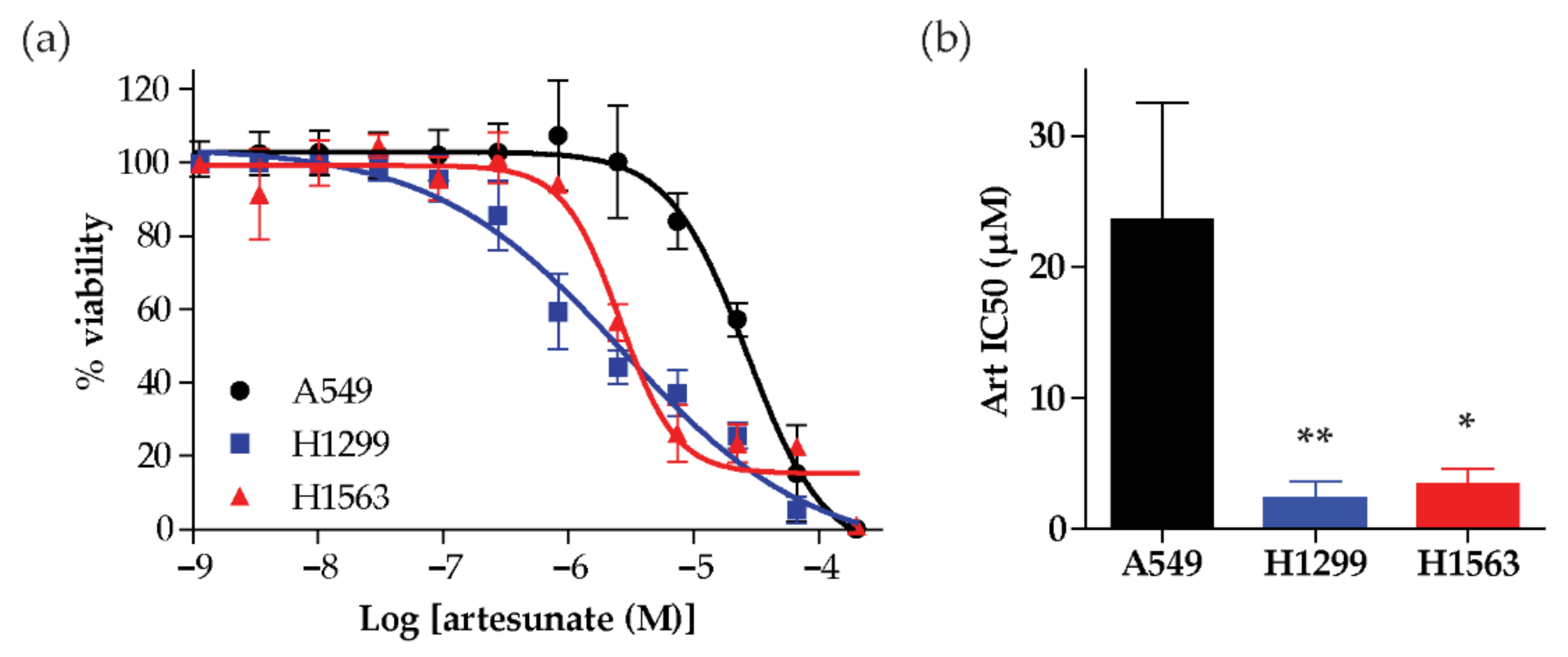
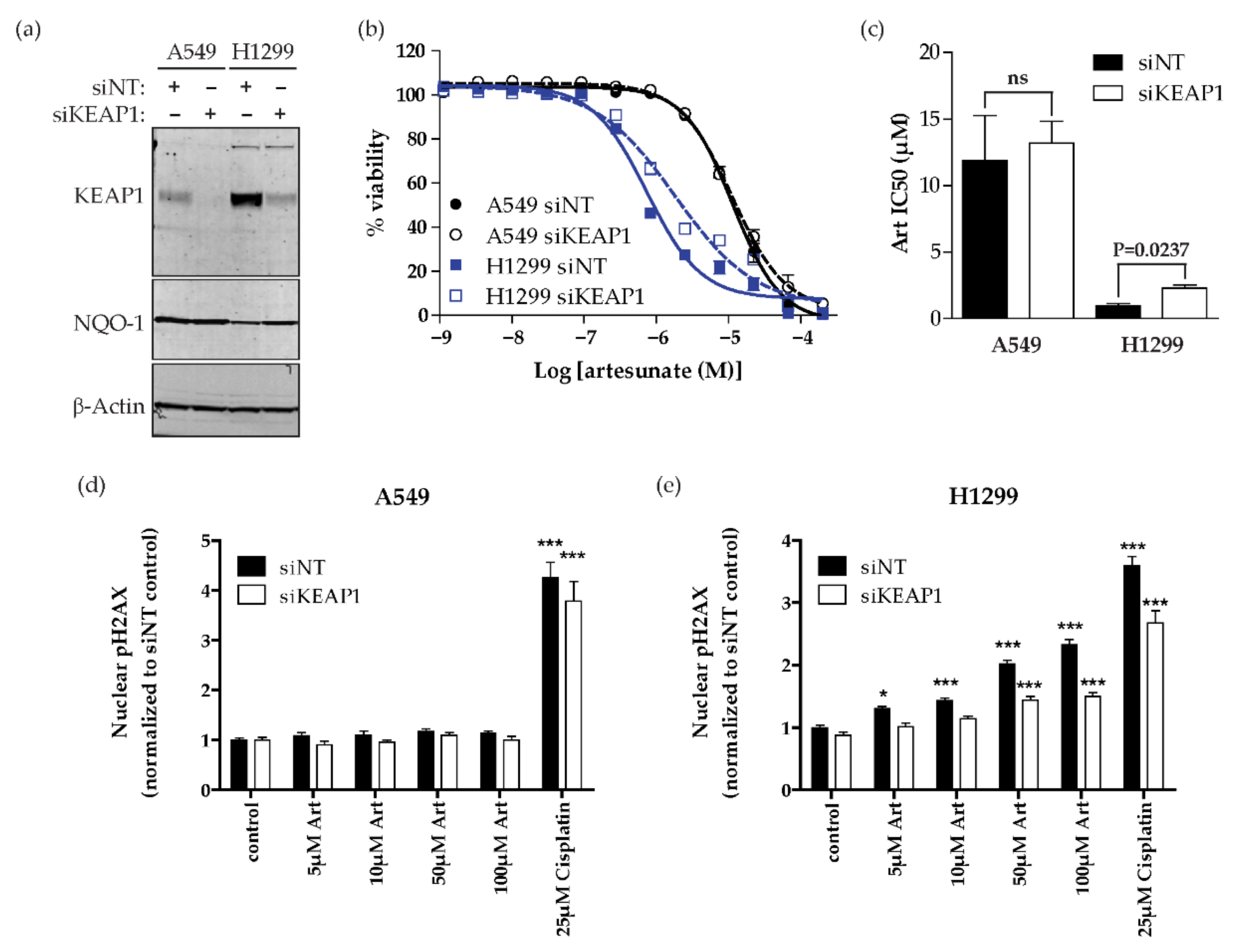
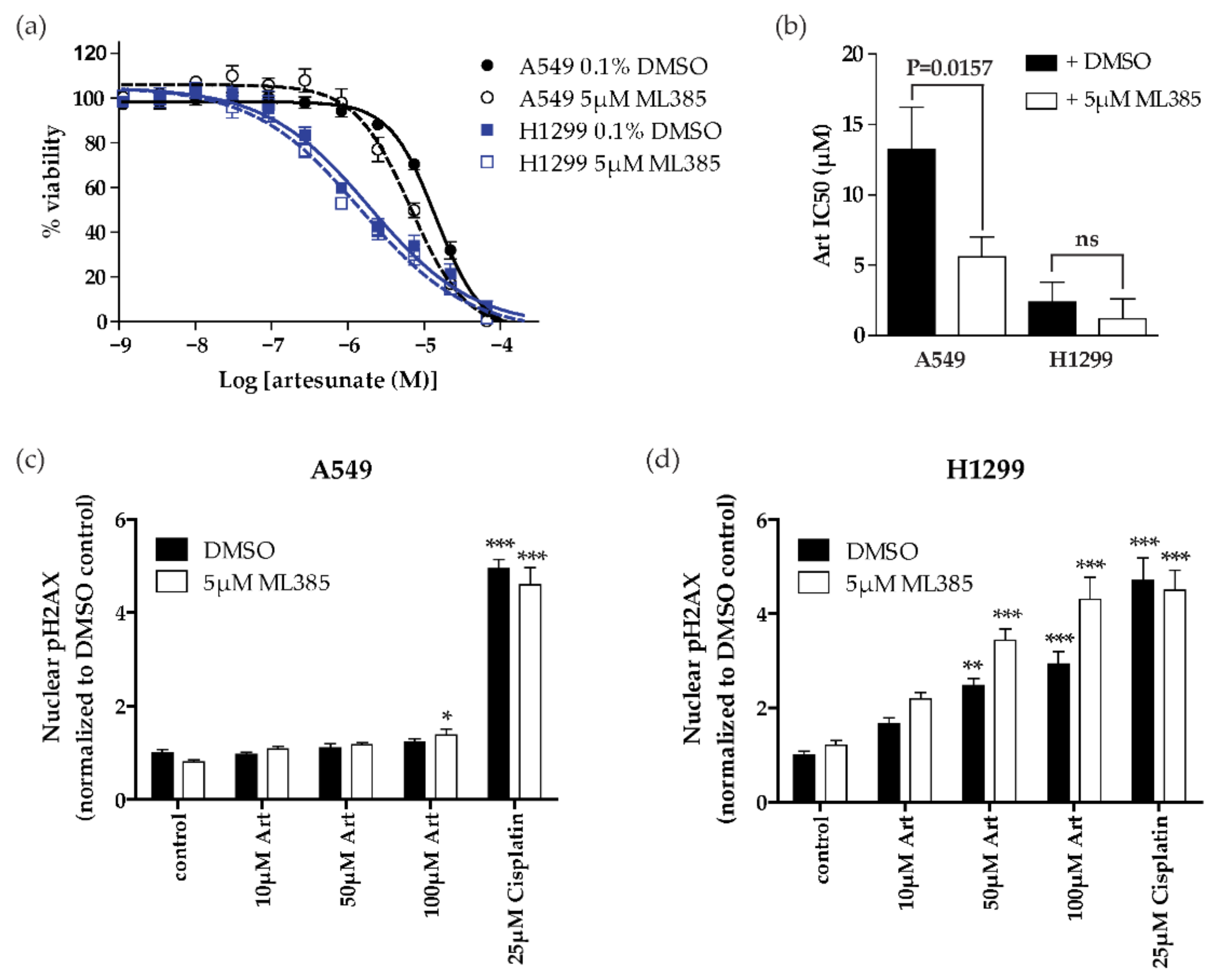
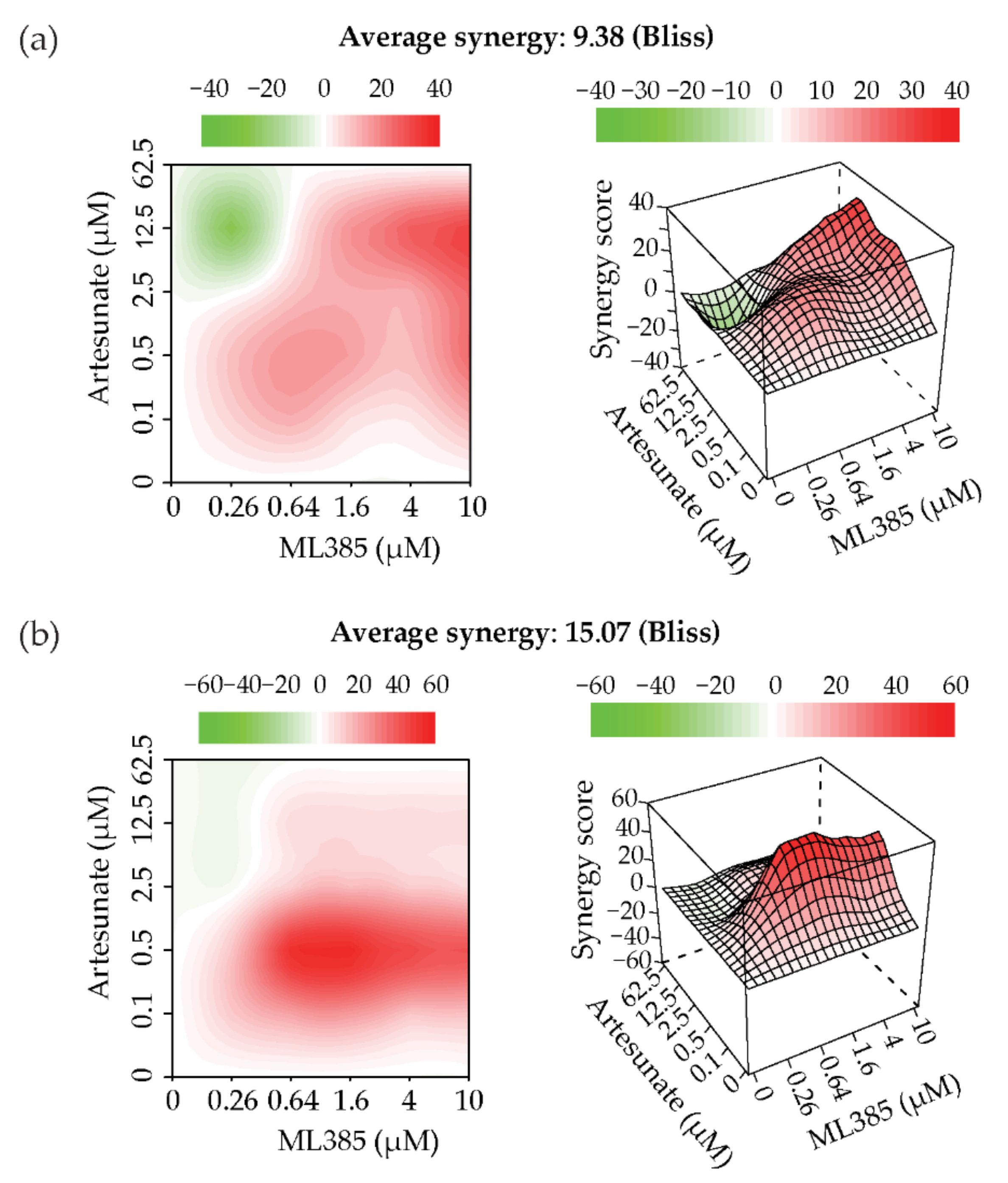
Artesunate is the most common treatment for malaria throughout the world. Artesunate has anticancer activity likely through the induction of reactive oxygen species, the same mechanism of action utilized in Plasmodium falciparum infections. Components of the kelch-like ECH-associated protein 1 (KEAP1)/nuclear factor erythroid 2-related factor 2 (NRF2) pathway, which regulates cellular response to oxidative stress, are mutated in approximately 30% of non-small-cell lung cancers (NSCLC); therefore, we tested the hypothesis that KEAP1 is required for artesunate sensitivity in NSCLC. Dose response assays identified A549 cells, which have a G333C-inactivating mutation in KEAP1, as resistant to artesunate, with an IC50 of 23.6 µM, while H1299 and H1563 cells were sensitive to artesunate, with a 10-fold lower IC50. Knockdown of KEAP1 through siRNA caused increased resistance to artesunate in H1299 cells. Alternatively, the pharmacological inhibition of NRF2, which is activated downstream of KEAP1 loss, by ML385 partially restored sensitivity of A549 cells to artesunate, and the combination of artesunate and ML385 was synergistic in both A549 and H1299 cells. These findings demonstrate that KEAP1 is required for the anticancer activity of artesunate and support the further development of NRF2 inhibitors to target patients with mutations in the KEAP1/NRF2 pathway.
Keywords:
KEAP1; NRF2; artesunate; NSCLC