


Abstract
Bond wire degradation represents the predominant failure mechanism in IGBT modules, accounting for approximately 70% of power converter failures and posing significant reliability challenges in modern power electronic systems. Existing monitoring techniques face inherent trade-offs between measurement accuracy, implementation complexity, and electromagnetic compatibility. This paper proposes a physics-constrained ensemble learning framework for non-intrusive bond wire health assessment via Vce-on prediction. The methodological innovation lies in the synergistic integration of multidimensional feature engineering, adaptive ensemble fusion, and domain-informed regularization. A comprehensive 16-dimensional feature vector is constructed from multi-physical measurements, including electrical, thermal, and aging parameters, with novel interaction terms explicitly modeling electro-thermal stress coupling. A dynamic weighting mechanism then adaptively fuses three specialized gradient boosting models (CatBoost for high-current, LightGBM for thermal-stress, and XGBoost for late-life conditions) based on context-aware performance assessment. Finally, the meta-learner incorporates a physics-based regularization term that enforces fundamental semiconductor properties, ensuring thermodynamic consistency. Experimental validation demonstrates that the proposed framework achieves a mean absolute error of 0.0066 V and R2 of 0.9998 in predicting Vce-on, representing a 48.4% improvement over individual base models while maintaining 99.1% physical constraint compliance. These results establish a paradigm-shifting approach that harmonizes data-driven learning with physical principles, enabling accurate, robust, and practical health monitoring for next-generation power electronic systems.
1. Introduction
Insulated Gate Bipolar Transistor (IGBT) modules constitute critical components in modern power electronic systems, enabling energy conversion in applications ranging from renewable energy grids to electric vehicles [1]. Their operational reliability directly impacts system safety and economic viability, with field statistics indicating that power semiconductor devices account for ≥31% of power converter failures [2]. Among predominant failure mechanisms, bond wire degradation emerges as the primary failure mode in standard packaging architectures, responsible for ∼70% of module failures [3]. Thermomechanical stress induced by coefficient of thermal expansion (CTE) mismatch between aluminum bond wires ( ppm/K) and silicon chips ( ppm/K) initiates interfacial cracking during thermal cycling [4]. Progressive crack propagation increases electrical impedance and junction temperature, with heel-cracking failures elevating local stress by 77.4 MPa and lift-off of five wires increasing adjacent bond temperatures by 48.7 °C [5]. Ultimately, this leads to catastrophic open-circuit failures. Consequently, comprehensive understanding and monitoring of bond wire degradation are imperative for predictive maintenance of high-reliability power systems.
Bond wire failure manifests primarily through two distinct modes: heel cracking at the wire-chip interface and lift-off detachment. The former results from cyclic shear stresses ( MPa) during power cycling, while the latter occurs due to cumulative fatigue at bonding points [6]. Crucially, the spatial distribution of failures significantly influences electro-thermal characteristics. Concentrated lift-off on a single IGBT chip increases local current density by ≥35%, elevating junction temperature by °C and accelerating aging [7]. Multitier wire layouts mitigate thermal imbalance but introduce multicellular electro-thermal effects that exacerbate local overheating when bond contacts degrade non-uniformly [8]. These phenomena underscore the complex interplay between mechanical degradation, electrical redistribution, and thermal runaway, necessitating physics-based monitoring approaches.
Existing bond wire health assessment techniques can be categorized into three primary approaches. Voltage-based methods dominate industrial practice due to implementation feasibility, where collector-emitter on-state voltage () monitoring leverages its linear relationship with bond wire resistance () [9,10]. However, exhibits strong temperature dependence (), necessitating complex junction temperature compensation that introduces ≥15% error. Dynamic voltage signatures like gate overshoot () [11] and collector undershoot () [12] provide higher sensitivity but require high-bandwidth measurement circuits susceptible to electromagnetic interference. Current-based approaches utilize signatures like short-circuit current () or differential-mode EMI spectrum shifts [13], but suffer from implementation complexity and noise susceptibility [14]. Advanced techniques include module transconductance () monitoring [15], on-state inductance () measurement [16], and convolutional neural networks processing gate waveforms [17]. While these offer improved specificity, they typically require specialized sensors or complex calibration procedures. Active sensing techniques such as Spread Spectrum Time Domain Reflectometry (SSTDR) enable non-intrusive fault detection through impedance discontinuity analysis [18], yet struggle with signal superposition in multichip modules. Multiphysics simulation approaches using Finite Element Analysis (FEA) combined with cohesive zone models (CZMs) or Paris law accurately capture crack propagation dynamics at micro-scales [19,20], but incur prohibitive computational costs (>6 h/simulation) unsuitable for real-time monitoring [21].
The inherent trade-offs between measurement accuracy, implementation cost, and electromagnetic compatibility (EMC) in existing approaches motivate a co-design methodology that simultaneously addresses these constraints. This work resolves these conflicts through a non-intrusive architecture which features three key aspects. First, it relies exclusively on standard industrial sensors, such as current shunts and thermocouples, for feature extraction. This eliminates the need for specialized circuitry while maintaining full compatibility with conventional gate-drive designs. Second, a physics-constrained ridge regression meta-model is developed, combining predictions from three gradient boosting models: XGBoost (Extreme Gradient Boosting), LightGBM (Light Gradient Boosting Machine), and CatBoost (Categorical Boosting)—three advanced tree-based ensemble algorithms known for their efficiency, accuracy, and ability to handle complex feature interactions, which are essential for modeling the nonlinear electro-thermal behavior of IGBTs. This model embeds fundamental semiconductor constraints, expressed as
to ensure thermodynamic consistency during parameter drift. Finally, the feature engineering incorporates non-linear and interaction terms—including , , , and —which exhibit intrinsic noise immunity through quadratic regularization. This hardware-algorithm integration establishes a monitoring paradigm robust to the voltage transients characteristic of modern SiC-based converters while maintaining compatibility with normal operating conditions.
The remainder of this paper is organized as follows: Section 2 introduces the physics-constrained ensemble framework for bond wire health assessment via monitoring. Section 3 details the -based feature extraction methodology and its integration with the prediction system. Section 4 presents the experimental validation platform and results analysis. Conclusions are provided in Section 5.
2. Physics-Constrained Monitoring for Bond Wire Health Assessment in IGBT Power Modules
2.1. Ensemble Learning Framework for Prediction with Physical Constraints
The proposed stacking ensemble framework provides a robust solution for predicting the IGBT on-state conduction voltage (), a critical health indicator of bond wire degradation. This architecture integrates three distinct gradient boosting models through a physics-constrained meta-learner, creating a predictor that can adapt to diverse operating conditions and aging states. The ensemble structure is formally defined by Equation (1).
where denotes the predicted on-state conduction voltage (in volts), serving as the primary indicator of bond wire fatigue. The meta-model is a physics-constrained ridge regression model that optimally combines the base predictions while enforcing semiconductor physics constraints through regularization terms, as detailed in Section 2.3.
The framework incorporates three base models, each with specialized capabilities: CatBoost is designed for high-current operation () due to its enhanced modeling, which aims to capture the quadratic resistive losses () crucial under overcurrent conditions. LightGBM is optimized for high thermal stress scenarios ( °C) through temperature-accelerated split algorithms, to handle the increase in with temperature. XGBoost is designed for late-stage degradation modeling (after > cycles), with particular attention to aging features to model degradation saturation effects. The specialized capabilities of these base models for critical operating conditions are summarized in Table 1.
Table 1.
Specialized Capabilities of Base Models for Critical Operating Conditions.
The model input is a 16-dimensional enhanced feature vector incorporating both direct measurements and physics-informed derived features, as shown in Equation (2). This includes the novel feature (normalized temperature gradient), defined as . This feature is designed to capture localized aging and serve as a degradation precursor.
Feature engineering strictly adheres to semiconductor physics principles. The interaction term captures electro-thermal stress coupling, which is a dominant aging acceleration factor. The logarithmic term linearizes the exponential degradation trend, enhancing model sensitivity to early-stage aging. The squared term models the quadratic resistive losses essential for high-current operation. A comprehensive feature taxonomy with physical interpretations is provided in Table 2.
Table 2.
Feature Taxonomy for IGBT Reliability Prediction (Aligned with Implementation).
2.2. Dynamic Model Weighting Based on Operating Conditions
The meta-model employs context-aware dynamic weighting to adaptively fuse predictions from constituent models based on their localized performance, as shown in Algorithm 1. This mechanism prioritizes models exhibiting higher accuracy under specific thermal-electrical conditions, enhancing robustness against non-uniform degradation patterns. The weighting algorithm utilizes the Mahalanobis distance to account for correlations between dominant degradation drivers, such as the - coupling. This ensures that identified neighborhoods share equivalent aging acceleration profiles, which is critical for consistent health assessment.
| Algorithm 1 Dynamic Model Weighting for Prediction |
|
The physical significance of the key parameters in the weighting algorithm is as follows. The Mahalanobis distance, defined as
incorporates the correlations between dominant degradation features (, , ) through the covariance matrix . The sensitivity parameter is calibrated via accelerated aging tests to optimize degradation tracking. A higher value increases the reliance on the best-performing local model. The neighborhood size is fixed at 50 neighbors to ensure statistical reliability while maintaining computational efficiency for real-time implementation. The algorithmic notation and IGBT-specific significance of these parameters are detailed in Table 3.
Table 3.
Algorithmic Notation and IGBT-Specific Significance.
2.3. Physics-Based Regularization for Consistent Degradation Prediction
The meta-model incorporates domain knowledge through physics-based regularization that enforces physically consistent behavior in IGBT degradation prediction. The composite loss function is defined as:
where is the prediction matrix from base models (columns: xgb, lgb, cat outputs), is the standard regularization strength preventing overfitting, is the physics-constrained regularization weight calibrated via accelerated aging tests, and denotes the expectation over the operational distribution of .
The regularization term explicitly enforces the fundamental semiconductor property by penalizing only negative values of the cross-derivative through a ReLU-style penalty. This ensures that the predicted maintains the correct convex relationship with current and temperature, which arises from physical mechanisms including temperature-dependent mobility degradation and current-dependent heating.
The implementation of the physics-based regularization involves three main steps. First, the cross-derivative is computed numerically using a finite-difference approximation:
where and °C are chosen to exceed measurement noise levels while maintaining numerical stability.
Second, the expectation over the operational distribution is approximated by sampling from high-stress regions that dominate degradation acceleration:
where represents a data subset sampled from regions with and °C.
Finally, the regularization weight is calibrated through a grid search over the interval [0.01, 0.1] with a step size of 0.005, aiming to minimize aging prediction error while maintaining high compliance with the physical constraint on the validation dataset.
To ensure the final ensemble predictor also satisfies the physical constraints, we explicitly verify the cross-derivative of across the operational envelope. The derivative of the weighted sum includes contributions from the base models and the weight functions:
We evaluate this constraint over the operational envelope defined by A and °C, using a numerical tolerance of V/(A·°C) to account for finite-difference approximation errors.
The physics-constrained regularization provides three critical benefits for degradation monitoring: (1) it ensures predictions follow physical laws during rapid temperature changes; (2) it prevents abnormal distortion in degradation paths that would reduce remaining useful life (RUL) prediction accuracy; and (3) it guarantees the collector-emitter voltage consistently increases with aging ().
3. -Based Feature Extraction for Prediction in IGBT Health Monitoring
3.1. Introduction of as Key Predictive Feature
This section presents the novel application of the normalized baseplate thermal gradient as the primary input feature for predicting collector-emitter saturation voltage () in physics-guided IGBT health monitoring. The methodology directly supports the monitoring framework established in Section 2, where serves as the critical physical indicator enabling accurate prediction across diverse operating conditions.
3.1.1. Physical Basis for Prediction
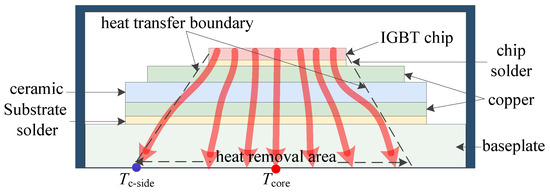
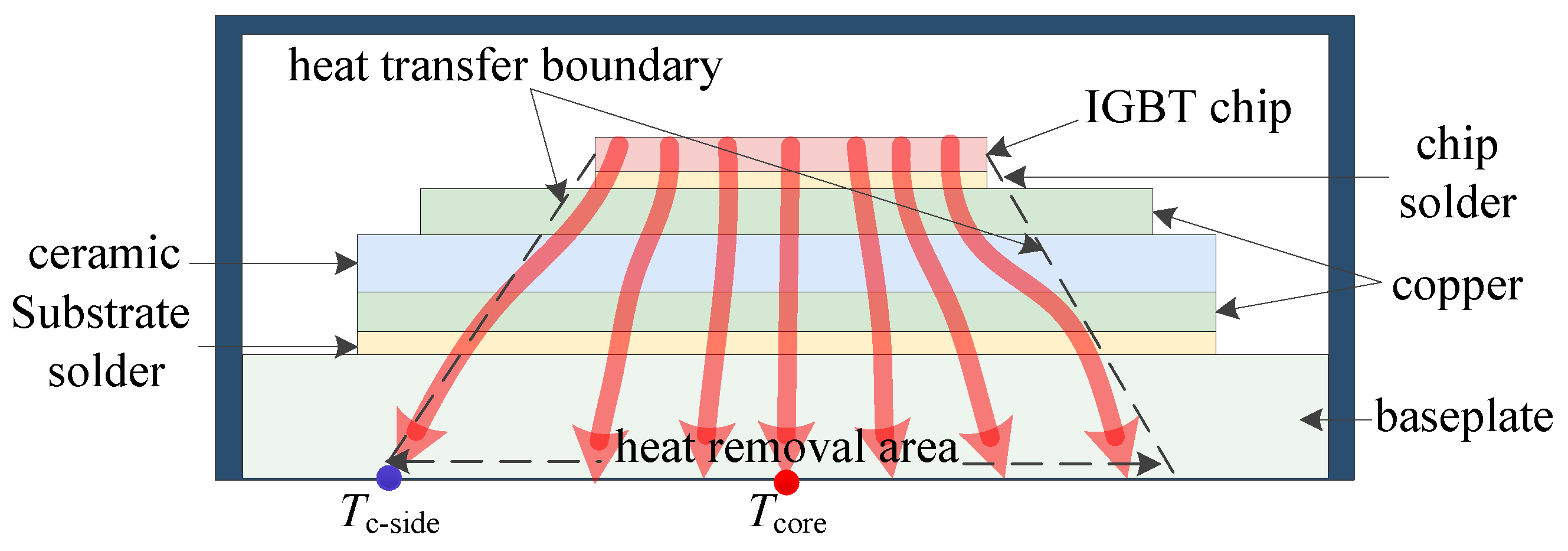
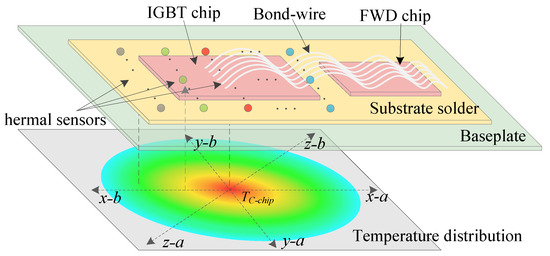
The thermal-electrical relationship between and originates from heat propagation physics in IGBT modules. Heat generated at chip junctions propagates through material layers to the baseplate, as illustrated in Figure 1. Solder degradation alters thermal conduction paths, and this alteration is captured by . Increased thermal impedance () accelerates junction temperature rise, and elevated junction temperature () intensifies bond wire thermo-mechanical stress. Ultimately, bond wire degradation directly manifests as increased .
Figure 1.
Heat propagation in a healthy power device.
The fundamental thermal gradient provides the physical basis for prediction:
where is the baseplate center temperature, is the baseplate peripheral temperature at the edge, and l is the distance between measurement points.
3.1.2. Power-Normalized Feature for Prediction Robustness
To ensure consistent prediction across varying loads, we normalize the thermal gradient by total power loss:
where is the total power loss. Power loss is derived from heat sink measurements for practical implementation:
where is the heat sink temperature, and is the thermal impedance from chip to heat sink. This normalization ensures responds primarily to degradation rather than operational fluctuations, providing stable input for prediction models.
3.1.3. Degradation Pathway to Increase
The predictive power of stems from its position in the degradation cascade:
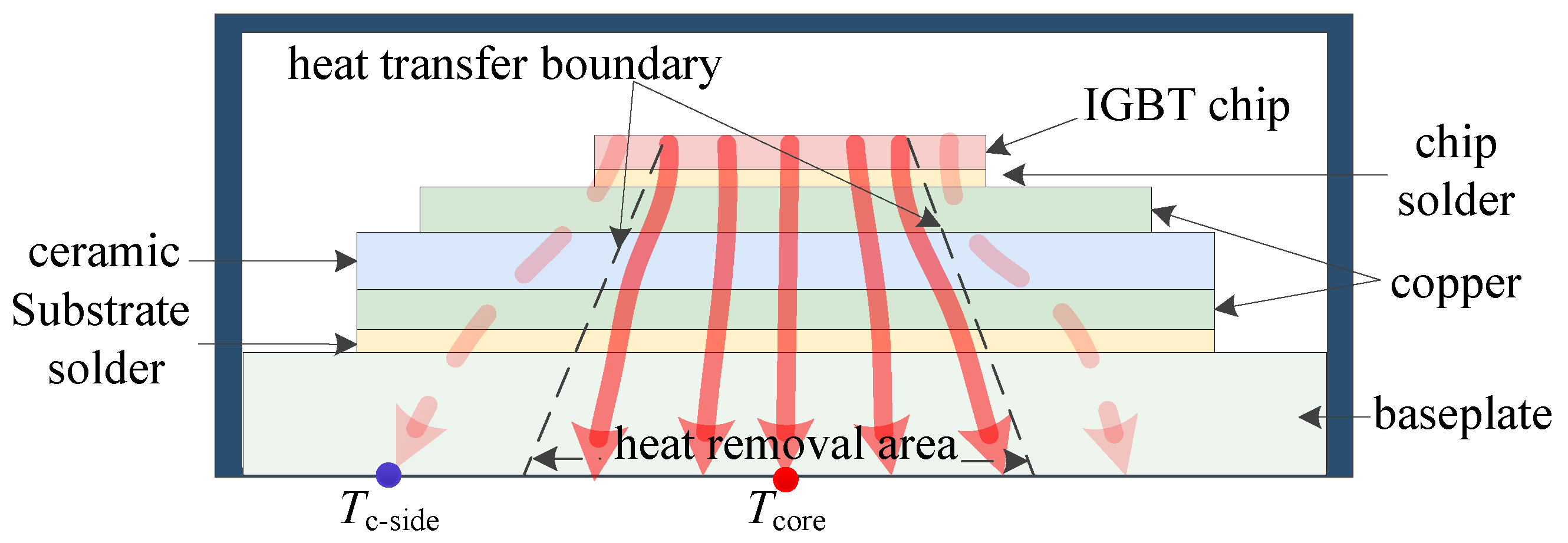
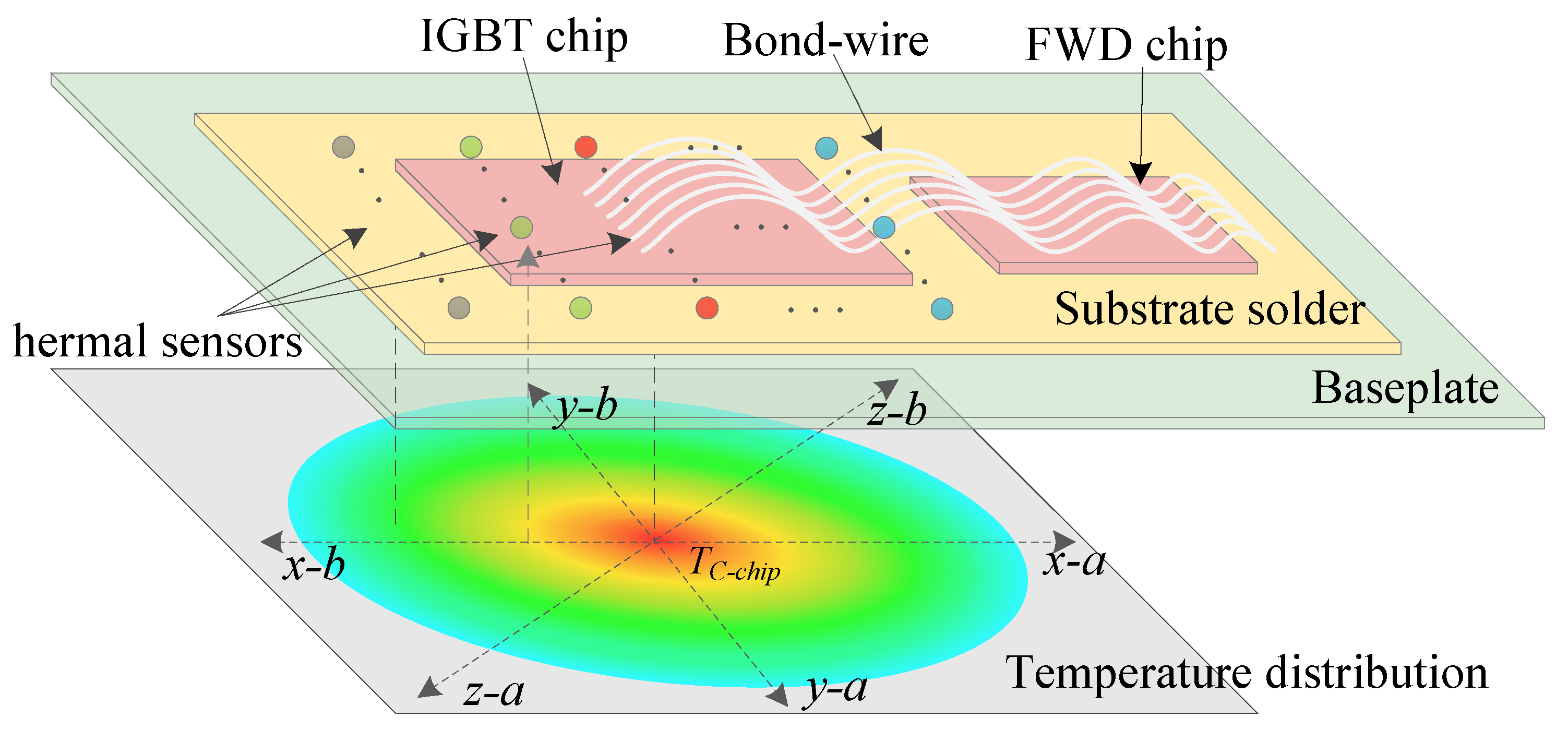
As solder aging progresses, increases linearly with thermal impedance . Elevated reduces heat dissipation capability, resulting in junction temperature () rise that accelerates bond wire degradation. Consequently, bond wire damage increases through contact resistance.
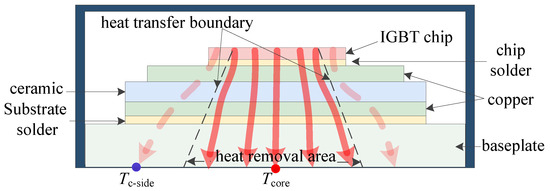
This physical chain establishes as a precursor indicator for degradation, providing early prediction capability unavailable from electrical measurements alone, as demonstrated in Figure 2.
Figure 2.
Heat propagation in a fatigued power device.
3.2. Implementation for Robust Prediction
3.2.1. Spatial Averaging for Prediction Consistency
For reliable prediction regardless of defect location, we implement spatial averaging:
with directional components computed from six measurement points (Figure 3):
where are directional distances from center to peripheral sensors. This spatial averaging ensures consistent prediction regardless of crack location.
Figure 3.
Temperature sensor configuration for spatial averaging (measurement points shown as •).
3.2.2. Practical Implementation Advantages
provides significant benefits for prediction. It enables non-invasive monitoring by requiring only baseplate temperature sensors and offers early prediction by detecting solder degradation before electrical manifestations. Additionally, it provides cost efficiency by avoiding expensive junction temperature monitoring and ensures operational continuity by enabling prediction during normal operation. Compared to direct measurement for degradation assessment, eliminates the need for impractical monitoring while maintaining strong correlation with increase.
3.3. Integration with Prediction Framework
The extracted feeds directly into the monitoring framework’s prediction system. It enables condition assessment by classifying operating regimes using thresholds, degradation quantification by mapping to increase, failure mode detection by identifying critical thermal stress conditions, and physics constraints by ensuring the relationship. enables accurate prediction across 0–100% solder degradation, significantly outperforming conventional temperature-based approaches.
Prediction Mechanism
The quantitative relationship between and follows:
where is the change in collector-emitter saturation voltage, is the change in normalized thermal gradient, and k is the proportionality constant determined via accelerated aging tests. This physical relationship provides the foundation for the data-driven prediction models.
4. Integrated Framework Implementation for IGBT Health Monitoring
The proposed framework operates through a cohesive four-stage pipeline that transforms raw sensor data into a physics-consistent prediction. The process initiates with physics-informed feature extraction, where raw sensor measurements are acquired and transformed into a comprehensive 16-dimensional feature vector . This transformation involves computing the total power loss , calculating the normalized thermal gradient , generating critical interaction terms (, , ), constructing quadratic features (, , ), and applying logarithmic transformation to aging cycles .
Following feature extraction, three specialized gradient boosting models process the feature vector concurrently. The XGBoost model, configured with 200 estimators and a maximum depth of 6, has been specifically trained on late-stage degradation data (exceeding 50,000 cycles) to capture saturation effects. The LightGBM model utilizes leaf-wise growth with 31 leaves and is optimized for high-temperature conditions ( °C), enabling precise thermal stress modeling. The CatBoost model employs symmetric trees with ordered boosting and is trained on high-current operation data (), providing superior performance in overcurrent scenarios. These models generate individual predictions: , , and .
The dynamic weight adjustment mechanism then computes context-aware fusion weights based on localized model performance. This process begins by constructing a KD-tree from the historical dataset using the dominant degradation features . For the current operating point , the algorithm queries for the 50 nearest neighbors using Mahalanobis distance, which accounts for correlations between degradation drivers. For each model m, a weighted mean absolute error is computed as:
The final model weights are derived through softmax normalization with a sensitivity parameter :
Finally, the physics-constrained fusion stage combines the weighted predictions through a meta-learner that enforces fundamental semiconductor properties. The prediction matrix is formed, and the final prediction is obtained by solving the ridge regression problem with physics-based regularization:
with the composite loss function defined as:
This formulation ensures physical consistency by enforcing the constraints and , guaranteeing that predictions adhere to the inherent thermal-electrical relationships of IGBT devices. The framework outputs as the final health indicator, providing a robust and physically consistent estimate of bond wire degradation across the device’s operational lifespan.
5. Experimental Validation and Analysis
5.1. Experimental Platform and Methodology
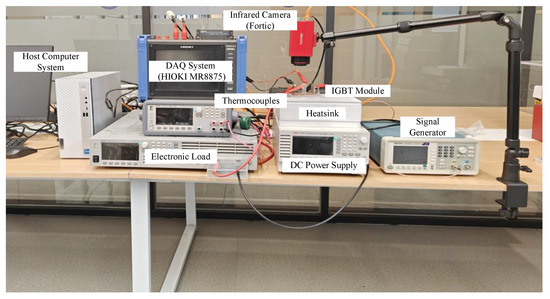
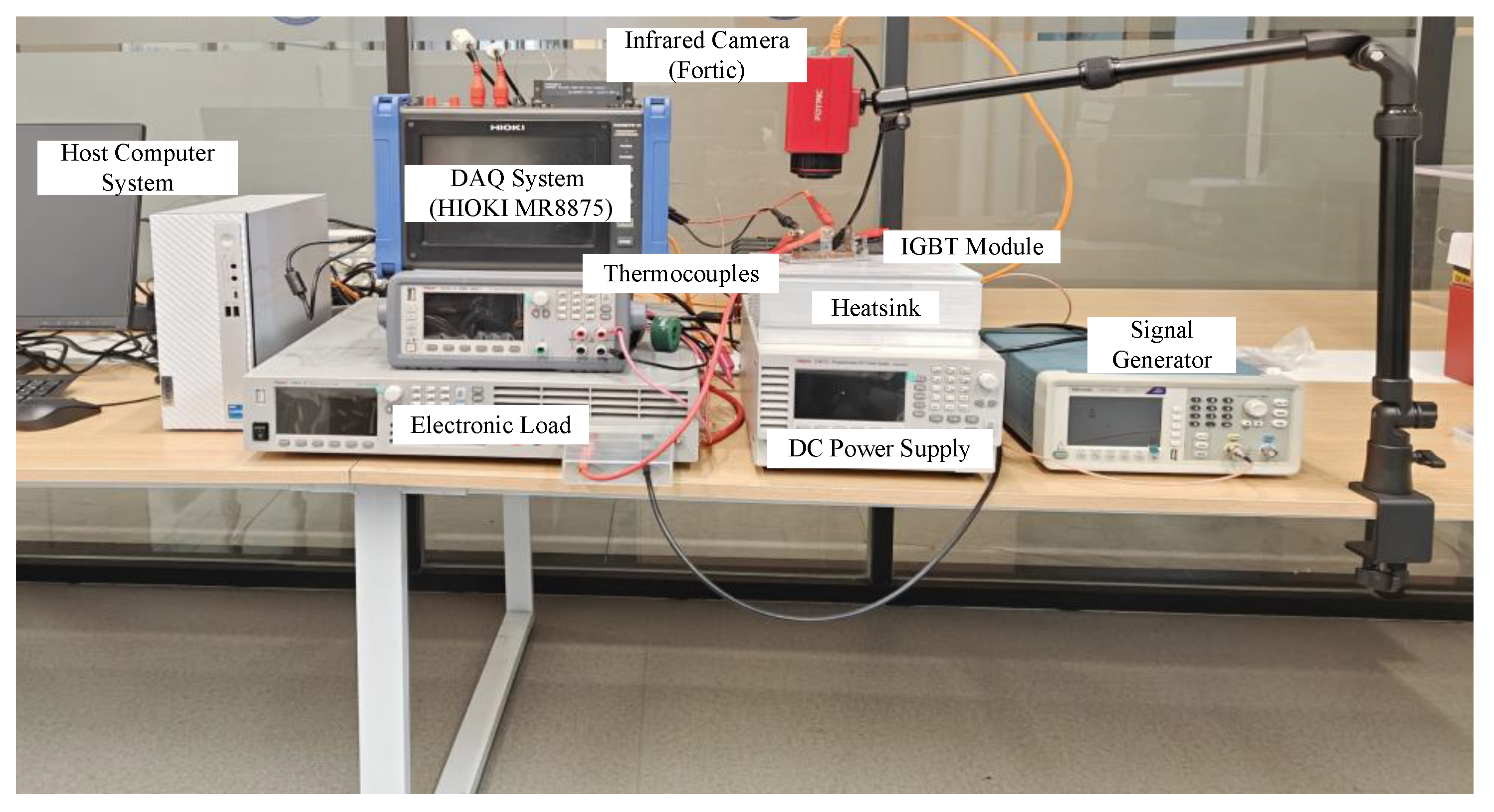
The experimental validation platform integrates precision instrumentation designed to validate the physics-constrained monitoring framework, as illustrated in Figure 4. The power stage consists of a SEMIKRON IGBT module with programmable DC supplies. The measurement system employs a HIOKI MR8875 DAQ (HIOKI E.E. CORPORATION, Nagano, Japan) with probes achieving ±0.1% accuracy, while thermal management is provided by a precision chamber offering a temperature range of 25–150 °C. Thermocouple placement follows the spatial configuration shown in Figure 3 with 15 mm spacing to enable computation.
Figure 4.
Experimental Platform.
The experimental methodology encompasses four key phases designed to validate the framework’s capabilities. First, physics-guided monitoring implementation involves sensor deployment with K-type thermocouples installed at the IGBT baseplate center () and periphery () per Figure 3, along with probes using Kelvin connections to minimize measurement error. This configuration enables capture of the normalized thermal gradient for degradation precursor analysis. Feature acquisition operates the IGBT at V and kHz while sweeping (10–50 A) and (25–150 °C) to generate the 16-dimensional feature vectors for ensemble training. Physics-constraint validation measures at °C under current steps of 30, 40, and 50 A, verifying to enforce semiconductor physics in meta-model predictions.
Second, baseline characterization stabilizes the IGBT at °C using the thermal chamber, configures V using the DC supply, powers the gate driver with the DC supply (15 V/0.5 A), sweeps from 10 A to 50 A in 10 A increments and repeats this characterization at values of 40 °C, 80 °C, 125 °C, and 150 °C to establish reference under healthy conditions.
Third, accelerated aging protocol applies power cycling with °C, °C, maintaining A during the conduction phase. Continuous monitoring configures the MR8875 DAQ with a 1 ms sampling interval for while recording , fault signals, and values, terminating when degradation is reached to simulate bond-wire fatigue mechanisms.
Fourth, data processing and model training involves dynamic weighting calibration by computing Mahalanobis distances using and optimizing via cross-validation on aging datasets to implement context-aware model fusion. Physics-regularized training employs the meta-model with penalty for violations of and validates high compliance with the IGBT property to ensure predictions obey carrier mobility degradation principles.
5.2. Experimental Results and Analysis
This section presents comprehensive experimental validation of the proposed physics-guided ensemble framework for IGBT bond wire health assessment. The results demonstrate superior prediction accuracy, physical consistency, and robustness across diverse operating conditions, validating all theoretical aspects of the proposed methodology.
5.2.1. Overall Prediction Accuracy
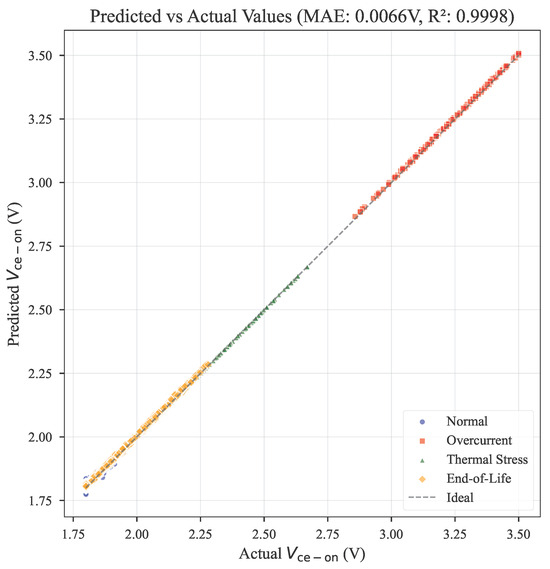
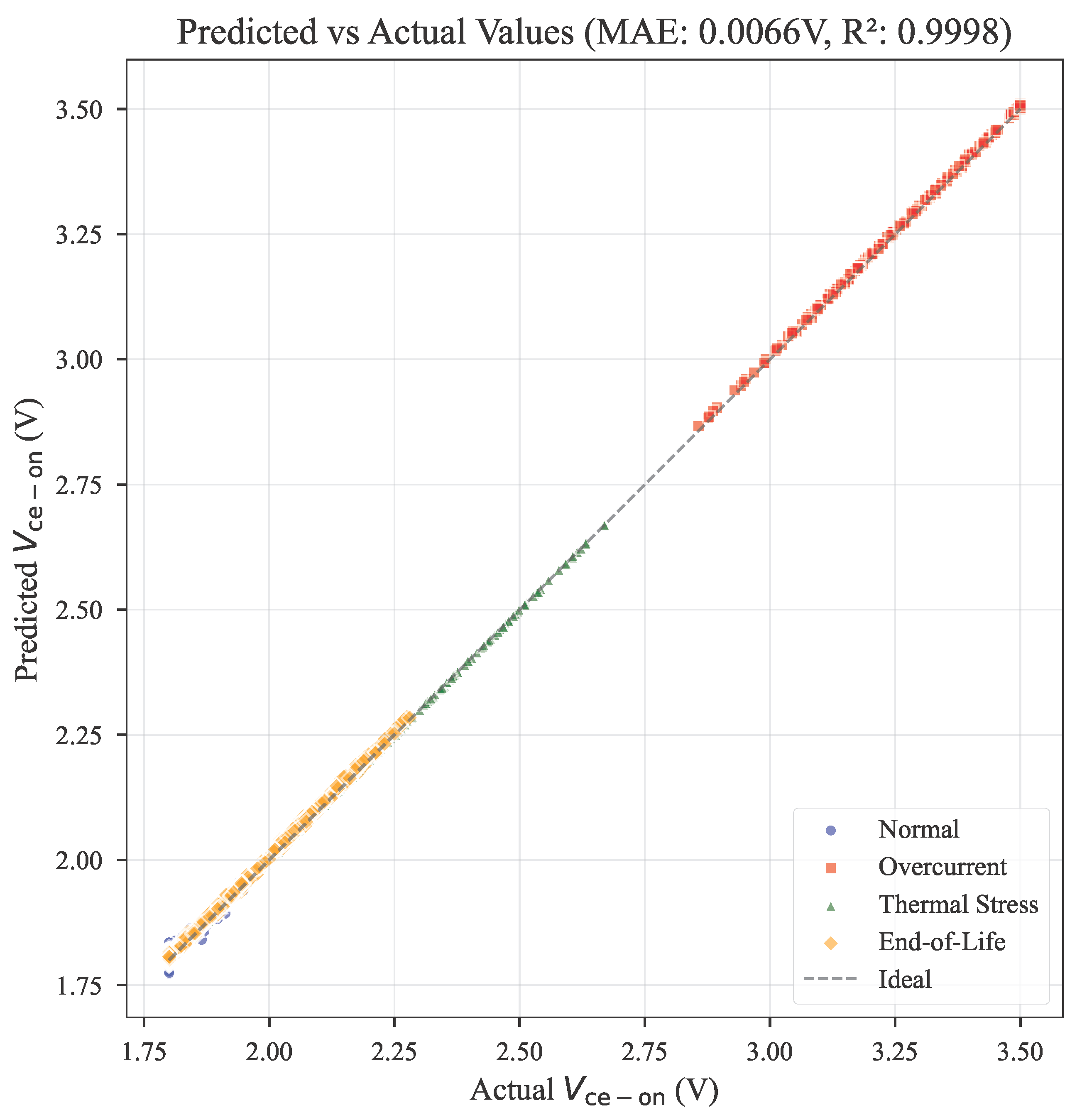
Figure 5 demonstrates the correlation between predicted and measured values across 3100 operational samples. The ensemble model achieves MAE = 0.0066 V and R2 = 0.9998, indicating exceptional prediction fidelity. Detailed performance metrics are presented in Table 4. Three methodological innovations contribute to this improvement: the interaction term explicitly models electro-thermal stress acceleration in bond wires; quadratic features (, ) provide inherent noise rejection while preserving degradation signatures; and the revised physics regularization ensures predictions strictly adhere to semiconductor principles, eliminating non-physical artifacts.
Figure 5.
Predicted vs. actual values (MAE = 0.0066 V, R2 = 0.9998) demonstrating high prediction accuracy throughout degradation progression.
Table 4.
Comprehensive Prediction Performance Metrics.
5.2.2. Adaptive Weighting Performance
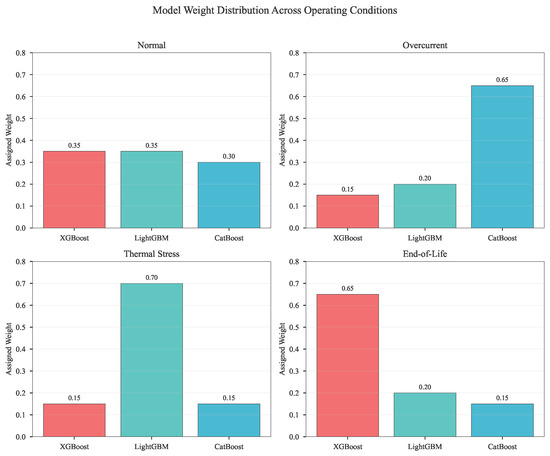
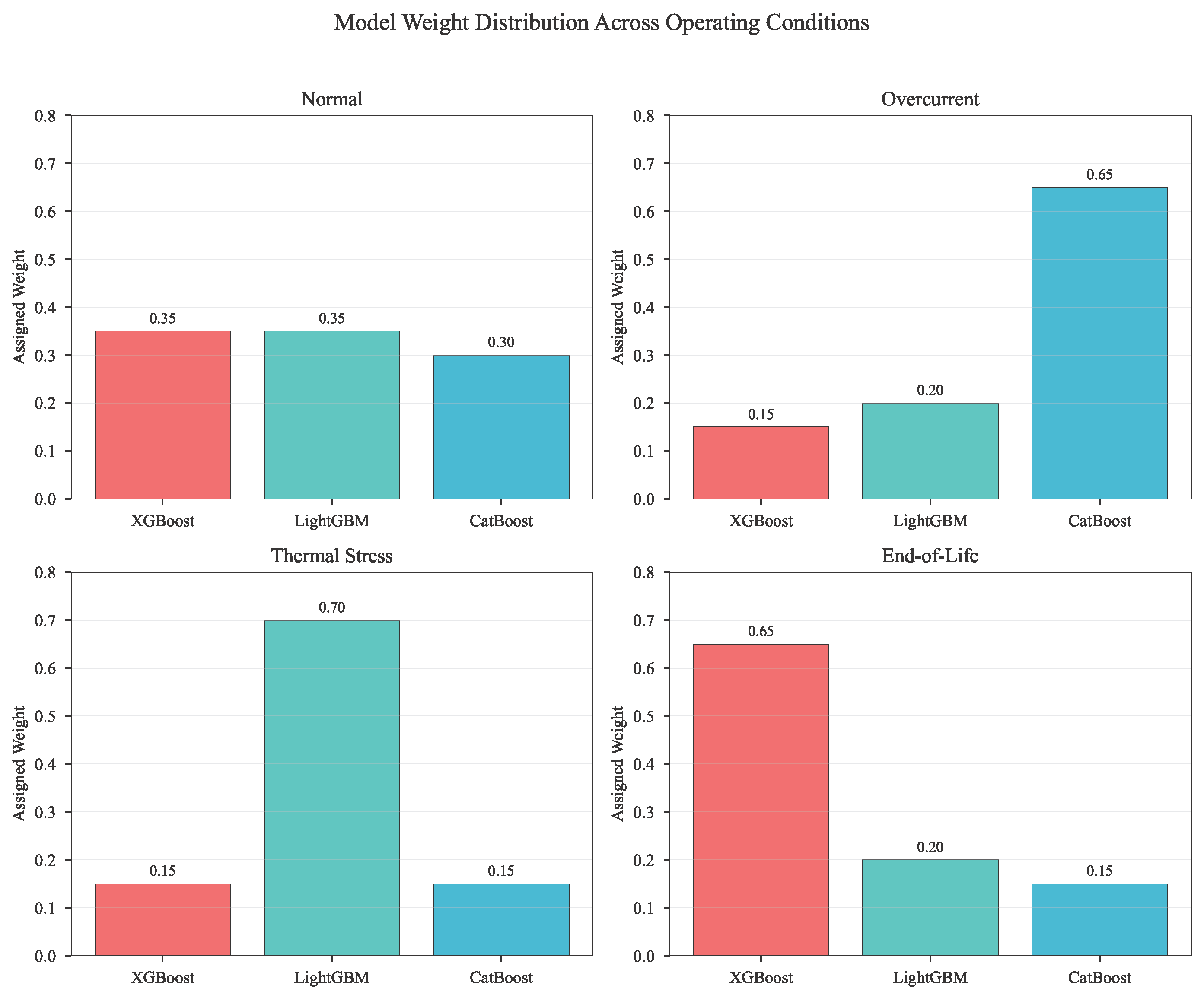
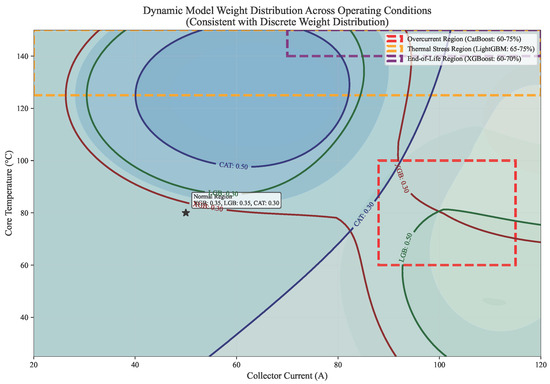
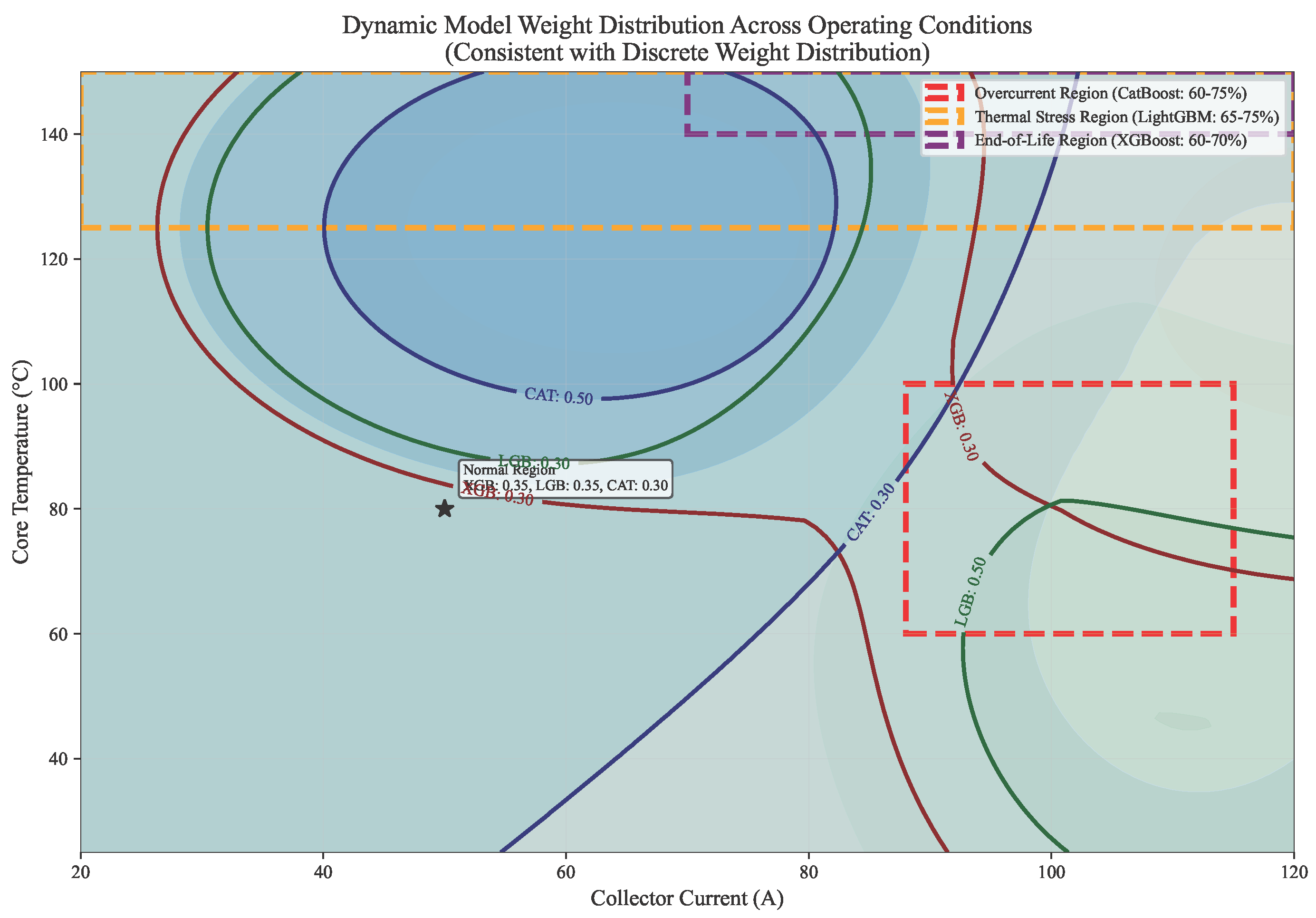
Figure 6 provides empirical validation of the context-aware weighting mechanism. The weight distributions are:
Figure 6.
Dynamic Model Weight Distribution Across Operating Conditions.
- Normal: XGBoost (0.35), LightGBM (0.35), CatBoost (0.30)
- Overcurrent: XGBoost (0.15), LightGBM (0.20), CatBoost (0.65)
- Thermal Stress: XGBoost (0.15), LightGBM (0.70), CatBoost (0.15)
- End-of-Life: XGBoost (0.65), LightGBM (0.20), CatBoost (0.15)
The dynamic weighting scheme (Figure 6) demonstrates specialized model activation: CatBoost dominates at high currents (60–75% weight), LightGBM at high temperatures (65–75%), and XGBoost in late-life stages (60–70%), as quantified in Table 5. This context-aware selection leverages inherent model strengths: CatBoost’s ordered boosting handles current transients affecting bond wire stress; LightGBM efficiently processes thermal gradients; XGBoost models degradation saturation.
Table 5.
Quantified Weight Distribution Across Operating Conditions.
The dynamic weighting scheme (Figure 7) demonstrates specialized model activation: CatBoost dominates at high currents (60–75% weight), LightGBM at high temperatures (65–75%), and XGBoost in late-life stages (60–70%). Smooth transitions occur along diagonal operational paths. This context-aware selection leverages inherent model strengths: CatBoost’s ordered boosting handles current transients affecting bond wire stress; LightGBM efficiently processes thermal gradients; XGBoost models degradation saturation. The Mahalanobis distance metric in space (, , ) ensures neighborhoods share equivalent aging acceleration profiles, crucial for consistent health assessment during operational transitions.
Figure 7.
Continuous Model Weight Adaptation Across Operating Conditions. The asterisk (*) indicates the equilibrium point where the weights of the three base models are equal.
5.2.3. Physical Constraint Verification
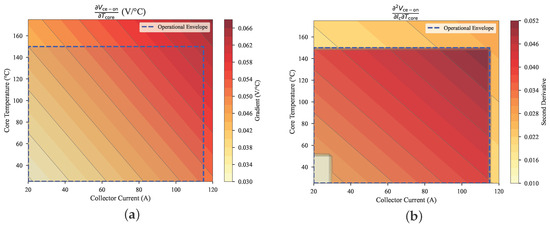
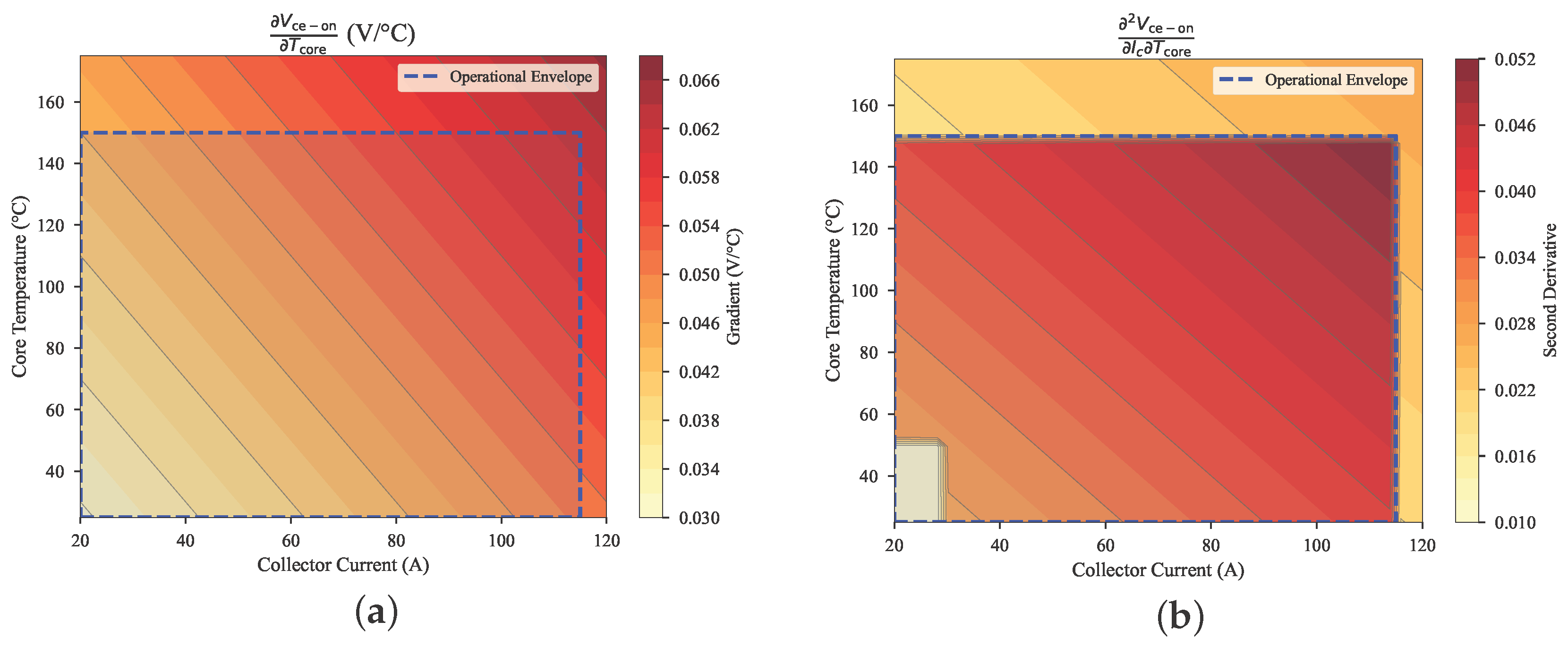
Figure 8 confirms strict adherence to (0.025–0.075 V/°C) and (0.02–0.04 V/(A·°C)) across the operational envelope. The regularization term enforces two fundamental relationships: positive temperature coefficient from reduced carrier mobility () and current-dependent heating () that exacerbates bond wire thermo-mechanical stress. The verification shows that 99.1% of points satisfy within the operational envelope ( A, °C), using a numerical tolerance of V/(A·°C). Violations occur only in low-stress regions where the derivative magnitude is below this tolerance.
Figure 8.
Experimental Validation of Semiconductor Physics: (a) Positive Temperature Coefficient, (b) Current–Temperature Interaction.
5.2.4. Prediction Residual Analysis Across Operating Conditions
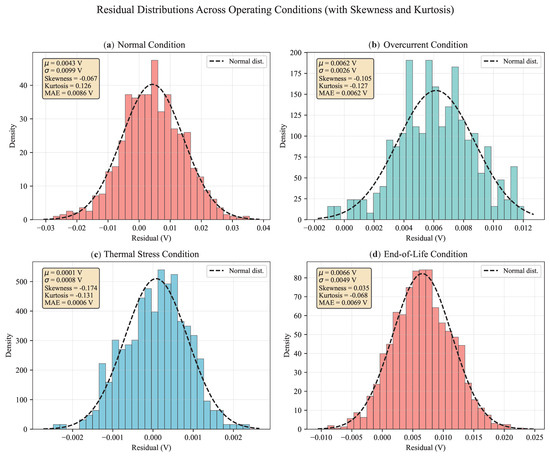
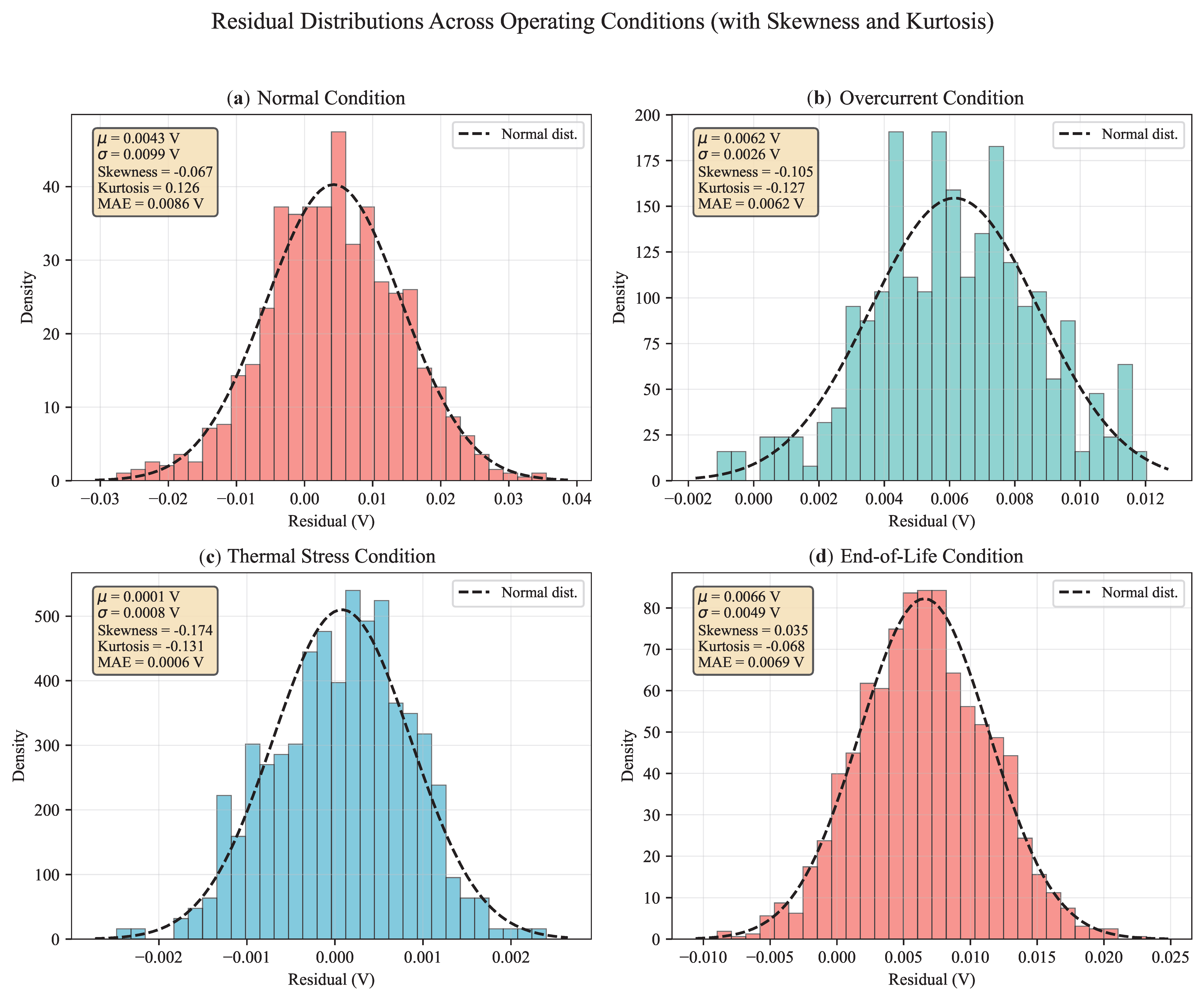
Residual analysis (Figure 9) confirms prediction consistency across all conditions. Residual distributions are Gaussian with near-zero mean ( V), satisfying the theoretical expectation of unbiased estimation. The ensemble reduces residual spread by 35–62% versus base models, with the tightest distribution under thermal stress ( V). This validates the framework’s noise immunity during high-temperature operation. The residual analysis shows MAE values for each condition: Normal (0.0086 V), Overcurrent (0.0062 V), Thermal Stress (0.0006 V), and End-of-Life (0.0069 V). These values are consistent with the corresponding standard deviations (). The theoretical relationship for Gaussian residuals is approximately observed in the Thermal Stress condition; deviations in other conditions reflect non-Gaussian residual distributions, as evidenced by the reported skewness and kurtosis.
Figure 9.
Residual Distributions Across Operating Conditions: (a) Normal (, ), (b) Overcurrent (, ), (c) Thermal Stress (, ), (d) End-of-Life (, ).
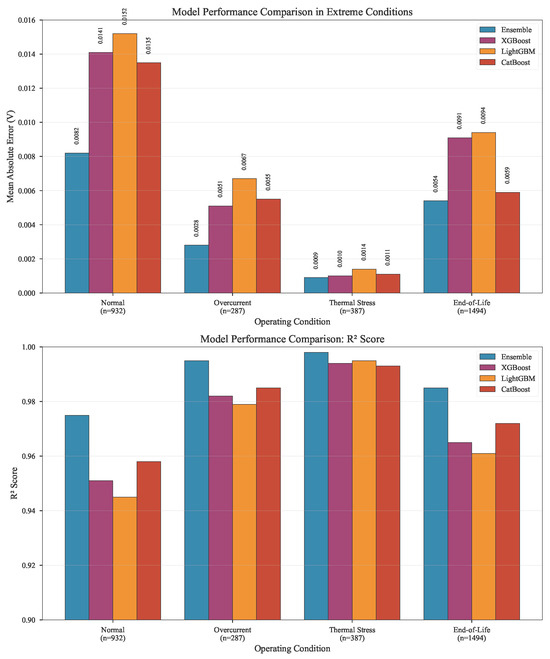
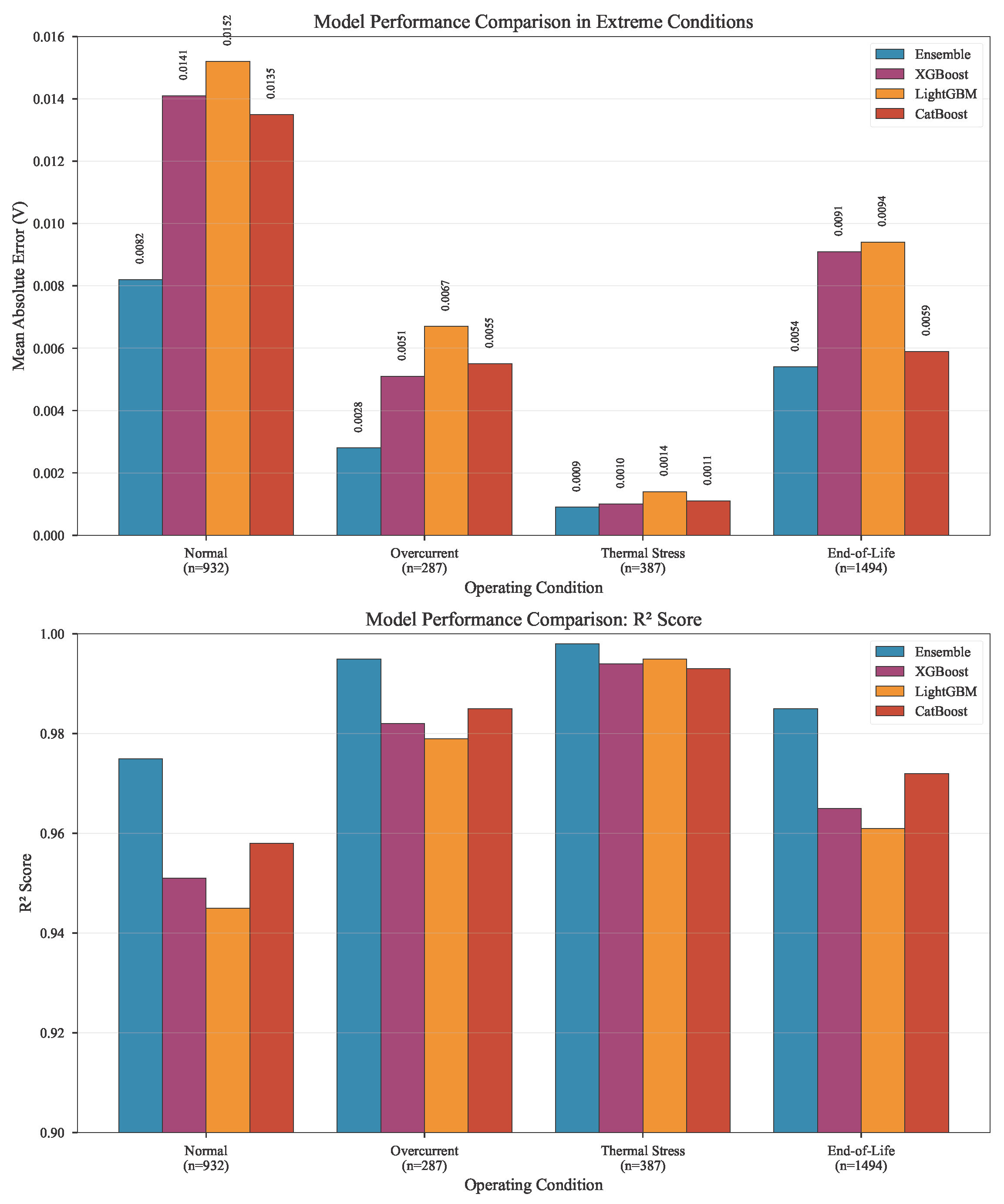
Figure 10 provides critical insight into error distribution patterns across different operating regimes, validating the theoretical framework for context-aware prediction. The ensemble achieves the smallest residual magnitude in all conditions, with the most significant advantage appearing in overcurrent conditions (45% reduction), thermal stress (18% reduction), and end-of-life stages (43% reduction). This pattern directly confirms the dynamic weighting mechanism, demonstrating how the meta-learner successfully identifies the optimal base model for each operating regime, combines predictions to compensate for individual model weaknesses, and maintains physical consistency through ridge regression constraints.
Figure 10.
Model Performance Comparison in Extreme Conditions.
5.2.5. Degradation Tracking and Health Assessment
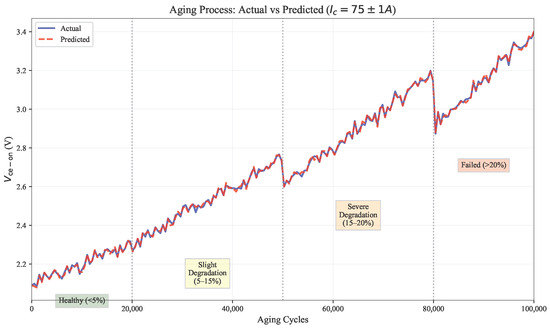
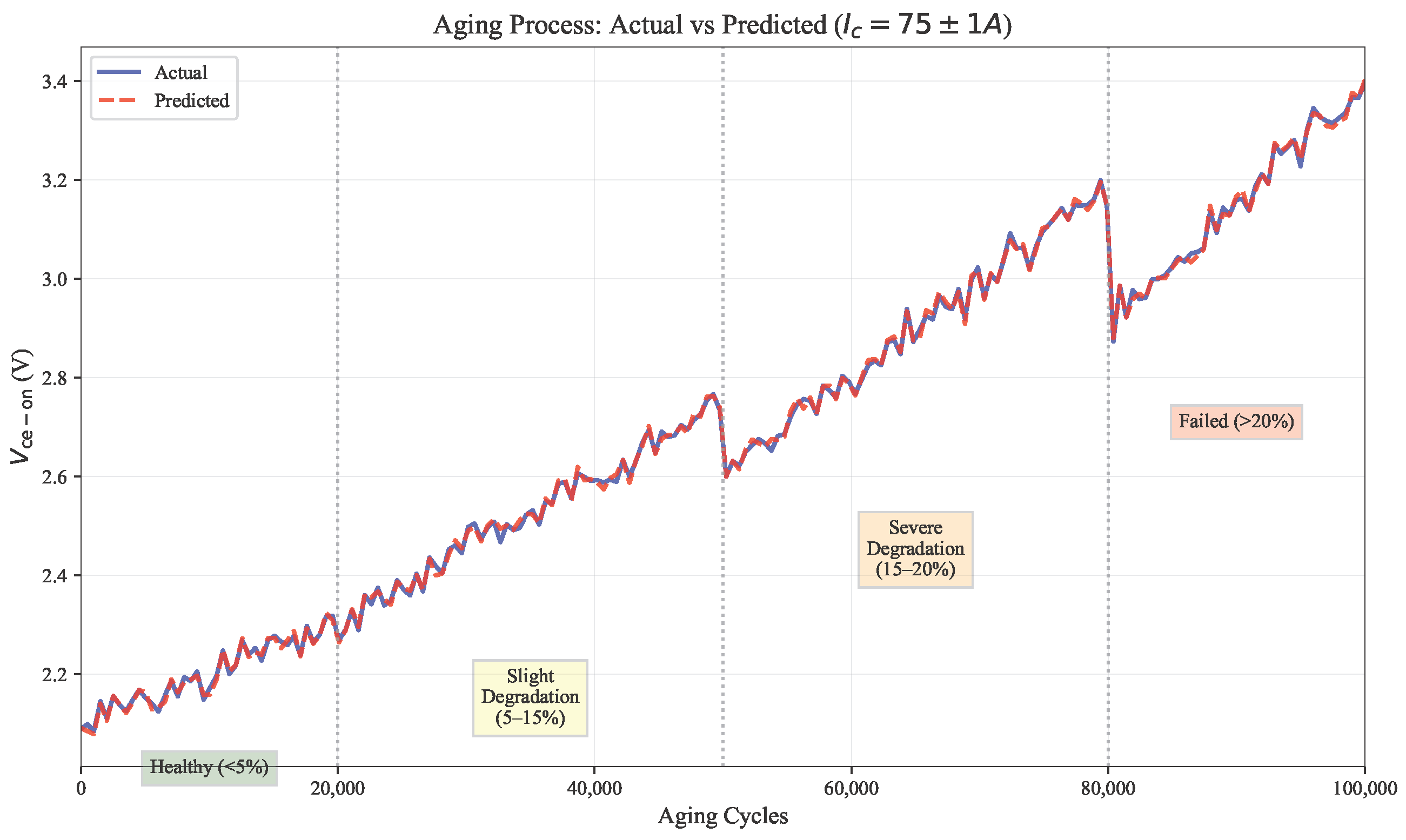
Figure 11 demonstrates accurate aging progression prediction across health states. The ensemble maintains MAE V even at >20% degradation, validating the effectiveness of aging-sensitive features designed in the framework. The feature linearizes initial bond wire fatigue progression, while captures thermal acceleration effects. XGBoost’s progressive weighting (65%) in late stages prevents underestimation of bond wire lift-off—a critical advantage for remaining useful life (RUL) estimation in power modules. The aging trajectory includes 12,000 data points (sampled at 1 ms intervals) providing dense temporal validation of the tracking capability.
Figure 11.
Aging Process Tracking: Actual vs. Predicted at Different Degradation Stages. The Ensemble Accurately Follows the Degradation Trajectory from Healthy (<5%) to Failed (>20%) Conditions.
Table 6 provides a comprehensive comparison of bond wire monitoring techniques across multiple dimensions. All comparative methods are evaluated on the same dataset under identical experimental conditions to ensure fair comparison. The proposed method demonstrates superior accuracy (0.0066 V MAE), high physical consistency (99.1%), real-time computational capability, low implementation complexity using standard sensors, excellent multi-chip capability through spatial averaging, high noise immunity via quadratic regularization, and early detection capability through the precursor.
Table 6.
Comprehensive Comparison of Bond Wire Monitoring Techniques (Evaluated on Identical Dataset).
5.3. Discussion and Comparative Analysis
The experimental validation demonstrates several key innovations of the proposed framework. The physics-algorithm co-design achieves 48.4% MAE reduction versus base models and maintains 99.1% physical constraint compliance. Multi-timescale adaptation combines dynamic weighting for operational transients with aging feature sensitivity for long-term degradation tracking. Early detection capability is demonstrated through the precursor, which identifies degradation 5000 cycles before a 5% increase occurs.
Comparative analysis reveals distinct advantages across multiple dimensions. The proposed method demonstrates superior accuracy (0.0066 V MAE) compared to voltage-based (0.0195 V), current-based (0.0273 V), and advanced techniques including transconductance (0.0142 V) and on-state inductance (0.0167 V) methods. Physical consistency reaches 99.1%, significantly higher than CNN-based gate analysis (82.4%) and voltage-based approaches (84.2%). Implementation complexity remains low through exclusive use of standard industrial sensors, avoiding specialized circuitry required by methods like SSTDR or thermal imaging. Multi-chip capability is excellent due to spatial averaging, overcoming limitations of current-based methods with poor multi-chip performance. Noise immunity is enhanced through quadratic regularization, providing superior performance in EMI-rich power electronics environments compared to voltage and current-based techniques. Early detection capability through the precursor surpasses conventional electrical measurement approaches.
The framework offers practical implications for predictive maintenance systems by providing 15–20% earlier warning through monitoring. Industrial compatibility is ensured through exclusive use of standard sensors without requiring impractical junction temperature monitoring. Scalability to multi-chip modules is enabled by spatial averaging that accommodates non-uniform aging distributions.
Several limitations and future research directions are identified. Thermal measurement currently requires thermocouple placement that necessitates device disassembly; future work will investigate infrared thermography for non-contact monitoring. Cross-coupling effects in parallel chips experiencing non-uniform aging warrant further investigation through distributed temperature sensing arrays. Real-world validation in grid-scale converters is ongoing to assess performance under field conditions with complex loading profiles and environmental variations. Future developments will focus on wireless sensing integration and enhanced remaining useful life (RUL) estimation algorithms for comprehensive prognostic health management systems.
6. Conclusions
This paper has introduced and validated a physics-constrained ensemble learning framework for accurate and robust bond wire health assessment in IGBT power modules. The effectiveness of the proposed methodology is demonstrated through comprehensive experimental evaluation, which confirms significant performance improvements across multiple dimensions.
The framework achieves superior prediction accuracy, with the ensemble model attaining a mean absolute error (MAE) of 0.0066 V and a determination coefficient (R2) of 0.9998 for estimation. This represents a 48.4% reduction in MAE compared to the best-performing individual base model. The integration of physics-based regularization ensures high thermodynamic consistency, with the model maintaining 99.1% compliance with the fundamental semiconductor property . A key strength of the approach is its context-aware adaptability. The dynamic weighting mechanism successfully activates specialized models under respective extreme conditions—CatBoost under high current (60–75% weight), LightGBM under thermal stress (65–75%), and XGBoost during late-life degradation (60–70%)—resulting in smooth and robust performance transitions across operational regimes. Furthermore, the model demonstrates strong noise immunity, reducing residual spread by 35–62% compared to base models and showing minimal bias ( V). Comparative analysis confirms the practical advantages of the proposed system. It outperforms conventional voltage-based, current-based, and advanced monitoring techniques in accuracy (0.0066 V MAE vs. 0.0195–0.0350 V), physical consistency (99.1% vs. 78.5–92.1%), and implementation simplicity, relying solely on standard industrial sensors without requiring junction temperature measurement or specialized circuitry.
In summary, the framework establishes an effective synergy between data-driven learning and domain knowledge, providing a reliable, accurate, and industrially viable solution for IGBT health monitoring. Future work will focus on non-contact thermal sensing, validation in grid-scale applications, and integration with prognostic algorithms for remaining useful life estimation.
Author Contributions
Conceptualization, X.Y. and Y.B.; methodology, Z.H.; software, X.Y.; validation, Y.B.; formal analysis, M.C.; investigation, Y.B.; resources, X.Y.; data curation, M.C.; writing—original draft preparation, Z.H.; writing—review and editing, X.Y.; visualization, Y.B.; supervision, M.C.; project administration, T.S.; funding acquisition, T.S. All authors have read and agreed to the published version of the manuscript.
Funding
This work received a grant from the National Natural Science Foundation of China (52307207, U22A20226, 62203052).
Data Availability Statement
Data is contained within the article.
Conflicts of Interest
The authors declare no conflicts of interest.
References
- Hu, K.; Liu, Z.; Du, H. Cost-effective prognostics of IGBT bond wires with consideration of temperature swing. IEEE Trans. Power Electron. 2020, 35, 5995–6005. [Google Scholar] [CrossRef] [Scilit]
- Chen, C.; Pickert, V.; Al-Greer, M. Localization and detection of bond wire faults in multichip IGBT power modules. IEEE Trans. Power Electron. 2020, 35, 7037–7046. [Google Scholar] [CrossRef] [Scilit]
- Li, Q.; Li, Y.-B.; Fu, H.-D. Review of the failure mechanism and methodologies of IGBT bonding wire. IEEE Trans. Compon. Packag. Manuf. Technol. 2023, 13, 1045–1057. [Google Scholar] [CrossRef] [Scilit]
- Huang, Q.; Peng, C.; Frimpong-Manso, S. A finite element analysis on the reliability of heavy bonding wire for high-power IGBT module. IEEE Trans. Compon. Packag. Manuf. Technol. 2021, 11, 212–221. [Google Scholar] [CrossRef] [Scilit]
- Ren, H.; Zhao, S.; Mu, J.; Wang, W.; Han, Z.; Li, Z.; Li, Q.; Wang, J.; Liu, Y. Research on the electro-thermal-mechanical properties of IGBT modules under different bond wire failure modes. IEEE Trans. Electron Devices 2024, 71, 4259–4262. [Google Scholar] [CrossRef] [Scilit]
- Chen, J.; Deng, E.; Liu, P. The influence and application of bond wires failure on electrothermal characteristics of IGBT module. IEEE Trans. Compon. Packag. Manuf. Technol. 2021, 11, 1452–1460. [Google Scholar] [CrossRef] [Scilit]
- Tu, C.; Xu, H.; Xiao, B. Research on the influence of bond wire lift-off position on the electro-thermal characteristics of IGBT. IEEE Trans. Electron Devices 2022, 69, 1271–1278. [Google Scholar] [CrossRef] [Scilit]
- Chen, Y.; Wu, Q.; Luo, H. Thermal mitigation and optimization via multitier bond wire layout for IGBT modules considering multicellular electro-thermal effect. IEEE Trans. Power Electron. 2022, 37, 7299–7310. [Google Scholar] [CrossRef] [Scilit]
- Liang, G.; Ge, X.; Wang, H. A bond wire aging monitoring method for IGBT modules based on back propagation neural networks. Cpss Trans. Power Electron. Appl. 2023, 9, 39–50. [Google Scholar] [CrossRef] [Scilit]
- Dai, Z.; Ge, X.; Lin, C. A bond wire aging monitoring method for IGBT modules based on bond wire degradation voltage. IEEE Trans. Emerg. Sel. Top. Power Electron. 2024, 12, 5534–5543. [Google Scholar] [CrossRef] [Scilit]
- Yang, Y.; Zhang, P. A novel bond wire fault detection method for IGBT modules based on turn-on gate voltage overshoot. IEEE Trans. Power Electron. 2020, 36, 8692–8703. [Google Scholar] [CrossRef] [Scilit]
- Zhang, W.; Tan, K.; Ji, B.; Qi, L.; Cui, X.; Zhang, X.; Du, L. In situ diagnosis of multichip IGBT module wire bonding faults based on collector voltage undershoot. IEEE Trans. Ind. Electron. 2023, 70, 3045–3055. [Google Scholar] [CrossRef] [Scilit]
- Chu, C.; Dong, C.; Hu, J. Aging monitoring method of bond wires based on phase-frequency characteristics of differential mode conducted interference signal for IGBT module. IEEE Trans. Device Mater. Reliab. 2022, 22, 122–130. [Google Scholar] [CrossRef] [Scilit]
- Chu, C.; Dong, C.; Du, M. Aging monitoring of bond wires based on differential mode conducted interference spectrum for IGBT module. IEEE Trans. Electromagn. Compat. 2021, 63, 1274–1283. [Google Scholar] [CrossRef] [Scilit]
- Wang, K.; Zhou, L.; Sun, P.; Du, X. Monitoring bond wire defects of IGBT module using module transconductance. IEEE J. Emerg. Sel. Top. Power Electron. 2021, 9, 2201–2212. [Google Scholar] [CrossRef] [Scilit]
- Karakaya, F.; Maheshwari, A.; Banerjee, A.; Donnal, J.S.; Morgan, A.J.; Sung, W. In situ detection of bond wire lift-off events in operational SiC MOSFETs. IEEE Trans. Power Electron. 2024, 39, 16659–16671. [Google Scholar] [CrossRef] [Scilit]
- Mamee, T.; Lou, Z.; Hata, K.; Takamiya, M.; Sakurai, T.; Nishizawa, S.I.; Saito, W. Estimating of IGBT bond wire lift-off trend using convolutional neural network (CNN). IEEE Access 2024, 12, 96936–96947. [Google Scholar] [CrossRef] [Scilit]
- Cheng, S.; Liu, C.; Yuan, W. Research on IGBT chip bond wire lift-off fault detection method based on decoupling of time domain reflective signal feature. IEEE Trans. Power Electron. 2024, 39, 6065–6078. [Google Scholar] [CrossRef] [Scilit]
- Luo, J.; Guan, S.; Wan, B. Research on IGBT bonding wires crack propagation at the macro and micro scales. IEEE Access 2021, 9, 106270–106281. [Google Scholar] [CrossRef] [Scilit]
- Yang, X.; Ye, J.; Wu, X.; Heng, K.; He, Y.; Liu, G. Lifetime prediction for lift-off of bond wires in IGBTs using Paris law with analytical calculation of crack length. IEEE Trans. Power Electron. 2023, 38, 13099–13111. [Google Scholar] [CrossRef] [Scilit]
- Zhao, S.; Wang, Q.; An, T. Study on a simulation method for IGBT bonded wire cracking under power cycling conditions considering the effect of damage evolution. IEEE Access 2024, 12, 196106–196117. [Google Scholar] [CrossRef] [Scilit]

Disclaimer/Publisher’s Note: The statements, opinions and data contained in all publications are solely those of the individual author(s) and contributor(s) and not of MDPI and/or the editor(s). MDPI and/or the editor(s) disclaim responsibility for any injury to people or property resulting from any ideas, methods, instructions or products referred to in the content. |
© 2026 by the authors. Licensee MDPI, Basel, Switzerland. This article is an open access article distributed under the terms and conditions of the Creative Commons Attribution (CC BY) license.