Review

Bacterial Protein Toxins as Anticancer Agents: Clinical Potential of Pseudomonas and Anthrax Toxins


by
Richa Misra
1,
Radhika Gupta
2,
Namita Nayyar
1,
Ritvik Baweja
3,
Vishal Sharma
4,
Yogendra Singh
5,* and
Renu Baweja
6,*
1
Department of Zoology, Sri Venkateswara College, University of Delhi, Delhi 110021, India
2
Department of Biochemistry, Daulat Ram College, University of Delhi, Delhi 110007, India
3
Maulana Azad Medical College, Delhi 110002, India
4
Department of Infectious disease, Albert Einstein College of Medicine, New York, NY 10461, USA
5
Delhi School of Public Health, Institution of Eminence, University of Delhi, Delhi 110007, India
6
Department of Biochemistry, Shivaji College, University of Delhi, Delhi 110027, India
*
Authors to whom correspondence should be addressed.
Toxins 2025, 17(9), 459; https://doi.org/10.3390/toxins17090459

Submission received: 4 August 2025 / Revised: 1 September 2025 / Accepted: 9 September 2025 / Published: 12 September 2025
(This article belongs to the Section Bacterial Toxins)

Abstract

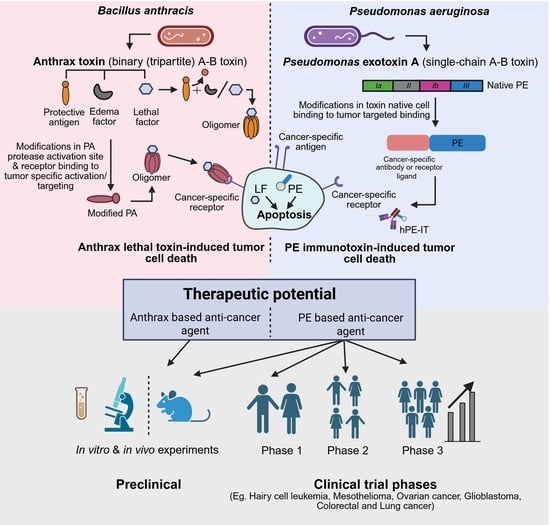
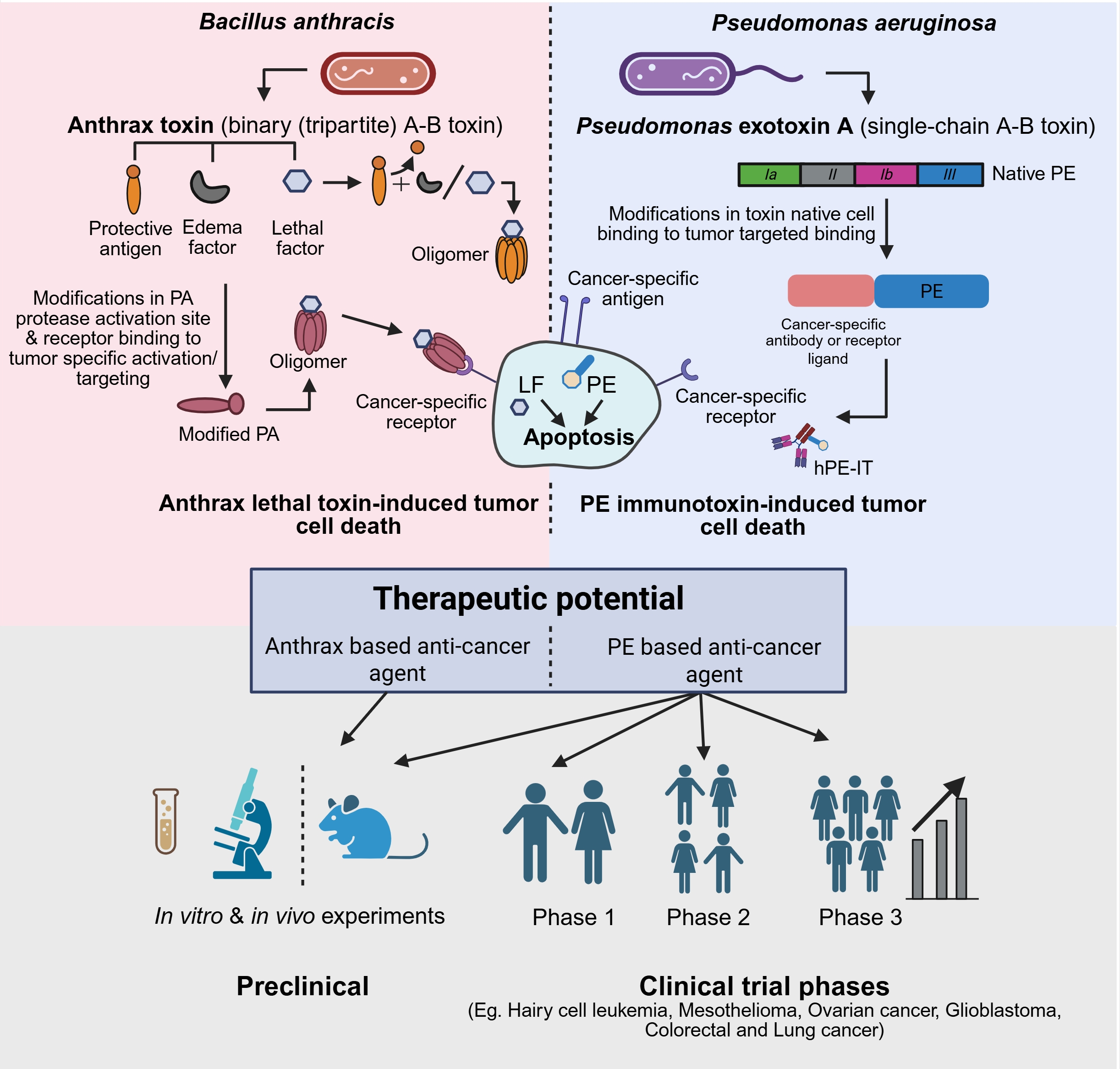
Protein toxins are biologically active polypeptides produced by a variety of organisms, including bacteria, plants, fungi, and animals. These molecules exert potent and specific toxic effects on target cells and are primarily associated with pathogenicity and defense mechanisms of the organisms. In the past few decades, significant progress has been made in understanding their structure, mechanisms of action, and regulation. Among these, bacterial protein toxins have emerged as valuable tools particularly in the development of targeted therapies. A notable example is Botulinum toxin, originally known for its neurotoxic effects, which was approved as a therapeutic agent in 1989 for strabismus treatment, paving way for repurposing bacterial toxins for clinical use. This review provides an overview of the different classes of bacterial toxin-based therapeutics, with a particular focus on Pseudomonas exotoxin A (PE) from Pseudomonas aeruginosa and anthrax toxin from Bacillus anthracis. The modular architecture and potent cytotoxicity of these A-B type toxins have enabled their successful adaptation into targeted cancer therapies. The clinical approval of the PE-based immunotoxin, moxetumomab pasudotox, for the treatment of hairy cell leukemia, underscores the potential of this strategy. This review also discusses current challenges and outlines future directions for the advancement of bacterial toxin-based therapeutics.
Keywords: anthrax toxin; PE toxin; protein toxin; AB toxin; cancer therapy; immunotoxin anthrax toxin; PE toxin; protein toxin; AB toxin; cancer therapy; immunotoxin
Graphical Abstract