Intermittent Fasting and Healthy Aging in Older Adults: A Systematic Review of Cardiometabolic, Mental Health and Cognitive Outcomes with a Network Meta-Analysis of Anthropometric Measures


Abstract
1. Introduction
2. Materials and Methods
2.1. Study Design
2.2. Data Sources and Search Strategy
2.3. Data Extraction
2.4. Quality Assessment
2.5. Statistical Analysis
3. Results
3.1. Study Selection and Characteristics
3.2. Risk of Bias and Study Quality
3.3. Results of the Systematic Review
3.3.1. Anthropometric and Body Composition Outcomes
3.3.2. Metabolic and Cardiovascular Outcomes
3.3.3. Mental Health Outcomes
3.3.4. Cognitive Outcomes
3.4. Results of the Network Meta-Analysis
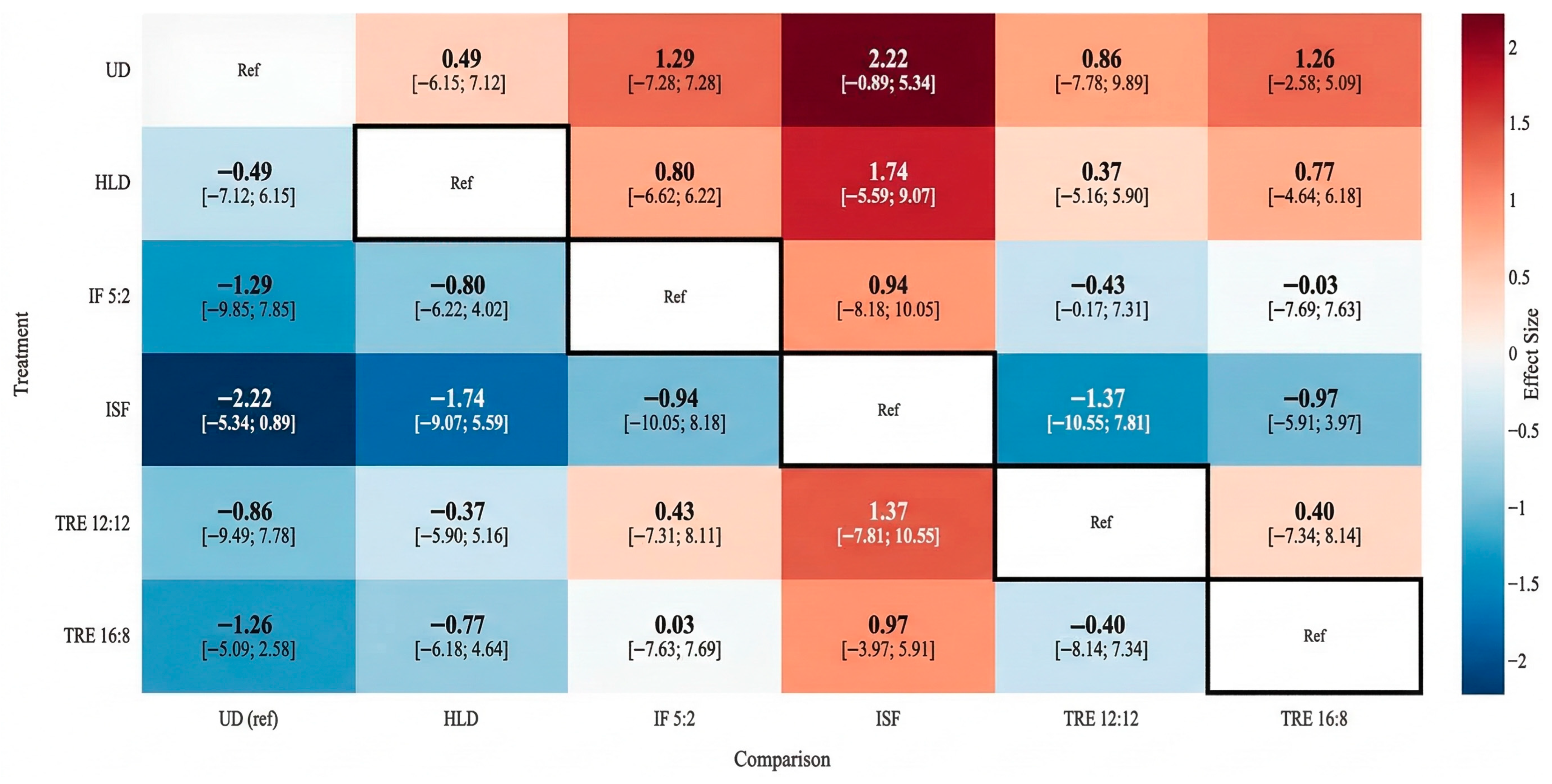
3.4.1. Body Weight (kg)
3.4.2. BMI (kg/m2)
4. Discussion
4.1. Anthropometric and Body Composition Outcomes
4.2. Metabolic and Cardiovascular Outcomes
4.3. Mental Health and Cognitive Outcomes
4.4. Clinical Implications for Older Adults
4.5. Limitations and Future Directions
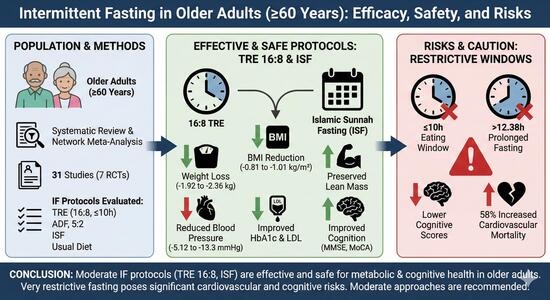
5. Conclusions
Supplementary Materials
Author Contributions
Funding
Institutional Review Board Statement
Informed Consent Statement
Data Availability Statement
Acknowledgments
Conflicts of Interest
Abbreviations
| IF | Intermittent fasting |
| TRE | Time-restricted eating |
| ISF | Islamic Sunnah fasting |
| NMA | Network meta-analysis |
| RCTs | Randomized controlled trials |
| ADF | Alternate-day fasting |
| BMI | Body mass index |
| HbA1c | Hemoglobin A1c |
| LDL | Low-density lipoprotein |
| MMSE | Mini-Mental State Examination |
| MoCA | Montreal Cognitive Assessment |
| RAVLT | Rey Auditory Verbal Learning Test |
| MAPS | Memory and Aging Performance Scale |
| NIH | National Institutes of Health |
| PICOS | Population, Intervention, Comparison, Outcomes, Study design |
| PRISMA | Preferred Reporting Items for Systematic Reviews and Meta-Analyses |
| PROSPERO | International Prospective Register of Systematic Reviews |
| MD | Mean difference |
| RoB 2.0 | Risk of Bias 2.0 |
| ROBINS-I | Risk Of Bias In Non-randomized Studies of Interventions |
| SUCRA | Surface Under the Cumulative Ranking curve |
| CINeMA | Confidence In Network Meta-Analysis |
| CI | Confidence interval |
| HLD | Healthy living diet |
| UD | Usual diet |
| GDS | Geriatric Depression Scale |
| POMS | Profile of Mood States |
| GAD-7 | Generalized Anxiety Disorder-7 |
| ISI | Insomnia Severity Index |
| OR | Odds ratio |
| AST | Aspartate aminotransferase |
| ALT | Alanine aminotransferase |
| MDA | Malondialdehyde |
| SOD | Superoxide dismutase |
References
- Patterson, R.E.; Laughlin, G.A.; Sears, D.D.; LaCroix, A.Z.; Marinac, C.; Gallo, L.C.; Hartman, S.J.; Natarajan, L.; Senger, C.M.; Martínez, M.E.; et al. Intermittent Fasting and Human Metabolic Health. J. Acad. Nutr. Diet. 2015, 115, 1203–1212. [Google Scholar] [CrossRef]
- Cioffi, I.; Evangelista, A.; Ponzo, V.; Ciccone, G.; Soldati, L.; Santarpia, L.; Contaldo, F.; Pasanisi, F.; Ghigo, E.; Bo, S. Intermittent versus continuous energy restriction on weight loss and cardiometabolic outcomes: A systematic review and meta-analysis of randomized controlled trials. J. Transl. Med. 2018, 16, 371. [Google Scholar] [CrossRef]
- Harvie, M.; Howell, A. Potential benefits and harms of intermittent energy restriction and intermittent fasting amongst obese, overweight and normal weight subjects-A narrative review of human and animal evidence. Behav. Sci. 2017, 7, 4. [Google Scholar] [CrossRef] [PubMed]
- Manoogian, E.N.C.; Laferrère, B. Time-restricted eating: What we know and where the field is going. Obesity 2023, 31, 7–8. [Google Scholar] [CrossRef]
- Varady, K.A.; Bhutani, S.; Klempel, M.C.; Kroeger, C.M.; Trepanowski, J.F.; Haus, J.M.; Hoddy, K.K.; Calvo, Y. Alternate day fasting for weight loss in normal weight and overweight subjects: A randomized controlled trial. Nutr. J. 2013, 12, 146. [Google Scholar] [CrossRef] [PubMed]
- Carter, S.; Clifton, P.M.; Keogh, J.B. Effect of Intermittent Compared With Continuous Energy Restricted Diet on Glycemic Control in Patients With Type 2 Diabetes: A Randomized Noninferiority Trial. JAMA Netw. Open 2018, 1, e180756. [Google Scholar] [CrossRef]
- Johnson, J.B.; Summer, W.; Cutler, R.G.; Martin, B.; Hyun, D.-H.; Dixit, V.D.; Pearson, M.; Nassar, M.; Telljohann, R.; Maudsley, S.; et al. Alternate day calorie restriction improves clinical findings and reduces markers of oxidative stress and inflammation in overweight adults with moderate asthma. Free Radic. Biol. Med. 2007, 42, 665–674. [Google Scholar] [CrossRef] [PubMed]
- Halberg, N.; Henriksen, M.; Söderhamn, N.; Stallknecht, B.; Ploug, T.; Schjerling, P.; Dela, F. Effect of intermittent fasting and refeeding on insulin action in healthy men. J. Appl. Physiol. 2005, 99, 2128–2136. [Google Scholar] [CrossRef]
- Longo, V.D.; Mattson, M.P. Fasting: Molecular mechanisms and clinical applications. Cell Metab. 2014, 19, 181–192. [Google Scholar] [CrossRef]
- Mattson, M.P.; Longo, V.D.; Harvie, M. Impact of intermittent fasting on health and disease processes. Ageing Res. Rev. 2017, 39, 46–58. [Google Scholar] [CrossRef] [PubMed]
- Starr, K.N.P.; McDonald, S.R.; Bales, C.W. Nutritional Vulnerability in Older Adults: A Continuum of Concerns. Curr. Nutr. Rep. 2015, 4, 176–184. [Google Scholar] [CrossRef] [PubMed]
- Varady, K.A.; Cienfuegos, S.; Ezpeleta, M.; Gabel, K. Cardiometabolic Benefits of Intermittent Fasting. Annu. Rev. Nutr. 2021, 41, 333–361. [Google Scholar] [CrossRef]
- Anton, S.; Ezzati, A.; Witt, D.; McLaren, C.; Vial, P. The effects of intermittent fasting regimens in middle-age and older adults: Current state of evidence. Exp. Gerontol. 2021, 156, 111617. [Google Scholar] [CrossRef] [PubMed]
- Yao, K.; Su, H.; Cui, K.; Gao, Y.; Xu, D.; Wang, Q.; Ha, Z.; Zhang, T.; Chen, S.; Liu, T. Effectiveness of an intermittent fasting diet versus regular diet on fat loss in overweight and obese middle-aged and elderly people without metabolic disease: A systematic review and meta-analysis of randomized controlled trials. J. Nutr. Health Aging 2024, 28, 100165. [Google Scholar] [CrossRef]
- Varady, K.A.; Cienfuegos, S.; Ezpeleta, M.; Gabel, K. Clinical application of intermittent fasting for weight loss: Progress and future directions. Nat. Rev. Endocrinol. 2022, 18, 309–321. [Google Scholar] [CrossRef] [PubMed]
- Stockman, M.C.; Thomas, D.; Burke, J.; Apovian, C.M. Intermittent Fasting: Is the Wait Worth the Weight? Curr. Obes. Rep. 2018, 7, 172. [Google Scholar] [CrossRef]
- Harris, L.; Hamilton, S.; Azevedo, L.B.; Olajide, J.; De Brún, C.; Waller, G.; Whittaker, V.; Sharp, T.; Lean, M.; Hankey, C.; et al. Intermittent fasting interventions for treatment of overweight and obesity in adults: A systematic review and meta-analysis. JBI Database Syst. Rev. Implement. Rep. 2018, 16, 507–547. [Google Scholar] [CrossRef]
- Higgins, J.; Thomas, J. Cochrane Handbook for Systematic Reviews of Interventions (Current Version)|Cochrane [Internet]. Available online: https://www.cochrane.org/authors/handbooks-and-manuals/handbook/current (accessed on 31 July 2025).
- Moher, D.; Liberati, A.; Tetzlaff, J.; Altman, D.G.; PRISMA Group. Preferred reporting items for systematic reviews and meta-analyses: The PRISMA statement. PLoS Med. 2009, 6, e1000097. [Google Scholar] [CrossRef]
- Hutton, B.; Salanti, G.; Caldwell, D.M.; Chaimani, A.; Schmid, C.H.; Cameron, C.; Ioannidis, J.P.A.; Straus, S.; Thorlund, K.; Jansen, J.P.; et al. The PRISMA extension statement for reporting of systematic reviews incorporating network meta-analyses of health care interventions: Checklist and explanations. Ann. Intern. Med. 2015, 162, 777–784. [Google Scholar] [CrossRef]
- Centre for Reviews and Dissemination [CRD]. PROSPERO [Internet]. 2011. Available online: https://www.crd.york.ac.uk/PROSPERO/home (accessed on 31 July 2025).
- Borenstein, M. Avoiding common mistakes in meta-analysis: Understanding the distinct roles of Q, I-squared, tau-squared, and the prediction interval in reporting heterogeneity. Res. Synth. Methods 2024, 15, 354–368. [Google Scholar] [CrossRef]
- Daly, C.H.; Neupane, B.; Beyene, J.; Thabane, L.; Straus, S.E.; Hamid, J.S. Empirical evaluation of SUCRA-based treatment ranks in network meta-analysis: Quantifying robustness using Cohen’s kappa. BMJ Open 2019, 9, e024625. [Google Scholar] [CrossRef] [PubMed]
- Nikolakopoulou, A.; Higgins, J.P.T.; Papakonstantinou, T.; Chaimani, A.; Del Giovane, C.; Egger, M.; Salanti, G. Cinema: An approach for assessing confidence in the results of a network meta-analysis. PLoS Med. 2020, 17, e1003082. [Google Scholar] [CrossRef]
- Izcovich, A.; Chu, D.K.; Mustafa, R.A.; Guyatt, G.; Brignardello-Petersen, R. A guide and pragmatic considerations for applying GRADE to network meta-analysis. BMJ 2023, 381, e074495. [Google Scholar] [CrossRef]
- Couto, S.; Cenit, M.C.; Montero, J.; Iguacel, I. The impact of intermittent fasting and Mediterranean diet on older adults’ physical health and quality of life: A randomized clinical trial. Nutr. Metab. Cardiovasc. Dis. 2025, 35, 104132. [Google Scholar] [CrossRef]
- Domaszewski, P.; Konieczny, M.; Pakosz, P.; Baczkowicz, D.; Sadowska-Krępa, E. Effect of a six-week intermittent fasting intervention program on the composition of the human body in women over 60 years of age. Int. J. Environ. Res. Public Health 2020, 17, 4138. [Google Scholar] [CrossRef]
- Domaszewski, P.; Konieczny, M.; Pakosz, P.; Łukaniszyn-Domaszewska, K.; Mikuláková, W.; Sadowska-Krępa, E.; Anton, S. Effect of a six-week times restricted eating intervention on the body composition in early elderly men with overweight. Sci. Rep. 2022, 12, 9816. [Google Scholar] [CrossRef]
- Kapogiannis, D.; Manolopoulos, A.; Mullins, R.; Avgerinos, K.; Delgado-Peraza, F.; Mustapic, M.; Nogueras-Ortiz, C.; Yao, P.J.; Pucha, K.A.; Brooks, J.; et al. Brain responses to intermittent fasting and the healthy living diet in older adults. Cell Metab. 2024, 36, 1668–1678.e5. [Google Scholar] [CrossRef]
- Manoogian, E.N.C.; Wilkinson, M.J.; O’Neal, M.; Laing, K.; Nguyen, J.; Van, D.; Rosander, A.; Pazargadi, A.; Gutierrez, N.R.; Fleischer, J.G.; et al. Time-Restricted Eating in Adults With Metabolic Syndrome: A Randomized Controlled Trial. Ann. Intern. Med. 2024, 177, 1462–1470. [Google Scholar] [CrossRef]
- Martens, C.R.; Rossman, M.J.; Mazzo, M.R.; Jankowski, L.R.; Nagy, E.E.; Denman, B.A.; Richey, J.J.; Johnson, S.A.; Ziemba, B.P.; Wang, Y.; et al. Short-term time-restricted feeding is safe and feasible in non-obese healthy midlife and older adults. GeroScience 2020, 42, 667–686. [Google Scholar] [CrossRef] [PubMed]
- Tavakoli, A.; Akhgarjand, C.; Ansar, H.; Houjaghani, H.; Khormani, A.; Djafarian, K.; Rostamian, A.; Ranjbar, M.; Mohammadi Farsani, G. The effects of intermittent fasting on antioxidant and inflammatory markers and liver enzymes in postmenopausal, overweight and obese women with rheumatoid arthritis: A randomized controlled trial. Sci. Rep. 2025, 15, 2357. [Google Scholar] [CrossRef] [PubMed]
- Teng, N.I.M.F.; Shahar, S.; Rajab, N.F.; Manaf, Z.A.; Johari, M.H.; Ngah, W.Z.W. Improvement of metabolic parameters in healthy older adult men following a fasting calorie restriction intervention. Aging Male 2013, 16, 177–183. [Google Scholar] [CrossRef] [PubMed]
- Hussin, N.M.; Shahar, S.; Teng, N.I.M.F.; Ngah, W.Z.W.; Das, S.K. Efficacy of fasting and calorie restriction (FCR) on mood and depression among ageing men. J. Nutr. Health Aging 2013, 17, 674–680. [Google Scholar] [CrossRef]
- Boujelbane, M.A.; Trabelsi, K.; Jahrami, H.A.; Masmoudi, L.; Ammar, A.; Khacharem, A.; Boukhris, O.; Puce, L.; Garbarino, S.; Scoditti, E.; et al. Time-restricted feeding and cognitive function in sedentary and physically active elderly individuals: Ramadan diurnal intermittent fasting as a model. Front. Nutr. 2022, 9, 1041216. [Google Scholar] [CrossRef]
- James, D.L.; Larkey, L.K.; Maxfield, M.; Han, S.; Ofori, E.; Mohr, A.E.; Hawley, N.A.; Alperin, K.; Ahlich, E.; Vance, D.E.; et al. Prolonged nightly fasting in older adults with memory decline: A single-group pilot study exploring changes in cognitive function and cardiometabolic risk factors. J. Clin. Transl. Sci. 2024, 9, e1. [Google Scholar] [CrossRef] [PubMed]
- Laatar, R.; Baccouch, R.; Borji, R.; Kachouri, H.; Rebai, H.; Sahli, S. Ramadan Fasting Effects on Postural Control in the Elderly: A Comparison Between Fallers and Non-fallers. J. Relig. Health 2019, 58, 28–40. [Google Scholar] [CrossRef] [PubMed]
- Wilkinson, M.J.; Manoogian, E.N.C.; Zadourian, A.; Lo, H.; Fakhouri, S.; Shoghi, A.; Wang, X.; Fleischer, J.G.; Navlakha, S.; Panda, S.; et al. Ten-Hour Time-Restricted Eating Reduces Weight, Blood Pressure, and Atherogenic Lipids in Patients with Metabolic Syndrome. Cell Metab. 2020, 31, 92–104.e5. [Google Scholar] [CrossRef]
- Laatar, R.; Borji, R.; Baccouch, R.; Zahaf, F.; Rebai, H.; Sahli, S. Effects of ramadan fasting on postural balance and attentional capacities in elderly people. J. Nutr. Health Aging 2016, 20, 553–560. [Google Scholar] [CrossRef]
- Saini, S.K.; Singh, A.; Saini, M.; Gonzalez-Freire, M.; Leeuwenburgh, C.; Anton, S.D. Time-Restricted Eating Regimen Differentially Affects Circulatory miRNA Expression in Older Overweight Adults. Nutrients 2022, 14, 1843. [Google Scholar] [CrossRef]
- Zhao, L.; Hutchison, A.T.; Liu, B.; Yates, C.L.; Teong, X.T.; Wittert, G.A.; Thompson, C.H.; Nguyen, L.; Au, J.; Manoogian, E.N.C.; et al. Time-restricted eating improves glycemic control and dampens energy-consuming pathways in human adipose tissue. Nutrition 2022, 96, 111583. [Google Scholar] [CrossRef]
- Mrad, S.; Rejeb, H.; Ben Abdallah, J.; Graiet, H.; Ben Khelifa, M.; Abed, A.; Ferchichi, S.; Limem, K.; Ben Saad, H. The Impacts of Ramadan Intermittent Fasting on Oxidant/Antioxidant Stress Biomarkers of Stable Chronic Obstructive Pulmonary Disease Male Patients. Am. J. Men’s Health 2019, 13, 1557988319848281. [Google Scholar] [CrossRef]
- Boujelbane, M.A.; Trabelsi, K.; Jahrami, H.; Ammar, A.; Salem, A.; Kerkeni, M.; Charfi, A.; Boukhris, O.; Clark, C.C.T.; Roufayel, R.; et al. The Effects of Time-Restricted Feeding on Handgrip Strength, Vigilance, and Perceived Anxiety and Depression in Older Adults: A Comparative Study Between Active and Sedentary Populations. Health Sci. Rep. 2025, 8, e70692. [Google Scholar] [CrossRef]
- Ezzati, A.; Tamargo, J.A.; Golberg, L.; Haub, M.D.; Anton, S.D. The Effects of Time-Restricted Eating on Inflammation and Oxidative Stress in Overweight Older Adults: A Pilot Study. Nutrients 2025, 17, 322. [Google Scholar] [CrossRef]
- Anton, S.D.; Lee, S.A.; Donahoo, W.T.; McLaren, C.; Manini, T.; Leeuwenburgh, C.; Pahor, M. The effects of time restricted feeding on overweight, older adults: A pilot study. Nutrients 2019, 11, 1500. [Google Scholar] [CrossRef] [PubMed]
- Lee, S.A.; Sypniewski, C.; Bensadon, B.A.; McLaren, C.; Donahoo, W.T.; Sibille, K.T.; Anton, S. Determinants of adherence in time-restricted feeding in older adults: Lessons from a pilot study. Nutrients 2020, 12, 874. [Google Scholar] [CrossRef]
- Currenti, W.; Godos, J.; Castellano, S.; Caruso, G.; Ferri, R.; Caraci, F.; Grosso, G.; Galvano, F. Association between time restricted feeding and cognitive status in older italian adults. Nutrients 2021, 13, 191. [Google Scholar] [CrossRef]
- Ooi, T.C.; Meramat, A.; Rajab, N.F.; Shahar, S.; Ismail, I.S.; Azam, A.A.; Sharif, R. Intermittent fasting enhanced the cognitive function in older adults with mild cognitive impairment by inducing biochemical and metabolic changes: A 3-year progressive study. Nutrients 2020, 12, 2644. [Google Scholar] [CrossRef]
- Ooi, T.C.; Meramat, A.; Rajab, N.F.; Shahar, S.; Sharif, R. Antioxidant Potential, DNA Damage, Inflammation, Glycemic Control and Lipid Metabolism Alteration: A Mediation Analysis of Islamic Sunnah Intermittent Fasting on Cognitive Function among Older Adults with Mild Cognitive Impairment. J. Nutr. Health Aging 2022, 26, 272–281. [Google Scholar] [CrossRef] [PubMed]
- Kang, Y.; Kang, M.; Lim, H. Age-specific association between meal-skipping patterns and the risk of hyperglycemia in Korean adults: A national cross-sectional study using the KNHANES data. BMC Public Health 2024, 24, 1697. [Google Scholar] [CrossRef]
- Currenti, W.; Godos, J.; Castellano, S.; Caruso, G.; Ferri, R.; Caraci, F.; Grosso, G.; Galvano, F. Time-restricted feeding is associated with mental health in elderly Italian adults. Chronobiol. Int. 2021, 38, 1507–1516. [Google Scholar] [CrossRef] [PubMed]
- Li, J.; Li, R.; Lian, X.; Han, P.; Liu, Y.; Liu, C.; Wang, B.; Xu, C.; Wang, F.; Wang, J.; et al. Time restricted feeding is associated with poor performance in specific cognitive domains of Suburb-Dwelling older Chinese. Sci. Rep. 2023, 13, 387. [Google Scholar] [CrossRef]
- Estrada-deLeón, D.B.; Struijk, E.A.; Caballero, F.F.; Ortolá, R.; Guallar-Castillón, P.; Banegas, J.R.; Rodríguez-Artalejo, F.; López-García, E. Association of prolonged nightly fasting with cardiovascular, renal, inflammation, and nutritional status biomarkers in community-dwelling older adults. Am. J. Clin. Nutr. 2022, 115, 1282–1289. [Google Scholar] [CrossRef]
- Estrada-deLeón, D.B.; Struijk, E.A.; Caballero, F.F.; Sotos Prieto, M.; Rodríguez-Artalejo, F.; Lopez-Garcia, E. Prolonged nightly fasting and lower-extremity functioning in community-dwelling older adults. Br. J. Nutr. 2021, 126, 1347–1354. [Google Scholar] [CrossRef]
- Chen, C.; Zheng, Y.; Wu, Y.; Zheng, K.; Wang, Y.; Huang, C.; Guo, J.; Qi, Y.; Chen, X.; Tao, Q.; et al. The association between time-restricted eating and arterial stiffness status in community-dwelling elderly Chinese individuals. Nutr. Metab. Cardiovasc. Dis. 2024, 34, 1217–1225. [Google Scholar] [CrossRef]
- Zhang, Z.; Zhao, H.; Tao, Z.; Jiang, M.; Pu, J. A National Study Exploring the Association between Fasting Duration and Mortality among the Elderly. Nutrients 2024, 16, 2018. [Google Scholar] [CrossRef]
- Haddaway, N.R.; Page, M.J.; Pritchard, C.C.; McGuinness, L.A. PRISMA2020: An R package and Shiny app for producing PRISMA 2020-compliant flow diagrams, with interactivity for optimised digital transparency and Open Synthesis. Campbell Syst. Rev. 2022, 18, e1230. [Google Scholar] [CrossRef]
- Richmond, C.R. ICRP report of the task group on reference man. Int. J. Nucl. Med. Biol. 1985, 12, 251. [Google Scholar] [CrossRef]
- Ryan, D.H.; Yockey, S.R. Weight Loss and Improvement in Comorbidity: Differences at 5%, 10%, 15%, and Over. Curr. Obes. Rep. 2017, 6, 187–194. [Google Scholar] [CrossRef]
- Kibret, K.T.; Peeters, A.; Tegegne, T.K.; Mesfin, Y.M.; Nichols, M. Intermittent Fasting for the Prevention of Cardiovascular Disease Risks: Systematic Review and Network Meta-Analysis. Curr. Nutr. Rep. 2025, 14, 93. [Google Scholar] [CrossRef]
- Chen, S.; Zhang, X.; Kortas, J.; Liu, H. Effects of time-restricted eating on body composition and metabolic parameters in overweight and obese women: A systematic review and meta-analysis. Front. Nutr. 2025, 12, 1664412. [Google Scholar] [CrossRef]
- Semnani-Azad, Z.; Khan, T.A.; Chiavaroli, L.; Chen, V.; Bhatt, H.A.; Chen, A.; Chiang, N.; Oguntala, J.; Kabisch, S.; Lau, D.C.W.; et al. Intermittent fasting strategies and their effects on body weight and other cardiometabolic risk factors: Systematic review and network meta-analysis of randomised clinical trials. BMJ 2025, 389, e082007. [Google Scholar] [CrossRef]
- Sun, M.-L.; Yao, W.; Wang, X.-Y.; Gao, S.; Varady, K.A.; Forslund, S.K.; Zhang, M.; Shi, Z.-Y.; Cao, F.; Zou, B.-J.; et al. Intermittent fasting and health outcomes: An umbrella review of systematic reviews and meta-analyses of randomised controlled trials. eClinicalMedicine 2024, 70, 102519. [Google Scholar] [CrossRef]
- Elortegui Pascual, P.; Rolands, M.R.; Eldridge, A.L.; Kassis, A.; Mainardi, F.; Lê, K.-A.L.; Karagounis, L.G.; Gut, P.; Varady, K.A. A meta-analysis comparing the effectiveness of alternate day fasting, the 5:2 diet, and time-restricted eating for weight loss. Obesity 2023, 31, 9–21. [Google Scholar] [CrossRef] [PubMed]
- James, D.L.; Hawley, N.A.; Mohr, A.E.; Hermer, J.; Ofori, E.; Yu, F.; Sears, D.D. Impact of Intermittent Fasting and/or Caloric Restriction on Aging-Related Outcomes in Adults: A Scoping Review of Randomized Controlled Trials. Nutrients 2024, 16, 316. [Google Scholar] [CrossRef]
- Rynders, C.A.; Thomas, E.A.; Zaman, A.; Pan, Z.; Catenacci, V.A.; Melanson, E.L. Effectiveness of Intermittent Fasting and Time-Restricted Feeding Compared to Continuous Energy Restriction for Weight Loss. Nutrients 2019, 11, 2442. [Google Scholar] [CrossRef]
- Herz, D.; Karl, S.; Weiß, J.; Zimmermann, P.; Haupt, S.; Zimmer, R.T.; Schierbauer, J.; Wachsmuth, N.B.; Erlmann, M.P.; Niedrist, T.; et al. Effects of Different Types of Intermittent Fasting Interventions on Metabolic Health in Healthy Individuals (EDIF): A Randomised Trial with a Controlled-Run in Phase. Nutrients 2024, 16, 1114. [Google Scholar] [CrossRef] [PubMed]
- Mayhew, A.J.; Amog, K.; Phillips, S.; Parise, G.; McNicholas, P.D.; de Souza, R.J.; Thabane, L.; Raina, P. The prevalence of sarcopenia in community-dwelling older adults, an exploration of differences between studies and within definitions: A systematic review and meta-analyses. Age Ageing 2019, 48, 48–56. [Google Scholar] [CrossRef]
- Chen, Z.; Li, W.Y.; Ho, M.; Chau, P.H. The Prevalence of Sarcopenia in Chinese Older Adults: Meta-Analysis and Meta-Regression. Nutrients 2021, 13, 1441. [Google Scholar] [CrossRef]
- Nieste, I.; Franssen, W.M.A.; Spaas, J.; Bruckers, L.; Savelberg, H.H.C.M.; Eijnde, B.O. Lifestyle interventions to reduce sedentary behaviour in clinical populations: A systematic review and meta-analysis of different strategies and effects on cardiometabolic health. Prev. Med. 2021, 148, 106593. [Google Scholar] [CrossRef]
- Armstrong, A.; Jungbluth Rodriguez, K.; Sabag, A.; Mavros, Y.; Parker, H.M.; Keating, S.E.; Johnson, N.A. Effect of aerobic exercise on waist circumference in adults with overweight or obesity: A systematic review and meta-analysis. Obes. Rev. 2022, 23, e13446. [Google Scholar] [CrossRef]
- Mongraw-Chaffin, M.; Hairston, K.G.; Hanley, A.J.G.; Tooze, J.A.; Norris, J.M.; Palmer, N.D.; Bowden, D.W.; Lorenzo, C.; Chen, Y.-D.I.; Wagenknecht, L.E. Association of Visceral Adipose Tissue and Insulin Resistance with Incident Metabolic Syndrome Independent of Obesity Status: The IRAS Family Study. Obesity 2021, 29, 1195–1202. [Google Scholar] [CrossRef]
- Khan, S.; Chan, Y.T.; Revelo, X.S.; Winer, D.A. The Immune Landscape of Visceral Adipose Tissue During Obesity and Aging. Front. Endocrinol. 2020, 11, 267. [Google Scholar] [CrossRef] [PubMed]
- Chen, Y.E.; Tsai, H.L.; Tu, Y.K.; Chen, L.W. Effects of different types of intermittent fasting on metabolic outcomes: An umbrella review and network meta-analysis. BMC Med. 2024, 22, 529. [Google Scholar] [CrossRef]
- Silva, A.I.; Direito, M.; Pinto-Ribeiro, F.; Ludovico, P.; Sampaio-Marques, B. Effects of Intermittent Fasting on Regulation of Metabolic Homeostasis: A Systematic Review and Meta-Analysis in Health and Metabolic-Related Disorders. J. Clin. Med. 2023, 12, 3699. [Google Scholar] [CrossRef]
- Yassine, H.N.; Marchetti, C.M.; Krishnan, R.K.; Vrobel, T.R.; Gonzalez, F.; Kirwan, J.P. Effects of exercise and caloric restriction on insulin resistance and cardiometabolic risk factors in older obese adults—A randomized clinical trial. J. Gerontol.-Ser. A Biol. Sci. Med. Sci. 2009, 64, 90–95. [Google Scholar] [CrossRef]
- Nicklas, B.J.; Wang, X.; You, T.; Lyles, M.F.; Demons, J.; Easter, L.; Berry, M.J.; Lenchik, L.; Carr, J.J. Effect of exercise intensity on abdominal fat loss during calorie restriction in overweight and obese postmenopausal women: A randomized, controlled trial. Am. J. Clin. Nutr. 2009, 89, 1043–1052. [Google Scholar] [CrossRef]
- Waters, D.L.; Aguirre, L.; Gurney, B.; Sinacore, D.R.; Fowler, K.; Gregori, G.; Armamento-Villareal, R.; Qualls, C.; Villareal, D.T. Effect of Aerobic or Resistance Exercise, or Both, on Intermuscular and Visceral Fat and Physical and Metabolic Function in Older Adults with Obesity while Dieting. J. Gerontol.-Ser. A Biol. Sci. Med. Sci. 2022, 77, 131–139. [Google Scholar] [CrossRef]
- Garr Barry, V.; Stewart, M.; Soleymani, T.; Desmond, R.A.; Goss, A.M.; Gower, B.A. Greater loss of central adiposity from low-carbohydrate versus low-fat diet in middle-aged adults with overweight and obesity. Nutrients 2021, 13, 475. [Google Scholar] [CrossRef] [PubMed]
- Goss, A.M.; Gower, B.; Soleymani, T.; Stewart, M.; Pendergrass, M.; Lockhart, M.; Krantz, O.; Dowla, S.; Bush, N.; Barry, V.G.; et al. Effects of weight loss during a very low carbohydrate diet on specific adipose tissue depots and insulin sensitivity in older adults with obesity: A randomized clinical trial. Nutr. Metab. 2020, 17, 64. [Google Scholar] [CrossRef]
- Arciero, P.J.; Edmonds, R.; He, F.; Ward, E.; Gumpricht, E.; Mohr, A.; Ormsbee, M.J.; Astrup, A. Protein-pacing caloric-restriction enhances body composition similarly in obese men and women during weight loss and sustains efficacy during long-term weight maintenance. Nutrients 2016, 8, 476. [Google Scholar] [CrossRef]
- Nam, T.; Oh, H.; Kim, A.; Oh, Y. Time-Restricted Eating Improves Glycemic Control in Patients with Type 2 Diabetes: A Meta-Analysis and Systematic Review. Int. J. Mol. Sci. 2025, 26, 7310. [Google Scholar] [CrossRef]
- Pureza IRde, O.M.; Macena Mde, L.; da Silva, A.E., Jr.; Praxedes, D.R.S.; Vasconcelos, L.G.L.; Bueno, N.B. Effect of early time-restricted feeding on the metabolic profile of adults with excess weight: A systematic review with meta-analysis. Clin. Nutr. 2021, 40, 1788–1799. [Google Scholar] [CrossRef]
- Rovira-Llopis, S.; Luna-Marco, C.; Perea-Galera, L.; Bañuls, C.; Morillas, C.; Victor, V.M. Circadian alignment of food intake and glycaemic control by time-restricted eating: A systematic review and meta-analysis. Rev. Endocr. Metab. Disord. 2024, 25, 325–337. [Google Scholar] [CrossRef]
- Che, T.; Yan, C.; Tian, D.; Zhang, X.; Liu, X.; Wu, Z. Time-restricted feeding improves blood glucose and insulin sensitivity in overweight patients with type 2 diabetes: A randomised controlled trial. Nutr. Metab. 2021, 18, 88. [Google Scholar] [CrossRef]
- Chew, H.S.J.; Ang, W.H.D.; Tan, Z.Y.A.; Ang, W.W.; Chan, K.S.; Lau, Y. Umbrella review of time-restricted eating on weight loss, fasting blood glucose, and lipid profile. Nutr. Rev. 2023, 81, 1180–1199. [Google Scholar] [CrossRef] [PubMed]
- Xiaoyu, W.; Yuxin, X.; Li, L. The effects of different intermittent fasting regimens in people with type 2 diabetes: A network meta-analysis. Front Nutr. 2024, 11, 1325894. [Google Scholar] [CrossRef]
- Baharuddin, D.; Said, M.A.; Majid, H.A. The Effect of Intermittent Fasting Combined with Ad Libitum Days on Adults’ Elevated Blood Pressure: A Systematic Review of Human Studies. Iran. J. Public Health 2025, 54, 273–284. [Google Scholar] [CrossRef]
- Cui, Y.; Cai, T.; Zhou, Z.; Mu, Y.; Lu, Y.; Gao, Z.; Wu, J.; Zhang, Y. Health Effects of Alternate-Day Fasting in Adults: A Systematic Review and Meta-Analysis. Front. Nutr. 2020, 7, 586036. [Google Scholar] [CrossRef]
- Khalafi, M.; Habibi Maleki, A.; Mojtahedi, S.; Ehsanifar, M.; Rosenkranz, S.K.; Symonds, M.E.; Tarashi, M.S.; Fatolahi, S.; Fernandez, M.L. The Effects of Intermittent Fasting on Inflammatory Markers in Adults: A Systematic Review and Pairwise and Network Meta-Analyses. Nutrients 2025, 17, 2388. [Google Scholar] [CrossRef]
- Franceschi, C.; Campisi, J. Chronic inflammation (inflammaging) and its potential contribution to age-associated diseases. J. Gerontol. Ser. A Biomed. Sci. Med. Sci. 2014, 69, S4–S9. [Google Scholar] [CrossRef]
- Li, X.L.; Wei, J.; Zhang, X.; Meng, Z.; Zhu, W. Relationship between night-sleep duration and risk for depression among middle-aged and older people: A dose-response meta-analysis. Front. Physiol. 2023, 14, 1085091. [Google Scholar] [CrossRef]
- Ramírez-Vélez, R.; Pérez-Sousa, M.Á.; González-Ruíz, K.; Cano-Gutierrez, C.A.; Schmidt-Riovalle, J.; Correa-Rodríguez, M.; Izquierdo, M.; Romero-García, J.A.; Campos-Rodríguez, A.Y.; Triana-Reina, H.R.; et al. Obesity- and Lipid-Related Parameters in the Identification of Older Adults with a High Risk of Prediabetes According to the American Diabetes Association: An Analysis of the 2015 Health, Well-Being, and Aging Study. Nutrients 2019, 11, 2654. [Google Scholar] [CrossRef]



| Element | Description |
|---|---|
| Population (P) | Adults aged ≥60 years with or without chronic conditions (overweight/obesity, type 2 diabetes, and cardiometabolic risk). |
| Intervention (I) | Intermittent fasting protocols: time-restricted eating (TRE 16:8, TRE 12:12), 5:2 regimen, and Islamic Sunnah fasting (ISF). |
| Comparison (C) | Usual diet, healthy living diet, or control diets without time restriction. |
| Outcomes (O) | Anthropometric (weight, BMI, and lean mass), cardiometabolic (HbA1c, systolic blood pressure, and LDL cholesterol), mental health (depression, anxiety, and insomnia), cognitive function (changes in performance on validated neuropsychological instruments including MMSE, MoCA, RAVLT, MAPS and NIH Toolbox Cognition Battery, feasibility, and safety. |
| Study design (S) | For the NMA: Randomized controlled trials (RCTs) only. For the narrative systematic review: RCTs, pre–post clinical trials (single-arm), cohort studies, and cross-sectional studies. |
| Author, Year | Country | Study Design | Nº (IG) | Age of Participants | Sexual Distribution | Type of Intervention | Control Group Intervention | Duration of Intervention | Quality Assessment |
|---|---|---|---|---|---|---|---|---|---|
| Couto et al., 2025 [26] | Spain | RCT | 17 with NCD (8) | 61–80 y | 10 men; 7 women | TRE 12:12 + Mediterranean diet | Mediterranean diet | 12 wks | 64.3% |
| Domaszewski et al., 2020 [27] | Poland | RCT | 42 healthy women (22) | ≥60 y | Not specified | TRE 16:8 | Usual diet | 6 wks | 64.3% |
| Kapogiannis et al., 2024 [29] | USA | RCT | 40 healthy participants (20) | 55–70 y | 8 men; 24 women | IF 5:2 2 consecutive days: maximum 480 kcal/d; 5 days: healthy living diet | Healthy living diet 7 days/wk | 8 wks | 78.6% |
| Domaszewski et al., 2022 [28] | Poland | RCT | 46 overweight men (23) | 65–74 y | Not specified | TRE 16:8 | Usual diet | 6 wks | 71.4% |
| Hussin et al., 2013 [34] | Malaysia | RCT | 31 males (16) | 50–70 y | Not specified | IF 5:2 2 days: Islamic Sunnah fasting (14–16 h approx.); 5 days: 300–500 kcal restriction | Usual diet | 12 wks | 64.3% |
| Teng et al., 2013 [33] | Malaysia | RCT | 56 (28) healthy men | 50–70 y | Not specified | IF 5:2 2 days: Islamic Sunnah fasting (14–16 h approx.); 5 days: 300–500 kcal restriction | Usual diet | 12 wks | 57.1% |
| Martens et al., 2020 [31] | USA | RCT | 22 (12) | 55–79 y | Not specified | TRE 16:8 | Usual diet | 6 wks | 85.7 |
| Tavakoli et al., 2025 [32] | Iran | RCT | 44 PM, OW/OB women (22) | 50–70 y | Not specified | TRE 16:8 with a 55% carbs, 30% fat, 15% protein and 300 kcal/day deficit diet. | Usual diet with recommendations for healthy eating | 8 wks | 57.1% |
| Manoogian et al., 2024 [30] | USA | RCT | 108 with metabolic syndrome (54) | 18–75 y (overall mean baseline age: 59 y) | 60 men; 62 women | TRE 16:8 | Mediterranean diet recommendations and healthy lifestyle advice | 12 wks | 58.7% |
| Boujelbane et al., 2022 [35] | Tunisia | Pre–post CT without CG | 58 | 60–79 y | 27 men; 31 women | Ramadan IF (physically active group) | Ramadan IF (sedentary group) | 4 wks | 72.7% |
| Saini et al., 2022 [40] | USA | Pre–post CT without CG | 9 with OW | ≥65 y | 3 men; 6 women | TRE 16:8 with self-selected fasting/eating times | No CG | 4 wks | 63.6% |
| Zhao et al., 2022 [41] | Australia | Pre–post CT without CG | 15 men with OB | 40–70 y (overall mean baseline age: 63 y) | 15 men | TRE 14:10 | No CG | 8 wks | 63.6% |
| Mrad et al., 2019 [42] | Tunisia | 3-measurement CT without CG | 15 males with COPD | 71 ± 6 years | 15 men | Ramadan IF | No CG | 4 wks | 63.6% |
| Boujelbane et al., 2025 [43] | Tunisia | Pre–post CT without CG | 58 | ≥60 y | 27 men; 31 women | Ramadan IF (physically active group) | Ramadan IF (sedentary group) | 4 wks | 63.6% |
| Ezzati et al., 2025 [44] | USA | Pre–post CT without CG | 10 OW people | ≥65 y | Not specified | TRE 16:8 with self-selected fasting/eating times | No CG | 4 wks | 63.6% |
| Anton et al., 2019 [45] | USA | Pre–post CT without CG | 10 OW and sedentary people | ≥65 y | Not specified | TRE 16:8 with self-selected fasting/eating times | No CG | 4 wks | 63.6% |
| Wilkinson et al., 2020 [38] | USA | Pre–post CT without CG | 19 people with metabolic syndrome | ≥18 y (overall mean baseline age: 59 y) | Not specified | TRE 14:10 with self-selected fasting/eating times | No CG | 12 wks | 63.6% |
| Laatar et al., Nov 2016 [39] | Tunisia | 3-measurement CT without CG | 24 sedentary males | 65–80 y | Not specified | Ramadan IF (fallers) | Ramadan IF (non-fallers) | 4 wks | 63.6% |
| James et al., 2024 [36] | USA | Pre–post CT without CG | 18 people with memory decline | ≥65 y | 1 man; 19 women (initially) | TRE 14:10 with night fasting (after 8PM), 6 days/wk | No CG | 8 wks | 63.6% |
| Laatar et al., May 2016 [37] | Tunisia | 4-measurement CT without CG | 15 sedentary men | 65–80 y | Not specified | Ramadan IF | No CG | 4 wks | 63.6% |
| Lee et al., 2020 [46] | USA | Pre–post CT without CG | 10 OW, sedentary people with functional limitations | ≥65 y | Not specified | TRE 16:8 with self-selected fasting/eating times | No CG | 4 wks | 63.6% |
| Author, Year | Country | Study Design | Study Name | Nº | Age of Participants | Sex Distribution | Exposure | Exposure Classification | Quality Assessment |
|---|---|---|---|---|---|---|---|---|---|
| Currenti et al., Jun 2021 [51] | Italy | Cross-sectional | MEAL study | 1572 Subgroup ≥70 y: n = 174 | ≥70 y | 660 men; 912 women | TRE |
| 66.7% |
| Li et al., 2023 [52] | China | Cross-sectional | - | 1353 | ≥60 y | 563 men; 790 women | TRE |
| 66.7% |
| Chen et al., 2024 [55] | China | Cross-sectional | - | 3487 | ≥60 y | Not specified | TRE |
| 66.7% |
| Estrada-deLeón et al., 2021 [54] | Spain | Cross-sectional | Seniors-ENRICA-II | 1226 | ≥64 y | 628 men; 598 women | Prolonged nightly fasting |
| 66.7% |
| Estrada-deLeón et al., 2022 [53] | Spain | Cross-sectional | Seniors-ENRICA-2 | 1047 | ≥65 y | 537 men; 510 women | Prolonged nightly fasting |
| 75% |
| Currenti et al., Jan 2021 [47] | Italy | Cross-sectional | MEAL study | 883 | ≥50 y (overall mean baseline age: 65.1 y) | Not specified | TRE |
| 66.7% |
| Kang et al., 2024 [50] | South Korea | Cross-sectional | KNHANES 2013–2020 | 28,530 Subgroup ≥65 y: n = 8349 | ≥65 y | 19074 men; 15444 women | Meal skipping |
| 66.7% |
| Ooi et al., 2020 [48] | Malaysia | Prospective cohort study, 3 y duration | LRGS-TUA | 99 with mild cognitive impairment | ≥60 y | 53 men; 46 women | Islamic Sunnah IF |
| 92.9% |
| Zhang et al., 2024 [56] | USA | Prospective cohort study, median: 6.66 y | NHANES 2005–2018 | 10,561 | ≥60 y | 5821 men; 4040 women | Night-time fasting |
| 92.9% |
| Ooi et al., 2022 [49] | Malaysia | Prospective cohort study, 3 y duration | LRGS-TUA | 99 with mild cognitive impairment | ≥60 y | 53 men; 46 women | Islamic Sunnah IF |
| 92.9% |
| Author, Year | Mean Age (SD) | Significant Physical/Anthropometric Variables | Main Results | Diet Assessment | Adjustment Analysis | Overall Results | |
|---|---|---|---|---|---|---|---|
| Intervention (If Exists) | Control (If Exists) | ||||||
| Couto et al., 2025 [26] | 72.24 ± 5.15 years | BMI, WC, HC, WHR, SBP, and GGT |
|
| MEDAS | Age, height, sex, physical activity, hypertension, DM, dyslipidemia, medications, and initial weight. | TRE, combined with a Mediterranean diet, improved some of the anthropometric and biochemical parameters studied compared to the diet alone. Both groups improved in Mediterranean diet adherence, quality of life, and bowel regularity. |
Between-group comparison:
| |||||||
| Domaszewski et al., 2020 [27] | IG: 65 ± 4.0 years; CG: 66 ± 4.7 years | Weight, BMI, AFM, and RFM |
| No significant results | Weekly detailed analysis of the diet consumed | No adjustment | Time-restricted feeding (16:8) over 6 weeks reduced weight, BMI, and body fat in women over 60, without loss of muscle mass and with high adherence. |
| Kapogiannis et al., 2024 [29] | IG: 63.5 ± 4.2 years CG: 63.0 ± 6.1 years | BMI and WC |
|
| HL dietary guidelines | Time, group, and time × group interaction | Both 8-week IF and HL diets led to significant reductions in BMI, waist circumference, neuronal insulin resistance and sedentary behavior. |
| Domaszewski et al., 2022 [28] | IG: 69.3 ± 2.5 years; CG: 69.6 ± 3.3 years | Weight, BMI, AFM, RFM, VFM, and WC |
| No significant results | Weekly detailed dietary analysis by a professional dietitian | ANCOVA with baseline as covariate | Six-week 16:8 TRE in overweight men led to significant reductions in body weight, BMI, fat mass, WC and VFM, with no loss of muscle mass and a high adherence. |
| Between-group comparison: Weight: p ≤ 0.001; BMI: p ≤ 0.001; AFM: p ≤ 0.001; RFM: p ≤ 0.003; VFM: p ≤ 0.001; WC: p ≤ 0.001 | |||||||
| Hussin et al., 2013 [34] | IG: 59.7 ± 6.6 years; CG: 59.7 ± 6.2 years | Weight, BMI, and % body fat |
| No significant results | Diet History Questionnaire (DHQ), 3-day diet record | Age. Reduction in energy intake adjusted for age and body weight | Three months of CR plus IF reduced body weight, BMI, and body fat percentage. |
| Teng et al., 2013 [33] | IG: 59.6 ± 5.4 years; CG: 59.1 ± 6.2 years | Weight, BMI, % body fat, and FM |
|
| 7-day food diaries, fasting logs. | Health status and smoking status | Three months of CR plus IF led to significant reductions in weight, BMI, fat percentage, and fat mass. The intervention also improved blood pressure, cholesterol, markers of oxidative stress and DNA damage. |
| Martens et al., 2020 [31] | 64.2 ± 6.1 years | 6 min walk distance, heart rate during light exercise and during moderate exercise, glucose tolerance, total cholesterol, LDL-c | Crossover design (No fasting/TRE)
| ASA24, Healthy Eating Index (HEI) | Linear mixed models with period and sequence as fixed effects | TRE did not affect body weight, composition, or cognitive function, but modestly improved endurance capacity and GT. TC and LDL-c increased slightly, but no adverse effects were observed. | |
| Tavakoli et al., 2025 [32] | IG: 55.9 ± 8.1 years CG: 58.2 ± 5.1 years | Malondialdehyde (MDA), catalase, Neutrophil-to-Lymphocyte Ratio (NLR), AST, ALT. |
| No significant results | 3-day dietary recalls/month, 24 h food records, regular compliance checks | Baseline values. Intention-to-treat analysis used. | 8-week 16:8 TRE in postmenopausal, overweight/obese women with rheumatoid arthritis significantly improved oxidative stress, reduced inflammation and lowered liver enzymes compared to controls. |
| Manoogian et al., 2024 [30] | IG: 56.6 ± 11.5 years CG: 60.6 ± 10.3 years | Weight, BMI, % body fat, % trunk fat, TFM, DBP, and HbA1c |
|
| ASA24, myCircadianClock app for tracking dietary timing | Age | 3-month 8–10 h TRE in adults with metabolic syndrome led to significant reductions in HbA1c, weight, BMI, body fat, trunk fat, and diastolic BP compared to standard care. |
| Saini et al., 2022 [40] | ≥65 years (mean not explicitly stated) | Weight, circulatory miRNA expression |
| No control group | No assessment; self-selected fasting/eating windows | No adjustment | 4 wk 16:8 TRE in overweight older adults led to significant weight loss and altered the expression of 14 circulatory miRNAs. Downregulated miRNAs target genes involved in cell growth and metabolic pathways, suggesting TRE may promote healthy aging via epigenetic modulation. |
| Zhao et al., 2022 [41] | 63 ± 4 years | Weight, BMI, WC, TFM, VFM, % FM, fasting glucose, HbA1c, and glucose-dependent insulinotropic peptide |
| No control group | myCircadianClock app (photo-based food logging), researcher-estimated daily energy and macronutrient intake from images and annotations | Weight loss | 8 wk 14:10 in older men with obesity led to significant reductions in body weight, fat mass, waist circumference, fasting glucose, and HbA1c. TRE improved glycemic control and altered adipose tissue transcriptome, suggesting metabolic benefits independent of major dietary restriction |
| Mrad et al., 2019 [42] | 71 ± 6 years | None | No significant results | No control group | No assessment | No adjustment | Ramadan intermittent fasting did not produce any significant changes in oxidant or antioxidant stress biomarkers, nor in clinical status, in male COPD patients. |
| Boujelbane et al., 2025 [43] | 62.9 ± 4.0 years | Handgrip strength | Active group during Ramadan: No significant changes | Sedentary group during Ramadan: HGS: Nondominant, Δ = −1.18 ± 1.85 kg; Dominant, Δ = −1.05 kg [−0.42; −3.6] | No assessment | Group × Ramadan interaction | During Ramadan intermittent fasting, sedentary participants experienced a decline in muscle strength. |
| Ezzati et al., 2025 [44] | 77.1 ± 6.1 years | None | No significant results | No control group | Fasting/feeding times self-recorded by participants | No adjustment | 4 wk 16:8 TRE in overweight older adults showed modest, non-significant reductions in TNF-α and IL-1β, with no change in IL-6, hs-CRP, or 8-isoprostane. TRE was safe, feasible, and showed high adherence. |
| Anton et al., 2019 [45] | 77.1 ± 6.1 years | Weight and BMI |
| No control group | Daily diaries | No adjustment | 4 wk 16:8 TRE in overweight, sedentary older adults resulted in significant weight and BMI loss. Adherence was high, with minimal adverse events. |
| Wilkinson et al., 2020 [38] | 59 ± 11.1 years | Weight, BMI, % BF, WC, visceral fat rating, SBP, DBP, TC, LDL-c, non-HDL-c, and subjective sleep quality |
| No control group | Participants logged timing and description of all caloric intake through myCircadianClock app | Weight loss and WC | 12 wk, 10 h TRE in metabolic syndrome patients significantly reduced weight, body and abdominal fat, blood pressure, cholesterol, and improved subjective sleep quality. |
| Laatar et al., Nov 2016 [39] | Fallers: 75.43 ± 5.26 years Non-fallers: 72.3 ± 6.42 years | % Center-of-pressure amplitudes (medial–lateral [CoPX] and antero–posterior [CoPY]) with eyes open and closed | CoPX % EO Firm: fallers 43.2% ± 8.6; non-fallers 33% ± 4.5 EC Foam: fallers 61.4% ± 11.4; non-fallers 47.7% ± 9.2 CoPY % EO Firm: fallers 34.1% ± 7.2; non-fallers 20.8% ± 3.9 EC Firm: fallers 37.3% ± 4.4; non-fallers 18.5% ± 3.0 EC Foam: fallers 46.95% ± 9.1; non-fallers 35% ± 6.2 These results were significant between groups No control group | Self-report sleep and eating schedule questionnaire | No adjustment | Ramadan fasting significantly impaired postural control in elderly fallers and non-fallers, with fallers exhibiting greater impairments. Effects were most pronounced in challenging sensory conditions (foam surface) and persisted >3 weeks after Ramadan. | |
| James et al., 2024 [36] | 69.7 years | None | No significant results | No control group | REAP-S | No adjustment | 8 wk 14:10 nightly fasting in older adults with self-reported memory decline led to no changes in BMI. |
| Laatar et al., May 2016 [37] | 73.33 ± 5.24 years | Center of pressure mean velocity, medio–lateral length and antero–posterior length | Exact numerical results were not reported in the study | No control group | Self-report sleep and eating schedule questionnaire | No adjustment | Ramadan fasting significantly worsened postural balance in elderly men, particularly during the second week. Postural instability persisted under challenging conditions, with partial recovery three weeks post-Ramadan. |
| Li et al., 2023 [52] | 73.38 ± 6.16 years | None | Cross-sectional study No significant results | FFQ | Age, sex, BMI, IADL, illiteracy, widowhood, living alone, occupation, smoking, drinking, night-time feeding, IPAQ, type-2 DM, hypertension, dyslipidemia, stroke, heart disease, and cancer | No significant differences in anthropometrics were found among older adults practicing 14:10 TRE. | |
| Chen et al., 2024 [55] | 71.78 ± 5.75 years | Brachial–ankle pulse wave velocity (baPWV), arterial stiffness | Cross-sectional study
| Interview, MNA | Age, sex, BMI, literacy, smoking, alcohol, physical activity, sleep, diabetes, hypertension, and hyperlipidemia | Having a TRE pattern (≤11 h eating window) was associated with higher odds of both borderline and elevated arterial stiffness, independent of many confounders. The association was especially strong in those at risk of malnutrition. In well-nourished individuals, TRE was a significant risk factor only for elevated (not borderline) arterial stiffness. | |
| Estrada-deLeón et al., 2021 [54] | 70.96 ± 3.91 years | Lower-extremity function, balance and difficulty to rise from a chair (both from SPPB) | Cross-sectional study
| MEDAS, dietary recall for habitual food intake and meal timing | Sex, age, energy intake, educational level, smoking, sedentary time, alcohol use, BMI, morbidity, sleep duration, protein intake, Mediterranean diet adherence, and physical activity | Longer nightly fasting periods (≥12 h) in adults ≥64 years were associated with greater odds of impaired physical function, including poorer balance and poorer ability to rise from a chair. The risk of impairment was especially pronounced among those with low physical activity. | |
| Estrada-deLeón et al., 2022 [53] | 70.76 ± 3.85 years | HDL-c, potassium, and chloride | Cross-sectional study
| Diet recall with timing of all food occasions, MEDAS | Age, sex, education, smoking, sedentary behavior, physical activity, sleep, alcohol, energy intake, diet quality, MEDAS score, type 2 diabetes, hypertension, hypercholesterolemia, and BMI | Prolonged nightly fasting (≥12 h) was associated with a modest but statistically significant decrease in HDL cholesterol and chloride, and an increase in potassium. This suggests that extended nightly fasting is not beneficial for cardiometabolic health. | |
| Kang et al., 2024 [50] | ≥65 years | Hyperglycemia, BMI, LDL-c, TC, triglycerides, Korean Health Eating Index (skipping breakfast, dinner, and no skipping) | Cross-sectional study
| KHEI, 24 h recall, and FFQ | Sex, energy intake, marital status, income, education, exercise, residential area, smoking, drinking, BMI, and family history | Among elderly Koreans, skipping dinner is associated with a lower risk of hyperglycemia and higher diet quality, while skipping breakfast neither increases nor decreases hyperglycemia risk but is related to poorer dietary patterns and higher atherogenic lipids. | |
| Ooi et al., 2020 [48] | 68.53 ± 5.08 years | Weight, BMI, WC, HC, SBP, DBP, fasting glucose, HDL, TG, TC, insulin, malondialdehyde, superoxide dismutase, CRP, and DNA damage | Cohort study
n-IF exhibits a general decline in metabolic parameters. | No quantitative intake recorded. IF status assigned by fasting regularity (Sunnah fasting: Mon/Thu, sunrise to sunset, and water-only). | Age and education | Over 3 years, older adults who practiced regular intermittent fasting showed significant reductions in weight, BP, glucose, insulin, oxidative stress and DNA damage and increases in HDL and antioxidant enzyme activity. All health improvements were absent in the non-IF group, which showed significant biomarker decline. | |
| Ooi et al., 2022 [49] | 68.53 ± 5.08 years | SOD, CRP, insulin, % DNA in tail, and HDL | Cohort study
| No quantitative intake recorded. IF status assigned by fasting regularity (Sunnah fasting: Mon/Thu, sunrise to sunset, and water-only). | Age, education, BMI, smoking, hypertension, hypercholesterolemia, and diabetes | Regular IF over 36 months in older adults with mild cognitive impairment led to significant improvements in cognitive function and key metabolic, oxidative stress, inflammation and DNA damage biomarkers. The benefits were mediated mainly by higher SOD (antioxidant), lower CRP (inflammation), lower insulin, lower DNA damage and higher HDL. | |
| Zhang et al., 2024a [56] | 69.89 years | CVD mortality, cancer mortality | Cohort study
| Two 24 h dietary recalls | Age, gender, education, marital status, income/poverty, ethnicity, diabetes, CKD, BMI, depression, smoking, alcohol, dietary inflammatory index, hypertension, CVD, shift work, first meal, late eating, sleep, reporter status, and breakfast skipping | Prolonged night-time fasting (>12.4 h) was associated with a higher risk of cardiovascular death compared to intermediate fasting (~11.5 h), which was the safest range. Total and cardiovascular mortality curves showed a U-shaped relationship: both very short and very long fasts increased the risk. This pattern was independent of health status, lifestyle, and diet. | |
| Author, Year | Age Mean (SD) | Significant Mental Health Variables | Main Results | Mental Health Assessment | Adjustment Analysis | Overall Results | |
|---|---|---|---|---|---|---|---|
| Intervention (If Exists) | Control (If Exists) | ||||||
| Hussin et al., 2013 [34] | Int: 59.7 ± 6.6 years; Ctrl: 59.7 ± 6.2 years | Tension, anger, confusion, vigor, and total mood disturbance |
| No significant results | Profile of Mood States (POMS) | Age | Three months of CR plus IF reduced negative mood states (tension, anger, confusion, and total mood disturbance) and increased vigor. No significant changes in depression scores. |
| Boujelbane et al., 2025 [43] | 62.9 ± 4.0 years | Anxiety (GAD-7), depression (GDS) | Active group during Ramadan: GAD-7: Δ = −3 [−2.25; −12] GDS: Δ = −1 [0; −4] | Sedentary group during Ramadan: GAD-7: Δ = −3 [0; −10] GDS: Δ = −1 [0; −3] | GAD-7 score, GDS score | Group × Ramadan interaction | During Ramadan IF, anxiety and depression improved significantly in older adults. |
| Boujelbane et al., 2022 [35] | 62.93 ± 3.99 years | None | No significant results | No control group | GAD-7 score, GDS score | Group × Ramadan interaction | No significant changes in mental health variables were reported. Sleep quality and insomnia worsened in both groups, more so in sedentary participants. |
| James et al., 2024 [36] | 69.7 years | Insomnia | ISI: Δ = −1.72 | No control group | Insomnia Severity Index | No adjustment | Eight weeks of 14 h nightly fasting in older adults with self-reported memory decline significantly reduced insomnia severity. |
| Lee et al., 2020 [46] | 77.1 years | None | No significant results | No control group | Diet satisfaction survey | No adjustment | No significant changes in mood. Most participants found time-restricted eating simple and were motivated by weight loss. Understanding varied, highlighting the need for better education and support. |
| Currenti et al., Jun 2021 [51] | >70 years | Mental distress | Cross-sectional study Mental distress: OR = 0.14 (95% CI: 0.03–0.65) | PSQI, PSS, CES-D-10. FFQ for dietary assessment | Age, sex, total energy intake, education, occupation, smoking, physical activity, health status, Mediterranean diet adherence, and having breakfast/dinner | Restricting the daily feeding window to 8 h or less (TRF) among elderly Italian adults (>70 y) was associated with a substantially lower likelihood of signs of mental health distress, independent of Mediterranean diet quality and dinner habits. | |
| Li et al., 2023 [52] | 73.38 ± 6.16 years | None | Cross-sectional study No significant results | GDS, sleep duration | Age, sex, BMI, IADL, illiteracy, widowhood, living alone, occupation, smoking, drinking, night-time feeding, IPAQ, type-2 DM, hypertension, dyslipidemia, stroke, heart disease, and cancer | No significant differences in depression or sleep duration were found among older adults practicing 14:10 TRE. | |
| Estrada-deLeón et al., 2021 [54] | 70.96 ± 3.91 years | Depression | Cross-sectional study Significant higher prevalence of depression in those with ≥12 h fasting (p = 0.001) | Diagnosis | Sex, age, energy intake, educational level, smoking, sedentary time, alcohol use, BMI, morbidity, sleep duration, protein intake, Mediterranean diet adherence, and physical activity | Higher prevalence of depression in those with ≥12 h fasting, but the main results remained after excluding depressed participants. | |
| Author, Year | Age Mean (SD) | Significant Cognitive Variables | Main Results | Cognitive Assessment | Adjustment Analysis | Overall Results | |
|---|---|---|---|---|---|---|---|
| Intervention (If Exists) | Control (If Exists) | ||||||
| Kapogiannis et al., 2024 [29] | IF: 63.5 ± 4.2 years Healthy Living Diet: 63.0 ± 6.1 years | Executive function composite (EFC), fluency factor (FF), dimensional set shifting (DSS), short-delay cued recall (SDCR), long-delay cued recall (LDCR), and brain-age estimates (BAE) |
|
| NIH Examiner, California Verbal Learning Test (CVLT) | Time, group, and time/group | IF improved all cognitive domains and reduced brain age by 2.63 years. |
| Boujelbane et al., 2022 [35] | Active group: 63.19 ± 4.56 years Sedentary group: 62.71 ± 3.52 years | Executive function, attention, inhibition, associative memory, recognition memory, and associative learning | Active group during Ramadan:
| Sedentary group during Ramadan:
| Neurotrack digital cognitive battery | Group × Ramadan interaction | 4 wk Ramadan IF improved executive function, attention, inhibition, associative and recognition memory in physically active older adults, while sedentary participants experienced a decline in associative learning. Both groups had worsened sleep quality. |
| Boujelbane et al., 2025 [43] | 62.9 ± 4.0 years | Vigilance performance | Active group during Ramadan: Vigilance reaction time: Δ = −94.5 [−63.5; −344] | Sedentary group during Ramadan: Vigilance reaction time: −64 [20.75; −315] | Psychomotor vigilance test reaction time | Group × Ramadan interaction | Ramadan intermittent fasting improved vigilance significantly in older adults—especially those who were physically active. |
| Anton et al., 2019 [45] | 77.1 ± 6.1 years | None | No significant results | No control group | MoCA score | No adjustment | 4 wk 16:8 TRE in overweight, sedentary older adults led to no significant changes in cognitive or physical function. |
| Laatar et al., Nov 2016 [39] | Fallers: 75.43 ± 5.26 years Non-fallers: 72.3 ± 6.42 years | Simple reaction time (second and fourth week of Ramadan compared to baseline) | SRT fallers
| No control group | SRT test | No adjustment | Ramadan significantly increased (worse) reaction time during the second week and the fourth week of Ramadan compared to baseline (before Ramadan) in both groups. |
| Martens et al., 2020 [31] | 64.2 ± 6.1 years | None | No significant results | Crossover design | NIH Toolbox Cognition Battery | Period, sequence | All participants had above-average cognitive function at baseline, and no improvement was observed after intervention. |
| Domaszewski et al., 2022 [28] | IG: 69.3 ± 2.5 years; CG: 69.6 ± 3.3 years | None | No significant results | No significant results | MMSE | Baseline | All participants had MMSE >23 (no cognitive impairment), and no significant change was observed. |
| James et al., 2024 [36] | 69.7 years | Cognitive function | MAPS: Δ = +11.88 | No control group | Memory and Attention Phone Screener | No adjustment | Eight weeks of 14 h nightly fasting in older adults with self-reported memory decline significantly improved global cognitive function. |
| Laatar et al., May 2016 [37] | 73.33 ± 5.24 years | Simple reaction time (second and fourth week of Ramadan compared to baseline) |
| No control group | SRT test | No adjustment | Ramadan significantly increased (worse) reaction time during the second week and the fourth week of Ramadan compared to baseline (before Ramadan) in both groups. |
| Lee et al., 2020 [46] | 77.1 years | None | No significant results | No control group | Diet satisfaction survey | No adjustment | No significant changes in cognitive function. |
| Li et al., 2023 [52] | 73.38 ± 6.16 years | MMSE, orientation to place, and attention/calculation | Cross-sectional study
| MMSE | Age, sex, BMI, IADL, illiteracy, widowhood, living alone, occupation, smoking, drinking, night-time feeding, IPAQ, type-2 DM, hypertension, dyslipidemia, stroke, heart disease, and cancer | Consuming all daily meals within a ≤10 h eating window (TRF) is associated with a significantly higher prevalence of cognitive impairment and particularly lower scores in “orientation to place” and “attention/calculation” domains of the MMSE. | |
| Currenti et al., Jan 2021 [47] | 65.1 ± 9.6 years | Cognitive impairment | Cross-sectional study
| SPMSQ, FFQ for meal assessment | Age, sex, marital status, education level, occupational status, smoking, alcohol, physical activity, BMI, diabetes, hypertension, dyslipidemia, CVD, and cancer | Individuals practicing 14:10 TRE were significantly less likely to have cognitive impairment than those with longer eating windows. The effect was strongest when TRE included breakfast, suggesting alignment with circadian rhythms may be key. | |
| Ooi et al., 2020 [48] | 68.53 ± 5.08 years | Cognitive function | Cohort study
| MMSE, MoCA, RAVLT, Digit Span Test, and Digit Symbol | Age and education | Over 3 years, older adults with MCI who practiced regular intermittent fasting showed significant improvement in global cognitive function and all cognitive domains. All health improvements were absent in the non-IF group, which showed significant cognitive decline. | |
| Ooi et al., 2022 [49] | 68.53 ± 5.08 years | Cognitive function | Cohort study
| MMSE, MoCA, digit span test, and RAVLT | Age, education, BMI, smoking, hypertension, hypercholesterolemia, and diabetes | Regular IF over 36 months in older adults with mild cognitive impairment led to significant improvements in cognitive function. | |
| Weight (kg) | ||||
|---|---|---|---|---|
| Intervention | MD | 95% CI | z | p-Value |
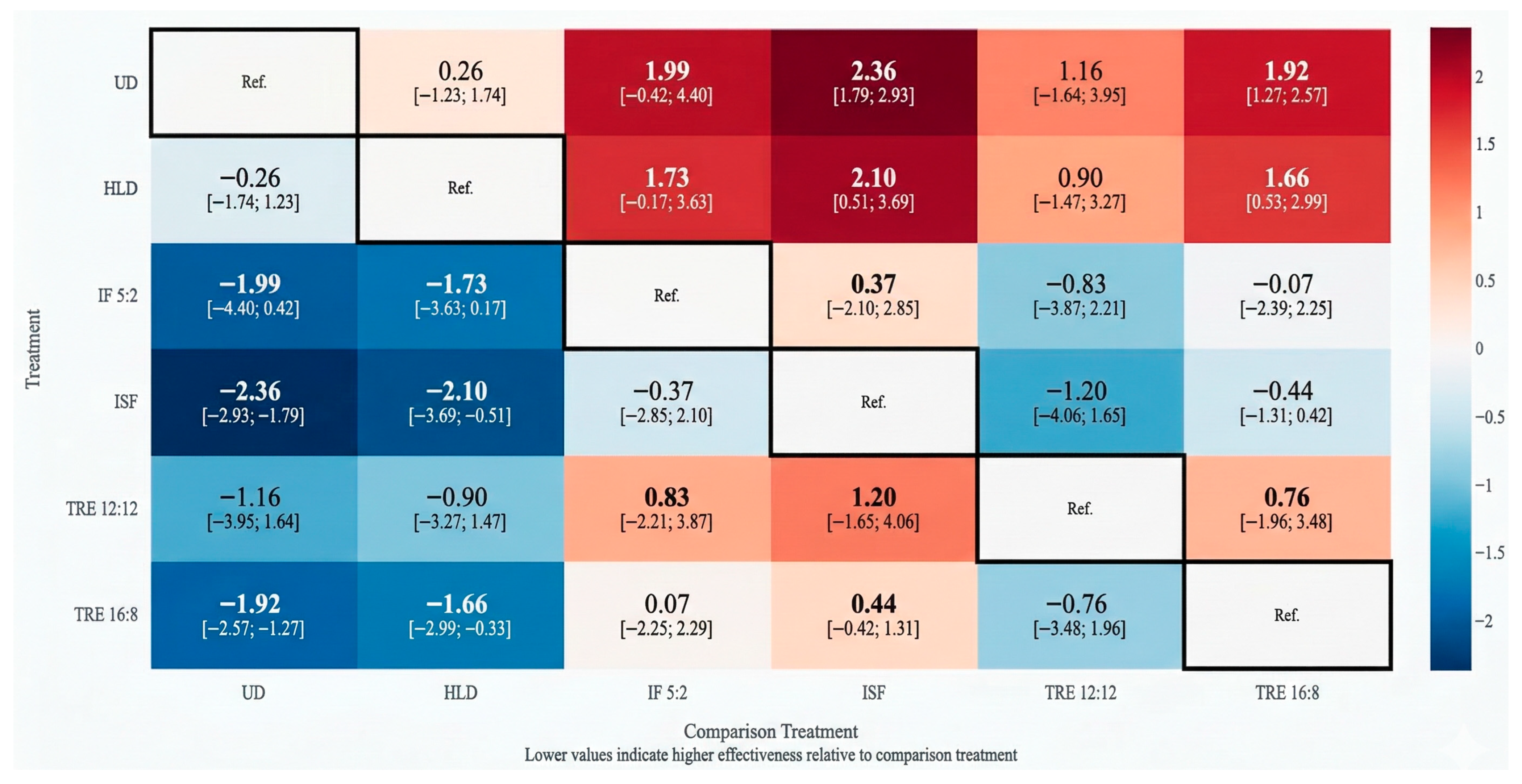
| TRE 16:8 | −1.92 | −2.57; −1.27 | −5.79 | <0.0001 |
| TRE 12:12 | −1.16 | −3.95; 1.64 | −0.81 | 0.418 |
| ISF | −2.36 | −2.94; −1.79 | −8.06 | <0.0001 |
| IF 5:2 | −1.99 | −4.40; 0.42 | −1.62 | 0.106 |
| HLD | −0.26 | −1.74; 1.23 | −0.34 | 0.734 |
| UD | Ref. | Ref. | Ref. | Ref. |
| P-Score Ranking Table | |||
|---|---|---|---|
| Weight Loss | BMI Loss | ||
| Intervention | P-Score | Intervention | P-Score |
| ISF | 0.850 | TRE 16:8 | 0.751 |
| IF 5:2 | 0.704 | IF 5:2 | 0.729 |
| TRE 16:8 | 0.667 | ISF | 0.618 |
| TRE 12:12 | 0.471 | TRE 12:12 | 0.499 |
| HLD | 0.182 | HLD | 0.259 |
| UD | 0.126 | UD | 0.143 |
| BMI (kg/m2) | ||||
|---|---|---|---|---|
| Intervention | MD | 95% CI | z | p-Value |
| TRE 16:8 | −1.01 | −1.69; −0.33 | −2.90 | 0.004 |
| TRE 12:12 | −0.61 | −2.52; 1.30 | −0.63 | 0.530 |
| ISF | −0.81 | −1.43; −0.19 | −2.55 | 0.011 |
| IF 5:2 | −1.04 | −2.61; 0.53 | −1.30 | 0.193 |
| HLD | −0.24 | −1.44; 0.96 | −0.40 | 0.693 |
| UD | Ref. | Ref. | Ref. | Ref. |
Disclaimer/Publisher’s Note: The statements, opinions and data contained in all publications are solely those of the individual author(s) and contributor(s) and not of MDPI and/or the editor(s). MDPI and/or the editor(s) disclaim responsibility for any injury to people or property resulting from any ideas, methods, instructions or products referred to in the content. |
© 2026 by the authors. Licensee MDPI, Basel, Switzerland. This article is an open access article distributed under the terms and conditions of the Creative Commons Attribution (CC BY) license.
Share and Cite
Couto-Alfonso, S.; Cenit, M.C.; Sanz-Pérez, C.M.; Iguacel, I. Intermittent Fasting and Healthy Aging in Older Adults: A Systematic Review of Cardiometabolic, Mental Health and Cognitive Outcomes with a Network Meta-Analysis of Anthropometric Measures. Nutrients 2026, 18, 1450. https://doi.org/10.3390/nu18091450
Couto-Alfonso S, Cenit MC, Sanz-Pérez CM, Iguacel I. Intermittent Fasting and Healthy Aging in Older Adults: A Systematic Review of Cardiometabolic, Mental Health and Cognitive Outcomes with a Network Meta-Analysis of Anthropometric Measures. Nutrients. 2026; 18(9):1450. https://doi.org/10.3390/nu18091450
Chicago/Turabian StyleCouto-Alfonso, Sergio, María Carmen Cenit, Cristina María Sanz-Pérez, and Isabel Iguacel. 2026. "Intermittent Fasting and Healthy Aging in Older Adults: A Systematic Review of Cardiometabolic, Mental Health and Cognitive Outcomes with a Network Meta-Analysis of Anthropometric Measures" Nutrients 18, no. 9: 1450. https://doi.org/10.3390/nu18091450
APA StyleCouto-Alfonso, S., Cenit, M. C., Sanz-Pérez, C. M., & Iguacel, I. (2026). Intermittent Fasting and Healthy Aging in Older Adults: A Systematic Review of Cardiometabolic, Mental Health and Cognitive Outcomes with a Network Meta-Analysis of Anthropometric Measures. Nutrients, 18(9), 1450. https://doi.org/10.3390/nu18091450