


Abstract
Background/Objectives: People with opioid dependence often experience elevated inflammatory markers and poor dietary habits. Evidence from other populations suggests that higher fruit and vegetable intake may reduce inflammation. This multicenter randomized controlled trial investigates whether offering a daily supplementation of 250 mL of fruit smoothie for 16 weeks to people undergoing opioid agonist treatment (OAT) can reduce inflammation biomarkers. Methods: 319 individuals were randomized to receive either a daily supplement of 250 mL of fruit smoothie in addition to standard OAT or standard OAT alone over 16 weeks. The primary outcome was the log-transformed change in high-sensitivity C-reactive protein (hs-CRP). Secondary outcomes included changes in cytokines (IL-8, IL-1RA, and MCP-1) and leukocyte counts. Results: No between-group differences were observed in changes in hs-CRP levels (0.96 (0.77; 1.21) mg/L), leukocytes (0.99 (0.93; 1.05)109/L), IL-8 (1.10 (0.84; 1.46) pg/mL), MCP-1 (0.94 (0.80; 1.11) pg/mL), and IL-1RA (1.06 (0.91; 1.23) pg/mL). High levels of inflammatory markers were observed at baseline in both the intervention group and the control group. Conclusions: After 16 weeks of offering fruit smoothie supplementation in patients receiving OAT, we did not detect a between-group reduction in inflammation markers such as hs-CRP, IL-8, MCP-1, IL-1RA, and leukocyte counts, under the achieved level of delivery and exposure. Nonetheless, persistently high levels of inflammatory markers were observed in this study.
1. Introduction
Opioid dependence (OD) is associated with several serious adverse health outcomes, including infectious diseases such as hepatitis C virus and human immunodeficiency virus, as well as an increased risk of overdose and death [1]. Chronic opioid use also has numerous nutritional consequences, placing this population at high risk of malnutrition [2]. Opioid agonist treatment (OAT) is the most effective treatment for managing OD [1,2]. However, despite receiving OAT, individuals with OD continue to experience a substantially higher burden of morbidity than the general population.
Among the various physiological processes affected by opioid use, chronic opioid exposure has been shown to modulate immune function, particularly inflammatory responses [3]. These effects may arise indirectly through bacterial metabolites associated with injecting substances or through direct interaction between opioid receptors expressed on immune cells [4]. The effects of OAT on inflammatory biomarkers have also been investigated, although findings remain inconsistent. Some studies have reported significant reductions in inflammatory biomarkers among individuals receiving methadone or buprenorphine [5], whereas others suggest that these medications may promote oxidative stress [6]. Although acute inflammation is an essential protective response that contributes to the restoration of physiological homeostasis, persistent or chronic inflammation is considered unfavorable. Prolonged inflammatory activity may disrupt normal physiological processes and has been linked to an increased risk of several chronic diseases, including type 2 diabetes, cardiovascular disease, and cancer [7].
Opioid use has been associated with unhealthy eating behaviors, potentially due to elevated dopamine levels that suppress appetite and reduce interest in food. This may lead to decreased overall food intake or a shift towards unhealthy dietary choices [2]. Previous studies have reported particularly low fruit and vegetable consumption among individuals receiving OAT [8,9]. A recent systematic review and meta-analysis found that higher fruit and vegetable intake was associated with lower levels of pro-inflammatory mediators and improvements in immune cell profiles across various diseases and health conditions [10]. Furthermore, studies involving individuals with depression have demonstrated the potential of dietary interventions to improve mental health outcomes [11,12], which have also been linked to inflammatory processes [13]. Intervention studies using antioxidant-rich foods have also shown a change in blood cell gene expression linked with cellular protection [14]. Taken together, these findings suggest that fruit smoothies may represent a promising dietary intervention to reduce chronic inflammation among individuals with OD. Therefore, this randomized controlled trial aims to investigate whether offering a daily supplementation of 250 mL fruit smoothie over 16 weeks reduces chronic inflammation in individuals receiving OAT, as measured by changes in inflammation biomarkers.
2. Materials and Methods
Study design and setting: This multicenter, individually randomized controlled trial was conducted at seven OAT clinics in Bergen and Stavanger, Norway, between April 2022 and October 2023. The study protocol has been published, and a detailed statistical analysis plan was developed prior to data handling [15]. The target population comprised individuals diagnosed with opioid dependence syndrome according to the International Statistical Classification of Diseases and Related Health Problems, 10th Revision (ICD-10), who were receiving OAT at the time of enrolment [16]. Written informed consent was obtained from all eligible participants before enrolment. The study protocol was approved by the South-Eastern Regional Ethical Committee (155386/REK-B, dated 23.09.2020/03.12.2021/05.04.2022). The results are reported in accordance with the Consolidated Standards of Reporting Trials (CONSORT) guidelines.
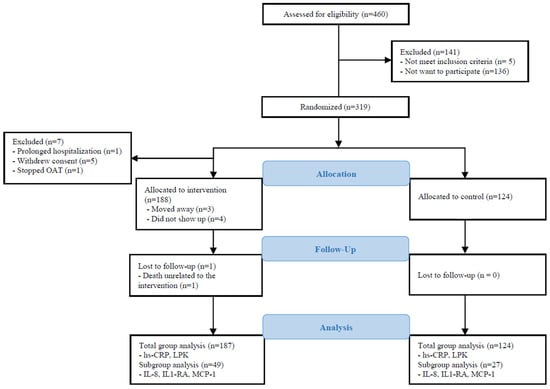
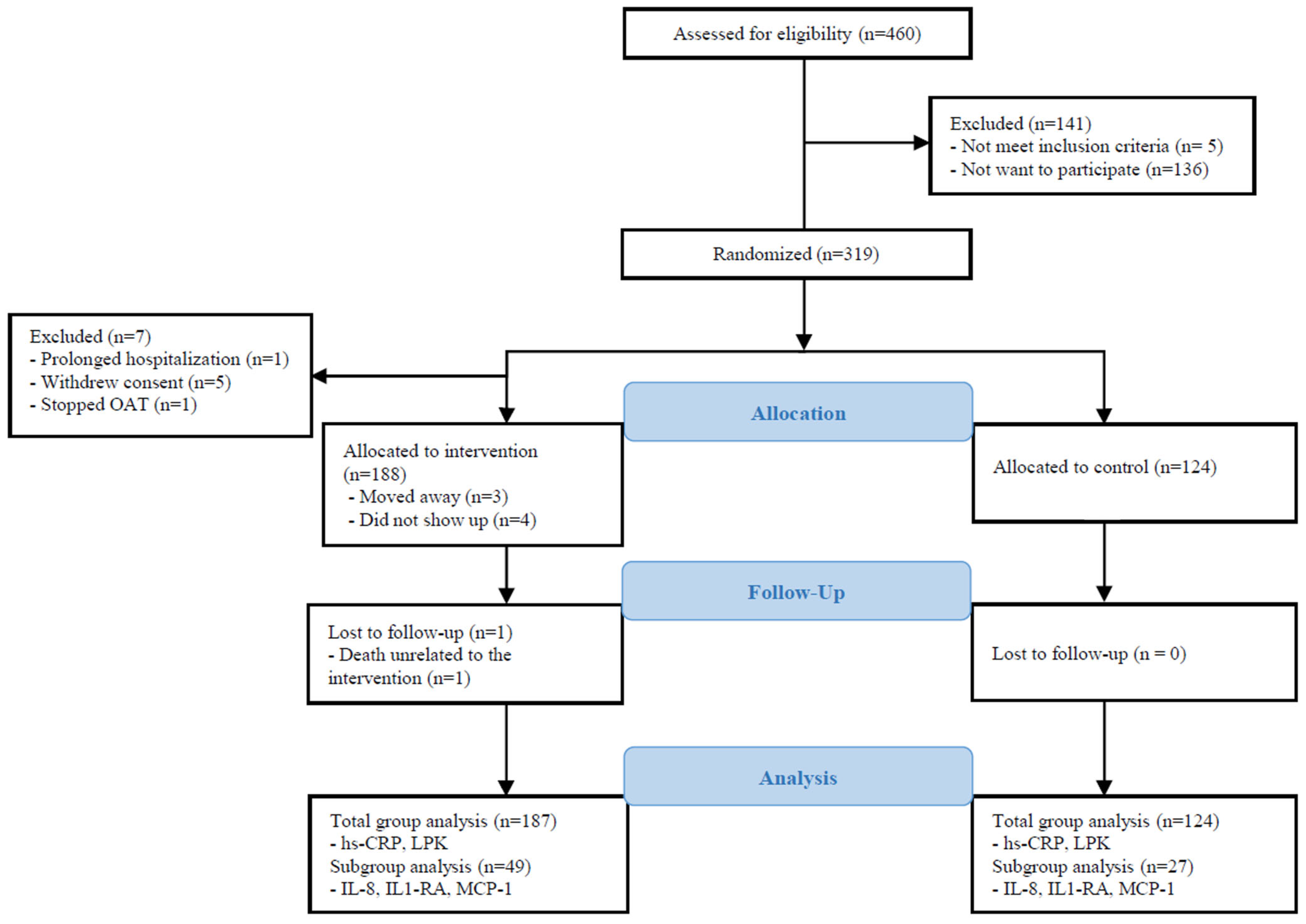
Participants: This study was conducted as part of the ATLAS4LAR project, which aims to improve the well-being of individuals receiving OAT, with particular focus on lifestyle factors [17,18,19,20]. Participants were recruited during annual health assessments at the participating clinics. The inclusion criteria were receiving OAT with weekly outpatient follow-up and reporting intake of less than five servings per day of fruits or vegetables. Exclusion criteria were known allergies or a history of anaphylactic reactions to fruits or vegetables, as well as poorly regulated type 1 or type 2 diabetes mellitus, defined according to national guidelines by an HbA1c level ≥ 54 mmol/mol [21]. A total of 460 individuals were assessed for eligibility, of whom 319 met the inclusion criteria and were randomized to either the intervention group (n = 195), receiving 250 mL fruit smoothie supplement, or the control group (n = 124), receiving standard care for 16 weeks (Figure 1).
Figure 1.
Flow chart for the patient recruitment and data selection process.
Of the 195 participants allocated to the intervention group, seven withdrew before the baseline visit, and one was lost to follow-up. Consequently, 187 participants in the intervention group and 124 participants in the control group were included in the final analysis of high-sensitivity C-reactive protein (hs-CRP) and leukocyte count. A subgroup of participants was additionally randomized to provide dried blood spot samples for the assessment of interleukin 8 (IL-8), interleukin-1 receptor antagonist (IL-1RA) and monocyte chemoattractant protein-1 (MCP-1). This subgroup comprised 76 participants, of whom 49 were in the intervention group, and 27 were in the control group.
Randomization and masking: Eligible patients were randomized to either the intervention or control group using an allocation ratio of 5:3. This ratio was changed from the 1:1 allocation specified in the initial protocol following the identification of a coding error in the randomization algorithm, as described in the revised protocol [22]. Randomization was performed using the CheckWare data entry system (CheckWare, Trondheim, Norway), which automatically assigned concealed identification numbers to each participant. One researcher not involved in the data collection (LTF) and one randomization assistant had access to the randomization list. A subgroup of participants was randomized to dried blood spot testing with a 1:4 allocation ratio among trial participants.
Blinding: Although full blinding of the participants was not feasible in this trial, participants were not informed of the specific hypothesis or the nature of the intervention provided to the other group. The data analyst (JHV) remained blinded to group allocation until the analyses were completed. Study nurses were instructed not to document or disclose participants’ randomization status. Furthermore, participants were not informed about follow-up procedures in the other group.
Sample size: This paper reports secondary outcome measures from the FruktBAR study, for which the original sample size calculation was based on the primary outcome of the trial. Additional power calculation was performed for hs-CRP, the primary outcome measure in the present analysis, and one of the cytokines, IL-8. The study had 72% statistical power to detect a 40% relative reduction in hs-CRP levels compared with the baseline levels observed in the control group (8.5; SD = 11.6). For IL-8, the study had 51% power to detect a 50% relative reduction compared with the baseline levels observed in the control group (165; SD = 176).
Intervention: Participants in the intervention group received a daily 250 mL fruit smoothie supplement for 16 weeks. The smoothies comprised four different commercially available products from BAMA Gruppen AS (Bendit) in Norway, purchased through a regular supplier without any financial support or other contributions from the manufacturer. The nutritional composition of each smoothie type is presented in Table S1. Participants received seven bottles of smoothie each week during their daily visits to the outpatient clinic to collect their OAT medication and were instructed to consume one bottle per day. A selection of the four smoothie varieties was provided, and participants could choose products according to their personal preferences. Adherence to the intervention was assessed through weekly self-reports, in which participants reported the number of smoothies consumed during the preceding week.
Control: Participants in the control group received standard follow-up care at their respective OAT clinics and did not receive fruit smoothie supplementation.
OAT clinic follow-up: In the OAT clinics, patients receive methadone, buprenorphine, or morphine sulphate as part of their OAT, either as directly observed therapy or as take-home doses. The number of take-home doses of OAT per week ranges from one to six (determined based on factors such as concurrent use of illicit substances, mental and physical comorbidities, and treatment adherence). During the COVID-19 pandemic, medication was usually delivered to patients’ homes by OAT staff. Each patient is assigned a primary therapist (typically a nurse or social worker) and is offered at least one health assessment conducted by a physician and nurse. The OAT clinics maintain close collaboration with patients’ primary care physicians, municipal social workers, and other municipal and peer organizations for persons with substance dependence. Additional information on OAT clinics is provided in Text S1.
Outcomes and assessments: The main outcome of the study was the change in hs-CRP levels from baseline to the end of the 16-week intervention. Secondary outcomes included changes in IL-8, IL-1RA, MCP-1, and leukocyte count. Non-fasting venous blood samples were collected from all study participants at baseline and at the end of the intervention to measure hs-CRP and leukocyte count. Samples from participants in Bergen were analyzed at the Department of Medical Biochemistry and Pharmacology, Haukeland University Hospital, while those from Stavanger were analyzed at the Department of Medical Biochemistry, Stavanger University Hospital. Both laboratories are certified according to NS-EN-ISO 15189:2022 standard [23]. In addition, non-fasting dried blood spot samples were collected from a subgroup of participants (n = 76) to assess IL-8, IL-1RA, and MCP-1 levels. A detailed description of the dried blood spot sampling and laboratory analysis is provided in Text S2.
Statistical analysis: All statistical analyses were conducted using Stata/SE17 (StataCorp, College Station, TX, USA), while data visualization was performed in R (version 2024.04.02+764) using the Tidyverse package (version 2.0.0). The significance threshold was p < 0.05. Modified intention-to-treat analysis was performed using data from all randomized participants, while per-protocol analysis included patients who received at least 75% of the offered fruit smoothies. Participants without a baseline blood sample were excluded from the analysis. Missing data at the end of treatment or blood samples collected ≥28 days after the end of treatment were handled using baseline values carried forward. For each log-transformed outcome variable, linear mixed models with restricted maximum likelihood estimation were performed to assess the difference between groups in change from baseline to end of treatment. The mixed-effects model was fitted to the repeated baseline and end-of-treatment (EOT) measurements. The outcome variable was expressed as log-transformed change relative to baseline, but observations at both time points were included in the model. Fixed effects included time, treatment group, and the time-by-treatment interaction, while participant ID was included as a random intercept to account for within-subject correlation arising from repeated measurements. Variables were log-transformed for statistical analysis. Baseline and end-of-treatment values are presented as geometric means (geometric standard deviations), while between-group comparisons are presented as geometric mean ratios with 95% confidence intervals. All results are back-transformed to the original scale for presentation.
3. Results
3.1. Baseline Demographics
In the intervention group, the mean age was 47 (SD 11) years, and the mean body mass index was 26 (SD 6) kg/m2 (Table 1). The majority of patients were male (70%), and 55% were receiving buprenorphine as their OAT medication. Many of the patients reported substance use within the last 30 days, including opioids (23%), alcohol (50%), stimulants (33%), benzodiazepines (47%), and cannabis (60%). Additionally, 12% reported injecting substances at least once per week. Most participants had an intake of fruits and vegetables below two servings per day (70%), and only 4% reported a high intake, defined as 4 or more servings per day. The majority of participants reported having high psychological distress (70%). A total of 54% had less than ten years of formal education, while 96% reported income sources other than paid work. Baseline demographics of the control group were similar. Baseline demographics for the subgroup of participants who provided dried blood spot samples are presented in Table S2.
Table 1.
Baseline demographics.
3.2. Inflammation Biomarkers
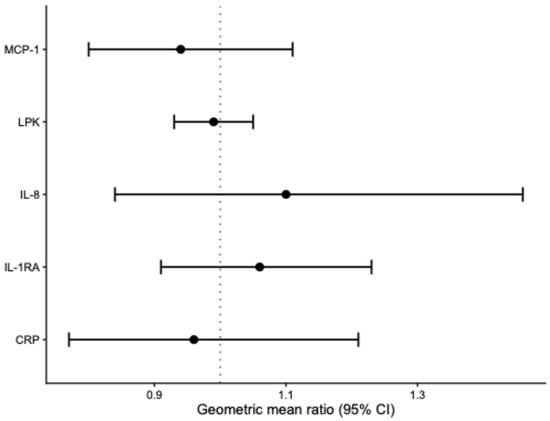
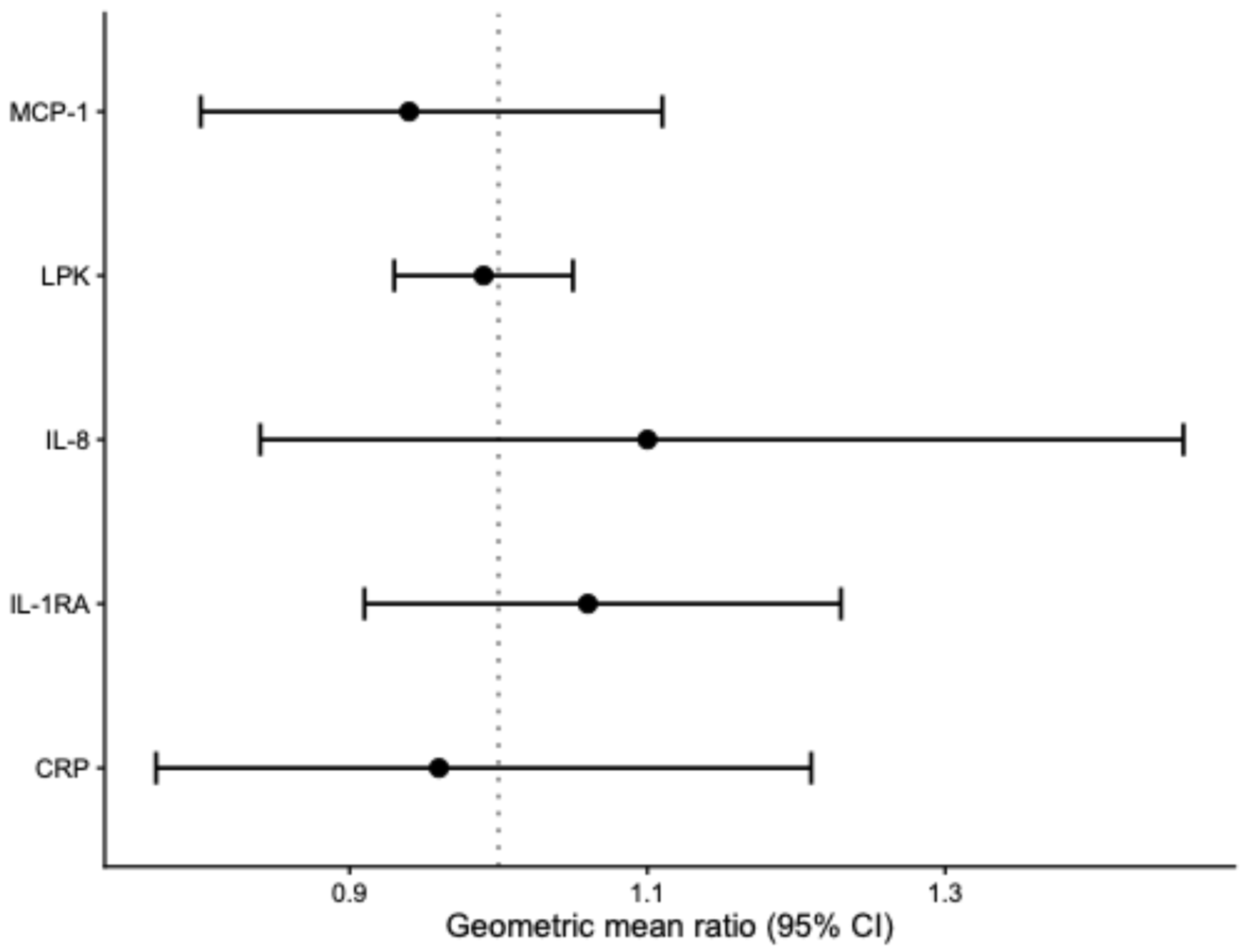
Following 16 weeks of offering fruit smoothie supplementation, there were no differences in inflammatory biomarkers when comparing change from baseline to end of treatment between the intervention and the control group: hs-CRP levels (0.96 (0.77; 1.21) mg/L), leukocytes (0.99 (0.93; 1.05)109/L), IL-8 (1.10 (0.84; 1.46) pg/mL), MCP-1 (0.94 (0.80; 1.11) pg/mL) and IL-1RA (1.06 (0.91; 1.23) pg/mL) (Figure 2 and Table 2). High levels of inflammatory markers were observed at baseline in both the intervention group and the control group.
Figure 2.
The change difference across groups and corresponding 95% confidence intervals for inflammation biomarkers. CRP: high-sensitivity C-reactive protein; IL-8: interleukin-8; IL-1RA: interleukin-1 receptor antagonist; MCP-1: monocyte chemoattractant protein-1; and LPK: leukocyte count.
Table 2.
Results from the modified intention-to-treat analysis showing the geometric mean (geometric standard deviation (%) at baseline and end of treatment (EOT) for the intervention and control groups, in addition to the change-difference across groups after 16 weeks of the intervention period. The two groups were compared using linear mixed models.
Similar results were seen in the per-protocol analyses for patients receiving more than 75% of fruit smoothies (Table S3). The percentage of smoothie bottles delivered to the intervention group was 88% (Figure S1), and the mean number of smoothies consumed per week was 3.9 (SD: 1.5) among those who received 75% or more of the offered smoothie bottles (Figure S2).
4. Discussion
This randomized controlled multicenter study assessed the effect of offering daily supplementation with 250 mL fruit smoothie for 16 weeks on inflammatory biomarkers among patients receiving OAT. No statistically significant between-group differences in reductions in inflammatory markers were observed. However, inflammatory marker concentrations remained notably elevated throughout the study. To our knowledge, this is the first trial to investigate the effects of offering fruit smoothie supplementation on inflammatory markers in individuals receiving OAT. A previous study has shown that both buprenorphine and methadone may induce oxidative stress, with patients receiving these medications exhibiting significantly higher hs-CRP levels compared to healthy controls [6]. Conversely, a systematic review has challenged these findings, suggesting that maintenance therapy with buprenorphine and methadone may reduce chronic inflammation and oxidative stress [5]. Consistent with previous research reporting dysregulation of inflammatory biomarkers among people with opioid use disorder, our findings suggest that elevated inflammatory markers may persist among individuals receiving OAT, highlighting the need for further research into the inflammatory burden in this population [5]. Interestingly, CRP and LPK levels showed slight increases from baseline to end of treatment in both the intervention and control groups. However, the between-group differences in change were not statistically significant, suggesting that the intervention did not produce a demonstrably different effect on these markers compared with the control condition. The observed increases may reflect temporal variation or other factors unrelated to the intervention, including infections such as COVID-19, although the underlying reasons cannot be established from these findings alone.
Fruit and vegetable consumption has been associated with reduced inflammatory markers in both observational studies and clinical trials across populations with various diseases and conditions [10]. Although several compounds found in fruits and vegetables exhibit antioxidant properties that may contribute to their anti-inflammatory effects by mitigating oxidative stress and modulating inflammatory pathways, the specific compounds responsible and the underlying mechanisms remain incompletely understood. Nevertheless, various compounds have been identified as contributing to the antioxidant capacity of fruits and vegetables, potentially influencing pathways in oxidative stress and inflammation [24,25,26]. In the Oslo Antioxidant study, an 8-week intervention with the provision of kiwi or antioxidant-rich meals among people smoking tobacco resulted in changes in gene expression related to cellular protective mechanisms [14]. However, a study involving patients with chronic obstructive pulmonary disease found that a 12-week increase in fruit and vegetable intake did not significantly alter markers of airway or systemic oxidative stress and inflammation [27]. In the FruktBAR study, no significant differences in carotenoid levels were observed between the intervention and control group. However, carotenoids may not be an ideal biomarker of intake for the specific fruits used in the smoothies in our trial. It is also important to note that isolating the specific effects of dietary interventions on inflammation is inherently challenging, as inflammation is a multifactorial process influenced by a range of factors beyond diet, including stress, sleep, physical activity, infections, and environmental exposures [7,28].
To enable comparison between cytokine concentrations measured in dried blood spots in our study and those measured in plasma in previous studies, we applied a correction factor of 2 to the cytokine concentrations, as recommended by previous research [29]. Following this adjustment, IL-1RA levels in our study were nearly three times higher than those reported in a study linking opium use to elevated IL-1RA levels in people with coronary artery disease [30]. Similarly, IL-8 levels in our study were approximately fourteen times higher than those reported by Wang et al. (2023), who investigated associations between inflammatory cytokines and substance use in patients with opioid and stimulant use disorders [31]. The agreement between cytokine concentrations measured in dried blood spots and plasma samples has been examined by McDade and colleagues, who found high agreement for most cytokines, with the notable exception of IL-8. In their study, IL-8 concentrations measured in dried blood spot samples were substantially higher than those in matched plasma samples, suggesting a potential measurement bias [32]. One possible explanation is that DBS samples contain red blood cells that have high concentrations of cytokines such as IL-8 [33], and we wonder if this could explain the high values of inflammation markers measured using dried blood spots in our trial. In addition, the prolonged storage of non-filtered blood may have contributed to the elevated IL-1RA levels [34].
The current trial has several strengths, including its design and the recruitment of individuals who are often difficult to reach through traditional healthcare settings. In addition, the use of dried blood spots to measure inflammatory markers, such as cytokines, offers several advantages, including minimally invasive sampling and ease of collection [29,35,36,37]. However, there are also limitations to this trial. First, only a subgroup of 76 participants was allocated to dried blood spot sampling, providing data on IL-8, MCP-1, and IL-1RA. This reduced the statistical power to detect between-group differences in these outcomes. Second, blood samples were not consistently collected on the exact start and end dates of the intervention. In some cases, end-of-treatment samples were collected after completion of the intervention, potentially introducing variability in biomarker levels unrelated to the intervention itself. Third, many of the variables collected in this study, including fruit and vegetable intake, substance use, and living situation, were self-reported. This increased the risk of recall bias and may compromise data accuracy. Fourth, the small volume of blood collected by dried blood spot sampling, combined with the low concentration of cytokines in capillary blood, may have contributed to a high proportion of cytokine measurements falling below the lower limit of quantification. This limitation reduced the number of inflammatory markers available for statistical analysis and may have affected the study’s ability to detect changes. The statistical power to detect relevant changes for the cytokines was 51% and slightly below what is expected for primary outcomes, but the analytic power for C-reactive protein was 72%, which can be considered satisfactory. Finally, both qualitative data and some of the fruit smoothie consumption data suggest possible intervention leakage, whereby participants in the intervention group may have shared fruit smoothies with participants in the control group [19]. This may have reduced the ability to detect the effects of the intervention.
5. Conclusions
This study showed that a 16-week fruit smoothie supplementation intervention in patients receiving OAT did not detect a between-group reduction in inflammation markers such as hs-CRP, IL-8, MCP-1, IL-1RA, and leukocyte counts for people receiving OAT under the achieved level of delivery and exposure. However, for the cytokines, this must be interpreted with caution due to the insufficient sample size. Nevertheless, inflammatory marker concentrations remained elevated throughout the study period. Self-reported consumption data suggest suboptimal consumption of the fruit smoothies, even though most patients received nearly all of the planned fruit smoothies. These findings highlight the challenges of addressing inflammation in the OAT population and suggest that future studies should explore other interventions targeting unhealthy eating that may also modulate chronic inflammation in individuals receiving OAT.
Supplementary Materials
The following supporting information can be downloaded at https://www.mdpi.com/article/10.3390/nu18213623/s1. Table S1: Nutrient content per 250ml of the BAMA fruit smoothies; Text S1: Description of OAT clinics; Text S2: Description of the handling and analysis of Dried Blood Spots; Text S3: Defining cut-off values for hs-CRP and leukocyte count; Table S2: Baseline demographics for the subgroup analysis of dried blood spots; Table S3: Results from the per protocol analysis showing; Figure S1: Percentage of frequency of delivery of smoothies; Figure S2: Average number of smoothie bottles consumed per week.
Author Contributions
All authors except L.M.T. and E.J.A. were involved in the study’s design. L.M.T. and J.H.V. led the data handling and analysis. L.M.T. wrote the first draft and led the writing process. L.T.F. supervised the study, and all authors contributed to the writing process and approved the final manuscript. All authors have read and agreed to the published version of the manuscript.
Funding
This study is funded by the Western Norway Regional Health Authority («Strategiske forskningsmidler» through the ATLAS4LAR project—3 August 2020 to 31 December 2029). The funders had no role in the study design, data collection and analysis, decision to publish, or preparation of the manuscript. L.M.T. received funding from the D.A.M. foundation.
Institutional Review Board Statement
The study was conducted in accordance with the Declaration of Helsinki and approved by the South-Eastern Regional Ethical Committee (155386/REK-B, dated 23.09.2020/03.12.2021/05.04.2022). The study protocol was registered on ClinicalTrials.gov (trial registration number NCT05229770; registration date: 8 February 2022).
Informed Consent Statement
Written informed consent was obtained from all eligible participants prior to enrolment.
Data Availability Statement
Data will be provided upon reasonable request.
Acknowledgments
We acknowledge the devoted clinical staff and user groups for their essential contributions during the planning of the project, as well as the involved participants. We also thank all participating investigators in ATLAS4LAR and FruktBAR (listed alphabetically by surname). Bergen: Vibeke Bråthen Buljovcic, Siv-Elin Leirvåg Carlsen, Jan Tore Daltveit, Tine Berger Edvardsdal, Karl Trygve Druckrey-Fiskaaen, Lars T. Fadnes (principal investigator), Trude Fondenes, Per Gundersen, Anne Eriksen Hammer, Else-Marie Løberg, Mette Hegland Nordbotn, Maria Olsvold, Marianne Cook Pierron, Kristin Sannerud, Christine Sundal, Beate Haga Trettenes and Jørn Henrik Vold. Stavanger: Maren Borsheim Bergsaker, Tine Selmer Cruickshank, Eivin Dahl, Tone Lise Eielsen, Torhild Fiskå, Einar Furulund, Eirik Holder, Torgeir Gilje Lid, Tesfaye Madebo, Mari Soot Thoresen and Ewa Joanna Wilk. Oslo: Rune Blomhoff and Hege Berg Henriksen.
Conflicts of Interest
The authors declare no conflicts of interest. The funders had no role in the design of the study; in the collection, analyses, or interpretation of data; in the writing of the manuscript; or in the decision to publish the results.
Abbreviations
The following abbreviations are used in this manuscript:
| CONSORT | Consolidated Standards of Reporting Trials guidelines |
| hs-CRP | high-sensitivity C-reactive protein |
| IL8 | interleukin |
| IL-IRA | interleukin-1 receptor antagonist |
| ICD-10 | International Statistical Classification of Diseases and Related Health Problems, 10th Revision |
| MCP-1 | monocyte chemoattractant protein-1 |
| OAT | opioid agonist treatment |
| OD | opioid dependence |
| SD | standard deviation |
References
- Degenhardt, L.; Grebely, J.; Stone, J.; Hickman, M.; Vickerman, P.; Marshall, B.D.L.; Bruneau, J.; Altice, F.L.; Henderson, G.; Rahimi-Movaghar, A.; et al. Global patterns of opioid use and dependence: Harms to populations, interventions, and future action. Lancet 2019, 394, 1560–1579. [Google Scholar] [CrossRef] [Scilit] [PubMed]
- Chavez, M.N.; Rigg, K.K. Nutritional implications of opioid use disorder: A guide for drug treatment providers. Psychol. Addict. Behav. 2020, 34, 699–707. [Google Scholar] [CrossRef] [Scilit] [PubMed]
- Chan, Y.Y.; Yang, S.N.; Lin, J.C.; Chang, J.L.; Lin, J.G.; Lo, W.Y. Inflammatory response in heroin addicts undergoing methadone maintenance treatment. Psychiatry Res. 2015, 226, 230–234. [Google Scholar] [CrossRef] [Scilit] [PubMed]
- Jalodia, R.; Abu, Y.F.; Oppenheimer, M.R.; Herlihy, B.; Meng, J.; Chupikova, I.; Tao, J.; Ghosh, N.; Dutta, R.K.; Kolli, U.; et al. Opioid Use, Gut Dysbiosis, Inflammation, and the Nervous System. J. Neuroimmune Pharmacol. 2022, 17, 76–93. [Google Scholar] [CrossRef] [Scilit] [PubMed]
- Bryant, B.M.; Eaton, E.; Li, L. A Systematic Review of Opioid Use Disorder and Related Biomarkers. Front. Psychiatry 2021, 12, 708283. [Google Scholar] [CrossRef] [Scilit] [PubMed]
- Arezoomandan, M.; Zhiani, R.; Mehrzad, J.; Motavalizadehkakhky, A.; Eshrati, S.; Arezoomandan, R. Inflammatory, oxidative stress and cognitive functions in patients under maintenance treatment with methadone or buprenorphine and healthy subjects. J. Clin. Neurosci. 2022, 101, 57–62. [Google Scholar] [CrossRef] [Scilit] [PubMed]
- Furman, D.; Campisi, J.; Verdin, E.; Carrera-Bastos, P.; Targ, S.; Franceschi, C.; Ferrucci, L.; Gilroy, D.W.; Fasano, A.; Miller, G.W.; et al. Chronic inflammation in the etiology of disease across the life span. Nat. Med. 2019, 25, 1822–1832. [Google Scholar] [CrossRef] [Scilit] [PubMed]
- Al-Shibli, M.K.; Fadnes, L.T.; Henriksen, H.B.; Arjmand, E.J.; Thomassen, L.M.; Lid, T.G.; Carlsen, S.-E.L. Experiences with healthy eating among individuals with opioid dependence: Insights from a dietary assessment. BMC Nutr. 2025, 11, 111. [Google Scholar] [CrossRef] [Scilit] [PubMed]
- Saeland, M.; Haugen, M.; Eriksen, F.L.; Wandel, M.; Smehaugen, A.; Böhmer, T.; Oshaug, A. High sugar consumption and poor nutrient intake among drug addicts in Oslo, Norway. Br. J. Nutr. 2011, 105, 618–624. [Google Scholar] [CrossRef] [Scilit] [PubMed]
- Hosseini, B.; Berthon, B.S.; Saedisomeolia, A.; Starkey, M.R.; Collison, A.; Wark, P.A.B.; Wood, L.G. Effects of fruit and vegetable consumption on inflammatory biomarkers and immune cell populations: A systematic literature review and meta-analysis. Am. J. Clin. Nutr. 2018, 108, 136–155. [Google Scholar] [CrossRef] [Scilit] [PubMed]
- Parletta, N.; Zarnowiecki, D.; Cho, J.; Wilson, A.; Bogomolova, S.; Villani, A.; Itsiopoulos, C.; Niyonsenga, T.; Blunden, S.; Meyer, B.; et al. A Mediterranean-style dietary intervention supplemented with fish oil improves diet quality and mental health in people with depression: A randomized controlled trial (HELFIMED). Nutr. Neurosci. 2019, 22, 474–487. [Google Scholar] [CrossRef] [Scilit] [PubMed]
- Jacka, F.N.; O’Neil, A.; Opie, R.; Itsiopoulos, C.; Cotton, S.; Mohebbi, M.; Castle, D.; Dash, S.; Mihalopoulos, C.; Chatterton, M.L.; et al. A randomised controlled trial of dietary improvement for adults with major depression (the ‘SMILES’ trial). BMC Med. 2017, 15, 23. [Google Scholar] [CrossRef] [Scilit] [PubMed]
- Mac Giollabhui, N.; Ng, T.H.; Ellman, L.M.; Alloy, L.B. The longitudinal associations of inflammatory biomarkers and depression revisited: Systematic review, meta-analysis, and meta-regression. Mol. Psychiatry 2021, 26, 3302–3314. [Google Scholar] [CrossRef] [Scilit] [PubMed]
- Bøhn, S.K.; Myhrstad, M.C.; Thoresen, M.; Holden, M.; Karlsen, A.; Tunheim, S.H.; Erlund, I.; Svendsen, M.; Seljeflot, I.; Moskaug, J.O.; et al. Blood cell gene expression associated with cellular stress defense is modulated by antioxidant-rich food in a randomised controlled clinical trial of male smokers. BMC Med. 2010, 8, 54. [Google Scholar] [CrossRef] [Scilit] [PubMed]
- Fadnes, L.T.; Furulund, E.; Druckrey-Fiskaaen, K.T.; Madebo, T.; Vold, J.H.; Olsvold, M.; Pierron, M.C.; Carlsen, S.-E.L.; Blomhoff, R.; Lid, T.G.; et al. Effect of fruit smoothie supplementation on psychological distress among people with substance use disorders receiving opioid agonist therapy: Protocol for a randomised controlled trial (FruktBAR). BMC Nutr. 2022, 8, 97. [Google Scholar] [CrossRef] [Scilit] [PubMed]
- World Health Organization. International Statistical Classification of Diseases and Related Health Problems, Tenth Revision. Available online: https://icd.who.int/browse10/2019/en (accessed on 20 March 2025).
- BergenAddictionResearchGroup-BAR. ATLAS4LAR: Kartlegging og Behandling av Lungesykdom i Legemiddelassistert Behandling. Available online: https://www.helse-bergen.no/en/departments2/rusmedisin/substance-abuse-medicine-research-section/#read-more-about-research-substance-abuse-and-addiction-clinic (accessed on 26 May 2025).
- Vold, J.H.; Furulund, E.; Druckrey-Fiskaaen, K.T.; Arjmand, E.J.; Madebo, T.; Dyrstad, S.M.; Lid, T.G.; Fadnes, L.T. Effectiveness of offering an integrated exercise intervention for psychological distress in patients receiving opioid agonist therapy: A randomised controlled trial. PREPRINT (Version 1). Res. Sq. 2026. [Google Scholar] [CrossRef] [Scilit] [PubMed]
- Javadi Arjmand, E.; Thomassen, L.M.; Druckrey-Fiskaaen, K.T.; Furulund, E.; Vold, J.H.; Madebo, T.; Blomhoff, R.; Daltveit, J.T.; Henriksen, H.B.; Chalabianloo, F.; et al. The effect of fruit smoothie supplementation on psychological distress and biomarkers among people with opioid dependence receiving opioid agonist therapy: A randomized controlled trial. BMC Med. 2025, 23, 505. [Google Scholar] [CrossRef] [Scilit] [PubMed]
- Druckrey-Fiskaaen, K.T.; Madebo, T.; Daltveit, J.T.; Vold, J.H.; Furulund, E.; Chalabianloo, F.; Gilje Lid, T.; Fadnes, L.T. Integrated Nicotine Replacement and Behavioral Support to Reduce Smoking in Opioid Agonist Therapy: A Randomized Clinical Trial. JAMA Psychiatry 2025, 82, 406–414. [Google Scholar] [CrossRef] [Scilit] [PubMed]
- Helsedirektoratet. Blodsukkersenkende Behandling og Behandlingsmål ved Diabetes Type 2. Available online: https://www.helsedirektoratet.no/retningslinjer/diabetes/behandling-med-blodsukkersenkende-legemidler-ved-diabetes/blodsukkersenkende-behandling-og-behandlingsmal-ved-diabetes-type-2#behandlingsmal-for-hba1c-ved-diabetes-type-2 (accessed on 26 May 2025).
- Arjmand, E.J.; Druckrey-Fiskaaen, K.T.; Furulund, E.; Vold, J.H.; Madebo, T.; Blomhoff, R.; Daltveit, J.T.; Lid, T.G.; Chalabianloo, F.; Johansen, K.A.; et al. Update of statistical analysis plan for: Effect of fruit smoothie supplementation on psychological distress among people with substance use disorders receiving opioid agonist therapy: Protocol for a randomised controlled trial (FruktBAR). PREPRINT (Version 1). Res. Sq. 2024. [Google Scholar] [CrossRef] [Scilit] [PubMed]
- NS-EN ISO 15189:2022; Medical laboratories–Requirements for quality and competence. Standard Norge: Oslo, Norway, 2022.
- Maiani, G.; Castón, M.J.; Catasta, G.; Toti, E.; Cambrodón, I.G.; Bysted, A.; Granado-Lorencio, F.; Olmedilla-Alonso, B.; Knuthsen, P.; Valoti, M.; et al. Carotenoids: Actual knowledge on food sources, intakes, stability and bioavailability and their protective role in humans. Mol. Nutr. Food Res. 2009, 53, S194–S218. [Google Scholar] [CrossRef] [Scilit] [PubMed]
- Rodriguez-Concepcion, M.; Avalos, J.; Bonet, M.L.; Boronat, A.; Gomez-Gomez, L.; Hornero-Mendez, D.; Limon, M.C.; Meléndez-Martínez, A.J.; Olmedilla-Alonso, B.; Palou, A.; et al. A global perspective on carotenoids: Metabolism, biotechnology, and benefits for nutrition and health. Prog. Lipid Res. 2018, 70, 62–93. [Google Scholar] [CrossRef] [Scilit] [PubMed]
- Eggersdorfer, M.; Wyss, A. Carotenoids in human nutrition and health. Arch. Biochem. Biophys. 2018, 652, 18–26. [Google Scholar] [CrossRef] [Scilit] [PubMed]
- Baldrick, F.R.; Elborn, J.S.; Woodside, J.V.; Treacy, K.; Bradley, J.M.; Patterson, C.C.; Schock, B.C.; Ennis, M.; Young, I.S.; McKinley, M.C. Effect of fruit and vegetable intake on oxidative stress and inflammation in COPD: A randomised controlled trial. Eur. Respir. J. 2011, 39, 1377–1384. [Google Scholar] [CrossRef] [Scilit] [PubMed]
- Calder, P.C.; Bosco, N.; Bourdet-Sicard, R.; Capuron, L.; Delzenne, N.; Doré, J.; Franceschi, C.; Lehtinen, M.J.; Recker, T.; Salvioli, S.; et al. Health relevance of the modification of low grade inflammation in ageing (inflammageing) and the role of nutrition. Ageing Res. Rev. 2017, 40, 95–119. [Google Scholar] [CrossRef] [Scilit] [PubMed]
- McDade, T.W.; Williams, S.; Snodgrass, J.J. What a drop can do: Dried blood spots as a minimally invasive method for integrating biomarkers into population-based research. Demography 2007, 44, 899–925. [Google Scholar] [CrossRef] [Scilit] [PubMed]
- Saadat, H.; Ziai, S.A.; Ghanemnia, M.; Namazi, M.H.; Safi, M.; Vakili, H.; Dabbagh, A.; Gholami, O. Opium addiction increases interleukin 1 receptor antagonist (IL-1Ra) in the coronary artery disease patients. PLoS ONE 2012, 7, e44939. [Google Scholar] [CrossRef] [Scilit] [PubMed]
- Wang, T.Y.; Lu, R.B.; Lee, S.Y.; Chang, Y.H.; Chen, S.L.; Tsai, T.Y.; Tseng, H.H.; Chen, P.S.; Chen, K.C.; Yang, Y.K.; et al. Association Between Inflammatory Cytokines, Executive Function, and Substance Use in Patients With Opioid Use Disorder and Amphetamine-Type Stimulants Use Disorder. Int. J. Neuropsychopharmacol. 2023, 26, 42–51. [Google Scholar] [CrossRef] [Scilit] [PubMed]
- McDade, T.W.; Miller, A.; Tran, T.T.; Borders, A.E.B.; Miller, G. A highly sensitive multiplex immunoassay for inflammatory cytokines in dried blood spots. Am. J. Hum. Biol. 2021, 33, e23558. [Google Scholar] [CrossRef] [Scilit] [PubMed]
- Karsten, E.; Breen, E.; Herbert, B.R. Red blood cells are dynamic reservoirs of cytokines. Sci. Rep. 2018, 8, 3101. [Google Scholar] [CrossRef] [Scilit] [PubMed]
- Saigo, K.; Hashimoto, M.; Yamamoto, M.; Fujioka, Y.; Kumagai, S. Accumulation of interleukin-1 receptor antagonist in blood products and the effect of pre-storage leukocyte reduction. Transfus. Apher. Sci. 2003, 29, 187–188. [Google Scholar] [CrossRef] [Scilit] [PubMed]
- Parker, S.P.; Cubitt, W.D. The use of the dried blood spot sample in epidemiological studies. J. Clin. Pathol. 1999, 52, 633–639. [Google Scholar] [CrossRef] [Scilit] [PubMed]
- Demirev, P.A. Dried blood spots: Analysis and applications. Anal. Chem. 2013, 85, 779–789. [Google Scholar] [CrossRef] [Scilit] [PubMed]
- Edelbroek, P.M.; van der Heijden, J.; Stolk, L.M. Dried blood spot methods in therapeutic drug monitoring: Methods, assays, and pitfalls. Ther. Drug Monit. 2009, 31, 327–336. [Google Scholar] [CrossRef] [Scilit] [PubMed]

Disclaimer/Publisher’s Note: The statements, opinions and data contained in all publications are solely those of the individual author(s) and contributor(s) and not of MDPI and/or the editor(s). MDPI and/or the editor(s) disclaim responsibility for any injury to people or property resulting from any ideas, methods, instructions or products referred to in the content. |
© 2026 by the authors. Licensee MDPI, Basel, Switzerland. This article is an open access article distributed under the terms and conditions of the Creative Commons Attribution (CC BY) license.