
Lights and Shadows of a Primary School-Based Nutrition Education Program in Italy: Insights from the LIVELY Project

 , , , , , , , ,
 , and

Abstract
1. Introduction
2. Materials and Methods
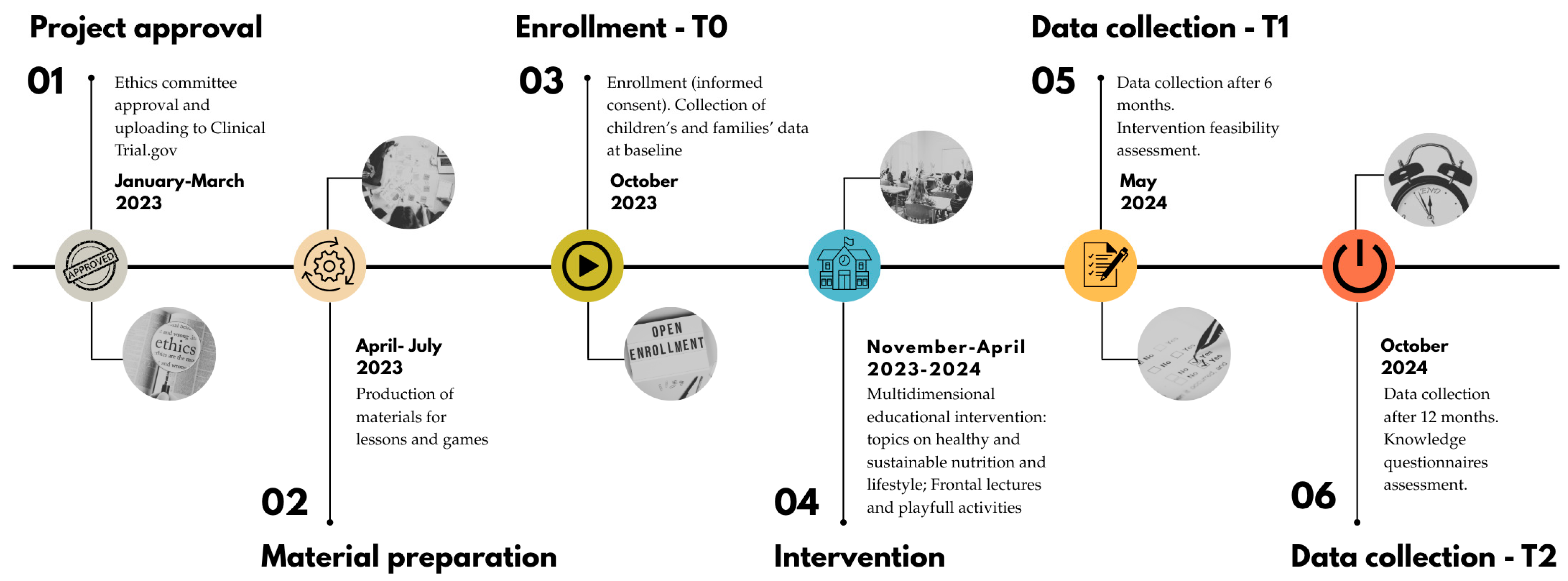
2.1. Study Design and Setting
2.2. Study Objectives
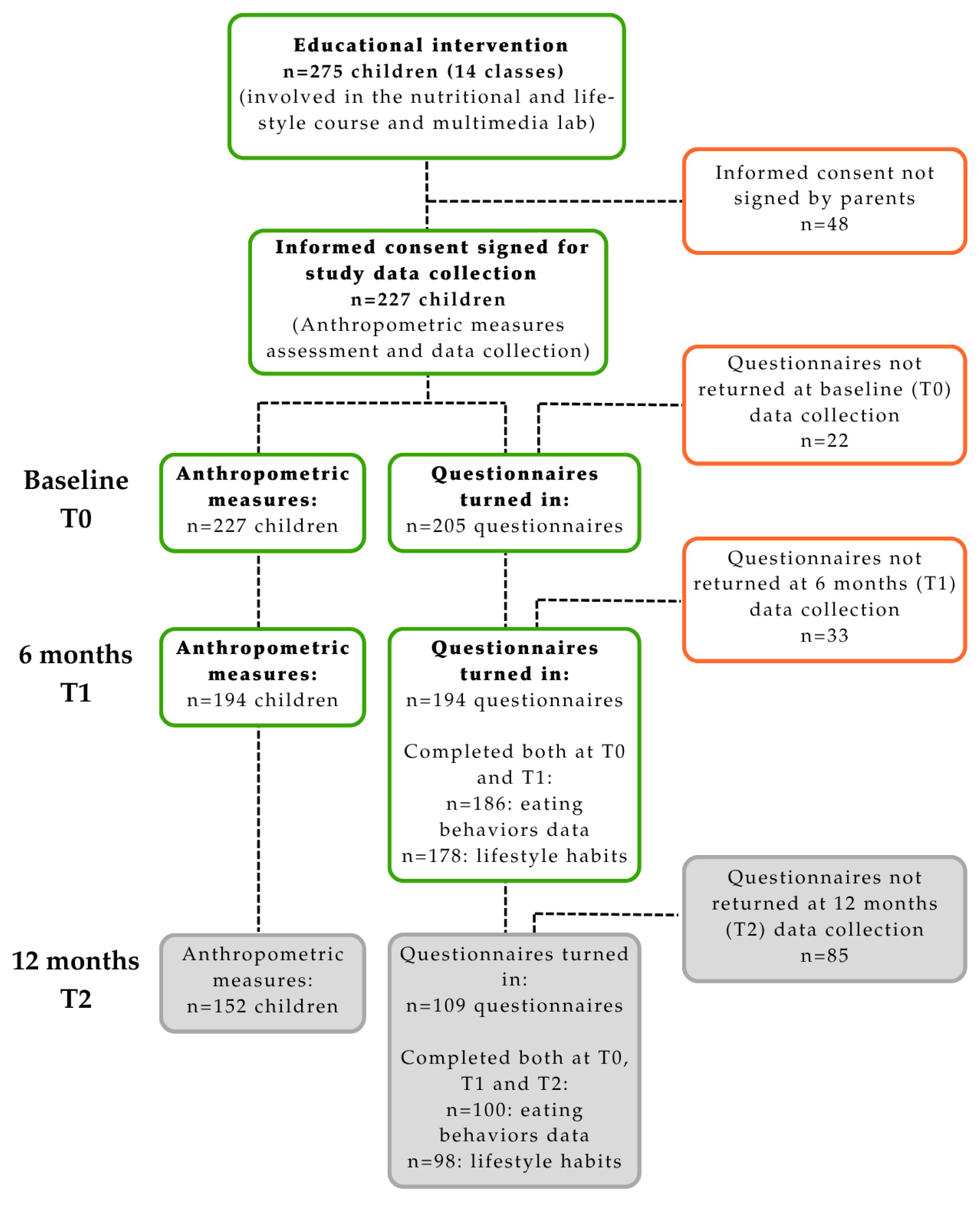
2.3. Selection Criteria and Enrollment
2.4. Educational Intervention
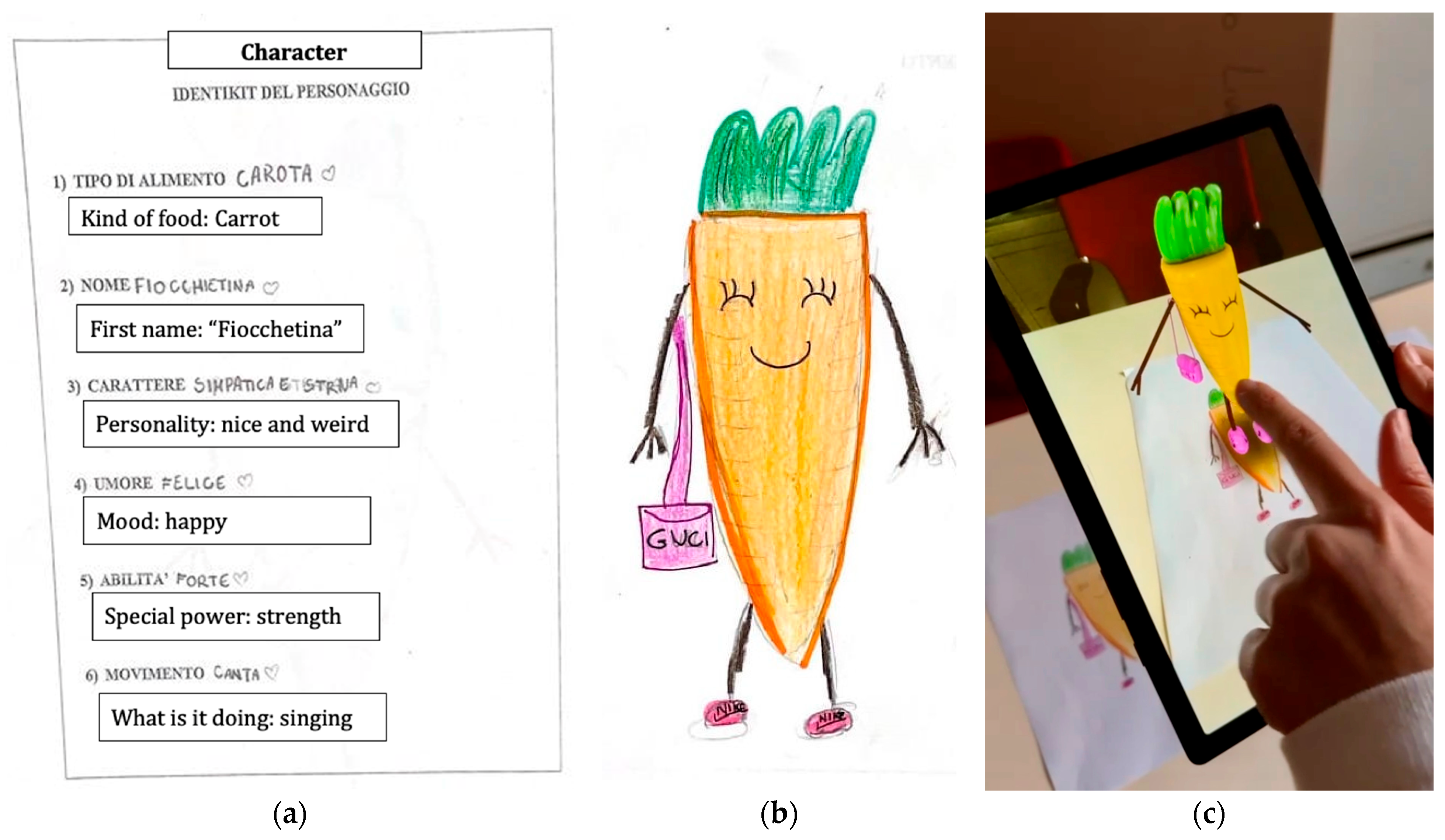
2.4.1. Multimedia Workshop
2.4.2. Family Engagement
2.5. Study Data Collection
2.6. Primary Outcome
2.6.1. Anthropometric Measures Assessment
2.6.2. Sociodemographic Information Assessment
2.6.3. Eating Behaviors and Lifestyle Assessment
2.7. Secondary Outcome
2.7.1. Evaluation of the Educational Intervention
2.7.2. Evaluation of Children’s Knowledge
2.8. Statistical Methods
2.8.1. Sample Size Calculation
2.8.2. Statistical Analysis
3. Results
3.1. Demographic and Anthropometric Characteristics
3.2. Eating Behaviors and Lifestyle Habits
3.3. Models
3.4. Data After Six Months (T1)
3.4.1. Anthropometric Measures
3.4.2. Eating Behaviors and Lifestyle Habits
3.5. Educational Intervention Evaluation
3.5.1. Children’s Knowledge Questionnaire
3.5.2. Children’s Satisfaction Questionnaires
3.5.3. Parents’ Satisfaction Questionnaires
3.5.4. Teachers’ Satisfaction Questionnaires
4. Discussion
5. Conclusions and Prospects
Supplementary Materials
Author Contributions
Funding
Institutional Review Board Statement
Informed Consent Statement
Data Availability Statement
Acknowledgments
Conflicts of Interest
Abbreviations
| BMI | Body Mass Index |
| COSI | Childhood Obesity Surveillance Initiative |
| CREA | Centro di Ricerca Alimenti e Nutrizione |
| CVD | Cardiovascular disease |
| KIDMED | Mediterranean Diet Quality Index for children and adolescents |
| IMN | Istituto di Ricerche Farmacologiche Mario Negri IRCCS (IMN) |
| LIVELY | MuLtidimensional school-based and family Involved interVentions, to promote a hEalthy and sustainable LifestYle for the childhood obesity primary prevention |
| LDNC | Laboratory of Dietetics and Clinical Nutrition |
| MD | Mediterranean Diet |
| NCDs | Non communicable diseases |
| SD | Standard deviation |
| WC | Waist circumference |
| WHO | World Health Organization |
| WHtR | Waist-to-height ratio |
| UNESCO | United Nations Educational, Scientific and Cultural Organization |
References
- Thomas-Eapen, N. Childhood Obesity. Prim. Care 2021, 48, 505–515. [Google Scholar] [CrossRef] [Scilit]
- NCD Risk Factor Collaboration (NCD-RisC). Worldwide Trends in Underweight and Obesity from 1990 to 2022: A Pooled Analysis of 3663 Population-Representative Studies with 222 Million Children, Adolescents, and Adults. Lancet 2024, 403, 1027–1050. [Google Scholar] [CrossRef] [Scilit] [PubMed]
- Reilly, J.J.; Kelly, J. Long-Term Impact of Overweight and Obesity in Childhood and Adolescence on Morbidity and Premature Mortality in Adulthood: Systematic Review. Int. J. Obes. 2011, 35, 891–898. [Google Scholar] [CrossRef] [Scilit]
- Chung, S.T.; Krenek, A.; Magge, S.N. Childhood Obesity and Cardiovascular Disease Risk. Curr. Atheroscler. Rep. 2023, 25, 405–415. [Google Scholar] [CrossRef] [Scilit] [PubMed]
- Wickramasinghe, K.; Chatterjee, S.; Williams, J.; Weber, M.W.; Rito, A.I.; Rippin, H.; Breda, J. Childhood Overweight and Obesity Abatement Policies in Europe. Obes. Rev. 2021, 22 (Suppl. S6), e13300. [Google Scholar] [CrossRef] [Scilit] [PubMed]
- Specchia, M.L.; Barbara, A.; Campanella, P.; Parente, P.; Mogini, V.; Ricciardi, W.; Damiani, G. Highly-Integrated Programs for the Prevention of Obesity and Overweight in Children and Adolescents: Results from a Systematic Review and Meta-Analysis. Ann. Ist. Super. Sanita 2018, 54, 332–339. [Google Scholar] [CrossRef] [Scilit]
- World Health Organization. A Brief Review of Results from Round 6 of COSI (2022–2024): WHO European Childhood Obesity Surveillance Initiative (COSI); WHO Regional Office for Europe: Copenhagen, Denmark, 2024. [Google Scholar]
- Nardone, P.; Spinelli, A.; Ciardullo, S.; Salvatore, M.A.; Andreozzi, S.; Galeone, D. Childhood Obesity and Lifestyle: OKkio Alla SALUTE 2019; Istituto Superiore di Sanità: Rome, Italy, 2022; p. 82. [Google Scholar]
- Spinelli, A.; Censi, L.; Mandolini, D.; Ciardullo, S.; Salvatore, M.A.; Mazzarella, G.; Nardone, P.; 2019 OKkio alla SALUTE Group. Inequalities in Childhood Nutrition, Physical Activity, Sedentary Behaviour and Obesity in Italy. Nutrients 2023, 15, 3893. [Google Scholar] [CrossRef] [Scilit]
- Popkin, B.M. Relationship between Shifts in Food System Dynamics and Acceleration of the Global Nutrition Transition. Nutr. Rev. 2017, 75, 73–82. [Google Scholar] [CrossRef] [Scilit]
- Baker, P.; Machado, P.; Santos, T.; Sievert, K.; Backholer, K.; Hadjikakou, M.; Russell, C.; Huse, O.; Bell, C.; Scrinis, G.; et al. Ultra-processed Foods and the Nutrition Transition: Global, Regional and National Trends, Food Systems Transformations and Political Economy Drivers. Obes. Rev. 2020, 21, e13126. [Google Scholar] [CrossRef] [Scilit]
- Popkin, B.M.; Laar, A. Nutrition Transition’s Latest Stage: Are Ultra-Processed Food Increases in Low- and Middle-Income Countries Dooming Our Preschoolers’ Diets and Future Health? Pediatr. Obes. 2025, 20, e70002. [Google Scholar] [CrossRef] [Scilit]
- Fang, K.; Mu, M.; Liu, K.; He, Y. Screen Time and Childhood Overweight/Obesity: A Systematic Review and Meta-analysis. Child 2019, 45, 744–753. [Google Scholar] [CrossRef] [Scilit]
- Galfo, M.; D’Addezio, L.; Censi, L.; Roccaldo, R.; Giostra, G. Screen-Based Sedentary Behaviours in Italian School Children: The ZOOM8 Study. ebph 2022, 11, e9473. [Google Scholar] [CrossRef] [Scilit]
- Paduano, S.; Greco, A.; Borsari, L.; Salvia, C.; Tancredi, S.; Pinca, J.; Midili, S.; Tripodi, A.; Borella, P.; Marchesi, I. Physical and Sedentary Activities and Childhood Overweight/Obesity: A Cross-Sectional Study among First-Year Children of Primary Schools in Modena, Italy. Int. J. Environ. Res. Public Health 2021, 18, 3221. [Google Scholar] [CrossRef] [Scilit]
- Radesky, J.S.; Christakis, D.A. Increased Screen Time. Pediatr. Clin. N. Am. 2016, 63, 827–839. [Google Scholar] [CrossRef] [Scilit]
- Priftis, N.; Panagiotakos, D. Screen Time and Its Health Consequences in Children and Adolescents. Children 2023, 10, 1665. [Google Scholar] [CrossRef] [Scilit]
- Wang, K.; Li, Y.; Liu, H.; Zhang, T.; Luo, J. Can Physical Activity Counteract the Negative Effects of Sedentary Behavior on the Physical and Mental Health of Children and Adolescents? A Narrative Review. Front. Public Health 2024, 12, 1412389. [Google Scholar] [CrossRef] [Scilit]
- Haghjoo, P.; Siri, G.; Soleimani, E.; Farhangi, M.A.; Alesaeidi, S. Screen Time Increases Overweight and Obesity Risk among Adolescents: A Systematic Review and Dose-Response Meta-Analysis. BMC Prim. Care 2022, 23, 161. [Google Scholar] [CrossRef] [Scilit] [PubMed]
- Desbouys, L.; Méjean, C.; De Henauw, S.; Castetbon, K. Socio-Economic and Cultural Disparities in Diet among Adolescents and Young Adults: A Systematic Review. Public Health Nutr. 2020, 23, 843–860. [Google Scholar] [CrossRef] [Scilit] [PubMed]
- Monterrosa, E.C.; Frongillo, E.A.; Drewnowski, A.; De Pee, S.; Vandevijvere, S. Sociocultural Influences on Food Choices and Implications for Sustainable Healthy Diets. Food Nutr. Bull. 2020, 41, 59S–73S. [Google Scholar] [CrossRef] [Scilit]
- Verga, M.-E.; Widmeier-Pasche, V.; Beck-Popovic, M.; Pauchard, J.-Y.; Gehri, M. Iron Deficiency in Infancy: Is an Immigrant More at Risk? Swiss Med. Wkly. 2014, 144, w14065. [Google Scholar] [CrossRef] [Scilit] [PubMed]
- Mussino, E.; Ortensi, L.E. Childcare in Italy among Migrants and Natives: Who Uses Which Type and Why? Genus 2023, 79, 16. [Google Scholar] [CrossRef] [Scilit]
- Dondi, A.; Piccinno, V.; Morigi, F.; Sureshkumar, S.; Gori, D.; Lanari, M. Food Insecurity and Major Diet-Related Morbidities in Migrating Children: A Systematic Review. Nutrients 2020, 12, 379. [Google Scholar] [CrossRef] [Scilit] [PubMed]
- Pettoello-Mantovani, M.; Ehrich, J.; Sacco, M.; Ferrara, P.; Giardino, I.; Pop, T.L. Food Insecurity and Children’s Rights to Adequate Nutrition in Europe. J. Pediatr. 2018, 198, 329–330.e1. [Google Scholar] [CrossRef] [Scilit]
- Silveira, E.A.; Canheta, A.B.; Noll, M.; Rodrigues, A.P.S.; Oliveira, C. de Nutritional and Food Education as a Complementary Treatment Approach in Severe Obese Individuals. Nutr. Health 2023, 29, 339–346. [Google Scholar] [CrossRef] [Scilit] [PubMed]
- Ares, G.; De Rosso, S.; Mueller, C.; Philippe, K.; Pickard, A.; Nicklaus, S.; van Kleef, E.; Varela, P. Development of Food Literacy in Children and Adolescents: Implications for the Design of Strategies to Promote Healthier and More Sustainable Diets. Nutr. Rev. 2024, 82, 536–552. [Google Scholar] [CrossRef] [Scilit]
- Silveira, J.A.C.; Taddei, J.A.A.C.; Guerra, P.H.; Nobre, M.R.C. Effectiveness of School-Based Nutrition Education Interventions to Prevent and Reduce Excessive Weight Gain in Children and Adolescents: A Systematic Review. J. Pediatr. (Rio J) 2011, 87, 382–392. [Google Scholar] [CrossRef] [Scilit] [PubMed]
- Jaime, P.C.; Lock, K. Do School Based Food and Nutrition Policies Improve Diet and Reduce Obesity? Prev. Med. 2009, 48, 45–53. [Google Scholar] [CrossRef] [Scilit]
- Liao, S.-F.; Tseng, H.-M.; Chen, J.-D.; Chen, C.-M.; Li, S.-C. A Pilot Evaluation of a School-Based Nutrition Education Program with Provision of Fruits and Vegetables to Improve Consumption Among School-Age Children in Palau. Nutrients 2025, 17, 994. [Google Scholar] [CrossRef] [Scilit]
- Teo, C.H.; Chin, Y.S.; Lim, P.Y.; Masrom, S.A.H.; Shariff, Z.M. Impacts of a School-Based Intervention That Incorporates Nutrition Education and a Supportive Healthy School Canteen Environment among Primary School Children in Malaysia. Nutrients 2021, 13, 1712. [Google Scholar] [CrossRef] [Scilit]
- Scazzocchio, B.; Varì, R.; d’Amore, A.; Chiarotti, F.; Del Papa, S.; Silenzi, A.; Gimigliano, A.; Giovannini, C.; Masella, R. Promoting Health and Food Literacy through Nutrition Education at Schools: The Italian Experience with MaestraNatura Program. Nutrients 2021, 13, 1547. [Google Scholar] [CrossRef] [Scilit]
- Roccaldo, R.; Censi, L.; D’Addezio, L.; Berni Canani, S.; Gennaro, L. Improvement of Adherence to the Mediterranean Diet through a Nutrition Education Teaching Pack for Teachers within the “School Fruit Scheme” Program: An Italian Long-Term Trial in School Children. Nutrients 2024, 16, 2057. [Google Scholar] [CrossRef] [Scilit]
- Ermetici, F.; Zelaschi, R.F.; Briganti, S.; Dozio, E.; Gaeta, M.; Ambrogi, F.; Pelissero, G.; Tettamanti, G.; Corsi Romanelli, M.M.; Carruba, M.; et al. Association between a School-Based Intervention and Adiposity Outcomes in Adolescents: The Italian “EAT” Project. Obesity 2016, 24, 687–695. [Google Scholar] [CrossRef] [Scilit]
- Varì, R.; d’Amore, A.; Silenzi, A.; Chiarotti, F.; Del Papa, S.; Giovannini, C.; Scazzocchio, B.; Masella, R. Improving Nutrition Knowledge and Skills by the Innovative Education Program MaestraNatura in Middle School Students of Italy. Nutrients 2022, 14, 2037. [Google Scholar] [CrossRef] [Scilit]
- D’Egidio, V.; Lia, L.; Sinopoli, A.; Backhaus, I.; Mannocci, A.; Saulle, R.; Sestili, C.; Cocchiara, R.; Di Bella, O.; Yordanov, T.; et al. Results of the Italian Project ‘GiochiAMO’ to Improve Nutrition and PA among Children. J. Public Health 2021, 43, 405–412. [Google Scholar] [CrossRef] [Scilit] [PubMed]
- Basilico, S.; Conti, M.V.; Ardoino, I.; Breda, C.; Loperfido, F.; Klaic, E.; Spialtini, L.; Foresta, A.; Orsini, F.; Ojeda Fernandez, M.L.; et al. Multidimensional School-Based and Family-Involved Interventions to Promote a Healthy and Sustainable Lifestyle (LIVELY) for Childhood Obesity Prevention: Study Protocol. JMIR Res. Protoc. 2024, 13, e57509. [Google Scholar] [CrossRef] [Scilit] [PubMed]
- Centro Di Ricerca Alimenti e Nutrizione. CREA Linee Guida per Una Sana Alimentazione; Revisione 2018; Centro Di Ricerca Alimenti e Nutrizione: Rome, Italy, 2018.
- Chaput, J.-P.; Willumsen, J.; Bull, F.; Chou, R.; Ekelund, U.; Firth, J.; Jago, R.; Ortega, F.B.; Katzmarzyk, P.T. 2020 WHO Guidelines on Physical Activity and Sedentary Behaviour for Children and Adolescents Aged 5-17 Years: Summary of the Evidence. Int. J. Behav. Nutr. Phys. Act. 2020, 17, 141. [Google Scholar] [CrossRef] [Scilit] [PubMed]
- Harvard, T.H. Chan School of Public Health. NEW! Kid’s Healthy Eating Plate. The Nutrition Source. Available online: https://nutritionsource.hsph.harvard.edu/kids-healthy-eating-plate/ (accessed on 5 January 2025).
- Harris, P.A.; Taylor, R.; Thielke, R.; Payne, J.; Gonzalez, N.; Conde, J.G. Research Electronic Data Capture (REDCap)—a Metadata—Driven Methodology and Workflow Process for Providing Translational Research Informatics Support. J. Biomed. Inf. 2009, 42, 377–381. [Google Scholar] [CrossRef] [Scilit]
- WHO Multicentre Growth Reference Study Group. WHO Child Growth Standards Based on Length/Height, Weight and Age. Acta Paediatr. Suppl. 2006, 450, 76–85. [Google Scholar] [CrossRef] [Scilit]
- WHO. AnthroPlus for Personal Computers Manual: Software for Assessing the Growth of the World’s Children and Adolescents. Available online: https://www.who.int/tools/growth-reference-data-for-5to19-years/application-tools (accessed on 1 November 2023).
- Browning, L.M.; Hsieh, S.D.; Ashwell, M. A Systematic Review of Waist-to-Height Ratio as a Screening Tool for the Prediction of Cardiovascular Disease and Diabetes: 0·5 Could Be a Suitable Global Boundary Value. Nutr. Res. Rev. 2010, 23, 247–269. [Google Scholar] [CrossRef] [Scilit]
- Maffeis, C.; Banzato, C.; Talamini, G. Waist-to-Height Ratio, a Useful Index to Identify High Metabolic Risk in Overweight Children. J. Pediatr. 2008, 152, 207–213.e2. [Google Scholar] [CrossRef] [Scilit]
- Altavilla, C.; Caballero-Pérez, P. An Update of the KIDMED Questionnaire, a Mediterranean Diet Quality Index in Children and Adolescents. Public Health Nutr. 2019, 22, 2543–2547. [Google Scholar] [CrossRef] [Scilit] [PubMed]
- Serra-Majem, L.; Ribas, L.; Ngo, J.; Ortega, R.M.; García, A.; Pérez-Rodrigo, C.; Aranceta, J. Food, Youth and the Mediterranean Diet in Spain. Development of KIDMED, Mediterranean Diet Quality Index in Children and Adolescents. Public Health Nutr. 2004, 7, 931–935. [Google Scholar] [CrossRef] [Scilit]
- Rauber, F.; da Costa Louzada, M.L.; Steele, E.M.; Millett, C.; Monteiro, C.A.; Levy, R.B. Ultra-Processed Food Consumption and Chronic Non-Communicable Diseases-Related Dietary Nutrient Profile in the UK (2008–2014). Nutrients 2018, 10, 587. [Google Scholar] [CrossRef] [Scilit] [PubMed]
- Monteiro, C.A.; Cannon, G.; Moubarac, J.-C.; Levy, R.B.; Louzada, M.L.C.; Jaime, P.C. The UN Decade of Nutrition, the NOVA Food Classification and the Trouble with Ultra-Processing. Public Health Nutr. 2018, 21, 5–17. [Google Scholar] [CrossRef] [Scilit]
- Pineros-Leano, M.; Grafft, N.; Aguayo, L. Childhood Obesity Risk Factors by Race and Ethnicity. Obesity 2022, 30, 1670–1680. [Google Scholar] [CrossRef] [Scilit]
- Isong, I.A.; Rao, S.R.; Bind, M.-A.; Avendaño, M.; Kawachi, I.; Richmond, T.K. Racial and Ethnic Disparities in Early Childhood Obesity. Pediatrics 2018, 141, e20170865. [Google Scholar] [CrossRef] [Scilit] [PubMed]
- Papamichael, M.M.; Karatzi, K.; Mavrogianni, C.; Cardon, G.; De Vylder, F.; Iotova, V.; Usheva, N.; Tankova, T.; González-Gil, E.M.; Kivelä, J.; et al. Socioeconomic Vulnerabilities and Food Intake in European Children: The Feel4Diabetes Study. Nutrition 2022, 103–104, 111744. [Google Scholar] [CrossRef] [Scilit]
- Agbaje, A.O. Body Mass Index Triples Overweight Prevalence in 7600 Children Compared with Waist-to-Height Ratio: The ALSPAC Study. Obes. Endocrinol. 2025, 1, wjaf002. [Google Scholar] [CrossRef] [Scilit]
- Malavazos, A.E.; Capitanio, G.; Milani, V.; Ambrogi, F.; Matelloni, I.A.; Basilico, S.; Dubini, C.; Sironi, F.M.; Stella, E.; Castaldi, S.; et al. Corrigendum to “Tri-Ponderal Mass Index vs Body Mass Index in Discriminating Central Obesity and Hypertension in Adolescents with Overweight” [Nutrition, Metabolism and Cardiovascular Diseases 31 (2021) 1613-1621]. Nutr. Metab. Cardiovasc. Dis. 2021, 31, 3247–3248. [Google Scholar] [CrossRef] [Scilit]
- Rodrigues, D.; Machado-Rodrigues, A.M.; Padez, C. Parental Misperception of Their Child’s Weight Status and How Weight Underestimation Is Associated with Childhood Obesity. Am. J. Hum. Biol. 2020, 32, e23393. [Google Scholar] [CrossRef] [Scilit]
- Moliterno, P.; Franceschini, S.; Donhauser, V.; Widhalm, K. How Parents Perceive Their Children’s Body Weight: Insights from a Sample of Schoolchildren from Vienna, Austria. Nutrients 2024, 16, 4094. [Google Scholar] [CrossRef] [Scilit]
- Warkentin, S.; Mais, L.A.; Latorre, M.D.R.D.O.; Carnell, S.; Taddei, J.A.A.C. Factors Associated with Parental Underestimation of Child’s Weight Status. J. Pediatr. 2018, 94, 162–169. [Google Scholar] [CrossRef] [Scilit]
- Roccaldo, R.; Censi, L.; D’Addezio, L.; Toti, E.; Martone, D.; D’Addesa, D.; Cernigliaro, A.; The ZOOM8 Study Group; Censi, L.; D’Addesa, D.; et al. Adherence to the Mediterranean Diet in Italian School Children (The ZOOM8 Study). Int. J. Food Sci. Nutr. 2014, 65, 621–628. [Google Scholar] [CrossRef] [Scilit]
- Grosso, G.; Galvano, F. Mediterranean Diet Adherence in Children and Adolescents in Southern European Countries. NFS J. 2016, 3, 13–19. [Google Scholar] [CrossRef] [Scilit]
- Archero, F.; Ricotti, R.; Solito, A.; Carrera, D.; Civello, F.; Di Bella, R.; Bellone, S.; Prodam, F. Adherence to the Mediterranean Diet among School Children and Adolescents Living in Northern Italy and Unhealthy Food Behaviors Associated to Overweight. Nutrients 2018, 10, 1322. [Google Scholar] [CrossRef] [Scilit]
- Wang, Y.; Cai, L.; Wu, Y.; Wilson, R.F.; Weston, C.; Fawole, O.; Bleich, S.N.; Cheskin, L.J.; Showell, N.N.; Lau, B.D.; et al. What Childhood Obesity Prevention Programmes Work? A Systematic Review and Meta-Analysis. Obes. Rev. 2015, 16, 547–565. [Google Scholar] [CrossRef] [Scilit] [PubMed]
- Deal, B.J.; Huffman, M.D.; Binns, H.; Stone, N.J. Perspective: Childhood Obesity Requires New Strategies for Prevention. Adv. Nutr. 2020, 11, 1071–1078. [Google Scholar] [CrossRef] [Scilit]
- Fornari, E.; Brusati, M.; Maffeis, C. Nutritional Strategies for Childhood Obesity Prevention. Life 2021, 11, 532. [Google Scholar] [CrossRef] [Scilit] [PubMed]
- World Health Organization. Report of the Commission on Ending Childhood Obesity: Implementation Plan: Executive Summary; 2017(WHO/NMH/PND/ECHO/17.1); World Health Organization: Geneva, Switzerland, 2017. [Google Scholar]
- Kitzman-Ulrich, H.; Wilson, D.K.; George, S.M.S.; Lawman, H.; Segal, M.; Fairchild, A. The Integration of a Family Systems Approach for Understanding Youth Obesity, Physical Activity, and Dietary Programs. Clin. Child. Fam. Psychol. Rev. 2010, 13, 231–253. [Google Scholar] [CrossRef] [Scilit]
- Langford, R.; Bonell, C.; Jones, H.; Campbell, R. Obesity Prevention and the Health Promoting Schools Framework: Essential Components and Barriers to Success. Int. J. Behav. Nutr. Phys. Act. 2015, 12, 15. [Google Scholar] [CrossRef] [Scilit]
- Liatis, S.; on behalf of the Feel4Diabetes-study. Methodological Procedures Followed in a School-and Community-Based Intervention to Prevent Type 2 Diabetes in Vulnerable Families across Europe: The Feel4Diabetes-Study. BMC Endocr. Disord. 2020, 20, 13. [Google Scholar] [CrossRef] [Scilit] [PubMed]
- Marsigliante, S.; Ciardo, V.; Di Maglie, A.; My, G.; Muscella, A. Efficacy of School-Based Intervention Programs in Reducing Overweight: A Randomized Trial. Front. Nutr. 2022, 9, 1001934. [Google Scholar] [CrossRef] [Scilit] [PubMed]
- Jung, T.; Huang, J.; Eagan, L.; Oldenburg, D. Influence of School-Based Nutrition Education Program on Healthy Eating Literacy and Healthy Food Choice among Primary School Children. Int. J. Health Promot. Educ. 2019, 57, 67–81. [Google Scholar] [CrossRef] [Scilit]
- Madsen, M.; Michaelsen, L.; DeCosta, P.; Grabowski, D. Stigma-Generating Mechanisms in Families Enrolled in a Pediatric Weight Management Program: A Qualitative Study of Health Identities and Healthcare Authenticity. Children 2023, 11, 46. [Google Scholar] [CrossRef] [Scilit]
- Ahern, S.; Marshall, S.; Wallbank, G.; Jawad, D.; Taki, S.; Baur, L.A.; Wen, L.M. Communication Strategies and Effectiveness of Early Childhood Obesity-related Prevention Programs for Linguistically Diverse Communities: A Rapid Review. Obes. Rev. 2023, 24, e13634. [Google Scholar] [CrossRef] [Scilit]
- Cyril, S.; Nicholson, J.M.; Agho, K.; Polonsky, M.; Renzaho, A.M. Barriers and Facilitators to Childhood Obesity Prevention among Culturally and Linguistically Diverse (CALD) Communities in Victoria, Australia. Aust. N. Z. J. Public Health 2017, 41, 287–293. [Google Scholar] [CrossRef] [Scilit]
- Nikooyeh, B.; Yari, Z.; Hariri, Z.; Baghdadi, G.; Yazdani, H.; Motlagh, M.E.; Neyestani, T.R. Which School-Based Interventions Work Better to Combat Obesity in Children? A Network Meta-Analysis. Syst. Rev. 2025, 14, 125. [Google Scholar] [CrossRef] [Scilit] [PubMed]



| Lectures Title | Covered Topics | Games/Activities | Lectures Aim |
|---|---|---|---|
| Macronutrients | Carbohydrates; proteins; lipids; water | True or false; crossword puzzle; game of sets; rhyming riddles | Learn what macronutrients are, their functions, their importance to our bodies, and what foods they are present in. Know the importance of water, its main functions, and daily intake. |
| Micronutrients | Vitamins and minerals | Rhyming riddles; the hangman’s game; memory game | Learn what micronutrients are, their functions, their importance to our bodies, and what foods they are present in. |
| Digestive system | The pathway of food from the mouth to the esophagus, to the stomach, to the intestines; the enzymes involved; and where major macronutrients are absorbed | World search; true or false; rhyming riddles; vision of a short cartoon on the digestive system; human anatomy labeling game | Learn what happens to food when we eat, what path it takes inside our bodies, how food is digested, and how nutrients are absorbed. |
| Food pyramid | Composition of the food pyramid; frequency of food consumption; ultra-processed foods; food labels | Rebus; food pyramid sorting game; riddles | Learn the frequency of food consumption; know the foods to consume every day and those to consume only occasionally. Learn what ultra-processed foods are and learn how to read food labels. |
| Healthy eating plate | Plate composition; How to compose a healthy dish; importance of breakfast; seasonality of fruits and vegetables | Create your own healthy dish game; Find the Odd One Out game; Find the Missing Part game | Learn how to compose a balanced, healthy dish; learn about alternatives for each part of the dish (fiber, carbohydrates, and protein); learn how to compose a healthy dish on your own by choosing seasonal foods. |
| Lifestyle | Sleep habits; screen time; physical activity | True or false; riddles; Complete your healthy day activity | Know what the good habits are to stay healthy and lead an active lifestyle; know the difference between moderate and intense physical activity and related examples; learn how much time should be devoted to these activities; know how many hours of sleep a child needs and what are good habits before sleeping; know what the limit of screen time is and what are alternative activities. |
| Multimedia lab | Drawing and storytelling | Drawing a humanized food and proposing a dramaturgy | To work on the content learned in previous lessons, activate motivation and discussion among students, and work on character design and the creation of shared dramaturgies. |
| Males n = 110 | Female n = 117 | Total n = 227 | |
|---|---|---|---|
| Age (years); mean (SD) | 8.9 (1.2) | 8.9 (1.1) | 8.9 (1.2) |
| Place of birth | |||
| Italy | 83 (75.5%) | 97 (82.9%) | 180 (79.3%) |
| Africa | 10 (9.1%) | 13 (11.1%) | 23 (10.1%) |
| South America | 6 (5.5%) | 5 (4.3%) | 11 (4.8%) |
| Europe | 9 (8.2%) | 1 (0.9%) | 10 (4.4%) |
| Asia | 2 (1.8%) | 1 (0.9%) | 3 (1.3%) |
| Attended class | |||
| Second grade (6–7 years old) | 8 (7.3%) | 4 (3.4%) | 12 (5.3%) |
| Third grade (7–9 years old) | 36 (32.7%) | 41 (35.0%) | 77 (33.9%) |
| Fourth grade (8–10 years old) | 17 (15.5%) | 19 (16.2%) | 36 (15.9%) |
| Fifth grade (9–12 years old) | 49 (44.5%) | 53 (45.3%) | 102 (4.9%) |
| Ethnicity | |||
| Caucasian | 44 (40.0%) | 38 (32.5%) | 82 (36.1%) |
| African | 36 (32.7%) | 50 (42.7%) | 86 (37.8%) |
| Hispanic | 16 (14.5%) | 15 (12.8%) | 31 (13.7%) |
| Asian | 9 (8.2%) | 11 (9.4%) | 20 (8.8%) |
| Mixed | 5 (4.6%) | 3 (2.6%) | 8 (3.5%) |
| Anthropometric measurements | |||
| Weight, kg; mean (SD) | 35.27 (10.5) | 36.41 (10.57) | 35.86 (10.53) |
| Height, cm; mean (SD) | 135.85 (8.38) | 136.75 (9.09) | 136.33 (8.74) |
| Waist circumference, cm; mean (SD) | 65.22 (10.95) | 65.15 (11.79) | 65.19 (11.37) |
| BMI z-score classes | |||
| Underweight | 4 (3.6%) | 1 (0.9%) | 5 (2.2%) |
| Normal weight | 80 (72.7%) | 89 (76.1%) | 169 (74.4%) |
| Overweight | 16 (14.5%) | 24 (21.4%) | 41 (18.1%) |
| Obesity | 10 (9.1%) | 3 (1.7%) | 12 (5.3%) |
| WHtR | |||
| WHtR < 0.5 | 76 (69.1%) | 74 (63.2%) | 150 (66.1%) |
| WHtR ≥ 0.5 | 34 (30.9%) | 43 (36.8%) | 77 (33.9%) |
| Total Sample N = 205 | ||
|---|---|---|
| N (%) | Missing | |
| Adherence to Mediterranean Diet | ||
| Low | 29 (14.4%) | 4 |
| Medium | 111 (55.2%) | |
| High | 61 (30.4%) | |
| Breakfast consumption | 160 (78.4%) | 1 |
| Consumption of whole foods (pasta, cereals, bread, breakfast cereals%) | 130 (64.4%) | 3 |
| Use of sweeteners (sugar, honey, sweetened cocoa, etc.%) | 143 (70.1%) | 1 |
| Hydration | ||
| <1 L a day | 69 (33.8%) | 1 |
| 1–1.5 L a day | 108 (52.9%) | |
| >1.5 L a day | 27 (13.3%) | |
| Physical activity | ||
| No physical activity | 18 (9.0%) | 4 |
| Only non-programmed physical activity | 50 (24.9%) | |
| 1–2 times a week of programmed physical activity | 93 (46.3%) | |
| 3 or more times a week of programmed physical activity | 40 (19.9%) | |
| Screen time | ||
| ~2 h or less | 175 (89.3%) | 9 |
| ~3 h or more | 21 (10.7%) | |
| Sleep hygiene | ||
| Less than 9 h of sleep | 66 (33.3%) | 7 |
| 9 or more hours of sleep | 132 (66.7%) | |
| Total Sample n = 194 | ||
|---|---|---|
| Baseline (T0) | Six Months (T1) | |
| Anthropometric measurements | ||
| Weight, kg; mean (SD) | 35.91 (10.06) | 37.53 (10.86) |
| Height, cm; mean (SD) | 136.49 (8.40) | 139.91 (8.73) |
| Waist circumference, cm; mean (SD) | 65.24 (11.07) | 65.47 (11.44) |
| BMI z-score classes | ||
| Underweight | 4 (2.1%) | 6 (3.1%) |
| Normal weight | 144 (74.2%) | 149 (76.8%) |
| Overweight | 36 (18.6%) | 30 (15.5%) |
| Obesity | 10 (5.1%) | 9 (4.6%) |
| WHtR | ||
| WHtR < 0.5 | 130 (67.0%) | 143 (73.7%) |
| WHtR ≥ 0.5 | 64 (33.0%) | 51 (26.3%) |
| A | ||
|---|---|---|
| Total Sample n = 186 | ||
| Baseline (T0) | Six Months (T1) | |
| Adherence to Mediterranean Diet | ||
| Low | 27 (14.5%) | 30 (16.1%) |
| Medium | 103 (55.4%) | 98 (52.7%) |
| High | 56 (30.1%) | 58 (31.2%) |
| Breakfast consumption | 145 (79.0%) | 125 (67.2%) |
| Consumption of whole foods (pasta, cereals, bread, breakfast cereals) | 116 (62.4%) | 109 (58.6%) |
| Use of sweeteners (sugar, honey, sweetened cocoa, etc.) | 128 (68.8%) | 127 (68.3%) |
| Hydration | ||
| <1 L a day | 61 (32.8%) | 60 (32.3%) |
| 1–1.5 L a day | 100 (53.8%) | 94 (50.5%) |
| >1.5 L a day | 25 (13.4%) | 32 (17.2%) |
| B | ||
| Total sample n = 178 | ||
| Baseline (T0) | Six months (T1) | |
| Physical activity | ||
| No physical activity | 15 (8.4%) | 10 (5.6%) |
| Only non-programmed physical activity | 41 (23.0%) | 36 (20.2%) |
| 1–2 times a week of programmed physical activity | 86 (48.3%) | 89 (50.0%) |
| 3 or more times a week of programmed physical activity | 36 (20.2%) | 43 (24.2%) |
| Screen time | ||
| ~2 h or less | 161 (90.4%) | 163 (86.5%) |
| ~3 h or more | 17 (9.6%) | 25 (13.5%) |
| Sleep hygiene | ||
| Less than 9 h of sleep | 57 (32.0%) | 48 (27.0%) |
| 9 or more hours of sleep | 121 (68.0%) | 130 (73.0%) |
| Topic | Average Score |
|---|---|
| Macronutrients | 4.07 (2.60) |
| Micronutrients | 3.92 (2.54) |
| Digestion | 6.71 (1.72) |
| Food pyramid | 7.09 (2.26) |
| Healthy plate | 7.24 (3.31) |
| Lifestyle | 7.22 (2.99) |
| Total | 6.04 (1.50) |
Disclaimer/Publisher’s Note: The statements, opinions and data contained in all publications are solely those of the individual author(s) and contributor(s) and not of MDPI and/or the editor(s). MDPI and/or the editor(s) disclaim responsibility for any injury to people or property resulting from any ideas, methods, instructions or products referred to in the content. |
© 2025 by the authors. Licensee MDPI, Basel, Switzerland. This article is an open access article distributed under the terms and conditions of the Creative Commons Attribution (CC BY) license (https://creativecommons.org/licenses/by/4.0/).
Share and Cite
Basilico, S.; Conti, M.V.; Ardoino, I.; Breda, C.; Loperfido, F.; Orsini, F.; Fernandez, M.L.O.; Pierini, L.; Bonizzoni, S.C.; Modena, E.; et al. Lights and Shadows of a Primary School-Based Nutrition Education Program in Italy: Insights from the LIVELY Project. Nutrients 2025, 17, 2778. https://doi.org/10.3390/nu17172778
Basilico S, Conti MV, Ardoino I, Breda C, Loperfido F, Orsini F, Fernandez MLO, Pierini L, Bonizzoni SC, Modena E, et al. Lights and Shadows of a Primary School-Based Nutrition Education Program in Italy: Insights from the LIVELY Project. Nutrients. 2025; 17(17):2778. https://doi.org/10.3390/nu17172778
Chicago/Turabian StyleBasilico, Sara, Maria Vittoria Conti, Ilaria Ardoino, Chiara Breda, Federica Loperfido, Francesca Orsini, Maria Luisa Ojeda Fernandez, Laura Pierini, Stefano Conca Bonizzoni, Elisabetta Modena, and et al. 2025. "Lights and Shadows of a Primary School-Based Nutrition Education Program in Italy: Insights from the LIVELY Project" Nutrients 17, no. 17: 2778. https://doi.org/10.3390/nu17172778
APA StyleBasilico, S., Conti, M. V., Ardoino, I., Breda, C., Loperfido, F., Orsini, F., Fernandez, M. L. O., Pierini, L., Bonizzoni, S. C., Modena, E., Villa, F., Cena, H., Baviera, M., & Franchi, C. (2025). Lights and Shadows of a Primary School-Based Nutrition Education Program in Italy: Insights from the LIVELY Project. Nutrients, 17(17), 2778. https://doi.org/10.3390/nu17172778