


Abstract
Metabolic syndrome (MetS) is the physiological clustering of hypertension, hyperglycemia, hyperinsulinemia, dyslipidemia, and insulin resistance. The MetS-related chronic illnesses encompass obesity, the cardiovascular system, renal operation, hepatic function, oncology, and mortality. To perform pre-clinical research, it is imperative that these symptoms be successfully induced and optimized in lower taxonomy. Therefore, novel and future applications for a disease model, if proven valid, can be extrapolated to humans. MetS model establishment is evaluated based on the significance of selected test parameters, paradigm shifts from new discoveries, and the accessibility of the latest technology or advanced methodologies. Ultimately, the outcome of animal studies should be advantageous for human clinical trials and solidify their position in advanced medicine for clinicians to treat and adapt to serious or specific medical situations. Rodents (Rattus norvegicus and Mus musculus) have been ideal models for mammalian studies since the 18th century and have been mapped extensively. This review compiles and compares studies published in the past five years between the multitude of rodent comparative models. The response factors, niche parameters, and replicability of diet protocols are also compiled and analyzed to offer insight into MetS-related disease-specific modelling.
Keywords:
high fructose; metabolic syndrome; syndrome X; metabolic syndrome X; rodent; rat; mice; mouse 1. Introduction
1.1. Metabolic Syndrome
The prevalence of obesity, diabetes, and cardiovascular diseases in modern society has been a global problem since the past century, and is still growing. Although “metabolic syndrome” (MetS) was coined in the early 1940s, the topic only became known after the works of Vague et al. and Haller and Hanfield, who successfully correlated the prevalence of obesity to diabetes and the hallmarks of MetS [1,2]. On 1 April 2020, the World Health Organization (WHO) reported that the prevalence of obesity had tripled over the four decades between 1975 and 2016 [3]. It was heavily implied that the low-to-mid-income countries are greatly affected by this and have since shown more linked deaths than underweight issues. Up to 1.9 billion adults (25% of the global population) have overweight problems. Higher and no variations between males (39%) and females (40%) have been reported. In the same year, the International Diabetes Federation (IDF) also reported that 223 million adults aged 20–79 years have diabetes [4]. This projection is expected to peak at 700 million by 2044. Both organizations have also confirmed that the prevalence of obesity and diabetes has increased in children or adolescents, which is a major concern.
MetS is the phenomenon of accumulated symptoms that complementarily and progressively deteriorate the person’s wellbeing. The contributing factors may vary between each person’s exposure (environmental) or susceptibility because of hereditary (genetics) traits. Among the MetS contributors are unhealthy habits, sedentary lifestyle, poor diet choices, family history, socioeconomic status, and education [5]. Habits such as excessive alcohol consumption can cause hepatic dysfunction from the constant liver output of detoxifying metabolites. Smoking and narcotics are also common habits that deteriorate pulmonary and cardiac functions. A sedentary lifestyle is the privilege of access to advanced technology and entertainment that involves less physical stress and engagement. This drives the manifestation of obesity and the lack of mitochondrial stimulus for efficient energy production. By far, poor diet choices are the greatest contributor to MetS of the 21st century [3]. Previous correlations of the socioeconomic relationship of a person’s income to obesity have shifted greatly, as recent findings show larger statistics in low-to-mid-income populations. The ease of accessibility to cheaper and hypercaloric diets driven by global franchises, as well as the incorporation of high salt, fat, and carbohydrate into traditional or commonly accessed foods, has seen to the growth of obesity. The traits of these nutritional imbalances can be defined as the Western diet phenomenon [6]. Conversely, the higher-income population has opted for a healthier and more organic lifestyle, which is not viable for the low-to-mid-income populations. Putting aside hereditary diseases such as type 1 diabetes, the role of genetics is less impactful, as it can be simplified as the person’s susceptibility or tolerance of biochemical alterations. It is difficult to quantify the tolerance level, as it varies even among siblings, but can be controlled when a balanced diet and lifestyle are provided [7]. Lastly, education is better interpreted as self-awareness of healthy choices, habits, and the other factors as listed above. It is ultimately the person’s discipline and restrained use of enriched resources to mitigate the effects of MetS.
The characteristics of MetS are high body mass index (BMI), hyperglycemia, hypertension, dyslipidemia, and insulin resistance. A joint interim statement from the IDF Task Force on Epidemiology and Prevention; National Heart, Lung, and Blood Institute; American Heart Association; World Heart Federation; International Atherosclerosis Society; and the International Association for the Study of Obesity states that a diagnosis of MetS is accepted if at least three of the five characteristics above are present [8]. A set of these conditions can lead to the development of major metabolic diseases such as cardiovascular diseases, type 2 diabetes, non-alcoholic fatty liver disease (NAFLD), osteoporosis, cancer, and death. Hence, the importance of studying MetS is to serve as a preliminary measure before the development of chronic disease. The present review was aimed at performing a qualitative analysis on the recent development of MetS in rodent models. It is intended to highlight the criteria for the successful establishment of an animal model of MetS. It is also aimed at compiling and comparing the test parameters for MetS and related diseases. Rodent models have been used extensively since the 18th century until today as the most preferred model for animal studies. Rodents are considerably easier to manage compared to larger mammalian families such as leporids, swine, equines, or primates. The selection of rodents is also driven by the ease of sourcing the animals; their lifespan, which is suited to the average study duration; and the complete mapping of their genetics and pathophysiological characteristics.
1.2. Fructose as a Dietary Choice
The present review focuses on diet-induced obesity (DIO) for simulating the development of obesity as a result of poor diet and lifestyle choices. One hallmark of DIO is the exaggerated incorporation of sugar, fat, and salt in the diet. References thereof are known as Western diets, introduced from regions that actively encourage chemical additives in processed foods, fast food franchises, and carbonated sugary beverages [9]. For example, the incorporation of fructose in beverages and processed food has been noticeably increasing. This popularization stems from fructose yielding a sweeter flavor, and it is most often added supplementary to generic sugar, i.e., sucrose, which is itself a disaccharide compound of glucose and fructose [10,11,12]. Fructose is one of three common sugars (monosaccharides) but is not directly processed in most metabolic processes such as energy (ATP) generation. Instead, fructose aids liver synthesis of glycogen molecules through a series of steps that overlaps with gluconeogenesis. In the context of MetS, fructose enhances the synthesis of triglycerides (TGL) from glycerol and fatty acid (FA) formation. Subsequently, TGL is stored as fat until a depletion of deposited glucose triggers a negative feedback. However, as glucose scarcity is less probable, the metabolized fructose is deemed in excess and is stored principally as fat. Evidence has been presented indicating that fructose bears similarity to narcotics, enabling unhealthy compulsion and downstream hyperphagia [9,13,14]. In this context, high fructose consumption is associated with MetS prevalence.
1.3. Fructolysis
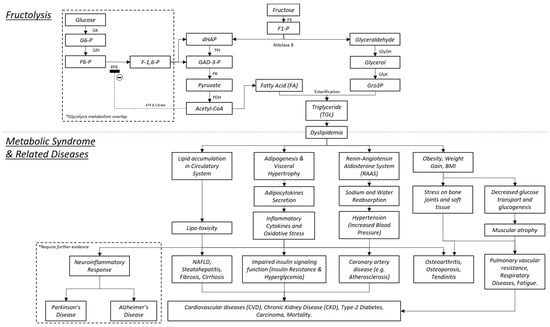
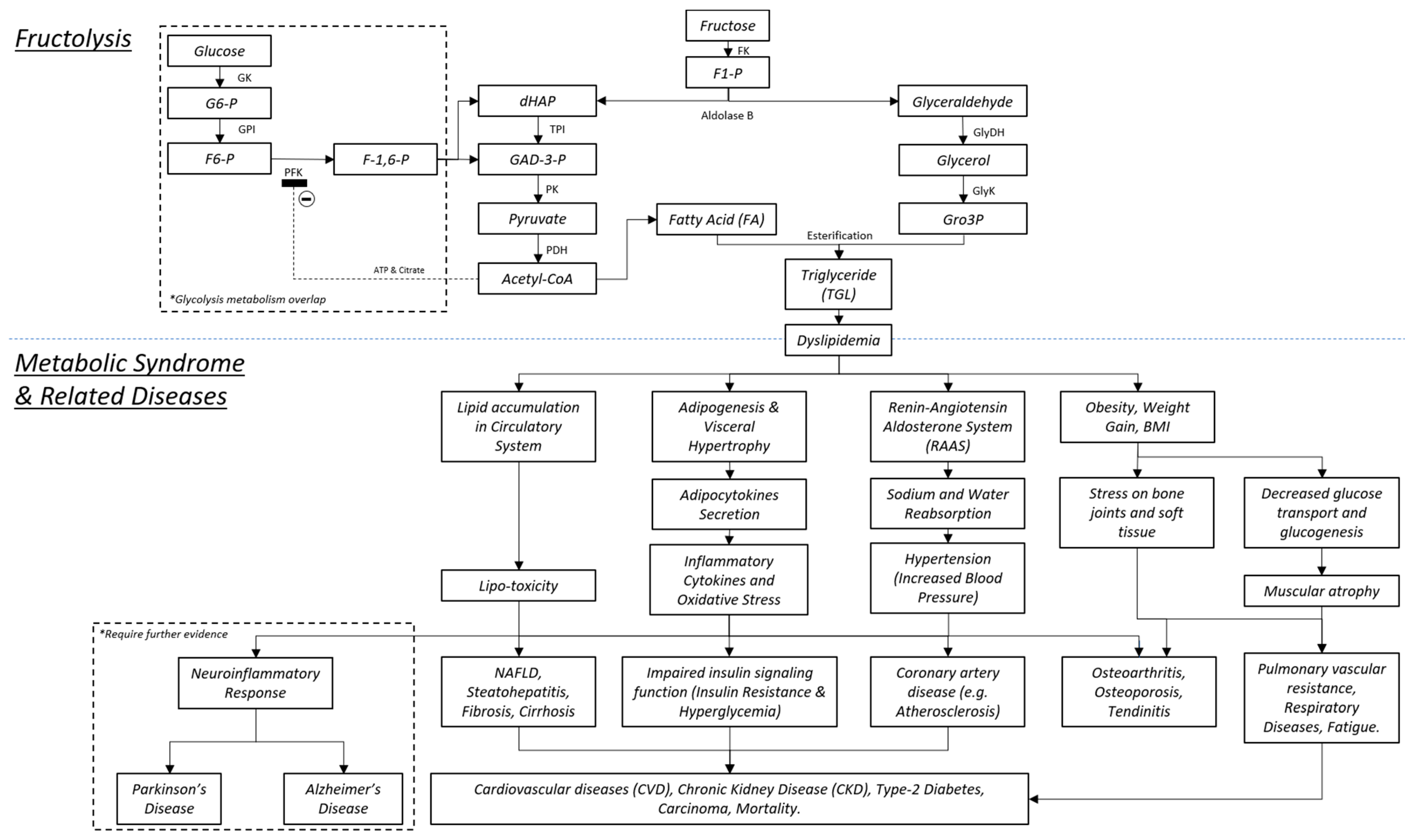
The machination of fructolysis begins through the diffusion of fructose by the transporter GLUT5 in a concentration-dependent manner. Aided by GLUT2, it crosses the intestinal lumen walls to exit to the bloodstream. As blood courses throughout the body, the fructose is bound by the GLUT2 transporters of the liver [11,15,16]. Therein, fructokinase catalyzes fructose into fructose-1-phosphate (F1P). In turn, F1P is cleaved by aldolase B into dihydroxyacetone phosphate (DHAP) and glyceraldehyde (Figure 1). Subsequently, DHAP is converted into glyceraldehyde-3-phosphate (G3P), pyruvate, acetyl-CoA, and FA molecules. Meanwhile, glyceraldehyde is first converted into glycerol, then glycerol-3-phosphate (Gro3P). Finally, TGL is formed following Gro3P and FA esterification. TGL and FA are both released into the bloodstream, contributing to dyslipidemia, which is defined as abnormal lipid levels in the blood [17,18].
Figure 1.
Fructose enzymatic process and physiological impacts to achieve MetS and related diseases. Abbreviations: GK, glucosekinase; G6-P, glucose-6-phosphate; GPI, phosphoglucose isomerase; PFK, phosphofructokinase-1; F-1,6-P, fructose-1,6-phosphate; dHAP, dihydroxyacetone phosphate; TPi, triophosphate isomerase; GAD-3-P, glyceraldehyde-3-phosphate; PK, phosphofructokinase; PDH, pyruvate dehydrogenase; FK, fructokinase; F1-P, fructose-1-phosphate; GlyDH, glycerol dehydrogenase, GlyK, glycerate kinase.
Between the course of pyruvate conversion to acetyl-CoA, citrate, CO2, and ATP molecules are released. Citrate and ATP act on the phosphofructokinase (PFK) enzyme (of the glycolysis mechanism), responsible for phosphorylating fructose-6-phosphate (F6P) into fructose-1,6-bisphosphate (FBP). ATP activates PFK to stimulate functions while citrate inhibits it via the PFK affinity for ATP binding. The pathway of fructolysis is able to circumvent this crucial regulatory process, which is a devastating concern since there are absent or minimal downstream homeostatic mechanisms that are able to reverse or attenuate said impact [9,10,11,14,15]. Thus, its effects widely impact many physiological systems, with potentiating acute to chronic levels of damage.
As mentioned above, the primary product of fructolysis is TGL. Among the eventual outcomes of metabolic disorders, the damage would likely stem from the organs responsible for blood circulation and filtration. Hence, the liver, kidney, pancreas, and vascular system are the earliest victims of chronic fructose ingestion [15,19]. Excess adipogenesis and lipogenesis will precipitate increased adipocytokines, such as leptin. Although leptin balances energy homeostasis through hunger, overproduction will accumulate as leptin resistance. Consequently, this leads to hyperphagia, obesity, and increased percentage of fat mass [19]. Adipocytokines also consist of inflammatory cytokines. The commonly referred MetS cytokines are tumor necrosis factor alpha (TNF-α), interleukin-6 (IL-6), and reactive oxygen species (ROS) or antioxidants. The fluctuating production of these metabolites can lead to inflammation, insulin resistance, and hypertension [20,21,22,23]. Individually, each of these adipo-secretomes exerts mild effects, but may collectively result in one or more systemic complications.
1.4. The Bone and MetS
In Figure 1, the focus of MetS is centered on insulin resistance and/or inflammatory cytokines. Therefore, the categories of liver, cardiovascular, renal, and oncological diseases are the highlights. The inclusion of bone diseases is an extremely intriguing premise because of the condition that ageing and sex-favoring disease are minimized. Osteoporosis has significantly greater incidence in women than in men, more so with ageing co-factored simultaneously. Contradictory to current beliefs, men and young adults of both sexes have osteoporosis risk derived from severe MetS [24,25]. Although MetS has been reported with non-significant values, it has been noted that increased weight gain, adiposity, and oxidative stress are nevertheless potential contributors [26,27,28,29]. As the topic is highly appraised, the notion of bone-related diseases experiencing a paradigm shift by MetS is a major concern for other factor-limited diseases. That the expanding efforts in MetS will provide further clarity is of interest.
1.5. The Brain and MetS
There have been equal postulations of MetS in relation to cognitive decline and unhealthy pressure on neurological diseases. Globally, two of the most common age-related metabolic deteriorations of the brain are Alzheimer disease and Parkinson disease. Several authors have explored the impact of disproportionate inflammatory secretions and oxidative reduction on accelerating or aggravating the encephalic system [30,31]. Insulin resistance and irresponsive receptors in the brain significantly decrease blood flow, leading to chronic oxidative stress and damaged cognitive roles [30,31]. However, this premise is challenged due to insufficient evidence and significant values [32]. Based on these studies, minimal to absent efforts in genomic and proteomic studies are apparent, although this may be an issue of accessibility to advanced methodology or technology during the past decades. Hence, this is another research topic to be rediscovered. If there is much evidence, novel studies could pave the foundation in neurology and gerontology towards novel therapeutics for neurodegenerative and mental disorders.
2. Materials and Methods
The methodology for this systematic review was approved and registered under the guidelines of PROSPERO (International prospective register of systematic review, PROSPERO ID: CRD42021238988).
2.1. Keyword Selection
To identify the keyword validity and synonyms, “Metabolic Syndrome” and “High Fructose” were searched through medical subject headings (MeSH), a PubMed vocabulary thesaurus. The keyword search results served as standard search terminologies for articles.
2.2. Database Selection and Result Filtering
The Scopus, PubMed, and Web Of Science (WOS) databases were selected from available access provided by the National University of Malaysia Faculty of Medicine. The keywords were searched and the databases were filtered specifically for “research articles” or “journal articles” published in 2016–2020 (5 years). The bibliographies were downloaded from the respective databases and labelled appropriately (e.g., PUBMED_12_11_2020 109 results).
2.3. Inclusion of Titles, Abstracts, and Keywords
The bibliographies were uploaded to citation software (Mendeley). Files were downloaded separately, compiled in a different folder, and duplicates were combined. Duplicates were removed automatically but were also removed manually for assurance. The titles and abstracts were initially screened according to the inclusion and exclusion criteria. The inclusion criteria were: “high fructose” and “metabolic syndrome” and ≥3 MetS symptoms: (i) Increased weight or abdominal circumference, (ii) dyslipidemia, (iii) hypertension, (iv) decreased high-density lipoprotein (HDL) levels, and (v) hyperglycemia. The exclusion criteria were: (i) long-term study or aging effect, (ii) generational study, (iii) absent metabolic disorders or parameters, (iv) non-fructose diet, and (v) high fructose in combination with other diet.
2.4. Inclusion of Articles Based on Methods and Results
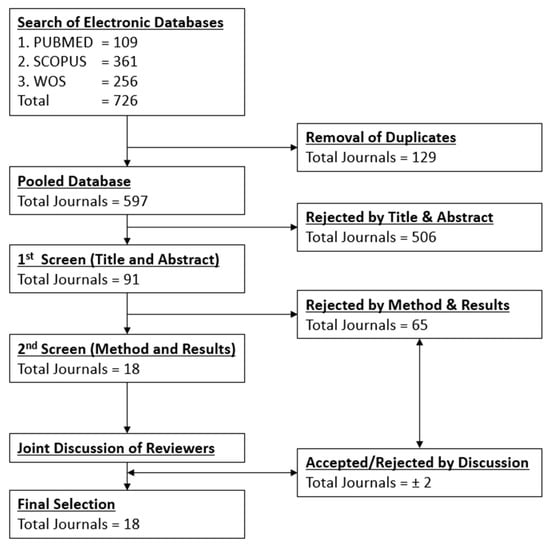
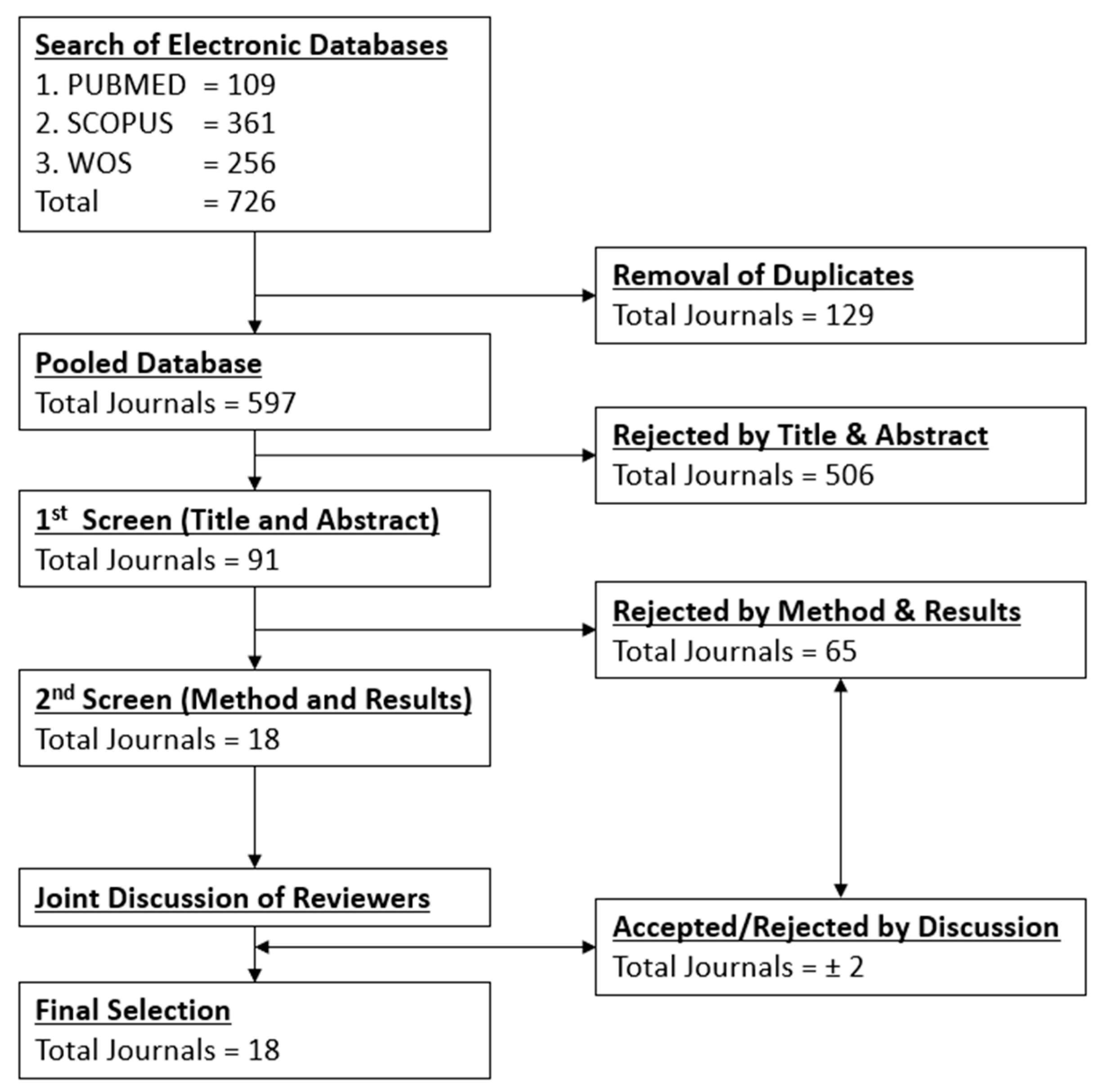
A second screening was performed by evaluating the method for fructose-only MetS induction. For example, the combination of high-fat, high-salt, and high-carbohydrate diets with fructose was excluded. Next, the results of individual studies must also have presented a valid comparison of fructose diets to control diets before any treatment. All excluded and included studies were retained and numbered for totals (Figure 2).
Figure 2.
PRISMA flow diagram for process of article selection from pooled database of PUBMED, SCOPUS and WoS.
Figure 2 shows that the initial search yielded 109 articles from PubMed, 361 articles from Scopus, and 256 articles from WOS. In total, the search yielded 726 articles when combined. Duplicate auto-removal was performed upon combination, followed by manual duplicate removal. The total pooled database numbered 597 individual articles, and 129 duplicates were removed. Two reviewers individually filtered the articles following the agreed parameters. Although both reviewers had 18 articles each, four articles were not identical. Post-discussion, a total of 18 articles were agreed for further review. The articles reviewed are presented as below (Table 1), in chronological years (earliest to recent).
Table 1.
Main factors attributed to MetS establishment in rodent models.
3. Results and Discussion
3.1. Rodent Selection Criteria
3.1.1. Susceptibility of Specific Rodent Strains
Rodent selection is an important factor in simulating MetS in an animal model. Species and sex variability should be controlled based on the requirements of the experiment. In such studies, there is notable inter- and intra-species variation in the outcome between mice (Mus musculus) and rats (Rattus norvegicus). Among rats, the most reliable strains are Sprague–Dawley (SD) rats and spontaneously hypertensive rats (SHR) [33,34,35,36,38,39,40,41,43,46]. Both strains can manifest the many characteristics of MetS with no serious inconsistencies or conflicts. SD rats and SHR have been established by decades of research and are considered useful models of DIO [47,48,49]. However, the Wistar rat model has a recurring issue. Table 1 shows that the Wistar rat models demonstrate multiple reported complications in developing weight gain and hyperglycemia [21,33,38,44,45]. Wistar rats remain potential models, although not exclusively predisposed for DIO; perhaps they can be categorized towards a “generalized model”. Only one study reported hyperglycemia and hypertriglyceridemia with abdominal fat mass of greater impact in Wistar rats as compared to SHR [36]. However, this may have been due to the shorter feeding period.
For mouse models, C57BL/6J mice are the M. musculus subjects of the highest frequency [20,42]. As per the test parameters, physiological and biological indicators do not pose issues for establishing MetS. One of the seven selected articles reported that C57BL/6 mice did not display weight gain and hyperglycemic levels, a reflection of Wistar rats. Astonishingly, C57BL/6J mice did not lead in a study on the genetic comparison of MetS in three different species. In fact, DBA/2 J (DBA) mice displayed a greater affinity for developing MetS over C57BL/6J mice [42]. However, strain specificity is not the sole factor, as the absence of weight gain and hyperglycemia levels may again be factored by the dosage and duration of the high-fructose diet, as discussed later.
3.1.2. Sex as a Limitation of MetS
Table 1 shows that only a single study had included female subjects. The authors deduced that the presence of biological female organs and hormones plays an important role in protecting the body from MetS symptoms. Compared to non-ovariectomized female rats, OVX rats were at a relative disadvantage from the high-fructose diet, although still lacking in developing MetS compared to the male rats [34]. The outcome of that study only further implicates the use of male rats as sex-controlled models. The protective role of the ovarian hormone, estrogen, preserves the metabolic status of reproducing female individuals. The role of estrogen includes shedding excess adiposity, regulating insulin-mediated glucose and lipid metabolism, and reducing hyperphagia from behavioral changes and stress levels [50,51]. To strengthen this point, various studies on menopausal symptoms, where estrogen production is decreased, have noted the propensity of female subjects to accumulate abdominal fat mass, dyslipidemia, hyperglycemia, hypertension, and inflammation, the prime candidates for obesity and other health risks [51,52]. Hormone-driven satiety changes and increased dietary intake have also been reported from menopausal stages that mediate the development of these symptoms.
3.2. Test Parameter Optimization and Selection
3.2.1. Physiological and Biochemical Parameters
Referring to Table 1, the common physiological and biochemical parameters reflect the categories of symptoms established under the definition of MetS; they are: increased body weight (BW), hypertension, hyperglycemia, dyslipidemia, and insulin resistance [8]. The commonality of including caloric intake (hyperphagia) is subjective, as non-significant outcomes have been reported. The table shows that there were no correlations or patterns, but random chances when factored by fructose concentration and duration [20,21,34,38,44,45,46]. The same randomness has been observed in the outcomes for organ or tissue mass [21,22,23,33,34,36,37,38,39,42,44,45]. However, the collection of complete organs or specific tissue mass is highly encouraged for further analysis, as described below.
3.2.2. Additional Parameters of MetS-Related Diseases
Table 2 lists the objectives of the individual studies and their respective test parameters (as additional parameters). The purpose is to share the potential of several selected parameters that may be considered in the future for establishing and studying MetS models. Most MetS studies were not performed independently but were supplementary to other diseases. Two outstanding candidates are the inclusion of histological staining and inflammatory markers. The inflammatory markers that are significantly impacted and are useful indicators are: C-reactive protein [37], TNF-α, IL-6 [20,21,22,23], IL-1β [22], and IL-10 [20,22]. Table 1, Table 3 and Table 4 show that several hallmarks of MetS were not achieved, namely BW, hyperglycemia, and hypertriglyceridemia [21,33,38,44,45]. Through histological findings, these studies were able to identify significant changes at an anatomical level, even though visible but non-significant alterations were reported by the biochemical markers [23,36,37,44]. Signs such as liver fibrosis, abdominal fat deposition, and vascularization were clear. Despite its inclusion, histopathological analysis could only confirm the presence of changes, but was unable to quantify their severity. Incorporating higher-sensitivity analysis, for example, genetic and protein expression analysis, would refine the significance of the results. These methods would enable detailed quantitative and qualitative analysis of the imbalanced metabolites contributing to MetS [20,35,39,42,46]. In brief, complex analysis through advanced machination can provide precise diagnoses that may advance medical care towards personalized medication and novel therapeutics.
Table 2.
Additional biological parameters, methodology, and outcomes of MetS and related diseases.
Table 3.
Durations of MetS induction to physiological and biochemical outcomes of MetS.
Table 4.
Concentration of types of fructose diet to physiological and biochemical outcomes of MetS.
3.3. Duration and Dosage of High-Fructose Diet
3.3.1. Period of MetS Induction in Animal Models
The 6-week duration was the protocol duration with the greatest frequency in studies on MetS induction (Table 3). Additionally, the outcomes of the six 6-week studies achieved all categories of the MetS physiological and biochemical parameters listed in Table 1 [22,34,36,41,43,45]. Logically, prolonged induction of a MetS diet would have common outcomes, as it is described as a chronic induced syndrome, deteriorating over time. However, Table 1 and Table 3 show that prolonged duration does not achieve several factors such as body mass, organ or tissue mass, and hyperglycemia. Another confounding variable is that species, sex, and fructose diet dosage were not considered. Upon cross-factoring, the outcomes of these three factors were identical to that of studies discussing species differences, specifically Wistar rats [21,33,38,44,45]. This highlights the importance of strain selection and the predisposition of the strains to diet-induced obesity and MetS symptoms.
3.3.2. Concentration of Fructose Diet for Inducing MetS
A high-fructose diet is a part of the triad that includes species and duration for inducing MetS. The selection of fructose concentration is often an overlooked preparation, as intake in rats relies more on palatability and ease of access over satiation levels [53,54]. These special diets are noticeably difficult to solidify and may be unappealing to the rats if produced in private or non-commercially. However, fructose dissolved in water did not pose difficulties, as hydration has greater importance over hunger. The natural ability of rats to resist hunger and persist in harsh environments differs from that of humans and may be a confounding variable by limiting the induction of MetS via DIO [9,54]. Table 4 shows that the most reliable concentrations for solution- and pellet-based high-fructose diets were 40% and 66%, respectively [41,43]. These two studies were able to achieve all MetS determinant parameters, although they did not incorporate all aspects thereof, such as organ or tissue mass, caloric intake, blood glucose levels, and insulin resistance. However, Table 1 shows that a 60% fructose-based diet encompassed all categories of MetS and achieved all but one: increased BW, length, or abdominal circumference [21,35,39,40,45]. Of those five articles, only one reported visibly increased BW, but it was not statistically significant [35]. However, this challenge from the individual study could be subjective; hence, 60% fructose pellets might be deemed equally competent to the single-study 66% fructose pellets [41]. Arguably, another factor to consider is the price of pellets, which is much higher than that of crystalline fructose. These special diet pellets can be made with economically viable ingredients, although this may require further optimization, while purchasing commercial diets may not be a sustainable cost for long-term studies. Crystalline fructose in water is, however, an inexpensive and manageable source.
This review was performed emphasizing a fructose diet exerting physiological and biochemical changes that lead to MetS manifestation. An abundance of experimental protocols utilize high-carbohydrate diet, high-fat diet, and sucrose water (or a combination thereof). Whether these are superior to a pure-fructose diet has not been reviewed here and may serve as an alternative. Carvajal et al. reviewed different diets for inducing MetS in 2020 [9]. Their review could serve as a reference for analyzing the nutritional properties of single or combination high-fat, -sugar, and -salt pellets. Other aspects have not been discussed, such as MetS models in other species. Although rodents are extensively used in scientific research, it is likely due to less restrictive ethics approval. Other mammalian models, such as felines, canines, leporids, swine, equines, and hominoids, may not benefit from this review. Hence, we suggest selecting from the available animal models before proceeding to protocol induction and optimization.
4. Conclusions
The best represented rodent species are SD rats and/or SHR and C57BL/6J mice. Ideally, the rodent subjects should be male to exclude the protective nature of female hormones against MetS development, or sex may otherwise be justified in female-specific studies. A study duration of ≥6 weeks is optimal. The fructose concentration is dictated by the method of feeding, which varies with the researcher’s ability to produce or procure pellets. Otherwise, 40% fructose water or 60% fructose pellets yield the best outcomes. Lastly, MetS is often studied in parallel or related to selected diseases. General parameters should encompass MetS prognosis of obesity, hypertension, hyperglycemia, hypertriglyceridemia, dyslipidemia, and insulin resistance. Here, we have tabulated the specific study parameters factored by MetS, and these parameters should be considered when planning studies involving MetS.
Author Contributions
Conceptualization, A.M.L.C., A.M.H.N. and Y.L.; Methodology, A.M.L.C. and Y.L.; Validation, A.M.L.C. and Y.L.; Formal Analysis, A.M.L.C.; Investigation, A.M.L.C.; Data Curation, A.M.L.C. & Y.L.; Writing—Original Draft Preparation, A.M.L.C.; Writing—Review & Editing, all authors. Visualization, all authors. Supervision, Y.L., M.H.M.Y. and A.M.H.N.; Project Administration, Y.L.; Funding Acquisition, Y.L. and A.M.H.N. All authors have read and agreed to the published version of the manuscript.
Funding
This work was supported by grants by Ming Medical Sdn. Bhd. (FF-2020-469) and Universiti Kebangsaan Malaysia (FF-2020-469/1 and DPK-2021-006).
Institutional Review Board Statement
Not applicable.
Informed Consent Statement
Not applicable.
Data Availability Statement
Not applicable.
Conflicts of Interest
The authors declare no conflict of interest. The granting agencies played no role in activities pertaining to the execution of the study and the submission of the manuscript.
References
- Vague, J.; Jouve, A.; Delaage, M.; Teitelbaum, M. Les Relations de L’obesite et de L’arteriosclerose; Documentation scientifique Guigoz: Basel, Germany, 1958; Volume 41, pp. 1–20. [Google Scholar]
- Haller, H.; Hanefeld, M. Synoptische Betrachtung Metabolischer Risikofaktoren. In Lipidstoffwechselstörungen; Haller, H., Hanefeld, M., Jaross, W., Eds.; Gustav Fischer Verlag: Jena, Germany, 1975; pp. 254–264. [Google Scholar]
- World Health Organization: Obesity and Overweight. April 2020. Available online: https://www.who.int/news-room/fact-sheets/detail/obesity-and-overweight (accessed on 18 January 2021).
- International Diabetes Federation: Diabetes Facts and Figures. 2 February 2020. Available online: https://www.idf.org/aboutdiabetes/what-is-diabetes/facts-figures.html (accessed on 18 January 2021).
- Li, Y.; Zhao, L.; Yu, D.; Wang, Z.; Ding, G. MetS prevalence and its risk factors among adults in China: A nationally representative cross-sectional study. PLoS ONE 2018, 13, e0199293. [Google Scholar]
- Cordain, L.; Eaton, S.B.; Sebastian, A.; Mann, N.; Lindeberg, S.; Watkins, B.A.; O’Keefe, J.H.; Brand-Miller, J. Origins and evolution of the Western diet: Health implications for the 21st century. Am. J. Clin. Nutr. 2005, 81, 341–354. [Google Scholar] [CrossRef] [Scilit] [PubMed]
- Roche, H.M.; Phillips, C.; Gibney, M.J. The MetS: The crossroads of diet and genetics. Proc. Nutr. Soc. 2005, 64, 371–377. [Google Scholar] [CrossRef] [Scilit]
- Punthakee, Z.; Goldenberg, R.; Katz, P. Definition, Classification and Diagnosis of Diabetes, Prediabetes and MetS. Can. J. Diabetes 2018, 42, S10–S15. [Google Scholar] [CrossRef] [Scilit]
- Carvajal, K.; Rodríguez-Correa, E.; González-Pérez, I.; Clavel-Pérez, P.I.; Contreras-Vargas, Y. Biochemical and nutritional overview of diet-induced MetS models in rats: What is the best choice? Nutr. Diabetes 2020, 10, 24. [Google Scholar]
- Fontvieille, A.M.; Faurion, A.; Helal, I.; Rizkalla, S.W.; Falgon, S.; Letanoux, M.; Slama, G. Relative Sweetness of Fructose Compared With Sucrose in Healthy and Diabetic Subjects. Diabetes Care 1989, 12, 481–486. [Google Scholar] [CrossRef] [Scilit]
- Bantle, J.P. Dietary Fructose and MetS and Diabetes. J. Nutr. 2009, 139, 1263S–1268S. [Google Scholar] [CrossRef] [Scilit] [PubMed]
- Zargaraan, A.; Kamaliroosta, L.; Seyed Yagoubi, A.; Mirmoghtadaie, L. Effect of Substitution of Sugar by High Fructose Corn Syrup on the Physicochemical Properties of Bakery and Dairy Products: A Review. Nutr. Food Sci. Res. 2016, 3, 3–11. [Google Scholar] [CrossRef] [Scilit]
- Avena, N.M.; Rada, P.; Hoebel, B.G. Evidence for sugar addiction: Behavioral and neurochemical effects of intermittent, excessive sugar intake. Neurosci. Biobehav. Rev. 2008, 32, 20–39. [Google Scholar] [CrossRef] [Scilit] [PubMed]
- Hannou, S.A.; Haslam, D.E.; McKeown, N.M.; Herman, M.A. Fructose metabolism and metabolic disease. J. Clin. Investig. 2018, 128, 545–555. [Google Scholar] [CrossRef] [Scilit]
- Kolderup, A.; Svihus, B. Fructose Metabolism and Relation to Atherosclerosis, Type 2 Diabetes, and Obesity. J. Nutr. Metab. 2015, 2015, 823081. [Google Scholar] [CrossRef] [Scilit] [PubMed]
- Tappy, L.; Rosset, R. Health outcomes of a high fructose intake: The importance of physical activity. J. Physiol. 2019, 597, 3561–3571. [Google Scholar] [CrossRef] [Scilit] [PubMed]
- Sanders, F.W.B.; Griffin, J.L. De novolipogenesis in the liver in health and disease: More than just a shunting yard for glucose. Biol. Rev. 2019, 91, 452–468. [Google Scholar] [CrossRef] [Scilit] [PubMed]
- Herman, M.A.; Samuel, V.T. The Sweet Path to Metabolic Demise: Fructose and Lipid Synthesis. Trends Endocrinol. Metab. 2016, 27, 719–730. [Google Scholar] [CrossRef] [Scilit]
- Rizkalla, S.W. Health implications of fructose consumption: A review of recent data. Nutr. Metab. 2010, 7, 82. [Google Scholar] [CrossRef] [Scilit]
- Bargut, T.C.L.; Santos, L.P.; Machado, D.G.L.; Aguila, M.B.; Mandarim-de-Lacerda, C.A. Eicosapentaenoic acid (EPA) vs. Docosahexaenoic acid (DHA): Effects in epididymal white adipose tissue of mice fed a high-fructose diet. Prostaglandins Leukot. Essent. Fat. Acids (PLEFA) 2017, 123, 14–24. [Google Scholar] [CrossRef] [Scilit]
- Abdelrahman, A.M.; Al-Suleimani, Y.M.; Ashique, M.; Manoj, P.; Ali, B.H. Effect of infliximab and tocilizumab on fructose-induced hyperinsulinemia and hypertension in rats. Biomed. Pharmacother. 2018, 105, 182–186. [Google Scholar] [CrossRef] [Scilit]
- Gambaro, S.; Zubiria, M.; Portales, A.; Rey, M.; Rumbo, M.; Giovambattista, A. M1 macrophage subtypes activation and adipocyte dysfunction worsen during prolonged consumption of a fructose rich diet. J. Nutr. Biochem. 2018, 61, 173–182. [Google Scholar] [CrossRef] [Scilit]
- Fakhoury-Sayegh, N.; Trak-Smayra, V.; Sayegh, R.; Haidar, F.; Obeid, O.; Asmar, S.; Khazzaka, A. Fructose threshold for inducing organ damage in a rat model of non-alcoholic fatty liver disease. Nutr. Res. 2018, 62, 101–112. [Google Scholar] [CrossRef] [Scilit]
- Zhou, J.; Zhang, Q.; Yuan, X.; Wang, J.; Li, C.; Sheng, H.; Qu, S.; Li, H. Association between Metabolic Syndrome and osteoporosis: A meta-analysis. Bone 2013, 57, 30–35. [Google Scholar] [CrossRef] [Scilit]
- Wong, S.K.; Chin, K.Y.; Suhaimi, F.H.; Ahmad, F.; Ima-Nirwana, S. Effects of Metabolic Syndrome on bone mineral density, histomorphometry and remodelling markers in male rats. PLoS ONE 2018, 13, e0192416. [Google Scholar] [CrossRef] [Scilit] [PubMed]
- Wong, S.K.; Chin, K.Y.; Suhaimi, F.H.; Ahmad, F.; Ima-Nirwana, S. The Relationship between Metabolic Syndrome and Osteoporosis: A Review. Nutrients 2016, 8, 347. [Google Scholar] [CrossRef] [Scilit]
- Chin, K.Y.; Chan, C.Y.; Subramaniam, S.; Muhammad, N.; Fairus, A.; Ng, P.Y.; Jamil, N.A.; Aziz, N.A.; Ima-Nirwana, S.; Mohamed, N. Positive association between Metabolic Syndrome and bone mineral density among Malaysians. Int. J. Med. Sci. 2020, 17, 2585–2593. [Google Scholar] [CrossRef] [Scilit]
- Chow, Y.Y.; Chin, K.Y. The Role of Inflammation in the Pathogenesis of Osteoarthritis. Mediat. Inflamm. 2020, 2020, 8293921. [Google Scholar] [CrossRef] [Scilit]
- Nur-Vaizura, M.; Soelaiman, I.M.; Chin, K.Y. Are oxidative stress and inflammation mediators of bone loss due to estrogen deficiency? A review of current evidence. Endocr. Metab. Immune Disord. Drug Targets 2020, 20, 1478–1487. [Google Scholar]
- Hoyer, S. The aging brain. Changes in the neuronal insulin/insulin receptor signal transduction cascade trigger late-onset sporadic Alzheimer disease (SAD). A Mini-Review. J. Neural Transm. 2002, 109, 991–1002. [Google Scholar] [CrossRef] [Scilit]
- Moreira, P.I.; Santos, M.S.; Seiça, R.; Oliveira, C.R. Brain mitochondrial dysfunction as a link between Alzheimer’s disease and diabetes. J. Neurol. Sci. 2007, 257, 206–214. [Google Scholar] [CrossRef] [Scilit] [PubMed]
- Zhou, C.; Huang, Y.; Przedborski, S. Oxidative Stress in Parkinson’s Disease. Ann. N. Y. Acad. Sci. 2008, 1147, 93–104. [Google Scholar] [CrossRef] [Scilit] [PubMed]
- Zemančiková, A.; Torok, J. Comparison of high fructose-induced cardiometabolic impairments in two different rat hypertensive models. Curr. Top. Toxicol. 2016, 12, 25–32. [Google Scholar]
- Rattanavichit, Y.; Chukijrungroat, N.; Saengsirisuwan, V. Sex differences in the metabolic dysfunction and insulin resistance of skeletal muscle glucose transport following high fructose ingestion. Am. J. Physiol. -Regul. Integr. Comp. Physiol. 2016, 311, R1200–R1212. [Google Scholar] [CrossRef] [Scilit]
- Hsieh, C.C.; Liao, C.C.; Liao, Y.C.; Hwang, L.S.; Wu, L.Y.; Hsieh, S.C. Proteomic changes associated with Metabolic Syndromein a fructose-fed rat model. J. Food Drug Anal. 2016, 24, 754–761. [Google Scholar] [CrossRef] [Scilit] [PubMed]
- Lírio, L.M.; Forechi, L.; Zanardo, T.C.; Batista, H.M.; Meira, E.F.; Nogueira, B.V.; Mill, J.G.; Baldo, M.P. Chronic fructose intake accelerates non-alcoholic fatty liver disease in the presence of essential hypertension. J. Diabetes Its Complicat. 2016, 30, 85–92. [Google Scholar] [CrossRef] [Scilit]
- Bratoeva, K.; Nikolova, S.; Merdzhanova, A.; Stoyanov, G.S.; Dimitrova, E.; Kashlov, J.; Radanova, M. Association between Serum CK-18 Levels and the Degree of Liver Damage in Fructose-Induced Metabolic Syndrome. Metab. Syndr. Relat. Disord. 2018, 16, 350–357. [Google Scholar] [CrossRef] [Scilit] [PubMed]
- Ramos, V.W.; Batista, L.O.; Albuquerque, K.T. Effects of fructose consumption on food intake and biochemical and body parameters in Wistar rats. Efeitos do consumo de frutose sobre ingestão alimentar, parâmetros bioquímicos e corporais em ratos Wistar. Revista portuguesa de cardiologia: Orgao oficial da Sociedade Portuguesa de Cardiologia = Portuguese journal of cardiology: An official journal of the Portuguese Society of Cardiology. Rev. Port Cardiol. 2017, 36, 937–941. [Google Scholar]
- Ng, H.Y.; Lee, Y.T.; Kuo, W.H.; Huang, P.C.; Lee, W.C.; Lee, C.T. Alterations of Renal Epithelial Glucose and Uric Acid Transporters in Fructose Induced Metabolic Syndrome. Kidney Blood Press. Res. 2018, 43, 1822–1831. [Google Scholar] [CrossRef] [Scilit]
- Chen, I.H.; Cheng, J.T.; Tong, Y.C. Metabolic Syndrome Induced Bladder Cannabinoid Receptor Changes in the Fructose-Fed Rats. LUTS Low. Urin. Tract Symptoms 2017, 10, 198–203. [Google Scholar] [CrossRef] [Scilit]
- Subramani, B.; Krishnamurthy, B. Effects of Momordica Charantia (Bitter gourd) on Oxidative Stress and Pro-Inflammatory Marker in Metabolic Syndrome Using a High-Fructose Diet Induced Rat Model. Biomed. Pharmacol. J. 2019, 11, 305–324. [Google Scholar] [CrossRef] [Scilit]
- Zhang, G.; Byun, H.R.; Ying, Z.; Blencowe, M.; Zhao, Y.; Hong, J.; Shu, L.; Krishnan, K.C.; Gomez-Pinilla, F.; Yang, X. Differential metabolic and multi-tissue Transcriptomic responses to fructose consumption among genetically diverse mice. Biochim. Biophys. Acta (BBA) Mol. Basis Dis. 2019, 1866, 165569. [Google Scholar] [CrossRef] [Scilit]
- Mustafa, N.G.; Hasan, M.K. Biochemical investigation of an experimentally induced Metabolic Syndrome in rats. Indian J. Anim. Res. 2020, 52, 168–172. [Google Scholar] [CrossRef] [Scilit]
- Ferreira-Santos, P.; Aparicio, R.; Carrón, R.; Montero, M.J.; Sevilla, M.Á. Lycopene-supplemented diet ameliorates MetS induced by fructose in rats. J. Funct. Foods 2020, 73, 104098. [Google Scholar] [CrossRef] [Scilit]
- Kitagawa, A.; Ohta, Y.; Ohashi, K.; Yashiro, K.; Fukuzawa, K. Effect of High Fructose-Induced Metabolic Syndrome on Tissue Vitamin E and Lipid Peroxide Levels in Rats. J. Nutr. Sci. Vitaminol. 2020, 66, 200–206. [Google Scholar] [CrossRef] [Scilit]
- Kim, M.; Do, G.Y.; Kim, I. Activation of renin-angiotensin system in high fructose-induced Metabolic Syndrome. Korean J. Physiol. Pharmacol. 2020, 24, 319–328. [Google Scholar] [CrossRef] [Scilit]
- Marques, C.; Meireles, M.; Norberto, S.; Leite, J.; Freitas, J.; Pestana, D.; Faria, A.; Calhau, C. High-fat diet-induced obesity Rat model: A comparison between Wistar and Sprague Dawley Rat. Adipocyte 2015, 5, 11–21. [Google Scholar] [CrossRef] [Scilit] [PubMed]
- Giles, E.D.; Jackman, M.R.; MacLean, P.S. Modeling Diet-Induced Obesity with Obesity-Prone Rats: Implications for Studies in Females. Front. Nutr. 2016, 3, 50. [Google Scholar] [CrossRef] [Scilit] [PubMed]
- Rojas, J.M.; Bolze, F.; Thorup, I.; Nowak, J.; Dalsgaard, C.M.; Skydsgaard, M.; Berthelsen, L.O.; Keane, K.A.; Søeborg, H.; Sjögren, I.; et al. The Effect of Diet-induced Obesity on Toxicological Parameters in the Polygenic Sprague Dawley Rat Model. Toxicol. Pathol. 2018. [Google Scholar] [CrossRef] [Scilit] [PubMed]
- Leeners, B.; Geary, N.; Tobler, P.N.; Asarian, L. Ovarian hormones and obesity. Hum. Reprod. Update 2017, 23, 300–321. [Google Scholar] [CrossRef] [Scilit] [PubMed]
- Zhu, J.; Ji, M.; Xing, L.; Yu, Z.; Guo, X.; Chen, X.; Shu, J. Ovarian Hormonal Change-Related Energy Metabolism and Obesity in Menopausal Women. Horm. Ther. Replace. Cancer Aging-Relat. Dis. 2020. [Google Scholar] [CrossRef] [Scilit]
- Boonyaratanakornkit, V.; Pateetin, P. The Role of Ovarian Sex Steroids in Metabolic Homeostasis, Obesity, and Postmenopausal Breast Cancer: Molecular Mechanisms and Therapeutic Implications. BioMed Res. Int. 2015, 2015, 140196. [Google Scholar] [CrossRef] [Scilit] [PubMed]
- Toth, L.A.; Gardiner, T.W. Food and water restriction protocols: Physiological and behavioral considerations. Contemp. Top. Lab. Anim. Sci. 2020, 39, 9–17. [Google Scholar]
- Corwin, R.L.; Avena, N.M.; Boggiano, M.M. Feeding and reward: Perspectives from three rat models of binge eating. Physiol. Behav. 2011, 104, 87–97. [Google Scholar] [CrossRef] [Scilit]

Publisher’s Note: MDPI stays neutral with regard to jurisdictional claims in published maps and institutional affiliations. |
© 2021 by the authors. Licensee MDPI, Basel, Switzerland. This article is an open access article distributed under the terms and conditions of the Creative Commons Attribution (CC BY) license (https://creativecommons.org/licenses/by/4.0/).